



Fine hair can look flat by lunch. A red bob fixes part of that problem because the cut gives the ends a clean edge and the color keeps the shape from disappearing into the background.
The best red bob haircuts for fine hair do not chase fluff. They rely on blunt lines, careful stacking, or soft internal movement to fake density without turning the ends wispy. A lot of people ask for layers when the hair already feels scarce; that usually makes the lower half look see-through. A better move is to choose a shape that keeps weight where the eye wants it.
Red helps more than people expect. Copper throws light, cherry makes a blunt line look sharper, auburn feels calmer, and burgundy gives depth that fine hair can use. The trick is matching tone to cut and face shape instead of picking a photo because the shade is pretty. Fine hair loves a haircut with a point of view.
1. Blunt Cherry Bob
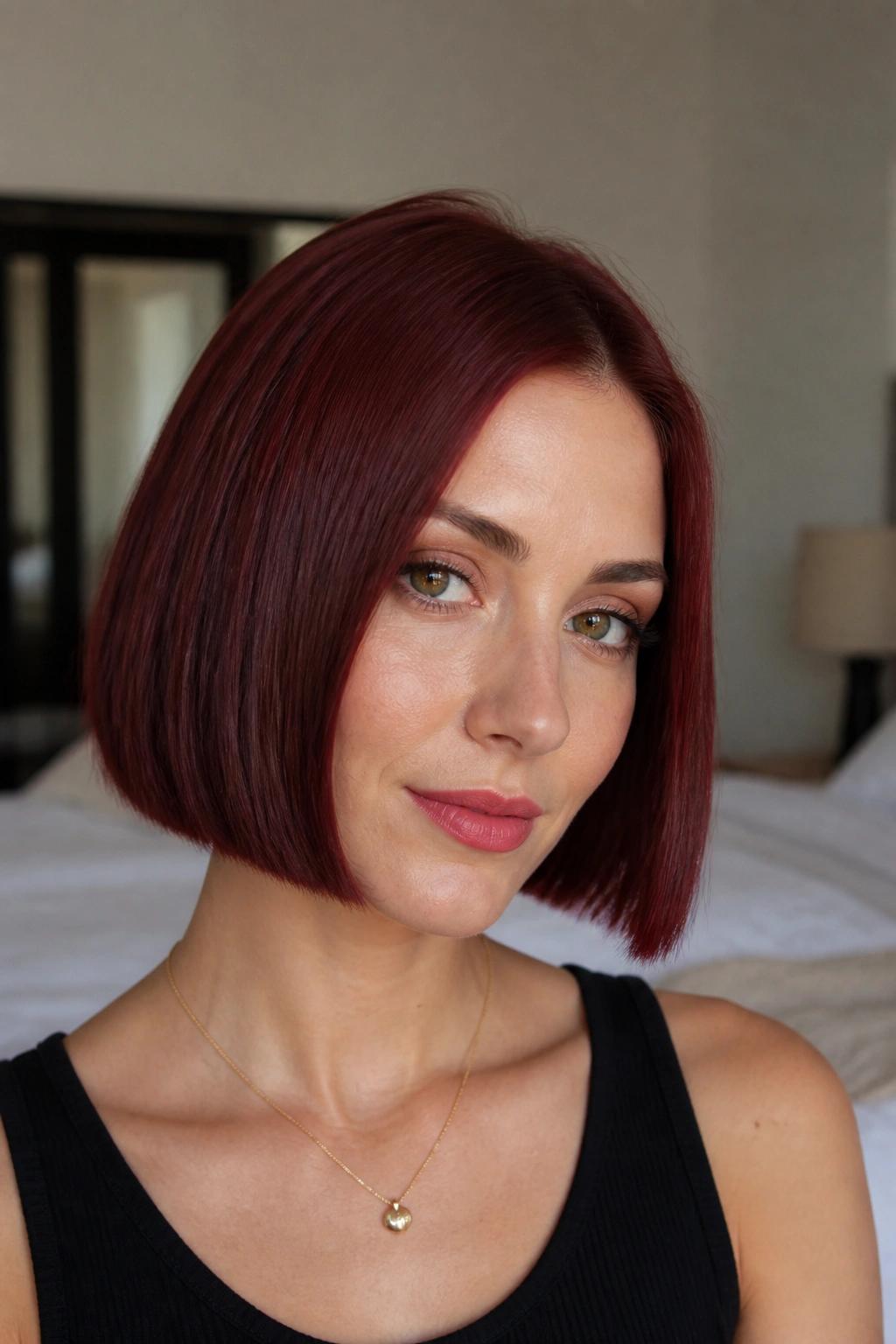
A blunt cherry bob is one of the easiest ways to make fine hair look fuller fast. The perimeter stays one length, so the ends read as thick instead of feathered out. Cherry red adds a glossy, bright edge that makes the cut line even more obvious.
Why It Works
The blunt edge does most of the heavy lifting here. Fine strands often look better when they stack together in a solid line, and this cut keeps that line honest. The cherry tone helps because it reflects light without washing out the shape.
- Chin-length or just below the jaw works well.
- Ask for no aggressive thinning at the ends.
- Straight, slightly wavy hair shows this cut best.
- A round brush gives the polish; air-drying keeps it modern.
Pro tip: If your hair sits flat at the crown, keep the top clean and the perimeter blunt. That contrast makes the whole head look thicker.
2. Copper A-Line Bob
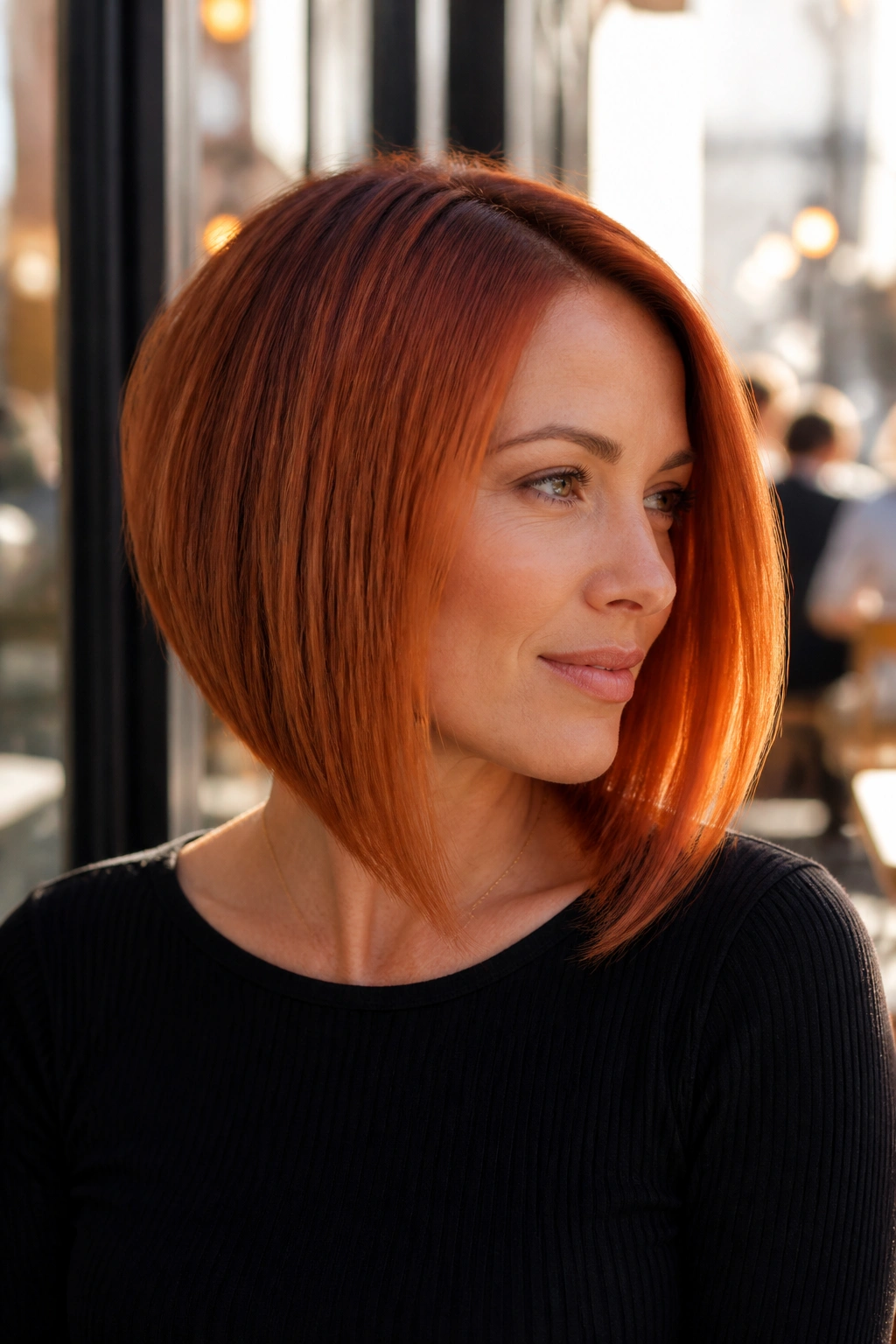
If you want lift without piling on layers, the copper A-line bob does the job with less fuss. It stays shorter in back and longer toward the front, which makes the face look slimmer and the hair look more deliberate.
The shape matters more than the color here, but copper adds a little spark that fine hair often lacks on its own. The front pieces graze the jaw or sit a touch below it, and that longer line makes the cut feel fuller than a cropped bob would. There’s also a nice side effect: the angled outline gives the hair a bit of swing when you turn your head.
This one works especially well if your hair grows out in a soft wave. The slope of the cut keeps the front from puffing out while the back stays neat and compact. It looks sharp without feeling severe. And that balance is hard to fake with styling alone.
3. Stacked Burgundy Bob
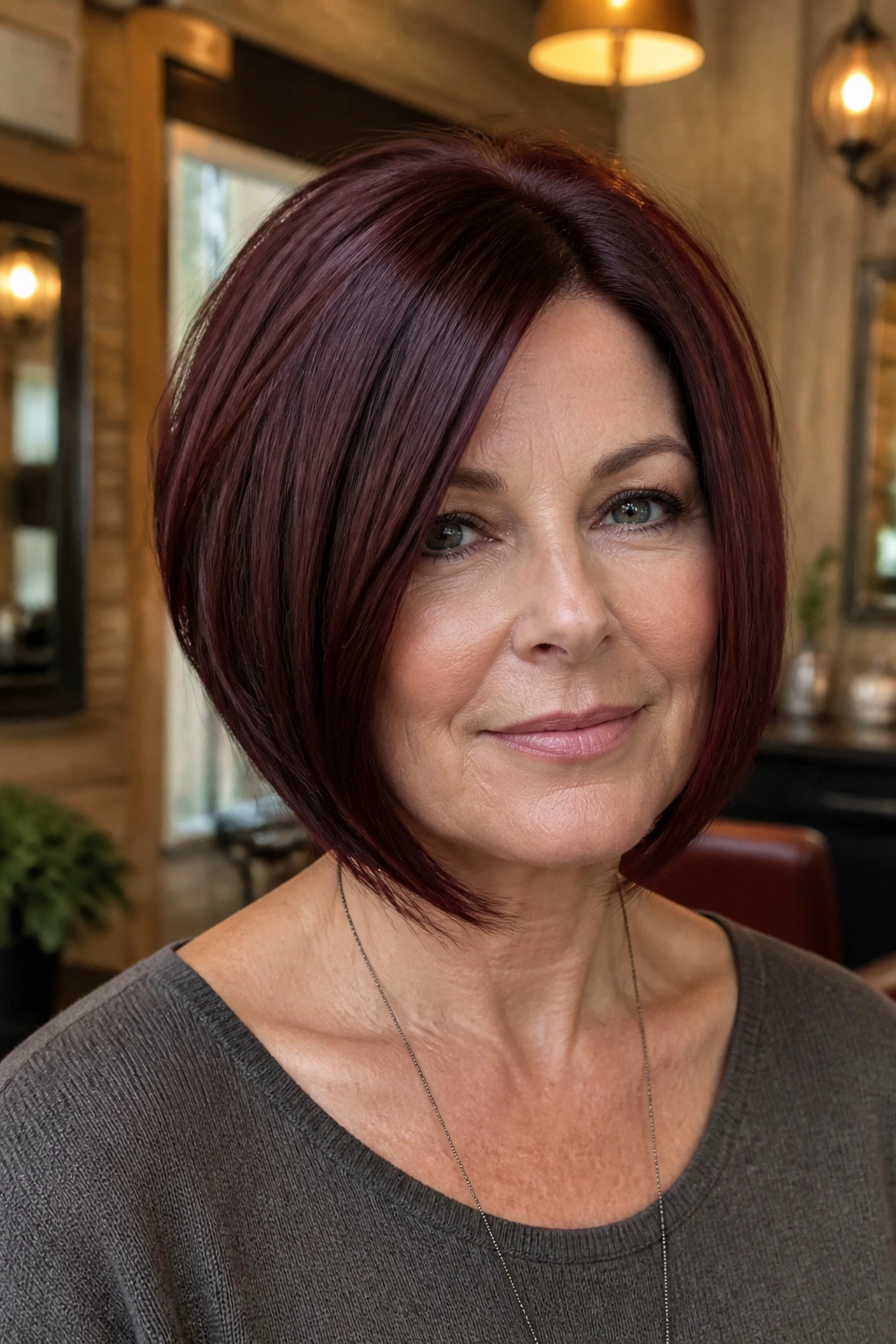
Picture a bob that starts with a little lift in the back and settles into a soft curve around the jaw. That’s the stacked burgundy bob, and it’s a very practical choice when your crown tends to collapse.
How to Ask for It
Ask your stylist for graduation in the back, not heavy layers everywhere. Those are not the same thing. Graduation builds shape at the nape and creates that little rise that fine hair often misses.
- Keep the stack moderate so the back doesn’t look too short.
- Choose burgundy or wine red for depth.
- Let the front pieces stay longer and smoother.
- Use a root-lifting spray at the crown, not all over.
The burgundy color is doing quiet work here. Dark red shades make the hair read denser because the eye can’t see through them as easily. The cut gives the lift. The color gives the weight. Together, they make a bob that feels fuller than the strand count really is.
4. Strawberry Blonde Bob with Soft Layers

Can layers work on fine hair? Yes, but only when they’re soft and placed with restraint. A strawberry blonde bob with light internal layers can move without losing the solid edge that fine hair needs.
The color is part of the trick. Strawberry blonde sits between red and blonde, so it gives you warmth without the hard contrast that can expose thin ends. The layers should be tucked inside the cut, not chopped through the whole shape. You want the outside line to stay clean while the inside gets enough movement to keep the bob from looking heavy.
Styling Note
Use a pea-sized amount of mousse at the roots and a light cream through the mids. Then blow-dry with a small round brush, lifting the crown for a few seconds as the hair cools. That cooling step matters more than people think. It holds the shape.
5. Auburn French Bob
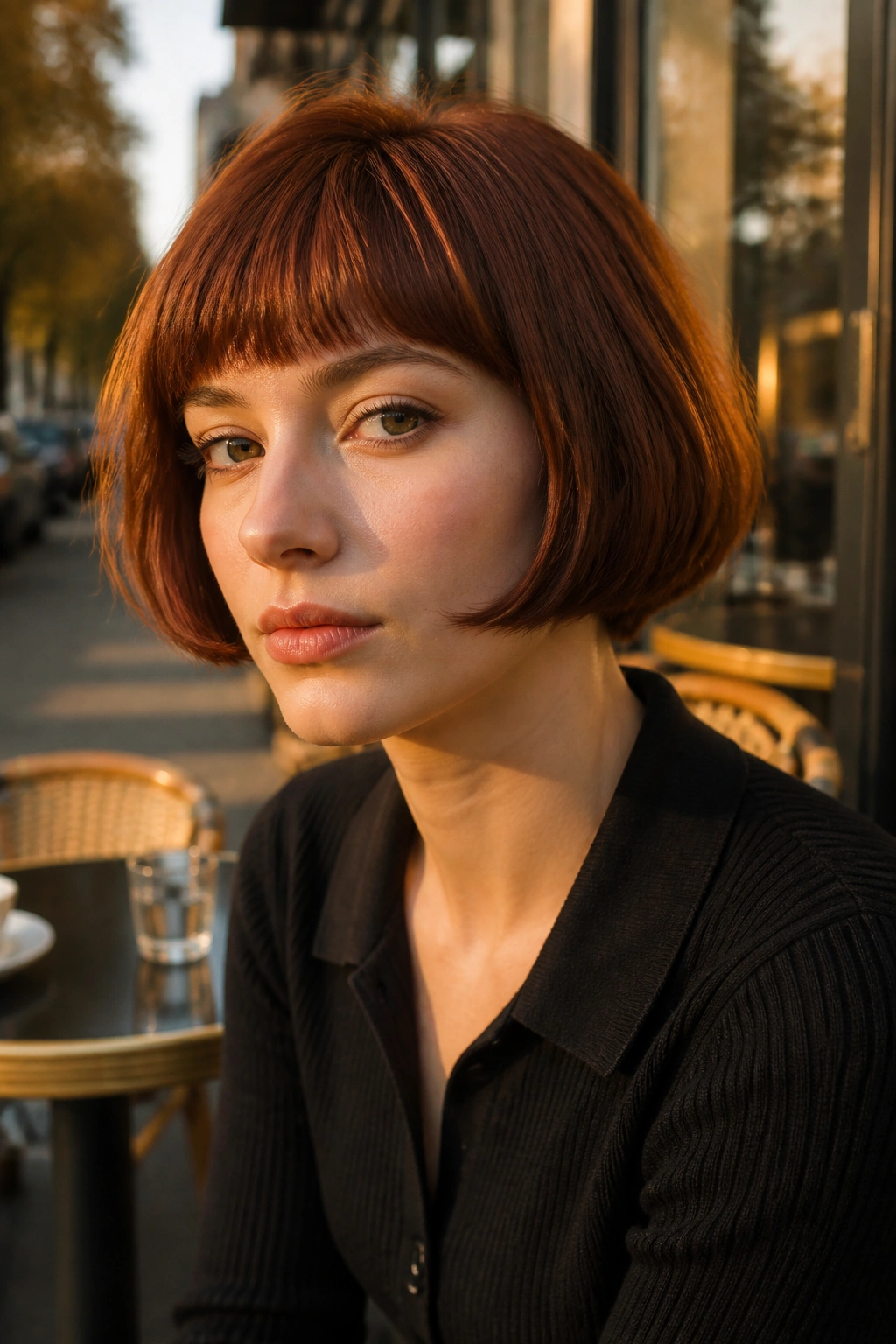
The French bob is shorter, cheekier, and a little more decisive than the average bob. That’s exactly why it works on fine hair. There’s no long tail of ends hanging around to look stringy, and the shape sits close to the head in a way that looks tidy rather than limp.
Auburn suits this cut because it softens the outline. Very dark red can look heavy on a short bob, while bright copper can feel loud if the cut is tiny. Auburn lands in the middle. It has warmth, but it still feels wearable. A French bob usually hits around the jaw, sometimes a touch above it, and that crisp line gives fine hair a fuller profile.
I like this cut with a small fringe or a blunt brow skimming bang. The bang gives the haircut a second visual line, which helps the whole style read thicker. It also keeps the face from looking too open if your hairline is a little sparse at the temples.
6. Ginger Bob with Full Bangs
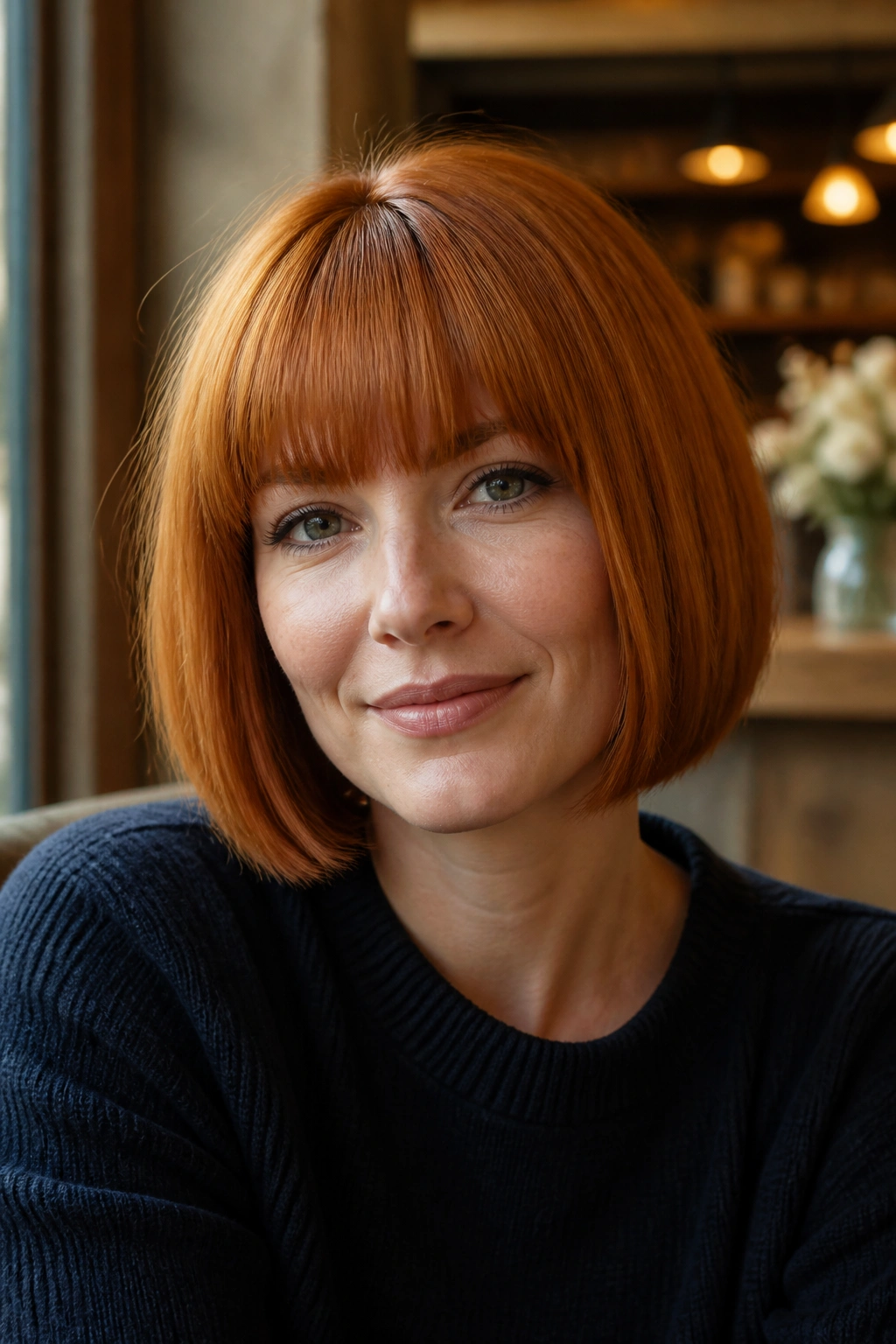
Ginger hair has a way of pulling attention to the front of the face, and that is useful when the rest of the hair is fine. Add full bangs, and the haircut suddenly feels denser because the fringe creates a second block of color and shape.
The best version is not a heavy helmet. It’s a clean bob with bangs cut with enough weight to sit flat, but not so much that they swallow the face. Ginger tones work especially well when the skin has warmth in it, though a cooler ginger can be lovely too. The important part is gloss. Fine hair needs shine more than it needs drama.
A round brush helps the bangs curve softly instead of sticking straight across. And yes, this haircut does ask for more upkeep. Fringe grows fast, and fine hair shows every millimeter. But if you like a polished look and do not mind trimming every few weeks, this one has real charm.
7. Deep Side-Part Inverted Bob
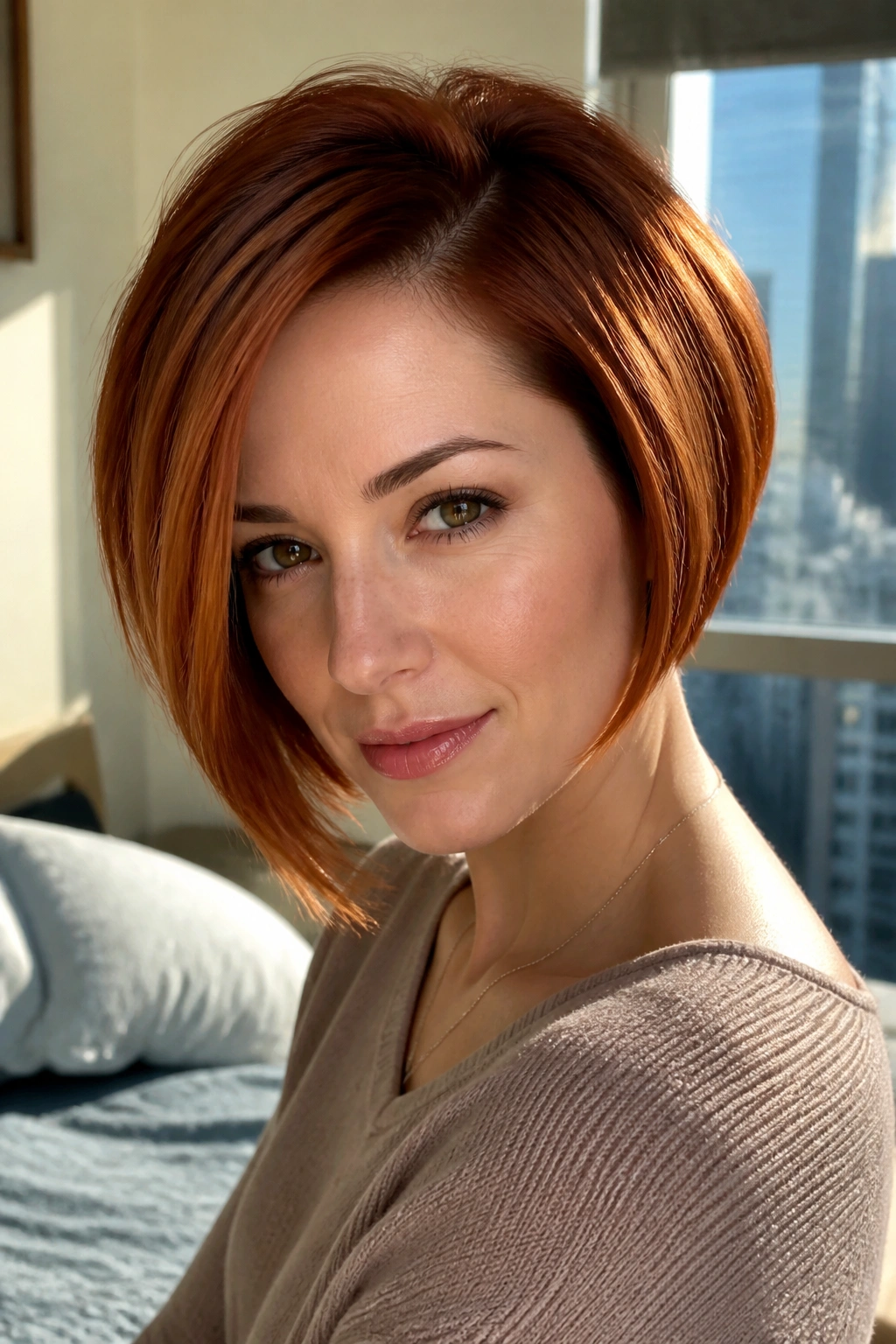
A deep side part can rescue flat roots in about five seconds. Pair it with an inverted bob, and you get a shape that looks lifted at the crown and slimmer through the jawline.
The cut itself is slightly longer in front and shorter in back, which gives the hair direction. Fine hair often loses that direction and just hangs. A deep side part adds a visible sweep, and that sweep creates the illusion of thickness where it matters most. The red shade helps too, especially if you choose a coppery or warm auburn tone that shows movement in the light.
What to Ask For
- A clear inversion, not a dramatic wedge.
- Length that grazes the jaw in front.
- Soft layering only through the crown.
- A side part that follows your natural growth pattern.
If your cowlick fights center parts, this cut is even better. Work with the pattern, not against it. The result looks easier, and honestly, easier hair usually looks better.
8. Rose Gold Textured Bob
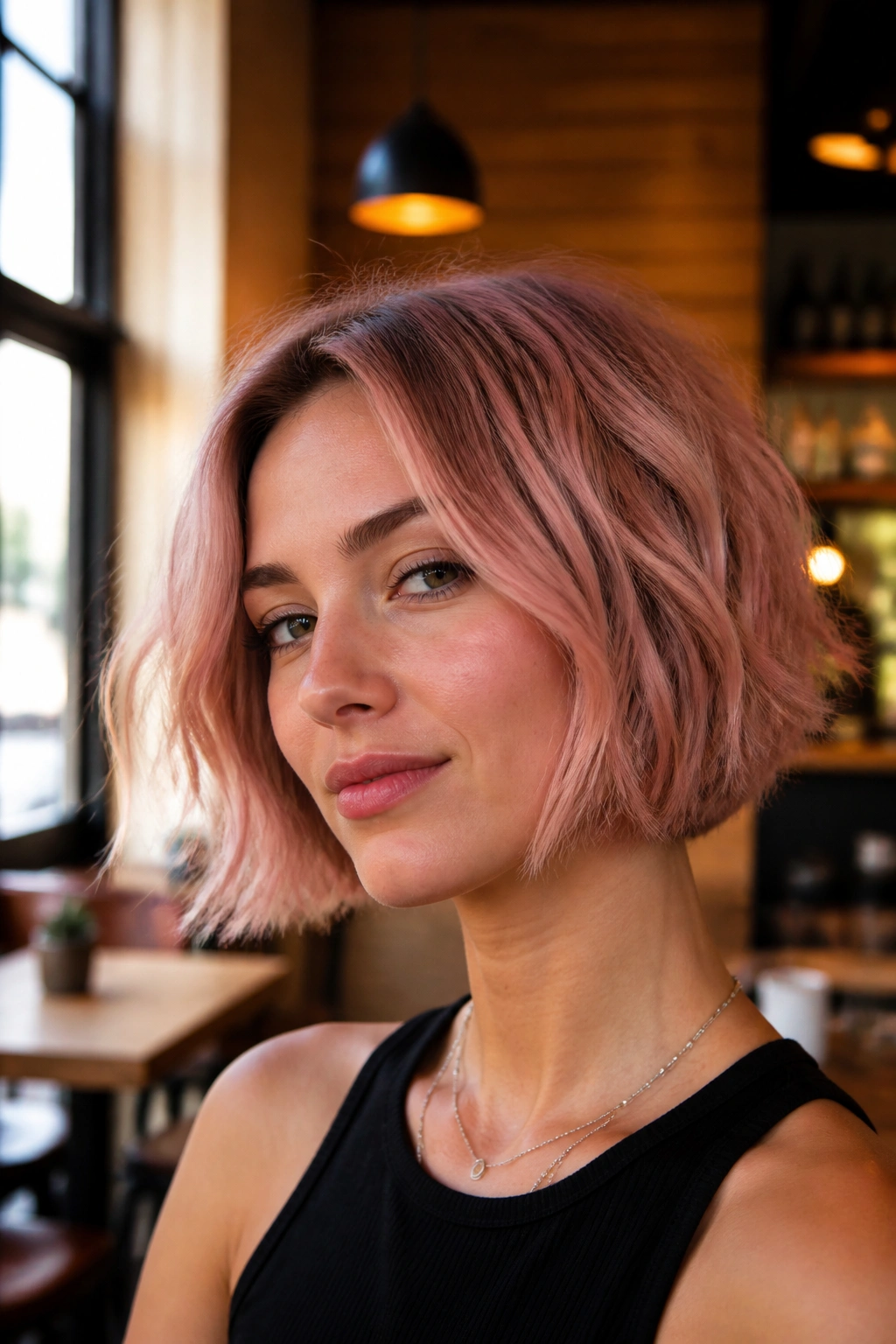
Rose gold is one of those shades that can look either flat or luminous, and the haircut decides which one you get. On fine hair, a textured bob keeps the color alive without turning the ends into fluff.
The texture should be selective. That’s the part people mess up. A little bit of piecey movement at the mids makes the hair look modern. Too much shredding at the bottom makes the whole thing look thin and tired. Rose gold, with its pink-copper softness, works best when the cut has enough structure to hold it in place.
What Makes It Different
It’s lighter than auburn and softer than copper. That means the color can brighten the face without shouting for attention. Use a light texturizing spray on dry hair and pinch a few sections with your fingers. Then stop. Don’t keep fussing with it. Fine hair gets stringy when you over-handle it, and this style loses its shape fast if you keep picking at it.
9. Mahogany Box Bob
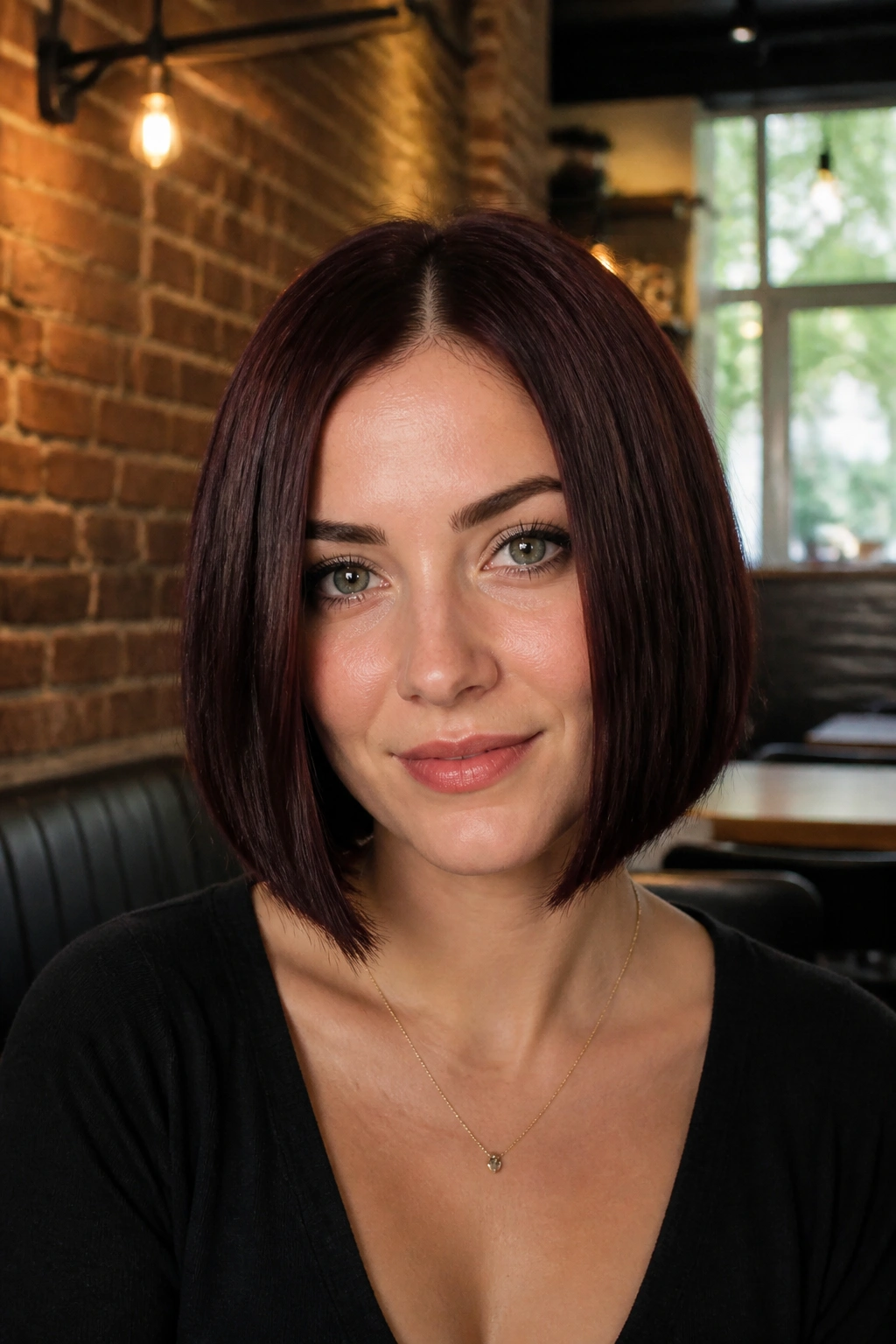
A box bob has edges. That’s the whole point. Instead of curving inward or stacking up at the back, it creates a square, strong outline that makes fine hair look full from every angle.
Mahogany is a smart color for this cut because it gives depth without making the style too dark. The red-brown tone holds a lot of visual weight, which helps when the hair itself is narrow and silky. This shape also works well if your hair is naturally straight. The stronger the line, the better it behaves.
Unlike a rounded bob, the box bob does not try to soften everything. It looks neat, deliberate, and a little graphic. If your face has softer features, that contrast can be flattering. If your jaw is already sharp, the cut can echo that shape in a nice way. Either way, the silhouette feels more substantial than a wispy, over-layered bob ever will.
10. Cinnamon Collarbone Bob
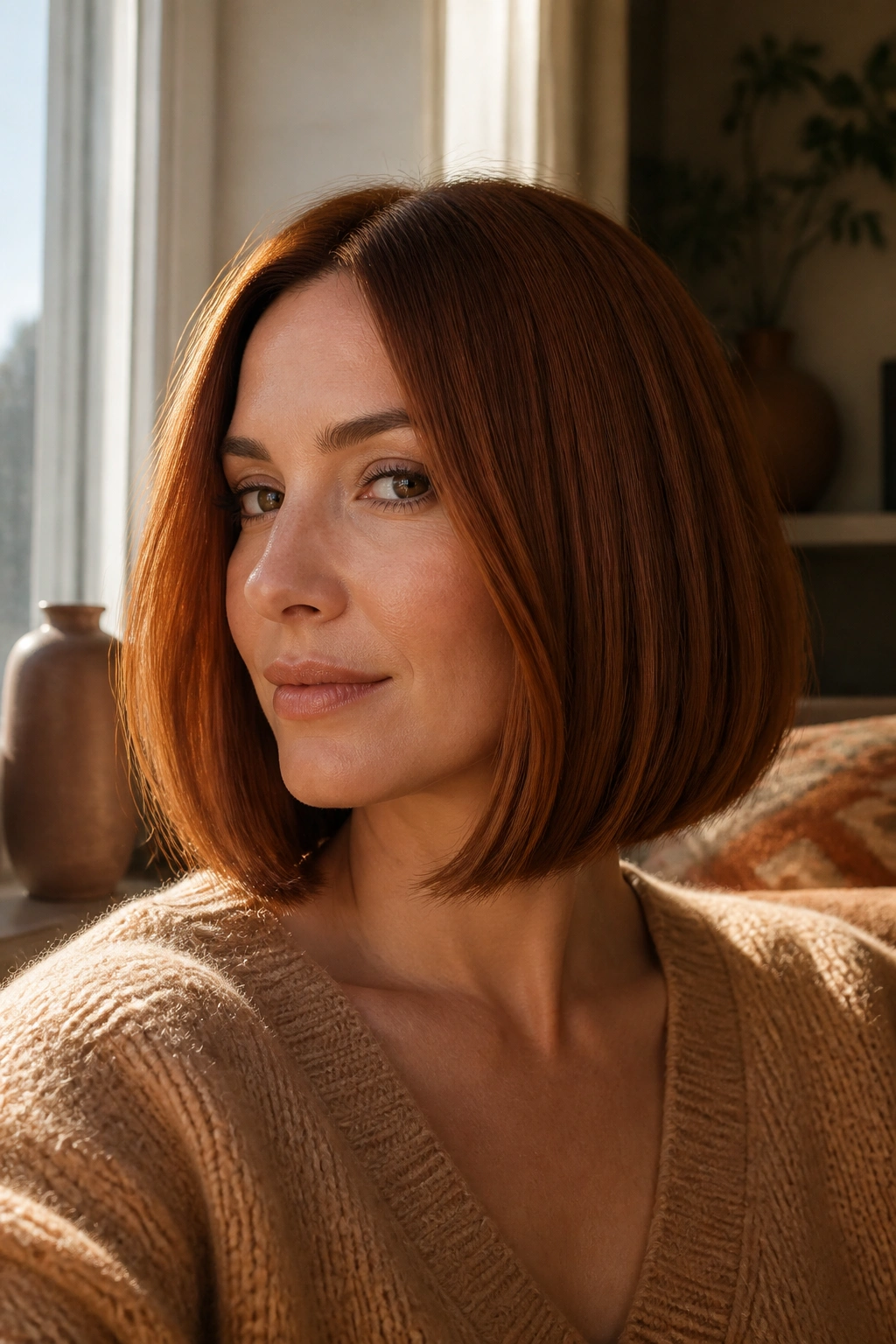
There’s a sweet spot between bob and lob, and the cinnamon collarbone cut sits right there. It gives fine hair enough length to swing while keeping the ends close enough together to look full.
A lot of people with fine hair worry that anything longer than the chin will go flat. Sometimes that happens. But a collarbone-length bob keeps enough weight in the bottom to avoid the see-through effect, especially if the ends are kept blunt. Cinnamon gives the cut warmth and movement, and it makes the hair look a little more alive on days when styling time is short.
This is the haircut I’d point to for someone who wants versatility. You can tuck it behind the ears, wear it with a bend, or smooth it straight. It still behaves. And because the length reaches the collarbone, it can be tied back in a tiny clip when needed, which is more useful than people admit.
11. Copper Curly Bob
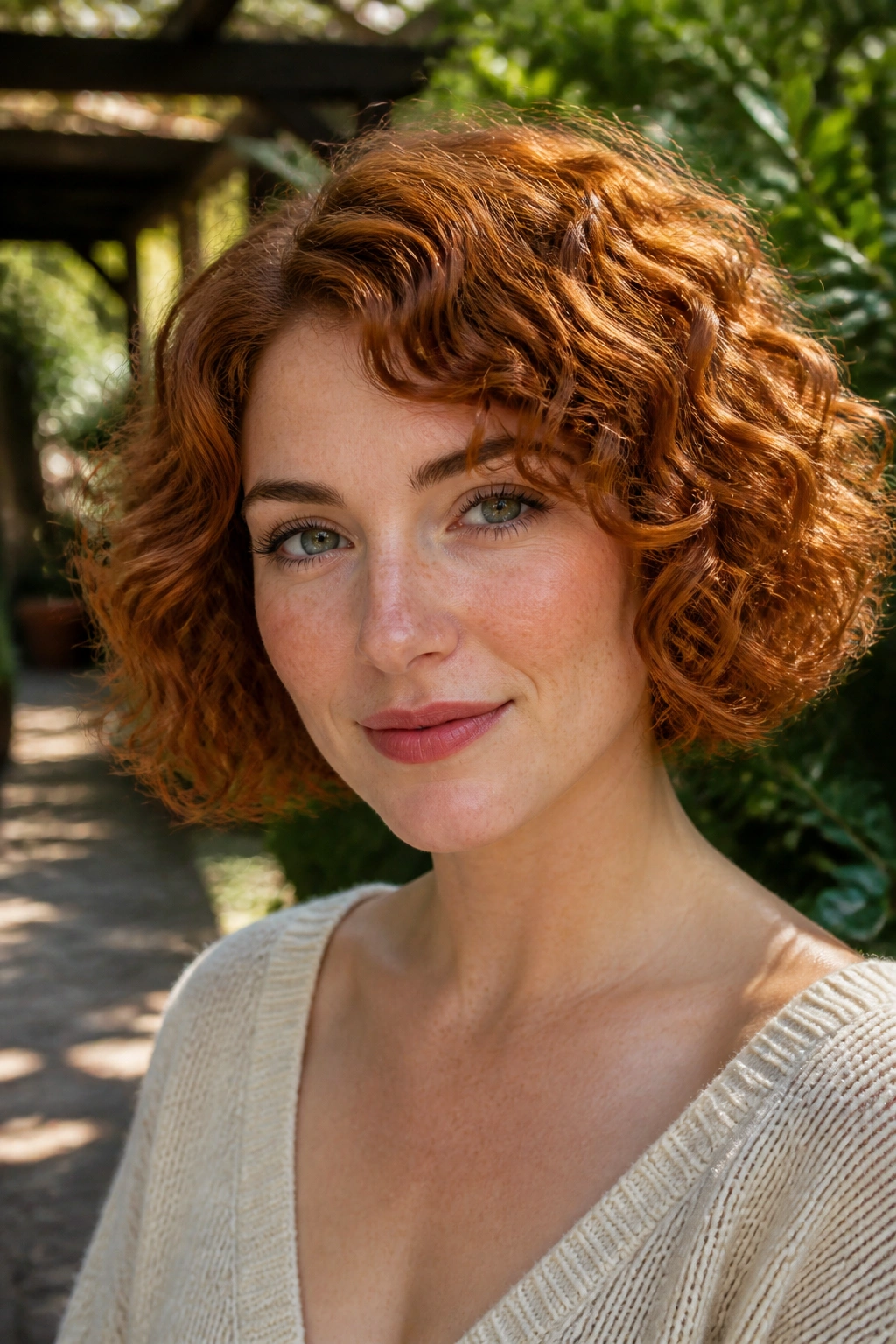
Curly fine hair needs a different plan. Heavy layers can turn it into a halo of frizz, while a well-shaped bob can give the curl pattern a clean frame.
Copper works beautifully here because curls already bring movement, and the color catches that movement every time the hair shifts. The cut should follow the curl, not fight it. If the curl is loose, a bob that lands around the chin or just below it can keep the shape buoyant. If the curl is tighter, a little more length helps the ringlets settle.
Best for
- Fine curls that collapse when weighed down.
- Loose waves that need shape, not more product.
- People who air-dry and want a defined outline.
Use a diffuser on low heat, then stop before the hair gets too dry. That last part matters. Curly fine hair often looks best when it still has a little softness to it, not when it’s blasted into a puff.
12. Shattered Red Bob with Invisible Layers
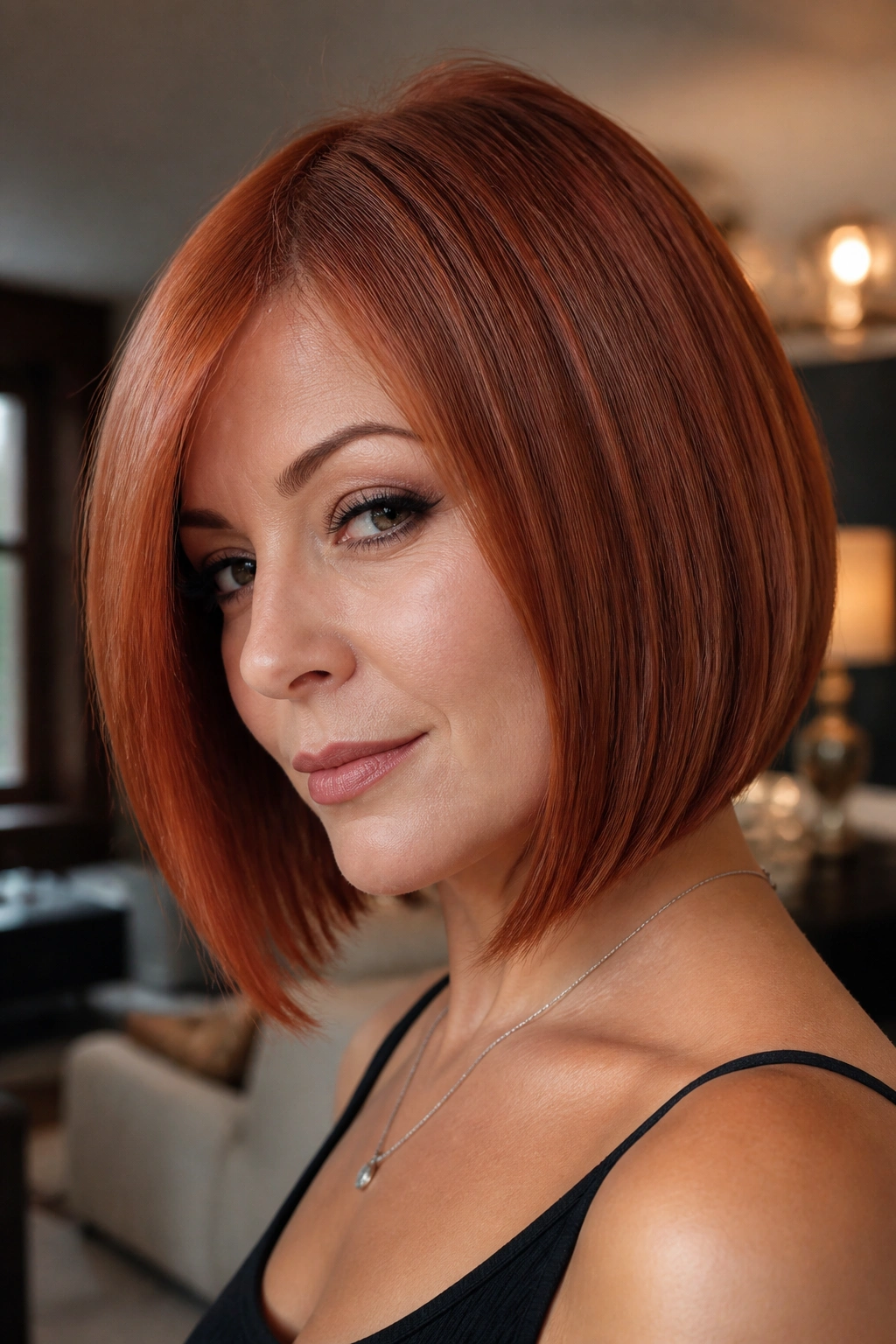
What are invisible layers? They’re the quiet kind. The stylist removes a bit of weight from inside the cut without breaking the outer line apart, which is exactly why this bob works on fine hair.
The outer edge stays clean, so the hair still looks full. Inside, the weight comes down enough to keep the bob from feeling bulky or triangular. Red shades with a little darkness in them — cherry, cranberry, deep copper — make the shape look richer because the tone gives the eye something to hold on to.
How to Get the Most From It
- Ask for point cutting inside the shape, not choppy ends.
- Keep the perimeter blunt.
- Style with a light blowout or a soft bend.
- Skip heavy oils near the roots.
This cut is a good middle ground if you like movement but hate the scraggly look that too many layers can create. It feels less strict than a blunt bob, but it still has enough structure to flatter fine strands.
13. Fire-Red Micro Bob
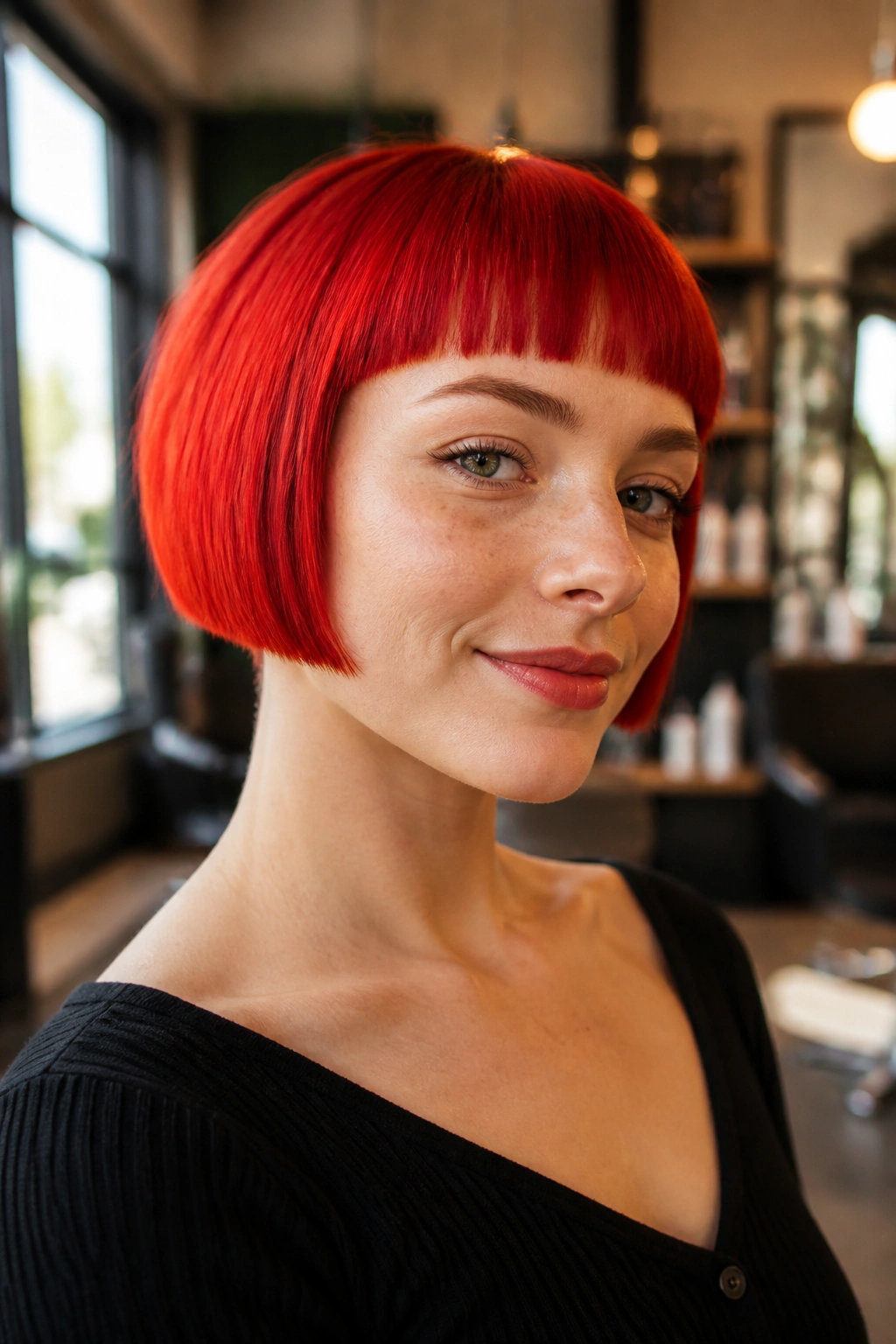
A micro bob is short, sharp, and impossible to ignore. If your hair is fine, that shorter length can be a gift, because it removes the dead weight that makes long styles slide flat.
Fire-red takes the cut in a bolder direction. The color has enough brightness to keep the tiny shape from disappearing, and the short length lets the tone do its work. This is not the haircut for someone who wants to hide. It is the haircut for someone who likes clear lines and does not mind a little attention.
The best part? It is easy to style. A tiny amount of smoothing cream, a quick blow-dry, and you’re done. The downside is obvious: it needs regular trims to stay crisp. But if you like a tidy shape and your face can carry a shorter line, it’s one of the most efficient looks on the list.
14. Plum Red Asymmetrical Bob
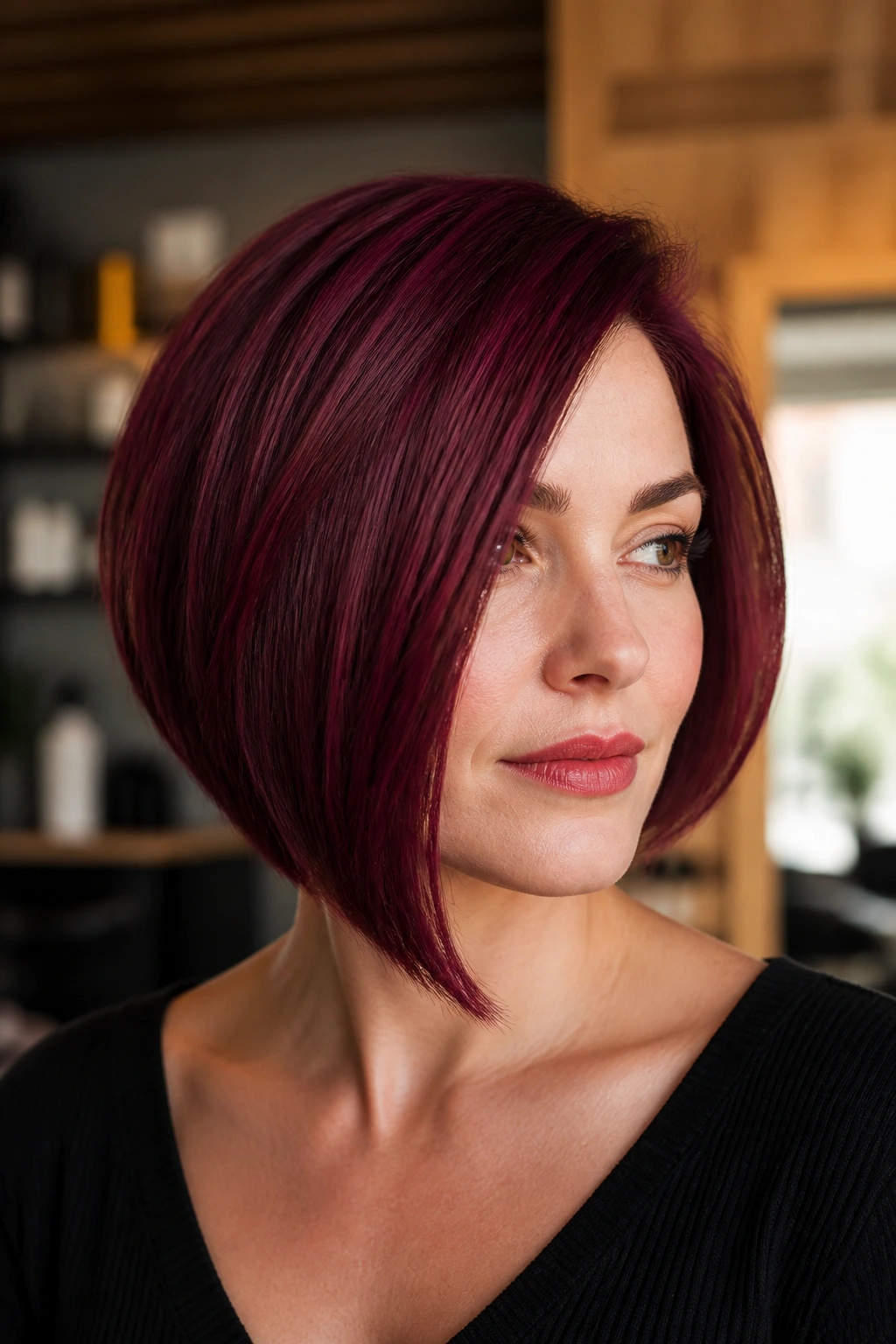
One side slightly longer than the other can do a lot for fine hair. It gives the eye something to follow, which makes the haircut feel fuller than it would in a straight, even line.
Plum red is a quieter color than copper or cherry, and that’s the point. The shade has depth, a little coolness, and enough richness to make the asymmetry feel intentional rather than flashy. On fine hair, that depth helps the ends look more solid. The longer side can skim the jaw while the shorter side opens the neck a bit.
Short hair does not always need layers to feel interesting. Sometimes an angle is enough. If your features are soft, the asymmetry adds structure. If your face is already angular, it can sharpen things up in a clean way. Either way, the style reads modern without trying too hard.
15. Copper Razor Bob
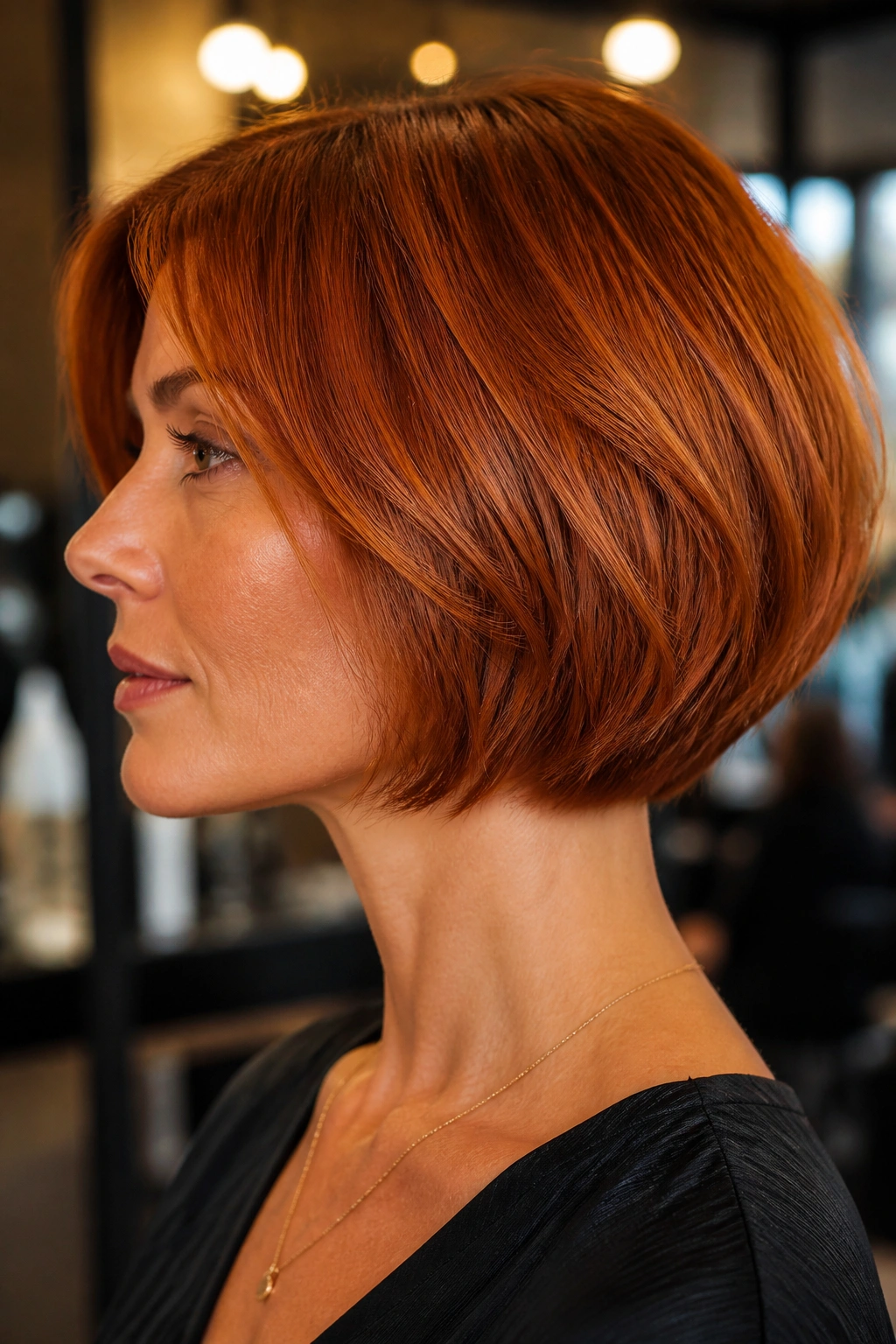
A razor bob can be tricky on fine hair, which is why this one needs a steady hand. Use a razor carelessly and the ends go wispy. Use it well, and you get movement without losing shape.
The trick is to keep the interior soft and the perimeter controlled. A copper tone makes the movement easier to see, especially in daylight. That’s useful because razor-cut texture can disappear on fine hair if the color is too dark or too flat. Copper gives the cut a little shimmer, so the shape reads as airy instead of thin.
What to Watch For
- Don’t let the stylist over-thin the bottom.
- Keep the razor work around the mids.
- Ask for a clean edge at the ends.
- Style with a blow-dry cream, not a heavy wax.
This cut suits straight to wavy hair more than very loose curls. It has a bit of edge, but it still needs some body to show off properly.
16. Sunset Balayage Lob
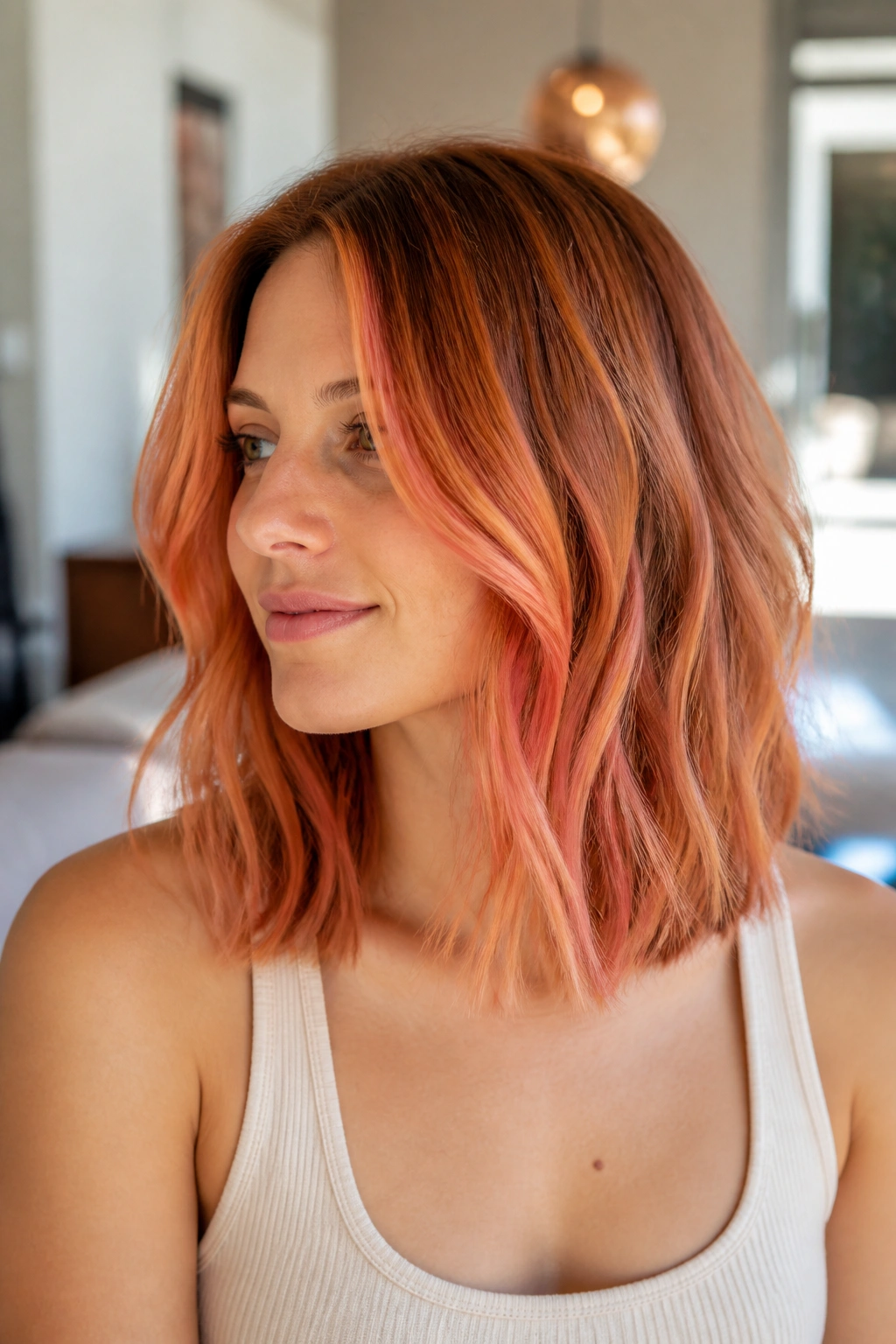
A balayage lob is one of the easiest ways to make fine hair look dimensional without changing the whole structure of the cut. The length sits around the shoulders or collarbone, and the red tones move from copper to amber to soft rose in a way that adds depth.
The cut itself should stay tidy. Too many layers, and the color work loses its shape. Keep the ends blunt enough to hold weight, then place the lighter tones around the face and through the top half of the hair. That gives the illusion of thickness where the eye lands first.
This is a good option if you like wearing your hair loose most of the time. A loose wave from a 1-inch iron, or even a quick bend with a flat iron, is enough to show the color shift. On a fine strand, that shift matters. It stops the hair from looking like one flat sheet, and fine hair often needs that help more than people admit.
17. Wine-Red Rounded Bob
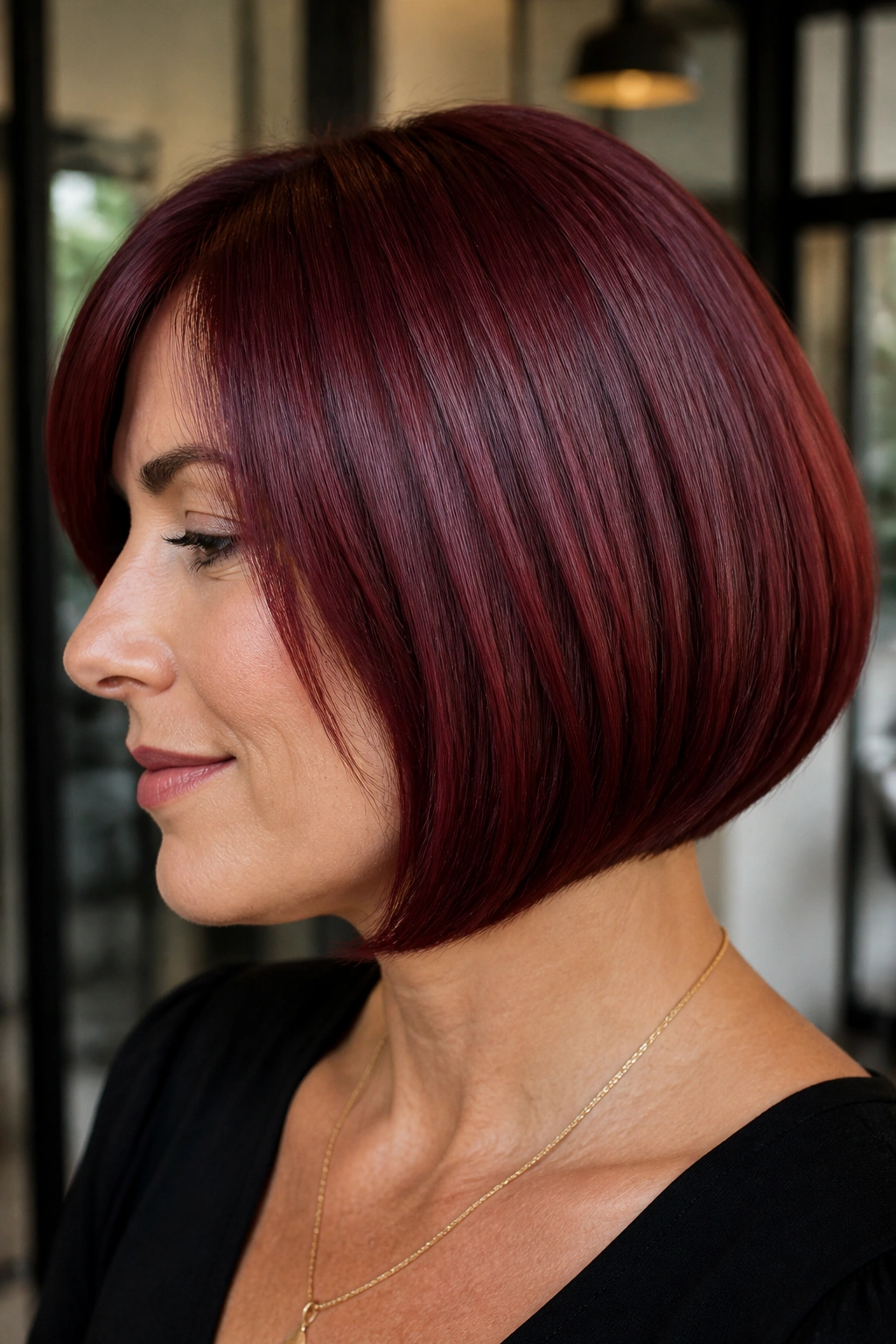
A rounded bob curves softly in toward the chin, which gives fine hair a fuller outline from the side and the back. There’s something neat about it. The shape feels finished even when the styling is minimal.
Wine red deepens the effect because it adds a glossy, saturated layer of color. The shade is darker than copper and more polished than bright cherry. That makes the curve of the cut look smooth instead of choppy. If your hair is very fine, this is a nice way to keep the ends from looking too airy.
How to Style It
Use a medium round brush and direct the ends inward while blow-drying. Let the hair cool in the brush for a few seconds before releasing it. That little pause keeps the curve in place.
If your hair has a slight bend on its own, even better. The rounded shape will feel almost effortless, though not in the lazy sense. It still needs a clean cut. It just does not need much drama after that.
18. Rusty Bob with Curtain Bangs

Curtain bangs are one of the easier fringe choices for fine hair because they split the front into two softer sections instead of taking a huge chunk of density away from the top.
Rusty red gives the cut warmth and a lived-in feel. The color is not too bright, not too dark, and that middle ground makes the bangs feel airy rather than harsh. This bob works well when the lengths hit between the chin and shoulders, because the curtain fringe gives the face shape while the rest of the hair keeps enough weight to look full.
- Keep the bangs long enough to sweep open.
- Ask for a center split that follows your natural part.
- Pair the fringe with a blunt or softly beveled perimeter.
- Use a small round brush only on the front pieces.
The nice thing here is that the bangs grow out gracefully. That matters if you do not want to be trapped in a strict fringe schedule.
19. Cherry Bob with Tucked Ends
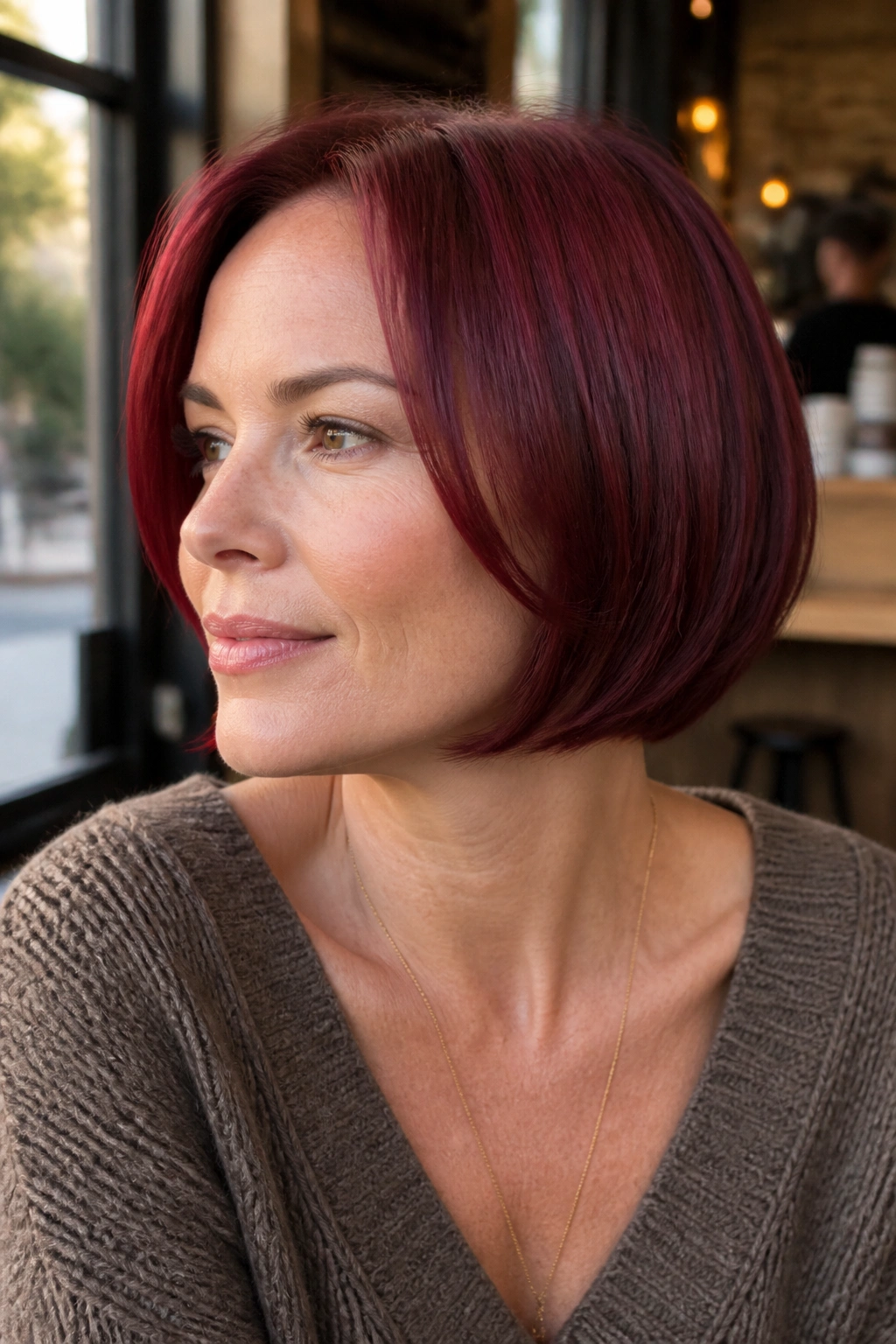
A tucked-end bob is a small detail, but it changes the whole mood. The ends curve slightly inward near the neck, which keeps the outline neat and gives fine hair a tidier finish.
Compared with a blunt bob, this version feels a touch softer. The cherry color keeps it vivid, so the haircut still reads as crisp even though the ends are gentler. I like this shape for anyone who wears earrings, glasses, or structured collars. The tucked line sits close to the face and neck in a way that looks deliberate without being severe.
Why It Feels Different
The inward tuck creates a visual stop. Your eye lands on the shape, and because the ends are controlled, the hair looks fuller than a raw, broken edge would. If your hair flips out at the shoulders, a little bevel at the ends fixes that fast. It’s one of those small salon choices that makes a big difference once you’re home and doing your own hair.
20. Soft Brick-Red Bob with Face Framing
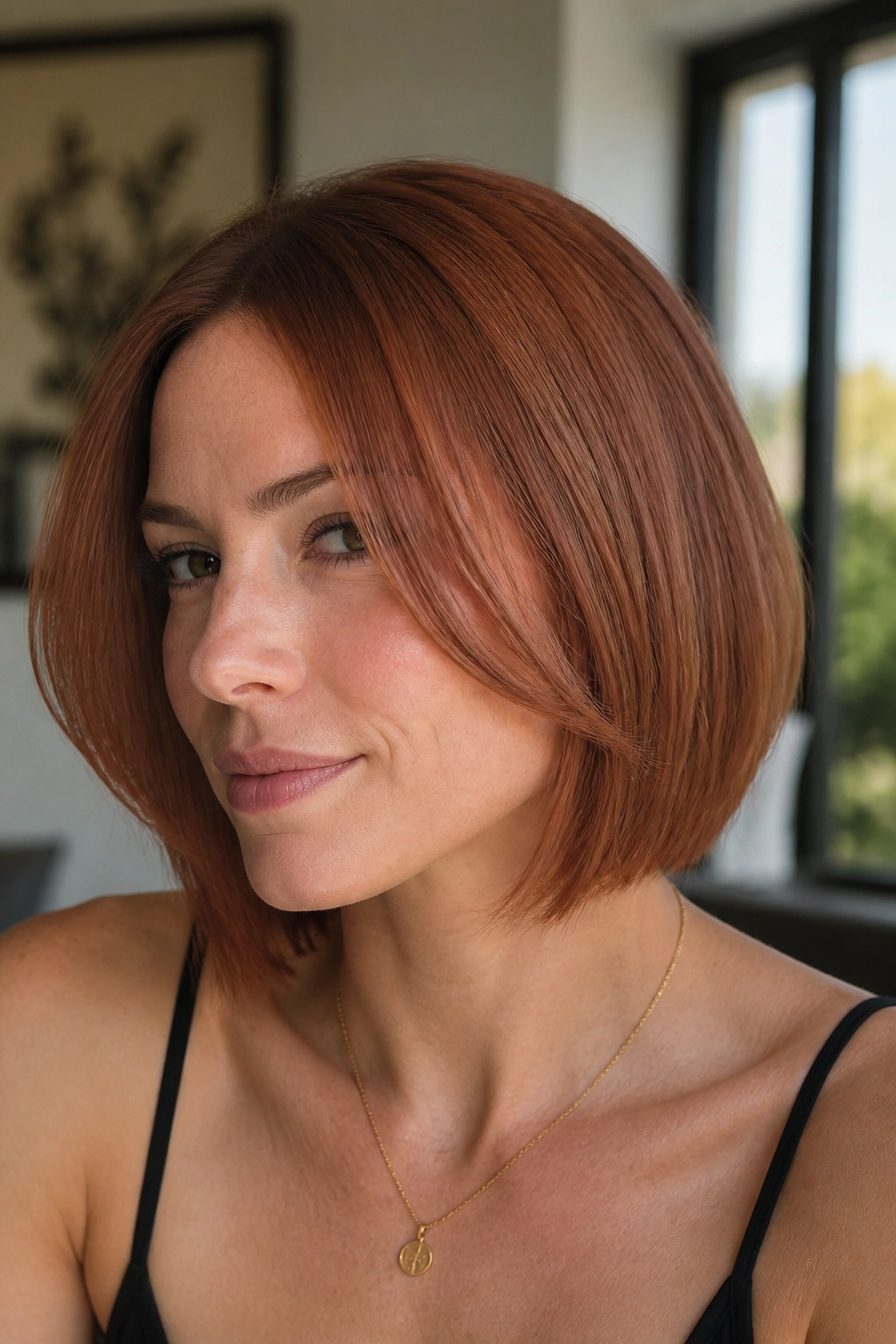
A soft brick-red bob is for the person who wants polish without feeling overdone. The color sits in that earthy red zone that looks rich in daylight and calm indoors, and the haircut keeps the focus on shape instead of flash.
The face-framing pieces are the useful part. They start near the cheekbone or just below it, then taper softly toward the jaw. On fine hair, that helps pull attention forward without stripping weight from the rest of the cut. The perimeter stays solid, which is what keeps the style from going limp. You get movement near the face and structure everywhere else.
This one works especially well if you like a low-drama routine. A quick blow-dry, a small amount of cream, and a center or soft off-center part is usually enough. The whole thing looks finished without much effort, which is what a good bob should do. If I had to pick one style from this list for someone who wants red hair that still feels easy to live in, it would be this one.
