



A bob that ends exactly where the cheeks are widest can make a round face look wider than it is. Shift the front piece forward by even an inch or two, and the shape changes fast. The eye stops circling the face and starts moving down the diagonal instead.
That’s the whole point of a short asymmetrical bob haircut for round faces. Not drama. Line. A little tilt in the cut does more than a blunt edge ever will, because it breaks the softness that makes round faces read as fuller at the sides.
Shorter isn’t the goal. Shape is.
The best versions are never random. Some lean sleek and sharp, some use texture to soften the outline, and some add height at the crown so the face looks a touch longer. Fine hair, thick hair, straight hair, curls — they all want different engineering, and the haircut only works when that part is respected.
1. Deep Side-Part Asymmetrical Bob for Round Faces
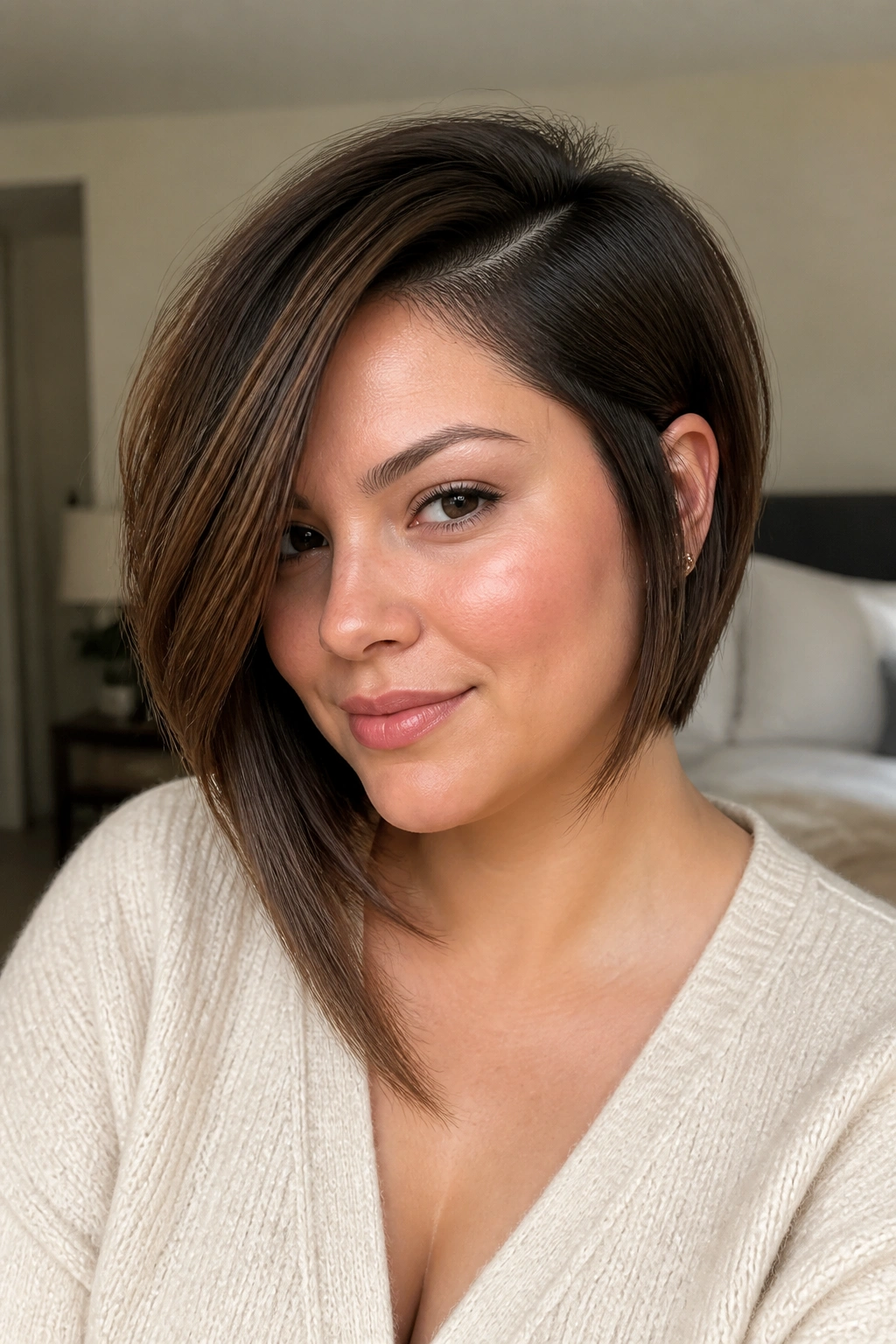
A deep side part does a lot of work on a round face. It breaks the symmetry, throws the eye off-center, and creates a diagonal line that a middle part never gives you. Keep the longer front piece just past the jaw, and the whole cut starts reading slimmer at once.
Why It Flatter a Round Face
The side part changes the visual weight. Instead of leaving both cheeks exposed in the same way, it lets one side fall forward and one side sit back, which makes the face feel less wide at the middle. That matters most when the hair is cut short.
Ask for these details:
- Keep the longer side about 1 to 2 inches longer than the shorter side.
- Let the longer front piece hit the jaw or just below it.
- Build a small amount of graduation in the back so the nape stays neat.
- Keep the fringe area soft, not blunt and heavy.
A soft tuck behind the ear on the short side makes the angle read faster. It’s a tiny move, but it changes the whole shape.
2. Stacked Inverted Asymmetrical Bob
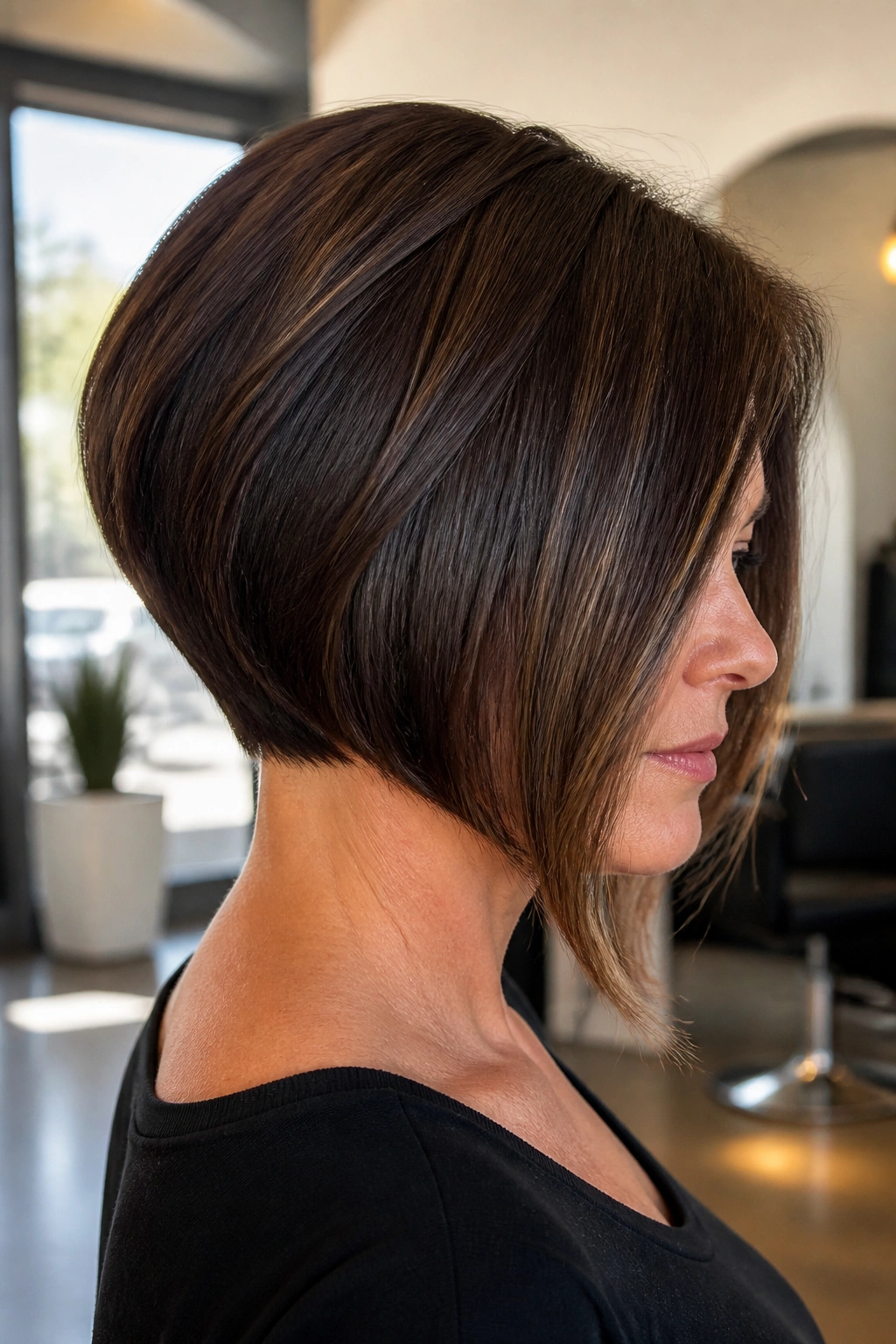
A stacked back fixes the one problem a round face does not need: width sitting right at the jaw. That’s why this cut keeps showing up on people with thicker hair. The back is shorter and slightly stacked, which lifts the crown, while the front stays longer and swings forward.
The result is a cleaner line through the neck and a little extra height where round faces usually need it. That crown lift is not decoration. It changes the silhouette from round to oval much faster than flat hair ever will.
This cut works especially well if your hair naturally wants to puff out at the sides. A round brush, a touch of mousse at the roots, and a blast of heat at the crown keep the back from collapsing. If you air-dry it and ignore the roots, the stack loses its shape.
It’s a neat cut. Not fussy. And if you like a haircut that still looks intentional on day three, this one has real staying power.
3. Curtain Bangs on a Short Asymmetrical Bob for Round Faces
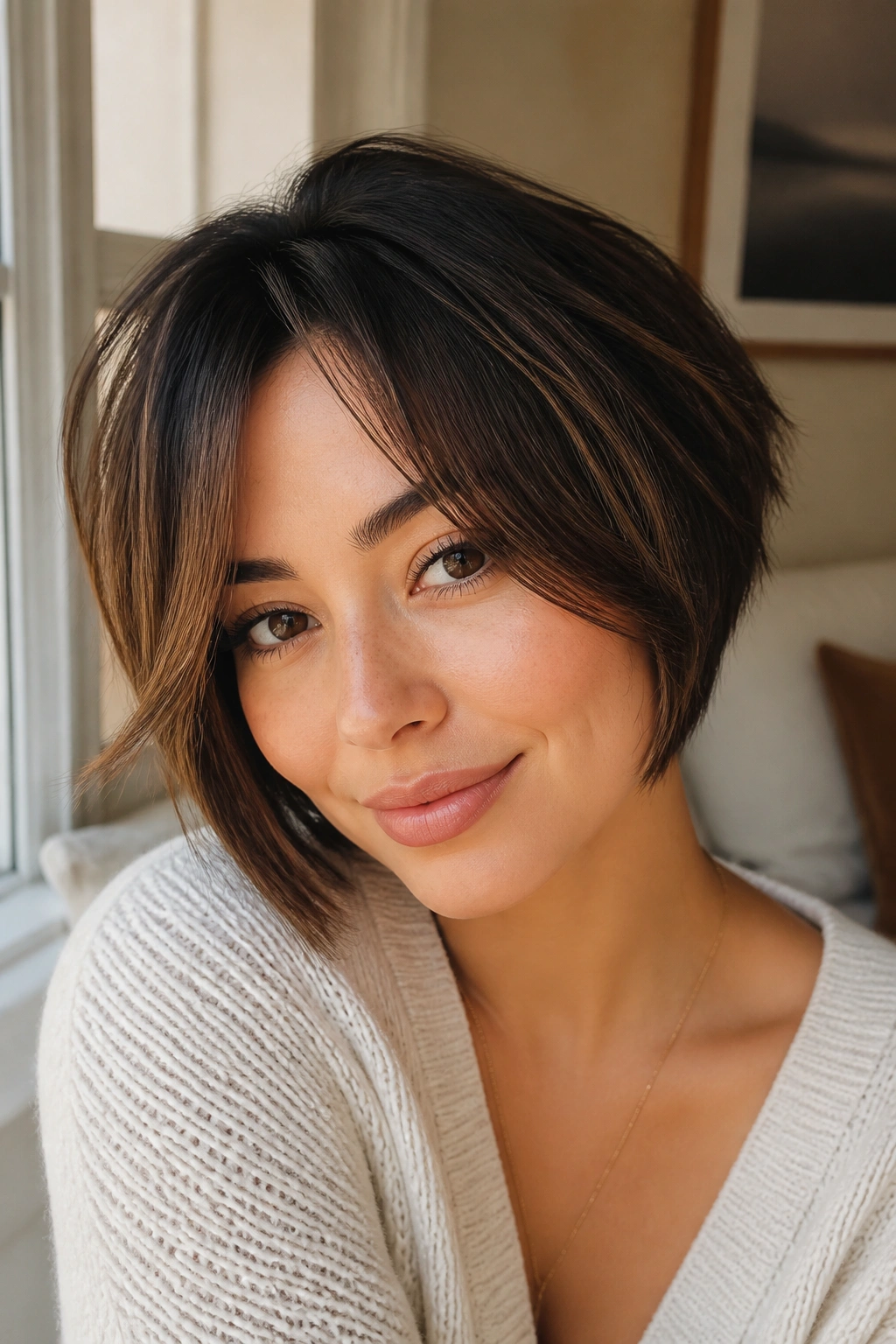
Can curtain bangs work on a round face? Yes, if they start light and open high enough to show some forehead. The trick is not making the fringe sit like a curtain rod across the middle of your face. It needs movement, split space, and a bit of length at the cheekbones.
On a short asymmetrical bob, curtain bangs help because they add another diagonal line. One side can blend into the longer front piece, while the other side stays shorter and feathered. That gives the haircut depth without making it look heavy.
How to Ask for It
Tell your stylist you want the center bang area soft and short enough to separate, not thick enough to build a wall. Then ask for the longest bang pieces to graze the cheekbone while the longer side of the bob reaches the jaw or just below it. That keeps the face open.
This cut is good if your forehead is on the wider side or if you like hair that can be pushed apart with your fingers and still look finished. It’s less good if you hate any fringe at all. Bangs are part of the point here.
4. Razor-Cut Textured Bob With Broken Ends
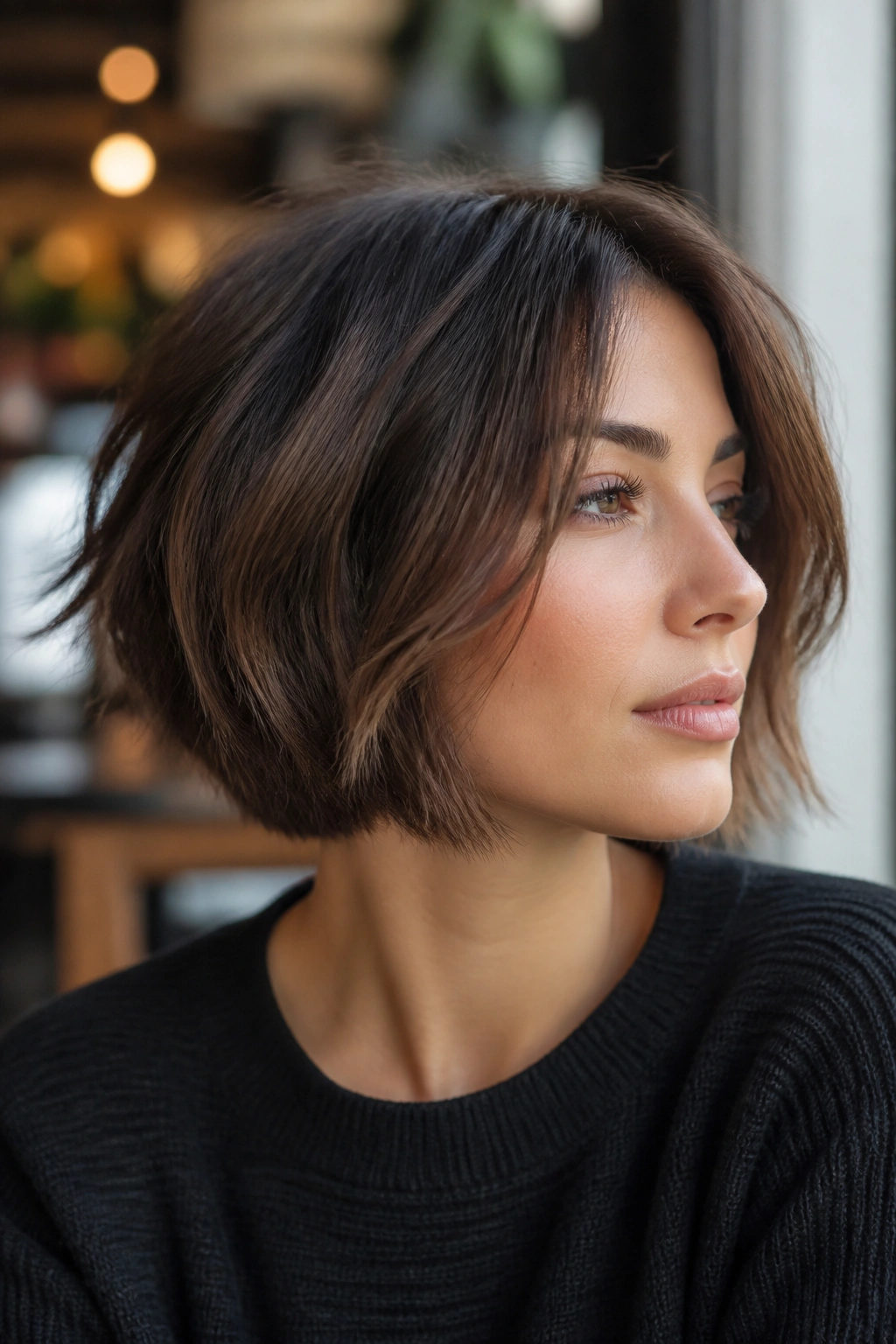
Picture a bob that feels too perfect. The outline is crisp, the ends are blunt, and the cheeks suddenly seem wider because there is nowhere for the eye to go. A razor-cut asymmetrical bob fixes that by breaking up the edge.
The razor softens the perimeter and gives the hair a bit of separation at the ends. That’s useful on round faces because a hard, solid line at the jaw can look boxy. The broken edge keeps the shape light and a little undone, which suits the face better.
This version works best when:
- You want movement more than polish.
- Your hair is straight or slightly wavy.
- The ends are healthy enough for a razor cut.
- You do not want a haircut that needs a perfect blowout every day.
A razor cut is not magic. It can chew up fragile, over-processed ends if the stylist is too aggressive. But when it’s done with a light hand, the haircut feels airy and the asymmetry reads without shouting.
5. Sleek Jaw-Length Asymmetrical Bob
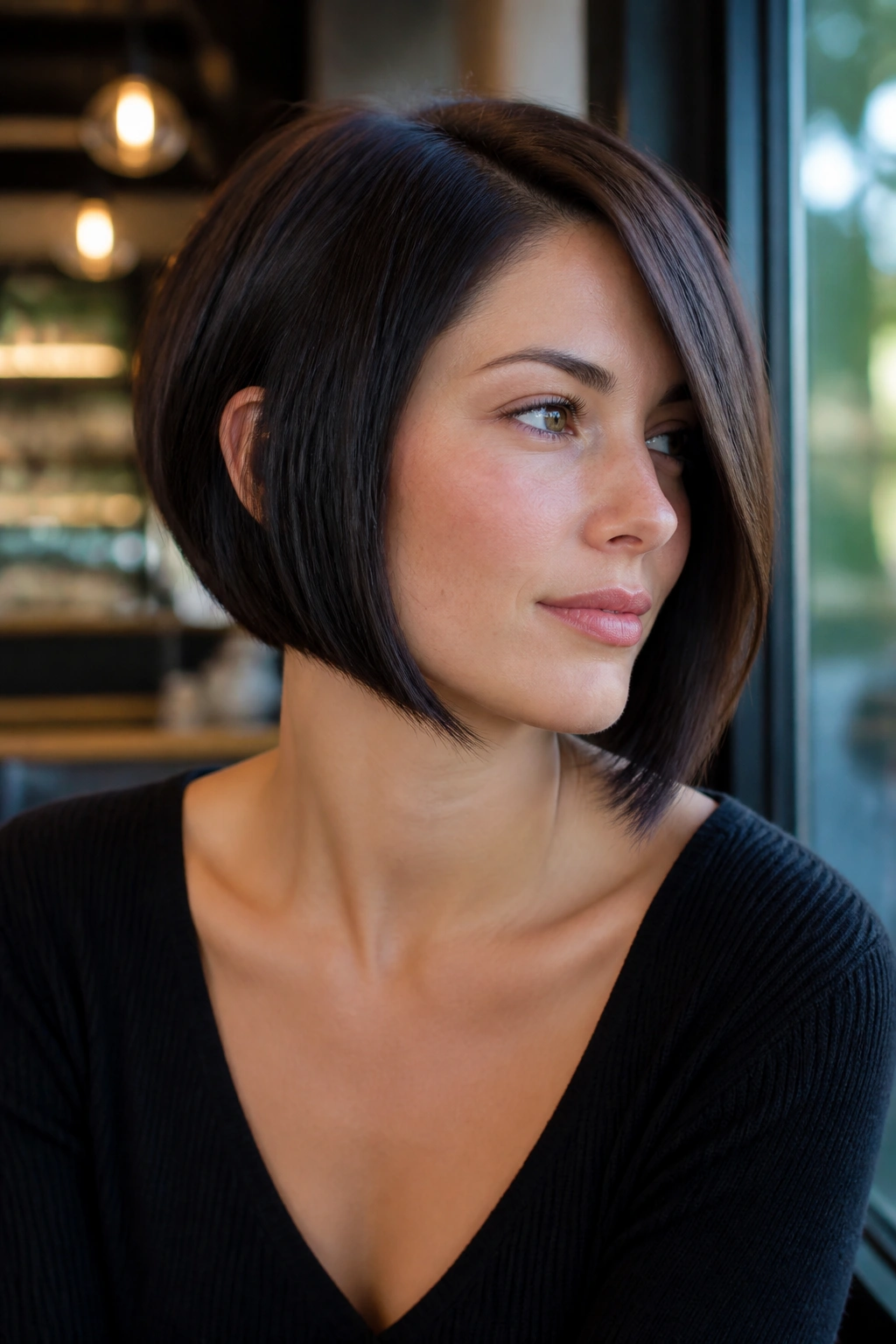
Sleek does not mean harsh. A jaw-length asymmetrical bob can look soft on a round face if the longer side drops a touch below the jaw and the shorter side stays controlled near the cheekbone. The clean line gives the face shape, while the side part keeps the whole thing from turning boxy.
This cut is one of my favorites for fine hair. The straight perimeter makes the hair look denser, and the asymmetry gives it enough edge that it doesn’t feel plain. If your hair is naturally smooth, you may not need much more than a round brush and a flat iron pass on the ends.
Flat iron, yes. Paper-flat, no. Leave a whisper of bend at the tips so the bob does not look glued to the face. That tiny movement matters more than people think, especially on round cheeks where a hard edge can feel too severe.
If your hair is thick, ask for some internal weight removal near the nape, not a bunch of short layers around the front. The front should frame the face, not puff out from it.
6. Wavy Asymmetrical Bob With Soft Ends
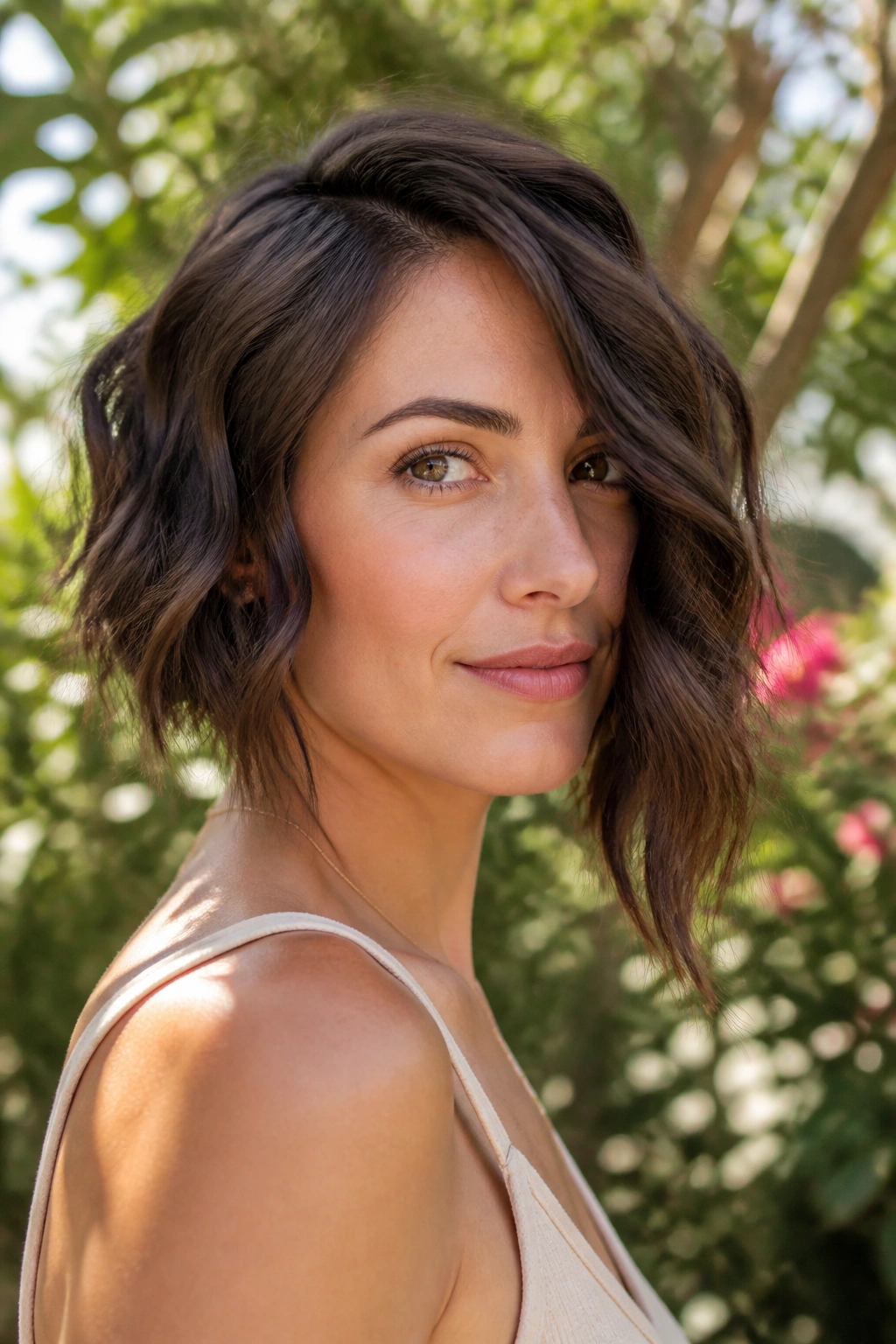
Unlike a blunt bob, a wavy asymmetrical bob lets the shape breathe. The wave takes the edge off the line, and the longer front section gives the eye somewhere to travel. On a round face, that travel is the whole game.
The best version starts the wave below the cheekbone, not right at the widest part of the face. If the bend hits too high, you add width where you don’t want it. A soft bend through the mid-lengths keeps the look relaxed and longer in the face.
This is a smart cut for natural wave patterns that refuse to stay flat anyway. A little sea salt spray, a quick scrunch, and a diffuse or rough-dry finish usually do enough. If your hair bends in different directions, the asymmetry can actually help because the longer side gives the eye a stable line.
I like this one for people who want movement but hate a “styled” look. It reads easy. Not sloppy. That’s a useful line to walk.
7. Side-Swept Fringe Asymmetrical Bob

A side-swept fringe brushes the brow and leaves one eye a little more open than the other. It sounds small. It isn’t. On a round face, that slanted fringe can make the haircut feel longer and lighter almost immediately.
The key is keeping the fringe soft enough to move. A stiff, heavy side fringe can fall into the face and make the cheeks look more dominant. The better version is feathered at the ends and connected to the longer side of the bob so the whole cut feels continuous.
What to Watch For
- Do not let the fringe end at the middle of the forehead.
- Keep the sweep angled toward the longer side of the cut.
- Ask for a bit of internal softness so it moves, not sticks.
- If you have a cowlick, cut the fringe slightly longer than you think you need.
This is one of those cuts that can look expensive without trying hard. The shape does the talking. The styling only has to keep up.
8. Choppy Asymmetrical Bob With a Hidden Undercut
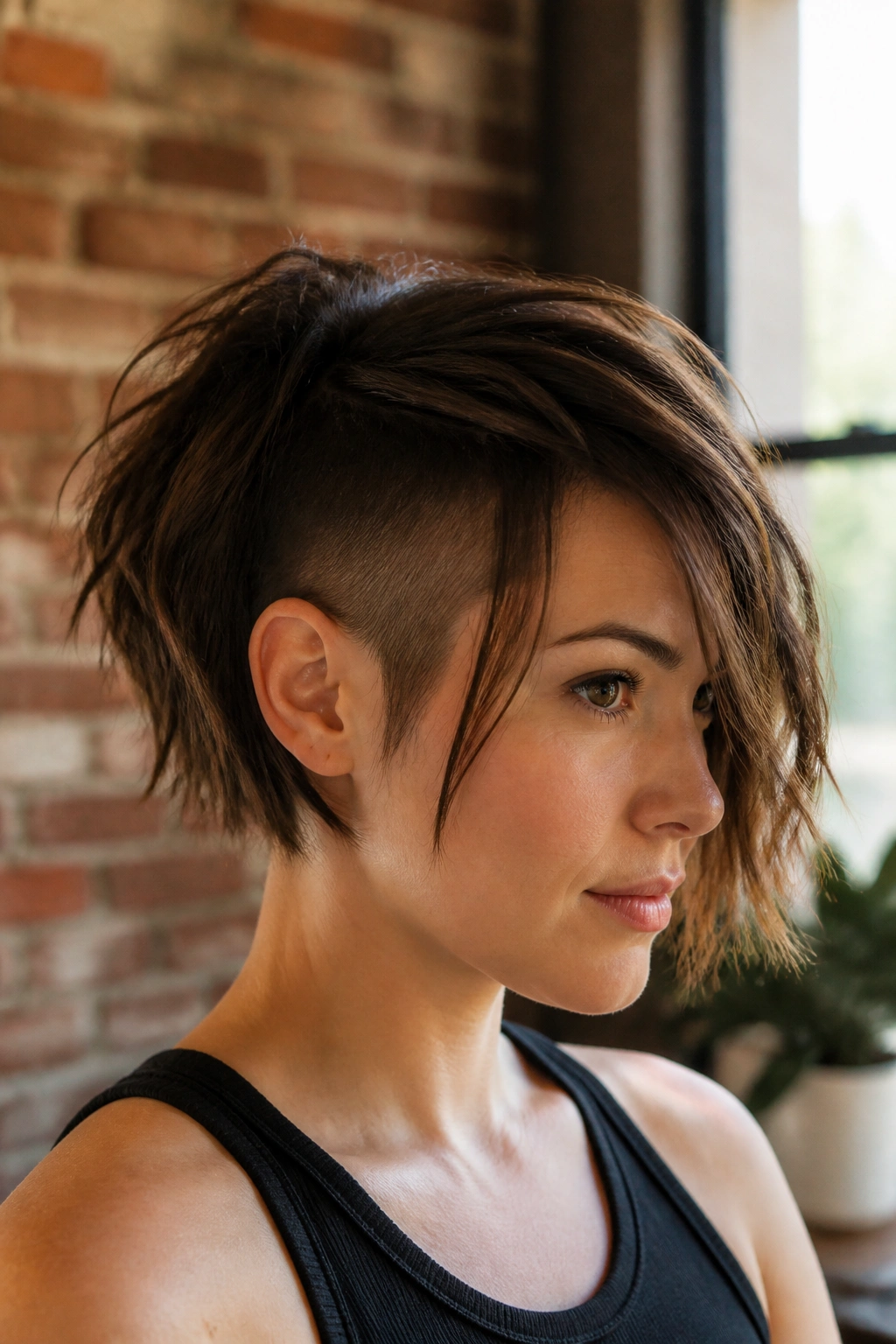
Thick hair can swallow a bob whole if the inside of the cut is too dense. A hidden undercut solves that without turning the haircut into something loud or obvious. The outside still looks like a bob, but the bulk underneath gets removed so the shape can sit close to the head.
This works especially well on round faces because the cut can stay narrow at the sides instead of flaring out. The asymmetry comes through more clearly when the hair is not fighting itself. One side can be a little longer and heavier, while the hidden undercut removes puff from the shorter side or the nape.
That said, this is not a low-commitment move if you like changing your part all the time. A hidden undercut is supposed to stay hidden, which means the haircut needs some direction. If you want a style that can swing from center part to side part with no consequence, skip this one.
For the right person, though, it’s excellent. Clean, sharp, and far easier to wear than it sounds.
9. Chin-Length Angled Bob With Beveled Ends
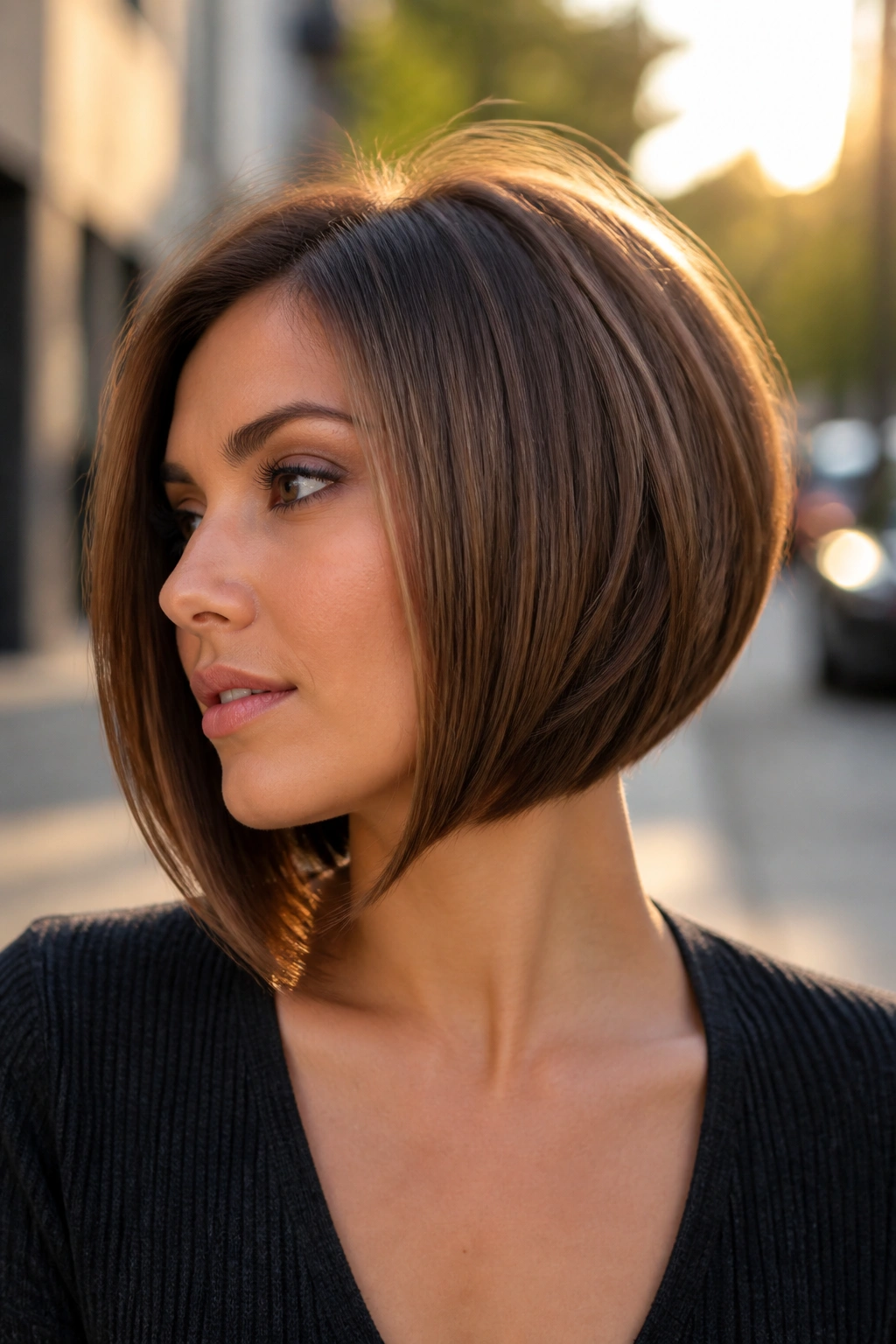
Can a chin-length bob still flatter a round face? Absolutely, if the front is beveled and the back stays neat. The angle gives you the shortness you want without leaving a hard horizontal line across the face.
The beveled ends are the important part. Instead of stopping straight, the hair bends under very slightly, which keeps the cut from flaring out at the cheeks. That little inward curve makes the jawline look cleaner and keeps the bob from acting like a shelf.
How to Style It
Use a round brush to tuck the ends under as you dry. If your hair is straight, a quick pass with a flat iron at the front corners can sharpen the angle. If your hair is wavy, smooth only the outer layer and leave the inside a little soft.
This cut is good for people who want a bob that feels tidy but not severe. It’s short. It’s neat. And it still gives the face a diagonal line instead of a box.
10. Micro Asymmetrical Bob With a Longer Front Corner
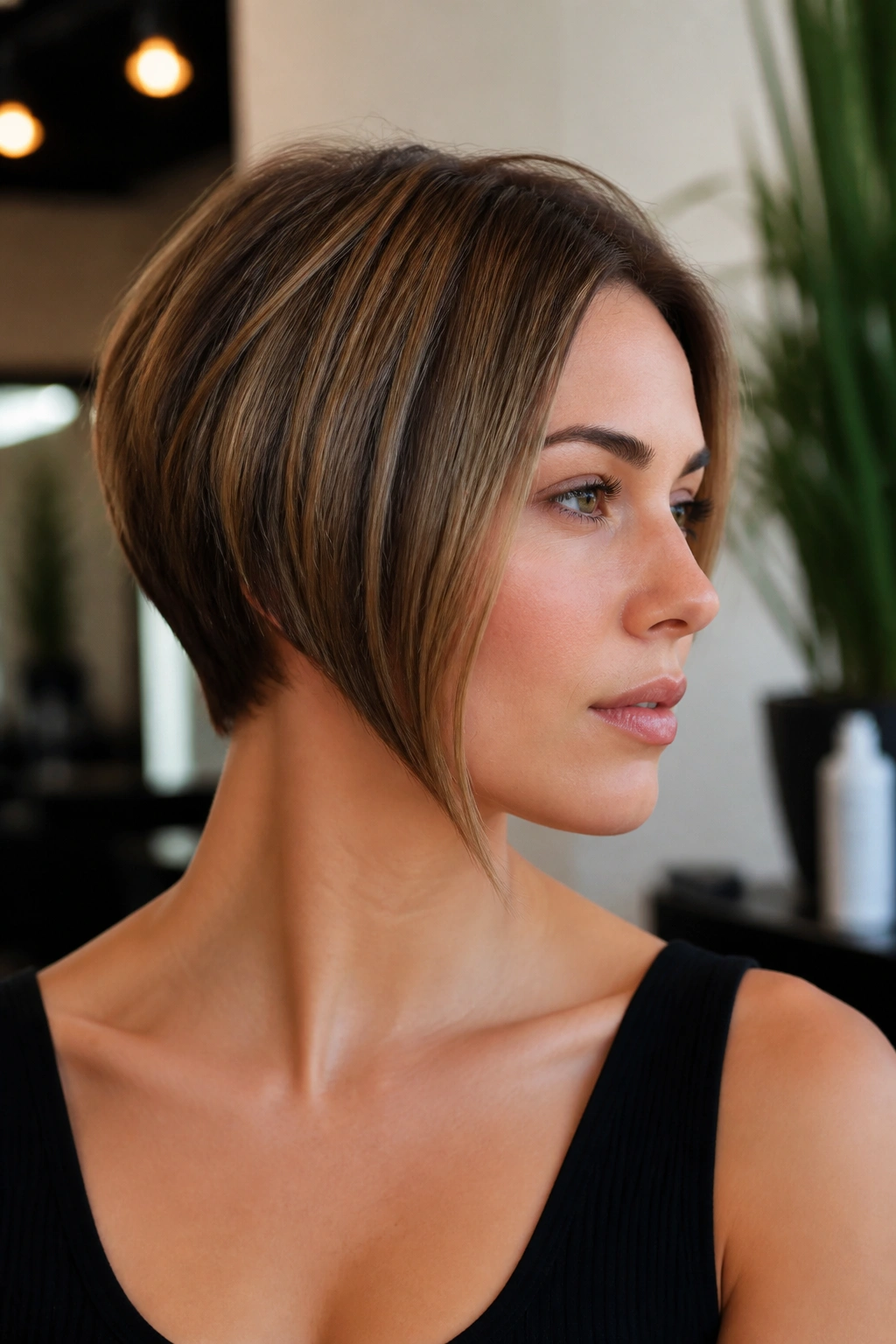
One side skims the jaw. The other stops near the ear. That gap can look sharp in a good way when the crown has lift and the neckline stays clean. A micro asymmetrical bob is the shortest version on this list, and it asks for confidence.
The reason it can work on a round face is the same reason a sharp jacket lapel works on soft features: it gives direction. The longer front corner pulls the eye down, while the shorter back clears the neck and keeps the overall shape from feeling heavy.
Ask for these details at the salon:
- Keep the longer front piece at or just below the jaw.
- Let the shorter side sit above the jawline.
- Remove bulk at the nape so the back lies flat.
- Leave enough length at the crown to support height.
This cut is not for someone who wants softness first. It is for someone who likes a little edge and does not mind that the haircut gets noticed before the outfit does.
11. Curly Asymmetrical Bob for Round Faces
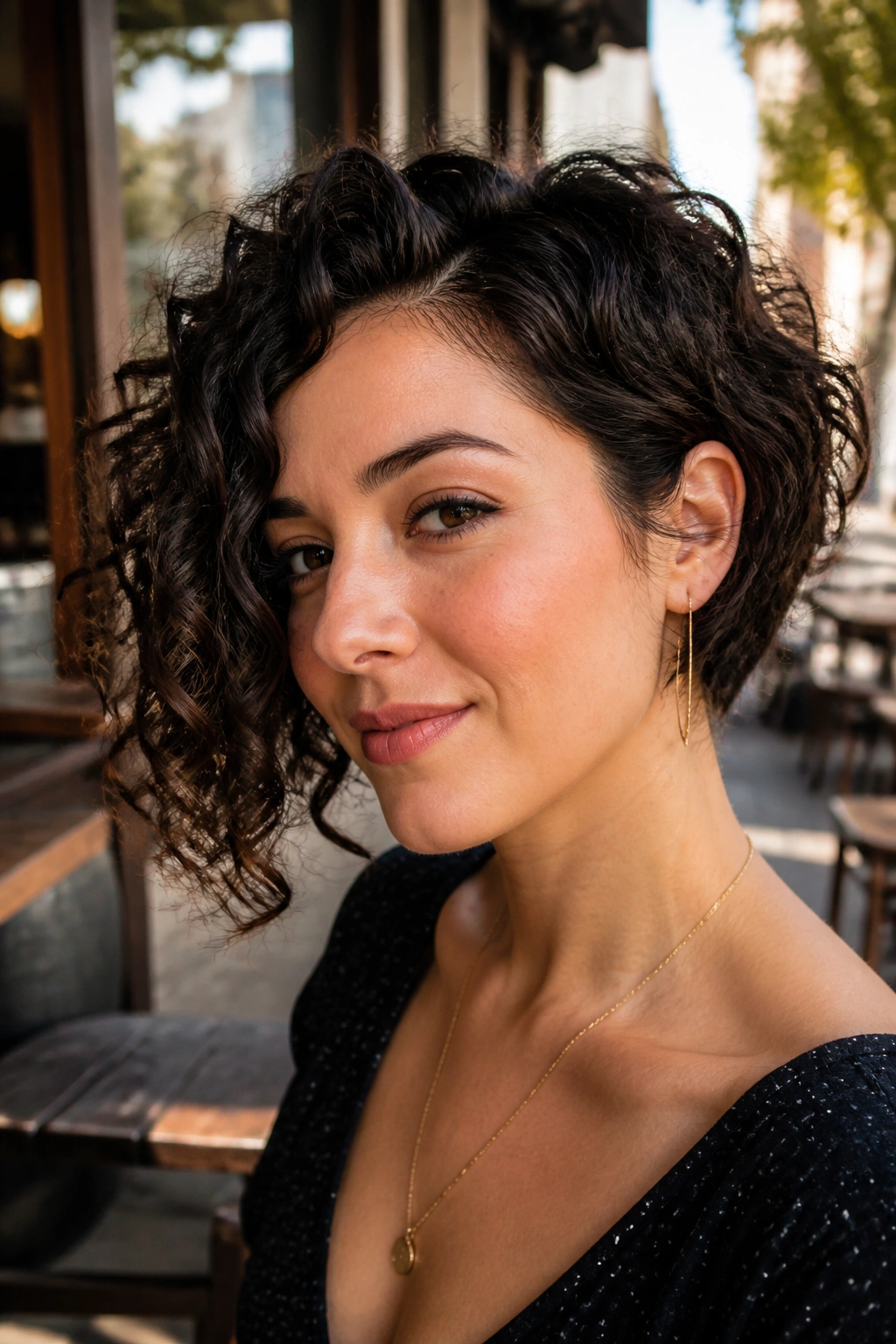
What changes when curls enter the picture? More than most people expect. A curly asymmetrical bob has to be cut in a way that respects shrinkage, because curls spring up and can steal length from the front if the stylist guesses wrong.
The safest version is usually cut dry, or at least partly dry, so the shape shows itself before the scissors come out too far. On a round face, the longer side should still fall past the widest part of the cheek when the curl is dry. That keeps the face from looking broader than the haircut intends.
How to Ask for It
Tell the stylist you want the asymmetry visible when the hair is dry, not only when it’s wet. Ask for the longer front curl to land near the jaw, with the shorter side staying lifted enough to show the neck. That keeps the shape readable.
Curly bobs can go boxy fast if the sides are cut too evenly. Asymmetry gives the curl pattern a direction, and that direction is what flatters the face.
12. Asymmetrical French Bob With Brow-Grazing Bangs

A classic French bob is blunt and tidy; an asymmetrical French bob feels a little looser and less strict. That difference matters on a round face because the angle in front stops the cut from sitting like a neat little circle around the cheeks.
Brow-grazing bangs keep the forehead from taking over the whole look, but they should still be airy. If the fringe is too heavy, the haircut loses its lift and starts to feel dense. A soft side shift in the part helps here, too. It keeps the bangs from landing in one flat line.
This cut works best on straight or slightly wavy hair that holds shape without fighting you. It has a very specific mood — clean, short, and a little chic without being precious. If that is your lane, the asymmetry gives the French bob a sharper edge.
If your hair grows in a strong cowlick at the front, ask for the bangs a touch longer than you think you need. The curl at the root will usually shorten them more than expected.
13. Feathered Asymmetrical Bob for Fine Hair
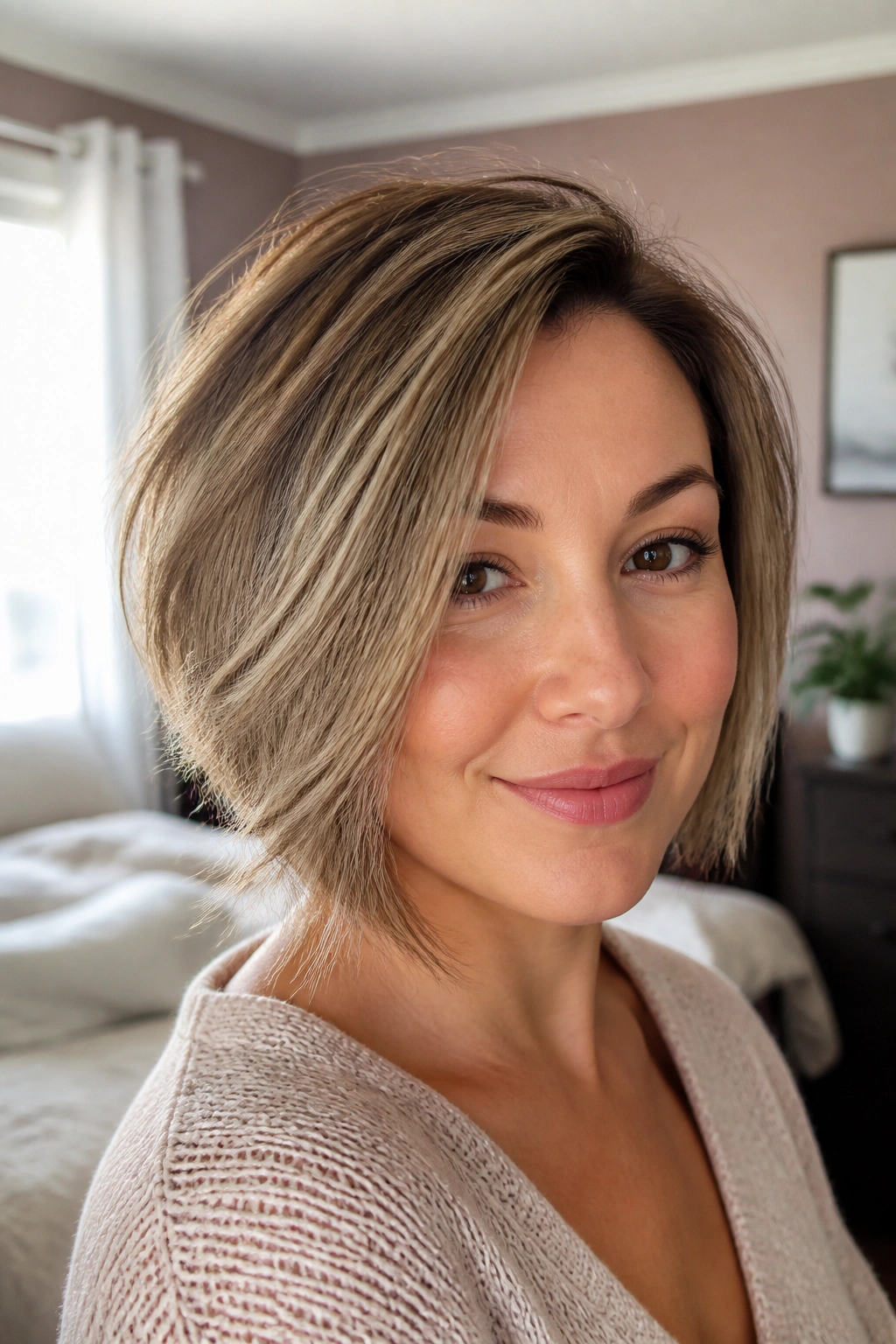
Fine hair does not need more layers everywhere. It needs lift where the eye lands. That’s why feathering only the ends and a small section near the crown can make such a difference on a round face.
The feathered edge keeps the hair from forming one solid block at the cheeks. It also makes the longer side feel lighter, which matters when the whole point of the cut is to create length through shape. The hair should move, not cling.
A blowout with a small round brush helps here. Lift the roots first, then bend just the last inch of the longer front piece under or slightly forward. A light mousse at the roots and a mist of texturizing spray at the ends usually do enough.
This is a good cut if your hair is fine, a little flat, and prone to looking thinner than it is when it’s cut too blunt. Feathering keeps the bob from feeling heavy while still giving the face some edge.
14. Angled Bob With Crown Lift
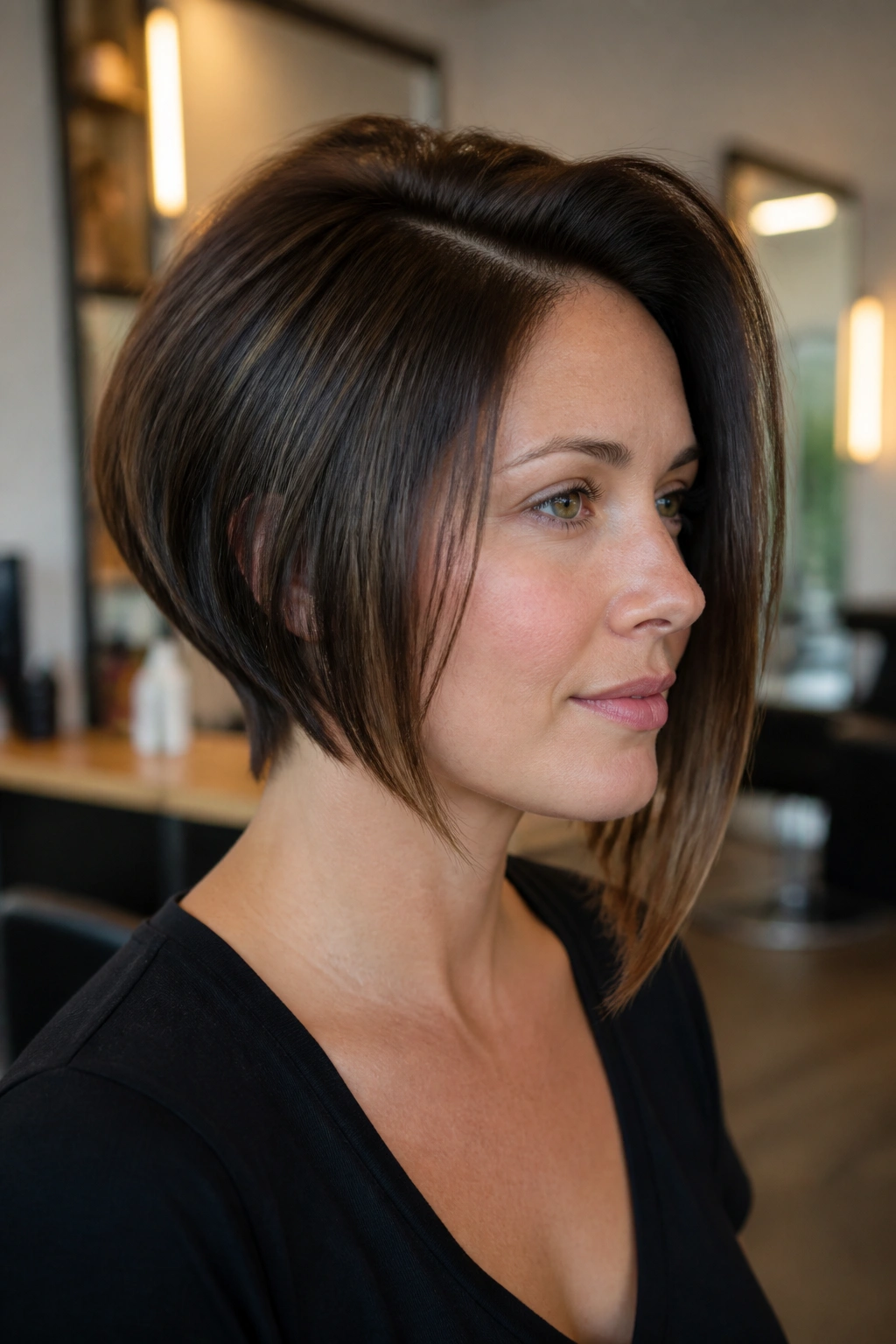
If the crown stays flat, the angle in front can fall flat too. That is why this cut puts some attention on the top, not just the perimeter. A round face benefits from a little extra height at the crown because it shifts the whole silhouette upward.
The cut itself is longer in front and shorter in back, but the real change comes from the internal layering at the top. Those layers should be subtle. You want lift, not a choppy top section that sticks out like a bad haircut from the early days of flat irons.
The Short Checklist
- Ask for soft internal layers at the crown, not all over.
- Keep the front pieces longer than the jaw.
- Dry the roots upward with a round brush.
- Use a lightweight root spray, not a heavy cream.
This version is especially good if your face is round and your hair tends to collapse at the top. Once the crown has height, the whole bob looks more vertical and a little less wide.
15. Ear-Tucked Asymmetrical Bob
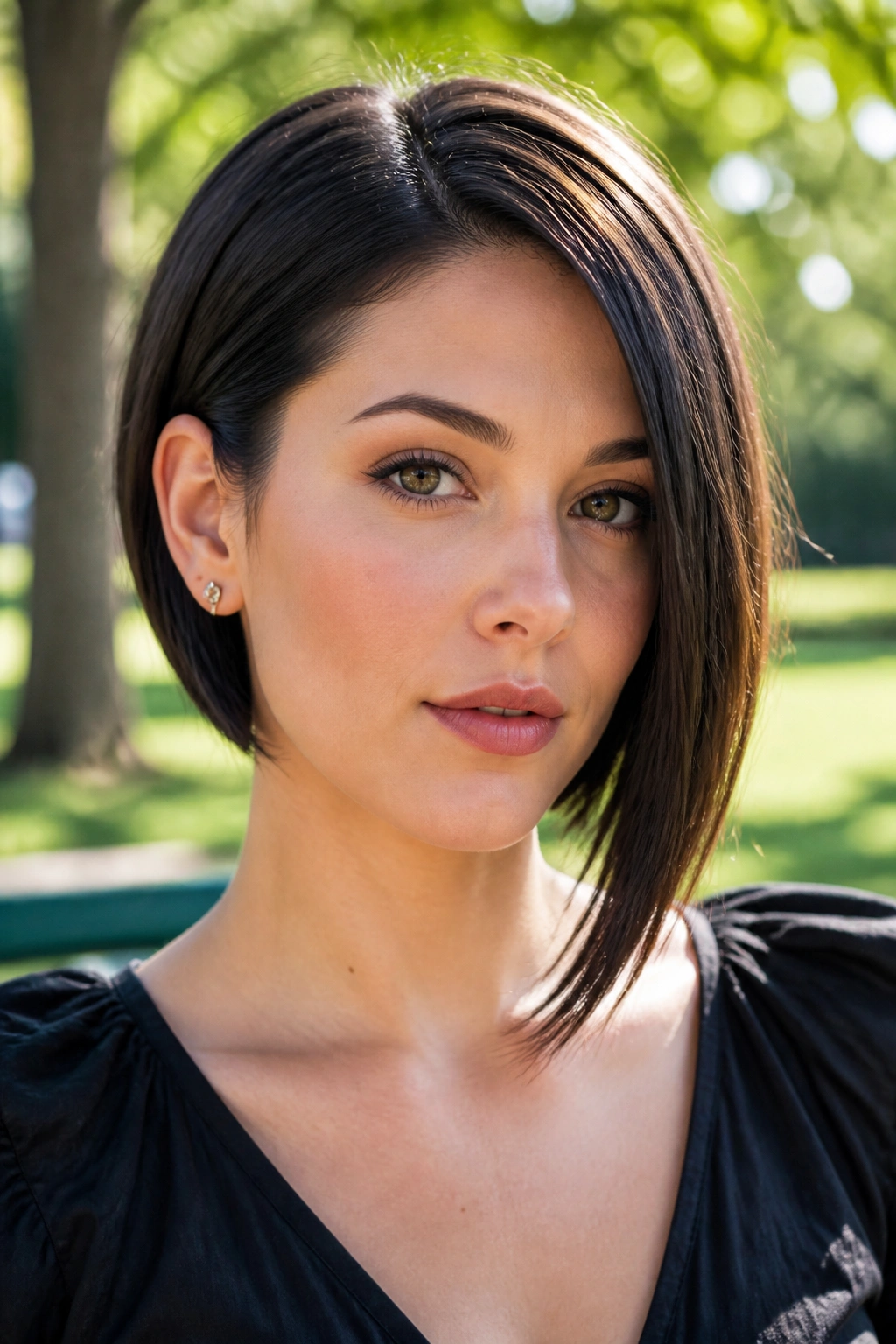
Do you want the haircut to feel softer when you tuck one side behind the ear? That’s the whole point here. An ear-tucked asymmetrical bob gives you one side that falls forward and one side that opens the face, which is a simple but effective contrast on round features.
The longer side should have enough length to tuck without popping out at the cheek. If it’s too short, the tuck looks accidental. If it’s too long, it can drag the whole shape down. That narrow window is what makes this style feel neat.
The style also depends on a clean side part. Without that, the tuck can make the haircut feel lopsided in a bad way instead of a deliberate one. A soft bend through the front helps too, especially if your hair is straight and tends to look rigid.
This is the kind of bob that looks best when it’s not overthought. One side tucked. One side loose. Done.
16. Polished One-Sided Bob
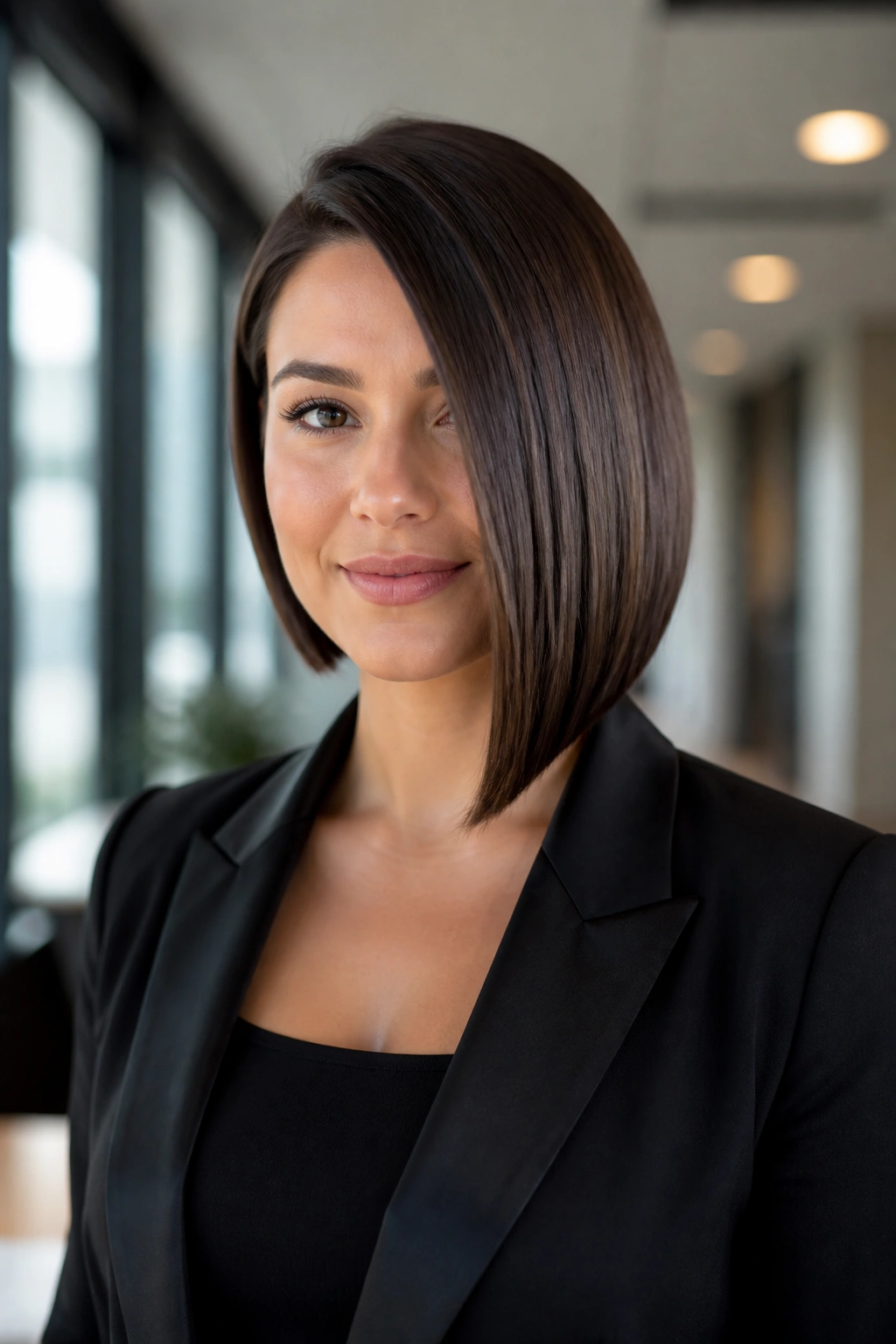
A polished one-sided bob has a specific attitude. It’s controlled, shiny, and very aware of its own line. On a round face, that control works because the shape does not spread out at the sides; it stays focused and directional.
The longer side usually sits in front of the shoulder line, while the shorter side stays close to the cheek or ear. That creates a clean diagonal across the face, which helps the face read longer. The shine matters, too. Smooth hair reflects light in a way that makes the cut look crisp instead of puffy.
This one is easiest on straight hair, or on hair that can be smoothed with a brush and a heat protectant. A flat brush at the top, a paddle brush through the lengths, and a small amount of smoothing cream at the ends usually get you there. Keep the root volume modest. Too much lift can make the asymmetry less obvious.
If you like a haircut that looks sharp in a blazer and still works with jeans, this is a good place to land.
17. Face-Framing Bob With Long Front Pieces
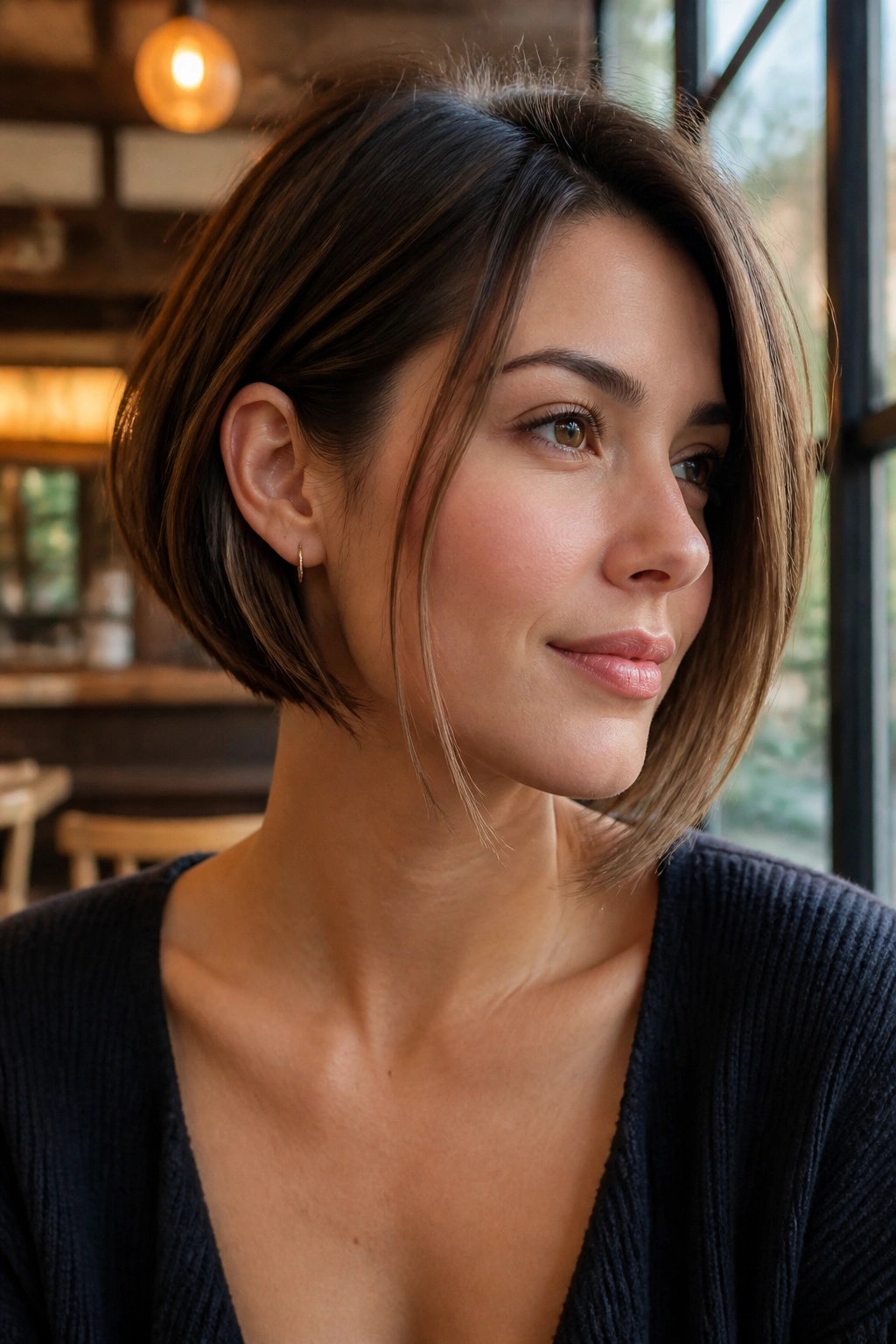
What if you want softness without losing the line? Let the front pieces do the talking. A face-framing asymmetrical bob uses longer sections starting below the cheekbone so the face still feels open, but the line of the cut remains clear.
The trick is placement. The face-framing pieces should start low enough that they don’t sit right on the cheeks. If they begin too high, they can add width where you were trying to subtract it. Start them lower, let them move around the jaw, and the whole cut feels lighter.
This is a good cut for people who like to tuck hair behind one ear, twist the front piece back, or wear the bob with a soft bend. It gives you options. Not every bob needs to announce itself from across the room.
If your round face has especially full cheeks, this version is usually kinder than a blunt shape. It keeps the face visible while making the cut feel tailored.
18. Bob-Pixie Crossover With Front Length
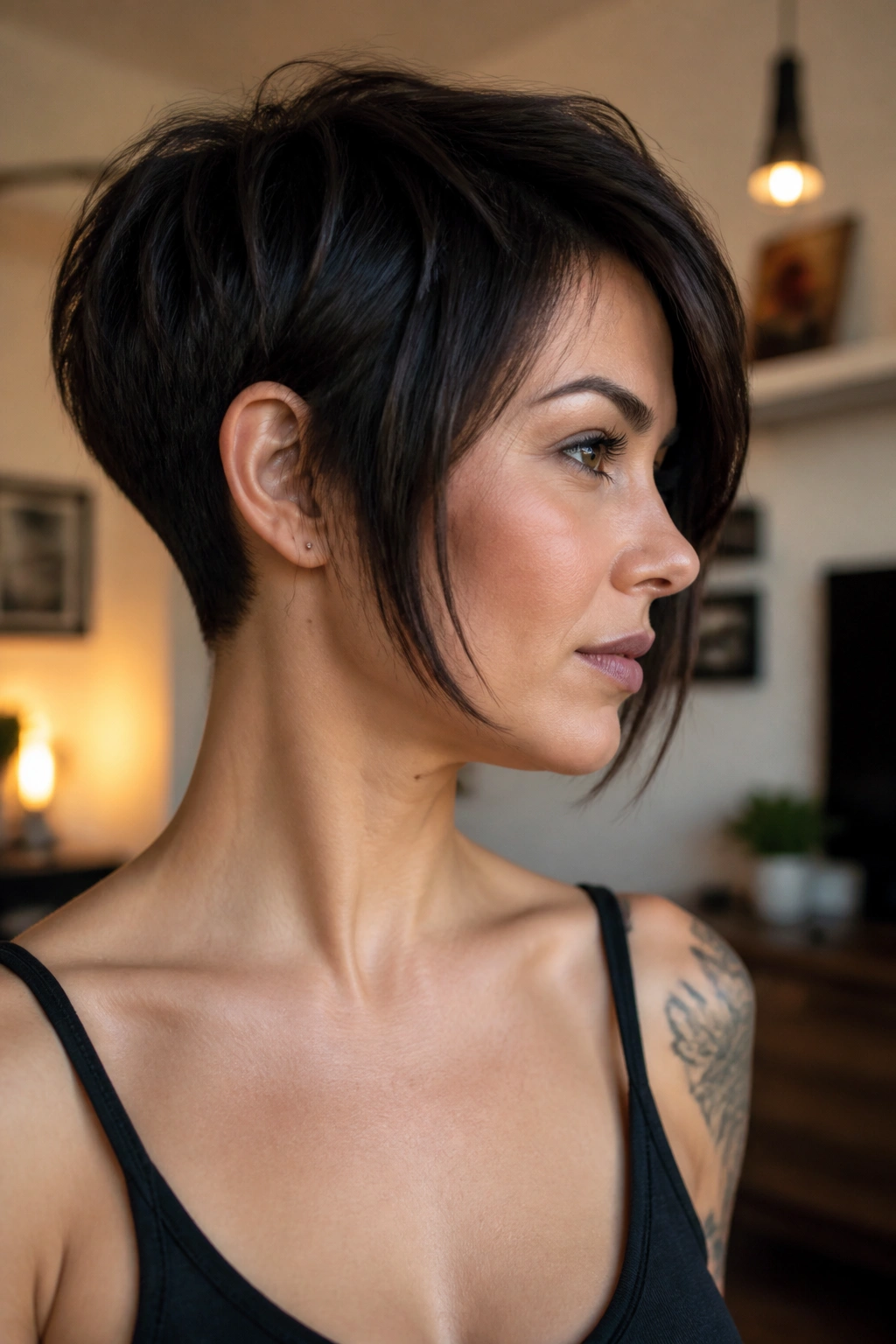
Very short does not have to mean blunt. A bob-pixie crossover keeps the nape cropped and the front longer, which gives round faces some shape without turning the haircut into a full pixie. The extra length up front matters more than people expect.
This cut is for someone who wants neck exposure and easy styling but still wants a front panel that can fall toward the jaw. That front piece is what softens the shape. Without it, the face can feel too open and the haircut loses the asymmetry that makes it work.
Good reasons to choose this cut:
- You want less hair at the neck.
- You like a piecey, light finish.
- You do not mind regular trims.
- You want the front to stay longer than the back by a clear margin.
The one thing to watch is balance. If the back gets too short and the front is not long enough, the whole style can tip into a pixie instead of a bob. That may be fine, but it is a different haircut.
19. Air-Dried Asymmetrical Bob for Round Faces

Air-dried hair can look sharp on a round face when the cut is built for shrinkage and bend. That’s the part people miss. They expect the haircut to do all the work, then let the hair dry wherever it wants. Not ideal.
A good air-dried asymmetrical bob should already have a longer front corner, a little lift at the roots, and enough internal shape to fall into place on its own. Wavy and curly textures do well here, but even straighter hair can keep a soft bend if you scrunch in a leave-in and leave it alone.
How to Dry It
Use a lightweight leave-in conditioner, then a small amount of gel or curl cream through the mid-lengths. Part the hair to the deeper side before it dries. If you need more shape, diffuse the roots for a few minutes and stop before the ends get overhandled.
This is one of the least fussy versions on the list. That’s the appeal. The asymmetry still shows, but the finish stays relaxed.
20. Color-Accent Asymmetrical Bob With a Bright Front Panel

A small color shift can make asymmetry read faster than another inch of length. A brighter front panel on the longer side pulls the eye forward, while a deeper shade near the shorter side makes the angle look stronger. It’s a haircut move with color attached.
This works especially well if you want the bob to look more dynamic without changing the structure too much. A money piece around the face, a soft highlight on the longer front edge, or even a subtle shade difference between the two sides can sharpen the shape. Keep it believable, though. Heavy contrast can start looking costume-y fast.
The cut itself should still do the main job. Ask for the longer side to skim the jaw or sit just below it, and let the color live on that side so the line reads clearly. That combo is especially good on round faces because it guides the eye downward instead of letting it sit across the widest part of the cheeks.
If you want the safest version, keep the back clean, the front piece longer, and the color a touch brighter on the heavier side. That’s enough to change the shape without making the haircut feel overworked.
