



Short blonde bob haircuts for round faces can be flattering in a way that feels almost sneaky. The right cut doesn’t try to erase your face shape or hide the cheeks; it works with them, adding a little length, a little edge, and enough movement that the eye doesn’t get stuck in one wide spot.
That’s where people go wrong. A bob that ends at the fullest part of the cheek and flares out at the sides can make a round face look even rounder. A bob with a cleaner line, a slightly longer front, or a side part changes that story fast. Blonde color plays into it too, because light hair shows shape more clearly than dark hair does. If the cut is lazy, the color won’t save it.
The good versions are specific. Some use a chin-length line. Some lean on angles. Some use curtain bangs, lowlights, or a deep side part to pull the eye where you want it to go. And yes, you can keep it short. You do not need to grow your hair out forever just because your face is soft.
1. Chin-Length Blunt Bob with a Soft Center Part
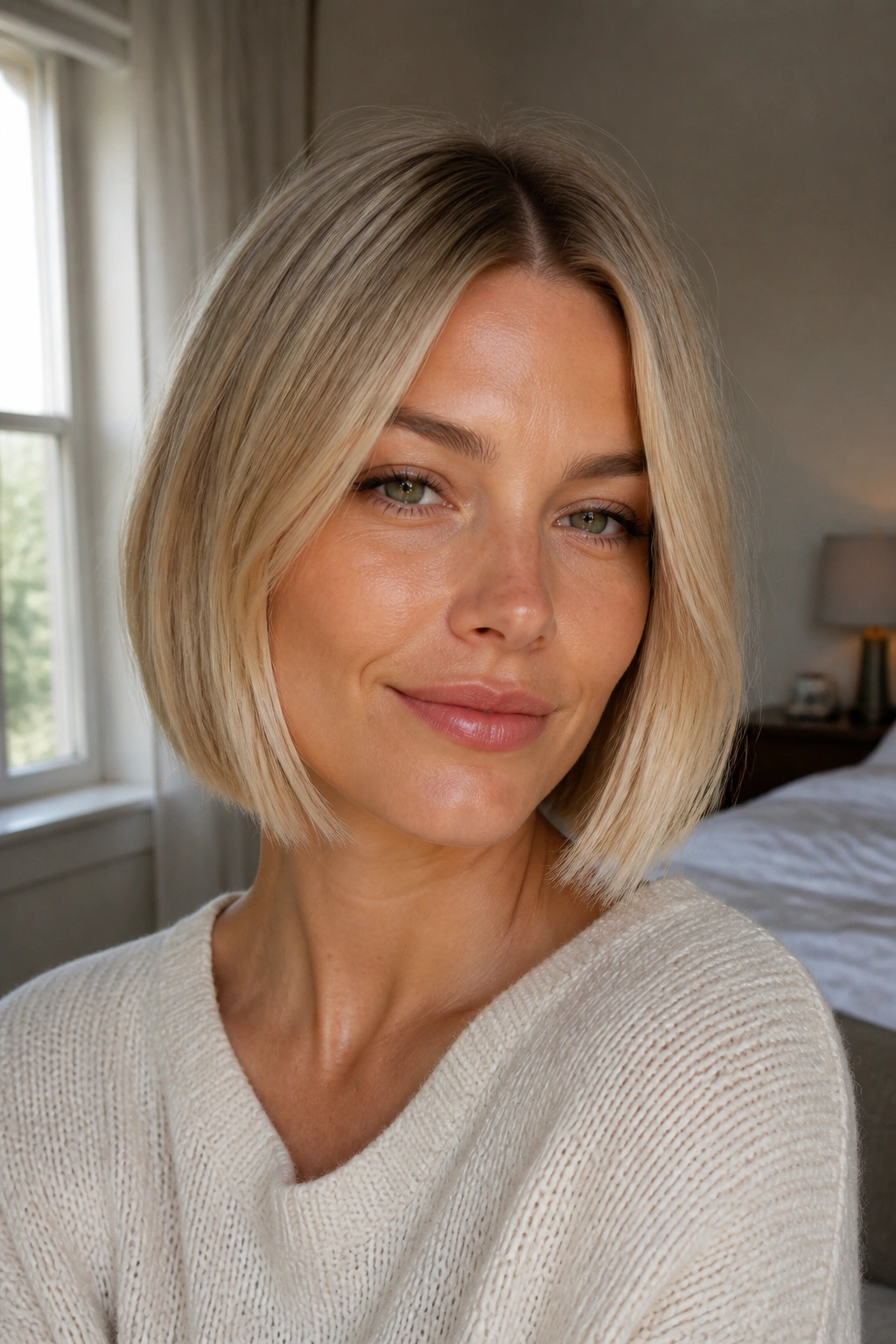
A chin-length blunt bob is one of the cleanest options for a round face, and I like it most when the line sits just below the chin rather than right at cheek level. That tiny difference matters. It gives the face a longer read without losing the crisp, tidy feel that makes a blunt bob look so good.
The center part should be soft, not severe. If the part is dead straight and the ends are puffed out, the cut can start to feel boxy. A little bend through the mid-lengths fixes that. Keep the blonde tone creamy or beige rather than flat yellow, because a dull tone can make the line look heavy.
Shorter hair like this works best when the ends stay blunt and the crown has a little lift. Not a giant pouf. Just enough root volume to keep the silhouette from sitting too low on the cheeks.
2. Angled Bob That Slides Past the Jaw
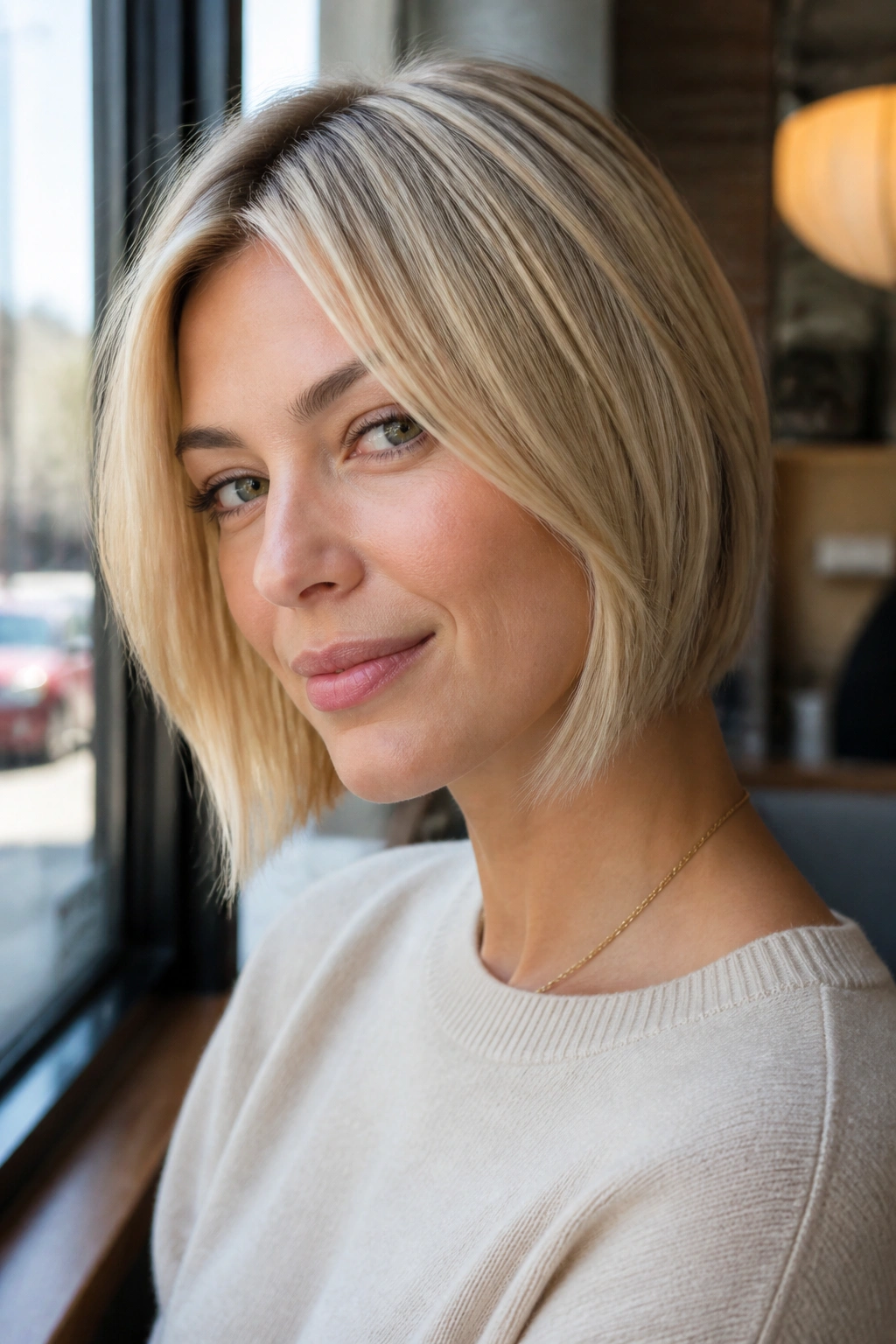
Why does an angled bob work so well on a round face? Because it gives the eye a clear diagonal line to follow, and diagonal lines are flattering when you want a face to read a bit longer. The front pieces should land closer to the jaw or even skim the top of the neck, while the back stays tighter and neater.
What Makes the Angle Do the Work
The angle does not need to be dramatic. In fact, a very steep front can look old-fashioned fast. A gentle difference of one to two inches between the nape and the front is usually enough. That length shift pulls the silhouette downward instead of outward, which is exactly what you want.
Ask for smooth graduation through the back, not choppy stacking that pushes width into the sides. A champagne blonde or soft beige blonde keeps the shape light. If the color is too solid, the angle can look harsher than it needs to.
How to Wear It
Blow-dry the front forward with a round brush, then turn the ends slightly under. The result is sleek without looking stiff. A small amount of shine cream through the mids helps, but skip heavy oils near the roots. They collapse the lift, and then the whole shape loses its point.
3. Layered Lob with Face-Framing Pieces
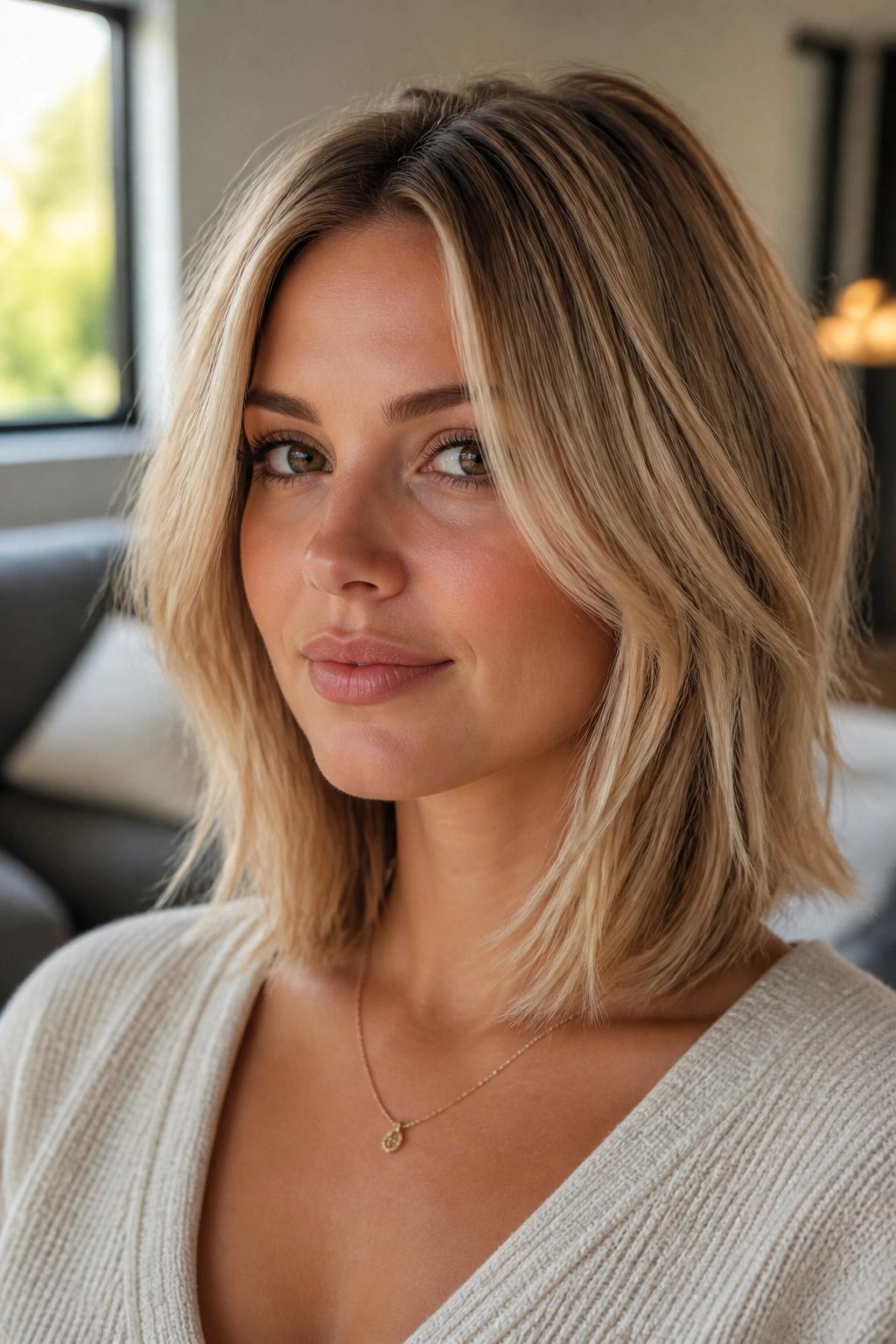
A layered lob is the easy answer for anyone who wants a bob but isn’t ready for a sharp chin-length cut. It still reads as short, but the extra length gives round faces a little breathing room. The real trick is where the layers begin.
They should start below the cheekbone. Not on it. If face-framing pieces cut across the widest point of the face, they can do the opposite of what you want and draw attention straight there. Soft layers that drop past the cheeks make the whole face look longer and the haircut look more relaxed.
This is a good place for buttery blonde or sandy blonde with a few lighter ribbons around the front. It keeps the movement visible, especially if your hair is thick or slightly wavy. A little texture spray at the ends is enough. You do not need to curl every piece.
- Best for hair that has some natural bend
- Good if you want to tuck the front behind one ear
- Easy to grow out without an awkward shelf
- Looks better with soft movement than with tight, uniform curls
4. Deep Side-Part Bob with One Tucked Side
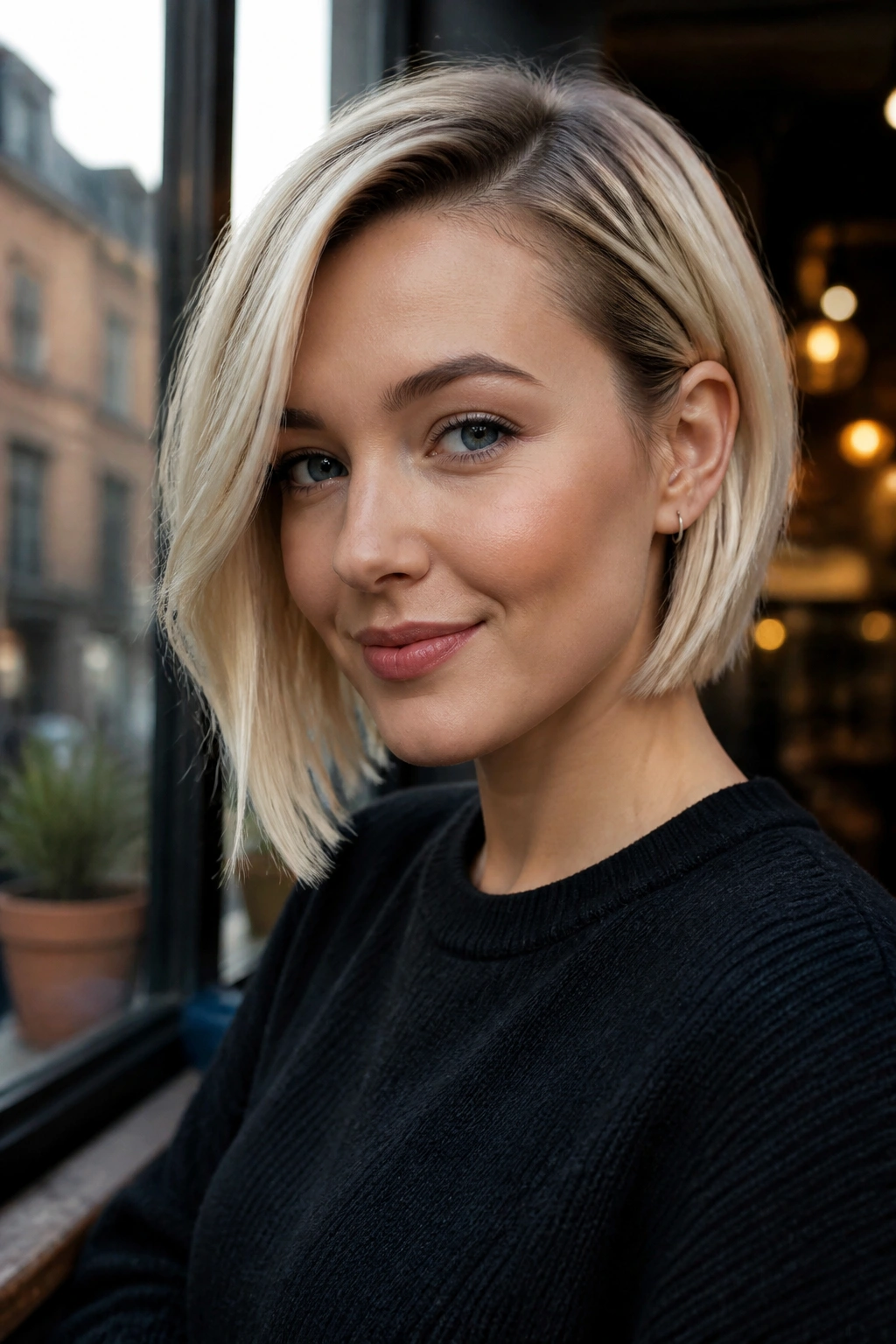
A deep side part can change the whole shape of a round face in about five seconds. It breaks the symmetry, lifts the crown, and moves the visual weight off the widest part of the cheeks. That’s a lot of work for one simple part change.
The Parting Is the Point
The tucked side matters too. When one side is pinned or tucked behind the ear, the face gets a clean vertical line on one side and a little volume on the other. That contrast makes the haircut feel sharper. The blonde color helps because light strands near the part catch attention right where the height starts.
Keep the bob blunt or lightly textured, but avoid excessive fullness at the sides. A side part plus a wide, fluffy bob can get too round. Better to keep the lower half controlled and let the lift happen at the top.
This is one of those styles that looks polished with very little effort. A flat brush, a quick blow-dry, and a little root spray are enough.
5. French Bob with Wispy Bangs
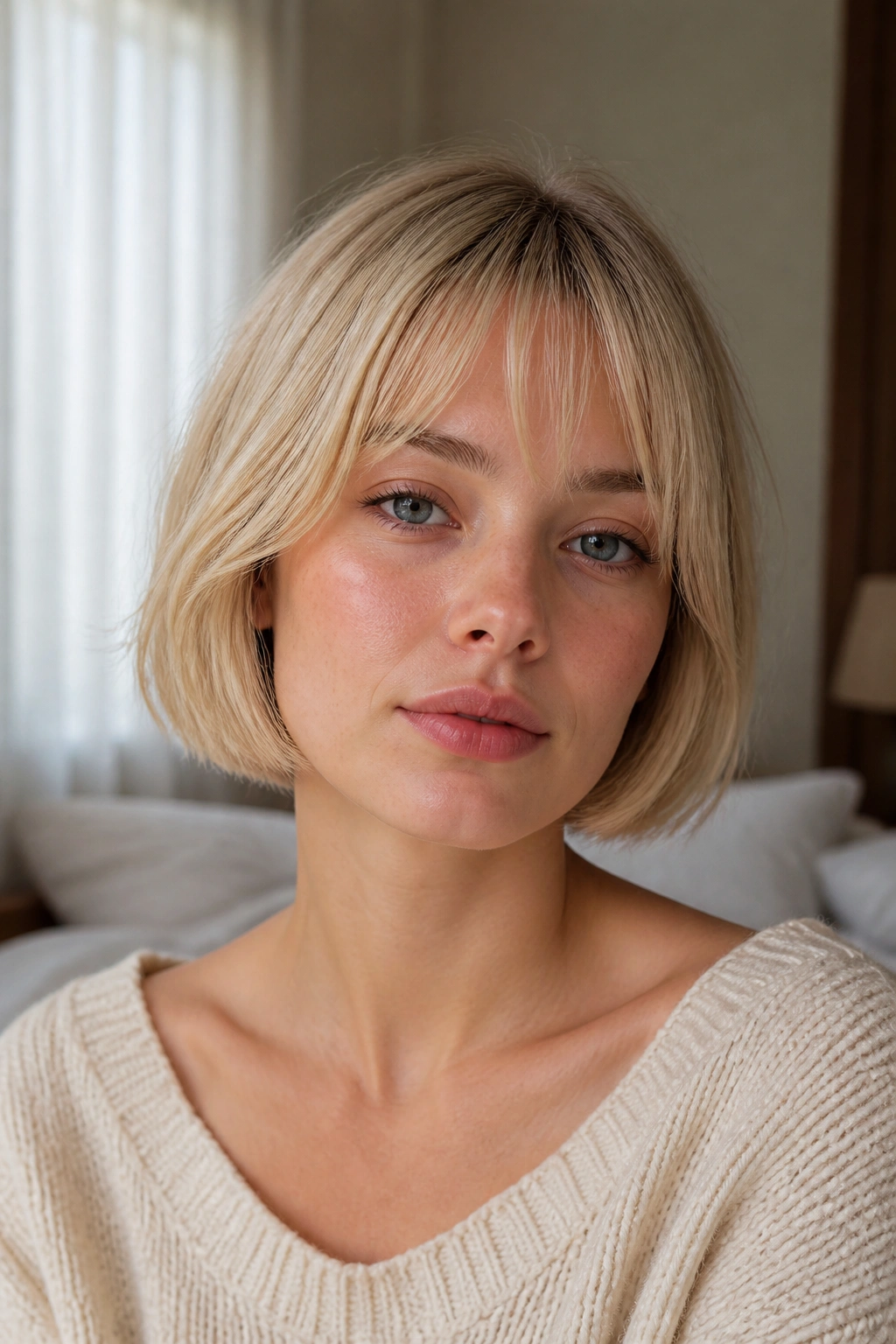
A French bob can be lovely on a round face when it stays airy. The hard part is the bangs. Heavy, straight-across fringe can make the face look shorter, which is the last thing you want. Wispy bangs, though, soften the forehead without cutting the face in half.
The shape should sit around lip to chin length, with ends that skim instead of sit like a helmet. I prefer it in a soft blonde shade—think cream, oat, or pale honey—because the lighter tone keeps the cut from feeling severe. You want charm here, not stiffness.
The bangs should be broken up enough that a few pieces fall toward the temples. That little bit of movement does more for a round face than a thick, blunt band ever will. If your hair is very straight, ask for a soft point cut through the fringe so it doesn’t lie like a curtain.
One sentence matters here: lightness is the whole point.
6. Curved-Under Bob with Bright Front Pieces
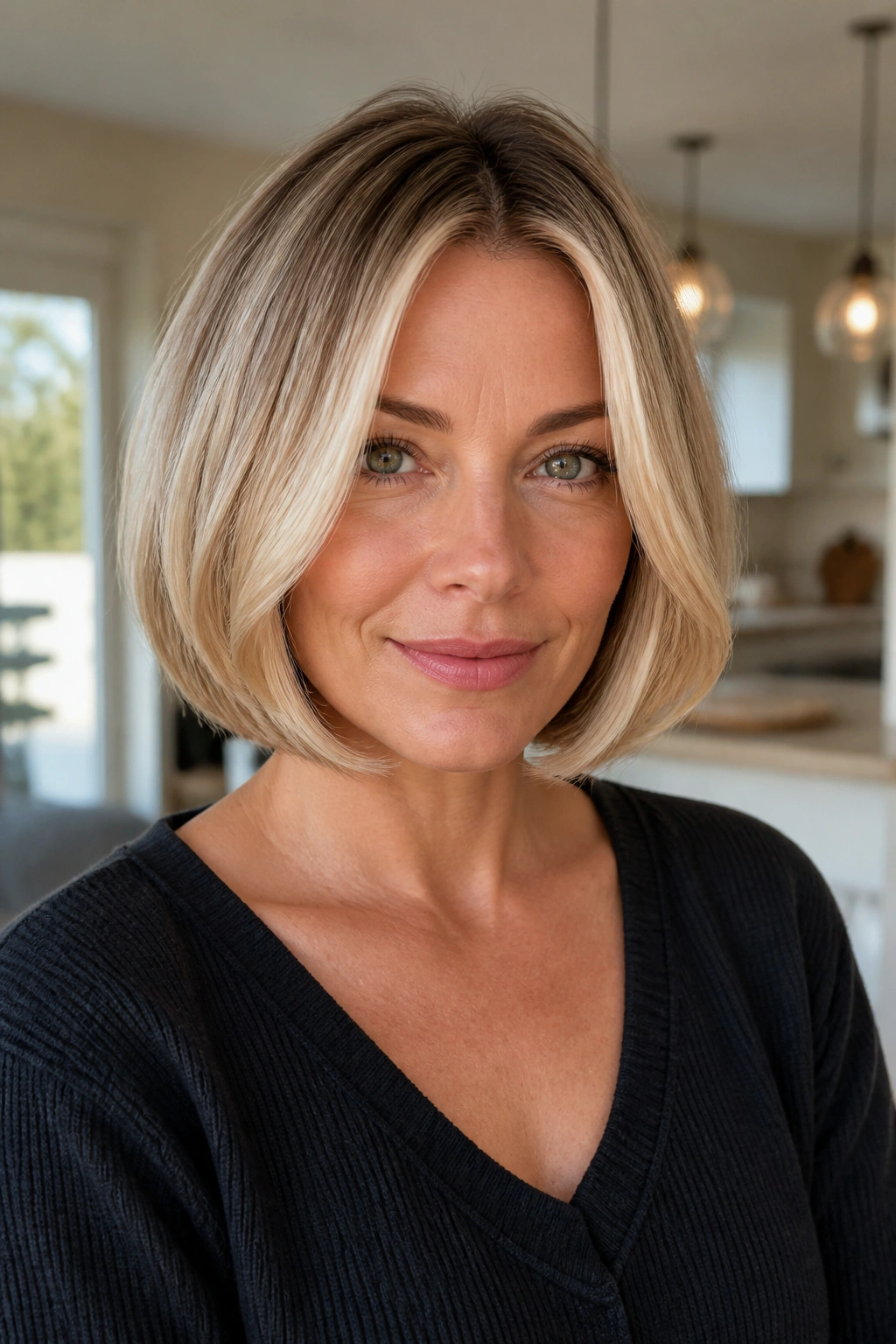
A curved-under bob is one of those old-school shapes that still works because it frames the face without widening it. The ends turn slightly inward, which keeps the outline tidy, while the front pieces stay bright and slightly lighter to pull the eye downward along the face.
That front brightness is where the haircut comes alive. A few well-placed blonde pieces around the cheek and jaw can give dimension without turning the whole style into a striped mess. Keep the contrast soft. Harsh streaks can look busy on a short cut.
This style works especially well if your hair naturally wants to flip out. A round brush or a quick pass with a flat iron can bring the ends under in seconds. If your hair is very dense, a stylist can thin the interior a bit so the bend sits closer to the head.
It’s neat. It’s controlled. And it does its job.
7. Choppy Wavy Bob with Piecey Ends
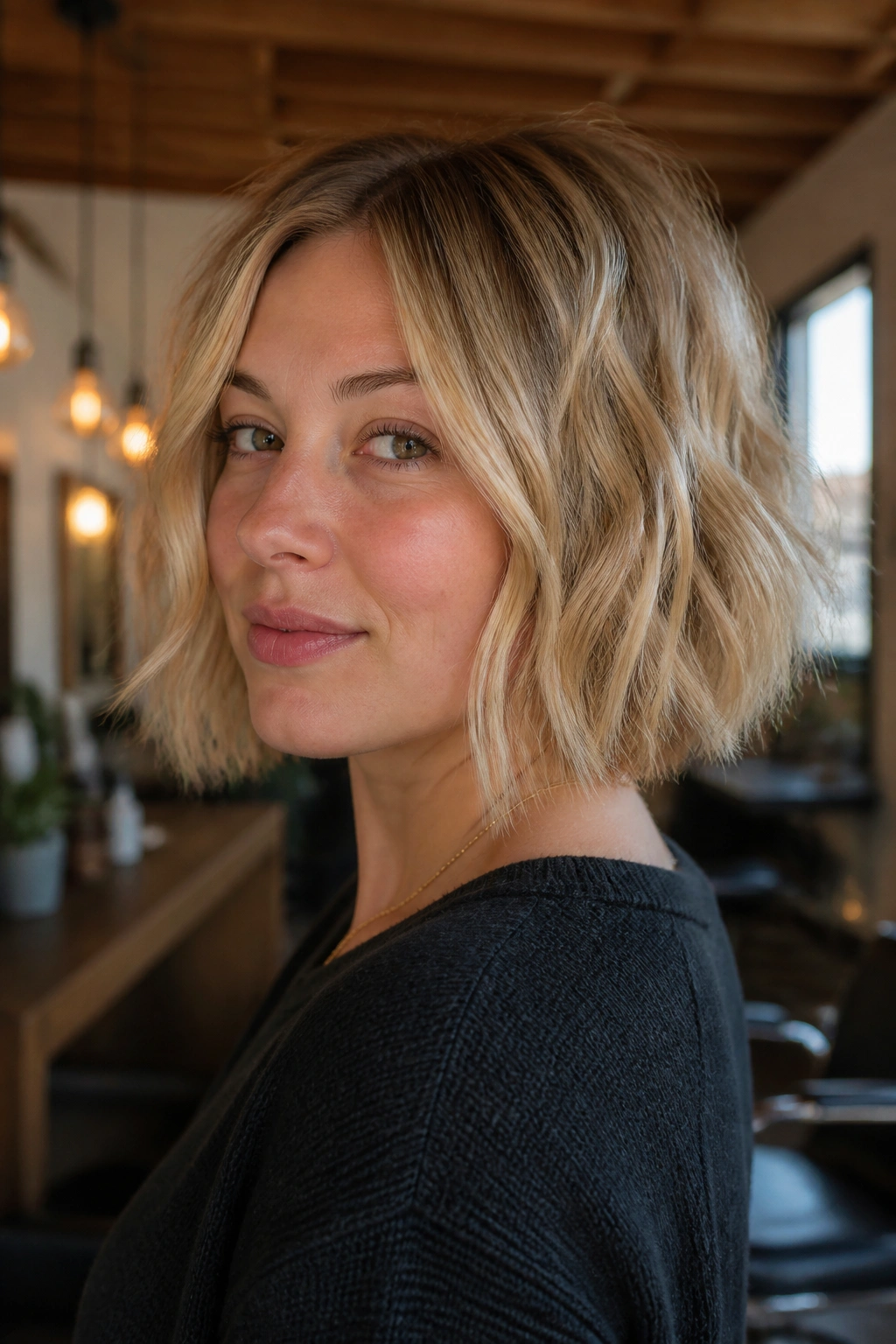
A choppy wavy bob brings texture to the front so the face doesn’t have to carry all the visual weight. That matters on a round face, because a blunt, full bob can sometimes look like one smooth circle. Choppy ends break that up fast.
What to Ask For
- Ask for soft, internal layers rather than short layers all over.
- Keep the wave loose and uneven, not curled into a uniform pattern.
- Let the ends stay piecey so the shape doesn’t puff out at the cheeks.
- Use a neutral blonde base with lighter ribbons through the surface for depth.
The easiest way to style it is with a 1-inch iron and a messy hand. Curl away from the face in some sections and toward it in others. Then rake the waves apart with your fingers. That roughens the finish in a good way.
A little salt spray helps, but too much can make blonde hair feel dry and fluffy. Use less than you think you need. Seriously.
8. Collarbone Lob with Long Broken Layers
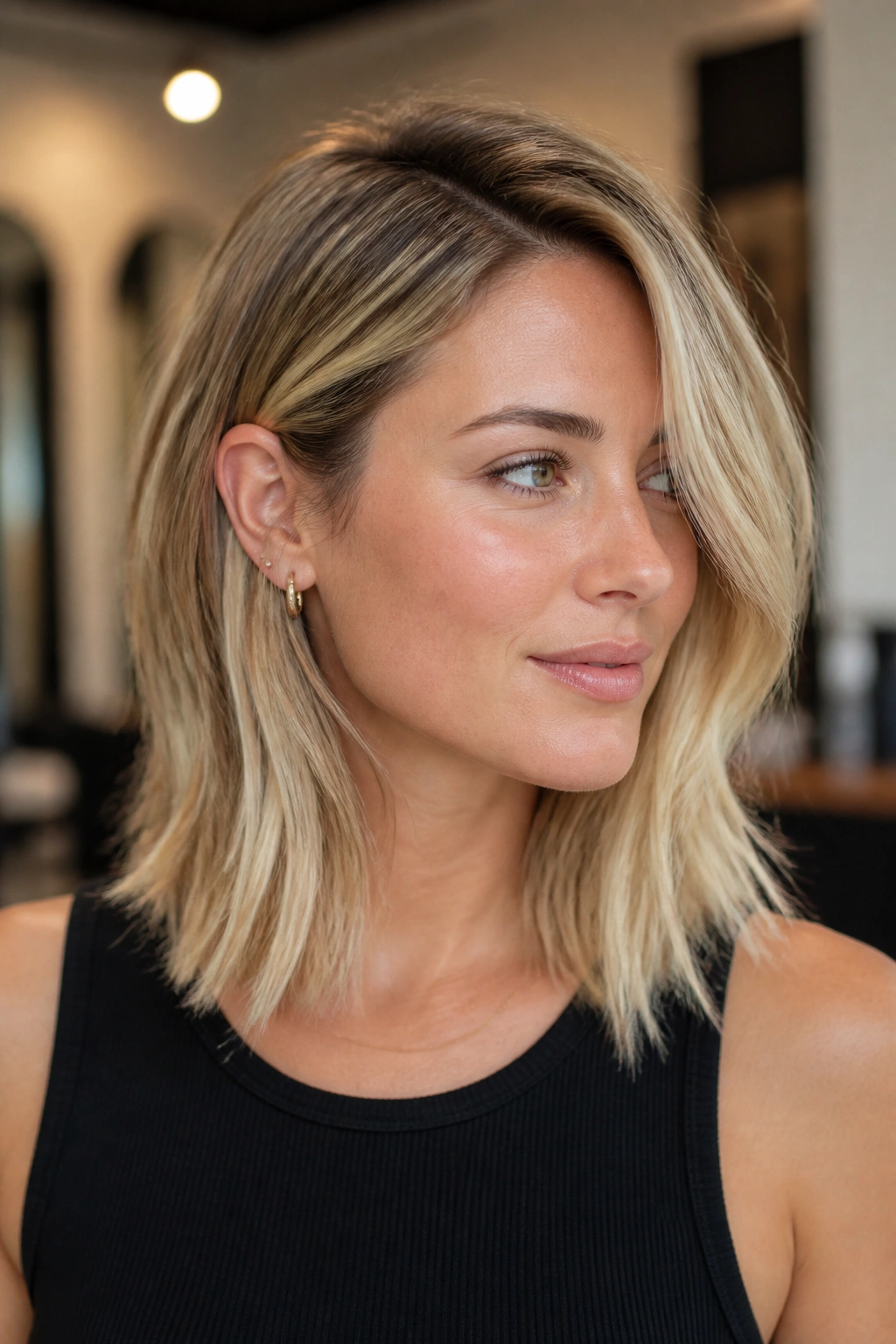
If you like a bob but want something slightly longer and easier to tuck, a collarbone lob with broken layers is a smart move. The extra length gives round faces a longer line, and the broken layers keep the shape from looking too full around the middle.
Does it still count as a short bob? Close enough for most people, and the payoff is worth it. This cut is especially good if your hair is thick, because it removes weight without turning the ends into a feathered mess. The layers should be subtle and irregular, not stacked in obvious steps.
I like this one in golden blonde, soft wheat blonde, or a mixed beige tone. The color should feel dimensional, because longish bobs can flatten out fast if every strand is the same shade. A few lighter pieces around the face keep the cut from sinking visually.
Tuck one side behind the ear and leave the other loose. It’s a small trick, but it changes the whole balance.
9. A-Line Bob with a Clean Nape
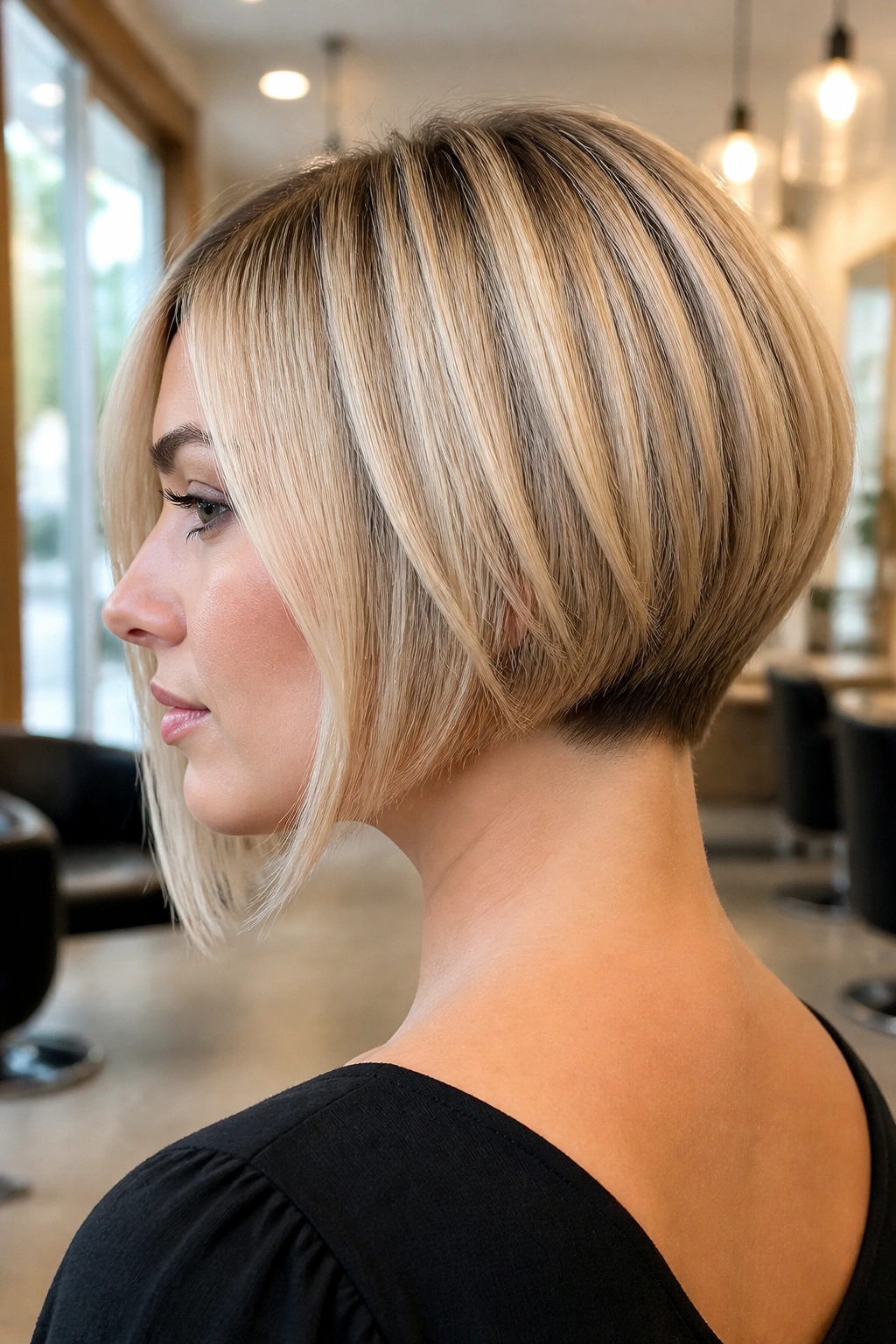
An A-line bob is the polished cousin of the angled bob. It keeps the nape short and neat while letting the front drop longer, which gives round faces a cleaner downward line. The back should look tidy from the neck down. No bulging. No puff.
Why the Back Matters
A lot of people obsess over the front, then wonder why the cut still feels wide. The back shape is usually the reason. A clean nape removes visual bulk, and that makes the front pieces look sharper by comparison. If the back is too full, the whole bob starts to spread sideways.
Ask for a smooth graduation through the back and a front that touches the jaw or just below it. A bright blonde with a soft root shadow works nicely here, because the darker root gives depth and keeps the crown from looking flat.
This cut likes a round brush blow-dry. Keep the front sections smooth and slightly curved, not flipped. The line should feel intentional, not puffy.
10. Bubble Bob with Crown Lift
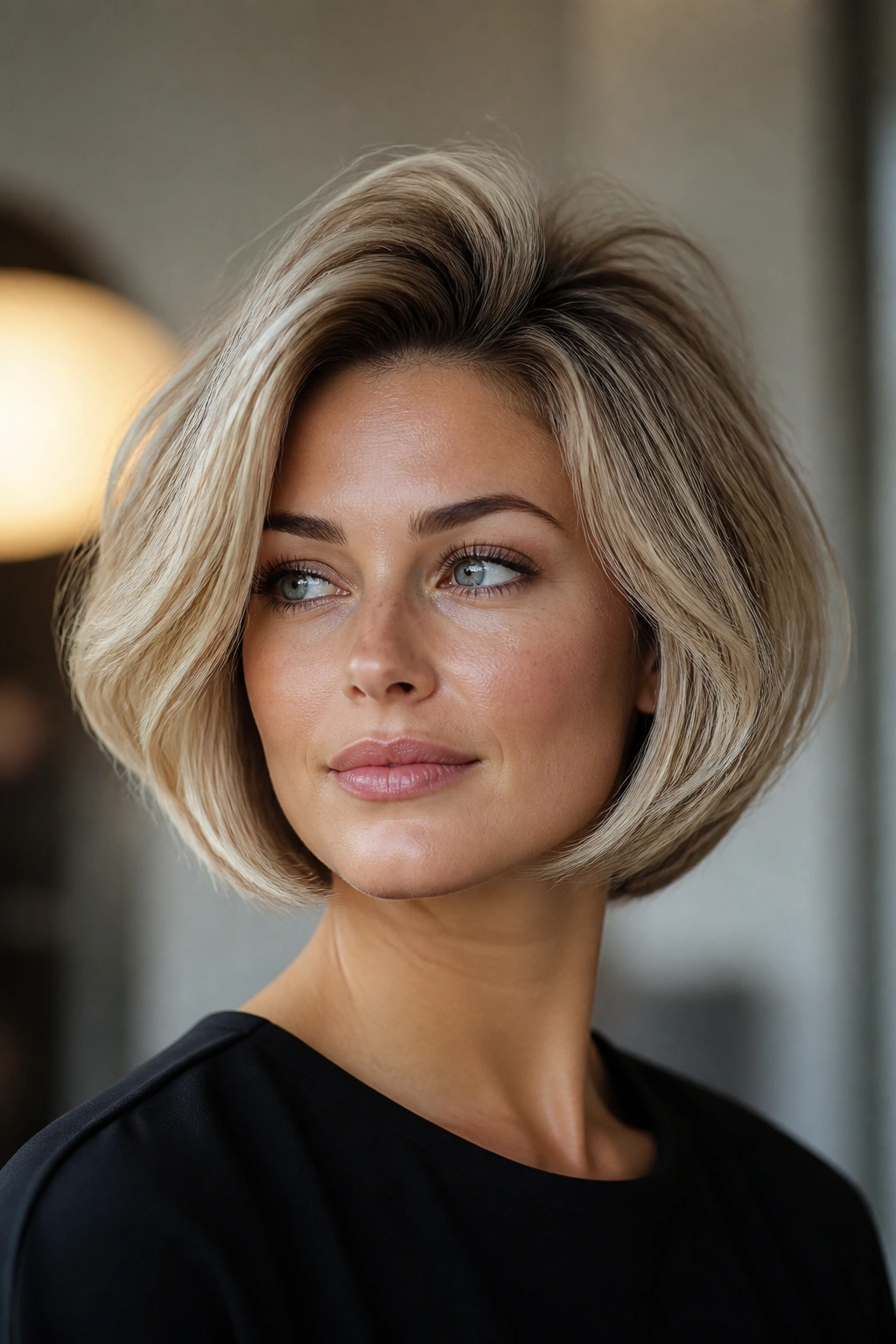
A bubble bob can work on a round face, but only if the fullness sits high. If the volume expands around the cheeks, the cut loses its shape fast. Put the lift at the crown, and the face suddenly looks longer and more open.
The blonde shade matters more here than people think. A soft pearl blonde or beige blonde keeps the style from reading heavy. If the tone is too opaque and one-note, the rounded shape can look almost helmet-like. Not a good look. The cure is texture at the roots and control at the sides.
Styling Notes
- Dry the roots upward with a small round brush.
- Keep the side sections close to the head.
- Let the ends curve in slightly, but not too much.
- Finish with a light mist of flexible spray, not hard hold.
This is one of the more fashion-forward options in the whole group. It looks best when the crown has shape and the cheek area stays quieter.
11. Bob with Curtain Bangs and Soft Ends
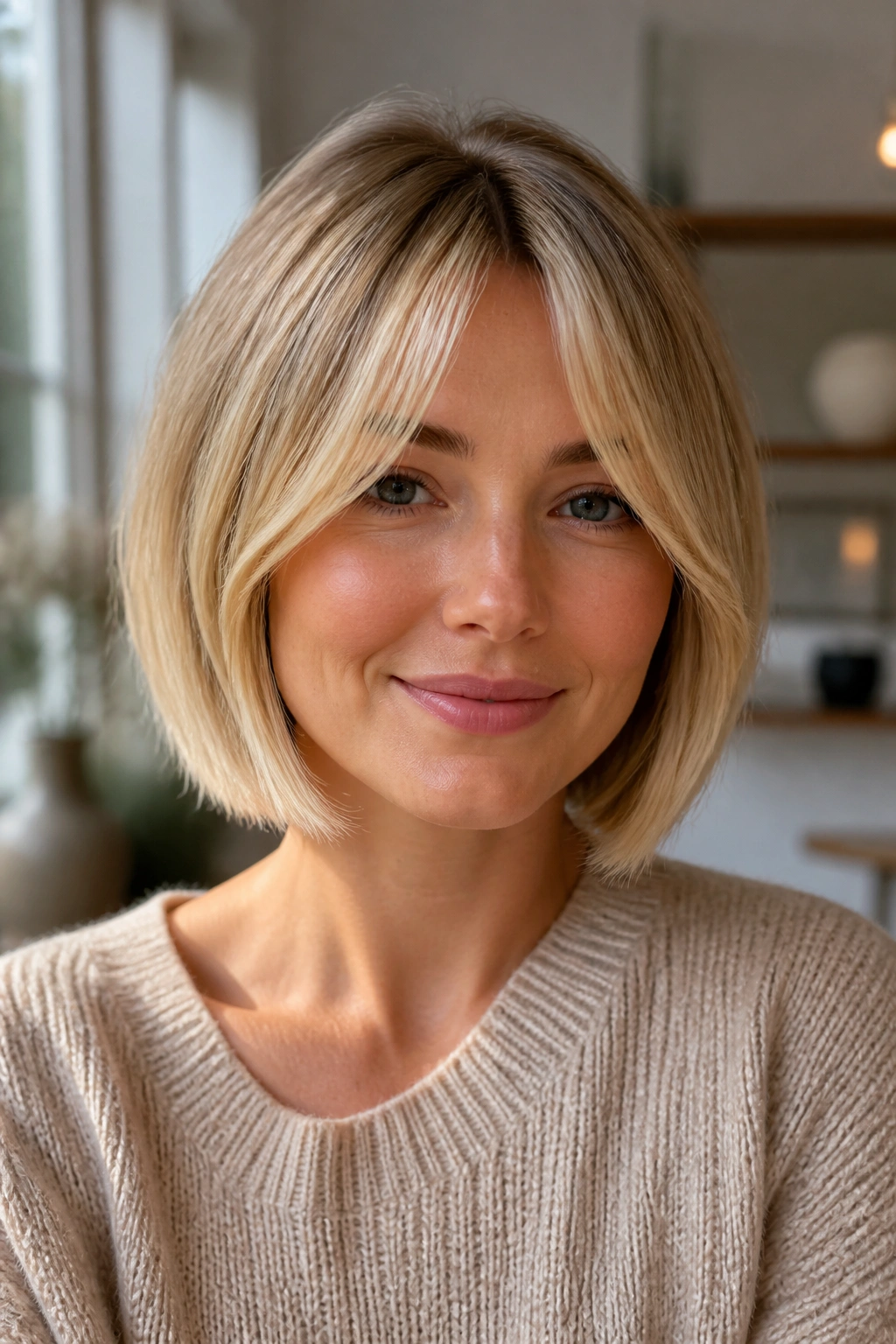
Curtain bangs are a safe bet for round faces because they open the center of the forehead and guide the eye outward and down. The trick is keeping them long enough to blend into the sides of the bob. If they’re too short, they can make the face look boxed in.
The rest of the cut should stay soft at the ends, not razor-sharp. A buttery blonde with a few lighter strands around the bangs gives the style depth and keeps it from feeling flat. Curtain bangs love movement, so don’t overstyle them. A quick bend with a round brush is enough.
This is the kind of bob that looks good tucked, flipped, or a little messy. That flexibility helps a lot. Round faces usually benefit from haircuts that shift shape during the day instead of sitting frozen in one place.
One nice thing here: it grows out gracefully. The bangs slide into the sides before they get annoying.
12. Feathered Bob with Side-Swept Fringe
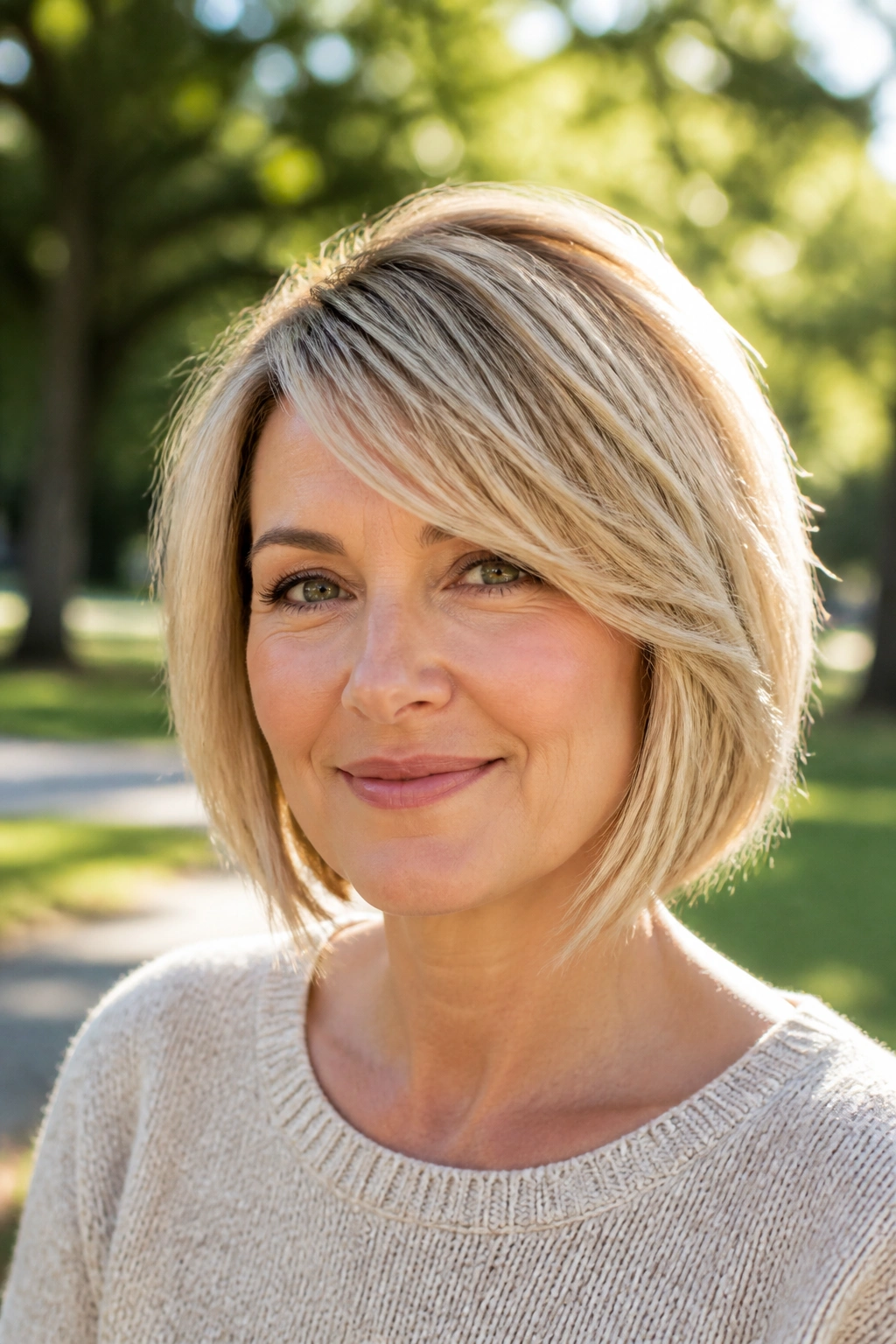
A feathered bob has a softer edge than a blunt one, and that softness can be useful when you want to slim the sides of a round face without making the cut feel harsh. The feathering should happen through the mid-lengths and ends, not all the way up near the cheekbone.
Side-swept fringe adds direction. It pulls the eye across the forehead instead of straight across the face, which helps break up width. If your hair is fine, this cut gives the illusion of lift. If your hair is thick, the feathering removes some of the weight that tends to make bobs sit wide.
Who It Suits Best
- Fine hair that needs movement
- Straight hair that falls too flat in blunt shapes
- Round faces that want a softer, less structured look
- Anyone who likes a blow-dry that doesn’t need perfect precision
Keep the blonde tone warm enough to show the feathering, but not so golden that it turns brass. The style needs brightness, not noise. A little texturizing spray at the ends is enough to show off the shape.
13. Platinum Blunt Bob with Minimal Layers
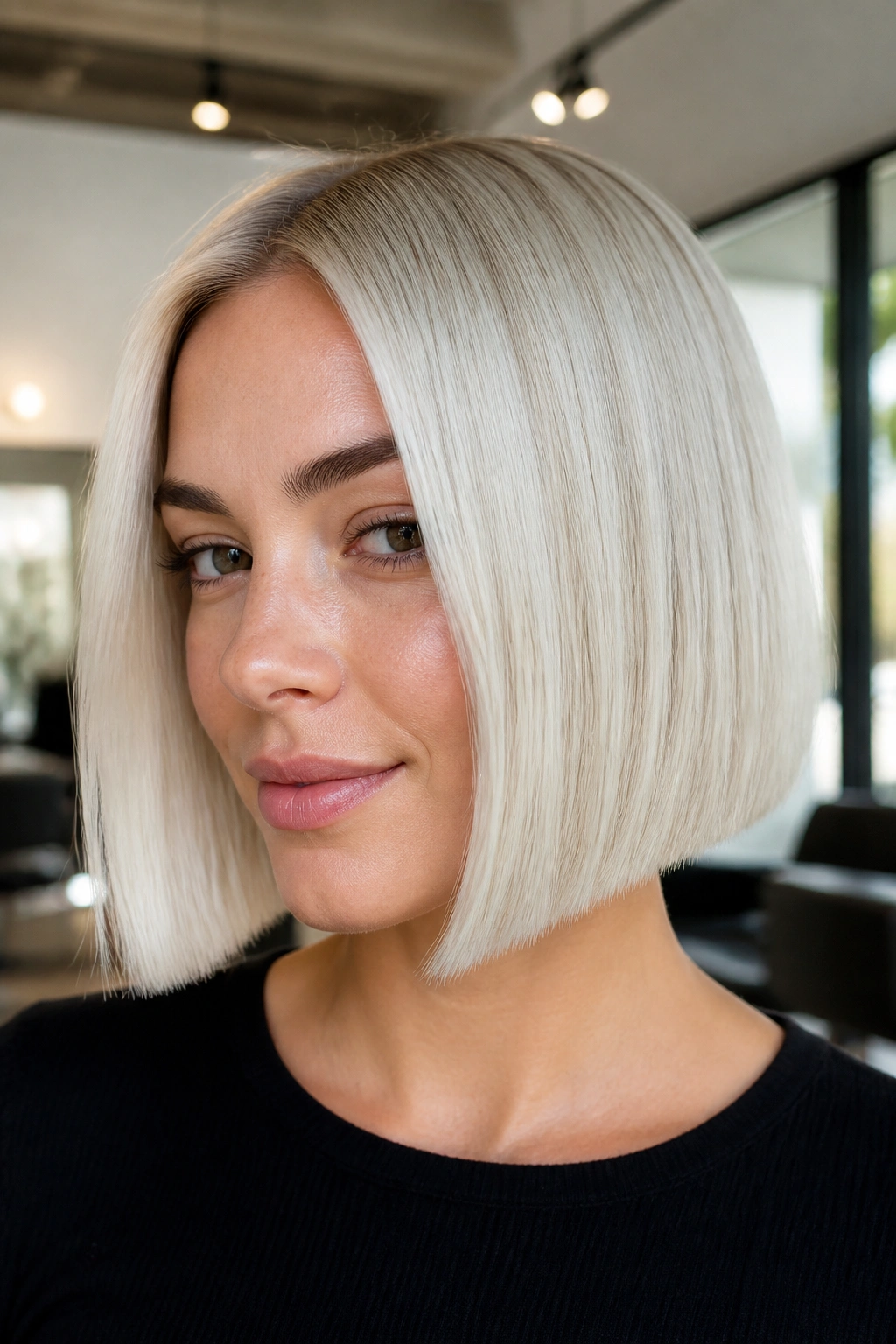
Platinum blonde makes every line louder, which is why this cut works only when the bob is clean and controlled. A blunt platinum bob can look striking on a round face because it creates a hard edge at the bottom and pulls attention downward. The cut needs precision. Sloppy ends will show instantly.
Minimal layers help keep the outline strong. Too much feathering can make platinum hair fray at the edges, and then the shape loses its power. The front should sit below the cheekbone if you want a more lengthened look. If it ends right at the fullest part of the face, the brightness can widen things instead.
This is a low-fluff, high-shape style. No fuzzy finishes. No overdone waves. If you wear it straight, a flat iron and heat protectant are your best friends. A tiny bit of smoothing serum on the ends is enough.
Blunt and pale. That combination has teeth.
14. Dimensional Blonde Bob with Lowlights
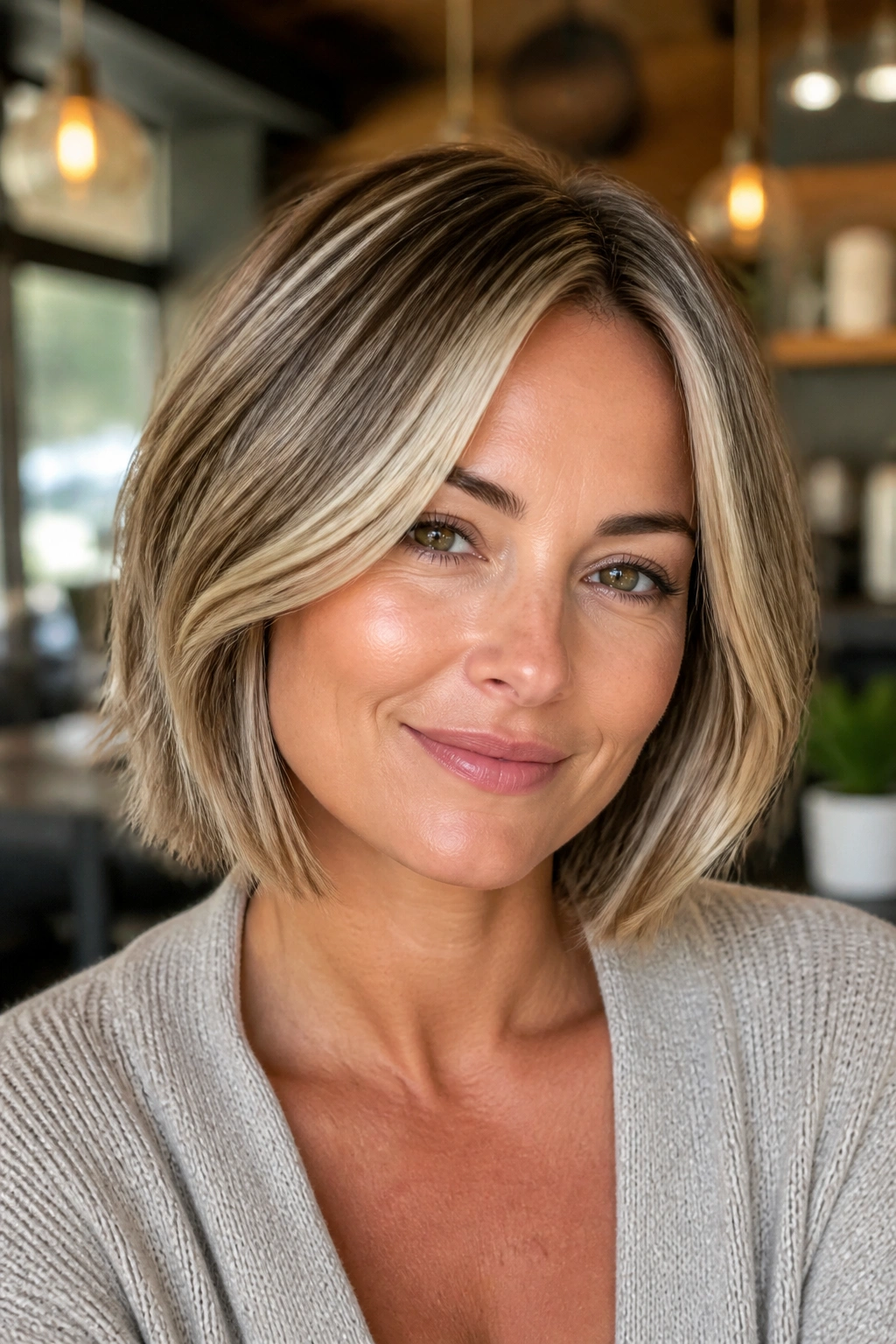
A one-tone blonde bob can look flat against a round face, especially if the haircut is short and simple. Lowlights fix that by adding shadow underneath the lighter pieces. Suddenly the cut has depth, and depth makes the face read slimmer because the eye stops at different layers instead of one solid block.
This works especially well on bob lengths that hit between the jaw and just above the shoulders. The darker strands underneath keep the silhouette from ballooning. A soft beige blonde on top with caramel or mushroom lowlights below gives a lived-in feel without looking muddy.
Where the Color Should Sit
The lowlights should live in the interior and lower sections, not scattered on the top like stripes. Keep the lightest pieces around the face and crown, where they can lift the eye. The contrast does the work quietly.
- Great for thick hair that needs visual separation
- Good if your blonde fades fast and needs depth
- Helps short bobs look less blunt and more textured
- Keeps the style from turning into one bright mass
This is one of my favorite options because it solves a shape problem and a color problem at the same time.
15. Curly Blonde Bob That Keeps Volume Up Top
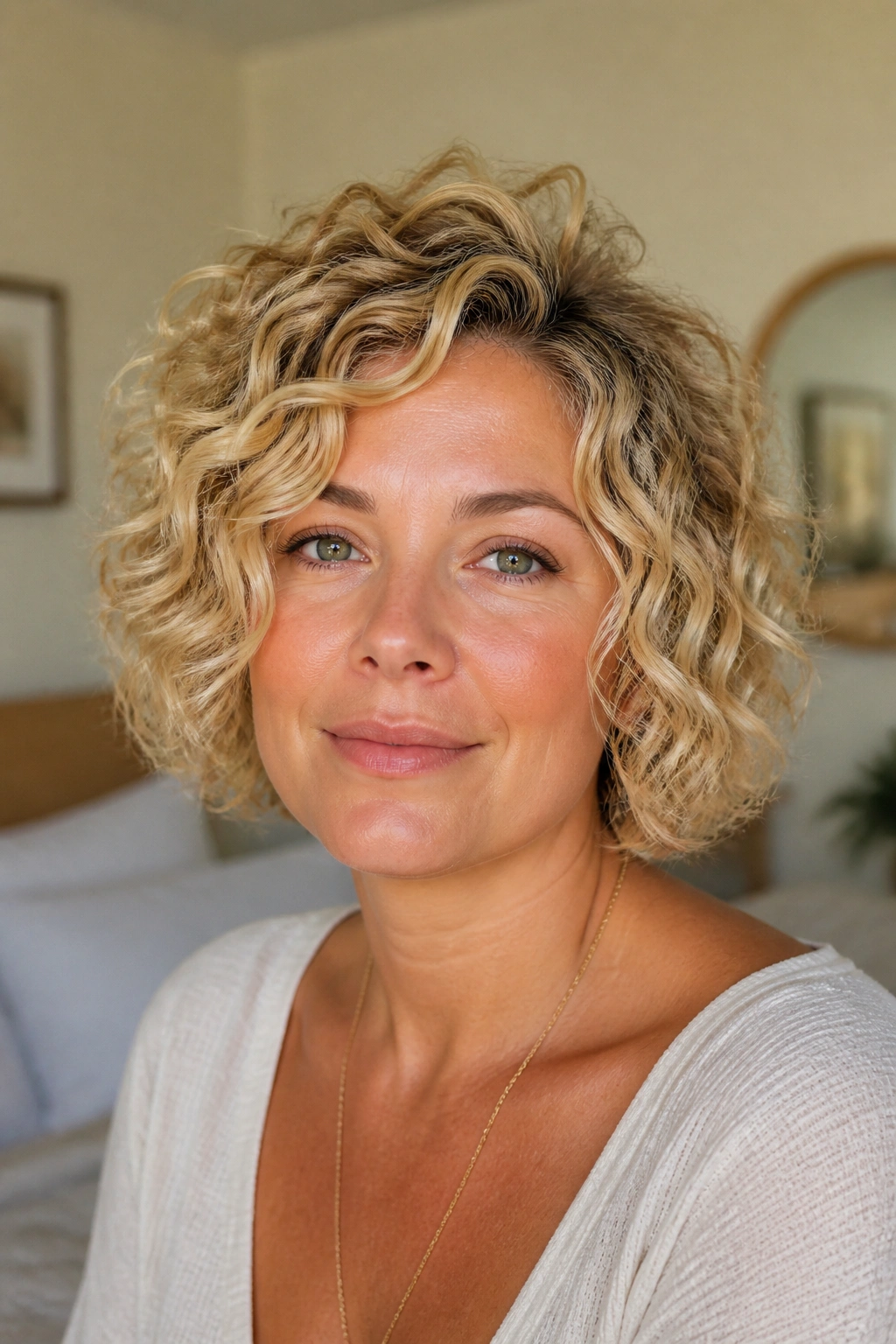
Can a curly bob work on a round face? Yes, if the volume stays higher on the head and the bottom doesn’t balloon out. That’s the whole game. Curly hair needs shape, not punishment, so the cut should respect the curl pattern while still guiding the eye upward.
Ask for longer pieces around the face and slightly shorter shaping through the crown. That keeps the silhouette from turning triangular. A soft blonde balayage or a few brighter curls near the front can give the shape more definition. On curls, blonde color looks best when it’s not painted in one flat block.
Styling That Helps
Use a diffuser on low heat. Scrunching too hard can make the curls frizzy and widen the sides. A curl cream or lightweight mousse gives the curl a bit of hold without crunch. When the hair dries, separate only the curls that need it. Don’t tear the whole shape apart.
This style looks best when it moves. Stiff curls near the cheeks are the enemy.
16. Sleek Glass Bob with a Tucked Finish
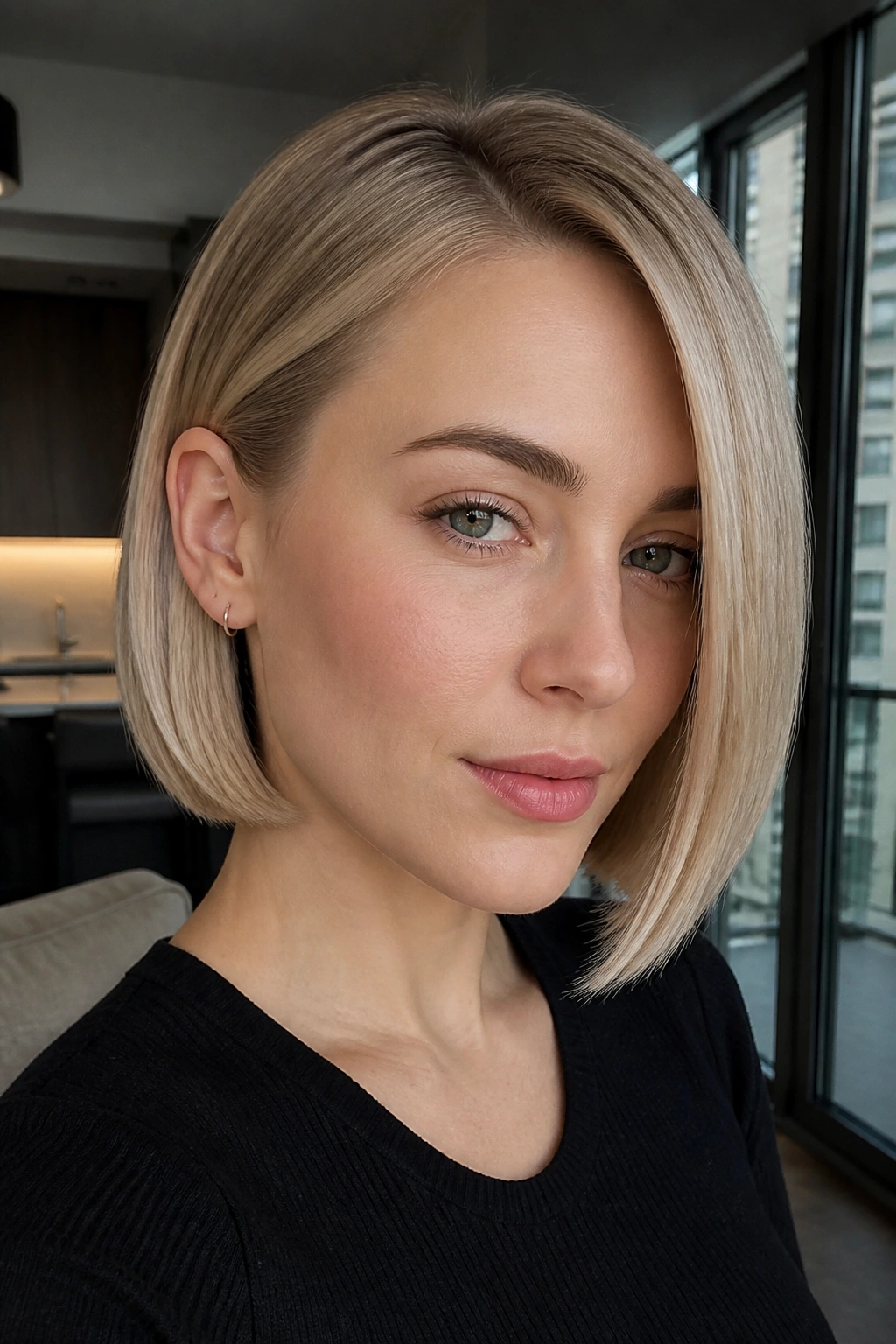
A sleek glass bob is not for anyone who likes soft, fuzzy hair. It’s for people who want a clean, shiny line that sits close to the head and makes the face look sharper. On a round face, the sleek finish matters because it cuts down on side width and gives the illusion of length.
The tucked finish is what seals it. One side behind the ear, the other left smooth and tucked back just enough to show the jaw. That small asymmetry breaks up the roundness better than a lot of complicated layering. The blonde should be cool beige, icy cream, or a soft neutral tone so the shine reads crisp instead of brassy.
Heat protectant is non-negotiable here. Section the hair in thin strips, about one inch wide, and pass the iron once or twice rather than overworking the strand. Too much heat makes blonde hair frayed at the ends, and then the glass effect disappears.
Sleek is unforgiving. That’s part of the appeal.
17. Inverted Bob with Longer Front Corners
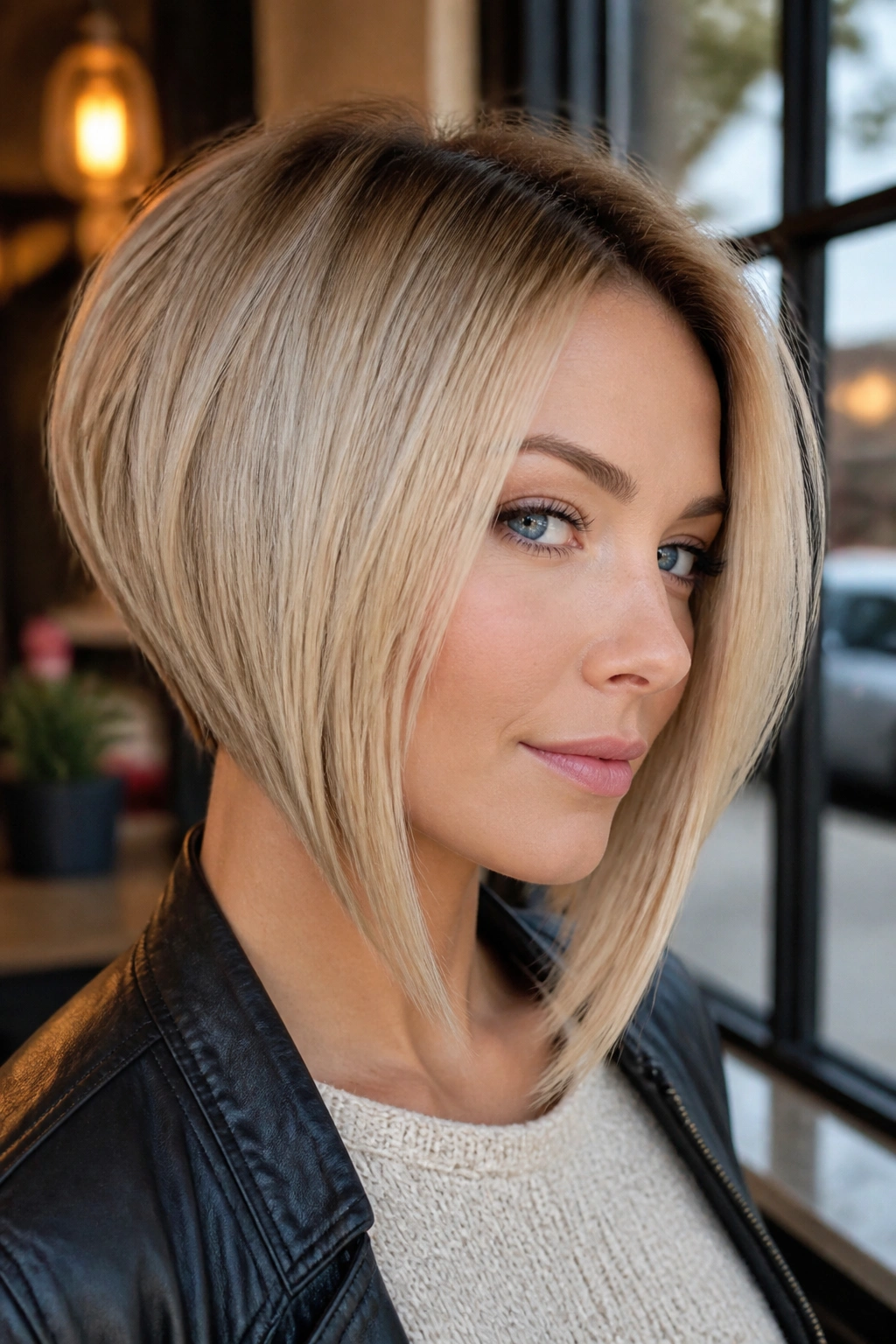
An inverted bob is a little sharper than an ordinary A-line, and that extra edge can be useful on a round face. The front corners should fall longer than the back by enough to create a real shape shift, not just a subtle slope. That diagonal cut gives the face a longer line and makes the jaw look more defined.
What I like here is the contrast. The back can be tidy and close, while the front has enough weight to move. It keeps the haircut from feeling too cute or too sweet, which is where round faces sometimes get trapped with softer bobs. A cool blonde with a faint root shadow helps the shape stay visible.
This cut does not need a lot of styling. A quick blow-dry and a slight bend at the ends is enough. If the front pieces start to flip outward, that’s a sign the weight line needs adjusting at the salon.
18. Jaw-Skimming Bob with Airy Texture
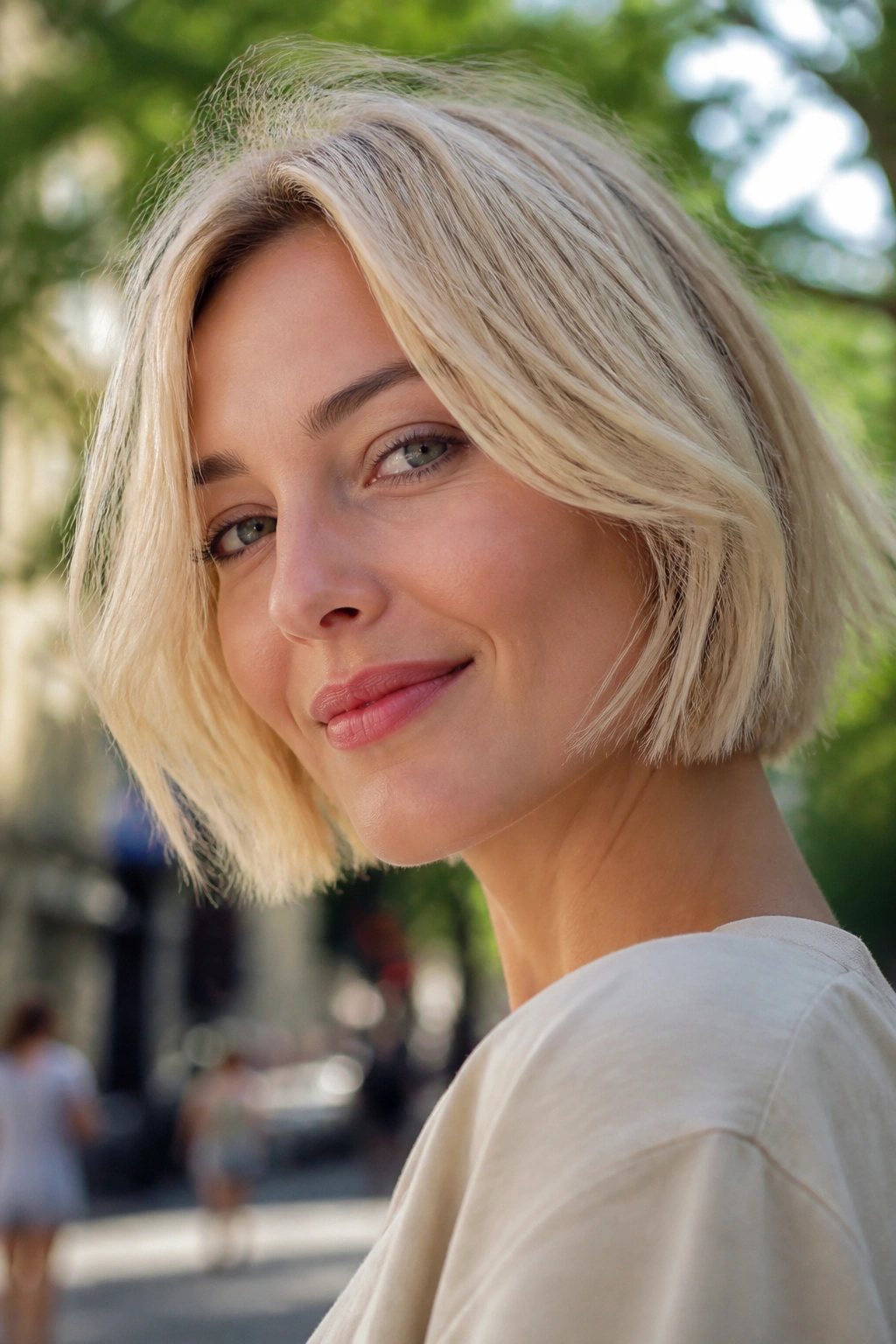
A jaw-skimming bob sounds simple, and that’s why it works. The length stops at a point that defines the jaw without sitting on the cheeks, which is the danger zone for round faces. Airy texture keeps the ends from feeling heavy or helmet-like.
This is a good cut if you want something short but not severe. The blonde color can be soft champagne or pale wheat, with just enough variation to keep the shape from collapsing into one pale shape. Airy texture is less about big waves and more about soft separation through the ends.
What to Ask Your Stylist For
- A line that touches the jaw, not the cheek
- Light internal texture, not choppy chunks
- A little lift at the crown
- Ends that move instead of curl inward too hard
A mist of texture spray and a few finger-tousled bends are enough. Keep it loose. That looseness is what makes the face look longer.
19. Tousled Side-Volume Bob with Beach Waves
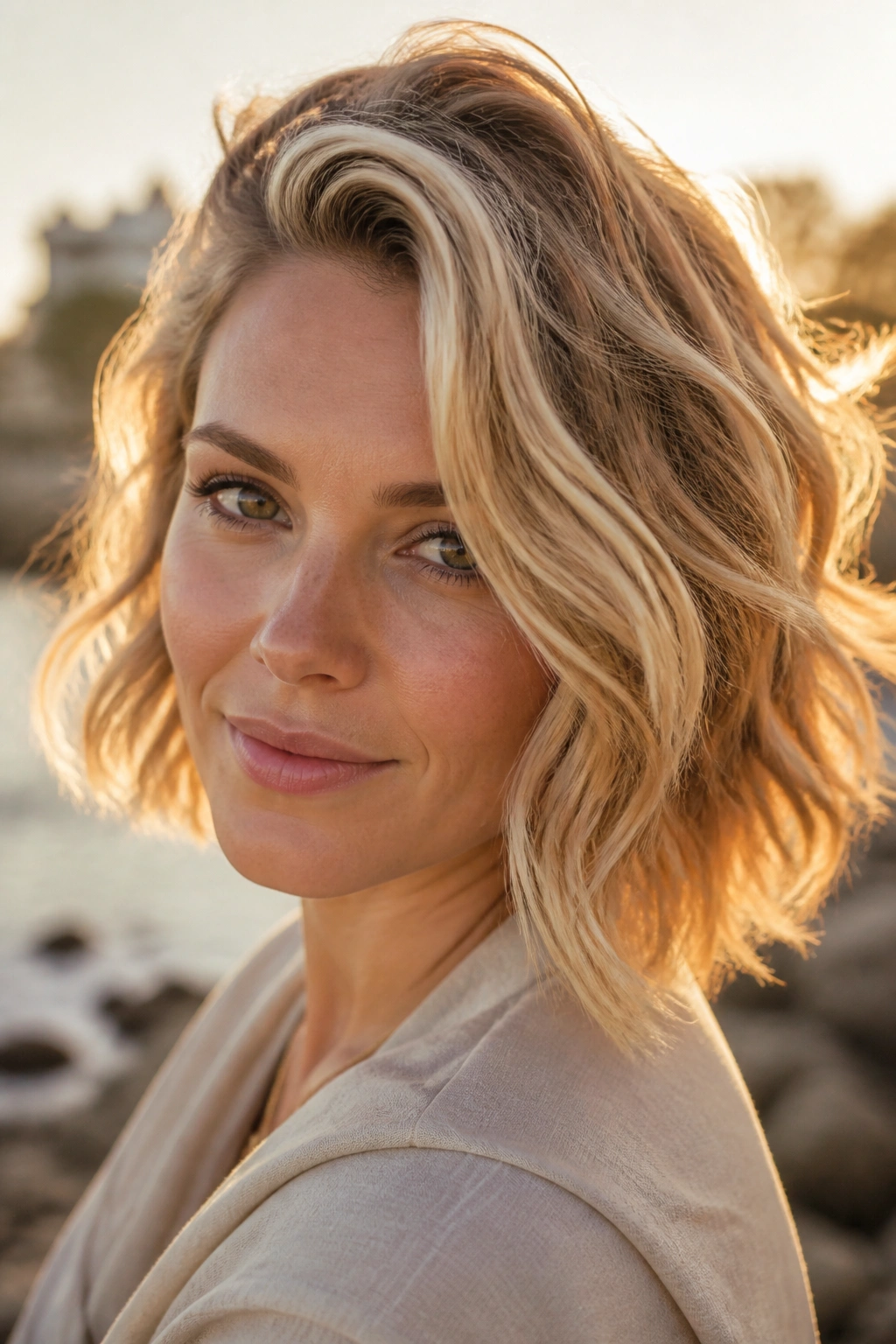
There’s a reason a side-volume bob keeps showing up in salons: it flatters a round face without trying too hard. A deep side part and a bit of lift at the crown move the widest part of the style upward, away from the cheeks. Beach waves finish the job by breaking up the outline.
This style looks especially good in sunlit blonde shades—soft gold, beige, cream, or a mixed highlight pattern that keeps the waves visible. A flat, one-dimensional blonde can flatten the whole thing. The waves need contrast to read properly.
I’d style this with mousse at the roots, then a medium iron or a few braids overnight if you want a looser result. The waves should not all curl in the same direction. That’s how you get the easy, slightly undone shape instead of a salon curl set from another decade.
It’s casual. It’s useful. It also forgives a bad hair day.
20. Short Bob with an Undercut or Hidden Removal
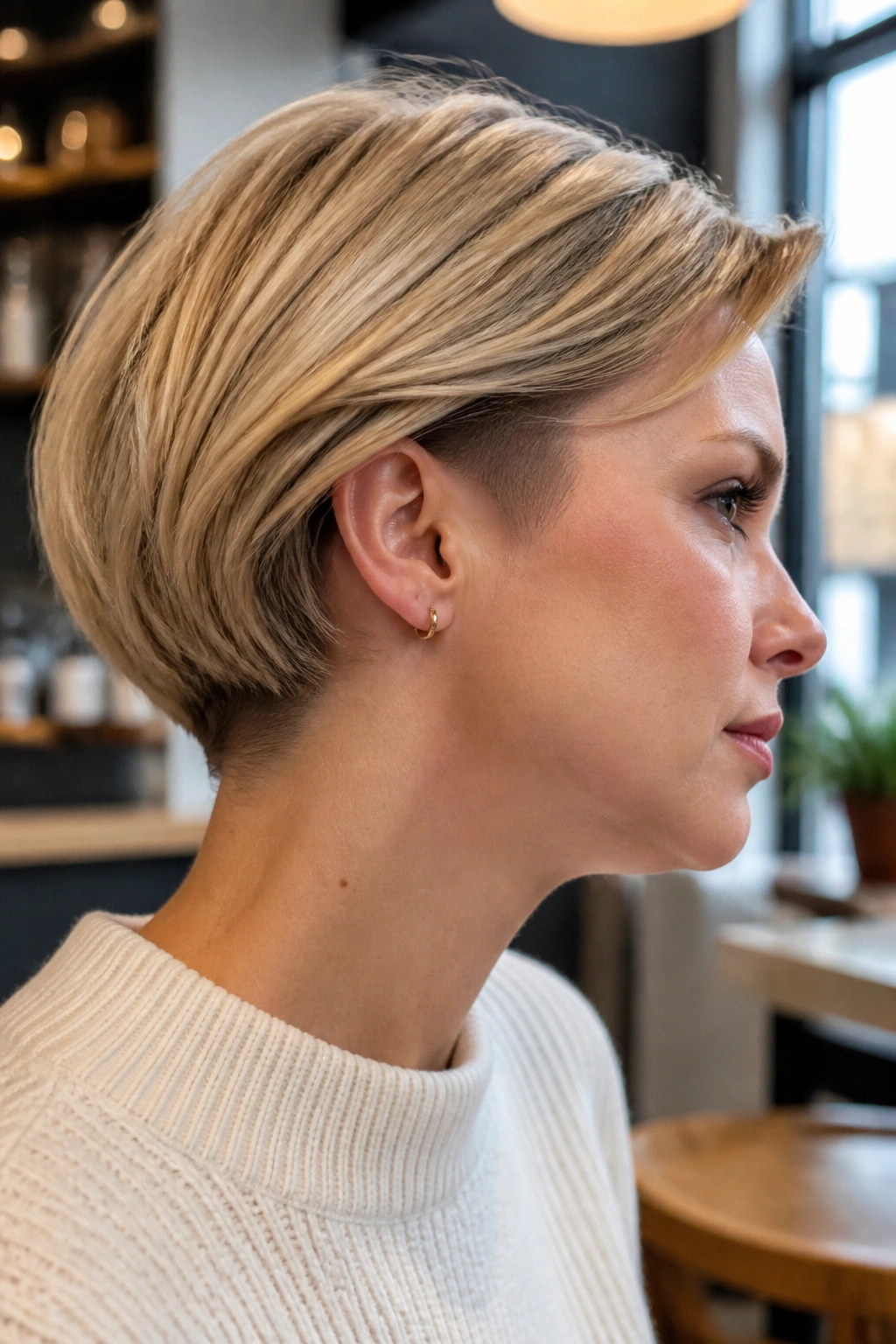
A short bob with an undercut is the answer for thick hair that keeps puffing out at the sides no matter what you do. Removing weight underneath changes the whole shape. The top still looks like a bob, but the sides lie closer to the head, which is exactly what a round face needs from a short cut.
A hidden undercut is the quieter version if you want the same effect without a visibly shaved section. The stylist takes bulk out from underneath the top layer, so the surface still looks full and polished. That can be a lifesaver if your hair expands in humidity or turns triangular by noon.
The blonde shade can be anything from cool cream to warm honey here, but the cut matters more than the color. Keep the top layer smooth and controlled, with just enough texture to stop it from reading blunt and heavy. If your hair is dense, this is one of the few short bob shapes that stays neat all day without a fight.
And that’s really the point with round faces: not smaller, not hidden—just cleaner, longer-looking lines that let the haircut do the work without shouting about it.
