



Black bob haircuts for fine hair work best when the cut does the heavy lifting. A clean edge at the jaw can make strands look denser than they are, while too many wispy layers can leave the ends looking tired halfway through the day.
That’s why the smartest versions are usually the ones with a strong shape. A blunt line, a slight bend, a side part, or a little lift at the crown can change the whole read of the haircut without asking your hair to do something it cannot.
Jet black makes that effect even stronger. The color gives the outline more presence, and on fine hair that matters a lot. You want the haircut to look intentional from every angle, not like it lost a fight with a thinning shear.
Some of these cuts are sharp and polished. Some are soft, broken up, and a little undone. All of them are built around one idea: give fine hair a shape that looks fuller, cleaner, and easier to live with.
1. Chin-Length Blunt Black Bob
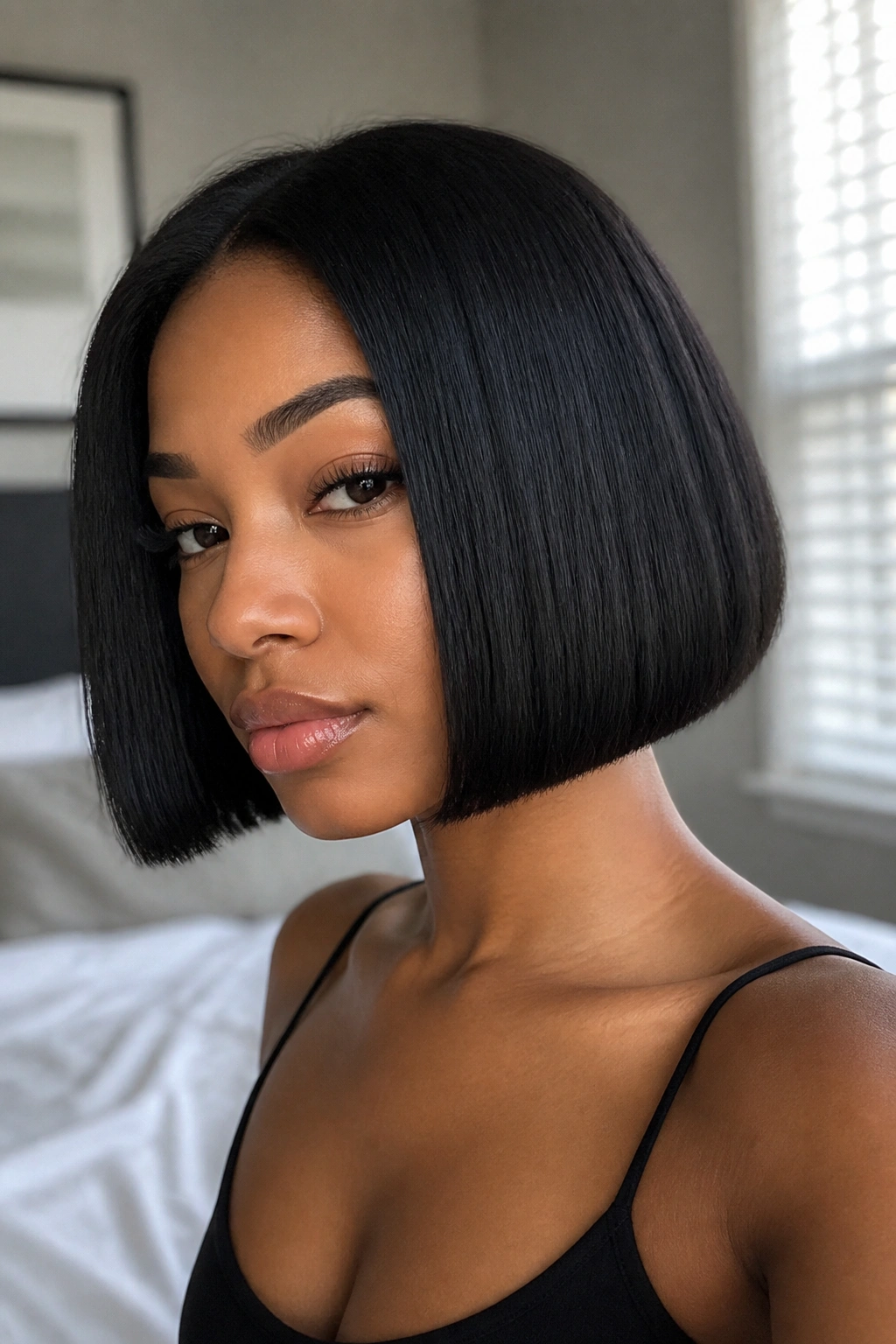
A chin-length blunt bob is the first style I’d hand to someone with fine hair who wants the illusion of thickness fast. The line is the point. When the ends sit in one solid plane, the haircut looks heavier, cleaner, and far less see-through.
Why It Works for Fine Hair
The blunt edge keeps the perimeter full, which is exactly where fine hair usually needs help. A cut that stops right at the chin also frames the face in a way that feels crisp instead of flat. If your hair tends to collapse after a few hours, this shape gives it a stronger base to sit on.
Ask for minimal internal thinning. That part matters. Too much texturizing at the bottom makes the ends fray, and fine black hair can go from sleek to stringy in a hurry.
- Best on straight to slightly wavy hair
- Looks strongest with a clean middle or side part
- Needs a flat brush blowout or a quick pass with a smoothing iron
- Works well with a lightweight shine serum at the ends
Pro tip: keep the line blunt, but not bulky. A tiny bit of softening at the corners can help it move without losing that full look.
2. Micro Bob With a Clean Edge
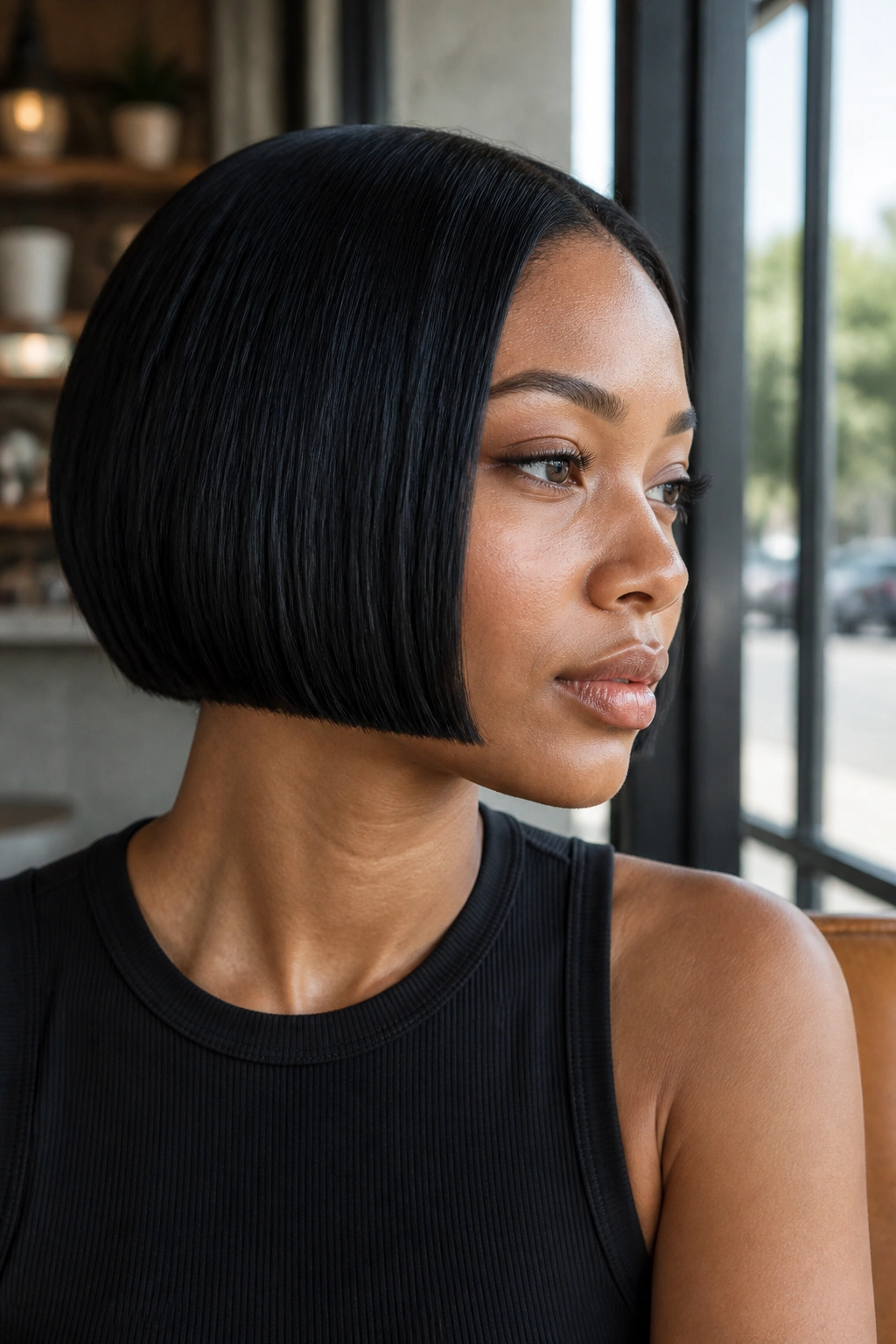
Short hair can be a smart move when every strand counts. A micro bob sits above the jaw or right at it, and on fine hair that shorter length often reads as thicker because there’s less weight dragging the shape down.
The trick is restraint. Don’t let the cut get too shattered or too fluffy around the ends. A micro bob looks best when the outline is neat, almost tailored, and the nape is snug enough to keep the back from puffing out.
This is one of those cuts that looks expensive even when the styling is plain. Wash, rough-dry, tuck one side behind the ear, and you’re already halfway there. No drama. No heavy layering.
If you like a sharper look and don’t mind exposing the neck and jawline, this one has real payoff. It also grows out cleanly, which matters more than people admit.
3. Jaw-Grazing Side-Part Bob
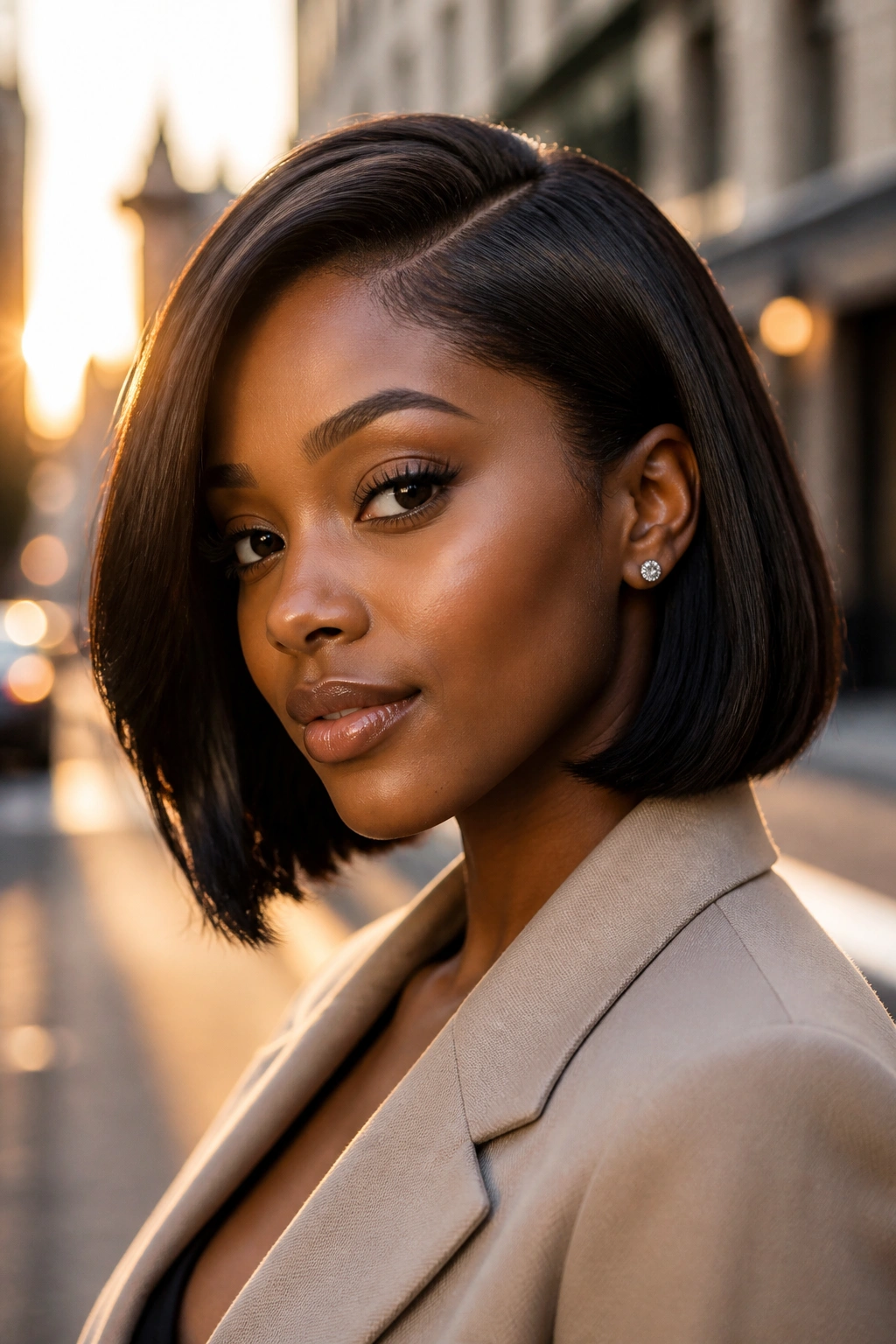
Why does a side part help so much? Because fine hair usually needs a little root lift, and a side part gives it without piling on product. A jaw-grazing bob with that offset line can make the top look fuller in seconds.
The cut itself should stay pretty clean. You want enough length to skim the jaw, because that little bit of extra swing helps the shape feel softer and less strict. Black hair makes the outline look glossy, and a deep part gives that sheen something to catch along one side.
How to Wear It
- Blow-dry the roots away from the part first
- Clip the crown for 5 to 10 minutes while it cools
- Smooth the ends with a round brush or a large paddle brush
- Finish with a light mist of flexible spray, not a heavy lacquer
The side part also gives you a useful dodge on days when your hair feels limp. Shift the part, tuck one side, and the whole haircut reads differently. That kind of small change is gold when your strands are fine.
4. Soft Inverted Bob
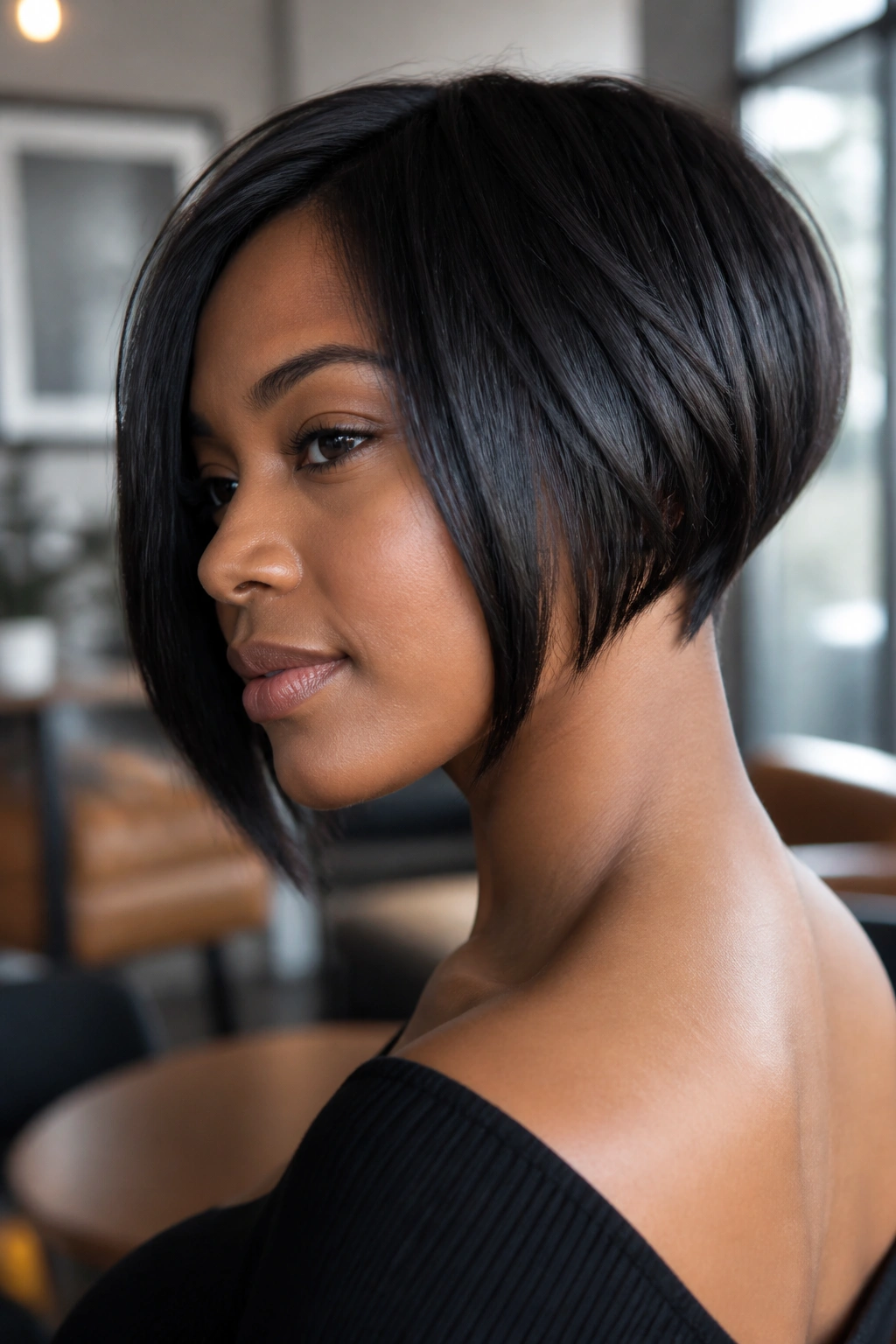
A soft inverted bob is one of my favorite answers for hair that gets flat in the back and hangs a little too close to the skull. The shorter nape gives lift, while the longer front pieces create movement and keep the shape from looking helmet-like.
The cut should not be too dramatic. A severe inversion can look chopped up on fine hair, especially if the front pieces are too thin. Keep the angle gentle, and let the line glide forward instead of shouting about itself.
This style gives black hair a nice, glossy sweep along the cheek and jaw. When the ends are polished, the whole haircut looks denser than it really is. That is the whole trick here.
If you like a bob that feels modern without being fussy, this is a strong choice. It has structure, but it still moves when you turn your head.
5. Rounded French Bob With Fringe
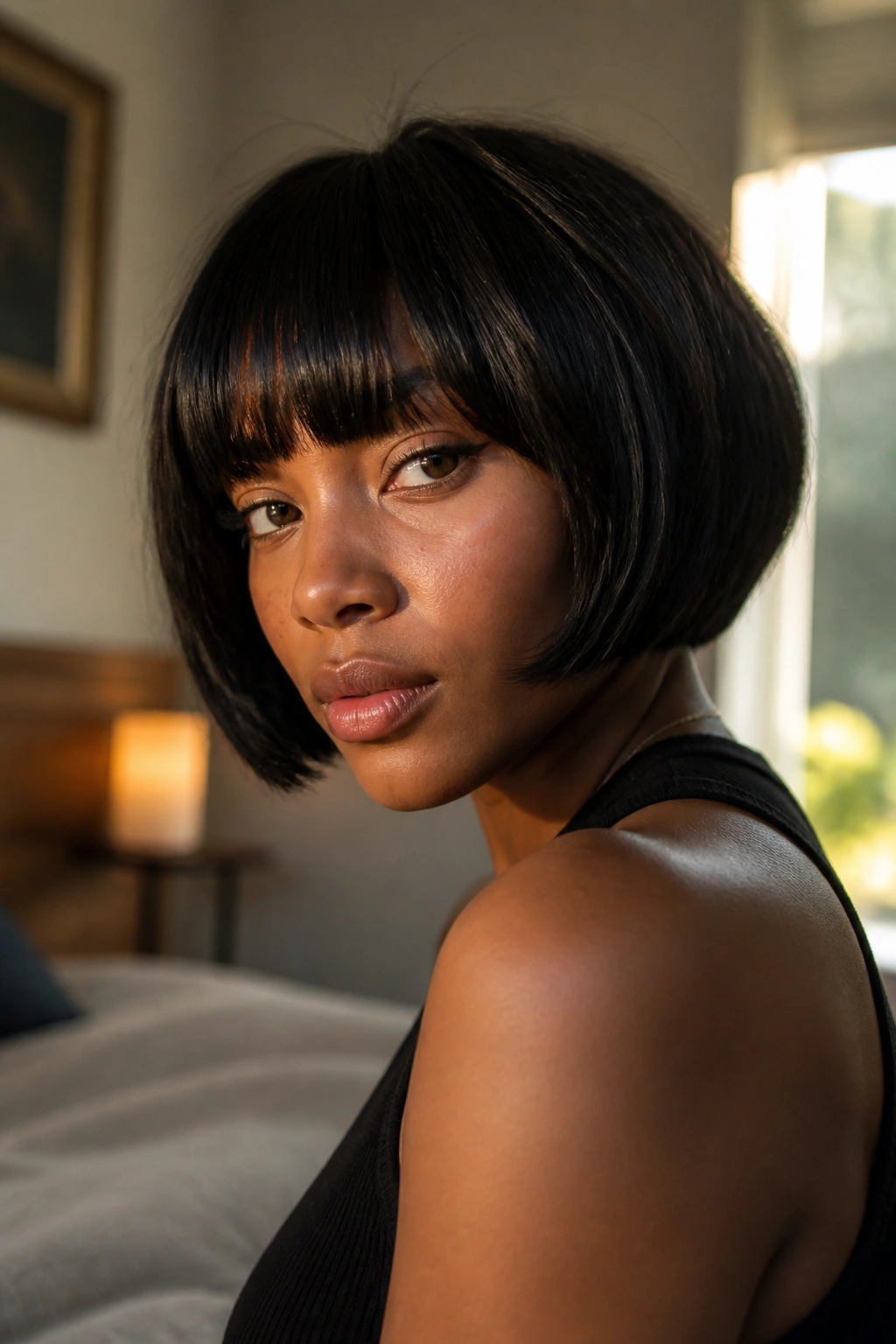
A rounded French bob is softer than a blunt boxy cut, and that softness can be a blessing for fine hair. The curve around the jaw creates body, while a fringe gives the forehead area some weight so the whole haircut feels balanced.
The best version does not need heavy layering. In fact, too much internal cutting can steal the fullness that makes this shape work. You want a rounded outline, a slightly cheeky fringe, and a bit of air at the ends so the bob doesn’t sit stiff.
What Makes It Different
Unlike a plain straight bob, this one feels a touch more lived-in. The fringe lowers the visual weight at the top, which makes the hair around the face look thicker. It also hides a little scalp space at the hairline, which some people with fine hair love and others never think about until they see it.
A small round brush and a quick bend through the fringe are enough. Keep the finish touchable, not crunchy. Fine black hair can hold shape, but it still looks better when it moves.
6. A-Line Bob With Longer Front Pieces
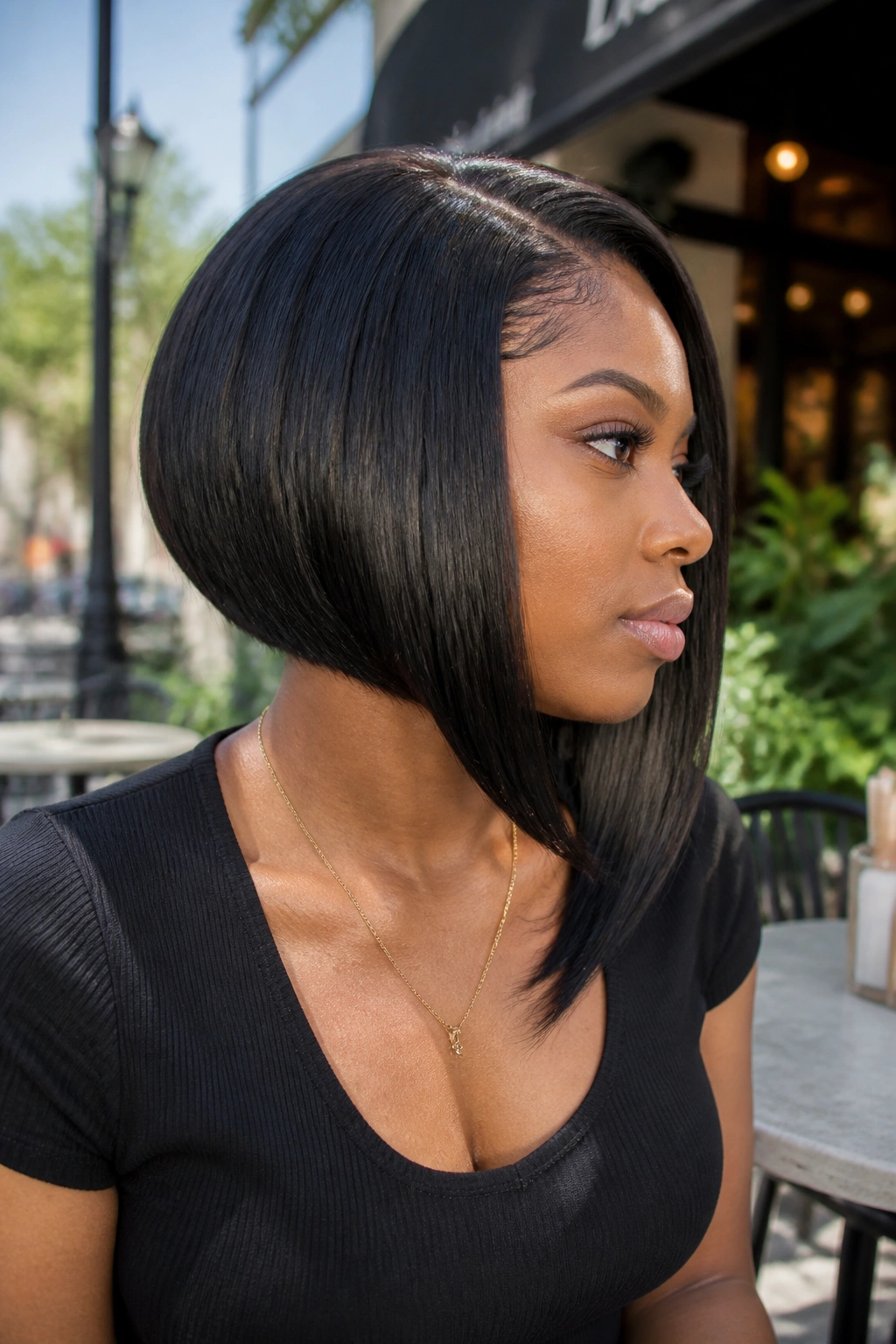
An A-line bob gives you a longer front and a shorter back, and that slope can do a lot of visual work for fine hair. The front pieces stretch the face a little, while the back stays tucked and tidy.
This cut shines when the hair is thin at the nape. The shorter back removes some dead weight, which helps the ends at the front look fuller by contrast. Black hair color adds to that effect because the angle looks more defined in deep, glossy tones.
The only real risk is over-thinning the front. Keep the front pieces substantial. You want them to fall in a clean diagonal, not hang like threads.
If you wear earrings a lot or like a bit of shape around the collarbone, this one is flattering in a very practical way. It gives movement without asking for layers all over the place.
7. Collarbone Lob With a Light Bend
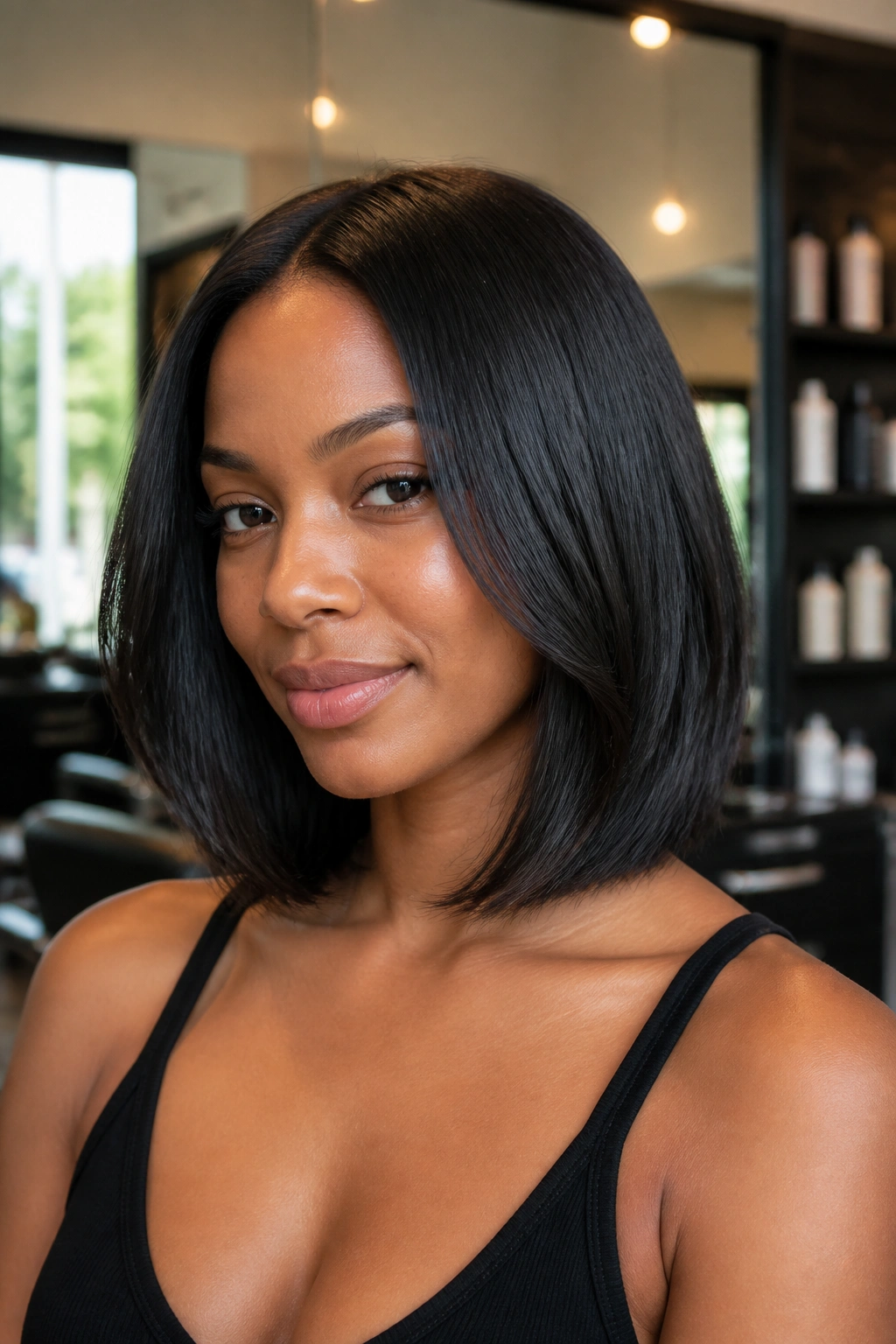
A collarbone lob is a safer length for anyone who wants volume without going too short. Fine hair often behaves better when there’s enough length to tuck, wave, or bend, and the collarbone gives that range.
The nicest versions have a light bend through the mid-lengths, not a curl that looks overdone. A single pass with a flat iron or a large curling iron can make the lob look thicker by breaking up the straight fall of the hair. That small bend matters more than most people think.
This cut is also one of the easiest to live with between salon visits. It can be worn straight, tucked, clipped back, or put into a low twist when you’re bored. The shape stays polite.
For black hair, the collarbone length can be beautiful because it shows shine along the full length of the strand. If your hair is fine but you like a little more hair to work with, this is a good middle ground.
8. Layered Bob With Crown Lift
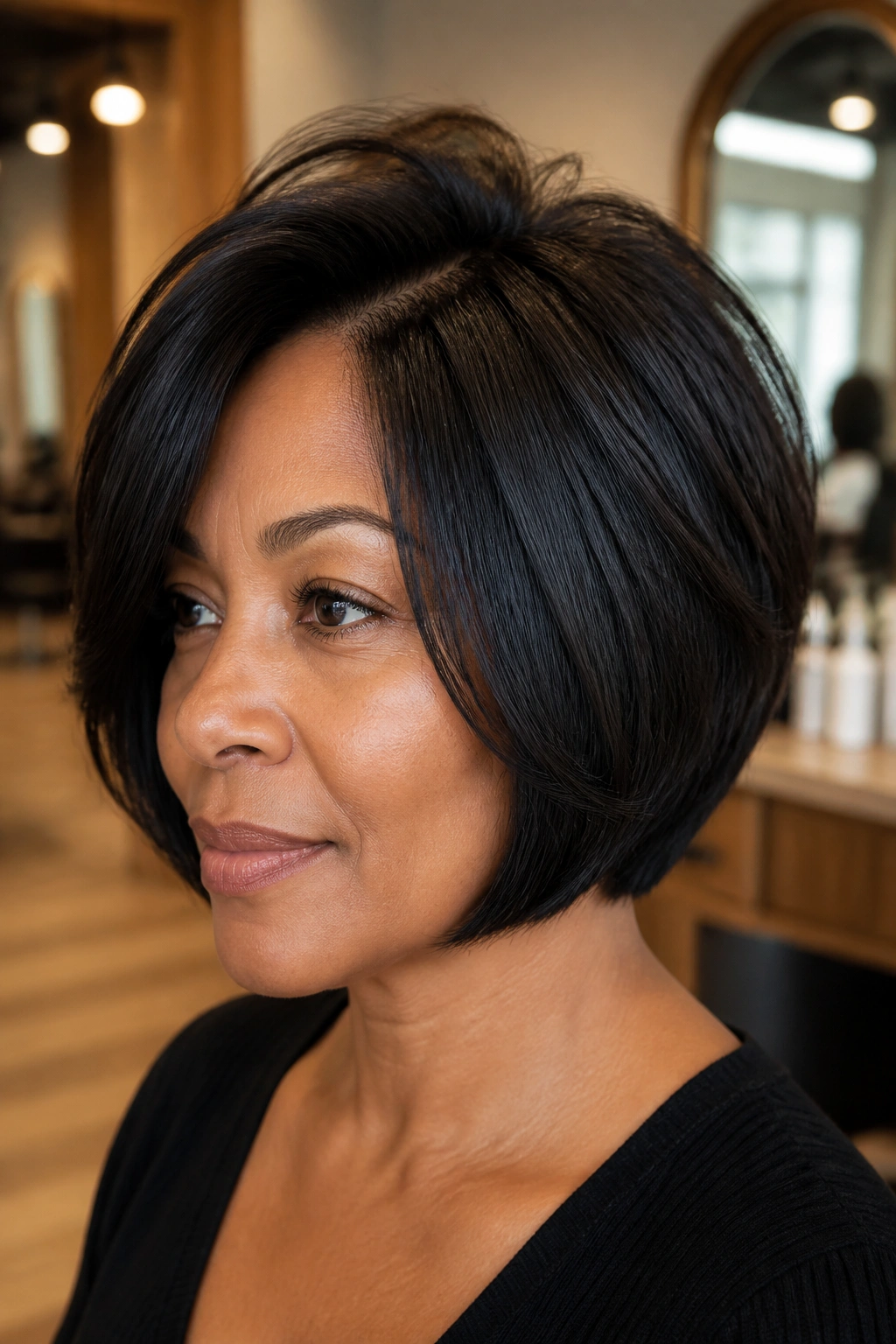
A layered bob can be brilliant for fine hair when the layers stay near the crown and don’t chew up the ends. That is the part many stylists get wrong. They add too many layers, and the whole cut loses the outline that gives fine hair its best shot at looking full.
Here, the goal is lift at the top and weight at the bottom. Crown layers create a little height where fine hair tends to lie flat, while the perimeter keeps the body of the haircut intact. The result is a bob that looks airy without looking sparse.
A root spray and a round brush help, but the cut has to do most of the work. If the crown is built well, you won’t need to fight for volume every morning.
This is a smart option if your hair is fine but not fragile. It gives movement without turning the ends into feathers.
9. Curtain Bang Bob
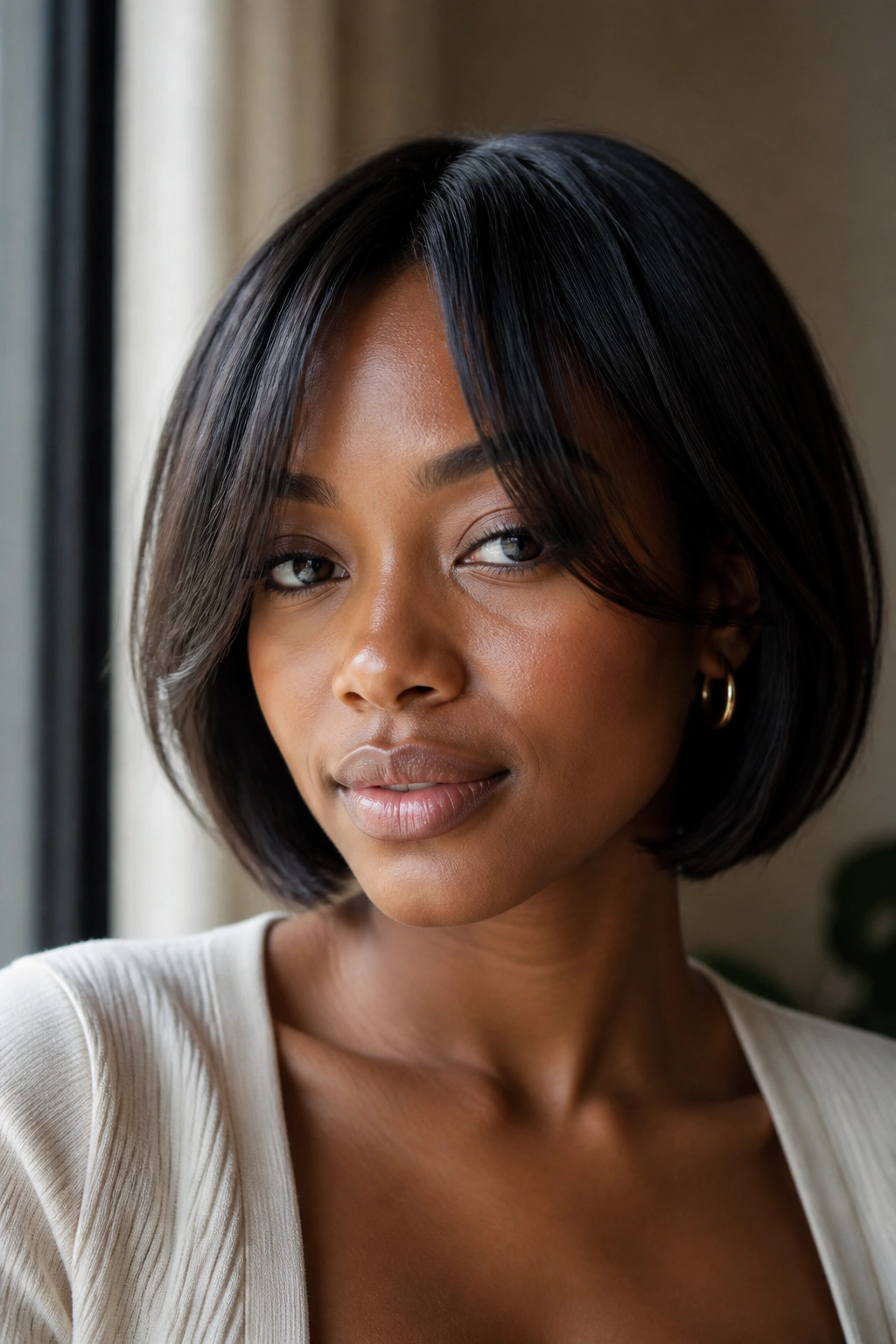
Curtain bangs can soften a black bob in a way that feels easy rather than precious. They split the front of the face, add width around the cheekbones, and keep the haircut from looking too square.
The bangs need a little styling, though. Fine hair will not magically sweep itself the right way. Use a round brush or a small flat brush to direct the front pieces away from the center as they dry, then let them cool before touching them again.
Styling Notes
- Start with damp bangs, not soaking wet ones
- Blow-dry from side to side to avoid a hard center line
- Keep the bob itself smooth and slightly tucked under
- Use only a pea-sized amount of cream on the fringe
This shape works well if you want your forehead softened but don’t want full bangs sitting heavy across the face. It also lets you pin the bangs back on messy days, which is a small but useful freedom.
10. Tucked-Behind-Ear Bob
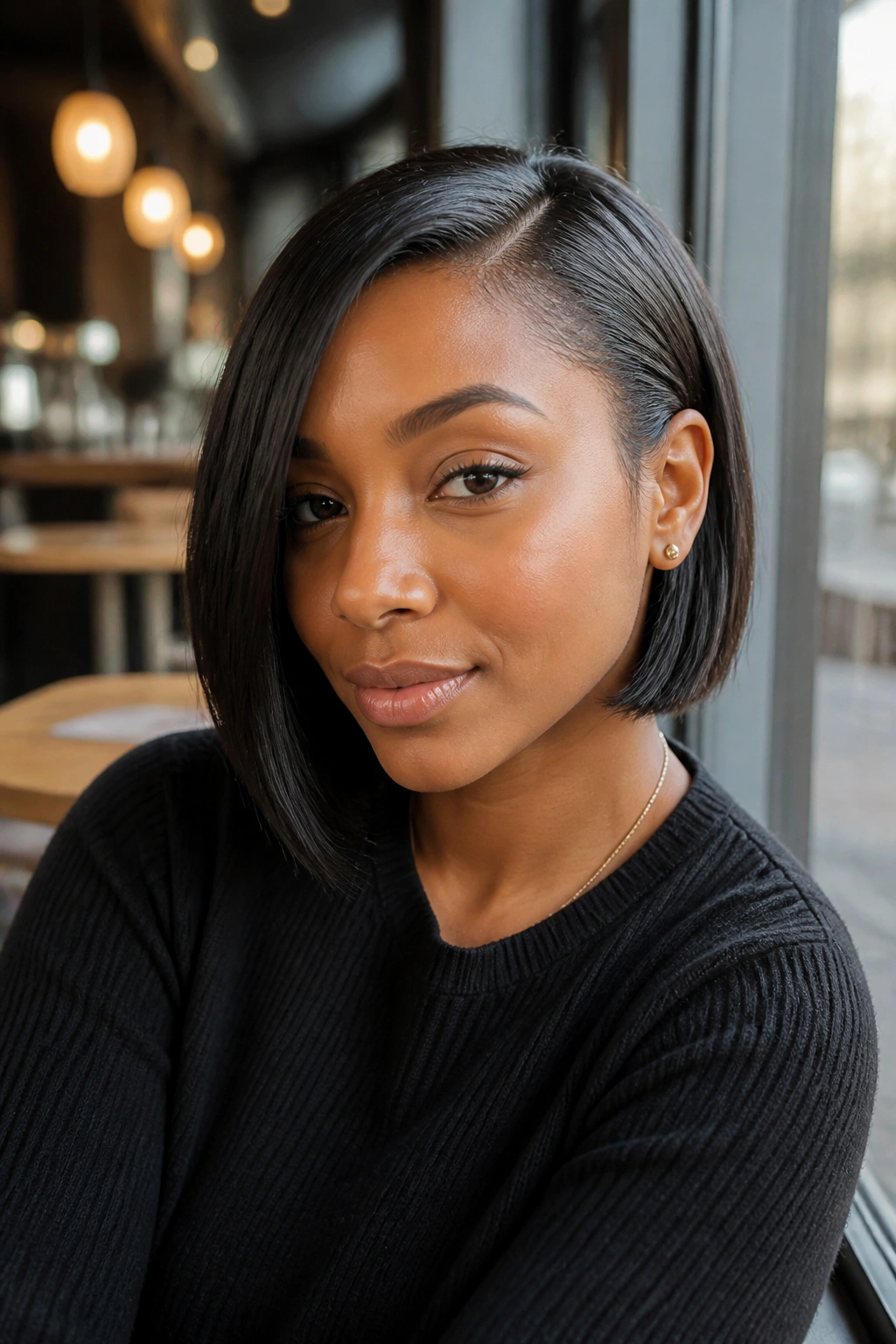
Some haircuts need a trick. This one has a built-in one. A tucked-behind-ear bob uses the ear as part of the styling, which gives the haircut a neat, open look and a little extra shape around the face.
Fine hair benefits because the tuck creates instant asymmetry. One side appears sleeker and flatter against the head, which makes the opposite side feel fuller by contrast. Black hair makes that contrast more visible, especially when the ends are glossy.
The cut should sit just long enough to tuck without popping out. If it’s too short, the pieces will spring free. If it’s too long, the tuck loses its clean line.
This is one of those cuts that looks polished with almost no effort. Earrings, glasses, and a strong side part all play nicely with it. Small details. Big payoff.
11. Deep Side-Part Sleek Bob
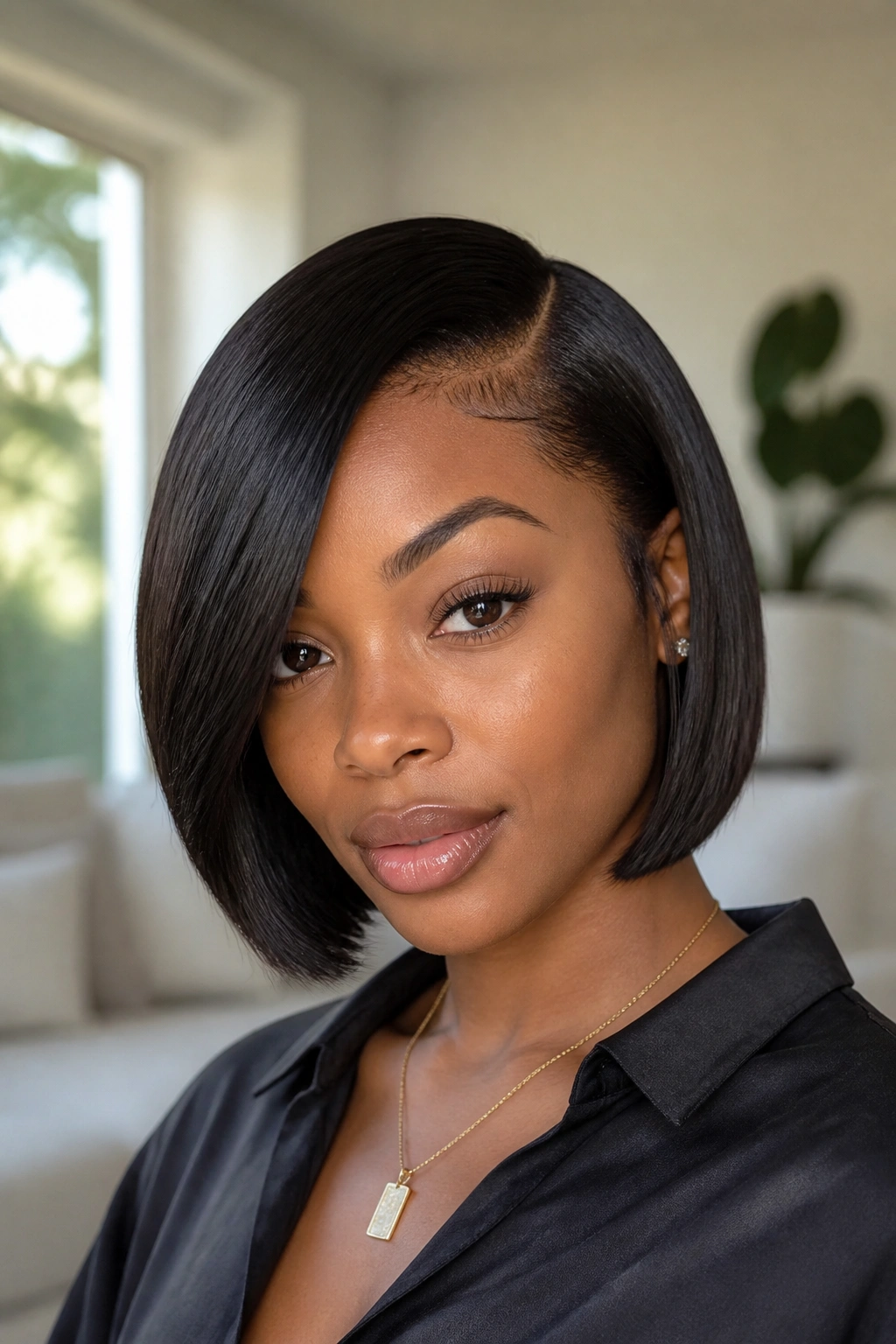
A deep side-part sleek bob is one of the easiest ways to fake density on fine hair. The part shifts more hair to one side, and that heavier side creates the feeling of a fuller crown and a thicker perimeter.
The look works best when the surface is smooth. A bit of frizz or puff can soften the drama, but too much texture steals the crispness that makes this cut shine. Think clean, not plastered.
One thing I like here is how forgiving it is when the hair starts to fall during the day. As the root lift settles, the bob still keeps its shape because the part already built in some movement.
If you wear black hair with a smooth finish, this cut has a sleek, almost liquid look. It’s tidy. It’s sharp. And it doesn’t ask for much beyond a good part and a flat brush.
12. Feathered Bob With Airy Ends
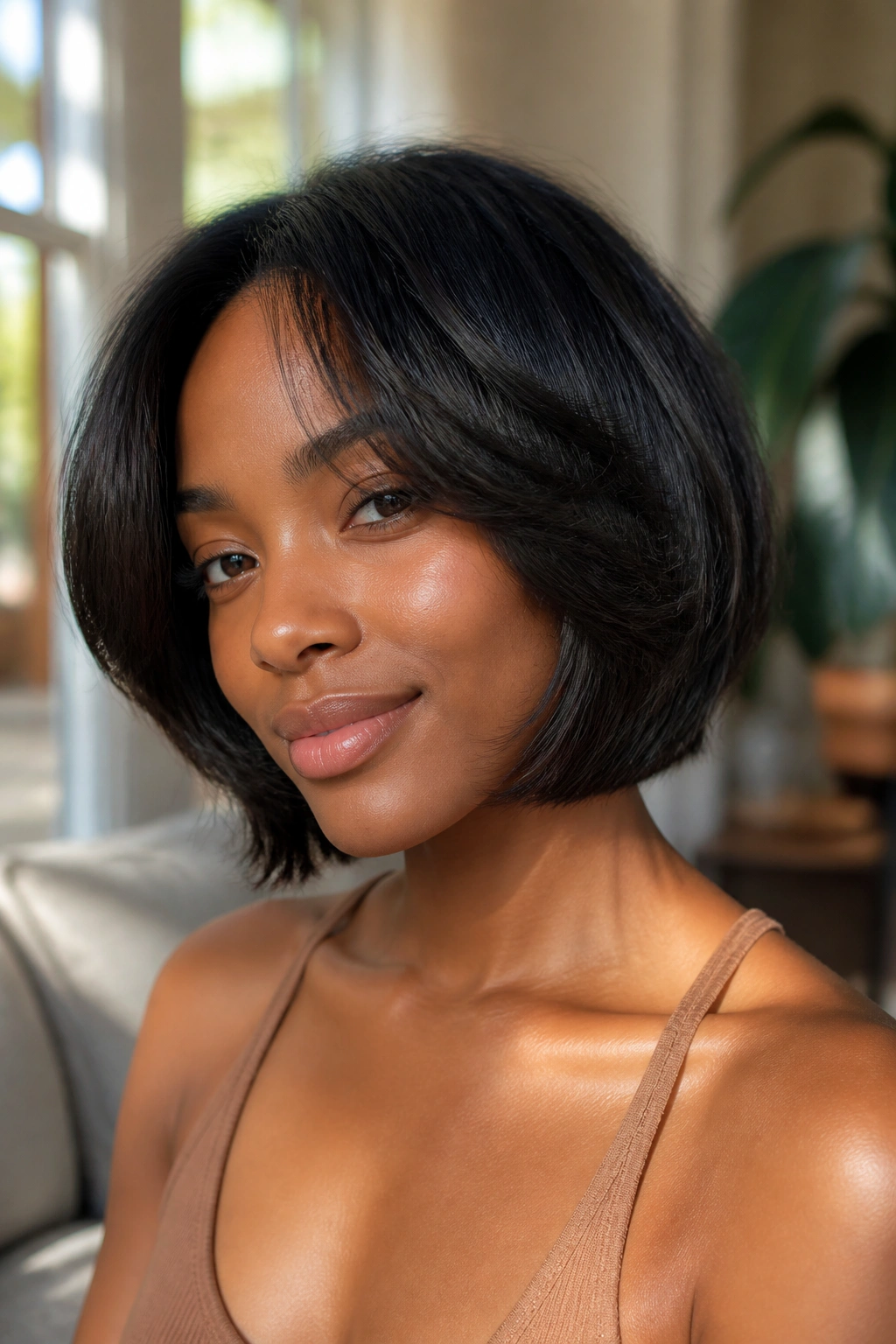
Feathering sounds risky on fine hair, and sometimes it is. Done badly, it can leave the ends wispy and tired. Done well, though, feathering can give a bob just enough movement to keep it from sitting like a block.
The key is to feather the top layers lightly and leave the bottom line intact. You want air through the shape, not a shredded perimeter. Black hair shows the difference fast because the shine on the surface makes every edge visible.
A feathered bob works particularly well if your hair is fine but plentiful in total amount. The cut can remove some weight near the top while still letting the base stay solid. That balance matters.
I’d keep the styling soft here. A round brush, a bit of bend, and a light spray at the roots are enough. Don’t overthink it.
13. Textured Bob With Piecey Waves
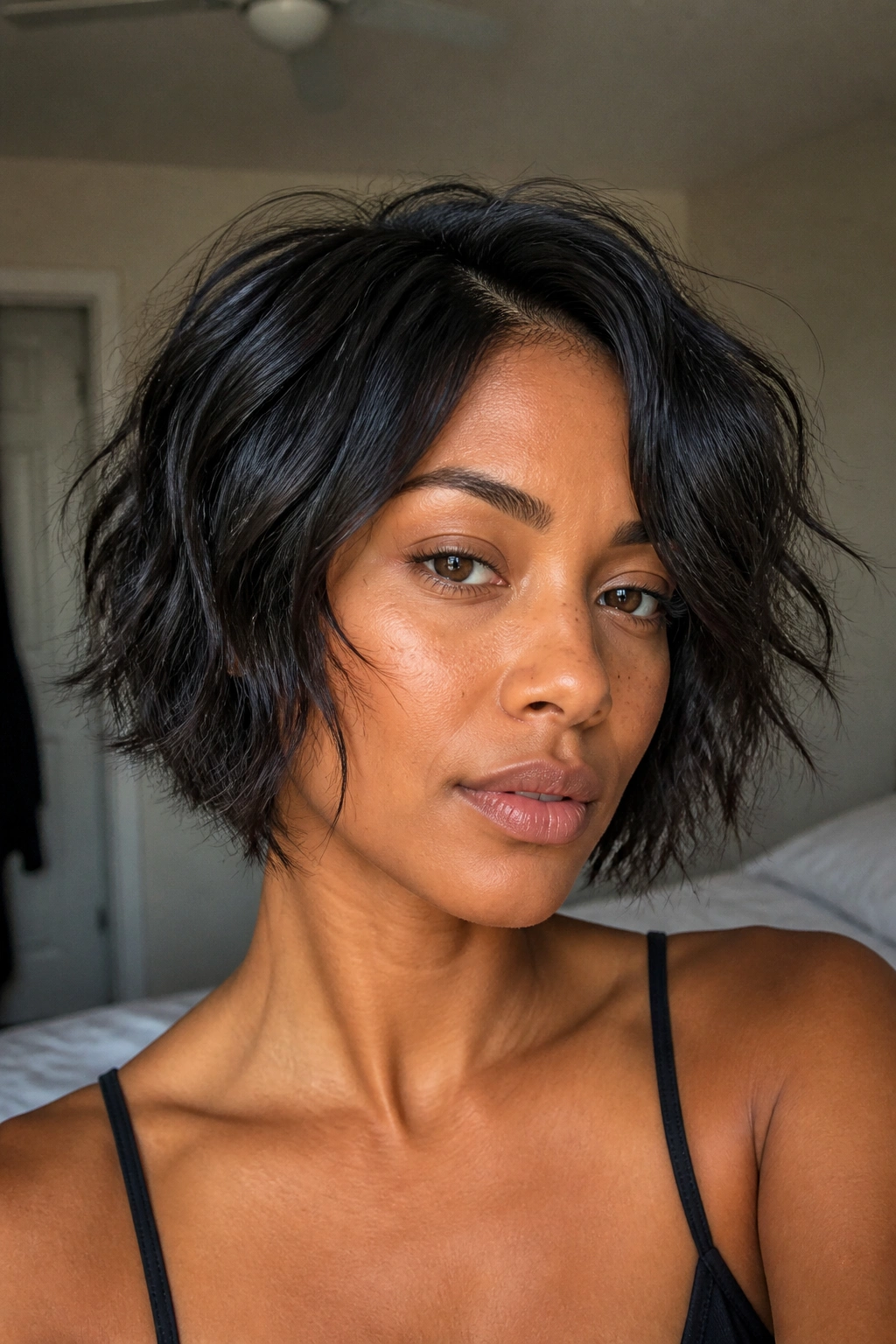
A textured bob can look fantastic on fine hair when the waves are loose and separated instead of crunchy and overworked. The goal is pieceiness, not beach-camp hair that feels dry to the touch.
Use a small iron or even a bend-and-scrunch technique with a diffuser if your hair has some natural wave. Keep the wave pattern irregular. Uniform curls can make fine hair look smaller, while a few broken bends make it feel fuller and more alive.
This style is a good choice if your hair goes limp when it’s too straight. The texture gives the eye more to look at, which helps the hair appear denser. Black hair especially benefits from that because the shine rolls over the waves in a nice, uneven way.
A little dry texture spray at the mid-lengths helps, but don’t bury the hair in product. Fine strands get heavy fast.
14. Curved Under Bob
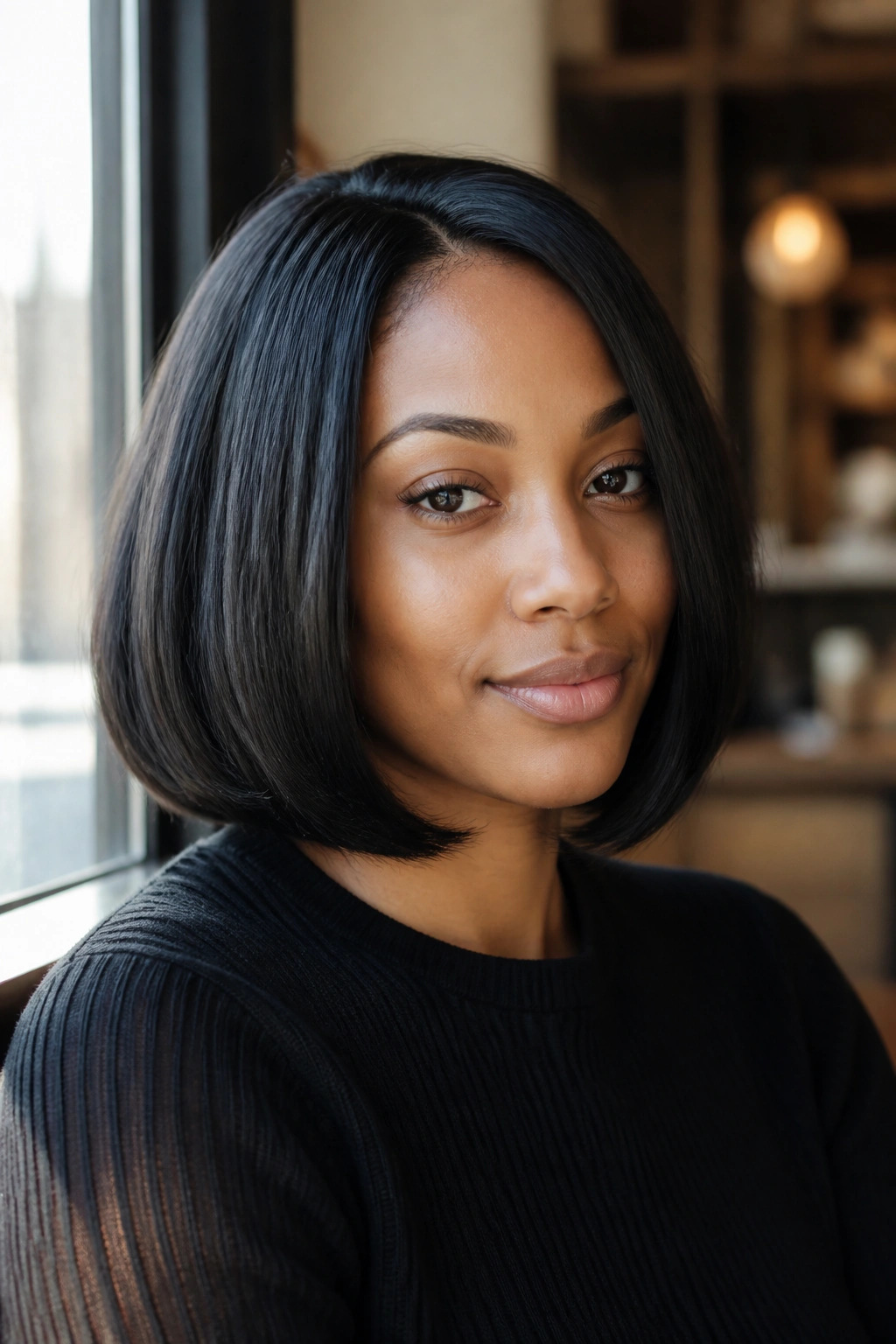
A curved under bob has a classic shape that quietly flatters fine hair. The ends turn inward just enough to create the impression of thickness, and the silhouette stays neat from morning to night.
This is one of the easiest styles to maintain if you like a controlled finish. The inward curve keeps the bob from flaring out at the sides, which can happen when fine hair is cut too bluntly and then air-dries on its own.
It also looks good with black hair because the curve gives the light a place to settle. The edge reads as solid, and that makes the haircut feel fuller at first glance.
If you want something clean for work, dinners, school runs, or just not thinking too hard about your hair, this is a comfortable pick. It behaves.
15. Asymmetrical Bob
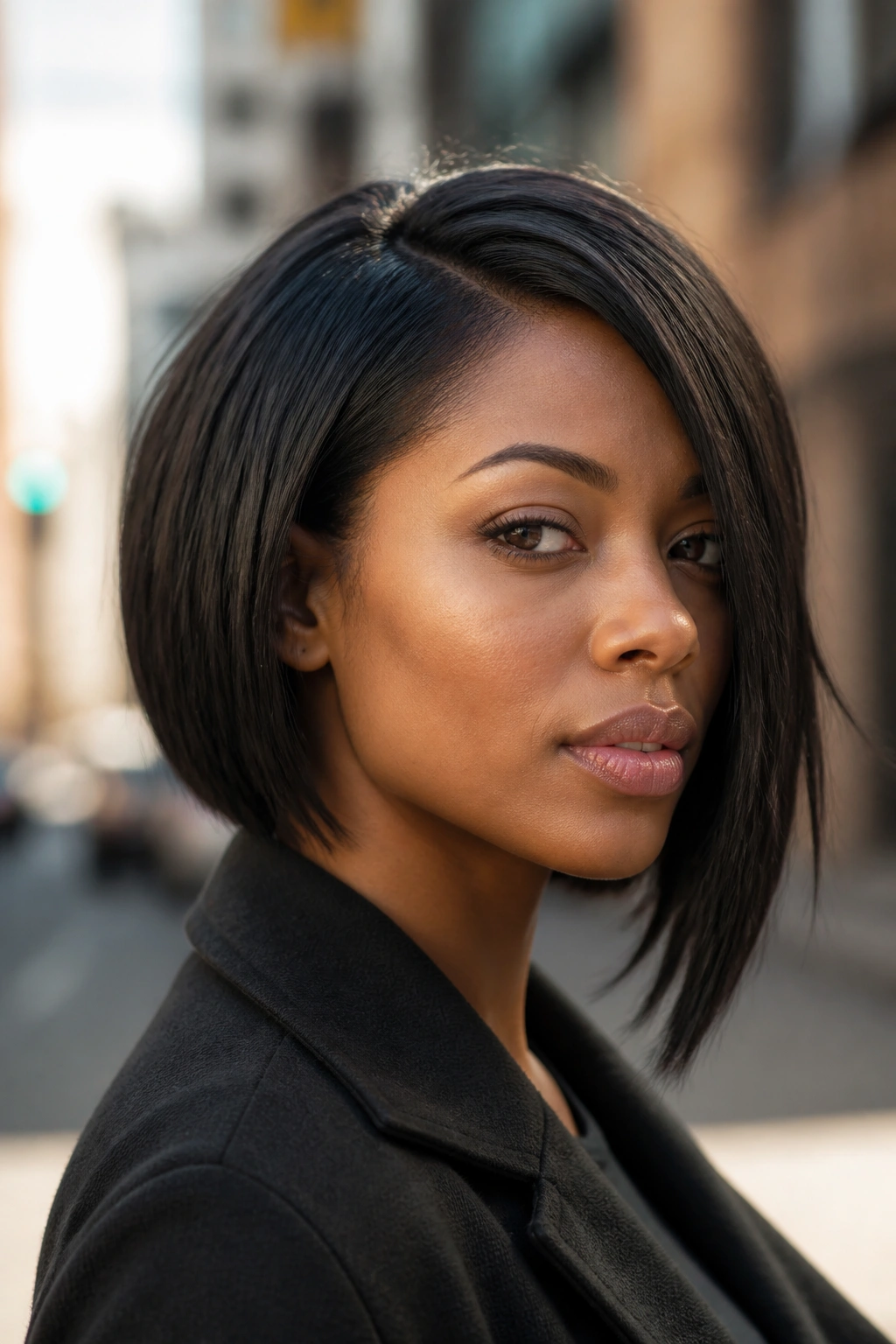
An asymmetrical bob is a little sharper than a standard bob, and that difference can be useful if your hair needs the illusion of density. One side is slightly longer, which gives the eye a strong line to follow and makes the style feel intentional.
The cut works best when the length difference is modest. Too much asymmetry on fine hair can start to look thin and fussy. A subtle shift is enough. The shape does the talking without turning into a stunt.
Unlike a symmetrical bob, this one has a built-in point of interest, so you do not need a lot of styling to make it feel finished. A smooth blowout and a tucked side are often enough.
I like this cut for anyone who wants edge without giving up polish. It is not loud. It just has a little bite.
16. Blunt Bob With Micro Fringe
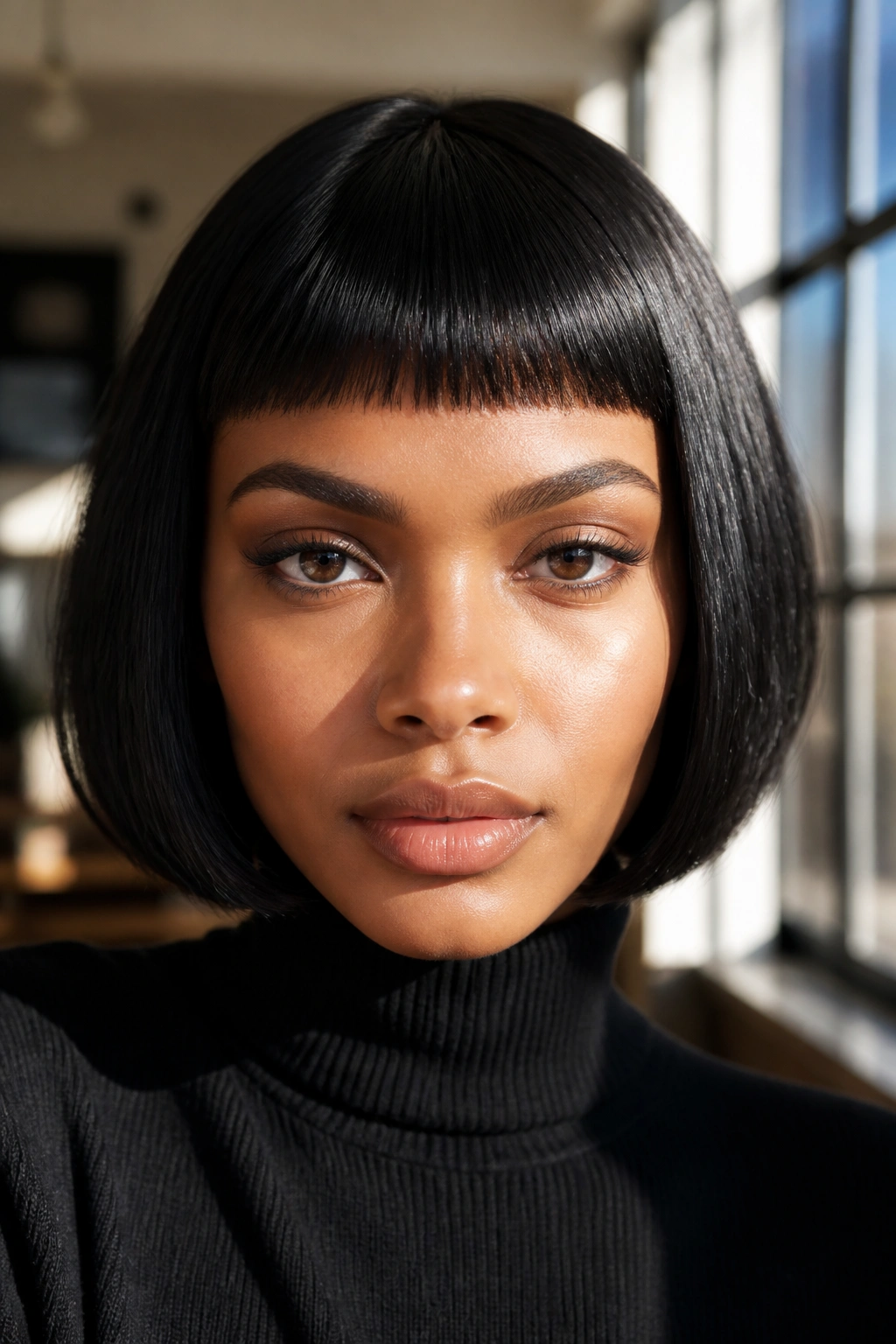
A blunt bob with a micro fringe is not for everyone, and that is part of the fun. The short fringe makes a strong line across the face, while the blunt bob keeps the ends thick and clean.
Fine hair can wear this look well because both the fringe and the perimeter rely on shape rather than volume. You are not trying to puff the hair up. You are trying to make the outline precise.
What to Watch For
- The fringe needs a skilled hand
- Too much texturizing at the front can make it look patchy
- The bob itself should stay dense through the hemline
- Works best with a smoothing cream, not a heavy oil
This cut has a graphic feel that suits black hair especially well. The darker color sharpens the contrast between the fringe and the forehead, so the haircut reads almost like a frame.
17. Side-Swept Bang Bob
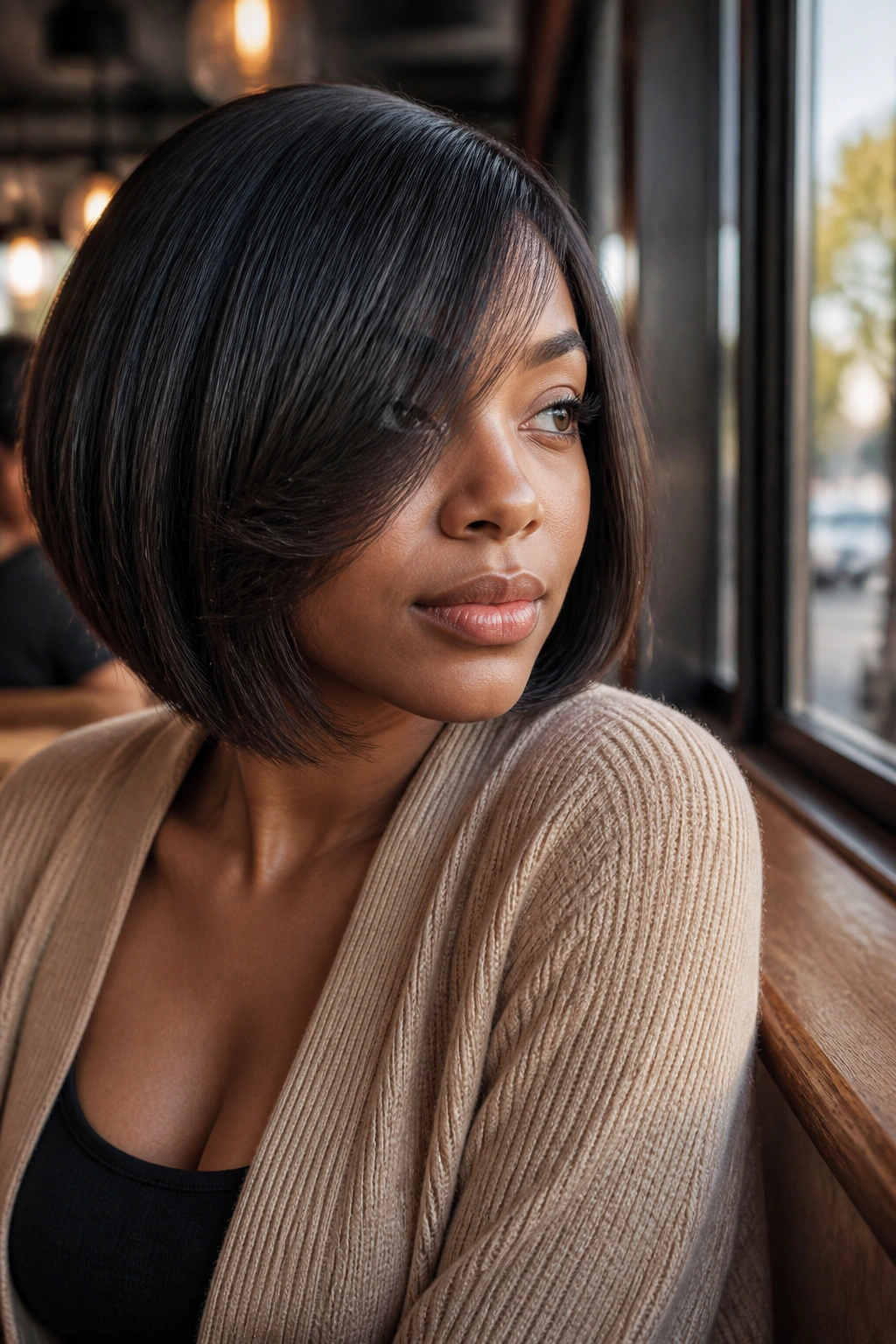
Why do side-swept bangs keep showing up in fine-hair conversations? Because they add movement without demanding a lot of actual hair. A side-swept fringe can lift the front, soften the forehead, and make the whole bob feel less plain.
The cut around the face should stay a bit longer so the bangs can sweep cleanly into the bob. If the front is cut too short, the whole thing starts to feel chopped. That is the problem with many bang-heavy bobs.
This look is friendly if your hairline has cowlicks or a little natural bend. You can work with the direction instead of fighting it. That alone saves time.
Black hair gives the sweep extra contrast, especially when the bangs fall across one eye or skim the cheekbone. It is a classic shape for a reason. It works.
18. Graduated Bob
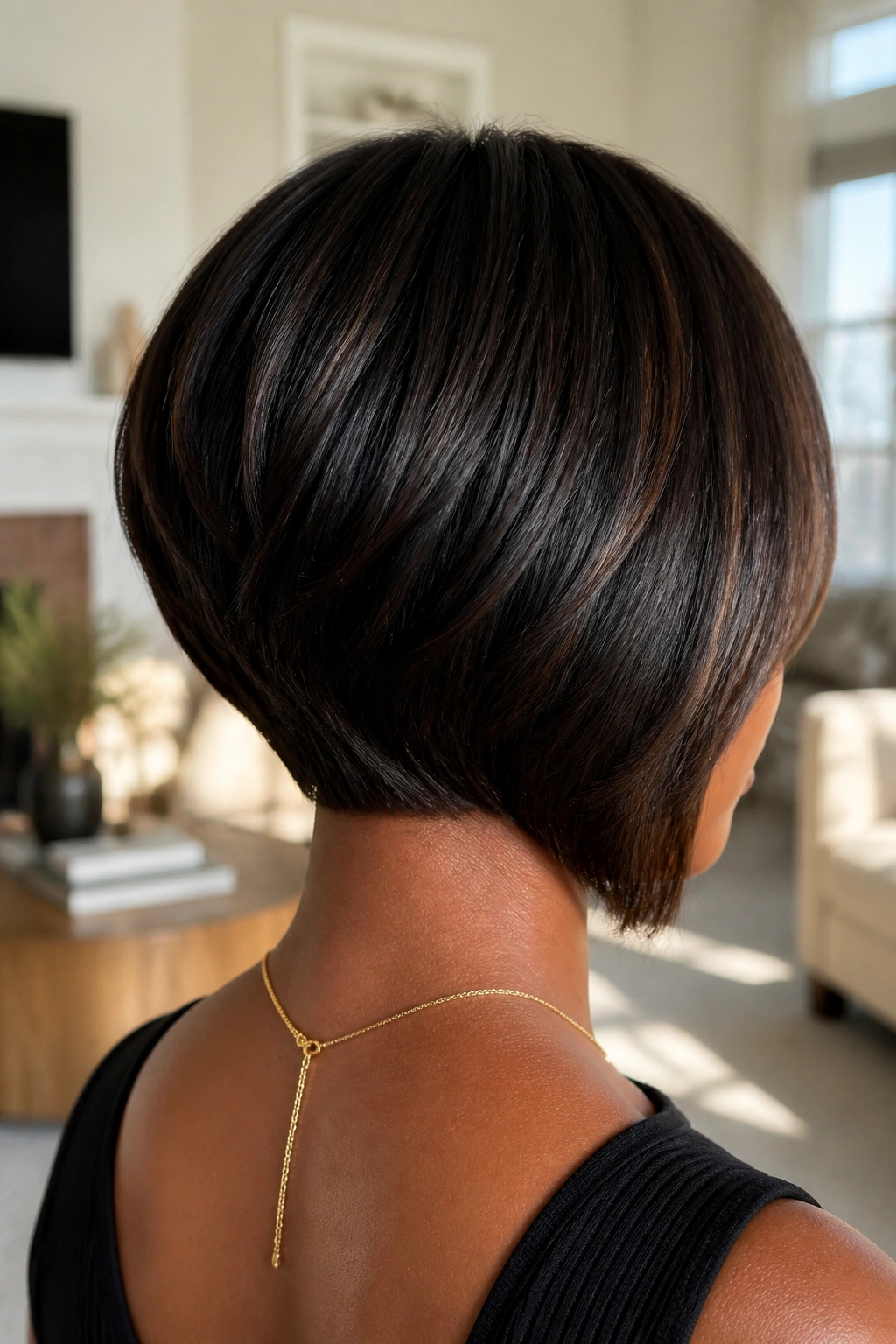
A graduated bob builds a little stack at the back, and that slight rise can be a gift for fine hair that goes flat near the nape. The shape creates lift without needing a lot of teasing or product.
The difference between a good graduated bob and a boxy one comes down to softness in the stacking. You want a neat curve, not a hard shelf. The back should sit snug against the head and then open into the front with a clean slope.
This is one of the most useful cuts if your hair collapses where it touches the shoulders. The graduation keeps the back from dragging, so the silhouette stays tighter and fuller.
It also grows out in a fairly graceful way. The shape may relax, but it usually doesn’t fall apart the way a heavily layered bob can.
19. Soft Razor Bob
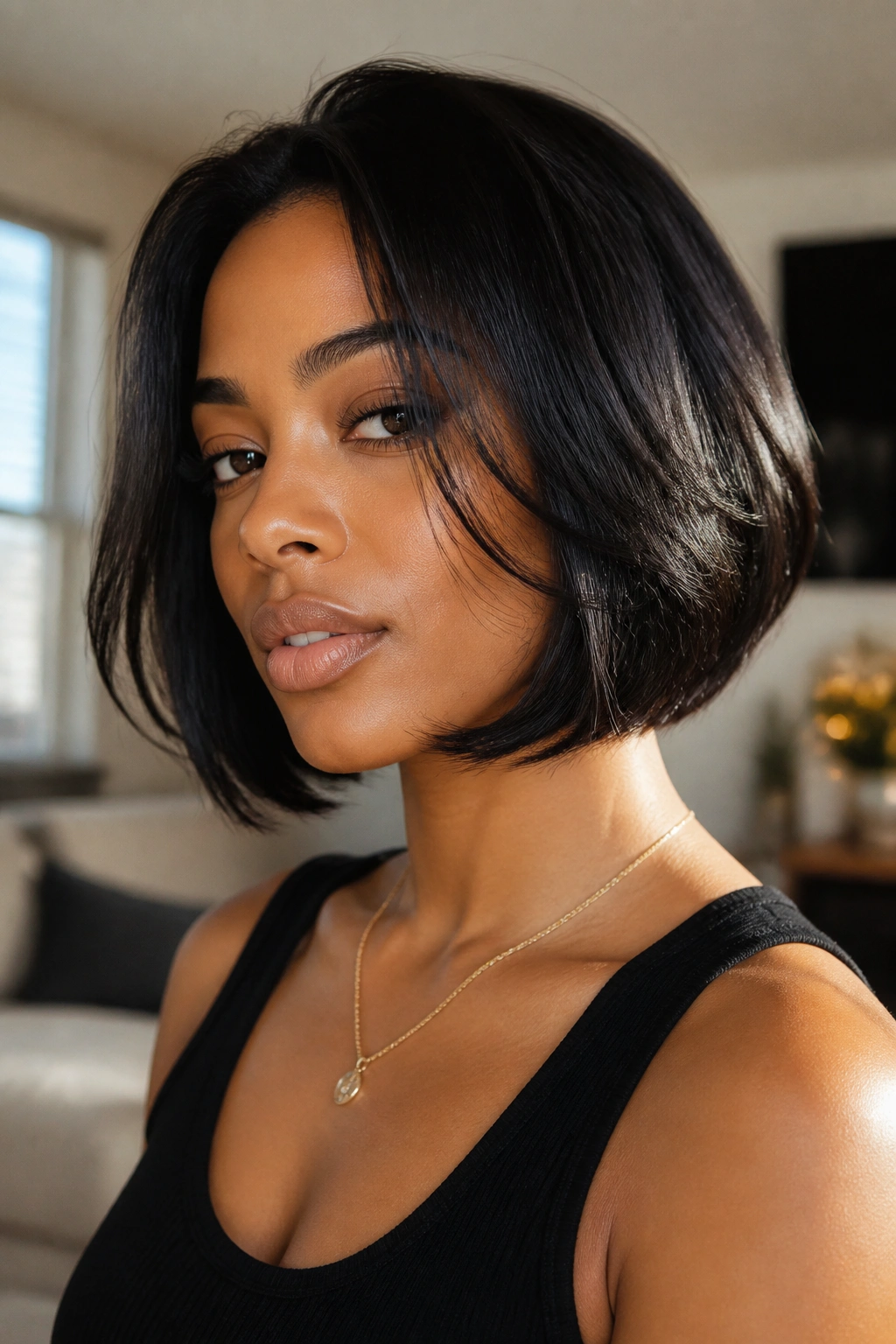
A razor bob can be beautiful on fine hair, but only when the razor is used with a light hand. The point is softness and movement, not damage. Fine strands can show every rough edge, so this cut needs a careful stylist.
The good version has little pieces that move around the face and at the ends, while the main outline stays intact. That combination keeps the bob from looking too blunt or too thin. It’s a tightrope walk, honestly.
If your hair is naturally straight and feels heavy at the ends, a soft razor bob can take some of that stiffness away. If your hair is already dry or fragile, I’d be cautious. A razor can make the ends look airy in a way that is not always flattering.
Black hair loves this shape when the finish is smooth. The contrast between the soft pieces and the dark shine is part of the charm.
20. Bob With Invisible Layers
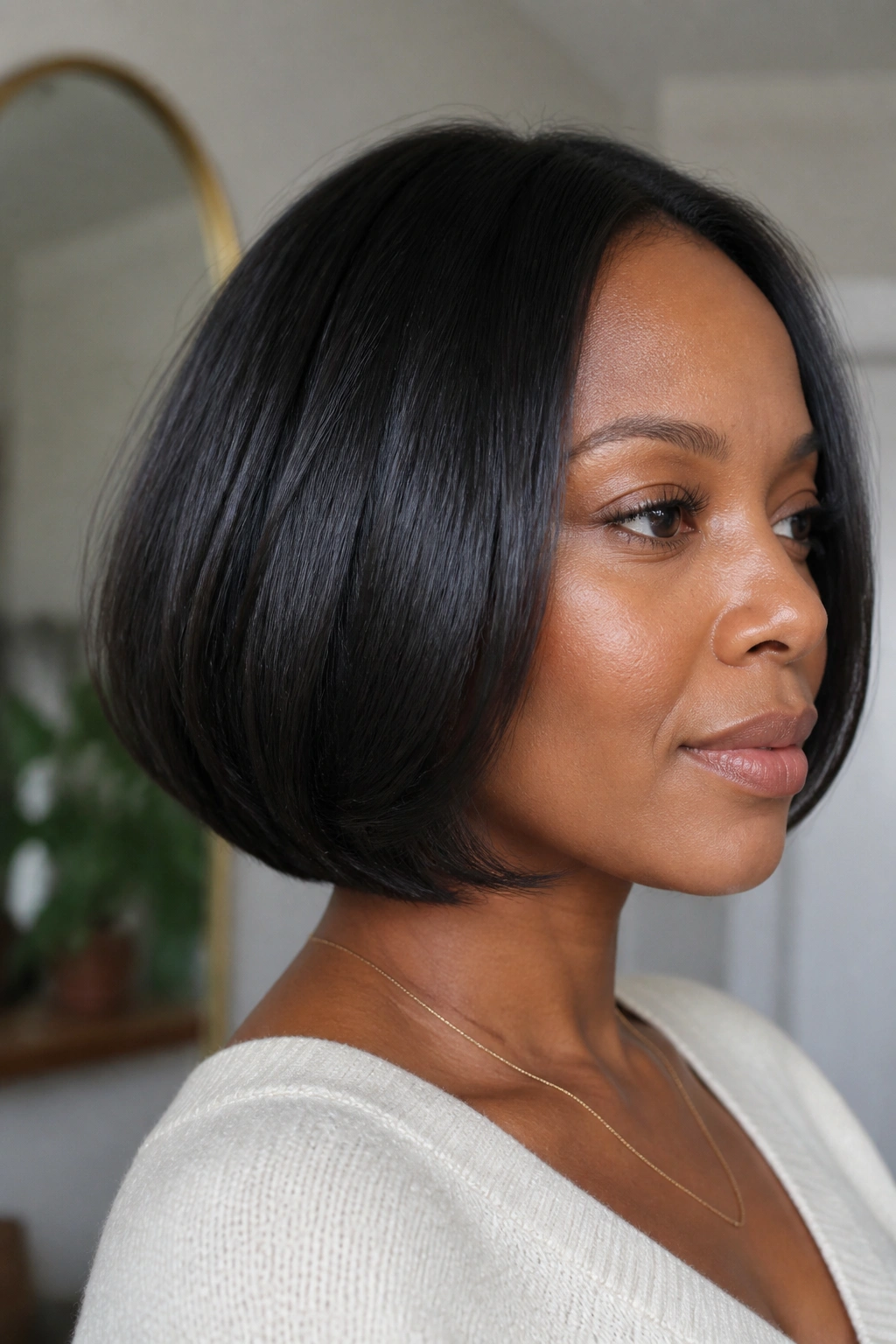
Invisible layers are one of the smartest tricks for fine hair because they add movement without making the haircut look chopped up. The layers sit underneath the surface, so the outer line still reads full and clean.
That’s the whole point. You get a little internal lift, a bit of bend, and more swing through the ends, but the top layer still falls like a proper bob. Fine hair usually needs that compromise. Too much visible layering can make the whole style feel thinner than it should.
A bob like this is especially good if you want to wear your hair sleek most days but still need some movement when you curl it. The cut supports both looks without forcing you into one lane.
It’s the quiet solution, not the flashy one. And honestly, quiet is often better with fine hair.
21. Wavy Lob With a Center Part
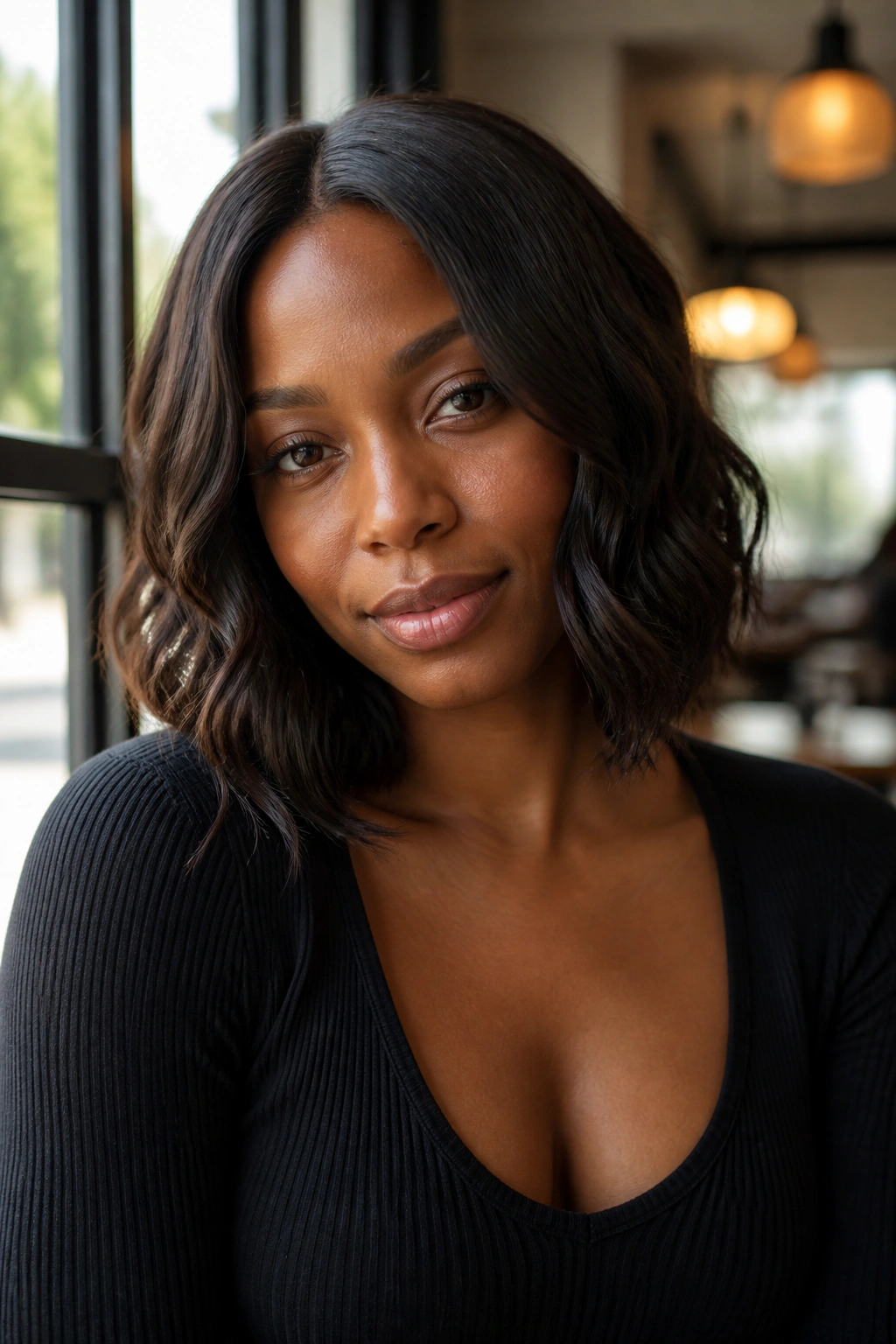
A wavy lob with a center part gives fine hair a longer line to work with, which can make the ends look less sparse. The waves break up the length so it doesn’t hang too straight, and the center part keeps the shape modern and open.
This cut works when the waves are soft and spaced out. Tight, uniform curls can steal the length and make the hair look shorter than it is. Loose bends do the opposite. They give the illusion of fullness while keeping the lob easy to wear.
If your hair loses shape fast, a heat tool set on a low to medium heat can help, but so can overnight bending with clips or a soft braid. The pattern matters less than the result: a little movement through the mid-lengths and a clean edge at the bottom.
For black hair, the waves catch light in a way that makes the length look richer. It’s a nice middle ground between straight and curly.
22. Bob With Cheekbone-Length Bangs
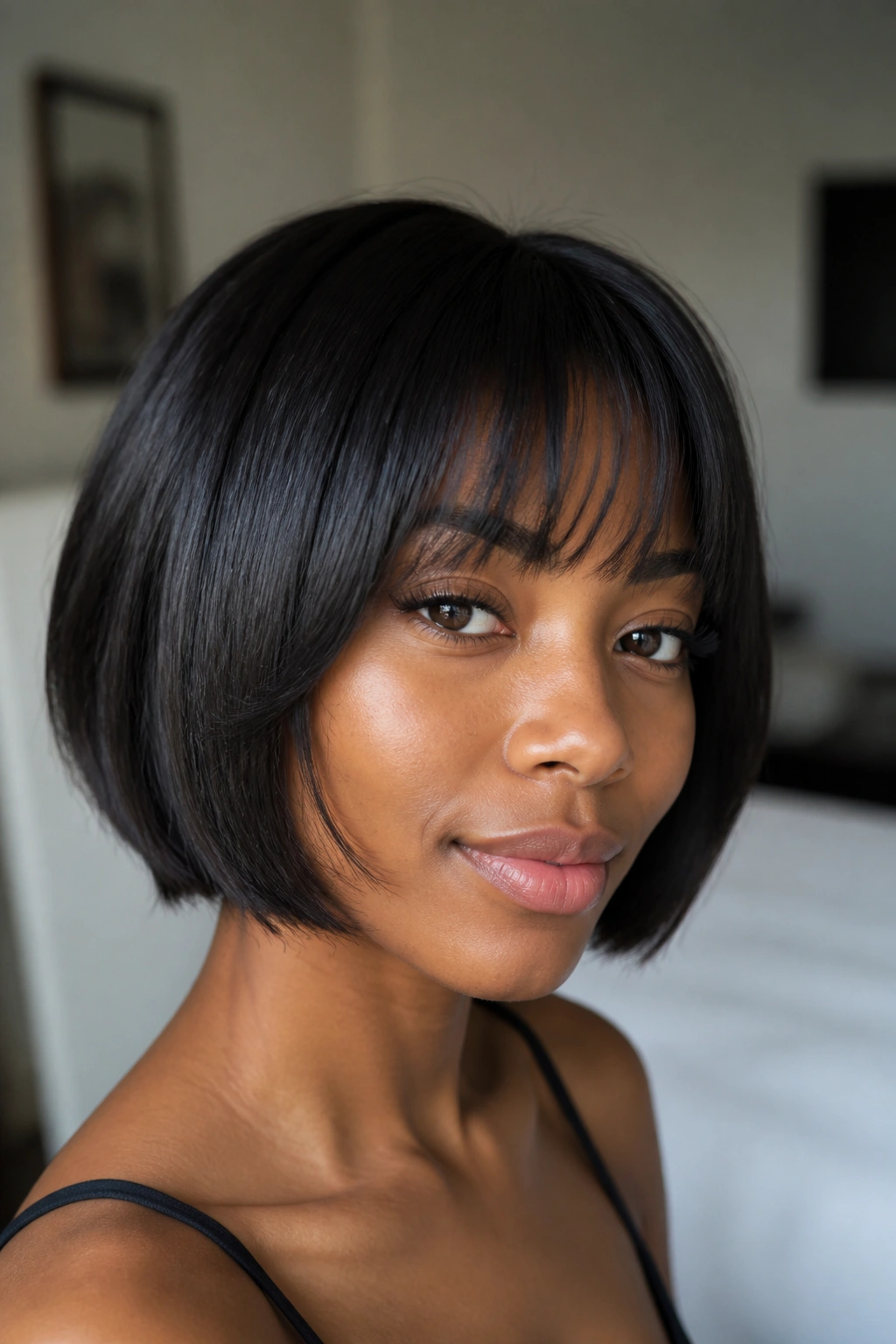
Cheekbone-length bangs are a smart fix when you want face framing without losing too much hair at the front. They create a little curtain of volume where fine hair often needs it, right around the eyes and upper cheeks.
The bangs should hit around the high point of the cheekbone, then blend softly into the bob. That keeps the cut from looking disconnected. Too short, and the style gets boxy. Too long, and the bang effect disappears.
This shape is useful if you wear glasses or like a haircut that pulls attention upward. The fringe can balance a narrower face and make the bob feel fuller near the front, which is a nice trick on hair that needs every bit of help it can get.
I’d keep the ends lightly beveled so the bangs don’t sit like a hard wall. Fine black hair looks best when the front has just enough movement to stay alive.
23. Sleek One-Length Lob
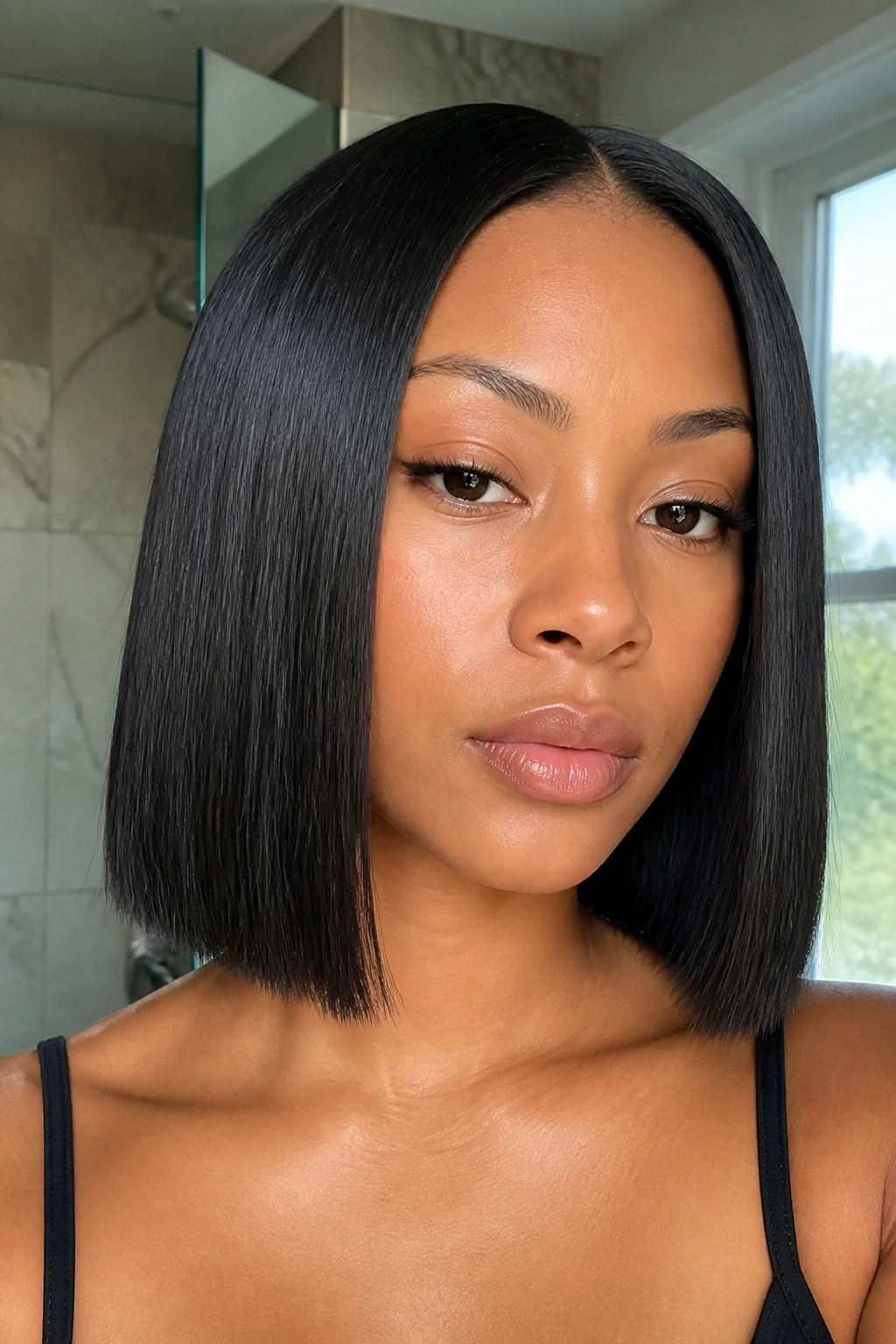
A sleek one-length lob is the haircut version of a sharp white shirt. Simple. Clean. Hard to mess up if the line is done well.
Fine hair often looks thicker when the perimeter is left alone. That long, single-length edge gives the eye something solid to read, and the longer length adds a bit of weight that can stop the ends from floating apart. If you’ve been over-layered in the past, this can feel like a relief.
The styling is straightforward. Blow it smooth, tuck the ends under or leave them straight, and keep the surface glossy. Black hair is especially good at this because the color makes the line look darker and denser all the way through.
It is not a fussy haircut. That is the charm. You can wear it sleek to work or bend the ends for dinner, and it still makes sense.
24. Slightly Stacked Bob
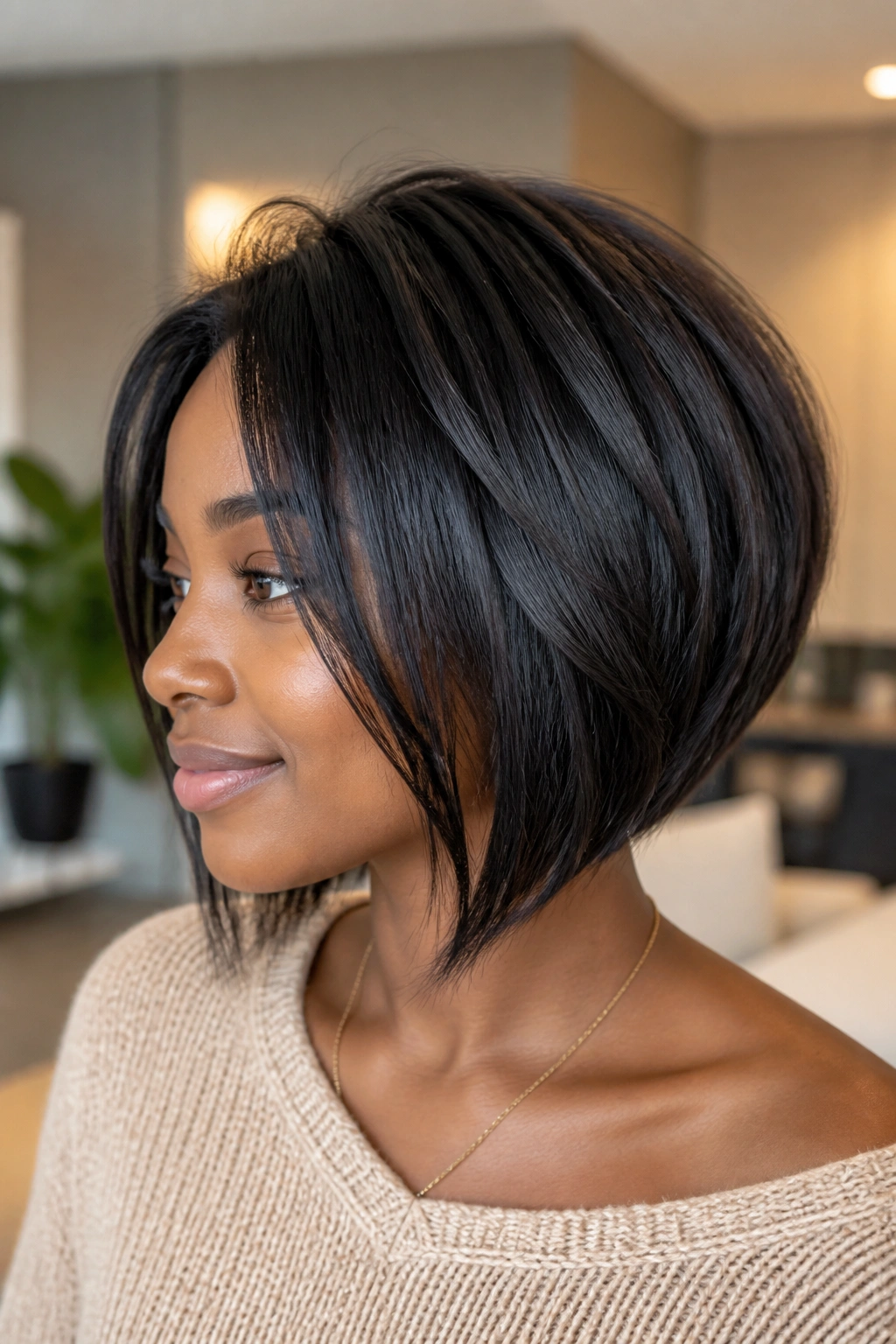
A slightly stacked bob gives the back a touch of lift without turning the whole haircut into a wedge. That subtle stacking helps fine hair because the nape area tends to flatten first, and a small rise there can change the entire profile.
The important word is slightly. Too much stacking can look dated or overbuilt. Keep it soft, with just enough curve to support the back of the head and help the front fall neatly.
This is a strong pick if your hair grows out flat at the crown and puffs oddly near the shoulders. The stacked back keeps the silhouette tidy, while the front can stay long enough to frame the face in a flattering way.
Black hair makes the shape especially clear, which is useful if you like a haircut that reads well from behind. Some people forget the back matters. It does.
25. Choppy Bob With Soft Ends
A choppy bob can be great on fine hair if the pieces are controlled and the ends stay soft. The idea is to create movement, not a shredded mess. That distinction is the whole game.
Use this shape if your hair has some natural texture and you want the bob to feel a bit more casual. The choppy pieces break up the outline just enough to stop it from looking too stiff, while the softness keeps the ends from appearing thin.
It pairs well with a light wave or a loose bend from a flat iron. Straight and choppy can work too, but the texture really helps the cut make sense.
Black hair gives the choppy pieces a clean edge, which can be beautiful when the layers are placed carefully. Keep the movement close to the surface, not deep through the entire cut. Fine hair needs some body left in reserve.
26. Glossy Chin Bob With Tapered Nape
A glossy chin bob with a tapered nape is a tidy, elegant answer for fine hair that wants a little shape in the back. The nape taper removes bulk where it usually doesn’t help, while the chin length keeps the front looking full and neat.
The shine matters here. Black hair that is smooth and glossy makes the cut look deliberate, almost sculpted. If the finish is dull, the haircut loses some of its force, so a light smoothing product or a shine mist can help a lot.
This style also feels good on warm necklines and high collars because it clears the back without going too short. It’s practical without looking plain.
I like this cut for people who want a bob that stays close to the head and doesn’t flip out too much. The taper keeps it calm.
27. Volume-Crown Bob
A volume-crown bob is built for the exact problem fine hair complains about most: flatness at the top. The crown gets a little extra support through shape, layering, or styling direction, while the ends stay anchored enough to keep the haircut looking full.
You do not need a giant pouf here. Just enough lift to make the hair rise off the scalp by half an inch or so can change the whole look. Root clips while the hair cools, a round brush at the crown, and a light spray are usually enough.
The cut itself should not be too hollowed out. Keep the sides substantial so the lift at the top doesn’t make the rest of the head look smaller by comparison. That’s the mistake to avoid.
Black hair gives the crown lift a nice clean silhouette. When the roots rise and the surface stays glossy, the haircut looks fuller from the front and from the side. That’s a win.
28. Polished Shoulder-Skimming Lob
A shoulder-skimming lob is a good landing place if you want the feel of a bob but don’t want to give up length. Fine hair can look stronger at this length because the extra inches add weight, and weight helps keep the ends from floating away.
The polished version is the one that matters here. Keep the surface smooth, the ends blunt or softly beveled, and the part clean. If the hair brushes the shoulders and flips out, the line starts to fight itself. A little length adjustment solves that more often than people expect.
This cut works well for growing out a shorter bob too. It lets you keep the shape while buying yourself some time between appointments.
For black hair, the shoulder-skimming lob has a rich, even sheen that feels easy to wear. It’s one of those styles that looks calm in the best way.
Final Thoughts
Fine hair does not need more and more layers. It usually needs a smarter outline, a cleaner edge, and a length that supports the shape instead of fighting it.
That’s why black bob haircuts can be so good here. The color gives the cut more visual weight, and the right shape keeps the ends looking fuller than they really are. A blunt line, a soft bend, a crown lift, or a careful part can do more than a heavy styling routine ever will.
If you’re choosing between two versions, ask yourself one question: which cut will still look good when you don’t have time to fuss with it? That answer usually points you to the right bob.
