



The best blonde bob haircuts for fine hair do one thing stubbornly well: they make the hairline look fuller without asking the hair to be something it isn’t. A blunt edge, a smart part, and the right blonde tone can give fine strands a denser read than a long, over-layered cut ever will. And when the color is placed with care, the ends stop looking wispy, which is where fine hair usually gives itself away.
The trick is not volume for its own sake. Fine hair can puff out, collapse, or go limp in a matter of minutes if the cut is too soft, too shaggy, or too packed with layers. A good bob keeps the weight where it matters, then uses shape—chin length, jaw length, a slight angle, a tucked nape—to fake thickness without making the head look wide.
Blonde helps, but only when it’s handled with restraint. Heavy bleach on delicate hair can leave the ends see-through and dry, which is the opposite of what you want. Better choices are beige blonde, honey blonde, champagne, soft root shadow, and thin ribbons of highlight that move through the haircut instead of sitting on top of it.
The cuts below cover blunt, stacked, glossy, textured, and face-framing versions, because fine hair does not need one miracle shape. It needs a shape that suits your face, your part, and how much styling you’re willing to do on a Tuesday morning. Start with the one that fits your actual routine, not your fantasy one.
1. Blunt Blonde Bob for Fine Hair
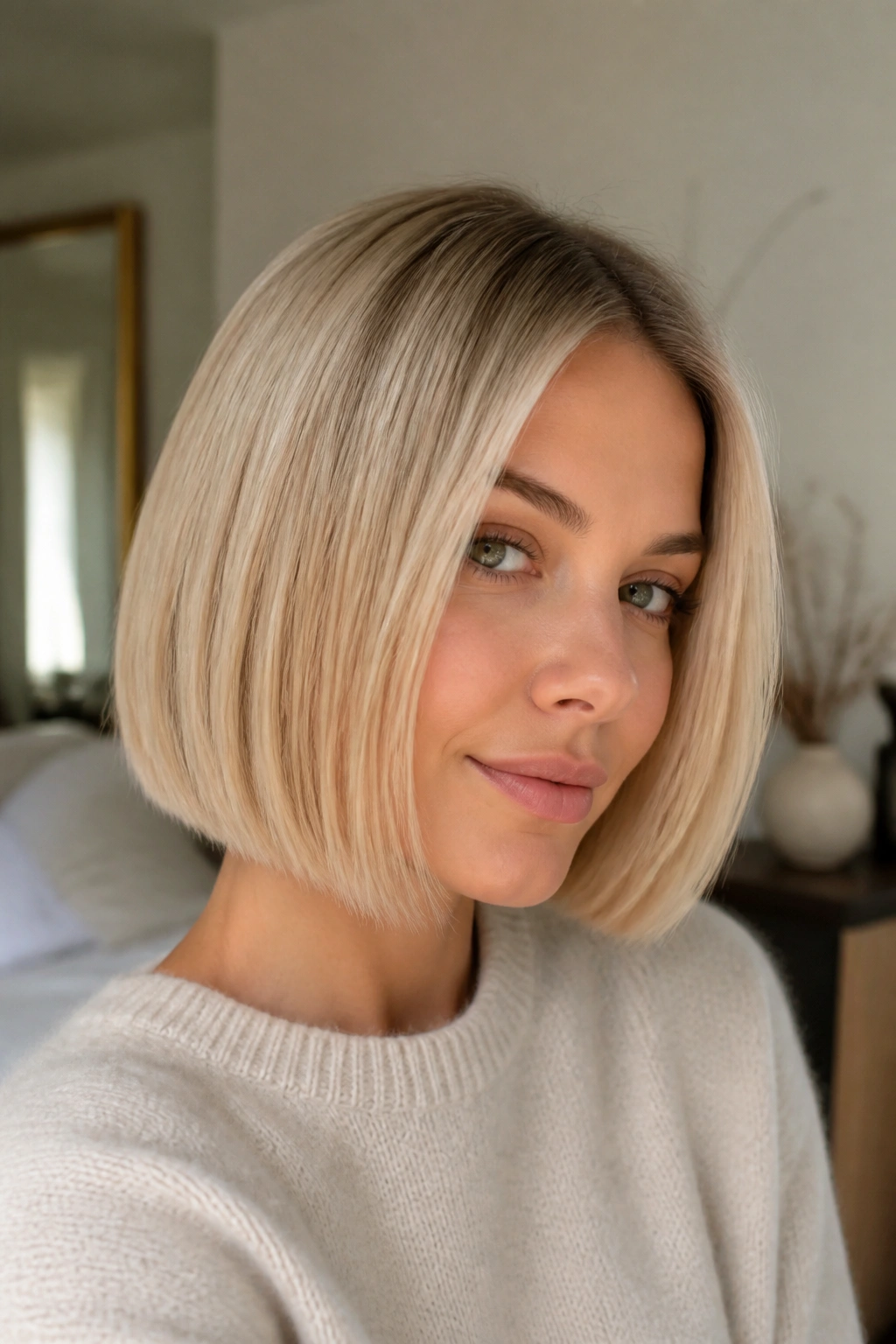
A blunt bob is the fastest way to make fine hair look thicker. The line sits cleanly at the chin or just below it, and that solid perimeter gives the illusion of density right where people notice it most.
I like this version because it does not rely on fancy tricks. The ends do the work. Ask for one length through the bottom with minimal internal layering, then keep the blonde tone soft—beige, champagne, or a neutral blonde keeps the cut looking clean instead of striped.
Why it works
A blunt edge holds shape better than feathered ends. On fine hair, that matters more than extra movement.
- Best length: chin to 1 inch below the chin
- Best color family: beige blonde, soft gold, or neutral beige
- Best styling move: blow-dry with a paddle brush and tuck the ends under slightly
- Best for: straight or lightly wavy hair that falls flat at longer lengths
Pro tip: If the line starts to look weak after a few weeks, a tiny trim can bring the whole cut back to life.
2. Deep Side-Part Blonde Bob
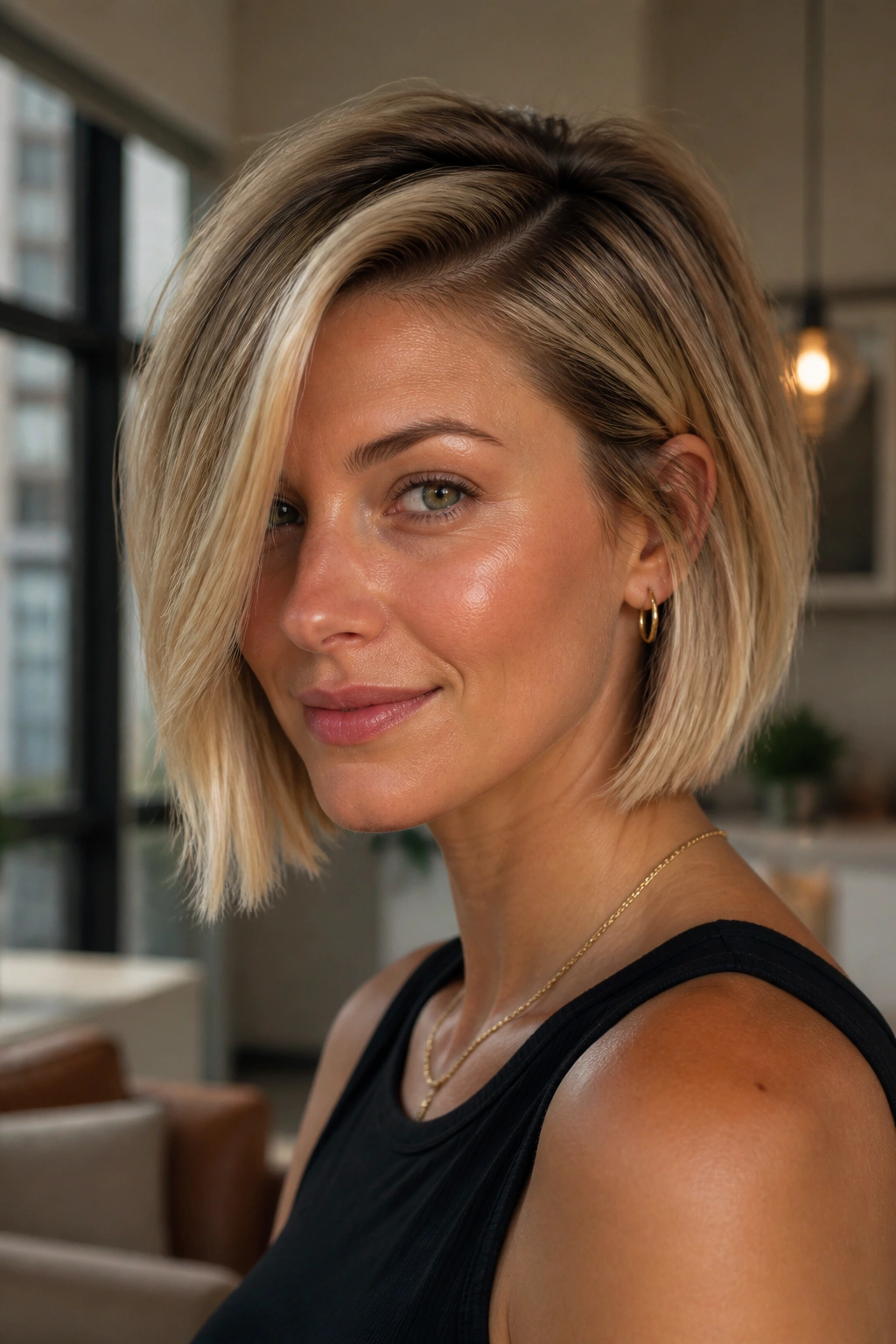
Why does a side part help so much? Because it shifts weight off the center and gives the roots somewhere to stand up. Fine hair usually sits flatter where it is parted; move that part to the side and you get lift without teasing the crown into a helmet.
This bob looks especially good when the longer side brushes the cheekbone. It creates a diagonal line, which reads as movement even when the hair is pretty straight. If you want the cut to feel polished, keep the blonde one or two shades softer at the root and lighter through the outer pieces.
What to ask for
- A side part set about 2 to 3 inches off center
- A chin-length bob with a slight bend at the ends
- Light point-cutting only around the face
- A root shadow if your hair tends to look flat at the scalp
One small thing: Change the part every few washes. That little switch keeps the roots from getting stuck in one direction.
3. Jaw-Length Bob with Barely-There Layers
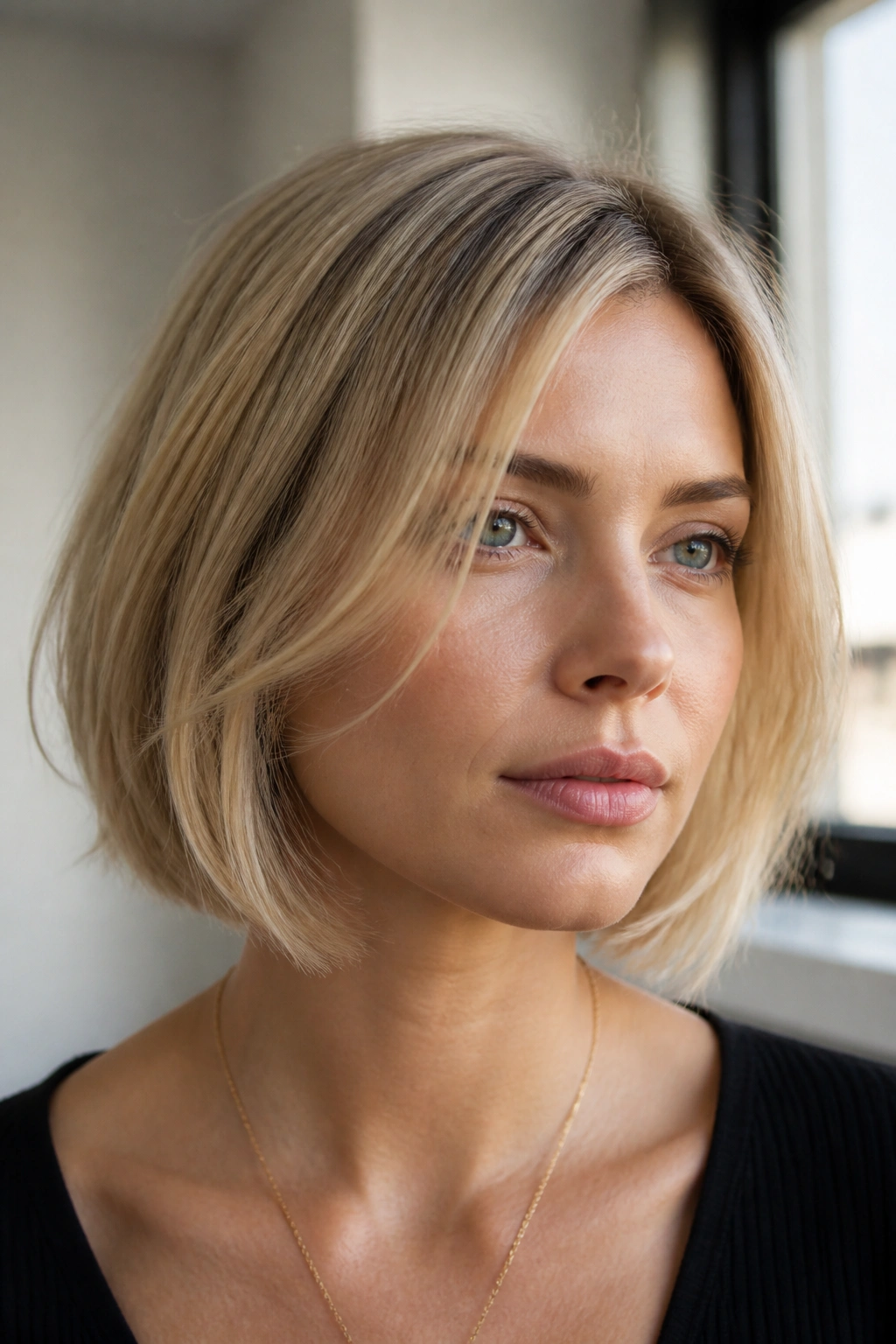
Picture a bob that sits exactly at the jaw and leaves the neck open. It feels sharp, but not severe, and that little gap between the hair and the shoulders makes fine hair look lighter in the right way.
The trick is to keep the layers nearly invisible. Too much slicing through the interior and you lose the thickness that makes a bob worth wearing in the first place. Instead, ask for a clean outline with a few short face-framing bits that soften the front without thinning out the ends.
Jaw-length cuts are useful if your hair grows in straight and you hate fussing with it. They also suit a strong jawline beautifully. The cut follows the face instead of fighting it.
4. French Bob with Soft Brow-Grazing Fringe
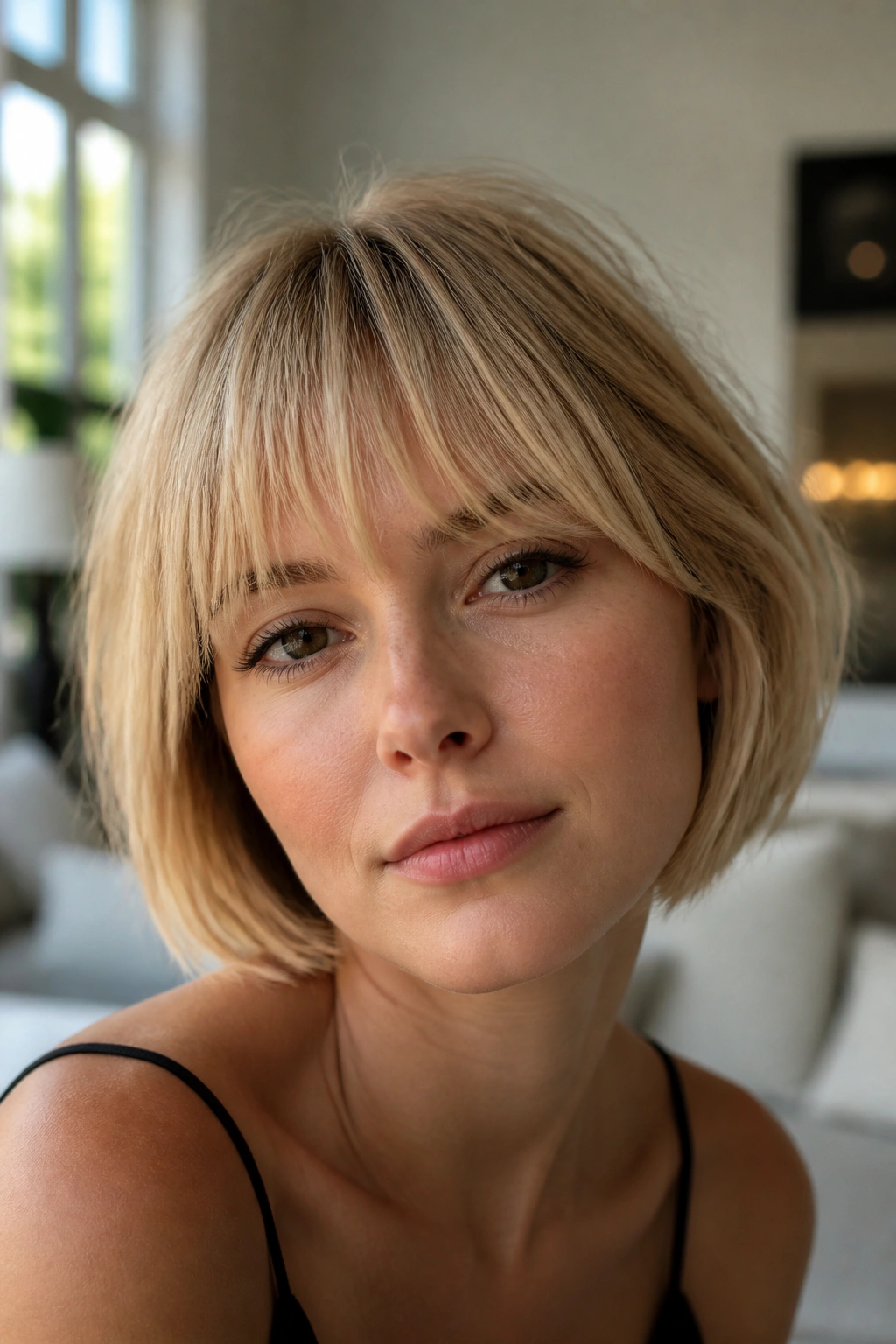
A French bob has attitude. Shorter than a classic bob, a little looser around the cheeks, and usually paired with a fringe that skims the brows or sits just above them.
On fine hair, the fringe has to stay airy. Heavy bangs can swallow the face, and on a bob that means the whole style starts to feel flat. Keep the ends soft, not chunked, and ask for a bit of texture only at the fringe line so it moves when you blink, not in one stiff block.
Why it suits fine hair
The shorter length gives fine strands more bounce, and the fringe creates a visual break that keeps the haircut from looking too narrow.
How to style it
- Blow-dry the fringe first, before the rest of the hair
- Use a small round brush, about 1 inch
- Aim the airflow downward so the bangs lie softly
- Finish with a light mist of texture spray at the ends
Short. Chic. No drama.
5. Slightly A-Line Blonde Bob
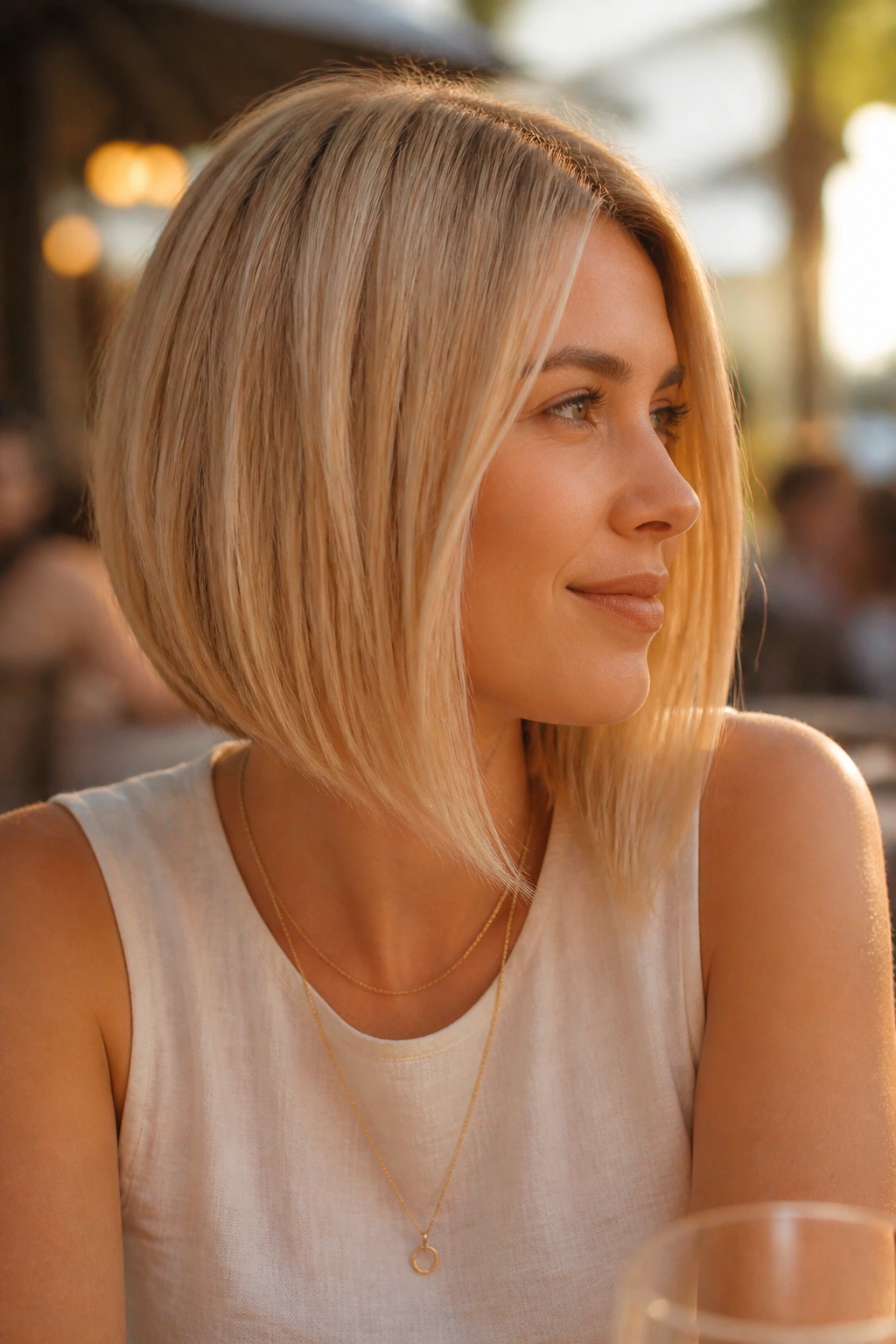
A slight A-line is one of those cuts that works because it cheats a little. The back sits just a touch shorter, and the front corners fall 1/2 inch to 1 inch longer, so the hair looks like it swings forward even when it isn’t doing much at all.
That shape helps fine hair because the longer front pieces frame the face while the shorter back keeps the crown from dragging. If the blonde is soft and dimensional, the angle reads even cleaner. Beige roots with lighter mids are my favorite pairing here.
This is the cut I’d pick for someone who wants a polished look without going full precision bob. It feels neat, but it still has a bit of movement when you turn your head.
6. Stacked Bob with a Tighter Nape
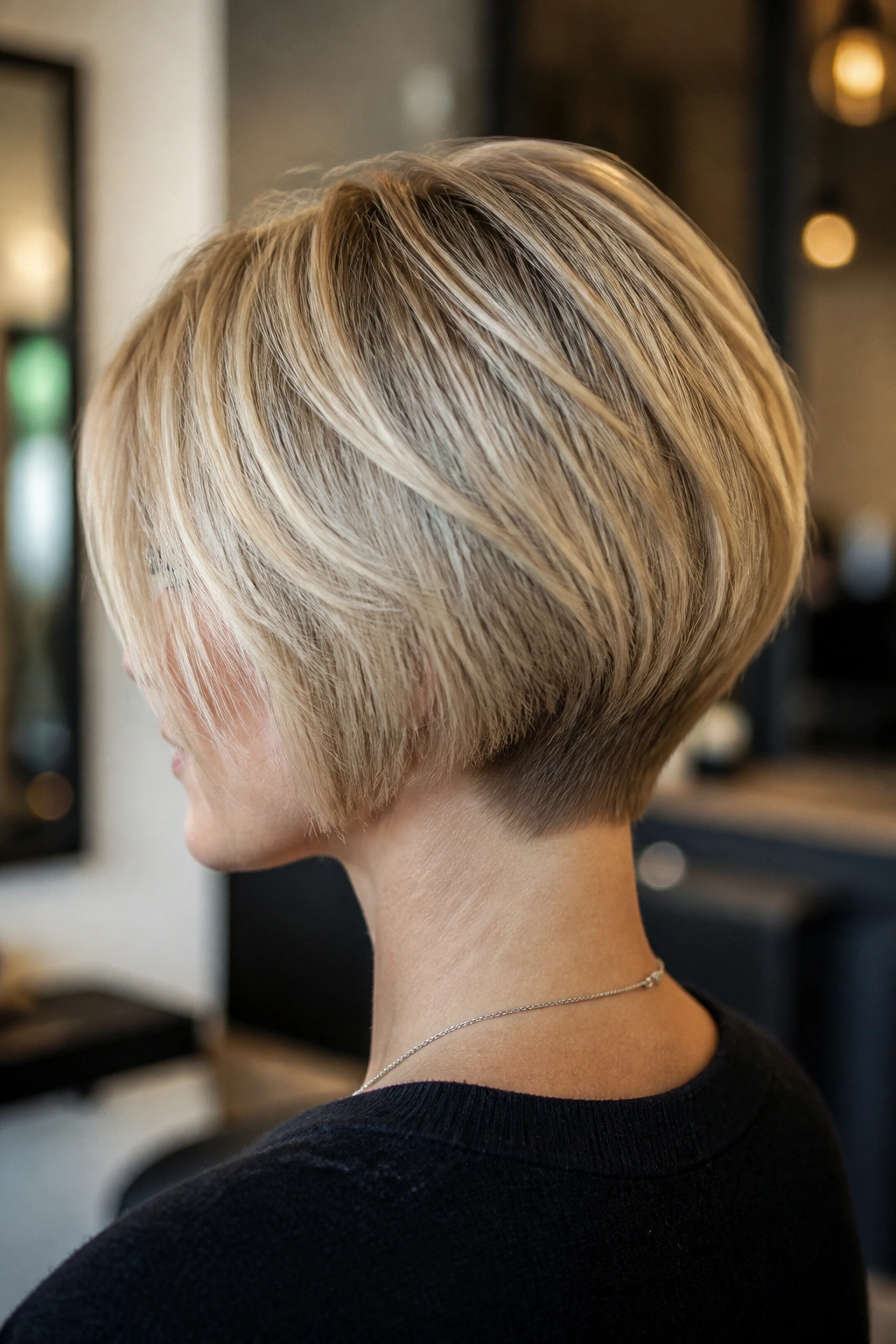
A stacked bob builds lift at the back by removing weight in controlled layers near the nape. That makes it a smart choice for fine hair that collapses at the crown the second it dries.
The secret is restraint. A good stack is subtle, not puffy. You want the back to hug the head and rise just enough to keep the silhouette from going flat. If the layers are too aggressive, the cut can look old-fashioned in a bad way. If they’re too soft, you lose the lift entirely.
This version works best on straight hair and on anyone who wants a neater neckline. It also grows out fairly cleanly if the stylist keeps the stack tight and the sides a little longer.
7. Piecey Textured Bob with Rough-Dry Finish
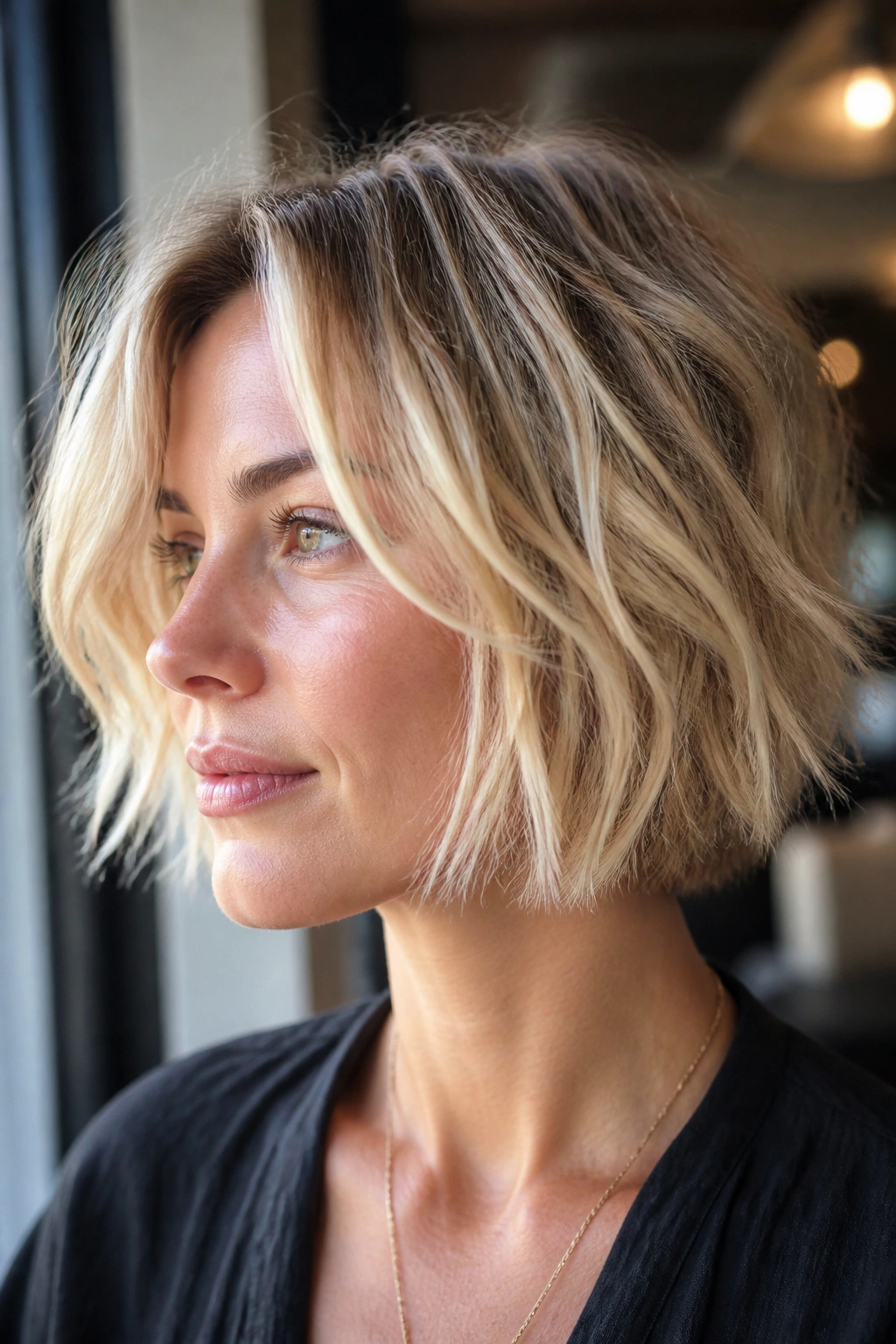
Some fine hair looks better when it isn’t trying so hard. A piecey bob leans into that. Instead of a polished sheet, you get separated ends, a little bend, and a softer outline that feels easy to wear.
I like this cut for hair that has a natural wave or a bit of bend after air-drying. Use mousse at the roots, scrunch from the ends upward, and stop before the hair starts to feel crunchy. A pea-sized amount of cream on the last 2 inches can keep the pieces from looking dry.
Styling notes
- Mousse at the roots
- Diffuser on low heat, if you use one
- A small dab of wax on the ends only
- No heavy oils near the scalp
The blonde tone should stay slightly rooted so the texture has depth instead of looking washed out.
8. Sleek Center-Part Bob with a Glossy Finish
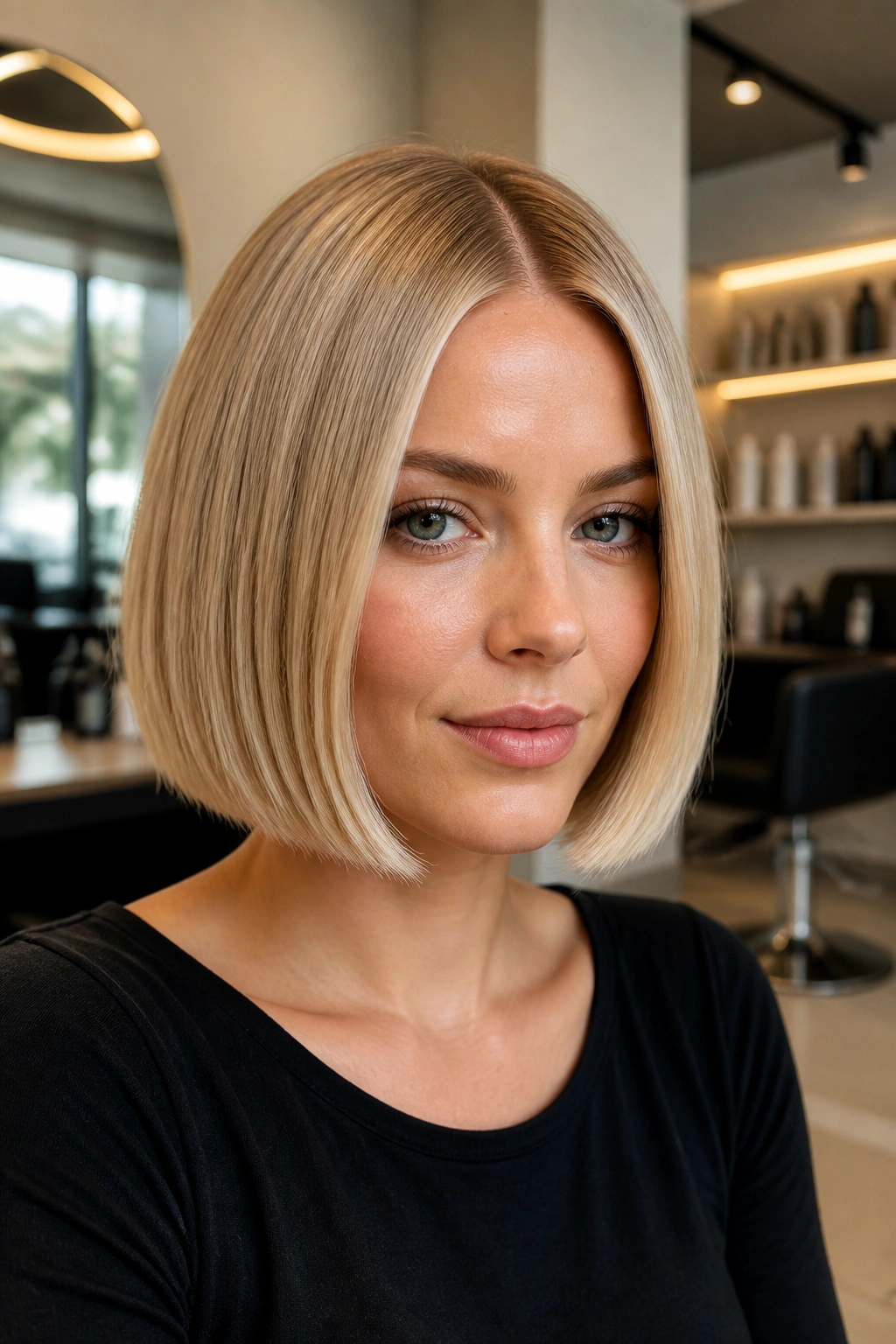
A center part can be tricky on fine hair, but when the cut is clean, it looks intentional rather than flat. The key is the perimeter: keep it blunt, keep it even, and let the blonde reflect light off a smooth surface.
This is one of those styles that looks expensive without needing much fuss. Not expensive in a showy way—just clean, crisp, and controlled. The hair should move as one piece, with the ends turned under by a fraction so they don’t flick out at random.
Use a smoothing cream before blow-drying and finish with a light serum only on the mid-lengths. Too much product and the style goes greasy fast.
9. Inverted Bob with Lifted Back
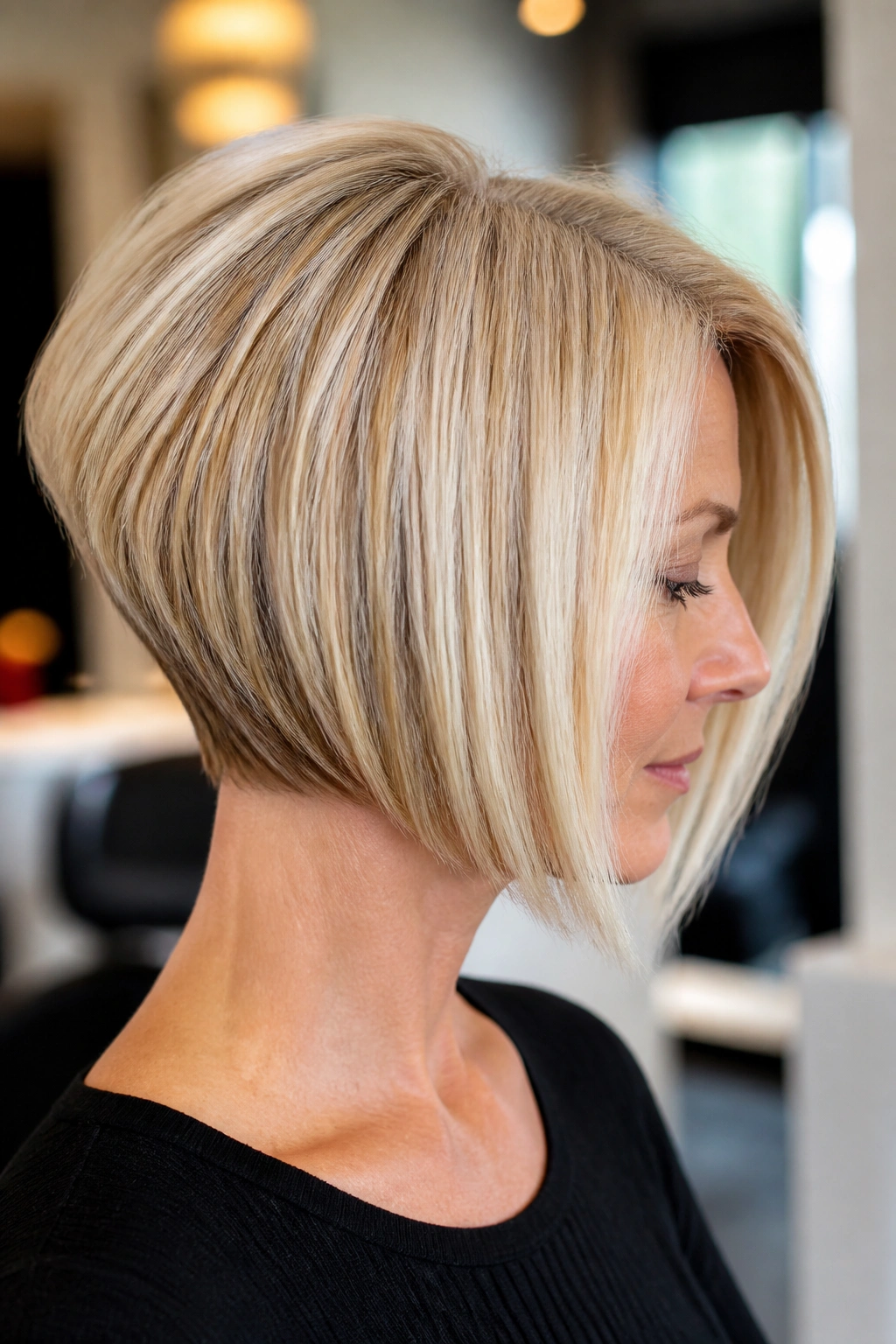
An inverted bob gives you a steeper angle than an A-line, with the back noticeably shorter and the front extending toward the chin. That shape creates built-in lift, which is why it works so well on fine hair.
Here’s the difference: a stacked bob focuses on height at the back, while an inverted bob uses the angle to make the front feel longer and the crown feel fuller. The result is sharper and a bit more modern-looking, if that’s your lane.
Best for
- Straight hair that falls limp in longer cuts
- Narrow faces that need a bit of width at the jaw
- Anyone who likes a clean outline with little styling time
Keep the blonde slightly deeper near the roots so the angle doesn’t disappear in the light.
10. Collarbone Lob with Soft Blonde Ribbon Highlights
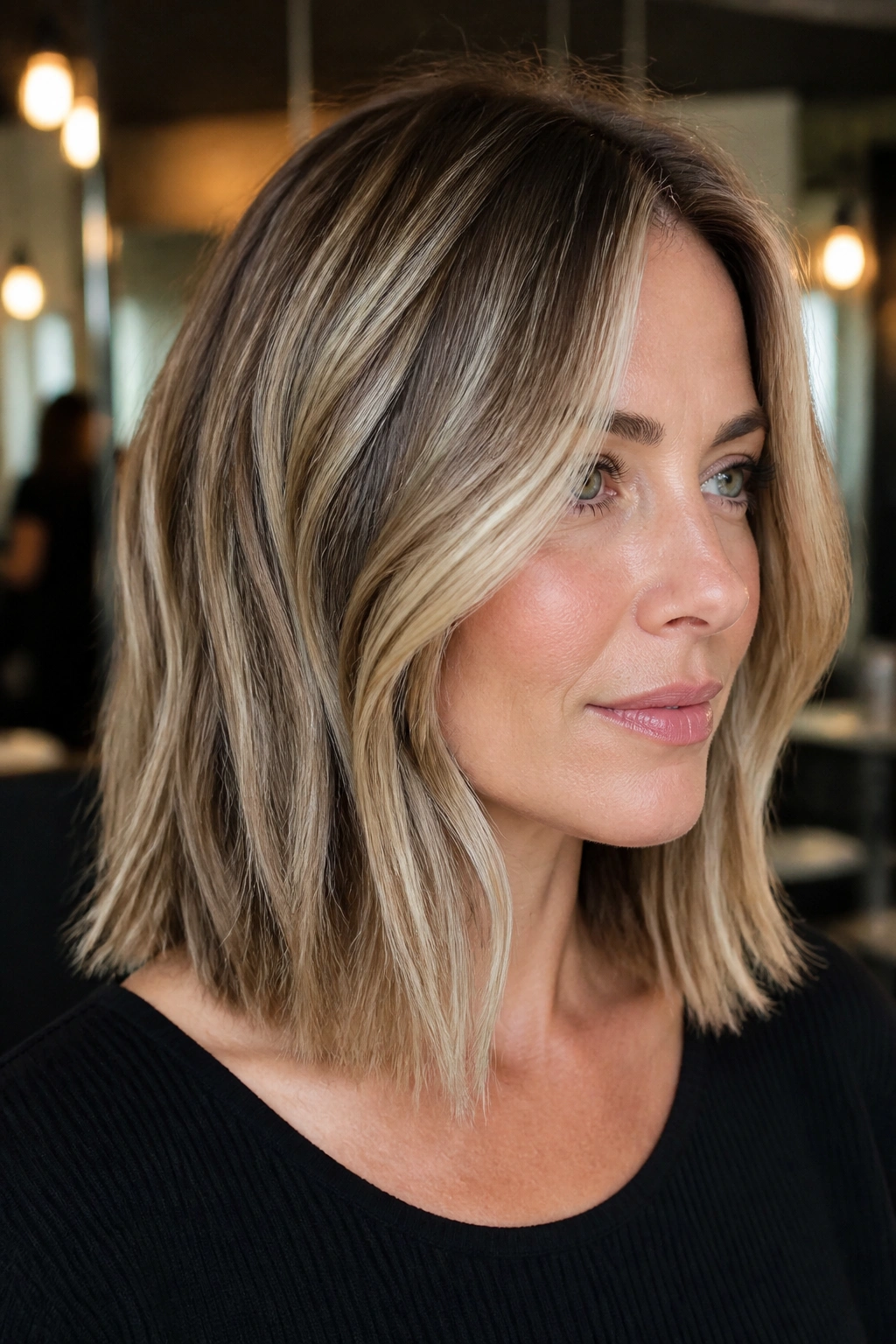
Not everyone wants a short bob, and that’s fair. A collarbone lob gives fine hair enough length to tuck behind the ears or clip up, while still staying light enough to avoid stringiness.
Ribbon highlights make this cut work. Thin, soft ribbons of blonde—placed around 1/4 inch to 1/2 inch apart in the front and crown—add movement without turning the whole head into a bright stripe. The hair gets depth, and the cut gets shape.
Why ribbons beat chunky highlights
Chunky stripes can make fine hair look thinner between the light pieces. Slim ribbons read as texture instead.
If you want low effort, this is one of the easiest options on the list. It air-dries well and grows out without a hard line.
11. Curtain-Bang Bob with Face Framing
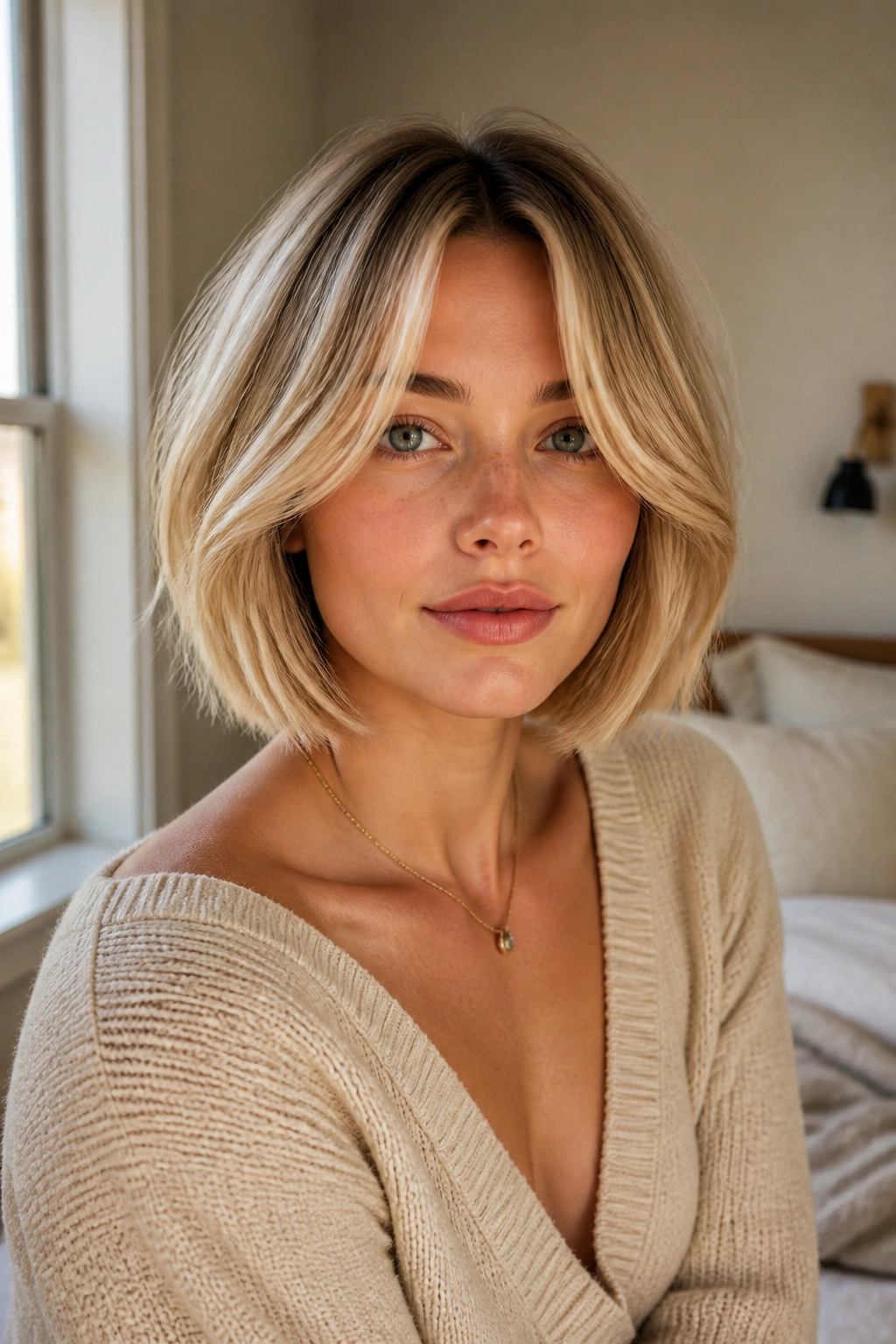
Curtain bangs can rescue a bob that feels too plain. Parted down the middle and swept away from the face, they soften the forehead and make the sides of the haircut feel fuller where they meet the cheekbones.
The bangs should start around the bridge of the nose and taper longer toward the jaw. If they’re cut too thick, they’ll eat up density. If they’re too wispy, they won’t show up. That middle ground is the sweet spot.
How to style it
- Dry the fringe first
- Roll it back with a small round brush
- Let the ends bend away from the face
- Use a light spray, not a stiff hairspray
This cut is good for people who want a little softness around the eyes without committing to a full fringe.
12. Asymmetrical Bob with One Longer Side
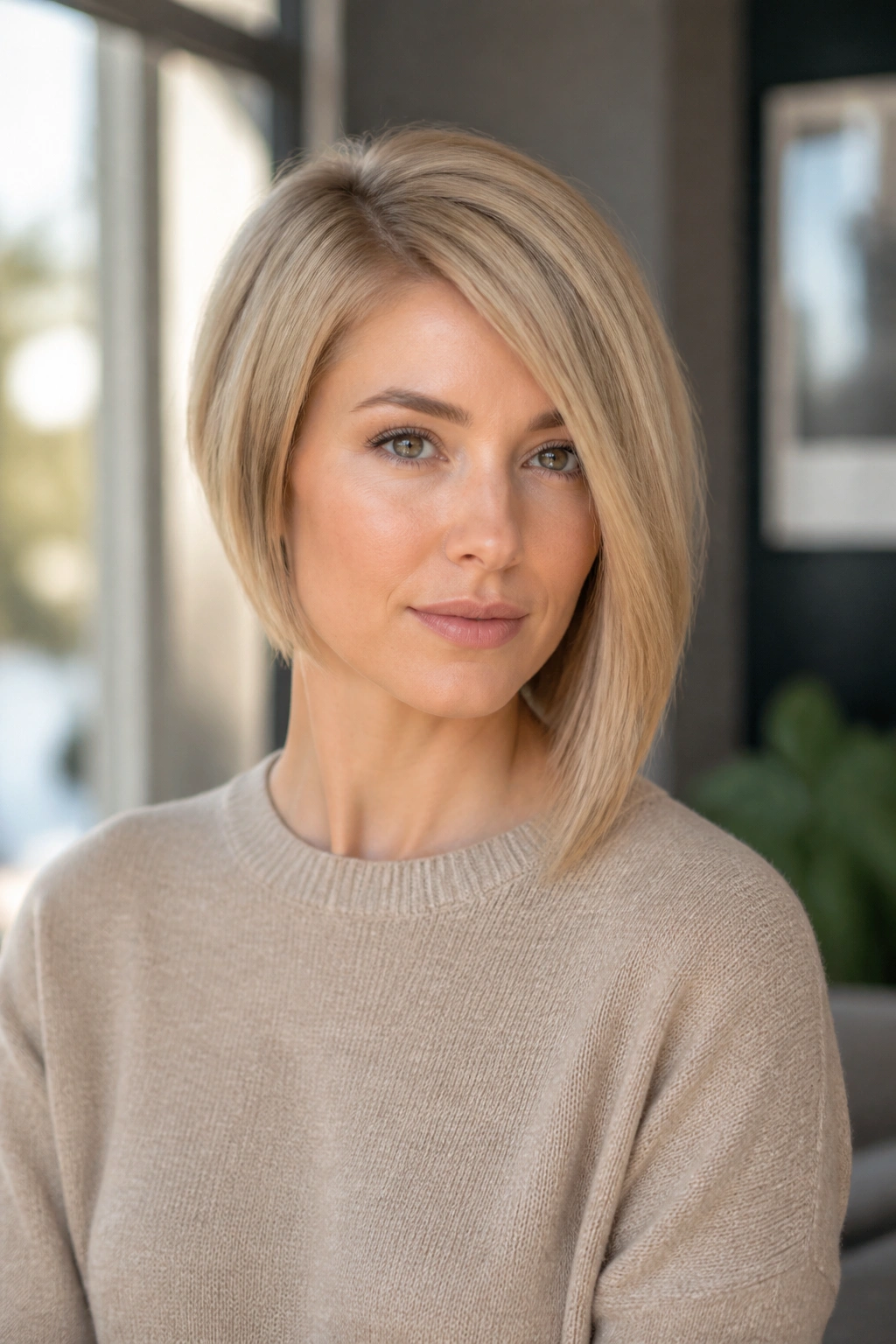
A small asymmetry can change everything. One side sits 1 to 2 inches longer than the other, and that simple shift makes the bob feel sharper and more deliberate.
Fine hair benefits from this because the eye follows the line instead of looking for fullness in the body of the cut. The shape becomes the feature. It’s a smart move if your hair naturally falls to one side anyway, since the cut works with the grain instead of against it.
An asymmetrical bob does need maintenance. If the length difference starts to blur, the shape loses its point fast. But when it’s fresh, it has real presence.
13. Choppy Bob with Point-Cut Ends
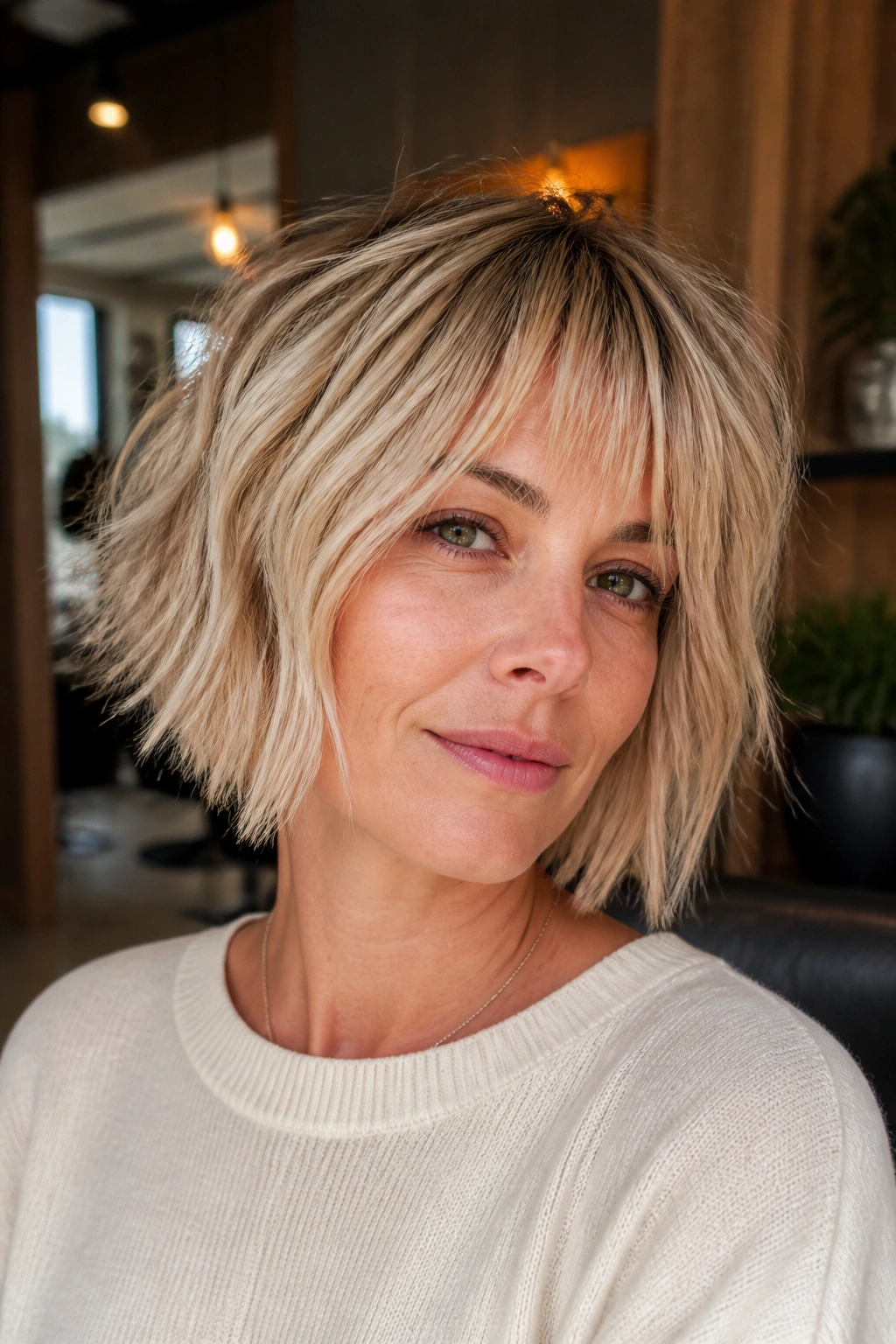
A choppy bob sounds messy, and sometimes that is exactly the point. On fine hair, a clean blunt line can feel too formal, so a bit of irregularity breaks up the edge and gives the style some grit.
The important part is moderation. You want the ends point-cut, not shredded. Ask for a choppy perimeter with soft, uneven bits near the front and a little roughness through the surface, but keep the bottom line readable. Otherwise the cut starts to look thin instead of textured.
What to watch for
- Too much chipping can make the ends see-through
- Heavy layering can flatten the sides
- Best blonde shades here are beige or sandy blonde
- Styling cream works better than thick wax
This cut pairs well with loose bends and a dry finish.
14. Razor-Cut Bob with Airy Ends
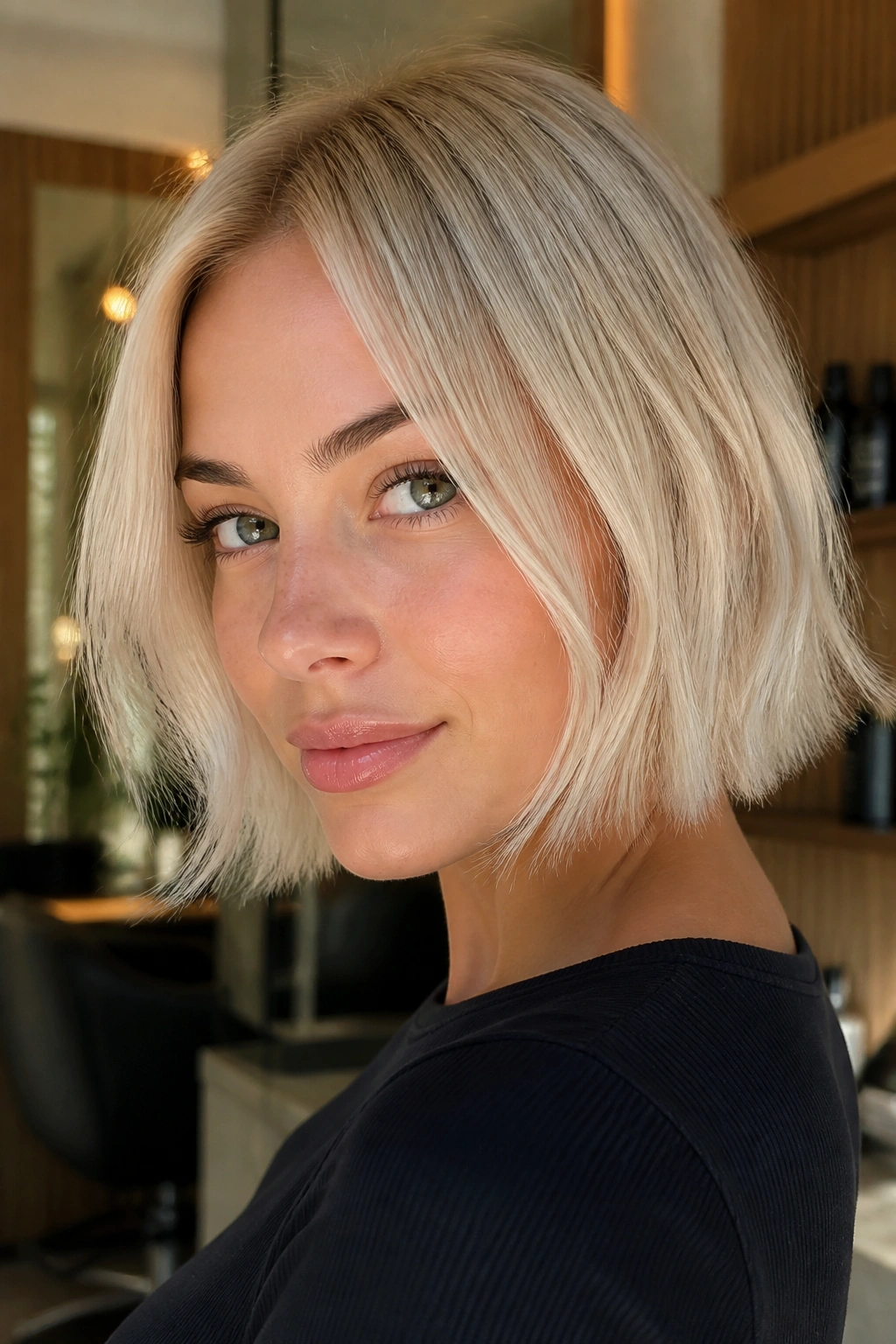
A razor-cut bob softens the edge in a way scissors can’t quite copy. The ends fall with a lighter feel, which helps if your fine hair looks stiff when it’s cut too bluntly.
The downside is real: if your hair is already dry or chemically tired, a razor can fray the ends. So this is a cut for healthy fine hair, not fragile fine hair. When it works, though, it gives a floaty finish that looks especially good in blonde because the pieces catch light at different angles.
I’d keep the length around the jaw and ask for very controlled razor work only on the bottom 1 to 2 inches. That keeps the cut airy without eating up density.
15. Dimensional Balayage Bob
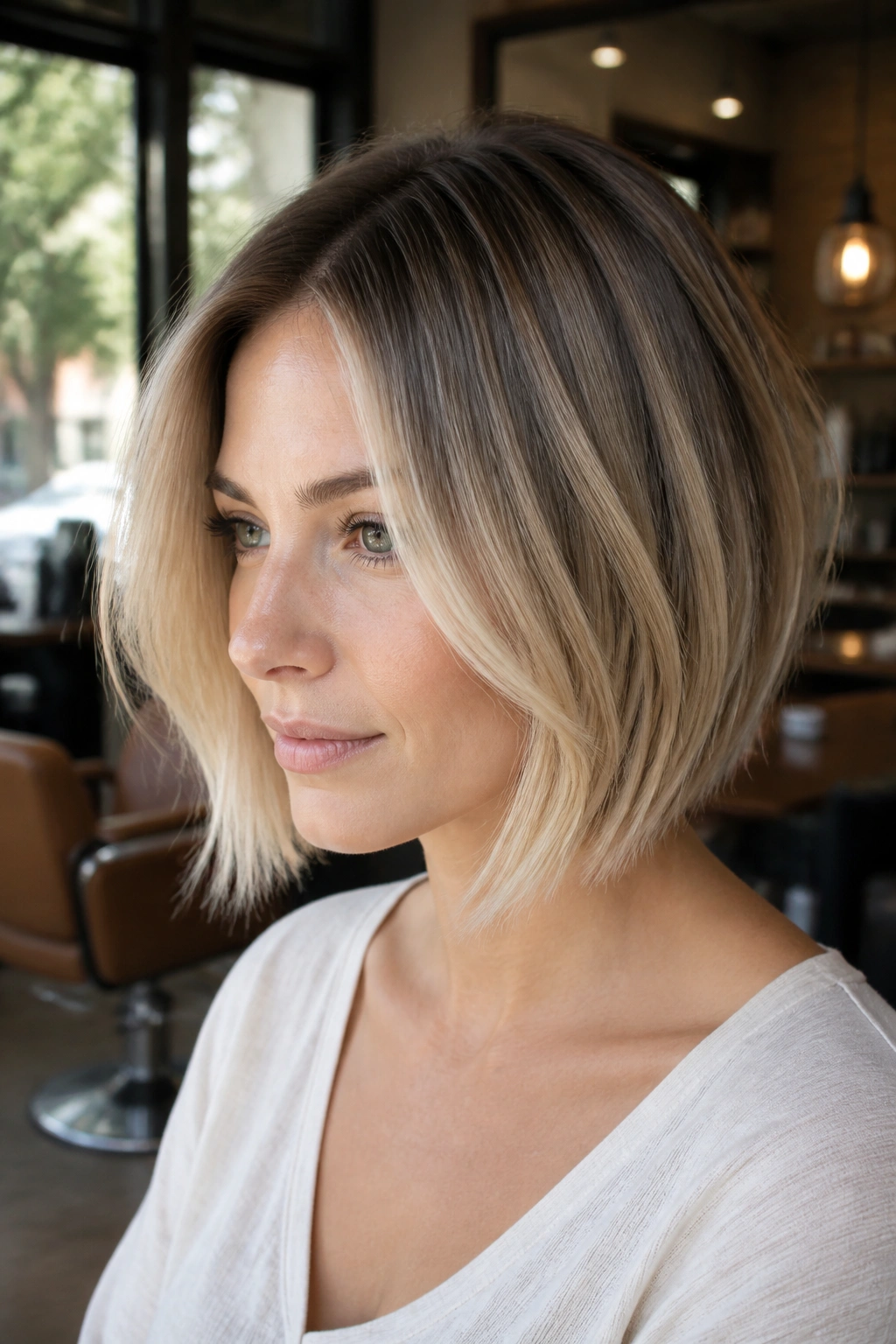
Dimensional balayage can make fine hair look thicker because the color is doing part of the shaping. Instead of one flat blonde, you get a mix of lighter ribbons, softer mids, and a root area that holds shadow.
The placement matters more than the shade. Light pieces around the face and crown lift the eye upward, while slightly darker lowlights under the top layer make the bob look fuller. That’s the whole trick, and it works best when the haircut itself stays simple.
Color placement that helps
- Fine ribbons near the part line
- Lighter ends only if the hair can handle it
- A deeper blonde or beige lowlight underneath
- Soft face-framing brightness, not a full money-piece wall
The cut underneath can stay blunt. That contrast is what gives the style depth.
16. Money-Piece Blonde Bob
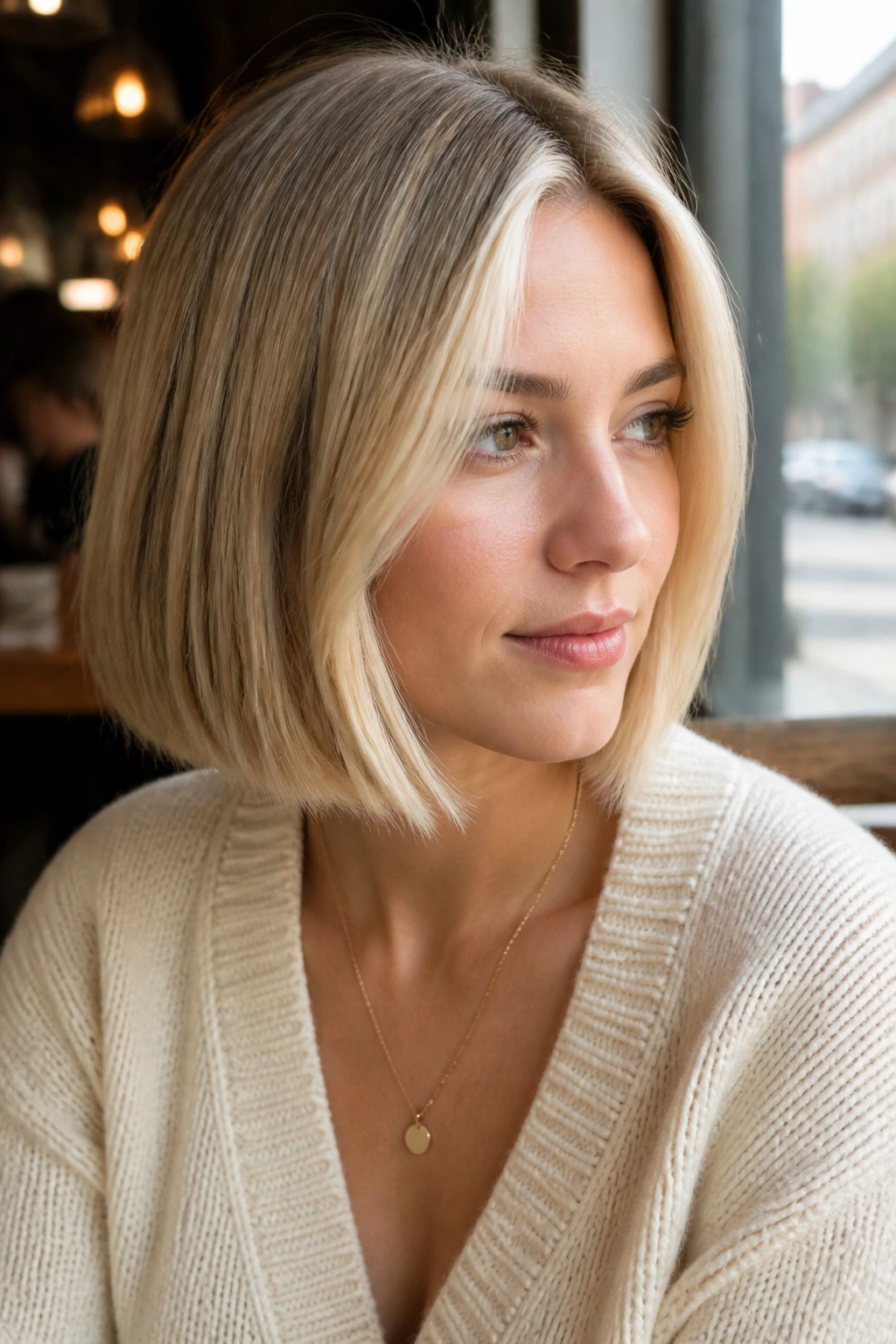
A money piece is a bright face-framing highlight, usually placed in the first 1 inch to 1 1/2 inches around the hairline. On a bob, it pulls focus right to the face and makes the rest of the cut feel fuller by contrast.
This works best when the rest of the blonde stays softer. If every section is equally bright, the cut can look washed out. But if the face frame is the brightest point, the bob suddenly feels more shaped, especially when the ends stay clean and blunt.
It’s a useful choice if you like brightness near the cheeks but don’t want to maintain full-head platinum. Less effort, fewer toning headaches.
17. Rooted Blonde Bob with Shadow at the Crown
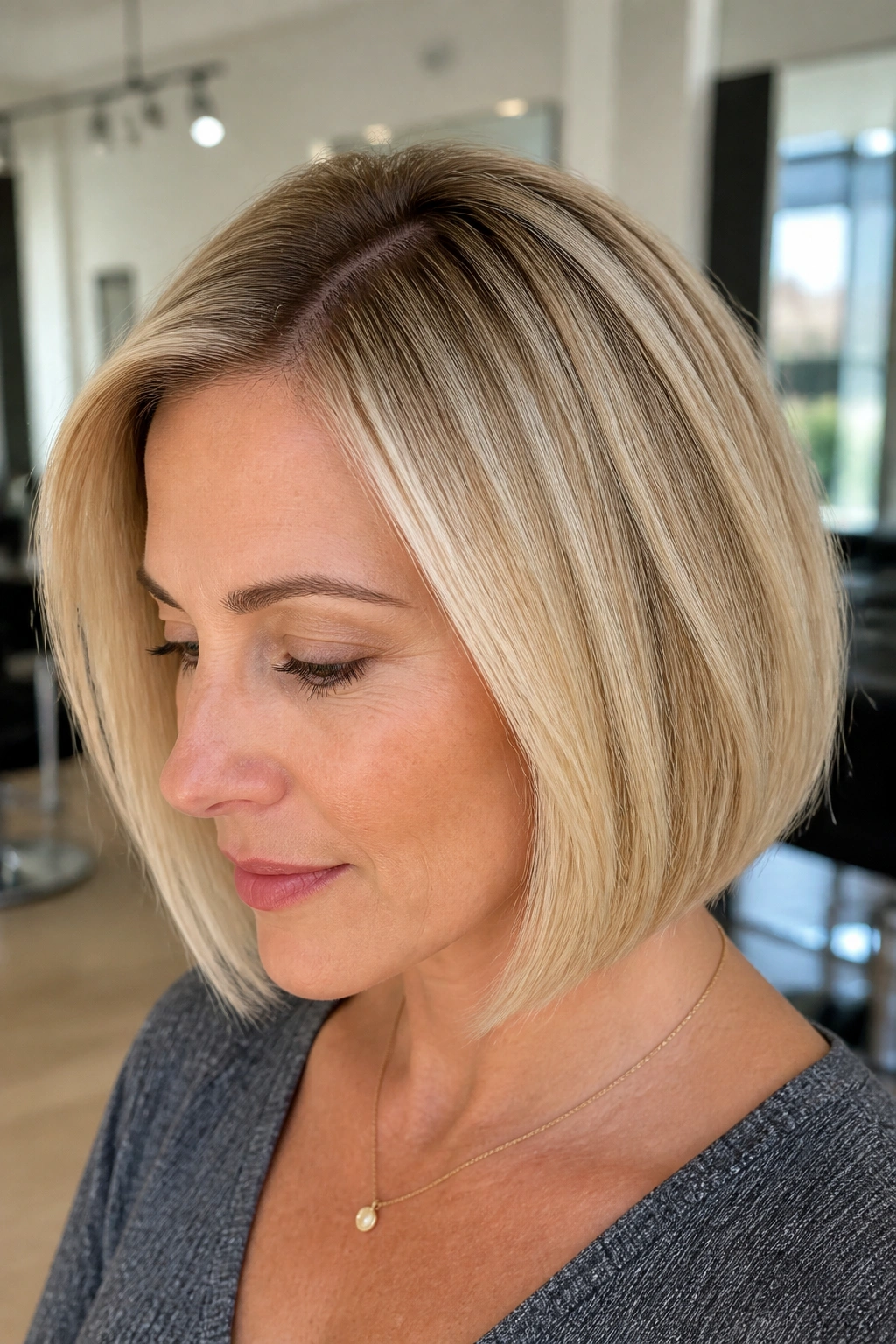
Root shadow is one of those things that sounds subtle because it is. That’s why it’s useful. A deeper root—usually about 1/2 inch to 1 inch—gives fine hair a fuller base and buys you some time between salon visits.
The bob itself can be blunt, stacked, or lightly layered. The rooted color keeps the scalp from looking too exposed, which is a real issue with very light blonde on very fine strands. It also makes the shape look thicker at the top, where hair tends to lie flat.
H3: Where it helps most
If your crown is sparse, the shadow creates depth. If your ends are delicate, it gives the eye a place to rest before it reaches the lightest part.
This is one of the easiest blonde choices to live with.
18. Box Bob with Clean Geometry
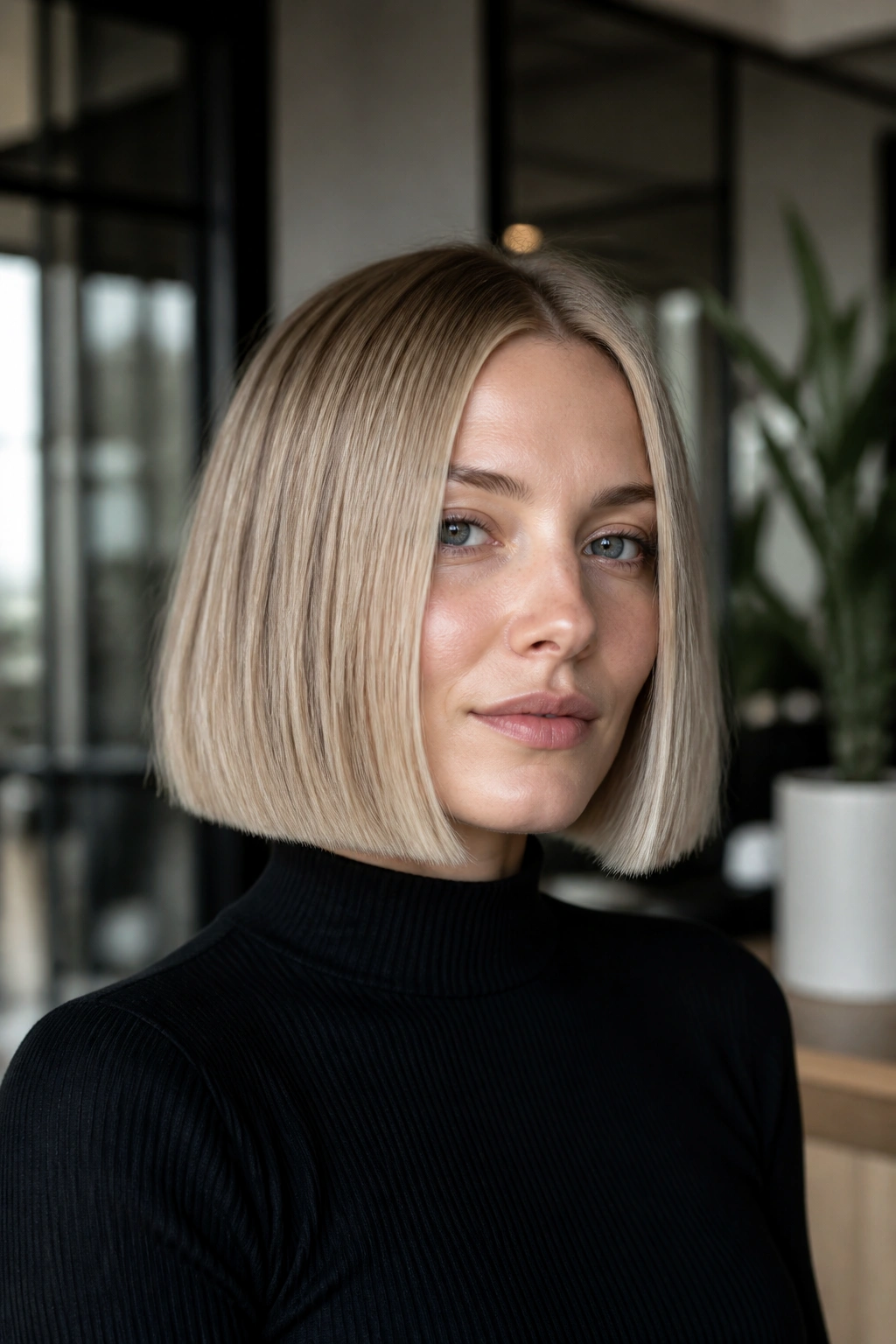
A box bob keeps the sides straighter and fuller than a rounded bob. There’s less taper at the bottom, so the outline feels square and deliberate.
That sounds severe, and sometimes it is. But on fine hair, the boxier shape can be a gift because it stops the ends from collapsing inward or splaying out in thin little wisps. The visual weight stays put.
I’d choose this cut if you like clean lines, structured clothes, or a slightly graphic look. It’s not the most casual bob on the list, but it photographs in a way that makes the hair look denser than it really is. The blonde should stay neutral or cool so the shape stays crisp.
19. Undercut Bob for Very Fine Hair
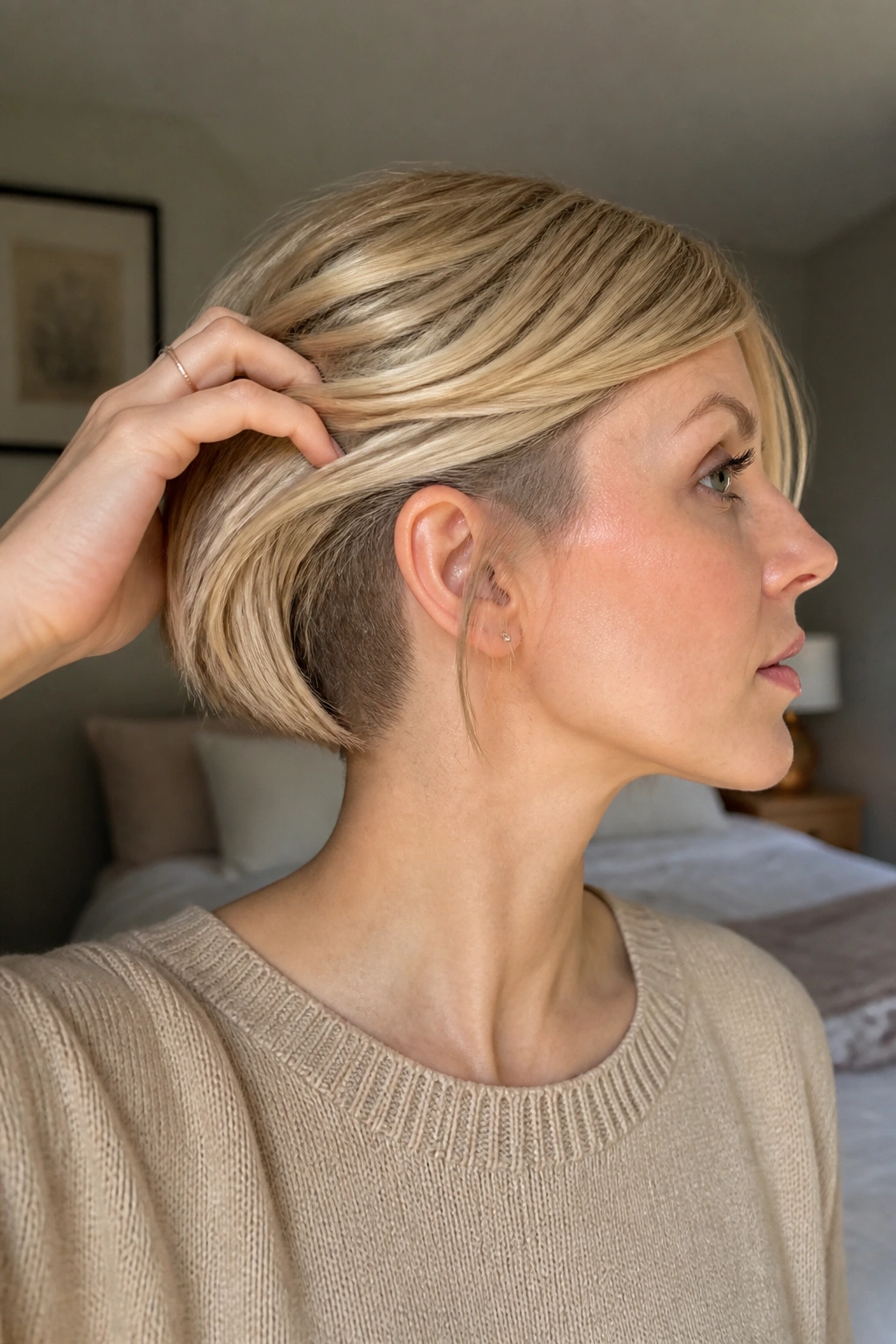
A hidden undercut can solve a problem that nobody talks about enough: some fine hair has too much bulk underneath and not enough shape on top. A small undercut at the nape removes weight where it hangs, so the upper layers sit better.
This is not a timid cut. You won’t see the undercut unless the hair lifts or the stylist reveals it. But the feel of the bob changes right away. It hugs the head more neatly, dries faster, and can stop the back from kicking out in that awkward triangle shape.
Use this if
- Your neckline gets puffy
- Your bob feels bulky in humid air
- You want a cleaner tuck behind the ears
- You do not mind regular maintenance
It grows out, sure. That’s the trade-off.
20. Glass Bob with a Tucked-Tight Shape
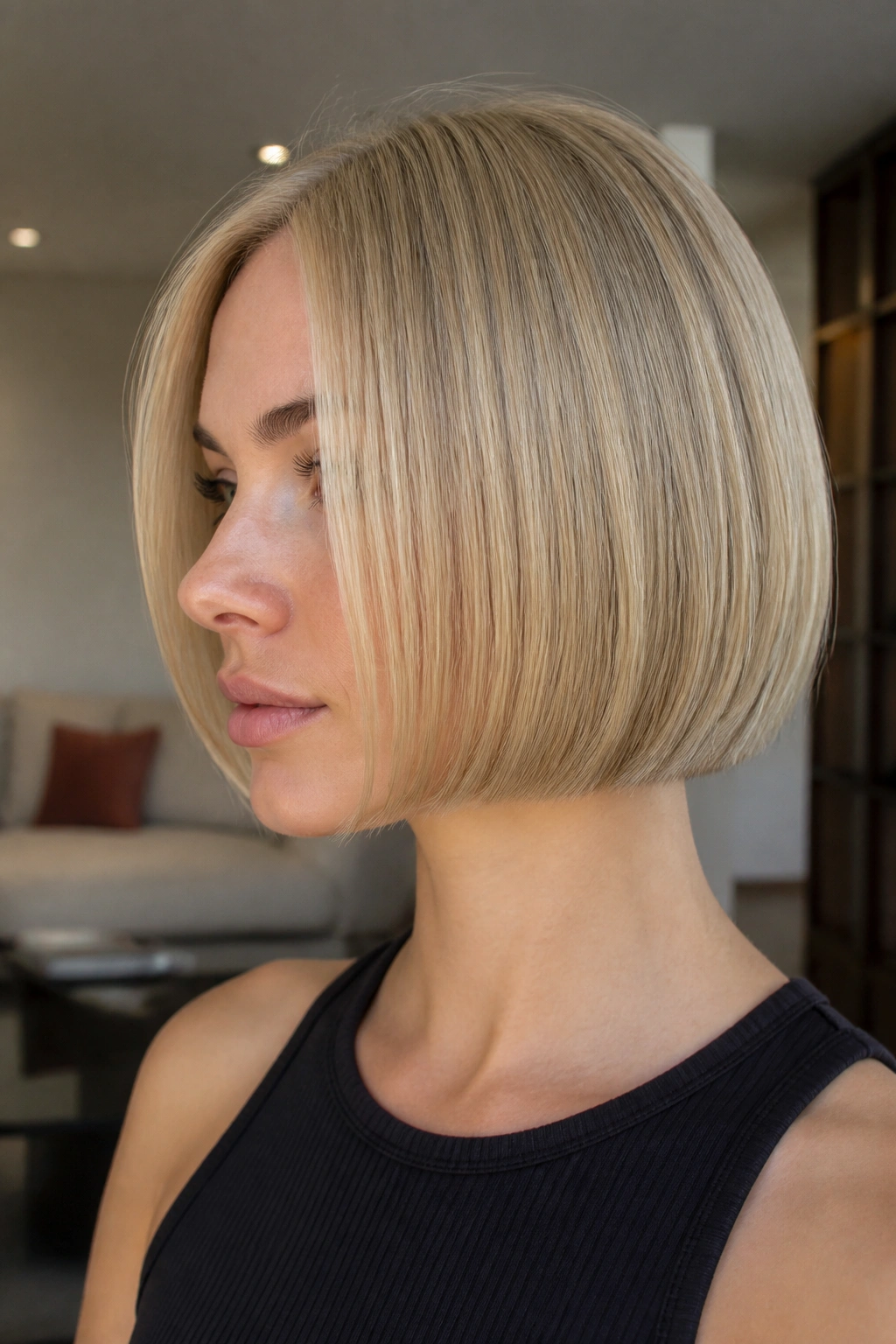
A glass bob is all about smoothness and reflection. The hair lies in one plane, the ends are beveled only slightly, and the finish is sleek enough that the light bounces off it in a clean line.
On fine hair, this cut works if the hair is naturally straight or if you’re willing to blow it out. You need control here. A little smoothing cream, a boar-bristle brush, and a cool shot at the end make a bigger difference than another layer of shine spray ever will.
I prefer this look with a chin-length cut and a neutral blonde. Too much warmth can make the sleekness look brassy. Keep it soft and clear.
21. Wavy Bob with Ends That Bend In and Out
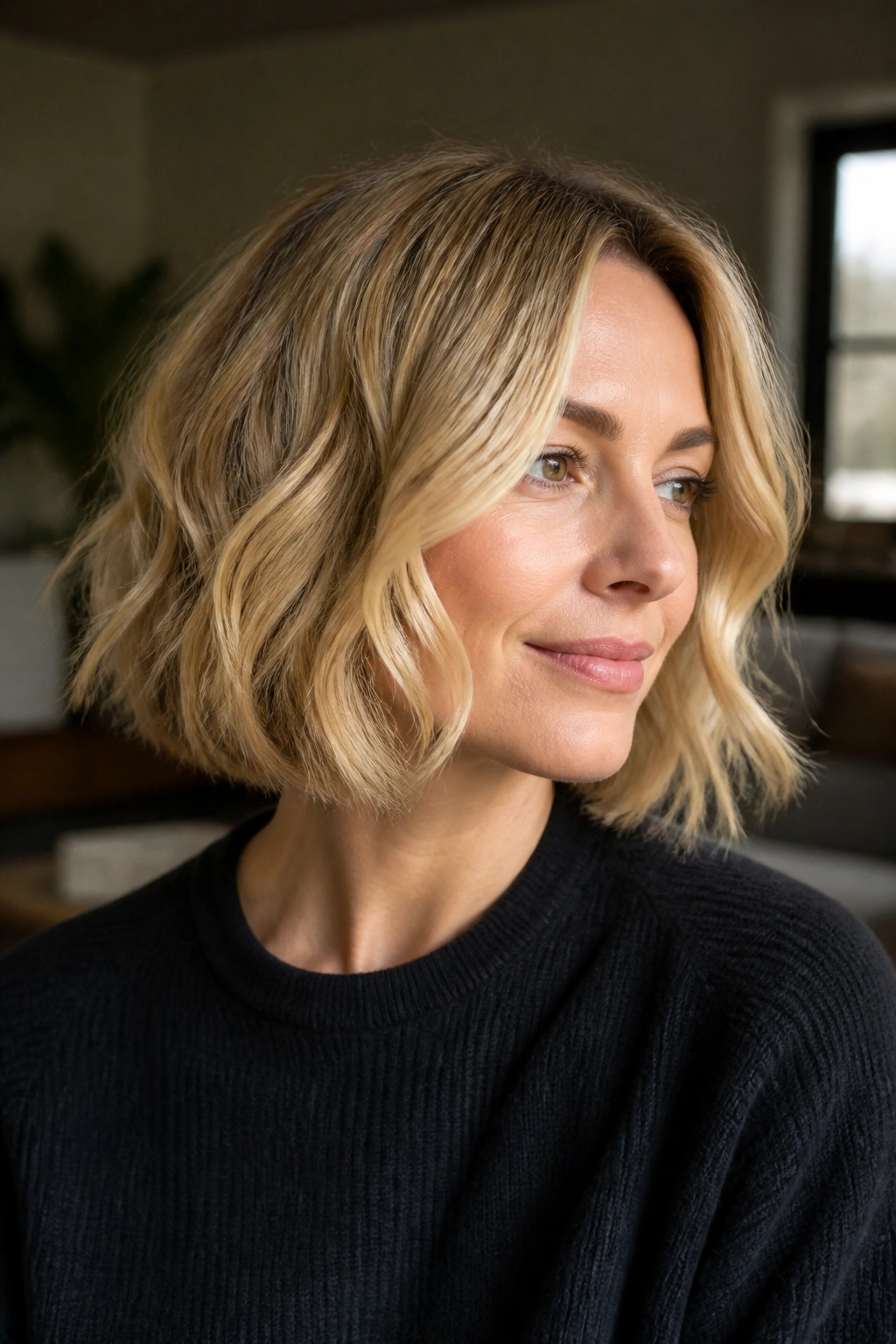
Can a wavy bob work on fine hair? Absolutely, if the wave is loose and the ends stay light. A bend through the middle adds body, while the ends can flick slightly in or out to stop the style from lying flat against the neck.
This isn’t about curling every strand. It’s about creating enough unevenness that the hair catches air. Use a 1-inch iron, wrap sections away from the face, and leave the last inch out so the wave doesn’t turn into a full curl. Then separate with your fingers, not a brush.
How to get the most from it
- Prep with heat protectant
- Curl 1-inch sections only
- Alternate directions for a softer finish
- Finish with flexible spray
The blonde looks fuller when each wave holds its own shape.
22. Curly Bob with Blonde Ribbons
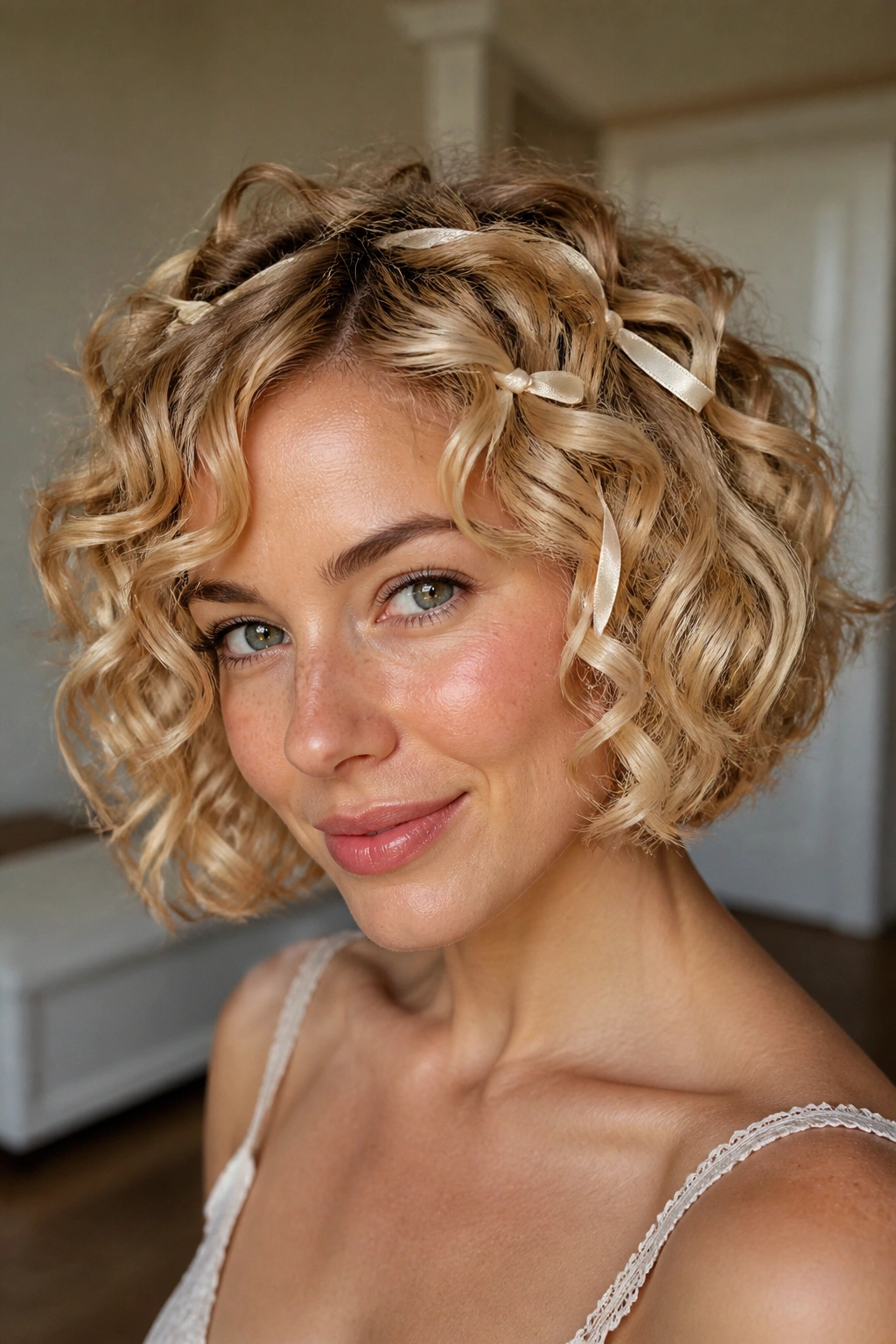
Fine curly hair can wear a bob, and it can look fantastic, but the cut has to respect shrinkage. If the curl springs up 2 inches after drying, the bob needs to be set longer than you think.
I like a length that lands below the chin when wet, with light shaping around the face and only enough layering to let the curls stack without puffing out. Blonde ribbons work well here because they show the curl pattern. Keep them thin, though. Thick light patches can make the curl clump in odd ways.
Moisture matters more than shine spray. A curl cream, a diffuser on low heat, and a microfiber towel are the useful tools. Everything else is window dressing.
23. Air-Dried Lob with Soft Layers
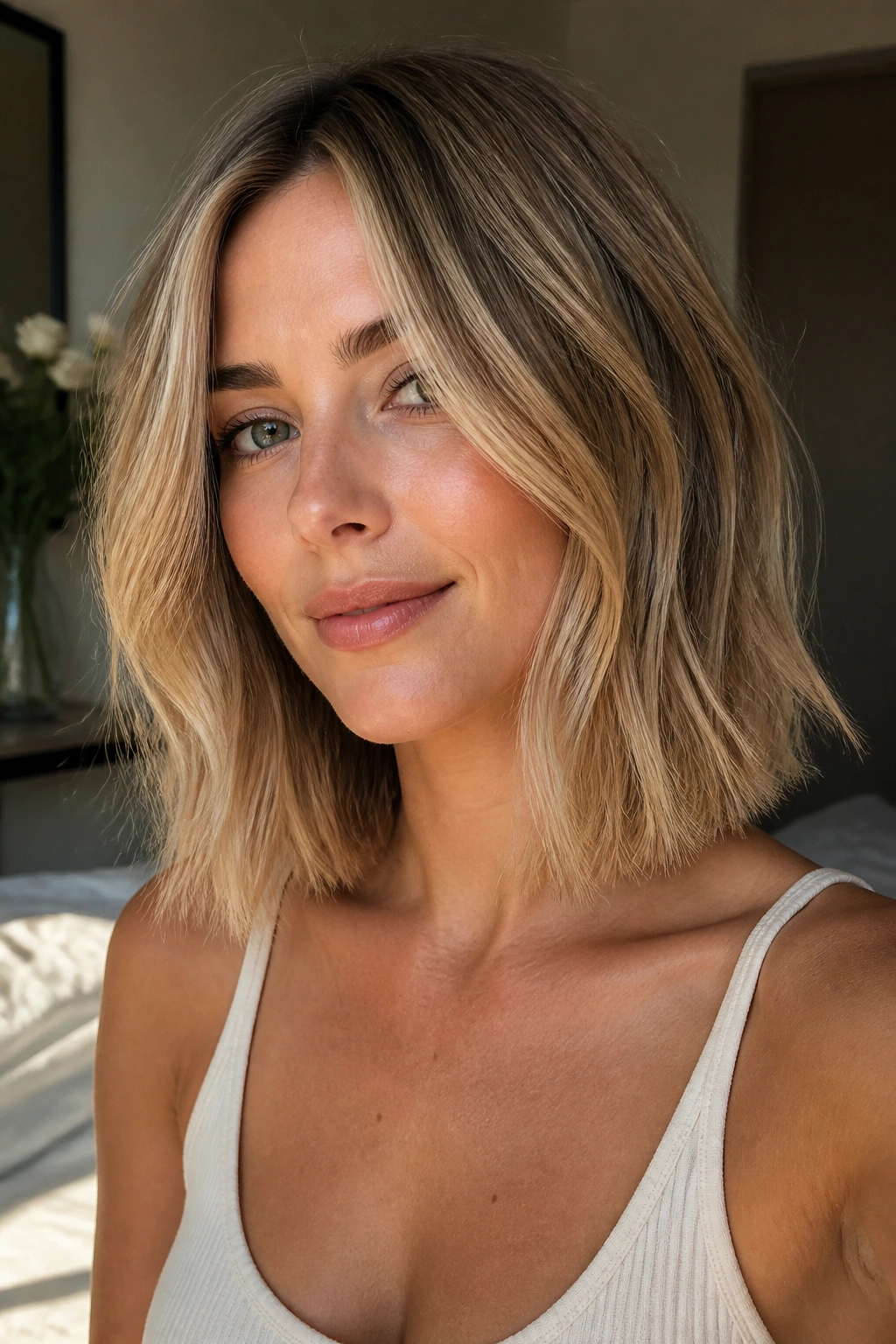
If you don’t want to blow-dry your hair every time, the air-dried lob is the one to beat. The cut sits around the collarbone, with soft internal layers that help the hair settle instead of hanging in one limp sheet.
The blonde should be soft and rooted so the style looks intentional even when the texture is a little uneven. This is where beige blonde, mushroom blonde, or a low-contrast balayage really earns its keep. The hair dries with enough shape that you can leave it alone.
Why it works for low effort
The weight of a longer bob keeps the ends from springing up too much, and the layers stop the top from collapsing.
A leave-in cream and a quick squeeze with a towel are usually enough.
24. Blunt Lob with No-Nonsense Ends
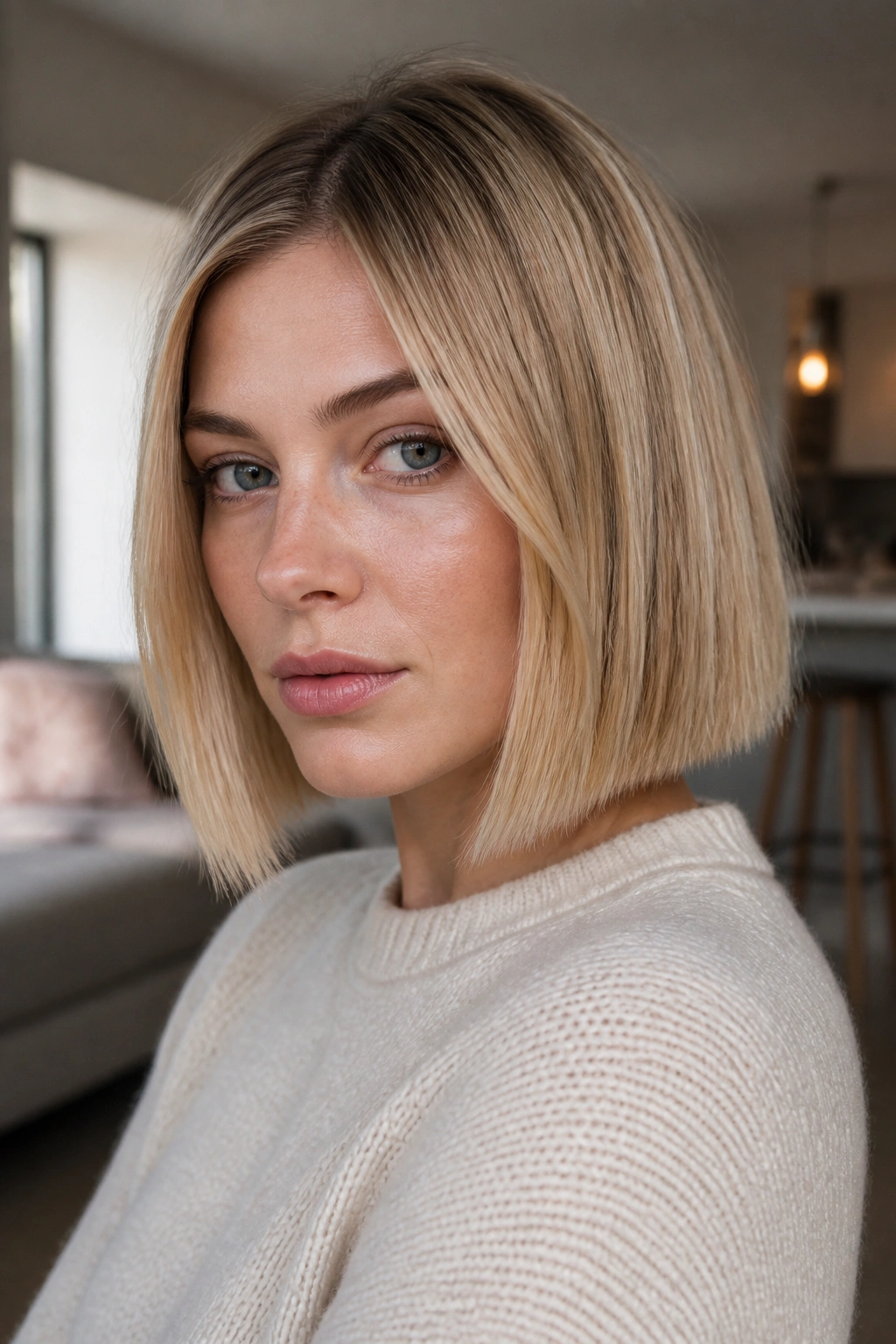
A blunt lob is the safest long-bob choice for fine hair. It gives you enough length to tuck, braid, or clip back, but the clean ends still make the hair look thicker than a heavily layered cut would.
This is the version I’d suggest to someone nervous about going short. It grows out gracefully, feels polished, and doesn’t need daily styling to stay presentable. If you want the hair to look denser, keep the line strong and avoid over-texturizing the bottom.
One neat trick: wear it tucked behind one ear on one side only. That slight asymmetry keeps the style from reading too flat across the face.
25. Layered Lob with Hidden Internal Movement
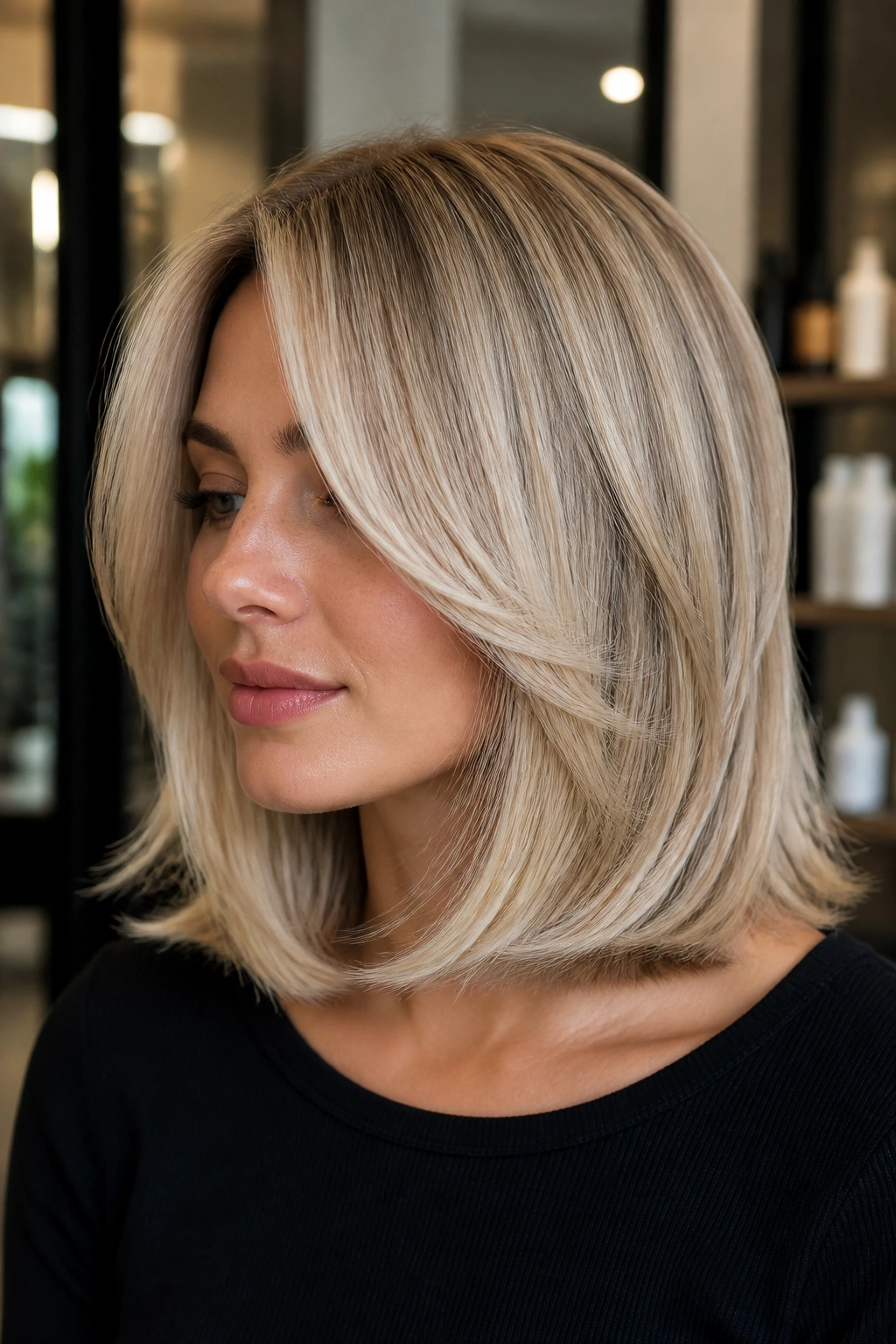
There is a right way to layer a lob on fine hair, and it isn’t by shaving the ends thin. The better version keeps the perimeter full while slipping in hidden layers inside the shape so the hair can move.
That means the top layer falls cleanly over the lower one. You get bend and swing without losing the thick-looking edge that makes a lob work. Ask for internal movement, not obvious steps. The difference is huge, especially in blonde hair where every line shows.
H3: What makes it different
A visible layer stack can hollow out the shape. Hidden layers keep the outside line intact.
This one suits people who wear their hair down most of the time and want a little swing around the shoulders.
26. Mushroom Blonde Bob
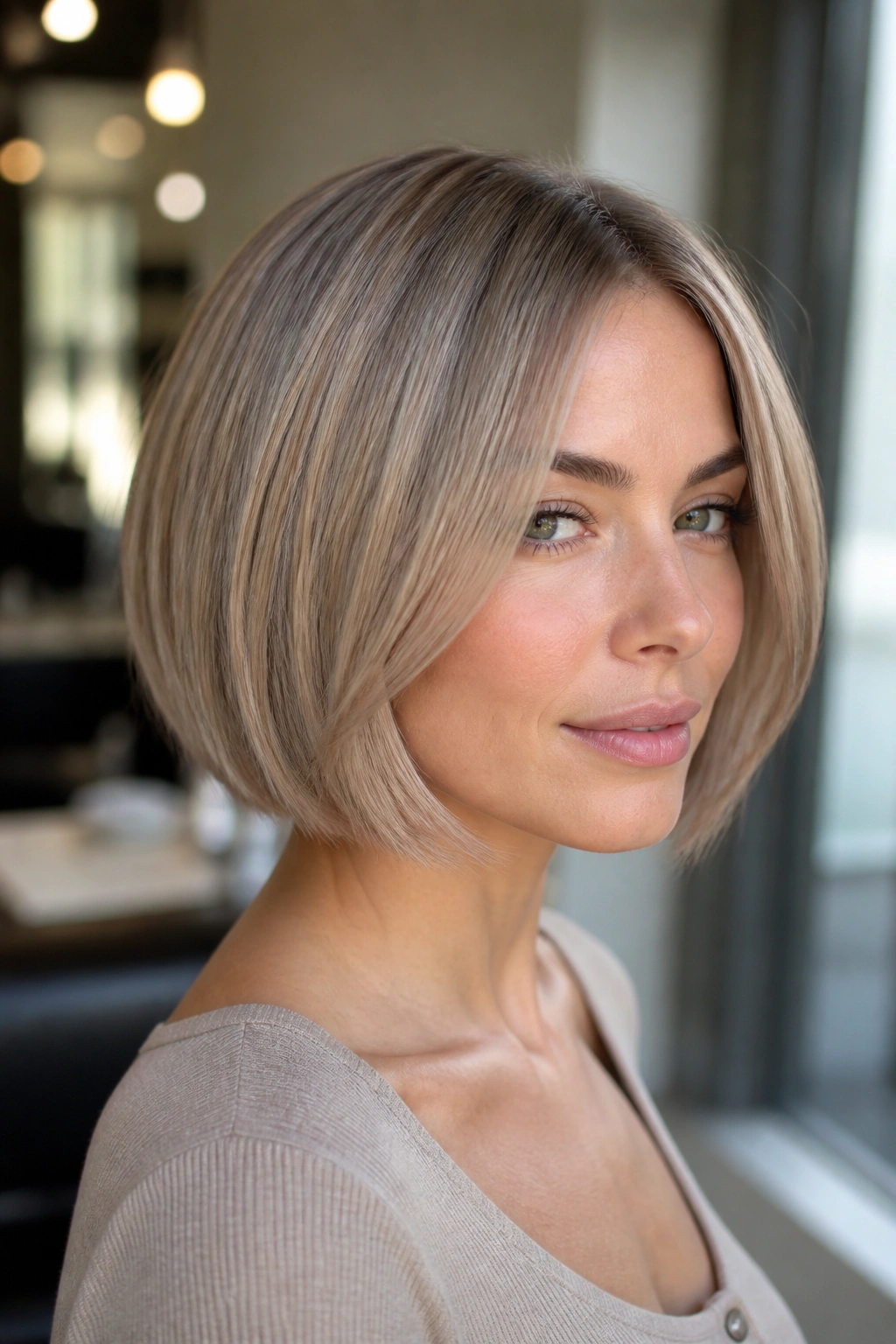
Mushroom blonde sounds odd until you see why it helps. The shade sits in that soft beige-ash zone, with cooler roots and muted lighter pieces through the mids. On fine hair, that depth matters because it keeps the cut from looking too bright and thin.
The shape can be rounded, jaw-length, or slightly longer in front. I like it with a gentle curve around the cheekbones and a clean bottom line. The color does a lot of the visual heavy lifting here, so the haircut does not need to be crowded with layers.
This is the bob for someone who likes a softer, quieter blonde. Not pale-white. Not gold. Something in between, with a little smoke in it.
27. Champagne Blonde Bob with Soft Warmth
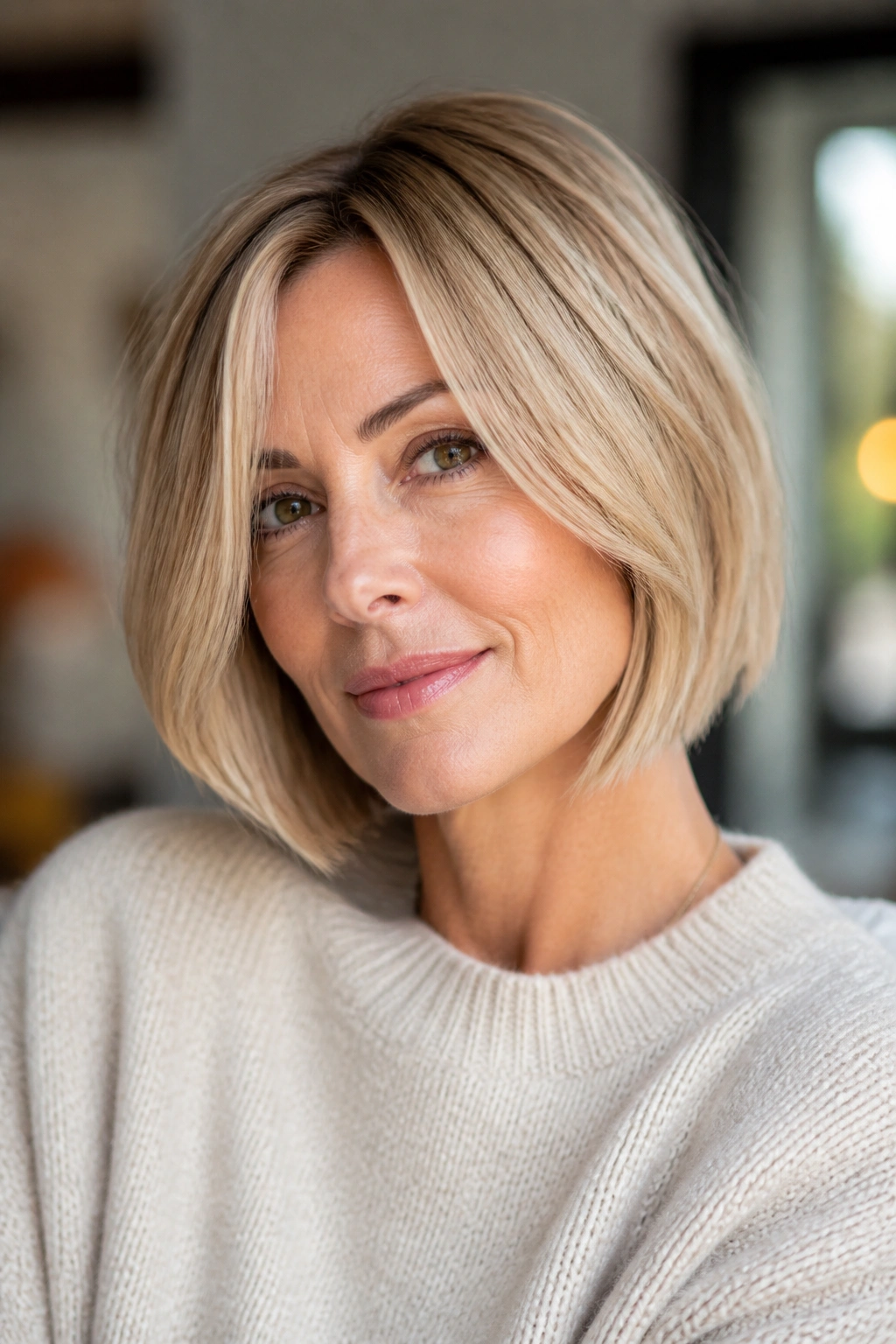
Champagne blonde sits in a smart middle zone. It has enough warmth to look rich, but enough coolness to avoid brass. On fine hair, that matters because a very yellow blonde can make the strands look thinner and more fragile than they are.
A chin-length bob or a neat lob works best with this shade. The color picks up light nicely, so you don’t need a dramatic cut to get movement. Keep the styling loose and the ends clean. If the shape gets too fuzzy, the color loses its edge.
Small maintenance note
Use violet shampoo only when the blonde starts to go too warm. Too much can drain the tone and make the hair look dull.
28. Frosted Blonde Bob with a Long Grow-Out
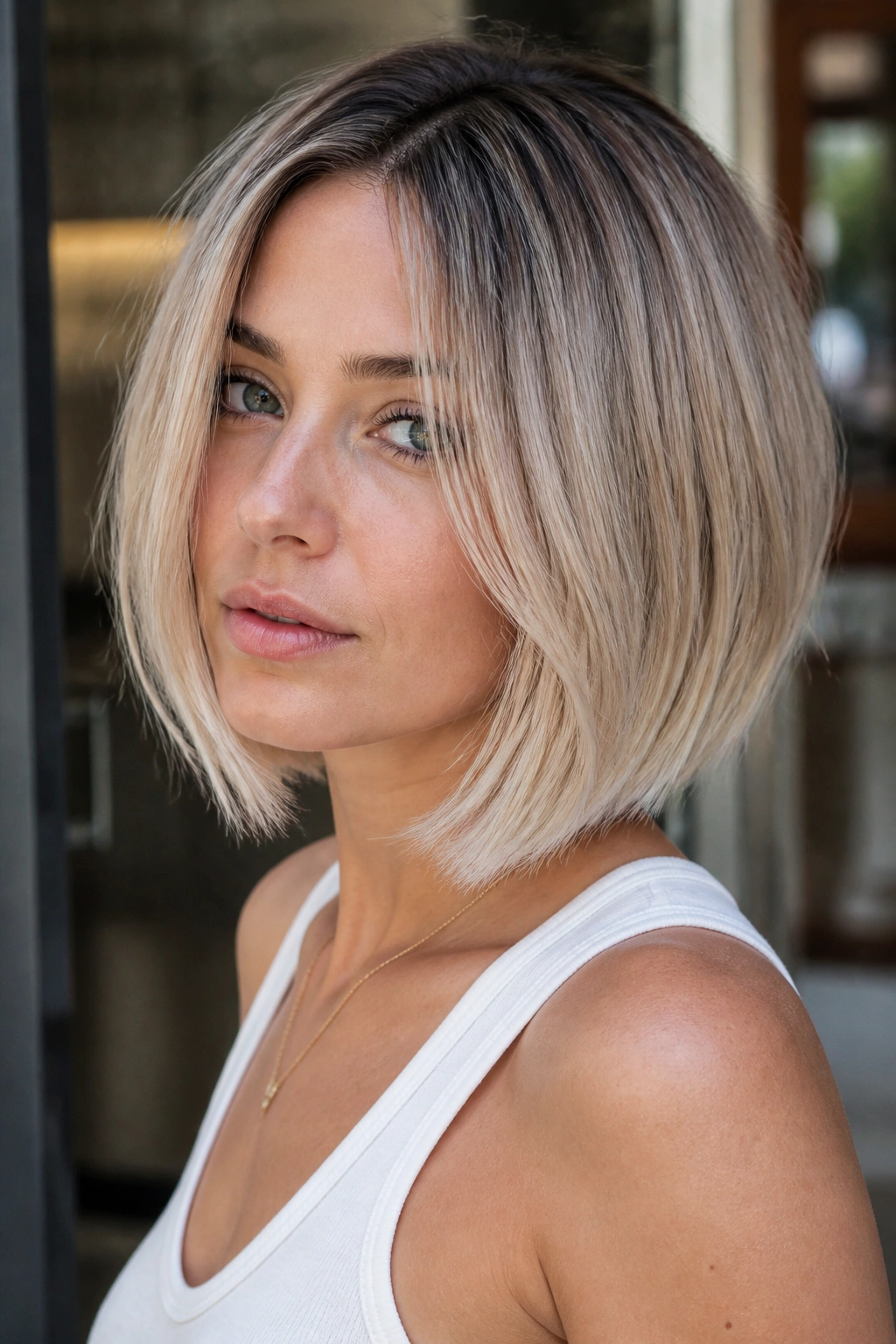
A frosted blonde bob works when you want brightness but also want the color to behave. The root stays a touch deeper, the mids lift, and the ends remain light enough to keep the bob from looking heavy. On fine hair, that shadow at the base keeps the style from going see-through.
This is the cut I’d hand to someone who wants a blonde bob that still looks deliberate a few weeks later. It can be blunt, softly angled, or slightly textured, but the core idea stays the same: keep the outline full and let the color carry the sparkle. If you’re stuck choosing between several options, start here. It’s forgiving, it grows out in a sane way, and it gives fine hair the one thing it always wants most—shape that holds.
