



A round face is not a haircut problem. It’s a line problem. Long straight bob haircuts for round faces work when they pull the eye downward, not outward, and that difference matters more than people think.
A blunt cut that lands at the wrong spot can make cheeks look wider. A lob that sits at the collarbone, bends inward a little, or sneaks longer in the front changes the whole balance of the face without shouting about it. Straight hair makes the shape easier to read, which is helpful and unforgiving at the same time.
The good news: a smart bob does most of the work for you. You do not need huge volume, heavy curling, or a lot of styling drama. You need the right length, the right part, and a line that knows when to soften and when to stay sharp.
1. Collarbone Blunt Lob With a Center Part
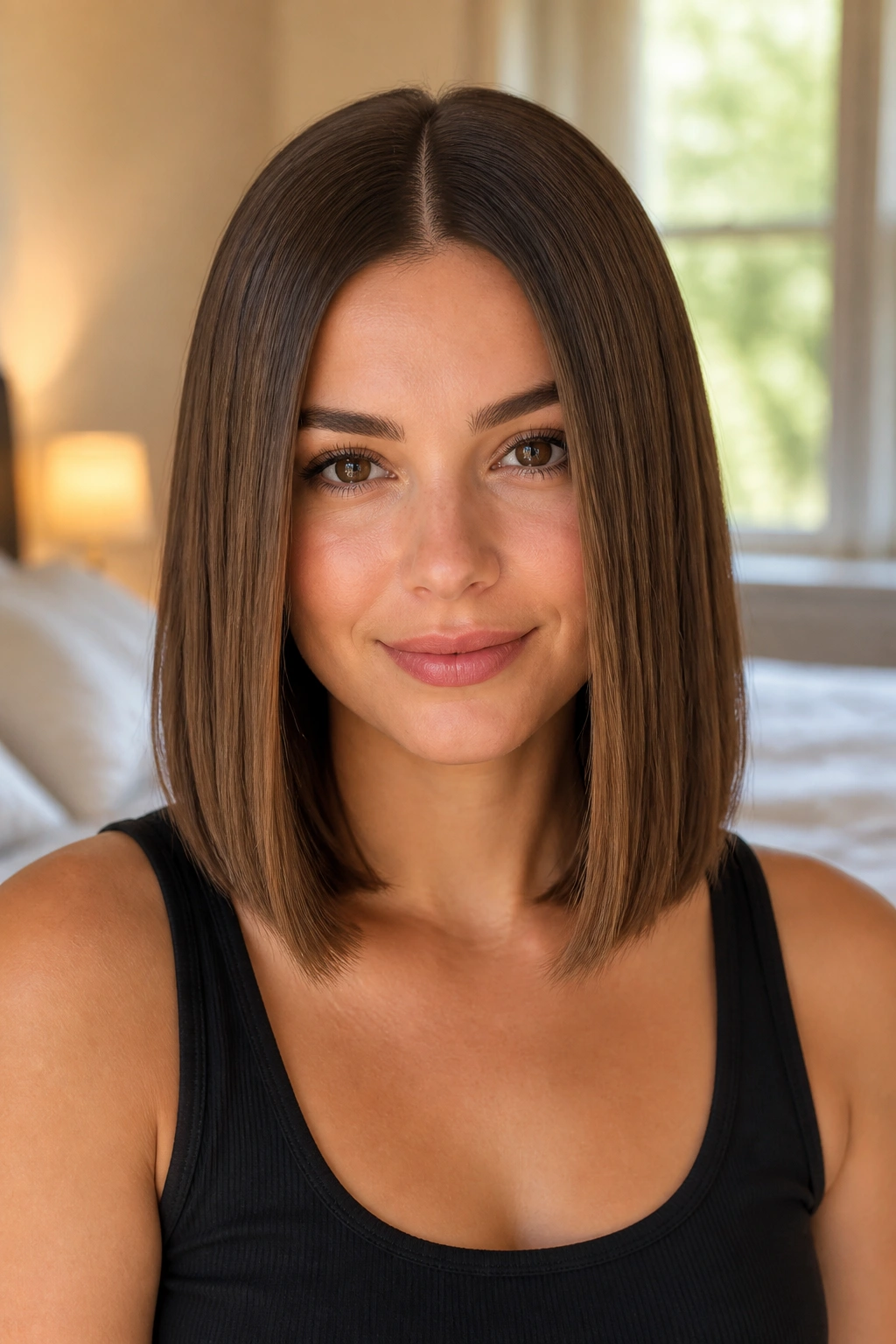
A collarbone blunt lob is one of those cuts that looks plain in the chair and quietly excellent in real life. The straight edge lands below the widest part of the cheeks, which gives the face a longer read without making the hair feel severe.
Why It Works
The center part keeps the shape balanced, and the blunt ends stop the cut from puffing out at the sides. That matters on a round face, where width tends to show up first around the cheeks and jawline.
- Ask for the length to hit right at the collarbone or a touch below it.
- Keep the ends blunt, not wispy.
- Use a middle part if your face can handle symmetry without looking wider.
- Blow-dry the roots flat, then bend the ends under just a little.
Pro tip: If your hair is thick, ask for internal weight removal, not visible layers on the outside. The surface stays clean, and the shape stays sharp.
2. Angled A-Line Lob With Longer Front Pieces
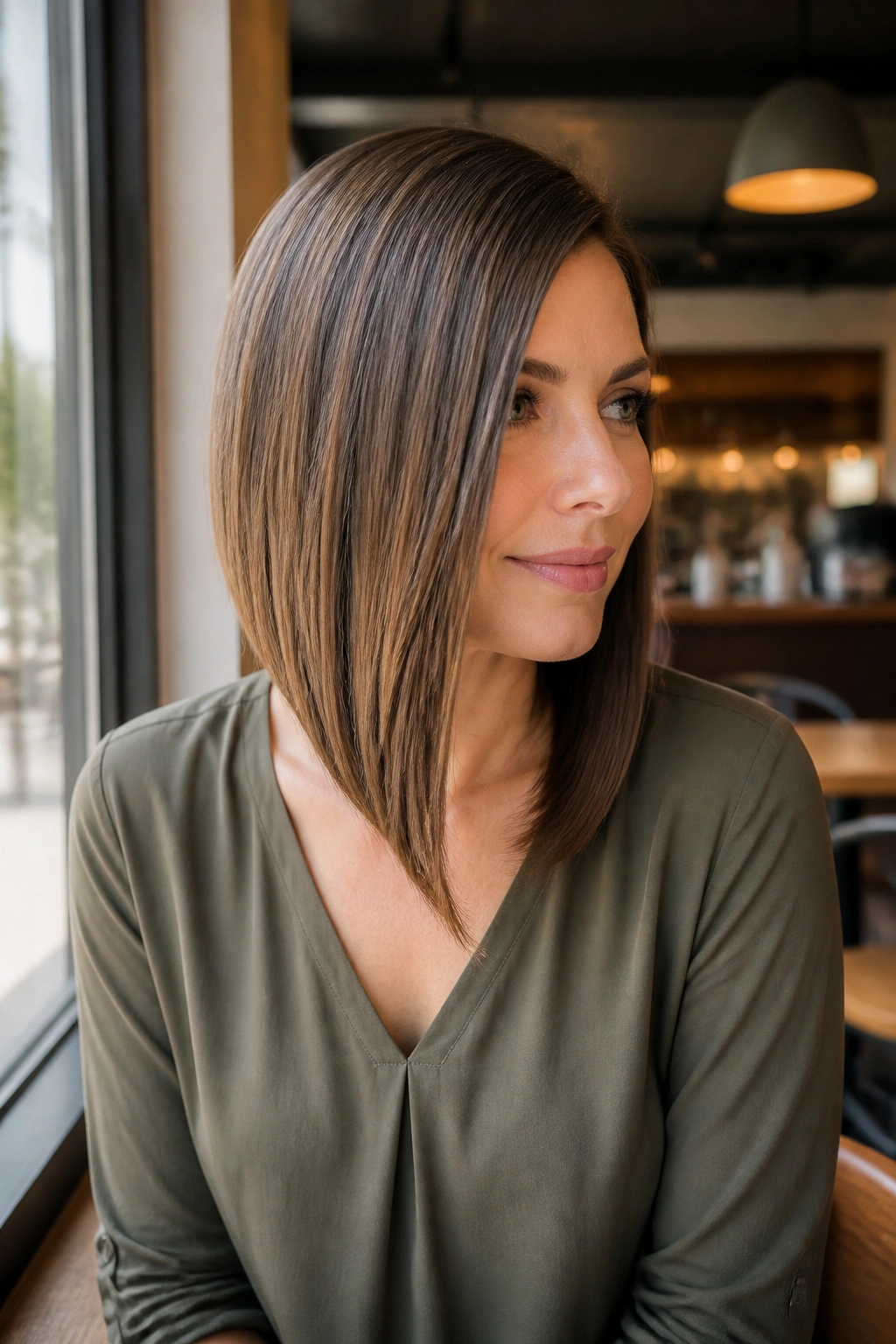
If your hair tends to sit flat around the jaw, an angled A-line lob gives the front corners more room to move. The back stays a little shorter, while the front drops lower and creates a diagonal that visually stretches the face.
That diagonal line is the whole trick. It interrupts the circle of a round face and gives the eye a path to follow. I like this cut on straight hair because the angle looks deliberate, not messy.
A dramatic A-line can feel dated or too obvious. The better version is subtle: maybe one to two inches of difference from back to front. Enough to notice. Not enough to look like a science project.
The cut also works well if you wear one side tucked behind the ear. That tiny habit makes the longer front pieces look even more intentional.
3. Deep Side-Part Lob With Sleek Length
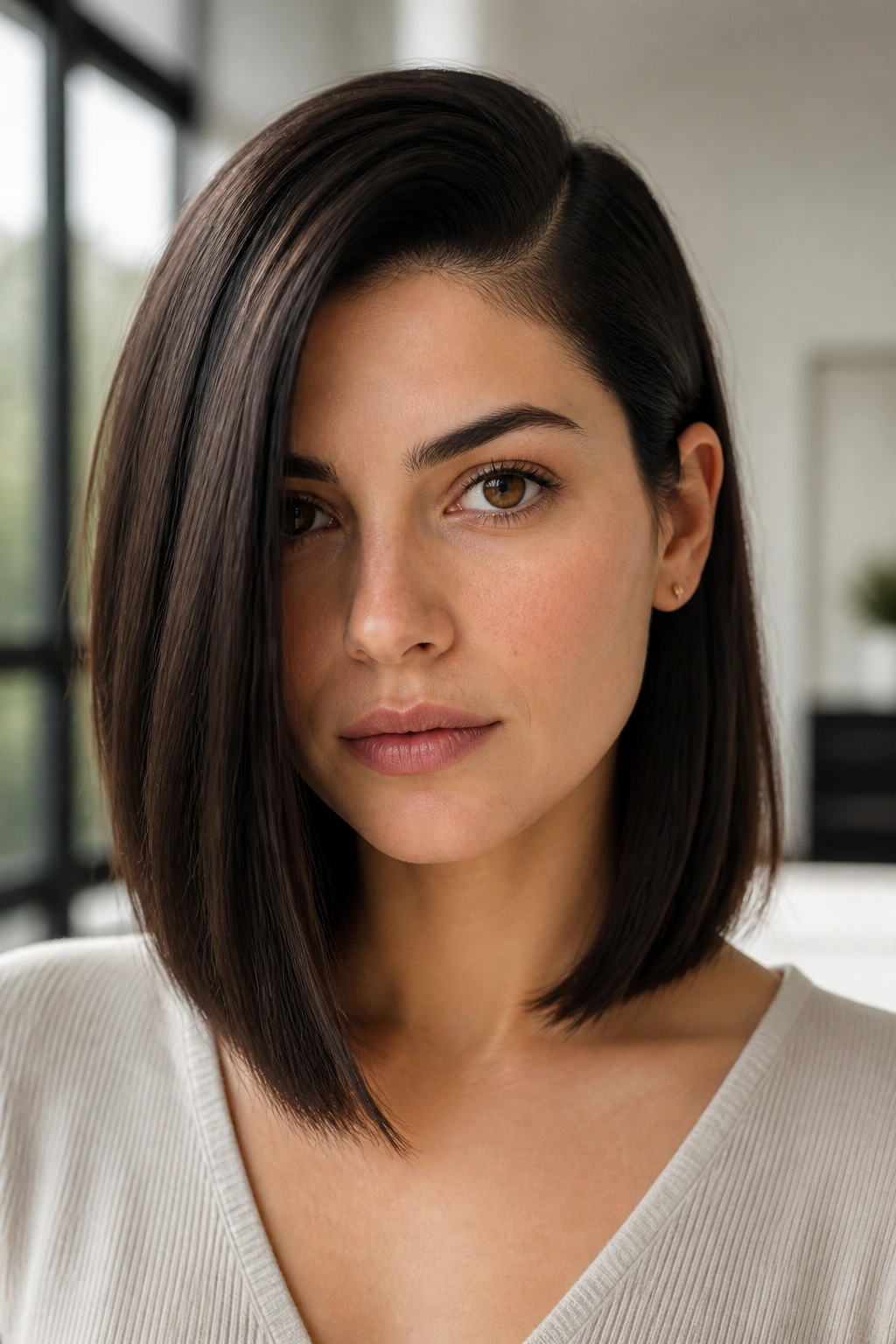
Why does a deep side part change so much? Because it breaks symmetry in a way a round face usually benefits from. The eye stops reading the face as a circle and starts following the sweep of hair across the forehead.
How to Wear It
Keep the length straight and polished, then move the part about one to one-and-a-half inches off center. That is enough to shift the shape without making the style look theatrical.
A deep side-part lob looks especially good when the heavier side falls past the cheek and the lighter side is tucked back or pinned behind the ear. It creates height at the top, which helps the face feel a little longer.
The styling is simple. Blow-dry with the roots lifted at the part, then smooth the lengths with a flat iron if needed. Don’t overdo the volume at the sides. That defeats the whole point.
4. Soft Layered Lob That Skims the Cheeks
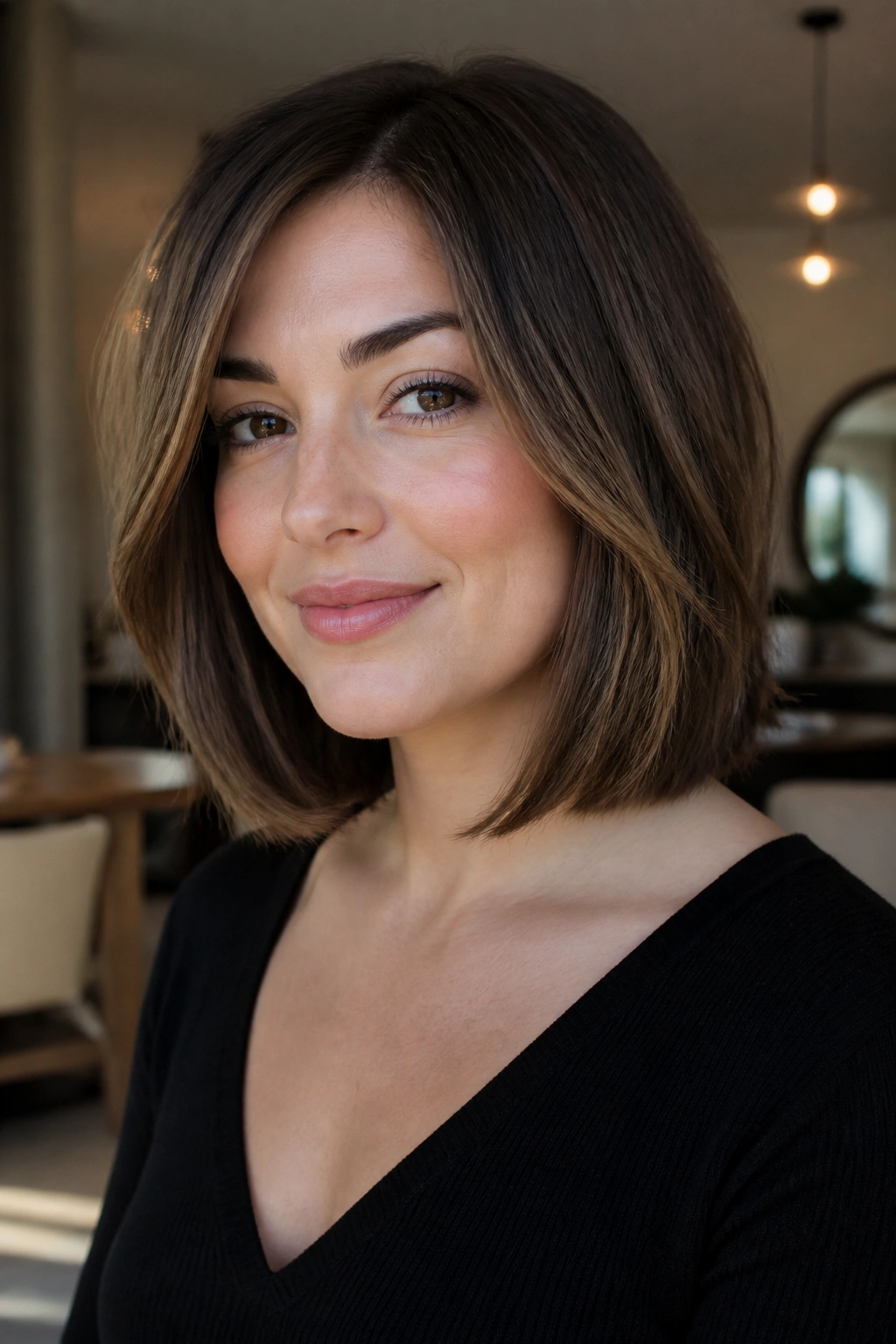
A client who hates hard edges usually ends up happiest with a soft layered lob. Not a shag. Not a pile of broken pieces. Just enough layering to let the hair skim instead of sit like a shelf.
The best layers start below the cheekbone, where they can soften the lower half of the face without calling attention to the widest point. That placement matters more than people realize. A layer cut too high can widen the cheeks fast.
- Keep the first layer below cheek level.
- Ask for movement around the chin and collarbone.
- Use a round brush only at the ends, not all through the crown.
- Skip heavy texturizing if your hair is fine; it can go limp.
The finished result feels lighter, but still neat. That balance is hard to beat.
5. One-Length Glass Lob With Mirror-Smooth Ends
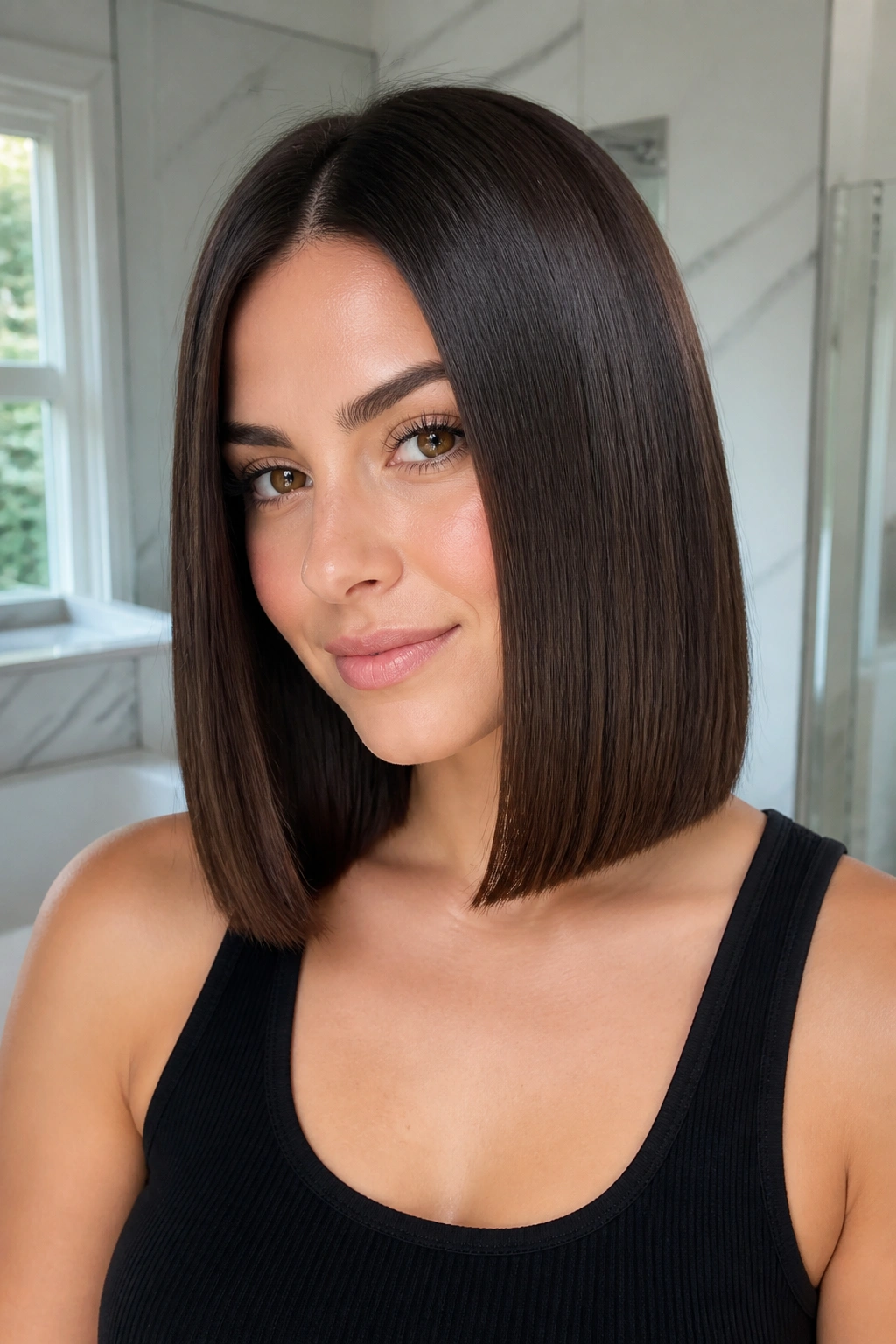
A one-length glass lob is for the person who wants polish more than texture. The straight line creates a clean vertical frame, and the shine does a lot of visual work too. On a round face, that smooth surface keeps the look from spreading outward.
This cut depends on precision. The ends need to be even, and the hair needs enough density to hold that sleek line. If your hair is very fine, ask for a tiny bit of internal support so the style does not collapse by noon.
It looks especially good when the part is slightly off center. Not dramatic. Just enough to avoid a perfect oval outline around the face.
I’m a fan of this on straight hair because it does not ask for much. A flat iron pass, a little serum on the ends, and you’re done. That’s it. No fluff.
6. Asymmetrical Lob With One Side Slightly Longer
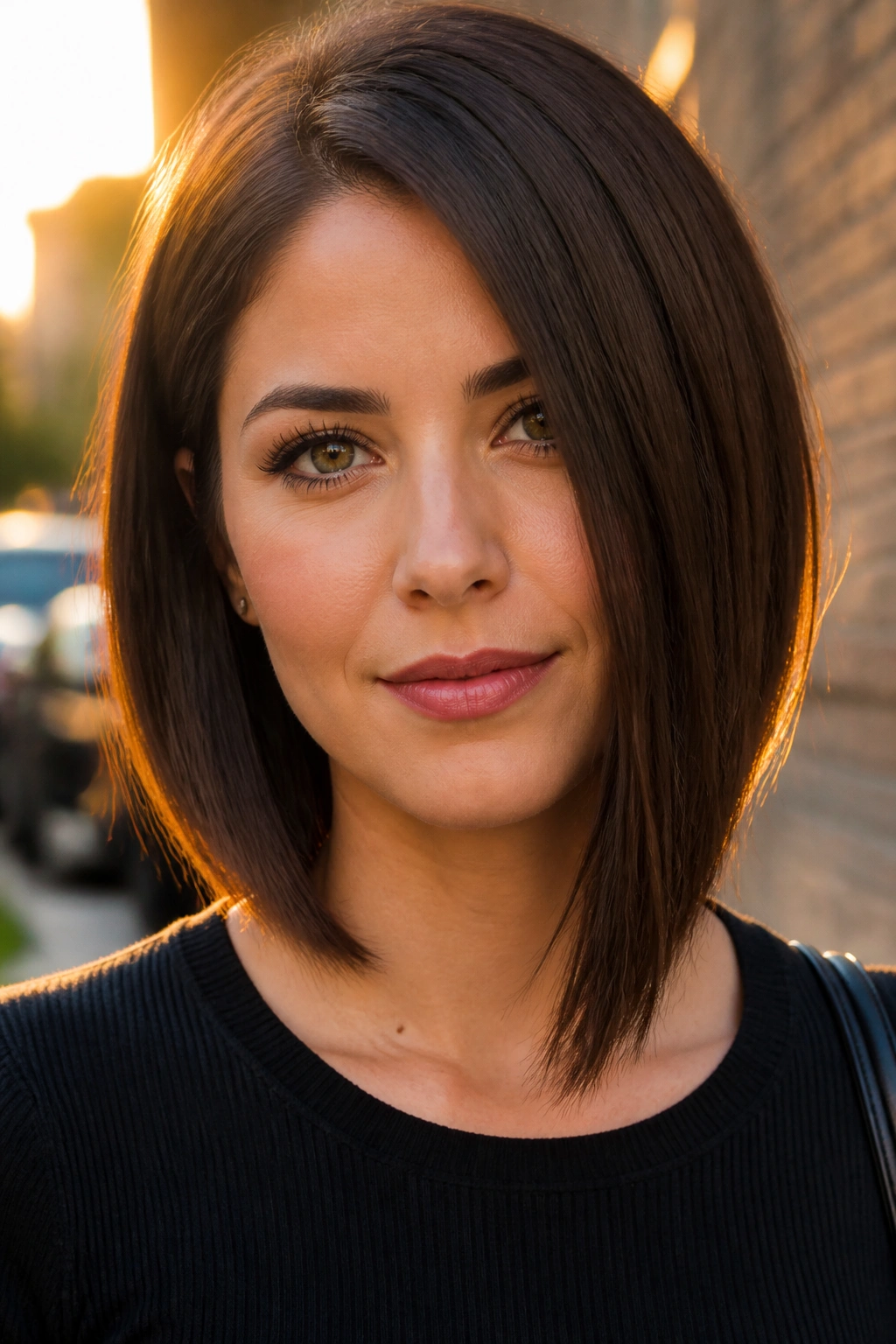
Unlike a perfectly even bob, an asymmetrical lob gives the face a built-in angle. One side sits a little longer, and that tiny imbalance pulls the eye sideways and downward at the same time.
The difference does not need to be huge. Half an inch can be enough. An inch is plenty. If the gap gets too dramatic, the cut starts to feel like a statement piece instead of a flattering everyday style.
This is one of my favorite options for someone who wears sunglasses often or tucks hair behind one ear all the time. The asymmetry looks natural, not forced, because the way you move already matches the haircut.
Best of all, it can be blunt, smooth, or lightly layered. The shape does the work.
7. Curtain-Bang Lob With Straight, Clean Lengths

Curtain bangs can be a smart move on a round face when they stay long enough to open the cheeks instead of closing them in. The bangs should part softly at the center and sweep down toward the cheekbones, then merge into the rest of the lob.
Why Curtain Bangs Help
They cut a little vertical line into the face without chopping the forehead into a wide block. That small break is useful. It keeps the face from reading as one round shape from hairline to chin.
The rest of the cut should stay straight and controlled. If the lengths are too shaggy, the bangs lose their job and the whole thing starts to blur.
- Ask for bangs that start around brow to cheekbone length.
- Keep the ends of the bob blunt or lightly beveled.
- Blow the bangs away from the face with a round brush.
- Do not cut them too short; that shrinks the face fast.
This version feels soft, but not sweet. That matters.
8. Razor-Cut Lob With Airy, Tapered Ends

A razor-cut lob can be brilliant on straight hair when the goal is movement without bulk. The edges look lighter, and the whole shape takes on a bit of swing instead of sitting as one hard line.
That said, a razor is not forgiving. On coarse or frizzy hair, it can make the ends look fuzzy. On smooth, straight hair, though, the taper can be beautiful because it softens the width around the cheeks without making the cut look thin.
The best version keeps the length solid and only feathers the bottom few inches. You want the outline to stay clear. You are not trying to erase the bob.
If your hair is dense and stubborn at the ends, this can be a good fix. If your hair is already fine, proceed carefully. A little goes a long way.
9. U-Shaped Lob That Curves Inward at the Back
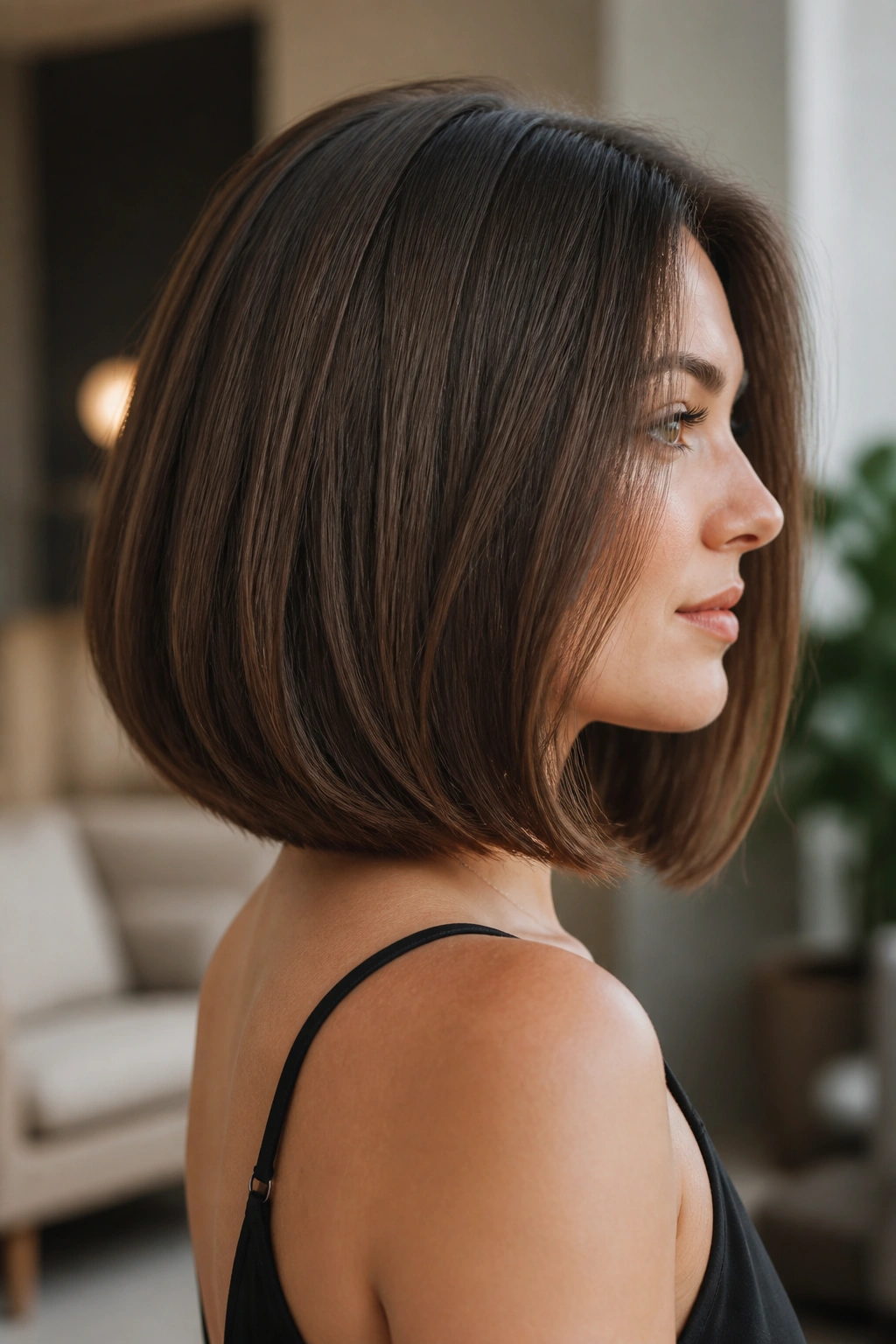
Can a subtle U-shape help a round face? Yes, because it creates a gentle frame that narrows toward the neck instead of stopping flat across the widest part of the face.
How to Ask for It
Tell your stylist you want the front slightly longer than the back, but with a soft curve, not a hard angle. The outline should feel smooth, almost like the hair is wrapping the face rather than sitting beside it.
That curve is useful on straight hair because it stops the cut from looking blocky. A blunt edge can be great, but a U-shape gives a little more softness if your features already feel full.
The difference is subtle in the mirror and obvious in motion. That is usually a good sign. Hair that only works in a perfectly still photo is not much fun to wear.
10. Choppy Lob With Broken-Up Ends

A choppy lob sounds rougher than it needs to be. The right version still looks clean, but the ends are separated just enough to keep the silhouette from feeling heavy around the jaw.
That matters on a round face because a solid horizontal line can make the lower face feel wider. Broken-up ends interrupt that line and give the hair a bit of air. Not volume everywhere. Air.
- Keep the choppiness focused near the bottom third of the cut.
- Leave the crown smooth so the shape does not look frayed.
- Use a small amount of cream or serum, not a mountain of product.
- Blow-dry the ends with a slight bend, not a flip.
This is a good choice if your straight hair falls flat when cut too bluntly. It has more life without getting fussy.
11. Hidden-Layer Lob That Keeps the Surface Smooth
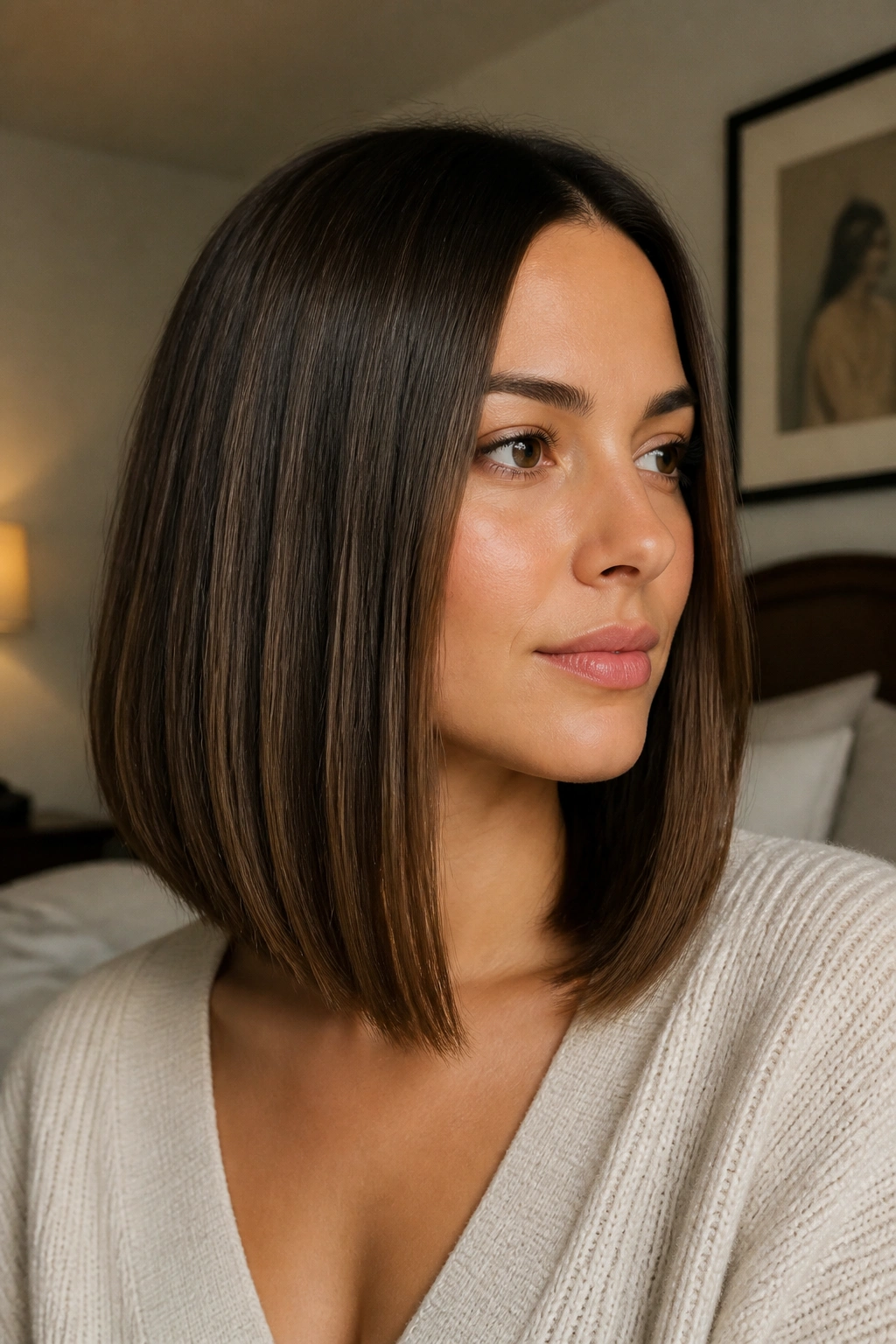
A hidden-layer lob is one of the smartest cuts for thick straight hair. The surface stays smooth and polished, but the inside has enough weight removed to stop the shape from ballooning out at the sides.
That’s the quiet magic here. You get a leaner outline without obvious chopped-up layers showing around the face. On a round face, that keeps the width under control while preserving length where it counts.
It also grows out well. The cut does not depend on a perfect blowout every single day, which is a relief if you are not trying to wrestle your hair for half an hour each morning.
It looks deceptively simple. That’s usually a good sign with haircuts. The best ones do a lot without making a scene about it.
12. Bottleneck-Bang Lob With Long Side Pieces

Bottleneck bangs sit somewhere between curtain bangs and a full fringe. They’re shorter in the middle, longer at the sides, and that shape opens the face in a softer way than blunt bangs ever could.
The long side pieces are the useful part for round faces. They create a diagonal line that leads the eye downward, which keeps the cheeks from feeling boxed in. Paired with a straight lob, the result feels balanced and current without being flashy.
This style works best when the bangs are cut with enough length to tuck into the rest of the hair. If they’re too short, they stop helping and start sitting like a separate layer.
I like this for someone who wants fringe but hates the idea of a heavy forehead line. It gives the idea of bangs without the usual blocky effect.
13. Side-Swept Fringe Lob With Soft Volume at the Crown

A side-swept fringe can be one of the easiest ways to make a lob flatter a round face. The fringe sends the eye diagonally, and diagonals are your friend here. They break up the circle shape fast.
Keep the fringe long enough to blend into the side of the face. Short side bangs can look cute, but they can also widen the cheek area if they stop too high. The sweet spot is usually around the cheekbone or just below it.
The crown can hold a little lift, but not too much. You want soft height, not a helmet. A small round brush at the roots is enough.
This cut is especially nice if you switch between wearing your hair down and tucking one side back. It gives you options without changing the basic shape.
14. Slightly Stacked Lob With Lift at the Nape
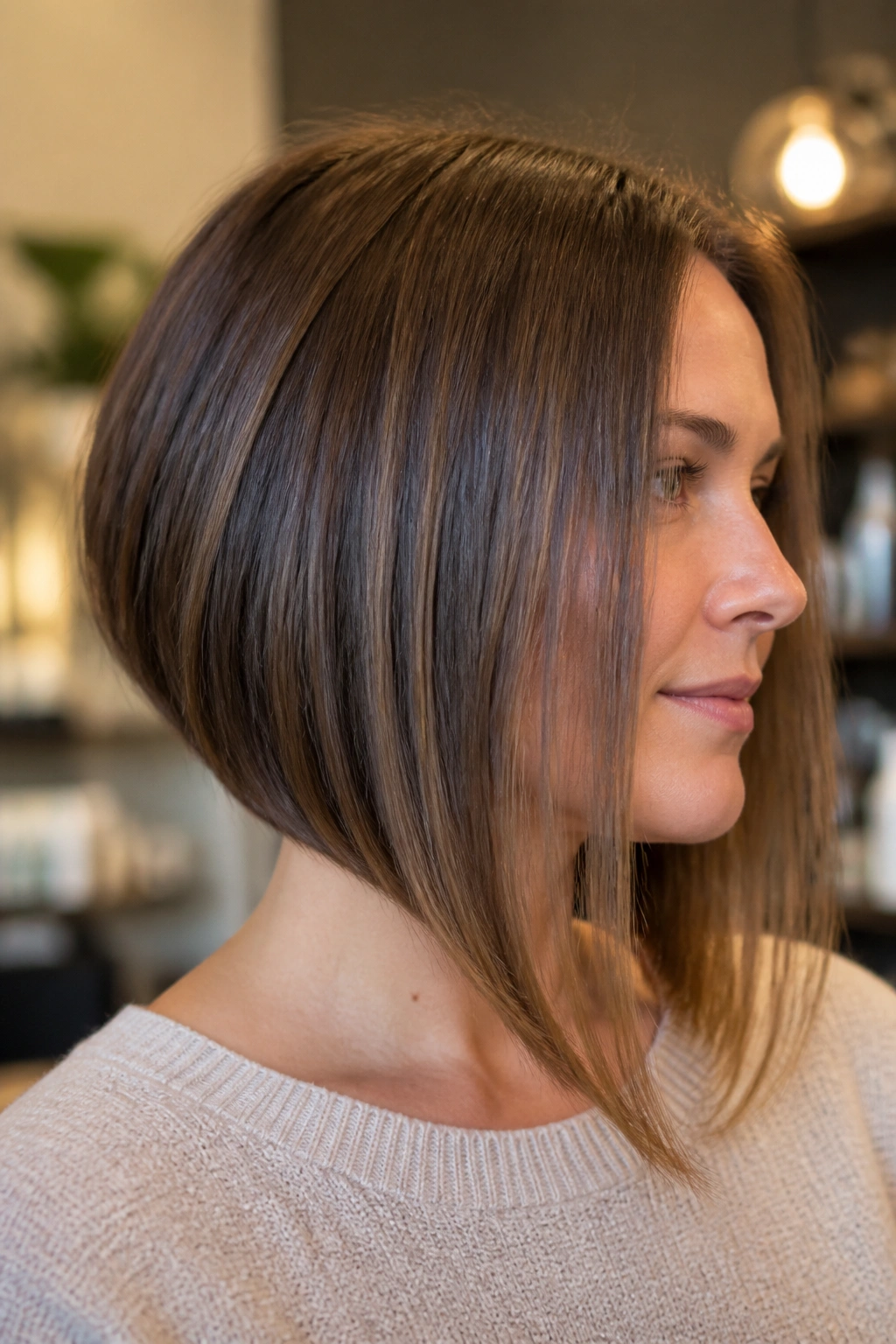
Can a little stacking help a round face? Yes, if the lift stays subtle. A touch of shorter length at the nape creates a cleaner neck line and keeps the bottom from feeling heavy.
What to Watch For
Too much stacking makes the back puff out, and that can widen the whole silhouette. That’s the trap. The cut should look light from behind, not bulbous.
The front needs to stay long enough to pull the face downward. If the front gets chopped too short, you lose the effect that makes the stack worthwhile.
- Ask for a soft, not dramatic, graduation in the back.
- Keep the front touching the collarbone or lower.
- Style with a flat brush for a smooth finish.
- Avoid over-layering the top.
This is a neat cut for someone who likes structure and hates anything floppy.
15. Shoulder-Grazing Blunt Bob With Softly Beveled Ends
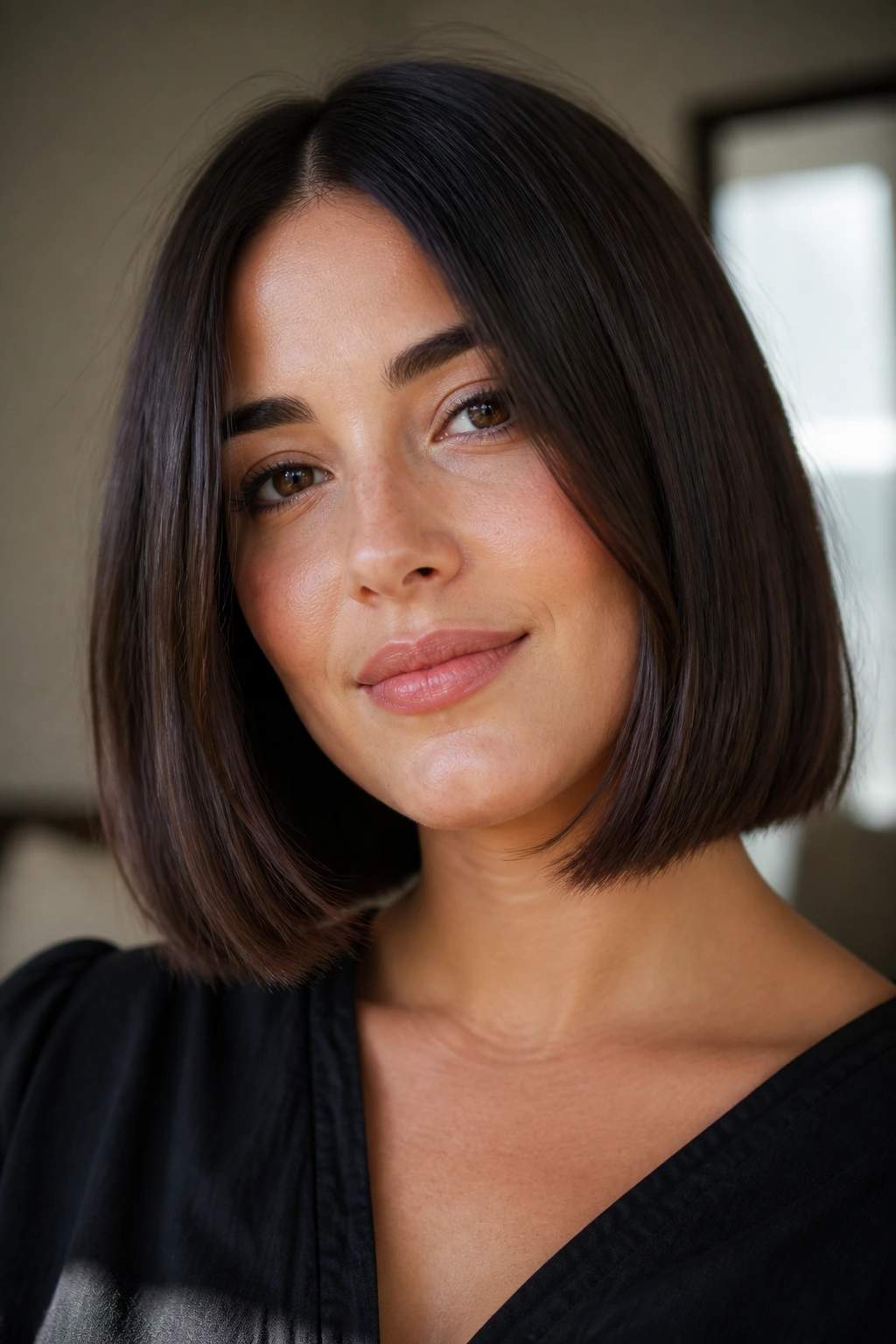
A shoulder-grazing blunt bob is a little less common than the classic lob, and that’s part of the appeal. It gives you enough length to keep the face from looking wide, but the line stays crisp and modern.
The beveled ends matter more than people expect. A tiny inward curve keeps the cut from sitting like a shelf on the shoulders. Without that shape, a straight bob can feel heavy and boxy, especially on a round face.
- Best when the length lands right at or just below the shoulders.
- Ask for the ends to be beveled, not curled.
- Works well with thick hair that needs a firm outline.
- Looks polished with a center part or soft off-center part.
This one has presence. It doesn’t try too hard.
16. Feathered Lob With Face-Framing Layers

A feathered lob is a good answer when straight hair feels too solid around the face. The feathering should stay around the front and sides, where it can soften the cheeks without shredding the whole shape.
The key is restraint. You want a few elegant layers near the face, not a roomful of disconnected pieces. A round face already carries fullness; the haircut should shape that fullness, not scatter it everywhere.
This style is especially nice if your hair is medium density and naturally straight. It picks up movement easily and does not need a lot of heat styling to look alive.
I’d skip heavy feathering at the back. Keep the focus on the front, where the contour does the real work.
17. Off-Center Part Lob With Front-Heavy Length
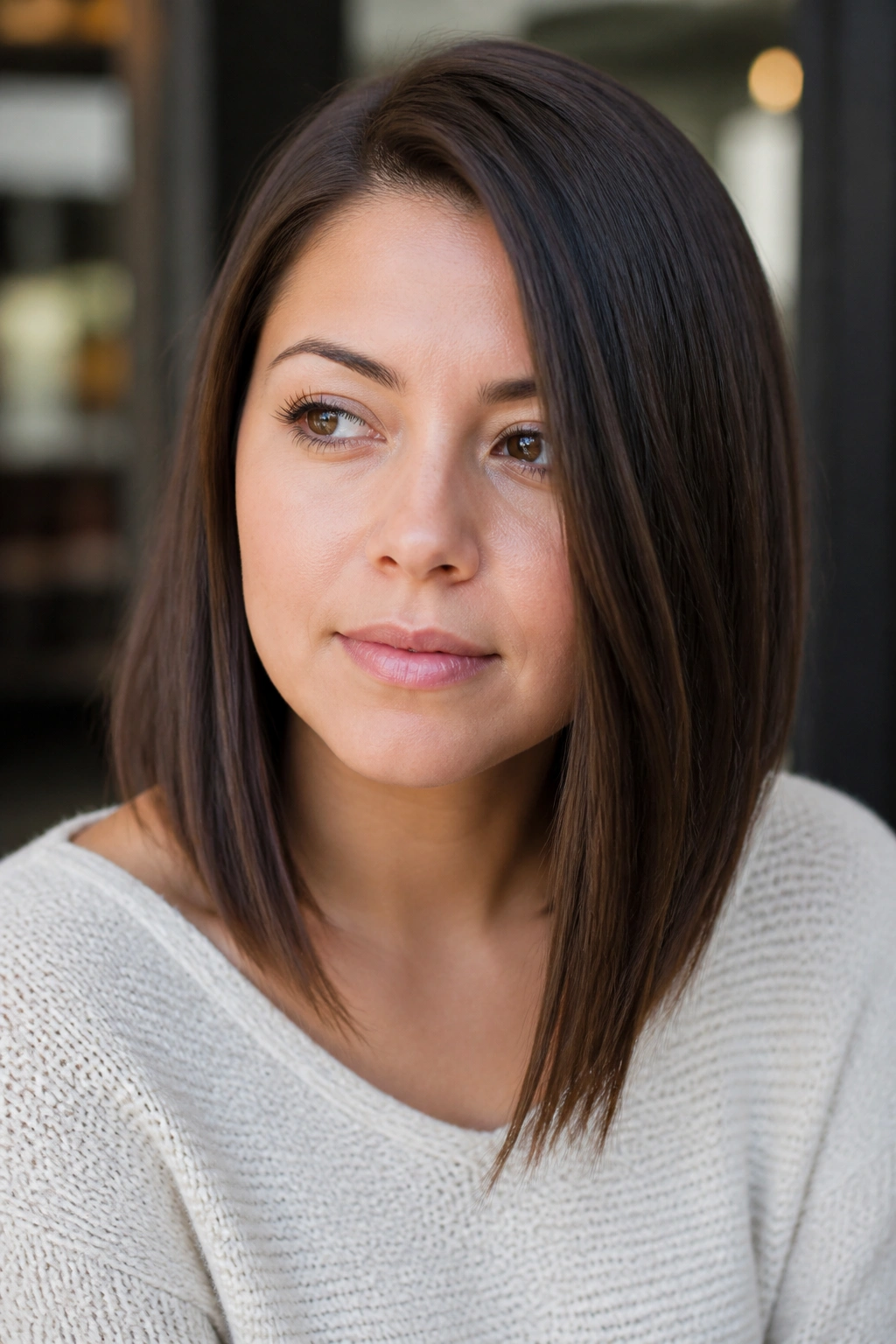
A center part is not mandatory, even if a lot of people act like it is. An off-center part gives the face a softer line, and that tiny shift can make a round face look a little longer without losing symmetry entirely.
The trick is to keep the part only slightly off the middle. About an inch is often enough. Move it too far, and the style turns into a deep side part, which is a different feeling altogether.
Front-heavy lengths help too. If the pieces closest to the face are a touch longer than the back, the cut creates a frame that narrows the cheeks rather than sitting right on them.
This is the haircut for people who want something easy to wear on a normal Tuesday, not just on a good hair day.
18. Straight Lob With Ends Curved Under
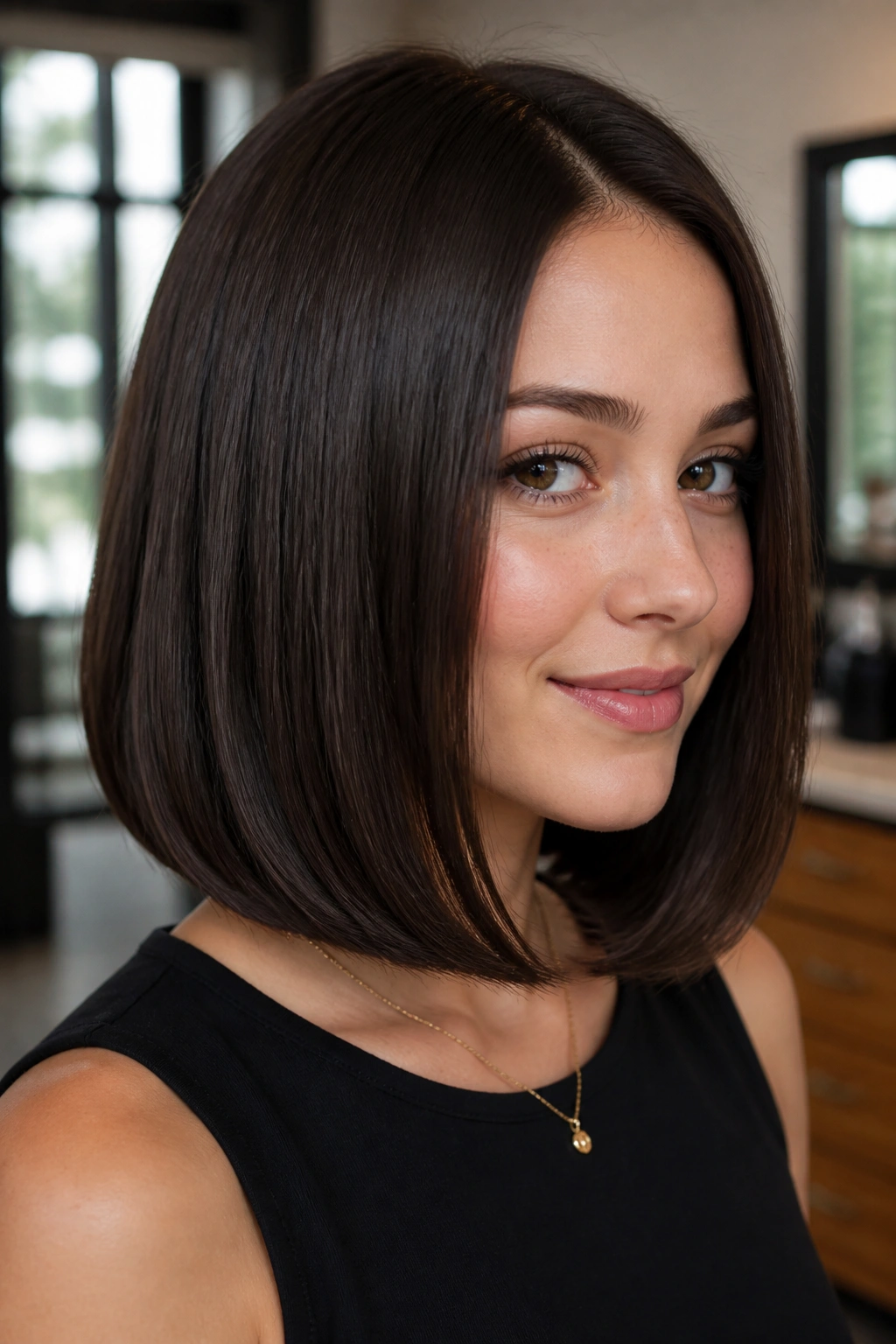
A straight lob with ends curved under looks simple, but it fixes one of the most common problems round faces run into: hair that flips outward and makes the face look wider.
A slight inward curve keeps the perimeter tighter. It nudges the eye back toward the center of the face instead of sending it out to the sides. Small thing. Big effect.
If you want this shape, ask for a cut that can bend under cleanly with a blow-dryer or flat iron. Don’t over-texturize the ends. The clean edge is the point.
I prefer this when the hair is naturally straight and wants to behave. You get that polished, tidy shape without having to babysit it every day.
19. Long Bob With Cheekbone Bangs
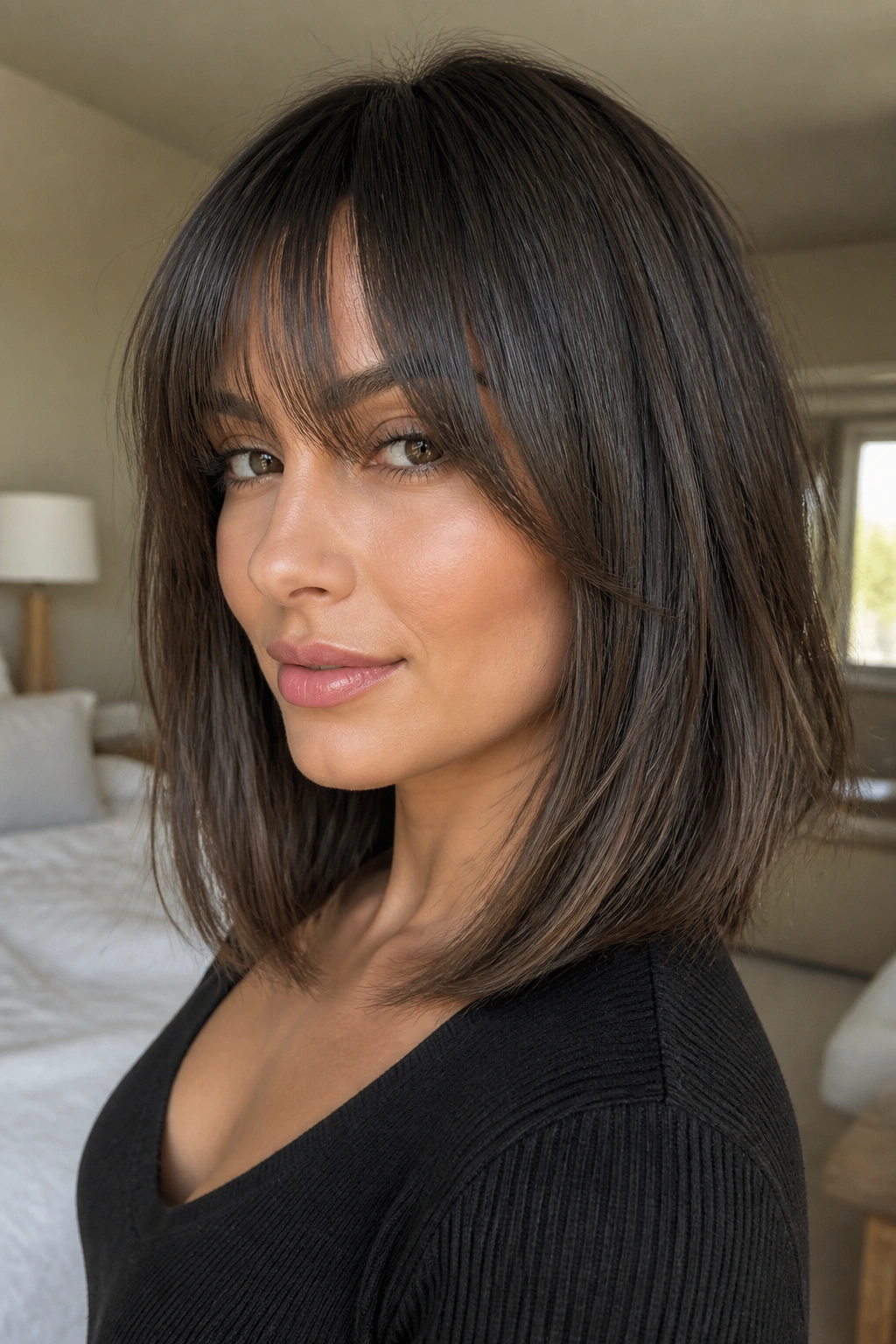
Cheekbone bangs are a smart option when you want some front detail but do not want to lose length. They skim across the cheek area and create a diagonal that helps a round face look narrower through the middle.
What to Ask For
Tell the stylist you want the bangs to sit around cheekbone level and blend into the longest front pieces. They should not feel separate from the lob. They should feel like part of the cut.
This shape works because it pulls attention upward and outward at the same time. The eye sees the cheekbones first, then keeps going down the length of the hair. That path is flattering.
Use a round brush or hot tool to give the bangs a soft bend away from the face. Keep them airy, not stiff. If they cling too close to the skin, the effect disappears.
20. Minimal One-Length Lob With a Tucked Finish

If you like haircuts that stay out of your way, a minimal one-length lob can still flatter a round face. The trick is in the finish: tuck one or both sides behind the ears and let the outer edge stay neat.
That small tuck opens the face and gives the jawline a little breathing room. It also keeps the style from looking too full at the cheeks, which is where round faces can get overwhelmed by width.
- Ask for a precise, even cut with no obvious layers.
- Keep the length below the chin.
- Tuck the sides when you want a slimmer face line.
- Smooth the ends with a flat iron if they start to flip.
This cut is clean, direct, and a little severe in a good way. If you love simplicity, it’s worth a look.
21. Long Lob With Piecey Internal Movement
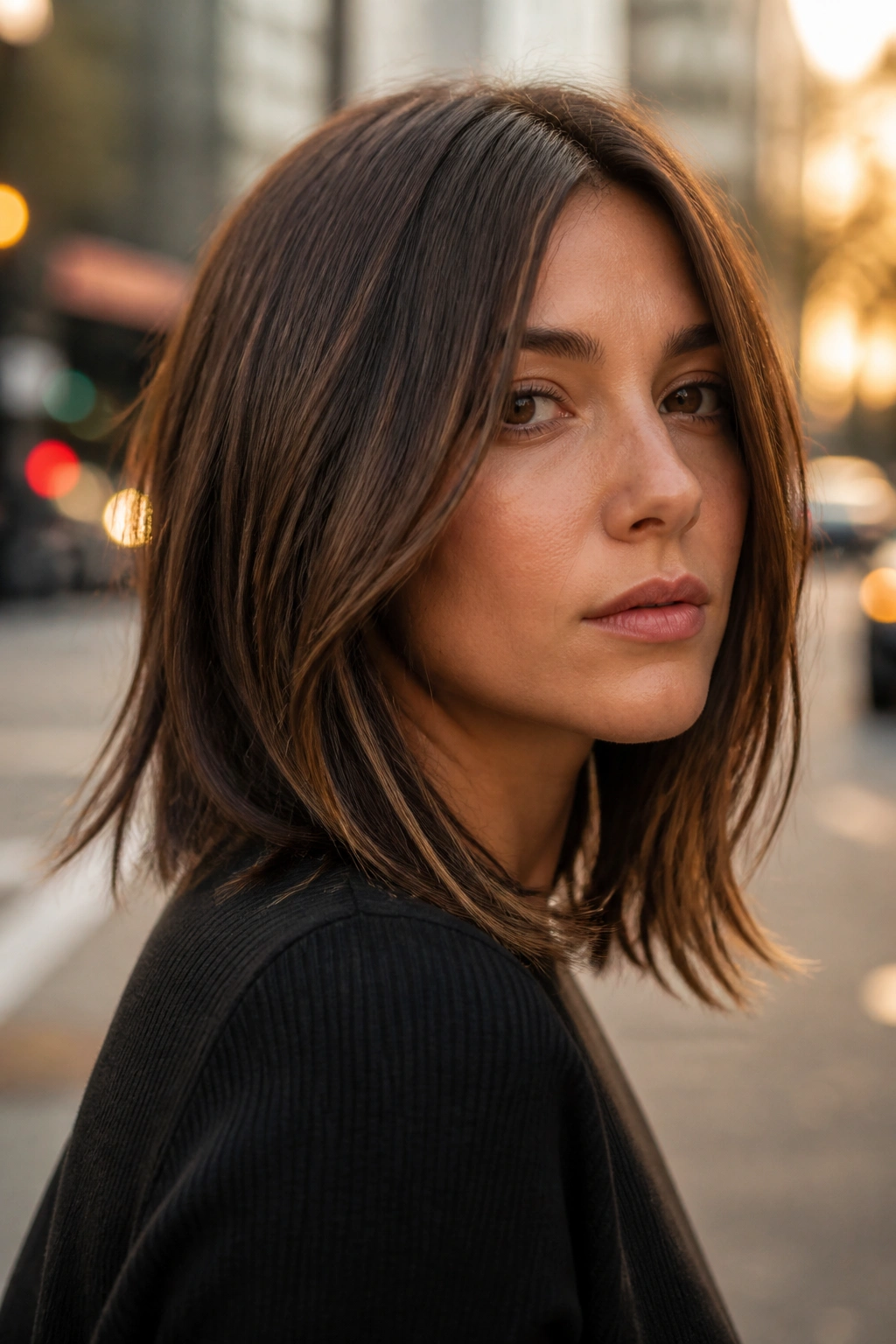
A long lob with piecey internal movement is not the same as a choppy bob. The outline stays solid, but the inside has small bits of movement that stop the hair from feeling like one heavy panel.
That can be useful on a round face because the style keeps the outer line long, which is what gives length, while the inner movement takes away the thick, blocky feel that can make cheeks look wider. It’s a good middle ground.
This cut works well on straight hair that still has some body. It also grows out in a civilized way, which I appreciate. Nobody needs a haircut that falls apart after three weeks.
The key is subtlety. You want motion when the hair moves, not obvious layers when it stands still.
22. Collarbone Lob With a Soft C-Shape Silhouette

A soft C-shape silhouette is one of my favorite shapes for round faces because it curves inward just enough to hug the jaw without stopping right at the widest point. The line feels gentle, but not mushy.
The collarbone length gives you the vertical drop you want. The curve at the ends keeps the cut from looking flat or boxy. Put those two things together and you get a lob that feels easy but still has shape.
This is the cut for someone who wants the safest flattering option without looking generic. It suits straight hair, it grows out well, and it doesn’t need a lot of styling tricks to look finished.
If you want only one reference photo, make it this kind of shape: long enough to narrow the face, clean enough to stay neat, and soft enough to avoid a hard horizontal line.
Final Thoughts
Round faces tend to look best in long straight bob haircuts that respect length first and width second. That means collarbone hits, front pieces that hang a little lower, and partings that break the circle without turning the haircut into a gimmick.
The easiest mistake is cutting the line too short at the cheeks. The second mistake is adding too much volume at the sides and calling it balance. Neither helps. A clean edge, a smart part, and a little asymmetry do more than most styling tricks ever will.
Bring a photo that shows the length you want, not just the vibe. Then point to where the front pieces should land when they’re tucked behind your ear. That tiny detail changes everything.
