



Fine hair and a bright white shade are a ruthless pair. Every line shows. Every gap shows too.
That is exactly why white bob haircuts for fine hair live or die on the cut itself. A good bob gives the hair a stronger edge, a fuller outline, and a shape that still makes sense when the blow-dry loses a little lift by lunch. A bad one? It goes wispy in all the wrong places and starts looking tired before you’ve left the house.
White hair changes the game a bit. The tone is luminous, but it also exposes everything: blunt ends, broken layers, uneven density, flat roots, frayed texture. That can be a blessing if the cut is sharp and controlled. It can be a mess if the shape is too shredded or too soft.
So the smartest white bob ideas for fine hair are the ones that keep weight where you need it, create lift where it counts, and avoid that see-through, stringy edge that fine strands get when they’re overworked. Some of these cuts are crisp and classic. Some are airy and modern. A few lean a little edgy. All of them are built to make fine hair look more deliberate than delicate.
1. Chin-Length Blunt White Bob
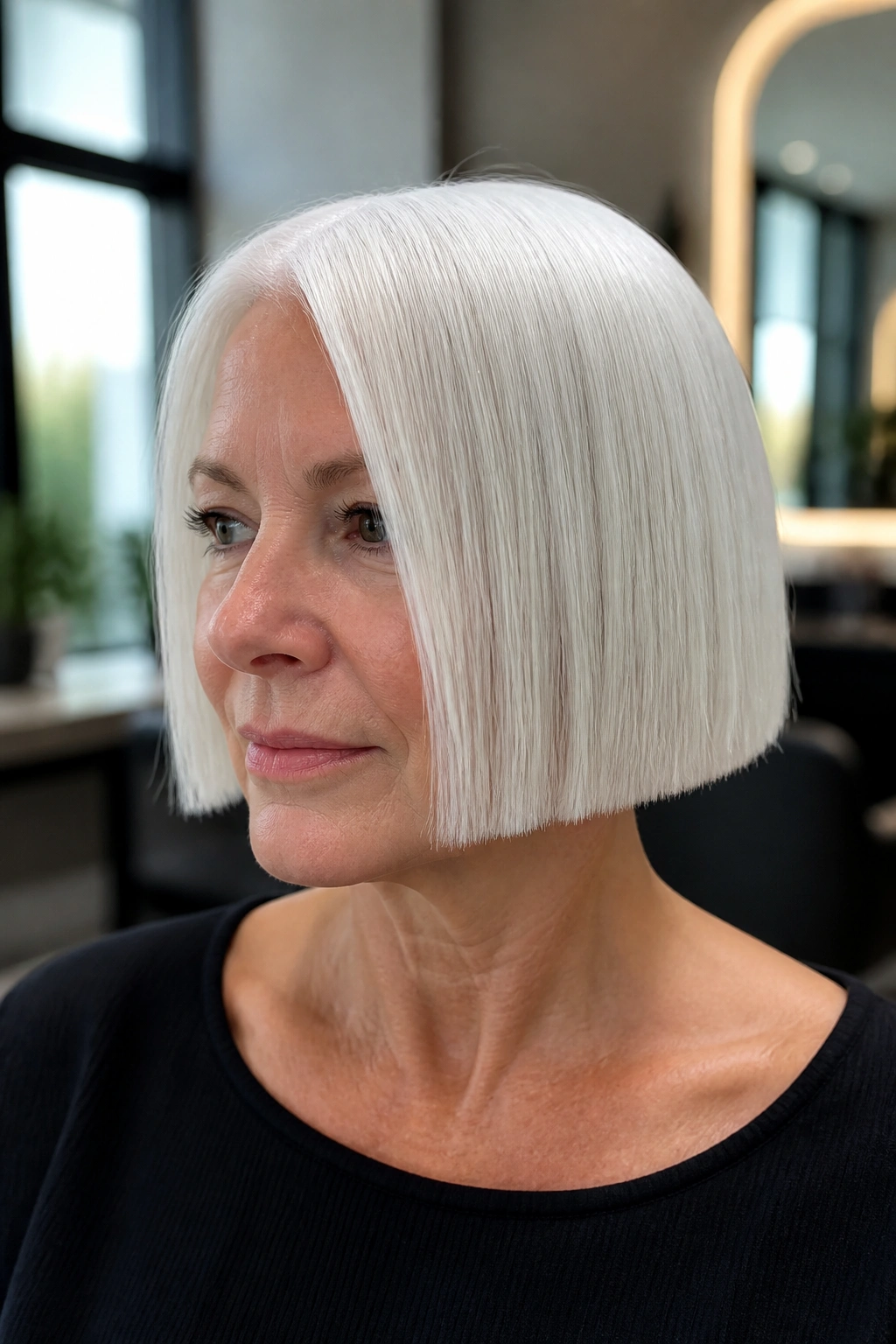
This is the cut I’d hand to someone who wants the ends to look thicker immediately. A chin-length blunt bob gives fine white hair a firm line, and that line does a lot of heavy lifting.
Why It Works
The blunt perimeter keeps the hair from fraying out at the bottom. That matters more than people think. Fine hair can lose half its presence once the ends get too soft or too layered, while a straight edge keeps the whole shape reading as one full shape.
Ask for a cut that lands right at the chin or a hair below it, with no heavy texturizing at the ends. A slight bevel is fine. Chopping into the perimeter is not.
- Best when you want the hair to feel denser
- Works well with a center part or a slight off-center part
- Dries faster than longer bobs
- Looks clean with a round brush or a flatiron pass
Best move: keep the finish smooth and let the line do the talking. Tiny ends vanish fast. A blunt edge doesn’t.
2. Soft A-Line White Bob

A soft A-line bob is a little longer in front and a touch shorter in back, and that subtle slope makes fine hair look more intentional. It also pulls the eye forward, which can be useful if your hair tends to collapse at the crown.
The quiet win here is shape, not drama. You do not need a steep angle for this to work. In fact, too much angle can make fine hair look sparse at the back. Keep the front just long enough to skim the jaw or upper neck, and the back slightly lifted so the outline feels light but still solid.
This one is nice if you want movement without giving up density. It also plays well with a white or icy tone because the angle catches the light in a clean, simple way. No fuss. No fluff.
3. Feathered Layered Bob for Fine White Hair
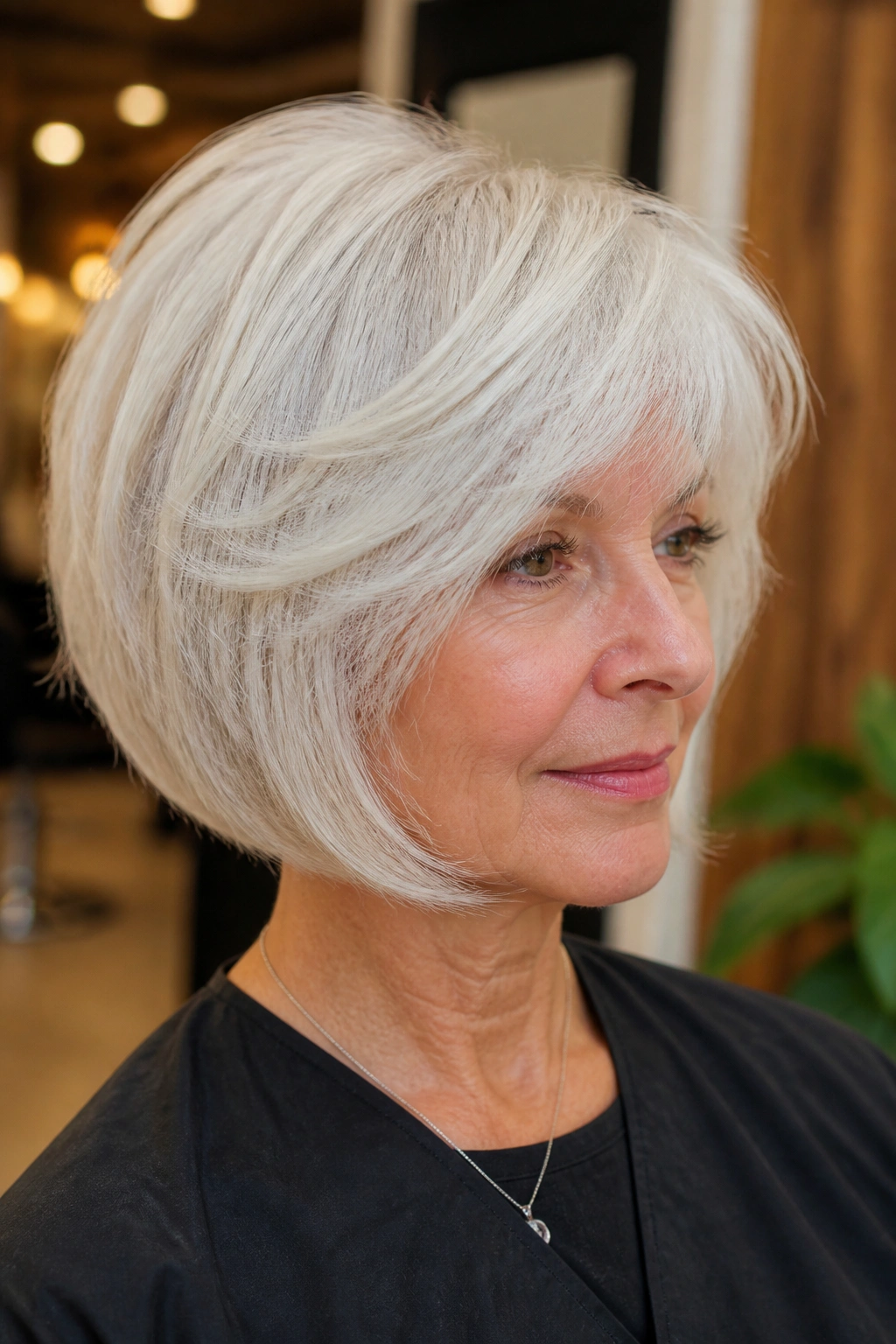
A feathered bob can be brilliant on fine white hair, but only if the layering is controlled. Too many short layers and the whole thing can go airy in the wrong, weak way. The trick is to use feathering as a soft lift, not as a way to thin the hair out.
Where the Layering Should Sit
Keep the heaviest part of the bob around the perimeter, then add a few longer interior pieces near the crown or upper sides. That gives the style some movement without exposing the ends. If your hair sits flat at the temples, a little feathering there helps the cut open up.
The result is softer than a blunt bob and lighter than a stacked shape. It suits people who like a little bend in the hair and don’t want the cut to feel strict.
- Ask for long internal layers, not short choppy ones
- Keep the bottom edge fairly full
- Style with a 1-inch round brush for a light lift
- Use a pea-sized amount of cream, not a heavy serum
A feathered bob should feel airy, not thin. Big difference.
4. French Bob With Micro Bangs

A French bob with micro bangs has attitude, and fine white hair can wear it well because the shape is compact. The shorter length makes the hair feel denser, while the bangs give the face a sharp frame.
This one works best if you like a little edge and do not mind regular trims. Micro bangs grow out fast, and on fine hair they lose their shape quickly if you ignore them. That’s the tradeoff. Still, the payoff is strong: a chic little bob that feels crisp, modern, and a bit mischievous.
If you want it to stay soft, keep the bangs airy rather than boxed-in. A tiny bit of separation at the ends keeps them from looking like a helmet. Good texture matters here more than perfect symmetry.
5. Side-Part White Bob With Tucked Ends
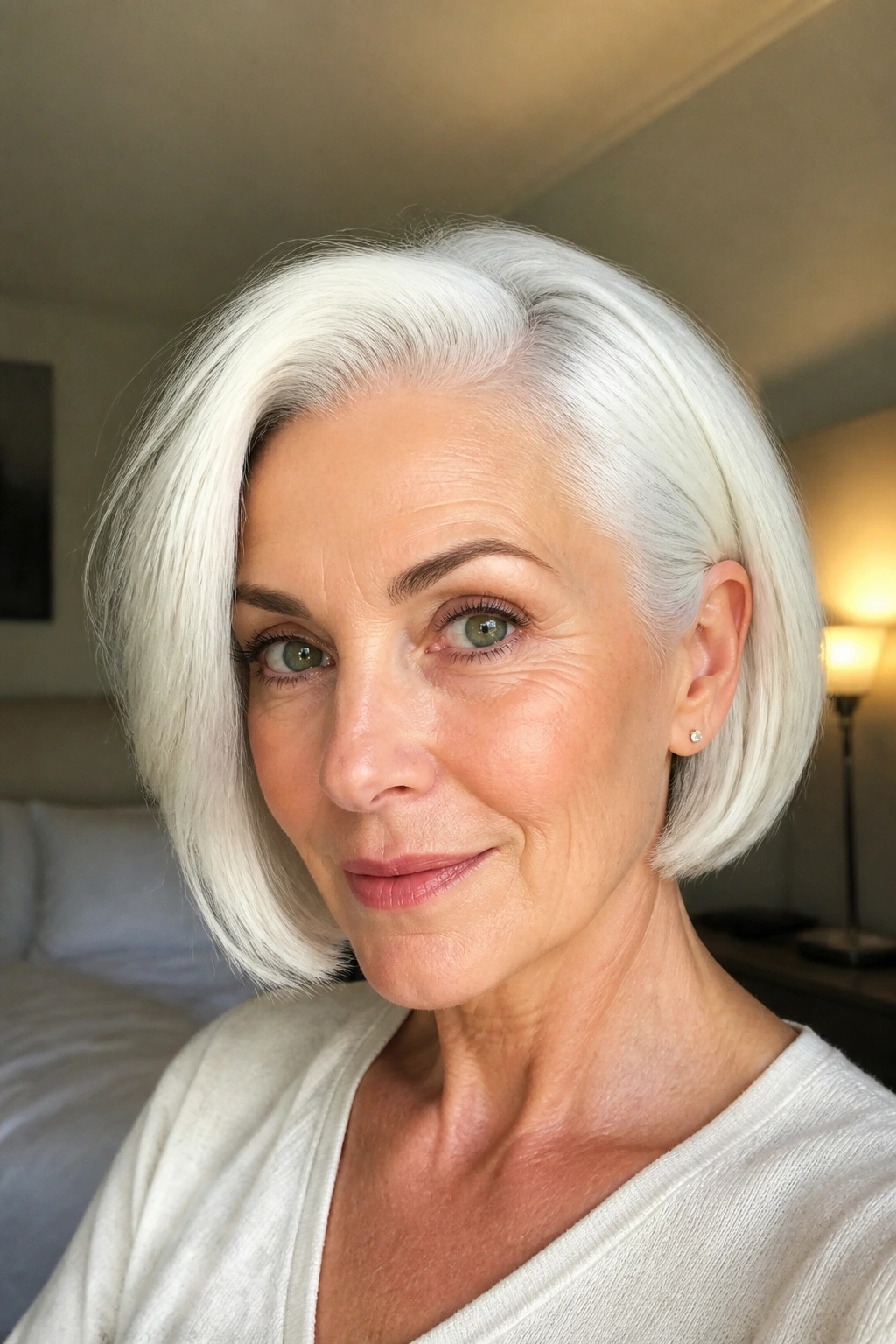
A deep side part can wake up flat fine hair faster than almost anything else. Pair it with a white bob and tucked ends, and you get instant lift at the root plus a neat shape around the face.
The magic is simple. The side part creates a heavier side and a lighter side, so the crown doesn’t lie flat in the same predictable way. Tucking one side behind the ear keeps the bob from looking too bulky, and the exposed cheekbone makes the whole cut feel brighter.
This is a good style if your hair falls into the same position every single day and refuses to cooperate. Change the part. Tuck one side. Done.
6. Stacked Bob With a Lifted Nape
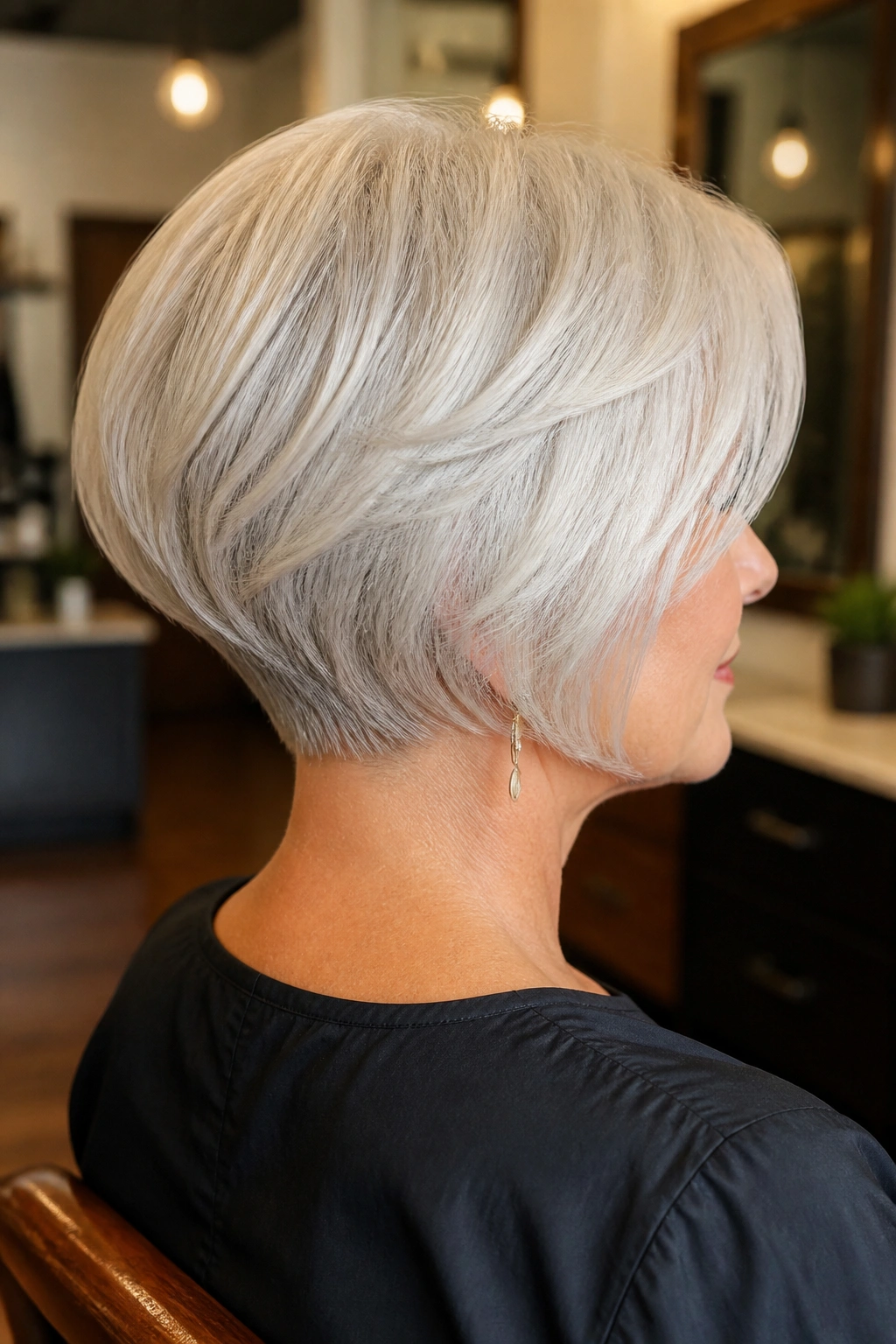
If your fine hair goes limp in the back, a stacked bob can be a rescue cut. The shorter layers at the nape create a little shelf of lift, while the longer top layers keep the outline from feeling too blunt or boxy.
The shape does need a careful hand. A stack that is too high can look puffy at the back and too narrow at the sides, especially on fine strands. A good version keeps the graduation tight and the transitions smooth, so the bob still feels light rather than overbuilt.
Ask for This
- Shorter lengths at the nape with gradual buildup toward the crown
- A rounded back, not a hard step
- Light internal support, not heavy chopping
- A finish that hugs the head instead of flaring out
This cut is for someone who likes structure. It has a little polish to it, and that is the point.
7. Collarbone-Length White Lob for Fine Hair
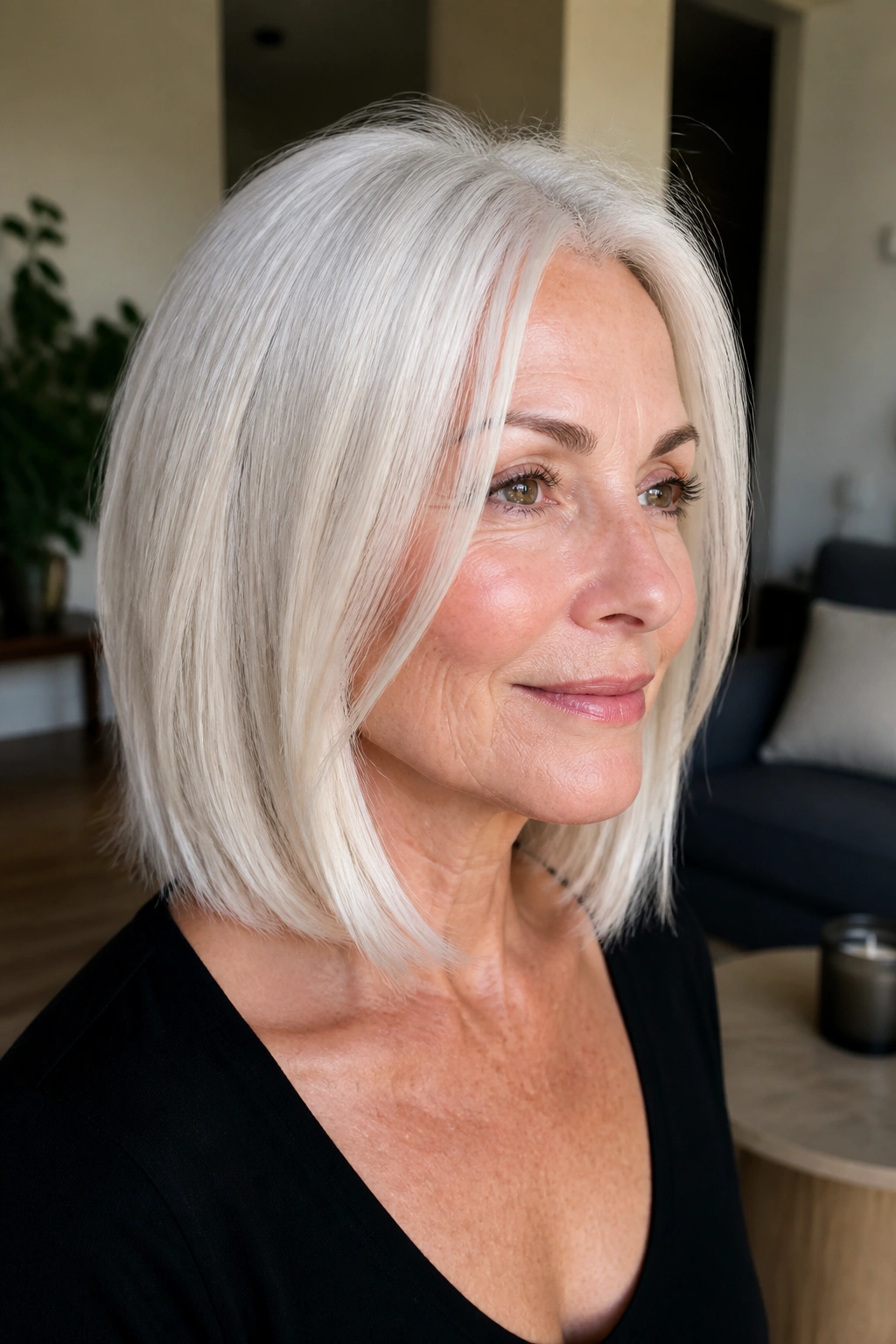
A collarbone-length lob is the safe bet that never really feels boring. The extra length gives fine hair more swing, and the collarbone landing point keeps the ends from looking too sparse.
This is one of the easiest white bob haircuts for fine hair if you’re nervous about going too short. The longer line lets the hair hold a little more weight, which can help if your strands are very fine and you hate the feeling of a super-short shape. It also gives you room to tuck, wave, or smooth the hair without making it disappear.
What to Ask For in the Chair
Ask for a clean perimeter with only light interior movement. You want the length to stay full through the bottom, not shredded. A small amount of face-framing at the front can help, but the cut should still read as one solid line.
This bob is good for people who want options. Wear it straight, bend it once with a curling iron, or let it air-dry with a little cream. It handles all three.
8. Glass Bob With Straight Ends
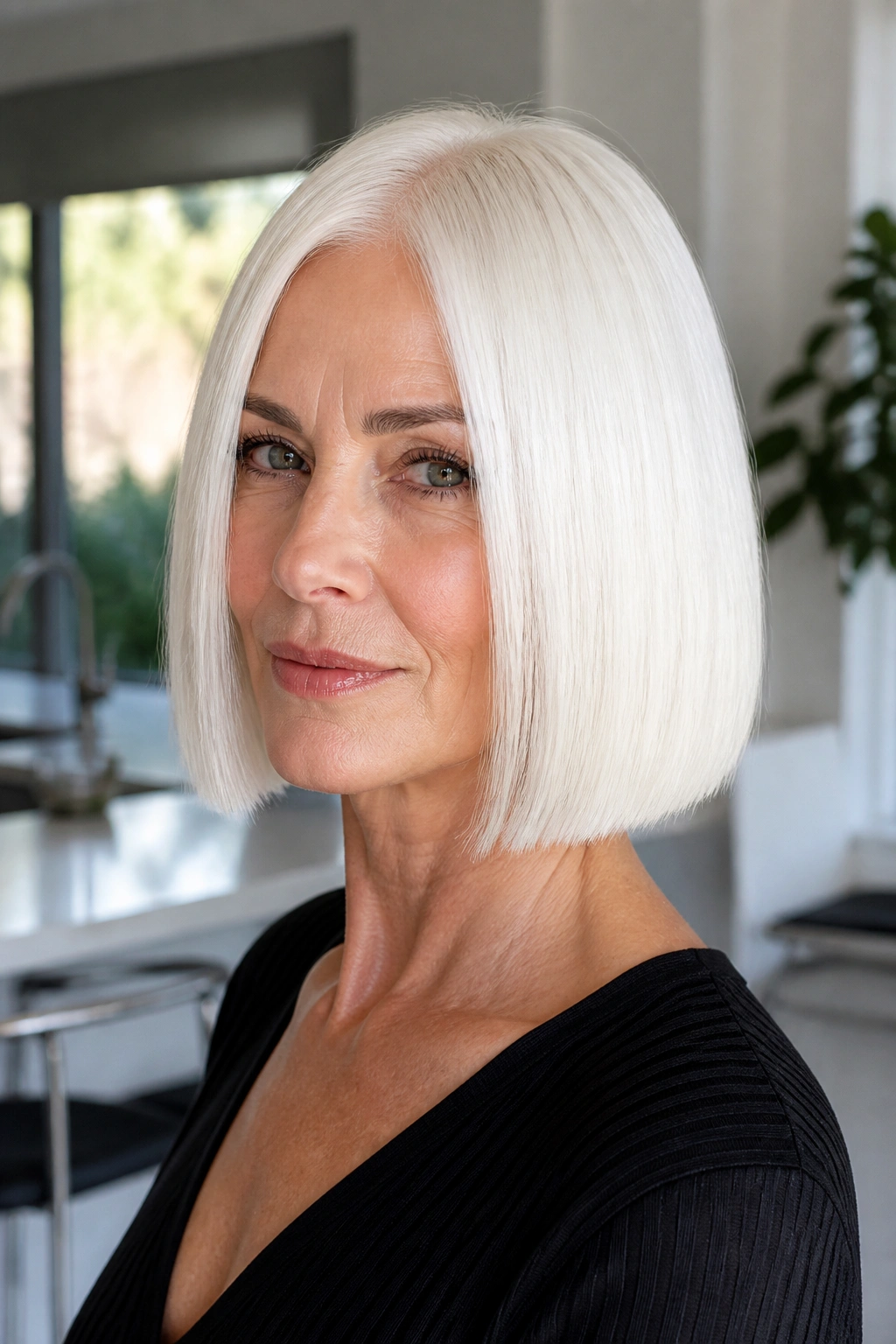
A glass bob is all about shine, polish, and a dead-straight line. Fine white hair often looks best in this shape when the strands are naturally smooth or can be blown out into place without much effort.
No choppy layers. None. The style depends on a clean edge and a reflective finish, so the hair needs to sit together like a single sheet. That gives the illusion of thickness, which is exactly what fine hair wants here.
The white tone makes this cut look especially crisp. It can lean futuristic if the part is centered and the ends are precise. Or it can feel sleek and understated if the part is soft and the bob lands just below the jaw.
A light heat protectant, a flat brush, and one careful pass with a flatiron are often enough. More is not better.
9. Curtain-Bang Bob

Curtain bangs are a smart way to add shape without taking too much density from the rest of the bob. They open the face, break up a flat top line, and give fine hair a little lift around the forehead.
What I like here is the flexibility. You can wear the bangs parted in the middle, swept off to one side, or blended into the front pieces when you want less commitment. That helps if your hair changes shape depending on humidity or how you sleep.
The bob itself should stay fairly full at the ends. The bangs provide softness; the perimeter provides structure. If both are too soft, the whole style starts floating away.
10. Choppy Textured White Bob

A choppy bob can be excellent on fine hair if the texture is placed with restraint. You want piecey movement, not a haircut that looks half-finished.
What to Watch For
The mistake people make is asking for too much razoring or too many point-cut ends. Fine hair does not need to be shredded to look light. It needs controlled irregularity, a little separation, and enough shape that the ends still appear there.
Use this cut when you like an undone finish and do not mind styling with fingers instead of a brush. A sea-salt spray can help, but a small dab of lightweight mousse at the roots usually does more for fine hair than a dry texturizer alone.
- Best for naturally straight to slightly wavy hair
- Works with a tousled, casual finish
- Keep the perimeter visible
- Avoid over-thinning near the bottom
A good choppy bob looks lived-in. A bad one looks chewed up. The difference is not subtle.
11. Rounded Bob With a Full Outline

A rounded bob curves gently around the head, and that curve is a gift for fine white hair. It creates the feeling of fullness without needing a lot of actual mass.
This shape is especially nice if your hair tends to stick out at the sides or go limp at the crown. The rounded outline gives the head a smoother silhouette, and the soft curve around the jaw can make the hair look thicker from every angle.
The trick is to keep the roundness controlled. Too much volume at the sides can make the head look wide. Too little and the shape loses its point. You want a soft dome, not a bubble.
It’s a polished cut. Clean. Easy to read. And strangely flattering on more face shapes than people expect.
12. Asymmetrical White Bob for Fine Hair

An asymmetrical bob is a nice way to make fine hair feel more deliberate. One side is longer than the other, and that diagonal line adds movement even if the texture is simple.
The asymmetry does not have to be dramatic. A small difference of an inch or two is often enough. That slight shift can sharpen the jawline, bring attention to the eyes, and make the hair look less static. For white hair, which already has a bright, clean surface, the difference reads clearly.
This cut suits anyone who wants a little edge without committing to a high-maintenance shape. It works straight, slightly bent, or tucked behind one ear. Clean lines matter most here.
13. Wavy White Bob With Loose Ends

Soft waves can give fine white hair a lot of life, as long as the bends stay loose and the ends are not over-curled. You’re aiming for body, not ringlets.
A one-inch curling iron or a flatiron bend can do the job. Leave the last inch or so straighter if you want the bob to keep its weight. That small detail keeps the style from turning fluffy. Fine hair has a habit of puffing out when the curl pattern gets too tight, and no one wants that.
This version is lovely if you like a gentle, airy finish. It softens the brightness of white hair and makes the cut feel less rigid. A side part helps too.
14. Undercut Bob for Extra Lift
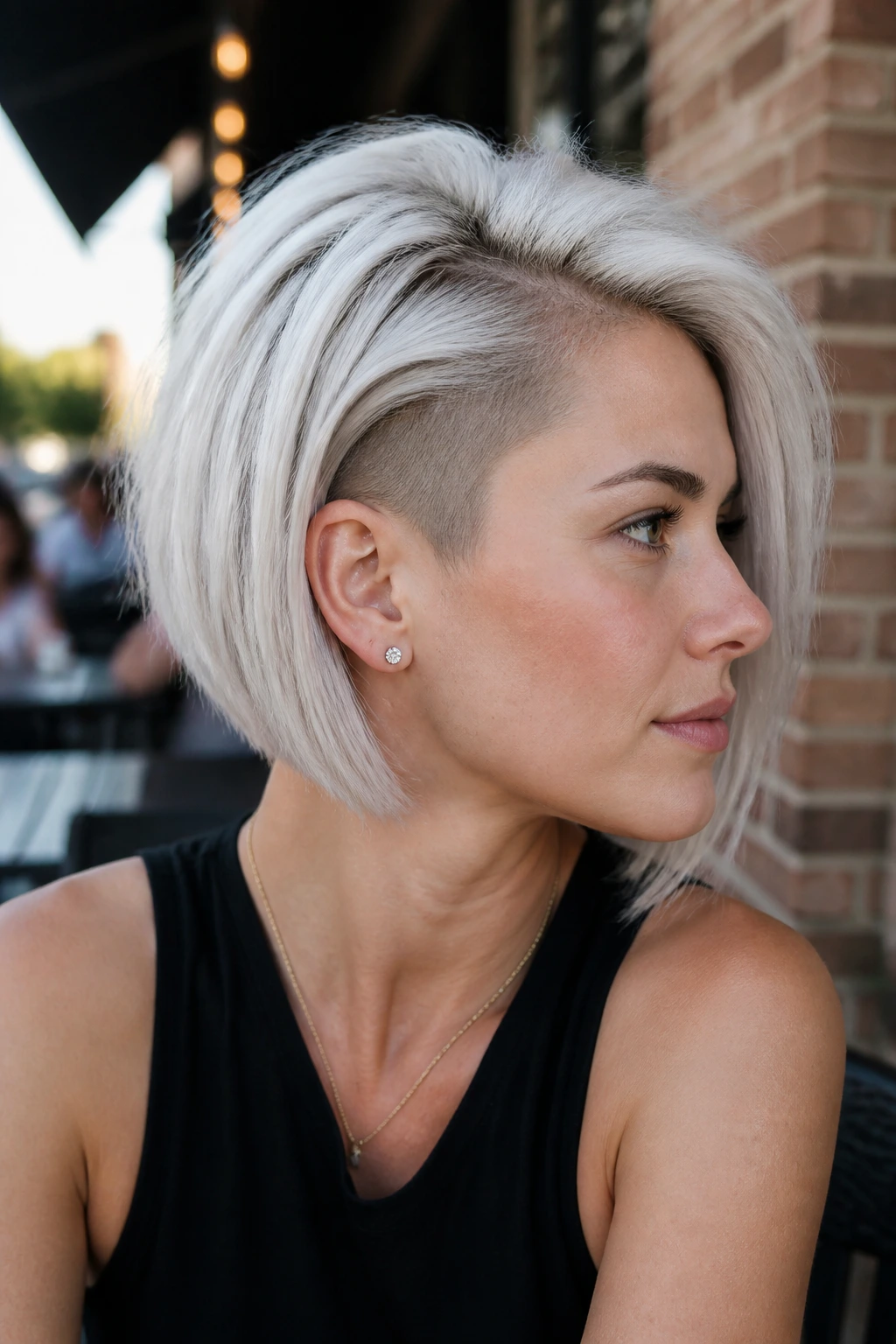
An undercut bob is not the obvious choice for fine hair, but it can work if your crown lies flat and the back of your head needs help. A hidden undercut removes a bit of bulk underneath, which lets the top layers sit cleaner and move better.
The Catch
Do not go too aggressive. Fine hair gives you less room for error, so a heavy undercut can leave the bob looking too narrow or too skimpy from certain angles. The goal is a subtle release of weight, not a shaved surprise hiding under the top layer.
This cut is good for people who wear their hair tucked, clipped, or blown out with lift at the roots. It also makes a bob easier to dry, since the underneath isn’t fighting the shape.
- Best for thick-feeling fine hair or hair that puffs at the nape
- Needs a stylist who understands balance
- Keeps the top layer sitting flatter and cleaner
- Looks strongest when the outline stays blunt
A little removal can help a lot. Too much can backfire fast.
15. Jaw-Length Bob With Baby Bangs

A jaw-length bob with baby bangs is bold in a small, sharp way. The short fringe gives the face a graphic frame, while the bob lands high enough to make the hair appear denser.
This works best when the bob line is clean and the bangs are kept sparse rather than thick. Fine hair can carry baby bangs without feeling heavy, which is part of the appeal. The whole cut reads crisp and a little arty.
Maintenance matters here. Baby bangs need trims more often than a longer fringe, and they need a quick styling pass if they start bending in the wrong direction. If you like a cut that feels exact, this one has teeth.
16. Sleek Tapered Bob
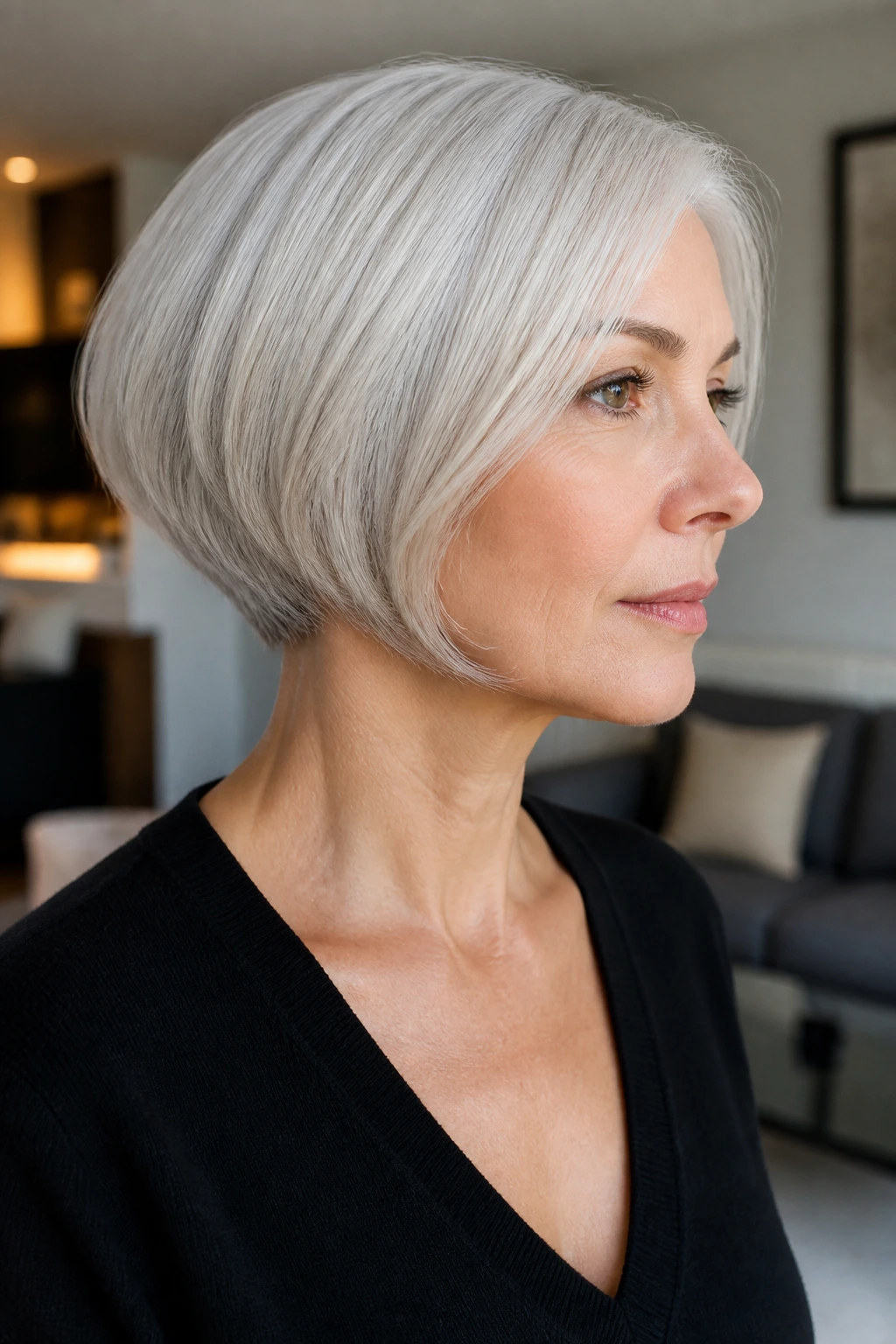
A tapered bob narrows gently toward the nape and keeps the sides smooth and controlled. On fine white hair, that taper helps the cut sit close to the head without losing its outline.
The shape is especially good if you want something neat that does not look overstyled. It has a quiet sort of precision. The top stays light, the sides fall in a clean line, and the neck area feels open instead of bulky.
A blow-dryer with a nozzle and a medium round brush usually does the job. Direct the hair down through the mid-lengths, then tuck the ends under just enough to show the taper. The result feels polished without being stiff.
17. Soft Shag Bob

A soft shag bob gives fine hair some movement without going full shag. That distinction matters. Too much shagging and the ends disappear. Too little and you lose the point of the cut.
Here, the perimeter still behaves like a bob, but the top layers and sides get a little more softness and separation. It’s a good fit if your hair has a slight natural wave and you want the style to look lived-in with minimal effort. White hair can make that texture look bright and airy instead of messy.
I like this shape for people who hate spending too long with a brush. Scrunch, dry, and go. The style still needs care, though. If the layers climb too high, the density drops off fast.
18. Inverted White Bob
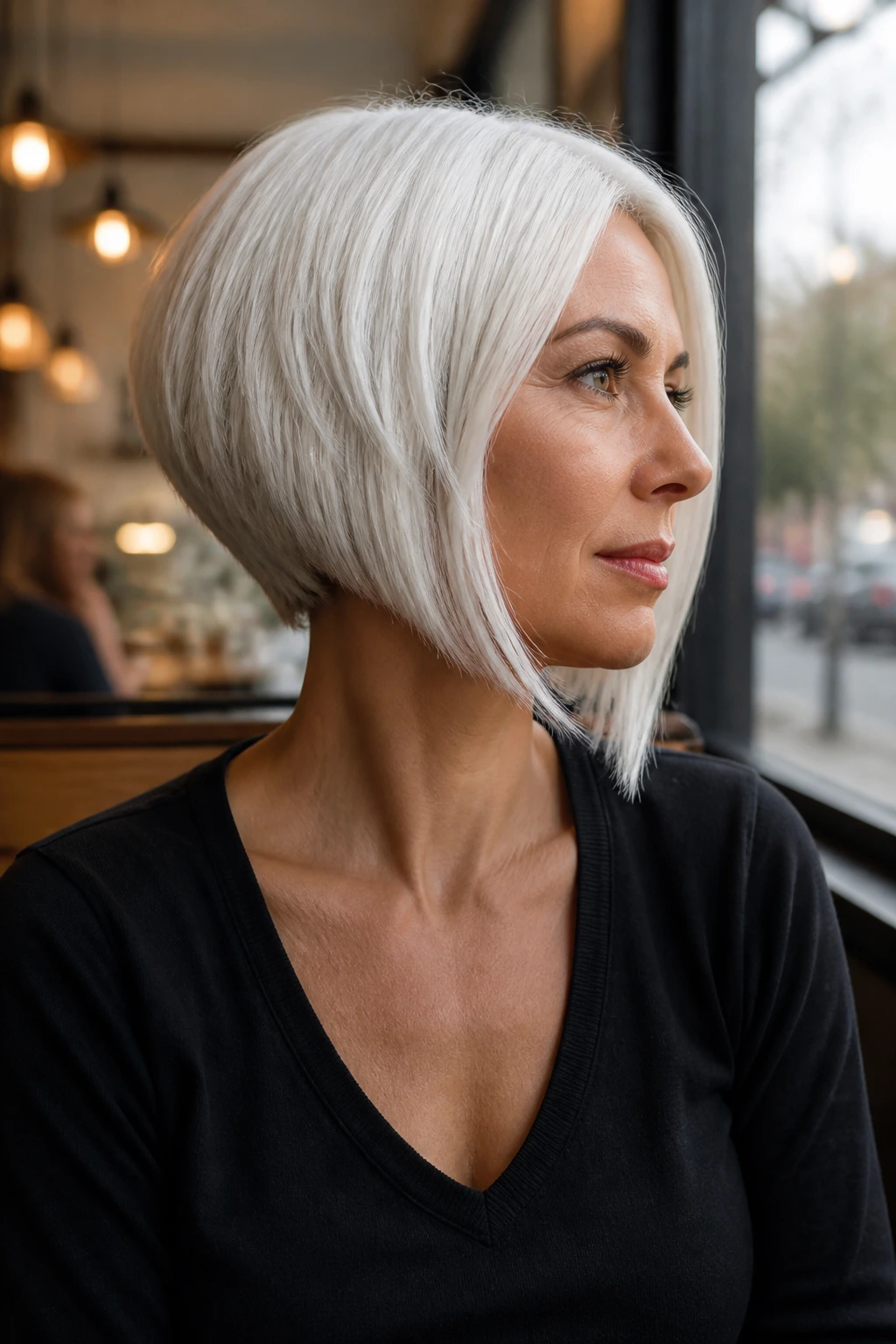
An inverted bob gives you the strongest sense of angle in the whole group. The back sits shorter and the front stretches longer, so the eye follows that diagonal line right away.
Fine hair can benefit from that build because the angle makes the crown feel lifted and the front feel deliberate. It also helps if your hair tends to hang limp around the face. The longer front pieces keep the style from looking too compact.
This is a cut with some personality. Not loud. Just clear. If you want a bob that feels more styled even when you’ve done almost nothing to it, an inverted shape earns its keep.
19. Blunt Bob With a Deep Side Part

This is the minimalist version with a little extra drama at the roots. A blunt bob on its own gives fine hair thickness. Add a deep side part and you get lift without sacrificing the solid edge.
That combination is useful when you want volume at the top and density at the bottom. The heavy side creates a natural sweep, while the blunt perimeter keeps the ends from fanning out. The result can feel elegant in a stripped-down way.
If your hair goes flat in the same place every day, this cut gives you a simple reset. Change the part, dry the roots in the opposite direction, and let the line settle where it wants.
20. Airy Bob With Hidden Layers

Hidden layers are one of the smartest tools for fine white hair because they keep the outline full while easing the weight underneath. You get movement without the obvious choppy look.
How to Style It
Blow-dry with a root-lifting spray at the crown, then use a brush to keep the top smooth and the ends tucked just slightly under. That keeps the airy bits where they help most and the perimeter where it should be: visible and strong.
This is a nice cut for anyone who wants softness without visible thinning. It’s also easier to grow out than a heavily layered bob, which matters if you like to stretch your trims.
The subtlety is the point. People notice the shape before they notice the layering, and that’s usually a good sign.
21. Pearl White Bob With Face-Framing Pieces
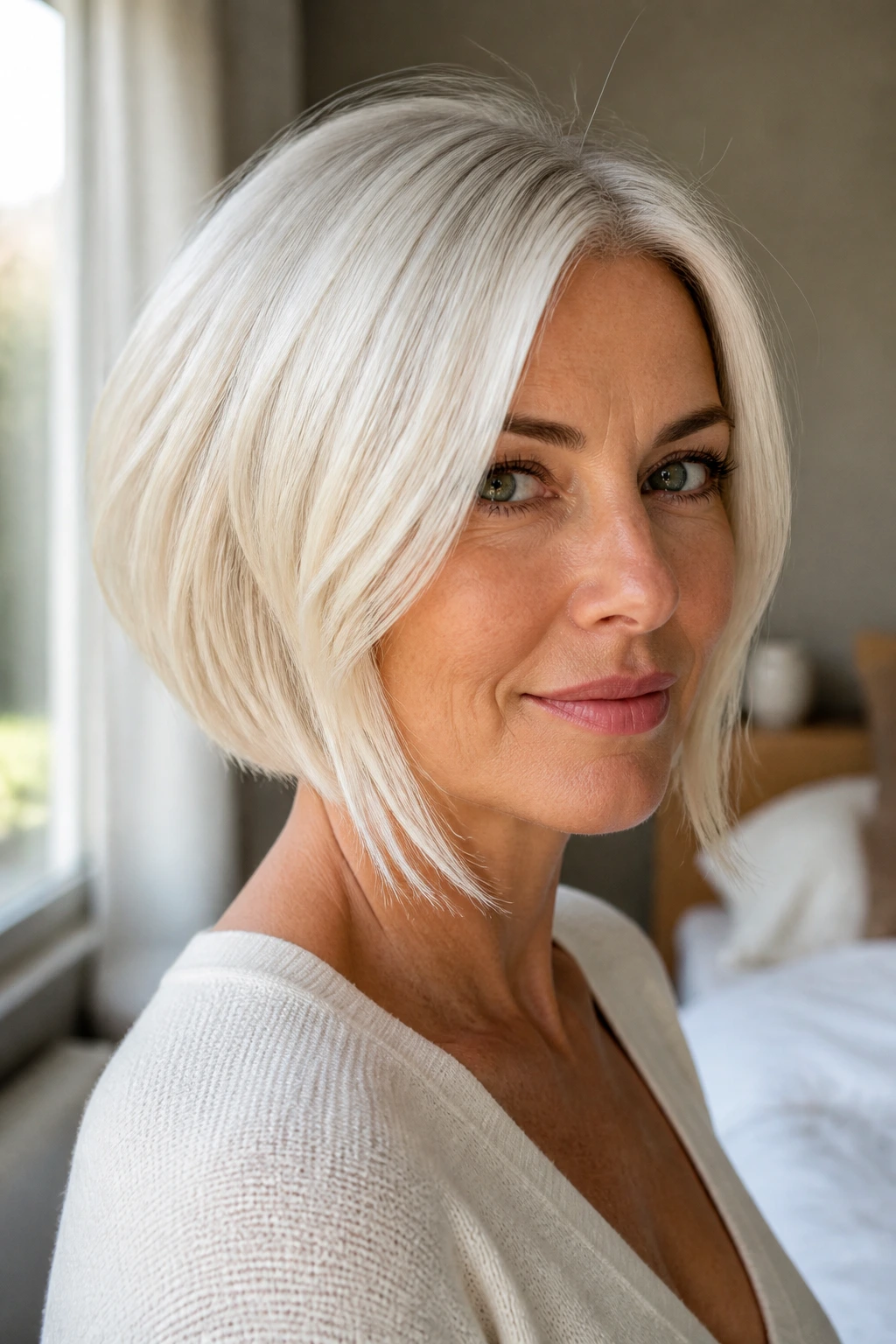
A pearl white bob with face-framing pieces feels soft but still clean. The color name matters here because pearl white usually reads a touch warmer and gentler than a stark icy tone, which helps when the cut needs a little softness around the face.
The face-framing pieces should start low enough to count. Think cheekbone to lip level, not an eager little fringe that disappears. On fine hair, the frame should support the bob, not steal density from it.
This style is especially good if you wear glasses, keep your makeup minimal, or want the front of the haircut to do a little more work. The white shade brightens the whole face. The frame keeps it from looking severe.
- Ask for long, light face-framing pieces
- Keep the back fairly full
- Use a round brush only on the front sections
- Avoid over-thinning near the jaw
It’s a soft look. Not sleepy. There’s a difference.
22. Clean Micro Bob With a Sharp Neckline
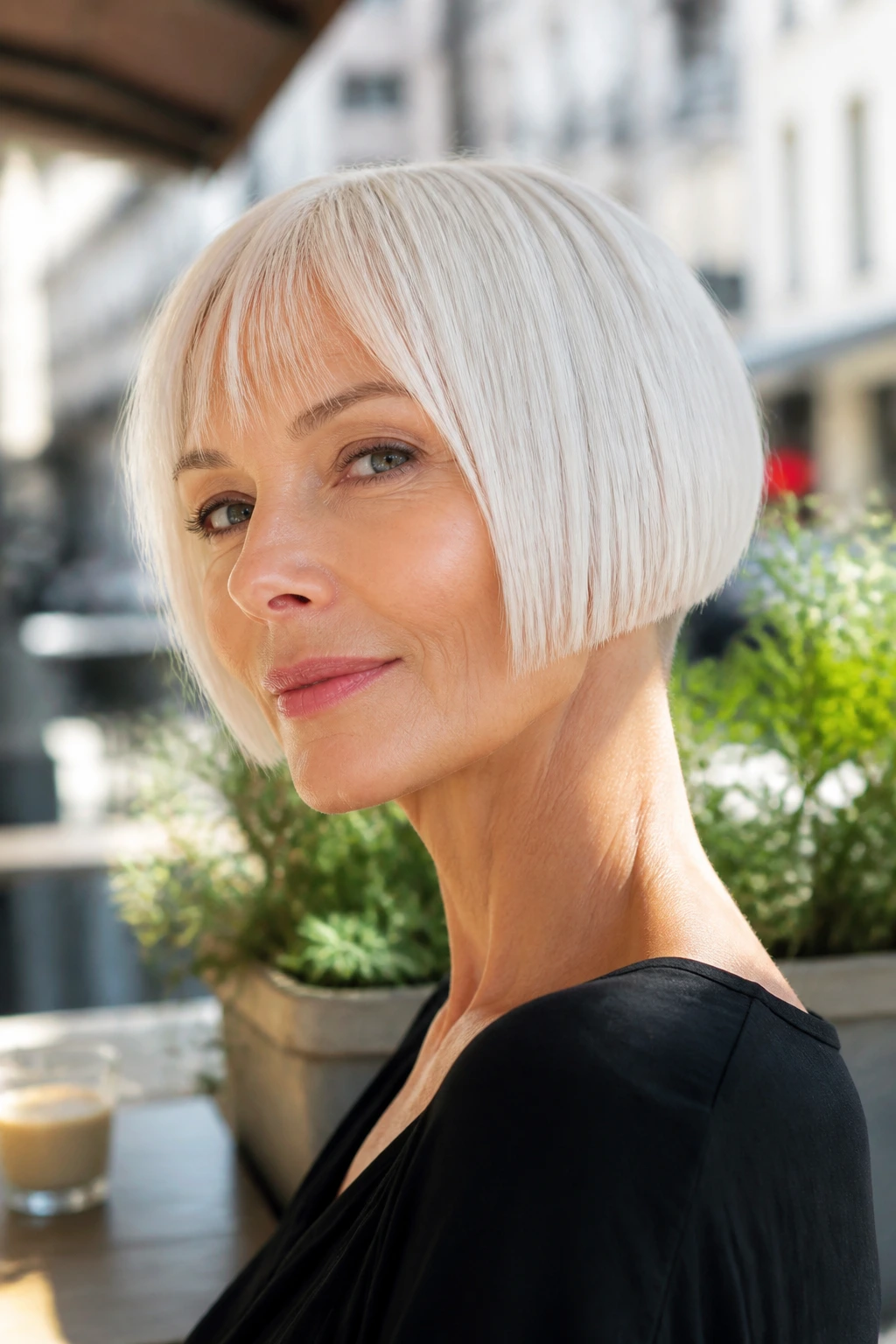
A clean micro bob is the shortest, neatest option here, and it can look stunning on fine white hair when the neckline is crisp. The short length creates the illusion of thicker ends because there’s less room for the hair to drift apart.
This cut is not for someone who wants to hide behind length. It puts the face out front and keeps the hair close to the head. That can be a relief if your strands feel thin no matter what you do, because the shape itself becomes the style.
A sharp neckline matters most. It should be tidy, not harsh. A tiny bit of softness at the nape keeps the cut from looking carved out with a ruler, while the top stays smooth and close.
It also dries fast. That part is underrated. If you like a low-maintenance morning and you don’t want to fight your hair for twenty minutes before coffee, this is a strong finish. And if you’ve been hovering between short and shorter, this is usually the cut that settles the argument fast.
