



Fine hair does not need more length. It needs a sharper shape.
That’s the whole trick with grey bob haircuts for fine hair: the cut has to do the heavy lifting, because long, soft, over-layered hair tends to sag and split at the ends. Grey hair brings its own quirks too. It often looks brighter and more reflective, but it can also feel drier and a little more wiry, which means the wrong cut can go limp fast or puff out in the wrong places.
I’ve always liked a bob on fine grey hair because it gives you a clear outline. You see the line first. That matters. A clean edge can make sparse ends look fuller, while too much feathering can leave the perimeter looking see-through and tired before lunch.
The right version depends on how much lift, movement, and neck you want to show. Some bobs are crisp and blunt. Some are soft and layered. A few lean modern and cheeky, and a few are quietly polished without trying too hard. The point is to pick the shape that works with your hair, not against it.
1. Grey Bob Haircut with a Blunt Chin Line
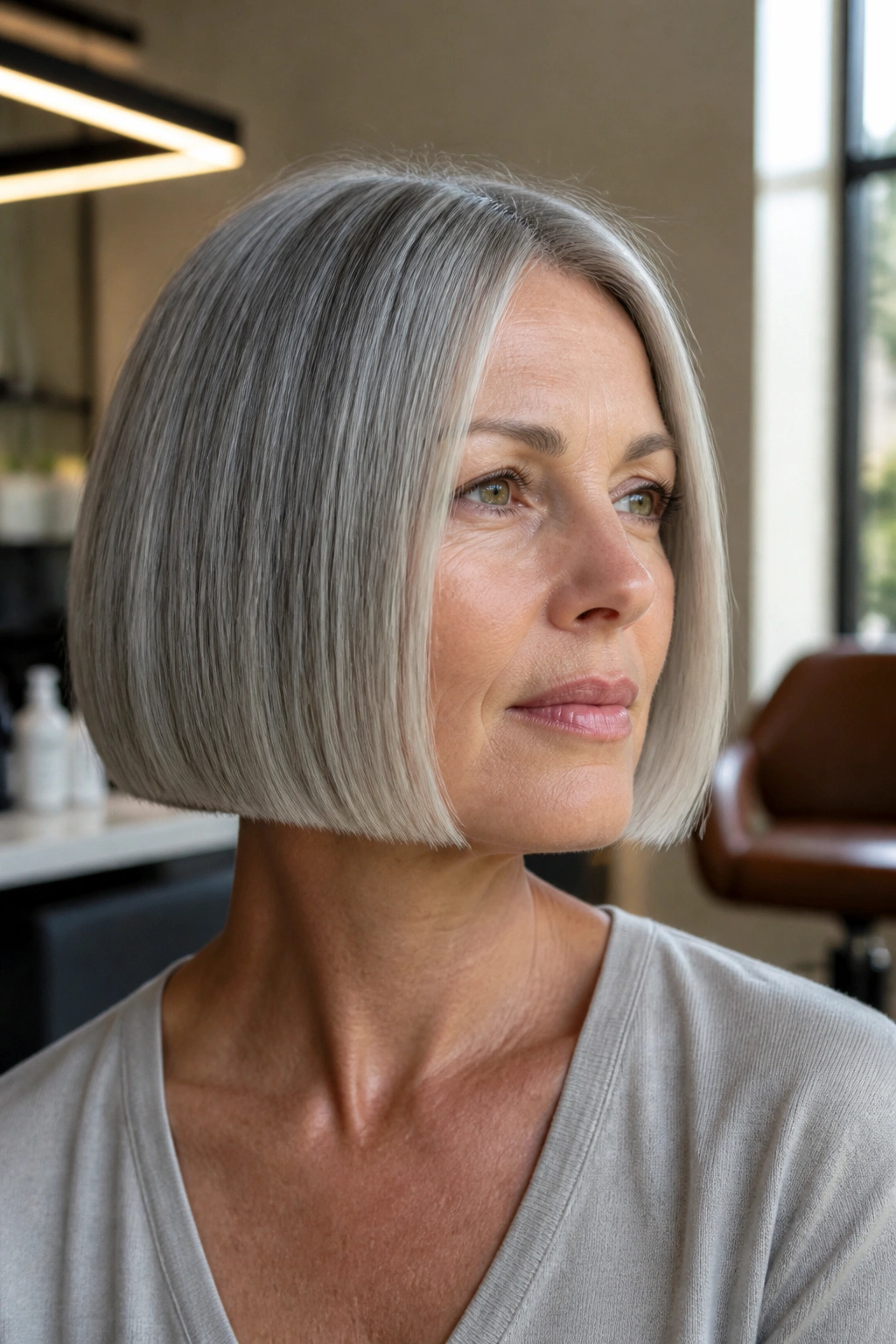
A blunt chin-length bob is the haircut I reach for when fine grey hair needs instant structure. The edge sits right where the eye lands, and that makes the whole shape look denser than it is. It’s plain, yes. That’s why it works.
Why it works on fine grey hair
Grey strands can look airy when they’re stretched too long, so a clean blunt line helps the ends read as full instead of wispy. Chin length keeps the weight where you want it, around the jaw and cheeks, instead of letting it drop into the shoulders and disappear.
- Best for hair that lies flat at the crown.
- Best for people who want a low-fuss blow-dry.
- Works well with a middle or slight off-center part.
- Avoid heavy thinning at the ends. It ruins the shape.
Pro tip: Ask for the perimeter to stay crisp, then style with a pea-size smoothing cream and a round brush. You want the ends to look tidy, not stiff.
2. Soft Layered Bob with Airy Ends
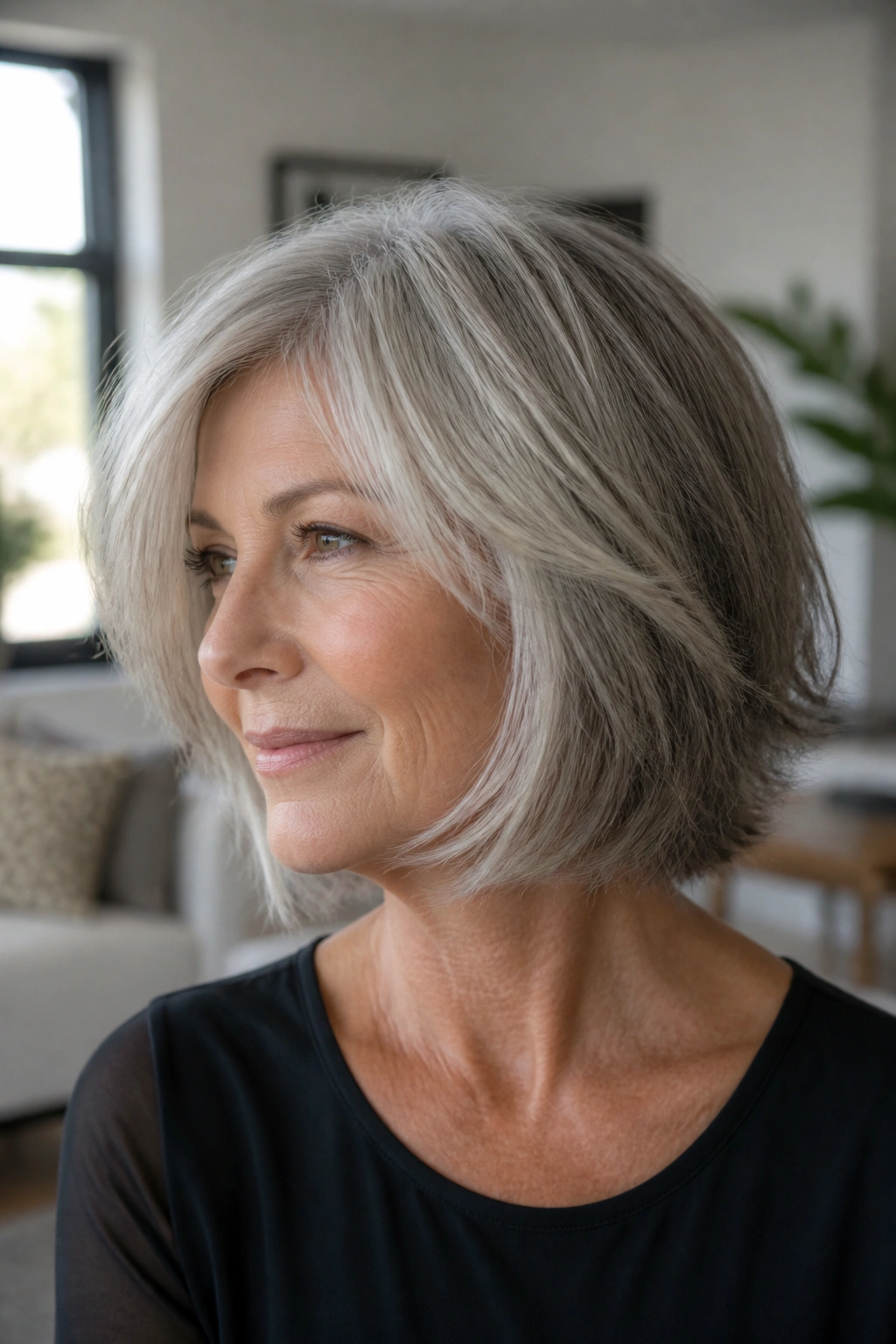
Soft layers can help fine hair, but only when they’re kept long and controlled. That’s the part most people get wrong. Short, choppy layers on thin grey hair usually make the cut collapse. Long layers, placed below the cheekbone, give you movement without stealing the body from the bottom edge.
Grey hair often has a dry feel, so a little air around the ends can be welcome. The key is restraint. You want the bob to sway, not fray.
After washing, work in a lightweight mousse at the roots and a little heat protectant through the mids. Then blow-dry with your head flipped for the first minute or two, just enough to wake up the roots. It’s a small thing, but it keeps the layers from lying flat against the scalp.
This is the bob I’d pick for someone who likes softness over sharpness. It looks lived-in without looking messy.
3. Side-Parted A-Line Bob
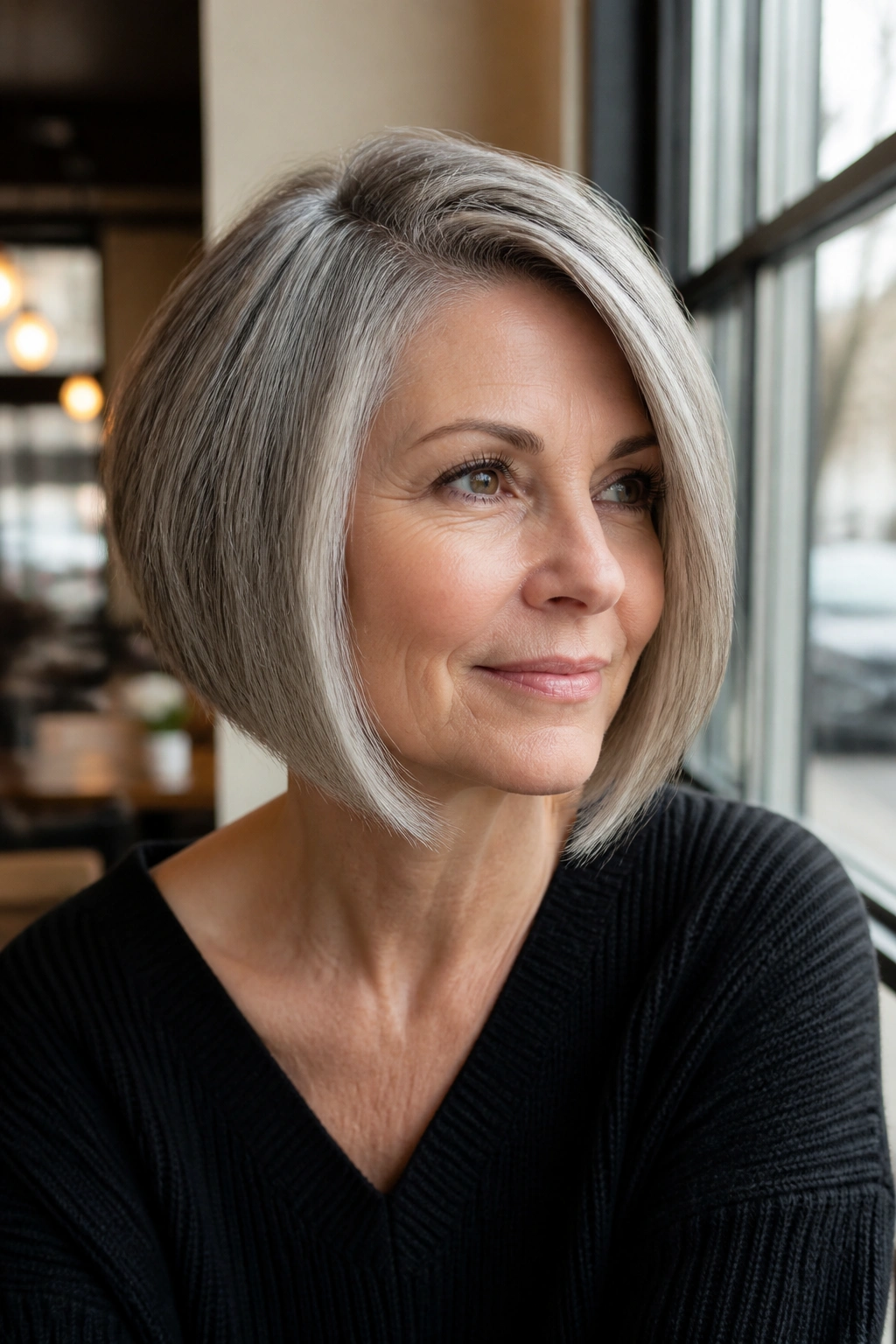
Why does a side part change so much? Because it gives one side of the hair more lift right away, and fine hair loves that kind of cheating. A subtle A-line shape—slightly shorter in back, a touch longer in front—adds a diagonal line that makes the hair look thicker through the front.
How to style the part
Start the blow-dry on the heavier side, pushing it up and away from the scalp with a flat brush. Then direct the lighter side across the forehead with a touch of bend at the ends. That little sweep builds volume where flat hair usually gives up.
A-line bobs are especially good if your hair falls flat around the temples. The longer front pieces soften the face, while the shorter back keeps the nape neat and lifted.
If you hate fussing with your hair, this one behaves. It grows out gracefully too, which is more useful than people admit.
4. Stacked Bob with Lifted Nape
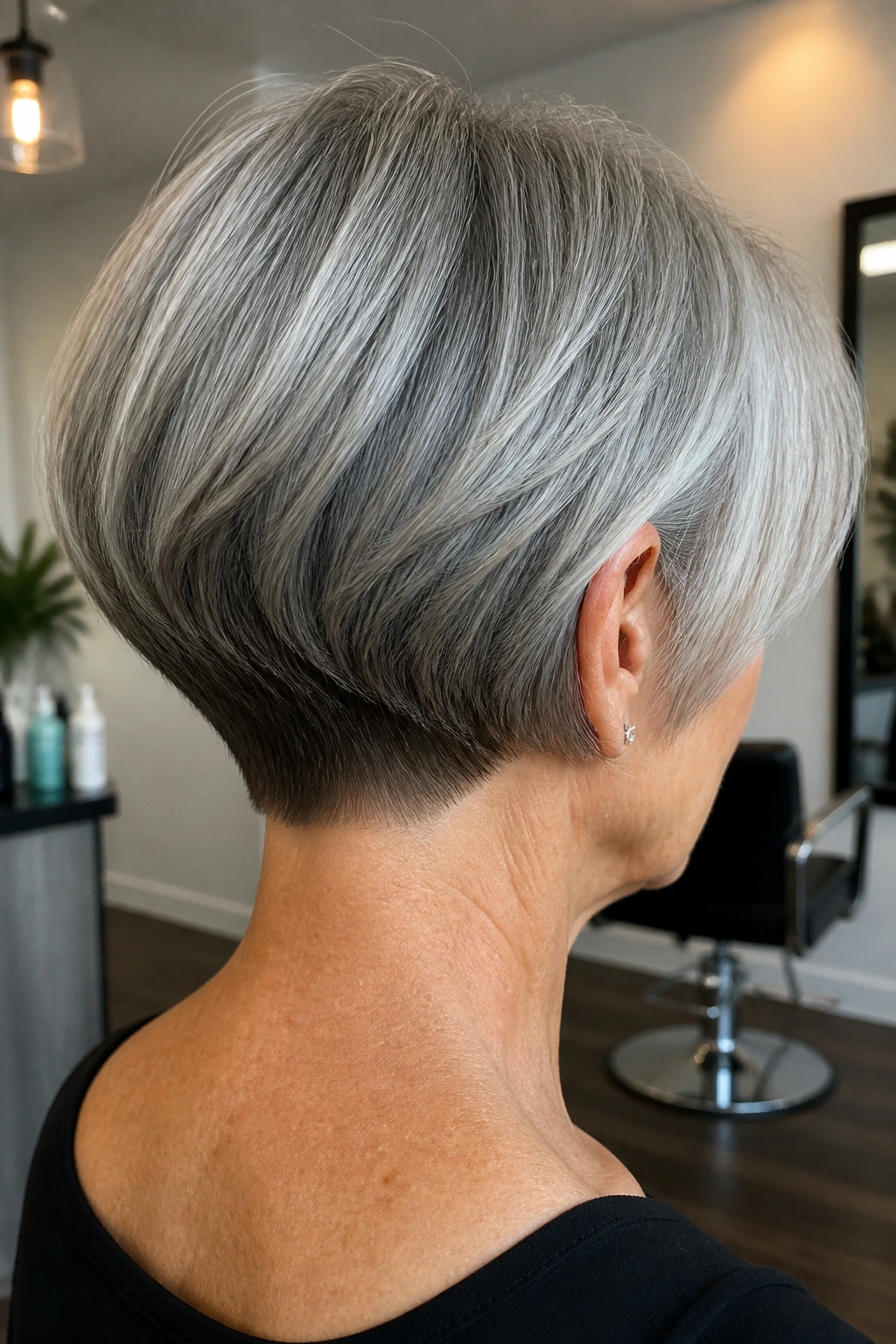
A stacked bob is for the mornings when your crown looks half-asleep and you want a haircut that does something about it. The back is cut with more build and angle, so the nape lifts up instead of hanging straight down.
That lift matters on fine grey hair. It creates the illusion of density through the back of the head, which is usually the flattest spot. The front can stay softer, but the rear needs enough graduation to hold its shape.
- Good choice if the back of your head feels flat.
- Strong option if you wear glasses and want the frame to sit above the collar.
- Not ideal if you want to tie your hair back often.
- Ask for smooth stacking, not a hard shelf.
One warning: too much stacking can look dated fast. Keep it subtle. You want volume, not helmet hair.
5. French Bob with Wispy Fringe
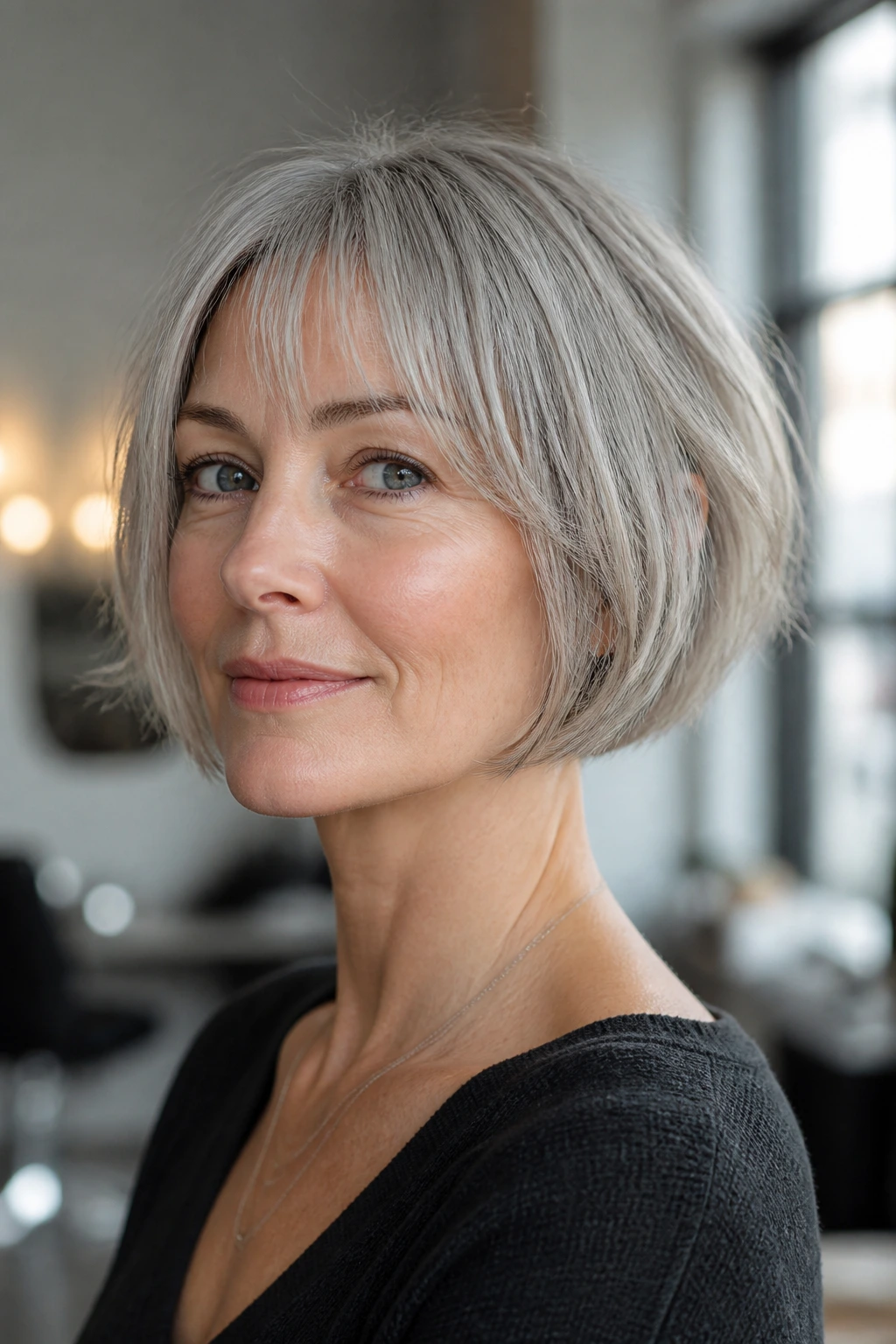
The French bob has a certain nerve to it. It sits around the jaw, keeps the line short, and adds a fringe that can be blunt, wispy, or somewhere in between. On grey fine hair, the softer version wins.
A wispy fringe brings attention to the eyes and brow without cutting the face in half. That matters when the rest of the hair is light and delicate. A heavy fringe can swallow the forehead and make the hair feel smaller. A light one gives shape without weight.
I like this cut best when the hair has a little natural bend. Straight grey hair can wear it too, but the fringe has to stay feather-light and not too thick at the center. Otherwise it turns boxy. And boxy is the enemy here.
This is one of those cuts that looks casual on purpose. That’s the appeal.
6. Curved-Under Bob
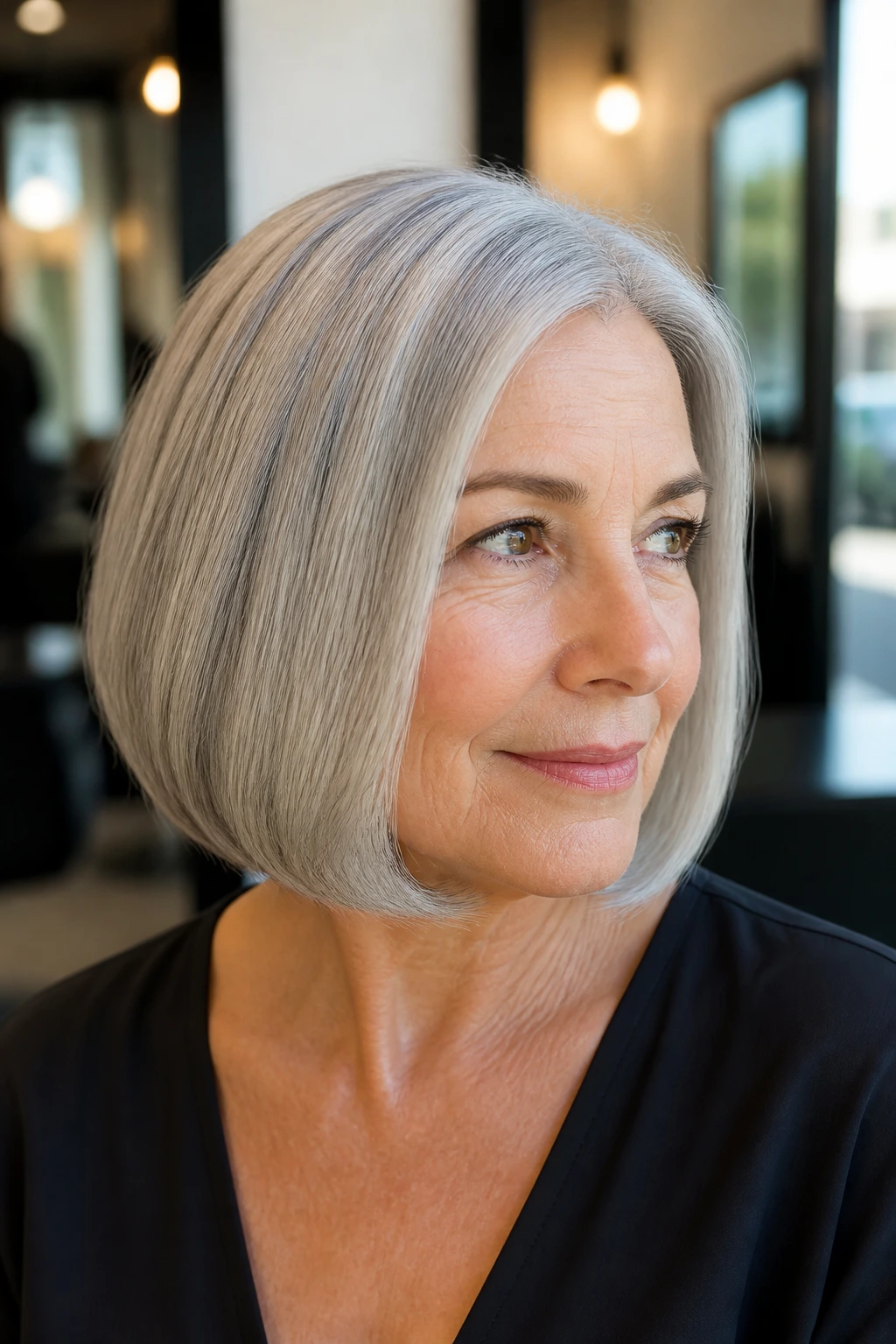
A curved-under bob is a small detail with a big payoff. Instead of letting the ends kick out or hang flat, the hair is dried to turn inward just a bit. That bend makes the perimeter look fuller, almost padded.
It’s a useful shape for fine grey hair because the eye reads the neat curve as density. The cut doesn’t have to be heavy to feel substantial. It just has to be controlled.
What makes it different
- The ends are tucked under, not flipped out.
- The line usually sits at the chin or a touch below.
- A round brush does most of the work.
- A light mist of hairspray keeps the bend from falling apart.
If you like polished hair but don’t want it severe, this is a sweet spot. It’s tidy without feeling rigid, and that balance is hard to fake with thin hair.
7. Grey Bob Haircut with an Inverted Shape
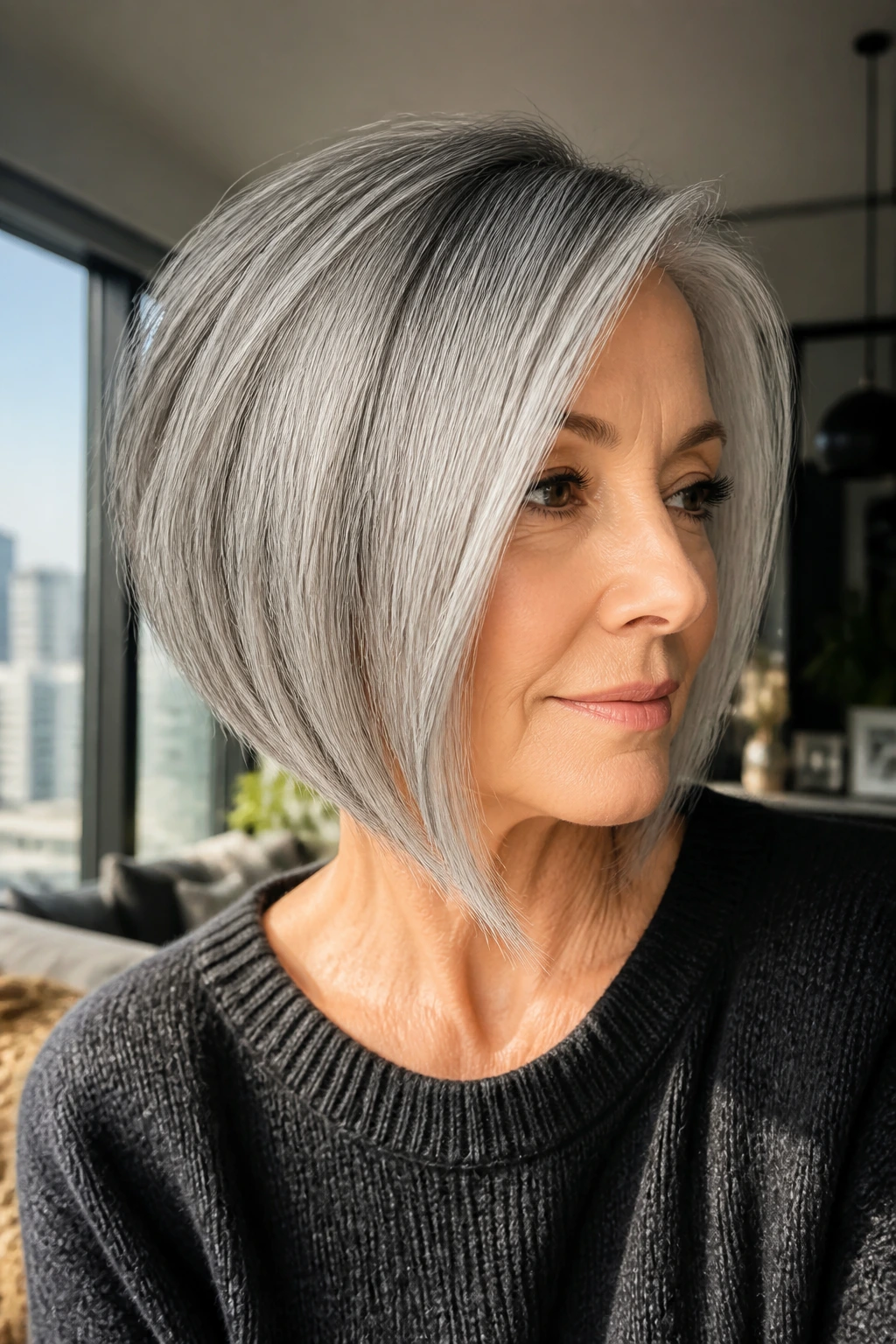
The inverted bob gives you a longer front and a shorter back, which is useful when fine grey hair needs a little drama without losing fullness. The angle also pulls attention toward the face, so the hair doesn’t just sit there like a flat sheet.
What to ask for
Ask for a soft inversion, not a sharp triangle. The difference matters. A harsh angle can make the front look stringy, while a gentler slope keeps the ends dense enough to read as a strong line.
The back should sit snug against the head, with enough graduation to create a lift at the crown. That’s where this cut earns its keep.
Best part: it gives movement even when you barely style it. Worst part: if the front is too long, it can drag the whole shape down. Keep the difference modest, and the cut stays modern instead of fussy.
8. Feathered Bob with Light Crown Layers
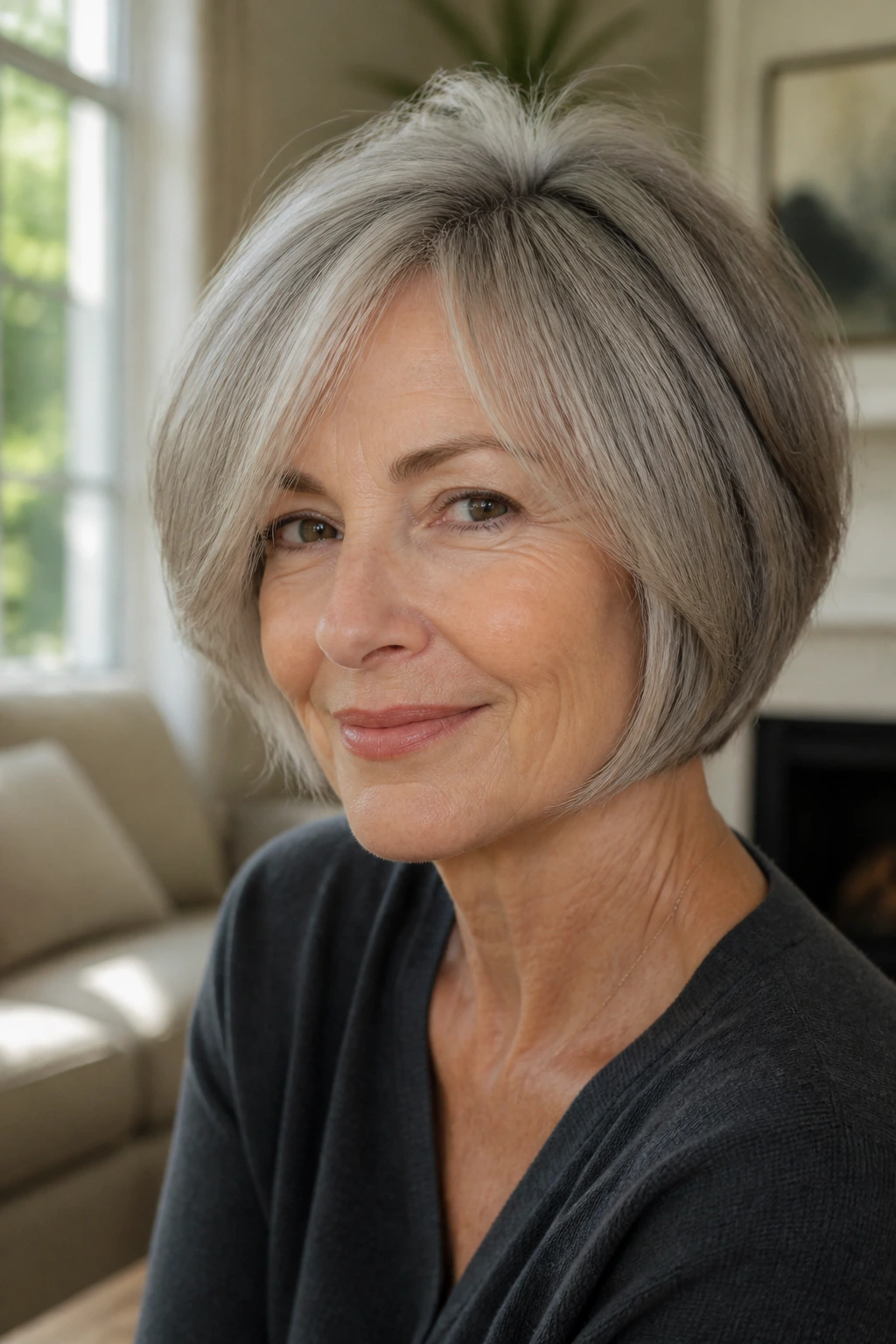
Feathering can be lovely on fine grey hair, but only when it’s done with a light hand. The old-school version, where the ends got shredded into softness, is a bad idea here. The better version lifts the crown a little and softens the outline without breaking the perimeter apart.
That’s the sweet spot. The shape still looks like a bob, but it has breathing room through the top. If your hair sits flat at the roots and puffs only at the edges, this cut can fix the balance.
Use a mousse at the roots and a small round brush to pull the crown up while drying. Then let the ends fall softly. No need to overwork it. Too much brush work can make fine grey strands frizzy, and nobody wants that.
This one looks best when it feels almost effortless. Almost.
9. Textured Jaw-Length Bob

Why does texture help some fine bobs and ruin others? Because texture belongs in the right spots. On a jaw-length bob, it should live in the ends and the outer surface, not all the way through the interior.
That keeps the shape from looking blocky. It also breaks up flat, one-note hair, which grey strands can fall into when they’re cut too cleanly but styled too loosely. The result is a bob that moves a little when you turn your head.
Where texture belongs
- At the ends, to keep them from looking blunt in a heavy way.
- Around the cheekbone, if you want softness near the face.
- Lightly through the top layer, never the whole head.
- Not at the very bottom edge, where it can thin things out.
If you want a bob that feels casual without losing structure, this is one of the safer choices.
10. Sleek Center-Part Bob
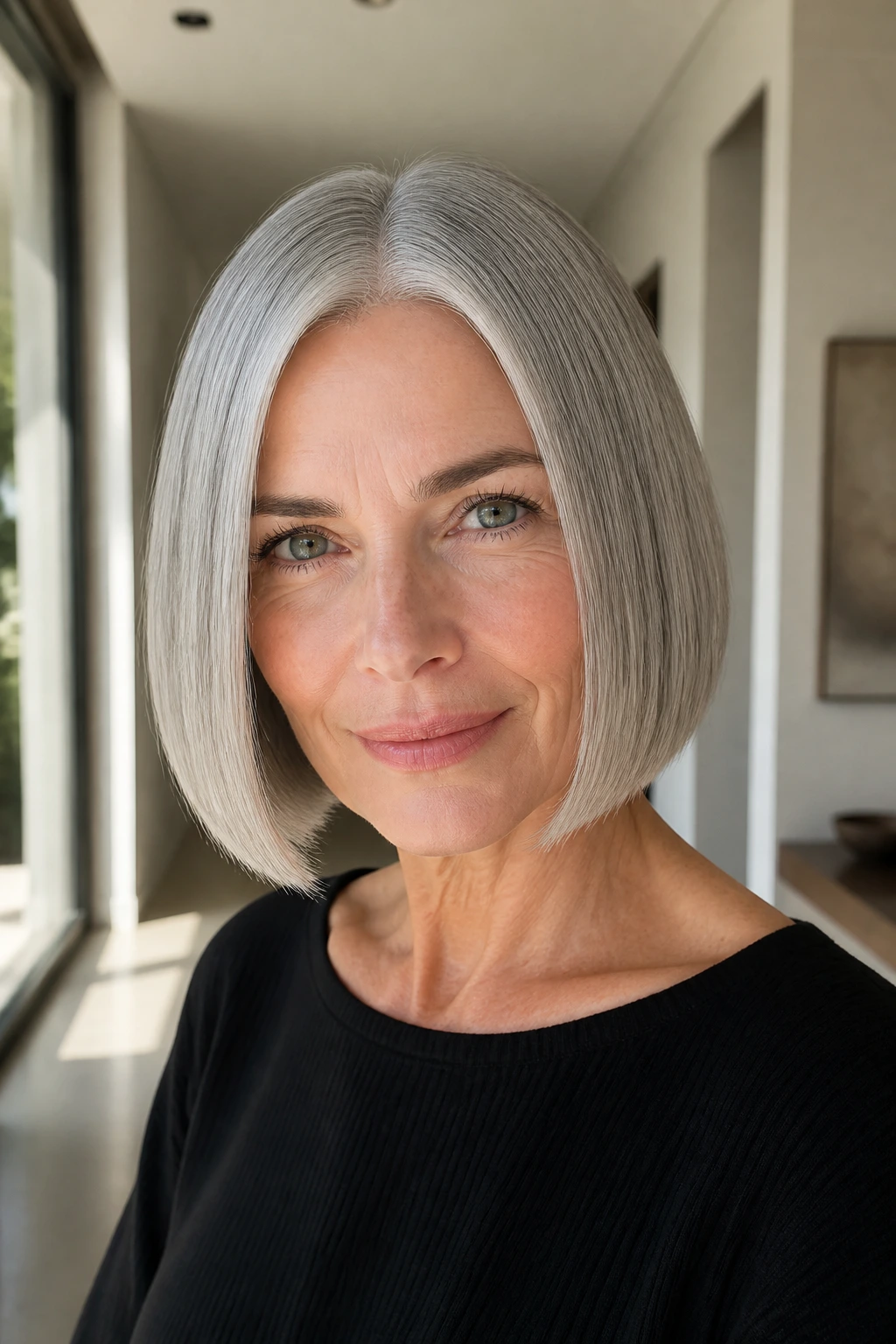
A center part makes a fine grey bob look calm and deliberate. There’s no hiding behind extra volume or big bangs. The haircut has to be honest, and that honesty can be stunning when the line is clean.
The trick is to keep the length at the chin or just below it. Too long, and the hair falls limp. Too short, and the style can feel severe unless the face shape suits it. With the right length, though, a center part gives a crisp frame and shows off silver tone in a clean, even way.
A smoothing serum on the mids and ends helps, but don’t pile it on. Fine hair gets greasy faster than people expect. A small amount goes a long way, especially on grey hair that already reflects light.
This one is for someone who likes order. Not boring. Order.
11. Tousled Bob with Piecey Ends
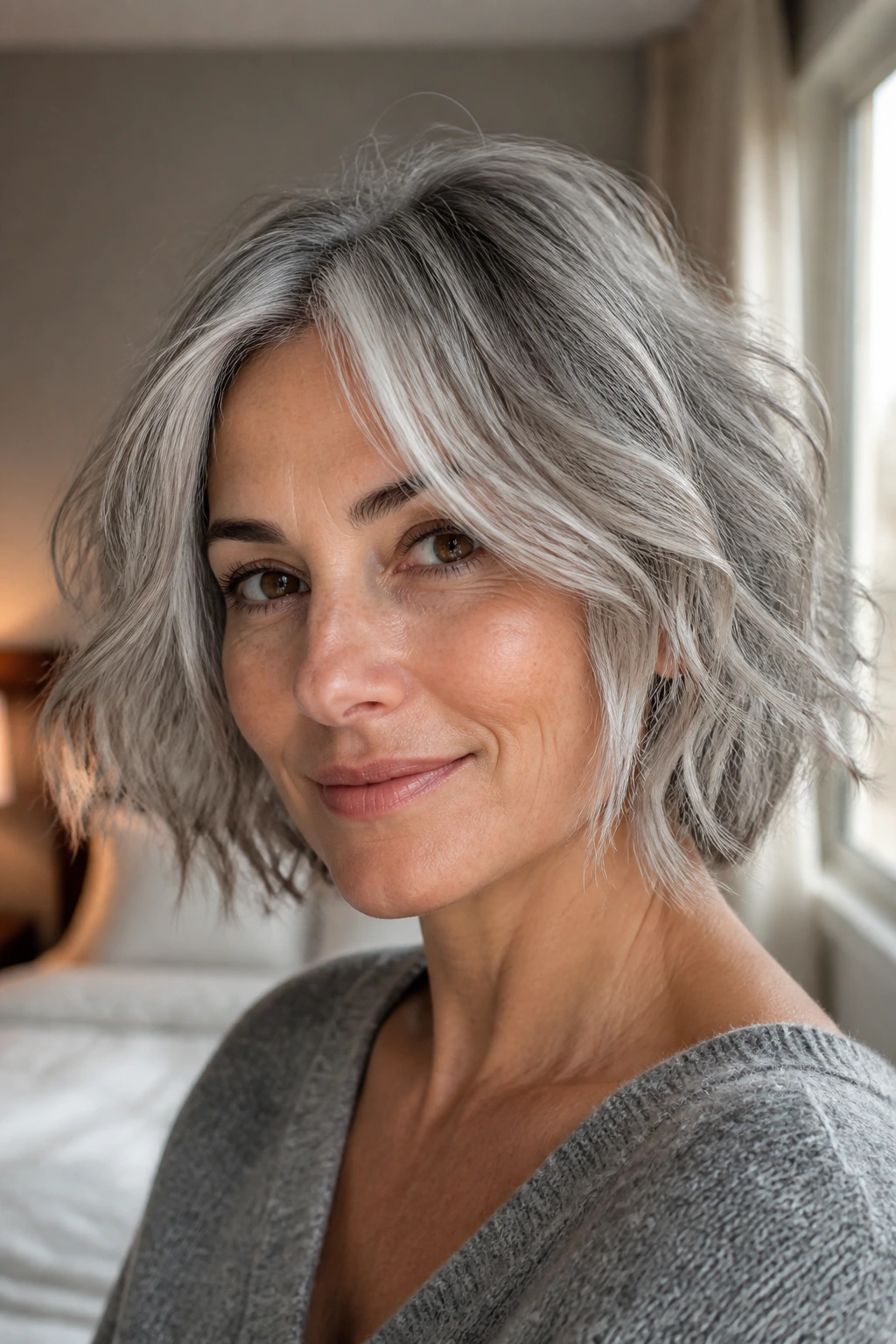
A tousled bob can save the day when your hair refuses to hold a polished blowout. The point is not wild texture. It’s little separated pieces that give the cut some air and keep it from lying like a sheet.
Grey hair often takes on a nice softness when it’s bent in a few places instead of curled all over. That makes this bob feel relaxed rather than overdone. Use a light texturizing spray, then scrunch just the lower half of the hair with your fingers. The ends should separate a little, not frizz.
I prefer this shape on hair that has a touch of wave already. It works on straight hair too, but you’ll need a bit more effort with a flat iron or a wand.
It’s a forgiving cut. Some days it looks polished, some days it looks slightly undone, and both are fine.
12. Pixie-Bob Hybrid
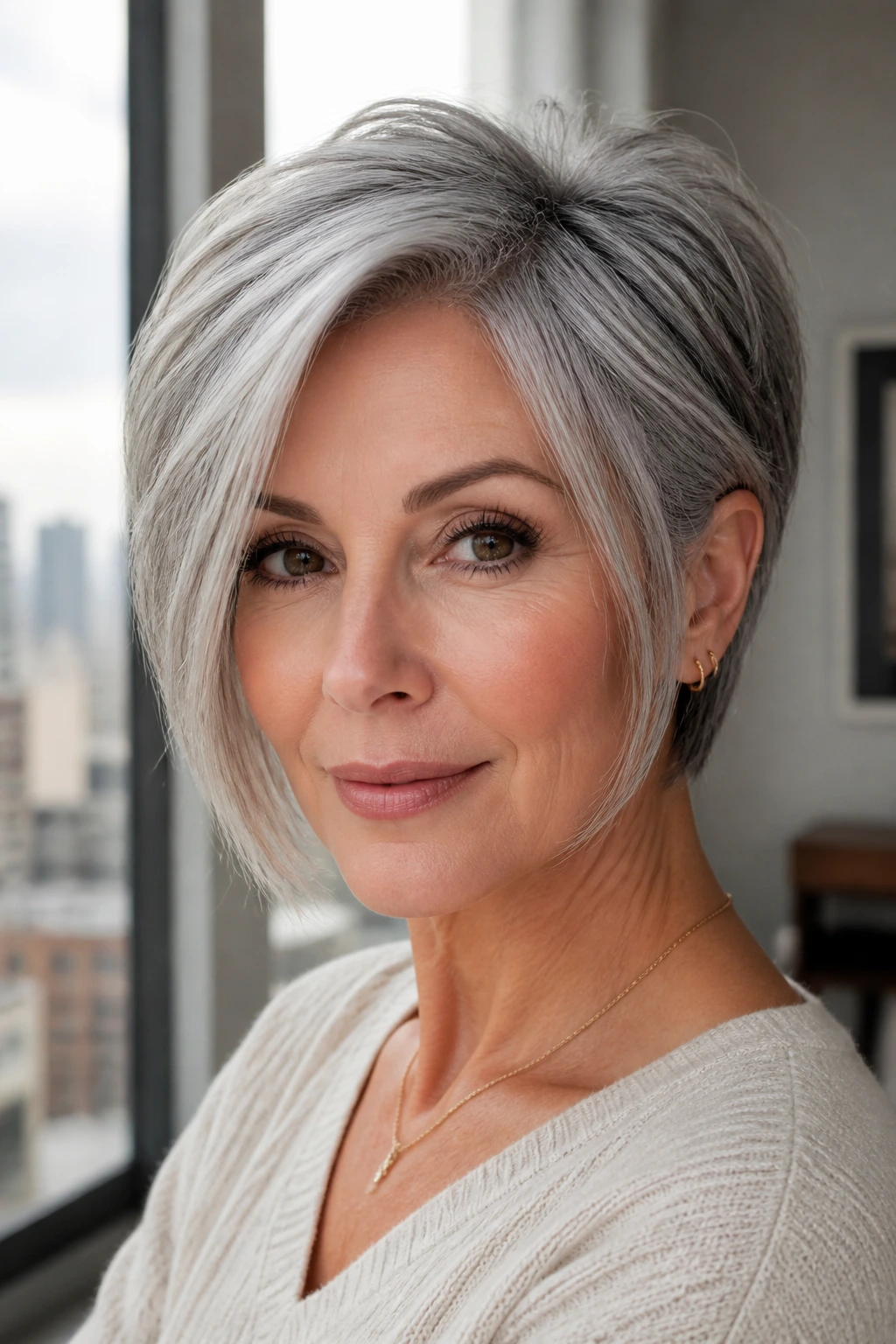
A pixie-bob sits between a short crop and a true bob, which makes it a smart choice for very fine grey hair that has lost some lift. You get the short back and lighter crown of a pixie, but enough length in front to keep it from feeling too severe.
That combination matters when you want fullness without dragging the hair down. The shorter layers can stand up a little at the crown, while the front pieces still frame the face. It’s especially good if your hair dries fast and you don’t want to spend ten minutes coaxing it into shape.
Unlike a longer bob, this cut asks for regular trimming so the silhouette stays neat. If the top gets too long, the whole thing can sink.
This one is practical. And a little cheeky.
13. Graduated Bob with a Short Back
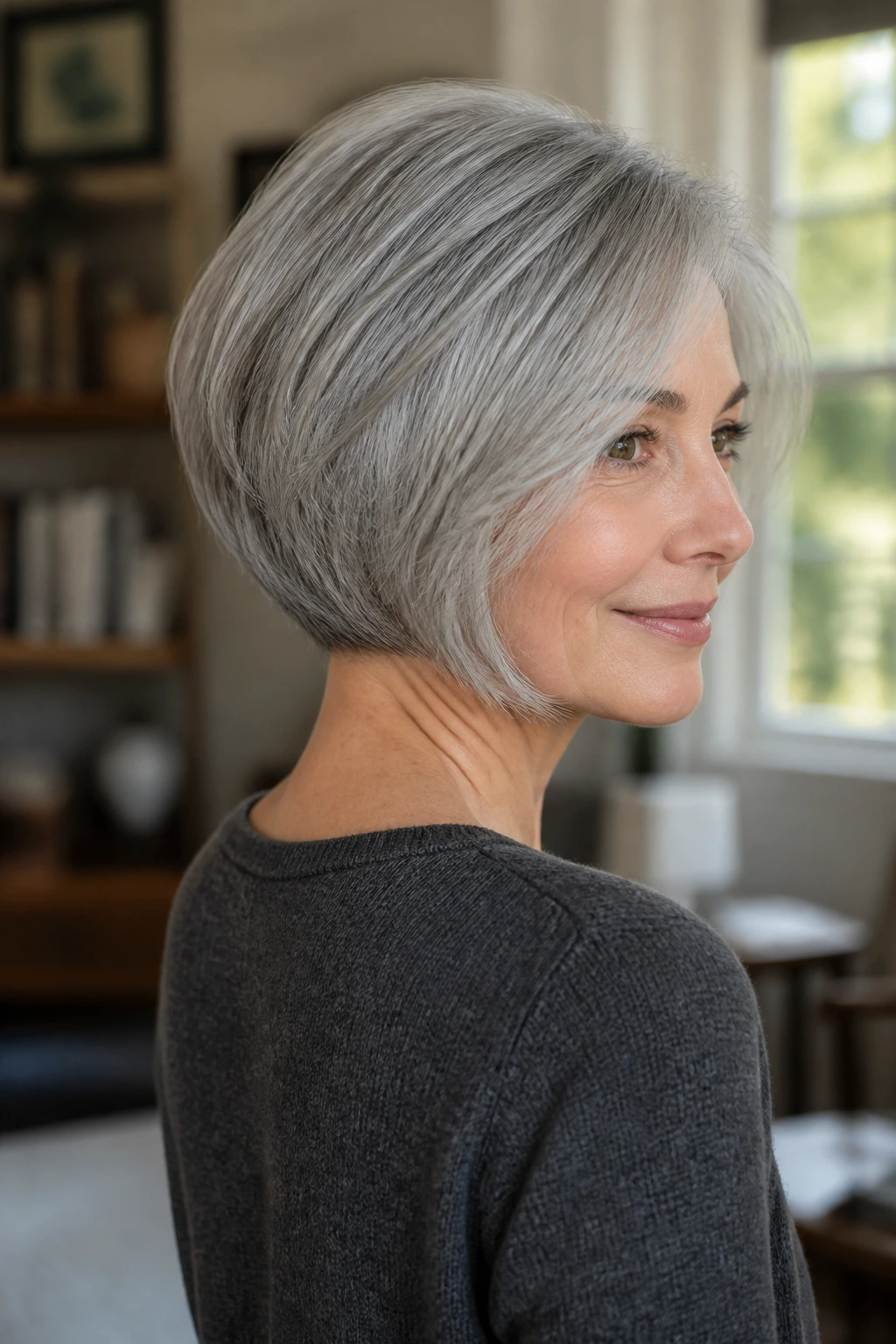
A graduated bob is cousin to the stacked shape, but it usually feels a touch softer and more blended. The back stays shorter, then gradually grows longer toward the front. On fine grey hair, that graduation helps the head look rounded instead of flat.
What the graduation does
It builds a little internal lift without screaming for attention. That’s useful if your hair needs shape but you do not want sharp angles. The front can be long enough to skim the cheekbones, while the back stays tucked into the nape and keeps the style controlled.
- Good for fine hair that collapses at the crown.
- Good for a longer neck.
- Good if you like a clean outline.
- Not great if you want one-length simplicity.
Ask for blending, not stacking. That one word changes the whole cut.
14. Bob with Bottleneck Bangs

Bottleneck bangs are one of the nicer things to happen to fine grey bobs. They start narrow near the center, then open out a little at the sides, which gives the forehead some shape without creating a hard curtain.
That matters because grey hair can look harsh with a thick fringe. Bottleneck bangs stay softer. They let the face breathe while still giving the bob a little personality.
Why they work
The bang shape pulls the eye inward, then releases it toward the cheekbones. That motion helps balance a fine bob, especially if the rest of the cut is chin-length or a touch longer. The style also works well with glasses, since the fringe does not sit like a heavy shelf on the frame.
Keep the bangs light and a little piecey. Heavy, blunt bangs can make fine grey hair look smaller than it is. This version does the opposite.
15. Razored Bob with Soft Movement
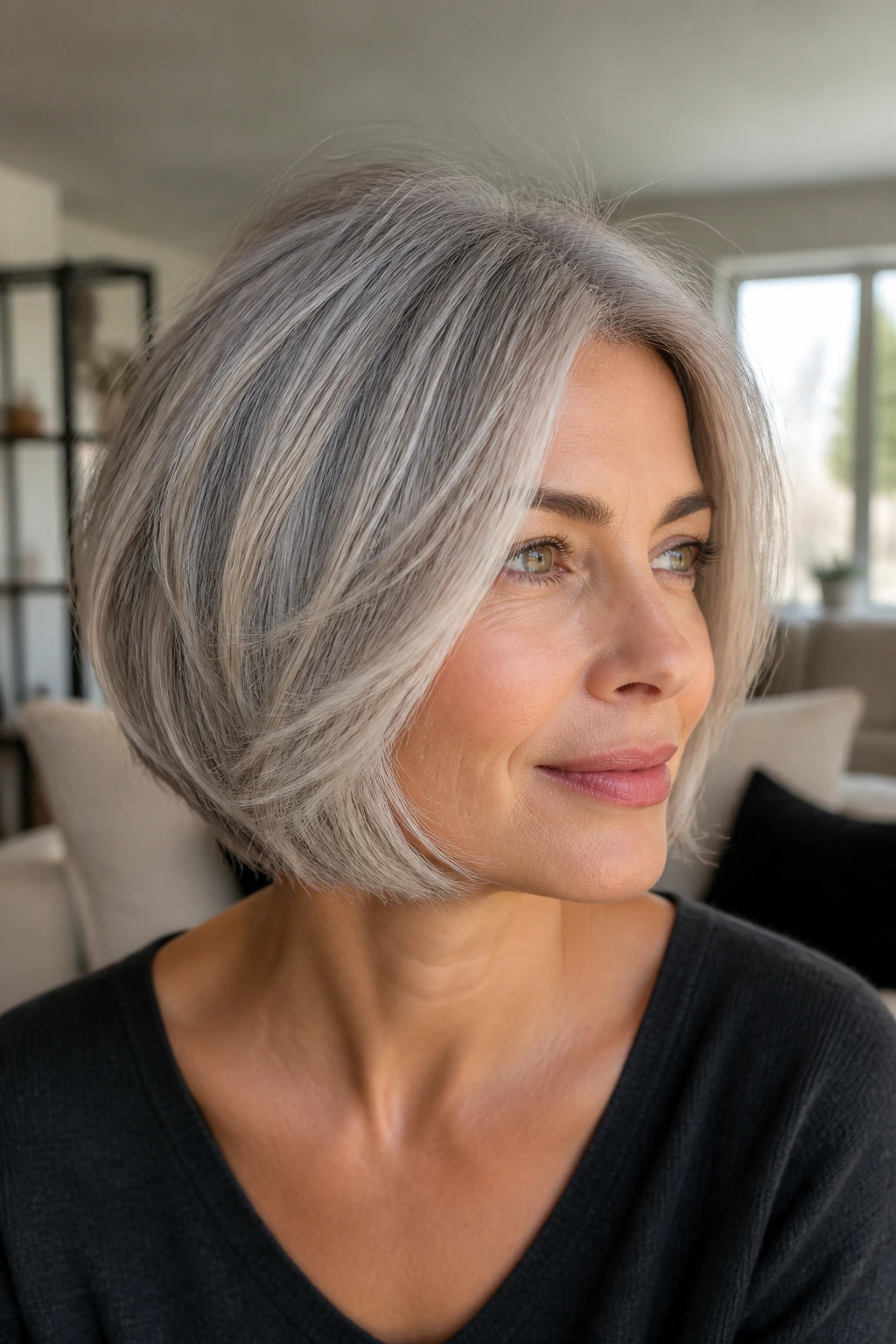
Can a razor work on fine grey hair? Yes, but only if the hand is light and the stylist knows where to stop. A razor can create soft movement through the ends, which is useful when the hair feels stiff or hangs in a single line.
The risk is obvious. Too much razor work can shred the perimeter and leave fine strands looking thin. That’s why I prefer this cut only when the razor is used on a controlled section, not through the whole head.
What to ask for
Ask for softness at the tips, not a heavily textured interior. Keep the bob mostly full through the bottom, then let the top layer move a little more freely. That gives you air without losing the shape.
This is one of those cuts that looks best after a quick blow-dry and a tiny amount of styling cream. Leave it alone too long, and it can fray.
16. Shoulder-Grazing Lob with Grey Dimension
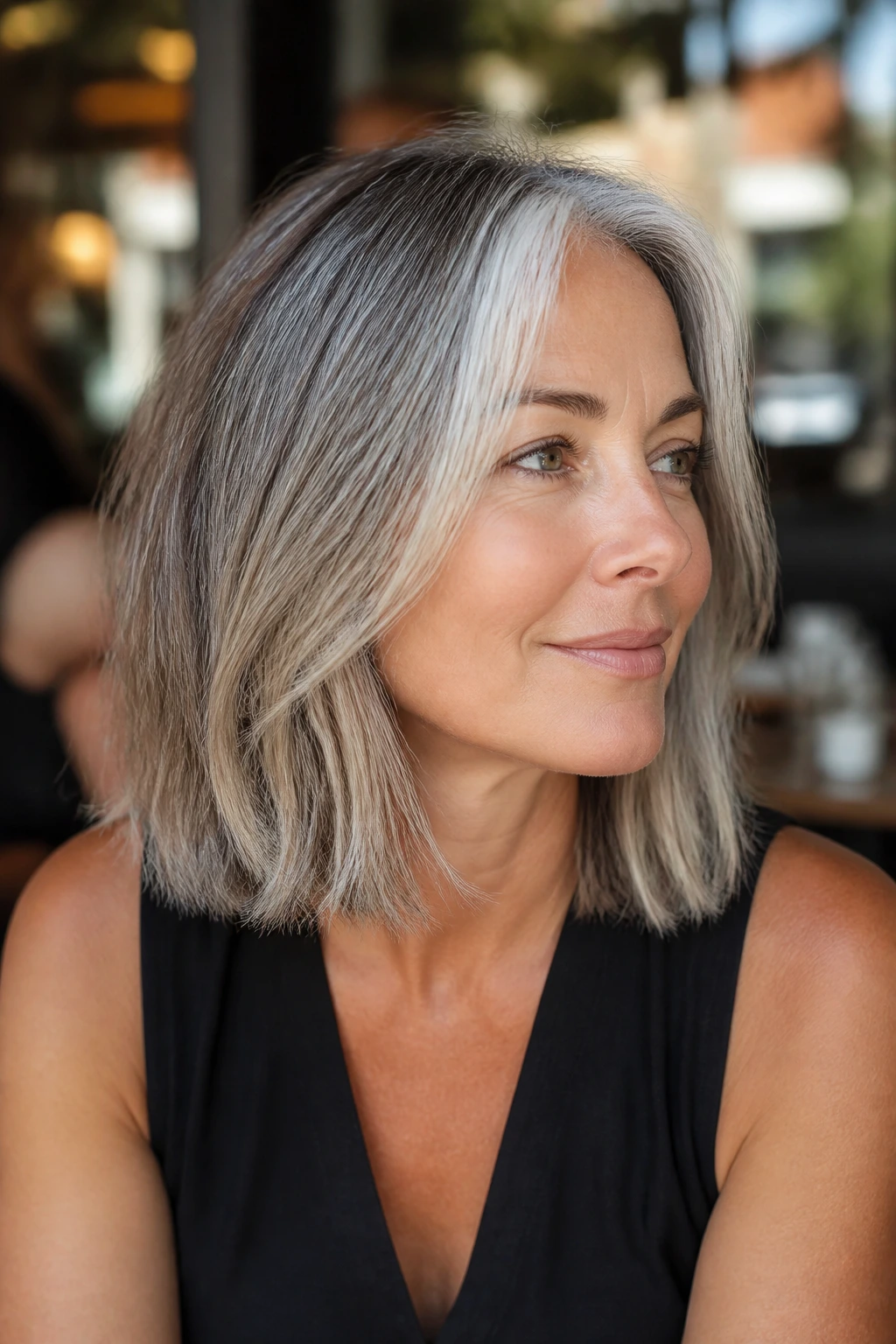
A lob gives you more length to play with, which some people want even when their hair is fine. The trick is to keep the ends blunt enough to feel solid and add dimension through color or tone rather than layers that eat away at the thickness.
Grey hair already gives you natural contrast, especially if your silver sits beside darker strands or lowlights. A shoulder-grazing lob can show that off without looking heavy.
- Works well if you want to tuck hair behind the ears.
- Gives enough length for a small wave or bend.
- Better than a long bob that drapes past the shoulders and disappears.
- Needs clean ends so it doesn’t look stringy.
If you’re not ready to go shorter, this is a sensible middle ground. Not exciting. Useful. Which is better.
17. Grey Bob Haircut with Clean Edges
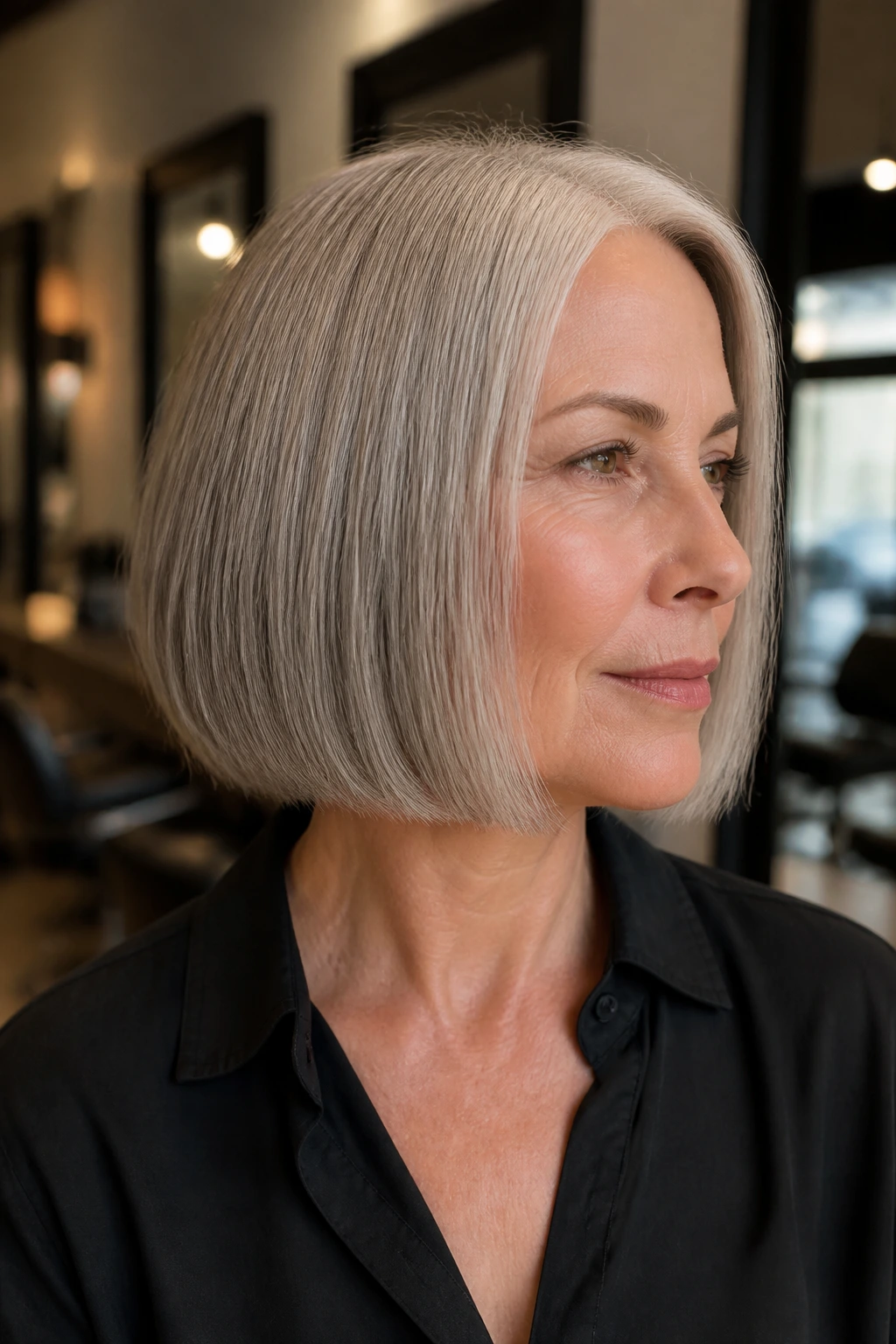
A clean-edged bob is often the smartest answer for fine grey hair because it keeps the outline strong and the ends full. No drama. No over-layering. Just a clear, graphic line that makes the hair look denser than it is.
Grey strands have a way of showing every mistake in the cut, especially when the ends are sparse. That’s why this version works so well. The eye sees a crisp boundary and assumes thickness, even when the individual strands are soft and light.
I like this cut on anyone who wants a neat look without a lot of styling fuss. A quick blow-dry, a round brush, and a touch of serum are enough. If the hair is cut well, it falls into place with almost no pleading.
It’s a blunt answer to a common problem. Fine hair likes blunt answers.
18. Deep Side-Swept Bob
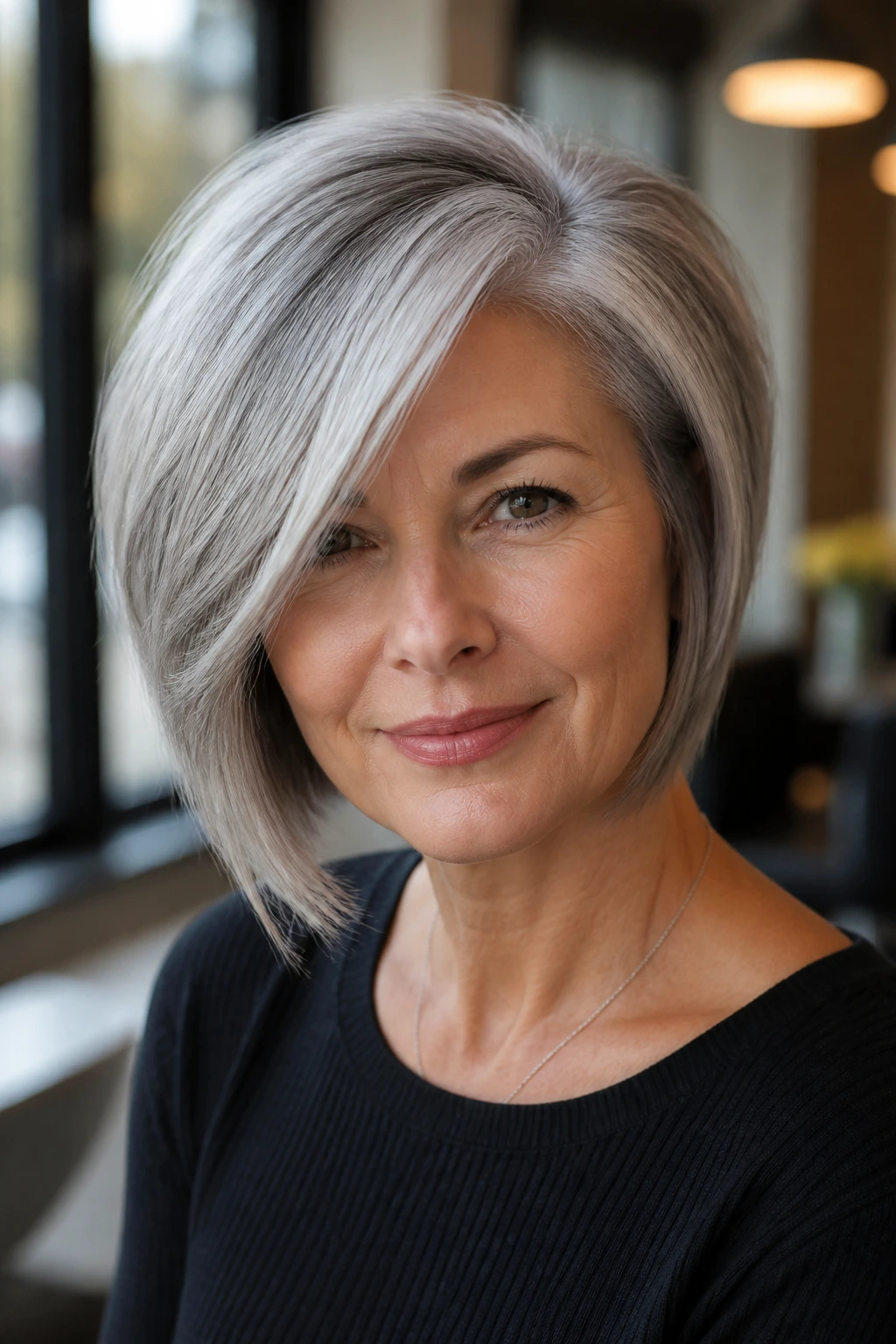
A deep side-swept bob gives you volume at the crown and softness at the front, which is a useful mix when fine grey hair tends to separate around the part. The sweep creates a diagonal line that feels flattering on a lot of face shapes.
Unlike a center part, which can expose every bit of flatness, a deep side part builds lift where you need it most. It also keeps the style from looking too rigid. That little bend over the forehead changes the mood fast.
Best of all, it’s easy to style. Blow-dry the roots on the opposite side first, then flip the part once the hair is about 80% dry. That bit of trickery adds staying power.
If your hair has trouble holding shape, this bob gives it a job to do.
19. Tapered Bob with Long Front Pieces
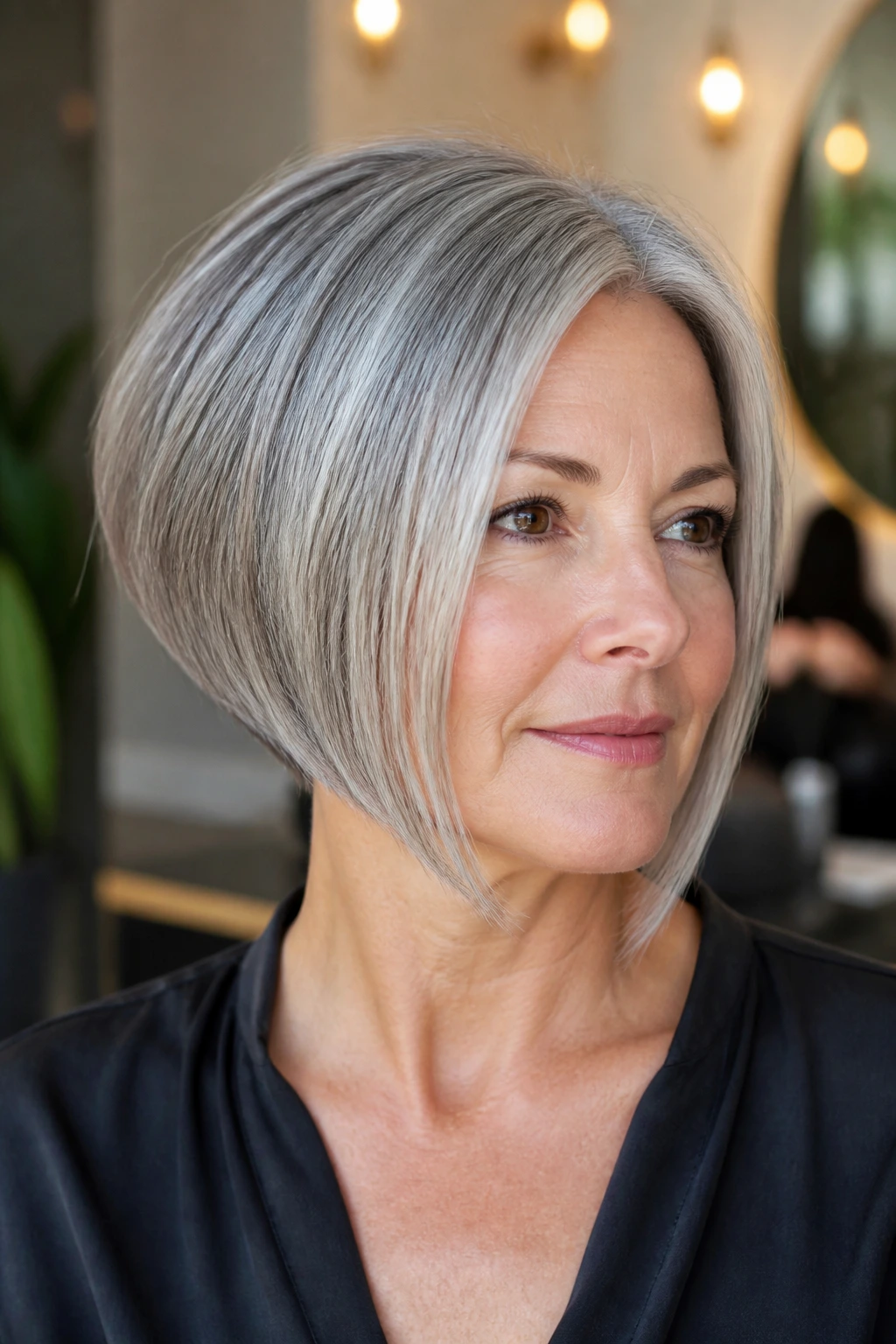
A tapered bob narrows gently through the back and keeps longer pieces at the front, which helps fine grey hair look more balanced from every angle. The front length can soften the jaw, while the taper at the nape keeps the neck area neat.
What makes it useful
The long front pieces give you framing without taking away too much density from the ends. That’s the part people often miss. If the front is too thin, the whole cut starts looking tired. Keep the front pieces substantial and the back softly tapered, and the shape stays strong.
This cut is especially good if your face feels wider at the cheek area and you want a little vertical line. It does not have to be severe. It just needs a clean direction.
A small round brush helps the front swing inward. That’s enough.
20. Micro-Fringe Grey Bob
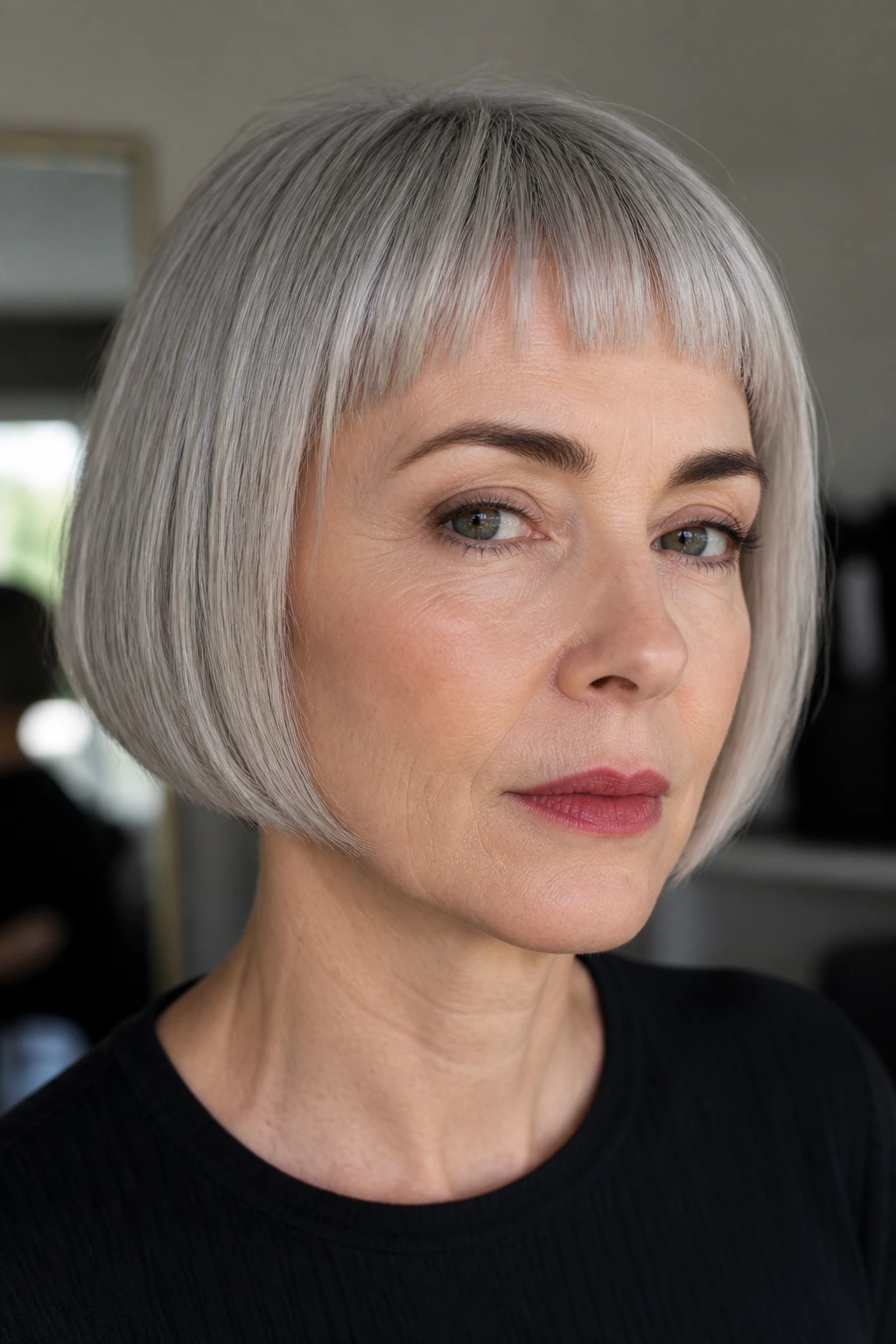
A micro fringe can look sharp on grey hair, but it’s not a shy haircut. The short fringe gives the bob a little edge, and the short length makes the eyes look more open. On fine hair, that contrast can be useful because it creates a clear focal point.
The catch is maintenance. Micro fringes grow out fast in a visual sense, even if the actual length change is small. If you hate trimming bangs often, this may annoy you. If you like a neat little line across the forehead, though, it has real personality.
This works best when the rest of the bob stays simple and clean. Let the fringe be the detail. Keep the body of the cut calm.
There’s no need to overcomplicate it.
21. Wavy Bob with a Soft Bend
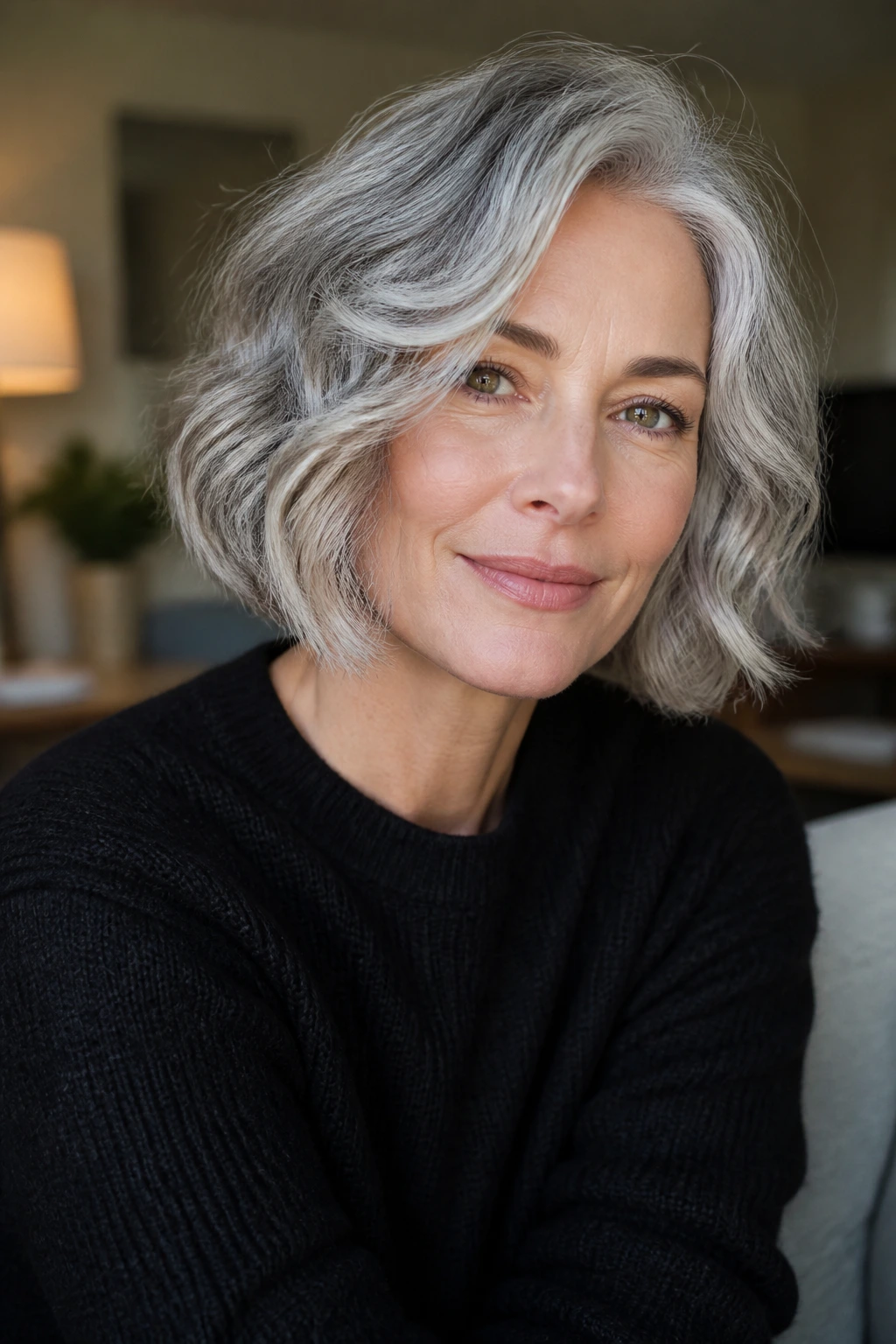
Do you need real curls for this to work? Not at all. A soft bend is enough. That small wave gives fine grey hair a little space between the strands, which keeps the cut from looking flat and makes the outline feel more relaxed.
How to create the bend
Use a 1-inch curling iron or a straightener to make loose bends in alternating directions. Leave the ends out if you want the style to feel modern and not too curled. Then run your fingers through it once, not five times. Too much handling breaks the wave apart.
- Best on hair that has a little natural movement.
- Best with a blunt or lightly layered perimeter.
- Good for hiding sparse spots at the crown.
- Keep the bends loose and uneven.
This is a friendly haircut. It does not demand perfection.
22. Layered Salt-and-Pepper Bob
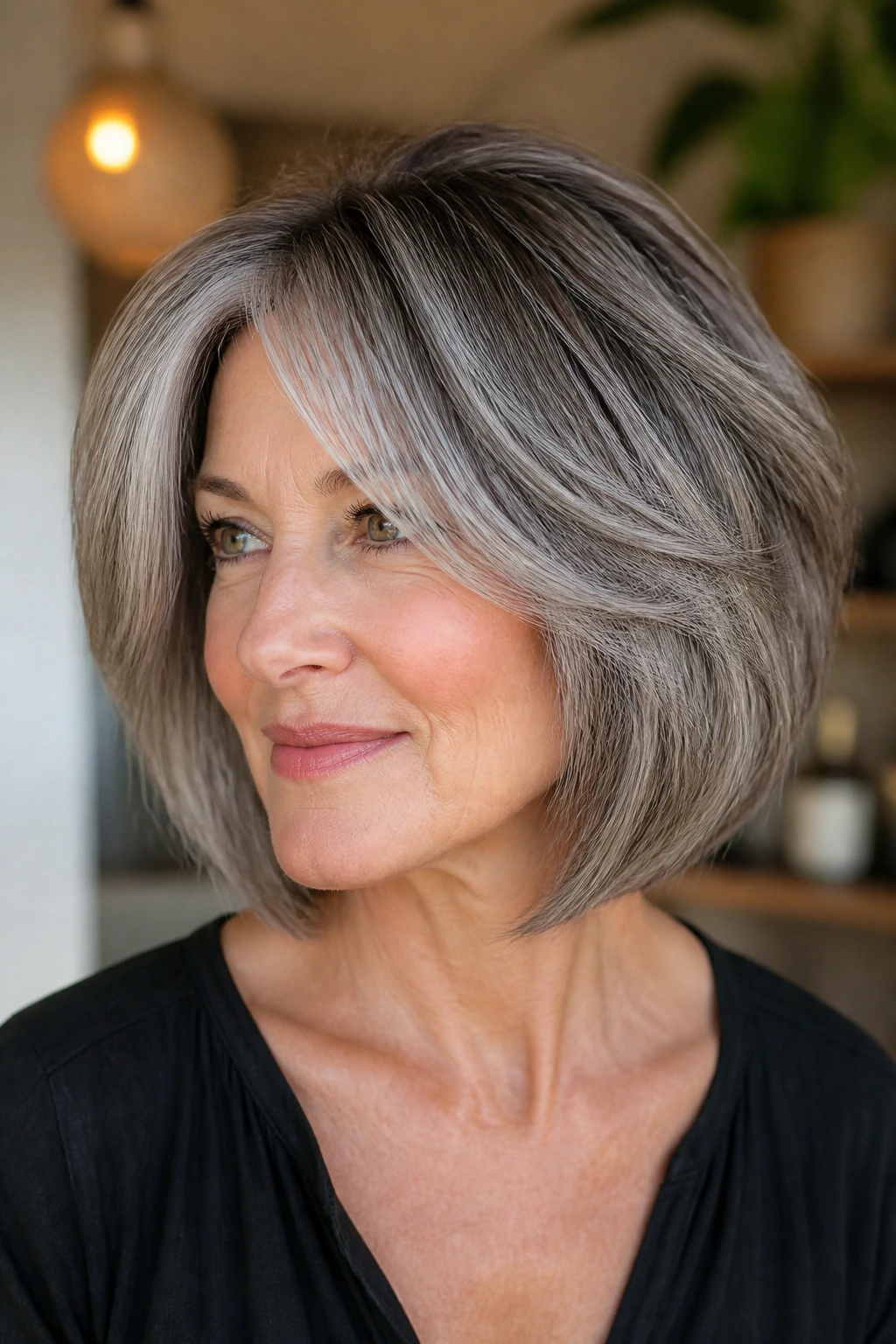
A salt-and-pepper bob can be gorgeous when the cut respects the mix of shades instead of trying to hide it. Light layers give the silver and darker strands room to play against each other, which creates depth that flat color never can.
The layers should stay long and soft. Short layers on fine hair can make the top look airy in the wrong way, while longer layers let the dimension show without losing density. That matters a lot when the grey is still transitioning and not fully uniform.
I like this bob with a little side part and a slight bend at the ends. It feels natural, not styled within an inch of its life.
The color does half the work here. The cut just needs to stay honest.
23. Curly Grey Bob

Curly grey hair needs a bob that respects the curl pattern, not one that fights it. Fine curls can look sparse when they’re cut too short in the wrong places, so the shape should keep enough length to let the curl spring without turning into a puffball.
A dry cut often helps because you can see where the curl lands before the scissors go in. If that sounds fussy, it is a little. But curly fine hair tends to punish guesswork.
Use a light cream or gel, scrunch gently, and diffuse on low heat. The goal is definition with movement, not a rigid shell. And if your curls are looser at the crown and tighter at the sides, the bob can be adjusted to even that out.
This cut has texture built into it. That’s the advantage.
24. Asymmetrical Bob with a Longer Side
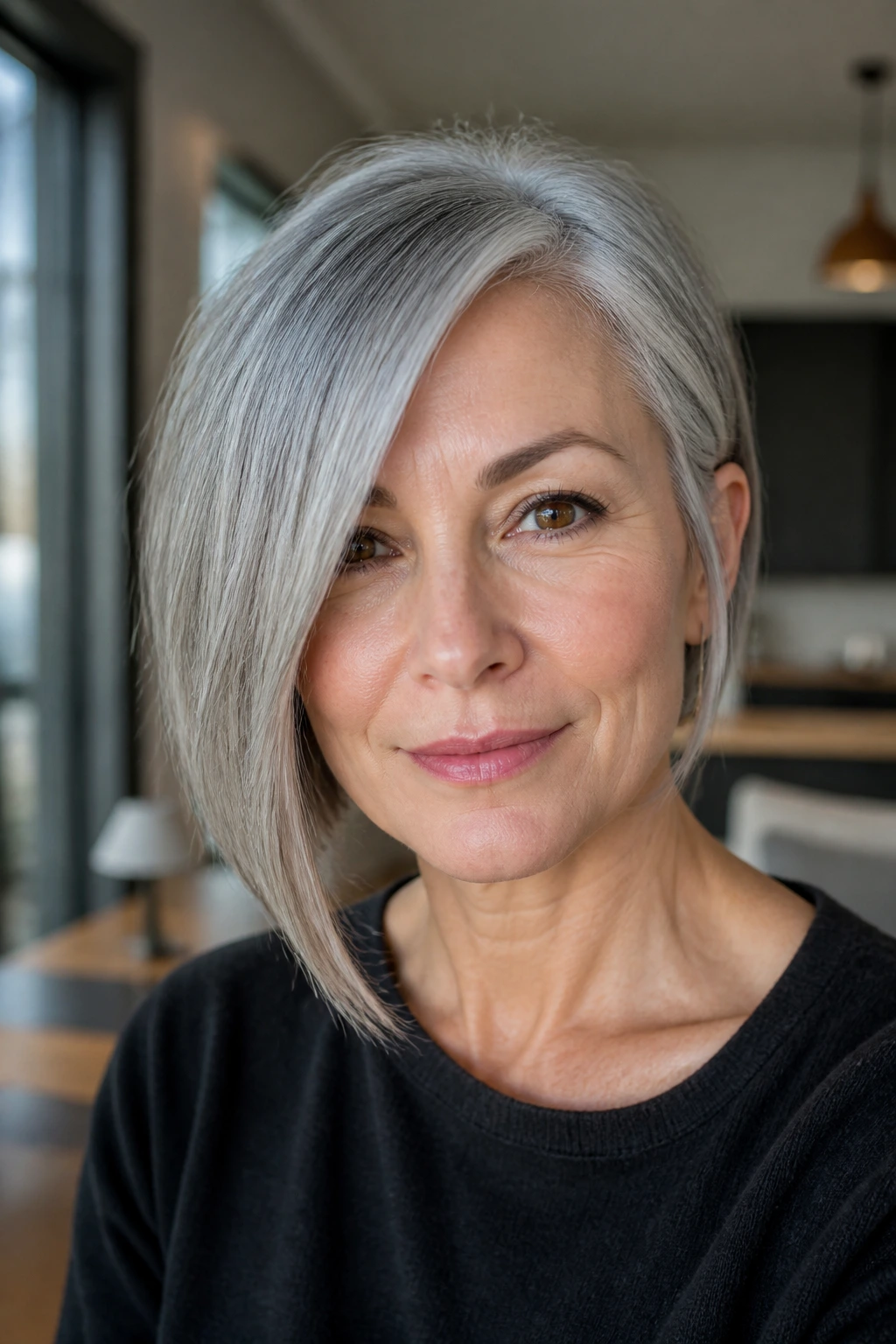
An asymmetrical bob gives one side a little more length, which adds motion and keeps fine grey hair from feeling too symmetrical or stiff. It’s a smart choice if one side of your hair naturally falls flatter, or if your face has a bit of asymmetry and you want the cut to work with it.
Why the angle matters
The longer side draws the eye downward, which can make the hair look fuller and the face look longer. The shorter side keeps the nape neat and gives the whole cut a cleaner profile. Keep the difference subtle, though. One to one-and-a-half inches is often enough. Any more and the cut starts looking like a statement piece instead of an everyday bob.
This is one of those cuts that reads modern even when you do almost nothing to it. That’s a good deal.
25. Flipped-End Bob
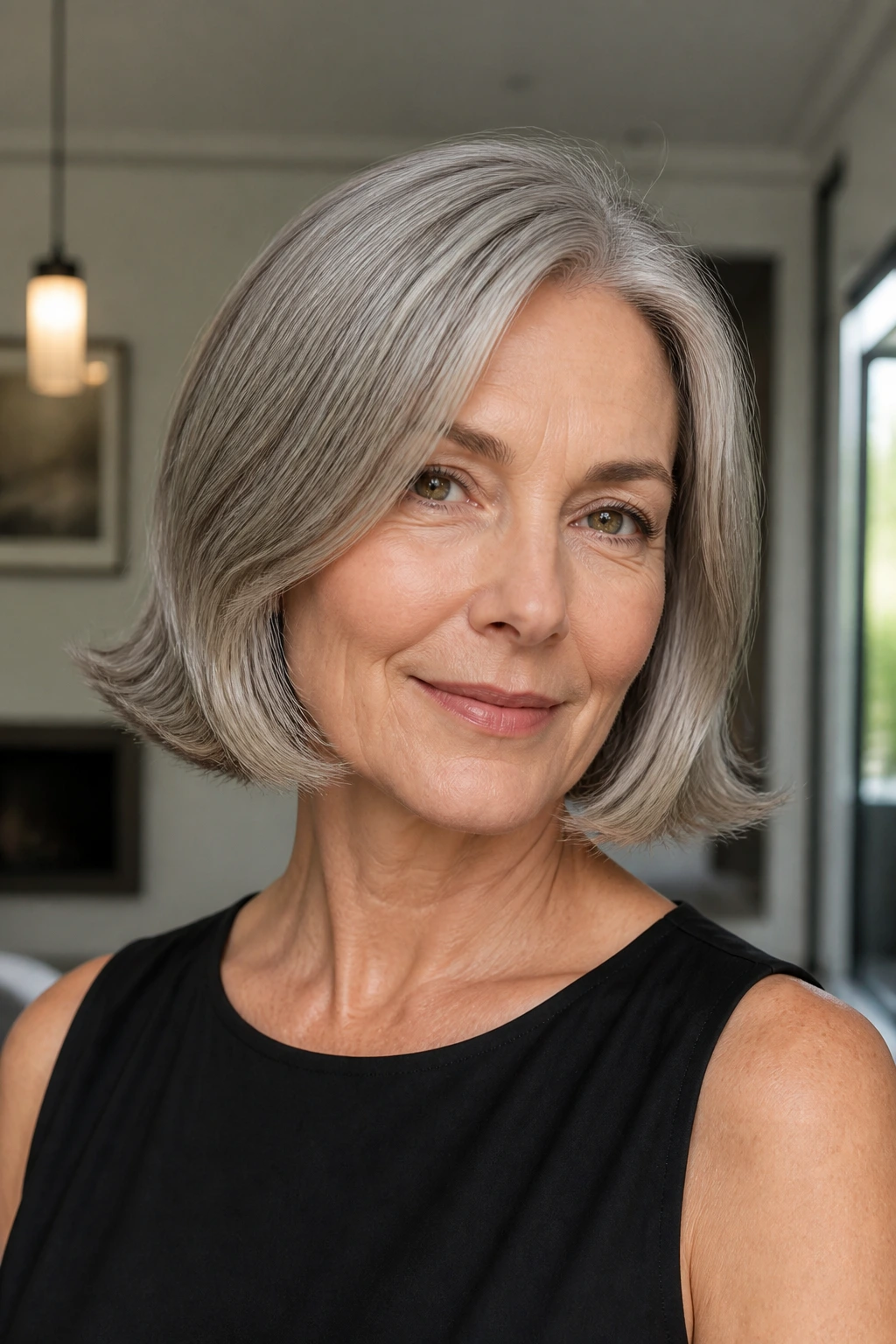
A flipped-end bob brings a little retro energy to grey hair without needing a lot of volume at the roots. The ends turn outward instead of inward, and that small flip keeps the perimeter lively.
The best part is that it works with fine hair because the movement sits at the edges, where the eye notices it most. You do not need huge curls. A round brush, a small iron, or even a quick pass with a flat iron can create the bend.
Why the flip helps
The outward edge makes the haircut look less heavy near the jaw. It also stops the style from hugging the face in a flat way, which can happen with very straight fine hair. Use a lightweight spray so the ends keep their shape without feeling sticky.
This one has personality. A little goes a long way.
26. Sleek Tucked-Behind-Ear Bob
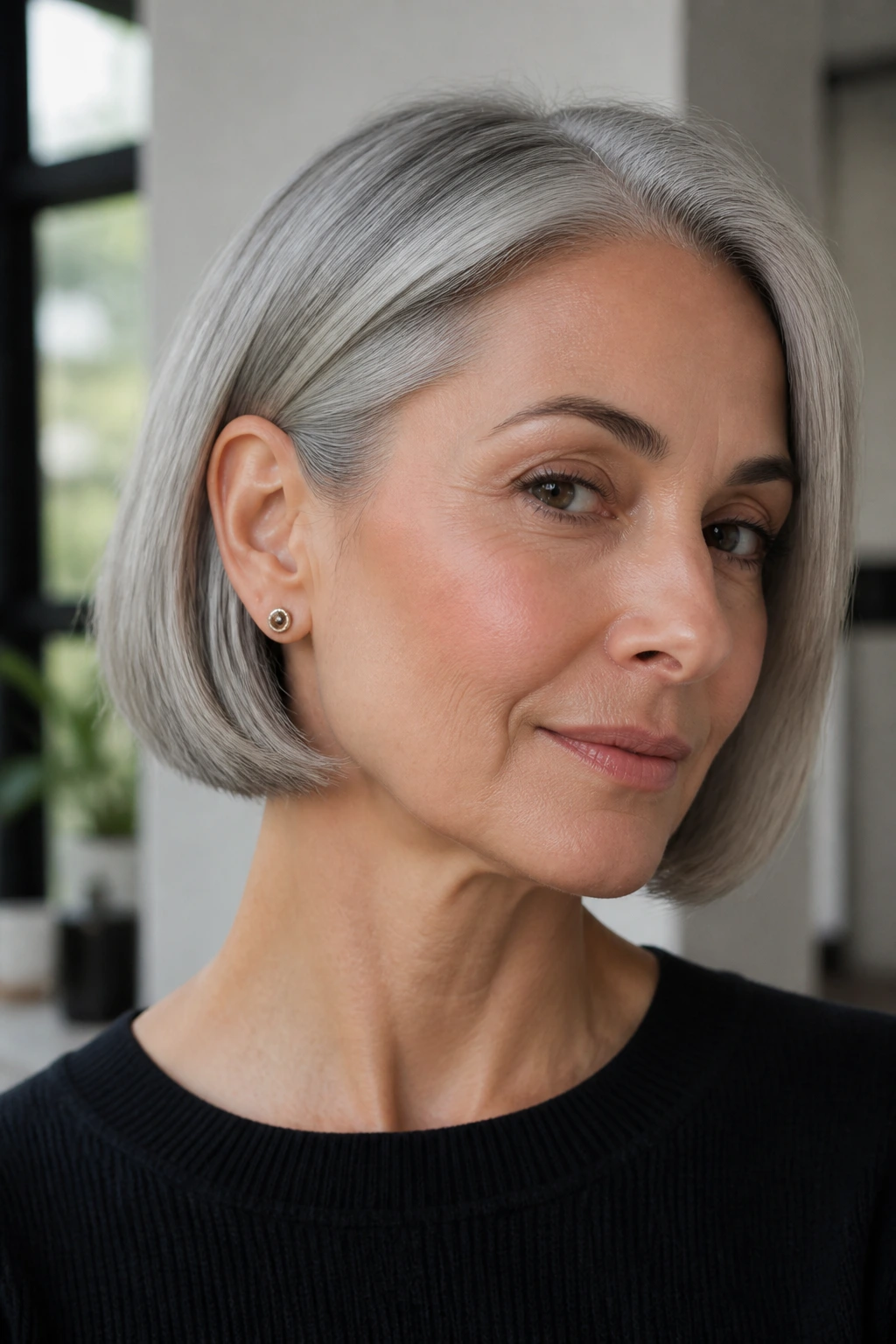
Sometimes the smallest styling move changes the whole haircut. Tucking one or both sides behind the ears can make a grey bob look cleaner, sharper, and more intentional, especially when the hair is fine and the face needs a little opening up.
The tucked look also creates a tiny lift at the crown because the hair is no longer hanging evenly around the face. That helps more than people expect. It lets earrings show, sharpens the jawline, and makes a simple bob feel finished.
This works best when the ends are cut neatly and the shape sits around the chin or just below. If the bob is too long, the tuck gets lost. If it’s too short, there may not be enough hair to frame the face properly.
It’s a plain idea. Very effective.
27. Airy Shag-Bob

Can a shag and a bob live together? Yes, if the shag part stays soft. On fine grey hair, an airy shag-bob should never look shredded. It should look a little piecey, a little lifted, and still clearly like a bob when you step back from the mirror.
This shape suits hair that has some wave and wants movement. The crown can carry a bit of texture, while the bottom line stays present enough to keep the ends from disappearing. That balance matters because too much layering on fine hair can make it look tired fast.
How much texture is enough
Just enough to stop the hair from lying dead flat. That’s it. If the top starts looking see-through, the cut has gone too far. A mist of texturizing spray and a rough dry with your fingers usually gives enough separation.
This one feels playful. Not precious.
28. Face-Framing Grey Bob with Light Layers

A face-framing bob is the safe bet when you want something flattering without picking a very specific personality for your hair. The layers stay light and mostly around the face, which lets grey fine hair keep its fullness through the back while still gaining softness at the front.
That front softness matters if you wear your hair down most of the time. The cheekbones get a little lift, the jaw gets a little shape, and the rest of the cut can stay clean and simple. It’s one of the easiest bobs to live with because it does not demand a perfect blowout every morning.
- Good if you want movement without losing density.
- Good if your face needs a softer outline.
- Good if your grey is growing in unevenly and you want blending.
- Keep the layers long enough to avoid a stringy finish.
This is the one I’d hand to someone who wants a bob they can trust.
Final Thoughts
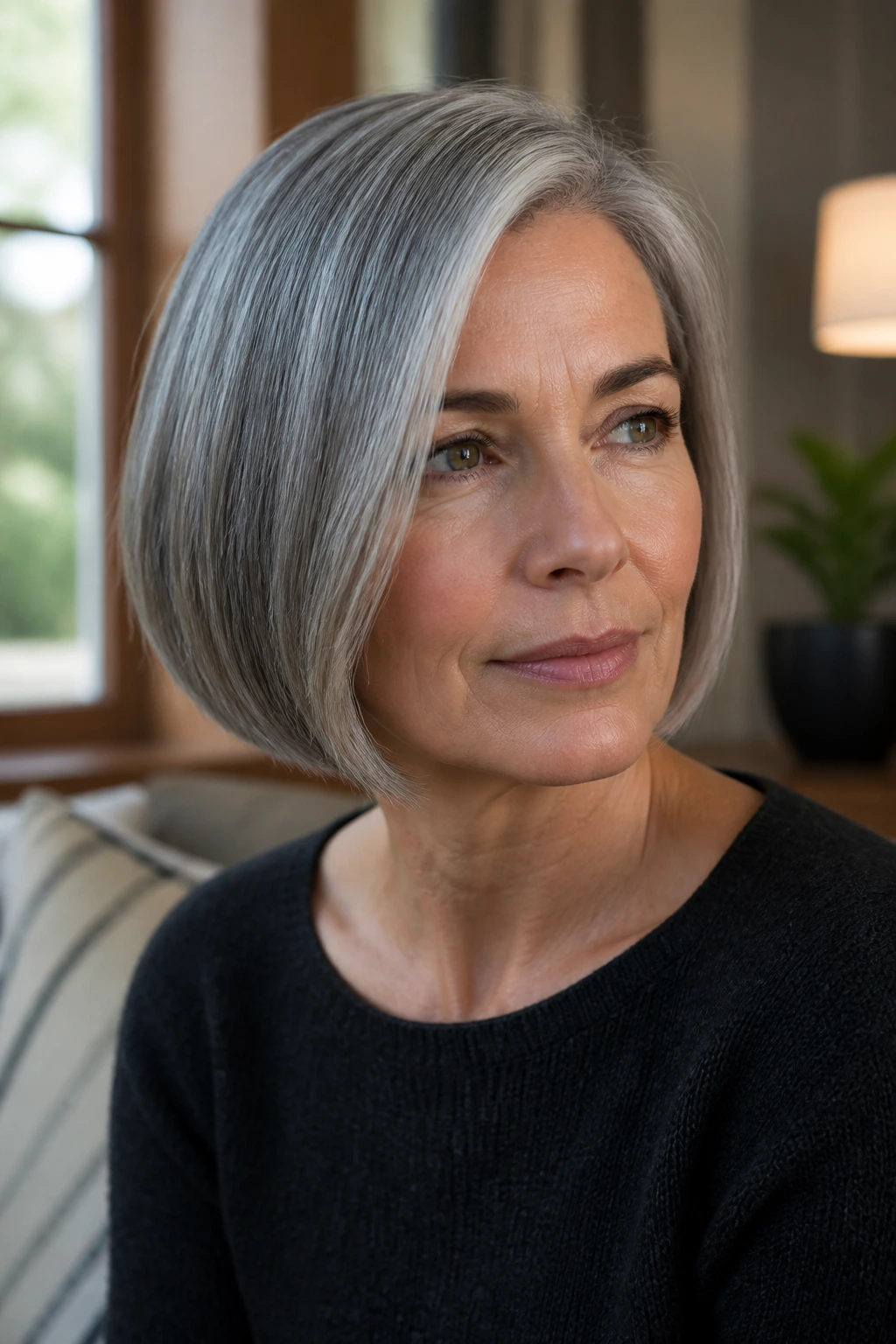
Fine grey hair usually looks strongest when the cut stays clear and the ends stay honest. Blunt lines build the illusion of thickness. Soft layers help only when they’re placed with restraint. Once the shape gets too busy, the hair starts looking lighter than it really is.
The best choice depends on your habits as much as your hair. If you like quick styling, stick with a blunt chin bob, a curved-under bob, or a neat side part. If you want more movement, pick a lob, an inverted shape, or a soft layered bob and keep the layers long.
Bring photos, yes, but also bring a blunt opinion about your morning routine. That part matters more than people think. A haircut that suits your hair texture and your patience level will look better on day twelve than a trendy cut that only behaves in the salon chair.
