



Gray bob haircuts for fine hair work because they give the eye a hard line to follow. Fine strands can go wispy fast when they’re left too long or chopped into too many short layers, while gray hair tends to show shape, sheen, and movement with a kind of honesty that darker color sometimes hides.
That honesty is the charm. A good bob doesn’t pretend fine hair is thick; it makes the hair look thicker by keeping the outline clean, the weight in the right places, and the ends from tapering into nothing. When gray hair starts growing in, that clean shape matters even more, because silver strands catch light easily and every bend, flip, or frayed edge shows up right away.
The cut you choose changes everything. A blunt chin-length bob has a totally different effect from a feathered French bob or a stacked nape cut, and the difference is not subtle once you see it in a mirror. Some styles build width, some create lift, some add motion, and some do the quiet job of making fine hair look denser than it is.
The list below keeps those differences clear. Each cut has its own mood, its own maintenance level, and its own best use case — and if you’ve ever walked out of a salon with gray hair that looked flatter than it should have, that part probably matters more than anything else.
1. Chin-Length Gray Bob with a Blunt Edge

A blunt chin-length cut is the easiest way to make fine gray hair look fuller at the perimeter. The sharp line gives the ends a solid edge, so instead of tapering into wisps, the bob reads as one clean shape. That single decision does a lot of heavy lifting.
Why It Works
Gray strands tend to show separation quickly, which can be a curse if the cut is too layered and a blessing if the shape is tight. A chin-length bob sits in that sweet spot where the hair is short enough to hold volume and long enough to feel grown-up rather than severe.
Ask for minimal internal layering and keep the outline blunt. A tiny off-center part is often better than a dead-center one, because it prevents the style from looking too flat through the crown.
- Best for straight to slightly wavy fine hair
- Usually needs a trim every 6 to 8 weeks
- Blow-dry with a round brush or paddle brush, depending on the finish you want
- A pea-size smoothing cream is enough; heavy oils can crush it
Best move: keep the ends crisp and let the gray do the shining.
2. Soft French Bob with Airy Ends

Why does this cut make fine hair look fuller even though it feels lighter? Because it stops right around the cheekbone or jaw and leaves just enough softness at the bottom to keep the shape from looking boxy. The result is compact, easy to wear, and a little bit cool without trying too hard.
The trick is in the ends. They should be lightly textured, not shredded. If the cut is too razored, fine gray hair can start to fray at the outline, and that is the one thing this style does not need.
A soft French bob works especially well if your hair has a slight bend already. Let it air-dry about 70%, then finish with a 1-inch round brush or a small flat brush at the front pieces. The goal is a gentle flick, not a perfect curl.
It’s a good cut for people who want movement without losing shape. And that matters, because with gray hair, too much softness can turn into fuzz fast.
3. Stacked Gray Bob with a Quiet Lift
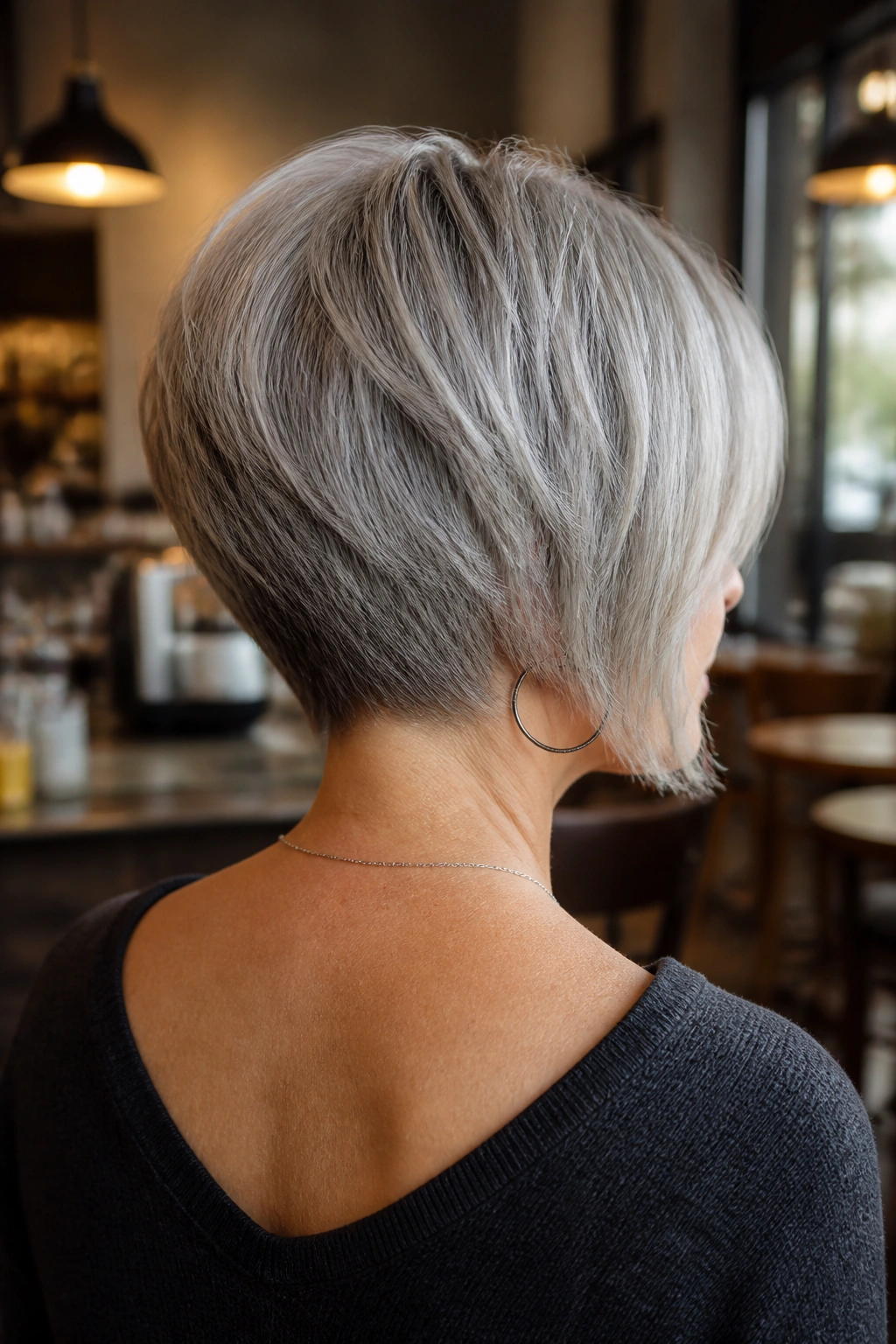
If your hair collapses at the crown by lunchtime, a stacked bob earns its keep. The back is cut a little shorter and graduated so the nape has lift, while the front stays longer and softer. That little bit of structure can make fine hair look like it has more body than it actually does.
How to Ask for It
Be specific. Ask for graduation at the back, not bulky layers everywhere. Those are not the same thing, and salons sometimes treat them like they are.
- Keep the stack subtle if your hair is very fine
- Ask for weight removal only where the hair feels dense
- Style with root-lifting spray at the crown
- Round-brush the back up and under for a fuller line
A stacked bob can go wrong when it’s too steep. Then it starts looking like a wedge, and nobody wants that. The best versions feel controlled, with the lift sitting just enough to support the crown and nape without screaming about it.
Gray tones make this shape look even cleaner, because the light catches the graduation and gives the cut more dimension. Not more color. Dimension.
4. Side-Part Bob That Tucks at the Jaw
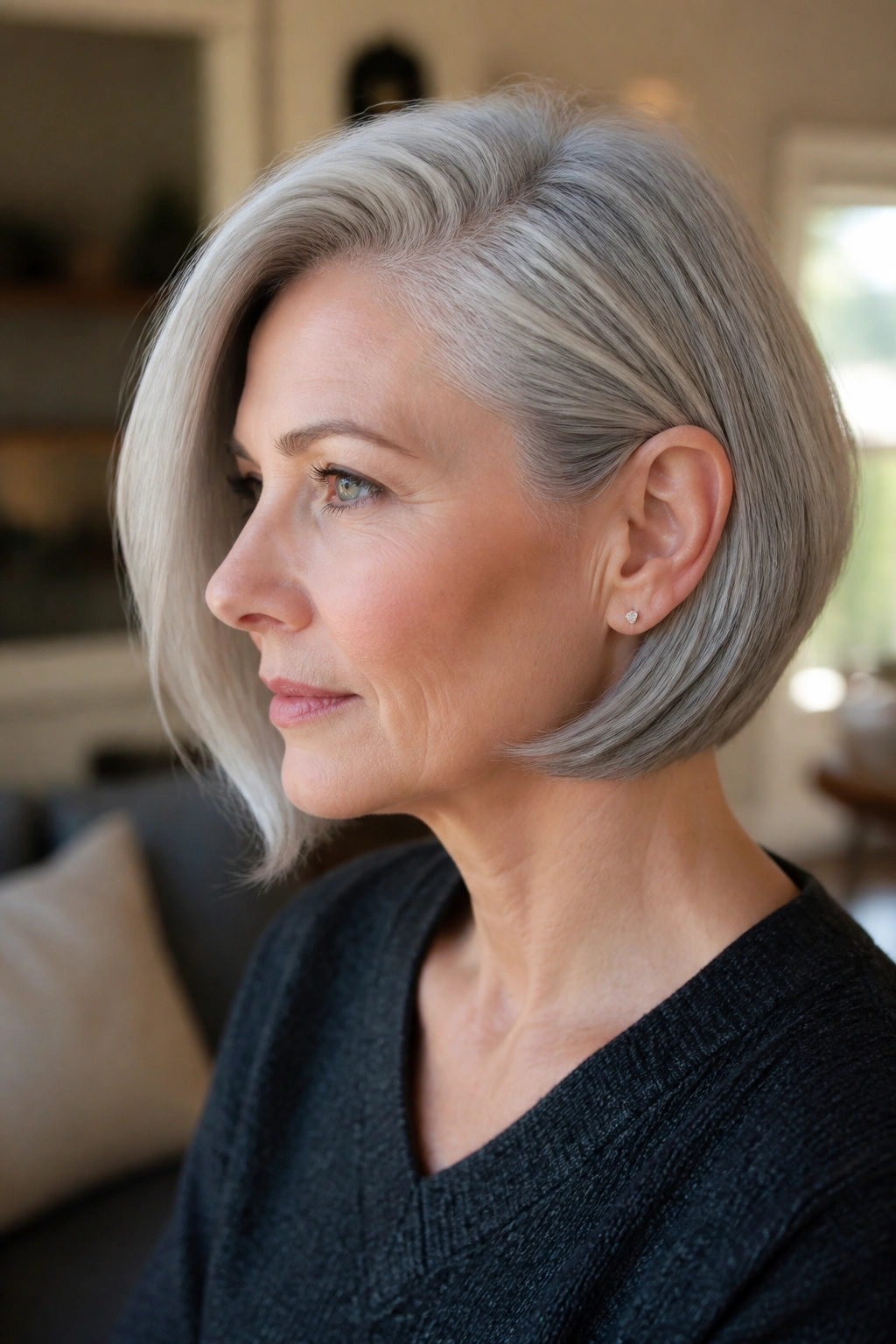
A side part is not old-fashioned. It’s one of the fastest ways to get instant height at the root when fine hair lies too flat on top. Shift the part, tuck one side behind the ear, and the whole bob suddenly looks more alive.
That small asymmetry matters more on gray hair than most people think. Silver strands can look sleek, but they can also make a centered part feel a little severe. A deep side part breaks that line and gives the cut a softer, more flattering tilt.
The tucked side also creates a useful pocket of volume near the jaw. That helps the face look less long and the hair look less narrow. It’s a small visual trick, but it works.
Wear it with a light mousse or volumizing lotion at the roots, then blow-dry the part side against the direction it wants to fall. That tiny bit of resistance is what lifts the root. Simple. Annoyingly effective.
5. Feathered Collarbone Gray Bob

The collarbone-length bob has a different personality. It brushes the collarbone, sways a little when you walk, and gives fine gray hair room to move without dropping into limp territory. That extra length can be useful if you want softness around the face but still need the look of fullness.
Feathering the ends keeps the cut from feeling heavy at the bottom. Not chopped. Feathered. There’s a difference, and it shows. The line should still read as a bob, but the last inch or two can have a softer edge so the hair doesn’t sit in one flat sheet.
This is one of those cuts that looks better when it’s not over-styled. A little bend at the ends, a small lift at the crown, and you’re done. If you push it into too much curl, the fine strands can start to separate.
That little bit of weight matters.
A collarbone bob also gives you room to tuck it behind the ears, pin one side back, or wear it half-up when you’re tired of dealing with it. That kind of flexibility is underrated.
6. Sleek One-Length Gray Bob with a Glassy Finish
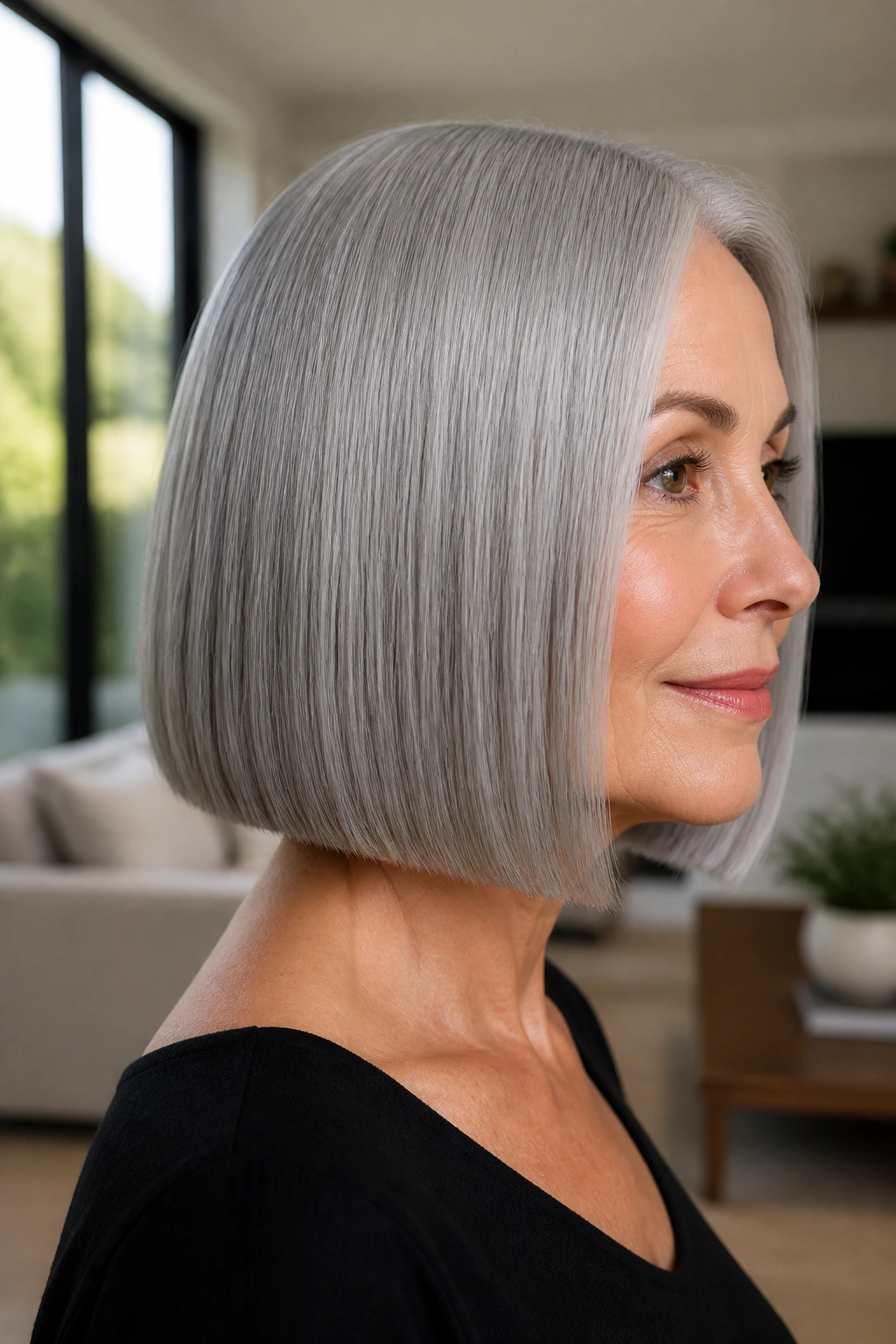
Unlike heavily layered cuts, this one bets everything on a clean perimeter and smooth shine. A one-length bob can make fine gray hair look denser because the eye sees one solid shape instead of a bunch of broken pieces. Gray hair, especially when it’s bright silver or salt-and-pepper, often looks best when the cut is simple enough to let the color line do the work.
This style sits well on hair that already lies fairly straight. If you’ve got only a small wave, that’s fine; blow-drying with a paddle brush usually smooths it into place. If your hair is stick-straight and flat, ask for a little internal support at the crown rather than layers through the ends.
Use a tiny amount of shine cream on the last 2 to 3 inches only. Too much product near the root will flatten the whole thing. And if you want the glassy finish, heat protectant before a flat iron pass is not optional.
A one-length bob feels a bit formal, but not stiff. That is the point. It gives gray hair the kind of sharpness that makes the whole cut look deliberate instead of accidental.
7. Micro Gray Bob That Stops at the Cheekbone
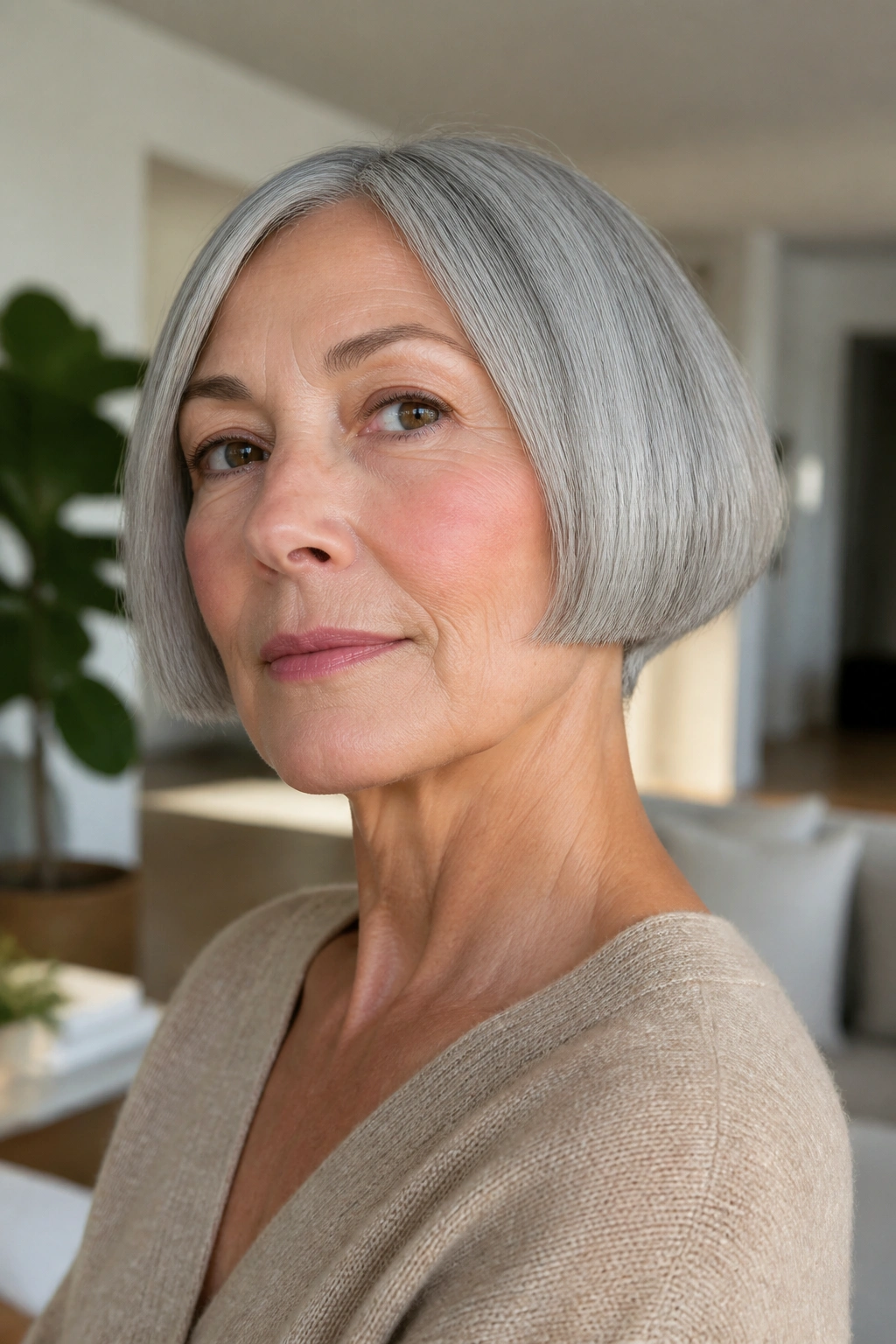
Short hair can be scary. Fine hair usually gets blamed for that, but the real issue is often length. If the hair hangs too long, it spreads out and looks thinner. A micro bob fixes that by keeping everything inside a tight, cheekbone-grazing band.
What to Watch For
This one is not for someone who wants a soft, forgiving cut. It shows the face. It shows the neck. It also shows whether your stylist knows how to cut fine hair without taking too much off the perimeter.
- Keep the edges blunt or only lightly textured
- Leave enough length to tuck one side if you want variation
- Works best when the hair has a bit of natural straightness
- Needs regular trims because even 1/2 inch changes the shape fast
The upside is obvious once you see it in motion. The hair feels lighter, the jawline gets more attention, and the gray color looks crisp instead of washed out. If you like a clean, architectural shape, this is one of the strongest options on the list.
It’s bold. No pretending otherwise.
8. Wavy Gray Bob with Loose Bends

Can a bob have movement without losing body? Absolutely, if the bend is loose and the cut keeps enough line at the bottom. A wavy gray bob works best when the waves are broad, not beachy to the point of frizz. Think soft S-shapes, not tiny spirals.
The best version starts with a bob that’s already structured. Fine hair needs that structure, or the waves will just blur into softness. Then you add movement with a curling iron or flat iron, wrapping sections away from the face and leaving the last inch straight for a modern finish.
Use a light mousse before drying and a small mist of flexible-hold spray after styling. Heavy salt sprays can make gray hair feel rough, and rough is the enemy here. You want touchable texture, not crunch.
This cut looks good because it gives the illusion of fullness from several directions at once: shape at the bottom, lift at the crown, and a little motion through the middle. It’s one of the easiest ways to make fine gray hair feel less precious and more lived-in.
9. Asymmetrical Bob with a Longer Front
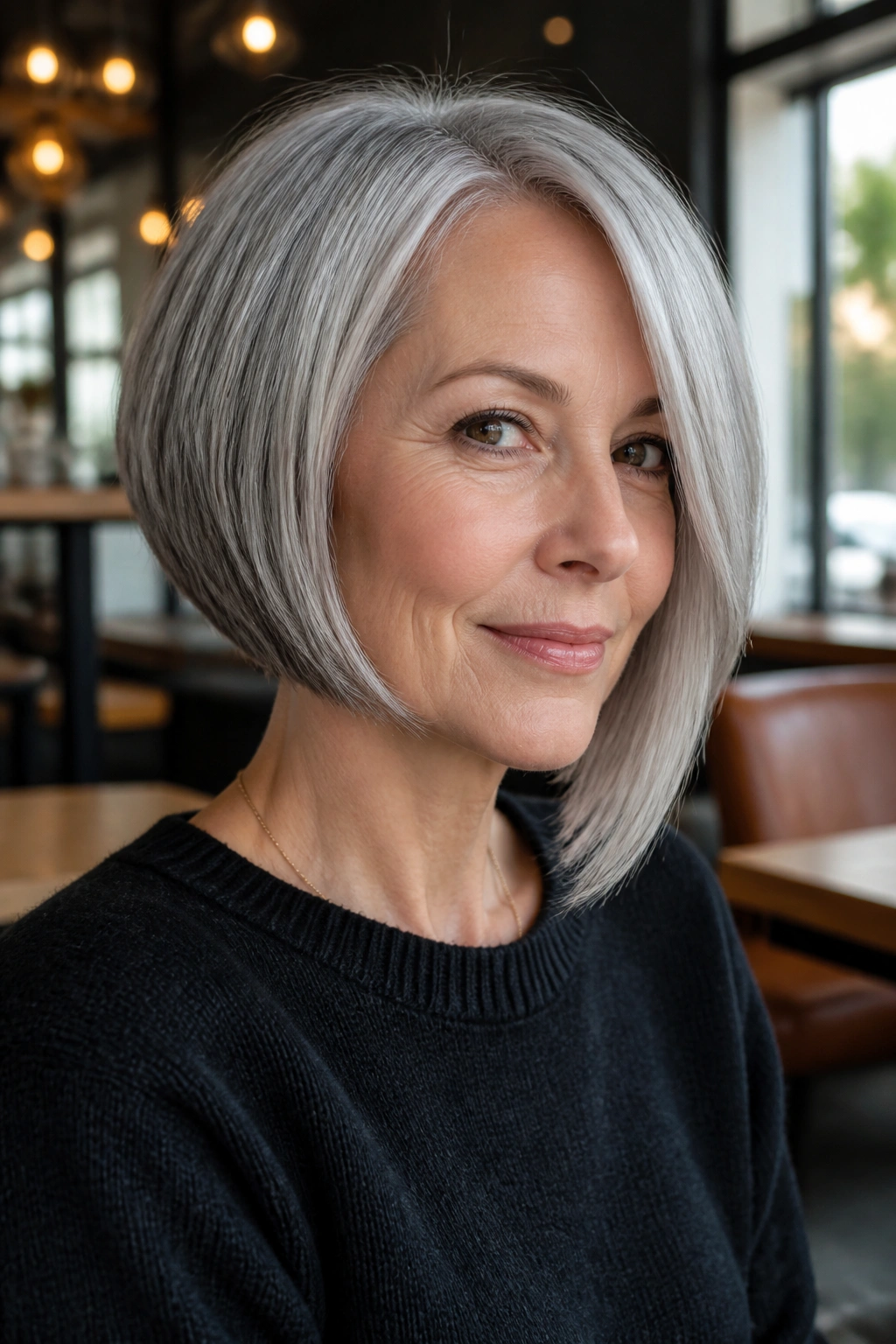
Some cuts look fuller because the eye has to travel. That’s the entire trick with an asymmetrical bob. One side sits a little longer than the other, and the difference pulls attention forward, which helps fine hair appear more substantial than it really is.
The asymmetry does not need to be dramatic. In fact, a difference of 1 to 2 inches is usually enough. Go too far and the cut starts looking like a statement piece instead of a daily haircut. Most people want the first reaction to be, “That looks good,” not, “Wait, is one side shorter?”
Gray hair makes this shape read even more clearly because the line is clean and the contrast between sides shows up fast. It’s a strong choice if your hair is straight and your face likes a little edge.
Wear it with a side part and a touch of smoothing cream on the longer side. That keeps the angle visible and prevents the ends from puffing out. The cut does the talking; the styling should stay quiet.
10. Curly Gray Bob with a Rounded Shape
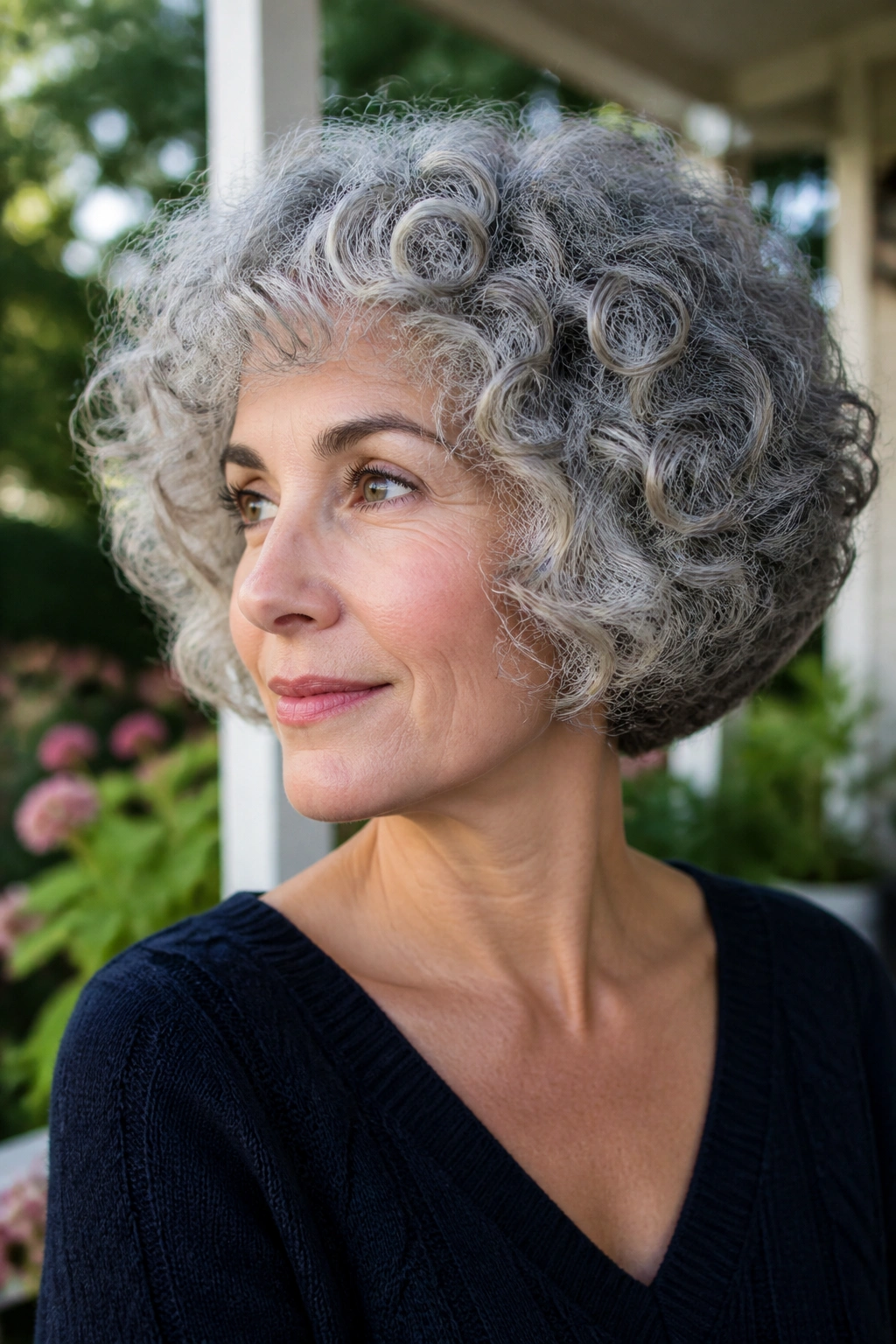
Fine hair and curls can work together, but only when the silhouette is handled with care. A rounded bob keeps curl patterns in a compact shape so the hair doesn’t spread out at the sides and lose density. That is the whole battle with fine curly gray hair: you want movement without the halo effect.
A dry cut helps here, because curly hair lies to you when it’s wet. What looks even in the sink may shrink differently once it dries. The rounded shape should be built around the curl pattern, not against it.
How to Keep It from Collapsing
Use a lightweight curl cream, then diffuse on low heat with your head tipped slightly to one side. Let the curls dry partway before you touch them. That pause keeps them from frizzing into each other.
A rounded bob is especially good if your gray curls are soft rather than springy. It keeps the cut tidy and gives the face a little frame without pretending the texture is something else. That honesty is what makes it work.
11. Bob with Curtain Bangs

Curtain bangs can save a bob that feels a little too plain. The fringe splits in the middle and drapes to the sides, which softens the forehead and adds a line of movement around the face. On fine gray hair, that movement is useful because it gives the eye more to look at without adding bulk everywhere.
The bangs should blend into the bob, not sit on top of it like a separate piece. If they are cut too short, they can expose thinness at the front and make the style fussier than it needs to be. Longer curtain bangs, usually cheekbone length or just below, are easier to live with.
A round brush helps when you blow-dry them. Roll the bangs away from the face, then let them fall naturally. If they flip too much, they’ll look like a styling mistake instead of a choice.
This is one of the softer options on the list, and that softness can be a gift. Gray hair can look sharp in a bob; curtain bangs take the edge off without stealing the shape.
12. Side-Swept Bang Gray Bob

A side-swept fringe is the quieter cousin of curtain bangs. It slides across the forehead instead of parting in the middle, and that small sweep gives fine hair a little lift at the front where it often needs it most. It also works well if you dislike how full bangs sit against the skin.
Unlike blunt fringe, side-swept bangs do not box the face in. They open the forehead, soften a strong brow, and let the rest of the bob stay simple. That makes the haircut easier to wear with glasses, earrings, or a high collar.
This cut suits people whose hair falls a little flat on top but still has decent movement through the front. Ask for the bangs to start long enough to tuck behind the ear if you change your mind. That flexibility is worth more than another half-inch of drama.
A touch of root spray at the front can keep the sweep from sticking to the forehead. Then let the ends fall where they want. This is not a fussy cut. It behaves best when you stop trying to micromanage it.
13. Inverted Gray Bob
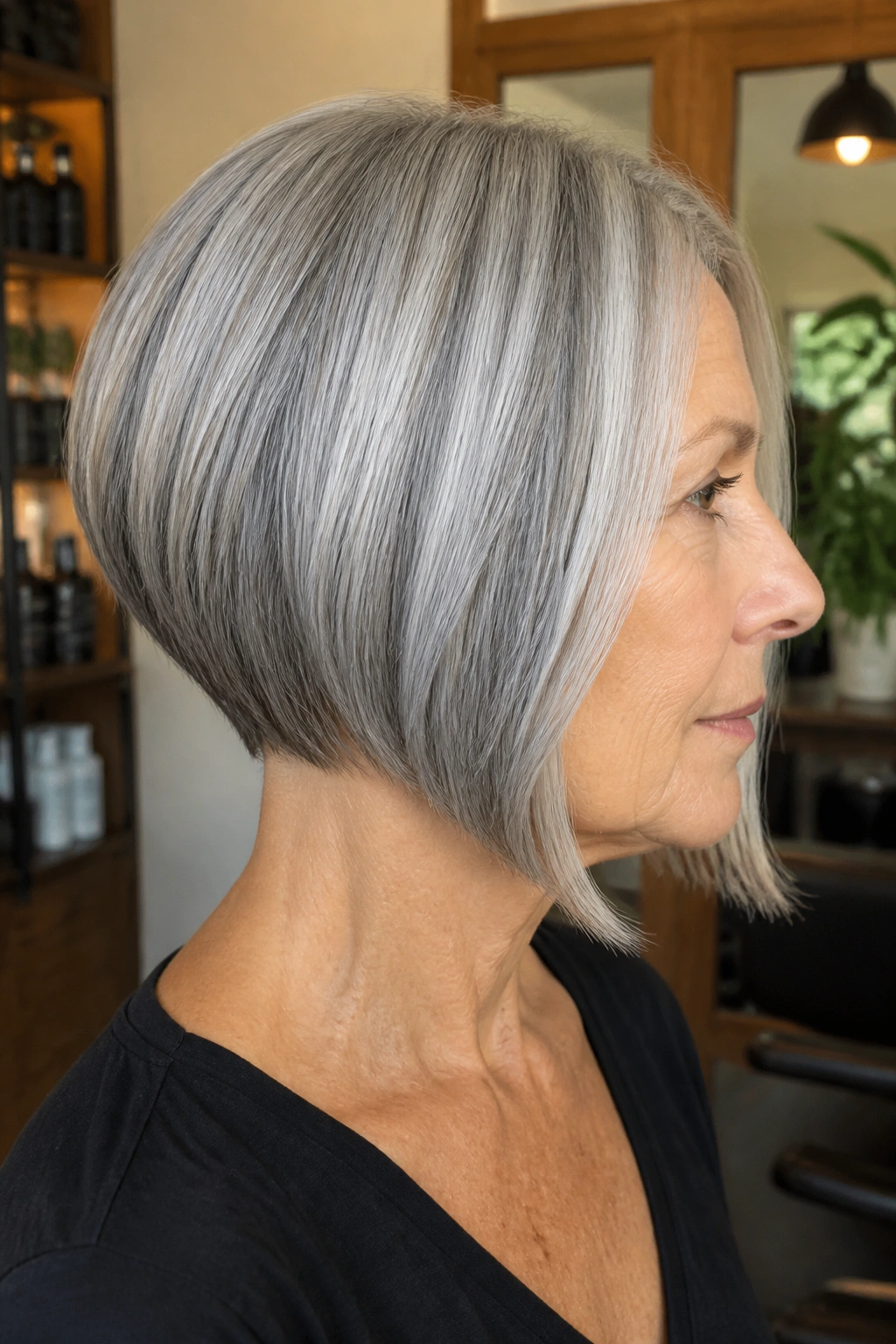
A steep angle at the back is a fix for one of the most annoying problems in fine hair: a flat nape with no shape. An inverted bob keeps the back shorter and the front longer, which makes the whole cut feel lifted even when the hair itself is soft.
The angle should be clean, not extreme. If the front gets too long, the bob stops looking compact and starts looking like a grown-out shape. The charm of an inverted cut is in the contrast — short at the back, longer through the jaw, tidy all the way around.
Best For
- Hair that needs more volume through the crown and nape
- Straight to lightly wavy textures
- Faces that like a sharper line around the jaw
- People who don’t mind frequent neck trims
Gray hair gives this cut a crisp outline, which is part of why it works so well. The silver shade makes the angle obvious. That can be a good thing if you want the style to feel polished and structured, not soft and sleepy.
14. Shaggy Bob with Piecey Texture
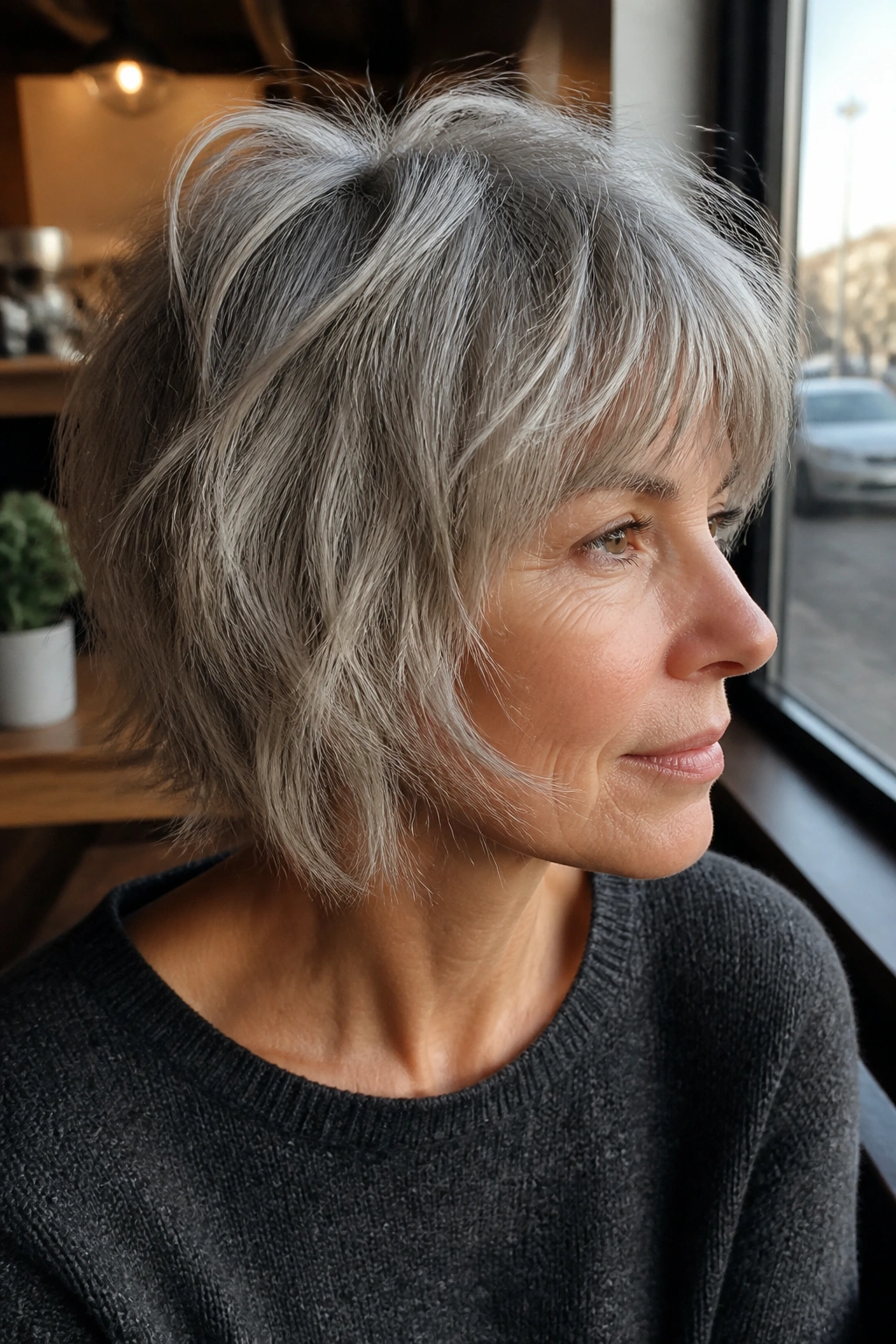
What if your fine gray hair looks better with a little mess? That question matters, because not every bob needs to be sleek. A shaggy bob adds broken-up texture through the crown and sides, which can make the hair appear fuller by creating more visible movement.
The key is controlled mess. You want piecey ends, not a chopped-up outline that falls apart by noon. The best shaggy bobs keep enough perimeter to anchor the style, then lighten the inside layers so the hair can move.
This cut likes a rough-dry. Scrunch in a lightweight mousse, blast the roots upside down for a minute or two, then let the rest dry naturally. Finish with a dab of texturizing paste at the ends. Too much, and you’ll get separation that looks dry instead of intentional.
It’s a good choice if you prefer hair that looks a little undone. Gray strands can take on a soft, airy quality in this shape, and that can be lovely when the cut is handled with restraint. Too much, though, and it turns into frizz. The line between those two is thinner than people think.
15. Jaw-Length Bob with Razored Ends
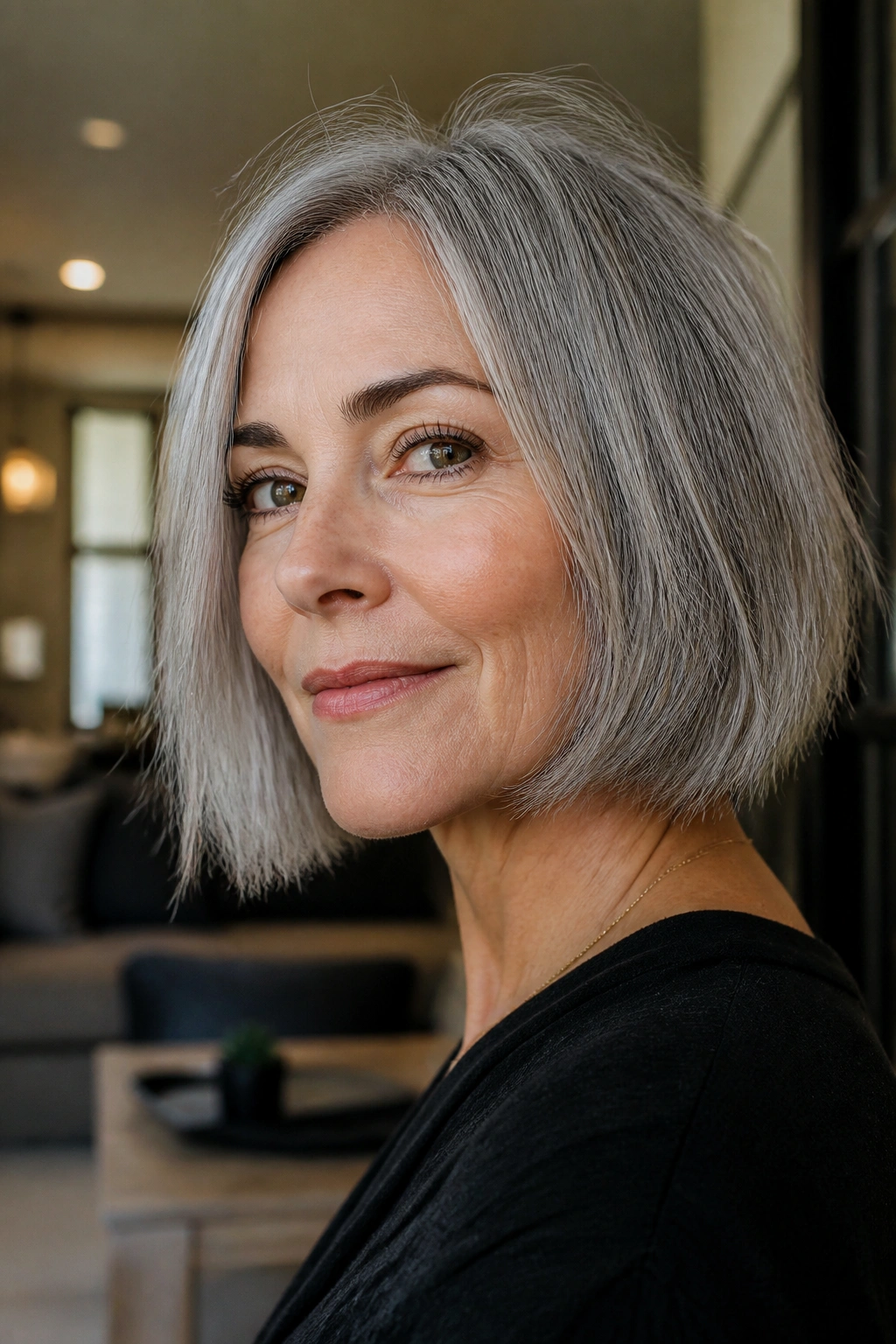
When blunt lines feel too heavy, a jaw-length bob with razored ends can be the relief cut. The length gives fine gray hair a little body, while the razor-softened ends take away the hard edge that sometimes makes short bobs look boxy. The result is lighter and more flexible around the face.
Where Razoring Helps and Where It Hurts
A razor can be useful on fine hair when it is used only at the ends. It can also be a disaster if the stylist slices too far into the body of the cut. Fine hair does not need to be thinned out just because it’s fine.
- Best used on the last 1 to 2 inches
- Avoid heavy razoring at the crown
- Works well if your hair has a slight bend
- Ask for the perimeter to stay intact
This style is especially nice if your gray hair feels a little wiry at the ends. A soft, razored finish can keep the silhouette from feeling blunt in a harsh way. It’s subtle, but subtle is the whole point.
16. Rounded Bob with a Soft Under-Curve
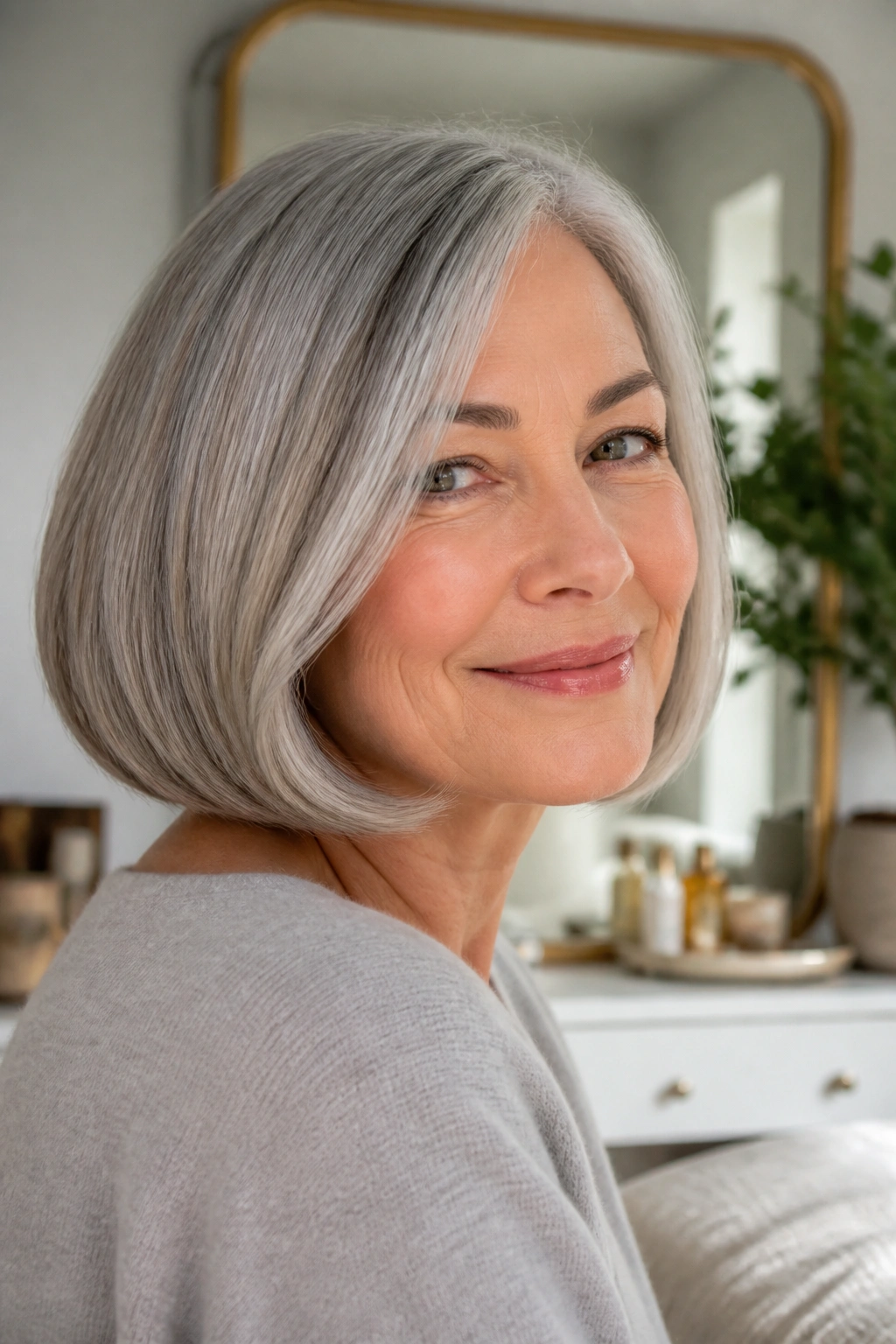
A rounded bob is one of those cuts that sounds fussy and turns out to be surprisingly easy to wear. The hair curves gently under at the ends, which gives the impression of fullness at the bottom and a neater shape around the head. Fine gray hair benefits from that kind of controlled contour.
This is not a helmet. That would be terrible. The curve should be soft, almost invisible in motion, so the hair looks polished rather than fixed in place.
The style works best with a round brush and a medium-hold mousse. Blow-dry the ends under, then let the roots stay a little loose so the shape doesn’t feel stiff. If your hair is naturally straight, the bob will likely hold this curve with very little effort. If not, it may need a quick pass with a brush each morning.
It’s a quiet haircut, which is why people sometimes overlook it. They shouldn’t.
17. Layered Bob with Face-Framing Pieces
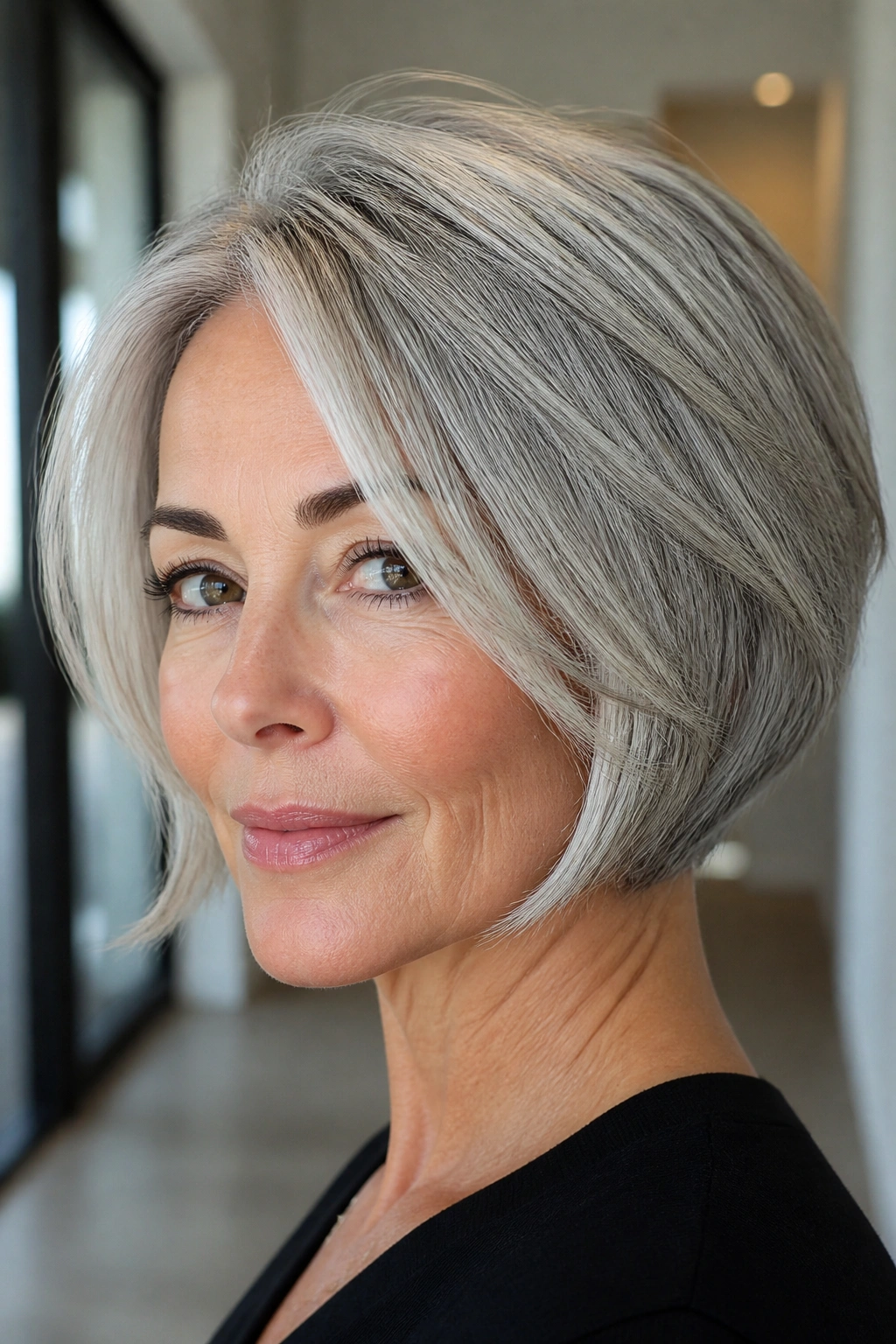
The shortest pieces around the face do a lot here. They flick near the cheekbones, soften the jaw, and stop the bob from feeling like one hard block of hair. On fine gray hair, those pieces can add the kind of movement that makes the whole cut feel lighter without stripping away too much bulk.
The back should stay fairly solid. That is the part many stylists get wrong when they over-layer fine hair. If the layers run all the way through, the cut loses its body and starts looking see-through at the bottom. Face-framing pieces alone are enough for most people.
This style works especially well if your face likes a little softness near the cheeks or if you wear your hair tucked behind one ear a lot. The front pieces then act like a built-in frame rather than a random extra detail.
A small round brush or even a quick bend with a flat iron can help the pieces swing forward instead of sticking out. Keep it light. That’s the whole game.
18. Deep Side-Part Gray Bob with Built-In Volume
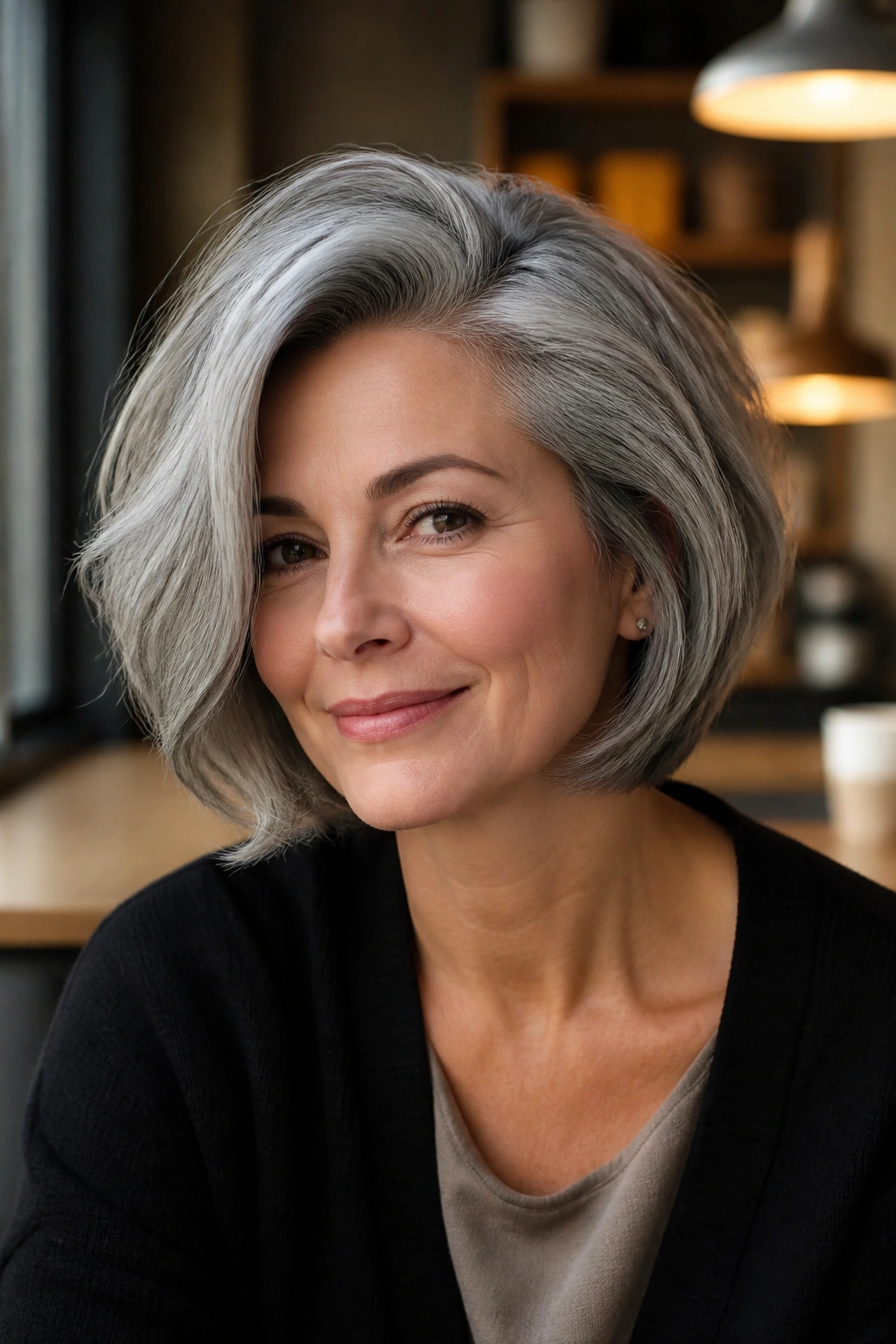
A deep side part is one of the fastest ways to make a fine gray bob look fuller at the crown. The hair lifts where it’s pushed across the head, then falls into a larger, more dimensional shape on the heavier side. That simple shift can change the whole read of the haircut.
This cut is especially useful if your roots go flat no matter what you do. The part creates instant height, and the bob underneath keeps the shape from drifting away. It’s a clean fix, not a noisy one.
A little root spray at the part and a quick blow-dry in the opposite direction for 20 to 30 seconds can make the lift last longer. Then brush it back into place and let it settle. The style should feel like it has air under it, not product sitting on top of it.
If you want one bob that looks friendly, polished, and not too precious, this is the one I’d put near the top of the list. It does the quiet job well, and on fine gray hair, that is usually the smartest place to start.
