



Fine hair has a funny habit of telling the truth. Cut it too long, and it slumps. Thin it too much, and it starts to look see-through at the ends. That is why an inverted wavy bob for fine hair works so well when the cut is done with a steady hand and a little restraint.
Length is not always the answer.
A good inverted bob does two jobs at once: it builds shape at the back and keeps enough length in front to soften the face. Add loose waves, and the whole cut picks up body without asking your hair to do anything dramatic. That matters for fine strands, because fine hair usually needs structure more than it needs volume-heavy styling tricks.
The trick is in the balance. Too many choppy layers can make the ends look stringy. Too much curl can expose gaps. A cleaner outline, a little graduation in the back, and waves that move rather than puff are usually the sweet spot.
So if you want a cut that looks fuller, sits neatly, and does not demand a wrestling match with a round brush every morning, these are the versions worth paying attention to. The first one is the easiest place to start.
1. Chin-Length Inverted Bob for Fine Hair with Soft Waves
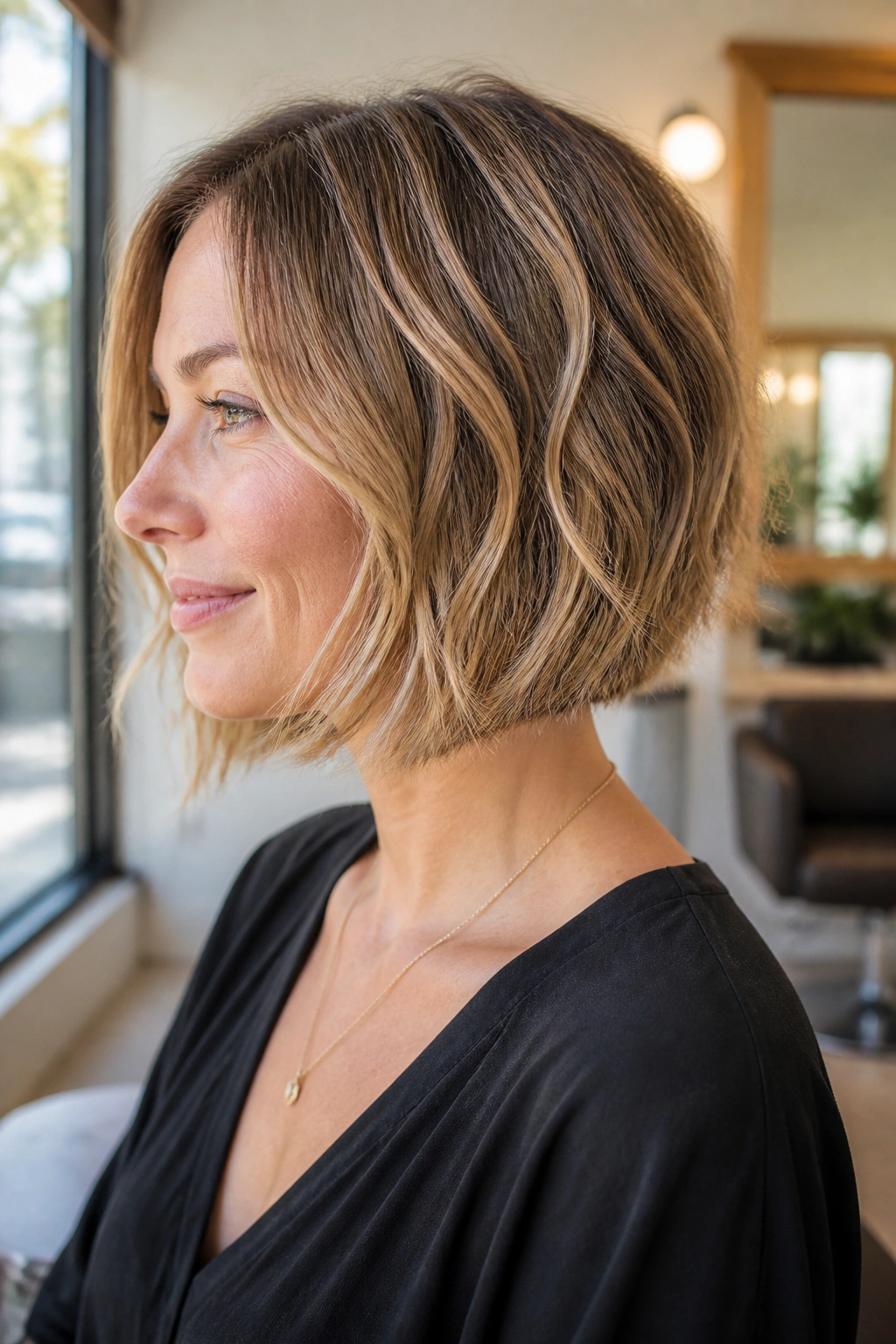
This is the cut I’d hand to someone who wants the safest bet. The front grazes the chin, the back sits a bit shorter, and the whole shape keeps fine hair from collapsing into a flat curtain by lunchtime.
Why it works
The chin-length line gives your hair a stronger visual edge. Fine strands look denser when the outline is clean, and the slight angle from back to front adds movement without eating up too much thickness at the ends.
Ask for a soft graduation at the nape, not a stacked pyramid. That keeps the back lifted but still smooth. A loose bend through the mid-lengths is enough; you do not need a tight curl pattern here.
- Best for hair that lies flat at the crown
- Works well with a 1-inch curling iron or a flat iron bend
- Keeps styling time low
- Makes jawlines look sharper
One good rule: keep the waves loose and separate, not brushed into one big swoop.
2. Stacked Crown Bob with Barely-There Waves
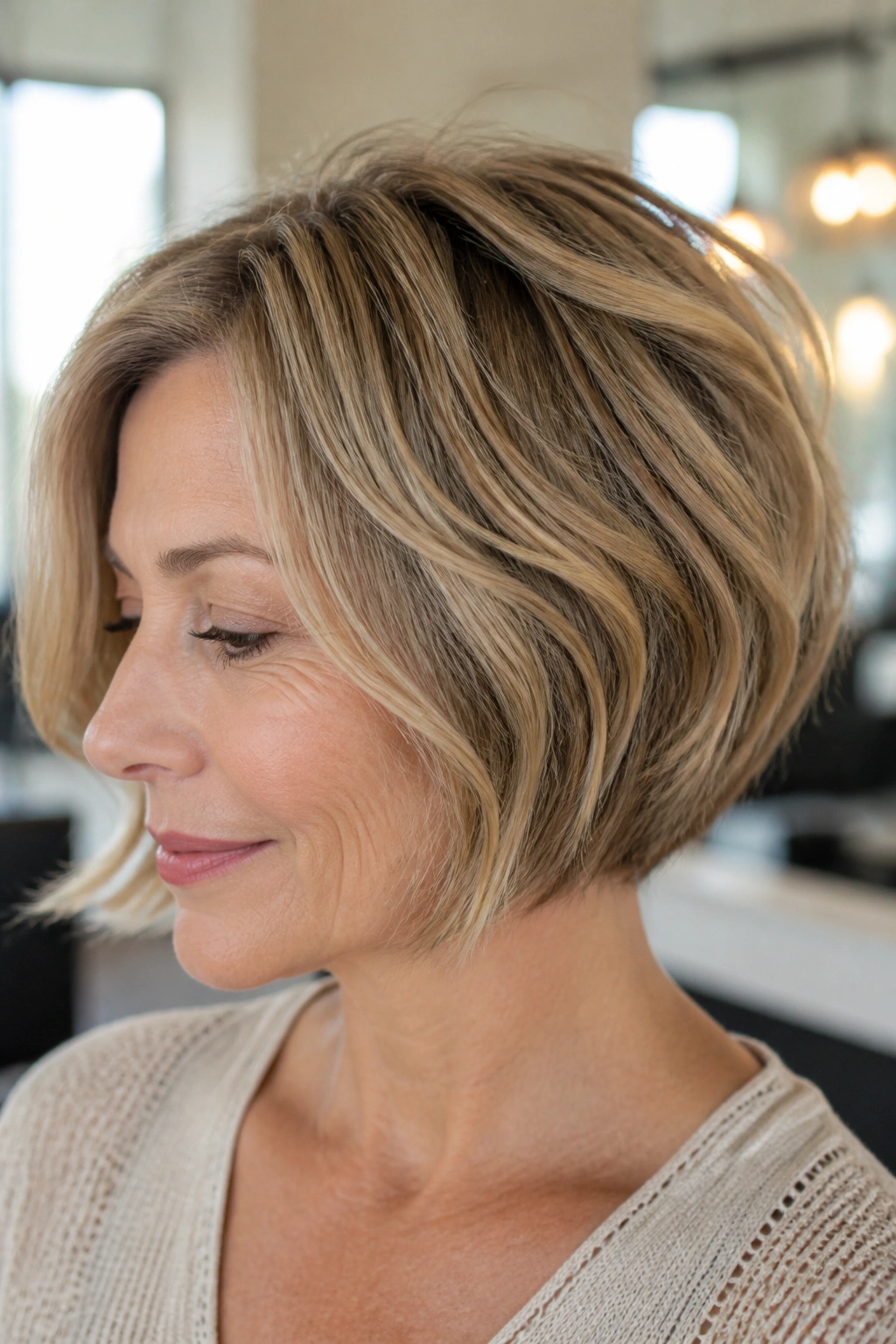
This is the cut that makes people think your hair has more of it. The stacked back builds height where fine hair often needs help, and the soft waves stop the whole thing from looking helmet-like.
A little stack at the crown creates lift at the roots, which is where fine hair usually falls limp first. The front should stay longer and softer, because if you overbuild the back, the shape can start looking old-fashioned fast. I like this version best on hair that has some natural body but loses it the second humidity or a hoodie gets involved.
The styling is simple. Blow-dry the roots with a small round brush, then add a few bends through the ends with a curling wand. Leave the waves slightly imperfect. Perfect curls are the enemy here.
A decent mousse at the roots helps, but don’t drown the hair in product. Fine strands go sticky fast.
3. Collarbone Inverted Lob for Fine Hair
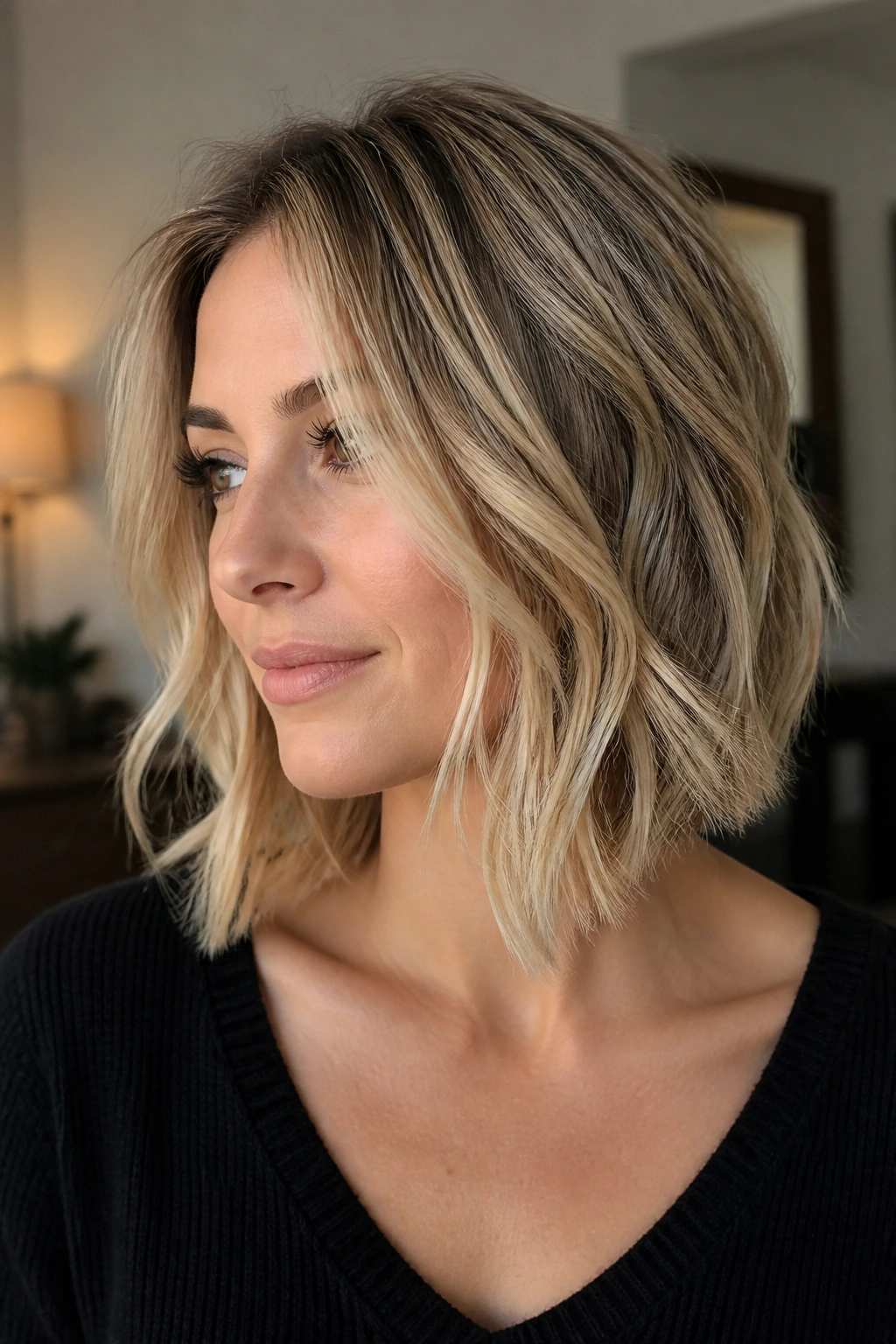
Can a longer cut still work on fine hair? Yes, if the shape is doing real work. The collarbone inverted lob keeps length around the face while lifting the back just enough to stop that heavy, dragged-down look.
How to wear it
The sweet spot is usually a front length that hits right around the collarbone, with the back sitting a few inches shorter. That little angle is what keeps the cut from reading as plain long hair with a wave in it. It also gives you more room to tuck one side behind the ear without losing the shape.
This is a good choice if you like to put your hair up sometimes. The front is long enough for a half-up clip, but short enough that the style still looks deliberate when worn down. A side part helps even more. Fine hair often looks fuller when the weight is shifted off the middle.
Best styling move: dry the roots first, then wave only the top layer. That keeps the ends from getting too soft and wispy.
4. Side-Parted Inverted Bob with Airy Face Framing
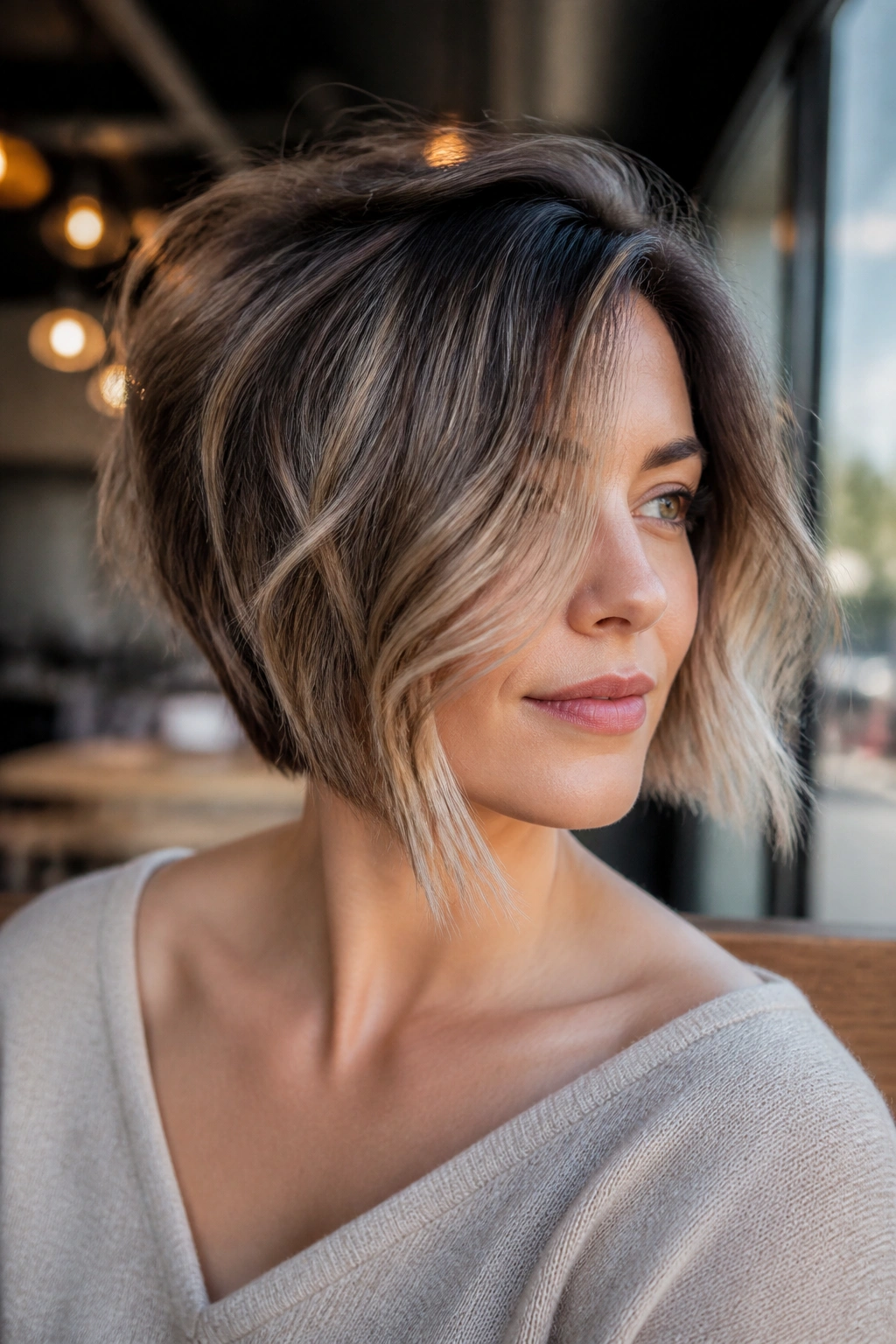
A deep side part can rescue a bob that feels too polite. On fine hair, the shift in weight adds instant lift, and the longer front pieces give the face a softer edge.
Picture this: the hair is cut shorter in the back, longer toward the front, and swept over from one side so the crown gets a little extra rise. That one detail changes everything. Fine hair often needs a visual break, and a side part gives it without making the cut fussy.
What to ask for at the salon
- A softly angled perimeter
- Face-framing pieces that start around the cheekbone
- Enough length on one side to tuck behind the ear
- No heavy internal thinning near the ends
The best part is how easy it is to style on days when you’re in a rush. Bend just the front sections away from the face, mist with a light spray, and leave the rest alone. You want movement, not a finished blowout that eats half the morning.
5. French-Inspired Bob with Soft, Undone Waves
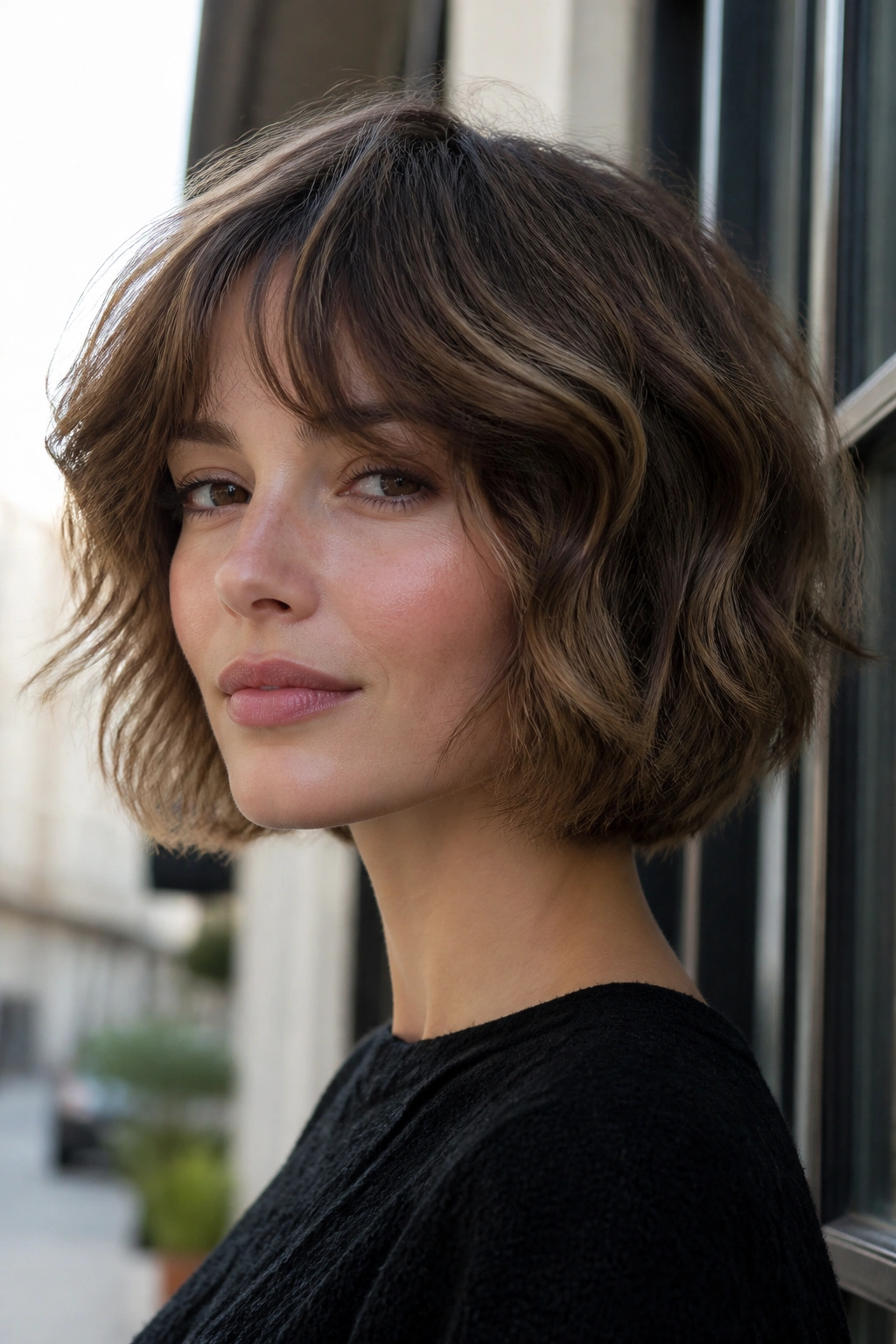
Unlike a super sleek bob, this one is meant to look touched, not perfected. That makes it a smart match for fine hair, because a little mess reads as texture instead of damage.
The French-inspired version usually sits around the jaw or just below it, with a rounded shape and waves that fall in loose, uneven sections. The front is rarely blunt in a harsh way; it’s softer, almost as if the hair bent there on its own. Fine hair tends to look more expensive when the line is clean but the finish stays casual.
This cut does ask for a bit of styling discipline. If you use too much heat, the ends can fray fast. If you use too little product, the wave disappears. A pea-sized amount of cream through the mid-lengths and a quick pass with a curling iron usually gets the job done.
It suits people who like hair that looks better after it’s been lived in for a few hours. That’s the point, really.
6. Asymmetrical Wavy Bob with a Longer Front
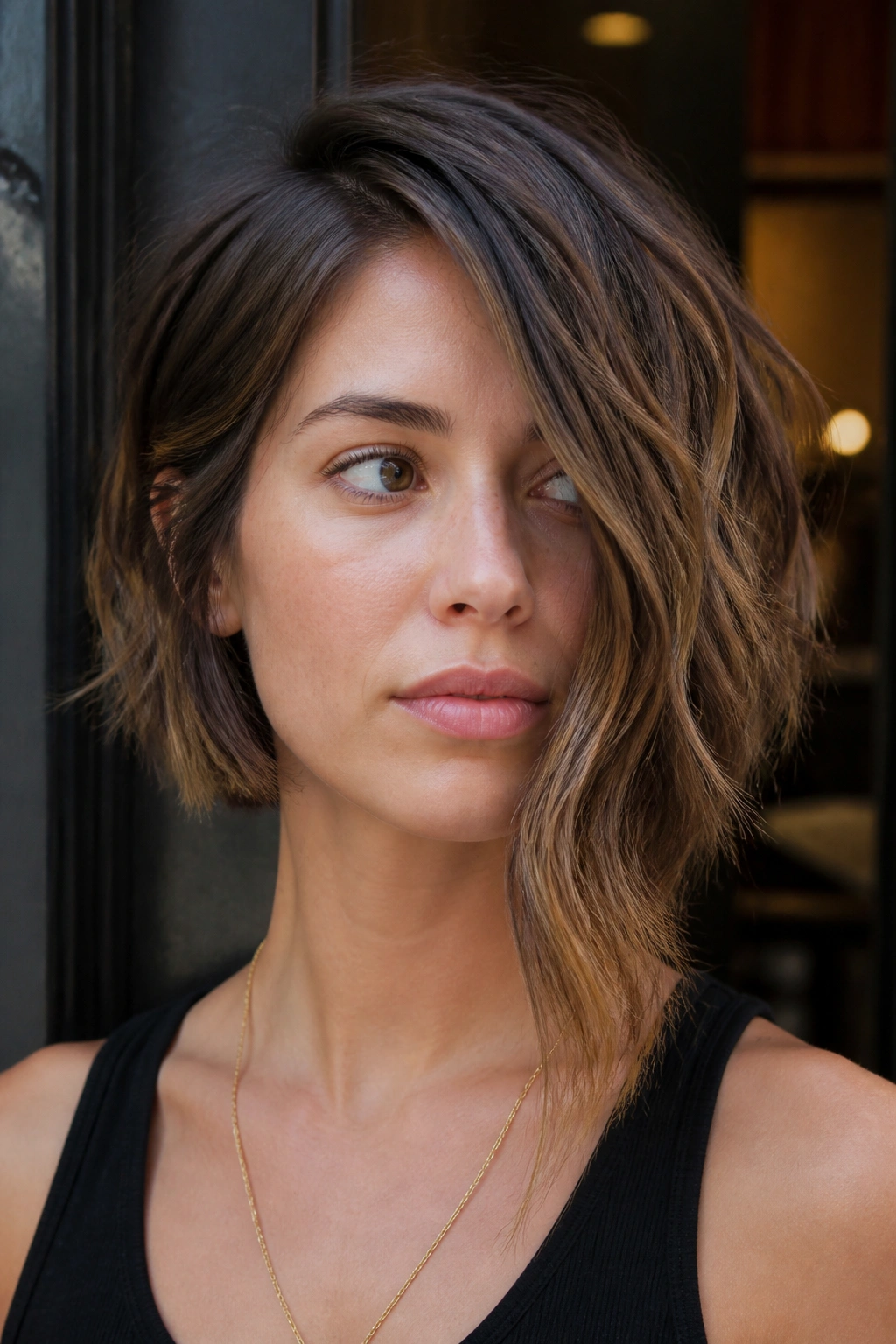
The asymmetrical bob has a little attitude, and fine hair often benefits from that. One side is longer than the other, which keeps the eye moving and gives the cut more visual weight than a perfectly even bob.
The shape in real life
On fine hair, asymmetry works best when the difference is subtle, not theatrical. Think half an inch to 1.5 inches of extra length on one side, not a dramatic angle that screams for attention. The back still needs some graduation, because the whole point is to create shape, not drag the hair down.
Waves make the asymmetry easier to wear. A straight asymmetrical bob can look severe on delicate strands. Add a bend through the front and the cut softens instantly. The longer side can skim the cheekbone or jaw, which gives you a nice face-framing effect without layering too much.
I like this one for people who wear one side tucked behind the ear a lot. It feels intentional. It also gives you a clean way to show off earrings, which is a small thing, but not a meaningless one.
7. Razor-Touched Textured Bob for Fine Hair
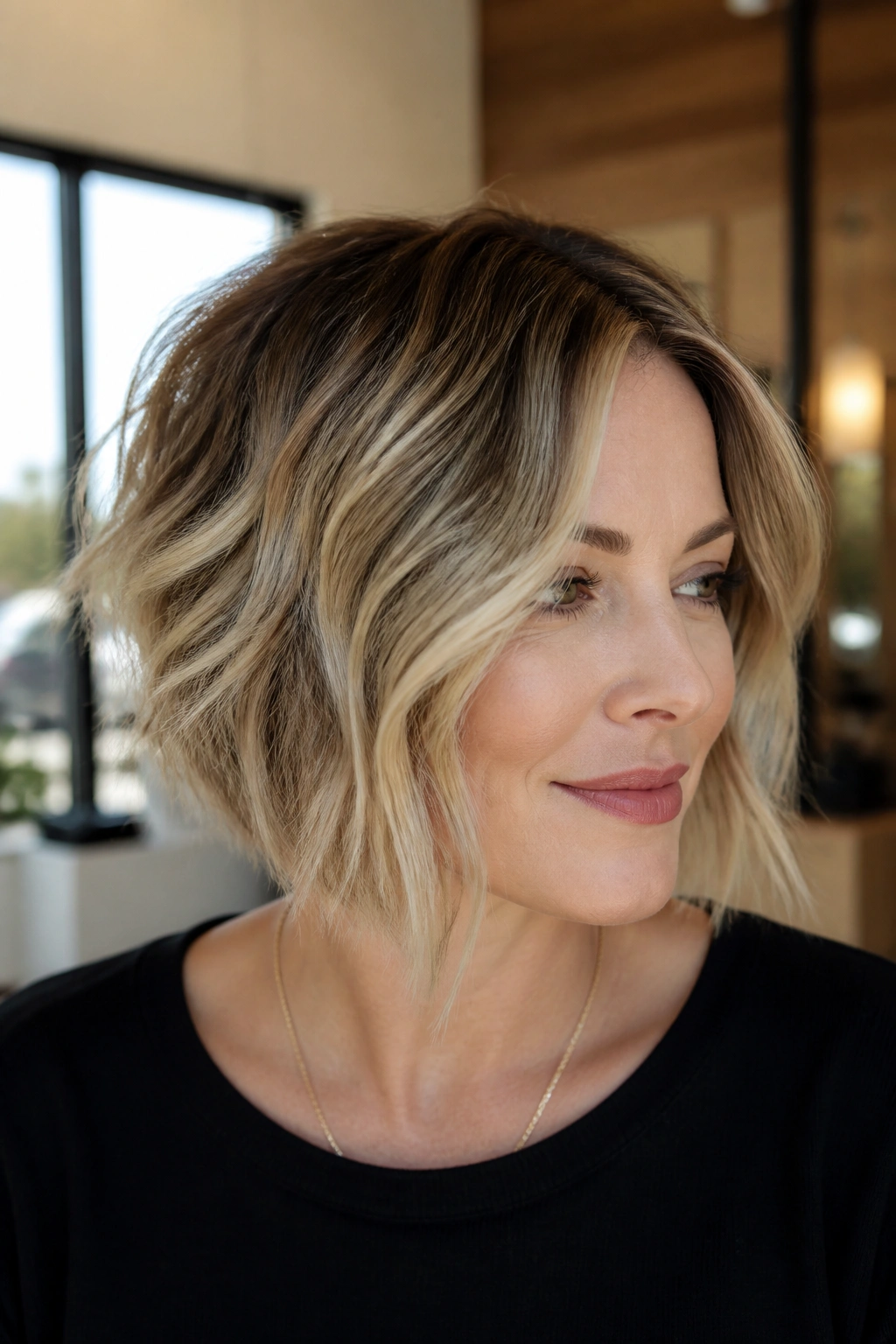
A razor cut can be great on fine hair, and it can also be a disaster. The difference is restraint. A light touch gives the ends movement; too much slicing leaves them ragged and hollow.
This version works when the stylist keeps the perimeter strong and uses the razor only to soften selected pieces. The result is a wavy bob that moves freely but still holds its shape. Fine hair needs that balance because it can lose body fast once the ends get wispy.
What makes it different
- The ends should still look full and deliberate
- Texture should sit mostly in the mid-lengths
- Waves should break up the line, not replace it
- A tiny bit of grit spray helps the piecey finish
Use this cut if you like a lived-in look and don’t mind a little styling. It is not the easiest bob on earth, but it can be one of the prettiest when the texture lands right. The key is not to overdo the razoring. Too much and the shape disappears.
8. Blunt Inverted Bob with Polished Waves
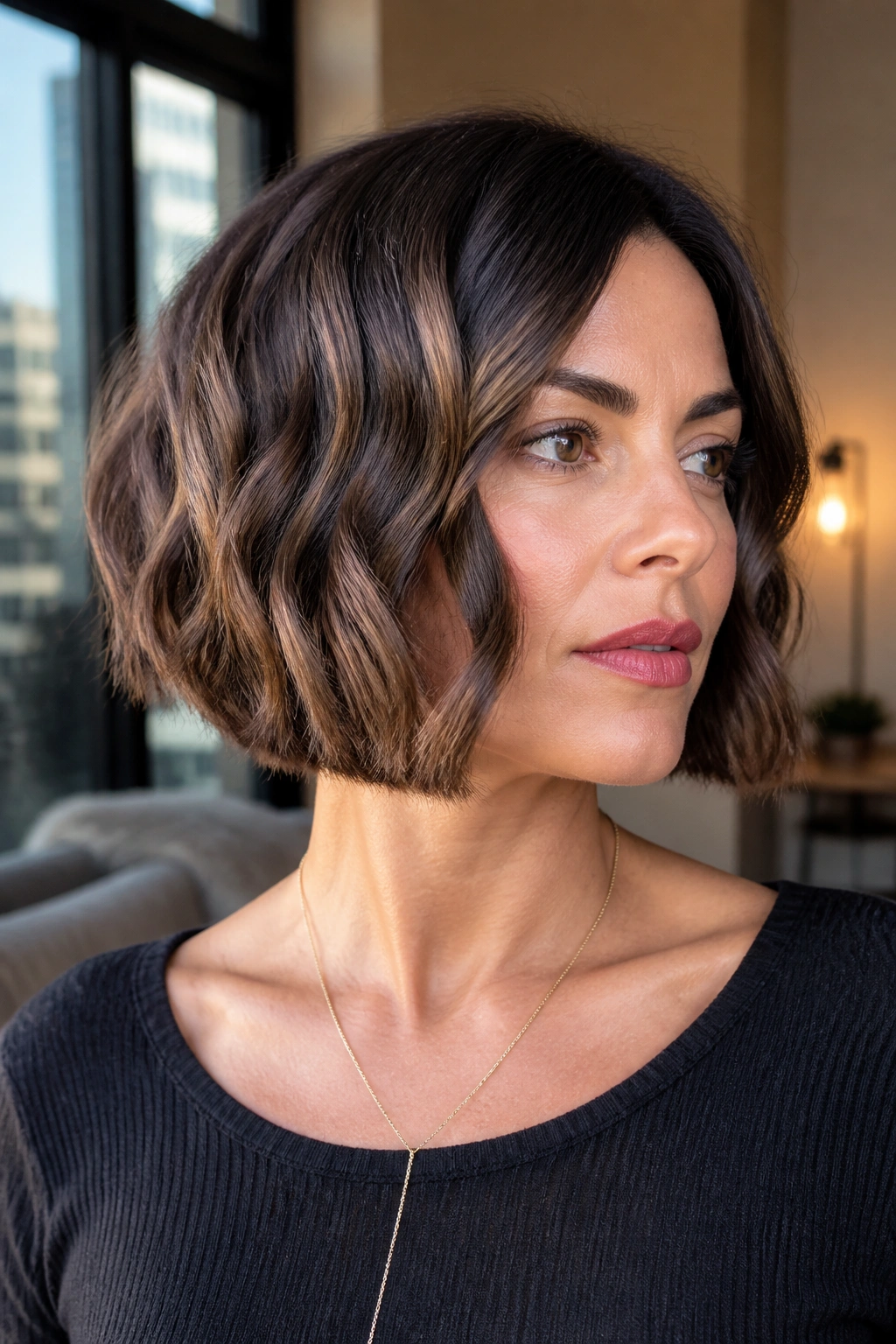
A blunt edge is one of the smartest tricks for fine hair. It makes the perimeter look thicker, which is exactly what you want when each strand is fine and light.
The cut itself is clean and deliberate: shorter at the nape, longer in front, but with very little feathering at the ends. The waves are polished, not fluffy. That combination gives the bob a solid outline, which is helpful if your hair tends to fray at the bottom. A blunt cut also tends to grow out neatly, which is nice if you are not in love with constant trims.
The styling needs a light hand. Wrap sections around a curling wand, hold for just a few seconds, and leave the last inch straighter so the shape stays sharp. Brush it out only once. Overbrushing turns the whole style puffy in a way that can make fine hair look smaller, not bigger.
This is the cut for someone who likes clean lines and wants volume to come from shape, not from messy layering.
9. Curtain Bang Bob with Soft Graduation
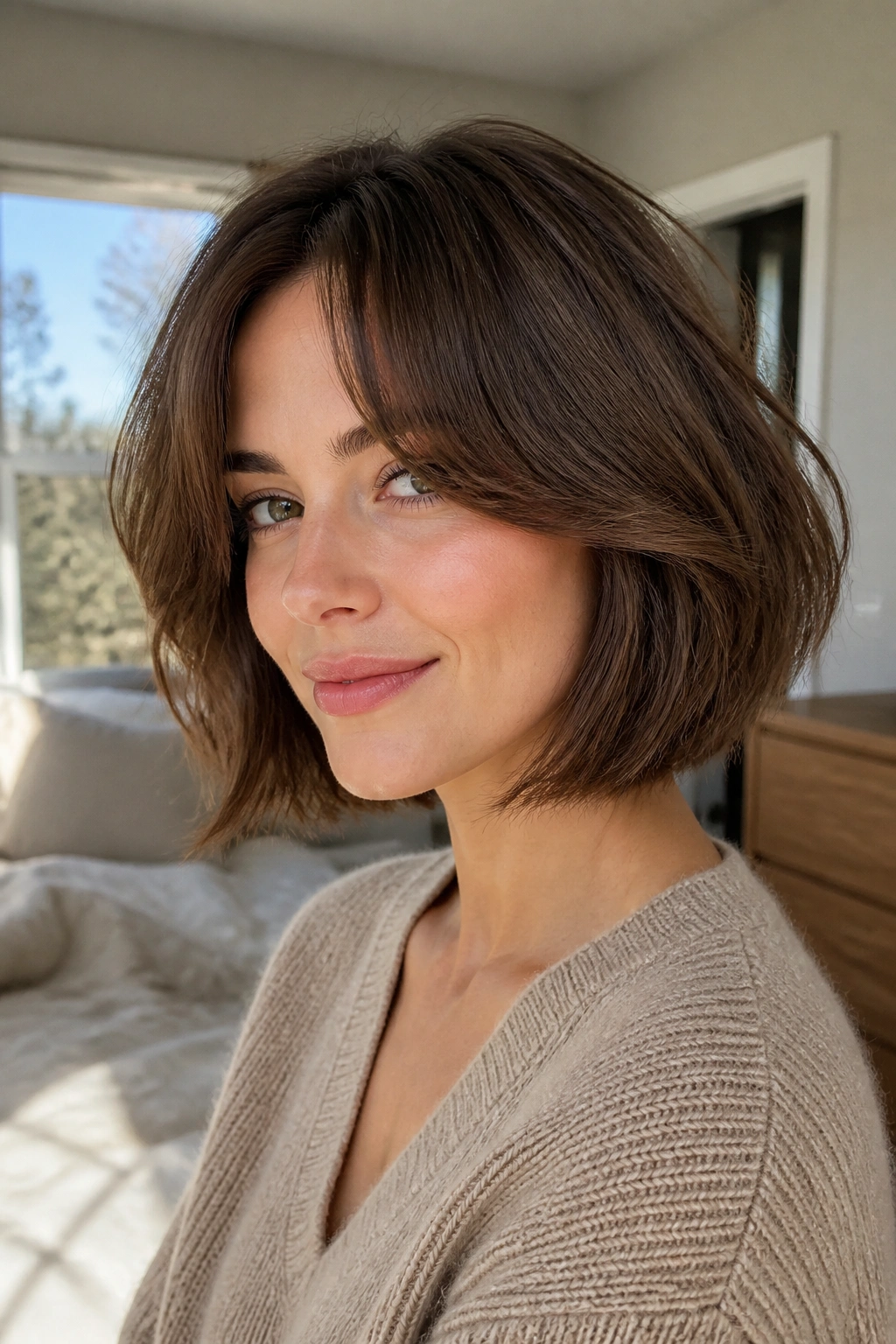
Can bangs work with fine hair? Absolutely, if they’re cut with a little air in them. Curtain bangs can pull attention to the eyes and make a wavy bob feel fuller around the front, which is often where fine hair needs help most.
The trick is not to make the fringe too dense. Heavy bangs can swallow fine hair whole. Curtain bangs should split cleanly in the center or just off-center, with soft edges that blend into the front of the bob. The inverted shape underneath keeps the back from sagging.
How to wear it
Dry the bangs first, using a small round brush or even your fingers, and keep them a little lifted at the roots. Then add loose waves through the rest of the bob. The contrast matters. Straight bangs with a wavy bob can look mismatched if the texture is too different.
This cut is useful if your forehead feels wide or if you want the front of your hair to carry more presence than the back. It has a built-in softness that fine hair often benefits from, especially when the rest of the cut is kept neat.
10. Jaw-Skimming Bob with Tucked-Under Ends
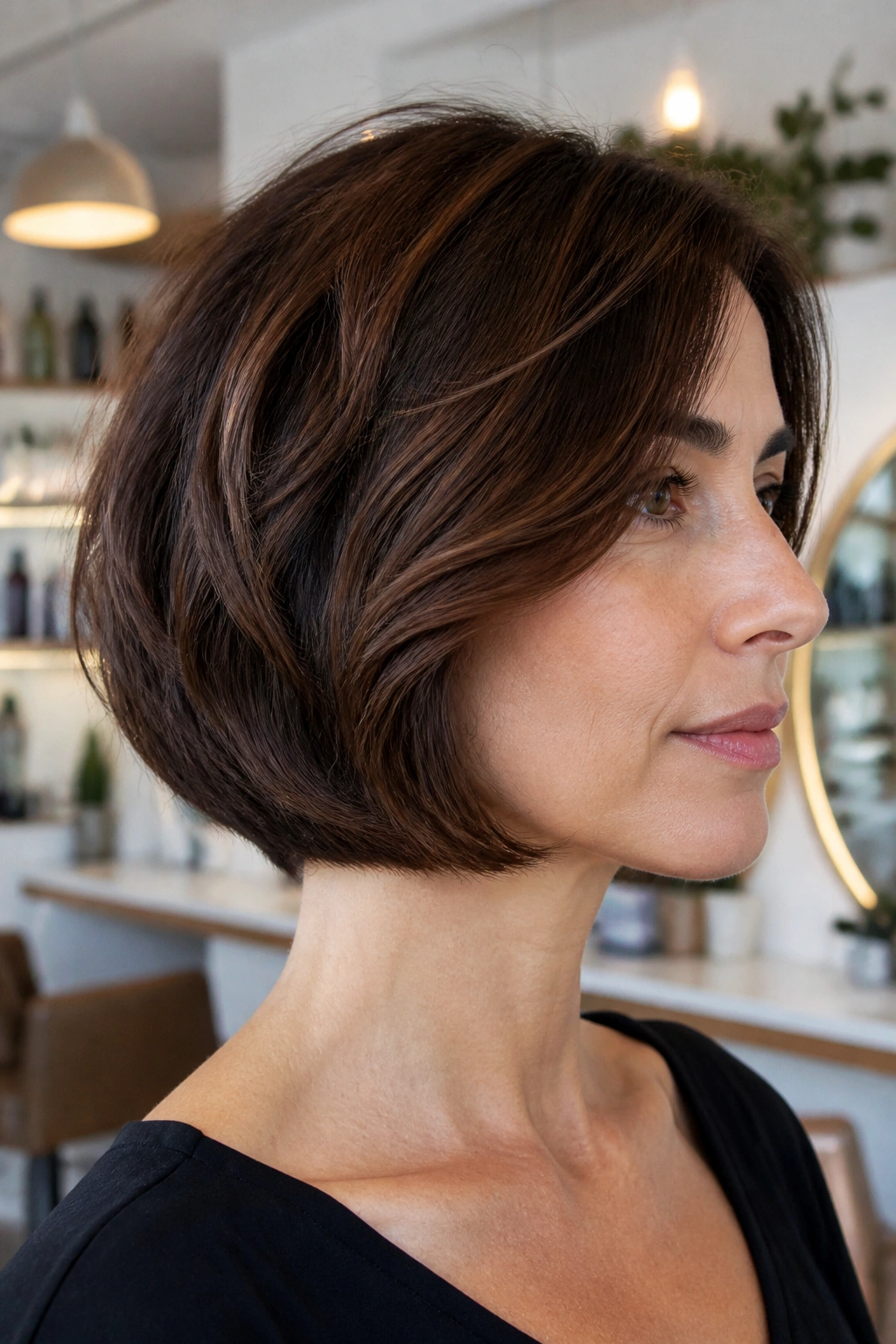
A jaw-skimming bob can be a bit dramatic, but it’s a good kind of dramatic. The shorter length gives fine hair a stronger frame, and the tucked-under ends keep the outline compact and dense.
Think of it as the haircut version of a sharp collar. The shape sits close to the face, which keeps the style from floating away when the hair is very light. That matters more than people think. Fine hair can look larger when it is softly rounded, but it can also look sparse if the ends are too wispy. Here, the inward bend solves that.
A blow-dry with a small round brush is usually enough. Turn the ends slightly under and add only a few loose waves through the top layer. You do not want a blown-out cloud. You want a bob that has a firm edge and a little softness at the same time.
It suits oval and heart-shaped faces especially well, though plenty of other face shapes can wear it too if the front is tailored properly.
11. Deep Side-Swept Wavy Bob
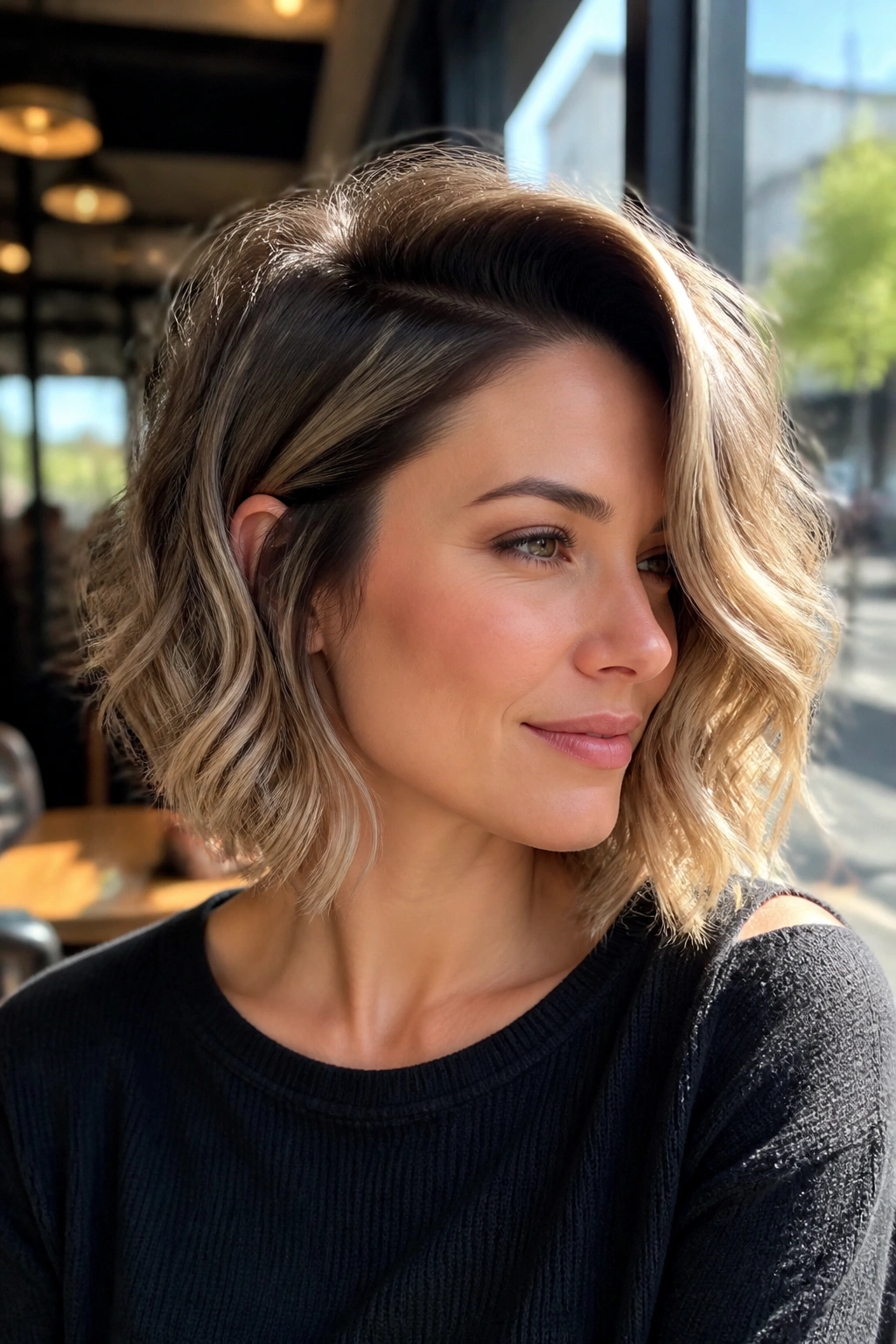
This cut has a lot of visual payoff for very little effort. A deep side-swept part gives the crown a lift, and the longer sweep across the forehead makes fine hair look thicker on camera and in daylight.
Unlike a center-parted bob, this one shifts the weight to one side. That creates a fuller root area, which helps if your hair tends to part itself flat and stay there. The inverted back keeps the structure intact, so the style doesn’t collapse when the waves loosen.
A side-swept bob is also useful on hair that grows out awkwardly around the hairline. The shape can hide those little cowlick problems without looking stiff. Keep the waves soft and break them up with your fingers instead of a brush. A brush makes the sweep too uniform, and fine hair loses the benefit.
If you want movement that reads as polished rather than casual, this is a smart place to spend your cut budget.
12. Micro-Layered Inverted Bob with Volume at the Crown
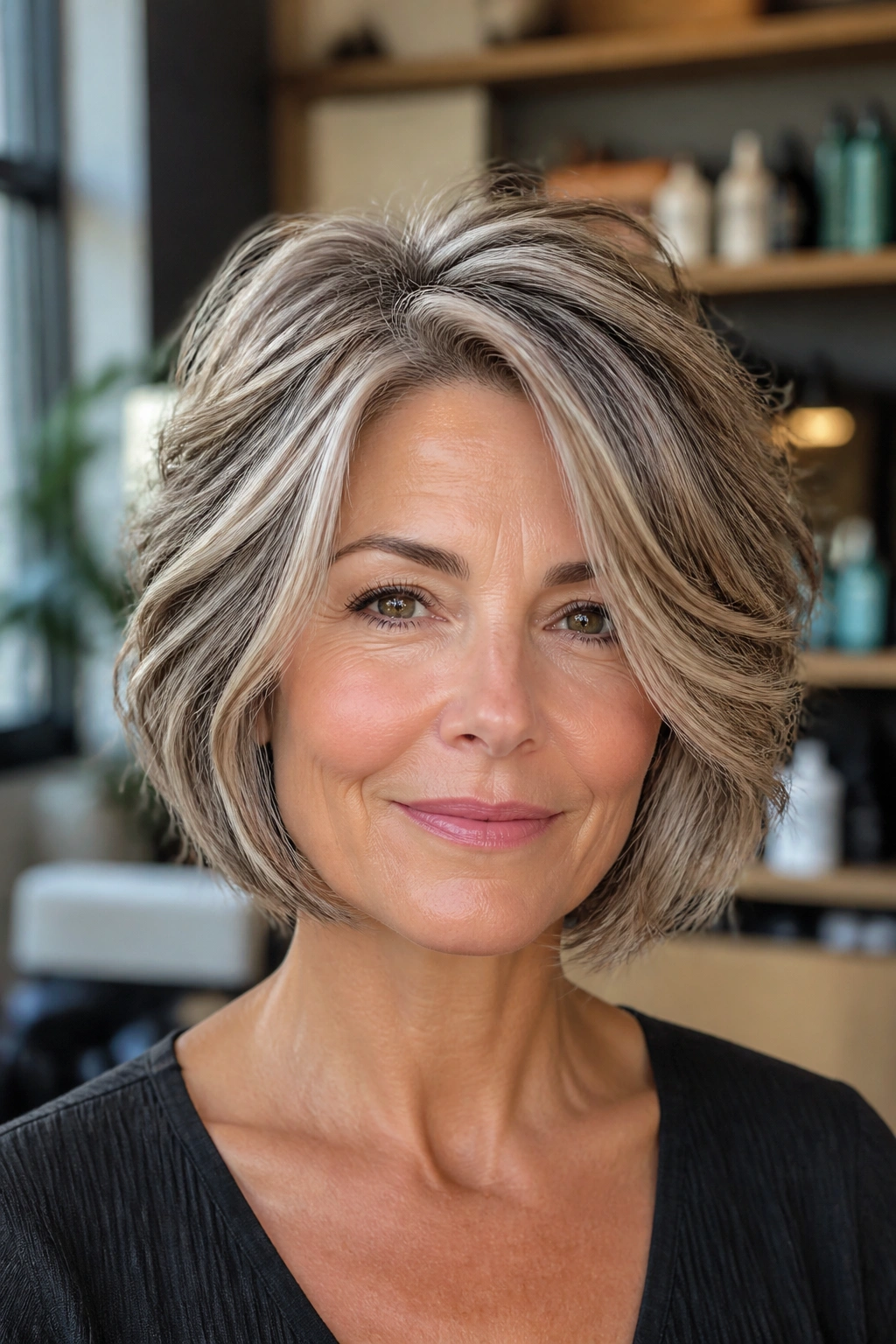
Micro-layers are not the same as lots of layers. That distinction matters a lot on fine hair, because too many long, chunky layers can make the ends look thin and tired.
This version uses tiny internal layers near the crown and upper back to create lift, while leaving the perimeter fuller. The result is a bob that looks like it has a hidden support system. Fine strands gain body at the roots, but the outline stays intact, which is the part that makes the hair look thicker from a distance.
The practical part
Ask for layers that are short enough to lift the crown but long enough to disappear into the rest of the cut. That usually means the stylist should avoid aggressive thinning shears. If your hair is already wispy, those shears can be a mess.
Style it with a root spray, then blow-dry the crown in the opposite direction of your part for a few minutes. Sounds simple. It is. That small bit of opposite-direction drying creates a lift that lasts longer than most people expect, and it doesn’t take a can of heavy spray to get there.
13. Mushroom-Inspired Rounded Bob with Wave
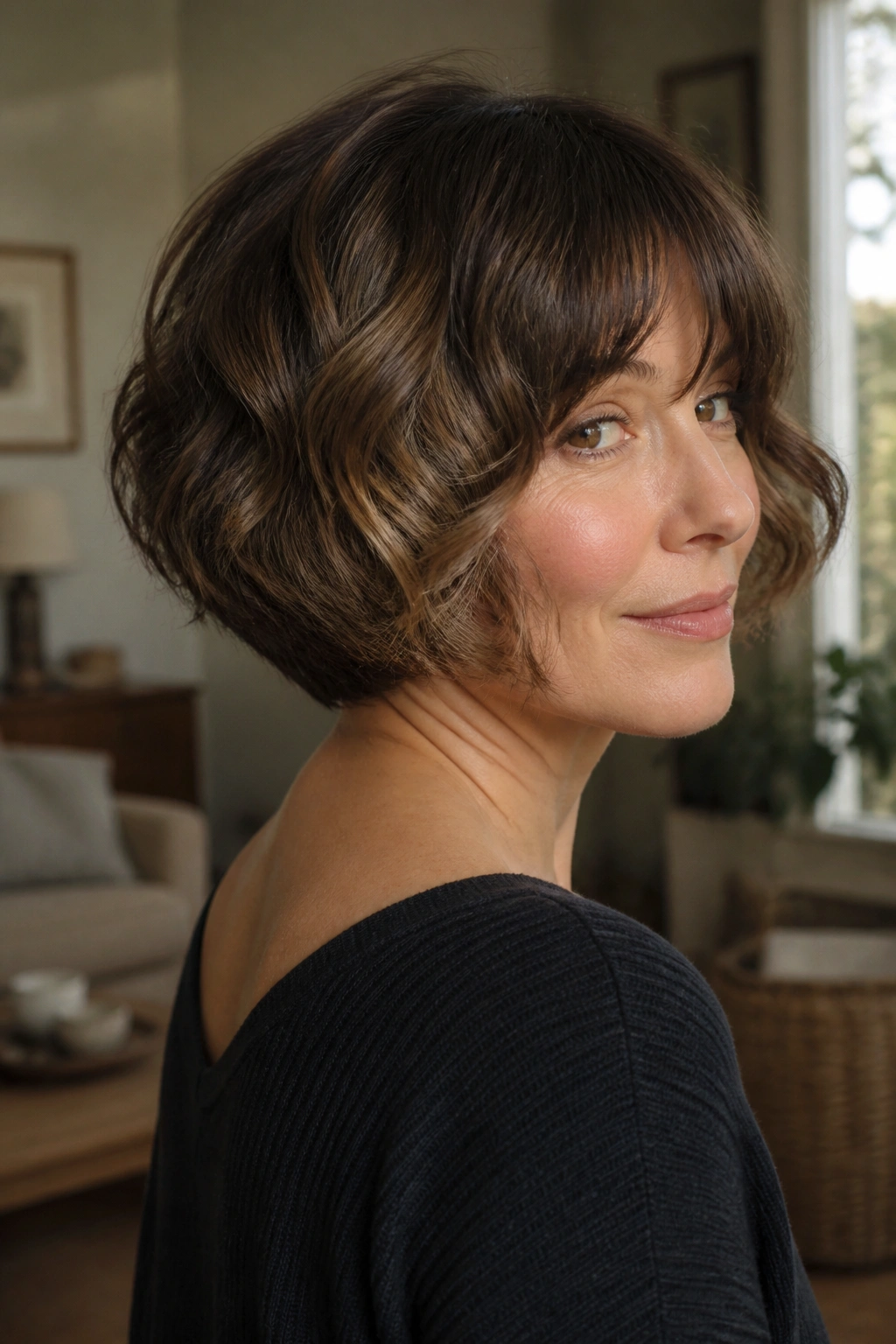
This one sounds odd until you see it done well. A rounded bob with soft waves can make fine hair look plush and structured at the same time, especially if the cut keeps the silhouette full through the sides.
The shape curves gently around the head, with the back tucked in just a little shorter. Waves are used to soften the outline, not to create chaos. That’s important. Fine hair often looks best when the contour is clear enough to read from across a room. A rounded bob does exactly that.
The cut works especially well if your hair naturally wants to puff out at the sides. Instead of fighting it, this shape organizes it. A little wave through the top keeps the style from feeling stiff or dated. Keep the ends blunt. If they get too shredded, the roundness loses its point.
It is not the flashiest bob on this list. It may be one of the most flattering, though, which is a better reason to wear a haircut than sparkle alone.
14. Piecey Lob with a Softly Stacked Back
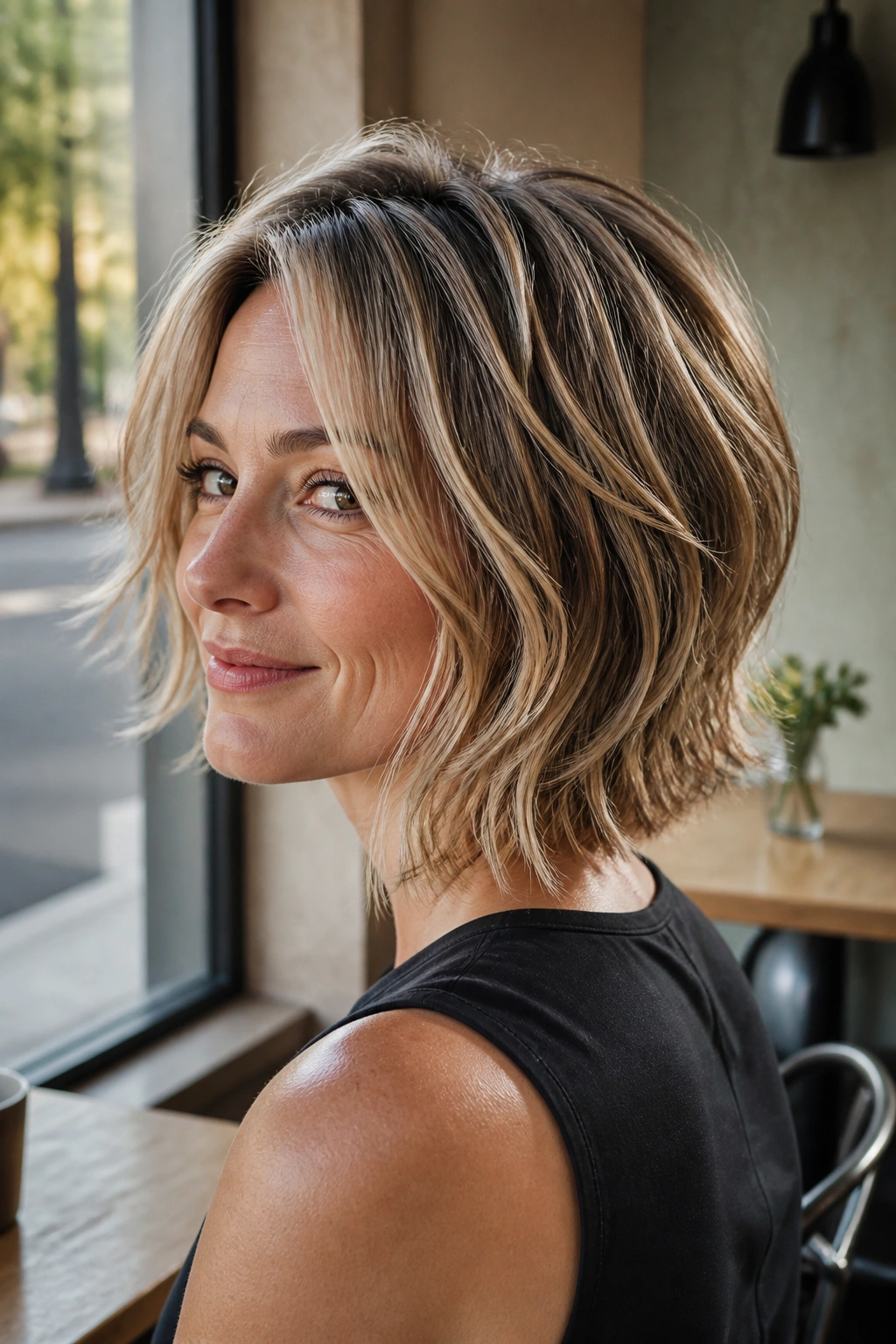
A piecey lob gives you length without surrendering shape. The softly stacked back keeps the roots lifted, while the longer front lets the style fall around the shoulders in a flattering way.
The best part is the movement. Fine hair often looks better when it can separate into clean pieces, and this cut is built for that. The back should not be bulky, though. Soft stacking means enough graduation to raise the neckline, not a sharp hill of hair in the back of the head.
This version likes a light texture spray. A little goes a long way. Scrunching in too much product can make the hair cling together and show more scalp, which is the exact opposite of what most people want. Use a 1.25-inch wand if you want bigger bends, or just twist sections around your fingers for a more relaxed result.
The lob length also makes it easier to grow out. That matters if you’re not ready to stay in bob territory forever.
15. Feathered Inverted Bob with Wispy Ends
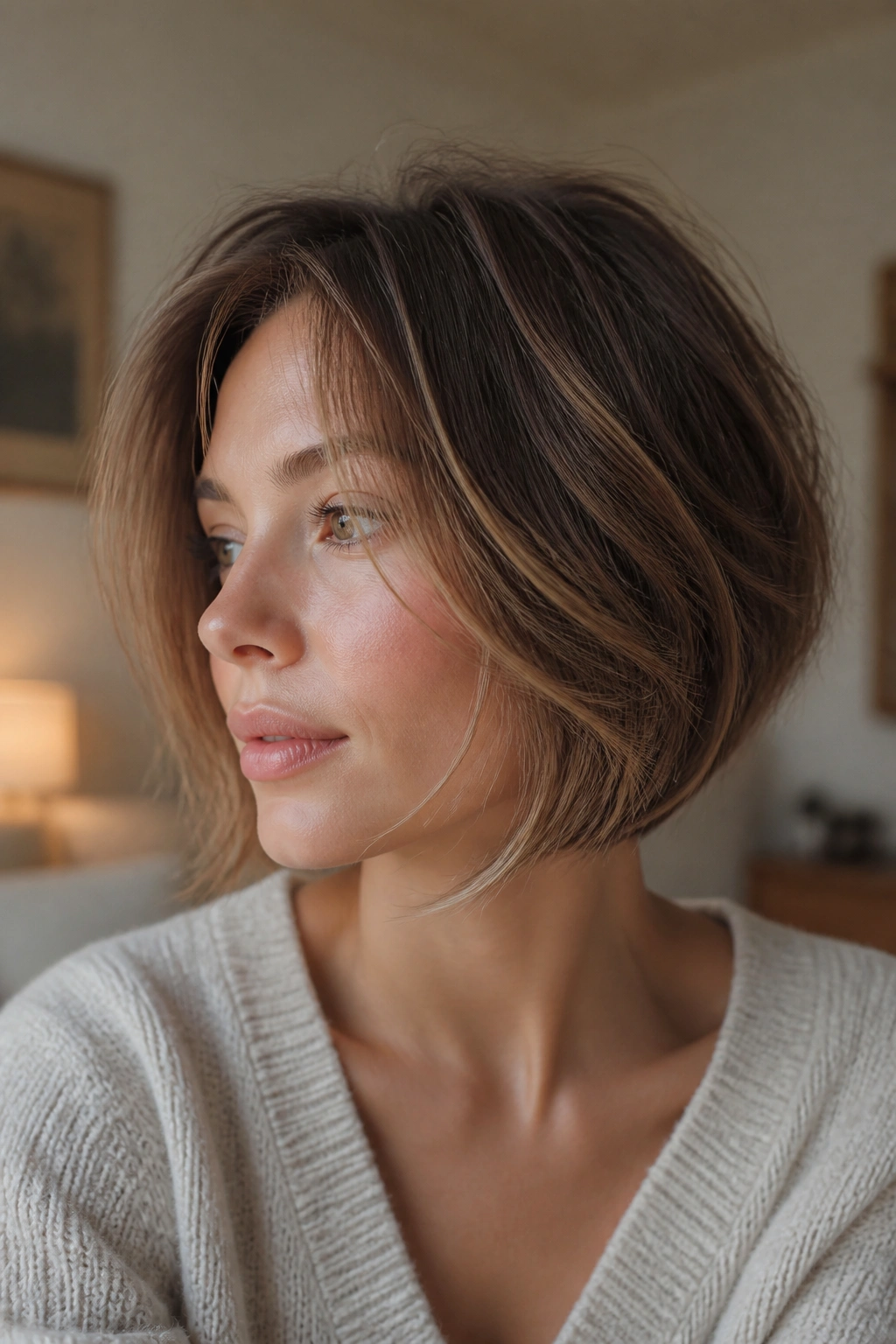
Can feathering work on fine hair? Yes, but only if the stylist keeps it soft. Feathered ends can create a nice airy feel around the face, and a little lift through the back stops the cut from looking blocky.
The danger is overdoing it. Too much feathering, and the ends start to look like they’ve been chewed up by styling tools. Too little, and the cut can feel heavy even when the hair is technically fine. The sweet spot is a few feathered sections near the front and crown, with the rest of the bob kept honest and full.
How to get the most from it
- Use a lightweight leave-in, not a rich cream
- Blow-dry with a small vent brush for faster lift
- Keep the ends moving away from the neck
- Skip thick oils at the root area
This cut has a softer, older-fashioned charm when it is done right. Not old in a bad way. More like it remembers that hair can have shape without looking overworked.
16. Root-Lifted Bob for Flat Hair
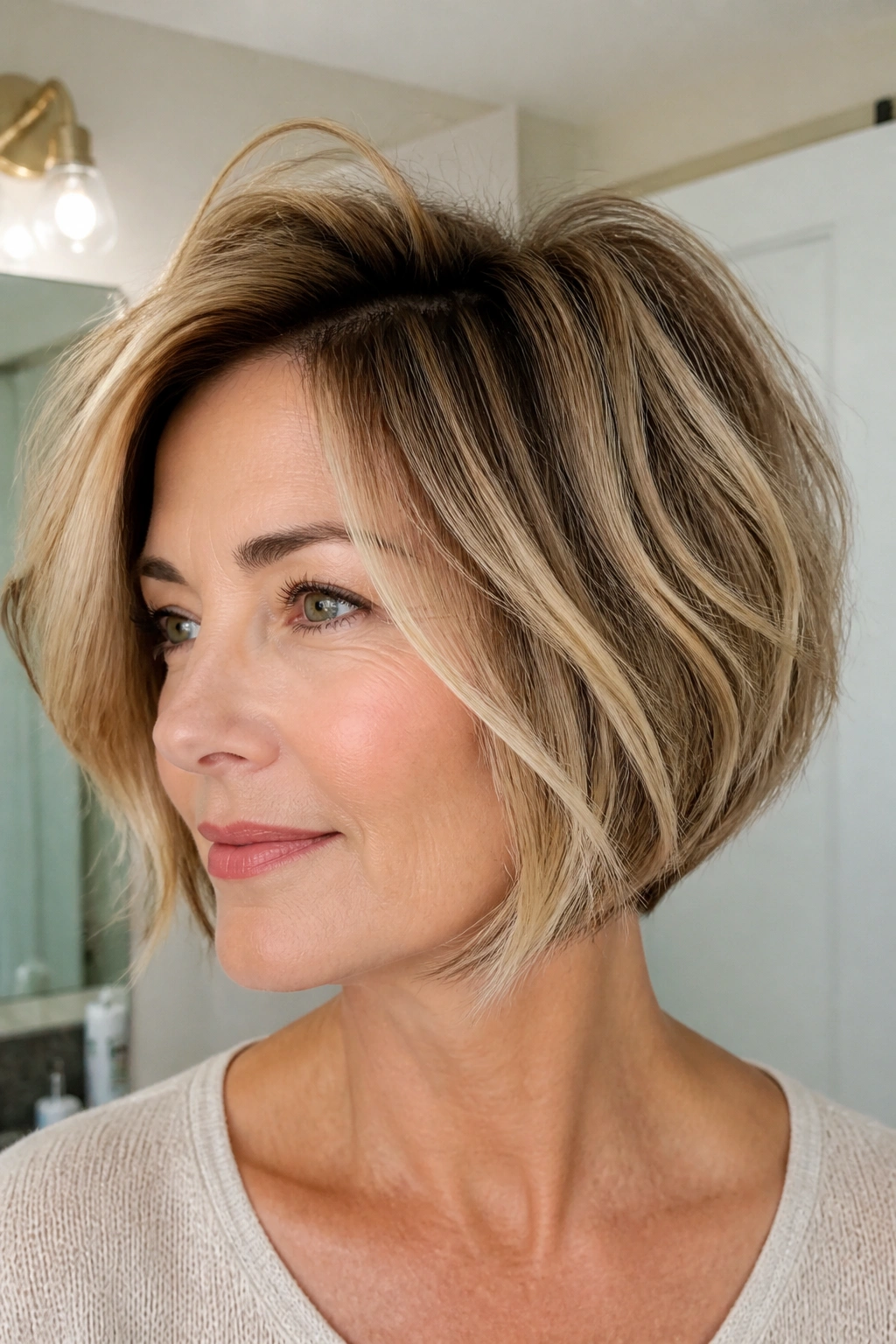
Flat roots can ruin an otherwise good bob, and this cut is built to fix that problem first. The inversion gives the back a little edge, while the styling plan focuses on getting the crown off the scalp from the first minute of drying.
That makes it a practical choice for fine hair that collapses fast. The haircut itself should be clean and fairly compact. Then the styling does the heavy lifting. A root-lift spray, a quick rough dry until the hair is about 80 percent dry, and then a round brush just at the top is usually enough. You do not need to curl every strand.
What I like about this one is the honesty. It does not pretend fine hair will behave like thick hair. It works with what the hair can actually do. If your roots go limp the moment you step outside, this bob is a solid answer.
17. Tousled Bob with a Longer Front Angle
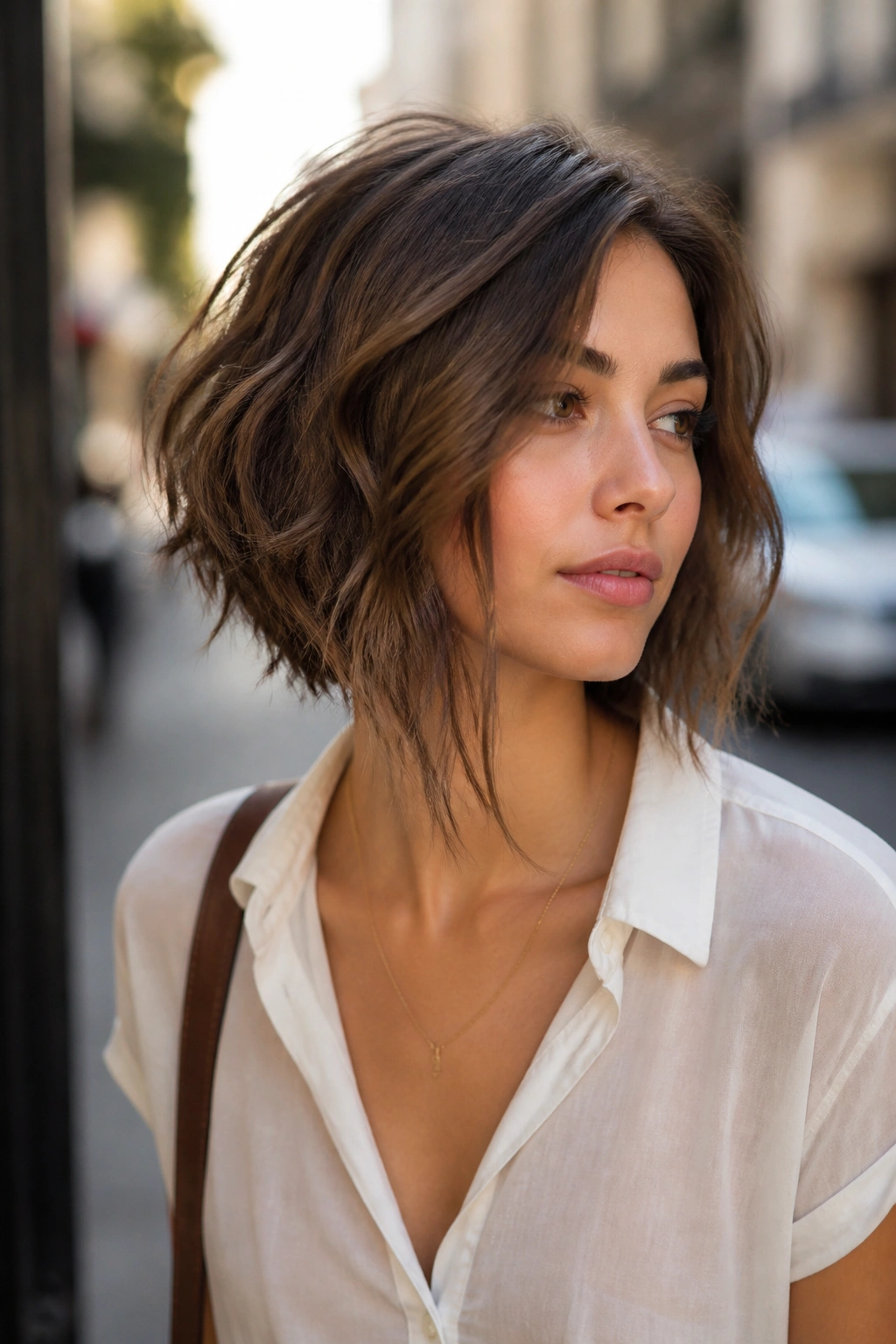
This is the version for people who like a little edge but not a harsh line. The front angle is longer, which gives the cut some swing, while the tousled finish keeps the style from looking too formal.
The shape is especially useful for fine hair because the longer front pieces create weight where you can see it. The back still stays shorter, so the bob doesn’t get dragged down. A few random bends through the hair make the whole style look fuller than a perfectly uniform wave pattern would.
There’s a catch, though. Tousled does not mean messy in the “I gave up” sense. The ends still need to look shaped. If the cut gets too piecey, fine hair can expose every gap between sections, and that’s never flattering. Keep the movement soft, and stop short of frizz.
This cut tends to work well with a middle part or a slightly off-center part. It has enough looseness to suit either one without losing its line.
18. Short Inverted Bob with Nape Detail for Fine Hair
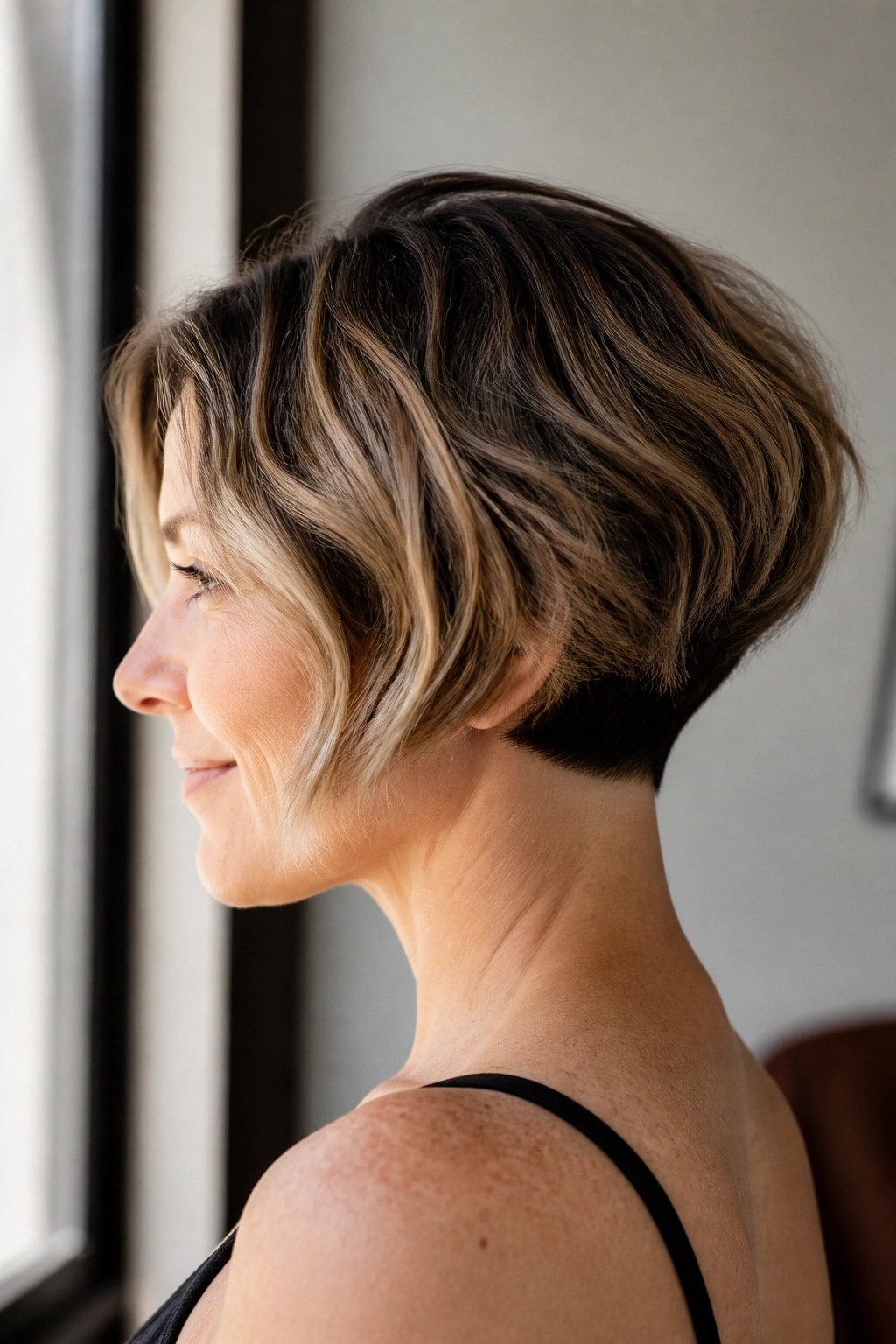
A short inverted bob with a clean nape is one of the sharpest ways to make fine hair look intentional. The very back is cut tight enough to show the neckline, while the front stays just long enough to soften the face and keep the style from feeling severe.
This is the cut that benefits most from a precise outline. Fine hair looks fuller when the perimeter is clear, and a neat nape does that better than a shaggy finish ever will. Add soft waves through the top and front, and you get lift without sacrificing the crisp shape underneath.
What to watch for
- Ask for a clean taper at the nape
- Keep the front pieces long enough to tuck
- Use loose waves, not tight curl ringlets
- Trim often enough to protect the shape
Shorter bobs grow out quickly on fine hair because there’s less weight to hold the line in place. That’s not a flaw. It just means this cut works best on people who don’t mind regular maintenance and like their hair looking neat. If that sounds like you, this may be the strongest choice on the list.
Final Thoughts
Fine hair does best when the cut gives it a clear job. That can mean a blunt edge, a little stack at the back, or a front angle that pulls the eye away from the flatter spots. The wave is there to add movement, not to do all the work on its own.
A good inverted bob should look full before you’ve sprayed it half to death. That’s the real test. If the shape holds when the hair is freshly washed, lightly dried, and left to breathe, you’ve got a strong cut.
The other thing worth saying: do not let anyone talk you into too much thinning if your strands are already fine. A little softness is useful. Too much removal at the ends is where the trouble starts. Keep the line honest, keep the waves loose, and the haircut will do the heavy lifting for you.
