



Round faces don’t need a haircut that hides them. They need one that changes the line of the face a little — enough to pull the eye downward, sharpen the cheek area, and keep the whole shape from feeling too wide. A long inverted bob does that better than a chin-length bob because it keeps the back shorter for lift while the front pieces fall lower and create a cleaner vertical line.
The mistake I see most often is width. Too much volume right at the cheeks makes a round face look rounder, even when the cut itself is technically good. Too-short front pieces can do the same thing. The sweet spot is usually a front that lands somewhere between the jaw and collarbone, with enough angle in the back to keep the silhouette crisp.
And yes, texture matters. Sleek hair, bent ends, soft waves, curtain bangs, side-swept fringe — each one changes how the cut sits on the face. The right version is the one that works with your hair’s actual behavior, not the one that looks best on a hanger.
1. Sleek Long Inverted Bob With a Deep Side Part
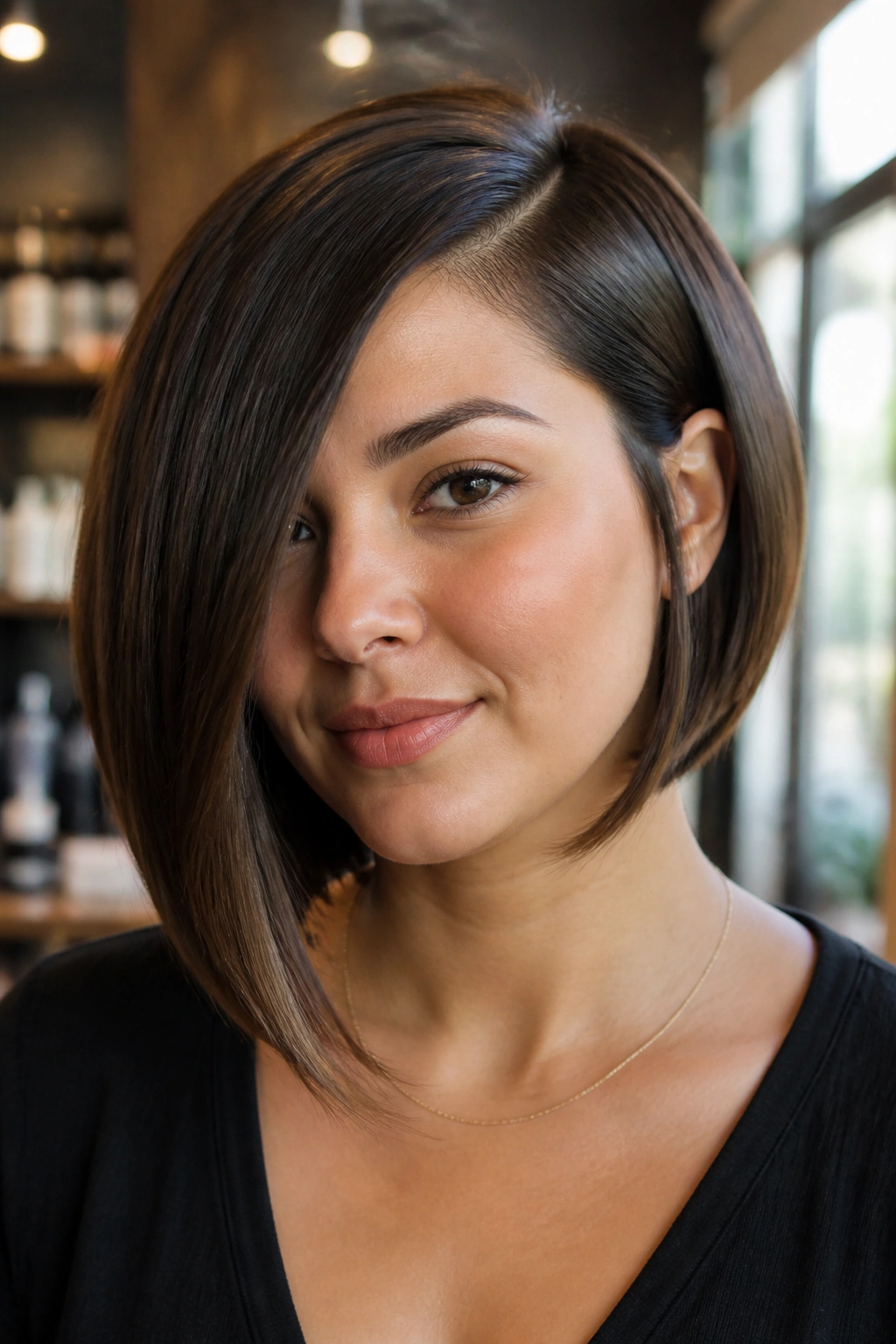
A deep side part does a lot of quiet work here. It breaks up the symmetry that can make a round face feel even broader, and it gives the front pieces a longer, sharper fall. The result is polished, but not stiff. The front should skim below the chin on the fuller side and stay a touch shorter on the tucked side so the whole shape leans diagonally instead of sitting like a box.
Ask for a soft angle, not a hard wedge. That matters. A dramatic stacked back can look too round at the crown if your hair is fine or your face is already quite full through the cheeks. A stylist who cuts this well will keep the back neat and compact, then let the front move.
Style it with a flat iron set to a moderate heat and bend the ends under by half an inch, not into a full curl. You want line, not fluff. A light serum on the ends and a little root lift at the part finish the job.
Round faces love this cut because it feels long without looking heavy.
2. Softly Stacked Long Inverted Bob With Bent Ends
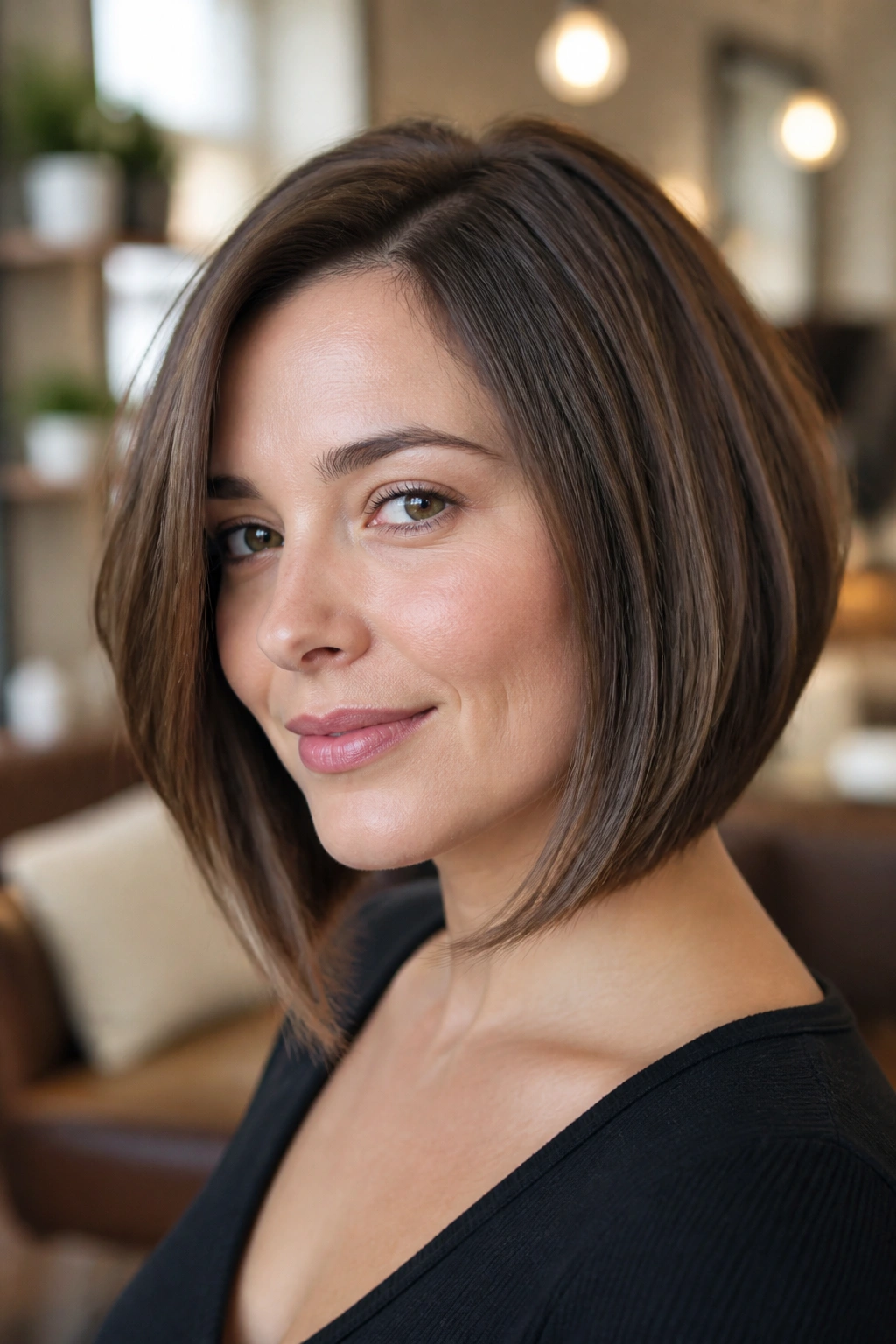
What if you want shape, but not a haircut that screams “angled bob” from across the room? Go softer. A lightly stacked long inverted bob keeps the back lifted and clean, yet the front stays relaxed enough to frame the face without drawing a hard horizontal line across the cheeks.
Why the Soft Stack Works
The stack in the back gives the cut its engine. That’s the part that makes the style sit up instead of collapsing. But the front length is what matters most for a round face, and I’d keep it at least at chin level — better yet, just below it — so the eye keeps moving downward.
A tiny bend through the last 1 to 2 inches of the hair is enough. Use a round brush when drying, then touch the ends with a flat iron if needed. The goal is a clean curve, not a flip.
- Best for fine to medium hair that needs lift.
- Works well with a side or off-center part.
- Looks good with minimal styling if the cut is done right.
- Avoid a stack that starts too high at the crown.
One caution: if the back is cut too short, the style can puff out like a mushroom. No one wants that.
3. Long Inverted Bob With Curtain Bangs
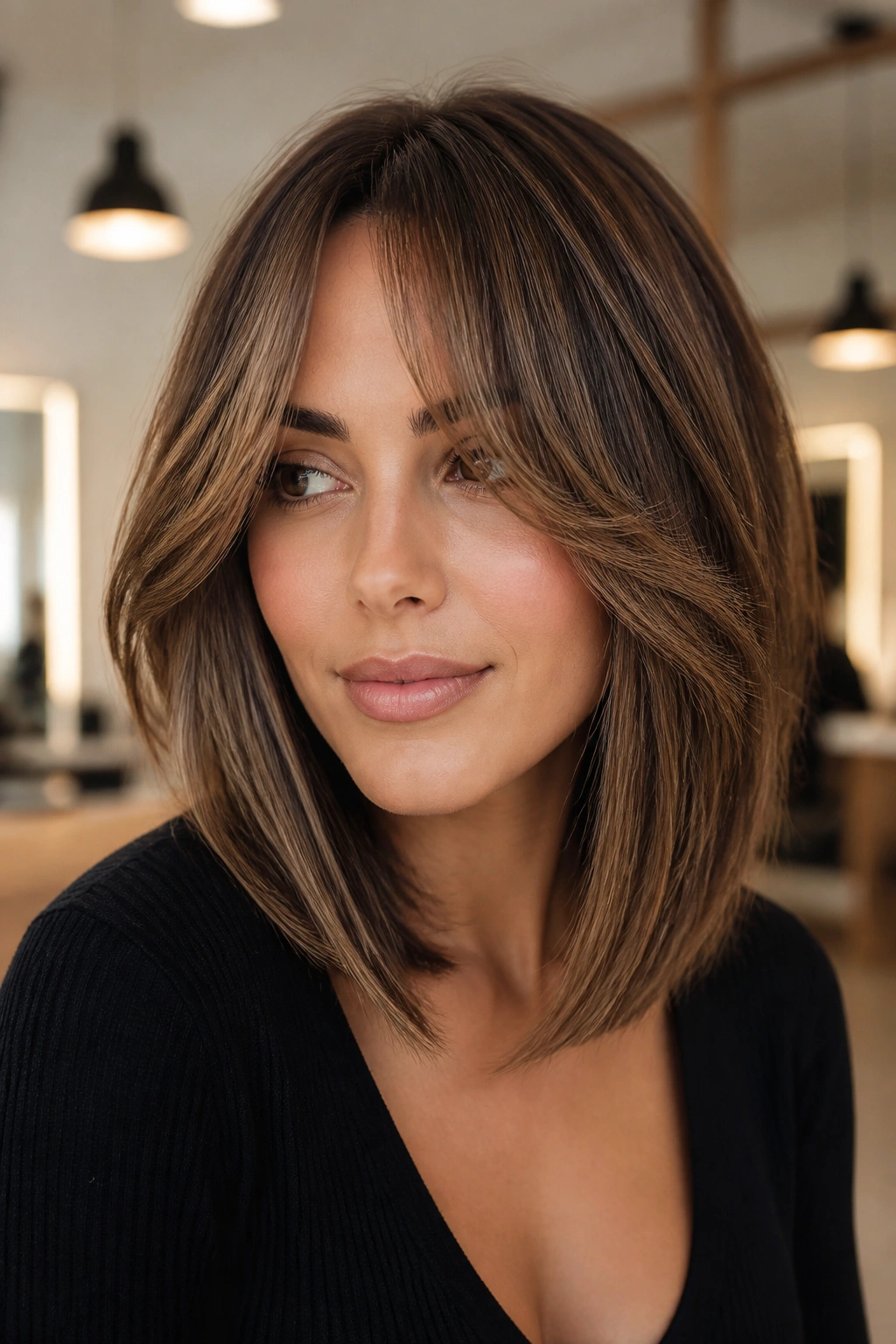
Curtain bangs can be a smart move on a round face, but only when they’re kept light and split well above the widest part of the face. A heavy, blunt fringe shortens everything. That’s the trap. Soft curtain bangs, though, open the center of the face and give you two diagonal lines that work with the inverted bob’s angle.
How to Make the Bangs Behave
The bangs should start around the cheekbone area, not at the brow line in one solid block. That little difference matters more than most people expect. If they’re too short, the face gets boxy. If they’re too dense, they steal the balance from the longer front pieces.
The body of the cut should stay long enough that the bangs feel connected to it. I like this version best when the front reaches the collarbone and the bangs melt into those front sections, almost like they were planned together from the start.
A round brush and a quick blow-dry away from the face keep the bangs from sticking to the forehead. Skip the heavy cream products. They make curtain bangs split in a sad, flat way.
This is one of the easiest ways to keep a round face looking open without giving up softness.
4. Collarbone-Grazing Long Inverted Lob With Invisible Layers
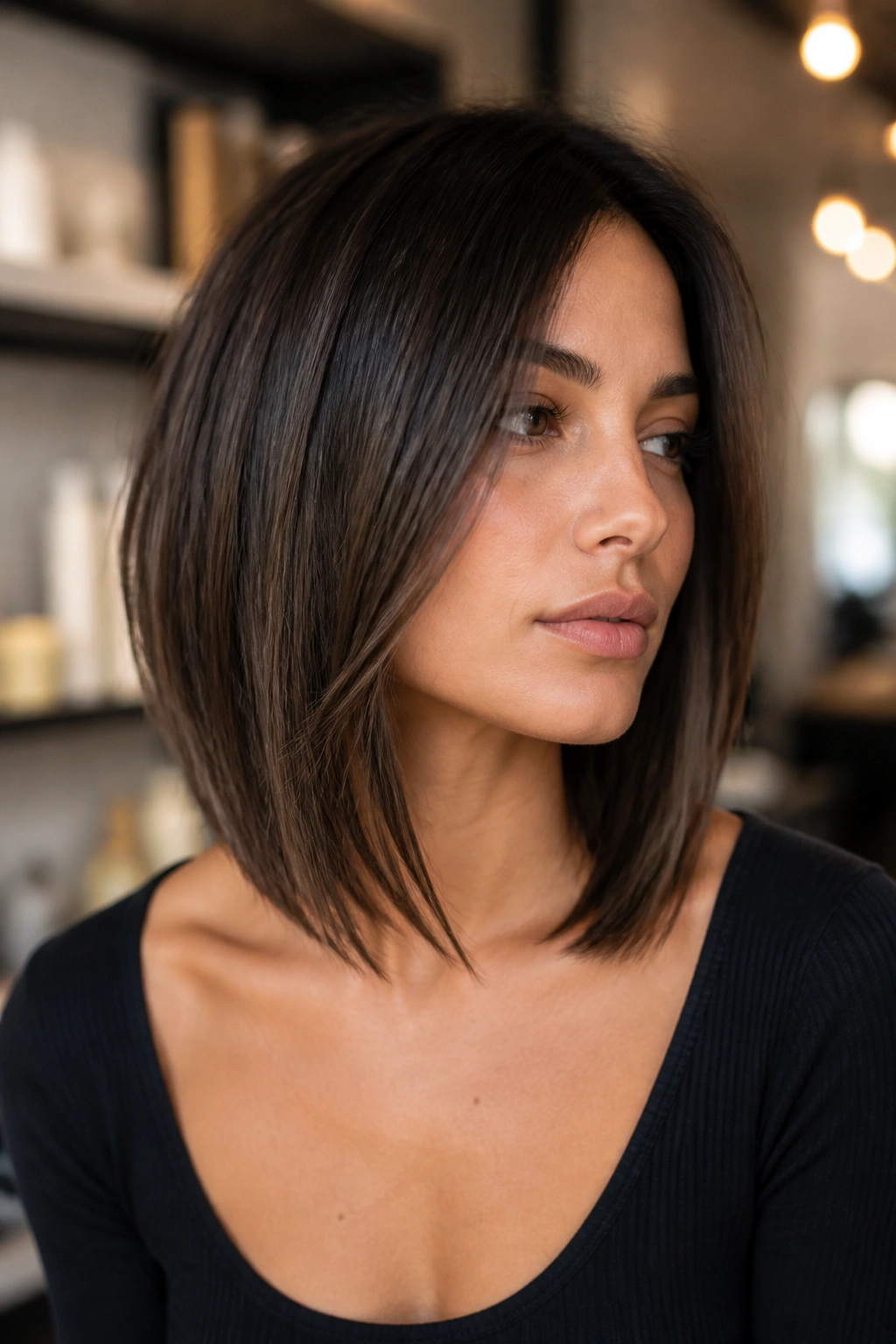
Some people want the shape of an inverted bob but don’t want obvious stacking or choppy ends. Fair enough. The collarbone-grazing version is quieter. It looks cleaner, grows out better, and still gives round faces that nice narrowing effect because the front pieces fall below the jaw and keep moving.
The trick is in the layers. They should be there, but you shouldn’t see them shouting from the cut. Invisible layers remove bulk from the inside of the shape, which helps the hair curve in instead of ballooning out at the sides. That matters a lot if your hair is dense.
I’d ask for a slight angle from back to front, not a steep one. Around 1 to 2 inches of difference is often plenty. More than that and the cut can start to look sharp in a way that fights the softness of a round face.
This version is good if you like to air-dry, because the perimeter does most of the work. Put a little cream through damp hair, tuck it behind one ear while it dries, and leave the ends alone. Messing with them too much usually makes the shape wider.
5. Angled Long Inverted Bob With Piecey Ends
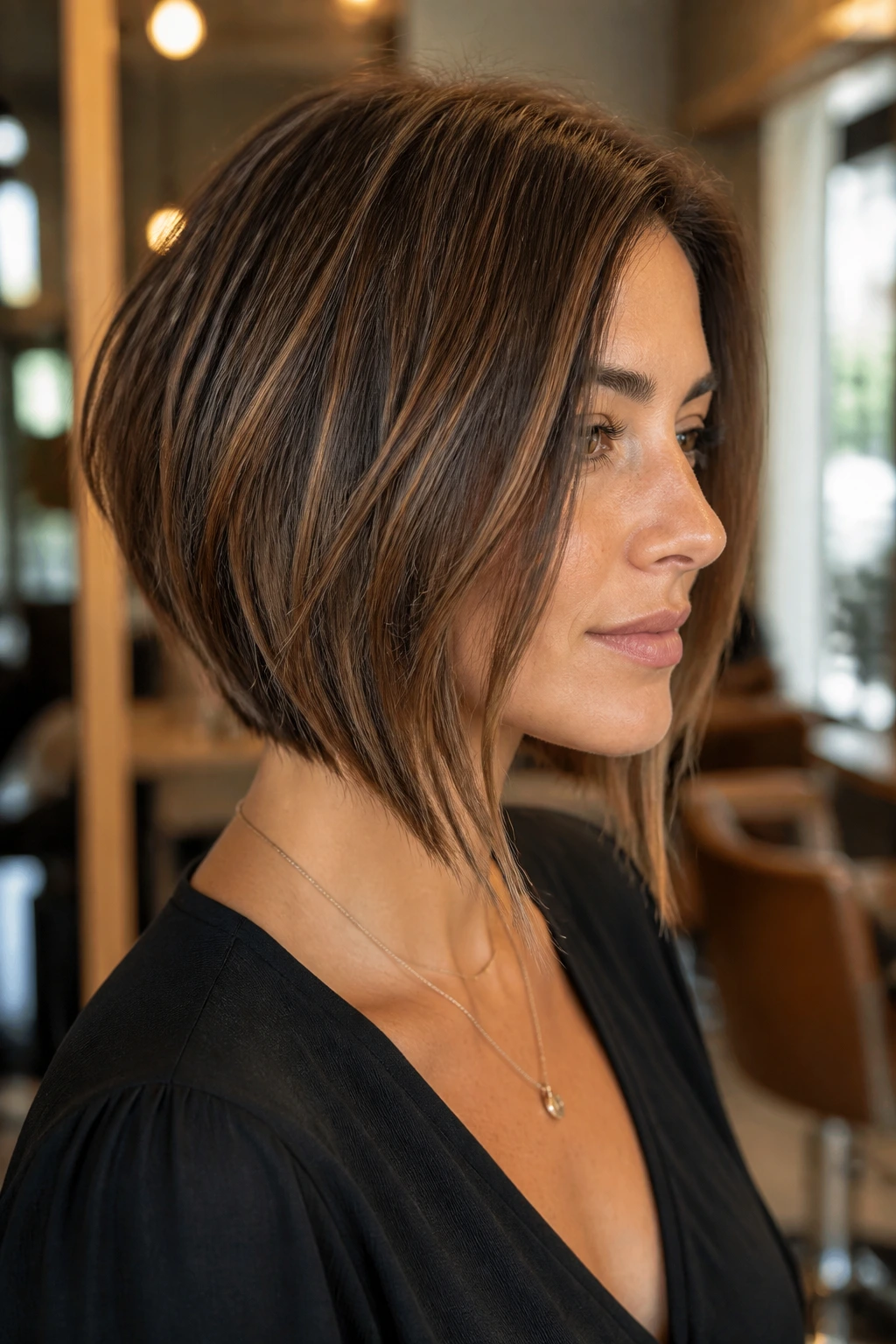
A piecey finish changes the mood of the whole cut. Instead of one smooth line, the edges break up a little, which keeps the bob from reading as too wide around the cheeks. On a round face, that tiny bit of separation is useful. It keeps the eye moving.
The haircut itself should still have a strong angle. You want the back short enough to lift, with the front slipping forward past the jawline. Then the ends get softened with texturizing, but only at the perimeter. Too much thinning higher up can make the hair frizzy and the shape messy in a bad way.
What to Ask Your Stylist For
- A long inverted bob with a clear front-to-back angle
- Light texturizing only on the ends
- Front pieces that land below the chin
- No heavy bulk right at cheek level
A texture spray and a quick scrunch with your fingers are enough to style it most days. If you use a curling wand, keep the bend loose — 1-inch sections, 8 to 10 seconds each, then shake them out.
This one works especially well if you like hair that looks a little undone but still has structure.
6. Long Inverted Bob With a Deep Side-Swept Fringe
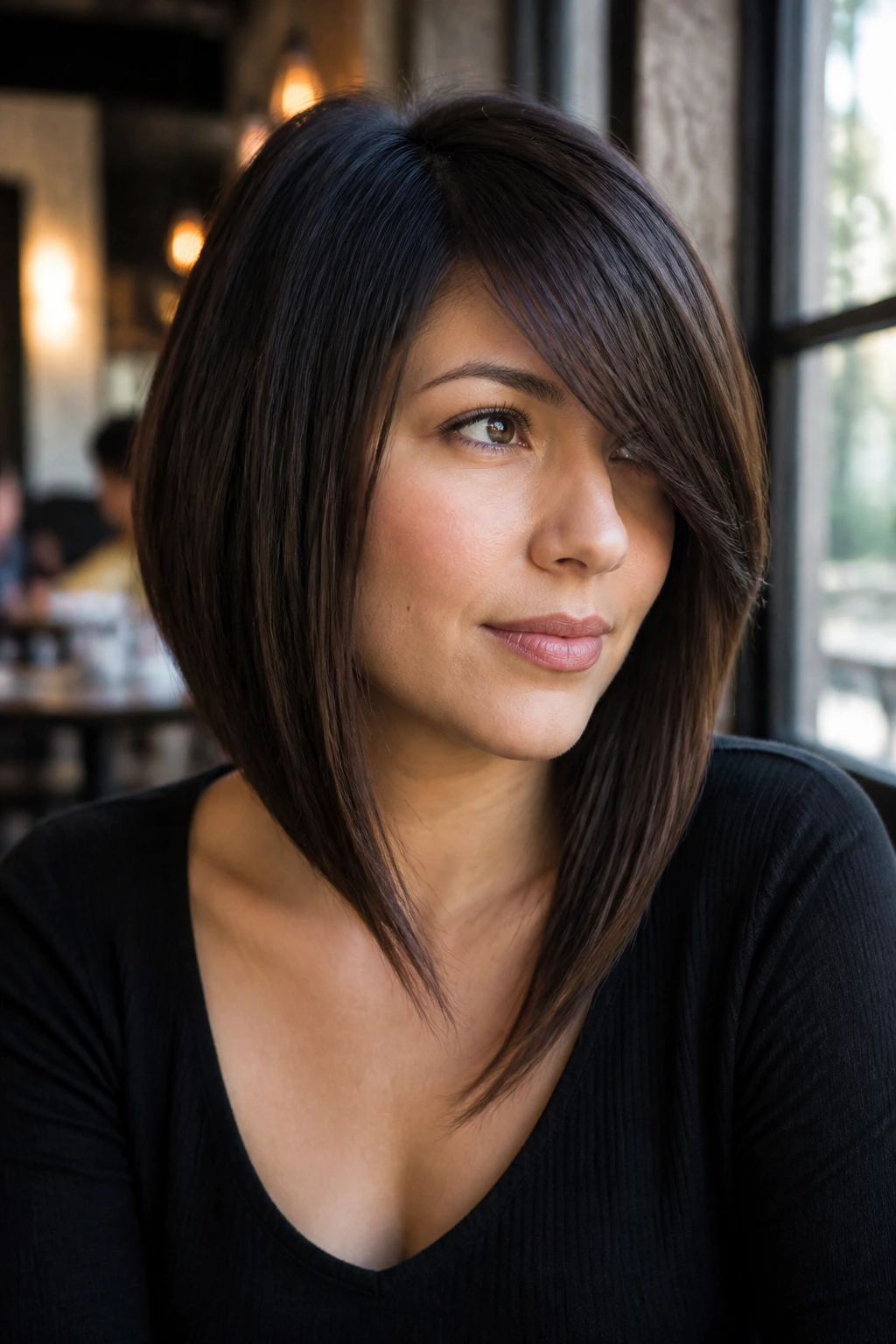
A side-swept fringe is one of the easiest ways to make a round face look longer. Not a heavy swoop. Not a thick side bang that eats half the forehead. A light fringe that starts near the temple and falls diagonally across the face.
That diagonal line matters. It cuts across the roundness and gives the haircut some tension, which is exactly what a round face benefits from. The front pieces should still stay longer than the fringe, so the haircut feels layered rather than chopped into pieces.
I like this version for medium-density hair because the fringe adds interest without demanding a full styling session every morning. Blow it dry in the direction opposite where you want it to fall, then sweep it back over with a brush. That tiny bit of lift at the root keeps it from sticking flat to the forehead.
If your hair grows quickly at the front, this is one of the more forgiving options. A trim every 6 to 8 weeks keeps the fringe from slipping into your eyes and losing its angle. Easy. Practical. No drama.
7. Feathered Crown Volume With a Tapered Back
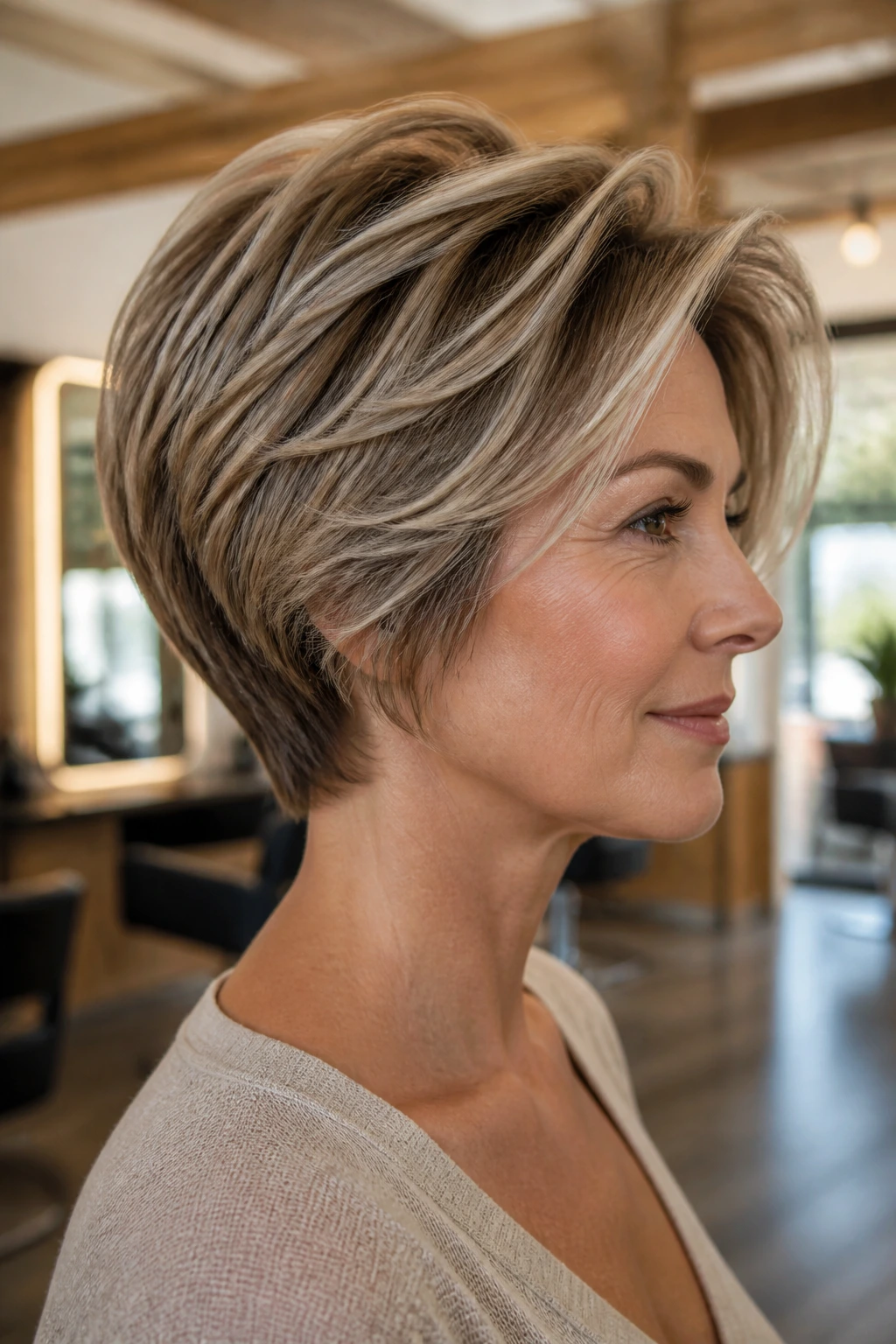
Volume belongs at the crown, not at the cheeks. That’s the whole game with round faces, and this haircut gets it right. The back is tapered neatly so the neck looks longer, while the top gets feathered just enough to create height without puffiness.
This is a good cut if your hair tends to lie flat on top. A little root lift at the crown gives the illusion of a longer face immediately. You don’t need a giant blowout or a lot of teasing. A mousse at the roots, a medium round brush, and a few minutes of lifting the hair up and away from the scalp will do more than most people think.
The feathering should be soft. I’m not talking about the old-school, overly layered look that left everyone with a halo. I mean fine, blended movement through the top third of the haircut so it doesn’t sit like a helmet.
This style can be tricky if the hair is very fine and the ends are sparse. In that case, keep the taper modest. Too much removal at the ends makes the cut look thin, and thin ends on a round face can look unfinished.
8. Soft Asymmetrical Long Inverted Bob
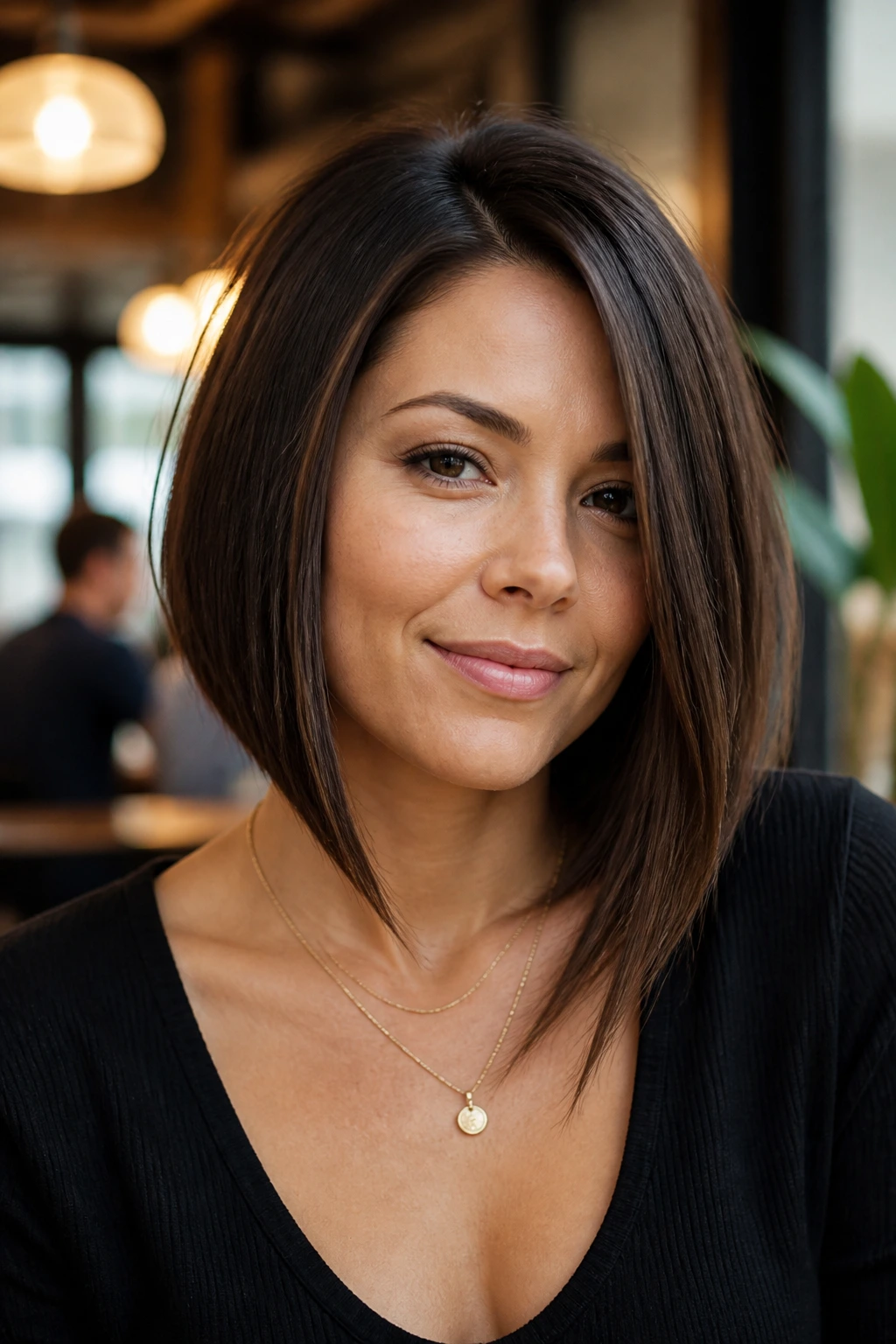
Asymmetry gives a round face a useful little break in the pattern. One side sits slightly longer than the other, which creates a vertical pull that straight-on symmetry just doesn’t have. It’s subtle, but it works.
I’d keep the difference modest — maybe an inch or a little more, not a dramatic one-sided statement unless that’s truly your thing. The longer side should still graze below the jaw, while the shorter side can sit just under the cheekbone. That keeps the face from getting boxed in.
A side part helps this cut even more because it reinforces the diagonal line. You get shape without harshness. Good balance.
This is one of those styles that looks polished without needing much styling effort. Straight hair can wear it sleek. Wavy hair can let the ends bend naturally. If you want a touch of movement, wrap just the front sections around a 1-inch curling iron for 5 to 7 seconds and leave the rest alone.
The key is restraint. The cut already has enough personality.
9. Blunt Long Inverted Bob With a Polished Bend
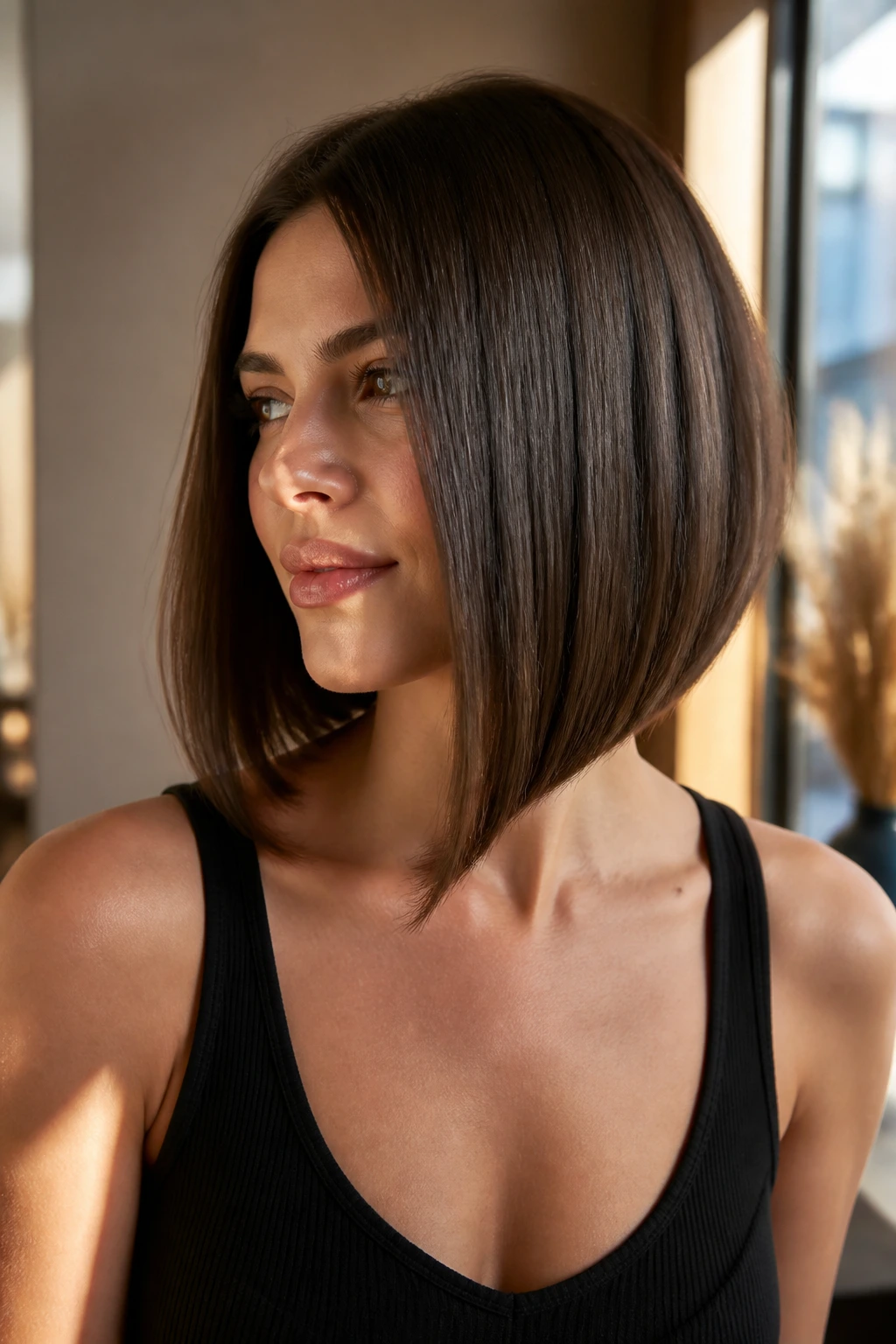
Blunt and round face don’t sound like they should go together, but they can — if the length is right and the bend is gentle. A blunt long inverted bob works because the strong perimeter makes the face look cleaner, while the front length stops it from feeling boxy.
The mistake is cutting the front too short. If the perimeter lands at the jaw, the bluntness can widen the face. Push the front down to the chin or collarbone, and the line suddenly becomes flattering instead of blunt for the sake of being blunt.
The Finish Matters Here
You want a smooth bend through the ends, not curls. Use a paddle brush while blow-drying, then run a flat iron over the bottom inch of hair and turn the wrist slightly inward. That’s enough.
A blunt cut is especially good for dense hair because it gives the style weight and shine. On thick hair, it can look expensive in the plainest possible way — which is often the best kind of haircut. It looks intentional. Controlled. Clean.
If your hair is very fine, though, keep the blunt line softer or it may look thin at the tips.
10. Curly Long Inverted Bob That Keeps the Sides Narrow
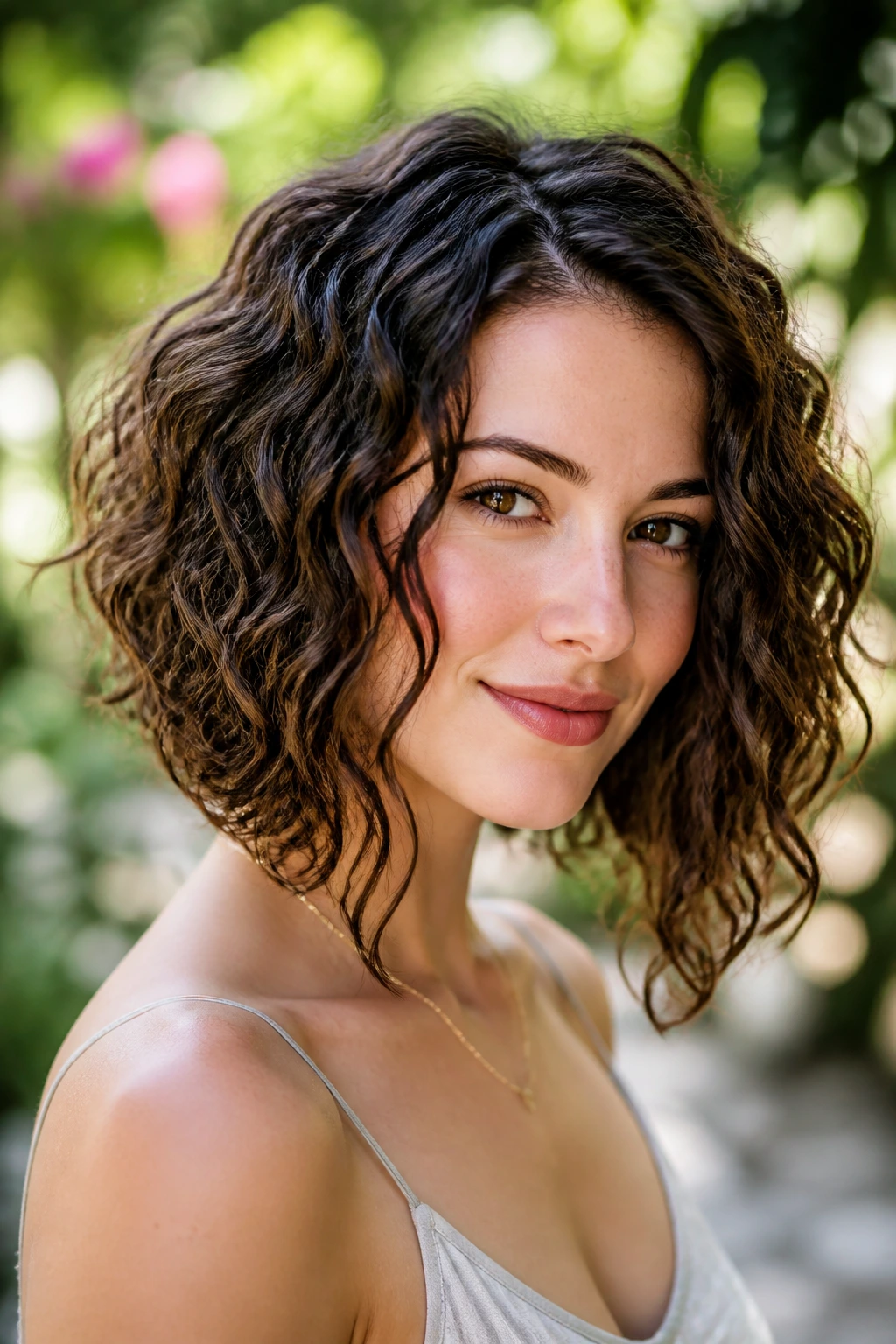
Curly hair changes the rules a bit. You do not want a round face and a curly inverted bob fighting each other for width. The answer is shape control. The back stays a touch shorter, the front remains longer, and the curls need enough room to spring without bloating the sides.
The smartest version is cut curl by curl, dry or nearly dry, so the stylist can see where each ringlet falls. Wet curly hair lies. It’s sneaky like that. What looks balanced when wet can puff out sideways after it dries, so the real shape should be judged in motion.
Keep the sides a little lighter than the back, but not overly thinned. You want the curls to fall forward and down. A curl cream and a small amount of gel can define the shape without turning it into a crunchy shell.
This cut is flattering because it lets the curls do the work while still keeping the face open. If your curls are looser, a side part helps. If they’re tighter, ask for a slightly longer front so the shape doesn’t creep up too high.
11. Long Inverted Bob With Balayage and Shadow Root
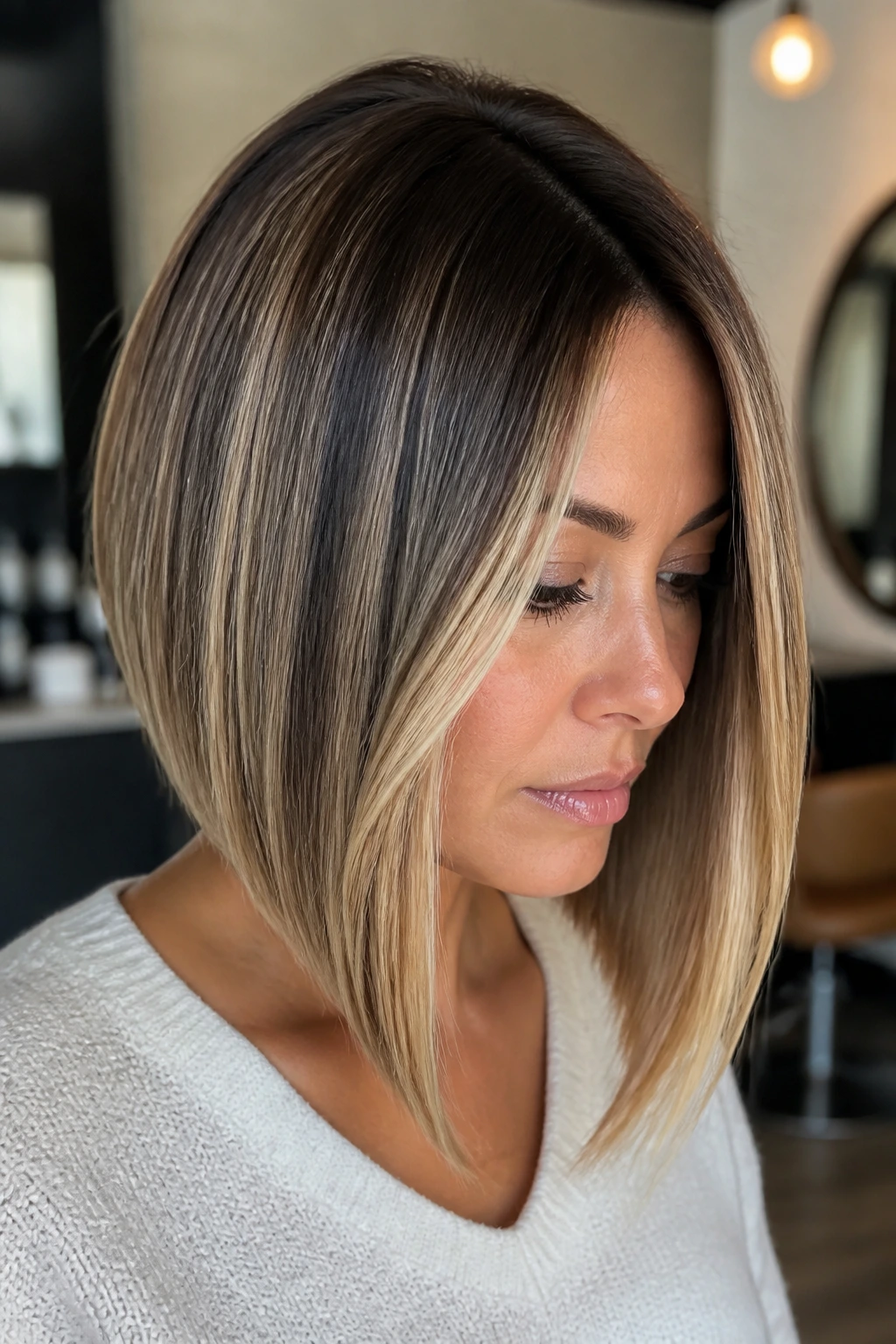
Color can do a lot here, and I mean a lot. A well-placed balayage adds vertical movement, which helps a round face look longer without changing the cut itself. The best placement is usually lighter through the front lengths and softer, deeper near the roots.
That shadow root is useful. It keeps the top from looking puffy and draws the eye downward. The lighter pieces around the face should start below the cheekbones, not right at the widest part of the face, or they can widen the look instead of slimming it.
This haircut is especially nice when the angle of the bob is already strong. The color just reinforces the shape. If you’re dark-haired, a caramel or chestnut ribbon near the front can soften the edge. If you’re lighter, a beige or honey tone can keep things airy.
Styling is easy enough. A loose bend from mid-length to ends makes the color show better than pin-straight hair in some cases. The contrast between the shorter back and the longer front turns into a clean visual line, and that line is doing a lot of flattering work.
12. Razor-Cut Long Inverted Bob With Airy Ends
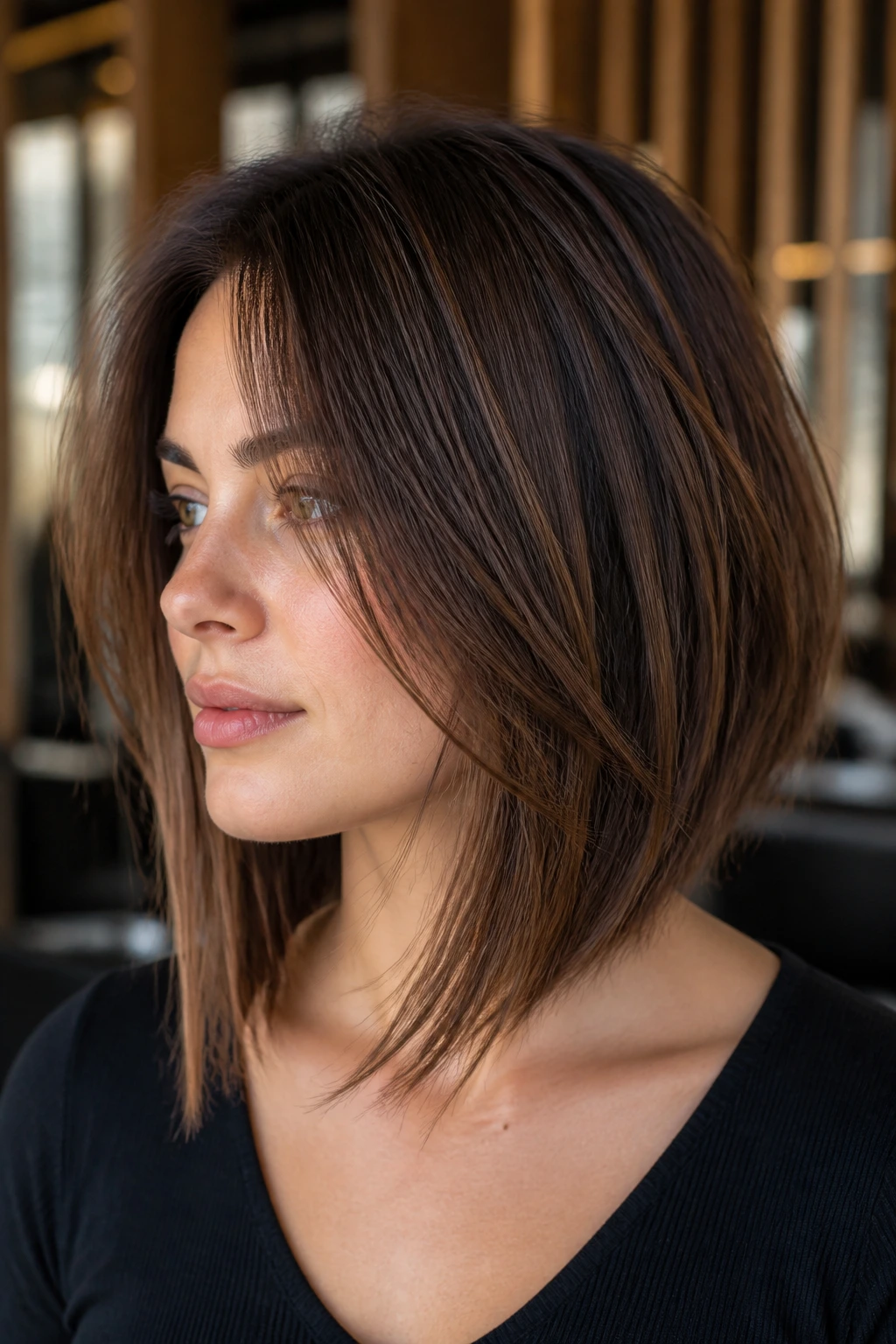
Razor cutting gives the perimeter a lighter, more broken edge, which can work beautifully on a round face if the hair is thick enough to handle it. The shape feels less heavy, less blocky, and a little more relaxed around the jaw.
The catch? Fine hair can lose too much density with a razor. So this is really a haircut for medium to thick hair, where the tool can soften without wrecking the ends. If done well, the front still keeps its length, but the edge doesn’t sit like a hard shelf.
I like this cut because it moves. It doesn’t stand there. The pieces skim the face and separate naturally, which creates a leaner look than a blunt line in many cases. A little serum or cream on the ends helps keep the airy finish from turning frizzy.
Ask the stylist to keep the front below the jawline and to avoid over-texturizing near the cheeks. That’s the part people get wrong. A razor is a tool, not a shortcut. Used carefully, it makes the shape feel lighter. Used badly, it just makes the haircut thin.
13. French-Girl Long Inverted Bob With Messy Texture
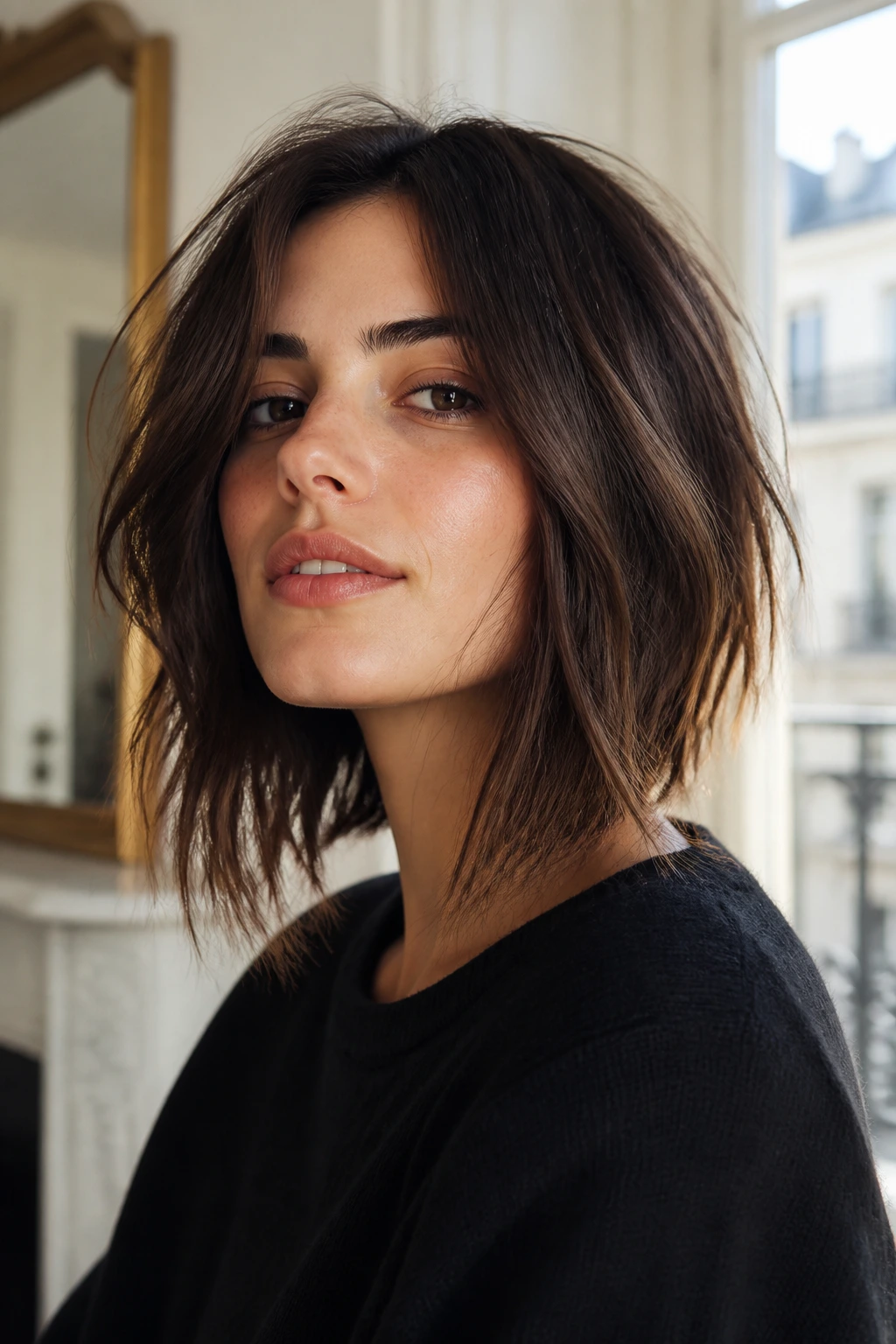
There’s a loose, lived-in version of the inverted bob that feels softer than the sleek ones, and I think it’s underrated for round faces. The trick is keeping the shape lazy in the best way: a long front, a shorter back, and texture that falls in separate, imperfect pieces.
This style is less about polish and more about attitude. The front pieces should still be long enough to pull the face down, but the texture keeps them from sitting as one solid curtain. That means a little wave, a little bend, and no obsession with symmetry.
A salt spray or texture mist on damp hair helps, but don’t overdo it. A quarter-sized amount is often enough for shoulder-length hair. Scrunch it in, air-dry halfway, then rough-dry the roots with your fingers to keep the crown lifted.
This works best if your hair already has some movement. Straight hair can wear it too, but it needs a touch of wave from a wand or flat iron. The cut looks best when it seems unforced. Not sloppy. Just relaxed enough to soften the roundness of the face.
14. Long Inverted Bob With Cheekbone-Length Bangs
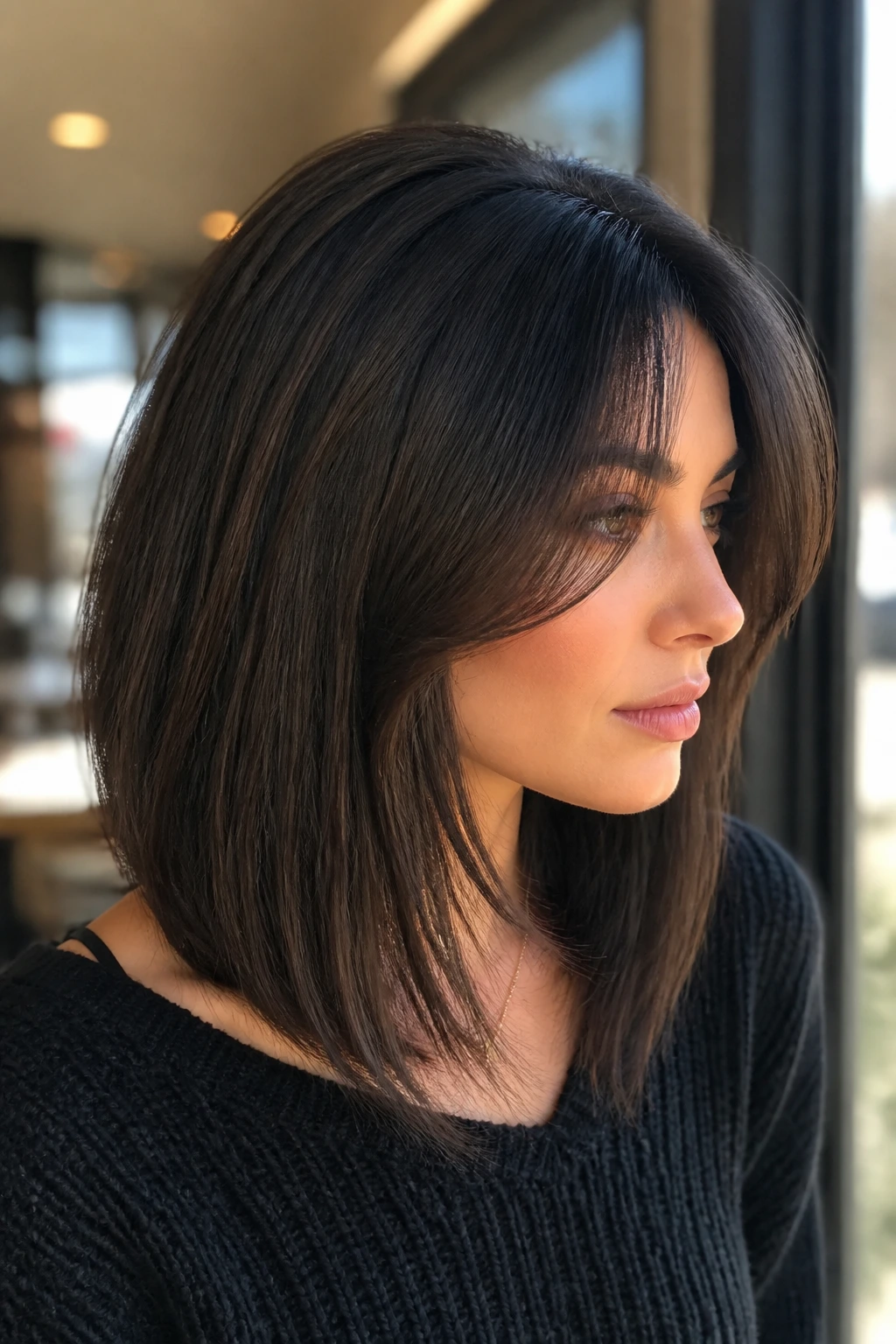
Bangs can be tricky on round faces, and that’s why this version deserves its own space. Cheekbone-length bangs work because they frame the face from high up without cutting the forehead into a short, blunt band. They help the haircut feel deliberate.
The length matters. If the bangs stop too high, they can make the face look shorter. If they’re cut too wide, they can spread the face out. Aim for fringe that touches the top of the cheekbone and angles into the front layers. That little taper makes a huge difference.
This is a good choice if you want something with personality but not a full curtain fringe. The bangs can be tucked, swept, or bent slightly forward with a round brush. They don’t need to be perfect. In fact, a small amount of mess is usually better.
A side part pairs well here, especially if the bangs are longer on one side. The overlap between the fringe and the front angle helps the whole cut feel connected. That’s the part that makes it flattering instead of just interesting.
15. Root-Lifted Long Inverted Bob With Rounded Ends
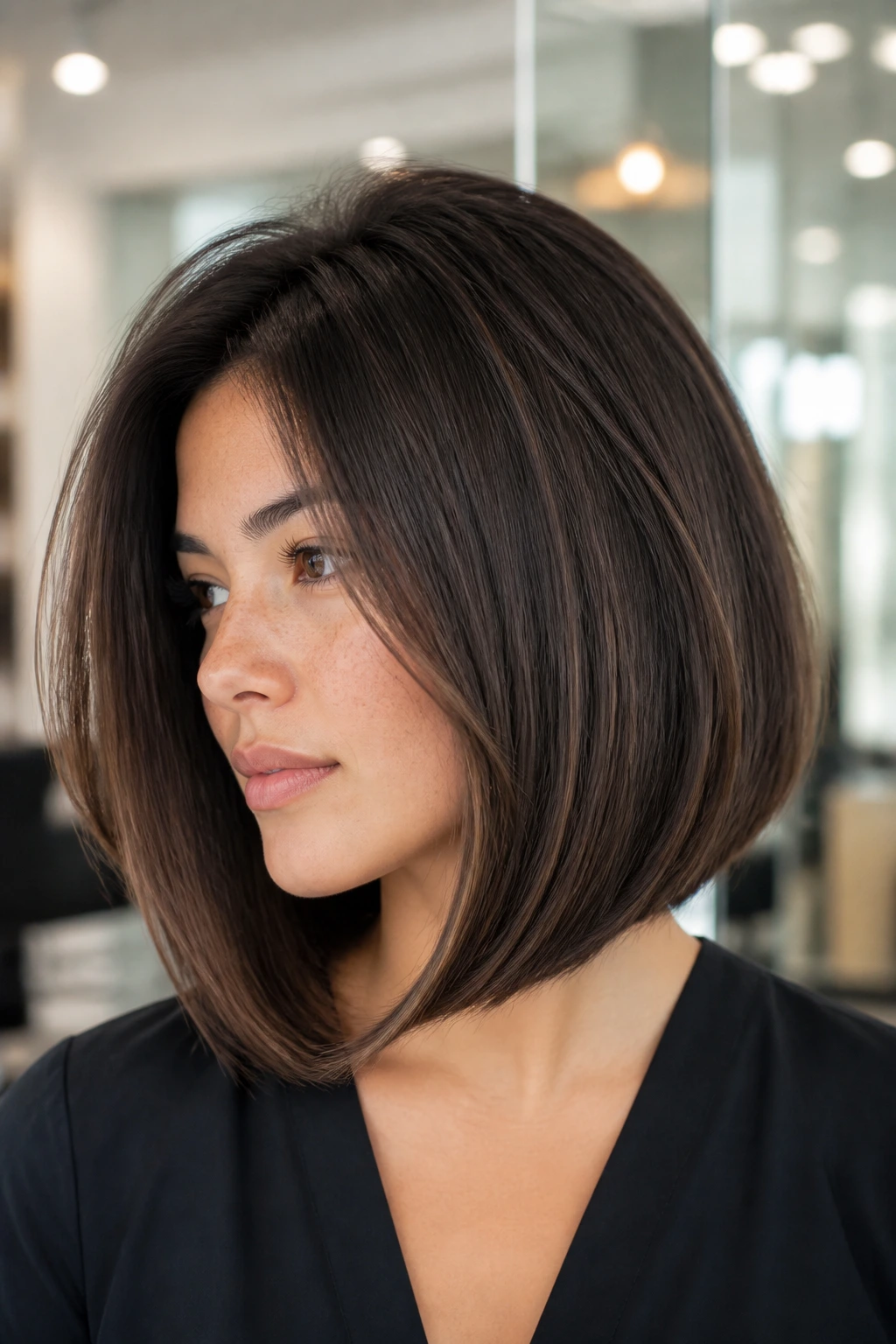
Sometimes the best haircut for a round face is the one that changes where the hair sits, not just how it’s cut. A root-lifted long inverted bob keeps height near the crown and a soft curve at the ends, which lengthens the face without making the style sharp.
Think of it as structure with a little bounce. The back remains shorter and neater, while the front slides down in a rounded line that doesn’t hit the widest point of the cheeks. The rounded ends stop the style from looking severe. That’s the nice part.
Styling Notes That Actually Matter
- Use mousse at the roots before blow-drying.
- Aim the nozzle upward at the crown for lift.
- Wrap the front sections around a medium round brush.
- Finish with a light spray, not a heavy lacquer.
This style looks especially good on medium hair because it holds shape without collapsing. If your hair tends to droop by lunch, a root spray at the crown and a quick blast of cool air can bring it back. Small detail. Big difference.
16. Air-Dried Long Inverted Bob for Wavy Hair
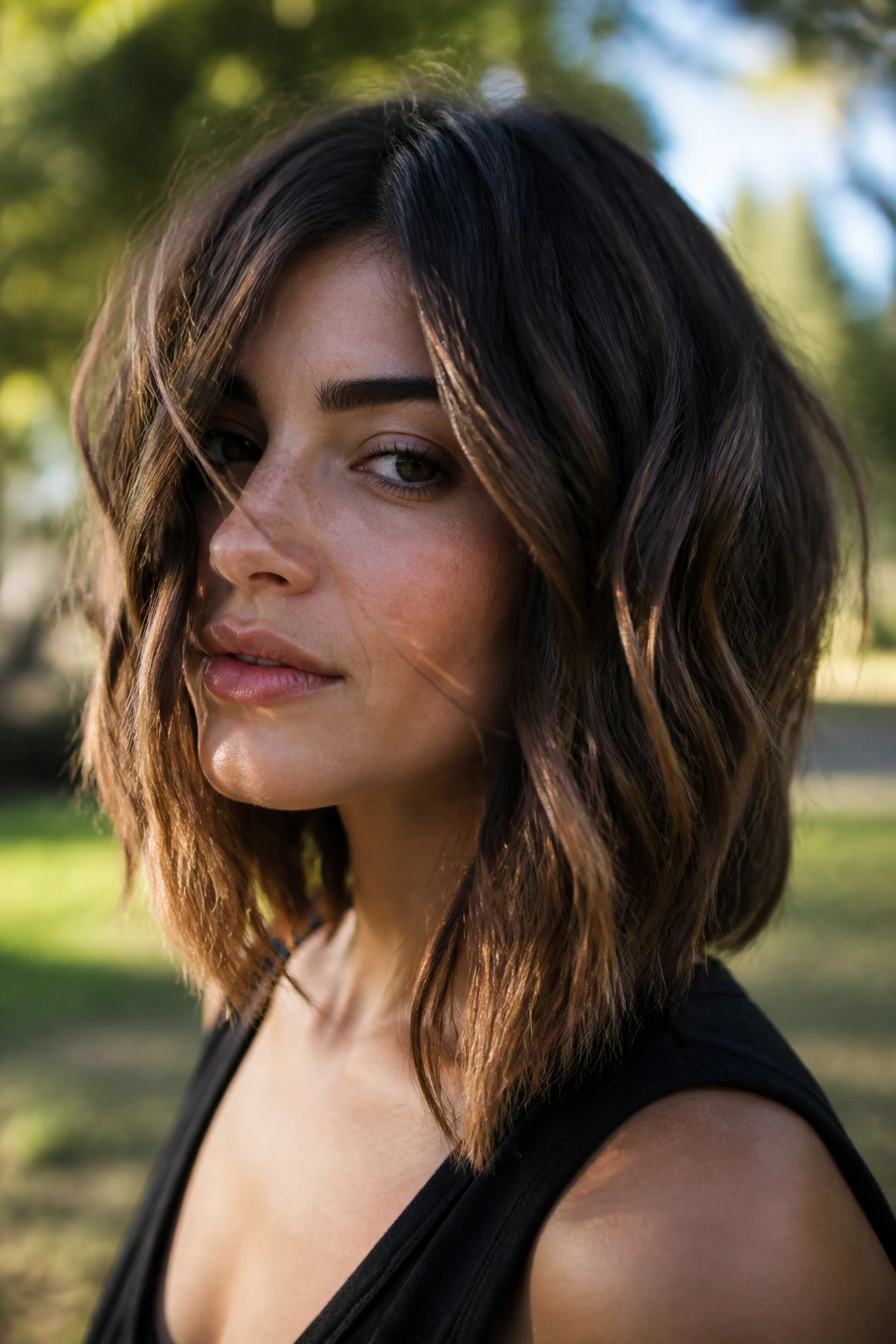
Wavy hair can make an inverted bob look easy in the best sense. The cut does need to be planned well, though, because waves want to expand. On a round face, that means the front length has to stay long enough to counterbalance the width that waves naturally create at the sides.
I prefer a version with a gentle angle rather than a dramatic one. The back should be shorter, yes, but not so short that the waves spring up into a triangle. The front needs enough length to drop past the jaw and narrow the face visually.
Use a cream or light gel on soaking-wet hair, then scrunch once and leave it alone. I mean that. Touching it every five minutes only makes it frizzier and wider. If you need extra shape, twist two front sections away from the face and let them dry that way.
This haircut is low-maintenance, but not careless. The best air-dried inverted bobs still have a plan. They just let the hair do half the work.
17. Tucked-Behind-One-Ear Long Inverted Bob
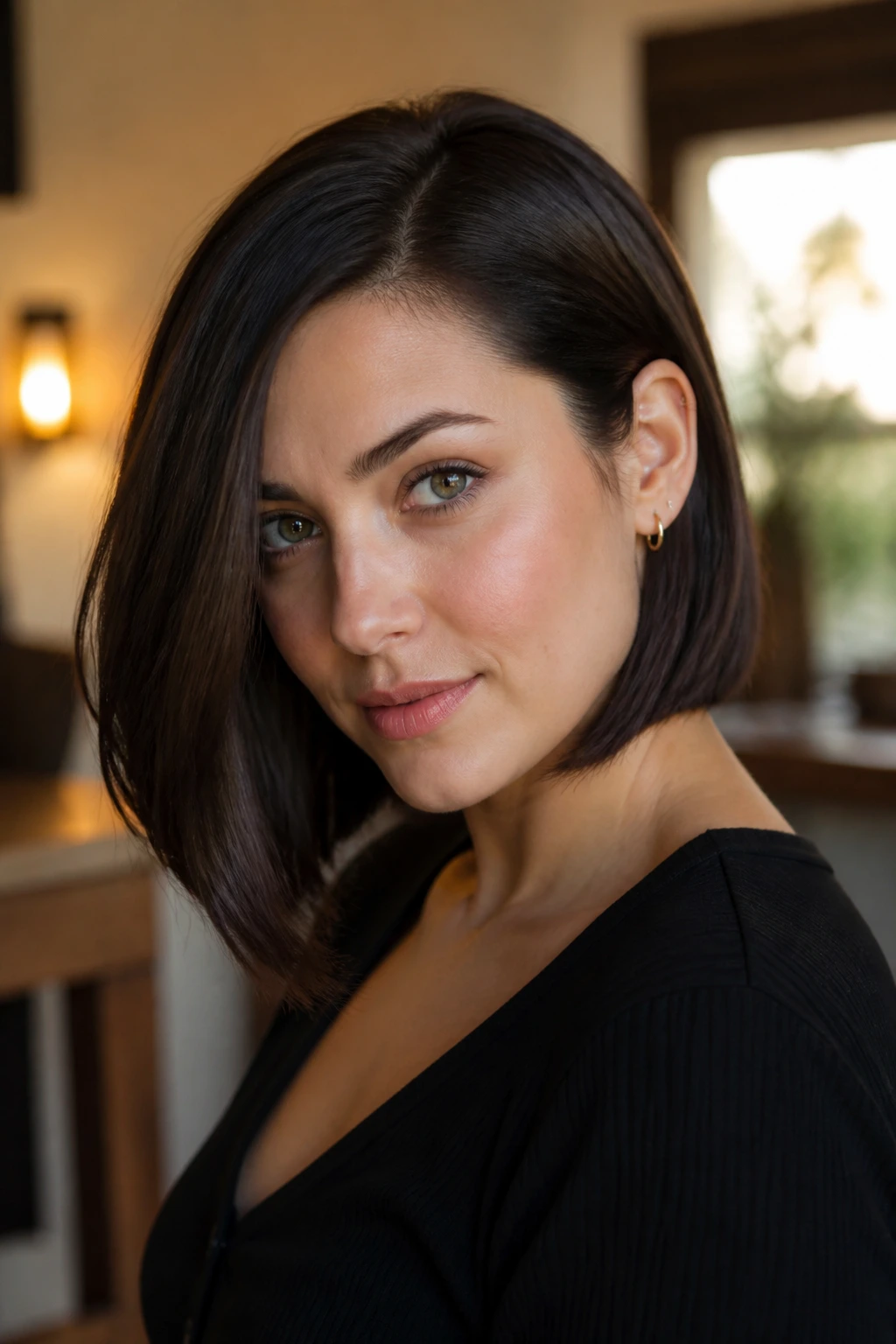
Tucking one side behind the ear sounds simple, and that’s because it is. But simple doesn’t mean boring. On a round face, the tucked side clears space near the cheek while the untucked side keeps the length visible, which gives the whole cut a diagonal pull.
The haircut itself should support that move. One front piece needs to be long enough to tuck cleanly without springing loose, while the other side should fall forward and graze the jaw or collarbone. That contrast is what makes the style look intentional.
This version is especially good if you want a haircut that changes character during the day. Wear it tucked for a neat, open look. Pull it out for a softer feel. A small ear cuff or a plain clip can make the tuck look deliberate instead of accidental.
Round faces often benefit from this asymmetry because it creates a visible break in the width of the face. Not a huge one. Just enough. And honestly, that’s often all you need.
18. Soft A-Line Long Inverted Bob With Beveled Ends

If I had to pick one long inverted bob that plays nicely with most round faces, this would be near the top. The A-line shape keeps the front long and slightly lower than the back, which gives the face a longer frame. The beveled ends soften the line so it doesn’t feel severe.
This version is the least fussy of the bunch. It works on straight hair, wavy hair, and even dense hair that needs shape without over-layering. The key is keeping the front length below the jaw and the angle gentle enough that the haircut moves with the face instead of against it.
A beveled edge means the ends curl under just a touch. Not enough to look dated. Just enough to keep the perimeter from sticking out. A blow-dryer and a paddle brush can do most of that work if you don’t want to use hot tools every day.
It’s also a good grow-out cut. The shape holds for a long time, and the angle stays flattering even when the salon visit gets pushed back. For a round face, that’s a real advantage. Clean, forgiving, and easy to live with. That’s the kind of haircut I’d trust first.
