



Messy long bob haircuts for round faces work because they stretch the face without making the hair feel severe. That’s the sweet spot. You want movement, not bulk. You want length, but not the kind that hangs there like a wet towel.
A round face usually has soft curves through the cheeks and jaw, so the cut needs to create a little vertical pull. The cleanest way to do that is with a lob that lands below the widest part of the face, plus texture that keeps the shape from ballooning out at the sides. Chin-length is the trap. Collarbone length is the safer bet.
A blunt line right at the jaw can make the face look wider. A messy long bob does the opposite when it’s cut with intent: it breaks up the curve, adds angles, and gives the eye somewhere to travel. That little bit of visual movement matters more than people think.
The best versions below play with layers, parts, bangs, and end texture in different ways. Some are soft and airy. Some are edgy. Some barely look styled at all, which is part of the appeal. All of them give a round face a bit more shape, and a little less roundness, without looking overworked.
1. Collarbone-Grazing Lob with Airy Ends
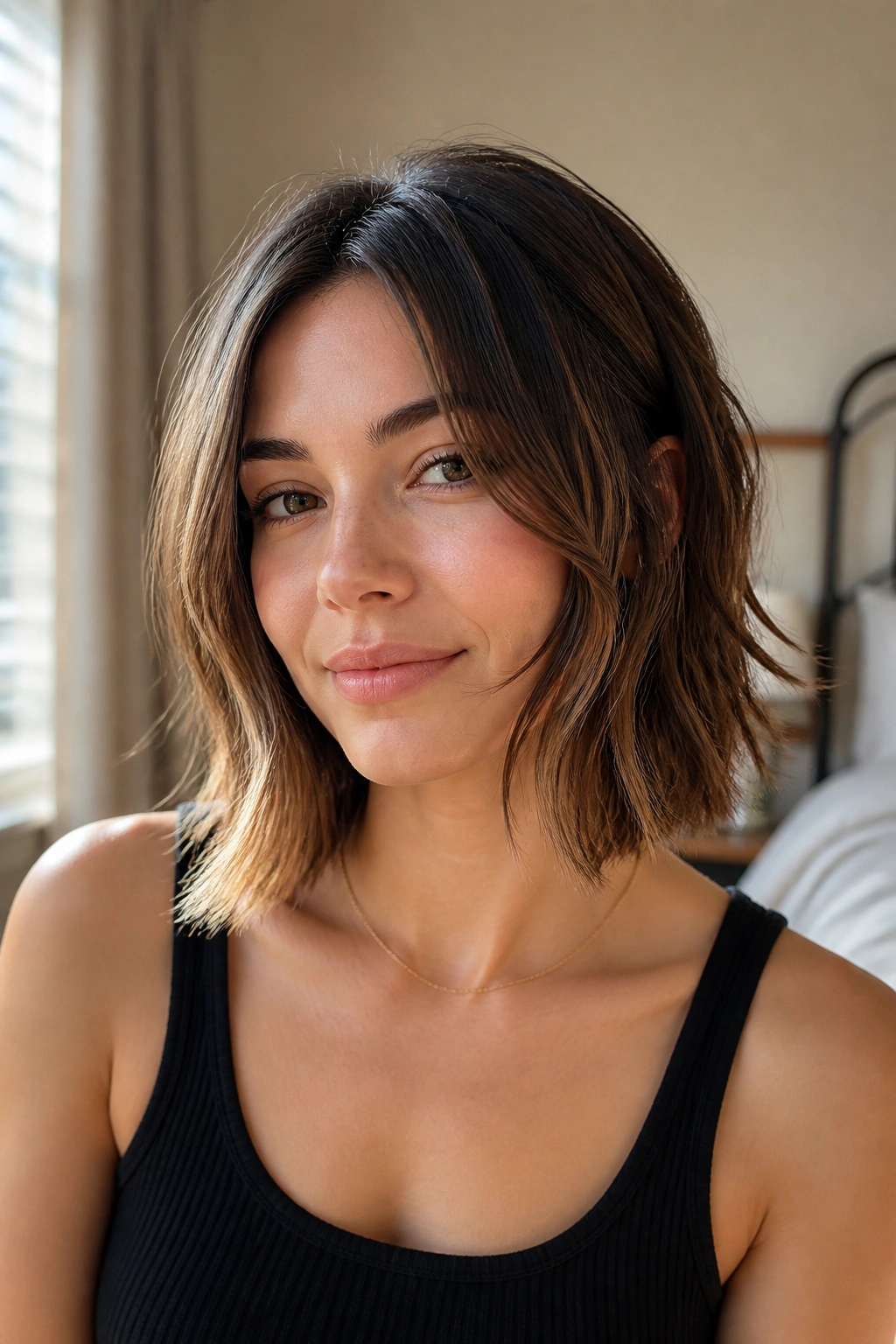
This is the safest place to start, and honestly, one of the prettiest. A collarbone-grazing length slips past the widest part of the face, so the eye reads more up-and-down than side-to-side. The airy ends keep the cut from feeling dense or boxy.
Why It Flatters a Round Face
The magic is in the placement. If the ends sit just below the collarbone, the hair falls in a long line instead of spreading out at the cheeks. That matters. A round face needs a bit of downward movement, and this cut gives it without going dramatic.
Ask for soft point-cut ends and a front shape that opens around the mouth, not the jaw. If the stylist cuts it too blunt, the whole look gets heavier fast.
- Keep the length at the collarbone or 1 inch below it.
- Ask for soft, feathered ends instead of a hard edge.
- Let the front pieces hit just past the cheekbone.
- Keep the layers light so the cut still feels full.
Tip: If your hair flips out at the bottom, good. That tiny bend makes the lob look lived-in instead of salon-stiff.
2. Off-Center Part and Piecey Waves
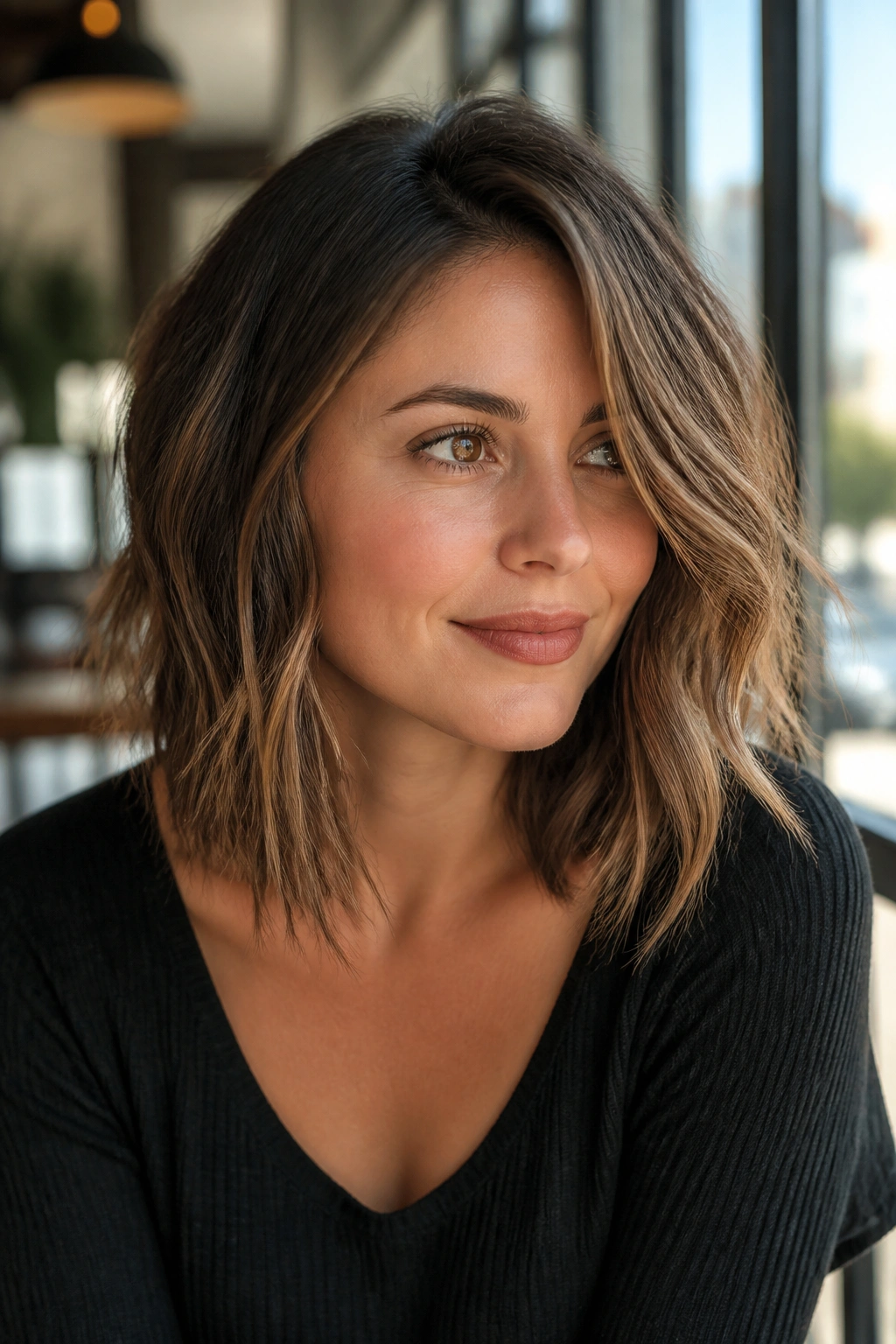
A dead-center part can be fine. A dead-center part with no movement is where round faces start to feel boxed in. An off-center part fixes that fast, because it puts a diagonal line across the face and shifts attention away from width.
Piecey waves do the rest. They break up the outline of the haircut so the shape feels relaxed, not round. You do not need beach curls here. A few loose bends with a flat iron or 1-inch curling iron are enough.
The trick is to keep the wave pattern uneven. One bend near the cheek, another closer to the shoulder, then leave a section straighter. That unevenness is what keeps the cut from puffing out like a halo. It sounds fussy, but it really isn’t. You’re just avoiding perfect repetition.
This one works especially well if your hair naturally wants to lie flat at the roots and poof at the ends. The off-center part steals some of that width and gives the lob a more angular read.
3. Shaggy Lob with Curtain Bangs
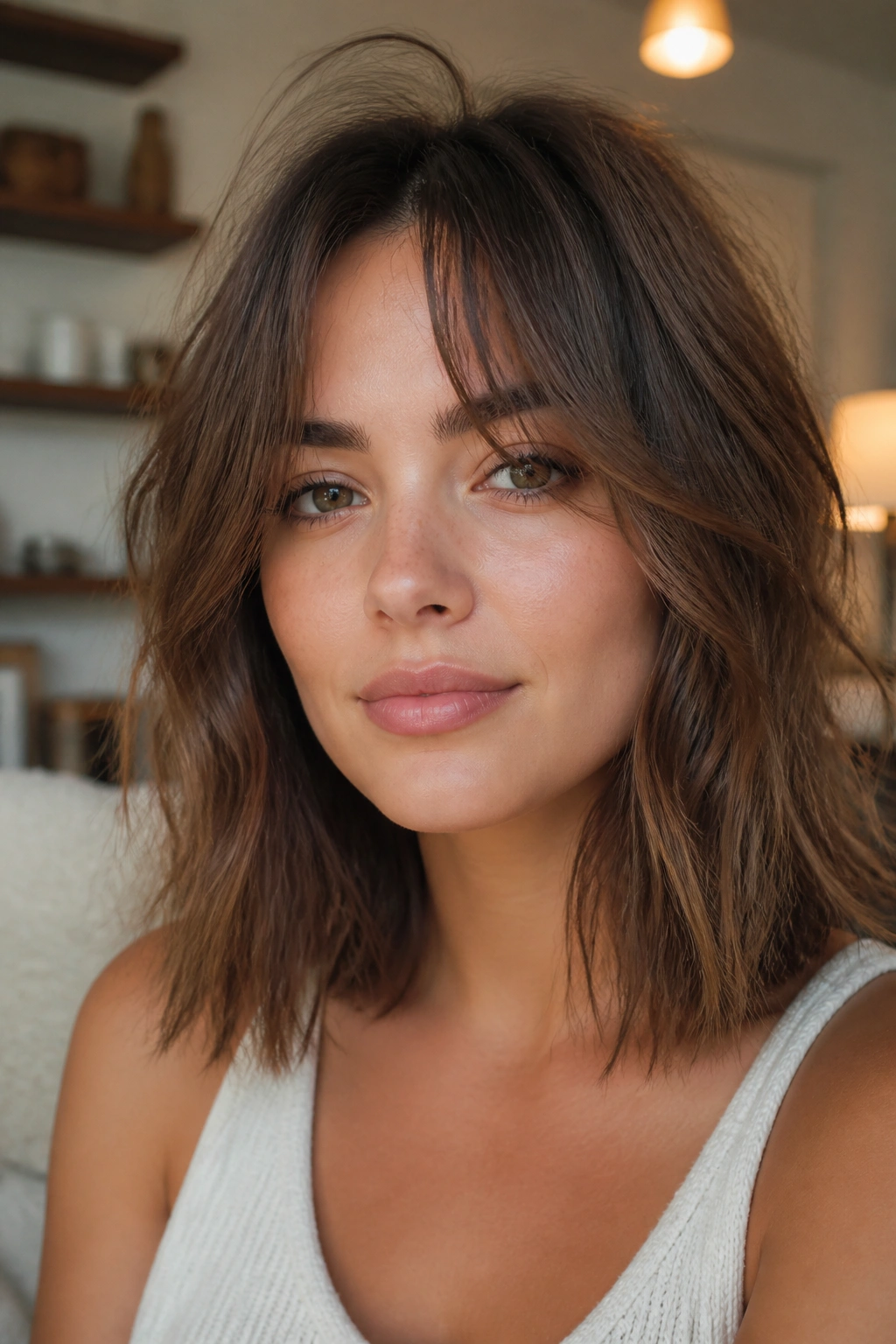
Why do curtain bangs look so good on round faces? Because they give you a vertical frame without cutting the face in half. The center opening adds length, while the longer sides taper around the cheeks in a soft, flattering way.
A shaggy lob makes the whole thing feel loose and modern. The layers should start somewhere below the cheekbone, not right at the top of it. That keeps the volume from landing exactly where a round face is widest. Bad placement there can make even a cute haircut feel off.
How to Ask for It
Tell the stylist you want curtain bangs that graze the cheekbones and blend into a textured lob. The bangs should be longer at the sides and light in the middle. Not heavy. Not helmet-like.
A good version of this cut has movement at the crown, softness around the temples, and enough length at the ends to keep the shape grounded. It looks especially nice when air-dried with a bit of texture cream, then roughed up with fingers.
4. Choppy Layered Lob with a Deep Side Sweep
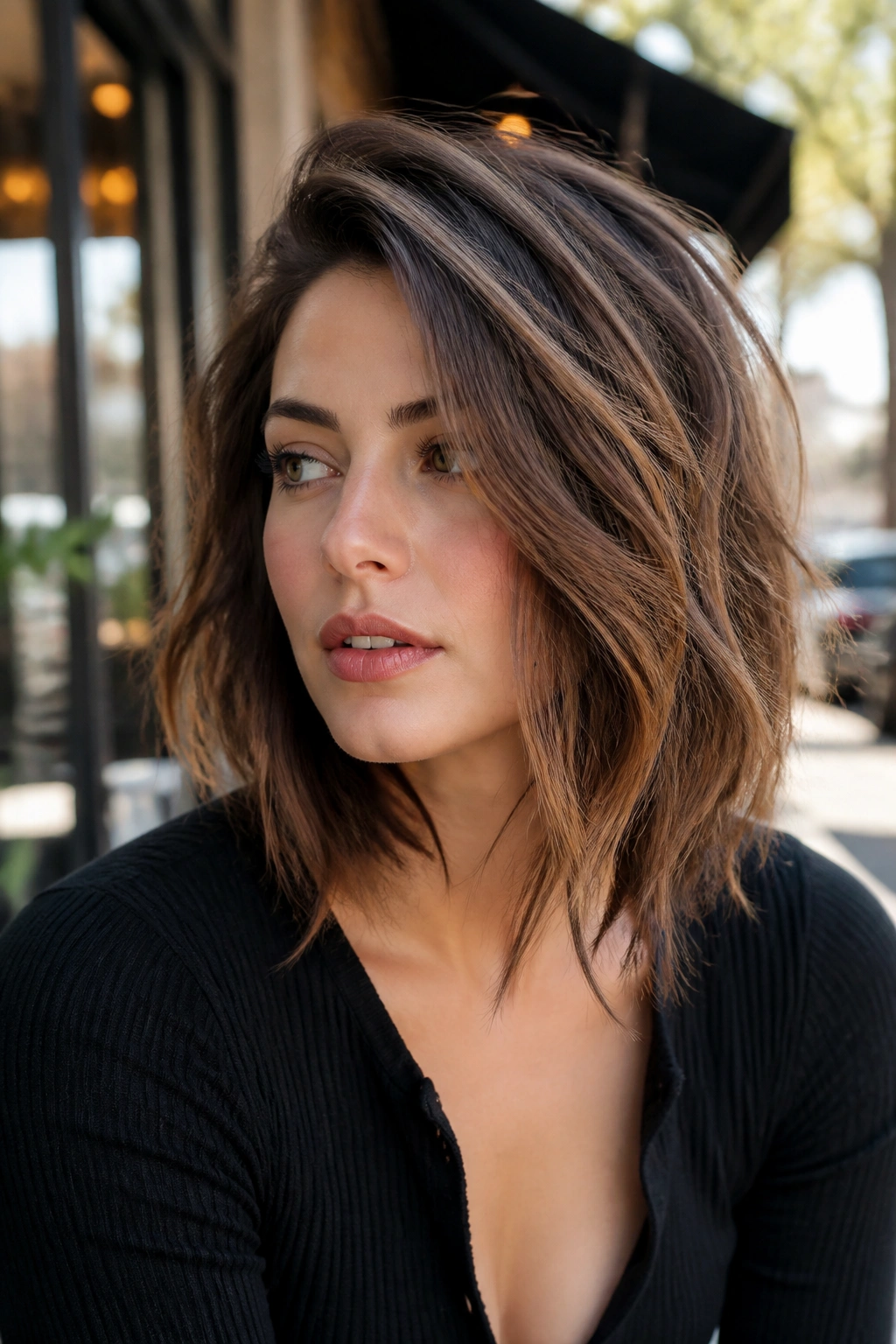
Picture hair that looks like it was cut for someone who never has time to fuss with it, yet somehow still looks thoughtful. That’s the appeal here. A deep side sweep adds instant asymmetry, and asymmetry is a round-face’s best friend.
The layers should be choppy enough to break the surface, but not so short that the cut starts puffing out around the ears. I like this style on thicker hair because it removes weight without thinning the ends into nothing.
- Ask for a side part that sits about 2 to 3 inches off center.
- Keep the front pieces longer than the back.
- Use point-cut or slide-cut layers to soften the shape.
- Style the top with a quick root lift, then let the ends fall wherever they want.
The part line does a lot of the heavy lifting. One side falls forward, the other gets tucked behind the ear. That little imbalance makes the face look less circular almost immediately.
5. Blunt Lob with Broken-Up Texture
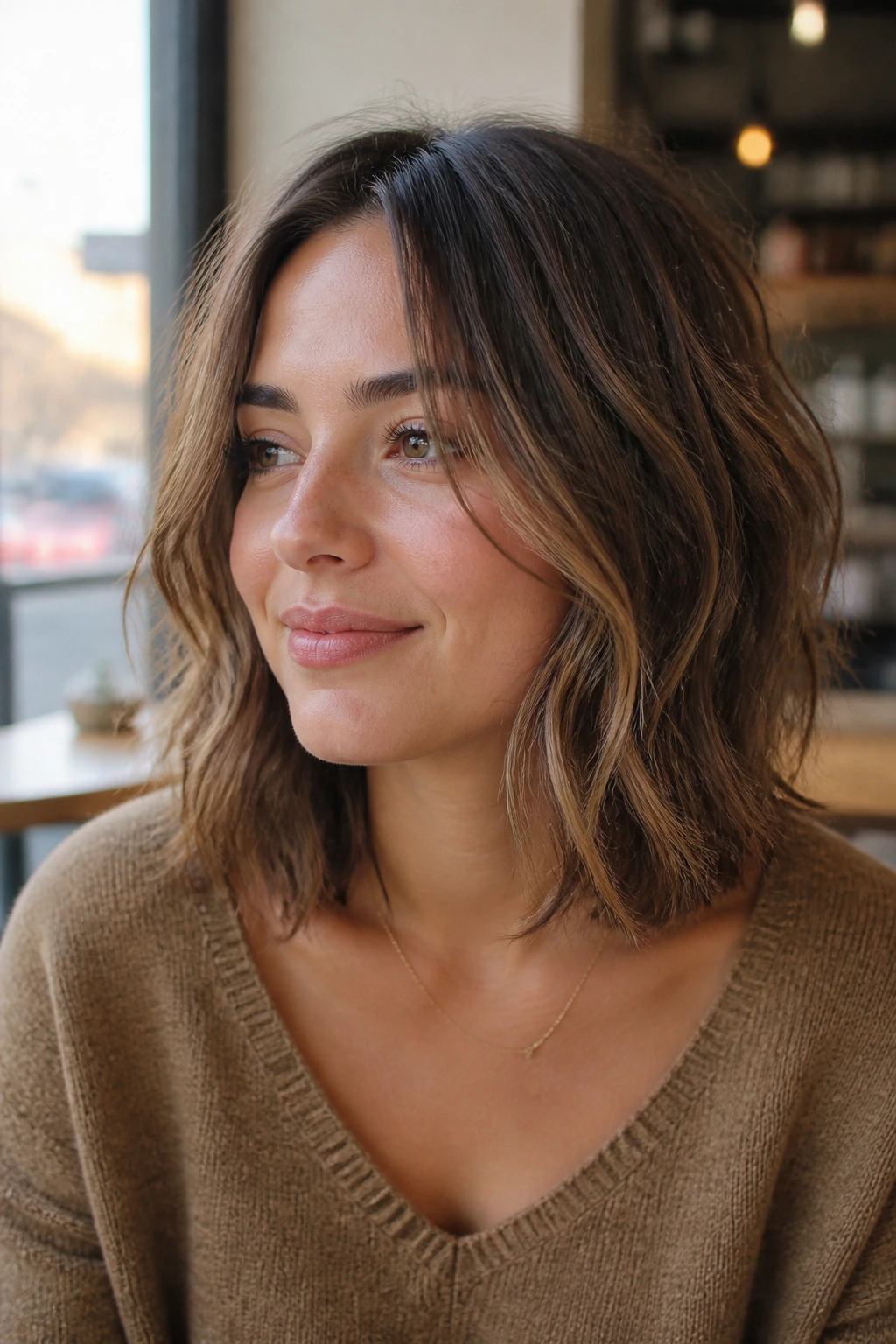
A blunt lob sounds like the opposite of messy, but that’s not how it has to behave. If the edge is clean and the texture is broken up, the result can be sharp in a good way. On a round face, that contrast is useful. The cut gives structure while the texture keeps it from looking stiff.
The most important thing is where the blunt line sits. At the collarbone: good. At the jaw: usually not so good. The farther you get from the widest part of the face, the more the blunt edge starts to work for you instead of against you.
Broken-up texture through the mids and ends keeps the shape from reading as a block. A light wave, a bent finish, or even a few pieces tucked behind the ear can soften the perimeter. I like this cut for people who want a sharper look without giving up movement. It’s clean, but not fussy.
6. Razor-Cut Lob with Feathered Front

This one has a little edge to it. A razor-cut lob removes weight in a way scissors sometimes don’t, which can be lovely if your hair is thick, straight, or prone to sitting heavy around the cheeks. The feathered front pieces keep the cut from feeling blunt and boxed in.
Unlike a one-length lob, the razor version has softer movement through the ends. That gives the hair a kind of loose, airy swing when you walk. It’s not wispy in a fragile way. More like the hair has room to breathe.
It suits round faces because the feathered front creates a narrow visual line near the face while the rest of the cut stays easy and modern. If you usually hate layered haircuts because they feel too chopped up, this is the version to try. It keeps the shape controlled.
7. Asymmetrical Messy Lob

A little imbalance goes a long way. An asymmetrical lob has one side longer than the other, and even a difference of 1 inch can change the whole feel of the face. For round faces, that diagonal line is gold.
Where the Imbalance Should Sit
Do not go extreme unless you want a statement cut. The best version is subtle: one side skims the collarbone, the other sits a touch higher. That slight tilt pulls the eye downward and makes the face feel longer.
The messy part matters because it keeps the asymmetry from looking too precise. A rough texture at the ends, a side part, or a few flipped pieces around the jaw all help the shape feel lived-in. If the hair is pin-straight and glossy, the asymmetry can look severe. A bit of bend fixes that.
This cut is for someone who likes structure but does not want a safe haircut. It has personality. Good haircuts should, in my opinion.
8. Bottleneck Bang Lob
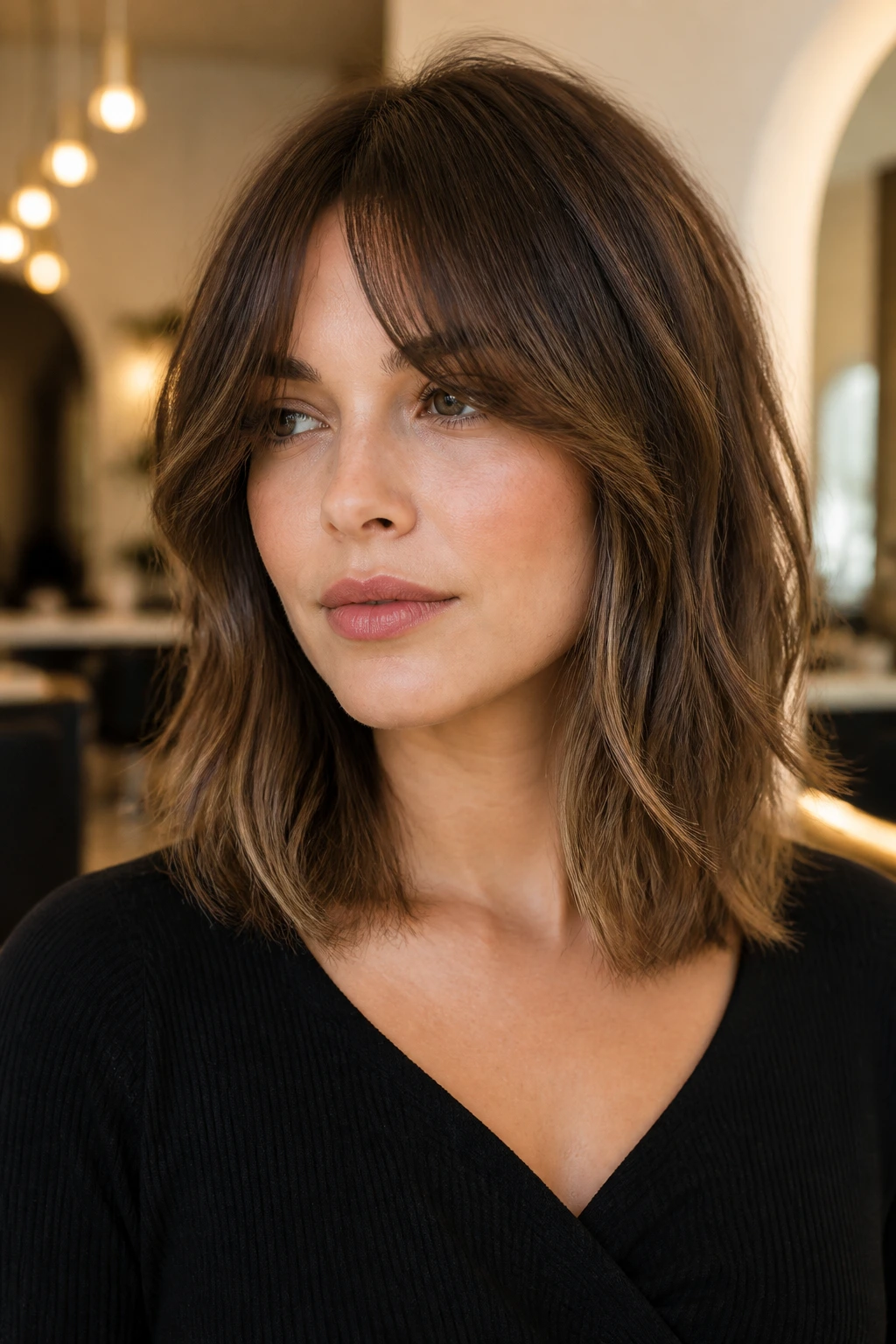
Bottleneck bangs are one of those fringe styles that makes sense the second you see them on a round face. They are shorter in the center, longer as they move outward, and that creates a nice opening in the middle without exposing the whole forehead.
The shape helps the face feel longer because the eye moves down through the center gap and then outward along the cheekbones. It is softer than a full blunt fringe and easier to live with, too. If you’ve been afraid of bangs, this is one of the less risky ways in.
The lob underneath should stay loose and a little textured. Heavy ends plus soft bangs can feel dated fast. Keep the finish broken up, and the whole cut stays modern. A small amount of round-brush lift at the roots helps the bangs fold into the rest of the style instead of sitting on top like a separate piece.
9. Tousled French Lob

Can a messy cut still look polished? Absolutely. The French lob is proof. It usually sits around the collarbone, has a soft bend rather than a beach wave, and looks like it was styled in about eight minutes by someone who knows exactly what they’re doing.
What Makes It French
The shape is light. The ends are not over-layered. The part is usually relaxed, not perfect. That gives the haircut a slightly undone feel that works beautifully on round faces because it never widens the cheeks with too much bulk.
You do not need a lot of texture spray for this one. A quick blow-dry with a medium brush, then a little finger-tousling at the ends, often does the job. Keep the volume around the crown modest and let the length do the flattering. That part matters.
This is a good cut if you like the look of “done, but not done.” There’s a reason it shows up so often. It’s easy to wear and hard to mess up.
10. Long Face-Framing Lob
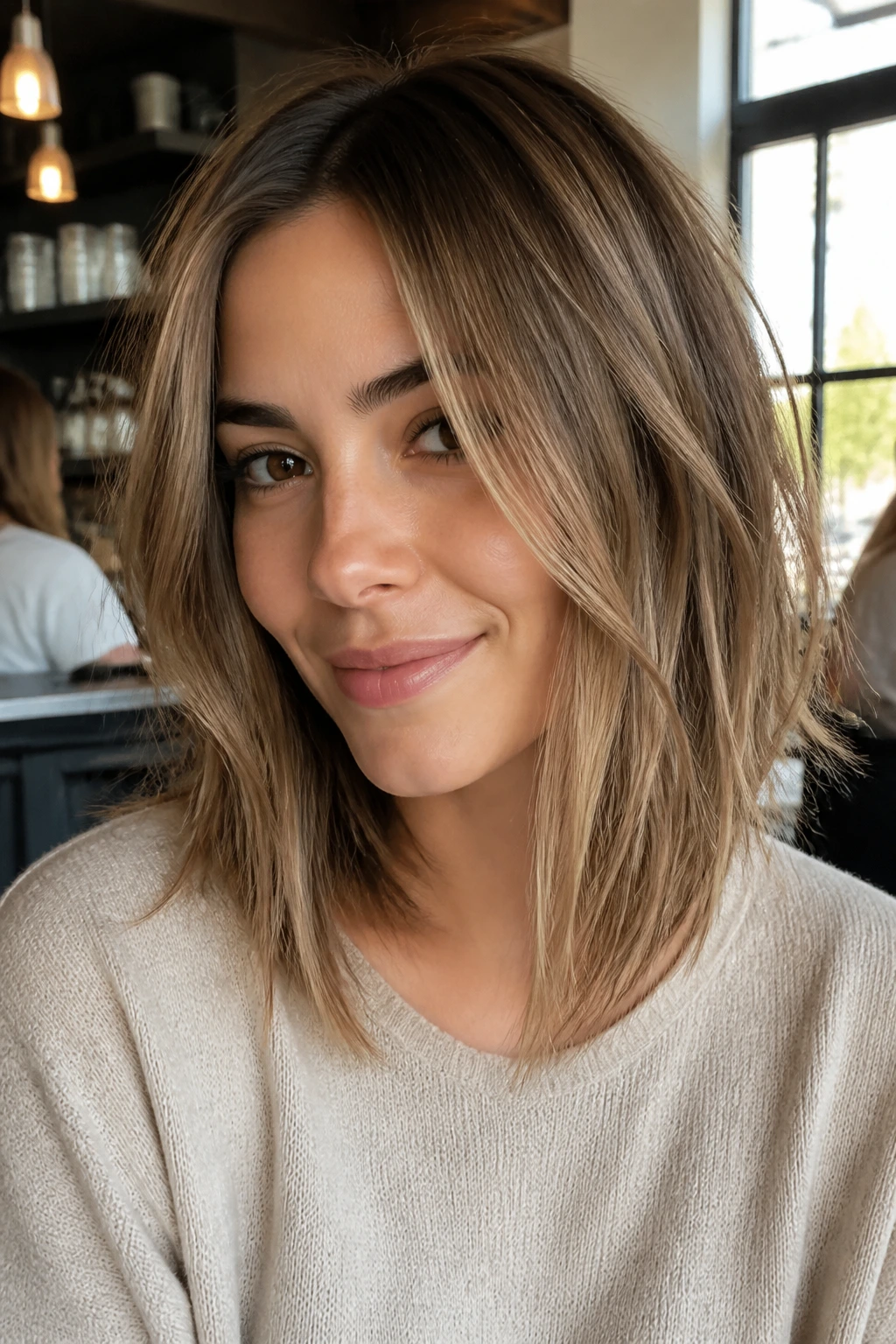
If your cheeks are the first thing you notice in the mirror, long face-framing pieces can help. They act like vertical curtains on either side of the face, which gives the eye a cleaner path downward. On a round face, that’s a smart little trick.
The key is keeping those front pieces long enough. They should start below the cheekbone and taper down toward the collarbone. If they start too high, they just add width right where you don’t need it.
- Ask for the front to begin around the mouth or lower.
- Keep the back slightly shorter so the shape doesn’t drag.
- Let the face frame blend into the lob, not sit on top of it.
- Wear the part slightly off center for more lift.
This style is especially good on medium to thick hair because the front pieces need enough weight to fall well. Too little hair and they flip around in a weird way. Too much and they lose the softness.
11. Root-Lift Wavy Lob
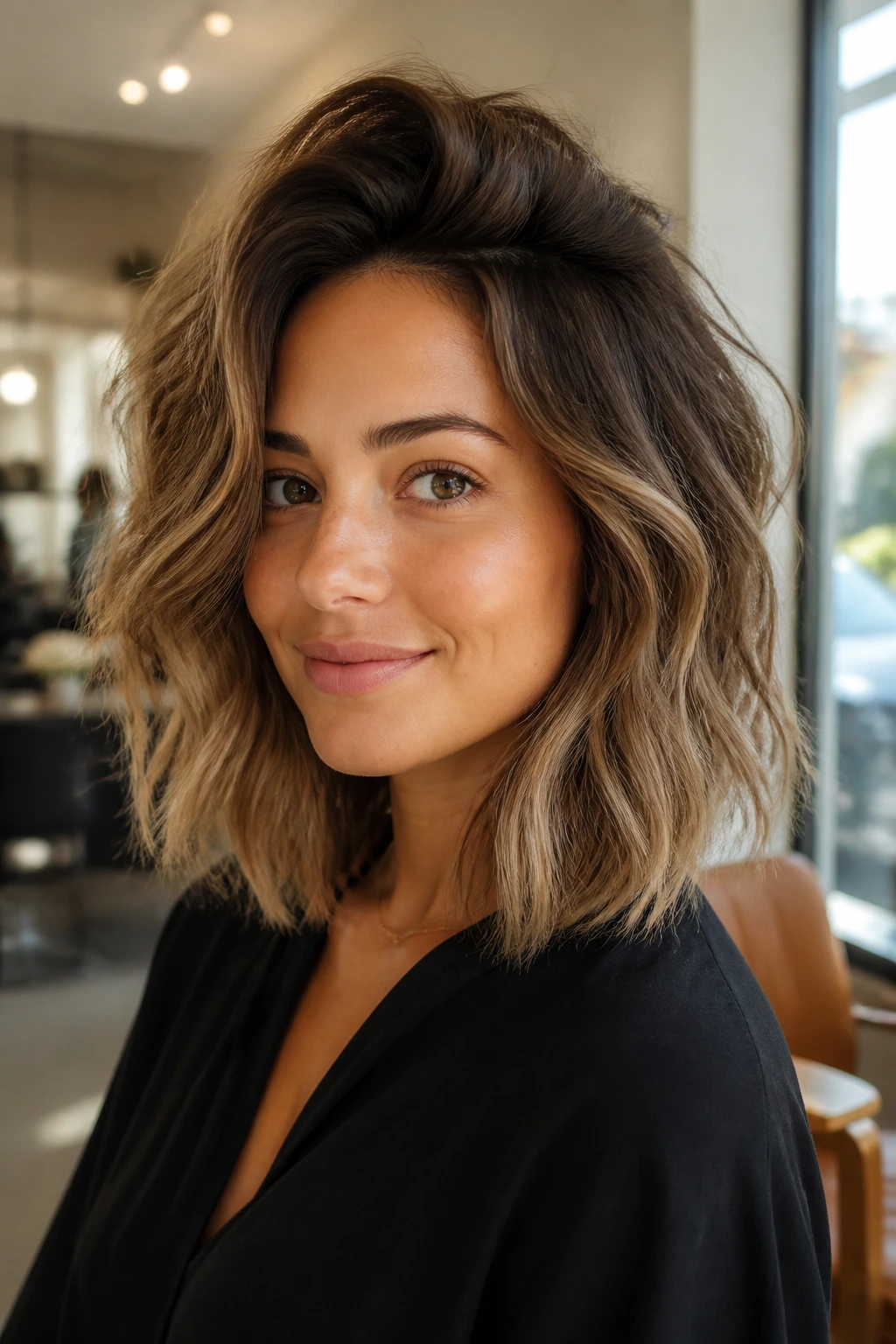
A flat crown makes a round face feel rounder. It’s one of those small styling issues that changes the whole look. A root-lift lob solves that by putting volume where the eye needs height, not width.
The waves can be loose and casual. What matters more is that the lift starts at the roots, especially near the part line and crown. That little bit of height creates a longer silhouette. Even half an inch helps.
I like this cut on hair that has some natural body but falls limp by lunchtime. The layers should be just enough to encourage movement, not so much that the ends get stringy. A light mousse at the roots and a quick blast of heat can make the difference between a flat bob and a flattering lob.
The funny thing is that this one looks especially good from the side. The profile ends up softer and a little longer, which is exactly what round faces need.
12. Curly Messy Lob
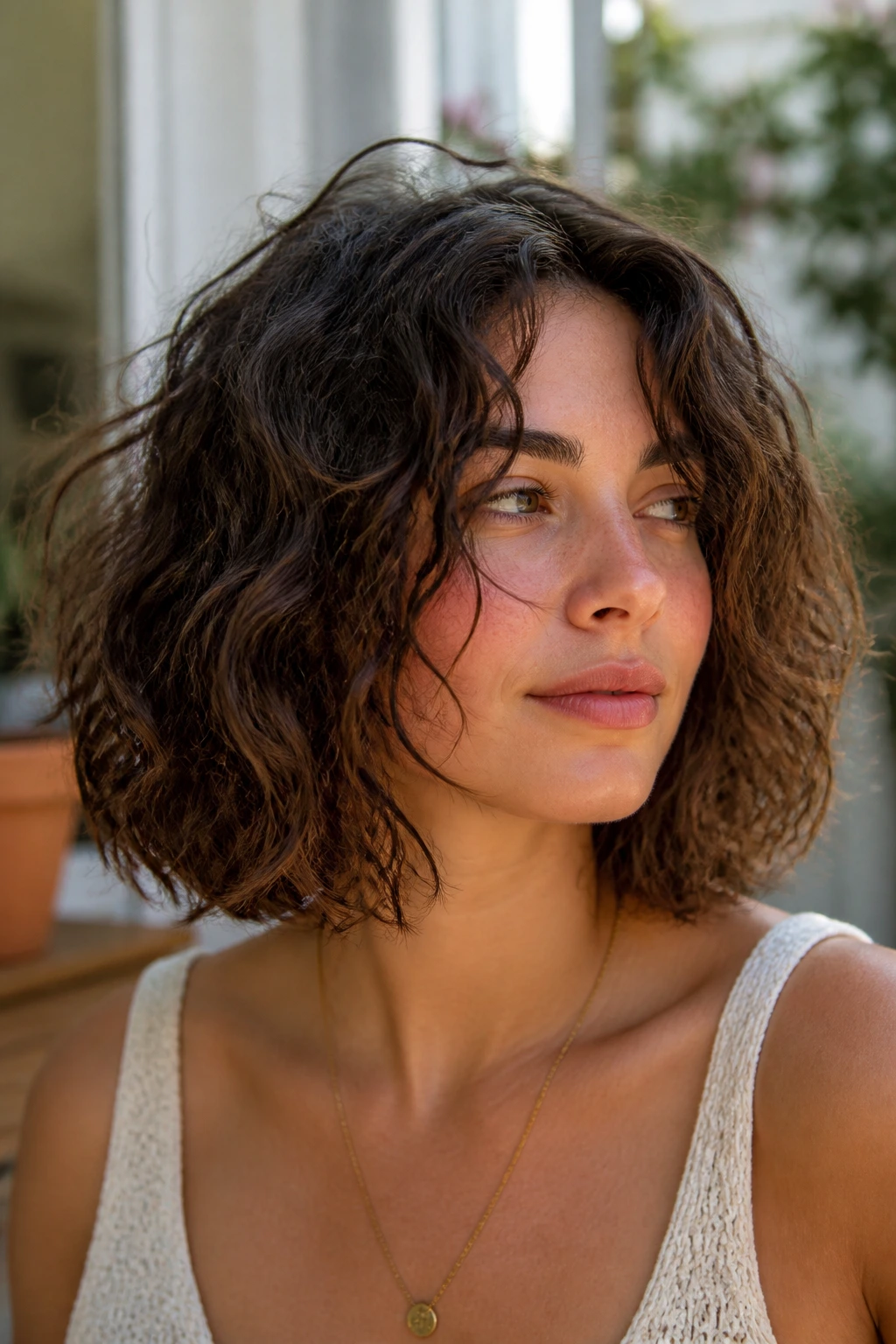
If your hair is curly or wavy, do not fight that bend. A curly messy lob can be one of the most flattering shapes for a round face because it gives softness without the puffiness that happens when curls are cut too short.
The cut should usually be done dry, or at least with the curl pattern in mind. Wet curls lie. They shrink, too. That means a stylist who ignores texture can accidentally take off far more length than you wanted. Been there, hated it.
A good curly lob keeps the shape below the chin, with layers that encourage curl separation rather than a triangle shape. The front pieces should frame the face, but not stop right at the cheeks. If they do, the face can look wider.
This style works best when you let a few curls do their own thing. Perfect definition can feel a little too formal here. Messy, on curls, is the point.
13. Beach-Wave Lob with a Tucked Side

A tucked side changes the whole mood of a lob. One side stays loose, the other gets tucked behind the ear, and suddenly the haircut has a diagonal line that helps a round face look narrower. Tiny move. Big payoff.
The Shape Trick
The loose side should keep some bend around the jaw and collarbone. The tucked side should expose the cheekbone and ear. That contrast makes the face feel less evenly wide, which is exactly why it works so well.
The waves themselves should be relaxed, not polished into perfect ribbons. If every piece is shaped the same way, the cut starts to feel predictable. A few uneven bends make it look better, not worse.
This is the kind of haircut that looks good when it’s a little imperfect. In other words, don’t overthink it. Toss in a wave, tuck one side, and let the shape do the rest.
14. Internal-Layer Lob
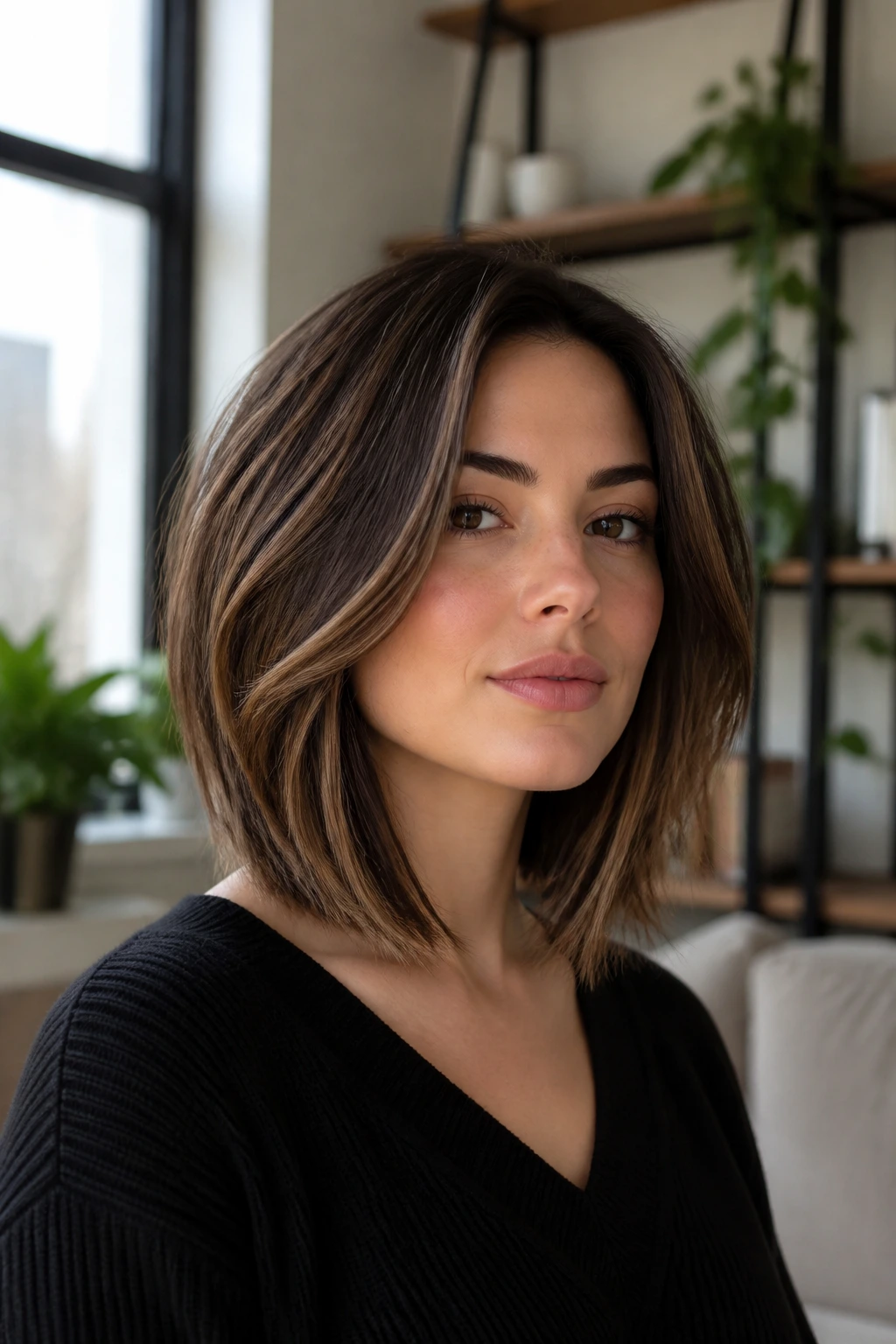
Here’s a cut that sounds subtle and ends up doing a lot. Internal layers remove weight from inside the haircut instead of hacking away at the surface. That means the outline stays clean, but the hair moves more easily.
Why Internal Layers Matter
For round faces, this is useful because you can keep the perimeter long enough to lengthen the face while still getting lift and swing through the middle. The hair doesn’t puff out as much at the sides, which is one of the common problems with thicker lob cuts.
It also makes styling easier. The cut already has movement built in, so you do not need to create huge waves every morning. A rough blow-dry and a touch of texture cream can be enough.
This is not the flashiest lob on the list. It might be the smartest one, though. Sometimes the best haircut is the one nobody can quite explain, because it just behaves.
15. Wispy Side-Bang Lob

Side bangs are underrated. A good one adds a diagonal line across the face, and diagonal lines are useful when you’re trying to soften roundness. The wispy part keeps the bang from feeling heavy or old-school.
What to Ask For
The shortest point should land around the temple or upper cheek area, then sweep down toward the brow and cheekbone. That shape keeps the forehead partially open while still guiding the eye downward. If the bang is too thick, it can crowd the face. If it’s too thin, it disappears.
This cut works nicely with a lob that has light texture at the ends. The combination keeps the whole style soft. You get framing without fuss. And if you don’t love how bangs sit on your face every day, side bangs are easier to push back and grow out than blunt ones.
16. Jagged-End Collarbone Lob

Jagged ends can sound aggressive, but on the right haircut they just mean movement. Instead of a single clean line, the ends are cut at slightly different points so the perimeter feels broken up and light.
That helps round faces because the eye never gets stuck on one horizontal line. The shape keeps shifting. The hair looks a little more casual, a little more piecey, and a lot less heavy near the jaw.
- Keep the longest pieces grazing the collarbone.
- Use a point-cut finish so the ends feel irregular, not ragged.
- Add a few bends with a flat iron if the hair is naturally straight.
- Avoid making the layers too short at the cheekbone.
This is a good cut for anyone who likes a bit of edge without going full shag. It is messy, but in a controlled way.
17. Soft Wolf-Lob Hybrid
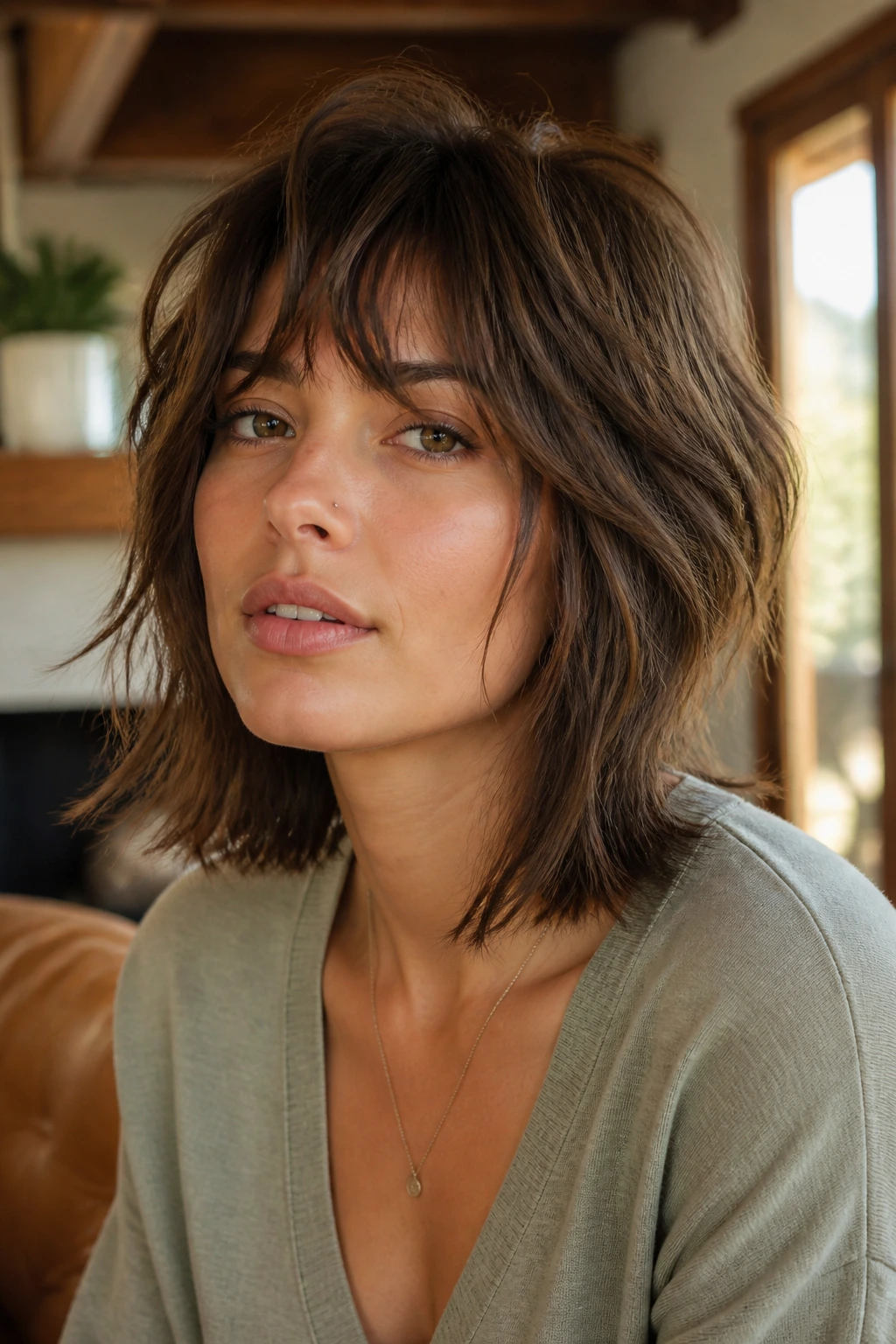
The wolf cut got loud. This version is quieter. A soft wolf-lob hybrid keeps the shaggy top and light crown movement, but it holds onto the lob length so the face still gets that vertical stretch.
It suits round faces because the crown has texture and lift, while the outer shape stays long enough to avoid widening the cheeks. The trick is restraint. You want enough layering to make the cut feel cool, not so much that it turns into a triangular puff.
This style looks best when the ends are left a little rough and the top is gently tousled. A diffuser can help if your hair has wave or curl. Straight hair can wear it too, but it needs some texture spray or a quick bend with a hot tool.
If you like a cut that feels a bit rebellious but still wearable, this is one of the better choices.
18. Air-Dried Lob with a Light Bend
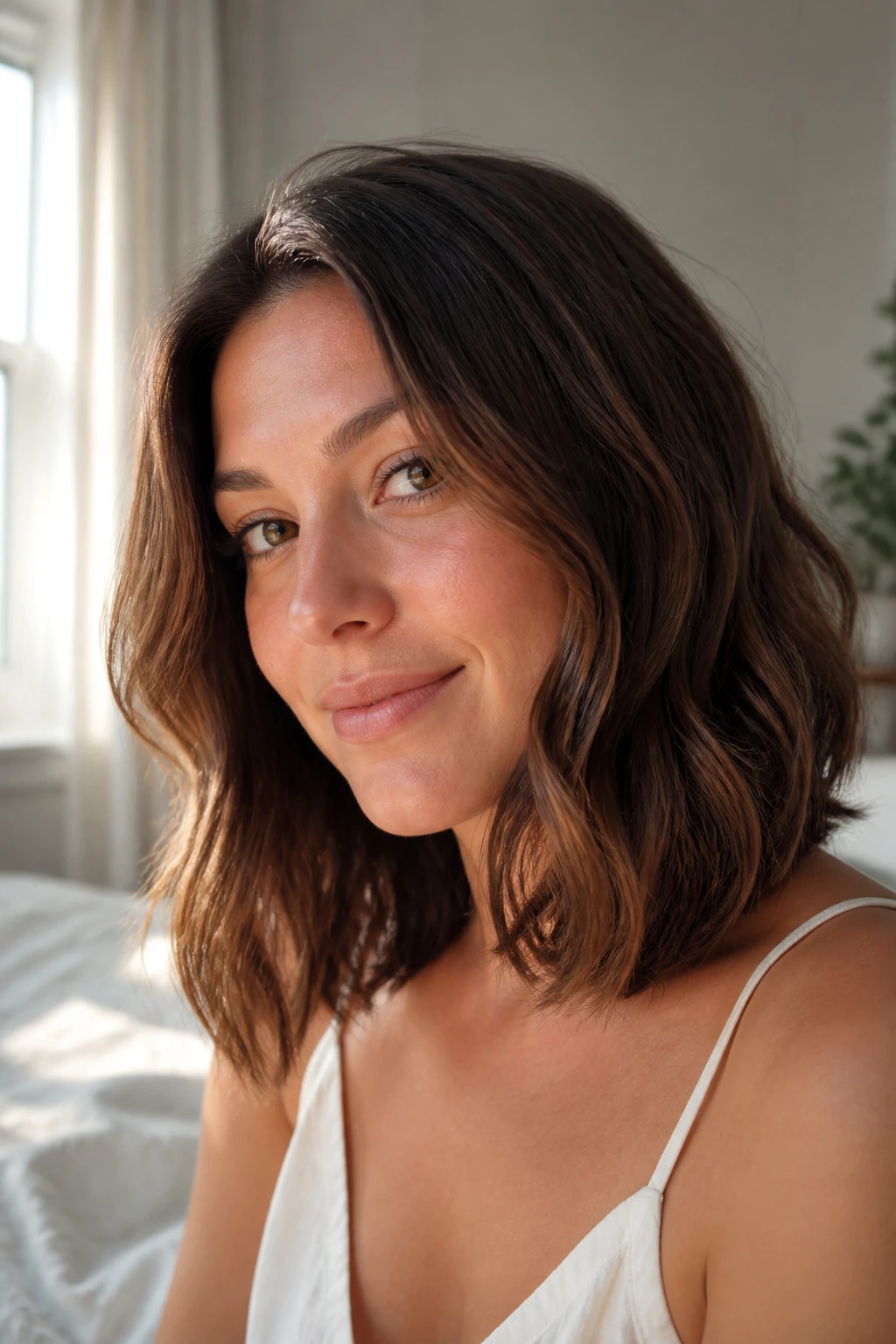
Not everyone wants to style hair every morning. Fair enough. An air-dried lob with a light bend is built for that kind of life, and it can still flatter a round face if the cut is shaped well.
The bend should be soft, not spiraled. Think of the ends as gently turning in different directions rather than falling in one neat line. That irregularity keeps the hair from ballooning out at the widest part of the face.
This cut works especially well if your hair has a little natural wave. A small amount of cream, scrunched through damp hair, can be enough. If your hair is pin-straight, ask for subtle layers and some texture around the ends so air-drying does not leave it lifeless.
It is the kind of style that looks better on day two than day one. I always trust a haircut more when it improves after a little sleep.
19. Forward-Weighted Lob
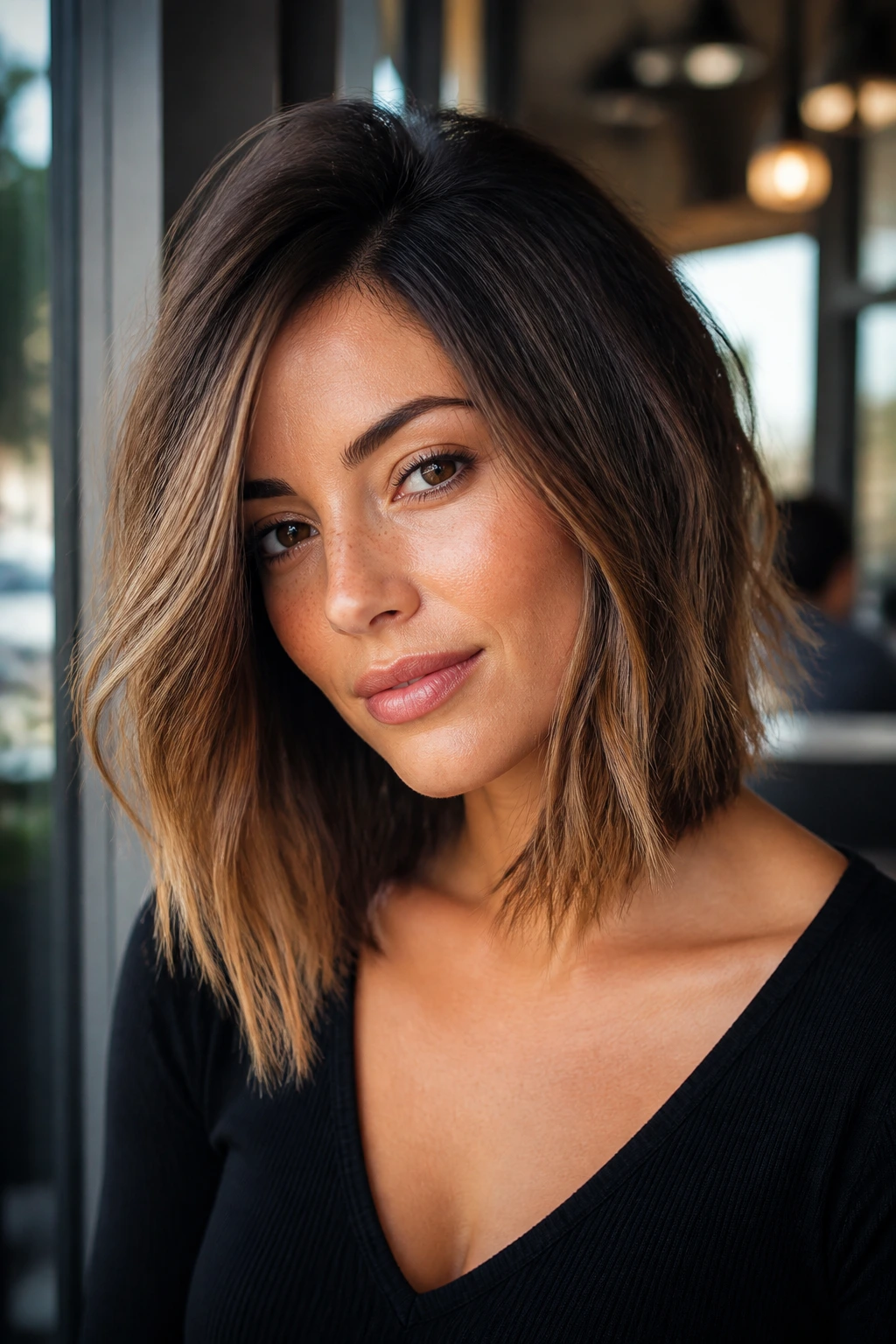
This one is all about direction. A forward-weighted lob keeps more length and visual weight toward the front, which draws the eye away from the sides of the face. On a round face, that can be a very good thing.
Where the Weight Should Sit
The longest pieces should drift toward the collarbone and slightly in front of it. The back can sit a touch shorter, but not so short that the cut starts stacking up at the nape. You want a gentle forward slide, not a sharp angle.
That front weight gives the haircut a bit of drama without making it hard to wear. If the hair is thick, this shape keeps it from expanding outward. If the hair is fine, it gives the ends something to do.
A forward-weighted lob feels modern and practical at the same time. It is one of those cuts that can be worn straight, waved, or tucked behind one ear without losing its shape.
20. U-Shaped Lob with Soft Corners
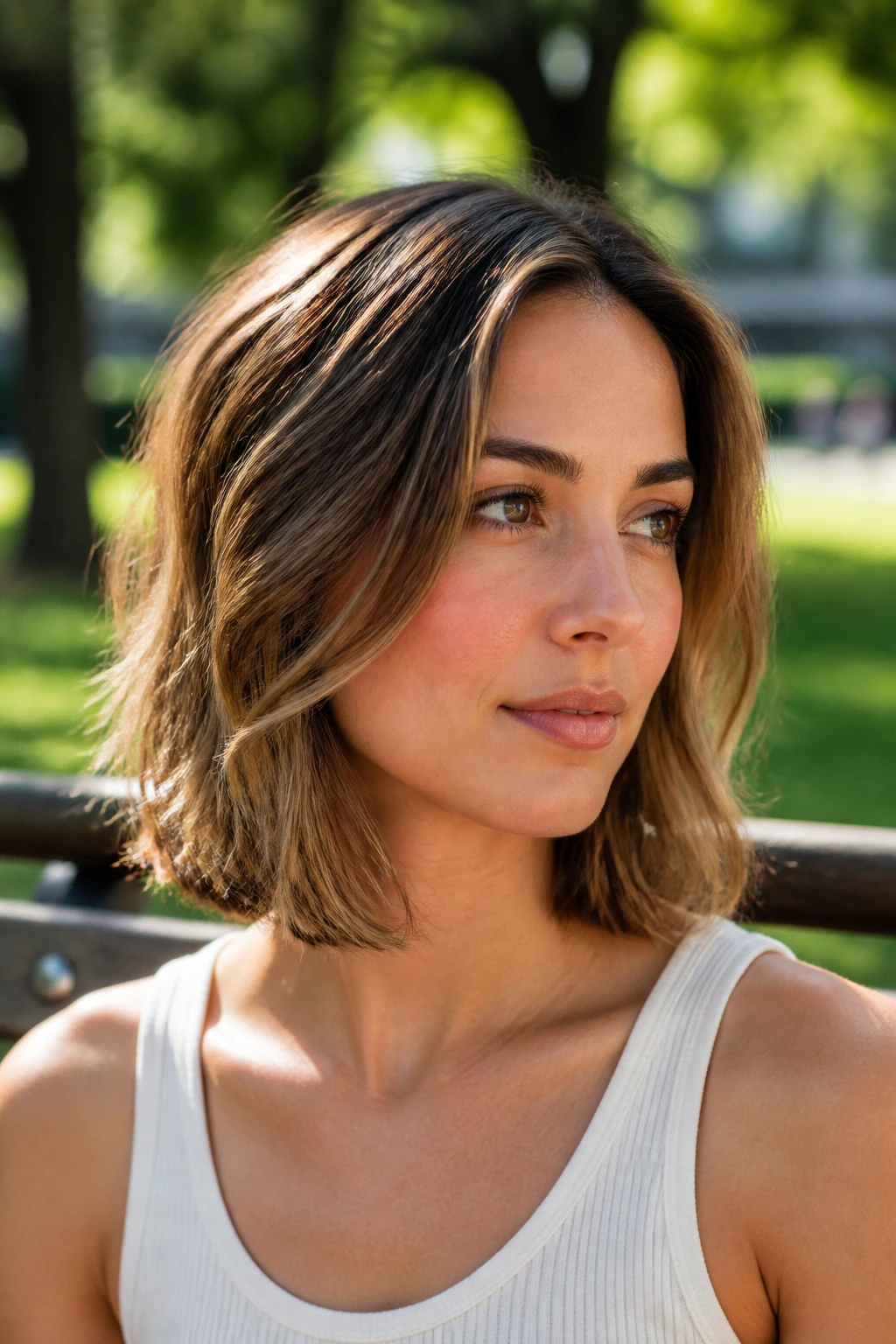
A U-shaped lob is one of the most face-friendly shapes around because it curves gently instead of ending in a hard block. On a round face, soft corners matter. They stop the haircut from looking square.
The longer center back and slightly shorter sides create a natural flow. That curve helps the face feel longer without making the hair look thin at the edges. It’s subtle, which is exactly why it works.
I like this shape when someone wants movement but not a lot of obvious layering. The cut reads clean, then the messy styling gives it life. A few bent pieces around the jaw are enough. You do not need a full wave set.
This is also a good option if you change your part often. The U shape keeps its balance even when the part shifts around.
21. Crown-Volume Lob
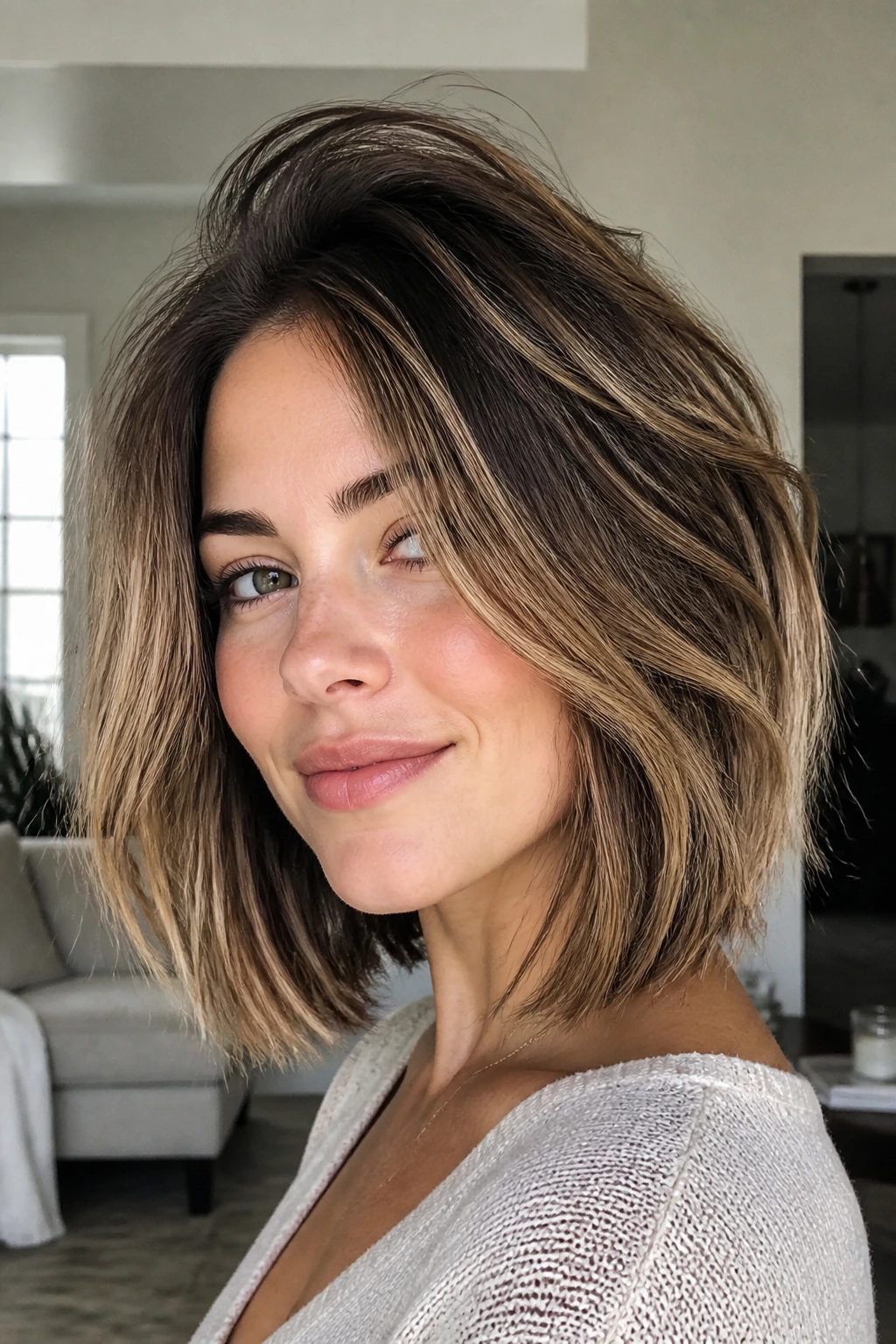
What if the problem is not the cheeks, but the top of the head? A flat crown can make any face shape look wider than it is. A crown-volume lob fixes that by putting height where the eye wants it most.
Why the Crown Matters
A little lift at the top gives the haircut a longer overall line. That changes the proportions fast. It’s the same reason a high ponytail can look flattering on a round face: it stretches the silhouette upward.
The cut itself should keep enough layering around the crown to encourage lift, but not so much that the hair collapses. The ends can stay soft and messy. The important part is that the top does not lie flat against the scalp.
This style is especially good if your hair tends to sit close to the head. A root spray, a round brush, or even a few hot rollers at the crown can make the difference between “nice haircut” and “that really suits you.”
22. Micro-Layered Piecey Lob
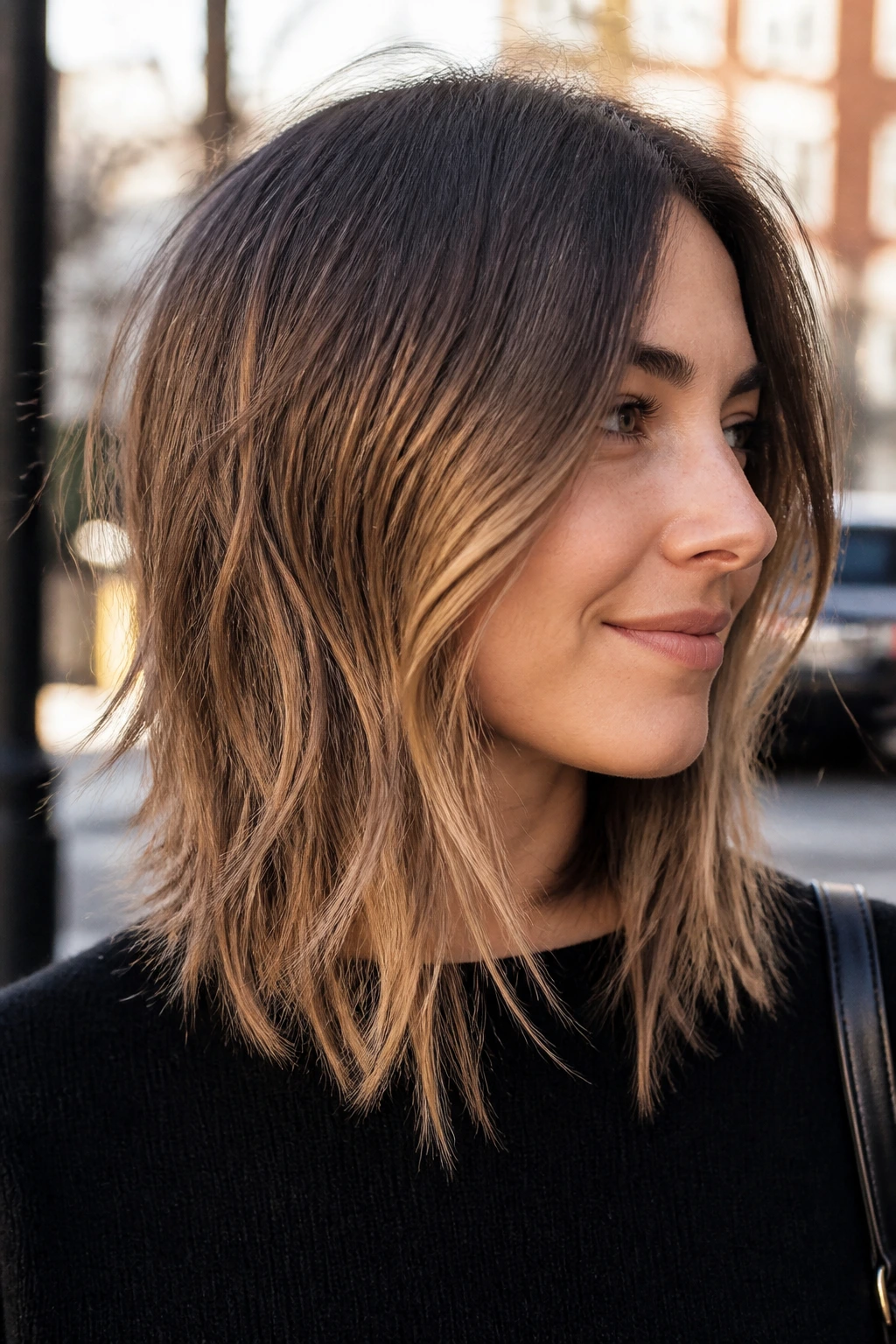
Micro-layers are tiny, and that is the point. They take just enough bulk out of the haircut to create movement, but they don’t carve the shape to pieces. For round faces, that means the lob keeps its length while still feeling airy.
What Makes It Work
The layers are short enough to encourage separation, especially on dense hair, but subtle enough that the overall outline stays long. The result is a cut that looks messy in a controlled, grown-up way. Not shaggy. Not flat. Somewhere in between.
It’s a good choice if your hair usually feels too heavy around the cheeks or if you have thick straight strands that resist movement. A little texturizing at the ends and a loose bend through the mid-lengths give the haircut life.
The best part is how wearable it is. You can rough-dry it and still look put together. That’s a useful haircut, not a theoretical one.
23. Flip-Out-End Lob

A flip-out finish has a little retro energy, but it can look fresh when the rest of the haircut is soft. The ends turn away from the face instead of curling under it, which helps open up a round face and keeps the shape from caving inward.
That outward motion is useful. It creates space around the jaw and collarbone, and space usually reads as length. If the ends all flip at the same height, the cut can feel a bit too tidy, so vary the bend slightly.
This style is especially good on shoulder-skimming lengths. Too short and the flips can feel playful in a way that fights the face shape. A bit longer gives the style room to breathe.
It’s one of those cuts that looks like you know exactly what you’re doing, even if you got dressed in a rush.
24. Fine-Hair Messy Lob
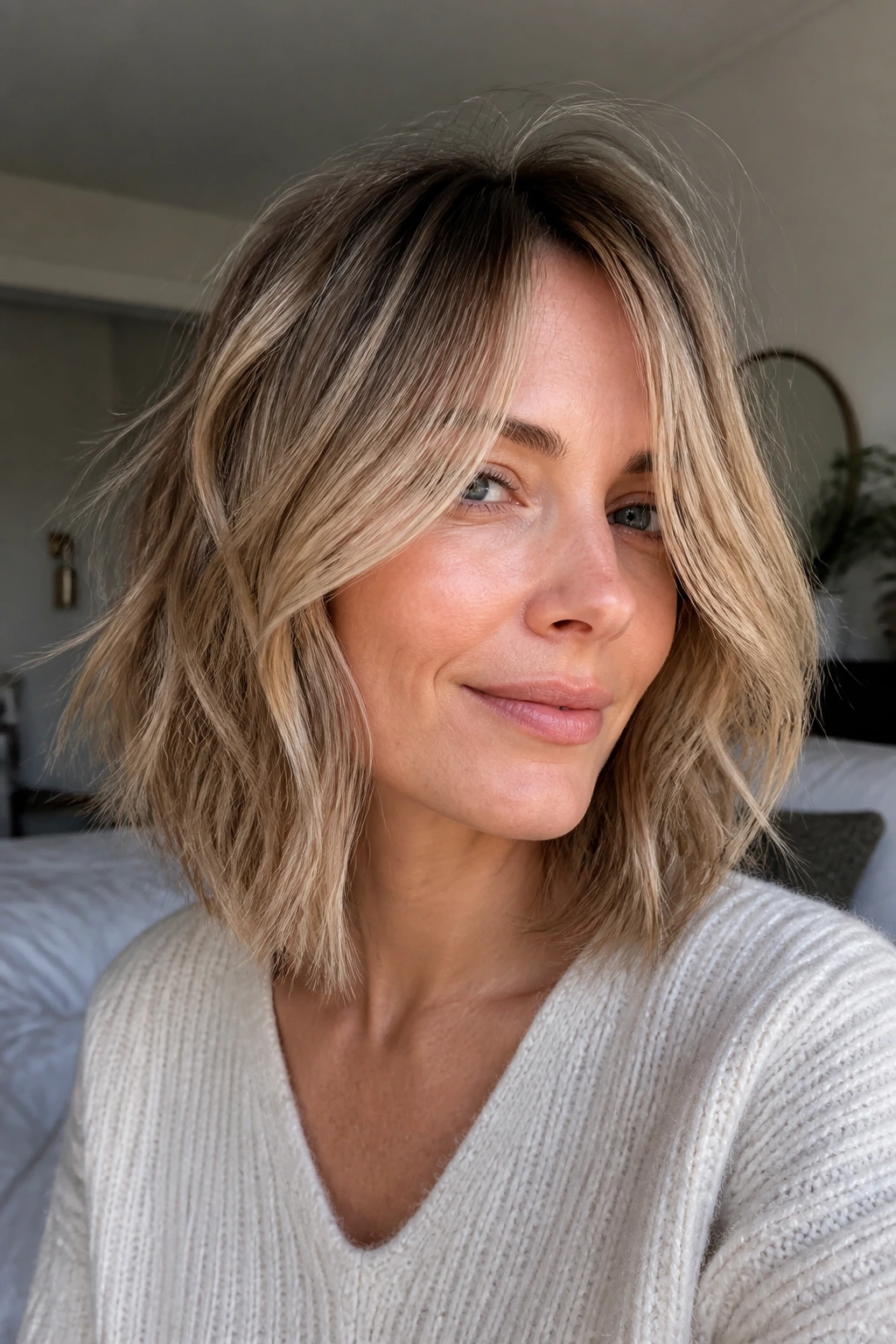
Fine hair needs a different kind of mess. Too many layers and it goes limp. Too little texture and it lies flat against the face. The best fine-hair messy lob keeps the perimeter healthy and lets the movement happen near the ends.
The cut should stay light, but not wispy. A blunt-ish outline with a few soft interior pieces can give the hair a fuller look while still keeping it from flaring out at the sides. That matters on round faces because you want width controlled, not added.
A dry texture spray or a little mousse at the roots can help, but the haircut does most of the work. If the shape is right, you won’t need to fight it every day. That is the difference between a style that photographs nicely and one that lives well in real life.
25. Low-Maintenance Messy Lob for Round Faces
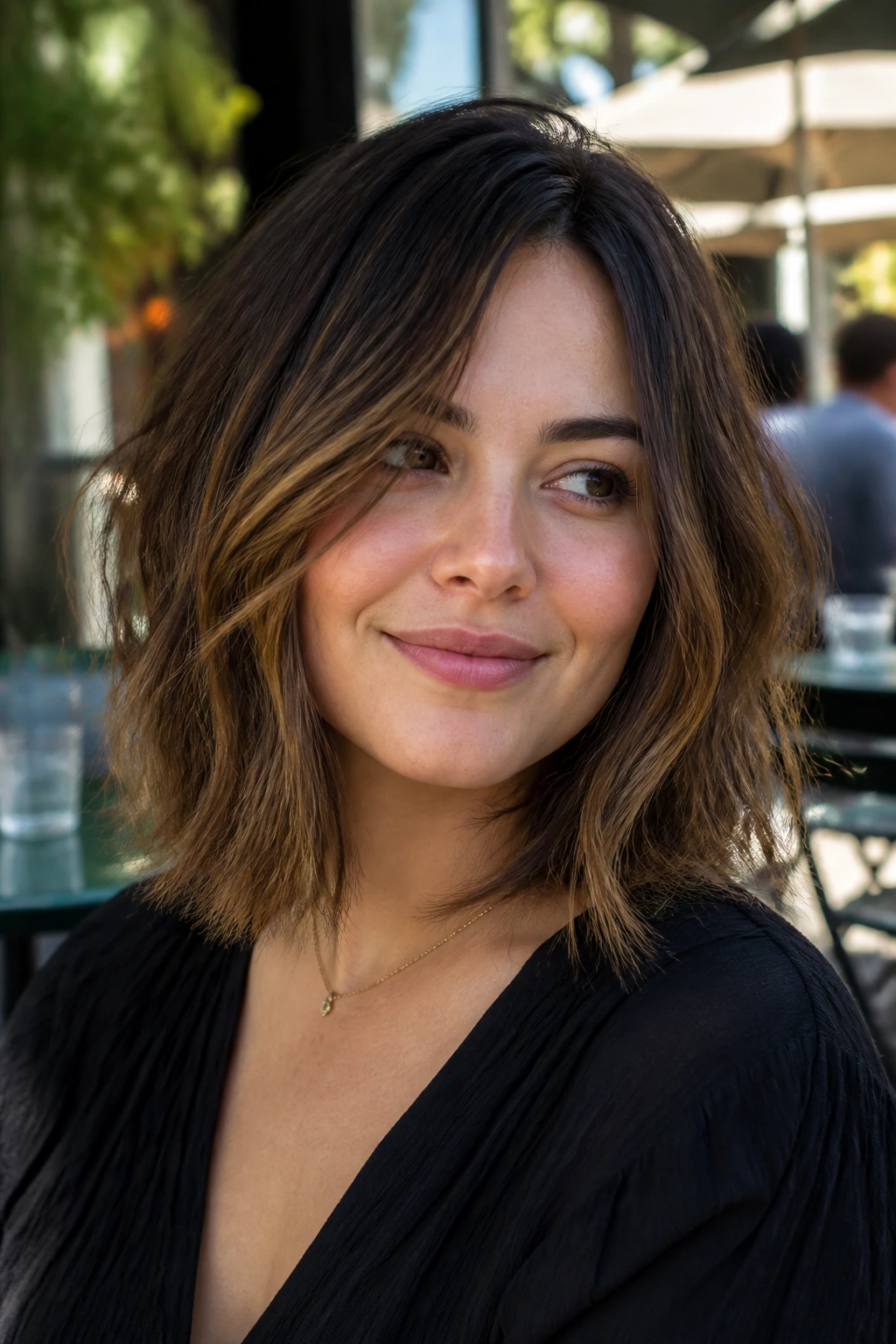
If you want one cut that can survive a busy week, a late shower, and the occasional bad blow-dry, this is the one to ask about. A low-maintenance messy lob for round faces usually keeps the length at or below the collarbone, uses soft layers sparingly, and depends on shape more than styling tricks.
The real goal is simple: keep the sides from puffing out and keep the outline long. That usually means a slightly off-center part, a bit of texture at the ends, and front pieces that fall below the cheekbone. Not much more than that, honestly. The haircut should do the heavy lifting.
What to Ask Your Stylist
- Keep the length at the collarbone or slightly longer.
- Remove bulk without cutting short layers into the cheeks.
- Add texture only where the hair feels heavy.
- Leave enough length around the front to soften the jaw.
If you remember one thing, remember this: messy should never mean shapeless. The best lob for a round face still has a plan. It just doesn’t look like it spent the morning trying too hard.
