



Fine hair and a bob are a better match than most people think. The trick is not chasing volume in every direction; it’s choosing a cut that gives your ends some weight, a clean outline, and enough shape that the hair doesn’t collapse the moment it leaves the dryer.
A lot of bad advice says fine hair needs tons of layering. That’s how you end up with see-through ends and a shape that looks flatter from the side. The smarter move is usually a bob haircut that keeps the perimeter strong and uses movement in a controlled way — a side part here, a slight bend there, a little graduation at the nape if needed.
That’s why bob haircuts for fine hair can look so good when they’re cut with intention. The right length matters. So does where the weight sits. A blunt line at the chin feels denser than a wispy cut that’s been thinned to death, and a longer lob can be just as flattering if it hangs in a clean line.
The cuts below cover the full range: sharp, soft, airy, tucked, undone, polished. If you’ve been trying to make fine hair look fuller without turning it into a helmet, start with the first one and work your way through. You’ll probably spot the shape that makes your own hair behave better.
1. Blunt Chin-Length Bob
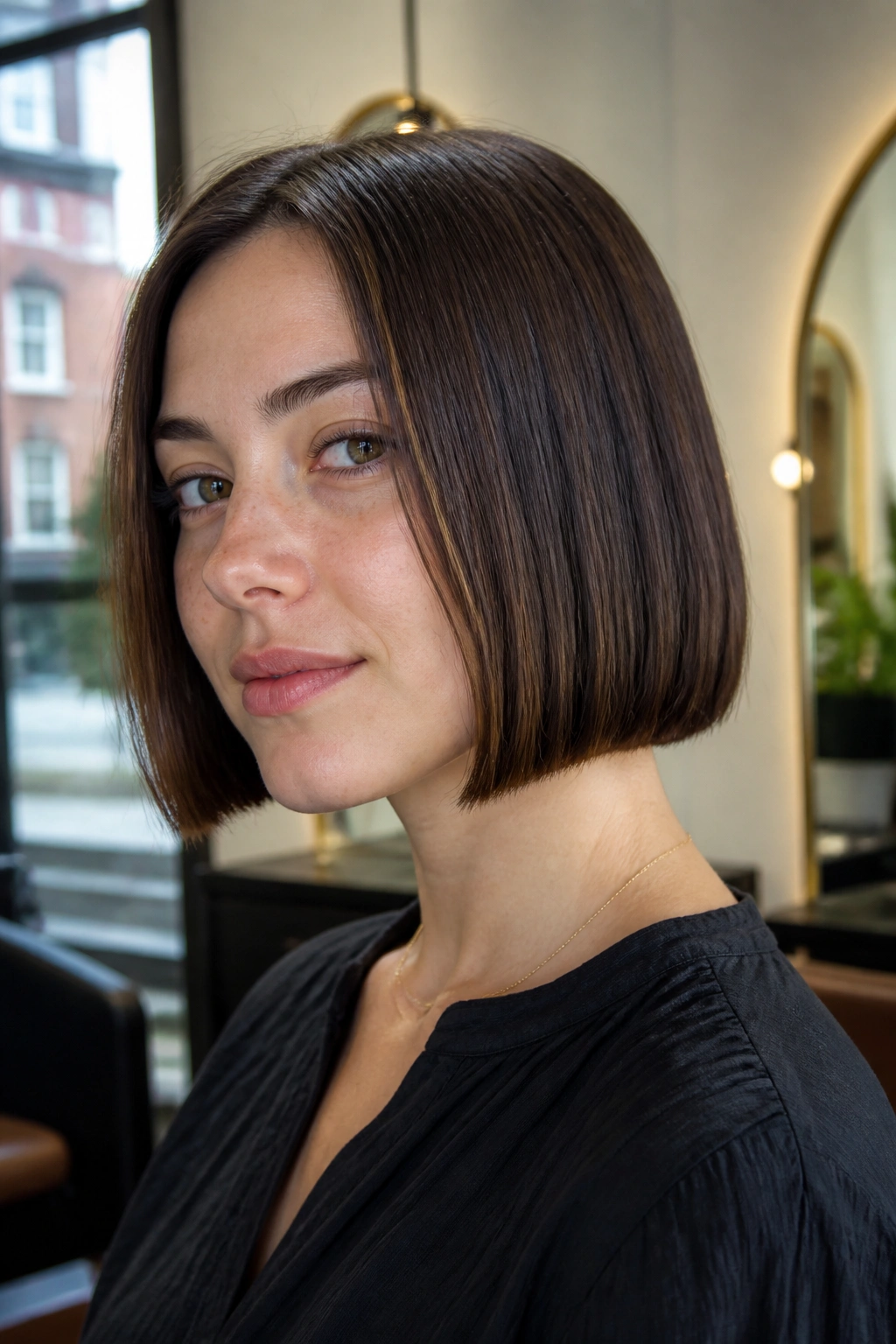
A blunt chin-length bob is the haircut I reach for when someone wants their fine hair to look fuller fast. The reason is simple: one clean line at the bottom makes the ends look thicker, and chin length keeps the shape close to the face, where it has some natural support.
Ask for a blunt perimeter with minimal internal layering. A tiny bit of bevel at the ends is fine, but don’t let the stylist thin it out “for movement.” Fine hair usually doesn’t need that kind of help.
- Best for straight or slightly wavy hair
- Works well with a center part or soft side part
- Easy to style with a round brush or flat iron bend
- Needs trims about every 6 to 8 weeks
Pro tip: dry it with the ends tucked under just a touch. That small curve gives the illusion of more density.
2. French Bob with Soft Fringe

Why does this cut keep showing up on fine hair? Because it shifts attention to the face and keeps the overall shape compact. A French bob sits short, usually around the jaw, and the soft fringe adds enough visual weight up front that the hair looks fuller without feeling heavy.
The fringe matters here. You want it soft, not stringy. A broken-up fringe that grazes the brows or sits just above them gives the cut that slightly lived-in feel, but it still needs enough thickness to read as deliberate. Too little hair in the fringe and the whole style starts to look sparse.
This is one of those haircuts that looks best when it’s not overworked. A quick rough-dry, a little cream on the ends, and you’re done. The charm is in the shape, not the styling tricks.
3. Deep Side-Part Bob
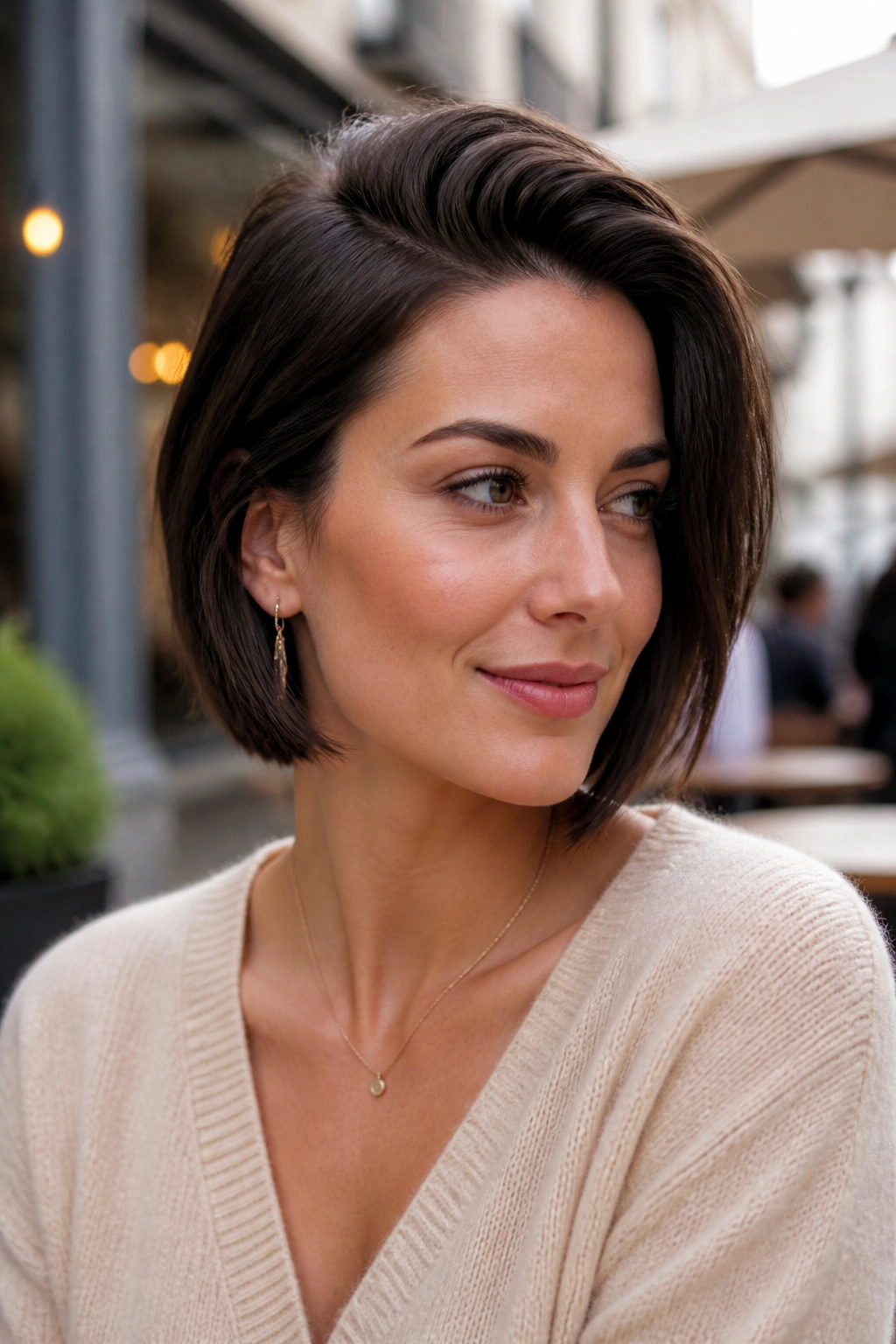
A deep side part can rescue hair that lies flat at the crown. The shift in direction lifts one side right away, and on fine hair that little bit of height makes a bigger difference than most people expect.
I like this bob for anyone whose roots go limp by lunchtime. Keep the length somewhere between the jaw and the top of the neck, then move the part far enough over that the front section can fall across the forehead or cheekbone. It creates movement before you even pick up a brush.
No, you do not need a lot of layers for this. The part is the point. If the cut is too shaggy, the side part gets lost and the density disappears with it.
4. Micro Bob
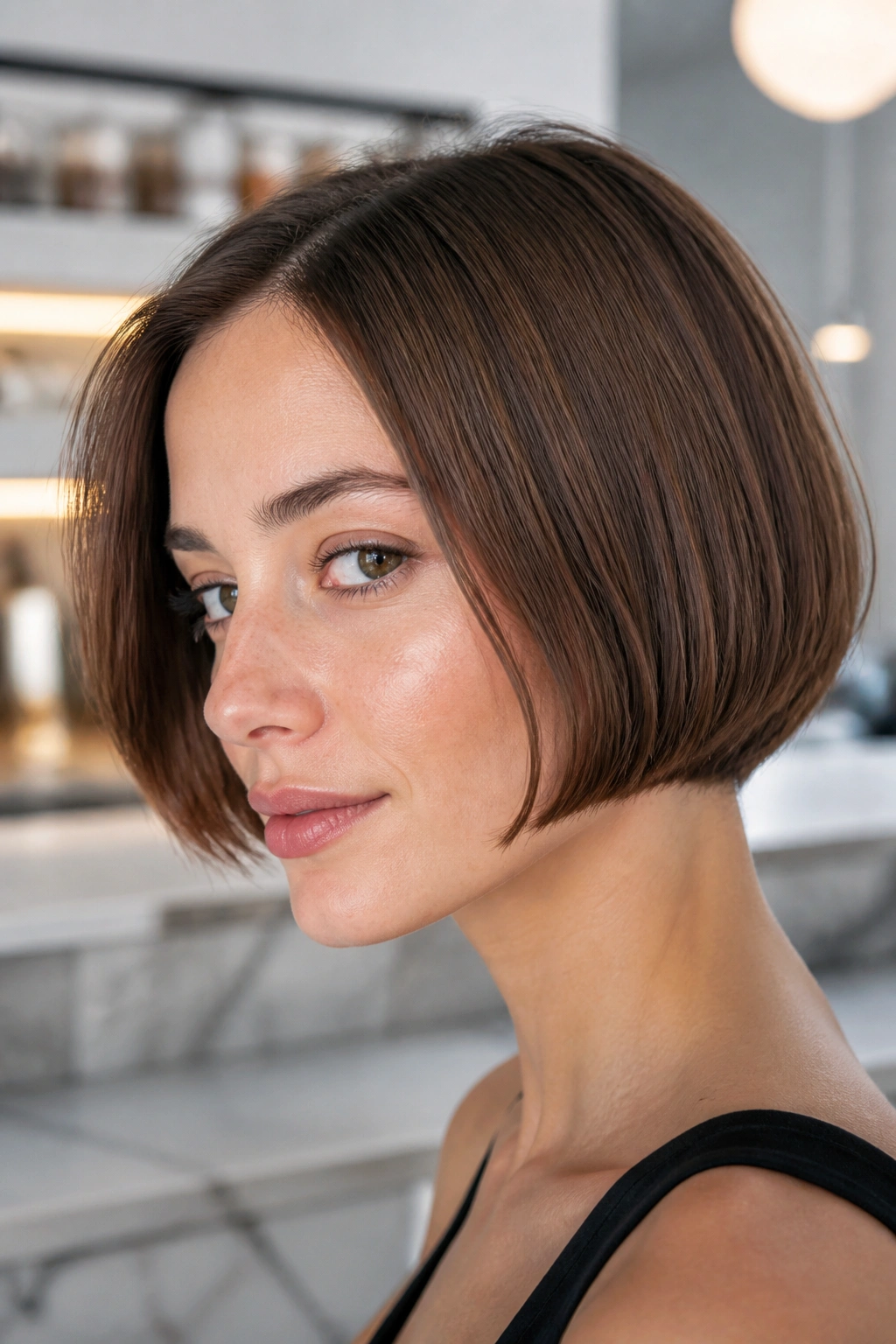
A micro bob is short, sharp, and far less intimidating than it sounds. For fine hair, that shorter length can be a gift. Less length means less drag, which means the hair sits with more body and less slump.
What makes this version modern is the precision. The line should look deliberate, not severe. Think jaw-skimming or slightly above, with a clean edge and a little bend if you want it to feel softer. This cut is especially good if your hair is naturally straight and you like a style that dries in minutes.
- Ask for a crisp outline
- Keep the nape neat and close
- Style with a light smoothing cream, not a heavy oil
- Trim regularly so the shape stays tidy
It’s not the best choice if you want to hide everything behind length. But if you like clean lines, this one has real bite.
5. Collarbone Lob

The collarbone lob is the safest bet for someone who wants a bob but isn’t ready to give up much length. For fine hair, that matters. A little extra length can still look full if the ends are blunt and the shape doesn’t get thinned out.
The collarbone sits in a useful spot. Hair brushes that area and gets a bit of natural movement, which helps fine strands look less pinned down. You can wear it straight, add a soft wave, or tuck one side behind the ear and let the rest fall forward.
Compared with a shorter bob, this one feels softer and easier to grow out. That is part of the appeal. It gives you the bob shape without the commitment of a chin-length cut, and it’s usually kinder to hair that breaks a little at the ends.
6. Sleek Glass Bob
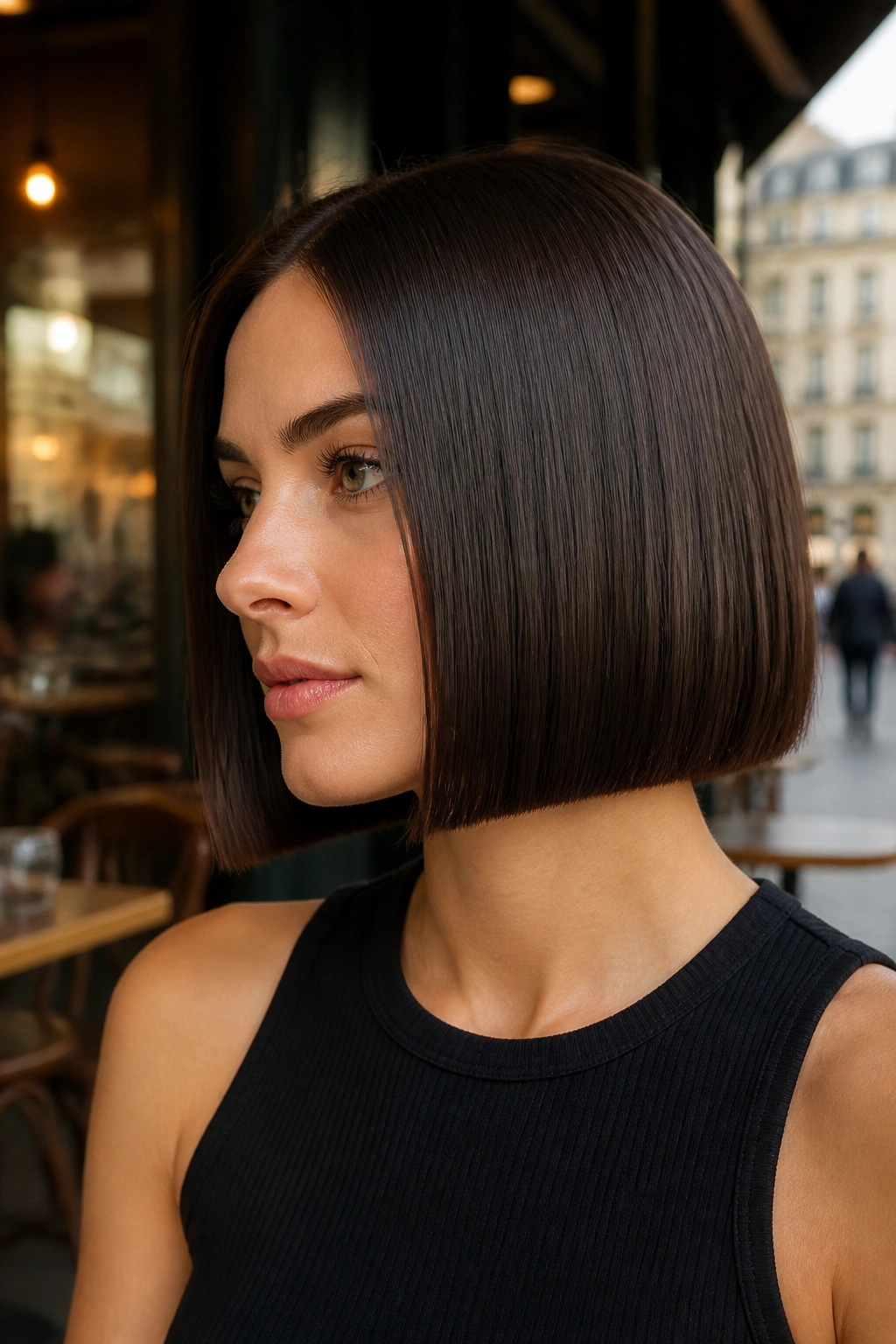
A sleek bob can be surprisingly flattering on fine hair because shine does half the work. When the surface is smooth and the line is clean, the eye reads the hair as denser than it really is.
This cut depends on a blunt edge and careful styling. Use a heat protectant, blow-dry with tension, then finish with a flat iron if needed. You do not want fluffy ends or piecey separation here. The whole point is a smooth sheet of hair that swings in one direction.
That makes it a good choice for anyone who likes polished hair and doesn’t mind using a few hot tools. It also tends to photograph well in real life because the shape is so clear. Just keep the products light; too much serum and the roots go oily fast.
7. Soft Stacked Bob
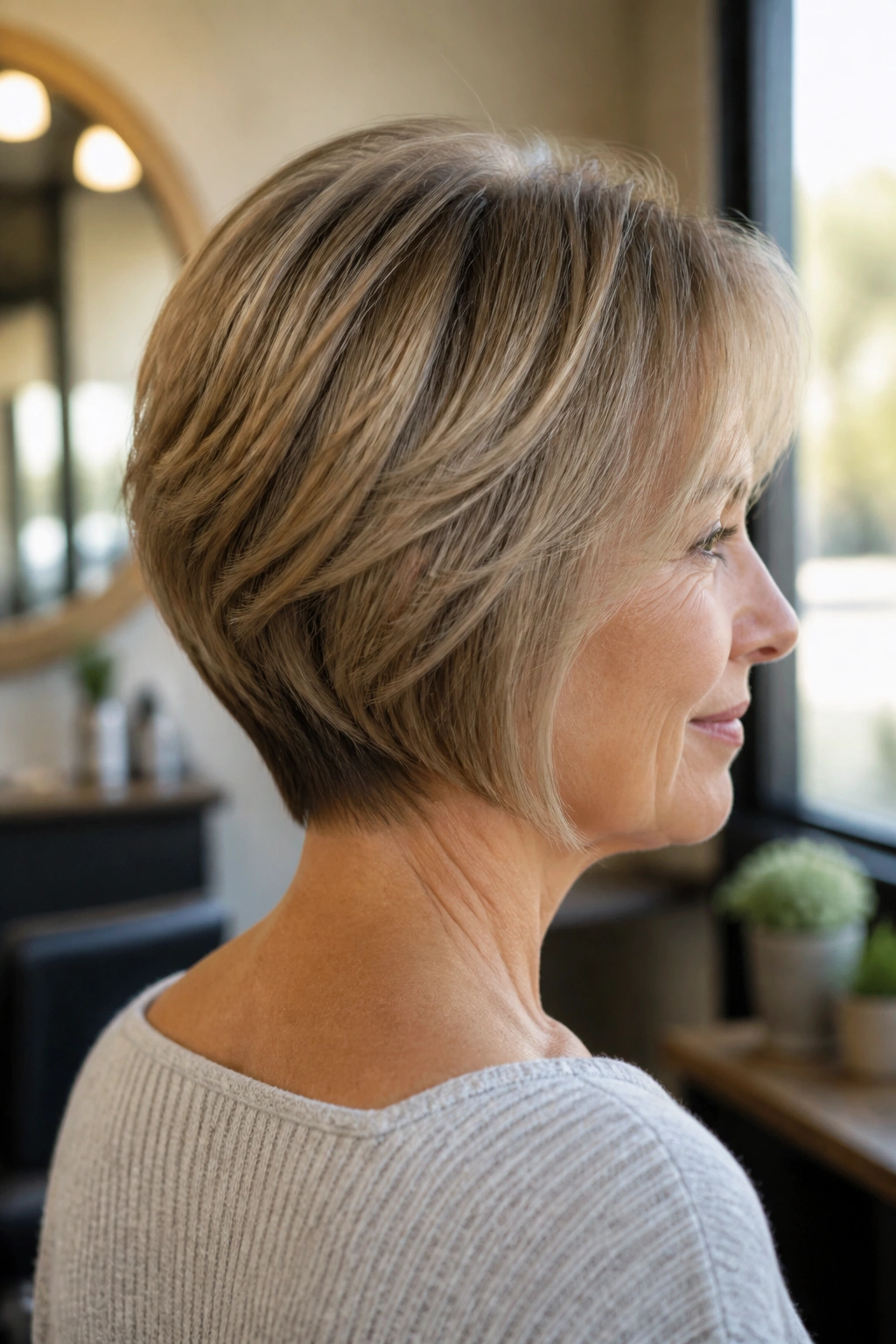
A soft stacked bob gives fine hair lift at the back without turning it into a pyramid. The stacking is subtle — just enough graduation in the nape to push the back upward and create a little shape around the crown.
The mistake people make with stacked bobs is going too high. That can leave the top too short and the sides looking stringy. Ask for a gentle stack, not a dramatic one, and make sure the front still holds some length to balance the back.
This cut is a solid pick if your hair falls flat at the occipital bone, which is the spot at the back of the head where many bobs lose shape. A bit of graduation there changes the whole silhouette.
8. Asymmetrical Bob
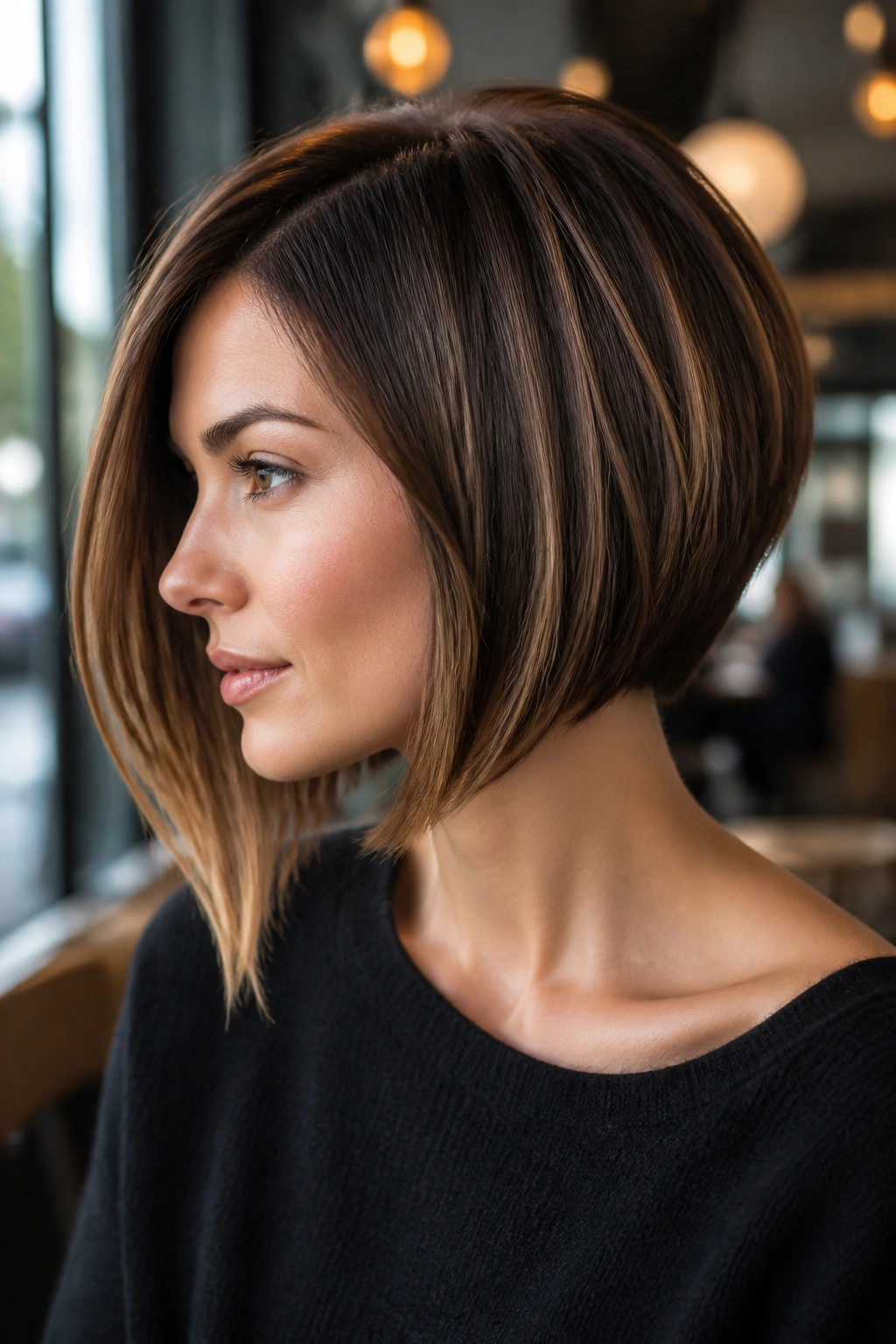
A little imbalance can be a good thing. An asymmetrical bob — one side a touch longer than the other — gives fine hair movement and stops the cut from feeling too rigid.
Why It Works
The uneven line draws the eye across the face instead of straight down. That creates the sense of more hair, even when the density is modest. It also gives you a built-in styling trick: you can tuck the shorter side back and let the longer side frame the jaw.
What to Ask For
- One side longer by about 1 to 2 inches
- A blunt or slightly beveled perimeter
- Minimal layering through the back
- A soft side part if you want extra lift
This cut suits people who like a clean shape but want something with a little edge. It’s not loud. It just has a bit more attitude than a standard bob.
9. Curtain Fringe Bob
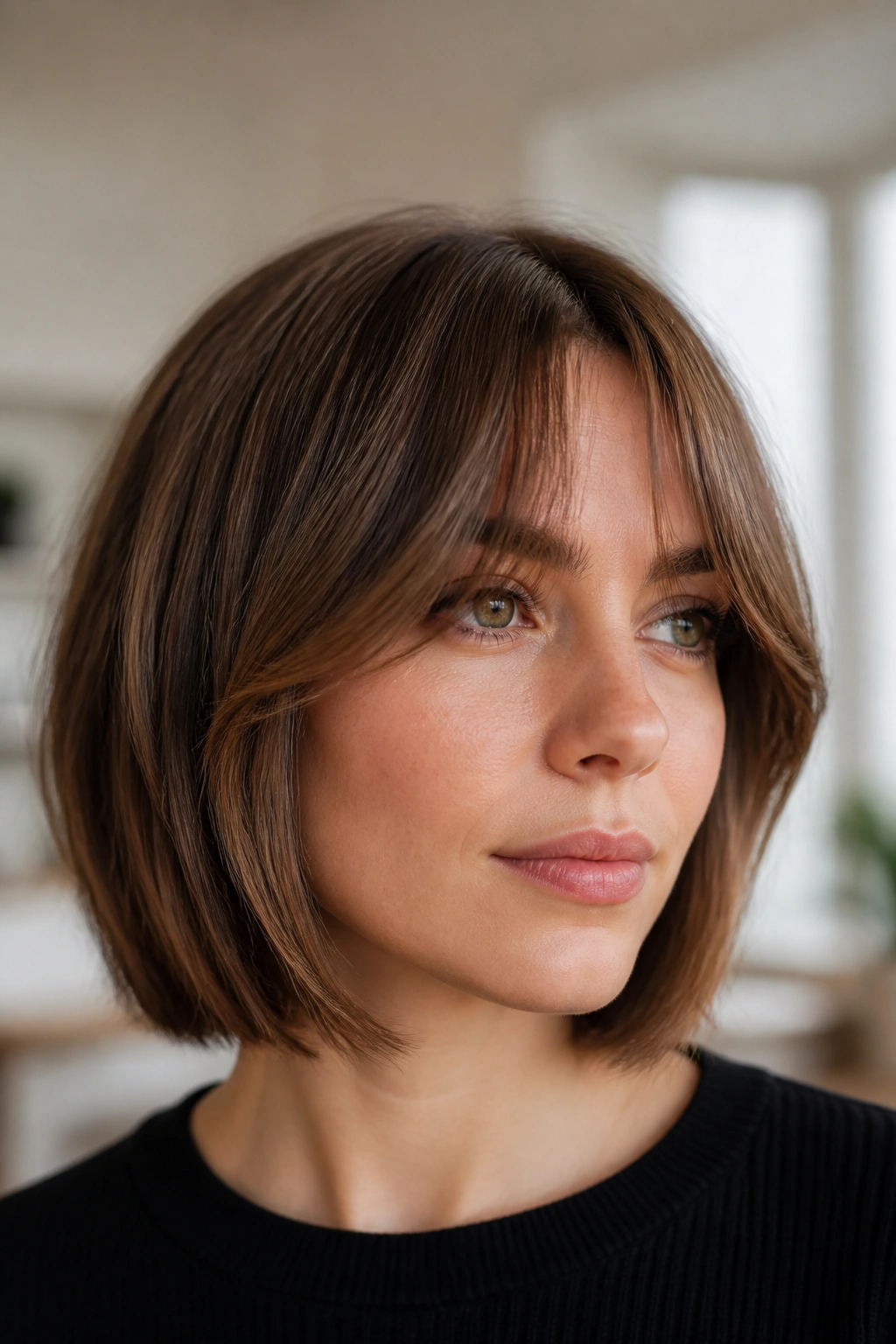
Curtain fringe changes everything around the face. On fine hair, that matters because the front can often feel sparse even when the rest of the hair is fine. A parted fringe helps fill that area without making the cut feel heavy.
The bob itself can sit anywhere from jaw to collarbone, but the fringe should blend into the sides in a soft sweep. You want movement, not a blocky curtain that sits flat against the forehead. If the fringe is too thin, it vanishes. If it’s too thick, it can take over the whole cut.
This version is a smart compromise for anyone who wants softness around the face and a bob shape that still looks light. It works especially well when the hair has a natural bend and the fringe can fall a little off-center.
10. Textured Wavy Bob
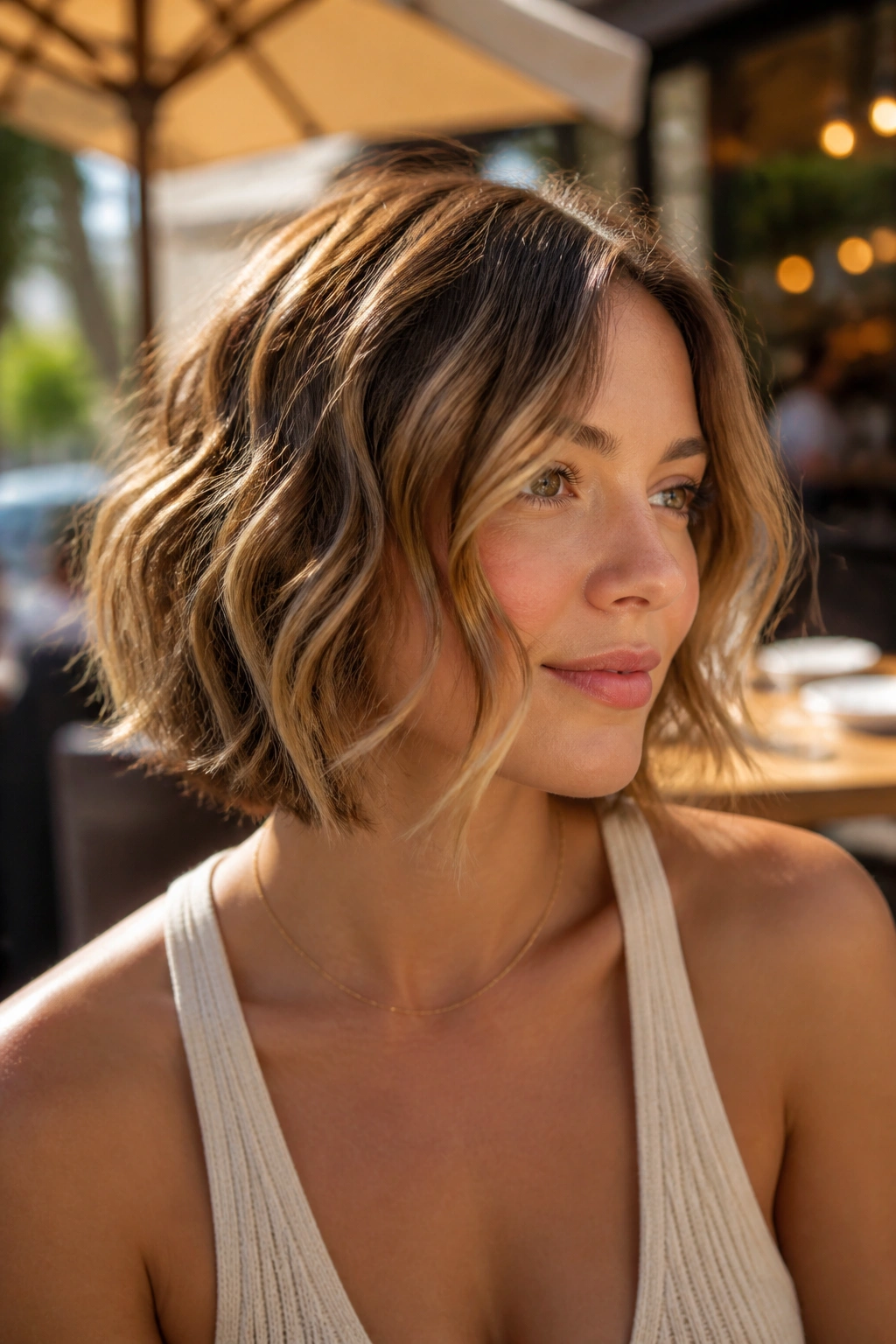
A textured wavy bob gives fine hair a bit of lived-in movement without asking it to become something it isn’t. The trick is texture on top of a strong shape. You want the ends to keep enough weight so the waves don’t fray out.
Use a 1-inch curling iron or wand if your hair is straight, then brush the waves out lightly so they look loose rather than crunchy. A light texturizing spray at the roots can help, but too much will make fine hair feel dry and rough.
- Best on shoulder-grazing or chin-length bobs
- Works well with a middle or off-center part
- Use low heat and short wraps
- Leave the ends out for a softer finish
This is one of the easiest ways to make fine hair look fuller on casual days. The shape matters. The wave just adds a little noise.
11. Box Bob
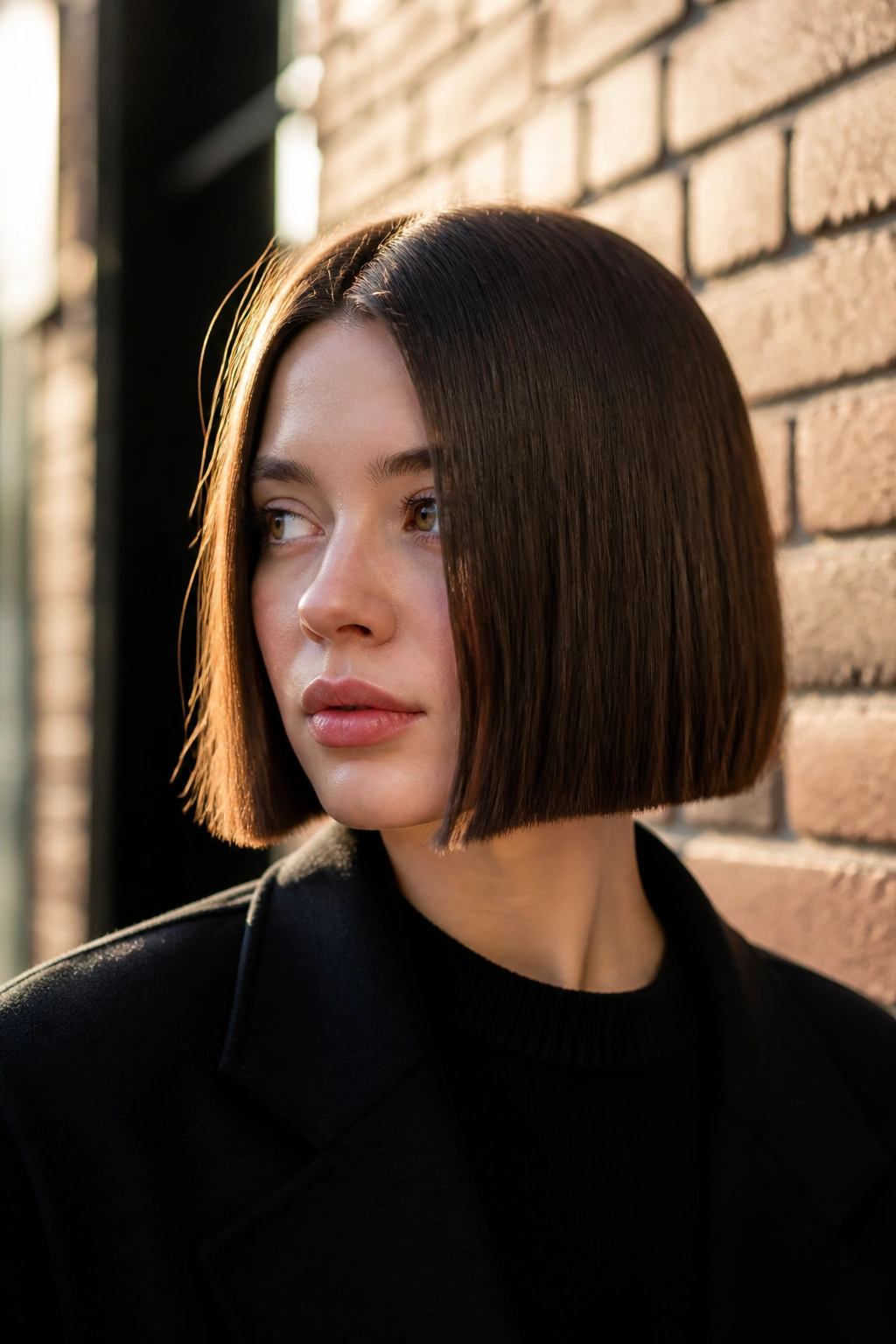
A box bob has a straighter, squarer outline than a soft rounded bob. That shape can be a gift for fine hair because it keeps the sides visually broad and the ends looking solid.
The style feels strong without being fussy. Think of it as a clean geometric line that sits neatly around the jaw or just below it. There’s no need to cut it razor-thin or stack it heavily. The appeal is in the crisp shape.
I like this cut for someone who wants hair that looks intentional even when it’s air-dried. If your strands tend to separate, the boxier outline helps hide that. It gives the hair a fuller edge from the side, which is where fine hair often looks weakest.
12. Hidden Layer Bob
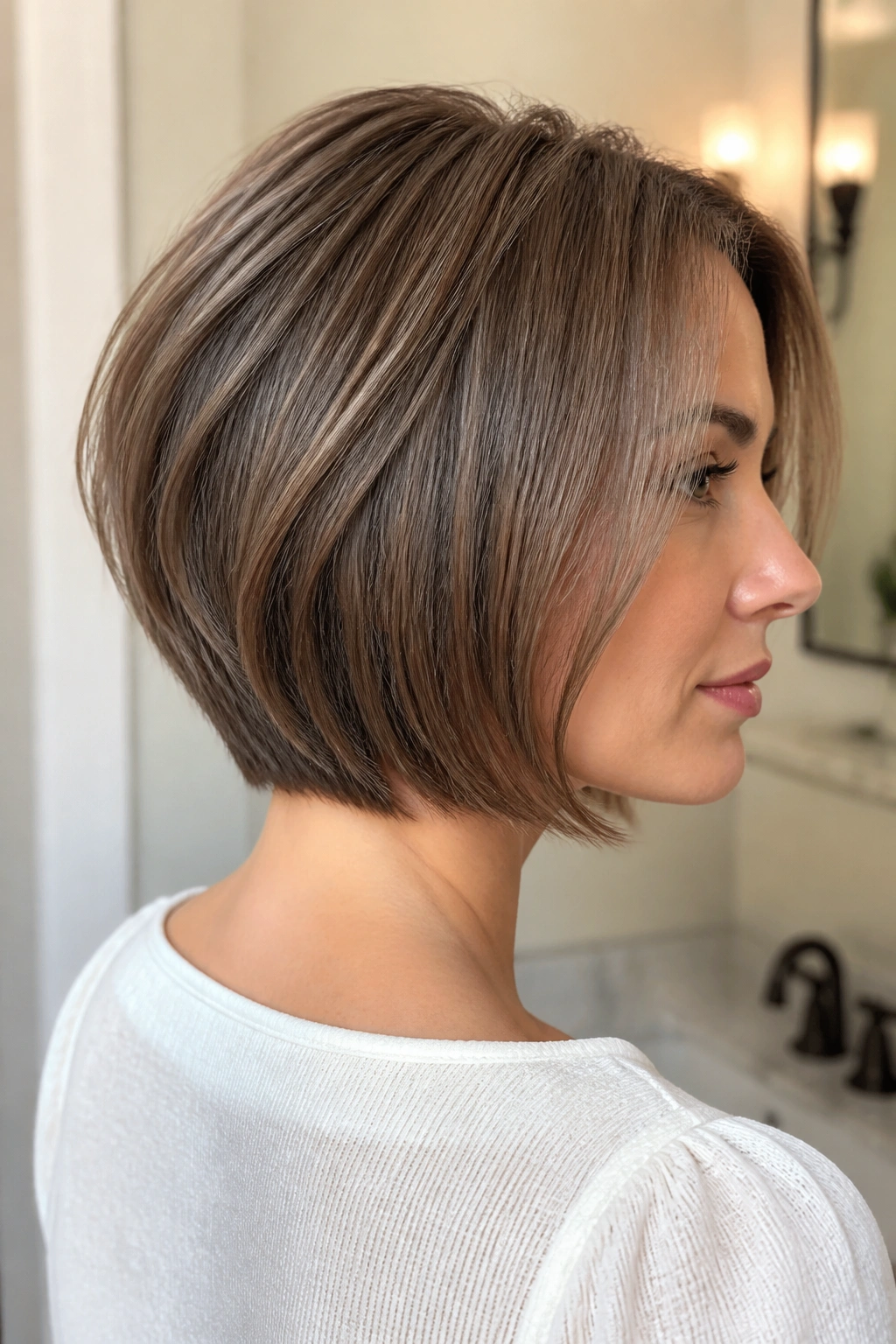
Hidden layers are one of my favorite fixes for fine hair because they give movement without stealing density from the surface. The outer line stays blunt, while the inside gets just enough internal shaping to keep the cut from falling flat.
The Smart Part of This Cut
The beauty of hidden layers is that nobody sees them directly. They work underneath, lifting the crown and softening bulk inside the cut. That means you can keep the ends thick and still get some air around the shape.
Best Way to Wear It
This cut works well if you like a straight finish with a little bend at the ends. Blow-dry with a round brush, then leave the top smooth and focus the movement around the underside and front sections. You get body without obvious layers, and that’s usually what fine hair wants most.
13. Rounded Bob
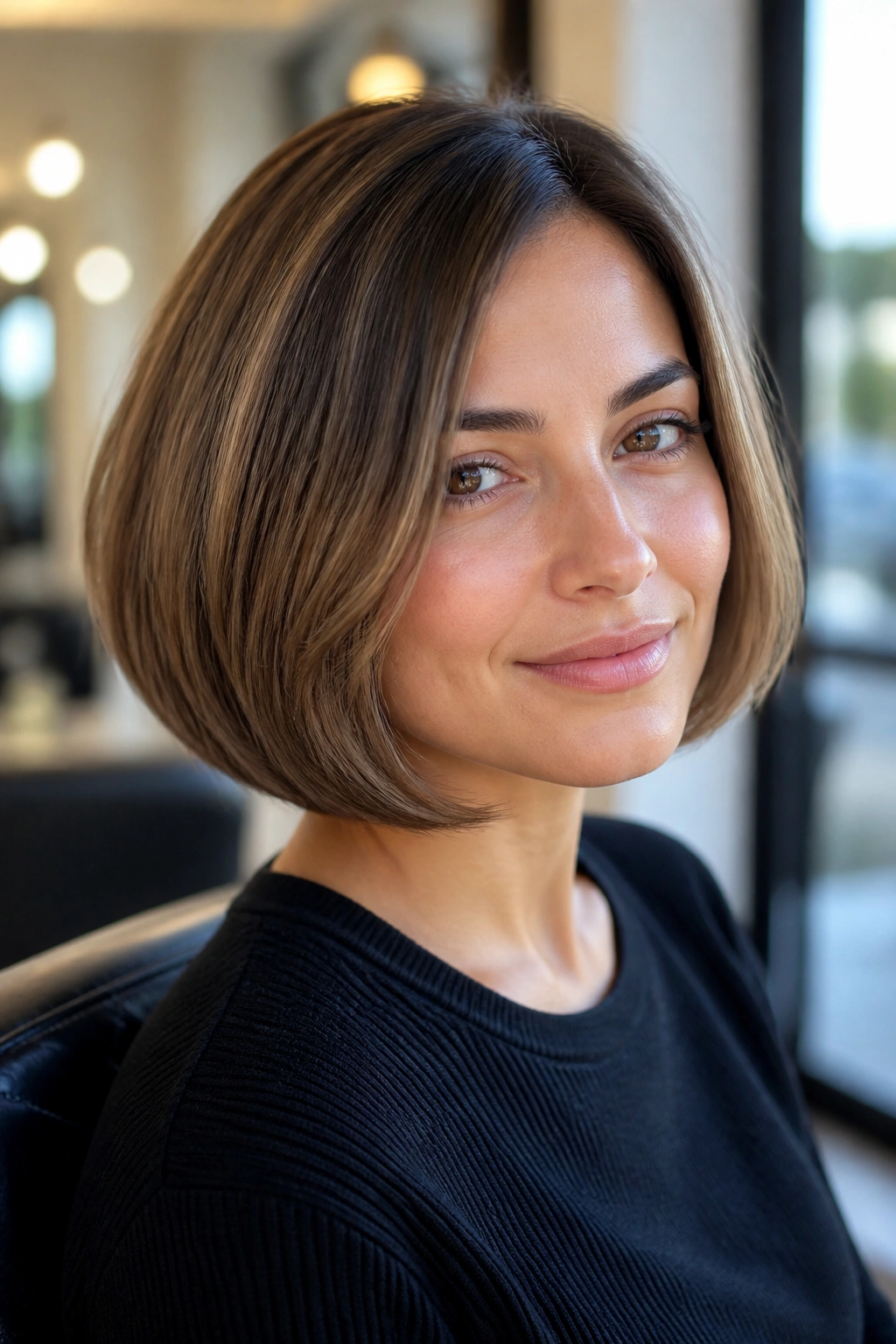
A rounded bob curves gently under the chin or jaw, and that soft arc can make fine hair look fuller than a dead-straight cut. The curve helps the hair sit close to the head in a polished way, while still giving the outline some softness.
This shape is especially useful if your hair naturally flips out at the ends. Instead of fighting that, the cut works with it and bends inward. The result feels tidy and dense.
It’s also forgiving on older color or sun-faded hair, since the rounded line keeps the ends from looking wispy. If you want a bob that feels neat but not severe, this is a strong choice.
14. A-Line Bob
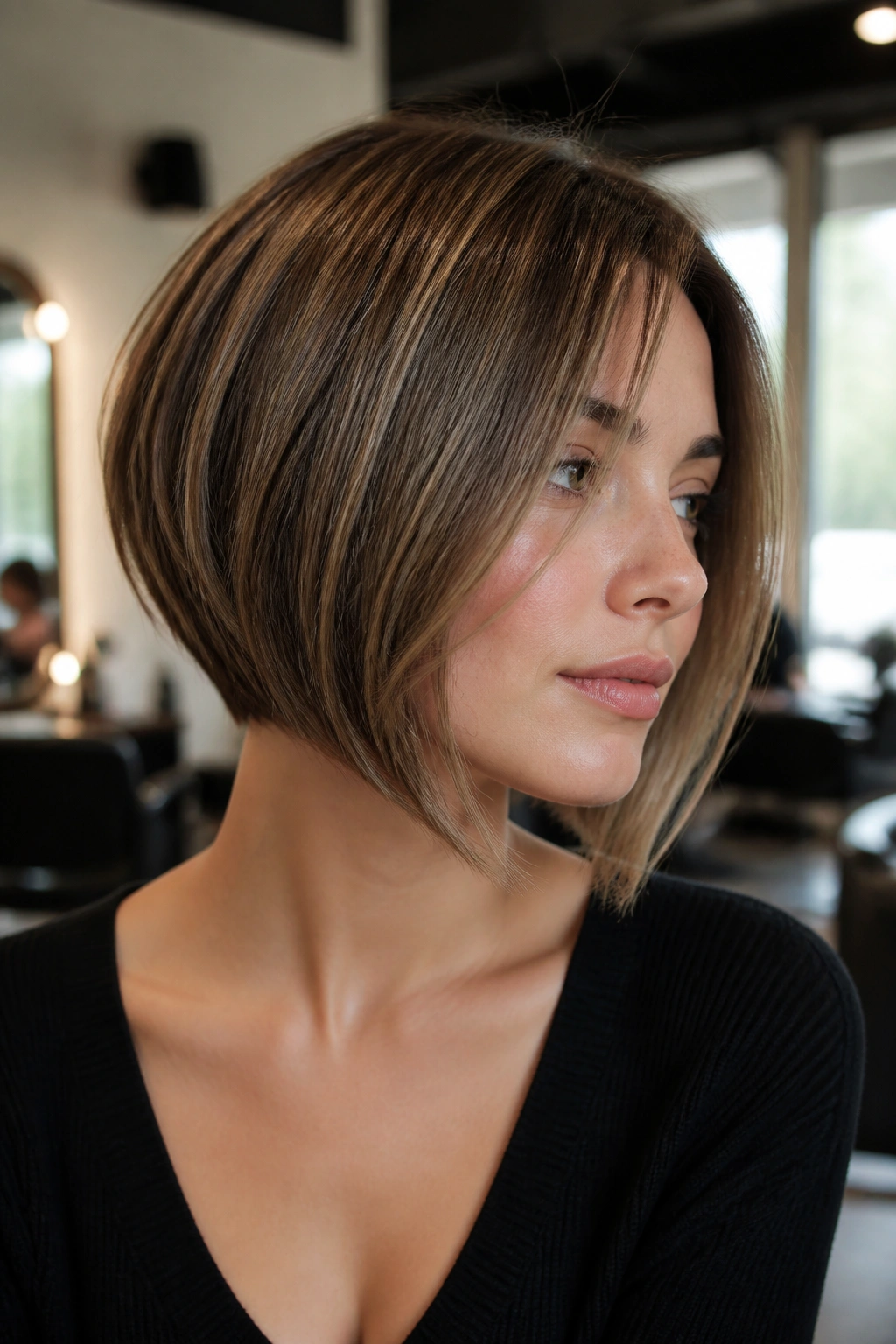
The A-line bob keeps the back shorter and the front longer, which gives fine hair a built-in sense of motion. That forward angle also draws the eye toward the face, where you usually want the most framing.
What I like about this cut is how much shape it gives with very little styling. The longer front pieces create the illusion of more length and swing, while the back stays compact and lifted. It can feel sharper than a rounded bob, but not as dramatic as a full inverted cut.
If you want a bob that looks clean from the side and still has a little flow in front, this is a smart middle ground. It’s especially nice if your hair tends to flatten at the back but you still want some length around the jaw.
15. Choppy Lob
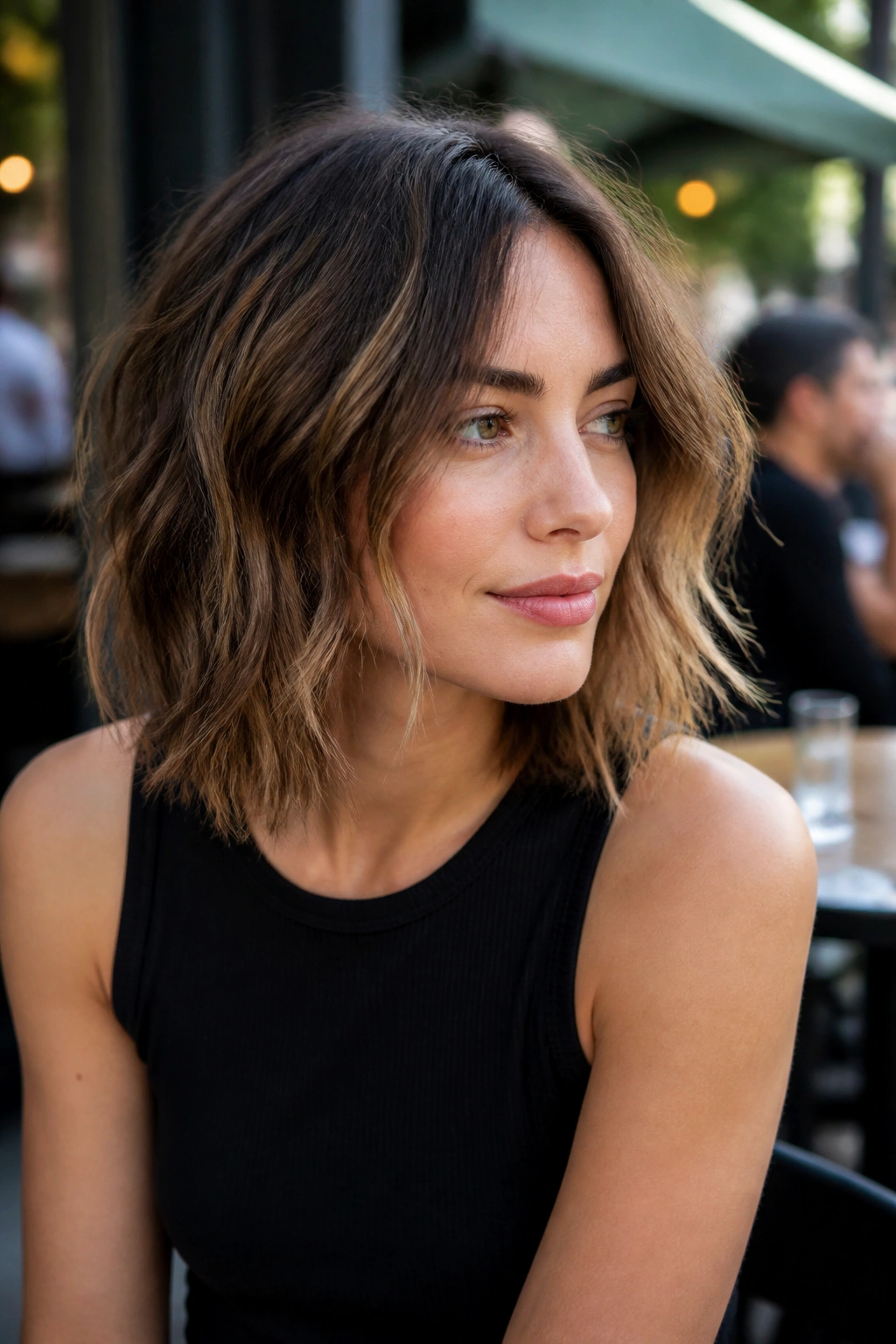
A choppy lob is not the same as a heavily layered haircut. The difference is that the layers are broken up and kept light so the hair still reads as full. On fine hair, that distinction matters a lot.
The cut works best when the ends aren’t over-thinned. You want soft irregular movement, not a ragged bottom line. A choppy lob can look relaxed and modern, but only if the stylist keeps enough density through the perimeter.
This is a good option for someone who wants a shoulder-length style with a bit of grit. It suits wavy hair especially well, because the movement shows without needing much product. Straight fine hair can wear it too, but the shape has to stay controlled.
16. Ear-Grazing Bob with Tapered Sides
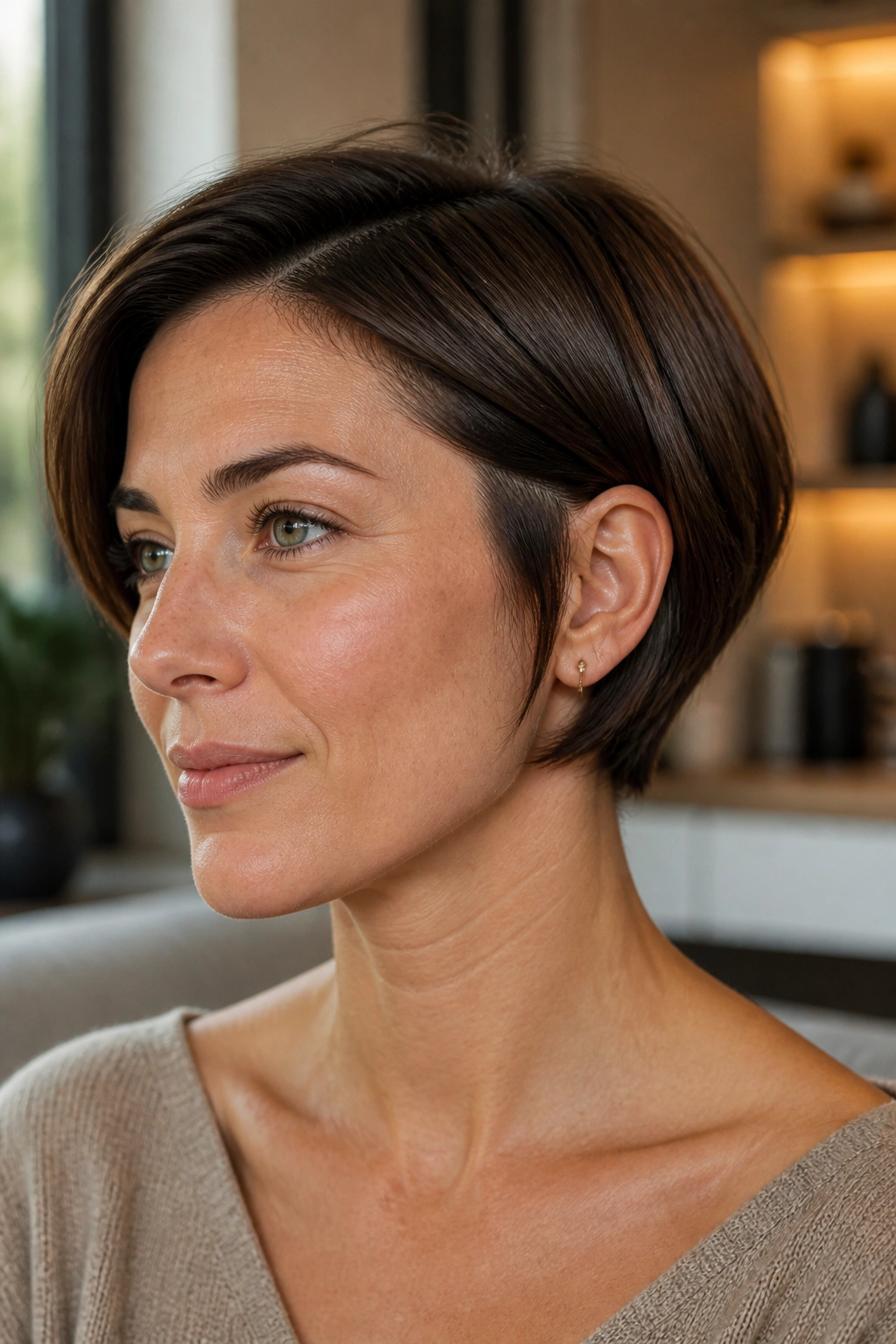
An ear-grazing bob sits high enough to feel fresh, but not so short that fine hair loses all of its body. The tapered sides help the hair hug the face without puffing out at the temples.
That taper is the part people forget. If the sides are left too wide, fine hair can look limp on one side and bulky on the other. A little refinement near the ears keeps the whole cut neat and easy to tuck.
This bob is especially handy for people who like to wear earrings or glasses. The hair sits close enough to let those details show, which gives the cut a clean, polished feel. It’s small, neat, and surprisingly elegant without being precious.
17. Feathered Bob
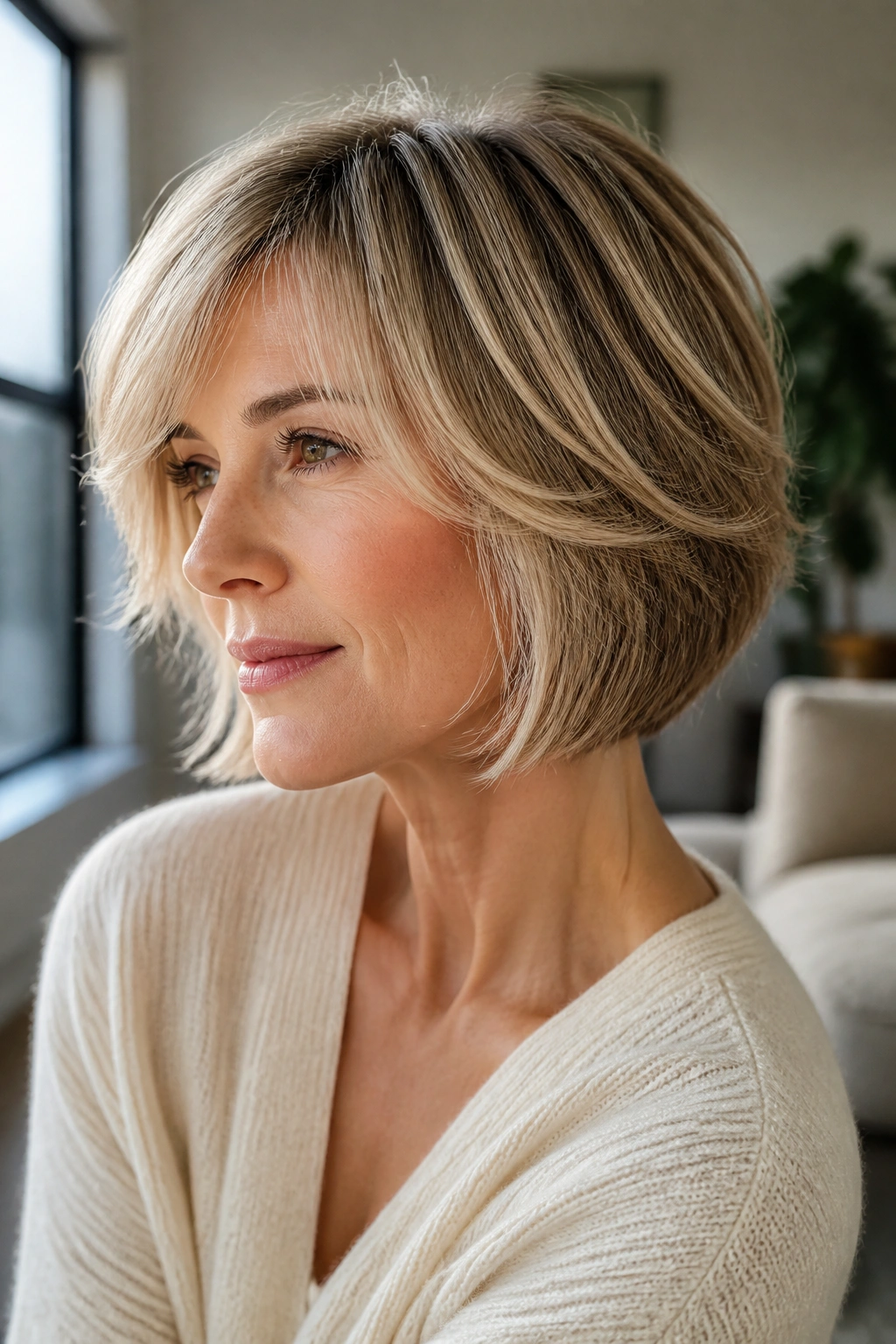
Feathering gets a bad reputation because it can look dated when it’s overdone. Done lightly, though, it can give fine hair a soft lift around the face and crown without destroying the outline.
The trick is to keep the feathering airy, not wispy. You want a bit of movement in the top layers and around the cheekbones, while the bottom stays thick enough to anchor the style. If the ends are too feathery, the haircut starts to disappear.
- Use a small round brush when drying
- Keep the ends blunt enough to hold shape
- Add a light mousse at the roots
- Avoid heavy creams that drag the top down
This version suits anyone who wants softness more than sharp edges. It has movement, but it still looks deliberate.
18. Inverted Bob
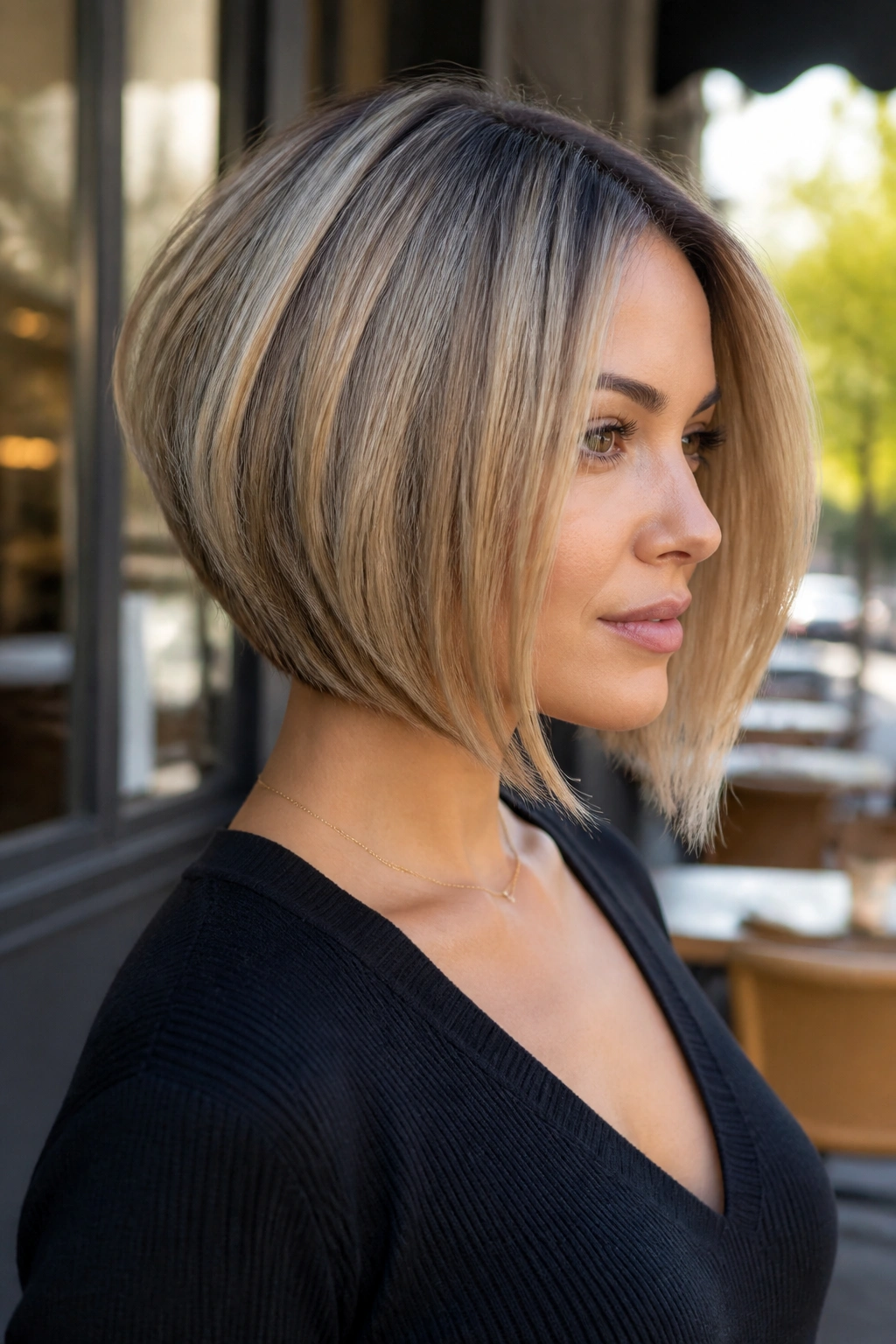
An inverted bob is built to give the back a lift and the front some length. For fine hair, that can be a strong combination because the shorter back creates volume where the hair often goes flat first.
The important thing is proportion. If the angle is too steep, the cut can feel dated or too extreme. A modern inverted bob keeps the line smoother and the graduation less obvious. The front should still touch the jaw or collarbone, depending on how bold you want to go.
Compared with a simple A-line, the inversion is more dramatic and more sculpted. That makes it a better fit if you like a stronger shape and don’t mind a haircut that announces itself a little.
19. Shaggy Bob
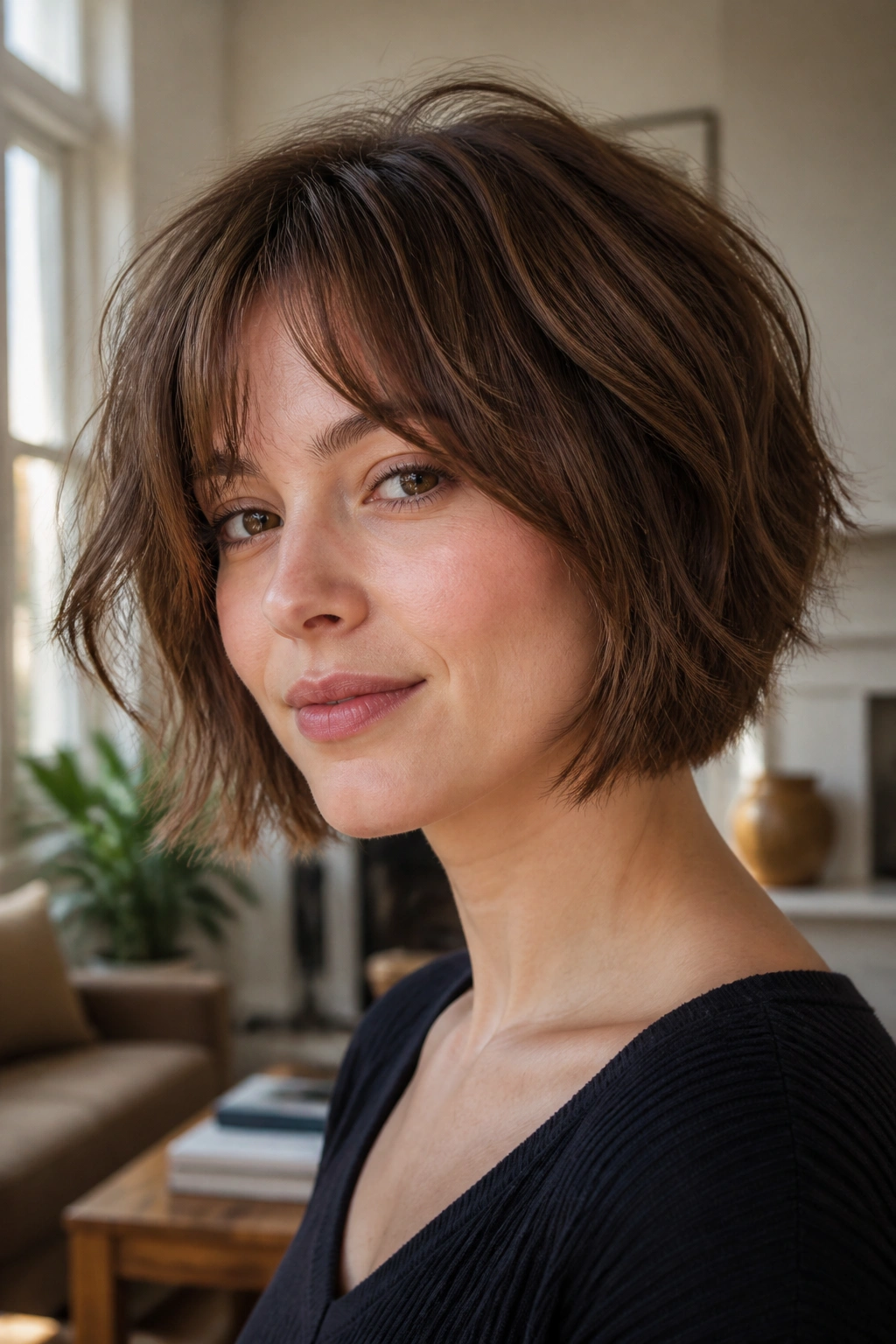
A shaggy bob can work for fine hair, but only if the layers are controlled. Too many airy cuts and the ends start to vanish. The better version keeps a blunt enough base and uses texture around the top and sides.
Where It Helps Most
Wavy fine hair usually handles this style best because the natural bend fills out the layers. Straight hair can wear it too, but it needs a bit more styling with a wave spray or a diffuser.
What to Watch For
- Don’t over-thin the ends
- Keep some weight at the perimeter
- Use texture mainly near the crown and cheekbones
- Ask for movement, not a razor-heavy finish
It’s a good cut if you like hair that feels a little undone. Just keep the shape from getting too airy, or you lose the very fullness you were trying to create.
20. Deep Side-Part Lob

A deep side-part lob gives you two things at once: length and lift. The length keeps the hair from feeling too exposed, while the deep part pushes volume up at the root and across the front.
This cut is a quiet hero for fine hair. It doesn’t rely on drama. It relies on distribution. By shifting the bulk to one side and keeping the perimeter clean, the style looks fuller without needing a lot of product.
- Best for people who want shoulder length or longer
- Easy to style with a round brush or hot rollers
- Looks good with one side tucked back
- Works well on straight or softly waved hair
If you like a bob that still feels soft and wearable, this one lands in a very useful place.
21. Blunt Lob with Invisible Layers

A blunt lob with invisible layers is one of the smartest cuts for fine hair because it keeps the eye on the outline, not the texture inside the hair. The layers exist, but they’re tucked away so the ends stay dense.
That hidden structure helps the cut move without breaking apart. It also means you can wear the hair smooth one day and a little tousled the next, which is handy if you don’t want to fight your styling tools every morning.
The key here is restraint. If the stylist takes too much weight out, the whole point disappears. A good invisible-layer lob should still look solid when you comb it straight.
22. Curved Under Bob
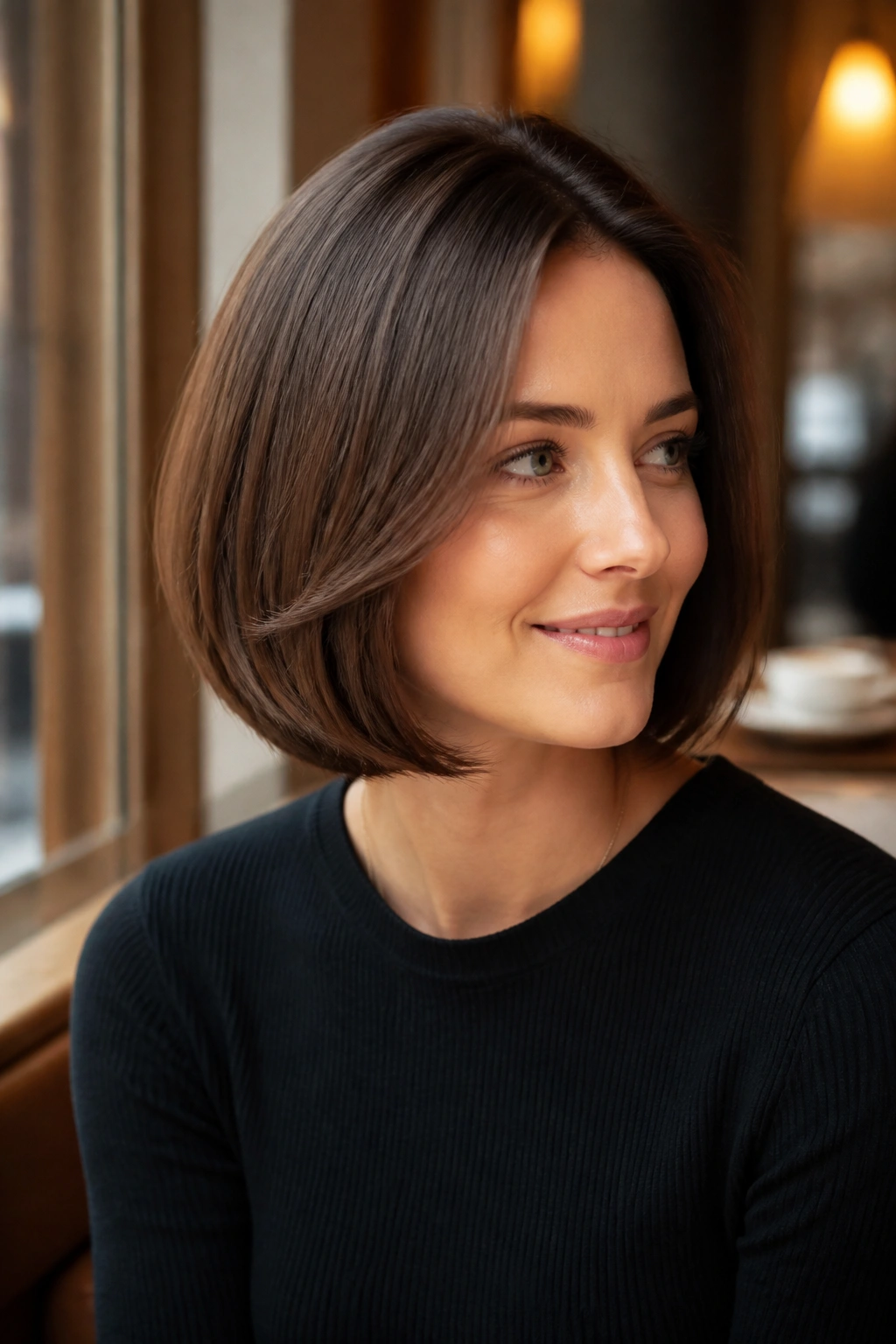
Why does a curved under bob do so well with fine hair? Because it gives the ends a built-in direction. Instead of hanging limp or flipping randomly, the hair turns inward and makes the outline look cleaner.
That curve can be cut in and reinforced with a round brush. You do not need a huge blowout. Even a modest bend at the ends helps the hair look denser because the edge reads as intentional. The shape is especially nice for people with straight hair that lacks natural body.
If you want a bob that feels neat without looking stiff, this is a good one to keep on the shortlist. It’s tidy. It’s simple. And it does the job without asking for a ton of styling.
23. Airy Wedge Bob
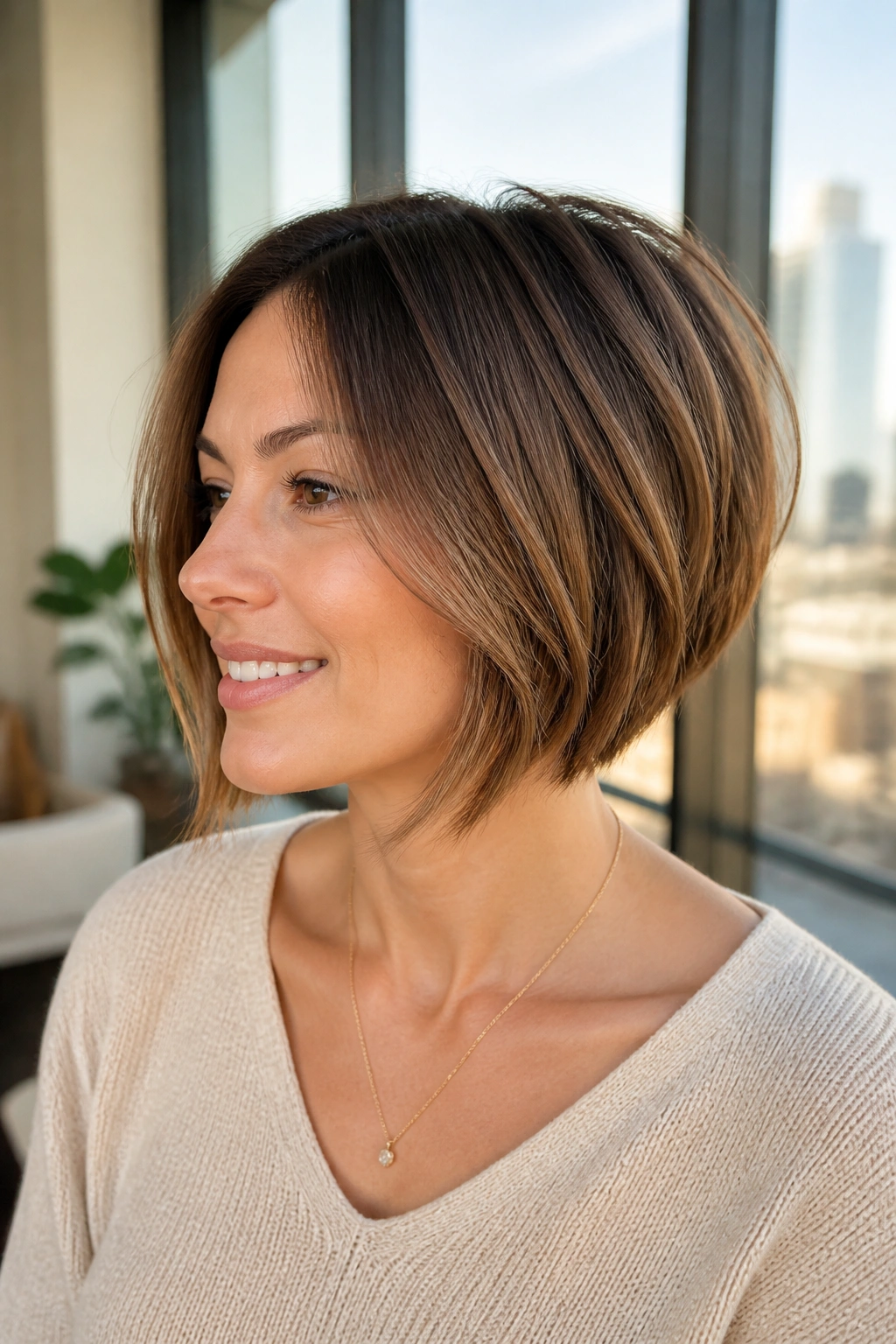
An airy wedge bob takes the old wedge idea and softens it enough for fine hair. The back has lift, the front keeps some length, and the whole shape feels lighter than the classic version.
The reason it works is the balance between fullness and air. You get some volume at the crown and nape, but the cut doesn’t end up bulky. That matters for fine hair, which can lose shape if it’s dragged down by long, heavy sections.
This is a good cut for someone who likes a neat silhouette but wants a little more body in the back. It can look crisp with a smooth finish or a touch softer with a bend at the ends. Either way, the profile stays clean.
24. Face-Framing Bob with Long Sweeps
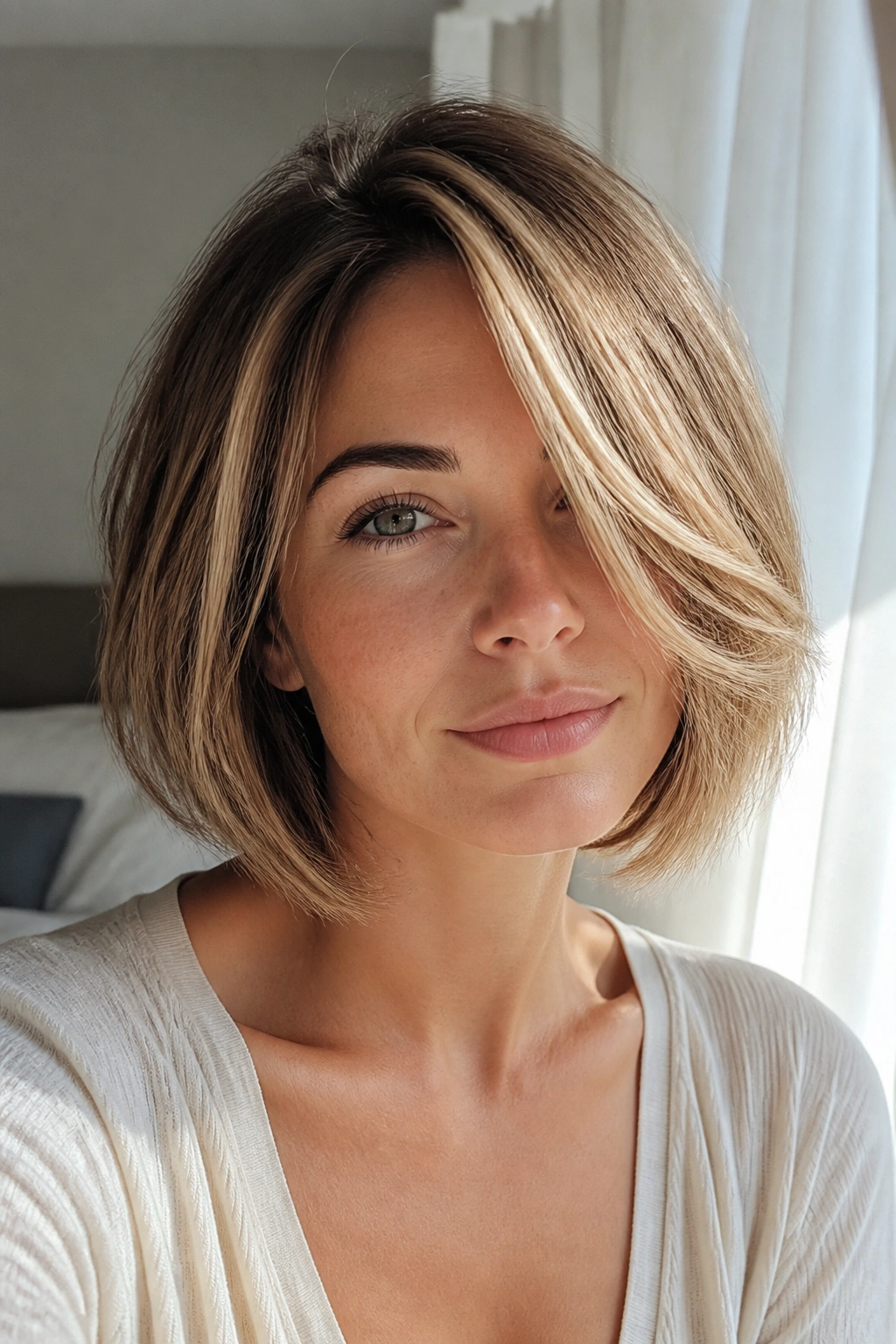
A face-framing bob with long sweeps gives fine hair some movement around the face without stripping the rest of the cut. The long front pieces help the style feel softer, while the back stays compact enough to look full.
This is a useful shape if you wear your hair parted off-center and like a little sweep across the cheekbone. The longer front sections create motion, but they shouldn’t be so long that they drag the rest of the cut down. The balance matters.
Good Styling Notes
- Use a 1.25-inch brush or curling iron for the front
- Keep the back blunt enough to hold density
- Tuck one side behind the ear for a quick change
- Finish with a light mist, not a heavy spray
It’s the kind of bob that looks thoughtful even on a rushed morning.
25. Soft Power Bob
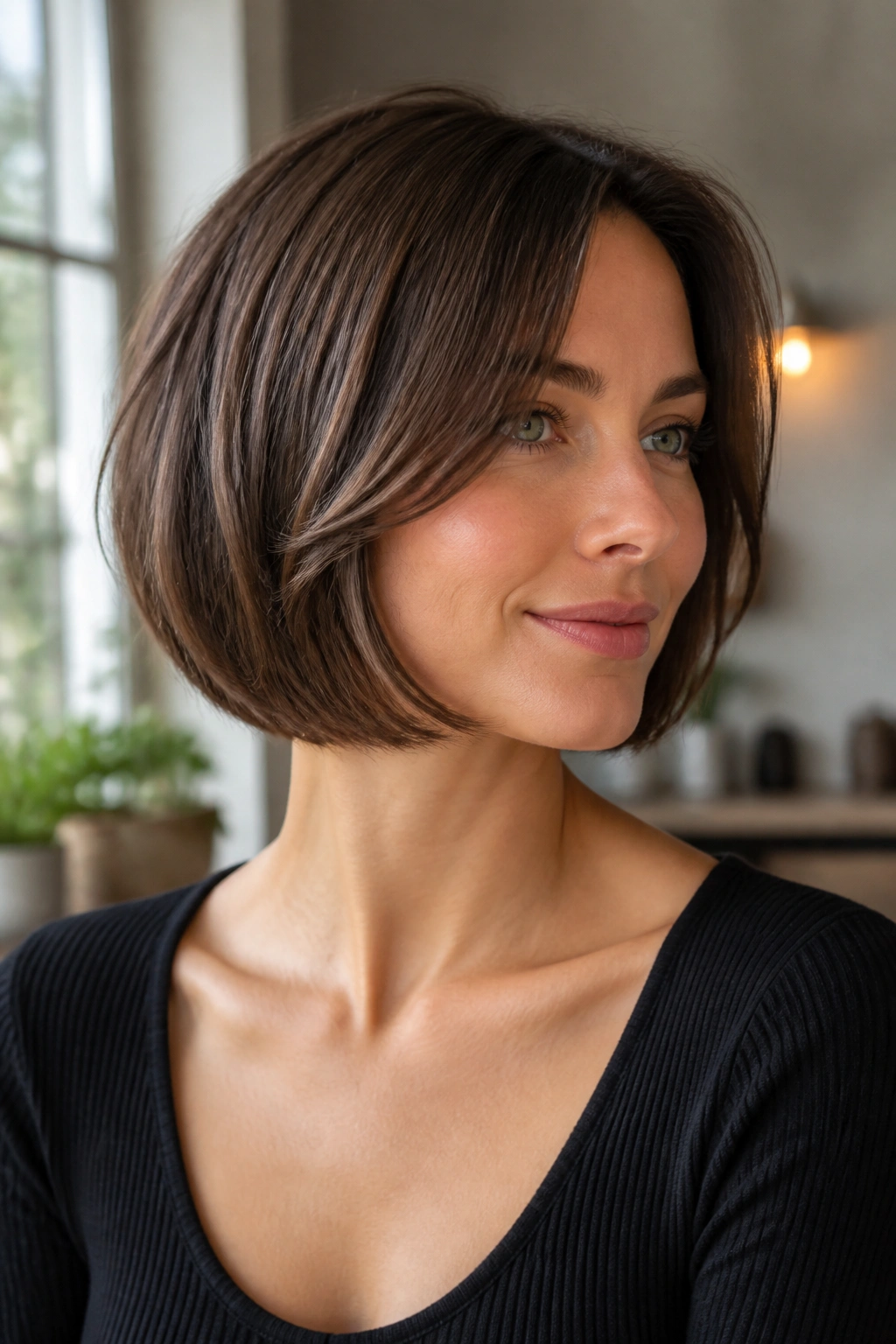
A soft power bob is what I’d call the polished version of all the ideas above. It’s not the hardest cut in the room, and that’s the point. It holds a strong shape, keeps the ends full, and still leaves room for a little movement at the front or around the jaw.
For fine hair, this is often the sweet spot: enough structure to create density, enough softness to keep it from feeling severe. The line can sit at the chin or just above the shoulders. The finish can be straight, beveled, or gently curved. What matters is that the haircut stays clean and the edges stay honest.
If your hair tends to fall flat when it gets too long, a soft power bob gives it back some posture. If it already has a bit of wave, the shape will show that off without turning into frizz. And if you like hair that looks neat without trying too hard, this is probably the one you’ll come back to.
