



Platinum bob haircuts for fine hair live or die on shape. Bleach can strip away some of the natural grip and bend in the hair, which is why the cut matters more here than it does on a thicker head of hair. A clean line, a careful part, and the right length can make a flat bob look expensive instead of limp.
Fine hair does not need to be loaded up with layers. It needs edges that hold, a silhouette that reads clearly, and enough movement that the style does not collapse by lunch. The best platinum bobs do two jobs at once: they make the color look icy and clean, and they make the strands look more plentiful than they are.
A good stylist will talk about density, not just length. They’ll look at whether your hair is pin-straight, slightly wavy, or prone to puffing at the ends, because those things change the whole shape of the cut. Same with the part — move it an inch, and the head can look fuller. Small thing. Big difference.
Some of these cuts are sharp and polished. Some are softer around the face. The right one depends on how much fullness you want to fake, how much styling you’ll actually do, and how much drama you want your platinum blonde to carry.
1. Chin-Length Blunt Platinum Bob
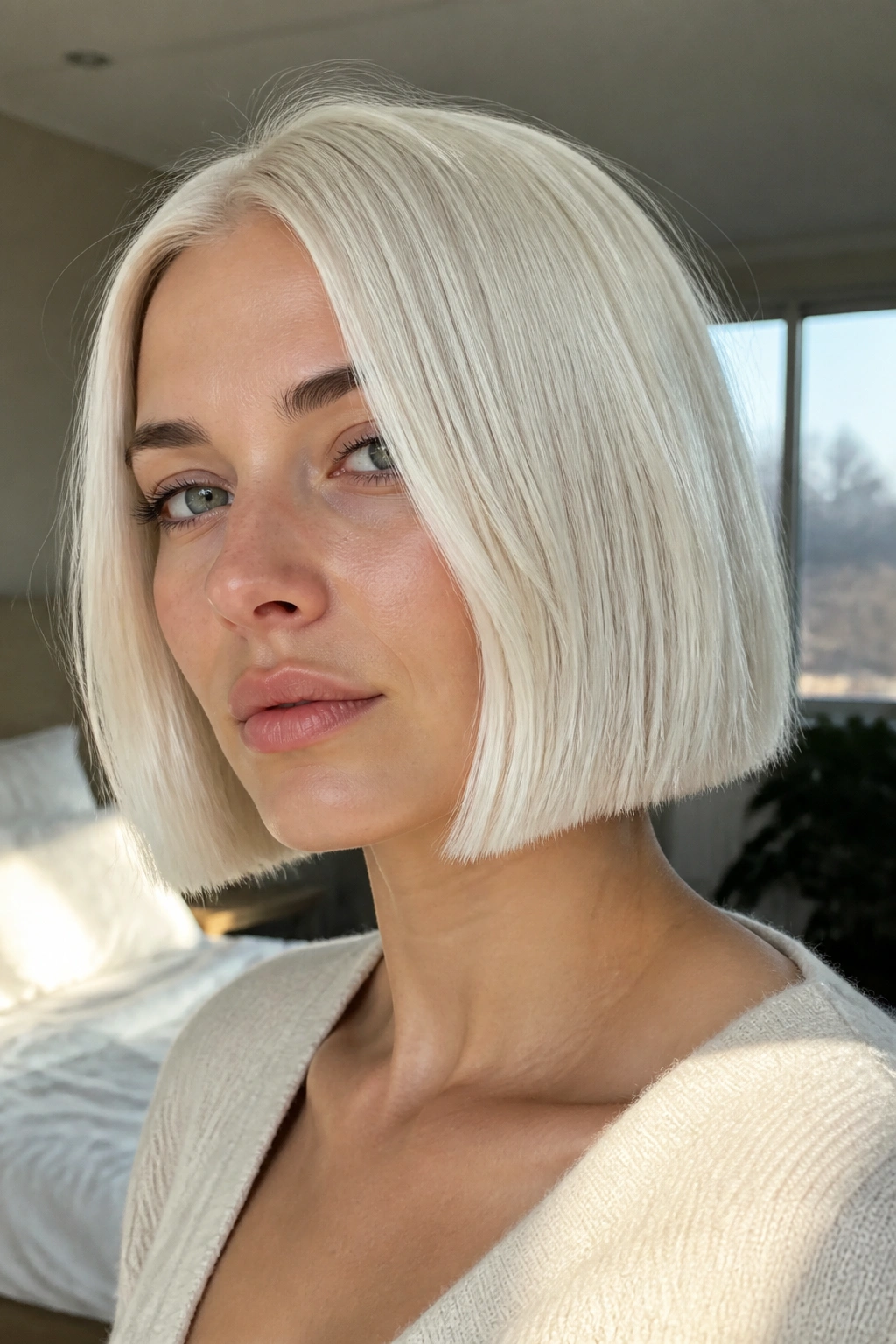
Blunt is usually the first place I send someone with fine hair. A chin-length edge gives the eye one clean line to follow, and that line makes the ends look denser than they are.
Why It Works for Fine Hair
The cut sits in that sweet spot where it brushes the jaw without flopping past it. If the perimeter is even and the ends are not over-thinned, the whole shape feels fuller from root to tip.
A little bend under the ends helps, but the real star is the blunt base. Ask for minimal internal layering and a finish that lands right at the chin or a hair below it. Too much graduation and the shape starts to disappear.
- Keep the hemline crisp.
- Blow-dry with a flat brush for a polished finish.
- Use a pea-sized amount of smoothing cream, not a heavy oil.
- Trim every 5 to 7 weeks so the line stays sharp.
Best tip: If your hair tends to split at the ends, this is the cut that hides it best.
2. Sleek Center-Part Bob
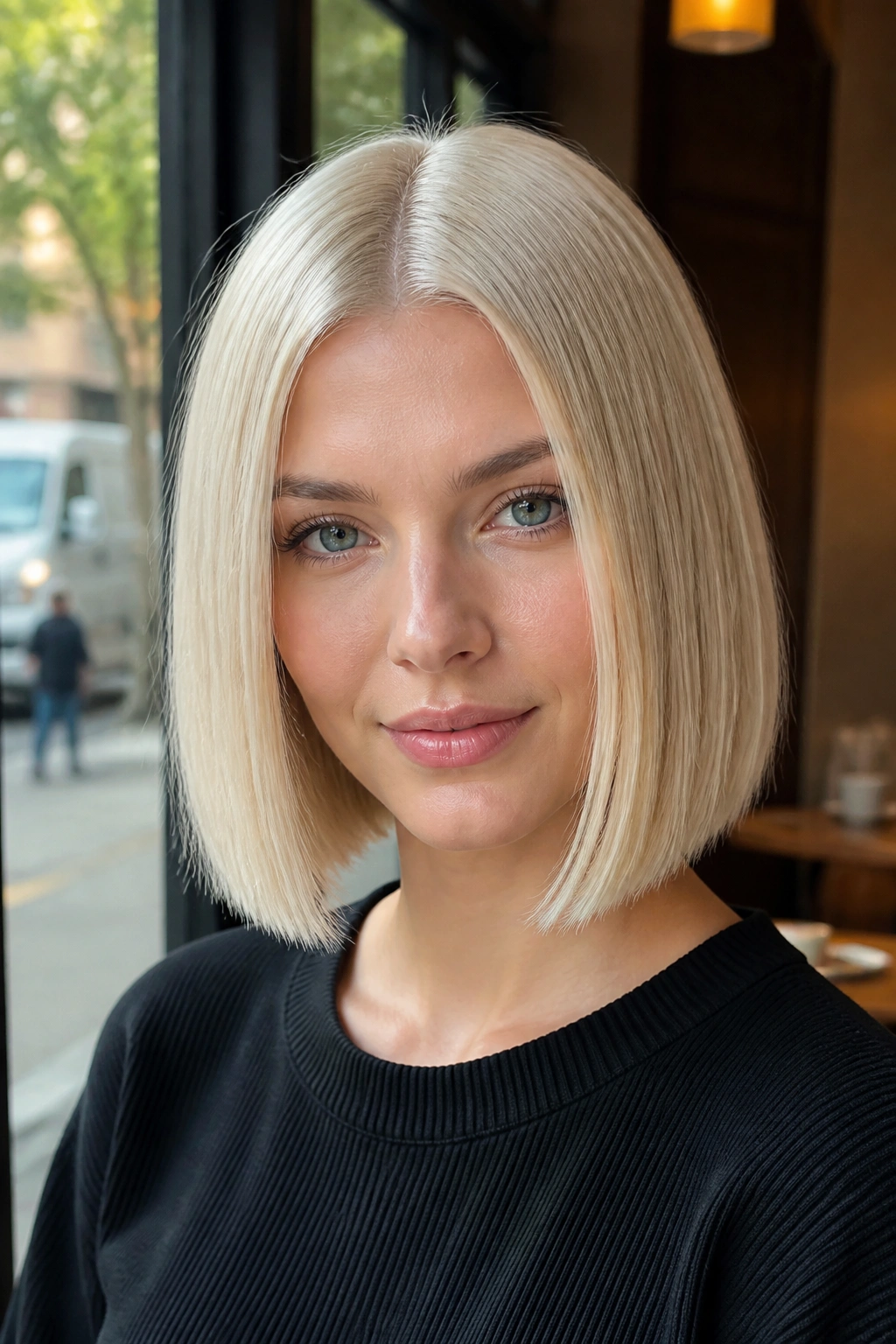
A center part can look almost severe in the best way. That’s the point. It gives fine hair a neat, balanced frame, and balance reads as fullness even when the strands themselves are delicate.
The trick is to keep the shape simple. No choppy ends. No shaggy bits around the cheek. A smooth center-part bob looks stronger when the part is straight, the crown is lightly lifted, and the hair falls in even curtains on both sides.
Use a root-lifting mousse at the scalp before blow-drying, then smooth the mid-lengths with a round brush or paddle brush. If you let the roots go flat, the whole style slumps. If you keep the top clean and the ends blunt, it feels tidy and expensive rather than flat and plain.
This one is a good fit for people who wear straight hair most days and do not want to fight their texture.
3. French Bob With Soft Fringe
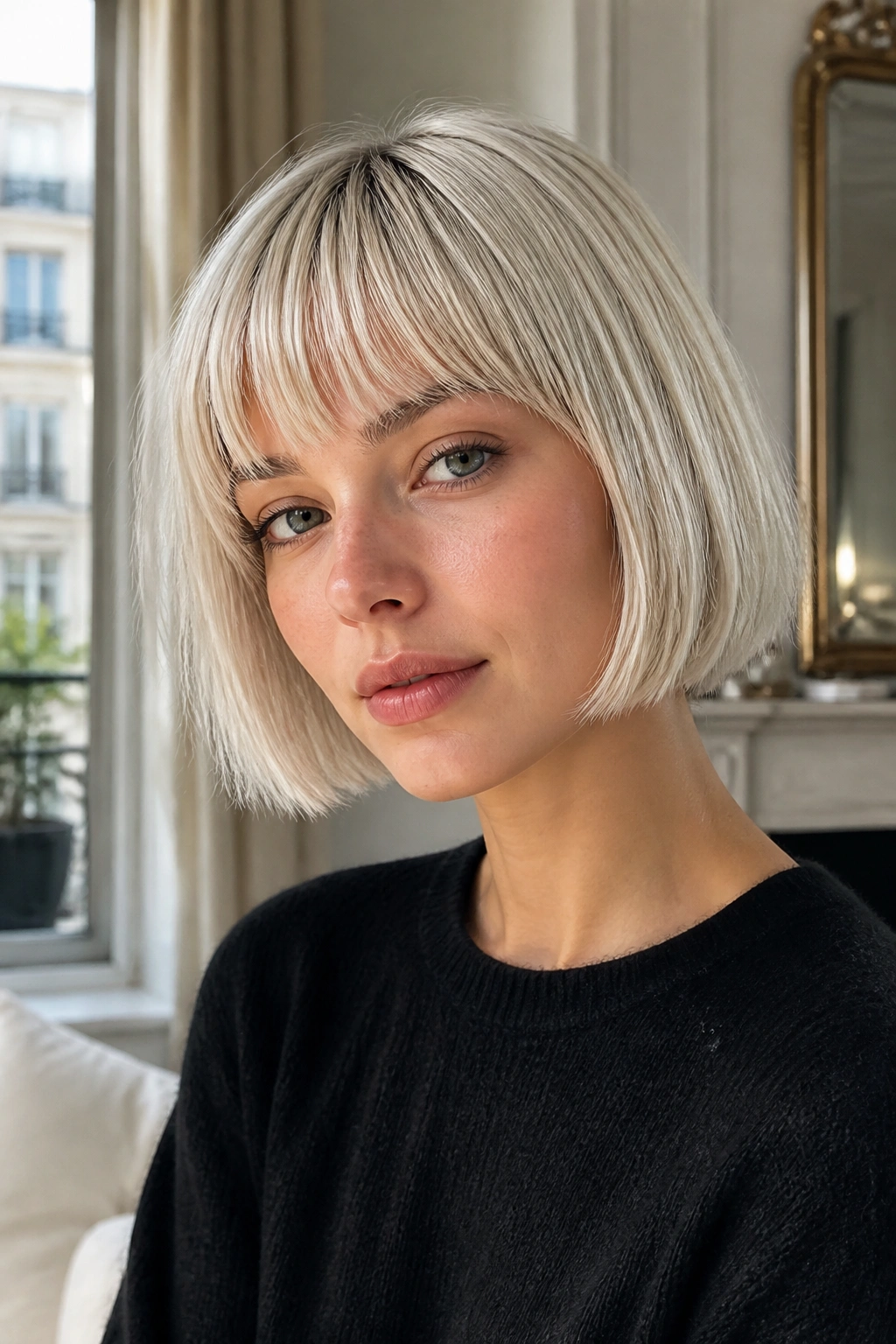
Want a bob that looks effortless without actually being careless? The French bob is the move. It’s short, a little cheeky, and the fringe keeps the face from looking too long or too bare.
How to Wear It
The fringe should skim the brows or land just above them, not cut straight across like a helmet. That softer line matters on fine hair because it keeps the front from looking heavy.
The rest of the cut usually sits around the jaw or a touch higher. That shorter length gives the ends enough presence to look full, especially if the platinum shade is cool and clean. Air-drying works well here if your hair has a small wave. If it is straighter, use a light mousse and twist the fringe with your fingers while it dries.
- Ask for a soft, eyebrow-grazing fringe.
- Keep the sides slightly tucked toward the jaw.
- Use a small round brush on the fringe only.
- Skip heavy wax; it kills the airy feel.
This one has attitude. Not loud attitude. Better than that.
4. Jaw-Grazing Box Bob
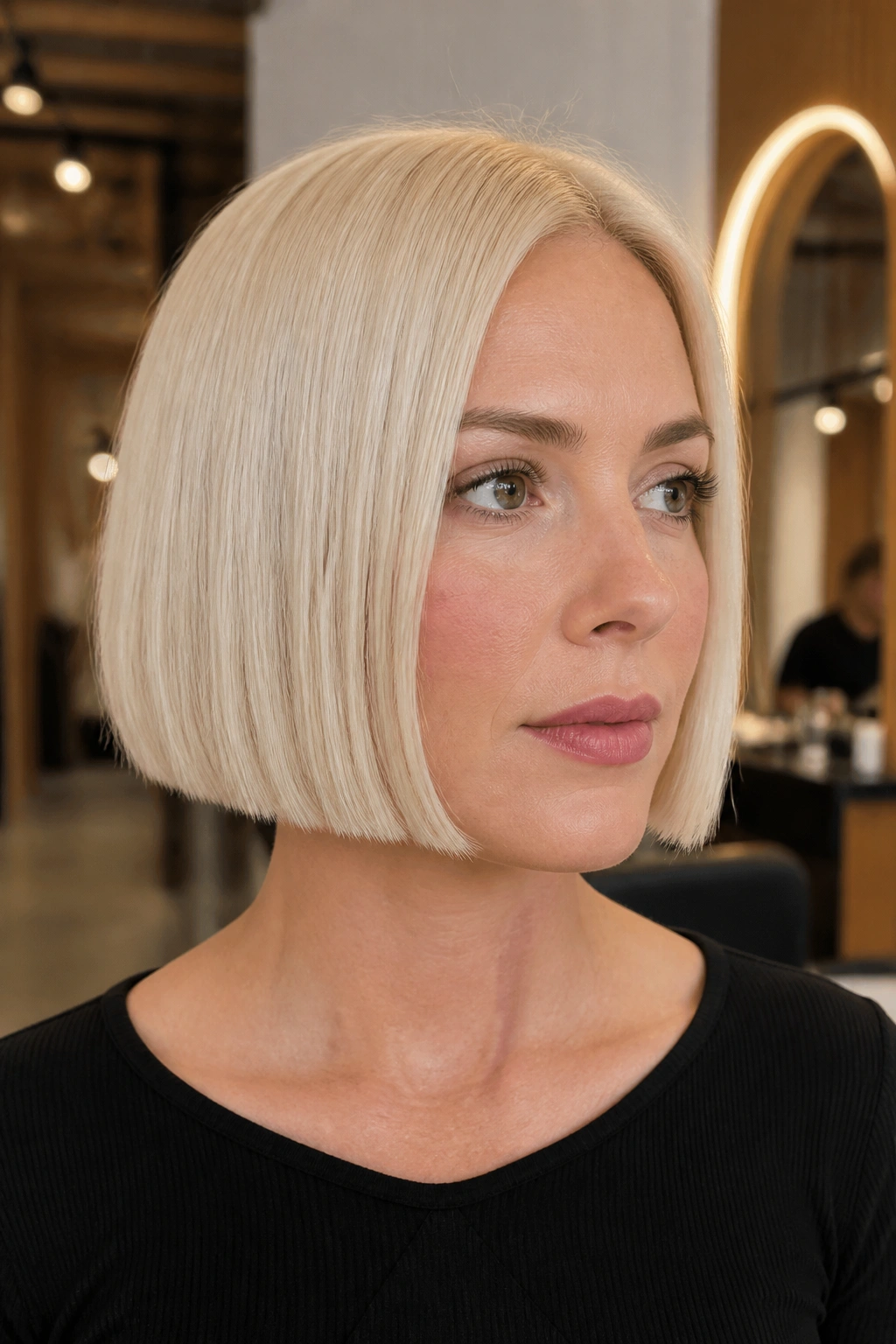
A box bob lands right around the jaw and keeps the corners fairly square. On fine hair, that little bit of geometry can be a lifesaver.
Picture a clean frame around the face. No wispy ends. No stray layers trying to do too much. The box shape makes the bottom edge look thick, which is half the battle with platinum hair that has been lightened and softened by processing.
If you want this cut to stay strong, tell your stylist not to over-texturize the perimeter. The internal weight can be adjusted a little, but the outer line should stay solid. That’s what gives the bob its presence.
A flat iron pass through the top sections can make the line look even sharper, but don’t chase pin-straight perfection every day. A slight bend at the ends keeps it from looking stiff.
5. Sleek A-Line Bob
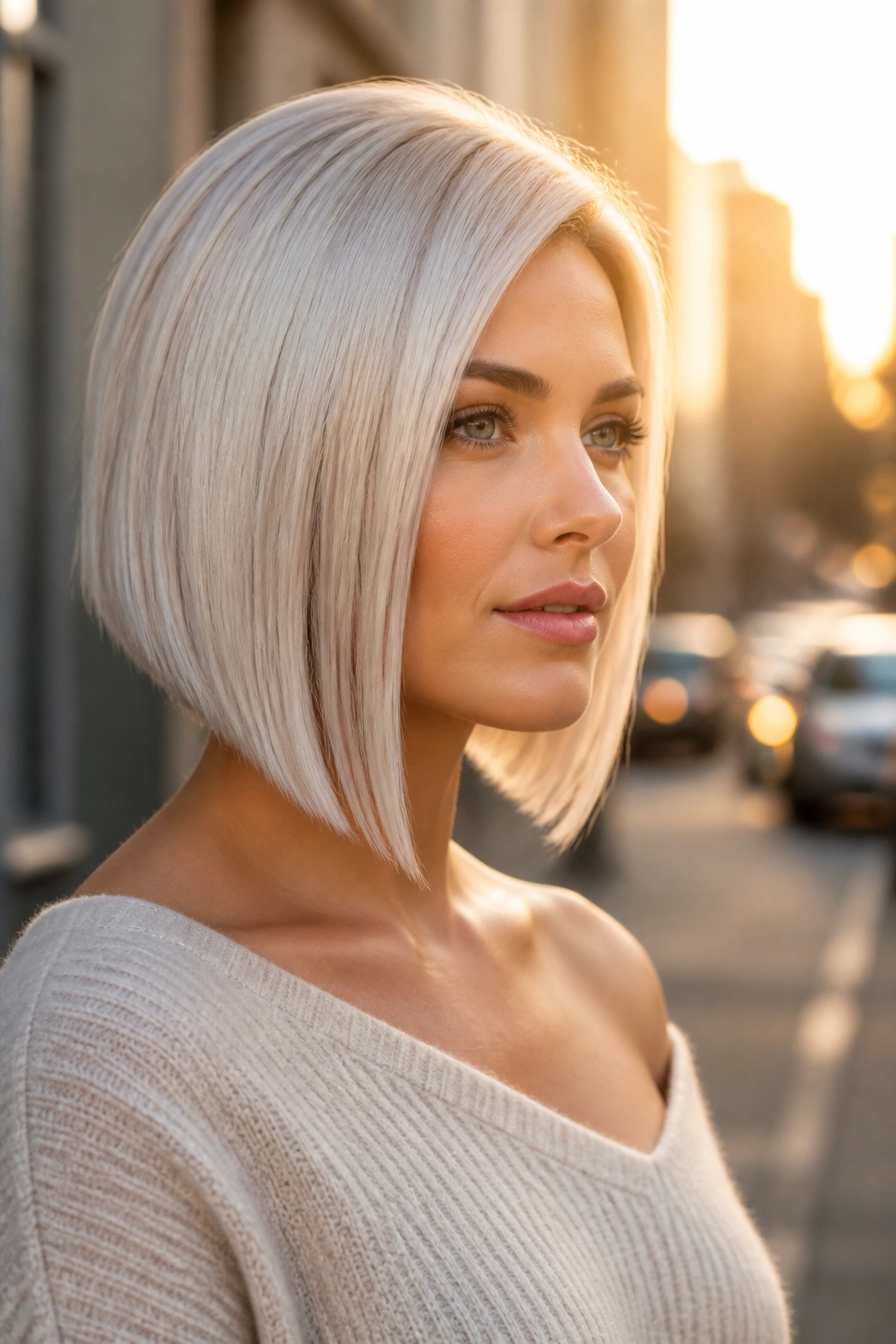
An A-line bob is longer in front and shorter in back, and that slight angle does a lot of work for fine hair. It gives the illusion of structure without demanding a lot of bulk.
The back stays neat and controlled, which helps the crown look lifted. The front pieces slide forward and frame the jaw or collarbone, depending on how long you take it. That front length is useful if you want to keep some softness around the face while still getting the density boost of a shorter back.
This is one of those cuts that looks best when it is clean, not over-styled. A round brush, a blow-dry nozzle, and a bit of tension at the ends will do more for it than a dozen products ever could.
If your hair grows out fast at the nape, this shape is forgiving. The angle softens the grow-out, which means you won’t feel trapped by your trim schedule quite as much.
6. Soft Stacked Bob at the Nape
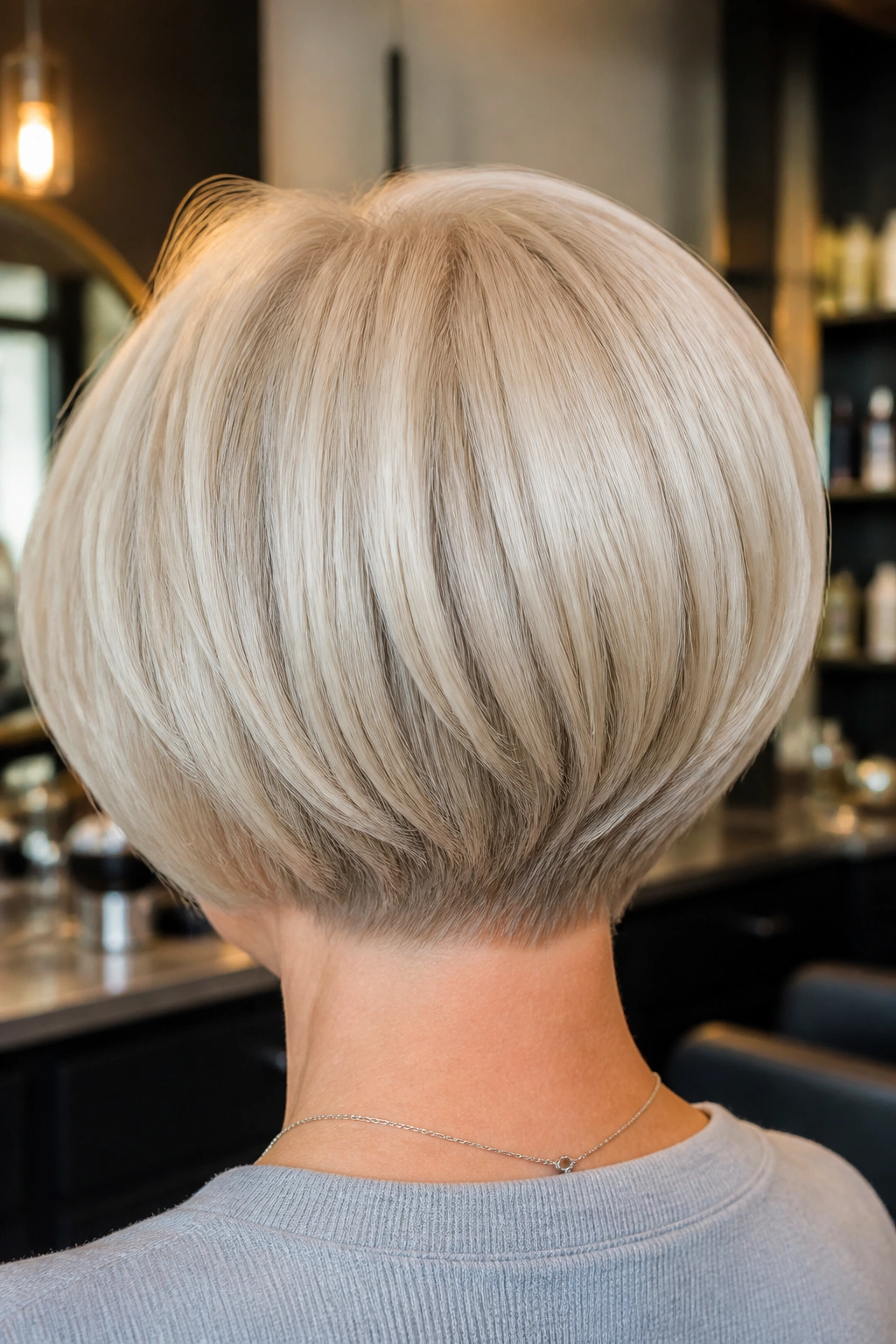
A stacked bob can go wrong fast on fine hair if the layers are too aggressive. Done well, though, it gives the crown lift and makes the back feel fuller without turning the ends into feathers.
What Makes It Different
This version keeps the stack subtle. You want a little graduation at the nape, not a dramatic slope that screams 1980s salon brochure. The back should tuck neatly, while the top layers rise just enough to stop the crown from collapsing.
That tiny bit of height is useful if your hair lies flat at the back of your head. It gives the cut a shape you can see even from the side. Platinum color helps, too, because the light reflects off the stacked layers and shows the curve.
- Ask for soft graduation, not heavy stacking.
- Keep the front longer than the back by a small margin.
- Use a round brush to push the crown up.
- Finish with a light mist of flexible spray.
This one is tidy, practical, and a little more polished than people expect.
7. Airy Micro Bob
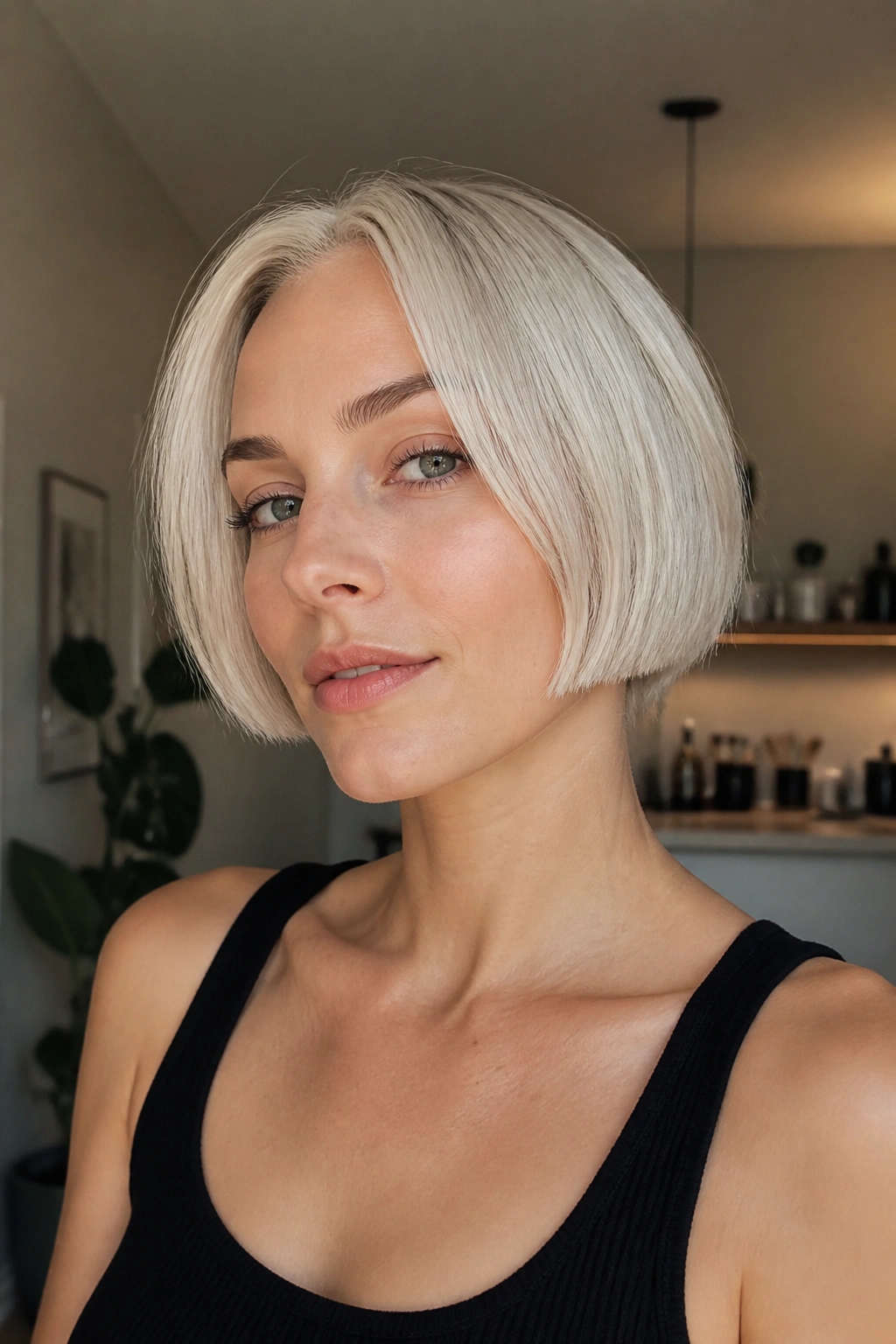
Shorter does not always mean smaller. A micro bob can make fine hair look thicker because the whole shape stays compact and deliberate.
Why It Looks Fuller
When the ends stop high on the jaw, there is less length for the hair to stretch out and go see-through. The result feels dense, especially if the cut is blunt and the color stays clean from root to tip.
The danger is over-softening it. If the stylist thins the ends too much, the bob loses its little architectural edge and starts to look wispy. Keep the shape close to the head, with a tiny bit of room around the ears so it does not look pasted on.
- Best for straight or lightly wavy hair.
- Works well with a side tuck.
- Needs frequent trims to hold the shape.
- Looks strongest when the roots have a touch of lift.
This is a bold cut, but not a fussy one. That matters.
8. Invisible-Layer Bob
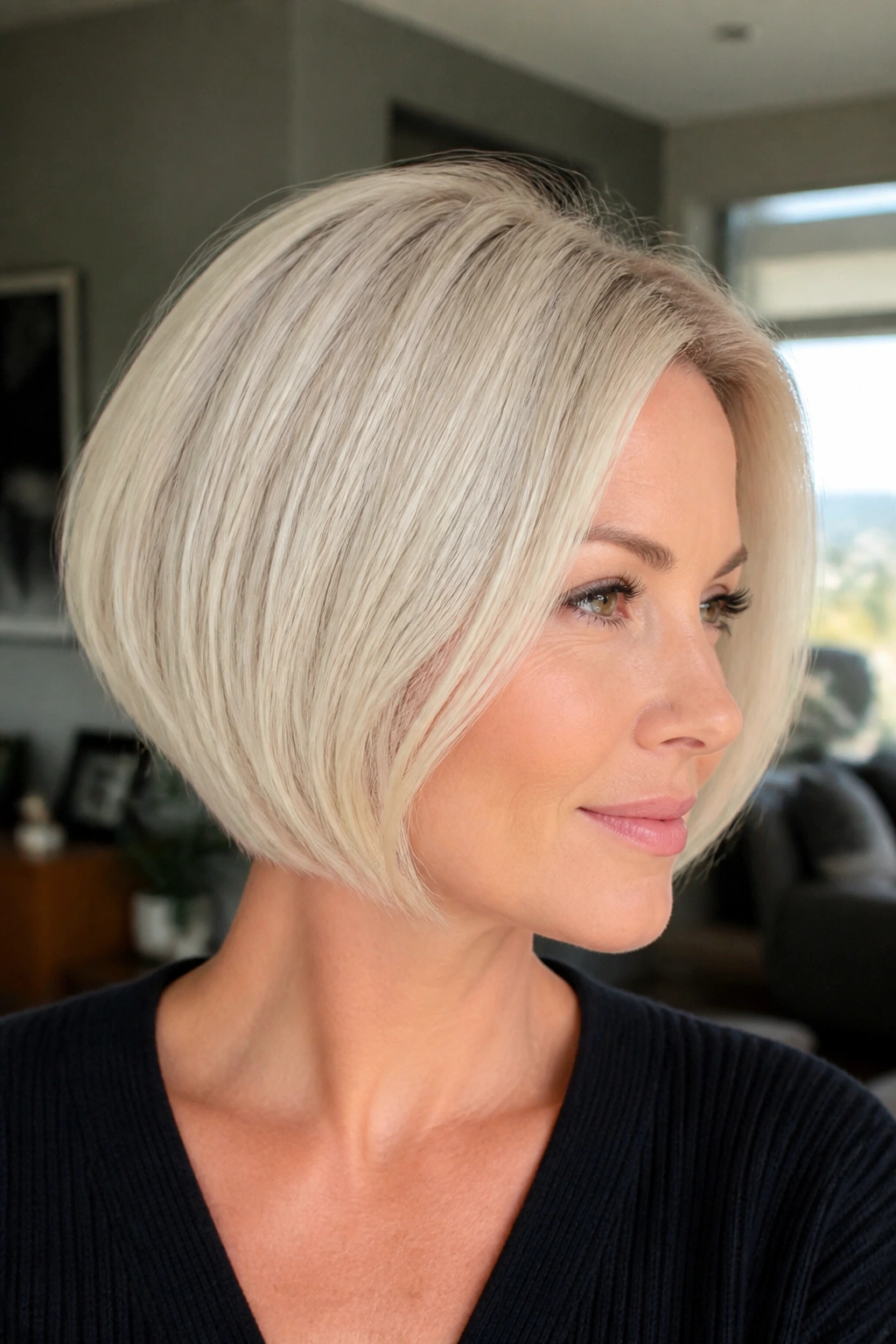
The best layers on fine hair are the ones you barely see. That’s the whole point of an invisible-layer bob.
Instead of hacking the ends to create movement, the stylist removes a small amount of weight from inside the shape. The outer line stays clean, while the inside has enough softness to move when you walk. It’s a smart trick for hair that feels too solid when it’s blunt but too thin when it’s over-layered.
How to Ask for It
Tell the stylist you want the perimeter to stay full. Then ask for light internal shaping, especially if your hair puffs in the middle or flips at the ends.
This cut works best on hair that is fine but not fragile. If the strands break easily, too much internal cutting can make the shape look gap-toothed. Use a light heat protectant and dry the hair with a brush that keeps tension low.
The payoff is a bob that moves without looking choppy. That’s rare, and worth chasing.
9. Side-Part Platinum Bob
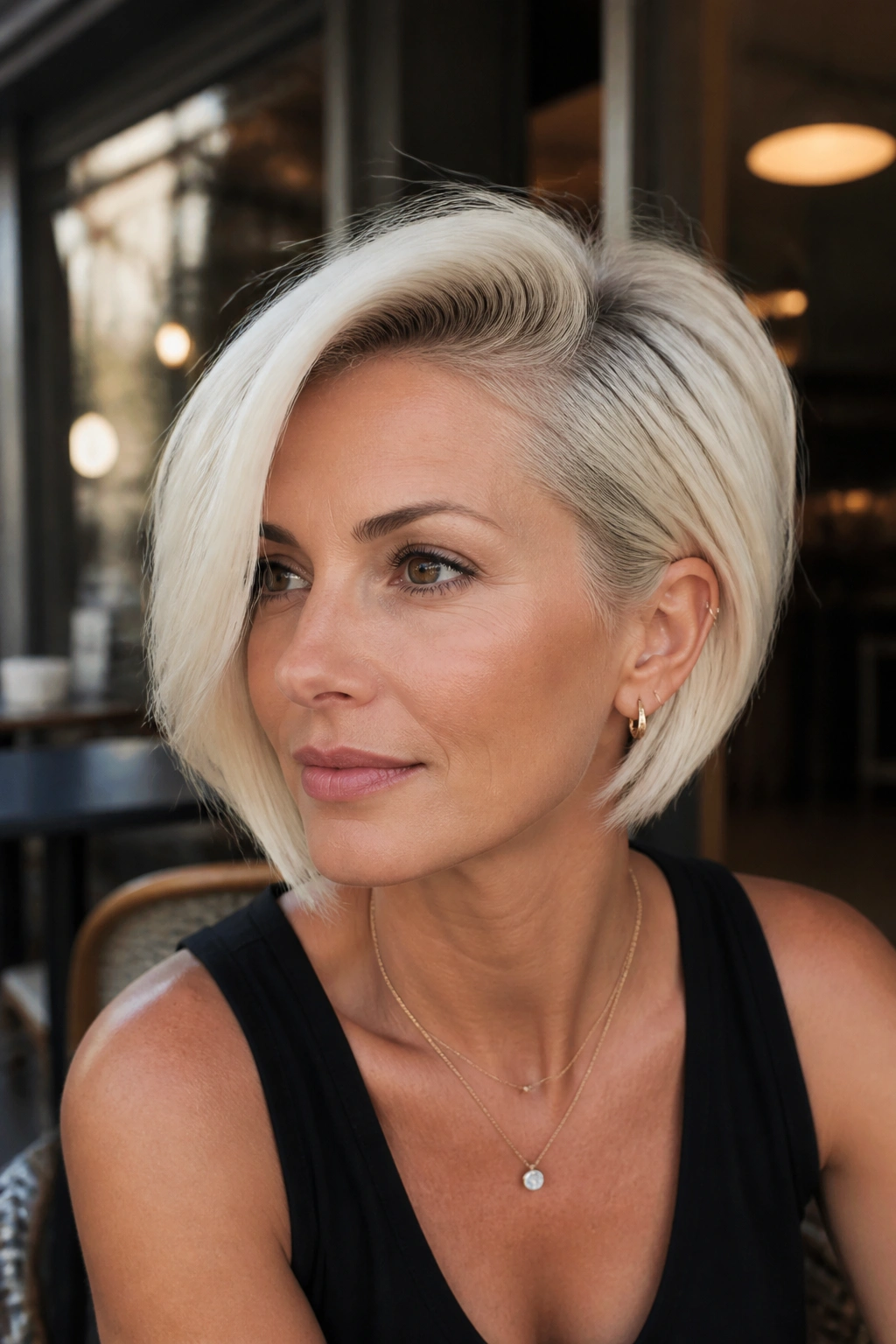
A deep side part is one of the fastest ways to cheat volume. It lifts the roots, shifts the weight, and gives fine hair a little drama without requiring a new cut.
How to Use the Part
If your crown tends to lie flat, move the part to the side that gives the most natural lift near the hairline. The shorter side will hug the head a bit more, while the heavier side creates the illusion of fullness.
That asymmetry is useful in platinum hair because the bright color can make every flat spot obvious. A side part breaks up the surface and keeps the head from reading as one smooth sheet. It also softens a sharp chin or narrow face.
A quick blast of heat at the root, followed by cool air, helps the lift stay put. Finger-comb the top instead of brushing it flat again. Brushes can smooth too much and steal the height you just built.
This is one of those small changes that looks bigger than it sounds.
10. Rounded Bob With Tucked Ends

A rounded bob has a soft curve at the bottom, and that curve is surprisingly useful on fine hair. It gives the cut a contained shape, which makes the whole head look more intentional.
Picture the ends tucked under just enough to create a soft shelf. The line is not sharp like a box bob, and it is not loose like a shag. It sits in between, which means it suits people who want softness without mess.
- Best for straight hair that needs shape.
- Use a round brush to curl the ends under.
- Keep the curve subtle, not helmet-like.
- A half-inch trim can change the whole outline.
The rounded finish works well with platinum because the shine follows the curve. That makes the edge look fuller when the light hits it.
It’s one of my favorite choices for people who want polished hair without that stiff salon blowout feel.
11. Platinum Bob With Curtain Bangs
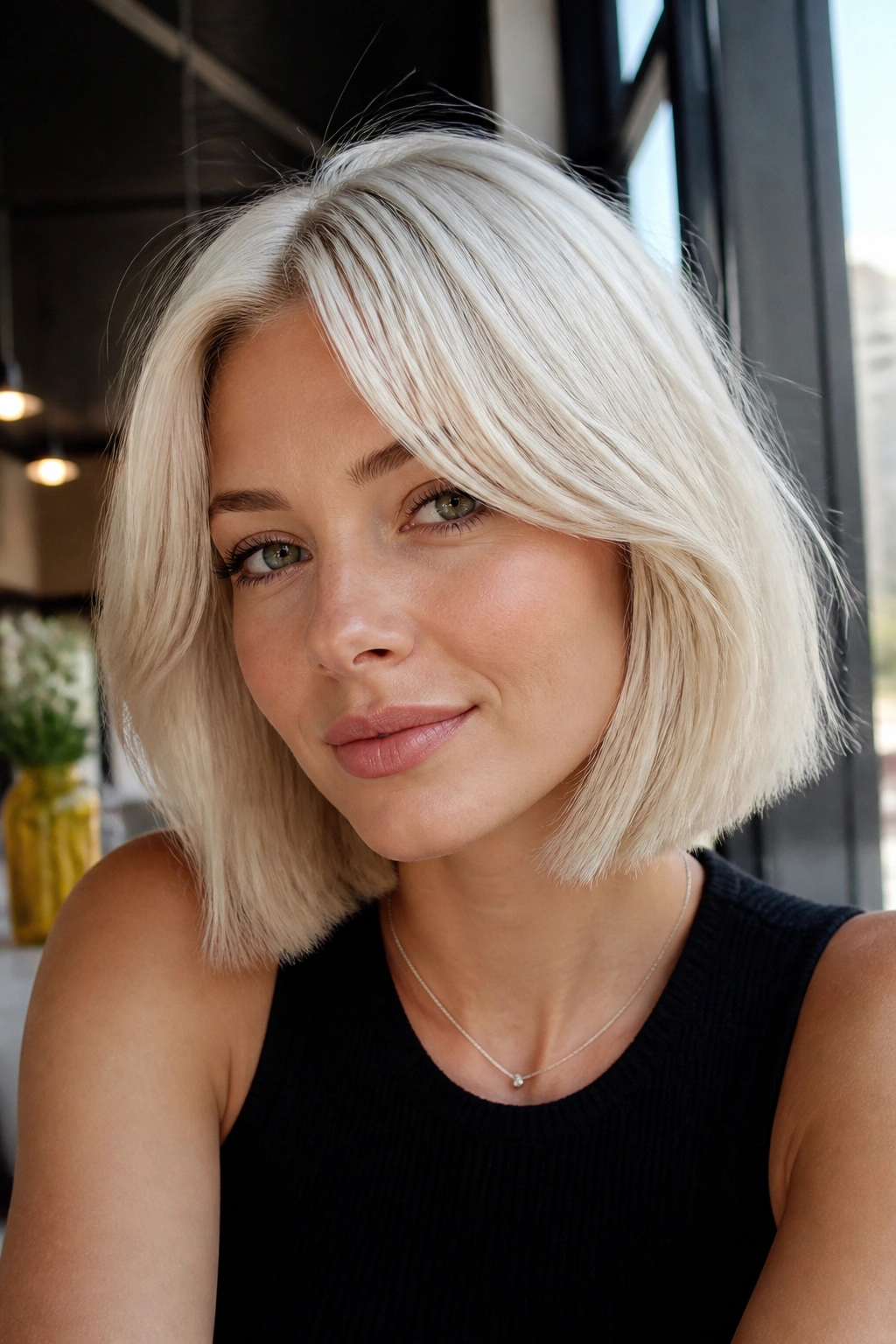
Curtain bangs can be a gift on fine hair, but they have to be cut with restraint. Too much fringe and the front goes limp; too little and the bangs look like a mistake you are trying to grow out.
The sweet spot is a soft parting at the center that opens around the cheekbones. That shape pulls attention upward and gives the bob some motion around the face, which helps the rest of the cut feel less static.
I like this version when the bob itself is fairly simple underneath. A blunt or slightly curved base works well, because the bangs bring enough movement on their own. The fringe should blend into the sides instead of stopping abruptly.
If your hair is very fine, keep the bangs a touch longer at first. Short fringe exposes more forehead and can look sparse if the density is not there. Longer curtain pieces are easier to tuck, pin, or sweep aside on off days.
12. Asymmetrical Bob

An asymmetrical bob gives fine hair a little tension, and that tension keeps the style from feeling flat. One side sits slightly longer than the other, so the eye keeps moving.
Unlike a dramatic fashion cut, this version should stay subtle. A difference of half an inch to an inch and a half is usually enough. Go too extreme and the thinner side can start to look stringy, which is the last thing you want with lightened hair.
It’s a good option if your face is not perfectly symmetrical — and whose is? — because the longer side can soften one jawline or slim a rounder cheek. Wear it straight for a sharper effect, or tuck the shorter side behind the ear for a cleaner line.
This bob has edge, but it still behaves. That balance matters more than the drama.
13. Graduated Bob
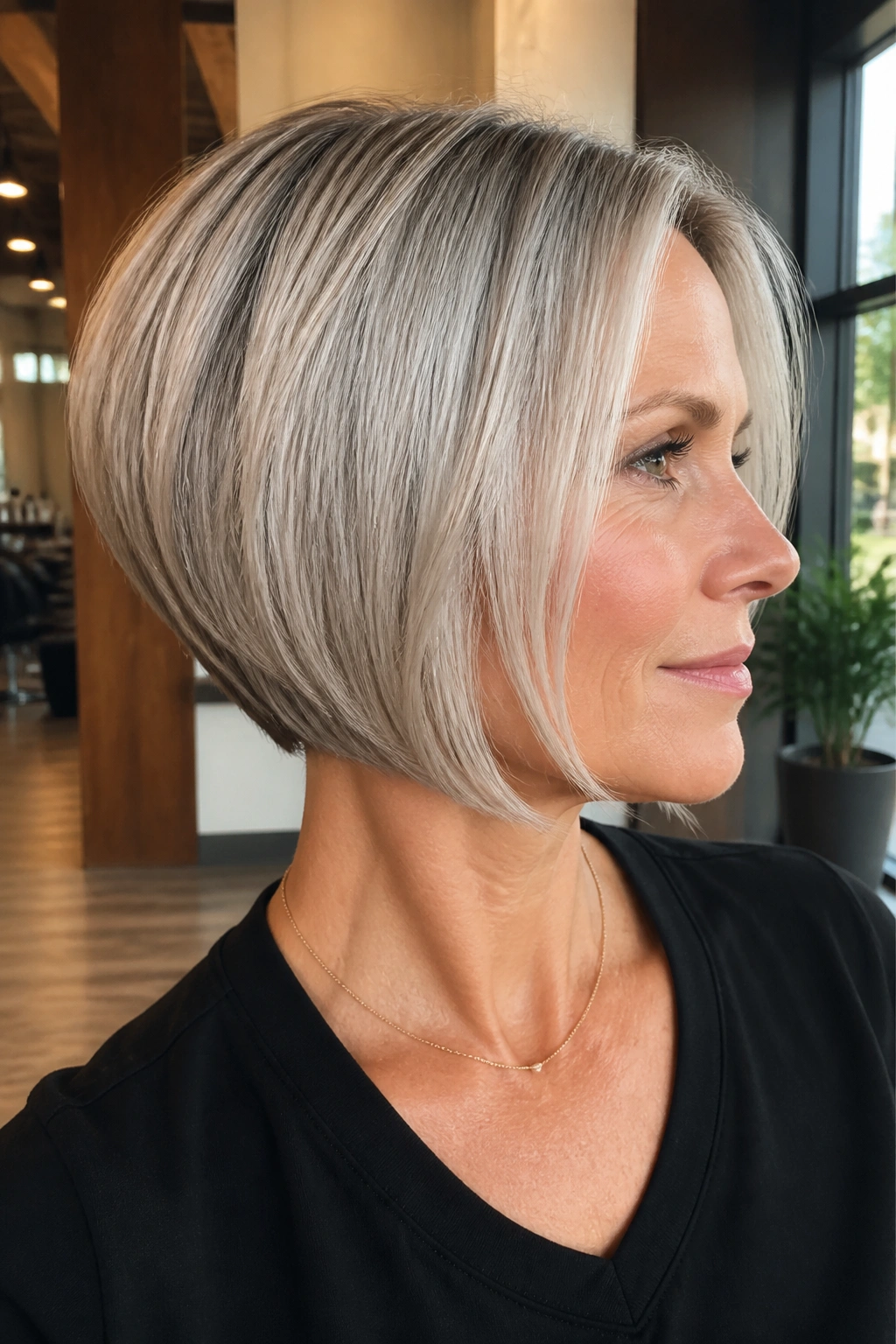
A graduated bob stacks a little more at the back, and that extra lift can be a gift for flat, fine hair. The trick is to keep the graduation controlled so the haircut still feels sleek, not bulky.
Why the Back Matters
The back of the head is where fine hair often collapses first. A soft graduation lifts the nape and creates a rounded shape that holds up better than a totally flat cut. From the front, the bob still reads clean. From the side, it has body.
Ask for a visible but not heavy angle. You want enough lift to support the top, and enough length in the front to keep the style modern. That’s the part many people miss — too much stacking in the wrong hands can make the back look short and the front look thin.
- Good for hair that falls limp at the crown.
- Best when the neckline stays neat.
- Needs a round-brush blowout to show its shape.
- Looks best with a precise trim line.
This one is especially good if you like your hair to feel structured.
14. Wavy Platinum Bob
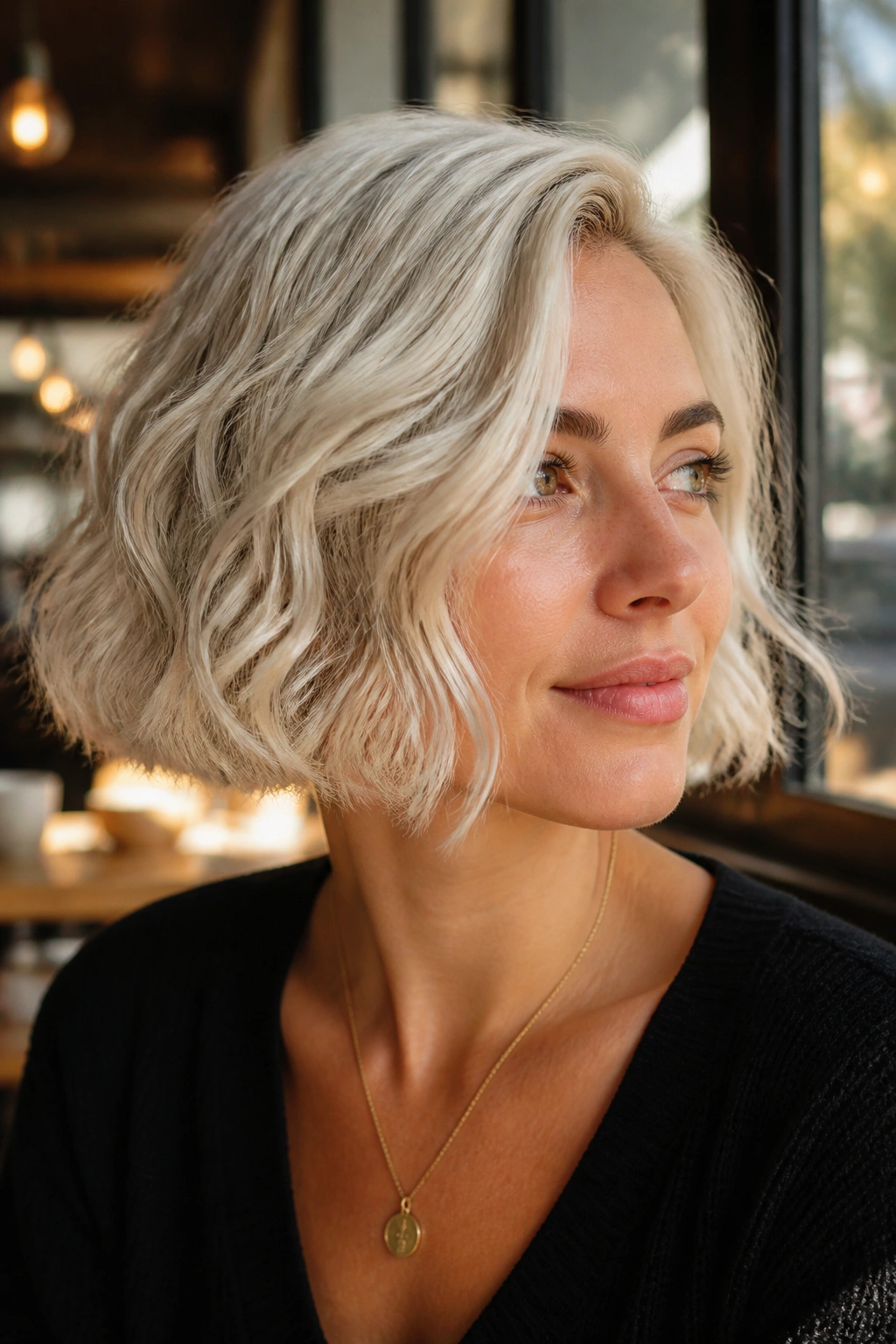
Fine hair with a small wave can carry more body than people think. A wavy bob uses that natural movement instead of fighting it.
The cut usually sits a little longer than a sharp blunt bob so the wave has room to bend. If it’s too short, the hair can spring up and feel boxy. If it’s too long, the wave drops and the style loses its bounce. Somewhere around the jaw or just below it tends to work well.
Use a light mousse or airy cream, nothing heavy. Heavy products make fine hair collapse by the time you leave the house. Scrunch while it dries, or use a diffuser on low heat if your wave needs a nudge.
A wavy platinum bob looks especially good when the color is tonal rather than flat. Slight brightness variation keeps the texture visible. Pure one-tone platinum can sometimes make the surface look too smooth, almost painted on.
15. Razored Bob With Piecey Ends
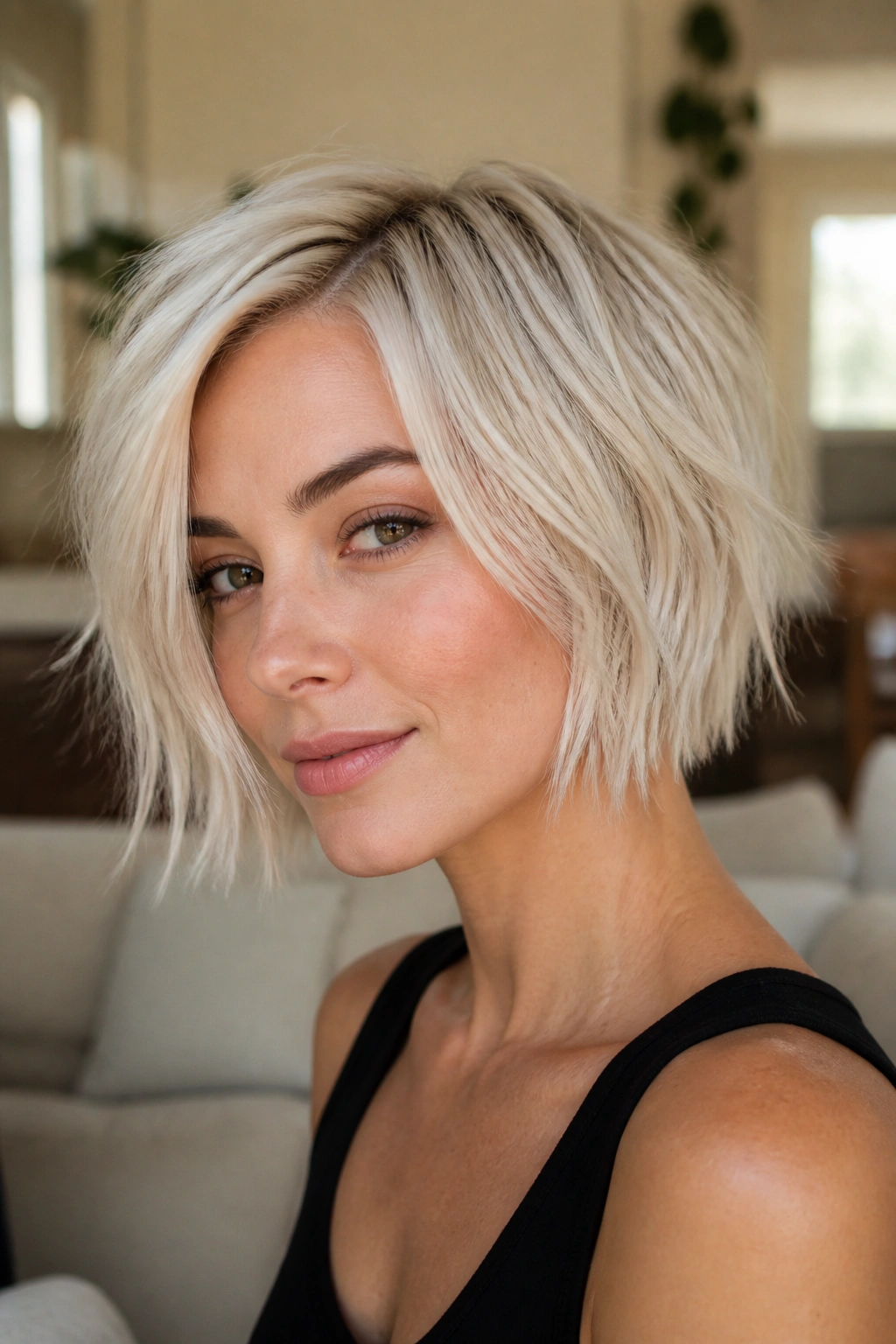
Can a razor cut work on fine hair? Yes — but only if the stylist uses it with care.
How to Get the Most From It
The razor should soften the ends, not shred them. On the right head of hair, that piecey finish creates movement without taking away the overall shape. On the wrong one, it can leave the bob looking wispy and tired.
This version suits fine hair that already has a little movement or texture. If your hair is stick-straight and fragile, a razor can be too much. Ask for light point cutting at the perimeter instead if you want less risk.
A small amount of styling paste on the ends can define the pieces, but use it sparingly. Too much product clumps the strands and shows the scalp more than you’d like. The whole point is separation, not stringiness.
When it works, though, it has a cool, lived-in feel that suits platinum beautifully.
16. Bottleneck Bang Bob

Bottleneck bangs start narrow in the center and widen near the temples. That shape is flattering because it opens the face without dumping too much hair onto the forehead.
The bob underneath can stay fairly simple. That’s a good thing. Fine hair often looks better when one part of the cut does the talking and the rest stays calm. Here, the fringe gives the interest, while the bob keeps the weight.
- Best for people who want fringe without heavy coverage.
- Works well with chin-length or jaw-length bobs.
- Ask for soft edges through the temples.
- Dry the bangs first so they do not split strangely.
This cut can make the cheeks look a little softer and the eyes a little brighter. It is a nice choice if you want something current without going full short-fringe drama.
It also grows out in a friendlier way than blunt bangs, which is worth a lot.
17. Ear-Length Bob
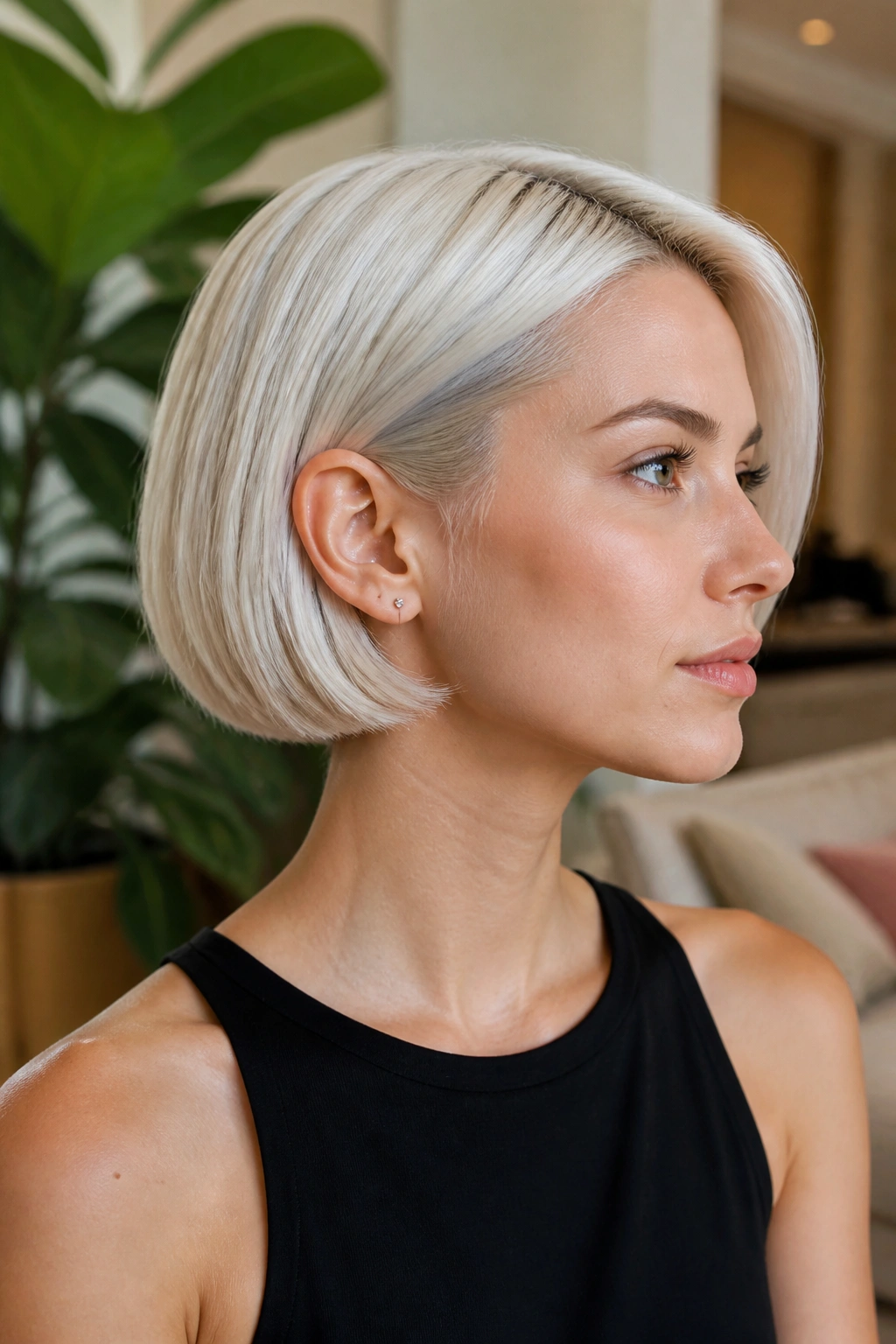
An ear-length bob is short enough to feel crisp and long enough to still have shape. On fine hair, that compact length can create a dense little frame around the face.
What to Expect
This is not a shy haircut. It shows the neck, the jaw, and a fair bit of the ears, so the line has to be clean. If the ends are ragged, the whole thing looks unfinished. If they’re sharp, the style feels elegant and a little daring.
I like this bob on hair that has been lightened to a cool platinum because the short shape makes the color look deliberate. A long bob can sometimes seem soft around the edges; this one is all about precision.
- Trim every 4 to 6 weeks.
- Keep product light so the shape stays airy.
- Tuck one side behind the ear for a quick change.
- Use a tiny round brush at the nape for bend.
If you want a cut that makes fine hair look expensive and a little rebellious, this is a strong bet.
18. Italian Bob
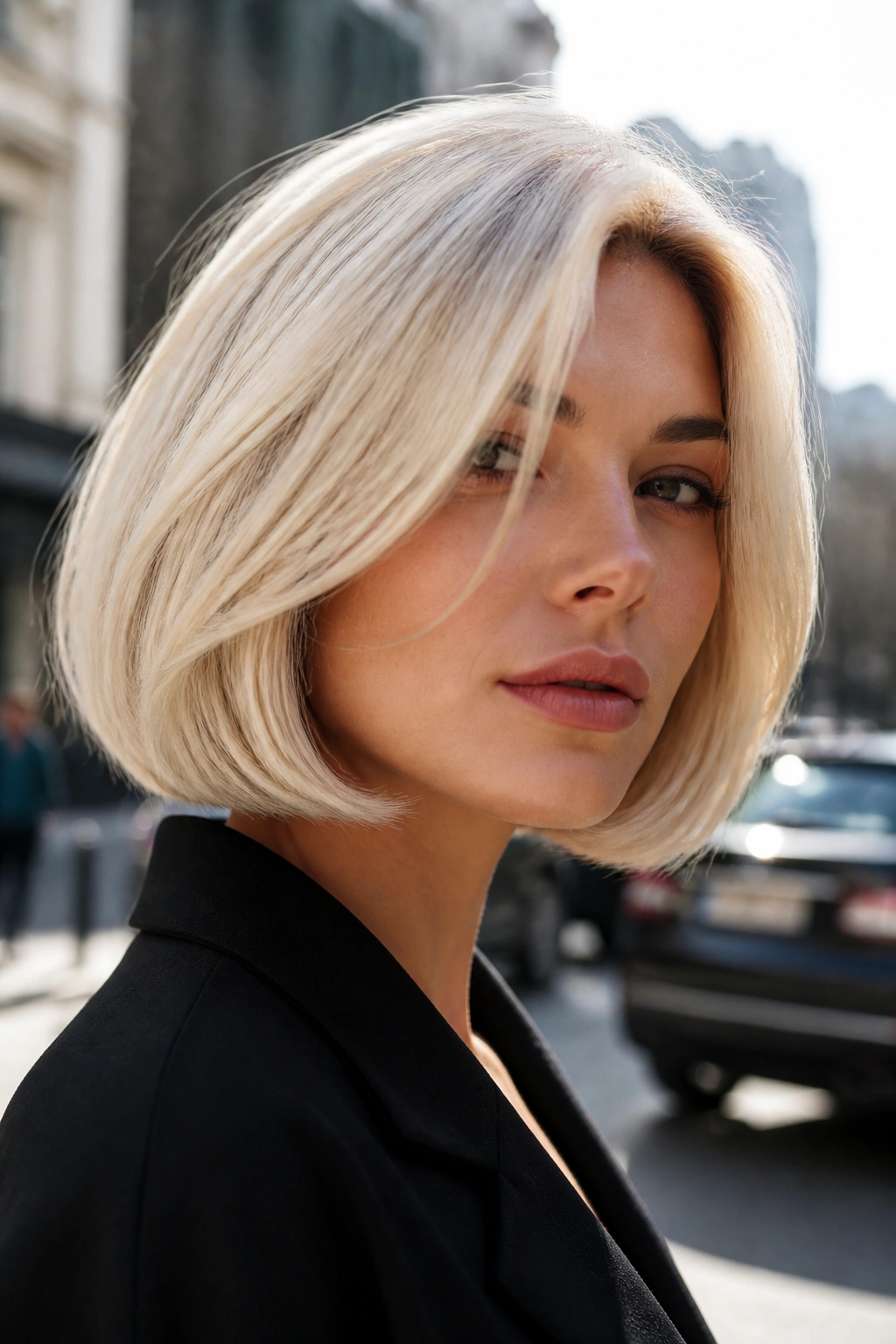
The Italian bob is fuller, swingier, and less severe than the blunt versions. That’s why it works so well on fine hair that needs body more than sharpness.
Unlike a micro bob, this one usually sits a bit lower — around the jaw or just above the shoulders. The perimeter stays thick, and the shape often has a soft curve through the ends. It feels plush, not skinny. That matters when the strands are delicate.
This is a good pick if you want a bob that can be worn with a little bend and still look intentional. Blow it out with a round brush, or let it dry with a soft natural wave and then smooth the top. Either way, the shape should look full from the side.
Platinum color makes the Italian bob look crisp. The rounded edge and the pale shade together give the hair a glossy, expensive finish without a lot of fuss.
19. Choppy Bob With Internal Texture

A choppy bob sounds rough, but on fine hair the best version is controlled, not chaotic. The texture lives inside the cut, where it adds movement without stealing the perimeter.
Why It Helps
Fine hair can look too neat in a blunt bob if it is very straight. A little internal texture breaks that flatness and gives the style some lift when you turn your head. The ends still need to look solid. No shredded fringe on the bottom, please.
This cut is a smart choice for hair that falls flat in the middle but tends to puff at the bottom. The internal shaping removes just enough weight to let the top move. A light texturizing spray at the crown can help, but do not spray the ends into a dry mess.
- Keep the outer line intact.
- Ask for texture inside the shape, not at the edges.
- Use a dry shampoo at the roots if the crown goes limp.
- Recut before the texture grows out and the bob loses its shape.
It’s a more relaxed bob, but it still needs discipline.
20. Blunt Bob With Shadow Root
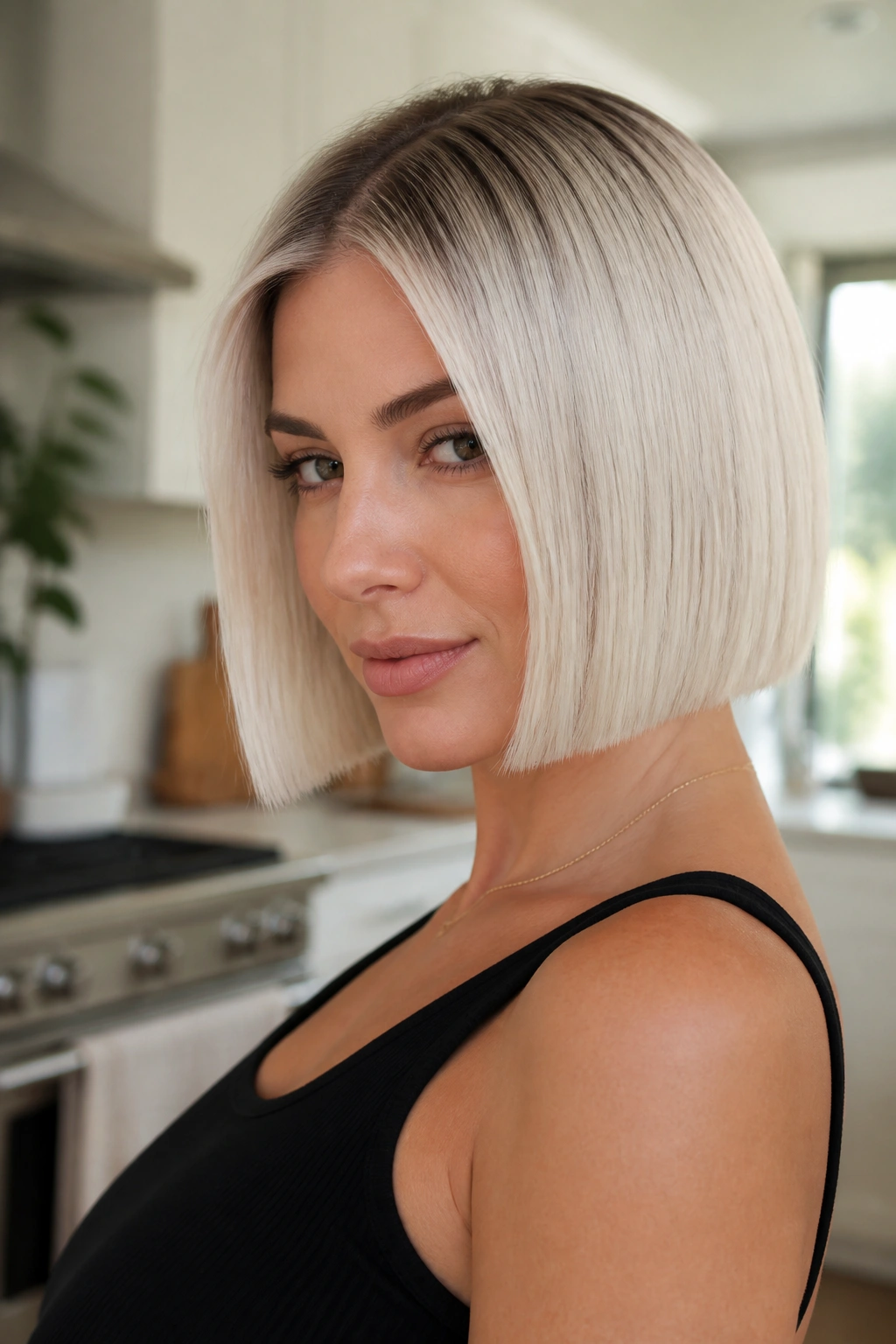
A shadow root can make platinum hair look richer and the bob look fuller. That darker root blur gives the eye a place to rest, and it helps the bright ends stand out more.
The haircut itself should stay blunt and even. The color does the softening. That combination is useful on fine hair because the darker root creates the illusion of density near the scalp, while the pale lengths keep the style bright.
How to Wear It
Ask for a root melt that stays subtle — not a stripe, not a dramatic contrast. A soft fade over a small section at the scalp is enough. Then keep the ends crisp so the base still looks thick.
This is one of the most practical platinum looks because it buys you a little time between toning sessions. It also makes the grow-out feel less harsh, which is nice if you do not want to live at the salon.
The overall effect is clean, bright, and slightly deeper at the crown. That depth helps.
21. Curved Bob With Swoopy Ends

A curved bob bends inward or outward at the ends, depending on how it’s styled, and that little curve can soften the whole face.
Want a bob that feels a bit romantic instead of severe? This is it. The shape skims the jaw and then turns gently under, which gives fine hair a sense of movement without asking for layers all over the place. It also keeps the edges from looking blunt in a way that feels harsh.
Use a round brush or a medium barrel iron to shape the ends. The curve should be visible but not curled into a barrel. If the bend is too strong, the cut can look dated fast. Keep it loose. Keep it clean.
This style works especially well when the face is angular or the neck is long, because the swoop softens those lines and gives the bob a little flow.
22. Shaggy Bob
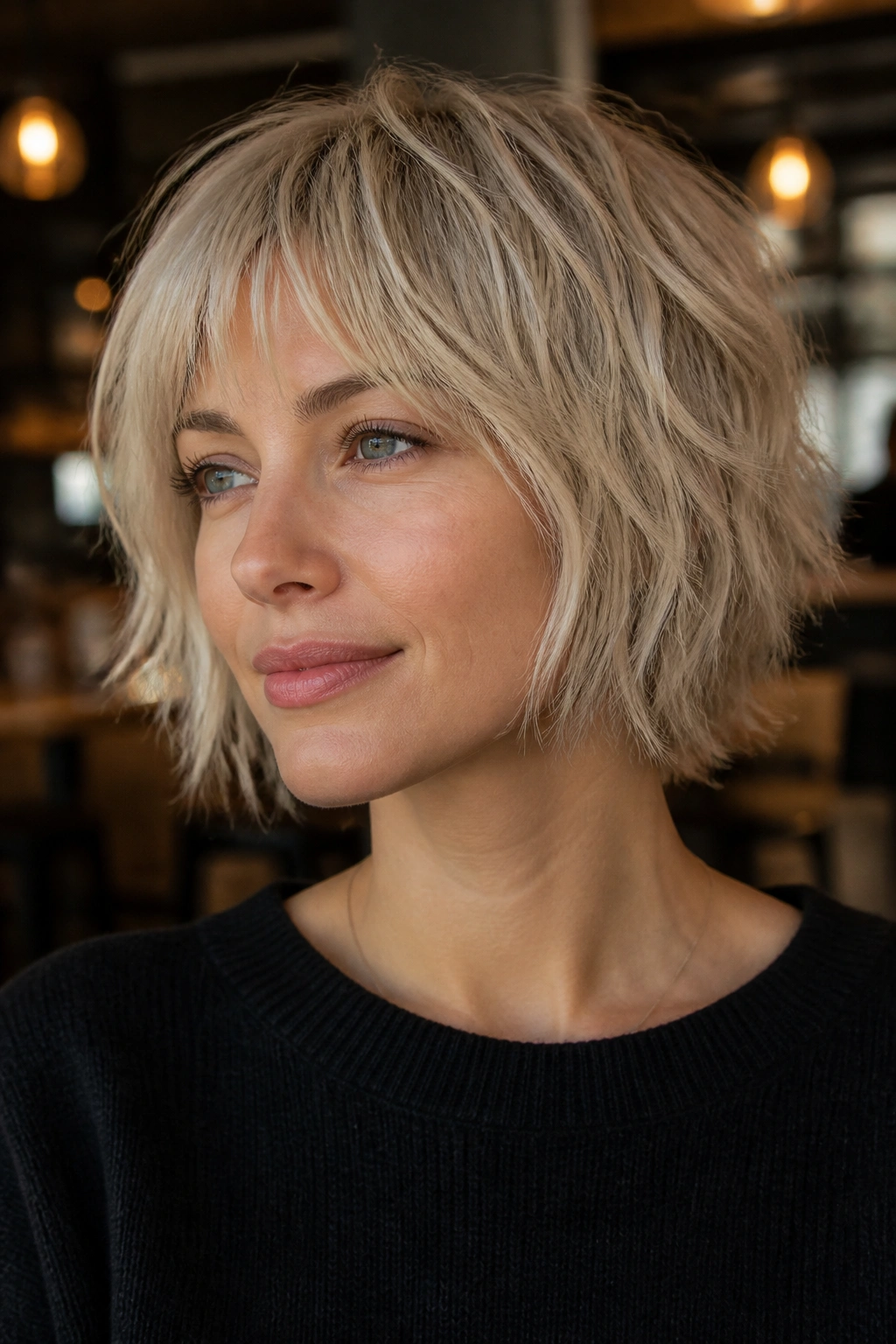
A shaggy bob can work on fine hair, but only when the texture is handled with care. Overdo the layers and you lose the ends. Underdo them and it just looks like a bob that forgot to finish dressing.
The sweet spot is a soft, slightly broken outline with enough movement around the cheek and crown to stop the style from sitting like a cap. Fine hair that has a natural wave often handles this best. Straight hair can wear it too, but it needs a little help from mousse or a light texture spray.
What to Watch For
Do not let the layers crawl too high. If they do, the shape gets too airy and the bottom goes skinny. A shaggy bob should still have a base.
- Keep the perimeter visible.
- Use a diffuser only on low heat.
- Pick texture spray over heavy wax.
- Trim before the layers flip out in odd places.
It’s a casual cut, but it still needs a steady hand.
23. Layerless One-Length Bob
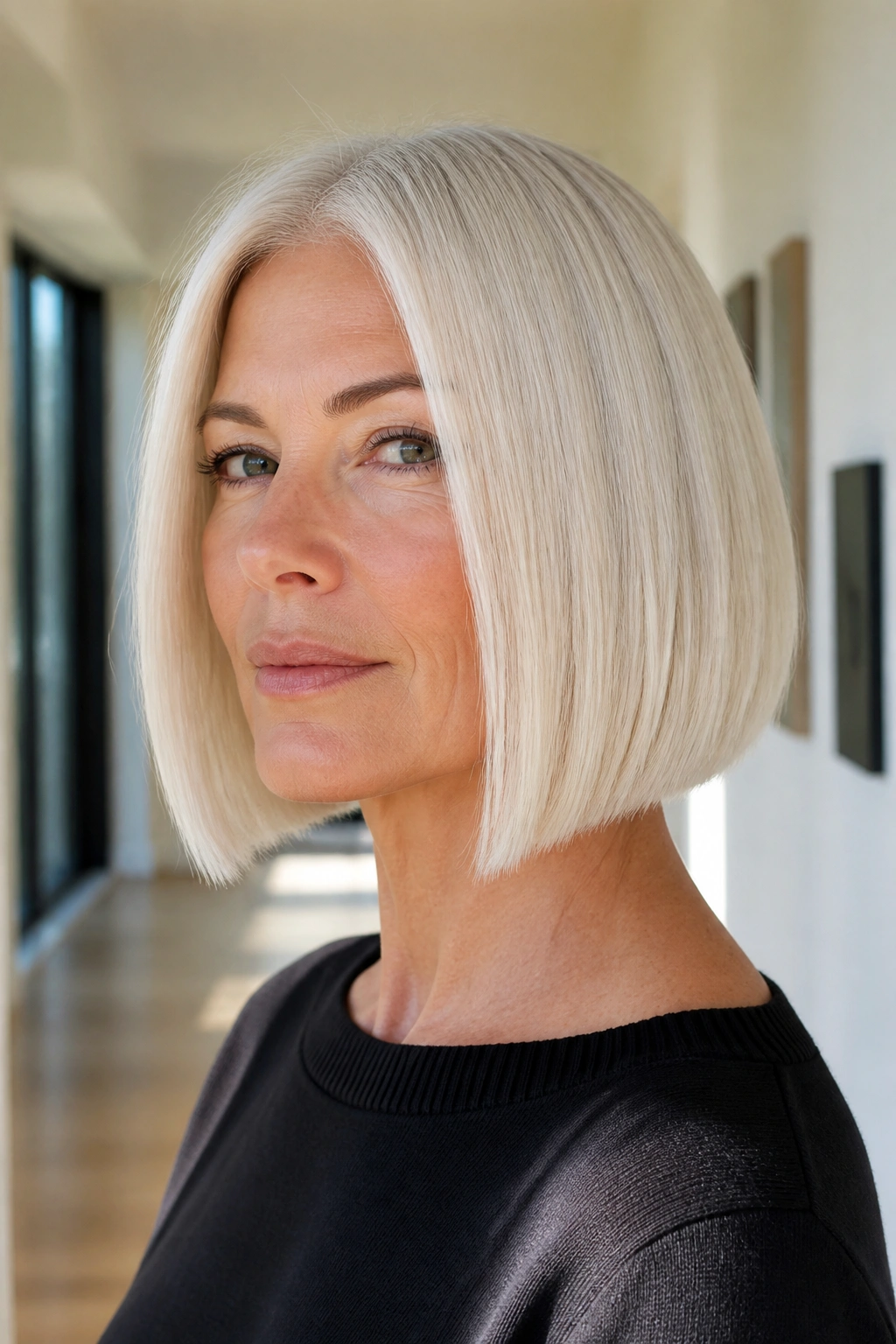
If you want the thickest-looking bob possible, start here. A one-length cut gives fine hair a solid edge from front to back, and that solid edge is what makes the style look fuller.
There is nowhere for the density to disappear. That’s the beauty of it. No stacked back. No hidden chipping. Just a clean line that falls where it should and stays there. On platinum hair, the simplicity looks even better because the shade already does some of the visual work.
This cut is especially good if your hair is straight and you hate spending time styling. A blow-dry with a smoothing brush, a little heat protectant, and a quick bend at the ends is often enough. If the hair is very fine, do not overload it with serum. You want shine, not slip.
It’s a quiet haircut, which is exactly why it works.
24. Bob With Deep Side Sweep

A deep side sweep gives fine hair movement without taking away too much weight. It’s the sort of detail that changes the whole mood of a bob.
Unlike curtain bangs, which split the front, a deep side sweep piles the visual weight to one side and opens the opposite temple. That makes the crown look higher and the face look a touch longer. It’s also a smart choice if one side of your hair grows flatter than the other, which happens more often than people admit.
The sweep can be worn with a blunt bob, a rounded bob, or a slightly angled one. That flexibility is part of the appeal. Clip it behind the ear on the lighter side for a sharper look, or let it fall softly across the cheek for a gentler one.
This cut gives you shape without changing the whole haircut. Nice trade.
25. Sleek Power Bob
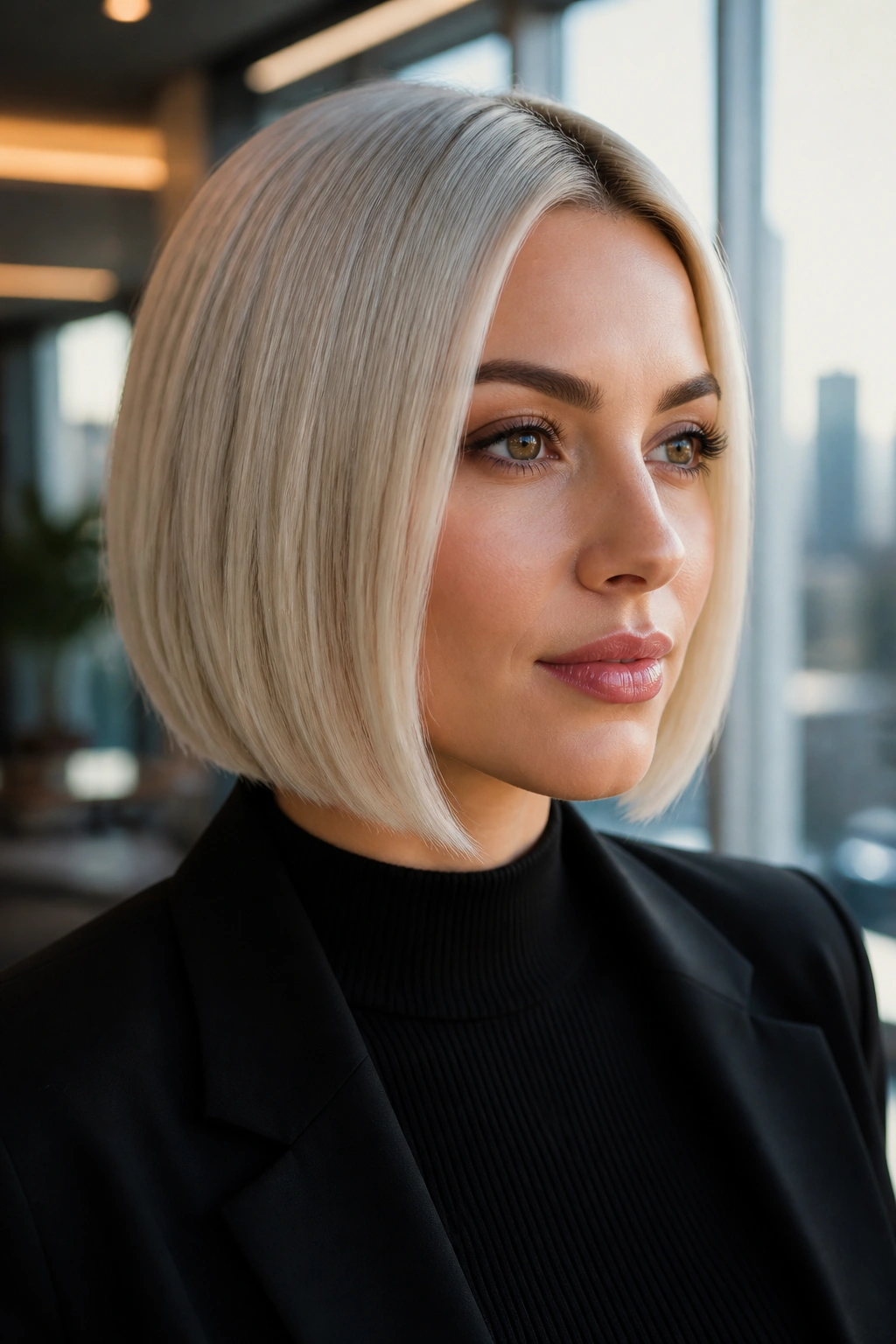
If you want a platinum bob that looks clean from every angle, this is the one. The sleek power bob keeps the line disciplined, the shine high, and the ends thick enough to stand on their own.
It usually lands between the chin and the top of the collarbone, which gives you a little more swing than a micro bob but more polish than a shaggy one. Fine hair loves that middle ground. There’s enough length to move, not so much that the style starts to sag. Ask for beveled ends, not wispy ones, and keep the layers close to the surface so the base stays full.
This is the kind of bob that handles a sharp blazer, a plain T-shirt, or a dressy night out without changing its personality. It doesn’t beg for attention. It gets it anyway.
A final detail matters here: skip the thinning shears unless the hair is truly bulky. On fine hair, they often do more harm than good.
