



The fear of the bob is real for anyone with a round face. It is a persistent myth in the hair world that if your face has softer, curvier features, you should avoid anything shorter than your shoulders for fear of adding width where you want to subtract it. That perspective is dated, reductive, and frankly, ignoring the architecture of a good haircut. The long bob—or “lob”—is effectively the sweet spot. It sits long enough to elongate the neck and create a vertical silhouette, yet it offers the lightness and ease that shorter styles provide.
A round face typically features a width and length that are roughly similar, often accompanied by fuller cheeks and a softer jawline. The goal with any haircut here isn’t to hide your features behind a curtain of hair, but to use geometry to your advantage. You want cuts that draw the eye downward, create sharper angles, or add height at the crown. When you land on a lob that respects your natural hair texture and works with your face shape, the effect is sophisticated, balanced, and remarkably low-maintenance.
There are dozens of ways to interpret this length. It comes down to how you place your layers, where you part your hair, and how you choose to style the ends. The following collection of styles provides a range of approaches, whether you want something blunt and sharp or soft and shaggy.
1. The Deep Side Part Lob
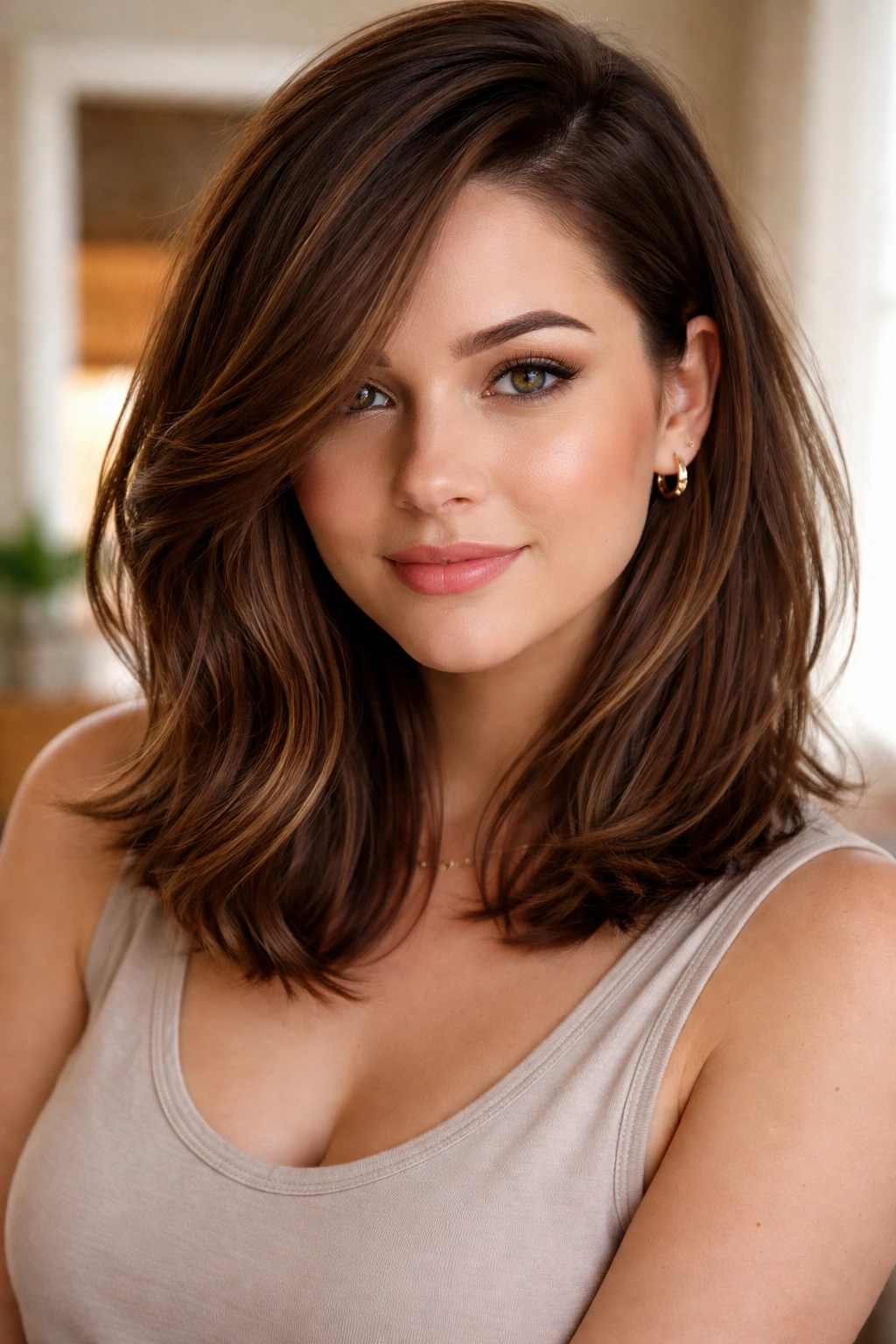
The most immediate way to disrupt the symmetry of a round face is to shift the part. A deep side part creates an instant diagonal line across the forehead, which breaks up the circular appearance of the face and forces the eye to focus on one side before moving down. This creates the illusion of more length and structure.
Why It Works
By sweeping a larger volume of hair to one side, you essentially cover a portion of the roundness. This creates an asymmetric silhouette that feels intentional and chic. It also adds a bit of lift at the roots on the side with more hair, which is a massive plus for anyone struggling with flatness.
Styling the Look
You do not need heavy product for this. A lightweight volumizing mousse applied to damp roots will provide enough structural support to keep the sweep in place. Use a round brush while blow-drying to encourage that height at the crown. Avoid heavy waxes or pomades, as they will weigh the hair down and flatten the volume you are trying to create.
2. The Textured Wavy Lob
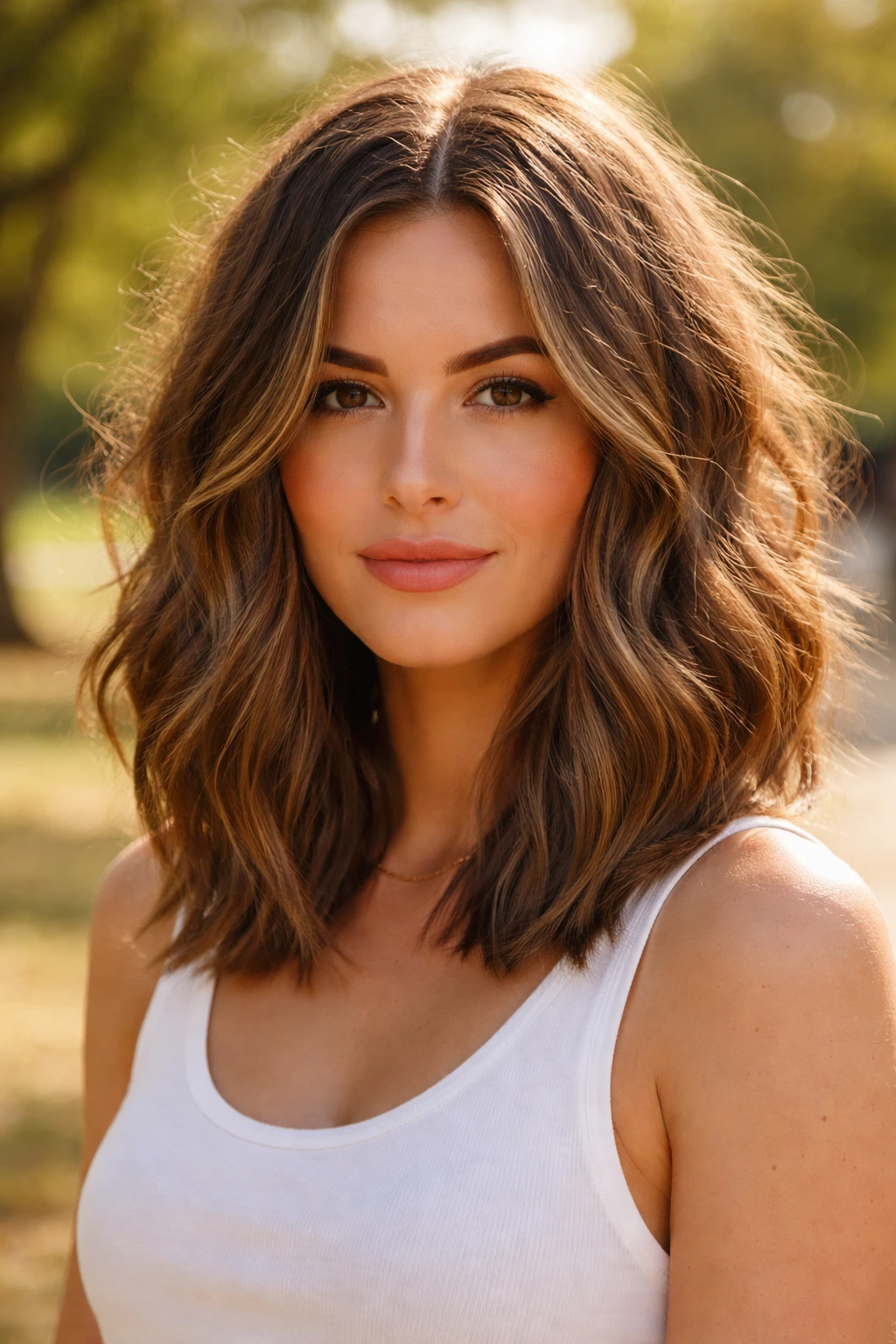
Waves are often avoided by people with round faces, but the trick is all in the placement. If the waves are tight, bouncy ringlets right at the cheeks, they will widen the face. However, loose, beachy waves that start mid-length and focus on volume toward the ends work to pull the face downward.
The Mechanics of the Cut
Ask your stylist for “invisible layers.” These are textured layers that are cut into the interior of the hair rather than on the surface. They remove the bulk that makes hair look triangular (a common issue for thicker hair) while allowing the wave to sit softly rather than puffing out.
Texture Tips
- Use a salt spray for a matte, beachy finish.
- Rely on a 1.25-inch curling iron, leaving the last inch of hair straight to avoid that “doll-like” curl.
- Brush through the curls once they have cooled to soften the overall shape.
3. The Sharp Blunt Cut Lob
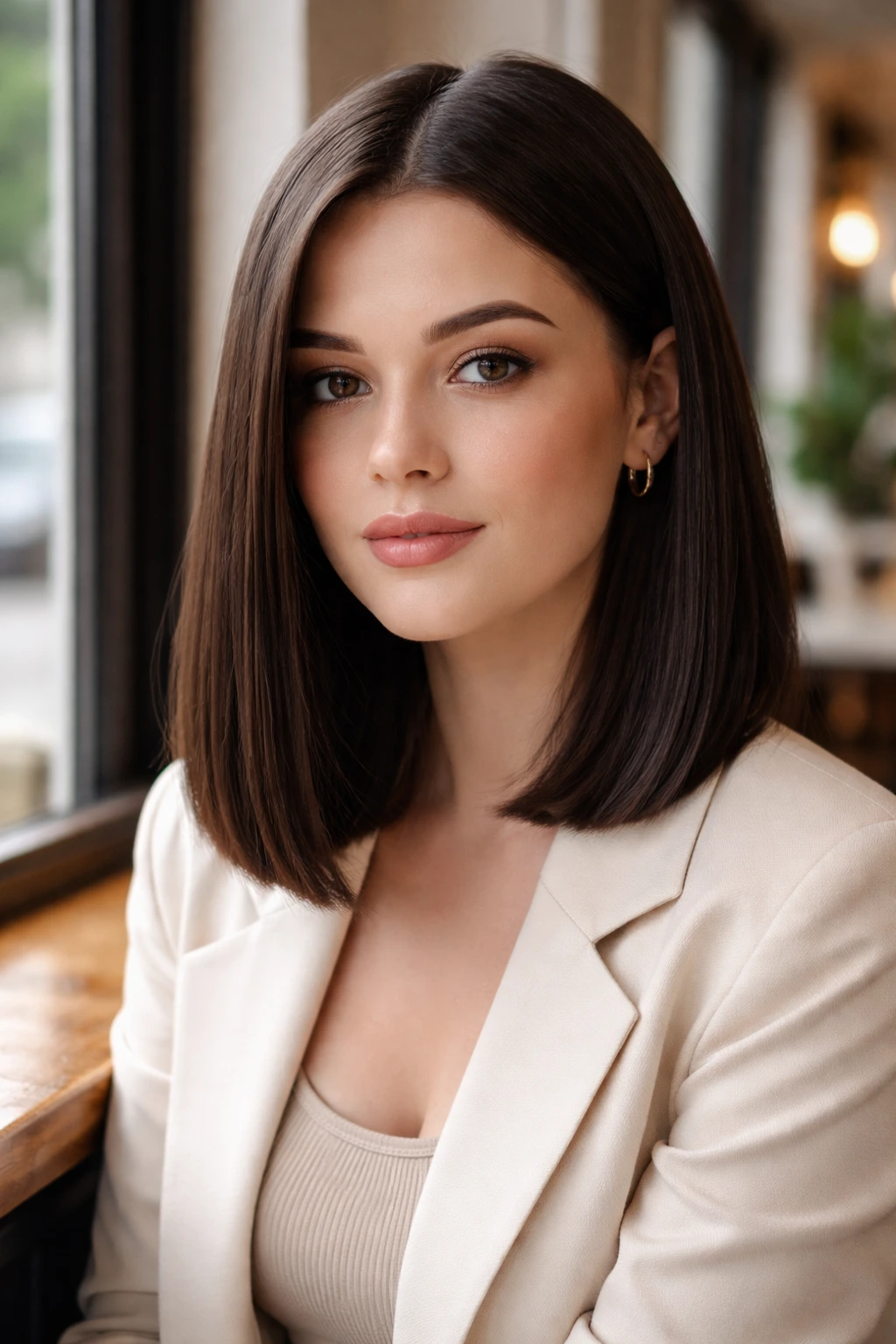
There is a misconception that soft face shapes need soft, layered hair. Sometimes, the absolute best thing you can do for a round face is to introduce a sharp, uncompromising line. A blunt cut creates a heavy, clean edge that draws the eye straight down to the collarbone. It is the visual equivalent of a hard stop in a sentence.
The Power of the Line
When the ends of your hair are cut precisely with shears, the weight distribution shifts. The hair hangs straighter, which acts as a framing device for the jawline. It is polished, professional, and visually slimming.
Maintenance Note
This is a cut that requires consistency. Because the bluntness is the entire point, you cannot let the ends get wispy or split. Expect to visit the salon every six to eight weeks for a “dusting” of the ends to maintain that crisp, clean perimeter.
4. The Angled A-Line Lob
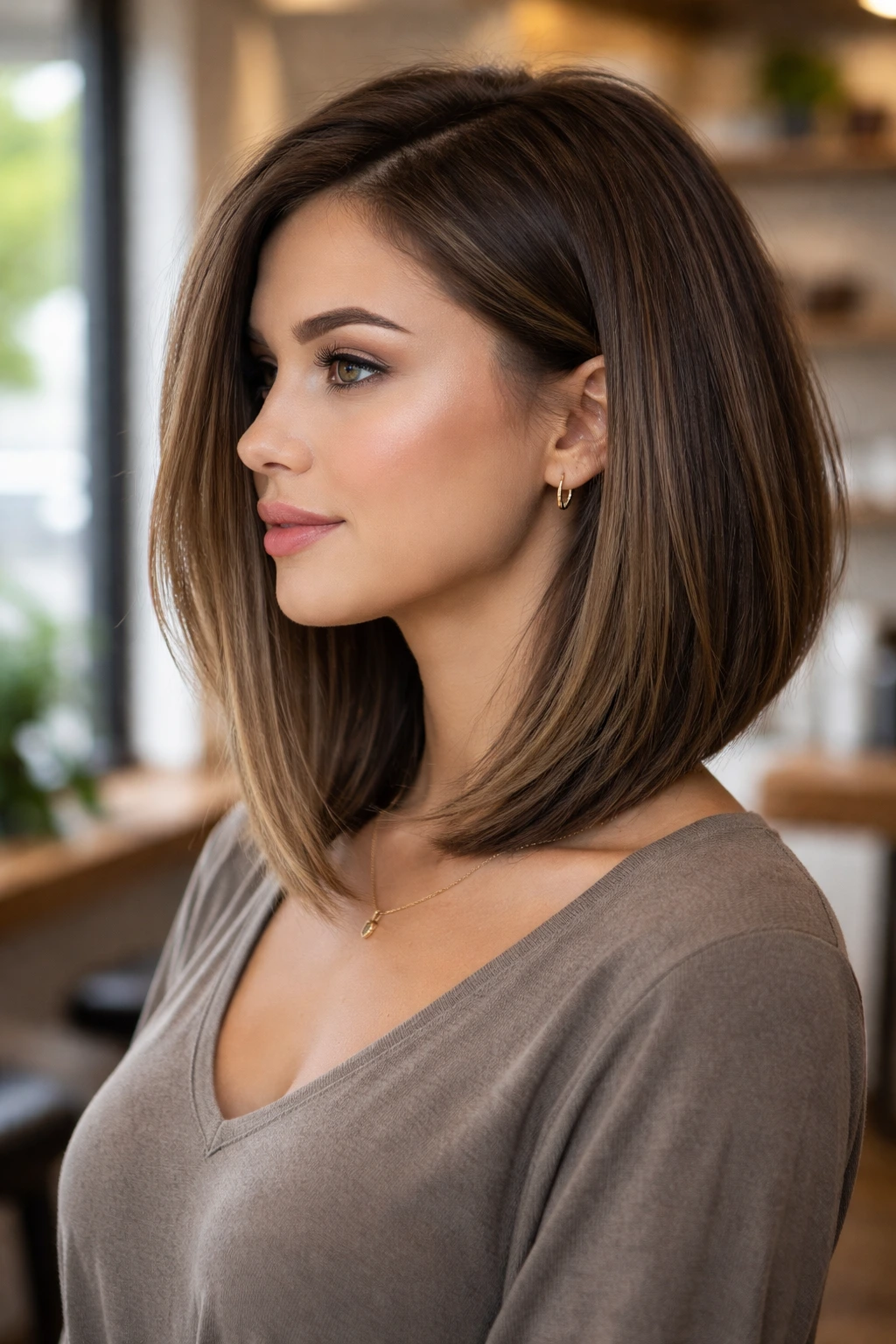
If you want to keep the length but still want a “bob” feel, the A-line is your answer. This cut is shorter in the back and gradually gets longer toward the front. The angle creates a V-shape when viewed from the side, and a beautiful frame around the jawline when viewed from the front.
How to Request This
Be specific with your stylist. Tell them you want the back to be at the nape of the neck but the front to hit at or below the collarbone. This drastic difference in length is what creates the elongation effect. If the angle is too subtle, you lose the slimming benefit.
Why It Flatters Round Faces
The longer front pieces act as “blinders” for the cheeks. They create a vertical boundary that prevents the eye from scanning across the width of the face. It is a subtle trick of perception that works every time.
5. The Lob with Face-Framing Layers
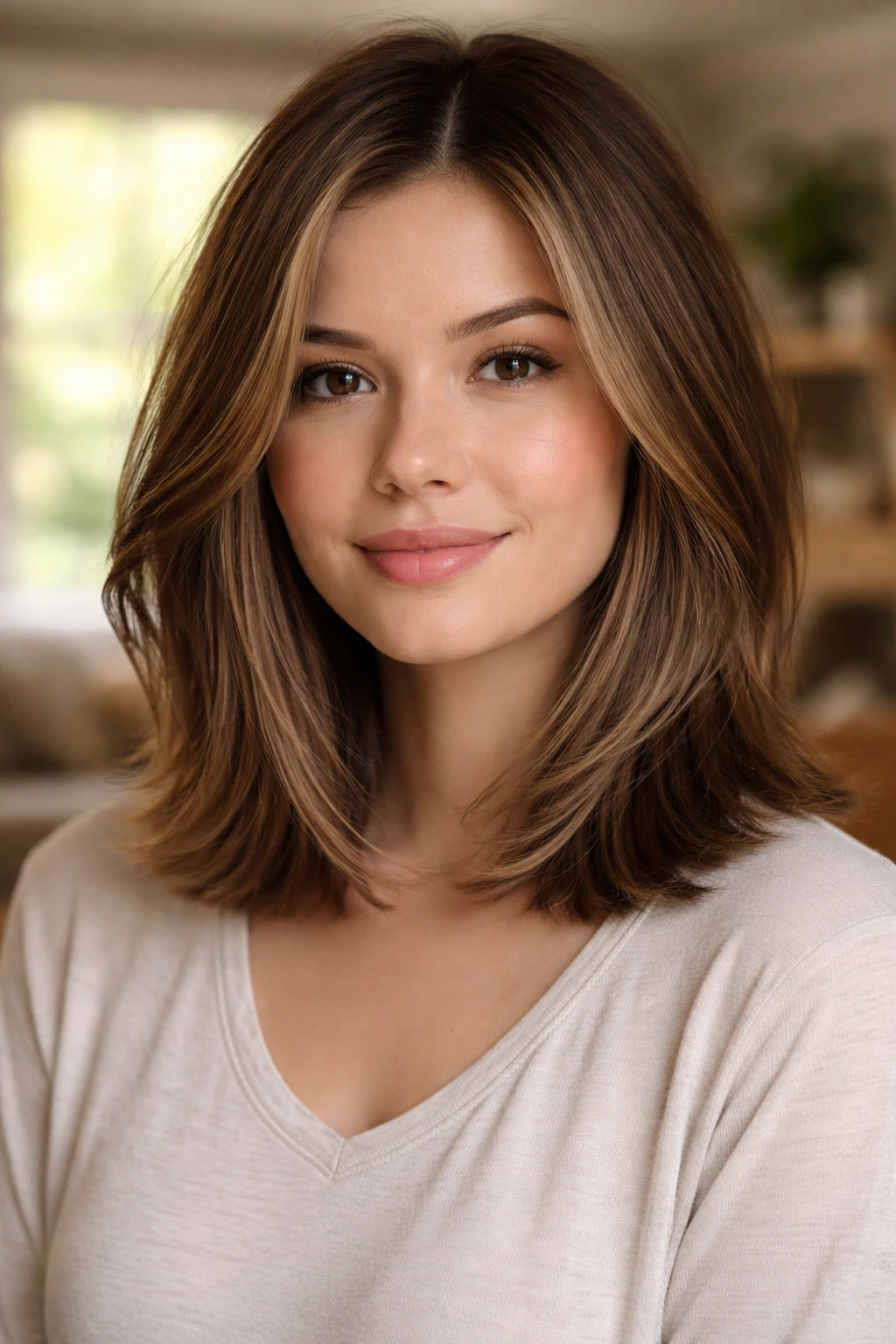
Face-framing is an art form. For a round face, the layers should not start at the cheekbone. If they do, they will simply highlight that area. Instead, ask for “long-start” layers that begin right at the jawline or even slightly below it.
The “Swoop” Effect
When the layers start at the jaw, they guide the eye from the face down to the neck and shoulders. This effectively lengthens the appearance of the neck. It is a graceful, elegant look that feels very natural and necessitates minimal daily styling.
Styling Advice
You want these layers to have a slight inward bend. A large-barrel round brush is your best friend here. Just a quick pass with the blow dryer on the ends of the layers will give them that soft, curved shape that makes the whole cut look expensive.
6. The Lob with Curtain Bangs
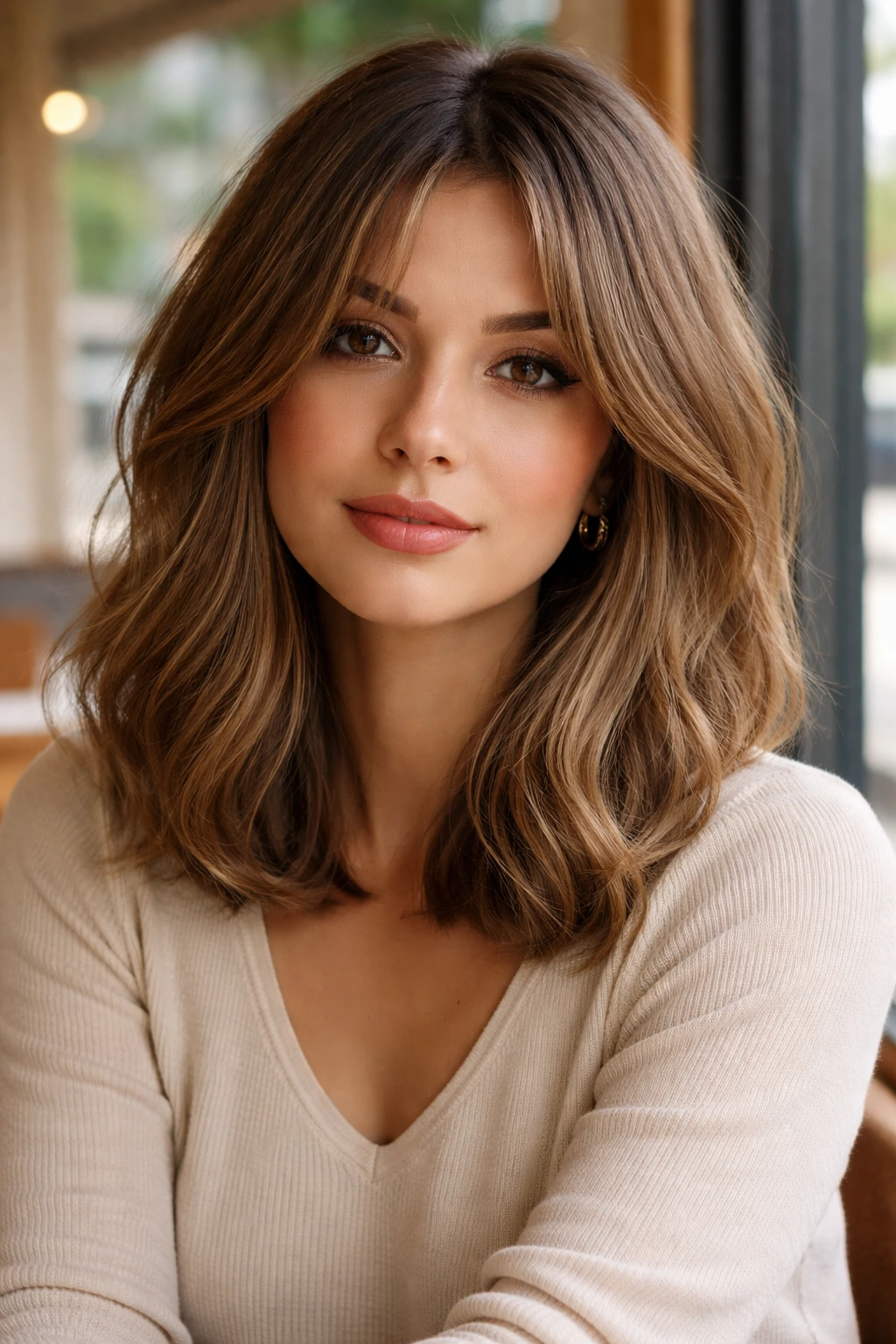
Bangs can be terrifying for those with round faces, but curtain bangs are the exception. Because they are parted down the middle and swept toward the temples, they create a narrow vertical opening in the center of the forehead. This breaks up the rounded shape perfectly.
Why They Work
Curtain bangs act as a frame for your eyes and brows, while the longer pieces on the sides contour the face. Unlike blunt, straight-across bangs that can cut a face in half and make it look wider, curtain bangs blend seamlessly into the rest of the hair.
Managing the Fringe
- Use a small round brush to dry them up and away from the face to create lift.
- If they start to look oily by mid-day, a quick dusting of dry shampoo will bring the volume back.
- Keep them long enough so they can be tucked behind your ears if you want a change.
7. The Layered Shaggy Lob
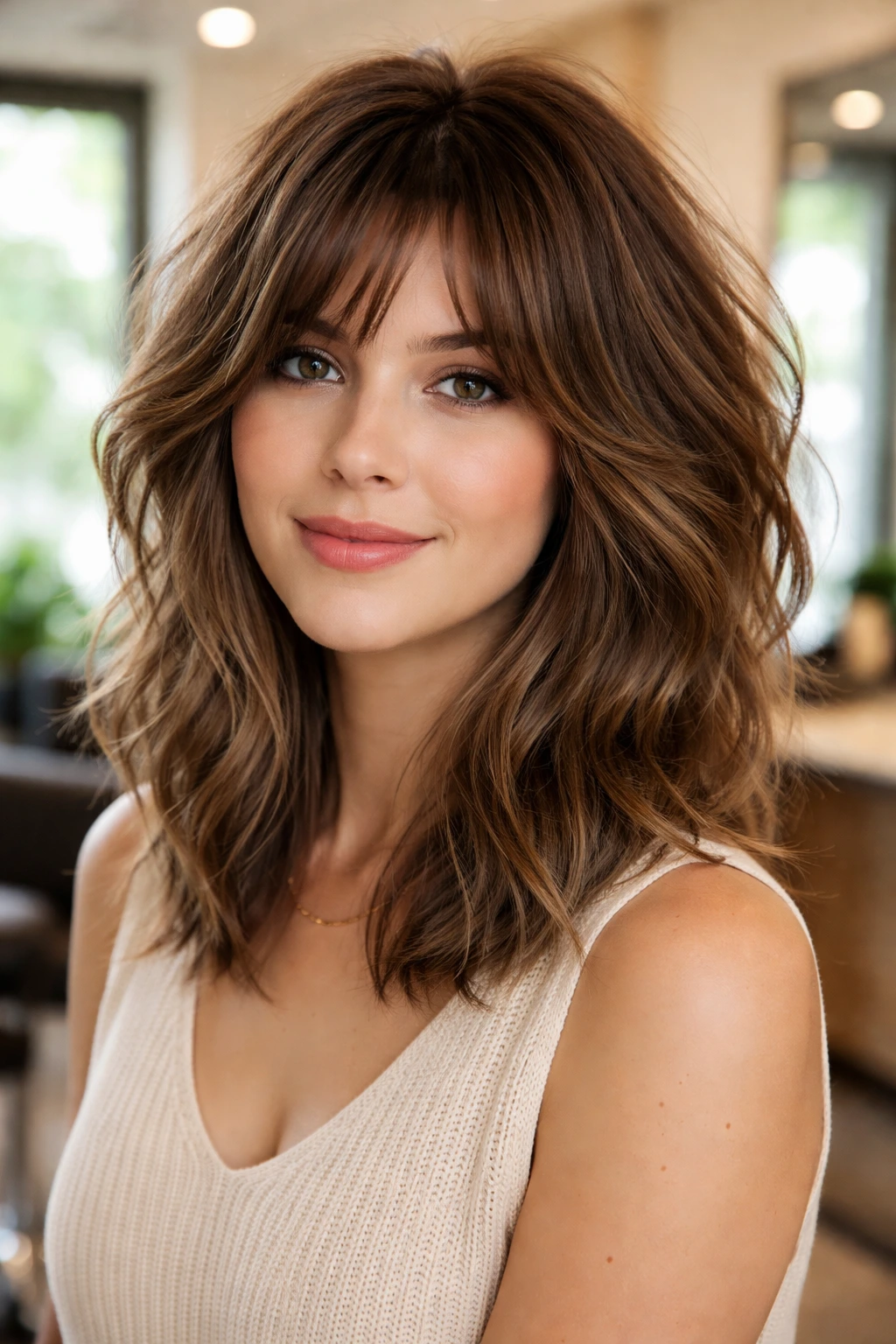
The shag is inherently messy and chaotic, but when executed as a lob, it is incredibly flattering. By layering throughout the crown and the mid-lengths, you create height and volume on top of the head. This vertical volume is exactly what you need to offset the horizontal width of a round face.
The Aesthetic
This is not a “neat” haircut. It relies on texture, choppiness, and movement. It is perfect if your hair has a natural wave or even a slight kink. The layers prevent the hair from becoming a heavy, flat curtain that drags your face down.
Key Product
A texturizing paste or a light pomade is essential. You need something to define the ends of the layers and give them that “lived-in” look. Rub a pea-sized amount between your fingers and work it through the ends, twisting small sections to add separation.
8. The Sleek Straight Lob
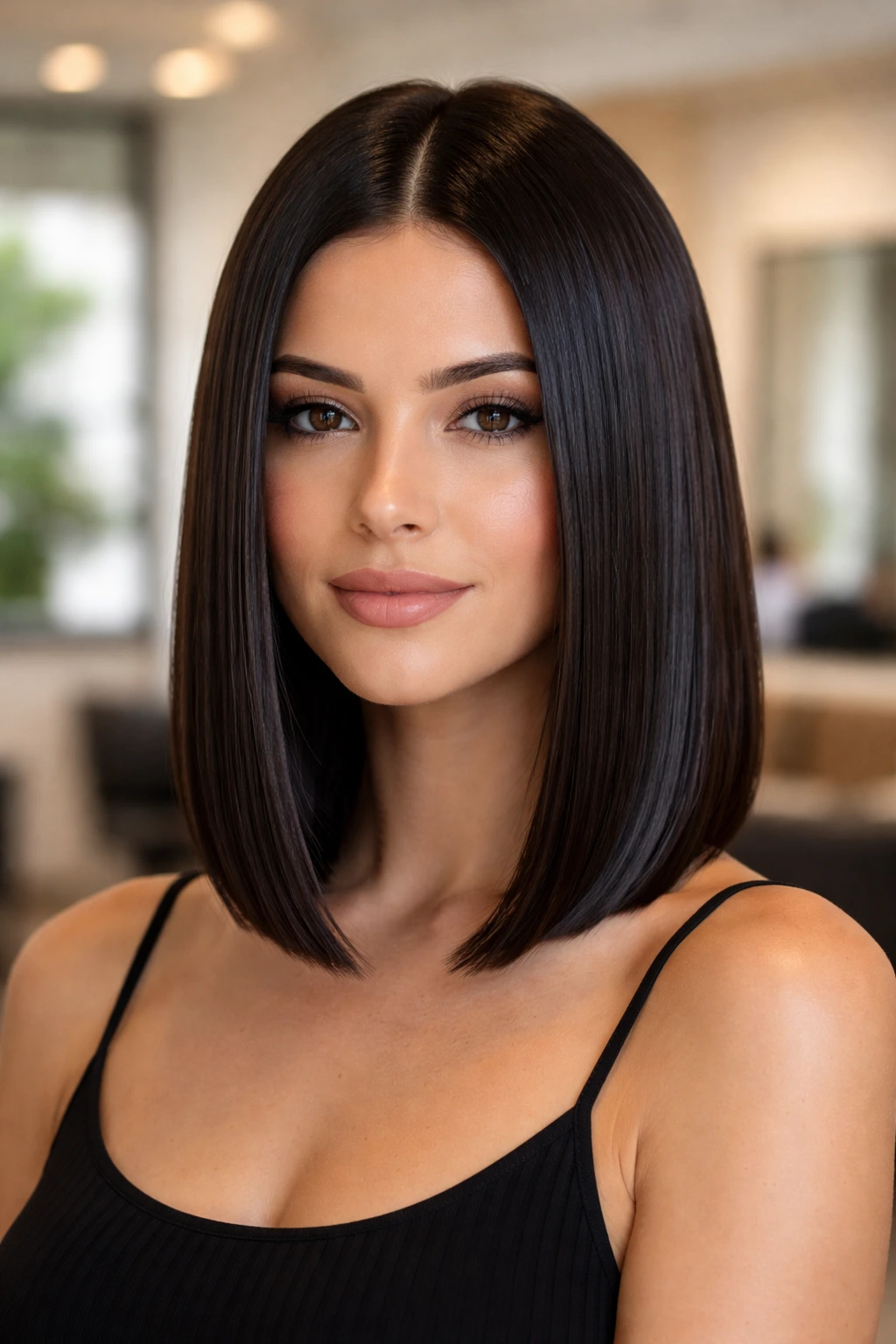
Sometimes, the simplest approach is the most effective. A stick-straight lob with a center part is the ultimate geometric statement. By ironing the hair to a sleek, glass-like finish, you are accentuating the vertical lines of the hair, which helps counterbalance the curves of your face.
The “Glass Hair” Technique
To pull this off, the hair needs to be in good condition. Use a heat protectant spray—always—and follow up with a shine serum. The serum is the secret. It tames flyaways that would otherwise break up the silhouette of the hair.
Why It Works for You
A round face can often have a “soft” vibe. A sleek, straight lob provides instant contrast. It is sharp, modern, and intentionally tidy, which balances the softness of your features.
9. The Lob with Choppy Ends
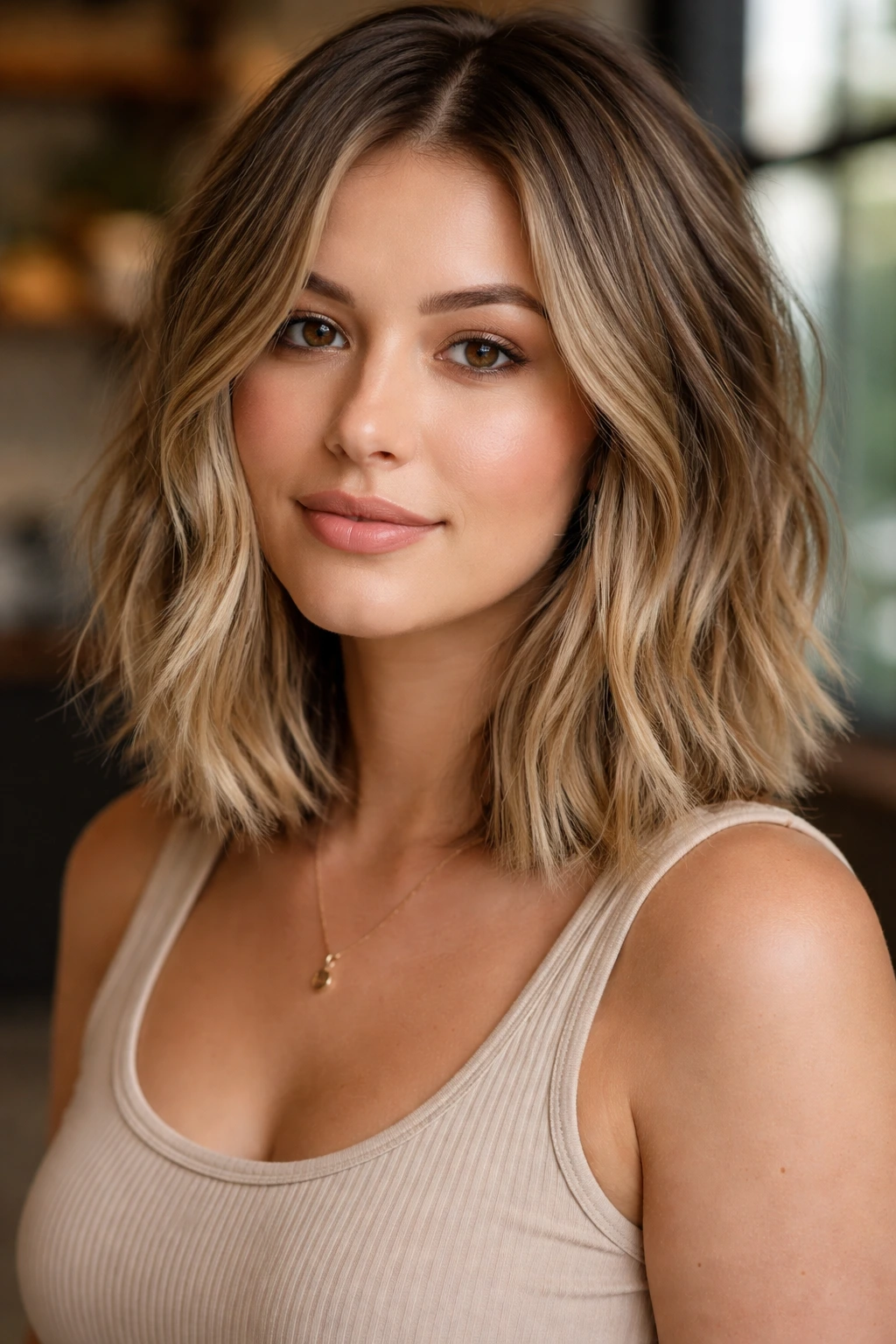
If your hair is on the finer side, a blunt cut might make it look thin. Enter the choppy lob. By point-cutting the ends, you create a serrated edge that looks voluminous and full of life. It gives the illusion of thickness without the weight.
The Benefit
Choppy ends create “weightless volume.” This is vital because heavy, thick hair can sometimes look like a helmet on a rounder face. By making the ends airy and textured, you keep the silhouette from becoming too dense.
Maintenance
This style actually grows out beautifully. Because there is no blunt line to maintain, you do not need to rush to the salon every six weeks. It looks just as good slightly grown out as it does on day one.
10. The Balayage Lob
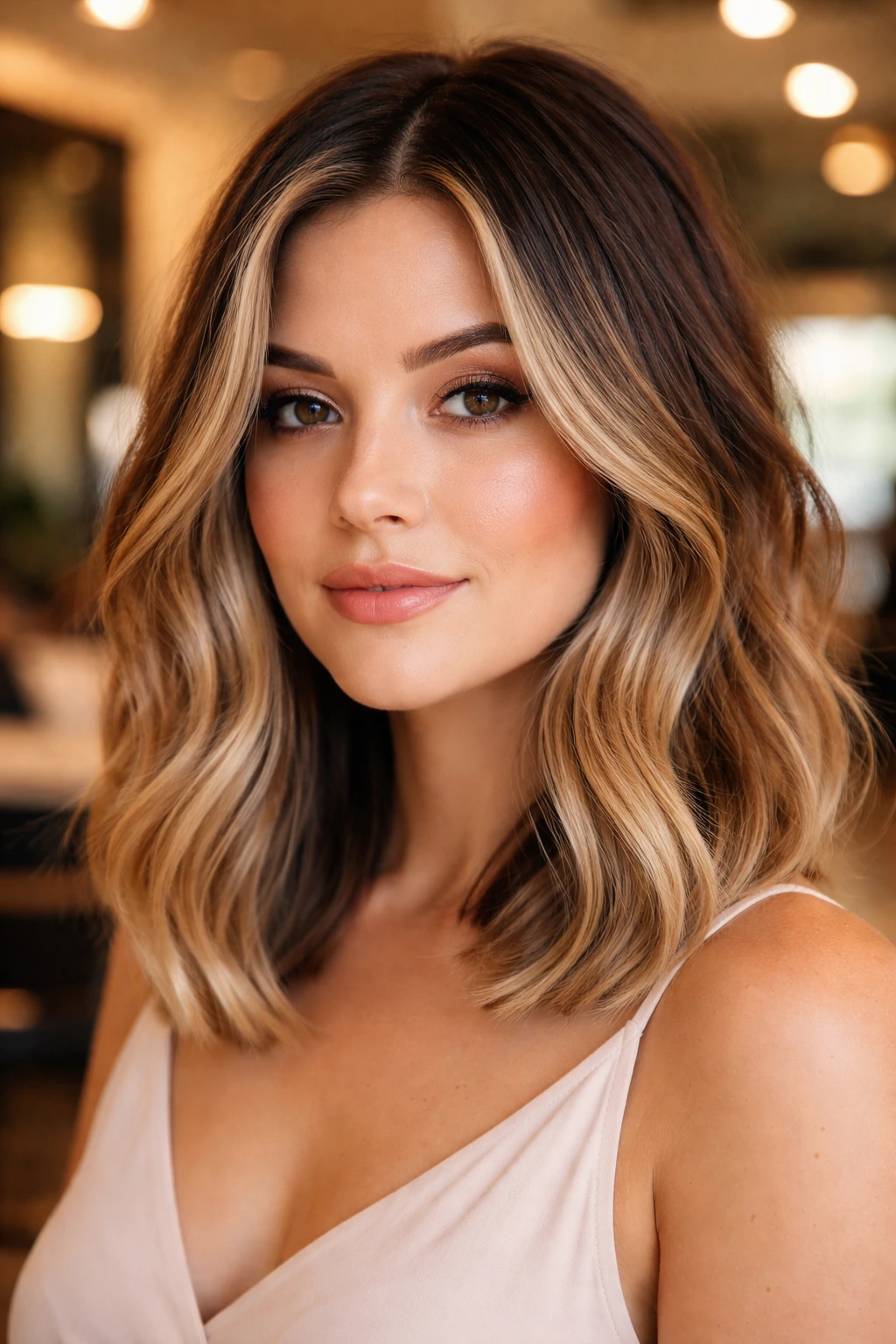
While this is a color technique, it is worth mentioning because of how it impacts the silhouette. Balayage, when painted correctly, places lighter strands around the face and on the tips of the hair. This color placement acts as a contouring tool for your hair.
Strategic Color
Light pieces around the face brighten the complexion and draw attention to your features rather than the face shape itself. Darker roots add depth and create an illusion of shadow, which makes the hair look thicker and more dynamic.
The Contrast Effect
The contrast between the roots and the ends creates a visual “flicker” that keeps the eye moving. A static, one-color lob can sometimes feel like a solid block of color; balayage breaks that up entirely.
11. The Center Part Lob
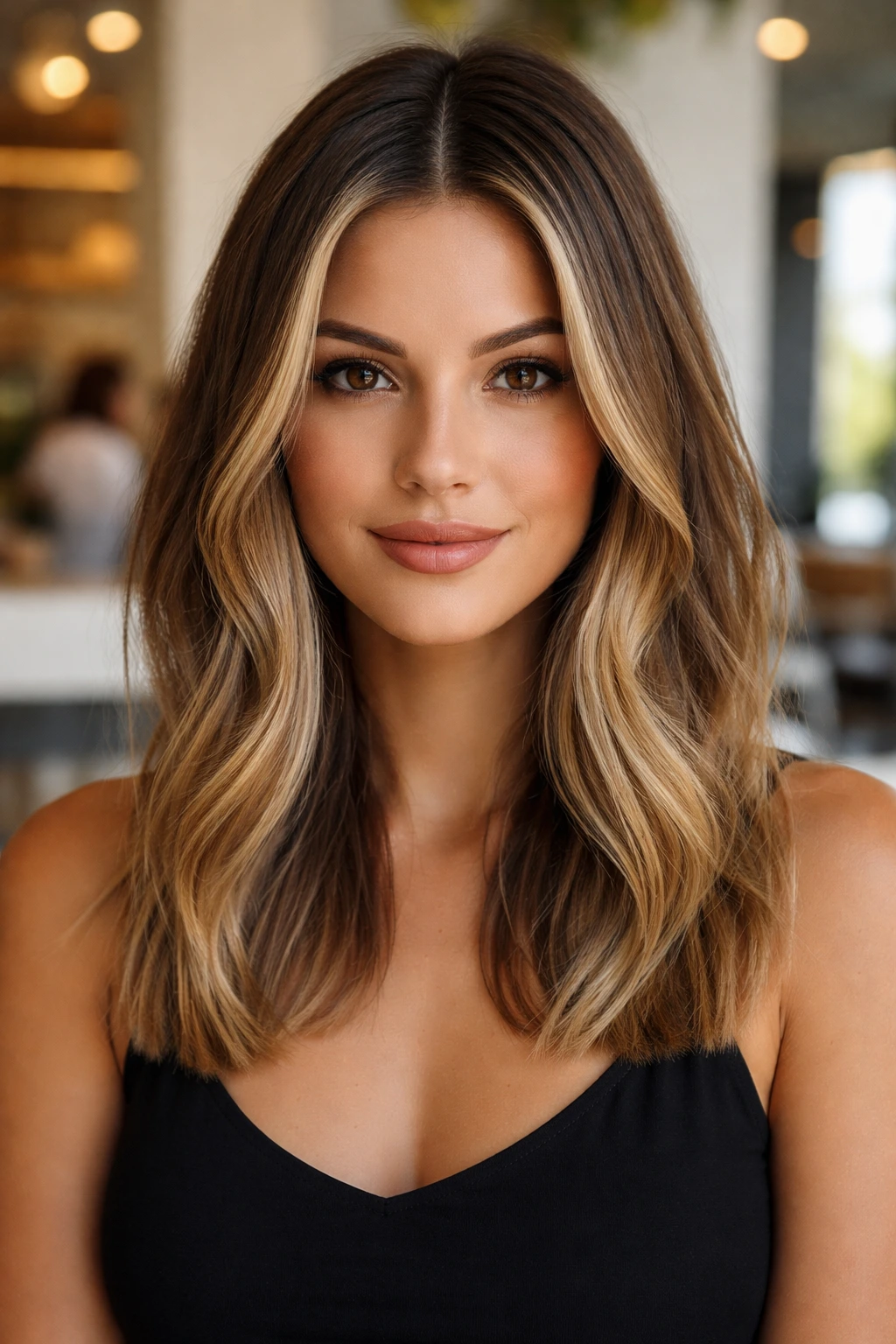
The center part has been controversial in the past, but for a round face, it is a secret weapon if worn with length. It acts like a pair of curtains, creating two long, vertical parallel lines on either side of the face. This creates the visual effect of a longer, narrower face.
Balancing the Look
The key is to avoid flat, lifeless hair. If you have a center part, make sure there is a little bit of root lift or texture. If the hair is pulled tight against the skull, it will only highlight the roundness.
Styling Tip
Use a tail comb to get the part perfectly straight—the precision helps with the sleek look. Then, use a dry texture spray at the roots to give it a little bit of “oomph” so it doesn’t just cling to your cheeks.
12. The Lob with an Undercut
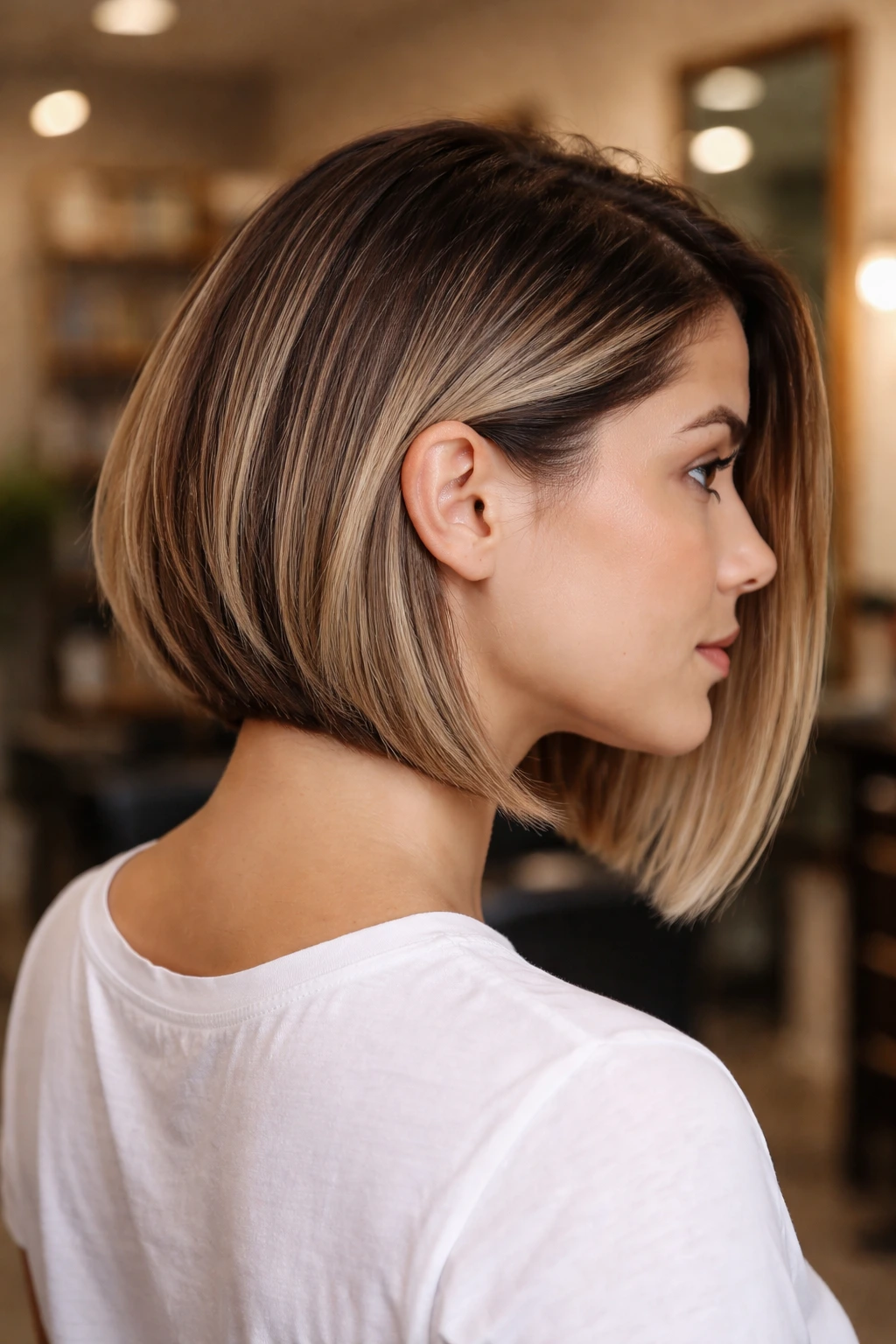
For those who want something a bit edgier, an undercut at the nape of the neck is a fantastic way to remove bulk. If your hair is thick and tends to puff out, an undercut reduces the weight drastically, allowing the remaining hair to lay flatter and smoother against your neck.
The Secretive Edge
No one has to know you have an undercut unless you want them to. It is hidden underneath the top layer of hair. When you wear your lob down, it looks like a normal, sleek haircut. But the reduction in volume at the nape makes a massive difference in how the hair falls.
Who This Is For
If you have dense, coarse hair that tends to create a triangular shape when cut into a bob, ask your stylist to “de-bulk” with an undercut. It changes the physics of your hair, allowing it to hug your neck rather than poofing out.
13. The Wispy Bang Lob
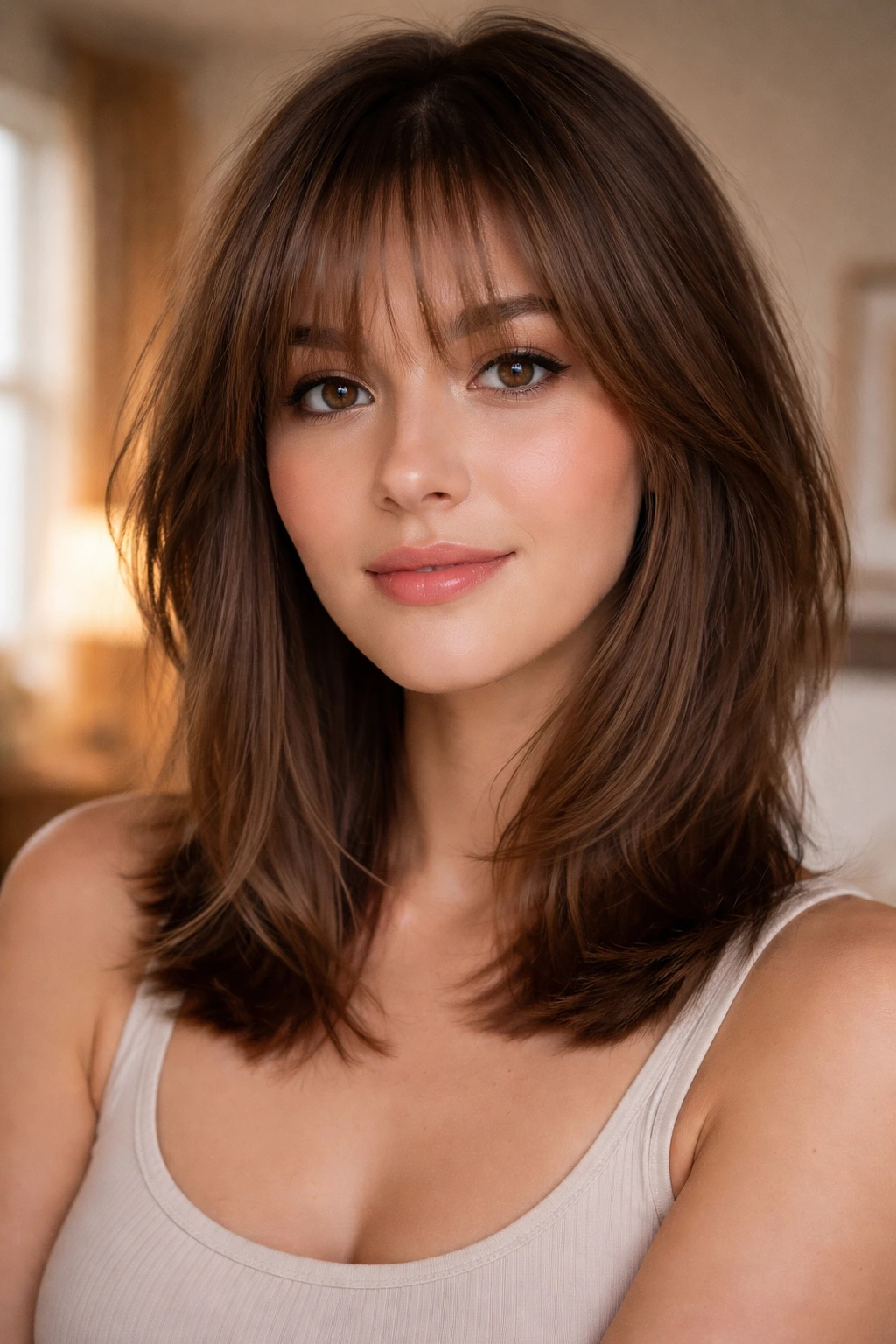
If curtain bangs feel like too much commitment, consider wispy, see-through bangs. These are much lighter, showing some forehead through the fringe. They create a soft, ethereal vibe that is very forgiving on a round face.
The “Softness” Factor
Round faces can handle softness, provided the rest of the cut has some structure. These bangs don’t cut off your face; they frame it like a delicate veil. They are perfect if you want to highlight your eyes without creating a harsh horizontal line across your forehead.
Trimming Tips
These are best cut slightly longer in the center and shorter on the sides to blend into the cheekbones. Do not cut them straight across; use a razor or thinning shears to get that feathered, soft edge.
14. The Asymmetrical Lob
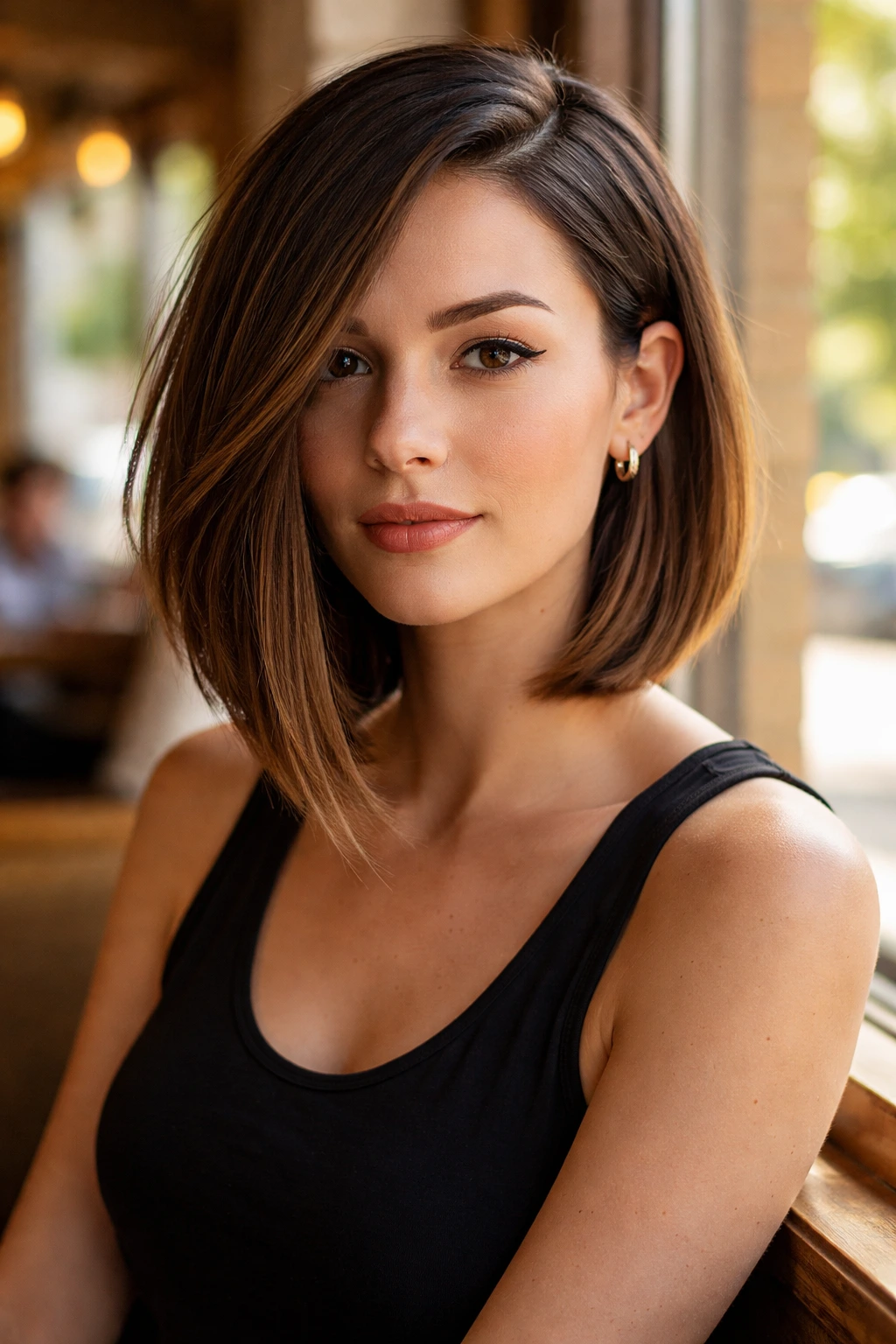
An asymmetrical lob is shorter on one side and longer on the other. It is a bold, artistic choice that completely destroys the symmetry of the face. Since your face is round, adding a bit of calculated asymmetry makes the whole look more dynamic and interesting.
The “Angle” Advantage
The longer side draws the eye down toward the shoulder, while the shorter side adds a bit of lift and edge. It is a fantastic way to show off a sharp jawline. It is also an excellent conversation starter.
Styling Needs
This cut relies on being styled. You don’t need to spend hours on it, but it does require a quick blow-dry to ensure the asymmetry is visible. If you just air-dry it, the lines might get lost. A flat iron is your best tool here to accentuate the shape.
15. The Messy Bedhead Lob
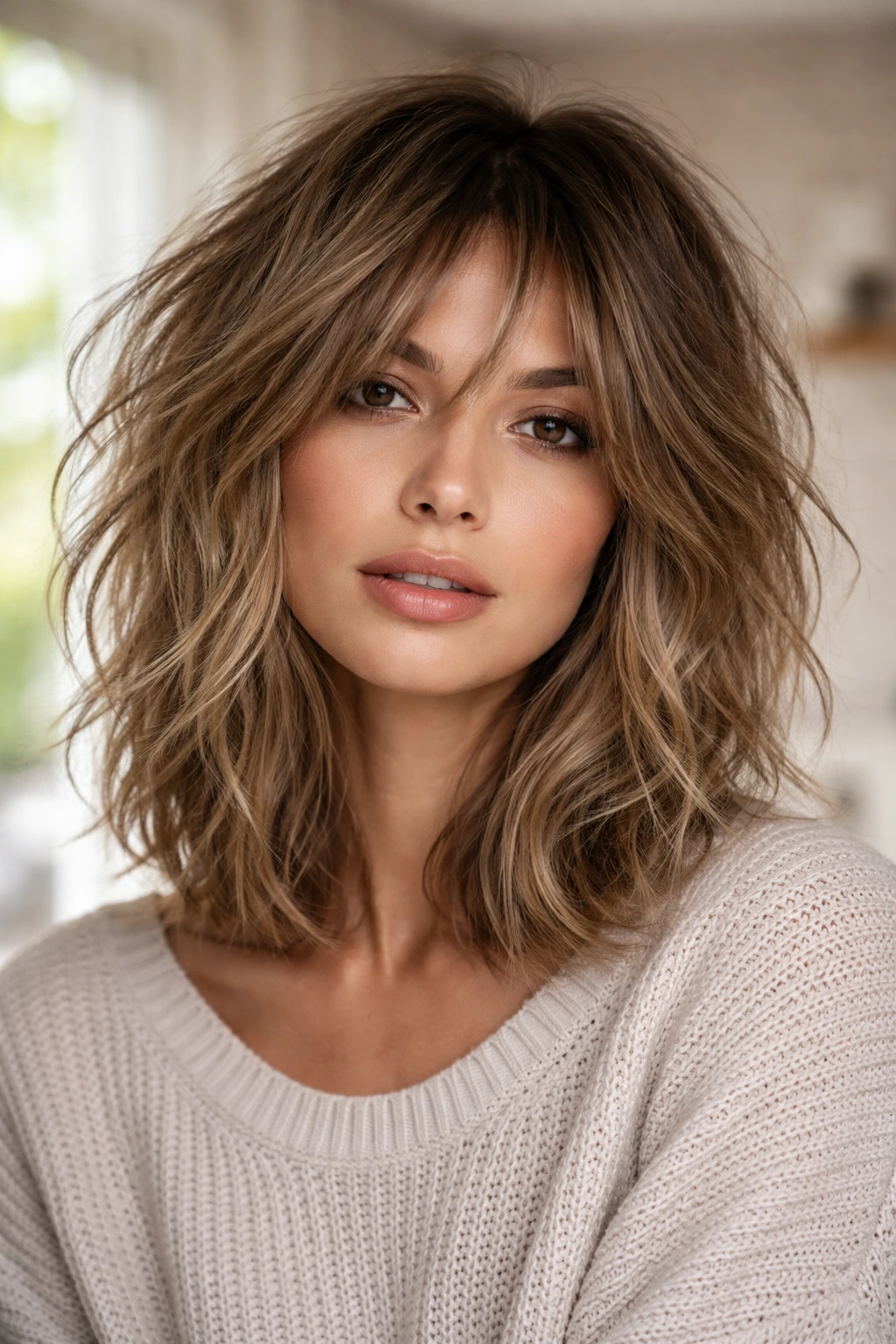
Sometimes, you need to lean into the chaos. A messy, slightly unkempt lob is all about volume and texture. It is the kind of hair that looks like you just rolled out of bed but in a high-fashion, “I have a stylist” kind of way.
How to Achieve It
The secret is layering. You need plenty of layers to create that tousled, organic look. Without layers, you just end up with flat, tangled hair. The layers allow the hair to sit in different directions, which creates the “messy” aesthetic.
Finishing Touch
Avoid shiny serums. You want a matte finish. Use a sea salt spray or a dry texturizing foam. Scrunch it into damp hair and let it air dry. If you have straight hair, you might need to use a curling wand to create a few random bends to help the process along.
16. The Lob with Pastel Highlights
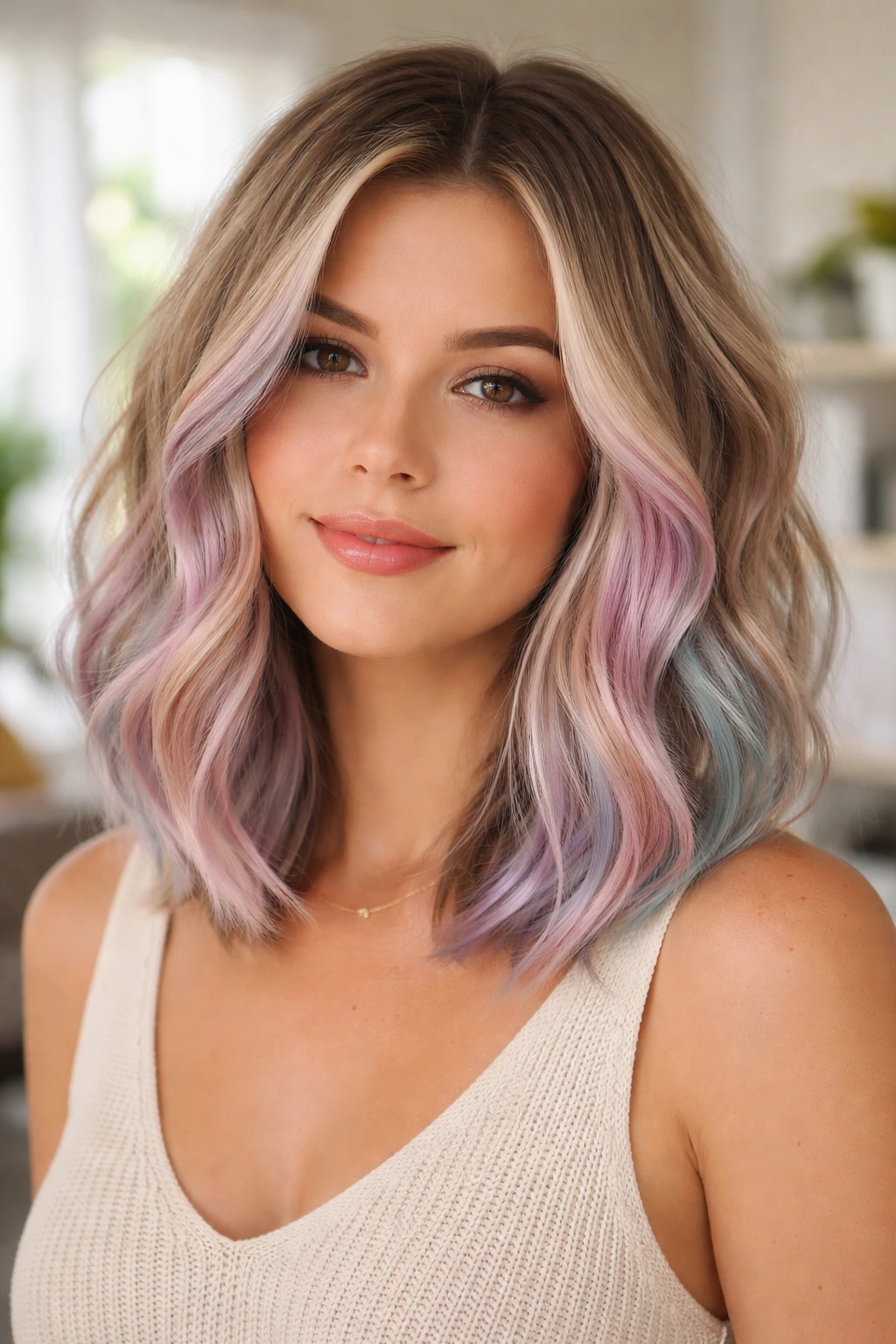
This is about using color to redirect attention. If you are worried about your face shape, give people something else to look at—like vibrant, unexpected color. Soft pastel highlights, or a “peek-a-boo” color effect, draw the eye toward the hair itself and away from the face.
Placement
Ask for the color to be placed on the mid-lengths and ends. If you put bright color right at the root, it can sometimes wash out the complexion. By keeping the color toward the bottom, you are adding visual interest where the hair is longest, which reinforces the vertical length of the cut.
Commitment Level
Pastels fade fast. If you are not ready for a high-maintenance color routine, try temporary color depositing conditioners. They allow you to play with the look without a long-term commitment.
17. The Brushed-Out Curl Lob
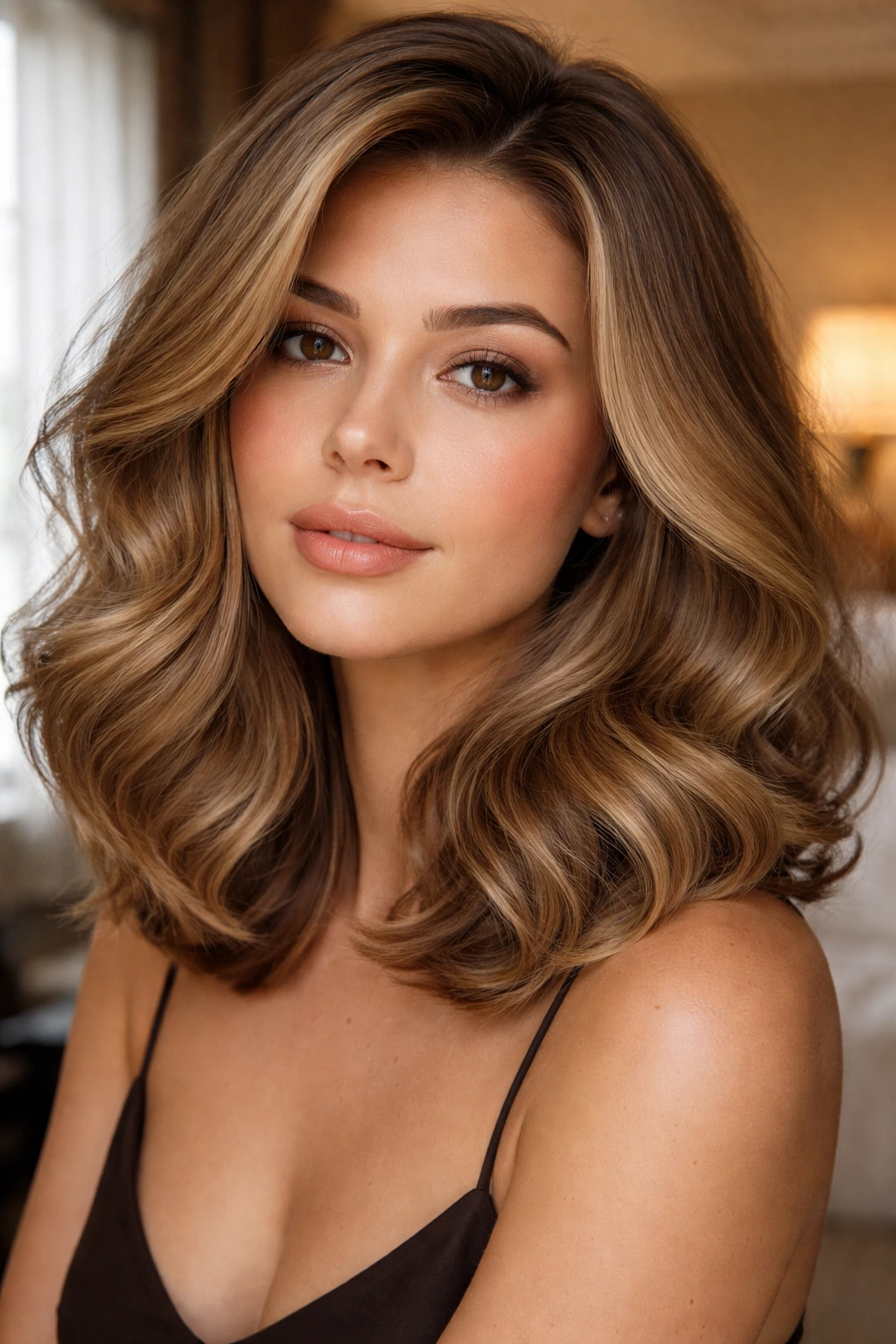
This is a glam, old-Hollywood take on the lob. You set your hair in large rollers or use a big curling iron, then—crucially—you brush it out. The goal is not distinct ringlets, but a soft, billowing wave that has volume.
Why It Flatters
The volume at the sides, if done with a large enough barrel, creates an “S” shape that can actually be very flattering. The key is that the curls must be soft and voluminous, not tight and springy. Think of it as creating “fuzz” or “softness” rather than “spirals.”
The “Brush Out”
Do not be afraid to brush. Use a boar-bristle brush to smooth the hair out until the curls meld into a single, cohesive wave. This prevents the “poodle” effect and keeps the look sophisticated.
18. The Inverted Lob
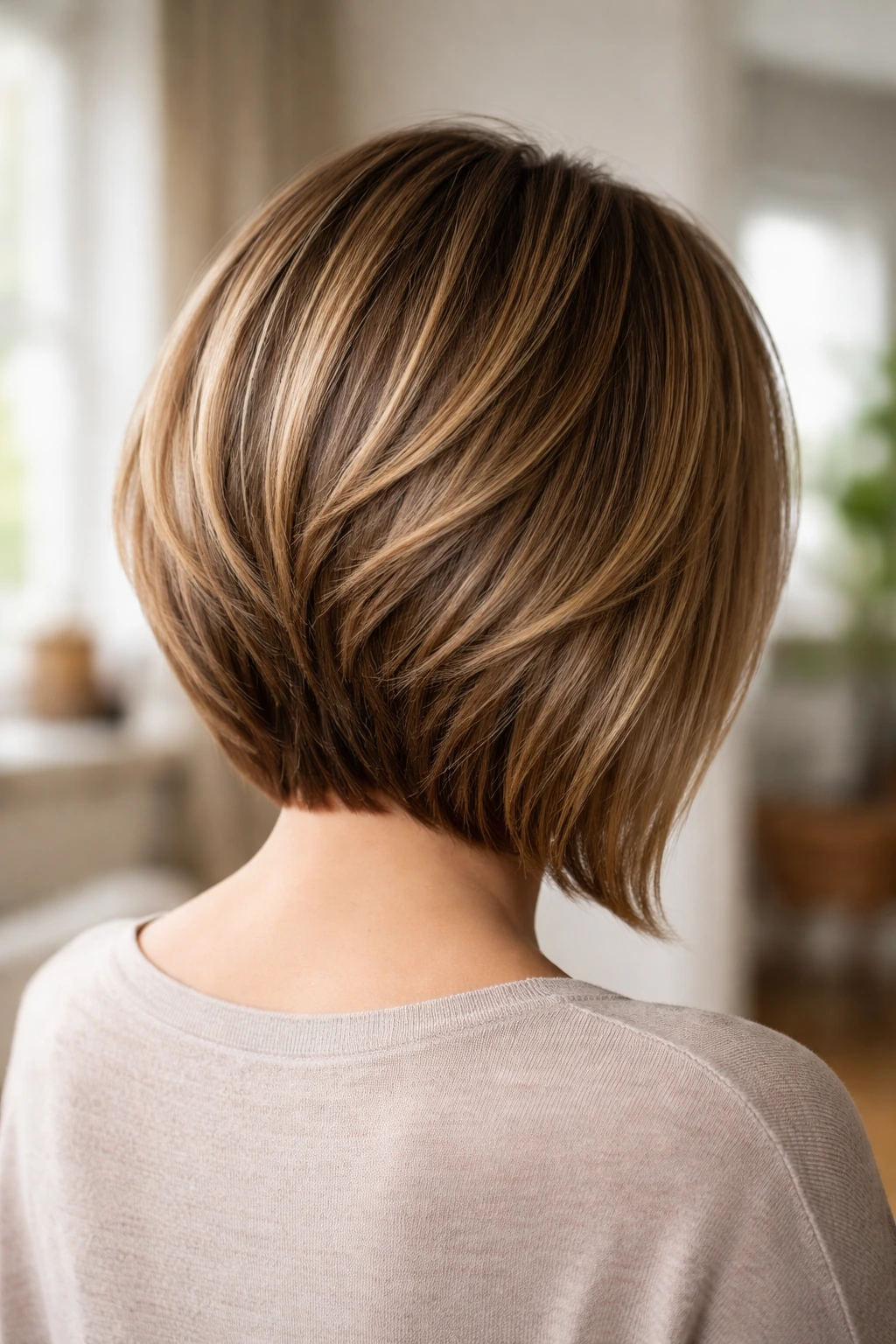
An inverted lob has stacked layers in the back, creating a rounded, voluminous shape at the crown of the head. This height is perfect for a round face, as it adds vertical inches to the overall silhouette.
The Stacked Back
The back of the head gets a lot of attention with this cut. It is precise and requires a good stylist to get the graduation of layers right. As you move toward the front, the hair stays longer, framing the face.
Styling Requirement
Because of the stacked layers, you really need to blow-dry this cut to get the volume to sit right. Using a round brush at the crown is essential to make sure the hair doesn’t lay flat against the skull.
19. The Slicked-Back Wet Lob
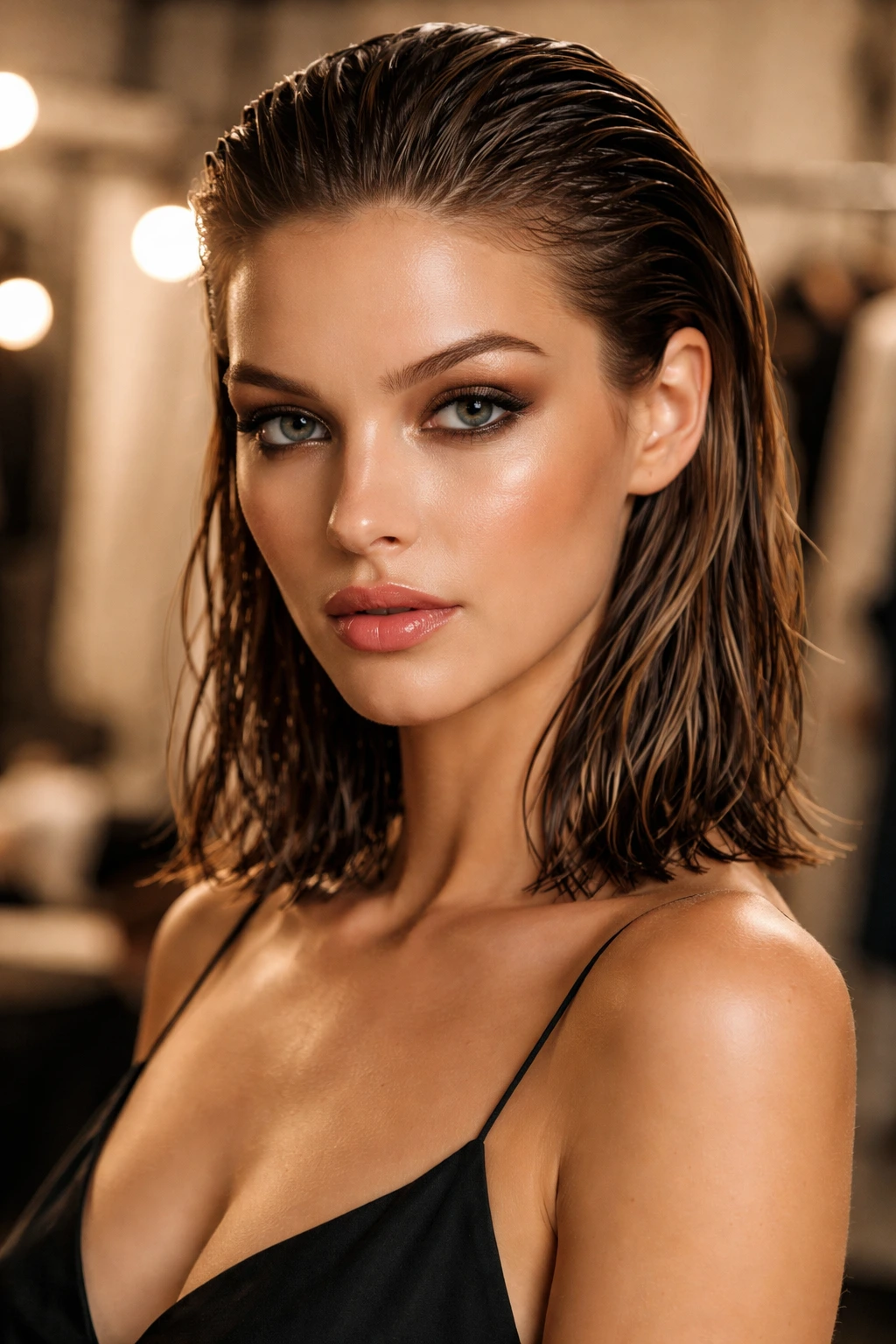
This is a high-fashion look that is surprisingly easy to execute and incredibly flattering. By slicking the hair back from the face, you expose your entire forehead and cheeks, which might sound counterintuitive, but it actually creates a clean, elongated look.
The Mechanics
When you pull the hair back, you remove the “frame” that might be adding bulk around your face. This exposes your bone structure, neck, and shoulders, which acts as a natural lengthener.
Product Selection
Use a wet-look gel or a pomade mixed with a little bit of hair oil. Start at the roots and comb it back, leaving the lengths of the hair slightly damp-looking or textured. It is a bold move, but it is extremely effective for events or when you want to look sharp.
20. The Lob with Subtle Face-Framing Highlights
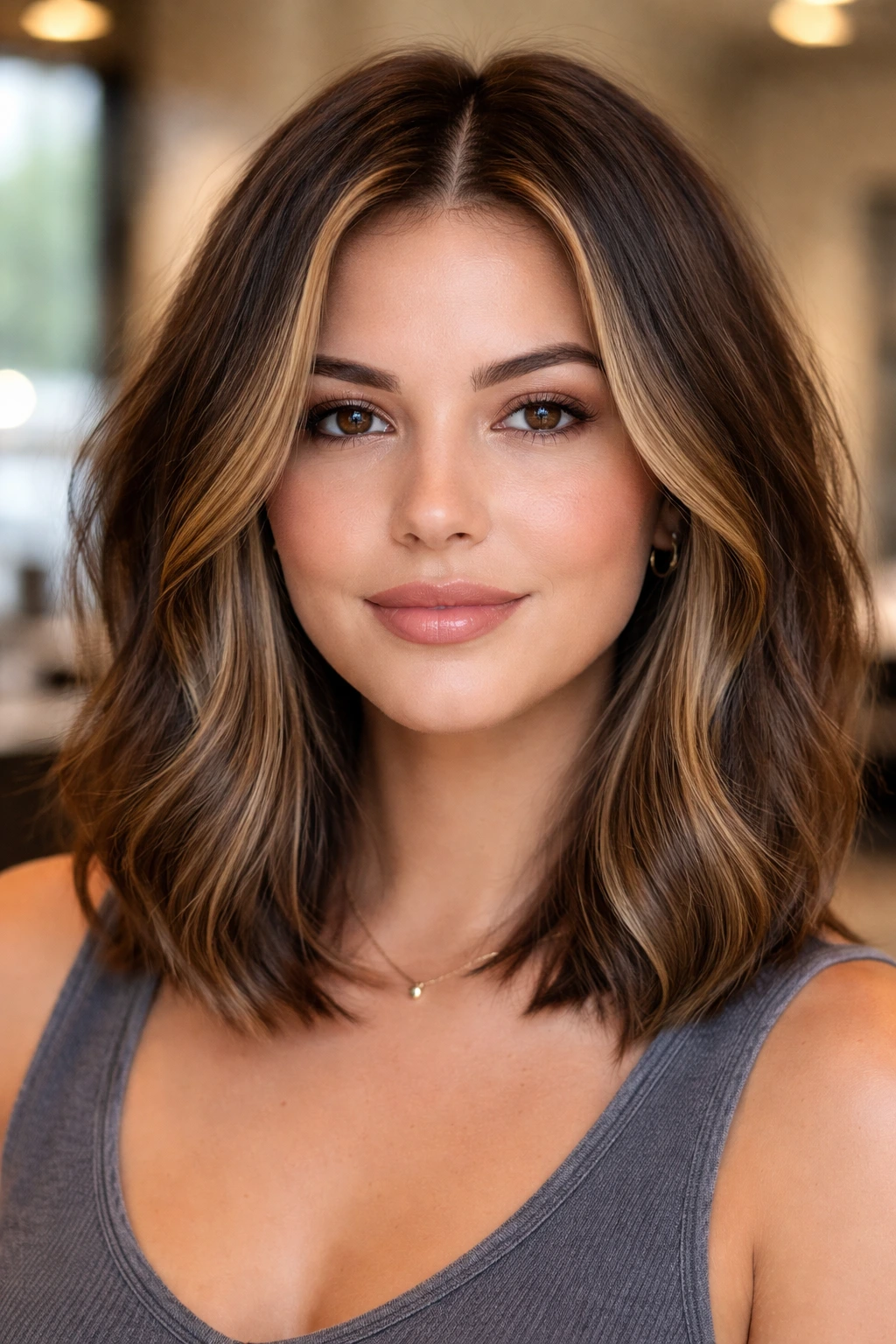
Sometimes referred to as “money pieces” (though often done much more subtly), these highlights are lighter strands placed right around the face. For a round face, you want these highlights to be narrow and vertical, not wide and chunky.
The “Stripes” Effect
Think of these highlights as two vertical stripes of light on either side of your face. They create a “pathway” for the eye, guiding it straight down the face. It is a very effective way to break up the roundness of the cheeks without changing your haircut at all.
Customization
Ask your colorist for “babylights” instead of thick highlights. Babylights are finer and more blended, which creates a more natural, sun-kissed effect rather than a harsh, high-contrast stripe.
21. The Voluminous Blowout Lob
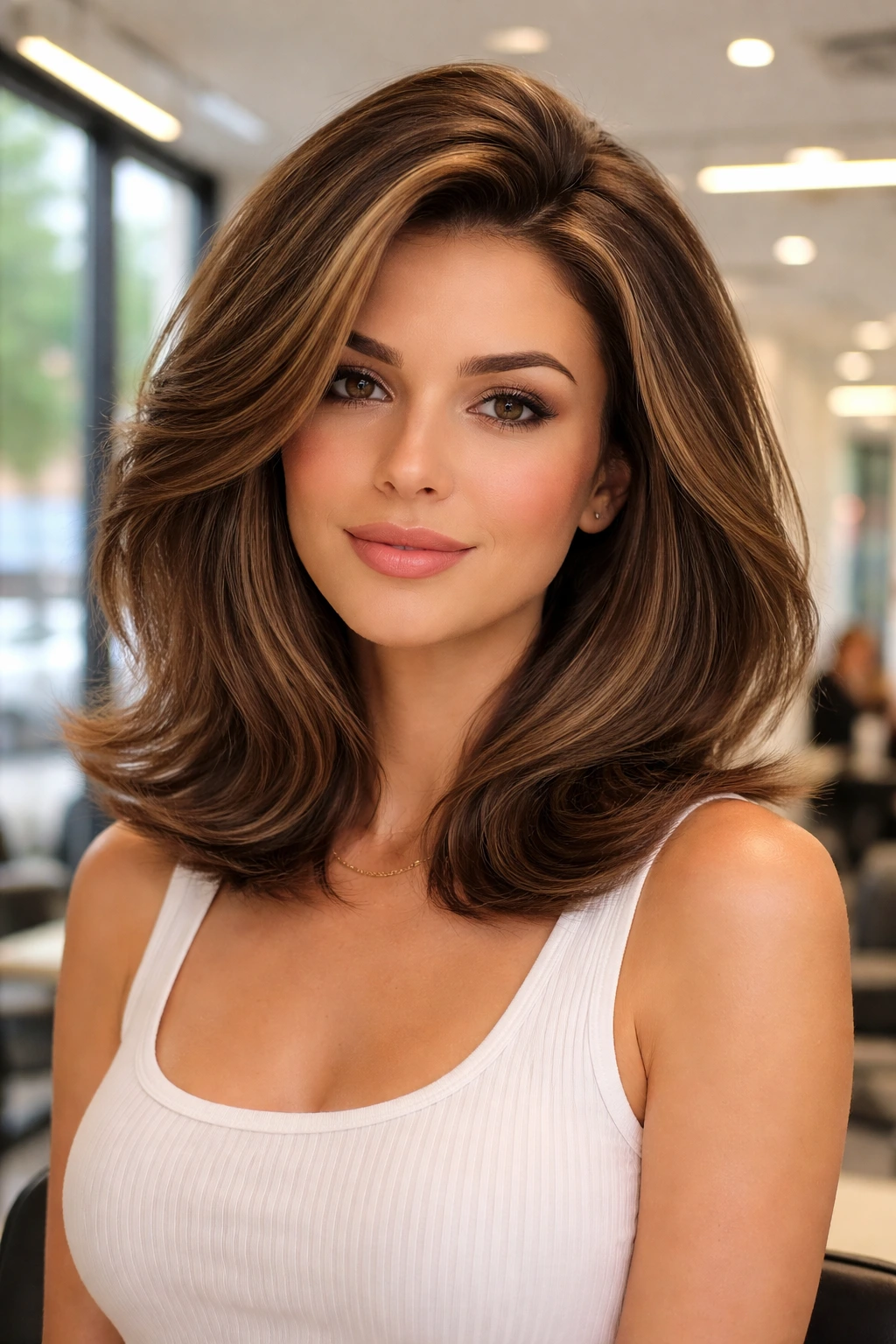
This is the classic “supermodel” lob. It is all about height, bounce, and shine. By using a large round brush to blow-dry the hair up and away from the face, you create a shape that lifts the face.
The Technique
The secret here is drying the hair in sections and using a root-lifting spray. You want the hair to stand up at the roots for at least an inch before it curves over. This creates an oval shape overall, which is the most flattering silhouette for a round face.
Longevity
A good blowout should last a few days. Use a silk pillowcase to protect it while you sleep and touch up the roots with a tiny bit of dry shampoo each morning to keep the volume alive.
22. The Soft Tapered Lob
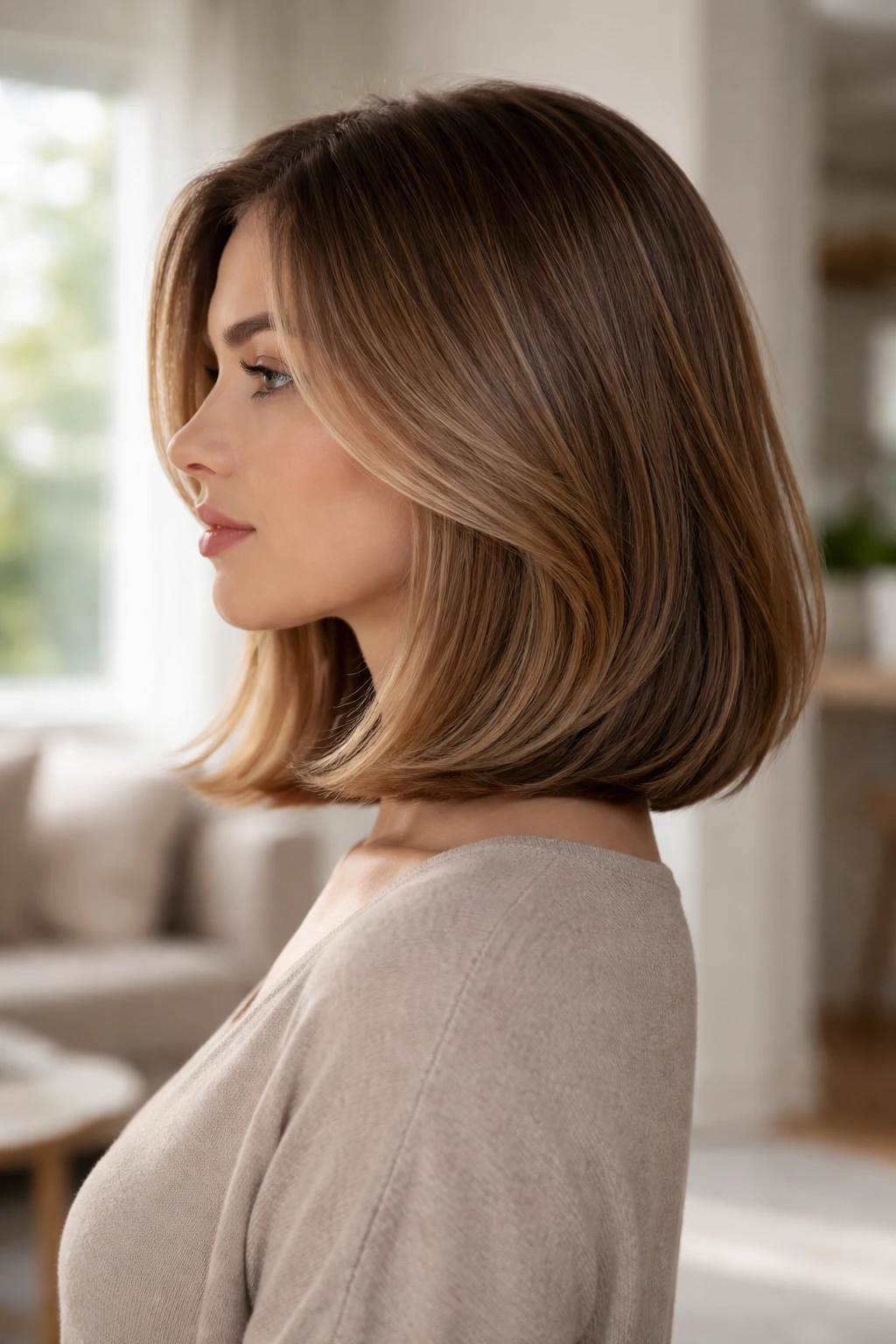
This is a very modern, minimalist cut. The hair is slightly tapered at the ends, meaning the weight is removed from the perimeter. It is not as blunt as the sharp lob, but it is also not as layered as the shag. It sits somewhere in the middle.
The “Weightless” Feel
Because the ends are tapered, they don’t curl under or flip out as aggressively as blunt hair might. They just sit softly against the neck. This prevents the “bell” shape that some bobs fall into, which can be disastrous for rounder faces.
Ideal Hair Type
This works exceptionally well for fine to medium-textured hair. If you have extremely thick, coarse hair, tapering can sometimes lead to frizz, so proceed with caution and talk to your stylist about texturizing versus tapering.
23. The Lob with Deep Root Smudge
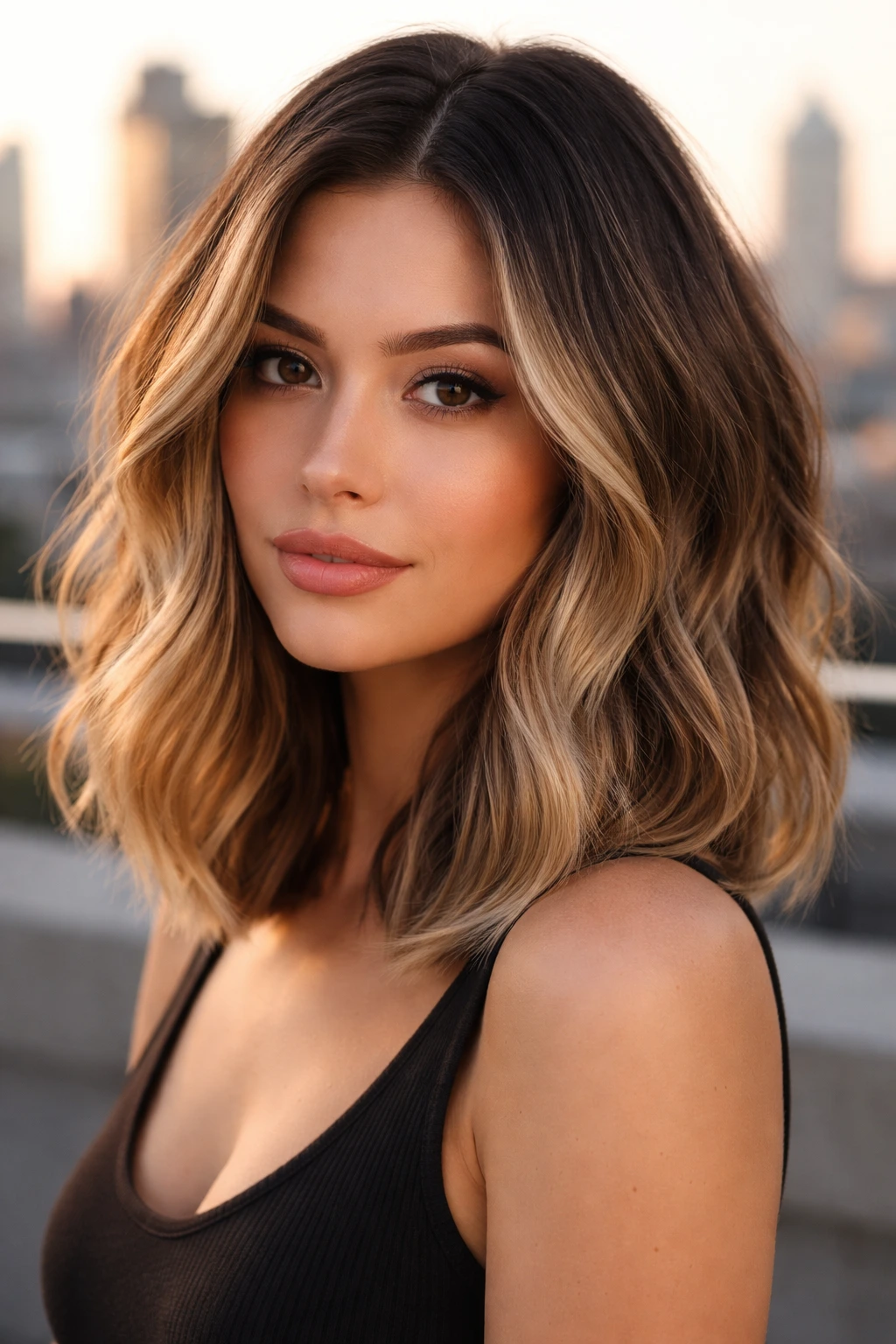
Root smudging is a coloring technique where the roots are kept darker and blended seamlessly into the lighter lengths. For a round face, this is excellent because the darker roots create a shadow that adds visual depth to the top of the head.
Creating Depth
When the roots are dark, it prevents the hair from looking like a uniform block of color. It creates a subtle “halo” effect of shadow, which can make the face look slightly more contoured.
Maintenance
This is one of the most low-maintenance color styles available. Because the roots are intentionally dark, you don’t have to worry about harsh regrowth lines. You can go months between color appointments.
24. The Minimalist One-Length Lob
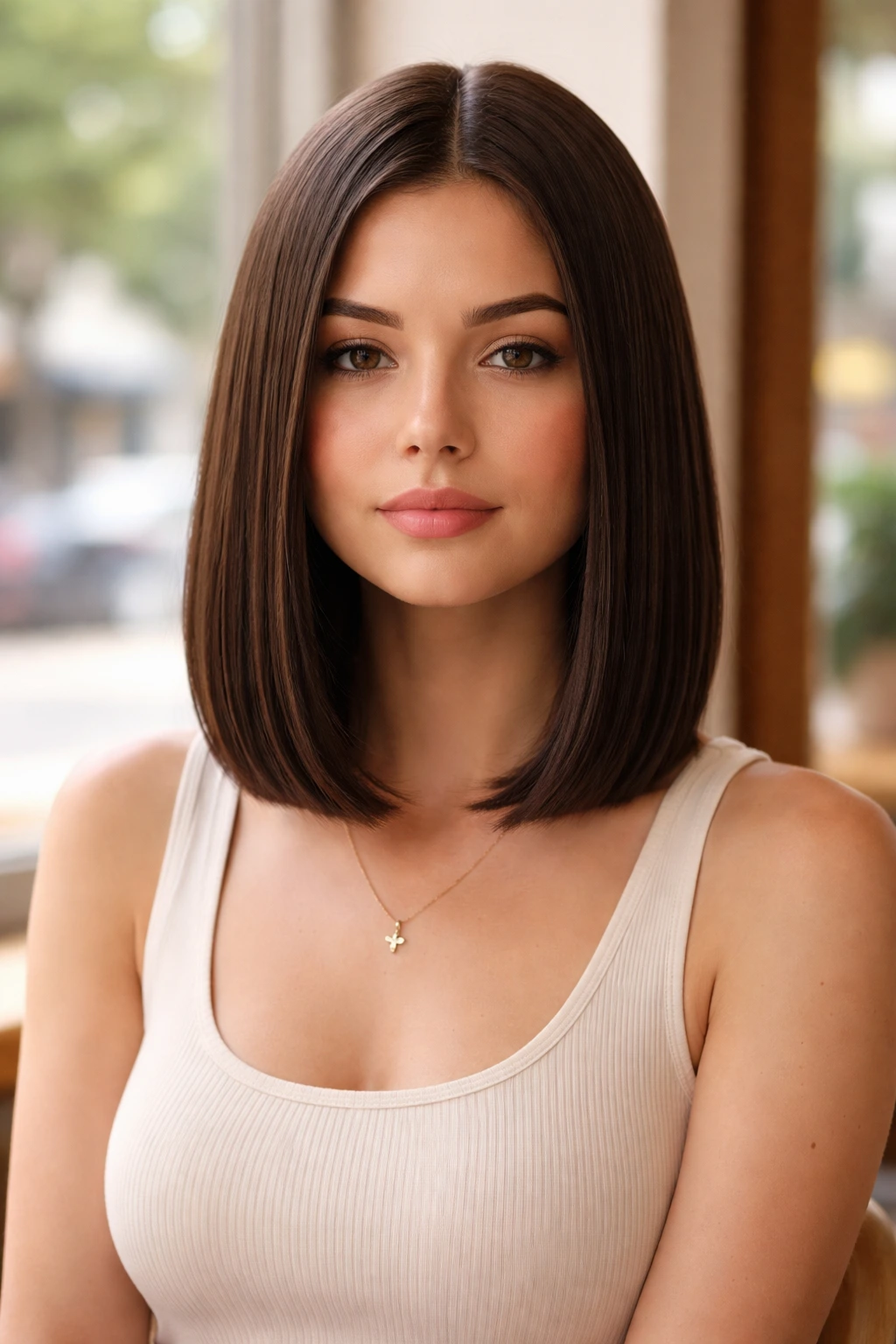
If you have very straight, healthy hair, the one-length lob is a classic. It is a straight line, no layers, no bangs. It is austere, clean, and very chic. It relies entirely on the precision of the cut and the health of the hair.
The “No-Fuss” Factor
There is no layering to style and no bangs to trim. You wash, condition, dry, and go. It is the ultimate “I woke up like this” haircut. Because it is one length, it hangs with a certain amount of weight, which keeps it from getting frizzy or unruly.
Styling
If you want to dress it up, a simple center part is all you need. If you want to dress it down, tucking one side behind your ear creates an instant asymmetrical look.
25. The Lob with Textured Ends
This is a subtle variation on the blunt cut. You get the crisp perimeter of a blunt cut, but you use a razor or thinning shears to slightly texturize the very tips. It gives you the structure of the blunt cut with the ease and softness of a layered cut.
The Best of Both Worlds
You get the weight at the bottom (which helps with elongation) but you don’t get the “blocky” look that some blunt bobs suffer from. It is a very technical cut that requires a skilled hand, but it pays off in versatility.
Why Choose This
It is the most “wearable” cut on the list. It looks professional in a corporate setting but relaxed on the weekend. It pairs with everything from a turtleneck to a tank top, and it is almost impossible to style “wrong.”
Final Thoughts
The lob is the ultimate equalizer. It works because it balances the need for style with the realities of facial geometry. For a round face, the magic lies in how you manipulate the length to create vertical lines, remove bulk, or introduce angles that weren’t there before. Whether you choose the sharp, uncompromising line of a blunt cut or the airy, textured look of a shaggy lob, remember that the most flattering style is one that you feel comfortable maintaining.
If you aren’t sure where to start, begin by looking at your natural hair texture. If it’s fine, lean toward the blunt or choppy cuts that add body. If it’s thick, look for the undercuts or heavy layering that removes the weight. Above all, don’t be afraid to experiment. Hair grows, and a lob is the safest, most forgiving place to start your journey into shorter styles. You might find that once you get comfortable with this length, you never want to go back to long hair again.
