



There is a specific kind of confidence that comes with a haircut that hits exactly where the shoulder meets the collarbone. It is a precise length—long enough to pull back if you need to, but short enough to feel like a statement. A sleek lob, or long bob, is less about following a fleeting fashion cycle and more about mastering geometry. When the lines are clean and the hair is polished, it commands attention without needing layers of volume or intricate styling.
Many people assume a sleek, blunt-cut style is only for those with naturally straight, thick hair. That is a myth I have spent years debunking in the salon chair. Whether your hair is fine, coarse, curly, or wavy, the right execution turns a standard medium-length cut into a high-maintenance look that actually requires surprisingly low daily effort. It is all about the weight distribution and the finishing products.
Getting the perfect sleek finish is not just about the cut; it is about how the cuticle lies. When light hits a smooth, one-length surface, it reflects back as that mirror-like shine everyone chases. If your hair is prone to frizz or has a mind of its own, the secret lies in the tools and the tension used during the blow-dry. Let us look at the variations that prove just how versatile this length can be.
1. The Classic Blunt Cut Lob
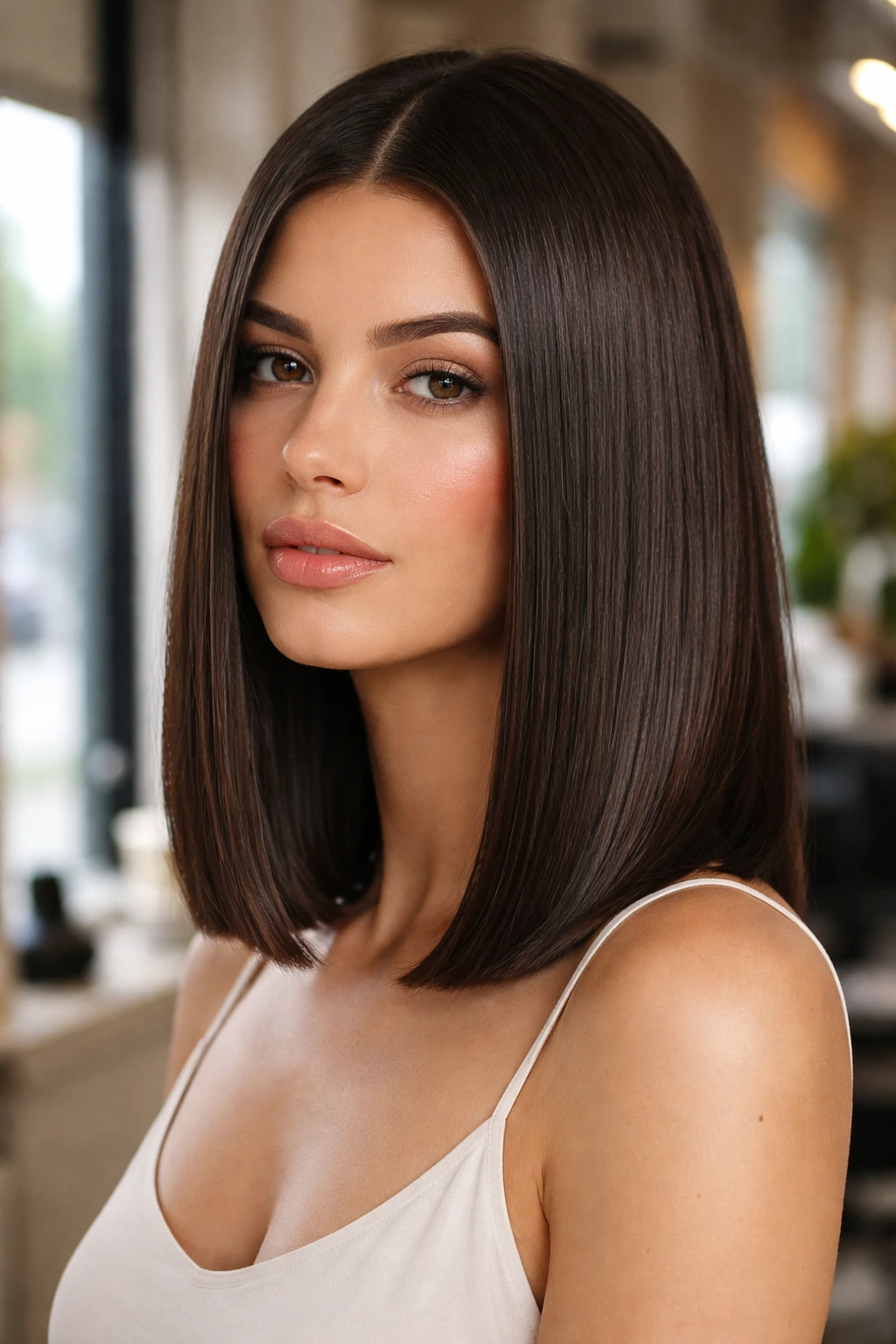
The cornerstone of all sleek styles is the blunt cut. It is uncompromising, sharp, and leaves no room for error. When you ask for this, you are asking for a line that is perfectly horizontal, with no hidden layers to soften the edge. It creates a dense, heavy perimeter that makes even the finest hair look significantly thicker.
Why It Works for Fine Hair
Fine hair often looks wispy at the ends. By removing the feathered or layered tips, you immediately add visual density. The blunt line acts as a frame, giving your face a focal point. It is a structural solution to a texture problem.
Key Maintenance Rules
- Visit the salon every six to eight weeks to maintain that razor-sharp line.
- Use a high-quality boar bristle brush to distribute natural oils down to the ends.
- Apply a heat protectant spray every single time you use a flat iron.
Pro tip: If you find the ends feeling too heavy, ask your stylist to “deep point cut” only the internal weight rather than the exterior line. This keeps the look blunt but adds movement.
2. The A-Line Sleek Lob
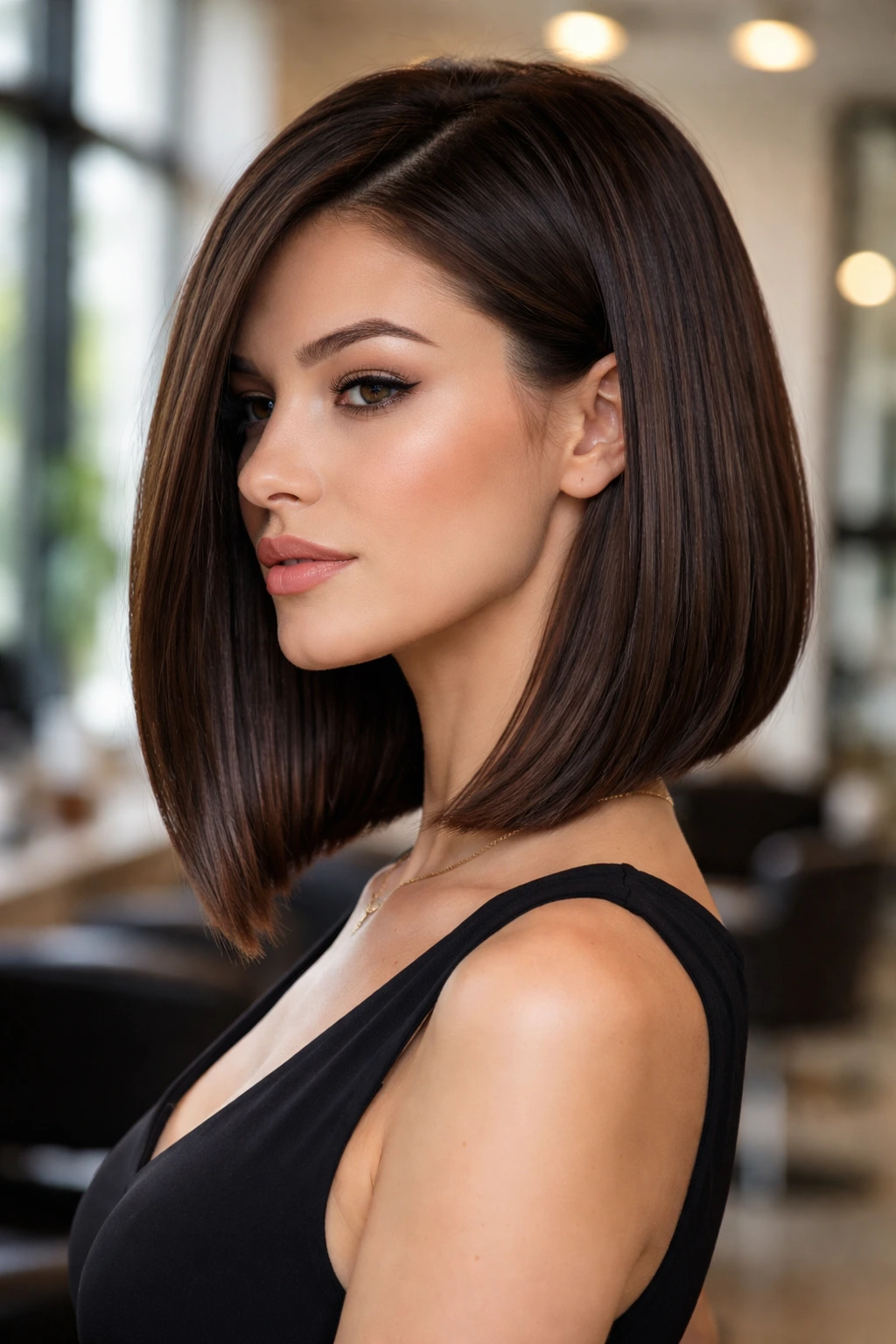
This cut creates an illusion of elongation. The back is cut slightly shorter than the front, creating a subtle, angled slope that directs the eye toward the jawline. It is a masterclass in facial contouring without using a single drop of makeup.
Why This Cut Is a Power Move
The A-line is inherently more sophisticated than a one-length cut. It demands attention because it changes as you move your head. When you walk, the hair swings differently, highlighting the jawline and the neck. It is a favorite for people who want a style that feels professional and sharp but retains a sense of playfulness.
Styling the Angle
You need to be diligent about the front pieces. Use a round brush to pull the front sections slightly forward as you dry them. This ensures the angle remains prominent rather than falling flat against the cheekbones. If the front pieces flip out, it ruins the sleek, architectural vibe you are aiming for.
3. The Center-Parted Glass Hair Lob
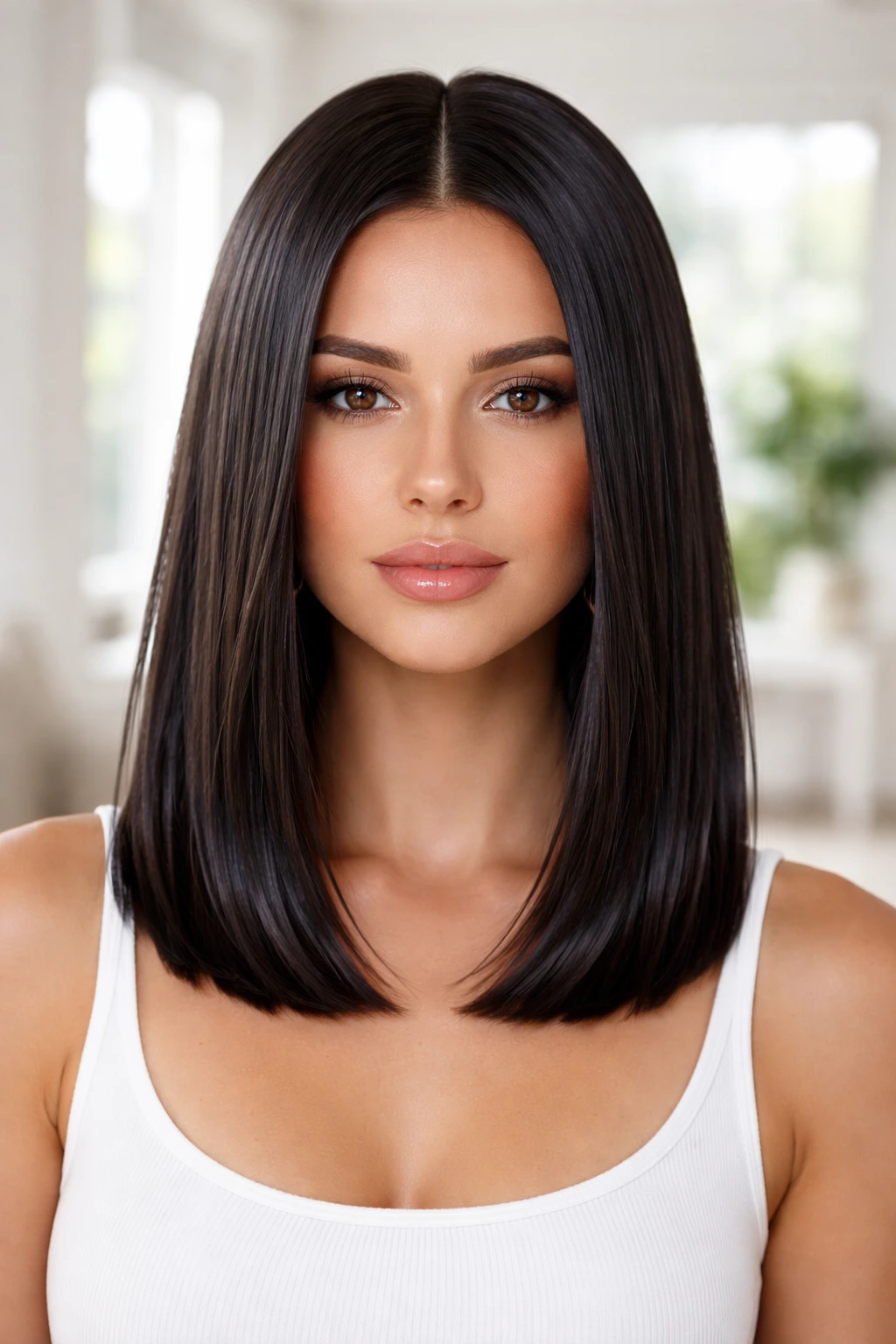
Glass hair is the term for that ultra-reflective, monochromatic sheen. The center part is non-negotiable here. It creates symmetry, which is the foundation of a “glass” look. By splitting the hair exactly down the middle, you distribute the weight evenly, allowing the hair to drape perfectly against the shoulders.
Achieving the Mirror Finish
The shine comes from smoothing the cuticle. Use an ionic blow dryer to flatten the hair shaft, and follow up with a titanium-plate flat iron. Titanium heats up quickly and provides a consistent glide, which is crucial for getting that uniform, glass-like surface.
The Essential Product Mix
- A smoothing cream applied to damp hair before blow-drying.
- A light, alcohol-free hair oil to finish the ends.
- Avoid heavy silicones that leave a film; you want a finish that feels clean to the touch.
4. The Deep Side-Parted Lob
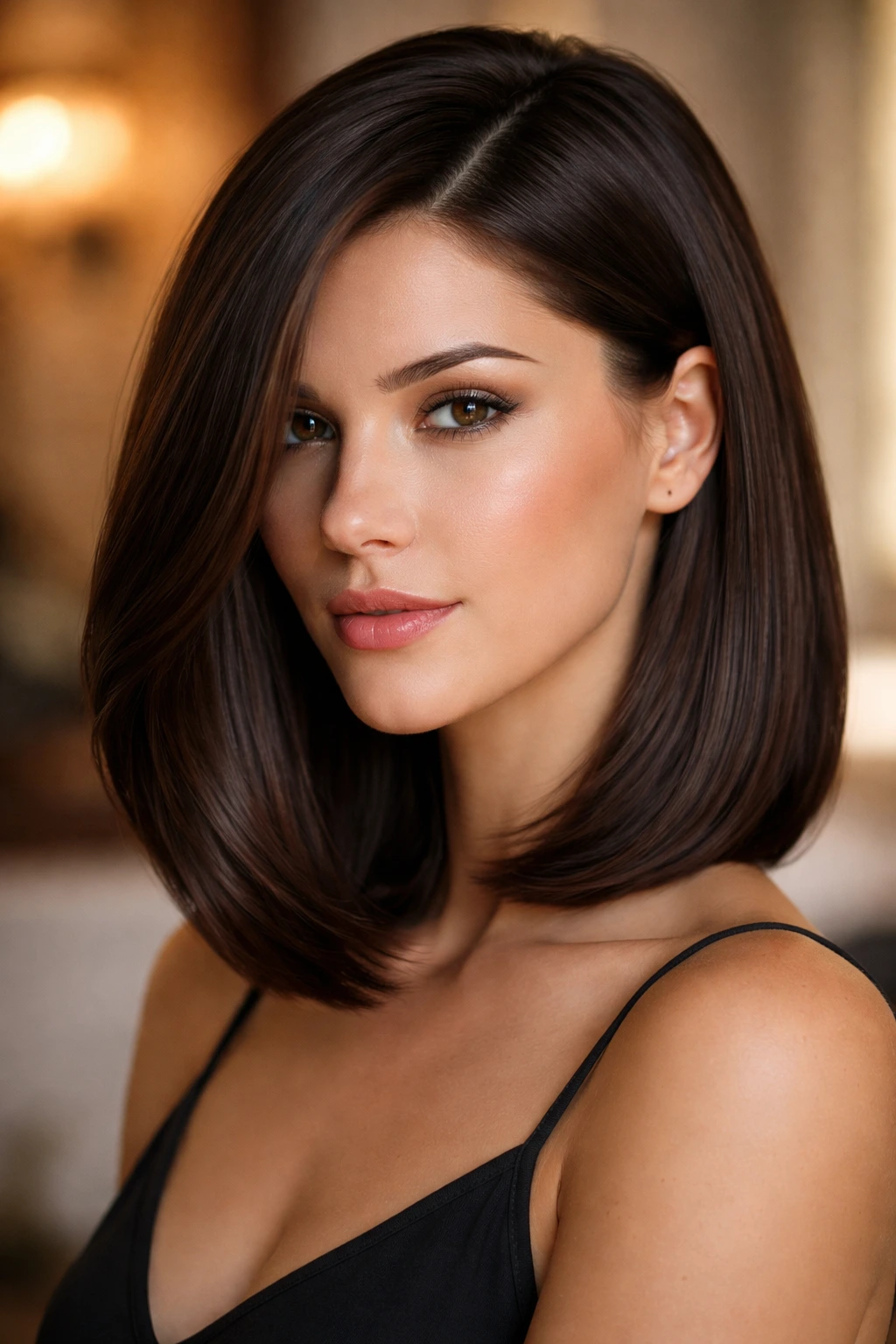
If the center part feels too severe, the deep side part provides an instant, asymmetrical boost. It adds volume to the crown and creates a beautiful sweep of hair across the forehead. It feels more “undone” than the center-parted variety but remains strictly sleek.
How to Get the Sweep
The trick is to flip your hair to the opposite side while it is still damp. Dry it in that direction to create extra lift at the root. Once it is dry, flip it back to your preferred side. This “training” of the root creates a lasting, voluminous side part that does not fall flat by midday.
Who It Suits Best
This cut is a lifesaver for round and square face shapes. The diagonal line created by the side part breaks up the roundness, adding a vertical element that visually slims the face. It is an easy way to introduce angles into a look that might otherwise be too uniform.
5. The Sleek Lob with Hidden Layers
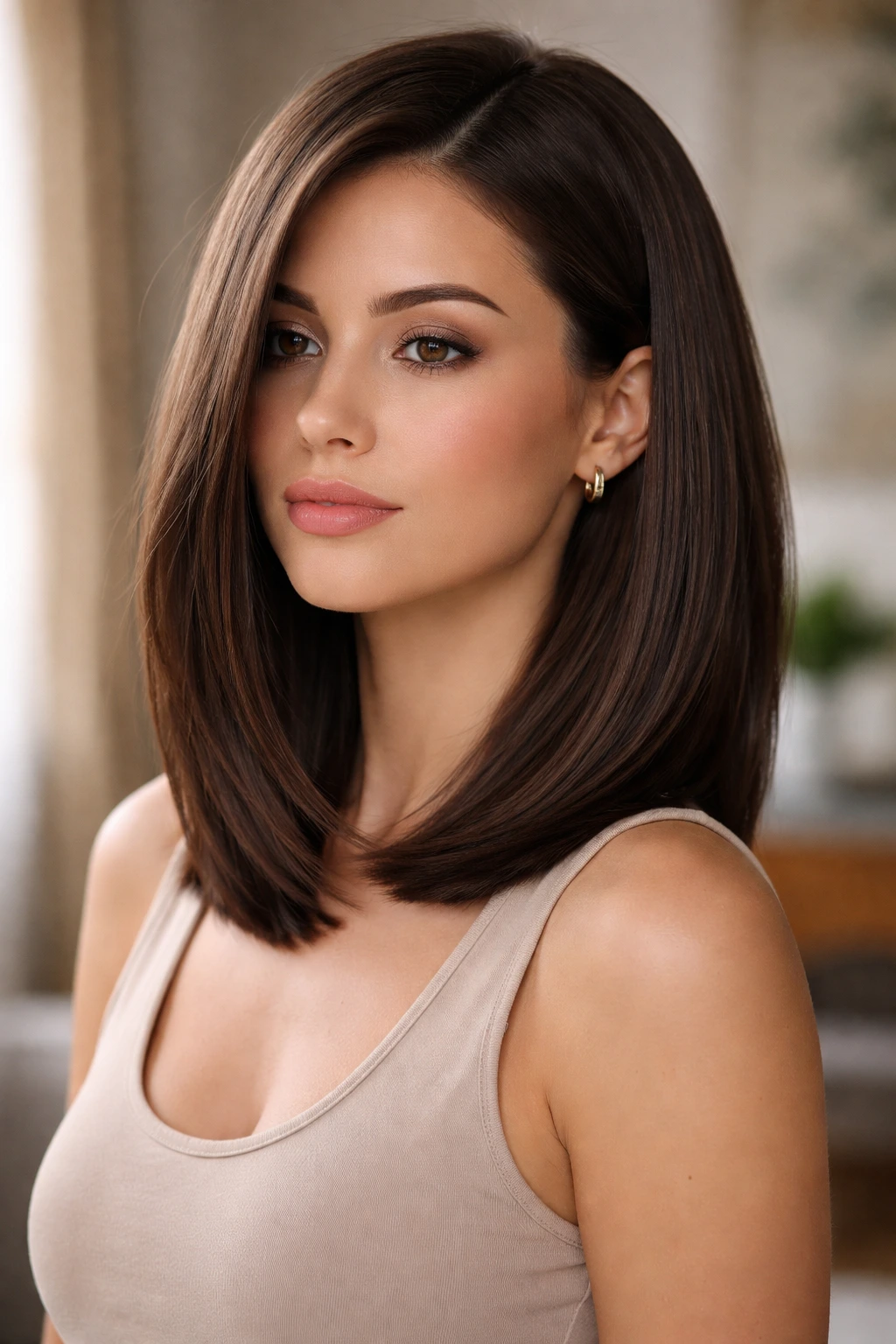
Some of us need the weight removed, but we do not want the aesthetic of layers. Enter the hidden layer, often called “invisible layers” or “ghost layers.” These are cut internally, removing bulk from the middle and ends without touching the top canopy of the hair.
The Mechanics of Internal Weight Removal
Your stylist will lift small sections and point-cut into the mid-lengths. The top layer remains long and smooth, draping over the internal support system. It is like putting a corset under a sleek dress; it gives the shape structure without changing the outward appearance.
Why This Is Ideal for Thick Hair
Thick, coarse hair often looks like a pyramid if cut completely blunt. You end up with all the weight at the bottom. By cutting hidden layers, you reduce the “triangle effect” while keeping the sleek, polished look of a one-length cut. You get the best of both worlds: control and a smooth, clean aesthetic.
6. The Flipped-End Retro Lob
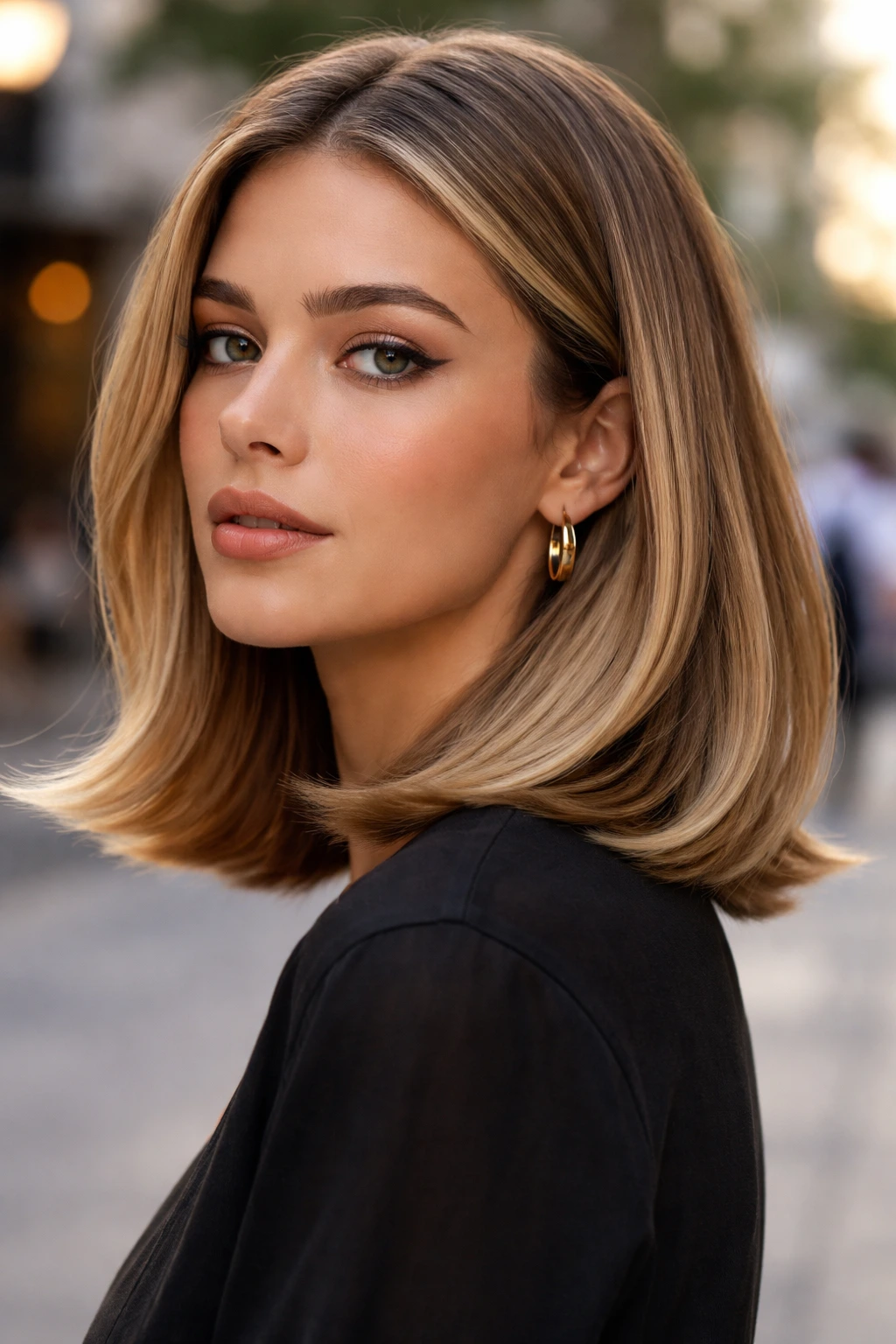
Think mid-century modern, but toned down for modern times. This lob has a very subtle, intentional flick at the very tips. It avoids the “poodle” look by keeping the hair strictly straight from root to the last two inches.
The Technique
You need a flat iron for this. Don’t use a round brush; it adds too much curl. Pull the hair down with the flat iron, and right when you reach the ends, give the iron a quarter-turn outward. Hold it for a second, then release.
When to Use This Style
This is perfect for days when you feel your outfit is too minimalist. It adds a touch of personality and a nod to vintage silhouettes without requiring a full retro hairstyle. It looks especially good with a turtleneck or a high-collared coat, where the flip can sit just above the collar.
7. The Pin-Straight Tucked Lob
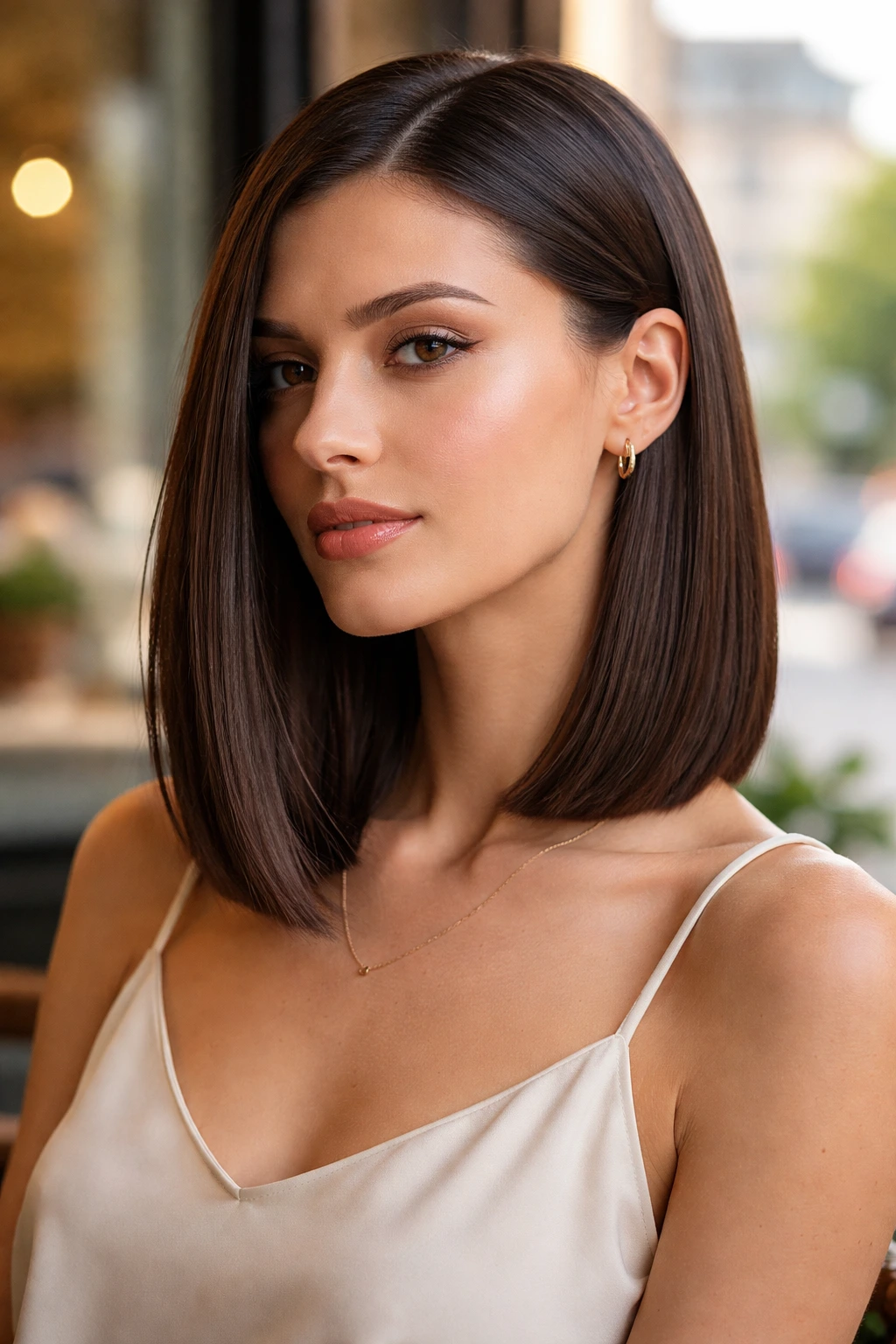
Minimalism is not dead; it is just evolving. This is the ultimate “no-fuss” look. You cut the hair blunt, keep it pin-straight, and tuck one side firmly behind your ear. That tiny tuck changes the entire geometry of the haircut.
Why the Tuck Matters
It exposes the jawline and creates an asymmetrical tension. It feels confident. The key here is to keep the tucked side really tucked. Use a tiny bit of pomade or styling cream behind your ear to keep the hair from sliding out.
The “Sleek” Requirement
Your hair must be healthy for this to work. Split ends become incredibly obvious when you tuck hair behind your ears. If you are prone to breakage, invest in a weekly deep-conditioning mask. Healthy ends make or break the minimalist aesthetic.
8. The Face-Framing Sleek Lob
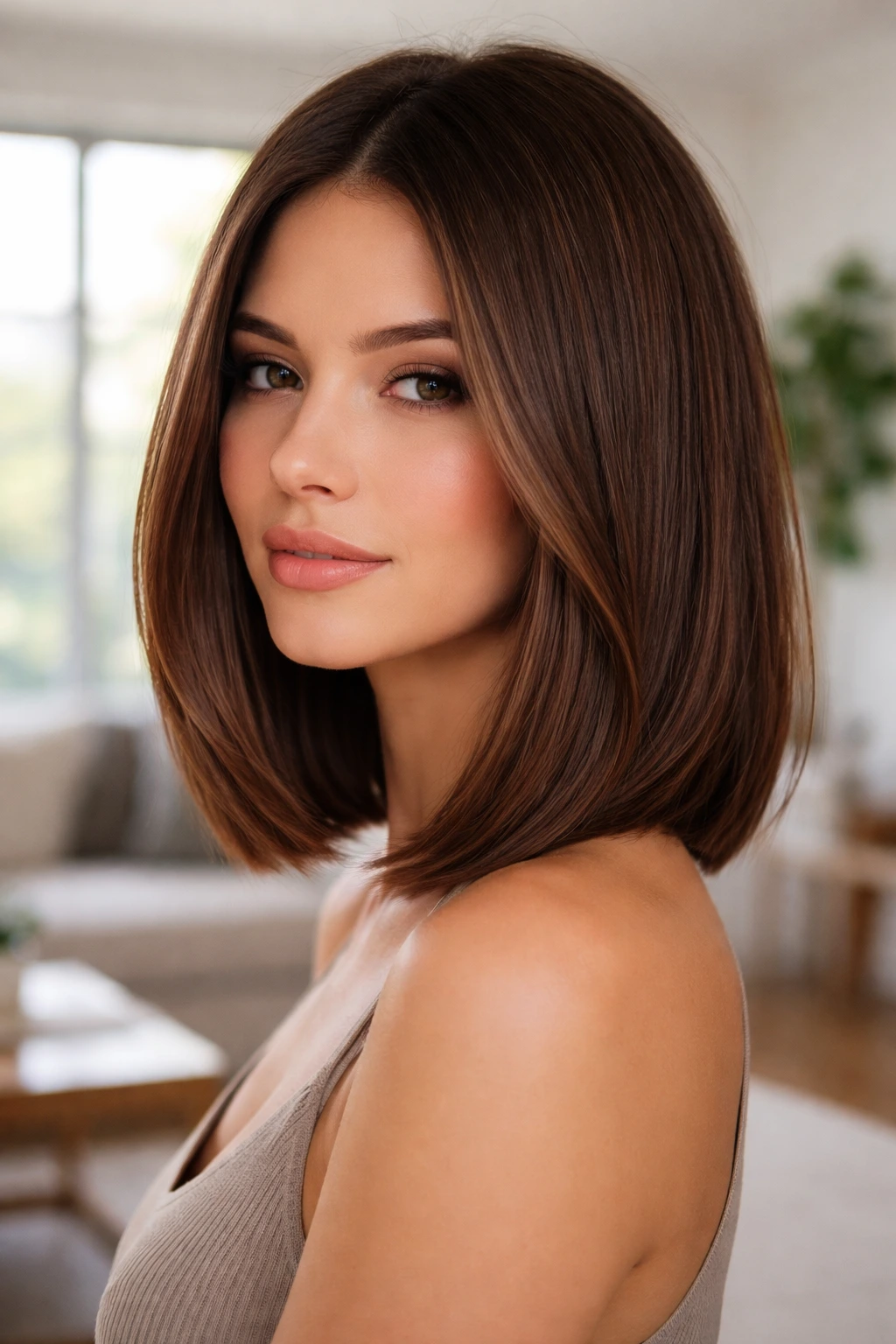
If a total blunt cut feels too harsh, add face-framing pieces. These are subtle, shorter sections around the front that create a gentle arc. It creates a soft transition from your bangs or side sections into the main length of the lob.
Balancing the Softness
The goal is to keep the back blunt and the front soft. When you style this, use a round brush on the front pieces to tuck them slightly toward your face. This draws attention to your eyes and lips while keeping the back sharp and professional.
The Result
It is the most wearable of all the sleek lobs. It works for almost every face shape because you can customize the length of the framing pieces to highlight your best features—whether that is your cheekbones or your jawline.
9. The Sleek Lob with Baby Bangs
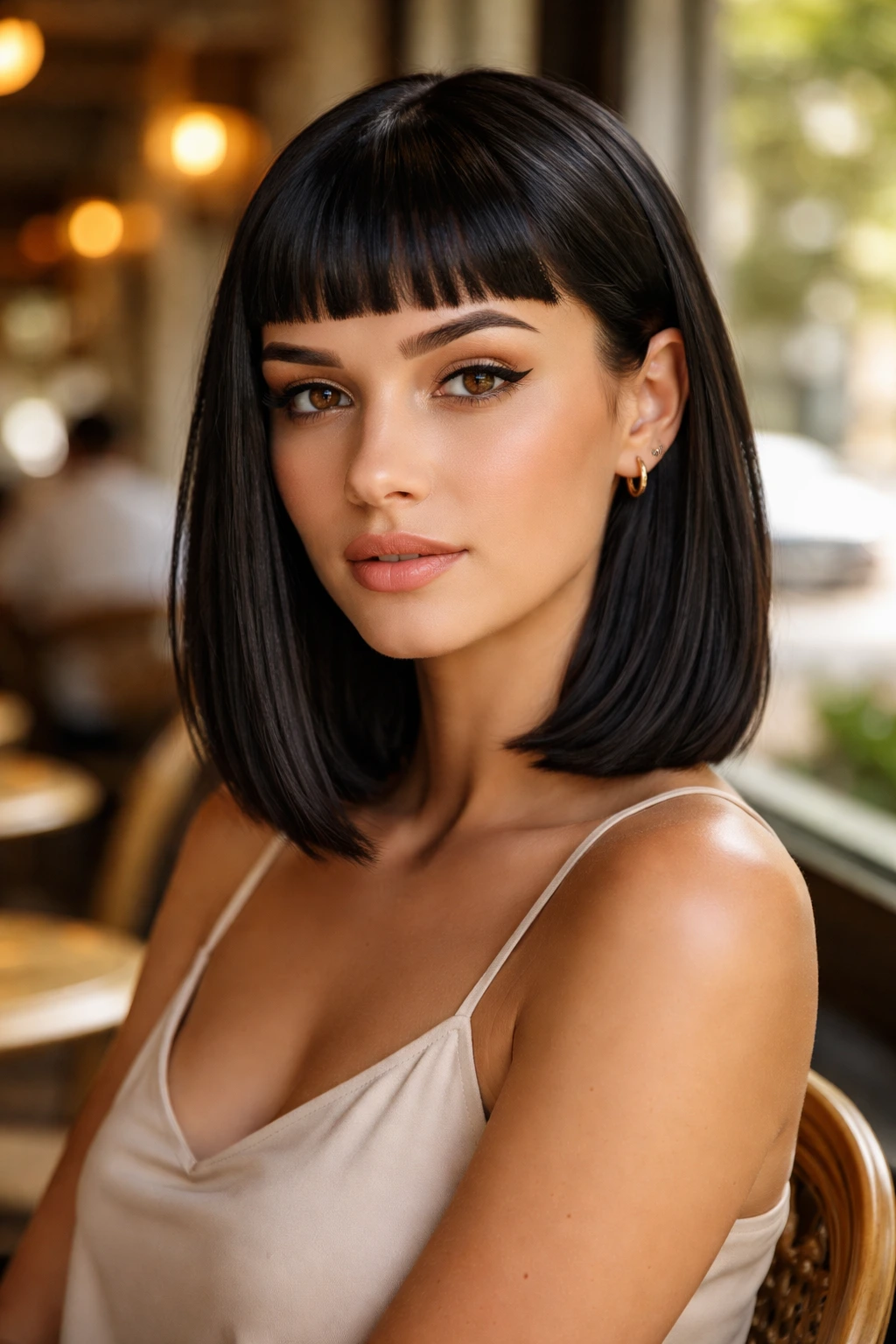
This is not for the faint of heart. Baby bangs—or micro-bangs—paired with a sleek, medium-length lob create an architectural, fashion-forward look. It is deliberate, bold, and entirely focused on the face.
The Engineering of the Bangs
The bangs must be cut straight across, usually an inch or two above the eyebrows. If they are even slightly uneven, the whole look feels sloppy. You need a stylist who is precise with their shears and understands the growth patterns of your hairline.
Styling Daily
These bangs require daily styling. You cannot “wake up and go” with micro-bangs. Use a small flat iron to ensure they lie flat against your forehead. A touch of dry shampoo is your best friend here, as oil from your forehead will cause bangs to separate and look greasy by noon.
10. The One-Length Polished Lob
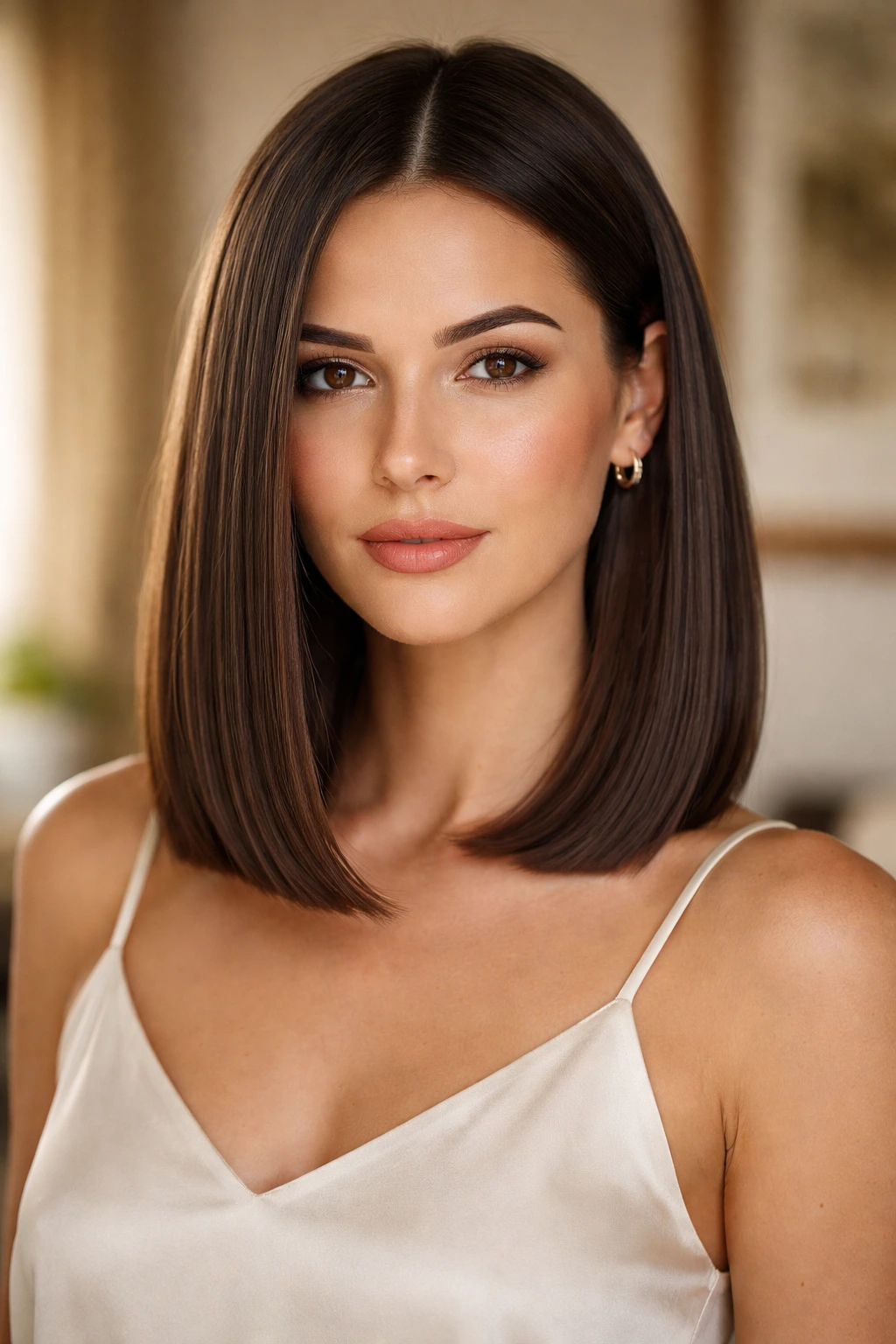
There is something inherently luxurious about a cut that is perfectly even all the way around. No graduation, no layers, no face-framing—just pure, monochromatic hair. It is the style of choice for people who want to look put-together with the least amount of effort.
Why This Is the Ultimate “Clean” Look
It simplifies your routine. You don’t have to worry about how to style layers or which way to sweep your bangs. You wash, dry, and flat iron. The beauty of this cut is in its simplicity.
Matching Texture to the Cut
If you have very fine, sparse hair, keep the length shorter—closer to the chin. This creates the illusion of thicker hair. If your hair is dense, you can let it grow to the collarbone. The length adds weight that keeps the hair from puffing out.
11. The Sleek Lob with Curtain Bangs
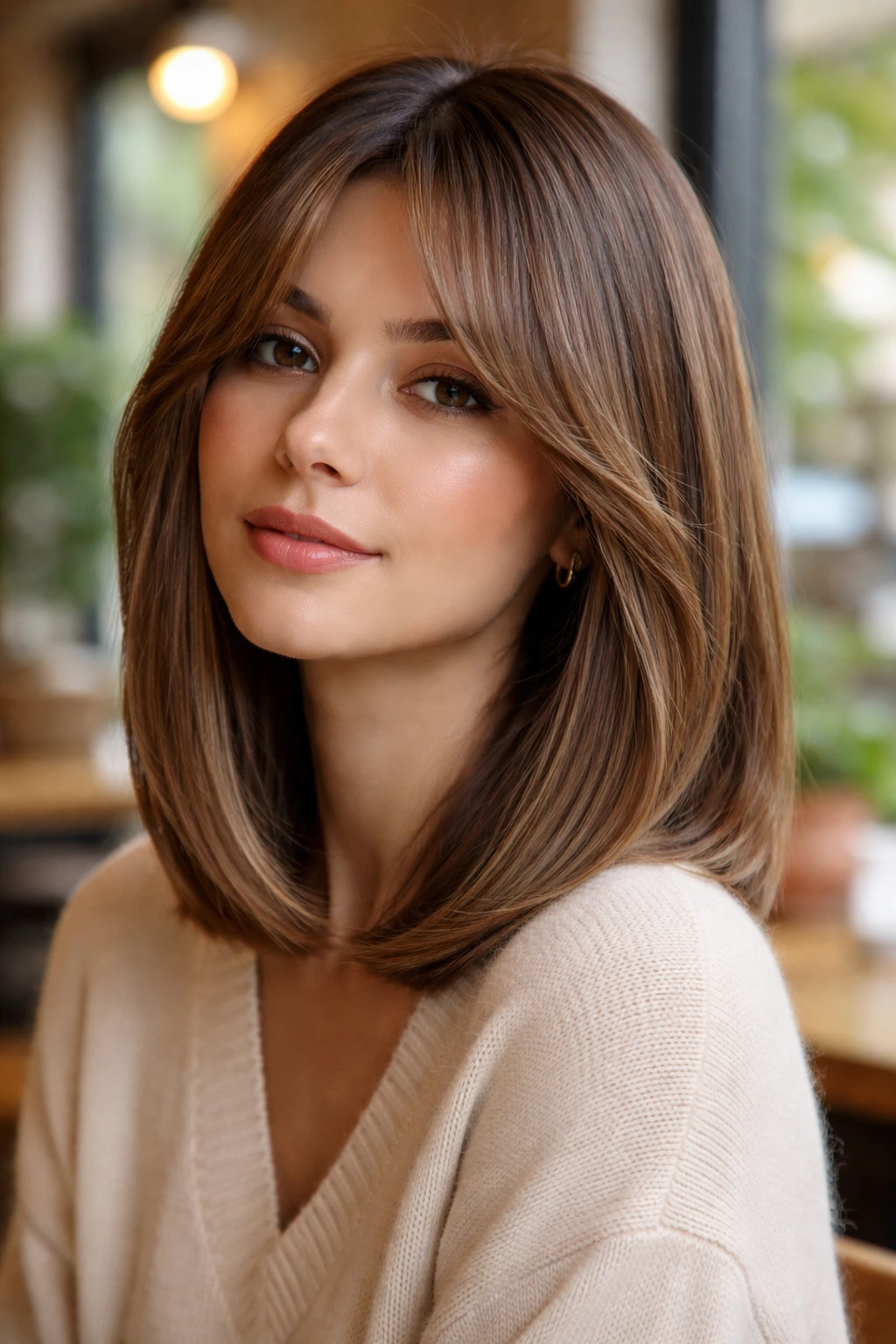
Curtain bangs have been popular for a reason: they are incredibly flattering. When paired with a sleek lob, they break up the severity of the blunt cut. The bangs sit just below the cheekbones, providing a soft, sweeping frame that transitions beautifully into the rest of the hair.
Styling the “Sweep”
Curtain bangs need direction. Use a large round brush to dry them away from your face. The goal is a gentle “c” curve. If you try to pull them straight down, they look like awkward grown-out bangs. They need that lift and outward flip.
Why It Works for Low-Maintenance People
These bangs grow out gracefully. Even when they get long, they just become part of your face-framing layers. You don’t need a trim every three weeks like you do with blunt bangs. It is a smart, long-term choice.
12. The Asymmetrical Sleek Lob
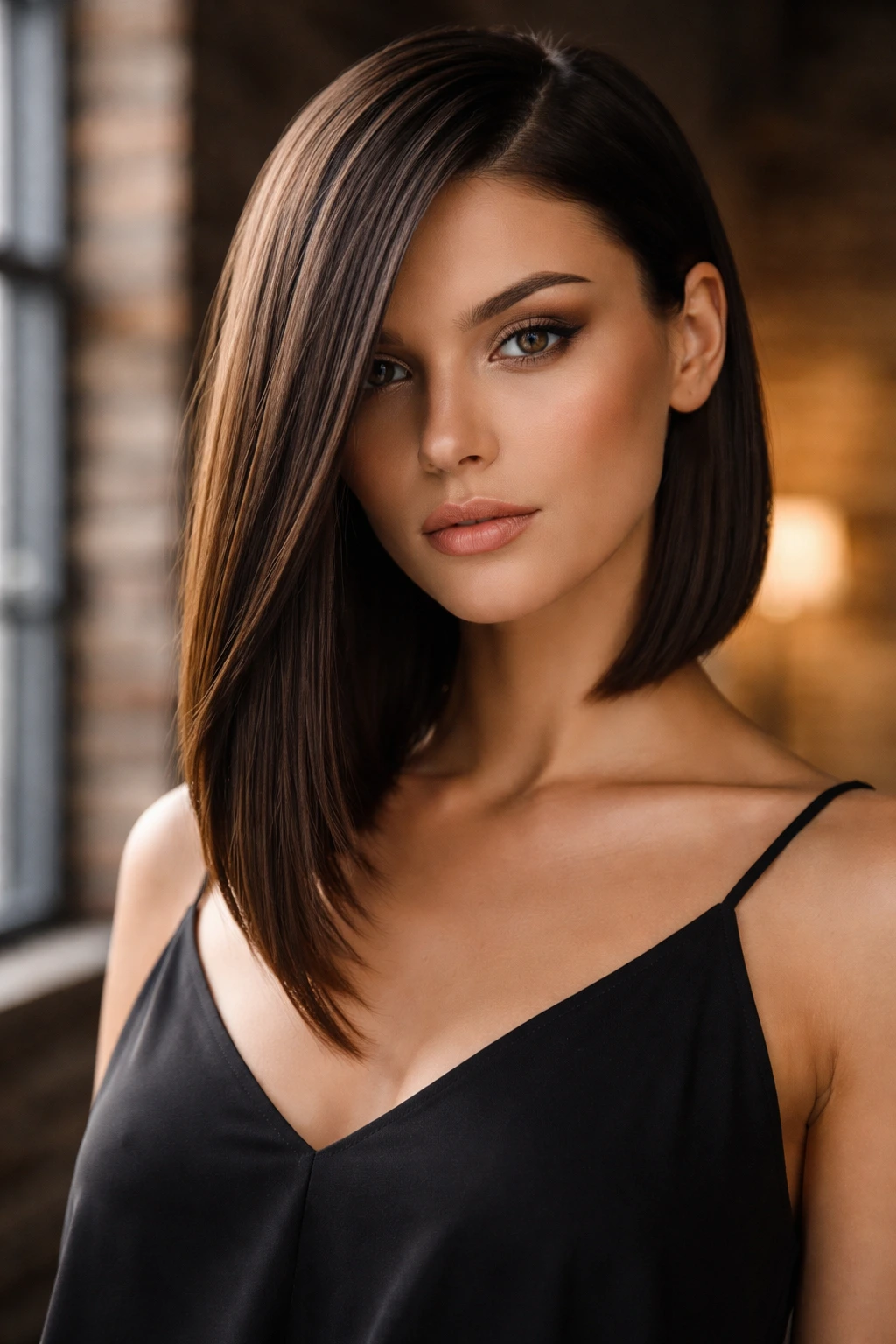
Asymmetry is a visual hook. In this cut, one side is noticeably longer than the other. It is not a subtle A-line; it is a dramatic, diagonal slice. It is edgy, modern, and moves away from the traditional, balanced bob.
The Edge Factor
You have to own this cut. It doesn’t look “accidental.” When you wear this, you are saying you prefer artistic precision over classic symmetry. It looks best when worn straight, as curls can sometimes hide the deliberate angle of the cut.
The Best Face Shapes
Longer face shapes benefit from this. The diagonal line draws the eye across the face rather than down, which creates a sense of width and balance. It is a powerful way to change your silhouette.
13. The Wet-Look Sleek Lob
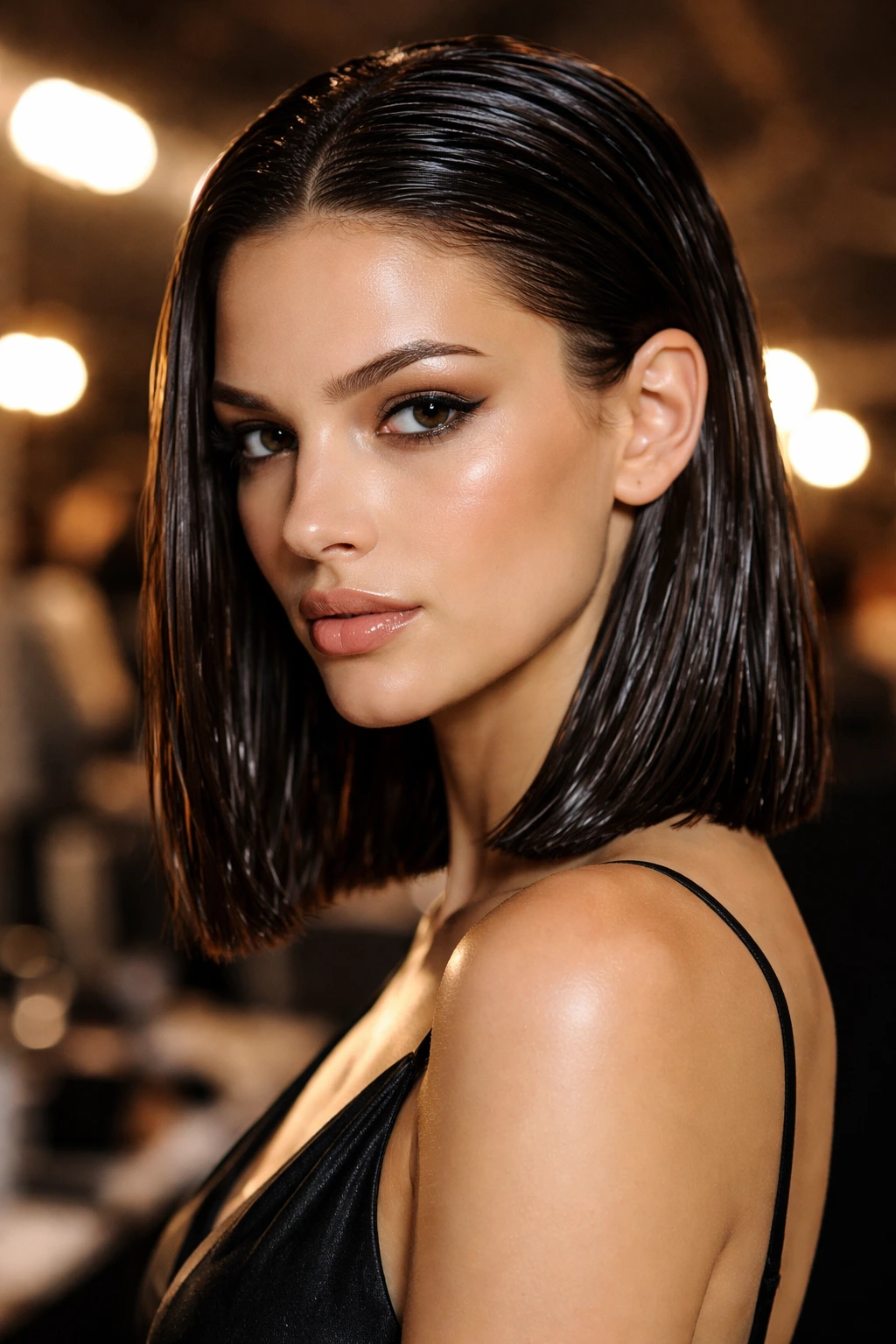
The wet look is the peak of editorial styling. It is not actually “wet”—it is styled with gel and pomade to look that way. When applied to a sharp, blunt lob, it looks high-fashion and incredibly clean.
The Product Recipe
Do not use water. Use a mix of a strong-hold gel and a high-shine pomade. Work it through damp hair, starting at the roots and combing it through to the ends. You want to flatten the hair against the scalp and create visible, polished comb lines.
When to Wear It
This is a night-out look. It is bold, slightly aggressive, and very sleek. Keep the rest of your styling simple; let the hair be the accessory. Pair it with a bold lip or a simple outfit; you don’t want to compete with the intensity of the hair.
14. The Blunt Cut Lob with Face-Framing Pieces
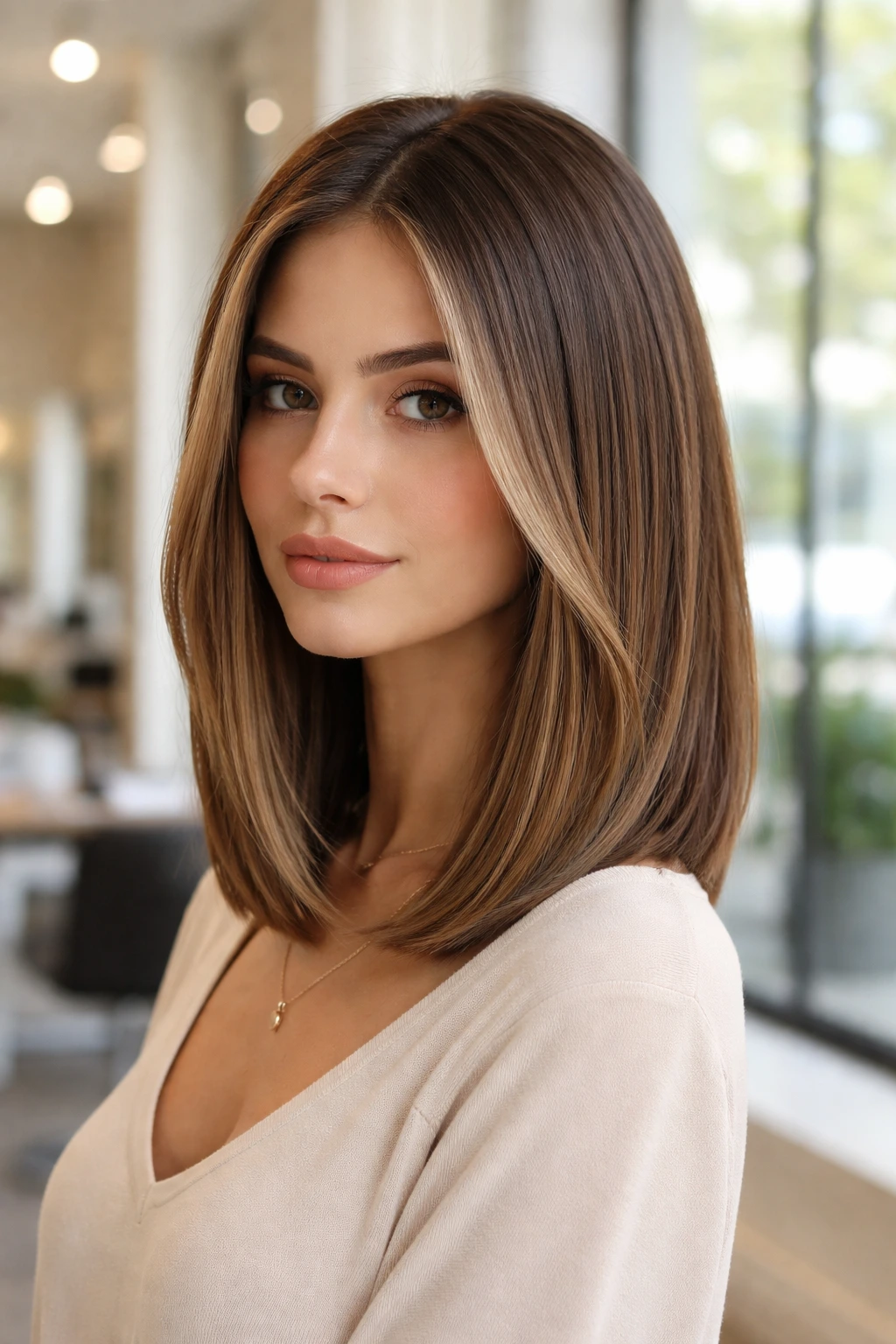
We touched on face-framing, but this variation is different. Here, the back is one solid, blunt length, and the front has long, soft pieces that start around the chin. It is the “I want a blunt lob, but I want to keep some length around my face” cut.
The Difference
The difference is in the disconnection. The main perimeter is blunt, and the face-framing sections are almost like an “add-on.” It allows you to pull your hair back while keeping those front pieces out to soften your features.
Styling for Versatility
This cut gives you the most styling options. You can wear it straight for the sharp, blunt look, or you can add a soft wave to the front pieces for a more relaxed, “lived-in” vibe. It is a great cut for someone who gets bored with their hair quickly.
15. The Sleek Lob with Blunt Bangs
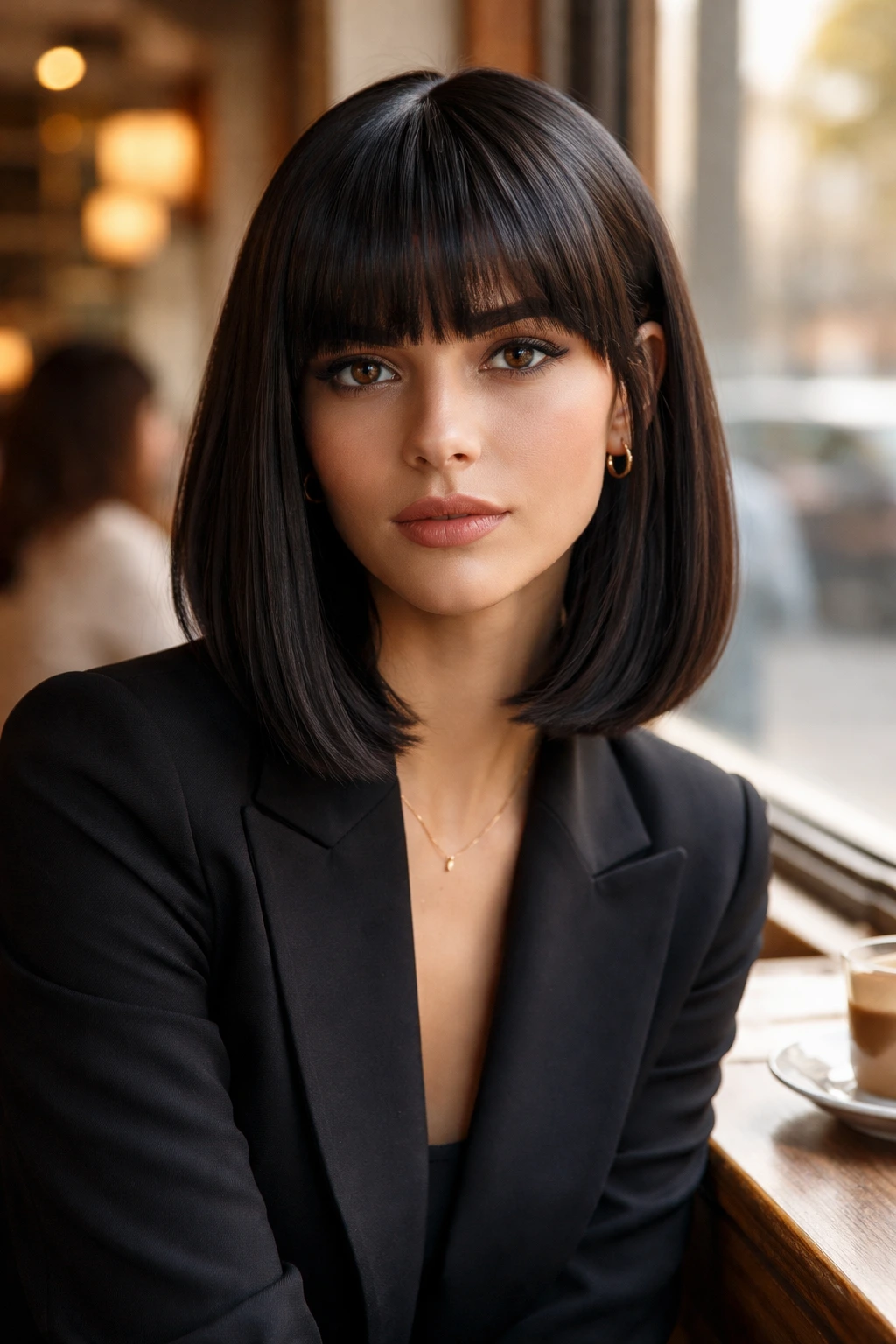
There is something chic about a heavy, blunt fringe paired with a blunt-cut lob. It is very “Parisian.” The sharp line of the bangs mirrors the sharp line of the length. It is a double-down on precision.
The Commitment
This is a commitment. You have to trim the bangs every few weeks. If they get too long, they lose their impact. You also need to keep the hair around your face and the bangs themselves free of oil, which can be a struggle if you have a naturally oily forehead.
Tips for Success
- Use a small amount of translucent powder on your forehead to keep the bangs from separating.
- Ensure the bang line is straight. Even a slight curve can make the whole look feel dated rather than architectural.
- If your hair is too fine, this look can fall flat. You need a fair amount of hair density to carry off both a heavy lob and heavy bangs.
16. The Tuck-Behind-Ear Sleek Lob
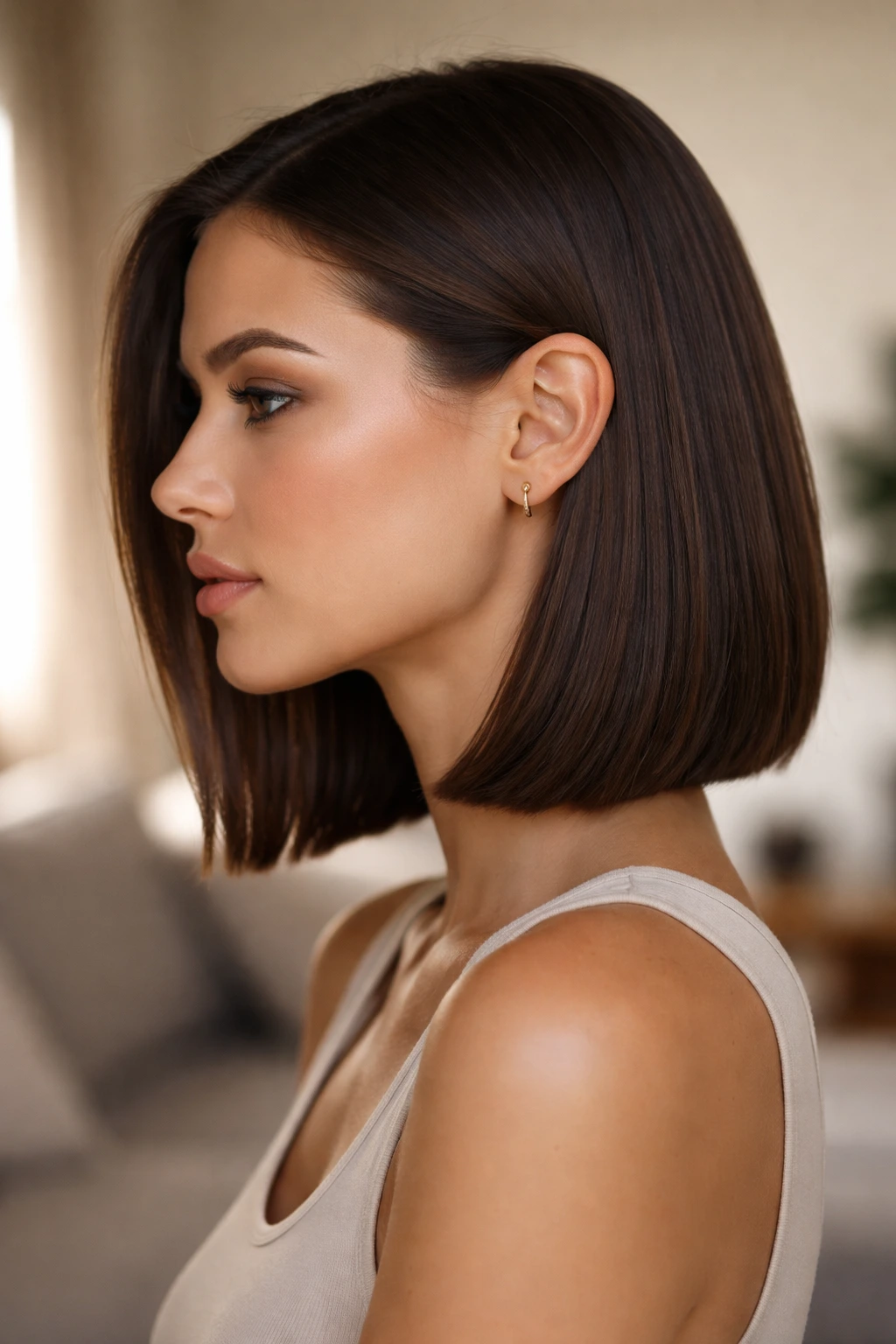
This is a technique, not just a cut, but it is a fundamental way to wear a lob. You can ask your stylist to “texture out” the area behind your ears to make tucking easier. If your hair is too thick, the “tuck” will push your hair forward, making you look like you have massive sideburns.
The “Thinning” Secret
Ask your stylist to take a small amount of weight out from behind the ear. This makes the tuck flush against the head. It is a tiny, hidden detail that makes a massive difference in how the cut looks on a day-to-day basis.
Daily Routine
When you dry your hair, push the hair behind your ear while it is still warm from the dryer. This helps it “set” in that tucked position. If you just tuck it when it is cold, it will fall forward within an hour. Heat and cooling are the keys to hair memory.
17. The Sleek Lob with Caramel Balayage
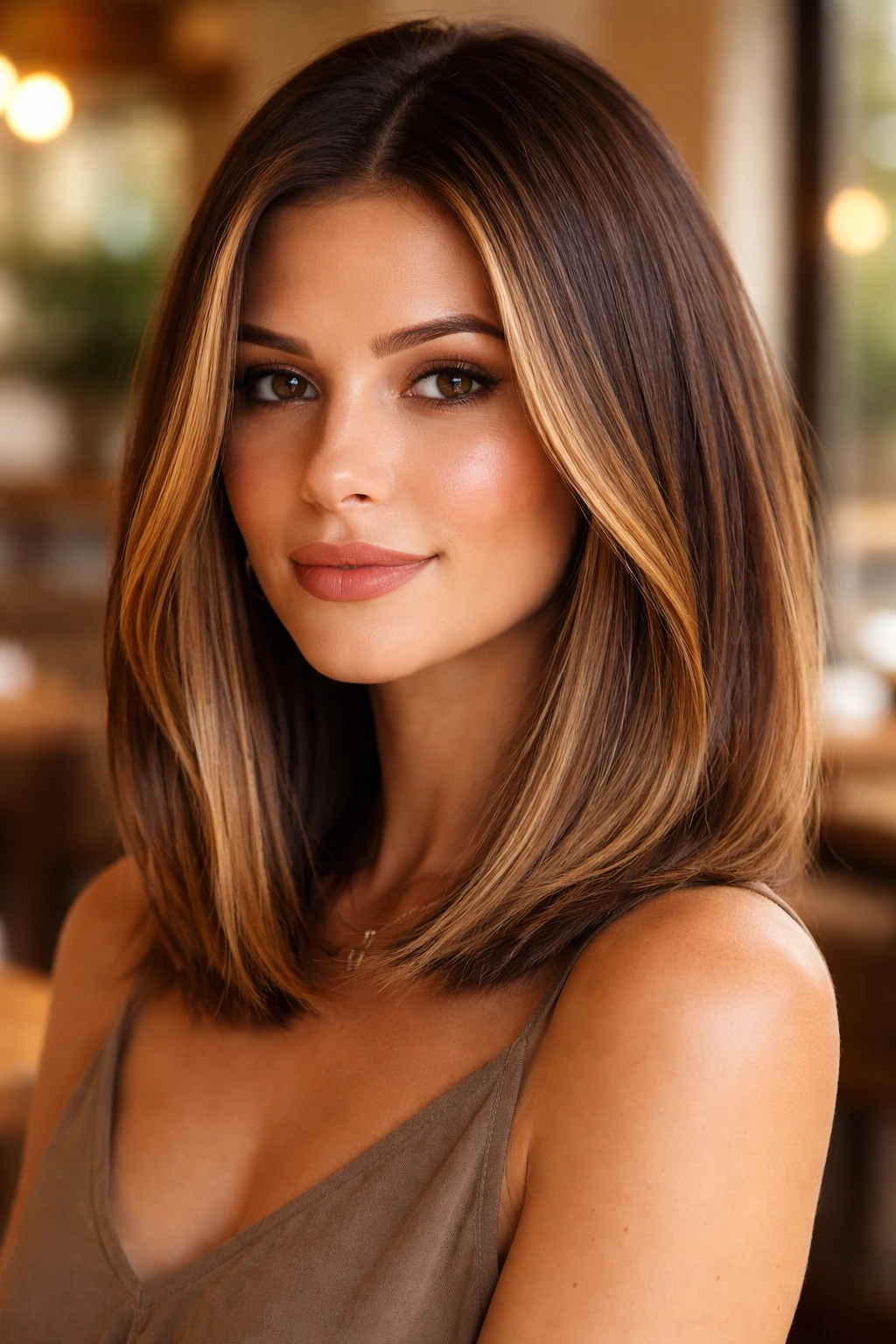
Color plays a massive role in how “sleek” a cut looks. Balayage, specifically in caramel or warm honey tones, adds dimension that prevents the blunt cut from looking like a wig. It breaks up the monotony of the one-length style.
Why It Enhances the Sleekness
Dimension creates the illusion of movement. When you wear a very dark, one-length cut, it can sometimes swallow your features. Adding lighter ribbons of color creates depth, allowing the eye to see the texture and the movement of the hair even when it is styled perfectly straight.
Choosing the Placement
Focus the color around the face and the ends. Avoid heavy root color; you want the roots to remain dark and natural so that the grow-out is easy. The goal is to make the hair look healthy and sun-kissed, not like it has been processed to death.
18. The Ultra-Glossy Sleek Lob
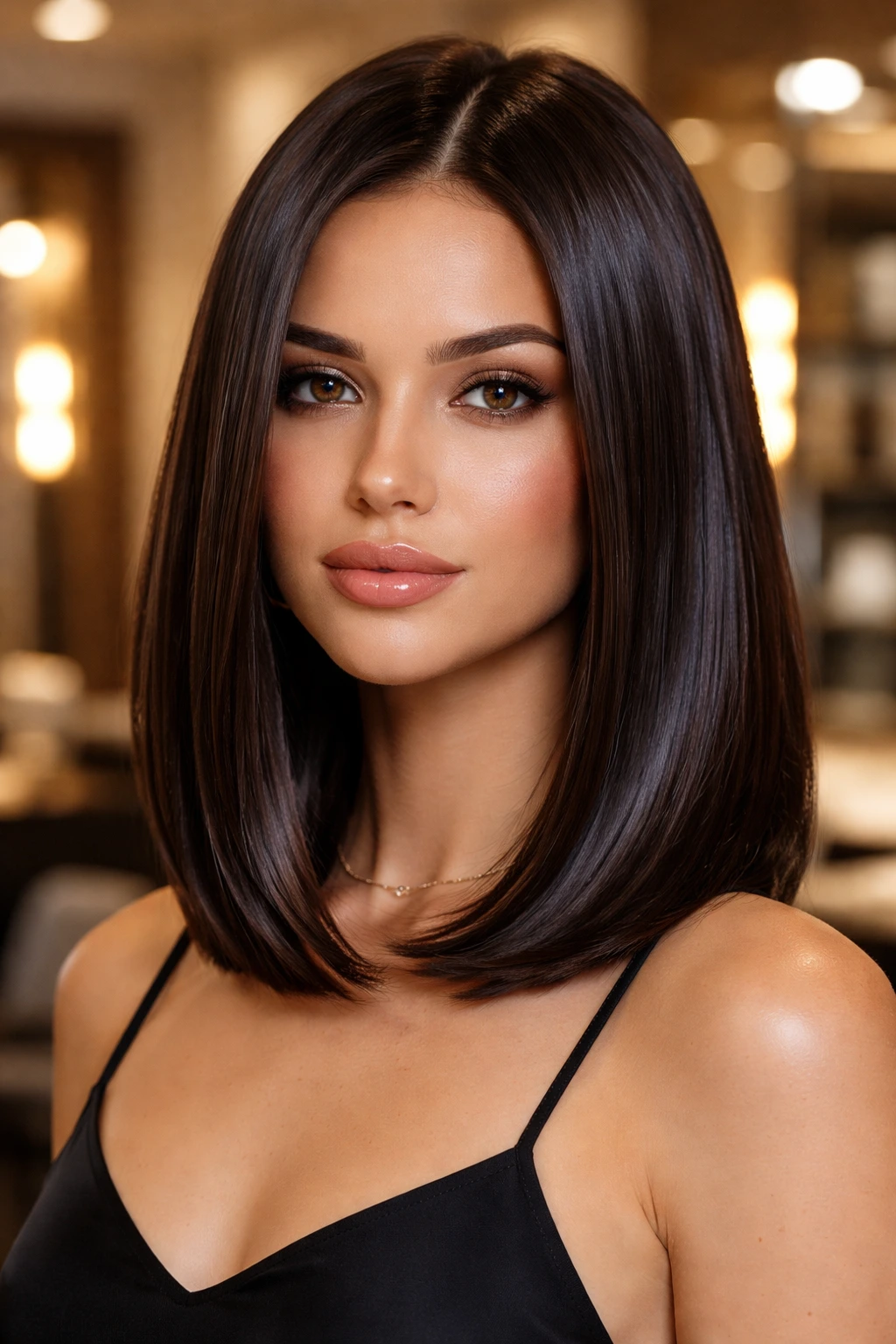
This is less about the cut and more about the finish. If you have the lob, you need the shine. Use a glossing treatment in the salon or at home to seal the cuticle. Healthy, shiny hair looks more expensive than any complicated cut.
The Science of Shine
Shine is just light reflection. Anything that roughs up the cuticle—heat, chemical damage, friction—diffuses the light, making the hair look matte. Smooth cuticles reflect light. Use cool water to rinse your hair, as it helps lay the cuticle flat.
Finishing Products
- A finishing spray that is specifically labeled “shine” or “glossing.”
- Avoid texturizing sprays, which contain salts that rough up the cuticle.
- The best accessory for this look is a silk pillowcase. It reduces friction while you sleep, preserving that sleek finish for the next day.
Final Thoughts on Choosing Your Style
The beauty of the medium-length bob is that it is a blank canvas. You can start with a basic blunt cut and, over the course of a few months, introduce bangs, angle, or hidden layers. You are not locked into one look forever.
When you go to the salon, bring pictures, but also talk about your lifestyle. If you hate styling your hair for more than 10 minutes, a blunt, one-length lob with minimal bangs is your best friend. If you enjoy the ritual of a blow-dry, you can handle the high-maintenance fringe or the asymmetrical cut.
Ultimately, a sleek lob is an exercise in editing. It is about removing what is not necessary—the excessive length, the unruly layers, the frizz—and leaving behind a clean, sharp, and intentional silhouette. Whether you choose the glass-hair look or the casual tuck-behind-the-ear style, the goal remains the same: hair that looks healthy, deliberate, and undeniably polished.
