



Fine hair is often misunderstood. It’s frequently lumped into categories that suggest it’s fragile or incapable of holding a style, but the reality is much more nuanced. Fine hair simply has a smaller diameter. When you add length to fine strands, gravity becomes your constant adversary. That weight pulls the hair flat against the scalp, draining volume and making the ends appear thinner than they actually are. The lob, or long bob, acts as the ultimate architectural solution for this specific hair texture. By keeping the length grazing the collarbone or hitting just above the shoulders, you remove the excess weight that causes that dreaded “triangle” effect or stringy ends.
Choosing the right cut isn’t just about picking a picture from a magazine; it’s about understanding how your hair behaves when it’s shorter. Fine hair craves structure. It needs a perimeter that holds its shape, or layers that provide lift without compromising the density at the bottom. The secret is finding the balance between having enough hair to play with and enough structure to keep it from looking limp by noon. If you are tired of spending thirty minutes with a round brush only for your style to deflate, you are in the right place. We are moving past generic advice to look at specific, purposeful cuts that actually change the way your hair sits.
Let’s look at thirty different ways to wear a lob that prioritize volume, movement, and the illusion of thickness.
1. The Classic Blunt Lob
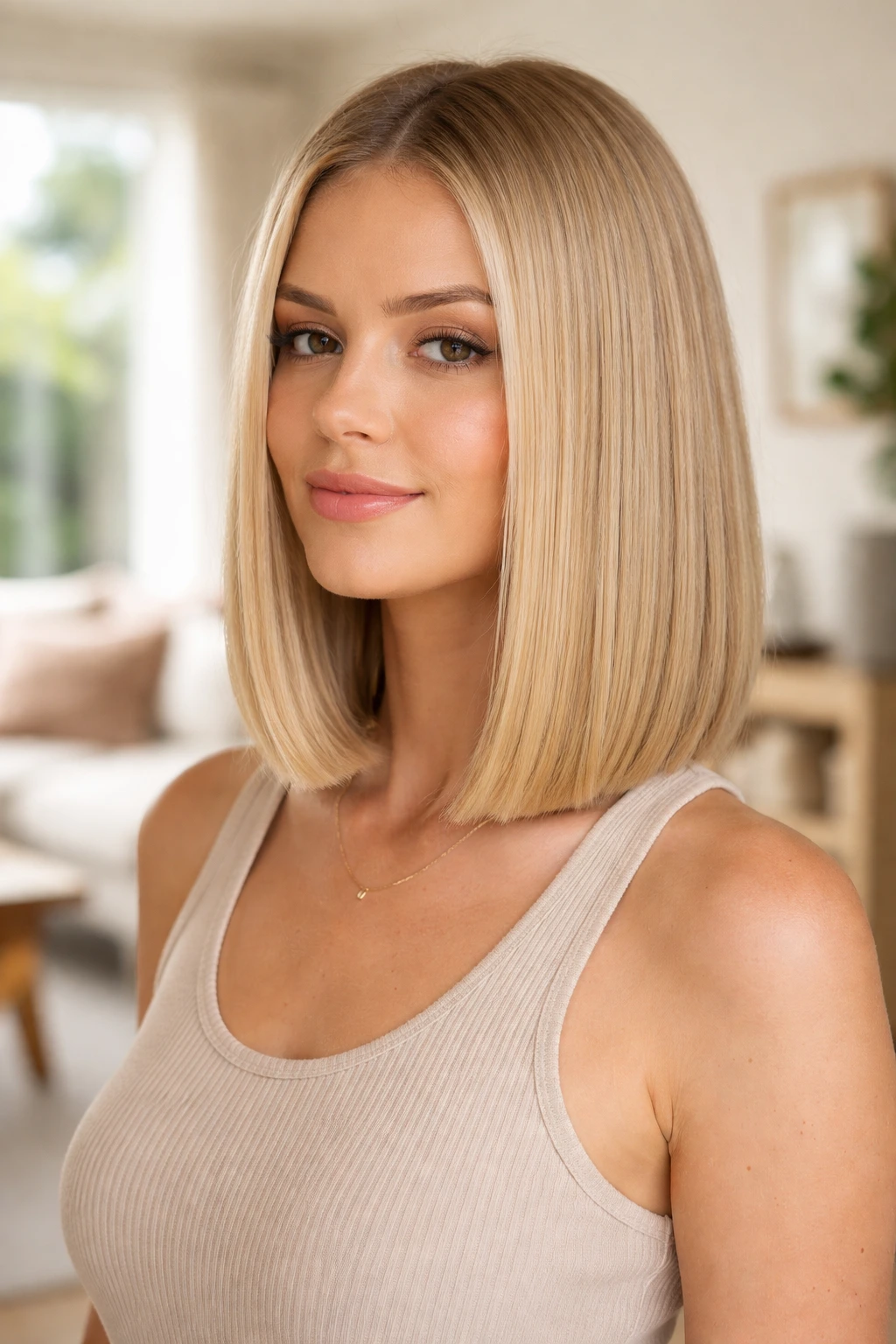
The blunt lob is the gold standard for fine hair, and for good reason. By cutting the ends in a perfectly straight, horizontal line, you create the illusion of maximum density. The weight is kept at the bottom, which makes the very tips of the hair look thick and healthy rather than wispy.
Why This Works for Fine Hair
When you add layers to very fine hair, you inevitably remove some of the bulk from the ends. A blunt cut preserves every single strand. This creates a solid “shelf” of hair that reflects light better and feels substantial when you run your fingers through it.
Pro tip: Ask your stylist to use sharp shears for the perimeter rather than texturizing shears. You want a crisp edge, not a soft, feathered one, to maximize that thick-ended look.
2. The Softly Layered Lob
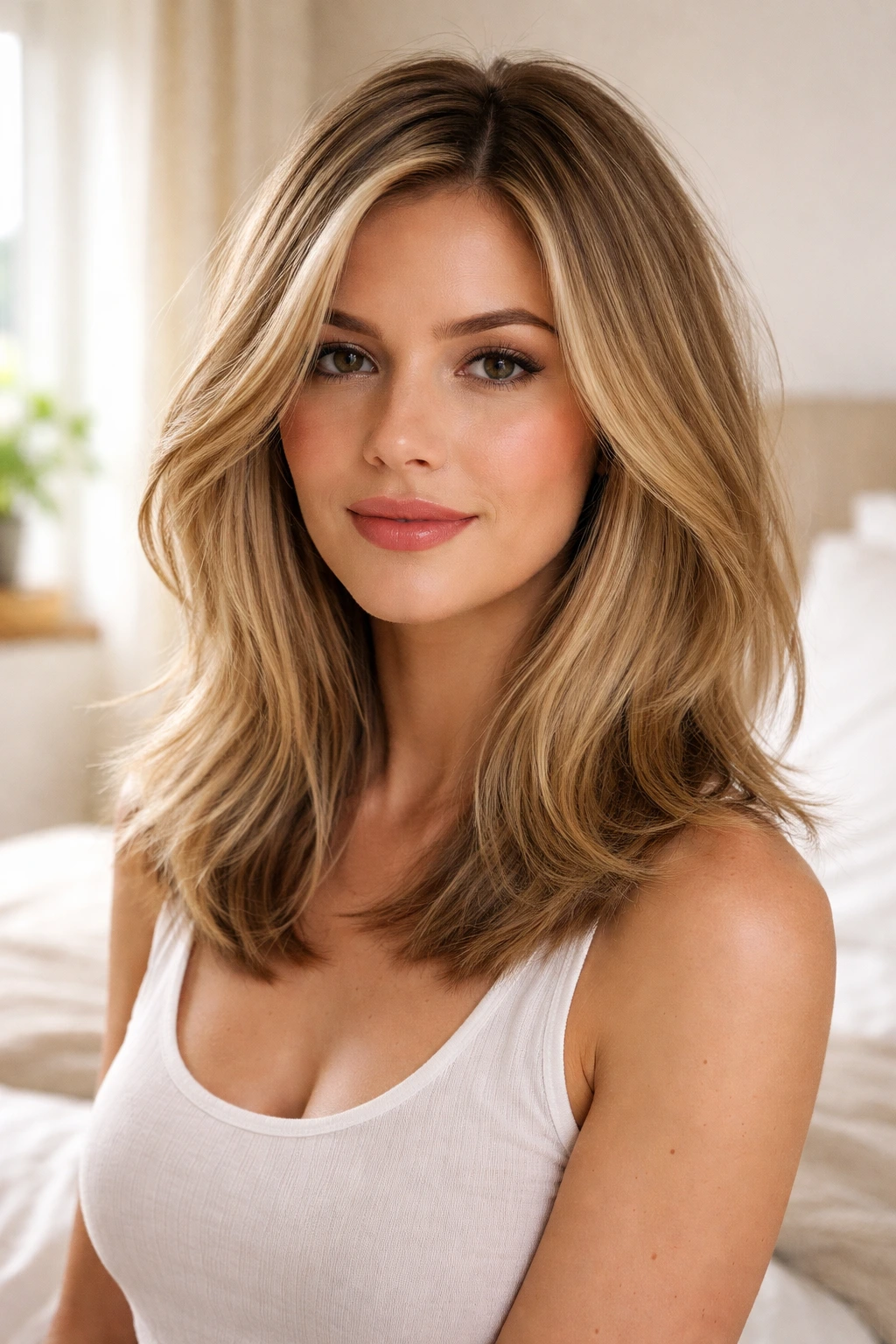
If you crave movement, the blunt cut might feel too static. Soft layers, cut into the interior of the hair rather than the perimeter, provide that necessary lift. These layers should be long and blended to ensure you don’t lose the weight at the bottom.
When layers are too short or too aggressive, fine hair tends to look “bitten” or choppy. Aim for “invisible layers” that provide lift at the roots while keeping the ends feeling full. This approach gives you that effortless, air-dried texture without sacrificing the illusion of thickness.
3. The A-Line Angle
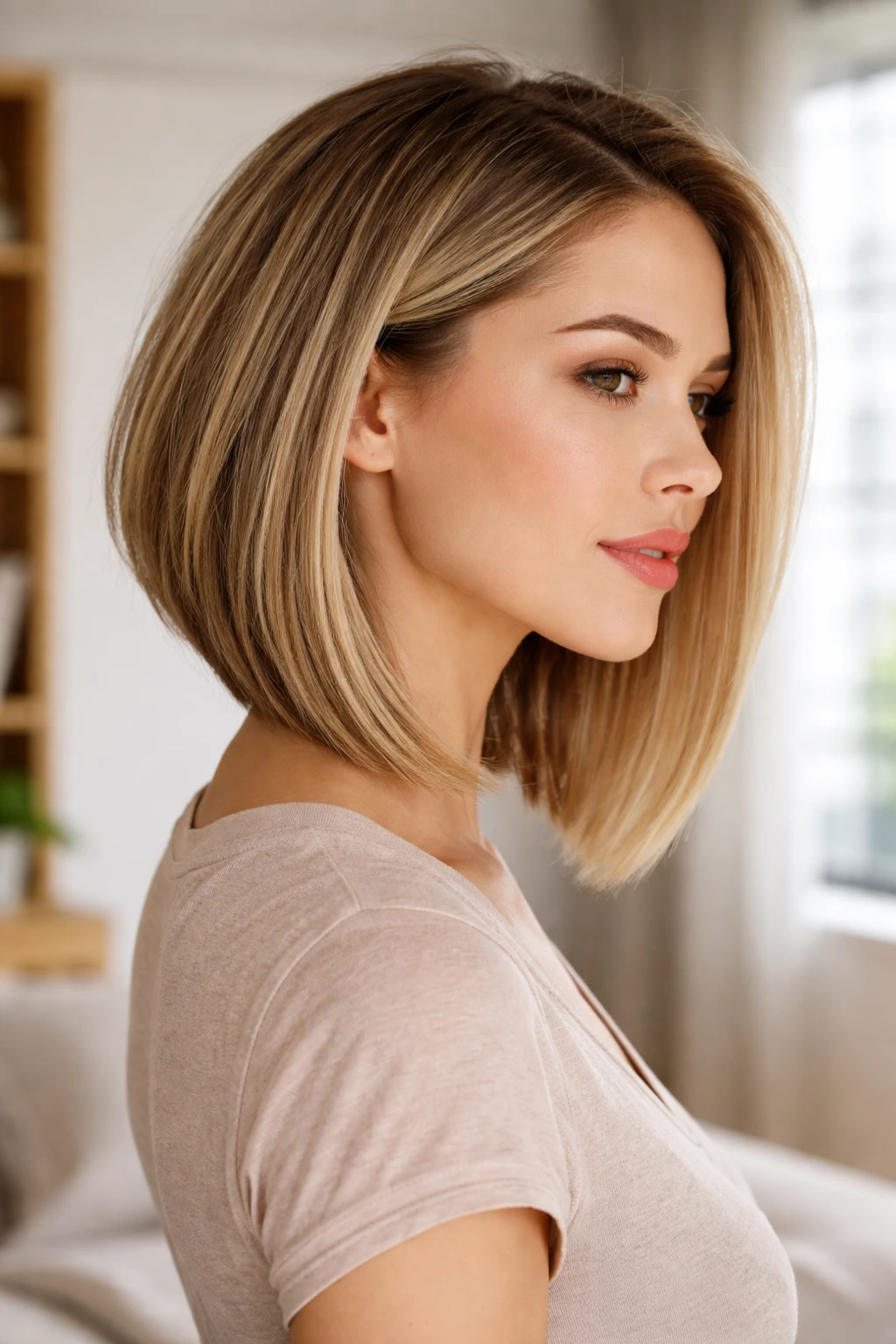
An A-line lob is cut shorter in the back and gradually gets longer toward the front. This is a classic trick for fine hair. The shorter back section is naturally lighter and resists gravity, meaning you get more volume at the crown without having to tease it to death.
Because the front pieces are longer, you still have the versatility to pull your hair back into a low ponytail or tuck it behind your ears. This cut frames the face beautifully and directs the eye downward, making the hair look sleeker and more polished.
4. The Shaggy Lob
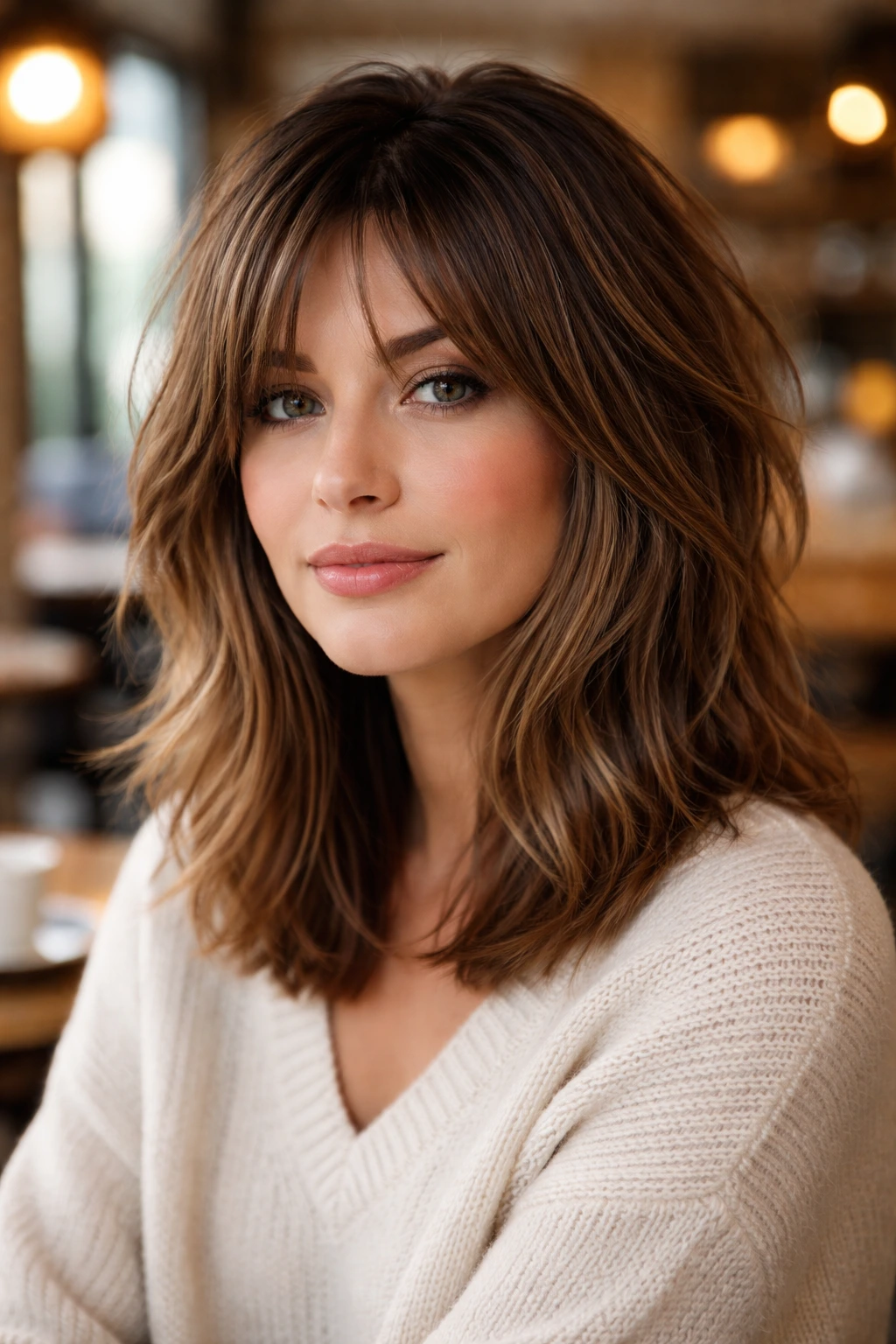
Shag cuts are having a moment, but for fine hair, you must tread carefully. A “soft” shag focuses on face-framing pieces and shattered, airy layers around the crown. It’s less about intense thinning and more about creating space between the strands to build body.
This style relies on texture sprays to hold the shape. It isn’t a “wash and wear” style for everyone, but it is excellent for those who want a more bohemian, lived-in aesthetic. The key is to keep the ends blunt—do not let the stylist thin them out, or you will end up with brittle-looking tips.
5. The Invisible Layers Cut
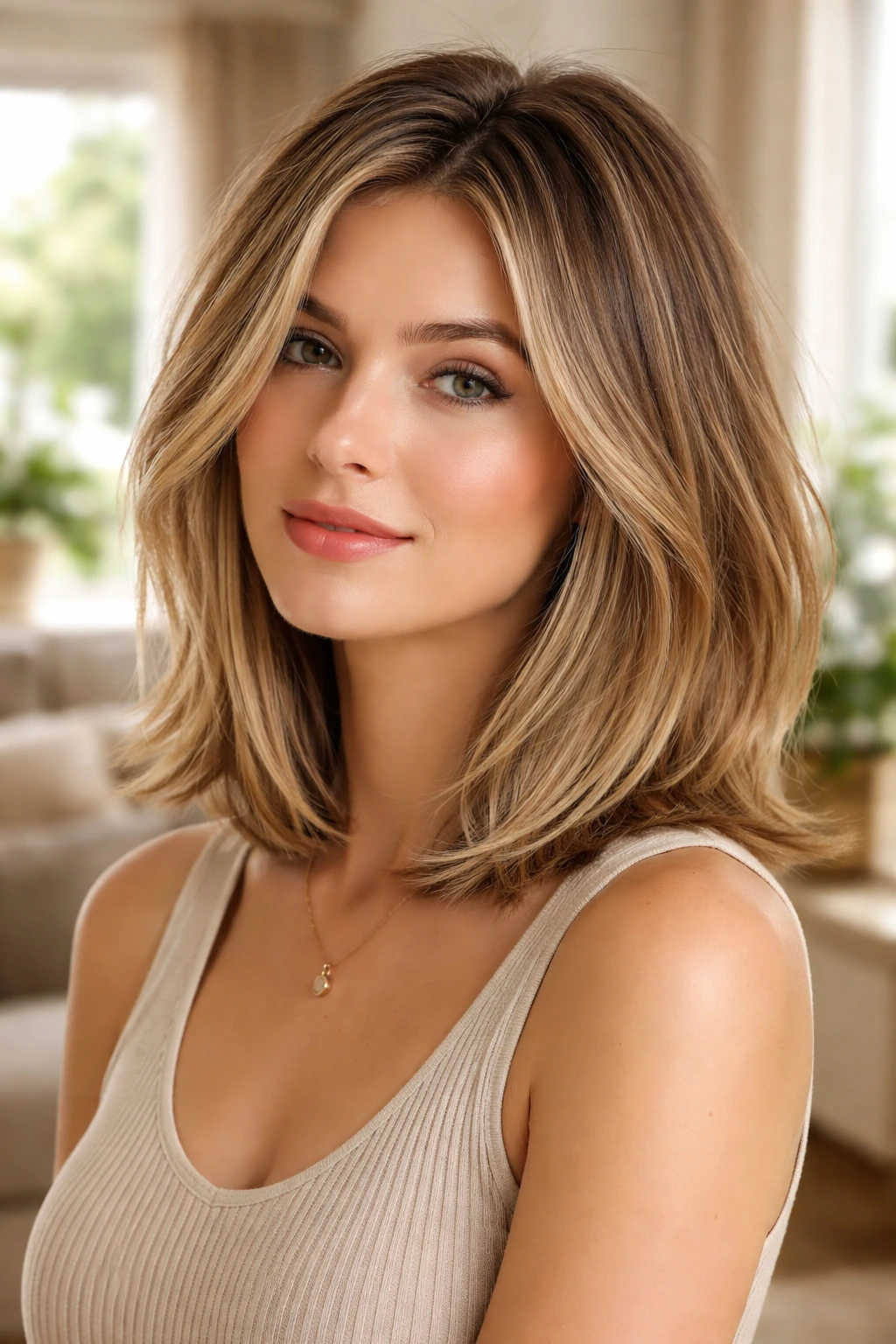
This technique is the secret weapon for fine-haired clients who want volume but hate the look of layers. The stylist lifts sections of hair and cuts very subtle, shorter lengths underneath the top layers.
These interior layers act like scaffolding. They push the top layer of hair up, creating a natural boost at the root and through the mid-lengths. The best part is that you can’t actually see the layers, so your lob still looks sleek and one-length from the outside.
6. The Face-Framing Lob
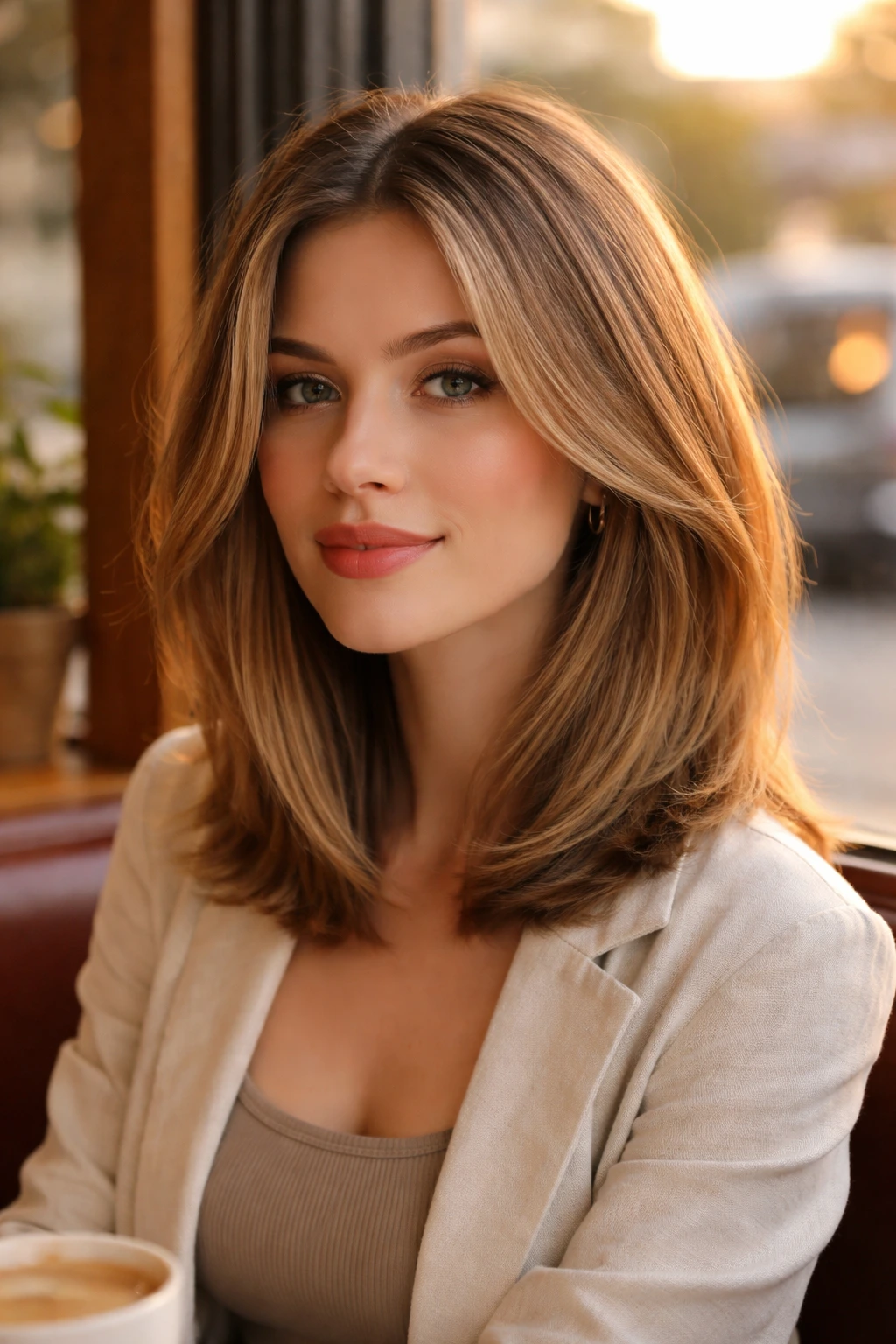
Sometimes, the issue isn’t the whole head of hair—it’s how the hair interacts with your face. A lob that features longer, face-framing layers starting at the chin can draw attention to your features rather than your hair’s density.
When the front is slightly shorter than the back, it prevents the hair from hanging like a curtain. It creates a “nest” for your face, which often makes the hair look intentional and styled even when it’s barely touched. Keep these layers soft and blended.
7. The Curtain Bang Lob
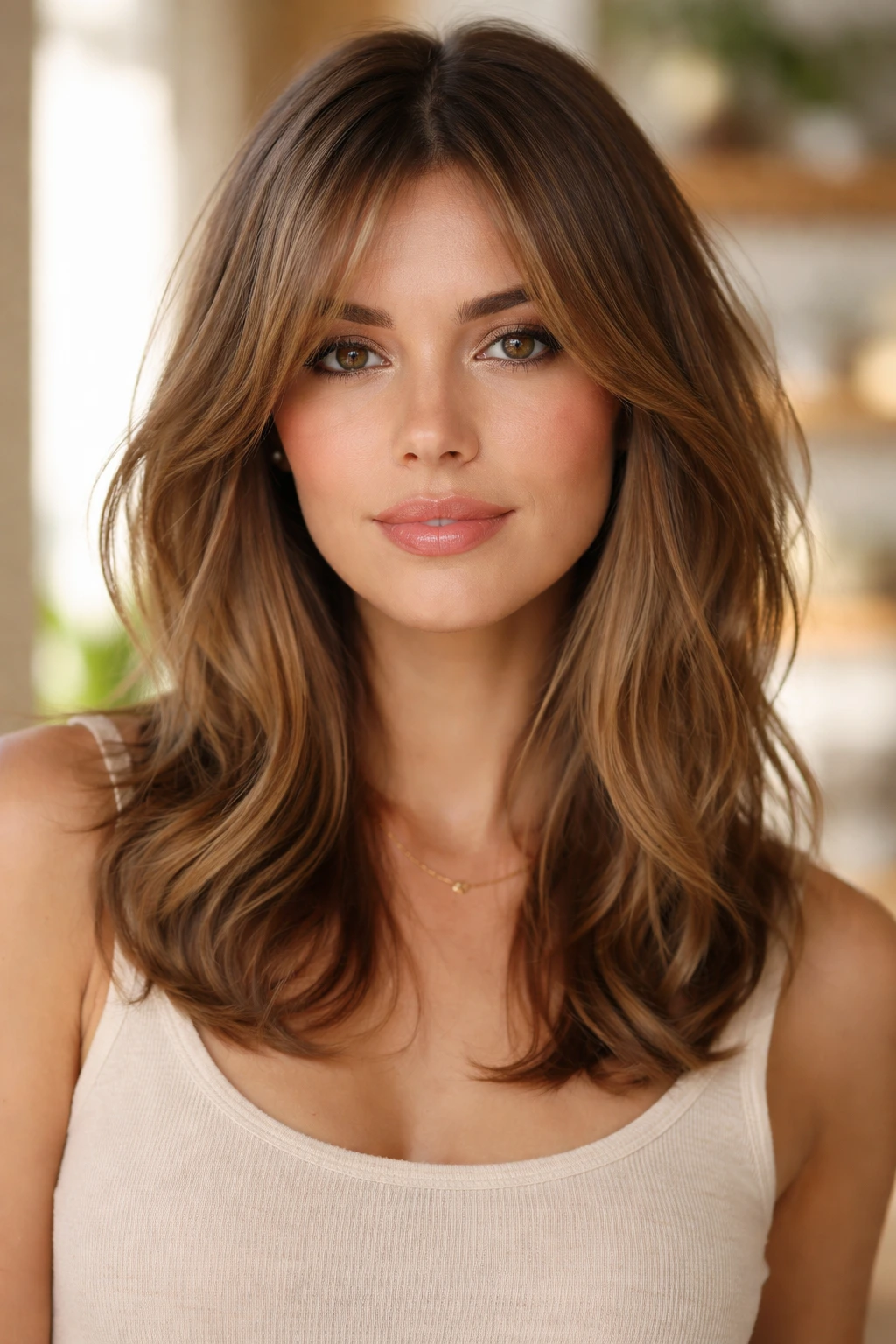
Curtain bangs are a fantastic addition to a lob for fine hair because they add volume right where you need it—at the top. They are long, sweeping bangs that part in the middle, creating a beautiful arch that frames the forehead.
Because they are longer than traditional blunt bangs, they don’t look heavy or greasy. They integrate into the rest of your hair smoothly. This style is perfect if you have a larger forehead or if you simply want to change your look without cutting your main length.
8. The Wispy Bangs Lob
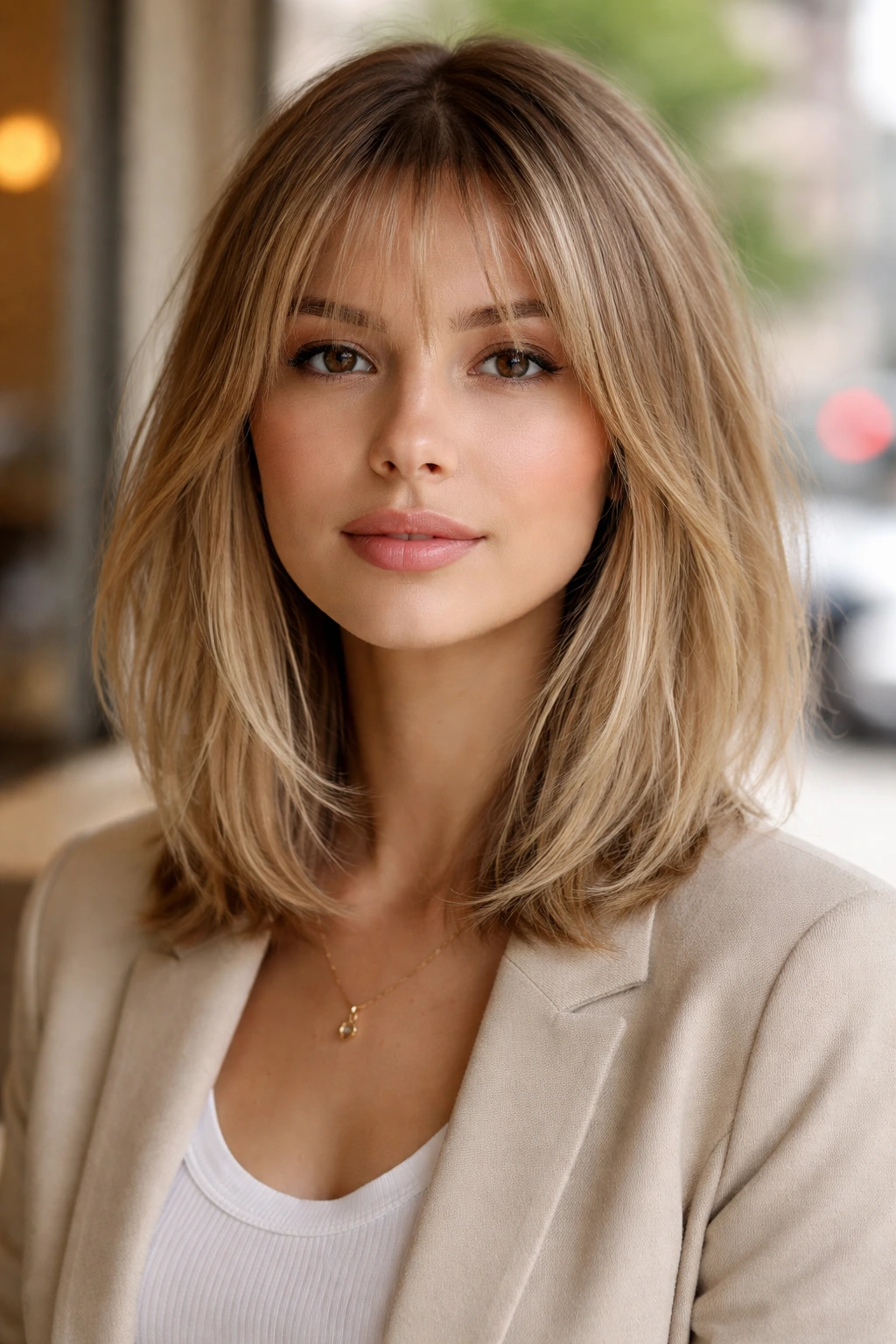
If you love a fringe but worry that a thick, blunt bang will take away too much hair from the rest of your cut, try a wispy version. These bangs are light and airy, allowing some forehead to show through.
The trick is to start the sectioning further back than you think, but cut it thinner. You want just enough hair to define the fringe, but not so much that the back of your head feels sparse. This is a very youthful, Parisian-style cut that works exceptionally well with a sleek, shoulder-length lob.
9. The Deep Side Part Lob
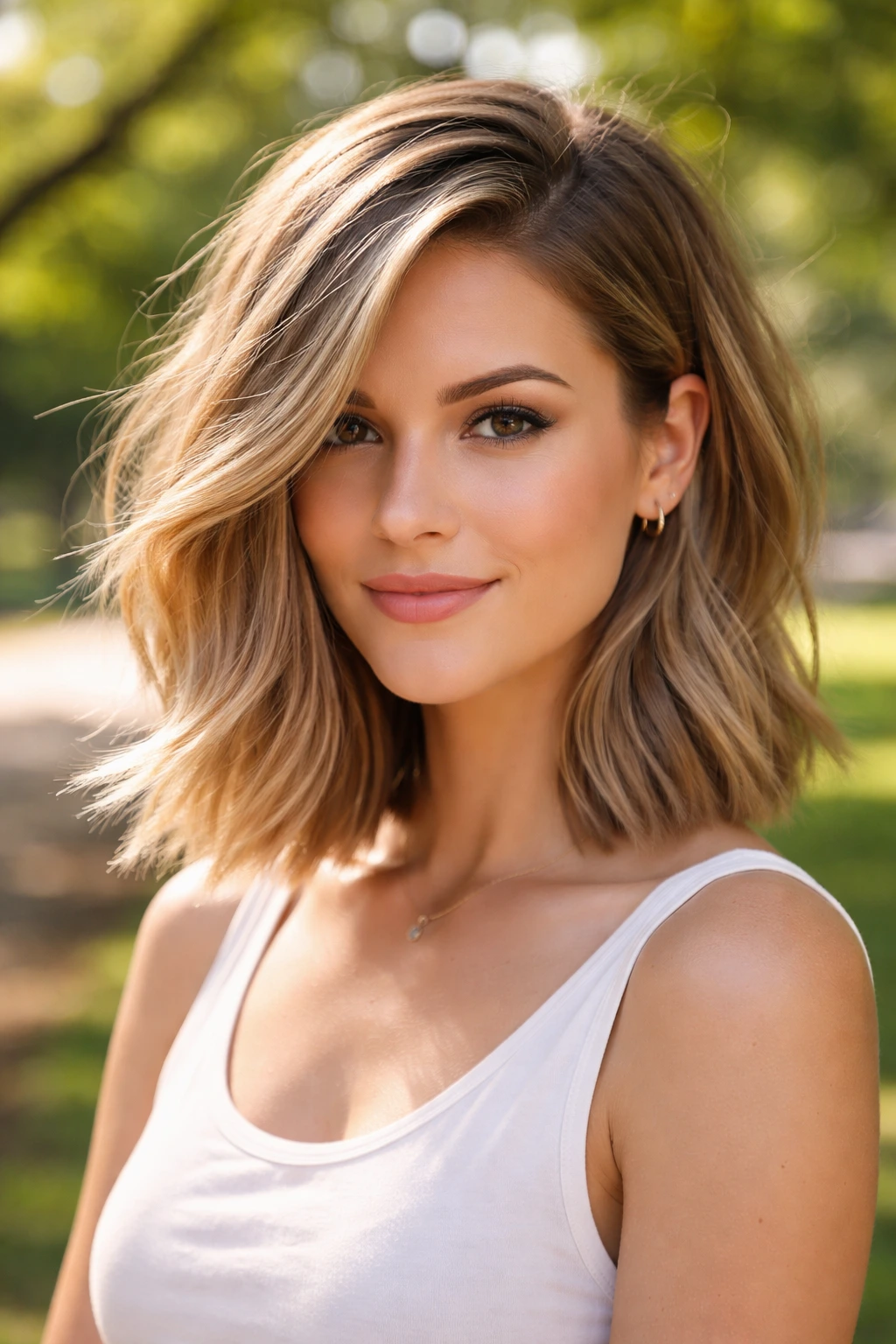
A deep side part is the oldest trick in the book for creating instant, gravity-defying volume. When you flip a large section of hair over to one side, you are essentially doubling the thickness on that side of your head.
Pairing this with a lob is incredibly effective. Because the hair is shorter than, say, a waist-length cut, the weight is minimal, meaning the part stays put much longer. Use a little dry shampoo at the roots before parting to give it extra grip and lift.
10. The Asymmetrical Lob
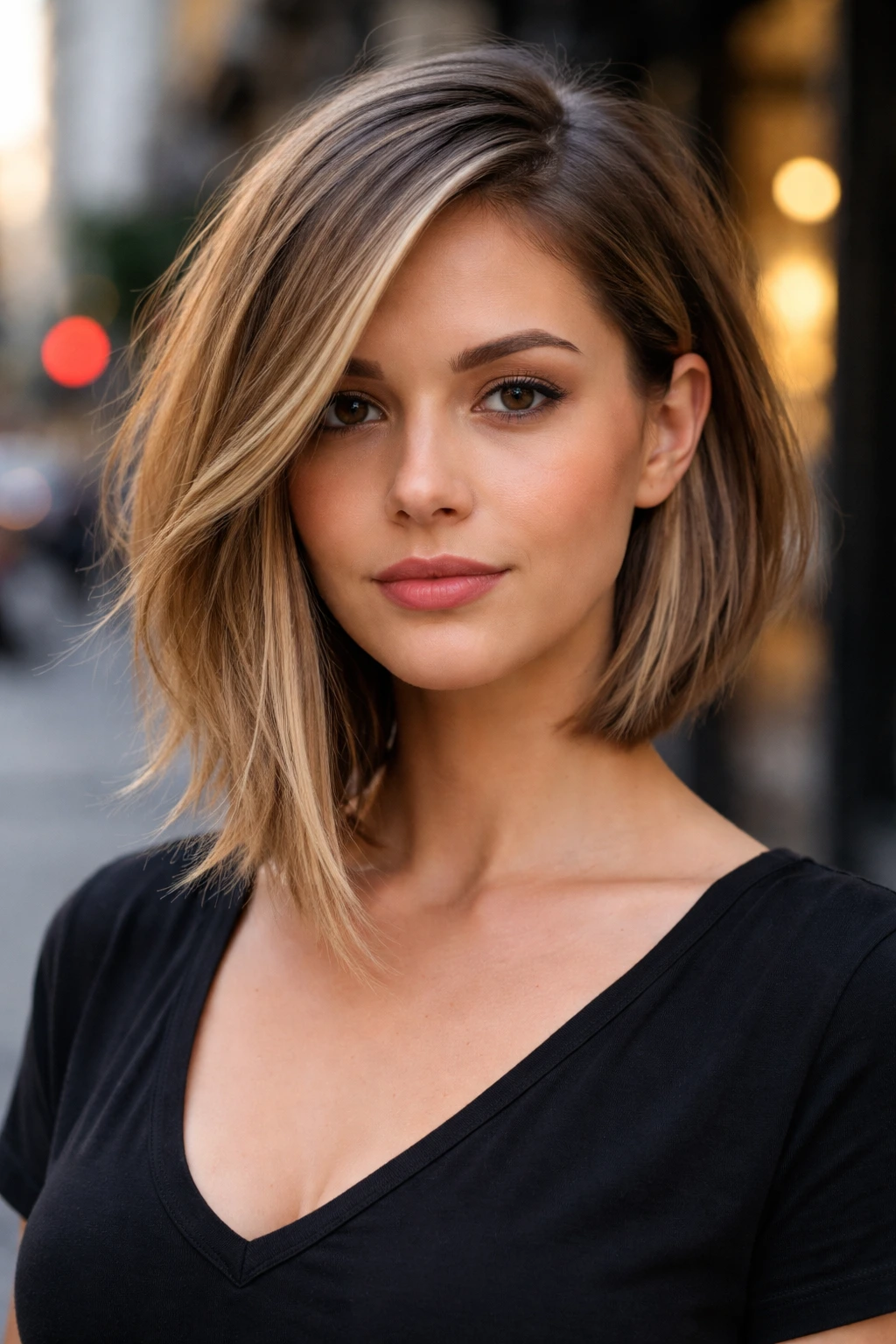
An asymmetrical lob—where one side is noticeably longer than the other—is a bold choice that works surprisingly well for fine hair. The diagonal line created by the cut tricks the eye into seeing more hair than is actually there.
This style forces the hair to fall in a specific way, which can actually help with styling. Instead of fighting for volume, you are embracing a shape. It looks modern, intentional, and, most importantly, thick.
11. The Textured Ends Cut
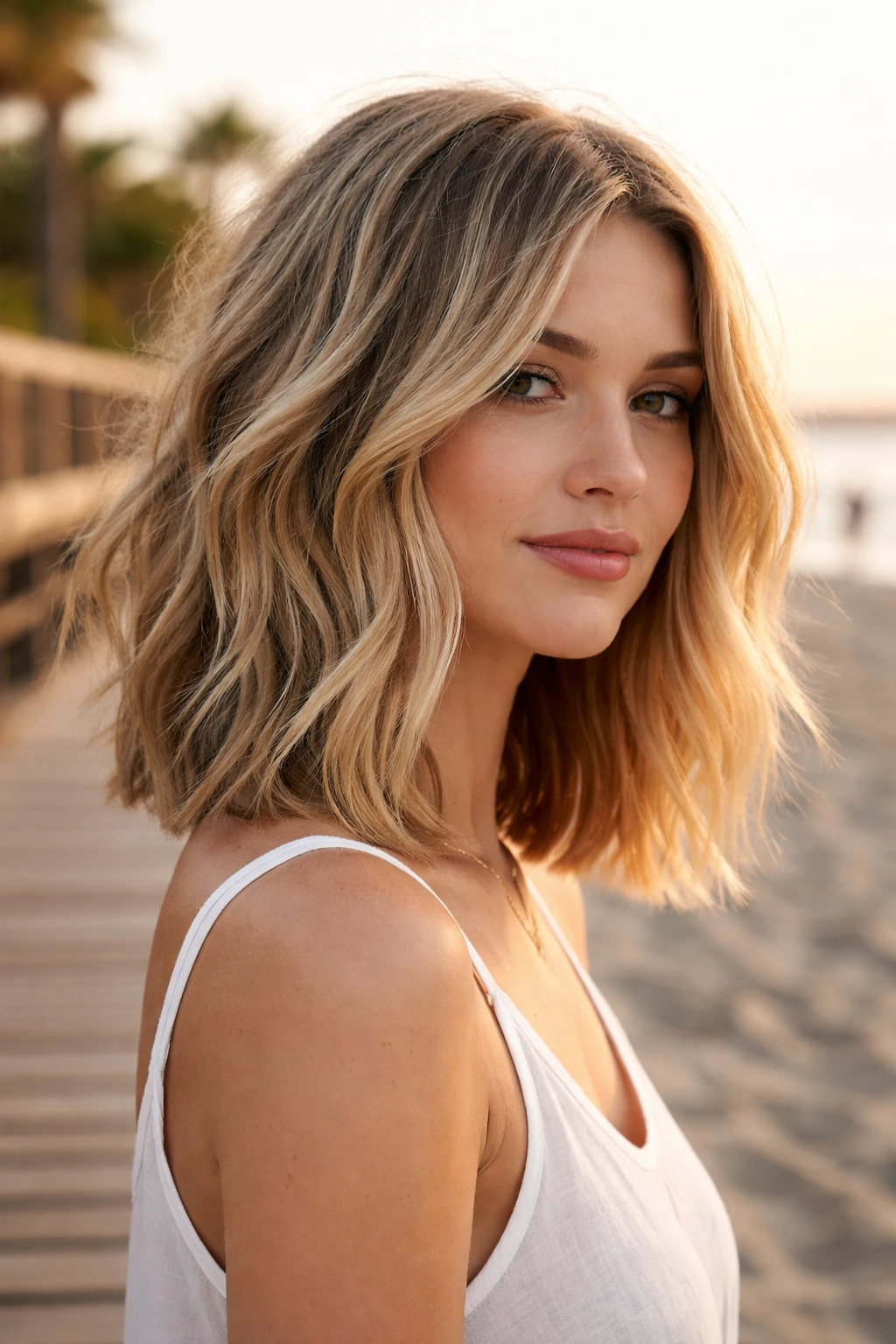
If you are tired of the “blunt” look, you can have your stylist use a point-cutting technique on the very ends. This involves cutting into the ends of the hair vertically rather than straight across.
This creates a soft, feathered edge that doesn’t look thin. It removes the bluntness but keeps the strength of the perimeter. It’s ideal for people who want a slightly more relaxed, beachy vibe without the extreme maintenance of a full shag cut.
12. The Razored Lob
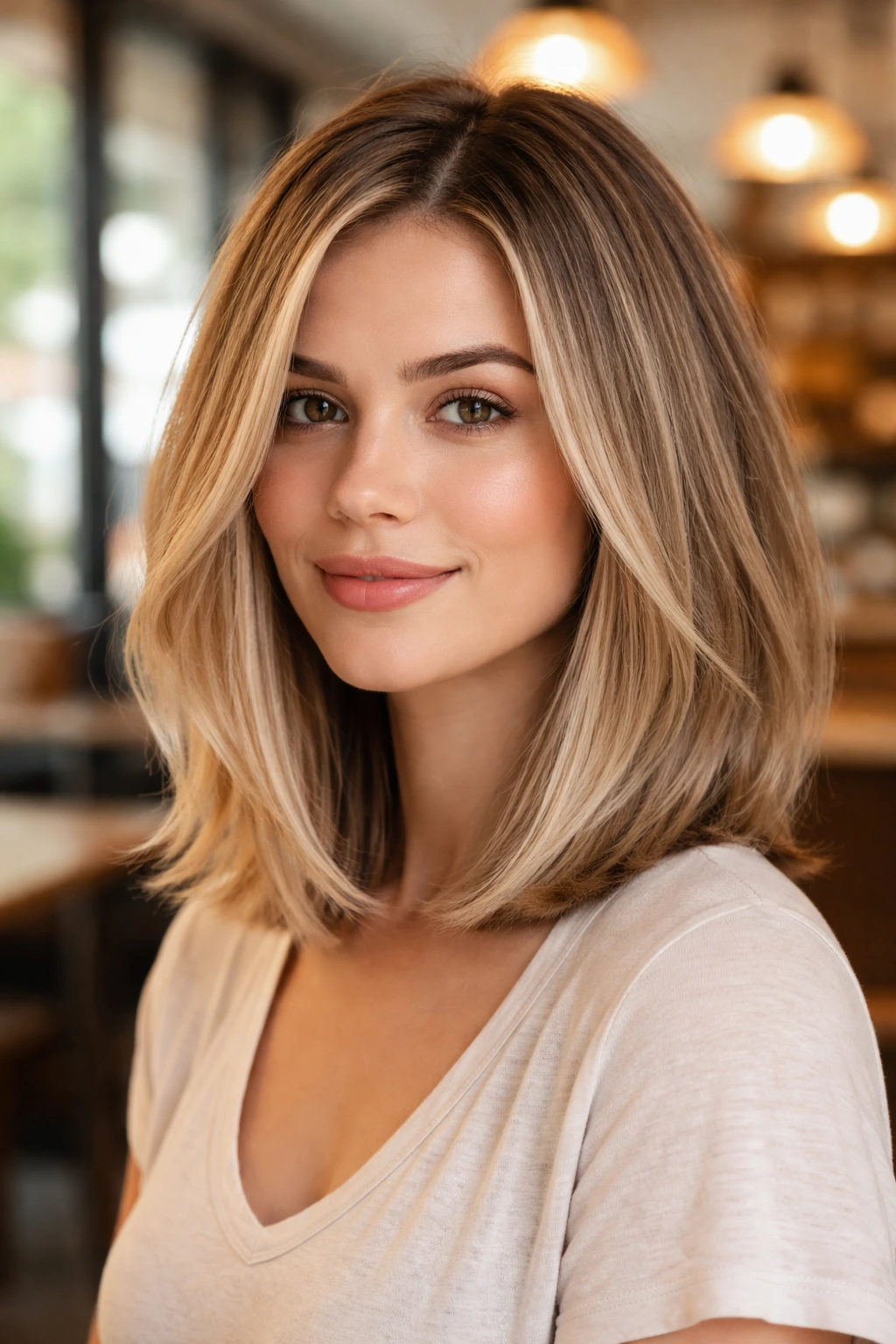
A razor cut is controversial for fine hair, but when done by an expert, it is magical. A skilled stylist uses a straight razor to taper the ends of the hair, creating a very light, soft finish that behaves differently than scissor-cut hair.
The razor helps the hair stack on itself. It creates a natural “c” shape that curls inward toward your face. This is particularly good for fine hair that tends to frizz or stick straight out; the razored edge helps the hair lay flatter and smoother.
13. The Inverted Lob
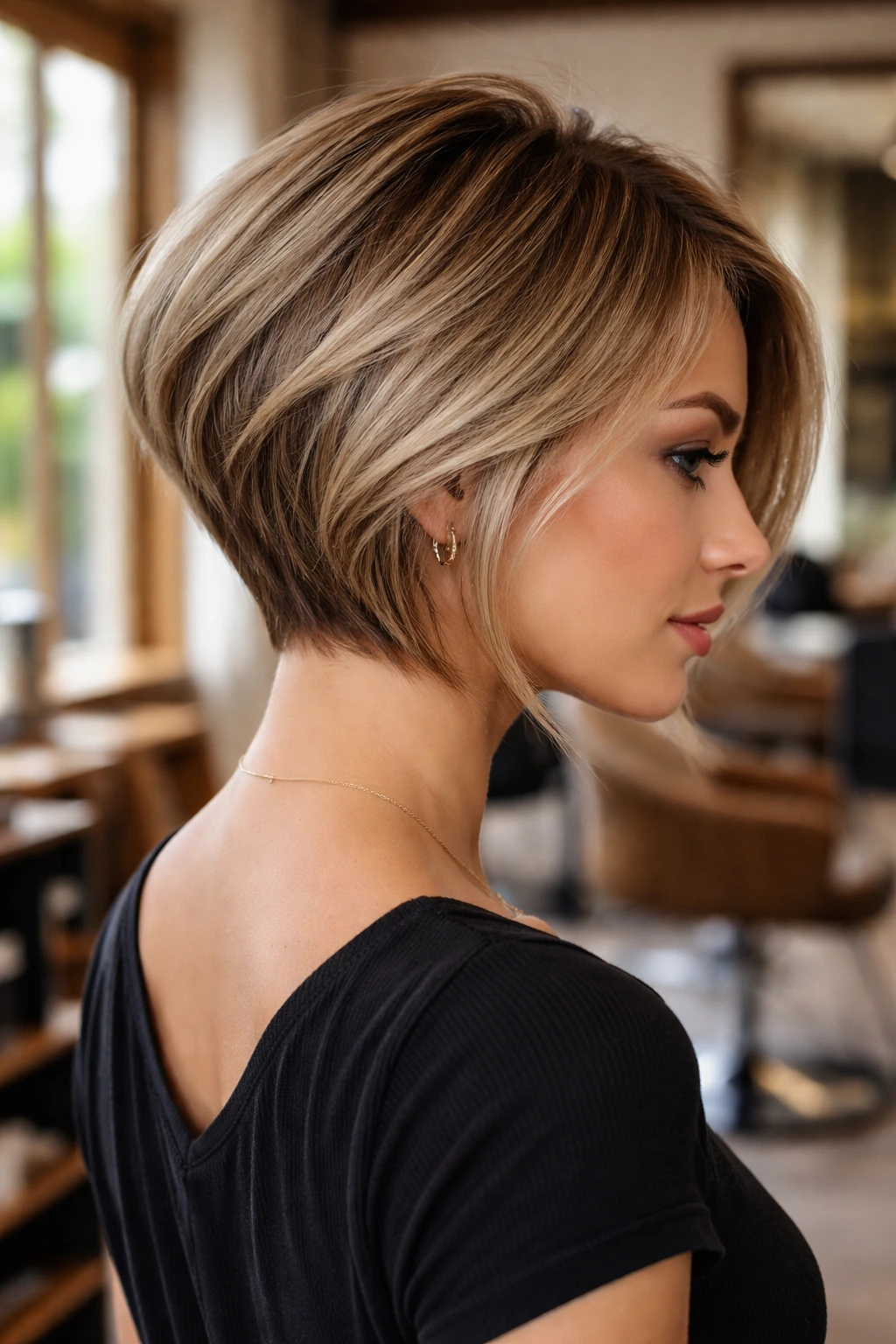
An inverted lob is a more dramatic version of the A-line. It features a very steep, sharp angle. The back can be quite short, almost bob-length, while the front grazes the collarbone.
The extreme graduation helps with volume at the nape. Because the hair at the back is so short, it is almost impossible for it to go flat. This is a high-maintenance cut in terms of trimming, but it is one of the highest-volume styles you can get for fine hair.
14. The Longer-in-Front Lob
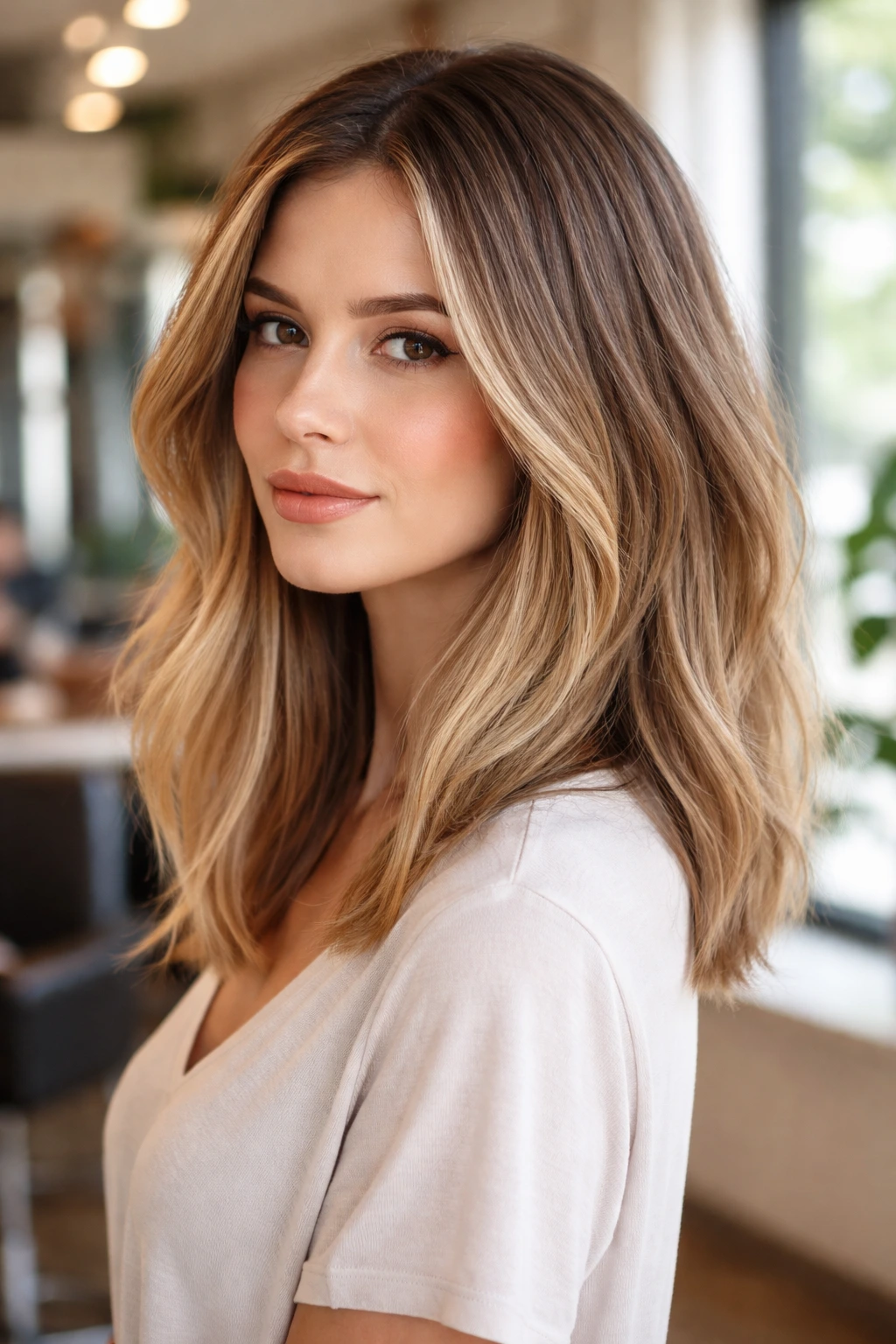
Similar to an A-line, but less about a dramatic angle and more about elongating the face. This cut keeps the back at shoulder length while the front pieces come down to the mid-chest.
This is a great compromise if you aren’t ready to let go of your length but want the manageability of a lob. It keeps the hair off your shoulders in the back (reducing tangles) while keeping your face framed by longer, elegant pieces.
15. The Money-Piece Enhanced Lob
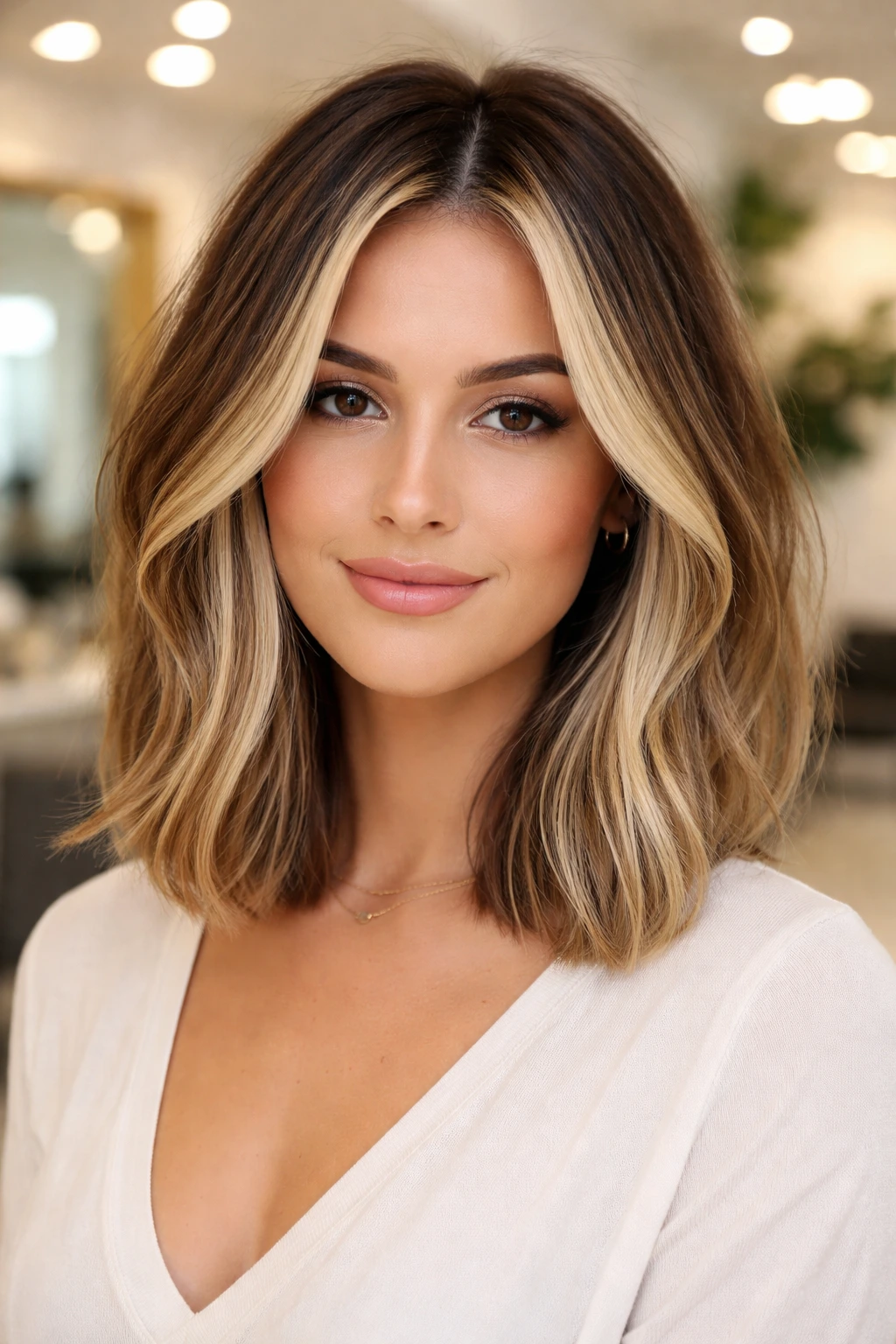
Sometimes, the cut isn’t the only tool at your disposal. Adding a “money piece”—a brighter highlight right at the front—creates a visual focal point that distracts from the hair’s diameter.
When the front section is lighter, it often appears more voluminous. The color creates dimension, and dimension creates the illusion of texture. This works wonders when combined with a blunt cut, as the color highlights the sharpness of the ends.
16. The Balayage Lob
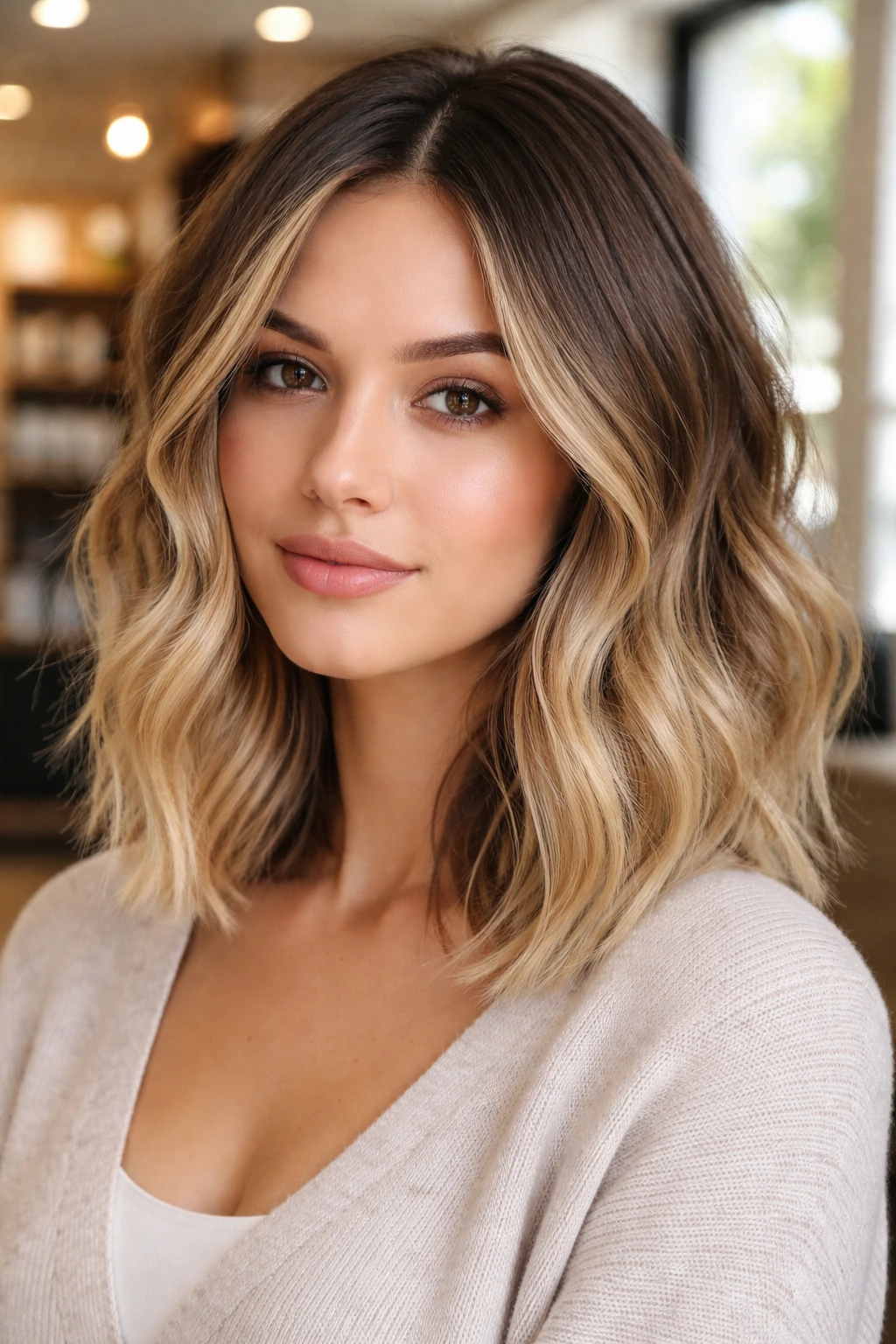
Balayage is the ultimate color technique for fine hair. By painting highlights throughout the mid-lengths and ends and keeping the roots darker, you create a natural depth that makes the hair look denser.
The contrast between the roots and the ends is key. When your roots are darker, they look “thicker” because there is no light shining through the hair to the scalp. This contrast mimics the look of a fuller head of hair.
17. The Bottleneck Bangs Lob
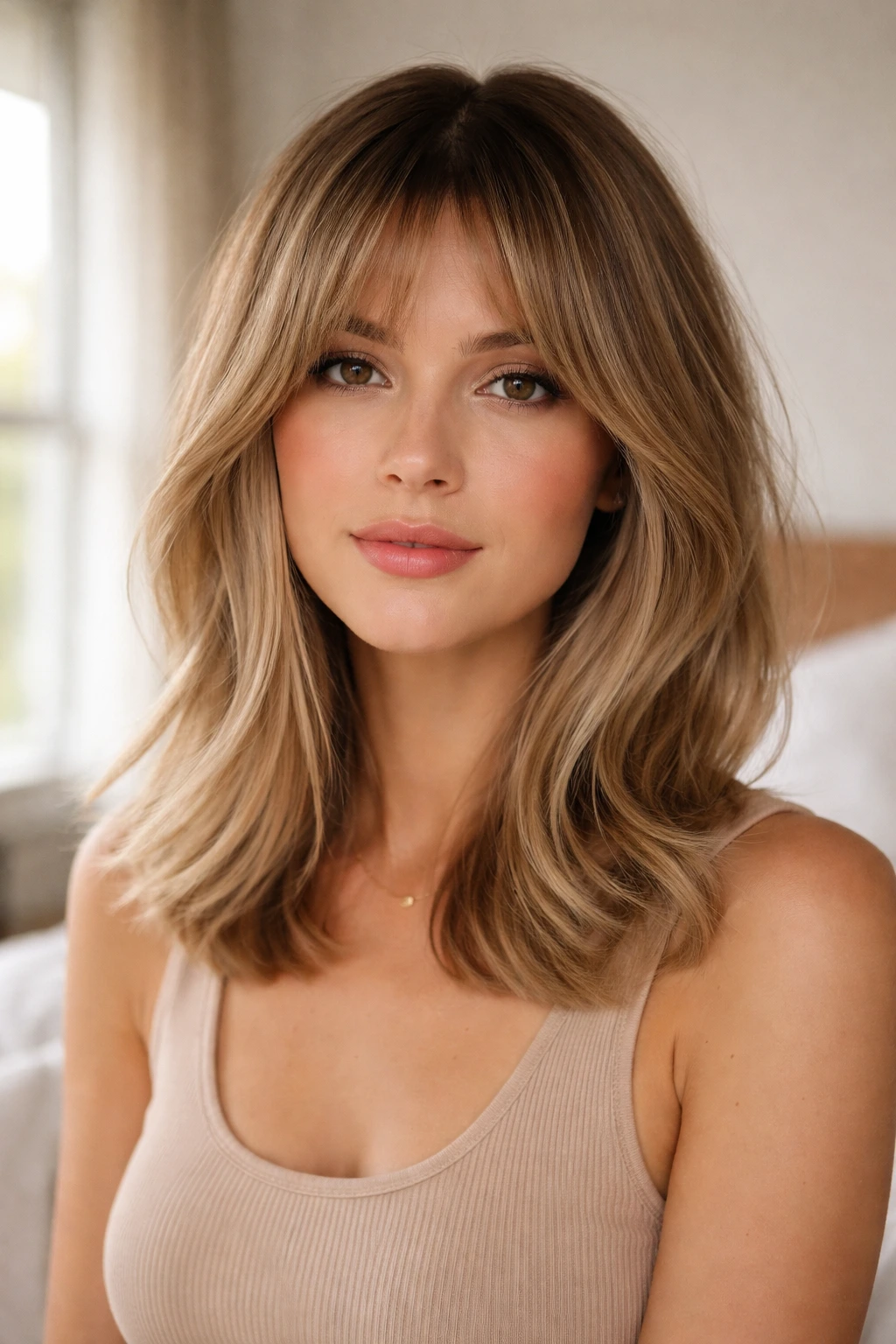
Bottleneck bangs are a hybrid between curtain bangs and a full fringe. They are short in the middle and get longer as they move toward the temples.
This style is perfect for fine hair because it mimics the natural growth pattern of bangs without forcing you to commit to a full, heavy fringe. It creates a soft transition, making the entire haircut feel cohesive and well-styled, even if you just rolled out of bed.
18. The Retro Blowout Lob
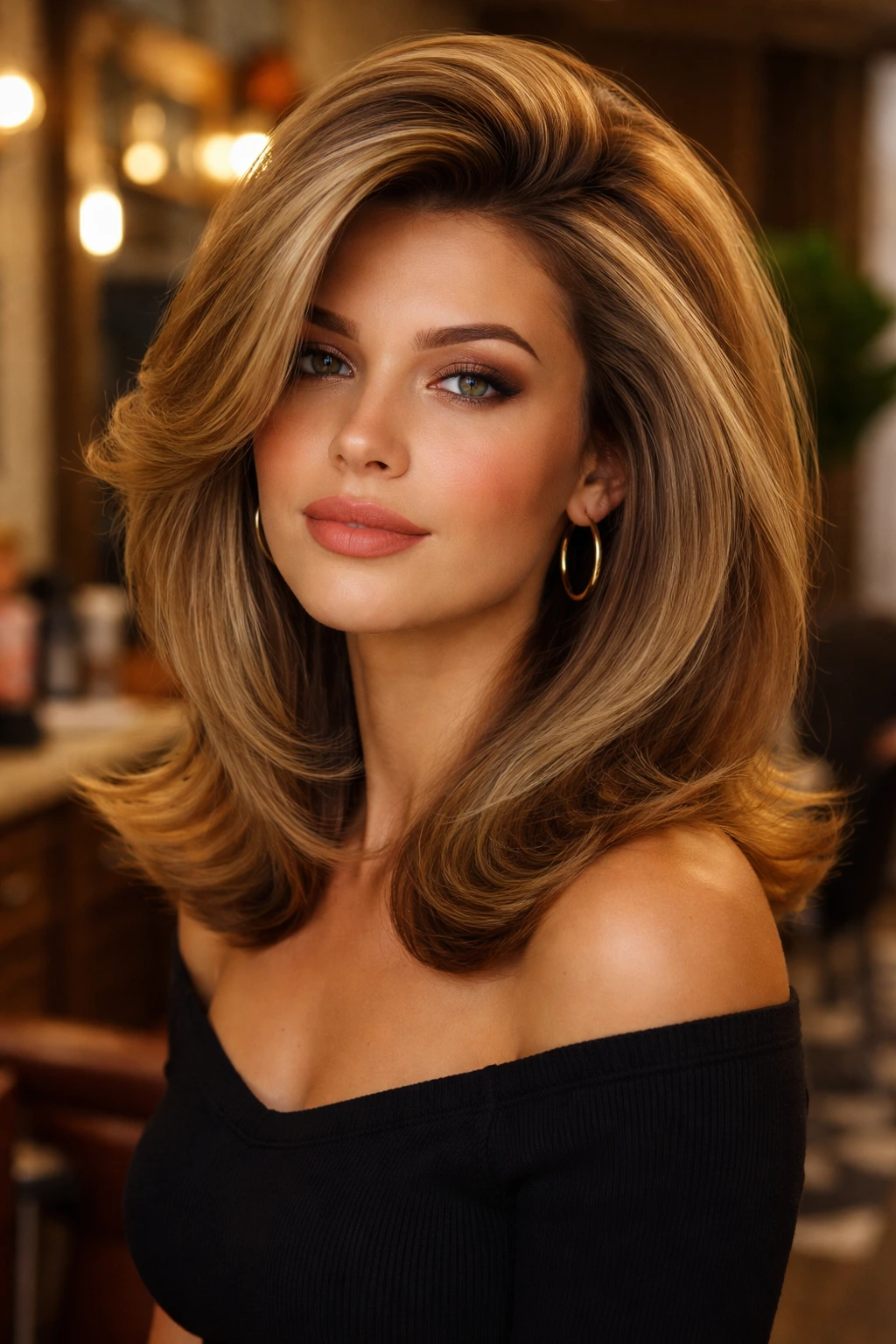
This isn’t a cut per se, but it is a style that defines the cut. Think of a 90s-inspired blowout with massive volume at the roots and a slight flip at the ends.
A lob is the perfect length for this style because it is short enough to hold a curl without the weight pulling it out. If you have a lob, invest in a round brush and a good volumizing mousse. You can achieve massive volume that lasts for days.
19. The One-Length Minimalist Lob
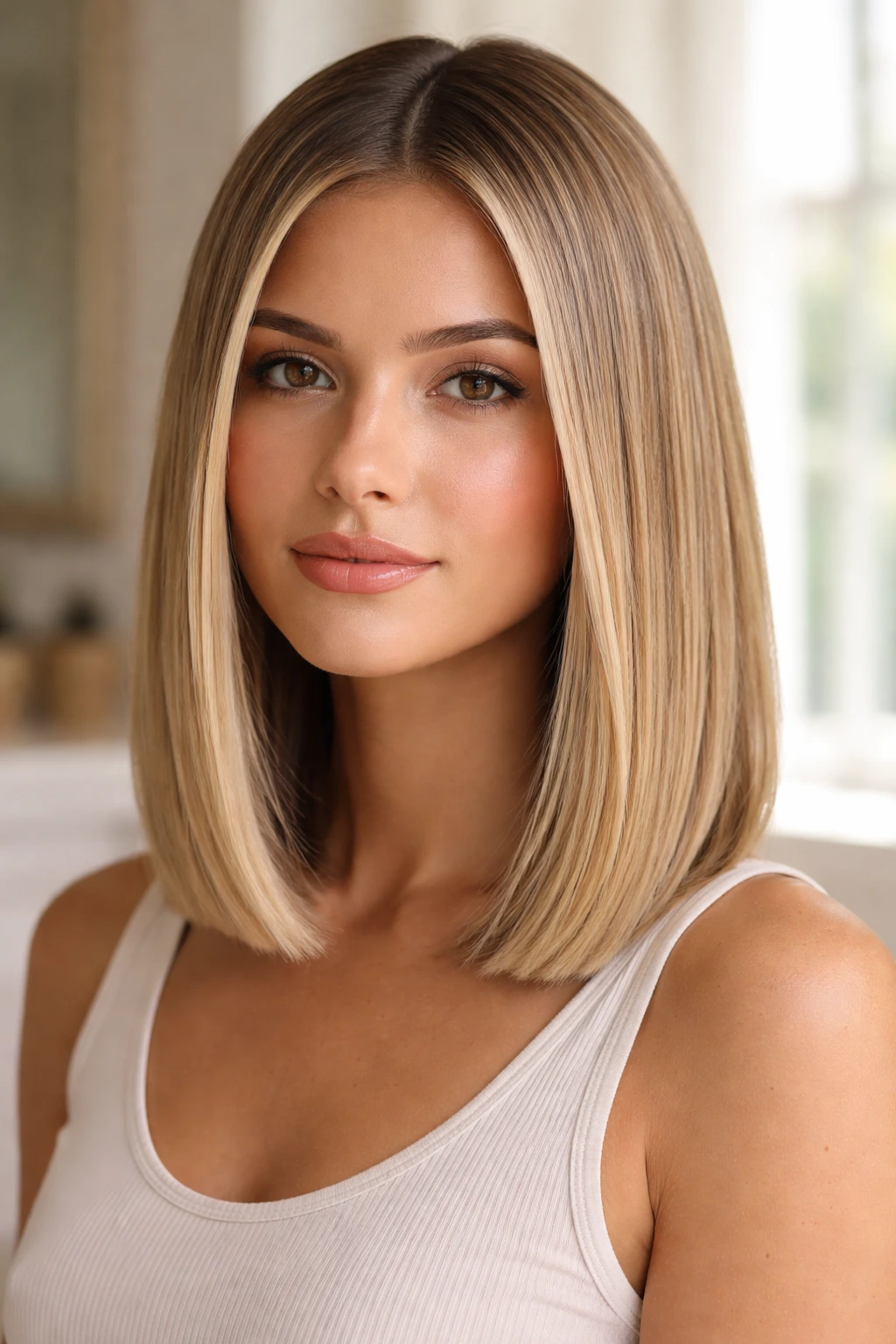
For those who want pure simplicity, the one-length lob is it. No layers, no bangs, just one clean line. This is the epitome of “expensive hair.”
The key here is hydration. Because the cut is so simple, the health of your hair is on full display. Use a high-quality smoothing oil to ensure the ends look polished, not dry. This style is exceptionally chic and works well with almost every hair texture, including fine.
20. The Tapered Nape Lob
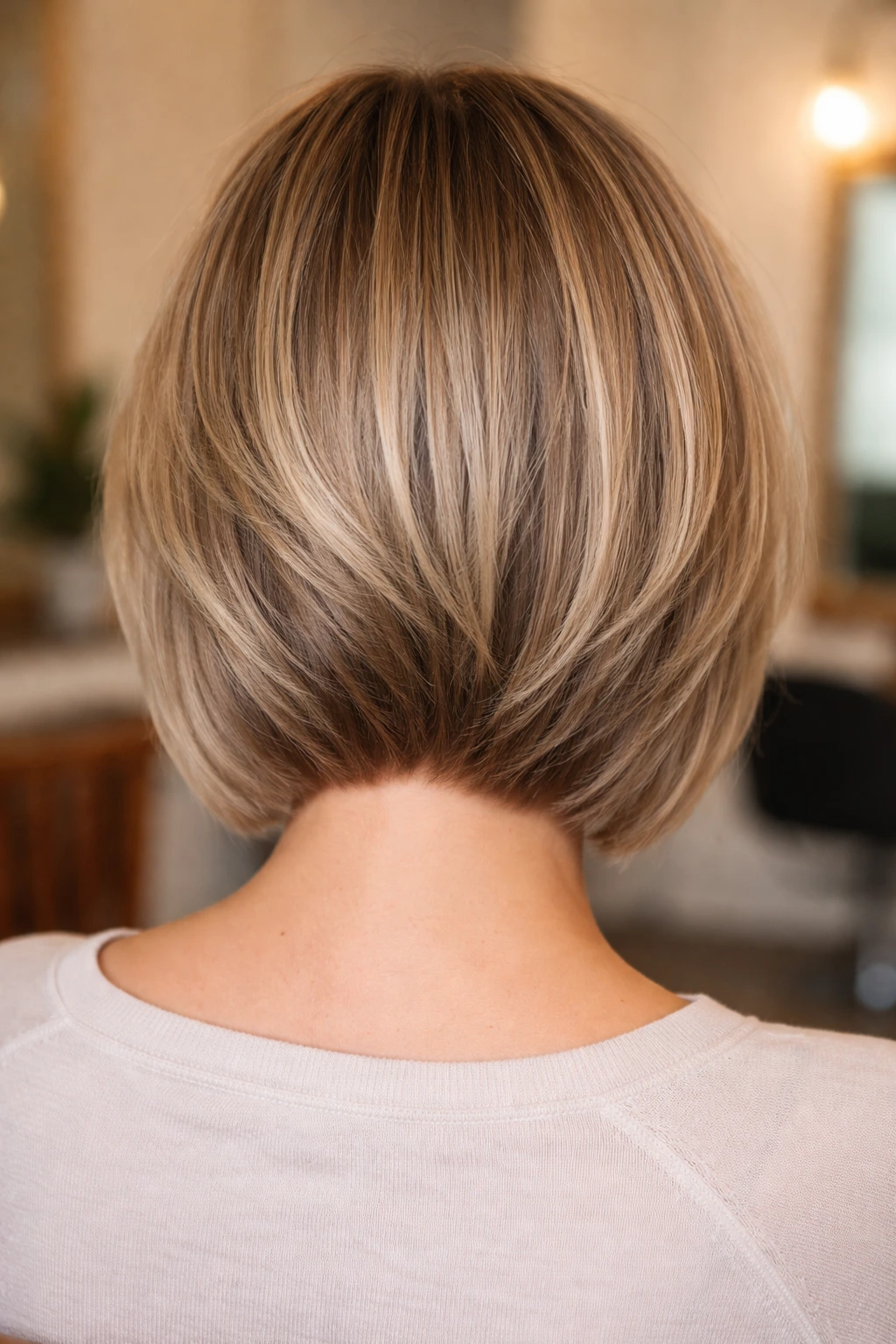
A tapered nape means the back of the neck is cut close to the hairline, tapering up into the rest of the hair. This removes the “bulk” that often sits at the base of the neck, which can make fine hair look weighed down.
This is a subtle detail that makes a massive difference in how the hair grows out. It keeps the neckline looking tidy and prevents that “growing-out” phase where the hair starts to flip up uncontrollably at the shoulders.
21. The Hidden Lowlight Lob
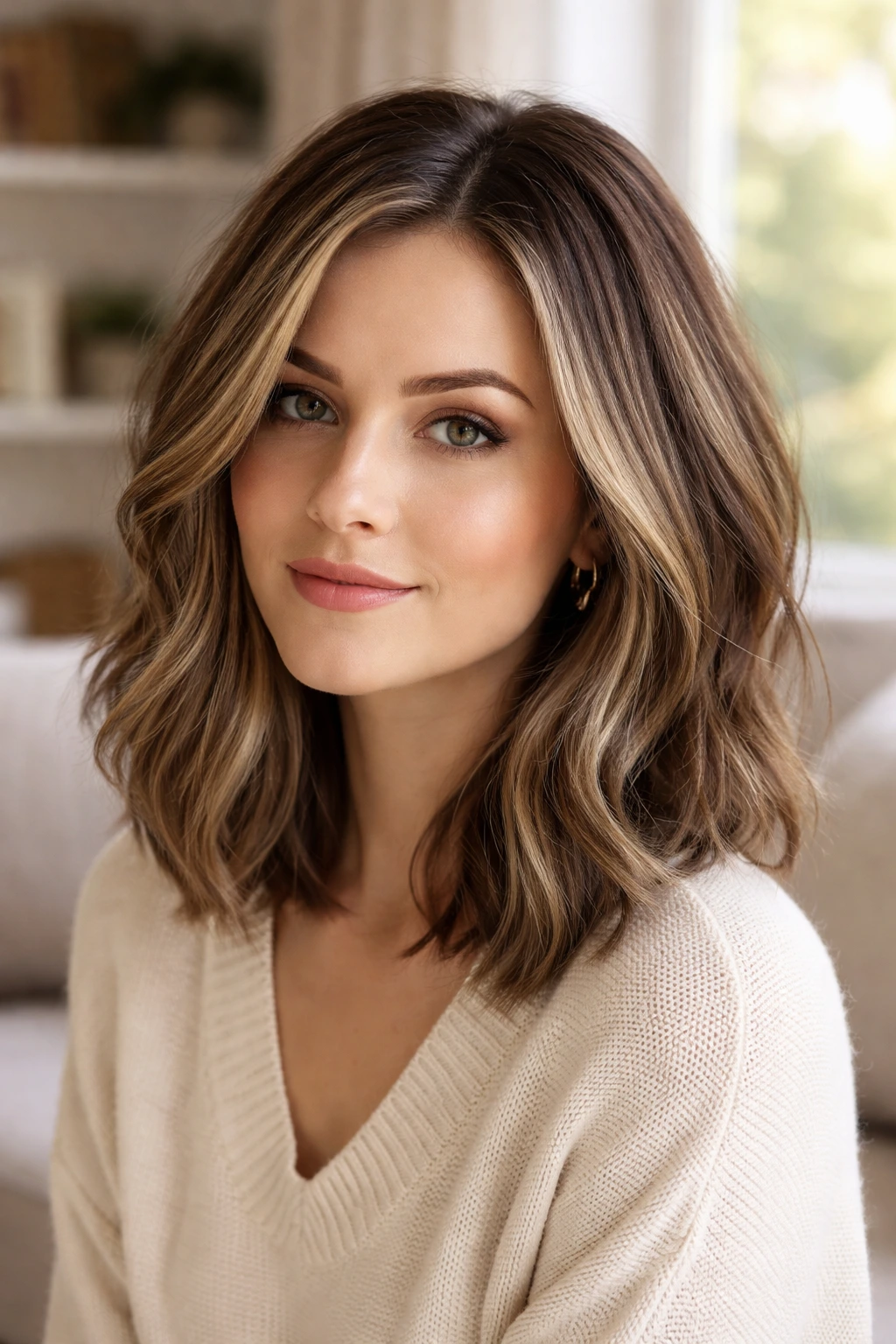
Just as highlights can brighten, lowlights can build volume. By adding ribbons of color that are a shade or two darker than your natural color, you create shadow and depth.
When you have a solid, single-toned head of fine hair, it can look “see-through.” Adding lowlights breaks up that solidity, making the hair appear more complex and, consequently, thicker. It’s a great way to add “weight” to your hair without actually adding product.
22. The Soft Wave Lob
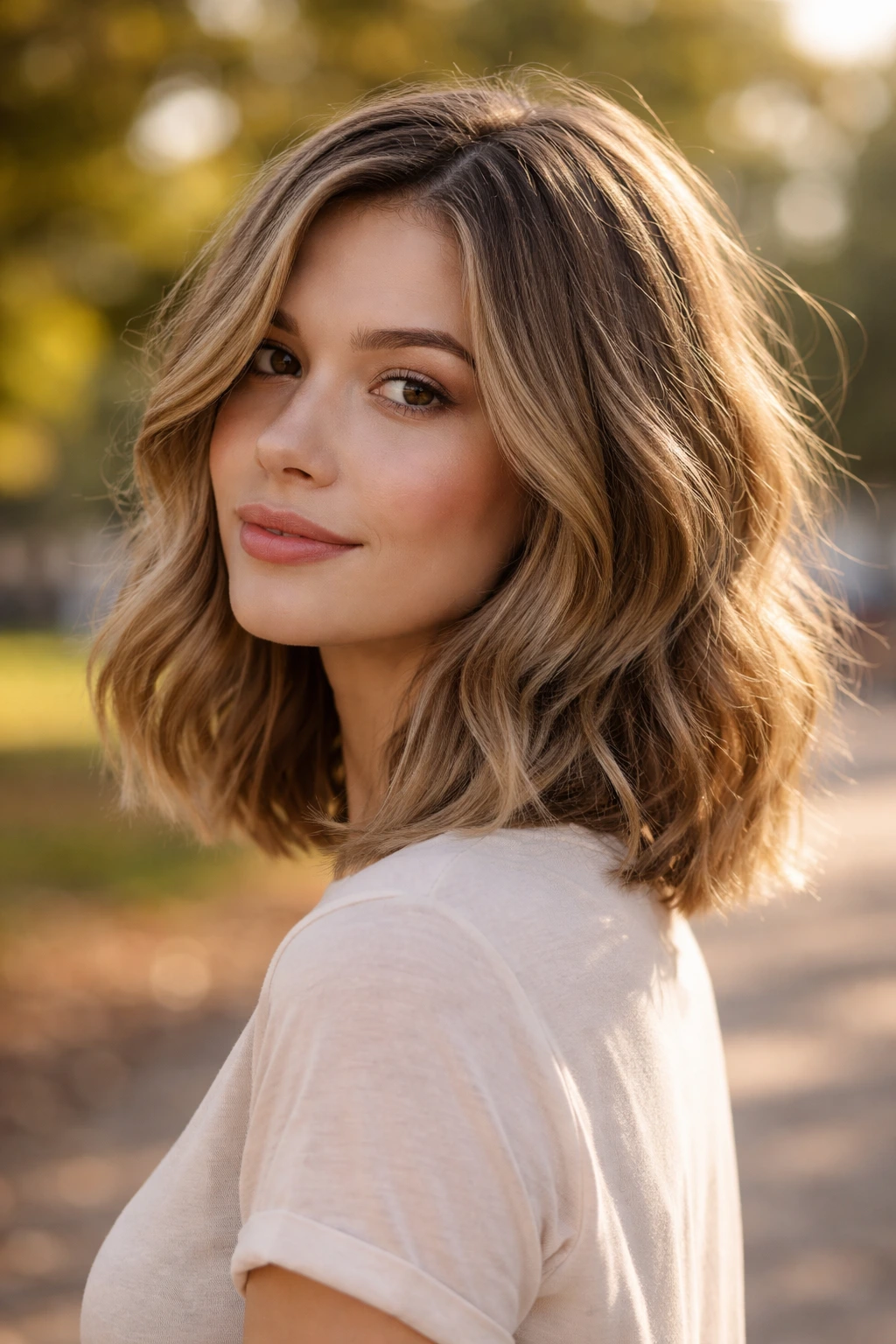
If your hair is naturally wavy, the lob is your best friend. A soft wave lob encourages your natural texture to do the work for you.
When you have fine hair, don’t try to force it to be poker-straight if it has a natural wave. The wave adds volume. Use a sea salt spray or a light texturizing mousse on damp hair and let it air dry. You’ll be surprised at how much thicker your hair looks when it’s allowed to be its natural, wavy self.
23. The Micro-Bang Lob
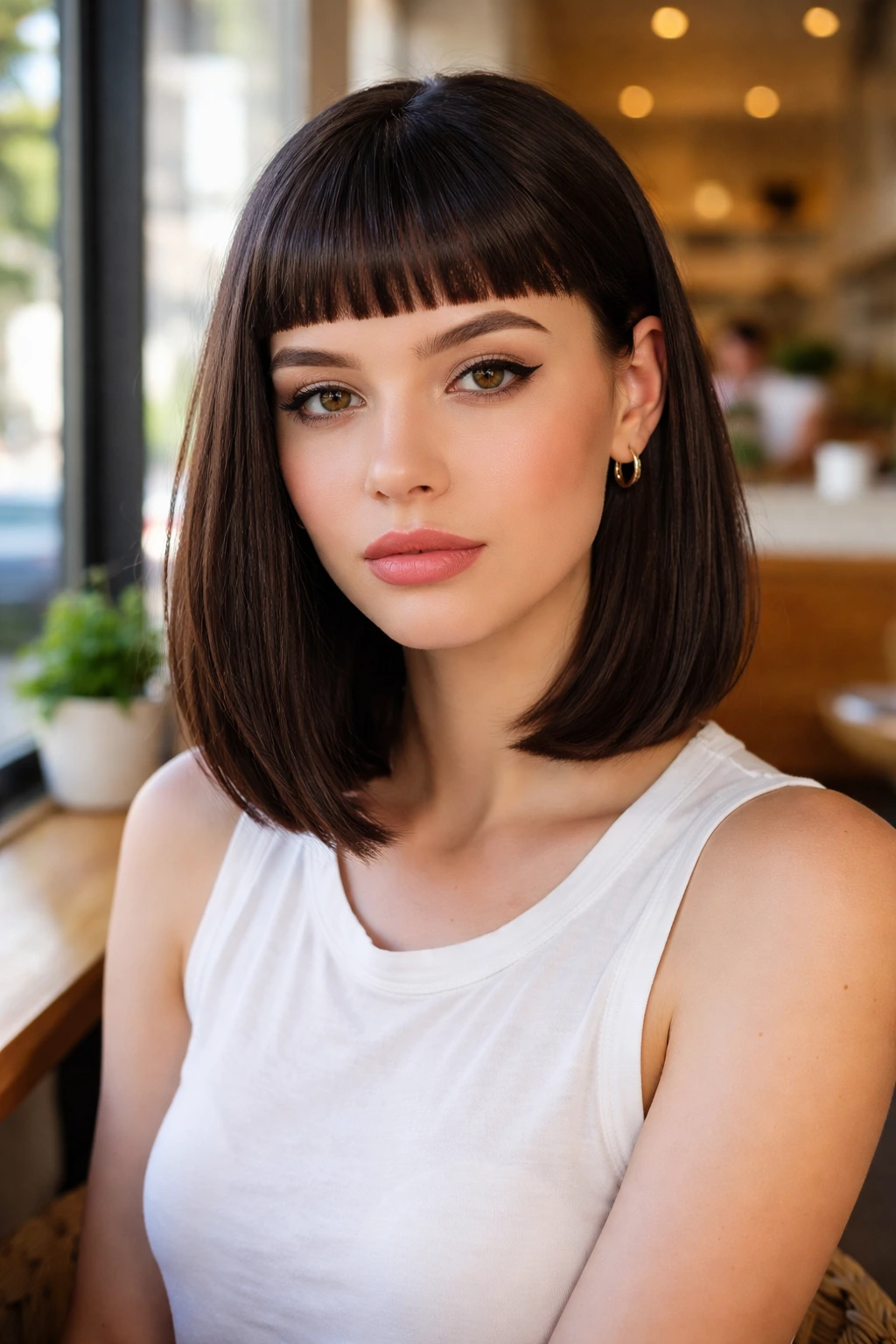
This is a bold, high-fashion look. Short, blunt micro-bangs paired with a sleek lob creates a very intentional, edgy aesthetic.
Because the bangs are so short, they don’t draw hair away from the sides. You keep the density of your hair on the sides and back, while the bangs add a graphic element to your face. It’s a great way to show off your eyebrows and eye shape while keeping the lob looking fresh.
24. The Root-Lift Layered Lob
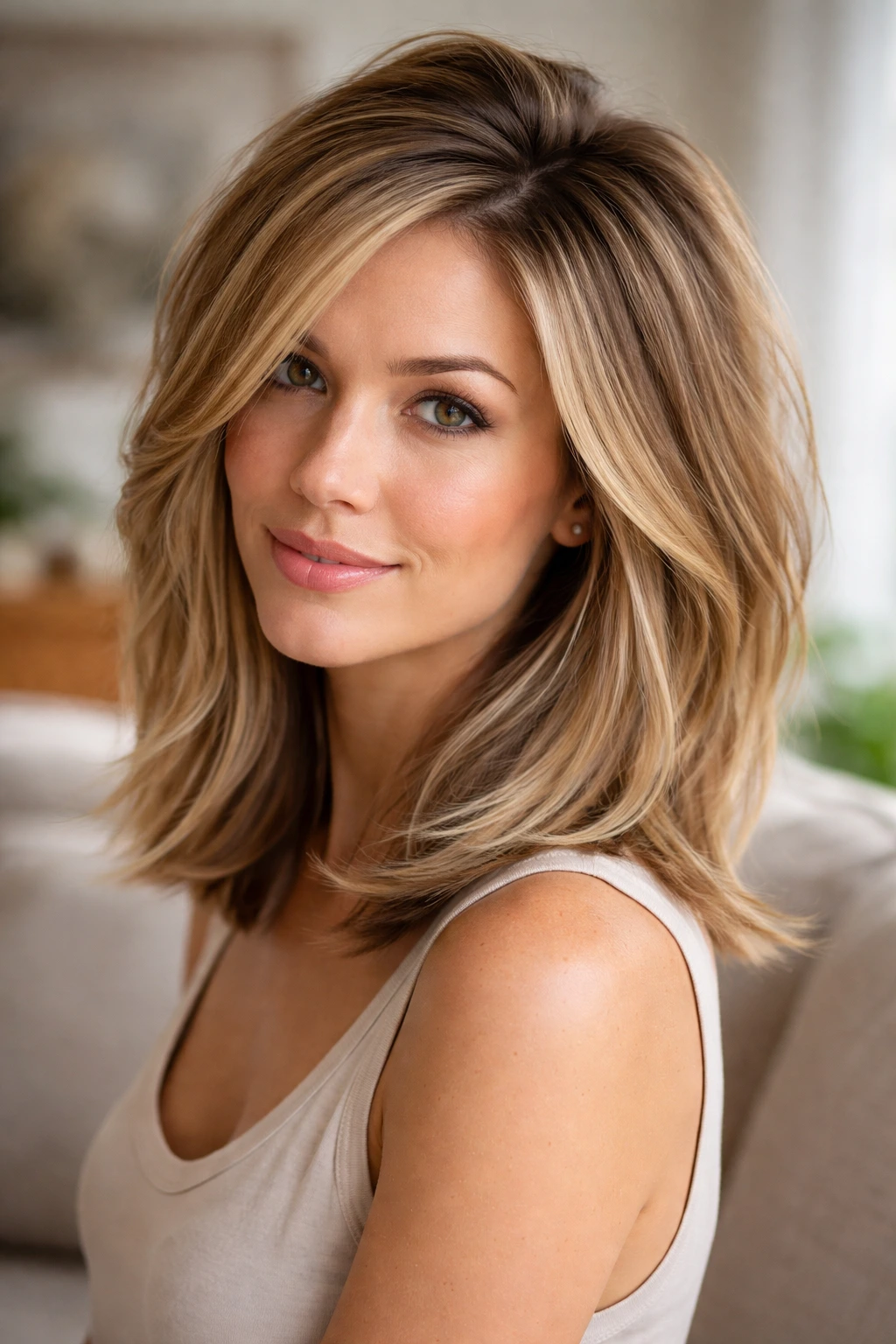
This cut specifically focuses on creating volume at the crown. The stylist cuts shorter layers specifically at the top of the head, leaving the rest of the hair longer and blunter.
This “hidden” volume creates a shape that holds better throughout the day. It’s a practical cut for people who find their hair goes flat at the roots within an hour of blow-drying. The shorter top layers provide the “scaffolding” needed to keep the hair lifted.
25. The Wavy Side-Swept Lob
Similar to the side part, but focusing on texture. By styling the hair with loose, soft waves and sweeping it all to one side, you create a cascade of hair that looks incredibly voluminous.
Use a wide-barrel curling iron to create these waves. Don’t worry about them being perfect—in fact, the messier they are, the better. The messiness creates pockets of air between the strands, which effectively doubles the perceived volume of your hair.
26. The Feathered Ends Lob
Feathering is a technique where the stylist cuts the ends of the hair to have a soft, airy finish. It’s different from thinning, which removes bulk. Feathering simply shapes the tips.
For a lob, this helps the hair curve around the shoulders and neck rather than hitting them and flipping out. It’s a very feminine, soft look that is very easy to maintain. It works best on straight or slightly wavy fine hair.
27. The Blunt-Cut with Hidden Textures
You can have a blunt lob that looks blunt but has hidden, internal texture. This involves cutting the blunt perimeter and then adding hidden, vertical slices throughout the mid-lengths.
This allows the hair to have more movement than a standard blunt cut, but from the outside, it looks perfectly solid. It’s the “best of both worlds” approach for someone who wants the thick look of a blunt cut but the manageability of a layered one.
28. The Airy Layered Lob
Airy layers are long, disconnected layers that are meant to float. They aren’t blended into the rest of the hair as much as they are “layered on top.”
This is a modern interpretation of the “Rachel” cut, but much softer. It provides a ton of volume at the mid-lengths. If you have fine hair that lacks a “shape,” this is the cut that will give it a silhouette that looks like it has movement built-in.
29. The Sleek Straight Lob
There is a unique beauty in a perfectly sleek, straight lob. This style requires a bit of heat styling and a good smoothing product, but the result is a clean, expensive-looking finish.
When you straighten fine hair, you must be careful not to make it look too flat. Use a volumizing spray at the roots before you blow-dry, then use your flat iron to smooth the mid-lengths. The combination of root lift and smooth ends creates a very sophisticated, professional look.
30. The Choppy Bob-to-Lob Transition
If you are coming from a short bob and are growing it out, this is the perfect stage. A choppy lob embraces the “in-between” length.
Instead of fighting the awkward stage where your hair hits your shoulders, have your stylist texture the ends to make it look like a purposeful, edgy cut. It’s about working with what you have, rather than waiting for your hair to grow to a certain point.
Essential Maintenance for Fine Lobs
Fine hair requires a different approach to maintenance than thick hair. Because your strands are smaller, they absorb oil faster, which leads to limp, weighed-down hair. The first rule of maintenance is wash frequency. Most people with fine hair benefit from washing every other day, or at least every two days, to keep the scalp clean and the roots lifted. Using a gentle, clarifying shampoo once a week can prevent product buildup that inevitably drags fine hair down.
When it comes to conditioning, keep it away from your scalp. Apply conditioner only from the mid-lengths down to the ends. If your ends are dry but your roots are oily, use a leave-in conditioner sparingly on just the ends after you shower. Never leave your hair heavy with product when you go to bed; it can lead to tangles and breakage in the morning.
Trims are non-negotiable with a lob. Because the length is so specific, even a half-inch of growth can change the shape and cause the ends to flip or tangle on your shoulders. Aim for a “dusting” every six to eight weeks. You don’t need a major cut, just enough to keep the perimeter sharp and the weight balanced.
Styling Products That Won’t Weigh You Down
The enemy of fine hair is heaviness. Stay away from heavy pomades, thick waxes, and silicone-based serums that coat the hair and make it look greasy. Instead, look for “volumizing” or “texturizing” on the label.
Dry shampoo is your best friend, even on clean hair. Spraying a little dry shampoo into the roots of freshly dried hair gives it grit and grip, which helps the style hold its volume throughout the day. Texturizing sprays are the second essential. Unlike hairspray, which can make fine hair crispy, texturizing sprays add a dry, airy dimension that makes the hair look like there is more of it.
If you use a heat protectant, look for a lightweight, spray-on version rather than a cream. Cream-based products are often too dense for fine strands. If you find your hair still goes flat, try using a mousse on damp hair, blow-drying it upside down until it is 80% dry, and then flipping it over to finish with a round brush. This simple technique creates lift that lasts much longer than brushing alone.
Final Thoughts
The transition to a lob can be transformative if you treat it as an investment in your hair’s health rather than just a cosmetic change. Fine hair thrives under the structure of a lob because it removes the dead weight that has been pulling your look down. Whether you opt for a blunt, heavy-ended cut or a soft, airy shag, the goal is always the same: creating the illusion of density through shape and texture.
Remember that a great haircut is only as good as the care you put into it afterward. Listen to how your hair reacts to different products and don’t be afraid to change your routine if something feels “heavy.” Your hair is unique, and finding the perfect cut is about identifying which of these thirty styles aligns with your lifestyle, your natural wave pattern, and the level of effort you are willing to put in every morning.
