



Fine hair is often misunderstood. Many people think “fine” means “thin,” but in reality, it describes the actual diameter of each individual hair strand. If you hold one strand between your fingers, it feels like silk—almost imperceptible—but that doesn’t necessarily mean you have low density. The challenge isn’t usually the amount of hair you have; it’s the lack of structural integrity and the tendency for strands to lie perfectly flat against the scalp. Gravity is the enemy of fine hair. When you let it grow long, the weight of the hair pulls everything down, and you lose that coveted volume before you even finish your morning coffee.
This is exactly why the bob is the gold standard for fine hair. By removing the length, you remove the weight. A shorter cut allows the hair to spring back to its natural position, creating the illusion of density and fullness that is almost impossible to achieve when your hair hits your shoulders. A great bob acts like a structural support system for your head, giving you shape, bounce, and a polished look that actually stays put throughout the day. It’s not just about cutting it short; it’s about precision, geometry, and knowing how to stack weight where you need it most.
When choosing a style, the goal is to work with your hair’s natural texture, not against it. You need cuts that encourage movement rather than relying on heavy styling products that leave fine hair looking greasy or limp. Whether you have straight strands that struggle to hold a curl or soft waves that need a bit of structure, there is a version of this cut that will make your hair look twice as thick as it actually is. Let’s look at twenty-eight distinct ways to reshape your look.
1. Blunt Chin-Length Bob
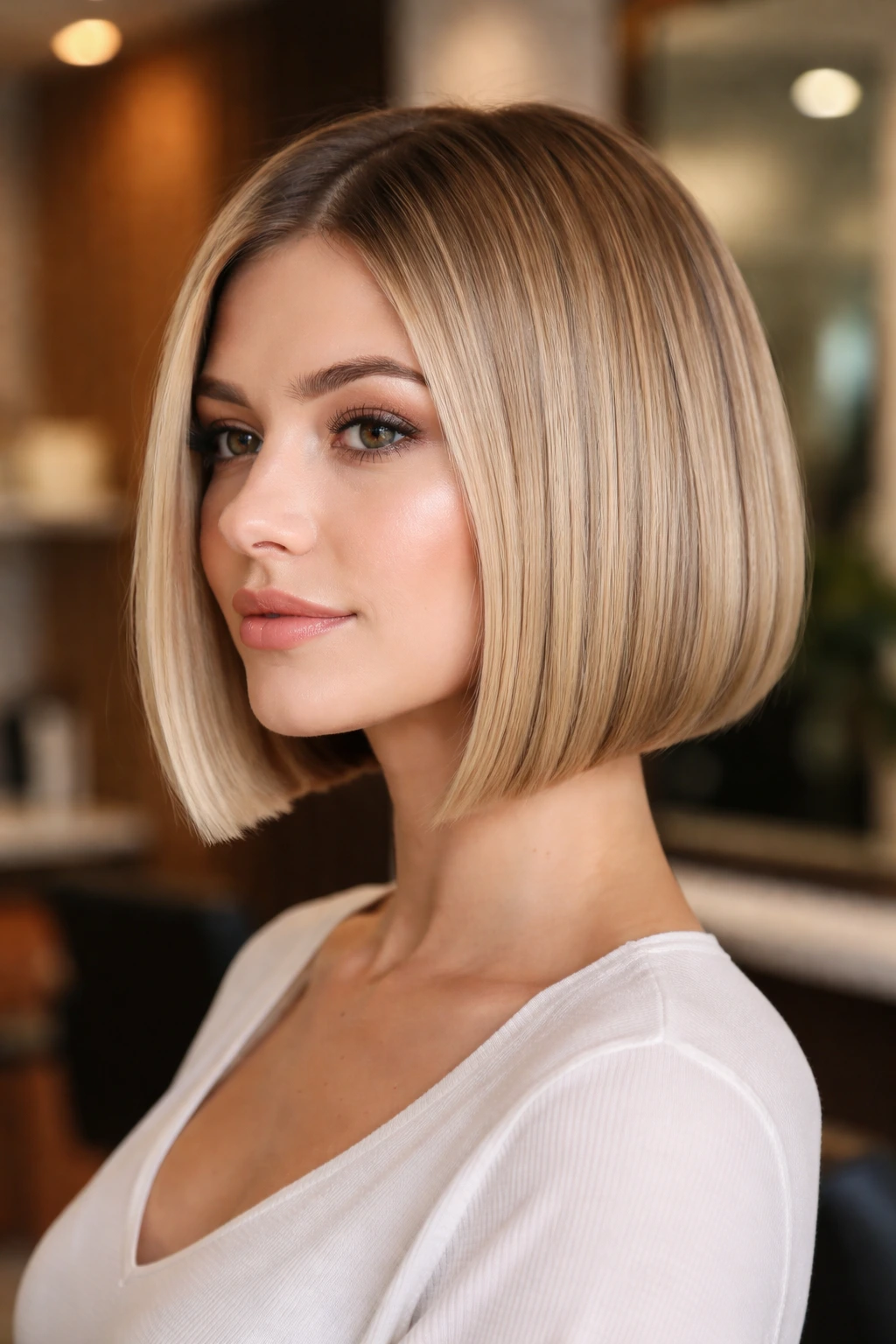
This is the foundational cut for fine hair. When you cut hair in a straight, blunt line at the chin, you create an illusion of maximum density at the ends. Because the ends are all cut to the exact same length, they don’t taper off into wispy, thin points. Instead, they pile up on top of one another, which makes the bottom of your hair look incredibly healthy and substantial.
Why It Works for Fine Strands
The bluntness acts as a weighted edge. It keeps the hair from looking straggly or broken, which is a common issue with fine texture. It’s a very clean, architectural look that demands precision. If your stylist isn’t careful with the shears, the whole effect is ruined. You want a sharp, solid line that sits right at the jawbone.
Pro tip: Use a flat iron to give it a slight inward bevel. Just a quick pass at the very ends can prevent the hair from flipping out, which often makes fine hair look messy rather than intentional.
2. Textured Lob with Invisible Layers
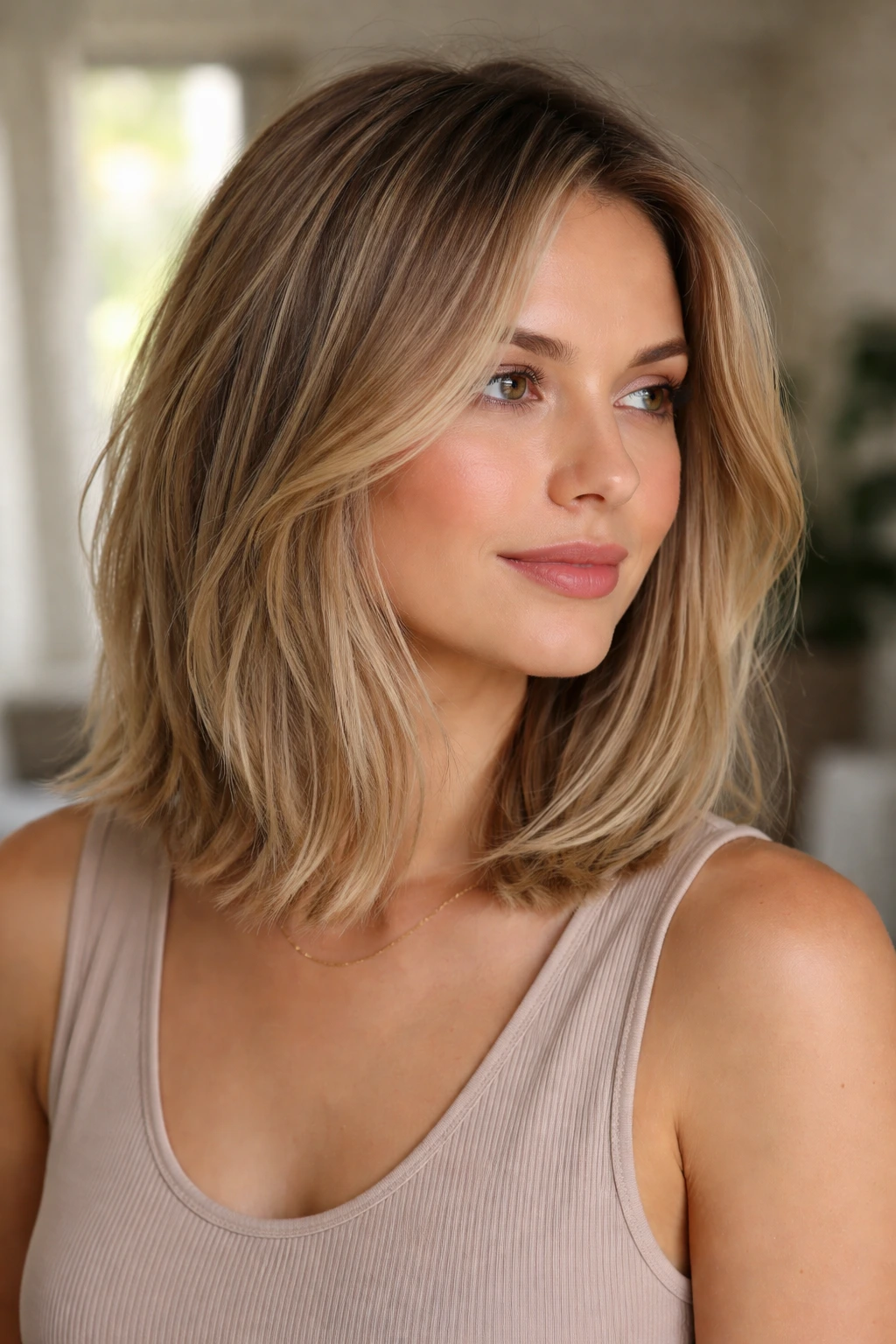
If you aren’t ready to commit to a jaw-length cut, the lob—or long bob—is your best alternative. The key here is the “invisible” layer technique. Traditional layers can actually make fine hair look thinner because they remove bulk from the bottom, which is the last thing you want. Invisible layers are point-cut deep into the hair, creating space for movement without sacrificing the weight of the baseline.
How to Style It
You want to embrace a bit of grit. Use a dry texture spray or a light volumizing powder at the roots. Avoid heavy creams or oils, as they will immediately collapse the structure you just created. This style thrives on a bit of bedhead, making it perfect for someone who wants to spend five minutes in the mirror and then get on with their day.
3. A-Line Bob with Graduated Back
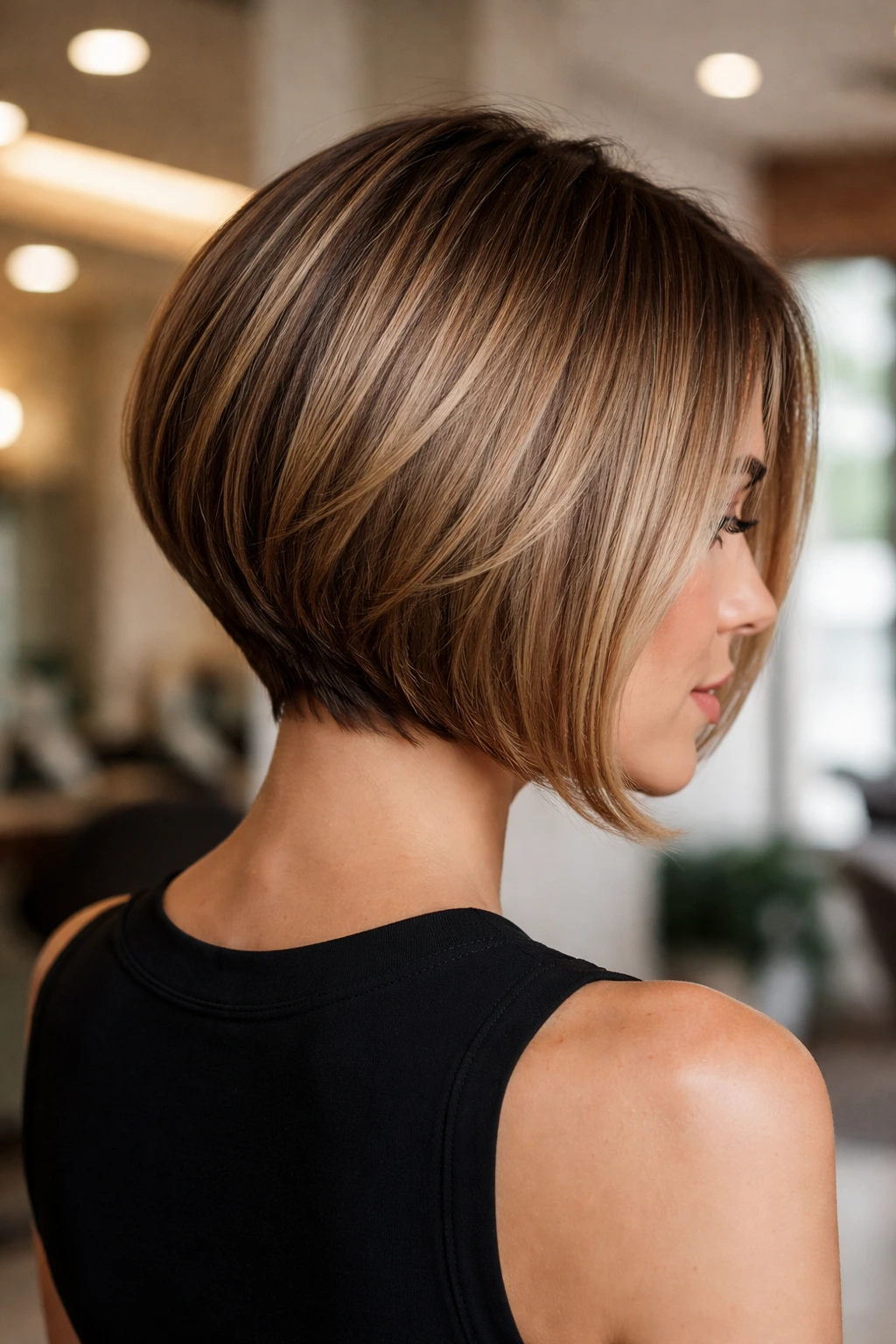
The A-line is a classic for a reason. By keeping the back shorter and stacking the layers, you naturally build volume at the crown. The front strands are left longer, framing the face. This creates a visual slope that draws the eye downward, making the hair appear longer while still maintaining that short, punchy vibe in the back.
This cut is particularly helpful if your hair tends to go flat in the back of your head. The stacked layers create a physical scaffold, lifting the hair away from the scalp. You won’t have to tease your hair or use half a can of hairspray to get that lift; the cut does the work for you. It’s a low-maintenance way to keep a rounded, voluminous shape.
4. French-Inspired Micro Bob
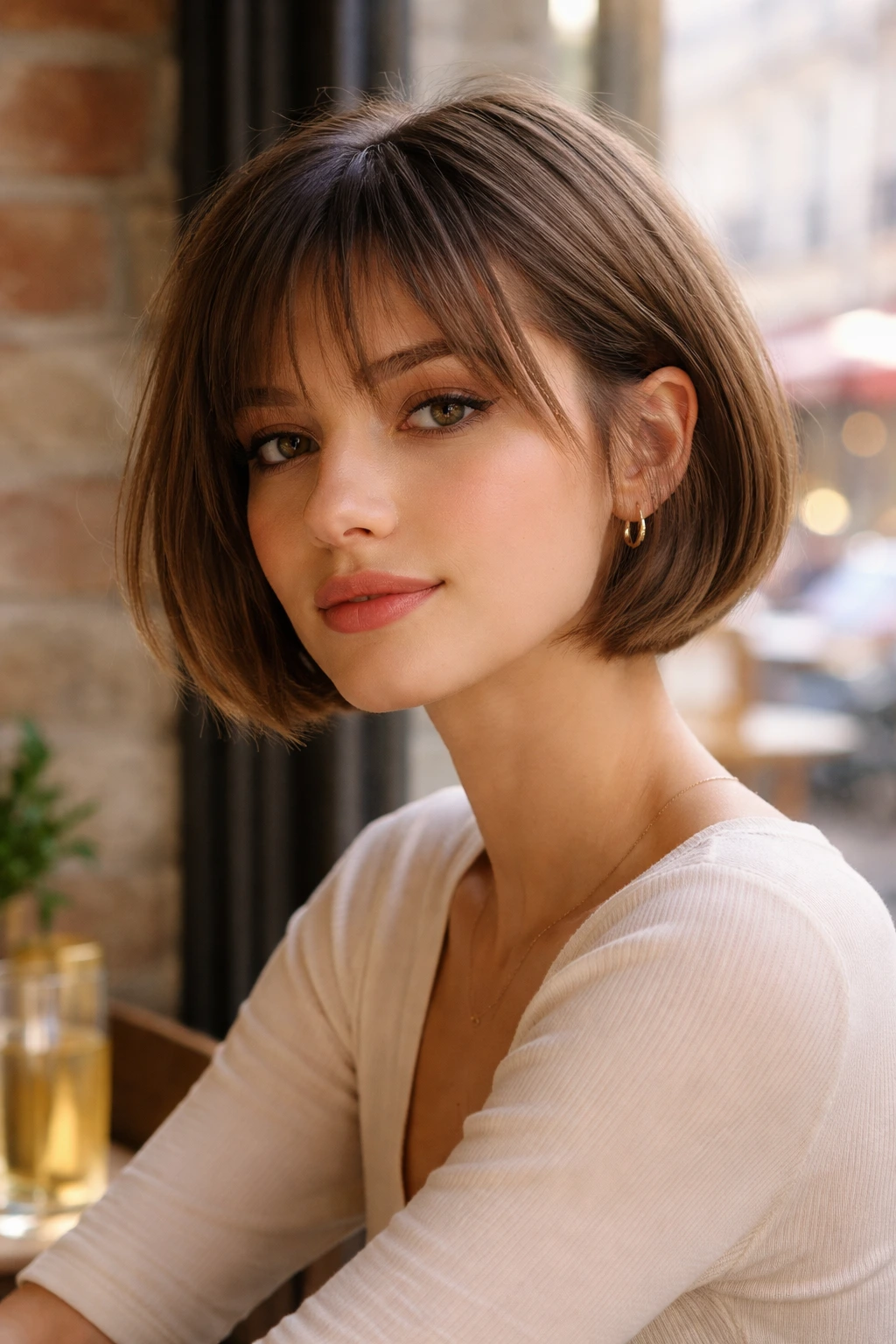
Think of the classic French look—short, sweet, and hitting right at the cheekbones or the earlobes. It’s daring, certainly, but for fine hair, it’s a brilliant choice. Because the hair is so short, there is virtually zero weight to pull it down. It stands up on its own, naturally creating a soft, airy volume that looks very chic and Parisian.
This style pairs perfectly with a short, choppy bang. Don’t go for a heavy, blocky fringe, though. A wispy, textured bang complements the softness of fine hair without weighing down your forehead. It’s a style that highlights your facial features and jawline, making you the focal point rather than your hair. If you have a rounder face, keep the sides slightly longer to elongate your silhouette.
5. Side-Swept Asymmetrical Bob
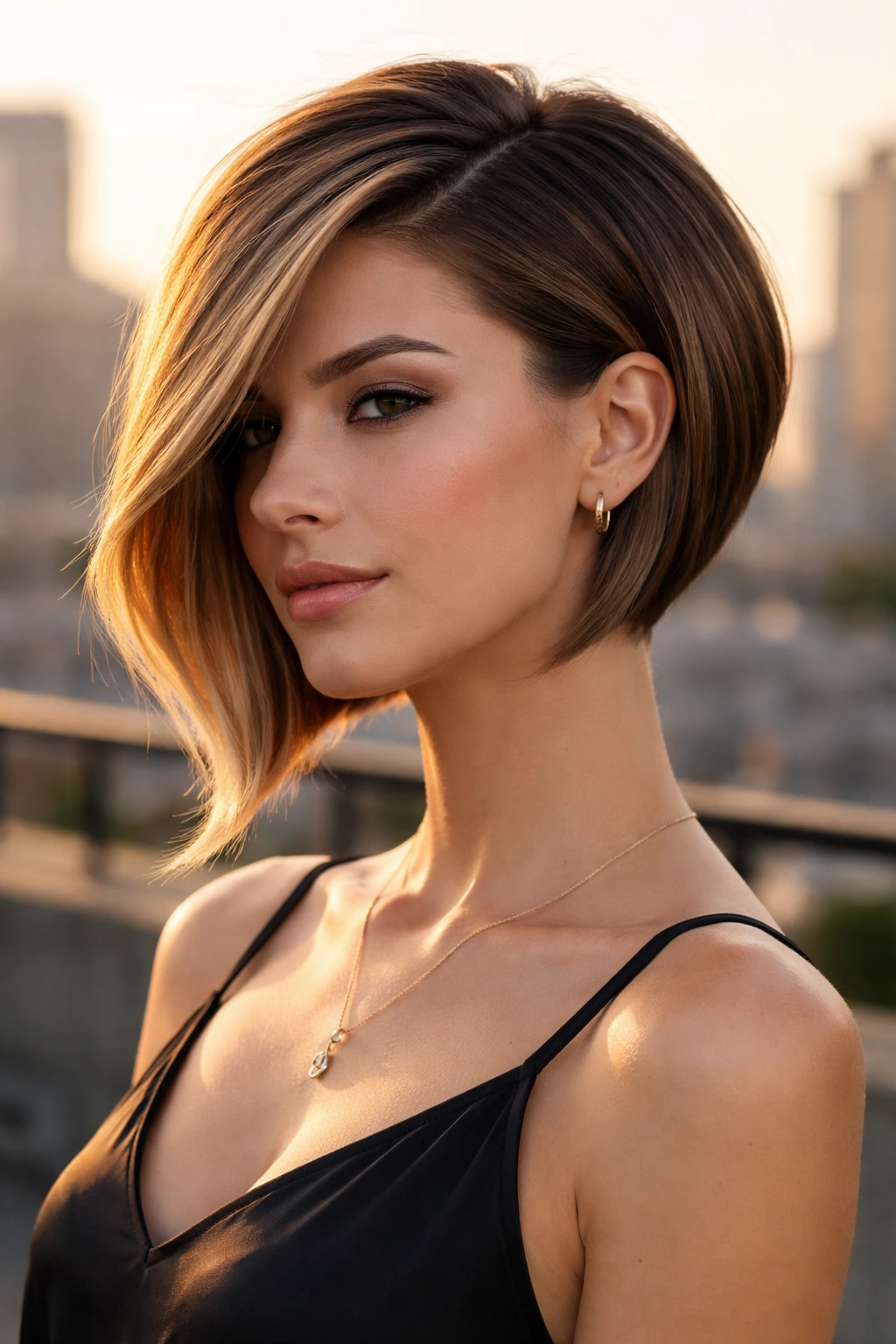
Asymmetry is a fantastic visual trick. By cutting one side slightly longer than the other, you create an unbalanced shape that immediately draws attention away from the lack of hair density. It looks intentional and edgy. For fine hair, the shorter side often ends up looking thicker because the hair is more concentrated in a smaller area.
The Maintenance Factor
This cut does require more frequent trips to the salon. As the shorter side grows out, the asymmetry can start to look like an accident rather than a design choice. If you are someone who likes to go three or four months between cuts, this might not be your best bet. But if you appreciate a sharp, well-maintained look, it’s a great way to signal that you care about your personal style.
6. Choppy Bob with Beach Waves
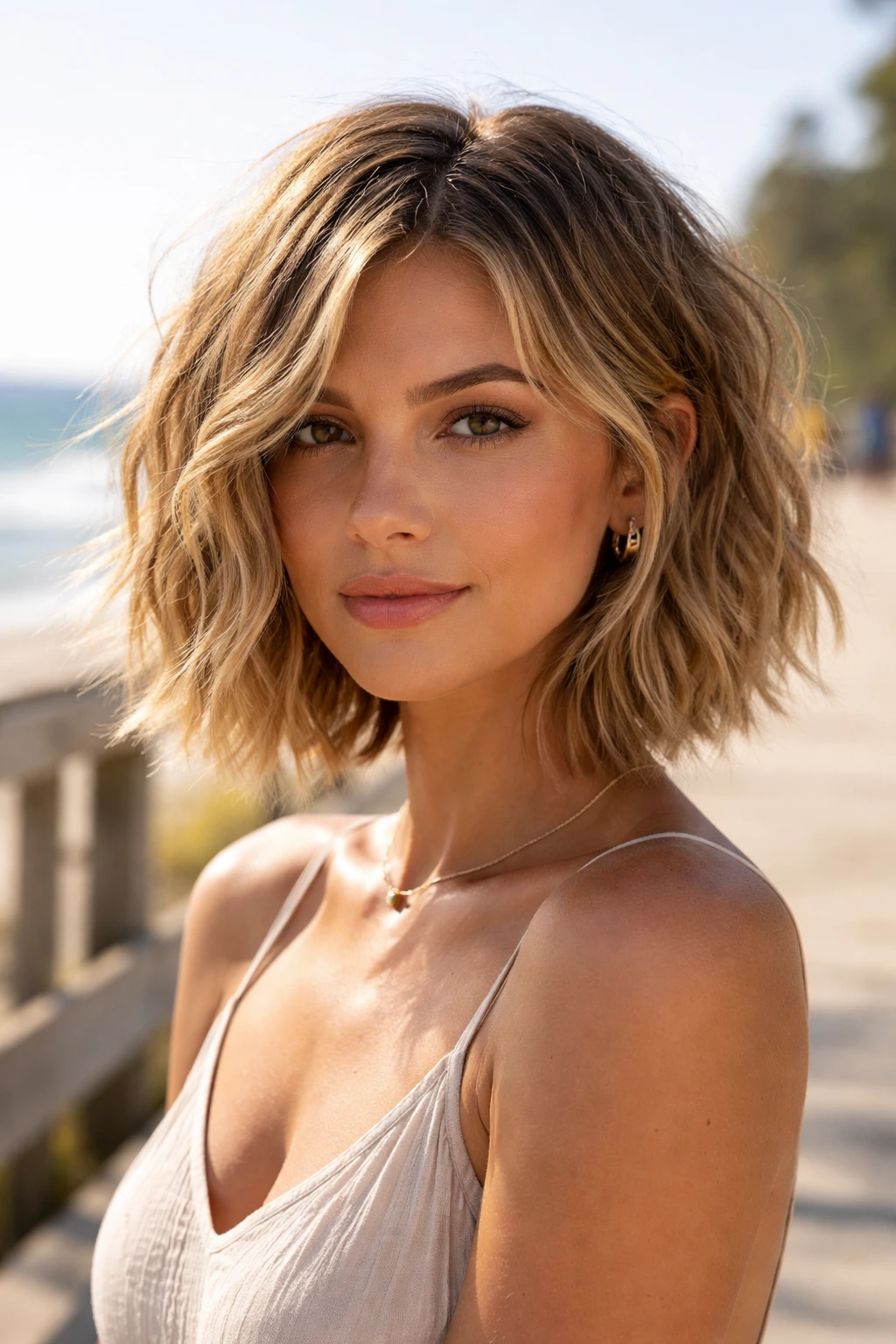
You might worry that waves will make your hair look sparse, but the right choppy cut can actually make it look like you have twice as much hair. The key is in the texture. A choppy bob features varying lengths throughout the cut, which creates distinct “shelves” of hair. When you add a slight wave, those shelves overlap, creating a stacked effect of volume.
Use a texture spray that contains sea salt or a similar ingredient to grip the strands. If your hair is naturally stick-straight, use a thin curling wand to add a few bends here and there—don’t aim for perfect ringlets. Messy is better. The imperfection is what makes the hair look like it has volume and life.
7. Sleek One-Length Lob
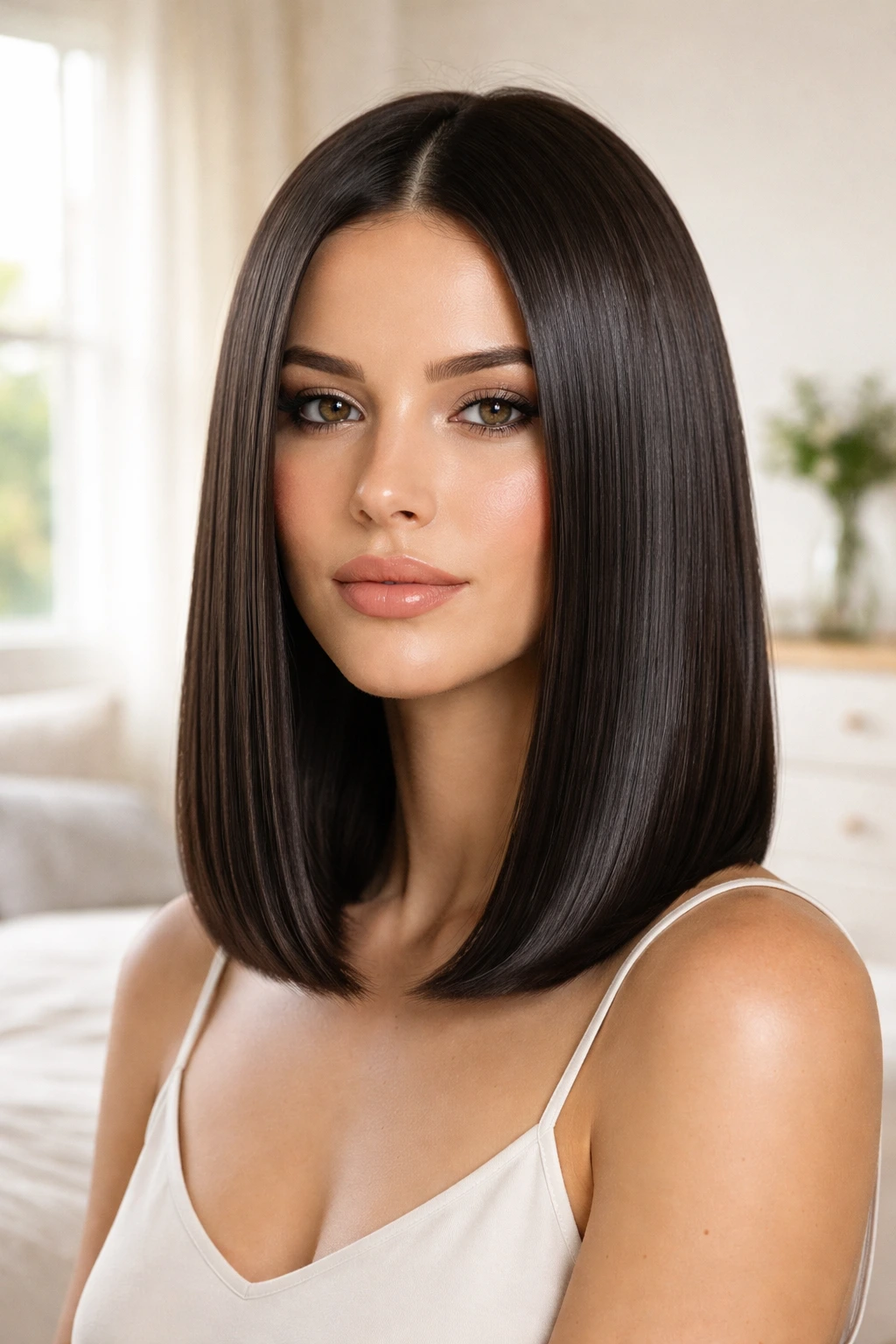
There is a profound elegance to a perfectly straight, one-length lob. It’s the “glass hair” look. When fine hair is cut to one length and polished to a high shine, it looks dense, healthy, and expensive. This isn’t about texture or volume; it’s about quality and finish.
To achieve this, you need a high-quality boar bristle brush and a reliable heat protectant. You don’t want to use excessive heat, as fine hair is prone to breakage. Start with a smoothing cream on damp hair, then blow-dry using the brush to create tension. Tension is the secret. If you aren’t pulling the hair taut while you dry it, you won’t get that mirror-like finish.
8. Blunt Cut with Face-Framing Layers
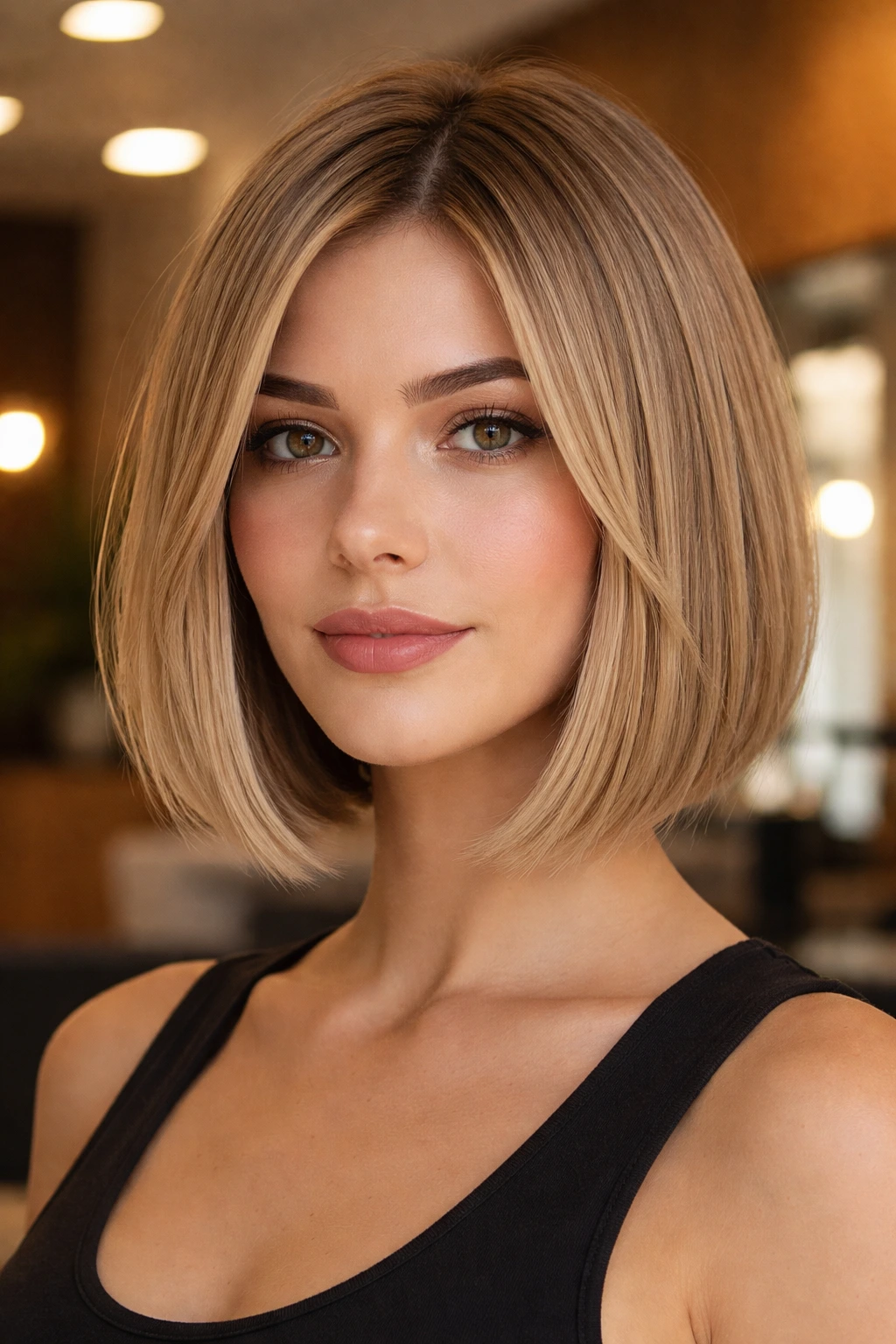
If you love a short cut but miss having something around your face, this is the compromise. The back and sides are kept in a sharp, blunt bob, but you add a few longer, face-framing pieces in the front. These pieces should be cut with a razor or point-cutting shears so they blend into the rest of the hair rather than looking like “wings” hanging off the side.
Keep the framing pieces minimal. If you cut too many, you will lose the fullness of your main cut. Stick to just a few strategically placed sections that hit the jawline or collarbone. It softens the entire look without sacrificing the structure of the bob.
9. Stacked Back Bob
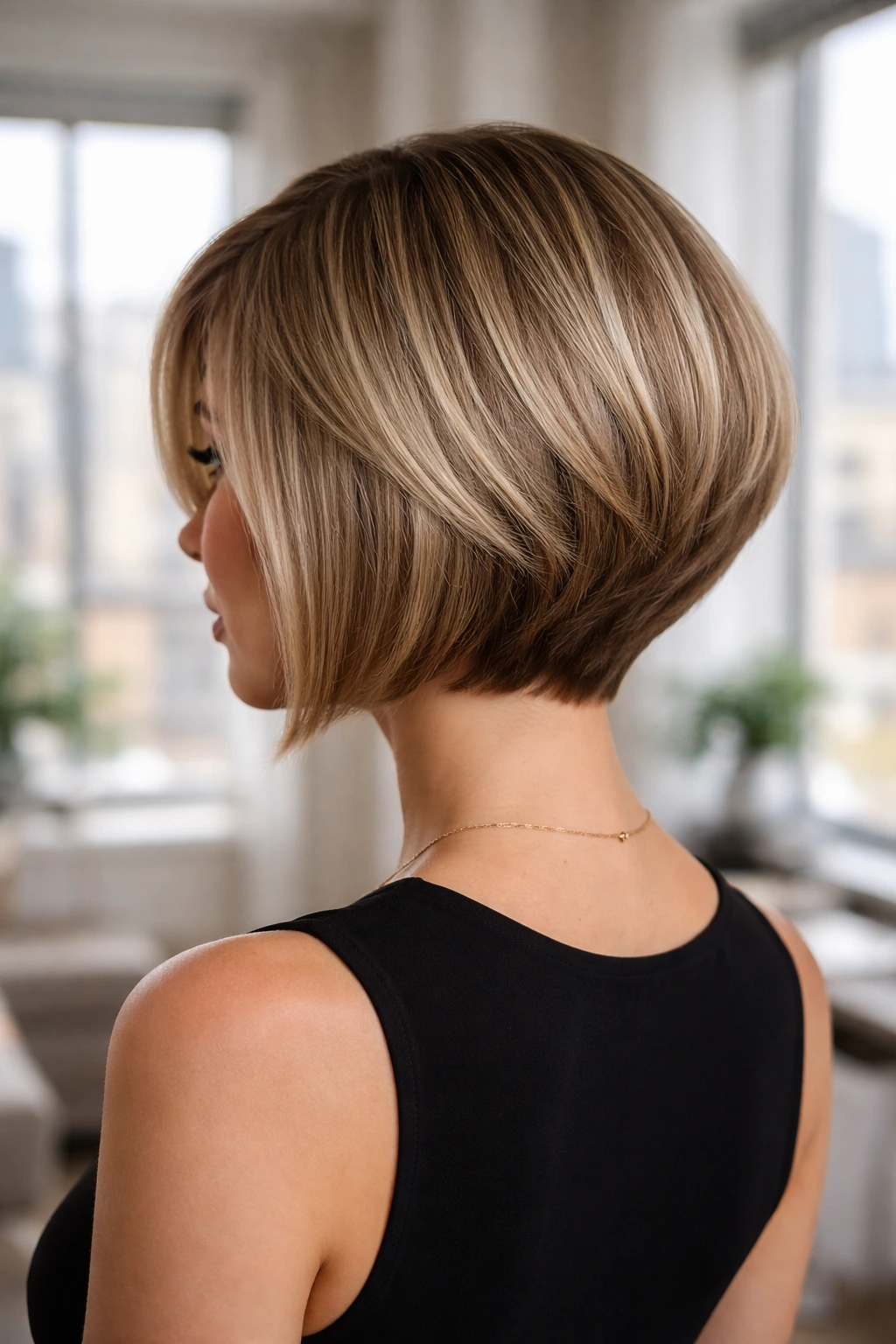
This cut is all about the occipital bone. Your stylist will cut the hair very short in the back, layering it upward to create a rounded, voluminous shape. This is ideal if you have a “flat” spot on the back of your head. The stacking creates a physical curve that looks great from the side and the back.
The front usually transitions into a slightly longer, chin-length cut. This creates a beautiful, tapered silhouette. It’s a very traditional, professional look that works in almost any setting. If you want to modernize it, ask your stylist to keep the edges slightly “soft” or “shattered” rather than perfectly straight across.
10. Feathered Ends Bob
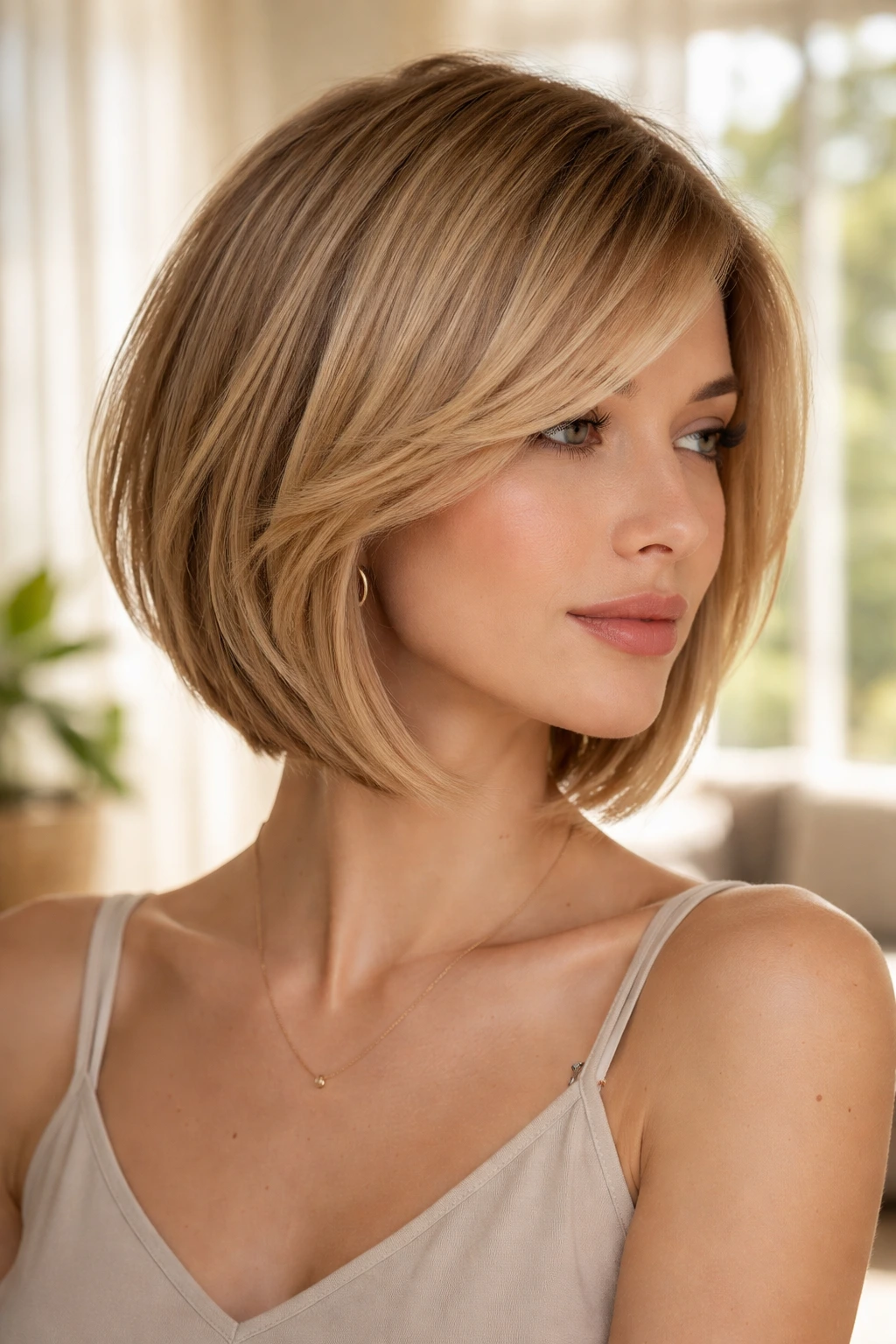
Feathering is a technique that thins out the very ends of the hair to create a soft, fluttery appearance. This is different from over-layering. You aren’t cutting into the mid-lengths; you are just softening the perimeter. It makes the hair look lighter and more buoyant.
This works best if you have straight or slightly wavy hair. If your hair is very curly, avoid this, as it can cause the ends to puff out in an unflattering way. For fine, straight hair, the feathered edge creates a beautiful, delicate frame that moves when you turn your head.
11. Curtain Bangs with Shaggy Bob
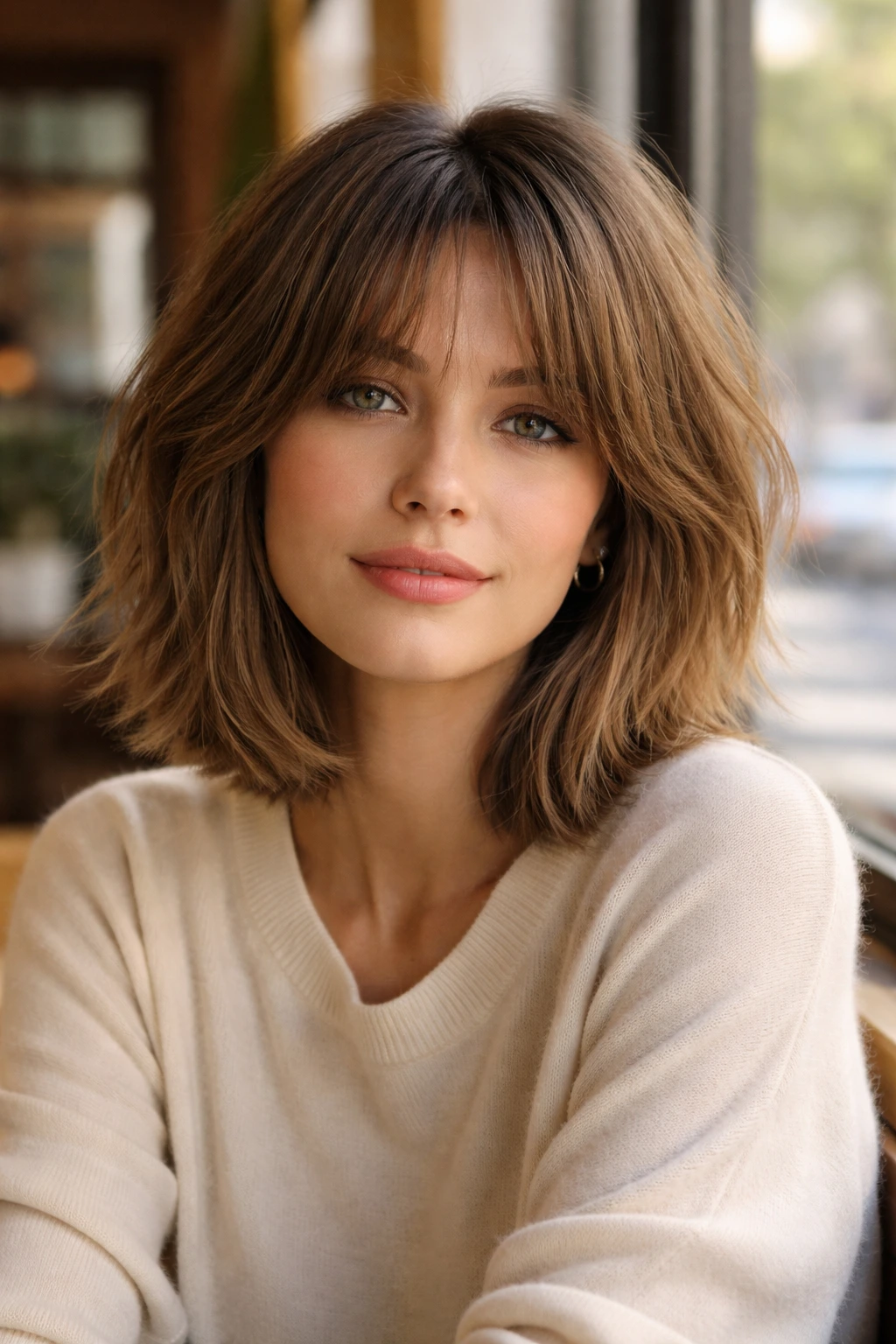
Curtain bangs are a commitment, but they are a massive help for fine hair. By cutting bangs, you are essentially taking hair from the crown and bringing it forward, which makes the top of your head look fuller. Pairing them with a shaggy, textured bob adds a layer of effortlessness.
Why It Helps
A shaggy bob involves a bit more layering than a standard blunt cut. This adds texture and volume throughout the length. The curtain bangs serve as a bridge between the shorter top layers and the longer pieces around your face. It’s a cohesive look that feels very current, regardless of the year.
12. Deep Side Part Bob
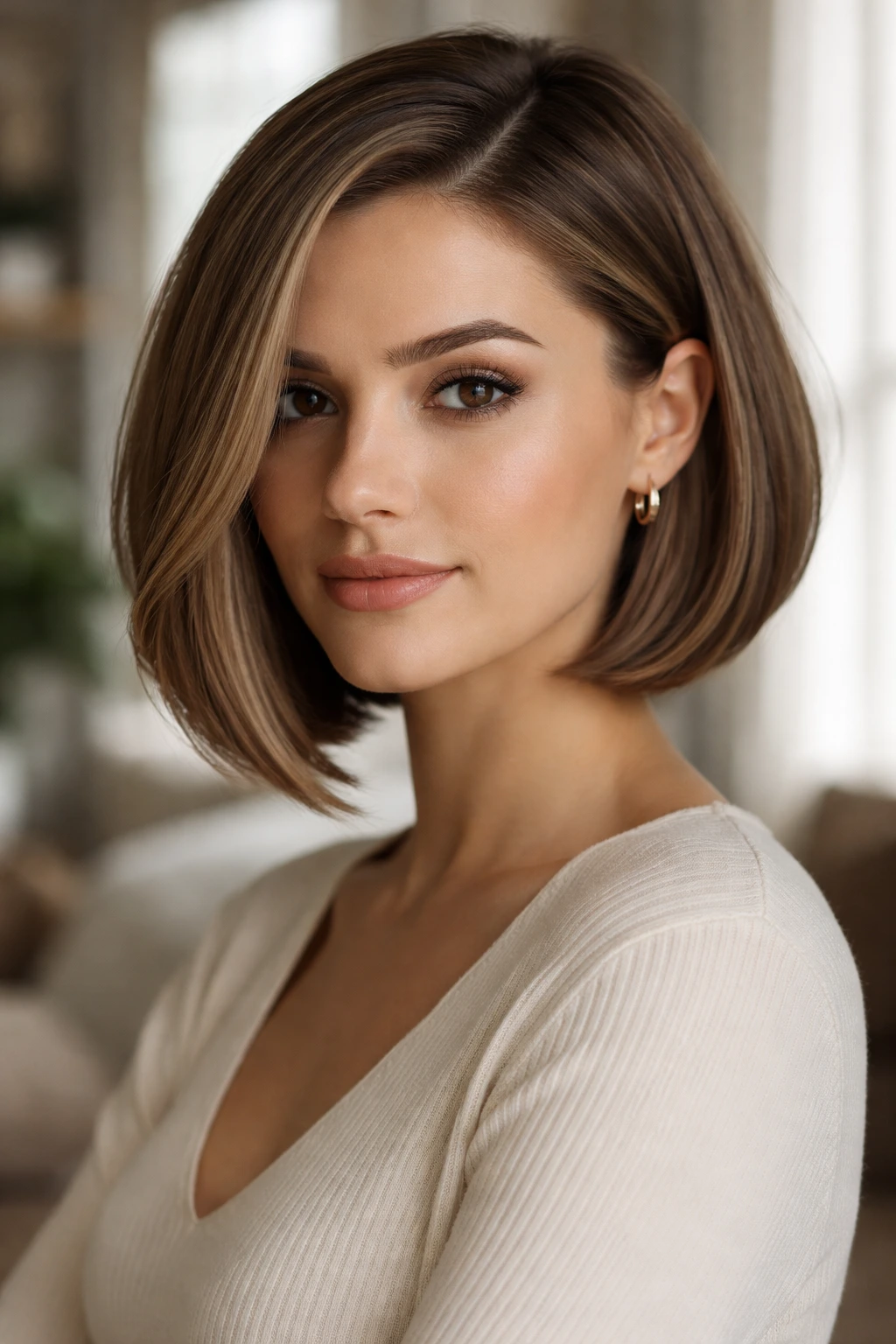
Sometimes the fix isn’t in the cut, but in the styling direction. A deep side part is an instant volume booster for fine hair. By forcing the hair over, you create a “bump” of height at the root. Pair this with a blunt, chin-length bob, and you have a look that is both dramatic and simple.
Make sure you flip the part on dry hair. If you try to force a deep side part while the hair is soaking wet, it will just collapse as it dries. Let the hair air dry halfway, then use a tail comb to create a sharp line, and finish drying with your head flipped to the side. The results are immediate.
13. Undercut Bob
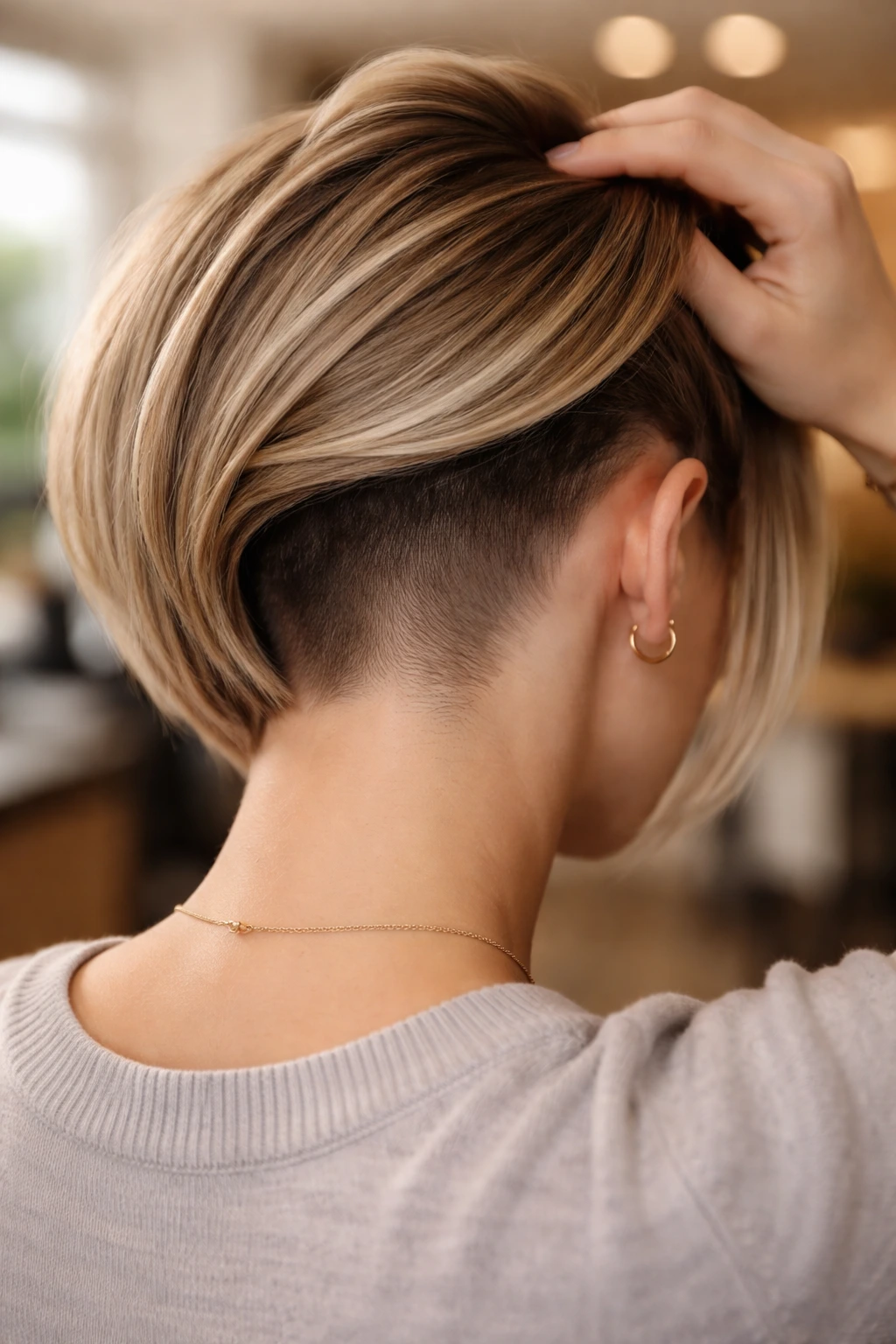
It sounds counterintuitive to shave hair off when you want more volume, but an undercut at the nape of the neck is a secret weapon for fine hair. By removing the very bottom layer of hair (the stuff that usually just gets frizzy and sits against your neck), you eliminate the hair that doesn’t contribute to your volume.
The hair above the undercut then sits flatter and smoother against your scalp. It creates a cleaner line and prevents the “mullet” look that can happen as short hair grows out. It’s also incredibly comfortable in warm weather. You can only see it if you pull your hair up, so it’s a subtle style choice.
14. Soft Layered Bob
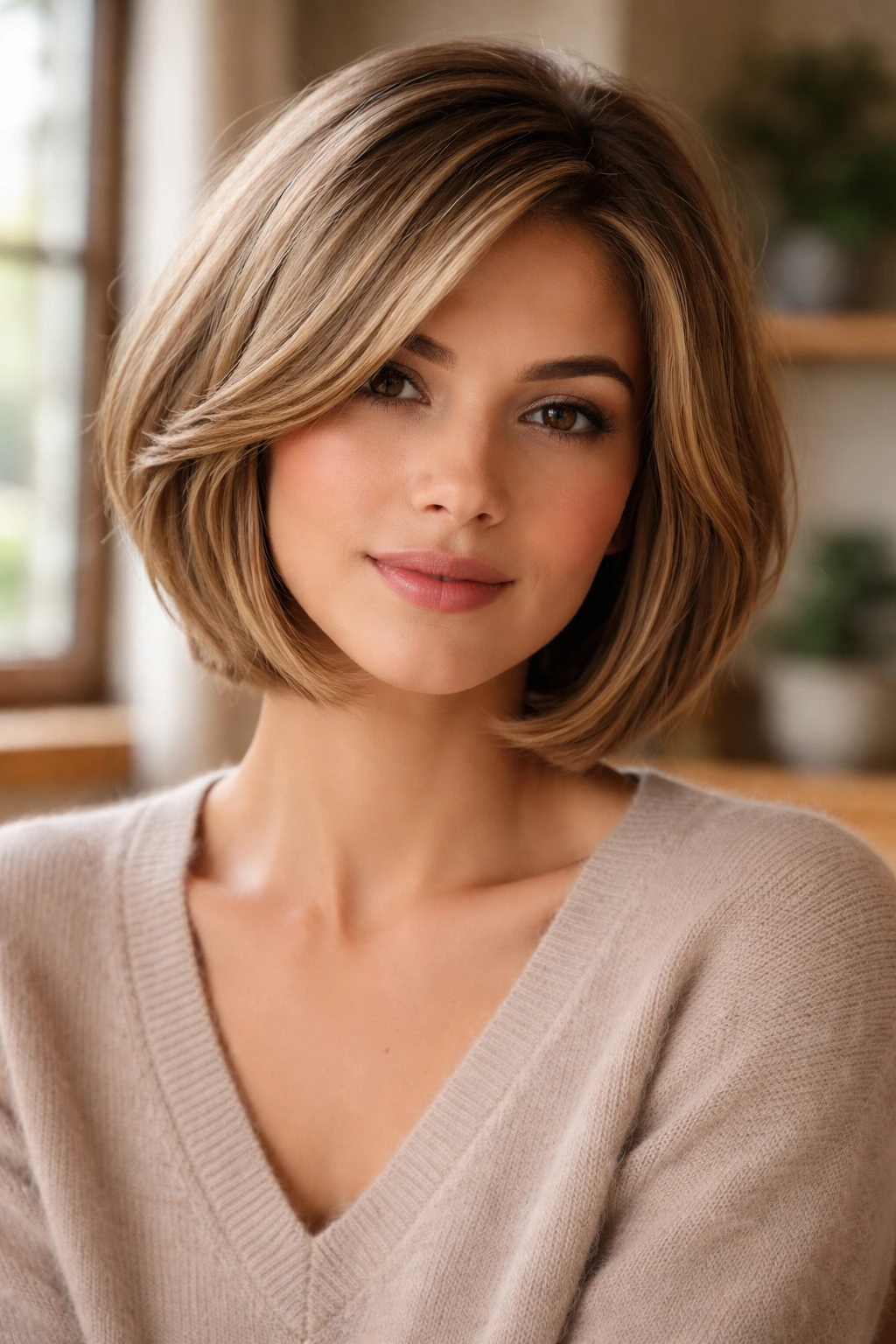
If the blunt look feels too harsh for your features, ask for soft, internal layers. These aren’t the heavy, choppy layers of the past. These are “invisible” layers meant to build volume, not texture. They should be cut in a way that allows the hair to bend and stack naturally.
Focus these layers toward the crown of the head. This is the area where fine hair tends to collapse first. By building a little support structure here, you ensure that your bob keeps its round shape all day. Avoid layering the bottom half of the hair; keep that solid to maintain the appearance of thickness.
15. Razored Edges Bob
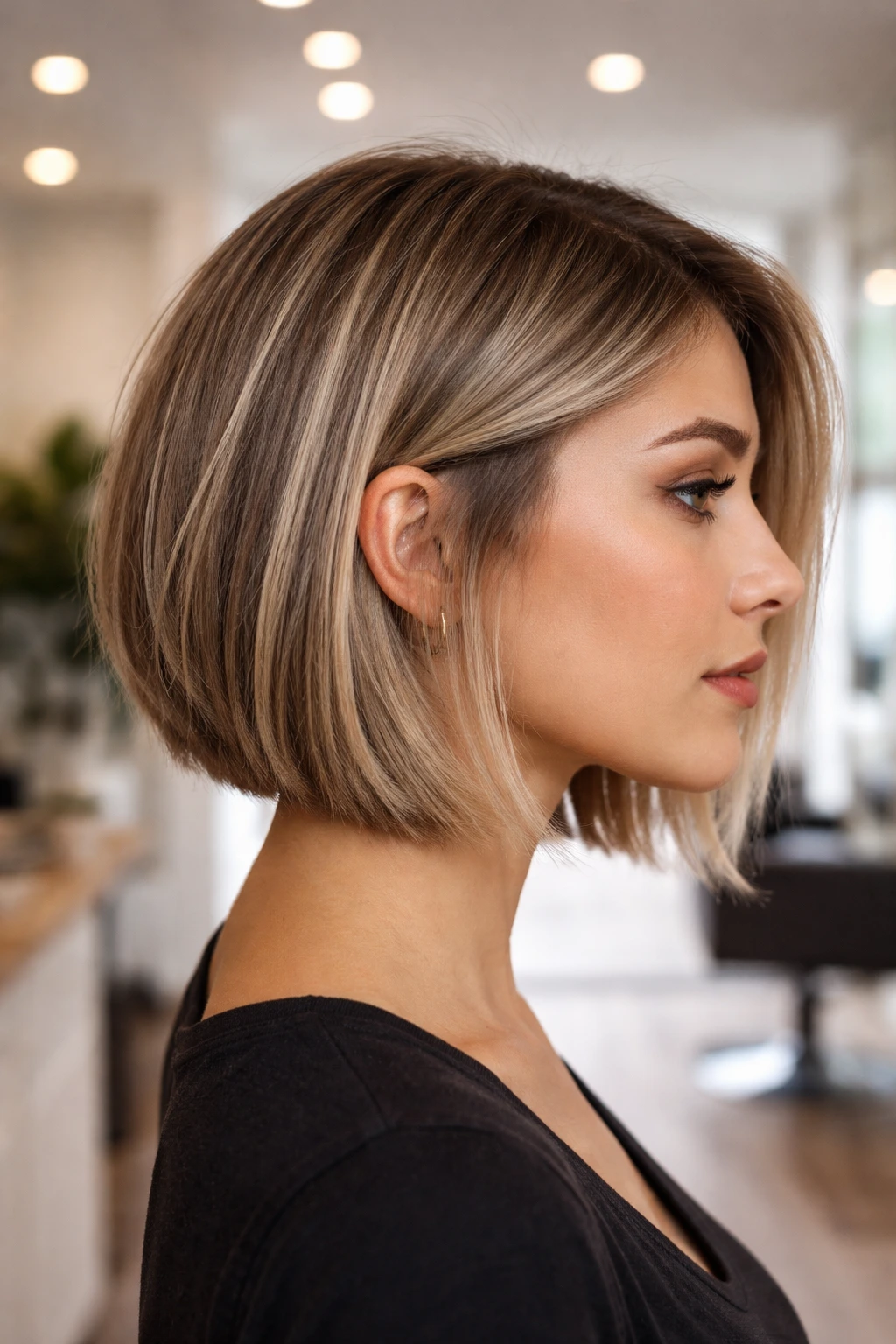
A razor can be a fine-haired person’s best friend or worst enemy. In the hands of a skilled stylist, a razor creates a soft, shattered edge that looks wispy and delicate. It avoids the blunt line that can look a bit “wig-like” on some people.
Be careful, though. Razoring removes weight. If your stylist goes too aggressive, you will end up with thinning ends. Make sure they only use the razor for the very bottom half-inch of your hair. This creates a “lived-in” aesthetic that looks like your hair has been styled without actually doing anything.
16. Blunt Lob with Center Part
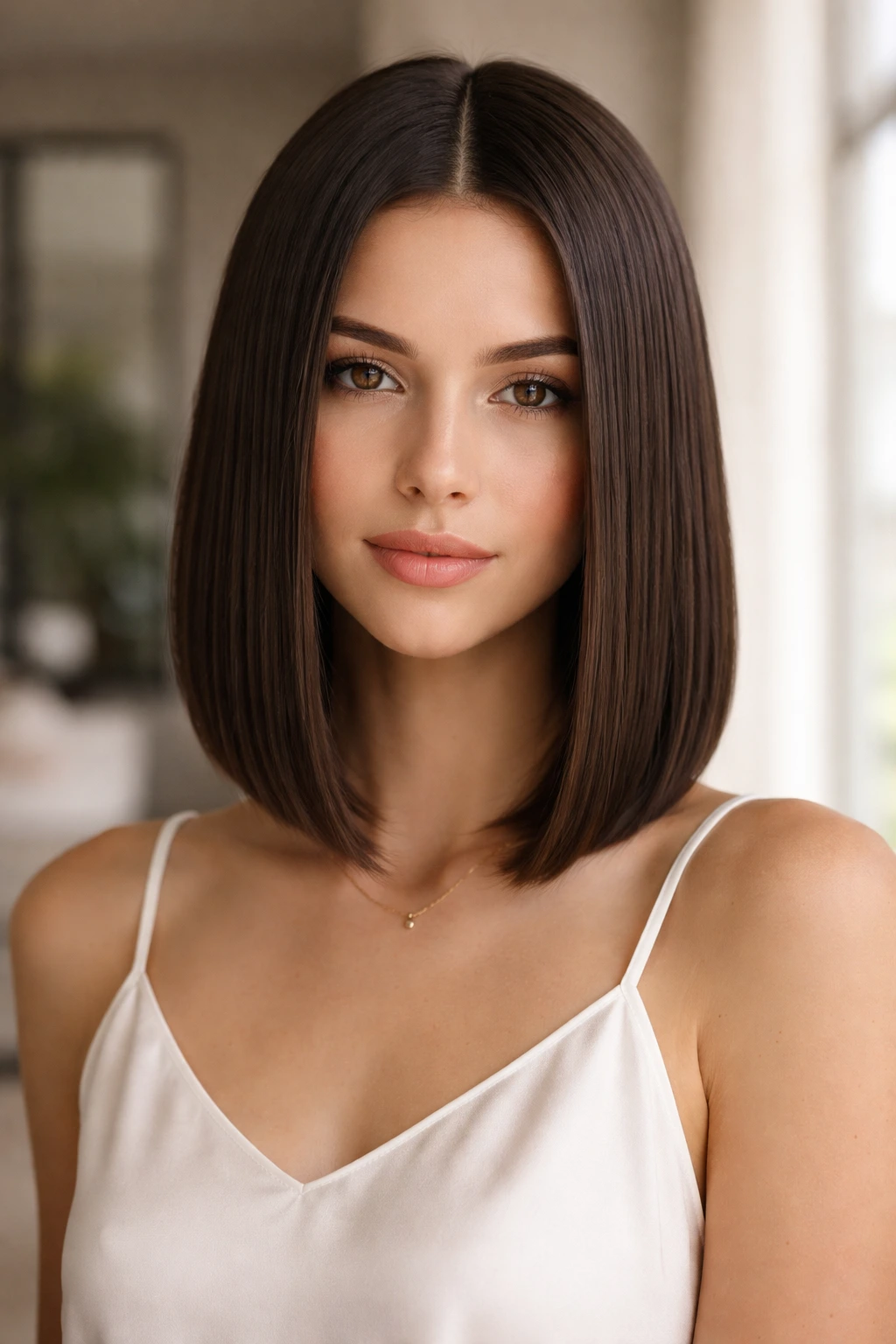
The center part is polarizing, but when done right with a blunt lob, it is high fashion. It works for fine hair because the weight is distributed perfectly evenly on both sides. There is no uneven tension pulling the hair in one direction.
This cut needs to be very straight to work. Any bend in the hair will make it look messy. Use a smoothing serum before you style, and keep the hair as sleek as possible. This is the ultimate “clean girl” aesthetic. It’s straightforward, effective, and very easy to maintain.
17. Inverted Bob with Highlights
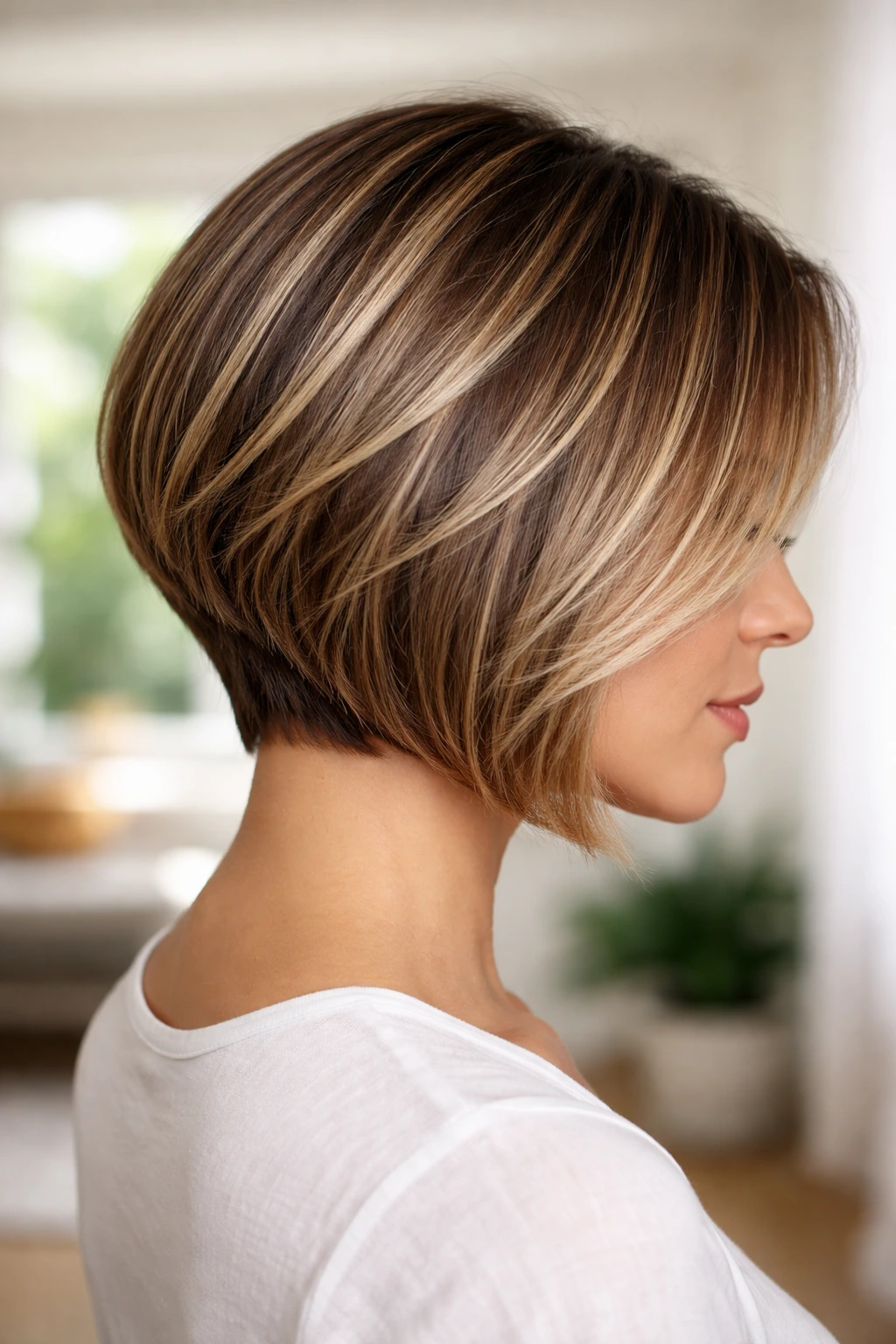
The inverted bob—where the hair is shorter in the back and longer in the front—is a great structural cut. But to take it to the next level, add highlights. Why? Because color creates optical depth.
Fine hair can look one-dimensional. By weaving in lighter and darker shades (babylights are great for this), you make the hair look multi-dimensional. The contrast between light and dark makes the hair appear thicker than it is. Your eye sees the variation and interprets it as volume and texture.
18. Sleek Glass Hair Bob
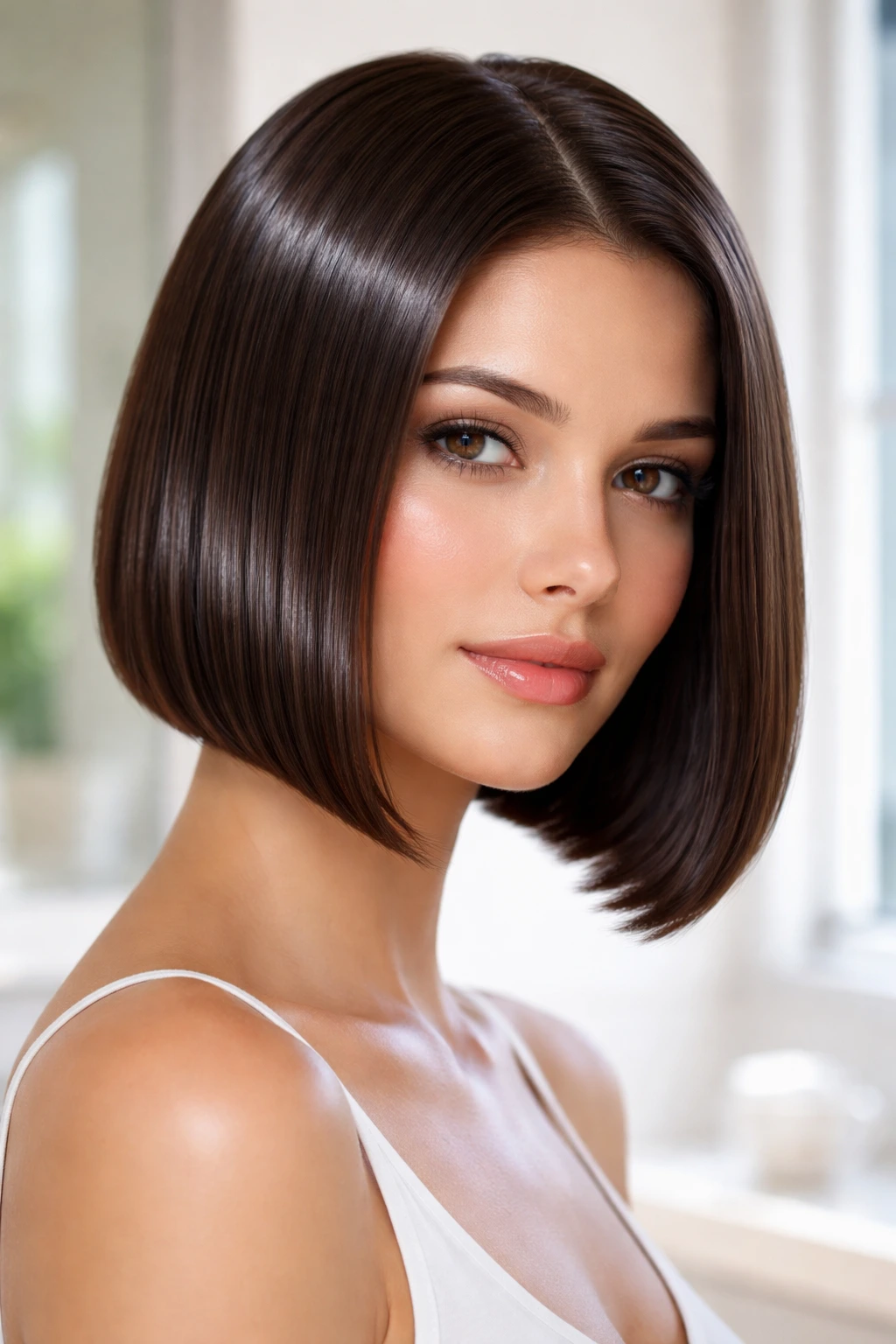
“Glass hair” is a trend that isn’t really a trend—it’s just the result of a great cut and proper care. This is a very precise, blunt cut that sits right at the jawline. The secret here isn’t the haircut itself; it’s the condition of the hair.
You need to prioritize shine. Use a gloss treatment or a clear glaze to seal the cuticle. When the light hits the hair, it should bounce off it smoothly. Because the cut is blunt, the light will reflect off the entire line, making your hair look like a single, solid sheet of silk.
19. Wavy Bob with Volume-Boosting Spray
If you have natural waves, don’t fight them. A wavy bob is inherently voluminous. The curves of the wave take up space, which is exactly what you want. The challenge is keeping those waves from going flat.
The Product Secret
Stop using heavy mousses. Instead, look for a lightweight, salt-free texturizing spray. You want something that adds “grip” to the hair without weighing it down. Apply it to damp hair, scrunch it in with your hands, and let it air dry. If you blow-dry, use a diffuser attachment on a low-heat setting to avoid stretching the waves out.
20. Angled Bob with Blunt Bangs
This is a bold choice. The sharp angle of the bob combined with a heavy, blunt bang creates a very geometric look. It’s almost like a fashion statement. For fine hair, the blunt bangs are the hero here—they take a significant portion of your hair and concentrate it at the front, making the hairline look dense and full.
This style demands attention. It’s not for everyone, but if you have a strong jawline and you want a cut that frames your face perfectly, this is it. Keep the bangs trimmed regularly. If they get too long, they start to separate and look stringy, which kills the whole effect.
21. Tucked-Behind-the-Ear Bob
This isn’t really a haircut, but a way to wear your bob. It’s a styling technique that adds a lot of charm. A short bob, tucked behind the ears, exposes the jawline and neck. It makes the hair look like it has “body” because the hair is pushed forward, creating a rounded shape around the face.
If your hair is too fine to stay tucked, use a tiny bit of lightweight styling paste. Warm it between your fingertips and apply it only to the ends of the pieces you are tucking. Don’t put it near the root, or you will regret it immediately.
22. Long Bob (Lob) with Minimal Layers
Sometimes, less is more. If you struggle with fine hair, you might be tempted to add layers to create volume, but often, those layers just make the ends look weak. Try a long bob with absolutely no layers.
This preserves every single strand of hair at the baseline. It makes the bottom of your hair look as thick as possible. If you need volume at the roots, achieve it with a round brush during your blow-dry rather than with a pair of scissors. This gives you the best of both worlds: length and the appearance of density.
23. Shaggy Textured Bob
Shag cuts are back, and they are perfect for fine hair. The shag relies on layers, but specifically, choppy layers that create gaps and movement. It is intentionally messy. The “gaps” in the cut are what allow the hair to look like it has more volume than it does.
Think of the style of the seventies. It’s all about curtain bangs, textured layers, and a relaxed, cool-girl vibe. Because the hair isn’t supposed to be perfect, you don’t have to stress about it falling flat. If it looks a little disheveled, you’re doing it right.
24. Tapered Neck Bob
A tapered neck is a very feminine, soft way to execute a short bob. Instead of a blunt line across the back of the neck, the hair is cut close to the scalp and “tapered” to blend into the longer hair above. It mimics the natural growth pattern of your hair.
This removes the bulk that tends to happen at the nape of the neck. It makes the back of the bob look lighter and more lifted. It’s a great choice if you have a shorter neck, as it creates an elegant, elongated line.
25. Softly Rounded Bob
This is the “classic” bob. It’s not angled, it’s not inverted, and it’s not asymmetrical. It is cut in a slight curve to follow the line of the head. It looks very natural and soft.
How to Achieve the Shape
You achieve this through graduation. The stylist cuts the back slightly shorter, and the length increases gradually as it moves toward the front. It doesn’t create a sharp point like an A-line; it creates a soft, rounded shape. It’s a very flattering cut for almost any face shape and is very easy to style at home.
26. Messy Bedhead Bob
Fine hair often looks better with a bit of “dirt” or grit. A messy bedhead bob is the intentional version of that. You want a blunt cut at the chin, but styled with a lot of movement.
Use a dry shampoo before you style your hair, not after. Spraying it on clean hair gives you the “tacky” grip you need to create volume. When you style it, focus on lifting the roots. Don’t worry about smoothing the ends; let them flick out. It’s a playful, low-maintenance look.
27. Graduated Bob with Wispy Ends
This is a variation of the inverted bob, but the ends are cut with a point-cutting technique to make them look wispy and light. It’s a nice bridge between a severe, sharp bob and a softer, layered look.
The wispy ends prevent the hair from looking too heavy or blocky. It’s very airy. Because the ends are light, they don’t get weighed down by gravity. This cut tends to hold its shape longer between salon visits than a blunt cut does.
28. Precision Cut Bob
This is the pinnacle of bob styling. It requires an incredibly skilled stylist who understands the geometry of the head. Every single hair must be cut to the perfect length. There is no room for error.
When done correctly, it is effortless. The hair falls into place the second it dries. You don’t need product, you don’t need styling—the cut is the style. It creates a beautiful, solid weight line that makes even the finest hair look like it has substance. It’s the ultimate, timeless classic.
Final Thoughts
Choosing the right bob for fine hair isn’t about following the current trend—it’s about understanding how your hair behaves. Fine hair needs structure. It needs to be kept short enough that gravity doesn’t win, and it needs to be cut with enough precision that the ends don’t look straggly.
Don’t be afraid to experiment with length. If you’ve always had long hair, going to a chin-length blunt cut can feel like a major shift, but it is often the single most effective thing you can do to make your hair look thicker. Start with a longer lob if you’re nervous, and if you love it, don’t hesitate to go shorter. The right cut will change how you feel about your hair every morning. Stop fighting the texture you have and start working with it.
