



Fine hair is a unique challenge. You know the feeling: you spend thirty minutes styling, only for your hair to fall flat by the time you reach your car. It lacks the natural density to hold volume, and it often clings to the scalp in ways that emphasize thinness rather than movement. This is where the inverted bob shines. By cutting the back shorter than the front, you naturally build lift at the nape, which forces the hair to stack upon itself. When you add a blonde hue—which naturally expands the hair shaft slightly—you get a recipe for the illusion of serious thickness.
Choosing the right cut is about manipulating angles to trick the eye. A sharper angle draws the eye forward, lengthening the face and focusing attention on the chin, while a soft stack creates internal volume that fine strands simply can’t generate on their own. The following cuts are designed to maximize what you have, utilizing placement and texture to turn fine, limp hair into a style that looks intentionally polished and surprisingly dense.
1. Platinum Inverted Bob with Stacked Nape
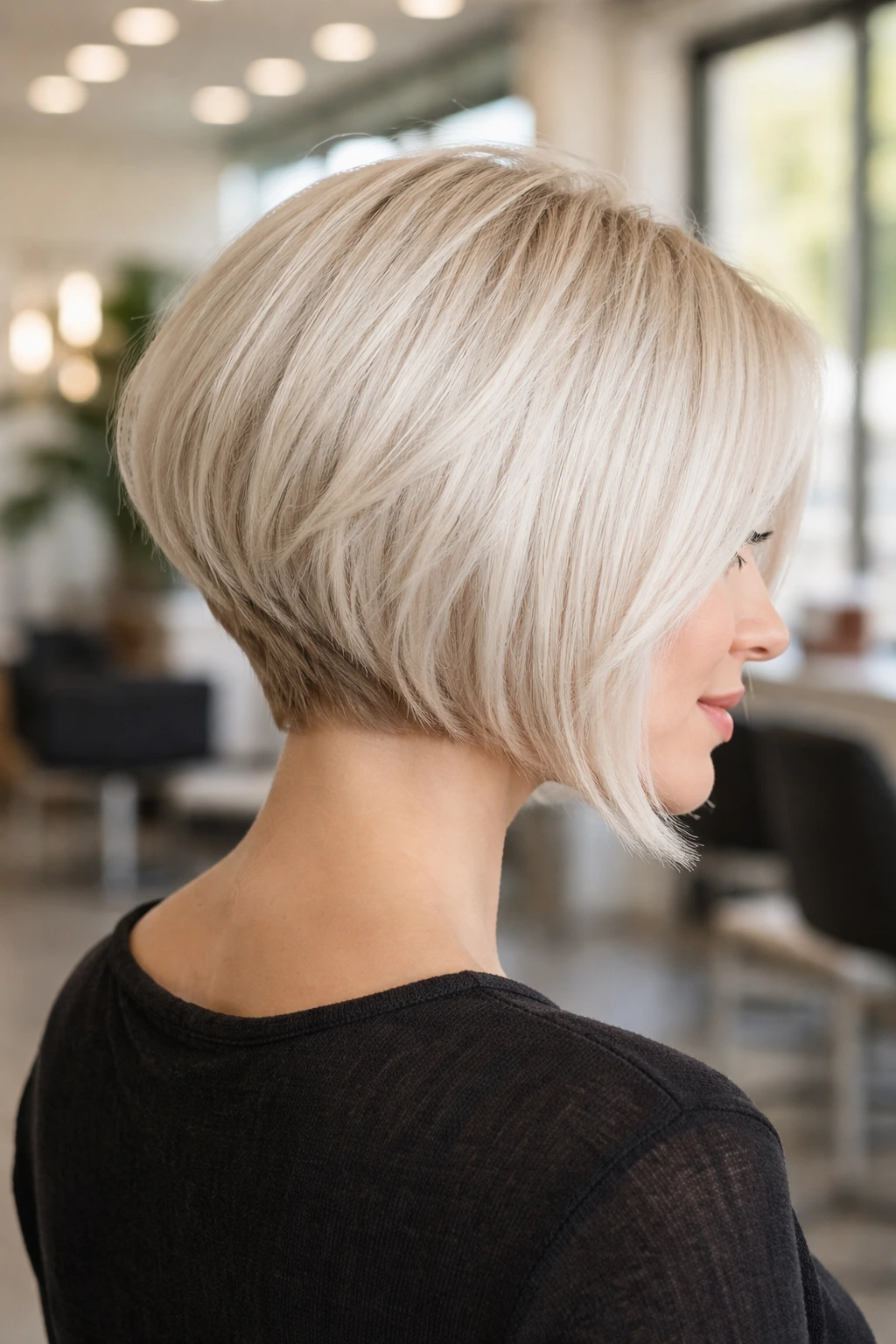
This is the ultimate confidence cut for those with fine hair. By choosing a high-contrast platinum blonde, you are essentially “plumping” the appearance of your hair. Platinum requires bleach, and that process slightly swells the hair cuticle, making individual strands feel—and look—thicker. The stacked nape provides that crucial physical lift.
Why It Works for Fine Texture
The stack at the back is non-negotiable here. It eliminates the weight that typically drags fine hair down. Instead of a flat, limp back, you get a rounded, bouncy silhouette that sits perfectly without needing a mountain of hairspray.
Styling Tip
Use a round brush while blow-drying, but focus the tension at the roots of the nape. If you pull the hair straight down, you lose the stack. Pull it up and away from the neck. This technique creates a semi-permanent lift that lasts until your next wash.
Pro tip: Keep a root-lifting mousse in your bag. If your hair goes flat by noon, a quick spritz at the nape can reactivate the volume you created that morning.
2. Honey Blonde Angled Lob
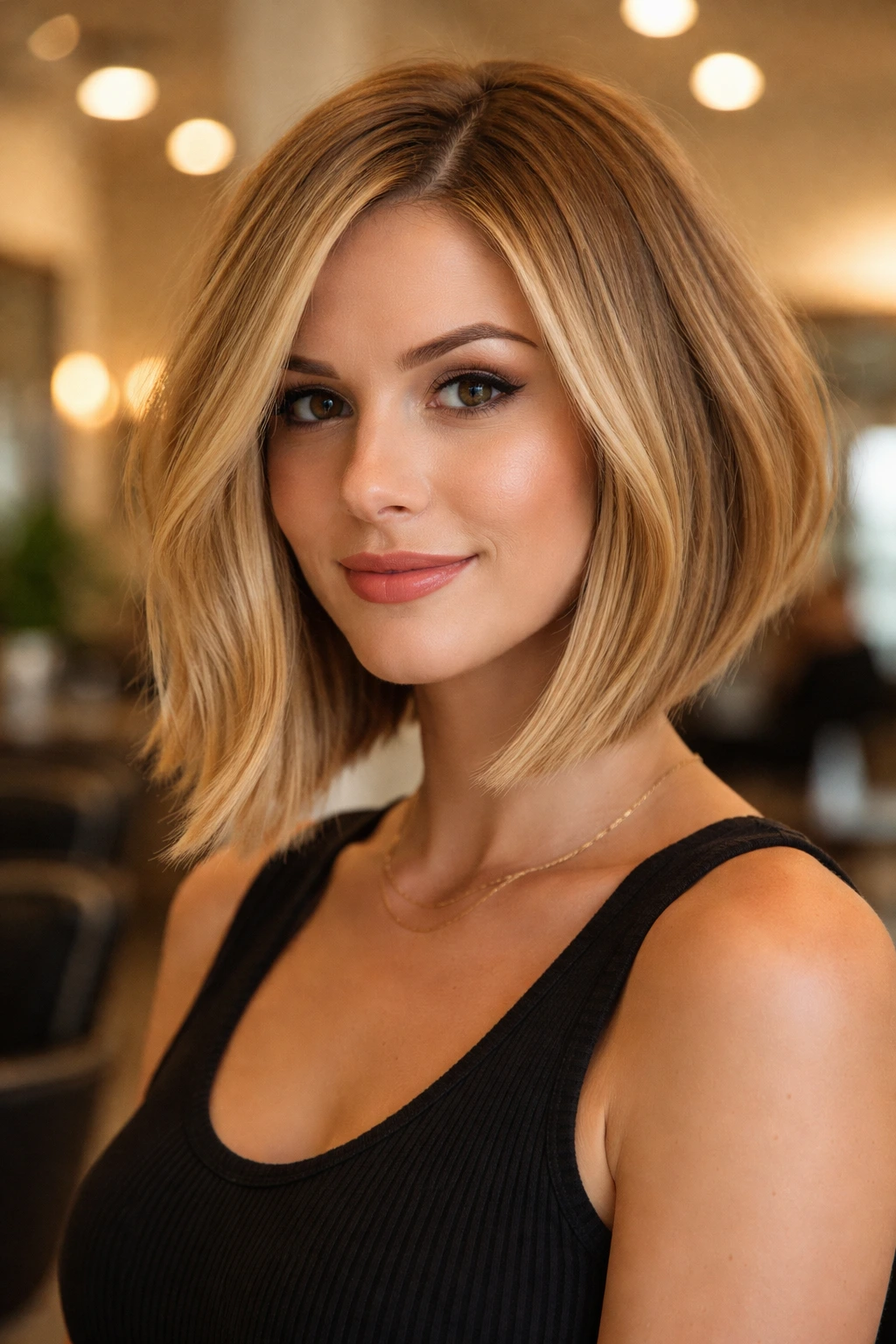
If you aren’t ready for a chin-length cut, the lob—or long bob—is your best friend. A honey blonde shade adds warmth, which tends to make fine hair look healthier and more luminous. The angle on a lob is more gradual, which prevents the ends from looking wispy or stringy.
The Power of the Longer Angle
By keeping the front pieces slightly longer, you create a frame that distracts from the lack of density in the crown. It draws the gaze downward, making your hair appear longer and more substantial. The honey tones reflect light in a way that creates depth; solid, dark colors on fine hair often show too much scalp, whereas honey blonde provides a multidimensional effect that hides that transparency.
Daily Maintenance
A lob is incredibly forgiving. You can let it air dry with a sea salt spray for a “lived-in” look, or take five minutes with a flat iron to create a slight bevel at the ends. Never use a heavy oil on this cut. Stick to lightweight serums that won’t weigh down the ends.
3. Ash Blonde Bob with Face-Framing Layers
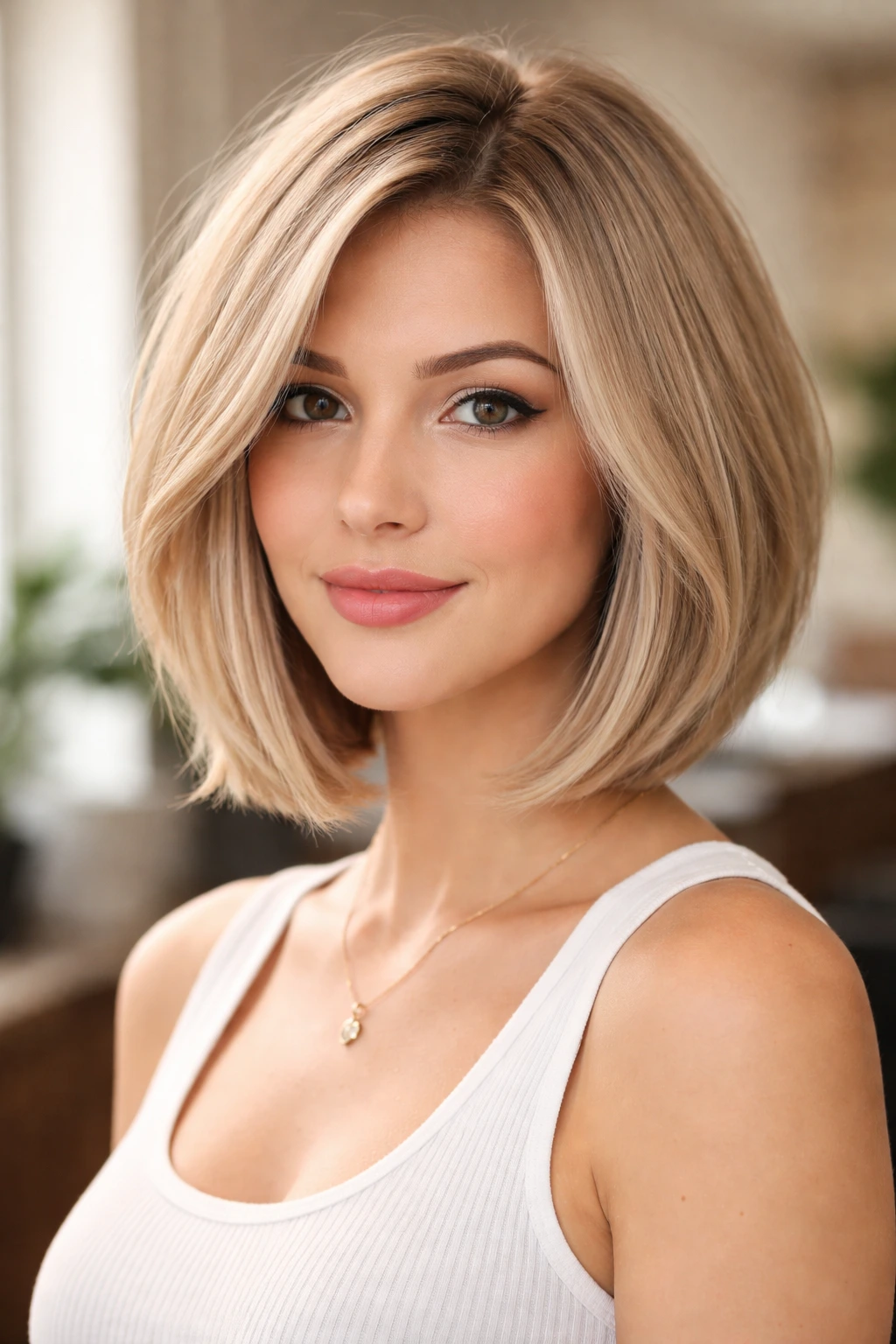
Ash blonde is a classic choice, but it can be risky on fine hair because it tends to absorb light rather than reflect it. To counteract this, add subtle face-framing layers. These layers break up the perimeter of the cut, removing the “curtain” effect that can make thin hair look like it’s just hanging there.
How Layers Change the Shape
Layers on fine hair are a delicate balance. You don’t want to over-layer, or you’ll end up with thin, sparse ends. Stick to long, invisible layers near the face. They provide movement and keep the style from looking too blocky or severe.
Who This Best Suits
This look is ideal for someone who wants a professional, clean aesthetic. It works particularly well with round or heart-shaped faces, as the layers elongate the profile. Ask your stylist for “soft, invisible layers” to avoid the dreaded “mullet” look that can happen with aggressive thinning shears.
4. Textured Wavy Blonde Bob
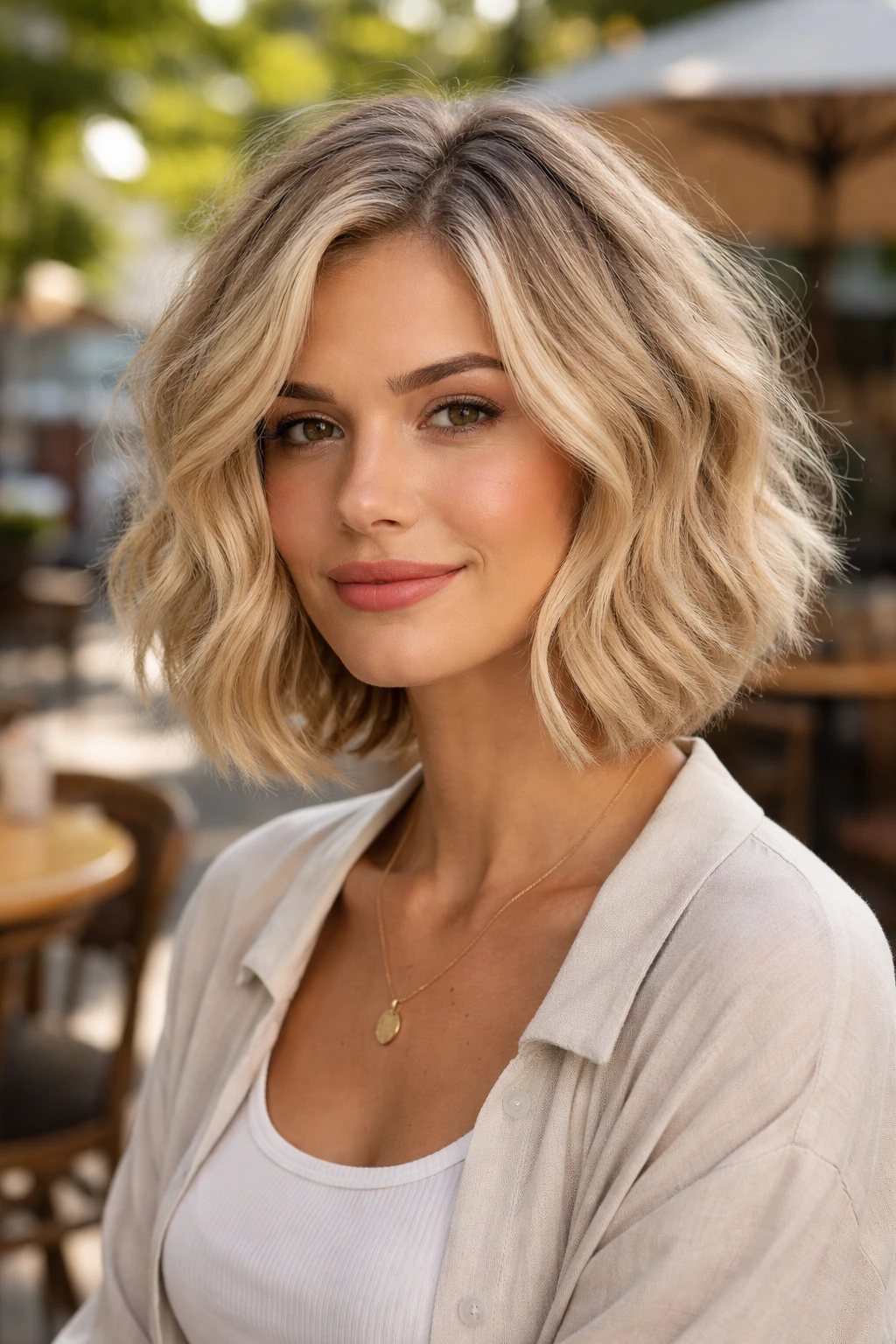
Fine hair often has a secret weapon: it holds a curl beautifully because it’s lightweight. By adding a soft, textured wave, you instantly double the visible volume of your hair. The “textured” part refers to the cutting technique—your stylist should use a point-cutting method on the ends to prevent a blunt, heavy edge that drags the hair down.
The Illusion of Thickness
Waves create negative space between strands. When hair is bone-straight and thin, every gap is visible. When it’s wavy, those gaps are hidden by the curves of the hair. It’s a simple visual trick that changes the entire perception of your hair’s density.
Product Strategy
Skip the heavy creams. You need a texturizing spray or a dry shampoo that adds grit. Fine hair needs “dirtiness” to hold a style. If your hair is too clean, the waves will fall out in twenty minutes. Spray texturizer through the mid-lengths, scrunch with your hands, and walk away.
5. Sleek Side-Parted Blonde Bob
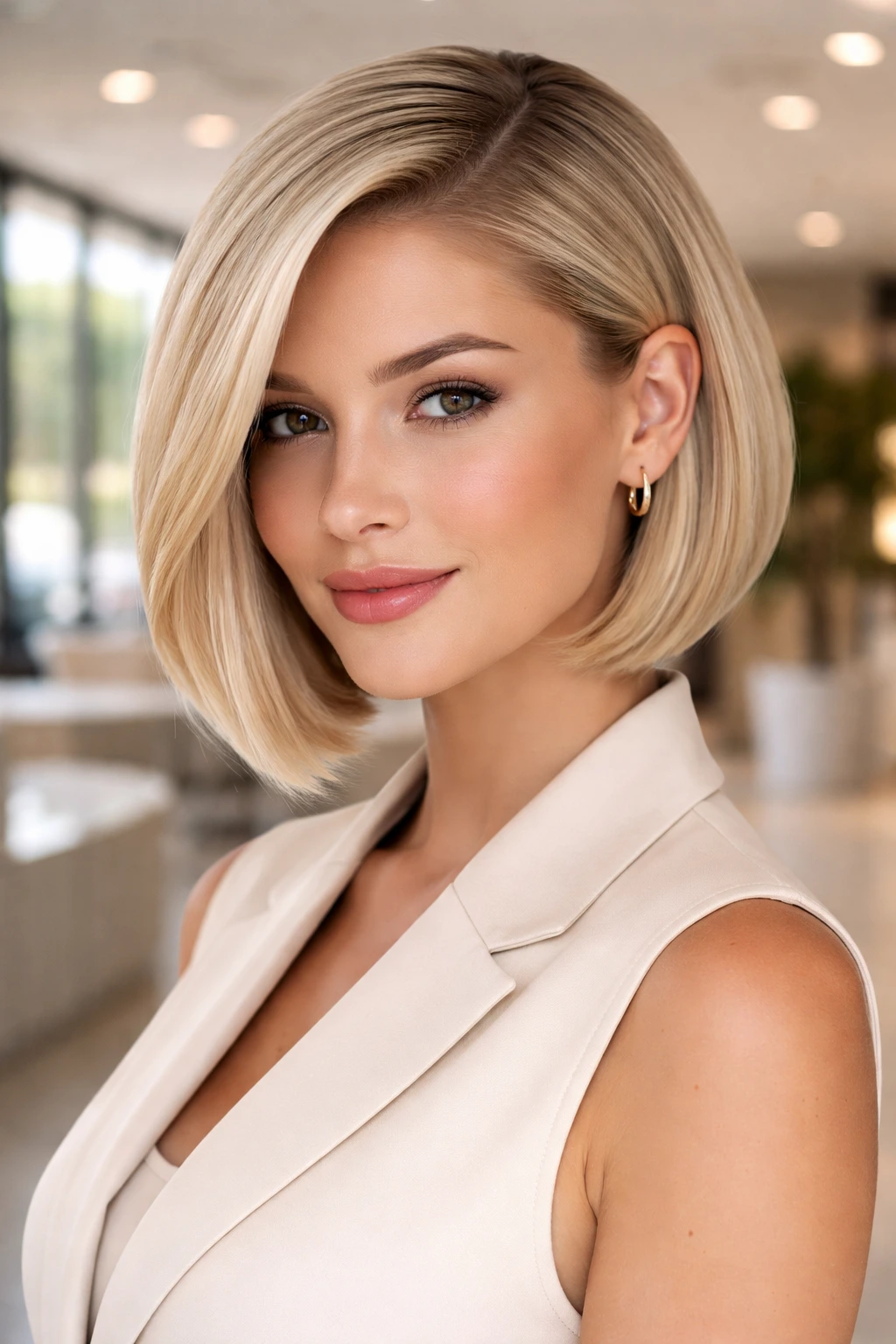
Sometimes, the best way to deal with fine hair is to embrace its natural straightness and turn it into a sleek, editorial look. A deep side part is the oldest trick in the book for instant root volume. By pushing hair from the heavy side over, you are essentially stacking hair on top of itself, creating a natural hump of volume.
Why This Style Succeeds
It works because it changes the geometry of your style. A center part often exposes the part line, which can look thin. A deep side part covers the crown and creates a beautiful sweep across the forehead. The sleekness implies control and intentionality—it doesn’t look like your hair is flat; it looks like it was styled to be smooth.
The Finish
To get that “glass hair” look without making it look greasy, use a tiny amount of shine spray. Rub it between your palms first, then gently glide your hands over the surface of your hair. Do not touch the roots with the shine spray, or you will lose the lift you just gained from the part.
6. Choppy Inverted Bob with Bangs
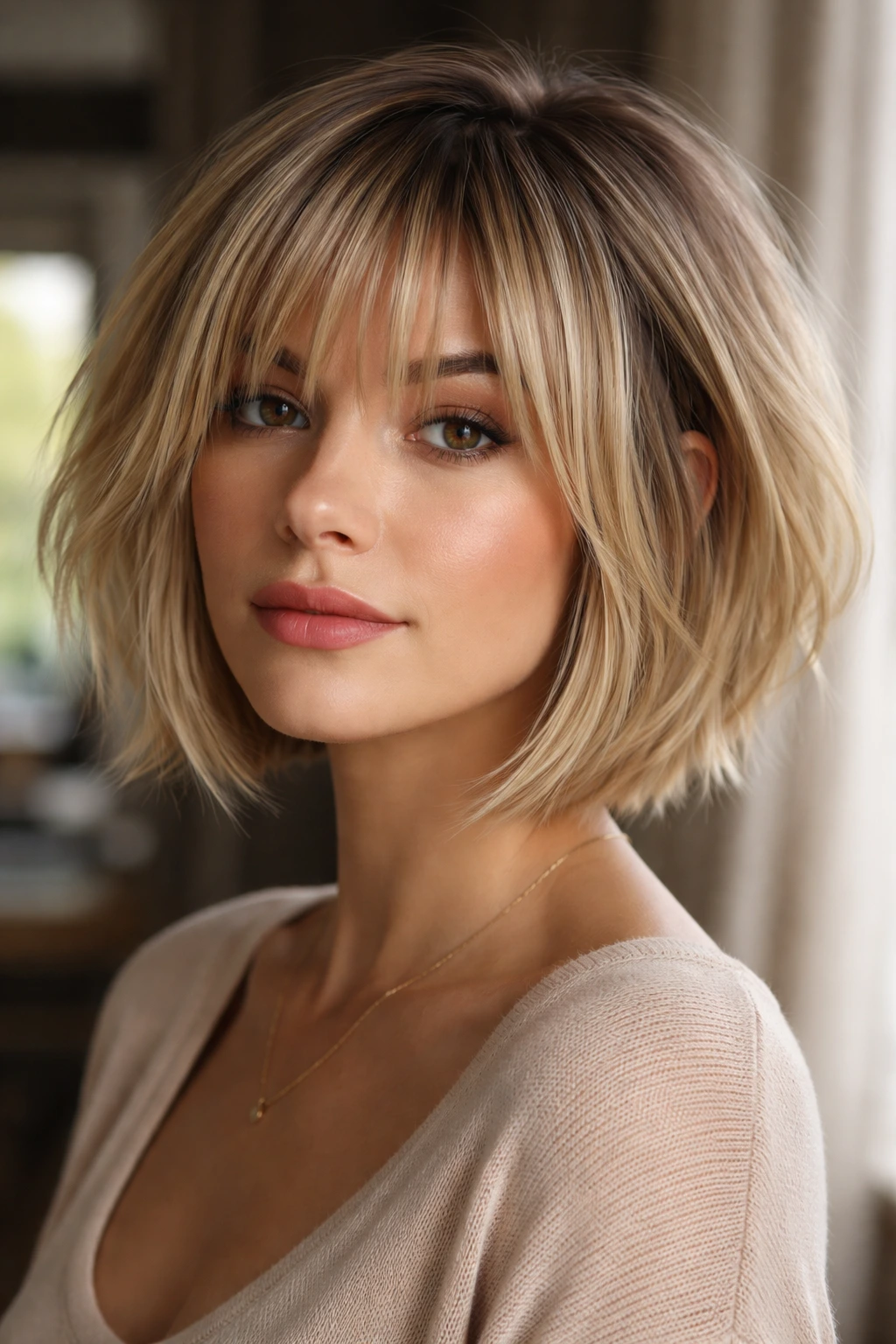
Bangs can be terrifying for those with fine hair, but when cut correctly, they are a massive asset. A choppy, slightly piecey bang takes hair from the front, which thins out the heavy “wall” of hair and replaces it with texture.
Getting the Bangs Right
Ask for “wispy” or “curtain” bangs rather than a heavy, blunt fringe. Heavy bangs will eat up all your hair density, leaving the back looking even thinner. Wispy bangs allow light to pass through, keeping the focus on your eyes and cheekbones.
Why the Inversion Matters
The inverted shape keeps the back short, which provides the lift you need to support the bangs. Without the inverted shape, the weight of the bangs would pull the whole style down. The stack acts as an anchor for the style, keeping it perky and fresh all day long.
7. Soft Balayage Stacked Bob
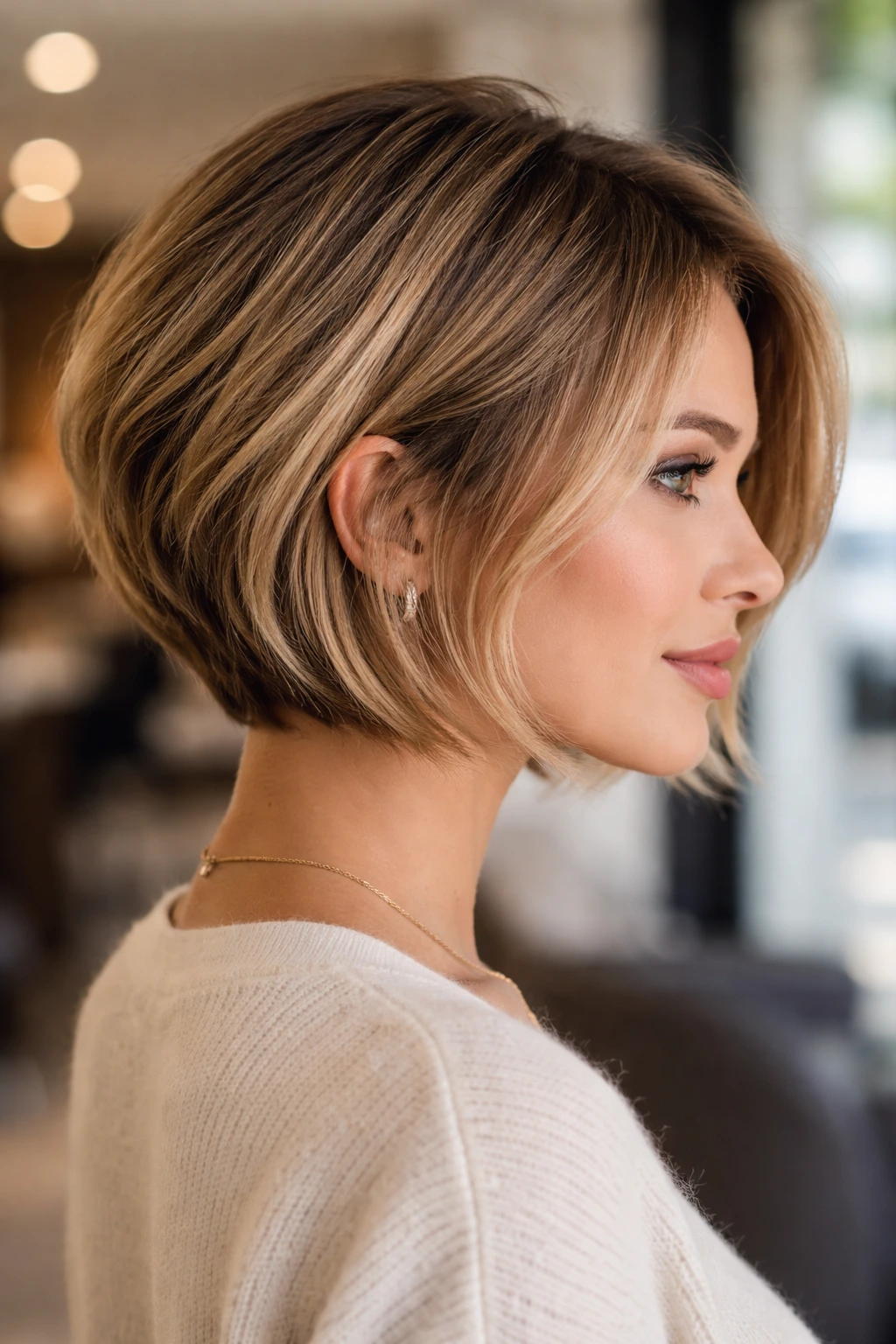
Balayage—a hand-painted highlighting technique—is fantastic for fine hair because it mimics the natural variation in sun-lightened hair. By keeping the roots slightly darker and the ends lighter, you create the illusion of depth.
The Depth Factor
Fine hair can look one-dimensional. Adding different tones of blonde creates visual “light” and “shadow” within the hair. This contrast tricks the eye into thinking there is more hair than there actually is. The stacked back adds the physical silhouette, while the color adds the visual texture.
Maintenance Reality
The beauty of a balayage bob is the grow-out. You don’t have a harsh root line, which means you don’t have to head to the salon every four weeks. This is a low-maintenance choice for those who want high-impact results without the constant appointment book.
8. Wispy Ends Blonde Bob
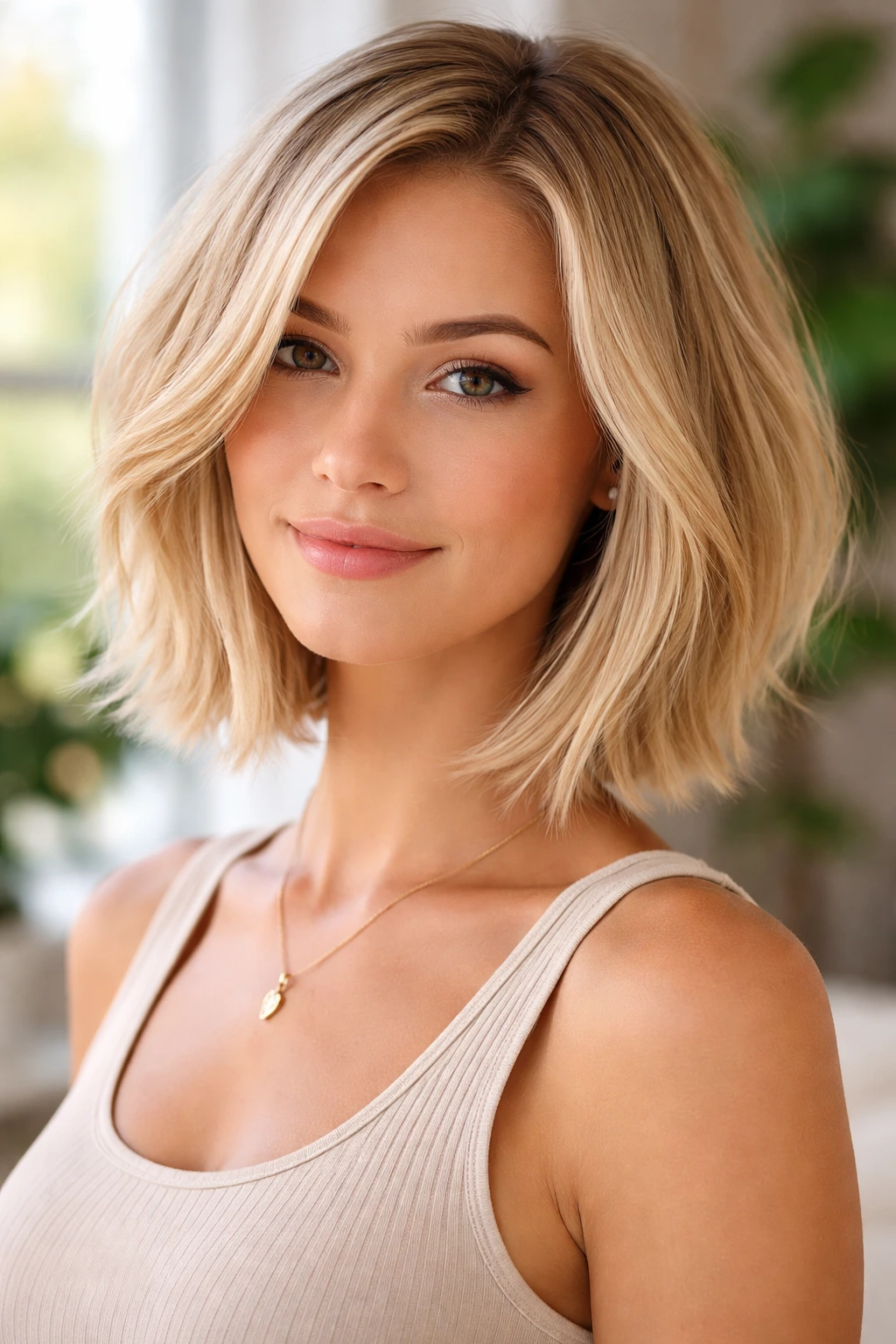
If your fine hair tends to clump together, it might be because the ends are too blunt. A blunt cut is great for thickness, but if it doesn’t move, it looks like a mop. “Wispy ends” means the stylist uses a razor or point-cutting to soften the perimeter.
Creating Movement
Movement is the enemy of flatness. If your hair is stiff, it shows every flaw. When it has movement—when it swings slightly when you turn your head—it looks luxurious. The wispy ends allow the hair to separate into delicate strands rather than staying in one heavy, limp chunk.
Styling Caution
You have to be careful not to over-thin. If you take too much hair out of the ends, you’ll lose the weight that makes a bob look intentional. Ask for “texture on the last half-inch” to ensure you keep the bulk of your hair volume.
9. Deep Side Part with Root Smudge
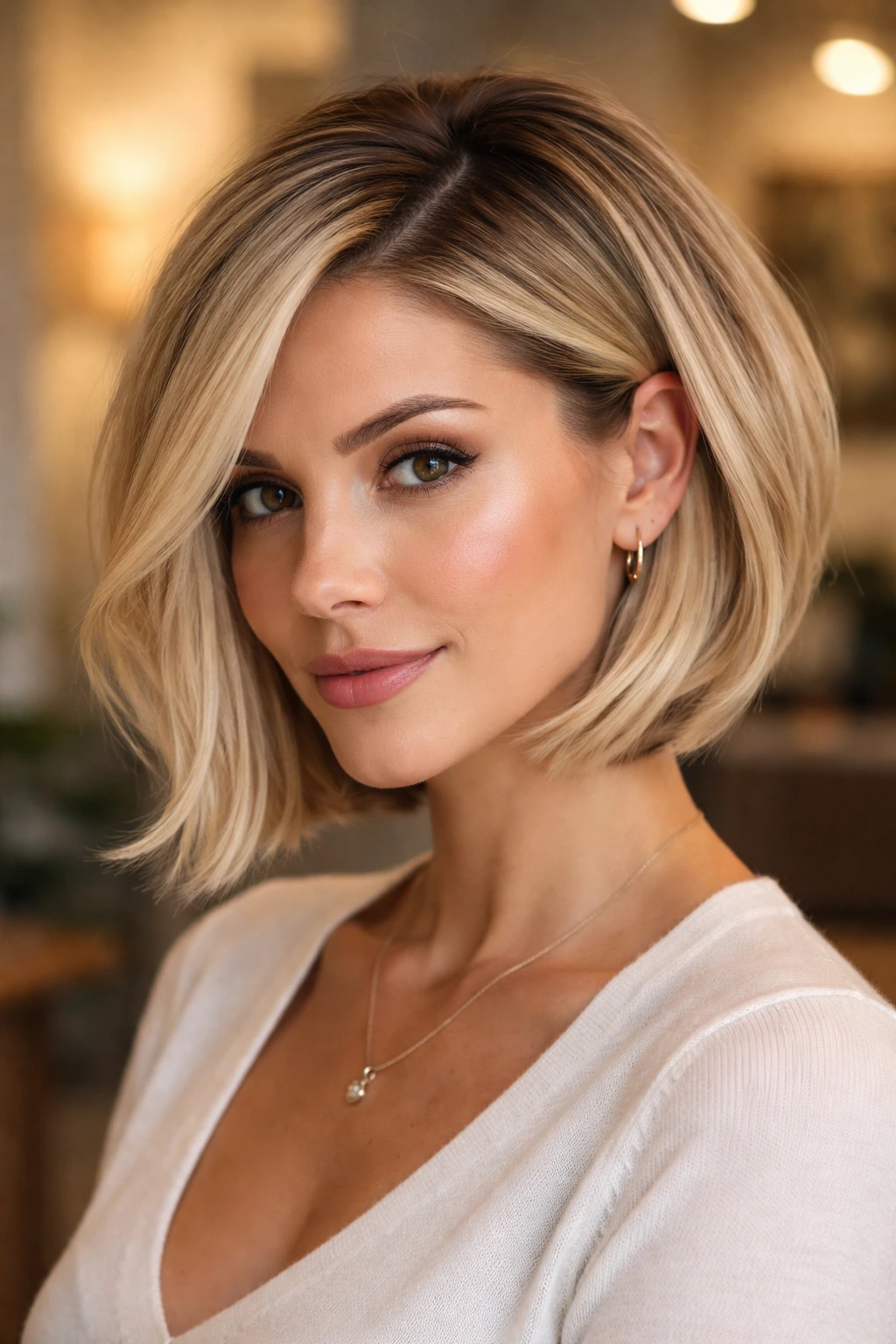
A “root smudge” is a color technique where your stylist blends your natural color (or a darker blonde) down into the lighter highlights at the roots. This eliminates the “bright” line at the scalp, which often makes fine hair look sparse.
How It Hides Thinness
When the roots are dark and the ends are light, the contrast pulls the focus downward. More importantly, a darker root creates a shadow effect. On the scalp, this shadow makes the hair appear denser because the skin isn’t as visible underneath. It’s a color-based optical illusion that works every single time.
Why Combine With a Deep Side Part
The smudge works best when you have some height at the root. The deep side part provides that height, and the smudge provides the coverage. Together, they make your hair feel twice as thick as it actually is.
10. Blunt Cut Inverted Bob for Maximum Density
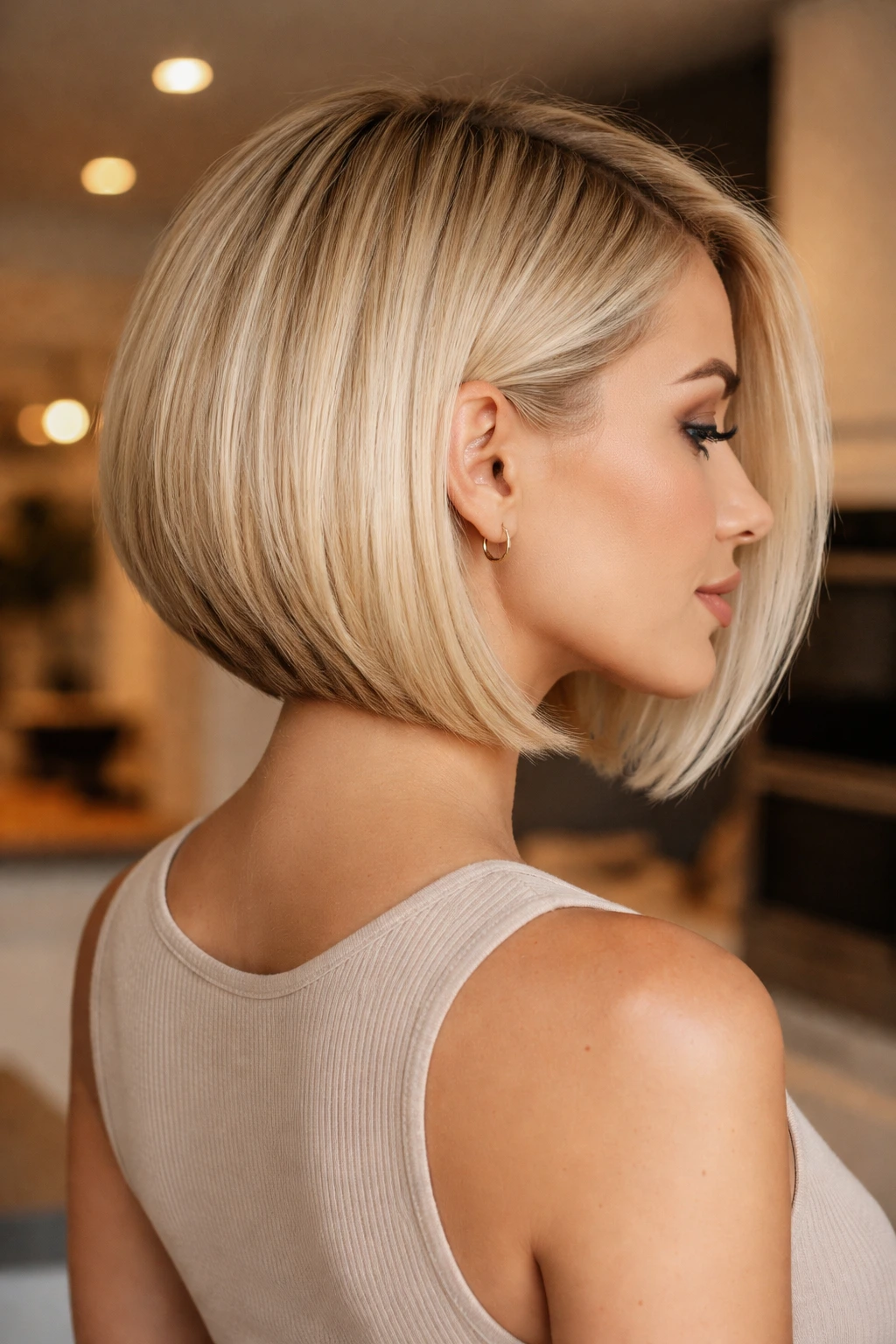
Sometimes the “layering” advice is wrong. If your hair is extremely fine, layers can make it look stringy. In that case, a blunt cut is your best bet. A blunt, heavy line at the bottom creates a “shelf” of thickness.
The Aesthetic of the Blunt Bob
This is a sharp, architectural cut. Because every strand of hair ends at the same length, the ends look as thick as possible. It doesn’t have the wispy, romantic feel of a shaggy bob, but it offers a sophisticated, polished look that screams quality.
Maintenance and Growth
This cut requires regular trims. Because it’s blunt, any split ends are immediately visible. If you’re going for this, commit to a trim every six to eight weeks. It’s worth it to keep that sharp, thick perimeter that makes fine hair look so healthy.
11. Tousled Beach Wave Bob
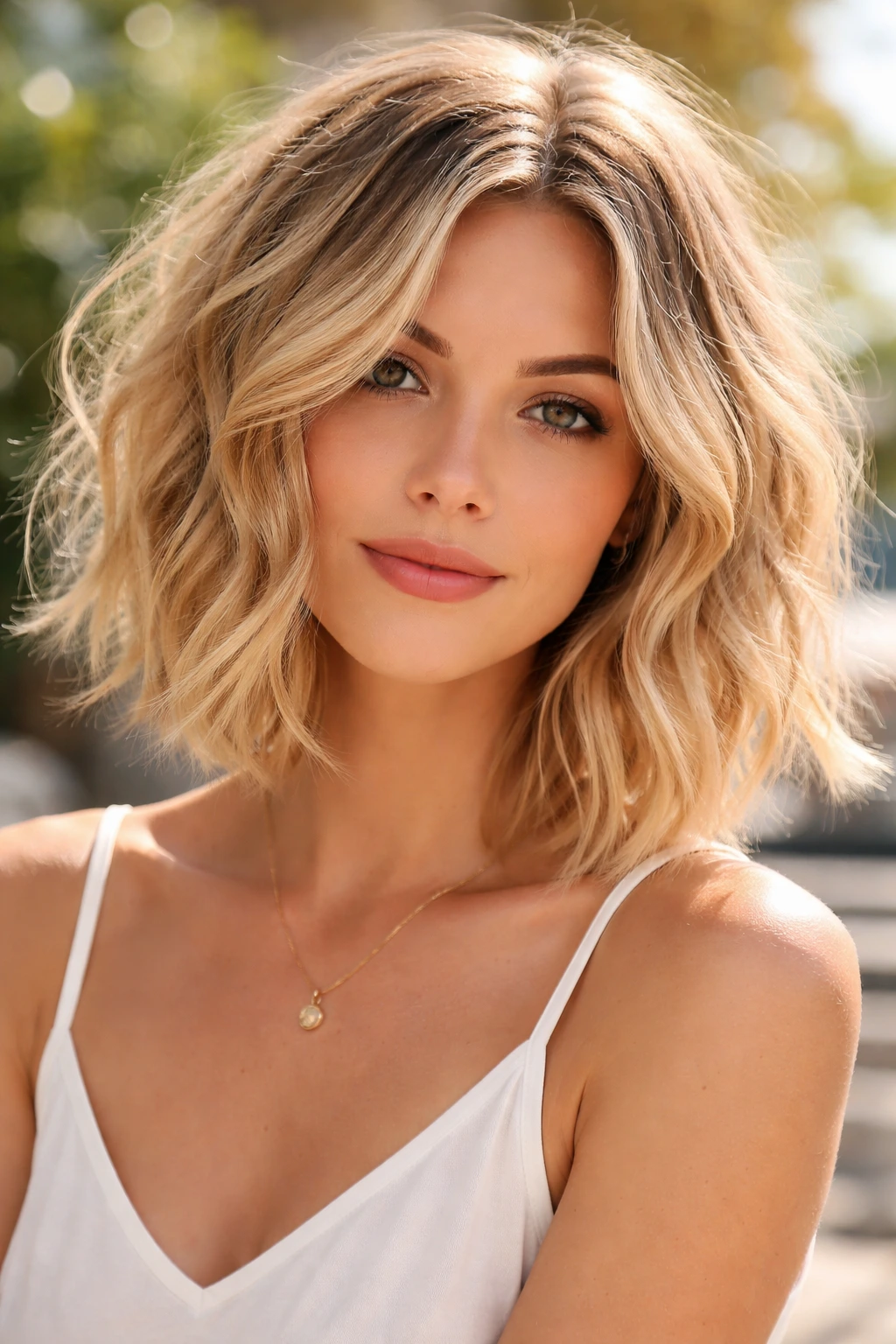
If you are struggling with a bob that looks “boring,” go for a tousled finish. This isn’t about perfectly curled ringlets; it’s about a messy, “I just woke up like this” vibe. This is easier to achieve on fine hair than you might think.
Why It’s Great for Fine Hair
Fine hair doesn’t hold heavy curls. It does, however, hold a loose, bendy wave. Use a flat iron to create “S” bends instead of tight curls. Leave the ends out—meaning, don’t clamp the iron all the way to the tip. This keeps the ends straight, which provides contrast to the wavy mid-lengths.
The Secret Ingredient
A sea salt spray or a “texture tonic.” Apply it to damp hair, scrunch it in, and let it air dry. If you have time, blast it with a blow dryer while flipping your head upside down. This is the fastest way to get volume from nothing.
12. Butter Blonde Graduated Bob
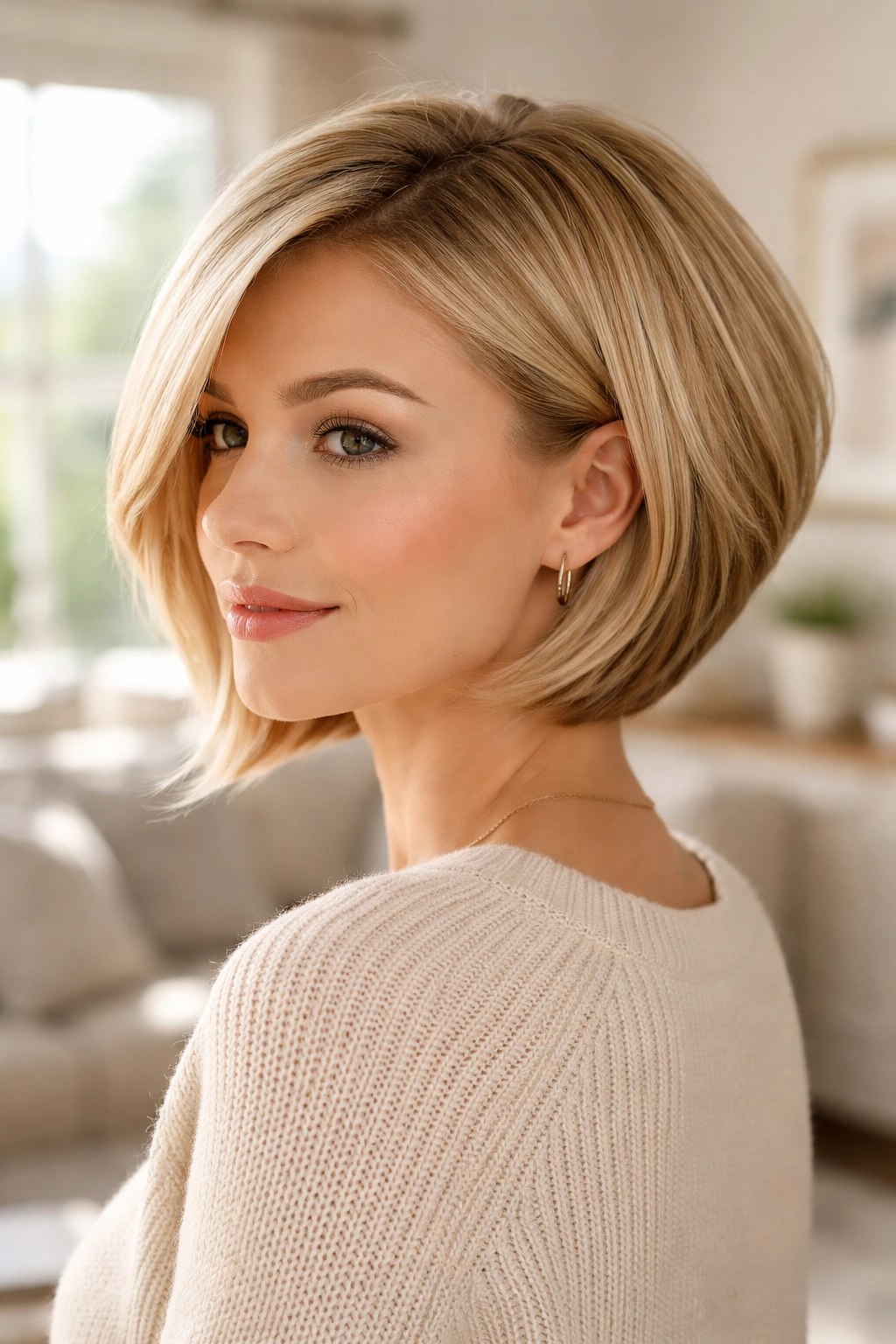
Butter blonde is a warm, creamy shade that sits right between platinum and honey. It’s a universally flattering color that looks great on almost everyone. When combined with a graduated bob—where the back is shorter than the front, but with a softer angle—it creates a very approachable, feminine style.
Why Graduated Cuts Help
A “graduated” cut is a cousin to the inverted bob. The stack is usually a bit softer and the angle is less severe. This makes the cut more versatile; it looks great both straight and wavy. It’s the perfect “everyday” cut.
Who Should Choose This
If you are new to the world of bobs and are afraid of anything too aggressive, this is the perfect entry point. It provides the lift and volume you need without feeling like a drastic hair transformation.
13. Shattered Layers Inverted Bob
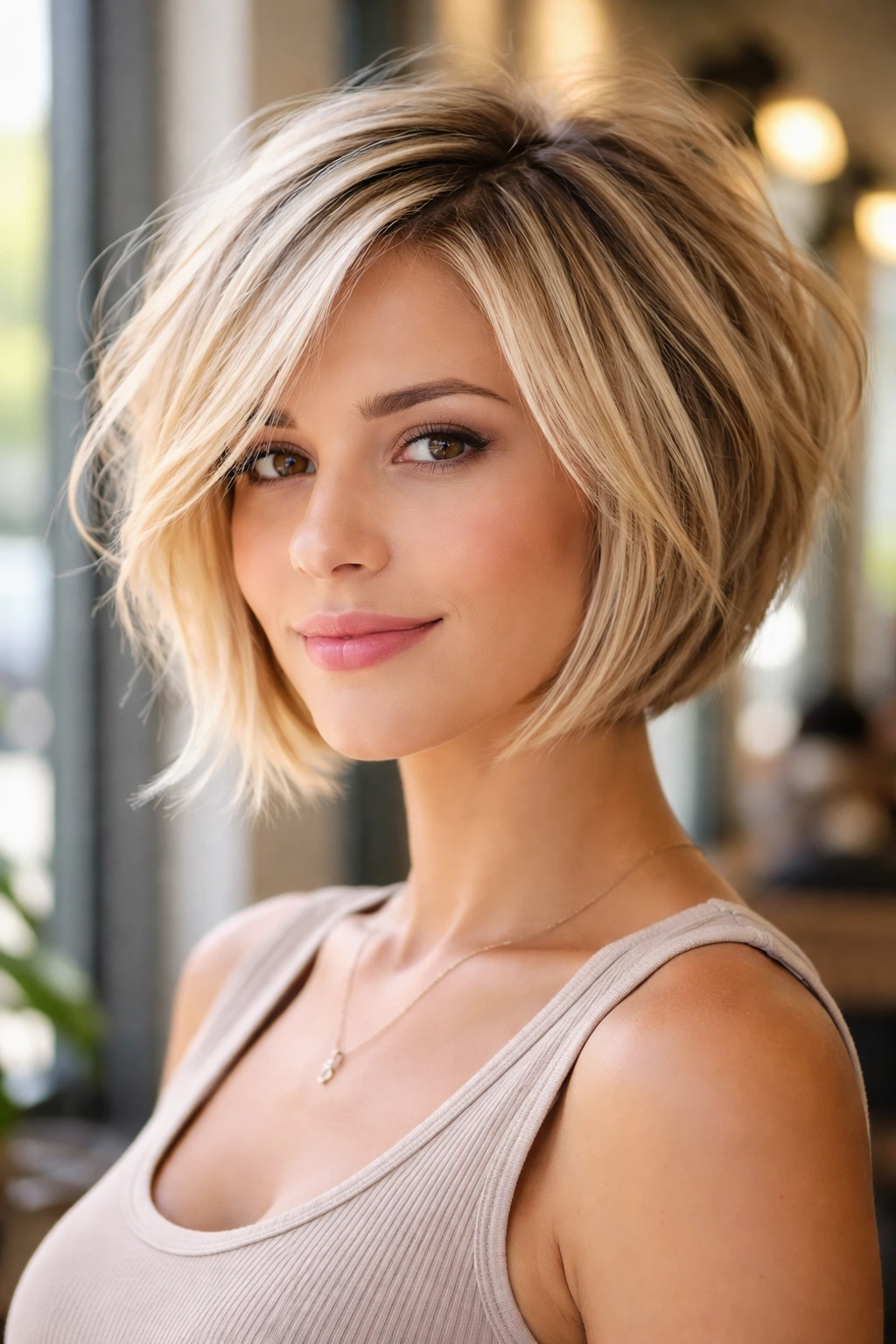
“Shattered layers” sound aggressive, but they are incredibly useful. This technique involves cutting layers of varying lengths throughout the hair to create a piecey, broken-up texture. It prevents the hair from sitting flat against your skull.
The Benefit of Shattered Texture
This look is all about airiness. Because the layers aren’t uniform, they don’t sit on top of each other in a flat layer cake. Instead, they interlock, creating a cushion of hair. This is excellent for fine hair because it builds internal structure.
How to Style
Don’t reach for the brush. Use your fingers. Apply a styling paste—something with a matte finish—to your damp hair. As you blow dry, lift the hair at the roots and rake your fingers through the shattered layers. It gives you that effortless, messy finish that makes fine hair look naturally voluminous.
14. Minimalist Blonde Bob with Curtain Bangs
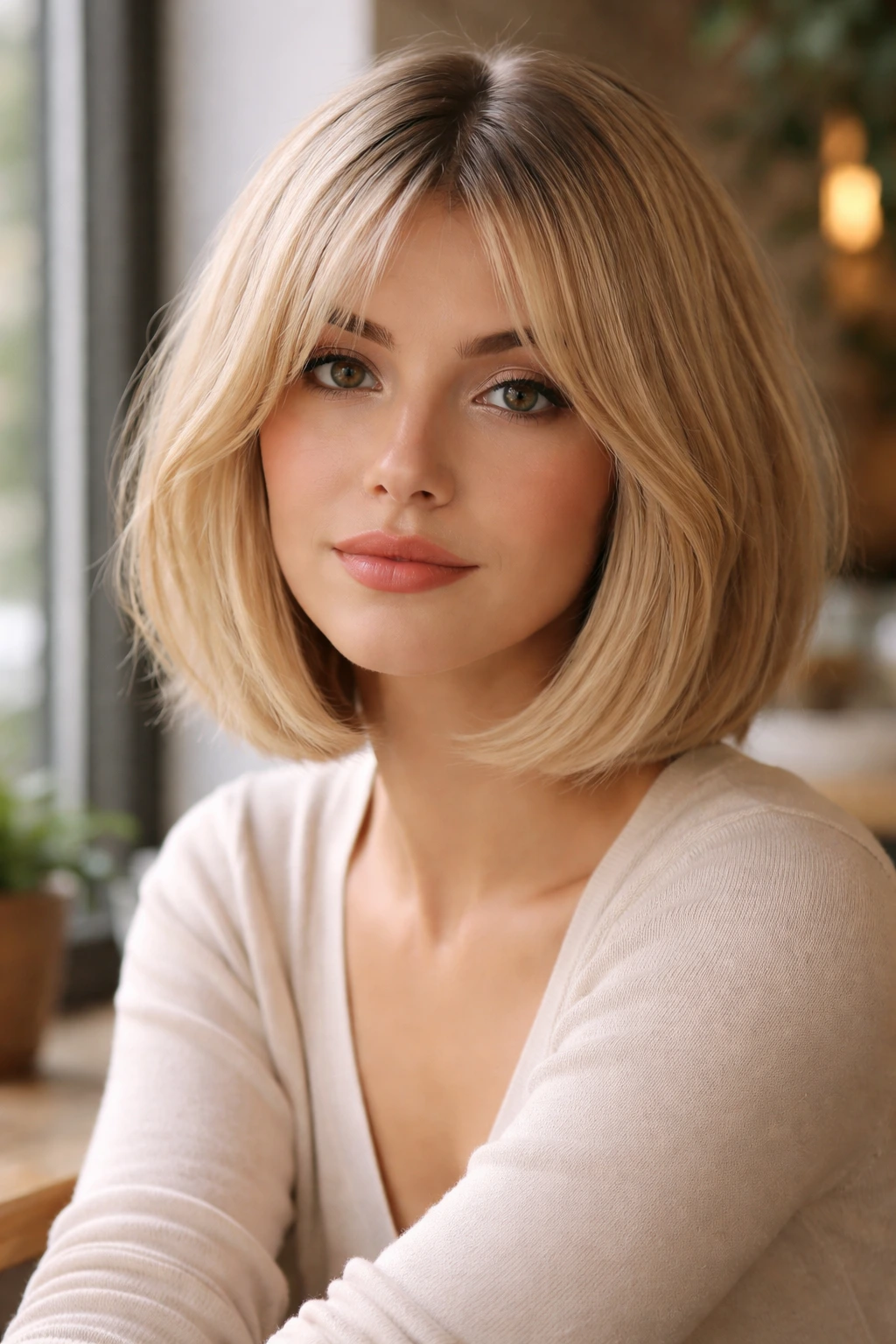
Sometimes less is more. A minimalist bob is a clean, simple cut with no aggressive stacking and no extreme angles. To make it work for fine hair, we add curtain bangs. The bangs draw attention to your eyes and break up the forehead, while the simple cut keeps the hair looking full.
Why Curtain Bangs Are the Solution
They are long, soft, and easy to grow out. They frame the face without taking away from the bulk of your hair volume. Because they are longer than standard bangs, they blend into the rest of your hair when you tuck them behind your ears.
Styling the Bangs
You must use a round brush on these. If you let curtain bangs air dry, they might go frizzy or just hang limp. Use a medium-sized round brush to sweep them away from your face while drying. It gives them that classic, ’70s-inspired volume.
15. Razored Edges Bob
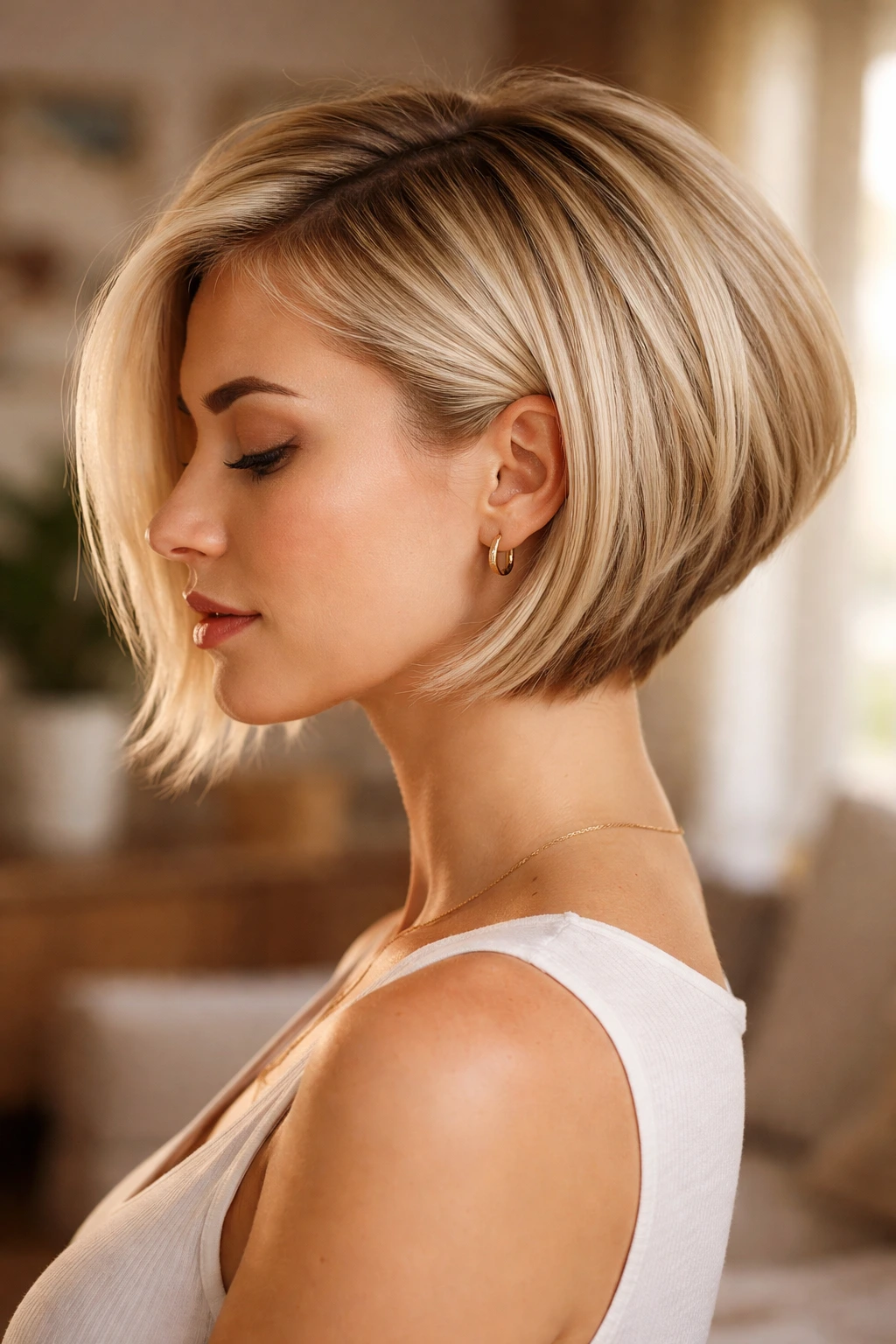
A razor cut is not for the faint of heart, but it is a miracle-worker for fine hair. Using a straight razor instead of scissors creates a tapered, feathered edge rather than a blunt one. This makes the ends of the hair look lighter, which encourages them to flip and move.
Precision vs. Texture
Scissors create blunt lines. Razors create texture. By razor-cutting the ends of your inverted bob, you make the perimeter look soft and organic. It also makes your hair look more intentional—like you have a lot of hair that was styled to perfection.
A Word of Warning
Only let an experienced stylist use a razor on your hair. If you have hair that is prone to split ends, a razor can sometimes make the problem worse if the blade isn’t sharp or the technique isn’t precise. Ensure your stylist knows how to handle fine hair with a razor.
16. Icy Blonde Shaggy Bob
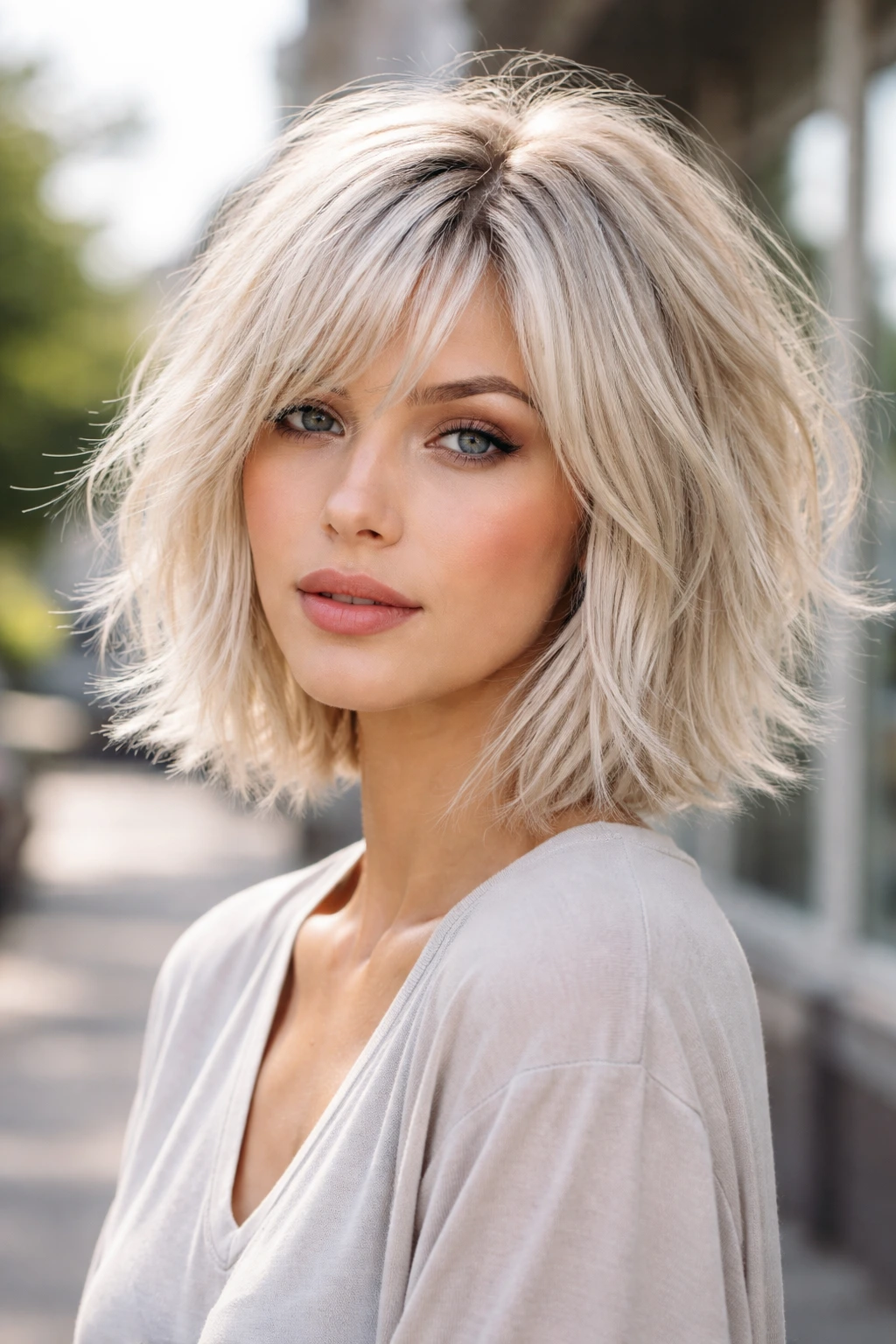
The “shag” is back, and it’s a blessing for fine-haired people. A shag involves lots of layers, usually starting quite high up. These layers create volume on the top of the head, which is where fine hair usually loses the battle.
Why Shaggy Layers Build Volume
When you have layers at the crown, the shorter pieces support the longer pieces. It’s like a built-in scaffolding for your hair. The “icy” blonde color adds a modern, edgy vibe that makes the shag look intentional rather than retro.
Embracing the Mess
You cannot have a neat, orderly shag. If you try to make it look “perfect,” it will fail. Embrace the bedhead look. Use a texturizing powder at the roots to give it that gritty, airy feel. The more chaotic it looks, the better it works.
17. Caramel Highlighted Angled Bob
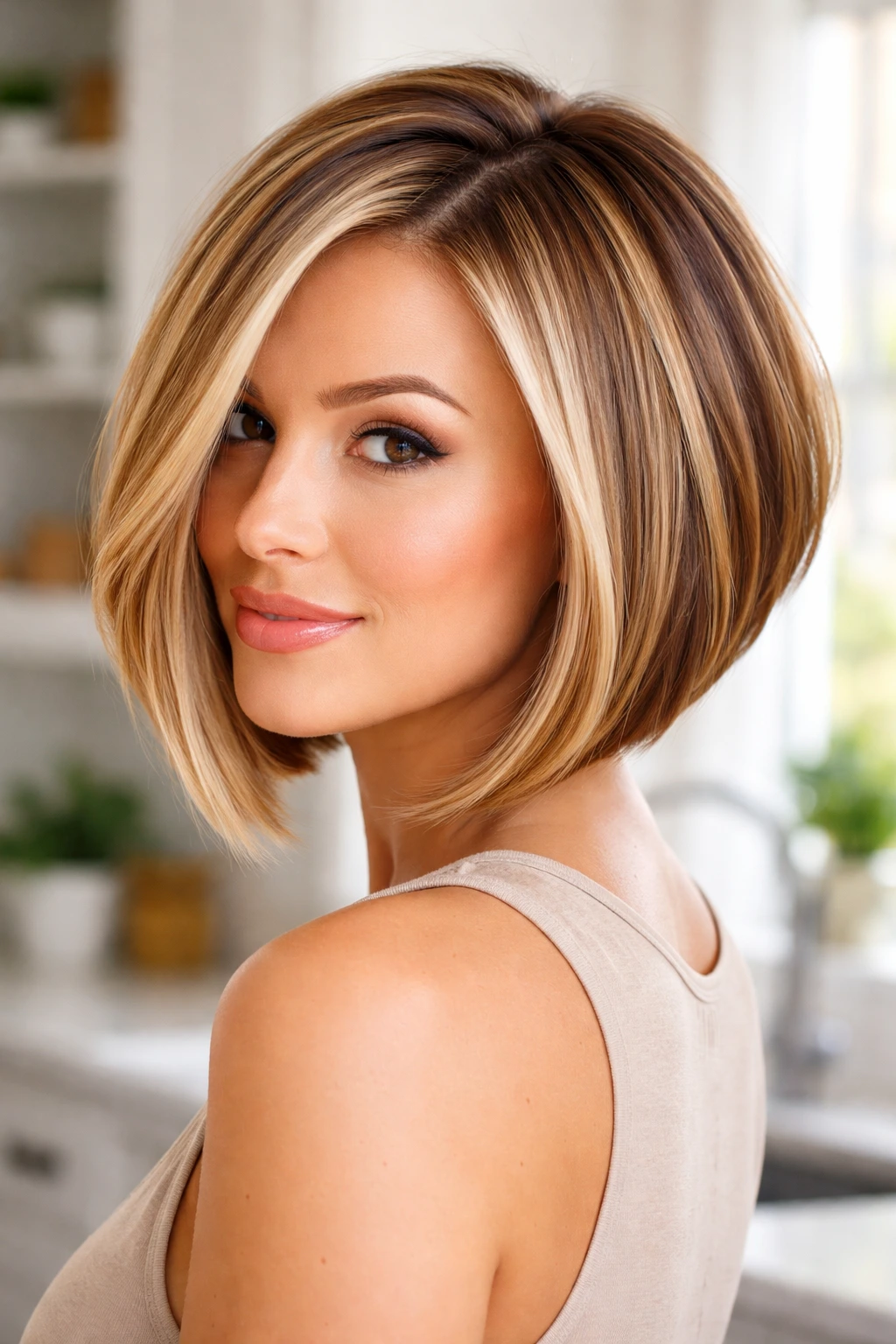
If you are naturally darker and don’t want to commit to a full bleach job, go for caramel highlights on a blonde base. The contrast between your base color and the caramel ribbons adds immense visual depth.
The Depth Factor
Just like the balayage, these highlights act as a “highlighting” tool for your actual hair texture. They draw the eye to the surface of the hair, making it look vibrant and full. When you cut this into an angled bob, you get the double benefit of a flattering shape and color-enhanced density.
Why Caramel
Caramel is a rich, warm tone that adds “weight” to the look of the hair. It doesn’t wash out your complexion like some cooler, paler blondes might. It’s a very wearable, high-shine color that makes hair look incredibly healthy and thick.
18. Inverted Bob with Deep Stacked Back
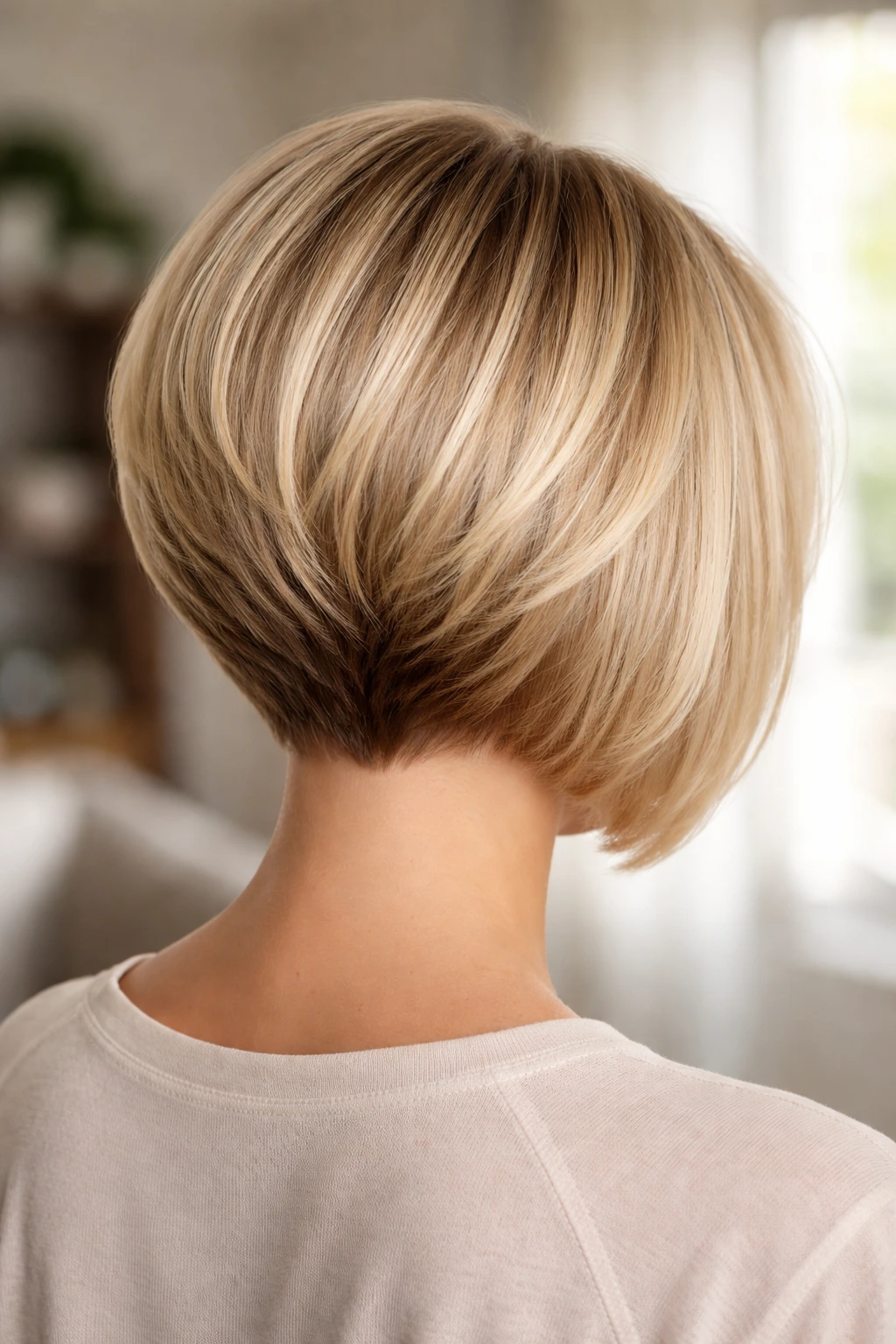
If you want maximum volume, you need maximum stacking. This version of the inverted bob features a very short, aggressively stacked back. The hair is cut into a sharp V-shape, creating a noticeable shelf of volume at the nape of the neck.
How Stacking Creates Volume
By cutting the back extremely short, you create “tension.” The hair doesn’t have the length to lay flat. It is forced to stand up and out. This creates a natural “bump” that remains all day. It is the most effective way to beat flatness if you are willing to keep the back short.
Styling the Back
You don’t have to worry about the back much. It will naturally hold its shape. Focus your styling effort on the front, framing pieces, and the crown. The back will do its job on its own.
19. Layered Blonde Bob with Curtain Bangs
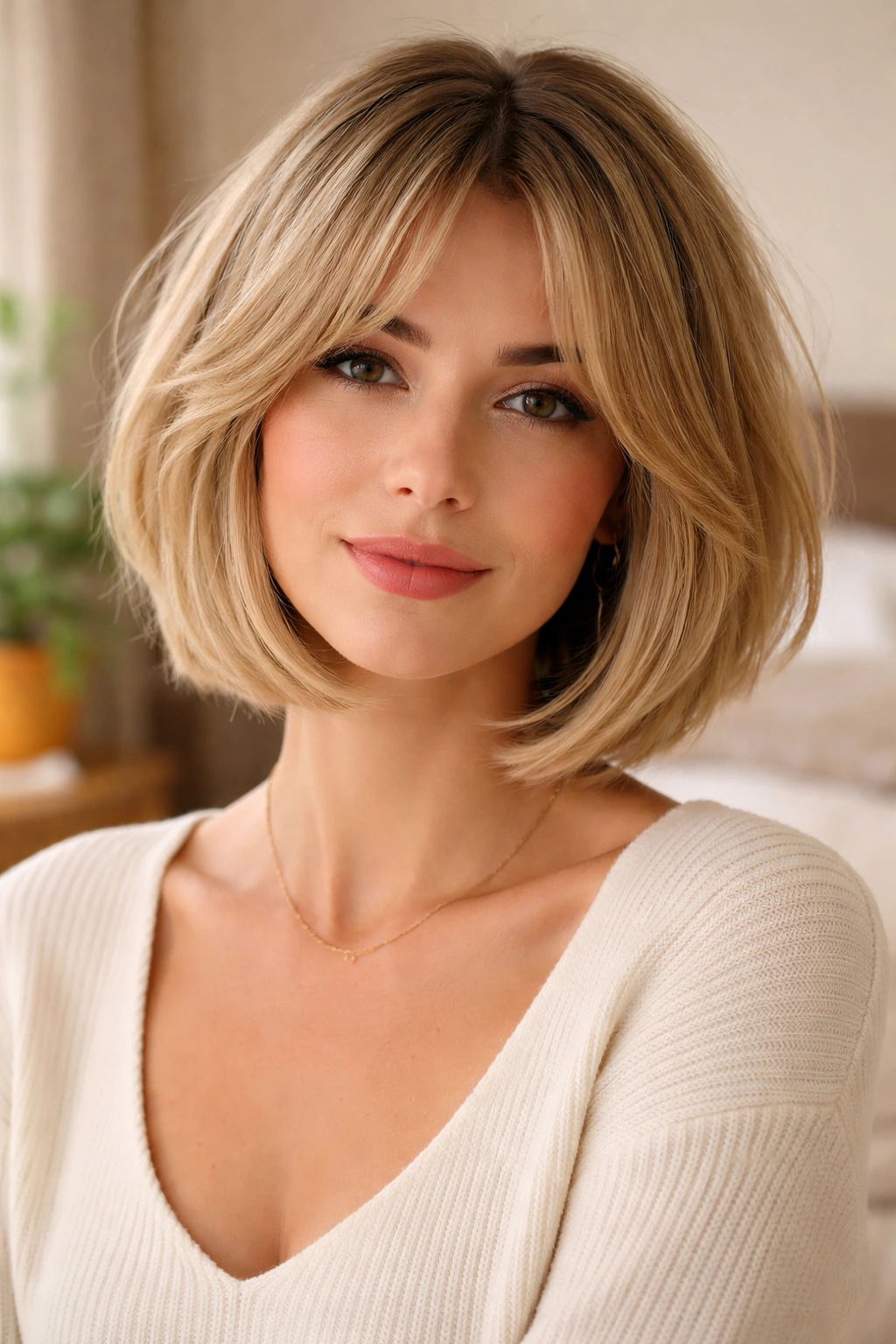
This is a classic, feminine look. By layering the hair throughout and adding curtain bangs, you create a soft, rounded shape. The layers ensure the hair doesn’t hang like a heavy curtain, and the bangs bring the focus to your face.
The “Rounded” Effect
Fine hair can look boxy or flat. A layered bob naturally rounds out the silhouette. When you dry it with a round brush, the hair curves inward toward your face. This creates a soft, approachable shape that is very flattering.
Why It Works for Fine Hair
It’s a balanced cut. You aren’t taking too much length, and you aren’t thinning it out too much. You are working with the texture you have to create a classic, timeless style that never goes out of fashion.
20. Curly Textured Blonde Inverted Bob
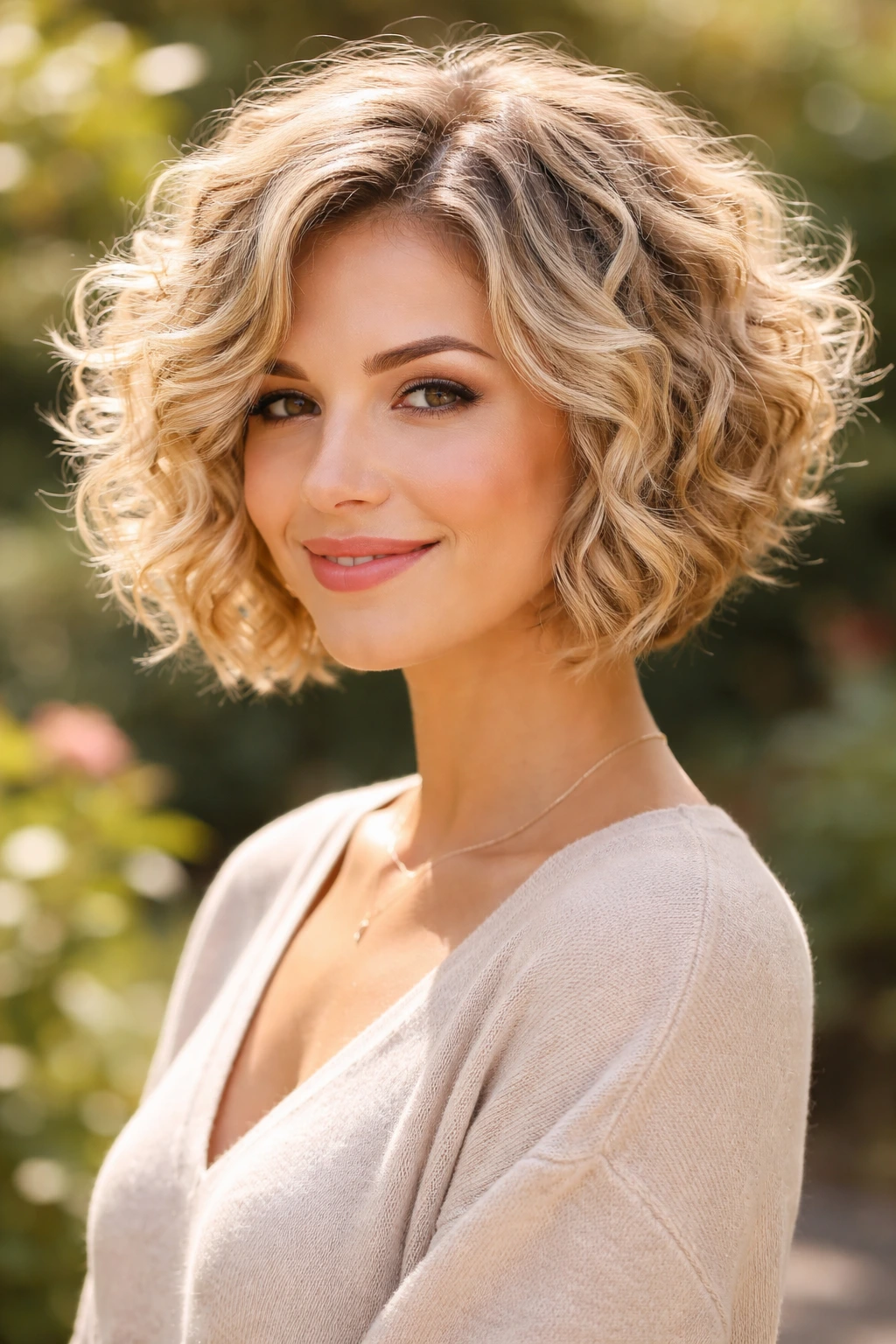
If you have a natural wave or curl, stop trying to straighten it. Your curl pattern is your built-in volume! An inverted bob is actually a fantastic shape for curly hair. It prevents the “triangle” shape (where the hair is flat on top and bushy at the bottom) by removing the weight from the back.
Managing Curls
Use a diffuser. It is the single most important tool for curly-haired people. It spreads the air out, drying the hair without blowing it around and creating frizz. This keeps the curls defined and compact, which makes the hair look much denser.
Product Choice
Use a curl cream or a light mousse. Apply it to soaking wet hair to help clump the curls together. This prevents the hair from turning into a dry, frizzy mess and instead gives you defined, voluminous coils.
21. Undercut Blonde Bob
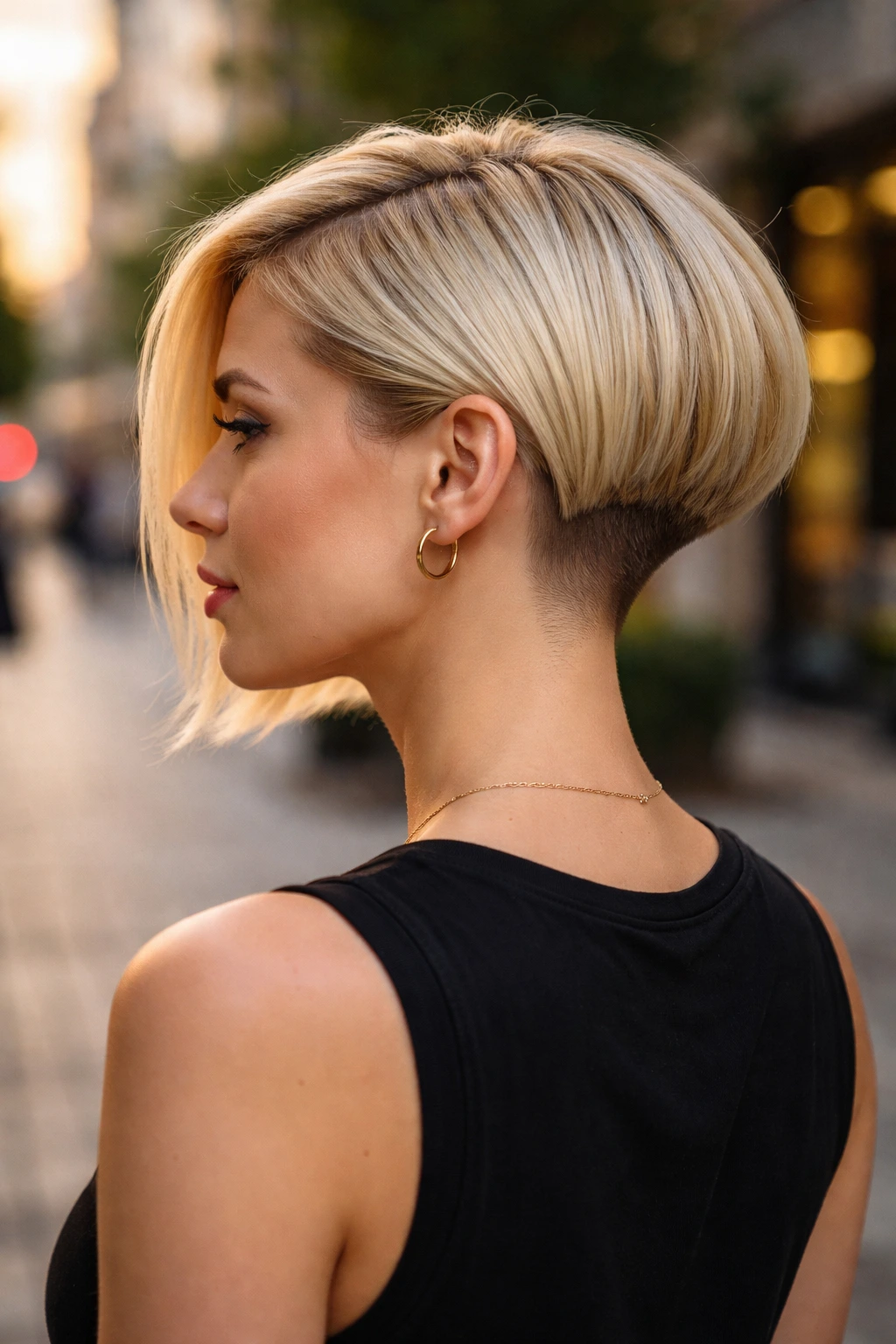
This is the bold choice. If your hair is extremely fine and you want a sharp look, try an undercut. This involves shaving the very bottom section of hair at the nape of the neck. It might sound drastic, but it removes the hair that is usually the most prone to tangling and flatness.
The Physics of the Undercut
By removing the weight of the bottom-most layer, you allow the hair above it to lie flatter against the head or stack better. It creates a seamless transition. Plus, it’s incredibly chic. It’s a modern, edgy take on the classic bob.
Is It Right for You?
If you have a cowlick at the nape of your neck that always messes up your style, this is the solution. It cleans up the perimeter and leaves you with a sharp, crisp line that always looks perfect.
22. Soft Peach Blonde Inverted Bob
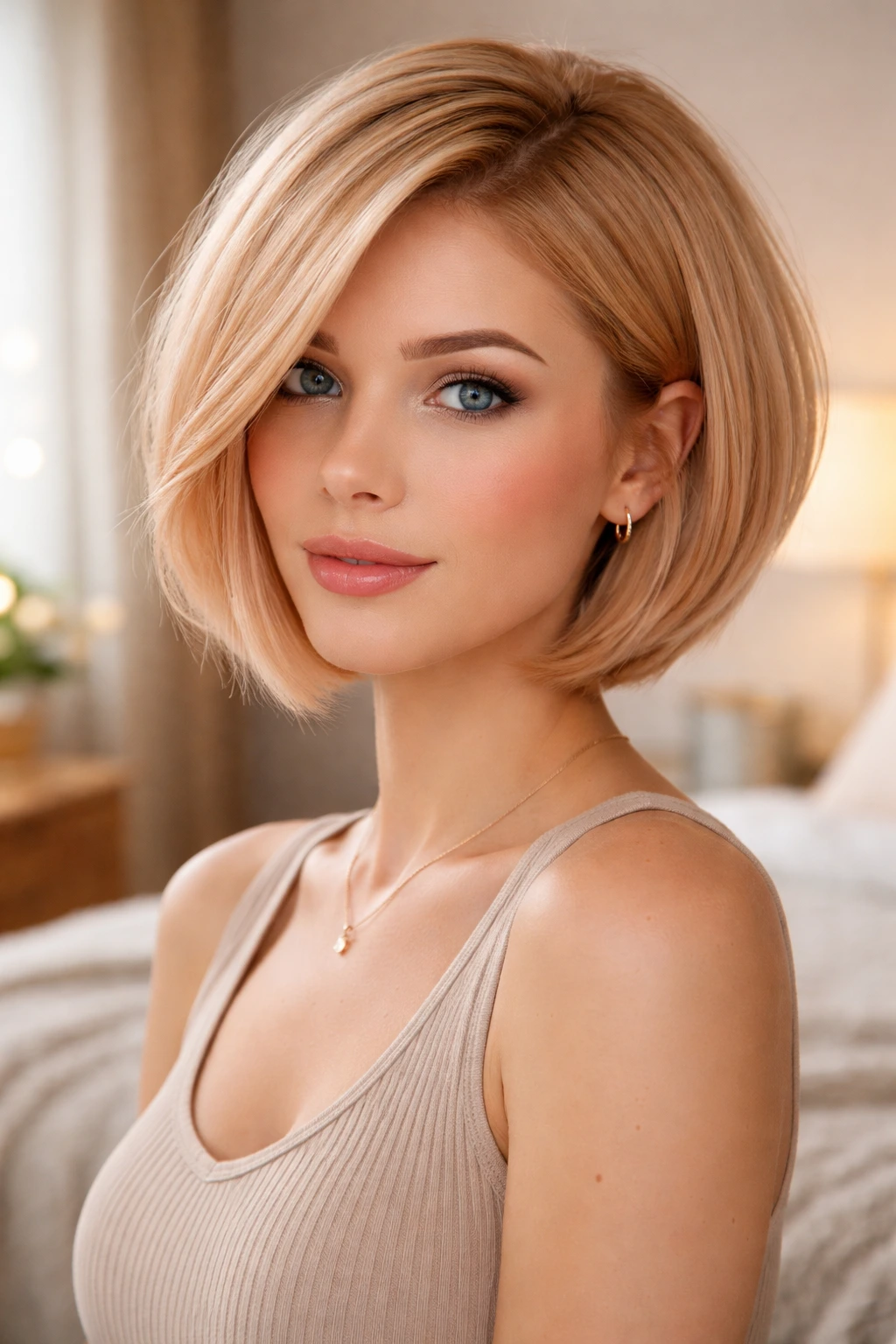
Color can do more than just lighten; it can change the “vibe” of your hair. A soft peach or strawberry blonde adds a hint of warmth and playfulness. On fine hair, this color often reflects more light than cool tones, giving it a glossier appearance.
Why Peach Works
It’s a light-refracting color. Because it sits between red and yellow, it tends to have more pigment than a sheer platinum. That pigment provides a little extra “body” to the hair, making it feel just a bit thicker to the touch.
Styling for Gloss
Because peach blonde needs to look shiny to be effective, use a gloss treatment once a week. You can find these in the hair care aisle. They coat the hair, making it appear thicker and healthier by smoothing down the cuticle.
23. Shadow Root Inverted Bob
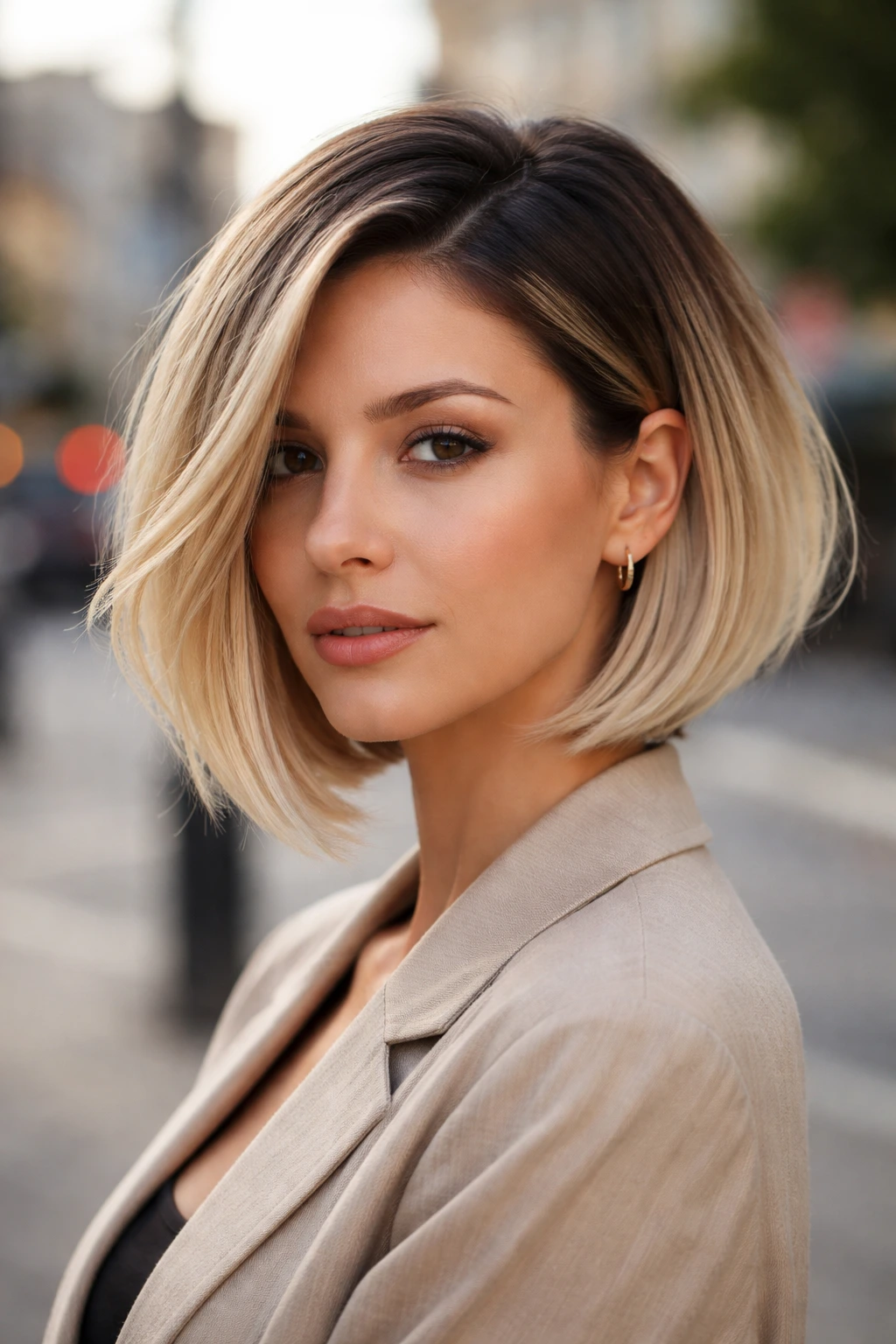
We touched on the root smudge, but the “shadow root” is a bit more dramatic. It creates a stark, intentional contrast between your roots and your ends. This is not about blending; it’s about creating a dark halo at the scalp that transitions into light blonde.
The Visual Impact
The dark roots create the illusion of a thicker scalp. The contrast makes your blonde hair pop, which gives the impression of light and energy. When you cut this into an inverted bob, you get a sharp, modern style that looks high-end.
Who Should Wear This
This is a great look for those who don’t want to visit the salon every time they see a millimeter of root growth. It’s supposed to look dark at the roots, so you can let it grow out for weeks without it looking messy.
24. Tapered Back Blonde Bob
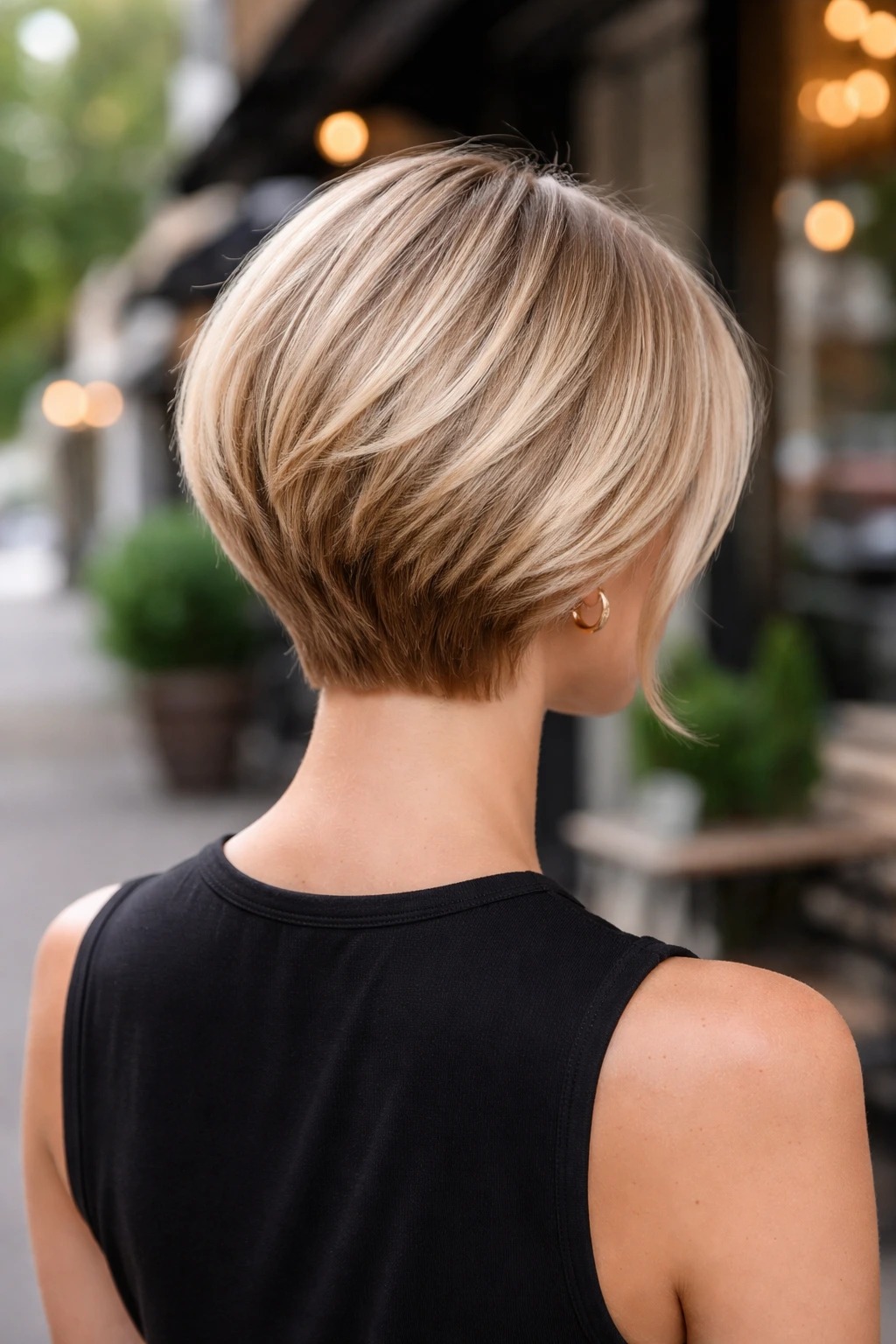
A tapered back is different from a stacked back. While a stack creates a “ledge” of hair, a taper is a smooth, gradual transition from the nape up to the crown. It hugs the neck, creating a very sleek, feminine profile.
Why Tapering Is Slimming
It follows the curve of your skull. It’s a very elegant, classic look that works well for people who want a more professional, subdued style. It still provides the volume you need at the crown, but without the “edge” of a stacked cut.
Maintenance
This style needs to be kept clean at the neck. Since it tapers closely to the skin, you’ll notice when it grows out. A quick neck trim every few weeks will keep it looking polished and sharp.
25. A-Line Blonde Bob with Blunt Ends
The A-line is the most iconic version of the inverted bob. The front is long, the back is short, and the angle is clean and straight. When you pair this with a blunt, heavy end, you create a sophisticated look that is perfect for fine hair.
The “A-Line” Geometry
The shape is mathematically perfect for creating volume. The weight is concentrated at the back (the stack) and the frame (the long front), leaving the middle section with less bulk. This prevents the “pouf” look that fine hair can get.
The Final Result
It’s sharp, it’s clean, and it makes fine hair look intentional. This is a “power” haircut. It commands attention and suggests that you have your life together, even if you just rolled out of bed. Pair it with a blunt, straight finish for maximum impact.
The Bottom Line
Choosing an inverted bob for fine hair is not just about the cut—it’s about changing the way you view your hair. You aren’t “hiding” thinness; you are building a structure that celebrates the movement and lightness of your hair. Whether you choose the sharp, blunt edge of an A-line or the textured, messy appeal of a shaggy bob, the key is the stack at the back and the angle at the front.
Don’t be afraid to experiment with color. A root smudge or a light balayage can do more for the appearance of your hair density than almost any haircut alone. When you combine the right, precision-cut shape with the right color placement, you stop fighting against your fine hair and start working with it. Fine hair doesn’t have to be a styling burden; with the right inverted bob, it can become your best, most manageable accessory.
