



A wavy lob on medium-length hair can look flat in a salon mirror and gorgeous the second it starts moving. That’s the whole appeal of the lob: it sits in that useful space between a bob and longer hair, so you get shape, swing, and enough length to tuck, pin, or air-dry without fighting a heavy curtain of hair.
The best versions are never one-note. Some need a blunt edge to keep fine hair from looking wispy. Others need soft layers so thick hair doesn’t puff out at the sides. And if your waves are natural, the right cut can make them look polished instead of frizzy, which is harder than it sounds.
I keep coming back to one detail: a lob is more about shape than length. A cut that lands right at the collarbone behaves differently from one that skims the top of the shoulders, especially once you add a bend with a 1-inch or 1.25-inch iron. Half an inch matters. A lot.
These 18 wavy lob haircuts for medium length hair lean in different directions, from soft and face-framing to piecey and undone. Pick the one that matches your density, your face shape, and how much styling you’ll actually tolerate on a normal morning. That part matters too.
1. Soft Collarbone Lob With Face-Framing Waves
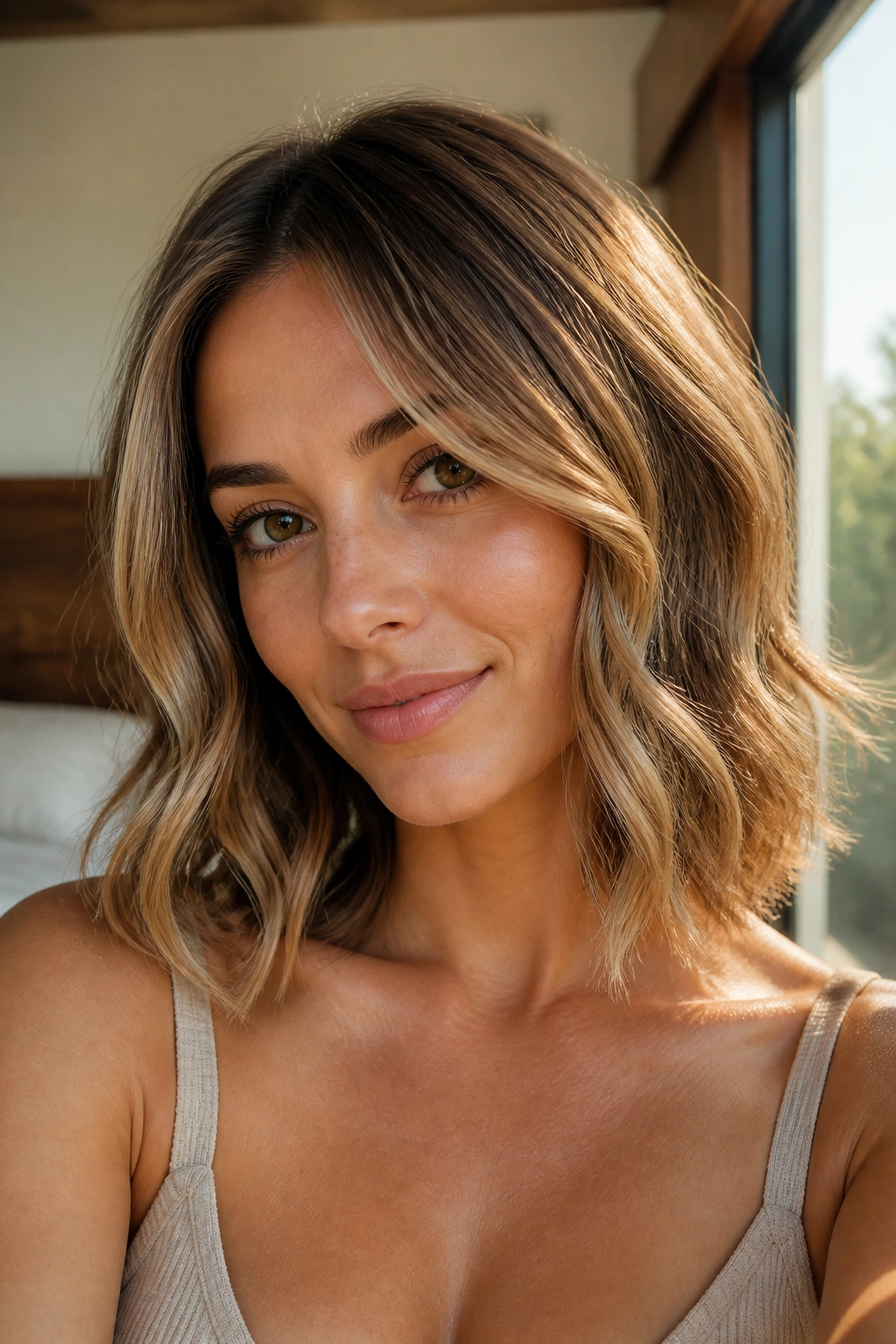
This is the safest place to start, and I mean that in the best way. A collarbone-length lob gives you enough length for movement, but it still keeps the ends light and fresh, which is exactly what wavy hair needs when you want it to feel lively rather than droopy.
Ask for a blunt base with soft face-framing pieces that begin around the cheekbone or upper lip. That little bit of graduation keeps the front from feeling boxy. The waves should be loose, not curled into perfect spirals. Think bend, not curl.
What makes it work
The collarbone is a useful stopping point because hair naturally swings there instead of hanging straight down. On medium-length hair, that creates lift around the face without making the cut feel short or severe. It also grows out well, which is nice if you hate frequent trims.
Best for: round faces, square faces, and anyone who wants low drama with a little polish.
Styling note: use a 1.25-inch iron and leave the last inch of each section out. That keeps the ends soft and prevents the hair from looking too “done.”
2. Blunt Lob With Soft Beach Bends
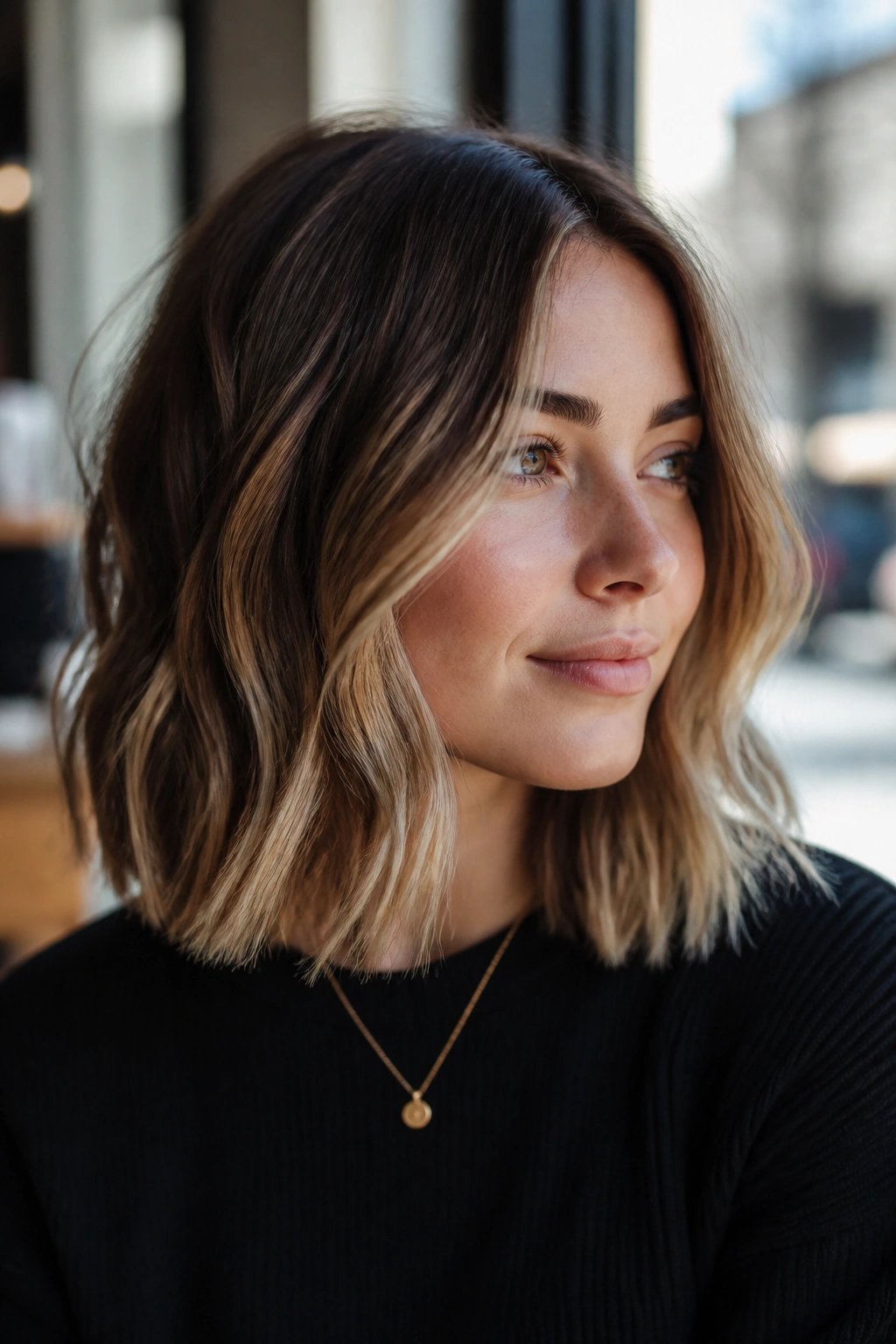
Why do blunt ends make waves look thicker? Because the cut holds the line. When hair gets too many layers, the wave pattern can spread out and lose weight at the bottom. A blunt lob keeps the shape dense and clean, then the soft bends add movement on top of that structure.
This one is good if your hair is fine or medium-fine and tends to collapse by midday. The blunt edge gives the illusion of more hair, while the waves stop it from looking helmet-like. That balance is the whole trick.
How to style it
Use a lightweight mousse on damp hair, then rough-dry or diffuse until about 80 percent dry. Finish with a flat iron bend or a curling iron wrapped away from the face. Keep the wave pattern loose and alternate directions so it does not fall into one giant curl.
A blunt wavy lob can look expensive in a quiet way. Not flashy. Just clean, full, and a little cool. If your hair feels limp at the ends, this cut is the one I’d start with.
3. Side-Parted Lob With Long Layers
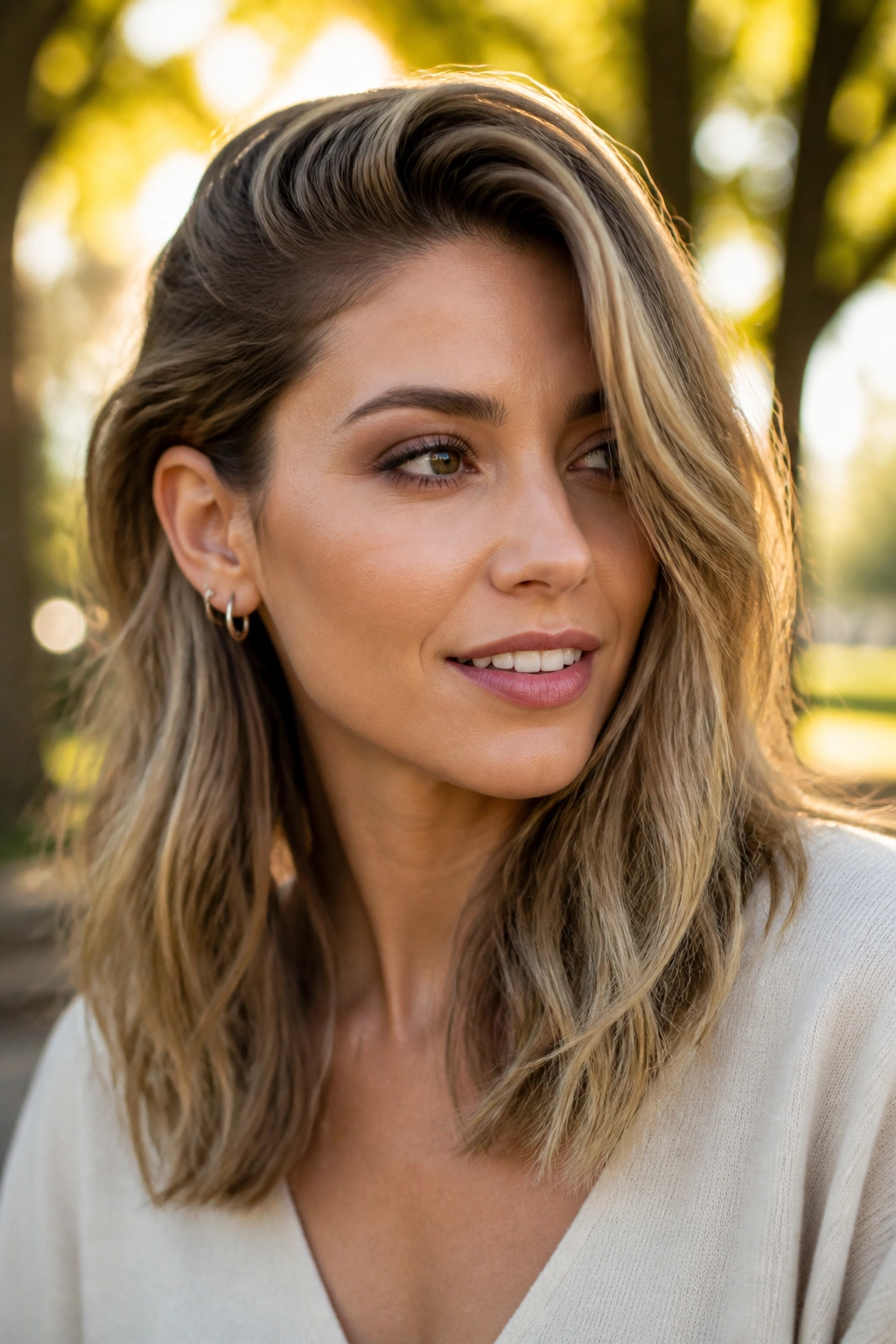
A deep side part changes the whole mood of a lob. It adds height at the crown, gives one side more swing than the other, and makes the wave pattern look less predictable. That matters on medium-length hair, where symmetry can sometimes make the style feel too safe.
The long layers should be soft enough that the ends still look full. You are not chasing a shag here. You want movement, not choppiness. The front pieces can sweep down toward the jaw, which is useful if you want to soften a broad forehead or bring balance to a longer face.
- A side part creates instant lift at the roots.
- Long layers keep thick hair from sitting like a block.
- The wave pattern looks more natural when one side falls slightly differently.
- A tuck behind one ear gives the cut a nice, off-duty feel.
Pro tip: if your crown lies flat, blow-dry the roots in the opposite direction of your part for 20 to 30 seconds before setting it back. That tiny reset helps the style stay lifted longer.
4. Curved-In Lob That Hugs the Jawline
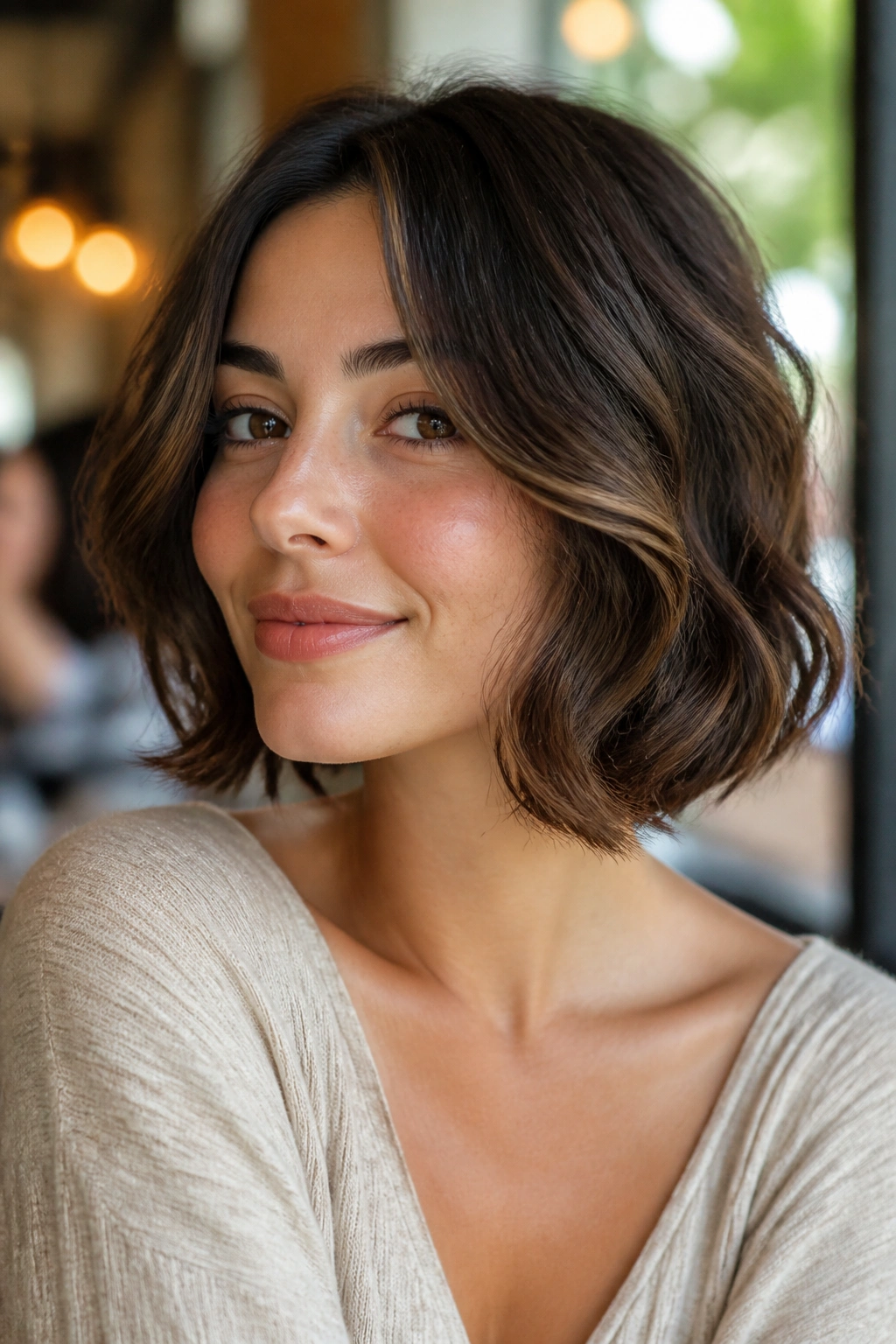
A curved-in lob feels tidy without looking stiff. The shape bends in toward the jaw and neck, which gives the cut a tailored edge. It’s a good choice when you want a lob that looks intentional even on days when the waves are loose and imperfect.
Picture a cut that is slightly shorter in the back and a touch longer in the front, with the ends tucked under just enough to follow the line of your face. That curve matters. It keeps the hair from flaring out at the bottom, which can happen with medium-length cuts if the ends are too blunt and your wave pattern is wide.
Ask for this if…
You like cleaner shapes, or your hair tends to flip out at the ends when it gets to shoulder length. You can still add bends through the mid-lengths, but the shape itself should stay controlled.
It also photographs well in real life, not just in salon lighting. The curved edge gives the style a finished look even when you’ve only run a round brush through the front and let the rest air-dry.
5. Choppy Razored Lob With Piecey Ends
This is the lob for people who do not want their hair to look polished all the time. The razor work removes some bulk and makes the ends feel airy, almost feathered, which gives wavy hair a rougher, more lived-in finish.
It’s especially good for thicker hair that tends to swell if it’s cut too bluntly. A razored lob can take weight off without making the shape too boxy. The key is restraint. Too much razor work and the ends get flimsy. Too little and the cut loses that broken-up texture that makes it interesting.
What to watch for
- Keep the layers soft through the top.
- Ask for piecey ends, not shredded ones.
- Use a light cream, not a heavy oil.
- Refresh with dry texture spray on day two.
Best for: dense waves, coarse hair, and anyone who likes a slightly messy finish.
The downside? It can frizz faster than a blunt cut if you over-style it or brush it too much. Leave it alone a little. That’s where it looks best.
6. Glossy Lob With Soft S-Waves for Medium-Length Hair
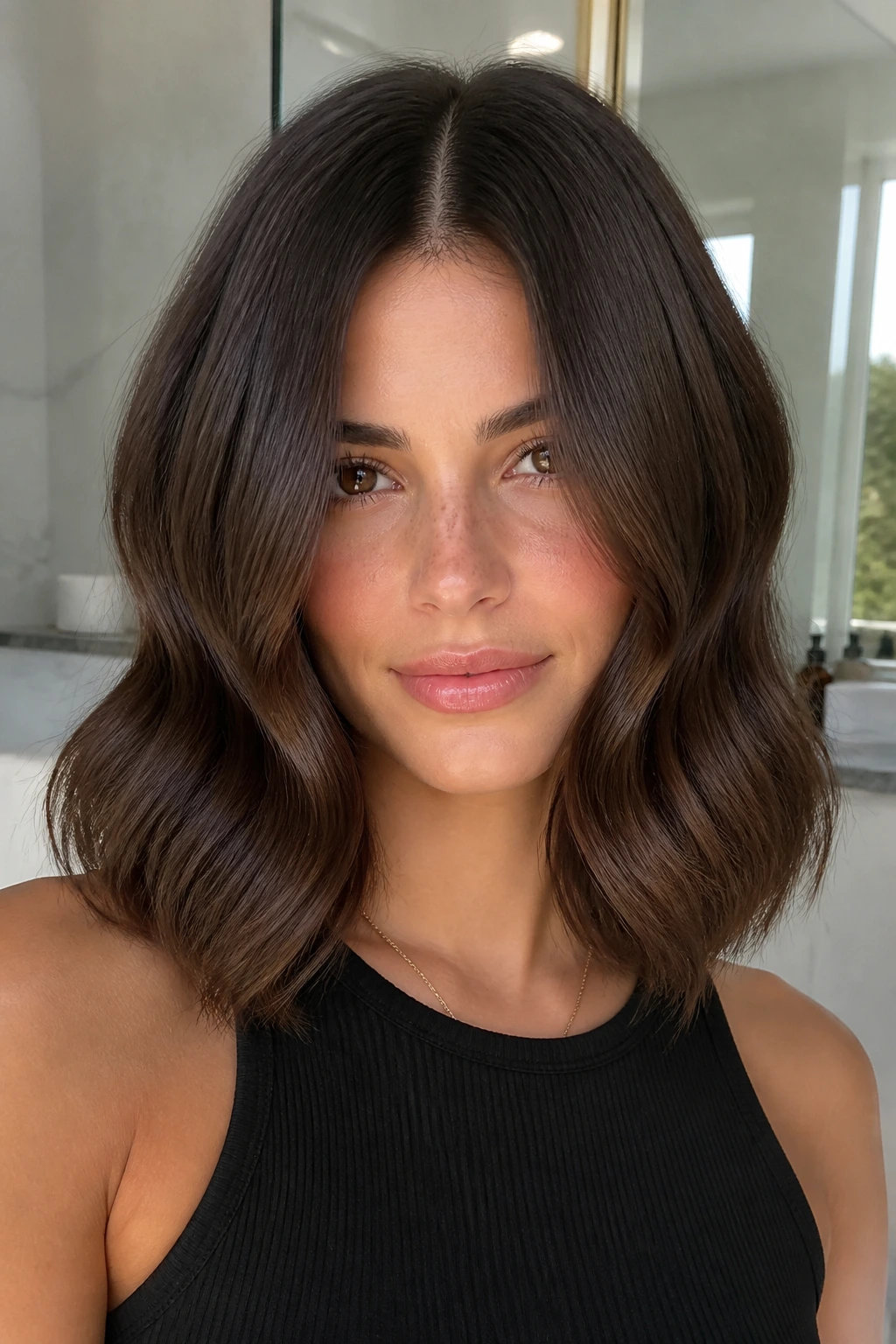
A glossy wavy lob reads differently from a beachy one. The wave is smoother, the shine is stronger, and the cut leans a little more refined. If you want medium-length hair that looks sleek but not pin-straight, this is the move.
The S-wave shape works well because it bends the hair in a soft, repeating line instead of wrapping it around the iron in a full curl. That gives the ends a cleaner fall. A center part usually suits this look, but a soft side part can make it feel less formal.
Styling notes
Use a heat protectant with a little slip, then create wide bends with a curling iron or flat iron. After the hair cools, brush it out once with a boar-bristle brush or a soft paddle brush. That turns the curls into smooth waves instead of tight loops.
One thing I like about this cut: it doesn’t need a ton of product. A tiny bit of shine cream on the ends is enough. More than that and the whole style starts to look greasy.
7. Asymmetric Lob With a Deep Side Part
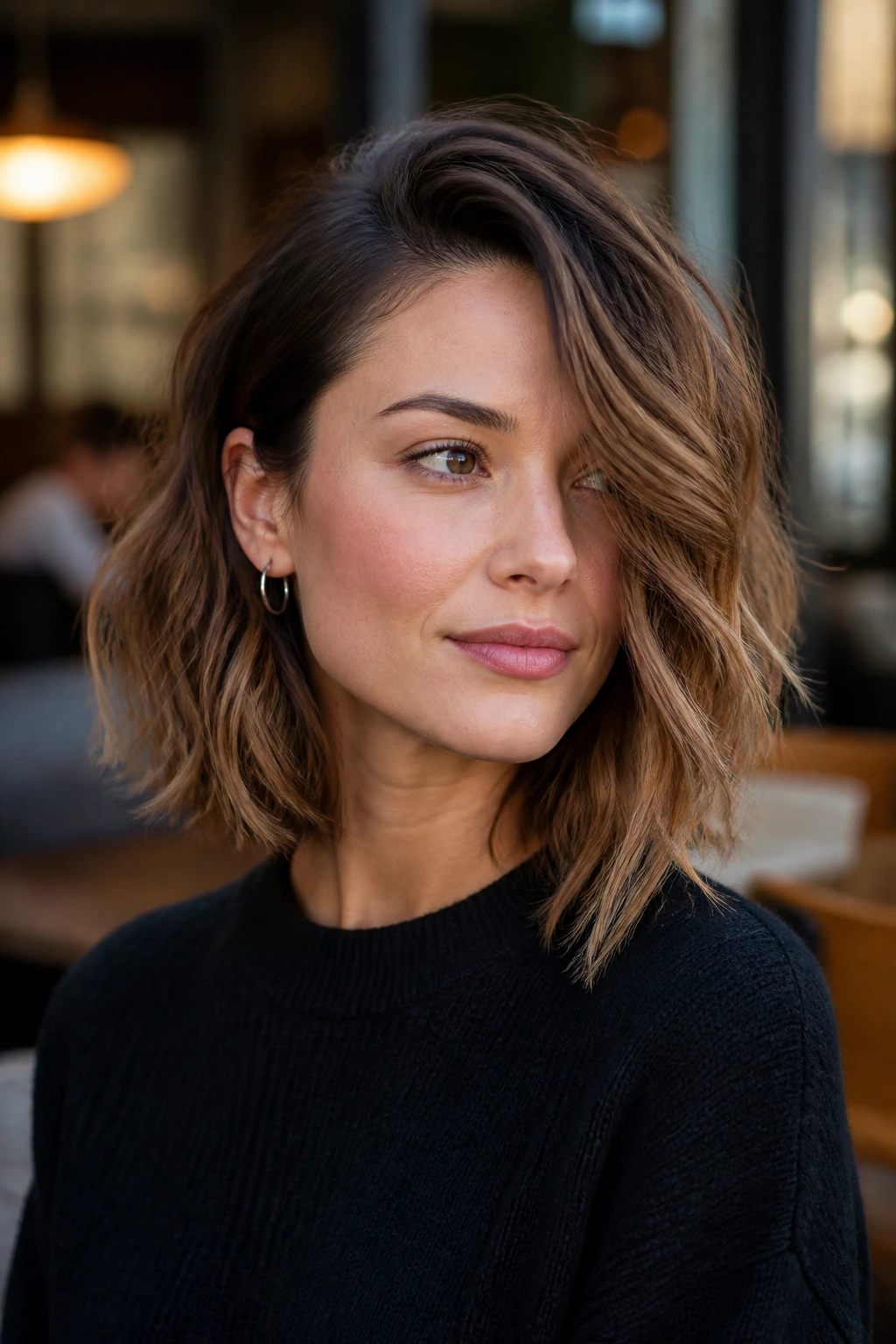
A slightly uneven lob has more attitude than most people expect. One side sits a touch longer, or the part is set far enough over that the shape feels intentionally skewed. On wavy hair, that creates movement that looks almost architectural.
This is not the haircut for someone who wants everything even and calm. It’s better if you like a little edge. The deep side part gives height, the longer side adds drama, and the waves soften what could otherwise feel sharp or severe.
What makes it different
Unlike a standard side-part lob, this one leans into imbalance. That makes it a nice fit for angular faces, strong jawlines, or anyone who wants the hair to do a little more visual work.
Ask your stylist to keep the asymmetry subtle if you want it wearable every day. A half-inch difference is enough. You do not need a dramatic angle unless you want one.
And yes, it does better with a clean finish. A little bend at the mid-lengths, a tuck on the shorter side, and you’re done.
8. Center-Parted Lob With Loose Undone Waves
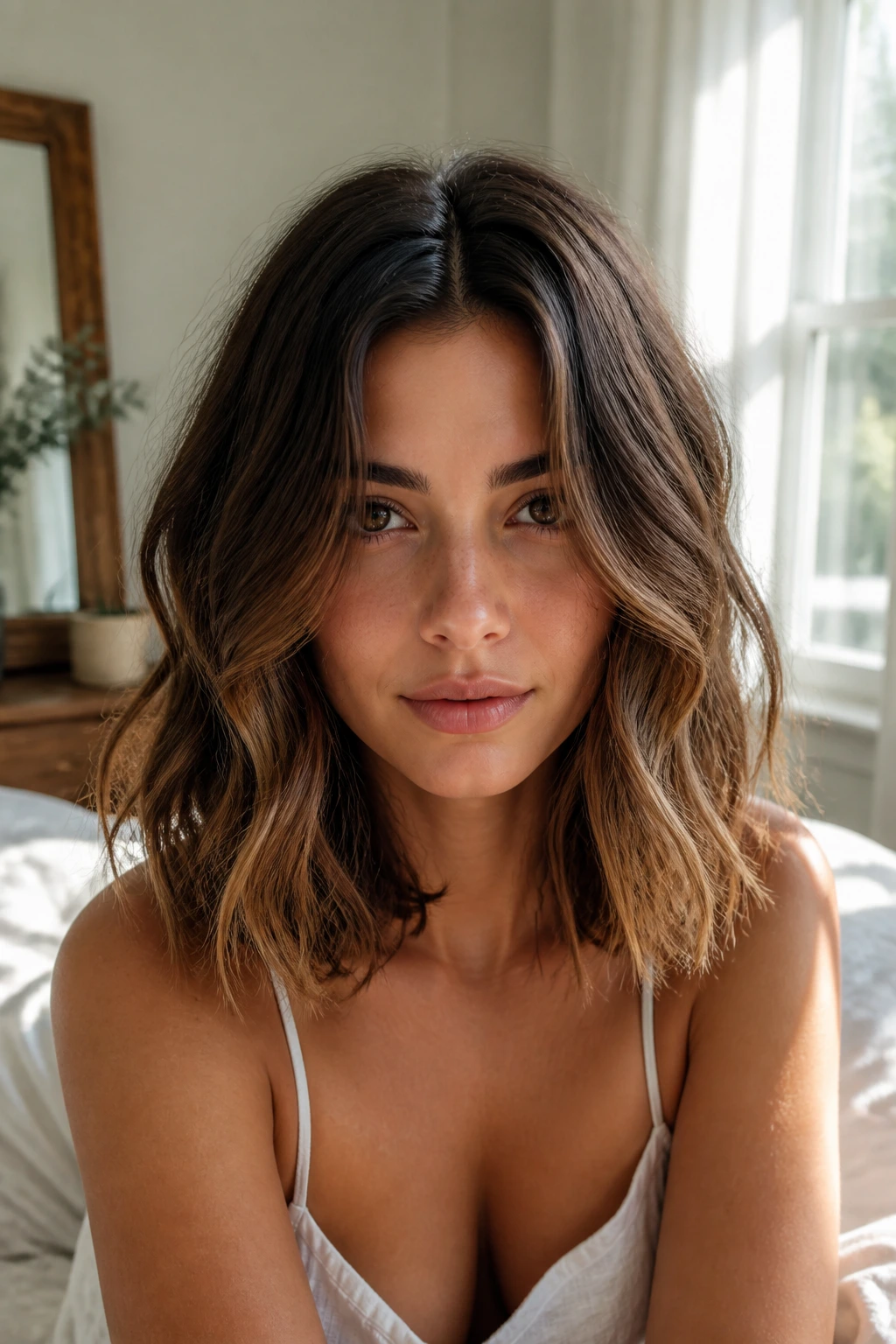
The center part has a way of making a wavy lob feel calm and balanced. It frames the face evenly, which is useful if you want the haircut to look modern without leaning too hard into one side or the other.
Loose, undone waves work well here because they keep the symmetry from feeling rigid. The hair should move in soft bends, not in perfect ringlets. Think of the shape as relaxed but not messy. There’s a difference, and a big one.
Why people like it
A center-parted lob tends to suit oval faces and longer faces especially well because it keeps the volume distributed evenly. It can also make the cut look a little denser through the ends, which helps if your hair is not naturally thick.
If you want this style to last past lunch, set the waves with a cool shot from the dryer or let them cool in your hand before brushing them apart. That pause is boring, but it works.
Short version: keep the waves loose, keep the part clean, and do not over-layer the front.
9. Air-Dried Lob With Invisible Internal Layers
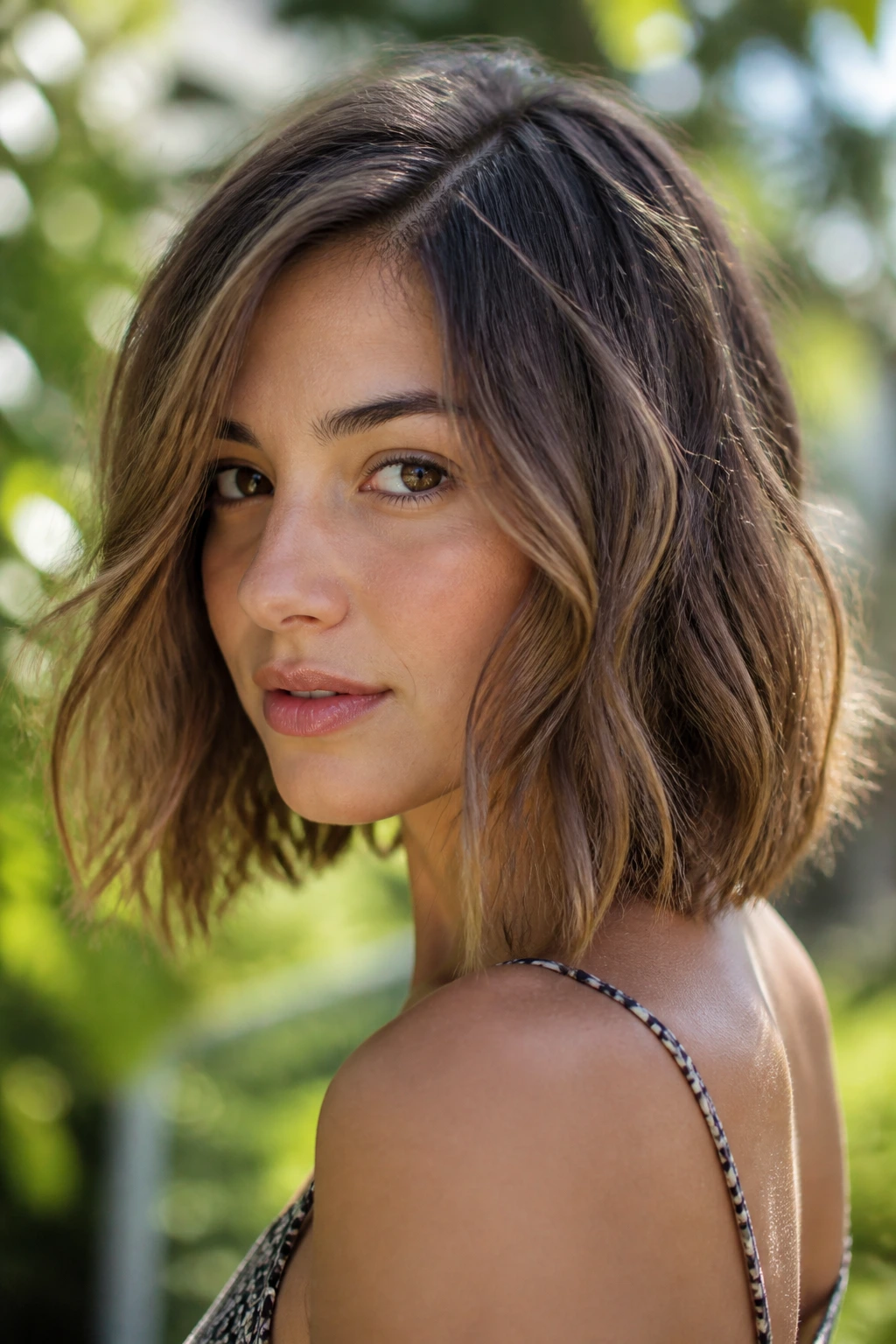
Some cuts are designed to be styled. This one is designed to behave when you barely touch it.
Invisible internal layers sit inside the haircut, not on the surface, so they remove weight without making the outline look choppy. On medium-length wavy hair, that means you get movement where you need it and a cleaner line where you do not. It’s one of the smartest ways to handle hair that bends on its own.
How to get the most from it
Start with a leave-in conditioner and a light mousse. Scrunch the hair gently, then let it dry without constant fiddling. If the ends look too blunt, twist a few front pieces while they’re damp and let them dry that way. It gives the hair a soft bend without heat.
The result is casual, but not sloppy. That matters.
This cut is especially useful if you hate the “I styled my hair for 40 minutes and it still fell flat” problem. It won’t eliminate effort, but it does reduce it. Which, honestly, is the real dream.
10. Curtain-Bang Lob That Frames The Cheeks
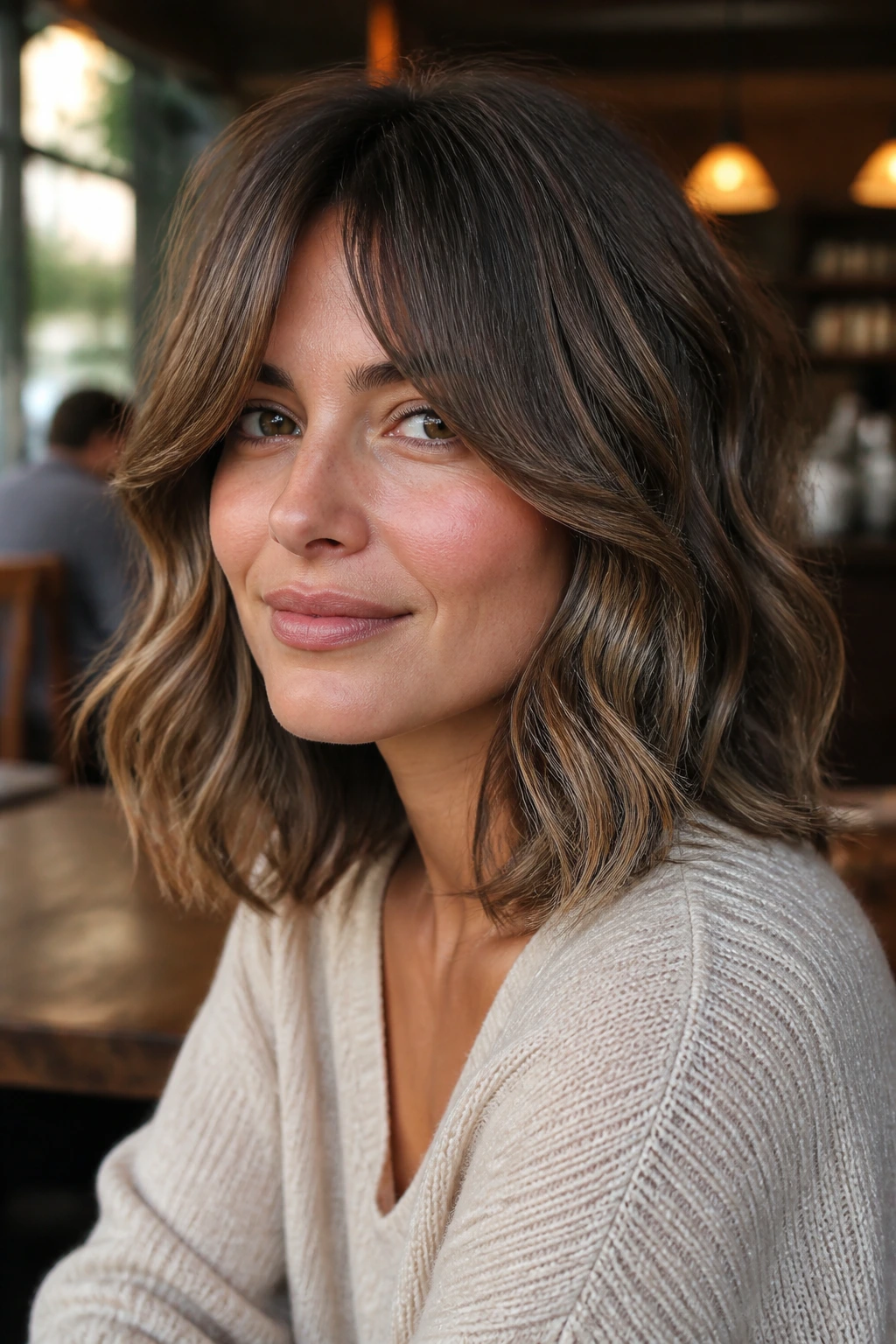
Curtain bangs and a wavy lob are a strong pairing when the balance is right. The bangs break up the forehead line, the lob keeps the length from feeling heavy, and the waves help everything blend instead of looking chopped into separate parts.
What the bangs do
Curtain bangs are longer at the sides and shorter in the center, so they can soften the cheeks and eyes without committing you to a full fringe. On medium-length hair, that gives the cut a little motion around the face, which is where a lot of people need it most.
How to keep it from getting fussy
Dry the bangs first with a round brush or a small paddle brush, directing them away from the face. Then bend the rest of the lob in loose waves. If the bangs and the waves are styled too similarly, the whole look can collapse into one shape. You want separation, not uniformity.
This cut is lovely on people who like a softer, more romantic outline. It can be annoying on anyone who hates styling bangs every morning. That’s the honest part.
11. Layered Lob for Thick Hair
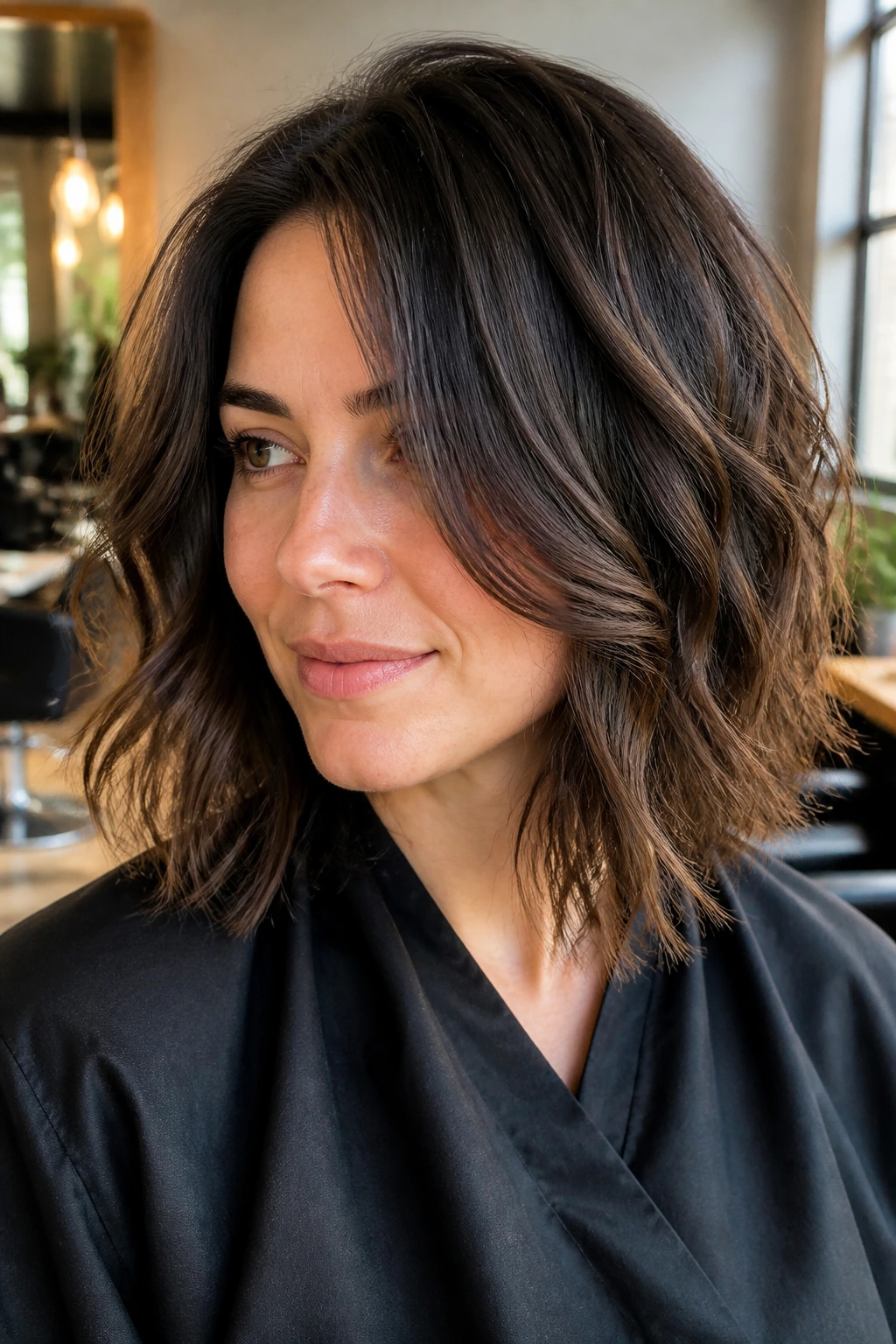
Thick hair needs room to move, and a layered lob gives it exactly that. Without enough internal shaping, medium-length thick hair can balloon out at the sides or feel heavy at the bottom. The right layers take off weight while keeping the outline full.
I prefer long layers here, not short ones. Short layers can puff, especially if your wave pattern is wide or coarse. Long layers let the hair collapse in a nicer way, so the shape stays soft from the crown to the ends.
A good layered lob for thick hair should still have a strong perimeter. That keeps the style from turning into a shag unless that’s what you want. Density should feel controlled, not chopped away.
- Ask for weight removal inside the cut.
- Keep the bottom line slightly blunt.
- Style with a medium-hold cream.
- Diffuse if you want the waves to keep their shape.
The haircut looks best when the ends swing rather than sit. That small bit of motion makes the whole thing feel lighter on the head.
12. Fine-Hair Lob With Internal Texture and a Clean Edge
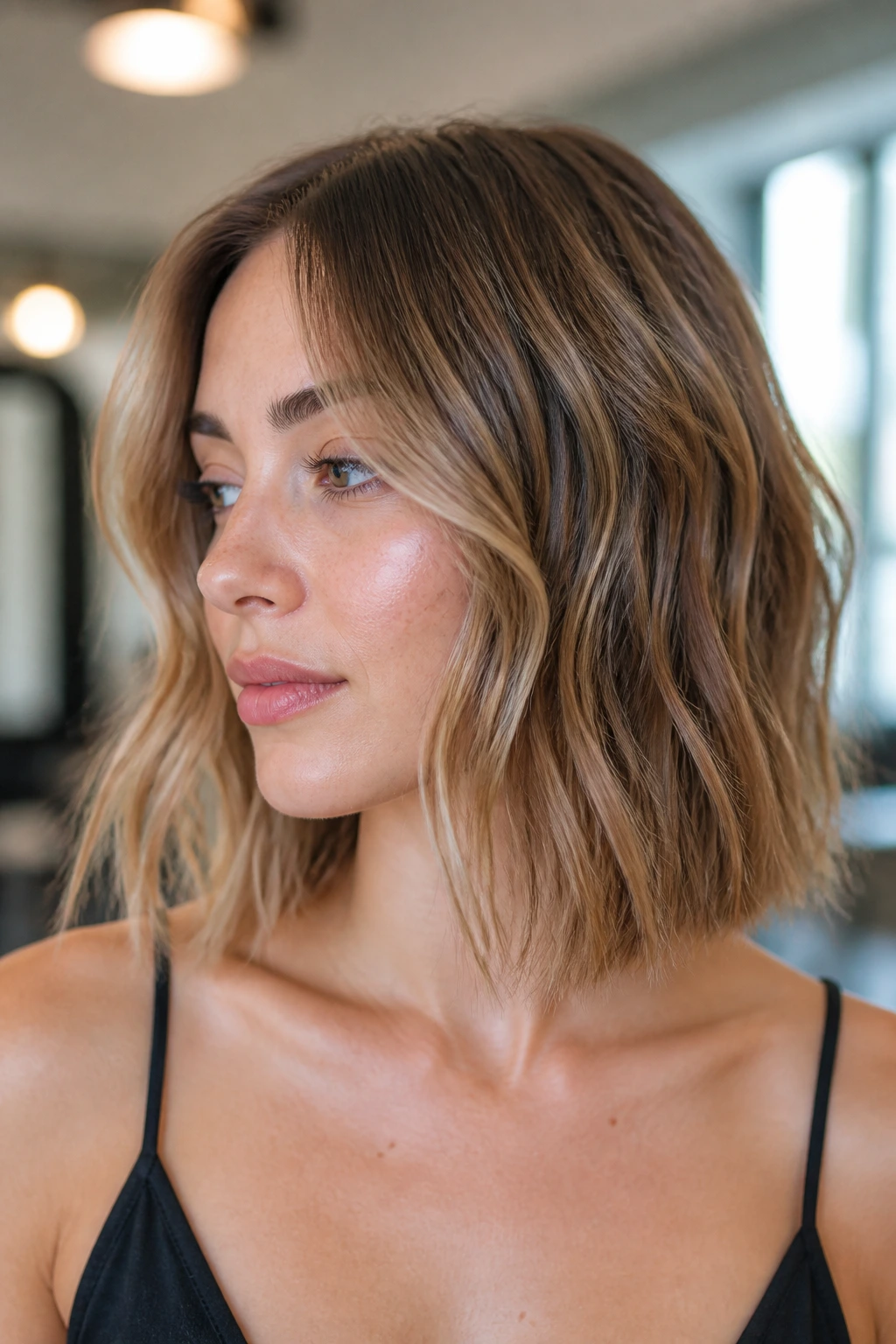
Fine hair needs a cut that gives the illusion of fullness without stripping away too much of the bottom line. That is why a clean edge matters here. A blunt or nearly blunt perimeter keeps the ends looking dense, while internal texture lets the waves move.
Unlike a shaggy lob, this version stays orderly at the outline. That’s the part that helps fine hair. Too many short layers can make the hair look see-through by the time it dries. A cleaner shape holds up better, especially if your hair is naturally soft or silky.
What to ask for
A stylist should keep the longest pieces around the collarbone and only add texture inside the shape. If you wear your hair wavy, ask them to cut it with your natural bend in mind. Wet hair and dry hair do not sit the same way, and that difference matters more than people think.
A root-lifting spray at the scalp and a small amount of wave cream through the mid-lengths will usually be enough. Heavy oils are the enemy here. They flatten everything fast.
13. Shaggy Lob With Piecey Movement
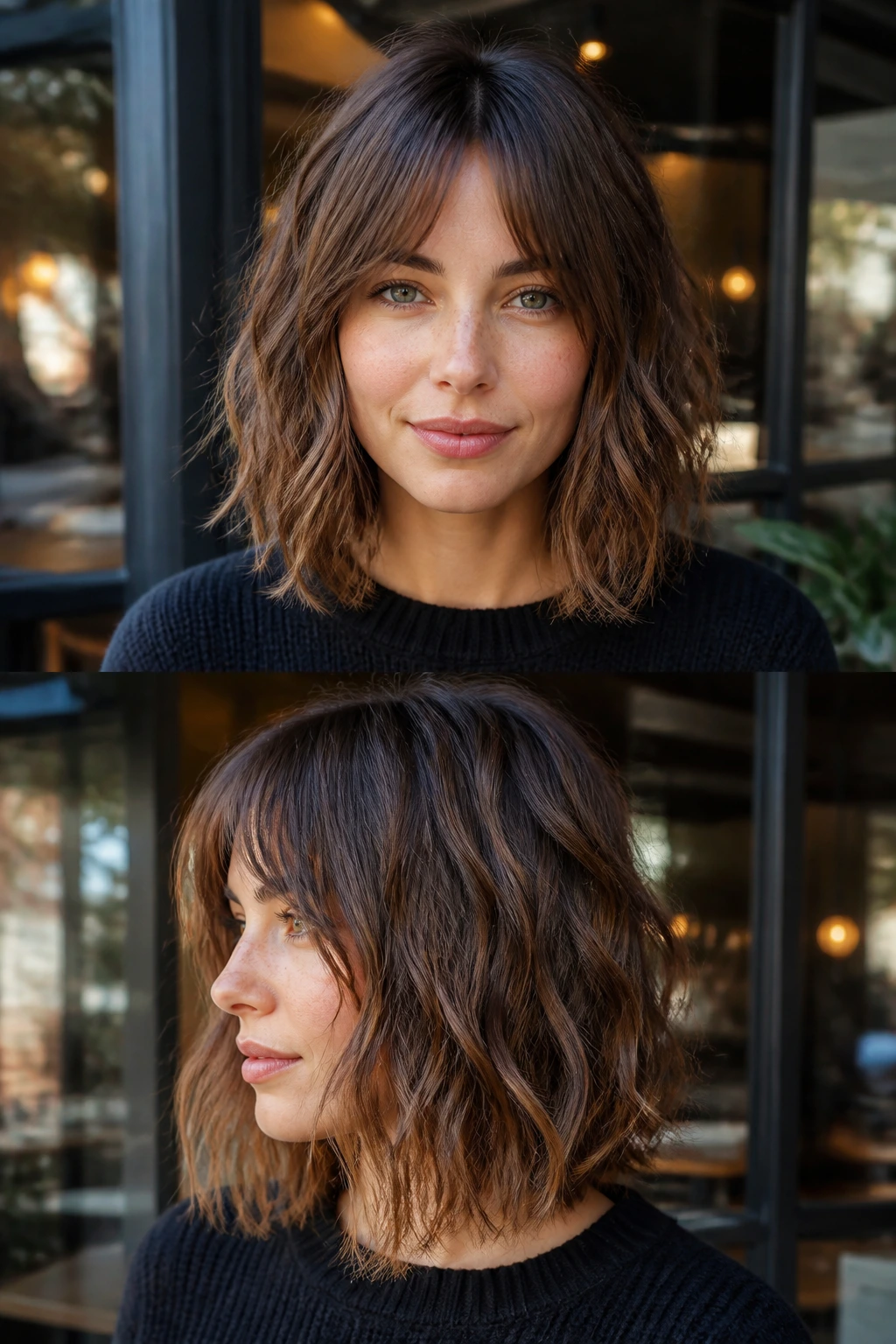
This one has more attitude. The shaggy lob sits between relaxed and rebellious, with enough layers to break the shape apart and enough length to keep it from looking too short. It’s especially good if your waves are naturally loose and uneven.
The charm is in the messiness, but not the bad kind. The ends should feel piecey, not dry. The top should have a little lift, not a bird’s nest. That balance is what makes the haircut feel wearable instead of costume-y.
A shaggy lob also works well when you want the hair to look different from every angle. Side view, front view, tucked behind one ear — it should all shift a bit.
I like this cut for people who spend five minutes styling, tops. If you’re going to overthink it, you might as well choose a cleaner lob. This one is happier when you let it breathe.
14. Polished Lob With Rounded Ends
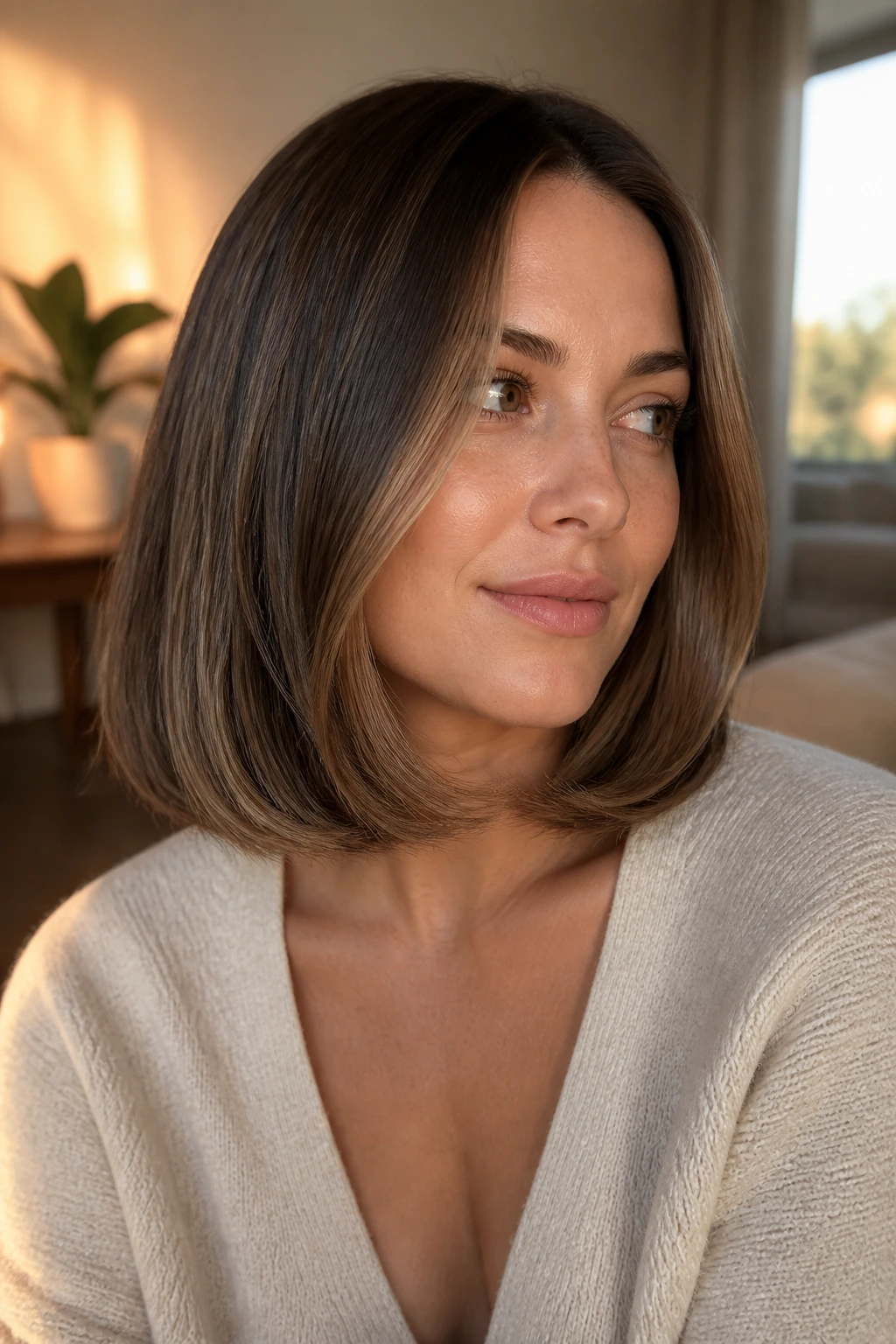
A rounded lob is a quieter choice, and I mean that as praise. The ends curve in softly, the shape stays neat, and the waves sit inside the outline instead of fighting it. On medium-length hair, that gives you a controlled silhouette that still has movement.
This cut suits straight-to-wavy hair especially well because the rounded bottom keeps the style from kicking out at odd angles. If your hair tends to flip at the shoulders, a rounded finish can tame that fast. It also works nicely for people who like a little softness around the jaw.
Best styling approach
Blow-dry with a medium round brush or use a large paddle brush to guide the ends under. Then add one or two loose bends through the top layers. That keeps the style from reading too stiff.
One sentence version: clean shape, soft motion, no fuss.
15. Salt-Spray Lob for Natural Texture
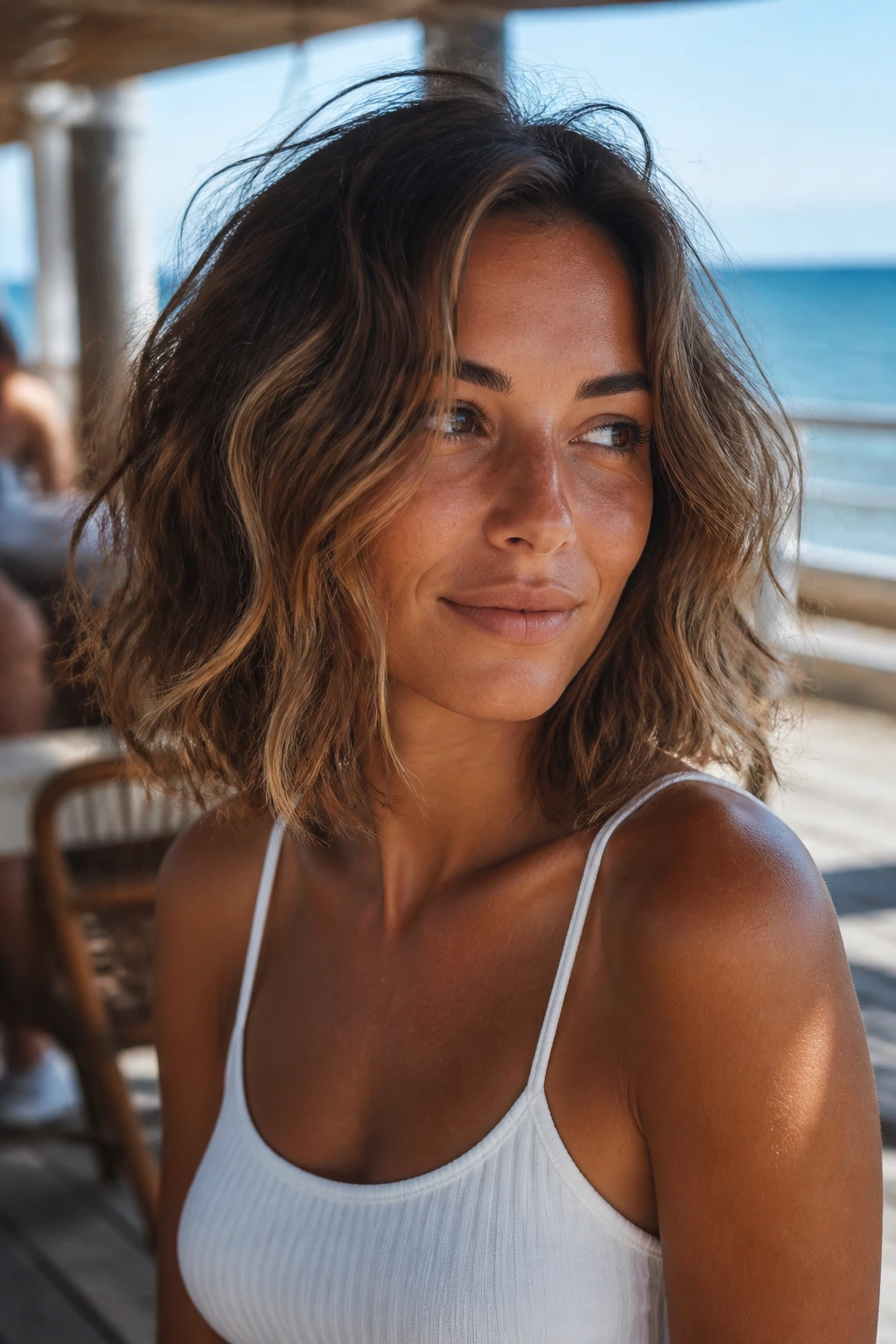
If your waves already show up without much help, lean into them. A salt-spray lob lets the texture do the talking and keeps the haircut from looking overworked. The cut itself should be simple enough to support the texture, not compete with it.
Salt spray can be tricky. Too much and the hair gets rough. Too little and the wave falls flat. Use a light mist on damp hair, scrunch once or twice, then leave it alone long enough for the shape to set. That’s the part most people skip.
A few rules that save the style
- Use salt spray on damp hair, not soaking wet hair.
- Keep conditioner light so the texture can hold.
- Scrunch from the ends upward, then stop.
- Refresh with a water mist and a pea-sized amount of cream on day two.
This look feels easy because it is easy, but it still needs a sensible cut. If the lob is too layered, the texture can frizz. If it’s too blunt, the waves may not show. Somewhere in the middle is the sweet spot.
16. Inward-Bent Lob With Soft Tucked Ends
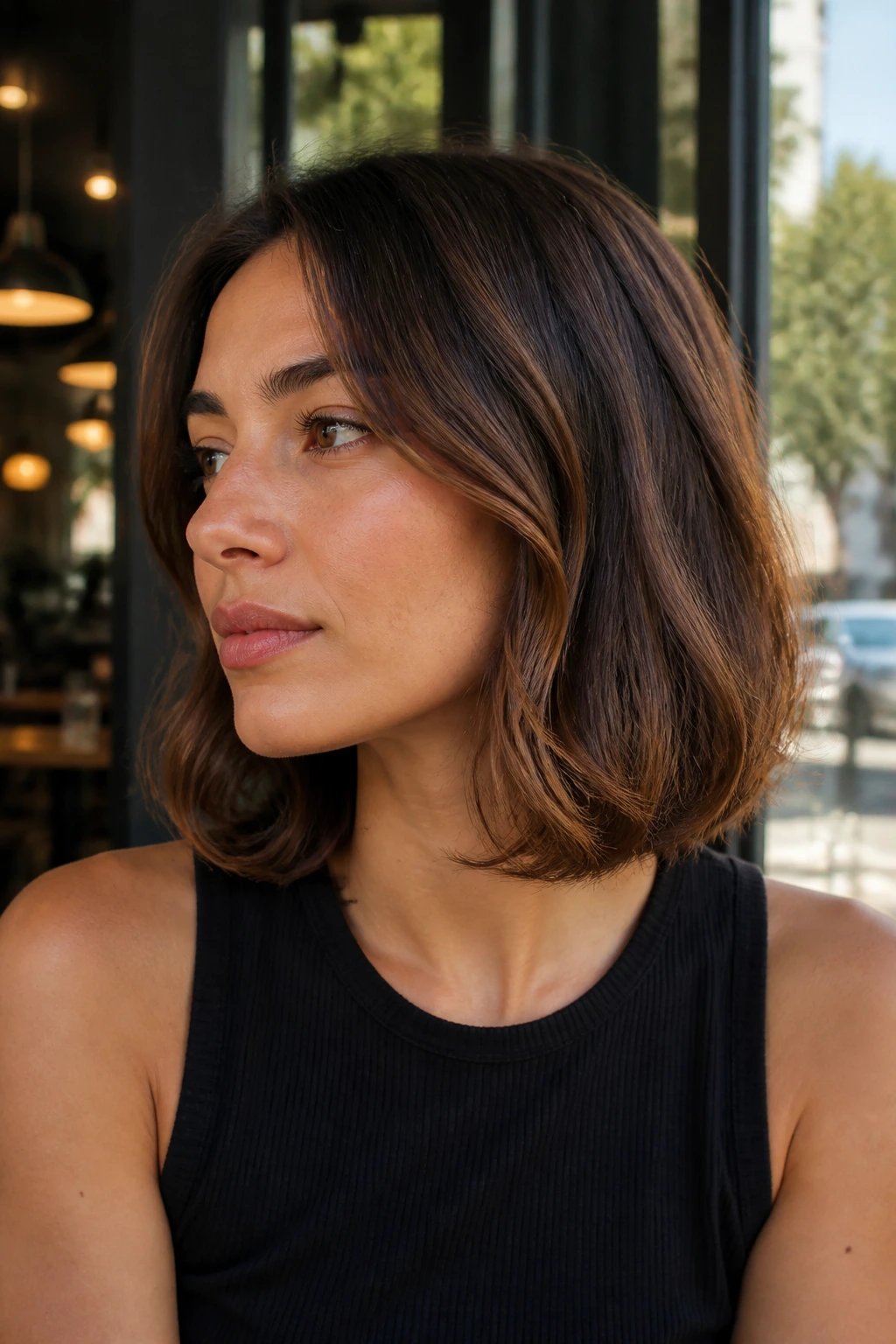
The inward bend gives a lob a neat, tucked finish that still feels soft. It’s the kind of cut you can wear to work, then rough up a little with your fingers later and still look presentable. The ends should curve in just enough to follow the shoulders without sticking out.
This shape is good for medium-length hair that has a slight wave but not a lot of uniform curl. It helps the hair settle. It also flatters the neck and jawline in a way that feels clean but not severe.
How to style it well
Use a round brush at the ends or a flat iron to create a soft inward bend. Keep the mid-lengths loose. If you curl everything from root to tip, you lose the point of the cut and it starts to feel too formal.
A quick root lift at the crown helps this style stay from looking too flat on top. That matters more than people think. A neat bottom and a dead-flat crown can make the whole thing feel heavy, even if the length is perfect.
17. Highlight-Friendly Lob That Shows Off Dimension
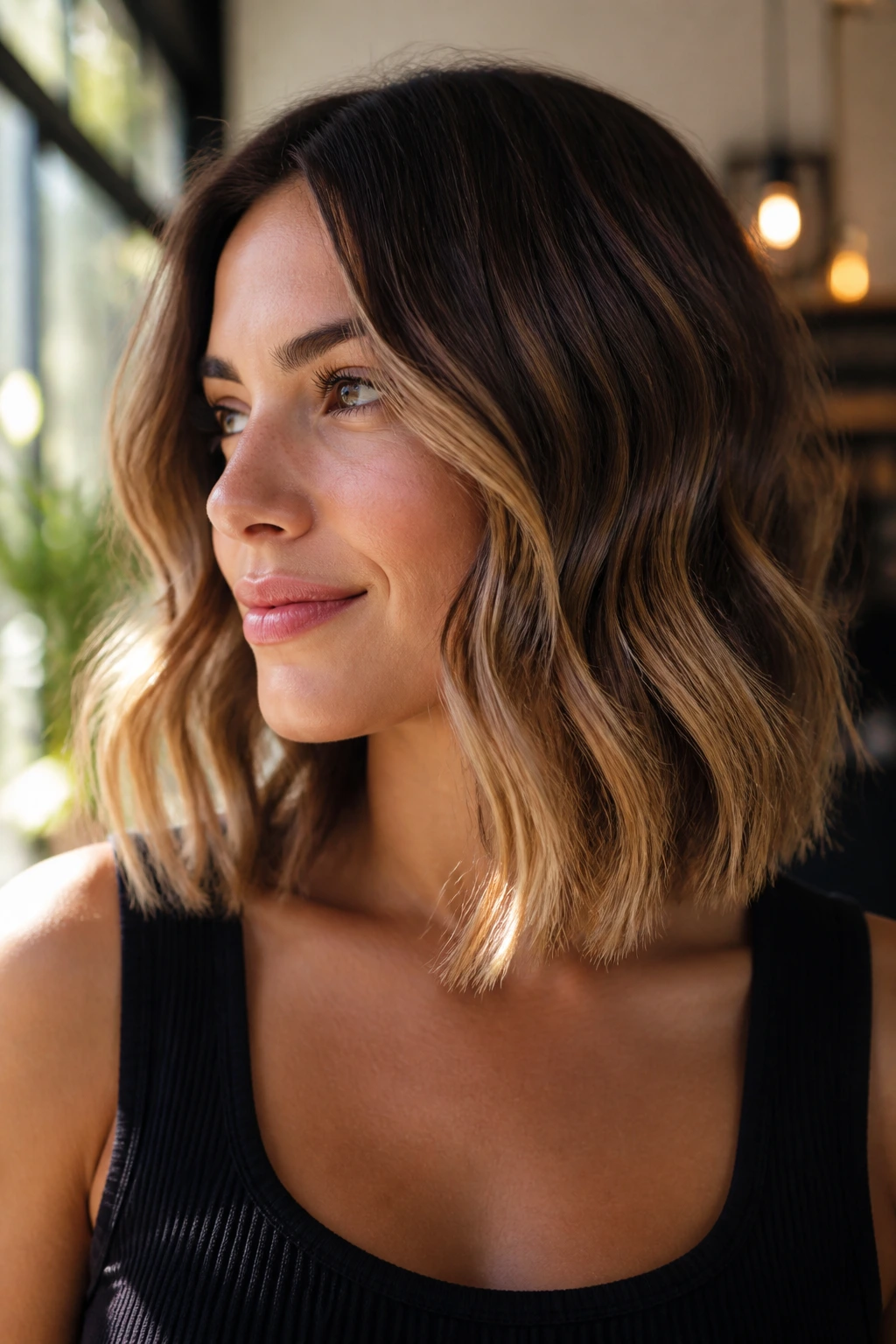
Color changes how a lob reads. Highlights, ribbons of balayage, or even a soft money piece can make the wave pattern look deeper because the light lands on every bend. That’s one reason medium-length wavy hair is such a good canvas for color.
A one-length lob with gentle waves shows off dimension in a clean way. Too many layers can scatter the color. A smoother shape gives the highlights somewhere to sit, which makes the movement easier to see. This is one of those cuts that looks better when the color and the shape are talking to each other.
If your hair is already highlighted, keep the styling soft. Loose bends and a shine spray are enough. Over-texturing can make the color look busy.
Best for: people who want the waves to show their color, not hide it.
And yes, a good highlight placement around the face can make the whole haircut feel brighter without changing the shape at all. Small move. Big payoff.
18. Grown-Out Lob That Still Looks Intentional
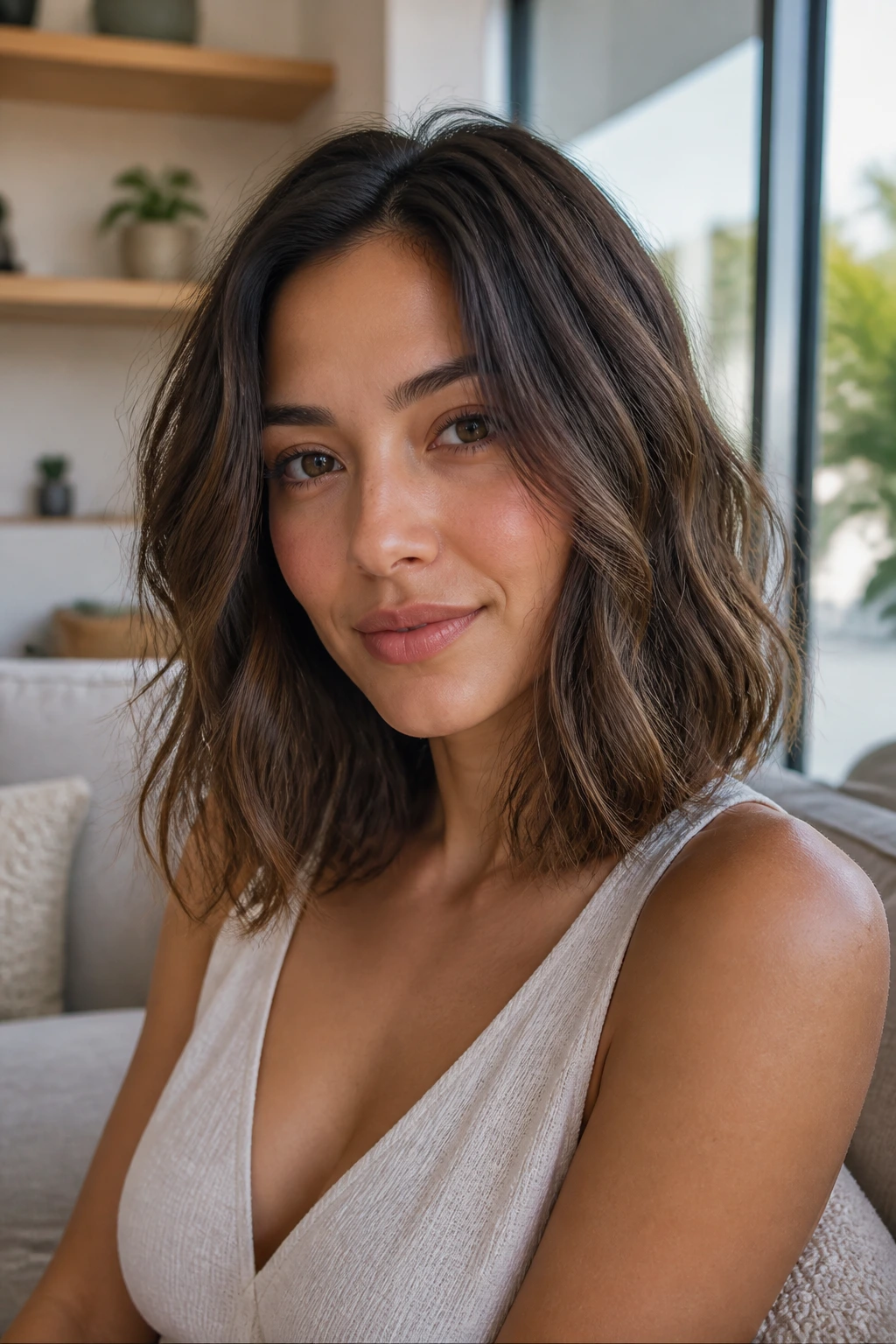
A good lob should survive a grow-out phase. That’s the real test. If a cut only looks right the week you leave the salon, it’s too fussy. The better version softens over time and still keeps its shape as it gets a little longer.
This is where medium-length hair shines. A grown-out lob can sit just below the collarbone, keep the wave pattern intact, and still feel tidy if the perimeter stays reasonably strong. Ask for soft layers, not sharp ones. That way the haircut ages in a calm, useful way.
What keeps it wearable
A small trim every 8 to 12 weeks helps the ends stay blunt enough to look healthy. If you go longer, the cut can lose its line and start tipping into plain shoulder-length hair. Not terrible. Just less intentional.
The nicest part is that you can switch the part, tuck one side, or add a few extra bends and the shape still holds. That flexibility is why this version ends up being the one people wear most.
Final Notes
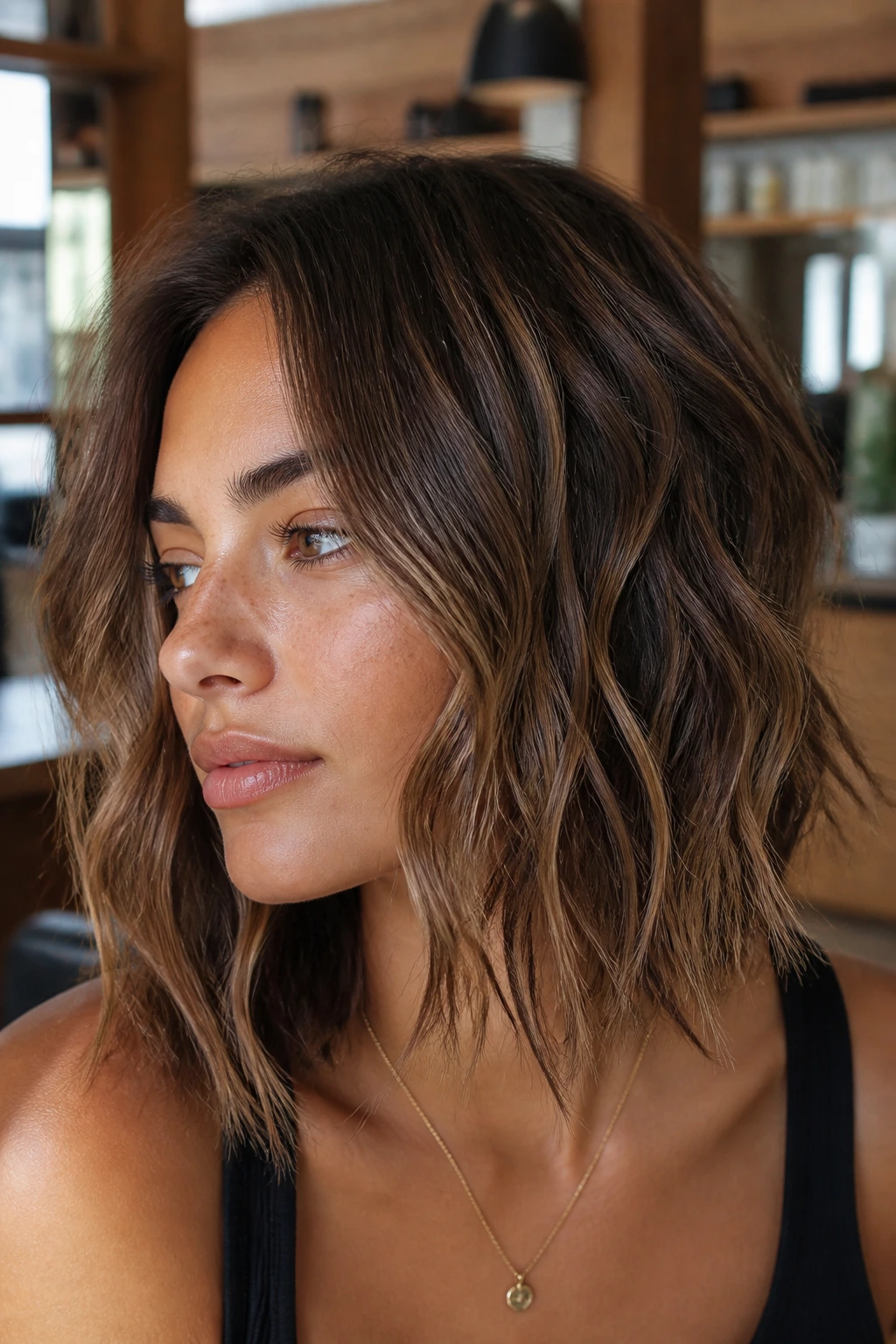
A wavy lob on medium-length hair works because it sits in a sweet spot: enough length for movement, enough structure to keep the shape from collapsing. That balance is what makes the haircut so forgiving when it’s done well.
The smartest choice is the one that matches your hair, not the one that looks best on a mannequin head. Fine hair usually needs a cleaner line. Thick hair usually wants weight removed from the inside. Natural waves usually behave best when the cut is built around what they already do.
If you’re torn between two versions, pick the one you’ll be willing to style on a Monday morning. That answer is often more honest than any face-shape rule.
