



Fine hair can look limp in a long style, but a sharp bob changes the whole conversation. On Black hair, that cut can do even more: it can make the ends look thicker, lift the crown, and give the face a cleaner frame without asking the hair to do all the work. The trick is not length. It is shape.
Fine strands and low density are not the same thing, and that distinction matters. A woman can have a full head of hair and still have delicate strands that fall flat when they’re over-layered; another can have fewer strands and still need more room at the crown. Bob haircuts solve different problems depending on where the flatness shows up—at the roots, through the middle, or at the ends.
That is why the smartest black bob haircuts for fine hair tend to keep a strong perimeter, use layers sparingly, and play with parting, bevel, and movement instead of trying to build bulk with teasing. A cut like that can look neat after a silk press, soft after a wrap set, or airy on stretched curls. The shape does the work, and the rest gets easier.
1. Chin-Length Black Bob for Fine Hair
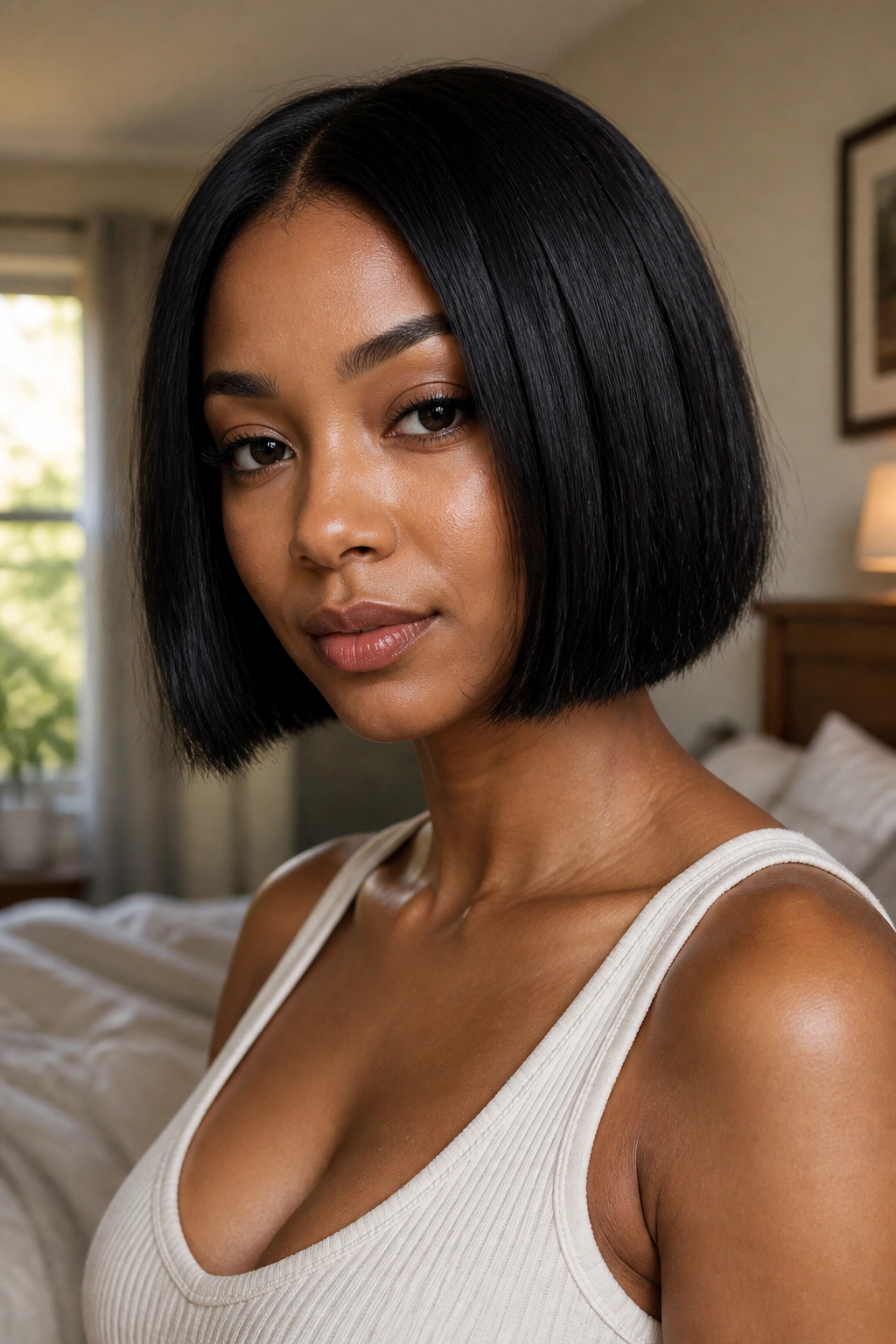
A chin-length bob is the cleanest place to start if you want fine Black hair to look fuller fast. The line hits where the eye naturally stops, so the cut reads as denser than longer styles that taper out at the ends. It’s neat, direct, and a little unforgiving in the best way.
Why the blunt line helps
A blunt edge gives the ends a solid finish. That matters when the strands themselves are delicate, because wispy ends make thin hair look even thinner. A chin-length cut also keeps weight off the shoulders, which helps the shape swing instead of hanging.
If your hair is relaxed, silk-pressed, or stretched, ask for a crisp perimeter with almost no layering at the bottom. If it’s natural, the same idea still works, but the stylist should cut with shrinkage in mind so the finished shape doesn’t ride up too far.
- Best length: right at the chin or a half-inch below
- Best finish: blunt, with minimal internal layering
- Best styling tool: a paddle brush or small round brush
- Best product: a lightweight foam or setting lotion
Tip: keep oil off the roots. A heavy serum near the scalp can flatten the exact area you want to keep lifted.
2. Deep Side-Part Sleek Bob
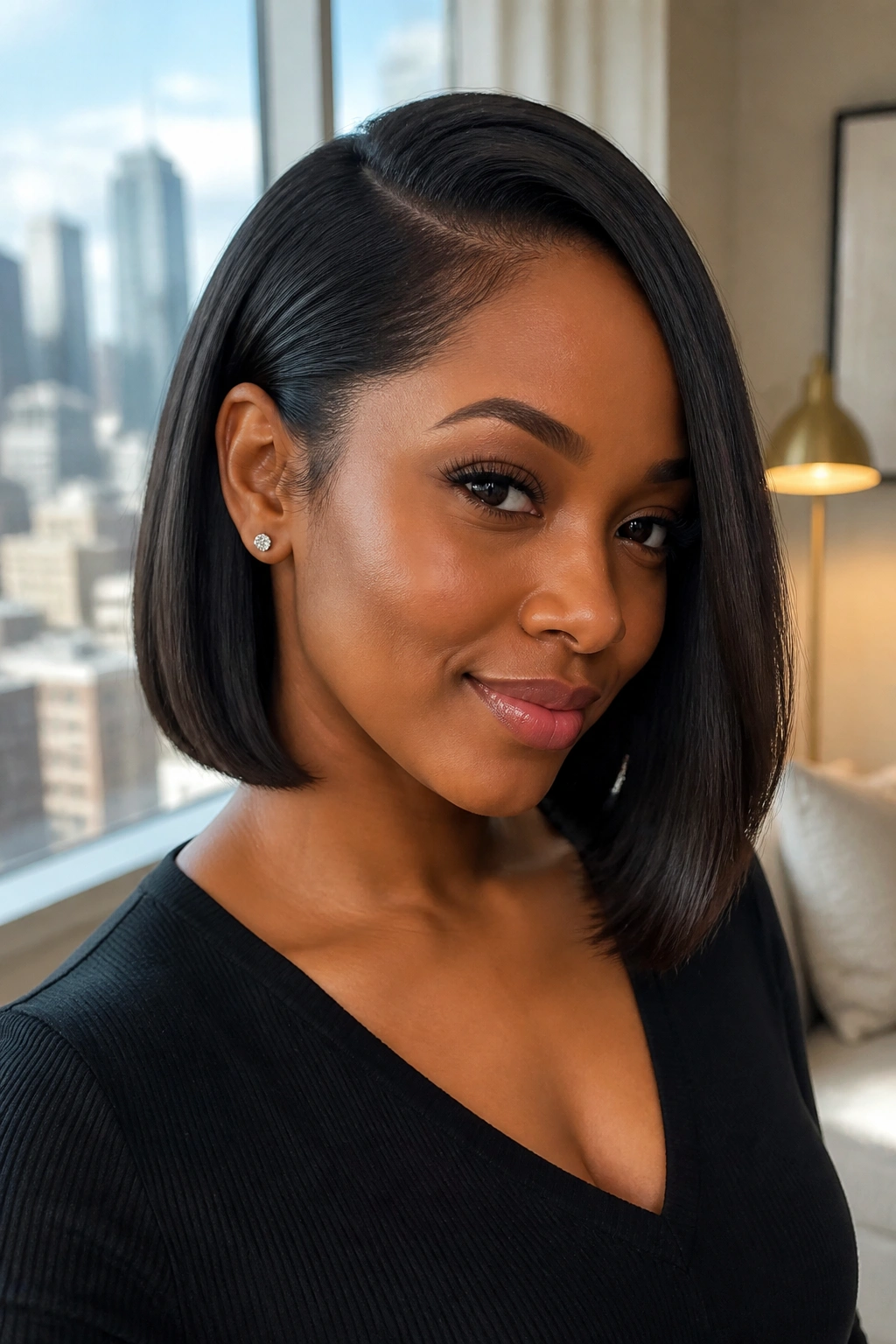
A deep side part is one of the easiest ways to fake fullness without adding a single extra layer. It lifts one side at the root, pushes the hair across the forehead, and gives fine strands a little more room to breathe. Simple. Effective.
The shape works especially well on Black hair because the part creates a strong diagonal line. That line breaks up flatness and makes the crown look taller, which is where fine hair often needs help most. You do not need a dramatic part that goes all the way back to your ear, either. Sometimes an inch or two off center is enough.
A sleek side-part bob looks best when the roots are dried in the direction you want them to sit. Set the part while the hair is damp, clip the heavy side up for a few minutes, then smooth everything down with a brush and a touch of mousse. The result is polished, but not stiff. That stiffness is the enemy here.
3. Soft Layered Bob with Tucked Ends
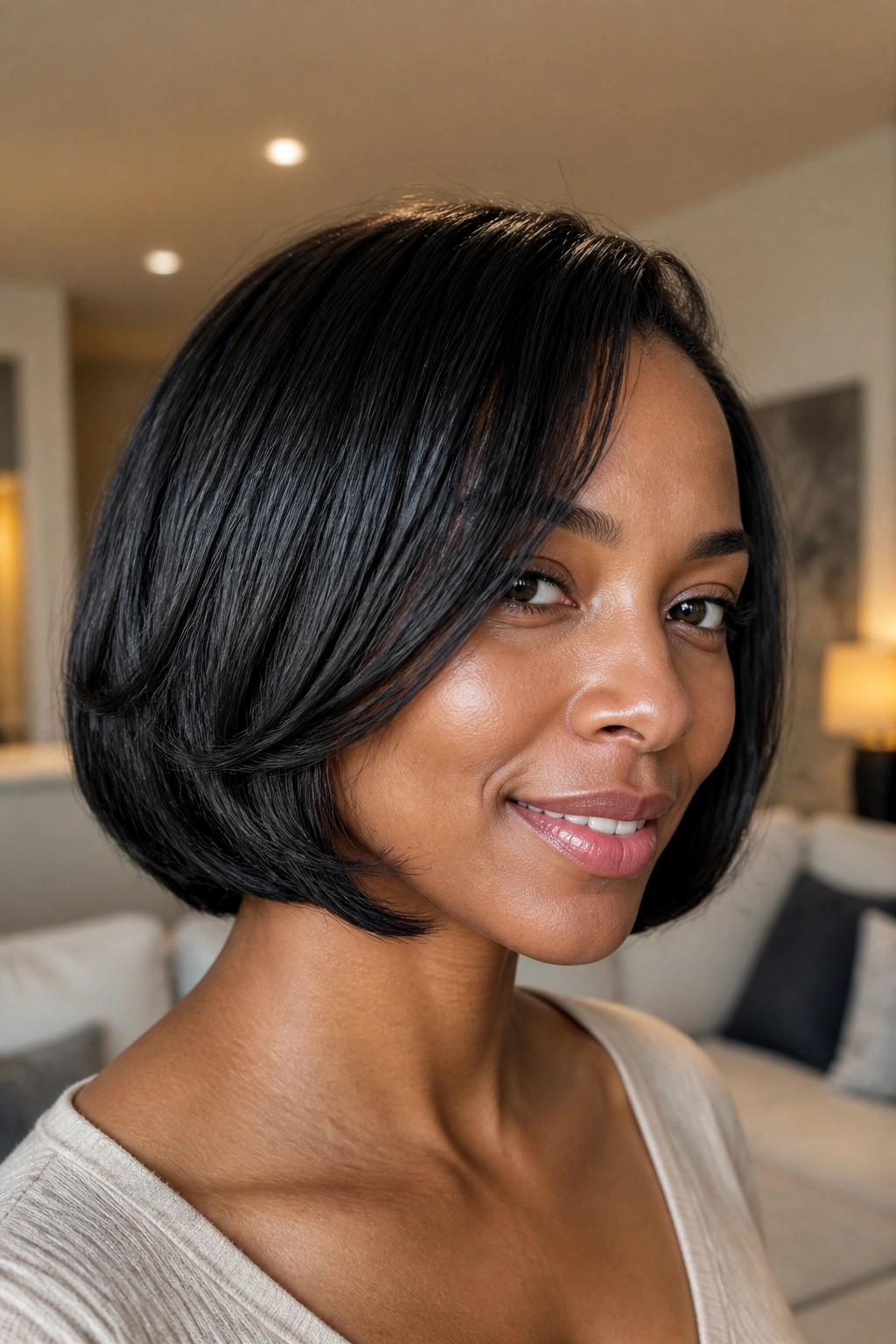
Why does a little layering help when fine hair is scared of too much of it? Because not all layers are equal. The wrong kind shreds the outline. The right kind removes just enough weight from the middle so the hair can tuck inward and move instead of lying dead flat.
This cut works well when the perimeter stays strong and the layers live inside the shape. That gives you softness without losing the look of thickness at the edge. On Black hair, especially hair that has been blow-dried smooth, the tucked-end effect can make the whole style feel finished with almost no effort.
How to style it
Use a medium round brush and roll the ends under while blow-drying on medium heat. Let each section cool before you let it go. That one pause matters.
- Keep the longest layer at or below the jaw
- Ask for interior layering, not choppy pieces on the outside
- Use a heat protectant with a light finish
- Wrap the hair at night to keep the curve at the ends
Tip: if the ends flip out by lunch, the brush was too big or the hair was not dry enough when you released it.
4. A-Line Bob with a Longer Front
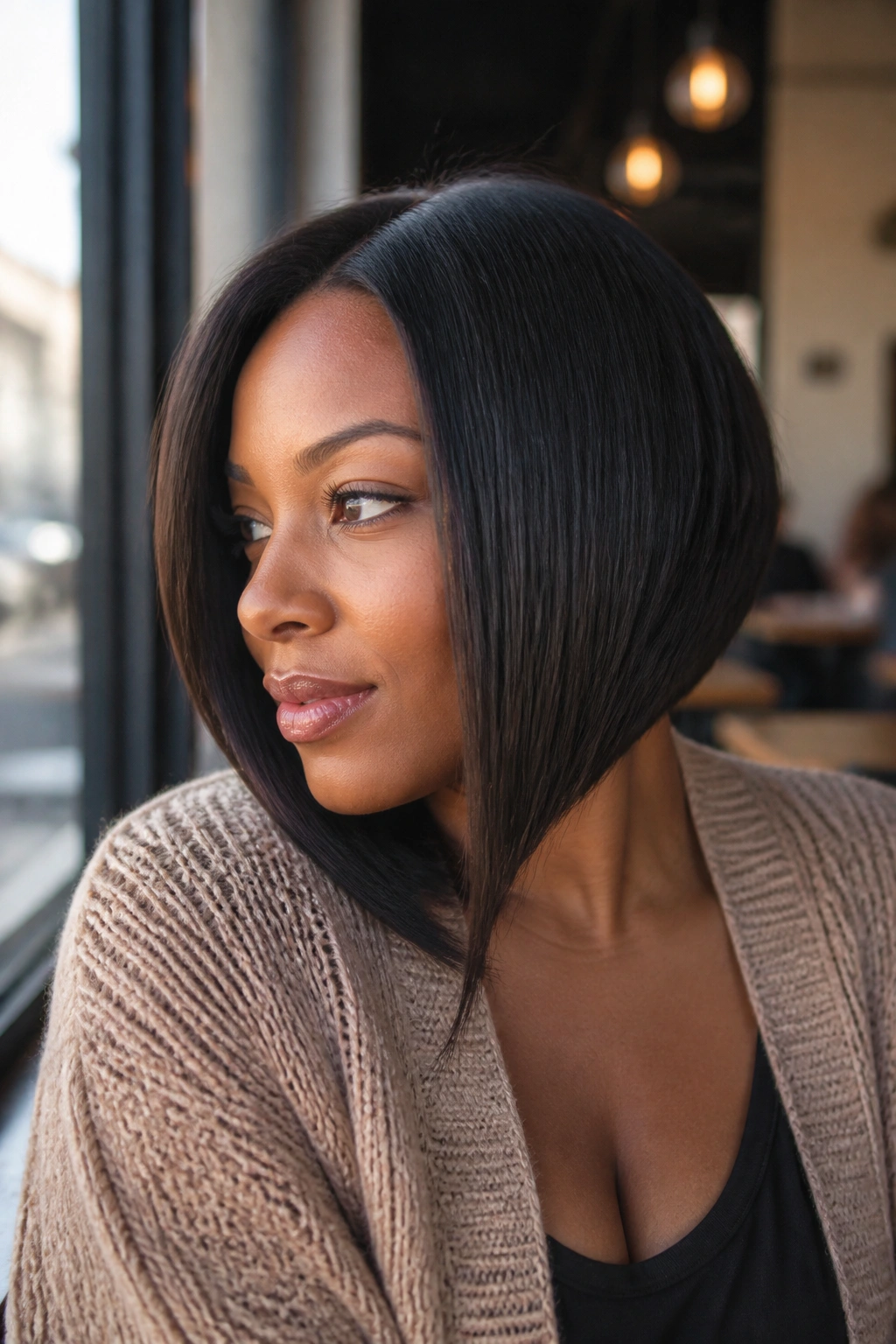
An A-line bob gives fine hair a little drama without asking it to do anything complicated. The back sits shorter, the front falls longer, and that diagonal creates the feeling of movement even when the hair is still. It’s a smart cut when the ends need help looking fuller from the front.
The longer front pieces frame the face and keep the cut from feeling boxy. That matters on delicate strands, because a square outline can make hair look narrower than it is. The angle adds shape where you can see it most, while the shorter back keeps the weight from dragging the whole cut down.
What makes it work
- The front should be only 1 to 2 inches longer than the back if your hair is fine
- The nape should stay tidy, not hollowed out
- The angle should be visible, but not severe
- A flat iron bend at the ends helps the cut look intentional
If you wear your hair with a side part, this cut has even more movement. If you wear a center part, the angle still shows, just in a quieter way.
5. Stacked Bob with Hidden Back Lift
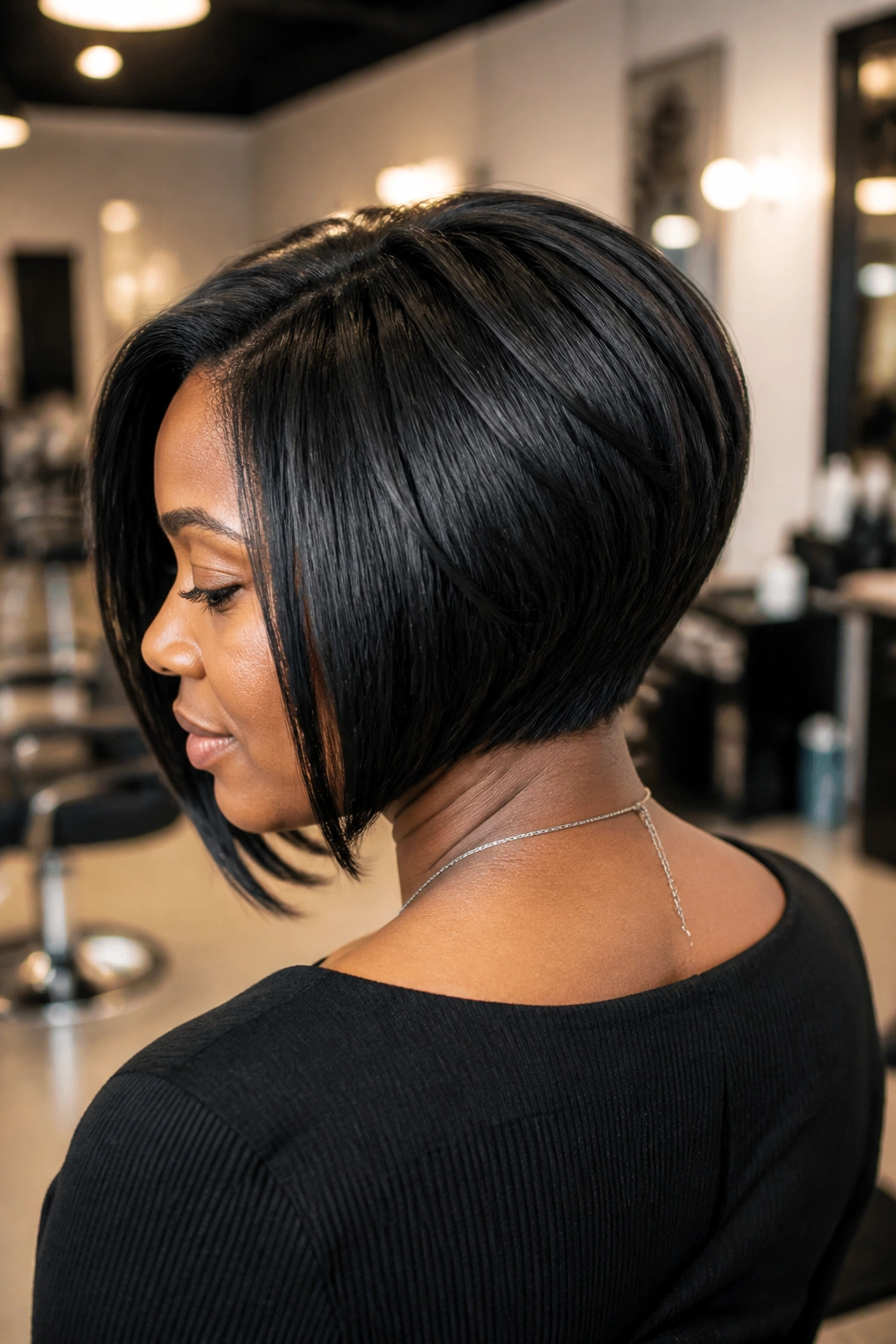
A stacked bob sounds bold, but it does not have to look stiff or overbuilt. On fine Black hair, the trick is subtle stacking at the back—enough lift to create shape, not so much that the cut turns wispy. The back should look softly rounded, almost cushioned.
That hidden lift is useful because fine hair often collapses at the crown and upper nape. A little graduation in that area gives the cut a push upward from underneath. The result is a bob that feels fuller from the side and back, which is where thinness tends to show first.
Do not let the stacking get too short unless the hair is very dense. A strong stack on low-density hair can leave the bottom looking see-through. That is the exact opposite of what you want.
A good stacked bob should move when you turn your head. If it swings like one sheet, the shape is right.
6. Asymmetrical Bob with a Sharp Diagonal
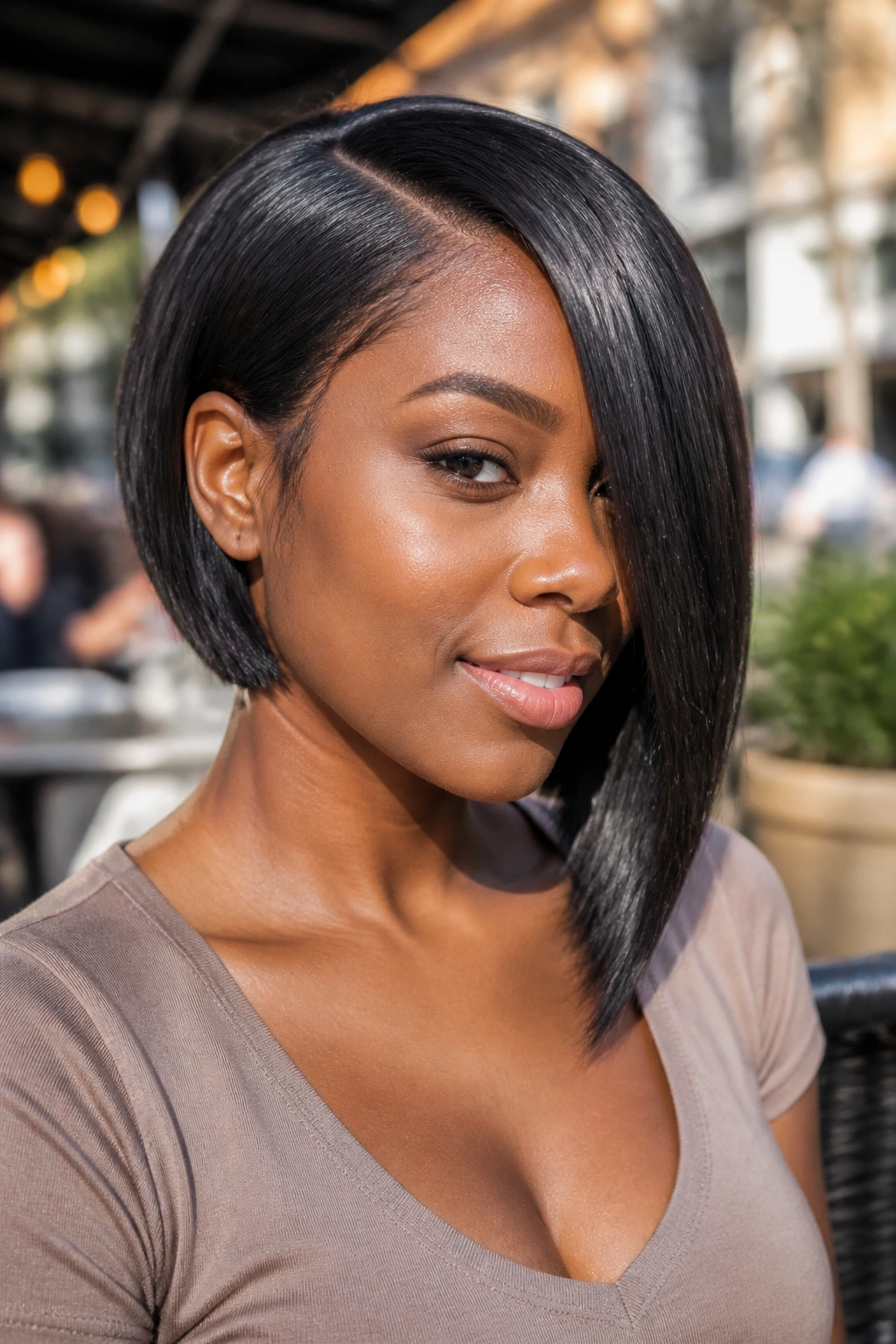
Compared with a straight-across bob, an asymmetrical cut gives fine hair motion before you even style it. One side is longer, the other side shorter, and the eye keeps following the line. That visual movement is useful when the strands themselves are too delicate to carry a lot of visual weight.
This cut is best when the difference is deliberate but not huge. A one- to two-inch shift is usually enough. If the gap is too wide, the longer side can start to drag the whole style down, especially on hair that is already soft or slippery.
It works well on pressed natural hair, relaxed hair, and sleek textures that hold shape without puffing up at the ends. It can also make a side part look more interesting, since the cut already carries a bit of attitude.
Who should try it? Anyone who wants a bob that feels a little less classic and a little more directional. It’s a nice choice if your face shape likes angles. It’s also useful if one side of your hair naturally lies flatter than the other.
7. French Bob with Light Fringe
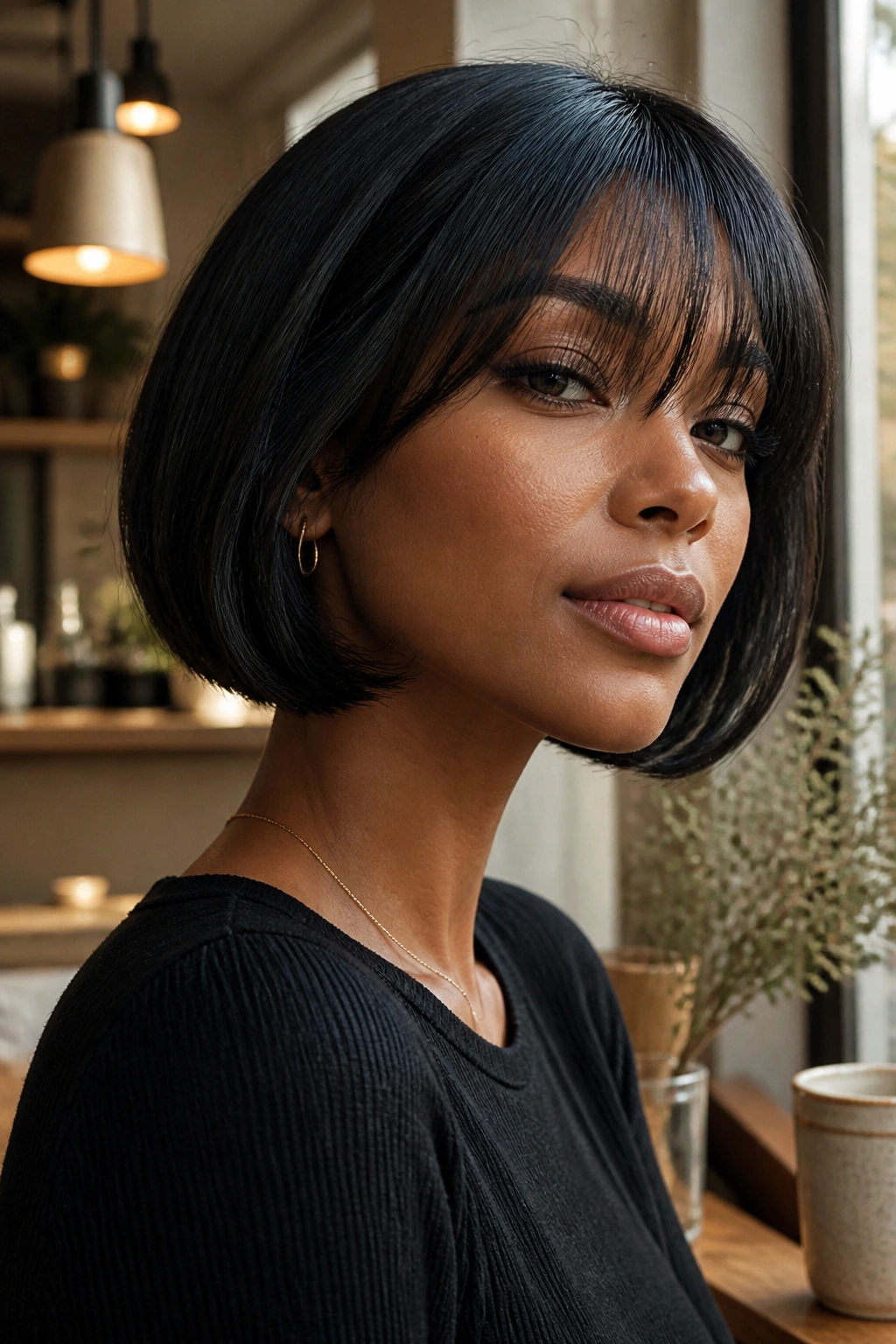
A French bob can be charming, but on fine hair the fringe has to be handled with care. Heavy bangs can swallow the face and leave the rest of the cut looking sparse. Light fringe, though—that’s a different story. It brings attention to the eyes and makes the hairline feel fuller.
The length usually sits around the cheekbone or just above the brows, depending on how much forehead you want to show. For fine Black hair, the fringe should feel airy, not chopped into a hard block. A little texture is better than a thick curtain that steals all the density from the rest of the cut.
Why it stays flattering
- Keep the fringe soft and slightly piecey
- Leave the bob blunt through the bottom
- Style the bangs separately with a small round brush
- Trim the fringe often so it does not collapse into the eyes
This is one of those cuts that looks best when it looks lightly imperfect. Too neat, and it feels severe. Too shredded, and it loses the point entirely.
8. Curly Black Bob for Fine Hair
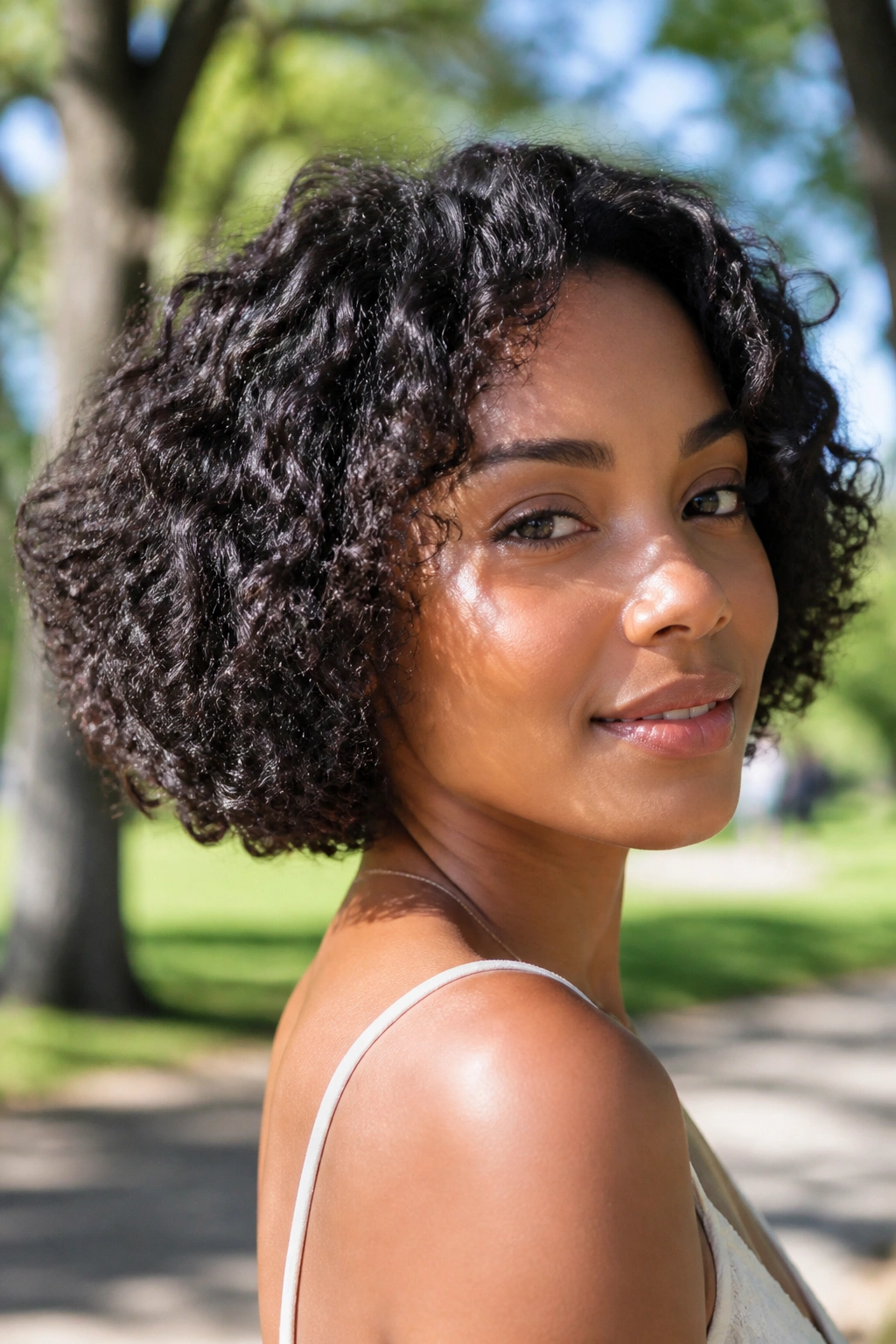
Curly Black bob haircuts for fine hair work when the shape is cut around the curl pattern instead of against it. A curly bob can look fuller than a straight style because the bends and coils create width, but only if the length is chosen well. Too short and it can puff up; too long and it loses its spring.
The best version usually lands at the jaw or just below it. That gives the curl room to sit without shrinking the face out of the picture. If your curls are loose, a diffuser on low heat can help the shape set without blasting the pattern apart. If they’re tighter, cutting on dry hair or stretched hair gives the stylist a better read on where the bob will land.
How to keep the curls from going flat
Use a lightweight curl cream, not a heavy butter. Fine strands get weighed down fast. Scrunch the product in, then stop touching it while it dries.
A curly bob is one of the rare styles that can look bigger with less product. That is the whole appeal.
9. Silk Press Bob with a Glassy Finish
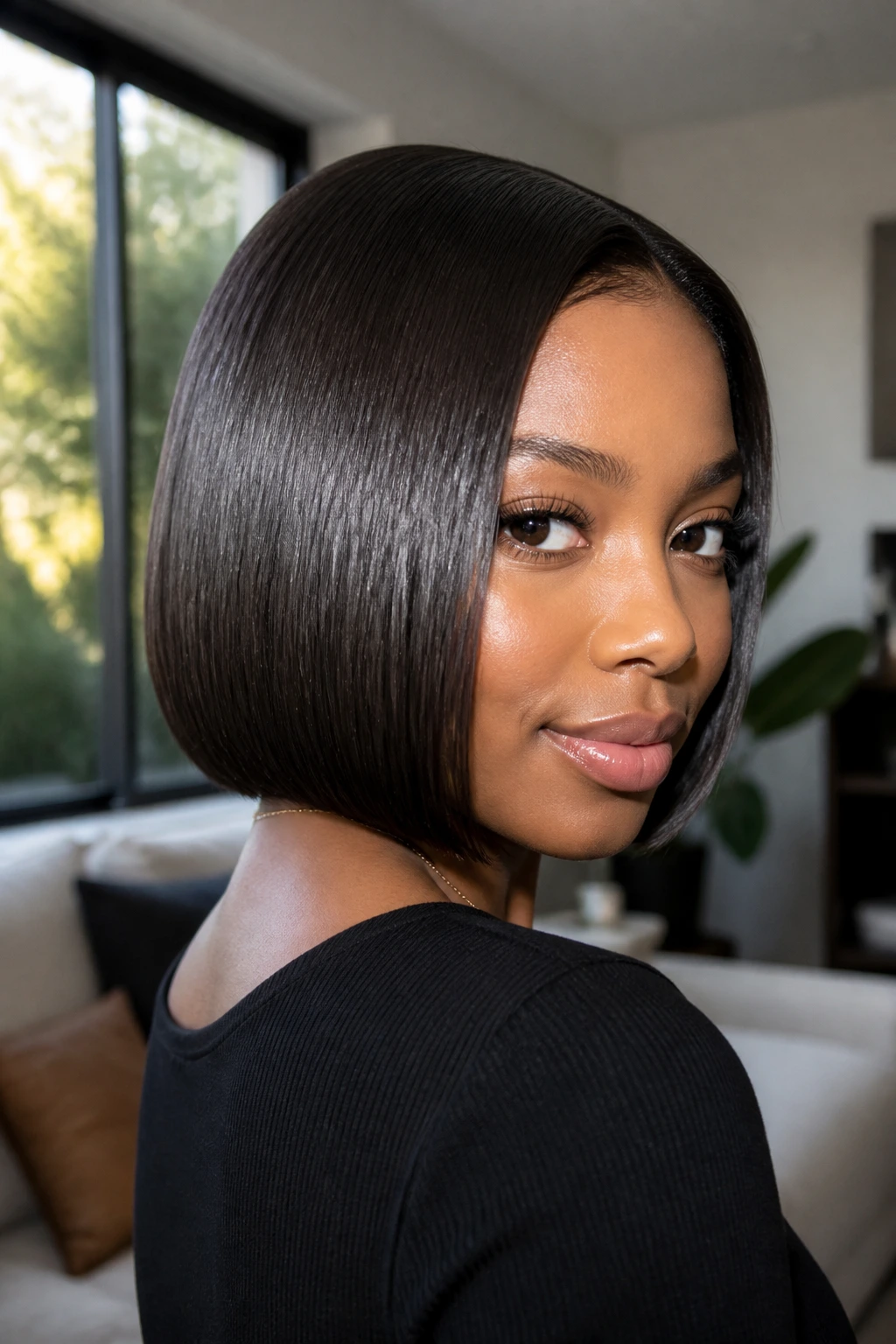
A silk press bob is almost unfair when the cut is right. The shine makes the edges look sharper, and the straight line at the perimeter gives fine hair a fuller read from a distance. There’s nowhere for the hair to hide, so the precision has to be there.
This style is especially good if your hair likes smoothness but hates bulk. Fine strands often respond well to controlled heat and a clean finish, as long as the flat iron isn’t cranked too high. A careful press with heat protectant, section by section, can give the bob a sleek body that does not look limp.
The key is restraint. Too much serum and the cut goes greasy. Too much heat and the ends lose their bounce. A silk press bob should move when you turn your head, not cling to it.
Wrap it at night with a silk scarf and keep a soft brush nearby. That one habit stretches the life of the style more than a pile of products ever will.
10. Rounded Bob That Hugs the Jaw
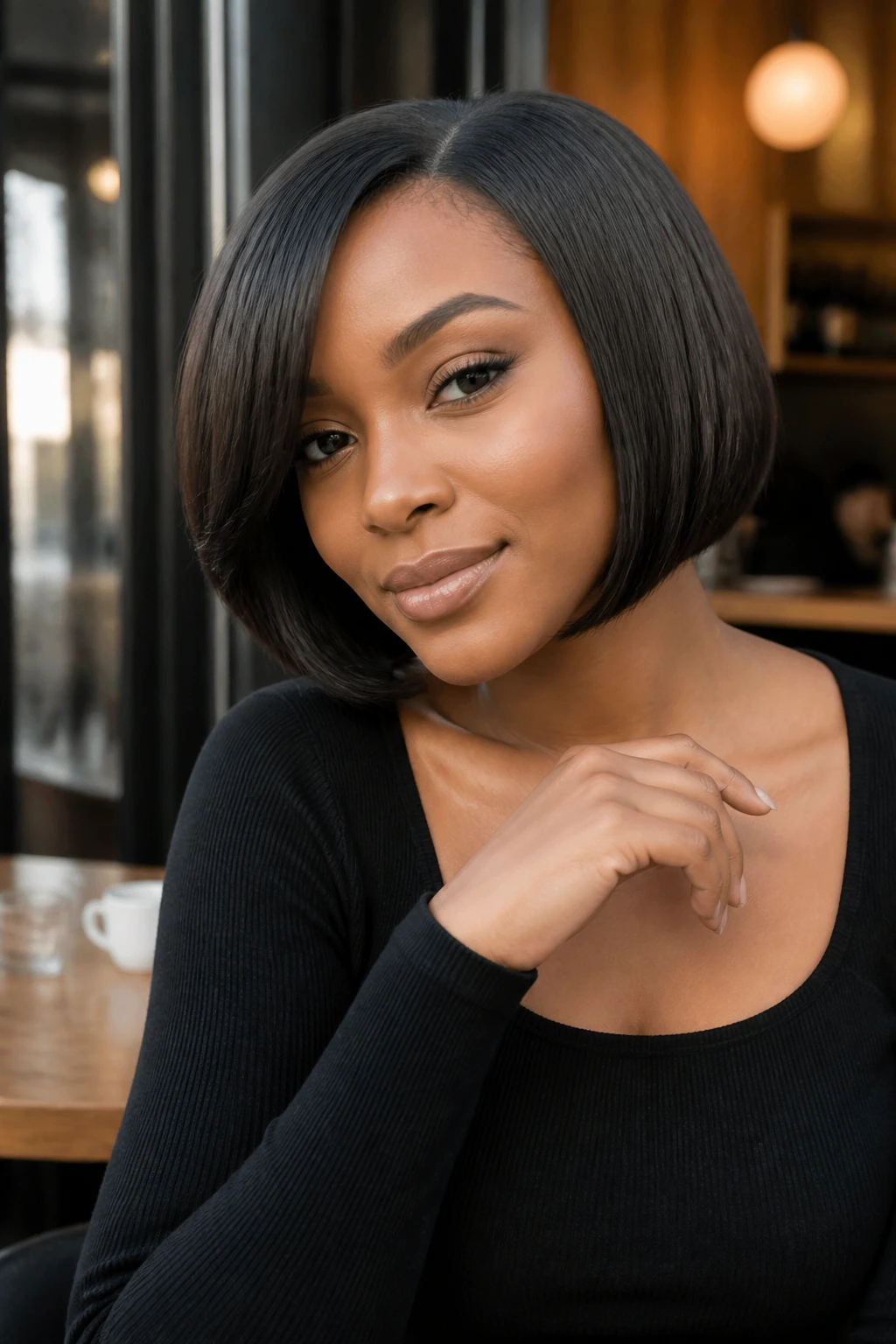
A rounded bob is the haircut version of a good frame on a photo. It hugs the jawline, curves inward at the ends, and gives fine hair a softer outline that feels fuller than a straight, flat cut. The shape is especially flattering if your strands tend to slip thin at the bottom.
The curve is what makes the difference. Instead of stopping abruptly, the hair bends under slightly, which gives the ends more visual weight. That helps on Black hair that has been blow-dried smooth or pressed, because the silhouette stays plush even when the texture is delicate.
Key details to ask for
- A gentle curve, not a tight bowl shape
- Length at the jaw or just above the shoulders
- Minimal thinning at the ends
- A slight lift at the crown so the top does not collapse
A rounded bob is a quiet haircut. It does not shout. But it often looks more expensive in person than a more dramatic cut because the line is so clean.
11. Collarbone Lob with Barely-There Layers
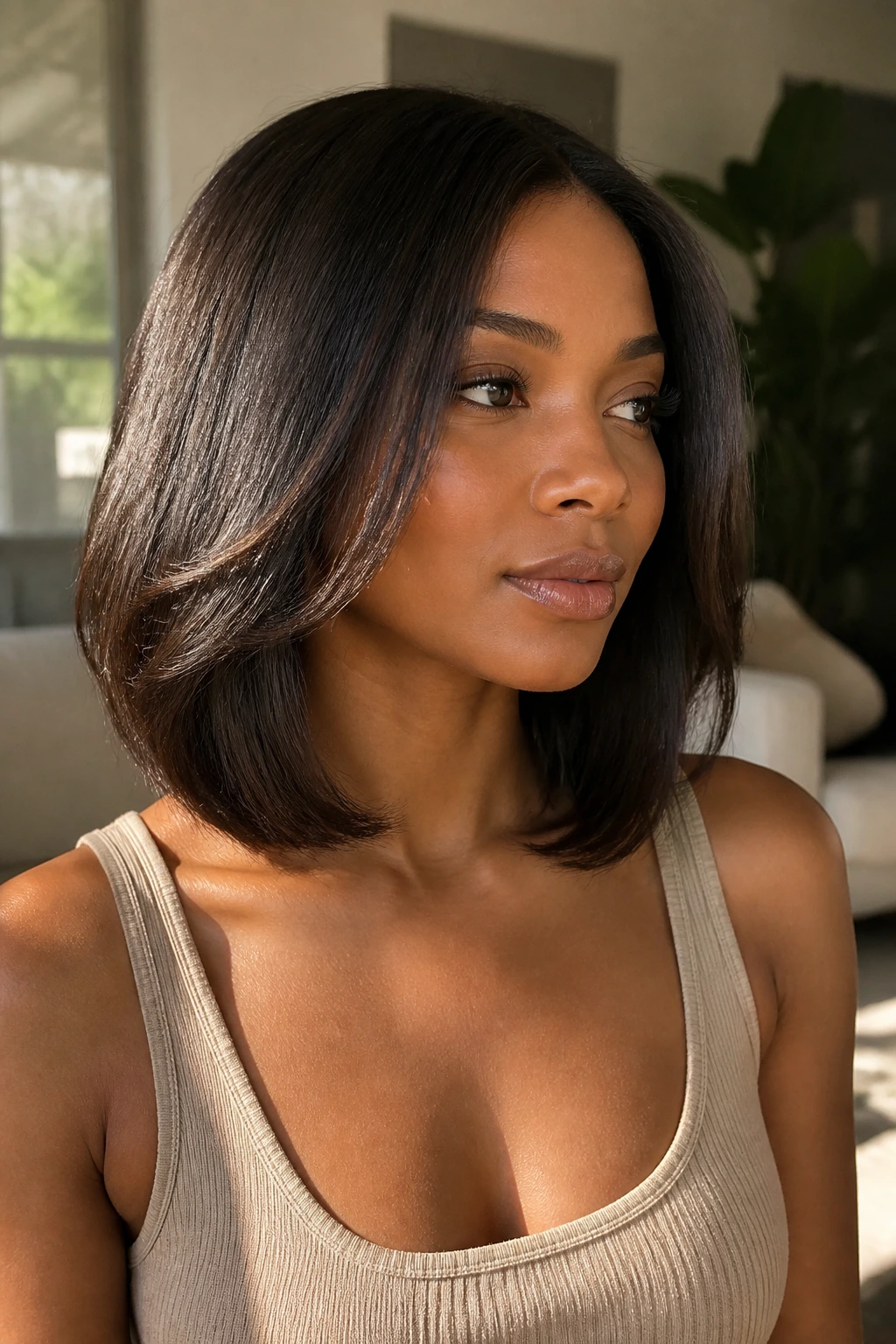
If you want a little more length than a classic bob, the collarbone lob is the safest place to go. It gives fine hair enough weight to move, but not so much length that the strands drag downward and look stringy. That middle ground is useful.
Barely-there layers are the whole point here. The cut should keep the bottom line strong while giving the inside a small amount of release. That way the hair can swing, but the ends still look thick enough to matter. A lob with too many layers starts to feel tired fast.
This length also works well for women who wear their hair in two modes: smooth during the week, waved or curled on weekends. A collarbone lob can take a bend with a flat iron, hold a soft wave from flexi rods, or sit sleek with a center part. It’s flexible without looking busy.
12. Invisible-Layer Bob for Extra Swing
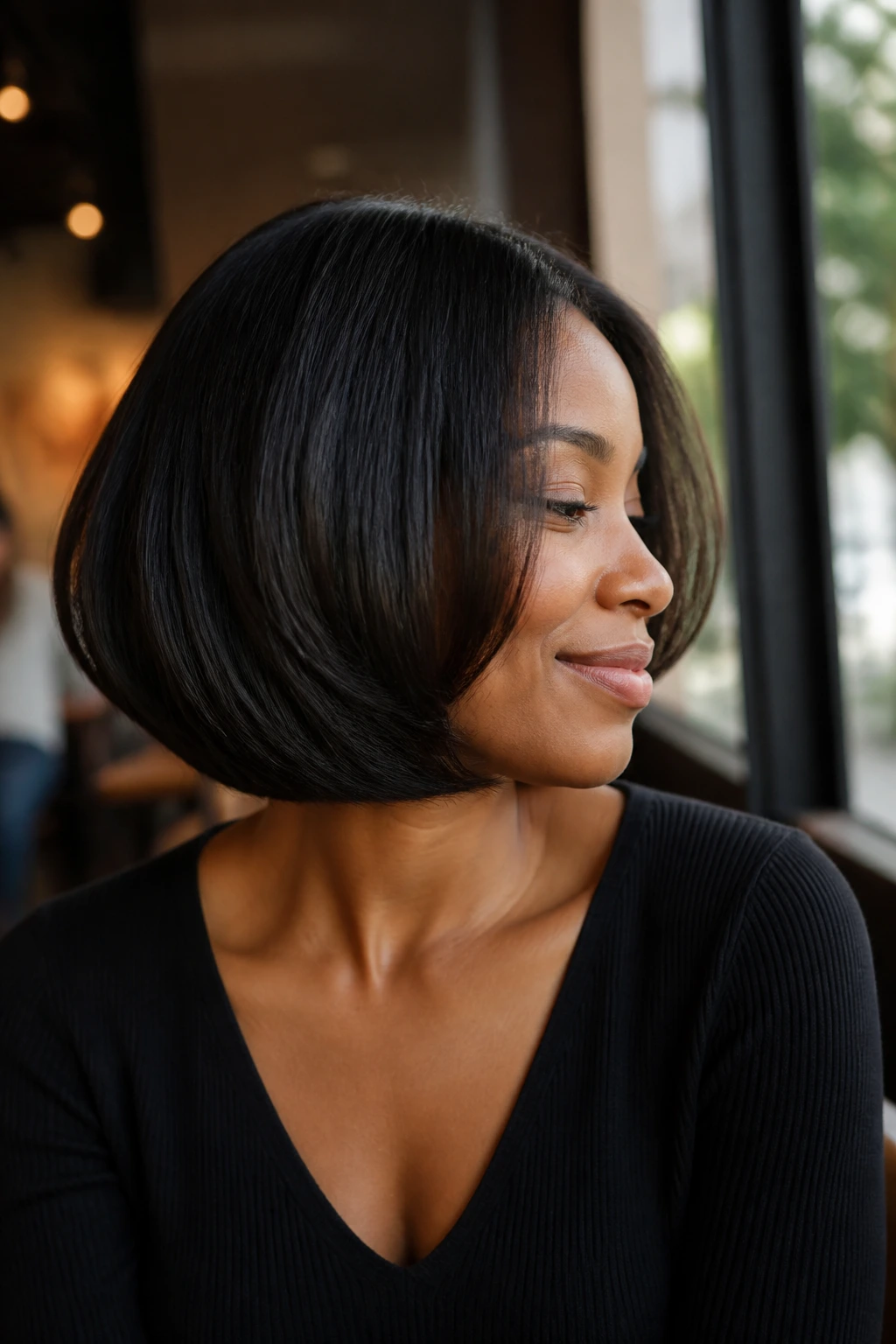
Unlike choppy layers, invisible layers hide inside the cut, so the bob keeps its clean outline. That makes them a smart choice for fine hair. You get the movement, but you do not get those see-through edges that can make the ends look scraggly.
Invisible layering is especially useful on Black hair that is naturally fine but dense enough to hold shape. The stylist removes weight from places you do not see first—behind the surface, around the internal shape, near the crown—so the bob starts to bend and settle better. The outside still looks blunt and polished.
It’s a good option if you hate the look of a heavily textured bob but still want the hair to swing. The difference is subtle in the chair and obvious once the hair moves. That’s the part I like most about it. It does its job quietly.
Ask for a cut that keeps the perimeter strong and the inside light. The two are not enemies.
13. Tapered Bob with a Clean Nape
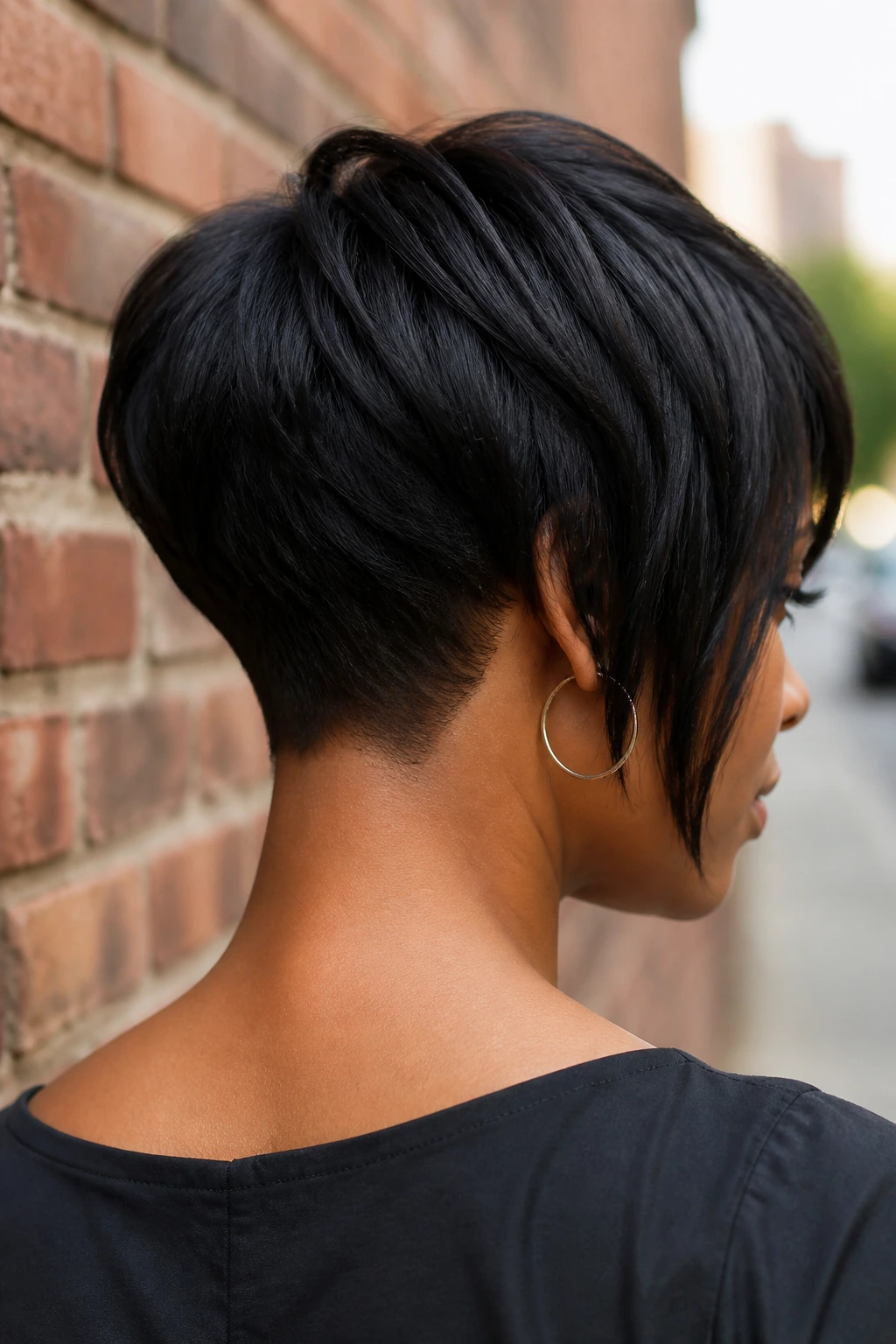
A tapered bob can give fine hair a cleaner, more intentional shape than a blunt cut alone. The back narrows slightly toward the nape, while the sides keep enough length to preserve fullness around the face. It feels crisp. A little architectural, even.
Why the nape matters
The nape is where many fine styles start to look sloppy. If that area is too bulky, the bob feels heavy. If it is too thin, the whole haircut can look unfinished. A good taper solves both problems by keeping the base neat and letting the top layers sit over it.
- Best for relaxed or pressed textures
- Best when the neckline is kept tidy every 6 to 8 weeks
- Best with a blow-dry that follows the head shape
- Best if you like a polished profile from the side
This cut is especially handy if your hair grows out in a puffier way at the back. The taper keeps the outline clean, so the shape holds longer between trims.
14. Feathered Bob with Light Movement
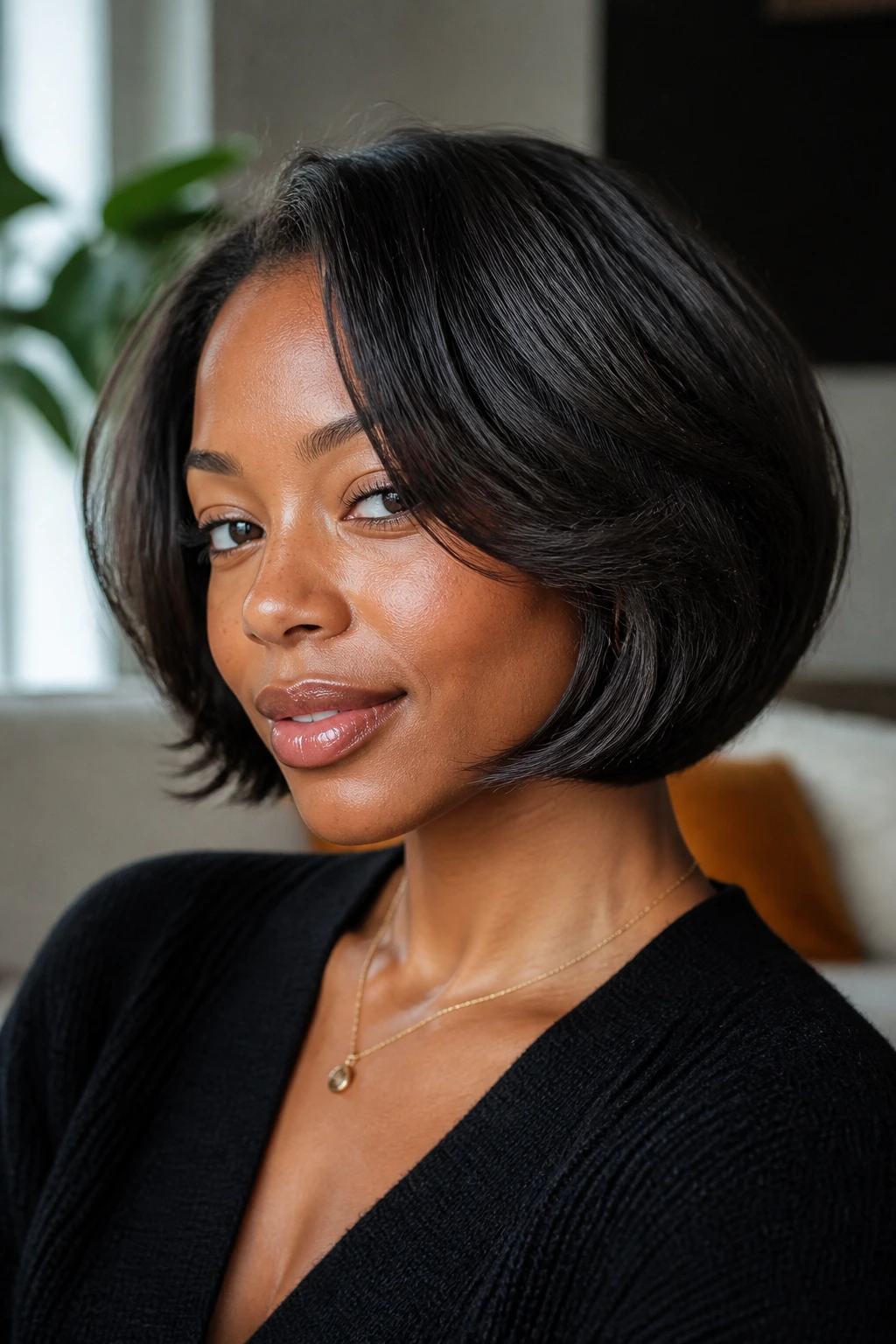
Feathering has a bad habit of sounding more dramatic than it is. On fine hair, it should not mean shredded ends or wispy layers everywhere. It means soft movement at the surface—enough to keep the bob from sitting like a helmet.
The best feathered bobs on Black hair use the technique near the cheeks and upper sides, where a little bend makes the cut feel alive. The perimeter still needs to stay strong. That is the part people often miss. If the edges get too light, the haircut loses its backbone.
How to keep it from looking thin
Use a medium brush and direct the ends slightly under or slightly out, depending on the finish you want. Let the hair cool in that shape before you touch it. That cooling time locks in the curve.
A feathered bob suits women who want softness more than sharpness. If you like your hair to look airy around the face, this is worth a try. If you want a hard line, skip it.
15. Side-Swept Bang Bob for Fine Hair
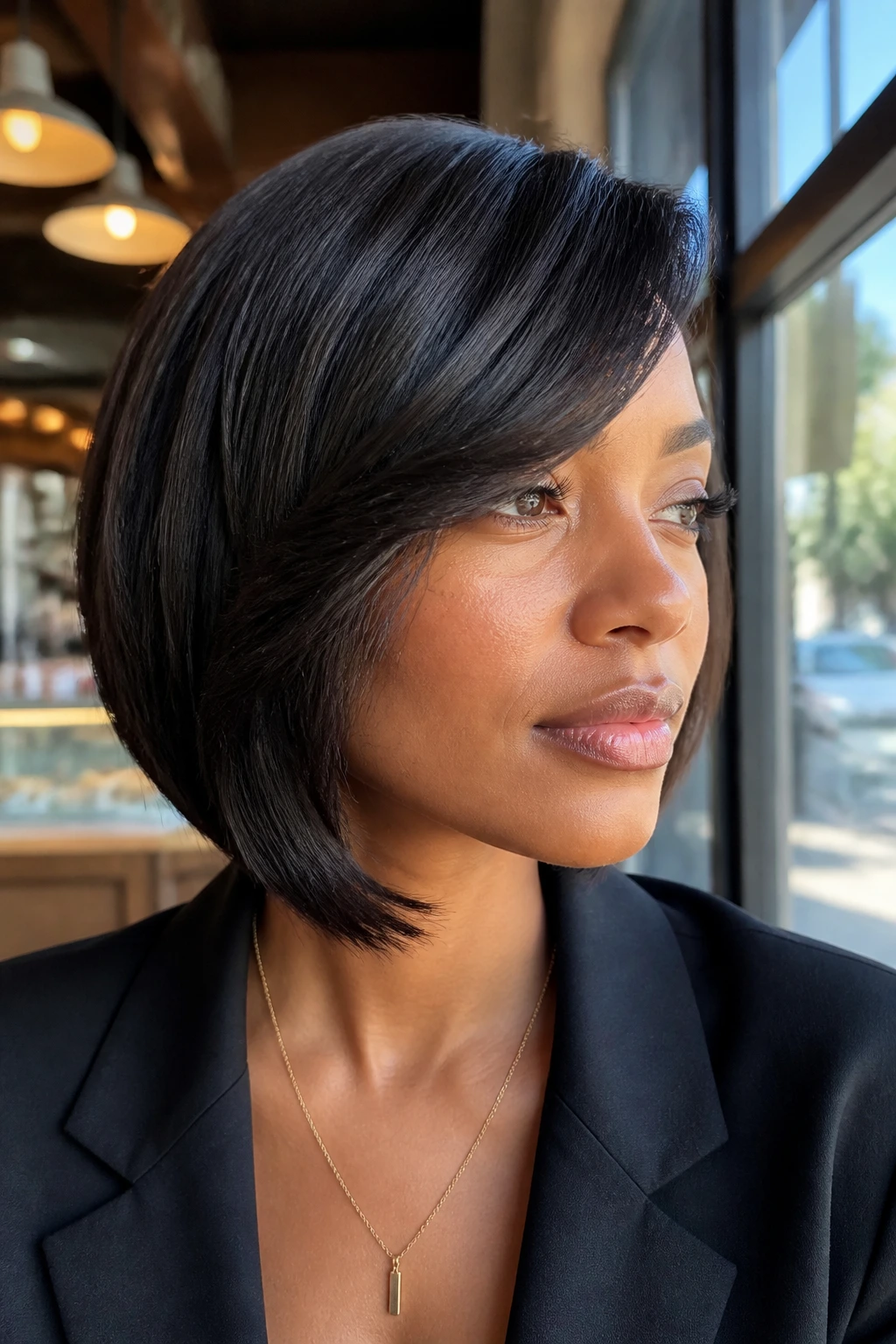
A side-swept bang can make fine hair look fuller at the front without covering the whole forehead. It pulls the eye diagonally, which is kinder than a blunt bang when the hair is delicate. It also gives the bob a little motion every time you move.
This style works because the bang adds visible density where people look first. The front section feels deliberate, and the rest of the cut can stay simple. On Black hair, the sweep can be soft and glossy, or a little textured if you prefer a less polished finish.
The maintenance is straightforward, but not optional. Bangs need shaping more often than the rest of the bob, and they lose their lift if they air-dry crooked. A small round brush or a flat brush used with a dryer nozzle makes a big difference. So does clipping the bang into place for a few minutes while it cools.
If your hairline is a little sparse at the temples, this cut can be especially kind.
16. Wet-Look Sleek Bob
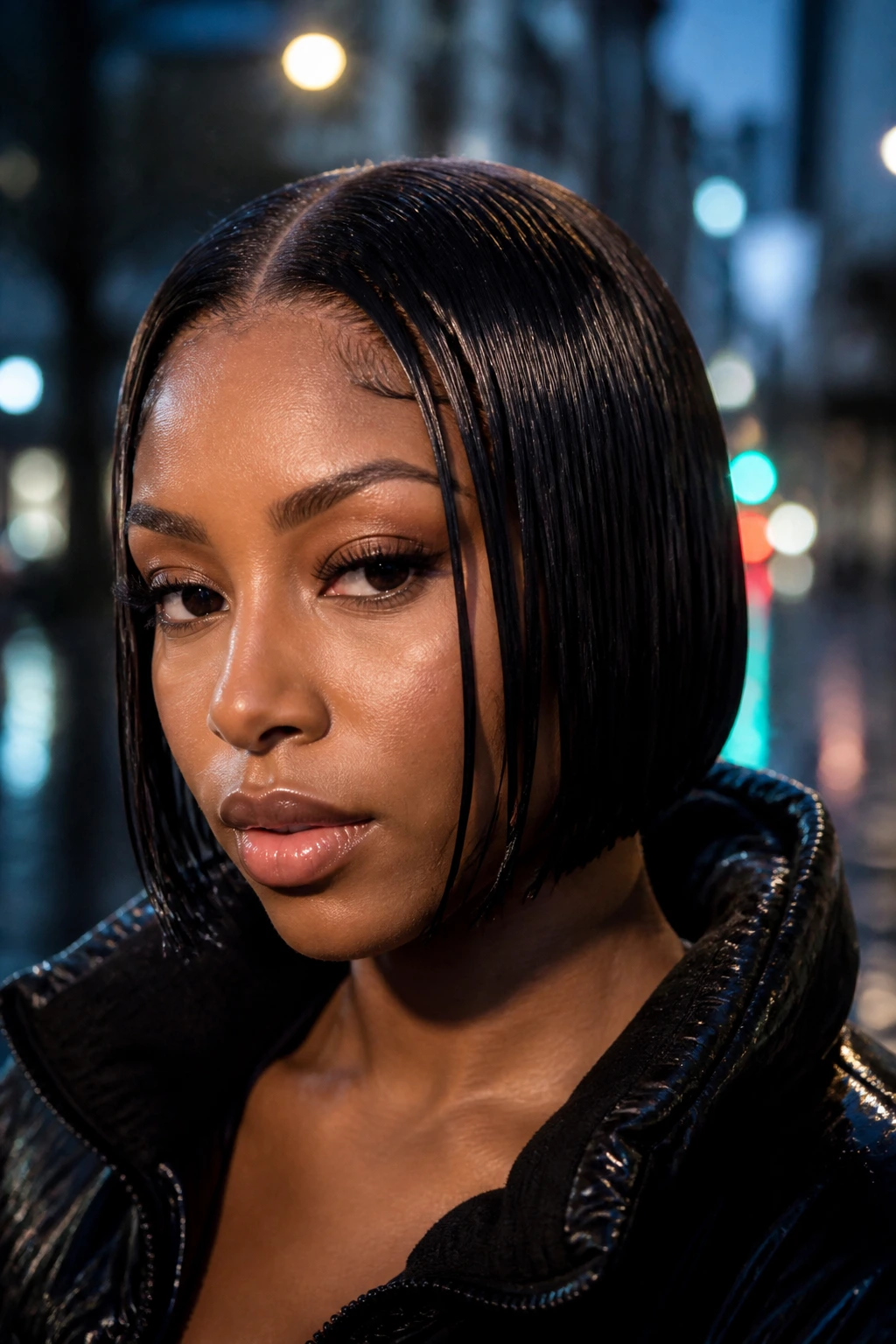
A wet-look bob sounds dramatic, but on fine hair it can be a clever move. The slick finish compresses the strands into a smooth shape, which makes the perimeter read thicker and the part look sharper. It also works well when your hair is in a phase where it refuses to hold bounce.
The style depends on product, but not a lot of product. Use a water-based gel or foam over damp hair, comb it through, and keep the application even. If you pile it on at the crown, the hair can dry in stiff clumps and lose the clean line that makes the look work. That is the trap.
What to watch for
- Keep the part precise
- Smooth the edges with a small brush, not your fingers
- Avoid heavy oils before the gel
- Let the hair dry fully before touching it again
This cut-and-style pairing is sharp on nights out and still manageable for everyday wear. It just needs discipline. The finish is the point.
17. Natural Coil Bob with Shape
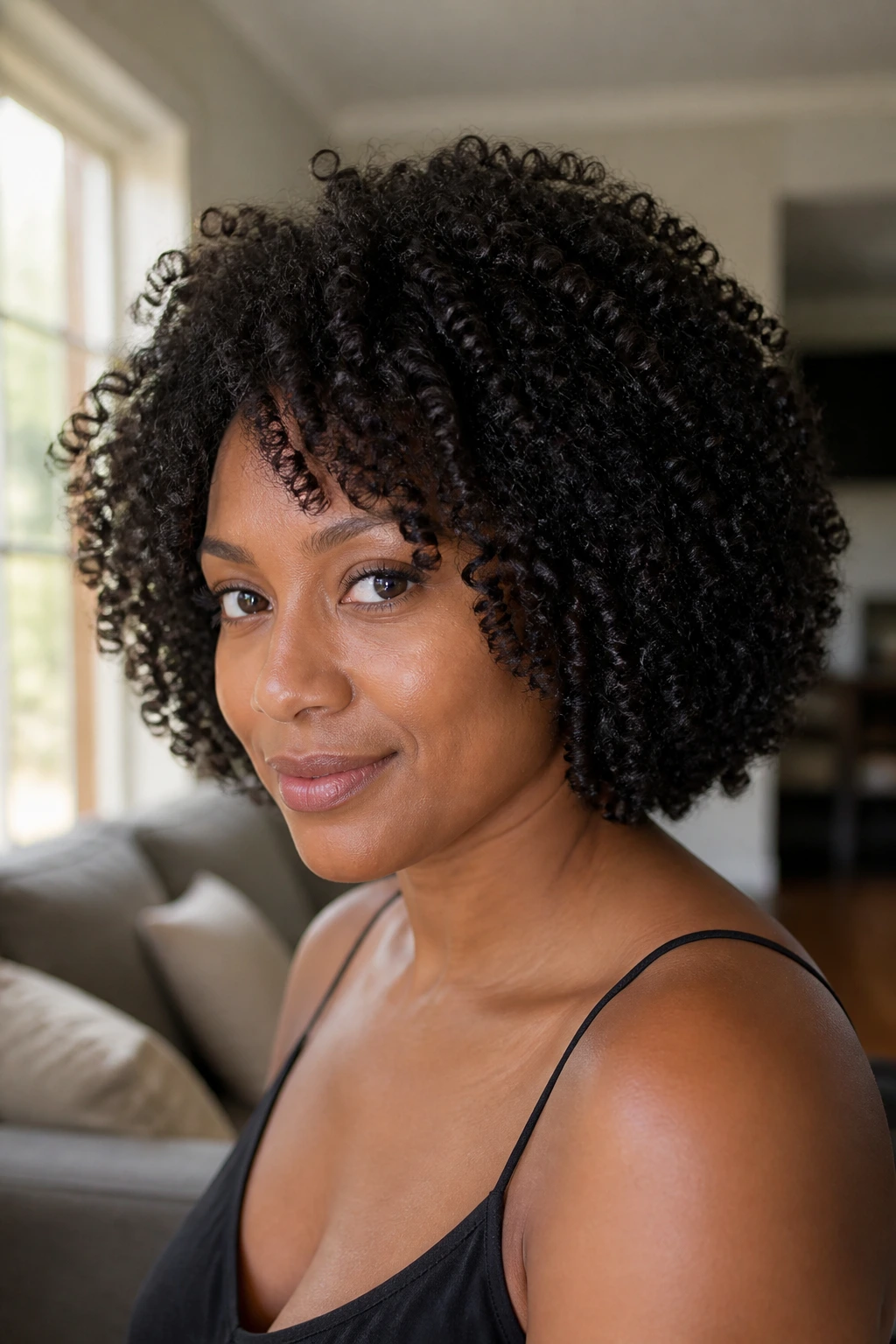
A natural coil bob can be one of the best looks for fine hair, as long as the cut respects shrinkage and the coil pattern. Tight texture does not automatically mean thick strands, and that’s where people go wrong. A bob that ignores shrinkage can end up too short once it dries.
The shape should be sculpted around where the curls actually sit. That might mean cutting on stretched hair, dry hair, or with the hair in its natural state, depending on how your coil pattern behaves. A rounded silhouette usually works well because it keeps the density concentrated instead of spreading it out.
You want the sides to frame the face and the back to hold enough length that the curl has room to spring. Lightweight cream, a little gel on the ends, and a diffuser on low heat can keep the bob defined without flattening it. Heavy butter is a common mistake here. It looks rich in the jar and sleepy on the head.
18. Tucked-Behind-Ear Bob with a Clean Side Part
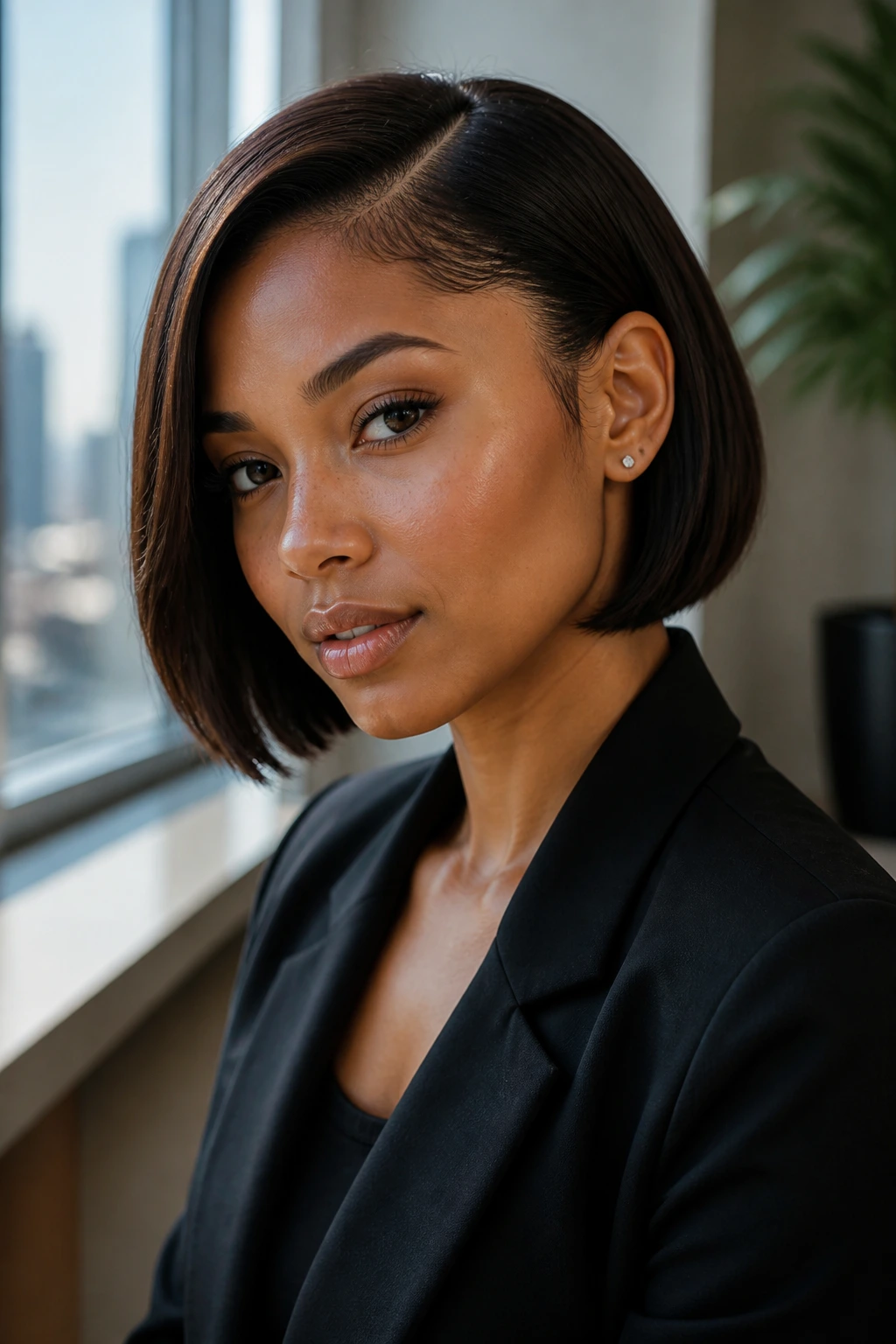
Tucking one side behind the ear is a small move that changes the whole haircut. It opens up the face, makes the opposite side look fuller, and gives a bob a cleaner shape around the cheekbone. On fine hair, that visual shift can matter more than another layer ever would.
Compared with a loose bob, this one feels sharper and more controlled. The side part gives the top a little lift, while the tuck exposes the ear and creates a break in the outline. That break keeps the style from looking heavy or boxy. It also shows off earrings, which is a nice bonus and not a tiny one.
This is a good look for women who want a bob that feels neat at work but still easy at home. You can wear it smooth, curled under, or softly waved. The tuck works in all three versions. Keep a little edge control near the side part if your hair frizzes at the temples.
19. Graduated Bob with Soft Back Weight
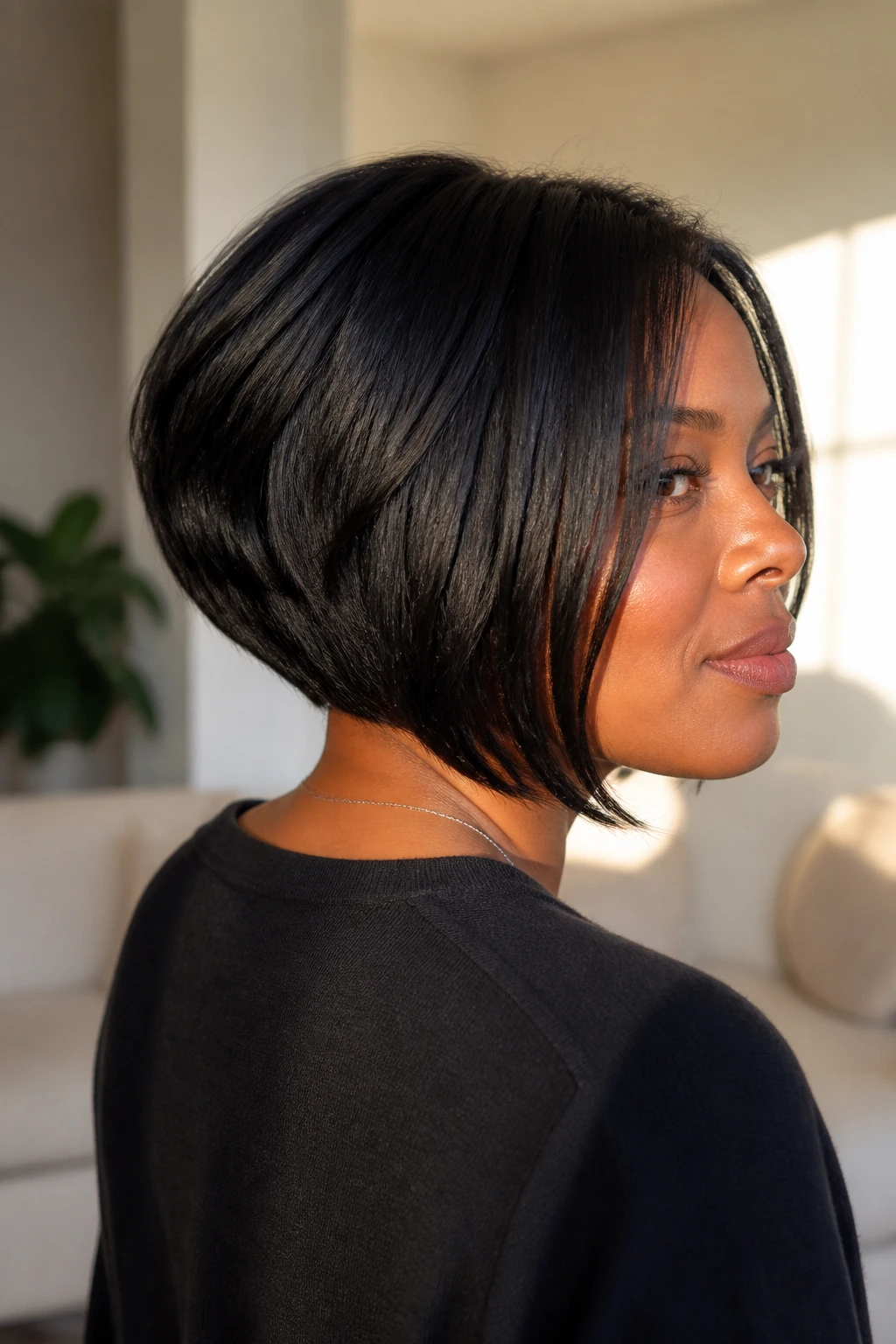
A graduated bob sits somewhere between stacked and blunt, and that middle ground is exactly why it works for fine hair. The back carries a little more weight, the front stays a touch longer, and the overall outline feels fuller without looking too layered. It’s a tidy cut with enough shape to matter.
The shape that keeps it from falling flat
Graduation creates a slow shift in length instead of a hard jump. That slow shift lets the hair settle into a rounded form, which is useful when the strands are soft and easy to press down. You get body at the back and movement at the sides, all while keeping a strong bottom line.
- Best when the crown needs lift
- Best on hair that loses shape quickly
- Best with regular trims to protect the roundness
- Best if you like a bob that looks good from behind
This style is underrated. It can look plain in a photo and much better in motion.
20. Lob-Length Black Bob for Fine Hair
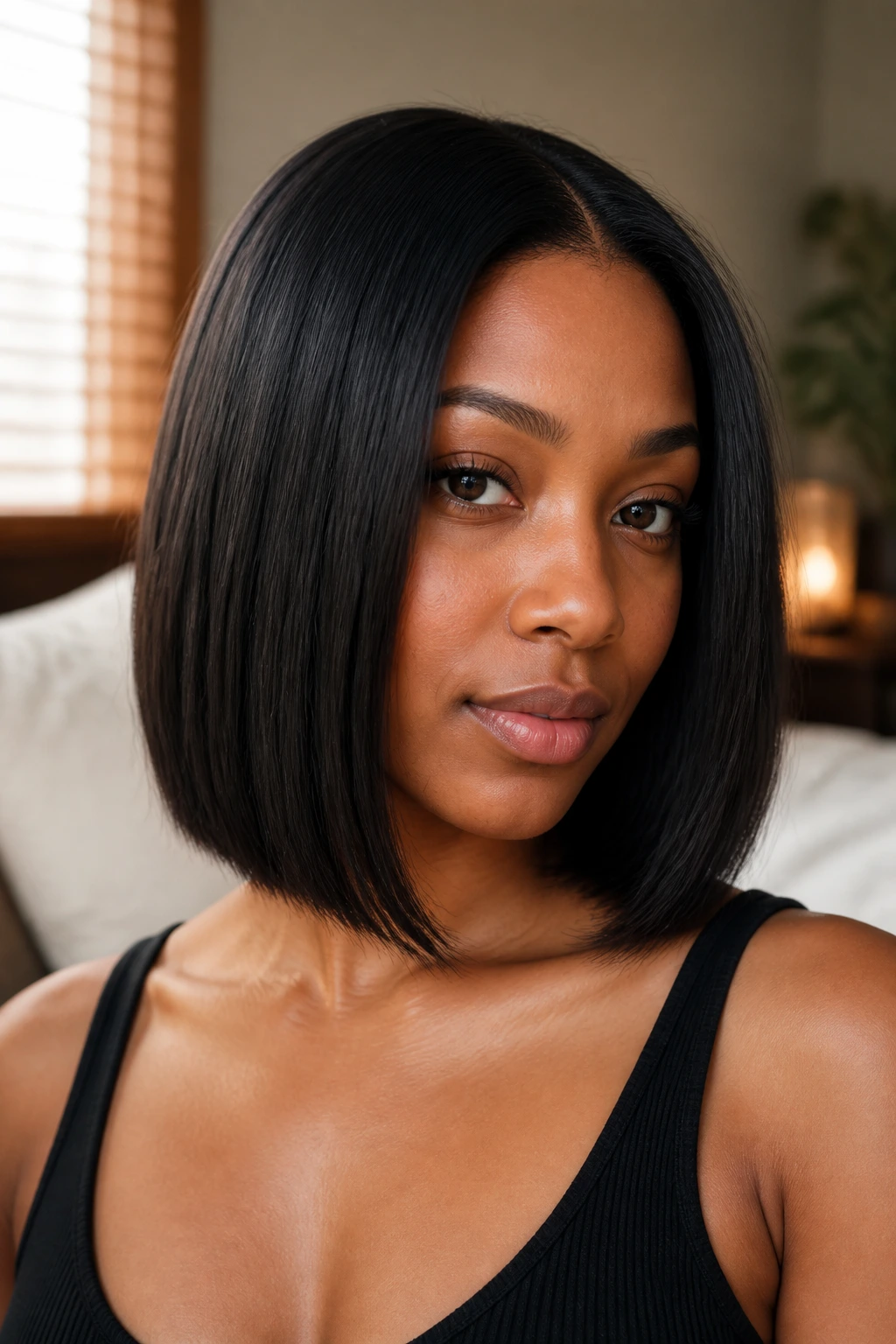
A lob-length black bob for fine hair is the safe bet when you want more length but refuse to give up body. Once a bob gets too long, fine strands start pulling themselves down. A collarbone-length lob avoids that problem better than most longer cuts.
The extra length gives you styling room. You can tuck it, wave it, curl it, or wear it sleek. Yet because it stops around the collarbone, it still has enough weight to hold together as a shape. That balance is the whole reason it works. Not magic. Just physics.
If your hair is fine but dense, this cut is especially useful because it can look full without feeling bulky. If your hair is fine and sparse, the blunt ends matter even more. Ask for a clean perimeter and only the smallest amount of layering near the face if you need movement.
A lob is also one of the easiest cuts to grow out. That matters more than people admit.
21. Twist-Out Bob with Controlled Volume
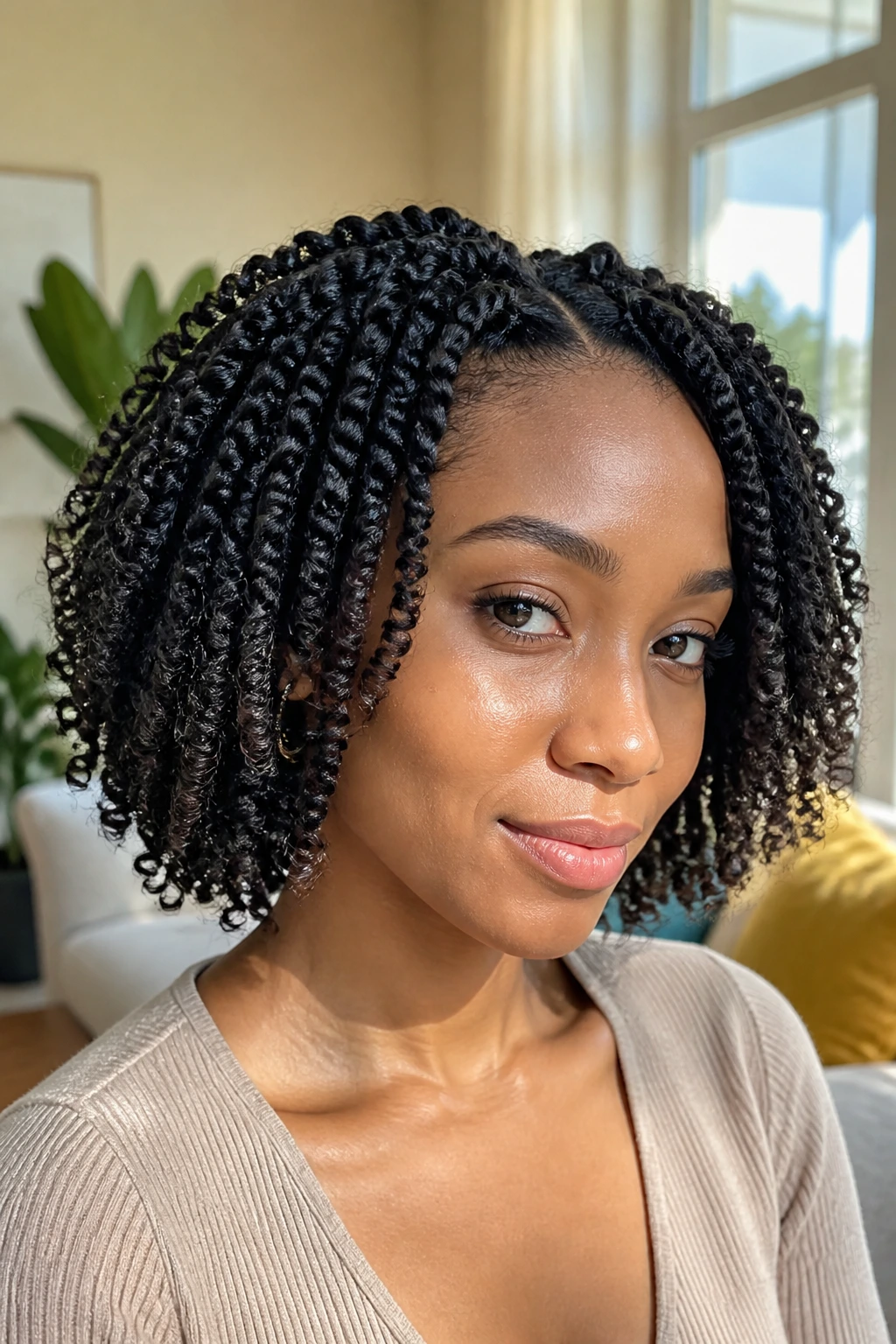
A twist-out bob is where natural texture gets to have a little fun. The twists create body, the bob length keeps the shape compact, and the whole style can look fuller than a straight version because the curls separate into soft ridges. It’s one of the better choices if your fine hair loves texture but not excess weight.
How to keep the shape neat
The twist size controls the finish. Smaller twists usually give more definition; larger twists give a looser, puffier result. On fine hair, medium sections tend to work best because they create body without turning the hair frizzy by day two.
- Use a lightweight leave-in before twisting
- Let the hair dry fully before unraveling
- Separate the twists gently with a tiny bit of oil on your fingertips
- Pin the sides down if the shape opens too wide
This style likes patience. If you take the twists out while the hair is still damp, the bob loses its clean shape fast. Wait for it to dry all the way. Seriously, that part matters.
22. Classic Center-Part Bob with Razor-Clean Ends
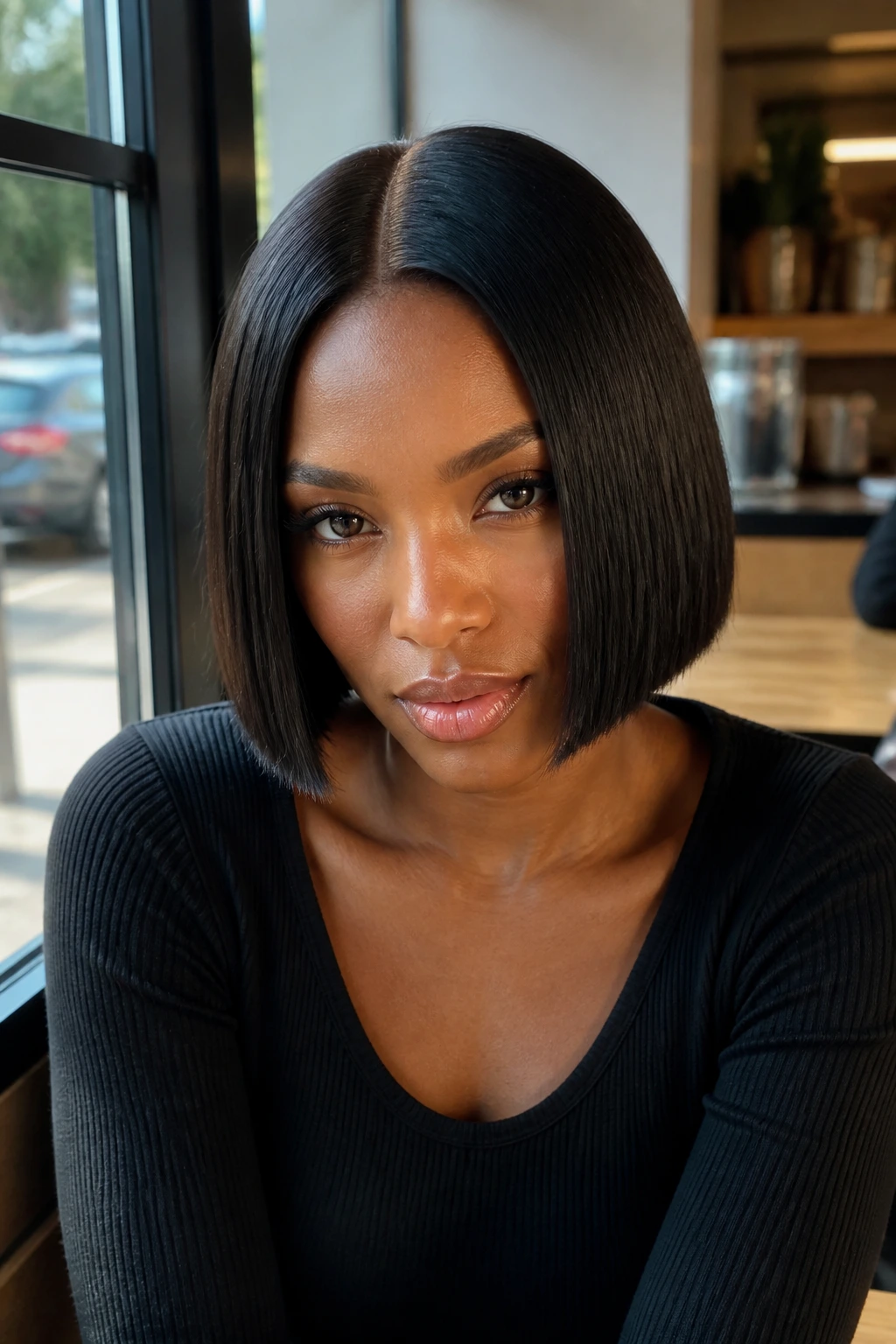
A center-part bob can be gorgeous on fine Black hair when the cut is disciplined. The part is honest. It exposes everything, which sounds harsh until you realize that a precise line can make delicate strands look much more intentional. The razor-clean ends help too, as long as they stay blunt rather than shredded.
This style works best when the hair is smooth enough to lie evenly on both sides. That does not mean bone-straight. It means controlled. A soft bend at the ends is fine, but the center part needs balance or the whole cut starts to drift. If one side feels heavier, the symmetry falls apart fast.
I like this bob for people who want a calm, minimal look with no extra fuss. It is not the most forgiving cut on a rough hair day, and I won’t pretend otherwise. But when it is shaped well, it has a clean, exact quality that fine hair can wear beautifully.
The blunt line is the whole point. Keep it sharp, keep it even, and the rest falls into place.
