



Fine hair and ash tones get along better than people think. A good bob can do more for limp strands than a drawer full of styling products, mostly because the cut changes the silhouette before you even touch a blow dryer. That’s the part a lot of people miss. They ask for more texture when what they really need is a stronger line, a better part, or a shape that doesn’t collapse by lunch.
Ash shades help too, but not in some magic, fairy-dust way. A cool beige, smoky blonde, mushroom brown, or soft silver-brown finish can make the cut look cleaner and more deliberate, which matters when each strand is doing a lot of visual work. Warm brassiness can make fine hair look more transparent at the ends. A cooler tone tends to read neater.
The real trick with ash bob haircuts for fine hair is choosing the right cut for the hair you actually have, not the hair you wish showed up after air-drying. Some versions need blunt edges. Some need soft layers. A few need a little lift at the crown and almost nothing else. Start with the shape first, then let the color support it.
1. Smoky Chin-Length Ash Bob for Fine Hair
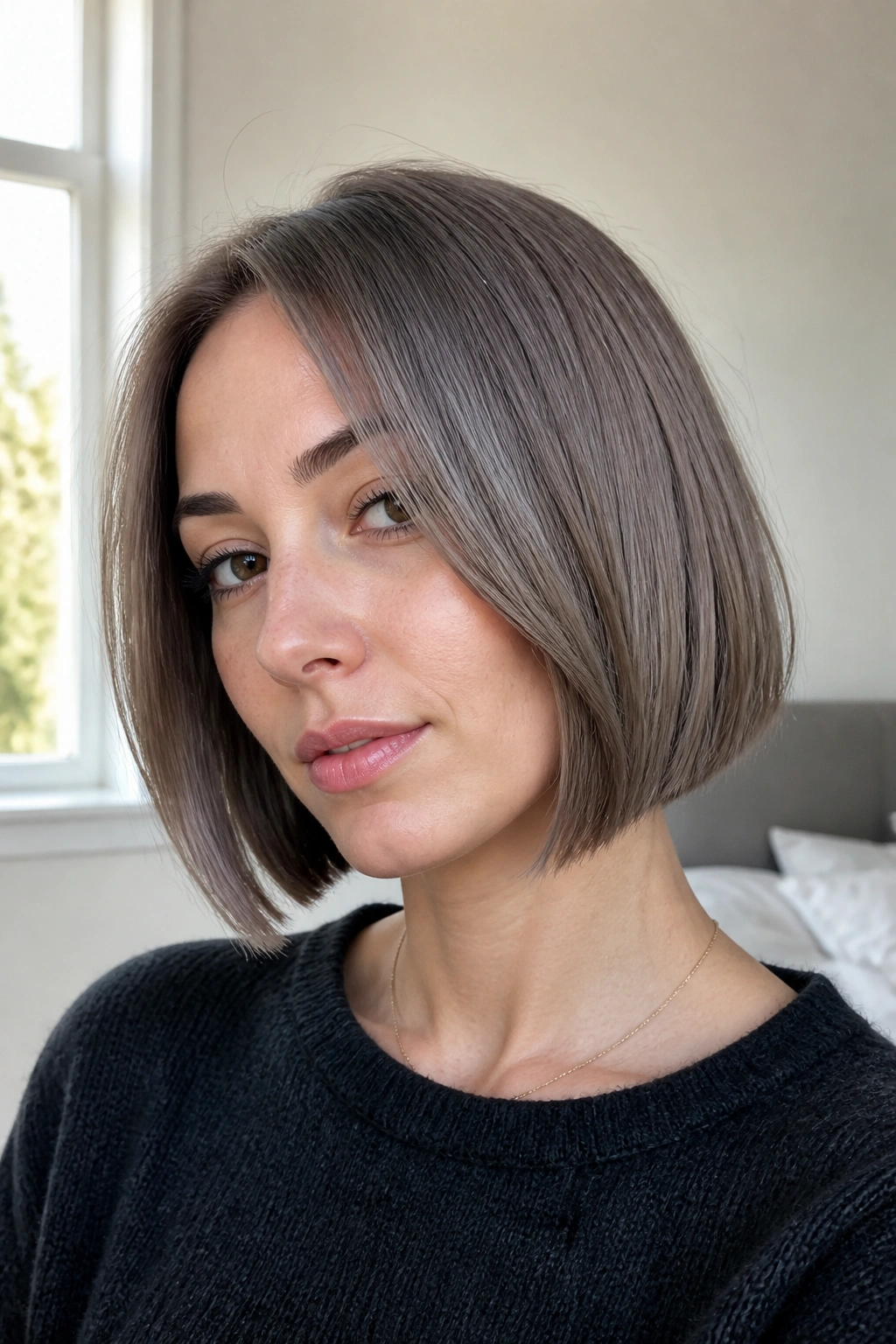
A chin-length bob is one of the easiest ways to make fine hair look fuller without overcomplicating the cut. The length sits high enough to keep the ends from looking stringy, and the ash tone keeps the shape looking crisp instead of soft and wispy. That matters more than people think.
Why It Works
- Chin length holds weight in the outline, so the perimeter looks denser.
- A slight bevel at the ends gives movement without breaking up the line.
- Cool ash shades help the ends read as one shape, not a see-through fringe of hair.
Ask for minimal internal layering and a blunt baseline that lands right at the chin or a hair below it. If your hair is naturally flat at the crown, this cut gives you a lot of payoff because it does not rely on volume everywhere. It relies on shape.
A small round brush and a pea-size amount of lightweight mousse are enough here. Blow dry the roots first, then curve the ends in just a touch. Too much flipping or too much layer and the whole look loses its strength. Keep it clean. That’s the point.
2. Soft Layered Ash Bob With a Side Part
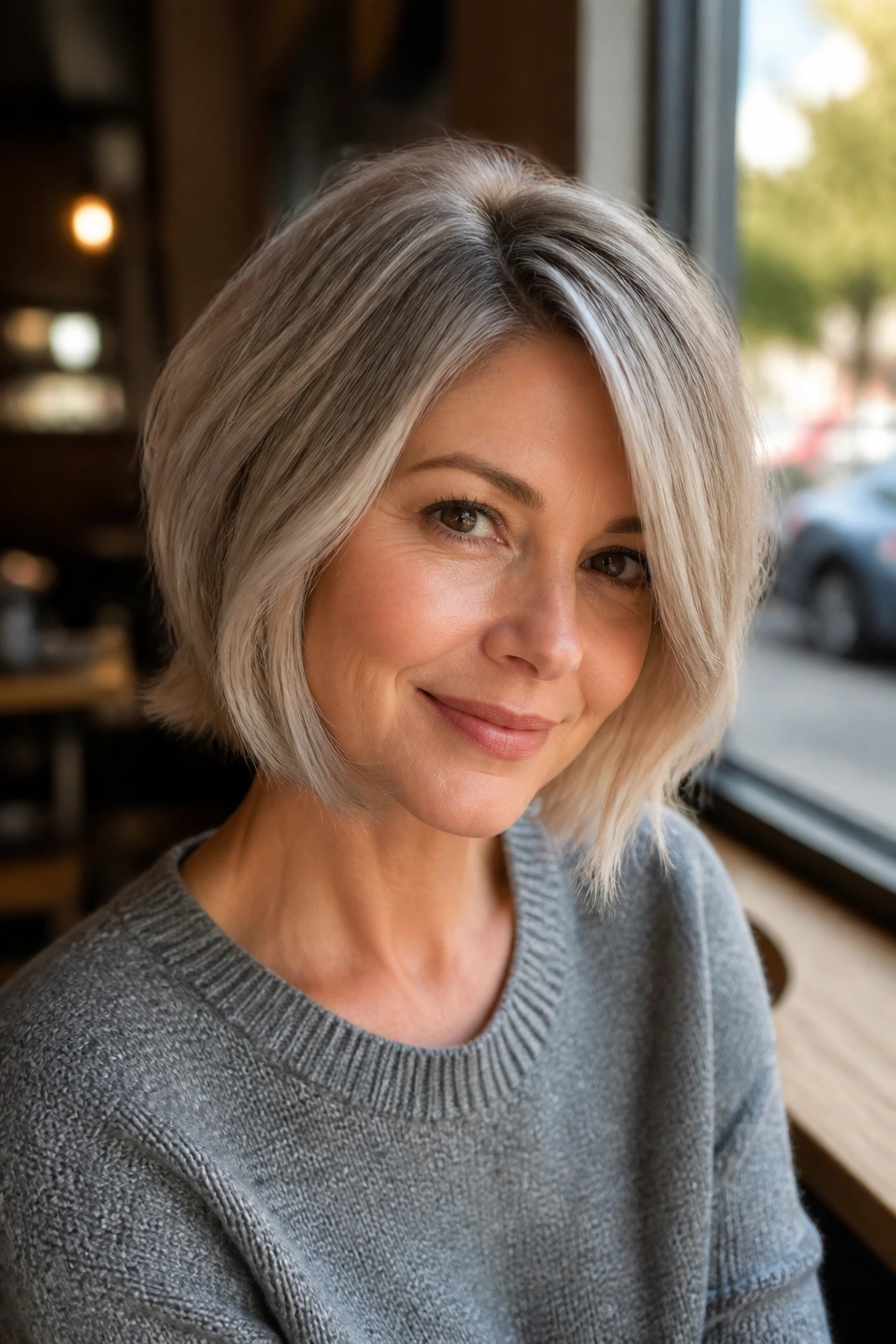
A side part can do more for fine hair than adding more layers ever will. It shifts the weight, lifts one side of the crown, and gives the style a little asymmetry so the cut looks fuller from the front. That small trick matters on days when your roots are already tired before you leave the house.
The layers in this bob should be long and soft, not chopped high into the crown. I like interior layers that start below the ear, because they let the hair move without exposing too much scalp at the top. The ash color keeps the texture looking airy; if the tone runs too warm, the shape can turn muddy fast.
Dry the hair with the part slightly deeper than usual and push the roots in the opposite direction for the first few minutes. Then settle the part where you want it. A little root spray and a light brush-through are enough. Heavy cream? Skip it. It will flatten the whole thing before noon.
3. Ash French Bob With Micro Fringe
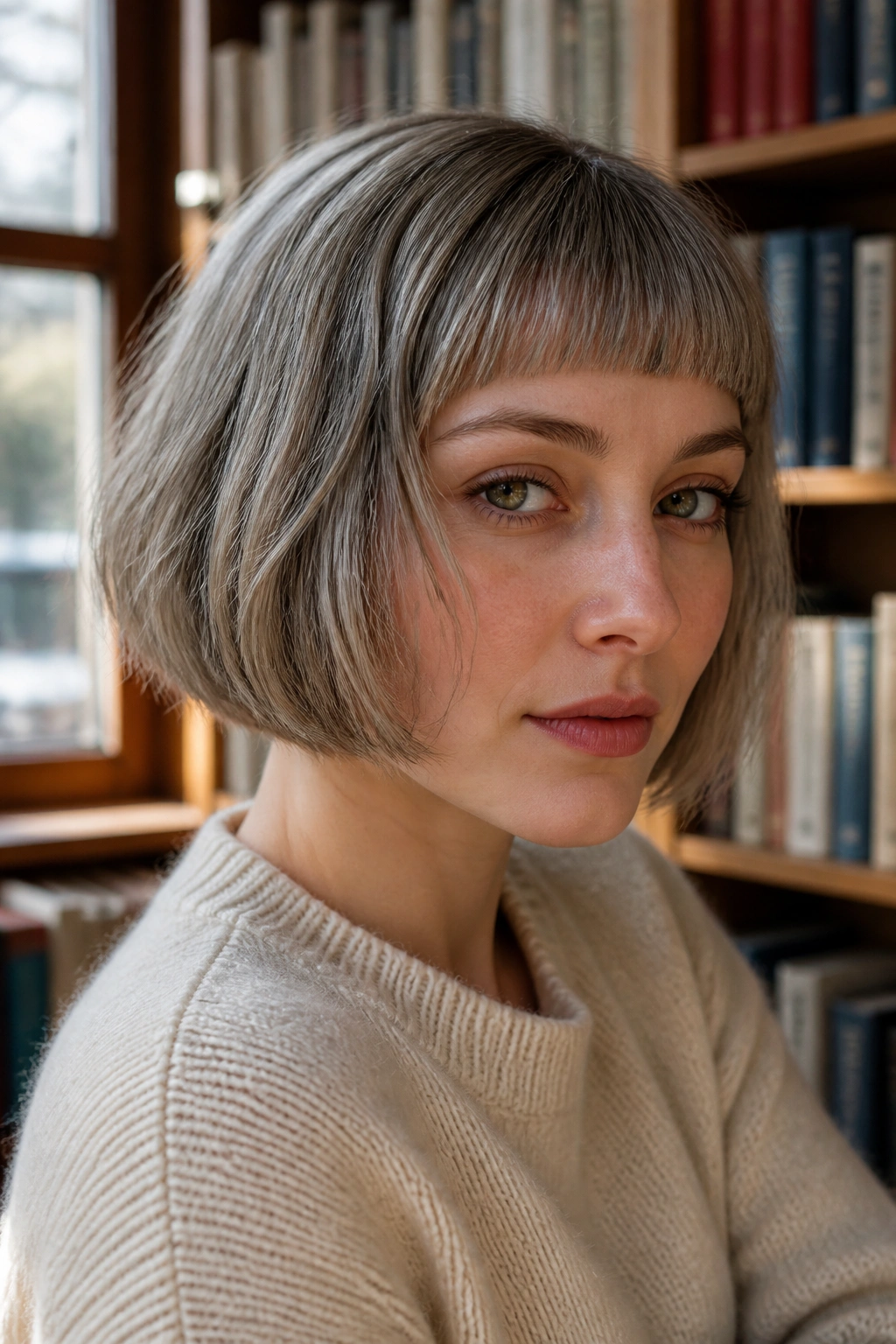
Why does the French bob keep showing up for fine hair? Because it’s one of the few short cuts that looks intentional even when the hair itself is soft and delicate. The micro fringe gives the eye a place to land, while the short, cheekbone-grazing shape keeps the ends from disappearing.
This version works best when the fringe is soft rather than blunt like a ruler. A tiny bit of texture in the bangs keeps the forehead area from feeling heavy, and the ash tone helps the whole cut stay modern instead of cutesy. If the color is too warm, the short fringe can look a little nursery-school. Not the vibe.
How to Style It
- Use a light styling cream on damp hair, only from mid-lengths down.
- Rough-dry the fringe first, then smooth it with a small round brush.
- If the front wants to split, mist a soft-hold spray on a clean toothbrush and guide the hairs into place.
This cut is sharp. It can be brilliant on fine hair, but it does ask for regular trims so the fringe does not grow into your eyes and muddy the line.
4. Sleek Blunt Ash Bob
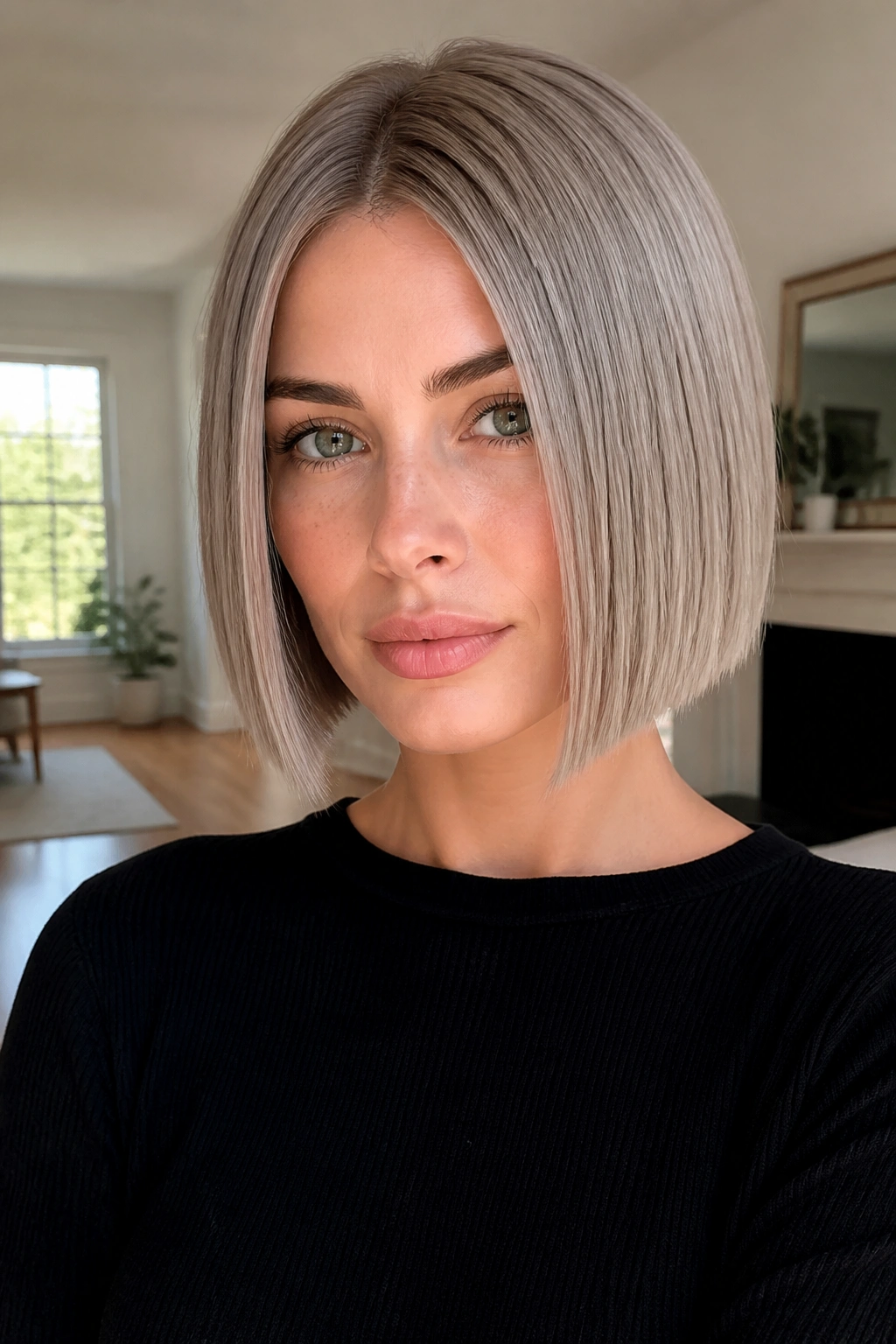
A blunt bob is the haircut version of a strong outline on a drawing. It makes fine hair look thicker by keeping every end in the same place. No wispy edge, no broken line, no apology. Just shape.
The best blunt ash bob usually sits somewhere between the jaw and just below the chin. Shorter than that can start to feel severe. Longer than that can lose the visual density that makes the cut work so well in the first place. The ash color should stay soft and cool, not icy gray and not dull brown. Smoky beige is often the sweet spot.
- Keep the ends blunt, not razor-thinned.
- Use heat protectant before any flat-ironing.
- Blow dry with a paddle brush for a smooth surface.
- Finish with a tiny amount of shine serum on the ends only.
This one is especially good if your hair gets puffy at the bottom but thin at the tips. The blunt edge counteracts both problems at once. Frankly, it’s one of the least fussy ash bob haircuts for fine hair if you want something that looks polished without needing a salon blowout every day.
5. Wavy Collarbone Ash Lob
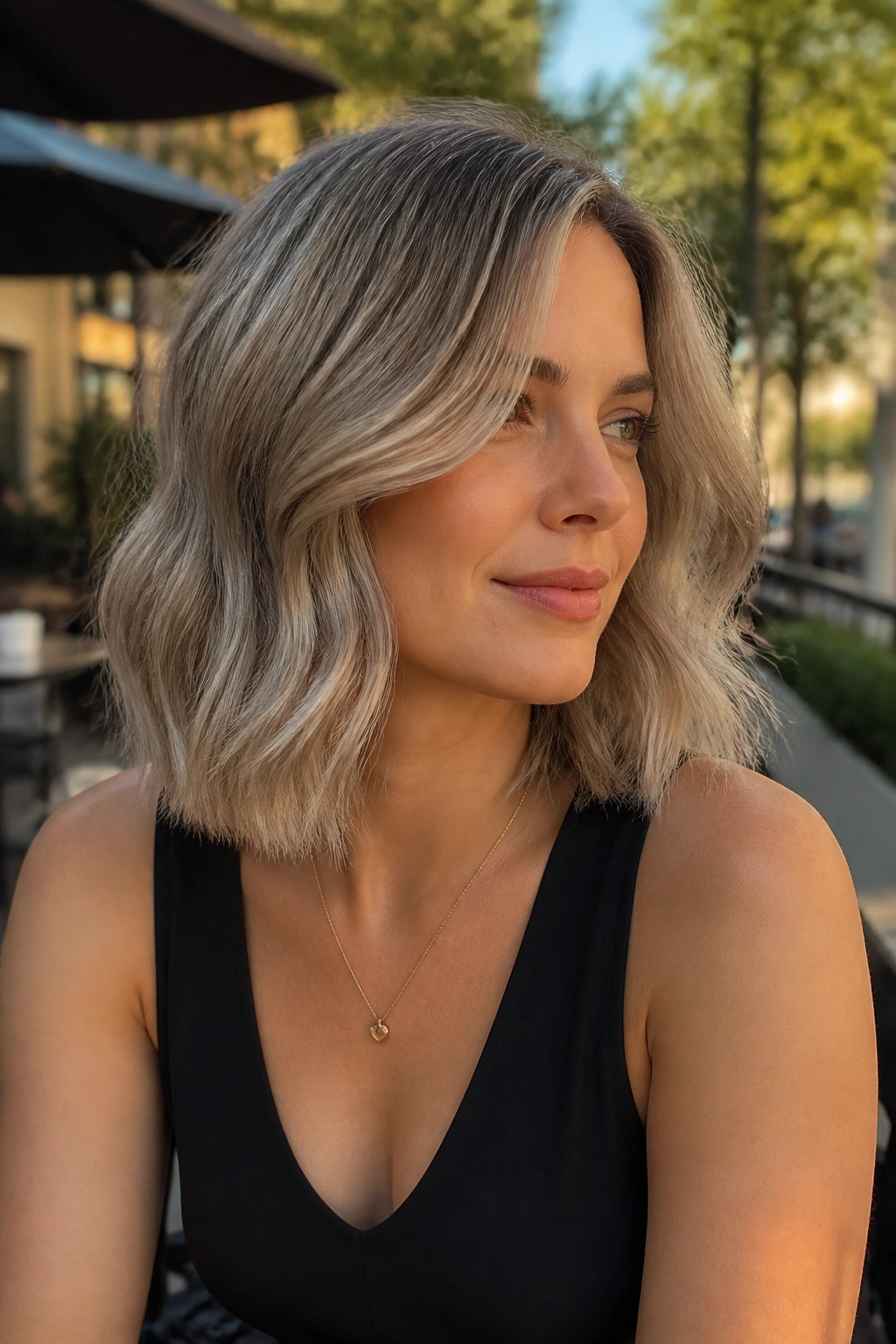
A collarbone-length lob gives fine hair a little more room to move without dragging it into the shoulder trap. That’s the awkward zone where hair starts flipping out, catching on sweaters, and looking thinner than it really is. Keeping the length at the collarbone solves a lot of that in one shot.
The ash tone matters here because a longer cut can start to look heavy if the color is too warm or too dark. A cool brown, beige ash, or mushroom-blonde finish keeps the shape lighter to the eye. I like this cut when the hair has a gentle bend already, because it means you can work with texture instead of fighting it.
Use a 1.25-inch or 1.5-inch curling iron and wrap only the mid-lengths, leaving the last inch straight. That small detail keeps the bend modern instead of pageant-y. A little mousse at the roots and a flexible spray at the finish are usually enough. This is the cut I suggest when someone wants movement but still wants to tuck hair behind the ears and tie it back on lazy days.
6. Choppy Ash Bob With Curtain Bangs
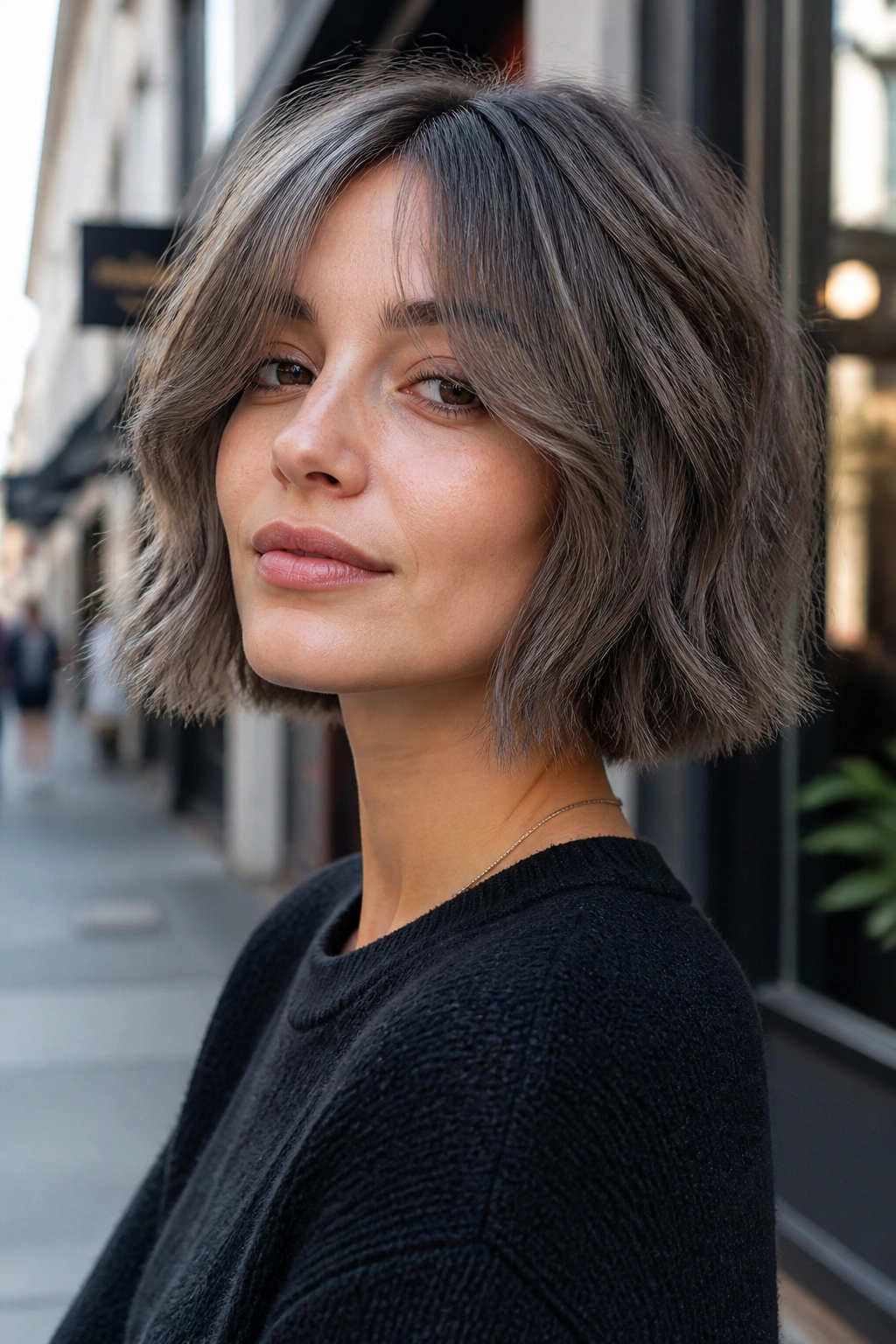
Unlike a blunt bob, this version leans on separation and softness. The choppy ends stop fine hair from looking too static, while curtain bangs give the front some shape without the commitment of a dense fringe. If your hair has a slight wave, this cut can look like it was styled on purpose even when it dried in a hurry.
The important part is restraint. The bangs should begin around the cheekbone, not halfway up the forehead, and the ends should be point-cut so they move instead of hanging like little shelves. Too much choppiness can backfire on very fine hair, because the outline starts to look thin. A little texture goes a long way.
This one suits people who like a more relaxed finish and do not want to spend 20 minutes smoothing every strand. Ask for soft, broken-up ends and a fringe that can split in the middle without looking empty. It’s casual, but not sloppy. There’s a difference.
7. Rounded Ash Bob With Tucked Ends
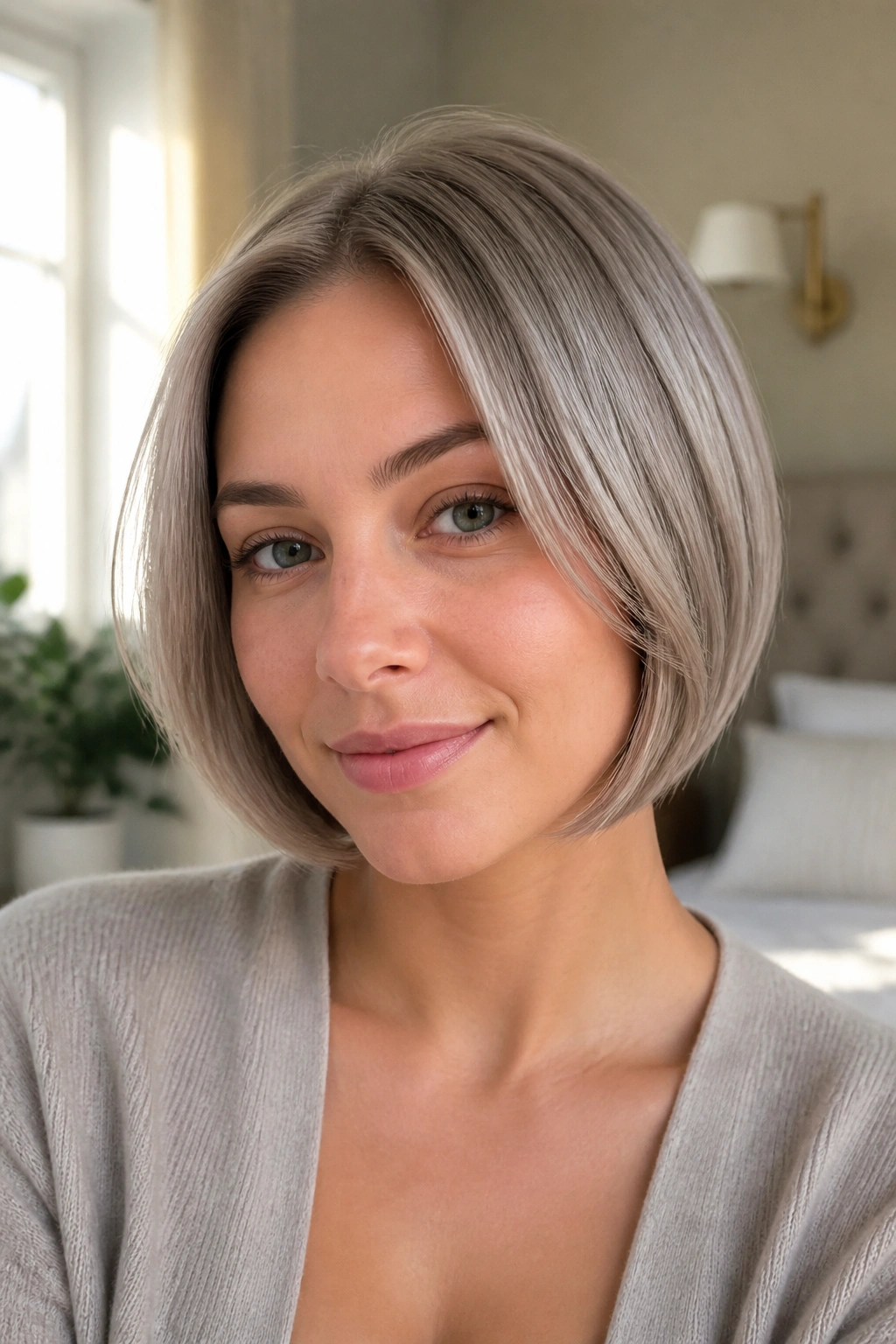
A rounded bob fixes the triangle effect that fine hair can get when the sides stick out but the ends look narrow. The curve hugs the jawline, so the haircut reads fuller in the middle and neater at the bottom. That shape can be a lifesaver if your hair flips out in odd directions.
The Shape Problem It Solves
A lot of fine hair has enough movement to puff at the sides but not enough density to keep the ends steady. Rounded bobs solve that by steering the hair inward. The result is softer around the face and less fragile-looking at the perimeter.
- Ask for light graduation in the back, not a stack that lifts too high.
- Tuck the ends under with a medium round brush while blow-drying.
- Keep the ash tone soft so the curve reads smooth, not helmet-like.
- Avoid heavy texturizing at the very ends.
This is one of those haircuts that looks simple but takes a careful hand. If the curve is too dramatic, it starts to feel old-fashioned. If it’s too flat, the shape disappears. The sweet spot is a gentle tuck, almost like the hair has settled into place on its own.
8. Inverted Ash Bob With Lifted Nape
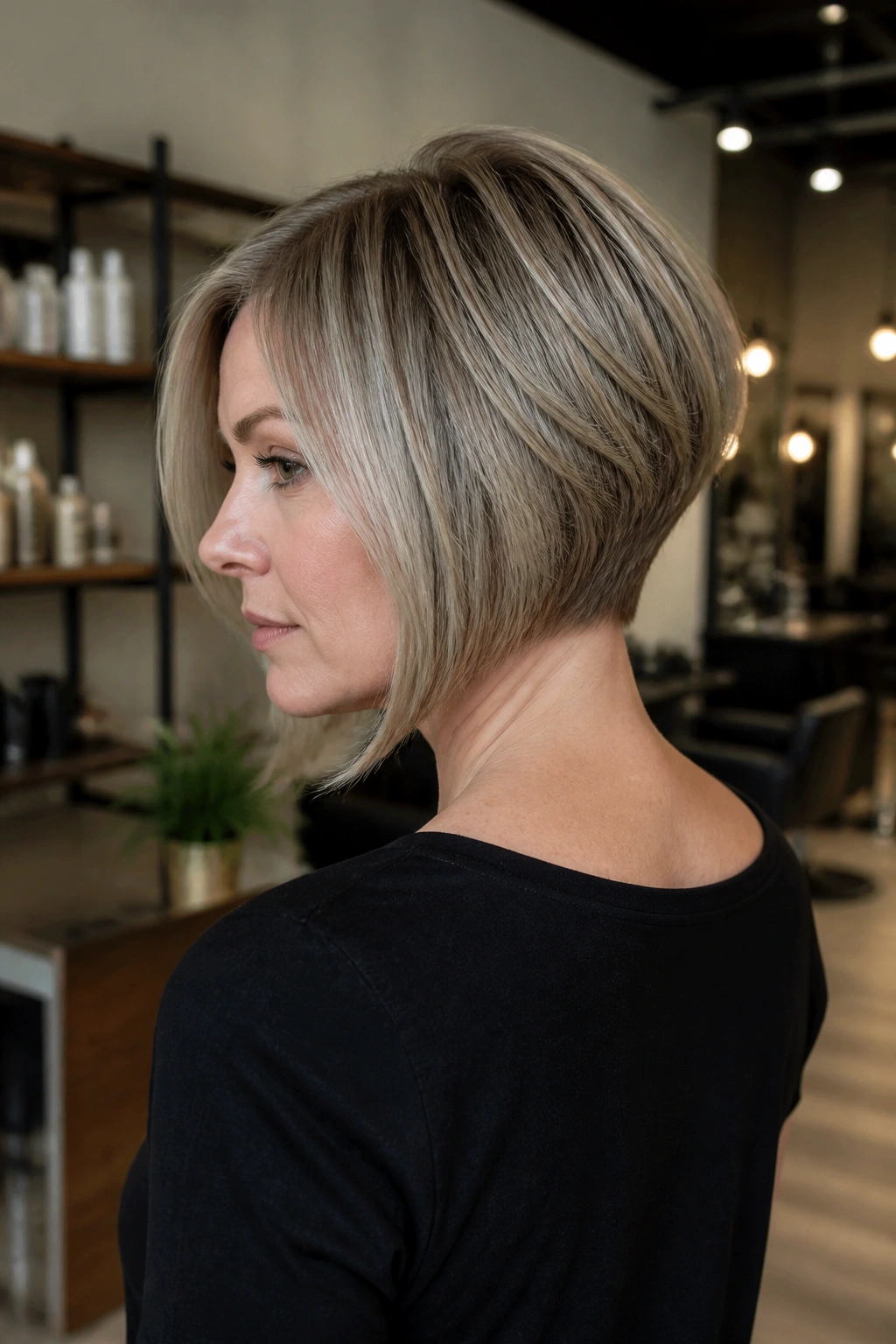
This is the sharpest way to fake density without asking the hair to do extra work. A slightly shorter back gives the crown a natural lift, and the longer front pieces create a clean angle that makes fine hair look more deliberate. You get shape from the cut itself, not from a bucket of product.
The inversion should stay gentle. I’m not a fan of dramatic wedges on fine hair because the contrast can expose the thinning spots you were trying to hide. A difference of about 1 to 1.5 inches between the back and front is usually enough. More than that can turn the whole thing into a geometry project.
Use a root-lifting spray at the crown and direct the blow dryer upward at the back while the hair is still damp. That gives the nape a little push without teasing. If the hair is especially straight, clip the top section up while the back cools. Small move. Big payoff.
9. Razored Ash Bob With Airy Ends
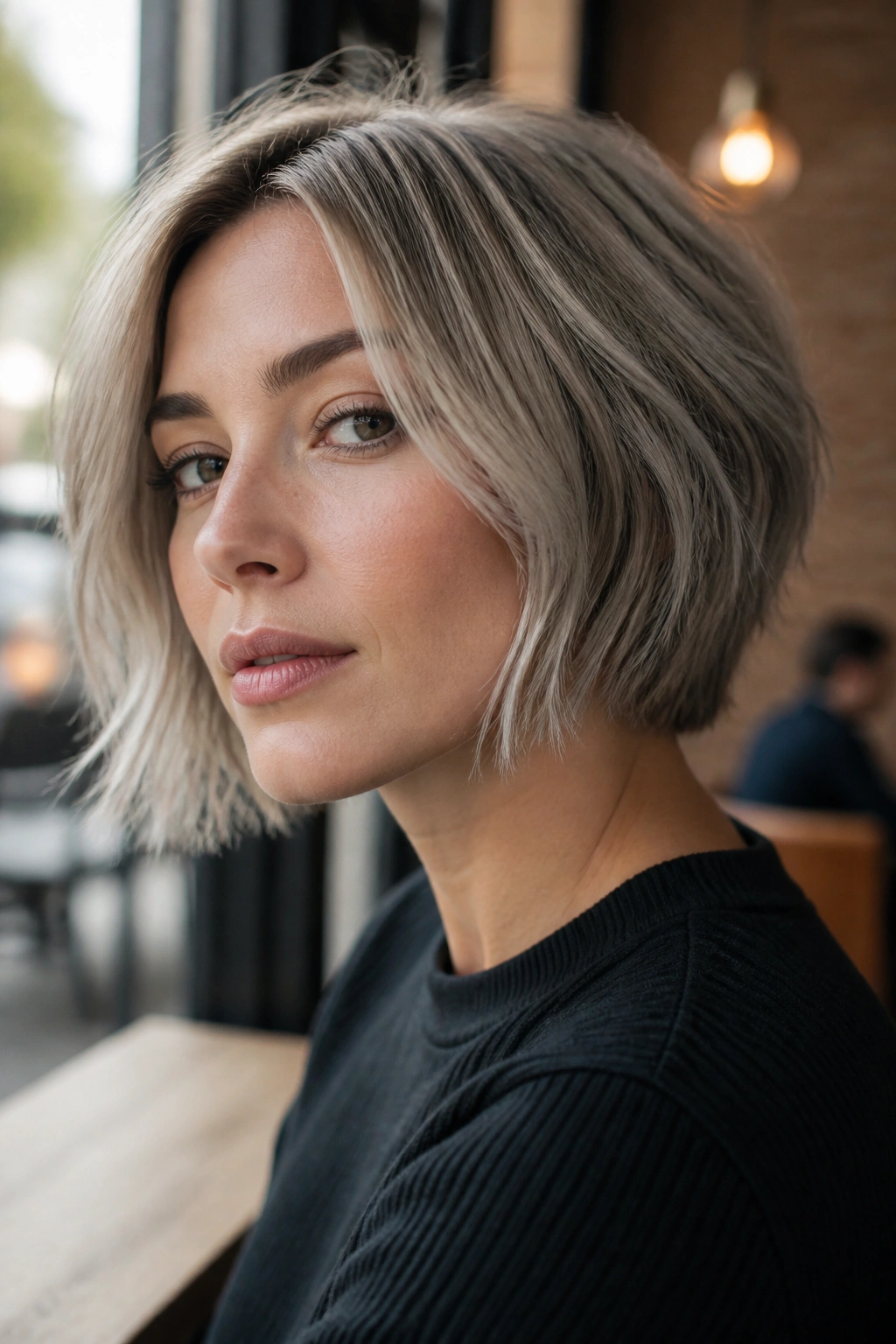
Can a razor help fine hair? Yes — but only if it’s used lightly and on the right head of hair. A razor can soften a bob and create movement, yet it can also leave the ends see-through if the stylist gets carried away. That’s the line to watch.
This cut works best when the hair is fine but still has decent density. The razor should graze the perimeter, not shred it. I prefer a soft, airy edge around the front and temples, with the back left a bit stronger so the whole style does not collapse. Ash color supports the feel too, especially when it’s a smoky blonde or cool brown that doesn’t show every frayed end.
How to Use It
- Pair it with lightweight mousse, not thick cream.
- Ask for point cutting in the weakest areas instead of heavy razor work.
- Dry with fingers first, then finish with a small round brush where you need lift.
- Skip aggressive texturizing on dry, brittle ends.
This bob is a smart choice if your hair already has some movement and you want the cut to breathe a little. It is not the one I’d pick for fragile, split-prone ends. Those need structure more than they need softness.
10. Deep Side-Part Ash Bob
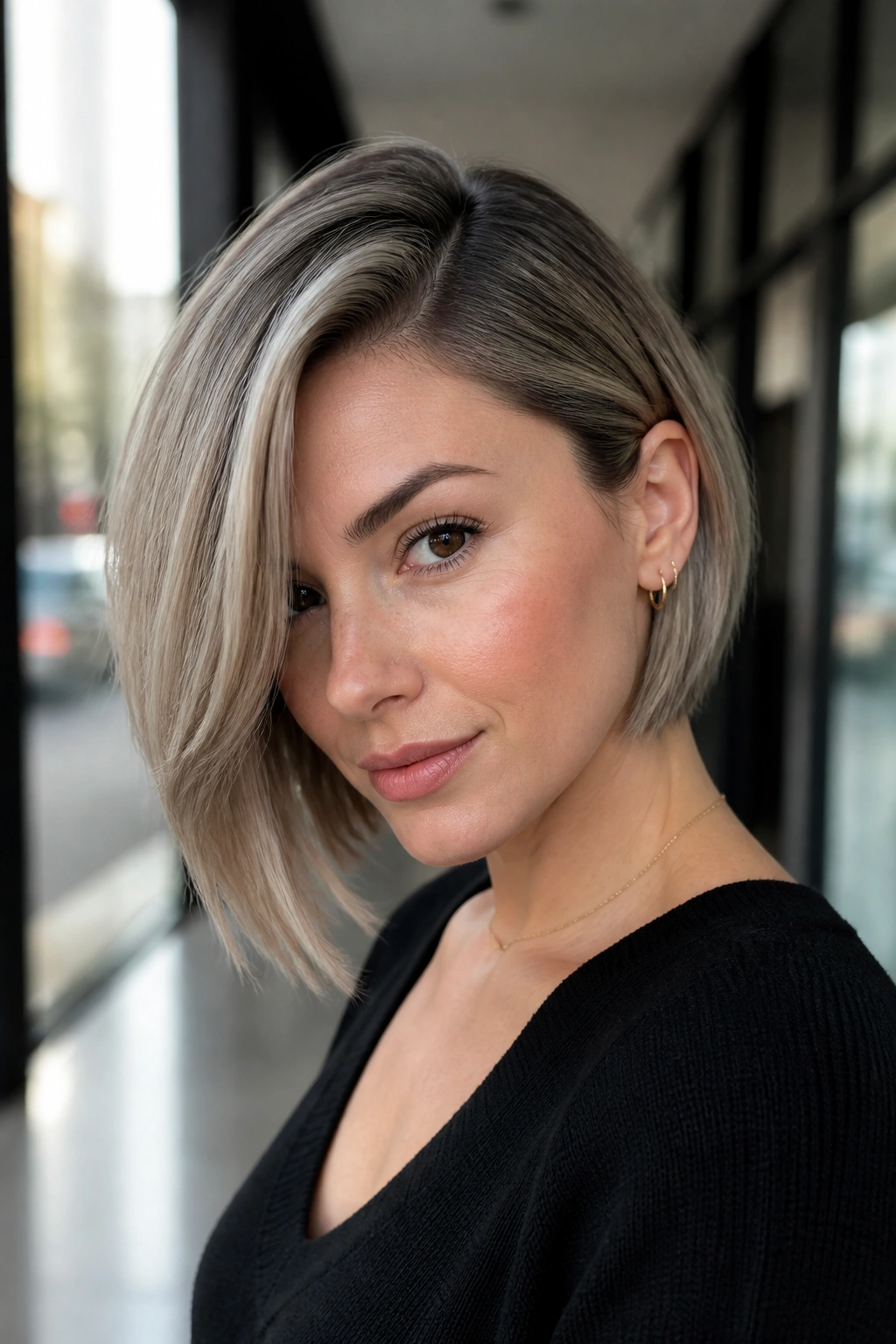
When one side of your hair always falls flatter, a deep side part stops you from fighting it. The part shifts the visual weight, gives the crown some height, and makes the bob look fuller at the top without changing the length at all. That is a useful trick, not a gimmick.
The shape itself can be blunt, slightly layered, or a little rounded. What matters most is where the hair is allowed to sit. If the part lands about two to three inches off center, the heavier side frames the face while the lighter side lifts away. On fine hair, that asymmetry can do a lot of quiet work.
- Blow-dry the roots against their natural direction first.
- Clip the heavier side away while it cools.
- Use a flexible-hold spray at the crown, not a crunchy one.
- Keep the ash tone clean so the lift looks crisp.
I like this cut for people who want a low-effort change without losing length. It can make a bob look like it suddenly has more body, and there’s no special trick beyond placing the part where the hair wants to move.
11. Tousled Ash Bob With Wispy Bangs
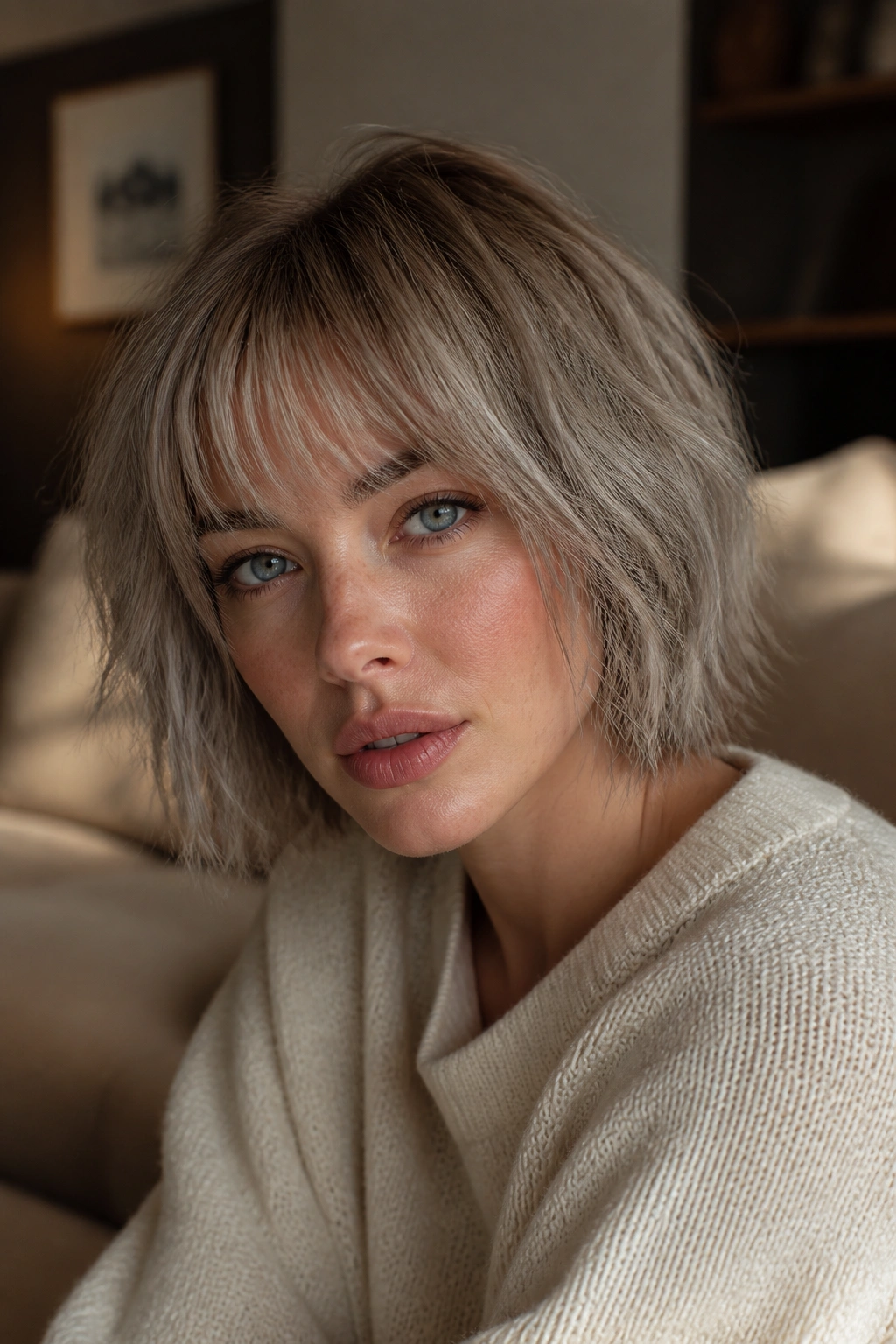
There’s a sweet spot between polished and messy, and this bob lives right there. The tousled texture keeps fine hair from lying too close to the head, while the wispy bangs soften the face and stop the cut from feeling too hard around the forehead. It’s relaxed, but not unkempt.
The bangs matter most. They should be narrow enough to stay light and airy, but not so sparse that they look broken up. If the front tends to separate, a touch of root mousse can keep the fringe from splitting into three sad pieces. That happens more often than people admit.
I like this cut on hair that has a little natural wave or bend, because the texture gives the bob some life without needing a curl pattern that fights all day. Use a lightweight cream or foam on damp hair, then scrunch just enough to encourage movement. Overworking it is the fastest way to make fine hair look stringy. Leave a little imperfection in there. It helps.
12. Stacked Ash Bob With Crown Height
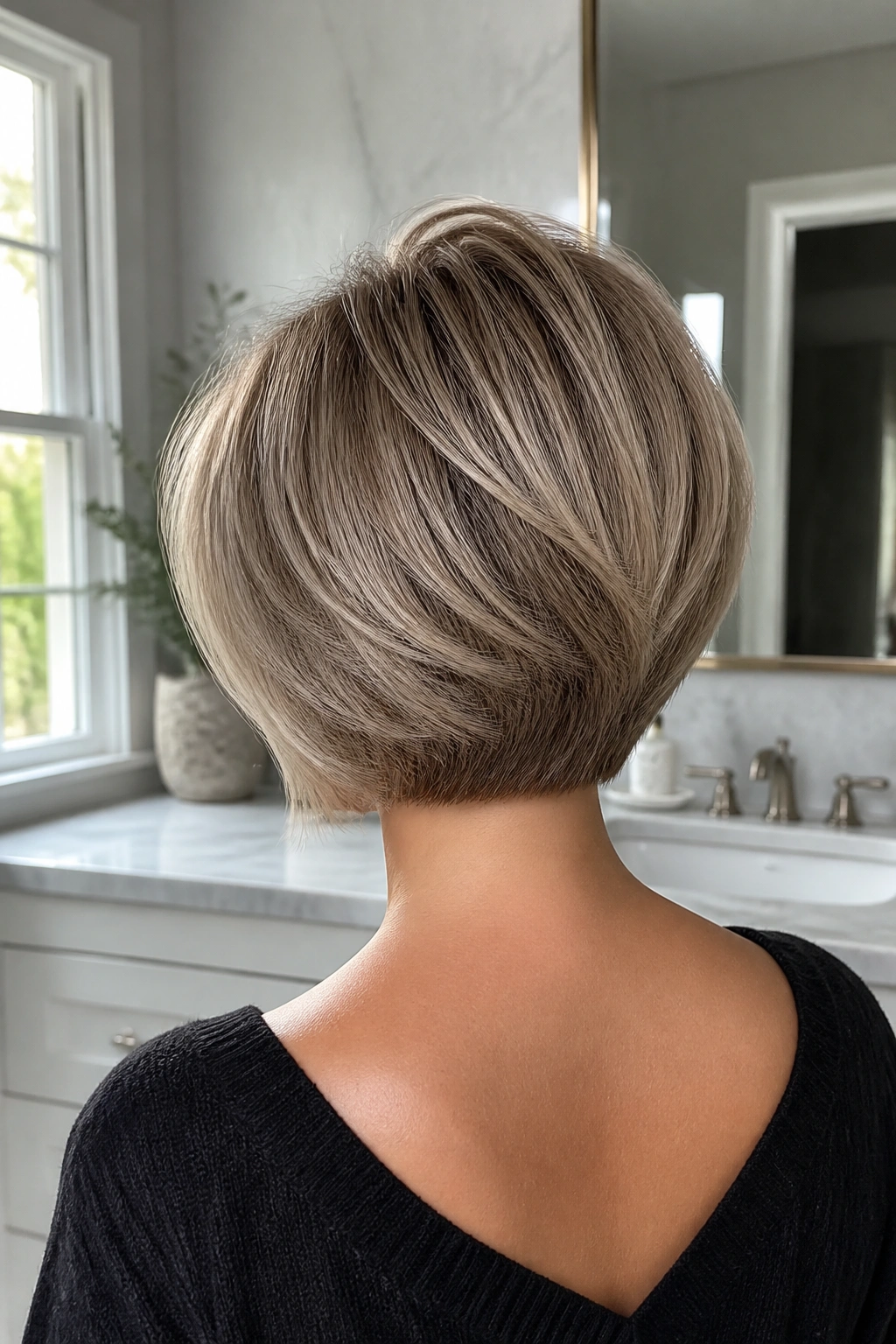
A stacked bob is the one to reach for when the crown goes flat no matter what you do. The short, layered back creates built-in lift, and the longer top section gives the haircut shape without stealing all the density from the ends. On fine hair, that matters a lot.
Unlike a rounded bob, which keeps the curve soft, the stacked version uses visible graduation to build height at the nape. That can be a great move if you want the silhouette to look fuller from the side. The catch is that the stack has to stay subtle. Too much graduation and the crown can look hollow.
What to Ask For
- Keep the stack low and soft, not steep.
- Leave enough length on top so the layers don’t poke through.
- Use root spray only at the crown, not all over.
- Dry the back first so the shape sets in place.
This cut is best for straight to slightly wavy hair that needs help holding a shape. If your hair is very curly, the back can spring up more than you expect. That can be fun, or it can be a headache. Depends on how much time you want to spend on it.
13. Center-Part Ash Bob With a Clean Line
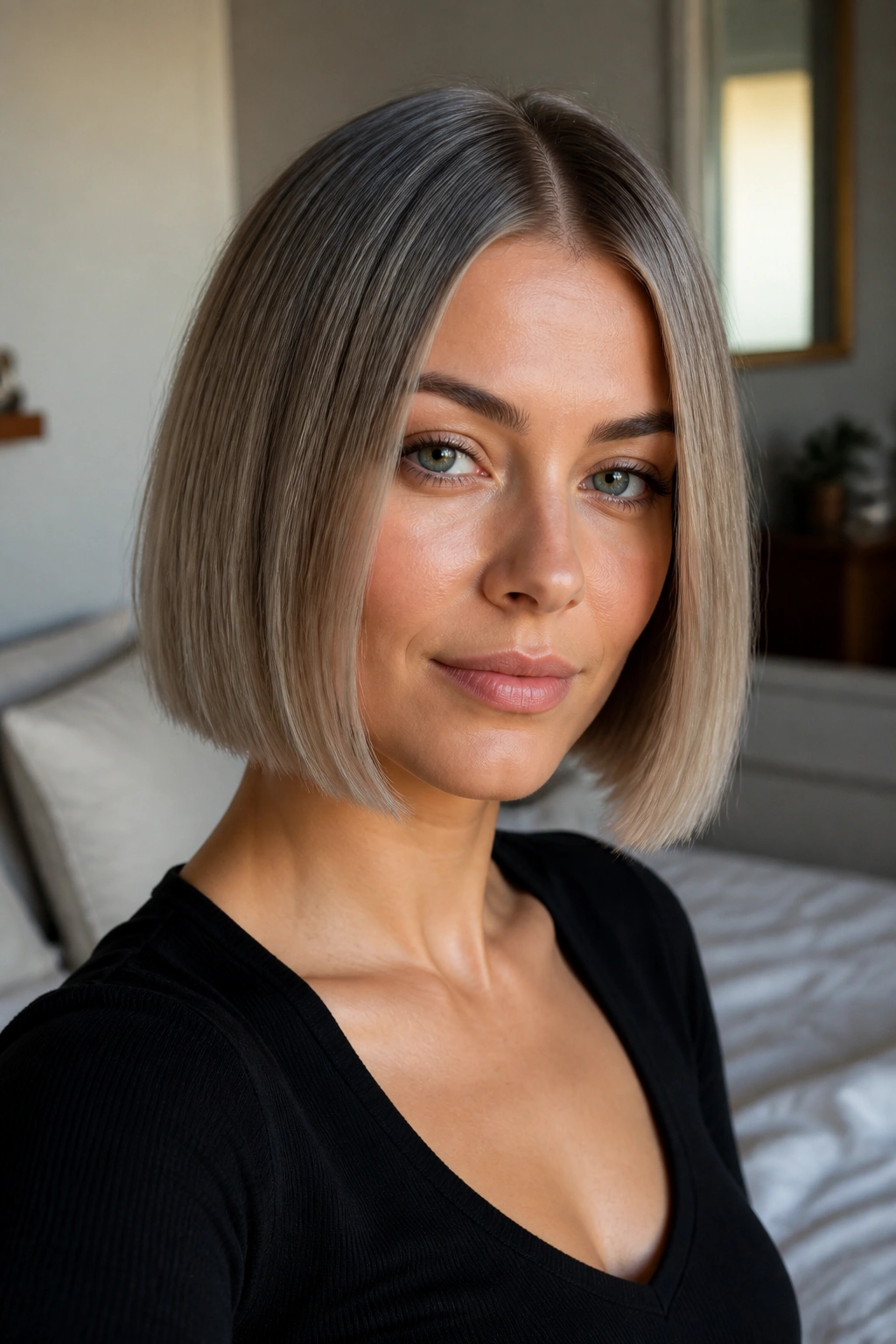
A middle part can be brutal on the wrong haircut and quietly excellent on the right one. With a clean ash bob, the center part makes both sides fall evenly, which can give fine hair a sharper, more balanced look. It’s one of those styles that does not need a lot of fuss once the cut is right.
The key is symmetry in the length and density around the face. If one side is much thinner, a center part exposes that immediately. If the bob is slightly beveled and the ash tone stays cool, though, the whole shape can look neat and controlled. Not stiff. Controlled.
What to Watch For
- Keep the perimeter strong so the middle part has something to frame.
- Avoid too much face-framing on one side only.
- Use a small amount of shine cream from mid-lengths down.
- If the crown is sparse, dry it with a lift at the roots before settling the part.
I like this cut on people who want a cleaner look and do not mind seeing their own symmetry on full display. It can be unforgiving for uneven growth patterns, but when it works, it looks calm and sharp in a way that side parts sometimes cannot match.
14. Feathered Ash Bob With Face Framing
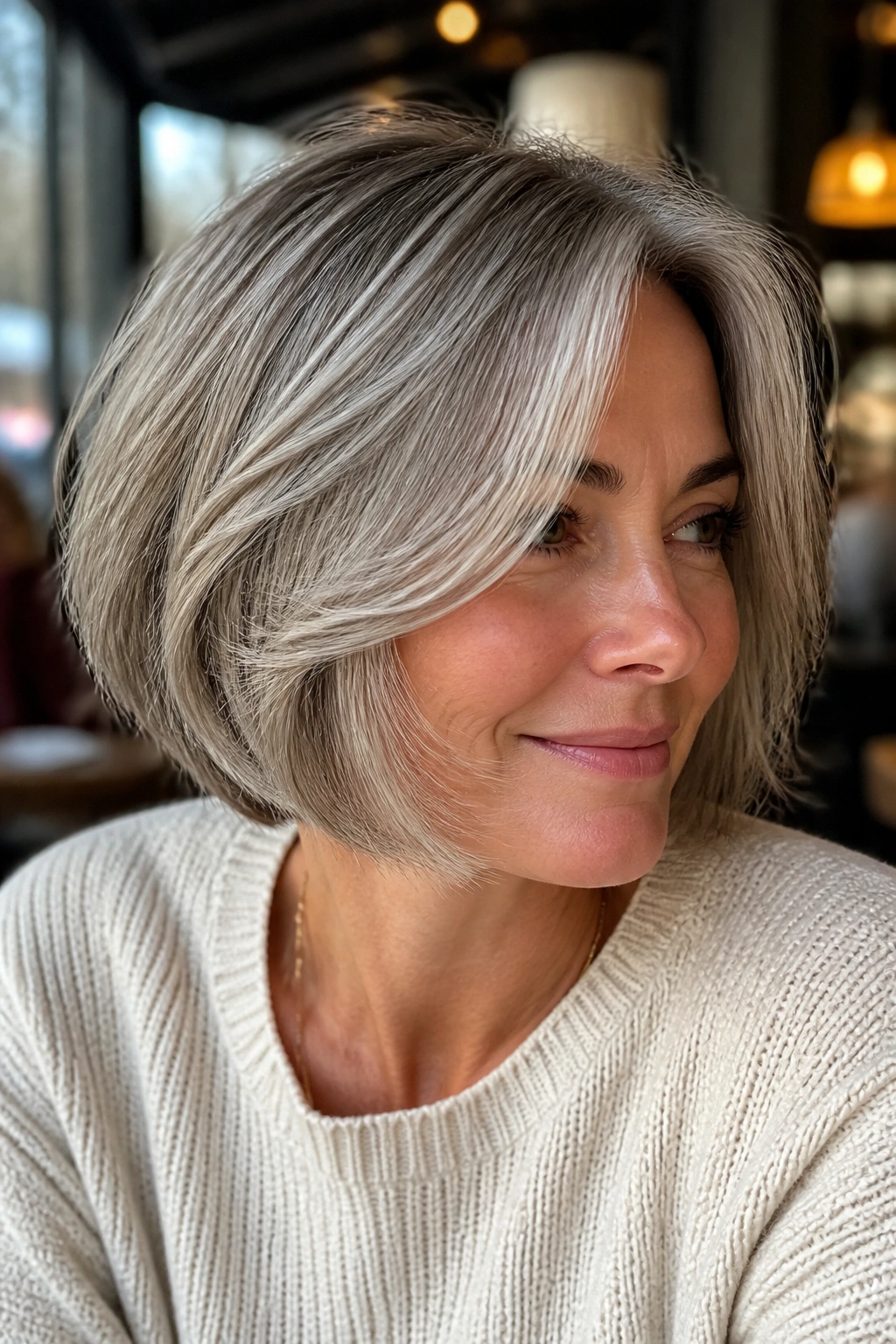
If your last haircut felt heavy around the jaw, feathering is the reset. It lightens the face line without stripping away all the weight that fine hair needs to look full. That distinction matters. You want soft movement, not a thin, frayed edge.
The face-framing pieces should start around the cheekbone or just below the lip, depending on how much length you want to keep in front. Feathering through the sides helps the bob curve around the face instead of hanging in one flat sheet. The ash color keeps the layers looking soft and current, especially if you lean into beige ash or muted brunette tones.
- Ask for light shears work, not aggressive thinning.
- Blow dry the framing pieces away from the face.
- Keep the back stronger so the silhouette does not go limp.
- Use a drop or two of serum only on the ends.
This cut flatters square jaws and broader foreheads because it introduces movement exactly where the face needs a little release. It is not the hardest-edged bob in the bunch. That’s the point. Sometimes fine hair looks better when it stops trying to behave like thick hair and starts working with softness.
15. Ash Lob With a Soft Bend
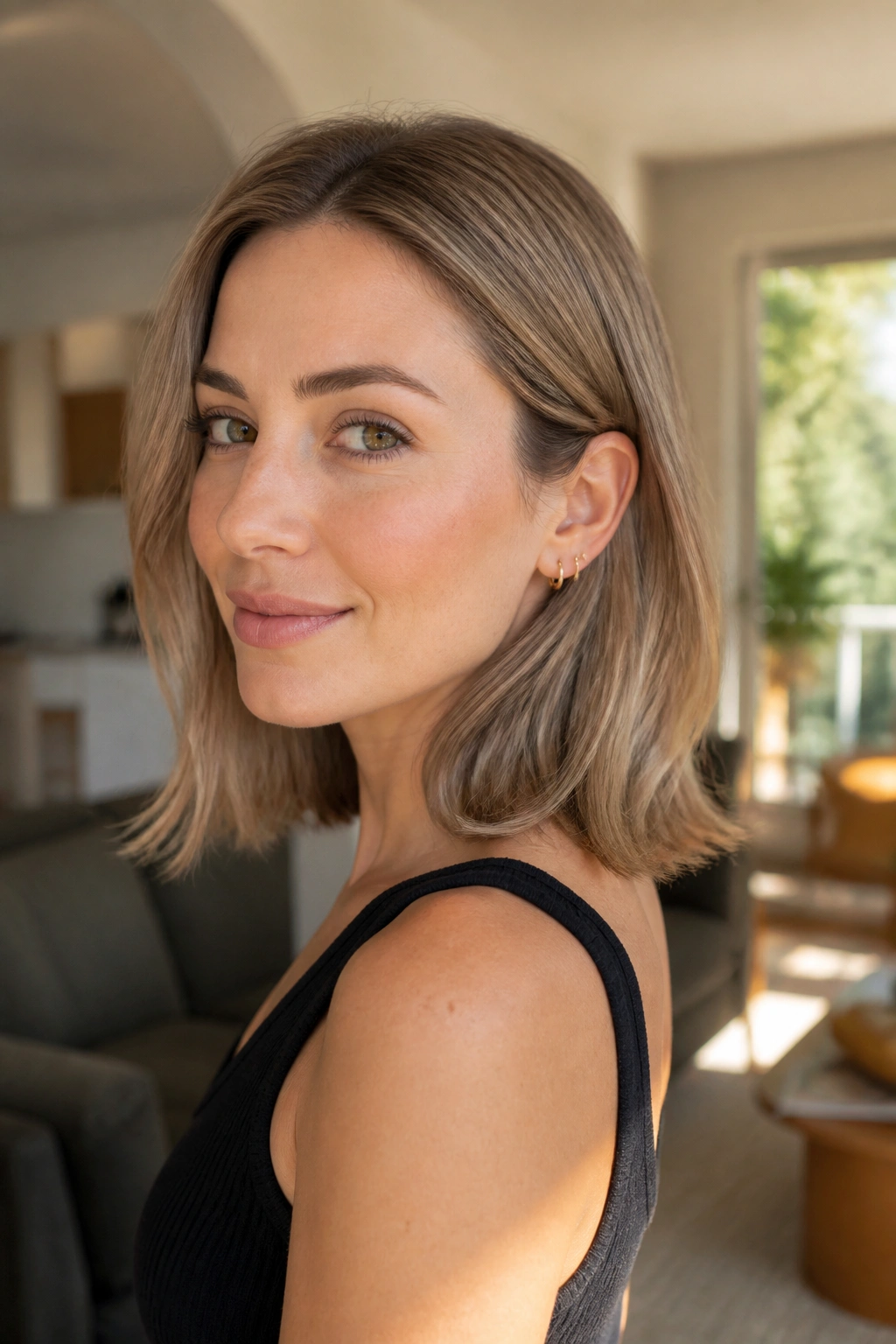
Is a lob cheating if you want a bob look? Not at all. For fine hair, a slightly longer shape can be the smart choice, especially if your ends need a little extra weight to stay present. A soft bend keeps the style lively without forcing it into full curls.
This cut is good for people who like to tuck hair behind the ears, wear it down, and still have enough length to pull it back on a busy day. The ash tone helps the longer shape look cleaner, because longer fine hair can sometimes show warmth and frizz more quickly than a shorter cut. Keep the color muted and the ends blunt.
How to Style It
- Wrap sections around a 1.25-inch iron and leave the last inch out.
- Let the bend cool completely before touching it.
- Work a lightweight cream through the mid-lengths, not the roots.
- Finish with a soft-hold spray so the wave does not collapse.
This one is especially good if you are nervous about going too short. It still gives you the visual lift of a bob, but with a little more room around the shoulders. Easy to live with. That counts for a lot.
16. Piecey Ash Bob With Undone Waves
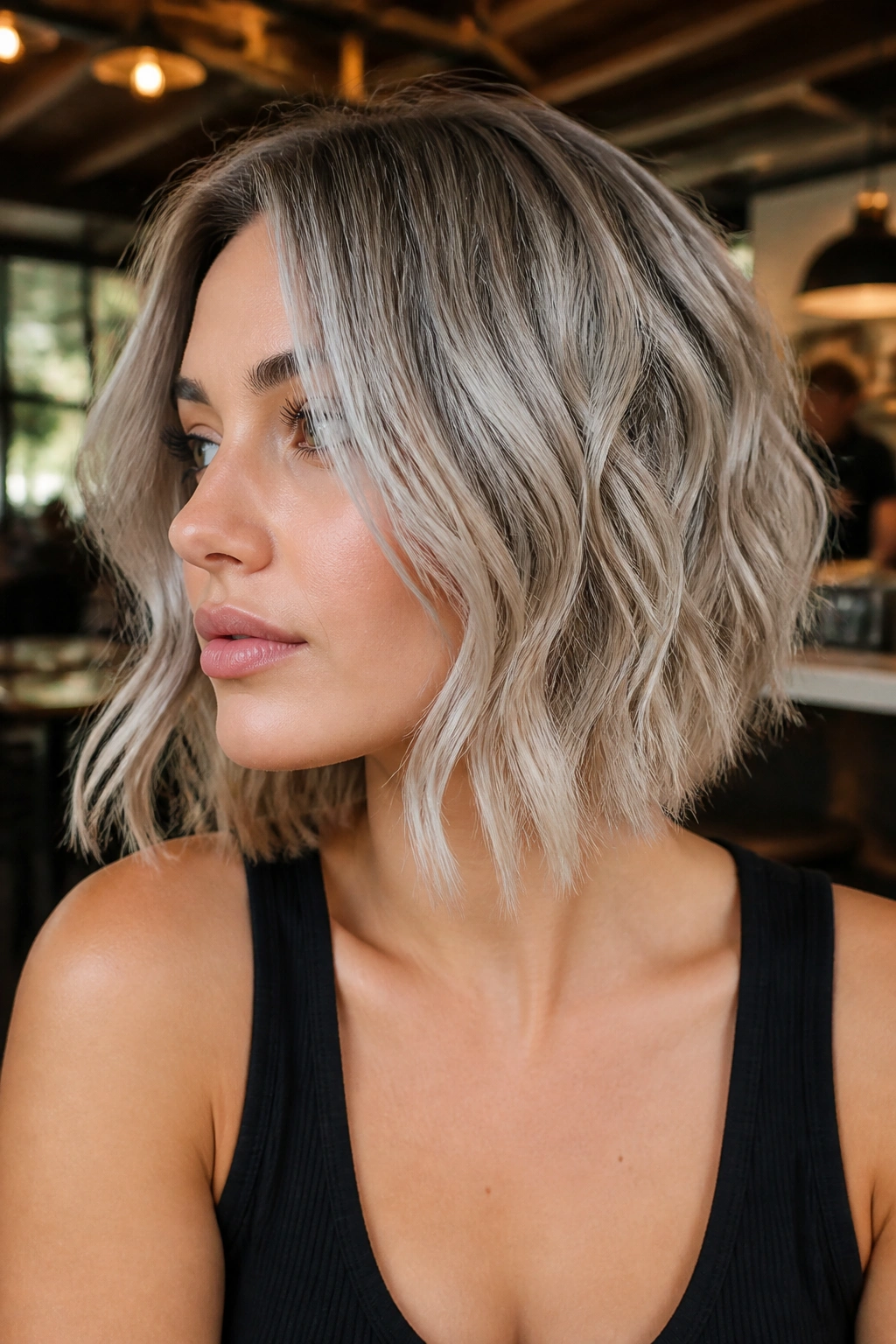
I reach for this shape when hair needs movement but not full-on curls. The piecey finish gives fine strands a little separation, which makes the cut look intentional instead of fluffy. Done right, it has that lived-in feel without looking like you slept on a clamp and gave up.
The trick is not to overload the hair with texture spray. Fine hair can go dry and rough fast, and then the ends start to look dusty. A small amount of mousse at the roots, then rough-drying about 80 percent of the way, usually gets you farther than piling on sea salt spray. A little goes a long way here.
- Twist 1-inch sections loosely around your fingers while drying.
- Break the wave apart with dry hands, not a brush.
- Keep the ash tone soft so the texture reads as movement, not frizz.
- Use a flexible spray at the finish so the pieces stay separated.
This cut is good for anyone who wants a bit of edge without a heavy styling routine. It looks nicest when the pieces are distinct enough to see, but not so separated that the head starts to look sparse.
17. Soft A-Line Ash Bob
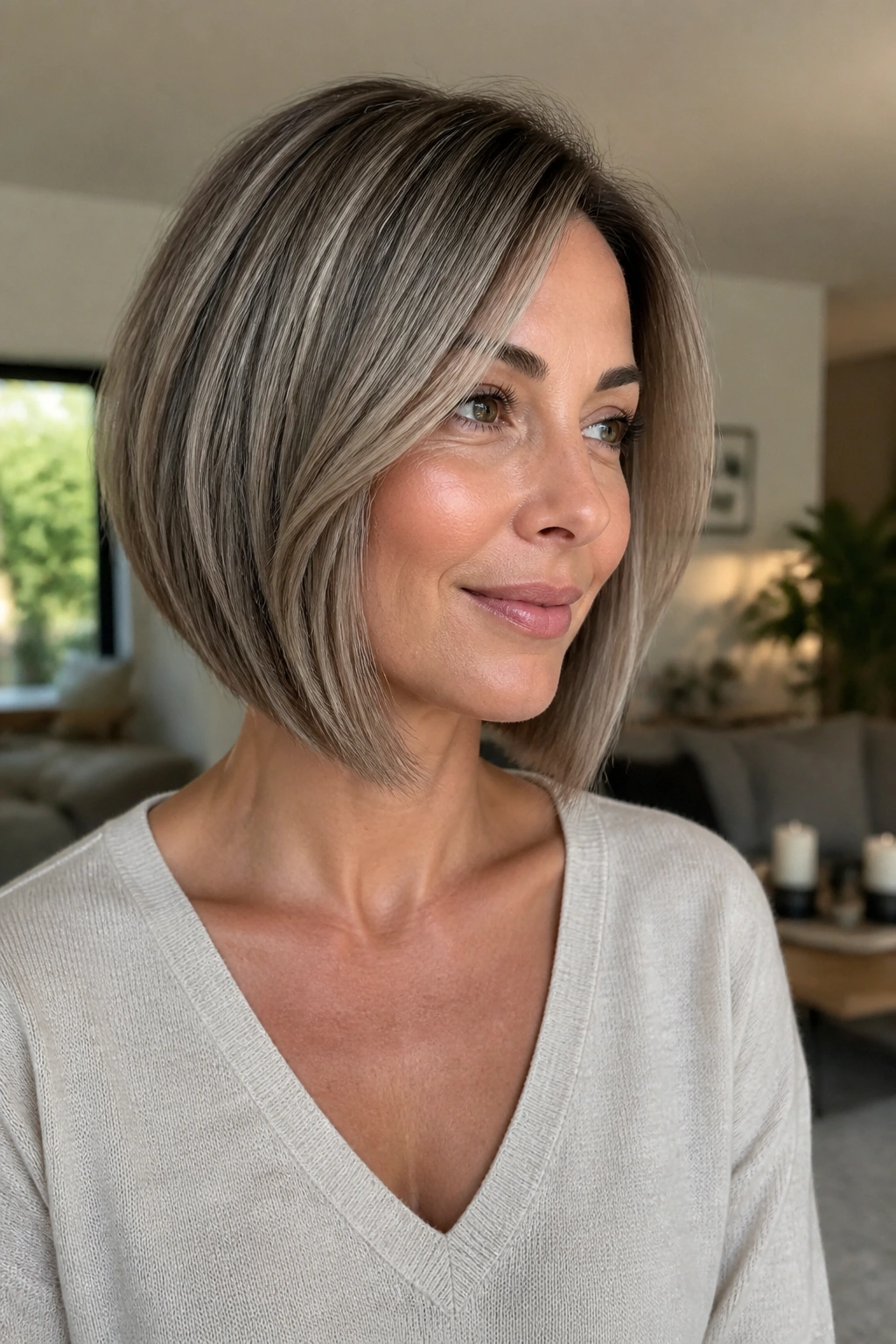
A soft A-line bob gives you a little length in front and a cleaner line in back, which is useful when fine hair needs shape but not harshness. The angle gently frames the face and still keeps enough weight through the outline to stop the ends from looking scraggly. It’s one of the quieter, smarter choices in the bunch.
The angle should stay subtle. If the front drops too far and the back gets clipped too short, the haircut can start to look dated or overly styled. A mild A-line, with the front only slightly longer than the back, tends to work best on fine hair because it gives movement without losing substance.
This cut is especially good if you want something that behaves well when tucked behind one ear or worn with a low side part. The ash tone matters again because the color keeps the angle from feeling heavy. I like this in smoky blonde or soft cool brown. Both keep the line clean.
It’s a steady haircut. Nothing dramatic. That may be the best part.
18. Glossy One-Length Ash Bob

Unlike layered versions, this bob leans on precision and shine. The whole shape depends on a clean perimeter and a smooth surface, so it can make fine hair look denser in a way that feels calm rather than fussy. If your hair is naturally straight or only slightly wavy, this is a strong option.
The ash color looks especially good here because a mirror-smooth bob shows every tonal shift. Warm brass or patchy color can break the line; a cool, even ash tone keeps the style looking finished. I’d keep the length around the jaw or a touch below it so the hair has enough weight to sit neatly.
What Makes It Different
- The line is the star, not the texture.
- It needs very little layering.
- A flat brush and blow dryer can do most of the work.
- A serum from ear level down keeps the ends glossy without flattening the roots.
This is the cut for someone who likes crisp edges and does not mind a bit of styling discipline. On the right head, it looks sharp in a very quiet way. Not loud. Just exact.
Final Thoughts
Ash bob haircuts for fine hair work best when the shape is doing real work for you. A strong edge, a smart part, or a little lift at the crown can change the whole read of the hair before styling even enters the picture.
If you’re torn between two options, pick the one that protects the perimeter most. Fine hair usually looks fuller when the ends are intentional, even if the rest of the style is soft. Bring a photo, yes, but also point to the part that matters most: the jawline, the nape, the fringe, or the front angle. That is where the haircut lives.
