



Fine hair and bob cuts have a tricky relationship. A bob can make hair look sharper, cleaner, and fuller at the same time — or it can make every strand seem a little too honest. Blond hair changes the equation again, because lighter color reflects more light and can make the shape read softer, brighter, and less flat, but only if the cut has enough structure to hold its own.
The mistake people make is thinking the color does all the work. It doesn’t. On fine hair, the perimeter line matters more than almost anything else. A blunt edge, a smart part, a little root depth, and the right amount of layering can turn a limp shape into one that looks deliberate from every angle.
I keep coming back to one rule: fine hair needs shape, not chaos. Too many thin layers and too much texturizing can take away the very ends that make the hair look dense. A good blond bob leaves enough weight in the outline to create the illusion of thickness, then uses color to keep the style from looking heavy or plain.
1. Blunt Chin-Length Platinum Bob
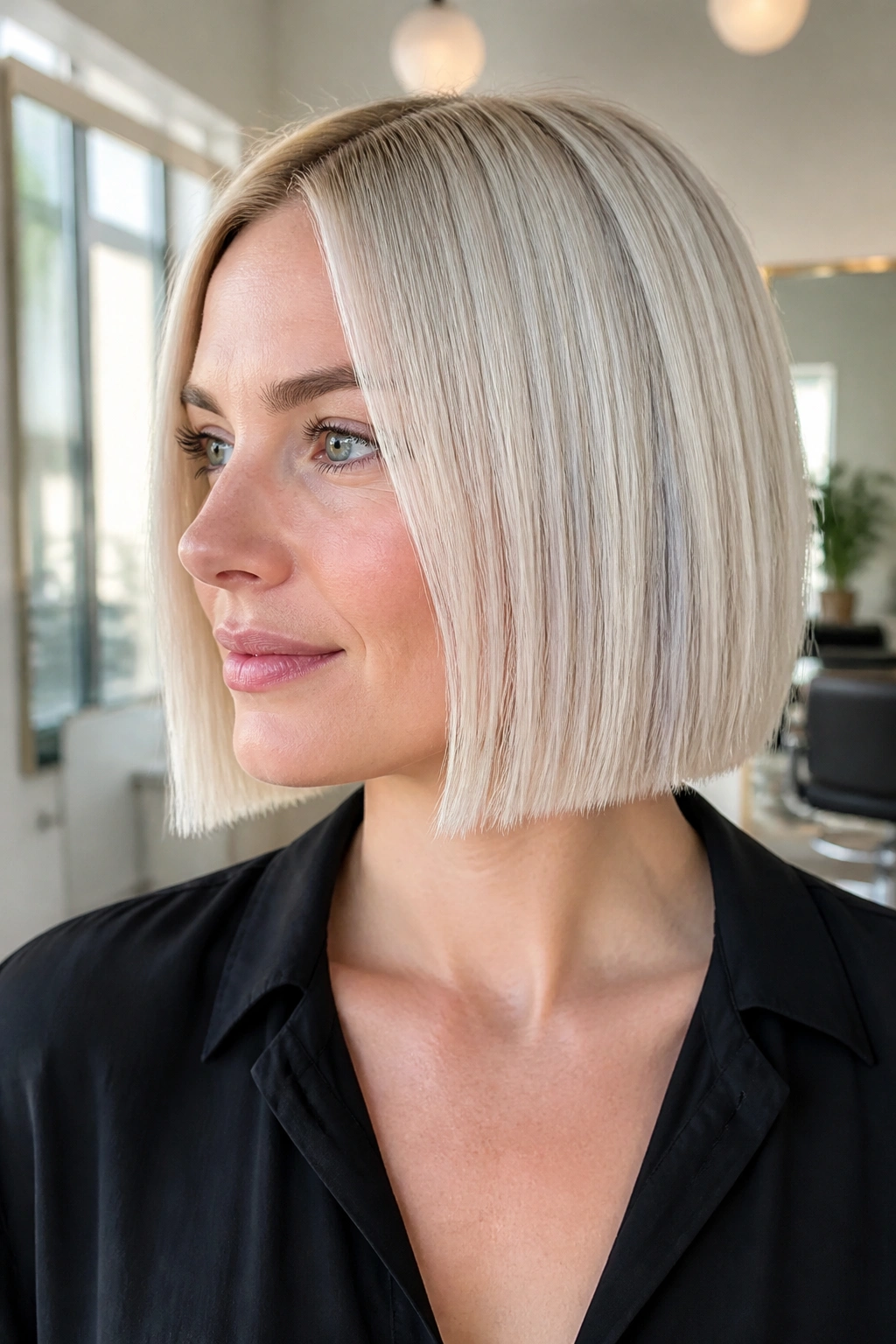
A blunt chin-length platinum bob is one of the fastest ways to make fine hair look denser. That clean edge gives the eye a solid line to follow, and that matters more than people think. When the ends all hit in the same place, the hair reads fuller, even if the individual strands are delicate.
Why it works on fine hair
The length lands right where the jaw can support it, so the cut gets a little natural lift. Platinum blonde helps, too, because the light shade keeps the shape from feeling bulky or heavy. If the hair is naturally straight, this cut can look crisp with almost no effort.
Ask for minimal internal layering and skip thinning shears. Seriously. Fine hair does not need to be hollowed out. A tiny bit of point-cutting at the ends is enough to keep the line from looking harsh.
- Best length: just at or slightly below the chin
- Best part: center or very slight side part
- Best color note: cool platinum with a soft root shadow
- Best styling move: blow-dry with a small round brush for lift at the crown
Pro tip: keep the ends blunt enough that they still look like a solid curtain of hair, not a feather duster.
2. Creamy Beige Side-Part Bob
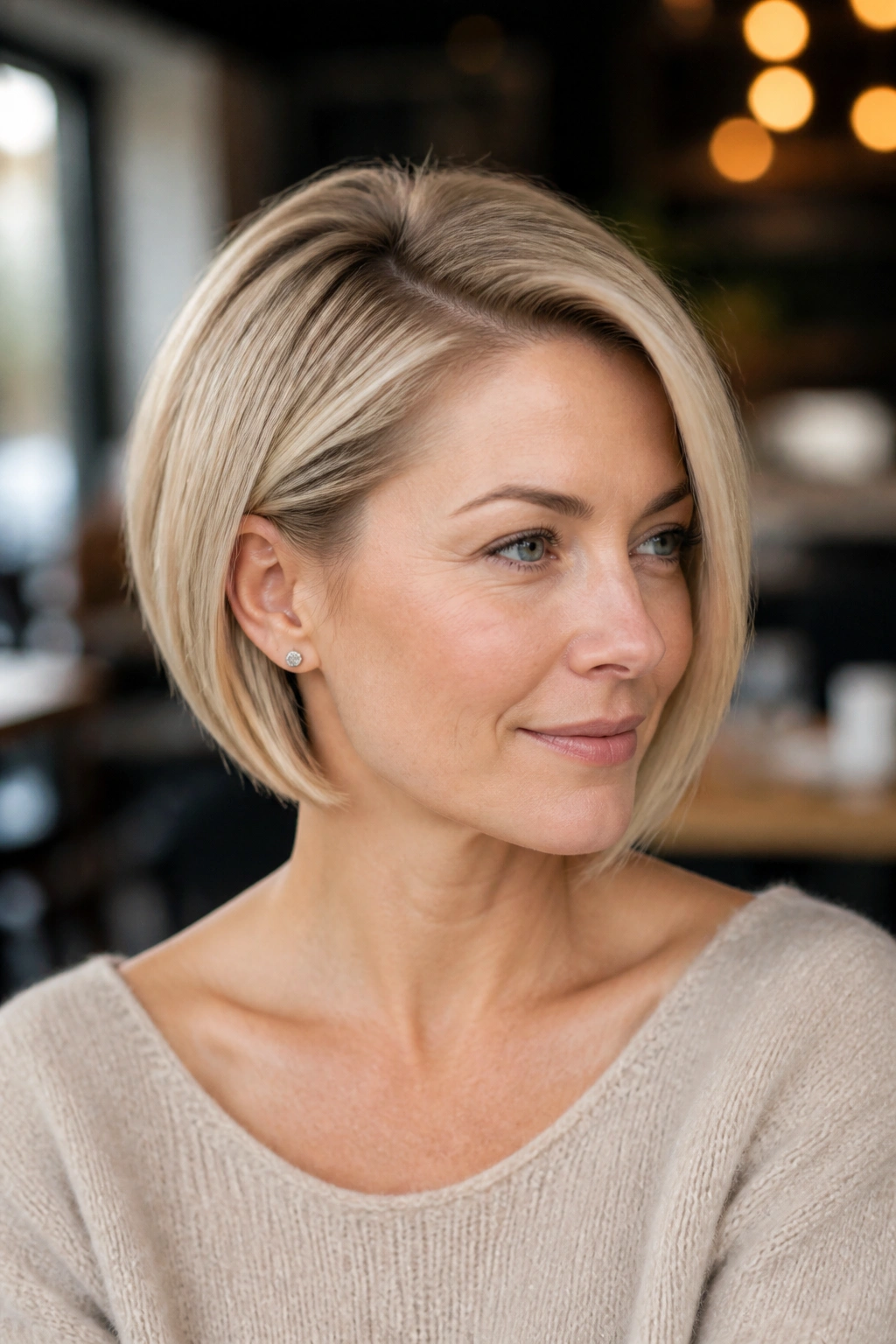
Why does a side part matter so much? Because on fine hair, the crown is often the flattest area, and a side part gives it a little push in the right direction. A creamy beige blonde bob uses that extra height and soft color to make the whole cut feel fuller without looking stiff.
The beige tone is the quiet hero here. It sits between icy and golden, which means it won’t flatten out the complexion the way a very ash color sometimes can, and it won’t look too warm or brassy either. That middle ground is useful when the haircut is simple and needs the color to do some of the visual work.
How to style it
Start the part an inch or so off center, then blow-dry the roots in the opposite direction first. That little trick gives the hair a bit of lift before you settle it back. Finish with a soft bend through the mid-lengths, not full curls. A bob like this should move when you turn your head, not bounce around like a pageant style.
Keep the ends tidy and the front pieces slightly longer than the back. The length should skim the jaw, not bury it.
3. Layered Bob with Babylights
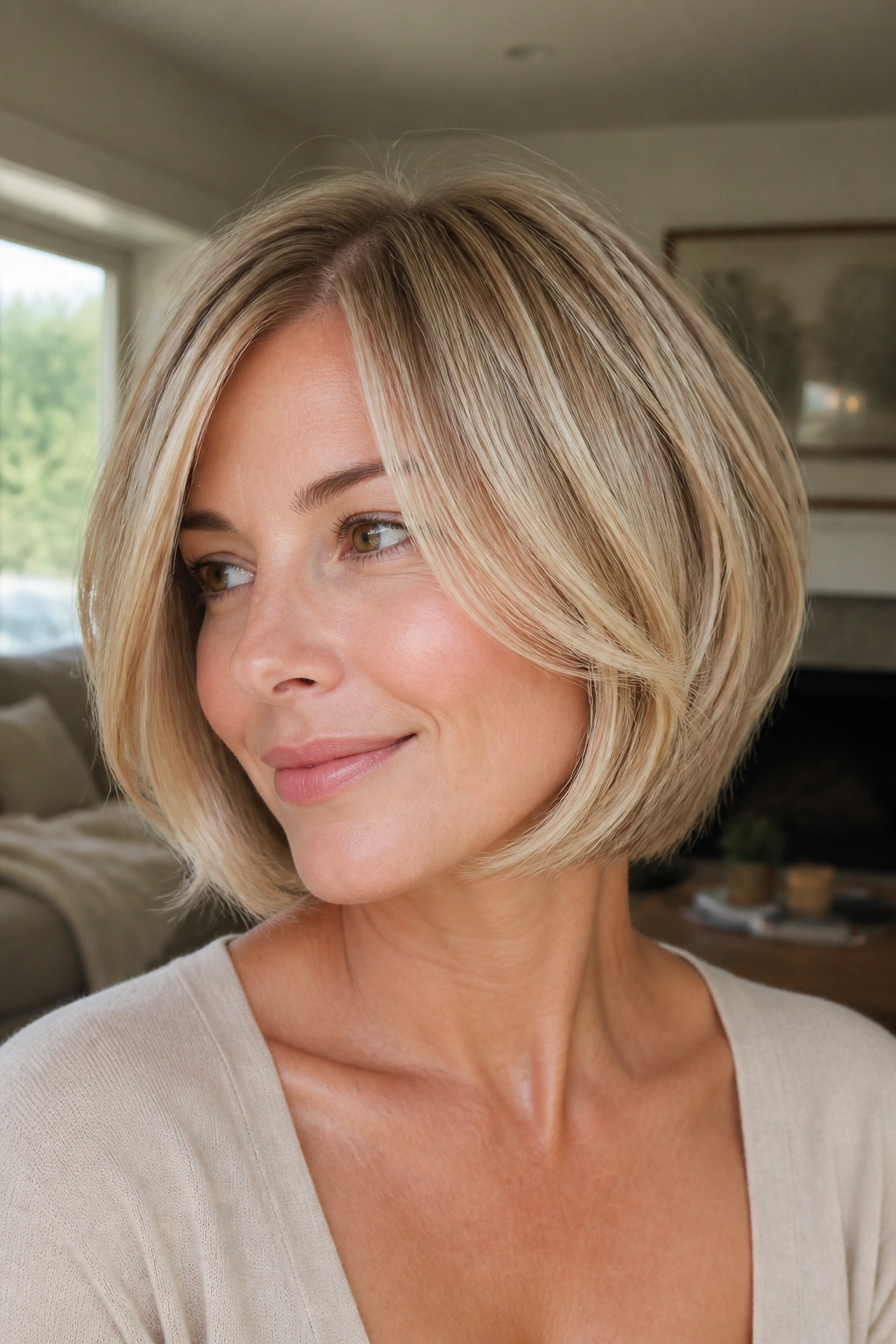
Unlike a blunt bob, this version leans on tiny internal layers and fine babylights to make the hair look busier in a good way. The layers are subtle — think soft movement, not choppy pieces — and the babylights are placed close together so the blonde reads as threaded through the cut rather than painted on top.
That matters for fine hair because big chunks of highlight can make the color look striped, which exposes thinness instead of hiding it. Babylights, done well, blur the scalp line a little and give the haircut a gentle kind of depth. The bob ends up looking fuller because your eye keeps catching tiny shifts in tone.
What makes this different
The shape is still bobbed and neat, but the movement comes from inside the cut rather than from heavy styling. That means it works especially well for hair that bends a little on its own. Straight hair can wear it, too, but it needs a mousse or root spray and a round-brush finish.
Ask for layers that begin below the cheekbone. Anything shorter can start to feel wispy. And wispy is the enemy here.
4. French Bob with Micro Fringe

If someone keeps saying their hair disappears under a hat, this is the cut I’d point them toward. A French bob sits around the jawline, sometimes a touch shorter, and the micro fringe brings attention upward fast. On fine hair, that front detail can make the whole style feel intentional instead of delicate in a nervous way.
The fringe should stay short and piecey, not heavy. That is the difference between chic and awkward. A micro fringe can look sharp on fine blond hair because the pale color softens the edge just enough that it does not feel severe.
Key details to ask for
- Length: jaw-skimming or just above the jaw
- Fringe: short, airy, and slightly broken up
- Finish: blunt perimeter with soft point-cutting at the ends
- Best texture: straight to slightly wavy
- Maintenance: fringe trims every 4 to 6 weeks
The whole cut works best when it is worn with a little natural bend or an imperfect air-dry. If it gets over-styled, it can turn fussy. Keep it loose. A tiny bit of texture cream in the fringe, a quick finger twist, and done.
5. Collarbone Lob with Money-Piece Highlights
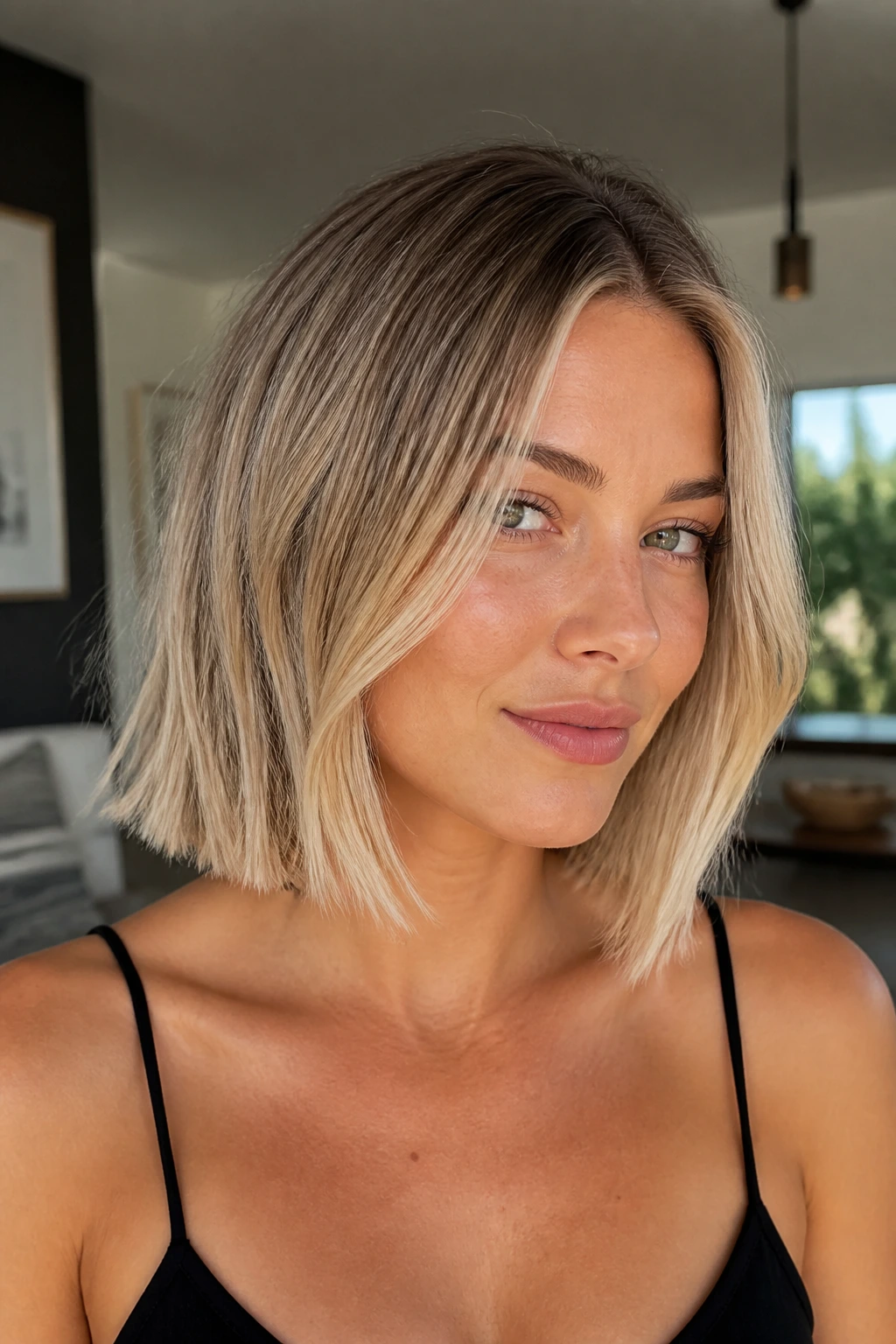
A collarbone lob is the safe choice for fine hair — and I mean that as praise. It keeps enough length for the ends to look substantial, while still giving you the clean outline that makes a bob family cut work in the first place. Add a money piece, and the whole thing wakes up fast.
The front highlight matters because it pulls light toward the face. On fine hair, that bright strip can make the front sections look denser than they are, especially if the rest of the color stays a little softer and deeper. The contrast gives the illusion of body without forcing the hair to do anything dramatic.
This is a nice option if shorter bobs have felt too exposing. A collarbone length can be worn straight, bent, tucked, or loosely waved. It also grows out in a calm way, which is a blessing if you do not want to live in the salon.
Keep the layers long and the ends blunt. If the haircut gets too shaggy, the whole point disappears.
6. Angled Bob with Honey Ribbons
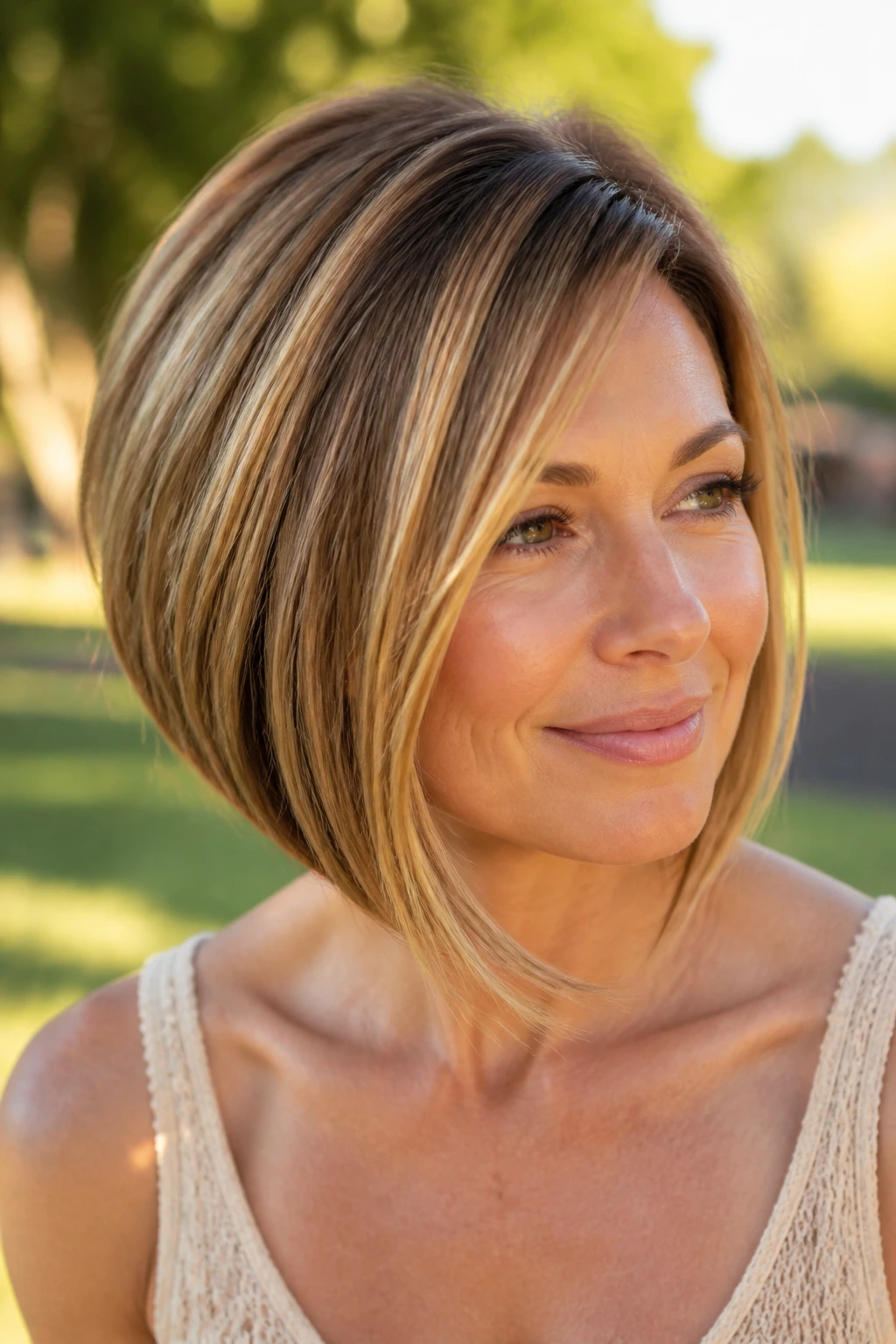
If the back of your hair collapses by lunchtime, an angled bob can fix more than product ever will. The shorter back removes some of the visual drag, while the longer front pieces keep the cut soft around the face. On fine hair, that shape change is useful because it creates lift without asking the hair to puff up on command.
Honey ribbons keep the cut from looking too sharp. They warm up the edges and stop the angle from reading harsh or severe. That warmer blonde also suits hair that is naturally a bit flat, because it catches light near the cheek and collarbone.
The angle should be subtle, not dramatic. A huge difference between back and front can start to feel dated fast, and it tends to expose a thin nape. A cleaner, gentler slope usually looks better on fine hair.
Use a round brush or a flat brush with a tiny bend at the ends. The front pieces should skim, not flick out hard. Hard flicks are noisy. This cut does not need noise.
7. Rounded Bob with Softly Tucked Ends
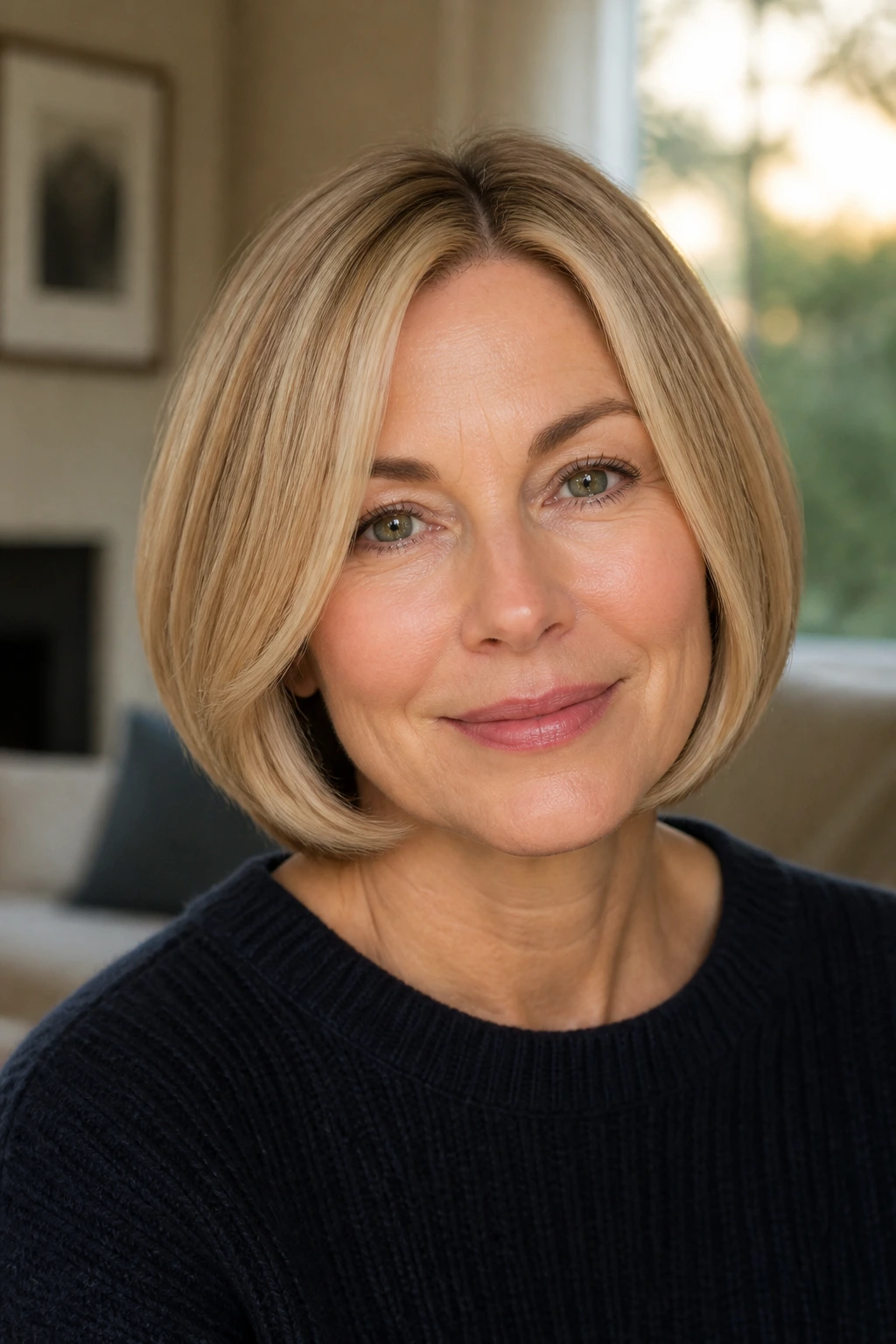
Want your bob to look thicker without piling on layers? A rounded shape does that work for you. The curve follows the shape of the head, so the cut holds onto visual weight at the sides and along the jaw. Fine hair benefits from that because it stops the outline from collapsing into a narrow line.
Styling notes
- Blow-dry with a medium round brush
- Roll the ends slightly under
- Use a light mousse at the roots
- Finish with a soft-hold spray, not a crunchy one
The blonde should stay creamy or beige, not ultra-icy. A softer tone keeps the curve from looking too hard, especially if the hair is straight and naturally slides flat. This is a cut that likes movement, but not too much. A gentle tuck under at the ends is enough.
It suits people who like polished hair and don’t want to spend twenty minutes with a curling iron every morning. The shape does the work. You just keep it honest.
8. Shaggy Bob with Piecey Champagne Blonde

Not every fine-haired bob needs to look sleek. Sometimes the better move is a shaggy bob with a little grit in it, especially if the hair has a soft wave or bends in odd places on its own. Champagne blonde fits that mood well because it feels light but not pale to the point of disappearing.
This cut depends on restraint. The layers need to be piecey, not overdone, and they should start low enough that the top of the head stays full. If the layers begin too high, the hair can end up looking separated and thin. That is the line you want to avoid.
A little texture spray goes a long way here. Scrunch it into the mid-lengths after blow-drying, then break up the ends with your fingers. Do not chase uniform waves. The charm of this haircut is that it looks a bit undone.
It’s a better pick for hair that already has a soft bend. If the strands are pin-straight and slippery, you may need more styling than you want.
9. Curtain Bang Bob with Butter Blonde
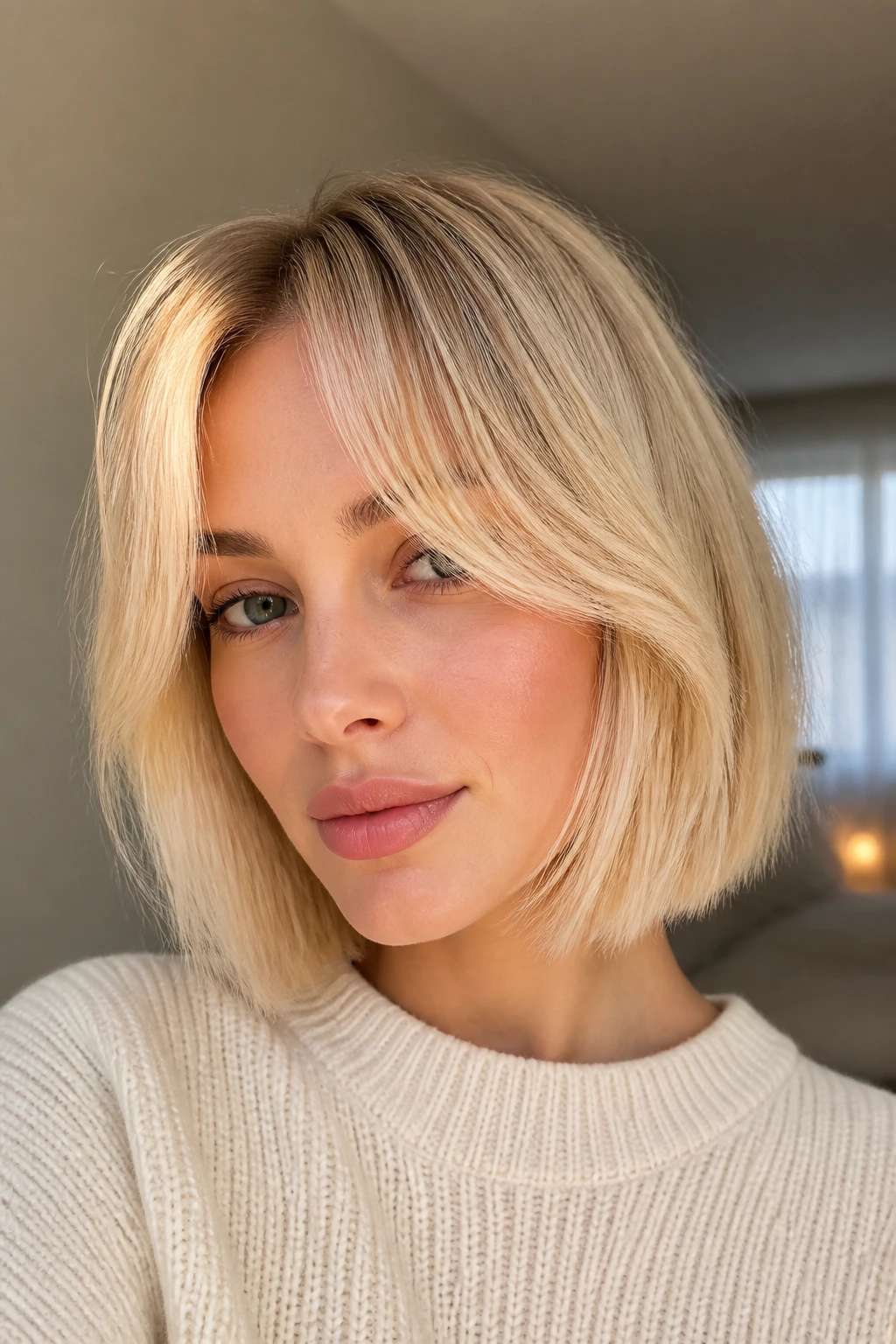
Curtain bangs are a smart choice when fine hair needs more presence around the face. They open at the center, fall softly to either side, and create a wider frame at the front without the blunt weight of full bangs. Paired with a butter blonde bob, the effect feels light but still purposeful.
Why the bangs should start high enough
The bangs need to begin around the bridge of the nose or a little higher, depending on the face. Too low, and they sit like a curtain in the wrong place. Too thin, and they vanish. A good curtain bang on fine hair should have enough density to show shape, but enough softness to move.
The blonde color matters because the lighter front pieces keep the bangs from looking heavy. Butter blonde is especially good if the skin tone likes warmth. It softens the face without tipping into yellow.
A bob like this works best when the rest of the cut stays simple. Don’t make the back too layered. The bangs are already doing enough visual work.
10. Glassy One-Length Bob with Root Shadow
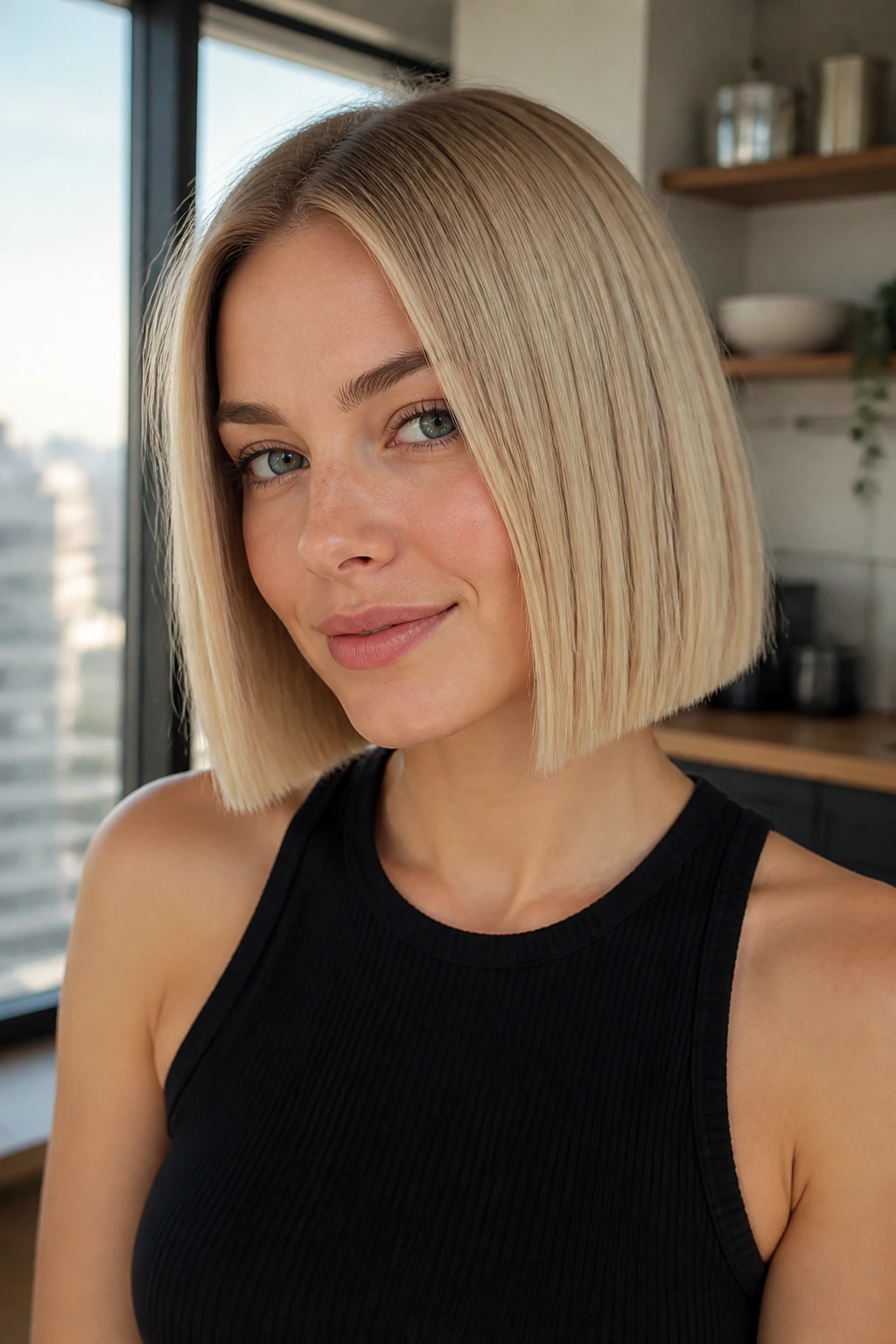
Some mornings call for hair that looks polished before you’ve done much of anything. A glassy one-length bob does exactly that. The single length gives fine hair a stronger outline, and the root shadow keeps the blonde from looking flat or overly processed.
The root depth also makes the regrowth less obvious, which is a practical win. Fine hair often looks best when the color has a little darkness at the top, because it creates the impression of lift. A pale all-over blonde can wash the shape out if there is no contrast at the roots.
What to ask for
- One clean line at the bottom
- Soft root shadow blended through the top 1 to 2 inches
- No heavy texturizing
- Blow-dry finish with a heat protectant and a smoothing cream
This cut looks best when it is glossy and straight, but not limp. A flat iron pass through the ends can tighten the line if your natural texture is messy. Keep the heat moderate and the finish light. Heavy oil will make fine hair look tired.
The appeal here is simple: it looks expensive without trying to look busy.
11. Asymmetrical Bob with Icy Ribbons
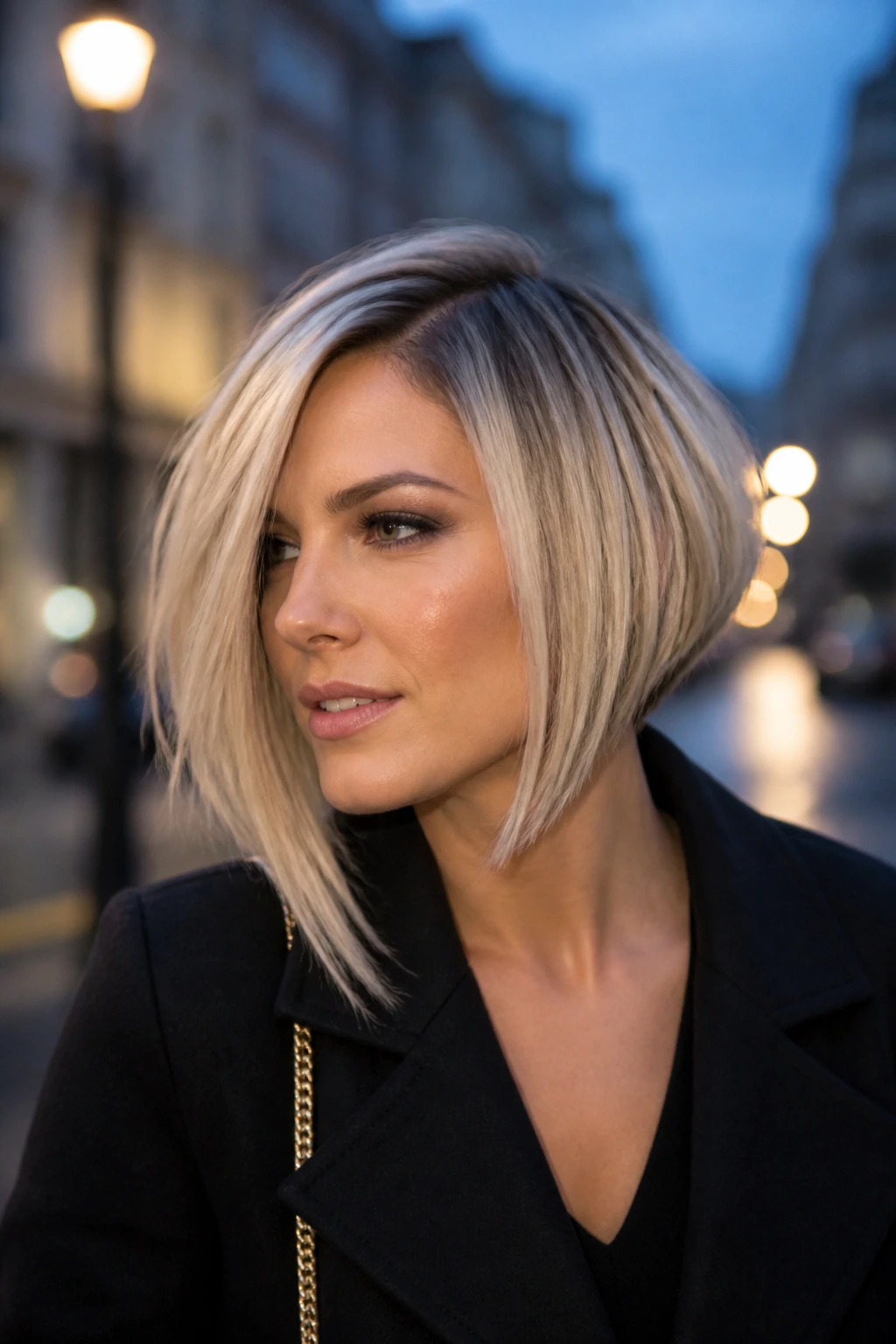
An asymmetrical bob brings attitude, which is handy when fine hair needs the haircut to carry some personality. The difference between the two sides should stay subtle — usually just a half inch to an inch — so the shape feels intentional rather than extreme. That small tilt gives the eye something to follow, which makes the cut seem fuller.
Icy ribbons work well here because the cooler blonde keeps the sharp line crisp. A warm or muddy blonde can blur the edge. On a precise cut, that blur is not your friend. You want the line to read clean from the front and the side.
The best version of this bob is smooth and controlled. It can handle a little bend at the ends, but the overall shape should stay tidy. If the hair is too textured, the asymmetry starts to look accidental.
This is a good option for someone who likes a polished look with a little edge. Not loud. Just not boring.
12. Soft-Bend Tucked Bob
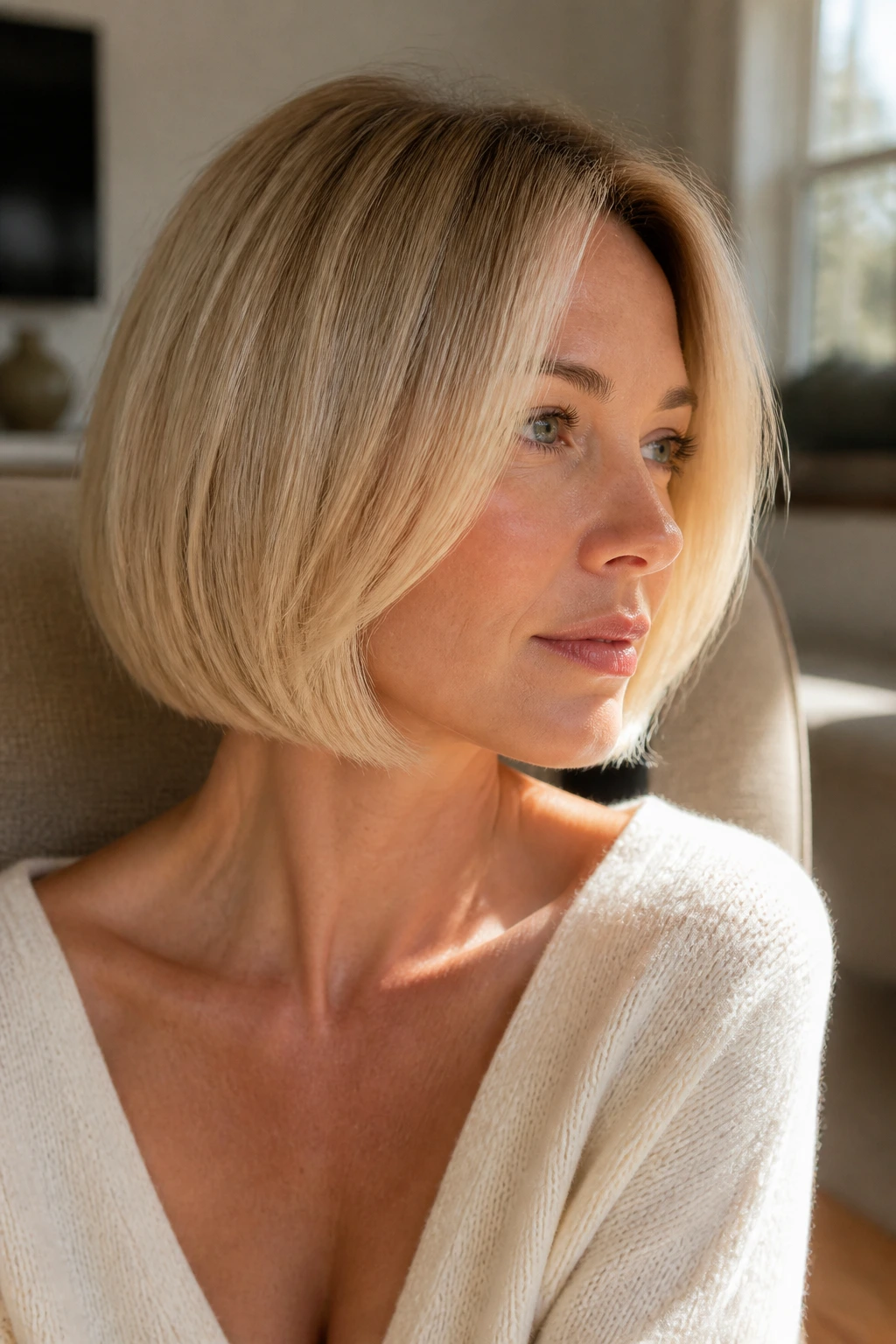
A tiny bend at the ends can do more for fine hair than a whole head of curls. That is why a soft-bend tucked bob works so well. The ends curve just enough to catch the eye and make the hair appear broader at the bottom, which is where fine hair often needs help most.
The cut itself should stay fairly clean. No heavy slicing. No shaggy layers around the perimeter. The shape comes from how the ends are finished, not from aggressive texture. Ask for a bob that brushes the jaw or sits a touch below it, then style it with a slight inward bend using a 1.25-inch curling iron or a flat iron.
The trick is to start the bend midshaft, not at the roots. That keeps the crown from puffing up while the ends stay neat. If the bend is too curly, the hair loses that soft bob feel and starts looking dated fast.
A light pearl or vanilla blonde keeps it airy. The color should feel soft, not streaky.
13. Wavy Bob with Balayage
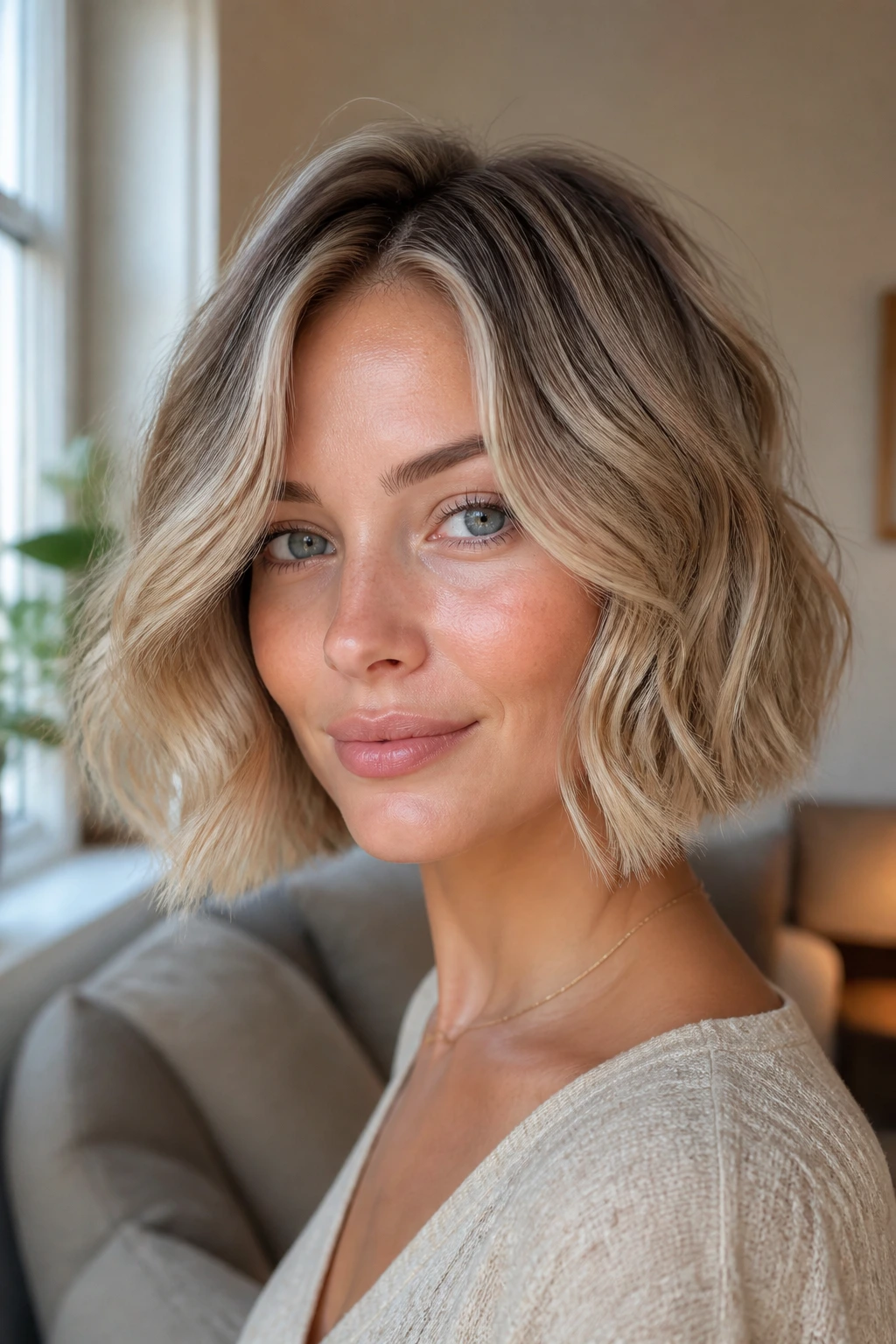
Why does balayage help fine hair? Because it spreads color in a way that keeps the roots from looking sparse while still giving the waves something to show off. On a wavy bob, the lighter pieces can move through the hair without drawing attention to every thin section.
Balayage also helps avoid a hard line of color near the scalp. That is useful when the hair is fine and you want the cut to look fuller at the crown. The darker root area creates depth, while the painted blonde pieces brighten the surface where the waves bend.
How to keep the waves from falling flat
Use medium-sized sections, about 1 inch wide, when you wrap the hair around a curling iron. Leave the last inch or so out for a softer finish. Then break the waves with your fingers and a small amount of texture cream.
Do not make the waves too perfect. Fine hair rarely holds a heavy curl well for long, and the style can look overly done by noon. Loose bends are enough.
This bob suits people who want a lived-in look without sacrificing shape.
14. Side-Swept Fringe Bob with Vanilla Blonde
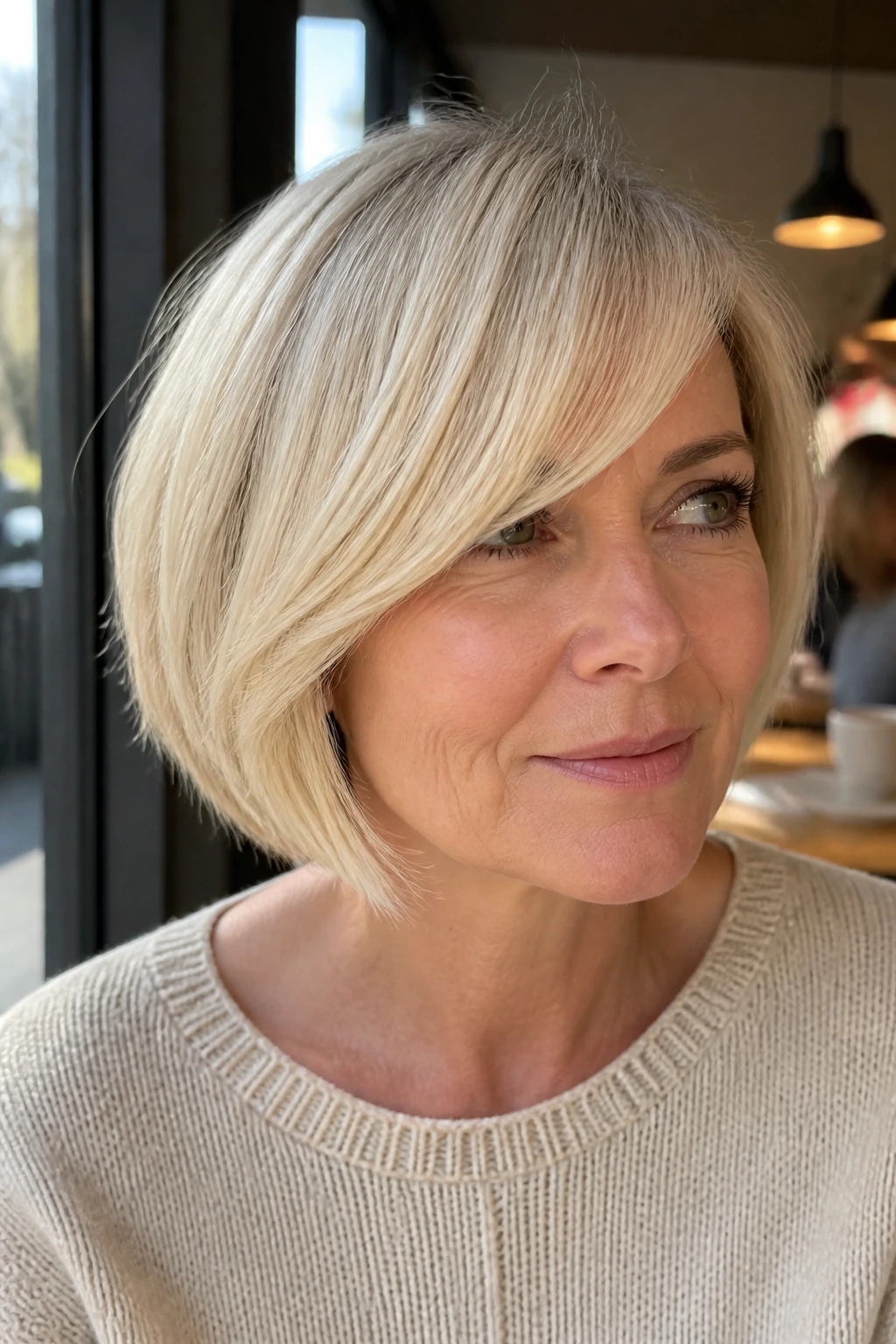
Side-swept fringe does something curtain bangs do not: it pushes the eye diagonally across the face. That diagonal can be a gift for fine hair because it creates the sense of volume where the fringe lands, while the rest of the bob stays tidy and controlled.
The fringe should be soft, not helmet-like. If it gets too heavy, it will drag the front of the haircut down. Vanilla blonde helps keep the whole look light, and the color around the fringe softens the contrast against the skin. That matters more than people expect. Pale front pieces can make the hairline look fuller, even when the actual density is modest.
This cut works well for people with high foreheads or for anyone who wants less focus on a narrow part. It also grows out in a friendly way. As the fringe gets longer, it can be tucked behind the ear or blended into the sides.
Keep the bob at jaw length or slightly below. That gives the fringe enough support. A too-short bob plus a long side fringe can start to feel unbalanced.
15. Face-Framing Layered Lob with Blonde Slices
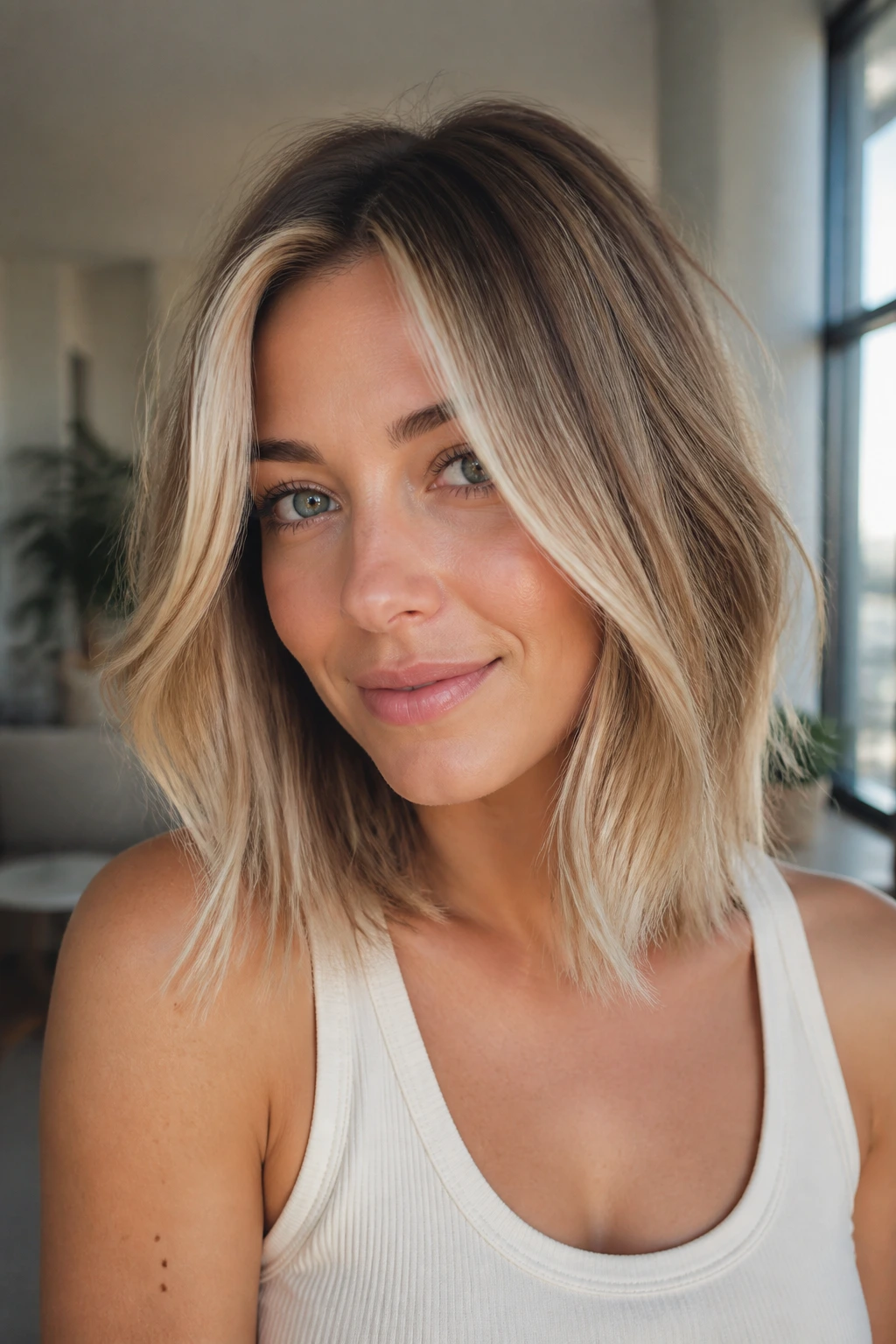
A layered lob gives fine hair room to move without sacrificing too much weight. The trick is where the layers start. If they begin around the chin and fall softly toward the collarbone, they shape the face without hollowing out the body of the hair.
Why the longer length helps
Fine hair often looks fuller when there is a little more length to cling to. A lob keeps enough material in the ends to avoid that see-through look that can happen with very short cuts. Blonde slices around the face bring the eye forward and add brightness where the cut needs a little extra lift.
Ask for face-framing pieces that stop around the cheekbone or just below it. Any shorter and they can split the shape in two. The layers around the back should stay longer and softer, so the whole cut keeps its line.
- Best for: straight, loose-wave, or slightly bent hair
- Best color placement: bright face frame, softer blonde through the ends
- Best styling move: a bend with a flat iron, not tight curls
One good rule: if the lob starts feeling too layered, it stops reading as thick.
16. Airy Blunt Bob with Pearly Highlights
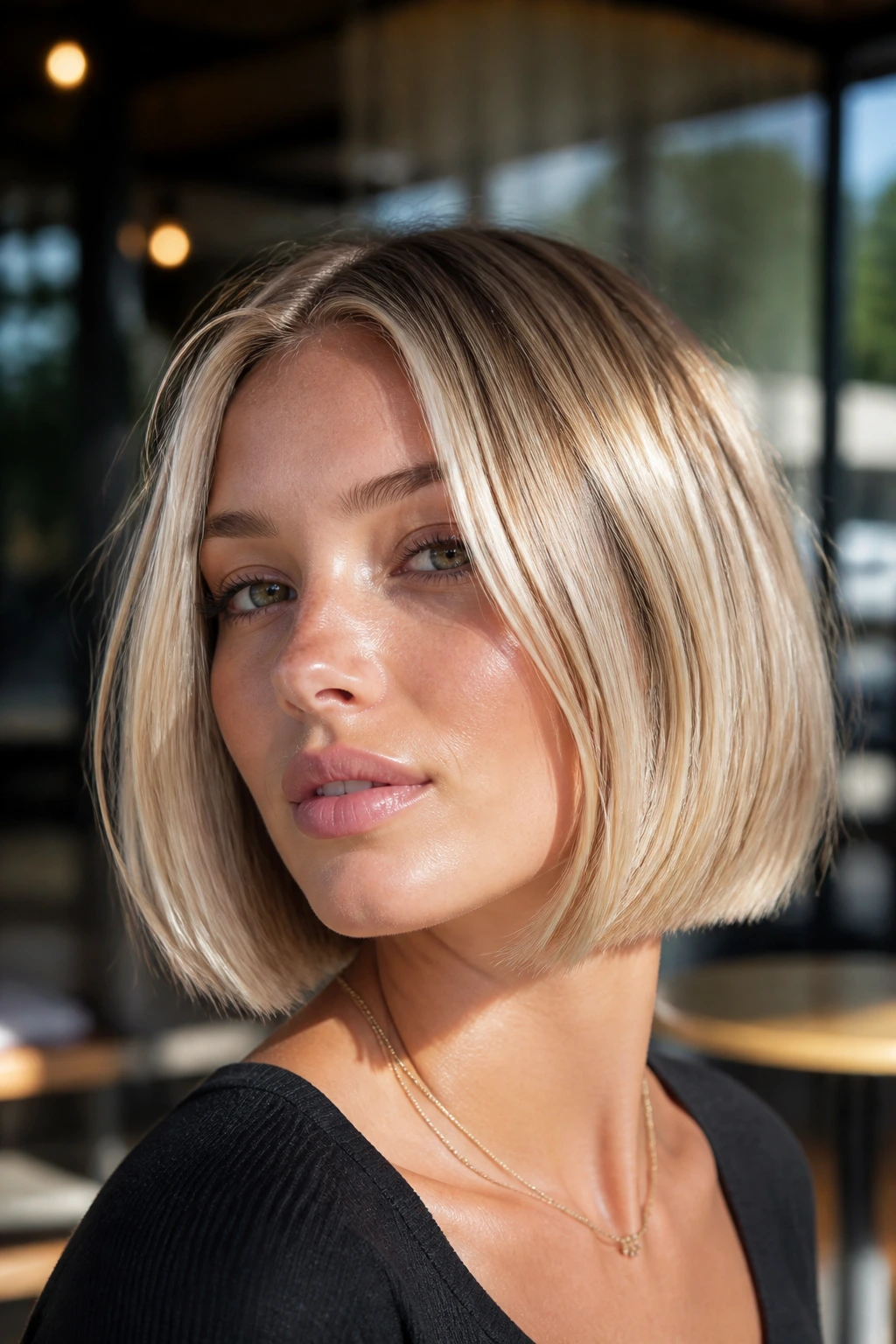
If your hair is fine but there is plenty of it, an airy blunt bob can be the cleanest answer. The blunt edge keeps the ends looking dense, while the pearly highlights add just enough lightness to stop the cut from feeling heavy or blocky. It is a simple formula, and that is part of why it works.
The highlights should be delicate. Think scattered brightness around the part, temples, and a few lines through the mid-lengths. Heavy streaks can expose how fine the strands are. Pearly tones are useful because they stay cool and soft, which keeps the overall look polished.
This cut is also one of the easiest to wear straight. You do not need big waves or a round brush blowout every day. A smooth finish and a clean part are enough. That simplicity is the point.
It’s a smart pick for anyone who wants a bob that feels neat rather than trendy. There is a nice honesty to it. No fuss. No filler.
17. Feathered Bob with Sandy Blonde
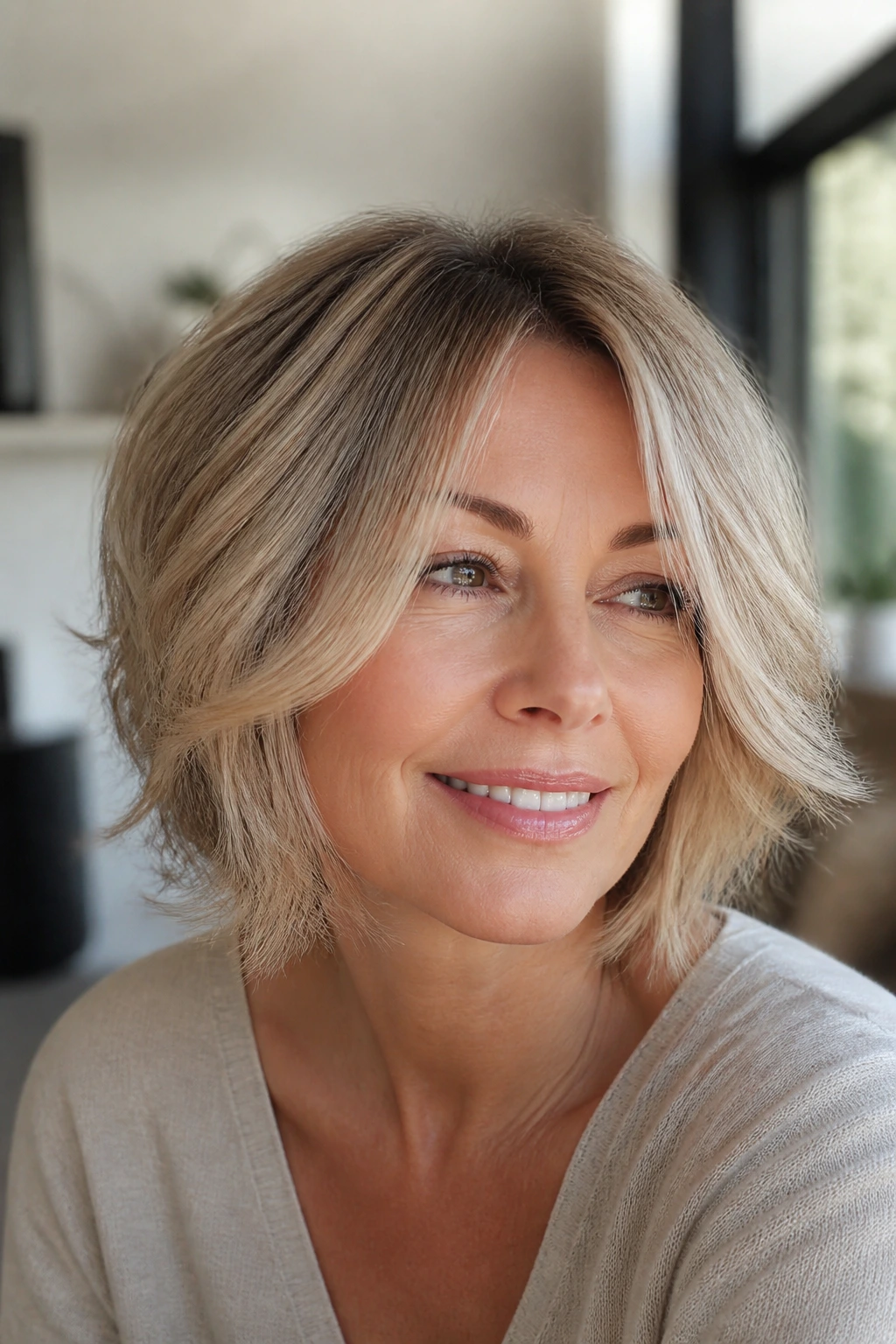
Feathering can work on fine hair, but only when it stays on the outside of the shape instead of chewing up the entire interior. That distinction matters. Too much feathering and the bob starts to look airy in the wrong way. The right kind gives the ends a soft edge without stealing their weight.
Sandy blonde suits this cut because it has enough warmth to keep the feathered texture from looking cold or broken. The color softens the transition between layers and makes the movement feel smoother. A lot of stylists reach for cooler blondes on fine hair, but sandy blonde has a nice, lived-in look that still reads polished.
This cut likes a blow-dry cream and a medium brush. Pull the ends out gently as you dry them, then let them settle with a slight bend. The style should feel light in the hand, not spiky or over-separated.
It works especially well if your hair has a little natural wave. Straight hair can wear it too, but it needs more styling discipline.
18. Ear-Skimming Graduated Bob with Warm Gold
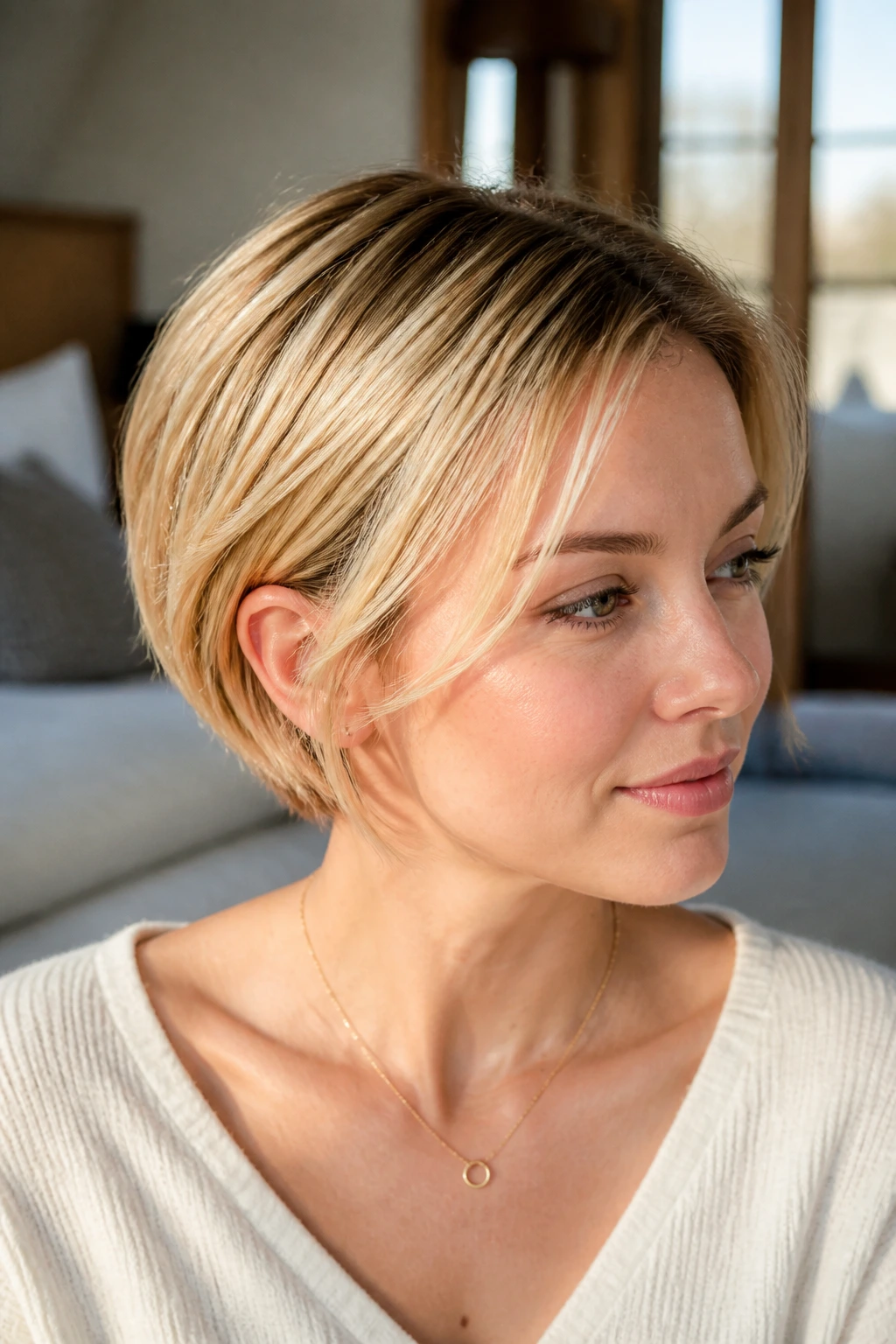
Ear-skimming length can make fine hair look alert in a way longer cuts sometimes can’t. The shorter shape lifts the profile, and a mild graduation at the back keeps the nape neat while preserving a fuller look through the sides. Warm gold blonde softens the cut so it does not read severe.
This is not a cut for anyone who wants ponytail length. It is a real bob, short and clear. That’s the point. Fine hair often looks its strongest when the outline is concise and the color adds warmth rather than trying to fake thickness with too much texture.
Ask for a gentle graduation, not a stacked wedge. The back should be neat, but not puffy. The front can stay a touch longer if you want a softer face frame. That keeps the shape modern and wearable.
A little root lift spray at the crown helps, but the haircut itself does most of the heavy lifting. Short bobs like this are honest. They either fit the head shape well, or they do not. When they do, the result is clean and sharp.
Final Thoughts
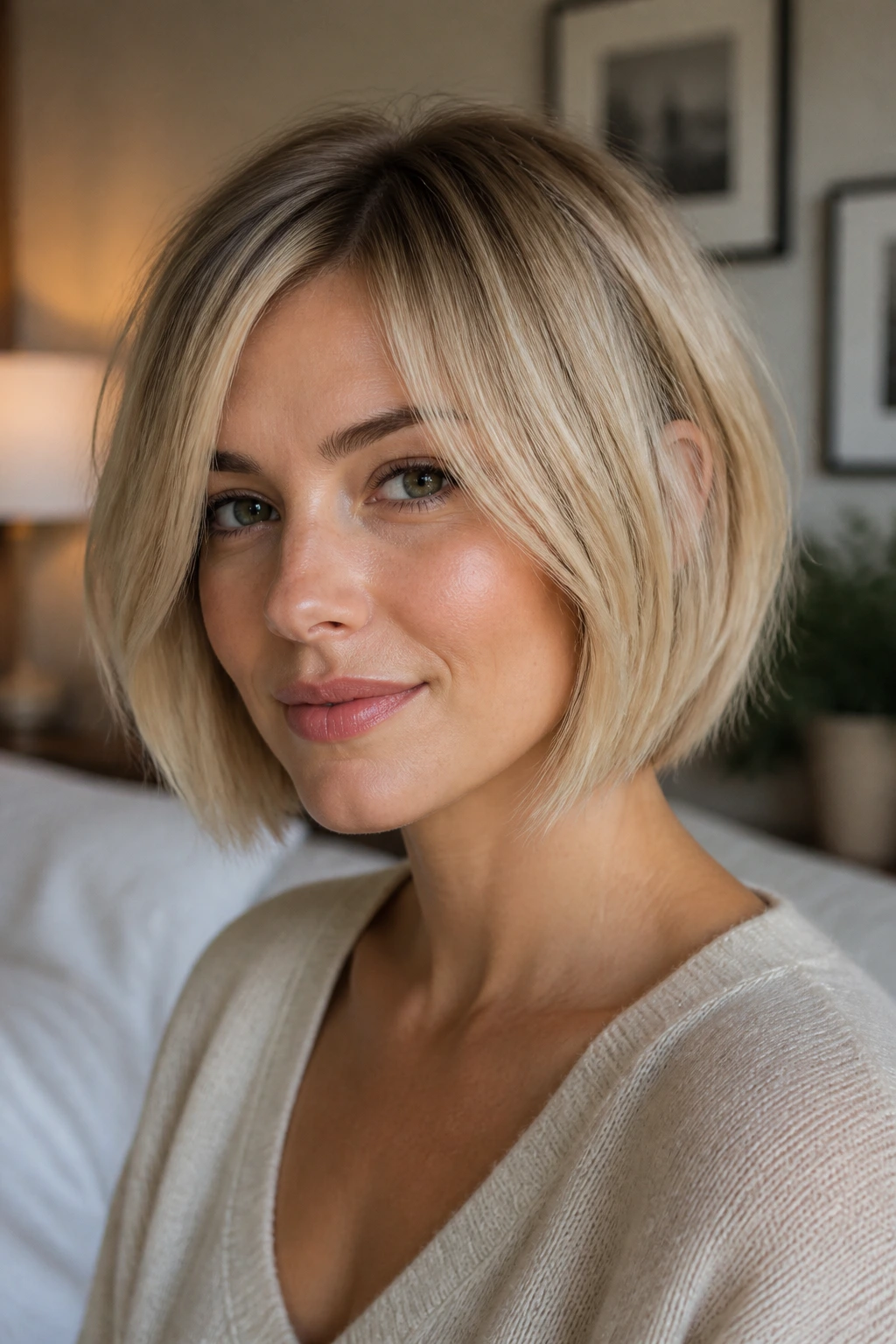
The strongest blond bob haircuts for fine hair do one thing well: they give the ends enough weight to look full. That can mean a blunt chin-length cut, a soft lob, a tiny fringe, or a neat angle at the back. The shape matters more than chasing volume tricks that fade by lunch.
Color helps, but only when it supports the cut. Beige, honey, vanilla, pearl, and root-shadow blondes all do useful work here because they create light and depth without making the hair look stripped. Heavy highlights and over-textured layers tend to work against fine hair, not with it.
If you want the shortest path to a better-looking bob, ask for clean edges, controlled layering, and blonde placement that makes the shape easier to read. That combination is hard to beat.
