



Round faces and bobs can be a tricky pairing. Put the shortest point at the cheek, and the whole cut can feel wider than it should. Long wavy bob haircuts for round faces work when the length stays low enough to pull the eye downward and the waves stay soft instead of puffy.
Length matters. A lot.
My bias is simple: if a round face wants a bob, it should usually land somewhere between the collarbone and the top of the chest. That gives the haircut room to move without sitting right on the widest part of the face. The other piece is where the texture starts — waves that begin at the cheek often add width, while waves that start lower make the whole shape feel longer.
The best versions also avoid over-stacking at the back. A little lift at the crown is useful; too much at the sides is where things go sideways. If you’ve ever seen a bob that looked cute from the front but suddenly made the cheeks feel more pronounced in profile, that’s usually the reason.
The styles below keep the shape friendly, wearable, and easy to ask for at a salon chair. Some lean polished. Some are messy in a good way. All of them give round faces more line and less bulk, which is exactly what a long wavy bob should do.
1. Collarbone-Grazing Soft Waves for Round Faces
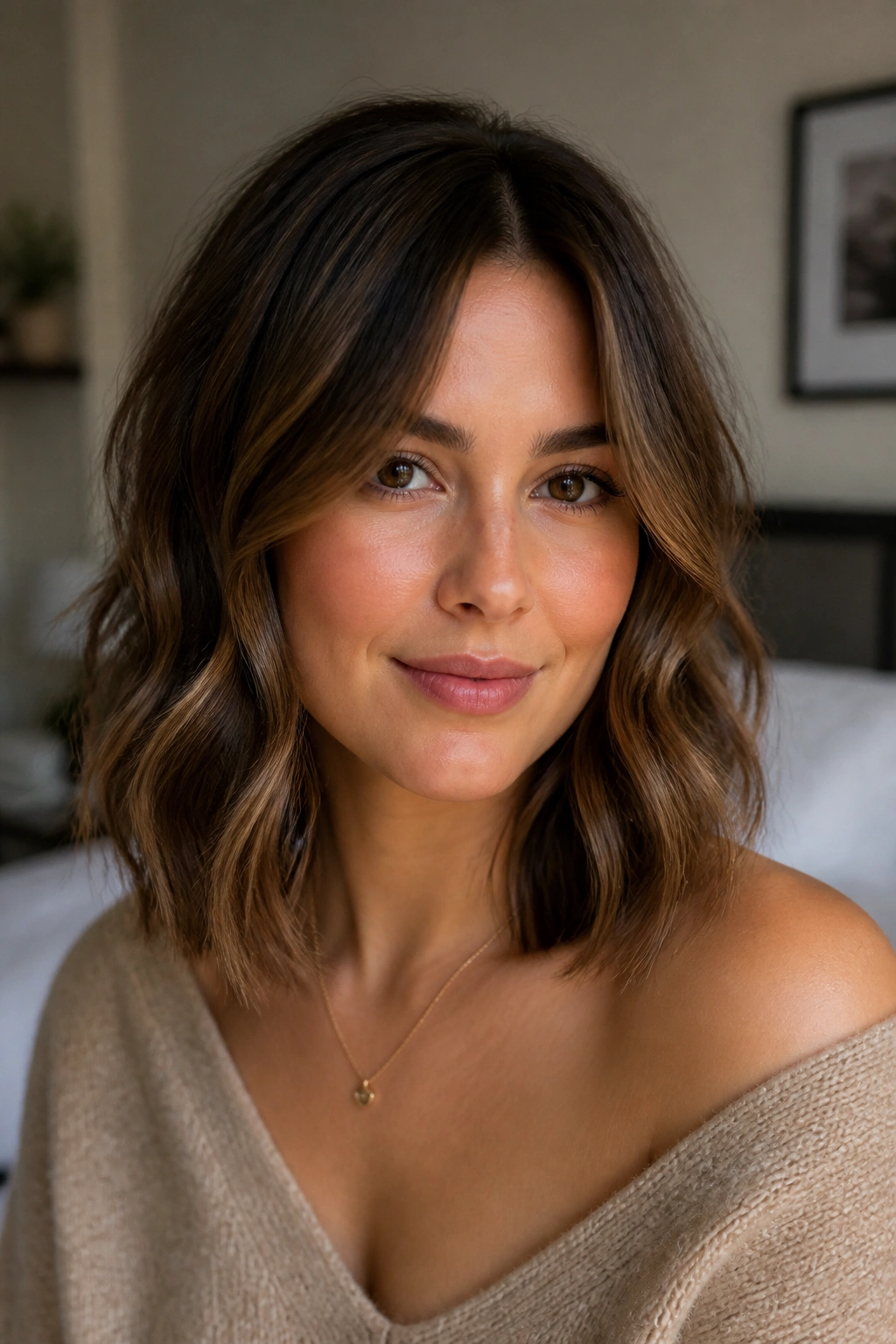
This is the safest place to start if you want a long wavy bob haircut for a round face that won’t fight your features. The collarbone gives the style a clean vertical line, and the soft waves keep it from feeling heavy or stiff.
What makes it work
The length sits below the chin, which is the part I care about most. That alone helps stretch the face visually. The waves should start around the mid-lengths, not right beside the cheeks.
Ask for long, blended layers and a soft perimeter. You want movement, not a chopped-up outline. A blunt edge can also work here, but only if the texture is loose and the ends are healthy.
- Front length: just grazing the collarbone
- Back length: slightly shorter, but not stacked
- Wave pattern: soft bends, not tight curls
- Best styling tool: a 1.25-inch curling iron or hot brush
Pro tip: leave the last inch of the ends out when you curl. That keeps the finish modern and stops the cut from looking too round.
2. Deep Side-Parted Wavy Lob
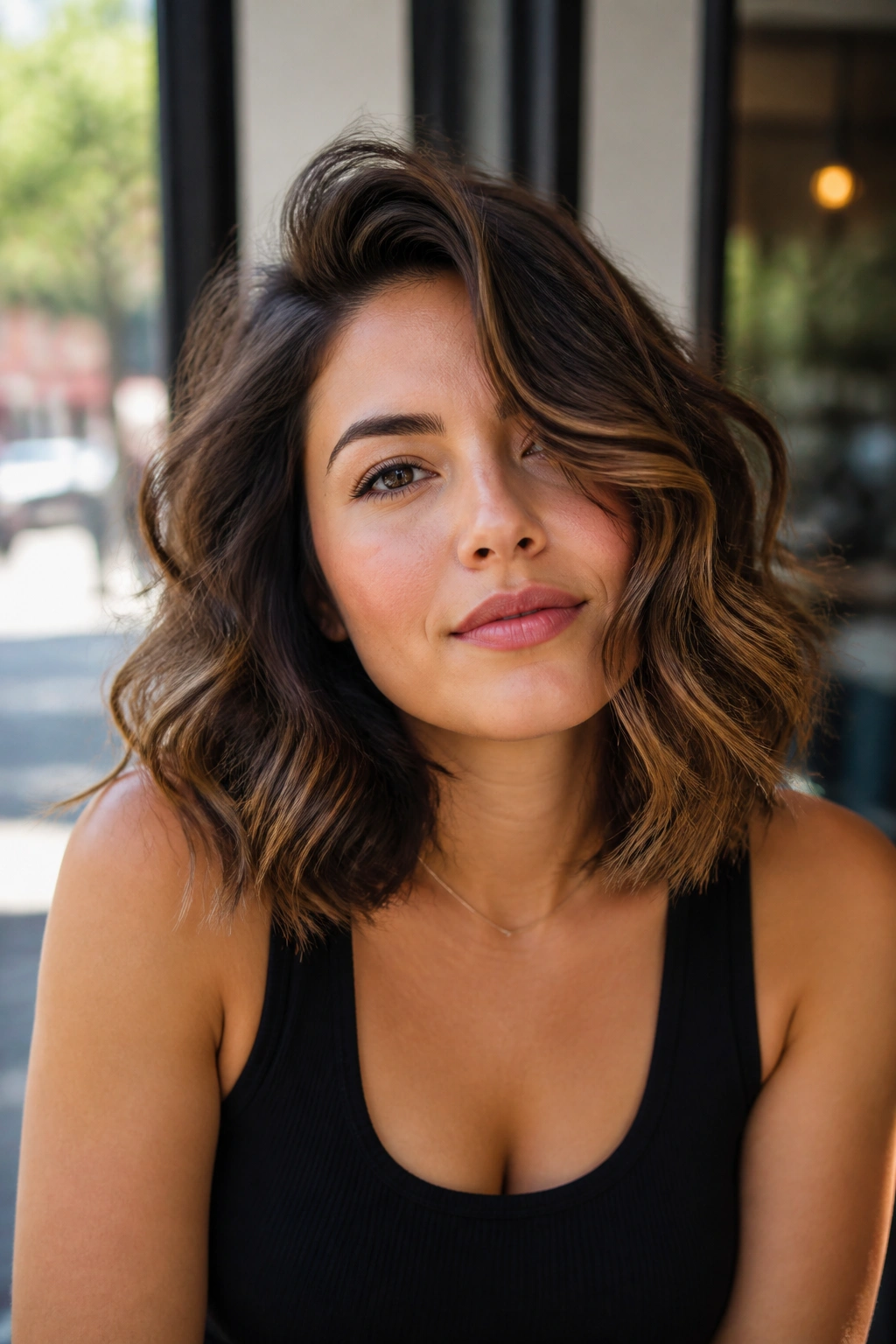
Why does a deep side part help so much? Because it breaks up the symmetry that makes a round face look wider. The eye gets pulled diagonally instead of straight across, and that little shift matters more than people think.
A deep side-parted wavy lob also gives you instant crown lift on one side. That’s useful if your hair tends to lie flat at the roots. Keep the heavier side brushed back just a bit, then let the waves fall loosely around the jaw and collarbone.
I like this cut for anyone who wants shape without a lot of obvious layering. It looks polished in daylight and a little softer at night, which sounds vague but isn’t. The part does most of the work. The rest is just keeping the waves loose enough that they don’t puff at the cheeks.
3. Curtain Bang Wavy Lob for Round Faces
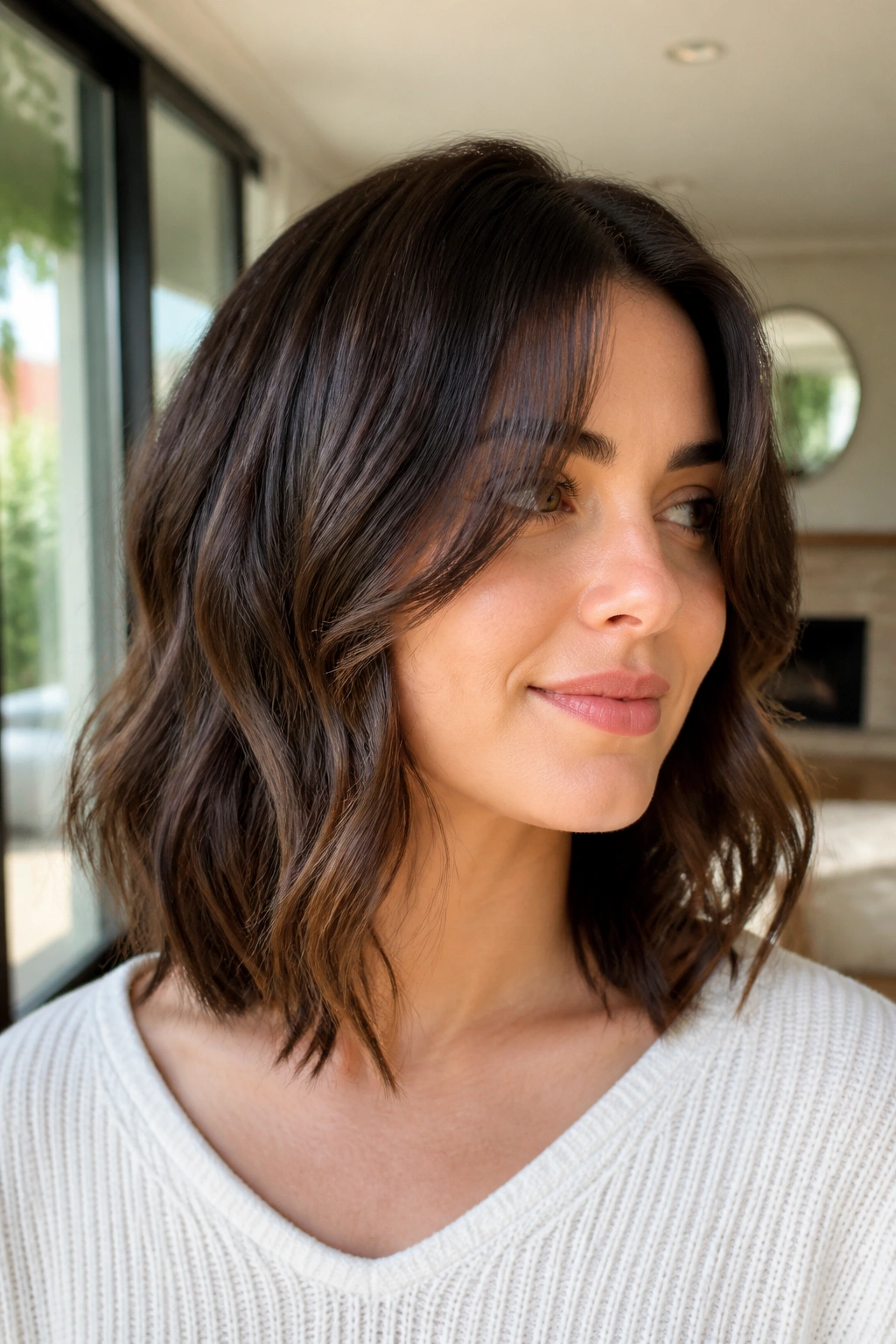
If your face needs a bit more vertical line near the front, curtain bangs are a smart move. They open in the middle, skim the eyes, and taper outward so the width lands lower than the cheekbones.
Where the bangs should sit
Ask for curtain bangs that begin around the cheekbone, not the middle of the cheek. That placement matters. If the shortest point hits too high, the fringe can make the face look broader instead of longer.
The rest of the lob should stay soft and long. I’d keep the ends textured, not feathered to pieces. The cut wants a little swing, especially when you tuck one side behind the ear.
Styling note
Blow-dry the fringe with a round brush, then bend it away from the face. A light pass of a flat iron can help if your hair fights shape. Keep the waves below the fringe loose, or the whole look starts to feel crowded.
4. Shaggy Wavy Bob With Choppy Layers

This is the cut for hair that falls flat at the crown and then suddenly gets big at the sides. That side-wide shape is exactly what round faces do not need, so the trick is putting the texture in the right places.
A shaggy wavy bob with choppy layers should feel airy, not messy in a careless way. The layers need to start lower on the head, usually below the cheekbone line, so they don’t create extra fullness where the face is widest. Think of movement through the ends, not a mushroom shape.
This one works best when the waves are broken up with fingers or a wide-tooth comb. A little dry texture is good. Crunchy product is not. If the hair is fine, keep the layers long and sparse. If the hair is dense, ask for more internal removal so the shape doesn’t balloon out.
5. Blunt-Ended Long Wavy Bob
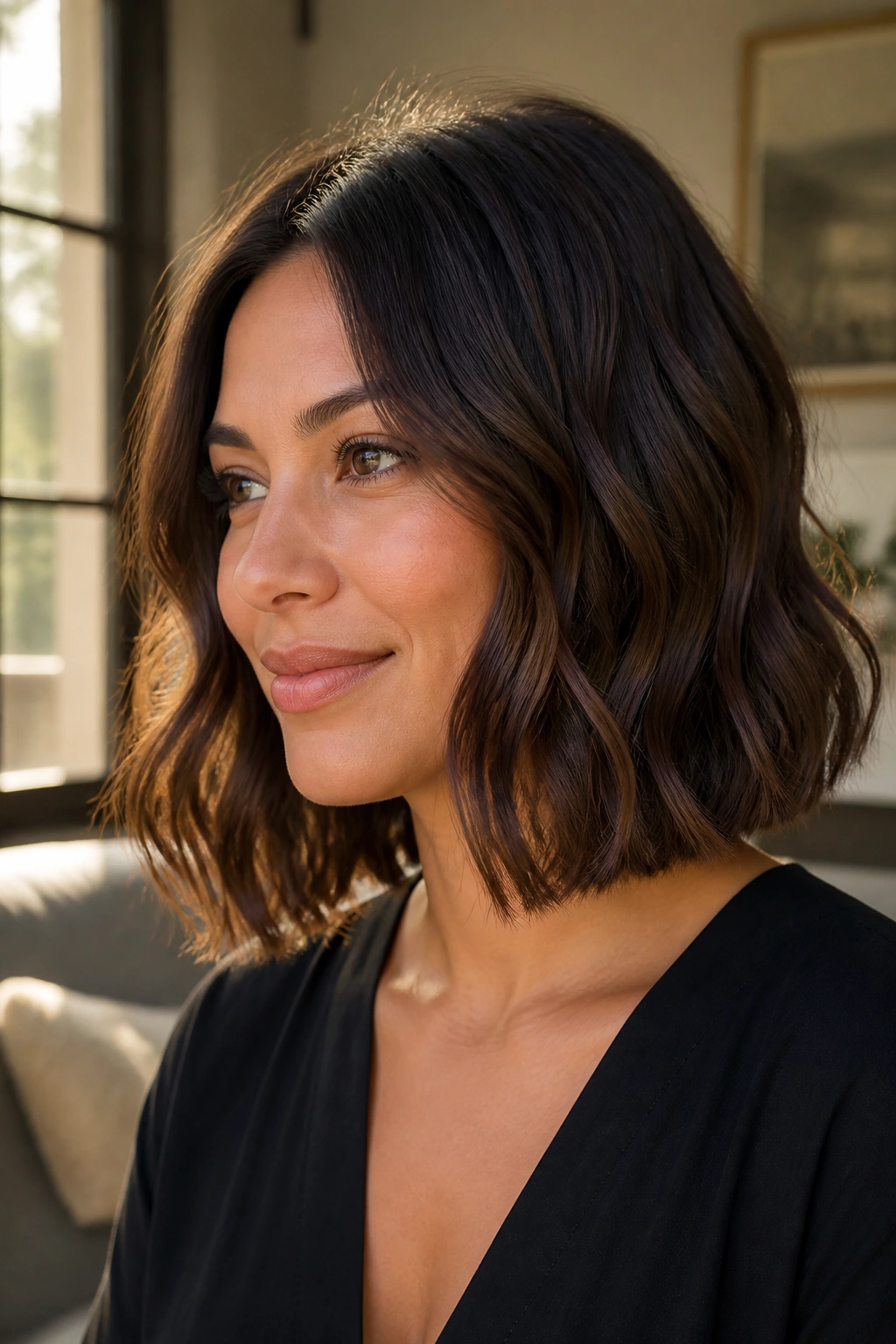
The blunt-ended lob has a different personality. It feels cleaner, denser, and a little more deliberate than a heavily layered cut. On a round face, that can be a useful trick because the straight edge gives the eye one strong line to follow.
The waves should stay soft, though. You want bend, not a full curl pattern. Too much texture against a blunt edge can make the cut look bottom-heavy, and that’s where the shape starts to lose its edge.
I like this style for thicker hair because the outline stays crisp even when the hair air-dries. It also behaves well if you hate a lot of salon fussing. The bluntness gives the bob weight, while the wave keeps it from looking severe. That combination is quietly strong.
Too many layers ruin it.
6. A-Line Wavy Lob With Subtle Angle

Unlike a straight-across bob, an A-line lob quietly does the face-slimming work for you. The front is left a touch longer than the back, so the hair naturally points downward instead of sitting in a circle around the cheeks.
Keep the angle gentle. I’m talking about a soft difference, not a dramatic stacked cut from another decade. A one-inch shift from back to front is often enough. That small slant gives round faces a longer frame without shouting about it.
This is especially good if your hair has natural bend, because the angle shows up even when the styling is easy. The back should hug the neck a little, while the front skims the collarbone. That shape feels neat, clean, and a little sharper than a standard lob. Good. It should.
7. Face-Framing Layered Lob
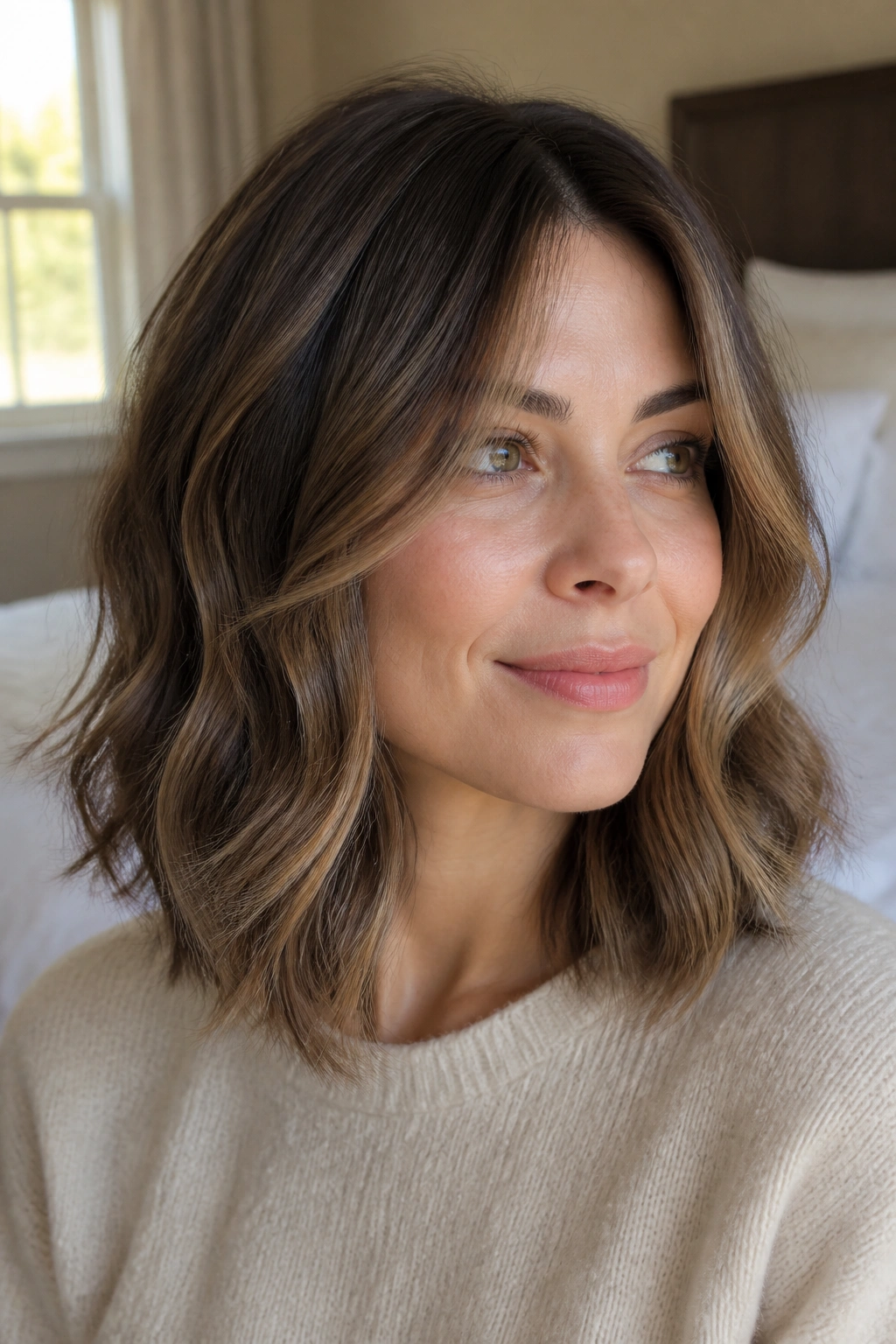
A good face-framing lob can be magic on a round face, but only if the first layers are placed with some thought. Start them around the mouth or chin area and let them blend down. If the shortest pieces stop at the cheeks, they can make the face look broader.
Layer placement
The front pieces should move away from the face, not sit squarely on it. A soft diagonal from cheekbone to collarbone works better than a short, rounded frame. The longer the front, the more length you get through the face.
Styling note
Curl the front pieces away from the face for the first pass, then loosen them with your fingers. That tiny shift changes the whole mood. It also keeps the hair from bunching around the widest part of the face.
- Best on medium-density hair
- Works with straight, wavy, or bendy textures
- Needs only light layering near the crown
- Looks best when the ends stay soft and separated
8. Off-Center Part With S-Bend Waves

A center part is not the only option, and I wish more people would stop treating it like the default. An off-center part can give a round face a longer line, especially when the waves fall in soft S-shapes instead of tight spirals.
The S-bend is the key here. It gives the hair movement without puffing out at the sides. That kind of wave feels a little more relaxed than a polished curl, which is part of the appeal. The shape reads as easy, not overdone.
If your hair has some natural wave, this is a low-effort style. If it does not, use a flat iron or large barrel iron to make loose bends, then brush them out once they cool. The cut should still be long enough to sit below the jaw. That keeps the whole thing from floating right at cheek level.
9. Textured Beach-Wave Lob

What keeps a beach-wave lob from turning boxy? Texture at the ends, and enough length to let the hair fall in layers instead of one big puff.
This version works best when the wave pattern is loose and a little uneven. The goal is not to make every bend identical. Hair that is too symmetrical can make a round face feel even rounder. A broken-up finish gives the eye places to rest, which softens the shape.
Use a light spray at the mid-lengths and ends, then separate the waves with your fingers once they cool. Don’t load the roots with product. That’s a fast way to make the top collapse and the sides swell. If your hair is fine, keep the texture spray light. If it’s thick, you can push the separation a little more.
10. Money-Piece Highlighted Wavy Bob
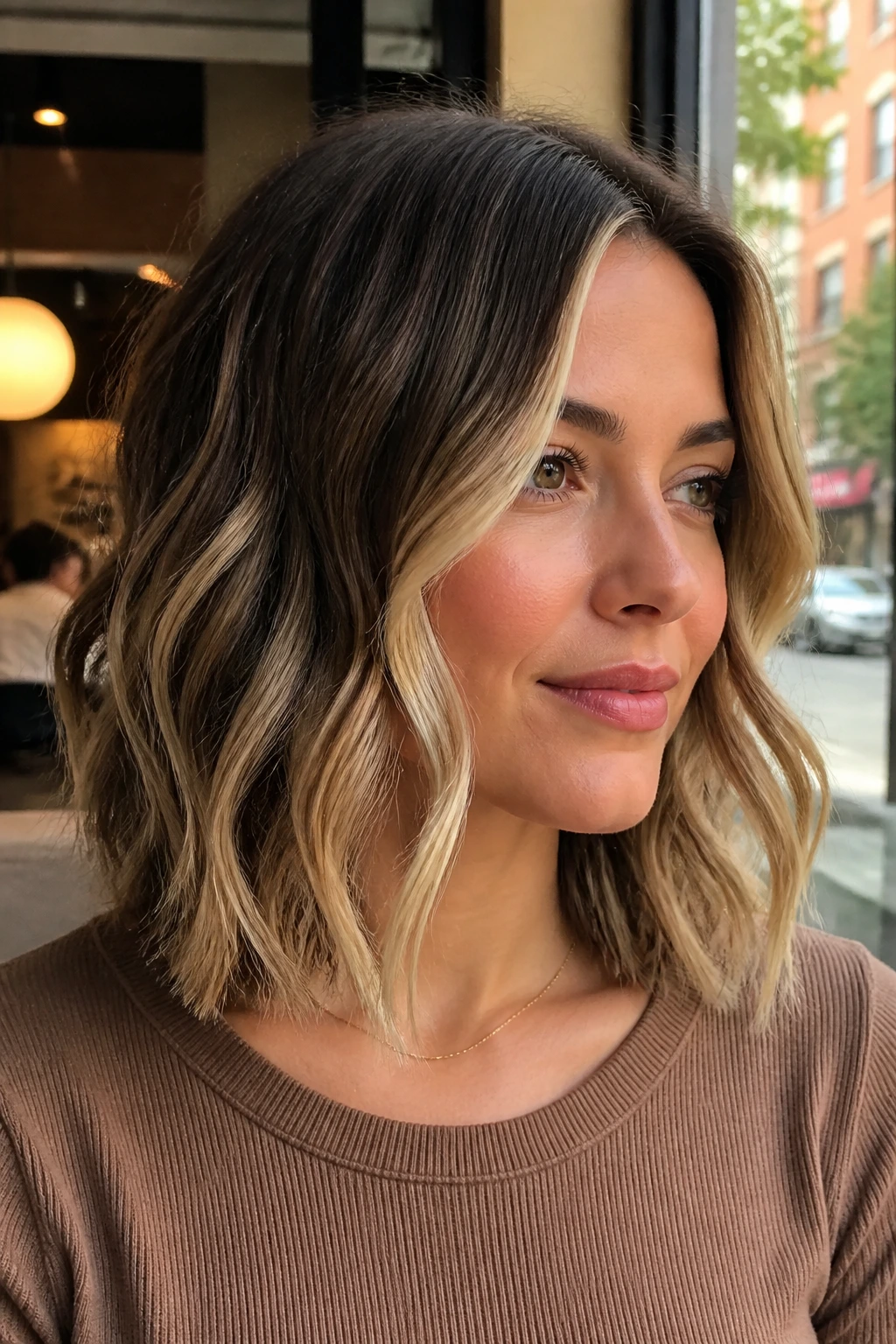
A bright front piece can change the whole feel of a long wavy bob haircut for round faces. It does not replace the cut, but it changes how the face reads. That’s why this style works so well when the shape already has good length and soft movement.
The lighter pieces should stay narrow and placed near the temples or cheekbone area. Too much brightness around the full face can make the look busy. A slim money piece, especially when it drops into a wave, gives a clean frame without boxing in the cheeks.
I’d still keep the haircut long and layered underneath. The color draws attention up front, but the cut does the actual slimming work. That means the ends need to fall below the chin and the front pieces should move in a soft diagonal, not a wide shelf. Small detail. Big difference.
11. Crown-Volume Wavy Lob
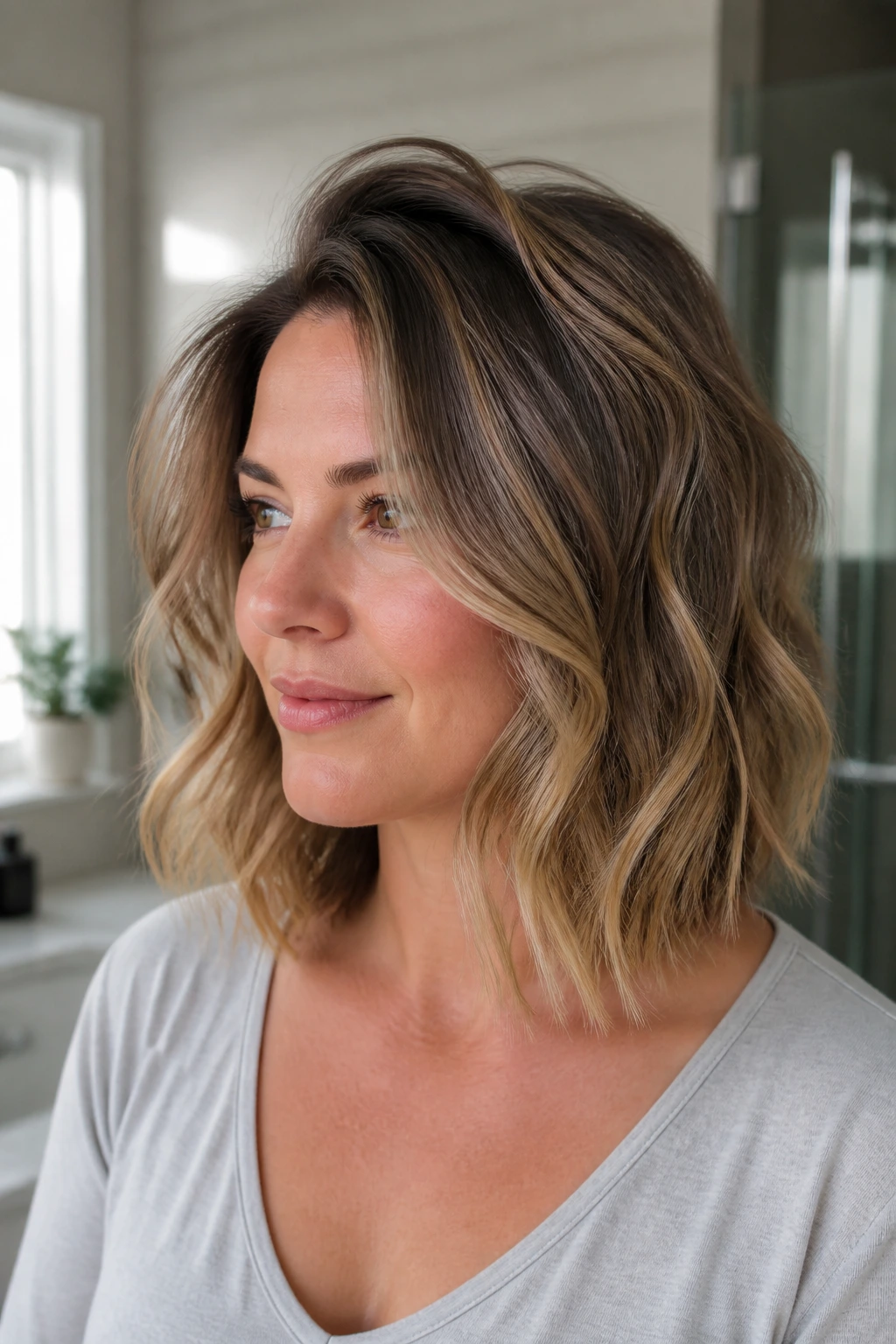
Volume belongs at the crown, not at the sides. That’s the whole point here. A round face usually looks better when the hair gains height on top and stays controlled through the cheek line.
A crown-volume lob needs a bit of root support. A mousse or root spray at the top, then a rough blow-dry with a round brush, usually does the job. Lift at the roots and keep the waves starting lower on the head. If the wave pattern begins too high, the cut starts to feel puffy.
This is a strong choice for hair that collapses after a few hours. It gives the face a longer outline without asking for a lot of daily styling. I like it most on medium to thick hair, where the crown can hold shape and the ends can keep moving.
12. Razor-Cut Airy Lob

Razor-cut ends move in a softer, lighter way than blunt scissors leave them. On thick hair, that can feel like a relief. The lob stops sitting there like a block, and the waves get to swing a little.
Best hair types
This cut is happiest on hair that is full, dense, or naturally coarse. The razor removes weight and lets the ends breathe. Fine hair can wear it too, but only if the ends are healthy. Dry, frayed hair and a razor-cut lob are not friends.
What to watch for
- Keep the razor work away from the very ends if your hair splits easily
- Ask for soft removal inside the shape, not everywhere
- Style with a cream rather than a stiff spray
- Let the waves fall loose instead of over-defining them
Warning: if the haircut feels wispy on day one, it will probably feel stringy later. There’s a difference.
13. Bottleneck Bang Wavy Lob

Can bangs work on a round face? Yes, if they open in the right place and don’t sit like a wall across the forehead. Bottleneck bangs do that job well because they narrow at the center and widen slowly as they move outward.
The shortest point should stay in the middle of the forehead, with the side pieces falling toward the cheekbones. That creates a nice taper. The bangs give shape near the eyes, while the long wavy bob below keeps the face from feeling crowded.
This cut has a little personality. It can look soft and romantic, but it still has structure. I’d keep the waves loose and avoid too much root volume near the fringe, because that can make the upper half of the face look busy. The good version feels airy, not heavy. That’s the whole game.
14. Tucked-One-Side Wavy Lob
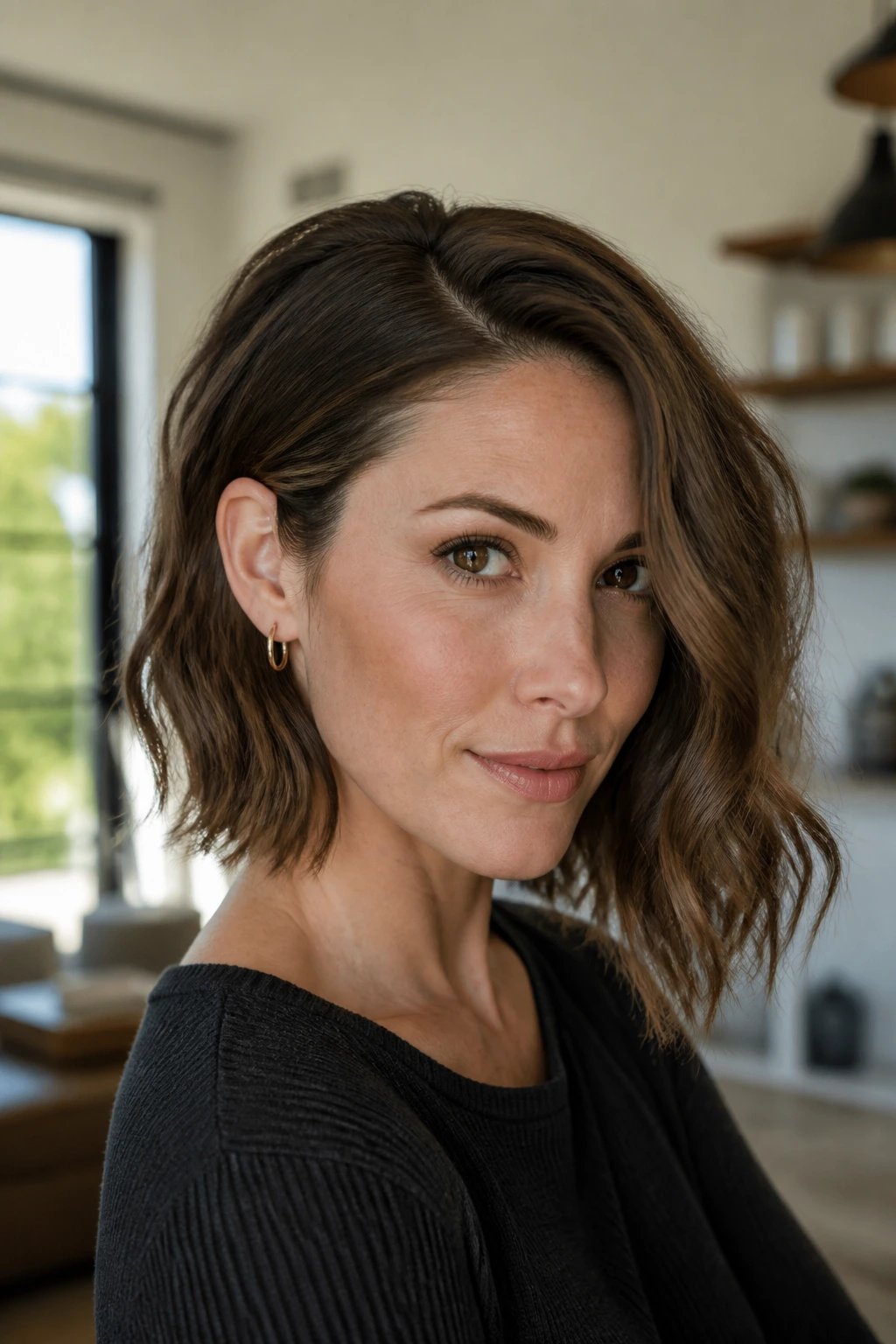
Unlike symmetrical styles, this one uses asymmetry as the main shape. One side gets tucked behind the ear, the other side stays loose and wavy. That tiny mismatch helps a round face look longer and a little sharper through the jaw.
It also gives you a habit you can use every day. No special styling trick, no complicated blowout. Just one side tucked, one side down. The tucked side should lie a bit flatter, so a small touch of smoothing cream or serum helps. The loose side can keep more wave and texture.
I like this cut for people who want a style that feels casual but still thought through. It looks neat enough for work, but it doesn’t feel stiff. If you wear glasses or earrings, even better. The tucked side makes room for them, which gives the whole look some breathing room.
15. Layered Lob With Piecey Ends
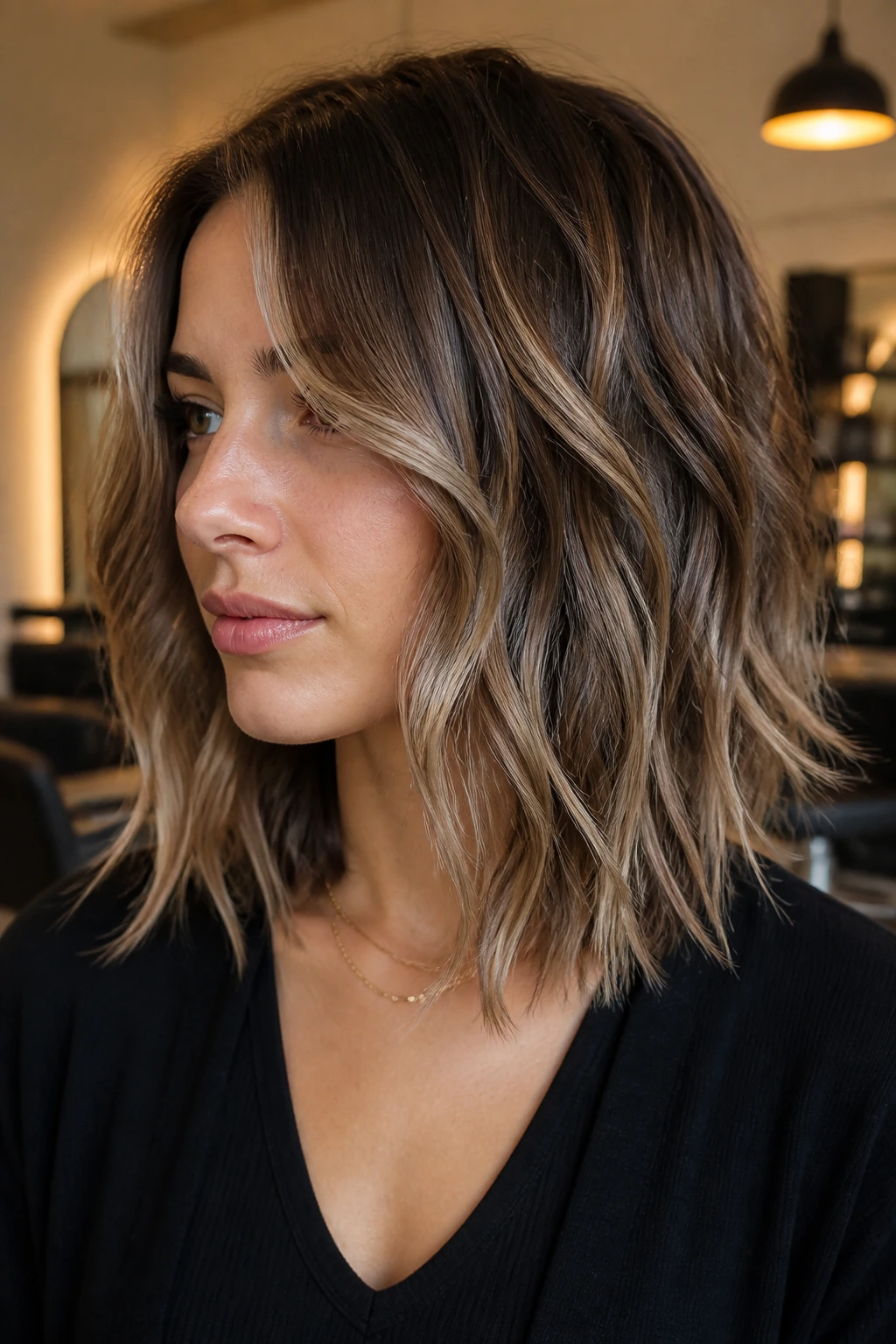
Piecey ends are one of those details that sounds small until you see the haircut without them. Then the difference is obvious. A layered lob with separated ends keeps the shape from turning into one solid block around the face.
The layers should be long enough to move, but not so short that they bounce out at the cheeks. That’s the part that matters on a round face. You want the texture living mostly in the lower half of the haircut, where it adds line instead of width.
A pea-size amount of light cream or balm is enough for most hair. Work it through the ends only, then twist a few sections with your fingers. You are not trying to make every strand separate. Just enough definition so the cut feels alive. Too much product makes the ends look greasy and flat. Too little, and the layers blur together.
16. Retro Hollywood Wave Lob
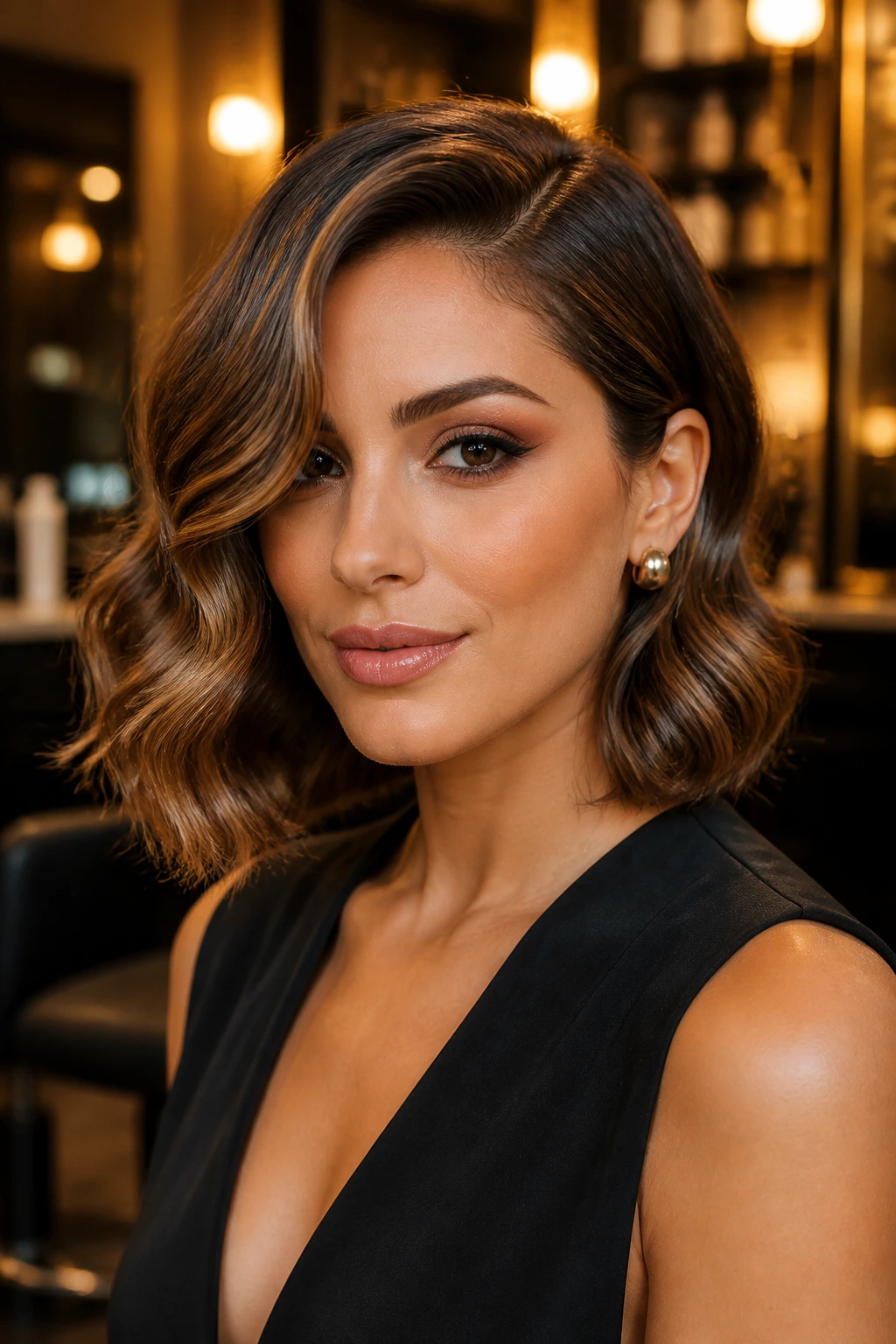
Who says glamour waves belong only on long hair? A lob can wear them well, as long as the length stays below the chin and the wave starts low enough to avoid widening the cheeks.
Where the wave should start
I’d set the first bend below the cheekbone, then sweep the wave back and away from the face. That keeps the front open. The shape should feel sculpted, but not frozen.
The deep side part is non-negotiable here. It gives the style a long diagonal and helps the wave fall in a clean direction. If the hair is very fine, use a setting spray before curling and let the curls cool fully before brushing them out.
This style has a dressier mood than most of the others on the list. It works for events, dinners, and any day you want the hair to look more put together than casual. It is not the lowest-maintenance option, and that’s fine. Some cuts deserve a little effort.
17. Long Wavy Bob With Internal Layers
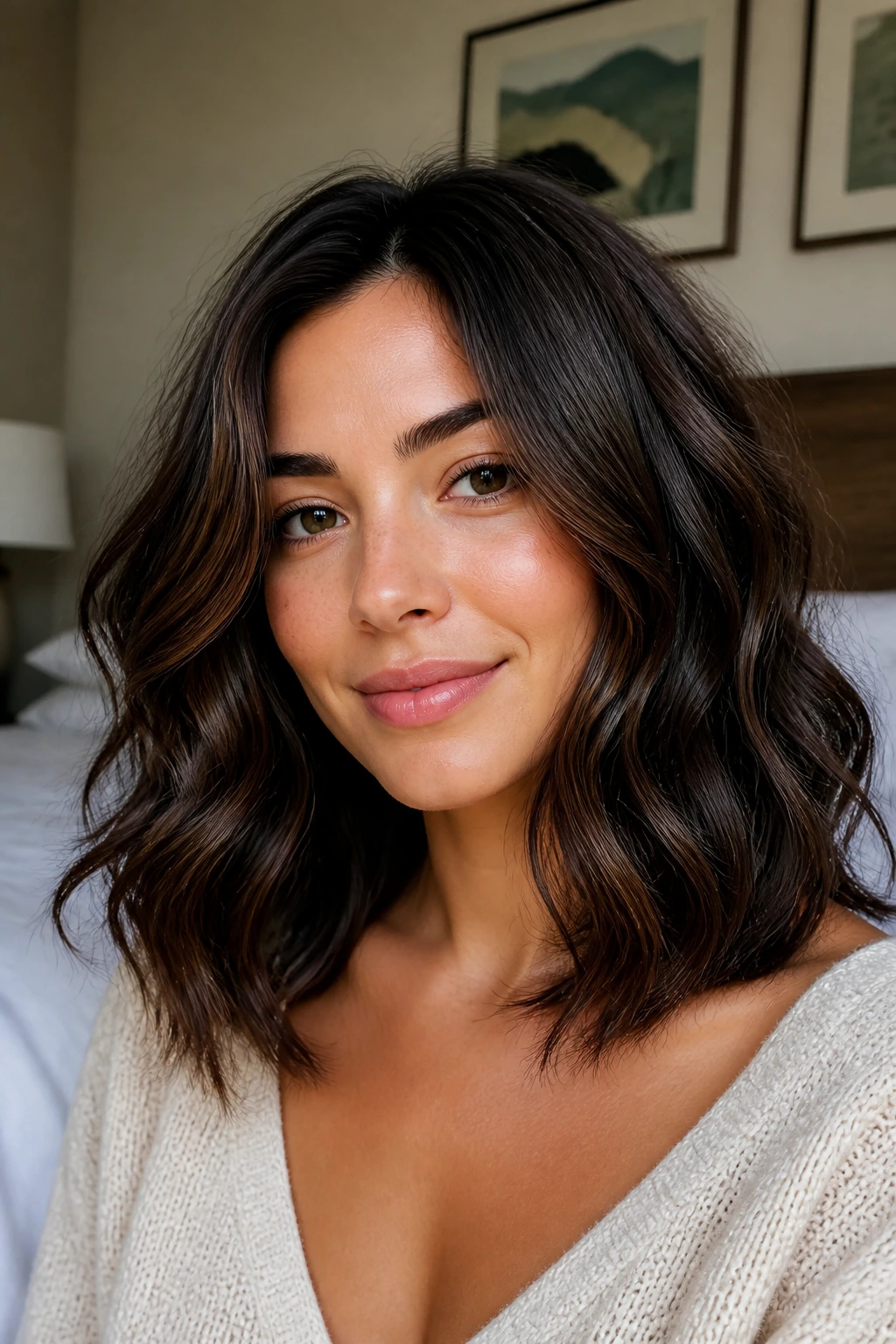
Internal layers are for anyone whose hair looks thick on the outside but feels bulky in the middle. The outside shape stays smooth, while the inside loses weight. That’s a useful trick on round faces, because you get movement without obvious chopping.
The haircut should still read as a clean lob from the outside. That’s what makes it different from a shag. The internal work happens quietly, under the surface, so the finish stays soft. When the hair moves, the shape breathes a little instead of sitting like a helmet.
- Good for dense hair that spreads out at the sides
- Helps waves fall in a looser pattern
- Keeps the perimeter looking clean
- Reduces puffiness without making the cut thin
This is one of the more practical choices on the list. It does not scream for attention. It just makes the hair behave better, which is often the real win.
18. Soft Inverted Lob
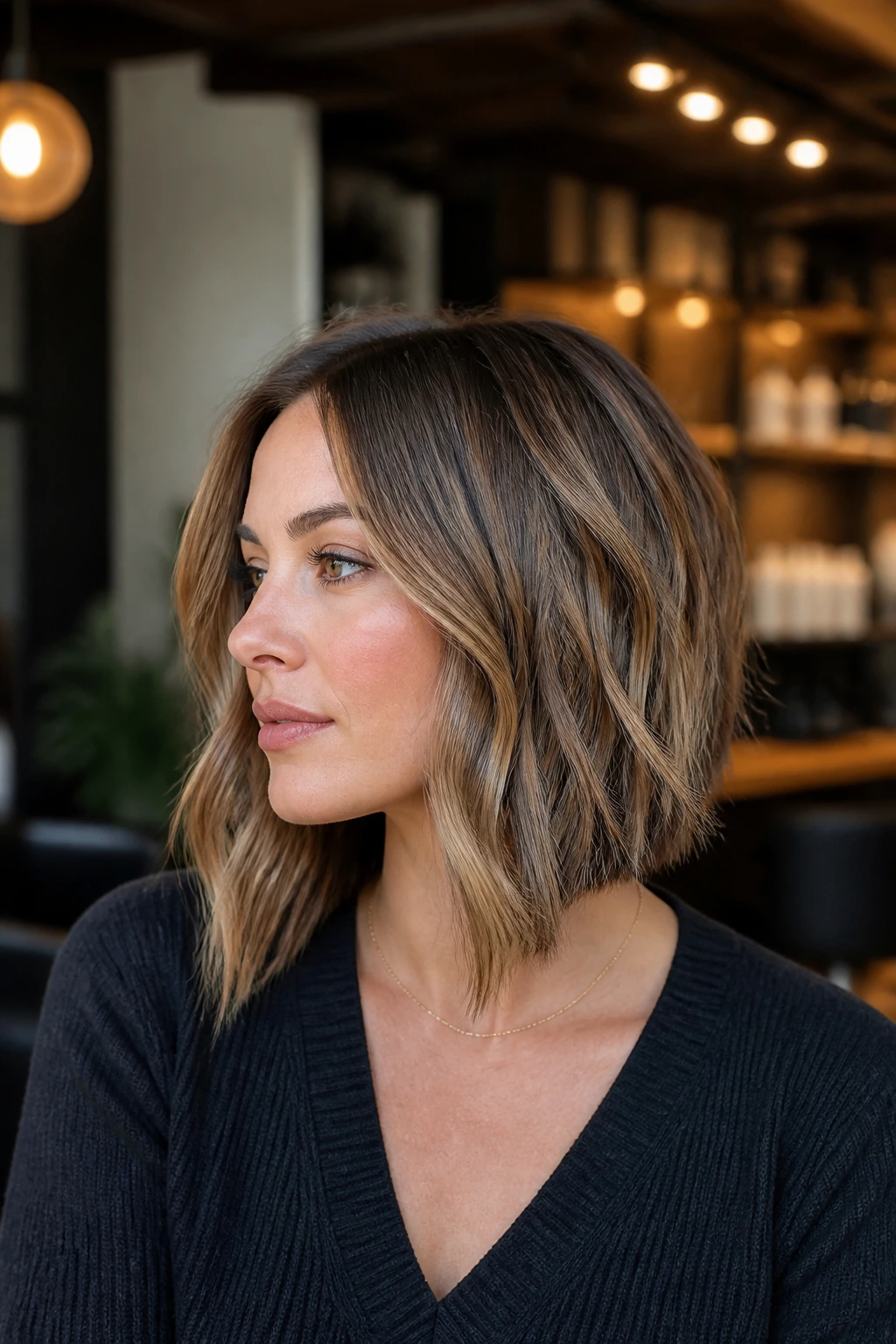
The soft inverted lob is the modern cousin of the A-line cut. The back sits a touch shorter, the front falls longer, and the difference is gentle rather than sharp. On a round face, that subtle angle adds length without making the haircut look severe.
Ask for a small tilt, not a dramatic slope. The back should feel tidy around the nape, while the front drapes toward the collarbone. If the angle gets too steep, the haircut can start to feel dated. Keep it soft. Clean. Easy to wear.
This shape looks especially good with loose waves because the bend reinforces the diagonal line. It also works well if you wear your hair behind one ear sometimes and loose other times. The cut still makes sense either way. That flexibility is part of its charm.
19. Natural Wave Bob With Minimal Styling
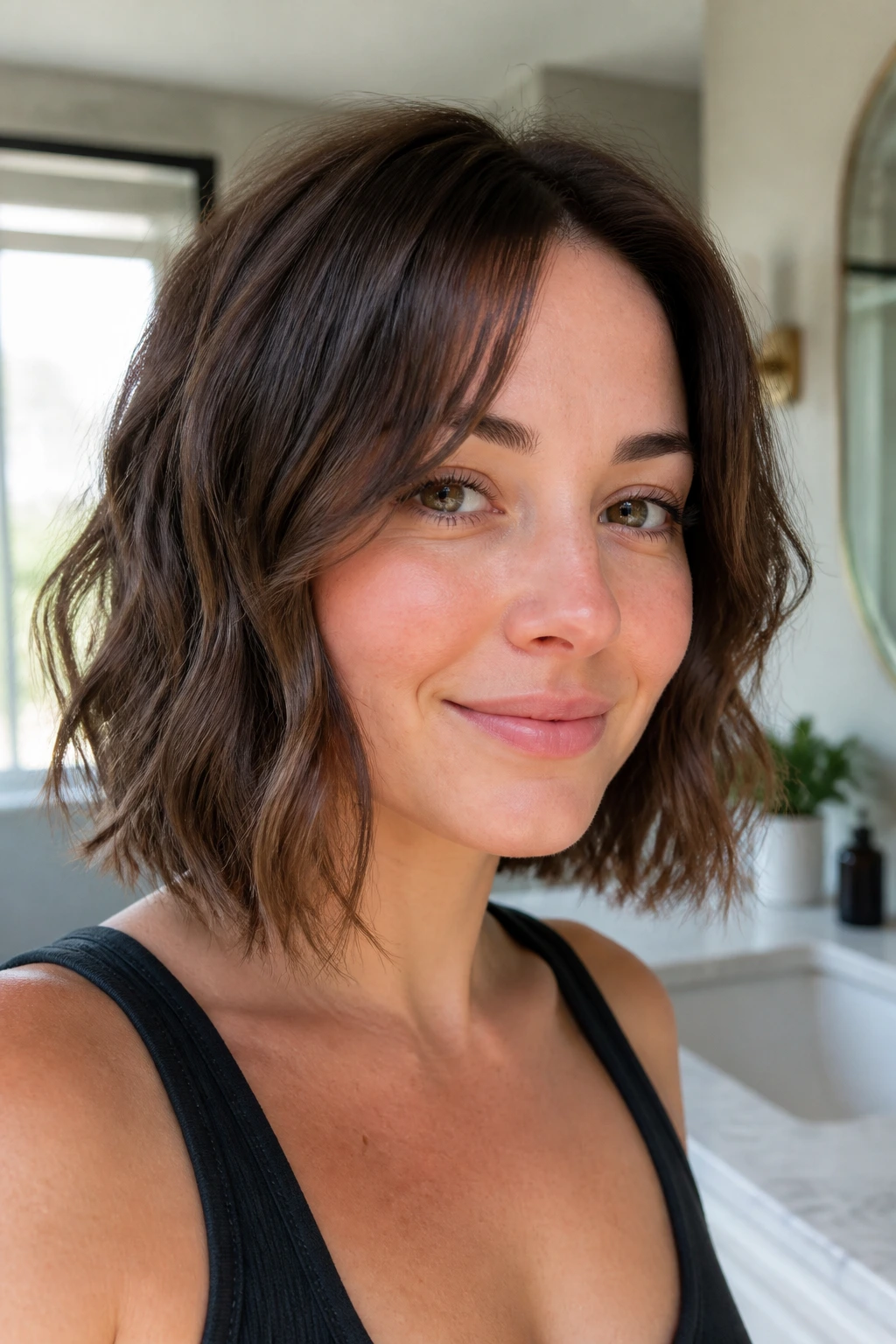
Some people want a haircut that looks like it cooperates with their hair instead of fighting it. This is that cut. A natural wave bob with minimal styling leans into what your texture already does, which means less heat and fewer steps.
The length should stay long enough to drop below the chin, but not so long that the wave loses all shape. A little internal layering helps the bend show up. After that, the haircut should work with air-drying, a touch of leave-in, and not much else. If the roots are too flat, a light mousse at the crown fixes that fast.
No hot tools required every day.
That last part matters. If your wave pattern already has some movement, don’t bury it under too much styling. Scrunch, twist a few front pieces while they’re damp, and let the ends dry with a little freedom. The result feels easy, not fussy, which is a nice change.
20. Center-Parted Lob With Soft Internal Movement
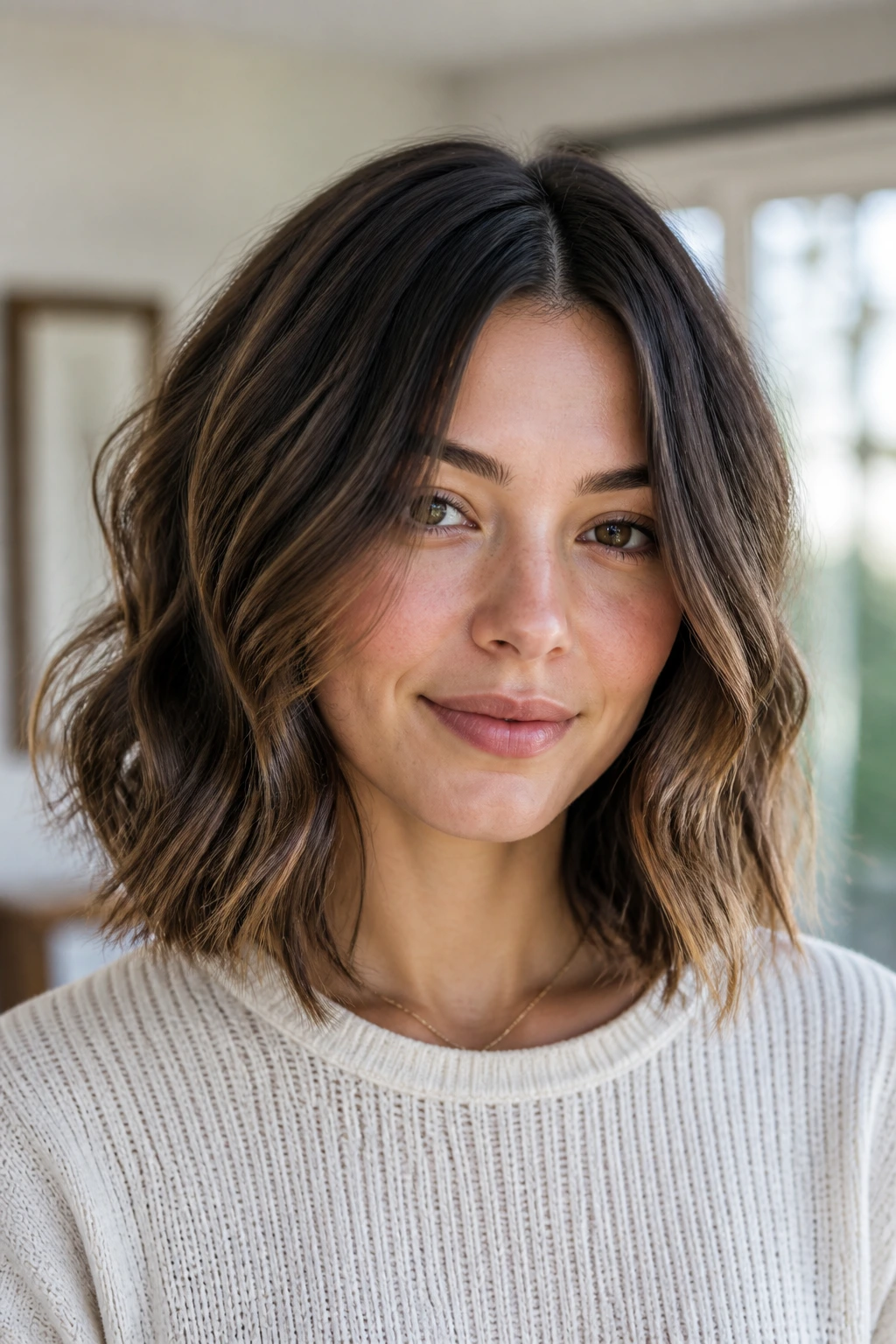
A center part can work on a round face, but only when the cut has enough movement to keep it from feeling rigid. A blunt center-part bob tends to emphasize width. A softer lob with hidden layers avoids that problem.
The length should sit at the collarbone or just below it. The front pieces need enough drop to skim past the cheek line, which stops the face from looking boxed in. Internal movement, not visible chunkiness, is the trick. You want the hair to swing, not sit.
This style is a good fit for medium-density hair and anyone who likes clean lines. It’s neat without being severe. If you want a little more softness, curl the front away from the face only, then leave the back looser. That gives the haircut a clear frame without losing the long line.
21. Side-Swept Fringe Wavy Lob
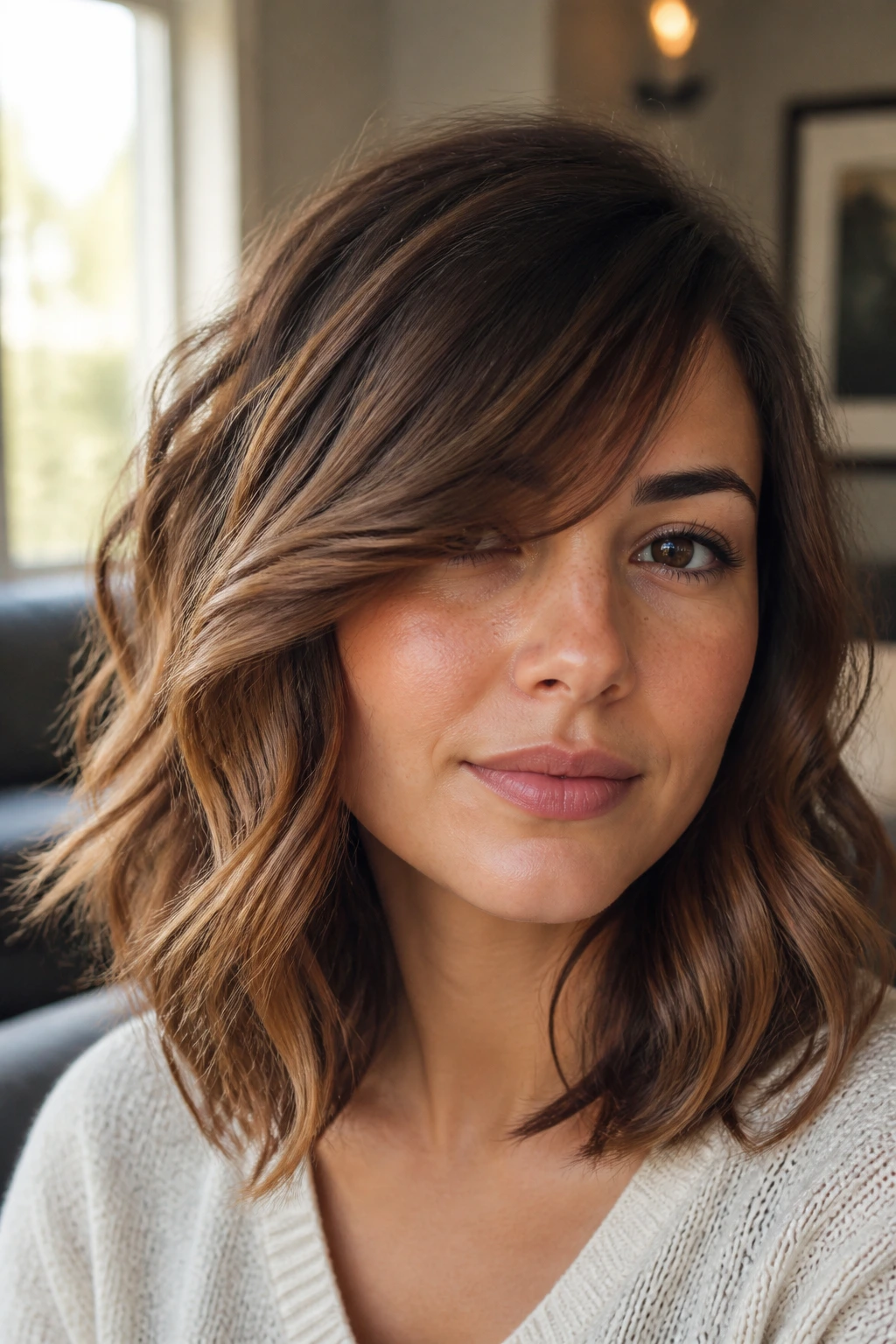
I like this one for anyone who wants coverage near the forehead without committing to full bangs. A side-swept fringe gives a round face a longer diagonal and keeps the front from feeling bare.
Why it works
The fringe starts near the brow and drifts toward the cheekbone, which breaks up the face in a flattering way. It also blends nicely into waves, so the whole cut feels connected instead of chopped into sections.
Styling note
- Blow-dry the fringe in the direction you want it to sit
- Keep the shortest point soft, not blunt
- Let the wave through the rest of the lob stay loose
- Use a light mist of spray only at the front
This cut is quietly useful. It softens the forehead, helps balance fuller cheeks, and still leaves enough hair around the face to feel feminine and easy. You can tuck it, pin it, or let it fall on its own.
22. Tousled Lob With Invisible Layers

Invisible layers are one of the quietest tricks in hair cutting. You feel them more than you see them. That’s a good thing here, because a round face usually benefits from movement that doesn’t look busy.
The outline stays soft and long, while the inside of the haircut gets just enough lightening to keep the waves from clumping. From the outside, it still reads as a clean lob. Underneath, it behaves better. That hidden movement is what keeps the style from spreading out at the cheeks.
This is a good option if you hate obvious layering or want the cut to look easy in a T-shirt and still work with a blazer. It also grows out neatly, which saves a lot of frustration. Ask for texture inside the shape, not through the perimeter. That’s the detail people often miss.
23. Chin-to-Collarbone Gradient Wavy Bob
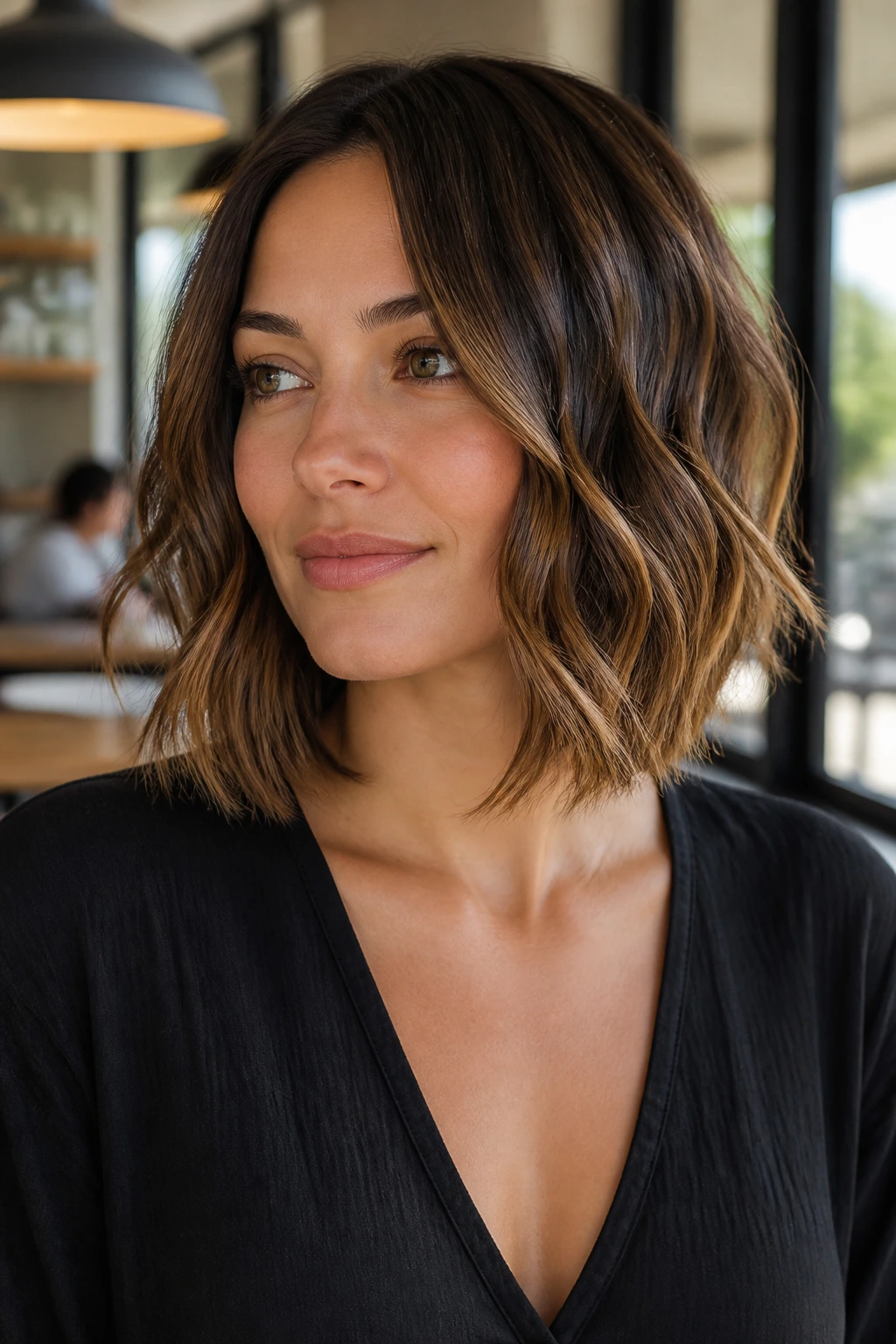
Why does the exact length matter so much? Because a few inches can change the whole shape of the face. A chin-length bob can widen a round face fast. A cut that slides from just under the chin down to the collarbone gives you room to breathe.
Best length range
For most round faces, I’d keep the shortest visible front piece below the chin and aim the main length at the collarbone. That keeps the jaw open and gives the cut a long line through the neck. The back can stay a touch shorter if you want shape, but not so short that it bunches up.
The waves should be soft enough to follow the gradient, not fight it. This is a style that looks best when the hair falls in a gradual slope, not a sharp shelf. If your hair is thick, the gradient helps stop the ends from looking bulky. If it’s fine, it adds a bit of visual heft without losing movement.
24. Rooty Wavy Lob With Air-Dried Ends
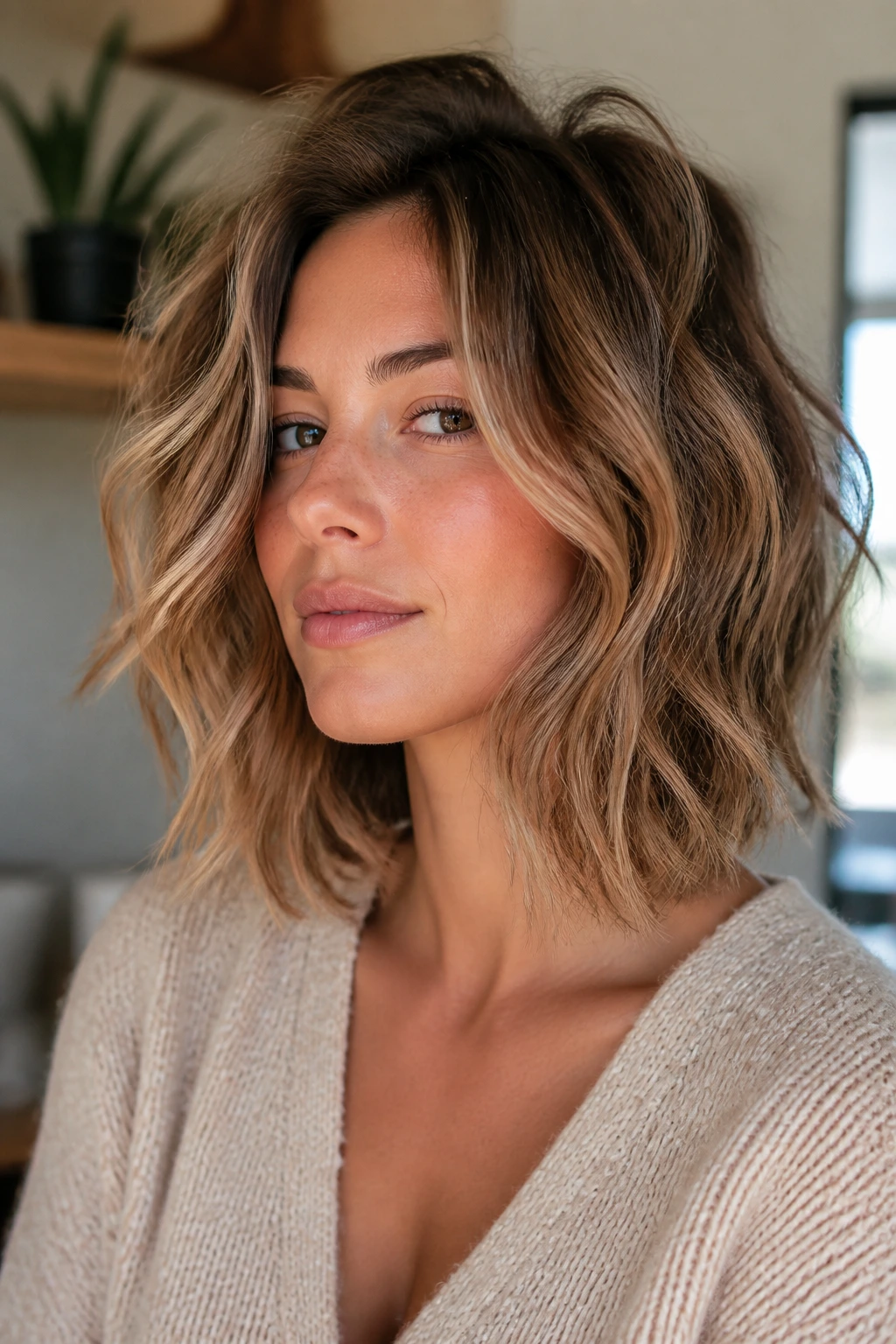
This one is for people who want texture that looks lived-in, not sprayed into place. A rooty wavy lob keeps the crown a little lifted and lets the ends dry with a soft, airy bend.
Start with mousse or root spray at the top, then rough-dry about 80 percent of the hair. After that, twist a few sections with your fingers and leave the ends loose. The result should feel relaxed, not lazy. There’s a difference. The root lift gives the face length, while the air-dried ends stop the style from turning too polished around the cheeks.
- Best for busy mornings
- Good on hair that likes a little natural bend
- Works with side parts and off-center parts
- Easier to refresh the next day than a curl-heavy style
A small amount of dry shampoo at the crown can revive this look fast. Don’t overload the sides. That’s where round faces can get visually widened.
25. Polished Long Wavy Bob for Round Faces
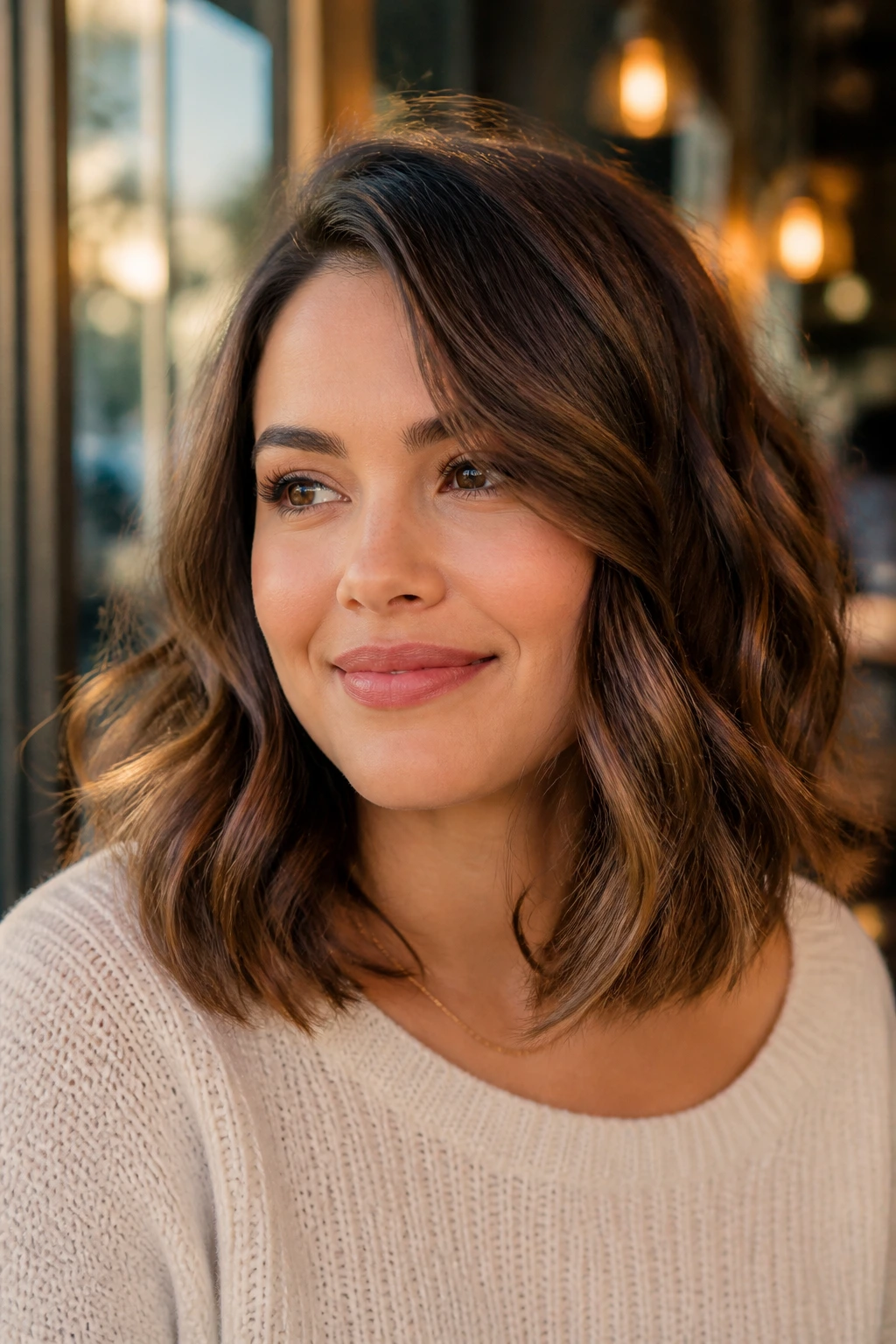
If you want one long wavy bob haircut for round faces that can move between work, weekends, and a dinner out without changing its whole personality, this is the one I’d point to first. It’s balanced, soft, and not needy.
The cut should land around the collarbone, with long layers that begin below the cheekbones and soft texturizing at the ends. The waves can be loose and brushed out, or a little more defined if you like shape. What matters most is that the front pieces keep falling down the face instead of puffing out beside it.
I’d ask for a side or off-center part, even if you normally wear the middle. That small shift gives the haircut more line. And if your hair has a tendency to widen at the sides, keep the crown a touch lifted and the ends a little separated. Clean. Soft. Easy to live in. That’s the sweet spot here.
