



A long black bob can do a lot of quiet work on a round face. It draws the eye downward, sharpens the outline around the jaw, and gives soft features a cleaner frame without turning the haircut stiff or severe.
Black hair helps more than people think. The color makes the line of the cut read with extra clarity, which is why a blunt edge, a clean angle, or a controlled wave can look especially strong on darker hair. The wrong bob can puff out at the cheeks and stop the face in its tracks. The right one keeps moving.
Round faces usually like a little length below the chin, some lift near the crown, and a front shape that does not end exactly at the widest point of the cheeks. That does not mean every cut has to be sharp or skinny. It means the silhouette has to be smart.
The 25 looks below do that in different ways: some lean sleek, some use bend and texture, some rely on bangs, and a few use asymmetry to break up the curve. If a cut looks tempting but a little too blunt for your taste, keep reading anyway. The fix may be in the part, the length, or one small tweak in the front.
1. Blunt Collarbone Lob with a Deep Side Part
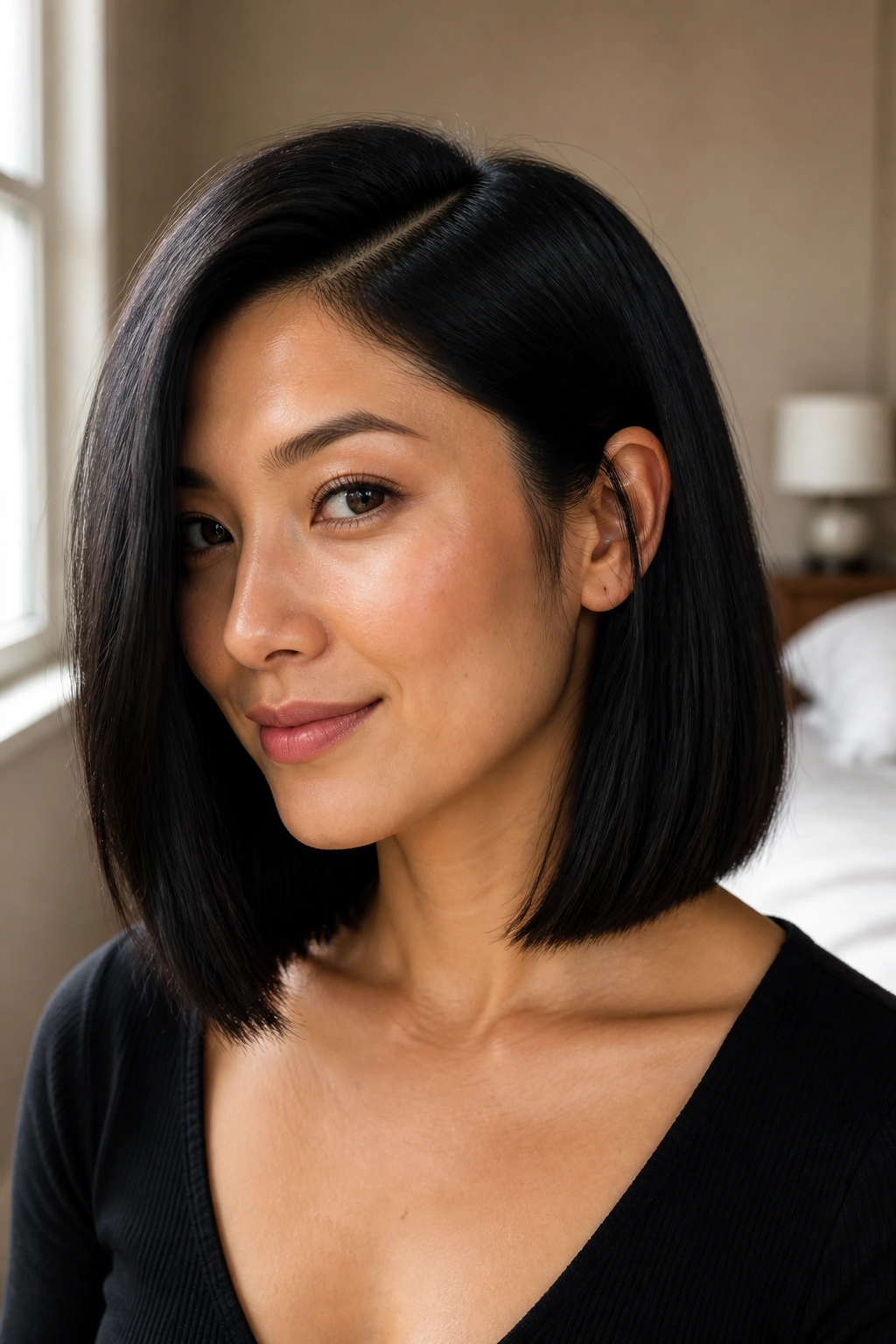
This is the safest long black bob for a round face, and “safe” is not a bad word here. A blunt line that lands at the collarbone gives the face a longer frame, while the deep side part interrupts the symmetry that can make cheeks look wider than they are. On black hair, the straight edge shows up fast. Clean. Strong. No fuss.
The trick is keeping the ends blunt without making the shape boxy around the cheeks. Ask for the front to graze the collarbone and the back to sit only a touch shorter. That tiny difference keeps the cut from collapsing into one flat plane.
If your hair is fine, this shape makes it look fuller. If your hair is thick, it keeps the bulk under control without stripping out the weight that makes a lob look expensive.
Best for: straight or slightly wavy hair, medium density, anyone who wants polish without a lot of styling.
2. Soft Angled Lob That Sits Longer in Front
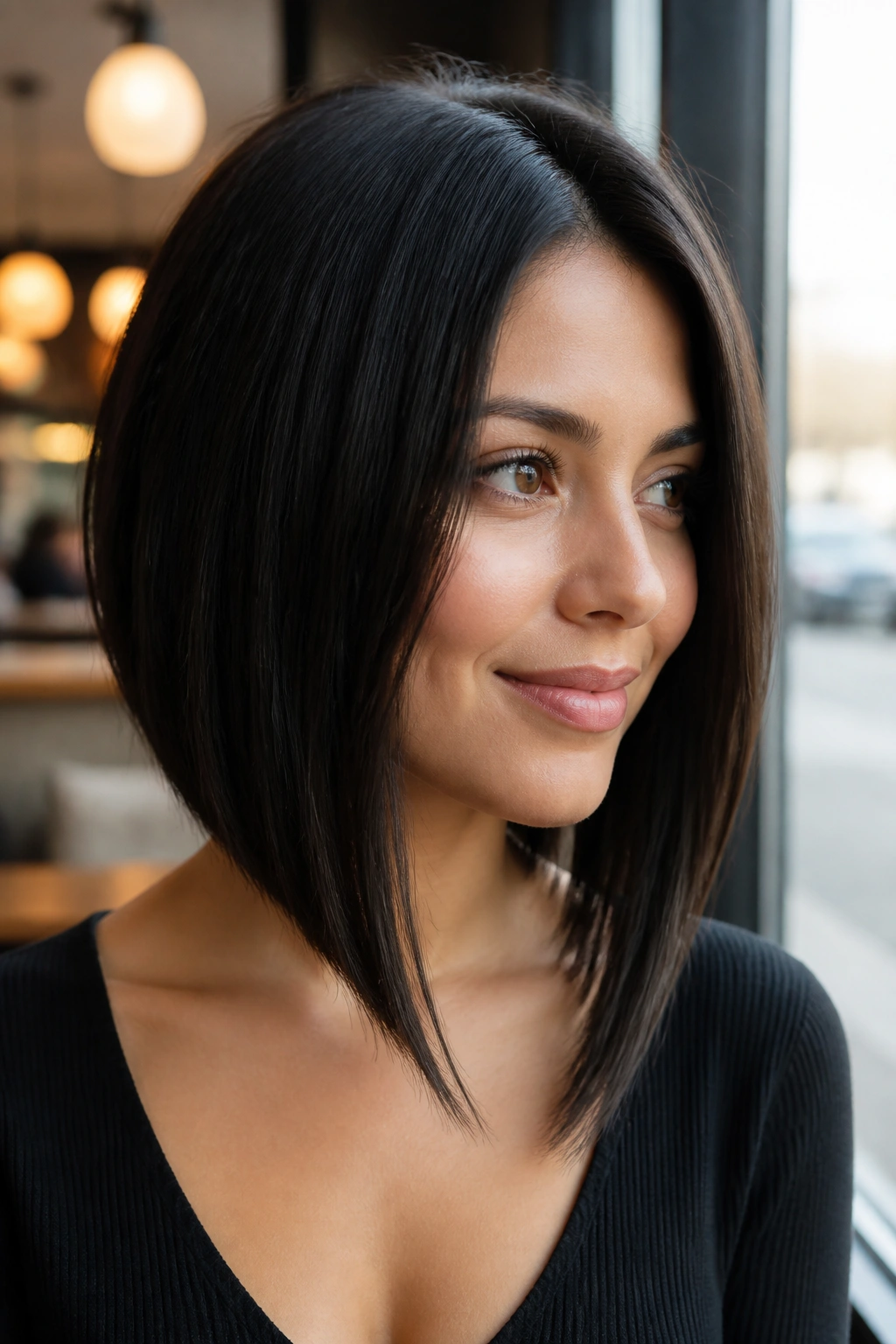
Why does a slight angle work so well on a round face? Because it gives the eye a direction to follow. The shortest point stays just behind the jaw, then the front pieces drop a little longer and keep the face from reading wide and short.
How to Ask for It
Tell your stylist you want a subtle A-line, not a dramatic wedge. The back should stay light and neat, while the front lands 1 to 2 inches longer. That small amount is enough.
- Keep the back above the collarbone.
- Let the front skim the upper chest.
- Leave the angle soft, not sharp.
- Style with a slight bend under the ends.
A cut like this is quietly flattering. It does not shout. It just keeps the face moving downward in the right places.
3. Sleek Center-Part Bob with Face-Framing Pieces
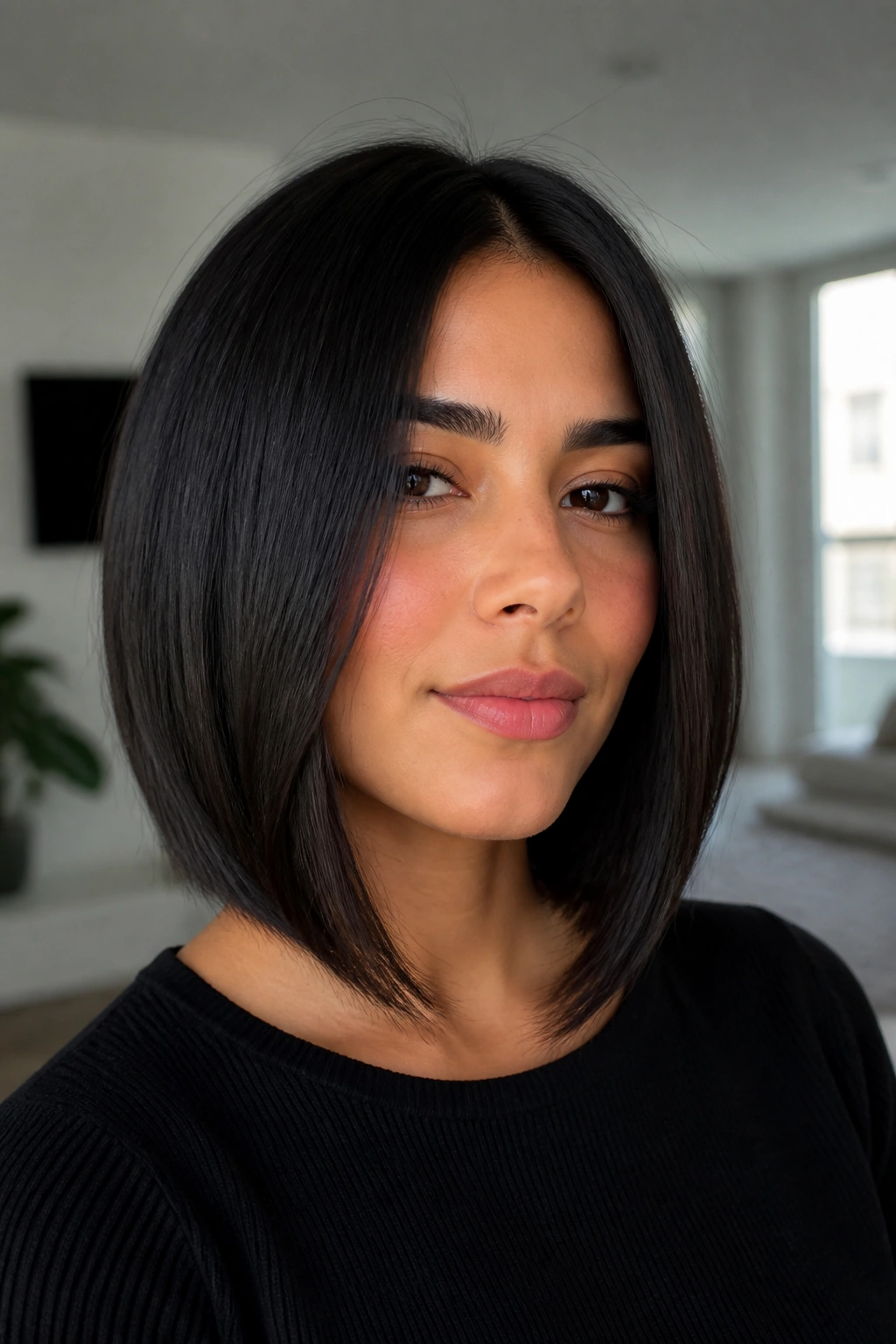
A center part can be tricky on a round face, but not if the rest of the shape pulls its weight. In this version, the center part is balanced by longer face-framing pieces that start below the cheekbone and curve toward the collarbone. That vertical drop matters.
The clean finish is the whole point. A sleek black lob with a glassy surface makes the haircut look deliberate, not accidental. It also gives the face a neat middle line, which can be useful if your features feel soft and you want a little more structure.
What I’d skip here is anything that flares out at the ends. Tucked-in ends, flat ironed ends, or a soft curve under the shoulders all work. A puffy finish does not.
If you wear earrings often, this cut is especially good. The open center and the longer front pieces let the earrings do some visual lifting too.
4. Tousled Lob with Loose, Chin-Skimming Waves
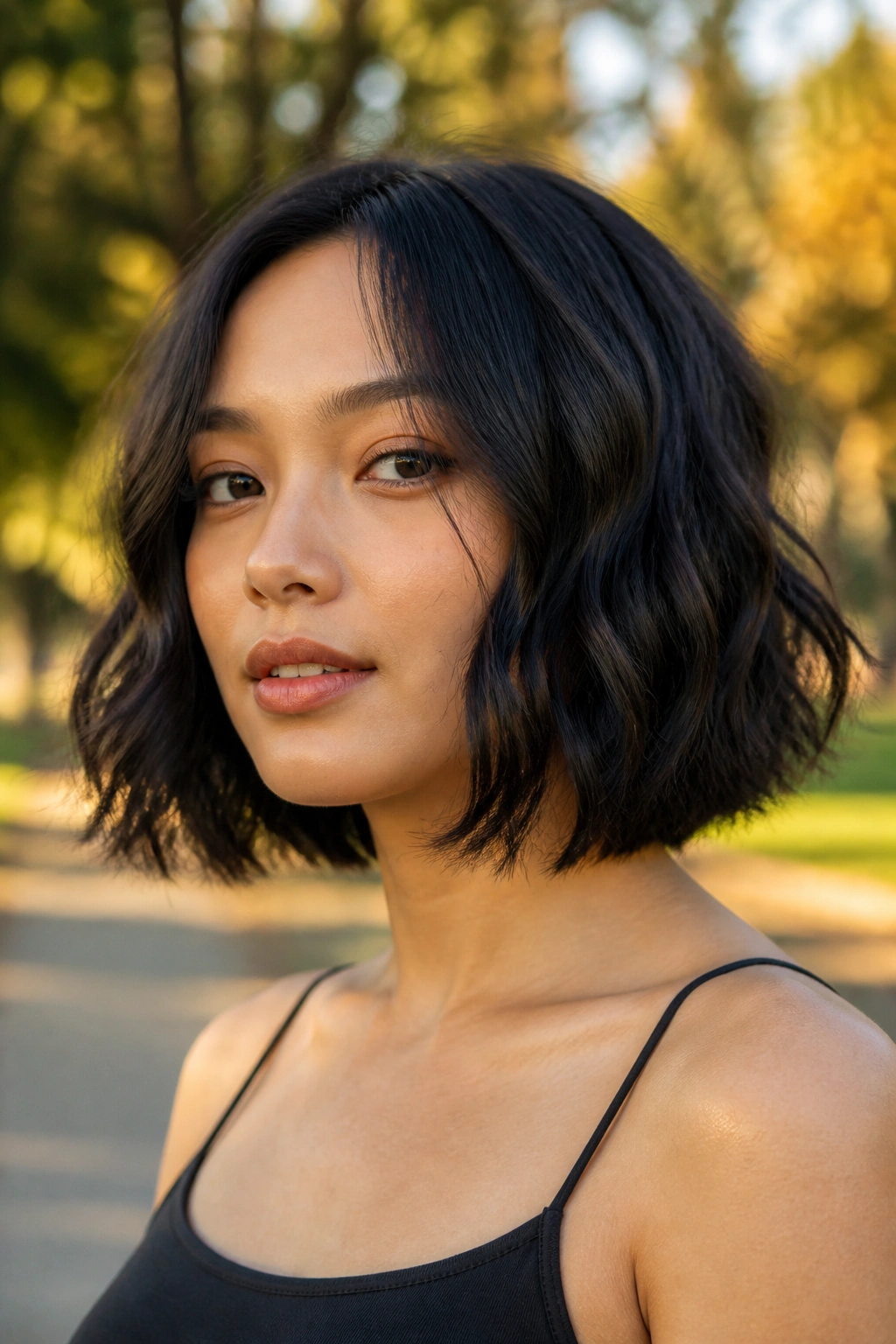
Loose waves can be flattering on round faces, but only when they start low enough. If the bend sits right at the cheek, it can make the face look wider. If it starts below the chin and falls in soft, uneven sections, the shape feels longer and lighter.
Black hair gives this cut a lot of presence. The shine makes the wave pattern visible even when the texture is subtle, so you do not need huge curls or heavy beach texture. In fact, too much curl can fight the clean line of a lob.
A 1-inch iron or a flat iron bend works well here. Wrap the hair away from the face for one section, then toward the face for the next. That mixed direction keeps the wave from turning into a uniform helmet.
This is the kind of cut that looks better the second day. A little lived-in movement takes the edge off the roundness without making the shape sloppy.
5. Curtain Bang Lob with Rounded Ends
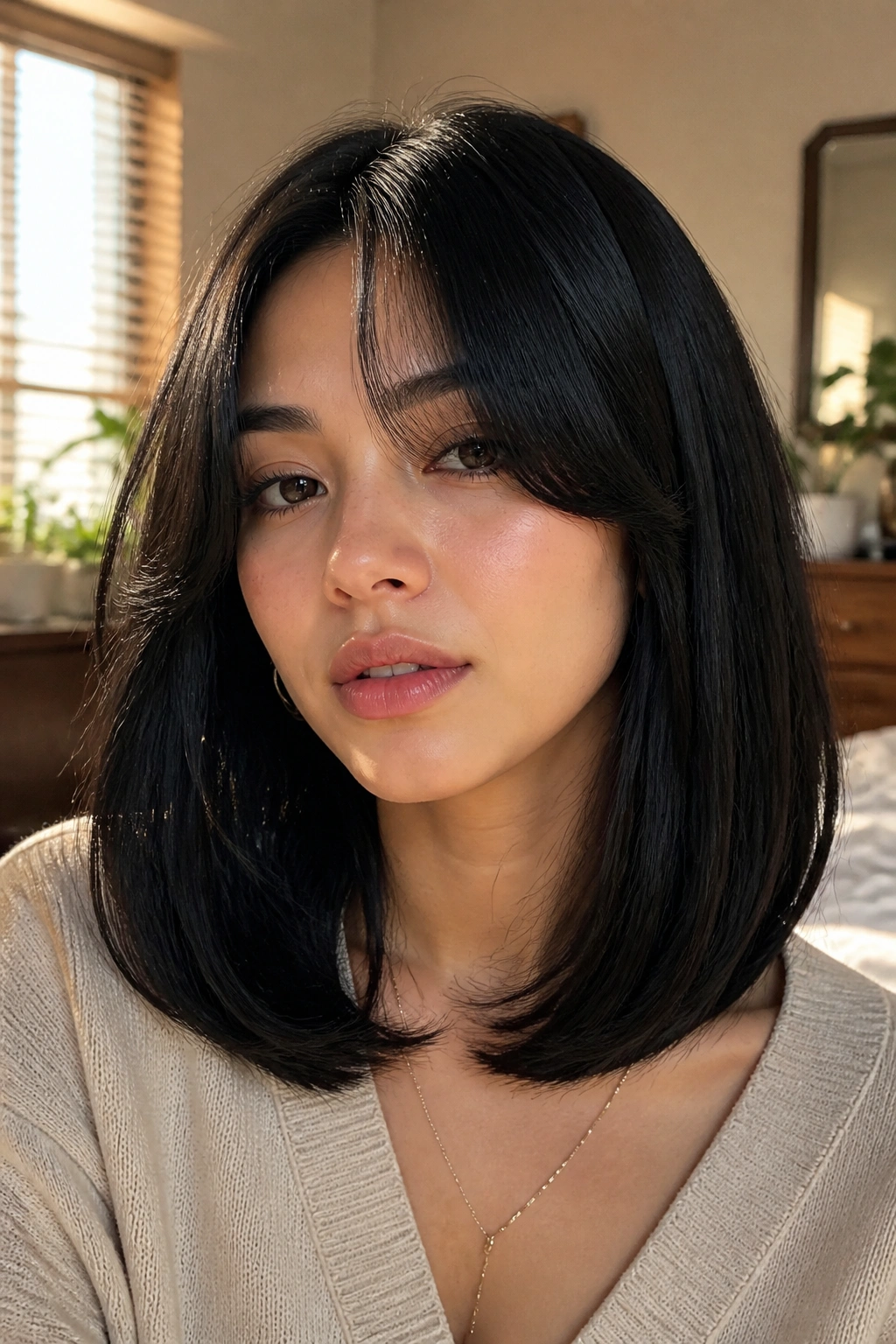
Curtain bangs do a lot of nice things for round faces. They open the forehead, split the eye line, and create two soft vertical panels that fall away from the cheeks. That last part is the reason they work.
Unlike a heavy straight fringe, curtain bangs do not chop the face in half. They begin near the part, sweep out toward the temples, and then blend into the long bob. The result is softer around the midface, which is where round faces often need the most help.
The ends of the bob matter here too. Keep them rounded under just a touch, not curled in a way that hugs the jaw. You want motion, not a little bowl shape.
Best version? Long black hair with curtain bangs that hit at the cheekbone or just below it. Shorter than that, and the balance gets awkward fast.
6. Chin-to-Collarbone Inverted Bob
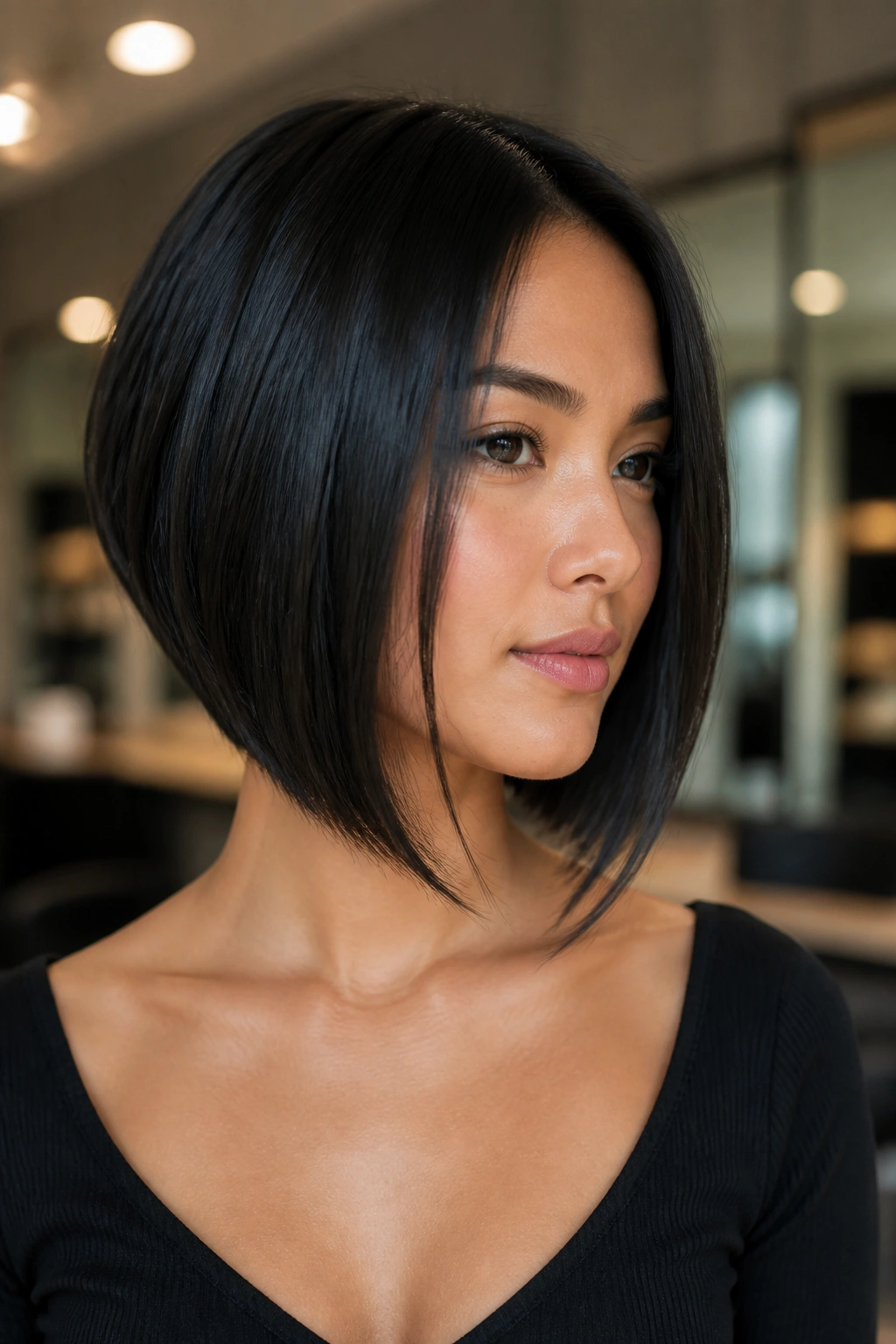
This cut gives you shape before styling even begins. The back is a little shorter, the front is longer, and the line moves forward in a way that makes a round face look more oval. It is one of the easiest shapes to wear if you like a bob with a clear outline.
What Makes the Inversion Work
The back should not be so stacked that it puffs up. That is the mistake. Keep the lift controlled and the front pieces smooth so the haircut does not turn into a wedge from the early part of the 2000s.
- Back length: just below the occipital bone or a bit lower.
- Front length: grazing the collarbone.
- Graduation: soft, not obvious.
- Finish: smooth with a slight inward turn.
A long black inverted bob looks strong on thick hair because it removes weight without making the ends look thin. On finer hair, it can create the illusion of more body where you need it.
7. Choppy Textured Lob with Razored Ends
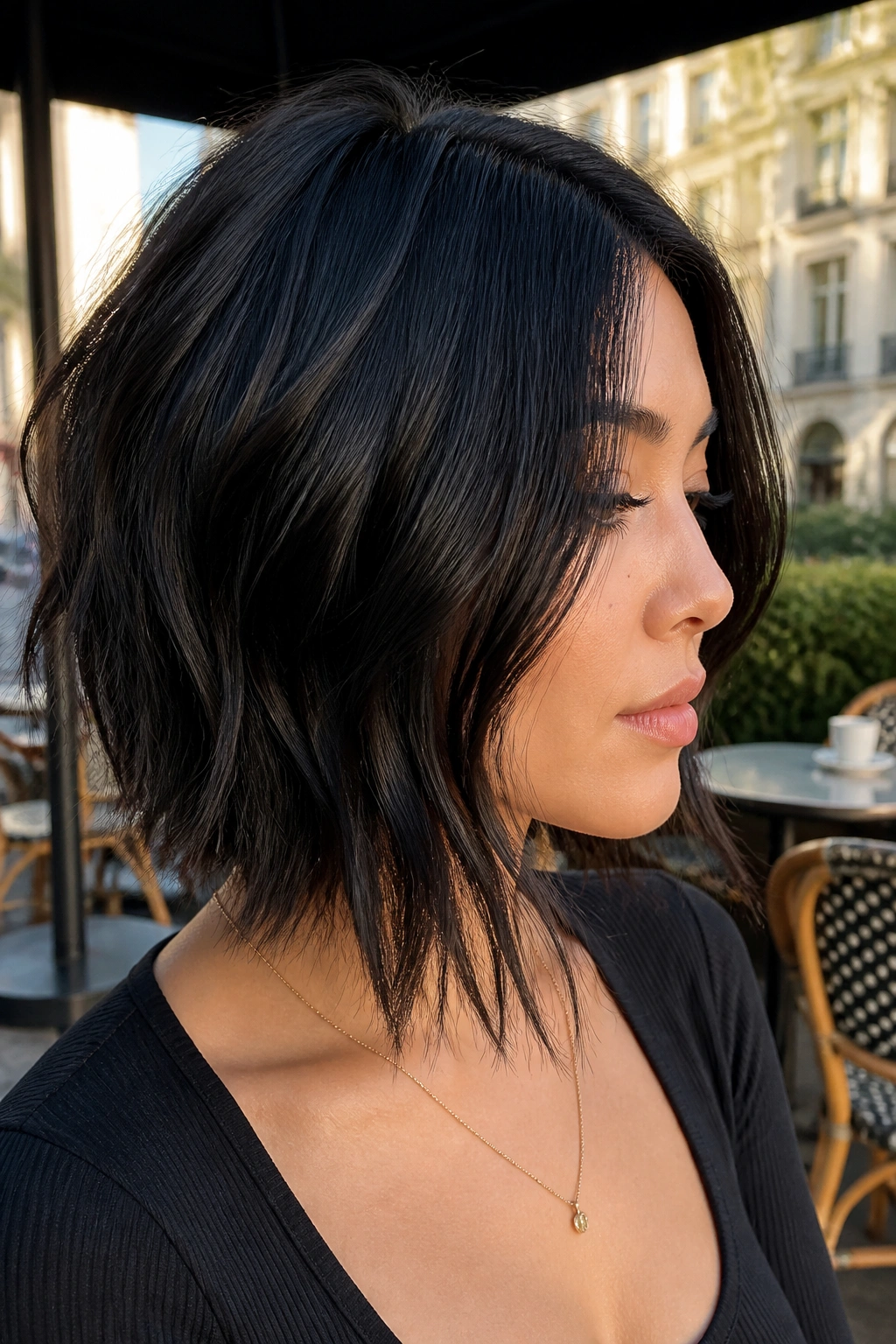
A little choppiness can be a good thing. Round faces sometimes look best when the haircut has broken lines, not one clean curve from side to side. Razored ends create that effect, especially on black hair where the contrast at the ends still reads clearly.
The key is restraint. Too many short pieces near the cheeks will add width, and that’s not the goal. Keep the texture lower, mostly from the mid-lengths down. Let the front stay longer than the jaw so the shape keeps length in play.
This is a good cut for natural wave or bend. It also suits someone who wants a messier finish and does not want to spend 20 minutes with a round brush every morning.
The vibe is relaxed, but not lazy. There is a difference.
8. Glass-Hair Bob with Invisible Layers
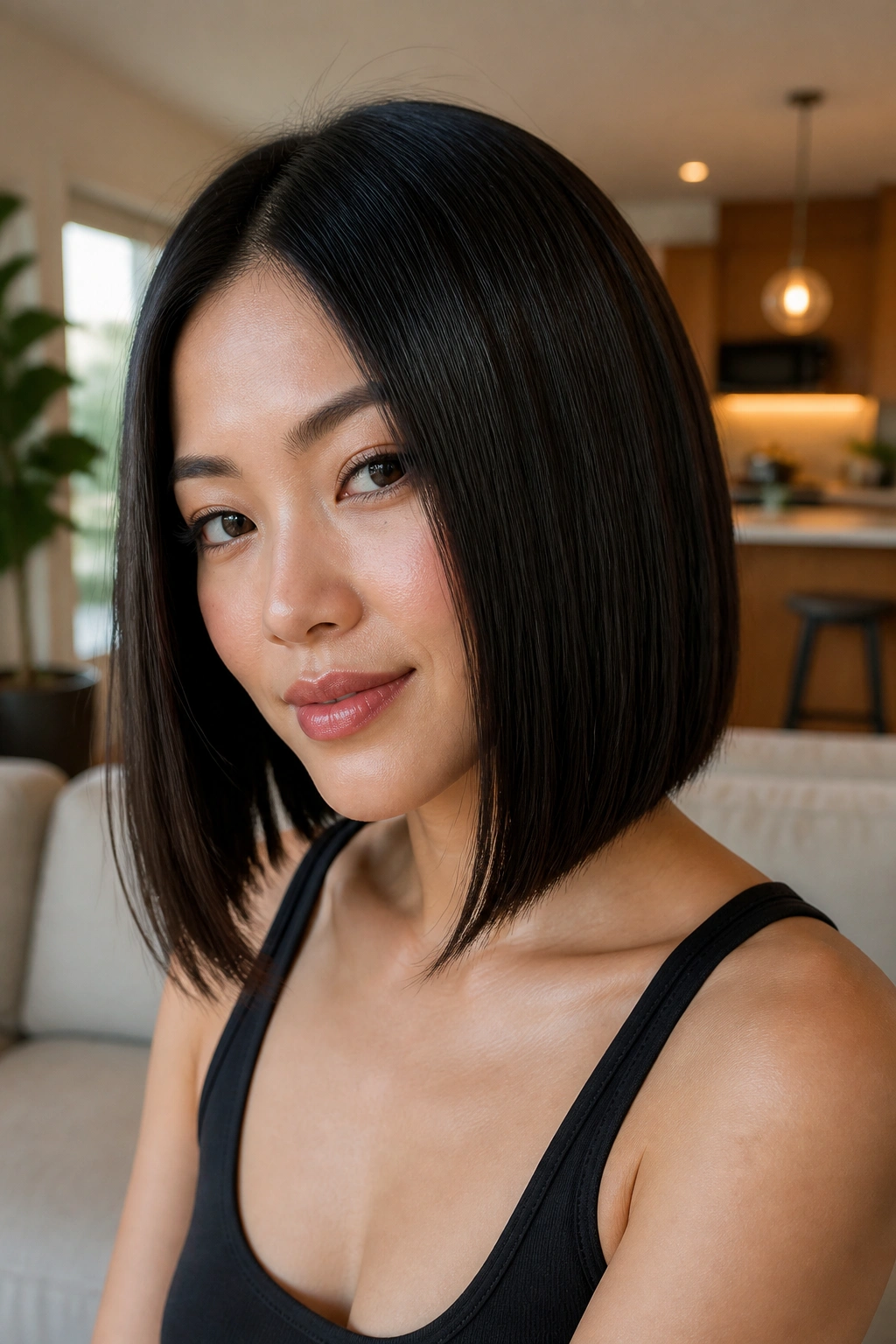
Can a sleek bob work on a round face? Absolutely, if the line is long enough and the silhouette stays controlled. The shine of black hair makes this style look especially sharp, almost ink-like, and that smooth surface draws the eye straight down.
How to Keep the Shape Clean
The secret is not more layers. It is fewer visible ones. Ask for invisible interior layers that remove bulk under the surface while leaving the perimeter crisp. That way the haircut moves, but it still looks blunt from the outside.
Use a smoothing cream, blow-dry with a nozzle, and finish with a flat iron if needed. The ends should look polished, not pin-straight in a stiff way. A tiny bend at the bottom is enough.
This is the cut for someone who likes order. Not perfection. Order. The kind that makes a simple black top and a pair of hoops look finished in two seconds.
9. Side-Swept Fringe Lob for Softening the Cheeks
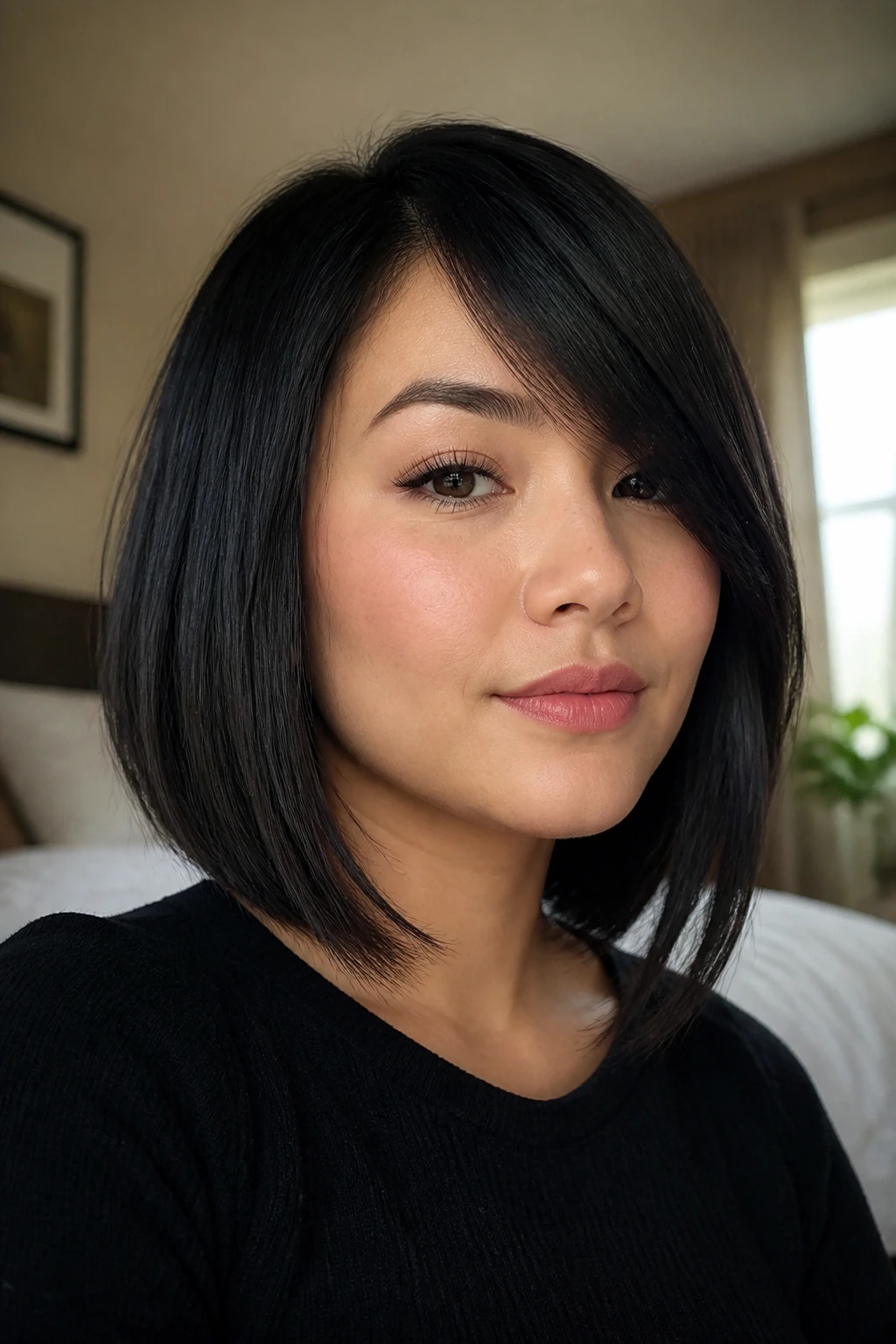
A side-swept fringe can save a bob that would otherwise sit too evenly around a round face. It creates diagonal movement across the forehead and lets the hair fall away from the widest part of the cheeks, which is the whole game here.
The fringe should begin with a gentle lift at the part and then sweep into the longer front. If it lands too short, it becomes a little puff of hair sitting right where you do not want bulk. If it is long enough to blend into the lob, it works.
Key Details to Look For
- Fringe starts near the arch of the eyebrow or higher.
- The longest piece should reach the cheekbone or lower.
- The bob itself stays below the chin.
- The side part should feel deliberate, not crooked.
This one has an easy charm to it. Nothing severe. Just enough angle to make the face feel longer and a little more sculpted.
10. Feathered Bob with Airy Layers at the Jaw
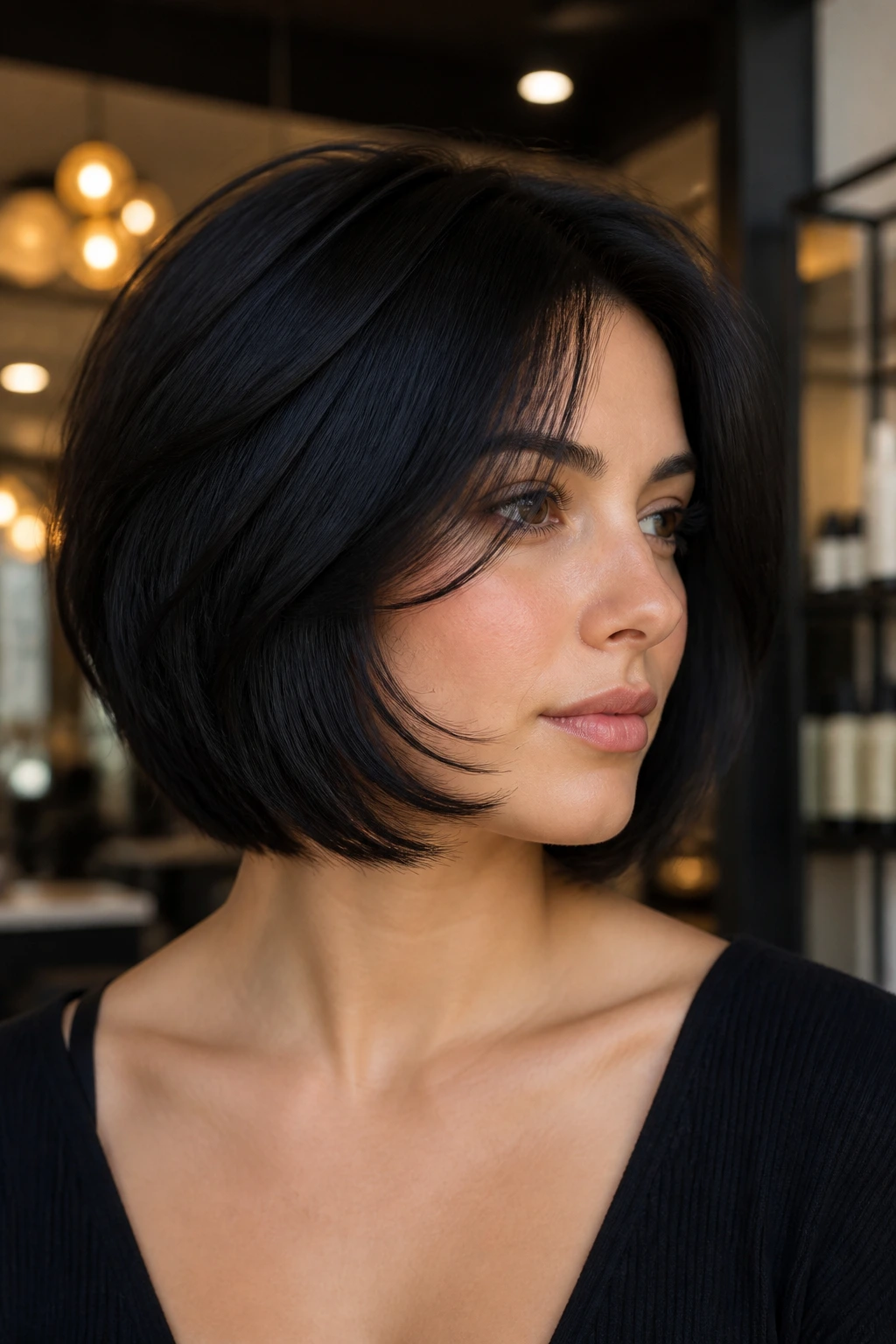
Feathering is useful when a round face needs softness without extra width. The trick is where the layers land. Keep the airy movement below the jawline, not right at it, so the cut does not balloon out where the face is widest.
Black hair handles feathering well because the layers still read as a smooth shape. You get lift, but not frizz. You get motion, but not a messy outline. That balance is harder to find than it sounds.
A round brush and a medium blow-dry setting do most of the work here. Roll the ends under lightly and lift the crown just a bit. That small bit of height changes the whole profile.
This is one of those cuts that feels older-school in a good way. Familiar. Flattering. Easy to wear on a tired morning.
11. Long Black Bob with Hidden Undercut Weight Removal
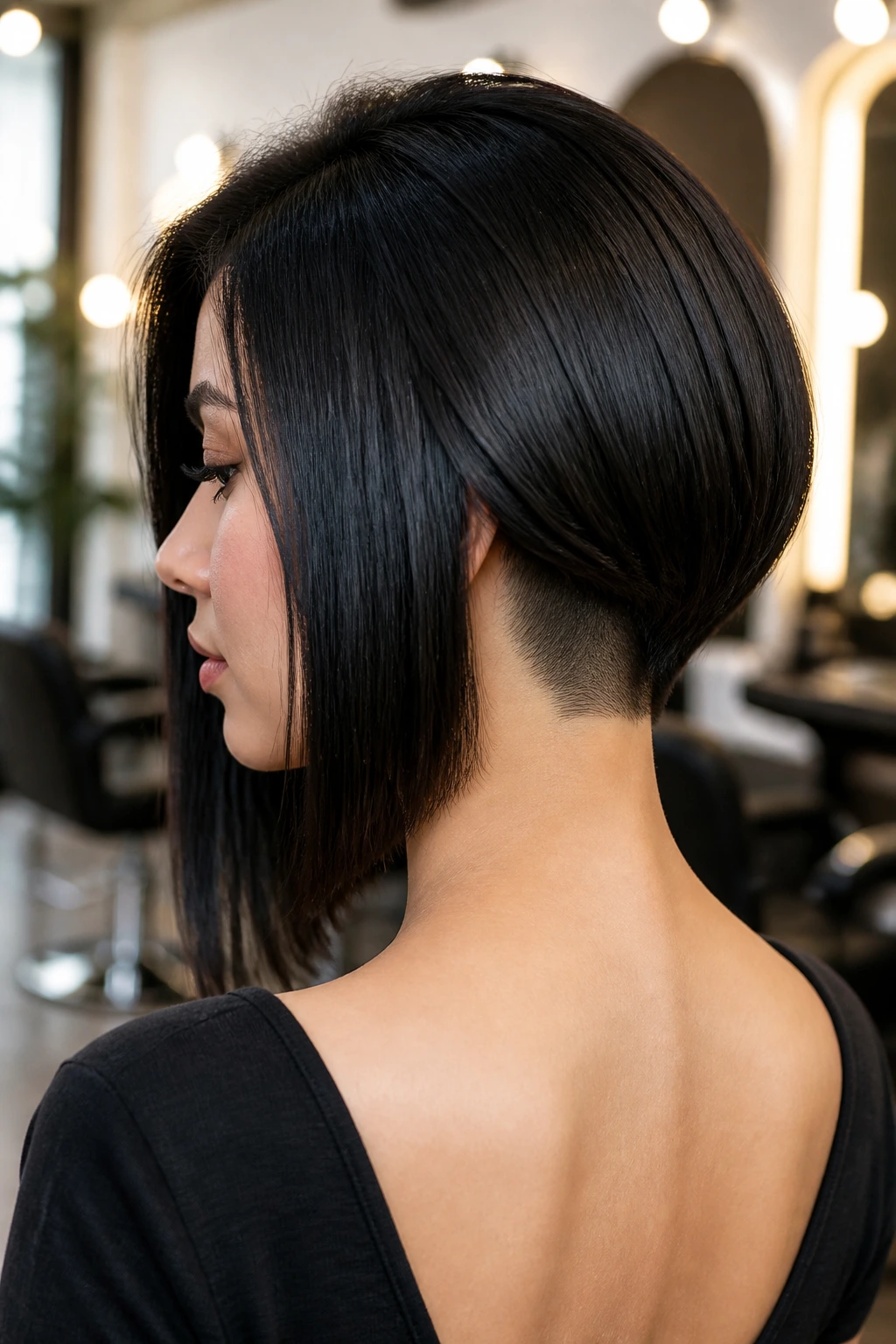
If your hair is thick, this cut can be a relief. Instead of building layers you can see, the stylist removes bulk from underneath, usually near the nape or lower back sections. The visible shape stays full and smooth, which is what a lot of round faces need.
Unlike a heavily layered lob, this one keeps the outer line intact. That matters because the perimeter is what lengthens the face. Hidden weight removal helps the hair fall closer to the head instead of flaring out at the sides.
It is not the right move for very fine hair. There simply isn’t enough density to spare. But on coarse or dense black hair, it can turn a bulky bob into something sleek and much easier to live with.
Ask for weight removal in the back, not the sides, if you want the cheeks to stay visually slim. Side bulk is what ruins the effect.
12. Asymmetrical Lob with One Longer Side
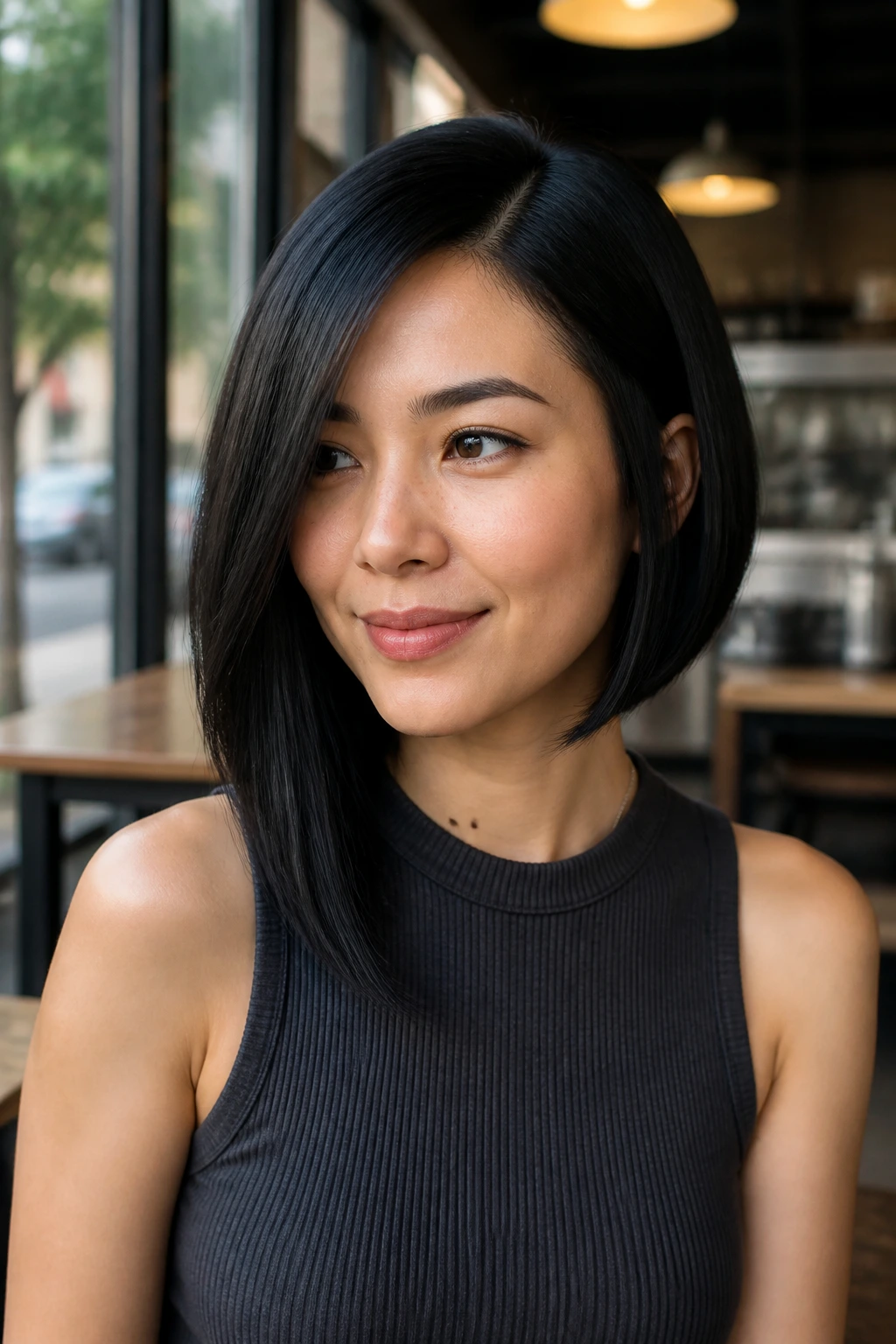
A little imbalance can go a long way on a round face. One side sitting an inch or two longer than the other breaks up the curve and gives the haircut a more sculpted feel. It is subtle enough to wear every day, but it still changes the way the face reads.
Why the Asymmetry Helps
The eye has somewhere to land. That matters. Instead of seeing one continuous oval shape, people see a line that shifts and pulls downward on one side.
A good asymmetrical lob is not dramatic. It should feel intentional when you tuck one side back and let the longer side swing forward. Keep the difference modest or the cut starts looking costume-like.
- One side: collarbone length.
- Other side: just below the collarbone.
- Part: slightly off center.
- Finish: smooth or lightly bent.
This is a nice choice if you like haircuts with a little edge but do not want the maintenance of something highly directional.
13. Shoulder-Grazing Bob with a Soft S-Bend
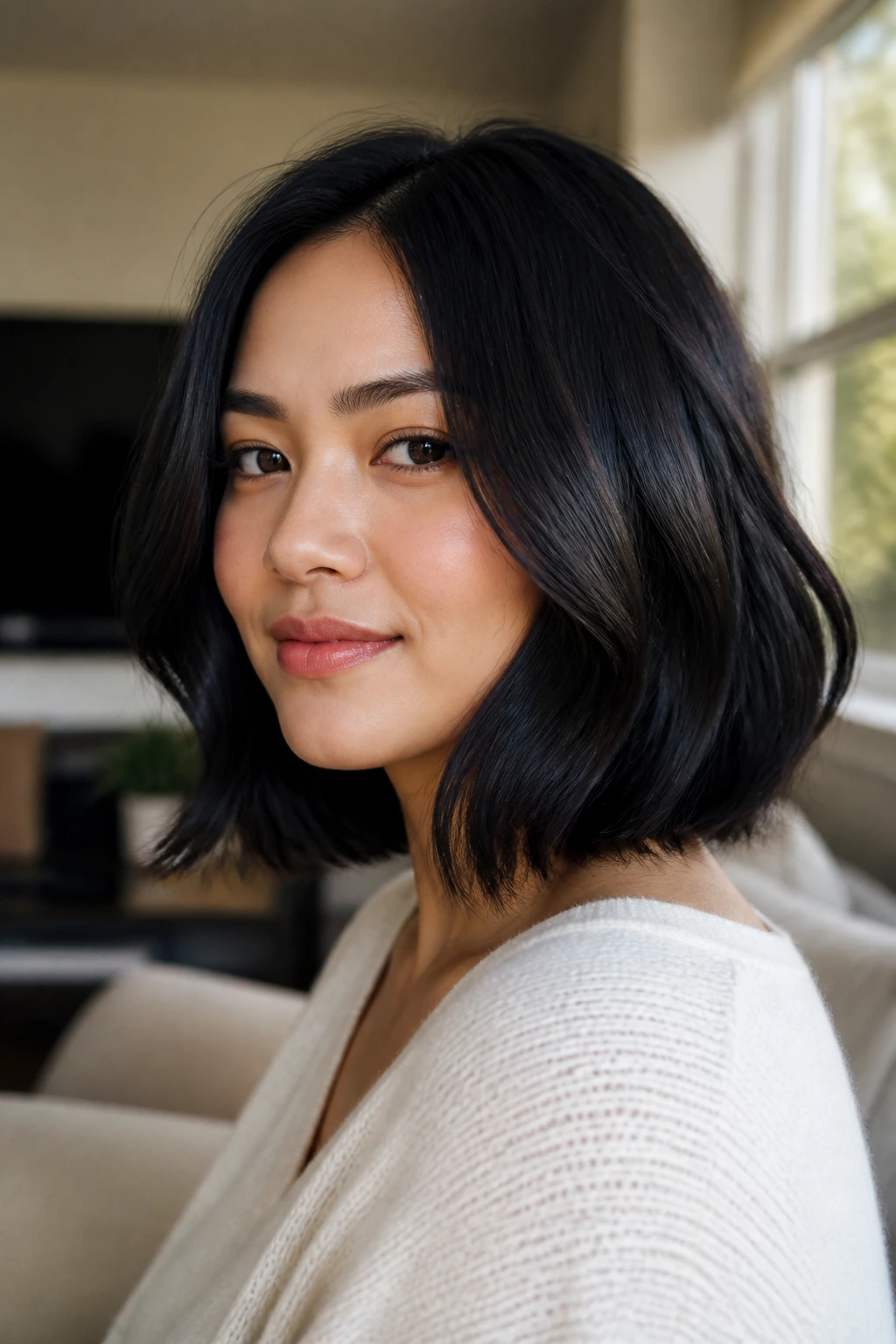
This cut gets its shape from curve, not volume. A soft S-bend slides around the face instead of puffing out beside it, which makes it a smart option for round features that need length more than width. On black hair, the bend catches light in a clean way and makes the whole style look more deliberate.
Keep the bend loose. Tight curls can shorten the face. A relaxed S-shape, starting below the cheekbone, keeps the silhouette open while still giving the hair some movement.
This cut works especially well when the ends hit just at or below the shoulders. That extra bit of length keeps the face from feeling boxed in. If your hair sits at the exact jawline, the whole effect gets weaker.
It is a good middle ground for anyone who wants polish but not straightness. There is motion here. Just not a lot of drama.
14. Boxy Blunt Bob with Subtle Interior Layers
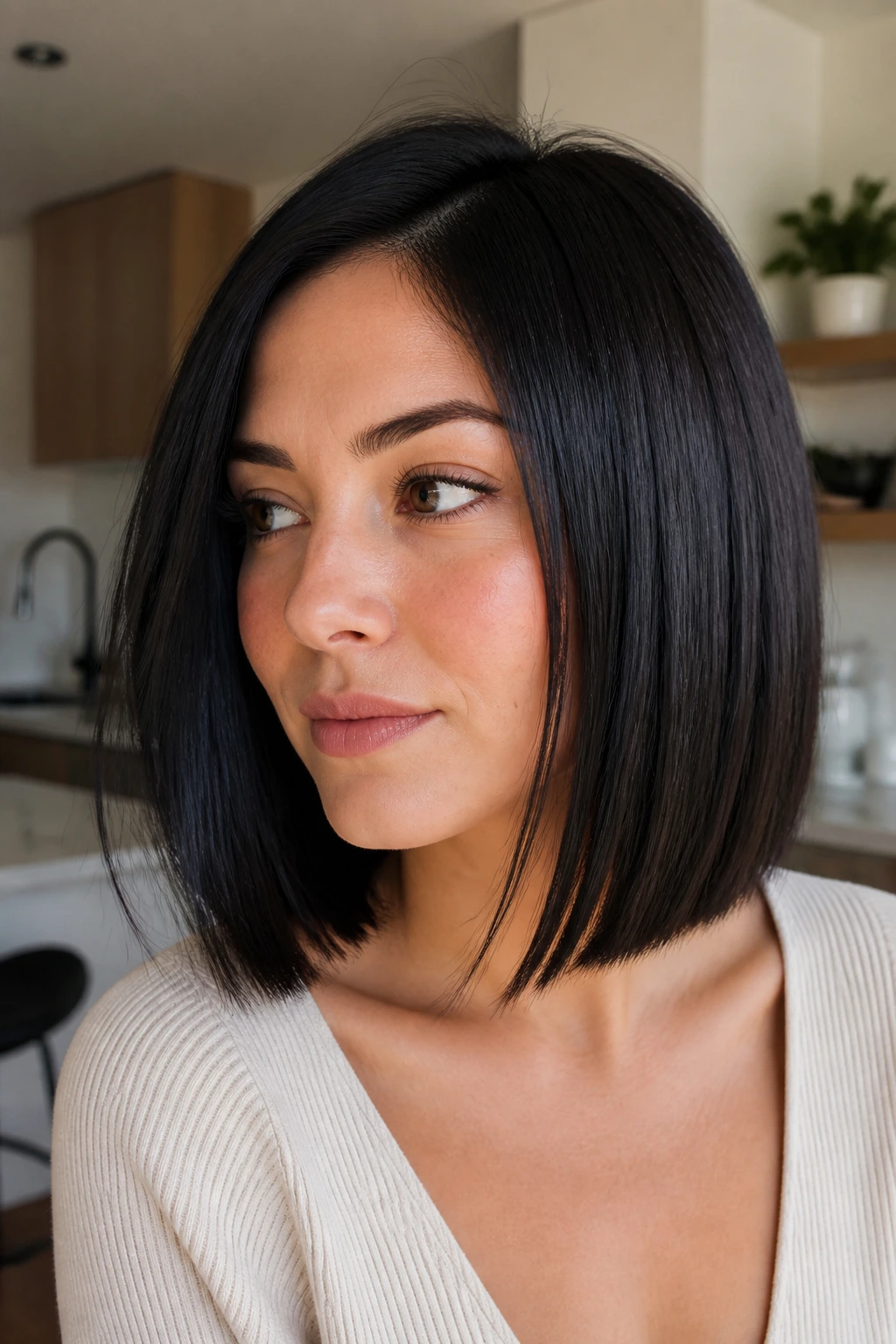
Can a boxy shape flatter a round face? Yes, if the length sits low enough and the interior is not too heavy. The visible line stays blunt, which gives the face a firm edge, while hidden layers stop the haircut from turning into one dense block.
What to Ask for
Ask for a blunt perimeter that lands at the collarbone or just above it, then very light internal layering to remove weight. Keep the crown flat enough that the cut does not rise too much at the sides.
A boxy bob works best when the ends are clean and the part is slightly off center. That tiny shift keeps the shape from feeling too symmetrical.
This one is for someone who likes structure. If you want movement everywhere, skip it. If you want a strong line with only a little softness inside, it lands beautifully.
15. Deep Side-Part Wavy Lob with Volume at the Crown
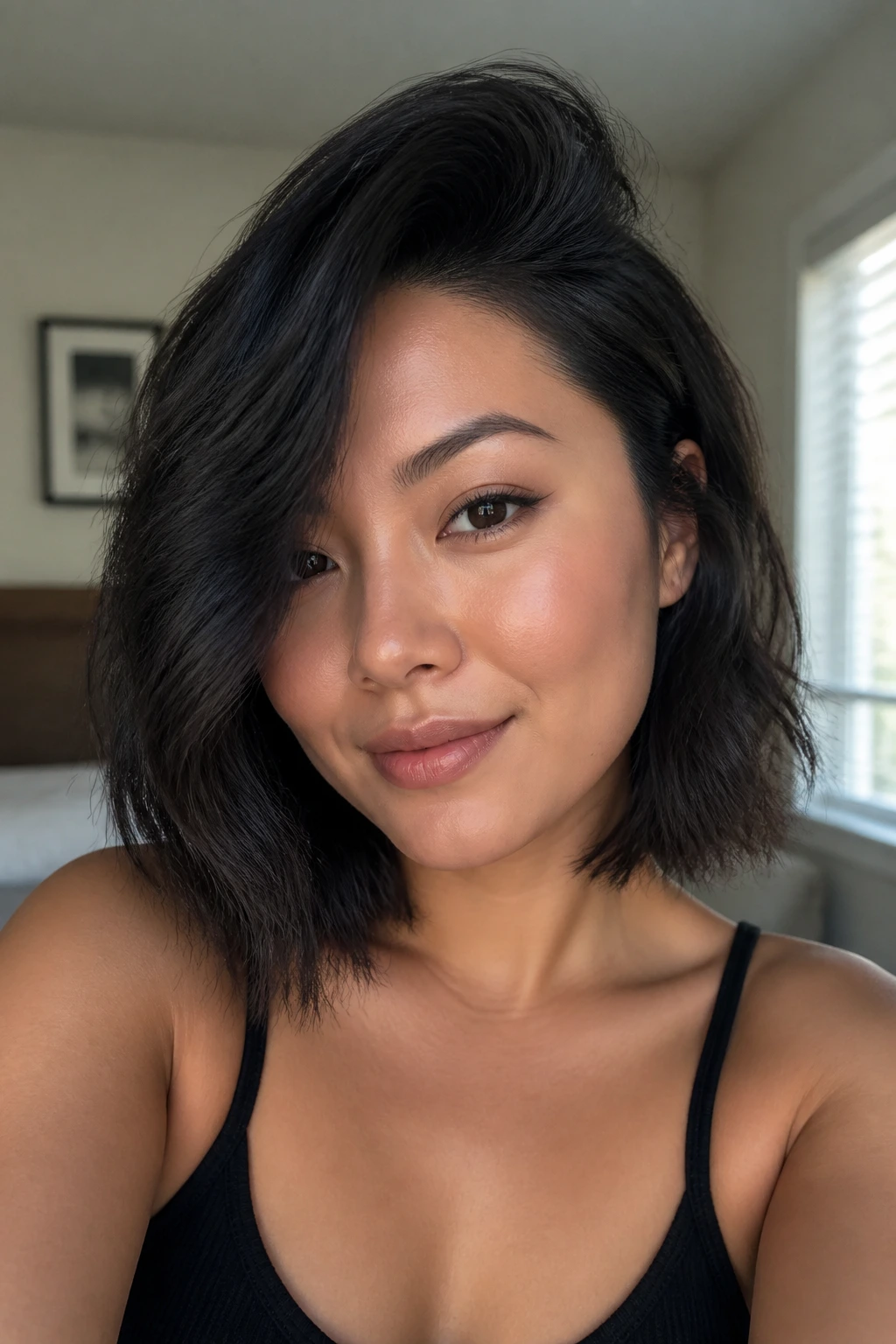
If your face tends to feel widest through the cheeks, this is a smart shape to test. The deep side part adds height at the top, and the loose waves sit low enough to avoid adding width where you do not want it.
A round face usually looks longer when the crown is lifted and the sides stay quieter. That’s the whole idea here. Not flat. Not puffy. Controlled volume in the right place.
How to Wear It
- Build the part about 2 inches off center.
- Lift the roots at the crown with a round brush.
- Start the wave below the chin.
- Keep the ends airy, not curled under hard.
The result feels a little glamorous without trying too hard. Black hair gives the waves real contrast, so even a soft bend looks intentional.
16. Razor-Cut Lob with Piecey Ends
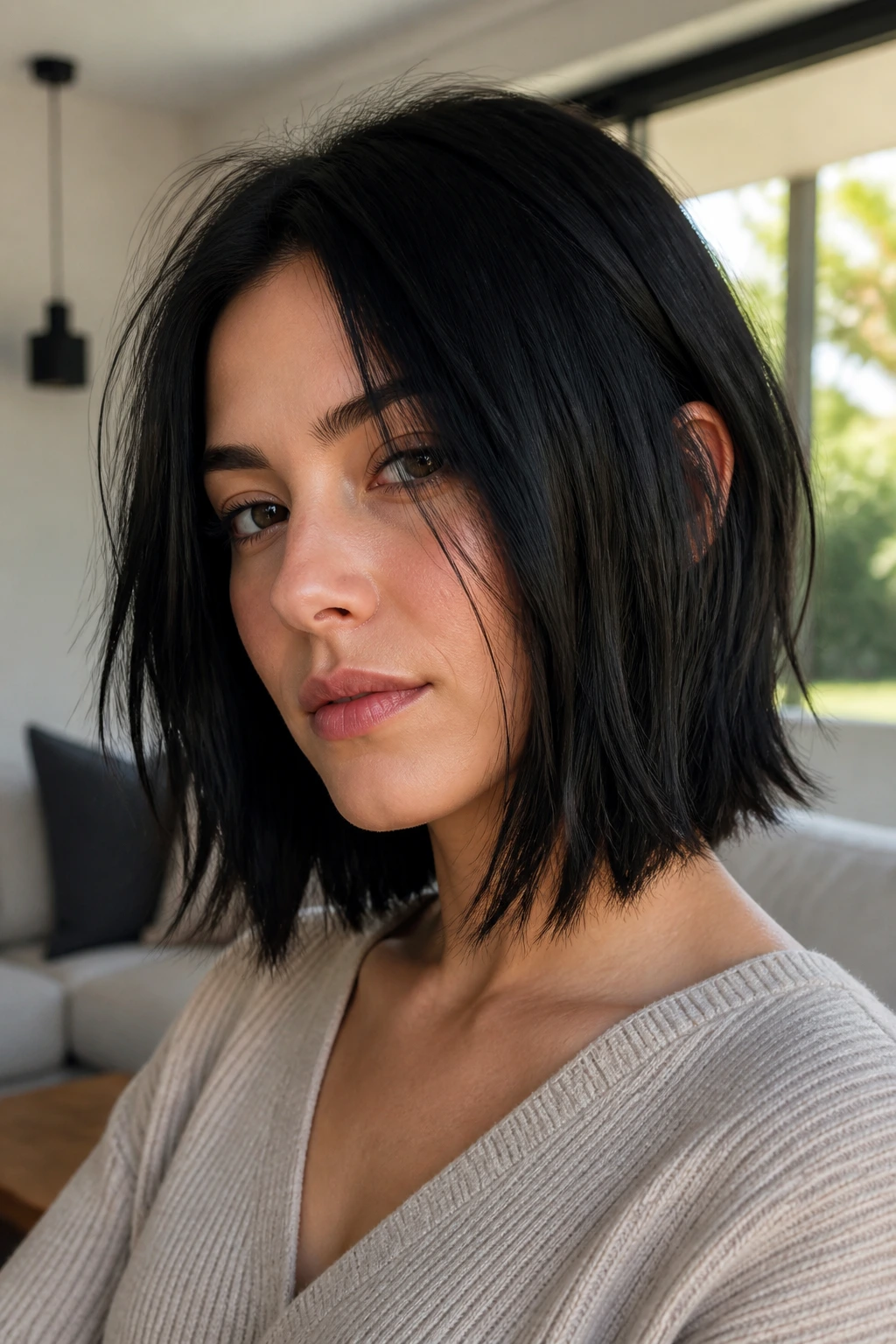
Razor cuts are not for everyone, but they can be excellent on dense black hair. The blade removes weight in a way scissors do not, leaving the ends separated and a little piecey. That separation helps break up the roundness in the face because the haircut no longer reads as one single shape.
The catch is obvious: too much razor work can make the ends look frayed, especially if the hair is already fine. On thick hair, though, it can be a lifesaver. The cut moves, the ends have air, and the face gets more vertical space.
I’d keep this one longer than chin length. That’s the part people miss. A razor-cut bob that lands too short can feel fuzzy around the face instead of flattering it.
Use a light cream or serum, not a heavy balm. You want the piecey finish to stay separate.
17. Collarbone Lob with Long Curtain Bangs

This is one of the easiest ways to make a round face look longer without changing the whole haircut. The curtain bangs split the front into two soft lines, and the collarbone length keeps the rest of the shape from crowding the jaw.
Unlike short bangs, long curtain bangs blend into the rest of the lob. They do not stop the eye dead in the middle of the face. That matters more than people think. Short fringes can work, but they can also shorten the face if the bob is already sitting high.
Best length? Aim for the bang pieces to hit around the cheekbone and gradually drop toward the jaw. That gives you the open center and the soft frame on the sides.
This cut also grows out well, which is a nice bonus. The fringe just slides into the rest of the bob instead of looking like a hard line a few weeks later.
18. Rounded Lob with Tucked-Under Ends
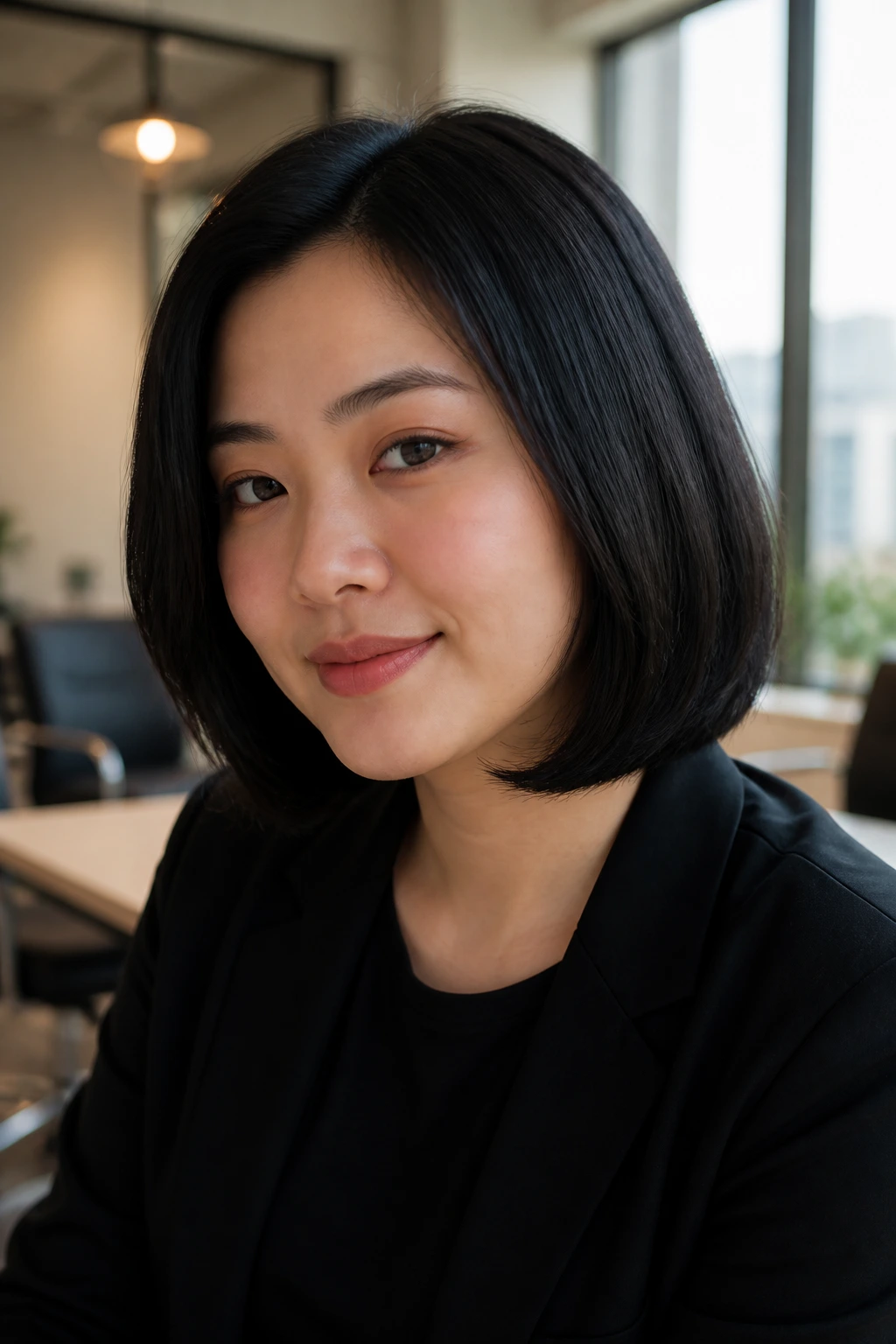
A rounded lob can flatter a round face when the curve stays low and neat. The ends tuck inward just enough to keep the shape contained, but the length still falls below the jaw so the face does not widen.
Why the Inward Curve Works
A gentle under-turn pulls the silhouette back toward the neck. That gives the haircut a softer outline and keeps the bottom edge from fanning out.
Use a 1.5-inch round brush or a blow-dry brush to turn the ends under. Stop the curve before it becomes too round. You want a clean finish, not a little cap around the face.
- Length: collarbone to upper chest.
- Curve: subtle, not rolled.
- Crown: lightly lifted.
- Part: center or slightly off center.
This is a dependable office-to-evening cut. It always looks done, even when the styling is simple.
19. Sleek Side-Tucked Lob for Oval Illusion
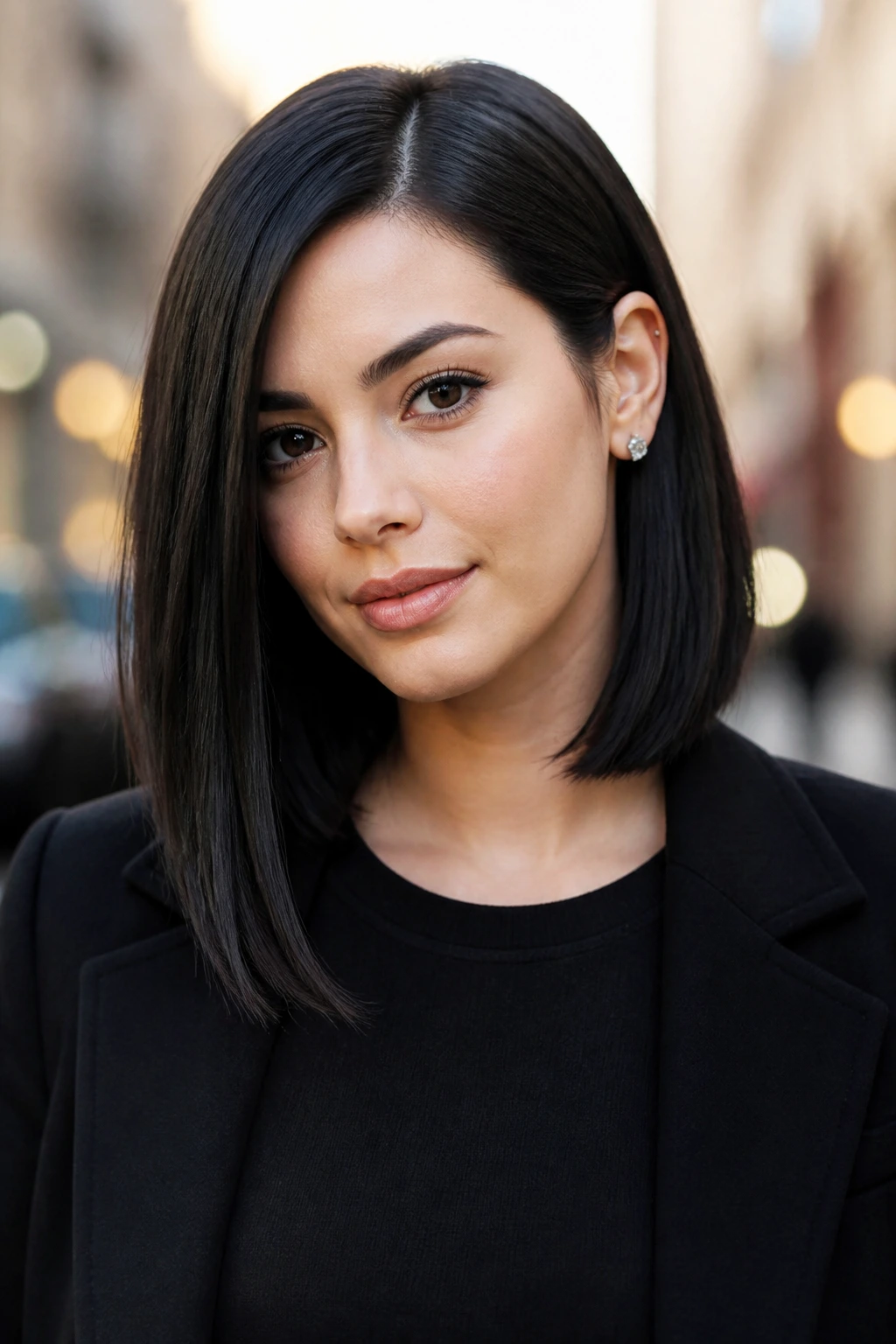
A side-tucked lob can change the whole shape of the face with almost no effort. One side stays loose, the other gets tucked behind the ear, and that asymmetry creates a longer, slimmer impression. It is one of the cleanest tricks for round faces.
The haircut itself should still have enough length to fall below the jaw. Tucking only works when there is enough hair to show a long line on the untucked side. If the cut is too short, the effect gets cramped.
This style is especially good when you want to show off earrings, a neckline, or a sharp collar. The side tuck leaves space for all three. Black hair makes the shape feel even sharper because the contrast is so strong against skin and clothing.
A little shine serum helps here. Not much. Just enough to keep the tucked side smooth.
20. Layered Bob with Long Front Pieces
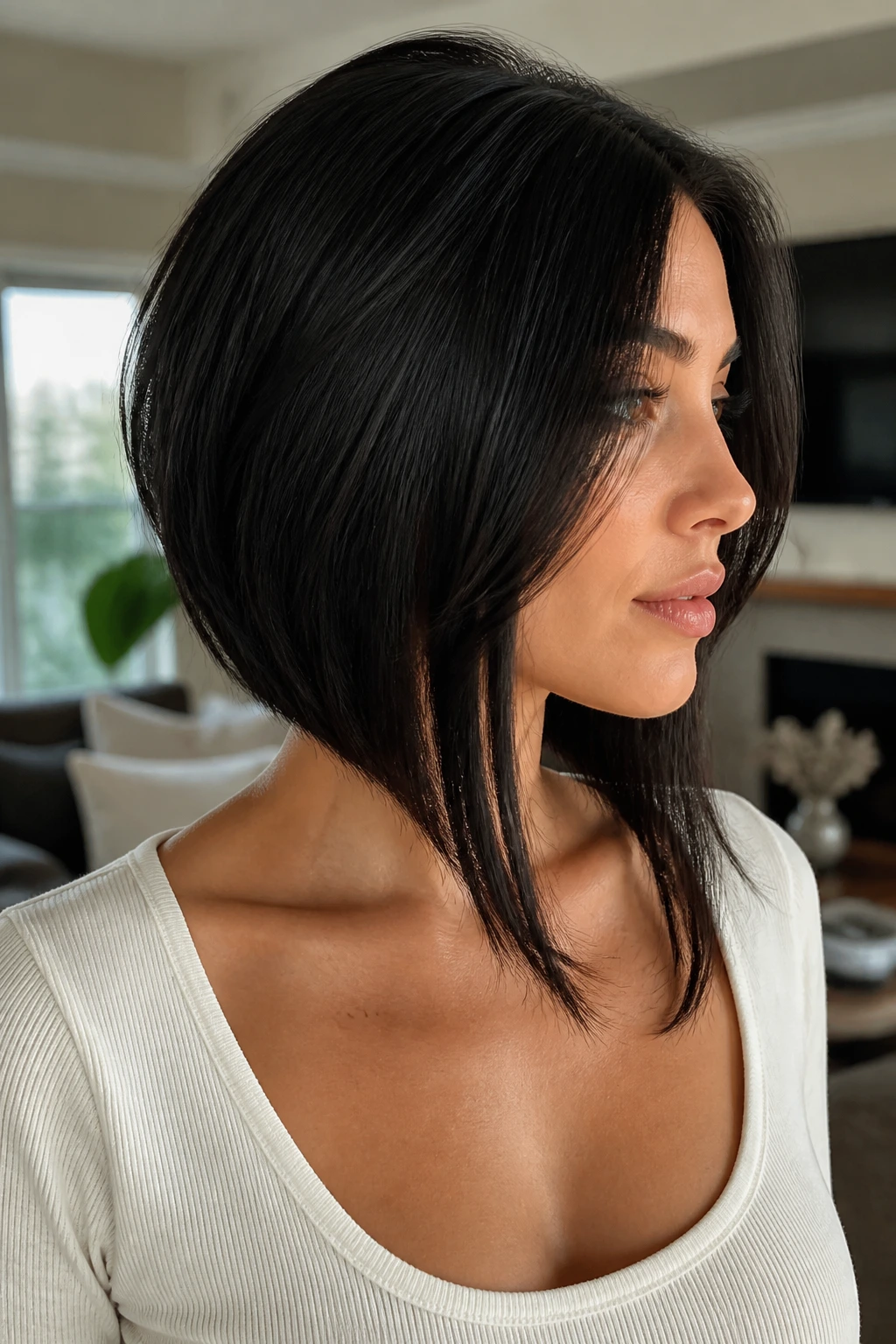
Do you want movement without the shaggy look? This is the answer. The layers stay mostly in the back and mid-lengths, while the front pieces hang long enough to narrow the face and keep the bob from sitting too high on the cheeks.
The Part That Matters
The longest front pieces should start below the cheekbone. That one detail keeps the haircut from adding width where round faces do not need it.
A few light layers around the back keep the shape from feeling heavy, but the front should stay the star. If the front gets too short, the cut loses its lengthening effect.
This is a good everyday choice because it does not demand perfect styling. A quick blow-dry is enough. If you want more movement, wrap just the front pieces around a round brush and leave the rest alone.
21. Wet-Look Bob with Sharp Edges
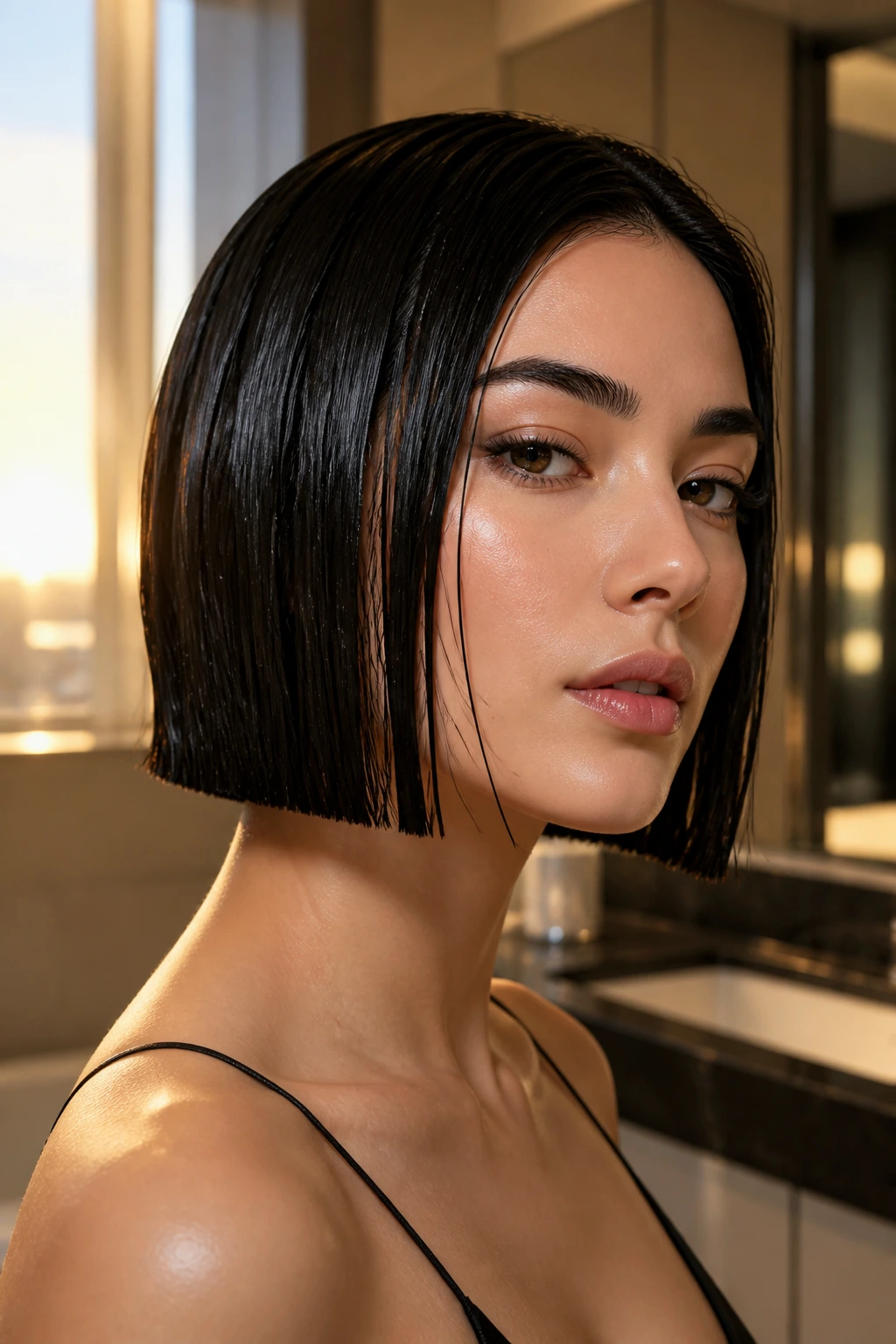
There are days when a bob should look deliberate, not soft. A wet-look finish does that. It flattens the sides a bit, keeps the shape close to the head, and turns the haircut into a clean frame instead of a fluffy halo.
On round faces, the sharp edge of this style is the useful part. It gives structure without relying on volume. If anything, it benefits from less puff, not more.
A strong gel or high-shine cream works best. Comb the hair into place while it is damp, then leave the front line precise. If the ends are too soft, the style loses its edge fast.
This is not the most everyday haircut in the bunch, but for a night out or a formal event, it has a real point of view. Clean lines. Strong profile. No confusion.
22. Air-Dried Natural Texture Lob

Not every long black bob needs heat styling. If your hair has waves or loose curls, an air-dried lob can look better than a polished blowout because it keeps the texture near the face soft and easy. The length matters again, though. Keep it past the chin so the shape does not widen the cheeks.
The best versions use conservative layering. Too many short pieces will make the texture balloon. A few long layers let the hair dry in a loose shape without collapsing into a triangle or turning puffy around the jaw.
A curl cream or light mousse usually does the job. Scrunch lightly, blot with a microfiber towel, and leave it alone while it dries. Touching it too much ruins the pattern.
This cut has a relaxed feel that suits casual clothes, denim jackets, and easy makeup. It does not need to be dressed up to look finished.
23. Long Black Bob with Micro-Textured Ends
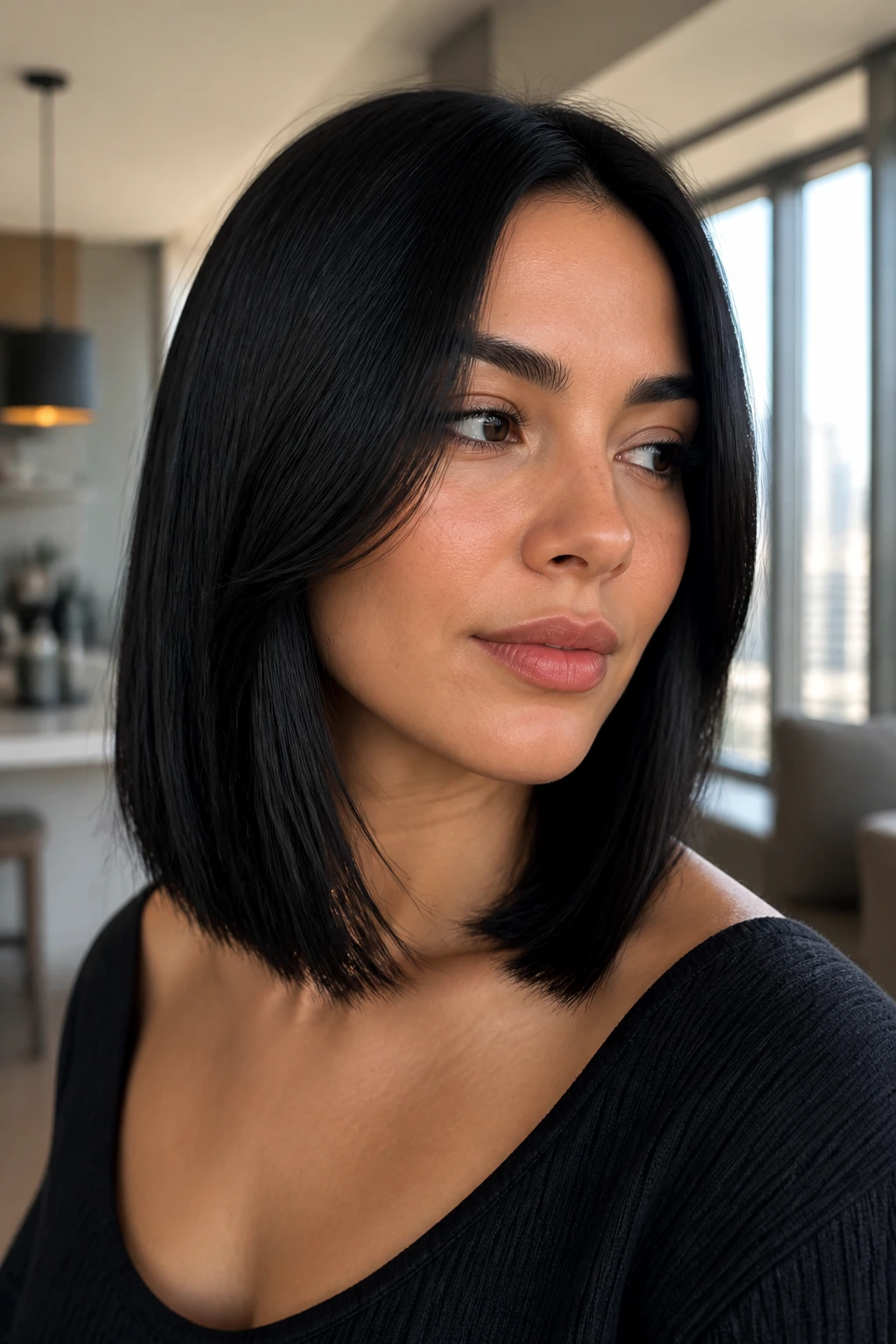
Micro-texture is the calmer cousin of choppy layering. Instead of cutting obvious pieces, the stylist softens the ends just enough to keep the perimeter from looking heavy. That matters on round faces because a hard, thick edge can make the bottom of the face feel wider.
Unlike a shaggy lob, this cut still looks polished. The line remains mostly intact, which keeps the face lengthened. The texture only wakes up the ends a little.
It is a smart choice for thick straight hair that tends to sit like a block. A tiny bit of texture at the bottom makes the style move when you turn your head, and that motion helps the haircut feel lighter.
I would not pair this with very short front pieces. The point is subtlety. Keep the changes small and let the shape do the work.
24. Off-Center Part Lob with Soft Volume
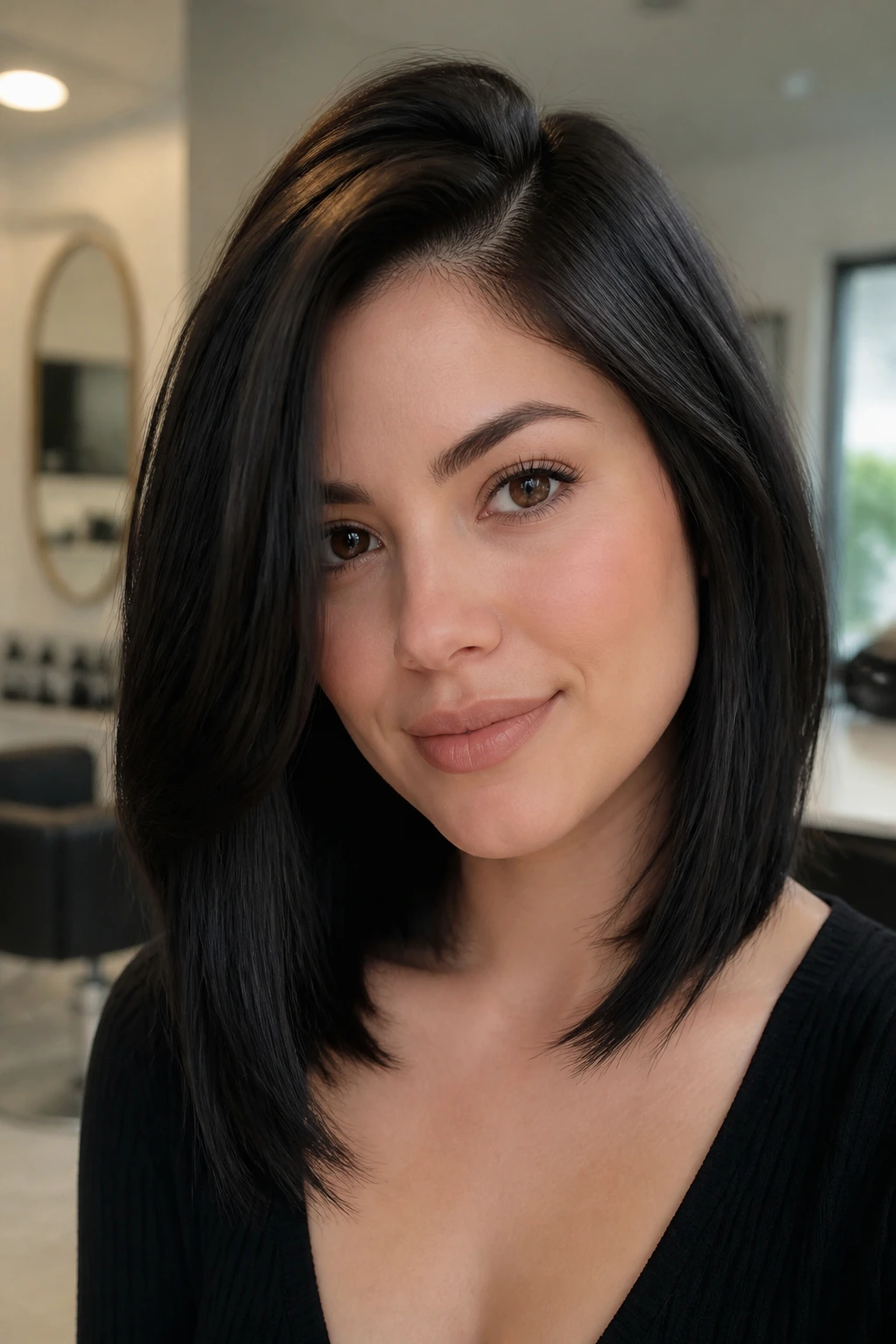
A part that sits a little off center can be more flattering than a full side part or a strict middle part. It gives the top of the head a bit of lift, shifts the eye line, and keeps the haircut from feeling too even around a round face.
Where to Place the Part
Move the part about half an inch to 1 inch off center. That is enough. Any more and the shape starts to feel lopsided instead of clean.
The volume should stay at the crown, not at the cheeks. That difference is what makes the face look longer. A small root lift spray and a quick blow-dry at the roots are usually enough.
- Part slightly off center.
- Keep the crown lifted.
- Let the front pieces fall past the jaw.
- Smooth the sides so they do not puff outward.
This cut is a quiet winner. It works with straight hair, soft waves, and most everyday styling routines.
25. Polished Lob with a Blunt Perimeter and Soft Interior
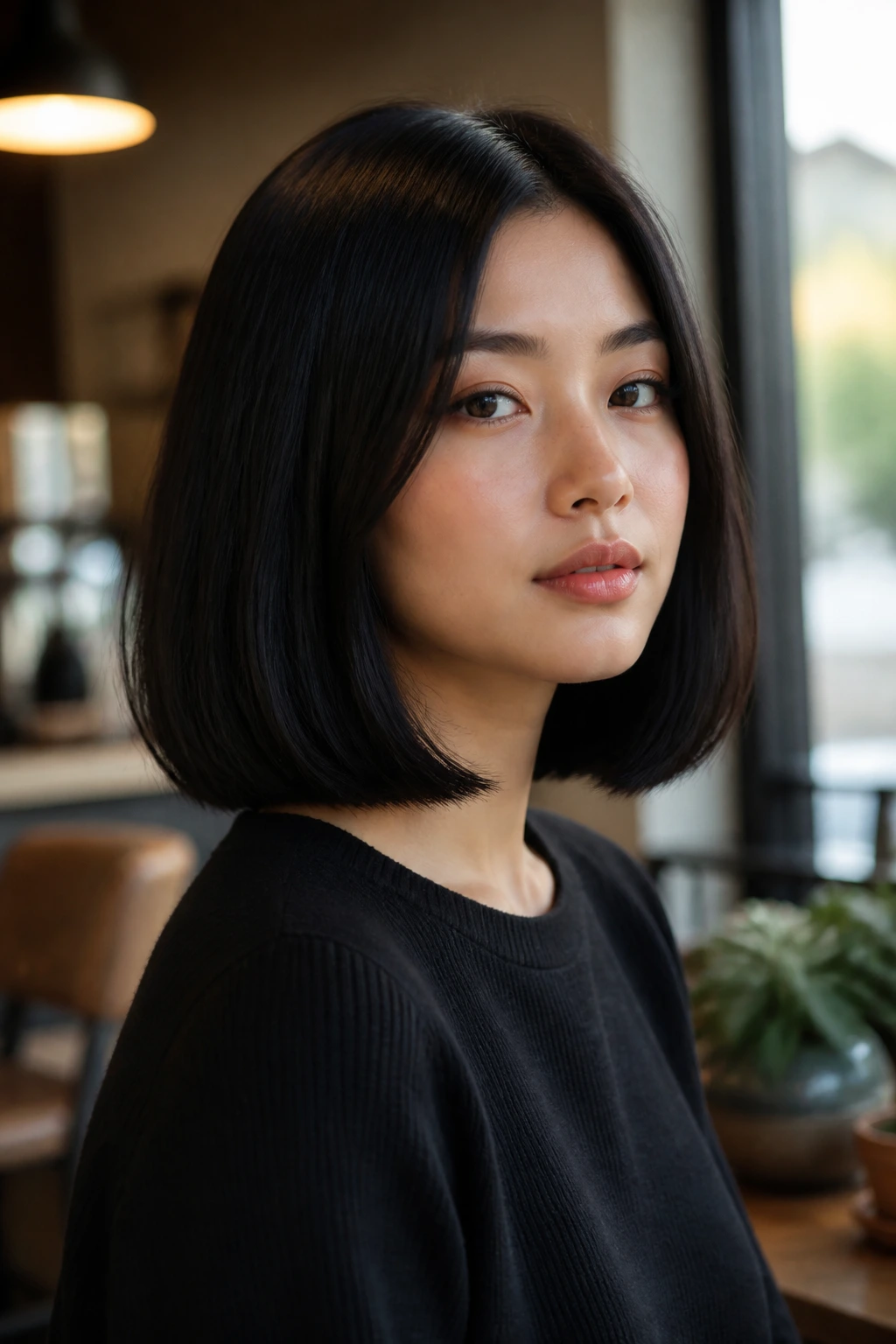
If you want one long black bob that can handle most round faces, this is the one I’d put near the top. The outer line stays blunt, which gives the haircut a crisp frame, while the inside has just enough softness to keep it from feeling heavy. That combination matters more than a lot of people realize.
A blunt perimeter gives the eye a straight path down. The interior softness keeps the hair from sticking out at the sides. On black hair, the contrast between those two layers of shape looks especially neat.
This is a good choice if you want a cut that works in a blazer, a sweater, or a T-shirt without changing much. It does not demand a dramatic style choice every morning. A center part, a side part, a tucked side, or a slight bend all sit well with it.
If you have a round face and you are tired of bobs that feel too cute or too fluffy, this one lands in the sweet spot. Clean, but not severe. Soft, but not round.
Final Thoughts
A round face does not need hiding. It needs a haircut that gives it direction, and a long black bob is one of the easiest places to get that right. Length below the chin, a little movement in the right spots, and a front shape that does not stop at the cheeks will take you a long way.
The best cut is usually the one with a clear perimeter and one smart detail — a side part, a longer front piece, a soft fringe, or a slight angle. Pick two of those at most. More than that, and the shape can start fighting itself.
If you’re taking photos to a stylist, circle the exact length you want and point to the front pieces first. That one detail changes the whole haircut.
