



Short stacked bob haircuts for round faces can do something that a blunt one-length cut often won’t: they add height where you want it and pull the eye down through the shape instead of letting it sit wide at the cheeks. That matters more than people think. A round face isn’t “too full” for short hair. It just needs the right geometry.
The trick is placement. A good stack lifts through the crown and tightens at the nape, while the front pieces graze the jaw or fall a little below it. A bad bob does the opposite. It lands at the widest point of the face, flares out, and makes everything look puffier than it really is.
There’s also a texture issue that gets ignored a lot. Fine hair needs a cut that builds shape without collapsing. Thick hair needs weight removed in the right places or the whole thing turns helmet-like. Curly hair needs a stack that respects the curl pattern instead of forcing it into a round ball. The same basic bob can handle all of that, but not in the same way.
If you’ve been told short hair is “bad” for a round face, that advice was lazy. The better question is how much lift the cut creates, where the widest part lands, and whether the front line gives you angle instead of width. That’s where the good ones separate themselves from the forgettable ones.
1. Classic Stacked Bob With a Tapered Nape
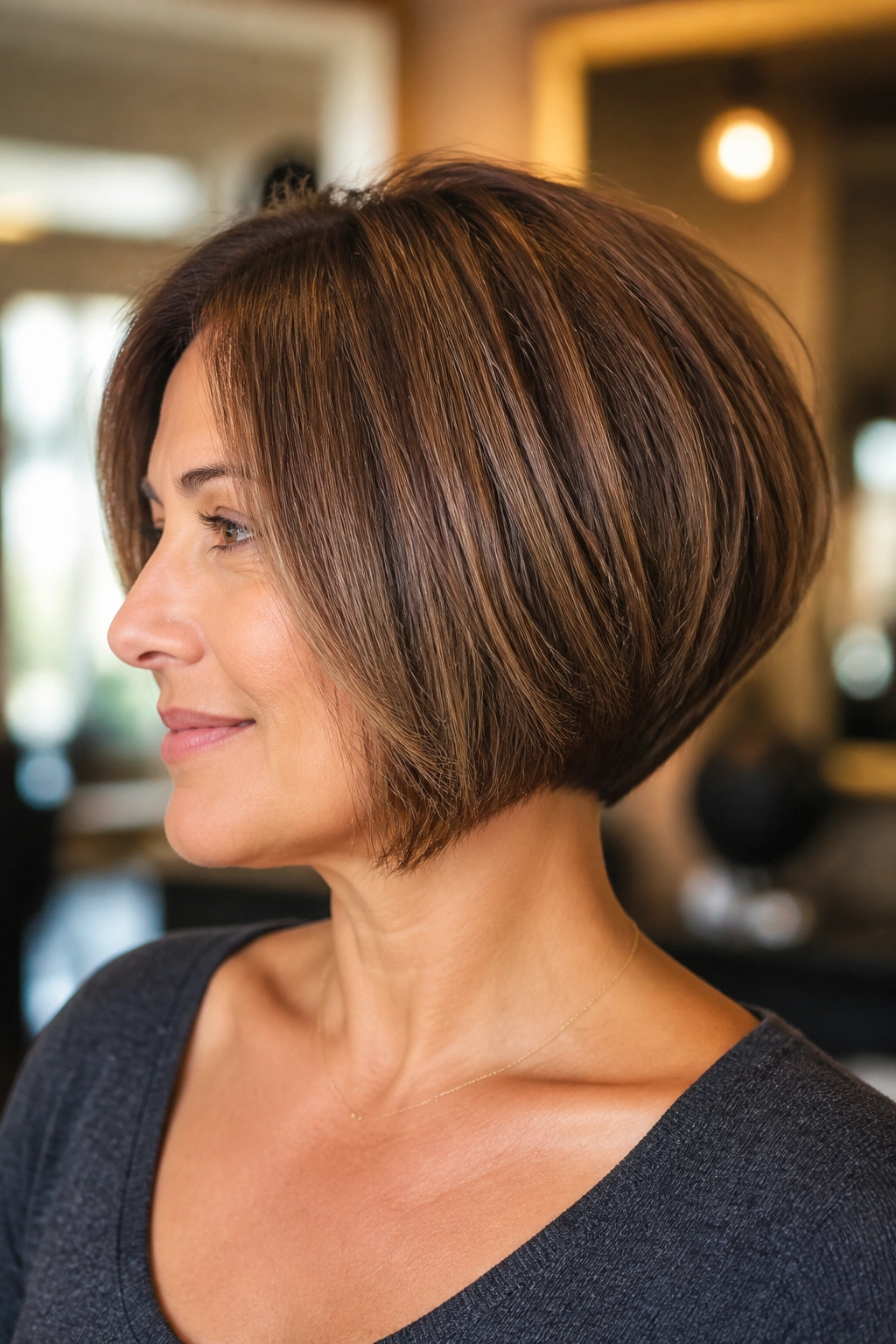
This is the cut that made the stacked bob famous in the first place, and there’s a reason stylists keep coming back to it. The back is stacked close to the nape, the crown gets a little lift, and the front stays soft enough to skim the face instead of boxing it in. On a round face, that extra height at the back matters. It gives the illusion of length without needing to go long.
Why It Works
The tapered nape keeps the silhouette clean. You get shape, not bulk. That’s the whole game.
A good version usually sits between chin and jaw length in front, with the shortest layers hugging the neck. Ask for a graduated back rather than a puffy back, because those are not the same thing at all. One lifts. The other balloons.
- Best for straight to slightly wavy hair
- Looks good with a side part or soft center part
- Easy to blow-dry with a round brush
- Needs trims every 6 to 8 weeks to keep the stack crisp
Pro tip: blow-dry the crown first, then smooth the sides down. If you flip that order, the top goes flat fast.
2. Deep Side-Part Stacked Bob for Round Faces
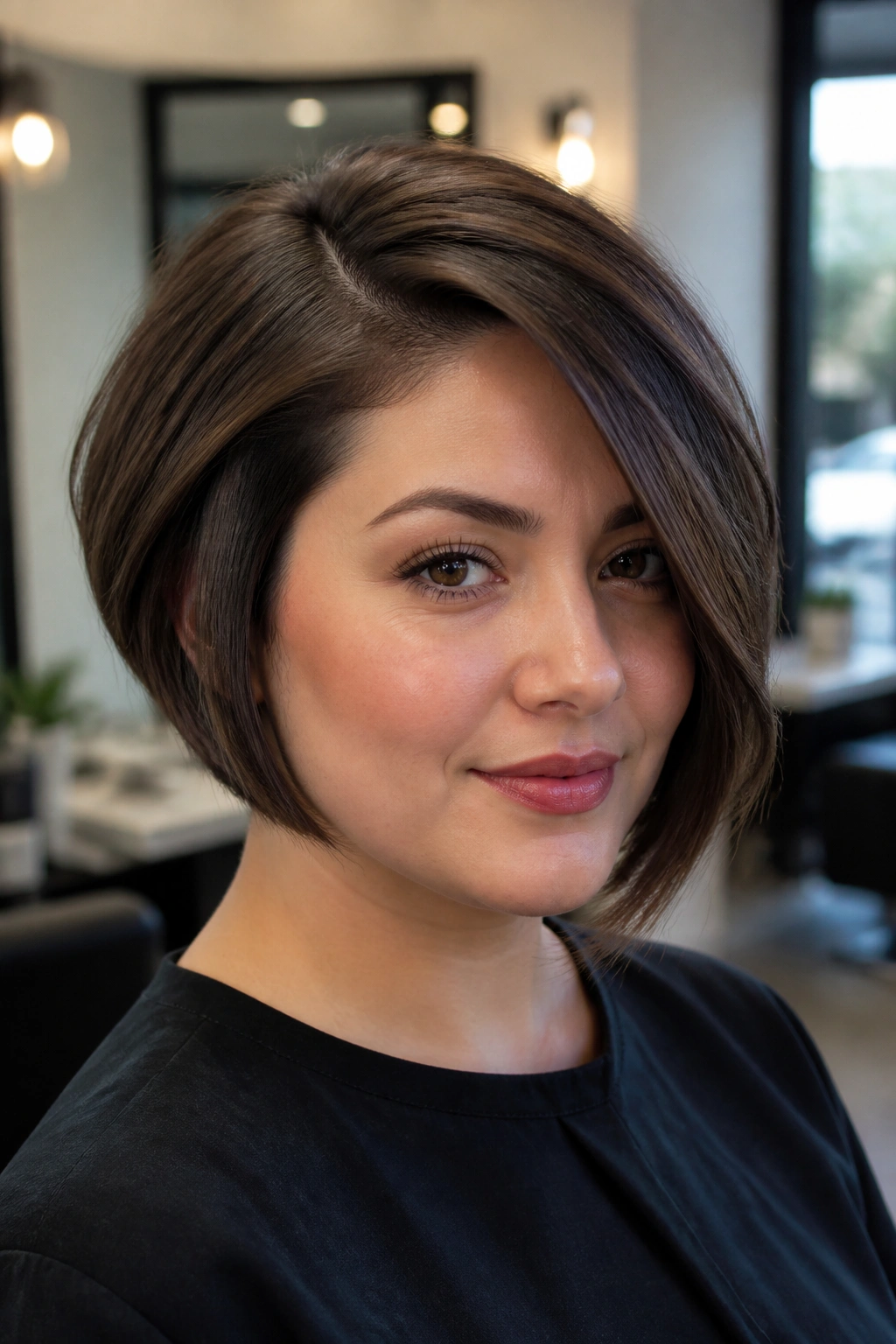
Want the fastest way to make a bob feel longer? Move the part off center. A deep side part cuts across the face on a diagonal, which breaks up the symmetry that can make round faces look wider than they are. It also gives you a little lift at the roots on the heavier side, which is a nice bonus.
Where to Place the Part
Start the part about an inch and a half to two inches off center. That’s usually enough to change the shape without making the cut feel lopsided. If your hair naturally falls to one side, work with that instead of fighting it.
A deep part pairs well with a stack that stays tight at the nape and a front that brushes the jaw. Keep the heavier side tucked behind the ear once in a while. That small move makes the cheek area feel less boxed in.
This cut is especially good when you want a little drama without shaving off too much length. It feels polished. Not stiff. That matters.
3. Angled Stacked Bob With Chin-Length Front
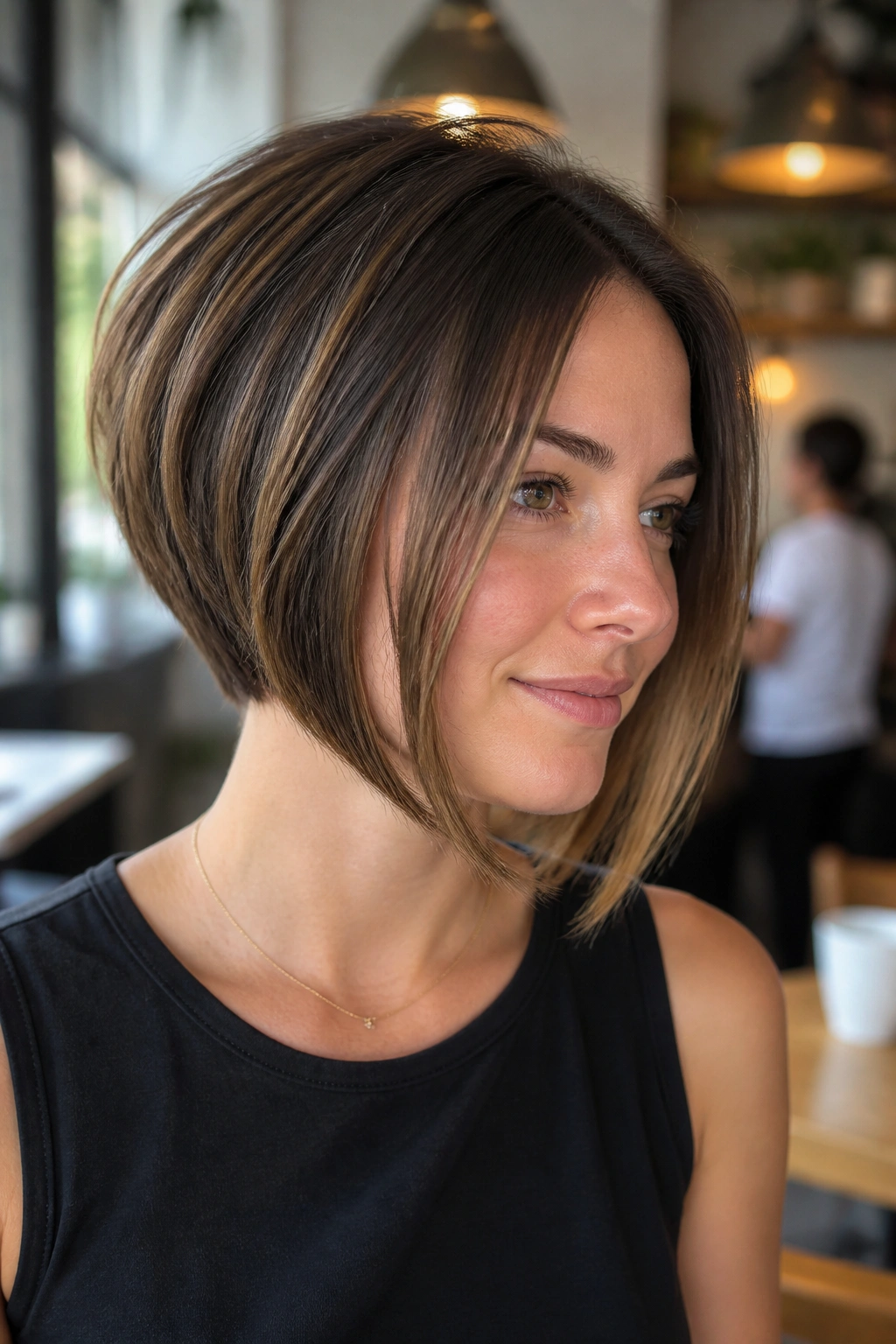
An angled stacked bob gives you one of the sharpest ways to flatter a round face. The back stays shorter and tighter, while the front drops down toward the chin. That front length creates a downward line, which is exactly what a softer face shape needs.
This version works because the eye follows the angle. Instead of stopping at the cheeks, the hair keeps going. It sounds small, but that little shift changes the whole read of the cut.
If you have a fuller cheek area, ask your stylist to keep the front pieces just below the jaw rather than right on top of it. That difference of an inch or two can stop the style from feeling too boxy. A chin-length front with a stacked back also gives you enough hair to tuck, curl, or smooth depending on the day.
It’s a clean cut. Sharp, but not harsh.
4. Textured Stacked Bob With Piecey Ends
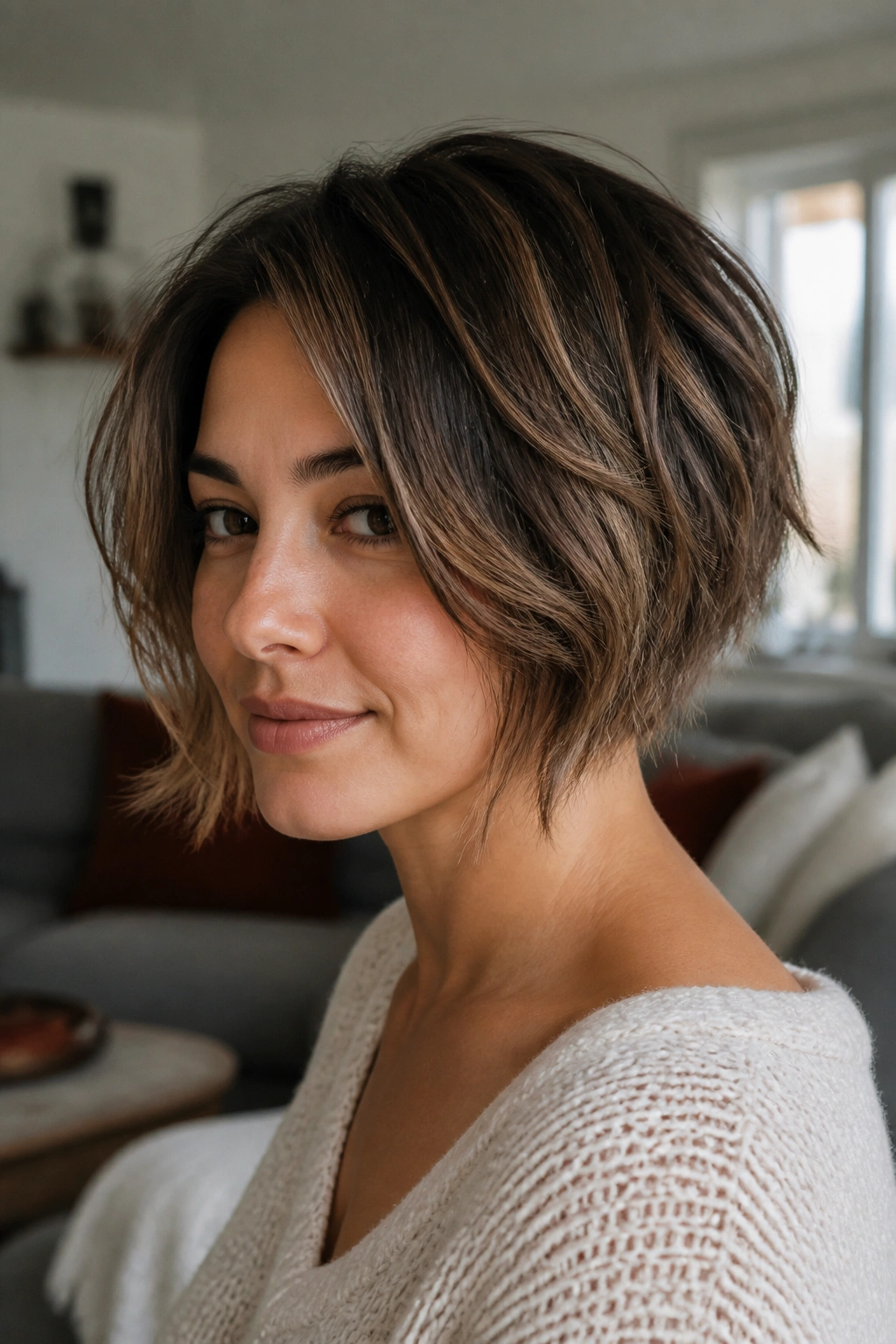
A textured stacked bob is a smart choice if you hate the idea of a helmety finish. The cut keeps the stacked shape in the back, but the ends are broken up a little so the outline feels lighter. On round faces, that broken edge helps more than a perfectly round perimeter ever will.
The best versions use point cutting or a light razor finish, not heavy thinning. Too much thinning can make the hair frizzy or wispy, and then the shape starts to look unfinished. What you want is separation. Little flicks at the ends. A hint of air between the strands.
A texturizing spray or a pea-sized bit of styling cream is usually enough. Scrunch it through the ends and leave the crown a little smoother. That contrast is what keeps the cut from puffing out at cheek level.
Not fussy. Just a little undone.
5. Sleek Glassy Stacked Bob
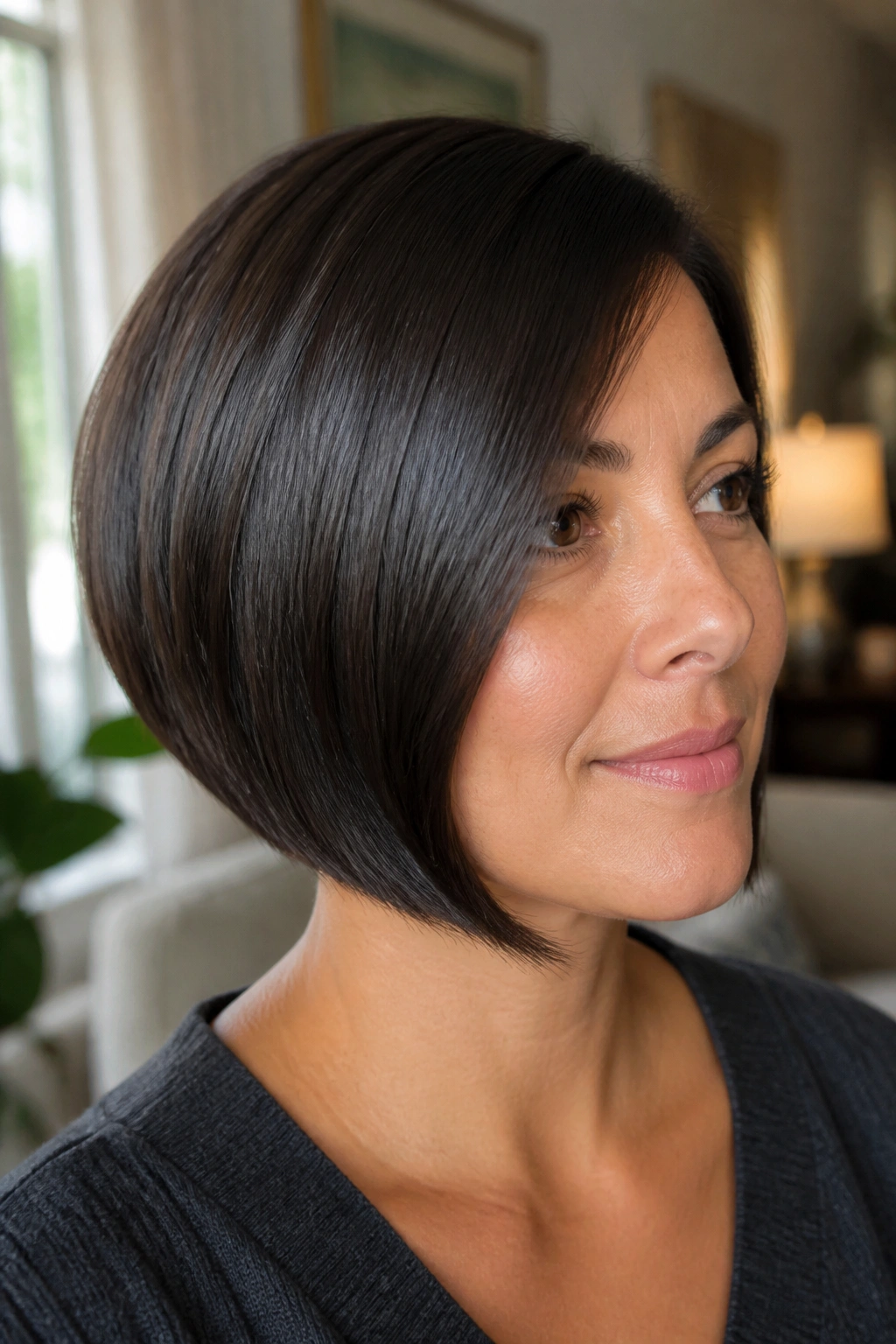
There’s a strong case for going smooth and precise. A sleek stacked bob looks especially good on round faces when the cut has a clear line and the finish is polished enough to show it off. The glassy surface creates a vertical feel, which can make the face look a touch longer and leaner.
This cut is at its best on straight or slightly wavy hair that can hold a smooth shape without constant battle. A flat iron, heat protectant, and a light serum are usually all you need. Keep the serum off the roots. You want shine through the mid-lengths and ends, not grease at the scalp.
What Makes It Different
Unlike a choppy bob, this one depends on precision. The stack should be tight, the side line clean, and the ends blunt enough to hold the shape.
It’s a strong look if you like crisp hair and don’t mind a little upkeep. Skip it if your natural texture is very coarse and refuses to smooth out easily. Otherwise, it can look expensive in the best sense of the word—clean, controlled, and not trying too hard.
6. Curly Stacked Bob With Soft Crown Lift
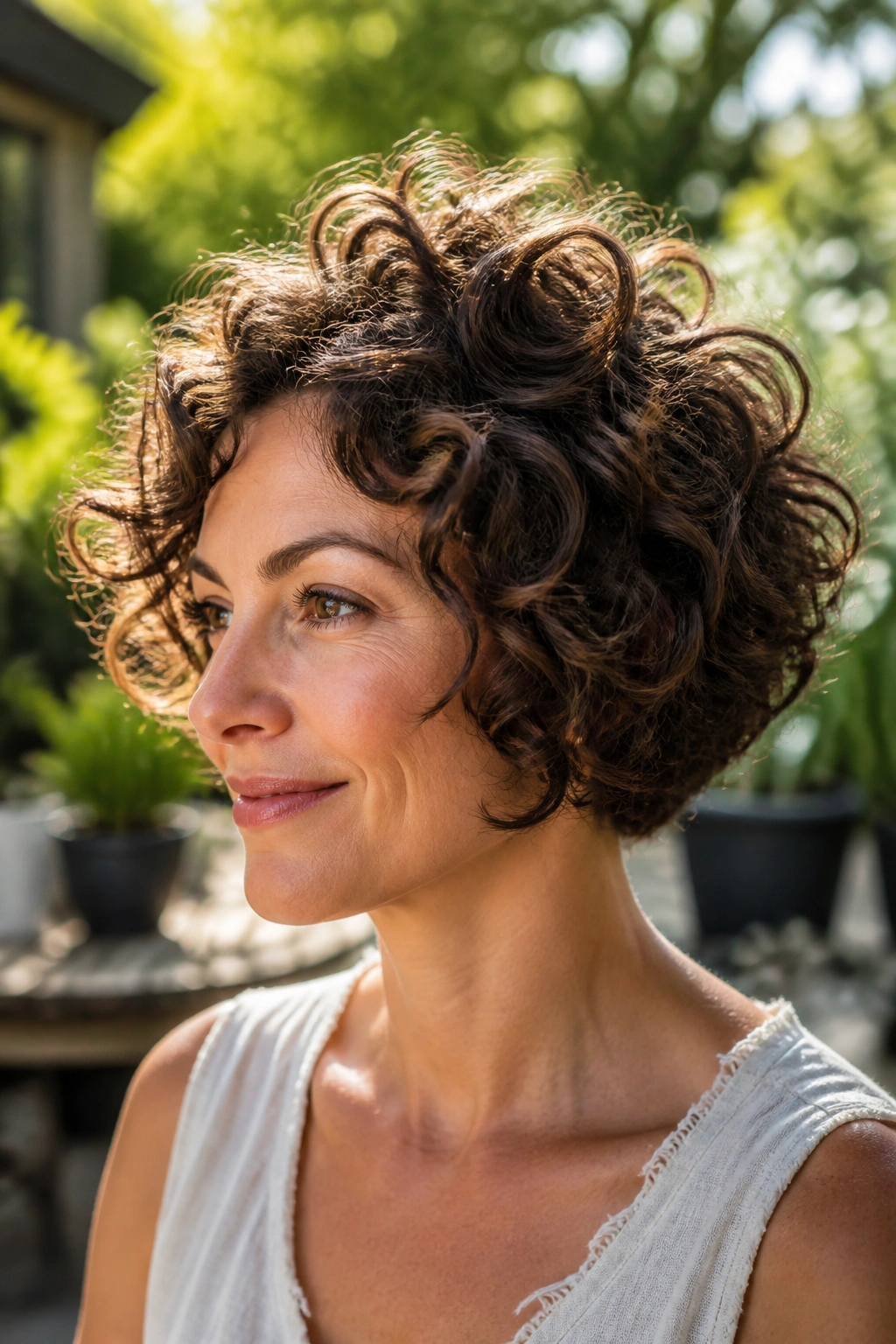
Curly hair and stacked bobs can be a great match, but only if the cut is shaped around the curl pattern instead of against it. A round face needs lift at the crown and a little openness at the sides. Curly hair gives you both, if the stack is placed carefully.
The danger with curls is a triangle shape. Nobody wants that. The fix is to keep the nape shorter and the upper layers a little looser, so the curls stack upward instead of flaring out around the cheeks. Leave enough length in front for the curls to fall below the fullest part of the face.
How to Style It
- Apply curl cream to damp hair
- Diffuse on low heat
- Lift at the roots with your fingers, not a brush
- Let the curls cool before touching them
A soft crown lift makes the whole cut feel lighter. And yes, this one can be flattering on round faces. Very flattering, actually, when the curls keep their shape and don’t bunch at the sides.
7. Wavy Stacked Bob With Airy Layers
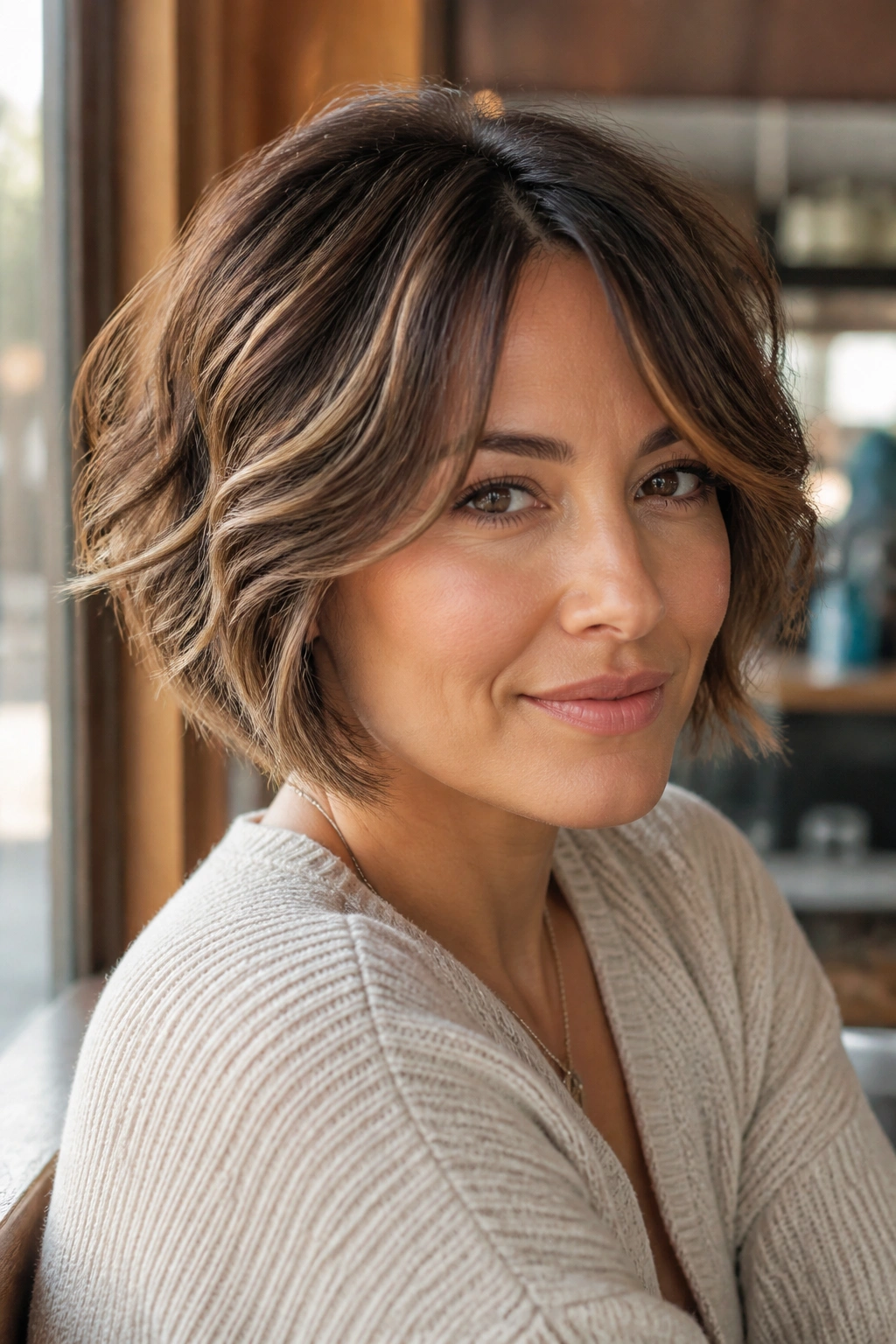
A wavy stacked bob has a more relaxed feel than a sleek one, but it still does the same face-shaping work when the layers are placed well. The trick is to keep the waves airy, not fluffy. Airy lets the face breathe. Fluffy can widen it.
This cut loves a bit of mousse at the roots and a light scrunch through the ends. If your hair dries naturally with a bend, great. Let it do that. If not, a diffuser and a few quick twists at the ends can add enough movement to break up the roundness of the face.
One thing I like about this version is that it doesn’t look overstyled. It has that easy, lived-in shape people usually chase with too many tools. You get the benefit of the stack in the back, but the front stays soft and touchable.
It’s a good middle ground. Especially if you want movement without the sharpness of a super angled bob.
8. Inverted Stacked Bob With a Sharper Front
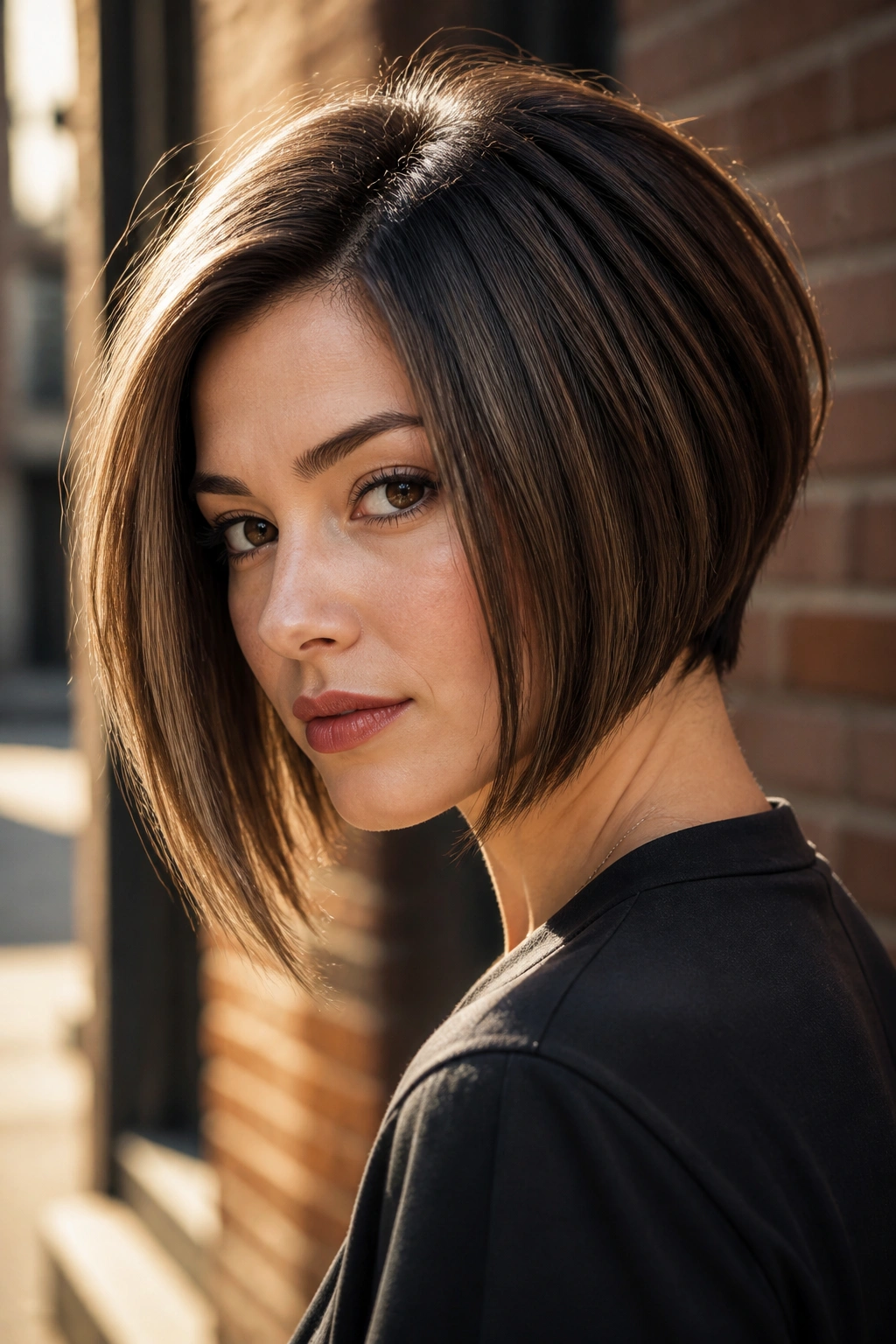
If you want a bob with more edge, the inverted version gives you that immediately. The back is shorter and more tucked, while the front extends farther forward. On a round face, that forward sweep can be useful because it changes the shape from circular to directional.
The key is not to exaggerate the width at the sides. Keep the stacked area close to the head and let the front pieces do the talking. A difference of two to three inches between back and front is often enough. You do not need a dramatic wedge unless you want that look on purpose.
This cut suits anyone who likes a strong profile. It feels modern without depending on heavy styling. A round face can wear it well because the eye is drawn past the cheeks and toward the jawline. That’s the whole point.
Sharp, but wearable. That’s the sweet spot.
9. Stacked Bob With Curtain Fringe
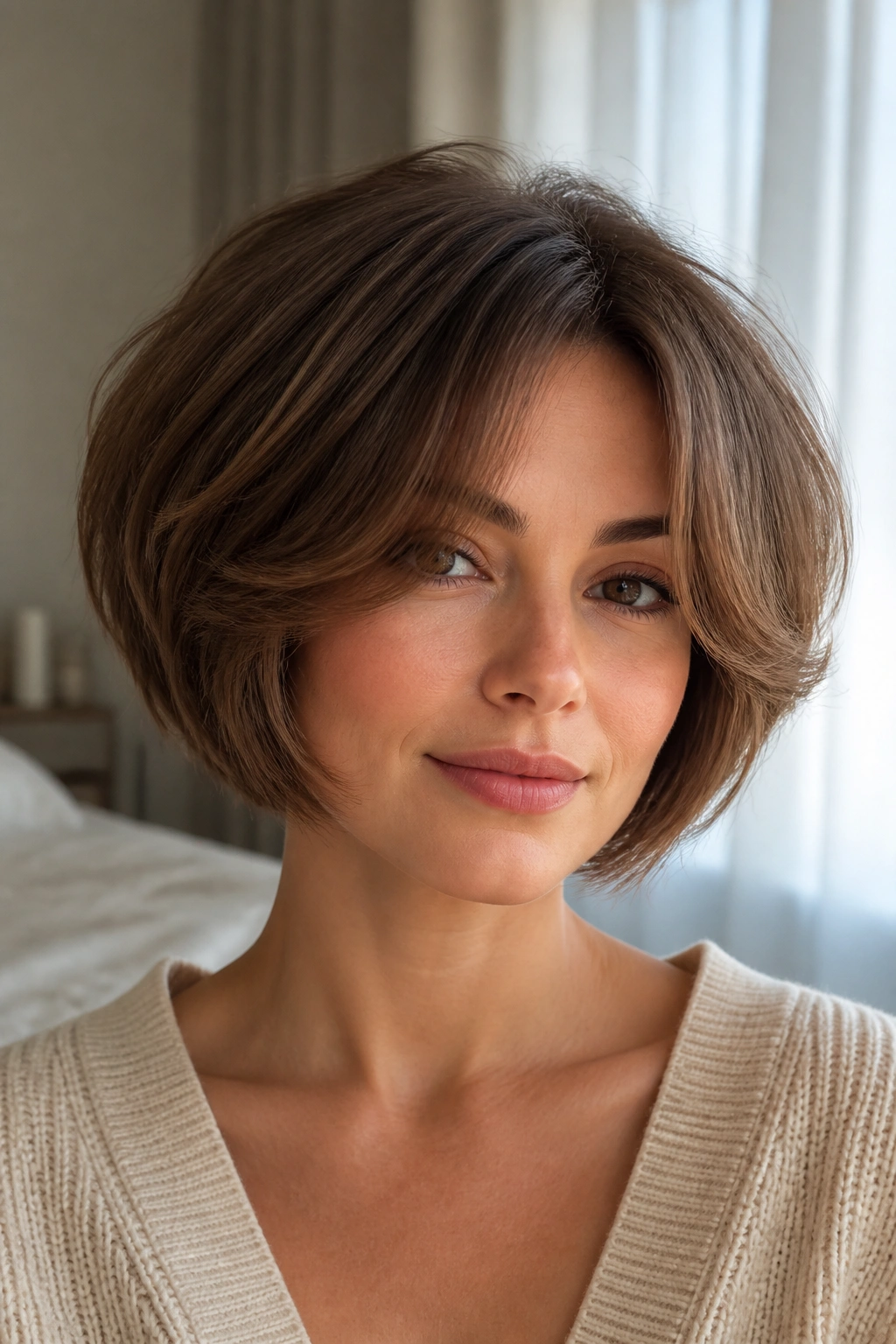
Curtain fringe changes everything. It softens the forehead, breaks up the horizontal line of the face, and gives a round shape a little more vertical balance. Paired with a stacked bob, it can be one of the easiest ways to wear short hair without losing softness.
The fringe should open from the center and fall longer toward the cheekbones. If it stops too high, it can make the face look wider. If it’s too heavy, it steals the lightness from the stack. The best version feels feathered, not thick.
What to Ask Your Stylist For
Ask for a fringe that starts narrow at the middle and blends into the front pieces without a hard line. That matters more than the exact length.
Curtain fringe also gives you options. Blow it under for polish, or tuck it away and let the bob carry the shape. Either way, the face gets framed instead of boxed in. That little bit of softness can make a short cut feel a lot more wearable.
10. Stacked Bob With Side-Swept Bangs
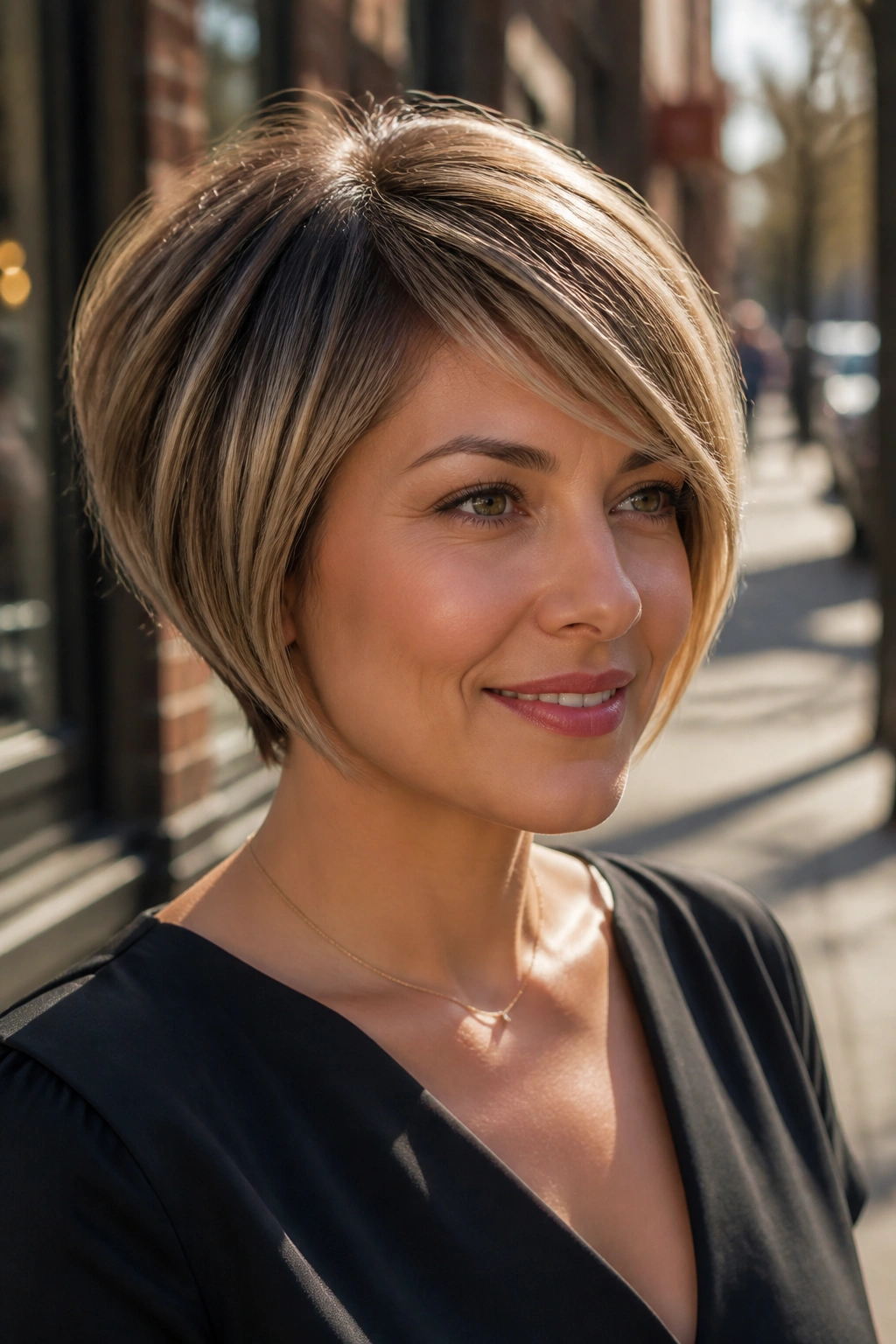
Side-swept bangs are a classic for a reason. They build a diagonal line across the face, and diagonals are your friend when you want to break up roundness. A stacked bob with side-swept bangs keeps the haircut compact while still giving the eye somewhere to travel.
The bang should feel light at the temple and slightly fuller as it sweeps across the forehead. Don’t make it too blunt. A heavy, straight-across fringe can fight the face shape and make the top feel crowded. A side sweep does the opposite. It softens the widest area and adds motion.
This cut works especially well if your forehead is a touch broader than your jaw. It also helps if you like to tuck one side back and leave the other loose. That asymmetry can be a nice trick, and it doesn’t take much effort.
The style has range. It can look neat, messy, or somewhere in between.
11. Choppy Stacked Bob With Razor Ends
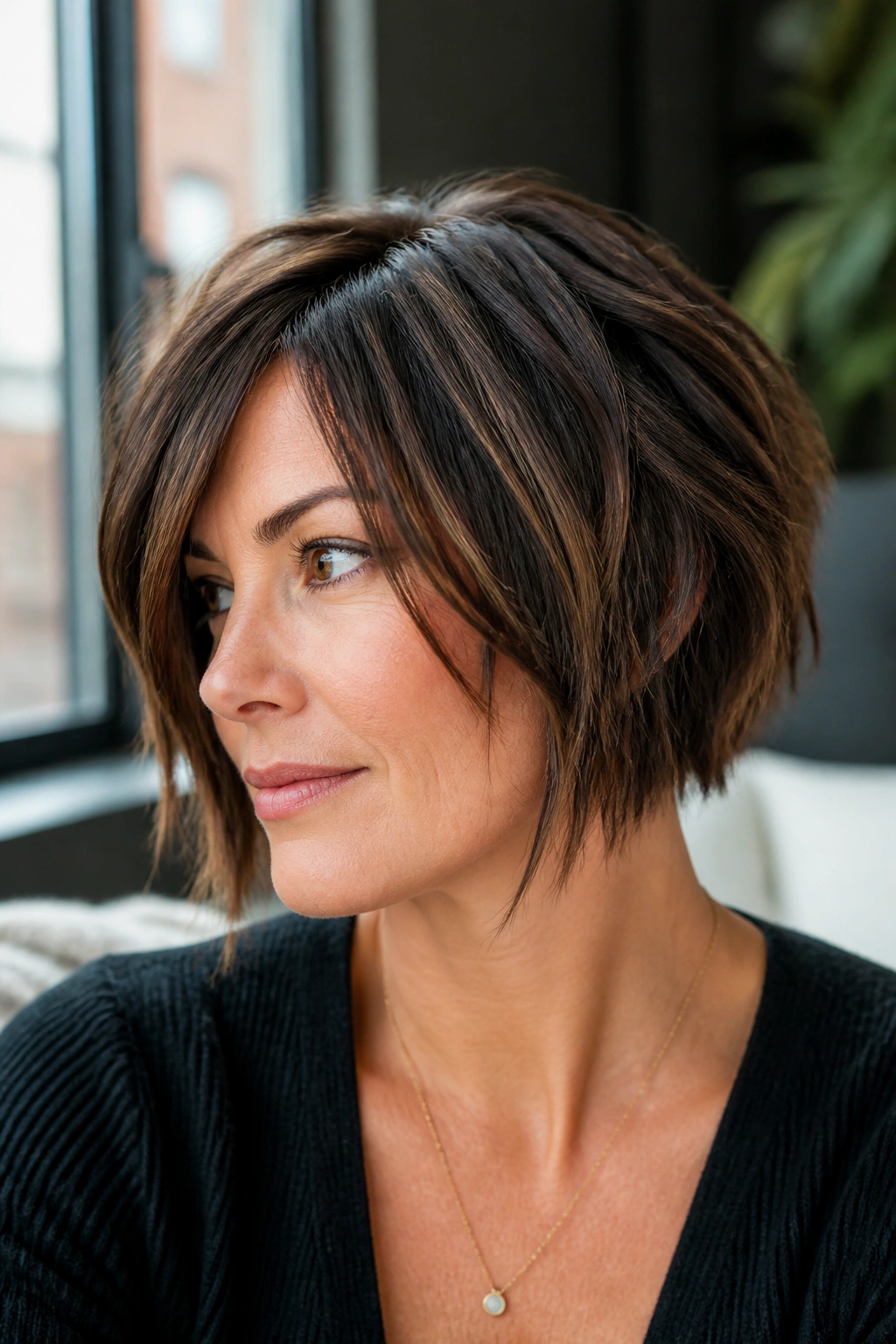
A choppy stacked bob is a good answer for dense hair that tends to sit too heavy. The razor ends break up the edge, which keeps the cut from feeling like one solid block. On a round face, that broken line helps the shape feel less boxy and more lifted.
This is not the cut for hair that’s already fragile or prone to frizz. Razor work can make those textures look rough at the ends. But if your hair has enough strength and you want movement, it can be a nice fix. The stack keeps the back close, while the choppiness keeps the front from flaring out.
A matte paste or dry texture spray can make this one look even better. Work it mostly through the ends, then pinch a few pieces around the face. You want irregularity. A little unevenness is the point.
It’s edgy without being loud.
12. Undercut Stacked Bob
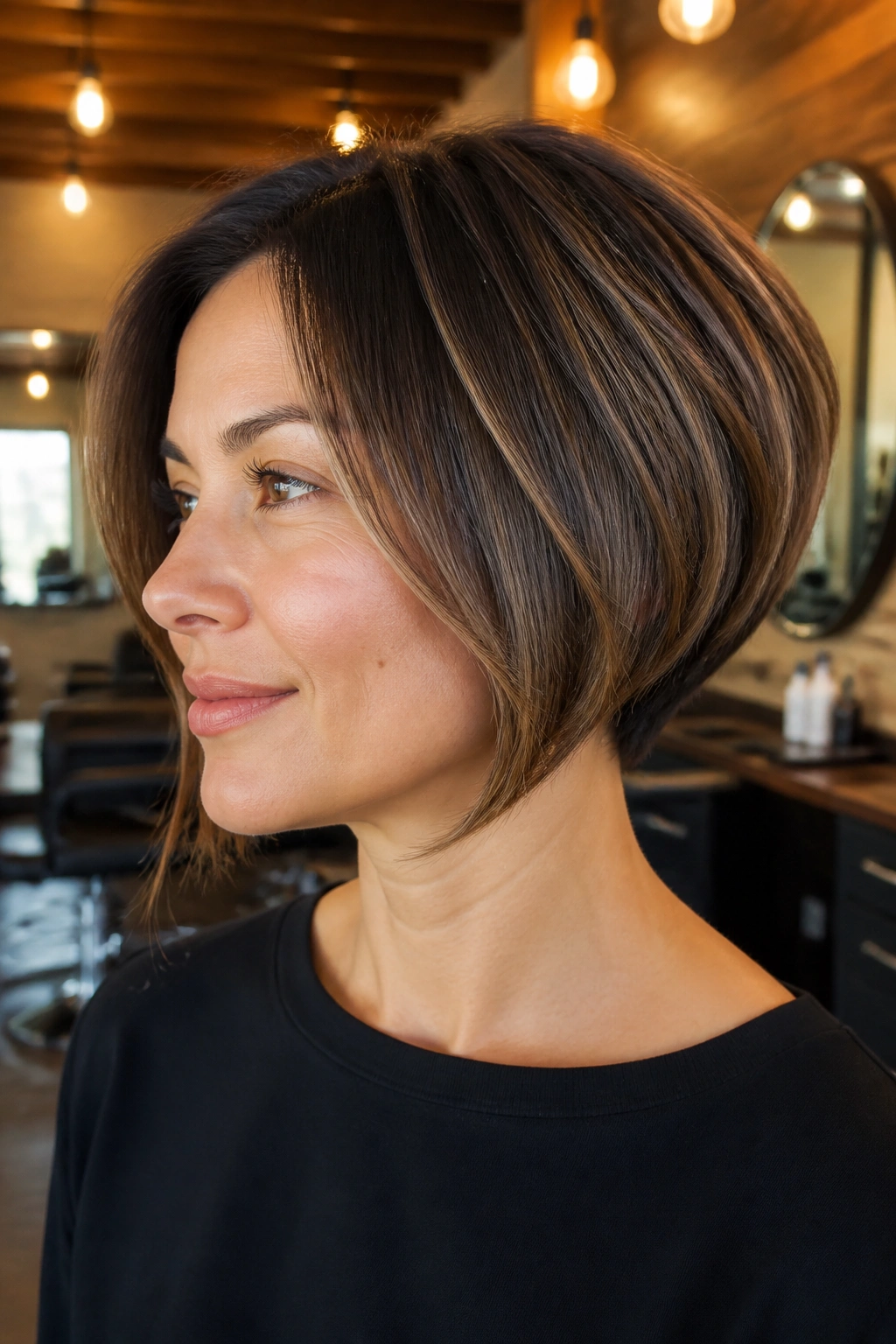
An undercut stacked bob is one of the most practical answers for very thick hair. When the bottom layers are too bulky, the haircut can expand outward at the cheeks and neck. A hidden undercut removes that weight and lets the top layers fall cleaner.
That matters for round faces because less bulk at the base usually means less width across the lower half of the head. The shape gets leaner. The stack sits better. The whole cut moves more easily.
What to Watch For
- Ask for the undercut to stay hidden unless you want it visible
- Keep the top layers long enough to cover the shaved area
- Plan for trims every 4 to 6 weeks if your hair grows fast
- Use a light cream, not a heavy oil, or the top can look flat
This is a strong choice if you like short hair but hate puffiness. It takes a little commitment. Worth it, if your hair is the type that swells at the sides no matter what you do.
13. French-Inspired Stacked Bob
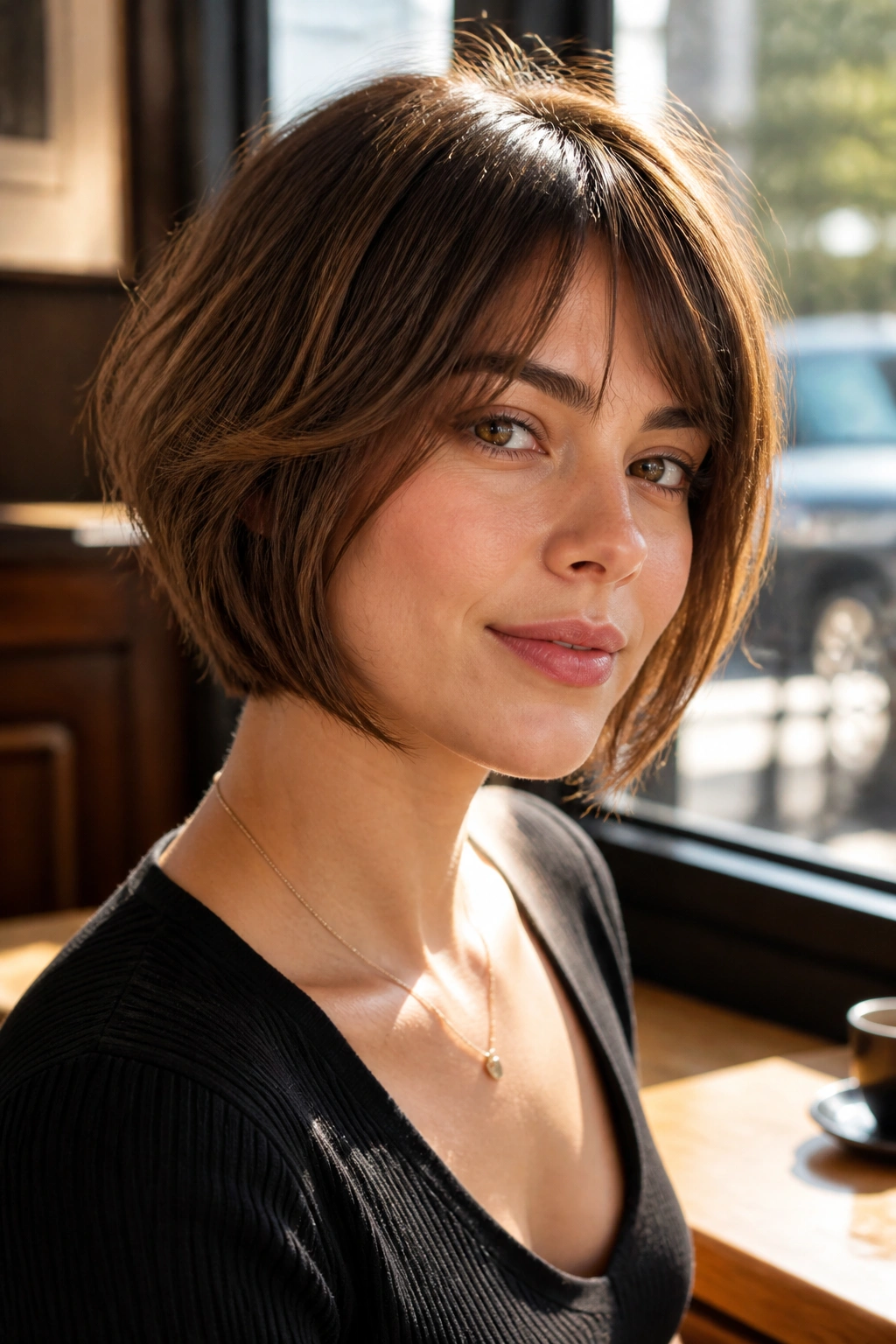
A French-inspired stacked bob usually feels a little softer than a sharply graduated one. The outline is easy, the front pieces graze the cheek or jaw, and the whole thing has that slightly imperfect finish that makes short hair look effortless without actually being effortless.
On a round face, the charm of this cut is that it gives shape without overbuilding. Too much structure can feel stiff. Too little, and the cut spreads out. The French-inspired version sits in the middle. It leans on texture, a subtle stack, and a relaxed bend at the ends.
I like this one for people who don’t want to spend ten minutes with a round brush every morning. A quick blow-dry, a touch of mousse, and maybe a tuck behind one ear is usually enough. It has a lived-in feel that can be hard to fake if the cut is too blunt.
Soft. Casual. Not sloppy.
14. Asymmetrical Stacked Bob
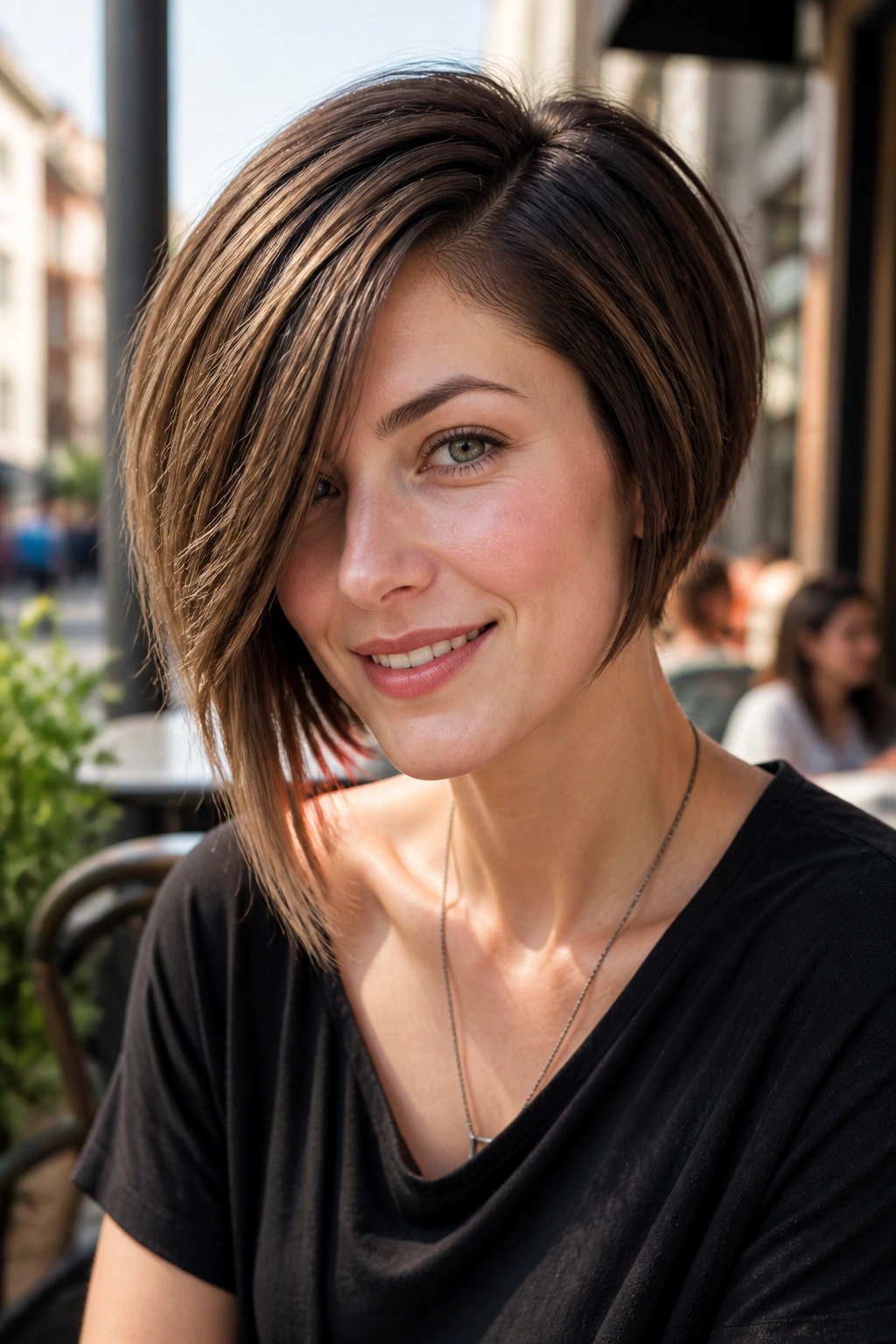
An asymmetrical bob is one of the easiest ways to make a round face feel less circular. One side is kept a little longer than the other, which shifts the balance of the whole cut. Your eye keeps moving instead of stopping at the same point on both sides.
The difference does not need to be dramatic. Even an inch or an inch and a half can change the feel. Too much asymmetry can start to dominate the face, and that’s a different look entirely. The best version stays wearable and clean, with the longer side skimming the jawline.
Why It Flatters
The uneven shape creates tension. That tension breaks up softness around the cheeks.
If you want a bob that feels fashion-forward but still works for everyday wear, this is a smart lane. It’s especially useful if one side of your hair naturally falls flatter or if you like to tuck one side behind the ear. The cut already has motion built in.
15. Chin-Length Stacked Bob for Round Faces
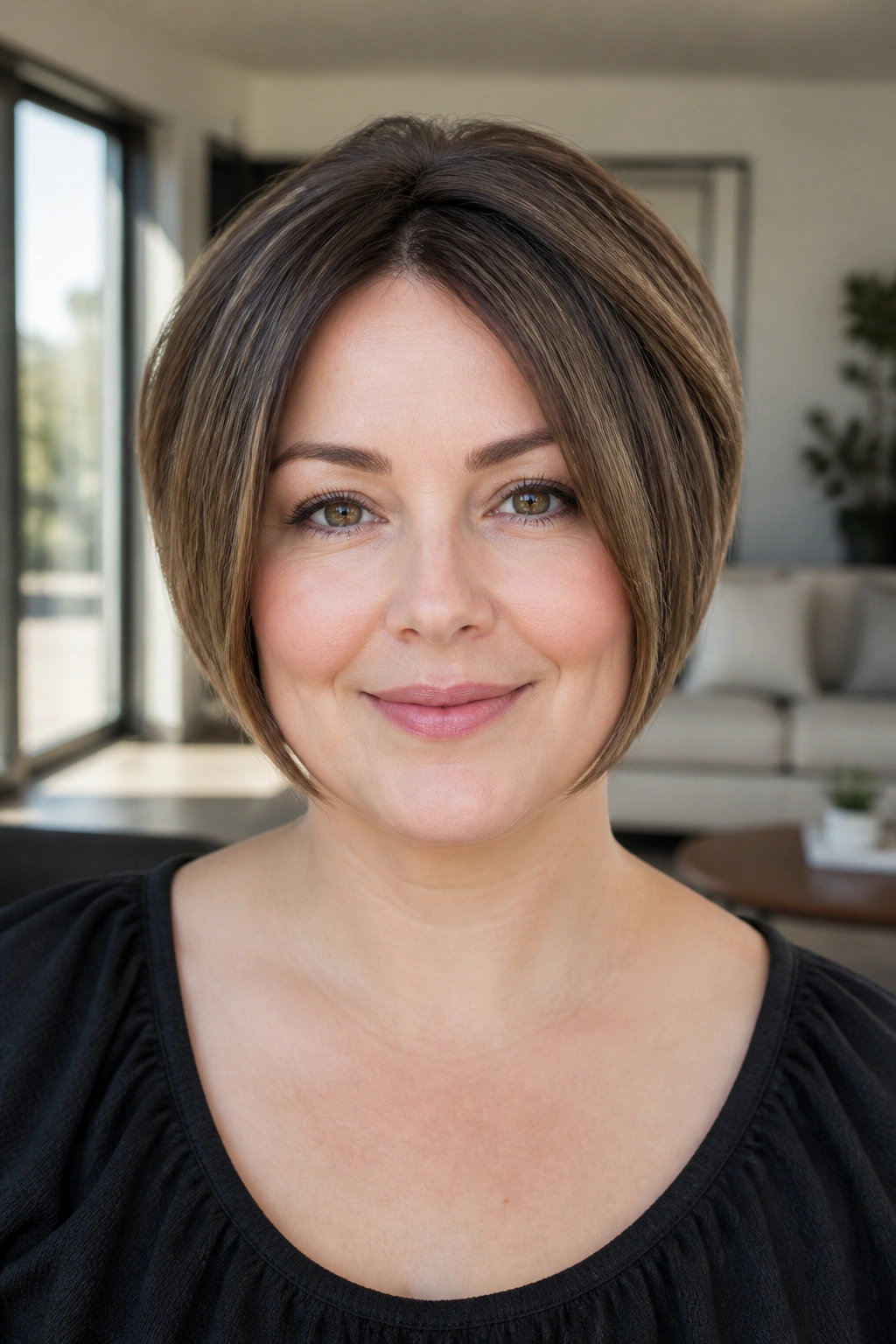
A chin-length stacked bob is one of the safest short options for round faces, and I mean that in a good way. It gives you enough length to avoid the widest part of the cheeks, but it still feels sharp and modern. The stack at the back keeps it from looking heavy.
This cut is a good choice if you’re nervous about going too short. The chin line gives you a visual anchor, and the stacked back keeps the silhouette tidy. If the front pieces are cut just below the chin, they can actually make the face seem longer because they draw the eye down instead of sideways.
A side part usually helps here, though a soft center part can work if the front pieces are long enough. Keep the layers clean. Too many short face-framing pieces can crowd the face and defeat the whole purpose.
It’s the bob I’d point a cautious client toward first.
16. Blunt Stacked Bob
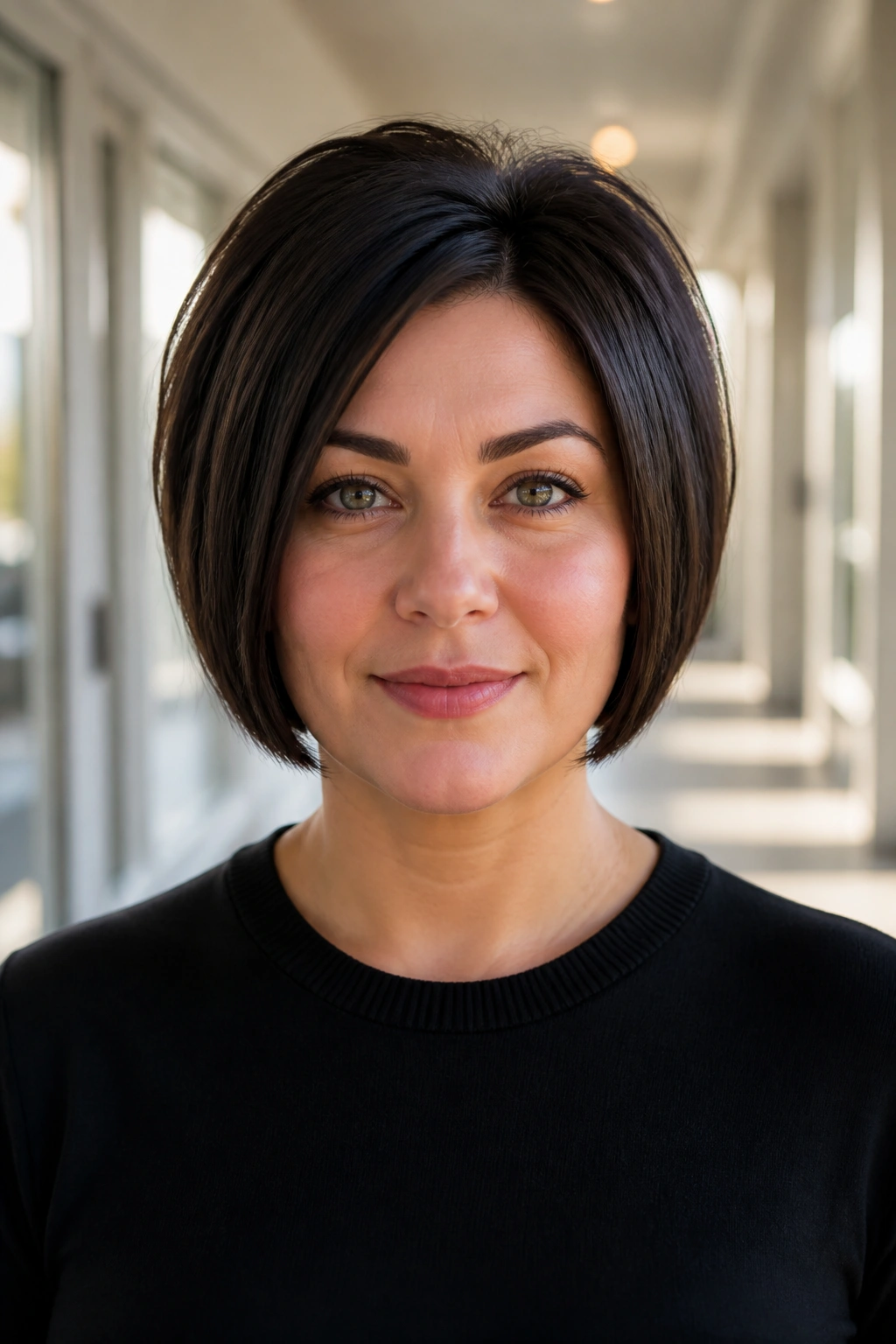
A blunt stacked bob sounds like it might be too severe for a round face, but that depends on the shape of the stack and the finish. If the back is lifted and the sides stay narrow, a blunt edge can actually make the haircut look stronger and cleaner. The contrast is what saves it.
The mistake is letting the blunt line sit too wide at the cheeks. That’s where things go sideways. If the ends fan out, the face can look fuller. If the line stays tucked in and the crown has some lift, the bluntness reads as polish instead of bulk.
This style works well on straight hair and on anyone who likes a crisp outline. It doesn’t need much styling once the cut is right. A flat brush, a smoothing cream, and a quick pass with a dryer are usually enough.
Bold, but not cartoonish. That’s the difference.
17. Layered Stacked Bob for Fine Hair
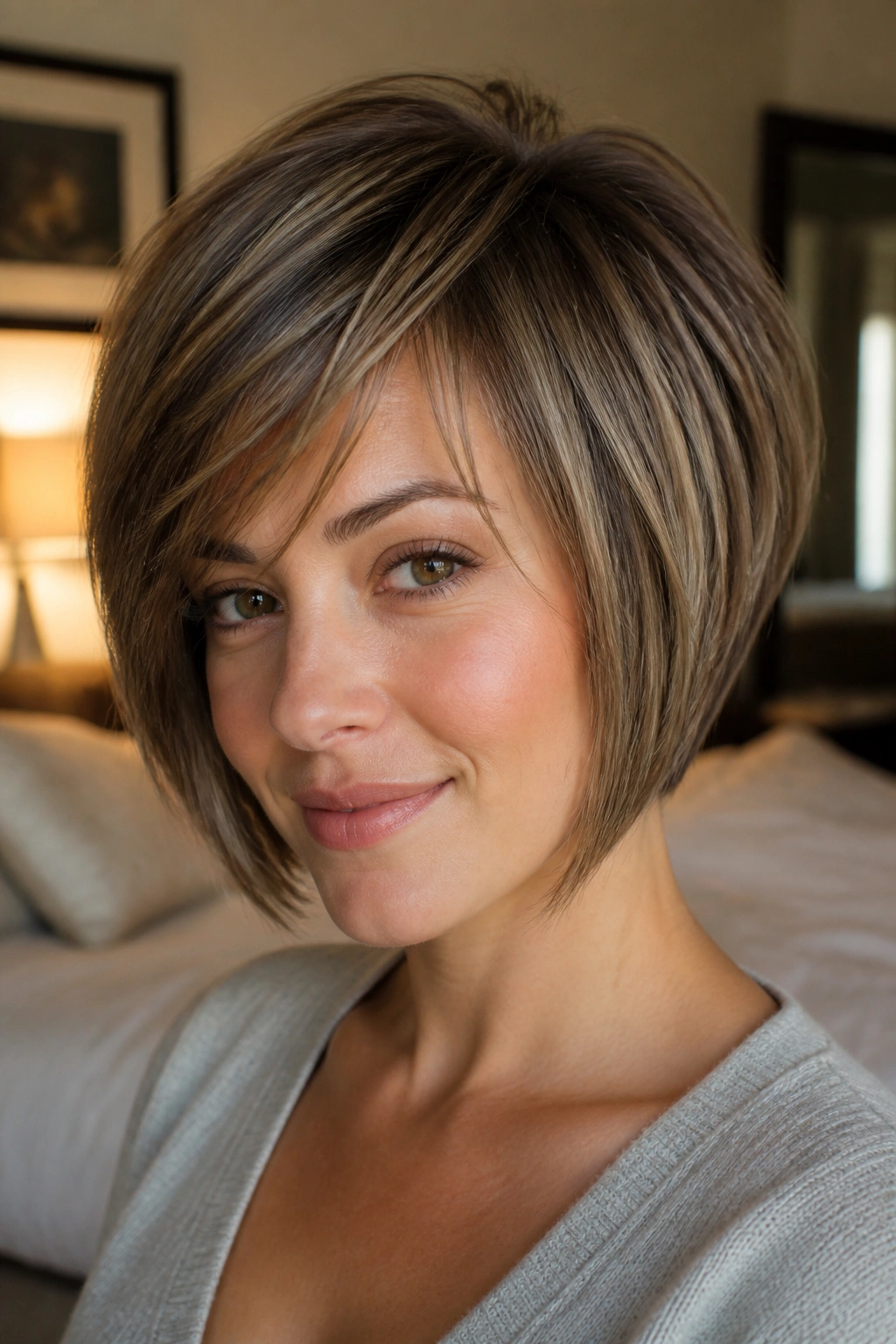
Fine hair needs structure more than it needs a lot of thinning. A layered stacked bob can give that structure without taking away the body you already have. The stack builds lift in the back, while soft internal layers help the front sit around the face without drooping.
For round faces, the real advantage is height. Fine hair tends to fall flat at the crown, which can make a short cut spread wider than you want. A well-cut stack solves that by pushing the eye upward. The face reads longer. The hair looks fuller. Nice side effect.
Styling Notes
- Use a lightweight volumizing mousse at the roots
- Blow-dry with a small round brush
- Clip the crown for 10 minutes while it cools
- Skip heavy serums, which can collapse the shape
This is one of those cuts that looks better with a little lift than with too much product. The wrong cream can flatten fine hair fast. Less is more here.
18. Thick-Hair Stacked Bob With Internal Weight Removal
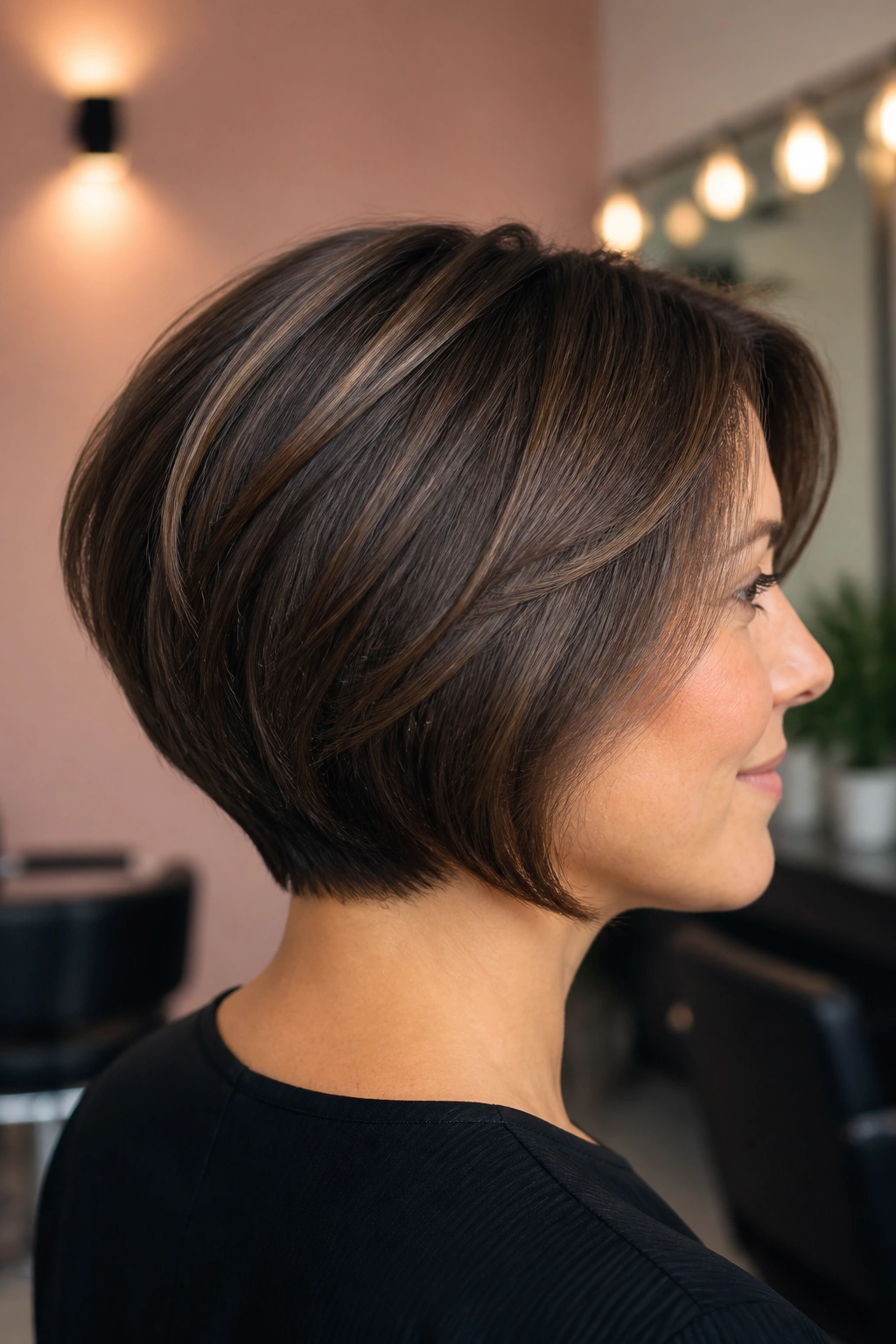
Thick hair can carry a stacked bob beautifully, but only if the weight is removed inside the cut. Not on the surface. That distinction matters. Surface thinning can make thick hair frizzy and broad. Internal weight removal lets the shape lie closer to the head.
For round faces, that closer fit is what keeps the cut from puffing out at the sides. You want the back stacked, the crown lifted, and the bulk hidden where it won’t widen the silhouette. A good stylist will usually use interior layering or point cutting in controlled sections rather than tearing into the ends.
This cut can look expensive because it has movement without chaos. The hair still feels full, but it’s no longer fighting your face shape. If your hair feels like it grows outward before it grows down, this is the fix.
Not the cheap fix. The real one.
19. Silver or Gray Stacked Bob
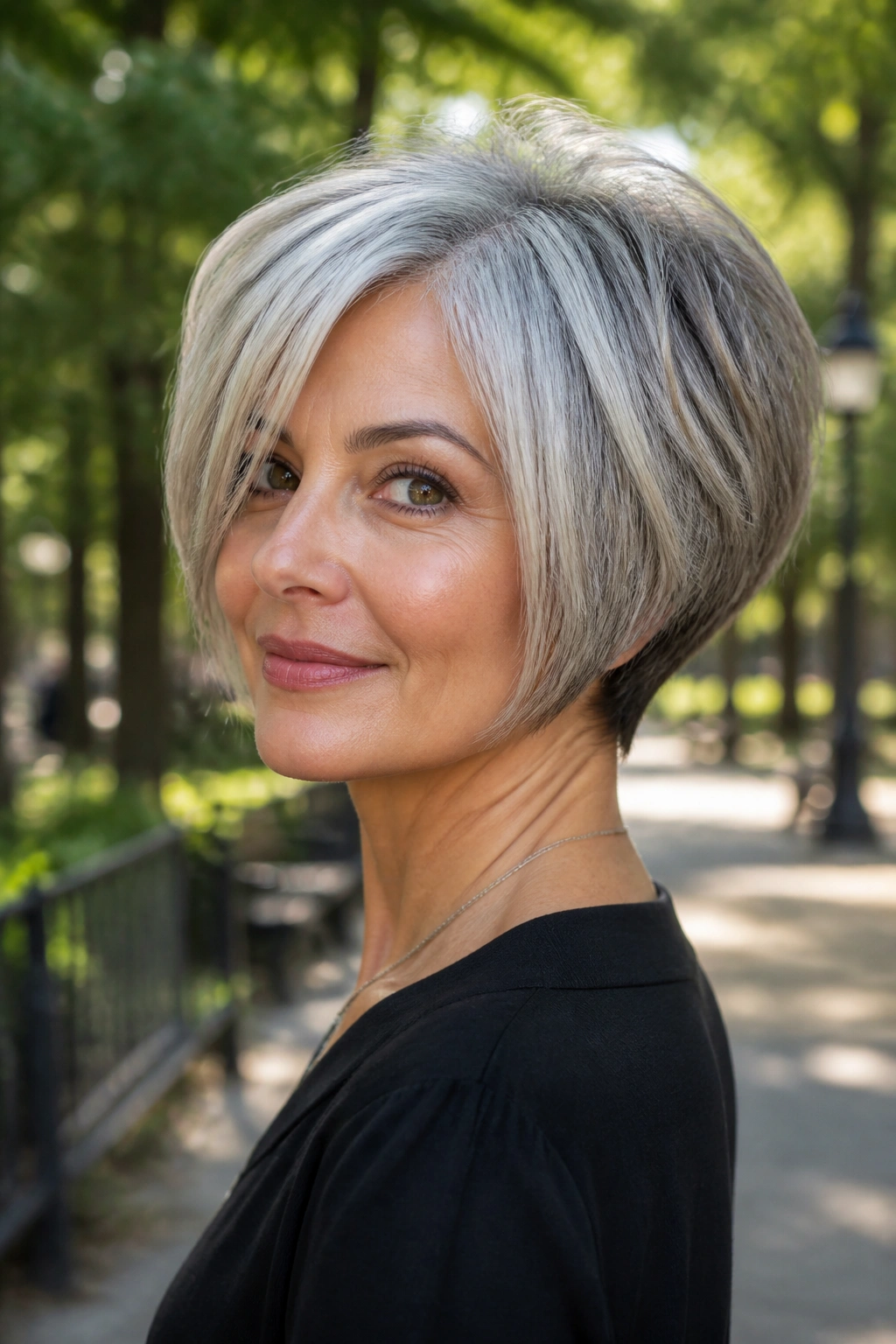
Silver and gray hair can make a stacked bob look especially sharp because the color shows off the cut line. The graduation in the back becomes easier to see, and the softer front pieces create a clean frame around the face. On a round face, that crisp contrast can work in your favor.
A lot of people think gray hair needs extra softness to look flattering. Sometimes yes. But a strong shape can be even better. The stack adds structure, while the lighter color keeps the cut from feeling heavy. That combination is hard to beat.
You may want a little shine cream or a purple-toned shampoo if brassiness is a problem, but don’t drown the style in product. Silver hair looks best when the shape is visible. If the ends get too coated, the graduation disappears.
It’s a smart, honest cut. No fuss. Good bones.
20. Collarbone-Grazing Short Stacked Bob

If you want the feel of a short bob without going all the way short, a collarbone-grazing stacked bob is a strong option. The extra inch or two of length gives round faces a little breathing room, especially around the cheeks and jaw. It also makes the grow-out phase much less annoying.
The stack still matters here. You’re not just keeping the length longer for comfort. You’re using the back graduation to shape the head, while the front pieces skim the collarbone and keep the line vertical. That keeps the cut from feeling boxy.
This version is a good bridge if you’re easing into shorter hair. It lets you test the shape before committing to a tighter crop. And because the front is a little longer, you can still curl it under, wave it, or tuck it away when you want a different mood.
Practical. No drama.
21. Side-Tucked Stacked Bob
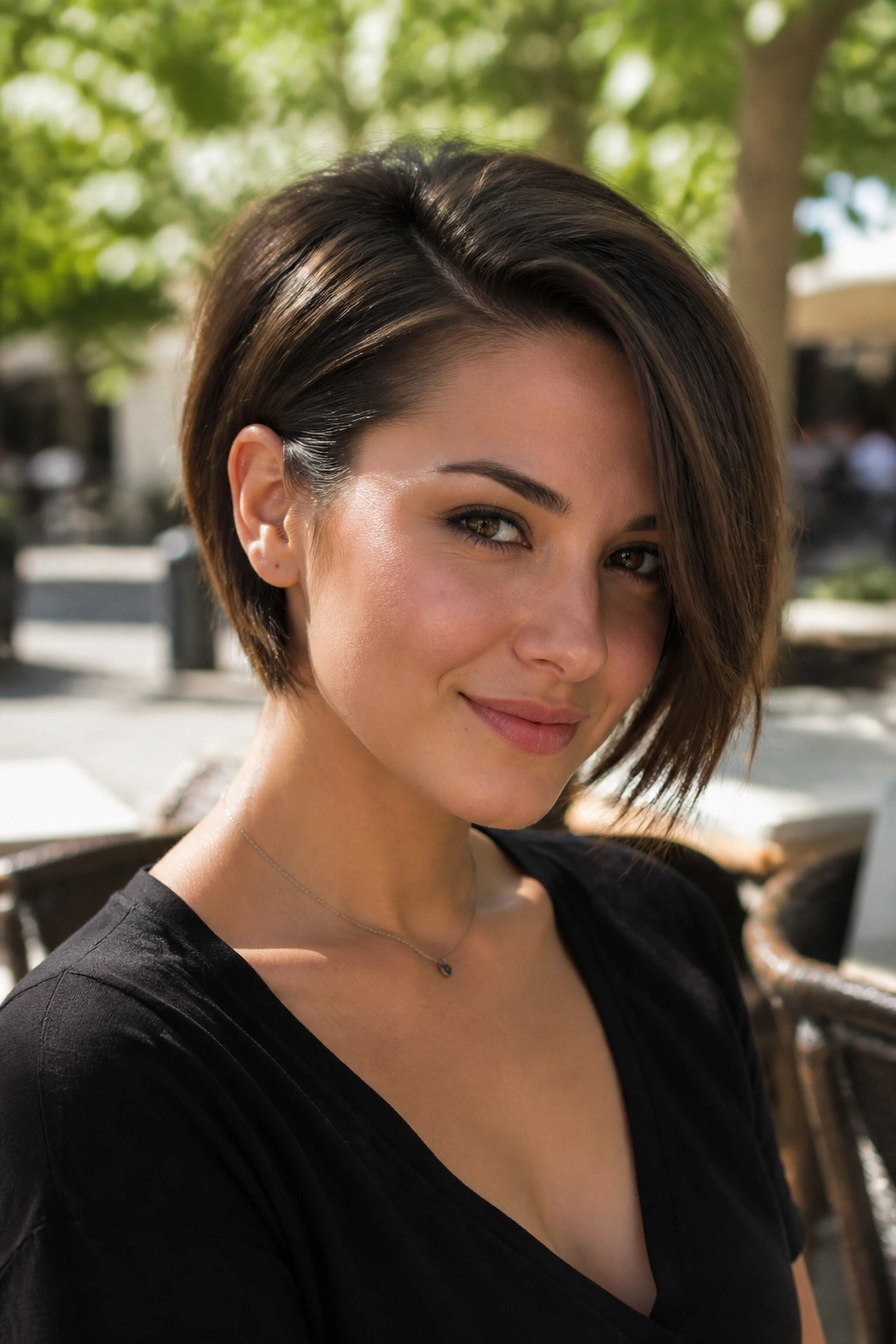
A side-tucked stacked bob is less about the haircut itself and more about how the haircut behaves in real life. Tucking one side behind the ear opens up the face, especially the cheek area, and gives a round face a cleaner outline. If the bob is stacked well, the tuck shows off the shape instead of making it look awkward.
This trick works best when the untucked side keeps a little movement around the jaw. Don’t tuck both sides unless you want a much sleeker look. The contrast between open and closed creates the interest.
A small clip, a tucked barrette, or even just a smooth tuck behind the ear can change the whole mood. It’s one of the simplest styling moves in the book, and people skip it far too often. Sometimes the haircut is fine. It just needs a better habit.
Small move. Big difference.
22. Messy Bedhead Stacked Bob
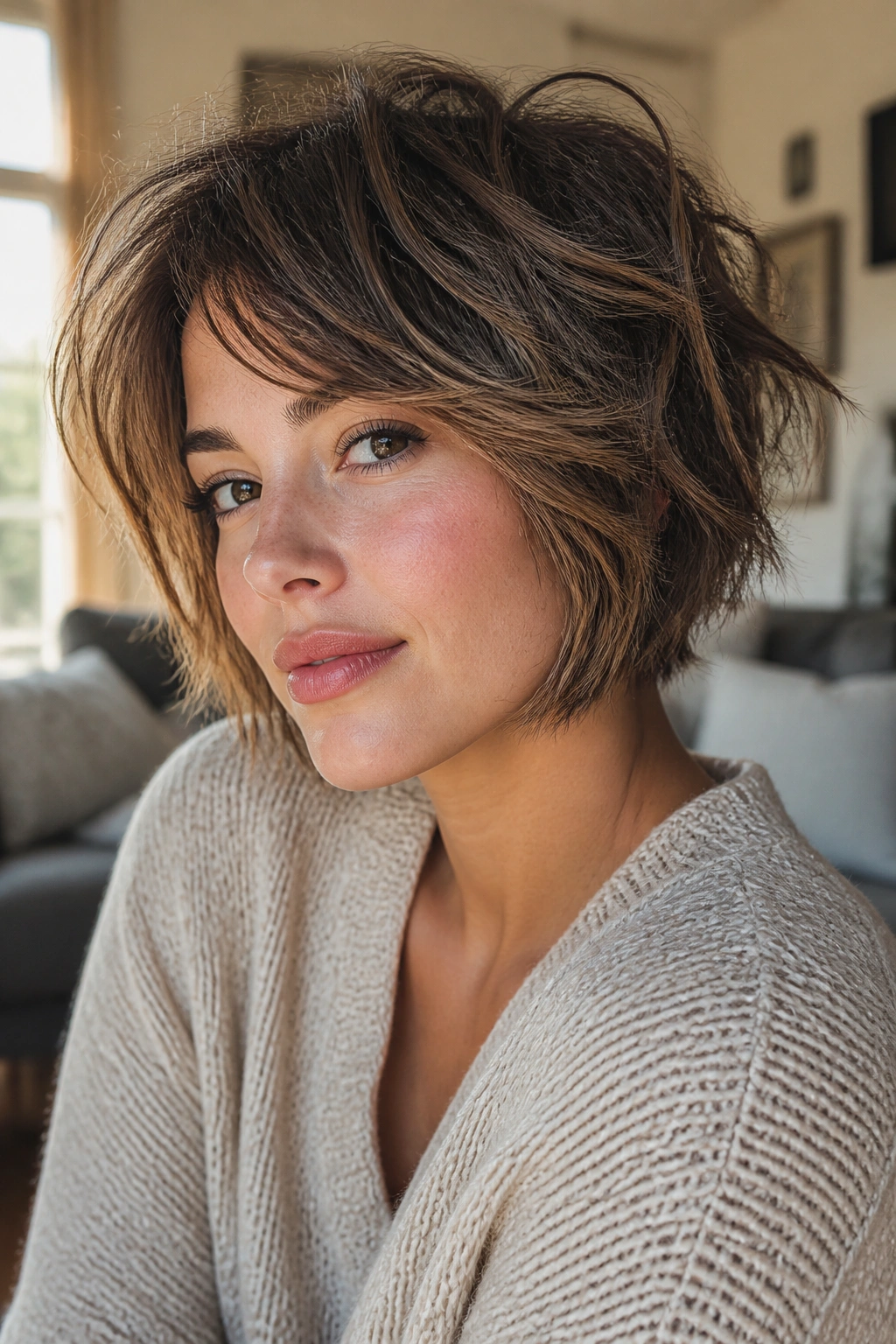
A messy stacked bob can work on round faces because movement breaks up the circle. The style looks better when it has bends, flips, and a little roughness in the ends. That irregularity keeps the eye from locking onto one wide shape.
This version usually needs texture spray or dry shampoo more than polish. You want the hair to look touched, not overdone. A few quick bends with a flat iron at random sections can help, but don’t curl every piece the same way. Uniform curls create a round shell, and that is not the goal.
I like this cut for people who don’t want to fight their hair every morning. If your texture already leans wavy, you’re halfway there. If it doesn’t, you can still fake the looseness with a bit of styling grit and some finger shaping.
Loose. A little crooked. Better for it.
23. Stacked Bob With Micro Layers
Micro layers are tiny, subtle layers that change the shape without screaming “layered cut.” That’s useful if you want a stacked bob that feels clean but not heavy. On a round face, these small shifts help the hair follow the head more closely, which keeps the sides from ballooning.
The cut is especially good when you want softness around the face but no obvious choppiness. Think of it as a quiet shape adjustment. The stack in the back still gives lift, but the micro layers refine the top and sides so the silhouette stays compact.
How It Feels in Real Life
It usually looks best after a quick blow-dry and a light brush-through. Nothing fancy.
If you’re the kind of person who likes a neat bob but hates the look of obvious layers, this is the one to ask about. It’s subtle enough to wear to work and still interesting enough to keep the haircut from going flat.
24. Soft A-Line Stacked Bob
A soft A-line stacked bob gives you angle without sharpness. The back is still shorter, the front is still longer, but the transition between the two is gentler than in a dramatic inverted cut. That gentler line can be perfect for round faces that want some length without a harsh edge.
The reason it works is simple: the front keeps moving forward. That forward motion draws the eye away from the widest part of the face. At the same time, the soft stack in the back keeps the neck visible and the profile tidy.
This cut suits people who want a more forgiving shape. It doesn’t shout. It just behaves well. A side part or a soft off-center part usually makes it even better, especially if the front pieces skim the jaw and collarbone rather than stopping high on the cheeks.
Easy to wear. Easy to like.
25. High-Volume Stacked Bob With Root Lift
A high-volume stacked bob can look fantastic on round faces if the volume stays on top and not at the sides. That is the line you cannot cross. Root lift at the crown creates height, which helps elongate the face, while the tight stack in back keeps the profile neat.
This is the cut for someone who likes a fuller blowout look. Velcro rollers, root clips, and a round brush can all help. Focus on lifting the crown for a few minutes, then smooth the sides so they don’t puff outward. If the volume starts expanding around the ears, stop and reshape it. Don’t let it wander.
A little height is flattering. Too much width is not. That’s the whole story here.
For a round face, this version can look glamorous without feeling fussy. It has presence. It also gives you room to play if you like a bigger finish on some days and a sleeker one on others.
The Bottom Line
The best short stacked bob for a round face is the one that builds height, narrows at the nape, and keeps the widest part of the hair from sitting right on the cheeks. That part matters more than whether the cut is sleek, choppy, curly, or polished.
Bring photos to the salon, yes, but also talk in simple terms: more lift at the crown, less width at the sides, length that skims the jaw or chin. Those words help more than vague requests for “something flattering.”
And if one version feels too neat or too sharp, that’s fine. A stacked bob is flexible. The right one won’t hide your face shape. It will work with it.
