



Fine hair can make a wavy bob look either airy and expensive or flat by lunchtime, and the difference usually comes down to shape, not product. The best short wavy bob haircuts for fine hair give the ends enough weight to look full, then add movement only where it helps: around the cheekbones, jawline, or nape.
Too many people go after layers first. That’s usually backwards. Fine strands need a perimeter that holds its line, because once the bottom starts looking see-through, no amount of salt spray or curling wand drama can fix it for long.
A good bob on fine hair should still look decent after a messy air-dry, a quick bend with a curling iron, or a sleepy side tuck. It should not depend on a perfect blowout every single day. That’s the standard I keep in mind when I look at bob shapes that actually work in real life.
Some of the cuts below are polished, some are casual, and a few lean a little edgy. The common thread is simple: they make fine hair look deliberate instead of thin.
1. Chin-Length Blunt Bob With Loose Ends
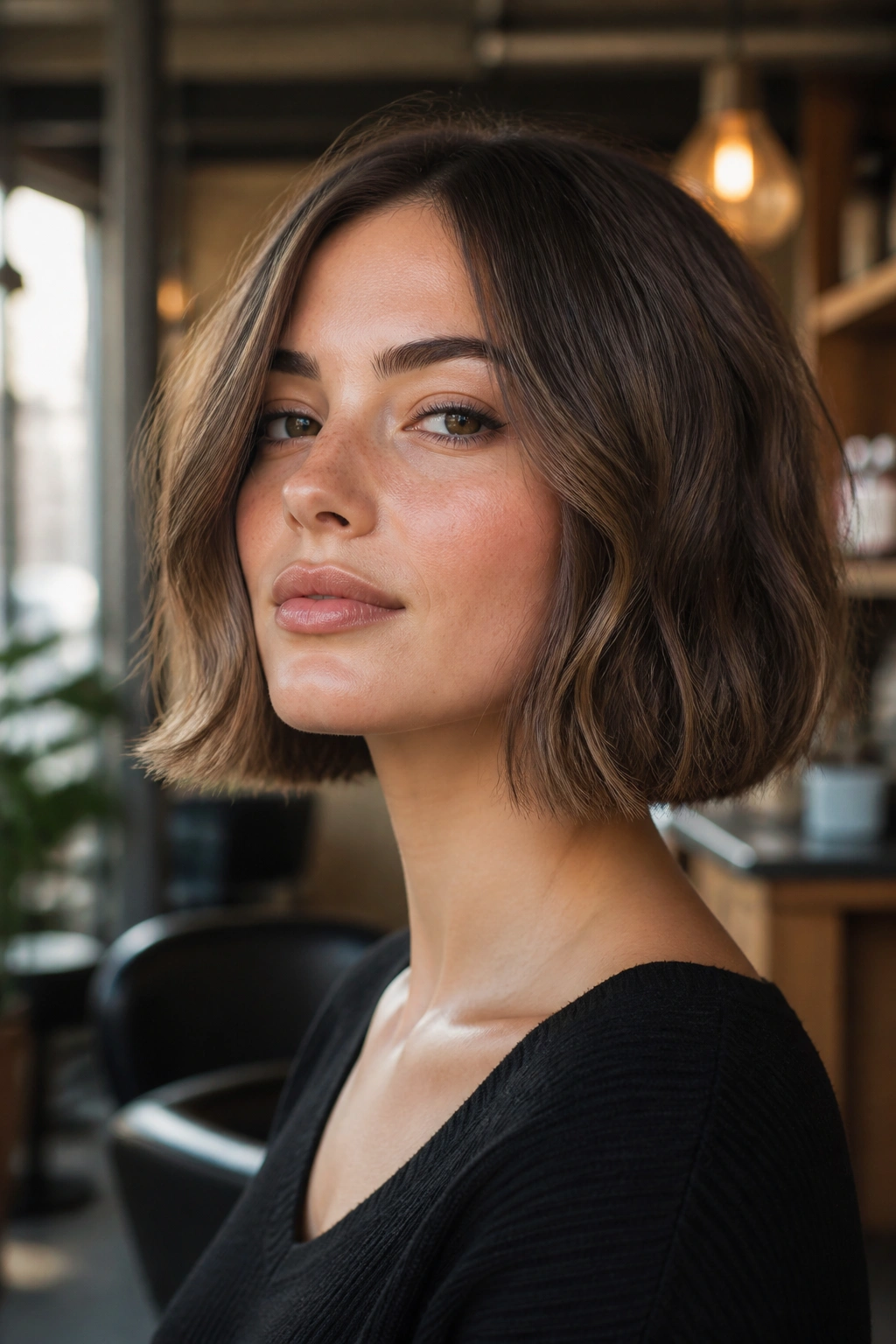
This is the haircut I reach for when someone wants fine hair to look fuller without giving up movement. A chin-length blunt bob gives the ends a solid line, and that line does a lot of heavy lifting. Add a soft wave through the mid-lengths, and the whole shape looks thicker than it really is.
Why It Works
The blunt edge keeps the outline strong, so the ends do not drift into that wispy, unfinished zone fine hair can fall into fast. The loose wave gives the cut some air, but not so much that you lose density at the bottom.
A slight bend with a 1-inch iron is enough. You do not need full curls. In fact, full curls can make fine hair look smaller because they break the line too much.
- Keep the length right at the chin or just grazing it.
- Ask for a blunt perimeter with minimal thinning at the bottom.
- Style with a light mousse and a loose bend, not a tight curl.
- Part it slightly off-center if your root area goes flat fast.
Best detail: ask your stylist to leave the ends clean, then point-cut only the very tips if they need softening.
2. Slightly Angled Bob With Soft Beach Waves
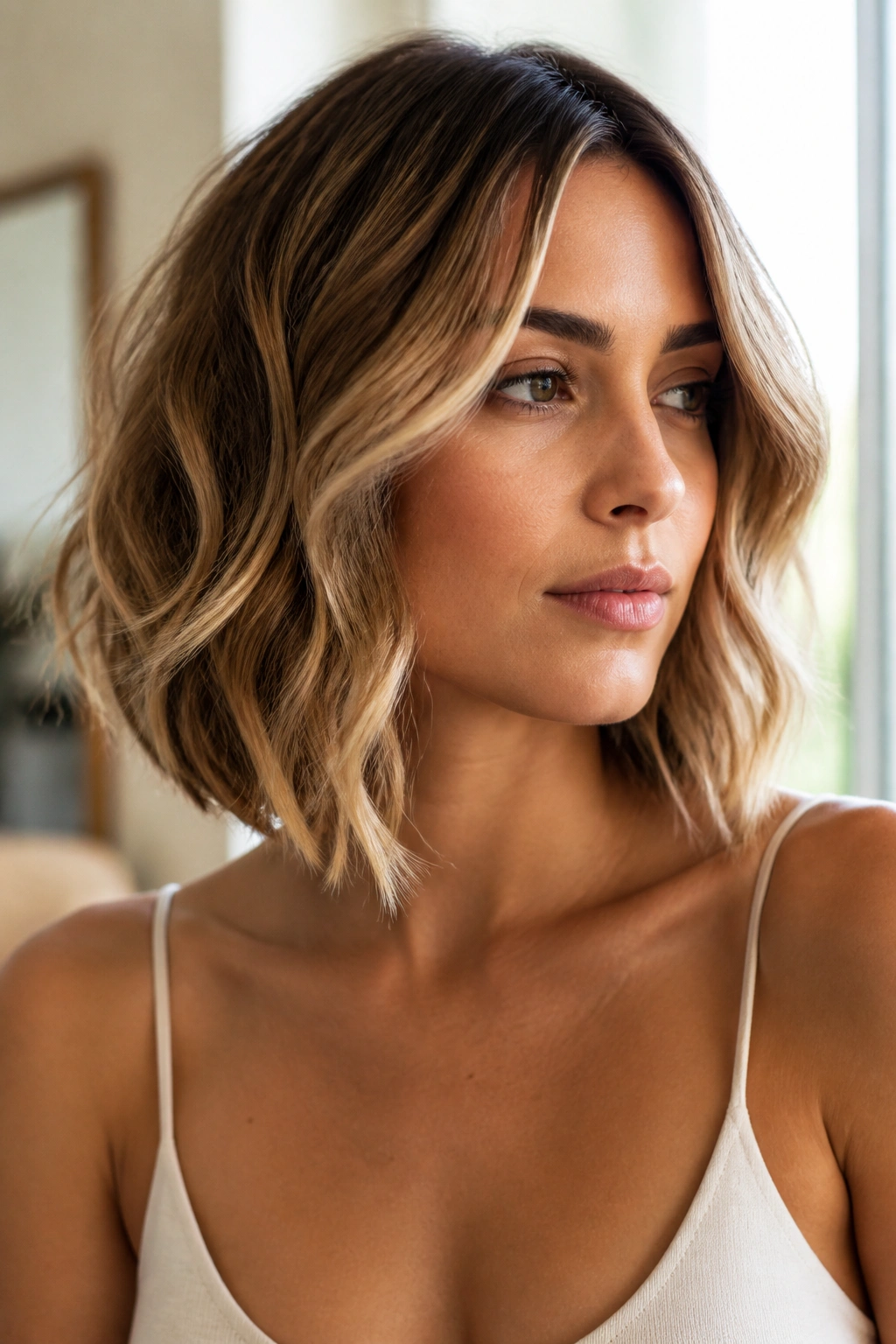
A subtle angle does more for fine hair than a lot of people expect. The front stays a touch longer than the back, which stretches the eye line and makes the haircut feel more intentional. With soft beach waves, the angle reads as movement, not stiffness.
That tiny bit of length in front also keeps the style from puffing out at the sides. Fine hair often needs a shape that gives it direction, and this one does that without shouting about it.
Wear it with a center part if your face is longer, or slide the part off-center if you want a little lift near the crown. The wave should stay relaxed and a little uneven. Too much symmetry kills the point.
One inch is enough. Maybe a bit less.
3. French Bob With Curtain Bangs
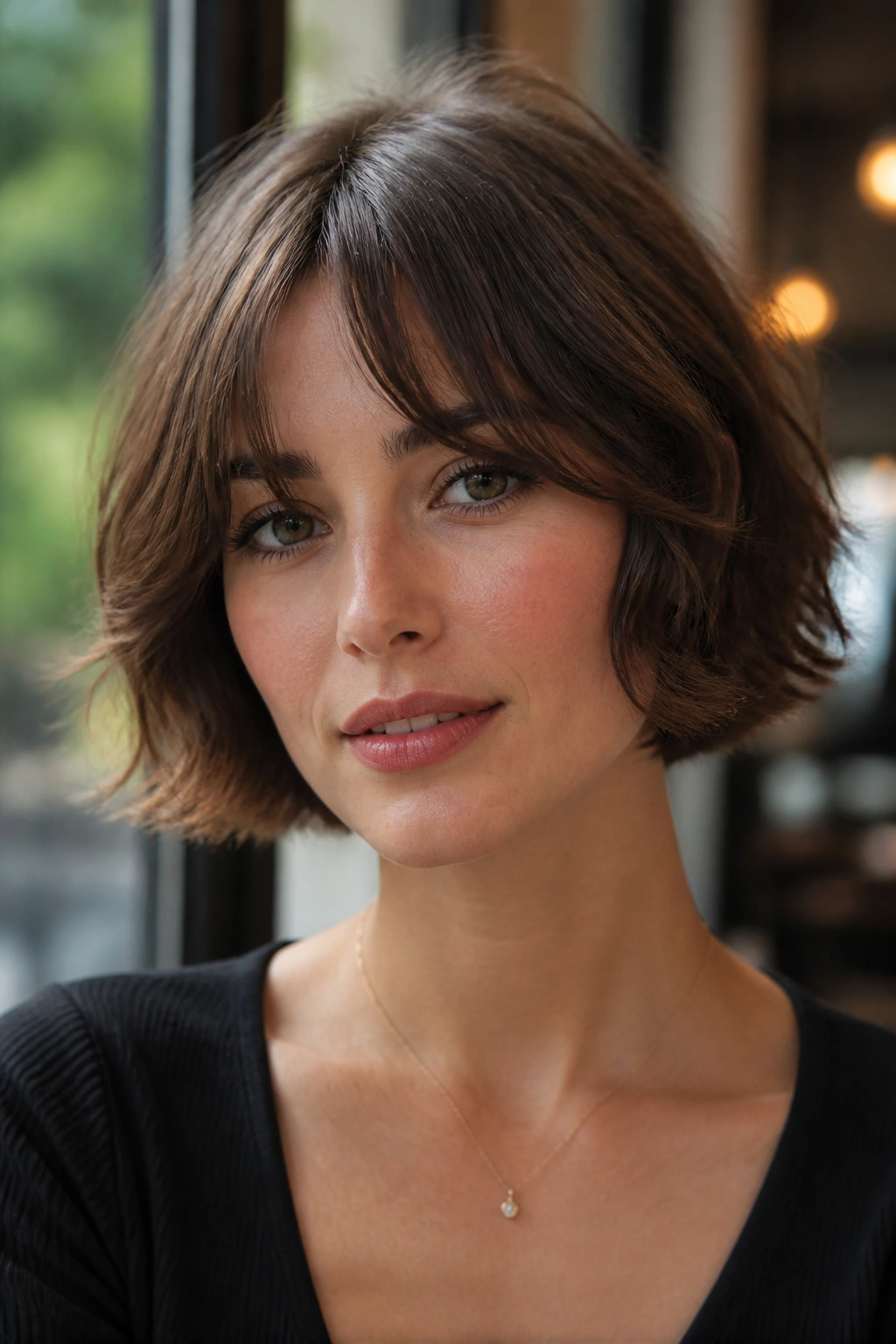
Why does this look so good on fine hair? Because the French bob is short enough to hold its shape, and curtain bangs break up the front without stealing too much density from the rest of the cut. The result feels light, but not sparse.
Curtain bangs are the key here. They add softness around the face, which matters when the bob itself is pretty compact. On fine strands, you want those bangs to stay airy and separated, not heavy and blocky.
How to Ask For It
Tell your stylist you want the bob to sit around lip length to chin length, with a fringe that opens at the center and falls softly toward the cheekbones. The bangs should feel piecey, not packed.
A little texture at the ends helps, but don’t let the cut get shredded. Fine hair can take a choppy edge only in small doses.
This is a good choice if you like hair that looks slightly undone even when you barely touch it.
4. Collarbone Bob That Air-Dries Cleanly

If your hair falls flat the second you stop styling it, this is one of the safer bets. A collarbone bob keeps enough length to let waves form, but it is short enough that the shape still feels light and lifted.
The real trick is the balance. Too short, and your wave can spring up in odd places. Too long, and fine hair loses its bounce and hangs there like a tired scarf. Collarbone length usually sits in the sweet spot.
- Ask for soft internal shaping, not heavy layering.
- Keep the perimeter blunt enough to hold weight.
- Use a leave-in mist, not a rich cream.
- Scrunch while damp and leave the roots alone until they dry.
That last part matters. Fine hair often gets overworked because people keep touching it. Letting it dry with a little mess in it usually looks better than forcing every piece into place.
5. Jaw-Length Side-Part Bob With Tucked Wave
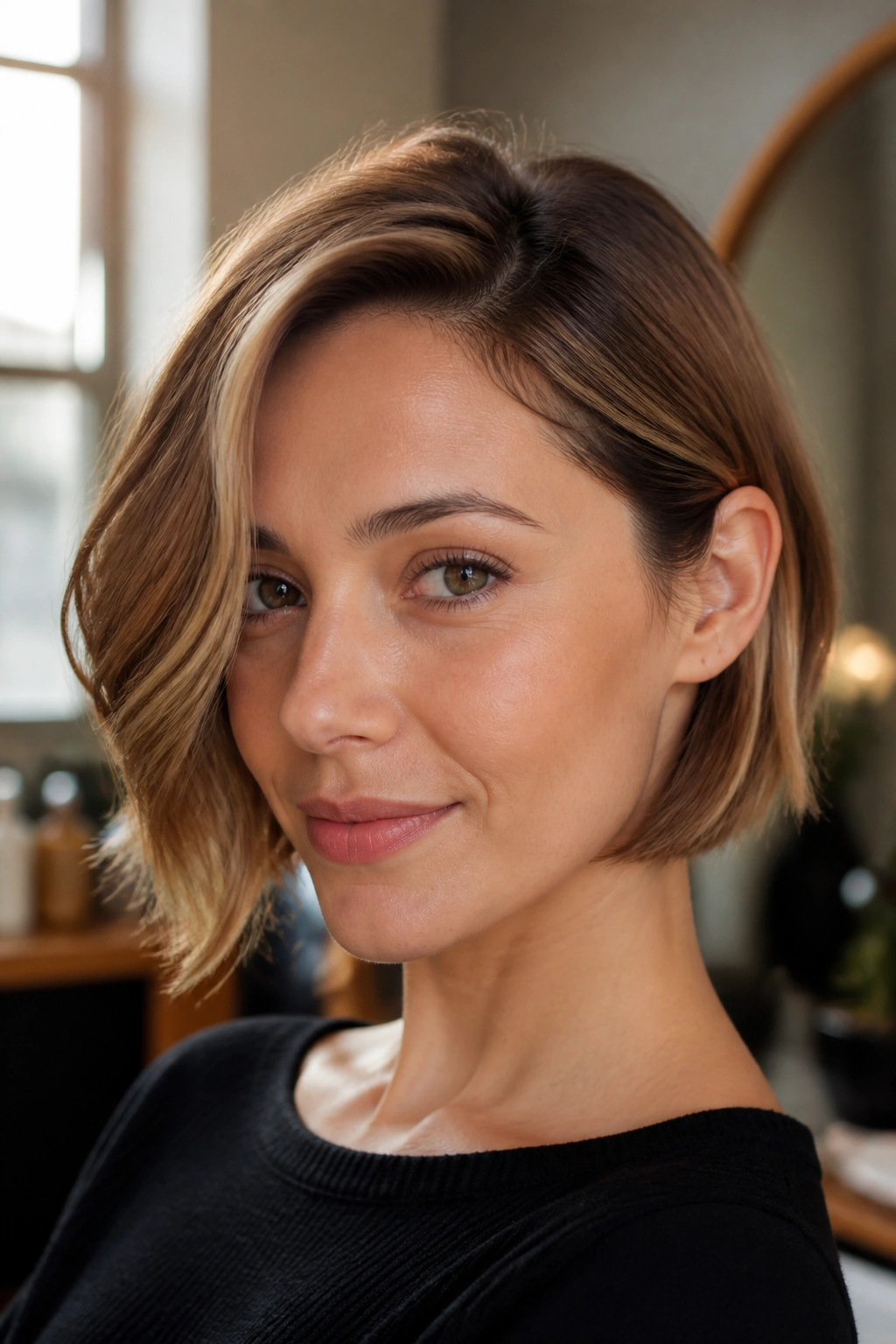
A jaw-length bob with a side part can make fine hair look a lot fuller because the part creates lift where the roots naturally want to collapse. The tucked wave on one side gives the cut some shape and a little attitude, which keeps it from feeling plain.
I like this one on oval and heart-shaped faces, especially when the cheekbones deserve a little attention. The wave should bend softly around the jaw rather than curl tightly under it. Tight under-curls can look dated fast.
The side part also helps if one side of your hair grows flatter than the other. That is more common than people admit, and it’s not a flaw. It’s just how hair behaves.
Leave one side tucked behind the ear and let the other side stay loose. Small asymmetry. Big payoff.
6. Soft A-Line Bob With Feathered Ends
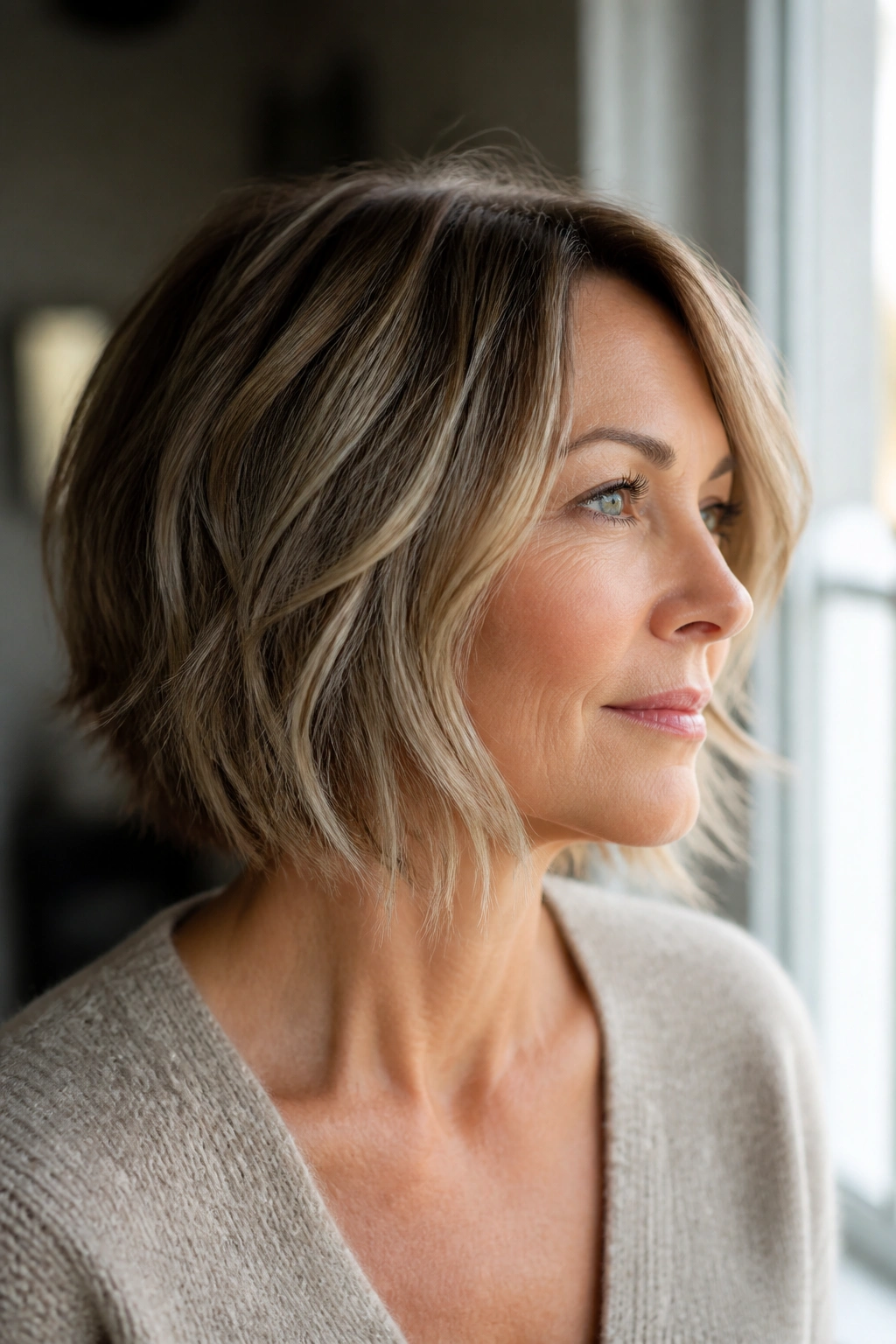
This is the polished cousin of the blunt bob. The line slopes gently from the nape to the front, but not so much that it turns dramatic. On fine hair, that subtle angle keeps the style from looking boxy while still protecting the feeling of fullness at the ends.
Unlike a hard blunt bob, the soft A-line gives you a little movement near the face. That matters if your hair tends to sit close to the head. A slight forward length catches the wave better and stops the cut from looking too neat.
It’s a good pick if you want something office-friendly that still bends nicely with a round brush or curling wand. Feathered ends help, but only at the very edge.
If your hair is extremely fine, keep the angle subtle. A steep A-line can thin out the back too much, and that’s not the look we want.
7. Micro Bob With Piecey Texture
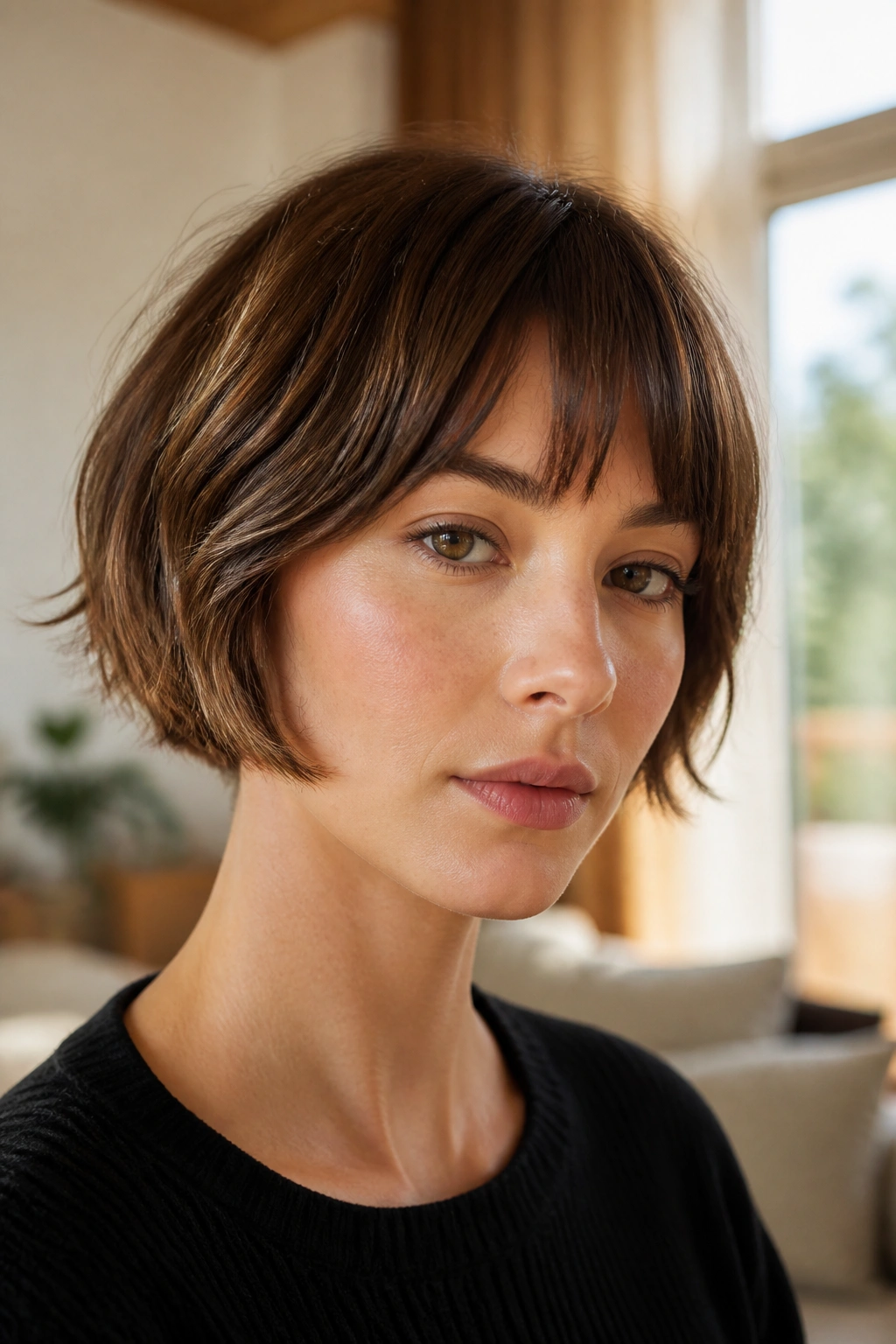
This one has edge, and it is not trying to hide it. A micro bob sits shorter than the classic chin-length shape, usually around the jaw or just above it, and the shorter length can make fine hair look denser because there’s less weight dragging it down.
Why It Works
The compact shape creates a solid silhouette. That silhouette matters more on fine hair than dramatic layering ever will. A tiny bit of piecey texture stops the cut from feeling helmet-like.
- Keep the nape clean and controlled.
- Ask for light texturizing only through the top layer.
- Use a pea-sized amount of styling paste on the ends.
- Blow-dry with a small round brush for a softer finish.
One caution: if your hair is very sparse at the hairline, this cut can expose it. It suits fine hair with enough overall density to hold a shape. Not every “shorter is better” rule applies here.
8. Bottleneck Bang Bob With Light Waves

Bangs do not have to be heavy. In fact, on fine hair, heavy bangs can swallow the whole haircut. Bottleneck bangs work because they start narrow at the center and open out toward the sides, which gives you softness without taking too much fullness away from the rest of the bob.
The waves should stay loose and low-key. You want the fringe to lead the eye, not compete with it. A clean blow-dry at the roots and a soft bend at the ends is usually enough.
This cut works well when your forehead feels a little bare in a straight bob. The bangs fix that in a gentler way than blunt fringe does. They also grow out better, which is practical and, frankly, less annoying.
The fringe is the whole point here. Keep it light.
9. One-Length Bob With Hidden Internal Layers
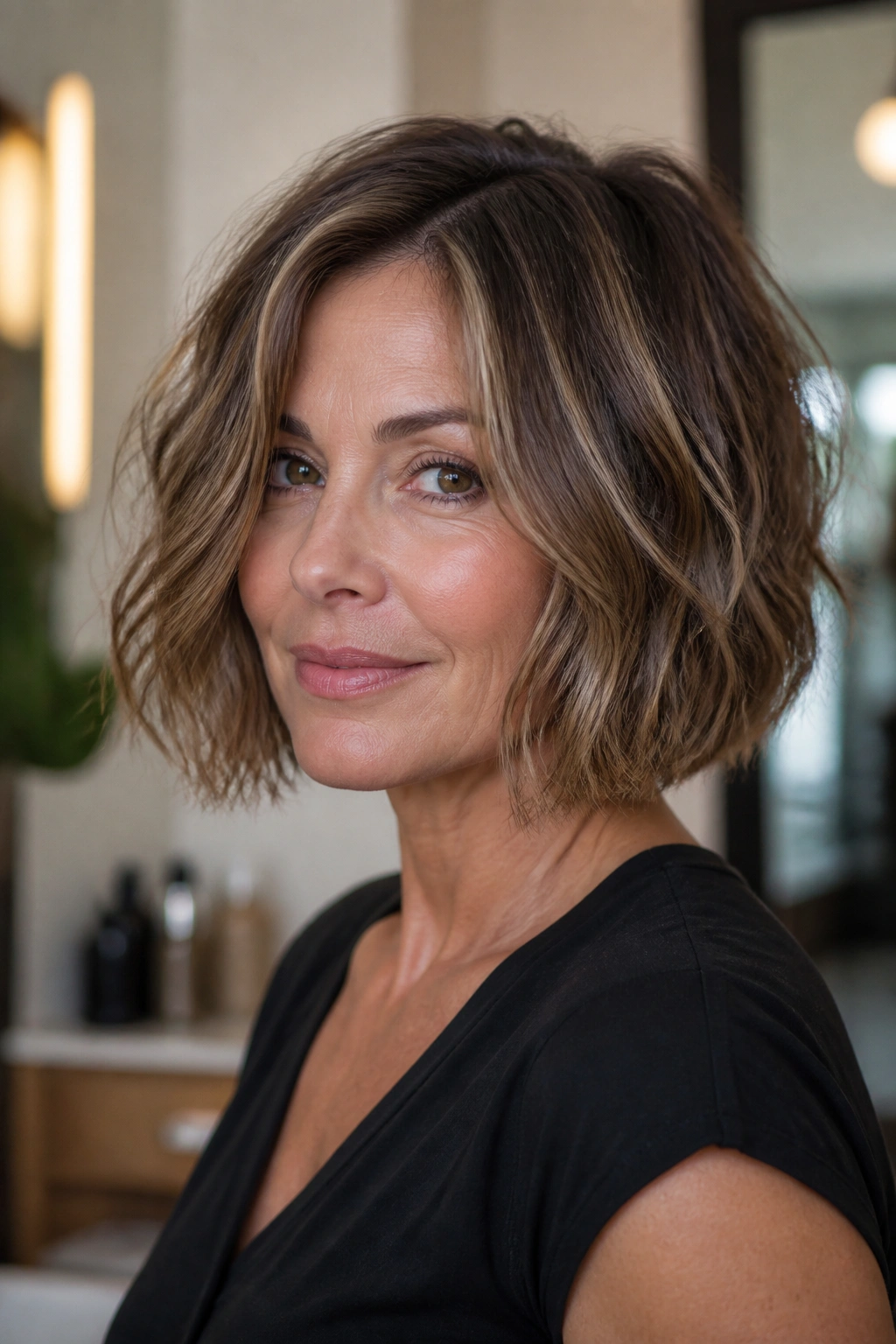
Can a one-length bob still have movement? Absolutely. The trick is hiding the layers inside the shape instead of chopping the outside line to pieces. Fine hair gets the best of both worlds: a strong perimeter and enough internal lift to keep the crown from lying flat.
How to Ask For It
Tell your stylist you want the outside line to stay clean, with short internal sections only where the hair needs support. The top should move, but the bottom should still look full.
That’s the part a lot of people miss. Visible layering can be too much on fine hair, especially if the hair already breaks easily or has a narrow density pattern. Hidden layers give room without exposing the scalp line.
This style behaves well with a loose wave and a side part. It is also one of the easiest cuts to air-dry if you don’t want to fuss every morning.
10. Deep Side-Part Tousled Bob
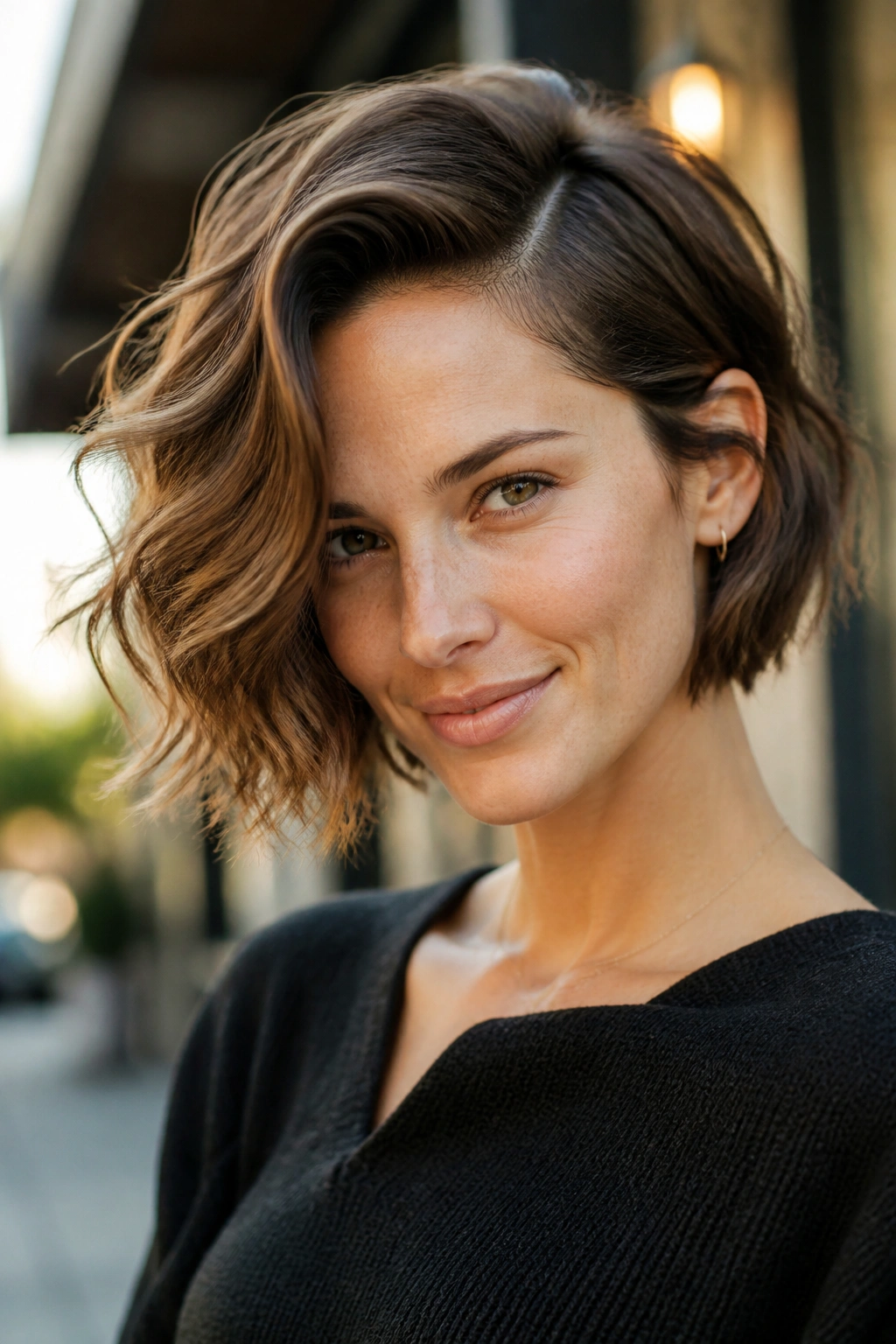
If your roots go limp on one side, a deep side part is a simple fix that looks like styling but functions like structure. The shift instantly creates lift at the front and makes the cut feel fuller at the crown.
I like this style on people who want a little drama without committing to a sharp haircut. The tousled texture keeps it relaxed, while the side part gives the bob a clear shape. Fine hair often needs that contrast.
- Place the part about 1.5 to 2 inches off center.
- Curl away from the face on the heavier side.
- Leave the lighter side smoother so the asymmetry reads cleanly.
- Finish with a dry texture spray at the roots, not the lengths.
That last part is worth repeating. Spraying the ends too much can make them look dry and separated. Root lift is where the volume lives.
11. Rounded Bob With Feathered Crown

A rounded bob can look soft and full on fine hair if the crown is handled carefully. The mistake people make is adding too much layering at the top, which can leave the head shape looking thin instead of rounded. You want lift, not holes.
The feathered crown gives a little air around the top section, and that lift helps the whole cut sit away from the scalp. The perimeter stays tidy, so the style still reads as a bob and not as a shag that wandered off course.
This shape works especially well if your hair naturally bends under. You’re not fighting the texture; you’re steering it. A quick blow-dry with a small brush at the crown can make the whole thing look fuller in under ten minutes.
It’s a quiet haircut, but a smart one.
12. Razor-Soft Choppy Bob
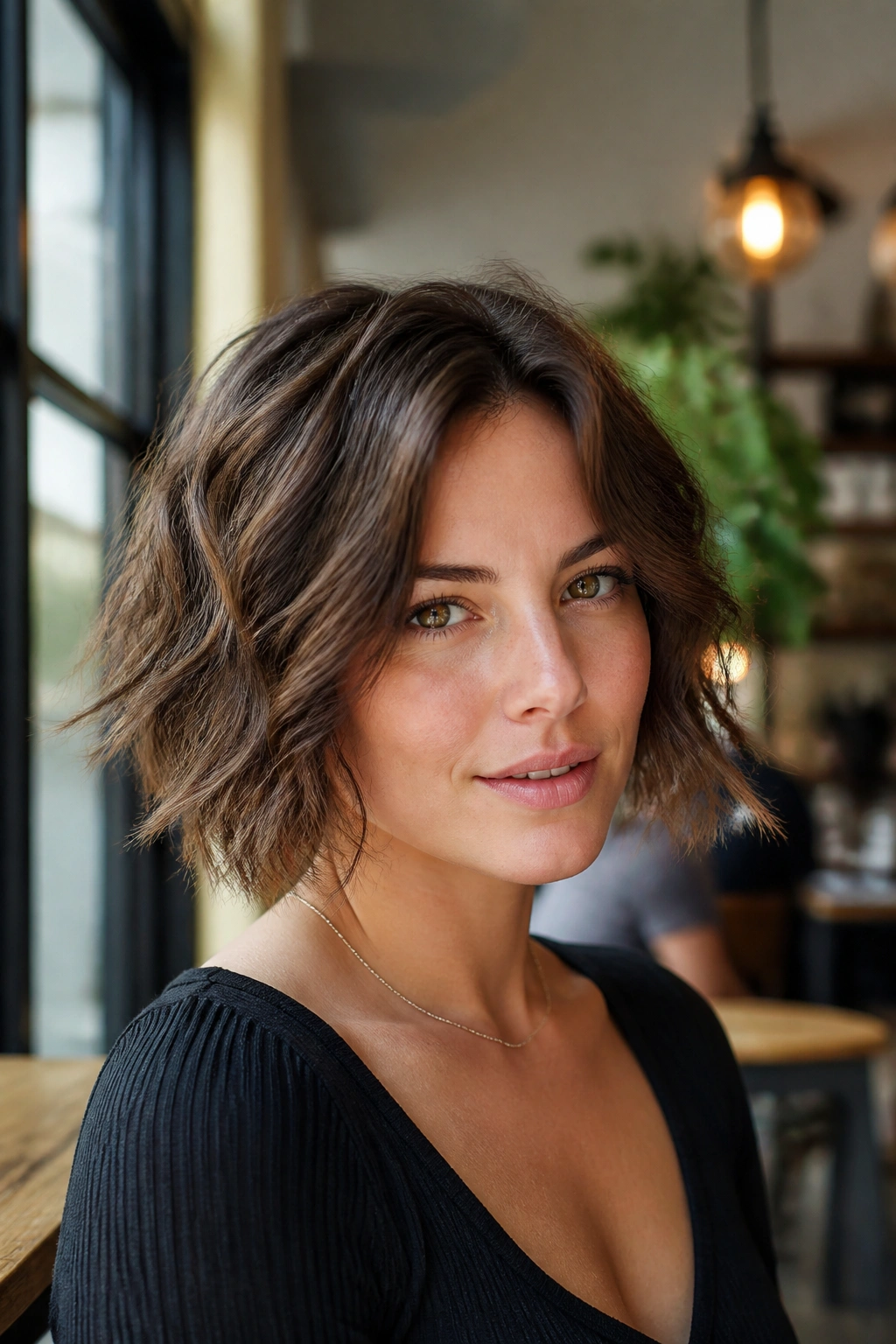
Unlike a blunt bob, this version leans into movement first. The ends are softened with a razor or very light texturizing shears, which gives wavy fine hair that broken-up, airy finish some people love. The important part is restraint. Too much razor work on fine strands can leave the ends looking shredded.
This is best on hair that already has some bend. If your waves are loose and a little unpredictable, the choppy finish makes them look deliberate. If your hair is pin-straight and fragile, I’d be careful. The shape can get too wispy fast.
It pairs well with a center part or a soft off-center part, and it looks especially good when the wave pattern is imperfect. That imperfect finish is the whole point.
If you like your bob to feel a bit lived-in, this is the one.
13. Wavy Bob With Face-Framing Panels
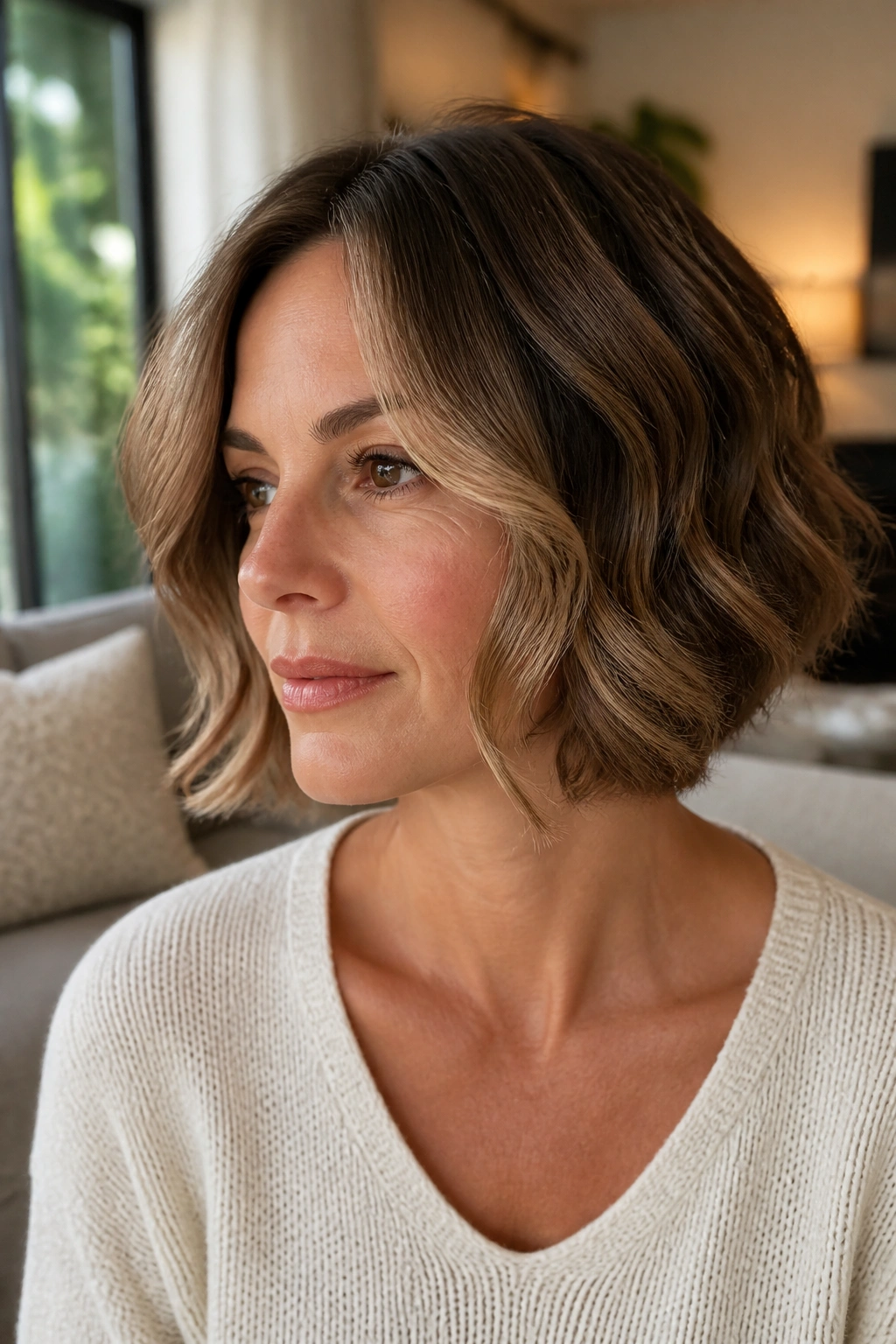
A few longer pieces around the face can do more than a whole head of layers. Face-framing panels give fine hair shape exactly where people notice it most: the cheeks, jaw, and chin. The back stays fuller because you are not over-cutting the body of the bob.
Why It Works
Those front pieces add softness without taking volume from the middle. That’s a useful trade on fine hair, where every snip changes how solid the cut feels.
- Keep the front panels at cheekbone to chin length.
- Blend them softly so they do not look disconnected.
- Leave the back one length or nearly one length.
- Style the panels with a bend away from the face.
A good face-frame should look like part of the haircut, not like an afterthought. If it feels too dramatic, it probably is.
14. Undone Bob With Tucked-Behind-Ear Sides
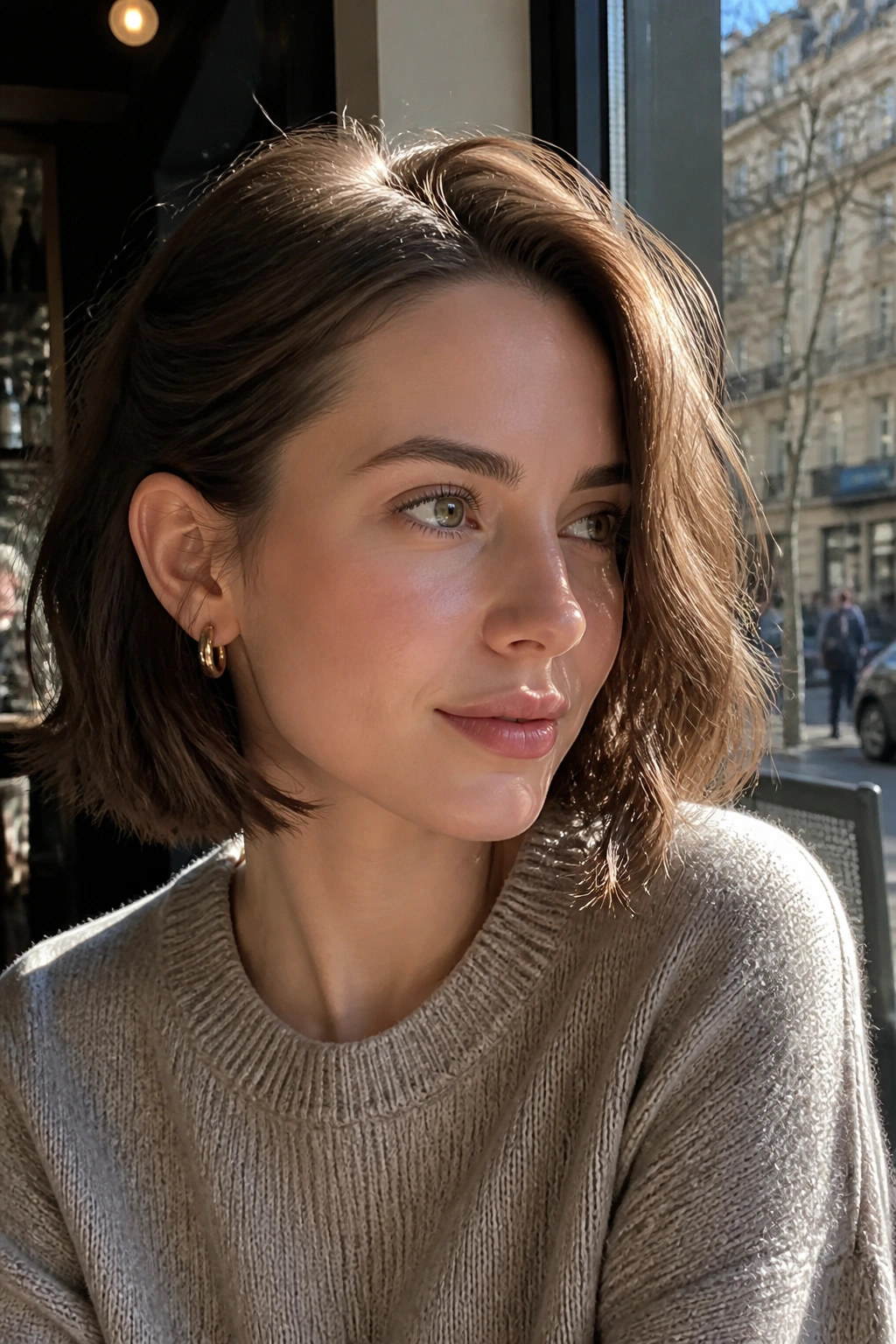
A tucked-behind-ear bob sounds simple, but it gives fine hair a neat little lift that people often underestimate. One side gets pulled back, the other stays loose, and suddenly the haircut feels lighter at the face while the body of the bob still holds its shape.
The cut itself should be soft enough to move, but not so airy that the tuck exposes everything. That balance is the whole game. I like this style with slightly longer front pieces so the tuck feels intentional instead of accidental.
A small bend behind the ear helps too. You can create that with a flat iron or a curling wand, then let the hair cool before tucking it back. The result is cleaner and lasts longer.
Easy. But not lazy.
15. Stacked Nape Bob With Soft Lift
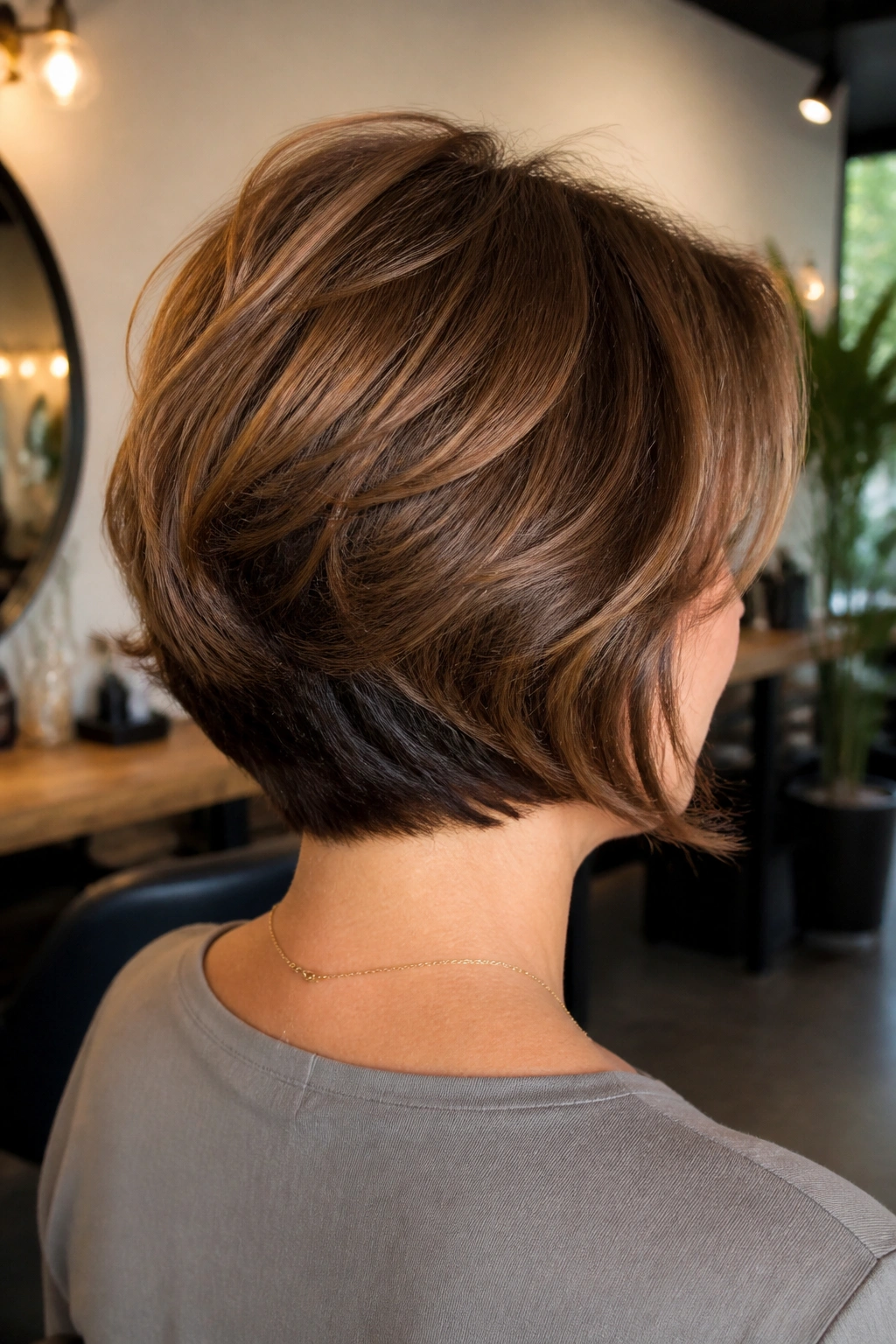
Does stacking work on fine hair? Yes, if it is controlled. A little bit of stacking at the nape can create the illusion of fullness through the back of the head, which is exactly where fine hair often collapses first.
How to Keep It Modern
Ask for a soft stack, not a sharp one. The lower layers should rise just enough to support the shape, and the top should stay smooth so the cut doesn’t turn stiff.
If the stacking is too aggressive, you get that old-school helmet effect. Nobody wants that. A modern version keeps the silhouette rounded and the ends light.
This works well on people who like a little volume at the back and do not mind a haircut with a clear shape. Blow-drying the crown with a round brush makes the lift read better, especially when the hair is freshly cut.
It’s a practical cut, not a flashy one.
16. Mid-Cheek Bob With Fringe

A bob that lands around the middle of the cheek can look sharp in a good way, especially when it’s paired with a light fringe. The line is short enough to keep fine hair from dragging, but long enough to allow soft waves to fall into place.
The fringe should sit light on the forehead, almost feathered, so it doesn’t eat up too much density. A heavy fringe on fine hair can steal the whole show and leave the rest of the cut looking thin. That’s the trap.
- Keep the bob about mid-cheek to jaw length.
- Ask for a fringe that breaks into small pieces.
- Style the fringe with a round brush or a quick bend from a hot brush.
- Let the lengths stay a little rough for contrast.
This one has a slightly playful feel, and that works in its favor.
17. Lightly Choppy Bob With Invisible Layers
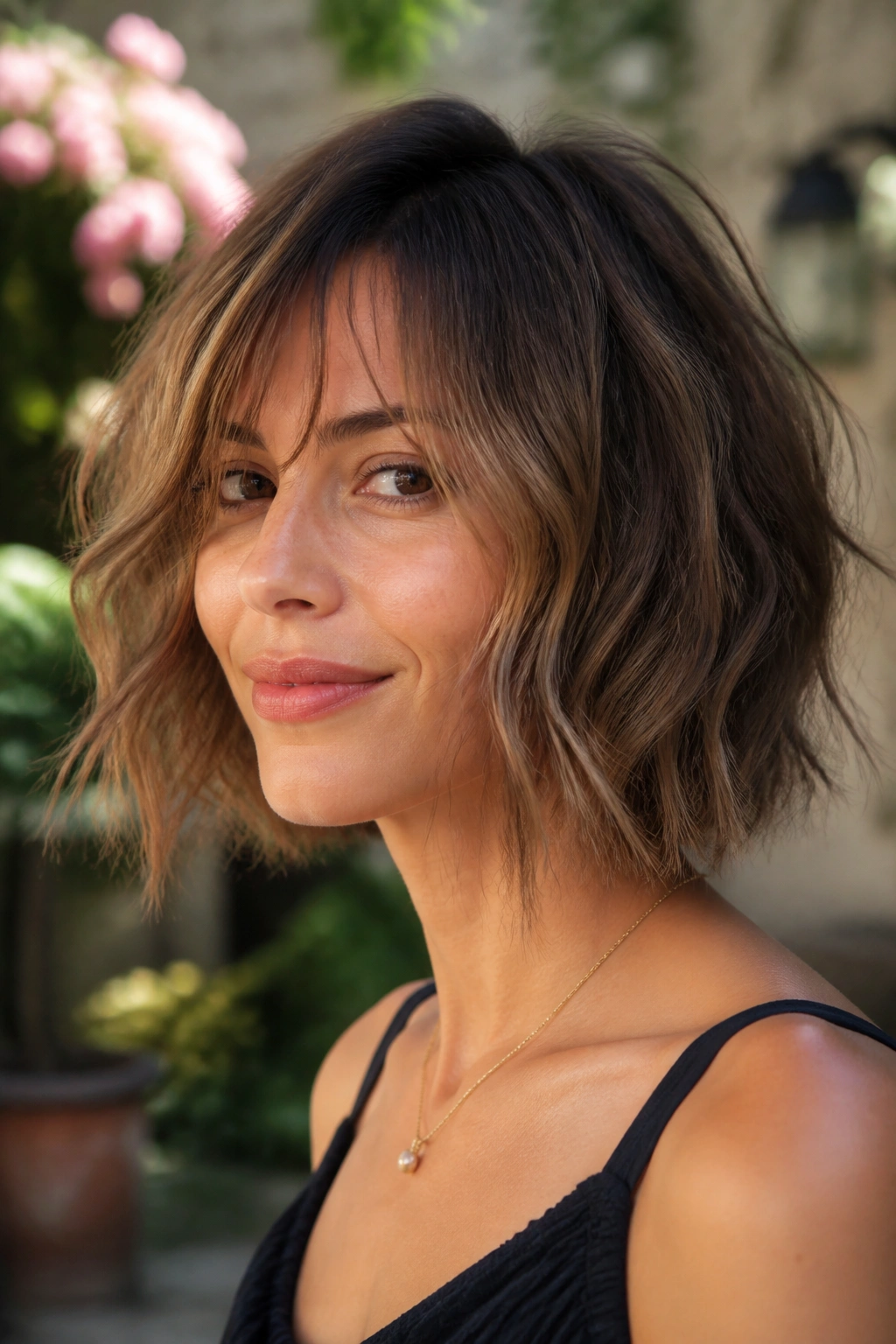
Some layers should be felt more than seen. That is the whole idea here. Invisible layers give fine hair movement without scattering the shape, which means the bob keeps its body while the wave has somewhere to sit.
I prefer this over obvious layering when the hair is already soft or fragile. Visible layers can leave little gaps in the outline that you end up noticing every time the hair shifts. Hidden layers solve the problem more quietly.
The finish should look relaxed, almost casual, with ends that move but do not fray. If you blow-dry it, use a diffuser or a small brush and keep the tension low. Fine hair responds better to gentle shaping than aggressive styling.
There’s a reason this cut keeps showing up in salons. It works without demanding attention.
18. Side-Swept Bob With Jaw-Hugging Curve

Compared with a center part, a side-swept bob gives fine hair a little more lift at the root and a softer line around the face. The curve should hug the jaw, not flip out too much, which keeps the cut looking neat and full.
This is one of my favorite choices for someone who wants polish without looking overdone. The side sweep adds shape, and the wave can be subtle. You don’t need a lot of curl to make it work. A soft bend through the front is usually enough.
It suits people who like one side to feel slightly heavier than the other. That asymmetry makes the hair look richer, especially near the part.
A small round brush and five careful minutes can go a long way here. Sometimes that’s all the haircut needs.
19. Wash-And-Go Wavy Bob With A Clean Base
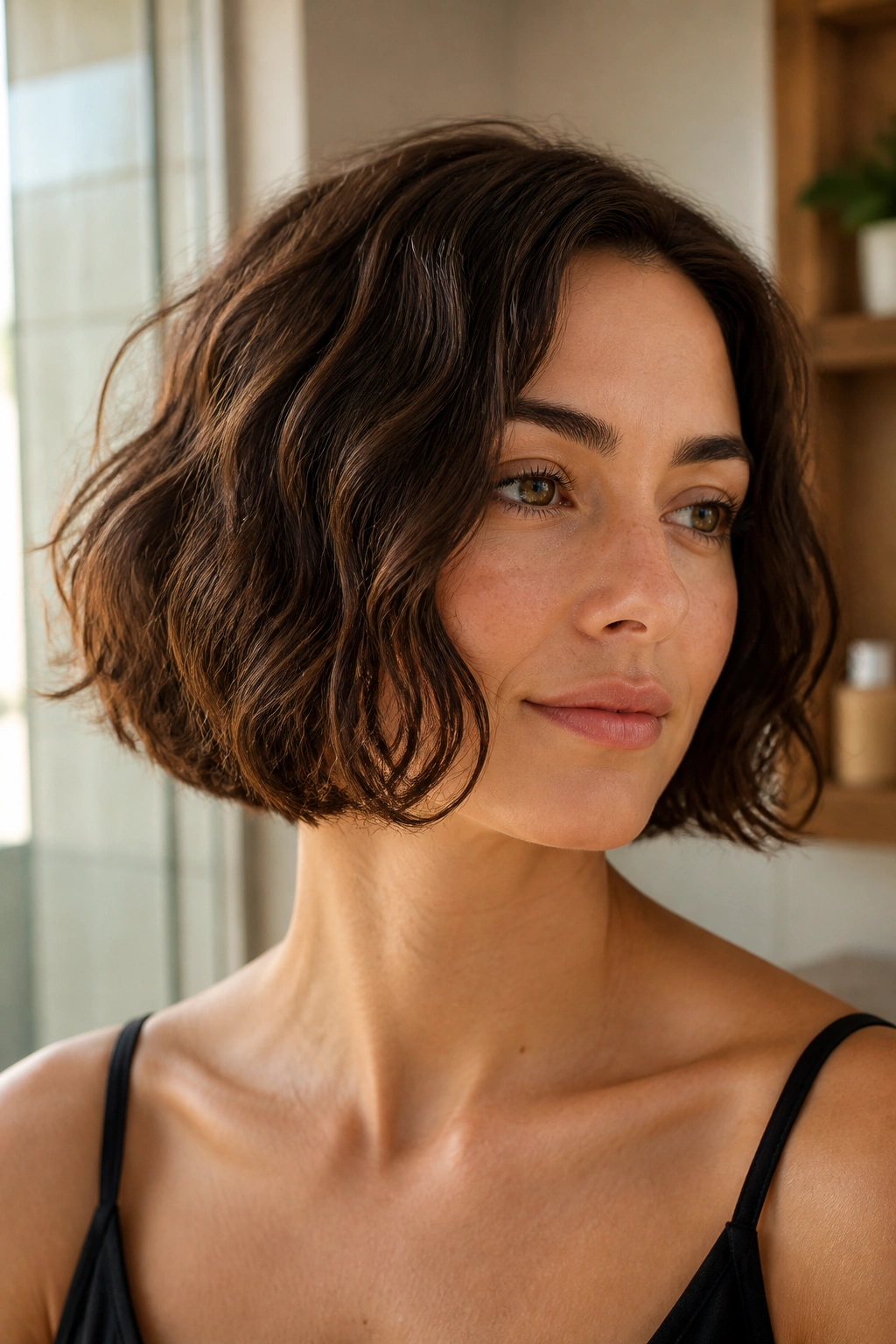
This is the bob for people who want their hair to behave after a shower and not ask for a whole production. The key is a clean base with enough shape at the ends to let the waves fall on their own. Fine hair does better when the cut does some of the styling work.
Why It Works
A softer, shorter back keeps the shape from dragging, while a slightly blunt bottom gives the style a bit of weight. That combination makes air-drying much more forgiving.
- Ask for a perimeter that stays tidy even when rough-dried.
- Keep layers minimal around the crown.
- Use a lightweight mousse on damp hair.
- Scrunch once, then leave it alone until it dries.
The point is not perfection. The point is a cut that still looks like a haircut when you do almost nothing to it.
20. Center-Part Glossy Bob With Soft Bends
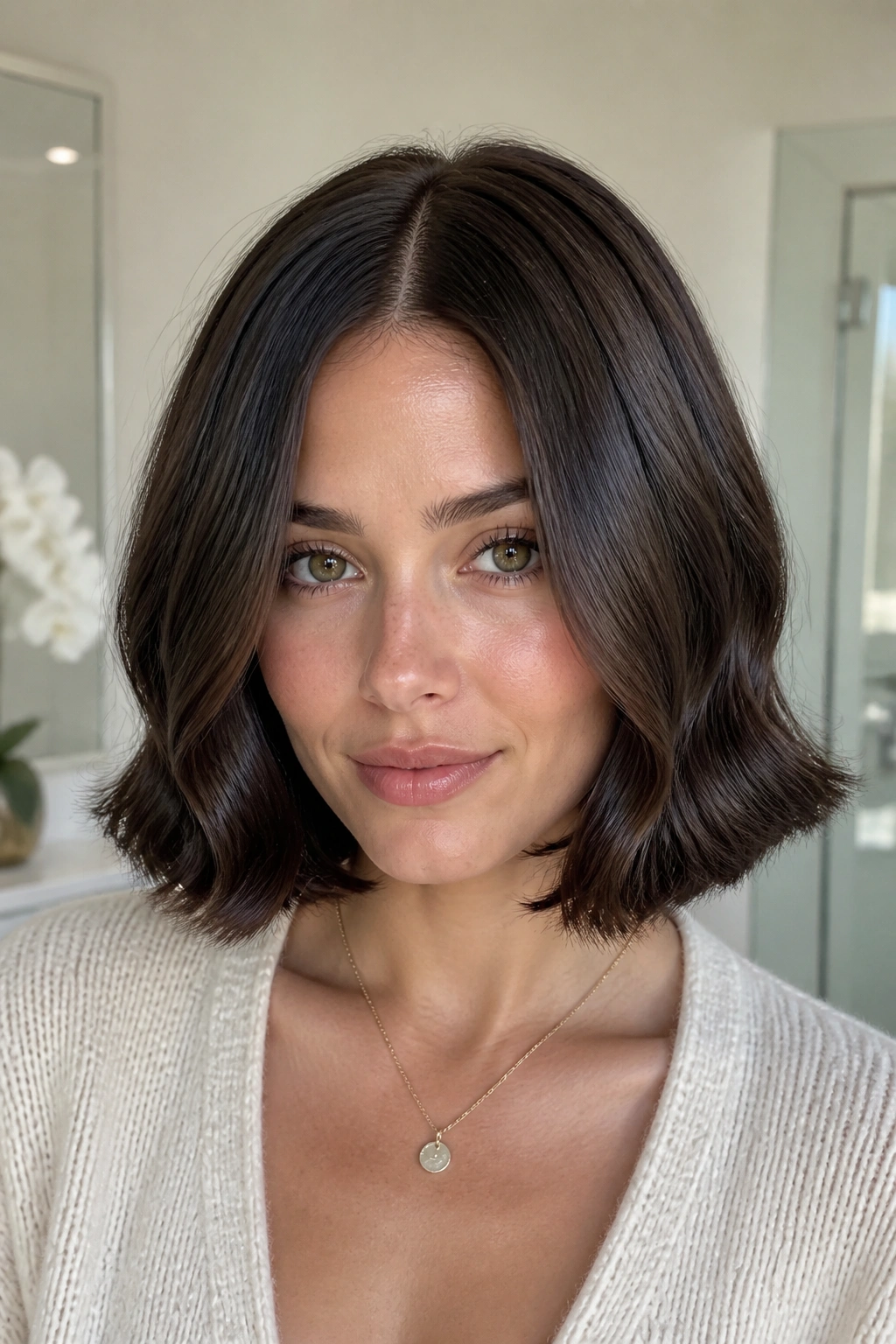
A center part can be a gift to fine hair when the cut is precise. It creates a clean line down the scalp, and that line can make the rest of the hair look denser by giving the style structure. The waves should be soft and glossy, not too broken up.
What people often get wrong is over-curling the lengths. That can make the hair look smaller and more scattered. A few smooth bends from a flat iron or larger barrel are enough. The style works best when the ends still feel connected.
The look is polished, but not stiff. Good shine helps here too, because healthy-looking fine hair reads fuller than dry, frizzy hair every time.
One-sentence truth: the finish matters as much as the cut.
21. Collarbone Lob With Bent Ends
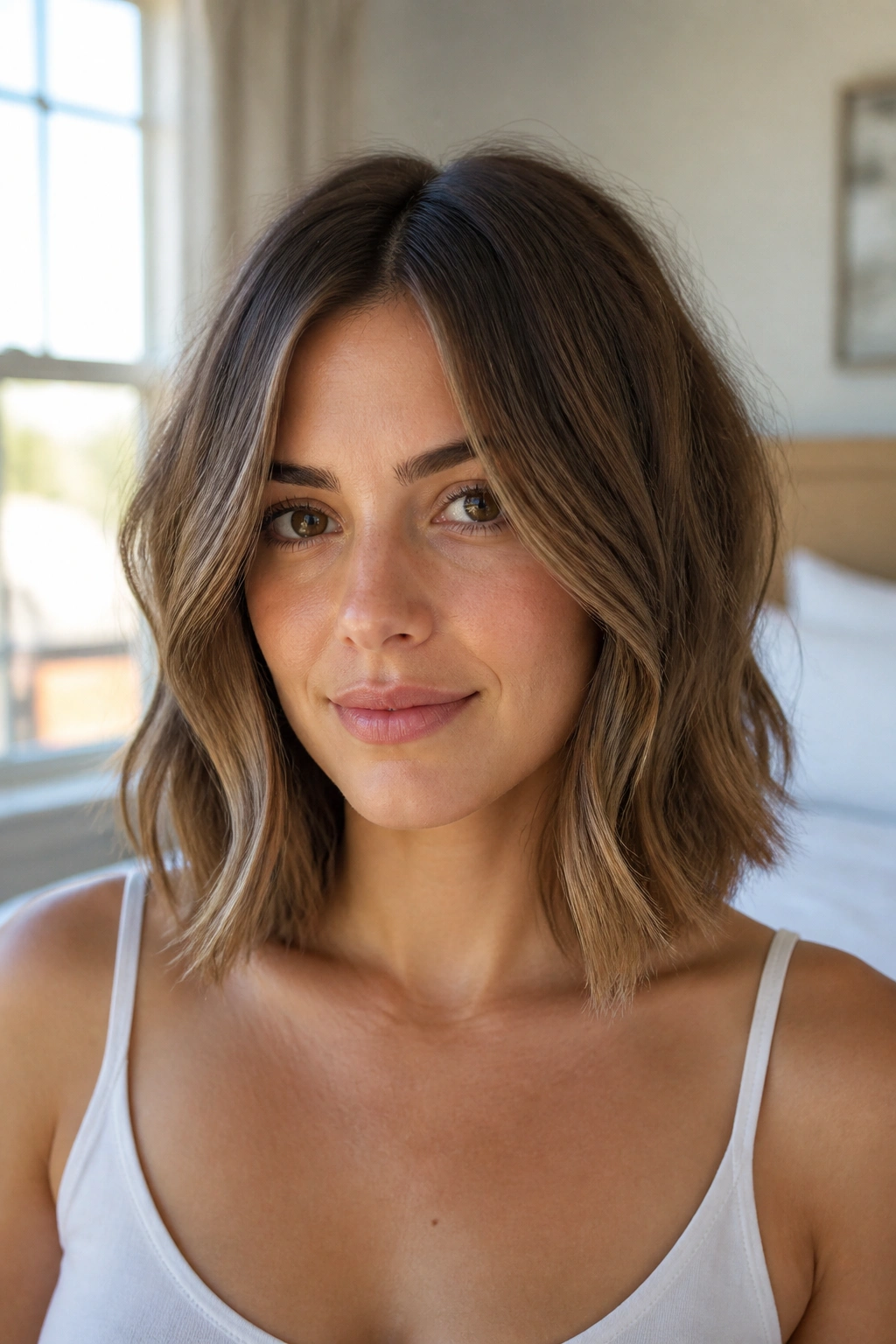
Why pick a lob instead of a shorter bob? Because sometimes fine hair needs a little more length to keep its movement from springing too high. A collarbone lob gives you that extra swing, and the bent ends stop it from hanging flat.
How to Ask For It
Tell your stylist to keep the base at collarbone length, then soften the last inch into loose bends. The top should stay clean enough that the hair doesn’t collapse at the roots.
This is a smart middle-ground if you’re growing out a shorter cut or if you want a style that still ties back. Fine hair often looks thicker in this length range because the strands have enough room to move without losing their line.
I like this one with a side part and a loose wave through the front. It feels easy, and it doesn’t fight the hair’s natural fall.
22. Soft Inverted Bob With Airy Crown
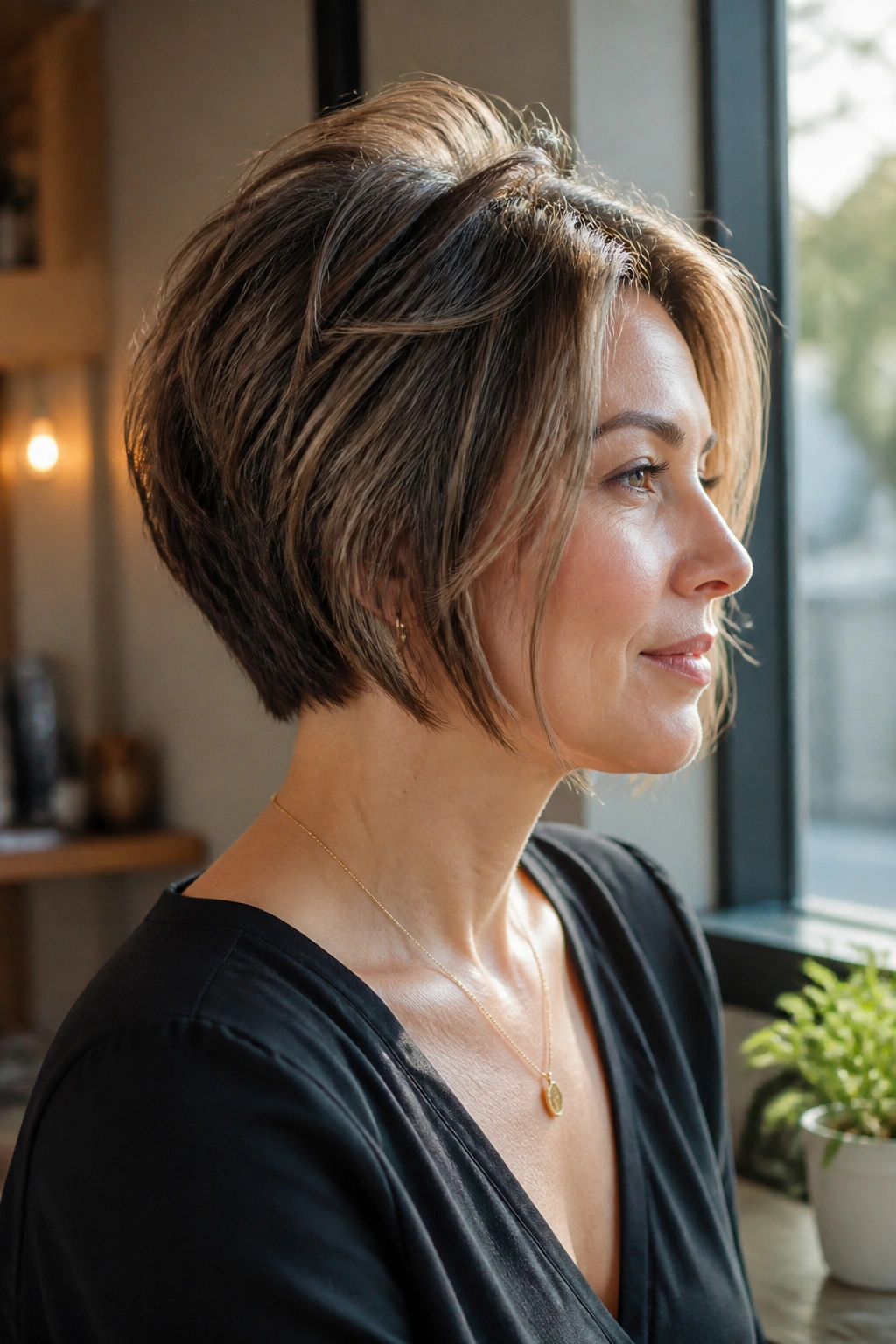
A soft inverted bob gives you a little lift in the back and more length toward the front, which helps fine hair keep its shape. The crown stays airy, but the outline remains strong enough that the cut does not drift into fluff.
The inversion should be gentle. A dramatic difference between back and front can make the style look dated, and it can expose the neck too much if the hair is sparse. A softer version feels cleaner and easier to wear.
- Keep the back slightly shorter, not clipped close.
- Leave the front pieces long enough to frame the chin.
- Add a loose wave through the mid-lengths.
- Avoid heavy thinning at the crown.
The haircut gets its lift from structure, not from over-styling. That is why it works.
23. Highlighted Wavy Bob With Extra Dimension
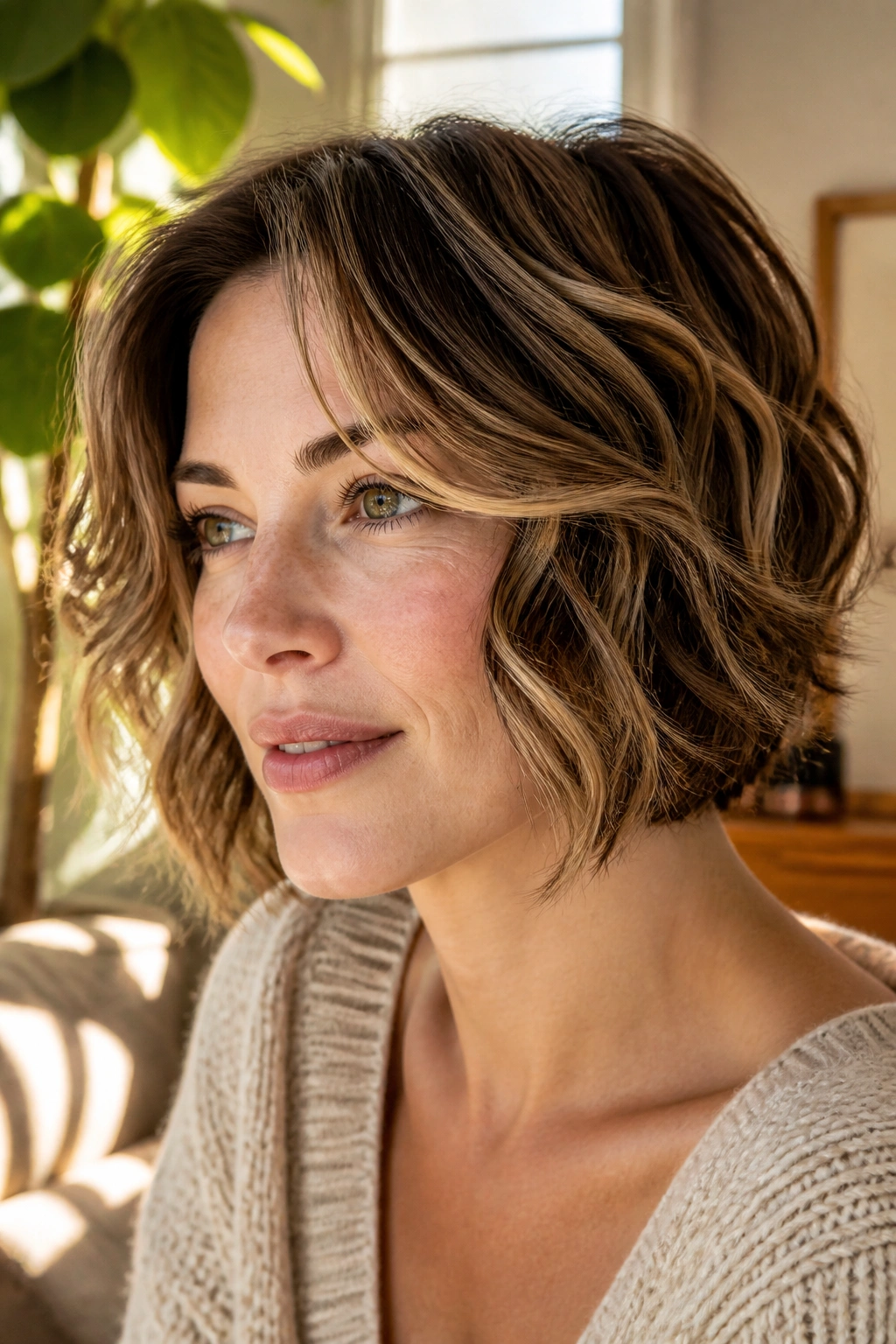
Fine hair can look flat when the color is too uniform. A few well-placed highlights break up the surface and make the waves show up more clearly. I’m talking subtle work here, not chunky stripes. A soft mix of lighter pieces through the top and around the face can do a lot.
The haircut still matters first. Color should support the cut, not save it. But when the tones shift a little, the eye reads more movement and the bob feels fuller. That matters especially on wavy textures, where light catches the bends differently from every angle.
Babylights or fine ribbons of color usually work better than broad sections. They give depth without making the hair look overprocessed. Fine strands can be a little fragile, so gentle placement is the smarter move.
If your bob needs a touch more life, this is the cleanest way to get it.
24. Razor Bob With Flipped-Out Ends

A razor bob with flipped-out ends has a playful edge that can keep fine hair from feeling too neat. The flip adds motion at the bottom, and that motion helps the cut feel fuller than a straight, sleepy shape would.
Compared with an inward-curving bob, this one feels looser and a little more casual. It works best if your wave pattern already has some bounce. The ends should be soft, though. Too much razor work and the flip turns stringy instead of airy.
This is a good choice if you like your hair to look a little undone on purpose. It can be styled with a round brush, a flat iron bend, or even a quick twist of the wrist while blow-drying.
It’s playful, not fussy. That’s the appeal.
25. Everyday Wavy Bob With A Calm Outline
If you want one cut that sits neatly between polished and easy, this is the one I’d hand you first. The everyday wavy bob keeps a calm outline at the bottom, which is what fine hair needs when you don’t want to battle it every morning. The wave is there, but it doesn’t take over.
Why It Works
A controlled perimeter makes the whole haircut look denser, while the soft wave keeps it from feeling stiff. That balance is the reason this style wears well on busy days, damp days, and the days when you only have five minutes.
- Keep the ends clean and full.
- Add just enough texture for movement.
- Use a lightweight cream only on the mid-lengths.
- Trim it every 6 to 8 weeks so the line stays solid.
This is the bob I’d pick for someone who wants low drama and good hair days without much effort. It is plain in the best way. Reliable. Easy to style. Hard to mess up.
