



A round face does not need to be hidden. It needs angles.
The best short inverted bob haircuts for round faces do one simple thing: they build vertical lines where the face is widest, then keep the back neat so the whole shape feels lifted instead of puffed out. That’s why this cut keeps showing up in salons. It has structure. It has movement. And when it’s cut well, it can make cheekbones look sharper without looking fussy.
The catch is placement. A bad bob that lands right at the cheek can make a round face look wider. A better one falls below the cheekbone, opens up the jawline, and gives you that clean little sweep in front that does half the work for you. Texture matters too. Straight, wavy, curly, fine, thick — the same base shape can be adjusted in a dozen ways.
Some of the cuts below are sleek and polished. Some are messy on purpose. A few lean bold and dramatic. All of them are built around the same idea: keep the sides from blooming out at the widest point and let the front pieces do the flattering. Simple. Smart. Worth the appointment.
1. Chin-Grazing Inverted Bob with a Deep Side Part
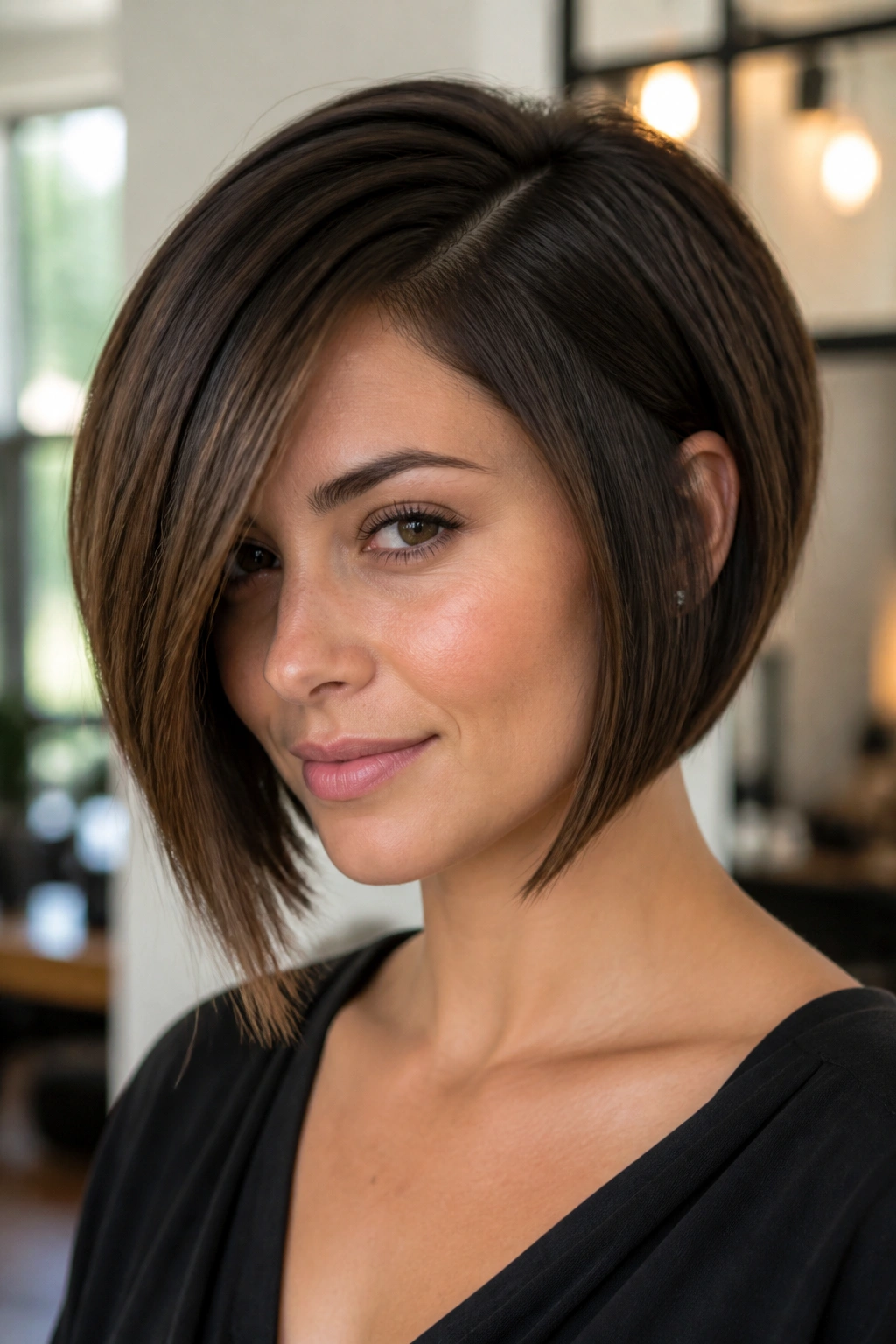
Want the fastest way to slim the look of a round face? Push the part off-center and let one side fall a little longer than the other.
This version hits just at the chin in front, with the back stacked tight enough to keep the shape lifted. The deep side part breaks up the symmetry that can make a round face feel fuller, and the longer front line draws the eye down instead of out.
Why It Works
The side part creates an angle right away. That alone helps. Then the chin-grazing front pieces act like a frame, not a cap, which matters more than people think.
Ask your stylist for:
- A stacked back that stays compact at the nape
- Front pieces that skim the chin, not the cheek
- A part placed about 2 to 3 inches off center
- Soft internal layers so the ends don’t puff out
Best for: straight or slightly wavy hair that wants shape without a lot of daily effort.
2. Stacked Inverted Bob with a Tapered Nape
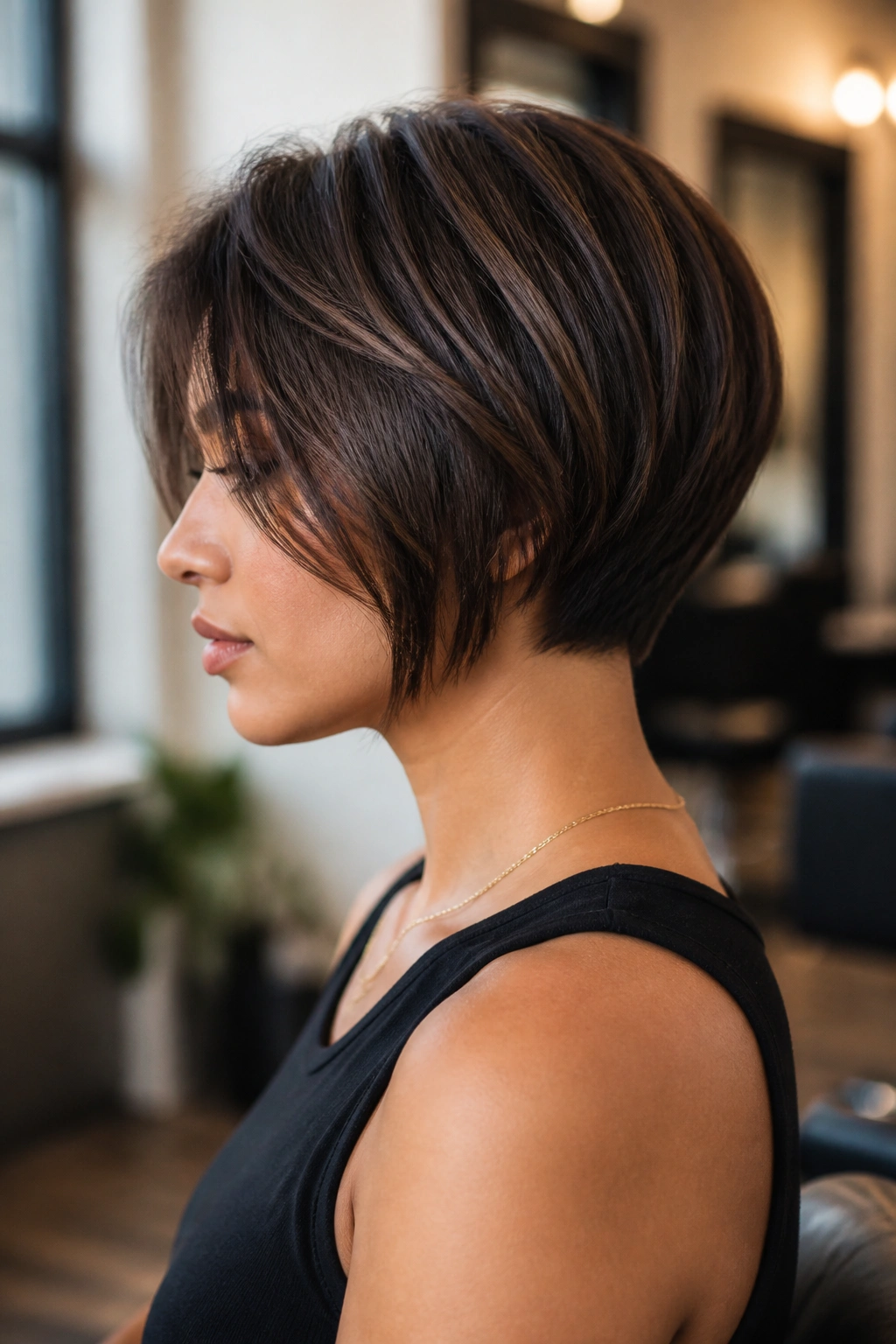
This is the cut I reach for when someone wants lift without asking for a full styling routine every morning. It’s short, neat at the back, and built with layers that rise toward the crown.
The tapered nape keeps the neck clean and makes the front appear longer by contrast. That contrast is doing real work on a round face. It gives the illusion of length before you’ve even picked up a brush.
Keep the stack controlled, though. Too much roundness at the back can make the whole haircut look helmet-like, and that is not the look anybody wants. The best version has a little bite at the crown and a front edge that moves forward in a soft diagonal.
Pro tip: blow-dry the crown upward first, then smooth the front pieces forward with a round brush. That tiny order change makes the cut read sharper.
3. Feathered Inverted Bob with Soft Ends
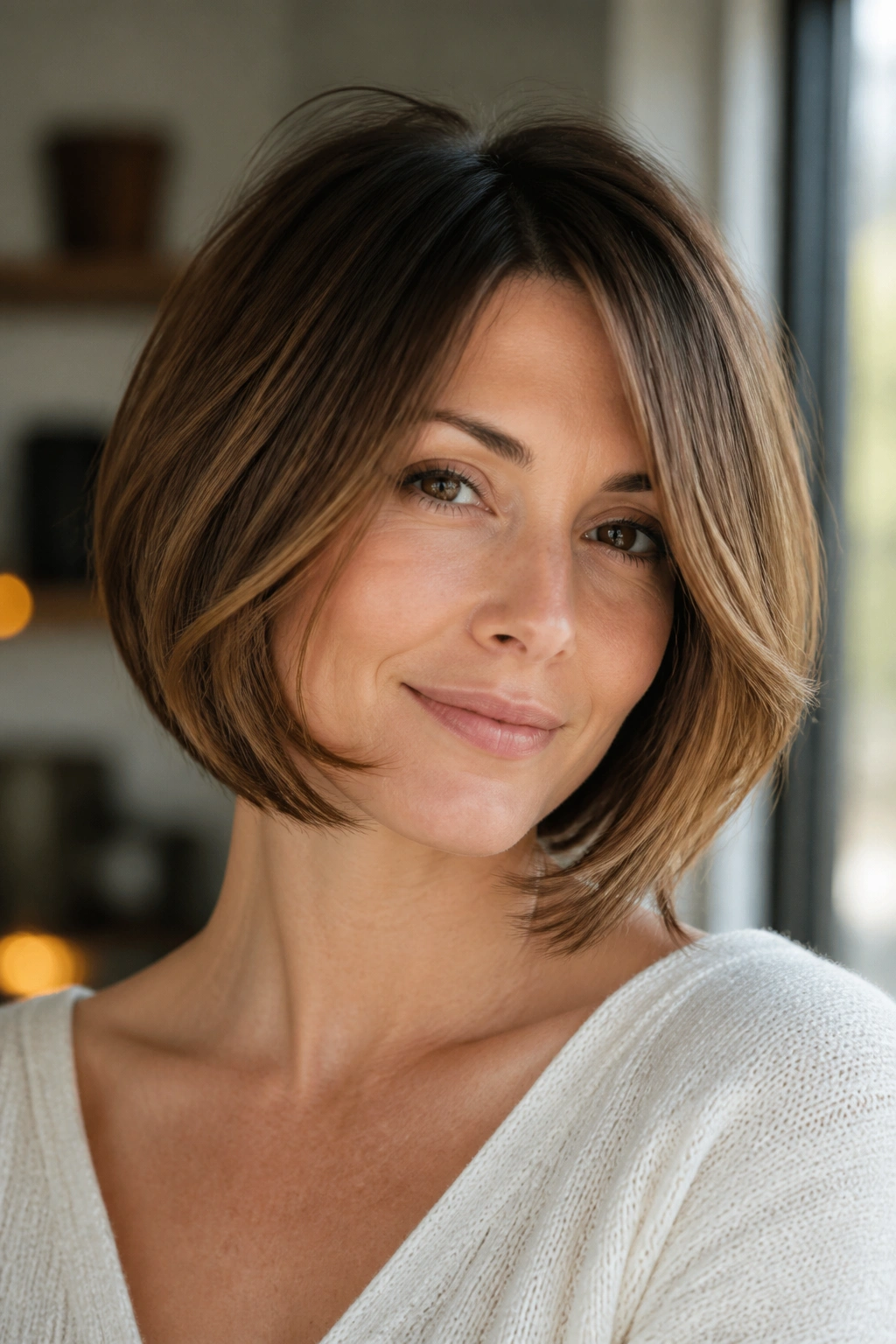
Picture hair that bends instead of sits there. That’s the charm of a feathered inverted bob.
The ends are point-cut or lightly razored so they look airy, not blunt. On a round face, that softness keeps the haircut from drawing a hard line right across the cheeks. Instead, it slides around the face and lets the chin do more of the visual work.
What to Ask For
- Feathered ends around the front edge
- A short back with gentle graduation
- Length that lands just below the jaw
- A bit of movement through the mid-lengths, not just the ends
This cut looks especially good when air-dried with a small amount of mousse. Don’t pile on heavy creams. They can collapse the feathering and turn the whole thing into a damp-looking shape.
A light hand wins here. Every time.
4. Angled Inverted Bob with Curtain Bangs
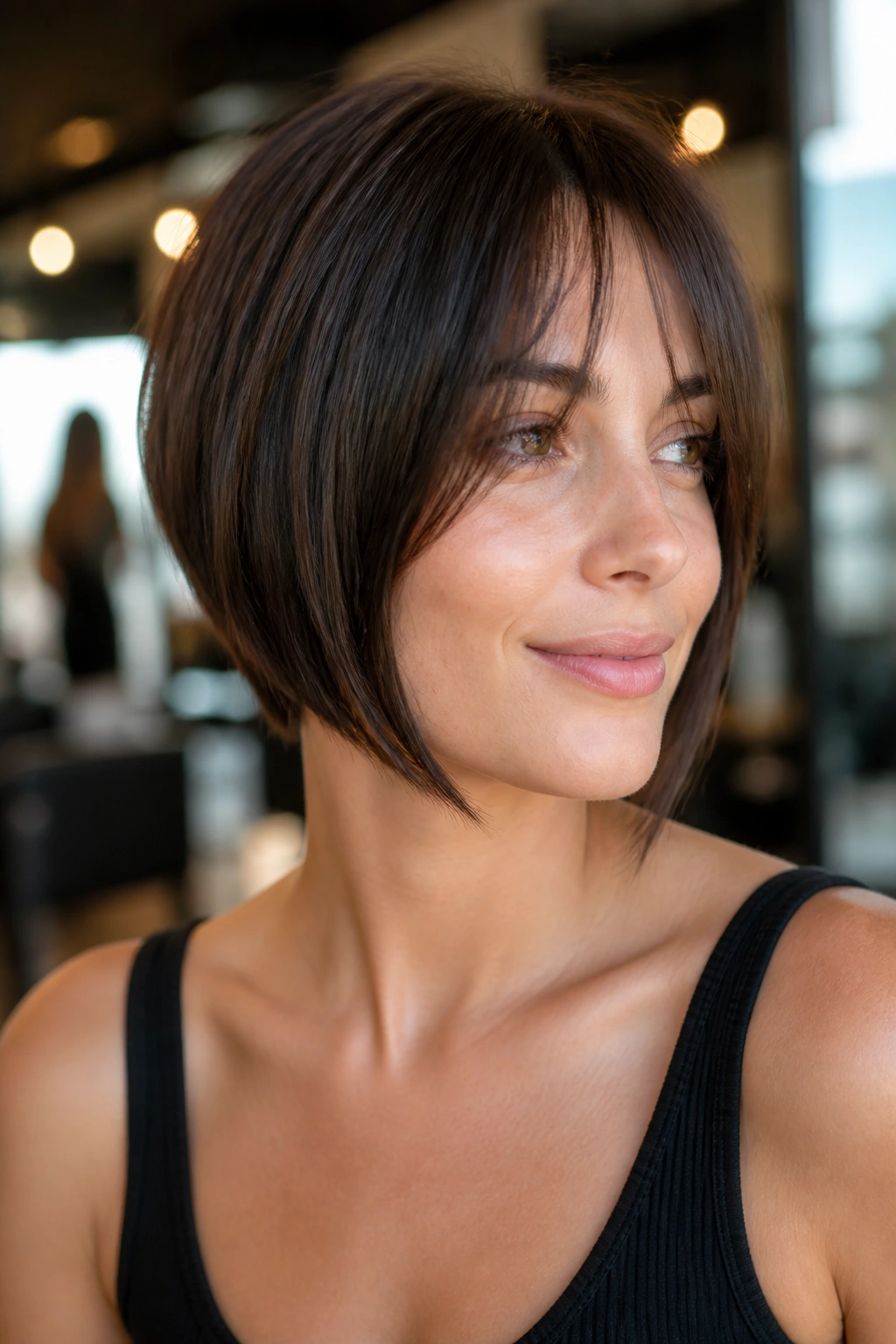
Unlike blunt bangs, curtain bangs let the face breathe.
That’s why this pairing works so well on round faces. The angled bob gives you the long front line, and the curtain bangs split the attention in two directions instead of stopping it in one heavy block. The effect is subtle, but the face reads longer and less circular.
Keep the bangs a little longer than brow level, and let them taper into the front pieces. If they’re cut too short, the balance disappears. If they’re too thick, they start closing in the top half of the face, which defeats the point.
This is a good cut if you like a little softness around the eyes and do not want a severe finish. It feels current without trying too hard. And yes, it grows out well, which matters if you’re not in a salon every four weeks.
5. Textured Inverted Bob with Piecey Waves
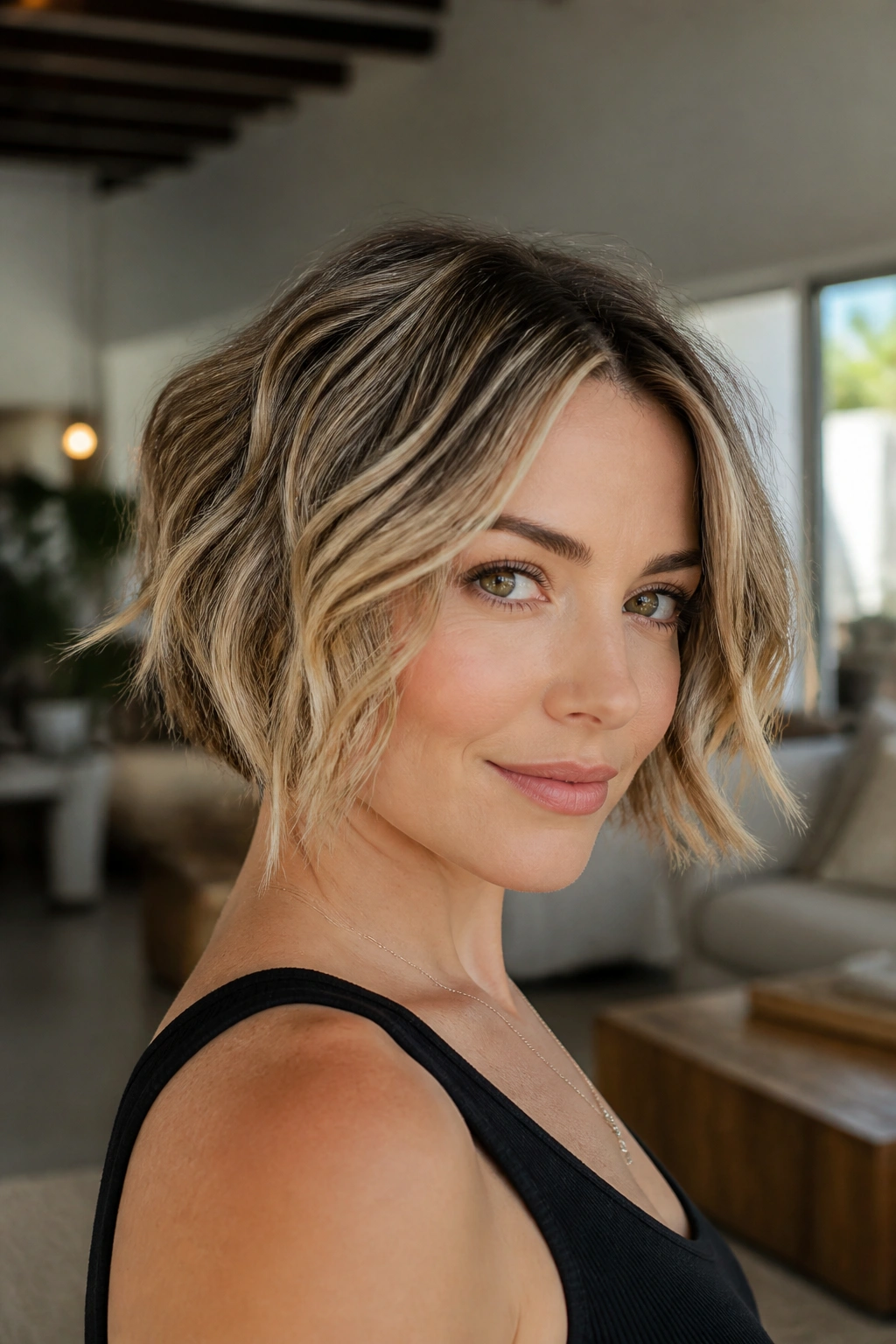
Why do piecey waves work so well on a round face? Because they break up the outline.
A smooth bob can sometimes exaggerate width if it hugs the cheeks too closely. Piecey waves do the opposite. They add broken lines, little bends, and movement that keeps the eye from lingering on one wide shape. The result feels lighter and a bit less predictable.
How to Style It
Start with a root-lifting spray at the crown. Dry the hair until it’s about 80 percent dry, then wrap random sections around a 1-inch curling wand, leaving the last inch out. That ends up looking more casual and less curled-to-death.
After the hair cools, separate the waves with your fingers and a drop of lightweight oil.
- Use a heat protectant every time
- Curl away from the face on both sides
- Leave the ends slightly straight for a sharper finish
- Finish with a flexible-hold spray, not a stiff one
This cut is especially friendly if your hair has a natural bend already. It does half the styling for you.
6. Sleek Inverted Bob with a Sharp Front Line
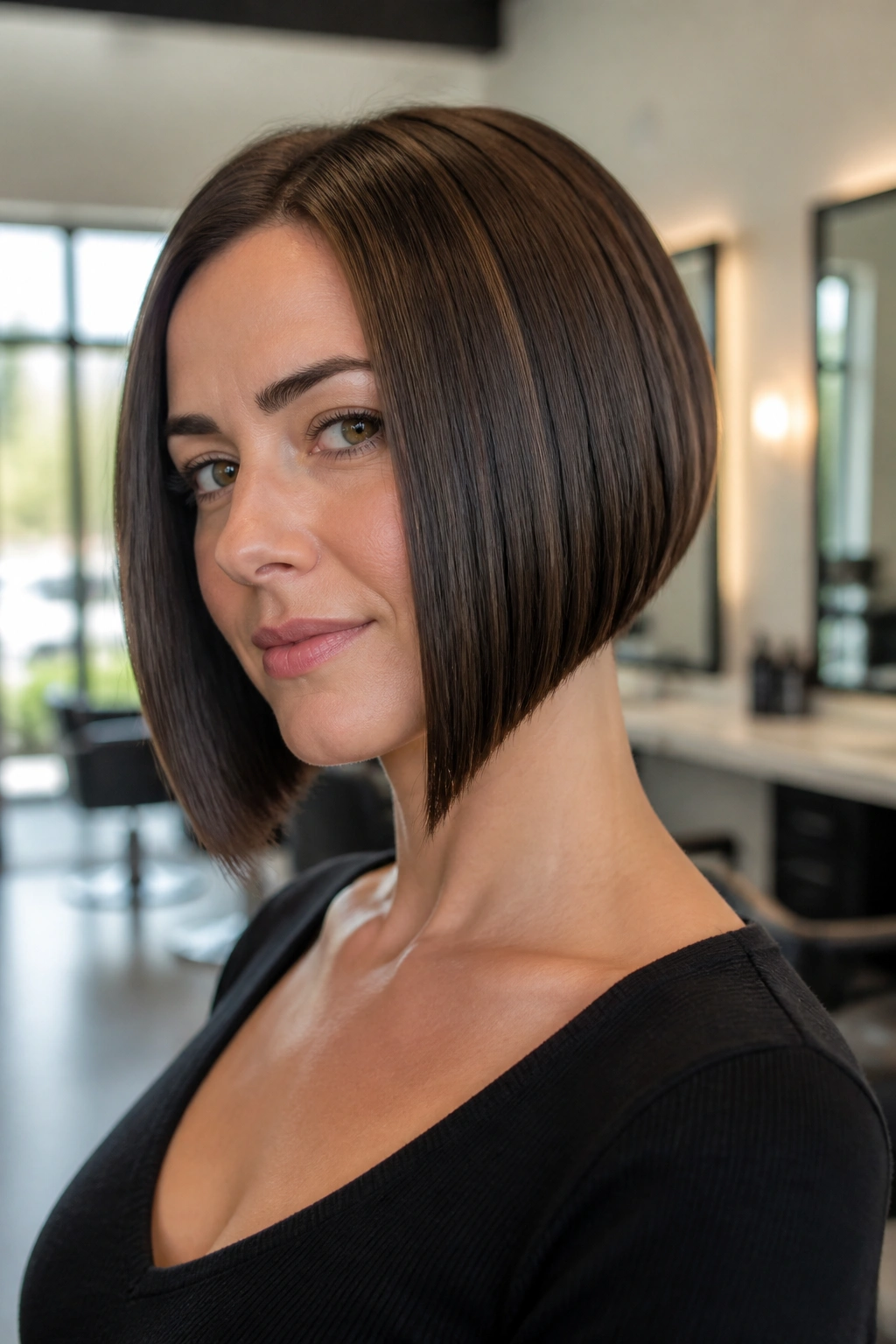
A sleek inverted bob can be a little intimidating on paper. On a round face, though, it can be one of the smartest choices if the angle is precise.
The trick is the front line. It should come forward cleanly, usually to the chin or just below it, while the back stays tight and clean. That straight front edge gives the face a strong visual boundary, which helps counter softness in the cheeks.
This version works best when the hair is healthy enough to reflect light and stay smooth without a lot of puff. A flat iron pass at low to medium heat, plus a heat protectant, is usually enough. Skip bulky styling creams. They make the cut feel heavy.
I like this cut on someone who wants polish without extra layering. It’s crisp. It’s direct. And when it’s sharp, it looks expensive without trying to be.
7. Inverted Bob with Micro Fringe
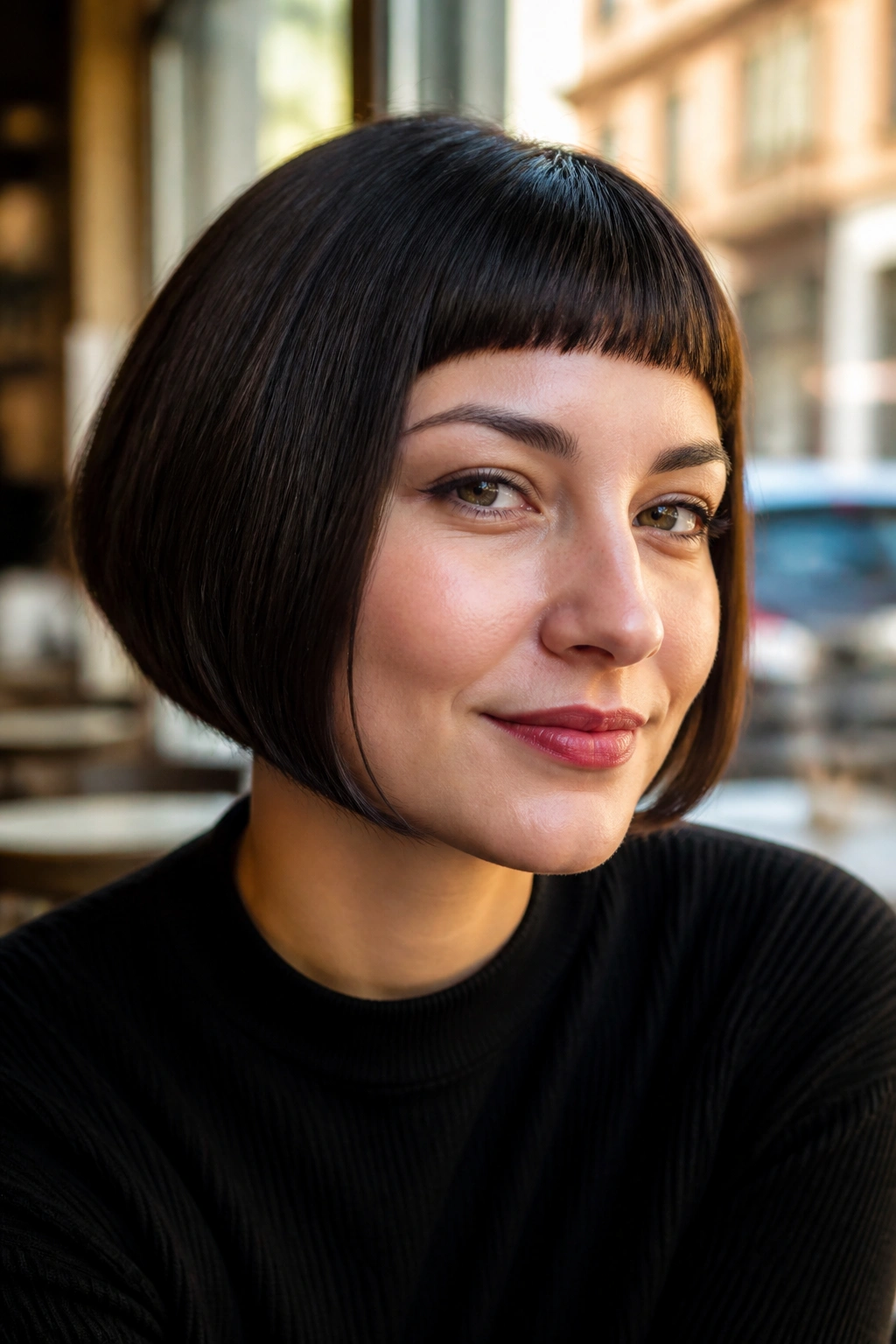
A short fringe sounds risky on a round face until the rest of the cut does its job.
Micro bangs pull the eye upward, which is the part people often miss. If the fringe is short and clean, it adds vertical attention near the forehead, while the inverted bob below keeps the lower half of the face from feeling boxed in. The result can be edgy in a good way.
This one does best when the fringe is not too dense. A soft, slightly broken line is friendlier than a thick shelf of hair. The bob itself should still have that forward angle so the haircut doesn’t read too square.
I’d only recommend this if you like statement hair and don’t mind trims. Micro fringe grows fast and loses the point quickly. But when it’s fresh, it gives the whole look a kind of sharp little wink.
8. Wavy Inverted Bob with Long Face-Framing Pieces
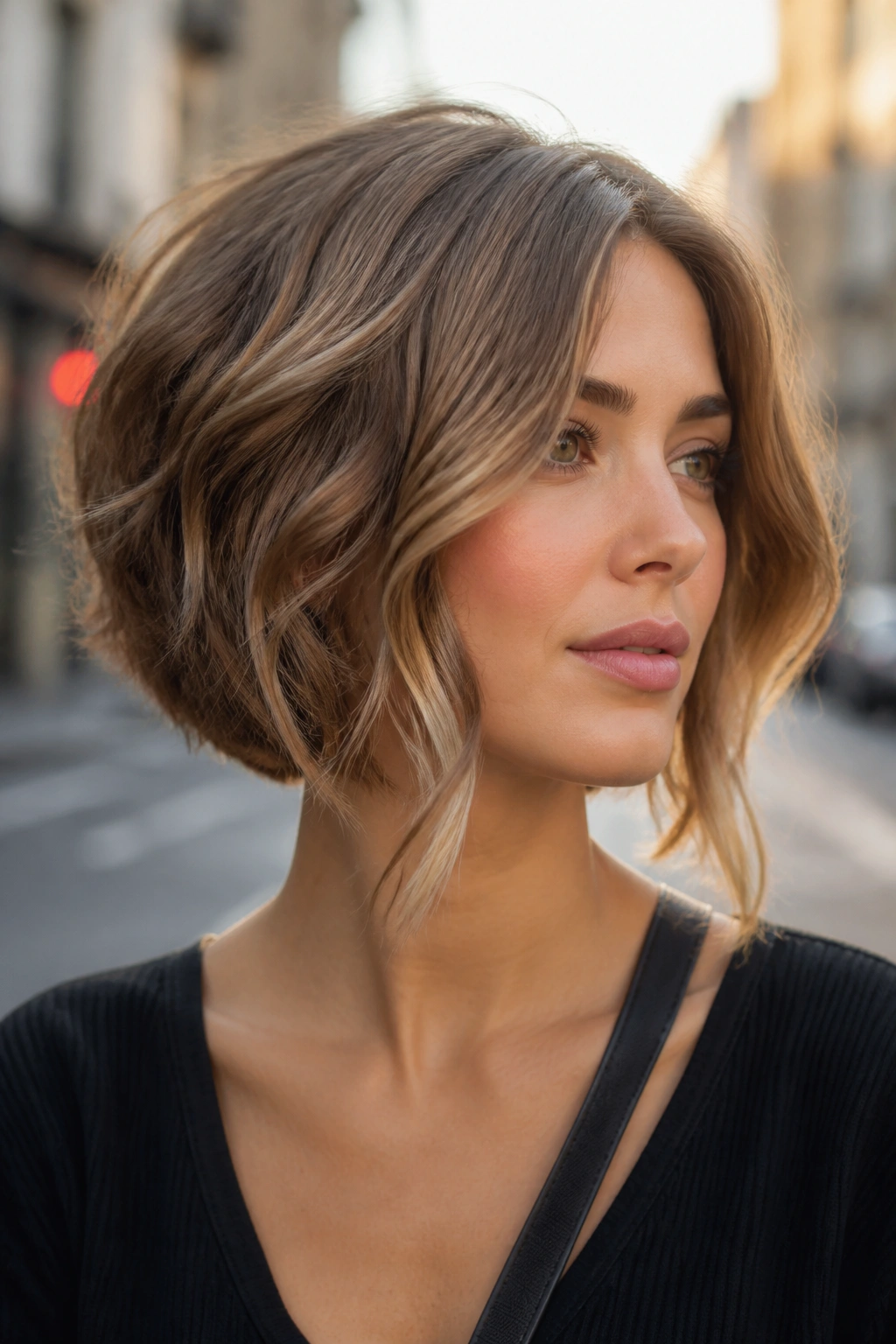
Unlike a blunt bob that stops at the same length all the way around, this version lets the front pieces travel farther down.
That extra length matters. On a round face, long face-framing sections help stretch the outline visually, especially when they drop below the mouth. Add soft waves and the haircut stops feeling boxy. It starts feeling edited.
The best version keeps the back compact and the front loose enough to move. You do not want the waves to balloon out at cheek level. That’s the danger zone. Keep the bend below the cheeks, and the cut works much harder for you.
A side part can help here too, especially if your hair naturally falls flat in the middle. One slightly longer side gives the face a line to follow. Good haircuts often feel small in the chair and big in the mirror. This is one of them.
9. Layered Inverted Bob with Side-Swept Bangs
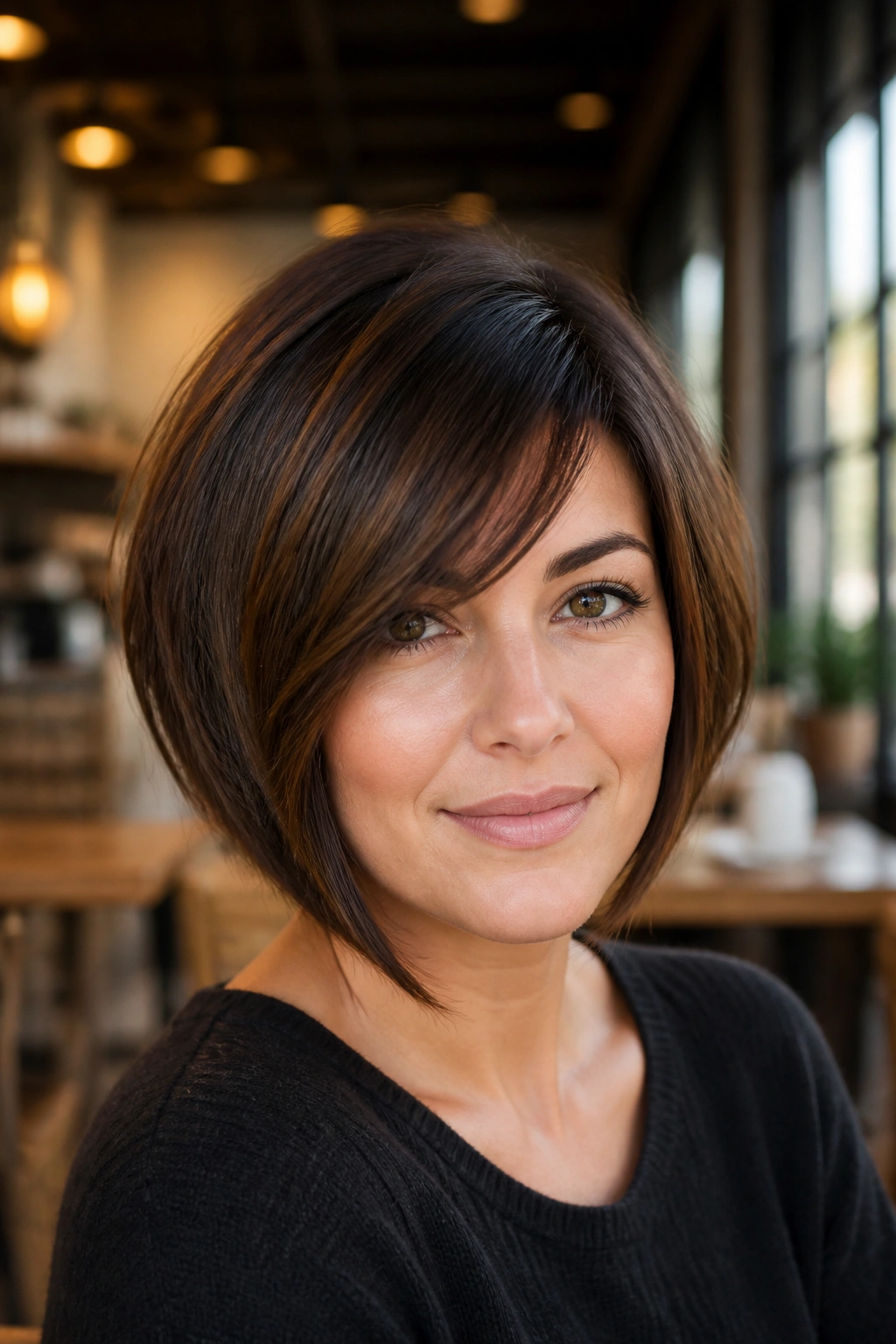
Side-swept bangs are a quiet fix for round faces, and I mean that in the best possible way.
They create a diagonal line across the forehead, which softens width without chopping the face into pieces. Pair that with layers through the bob, and you get movement that starts near the crown and finishes at the jaw. The haircut feels open, not heavy.
The important part is where the bang ends. If it lands too high, it can make the face look wider. If it drops near the cheekbone and blends into the front length, it feels much smoother. That little difference matters.
I also like this cut for people who want a bob that behaves on messy days. The side-swept fringe still looks intentional when the rest of the hair has a little bend or puff. Some haircuts punish you for not styling them perfectly. This one’s kinder.
10. Neck-Skimming Inverted Bob with Long Front Pieces
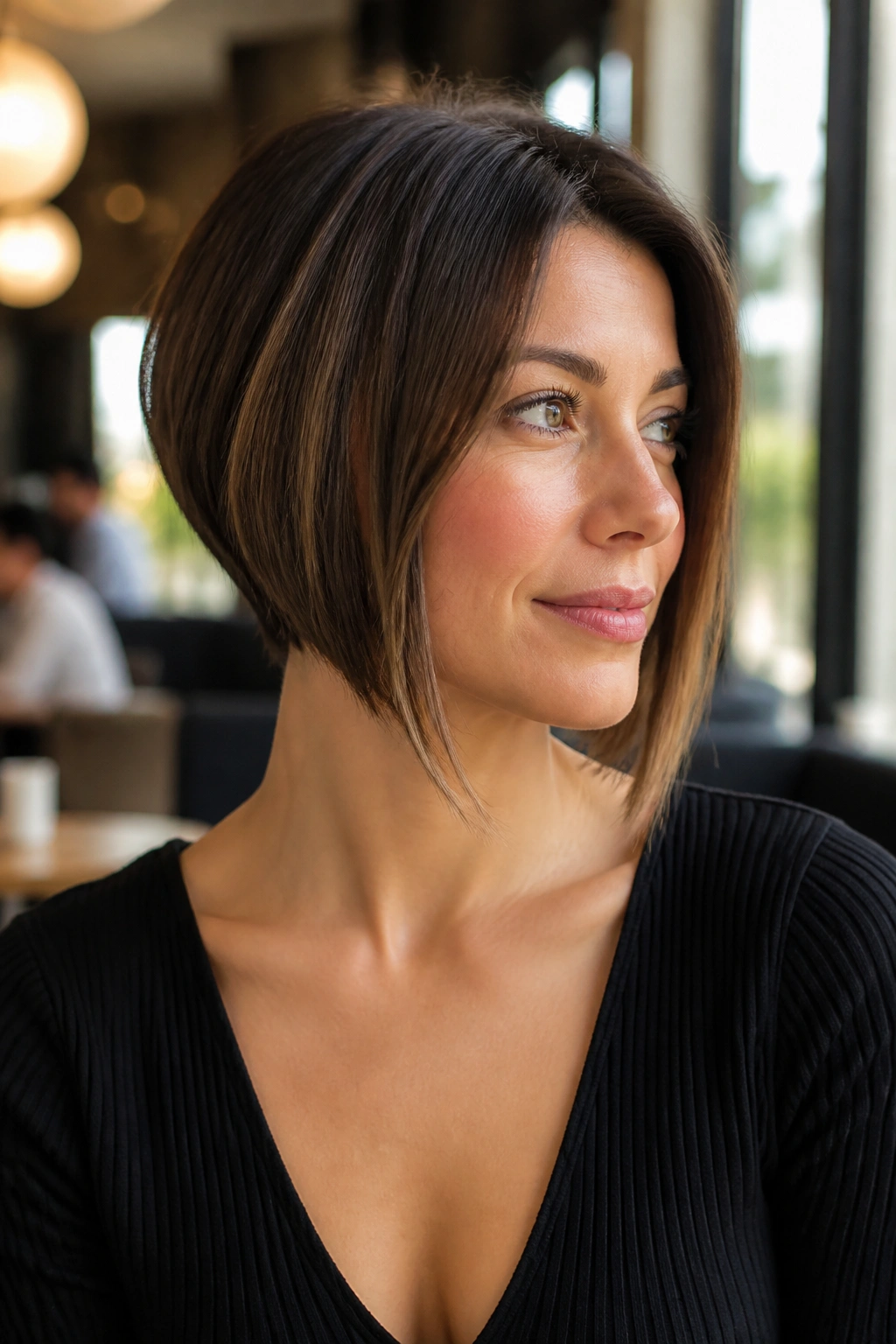
This version stays short where it counts, but the front earns a little extra room.
The back sits close to the neck, which helps the haircut feel light and clean. The front stretches toward the collarbone area without actually becoming a lob. That length difference is what keeps a round face from feeling too wide. It adds length where the eye wants to travel.
It’s a strong choice for thick hair because the shortened back removes bulk fast. If your hair tends to sit heavy under its own weight, this shape can feel like a relief. The longer front also gives you enough length to tuck one side behind the ear without losing the angle.
Good for:
- Thick hair that needs weight removed in back
- Anyone who likes a little styling room in front
- Faces that need vertical line more than width
- People who want short hair but not a severe crop
That’s a lot of usefulness packed into one cut.
11. Asymmetrical Inverted Bob with One-Side Sweep
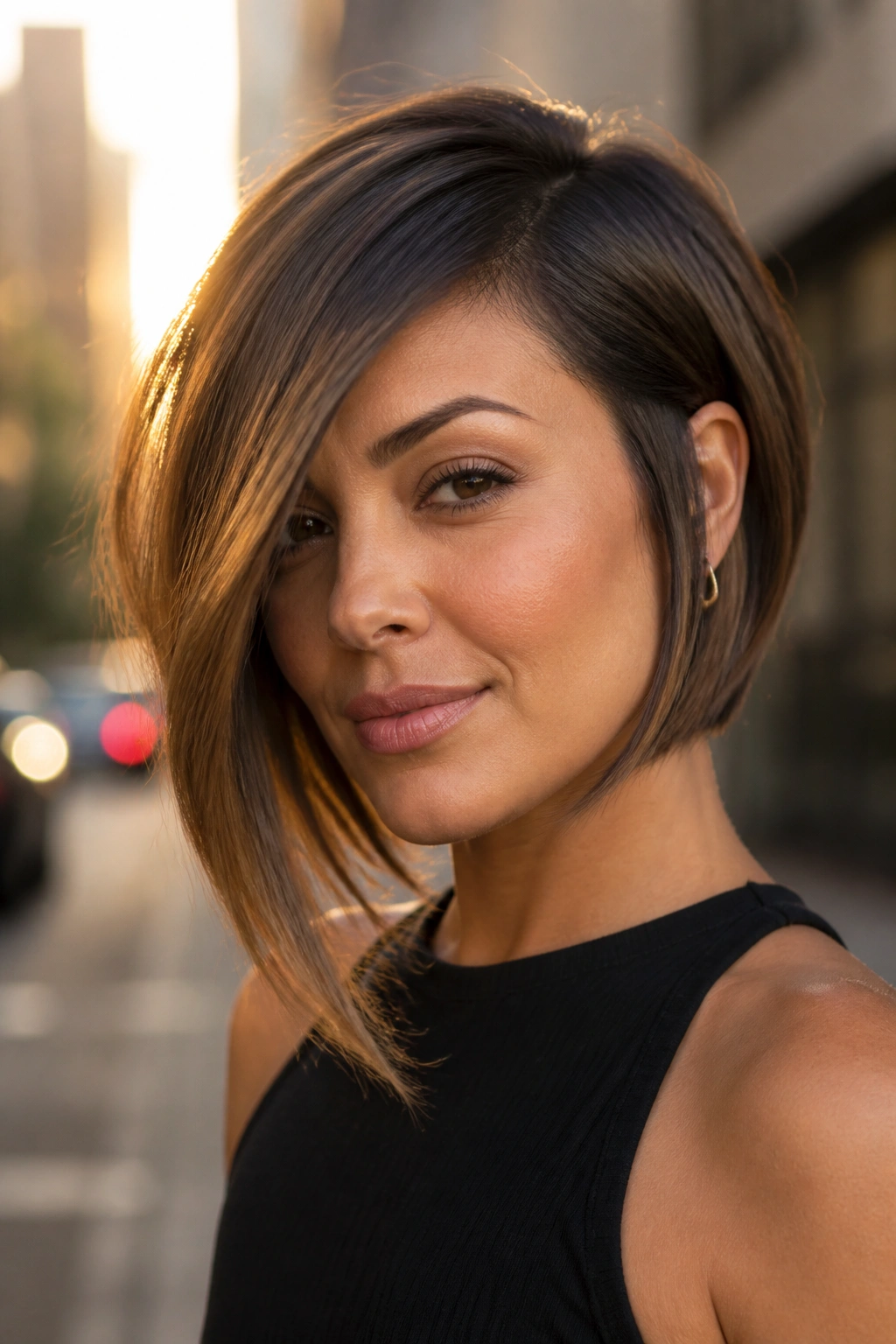
Need a cut that breaks up facial symmetry a little? This is the one.
An asymmetrical inverted bob keeps one side noticeably longer, often by about 1 to 2 inches, and that difference changes the whole feel of the haircut. On a round face, the uneven line helps pull attention sideways and downward at the same time. It’s a small imbalance that works in your favor.
The longer side should still feel soft, not sharp to the point of looking aggressive. A side sweep or a tucked-behind-the-ear shape can keep it wearable. If both sides are too extreme, the haircut starts to look costume-y, and that’s a fast way to regret a bold choice.
This is best if you like hair with some attitude. It has edge. It also has structure, which is why it works better than a random uneven cut pulled from a mood board.
12. French-Inspired Inverted Bob with Airy Ends
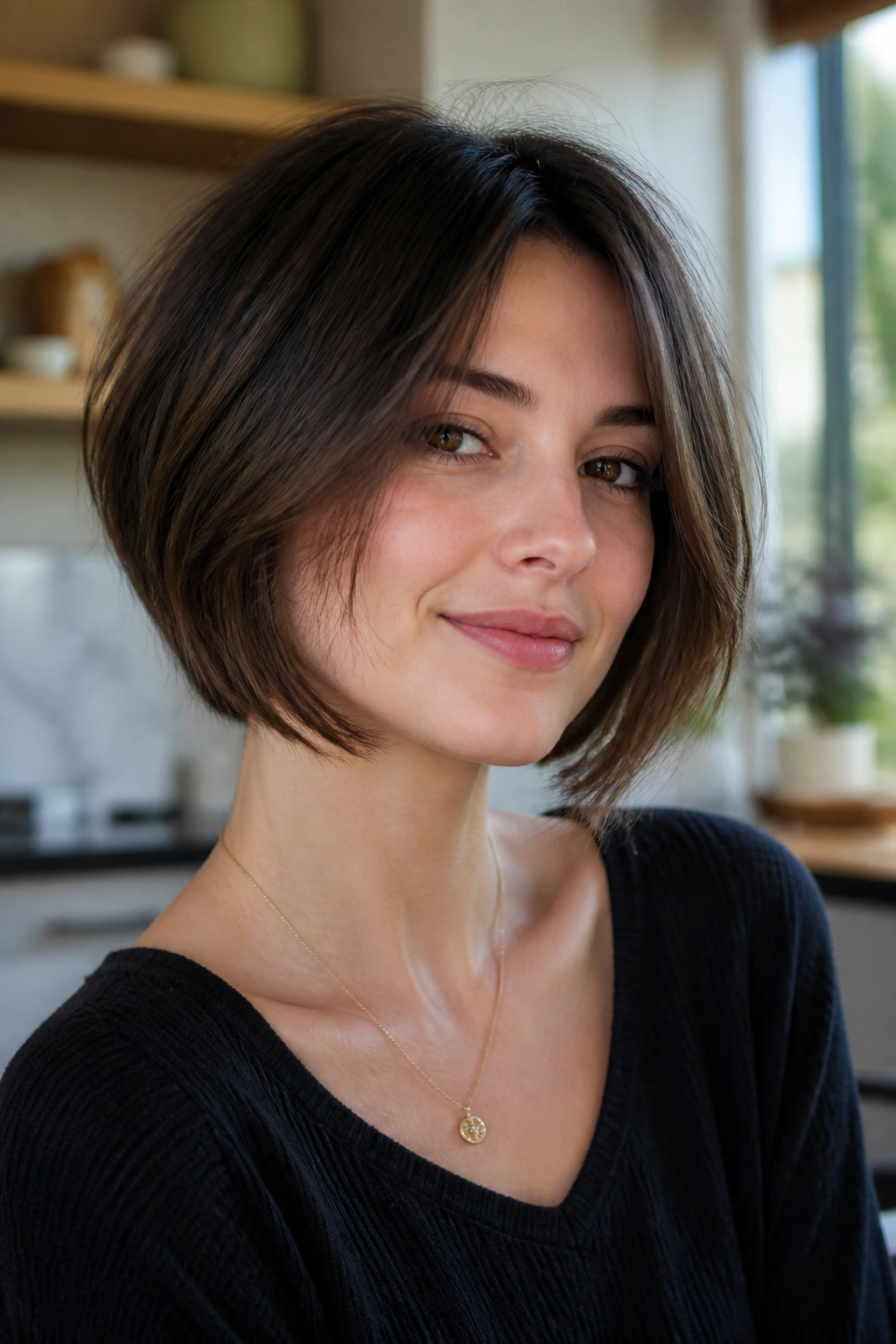
This one feels light the second it moves.
The French-inspired version usually has a softer, looser finish than a heavily stacked bob. The ends are airy, sometimes point-cut, and the front falls in a gentle angle instead of a hard line. On a round face, that softness keeps the cut from feeling too sharp while still slimming the outline.
What I like most is the ease. It doesn’t need perfect blowout behavior. A little bend, a little texture, maybe a quick pass with a brush and dryer — that’s enough. The haircut should look touched, not forced.
There’s a small detail that matters here: keep the front pieces long enough to graze below the cheekbone. If they stop too high, the face can look fuller. Let them dip lower and the whole thing opens up.
13. Curly Inverted Bob for Natural Texture
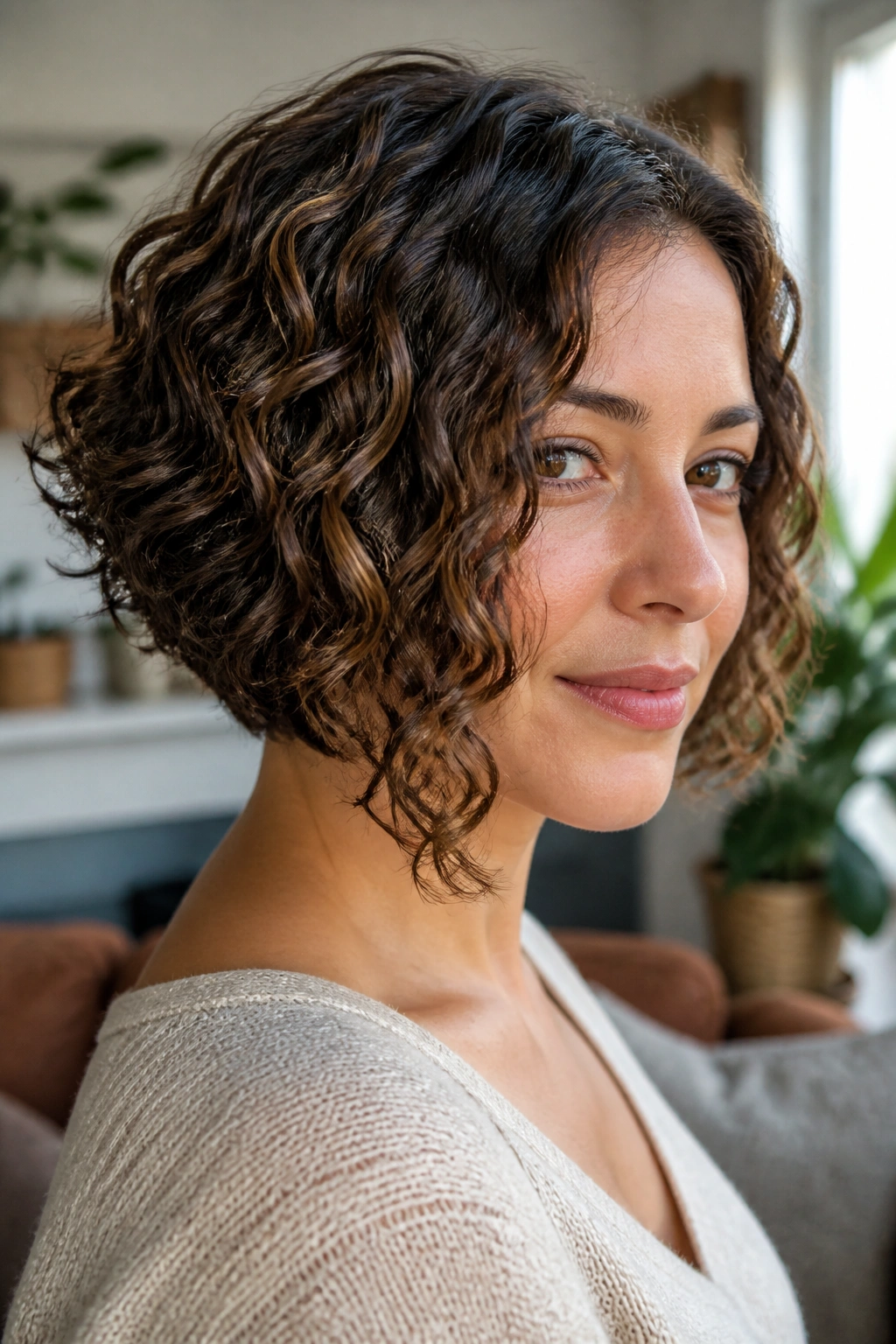
Curly hair and round faces can be a lovely match when the shape is cut properly.
The biggest mistake is cutting curls the same way you’d cut straight hair. Don’t do that. Curls spring up, and if the front is too short, you’ll lose the angle and gain width. A curly inverted bob needs the stylist to account for shrinkage and to cut the shape where the curls actually live, not where they seem to sit wet.
Where the Shape Should Sit
The back should still be shorter, but not so short that the curls stack into a puff at the nape. The front should hang long enough to stretch the face and let the curls fall in vertical lines. That front length is doing the flattering work.
Ask for:
- Dry curl cutting or careful curl-by-curl shaping
- Longer front curls that land below the chin
- Light internal layering, not heavy thinning
- A shape that follows your natural curl pattern
This cut rewards definition. A little gel cast, scrunched out once dry, keeps it from spreading too wide.
14. Blunt-Front Inverted Bob with a Tapered Back
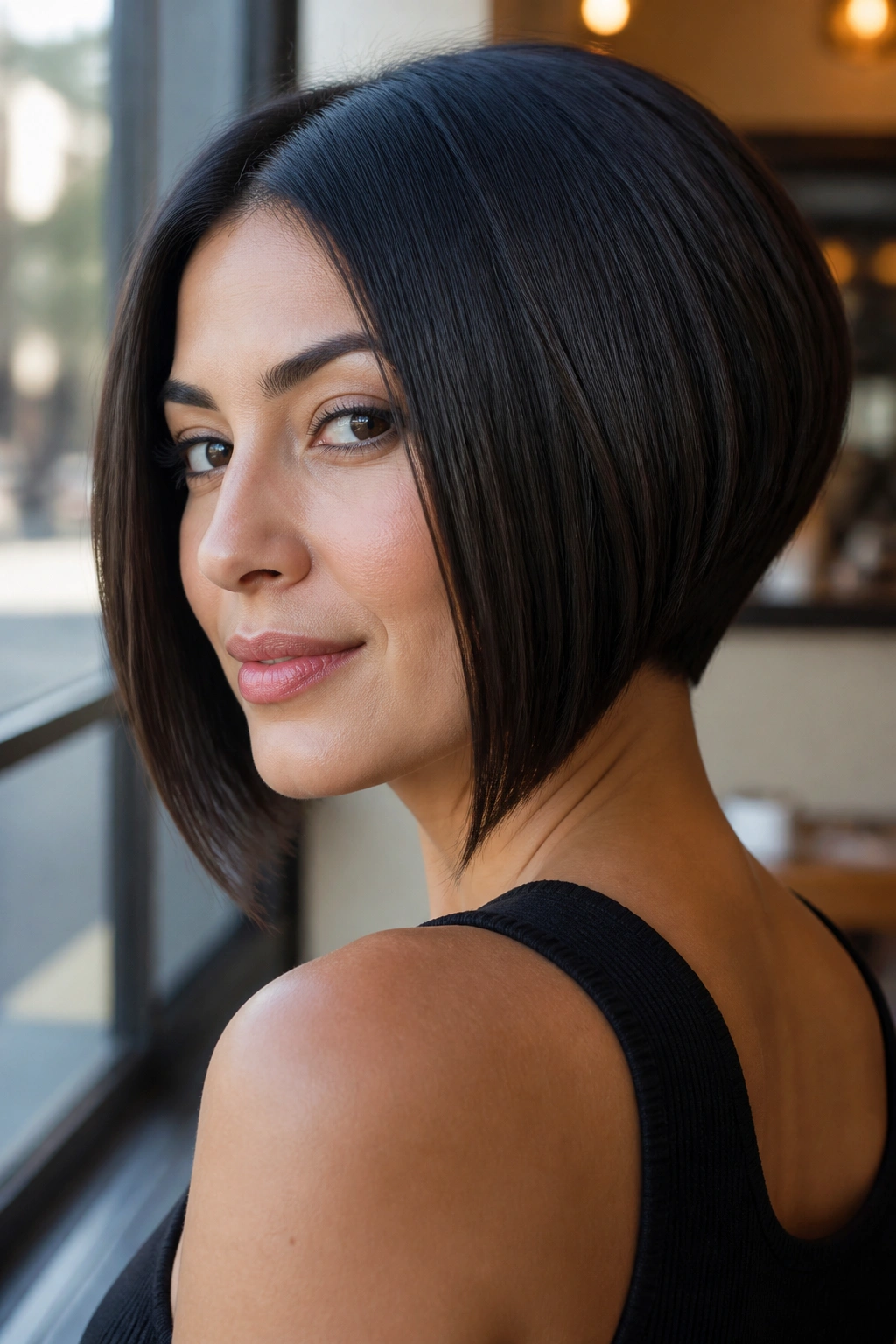
If you want edge, this is the cleanest way to get it.
The blunt front gives the haircut a strong visual finish, while the tapered back keeps the silhouette short and neat. On a round face, the bluntness creates a clear line that cuts through softness. That can be a little dramatic, but that’s the point.
I’d keep the front below the cheekbone and usually closer to the jaw. If it lands too high, the blunt edge can make the face feel fuller. The nape should stay slim so the haircut doesn’t become boxy from behind. There’s a fine line between bold and bulky. This cut lives on the good side of it when the angle is clean.
It’s also a nice option if you wear straight hair often. The shape reads best when the ends are smoothed out and the line stays crisp.
15. Messy Inverted Bob with Choppy Layers
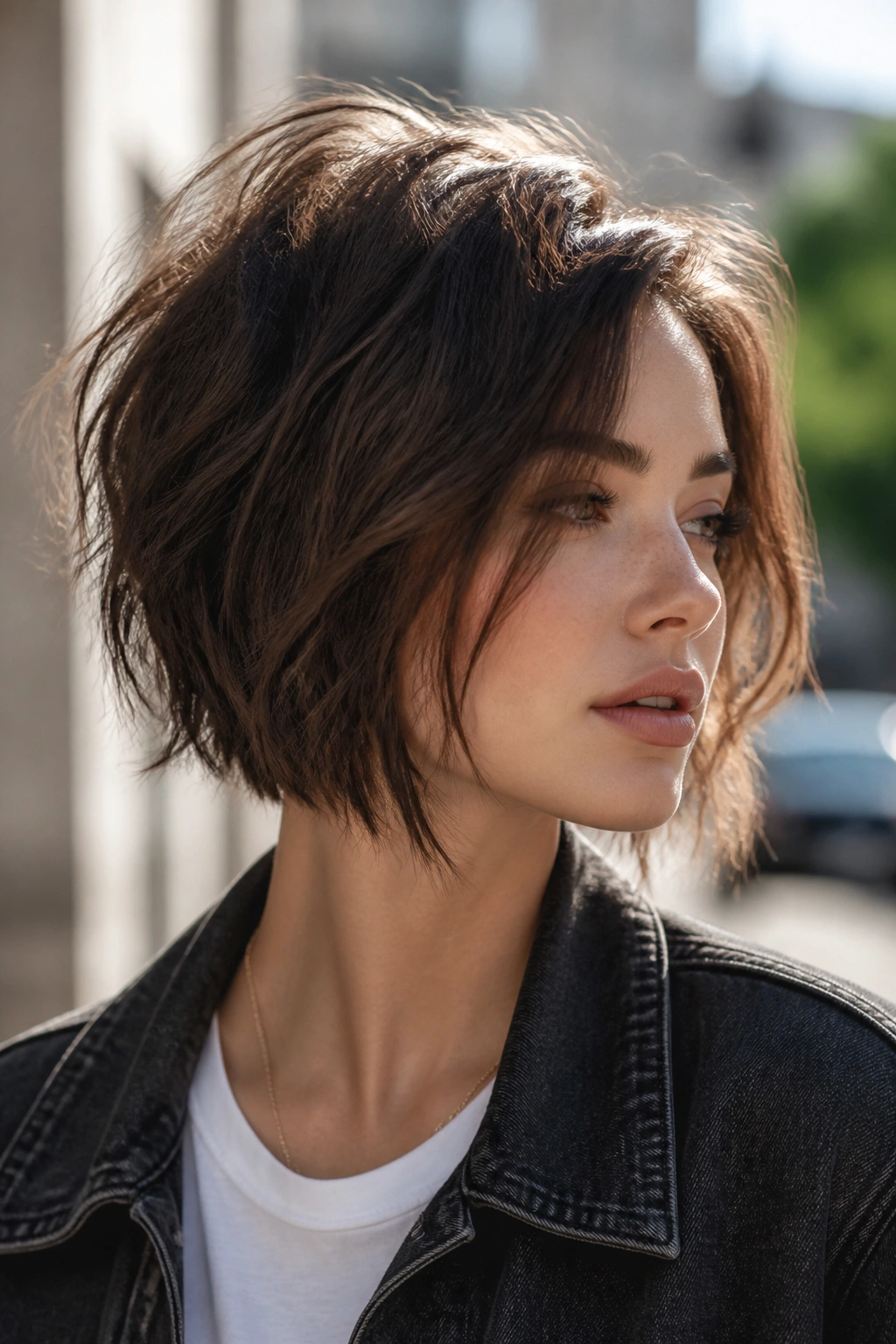
A messy bob is only flattering when the mess is controlled.
That sounds fussy, but it isn’t. Choppy layers can absolutely work on a round face because they break up the outline and keep the haircut from sitting as one solid mass. The trick is to keep the volume at the crown and away from the cheeks. If the texture blooms out in the middle, the face widens with it.
Keep It Rough, Not Puffy
Use a light mousse at the roots, then rough-dry the hair with your fingers. Once it’s dry, hit a few ends with a flat iron or wand so the layers bend in different directions. The goal is separation.
- Use texture spray sparingly
- Avoid heavy oils near the roots
- Keep the back tighter than the sides
- Scrunch only the lower half if your hair puffs easily
This is one of those cuts that looks better with a little grit. Too much polish ruins the point.
16. Inverted Bob with Wispy Bangs
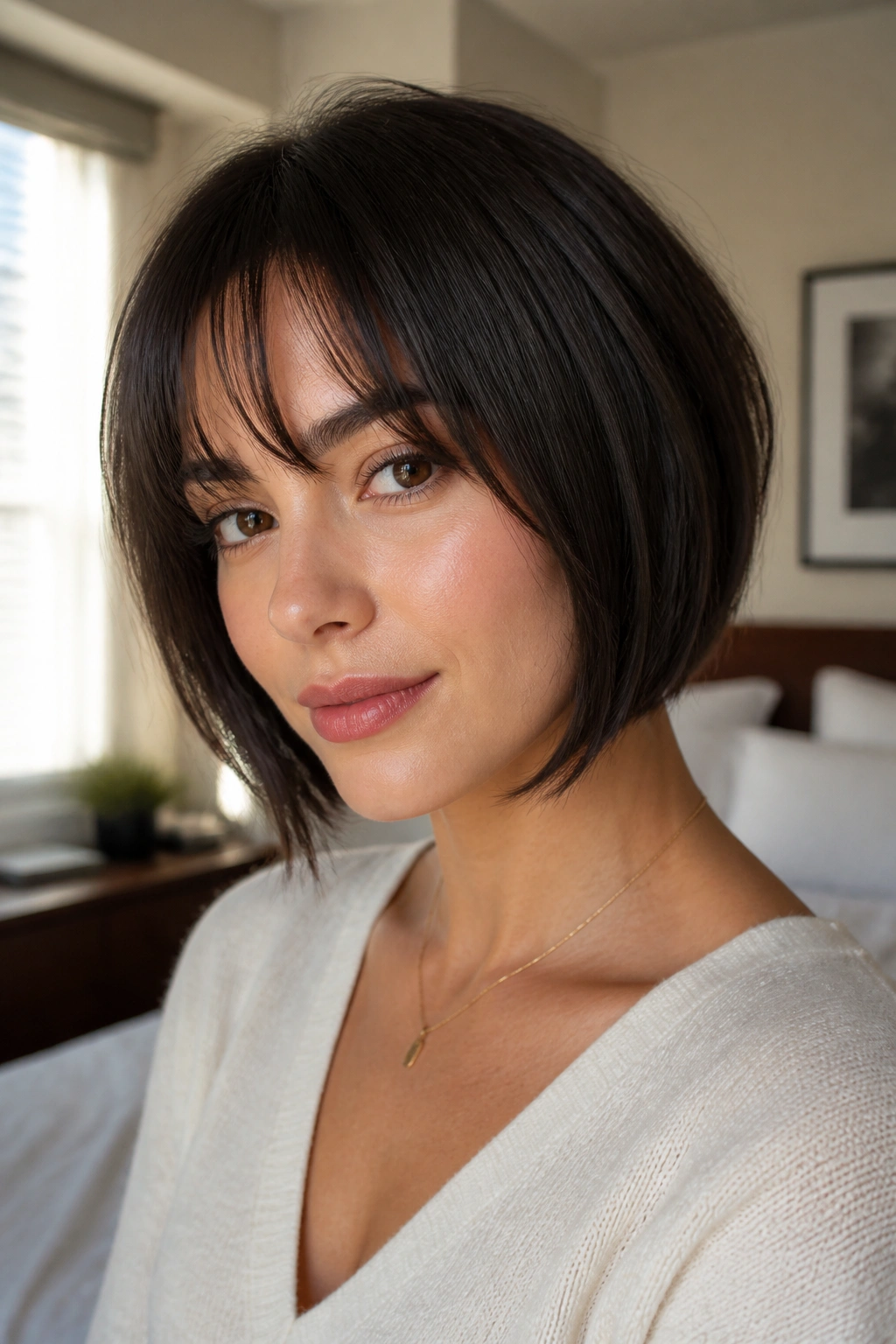
Wispy bangs are a safer fringe choice than full bangs, and round faces usually benefit from that restraint.
The feather-light fringe softens the forehead without creating a strong horizontal line. That matters. Heavy bangs can make a round face feel shorter. Wispy ones blur the top edge just enough to keep things gentle, while the inverted bob below still does the lengthening.
I like this version on hair that is fine to medium, especially if it needs a little face framing but not a lot of bulk. The bangs should blend into the front layers instead of sitting on top like a separate piece. If they’re cut too blunt, the softness disappears fast.
This cut is pleasant to wear. It doesn’t shout. It just quietly fixes the shape of the face in a way that feels easy.
17. Rounded Inverted Bob with Carved Layers
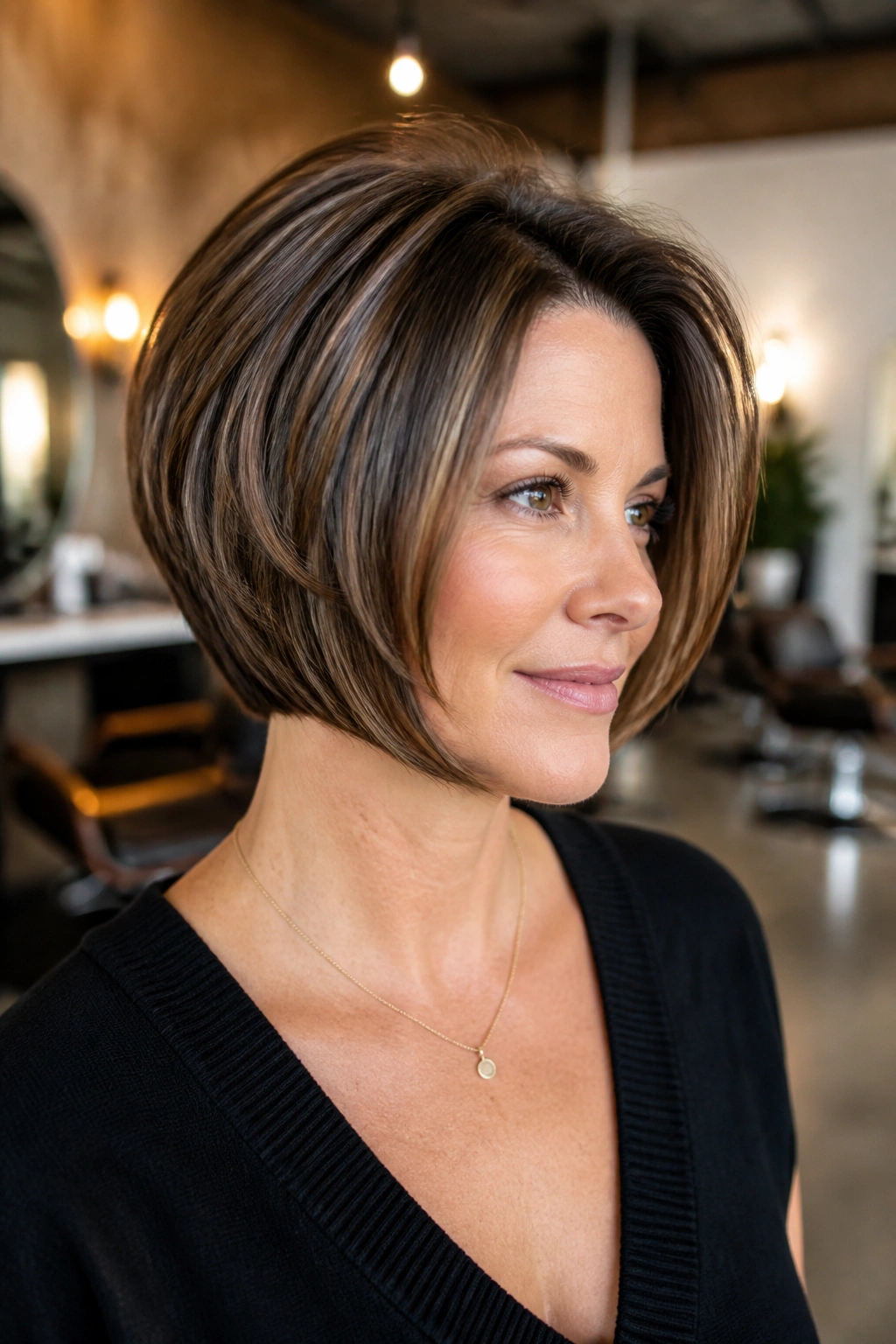
“Rounded” sounds like the wrong word for a round face, but hear me out.
When the layers are carved carefully, the shape can actually cradle the face instead of widening it. The back stays short, the front still drops longer, and the soft roundness happens through the interior rather than at the edges. That keeps the haircut from feeling hard or choppy.
The Shape to Ask For
The key is balance, not puff. You want the fullness to sit high near the crown and move down in a controlled curve.
Ask for:
- Carved internal layers
- A soft bend through the front
- No extra width at cheek level
- A nape that stays close and tidy
This version is nice if you don’t love angular haircuts. Some people want a softer outline, and that’s fair. The trick is keeping the curve up top and the front long enough to stretch the face.
18. Center-Part Inverted Bob with Clean Angles
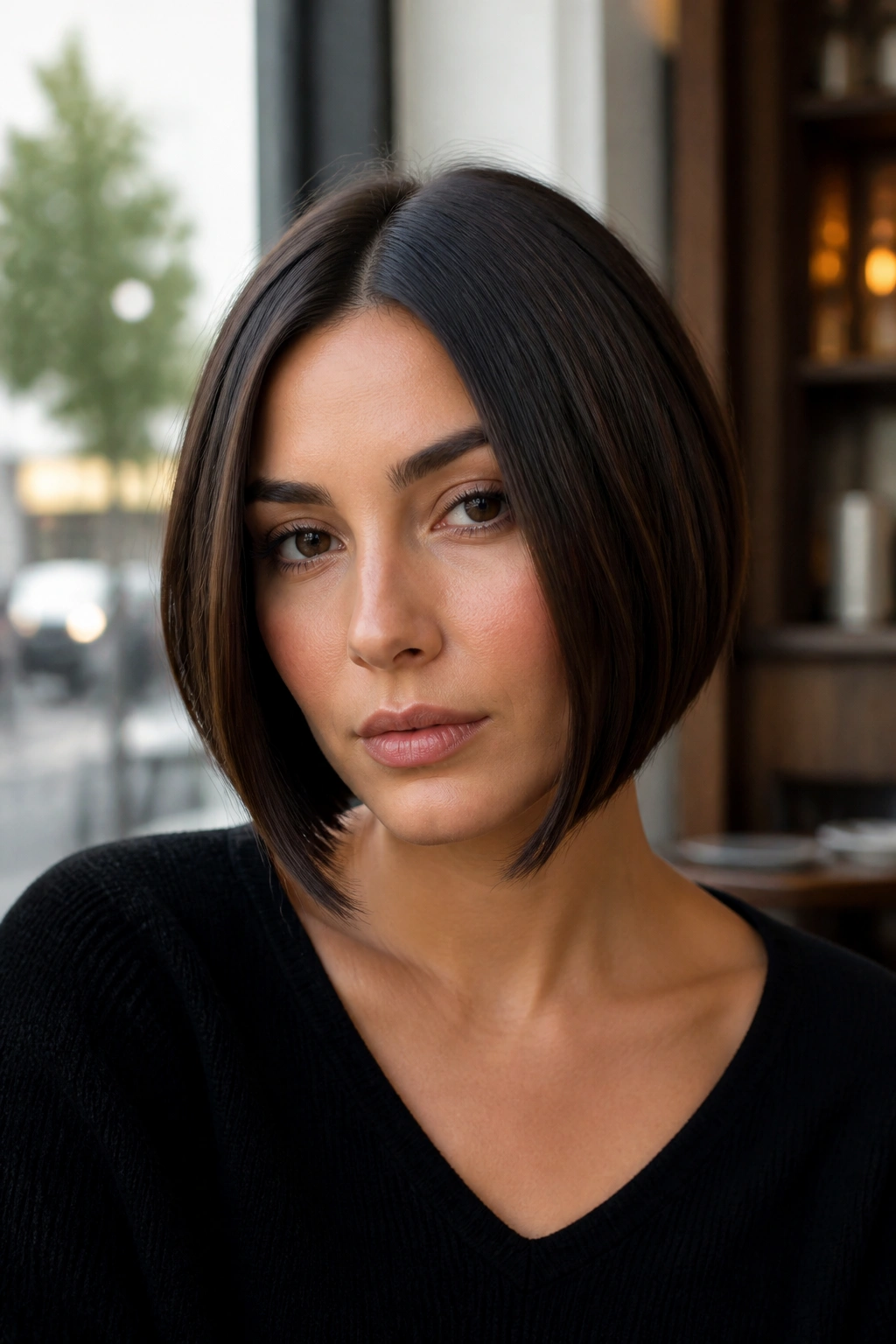
A center part is not off-limits for a round face.
It just needs the right cut underneath it. If the inverted bob has enough front length and the crown has a little lift, the center part can actually lengthen the face by splitting the eye line down the middle. The result feels neat and balanced, not wide.
The danger is flatness. If the roots collapse and the front pieces stop at the cheekbone, the part can make the face read broader. So the cut has to earn the part. That means some stacking at the back, some length in front, and a little root support when you style it.
This is a clean, modern-looking choice for anyone who likes symmetry but still wants shape. It’s not the loudest option in the group. It’s one of the smartest.
19. Inverted Bob with Hidden Crown Lift
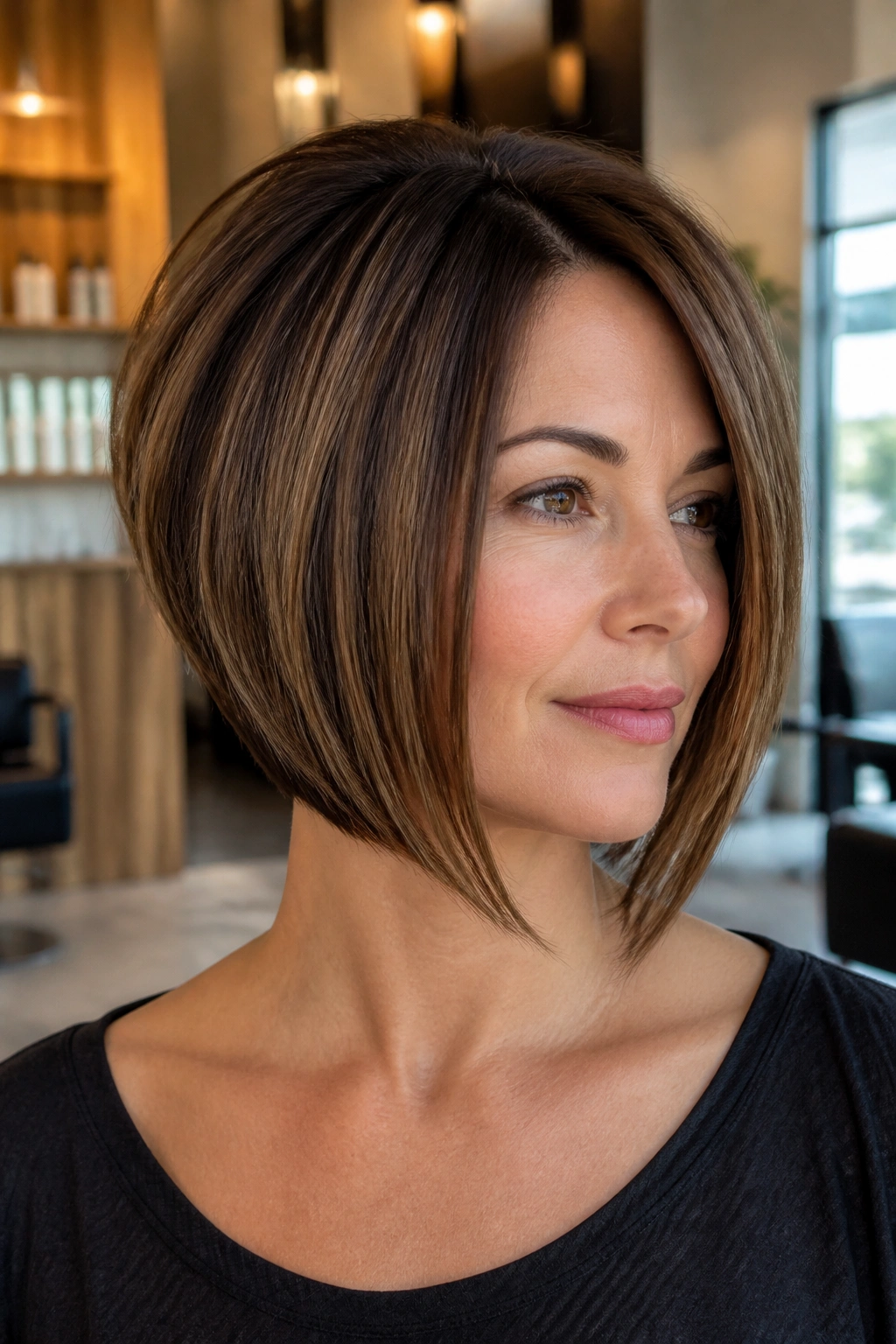
The lift is what sells this haircut.
The crown gets subtle internal layering that you can’t always see from the outside, but you can feel it when the hair moves. That extra height changes how a round face reads, because the eye moves upward before it moves outward. Smart, quiet, and honestly underrated.
Why the Hidden Layering Matters
A lot of people ask for more volume and then end up with width at the sides. Not the same thing. Crown lift keeps the upper part of the head taller without making the cheeks look fuller.
For this cut, tell your stylist:
- Keep the layering hidden, not choppy
- Place the shortest support layers near the crown
- Leave the front long enough to skim below the jaw
- Avoid thick side bulk that flares out
This is a favorite on finer hair, because the lift gives the bob body without turning it fluffy. You get shape without a lot of obvious texture.
20. Jaw-Skimming Inverted Bob with Face-Framing Layers
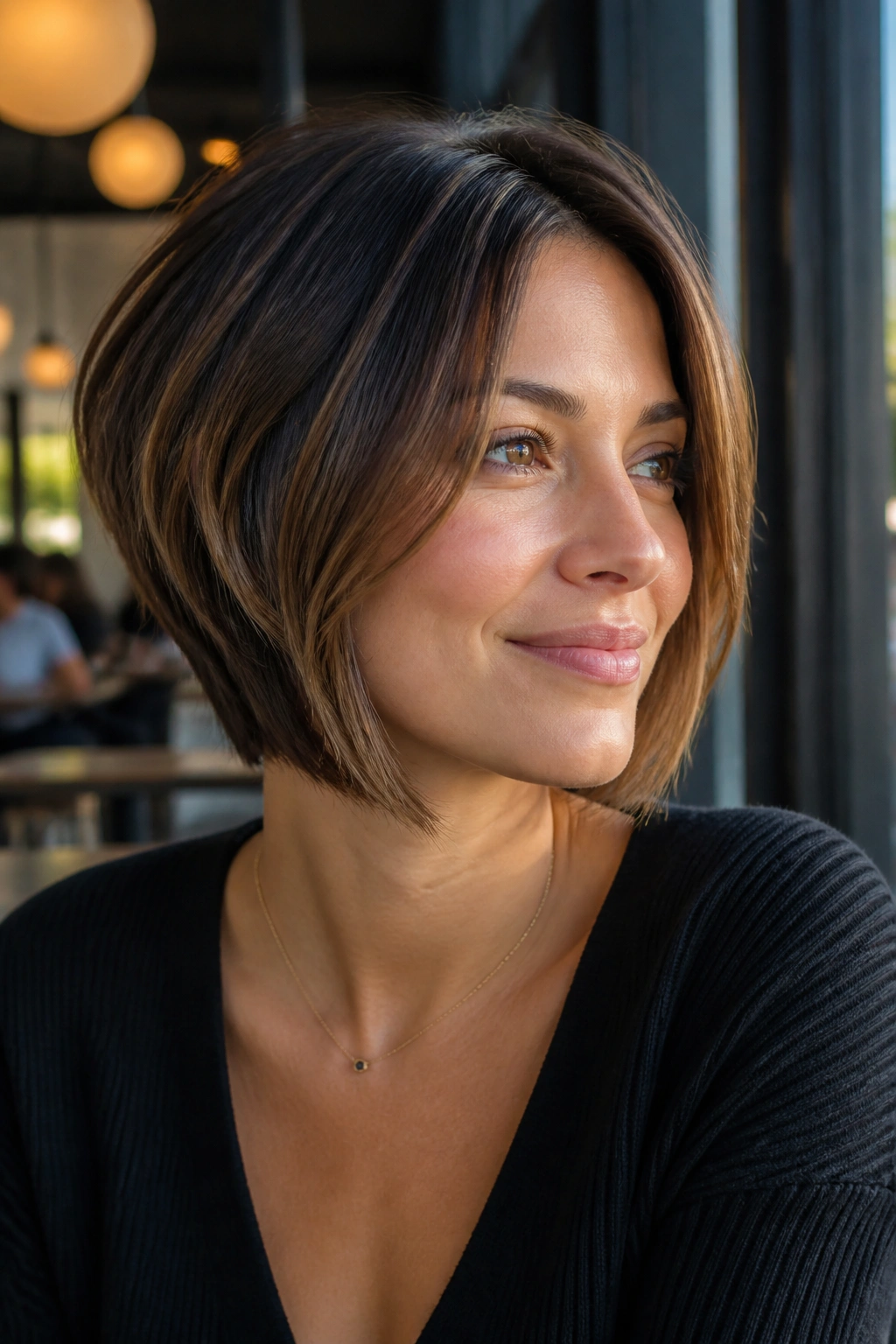
Some people want short hair, but not too short. This is their cut.
The jaw-skimming front gives you enough length to soften a round face, while the back stays compact and tidy. It’s especially useful if you feel nervous about going chin-short. The face-framing layers create a gentle slope that helps the jaw look a little narrower and the neck a little longer.
This one works nicely for daily wear because it can be tucked, bent, or smoothed depending on the mood. A round brush and a medium-barrel dryer brush are enough for most people. If you want it to look more relaxed, a quick wave through the front pieces is plenty.
It’s a practical bob. Not boring. Practical. There’s a difference.
21. Razor-Cut Inverted Bob with Soft Movement
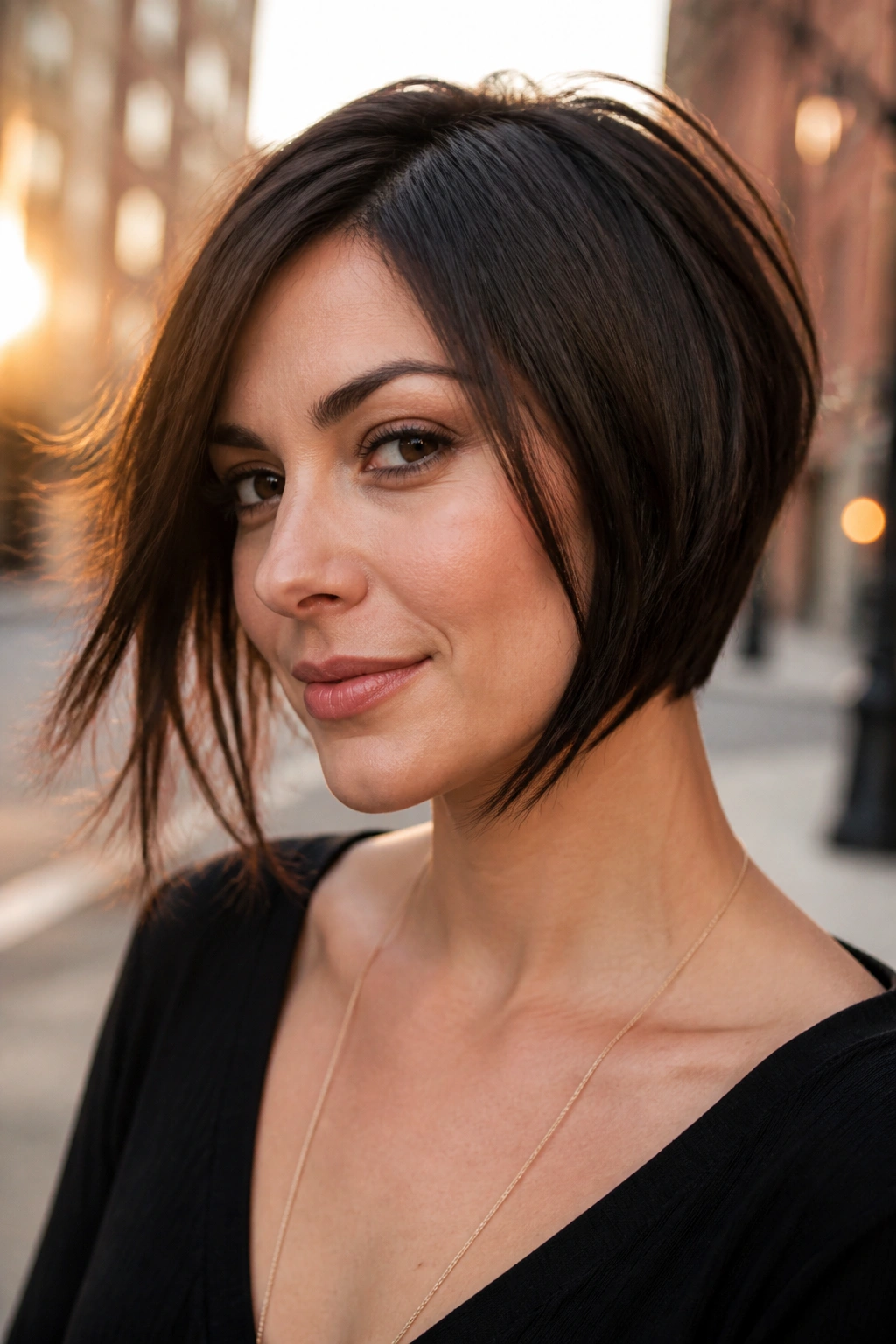
Razor cutting can be gorgeous on the right hair, and a round face is one of the places it can do useful work.
The razor softens the edges and gives the bob a little swing. That movement helps keep the sides from feeling too solid, which matters when you’re trying to avoid width. The front should still keep its diagonal shape, but the ends can look looser and more lived-in.
This is best on straight to slightly wavy hair with medium density. Very frizzy hair can react badly to a razor and go fuzzy at the ends. That’s the part people forget. A razor is a tool, not a miracle.
If your hair holds shape well, though, this cut can look clean and airy at the same time. That combination is hard to beat.
22. Inverted Bob with Bottleneck Bangs
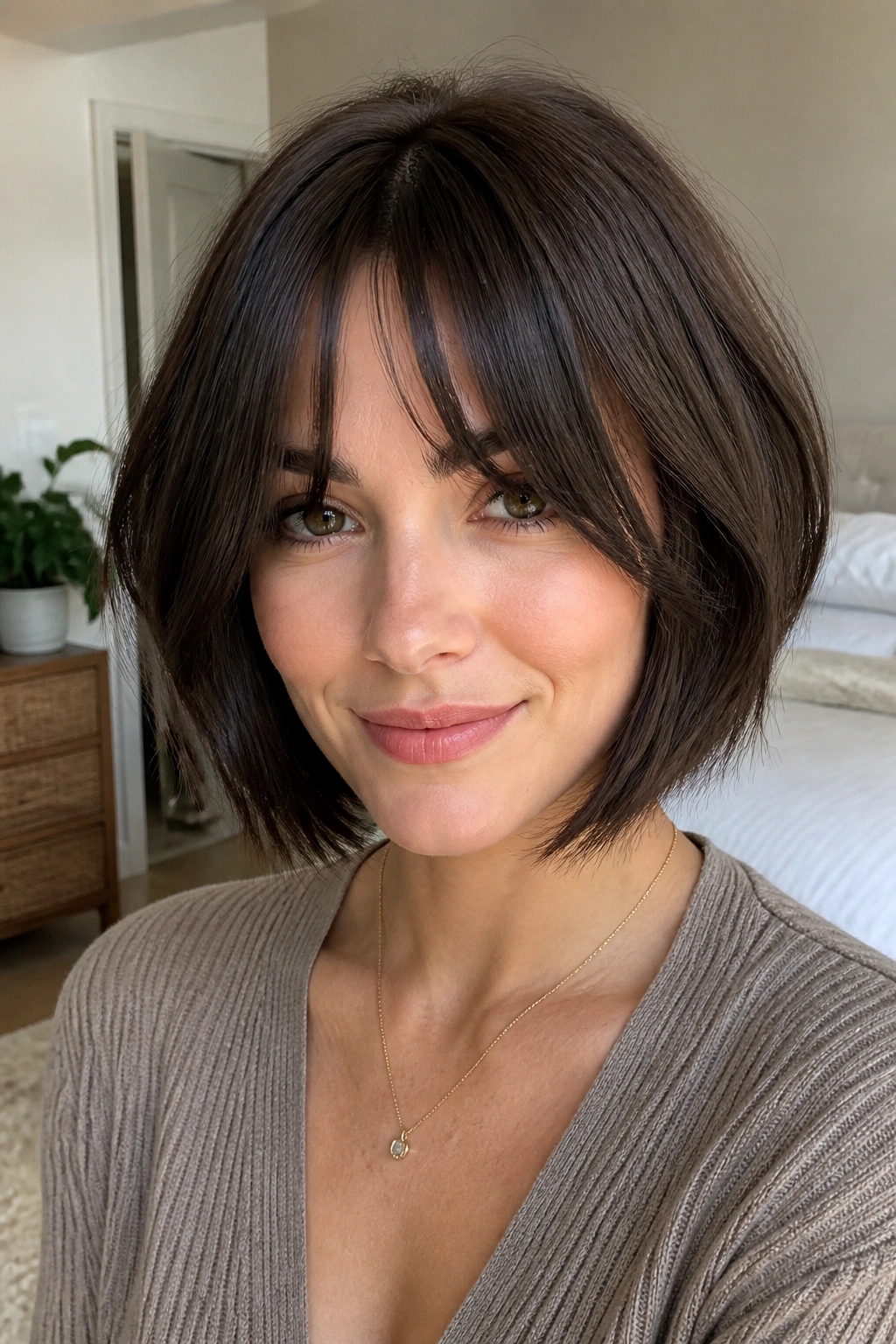
Bottleneck bangs are clever. They start narrower at the top and open a bit wider near the cheekbones.
That shape helps a round face because it introduces a vertical line near the forehead without putting a hard block across it. The bangs blend into the sides of the inverted bob, which keeps the haircut from feeling chopped into pieces. It’s softer than full bangs and more interesting than side fringe alone.
How to Style It
Keep the center of the fringe a touch shorter, then let the sides lengthen as they move out. That little opening shape is what makes them work.
- Blow-dry the fringe with a small round brush
- Direct the side pieces away from the face
- Keep the front bob pieces below cheek level
- Use a light spray, not a heavy cream
This cut is a nice middle ground if you want bangs but do not want your whole face covered. It feels fresh without being loud.
23. Polished Inverted Bob for Fine Hair
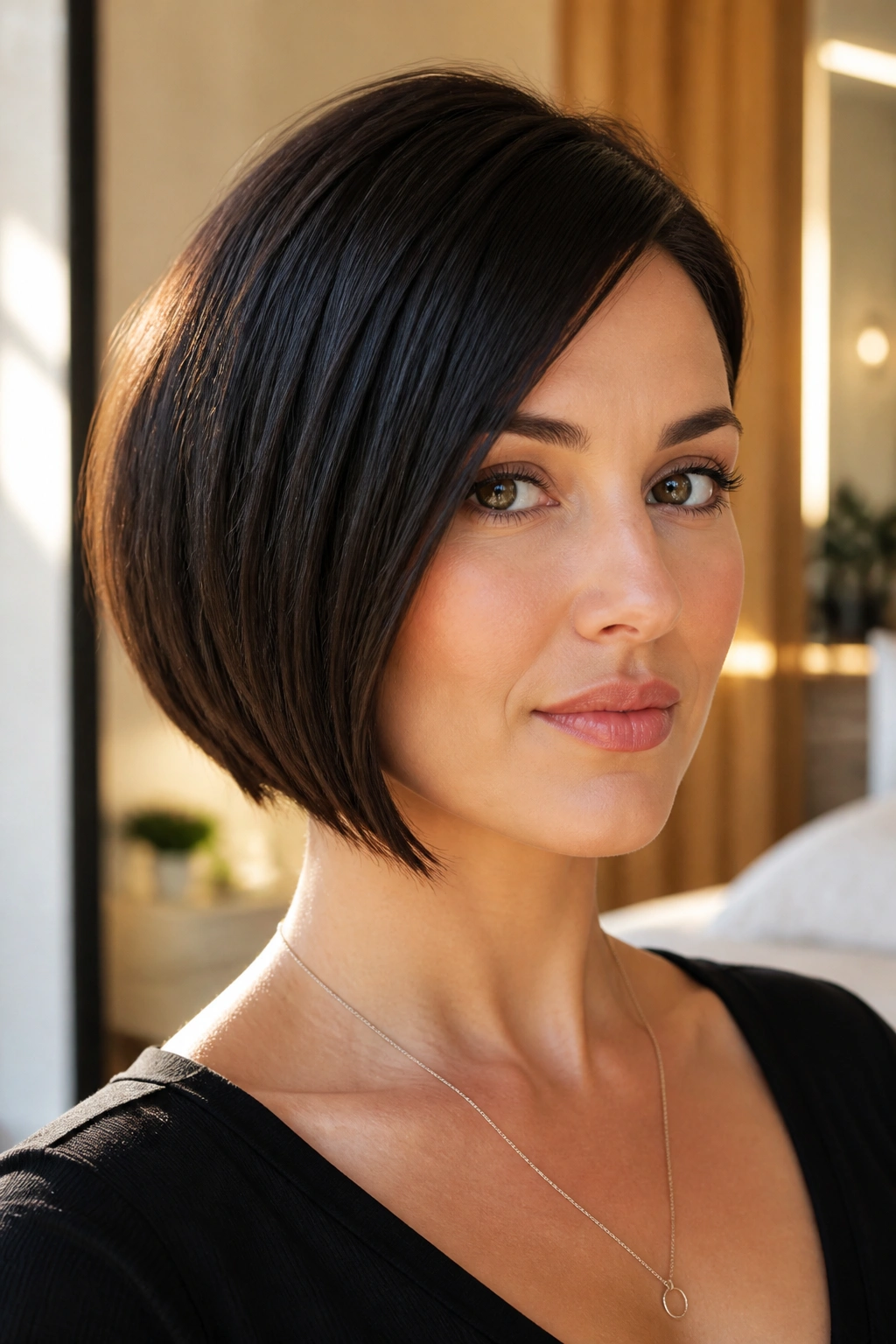
Fine hair and round faces often benefit from the same thing: control.
A polished inverted bob gives you clean lines, a neat nape, and enough front length to keep the face looking longer. Because fine hair can fall flat fast, the smooth finish actually helps. It lets the shape read clearly instead of collapsing into a soft blob around the cheeks.
The best way to wear this cut is with a root-lifting mousse and a round brush blowout. Don’t over-layer it. Too many short layers can make fine hair wispy in the wrong places and leave the ends looking thin. A cleaner cut usually looks richer.
I prefer this version when the goal is neatness. It’s especially good if you want hair that behaves under a jacket collar, in humidity, or on a long day. The haircut does not fight you. That counts for a lot.
24. Tousled Inverted Bob with Balayage Dimension
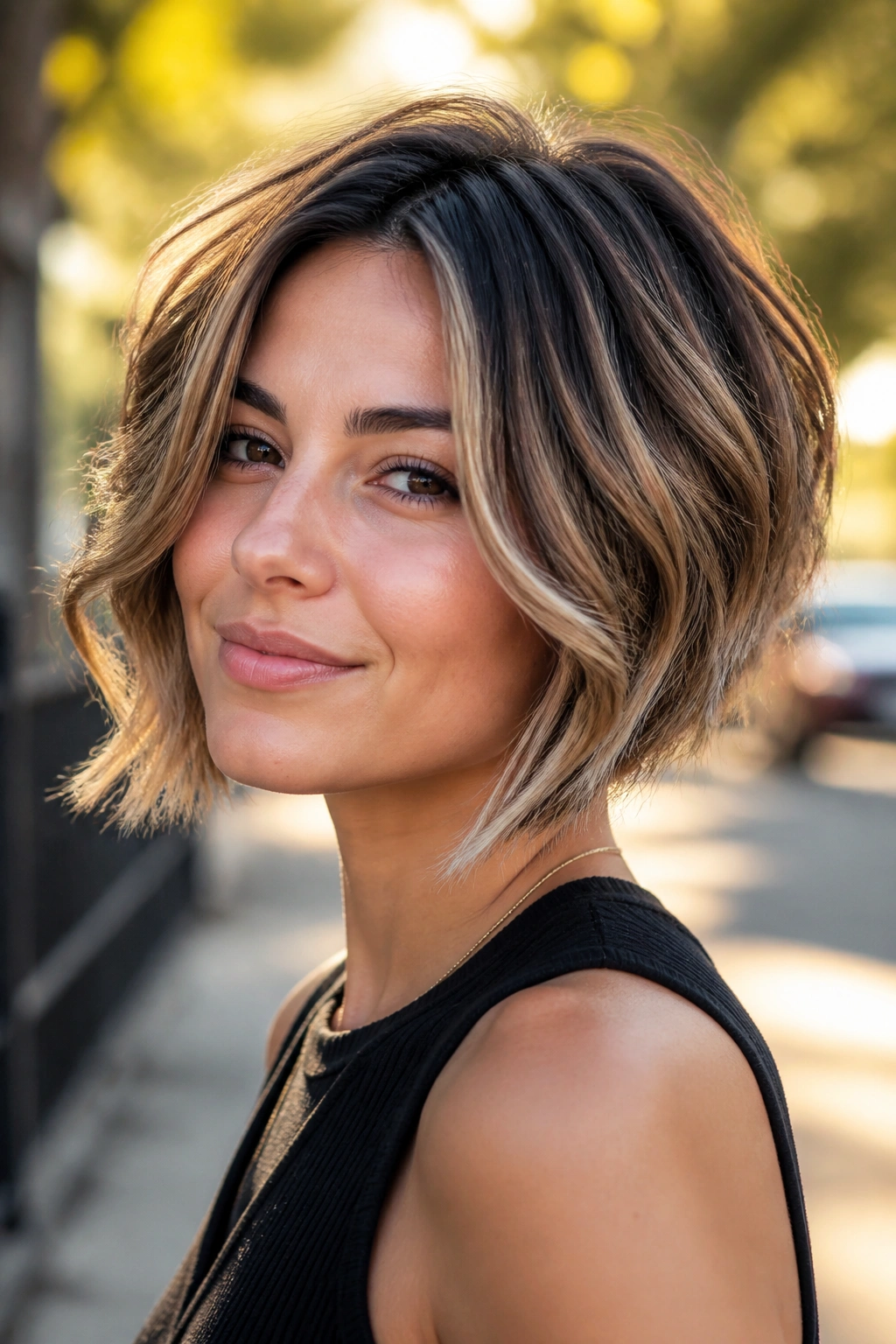
Color changes how a cut reads, and this shape uses that to its advantage.
Balayage placed through the front pieces and crown can make an inverted bob look deeper and more lifted at the same time. The light pieces catch attention where the face needs length, while the darker underlayers keep the back compact. It sounds cosmetic, but the shape effect is real.
Tousled styling helps too. A few bends through the front, a little separation at the ends, and the haircut feels less static. That matters on a round face because flat hair tends to spread outward visually. Movement pulls the eye down the length instead.
This is a good choice if you like hair that looks a bit sun-touched and undone. It’s not about trying to hide anything. It’s about letting the angle do its job while the color adds depth.
25. Dramatic Inverted Bob with an Extra Short Nape
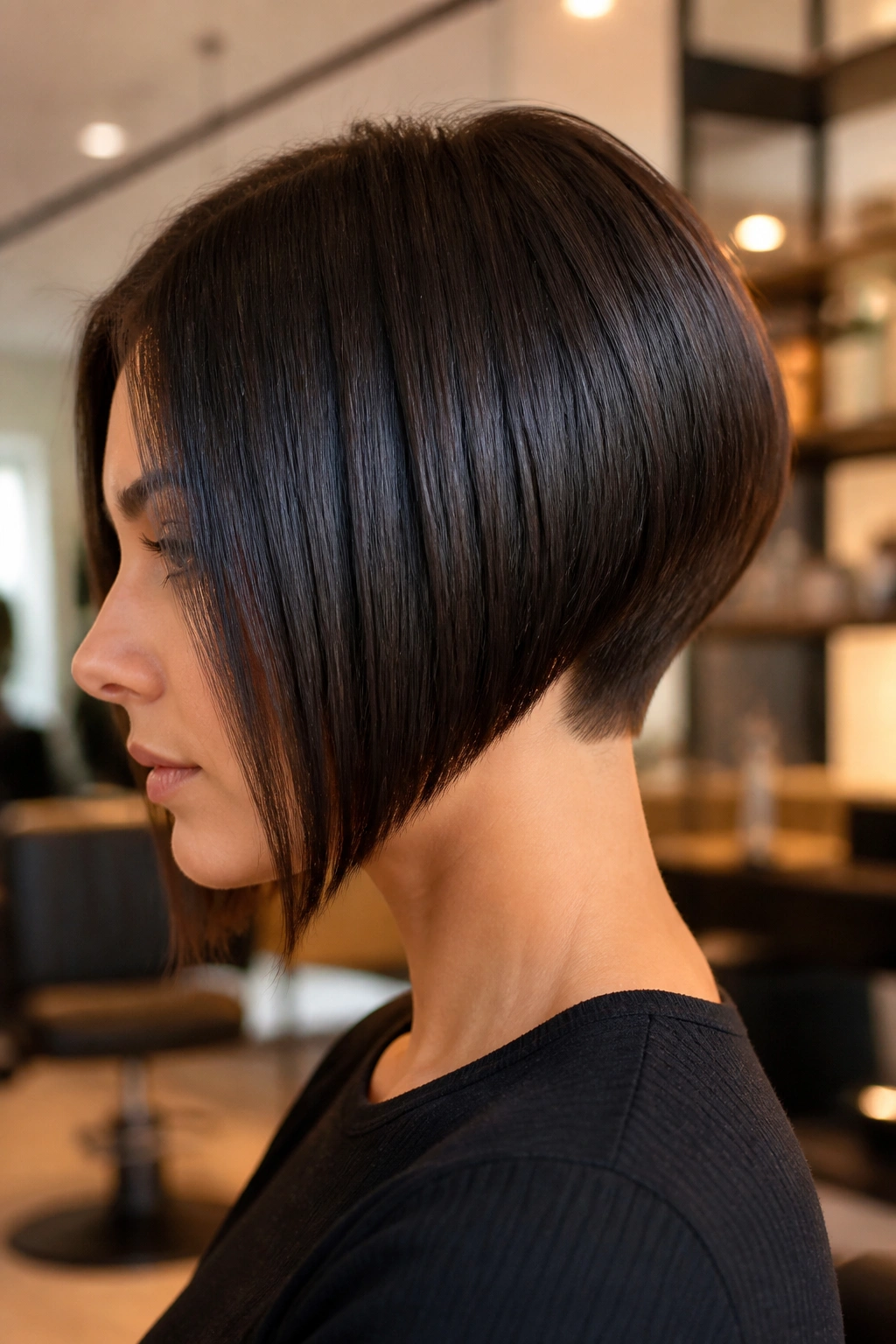
If you want a bolder bob, this is the one that turns heads without losing the face-flattering shape.
The nape is cut very short and clean, almost tucked under, while the front keeps enough length to skim the jaw or chin. That sharp contrast creates a strong line from back to front. On a round face, that line helps pull attention upward and forward, which is exactly where you want it.
This cut needs commitment. The back has to stay neat, and the front has to be styled with purpose, or the whole shape can lose its drama. But when it’s fresh, it looks crisp in a way that feels modern without being icy.
Best on hair that can hold a smooth finish. If your hair puffs easily at the neck, ask your stylist to keep the undercut softer so the shape doesn’t rise too much. Small adjustment. Big difference.
Final Note
The smartest short inverted bob for a round face is usually the one that keeps the widest part of the face free from heavy bulk. That’s the real trick. Not hiding the face. Just giving it room.
Bring photos, yes, but bring one more thing: a clear idea of where you want the front to fall. Chin? Jaw? Just below the mouth? That single detail changes the whole shape more than most people expect. A stylist can read the rest from there.
And if you’re torn between two versions, pick the one with the better front line. The back gets the compliments in the chair. The front is what you live with every morning.
