



Fine hair has a way of telling on a bad haircut fast. Give it too much length, too much weight, or the wrong kind of layering, and it can slump by lunch, with the ends looking thinner than they did in the mirror. Rounded bob haircuts for fine hair work because they do the opposite: they build shape where the eye wants fullness, usually through a curved perimeter, a soft bevel at the ends, and a little lift around the crown.
The trick is that a rounded bob is not one single thing. Some versions sit at the jaw and curve inward. Some skim the neck and tuck under with a round brush. Some look blunt from the front but have a subtle stack in the back that gives the whole cut a firmer outline. On fine strands, that outline matters more than extra layers ever will.
I’ve seen plenty of fine-haired clients get talked into choppy texture that looked airy for one day and then went wispy, stringy, and flat. That’s the part most people miss. Fine hair usually needs a stronger perimeter, a cleaner line, and just enough internal movement to stop it from looking like a helmet.
And yes, styling matters. A good rounded bob can still fall apart if you skip root lift, use a heavy cream, or air-dry it with no plan. The cuts below lean into different versions of the silhouette so you can match the shape to your face, your texture, and how much effort you want to put in each morning.
1. Chin-Grazing Rounded Bob with Soft Ends
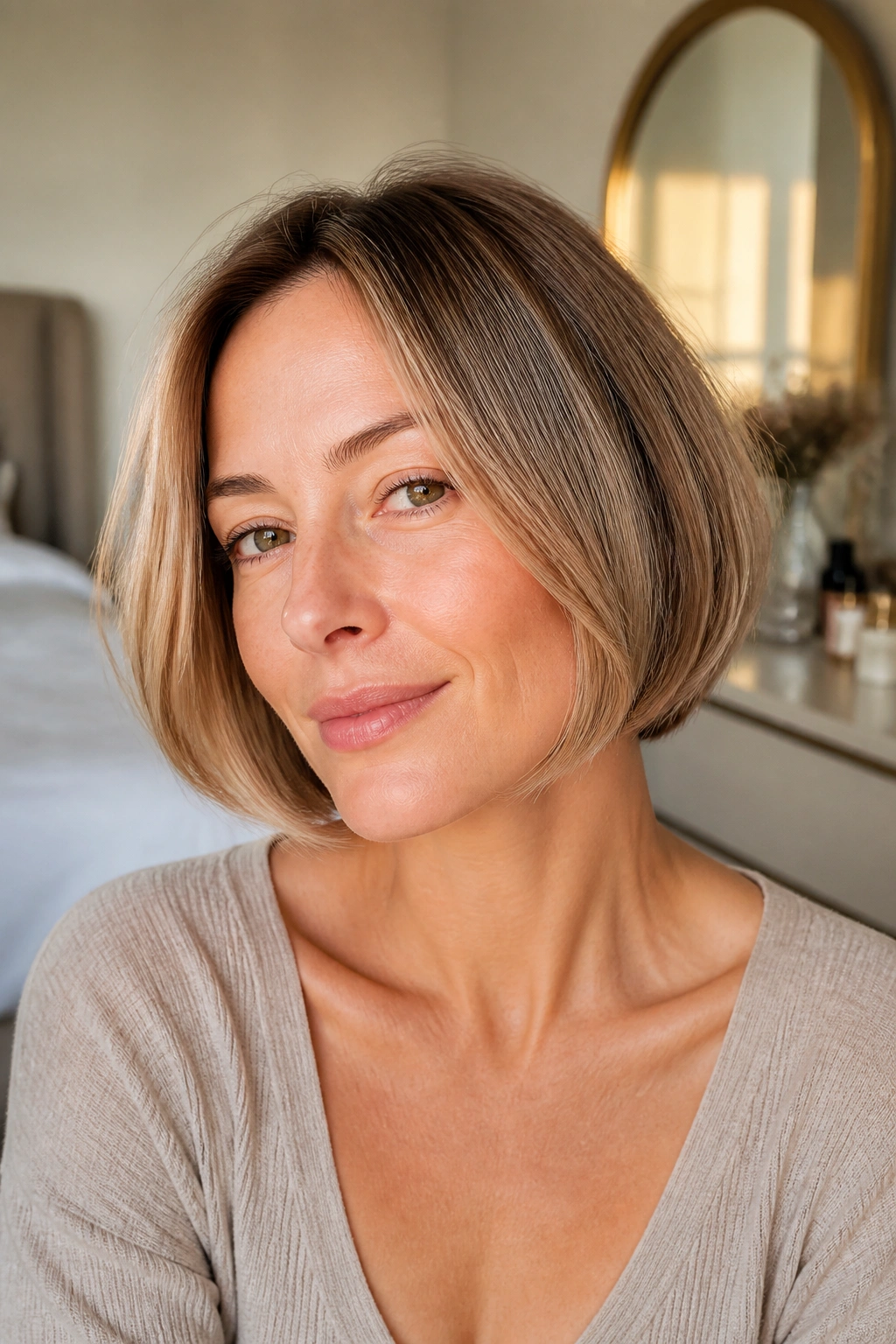
This is the version I reach for when someone wants immediate fullness without a lot of fuss. A chin-length rounded bob gives fine hair a compact shape, and that alone makes the ends look denser. The soft bevel at the bottom keeps it from feeling boxy.
Ask for a blunt base with just enough inward curve to hug the jaw. That curve is doing the heavy lifting here. If your hair tends to kick out at the ends, tell your stylist to leave a touch more weight on the perimeter so the shape bends under instead of flipping away.
- Best for hair that lies flat at the sides but still has a little body at the crown.
- Works well with a 1 to 1¼-inch round brush.
- Looks strongest when the ends hit exactly at the chin or a hair below it.
My take: if you want your hair to look thicker without looking overstyled, start here.
2. French Bob with a Cushioned Curve

Why does this shape keep showing up in salons? Because it gives fine hair a little attitude without asking for much length. A French bob usually sits above the jaw or right at it, and the rounded version softens the edges so the haircut feels plush instead of severe.
The key is softness in the right places, not everywhere. You want a compact shape with a slight curve under the ends, plus a bit of bend around the cheekbones if your face likes a shorter frame. Too much texture and the whole thing goes wispy. Too little and it can look like a helmet cut from years ago.
I like this one on fine hair that has a smooth, slippery feel. It doesn’t fight the hair’s natural slip; it uses it. Blow-dry forward, then tuck the side sections in with a brush so the curve settles into place.
3. Blunt Bob with an Underturned Edge
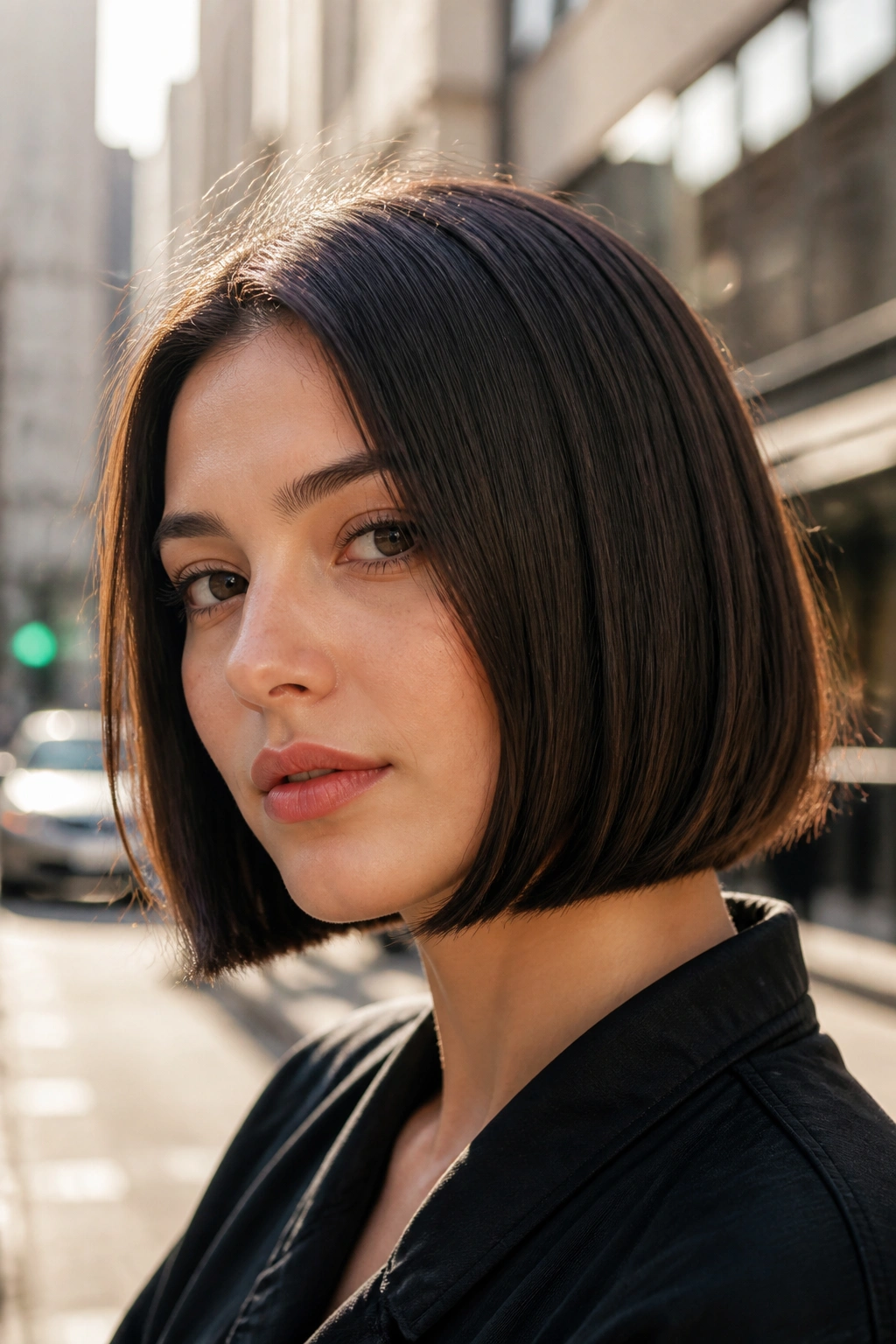
A blunt bob can look thin on fine hair if the line is too hard or the ends are left raw. Turn the edge under a little, though, and the whole cut suddenly looks denser. That tiny inward bend gives the illusion of a fuller hem.
Think of it like tailoring. A straight hem hangs one way, but a hem with a pressed fold sits with more structure. Hair works the same way. The underturned edge catches light on the curve and makes the shape read as heavier, which is exactly what fine strands need.
- Keep the length between the earlobe and the top of the neck for the strongest effect.
- Use a smoothing cream only on the mid-lengths, not the roots.
- Finish with a cool shot from the dryer to set the bend.
The clean part matters. So does restraint.
4. Collarbone Rounded Bob with Light Movement

People assume fine hair has to stay short. Not true. A collarbone-length rounded bob can work beautifully if the ends are kept full and the layers are soft enough to preserve weight. The longer length gives you swing, while the rounded shape stops the hair from looking stringy.
This version is especially good if you like to tuck your hair behind one ear or wear it with a side part. The curve keeps the shape from collapsing into a long rectangle, which is the main problem with shoulder-skimming cuts on fine hair.
I’d avoid aggressive thinning here. A few well-placed internal layers are enough. Anything more and the ends lose their little cushion, which is the whole point.
5. Rounded Bob with Invisible Layers
Why It Works
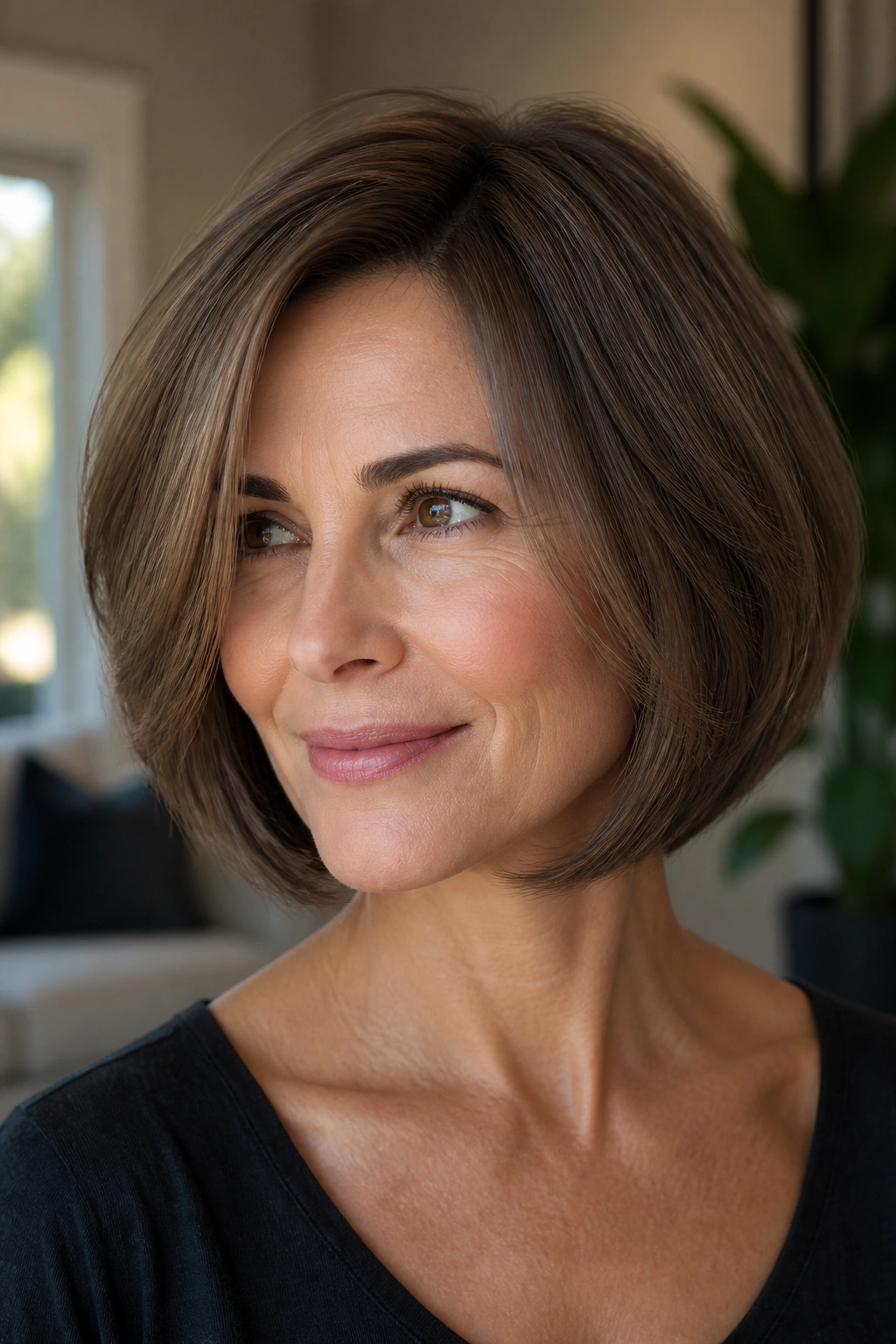
Invisible layers are the quiet fix for hair that looks limp when cut blunt and ragged when over-layered. They sit inside the shape, so the outside still reads as a clean rounded bob, but the inside has enough movement to stop the cut from hanging flat.
That’s a smart move for fine hair. The perimeter stays strong, which protects the illusion of thickness, while the hidden layers give just enough bend for the hair to sit naturally around the head. I like this on clients who want a bob that air-dries with a soft curve instead of a straight fall.
How to Style It
Use a lightweight mousse at the roots and a 1-inch brush on the last two inches of the ends. Don’t rough it up too much.
6. Side-Part Rounded Bob with Crown Lift
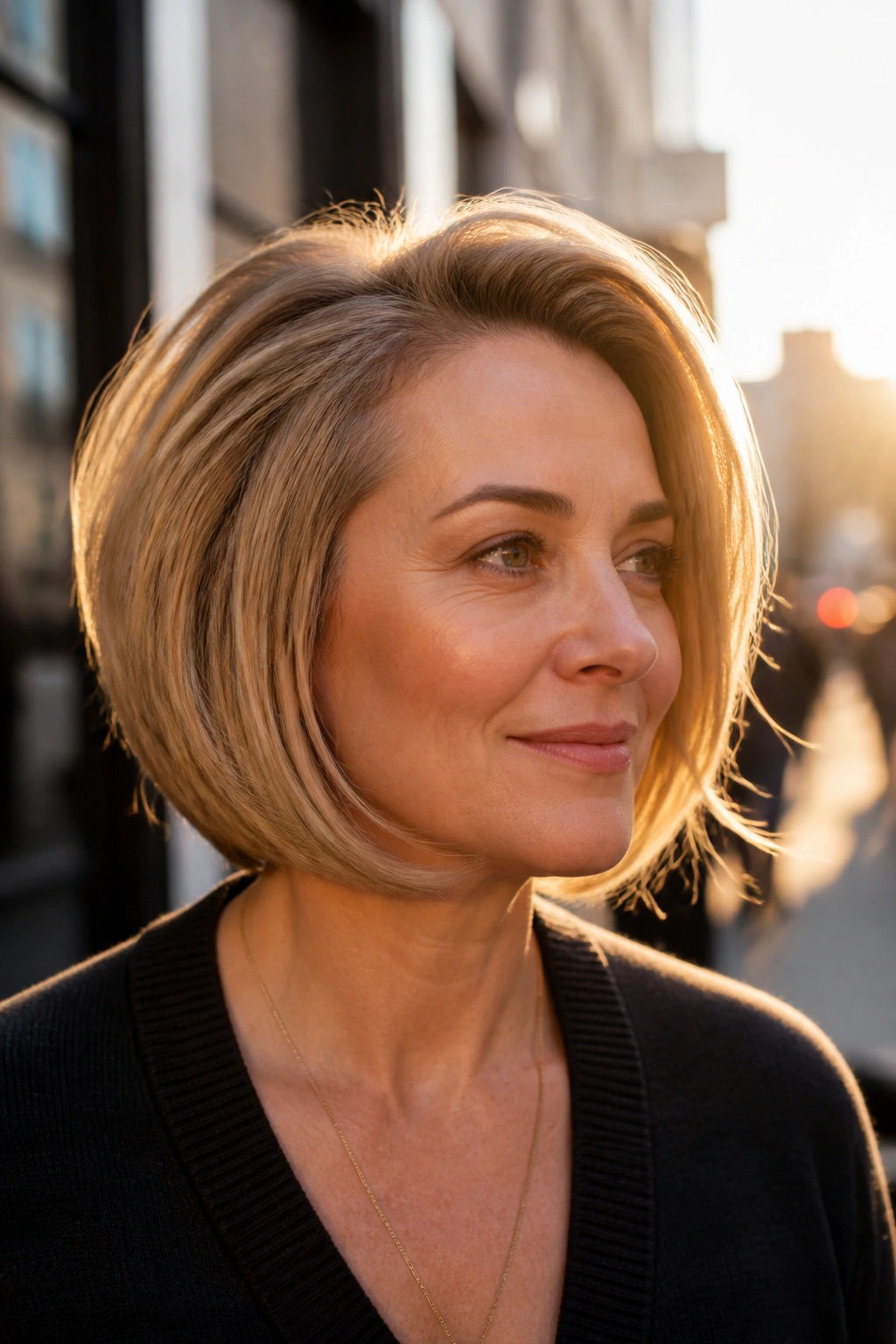
A side part can rescue a fine-haired bob faster than most people think. It lifts the front line, gives the crown a little height, and breaks up the flatness that can happen with a center part on very fine strands.
The rounded shape keeps the style from getting too sharp or severe. One side falls a little heavier, the other one opens up the face, and the curve at the bottom ties it together. That little imbalance is useful. Hair with less density often looks fuller when it is not split perfectly down the middle.
Try asking for a side part that lands about one inch off center. More than that can feel dramatic; less than that usually does nothing. A root spray at the part line helps, but only if you blow-dry it in with lift at the roots.
7. Rounded Bob with Curtain Bangs
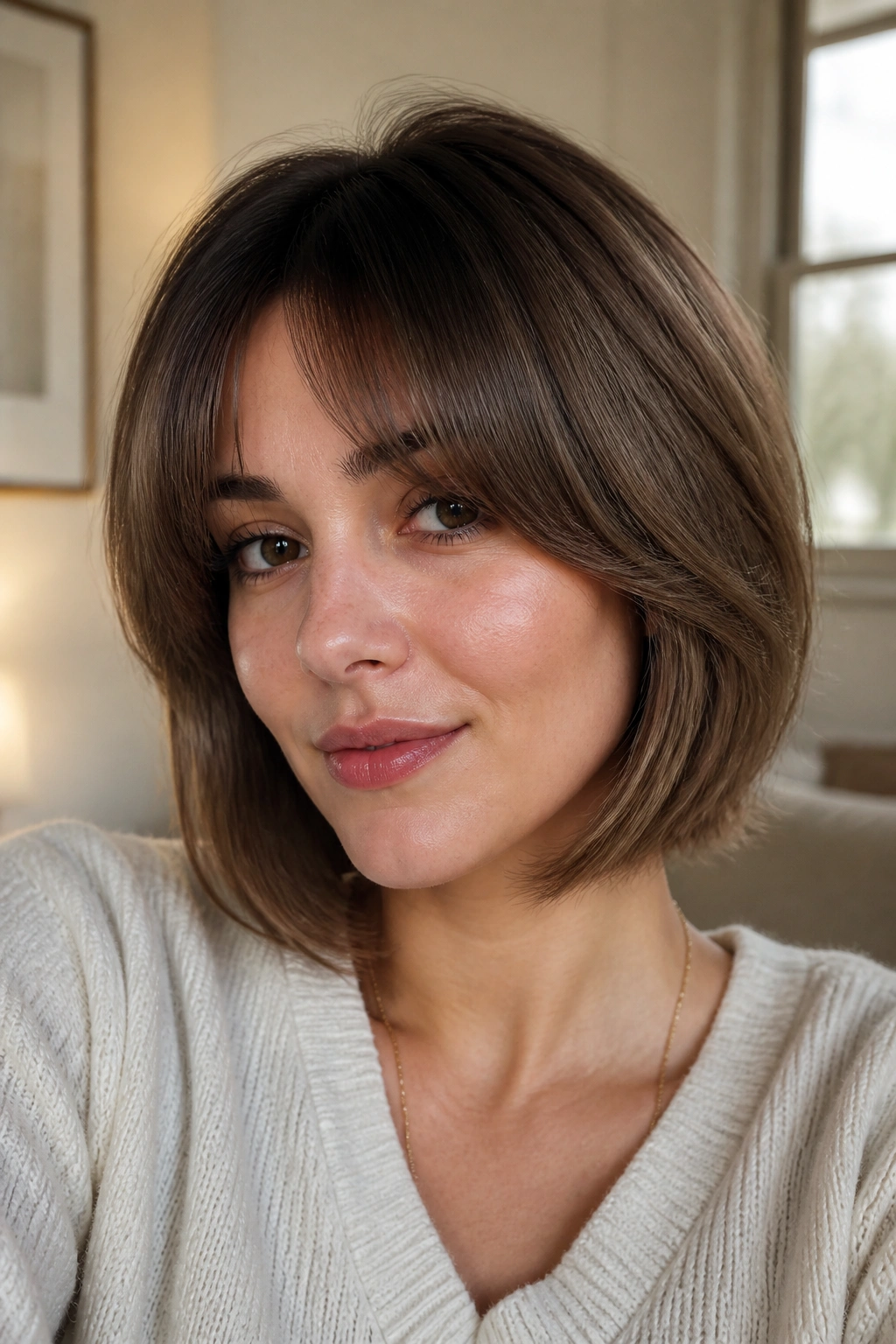
Curtain bangs and fine hair can be a messy pair if the bangs are too sparse. But with a rounded bob, the combo works because the fringe and the curve echo each other. You get softness at the forehead, softness at the cheekbones, and a bob shape that feels a little more finished.
The bangs should be longer through the center and feather out near the temples. That keeps them from looking like two thin strips pasted onto the forehead. The bob below them should stay rounded, not flat, so the whole haircut feels connected.
I like this on straight to slightly wavy hair. It can work on finer texture with less effort than a full fringe, and it grows out with less drama. That matters more than people admit.
8. Feathered Rounded Bob for Airy Volume
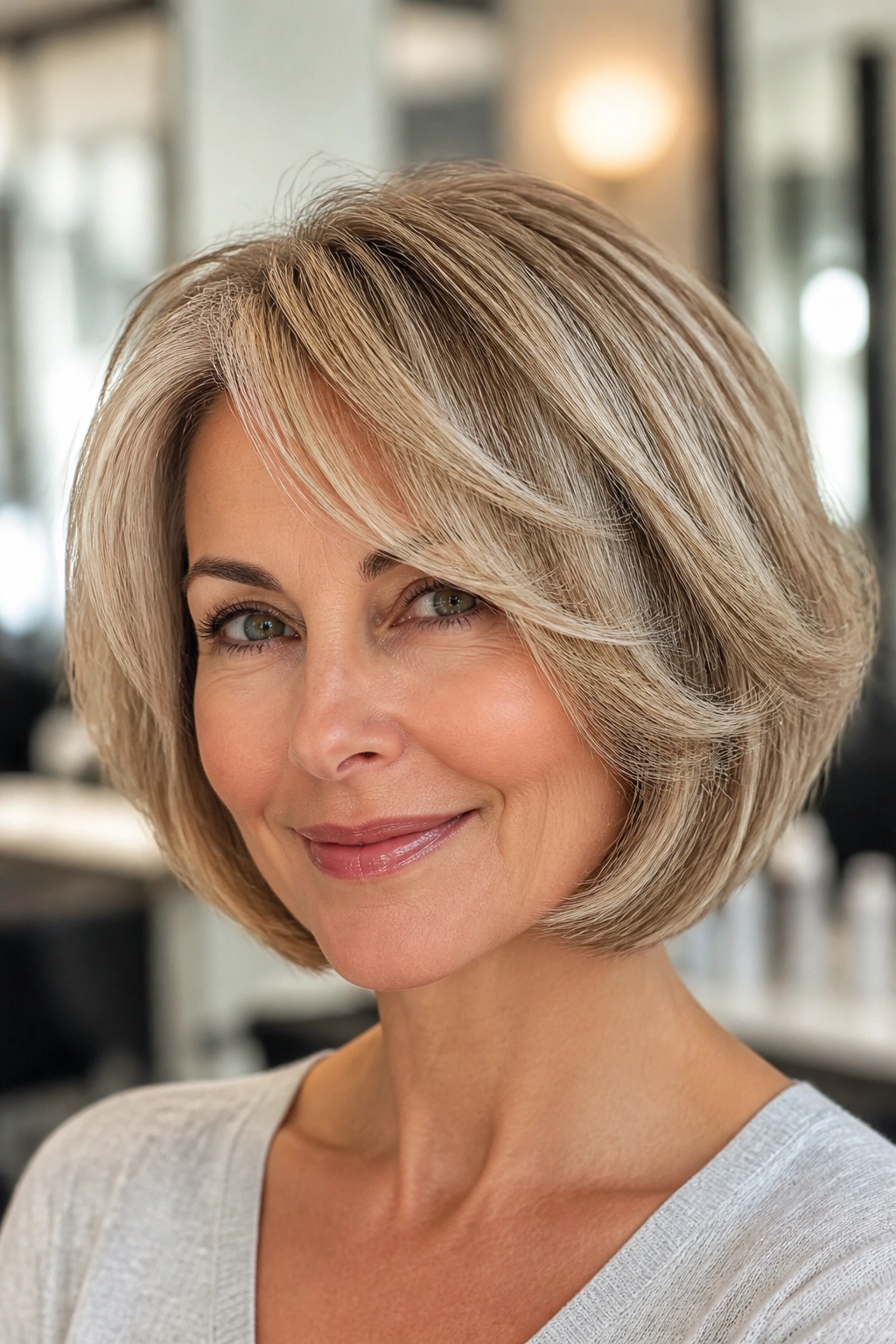
This is the version for someone who wants movement but hates the look of overcut layers. Feathering gives the hair a soft lift through the mids without destroying the outline, so the bob still looks rounded from every angle.
Unlike a choppy layered cut, this one keeps the ends together. That’s the difference. Fine hair can handle a little internal texture, but once the ends get broken up too much, they start looking see-through. Feathering solves that by spreading the movement around instead of carving it into obvious pieces.
Best on hair that bends a little but doesn’t frizz badly. A mousse, a medium round brush, and a quick flip at the roots are usually enough.
9. Tucked-Under Bob with a Clean Nape
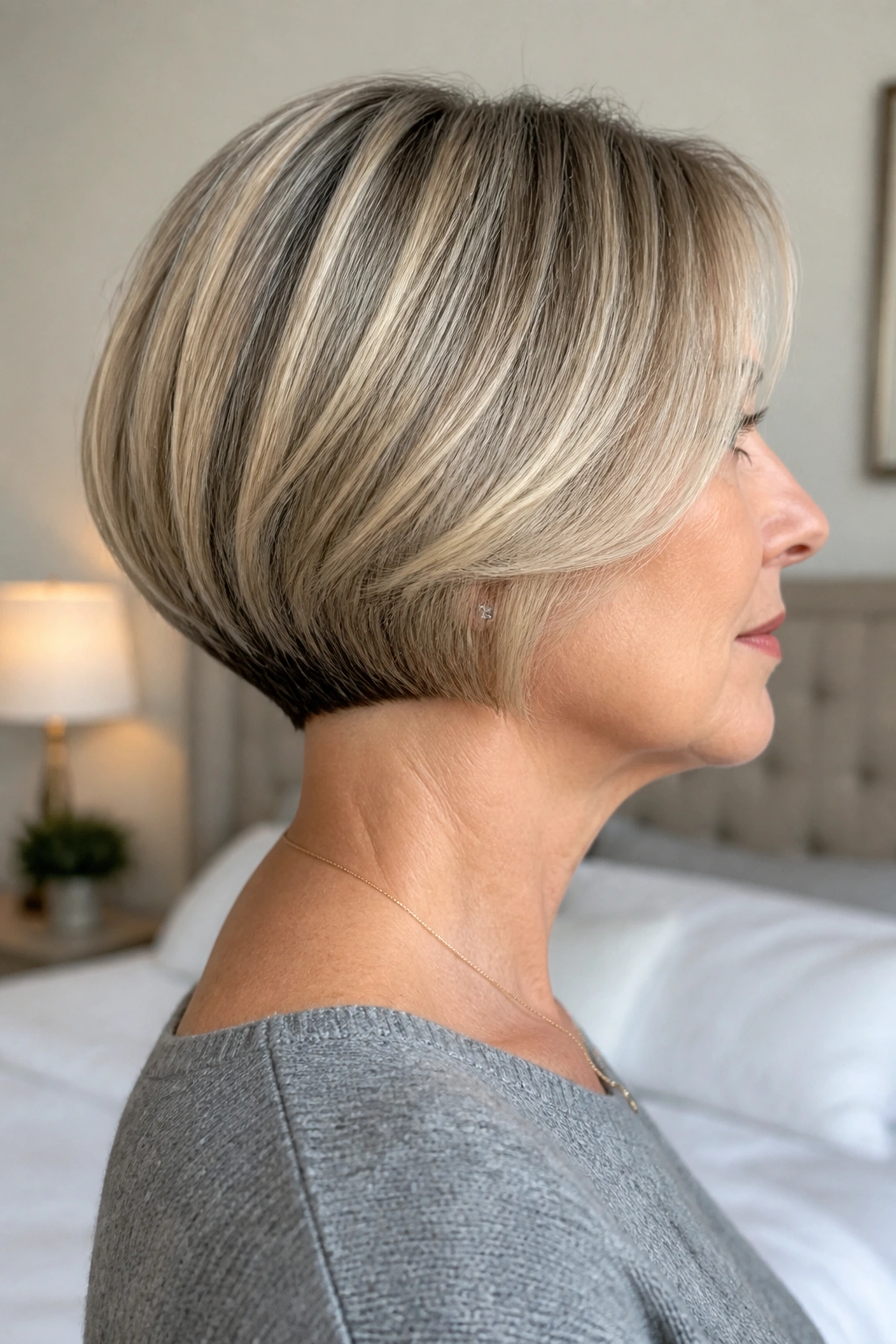
I’ve always liked this shape on people who want their hair to look neat without looking stiff. The nape is cut clean, the sides curve in, and the whole bob seems to tuck itself under as it dries. On fine hair, that tidy finish makes the hair look more deliberate.
Picture a haircut that keeps the neck open and the ends hugged close to the head. That silhouette gives the illusion of density because there are no frayed edges competing for attention. It also grows out nicely, which is handy if you don’t want a maintenance-heavy cut.
- Ask for a slight graduation at the back.
- Keep the weight line low and clean.
- Use a small round brush at the neckline so the ends don’t flick out.
A little polish goes a long way here.
10. Micro-Layered Rounded Bob Haircuts for Fine Hair
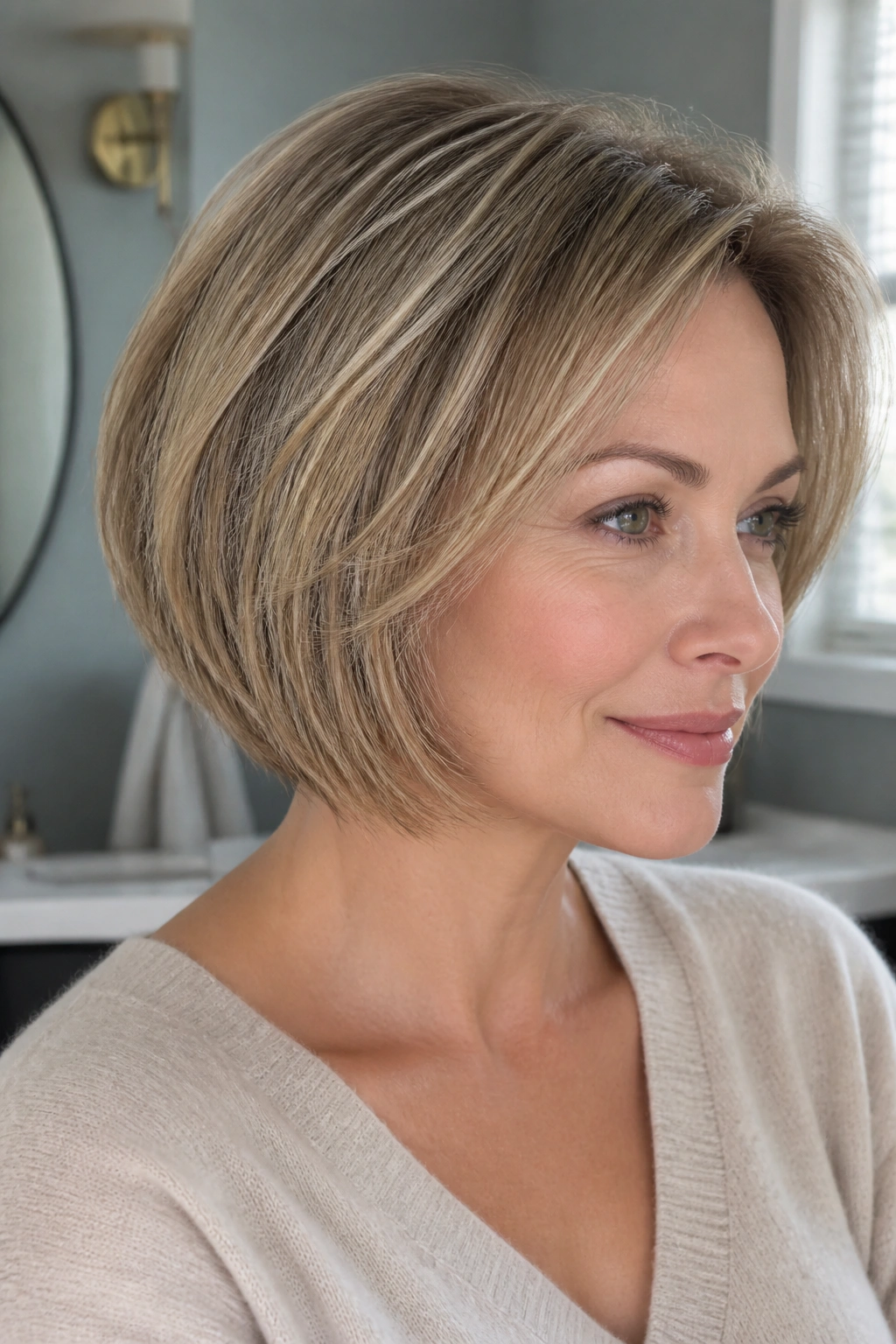
Most people hear “layers” and think more volume. Fine hair usually needs something narrower than that. Micro-layered rounded bob haircuts for fine hair work because the layers are tiny, controlled, and tucked inside the shape, so they give lift without making the perimeter look thin.
What Makes It Different
The layers are cut just enough to free up the roots and stop the crown from collapsing. You still keep a rounded outline, which is the part that sells the thickness. That outline matters. A lot.
How to Wear It
Use a lightweight mousse at the roots and blow-dry with your head tipped forward for the first minute. Then lift the crown sections with a round brush and finish the ends with a soft undercurve. Skip heavy oil. It will weigh this cut down in no time.
11. Inverted Rounded Bob with a Soft Stack
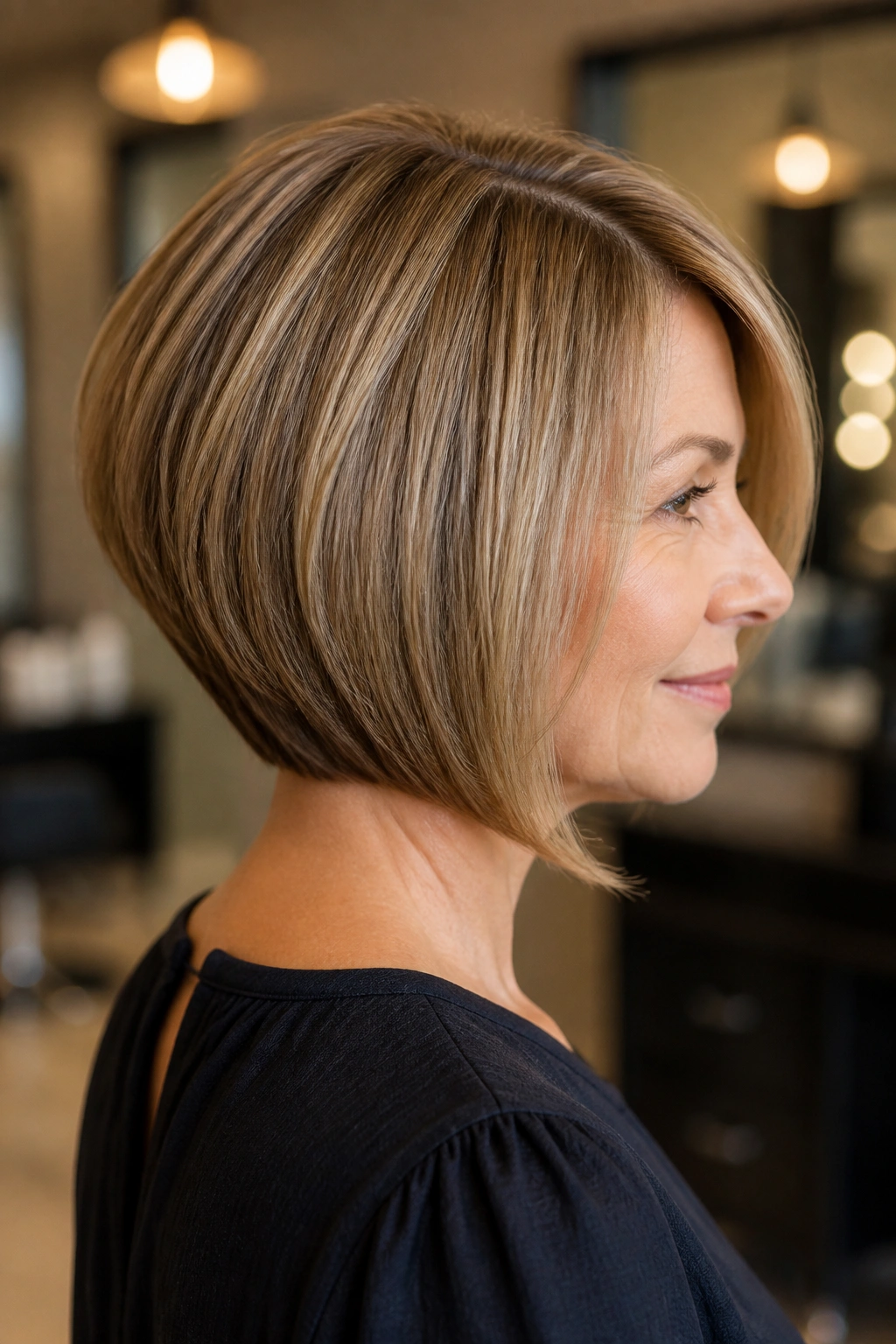
This one works because the back carries a touch more structure than the front. A soft stack at the nape gives the silhouette a little spine, while the front pieces stay rounded and easy around the face.
For fine hair, that back weight can be a blessing. It keeps the cut from looking hollow from behind, which is a common problem with very soft bobs. The inversion should be subtle, though. If the angle gets too steep, the haircut starts looking like it’s trying too hard.
I’d pair this with a side part or a slightly off-center part. That keeps the top from falling flat over the stack and gives you a cleaner profile. It’s a good cut for someone who wants the back to do some of the work.
12. Wavy Rounded Bob with Loose Bends
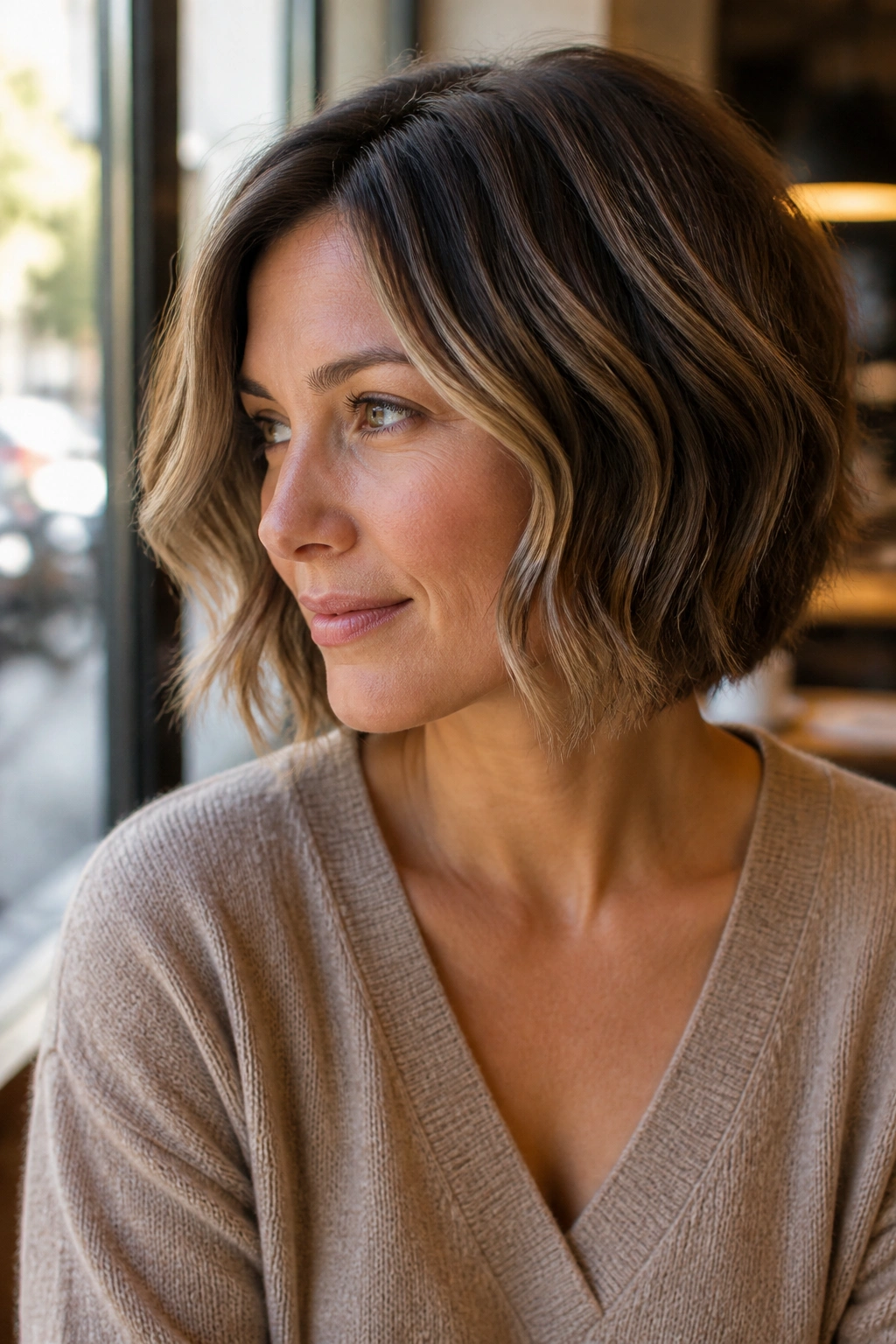
A little wave changes everything. On fine hair, loose bends can make a rounded bob look fuller because the eye reads the movement as density. The trick is to keep the wave soft and loose, not beachy and broken up into pieces.
Use a 1-inch curling iron or a flat iron bend, but only wrap the mid-lengths and leave the ends straight or slightly curved. That avoids the puffy triangle effect some wavy bobs get. The rounded shape underneath gives the wave somewhere to sit.
This cut also looks good when it’s imperfect. A few pieces can fall forward near the cheekbones, and the shape still holds. That kind of forgiveness is rare.
13. Face-Framing Rounded Bob with Cheekbone Pieces
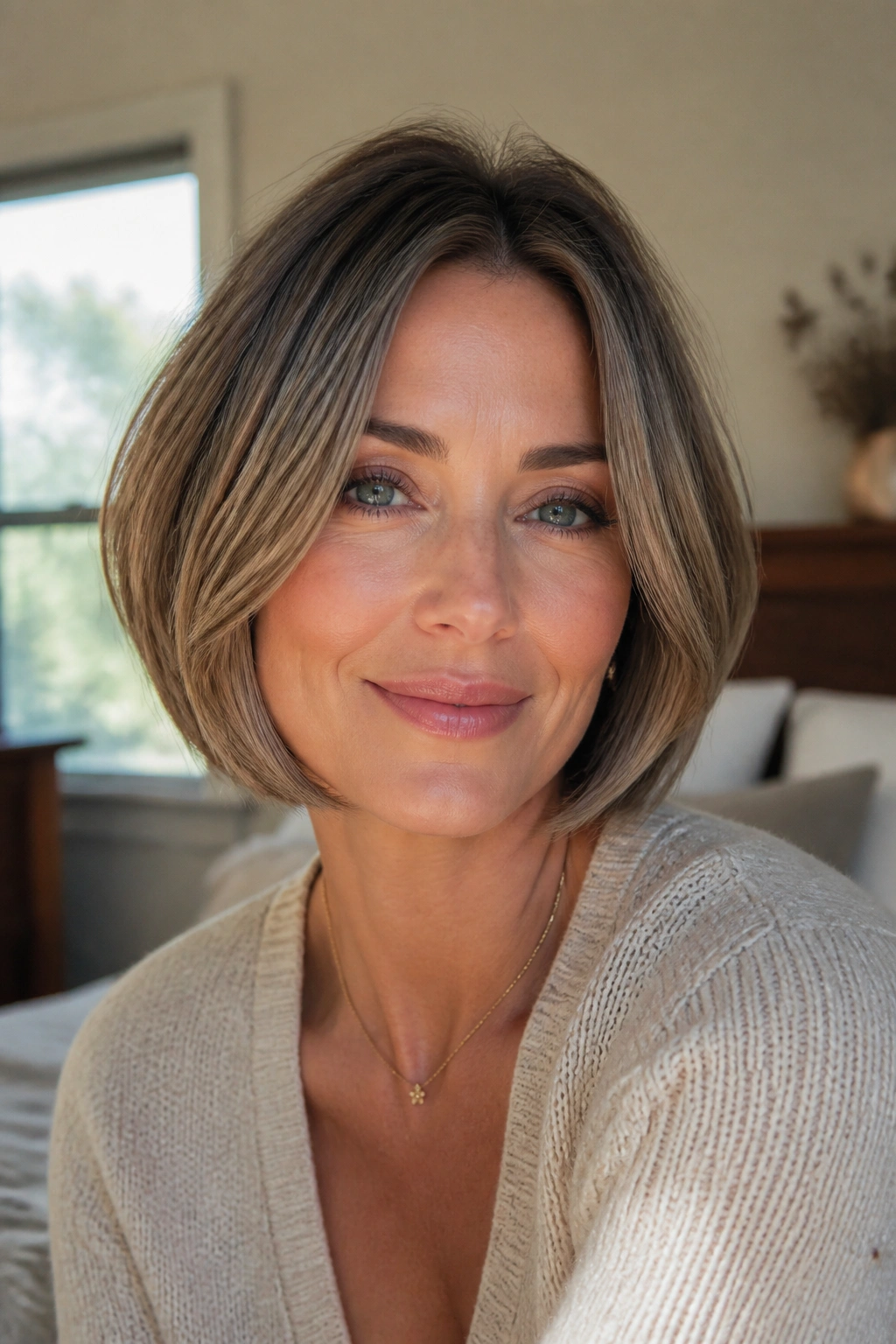
If your face needs a little lift near the eyes, this is a good place to start. The front pieces are cut to graze the cheekbones, then the rest of the bob rounds in gently toward the neck. That keeps the haircut soft while still giving it definition.
The face-framing pieces do not have to be dramatic. In fact, on fine hair, dramatic front layers can look stringy fast. Two to three soft pieces per side is usually enough. They should blend, not announce themselves.
This version works especially well if you wear glasses or have a strong jawline you want to soften a bit. The curved front pulls the eye upward, then the bob closes back in at the bottom. Clean, simple, and honestly easier to live with than a lot of trendier cuts.
14. Rounded Bob with Bottleneck Bangs

Bottleneck bangs give a rounded bob some shape at the front without choking the forehead with too much hair. They start narrower near the center and widen as they angle out, which makes them easier on fine strands than a dense full fringe.
The rest of the bob should stay soft and curved. That keeps the bangs from feeling disconnected, which can happen if the bob is too blunt or too long. I like this on people who want something a little styled but not fussy.
Why It Helps Fine Hair
- The fringe creates a focal point, so the eye notices shape before it notices density.
- The curved sides of the bangs blend into the bob instead of sitting on top of it.
- A quick blow-dry with a small brush is usually enough.
That’s a good trade.
15. Glossy Rounded Bob for Straight Fine Hair
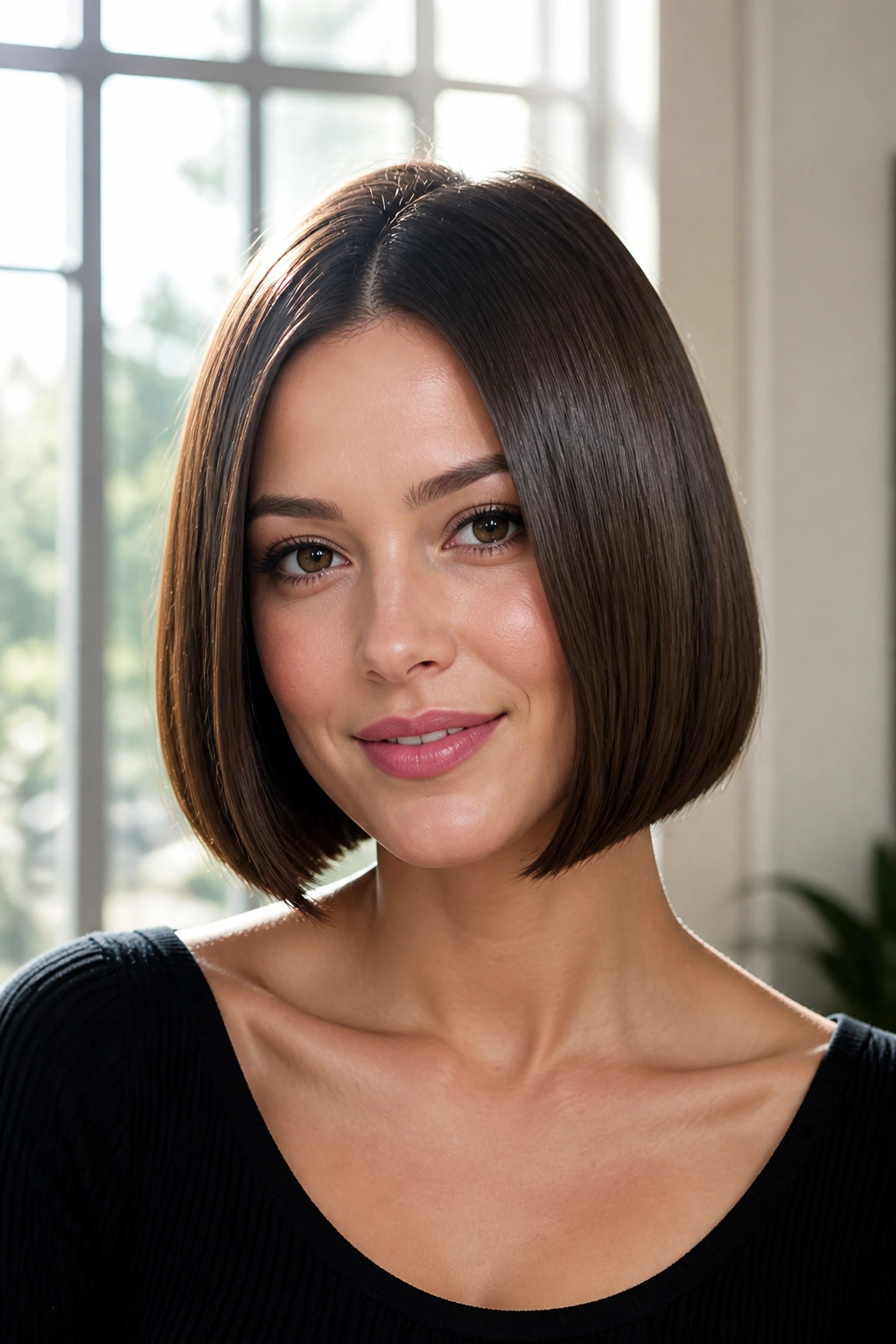
Straight fine hair can be unforgiving, so the finish has to be clean. A glossy rounded bob leans into that strength instead of fighting it. The cut stays simple, the edges stay precise, and the shine does some of the work that volume usually would.
What makes this cut work is not fluff. It’s control. A clean round shape, a smooth blowout, and ends that turn in just enough to look thick. If the hair is left too loose, the silhouette breaks down fast. If it’s cut with too much texture, it starts looking airy in the wrong way.
I’d use a tiny amount of smoothing cream on the mids and a heat protectant with a light finish. Heavy serum is a trap here. It steals body faster than most people expect.
16. Asymmetrical Rounded Bob with One Longer Side
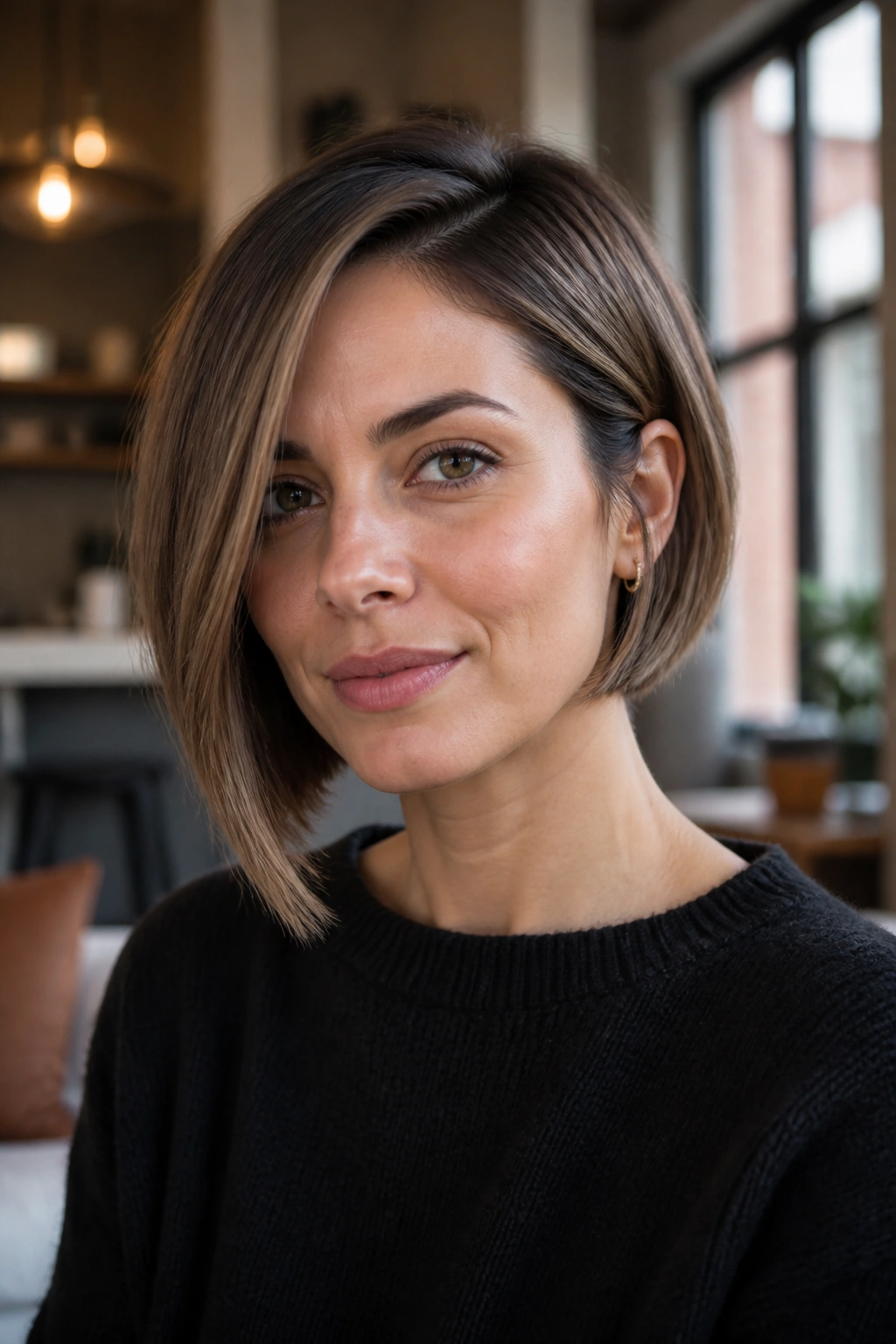
A little asymmetry can be flattering on fine hair because it gives the haircut a clear line to follow. One side sits a touch longer, the other tucks in closer, and the rounded base keeps the whole thing from feeling sharp.
The difference between the two sides does not need to be dramatic. Half an inch to an inch is enough. More than that and the shape stops reading as a bob and starts reading as a statement cut, which is a different thing entirely.
This version suits someone who wants a bit of edge but still needs softness around the face. It also helps if your hair tends to part more strongly on one side than the other. Work with that. Don’t fight it.
17. Deep Side-Part Rounded Bob
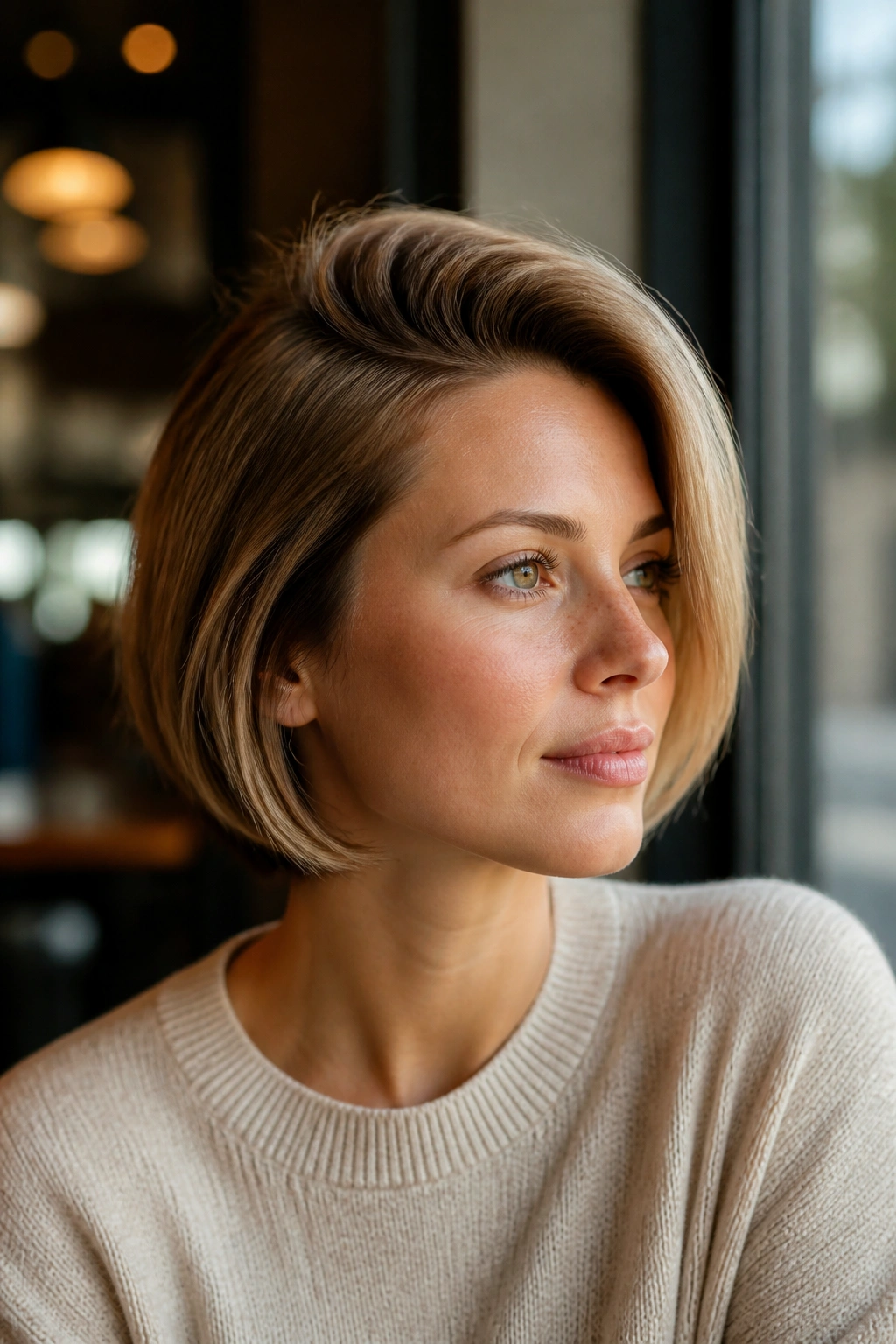
A deep side part is the fastest way to fake fullness at the top. Fine hair often collapses at the crown first, and moving the part over gives one side more lift before styling even starts.
The rounded bob underneath should stay compact so the volume up top does not drift into puffiness at the bottom. That balance is what makes this cut feel modern without losing shape. You want height, yes, but you also want a clean curve through the ends so the haircut does not spread out.
This one looks especially good with a blow-dryer nozzle and a medium brush. Pull the roots up and over, then set the front sections away from the face. Simple. Effective. No drama.
18. Rounded Bob for Glasses with a Slim Nape
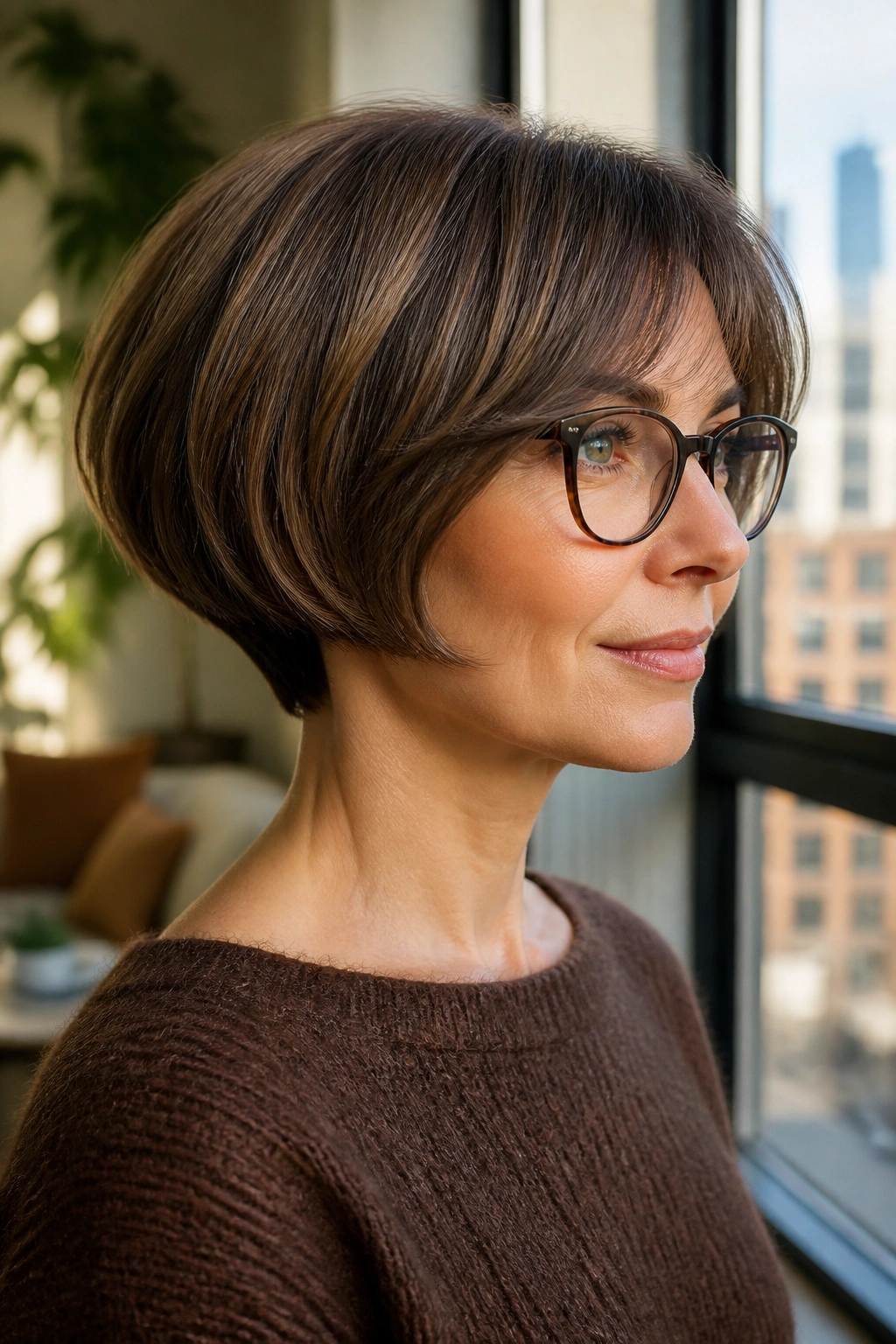
Glasses can compete with a haircut if the shape is too busy near the temples. A rounded bob with a slim nape solves that by keeping the back neat and the sides soft enough to frame the frames without crowding them.
The slim nape keeps the neck area light, which helps fine hair look cleaner and more intentional. The rounded sides can skim just below the ears or a touch longer, depending on where your glasses sit. That spacing matters more than people think.
Do not overload this cut with volume at the temples. It can shove the shape outward in a weird way. A little bend, yes. A lot of bulk, no.
19. Air-Dried Rounded Bob with Soft Texture
Some haircuts need a blowout to make sense. This one should still look decent if you wash, scrunch, and walk away. The curve lives in the cut itself, so the hair can dry into a soft rounded shape even without a round brush every time.
That makes it useful for fine hair that gets tired when overstyled. The layers should stay light, the ends should be slightly beveled, and the overall length should be short enough that the weight does not pull the shape down. Air-drying long fine hair is a gamble. Air-drying a rounded bob is much safer.
What to Ask For
- A clean base with soft internal movement.
- A length that sits between the jaw and the upper neck.
- A finish that curves in even when the hair is left mostly alone.
That last part matters most.
20. Rounded Bob with Subtle Highlights
Color can help a fine-haired bob almost as much as cutting can. Subtle highlights placed through the crown and around the face create the sense of depth, which makes the rounded shape read fuller from a distance.
I like this better than chunky contrast on fine hair. Harsh stripes can split up the silhouette and make the hair look thinner at the ends. Soft ribbons, a shade or two lighter than the base, give the haircut a little lift without stealing weight from it.
If your bob already has a curve, the highlights will follow that curve and make it easier to see. That’s the real trick. You are not coloring for drama. You are coloring for shape.
21. Rounded Bob with a Small Nape Stack
A small stack at the nape gives fine hair a bit of structure where it usually needs it most. The back gets a gentle rise, the sides fall into a round line, and the whole cut feels more built-in.
The stack should be subtle. If it’s too high, the shape starts looking dated. If it’s too low, it barely does anything. The sweet spot is just enough graduation to keep the back from collapsing against the neck.
- Good for hair that loses body within an hour of styling.
- Works well with a side or off-center part.
- Needs less product than a fully layered bob.
I like this one because it gives support without taking away softness.
22. Rounded Bob with Long, Swept Fringe
A long fringe can soften the face and give a rounded bob a little movement near the eyes. On fine hair, that fringe should be swept, not chopped blunt across the forehead. The sweep keeps it from looking sparse.
The bob underneath should stay curved and tidy. If both the fringe and the bob are too broken up, the haircut starts losing its shape in pieces. One area gets the drama; the other stays calm. That’s the balance.
This cut suits people who like their hair a little romantic and a little practical. It also grows out nicely, which is not nothing. Fringe trims are easier to handle when the rest of the bob carries the shape.
23. Rounded Bob with Rounded Ends and No Layers
A no-layer bob can sound harsh, but on fine hair it often works better than a cut that’s been sliced to bits. The rounded ends give the silhouette its softness, while the lack of layers keeps the perimeter full and strong.
If your hair is naturally straight or only lightly wavy, this cut is worth a serious look. The ends will swing inward with very little help, and the shape can look denser because all the weight stays where you can see it. That is the point.
You do have to keep up with trims. A blunt-ish rounded bob loses its edge faster than a layered cut, and once the line goes soft in a bad way, the density illusion drops with it.
24. Razor-Soft Rounded Bob with Wispy Tips
Can razor cutting work on fine hair? Yes, but only in the right hands. A razor-soft rounded bob can remove heaviness from the ends while keeping the outline curved, which is useful if your hair has a slippery texture that resists shape.
The wispy tips should be controlled, not shredded. That distinction matters. You want a soft finish that still reads as full, not a broken edge that exposes every thin strand. A light hand at the salon makes all the difference here.
This one is best for fine hair that has some bend or a little natural wave. On pin-straight hair, too much razor work can make the ends look feathery in a bad way. I would rather see a clean bevel than a dramatic slice.
25. Rounded Bob Haircuts for Fine Hair with a Full Curved Finish
A full curved finish is the version I’d choose if I wanted the haircut to do the most visual work with the least effort. The perimeter stays strong, the curve sits close to the head, and rounded bob haircuts for fine hair suddenly look richer because nothing is fighting the shape.
This is the cut that makes people say your hair looks thicker, even when the actual amount of hair has not changed. That’s because the curve gathers the eye. Fine hair benefits from that kind of trickery. It is not cheating. It is good cutting.
I’d ask for a rounded line through the sides, minimal thinning, and a finish that turns under at the last inch. That last inch is where the whole cut lives. Ignore it, and the bob goes flat. Nail it, and the shape holds all day.
Final Thoughts
The smartest rounded bob on fine hair is the one that protects the perimeter first and adds texture second. That order matters. Too many cuts do the reverse, and the result is a bob that looks airy on the salon chair but thin by the time you get home.
If you’re bringing photos to a stylist, look for the silhouette more than the exact color or styling. A clean curve at the bottom, a controlled crown, and just enough movement near the face will carry farther than any single trend.
And if your hair has always felt like it needs “more volume,” try asking for better shape instead. That shift alone changes a lot.
