



A stacked bob can do more for fine hair than a drawer full of styling sprays. The right shape creates lift at the back, keeps weight out of the ends, and makes the whole cut look denser even when the hair itself is soft and silky.
Fine hair is not the same thing as thin hair. Fine means the individual strands are small in diameter; thin means there are fewer strands on the head. That difference matters because a stylist can leave more bulk in the right places without making the cut feel heavy.
The best versions of a stacked bob on fine hair usually keep the perimeter clean, build graduation at the nape, and avoid aggressive thinning shears that turn the ends into feathers. Some cuts sit at the chin. Some skim the jaw. A few are almost long enough to call a lob.
What matters is where your hair collapses, how much neck you want to show, and how much time you want to spend with a round brush or a flat iron before coffee. The 25 cuts below cover the sharp, the soft, the low-drama, and the ones that walk into a room first.
1. Chin-Length Stacked Bob With a Clean Nape Line
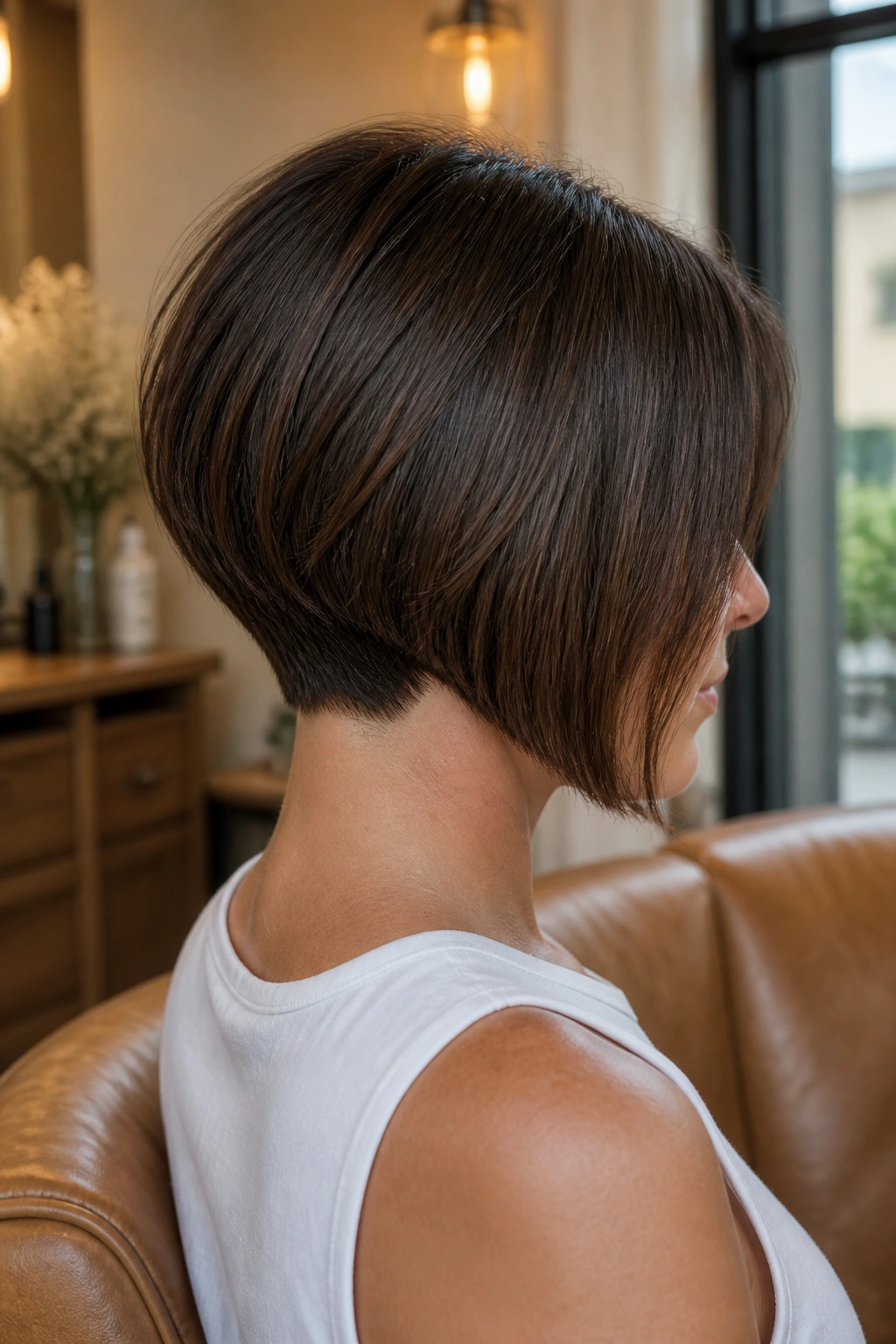
A chin-length stacked bob is the safest place to start if your hair goes flat fast. The short back gives fine hair a stronger base, while the chin-length front keeps the cut from feeling too severe. It also has a nice side effect: the nape looks tidy even when the rest of your hair needs a day off.
Ask for a tight graduation at the back and a blunt edge through the perimeter. That combination gives you shape without hollowing out the ends. If your stylist starts talking about heavy texturizing, pause. Fine hair does not need to be shredded to move.
- Keep the back about 1 to 2 inches shorter than the front.
- Blow-dry with a small round brush to lift the roots off the scalp.
- Use mousse at the crown, not oil through the ends.
This cut looks best when the neckline is crisp. If you wear collared shirts, turtlenecks, or earrings, it has a clean little frame that does a lot of work without trying too hard.
2. Soft Stacked Bob With a Deep Side Part
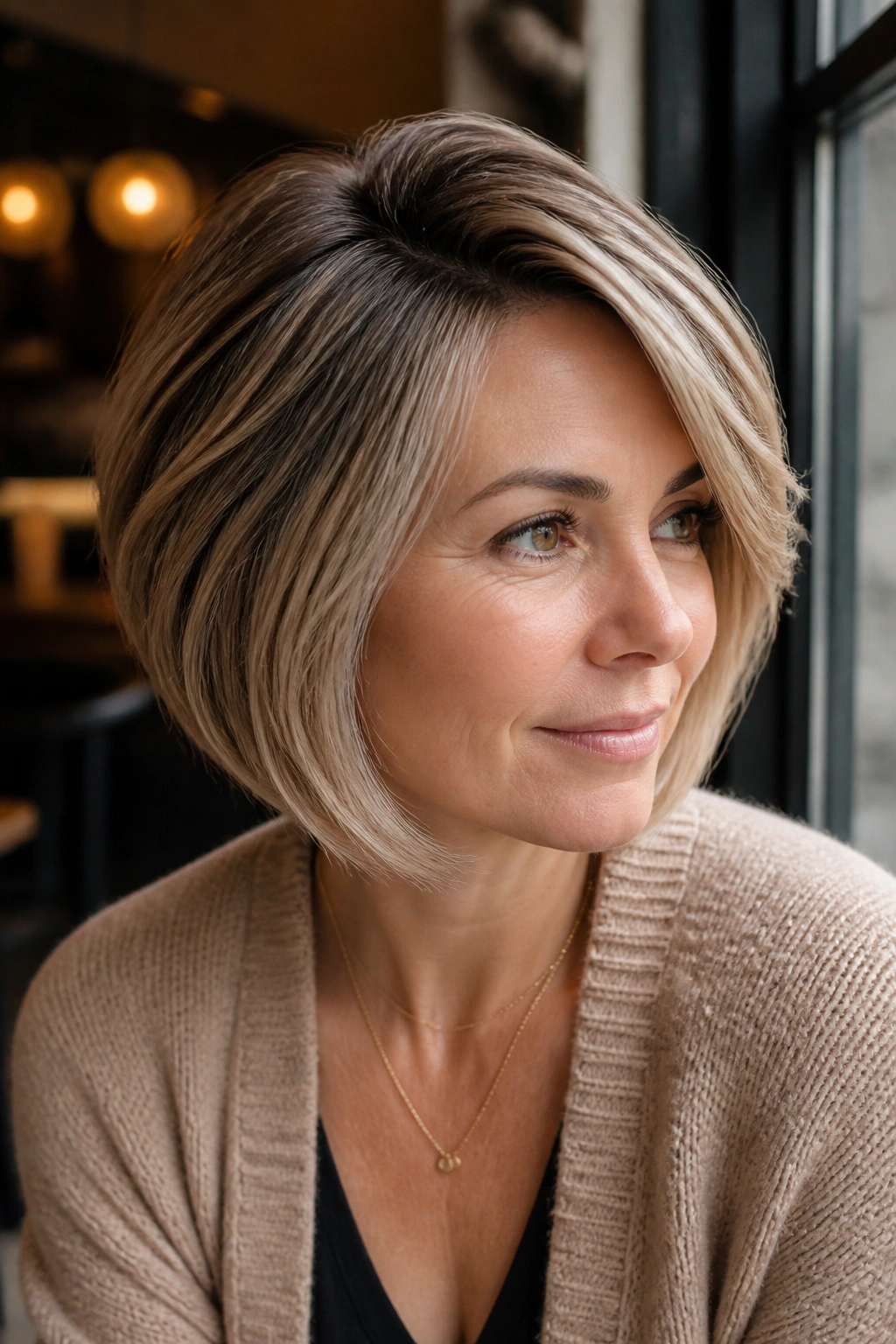
Why does a side part make such a difference on fine hair? Because it breaks up the flat line that makes roots lie down like a curtain. A deep side part shifts weight to one side, and that tiny imbalance creates height where you want it most.
This version of a stacked bob feels softer than the chin-length cut above. The stack is still there at the back, but the side part and a little extra length around the face make it less sharp. It is a good pick if you want body without the feeling of a helmet.
What Makes It Work
The lift comes from the part, not from piling on product. Move the part about an inch farther over than you normally would, then direct the hair away from the part while blow-drying. A root clip at the crown can help, too, especially if your hair forgets volume by lunch.
Keep the front pieces slightly longer than the back and let them fall in a clean line. That shape keeps the style from turning top-heavy.
3. Inverted Stacked Bob With Longer Front Pieces
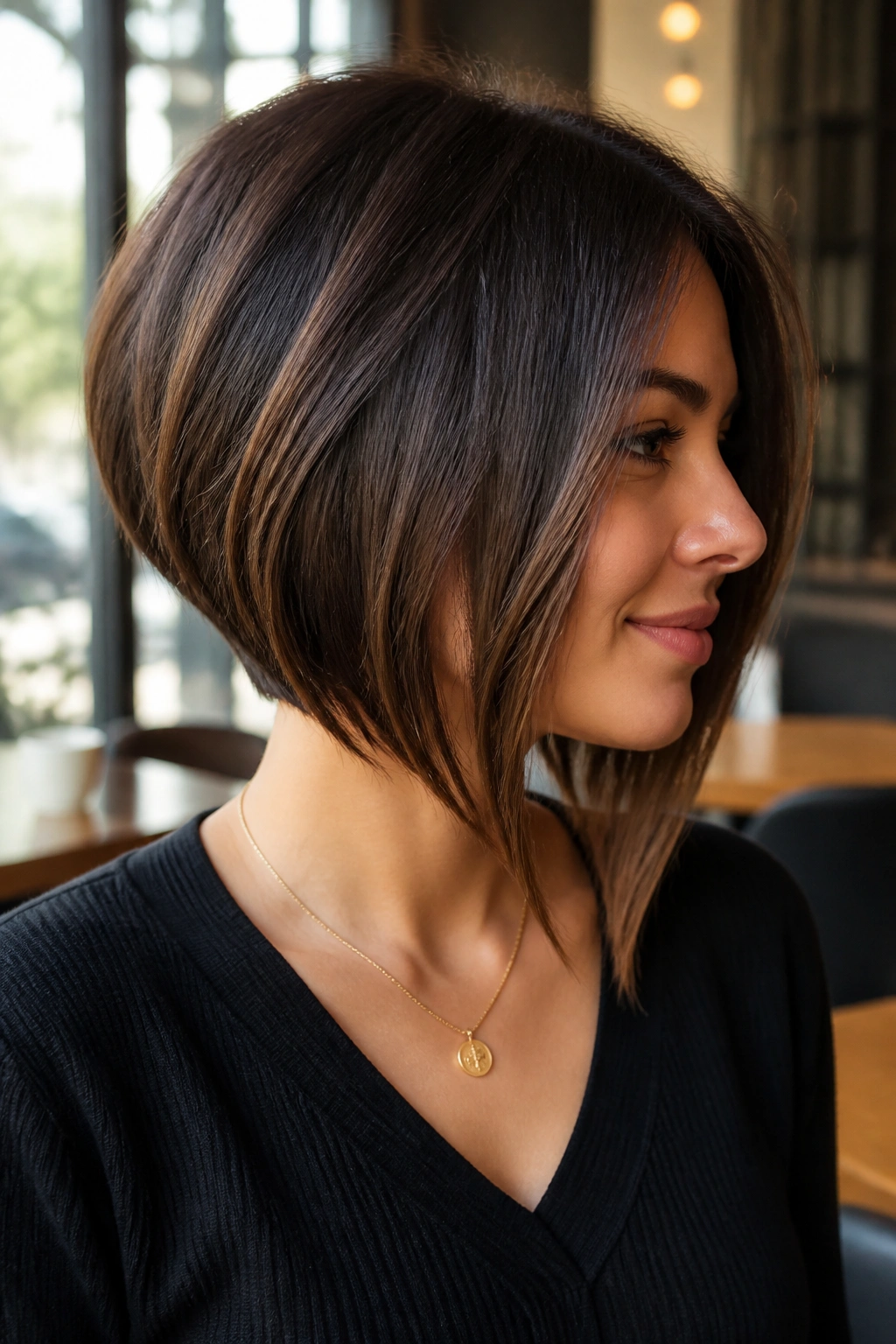
A strong inverted bob can be a little dramatic, and that is exactly why it flatters fine hair. The back is shorter, the front is longer, and the diagonal line gives the eye a place to travel. The result is a cut that looks fuller because it has direction.
Fine strands often lose shape when they hang straight down with no structure. This cut fixes that by building visible angles into the haircut itself. It is especially good if your hair sits close to the head at the sides and needs help looking like it has a spine.
The trick is not to overdo the angle. Too much length in the front can make the back look sparse, and too much shortness at the crown can expose the scalp. A balanced inverted bob should still feel soft around the jaw, not severe.
4. Rounded Stacked Bob That Builds a Fuller Profile
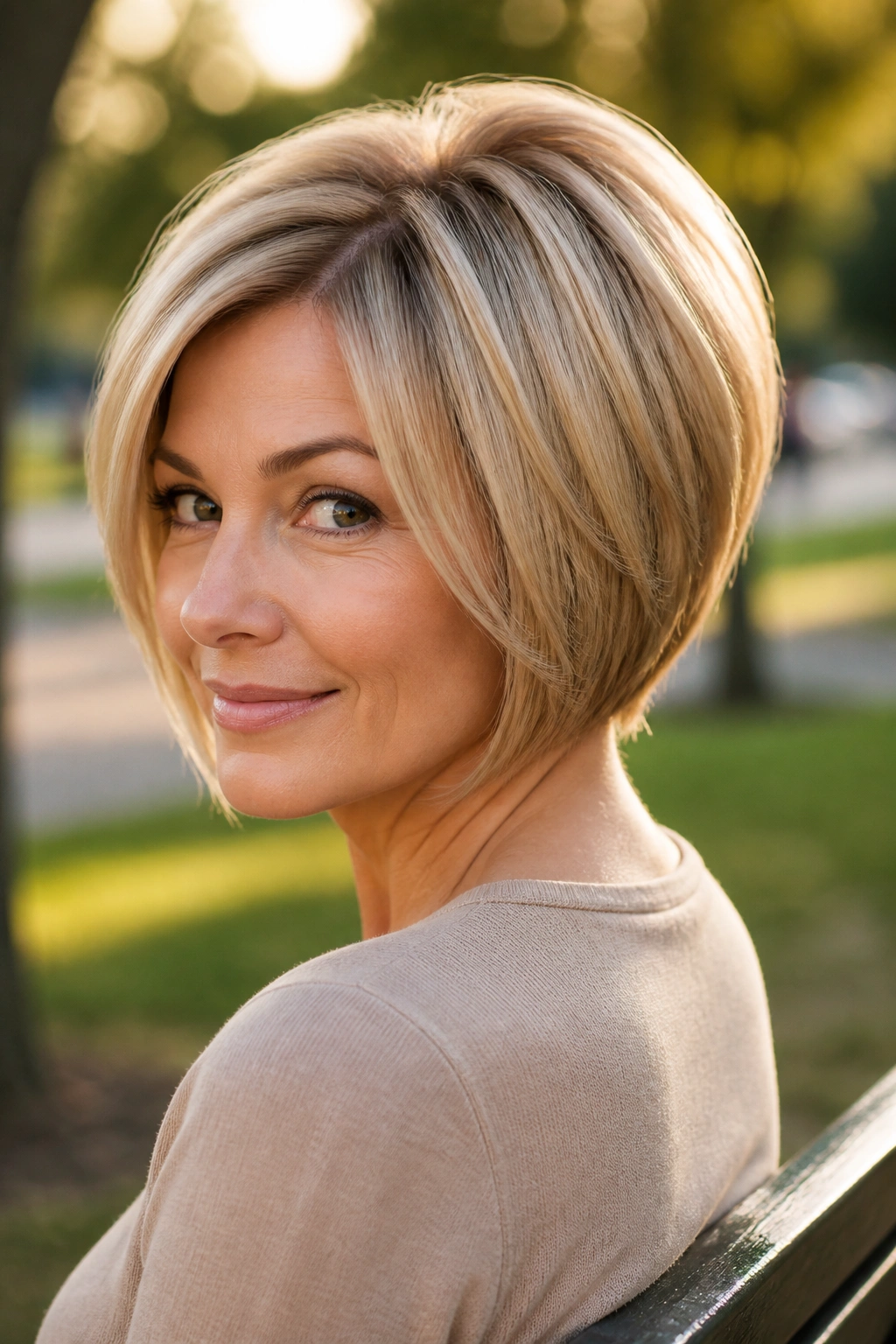
A rounded stacked bob gives the head a smoother, fuller outline. Instead of a hard edge, the cut curves gently from the nape up toward the crown, which is useful when you want fine hair to look thicker from the side.
This one is a favorite if your hair naturally falls in a flat sheet. The rounded shape helps the back sit with a little lift, and the sides can be tucked just enough to keep the shape neat. It also photographs well in profile, which sounds silly until you look at your own side mirror and realize that is where the cut lives.
Blow-dry it with a round brush that matches your hair length, not a giant one. A brush that is too large will smooth the cut flat. A medium brush, a quick clip at the crown, and a cool shot at the end usually give you the curved silhouette you want.
5. Textured Stacked Bob With Piecey Ends

Piecey texture can look fantastic on fine hair when the cut is controlled. The keyword there is controlled. You want separation, not fray. A textured stacked bob works when the ends break into soft little sections while the base still holds enough weight to look full.
This is the cut for people who like a lived-in finish and do not want to spend twenty minutes forcing every strand into place. Ask for point cutting at the ends and light internal texture through the mid-lengths, but avoid heavy razor work unless your stylist knows exactly how your hair behaves.
What to Ask For
- A blunt-ish perimeter with soft piece separation.
- Minimal thinning near the top.
- Texture placed lower, near the ends, where it will not steal crown volume.
A salt spray can help, but use it lightly. Too much and your fine hair can feel gritty and dry. A pea-sized amount of light cream is often enough.
6. Stacked Bob With Wispy Bangs
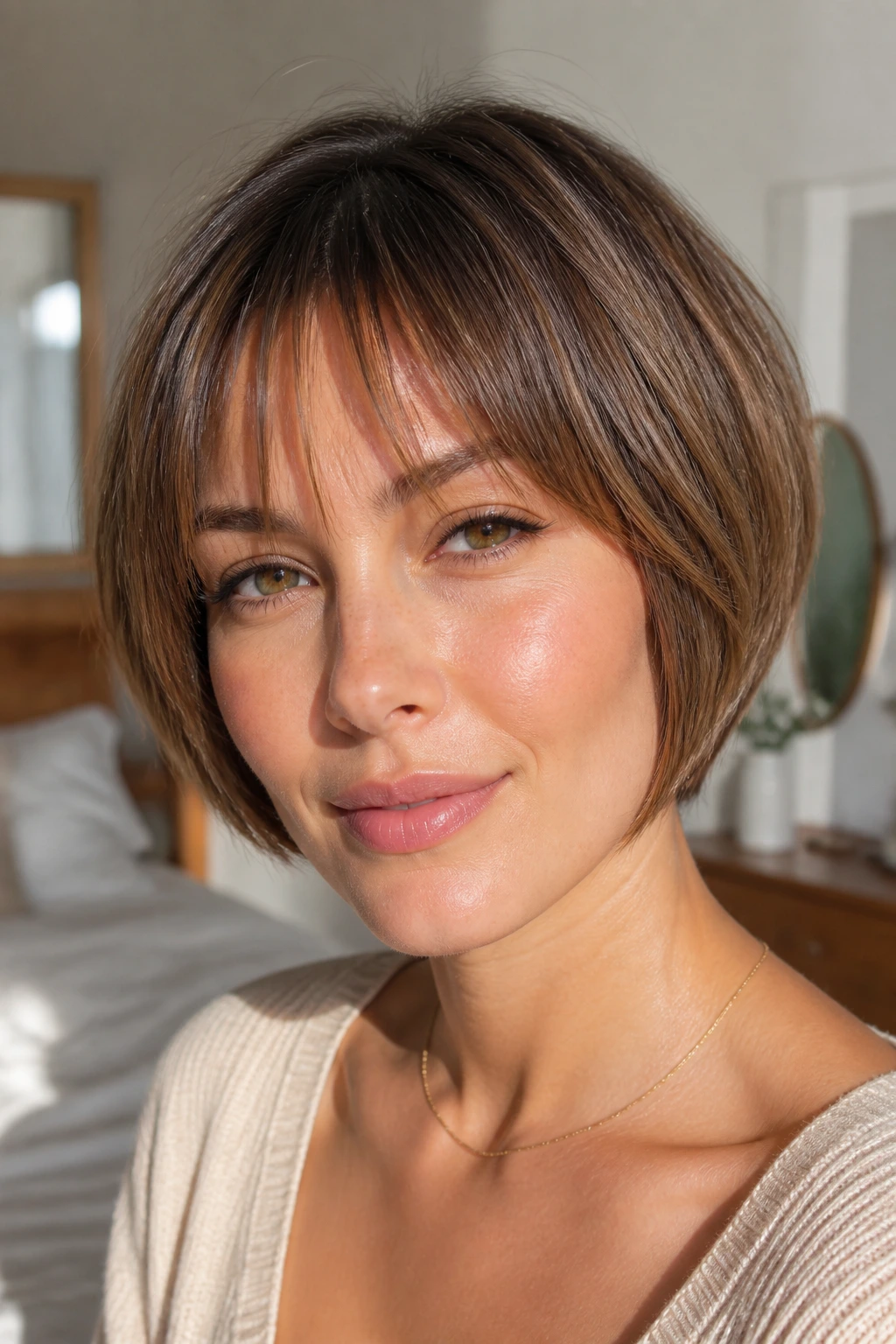
Wispy bangs can change the whole feel of a stacked bob. They soften the forehead, pull attention upward, and make a short cut feel lighter around the face. On fine hair, that matters because a heavy fringe can swallow the rest of the style.
These bangs should be feather-light, not see-through in a sad way. There is a difference. Good wispy bangs skim the brows or sit just above them and break up the front without stealing too much density from the rest of the haircut.
Dry them first, before the rest of your hair, and direct them side to side with a small brush so they do not split into separate bits. A tiny round brush or even your fingers can do the job if the hair is cooperative. If your hairline grows in two directions, tell the stylist before the first snip.
7. Stacked Bob With Curtain Bangs and Lift at the Crown
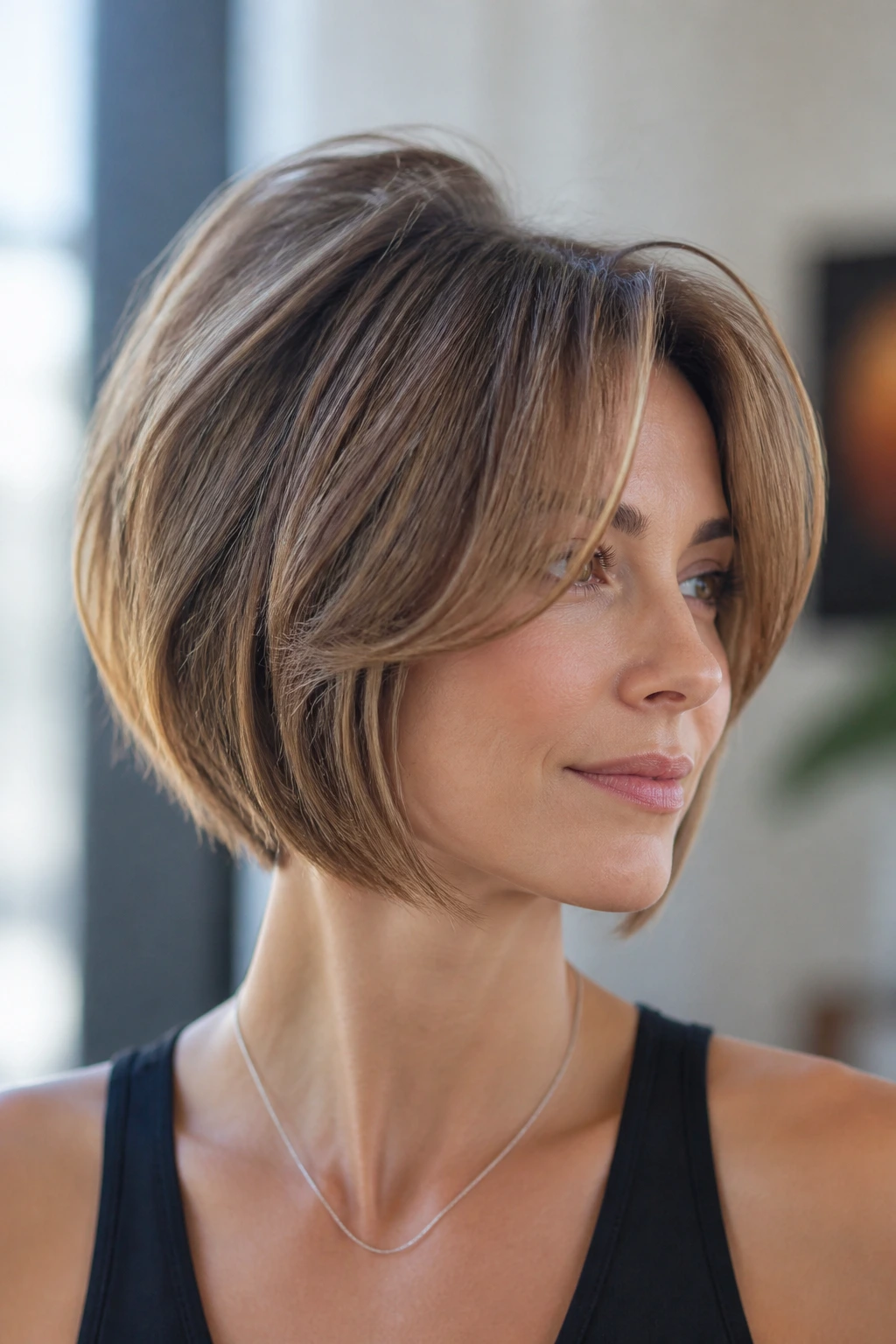
Curtain bangs and a stacked bob make sense together because both are about shape, not weight. The bangs open the face, while the stack gives the back lift. Fine hair likes that kind of division; one big flat sheet is where it starts to look tired.
This cut is a little more forgiving than blunt bangs. The fringe grows out easier, and the side-swept shape blends into the bob instead of sitting on top of it. That makes it a smart choice if you do not want a sharp line across the forehead.
Keep the curtain pieces long enough to split around the cheekbones. Too short, and they can puff. Too long, and they lose the point. A bit of root-lifting spray at the crown helps the whole cut stay open rather than collapsing toward the center part.
8. Sleek Stacked Bob for Naturally Straight Fine Hair
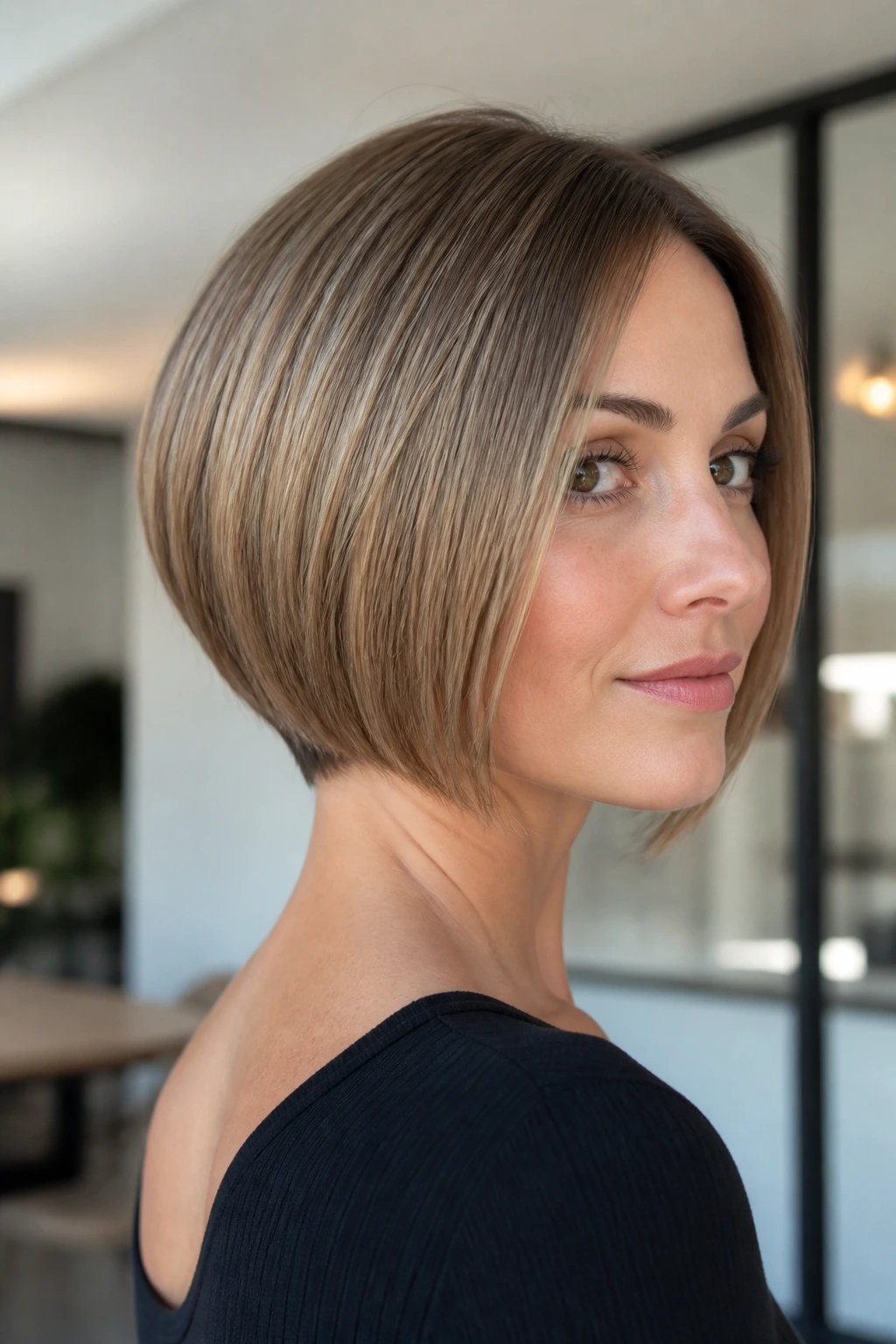
Straight fine hair can be a blessing and a nuisance. It lies smooth, which is nice, but it also shows every limp spot and every uneven line in the cut. A sleek stacked bob uses that straightness on purpose.
The beauty of this version is its clean geometry. The back sits neatly against the neck, the stack is precise, and the front lengths move forward in a clean line. There is no pretending here. The cut either holds shape or it does not.
Use a heat protectant before any flat ironing, then smooth only the outer layer if you need shine. You do not need to press every strand flat. A small amount of lightweight serum through the ends is enough. Heavy cream will usually collapse the lift you worked for.
9. Wavy Stacked Bob That Lets the Ends Move
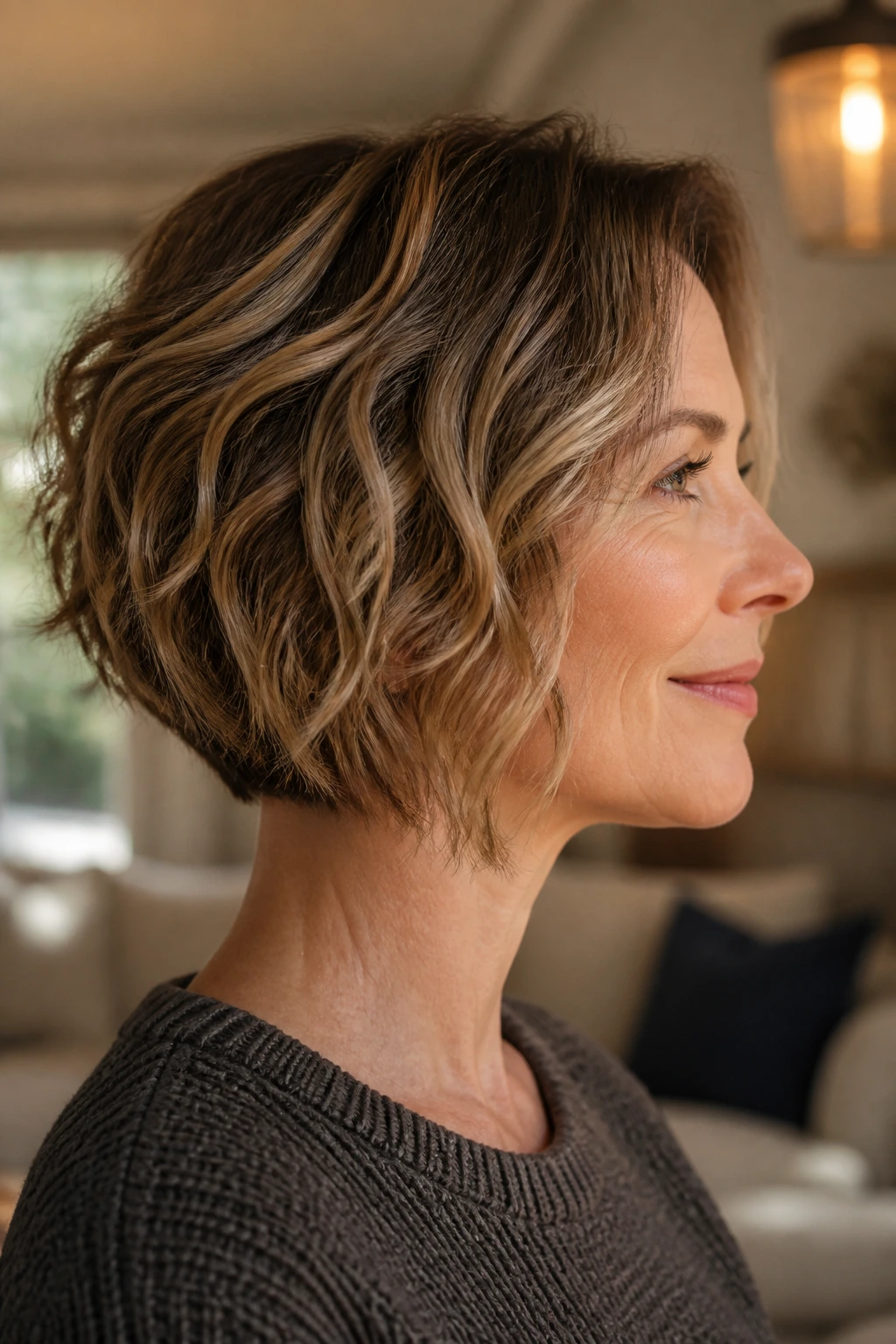
If your fine hair has even a little wave, do not fight it. A stacked bob can look far fuller when the natural bend is left alone and the cut is shaped to move with it. The back still needs structure, but the ends should not look too carved up.
This style does well with a diffuser or a scrunch-dry approach. Rough-dry the roots for lift, then let the wave pattern take over through the mids and ends. A mousse with flexible hold can give the hair enough grit to keep shape without turning it stiff.
The biggest mistake here is cutting the front too short. Waves bounce upward, and what looked like a chin-length bob in the salon can turn into a much shorter shape at home. Leave a little room for movement.
10. Collarbone Stacked Bob for Readers Who Want a Little Length
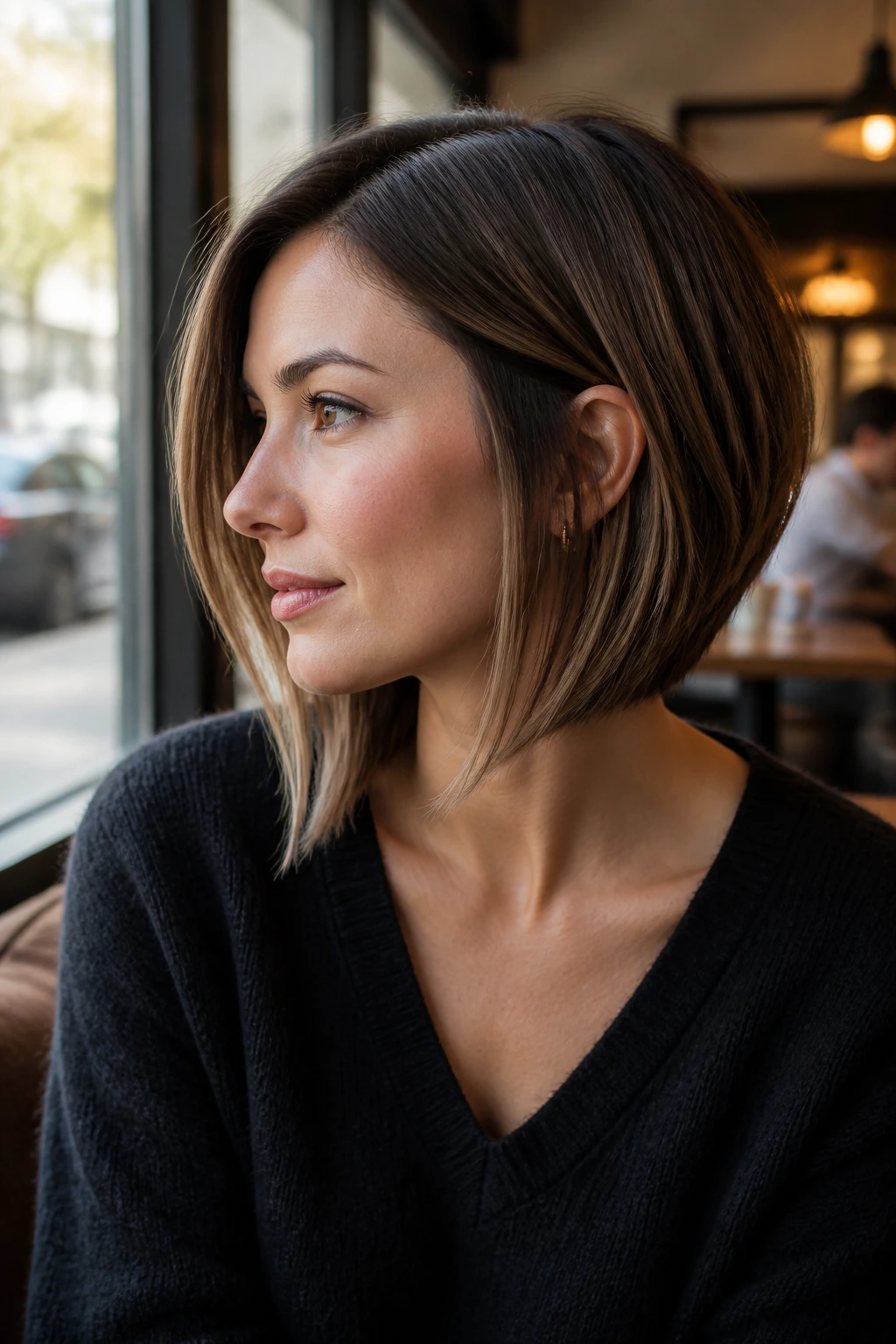
Not everyone wants a short bob the second they sit in the chair. A collarbone-length stacked bob gives you more room around the face while still keeping the back shorter and lighter. It is a smart bridge haircut if you want a bob shape without losing too much length.
The stack in this version is softer and lower. That means the nape still gets lift, but the front length softens the outline and makes the cut feel easier to wear with sweaters, scarves, or ponytail days. It is a nice fit for anyone who likes to tuck hair behind the ears.
A little wave through the mid-lengths helps this cut avoid looking too flat. If your hair is straight, bend the ends under with a round brush or a quick pass of a large curling iron. Keep the curl loose. Tight curls fight the point of the haircut.
11. Blunt-Ended Stacked Bob for Maximum Density
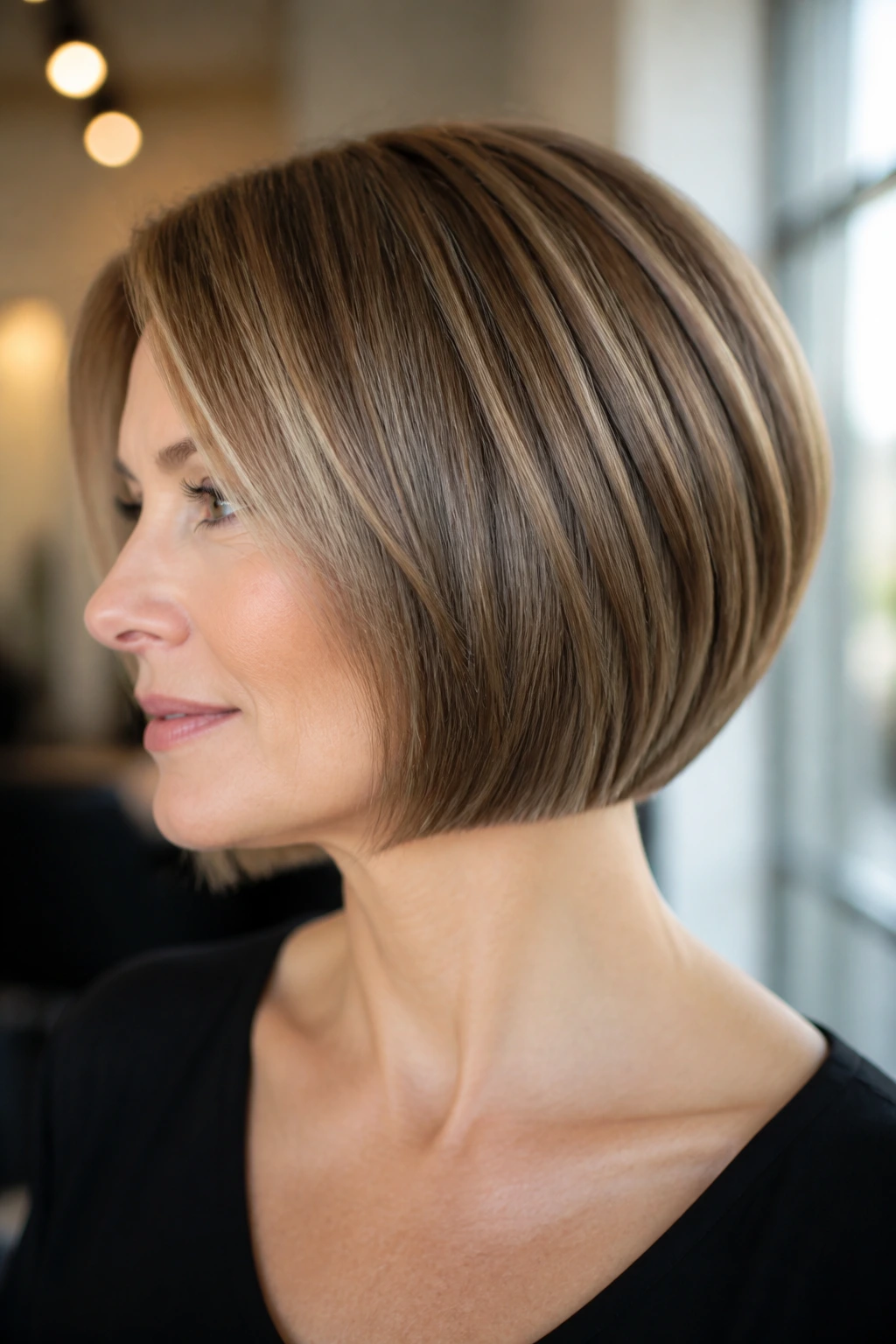
Blunt ends are one of the best friends fine hair has. A stacked bob with a blunt perimeter keeps the hair looking thick at the edge, which is where thinness usually shows first. The stack at the back adds shape; the blunt line gives the illusion of weight.
This is the cut I would recommend when someone says their hair looks wispy no matter what product they buy. Products can help, sure. But a strong line at the ends helps more. It gives the eye a solid boundary instead of a fuzzy edge.
Why It Works
The shorter back lifts the shape off the neck. The blunt front keeps the density visible. Together, they create the sense of a fuller curtain of hair, even when the actual amount of hair has not changed.
Avoid razor-cut ends here. They may look airy in the chair and disappointing two days later when the ends separate and start to look see-through.
12. Feathered Stacked Bob With Airy Interior Layers
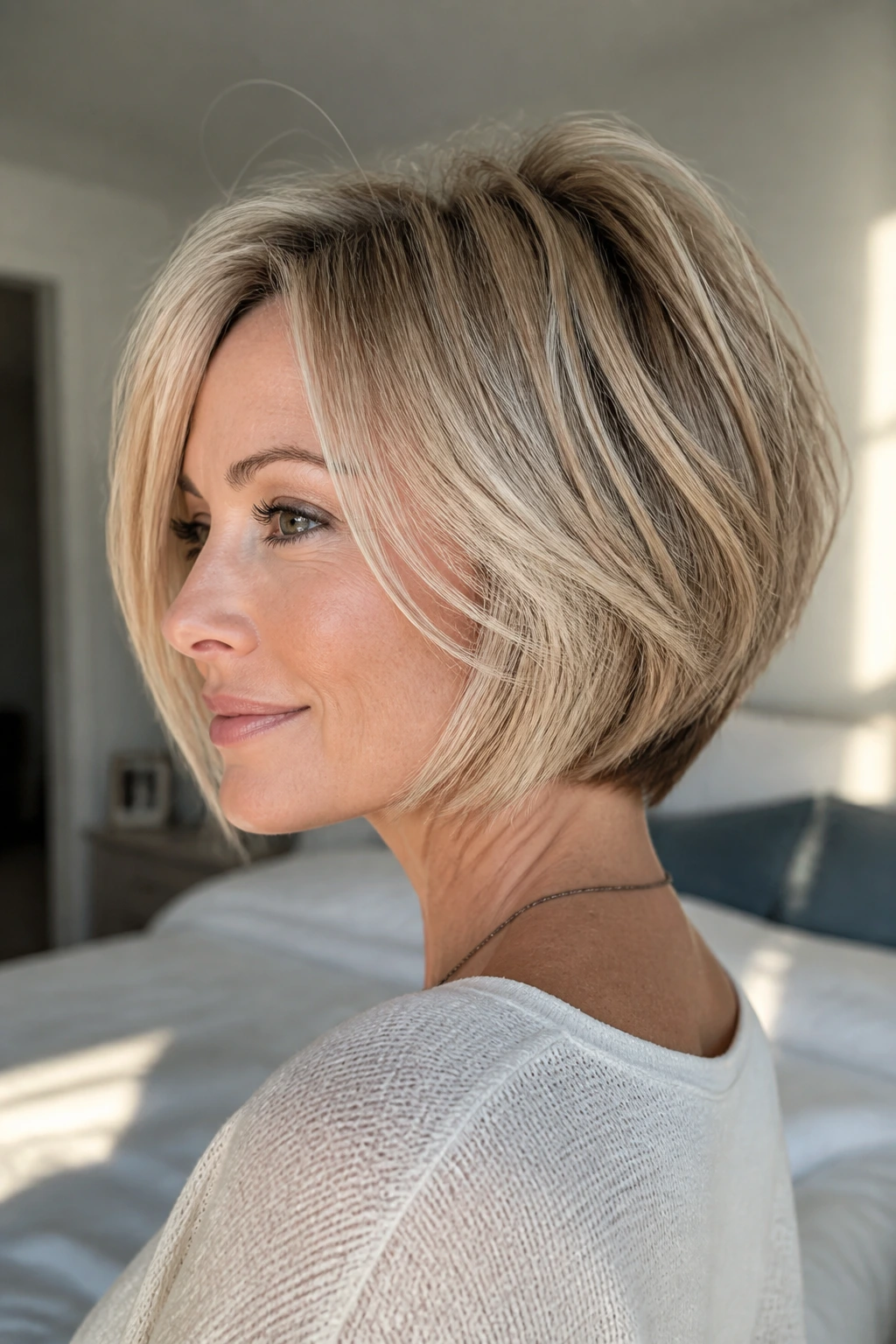
Feathering can be useful on fine hair when it is done lightly and placed below the surface. The goal is to reduce bulk where the cut needs movement, not to carve holes through the shape. A feathered stacked bob works best when the outline stays solid.
This cut has a softer, more lifted feel than a blunt bob. The layers are hidden enough that the style still reads full, but they let the hair bend around the head instead of sitting like a block. If your hair has a bit of bend and tends to puff at the sides, this can be a good compromise.
Keep the feathering away from the top layer. That part of the hair is doing the visual heavy lifting. Too much slicing there can leave the cut with that thin, airy look that sounds nice until you see it in daylight.
13. Angled Stacked Bob That Slants Forward
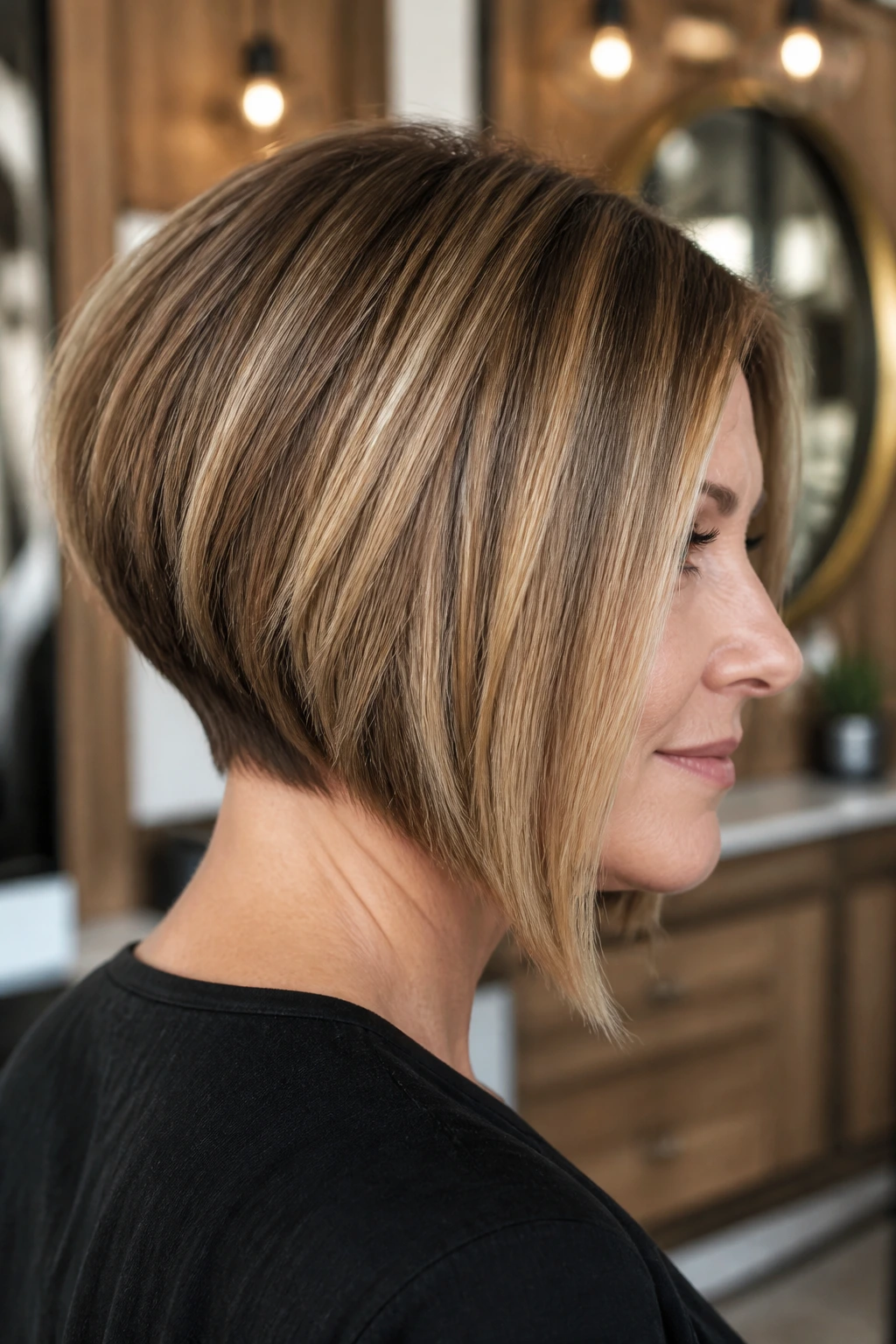
An angled stacked bob is all about the line from back to front. The nape is shorter, the front grows longer, and the shape points forward in a way that feels clean and modern without being fussy. On fine hair, the angle can create the impression of density because the cut has a clear direction.
It is especially good if you want to lengthen the neck or soften a fuller cheek area. The forward line draws the eye down and out, which can flatter a lot of face shapes. Still, the angle should not be so steep that the back looks pinched.
Ask for a soft angle rather than a sharp one if your hair is very fine. A hard diagonal can leave the ends looking sparse. A gentle slope gives you motion without taking away the weight that keeps fine hair looking healthy.
14. Micro Stacked Bob for Very Fine Hair
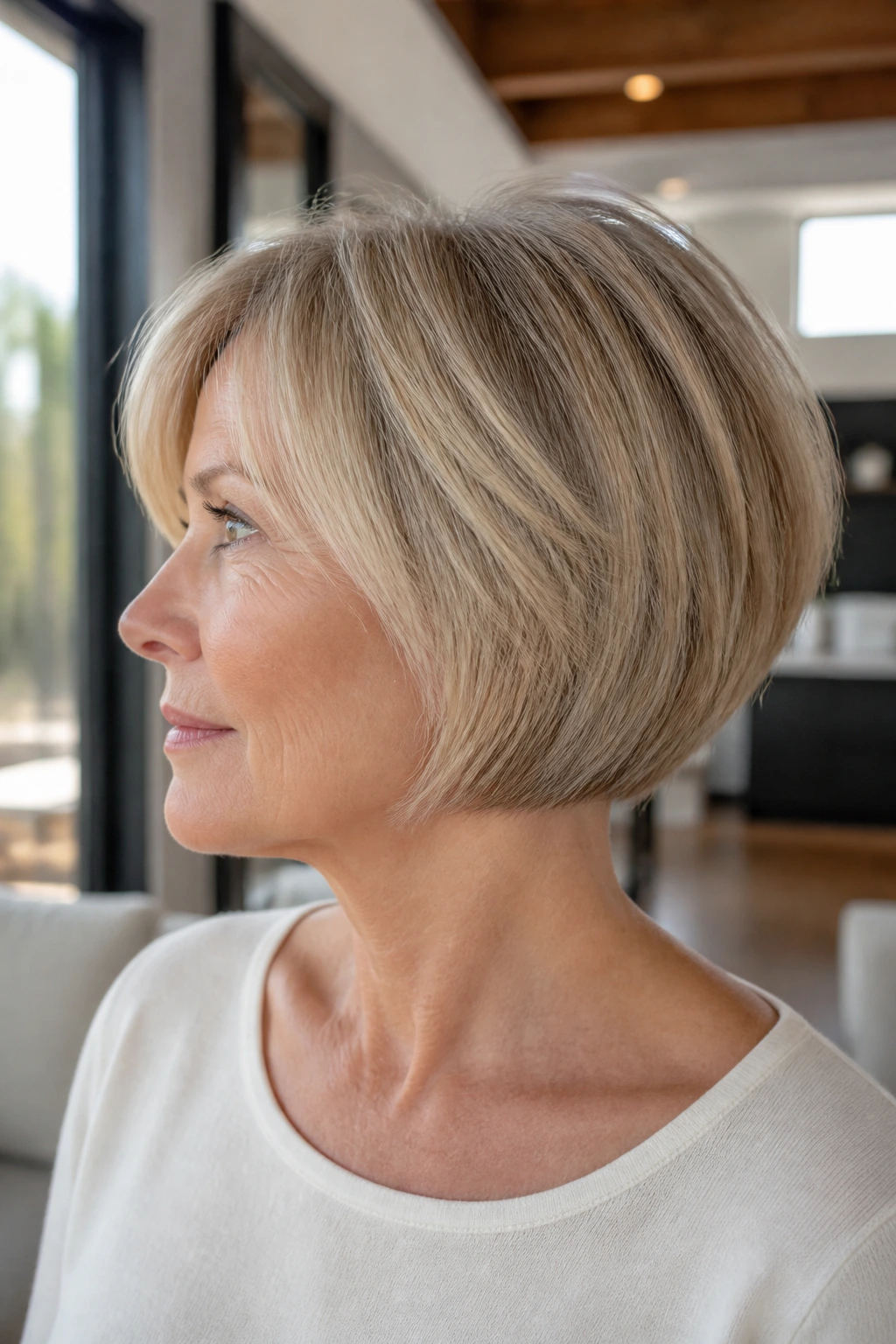
A micro stacked bob sits shorter than most people expect, and that is why it works. Very fine hair often gains more shape when there is less length pulling it down. The back lifts, the sides open, and the whole cut starts to look more deliberate.
This is a bold cut, but not an impractical one. It dries fast, holds shape with little effort, and can make earrings and collarbones stand out in a nice way. It is also one of the few cuts that can look thicker simply because the hair has less distance to collapse.
Short does mean frequent trims. If you let a micro stacked bob grow out too long, the shape gets lost fast. Keep the nape neat and the perimeter clean, or the cut turns from crisp to soggy in a hurry.
15. Side-Swept Fringe Stacked Bob
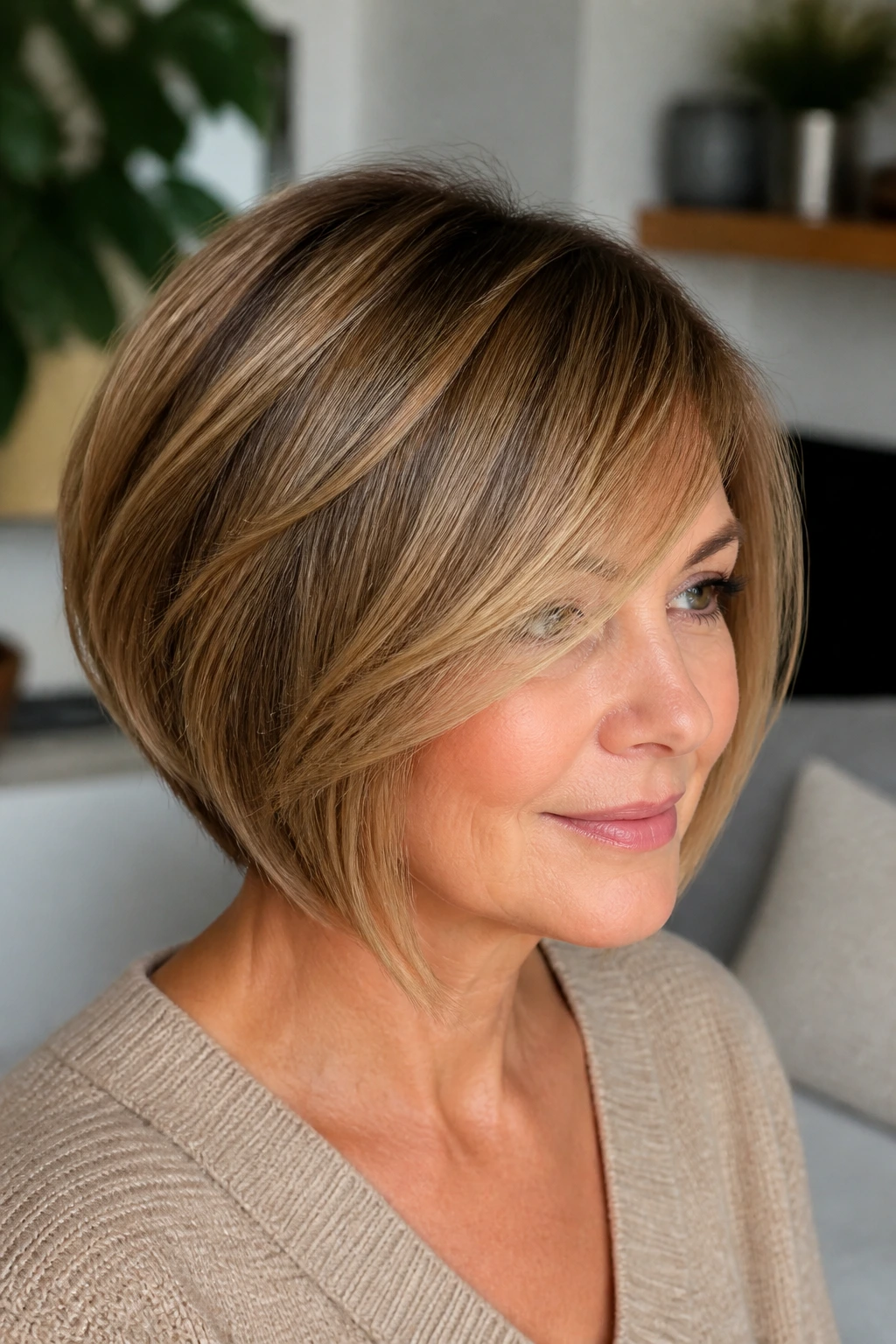
A side-swept fringe gives a stacked bob a softer front edge. Instead of a hard bang line, the hair angles across the forehead and blends into the side lengths. That is useful on fine hair because it keeps the front from feeling sparse.
The fringe should be long enough to tuck behind the ear if needed. That little bit of length gives you options on days when your hair lies flatter than you wanted. Blow-dry the fringe in the opposite direction first, then sweep it back over. It helps the root lift stay put.
Best for
- Narrow foreheads that need a little balance.
- Faces that look better with soft diagonals.
- People who want forehead coverage without full bangs.
A side-swept fringe can also make the cut grow out more gracefully. That matters if you do not trim every five weeks.
16. Stacked Bob With an Off-Center Part
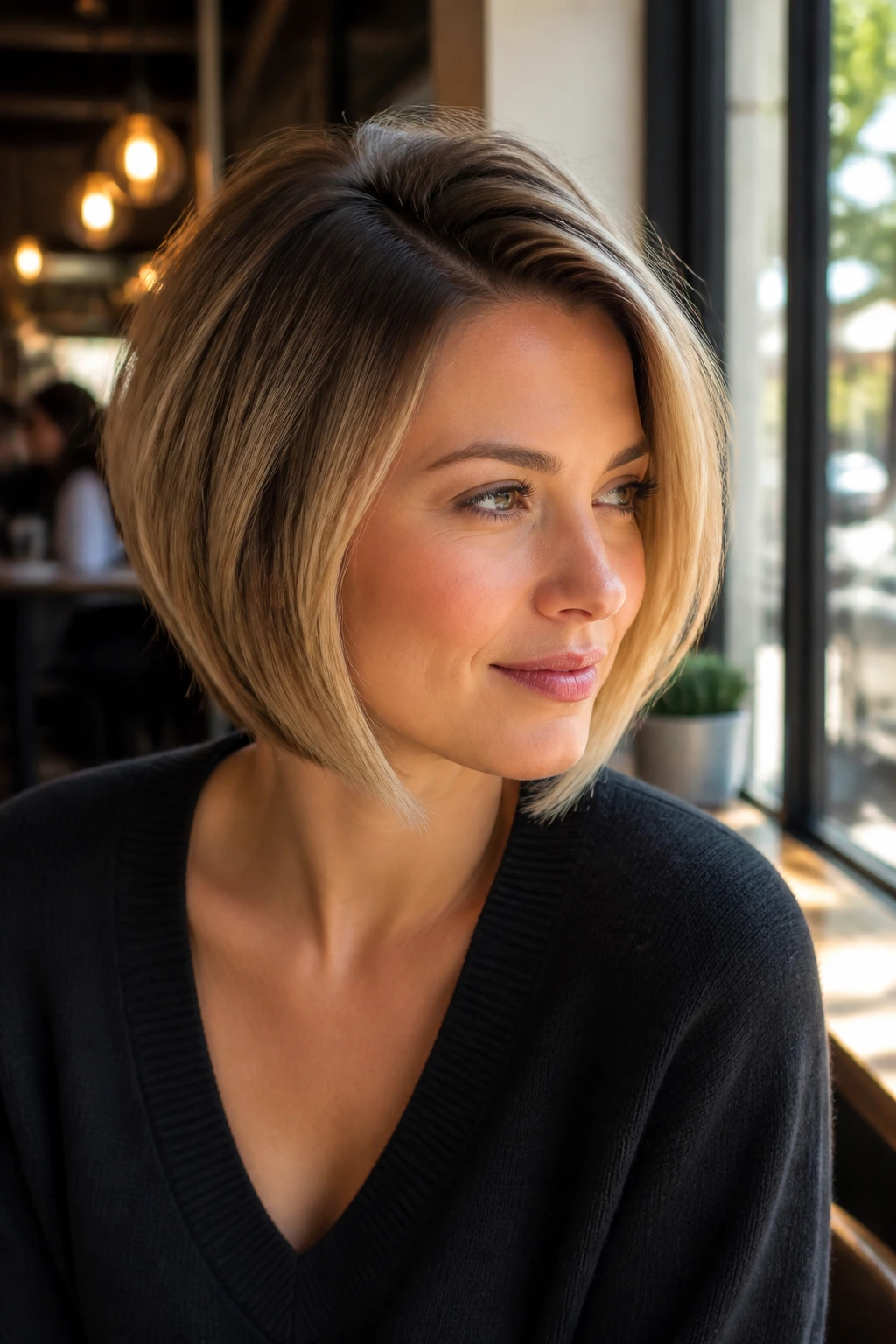
A tiny shift in the part can make a bigger difference than a lot of people expect. An off-center part gives a stacked bob some lift near the crown and keeps the shape from splitting down the middle like curtains. Fine hair often looks flatter in a strict center part because it exposes the scalp line more clearly.
This version is subtle. It is not about drama. It is about making the roots look a little fuller without changing the haircut itself. If you like clean hair that still has some bend, this is a smart move.
Use a tail comb after washing and set the part before the hair dries. Once the hair dries in the wrong place, it tends to stay there. A quick clip on the heavier side while you finish your makeup can help lock in the shape.
17. Tousled Stacked Bob With Choppy Crown Texture
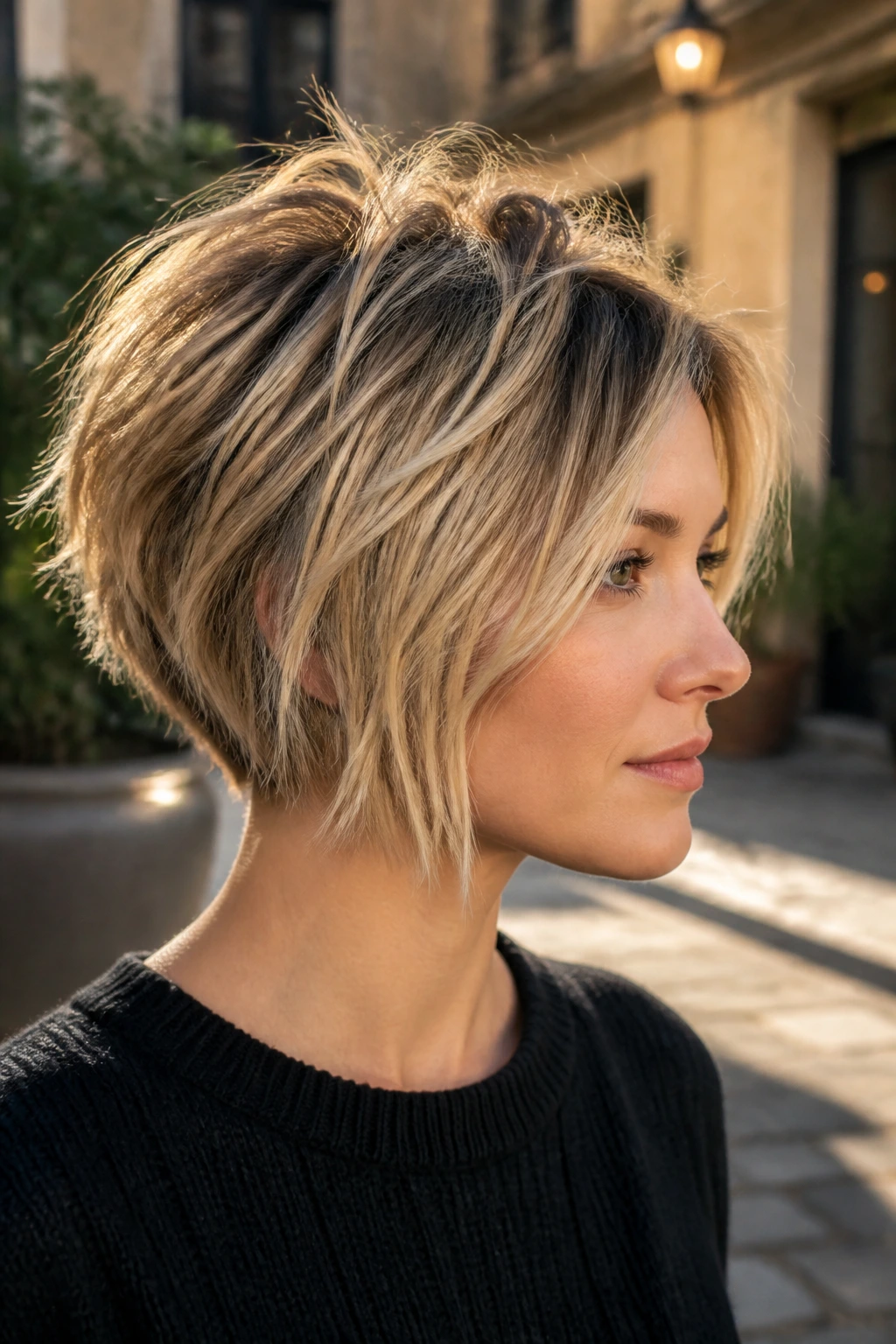
Choppy crown texture can look terrific on fine hair when the texture is placed high enough to create movement but not so high that the cut loses its base. Think of it as a little lift at the top, not a haircut that has been attacked with thinning shears.
This style has a looser, cooler finish than the sleek versions. It suits people who do not want every strand in place. A matte texture spray at the roots and a bit of scrunching through the upper layers can wake the haircut up fast.
Be careful with beach sprays that dry the hair out too much. Fine strands show dryness faster than coarse ones, and dry ends do not read as texture for long. They read as frizz. Not the same thing.
18. Stacked Bob With Tucked Sides and a Narrow Neckline
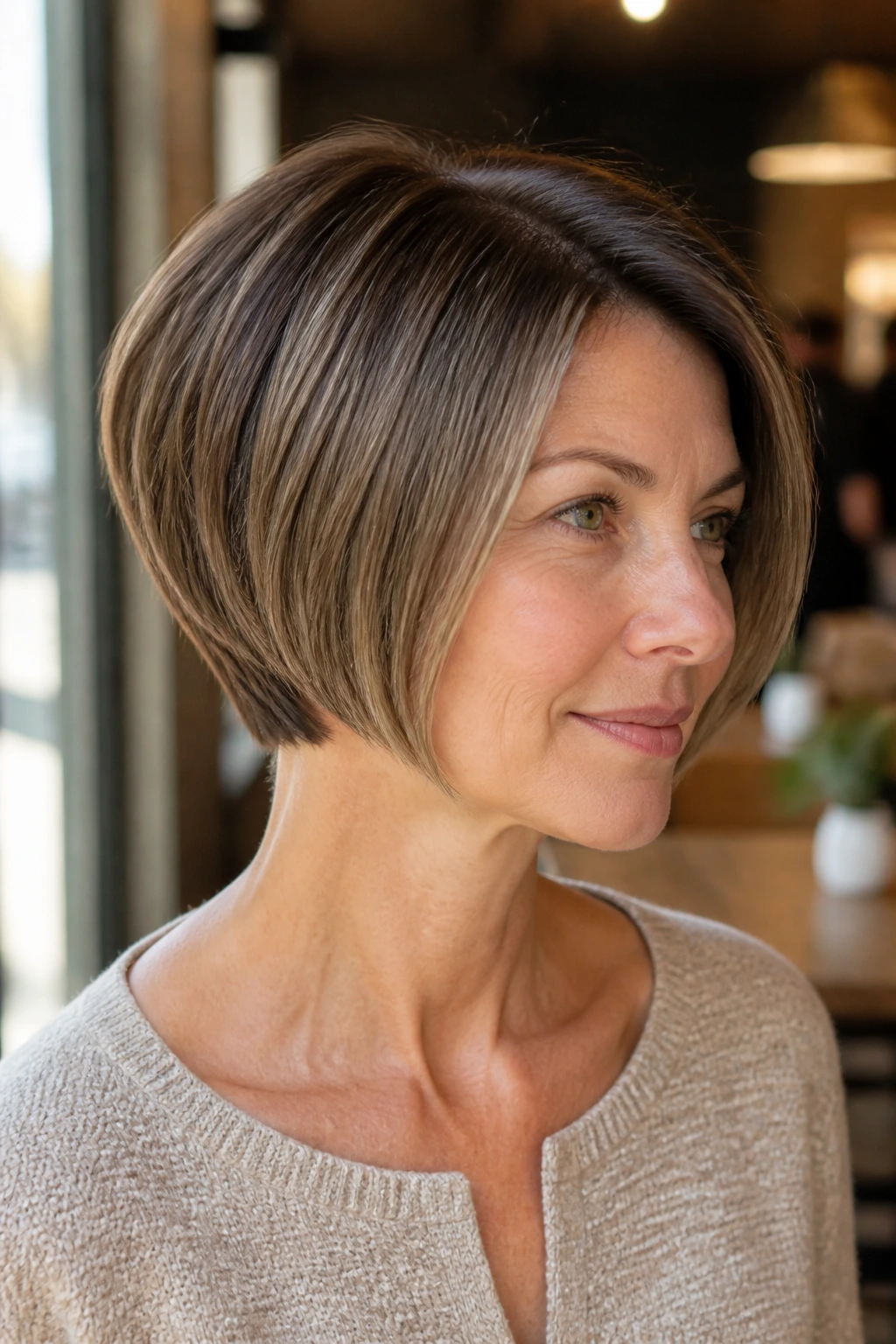
Tucked sides give a stacked bob a neat, polished shape that works well on fine hair because it removes visual clutter. The back still does the stacking, but the sides are tucked closer to the head, which makes the neckline look narrower and cleaner.
This is a very wearable cut if you like earrings, collars, and clean lines around the jaw. It also grows out with less drama than some of the steeper angled versions. The trick is keeping enough length at the sides so the tuck feels intentional, not squeezed.
A little smoothing cream at the ends helps the sides stay in place. Use a light hand. Too much product and the cut starts to separate in little oily pieces, which is a quick way to ruin the shape.
19. Chin-Grazing Stacked Bob With Soft Face Framing
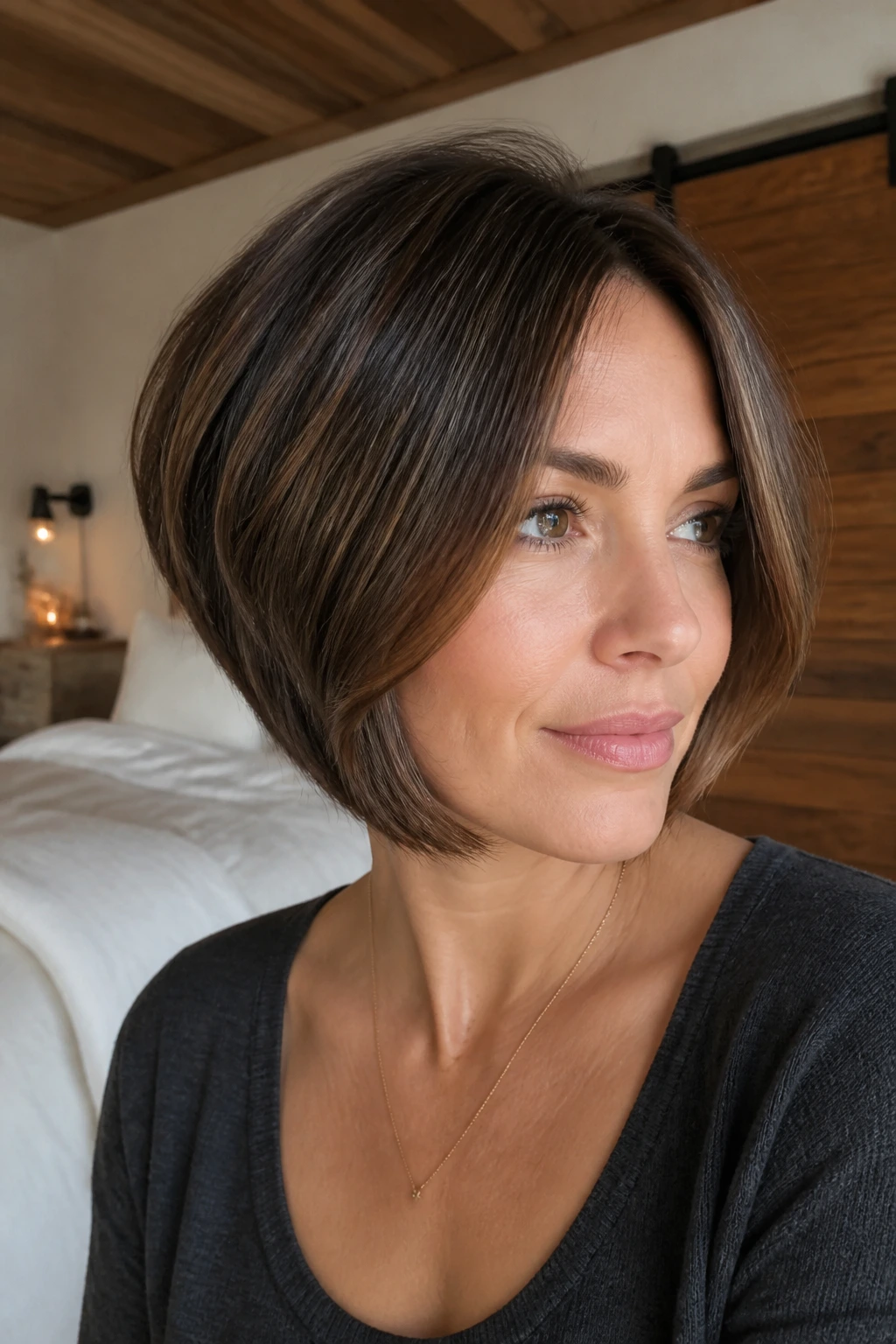
A chin-grazing stacked bob keeps the face-frame long enough to soften strong angles without dragging the whole style down. On fine hair, that balance matters because too much length can make the ends look see-through, while too little can feel harsh.
The front pieces should kiss the jawline and move slightly forward, not hang straight like curtains. That subtle motion makes the bob feel fuller around the face. If your jaw is the part you want to soften, this cut does that without needing bangs.
Why It Flatters
It gives the eyes a clean line to follow. It keeps the nape short enough to lift. It lets the front move without losing shape.
That combination is what makes the cut feel thoughtful rather than random. And yes, the difference shows up in photos and in person.
20. Stacked Bob for Thin Hair That Gets Flat by Noon
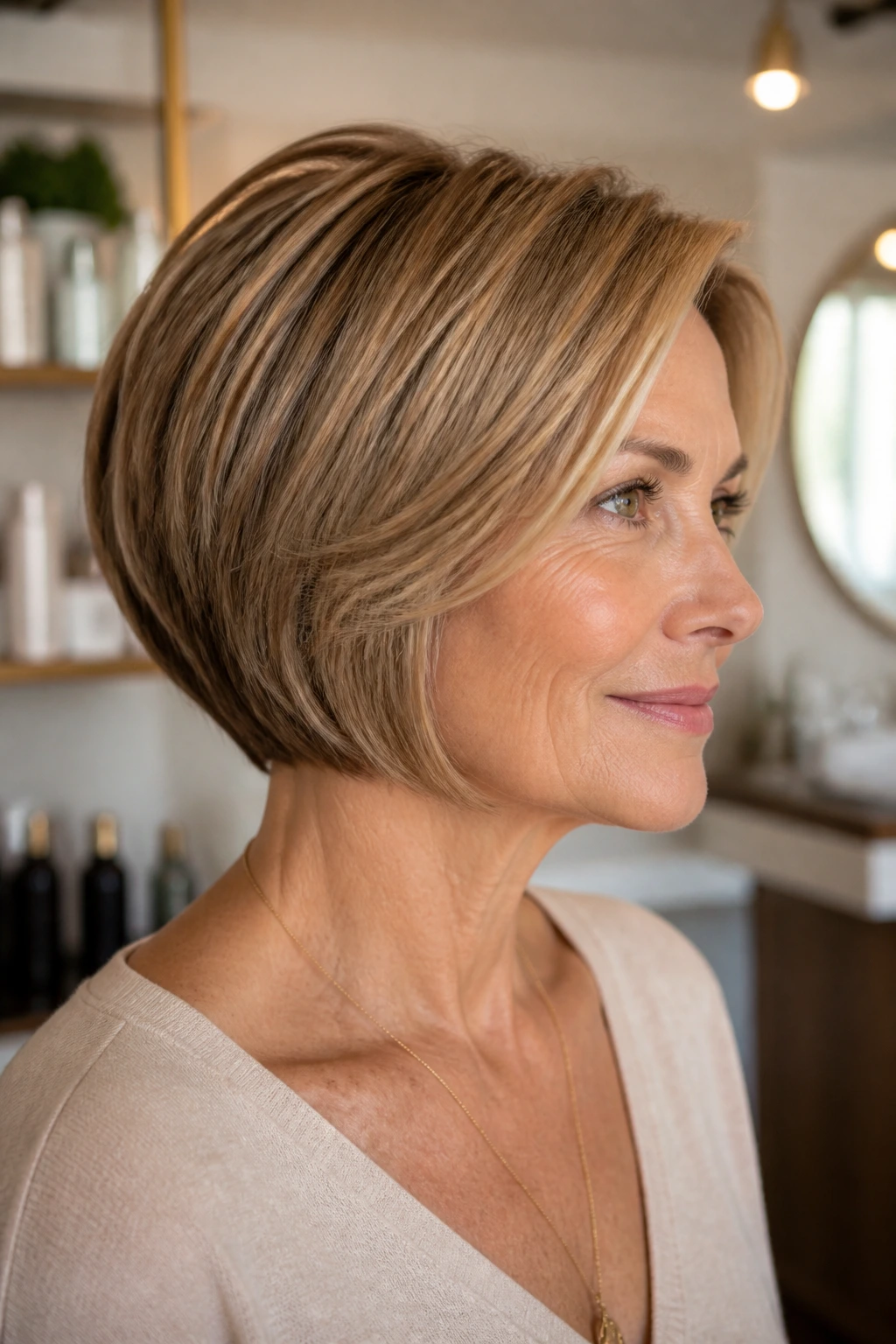
Some haircuts look good in the morning and disappear by lunch. This one is built for that problem. A compact stacked bob with a firm base and minimal top layering gives thin hair a fighting chance against gravity.
The important part is restraint. You want enough stack to create lift at the nape and enough density in the perimeter to keep the silhouette solid. What you do not want is a cut full of little airy layers that collapse the second the roots cool down.
A root-lifting mousse and a quick blast with a dryer can help, but the haircut should do most of the work. If the shape only exists when you are holding a round brush at arm’s length, the cut is too dependent on styling. That gets old fast.
21. Stacked Bob With Heavy Graduation and Light Surface Layers
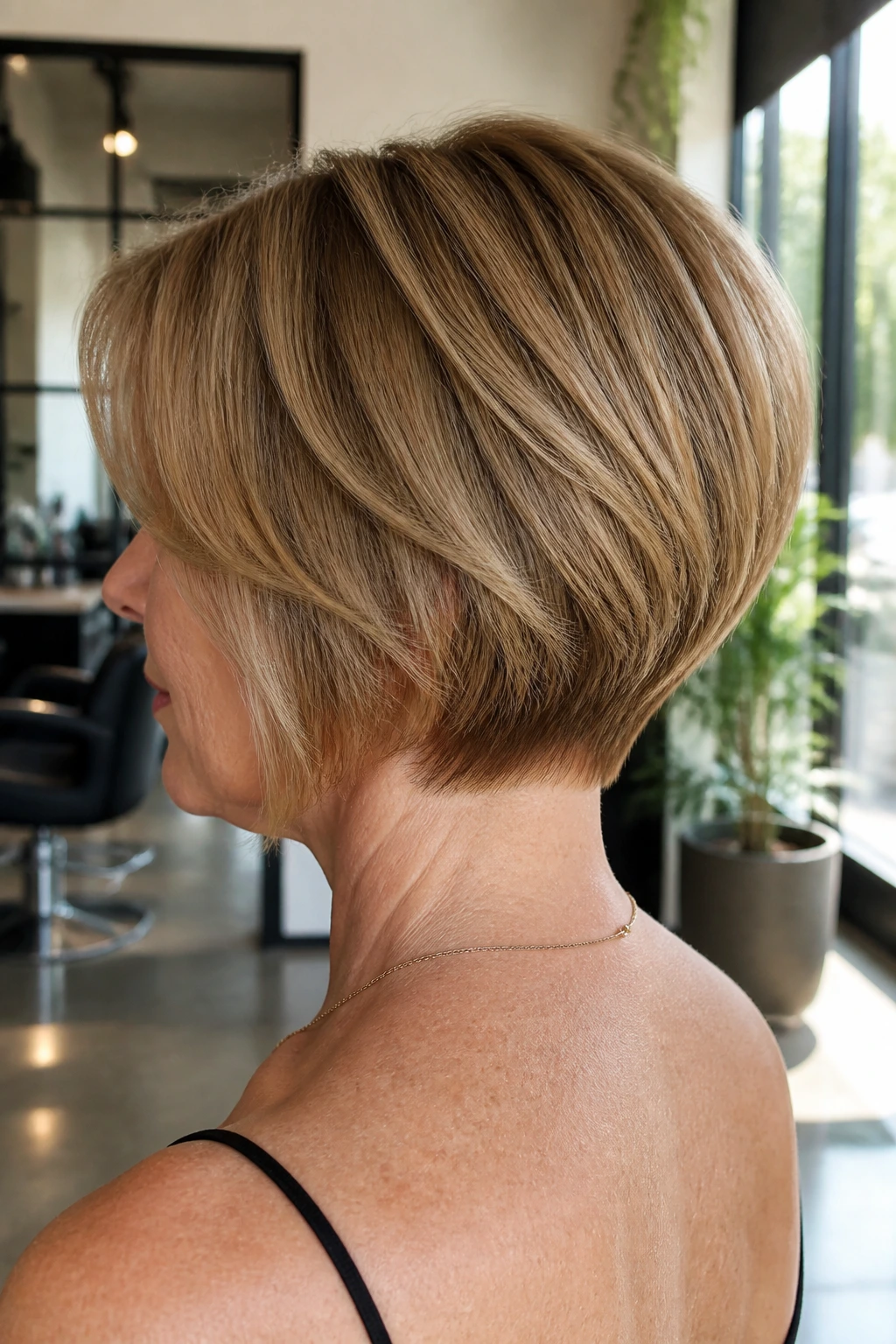
A stylist who knows fine hair will often talk about graduation more than layering. That is the real engine here. Graduation builds the stacked shape in the back, while a few light surface layers keep the top from sitting like a block.
This cut is one of the most salon-specific options on the list, so bring clear words. Ask for strong graduation through the nape and occipital area, then minimal layering on top so the crown keeps as much body as possible. The result should look full from the side and tidy from the back.
If your hair is extra fine, this can be one of the better choices because it balances shape and density. Too much layer on top makes the cut collapse. Too little graduation makes it feel heavy. The sweet spot is right between those two mistakes.
22. Asymmetrical Stacked Bob With One Strong Side
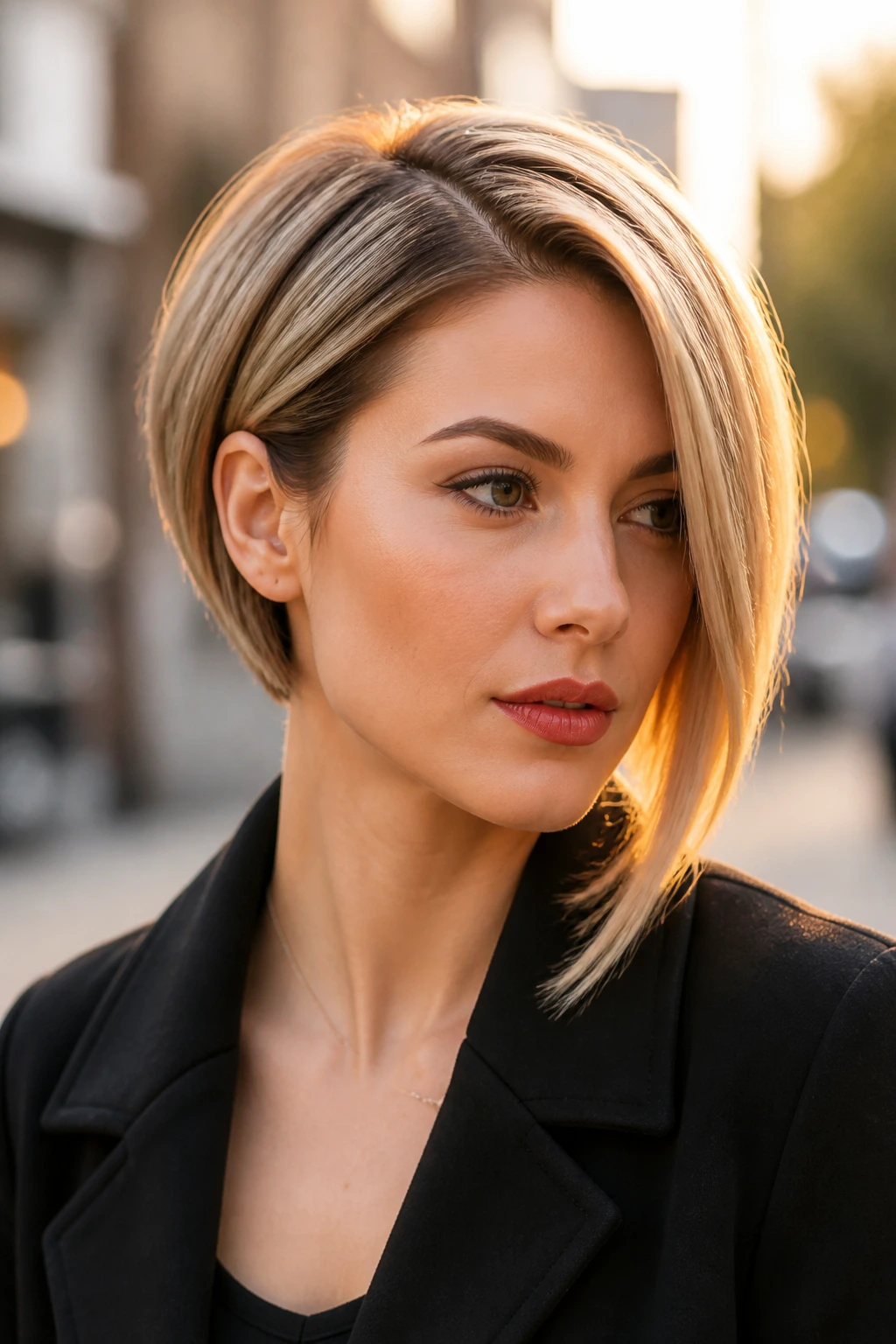
An asymmetrical bob has personality, and the stacked version gives it enough structure to work on fine hair. One side is kept slightly longer, which creates a deliberate imbalance that makes the haircut look more modern without needing extra volume.
The asymmetry should be subtle if your hair is very fine. A dramatic difference in length can look stringy on the longer side if the density is low. A small shift, though, can be enough to make the cut feel fresh and give the face a little edge.
This one suits people who like a haircut that looks styled even when it is not. The uneven line does a lot of the talking. You can keep the rest of the finish smooth or add a tiny bend through the ends. Either way works.
23. Stacked Bob With Soft Underlayers for Extra Bounce
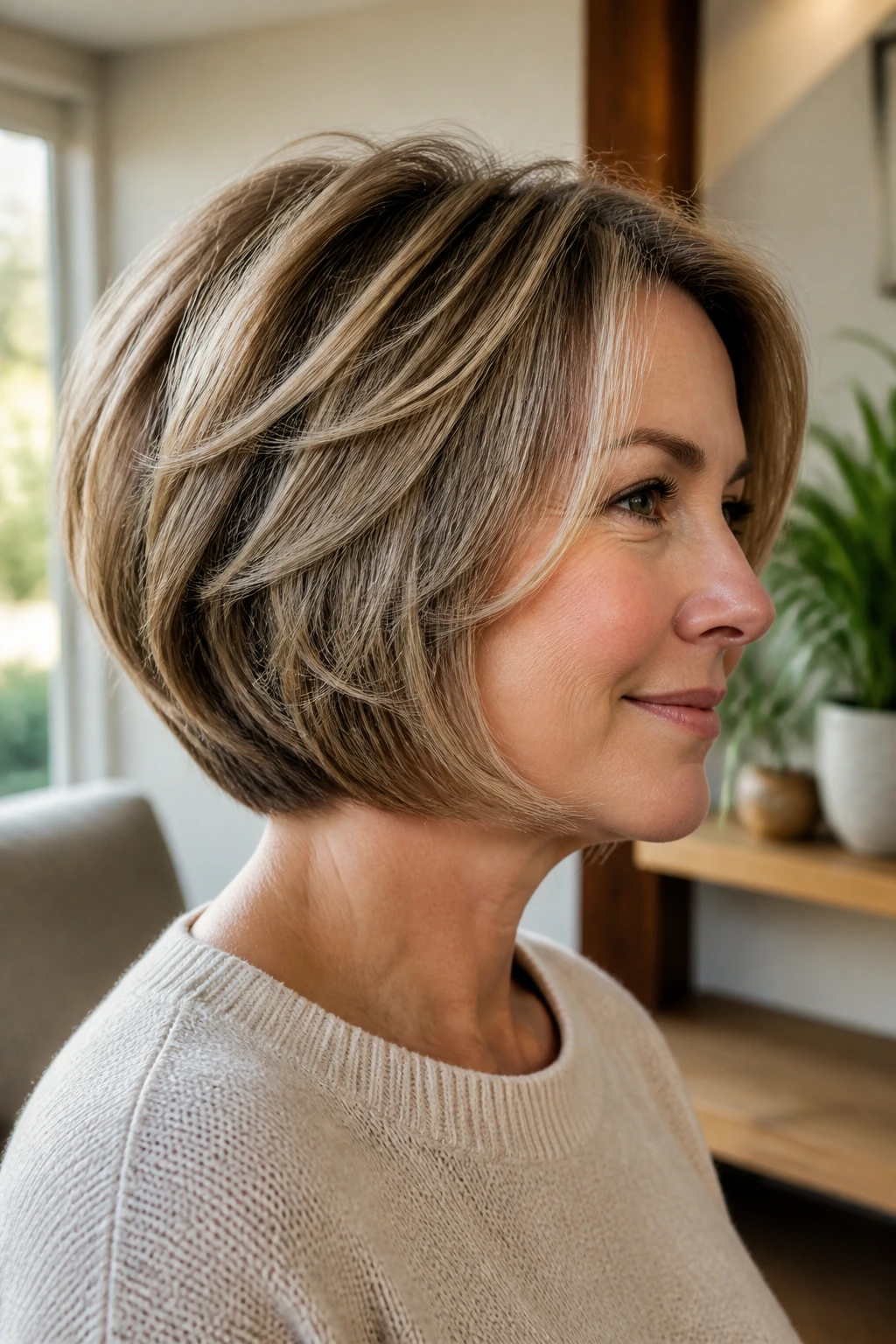
Soft underlayers give a stacked bob some hidden movement. They are placed low enough that the top layer still keeps the look full, while the inner hair can move when you walk, turn, or tuck it behind one ear. Fine hair often benefits from that kind of quiet structure.
This is a good option if you like a little bounce but hate obvious choppiness. The haircut should swing, not frizz apart. A stylist can remove a small amount of weight from underneath without hollowing out the surface, which is the part that keeps the style looking dense.
A light blowout helps this cut the most. Lift the roots, curve the ends under, and stop before the hair gets overworked. Fine hair usually looks best when it still has a little softness left in it.
24. Mirror-Smooth Stacked Bob for a Polished Finish
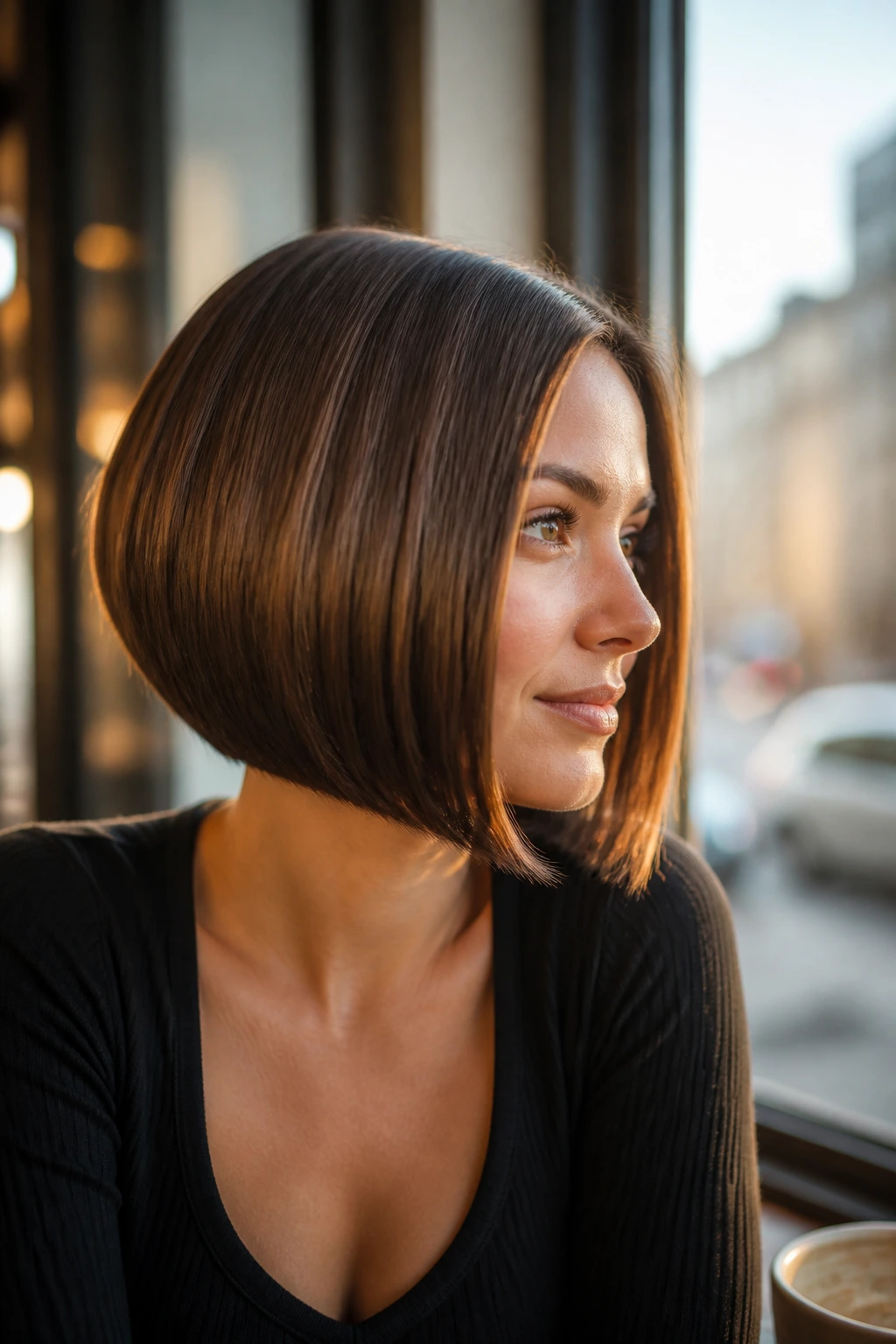
A sleek stacked bob can be the best version for people who like clean lines and quiet shine. Fine hair often reflects light well, and a polished finish makes the shape look intentional rather than accidental. The stack at the back keeps the head from looking flat, while the smooth surface gives the haircut a crisp edge.
This cut works especially well when the perimeter is blunt and the ends are not over-thinned. A narrow flat iron can help refine the bend at the ends, but do not chase absolute perfection. A tiny bit of movement keeps the style from looking stiff.
Use a heat protectant, then a drop of light serum at the very ends. That is usually enough. Heavy oil near the roots will kill the lift you were trying to keep.
25. Low-Maintenance Stacked Bob That Grows Out Gracefully
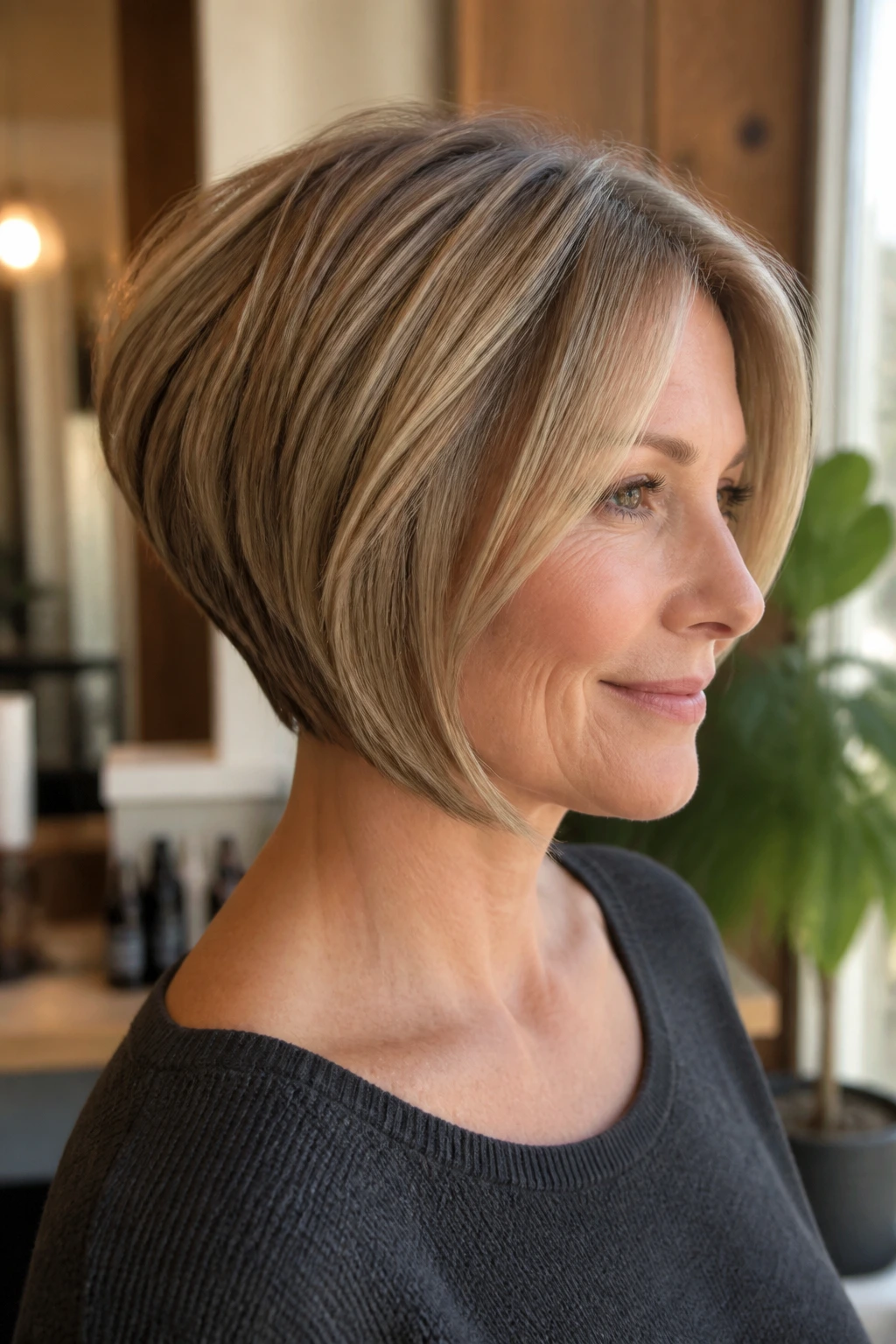
Not every stacked bob has to be high maintenance. A softer version with a gentler stack, longer front pieces, and a slightly lower nape can grow out without losing its shape right away. That is a big deal if you do not want to live in the salon chair.
This cut is smart for fine hair because it keeps enough structure to look full, but not so much that every millimeter of growth ruins it. The back still has lift. The front still frames the face. The difference is that the line stays believable as the weeks pass.
A side part helps this one survive longer. So does a perimeter that is clean but not razor-sharp. If you want a bob that keeps looking decent between trims, this is the one I would point to first.
The Bottom Line
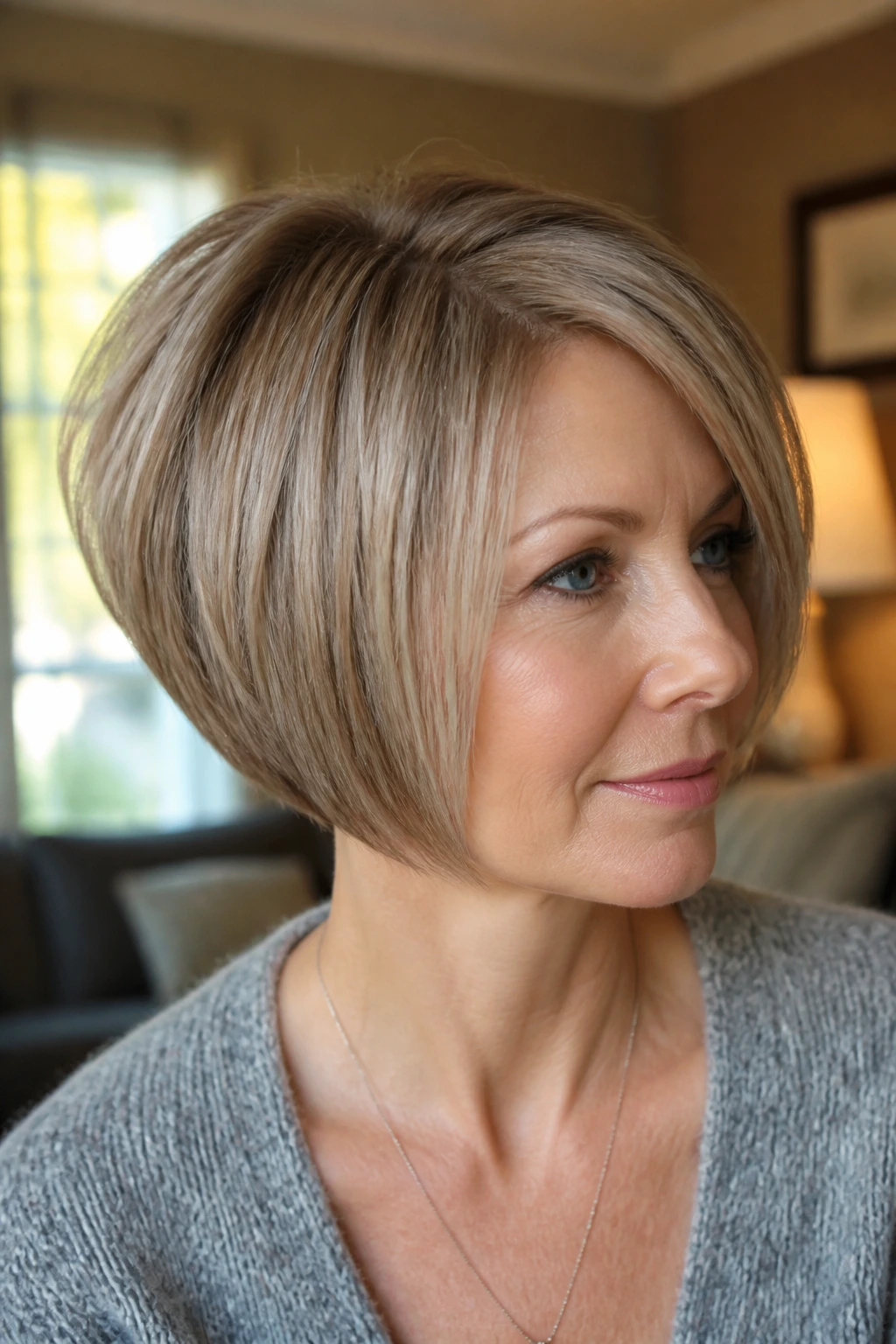
The best stacked bob for fine hair is the one that keeps density where the eye can see it. That usually means a solid perimeter, careful graduation in the back, and only as much texture as your strands can handle without going wispy.
Shorter cuts tend to lift better, but length is not the enemy. Heavy thinning is. If your hair already lies flat, ask for shape first and softness second.
Bring photos that show the back, the side, and the front of the cut you want. That single habit saves more bad haircuts than any product ever will.
