



A straight lob has a funny habit of looking expensive even when the styling took ten minutes and a half-empty can of heat protectant. The cut sits in that sweet spot between short and shoulder-length, which means it gives you shape without the tug-of-war that comes with longer hair. Clean edges help. So does a line that lands near the collarbone instead of flopping somewhere awkward in the middle of the neck.
That awkward middle is the whole reason the lob keeps winning. Medium length hair can feel neither here nor there when it’s cut badly — too long to bounce, too short to tuck neatly, too shapeless to feel deliberate. A straight lob fixes that by giving the ends a job. They either make the hair look thicker, sharper, softer, or sleeker, depending on how the line is built.
And yes, the details matter. A lob that sits a quarter inch too high can feel puffy. One that drops too low can lose the whole point and start behaving like plain long hair. The best versions look simple because someone made a few smart choices with the perimeter, the part, and the weight removal inside the cut.
The cuts below cover the versions I reach for when someone wants medium-length hair to look polished without turning into a high-maintenance project. Some are crisp and blunt. Some are softer around the face. A few are a little more dramatic. All of them work because the straight shape is doing the heavy lifting.
1. Blunt Center-Part Lob
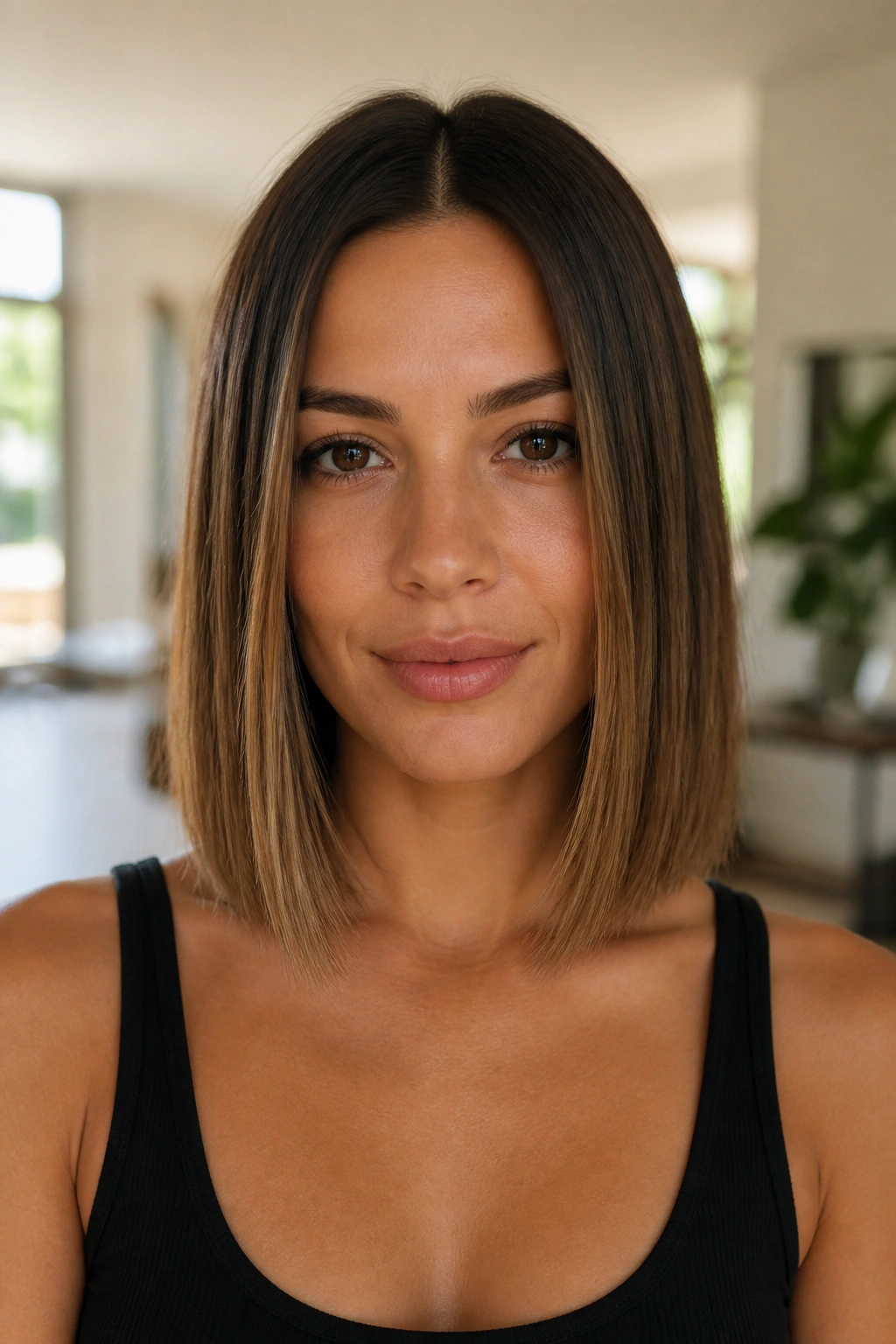
A blunt center-part lob is the one people think of first, and for good reason. The line is clean, the ends are even, and the middle part keeps everything calm and balanced. On medium length hair, that blunt edge can make fine strands look fuller right away. It also gives thick hair a strong outline, which is useful when the rest of the cut wants to puff out.
This version works best when the ends are cut with almost no internal layering. You want the eye to read one solid shape. That means the last inch or two of hair matters more than people expect. If the ends are wispy, the whole cut starts to look tired.
- Best for: fine hair, straight hair, and anyone who likes a polished finish.
- Styling note: blow-dry with tension, then pass a flat iron through 1-inch sections.
- Ask your stylist for: a blunt perimeter with the length grazing the collarbone.
- Watch for: too much thinning at the bottom. That ruins the dense look.
Tiny tip: keep the part exact. A crooked center part makes a blunt lob look accidental, and that’s the last thing you want.
2. Slightly Angled Lob
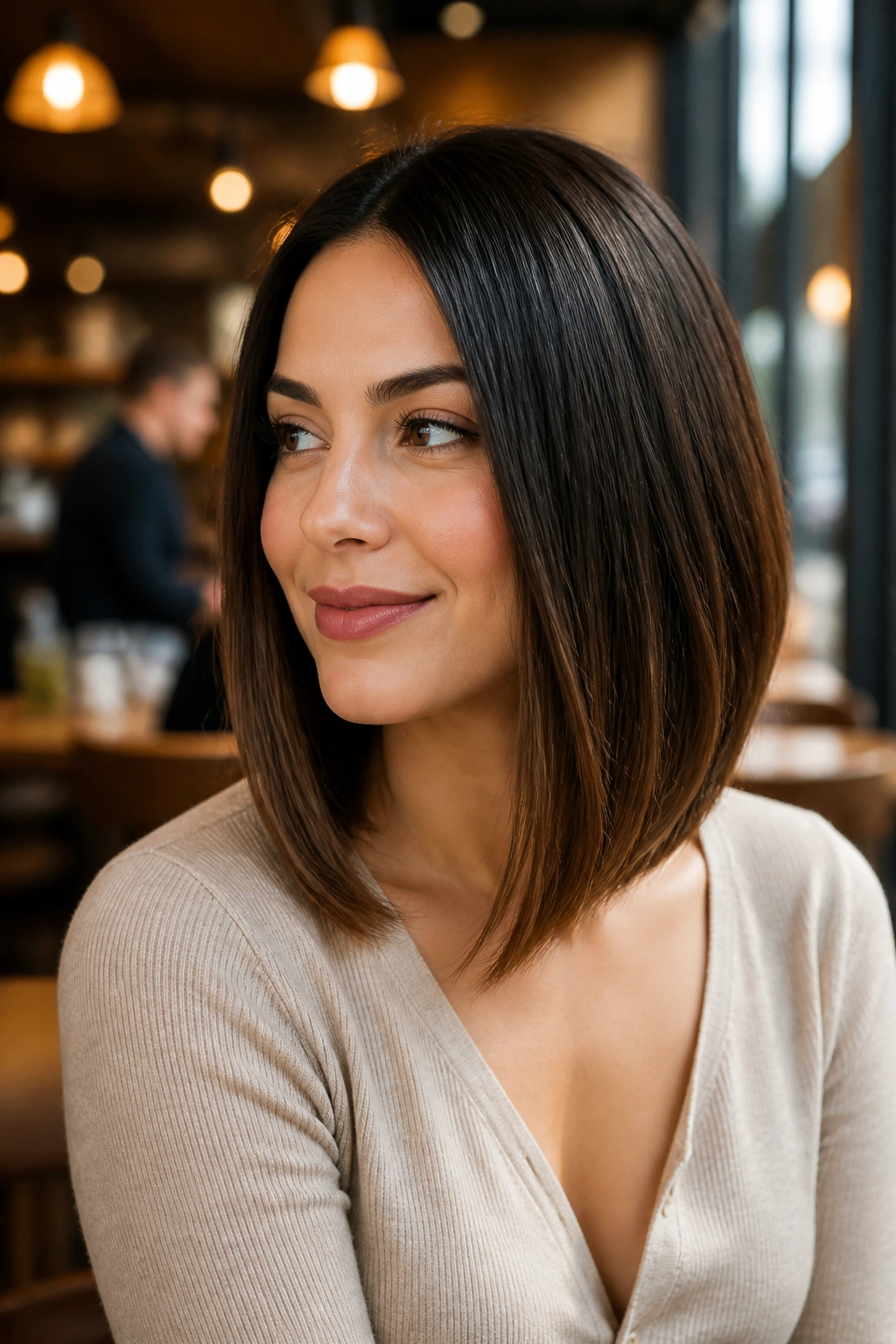
Why does a slight angle work so well? Because it gives the haircut movement without making it obvious that the haircut is trying hard. The front pieces are left a little longer than the back, usually by about 1 to 1.5 inches, so the shape leans forward in a soft, flattering way.
Why It Earns Its Place
The angle helps lengthen the neck and can make the jawline look cleaner, which is handy if medium length hair tends to widen the face. It’s also one of those cuts that looks expensive even when the styling is basic. Straight hair shows the line clearly, so the angle reads immediately.
What To Ask For
Tell your stylist you want a subtle A-line shape, not a dramatic wedge. The difference matters. If the back is too short, the cut starts to feel dated fast. If the angle is gentle, it stays wearable with a side part or a middle part.
One more thing. This is a good choice if you like tucking one side behind the ear, because the longer front pieces keep the cut from looking chopped off.
3. Collarbone-Length Lob

A collarbone-length lob has one job: sit right where the body gives it a little movement. That’s why it flatters straight hair so well. The hair hits the collarbone, brushes the shoulders, and shifts just enough to look alive instead of stiff. It’s a small difference, but it changes everything.
I like this length for people who wear their hair down most days but still want a cut that can go into a clip or low ponytail without a fight. It’s also forgiving if your hair grows fast. The shape doesn’t fall apart as quickly as shorter lobs can.
The real charm is in the way it moves. When you turn your head, the ends slide rather than stick. Clean. Easy. A little bit shiny, if you treat the ends well.
If your hair has a habit of flipping outward at the shoulders, this length can actually help that look feel intentional. The cut meets the body in a way that feels soft, not fussy.
4. Glass-Hair Lob
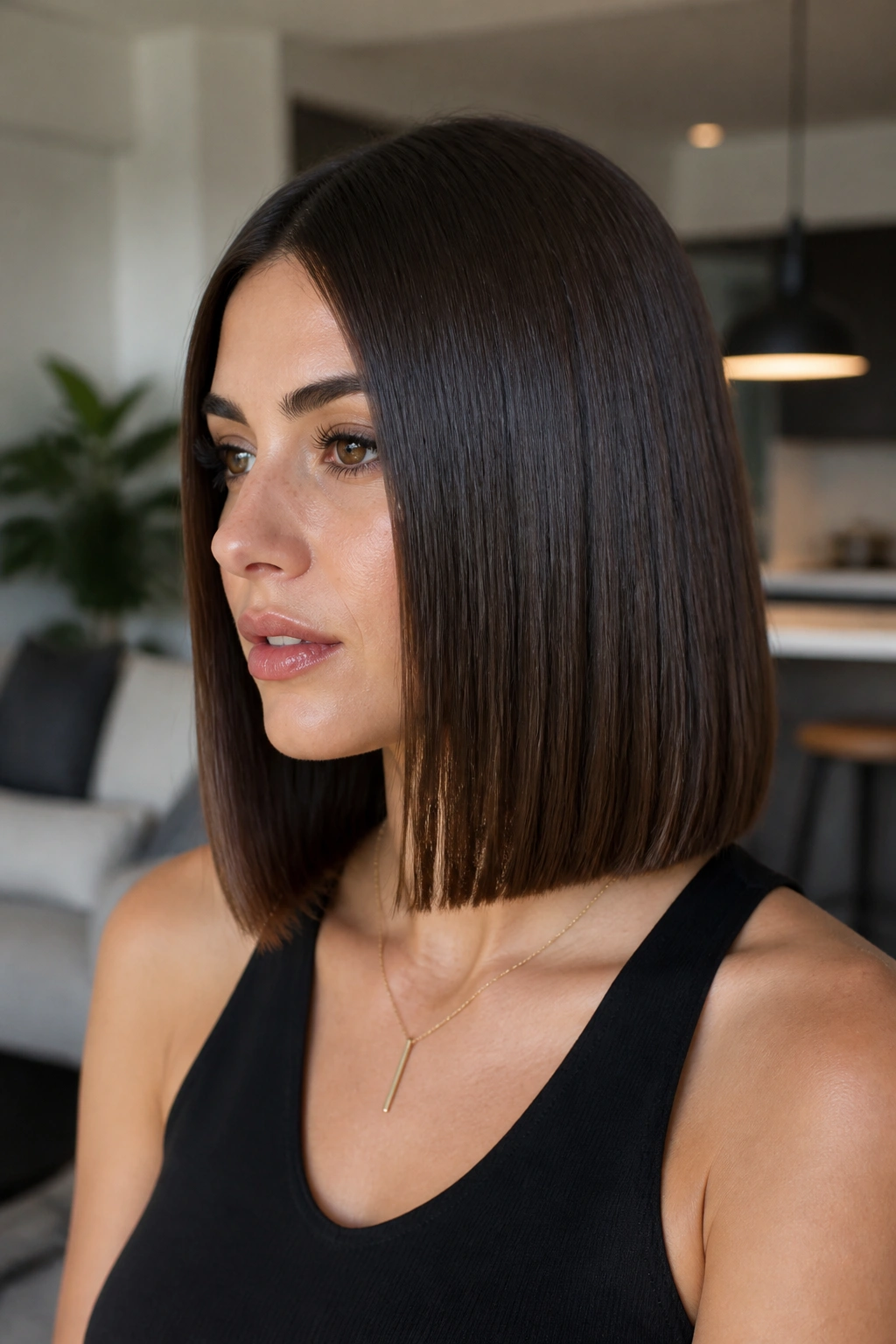
A glass-hair lob is all about that smooth, almost reflective finish. The cut itself is usually one length or close to it, and the styling is dead straight, with the ends tucked in just enough to keep the line neat. It’s not the kind of lob that hides behind texture. It shows everything.
That honesty is part of the appeal. If the cut is uneven, you’ll know. If the perimeter is blunt and the heat styling is tidy, the whole thing looks crisp in a way that reads as deliberate. Straight medium length hair loves this treatment because it can hold a clean surface without a lot of fuss.
Use a heat protectant, dry the hair flat with a paddle brush, then finish with a flat iron in small sections. After that, a pea-sized drop of serum through the ends is enough. Too much product turns the shine greasy fast.
This one is for people who enjoy precision. If you’re the type who notices one bent section and wants to fix it, the glass-hair lob will make you happy.
5. Soft Face-Framing Lob

A soft face-framing lob keeps the perimeter straight but slides in a few lighter pieces around the face. Those pieces usually start around the cheekbone or jawline, which keeps the haircut from feeling boxy. On medium length hair, that little shift can make the whole shape look easier to wear.
Where It Helps Most
This cut is useful when your face shape needs a bit of length or softness. Round faces tend to benefit from pieces that fall lower at the sides. Square jaws usually look better when the front sections skim past the jaw instead of stopping right on it.
What Makes It Different
The trick is restraint. You do not want layers all over the head. You want the front to do the talking while the back stays solid. That gives you movement without losing the clean line that makes a straight lob work in the first place.
A round brush or a flat iron bend at the front pieces is enough. Keep the ends straight and let the face-framing do the softer work.
6. Deep Side-Part Lob
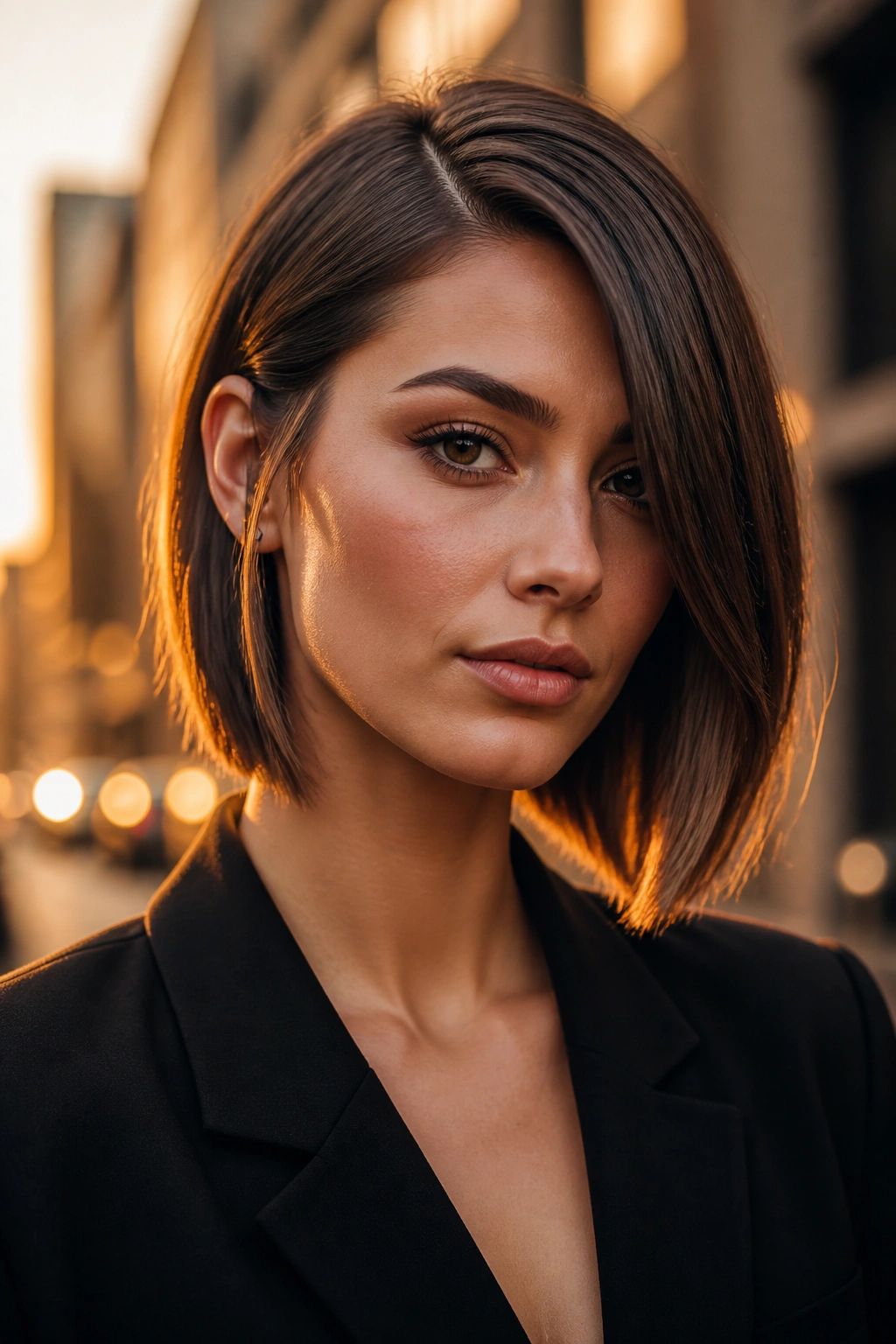
A deep side-part lob changes the mood instantly. Same medium length, same straight finish, but the part throws the weight to one side and gives the cut a little attitude. It’s a good move when the center part feels too strict or when you want more height at the crown.
The side part also helps if one side of your hair lies flatter than the other. Shift the part, lift the roots a bit, and the whole cut wakes up. That is especially useful on straight hair, which can look heavy when it sits too evenly.
Unlike a center-part lob, this one has some asymmetry built in. That asymmetry is what makes it feel modern without making it look overworked. A subtle tuck behind one ear can sharpen the line even more.
If your face is long, go careful with the depth of the part. Too deep can stretch the face even further. A little shift is usually enough.
7. Choppy Ends Lob
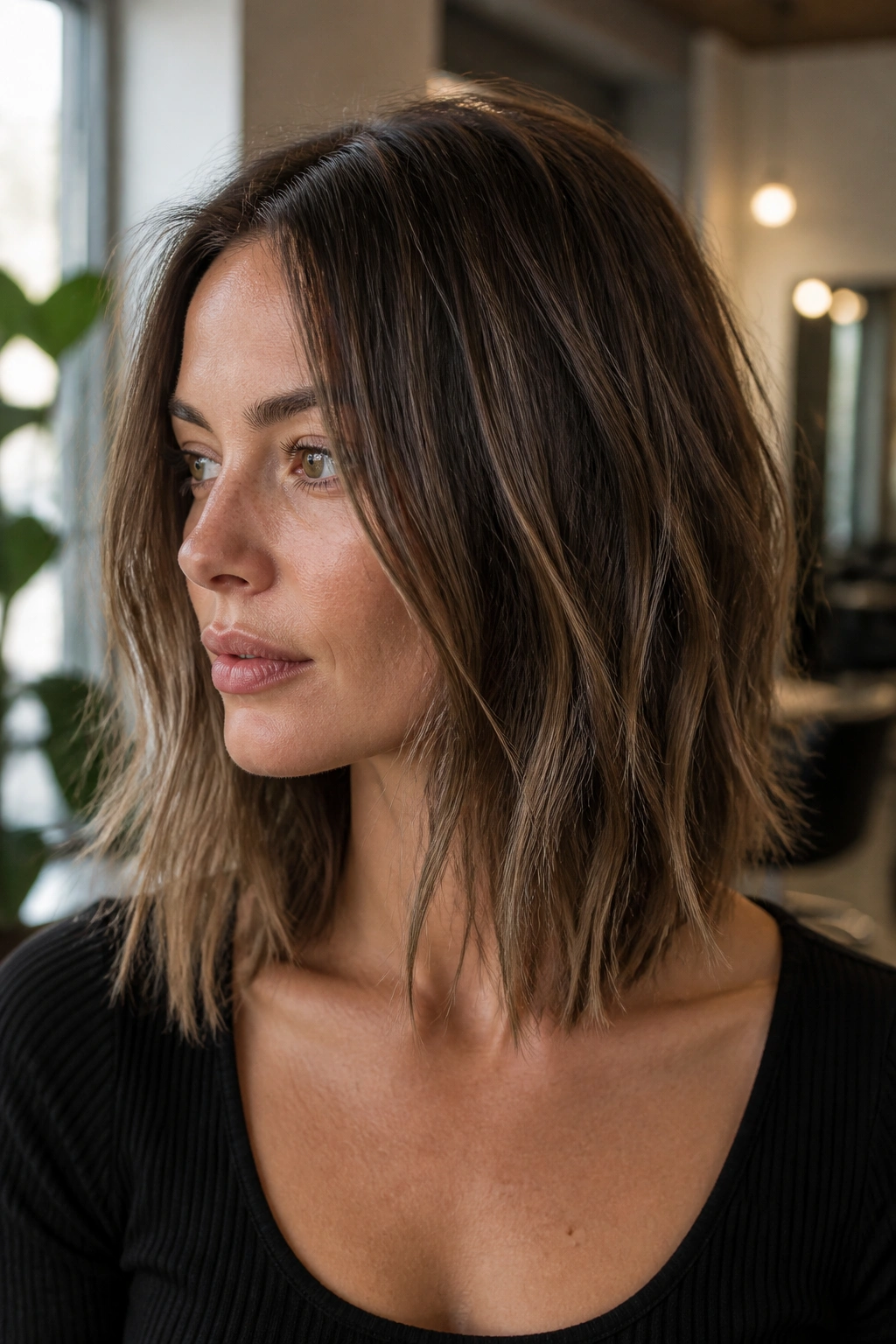
Choppy ends can save a lob from looking too polite. Instead of a hard blunt edge, the ends are point-cut or lightly textured so they break up the line a little. The haircut still reads straight, but it has more movement at the bottom.
This is a smart choice for thick hair that wants to sit in one heavy block. A straight, blunt perimeter can make dense hair feel helmet-like. Choppy ends soften that weight without turning the cut into layers everywhere.
The finish matters here. If you flatten the hair too much with a heavy serum, you lose the point. Use a light cream, then run fingers through the ends once the hair is dry. Not a comb. Fingers. The separation gives the cut its shape.
This lob is a little more casual than a glass-hair version. It looks best when the ends have some air in them.
8. Invisible-Layer Lob
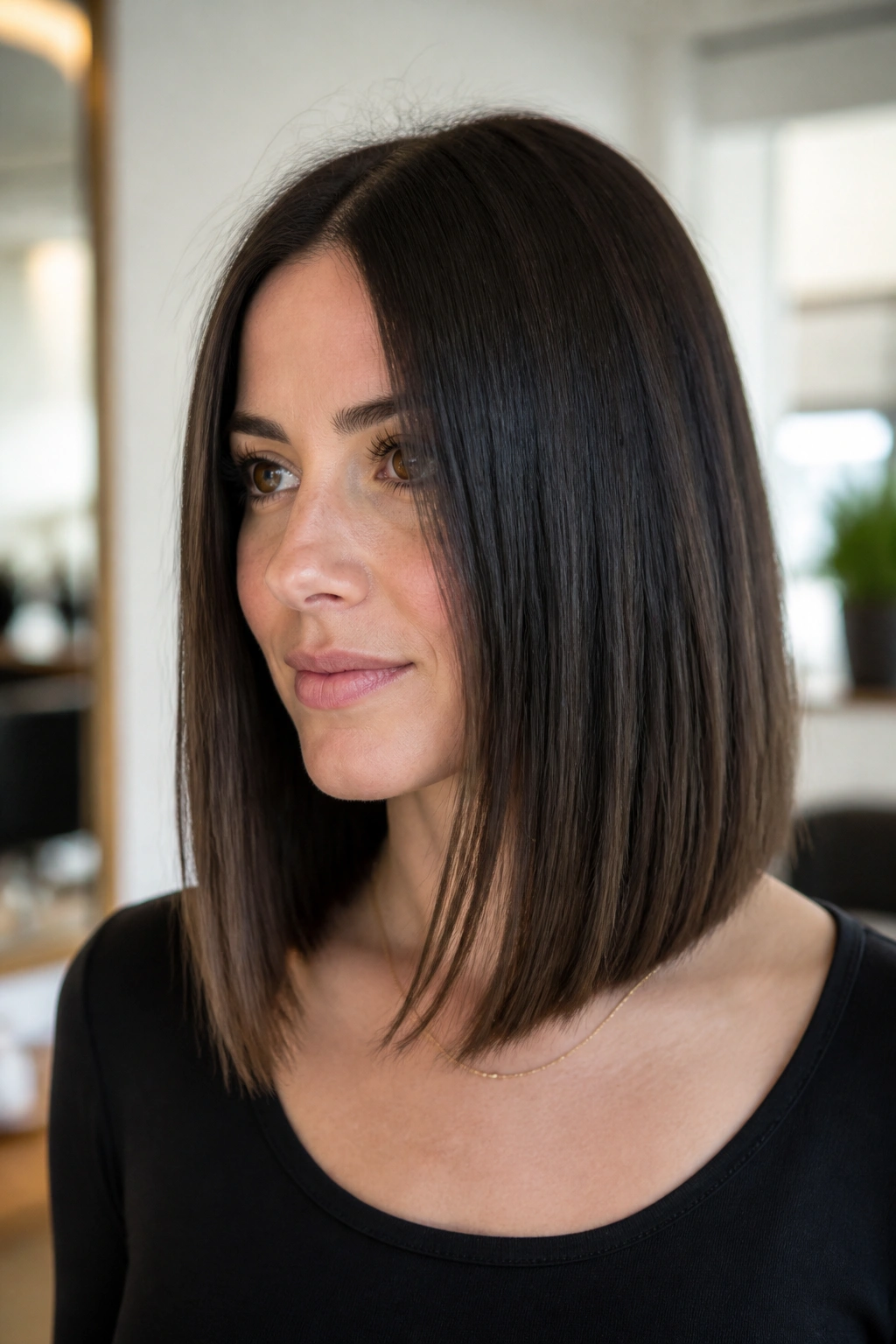
Can a lob have layers and still look sleek? Absolutely, if the layers stay inside the haircut instead of showing at the surface. That’s the whole idea behind an invisible-layer lob. The perimeter stays clean, but the bulk inside the hair gets removed so the shape lies flatter and moves better.
Why It Works
Hidden layers are useful when your hair is thick but you still want a straight finish. They take weight out of the middle and lower sections, which keeps the ends from bulking up. The cut looks polished from the outside and feels lighter when you move it around.
What To Watch For
Too much internal layering can make the ends flick and kick out. A little is fine. A lot changes the whole shape. Ask for light weight removal under the top layer, not a heavily layered lob.
This cut is one of my favorites for people who like a clean look but hate the feeling of heavy hair at the neck. It’s practical. Quietly so.
9. Tucked-Behind-Ear Lob
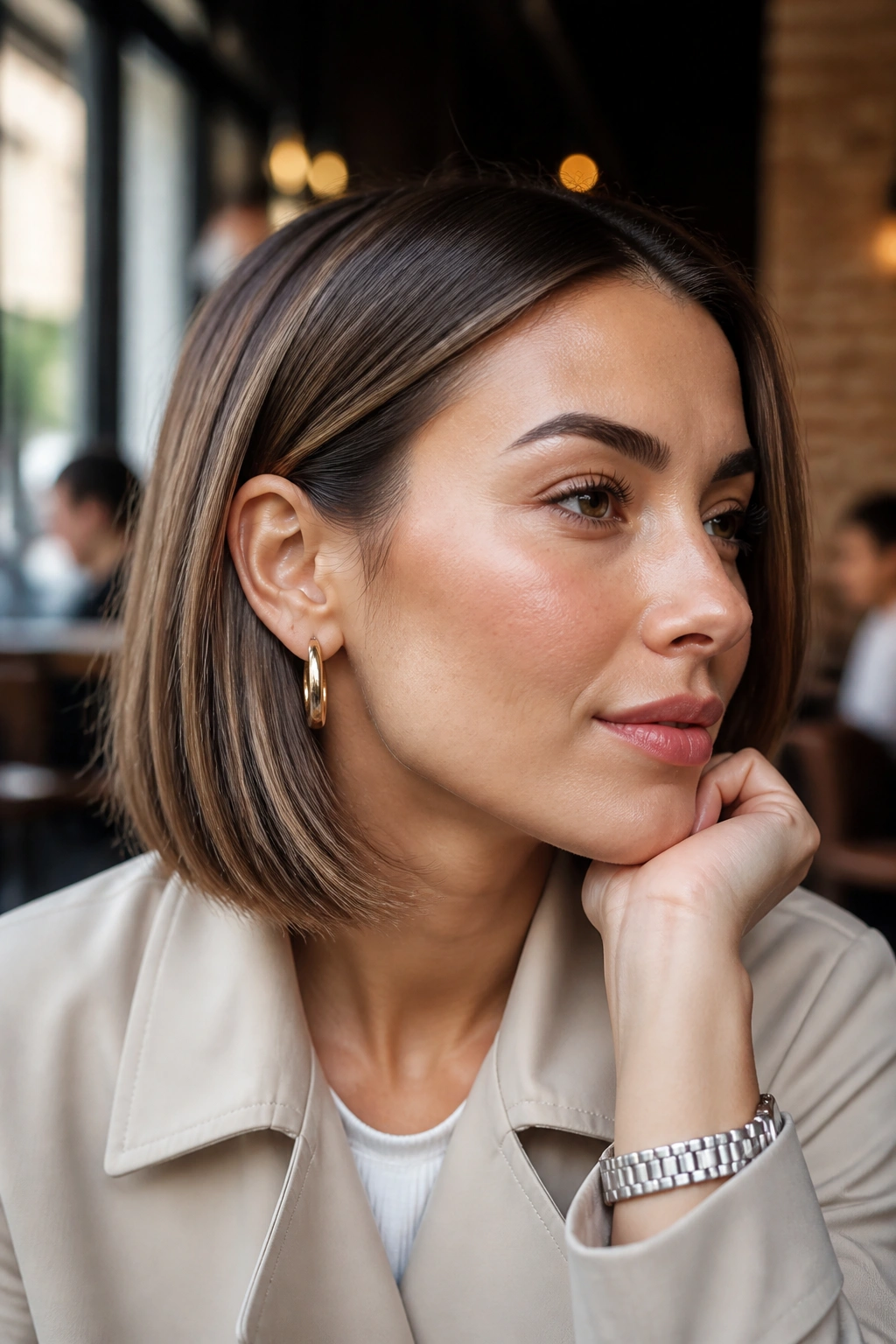
A tucked-behind-ear lob is a small styling idea that changes how the haircut reads. The cut itself usually has enough length around the face to allow the hair to tuck cleanly without springing out in a weird puff. That tiny detail matters more than people think.
I’ve seen this look work especially well with earrings, glasses, and sharp collars. It clears the face just enough to feel intentional, but the rest of the hair still hangs in a straight, medium-length line. That balance is the whole trick.
The best versions don’t rely on a big dramatic asymmetry. They just leave the front pieces long enough to tuck and soft enough to fall back into place when you want them down. Nice. Simple. Useful.
If you like a cut that can go from relaxed to polished in two seconds, this is one of the easiest options on the list.
10. Jaw-Grazing Lob
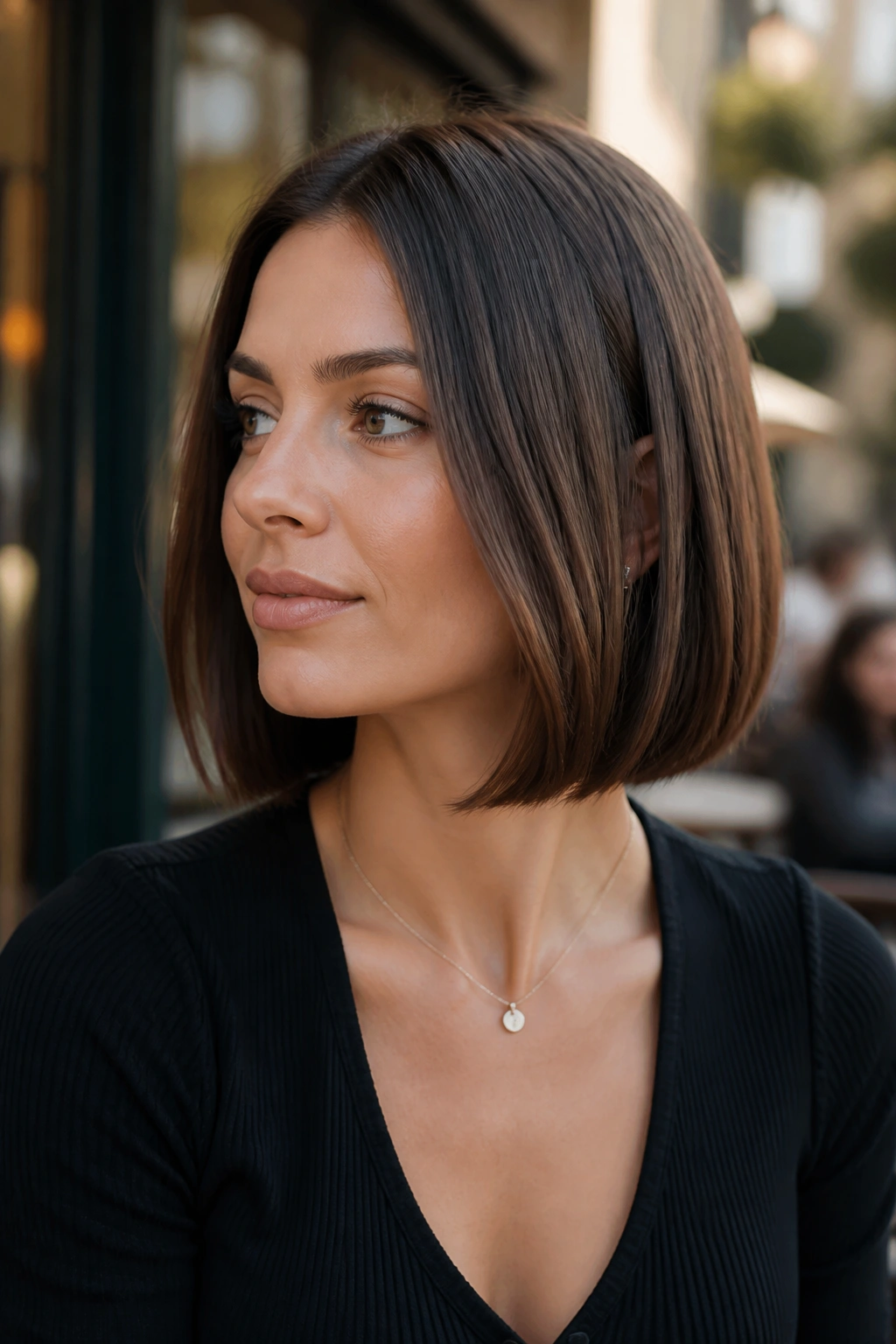
A jaw-grazing lob hits with more edge than a longer version because the line sits high enough to frame the face immediately. It sharpens the jaw, opens the neck, and gives straight hair a crisp silhouette. On the right face shape, it looks sharp in the best way.
- Best for: oval, heart, and square faces that can carry a shorter line.
- Works with: blunt ends, a middle part, or a soft side part.
- Styling move: keep the ends tucked slightly under so the line stays neat.
- Maintenance note: expect trims every 6 to 8 weeks if you want the shape to stay exact.
This is not the most forgiving lob, and that’s part of its appeal. It looks cleaner when the cut is fresh. If you like hair that feels a little architectural, this one delivers.
The jaw length also makes the straight texture feel more deliberate. There’s no hiding behind layers or long pieces. The shape speaks first.
11. Long-Front, Short-Back Lob
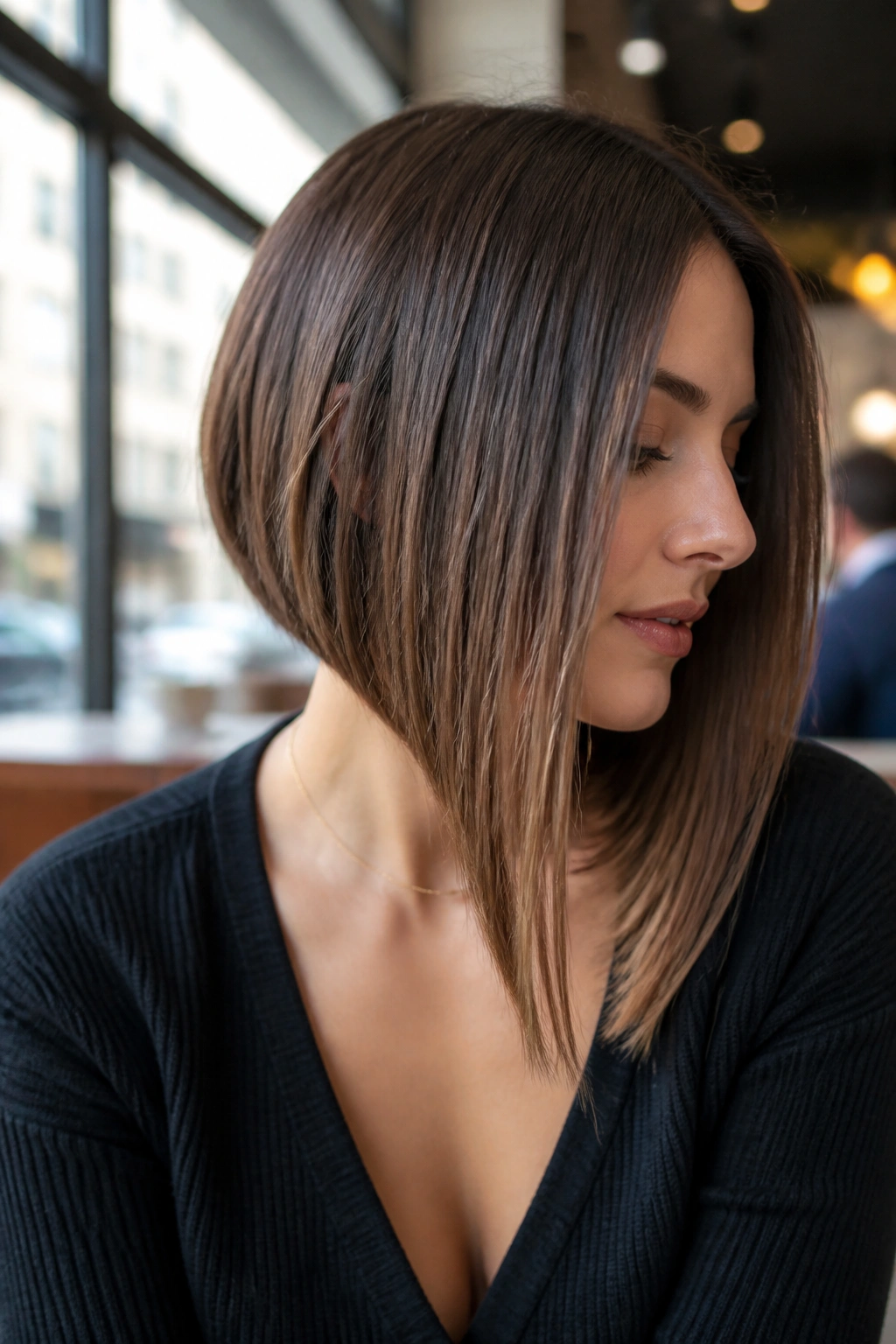
A long-front, short-back lob leans into contrast. The back stays lighter and slightly shorter while the front drops forward, which creates a sleek line that feels a bit more dramatic than a standard angled lob. The effect is strongest on straight hair because the cut line stays visible.
Here’s the part people get wrong: the angle should not be severe unless you want the cut to feel sharp. A moderate difference between back and front usually looks better for daily wear. If the front is too long, the haircut starts reading as two different haircuts glued together.
This shape is especially good when you want your hair to look longer from the front without carrying all that length around the back. It gives the illusion of length while keeping the neck area light. Clean solution. No drama needed.
Wear it with a middle part if you want symmetry, or shift it slightly to make the front sweep across the face.
12. Curtain-Bang Lob

Can curtain bangs and a straight lob live together? Very well, as long as the fringe is soft and not chopped too high. Curtain bangs open the face, and the straight lob below keeps the rest of the look grounded. The combo can be flattering without feeling heavy.
What Makes It Work
The bangs should blend into the front pieces rather than stop abruptly. That’s what keeps the haircut from looking disconnected. A cheekbone-length curtain fringe usually gives the nicest transition on medium length hair.
How To Style It
Blow-dry the bangs forward first, then sweep them away from the face with a round brush. Let the ends of the lob stay straight. That contrast between soft fringe and clean length is what makes the cut interesting.
If you do not want a full fringe, ask for longer face-framing pieces that can be pushed apart. Same idea, less commitment.
13. Feathered Straight Lob
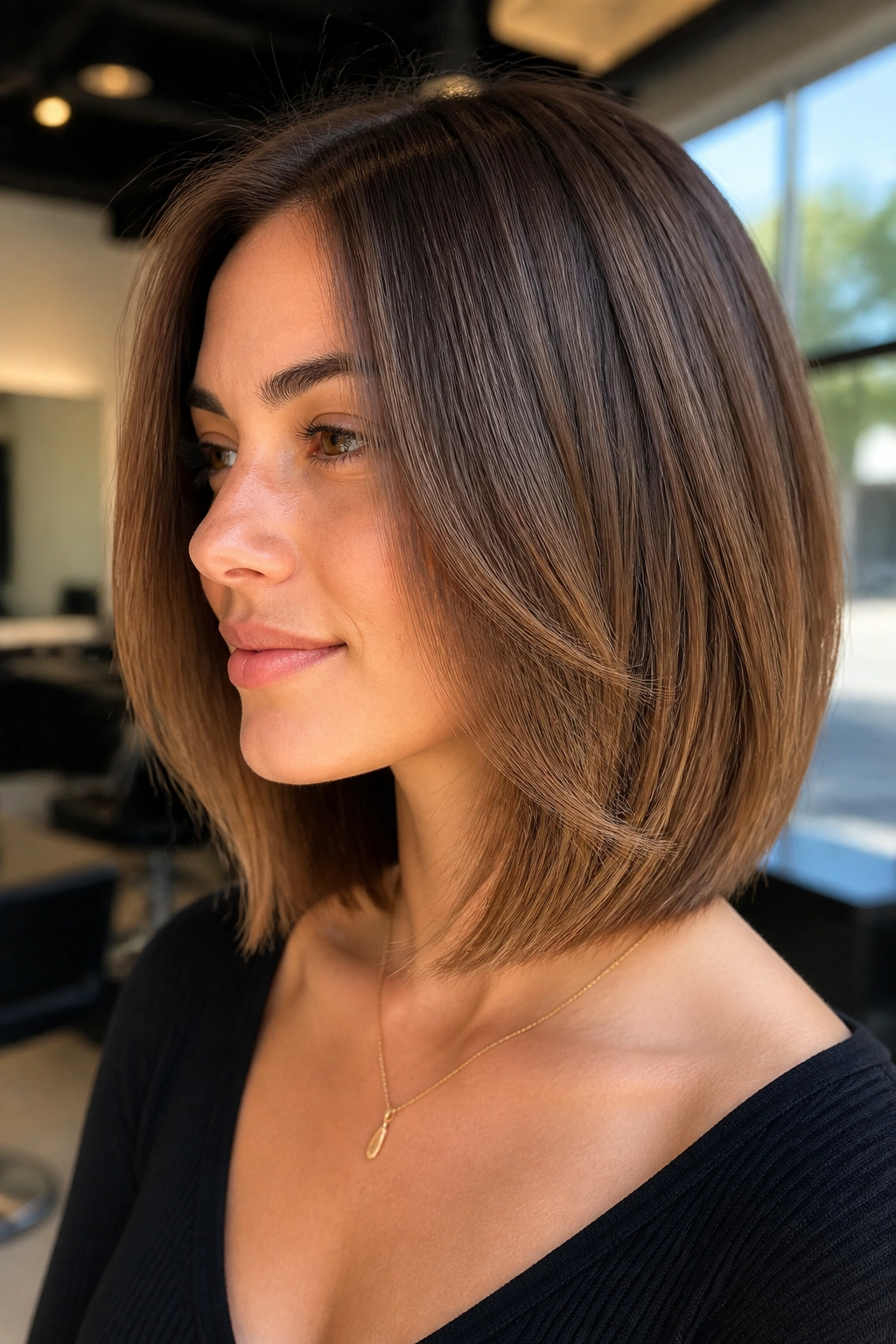
Feathered ends can make a straight lob feel lighter without turning it into a shag. The key is in the edge. Instead of blunt heaviness, the ends are softened so the line has a little air around it. That matters a lot on medium length hair that tends to sit heavy at the bottom.
Feathering is helpful for coarse or dense hair, especially when the perimeter starts to feel boxy. The cut still sits straight, but the edges move when you walk. It’s a subtle difference, and that’s why it works. Too much feathering can look wispy. The right amount just breaks up the weight.
Feathered vs Choppy
Feathered ends are softer and finer-looking than choppy ends. Choppy ends show more separation. Feathered ends blur the line a bit.
Best Styling Move
Use a medium-barrel brush or a large round brush just at the ends. Turn them under or out slightly. Don’t overthink it.
14. A-Line Lob
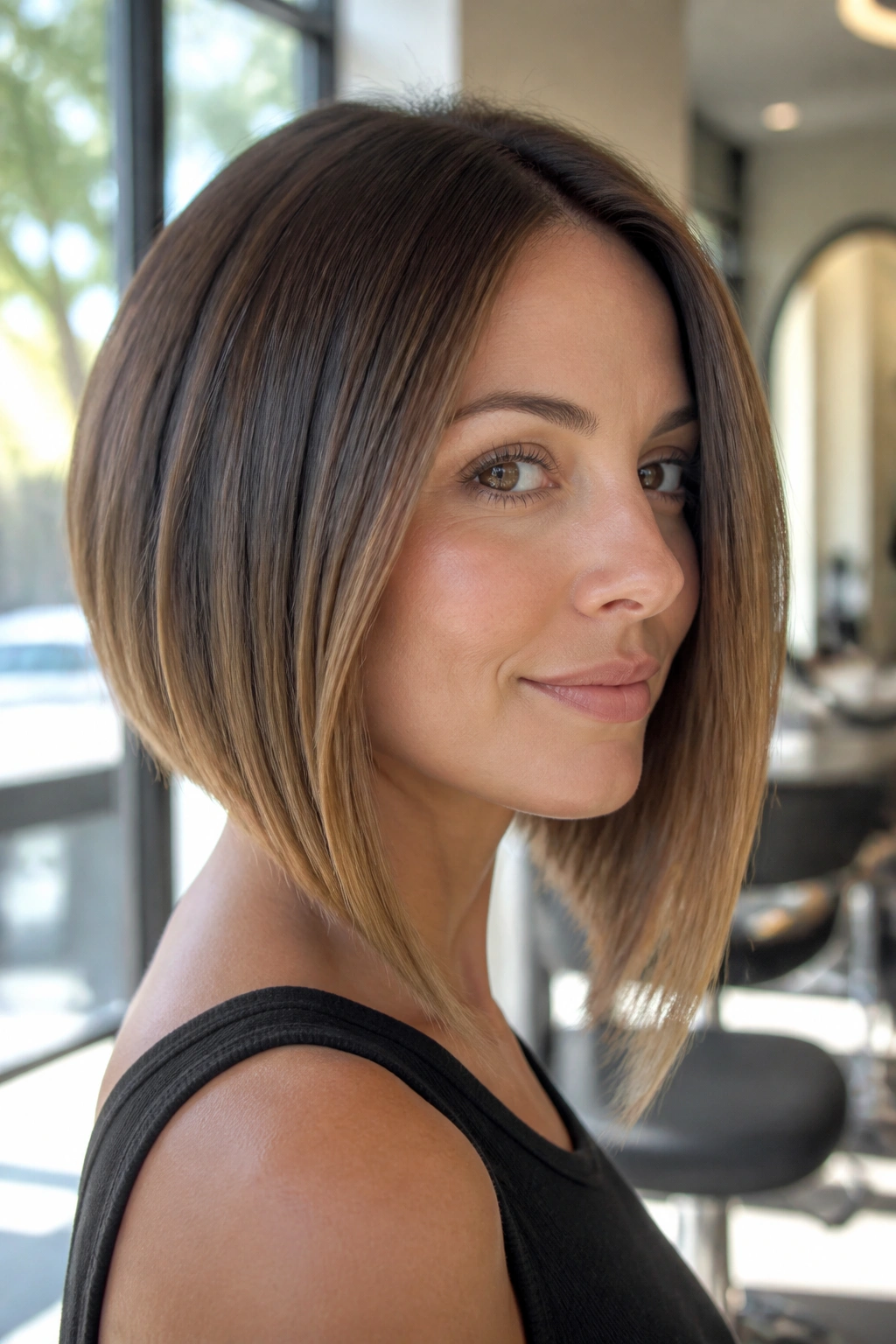
An A-line lob is one of the classic straight-lob shapes: shorter in the back, longer in the front, with a clean slope between the two. It’s a sharper cousin of the collarbone lob and a little more structured than the soft angled versions.
This cut works because the eye follows the line forward. It makes the face look lifted and the neck look longer. Straight hair is ideal for it, since the plane of the cut stays visible from every angle.
What I like about an A-line lob is that it can look dressy without needing much styling. A center part gives it symmetry. A slight side part makes it feel a bit softer. Either way, the shape does the work.
If you want a lob that looks intentional even when the rest of your outfit is plain, this is a strong choice.
15. Minimalist No-Layer Lob
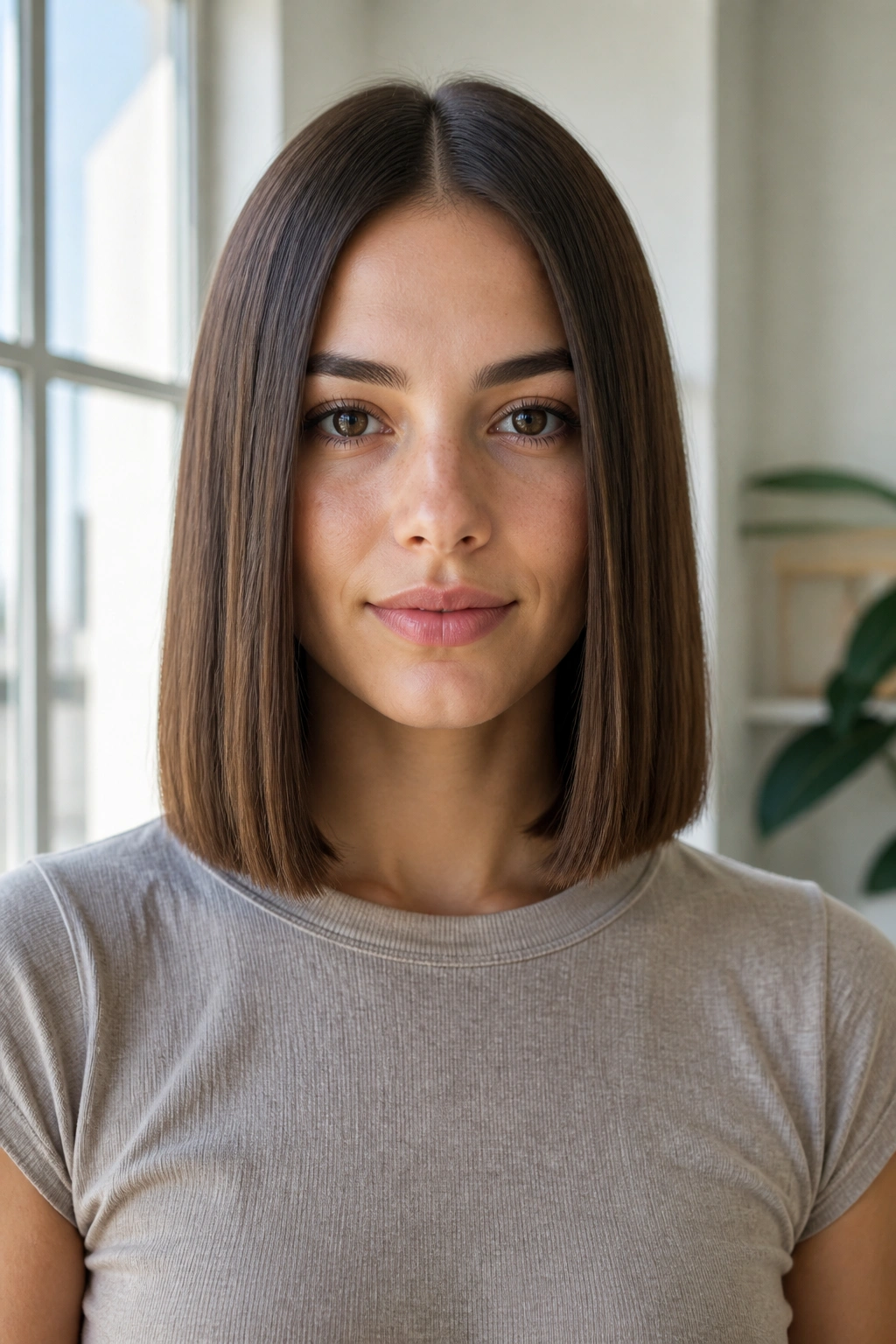
Can a no-layer lob look flat? Sure, if the cut is wrong or the hair is overprocessed. But when it’s cut cleanly and kept sleek, a no-layer lob can look sharp in a way that layered cuts never quite match. There is nowhere for the shape to hide.
The trick is density. Fine hair often benefits from a blunt, one-length line because the ends look fuller. Medium-density straight hair can wear this cut well too, as long as the perimeter sits at a flattering point on the neck. If it lands too low, it loses that neat edge.
This is a low-noise haircut. No face-framing. No hidden layering. No extra movement for the sake of movement. Just a strong line and a polished finish.
Some people find that boring. I get it. But boring hair can be a relief when the alternative is spending twenty minutes fighting with it every morning.
16. Rounded Straight Lob
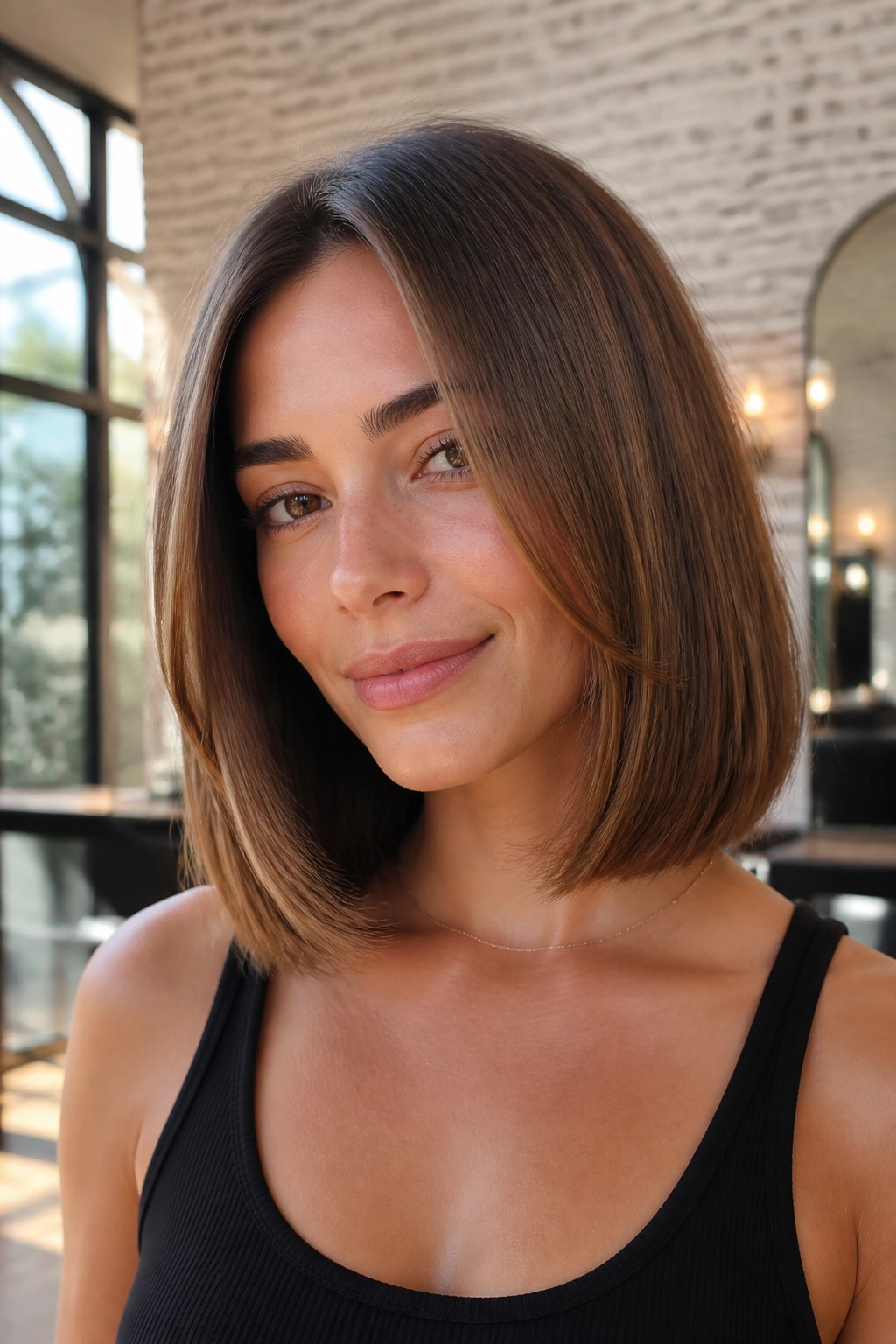
A rounded straight lob keeps the hair straight through the length but lets the ends curve inward just enough to soften the outline. That inward bend can be tiny — a 1-inch round brush bend, nothing theatrical — and it makes the haircut feel more relaxed around the face.
This shape is especially good if your jawline is strong and you want the hair to sit with it rather than against it. The rounded edge stops the lob from feeling hard. It also helps if your hair naturally flips a little at the ends, because you can work with that instead of resisting it.
The best rounded lob looks neat, not curled. That difference matters. You want the line to stay straight in spirit, with only a hint of softness at the bottom.
If your hair has a blunt personality and you want to calm it down, this is a useful cut.
17. Piecey Point-Cut Lob
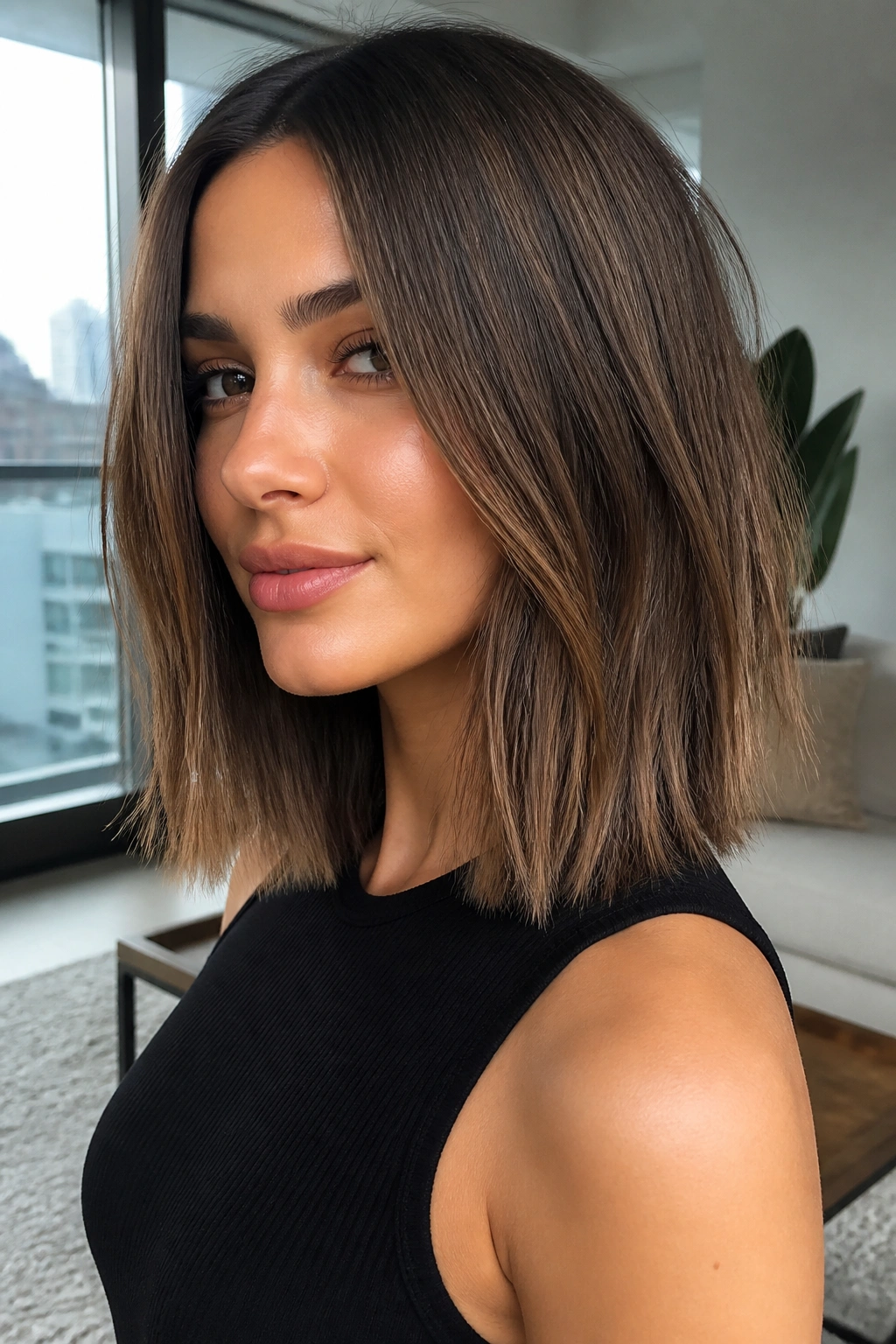
Piecey ends can be a lifesaver for straight hair that lies too flat. Instead of a dense blunt edge, the stylist point-cuts into the perimeter so the ends separate a little. The result is a lob that still reads straight but has small breaks in the line.
This version is good for fine-to-medium hair because it adds texture without stealing too much weight. Too much slicing, though, and the cut starts to feel thin at the bottom. So the point-cutting should be light. Controlled. Barely there.
- Ask for: light point-cutting on the ends, not heavy razor work.
- Style with: a dab of texture cream through the final 2 inches.
- Skip if: your hair is very frizzy, since that texture can make the ends look fuzzy.
- Best effect: a little movement when you turn your head.
Piecey does not have to mean messy. Done right, it just means the lob doesn’t sit like a brick.
18. Shoulder-Skimming Lob
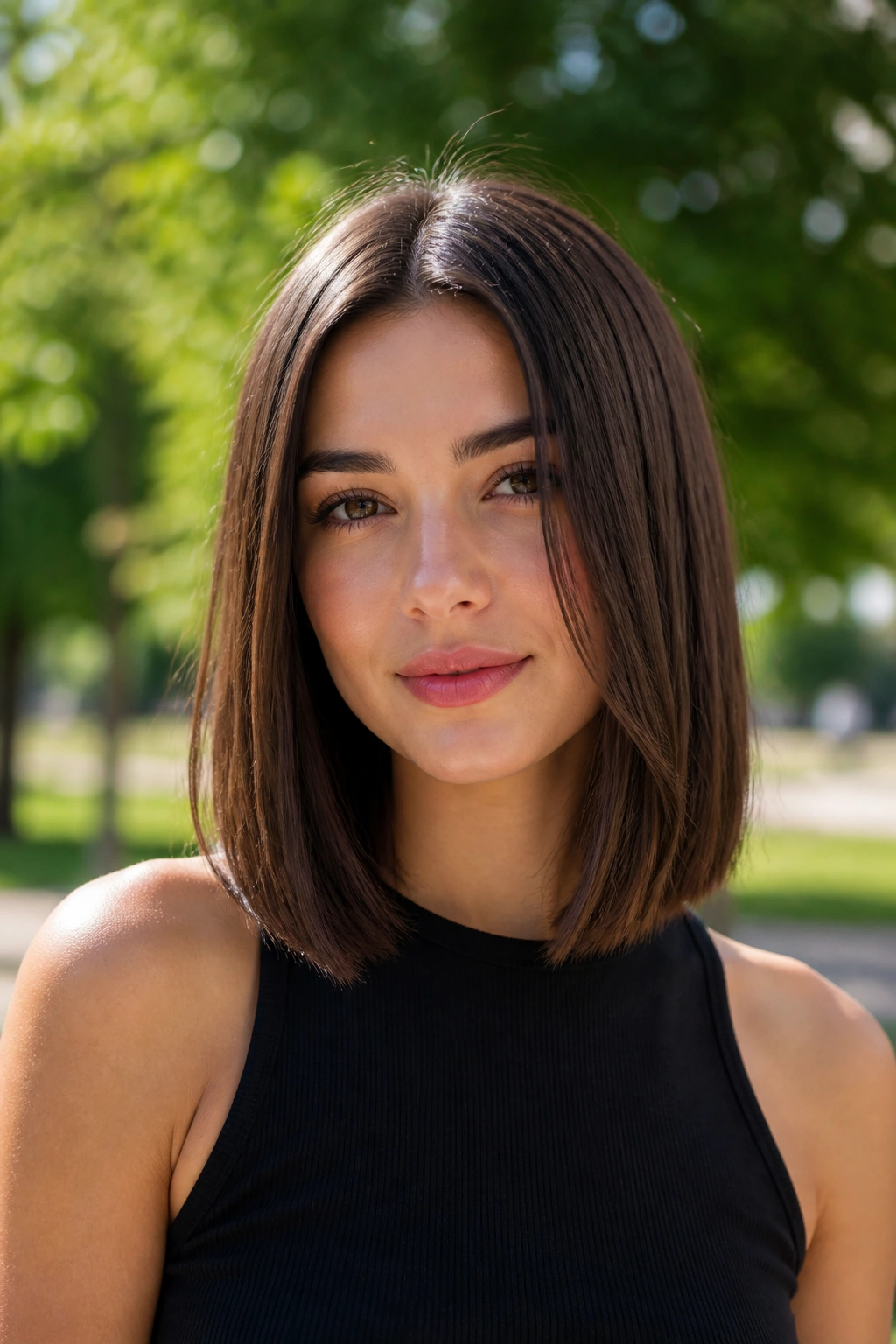
A shoulder-skimming lob is forgiving in a way shorter cuts aren’t. It lands right around the shoulders, which means it can be worn down, clipped back, half-up, or tucked into a low knot without much trouble. It’s the haircut I’d send someone toward if they want straight medium-length hair with fewer bad days.
The reason it works so well is simple: the length has room to move. It’s not cramped at the jaw, and it’s not so long that it starts dragging. For people who dislike frequent trims, this length gives a little breathing room while keeping the lob shape intact.
You may need to watch the shoulder flick, though. Hair at this length sometimes turns outward where it hits the body. A quick pass with a brush or flat iron near the ends keeps it from looking accidental.
This is practical hair. Not flashy. Just useful in a way that keeps paying off.
19. Micro-Fringe Lob
Micro-fringe and straight lob haircuts make a bolder pairing than people expect. The short fringe puts the face front and center, while the medium-length straight cut below keeps the rest from becoming too busy. It has personality. A lot of it.
What It Changes
A micro-fringe shortens the forehead visually and pulls attention up to the eyes. With a straight lob, that creates a strong frame from top to bottom. If the fringe is blunt and the lob is clean, the whole look feels graphic.
Who Should Skip It
If you hate regular bang trims, skip this. Micro-fringe shows growth fast. It also asks a lot of your forehead shape and brow line, which is why it’s not a casual choice.
The good version feels sharp and fashion-minded. The bad version can look like a regret in three weeks. That’s not a flaw. It’s just the deal.
20. Sharp Geometric Lob
A sharp geometric lob is for someone who likes lines that look almost drawn on. The perimeter is clean, the corners are defined, and the shape tends to feel a little boxier than a soft lob. Straight hair shows that geometry well, which is why this cut can look so striking.
I prefer this when the goal is structure, not softness. The cut frames the head in a very direct way, and that works especially well with minimal styling. A side part can soften it a little, but the point is still the edge. You want the line to stay visible.
This is one of those cuts that can make plain clothes look better. A white shirt, a blazer, a plain knit — all of them seem to sit differently when the hair itself has a firm shape.
If you like precision and dislike frilly details, this one is hard to beat.
21. Soft U-Shape Lob
A soft U-shape lob keeps the length straight but lets the back dip slightly lower than the sides. That creates a gentle curve instead of a hard line across the bottom. It’s softer than a blunt cut, but not layered enough to lose the straight-lob feeling.
The U-shape is useful when you want a little sweep around the shoulders and neck. It also plays nicely with straight medium length hair that feels too even across the bottom. The curve gives the eye somewhere to travel.
How It Differs From a V-Shape
A V-shape comes to a point in the back. A U-shape rounds out instead. For a lob, the rounded version usually feels easier and more modern. Less dramatic. Less fussy.
This is a good middle path if blunt cuts feel too rigid but layers feel too busy. It sits in the gap between the two and does its job quietly.
22. Sleek Side-Swept Lob
A sleek side-swept lob uses the part and the front angle to create a sweeping line across the face. It’s not the same as a deep side part that simply shifts volume. This version is shaped to let the front fall in a deliberate arc, which gives the haircut a little motion even when the rest stays straight.
The trick is keeping the front long enough to sweep without collapsing into the cheek. If the shortest front piece is too high, the effect gets choppy. If it’s too low, the sweep disappears. Right around cheekbone length tends to work well.
- Best with: a flat iron finish or a polished blow-dry.
- Good pairing: statement earrings or a clean neckline.
- Styling tip: direct the front away from the face while drying, then set the bend with a cool blast.
- Avoid: too much root product at the front, which can make the sweep stick.
This look feels controlled, which is why it’s so strong.
23. Low-Maintenance Air-Dry Lob
A low-maintenance air-dry lob is what you want when you love the straight-lob shape but do not want to stand at the mirror every morning with a round brush. The cut has to do most of the work here. That means clean ends, minimal layering, and a length that falls where your hair naturally behaves.
Straight or slightly wavy hair does best with this approach. If your hair frizzes easily, the cut still helps, but you’ll probably need a smoothing cream or a leave-in that keeps the surface calm. The point is not perfection. The point is that the hair looks neat without being forced.
This is one of the few lob styles where a little imperfection can look good. A soft bend at the ends, a natural part that shifts during the day, a piece that tucks behind the ear on its own — all of that works.
If your routine is short and your patience is shorter, this cut makes sense.
24. Fine-Hair Thickening Lob
Fine hair usually looks best in a lob when the bottom edge stays dense and the layers stay scarce. That sounds simple, but it gets missed all the time. People ask for movement and accidentally get a see-through perimeter. Then the haircut feels thinner than before.
The better approach is a blunt or nearly blunt edge with only a small amount of interior shaping. That keeps the hair looking wider at the bottom. If you want a touch of softness, ask for the front pieces to be lightly framed around the cheek rather than thinned everywhere.
- Keep the ends blunt.
- Avoid heavy razoring.
- Use a root lift spray at the crown.
- Blow-dry with a flat brush for tension.
Medium length hair with fine texture can look surprisingly full in a lob because the cut stops the ends from trailing off. It’s one of the few styles where a little less is usually more.
25. Polished Tapered Lob
A polished tapered lob is the calmest-looking version on this whole list, and I mean that in a good way. The shape starts clean at the back, tapers softly around the sides, and keeps the straight line intact without making the cut feel boxy. It’s neat. Controlled. Easy to wear.
This is a smart choice if you want medium-length hair that looks groomed even on a quiet day. The taper keeps the ends from feeling heavy, while the straight perimeter still gives the haircut presence. It works especially well when you want hair that can sit tucked, loose, or pinned without losing the overall line.
The best thing about this cut is how little it argues with your life. It grows out cleanly, takes a flat iron well, and doesn’t need a lot of extra styling to look finished. There’s no fuss hidden inside it. That’s part of the charm.
If you want one lob that lands somewhere between crisp and easy, this is the one I’d keep.
