



Auburn copper bob haircuts for fine hair work because they play two tricks at once. The cut gives the hair a cleaner outline, and the color gives it more visual depth. That matters more than people think. When strands are fine, you do not need a lot of bulk to get the look of fullness — you need shape, shine, and a perimeter that holds its line.
Fine hair can go flat fast. A blunt edge helps. A soft bend helps. Warm copper tones help even more, because they catch light across the surface in a way cooler shades often don’t. The result can look denser, richer, and a little more alive without making the cut feel heavy.
The catch is that not every bob does the same job. Some cuts look better at chin length. Some need a side part. Some need barely-there layers, while others fall apart if you thin them too much. That’s the part that usually gets skipped, and it’s the part that matters most when your hair is fine and you want it to look intentional, not wispy.
So the good cuts are the ones that respect the hair you actually have. Clean lines. Smart graduation. Soft texture in the right places. A little copper warmth does the rest.
1. Jaw-Length Blunt Bob in Auburn Copper
A jaw-length blunt bob is one of the easiest ways to make fine hair look thicker without begging for extra styling time. The blunt edge gives you a hard visual line, and that line is what the eye reads as density. Auburn copper adds a second layer of fullness because the warm tone reflects light instead of swallowing it.
This cut works best when the ends are kept clean, not feathered into nothing. If your stylist starts slicing too much texture into the bottom, the shape can lose its weight fast. Ask for a crisp perimeter that sits right at the jaw or just below it, with only the softest internal movement if your hair needs it.
No fuss. That’s the appeal.
A round brush and a quick bend under the ends are usually enough. If you like a flat iron, keep the motion slow and gentle so the bob stays smooth instead of pinched. Fine hair often looks better when the finish is soft and glossy rather than overworked.
2. Side-Parted Chin Bob with Tucked Ends
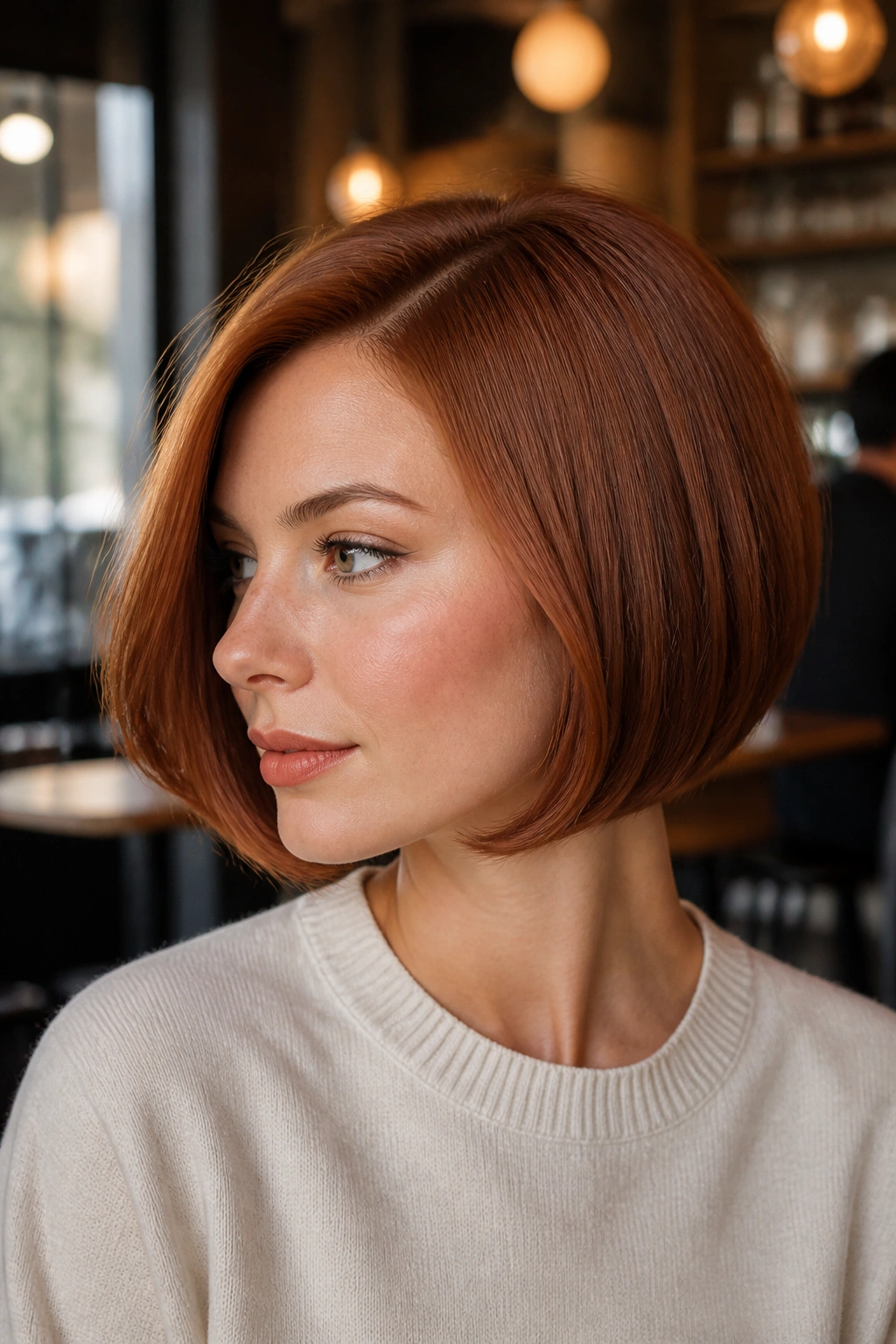
Why does a side part matter so much on fine hair? Because it lifts one side at the root without asking the whole head to do the same job. That little shift gives the bob a bit more height at the crown, which can make the shape feel fuller in the mirror.
Why It Works on Fine Hair
The chin length keeps the ends close enough together to look dense. Tucked ends pull the outline inward, which gives the haircut a clean, controlled finish instead of a puffed-out one. Auburn copper helps here because a side part throws more light across the front panel of hair.
A few things make this version sing:
- Keep the part slightly off-center, not way over.
- Tuck the ends under with a small round brush or a 1-inch curling iron.
- Ask for minimal layering so the bob does not lose body.
- Use a light mousse at the roots, not a heavy cream.
Best for: hair that falls flat at the crown but still has enough slip to move.
Skip the heavy serum: it can flatten the whole shape by noon.
3. Soft A-Line Bob with a Slight Stacked Back
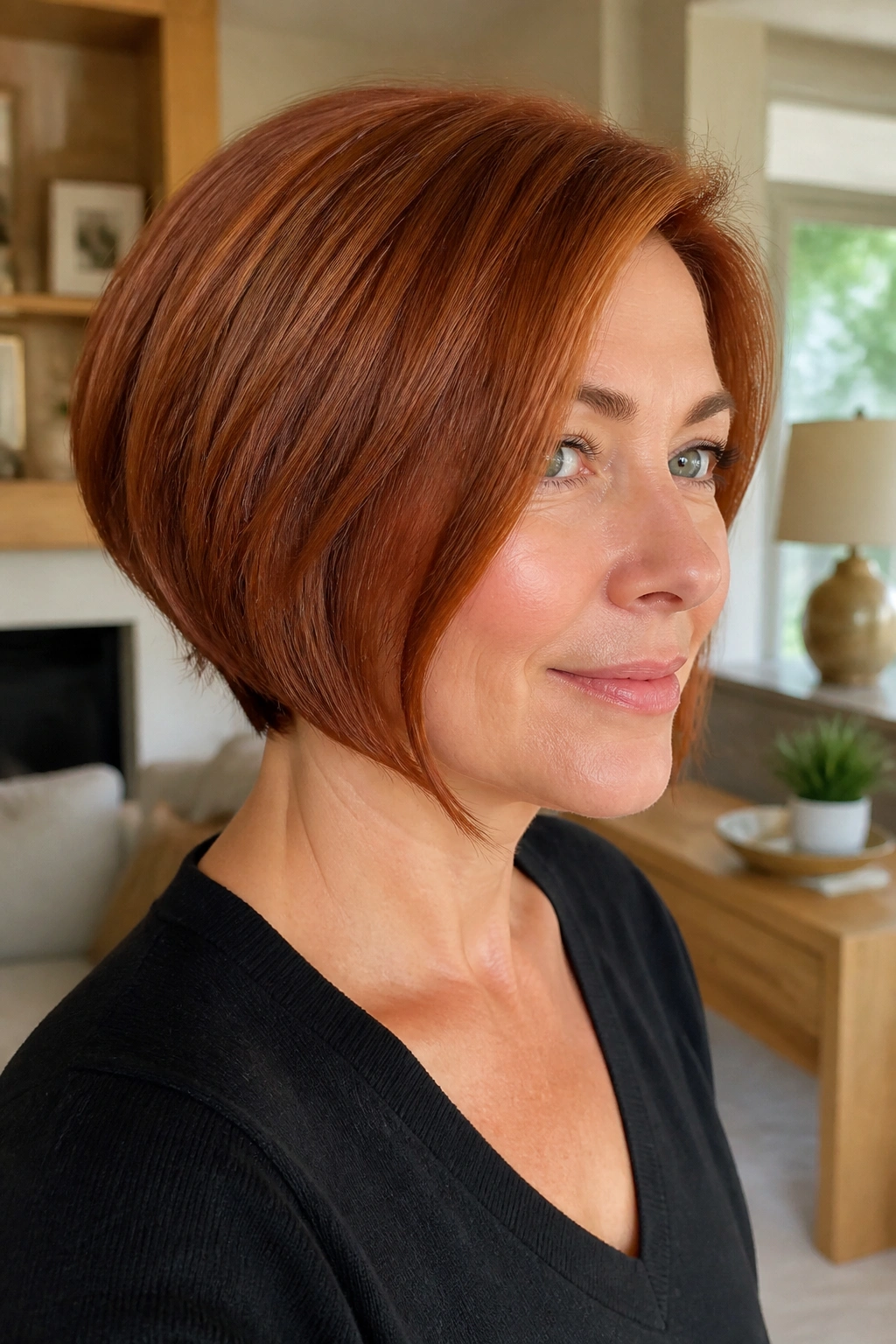
If your hair collapses at the nape by lunchtime, a soft A-line bob can fix the whole mood. The shape is shorter in the back and a touch longer in the front, so the haircut gets a built-in diagonal that looks sleek but not severe. On fine hair, that diagonal line can create the illusion of more structure than the hair actually has.
The key word is slight. A dramatic stack can make fine hair look too thin through the top if the internal weight gets removed too aggressively. A gentle A-line keeps the back neat while letting the front pieces skim the jaw and collarbone.
Auburn copper makes the angle look richer. The darker depth near the nape and the brighter front sections work like a visual frame. It’s one of those cuts that looks polished even when you’ve only spent ten minutes on it.
A quick blow-dry with the brush aimed downward usually does the trick. You want the ends to curve in just enough to show the shape, not flip out like they’ve had a bad day.
4. French Bob with Wispy Bangs

A French bob can be a cheat code for fine hair, but only if the bangs stay light. Too much fringe turns the whole cut into a curtain, and curtain bangs on fine hair can swallow the face fast. Wispy bangs keep the forehead open while still giving the style that short, cheeky feel people like so much.
The length usually sits around the chin or just above it, which is short enough to make the ends look compact. Auburn copper adds a soft glow across the fringe, so the bangs don’t disappear into the rest of the cut. That matters. A fringe on fine hair needs to be seen, not hidden.
What to Ask For
- A chin-grazing shape with a blunt-ish bottom line.
- Bangs that are thin enough to move, not sit in one slab.
- A slight bend in the sides so the cut doesn’t box out your face.
- Minimal texturizing at the tips.
Dry the bangs first. Always. If you let the rest of the hair sit damp while the fringe dries in every direction, the whole bob gets hard to manage later. A tiny round brush and a quick side-to-side dry are usually enough.
5. Collarbone Bob with Barely-There Layers
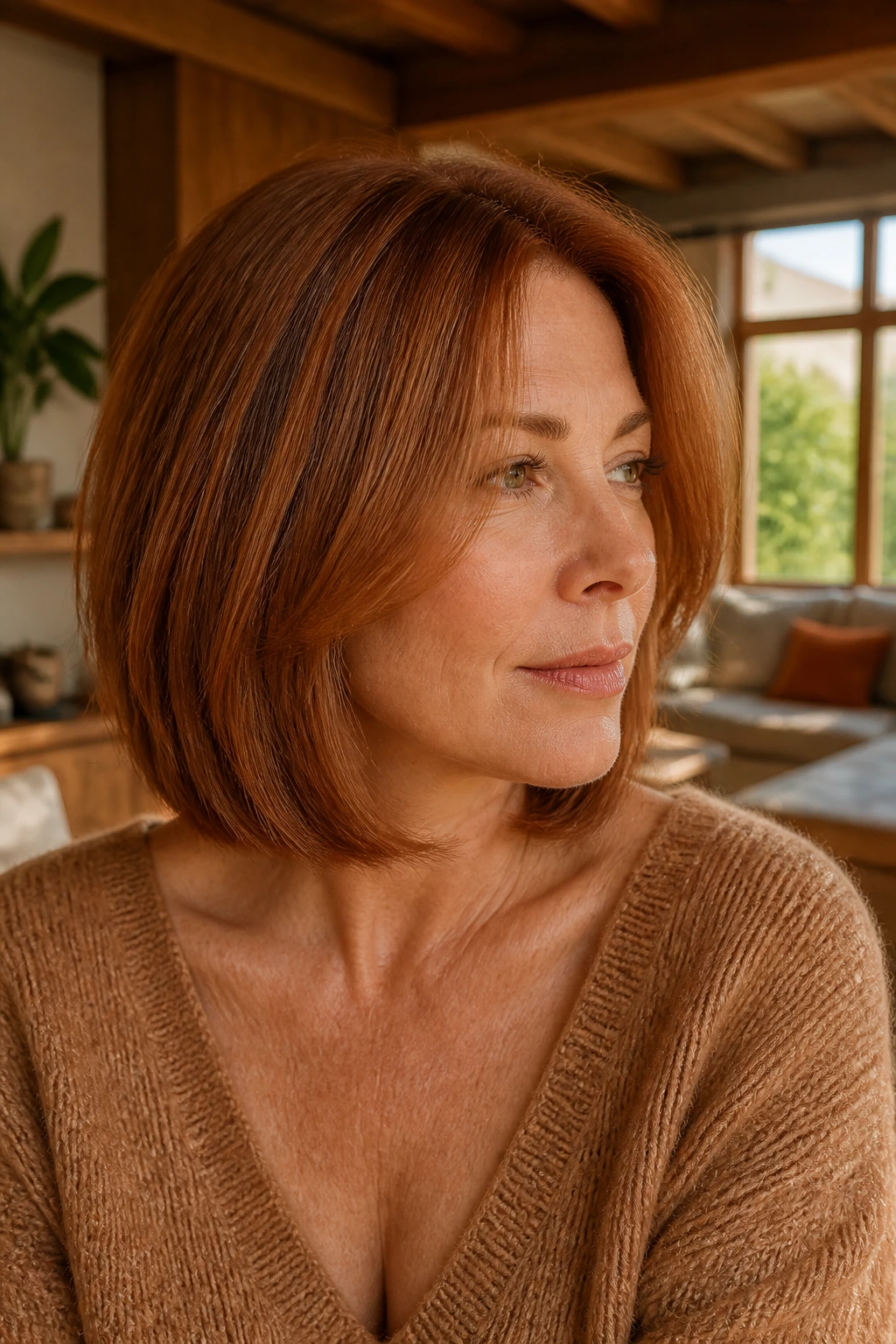
Fine hair does not always need to go shorter. That’s the part people miss. A collarbone bob can keep enough length to give the hair some visual weight, which is handy if your ends are thin but your hair still has a little natural movement. The trick is keeping the layers nearly invisible.
Auburn copper gives this longer bob a richer finish than a flat brown would. The color fills in the gaps between strands, especially near the ends where fine hair can look sparse. Barely-there layers near the front can help the cut bend without stealing density from the back.
This is a good choice if you are growing out a shorter bob or you want to keep some ponytail length. It also behaves better than a heavily layered lob when your hair is fine and straight, because the bottom line stays strong.
I like this shape on people who want to air-dry half the week and blow-dry only when they have to. It does not demand a perfect finish to look good. That’s a big part of the appeal.
6. Rounded Bob with a Deep Center Part
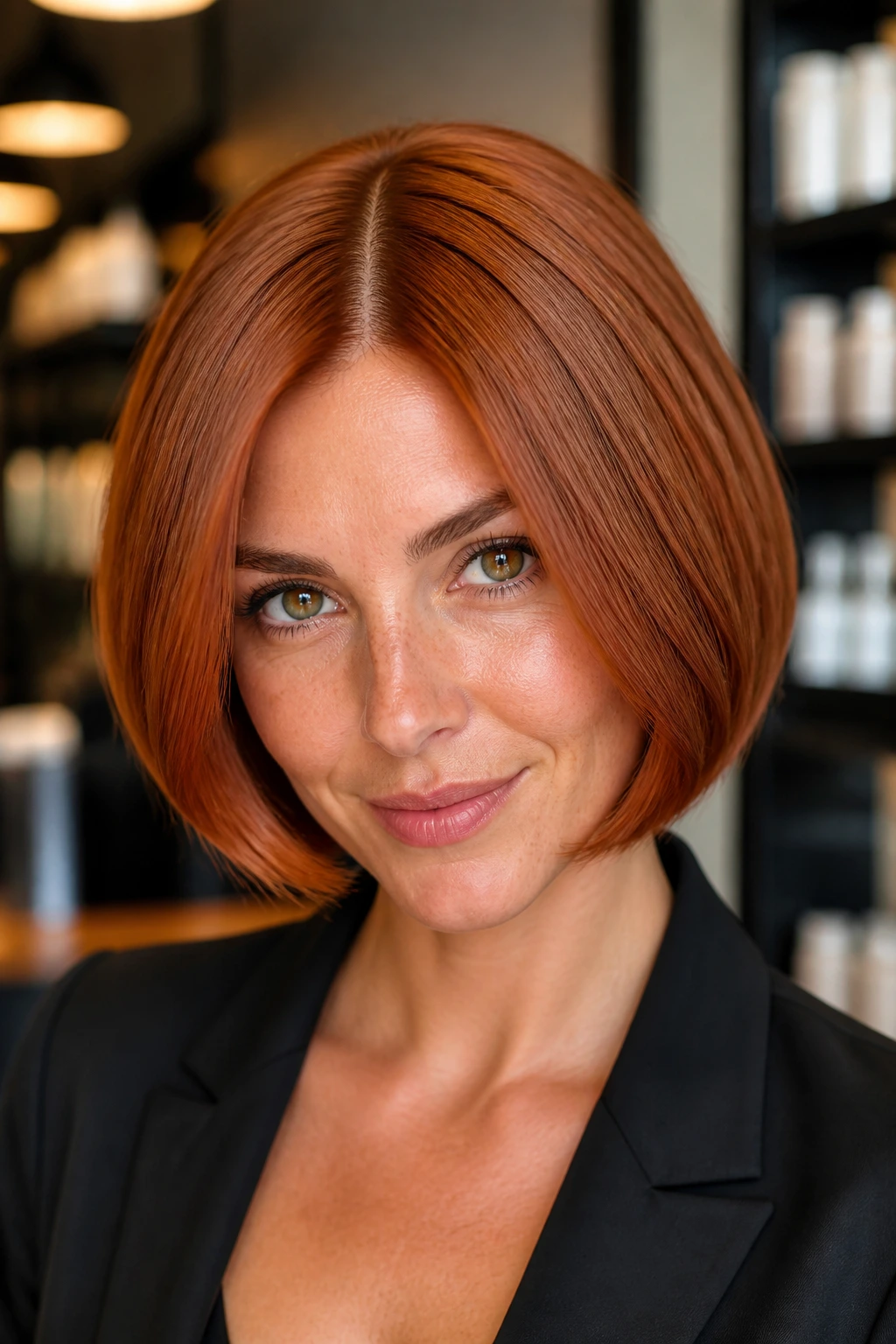
Can a center part work on fine hair? Yes, if the bob around it is rounded enough to support the shape. A deep center part can make the face look balanced and open, but the haircut has to do the heavy lifting. The sides need to curve in, not hang limp and straight.
Where the Round Shape Helps
The rounded outline gives the bob a soft body through the middle, which keeps the ends from looking stringy. Auburn copper warms up that curve, so the whole style reads as fuller from the front. It’s a neat illusion, and it works.
A centered part suits hair that already has some smoothness or a small natural wave. If your roots lie flat no matter what, you’ll need a bit of lift spray or root mousse at the crown. Nothing heavy. Fine hair hates weight.
How to Style It
- Blow-dry the top section upward first.
- Turn the brush inward at the ends.
- Keep the center part narrow and clean.
- Finish with a flexible spray, not a hard shell.
This cut has a calm, tidy look that feels more expensive than fussy. It’s not dramatic. That’s the point.
7. Chin-Length Bob with Face-Framing Pieces
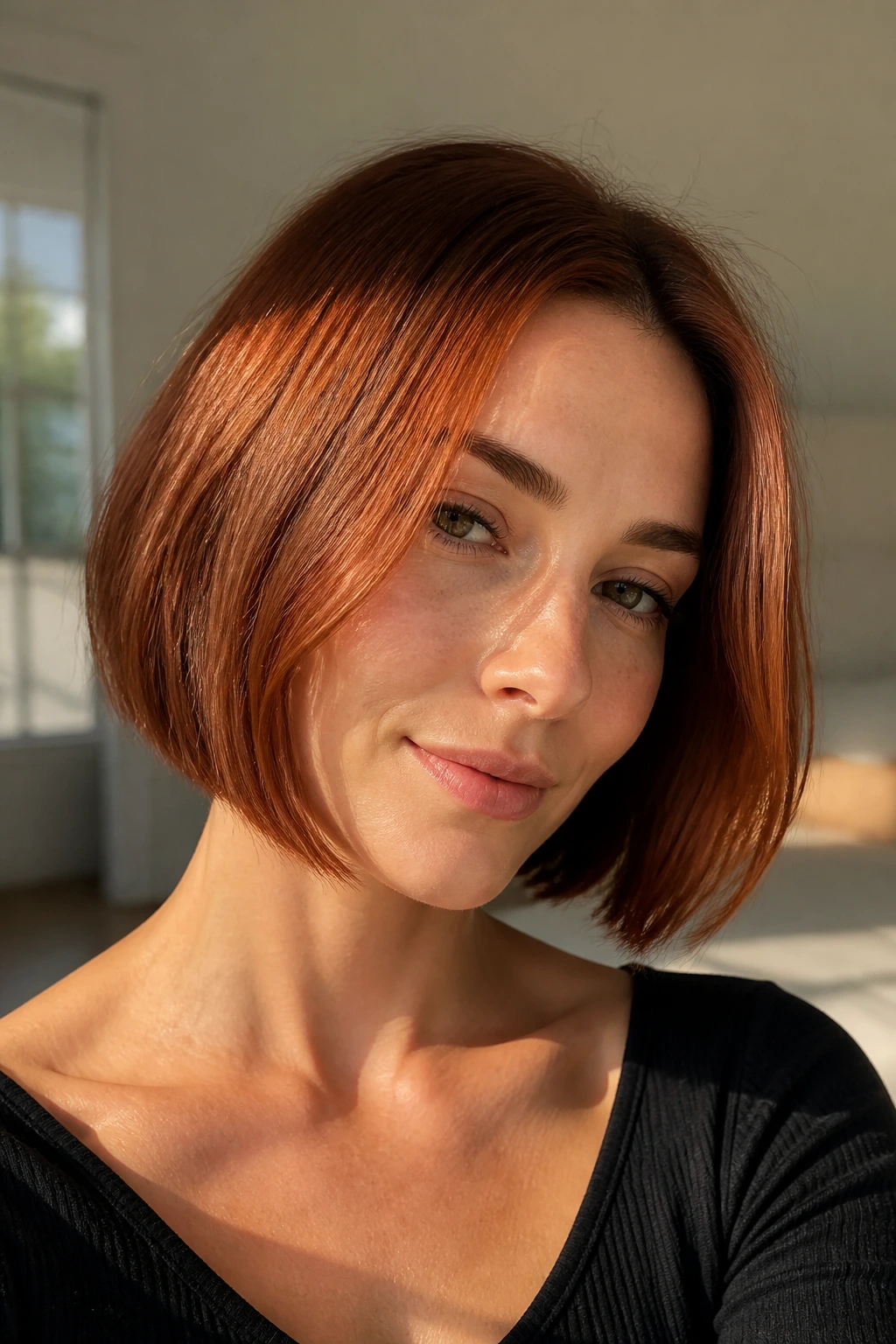
I keep coming back to this shape because it fixes the boxy problem so many bobs have. A chin-length bob with a couple of face-framing pieces softens the jawline and gives fine hair a little movement where it matters most. The haircut still feels compact, but it stops looking like a helmet.
Those front pieces should start around the cheekbone or just under it, then taper gently toward the chin. Auburn copper makes them stand out in a good way, especially if the rest of the bob stays a touch deeper. That tonal shift is subtle, but it gives the eye something to follow.
A few salon notes help:
- Keep the back blunt and full.
- Ask for only two to four front pieces.
- Make sure the shortest layer does not land too high.
- Avoid aggressive thinning around the face.
This one works if you want your bob to feel softer without losing the density at the bottom. It’s a smart compromise. And sometimes that’s the whole game.
8. Sleek Glass Bob in Deep Auburn Copper
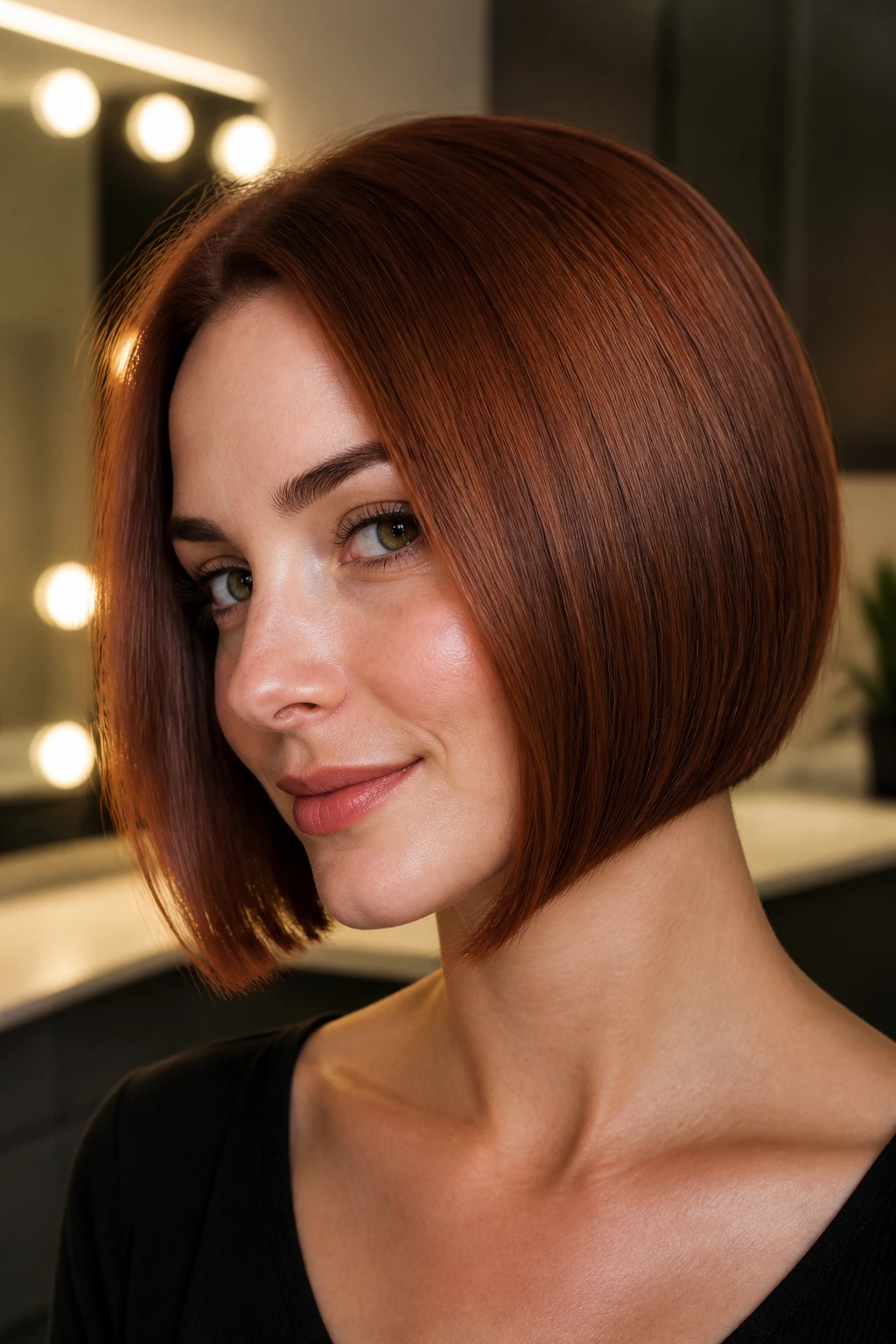
A sleek glass bob is one of the few styles that can make fine hair look expensive without much effort. The clean surface matters here. So does the color. Deep auburn copper gives the hair a glossy finish that catches light in a smooth sheet, which makes the cut look denser than it is.
The danger is overloading it with product. Fine hair does not need a lot of oil to look shiny. A pea-sized amount through the ends, maybe a touch of heat protectant, and that’s usually enough. Too much serum and the whole shape goes soft and greasy fast.
This cut is strongest when the perimeter is sharp and the blow-dry is controlled. Aim the dryer downward, seal the ends with a paddle brush, and do not rough up the cuticle at the finish. The look should feel sleek, not stiff.
It’s a good match for straight hair, or hair that likes to behave after a flat iron. If your hair frizzes easily in humidity, this is still workable — just keep the finish simple and avoid too much touching after styling.
9. Textured Bob with Hidden Internal Layers
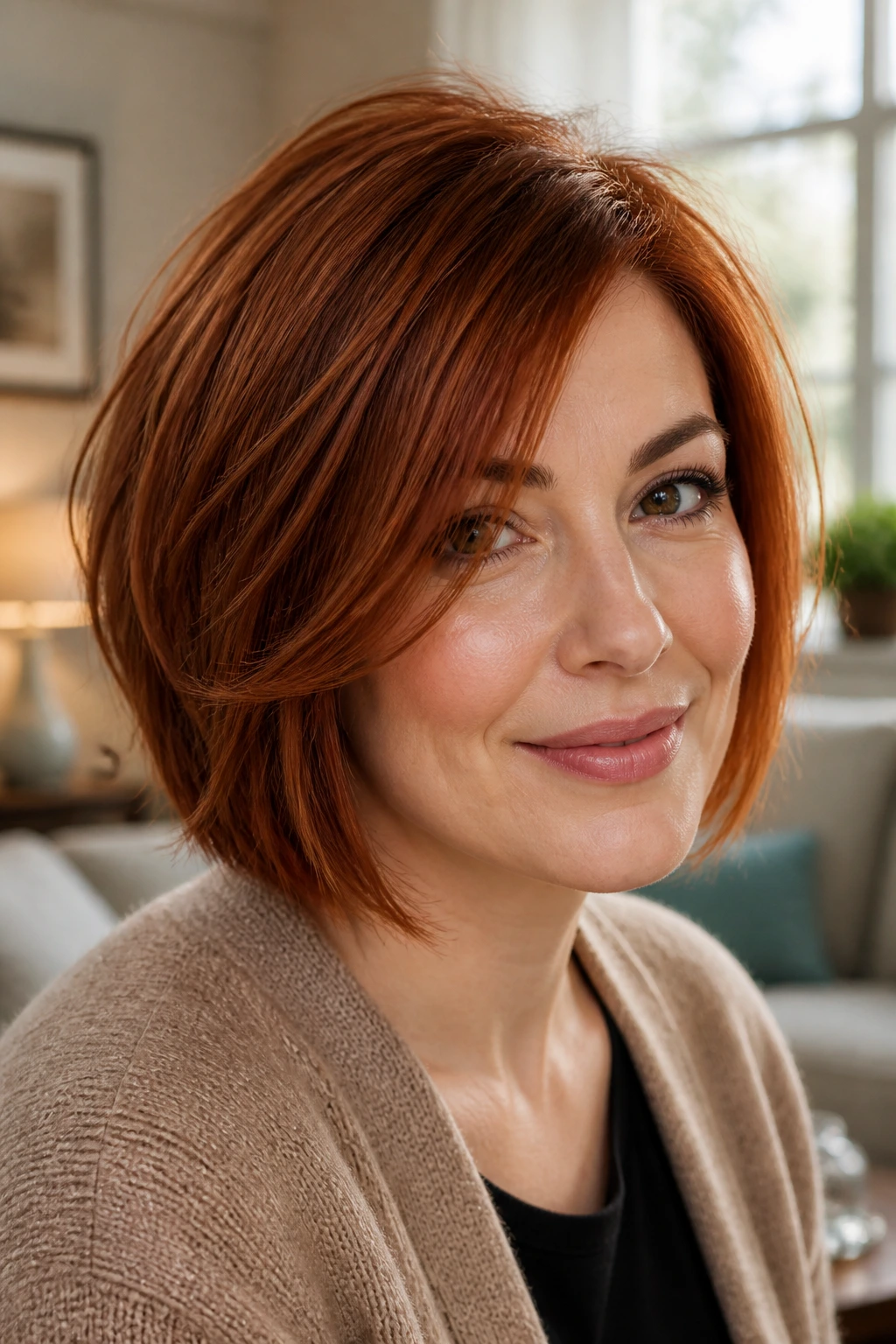
Fine hair can handle layers, but only if the layers stay inside the shape. Hidden internal layers remove bulk from the right places without fraying the outer line. That’s what makes this bob different from the choppy, over-thinned cuts that leave fine hair looking see-through.
Why Internal Layers Matter
The cut keeps the outside perimeter strong while the inside gets a little air. That means you get movement when you turn your head, but the bob still reads full from the front. Auburn copper helps by creating tiny shifts in tone between the top pieces and the lower section, which adds depth without needing obvious highlights.
What to Tell Your Stylist
- Keep the bottom line blunt or only lightly softened.
- Cut internal layers with scissors, not a heavy razor.
- Leave the crown fuller than you think you need.
- Check the haircut from the side, not only the front.
Watch this part: if the stylist starts removing too much around the ears or the nape, the bob can lose its shape in a week. Fine hair has no spare weight to waste.
This is a strong choice for people who want movement but hate looking wispy.
10. Micro Bob with a Soft Edge
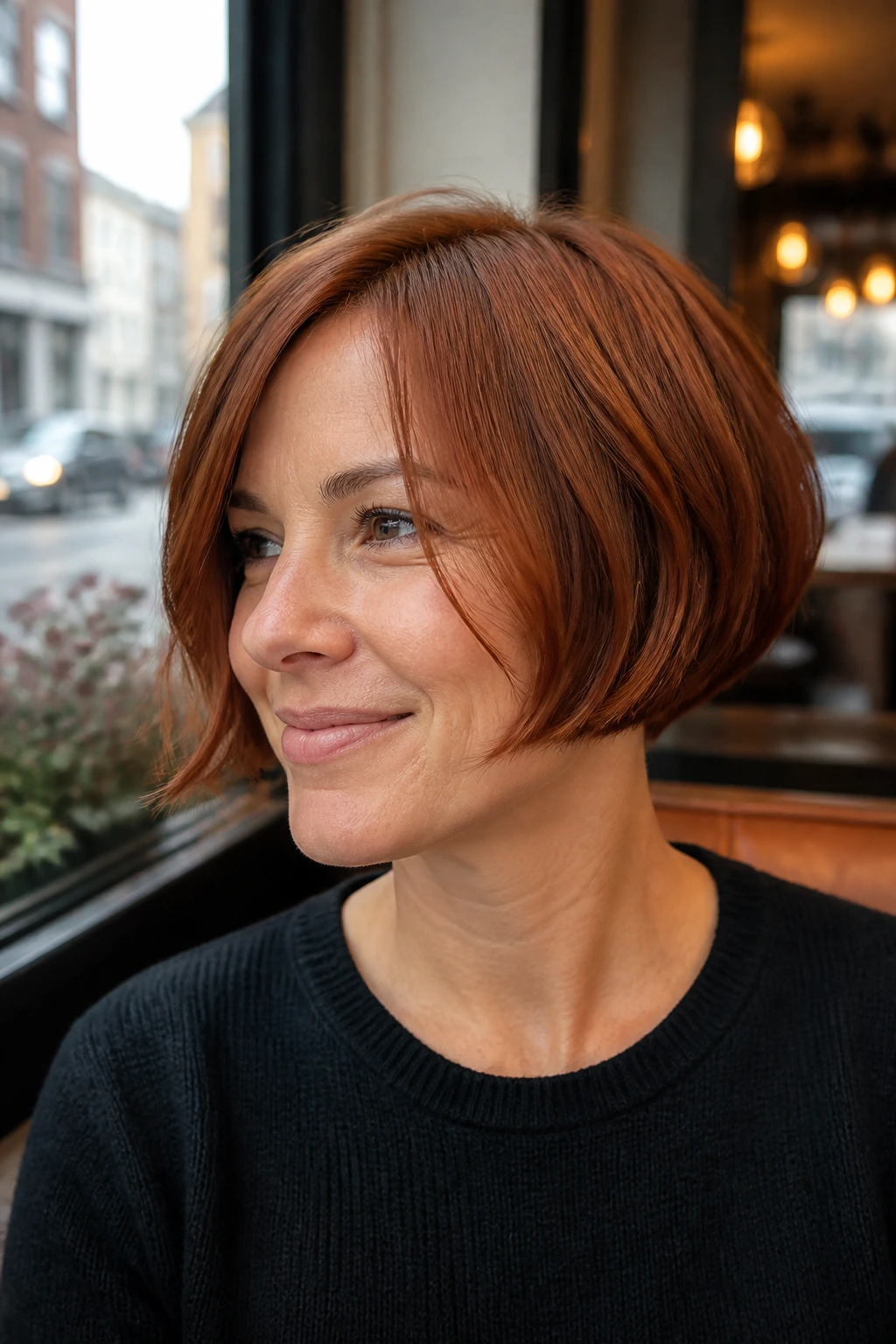
Can a bob be short and still feel easy to wear? Yes. A micro bob sitting just below the ear or skimming the jaw can look sharp on fine hair, especially when the edge stays soft instead of blunt to the point of severity. The short length keeps the ends compact, and that gives the hair more apparent thickness.
Auburn copper suits this cut because the color keeps the short shape from feeling hard or severe. The warmth softens the outline. You end up with a style that reads playful, not harsh. That matters if you want something fresh but not too precious.
This cut does need regular trims. Short hair shows every little change in length, and fine hair can start to look uneven fast once the ends grow out. If you like a tidy shape and you do not mind visiting the salon more often, the payoff is worth it.
One more thing: a micro bob looks best when the neckline is clean. If the back gets fuzzy, the whole style loses its edge.
11. Long Bob with a Gentle Bend
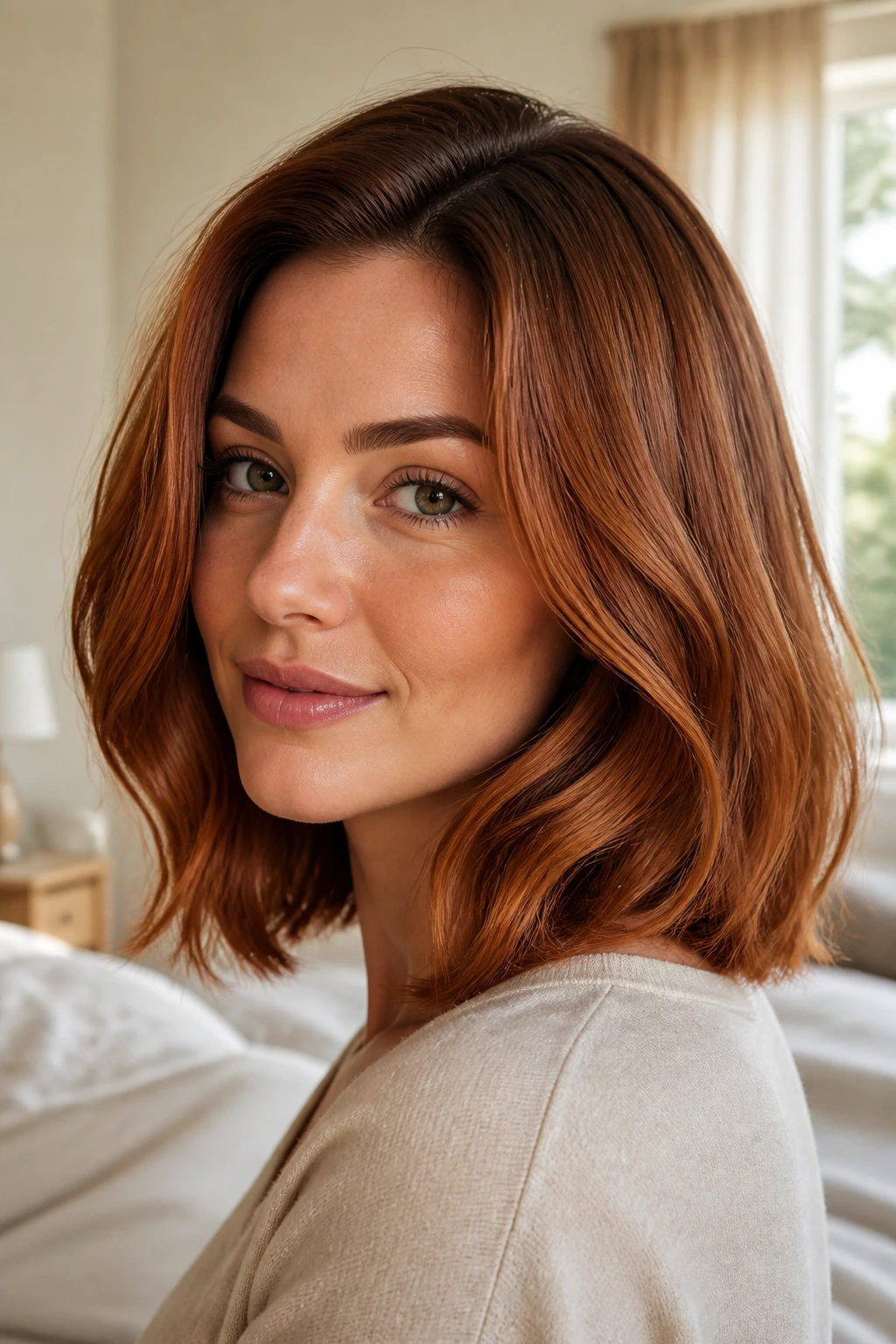
On days when you want length but you still need the hair to look fuller, a long bob with a gentle bend is the safe bet. It keeps enough hair on the shoulders to feel substantial, while the bend through the mid-lengths stops the style from hanging limp. Fine hair often does better when it can move a little instead of sitting straight and flat.
How to Wear It
The bend should be soft, not curled into a big wave. A 1.25-inch iron or a round brush can create that shape in a few minutes. Keep the ends slightly tucked rather than flipped. That small detail makes the whole cut look more expensive and less accidental.
Auburn copper gives this lob a nice layered look even when the haircut itself is simple. The color change between root, mid-length, and end creates the sense of depth that fine hair often lacks.
Best When You Want:
- a style that can go from polished to casual fast,
- enough length for a clip or small ponytail,
- less trimming drama than a shorter bob,
- a cut that survives air-drying without getting puffy.
This is the cut I’d hand to someone who says, “I want a bob, but not a bob-bob.” You know the type. They usually end up liking this one most.
12. Curved Under Bob with a Soft Nape Stack
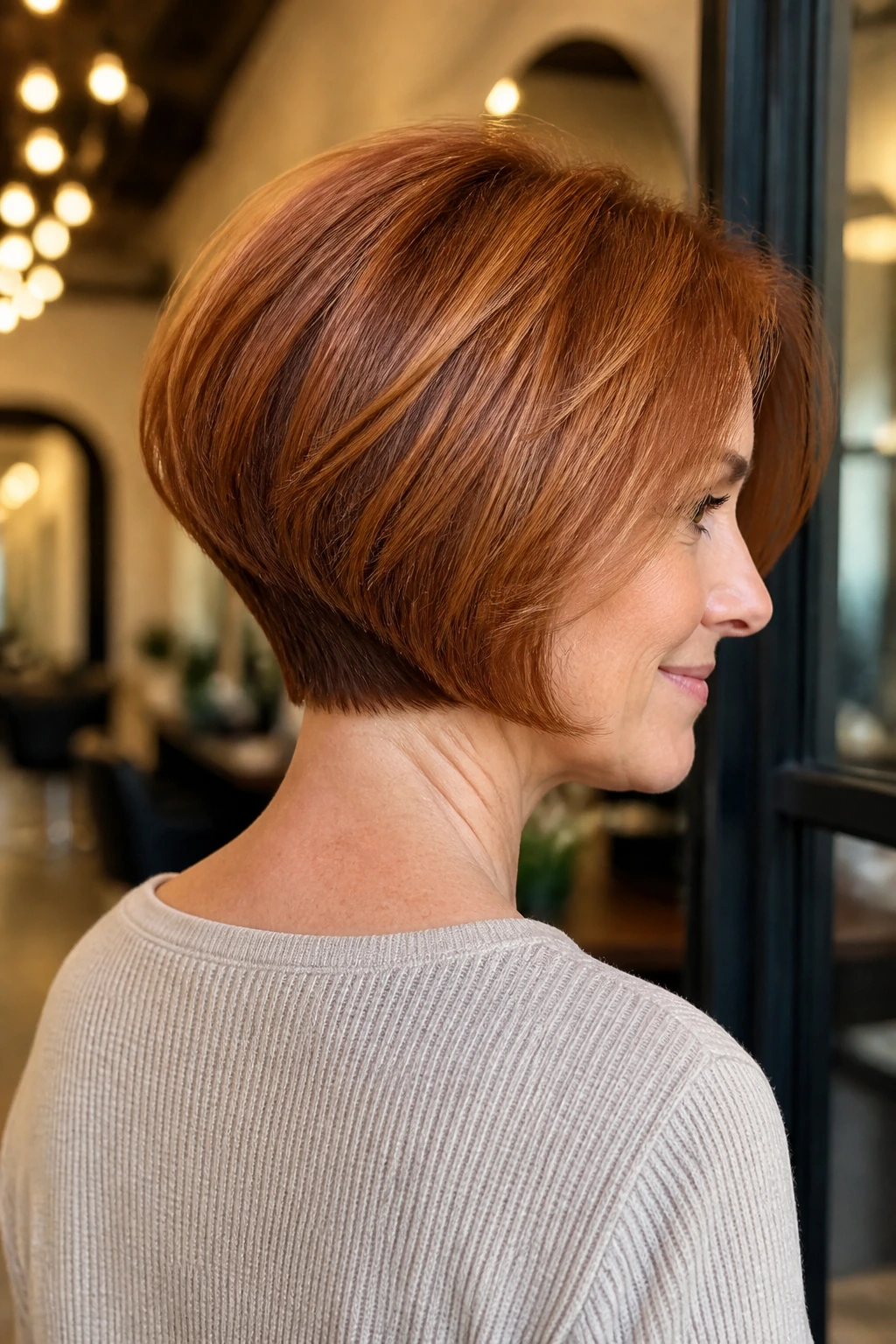
Stacking is not the enemy. Heavy stacking is. A curved-under bob with a soft nape stack gives fine hair a little lift at the back without making the crown look stripped bare. The curve under at the ends keeps the silhouette neat, and the stacked nape helps the hair sit up instead of slumping against the neck.
The style works especially well when the auburn copper tone is a touch brighter through the top layers. That soft contrast helps the shape read as layered without screaming “layers.” Which, honestly, is the better outcome on fine hair.
What to Ask For at the Salon
- A subtle stack at the nape, not a steep one.
- A curved under finish at the bottom edge.
- Extra weight left through the crown.
- No harsh thinning at the tips.
If your neck gets warm easily or your hair tends to kick out at the bottom, this shape can be a lifesaver. It stays neat. It also gives the back of the head a little lift, which is one of those details people notice without knowing why.
13. Shag-Inspired Bob with Light Feathering

A touch of shag can help fine hair move, but only a touch. Go too far, and the ends start looking like they’ve been chewed up. Keep the feathering light, and the bob gets a softer, more lived-in feel that works especially well with auburn copper tones.
This style is for the person who likes texture but does not want a full shag haircut. The layers should sit mostly around the face and the top, leaving the bottom line intact enough to keep fullness. That matters. Fine hair needs a visual anchor somewhere, and the perimeter gives it one.
The color helps too. Auburn copper shows off the little bends and flicks in the cut, so even a quick air-dry can look intentional. You do not need perfect curls. You just need a cut that gives the hair somewhere to go.
If you like a little grit in your finish, this is a good one. If you want a glossy, precise look, skip it. The charm is in the looseness.
14. Blunt Bob with a Shadow Root
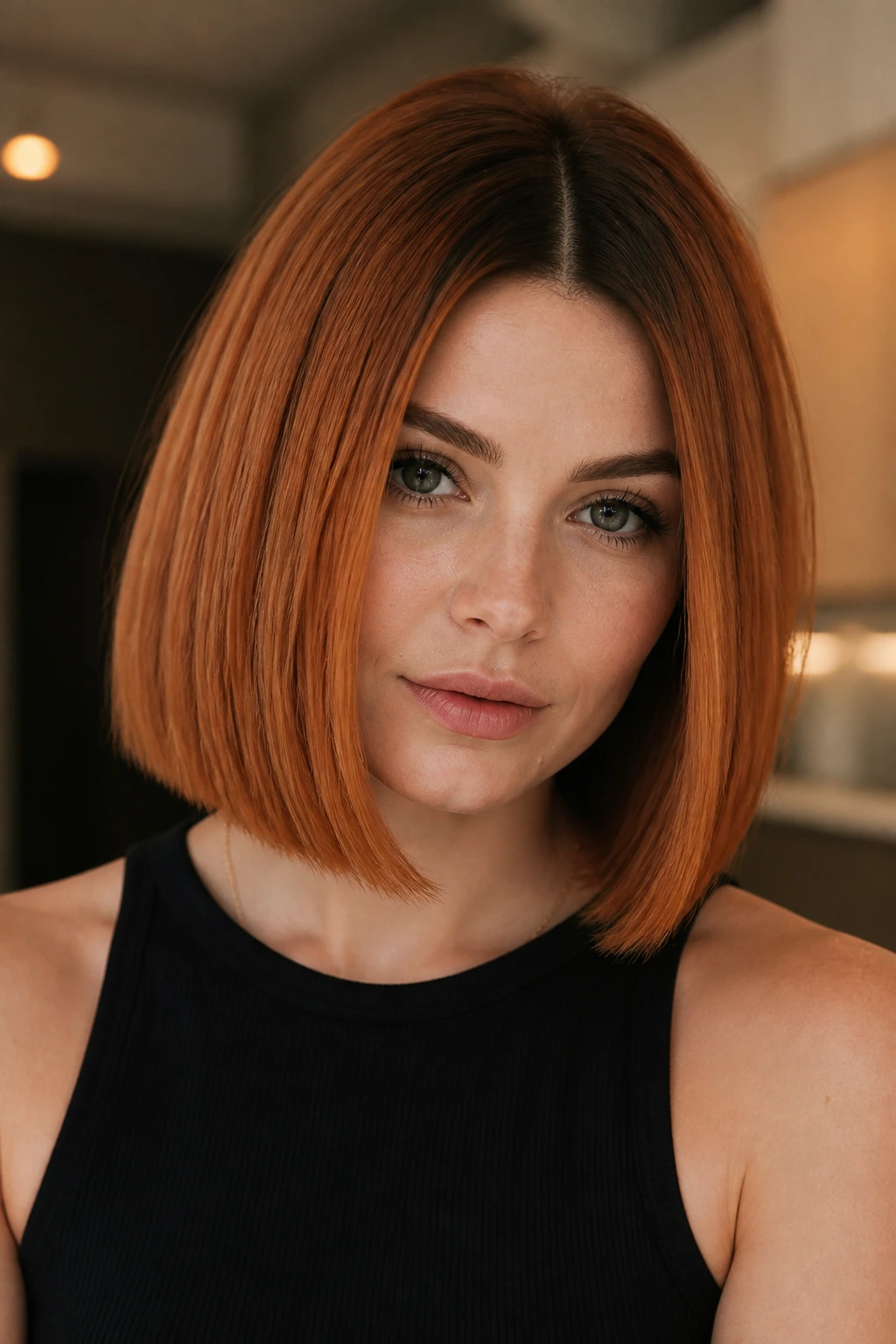
Why does a shadow root help fine hair? Because it deepens the base without darkening the whole head, and that makes the top look fuller. The color contrast creates the impression of thicker roots and brighter mids, which is a smart trick on an auburn copper bob.
A blunt cut keeps the perimeter solid, while the shadow root keeps the color from looking flat at the scalp. The two together work better than either one alone. That’s why this style has such strong presence even on hair that is naturally sparse.
What to Keep Soft
- The transition from root to copper should be gradual.
- The blunt line should stay clean.
- The root depth should be only a shade or two darker.
- The finish should stay glossy, not matte.
A harsh root line looks choppy in the wrong way. Soft blending is the whole point. You want the color to make the hair look denser, not striped.
This cut is a good fit if you like neat edges but want the color to do a little visual heavy lifting. It’s one of the easiest ways to make a bob feel richer.
15. Wavy Bob with a Copper Ribbon Finish
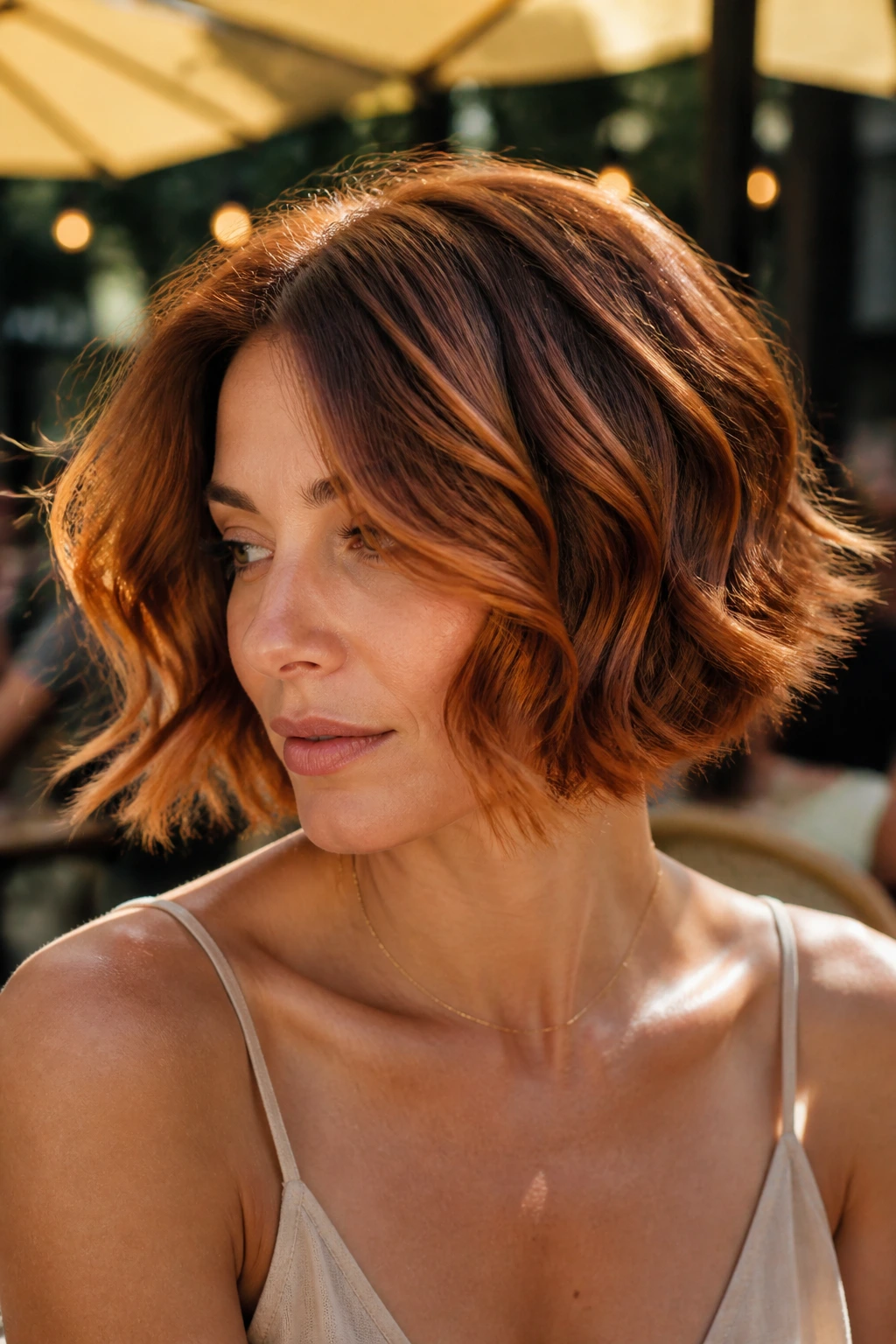
If your hair bends on its own, don’t fight it. A wavy bob with a copper ribbon finish uses that movement instead of flattening it out. The waves give fine hair body, and the ribboned color placement makes those waves easier to see. The result feels airy, but not thin.
Auburn copper is especially good here because it picks up in the curves of the wave. A flat color can make fine, wavy hair look fuzzy. A warm, dimensional tone gives the surface more shape. That alone can change how thick the hair looks in a mirror.
This cut works best when the wave is loose, not tight. Think soft S-shape, not beach-crunch overload. A light mousse and a diffuser can help, but so can a simple air-dry with a few twisted sections. You do not need every strand to behave the same way.
I like this one for anyone whose hair looks better a little messy. It has a relaxed feel that does not fight the natural bend. That’s a rare and useful thing.
16. Graduated Bob with Precision Ends
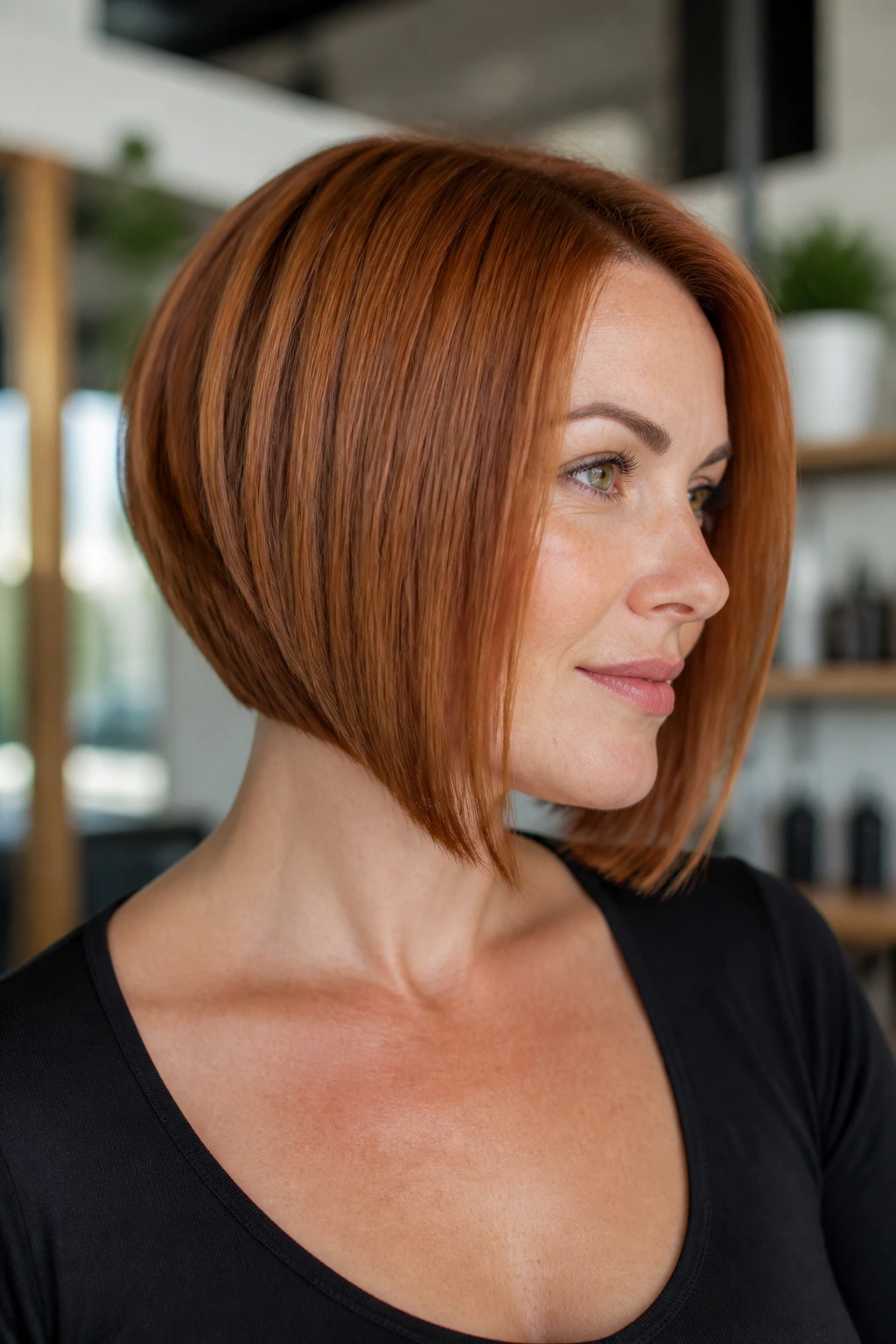
A graduated bob is one of the cleanest ways to give fine hair shape without taking away too much weight. The back is cut with more precision and a mild slope, while the front stays a little longer. That graduation builds structure from the neckline up, which makes the hair look supported instead of flimsy.
Why It Flatters Fine Hair
The precise end line keeps the shape from fraying out. Auburn copper then adds warmth across the cut, which helps the graduation show up more clearly. On straight hair, especially, this can look crisp and full in a way that loose layering never quite matches.
The important thing is restraint. Ask for a subtle graduation, not an extreme wedge. Too much angle can make the crown look narrow and the front too skinny. That’s not the look here.
A good graduated bob also styles quickly. A round brush, a little root lift, and a curved finish through the ends can be enough. If you like polished hair that behaves, this is a strong option.
17. Bixie-Leaning Bob with an Auburn Edge
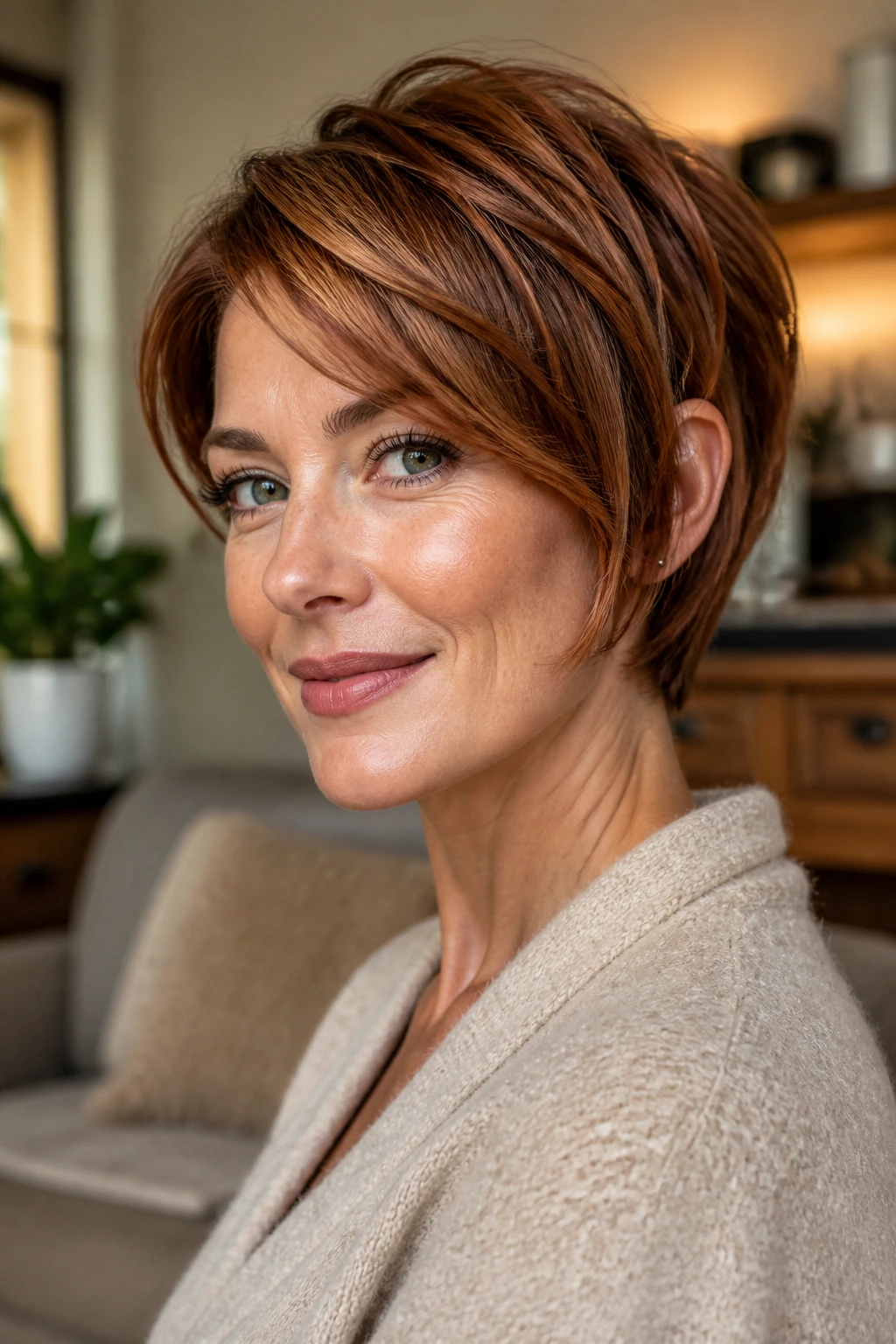
A bixie-leaning bob is for the person who wants short hair with a little bite. It sits between a bob and a pixie, which means the shape can feel lively without going all the way into pixie territory. On fine hair, that can be a smart move because the shorter length gives the strands more visual strength.
The auburn copper tone keeps the cut from looking too severe. Short cuts can sometimes feel sharp in a way that works against soft features, but warm color smooths that out. The result is playful and clean at the same time.
Who It Suits
- People who want low bulk around the neck.
- Hair that is fine but not pin-straight and slippery.
- Anyone who likes a short shape with visible texture.
- Readers who are okay with trims more often.
What to Watch For
- Don’t let the top get over-thinned.
- Keep the fringe area soft.
- Leave enough weight around the ears.
- Use a light paste, not a heavy wax.
This is not the cut for someone who wants maximum length. It’s for someone who wants attitude and easy styling. Different goal. Different answer.
18. Tapered Bob with Side-Swept Fringe
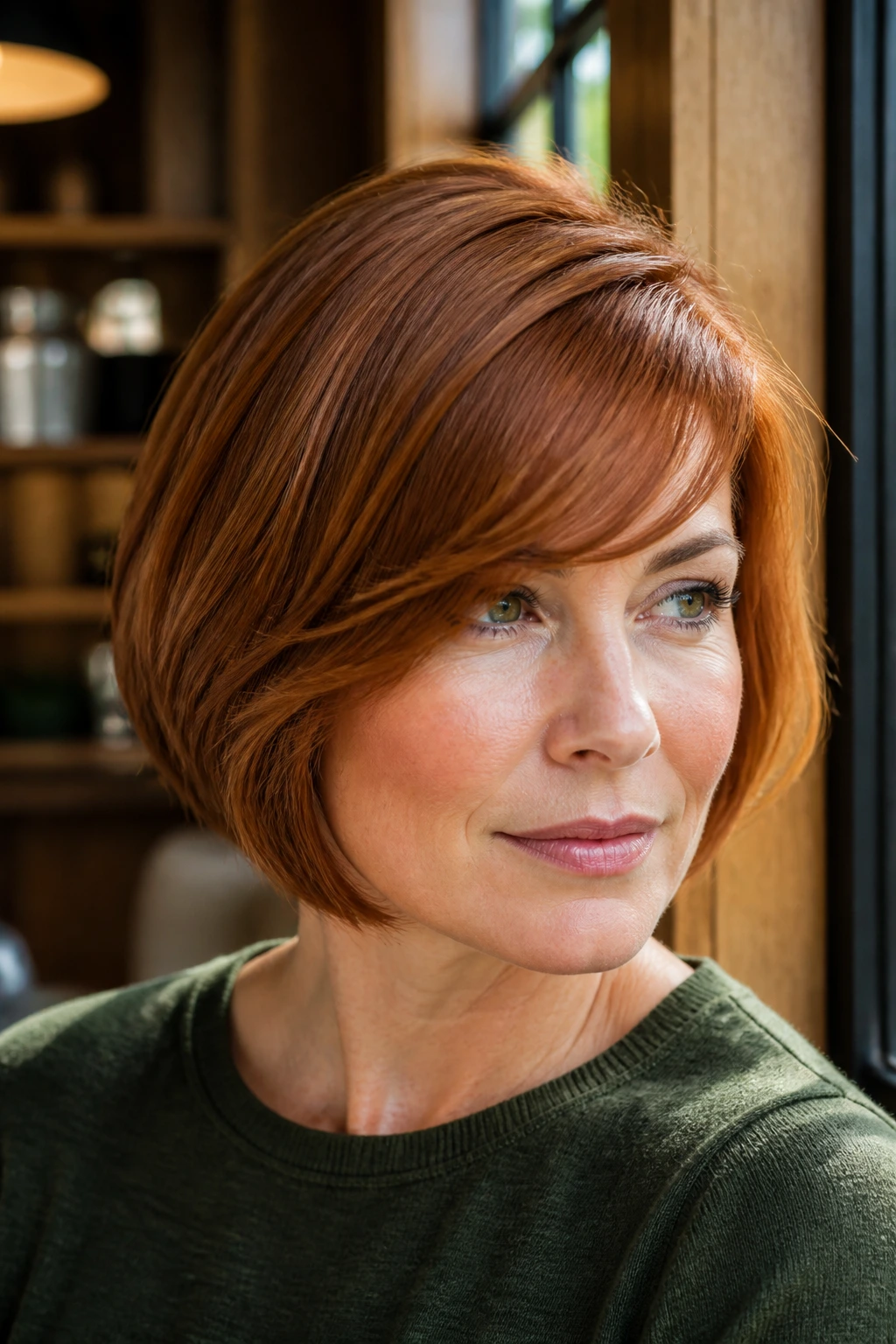
A tapered bob with a side-swept fringe can rescue a fine-haired shape that feels too flat across the top. The side fringe brings the eye upward and across, while the taper at the back keeps the neck area neat. Together, they create a bob that feels balanced and slightly lifted.
The fringe should be soft enough to move. If it gets too thick, it can weigh down the front and make the whole cut seem lower than it is. Auburn copper helps the fringe stay visible, even when the strands are fine, because the warm tone creates separation against the skin.
This cut suits people who do not want full bangs but still want something around the face. It also works well if one side of your hair naturally falls better than the other. A side-swept fringe makes that asymmetry feel intentional.
Blow-dry the fringe first, then the rest. That order matters. If the fringe dries in the wrong direction, you’ll spend the next fifteen minutes fighting it.
19. Airy Razor Bob for Soft Movement

Razor cutting can be risky on fine hair, and I’m going to say that plainly. Use it in the wrong hands, and the ends can go wispy fast. Use it lightly, though, and it can soften a bob in a way scissors sometimes can’t.
What to Watch For
A good razor bob keeps the outline intact while shaving a little softness into the ends and face frame. That makes the haircut move more freely. Auburn copper shows that movement well because the tone changes slightly as the hair shifts, especially near the front.
- Ask for a light razor touch, not a full razor chop.
- Keep the bottom line readable.
- Avoid too much texture at the crown.
- Stop if the hair already feels fragile or brittle.
This cut works best for hair that has a bit of natural body. If your strands are ultra-fine and slippery, I’d be cautious. The style can get airy in a good way, or stringy in a bad way. There is a difference, and it shows fast.
20. One-Length Bob with a Curved Blowout
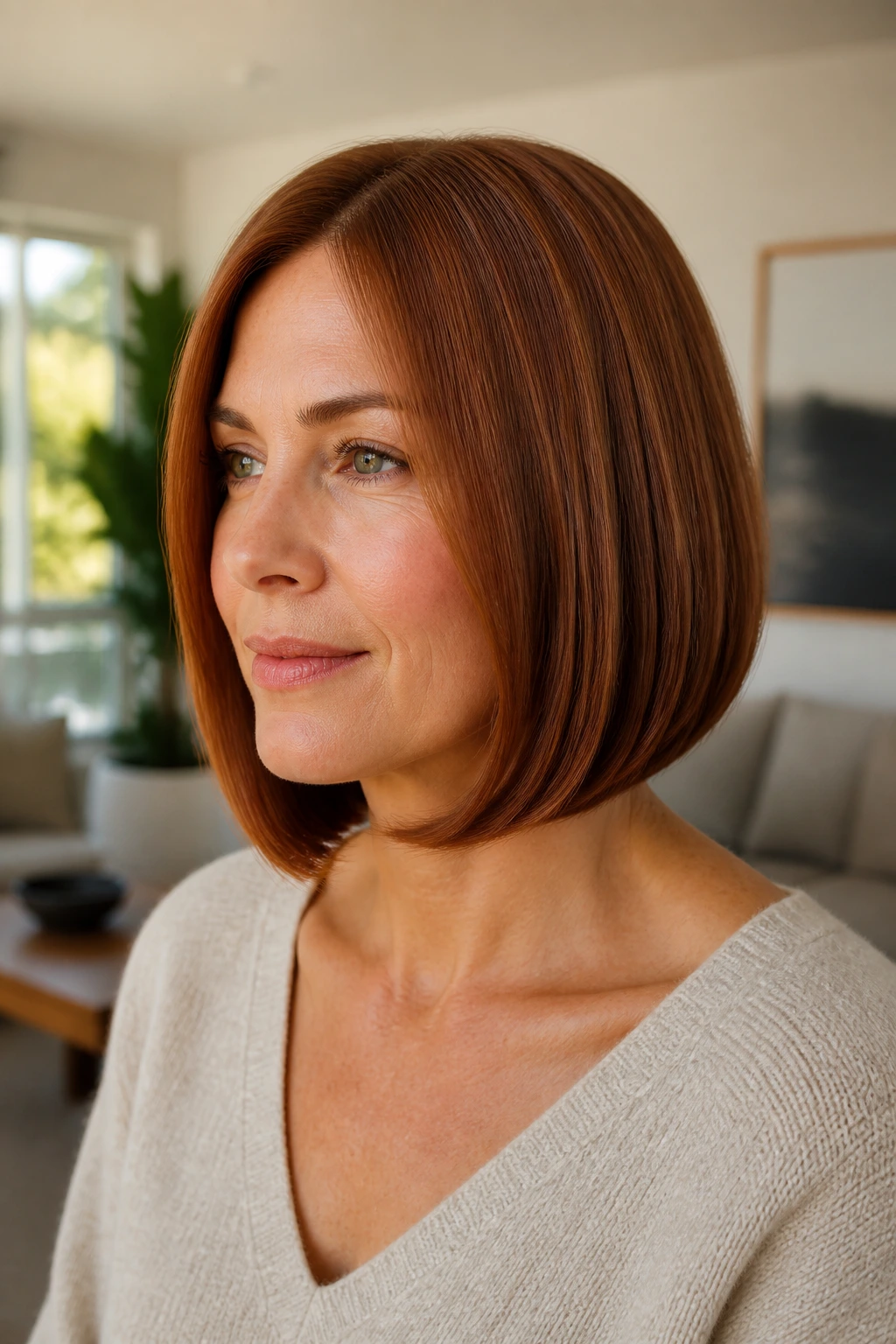
You do not need layers to create body. A one-length bob with a curved blowout can make fine hair look fuller precisely because it keeps all the weight at the perimeter. The clean line gives the ends more visual density, and the curved finish adds softness without stealing thickness.
Auburn copper is a strong choice for this cut because the color adds depth across a flat plane. When the hair moves in one clean shape, the warm tone makes the edge stand out. That’s the whole point. Simple can look richer than busy.
This is the cut I’d choose for hair that feels thin near the ends. Layers can expose that weakness. A one-length shape hides it better, especially when the blowout curves the ends under just slightly. You want a controlled shape, not a round, puffy one.
A large round brush or a hot brush can help, but keep the heat moderate and the pass count low. Fine hair can get dry and flyaway if you keep hitting it with the tool over and over.
21. Layered Bob with a Toasted Auburn Glow
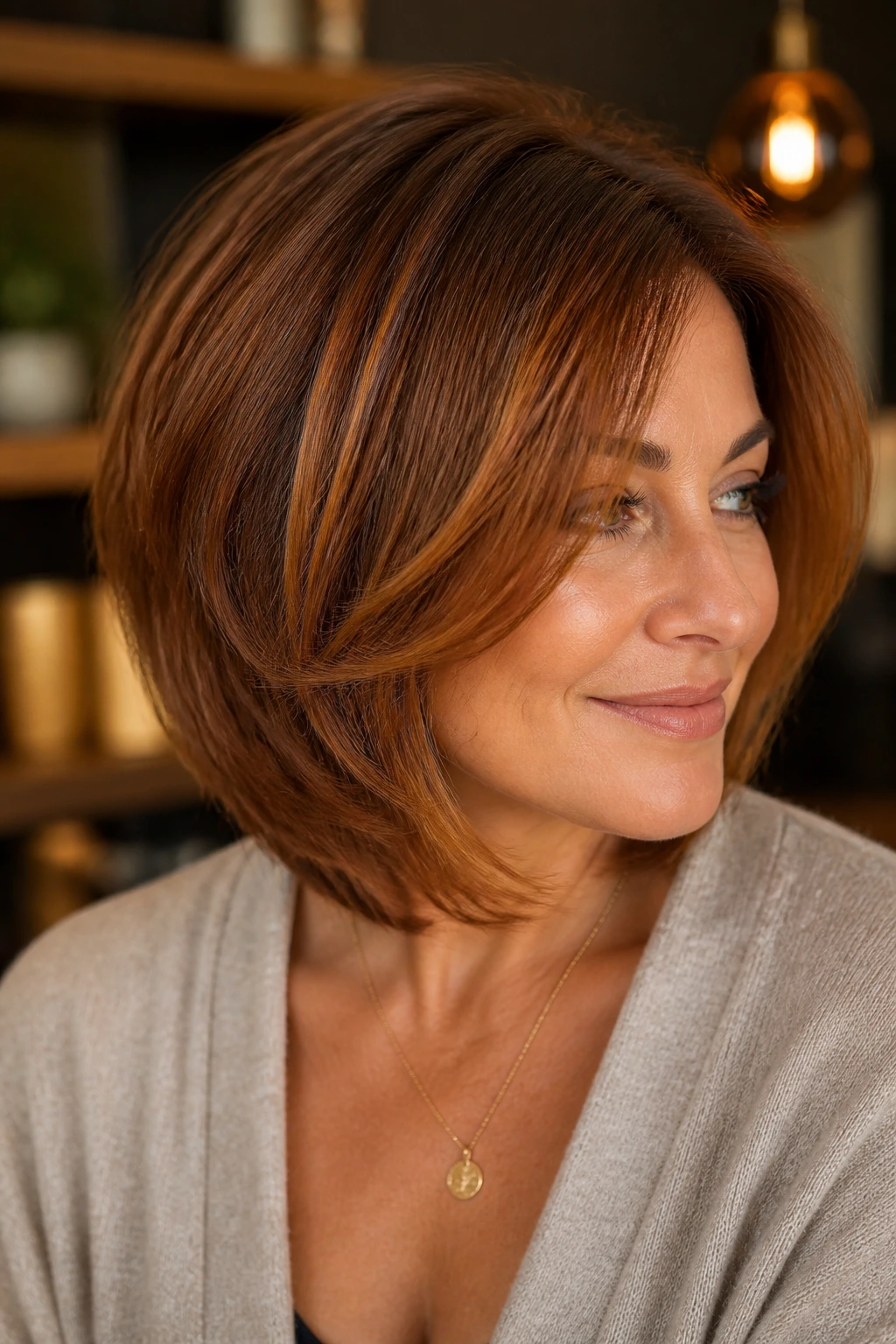
A little layering can help fine hair move. A lot of layering can make it disappear. The sweet spot is a layered bob with a toasted auburn glow, where the cut has enough internal shape to avoid flatness but keeps the bottom edge thick.
The color matters here more than most people expect. A toasted auburn finish — think copper with a deeper brown base — gives the hair several visible tones without turning it into a stripey highlight job. That tonal shift makes the cut look fuller because the eye sees depth between the strands.
Best Features of This Shape
- Soft layers that begin below the chin.
- A full, bluntish perimeter.
- Warm color variation, not high-contrast streaks.
- Easy movement at the sides and crown.
This is a friendly cut for people who want something a little more lively than a straight bob. It’s also less fussy than a heavily textured style. You get movement, but the bob still holds together when the day gets long.
22. Bob with Bottleneck Bangs and Soft Volume

Bottleneck bangs can be a smart move on fine hair because they bring attention upward without taking too much density from the fringe area. The center stays a little shorter, while the sides lengthen toward the cheekbones. That shape gives the front of the bob a soft frame and makes the top feel lifted.
Auburn copper helps the bangs stand out in a subtle way. The warmer color keeps the fringe from getting lost against the forehead, which is a real problem with some fine-haired cuts. It also makes the rest of the bob look more dimensional, especially if the volume stays soft rather than puffed up.
This works well with chin-length and collarbone-length bobs. It can be polished or a little undone, depending on how you dry it. The fringe needs a separate styling pass, though. Treat it like its own little haircut, because that’s what it is.
If you want one cut that feels current without being demanding, this is a strong finish to the list. It has shape, movement, and just enough edge.
Final Thoughts
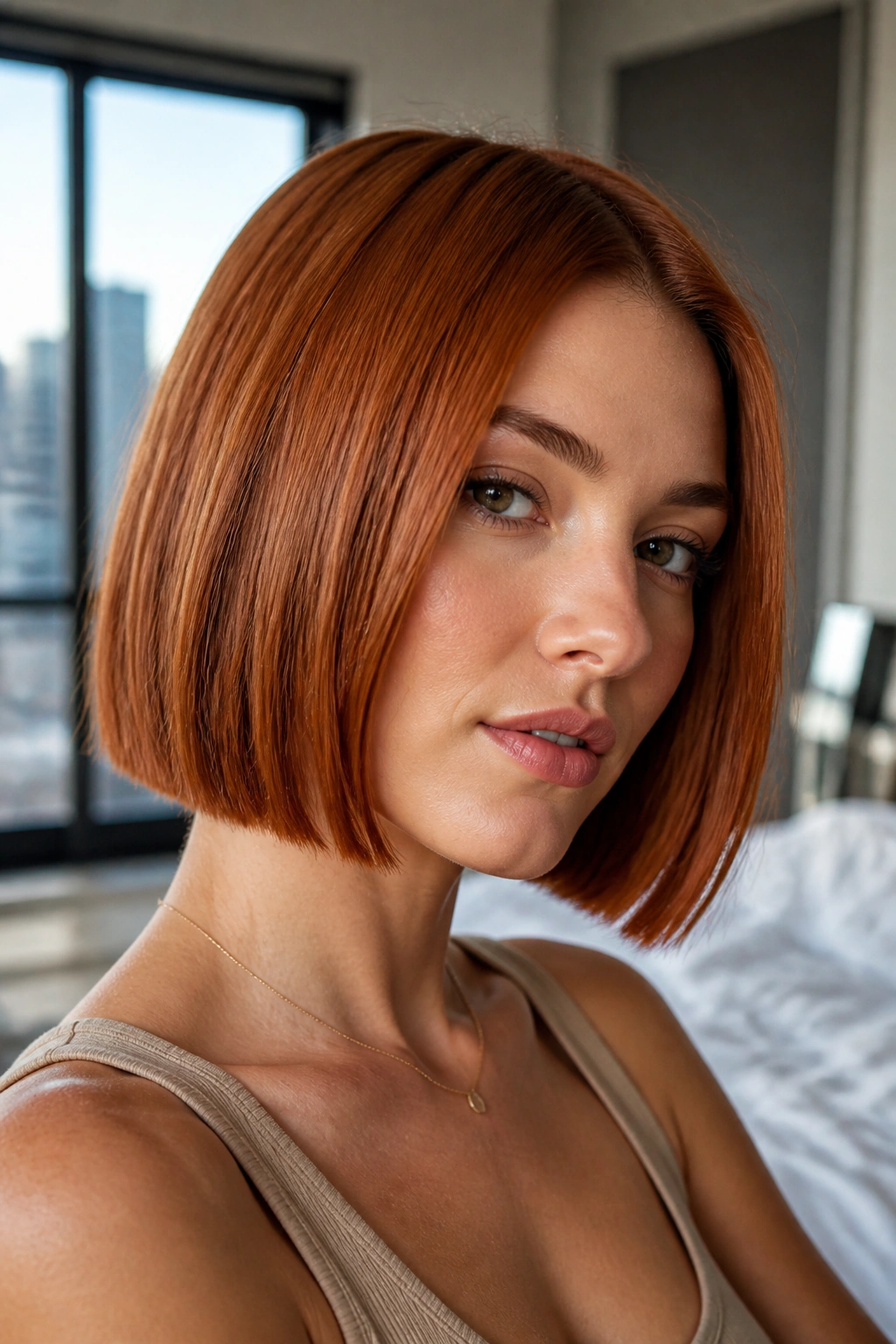
Fine hair usually looks best when the cut does less, not more. That sounds backwards until you see it in a mirror. A strong bob line, the right length, and a copper tone that brings out shine can do more for fullness than piles of layers ever will.
If you’re choosing between two versions of the same bob, pick the one with the cleaner perimeter. Then let the color add the softness and depth. That combination tends to age better between trims, and it usually styles faster on busy mornings too.
One last thing. Fine hair almost always looks better when the ends are treated with a little respect — no over-thinning, no over-texturizing, no frantic chopping just because the hair feels light. Keep the shape intact, and the auburn copper does the rest.
