



A red bob can slim a round face fast, but only when the shape works harder than the color. That sounds obvious until you see how many cuts stop right at the cheek and puff the face outward instead of pulling it down.
Chin length is the trap.
Round faces usually look strongest with a little extra vertical line, a touch of asymmetry, and front pieces that skim past the widest part of the cheeks. Red makes every angle read more clearly, too. A copper sheen, a cherry gloss, or a deep auburn finish will show off bevels, bends, and layers in a way flat brown hair sometimes hides.
That’s why long red bob haircuts for round faces are such a smart lane. You get the movement and freshness of a bob, but you keep enough length to stay away from that dreaded “helmet” look. The cut can be sleek, airy, shaggy, blunt, angled, or softly waved—as long as the shape keeps the eye moving up and down rather than side to side.
The most flattering versions usually land between the jaw and collarbone, then use side parts, face-framing layers, or a clean bevel to narrow the silhouette. If you keep that basic idea in mind, the rest becomes a lot easier. Start with the shape that does the real work.
1. Long Red Bob Haircuts for Round Faces: Deep Side-Part Copper Lob
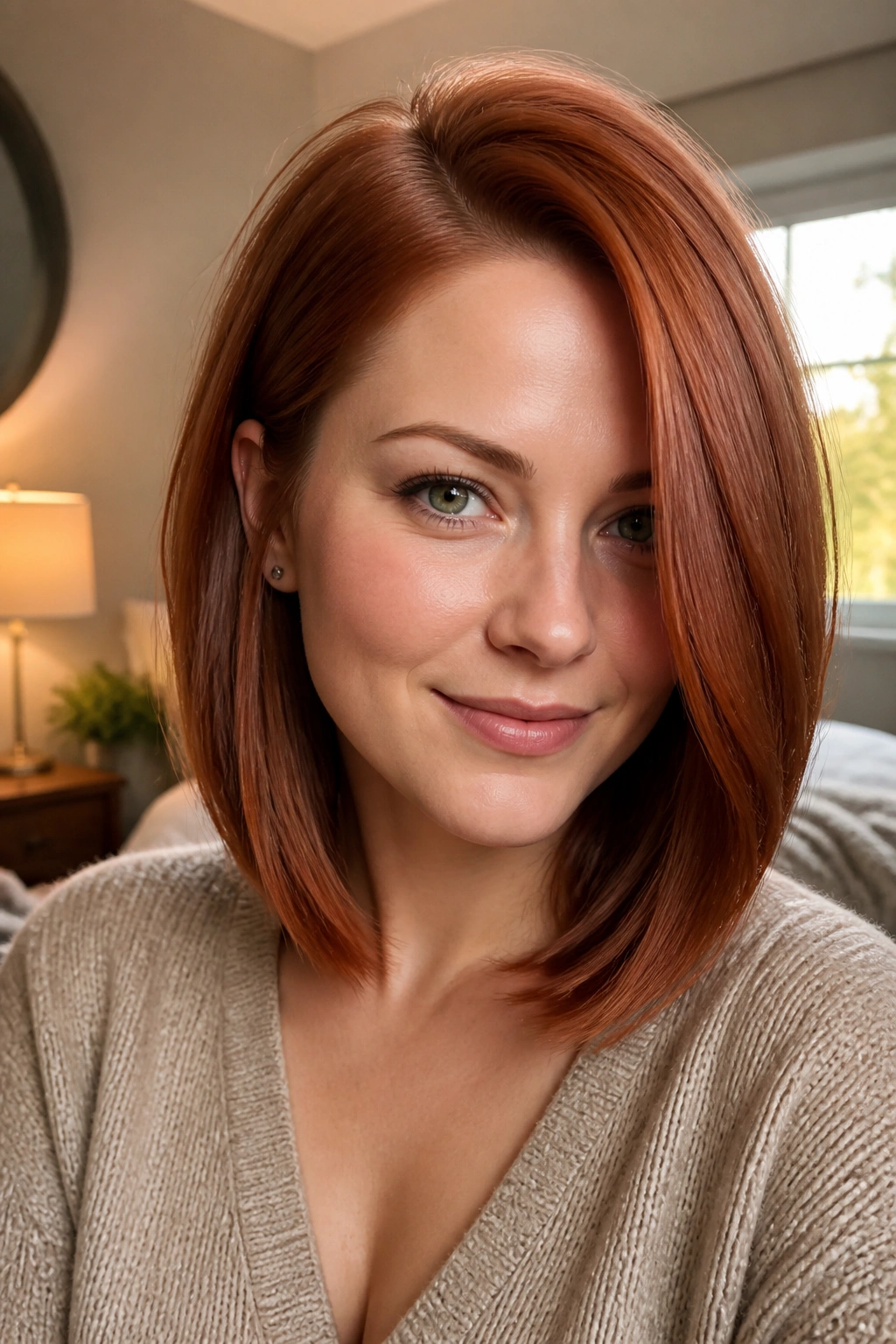
A deep side part does a lot of heavy lifting here. It breaks the face into two unequal sections, which makes the silhouette feel longer right away, and the copper shade adds warmth without making the style look bulky.
Why the angle works
The front side should drop closer to the collarbone, while the back can sit a touch shorter. That small difference creates a diagonal line across the face, and diagonals are your friend when you want to slim soft cheeks.
I like this cut best when the ends are softly beveled, not chopped straight across. The finish should move when you turn your head. Still.
What to ask your stylist for
- Collarbone length in front, with the shortest back point sitting above the nape
- A deep side part that starts near the arch of one eyebrow
- Soft internal layering to remove bulk without wrecking the line
- Face-framing pieces that start around the cheekbone and slip past the jaw
Pro tip: blow-dry the front away from the face with a round brush, then bend the ends under just a little. That little inward curve stops the cut from flaring at the cheeks.
2. Cherry Red Lob With Collarbone-Grazing Front Pieces

A cherry red lob looks sharper than people expect. The color has enough punch to feel bold, but the collarbone length keeps it from sitting in the widest part of a round face.
The front pieces matter most. When they skim the collarbone, they create a long V-shape around the neck and lower face, and that shape is what makes the cut read leaner. If the ends are too blunt at cheek level, the whole thing turns boxy fast. No thanks.
I’d wear this one with a soft off-center part and a straight finish that still has a bend at the ends. The goal is clean, not stiff. A little serum on the mid-lengths helps the red stay glossy, and a paddle brush during blow-drying keeps the line smooth without puffing it out.
This is a good choice if you like hair that looks polished with almost no fuss. It also plays well with bold lipstick, which is handy when the hair color already carries a lot of visual weight.
3. Auburn Shattered Lob With Airy Ends

Why does a shattered edge help a round face? Because it breaks the outline. Instead of one heavy curve sitting around the jaw, you get small, uneven pieces that move and separate, which makes the whole cut feel lighter.
Auburn works especially well here because it has depth. The shade isn’t flat, so every little layer shows up in sunlight and indoors under warm light. That extra texture matters when the face is soft and the haircut needs to create structure on its own.
How to wear it
Ask for a lob that stops around the top of the collarbone, then have the stylist point-cut the ends instead of leaving them blunt. A little face-framing around the cheekbone helps, but don’t overload the front with short pieces. That’s when the cut starts to puff.
This one likes a rough blow-dry or a loose bend with a 1.25-inch iron. Keep the wave low—mid-length and below—so you’re not adding width right at the cheeks.
4. Burgundy Blunt Lob With a Soft Tuck

A blunt line sounds risky on a round face, and if it lands in the wrong spot, it is. But when the burgundy lob falls below the jaw and gets tucked behind one ear on one side, the whole look becomes more angular.
Picture a smooth, rich color with a clean edge and one side tucked back. That little styling move changes everything. It opens one cheekbone, shows a bit of neck, and gives the face a break from symmetry, which round faces usually handle well.
- Keep the length at or just below the collarbone.
- Ask for a blunt perimeter with light internal removal so the ends don’t feel heavy.
- Style it with a flat brush or a low-heat pass from a straightener.
- Tuck one side behind the ear and let the other side hang forward.
The bluntness gives the burgundy a luxe, dense look, but the tuck keeps it from feeling too wide. I wouldn’t wear this cut with lots of volume at the sides. That’s the wrong battle.
5. Copper Balayage Lob With Face-Framing Ribbons
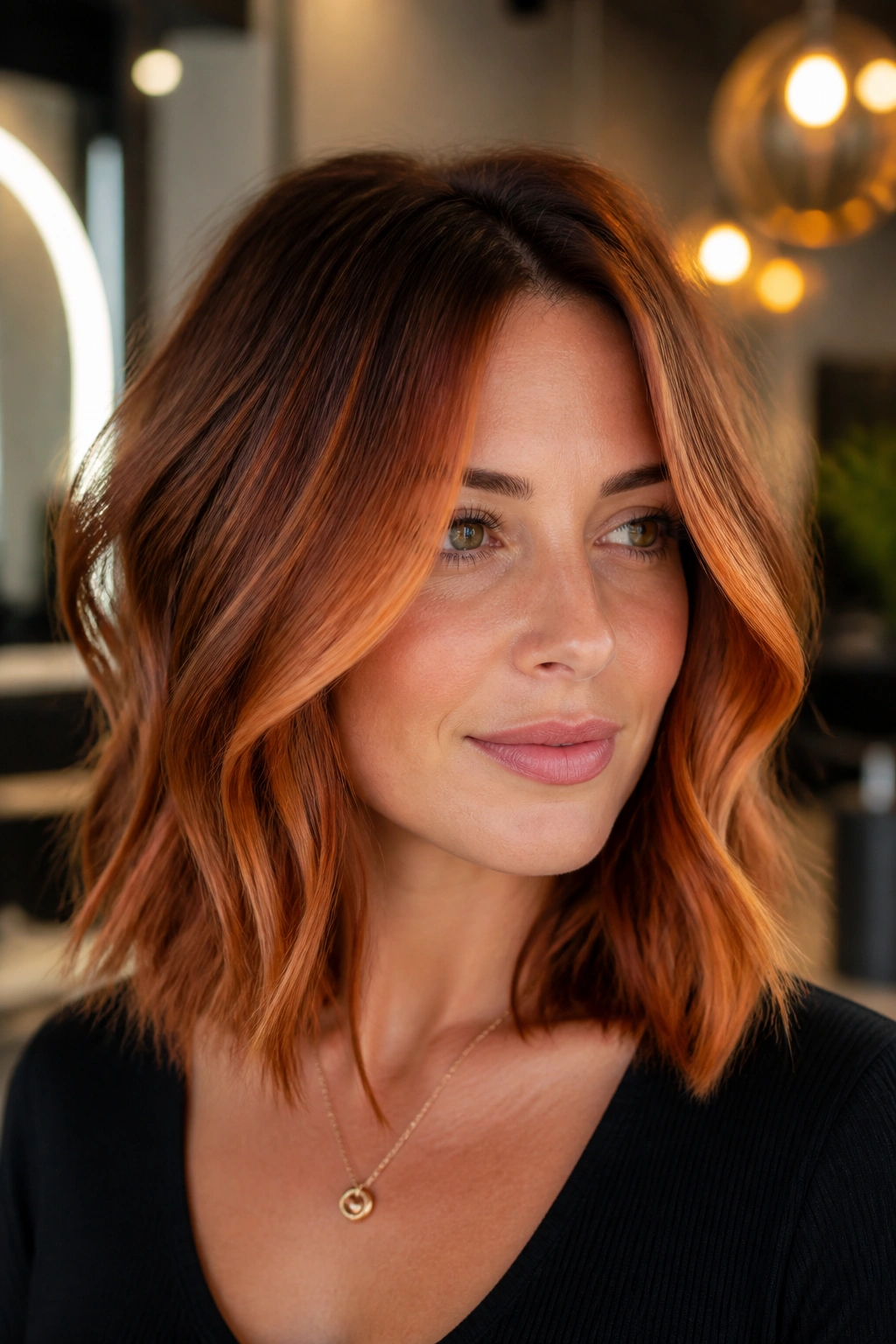
Copper balayage is one of those color choices that can make a haircut look more expensive than it actually is, mostly because the lighter ribbons pull the eye upward and inward. On a round face, that’s gold.
The trick is placement. The brightest pieces should live around the cheekbone and just below it, not all over the head. If the light bits are scattered too evenly, the face can read broader. If the brightest money pieces sit near the front and taper down toward the ends, the haircut starts working like a frame.
That’s why I prefer this style on a lob that touches the collarbone. The length gives the balayage room to stretch, and the face-framing ribbons make the front appear narrower. Keep the waves loose and low, and leave the roots a little deeper so the color doesn’t float too high.
A lot of people ask for “dimension” and stop there. Not enough. Ask for bright front pieces, deeper roots, and a soft bend below the cheek. That combination does the real job.
6. Cinnamon Lob With Curtain Bangs

Unlike a full fringe, curtain bangs split the face in the middle and guide the eye down both sides. That makes them one of the easier bang options for round faces, especially when the rest of the cut stays long and soft.
Cinnamon is a nice shade here because it has enough red in it to feel lively without screaming for attention. The warmth works with the fringe instead of competing with it. I like this cut on hair that can hold a small bend, because the bangs look best when they open at the center and sweep outward like a soft curtain.
This is the one to choose if your forehead feels a little short and you still want some movement around the face. Keep the shortest bang pieces around the nose or cheekbone, not higher. Short curtain bangs can get cutesy fast, and cutesy is not always the move for a round face.
A round brush, a blast of heat at the roots, and a quick wrap away from the face will do most of the work. Easy. Clean. Flattering.
7. Ruby Asymmetrical Lob
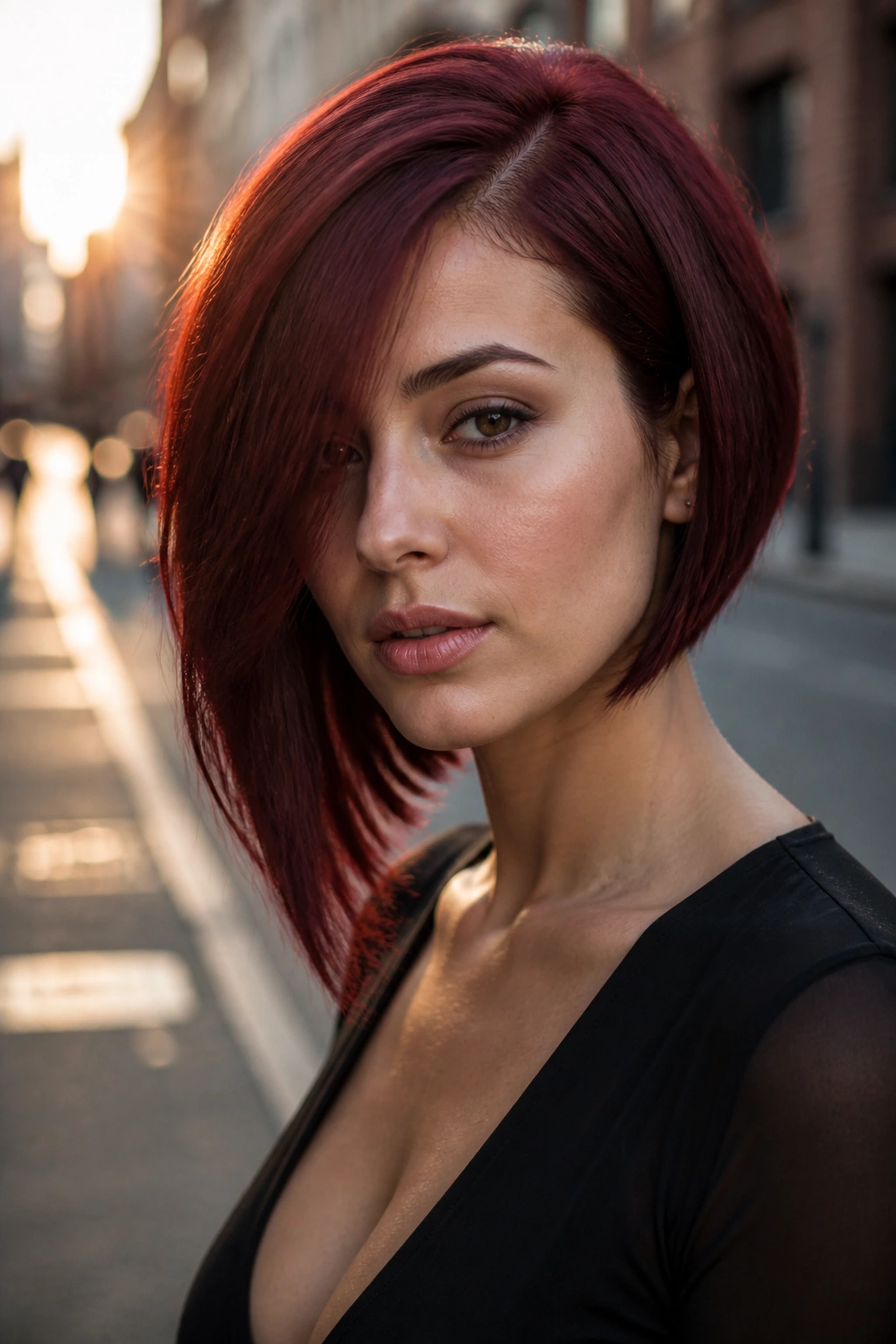
An asymmetrical lob is bluntly good at one thing: it breaks the circle. One side falls a little longer, the line tilts, and the face stops feeling so evenly framed. That shift matters more than people think.
Ruby red makes the shape even clearer because the color has so much energy. When the light catches one side a little more than the other, the eye notices the difference. The result feels sharper and more deliberate.
This style works best when the longer side grazes the collarbone and the shorter side still clears the jaw. You do not want the short side ending right at the cheek. That’s too much width in one spot. Keep the front sleek, or use a loose wave only at the ends.
If you wear glasses, this cut can be especially nice. The asymmetry keeps the frame from fighting the haircut, and the red shade adds enough presence that you do not need a lot of extra styling. A small bend, a side part, and a glossing cream are plenty.
8. Rosewood Wavy Bob With Soft Bends

A rosewood wavy bob feels softer than a sharp lob, but it still gives a round face the length it needs. The key is where the wave starts. If the bends begin above the cheekbone, the hair can puff outward. Start them lower, and the shape stretches.
That lower wave placement is what makes this cut work. The S-curve lives around the jaw and collarbone instead of sitting right on the cheeks, so the face keeps its width while the hair adds movement underneath it. Rosewood is a nice in-between shade too—red enough to read as color, muted enough to stay wearable.
I like this with a side part and a very gentle bend from a flat iron, not a tight curl. Think relaxed, not beachy-in-an-obvious-way. The wave should look like it was there for you, not forced on purpose.
Best details to request
- Length that lands just below the jaw
- Soft bends, not ringlets
- Minimal layering through the top
- A little more length in the front than the back
The result is calm, not loud. That’s a good thing.
9. Dark Cherry Lob With Beveled Ends
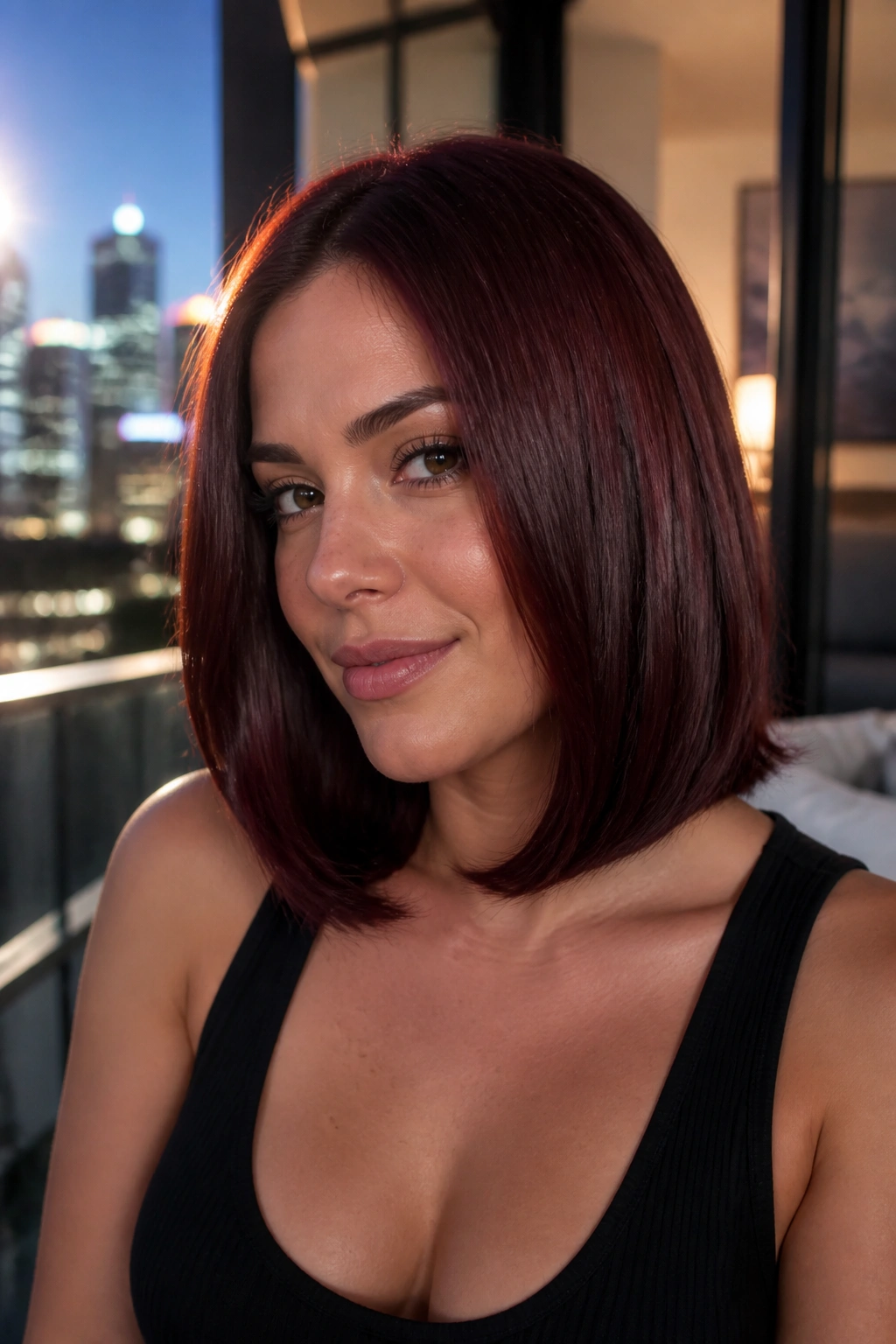
Why do beveled ends work so well on a round face? Because they create a clean edge without the hard horizontal line that can make the cheeks look wider. A bevel gives the bob shape. It also keeps the cut from sitting flat and dull.
Dark cherry is a strong choice if you want depth. The shade reads rich and almost moody, and that darkness at the ends can make the face look longer by comparison. If the root is a little deeper and the front pieces are kept longer, the whole cut starts to taper in a flattering way.
How to use it
Ask for a lob that hits the collarbone, then have the ends turned slightly under with a round brush during styling. You want the perimeter to be neat but not stiff. A sleek finish works best here, especially if your hair is fine or medium-density.
This cut is one of my favorites for people who want red hair without losing polish. It can look expensive in a straight blowout, and it still holds up if you air-dry with a smoothing cream and a quick pass of heat at the ends.
10. Ginger Lob With Long Layers
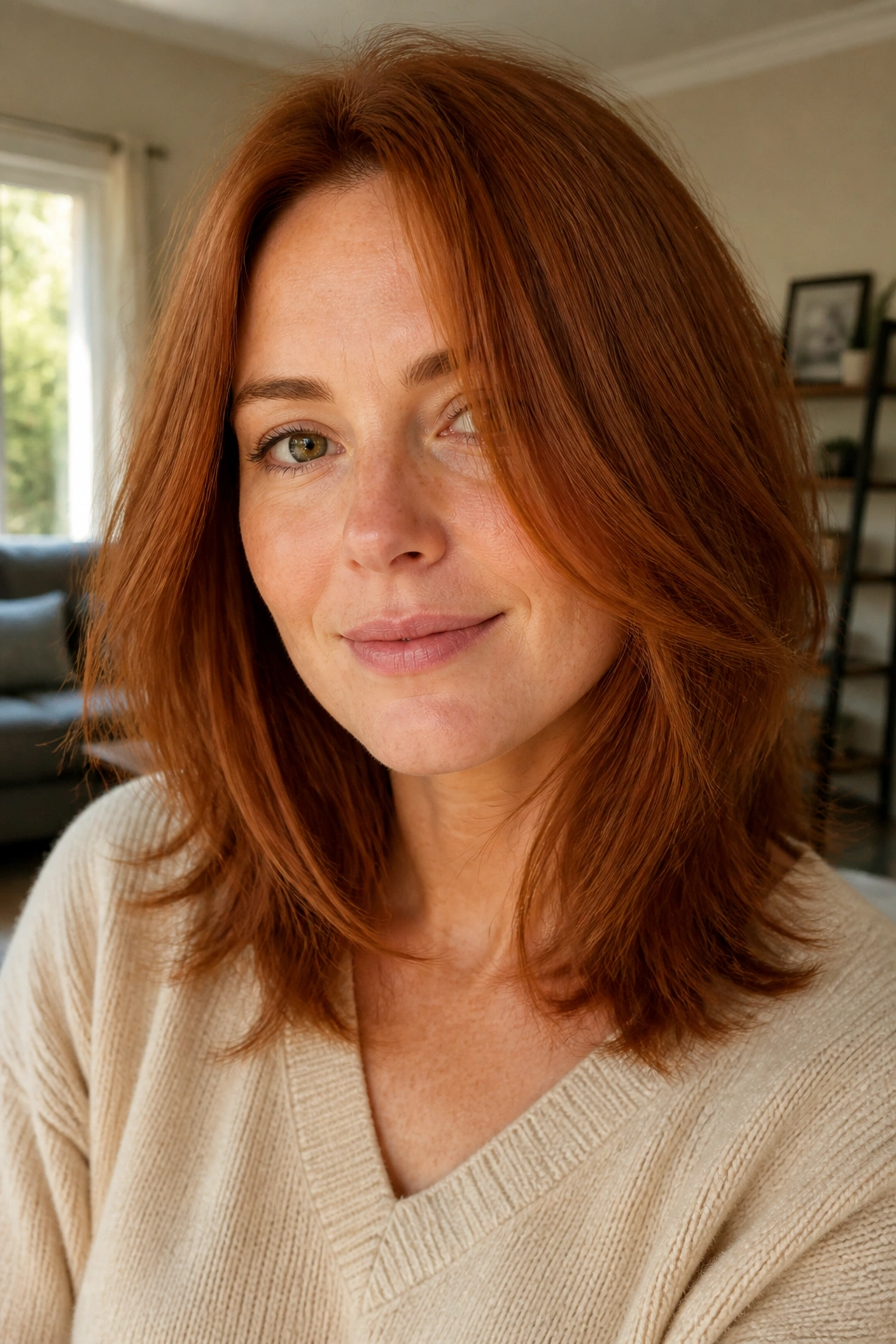
A ginger lob with long layers has a relaxed, easy feel that works well if your hair tends to fall flat. The layers bring movement, but because they stay long, they do not bulk up the sides of the face.
That matters. Round faces need lift, not extra width. Long layers give you motion through the lower half of the cut, which pulls attention downward. Ginger also helps because it reflects light, and light around the ends makes the whole shape look less dense.
Imagine a cut that moves when you walk. Not a fluffy one. Just hair that shifts a little instead of sitting like a block. That small bit of motion keeps the style friendly to a round face.
- Best on medium to thick hair
- Ask for layers that start below the chin
- Keep the front pieces longer than the back
- Style with a light mousse, not a heavy cream
If your hair grows fast, this is a forgiving shape. It gets softer over time instead of losing all its structure.
11. Scarlet Bob With Side-Swept Fringe

A side-swept fringe can be a sneaky good option for a round face. It works diagonally, which interrupts the circular shape, and it gives the forehead and cheek area a little movement without cutting a straight line across the face.
Scarlet red makes the fringe stand out, so the cut needs to stay controlled. Too much volume around the temples will widen the head shape. Keep the fringe soft and slide it across the brow rather than pushing it heavy into the face. That detail matters more than the color, honestly.
I’d keep this bob at the collarbone or just above it, with enough length in front to pull the eye down. The fringe should blend into those front pieces rather than sit as a separate chunk. When the transition is smooth, the haircut looks tailored. When it’s abrupt, it looks like two different haircuts met in the middle and refused to talk.
A light round-brush blowout is usually enough. If your hair is coarse, a flat iron pass on the fringe only can keep the shape neat without flattening the whole head.
12. Long Red Bob Haircuts for Round Faces: Mahogany Lob With Bright Money Piece
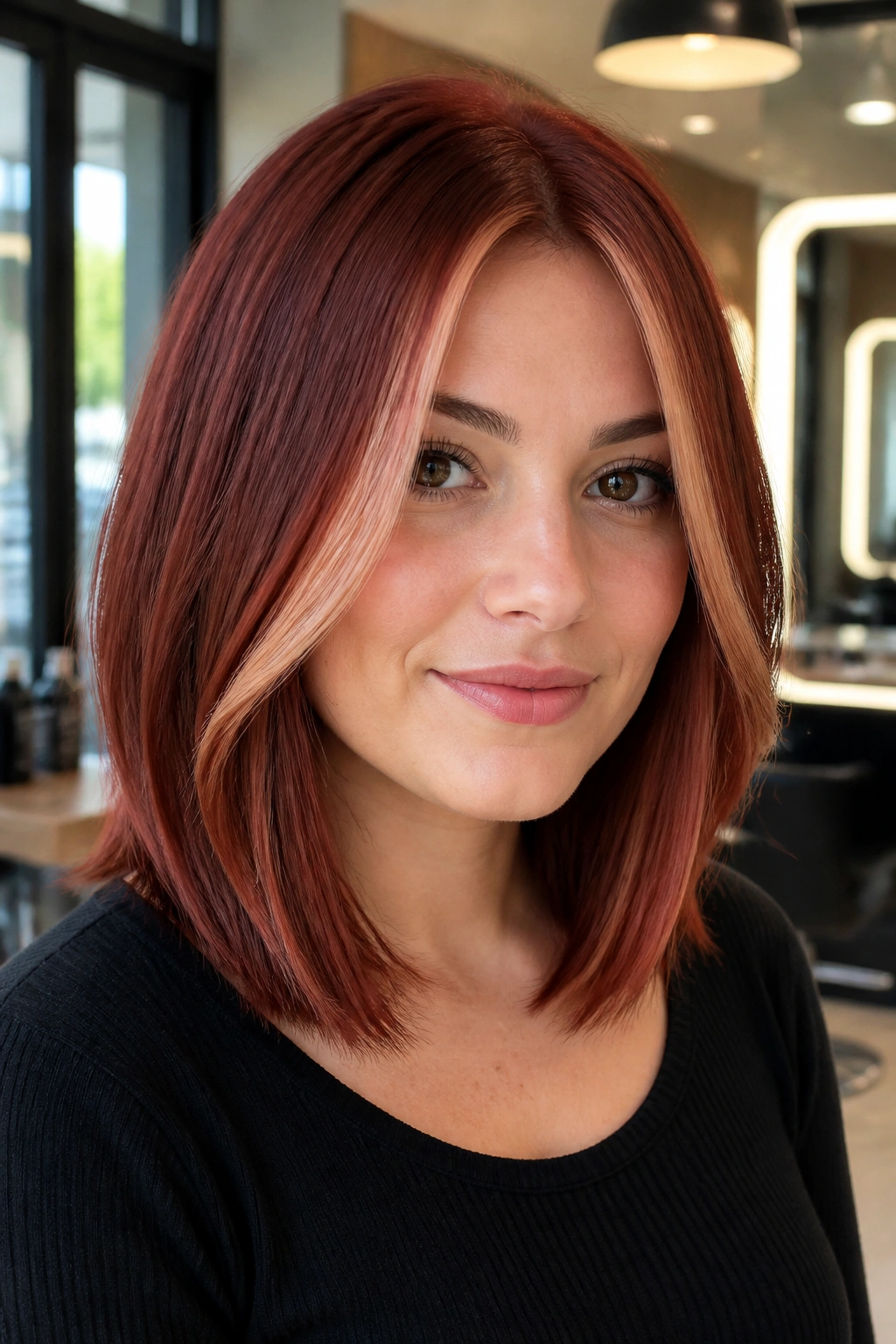
A bright money piece can wake up a mahogany lob in seconds. The trick is using it sparingly. Two front ribbons, placed near the cheekbones and softened toward the ends, are usually enough to lift the face without turning the haircut into a stripey mess.
Mahogany gives you that deep, red-brown base that feels polished and grounded. The money piece adds contrast where you want the eye to go: up, in, and slightly downward along the face. That diagonal flow is what helps a round face look longer.
This cut works especially well when the front is left a bit longer than the back. You get a subtle curtain effect around the jaw, which keeps the cheeks from feeling boxed in. I’d avoid chunky highlight blocks here. They can look dated fast, and they do the face no favors.
If you want the color to really pop, keep the hair glossy. A clear gloss or color-depositing conditioner every so often can help the mahogany stay rich. The haircut is doing the slimming; the color is doing the spotlight work.
13. Copper Shag Lob

A copper shag lob is for someone who likes hair with some grit. It is not neat. It is not minimal. It moves, and that movement is exactly why it can flatter a round face so well.
The crown gets a little lift, the mid-lengths stay loose, and the ends are broken up enough that they do not form one wide circle. That top-heavy shape stretches the face visually. Copper makes the texture easier to see, so every feathered layer shows up instead of disappearing into the cut.
What makes it different
- More crown lift than a classic lob
- Feathered layers through the sides
- Ends that are soft, not blunt
- Best worn with a rough blow-dry or air-dry finish
I like this cut on people who have hair that wants to bend on its own. Straight hair can still wear it, but you’ll need a salt spray or texture spray to keep it from looking too tidy. This is a good “messy on purpose” haircut. The mess has a shape, though. That’s the point.
14. Plum Red Lob With Lived-In Waves
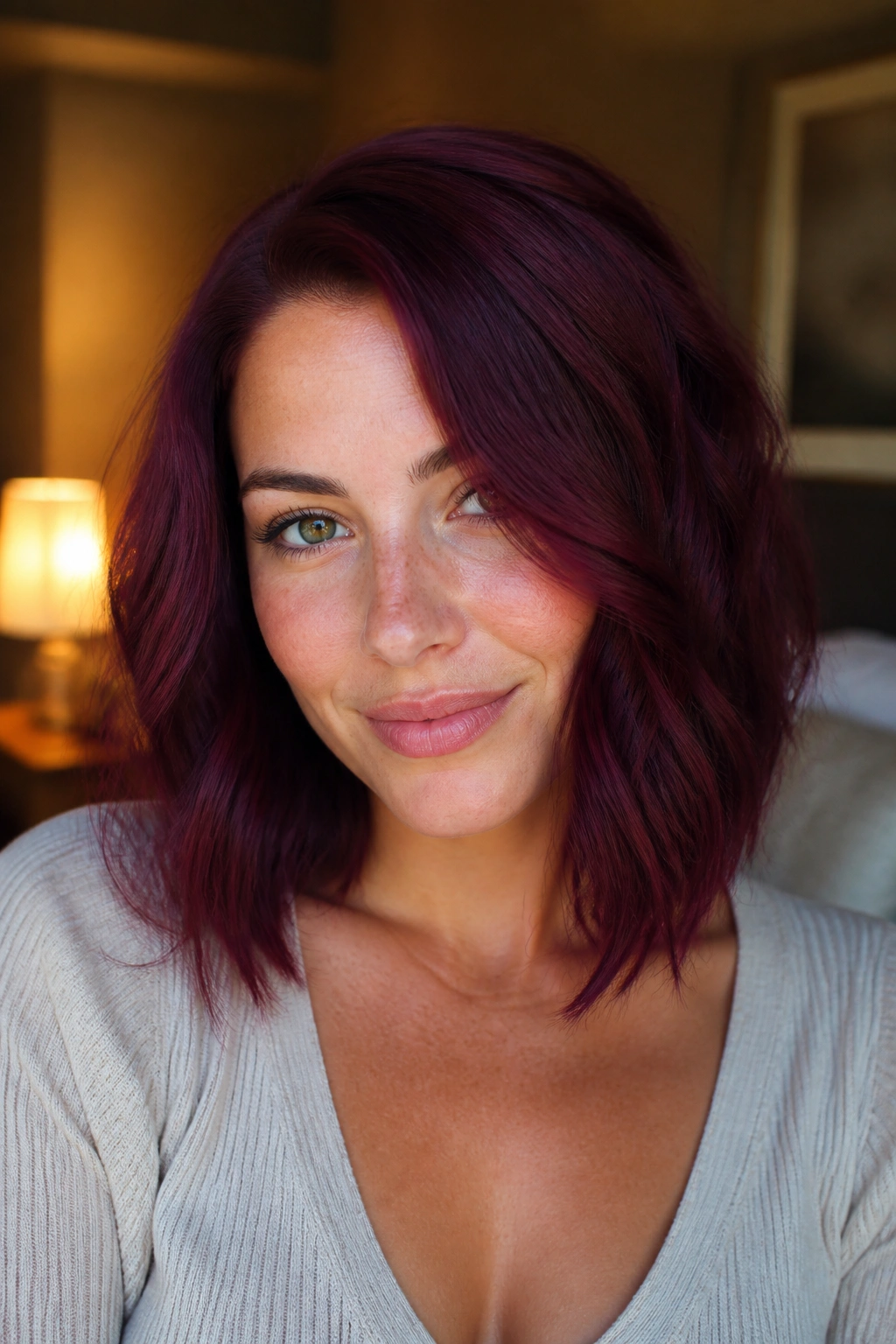
Plum red has a darker, cooler edge than copper or ginger, and that makes the cut read a little more relaxed. On a round face, lived-in waves are useful because they keep the shape from looking too round and polished at the same time.
The goal is to place the wave lower on the hair shaft. Start the bend below the cheekbone, then let the ends loosen out a bit. That keeps the top of the style smooth while adding movement near the collarbone, which is where the eye should go.
A center part can work here if the front pieces are long and the roots have lift. A soft off-center part is easier, though. It gives the face a slight diagonal and makes the plum shade look deeper on one side than the other, which is oddly flattering in person.
This style is good when you want something that feels grown-up without becoming severe. It can go casual or dressy without much trouble, and the darker red tones tend to grow out with less drama than brighter shades.
15. Rust Red Bob With Inward Curved Ends

Why does an inward curve help? Because it nudges the hair toward the neck instead of letting it flare away from the face. On a round face, that inward turn can make the lower half look slimmer and cleaner.
Rust red is a strong match for this shape. It has enough warmth to keep the cut from feeling flat, but it still looks earthy and grounded. The color gives the bob depth, and the curve at the ends gives it direction. That combination is what makes the style feel intentional.
How to wear it
A flat brush during blow-drying is usually enough. Pull the hair downward, then turn the ends in just a little with the brush or a quick pass of a straightener. You do not want a hard curl. You want a soft bend that sits close to the neck.
This bob is good for medium-density hair that can hold shape without a lot of product. A light cream or smoothing spray works better than anything sticky. If the hair gets too puffy, the curve disappears. That’s when the cut loses its edge.
16. Strawberry Red Lob With Feathered Layers
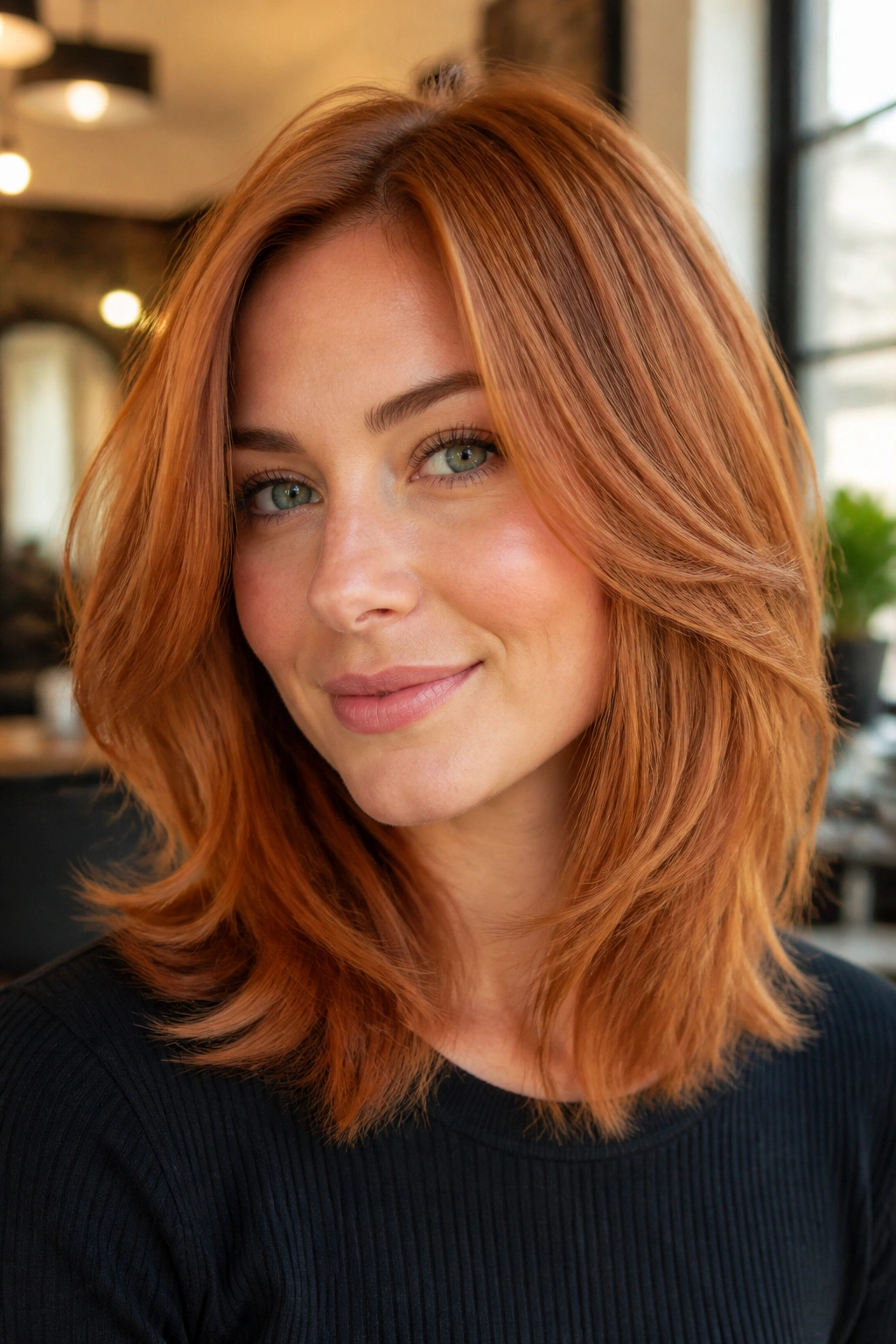
A feathered lob is a good answer when thick hair starts to feel boxy around the face. The feathering removes bulk in little slices, so the ends move instead of sitting in one solid wall.
Strawberry red keeps the style bright and fresh, which suits the lighter, airier feel of the layers. The color also makes the feathering more visible. You can actually see the shape change as the hair shifts, especially when it’s cut near the collarbone.
Picture a style that’s soft around the edges but still has enough length to pull the face down. That’s what this does. It’s lighter than a blunt bob, but not so chopped up that it loses its line. That balance is useful for round faces, which can get swallowed by too much width.
I’d wear this with a loose side part or a very slight middle part offset by face-framing pieces. The feathering should live below the cheekbone. If it creeps upward, the style starts to puff in the wrong place.
17. Merlot Lob With Lifted Roots
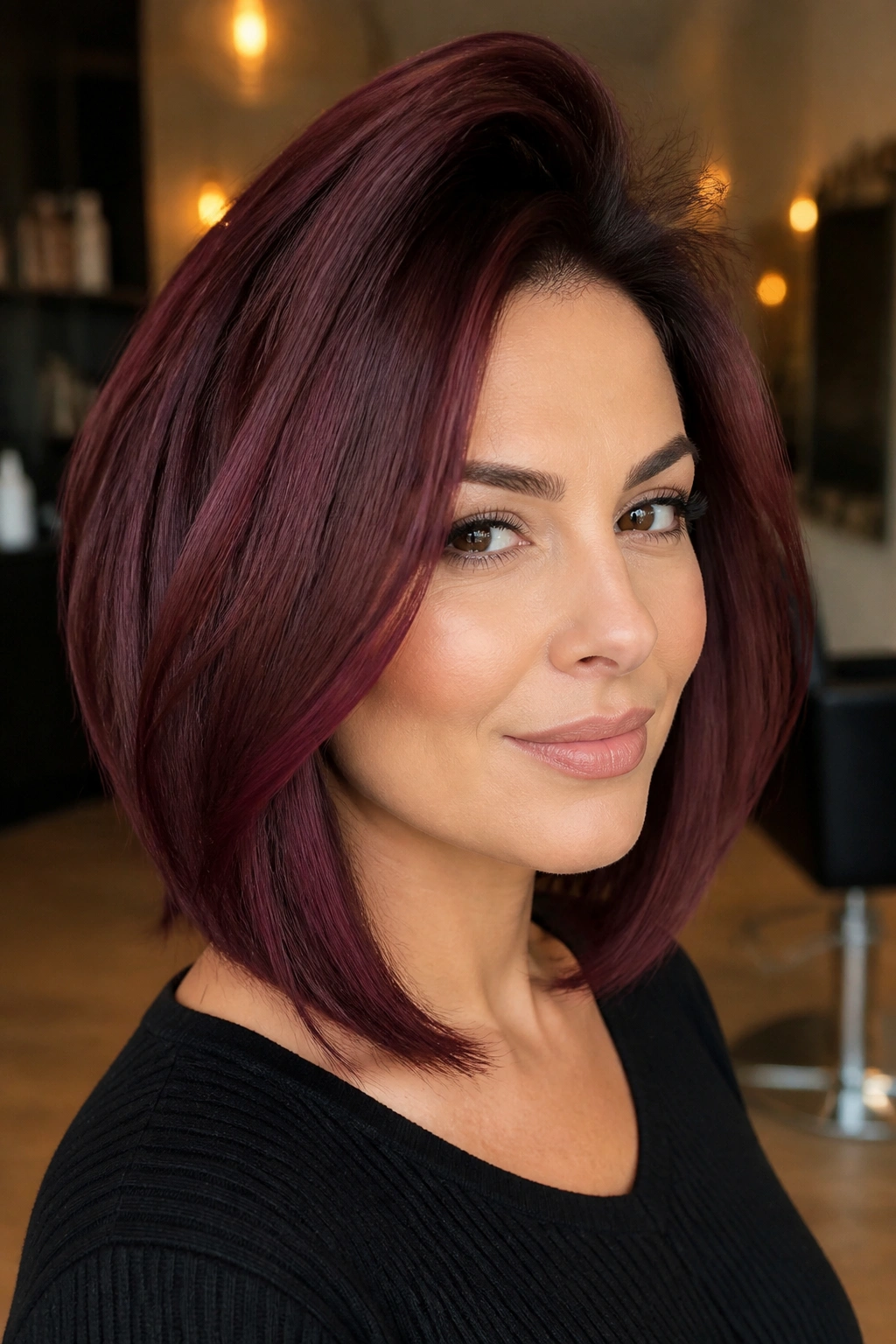
A merlot lob is proof that a round face can handle depth. The darker red shade near the roots creates a vertical pull, especially when the crown has a little lift and the front remains longer.
That root lift is the whole story here. Without it, the style can sink into the sides of the face and feel heavy. With it, the haircut opens up. The merlot color helps because it looks rich from root to end, but it does not need a lot of flash to make an impression.
A blow-dry with a root-lifting mousse is worth the extra five minutes. Focus the volume at the crown and the top inch of the head, then let the rest fall in a smoother line. The ends should stay neat. The top should have a little air.
This is one of those styles that looks better with a bit of lived-in movement than with severe straightness. A soft bend through the mid-lengths keeps the shape from collapsing. It also gives the red a nicer sheen than flat ironing every strand into submission.
18. Cinnamon Air-Dry Lob
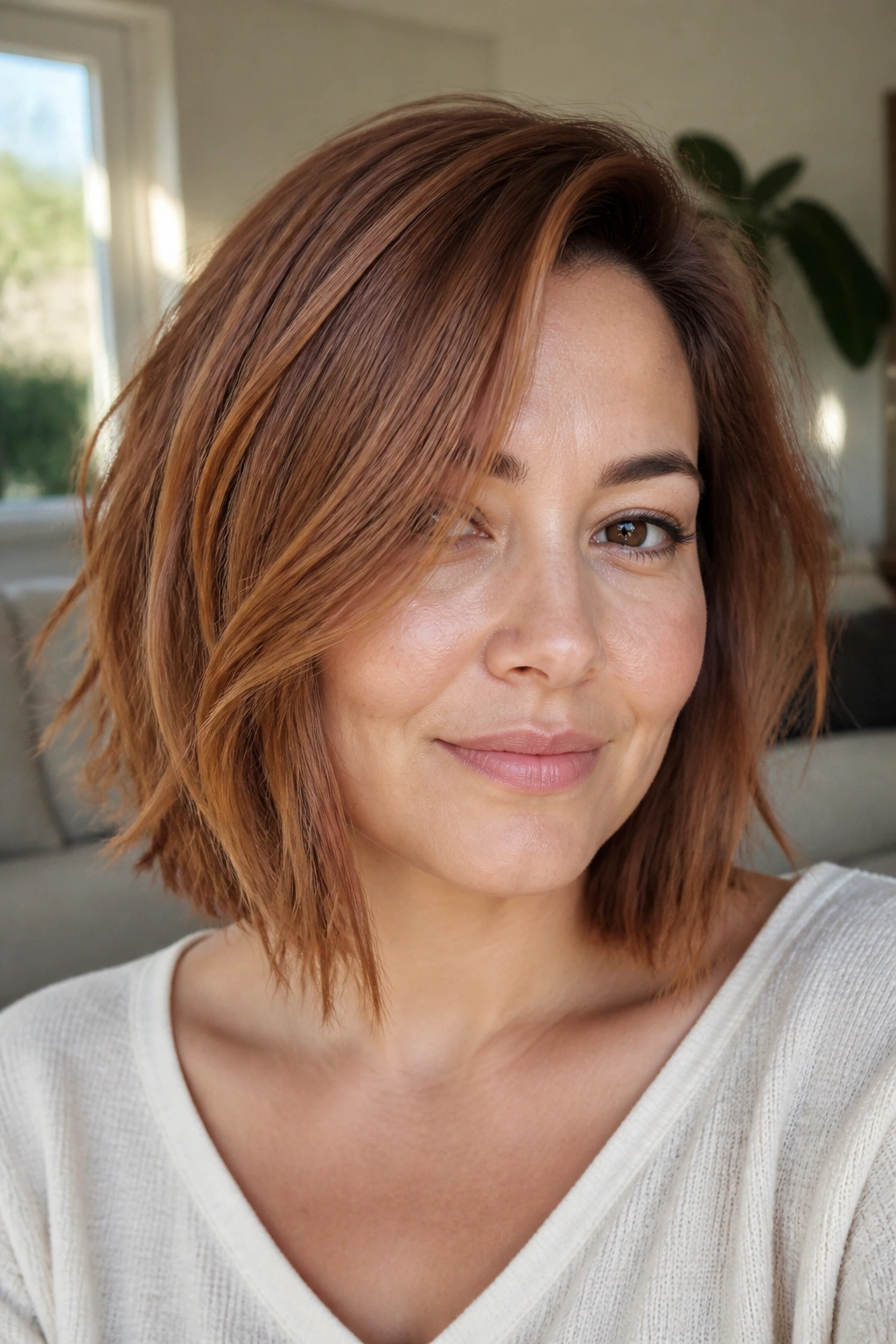
Unlike a blowout-heavy style, an air-dry lob leans on natural movement. That makes it a good choice if your hair already bends a little on its own and you do not want to fight it every morning.
Cinnamon is warm, easy on the eyes, and forgiving if the texture gets a little irregular. The color makes the soft bends look intentional. The cut should be long enough to fall below the jaw, with a few pieces around the front that direct the eye downward rather than outward.
How to get the most from it
- Apply a light curl cream or leave-in conditioner to damp hair
- Scrunch only the ends, not the roots
- Part the hair off-center while it dries
- Use a diffuser for 5 to 8 minutes if you need faster drying
This one is best for people who want movement without a lot of tool work. It does not need perfection. In fact, a little asymmetry makes it nicer. If the texture is too controlled, the whole point gets lost.
19. Angled Red Bob With A-Line Shape
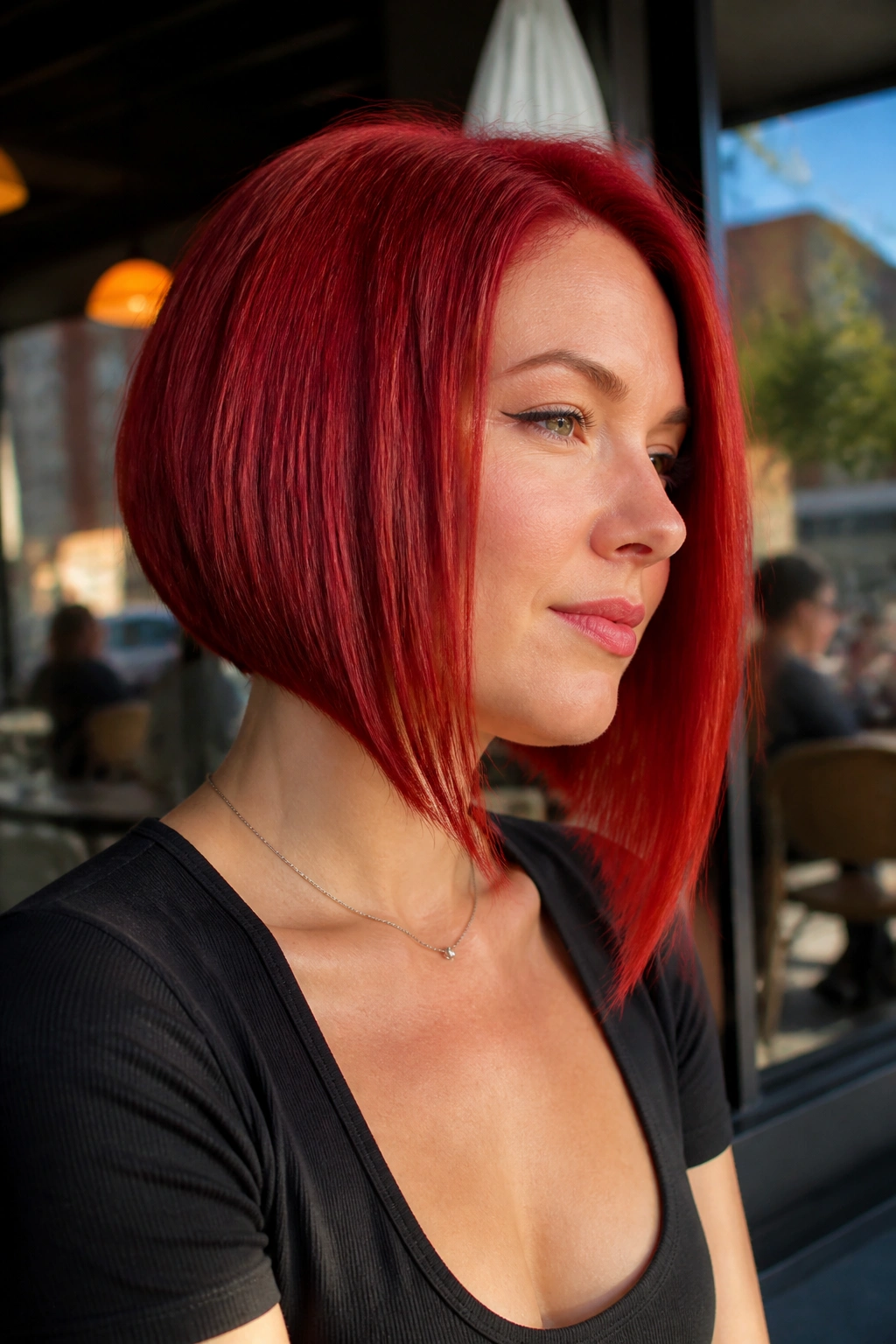
An A-line shape is one of the clearest ways to flatter a round face. The back sits shorter, the front hangs longer, and the eye follows that slant downward. Simple. Effective.
The red color sharpens the geometry, especially in copper or scarlet tones. Every inch matters here. If the front drops to the collarbone and the back stays at the nape, the silhouette naturally narrows the cheeks and lengthens the neck. That is the kind of structure a round face usually likes.
Why it works
The angle gives the haircut direction. A round face often benefits from shapes that do not sit evenly across the sides, and the A-line solves that by building movement from back to front. It also makes it easy to tuck one side behind the ear without losing the shape.
I prefer this cut polished, not shaggy. Keep the ends clean, the line crisp, and the color glossy. A smoothing cream and a medium round brush will keep the angle visible. If the cut gets too textured, the A-line gets muddy.
20. Crimson Lob With Loose S-Waves
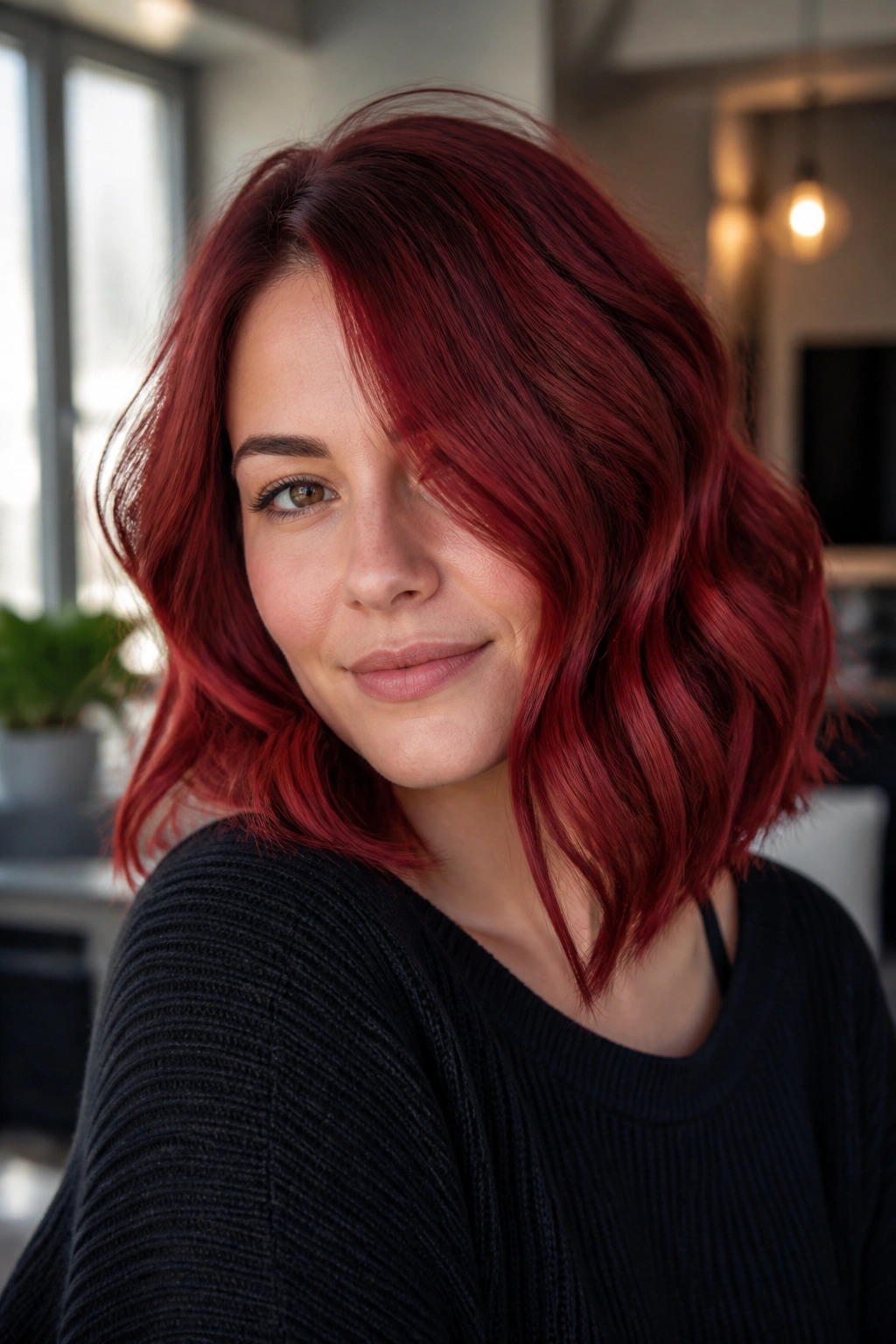
Loose S-waves are useful because they give the hair motion without adding a full ring of volume around the face. That matters on a round face, where too much side fullness can push the shape wider.
Crimson red is bold and clean, so the wave pattern should stay soft. The hair can look dramatic without looking busy. When the S-curve falls from the mid-lengths down, it helps the lob feel longer and less round. That’s the sweet spot.
I like this style with a side part or a slightly off-center part. Both keep the waves from meeting too symmetrically at the cheeks. A single-pass flat iron wave works well here—twist, release, twist, release—rather than a curling iron that makes the bend too perfect.
This cut is a nice choice if you wear the same shape for work and evenings out. It can look refined in the morning and a little more relaxed by dinner. Red hair does a lot already. The wave just gives it somewhere to go.
21. Copper Lob With Bottleneck Bangs
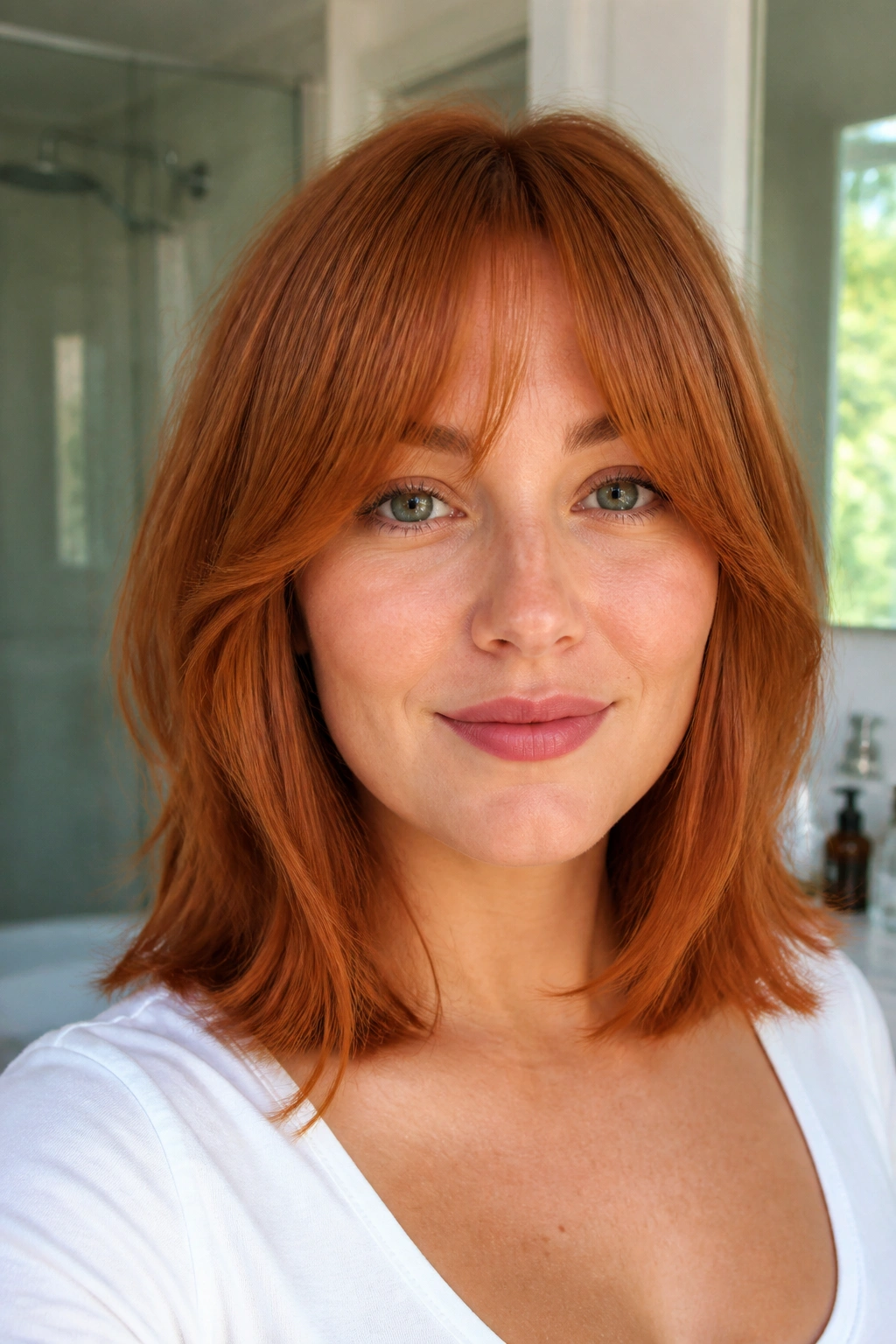
Bottleneck bangs are a clever middle ground. They start narrower between the brows, then open outward near the cheekbones, which means they frame the face without chopping it in half.
That shape is especially useful for round faces. It pulls attention inward at the top, then guides the eye down the sides, where the lob can keep stretching toward the collarbone. Copper helps because the lighter tones around the fringe make the opening effect more visible.
How to wear it
Ask for longer side pieces that blend into the front of the lob. The shortest part of the bang should sit low enough that it doesn’t crowd the forehead. If the bangs are too short, the whole haircut can look too youthful and too wide.
I’d style this with a round brush and a quick bend at the fringe ends. The rest of the hair can stay straighter, with a light curve under the perimeter. That contrast keeps the bangs from taking over the face. Good thing, since the bangs are only half the story here.
22. Glassy Straight Red Lob
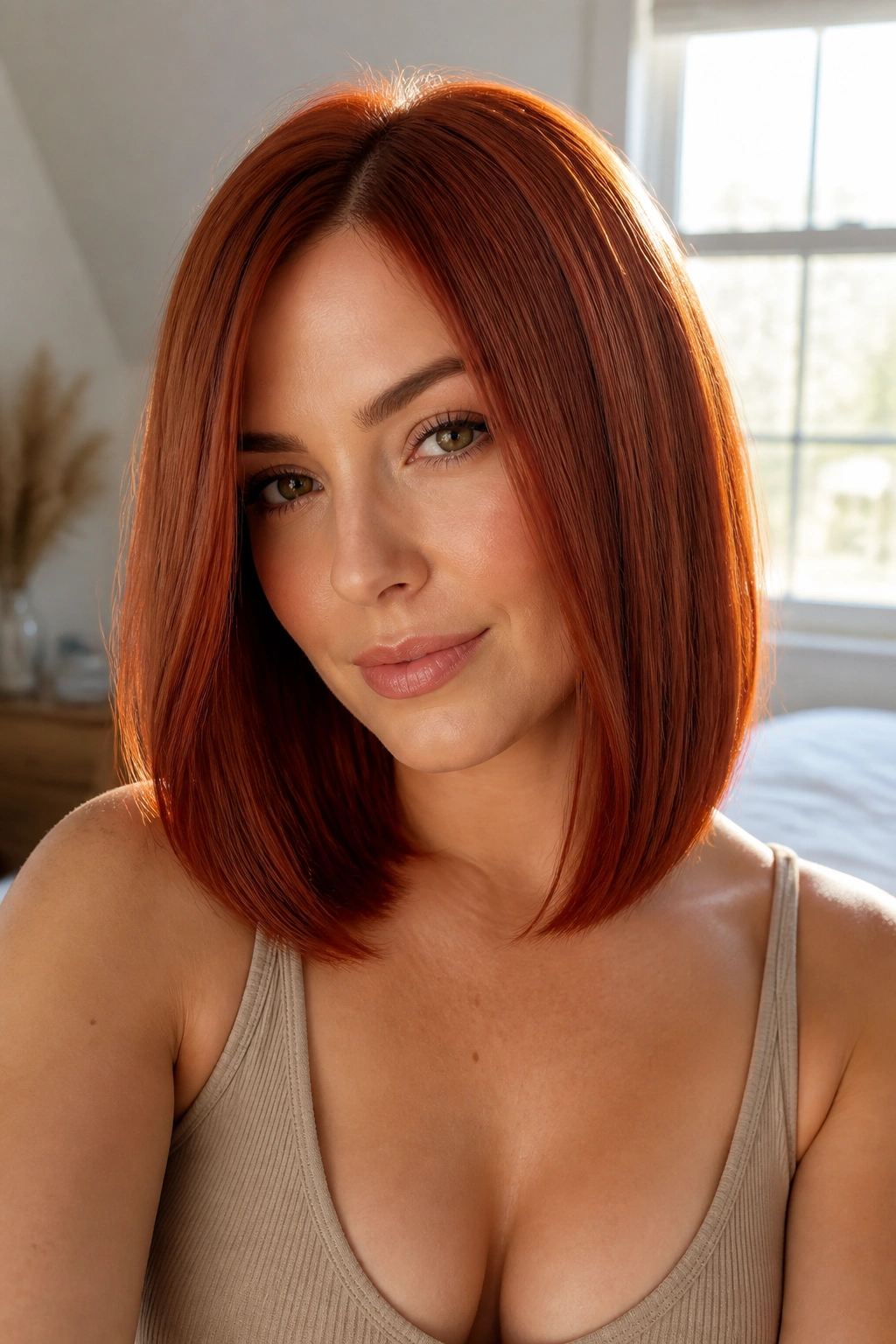
A glassy finish is about shine, but it also changes the shape of the haircut. When the hair lies smooth and straight, the eye reads the line first, not the volume. That can be a blessing for round faces.
The red shade matters a lot in this style. A bright, glossy copper or cherry tone reflects light cleanly, and that shine can make the face look narrower by comparison. The cut itself should stay long enough to pass the chin, with a slight inward turn at the ends if your hair tends to flare out.
A middle part can work if the front pieces are long and the roots have a little lift. If not, go off-center. I’m picky about that here. A straight red lob with a bad part can go from chic to flat in a hurry.
Use a heat protectant, a paddle brush, and one smoothing pass at low to medium heat. Then leave it alone. The point is sleekness, not overworking the hair until it looks stiff.
23. Curly Red Lob With a Side Part

Curly hair and round faces can be a great match when the shape is cut with enough length and the curls are allowed to fall in a controlled way. The side part keeps the cut from looking too symmetrical, and that asymmetry helps the face feel longer.
The red shade adds definition to every curl, which is both a gift and a warning. Good curls look crisp. Frizzy curls look louder than you want. So the cut needs smart layering—enough to keep the curl from ballooning, but not so much that it loses its weight.
What to watch for
- Keep the length around the collarbone
- Ask for curl-by-curl shaping if the texture is tight or springy
- Avoid heavy layers at the cheekbone
- Use a diffuser on low heat and low speed
This style can be gorgeous when it’s hydrated. Leave-in conditioner, curl cream, and a light gel can make the red shine through the pattern. If the hair dries too dry, the curl loses its shape and the face can read wider. Moisture matters here. A lot.
24. Flipped-End Mahogany Lob
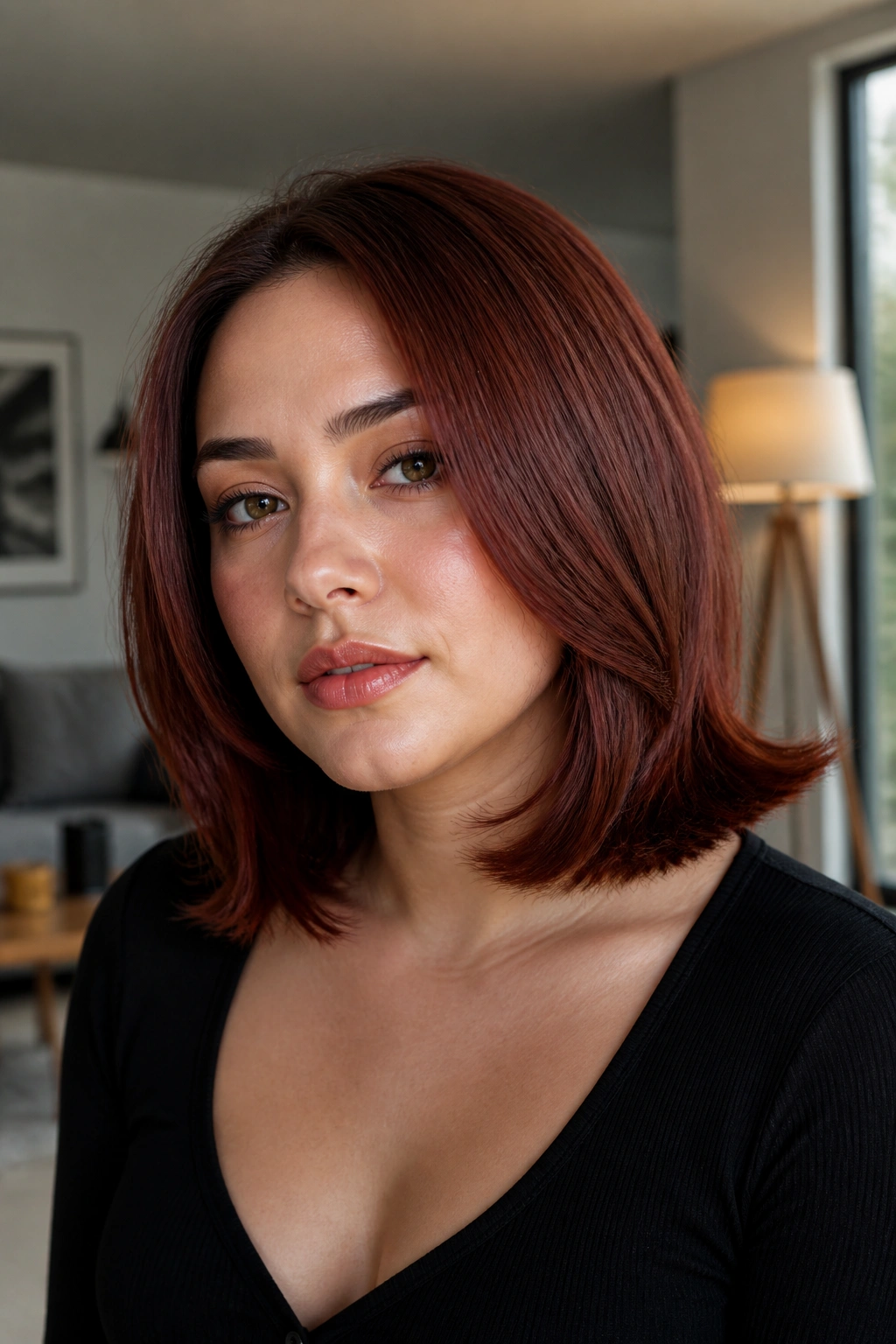
A flipped end can sound retro in the wrong way, but on a round face it can actually work because the ends kick outward below the jawline rather than hugging the cheeks. That little movement creates space.
Mahogany is a nice base for this because the deeper tone keeps the style from getting too playful. The flip becomes a detail, not a gimmick. If the length sits at the collarbone, the hair opens around the neck and gives the lower face more room.
I’d keep the flip subtle, almost like the ends changed their mind at the last second. You do not want a huge outward flick. That can widen the silhouette. A small bend is enough, especially if the rest of the cut stays smooth and the roots stay controlled.
This one is good when you want a little personality without losing polish. It also works well with a side part and a tucked side, which can tone down the volume further if your hair is thick.
25. Fire Red Blunt Lob With Internal Layers
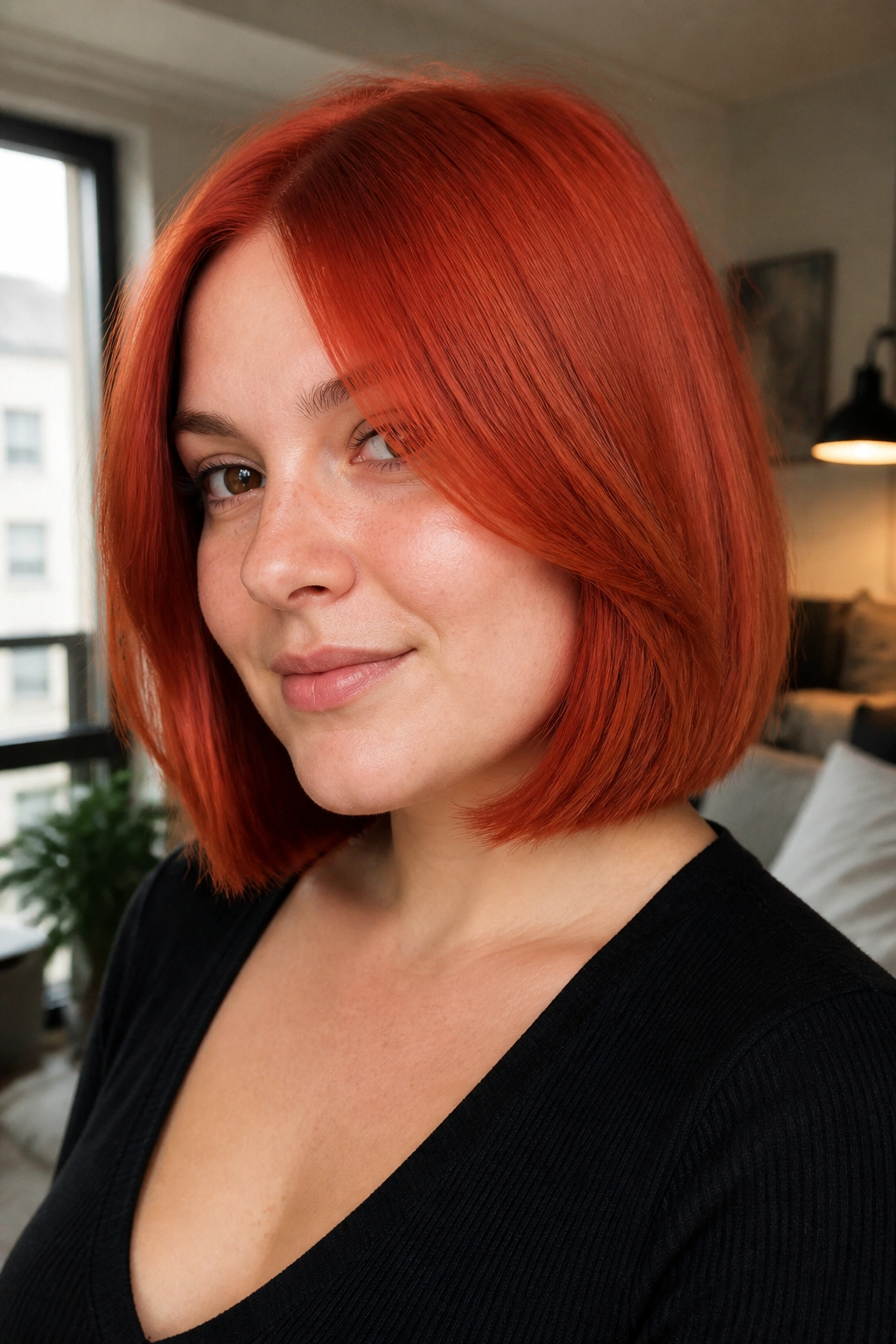
A blunt lob sounds heavy, but internal layers change the game. They take weight out of the inside of the cut while leaving the edge clean, so the shape keeps its strong line without becoming a slab.
Fire red gives the blunt perimeter a punchy look. On a round face, that can be powerful if the length is placed correctly. The front pieces should still clear the jaw, and the cut should sit low enough to stretch the face. The internal layers are there to keep the sides from puffing.
Why I like it
- Strong perimeter without bulk
- Better movement than a fully blunt cut
- Easy to dress up with a flat iron or a soft wave
- Good for medium-thick hair that holds shape
This is not the softest style in the bunch. That is fine. Some faces look better with a firmer line, especially when the color is this bold. If you want a red bob that feels decisive, this is the one. It has edge, but not the kind that fights your face shape.
26. Chestnut Red Beveled Lob

A beveled lob sits somewhere between sleek and soft, which is why it can be such a good match for round cheeks. The bevel creates a taper at the bottom without turning the style into a curl or a flip.
Chestnut red keeps the whole look grounded. It’s warm, but not brassy. The shade pairs nicely with a cut that has structure, because the color itself won’t do all the work. You still need the line of the haircut to point downward and the front to stay long enough to slim the face.
I’d choose this if you want something wearable every day. It dries well with a round brush, but it also looks good air-dried with a little smoothing cream. That flexibility matters. Not everyone wants to wrestle with a hot tool each morning.
The cut should hit somewhere between the collarbone and the top of the chest. Too short and the bevel loses its effect. Too long and it starts to feel like an ordinary layered haircut. Length placement is the whole trick.
27. Ginger Lob With Side-Swept Volume

Side-swept volume is a better friend to a round face than volume on both sides. It pulls the focus diagonally and gives the style lift without wrapping the cheeks in width.
Ginger is bright enough to keep the cut lively, especially when the roots stay a shade deeper than the mid-lengths. That contrast helps the top feel higher. The front should sweep across, not straight down. A little bend above one brow and longer pieces on the other side can change the whole read of the face.
This cut shines when the crown has lift and the ends stay calm. You want energy at the top, then restraint below. That mix keeps the bob from ballooning outward. A root spray, a round brush, and a quick blast of heat at the crown are usually enough to set it up.
I’d call this a strong choice for anyone who likes movement but still wants the haircut to feel controlled. It’s not fussy. It just knows where to put the volume.
28. Long Red Bob Haircuts for Round Faces: Soft Copper Collarbone Lob
A soft copper collarbone lob is the cut I’d hand to someone who wants one red bob that can grow out without falling apart. The length stays low, the front pieces keep stretching, and the color adds enough warmth that the shape never looks limp.
The collarbone is the sweet spot. It sits below the jaw, which helps the face look longer, but it’s still short enough to feel like a bob instead of a long layer cut. If the ends are lightly beveled and the part is a touch off-center, the style keeps a gentle diagonal line that works hard without looking fussy.
This is also one of the easiest cuts to live with on a normal day. Air-dry it with a little cream, blow it smooth with a brush, or put a loose bend through the front with a flat iron. It can handle all three. That flexibility is part of the appeal. A cut that behaves when you ignore it is worth keeping.
If I had to pick one shape for a round face that wants red hair, shine, and easy grow-out in the same haircut, I’d start here. It gives the face room, keeps the color visible, and doesn’t get weird after four weeks. That’s a rare combination, and a useful one.
