



Straight hair is the easiest place to spot a bad bob. Every uneven corner shows up. Every heavy line shows up. Every lazy layer shows up, too.
That’s why French bob haircuts for straight hair live or die on the cut itself. You do not need a lot of length to make them work. You need shape, a clean edge, and enough movement so the style looks deliberate rather than boxy.
The best versions hit around the jaw, skim the cheekbone, or sit just below the ears with a sharp fringe or a soft part. On straight hair, that small shift in length changes everything. A quarter inch can be the difference between chic and flat. Between Parisian and pancake.
I’ve always thought this haircut works best when it looks slightly tailored, not overworked. The trick is knowing which version suits your density, your face shape, and how much time you want to spend with a blow-dryer. Some French bob haircuts for straight hair are crisp and graphic. Others are softer, a little slouchy, and easier to live with. The 28 styles below cover the full spread, from blunt and polished to airy and undone.
1. The Classic Chin-Length French Bob
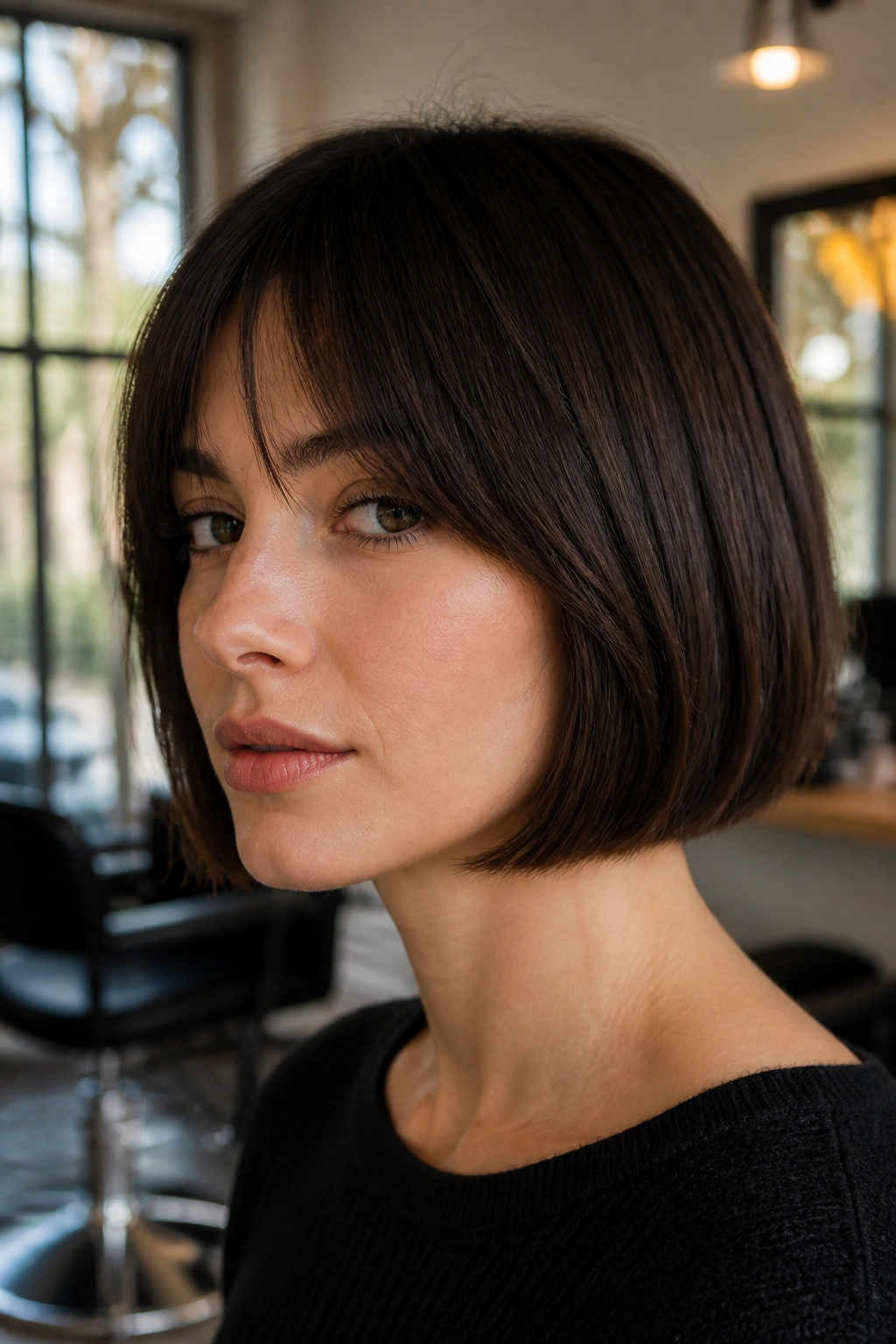
The classic version is the one most people picture first, and for good reason. It sits right at the chin, with a blunt perimeter that gives straight hair real shape. On straight strands, that line reads clean instead of heavy when the ends are cut carefully.
Why It Works on Straight Hair
Straight hair can go limp fast. A chin-length French bob fixes that by putting the hair in a compact shape that falls neatly on its own.
Ask for a blunt cut with a tiny bit of internal softening at the very ends. Not layers. Just enough texture to keep the edge from looking stiff.
- Best for straight hair that tends to fall flat by midday.
- Works well with a middle part or a soft off-center part.
- Looks sharp with minimal styling: a round brush, a quick bend under, done.
- Pairs well with a narrow jawline or a long neck.
Pro tip: If your hair is fine, keep the line at the chin or just below it. Longer than that, and the shape can lose its punch.
2. The Jaw-Skimming Bob With Soft Ends
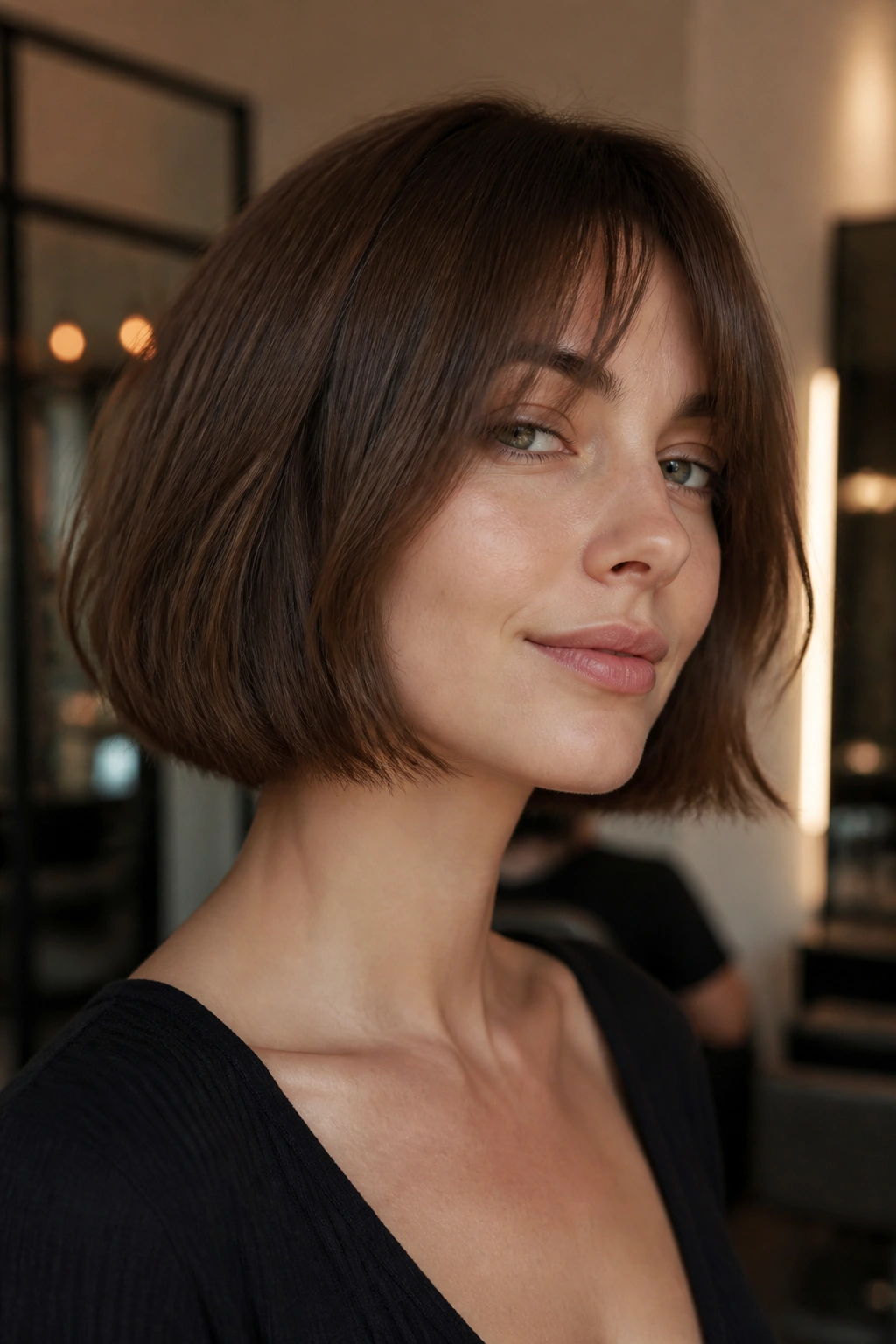
This is the French bob for people who want movement without losing the outline. The length just brushes the jaw, and the ends are softened enough to keep the cut from feeling too rigid.
It’s a little easier to wear than a strict blunt cut. Straight hair lies down beautifully here, but it still gets a bit of bend at the tips if you blow-dry with a flat brush and turn the ends inward.
I like this version for anyone nervous about going too short. It gives you the French shape without the sharp, editorial feel of a micro bob.
It also grows out gracefully. That matters more than people admit. A lot of shorter cuts look good for two weeks and then start behaving badly. This one hangs on.
3. The Micro French Bob That Barely Brushes the Jaw
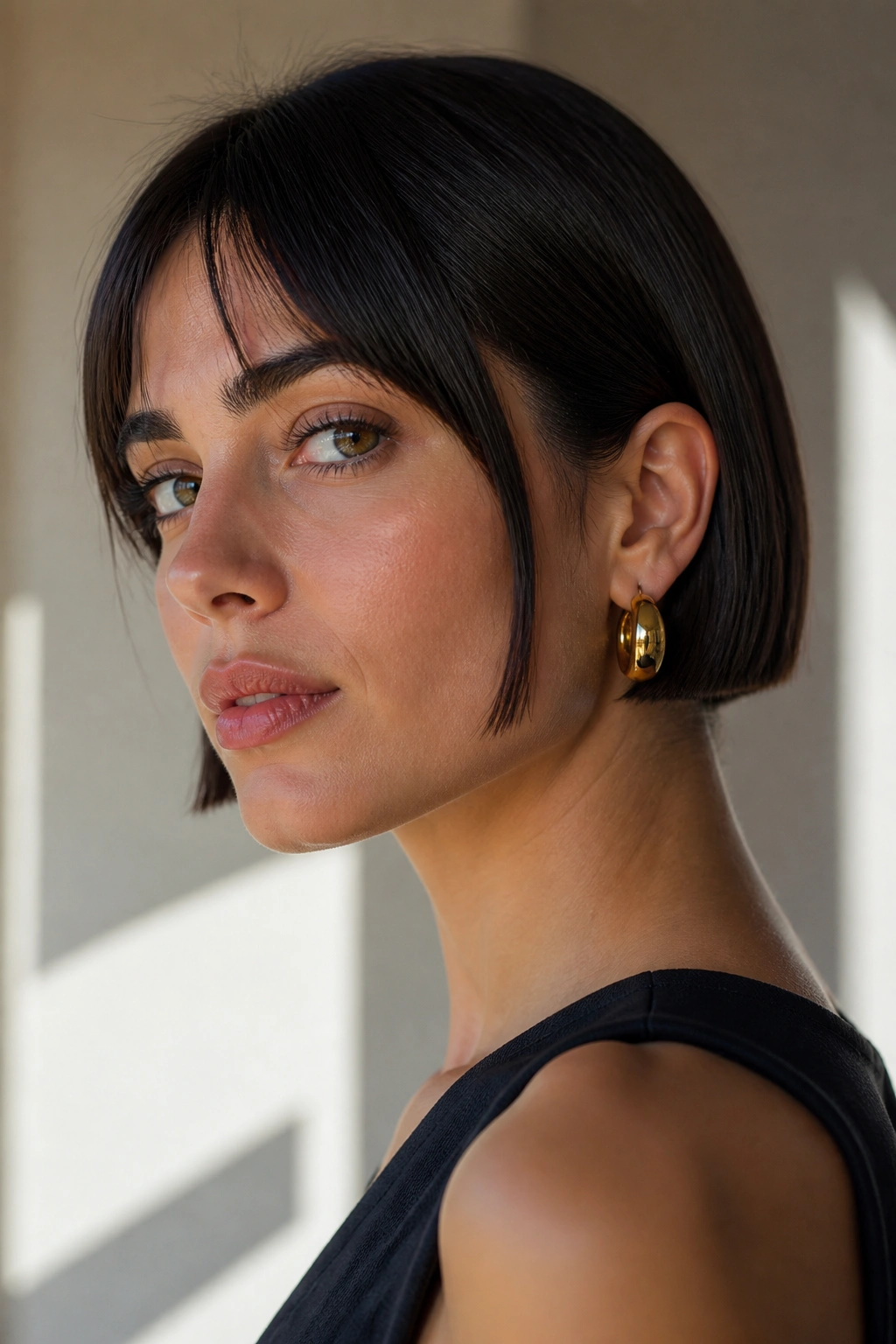
A micro bob is a brave cut. It lands above the jawline, sometimes just grazing the bottom of the ear, and on straight hair the whole thing looks crisp in the best way.
I’ve seen this style on people who wear bold earrings, strong brows, or very little makeup. It has presence. No extra fluff needed.
The catch is that it exposes everything. Cowlicks, uneven growth, a weak fringe, a wonky blow-dry — all of it. So this is the cut for someone who actually enjoys keeping things neat.
- Ask for a blunt perimeter with a tiny bevel under the ends.
- Keep styling light: one smoothing cream, one pass with a blow-dryer nozzle.
- Avoid heavy oils. They drag the shape down fast.
- Trim every 5 to 7 weeks if you want the line to stay clean.
One warning: if your hair grows fast or your neck is short, this can feel severe if the cut is too high. A quarter inch lower usually fixes that.
4. The French Bob With Full Brow-Grazing Bangs
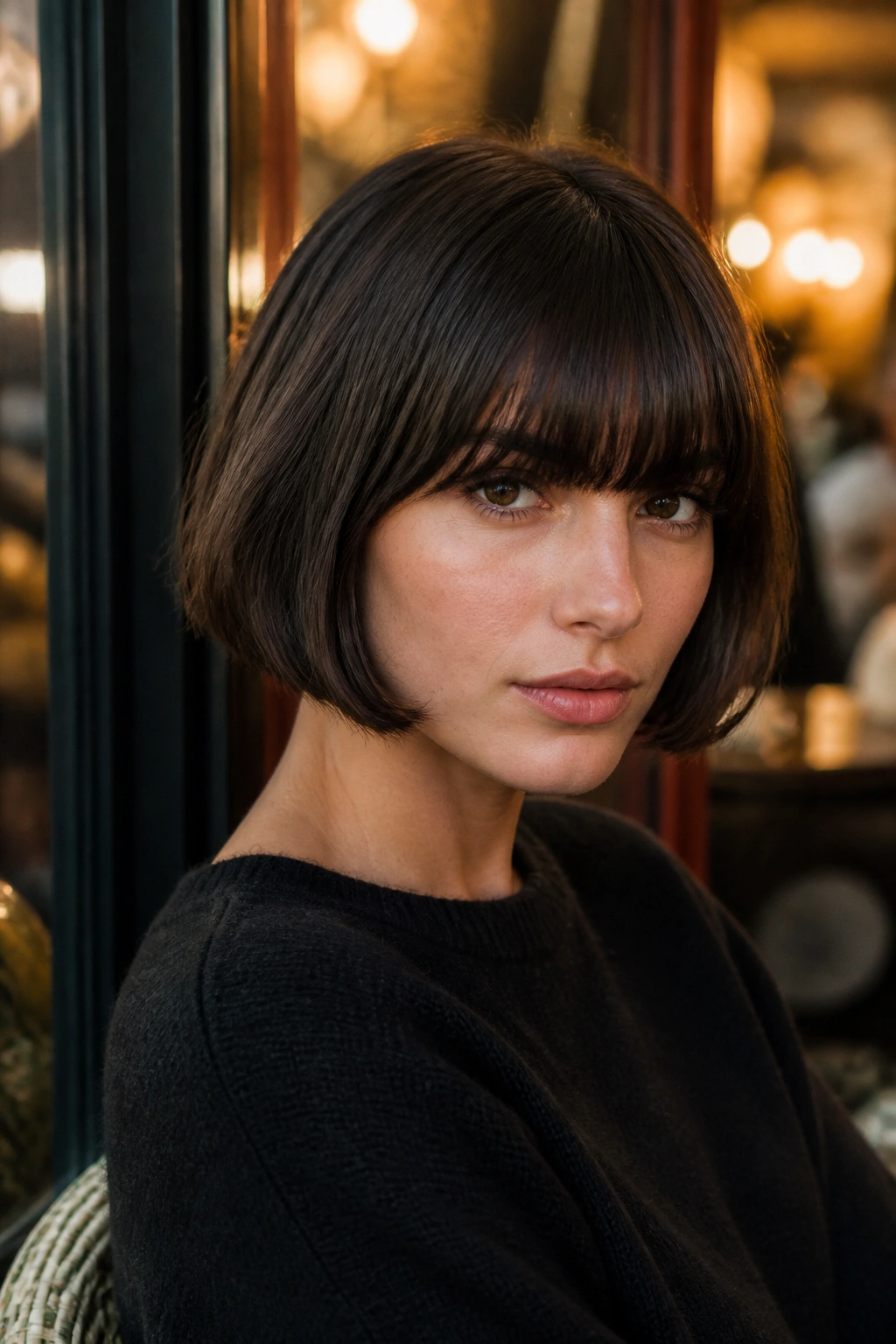
Want the haircut to feel more distinctly French? Add bangs. Full brow-grazing fringe changes the whole mood of the cut. It gives straight hair a face frame, a little weight up front, and a bit of attitude.
What makes this version so good is the balance. The bob stays neat at the bottom, while the fringe keeps the top from looking bare. On straight hair, that contrast matters. Without it, the haircut can read too plain.
What to Ask for in the Chair
Tell your stylist you want bangs that touch the brows when dry, not wet. Hair shrinks less on straight textures than curly ones, but bangs still move up as they dry.
Keep the fringe thick enough to sit cleanly, but not so dense that it blocks your face. A soft point cut through the ends helps.
This style is a nice match for longer foreheads and people who like mascara to do some of the talking. It’s less good if you hate bangs touching your skin. Be honest about that. Bangs that annoy you will end up pinned back by week two.
5. The Side-Part French Bob for Straight Hair
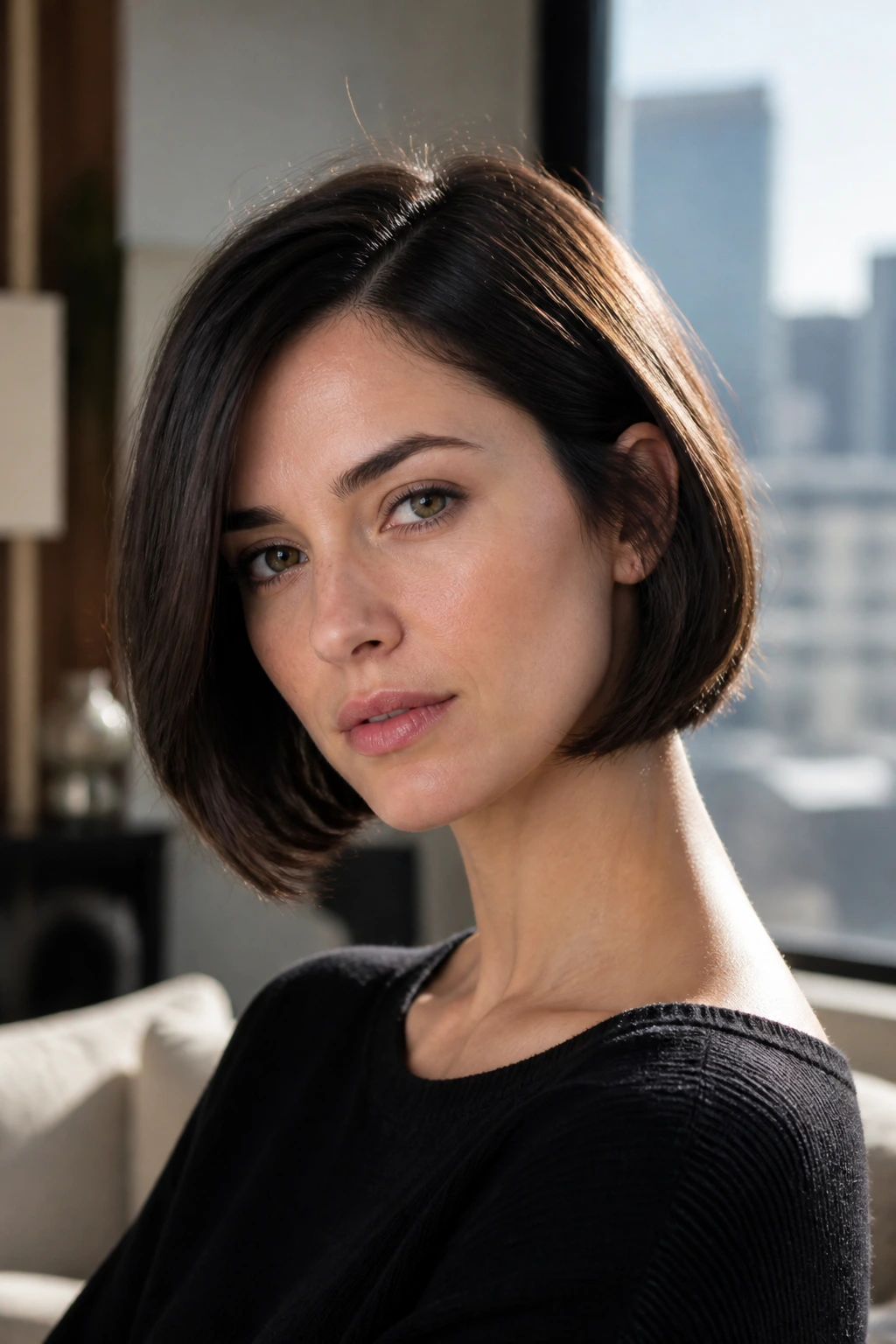
A side part changes the mood fast. The same cut can look sharper, softer, or more casual depending on where the part lands, and straight hair shows that shift immediately.
This version is one of my favorites for people who feel center parts make their faces look too long or too exposed. A side part adds a little lift at the crown and gives the bob a more lived-in shape.
The best side-part French bob does not need dramatic volume. Just a clean part, a slight bend through the mid-lengths, and ends that tuck under by a fraction of an inch. That tiny motion keeps the cut from going flat against the cheeks.
It’s also forgiving on days when your hair is not freshly washed. Straight hair often behaves better with a little natural oil, and a side part can hide the fact that you skipped wash day. Handy. Not glamorous. Useful.
6. The Center-Part Sleek Bob
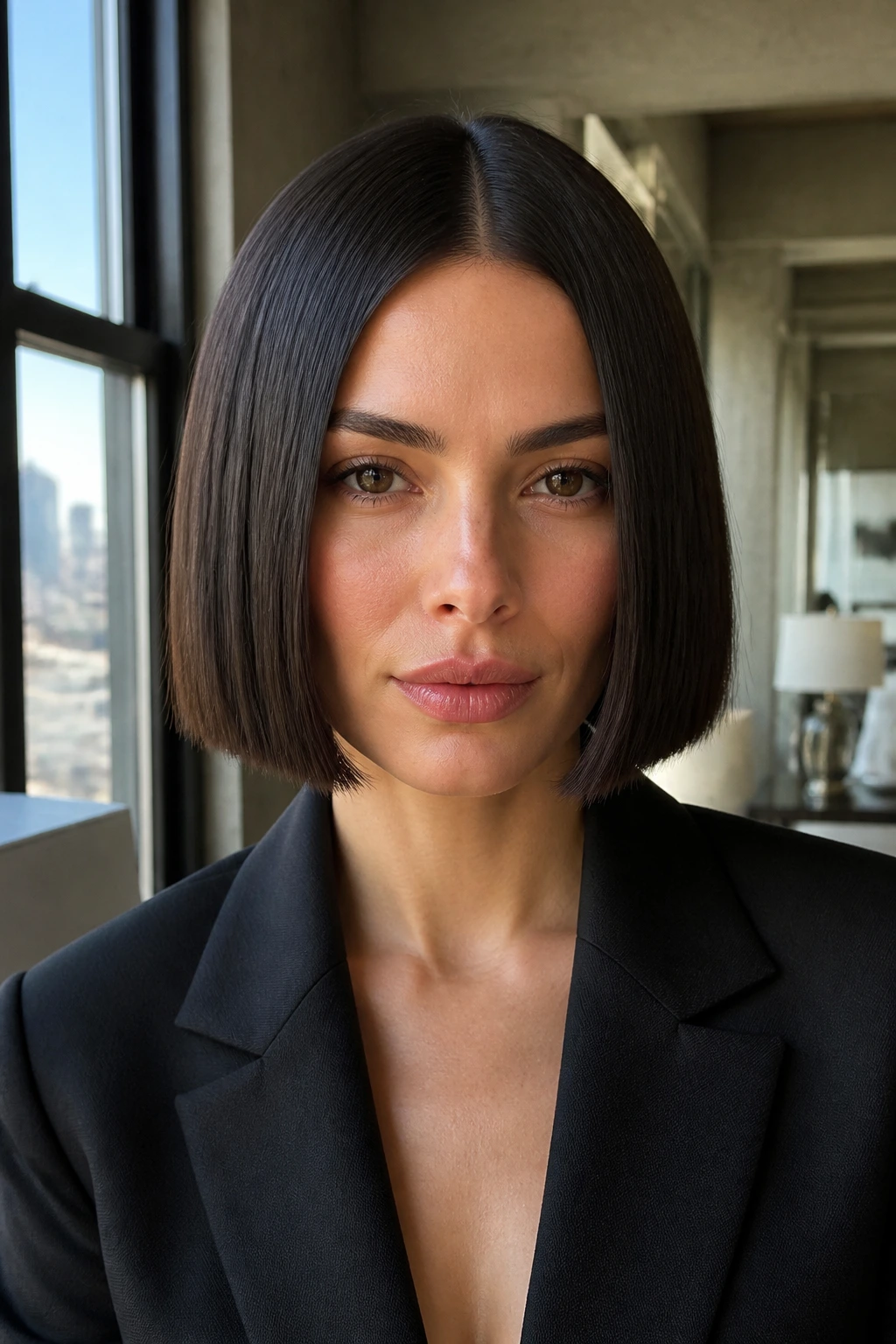
If you like clean lines, this is the one. A center part turns a French bob into a sleek, symmetrical shape that feels polished without trying too hard.
The key is keeping the hair blunt enough at the perimeter so the middle part does not split the silhouette into two sad triangles. Straight hair loves the symmetry, but it needs a strong cut line to hold it together.
Why It Looks Better on Straight Hair Than on Wavy Hair
Straight hair lets the center part fall in smooth panels. There’s less frizz at the roots, less puffing at the sides, and more control around the cheekbones.
A quick pass with a flat brush or a paddle brush while blow-drying keeps the surface smooth. Finish with a pea-sized amount of shine cream through the ends only. Too much product, and the whole thing collapses.
This version suits sharp features, strong brows, and anyone who likes a more graphic haircut. If your face is round and you want a little vertical lift, keep the front pieces just a touch longer than the back. That small adjustment matters.
7. The Ear-Tucked French Bob
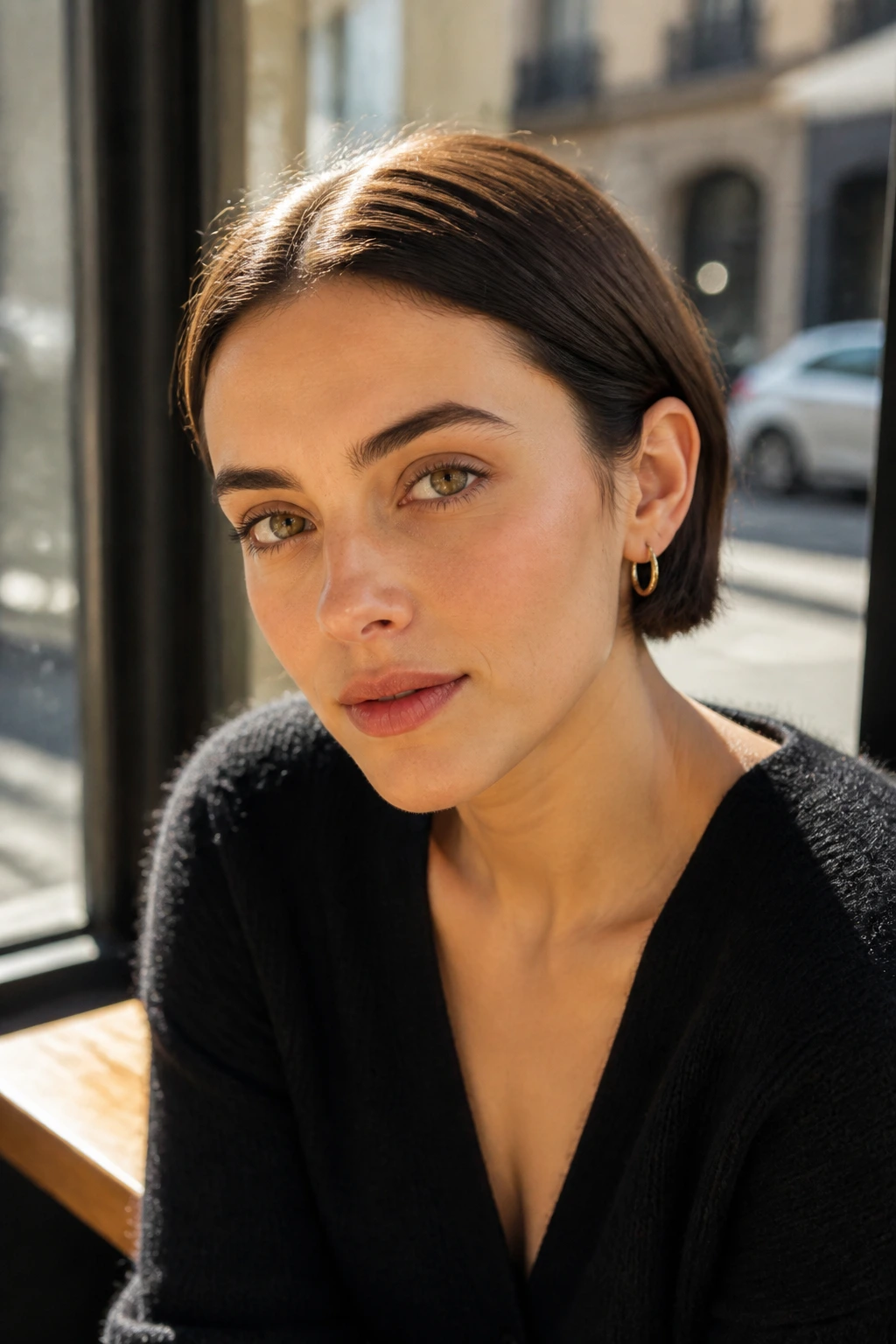
A bob that’s meant to be tucked behind the ears sounds simple, and maybe that’s why it works. Straight hair makes the tucked shape look clean instead of fussy.
This version is especially good if you wear glasses, hoops, or any kind of statement earrings. The cut opens up the face and lets the accessories do some of the work.
The trick is to keep the length long enough to stay tucked without popping out every five minutes. Somewhere between the chin and the jaw usually does it. Too short and it fights you. Too long and you lose the neat little frame around the face.
I like this one for daytime wear because it feels practical. It can look neat at work and then soften up later if you pull a few pieces loose. That kind of haircut earns its keep.
8. The Rounded French Bob
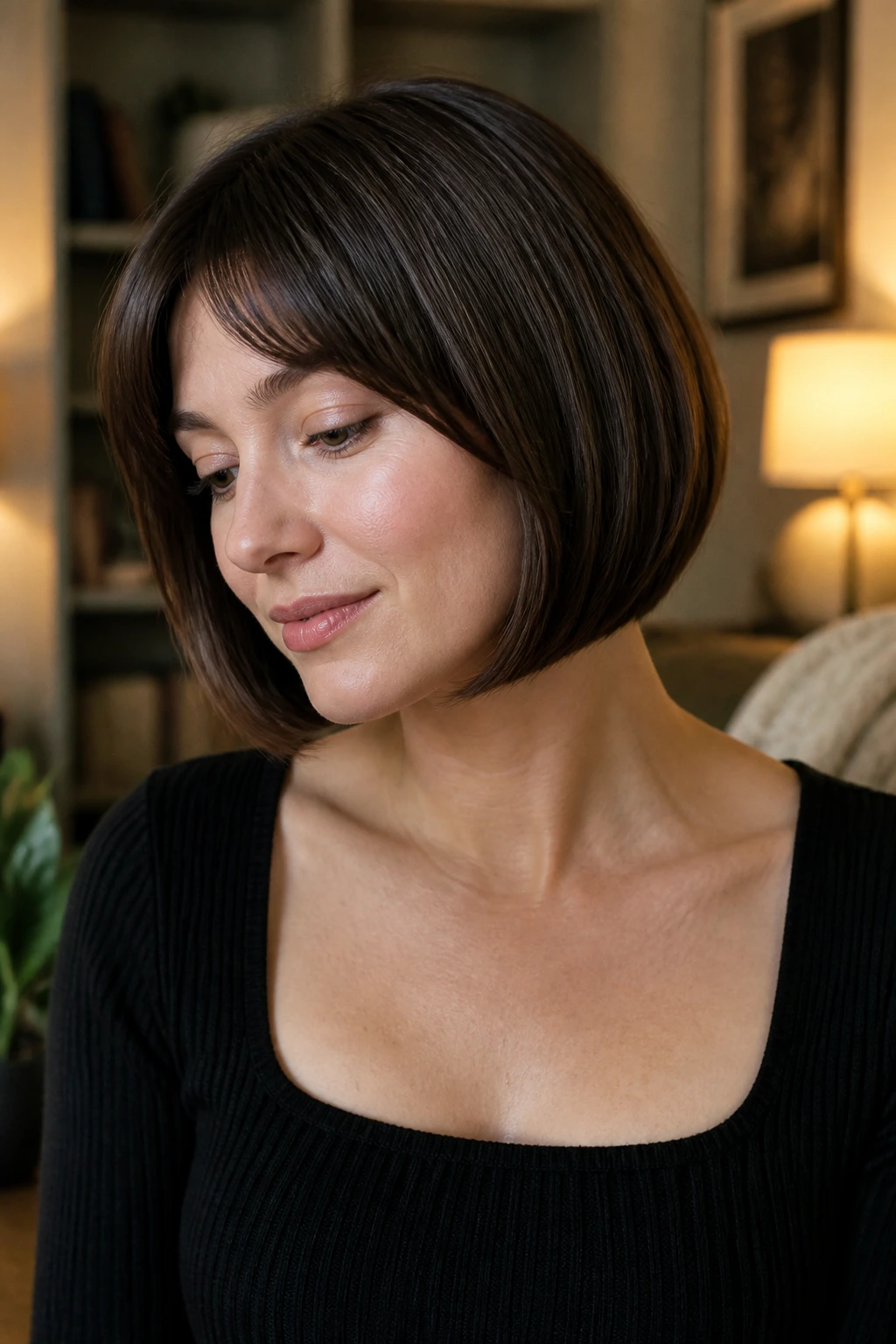
A rounded bob curves in slightly toward the jaw, which makes it feel softer than a straight boxy cut. On straight hair, that curve has to be built into the cut, not faked later with a brush.
This shape is good for people who want the French bob feel without the hard edge. It takes a blunt line and rounds it just enough to follow the face. The result is less severe, more fluid, and a little easier if your features are angular.
The Shape Matters More Than the Length
With a rounded French bob, the perimeter should still look deliberate. Don’t let the stylist overlayer it. That’s how the curve disappears and the cut turns fuzzy.
Use a round brush only at the last second, mostly to guide the ends under. If you over-style it, the curve can puff out too much at the sides. Nobody wants a helmet.
This cut works well on straight hair that has a bit of body at the nape. It hugs the neck in a nice way, which sounds small until you see it in a mirror and realize it changes the whole profile.
9. The Textured French Bob With Choppy Ends
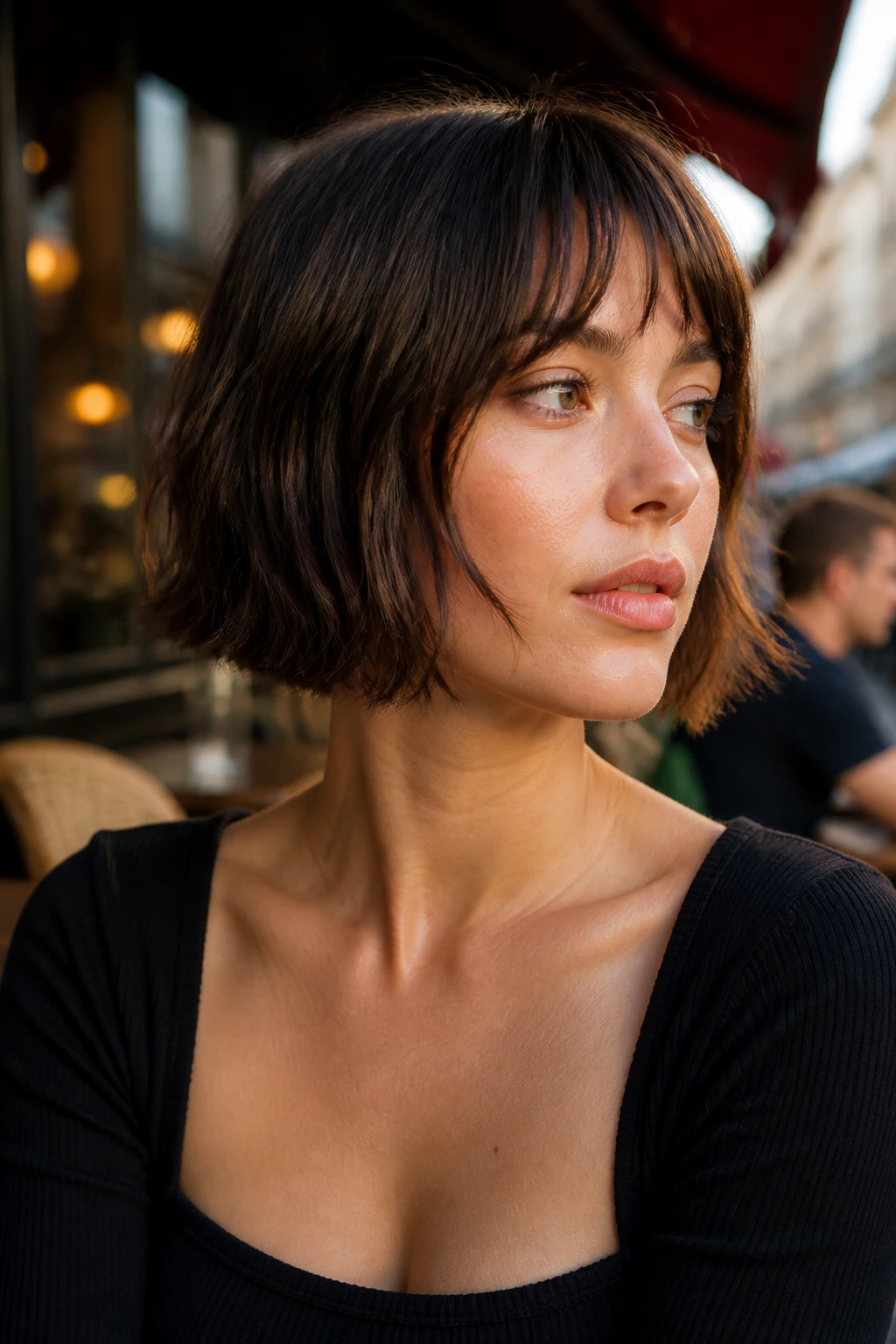
This is the relaxed cousin of the classic French bob. Instead of a hard, even line, the ends are slightly chipped and irregular, which gives straight hair a little life.
It’s a smart choice if your hair is very poker-straight and tends to look severe when cut blunt. The choppy edge breaks up that heaviness without turning the style shaggy.
I’d ask for point cutting at the ends and a light internal texture, not short layers. Those are not the same thing. Point cutting removes a bit of weight from the perimeter while keeping the shape intact.
The cut looks best when the styling stays easy. Air dry with a touch of lightweight cream, or blow-dry with your fingers and leave the ends imperfect. That little roughness is the point.
10. The French Bob With Curtain Bangs
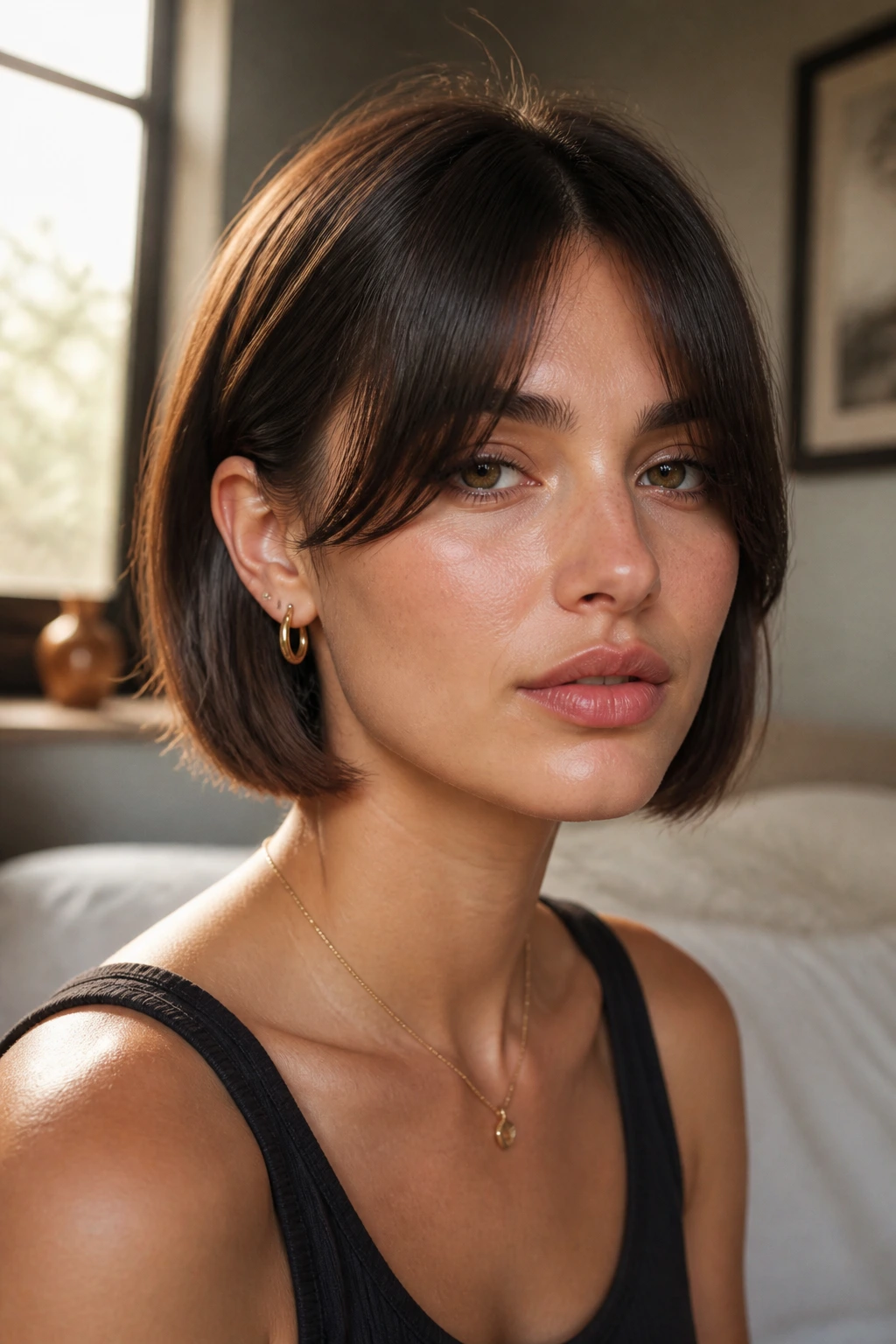
Curtain bangs give straight hair a softer front without locking you into a full fringe. They part open at the center and fall away from the face, which makes the bob feel looser.
This is a smart pick if you like the French look but do not want bangs sitting on your forehead all day. Curtain bangs grow out more gracefully than blunt fringe, too, which is one reason people keep coming back to them.
How to Style It
Blow-dry the bangs first. Always.
Use a small round brush or even a roller brush, lifting the roots and curving the ends away from the face. The rest of the bob can stay flatter and sleeker. That contrast is what gives the cut movement.
This version suits straight hair that needs a little break around the face. It is especially good if your jawline is narrow or your face is longer, because the curtain shape adds width where you want it. Clean, soft, easy to wear. Hard to argue with that.
11. The Wispy Fringe French Bob
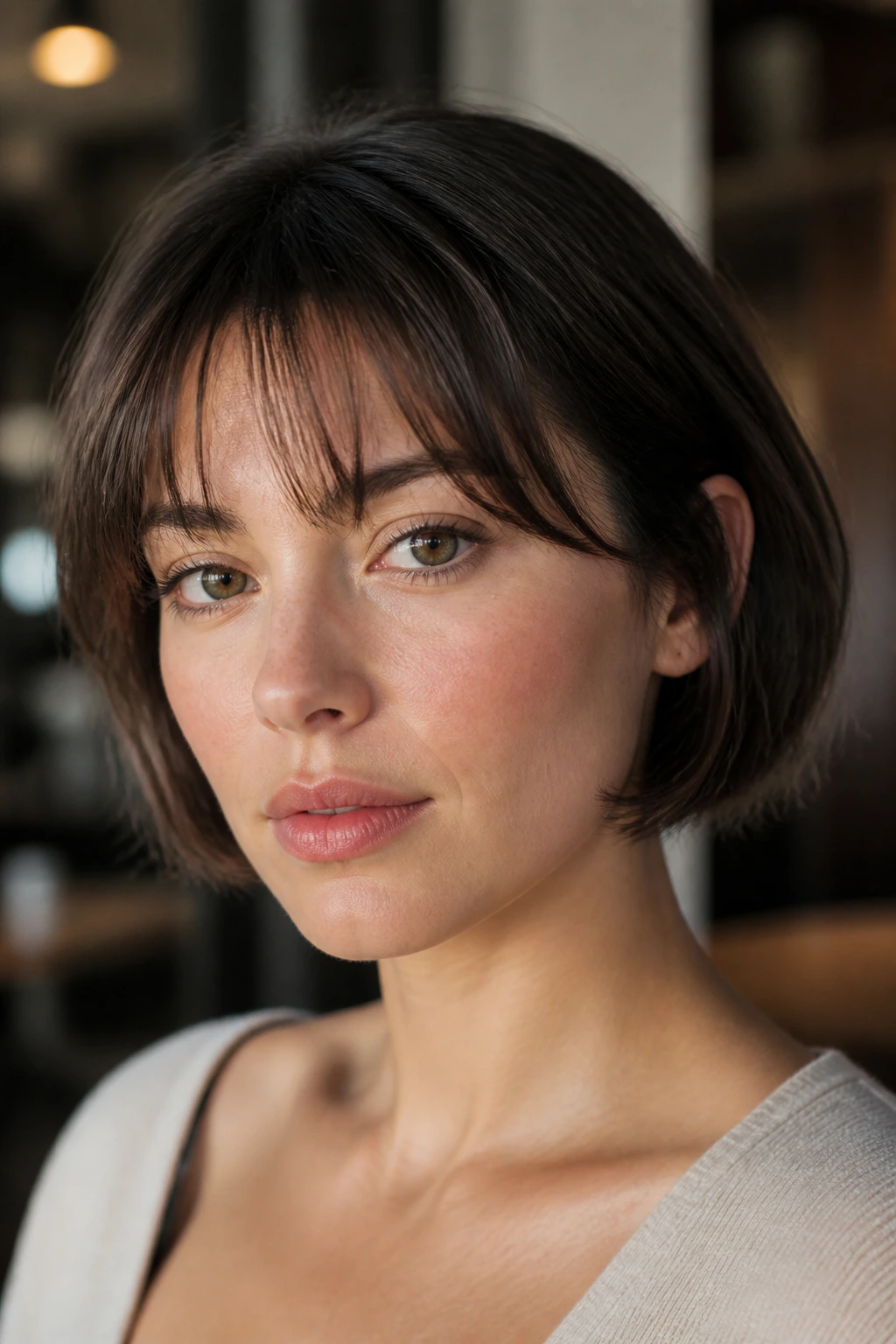
Wispy bangs are for people who want a fringe but don’t want the full weight of one. They sit lighter on the forehead and let some skin show through, which keeps the look airy.
On straight hair, wispy fringe can be lovely because it does not fight the texture. The hair falls where it wants, and the bangs do not have to be blasted into shape every morning.
The downside is that wispy fringe can disappear if the rest of your hair is too heavy. So the bob underneath should stay neat and not overloaded with layers. You want the fringe to feel intentional, not like leftover bits from the cut floor.
This style is especially good if you like your haircut to look soft in motion. It works with glasses, with soft makeup, and with that slightly undone look that still feels put together.
12. The French Bob for Thick Straight Hair
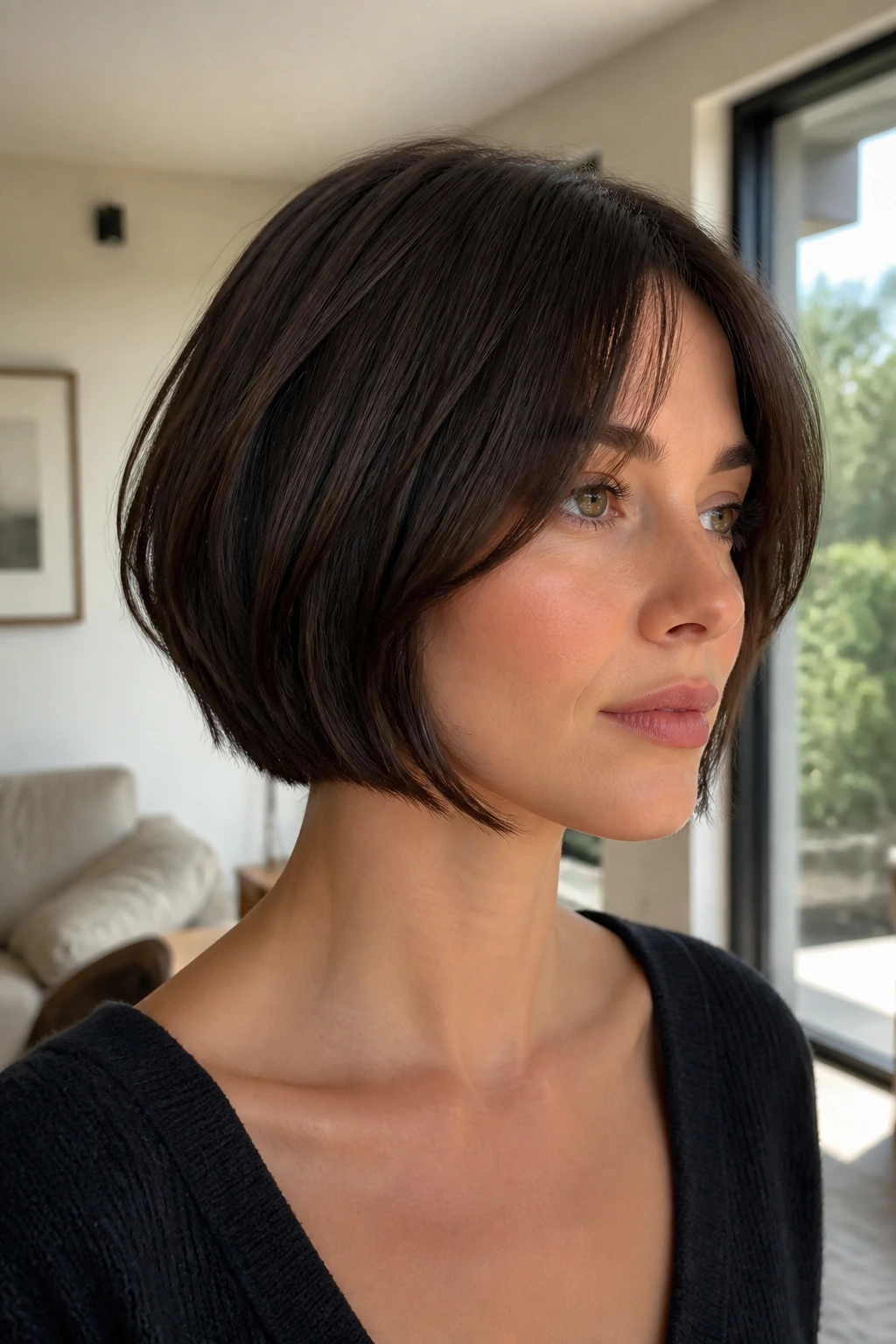
Thick straight hair needs structure, not more bulk. A French bob can handle it beautifully, but the cut has to remove weight in the right places.
If the perimeter is cut straight across without any internal work, thick hair can sit like a shelf. That is the version people complain about. Ask for point cutting under the surface and a little de-bulking near the nape so the shape drops instead of flaring out.
Best Approach for Heavy Density
- Keep the length around the jaw or just below it.
- Ask for invisible layering inside the cut, not obvious layers on top.
- Use a smoothing cream before blow-drying so the ends do not stick out.
- Skip heavy masks on styling days; they can make the cut feel swollen.
This bob looks strong on thick hair when it is slightly compact. I prefer it with a center part or a soft side part, depending on how wide you want the shape to read. Either way, the point is control. Thick straight hair can carry a lot of style, but it needs a firm hand.
13. The French Bob for Fine Straight Hair
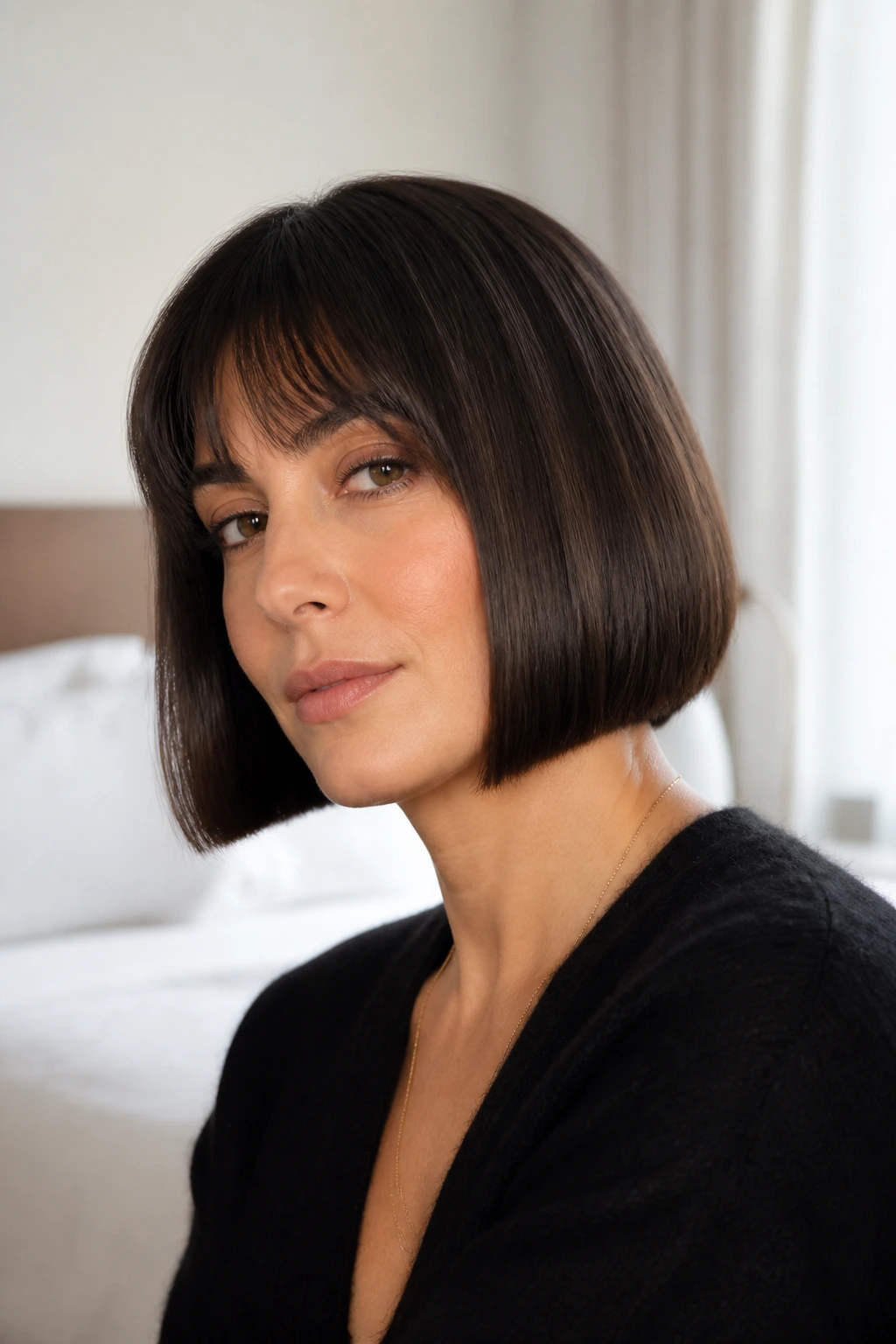
Fine straight hair loves a French bob when the cut is precise. The shorter length gives the hair more visual density, and the blunt edge makes the ends look fuller.
You do not want too many layers here. Fine hair gets wispy fast, and too much texturizing can make the ends look thin by week two. A clean line is your friend.
A Few Things That Help
- Ask for a blunt perimeter at or just under the chin.
- Keep the interior mostly one length.
- Use a volumizing mousse at the roots, not through the ends.
- Blow-dry with a round brush only at the crown to build a little lift.
This cut can look expensive in the plainest sense of the word: neat, shiny, controlled. It also benefits from a small amount of maintenance. A trim every 6 to 8 weeks keeps the edge from going stringy.
If your fine hair tends to cling to the head, this is one of the few short cuts that can make it look like it has more body than it really does. That’s the whole trick.
14. The Inverted French Bob
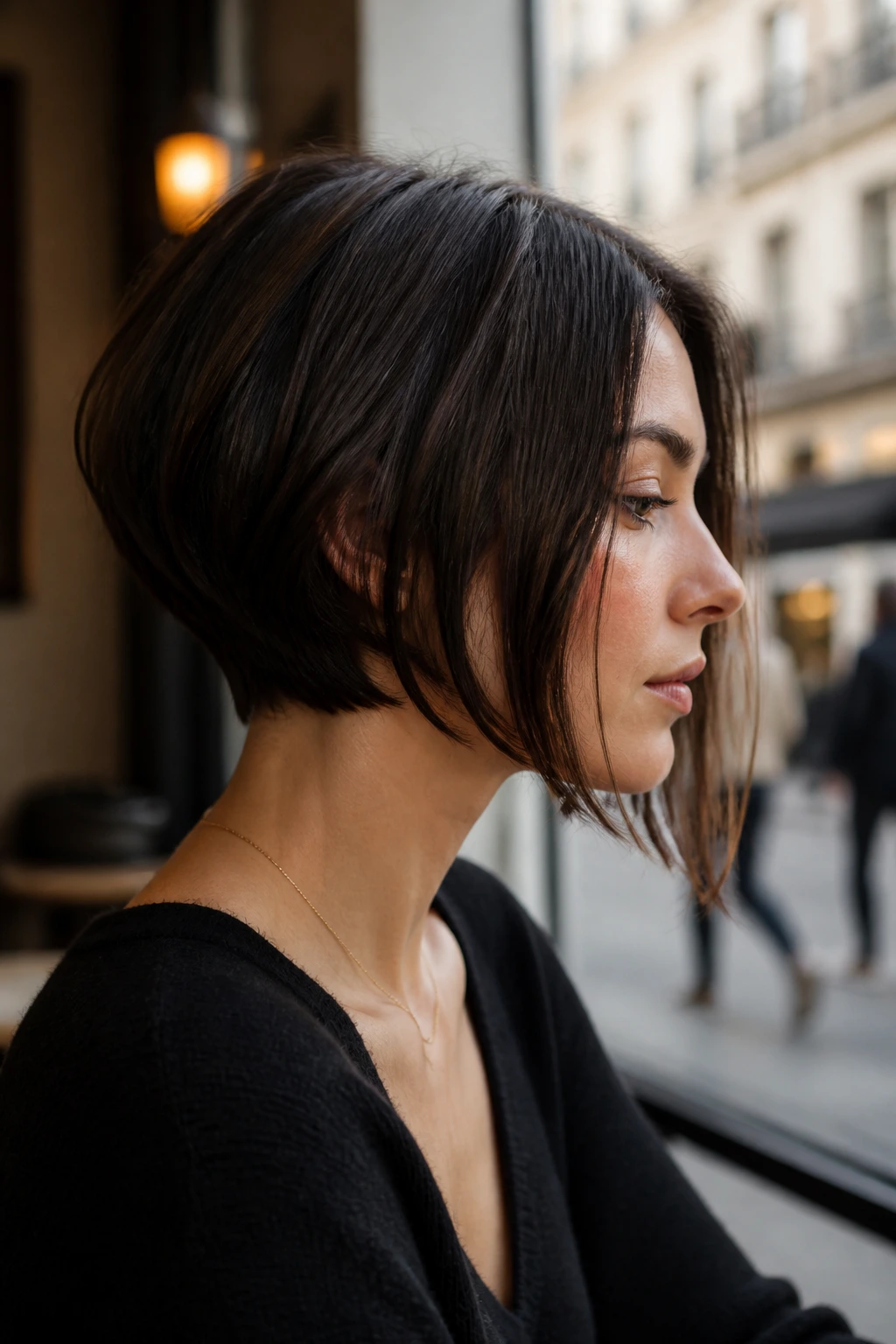
An inverted French bob is slightly longer in the front and shorter in the back. The angle is subtle here, not dramatic. On straight hair, that small slope gives the haircut a nice swing.
I like this cut when someone wants a little more neck exposure in back but still wants face-framing length in the front. It reads modern without going flashy. The angle also helps straighten-out hair avoid that one-length helmet feel.
The front pieces should fall around the jaw, maybe a touch below it, while the back lifts slightly above the nape. If the angle is too steep, the cut starts looking more like a stacked bob than a French one.
This is a good choice for people who like collars, turtlenecks, and sharp shirts. The neckline stays visible. The haircut does its job and gets out of the way.
15. The Understated A-Line French Bob
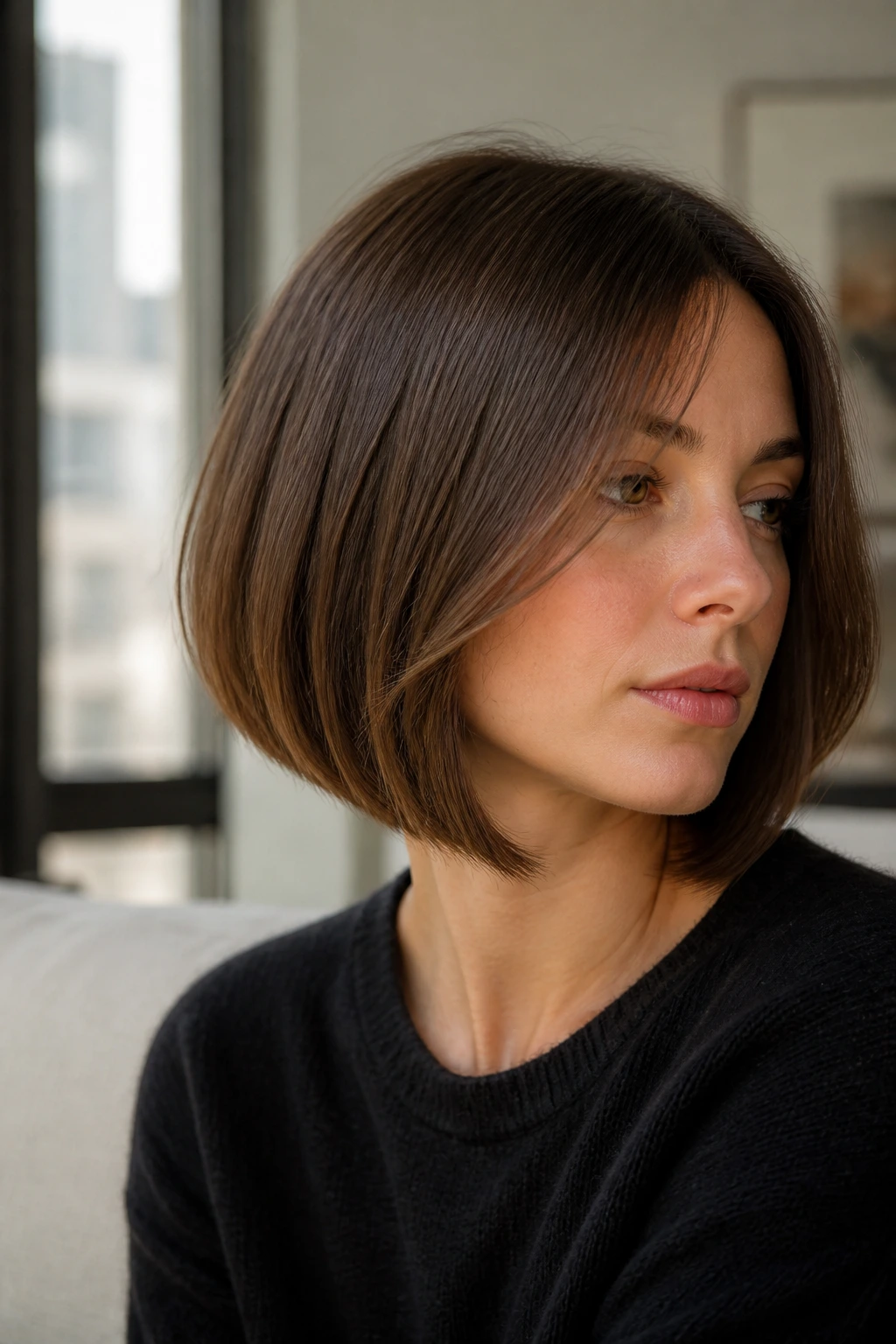
A gentle A-line gives straight hair a little forward motion. The front is a bit longer than the back, but only enough to create a smooth slant.
That slant matters because it keeps the jawline from looking boxed in. The line draws the eye forward, which is handy if you want the face to look slightly narrower or if your neck disappears behind too much hair.
Who Should Wear It
This version suits people who want polish without severity. It looks neat with very little styling, and it can be tucked or worn loose without changing the shape much.
Keep the front no more than an inch or two longer than the back. More than that and the French bob starts drifting into a standard angled bob, which is fine, just not the same mood.
I’d call this one a quiet winner. Nothing dramatic. No gimmicks. Just a clean cut that sits well and behaves.
16. The Sleek Noir French Bob
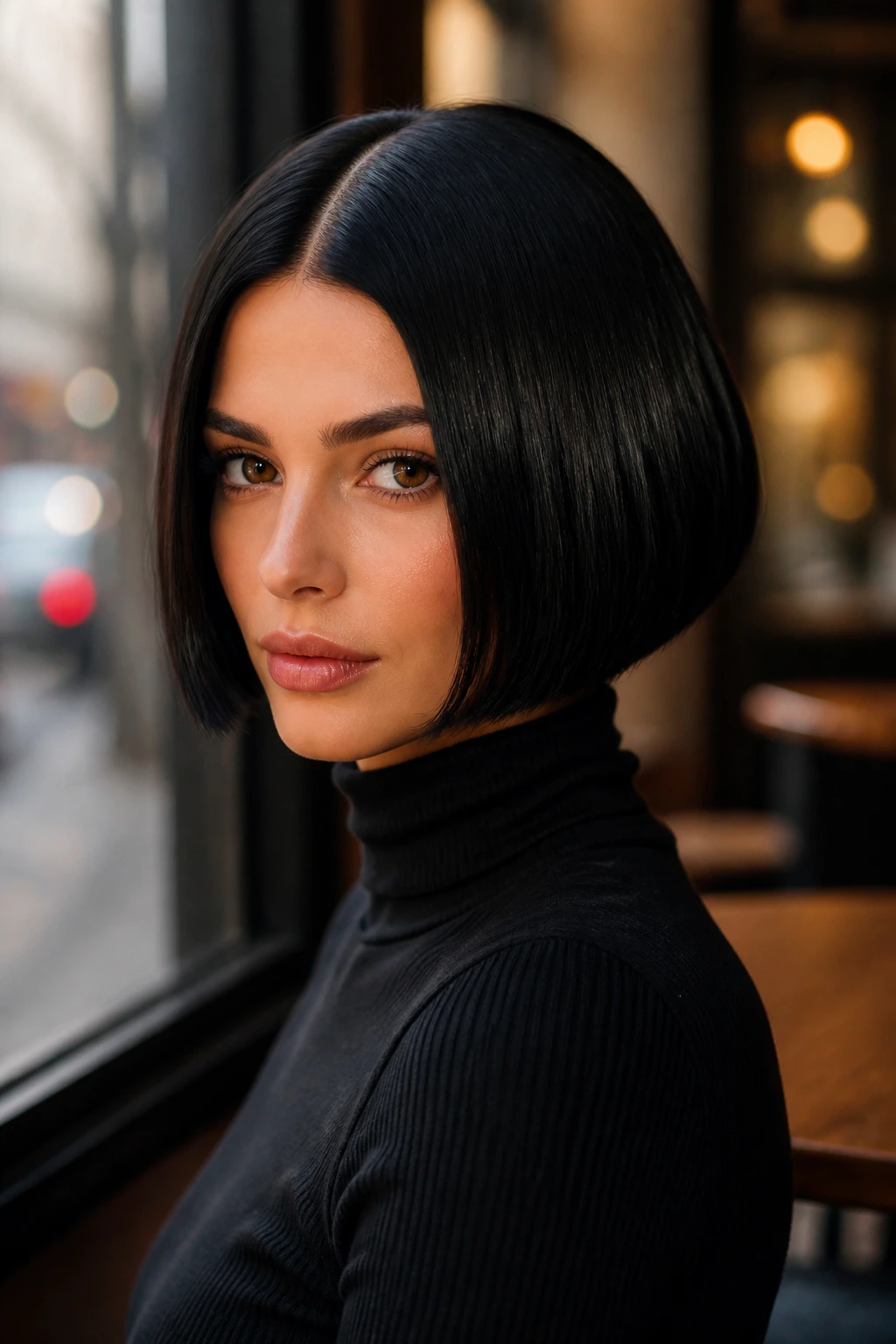
A glossy dark bob has its own personality. Straight hair plus high shine equals a haircut that looks deliberate even on a plain day.
This version works best when the ends are sharp and the surface is smooth. The shape should sit close to the head without collapsing. Think polished, not stiff.
Styling Notes That Matter
Use a heat protectant before blow-drying. Then finish with a light shine serum from the mid-lengths down. Too much, and the roots will look greasy by lunchtime.
A center part gives this style a sharp feel. A deep side part makes it look a little more dramatic. Either way, the finish matters more than accessories here. The haircut is the statement.
This is one of those styles that looks expensive even when the rest of the outfit is just a white T-shirt. That’s why it keeps showing up. Straight hair gives the gloss something to reflect.
17. The Air-Dried French Bob

Not every French bob needs a blowout. Straight hair that has a slight natural bend can wear an air-dried version and still keep the shape.
The cut has to do more work here. A good stylist will leave the ends blunt enough to hold the outline, then soften only where the hair needs to move. When the hair dries on its own, those small choices show up immediately.
I like this version for people who hate hot tools or only want to use them once in a while. The hair should dry into a shape, not into a puff. A light leave-in cream, a quick comb-through, and some finger-twisting around the ends usually get it there.
One caution: if your straight hair is pin-straight and heavy, air-drying can make it lie too flat. In that case, give the roots a lift with a small clip while it dries. Silly little trick. Works.
18. The Deep Side-Part French Bob
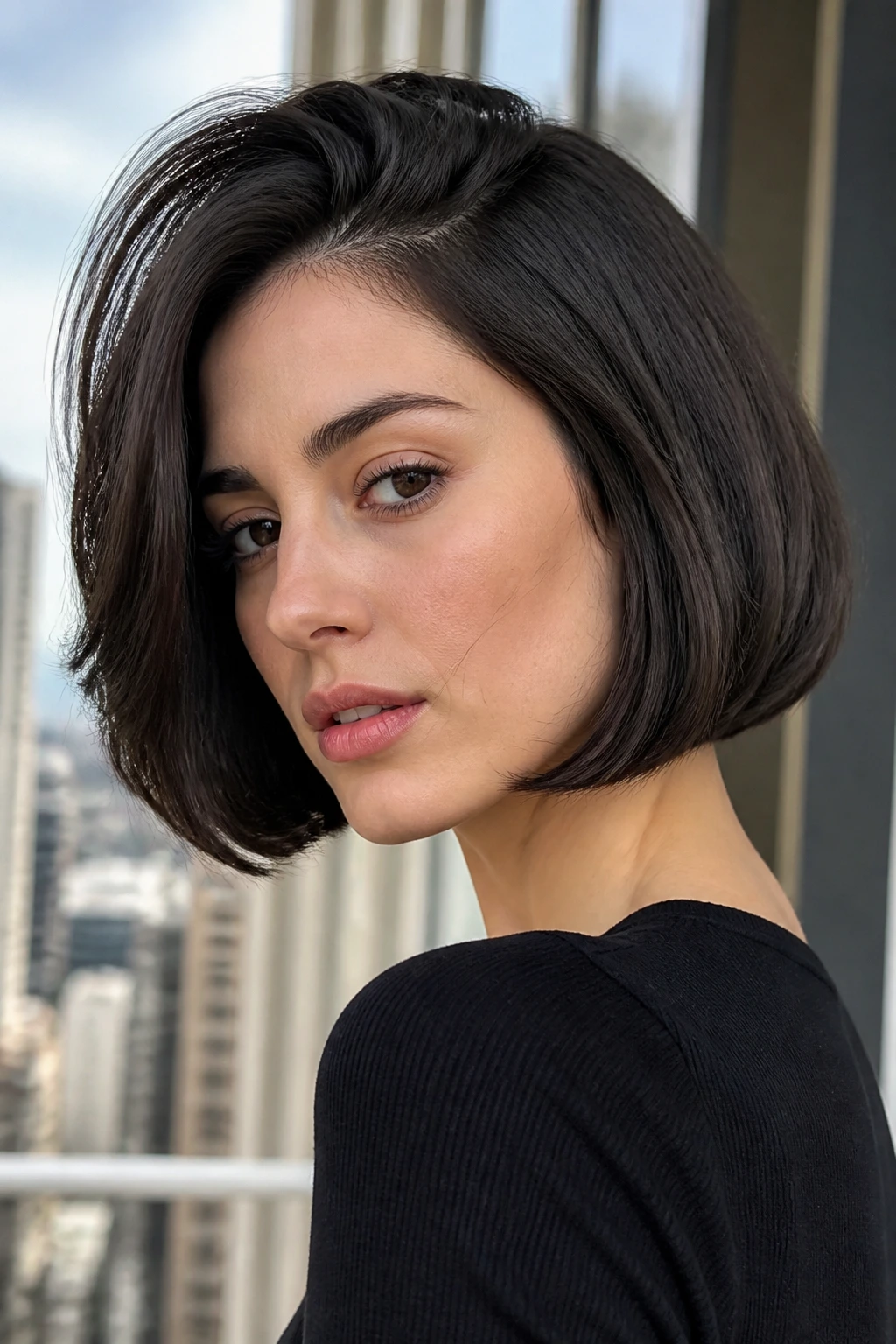
A deep side part brings drama without needing a dramatic cut. It adds instant lift at the crown and makes straight hair look fuller on one side.
This version is useful if you want volume but do not want layers everywhere. The shift in part does more than people expect. It changes how the hair falls over the forehead, how the cheekbones read, and how much width the face appears to have.
Unlike a center-part bob, this one can feel more forgiving on off days. A little flatness on one side reads as style, not failure. That is a small kindness, but a real one.
I’d wear this with a tucked side and a looser opposite side. The contrast keeps it from looking too formal. If the hair is very straight, a tiny bend at the front pieces helps the part stay visible instead of sliding back into place.
19. The French Bob With Bottleneck Bangs
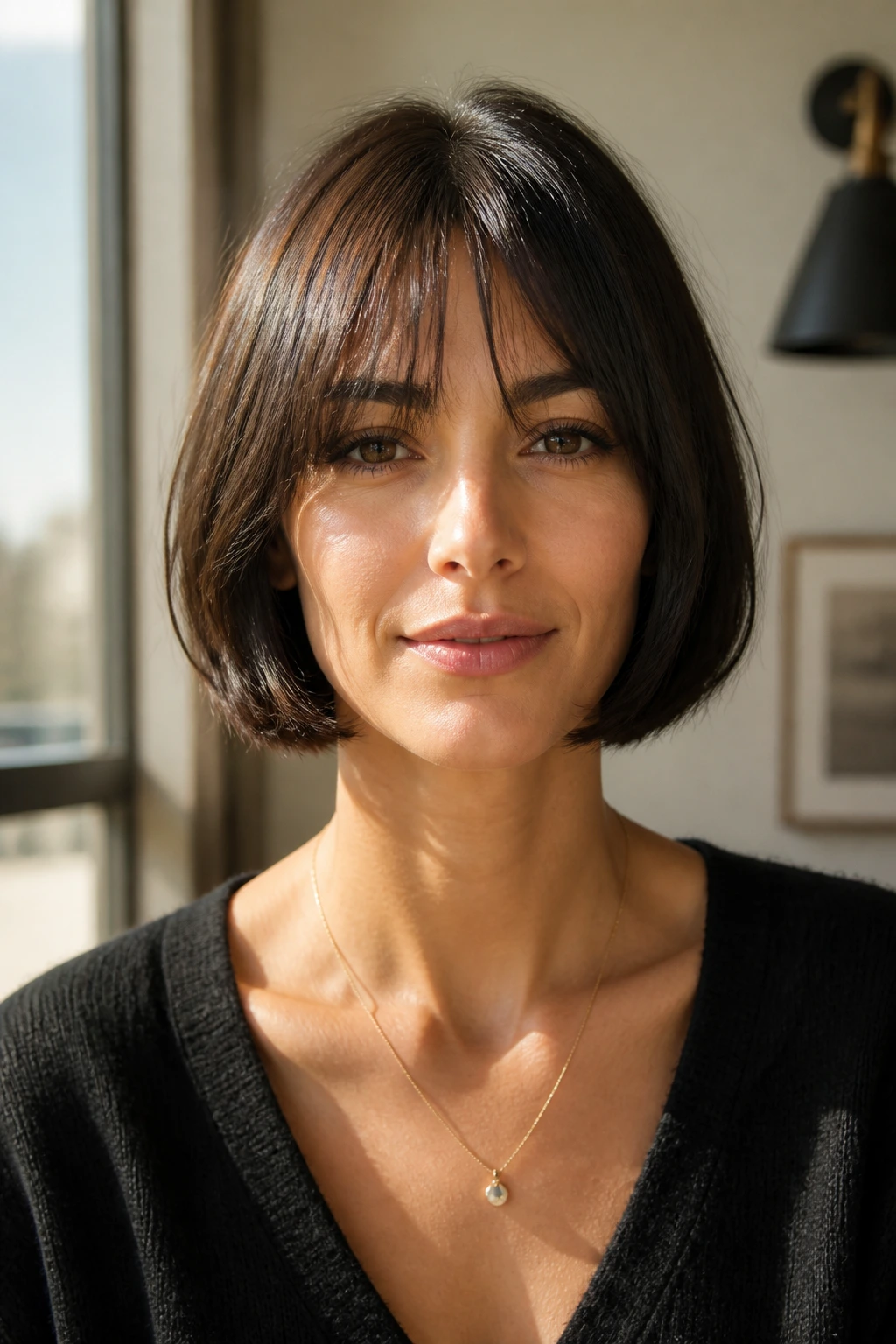
Bottleneck bangs start narrow at the forehead and widen around the eyes and cheekbones. They give straight hair a softer frame than a blunt fringe without losing shape.
This is one of the most flattering fringe choices for people who want movement near the face. The center stays light, then the sides lengthen a bit so the bangs blend into the bob instead of sitting on top of it.
Why They’re So Easy to Wear
- They grow out better than a blunt bang.
- They work with both center and slight side parts.
- They can be pushed aside on warm days.
- They soften a stronger jaw or a higher forehead.
The bob underneath should stay clean and controlled. If the cut gets too layered, the fringe and the length start fighting each other. Keep the perimeter neat and let the bangs do the shaping up front.
This is a good middle ground if you’re curious about bangs but not ready to commit to a heavy one.
20. The French Bob With Face-Framing Micro Layers
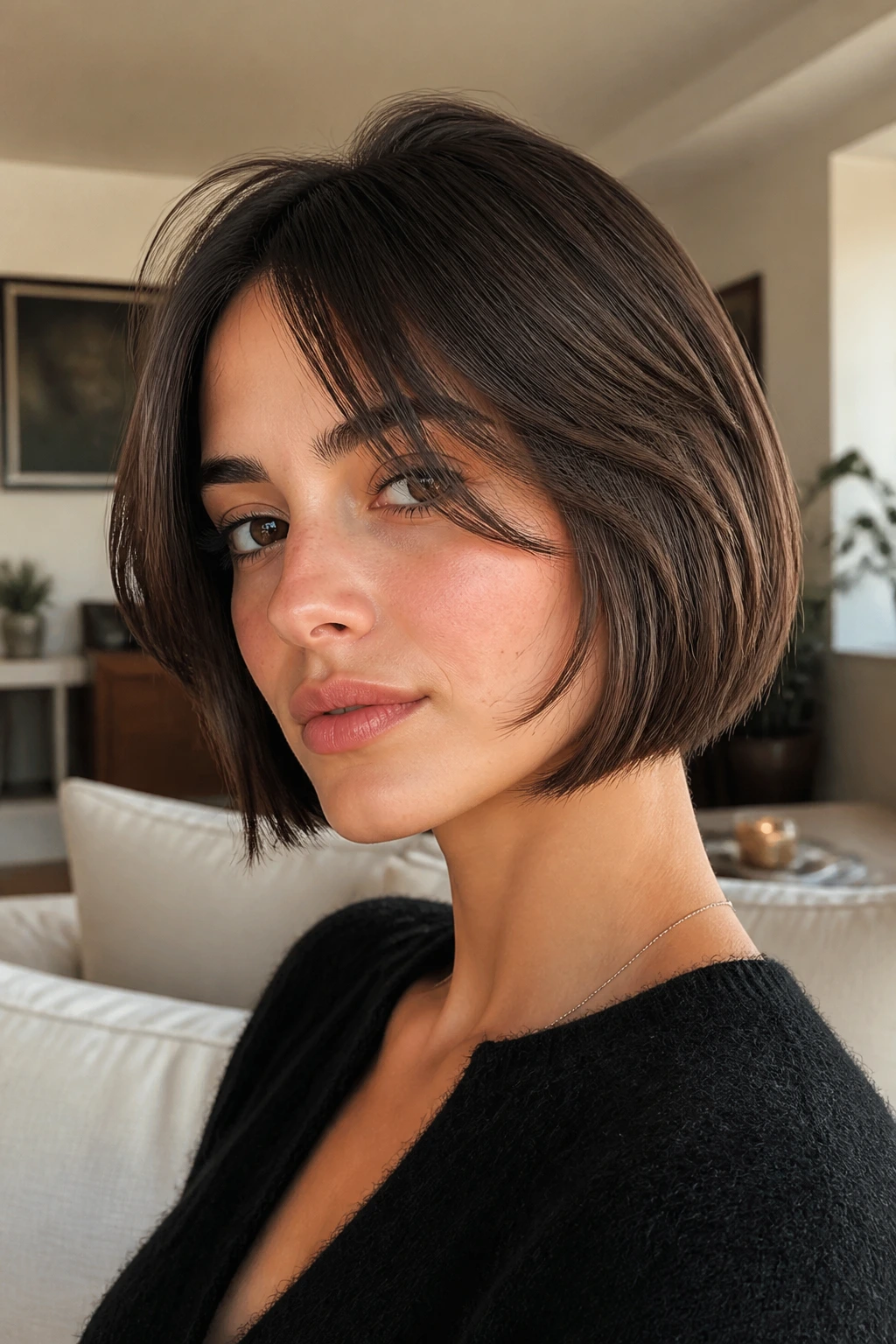
Micro layers around the face can change the feel of a straight bob without destroying the line. That’s the trick. A little bit of movement, not a full haircut overhaul.
The shortest pieces should land around the cheekbone or just below it, then fall into the bob length. On straight hair, this gives the front some lift so the shape does not look too blunt against the face.
I like this approach for people who want a softer outline near the cheek and jaw. It can also help if your hair naturally splits in front and refuses to sit flat. Small layers can redirect that.
Do not overdo it. A few slices of movement are enough. Too many, and the bob starts looking pieced apart. The clean French feel disappears fast when the front gets too busy.
21. The French Bob That Flips Under at the Ends
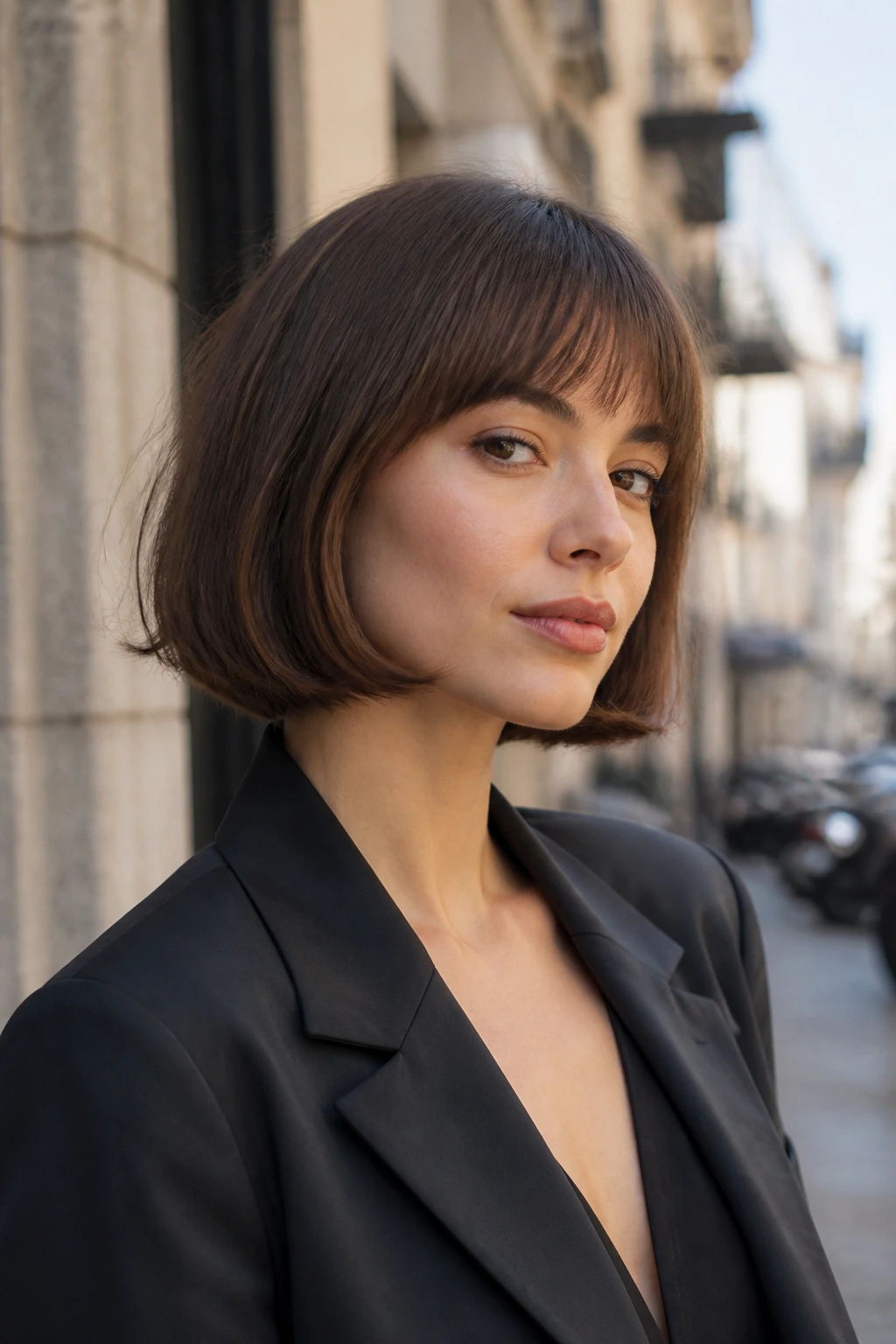
A slight underflip at the ends gives the bob a playful finish. Straight hair makes that bend visible, so the movement reads clearly instead of getting lost.
This is the kind of detail that sounds tiny until you see it in a mirror. The whole cut can look friendlier, a little less severe, just from the way the ends turn in.
You can get this shape through the cut, not just the styling. A blunt base with a subtle bevel usually does the job. Then use a round brush or a flat brush while drying to reinforce the curve.
I especially like this for people who wear tailored clothing. A sharp blazer with a slightly flipped-under bob is a good pairing. Crisp, but not cold.
22. The French Bob With Blunt Baby Bangs
Baby bangs are a commitment, no sugarcoating that. They sit high on the forehead and put all the attention on the eyes, brows, and top half of the face.
On straight hair, they can look striking because the fringe stays clean and graphic. The cut needs to be precise, though. If the bangs are even a little uneven, the whole style feels accidental.
What to Keep in Mind
The bob itself should stay simple. Chin length or just below usually works best. If the rest of the haircut is too busy, the bangs and bob compete for attention.
This style suits people who like visible structure and do not mind frequent trims. Baby bangs need more upkeep than most fringes. They show growth fast.
If you want a French bob that feels a little daring without turning into a costume, this is one of the sharpest options. Not soft. Not shy. That’s the point.
23. The Softly Razored French Bob
Razoring can be useful on straight hair when it’s done lightly. A softly razored French bob moves a little more than a blunt one and loses some of that hard edge.
The danger is over-thinning. Too much razor work on straight hair can make the ends look see-through, especially if the hair is fine. So this version needs restraint.
The best use of a razor is around the outer surface or very tips, just enough to keep the line from feeling too blocky. It works nicely if your straight hair is medium to thick and tends to sit heavy at the bottom.
This is not the cut for someone who wants a strong, blunt silhouette. It is for someone who wants softness with a bit of swing. There’s a difference, and it shows.
24. The French Bob for Glasses Wearers
Glasses change a haircut more than people expect. A French bob can frame frames, or fight them, depending on the length and fringe.
The best version usually lands right at or just below the jaw, so the temples of the glasses have room to sit without the hair crowding them. If the fringe is involved, keep it light enough that the frames still show.
What Usually Works Best
- A soft side part if your frames are bold.
- Brow-grazing bangs if your frames are thinner.
- Slightly tucked sides to keep the area near the ears clean.
- A blunt perimeter that doesn’t widen the face too much.
Straight hair helps here because it stays put. It does not spring into the glasses or puff around them the way thicker texture sometimes does. That makes the whole look more controlled and easier to wear all day.
If you wear glasses every day, bring them to the salon. Seriously. The haircut should be judged with the frames on, not off.
25. The French Bob With a Tucked-Behind-Ear Swoop
This version has one side that naturally slips behind the ear and one side that falls forward. It feels casual, but the cut still has enough structure to look planned.
Straight hair is ideal for this because it obeys the tuck. There’s no fight, no hidden wave springing back out and ruining the line. You get a clean side, a visible cheekbone, and a little softness on the other side.
The front should be long enough to tuck without popping free. Usually that means the front pieces sit near the jaw. The back can stay shorter and neater so the outline remains compact.
This is a nice choice for people who do not want to style both sides of the face the same way every day. Small asymmetry goes a long way. A little imperfect. A little better for it.
26. The French Bob With an Undercut for Dense Hair
Dense straight hair can get bulky fast, especially at the nape. An undercut solves that without changing the visible shape of the bob too much.
This is a practical cut, plain and simple. The top layer still reads as a French bob, but the hidden undercut removes weight underneath so the hair sits flatter and dries faster.
Best Use Case
This is a strong choice if your hair is thick, heavy, and stubborn about movement. The undercut can reduce the triangle shape that dense hair sometimes forms at jaw length.
The top section should still be cut cleanly. Don’t let the hidden work fool you into thinking the outer line can be sloppy. It cannot.
You will need regular maintenance on the undercut, though. If you let it grow out too much, the weight starts coming back and the haircut loses its ease. Worth it if you hate the helmet effect. Not worth it if you rarely visit the salon.
27. The Polished One-Length French Bob
One length is often the smartest choice for straight hair. It gives the haircut a strong, direct outline and keeps the finish neat from root to tip.
This version is especially good if your hair already has shine and you want to show it off. The clean edge catches the eye. There’s no layered distraction, no broken perimeter, no excuse for a sloppy blow-dry.
It works on a range of densities, but it’s especially good for medium hair that falls naturally into place. The length should sit anywhere from the chin to the jaw, depending on how much face opening you want.
I like this for people who get tired of haircuts that need a lot of styling to look intentional. One-length bobs tend to behave. They may not feel flashy, but they do look neat more often than not. That counts.
28. The Softest French Bob for Low-Maintenance Wear
Some people want the French bob shape, but they do not want a haircut that asks for much. This is the gentlest version: slightly soft edges, a manageable length, and just enough movement to avoid looking stiff.
It usually lands between the chin and jaw, with a quiet fringe or a loose part. Straight hair makes the outline easy to keep, and the small bit of softness keeps the cut from feeling too exact.
How to Keep It Easy
- Use a lightweight leave-in on damp hair.
- Rough-dry the roots first, then smooth the ends.
- Trim every 6 to 8 weeks if you want the shape to stay tidy.
- Skip thick creams unless your hair is coarse.
This is the version I’d point someone toward if they want a bob that behaves on real life mornings, not just salon days. It still looks intentional. It just does not ask for much back.
And that, honestly, is why the French bob keeps surviving haircut moods and bad styling habits alike. On straight hair, it can be strict or soft, blunt or airy, bold or quiet. The shape is small. The effect is not.
