



Fine hair and a French bob are a tricky match only if the cut is wrong. Give the hair a blunt edge, a little shape at the crown, and the right length at the jaw, and suddenly it has more body than most people expect. The whole point is not to trick the eye with bulk. It’s to make every strand count.
The mistake I see most often is over-thinning. A stylist gets nervous about density, takes out too much weight, and the ends start to look see-through by lunchtime. Fine hair usually does better with a clean perimeter, careful internal shaping, and bangs that are light enough to move but not so wispy that they disappear. That’s a narrow lane, but it’s a good one.
A French bob also earns its keep because it looks intentional even when you do very little to it. A fast blow-dry, a bend from a round brush, or a bit of natural wave can give it life fast. The right version can look crisp at 8 a.m. and still hold up after a long day in a car, at a desk, or under a hat.
These 28 French bob haircuts for fine hair cover the range I’d actually send someone into a salon with: blunt, soft, sleek, wavy, short, longer, fringe-heavy, and quietly face-lifting. Some are low-drama. Some have a little attitude. All of them rely on shape more than sheer thickness.
1. The Jaw-Length French Bob for Fine Hair

This is the classic for a reason. A jaw-length French bob gives fine hair a compact shape, so the ends look denser and the whole cut feels deliberate instead of flimsy. The line should land right around the jaw hinge or a touch above it, where the face gets definition and the hair still has enough weight to swing.
I like this version because it’s the least fussy of the bunch. You can air-dry it with a little mousse, rough-dry it with your fingers, or bend the ends under with a round brush. Nothing about it asks for a big styling routine, and that matters when fine hair loses shape fast.
Tell your stylist: keep the perimeter blunt, avoid heavy layering, and leave the crown soft rather than chopped up. That one detail makes the cut look fuller from the side, which is where a lot of thin-looking bobs fall apart.
2. The Chin-Skimming Blunt Bob
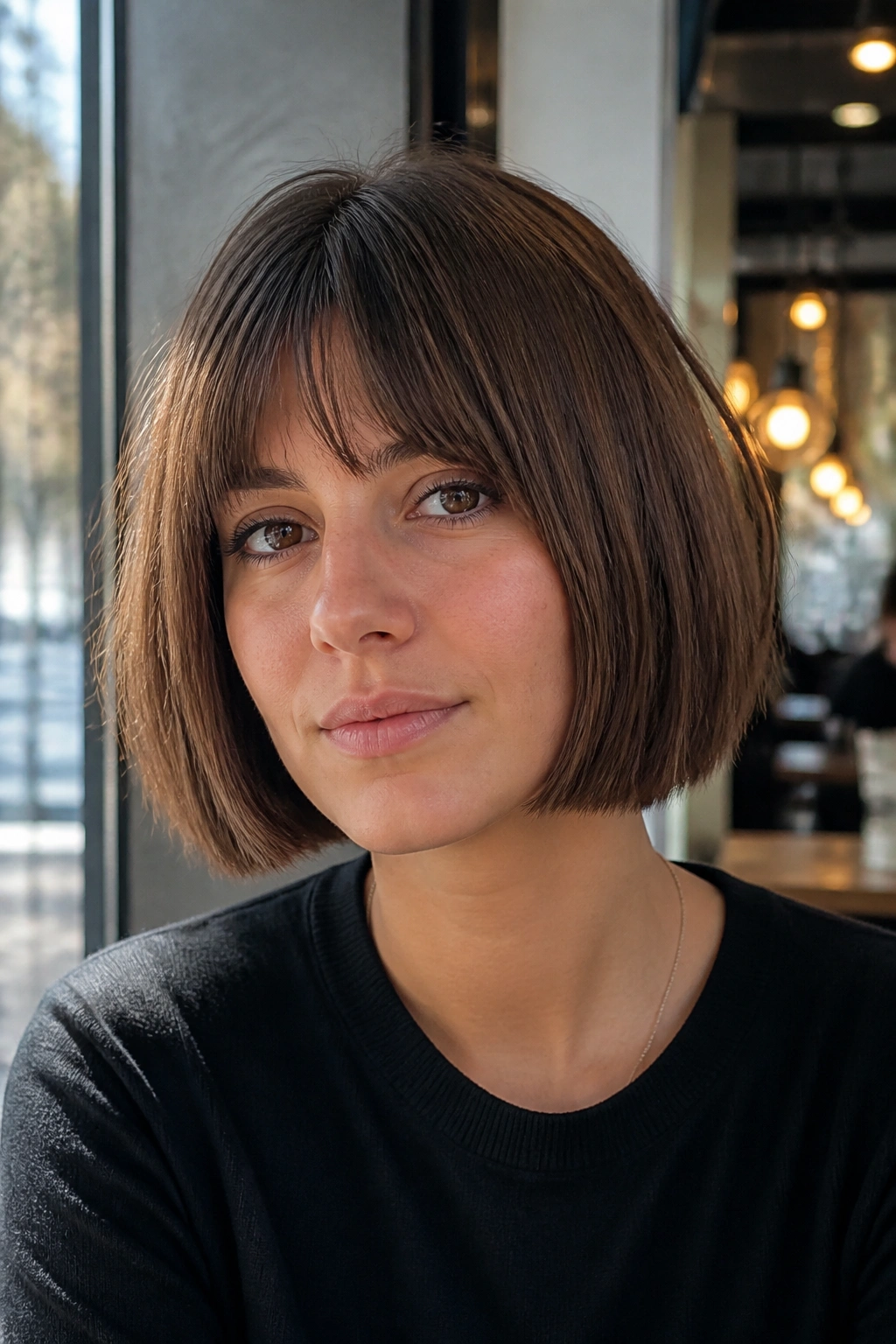
A chin-skimming blunt bob is a small shift in length, but it changes the whole mood. When the cut sits right at the chin, it sharpens the face and makes the ends look thicker because the hair isn’t dragged down by extra length. Fine hair often looks best when it stops before it starts to droop.
Why It Works
The blunt edge is the whole story here. Fine strands need a solid line, not a wispy finish that splits apart after the first brush-through. This cut gives you that dense-looking base, and it does it without needing a lot of product.
Salon Brief
- Ask for one length around the chin, with only the lightest internal shaping.
- Skip aggressive razoring at the ends.
- Keep the front pieces even unless you want a slight face frame.
A chin-length French bob can feel a little bold the first time you wear it. Then you notice how often it gets compliments from the side. That’s usually the giveaway.
3. The Micro-Bang French Bob
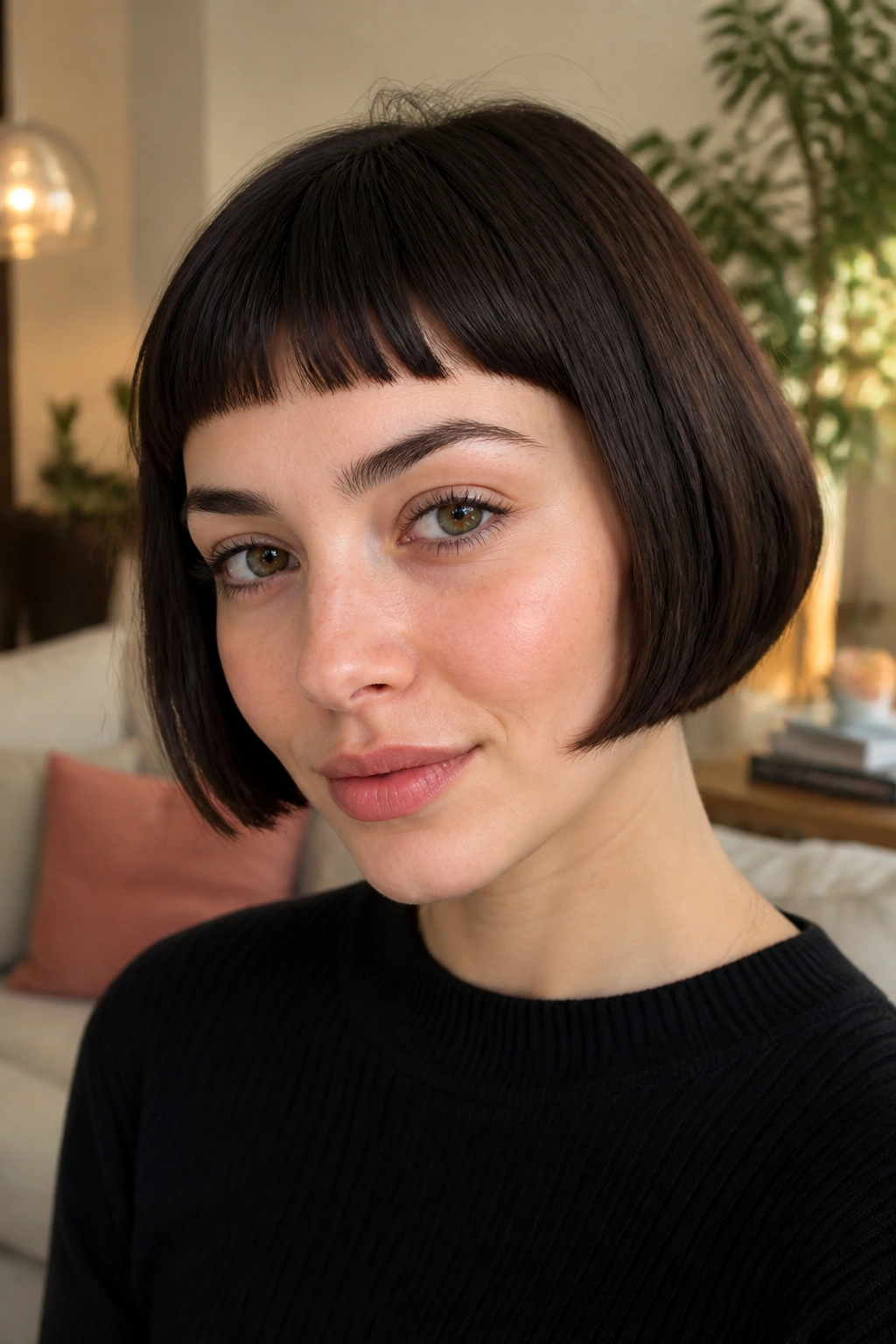
Micro bangs change the balance fast. On fine hair, that can be a good thing, because a short fringe draws attention to the eyes and cheekbones while the bob keeps the rest of the shape full and tidy. The key is density at the front. If the bangs are too sparse, the cut loses the whole point.
I’d only go here if the hairline has enough weight to support it. A soft, feathery micro bang can look cool in theory and tired in real life. Better to keep the fringe blunt enough to read clearly, then let the rest of the bob stay smooth and compact.
One sentence matters here: micro bangs need commitment. They also need trims more often than a longer fringe, because even half an inch changes the look.
4. Curtain Bangs on a French Bob for Fine Hair
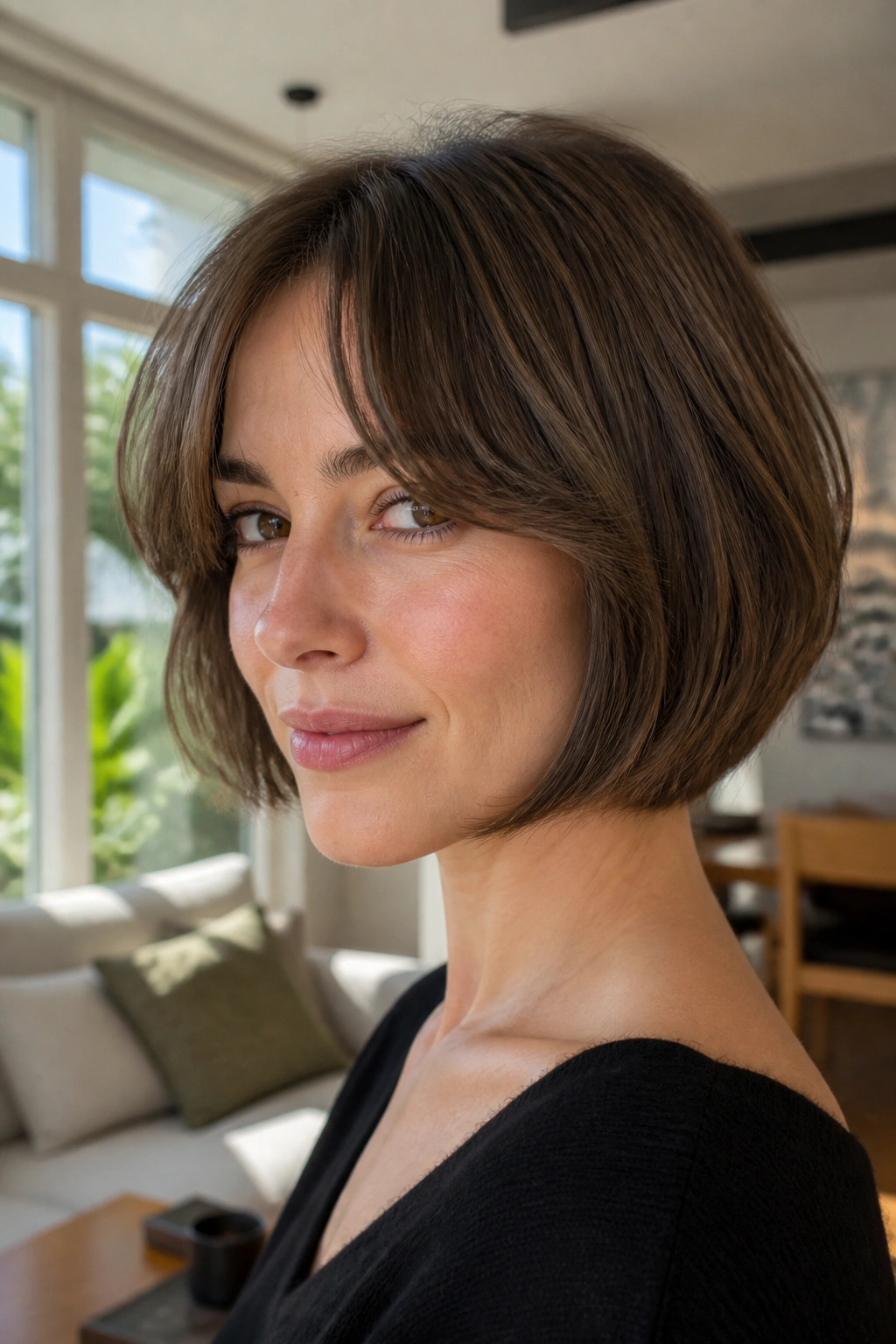
Curtain bangs are the easiest way to soften a French bob without turning it fluffy. They part away from the face, so they don’t steal density from the sides the way a heavy fringe can. On fine hair, that matters. You want the bangs to frame, not collapse.
How to Wear Them
Blow-dry the fringe with a small round brush, pulling each side away from the nose and then down. That little bend makes the front pieces sit naturally instead of sticking flat to the forehead. A pea-sized amount of mousse at the roots is enough; too much product makes fine hair stringy in a hurry.
This version is good if you want movement and a bit of softness around the eyes. It’s also forgiving when the hair is a day past wash day, which is one reason it keeps showing up in smart salon books.
5. The Rounded French Bob
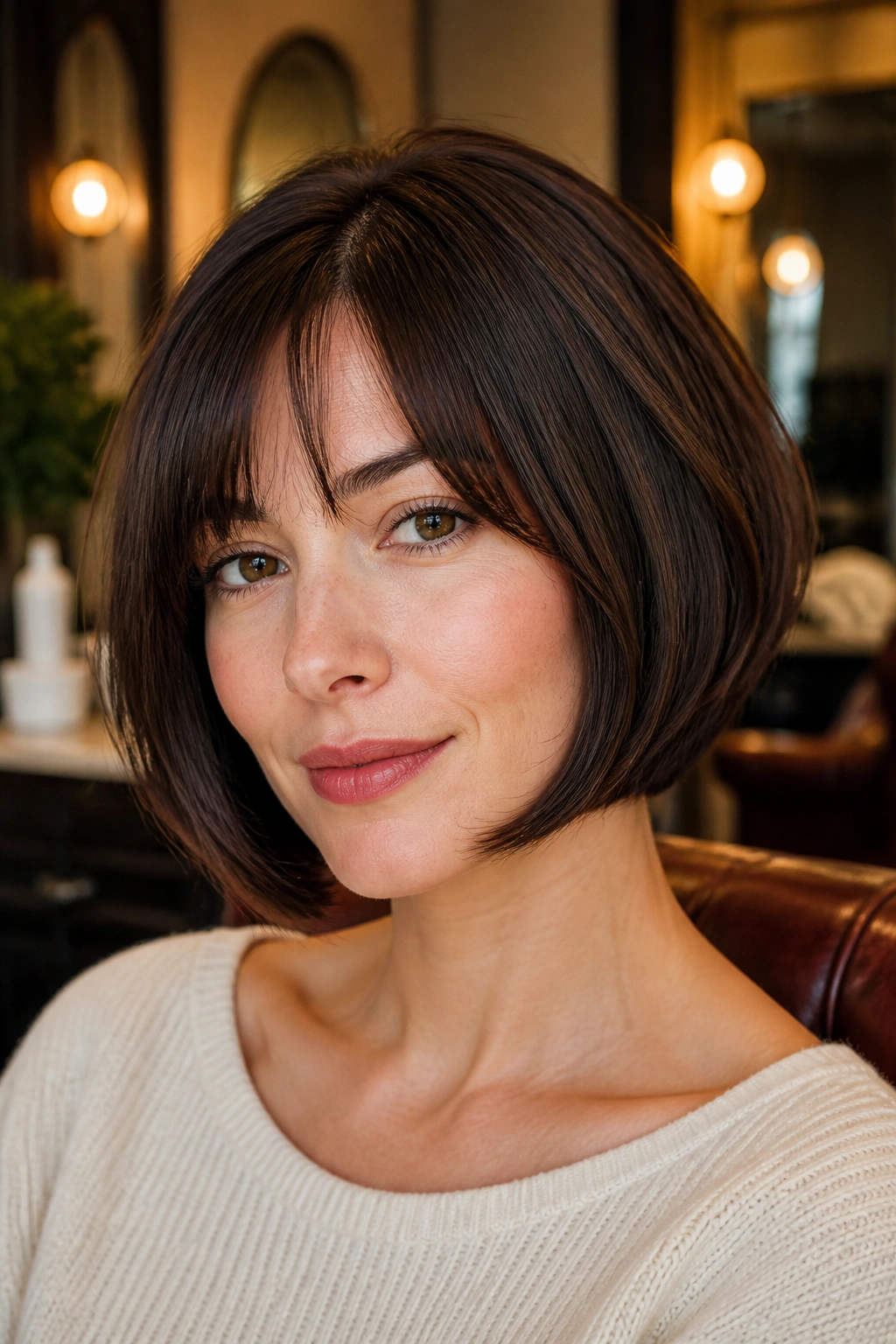
A rounded French bob has a softer outline, almost like the hair is hugging the head. That shape can be a gift for fine hair, because it creates the feeling of fullness on the sides instead of stretching everything into a long, thin line. The ends usually curve inward a little, which helps the cut look polished even with minimal styling.
I’m partial to this one for people whose hair sticks out at odd angles around the ears. A rounded shape can clean that up fast. It also works beautifully if your hair grows out with a slight bend already; the haircut just follows the natural movement instead of fighting it.
The only caution is over-layering. If too much weight gets removed, the roundness turns into puffiness. Keep the surface smooth. Keep the interior quiet.
6. The Invisible-Layer French Bob
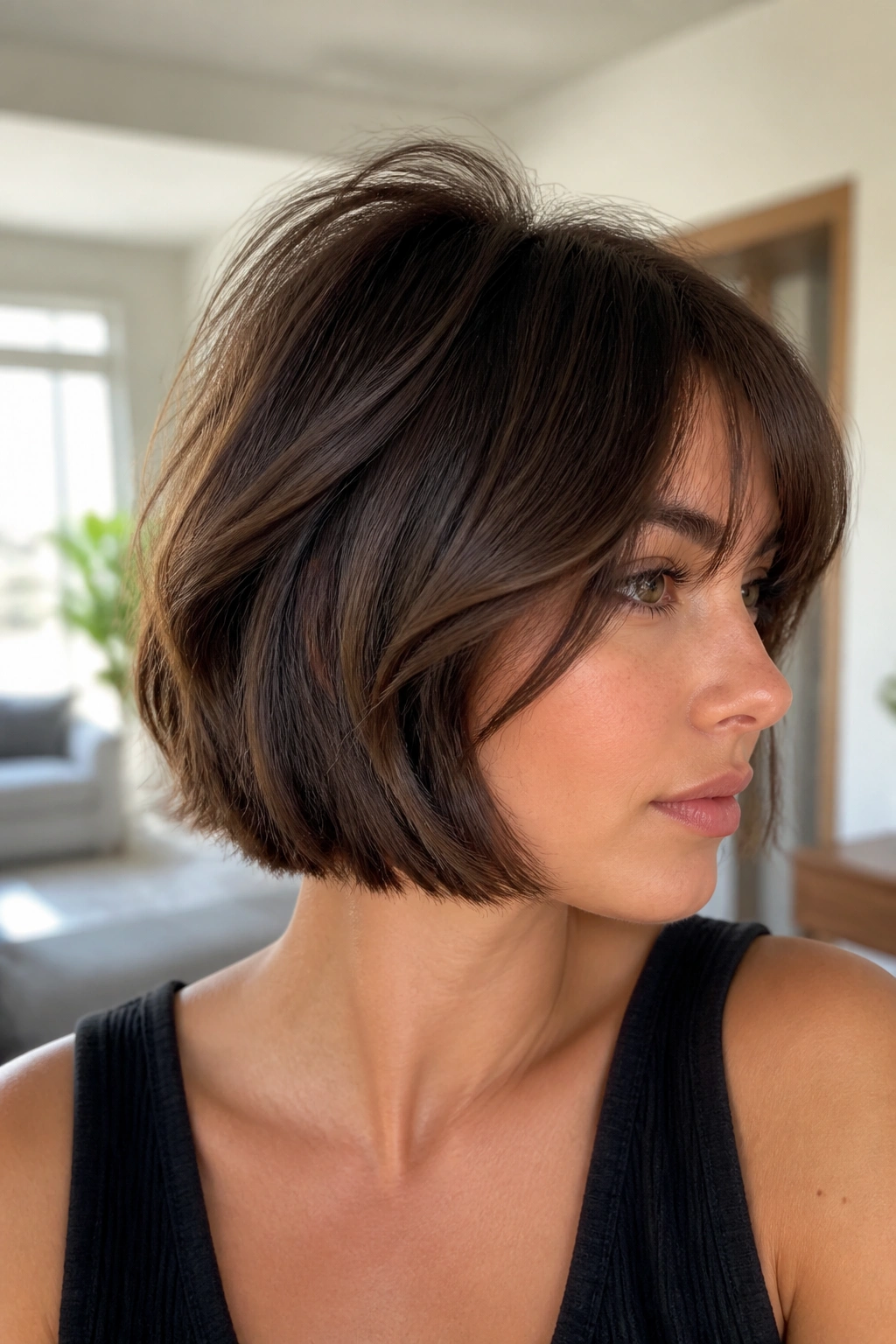
Invisible layers are the sneaky answer for fine hair that falls flat at the crown. The layers live inside the cut, so you get lift and movement without obvious choppiness at the perimeter. That’s the sweet spot for a French bob when you want body but still care about keeping the ends thick.
What to Ask For
- Internal layers only, especially near the crown and upper sides.
- A blunt outer line that stays clean when the hair is tucked behind the ear.
- Soft graduation, not staircase layers.
This is the cut I’d suggest to someone who keeps saying, “My hair looks fine until noon.” That usually means the shape needs support, not more product. Invisible layers help the bob sit up on its own instead of clinging to the scalp.
7. The Side-Part French Bob

A side part can rescue fine hair faster than people expect. Move the part over even an inch or two, and the root on one side gets instant lift. In a French bob, that little shift creates a softer, more lived-in look while still keeping the cut crisp.
The side-part version is especially useful if your crown lies flat or if your hair has one stubborn cowlick that refuses to cooperate. Instead of fighting it, work with it. Dry the hair in the opposite direction first, then flip the part back once the roots are partly set. That extra step gives the cut a little push at the top.
It’s a low-drama haircut with a bit of shape drama built in. I like that balance.
8. The Tucked-Behind-the-Ear Bob
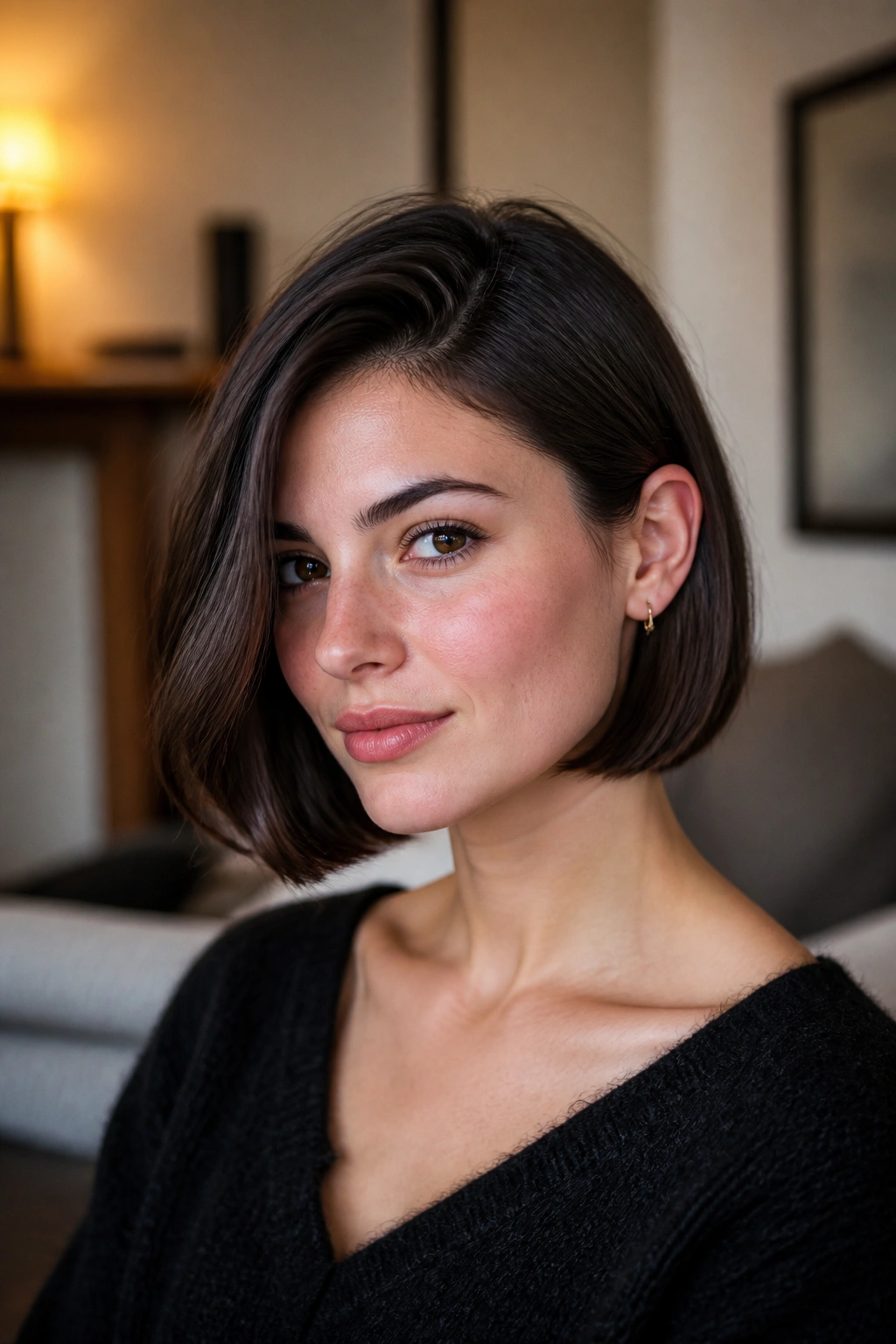
The tucked-behind-the-ear French bob has a clean, slightly sharp feel. One side gets smoothed back, the other falls forward, and fine hair suddenly looks more controlled because it’s not trying to cover everything at once. You get a little asymmetry without cutting the whole head asymmetrical.
This works best when the length sits just long enough to tuck but not so long that it loses its bob identity. Usually that means the jawline or just below it. If it’s cut too short, the tuck can look forced. If it’s too long, the shape starts reading as a regular bob instead of a French one.
A small point, but a useful one: this style looks best when the ear tuck is deliberate. Don’t keep fixing it all day. Let the hair settle.
9. The Wavy French Bob

Fine hair with a natural wave is lucky here. A wavy French bob gets movement from the texture itself, so the haircut can stay blunt and still feel full. The trick is to keep the wave loose and the perimeter strong. Once the ends start getting too layered, the shape loses that satisfying weight.
Styling Notes
Use a light mousse or wave cream on damp hair, then scrunch and let it dry most of the way on its own. If you need more definition, wrap a few sections around a 1-inch iron and alternate direction. Leave the last inch out on some pieces so the ends don’t look too curly or too polished.
A wavy French bob is one of those cuts that looks slightly different every time you wear it. That’s the charm. Fine hair often needs that kind of texture to wake up.
10. The Sleek Center-Part French Bob for Fine Hair
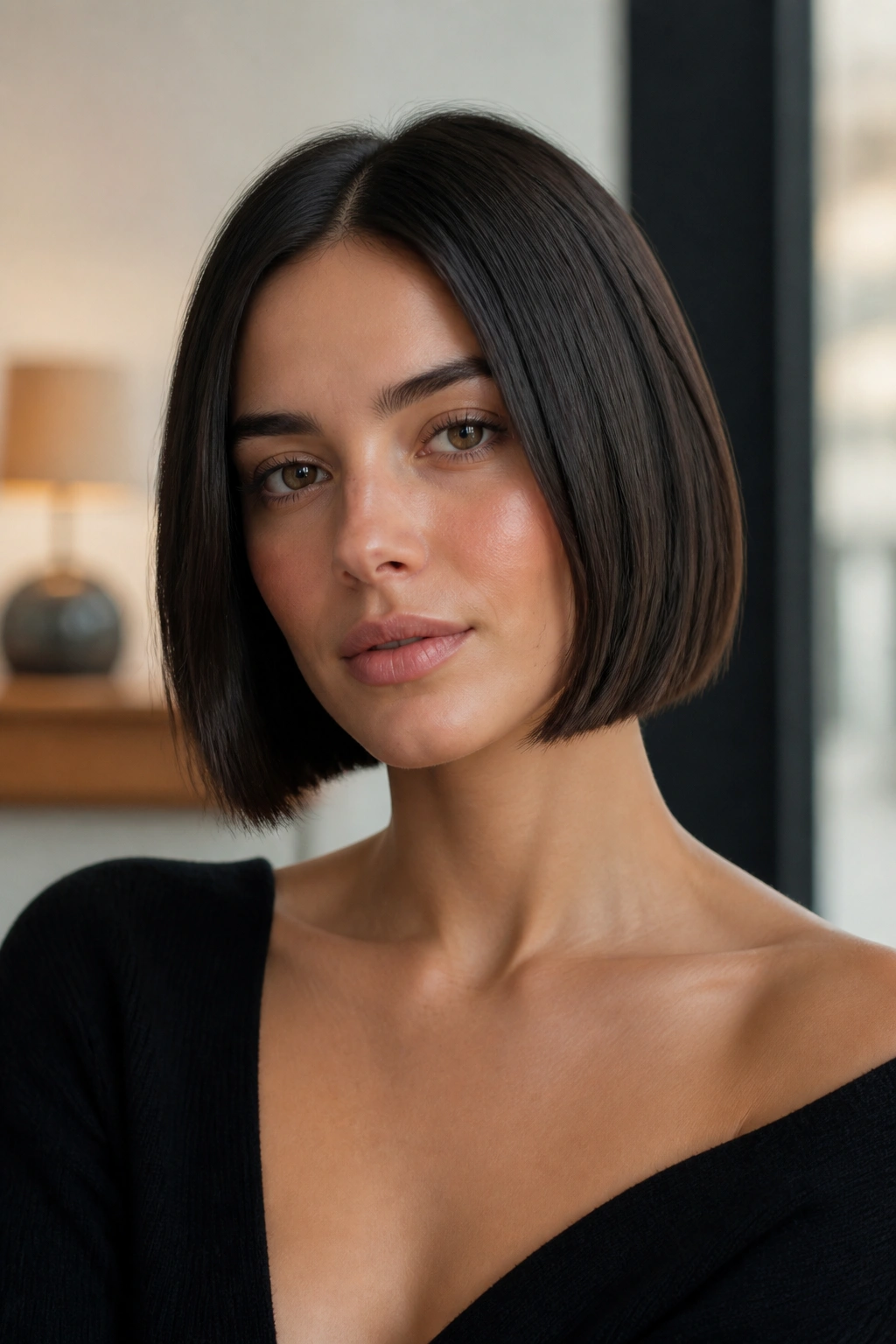
A sleek center-part French bob looks cleaner than most people expect fine hair to look. The reason is simple: when the cut is blunt and the part is straight down the middle, the eye reads the line first, not the individual strands. That gives the hair a fuller look, especially if the ends stop near the chin or just below it.
Best For
- Straight or slightly wavy hair.
- Anyone who likes a neat, low-frizz finish.
- Faces that can handle a little symmetry.
Use a heat protectant, then blow-dry with a flat brush or paddle brush until the surface is smooth. Finish with a tiny amount of serum on the ends only. Too much oil will separate fine hair fast, and then the whole sleek effect collapses.
This one feels modern in a quiet way. Not loud. Not overworked. Just clean.
11. The Curved-Under French Bob
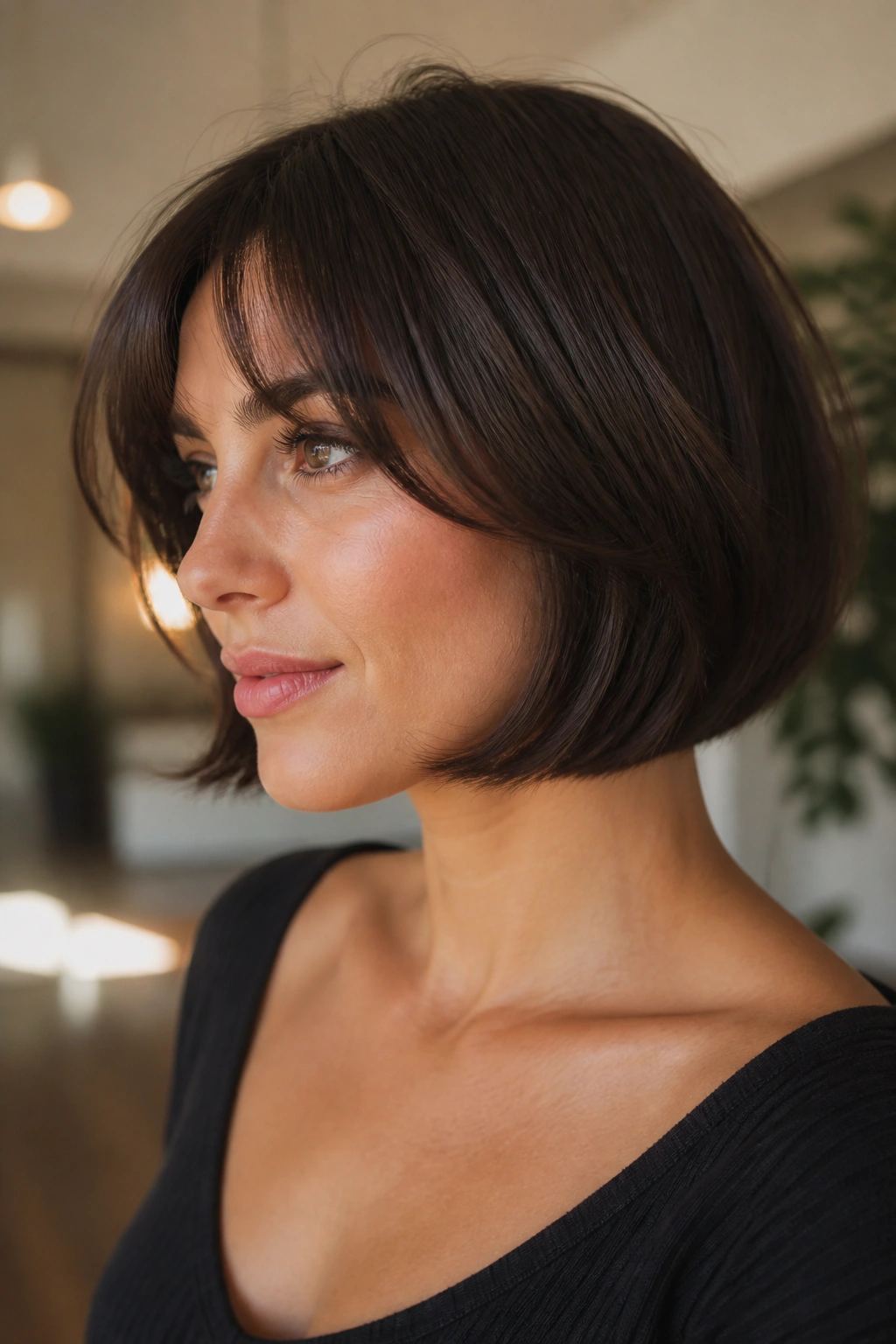
A curved-under bob is one of the best tricks for making fine hair look denser at the bottom. The ends bend inward, so the edge appears more compact and the whole cut feels finished. It’s a small visual move, but it adds a lot.
What I like here is the softness. The curve keeps the bob from feeling boxy or severe, which can happen with very blunt cuts on finer strands. If the hair has a little bend already, even better. The haircut just needs to guide it.
A Useful Detail
Ask for a perimeter that’s blunt at the very bottom but slightly beveled through the last half-inch. That gives you the thickness illusion without sacrificing the French feel. It also makes at-home styling faster, because the shape wants to turn under on its own.
12. The Razored-Edge French Bob
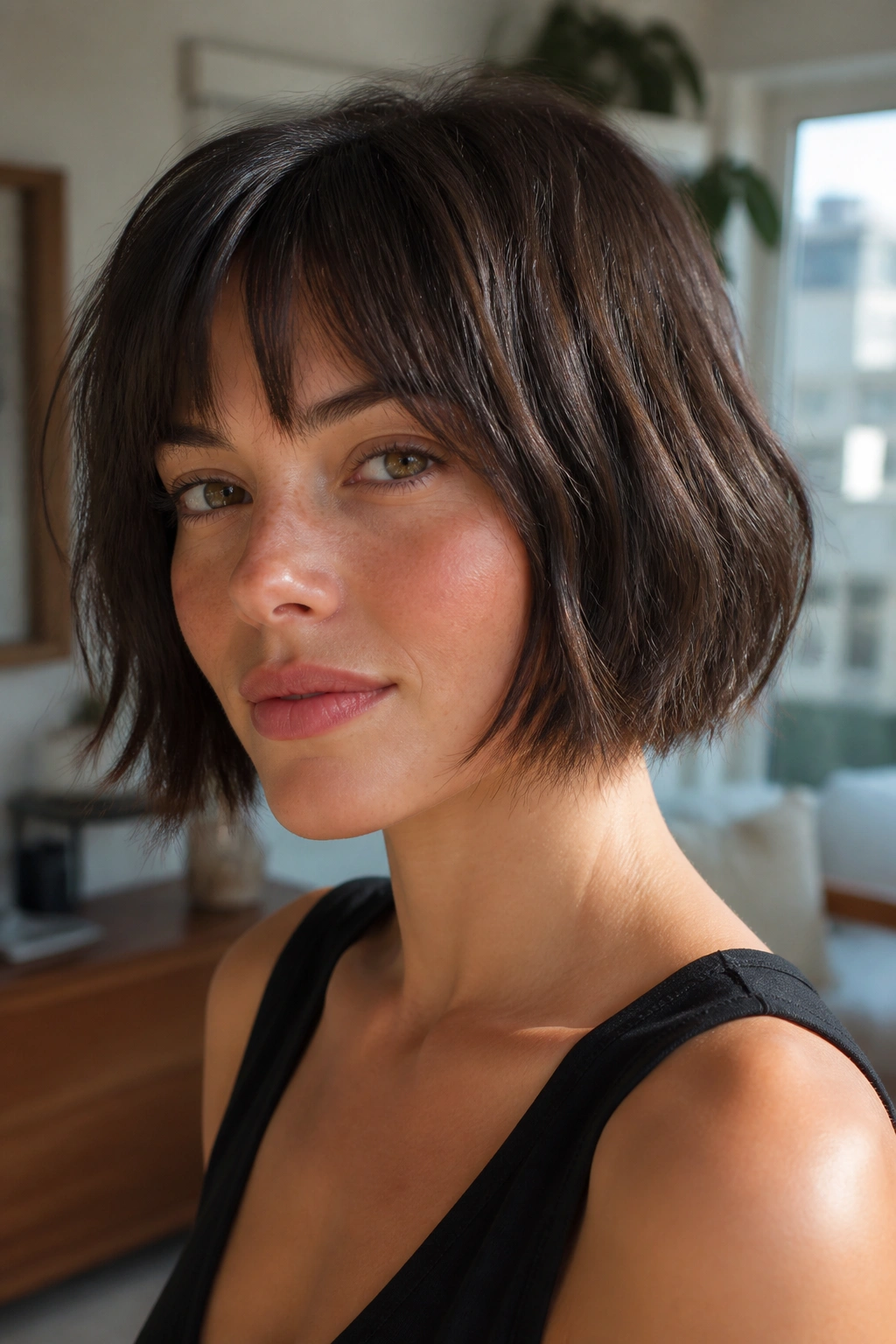
A razored-edge French bob sounds edgy, and it can be. On fine hair, though, the razor has to be used with a light hand. The goal is to soften the line just enough to create movement, not carve the ends into a frayed mess. That’s a big difference.
What Makes It Different
A careful razor finish can help hair that feels stiff at the ends or sits too heavily in one block. It gives the bob a little air. But if the stylist uses the razor too high up, the whole shape can get thin fast, which is exactly what you do not want.
Best move? Use this version only with a stylist who knows fine hair well and can show restraint. The haircut should still read as a bob first. The texture should be a detail, not the headline.
13. The Nape-Hugging French Bob
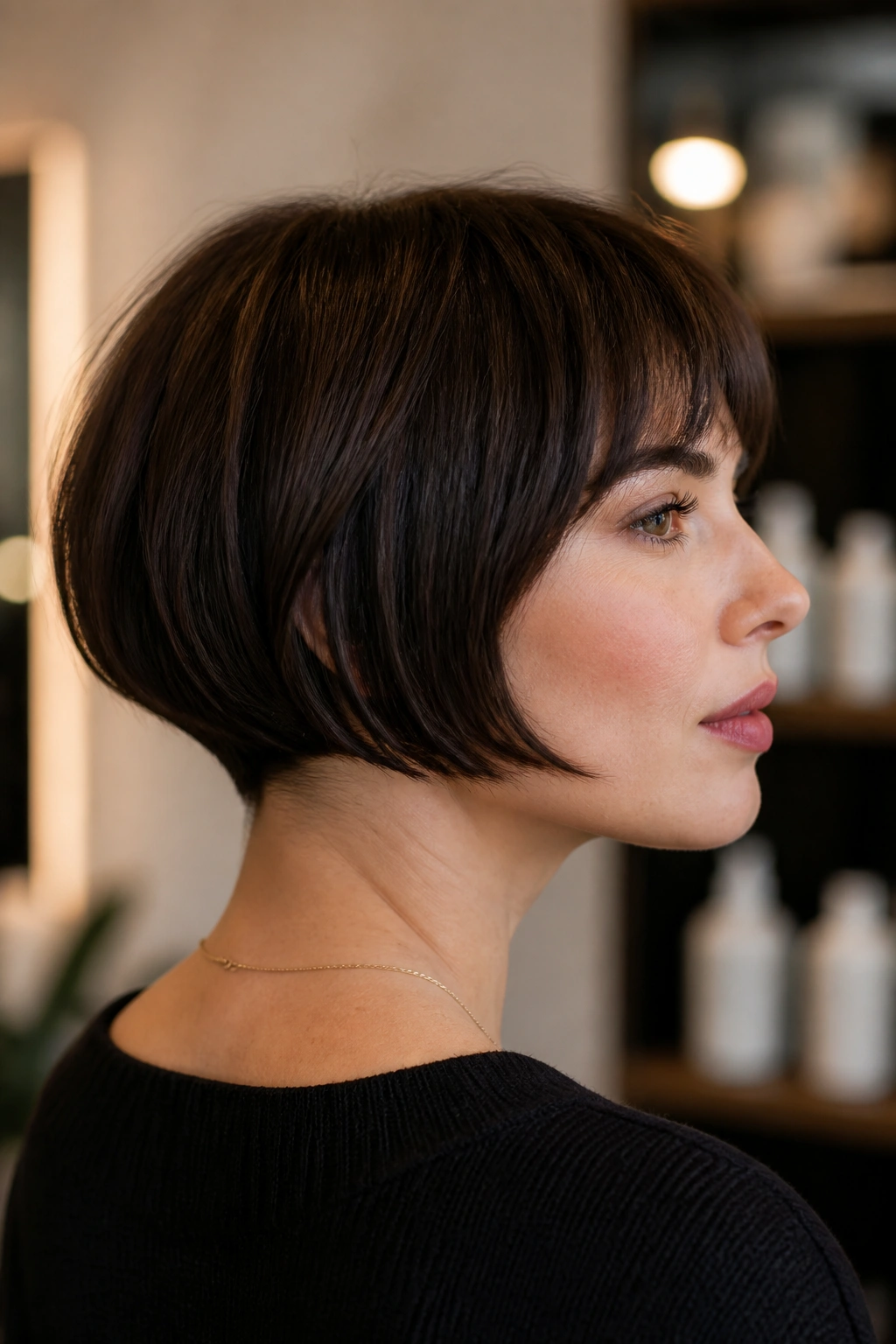
A nape-hugging bob sits close to the neck and builds lift where it counts. Fine hair often benefits from that tighter back shape because it removes the drag that comes from too much length. The front can stay a little longer for balance, but the back should be neat and close.
This cut is especially good if your hair tends to flip out at the neck in awkward ways. A nape-hugging line can tame that and make the silhouette cleaner. It also looks sharp from the side, which matters more than people think. Side profile is where a lot of bobs either win or fall apart.
One thing to keep in mind: this shape grows out fast. Not badly. Just fast enough that you’ll notice when the nape starts losing its clean edge.
14. The Piecey Fringe Bob
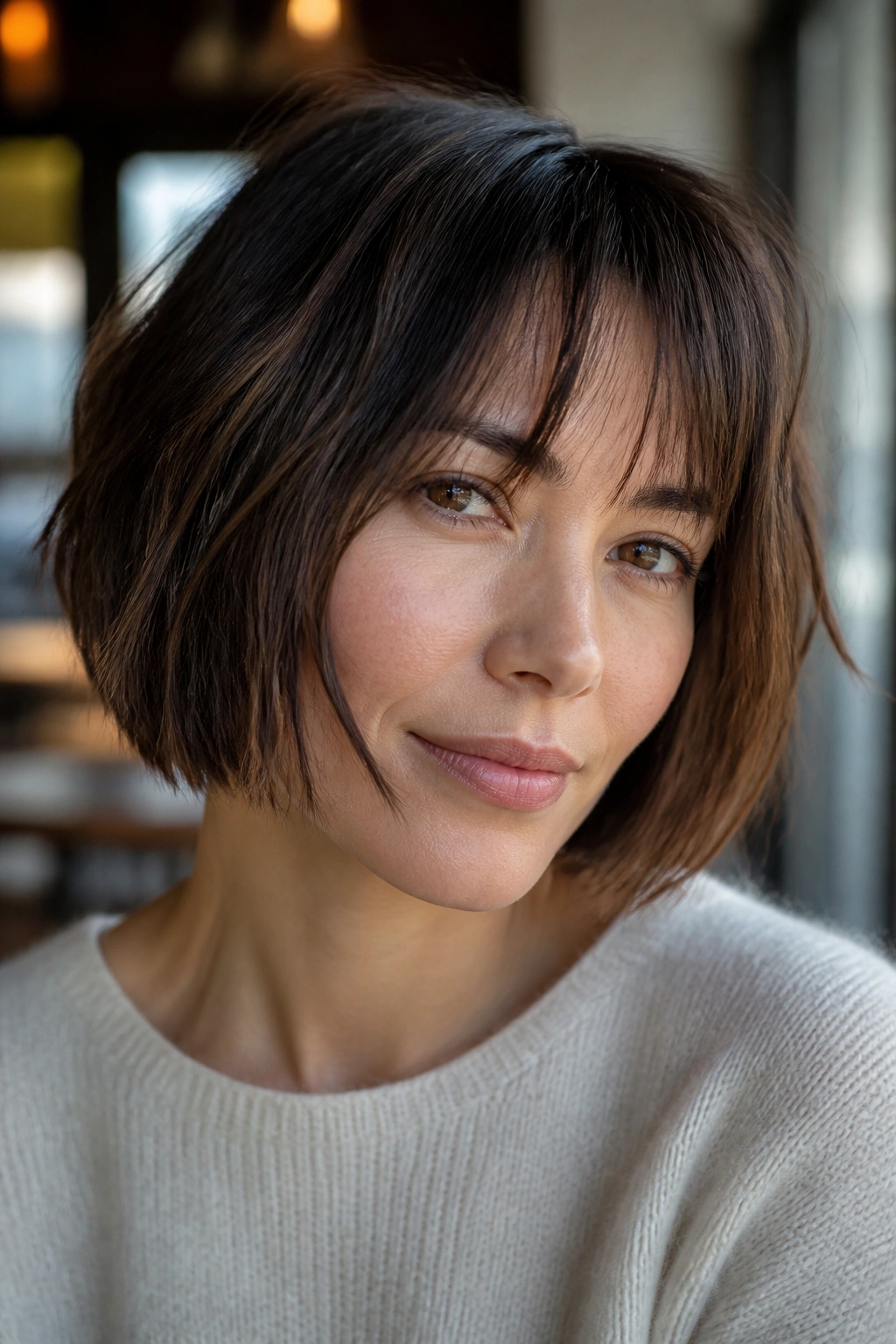
A piecey fringe bob brings a little separation to the front without making the whole haircut sparse. Fine hair can handle this look if the fringe stays light and the rest of the bob holds the weight. The result is soft, a little cool, and easier to style than a heavy straight bang.
How to Style the Fringe
Use a fingertip amount of styling paste or cream on dry bangs, then twist small sections between your fingers. Stop before the hair starts looking sticky. The goal is definition, not product.
This cut works well when you want some movement around the face but don’t want a full curtain bang. It’s also useful if your forehead is shorter and heavy fringe feels like too much. The pieces should fall in uneven little groups, not all one width.
15. The Face-Framing Angle Bob

A subtle angle can do a lot for fine hair. When the front pieces are a touch longer than the back, the bob gets a longer line without losing its compact feel. That’s useful if you want a little face framing but still need the ends to look full.
I’d keep the angle gentle. A steep angle can make fine hair look stringy toward the front, which defeats the point. The best version is almost shy about its asymmetry. You notice it when the hair moves, not from across the room.
If your face is round or square, this shape can be a quiet win. It draws the eye down and forward, which helps the whole cut feel balanced.
16. The Soft Undercut French Bob
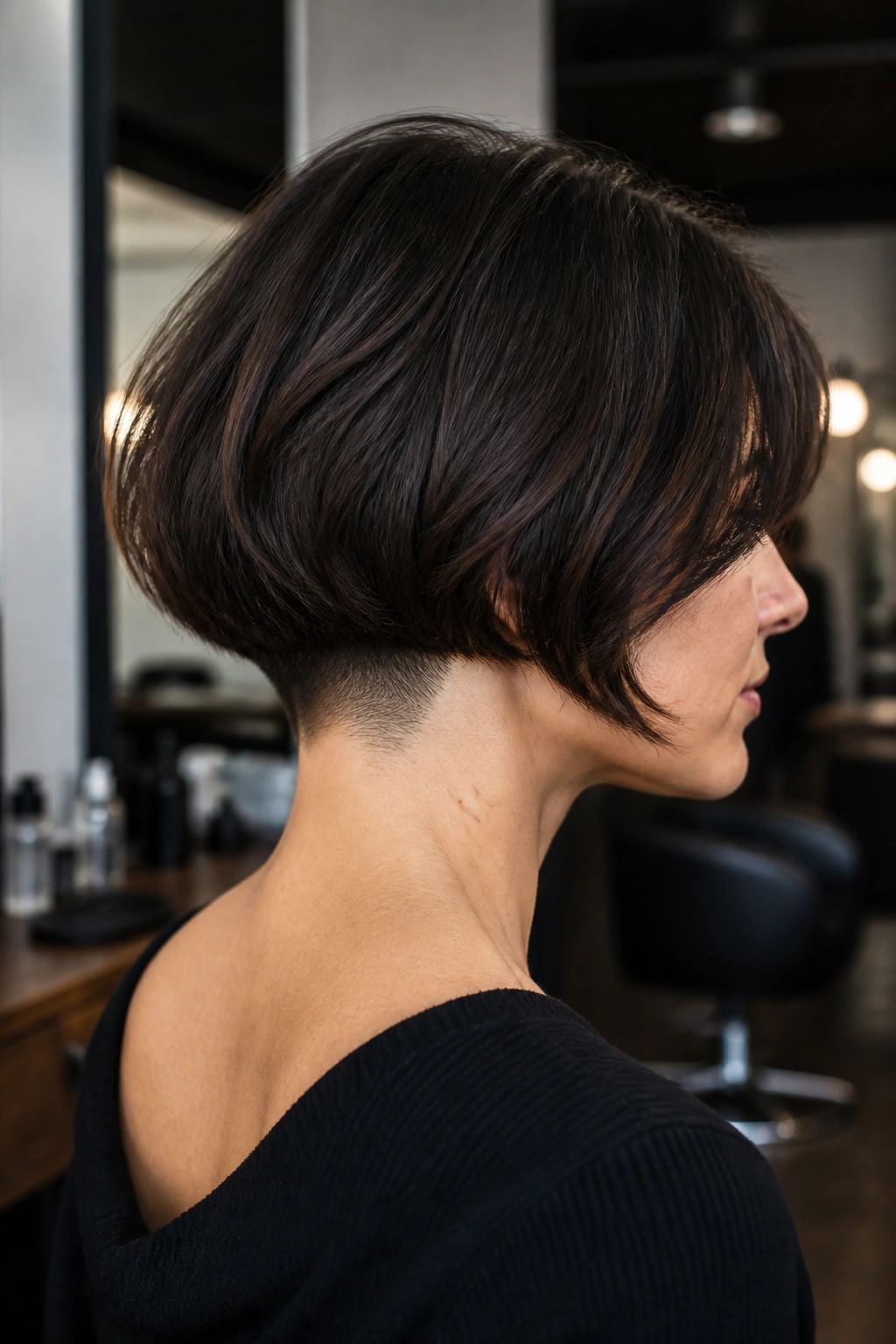
A soft undercut sounds bold, but on dense fine hair it can be a smart move. The idea is to remove some hidden bulk underneath so the top layer sits closer to the head and keeps its shape. That can stop the bob from puffing out at the nape or around the ears.
Who It Suits
This is better for fine hair with a lot of density than for truly sparse hair. That distinction matters. If the strands are fine but plentiful, a little internal reduction can make the haircut easier to wear. If the hair is already thin in density, an undercut can go too far.
A good stylist will keep the undercut concealed and soft, not severe. You should still see a normal French bob from the outside. The relief is hidden, which is the whole charm.
17. The Collarbone-Length French Bob for Fine Hair

A longer French bob gives fine hair room to move while still keeping the ends thick enough to read as a deliberate cut. Collarbone length is a safe landing spot for people who want a bob feel but aren’t ready for jaw-length hair. It can also be easier to tie back on busy days.
The danger with this length is sag. Fine hair that hangs too long can start looking tired, especially if the ends are layered too much. So keep the perimeter blunt and let only the slightest inward curve happen at the bottom.
I like this version for someone who wants flexibility. You can wear it smooth, wavy, tucked, or half-up. It’s the most adaptable cut in the bunch, and that matters more than people admit.
18. The Tousled Salt-Spray Bob
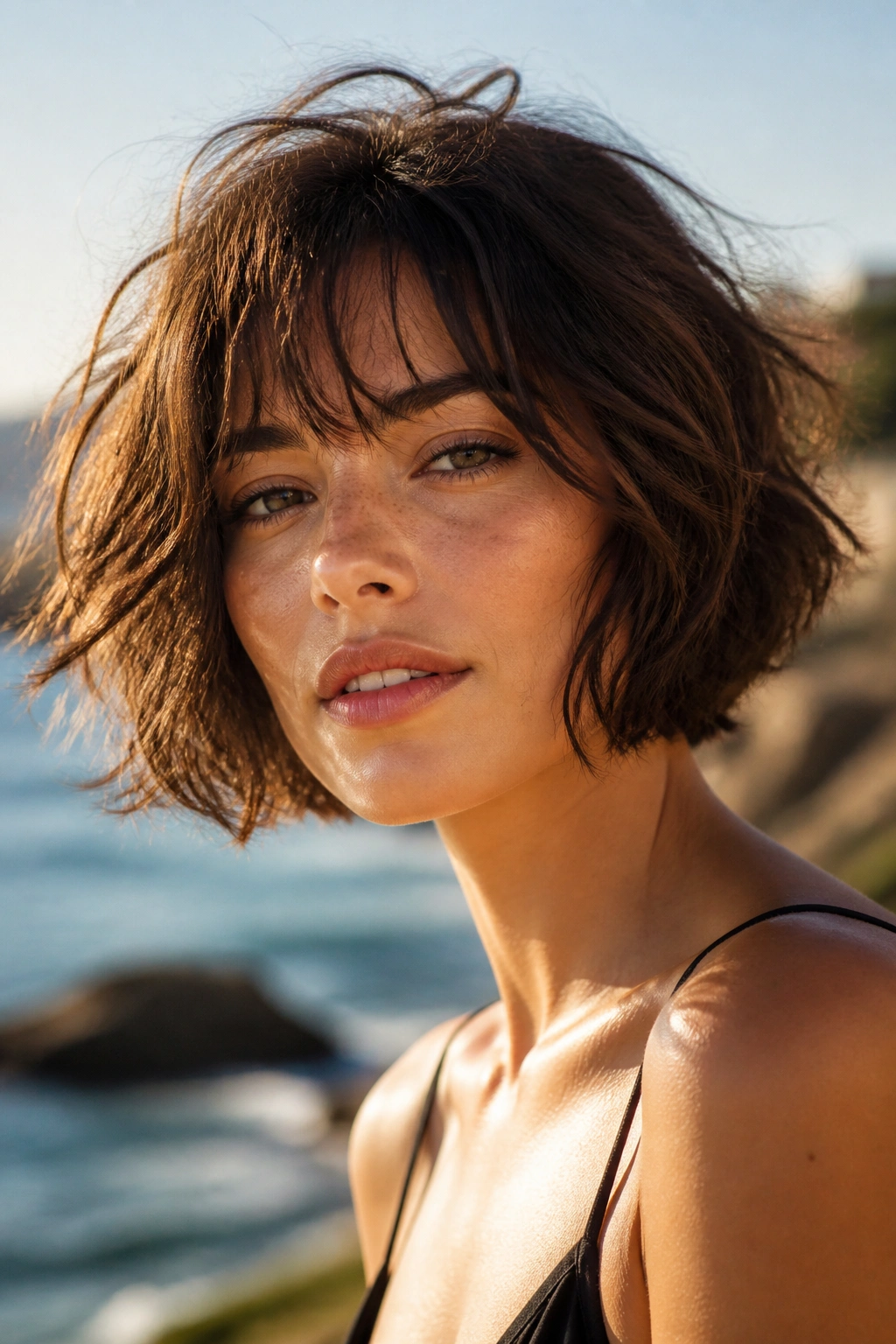
A tousled French bob gives fine hair a little roughness in the best sense. Not messy. Just lived-in and touchable. Salt spray can help, but use it lightly, because fine hair can turn dry and crispy if you overdo it.
How to Get the Look
Mist a small amount of texturizing spray through damp hair, then scrunch the ends and twist a few face-framing pieces. Let it air-dry about 70 percent of the way before you touch it again. If needed, add a tiny bit more spray at the roots and lift with your fingers.
A good tousled bob should still show the haircut underneath. If it looks like you lost the shape, the product won. That’s not the goal.
19. The Full-Crown French Bob
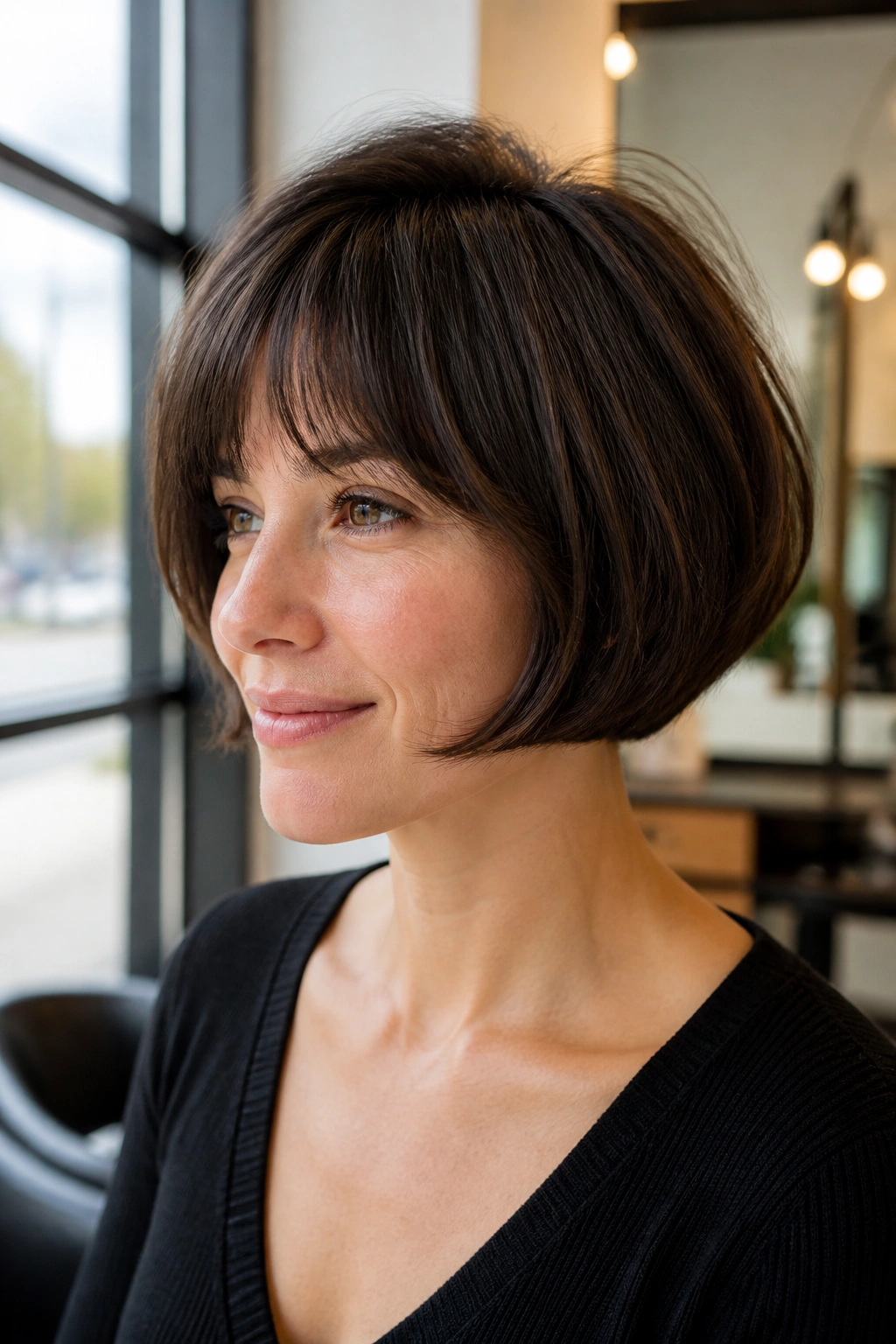
Flat crowns make fine hair look smaller than it is. A full-crown French bob fixes that by putting the volume where the eye notices it first. The silhouette stays short and neat, but the top gets a little height so the cut doesn’t sit like a helmet.
Why It Helps
Lift at the crown makes the face look a little longer and the hair look a little denser. You can create that with a cut that supports root movement, not just with teasing. A slight elevation through the top section and a blunt perimeter can work together nicely.
Try drying the top section upward with a round brush or a root clip. Even a few minutes helps. The style does not need a huge mound of volume. It just needs enough lift to break the flat line.
20. The Curly French Bob

Curly fine hair needs respect, not force. A curly French bob works when the cut follows the curl pattern and leaves enough length for the curls to spring up without turning into a puffball. That usually means cutting a little longer than you think at first.
The shape should be clean around the perimeter, with only light shaping where the curls need room to sit. Heavy layers can create gaps, and gaps are the enemy when each curl already carries less strand density than thicker hair.
Styling Advice
Use a light leave-in and a small curl cream, then scrunch. Skip heavy gels unless your curls need them for hold. The haircut should do most of the visual work. If you need to keep touching it all day, the balance is off.
21. The Flipped-Under French Bob
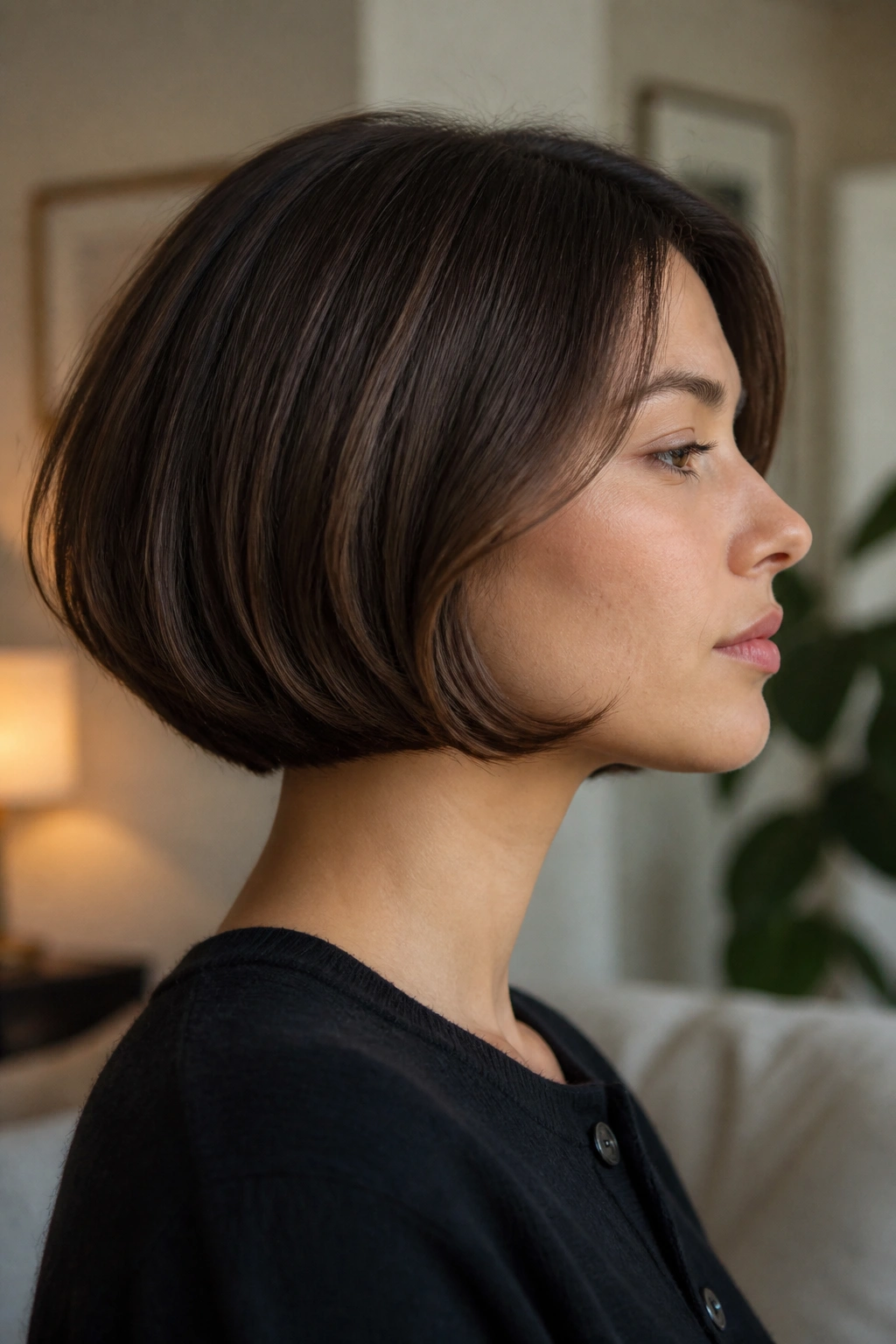
There’s something old-school and charming about a bob that flips under at the ends. On fine hair, that inward turn creates a thicker-looking line at the bottom, which is exactly what a bob needs when density is low. The haircut can be simple. The finish carries the interest.
The trick is the round brush or the bend in the cut itself. If you style it with a soft underflip, the perimeter looks denser and cleaner. If the ends kick out too sharply, the whole shape can feel accidental. That’s why this style lives or dies by the last inch of hair.
It’s a good option for anyone who likes a neat finish and doesn’t mind a bit of polish.
22. The Soft Shag-Bob Hybrid

A soft shag-bob hybrid gives fine hair movement without destroying the bob shape. I’m cautious with shags on fine strands, because too many layers can leave the ends thin. But a restrained version, with soft internal texture and a firm outline, can be useful if the hair lies too flat.
What Keeps It Working
- Keep the bottom line blunt or nearly blunt.
- Ask for light texture near the crown only.
- Avoid short, choppy layers around the full head.
This version suits people who like a bit of mess and don’t want a haircut that needs perfect blow-drying every day. The face should still read as a bob first. The shag part should feel like movement, not chaos.
23. The Beveled-End Bob
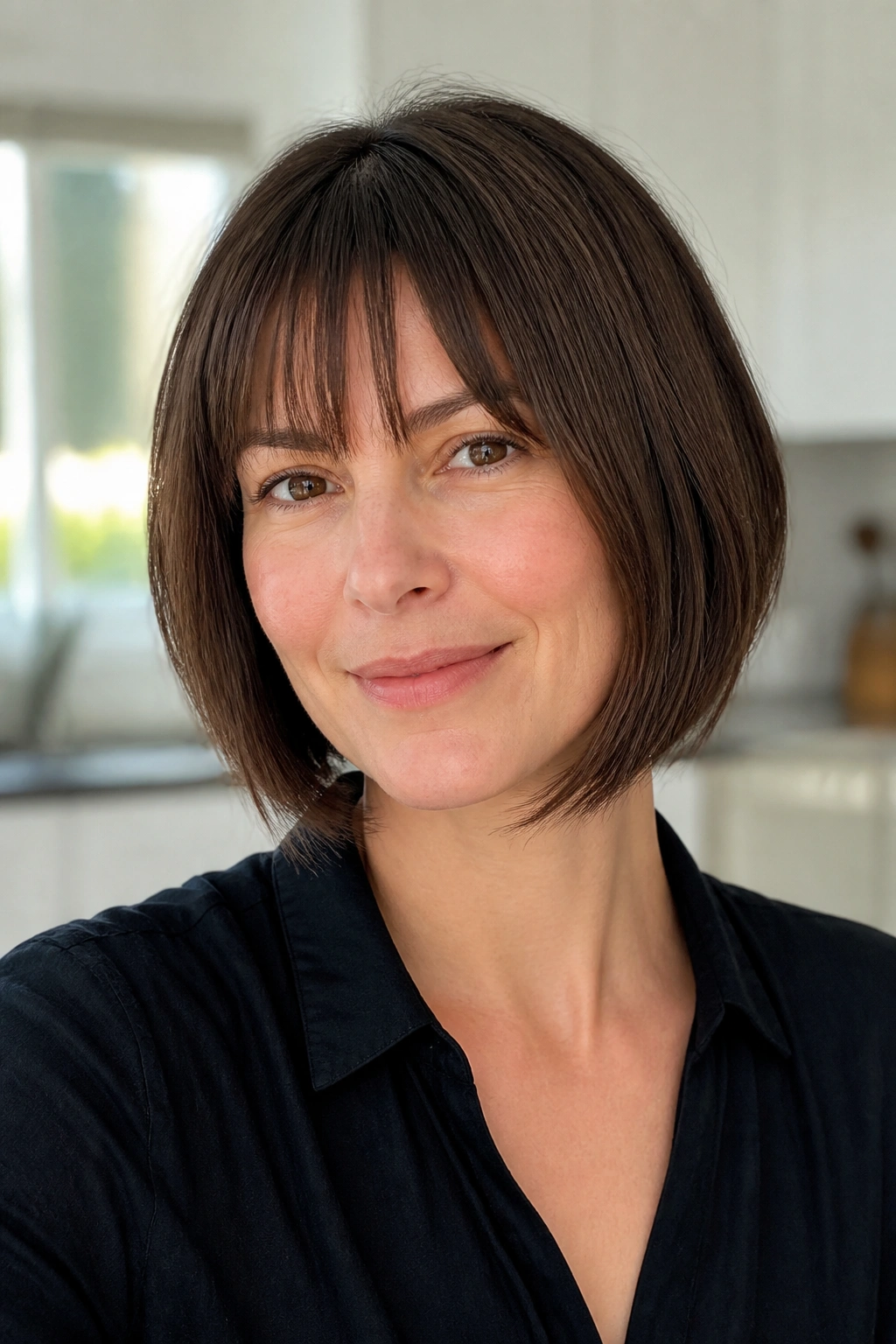
A beveled-end French bob is all about shape at the very bottom. The ends are cut so they angle inward a little, which makes fine hair look thicker and more finished. It’s a subtle shift, but subtle is often enough when the hair is already light.
What I like about this cut is how it behaves when it grows out. It usually stays neat longer than a heavily layered bob because the edge still has structure. You can wear it straight, bent, or slightly wavy and it still reads cleanly.
The cut works best when the bevel is soft. Too much angle and the bob starts looking retro in a way you may not want. Just enough to round the edge. That’s the sweet spot.
24. The Glassy Polished French Bob for Fine Hair
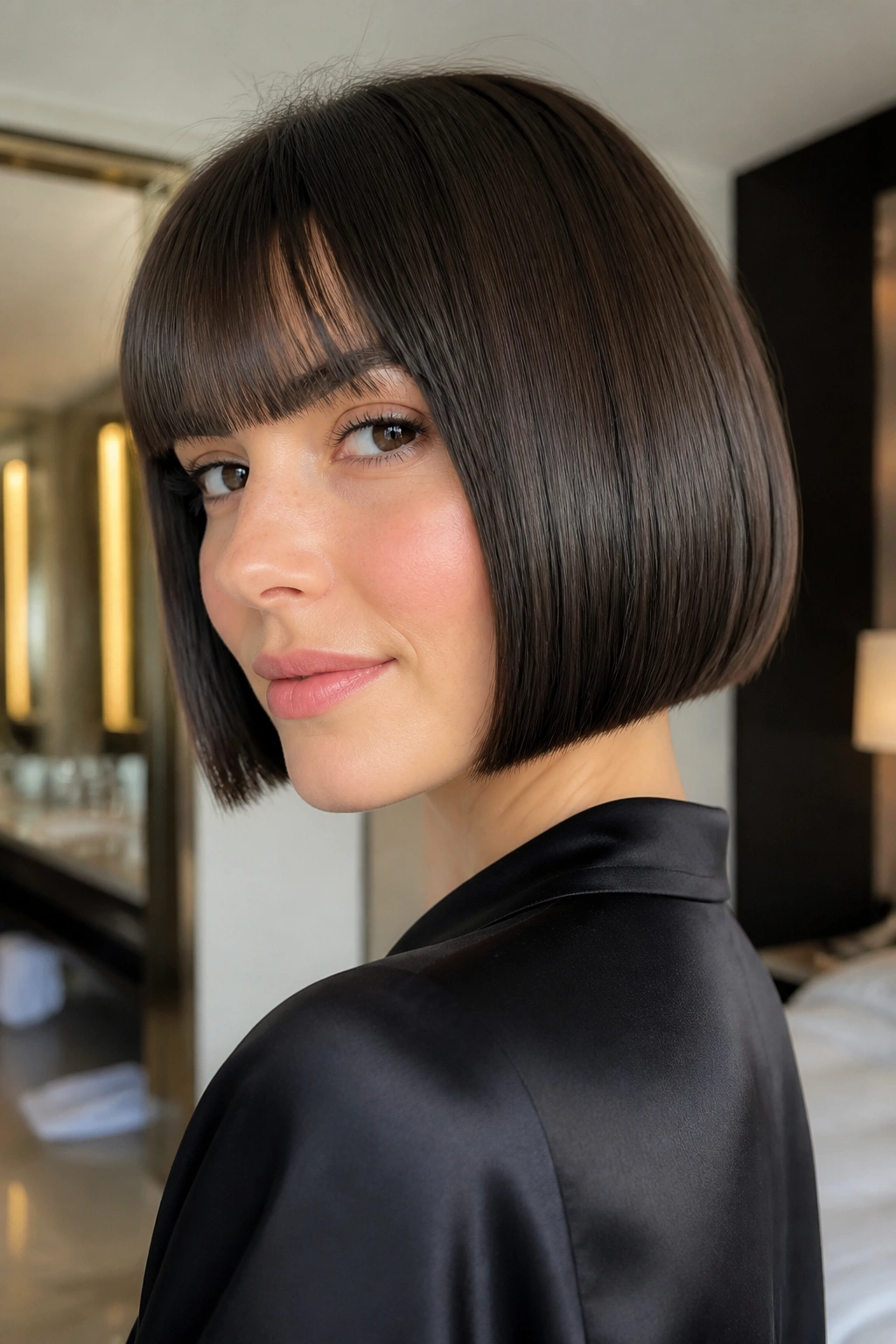
A polished bob can be excellent for fine hair because shine makes strands look healthier and more present. The smoother the surface, the more unified the cut reads. A glossy finish also makes a blunt line look more expensive in the plain, practical sense of the word: it looks cared for.
Best Styling Setup
Use heat protectant first, then blow-dry with tension so the hair lays flat and smooth. Finish with a tiny amount of serum or light oil on the last inch only. A round brush helps if you want a slight bend under, but a paddle brush can work if you’re after a sleeker line.
This style is not forgiving of flyaways, so it rewards a trim schedule. Still, if your hair is naturally straight, it can be one of the strongest looks on the list.
25. The Glasses-Friendly French Bob
A glasses-friendly bob needs to clear the frames, not fight them. That sounds obvious, but it’s where a lot of bobs go wrong. If the length sits right on the top of the frame or bangs hit the lenses, the haircut starts to feel crowded. Fine hair is already working with limited density, so the shape has to be clean.
This version usually lands just below the glasses arm or slightly above the rim line, depending on your face shape. The fringe, if you want one, should be trimmed so it stops short of the frames or splits away from them. You want space around the eyes.
A small practical note: bring your glasses to the salon. The difference between “works” and “annoying” is often just half an inch.
26. The Asymmetrical French Bob
An asymmetrical bob can bring energy to fine hair, but keep the difference subtle. A dramatic angle can make one side look too sparse, especially if the density is low to begin with. A gentle asymmetry, though, gives the haircut movement and a little edge.
I like this style for people who want something a touch less predictable than a straight bob. One side might land a half inch or an inch longer, and that’s usually enough. The eye catches the shift, but the shape still feels wearable.
If you go this route, keep the line crisp. Asymmetry works best when it looks deliberate. Sloppy asymmetry is just an uneven haircut.
27. The Chin-Length French Bob With Soft Layers
Soft layers can help fine hair if they’re used with restraint. In a chin-length French bob, a few hidden layers can stop the hair from looking too blocky while still keeping enough weight at the perimeter. The surface should stay smooth. The movement should happen underneath.
Good Signs to Ask For
- Layers that disappear into the bob, not stacked pieces.
- Extra softness around the crown if it tends to lie flat.
- A blunt outline at the bottom edge.
This cut is useful for hair that has some bend but tends to puff at the sides. The soft layers let the bob fall more naturally. If the hair is extremely fine and sparse, though, I’d keep layering even lighter. The ends matter most.
28. The Low-Maintenance Air-Dry French Bob
Some bobs need a brush, a dryer, and a prayer. This one does not. A low-maintenance air-dry French bob is built for fine hair that behaves better when left alone. The cut stays blunt, the length stays around the jaw or just below, and the texture is allowed to do a little of the work.
The key is to ask for a shape that looks good slightly imperfect. That means no heavy thinning, no broken-up ends, and no layers that depend on heat styling to make sense. A little cream or mousse on damp hair is fine. After that, hands off.
This is the bob for people who want to wash, scrunch, and go. It may not be the fanciest version on the list, but it is one of the most useful. And useful haircuts, honestly, are underrated.
The Bottom Line
Fine hair does not need to be hidden. It needs structure. A French bob gives you that structure when the perimeter is strong, the layers are careful, and the bangs are chosen with a little restraint.
The best version for you is the one that respects your hair’s natural bend, density, and habits. If your hair collapses at the roots, look at crown lift. If the ends look thin, go blunter. If you want softness, add it around the face, not all through the cut.
Bring photos, yes. But bring specifics too: where you want the hemline to sit, how much fringe you can actually live with, and whether you want to style it in five minutes or twenty. That’s the difference between a bob that just looks cute in a chair and one that makes sense on your head every morning.
