



Fine hair can look expensive in one haircut and disappointing in the next. Same head of hair, same shampoo, completely different result.
That is why tousled bob haircuts for fine hair work so well when they keep a dense outline and add movement in the right places. The trick is not to stack on layers until the ends look wispy; it is to let the cut bend, swing, and break up the line just enough that the hair reads fuller.
Fine hair is not the same thing as thin hair. You can have plenty of strands and still want more lift, more body, and less of that soft collapse that happens a few hours after styling.
The best bob for this hair type usually has a blunt perimeter, a little internal texture, and a styling plan that does not rely on a long battle with a round brush. A good cut should still look decent when you tuck it behind one ear, run your fingers through it, or let it dry with a small amount of mousse and texture spray.
The first cut earns its place because it does the most with the least.
1. Chin-Length French Bob With Airy Ends
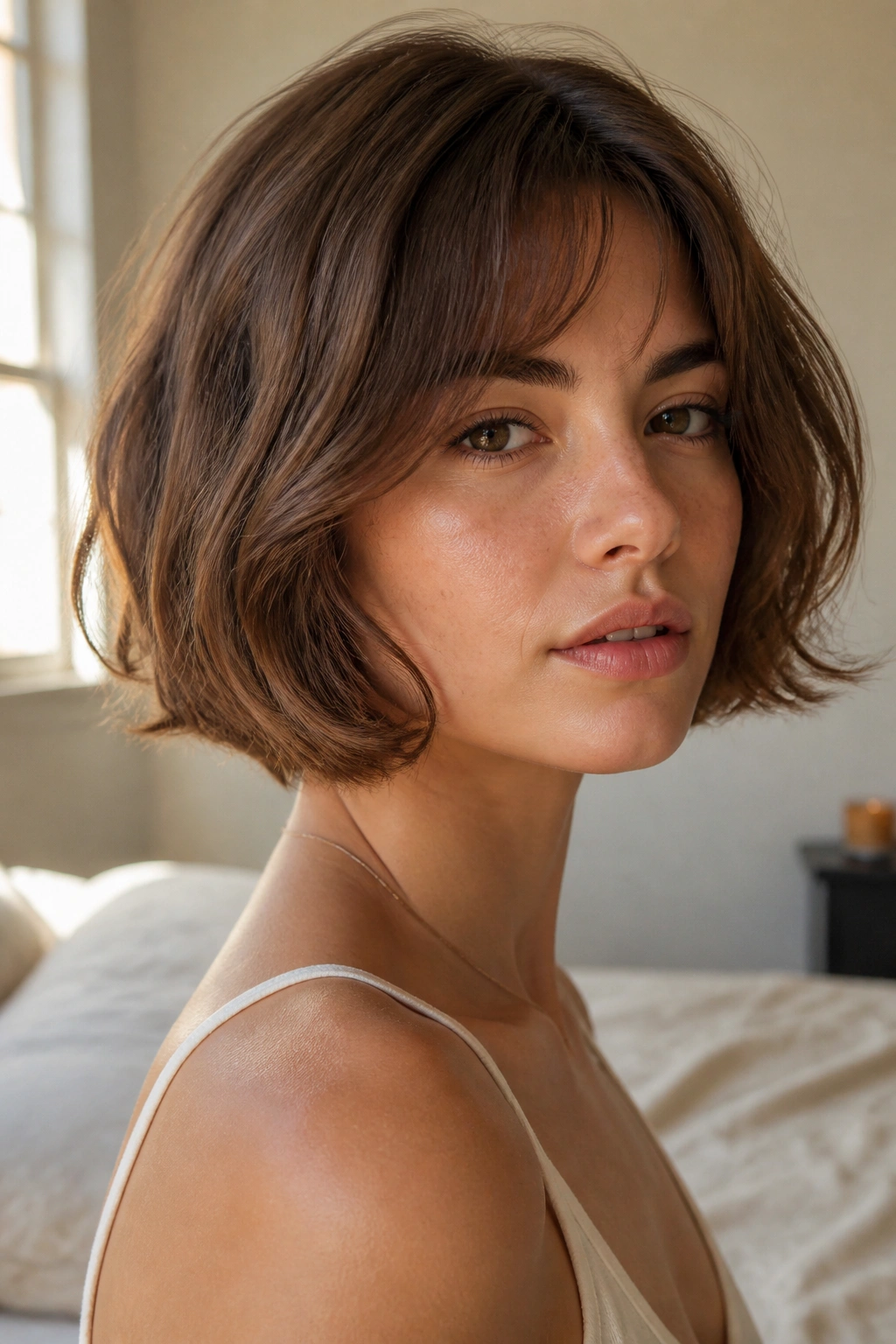
A chin-length French bob is one of the easiest ways to give soft strands some backbone. The length lands right at the jaw, which keeps the shape compact, and the slight bend at the ends keeps it from feeling boxy or severe. That little bit of air around the edge matters a lot.
Why It Works on Fine Hair
The French bob looks fuller because the perimeter stays clean. When the bottom line is solid, the eye reads density, even if the hair itself is delicate. Ask for barely there texturizing at the interior, not heavy layering that hollows out the shape.
A good version of this cut also lives well with a slight natural wave. If your hair bends on its own, the bob can dry with a soft curve and still look finished. If it is straight, a quick wrap with a 1-inch iron for 5 to 8 seconds at the mid-lengths is enough.
- Keep the length at chin level or just below.
- Ask for soft point-cutting, not shredded ends.
- Style with a pea-sized amount of mousse at the roots.
- Finish with 2 or 3 spritzes of dry texture spray.
Best move: tuck one side behind the ear and leave the other side loose. It gives the cut that undone feel without making it look accidental.
2. Blunt Bob With Feathered Interior Layers
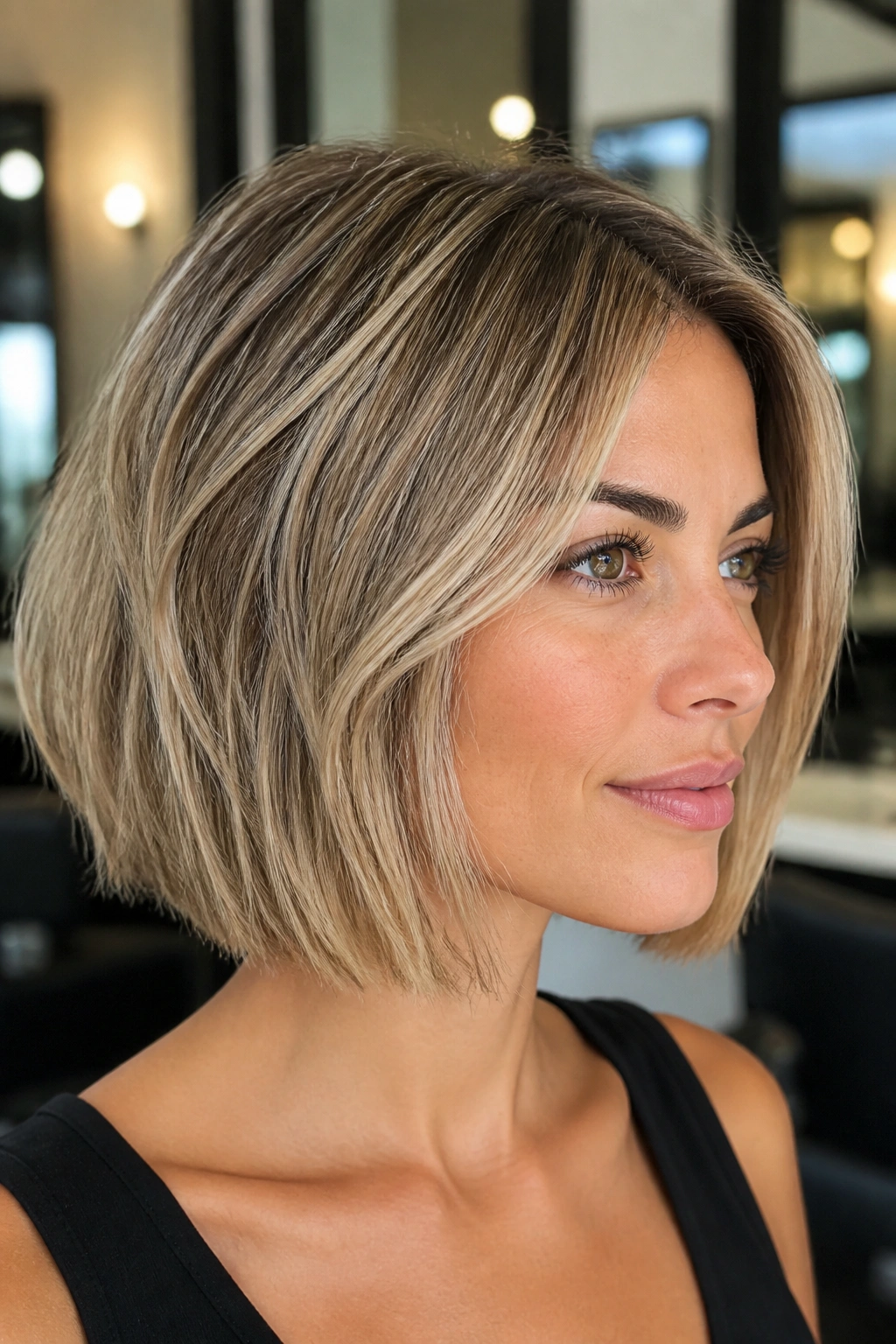
A blunt bob with feathered interior layers is the cleanest way to fake thickness. The outer edge looks solid, which gives the impression of more hair, while the hidden layers stop the style from falling flat like a helmet. That combination is hard to beat.
The important part is restraint. The feathering should live inside the shape, usually in the upper half of the bob, and it should never eat into the perimeter. Too many layers and the whole thing goes see-through at the ends. Too few, and the haircut can sit there like a block.
This cut is especially good if your hair is fine but plentiful. It gives movement without giving up the weight you need at the bottom. A quick blow-dry with a paddle brush, then a bend with the brush or flat iron on just the last inch, is usually enough.
The look is polished first and tousled second. That order matters.
3. Jaw-Skimming Bob With a Deep Side Part
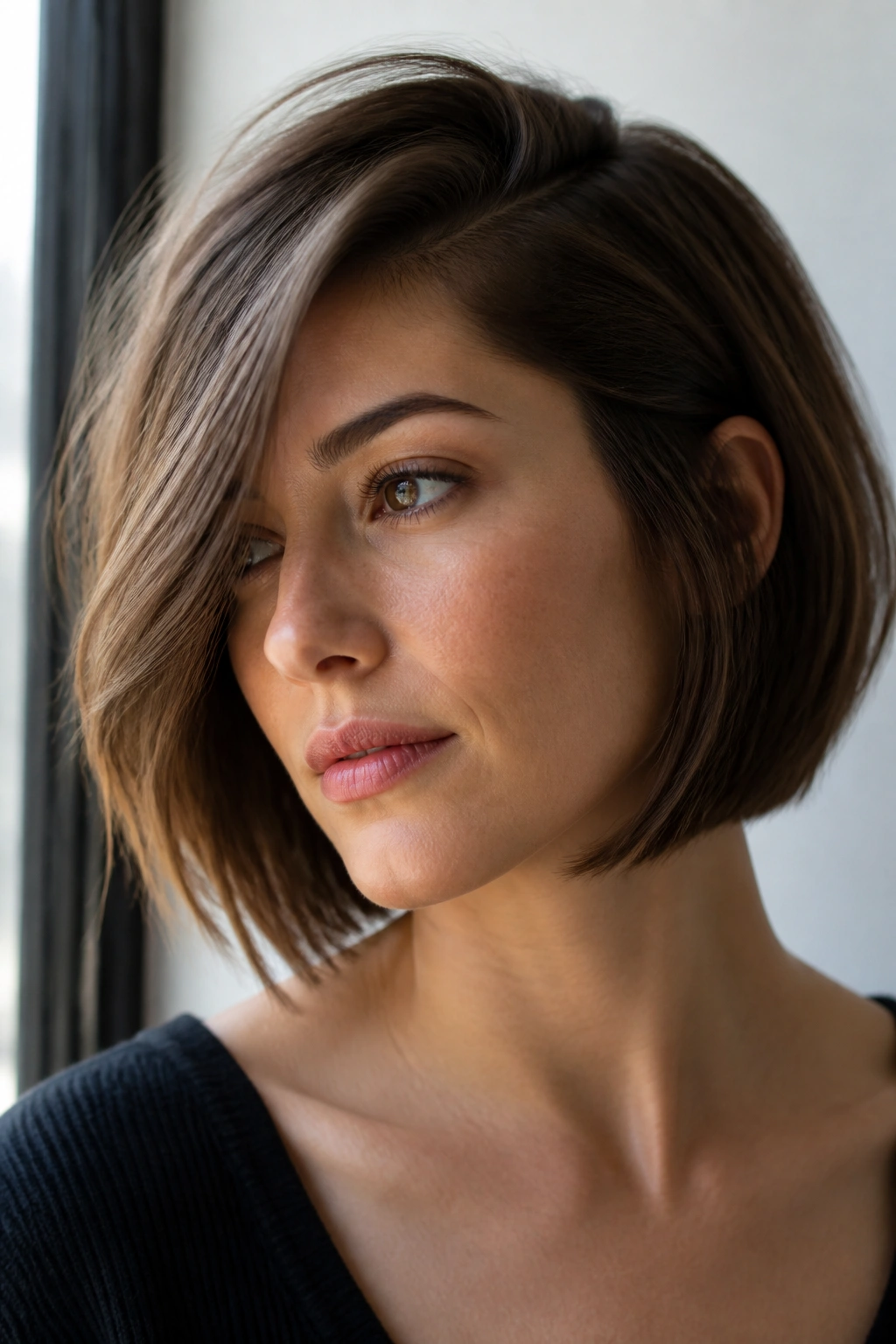
Want more crown lift without making the ends look spindly? Go with a jaw-skimming bob and a deep side part. The part line shifts weight to one side, which gives the roots a little push right where fine hair tends to lie down.
How to Ask for It
Tell your stylist you want one side to sit a touch longer, usually by about half an inch to 1 inch, so the shape feels intentional rather than lopsided. The front should graze the jaw, while the shorter side creates that easy sweep across the face. It should look deliberate, not dramatic.
The deep side part also helps if your hair clings to the scalp at the crown. A quick mist of root spray at the part, then a blow-dry in the opposite direction for the first 30 seconds, can make the lift last longer than you’d expect.
Do not overdo the angle. A tiny shift is often enough.
4. Soft Shag Bob With Broken Texture
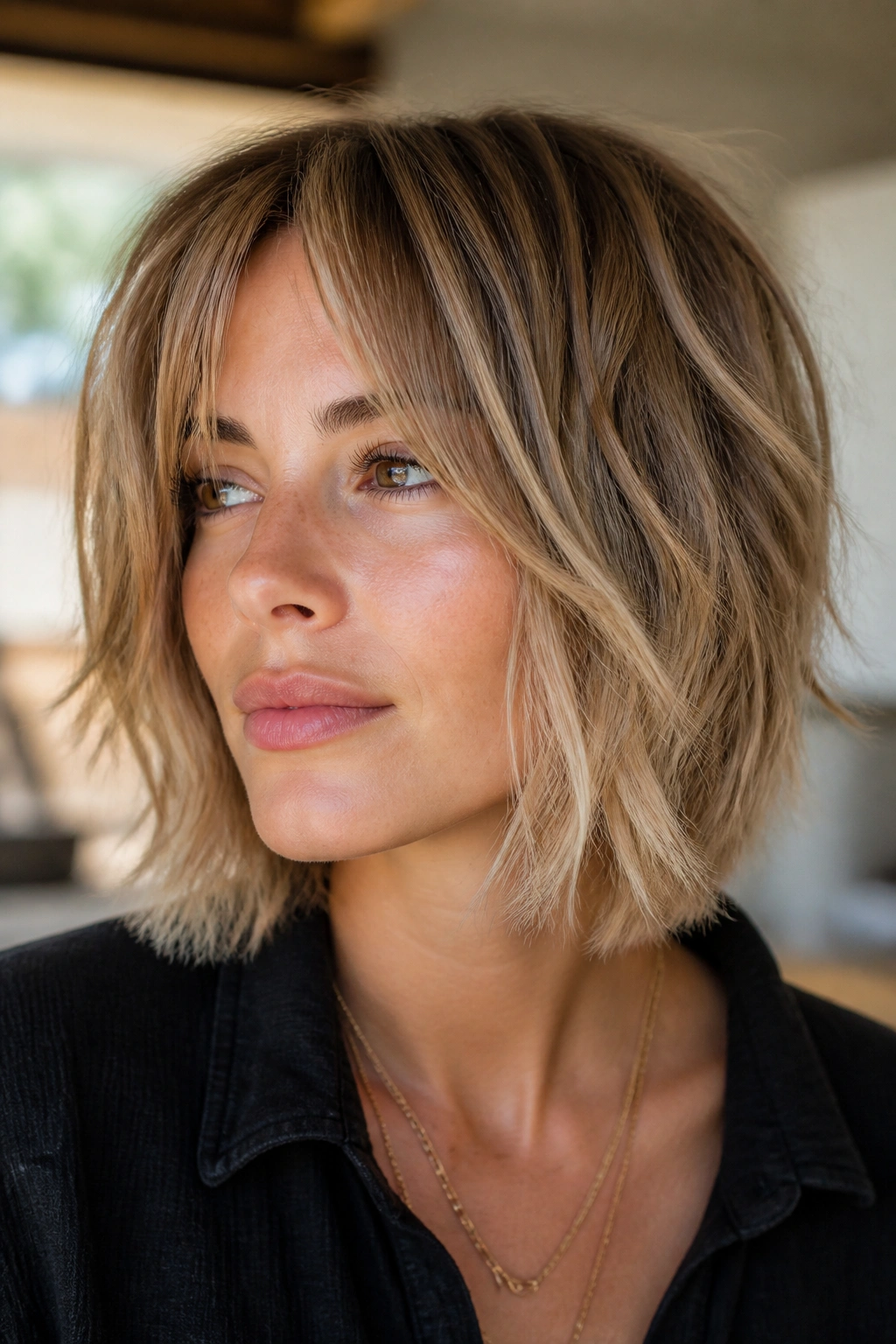
If your hair collapses by lunchtime, the soft shag bob is worth a look. It keeps the bob shape, but it breaks up the surface just enough that the cut has movement even when the styling is minimal. Think of it as a bob that knows how to behave when you are in a hurry.
The layers should be gentle around the cheekbones and a little softer near the crown. You want lift, not holes. A shag that is too aggressive can make fine hair look skimpier at the ends, and that is the exact opposite of the goal.
What to Ask For
- Layers that start below the crown, not above it.
- Piecey movement around the face.
- Ends that are point-cut rather than razor-thin.
- A perimeter that stays mostly full.
A dab of lightweight cream and a rough dry with your fingers is usually enough here. If the hair bends naturally, even better. The beauty of this shape is that it looks most convincing when it is a little imperfect.
5. Wavy Bob With Curtain Bangs

Curtain bangs and a wavy bob make a smart pair because they spread the visual weight across the whole haircut. Instead of relying on all the fullness sitting at the bottom, the bangs bring attention up toward the eyes and cheekbones, which keeps fine hair from looking bottom-heavy.
The bang length matters. The shortest point should usually start around the cheekbone, then open out into longer pieces that blend into the bob. If the bangs are cut too short, they can look sparse. If they are too long, they can disappear into the rest of the hair and lose the whole point.
This shape is best when the hair has some natural bend. A 1.25-inch curling iron or wand works well if you wrap the front pieces away from the face for 6 to 8 seconds, then leave the ends a little straighter. That mixed finish is what gives the style its easy movement.
It looks casual, but the cut does the heavy lifting.
6. Inverted Bob With a Lifted Nape
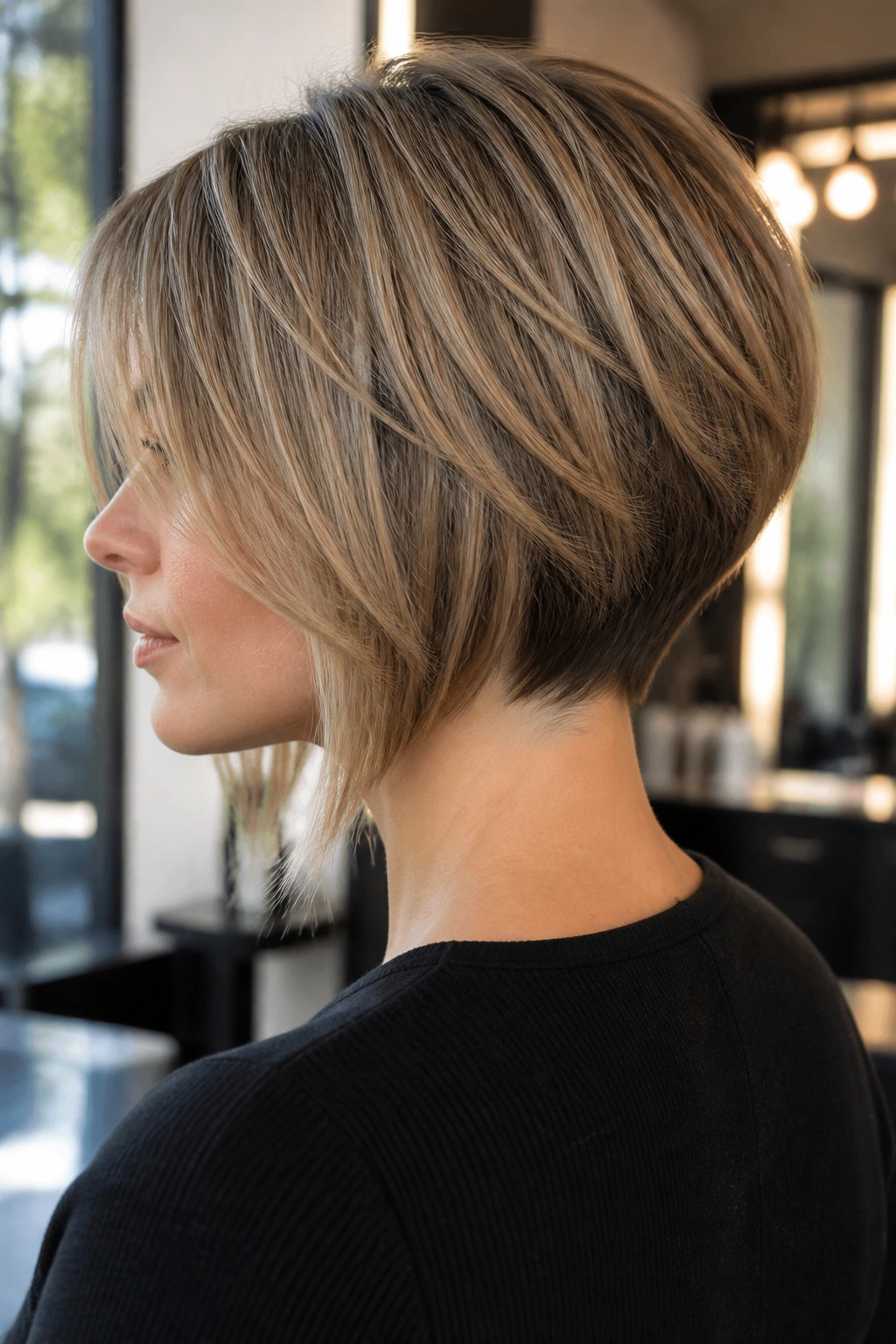
A classic inverted bob gives fine hair a built-in sense of structure. The back sits shorter and closer to the head, while the front stays longer and angles forward. That angle creates a stronger line than a flat one-length cut, and strong lines tend to read fuller.
Unlike a soft rounded bob, the inverted version is a little more obvious about its shape. That is a good thing if your hair tends to lose definition fast. The shorter nape gives the illusion of lift, and the longer front pieces keep the haircut from feeling too old-school or rigid.
This works especially well if your hair is straight or only slightly wavy. Ask for a gentle angle, not a severe wedge. The difference between chic and dated is usually only about 1 inch of length.
A light serum on the ends keeps the front pieces smooth without flattening the back.
7. Collarbone Bob With Invisible Layers
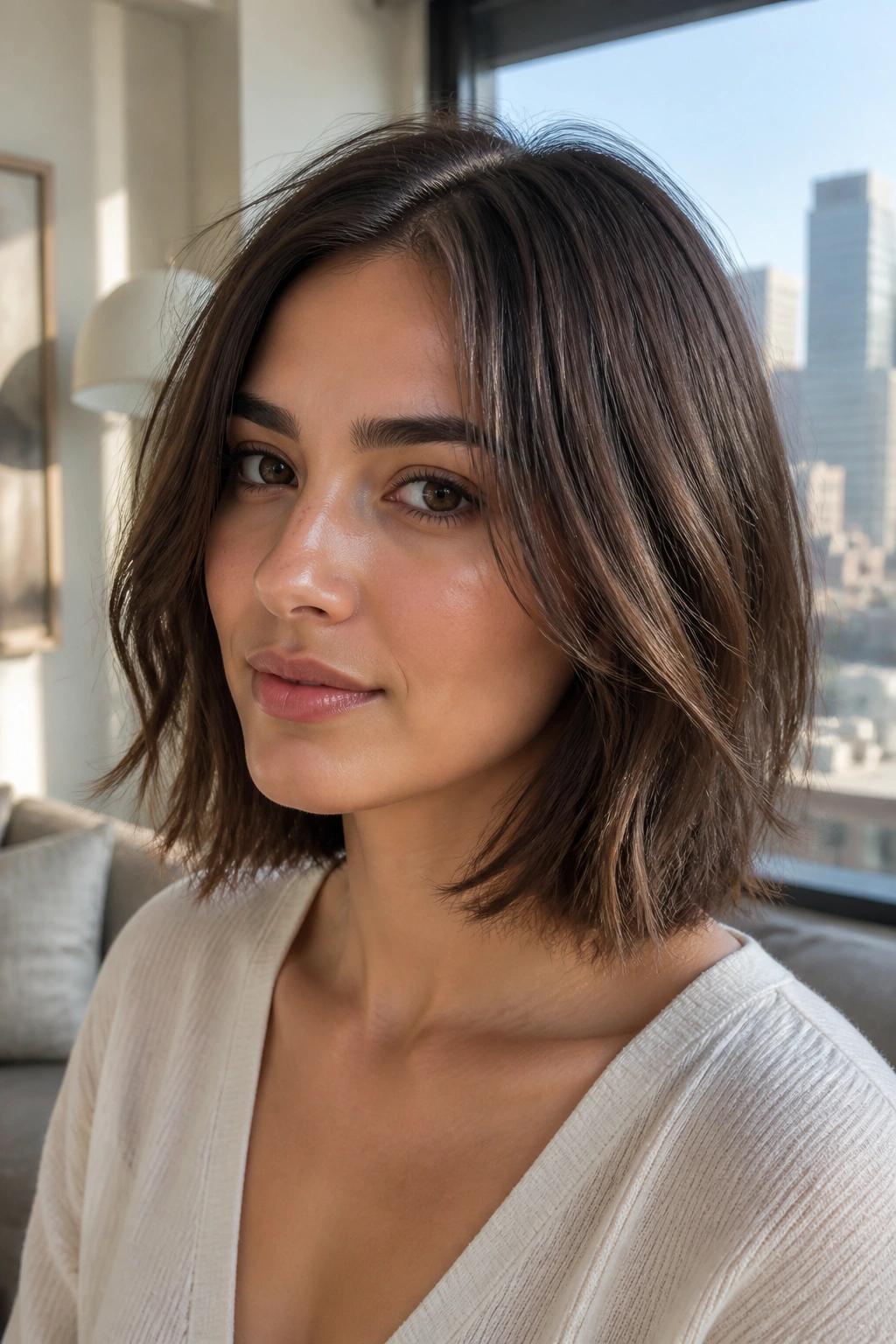
A collarbone bob with invisible layers is for the person who wants movement but refuses to lose length. It falls between a bob and a lob, which makes it forgiving, and the invisible layers are tucked inside the shape where they can create lift without announcing themselves.
Where the Layers Hide
The stylist should keep the perimeter blunt enough to hold weight, then release a little internal texture through the mid-lengths. The idea is not to make the cut choppy. It is to stop the ends from hanging like one flat sheet. Fine hair often needs that hidden support.
This cut is useful if your hair gets stringy when it grows past the chin. At collarbone length, the hair still has enough weight to behave, but it is not so long that it slumps. A center part can make the shape look modern, while a soft side part gives it a little more lift.
If you are nervous about short hair, start here. It is the least frightening way to get into a tousled bob territory.
8. Razored Bob With Piecey Ends

A razored bob can look airy in the best way—or shredded in the worst. On fine hair, the difference comes down to how much razor work is done and where it lands. A few smart passes at the ends can soften the outline; too much and the hair starts looking see-through.
The best razor work is invisible. You should feel movement, not see damage. I like this cut on hair that is soft but not fragile, because the razor can make already delicate ends look frayed if the stylist gets too enthusiastic.
What you want is separation, especially around the face and lower third of the bob. The style should still have enough edge to hold its shape. A matte styling cream or paste rubbed between the palms and tapped into the ends will separate the pieces without puffing them up.
It is a slightly cool haircut. Not precious. Not overly neat. That is the point.
9. Rounded Bob With Soft Taper

Can a rounded bob look fuller than a blocky one? Usually, yes. The curve around the head gives the style a built-in sense of body, and the soft taper at the ends stops the silhouette from feeling too square for fine hair.
The Curve Does the Work
A rounded bob has a subtle bend that hugs the head and then opens out at the bottom. That shape keeps the hair from hanging straight down, which is where thin-looking ends often show up. It is especially good if your hair tends to puff at the sides but go flat on top.
Ask for a shape that is rounded through the back and softened near the front. The ends should not be over-thinned. A small bevel from a round brush or a 2-inch curling iron on the last few inches is enough to reinforce the curve without making it stiff.
This is one of those haircuts that looks calm from across the room and more detailed up close. That balance is what makes it useful.
10. Asymmetrical Bob With a Clean Edge
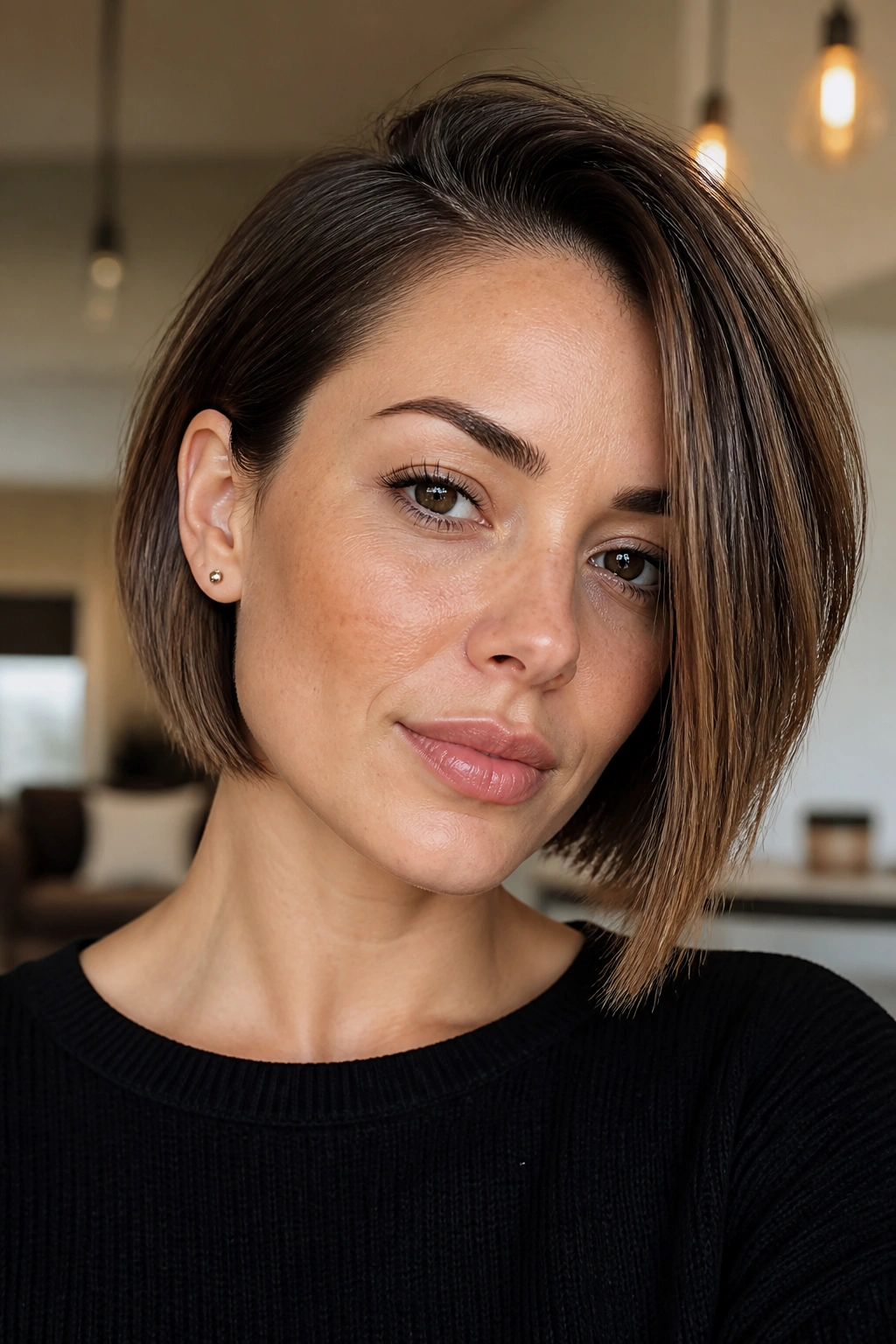
A little asymmetry can do a lot for fine hair. When one side is even half an inch longer, the eye stops searching for volume and starts reading the shape instead. That shift matters more than people think.
The cut works best when the asymmetry is subtle. You do not want one side that feels like a mistake. You want a quiet difference that gives the bob movement and keeps it from falling into a predictable box. Think modern, not theatrical.
Quick Details to Tell the Stylist
- Keep the shorter side around the jaw.
- Let the longer side drop only 0.5 to 1 inch lower.
- Preserve a blunt edge so the ends still look dense.
- Add minimal interior texture so the line stays strong.
This shape can be a little addictive once you get used to it. Every angle looks slightly different, and that makes fine hair feel more lively without needing much product.
11. Stacked Bob With Light Graduation
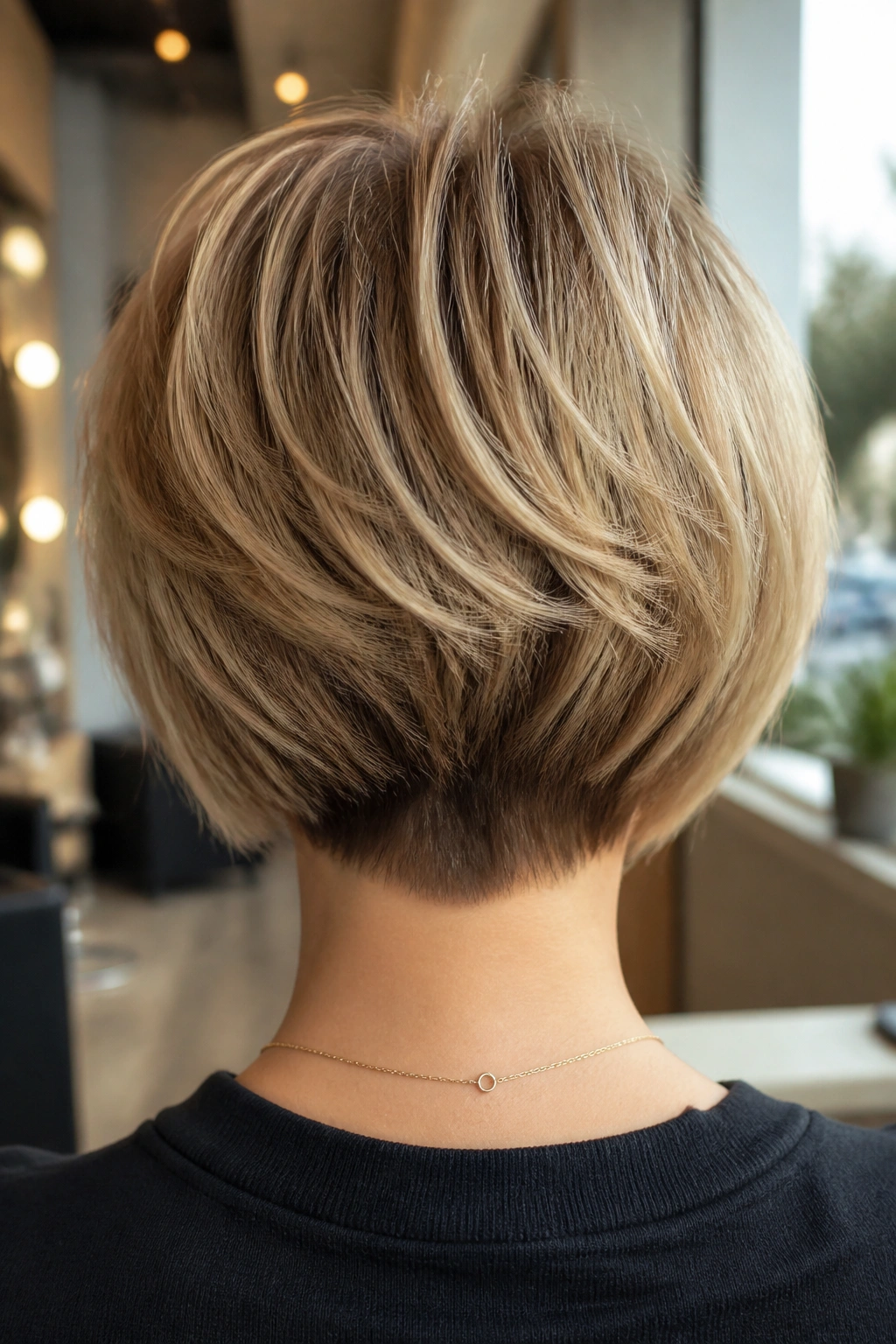
A stacked bob gives the back of the head some lift, which is exactly where fine hair often needs help. The trick is to keep the graduation light. Too much stacking and the haircut turns into a wedge. Too little and you lose the effect.
The cleanest version has a fuller nape, a slightly shorter back, and softer length through the sides. That lets the crown sit a little higher without exposing the scalp. If your hair lies flat against the head, that small rise can change the whole silhouette.
I like this cut best when the layers are blended rather than chopped. It should feel engineered, not hard. A blow-dry with a small round brush at the roots—just 15 seconds of lift in each section—helps the stack show up without forcing it.
The shape is more structured than messy, which is useful if you want the tousled part to come from styling, not from the cut doing too much on its own.
12. Bob With Bottleneck Bangs

Bottleneck bangs are a smart choice if you like fringe but do not want the weight of a full blunt bang. They start narrow at the center, then open slightly toward the temples, which lets the forehead breathe while still framing the face.
Compared with curtain bangs, bottleneck bangs feel a bit tidier and more deliberate. Compared with blunt bangs, they are easier on fine hair because they do not demand a huge amount of density across the whole forehead. The cut can still look full, but it does not need to be thick.
This bob works well with hair that falls straight or bends only a little. The bangs should be long enough to tuck behind the brow line when needed, because fine hair fringe grows out fast and can look awkward if it is too short. A tiny bit of styling wax at the ends keeps the fringe from separating into little strays.
It is a small detail, but it changes the mood of the whole cut.
13. Air-Dried Bob With Natural Bend
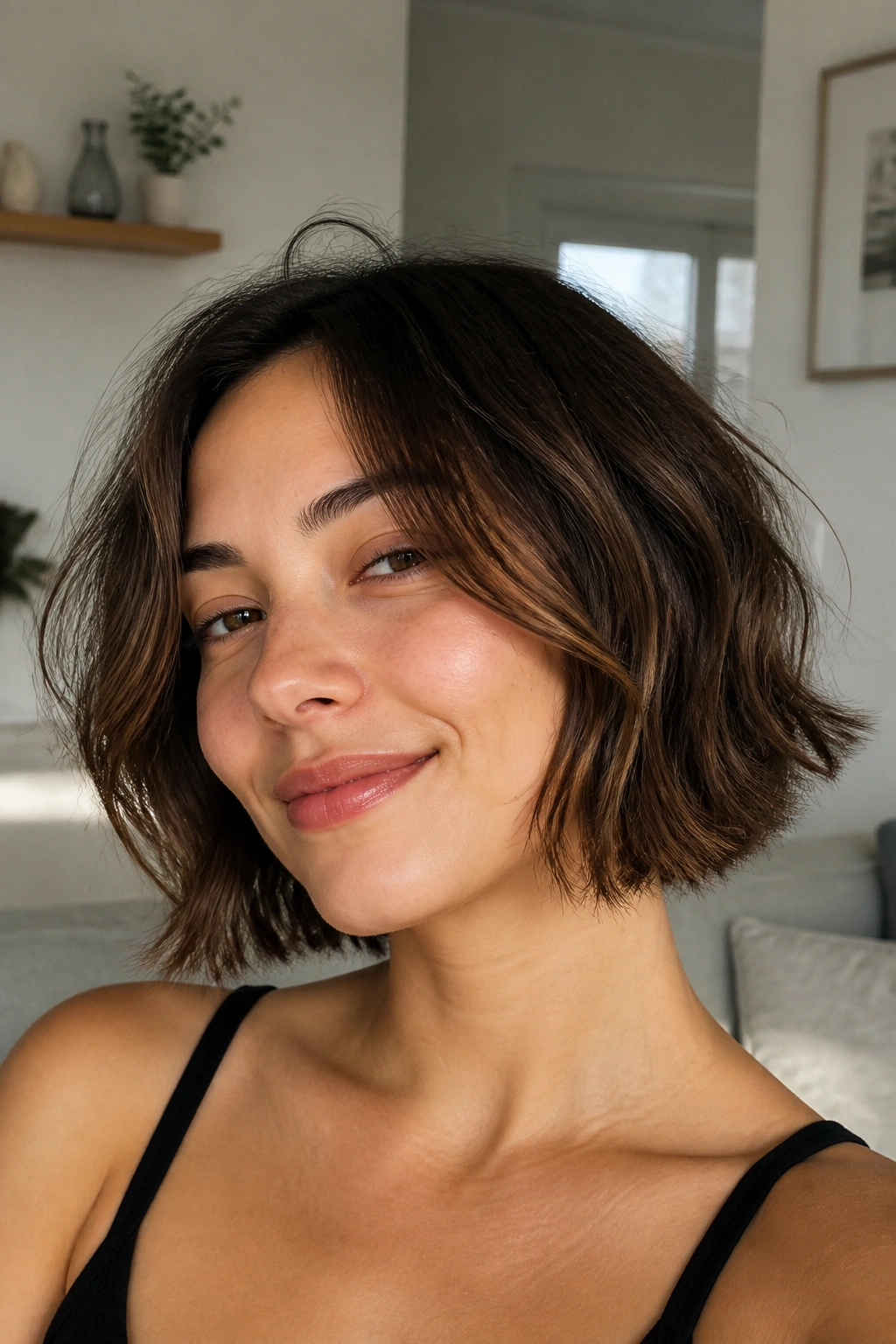
The best bob for some fine hair is the one that does not fight the texture already there. If your hair bends, flips, or forms a loose wave on its own, an air-dried bob can look fuller than a heavily blown-out shape because the texture is doing the work for you.
What to Ask Your Stylist to Leave Alone
Ask for a perimeter that stays intact and a light touch through the interior. You do not need a dramatic stack or a pile of short layers. What you need is enough shape that the hair can collapse into a flattering line as it dries, not a haircut that only works after 40 minutes of heat styling.
A little mousse at the roots, then a scrunch through the ends, is often enough. If you want more lift, clip the crown while the hair dries. Two or three duckbill clips placed near the part can create a bit of root memory without leaving a hard mark.
This is the most low-maintenance option in the bunch, and I mean that in the useful sense. It lets the hair be itself, which is not always glamorous, but it is often smarter.
14. Side-Swept Bob With a Full Fringe
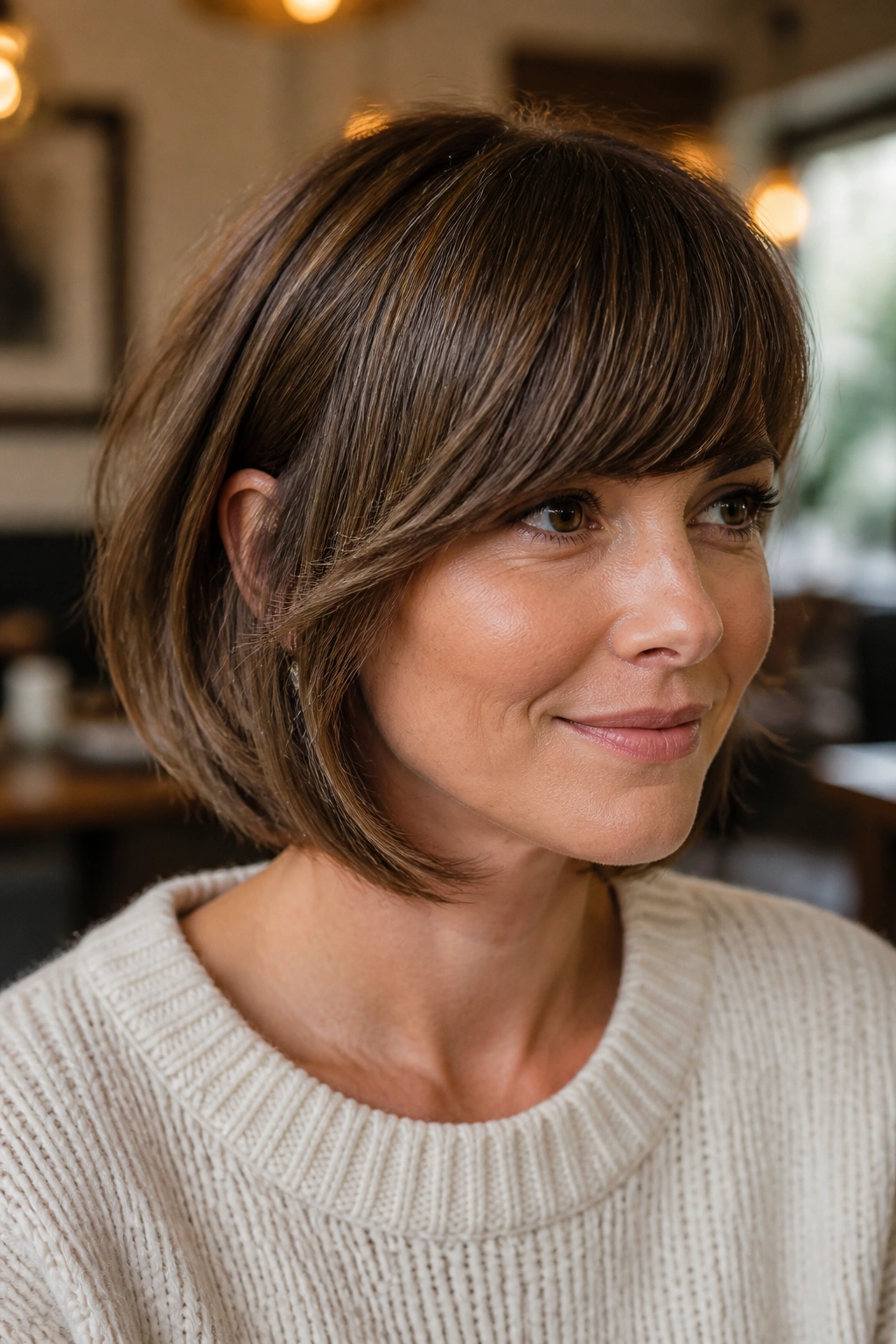
A side-swept bob can make fine hair look denser because it builds one continuous sweep instead of lots of separate pieces. The fringe sits across the forehead in a solid line, which gives the front of the haircut more visual weight. That is a good trade for hair that tends to split apart.
The side-swept fringe should be thick enough to hold its shape, not wispy enough to disappear after an hour. Ask for a long side bang that blends into the bob rather than a tiny face-framing detail. The weight should be obvious when the hair is dry.
This cut suits people who want softness around the face without going full curtain bang. It also works nicely if one side of your hair naturally falls flatter than the other. A quick blow-dry with the nozzle pointed down the fringe keeps it smooth, and a light flexible hairspray can stop it from breaking apart.
There is nothing shy about it. That is part of the appeal.
15. Tousled Lob With Long Face-Framing Pieces
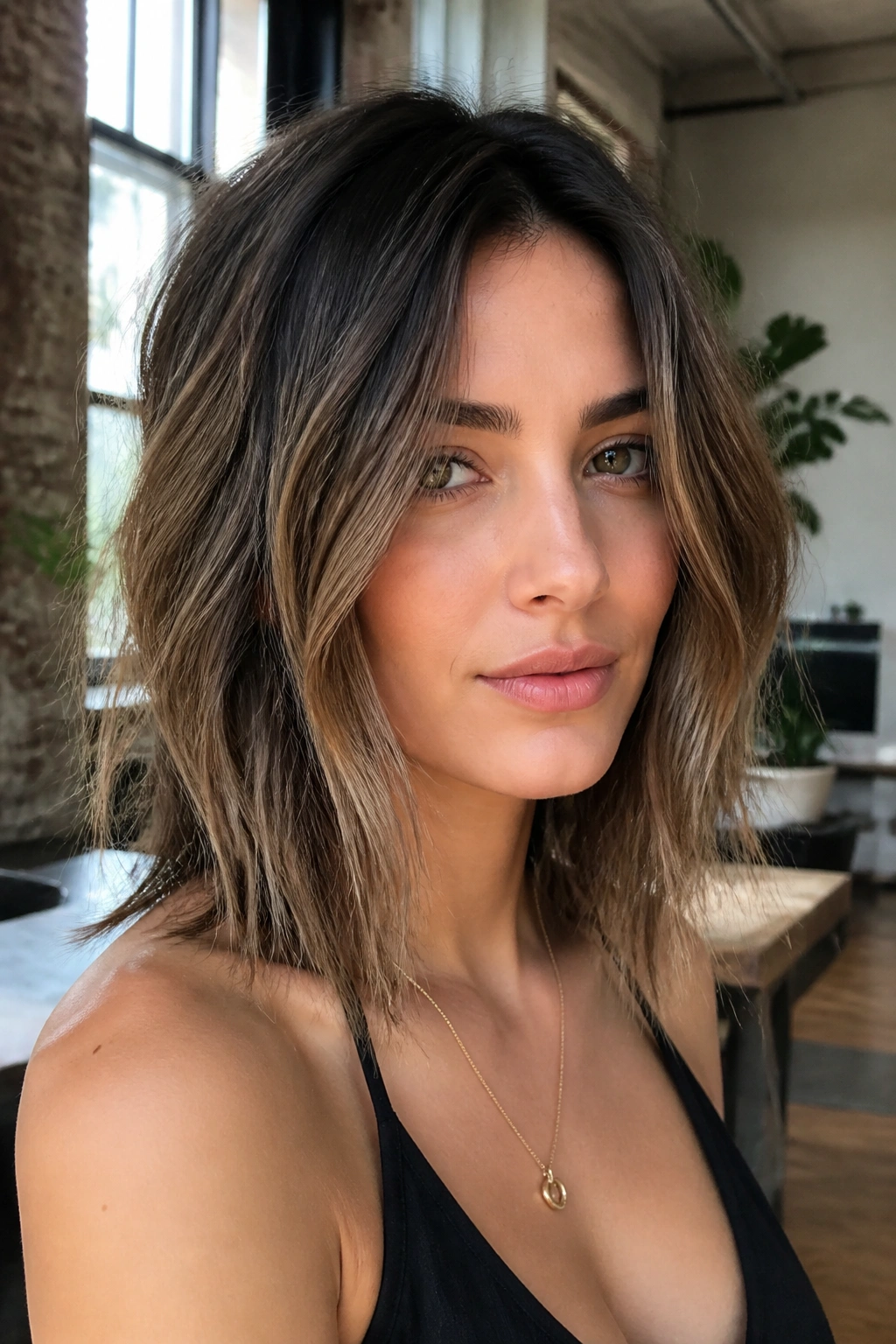
Not ready to go short-short? The lob is the escape hatch. It keeps enough length to pull back, tuck, or twist, but it still gives fine hair a lifted outline when the front pieces are cut with intention.
How to Keep It from Looking Heavy
The face-framing pieces should start below the cheekbone and angle gently toward the collarbone. If they begin too high, the hair can look thin around the face. If they start too low, the lob loses the movement that makes it feel modern. That little range matters.
The cut also needs a small amount of internal shaping near the front half, especially if your hair is dense at the back and flat around the temples. A 1.25-inch iron can add a soft bend through the front and mid-lengths, but leave the very ends a touch straighter so the style does not turn into a ringlet situation.
This is a safe cut in the best way. It still feels fresh, but it gives you room to live with it.
16. French Bob With Micro Bangs

A French bob with micro bangs is the boldest look on this list, and it is not pretending otherwise. The fringe sits higher than a classic bang, which puts all the attention on the eyes and the brow line, while the bob itself stays compact and clean.
That can be a gift for fine hair. A very short fringe takes up less visual space, so the rest of the haircut does not have to carry as much weight. The bob can stay blunt and neat, and the whole style feels intentional without needing much volume.
But the cut has to be crisp. A messy micro bang reads as a mistake fast. If you go this short, the edge needs regular trims and a bit of styling discipline. A tiny round brush or even a flat iron used only at the fringe can keep the shape from sticking up in weird directions.
It is chic, yes. It is also a little demanding. That is part of the fun.
17. Beachy Bob With Mid-Length Layers
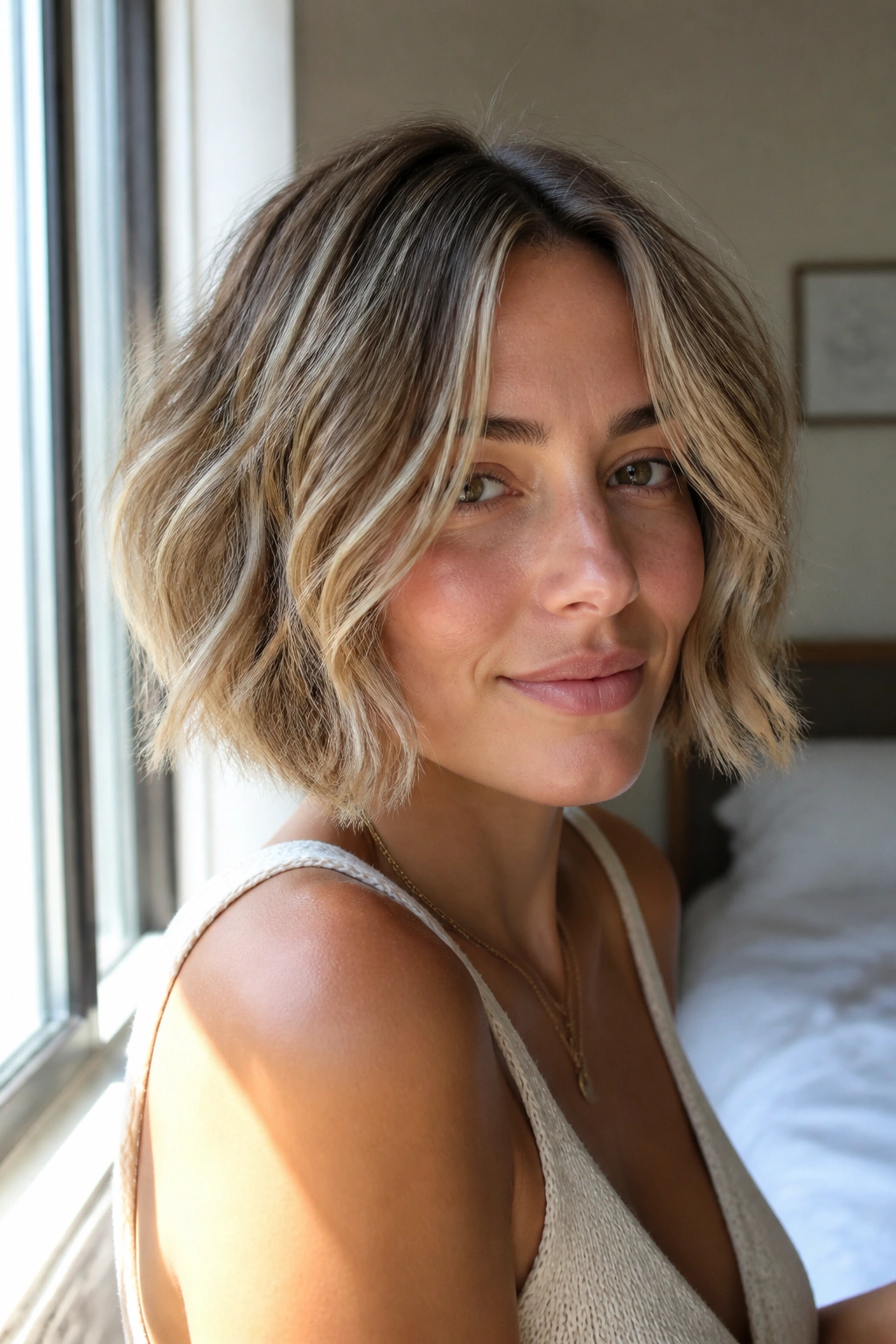
Beachy does not have to mean over-sprayed and crunchy, which is a relief because fine hair hates that. A good beachy bob uses mid-length layers to create soft separation while the perimeter stays just full enough to keep the cut from looking thin.
The layers should start around the jaw and move down toward the collarbone, depending on length. That gives the hair a lived-in bend without stripping away density at the bottom. A small amount of wave cream plus a light texture spray is usually all you need; too much salt spray can leave fine hair dry and stringy.
This cut looks best when the waves are irregular. Some sections can bend more tightly, others barely at all. That unevenness is what makes it feel natural. A uniform curl pattern tends to look too set, and set hair often makes fine strands look smaller.
It is relaxed, but not lazy. There is a difference.
18. Choppy Bob With a Center Part
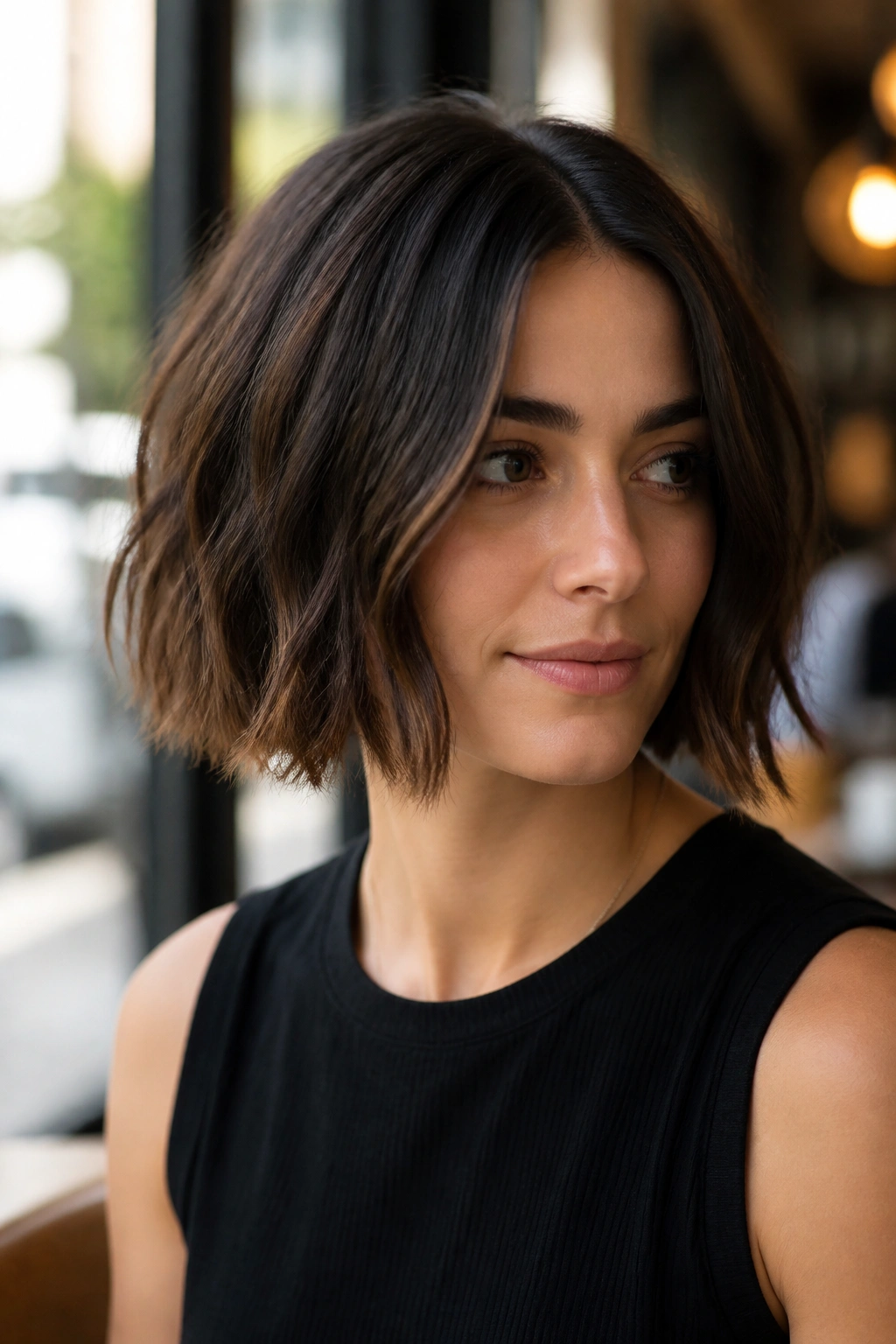
A center part can make a bob look sharper and more balanced, which is useful when your hair needs a bit of visual order. With a choppy bob, the center line gives the haircut symmetry, while the uneven ends create movement around it.
The choppy part should not mean thin or jagged. You still want enough density at the ends that the bob looks solid when it settles. The point-cutting should live mostly in the surface layers and around the face, where it can add texture without eating up the base.
This style works especially well if your face is naturally symmetrical or if you like a cleaner, less fussy look. It also gives a nice frame for glasses, since the shape stays controlled near the cheeks. A quick pass with a flat iron, then a twist at the ends on alternating sides, makes the texture feel more relaxed.
If your hair has a tendency to split apart at the part line, a little root powder can help. Not much. A pinch.
19. Nape-Undercut Bob With Extra Lift
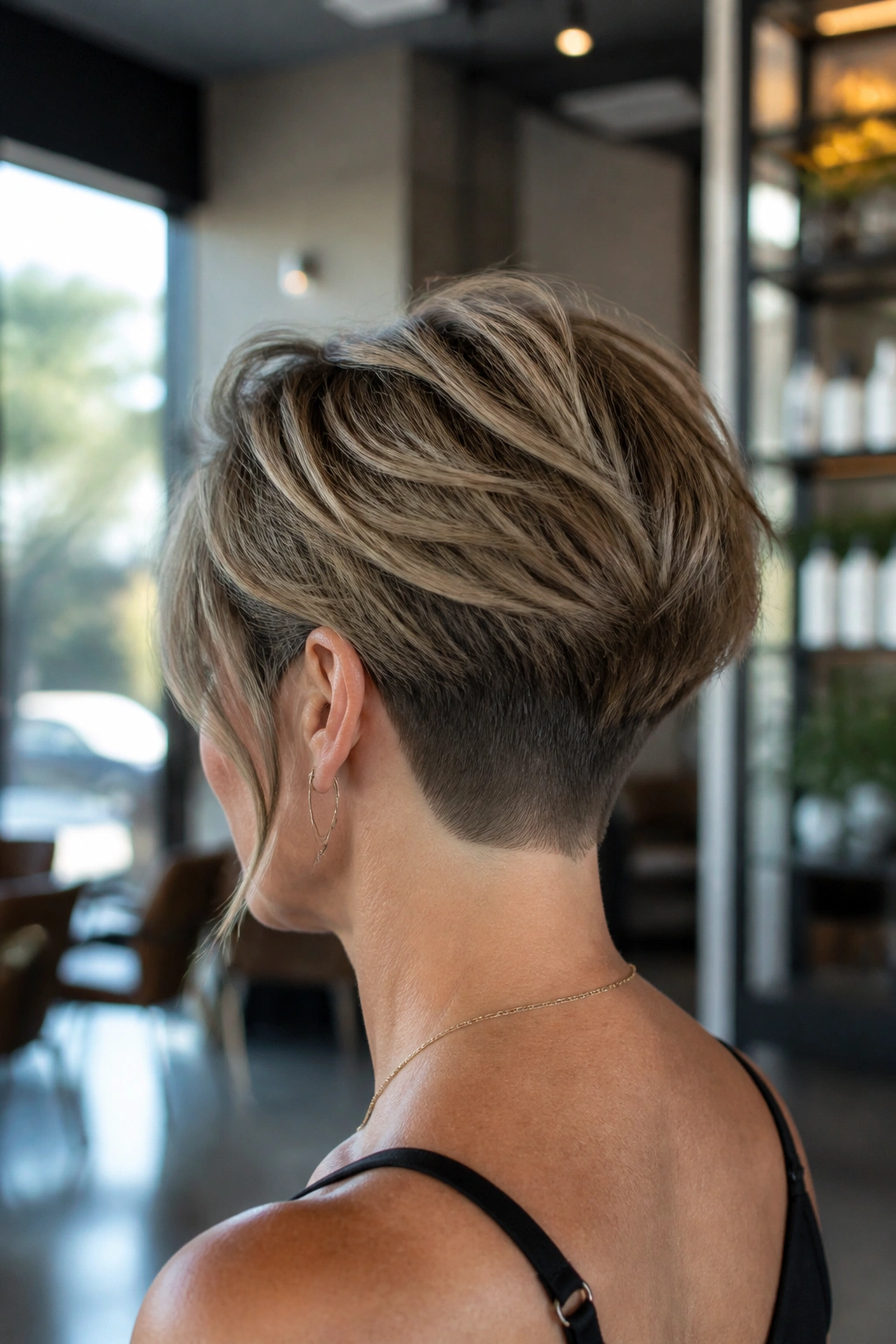
A hidden nape undercut is not for everyone, but it solves a real problem: bulky hair at the neck that drags the whole bob down. By removing a small amount of weight underneath, the top layer can sit higher and move more freely.
Where the Hidden Cut Lives
The undercut stays low and discreet, usually just at the nape where the hair would otherwise stack up and puff out. The surface hair covers it, so the haircut still looks like a bob from the outside. That is why it works so well for people who want lift without obvious shortness.
This is a stronger move for people with fine but dense hair. If your hair is already sparse, you do not want to remove that weight. The difference between helpful and too much is narrow here.
- Keep the undercut shallow.
- Preserve a solid outer perimeter.
- Ask for soft blending into the top layer.
- Style with root lift at the crown, not heavy cream.
The best part is practical: the hair dries faster and sits cleaner at the neck. That alone can be worth it.
20. Flipped-Under Bob With Textured Ends
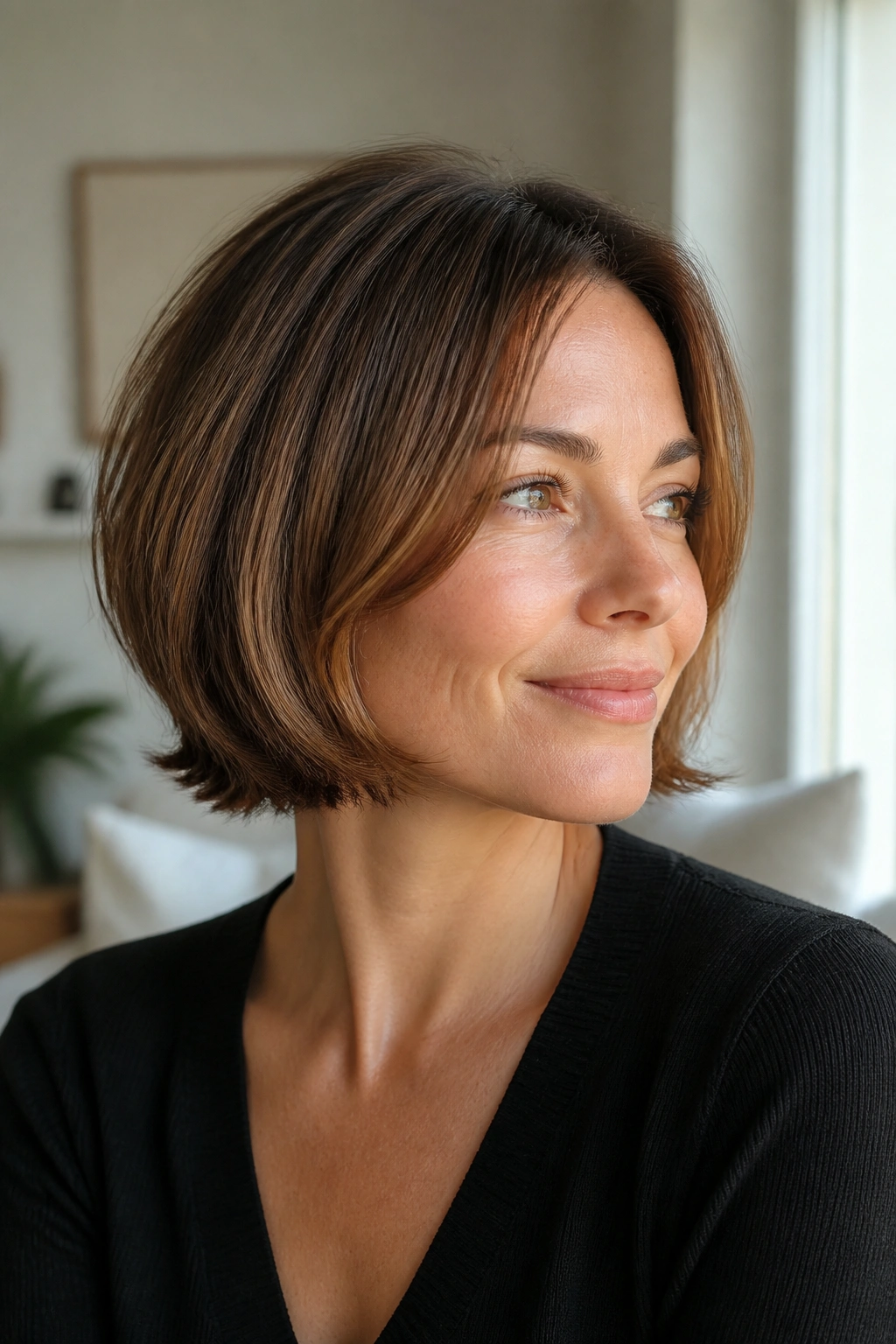
A flipped-under bob gives fine hair a neat shape without making it stiff. The ends curve inward just enough to create a polished outline, while the textured finish keeps the style from looking too formal or too 1980s salon blowout.
The curve matters more than people think. A subtle flip under the chin or jaw can make the hair appear fuller because the line closes in on itself. That gives the bob a contained, denser look. If the ends are too curled, though, the style can feel old-fashioned fast.
I like this option for straight hair that needs a little help holding shape. A round brush, some tension at the roots, and a cool shot at the end usually do the job. You do not need to set every piece. You just need the bottom edge to cooperate.
It is a tidy haircut with a touch of softness. Very wearable. Not boring.
21. Messy Curved Bob With S-Curves
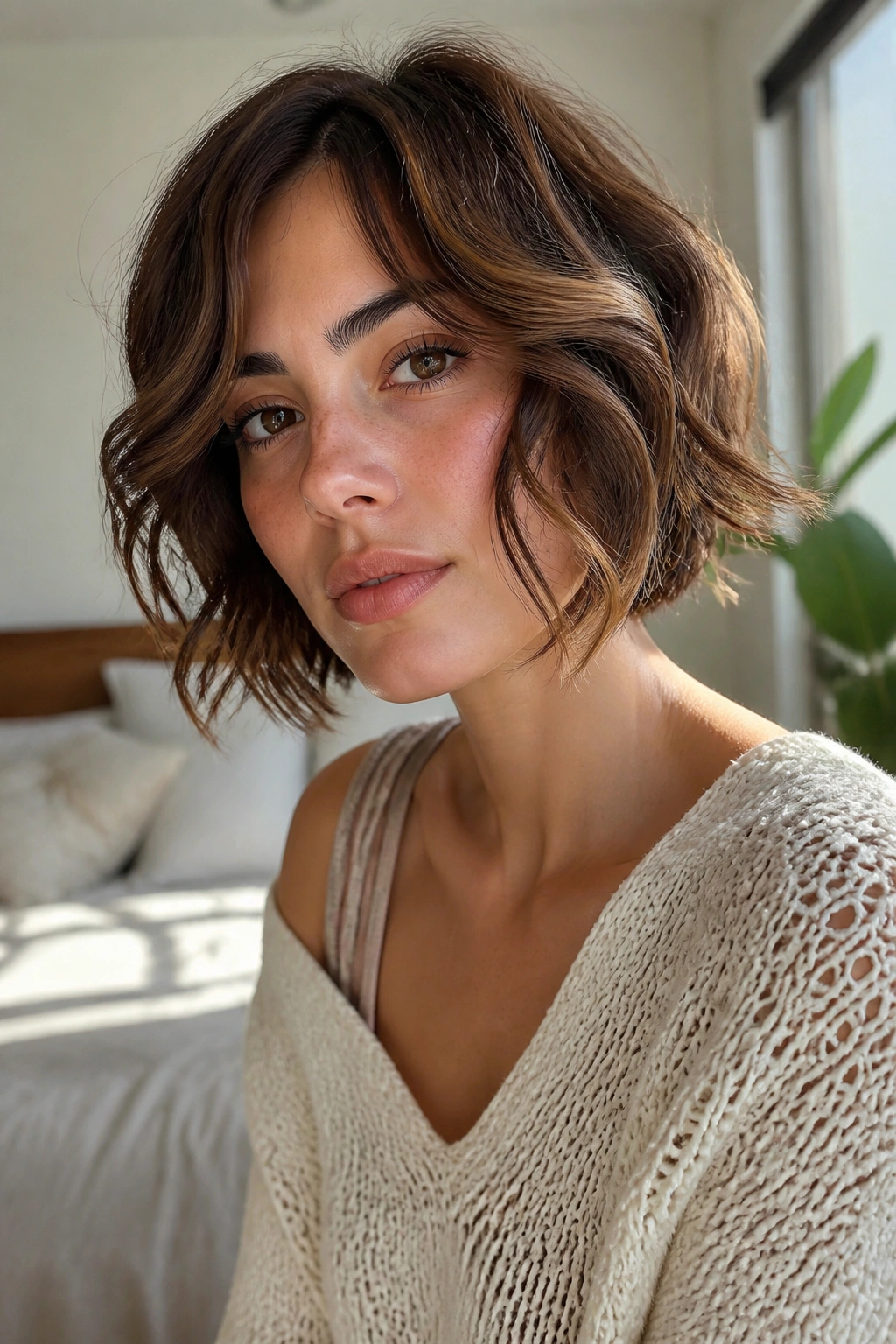
A messy curved bob is one of the best ways to make straight fine hair look alive. The S-curve creates the illusion of body because the hair changes direction instead of dropping in one flat line. That visual movement matters more than people realize.
How to Style the Bends
Use a 1-inch curling iron or a flat iron to make loose bends, alternating direction every section. Leave the last inch or so out on some pieces so the finish does not turn into a ringlet. A little texture spray at the mid-lengths gives the curve something to hold onto.
The cut itself should keep the outline soft and round, not razor-thin. If the layers are too aggressive, the style loses that easy fullness. I would rather see a bob with three or four visible bends than a perfectly curled one that has no life in it.
This is the haircut for people who like hair that looks touched, not overworked. It can be a bit messy in the best possible way.
22. Easy Grow-Out Bob With Soft Volume
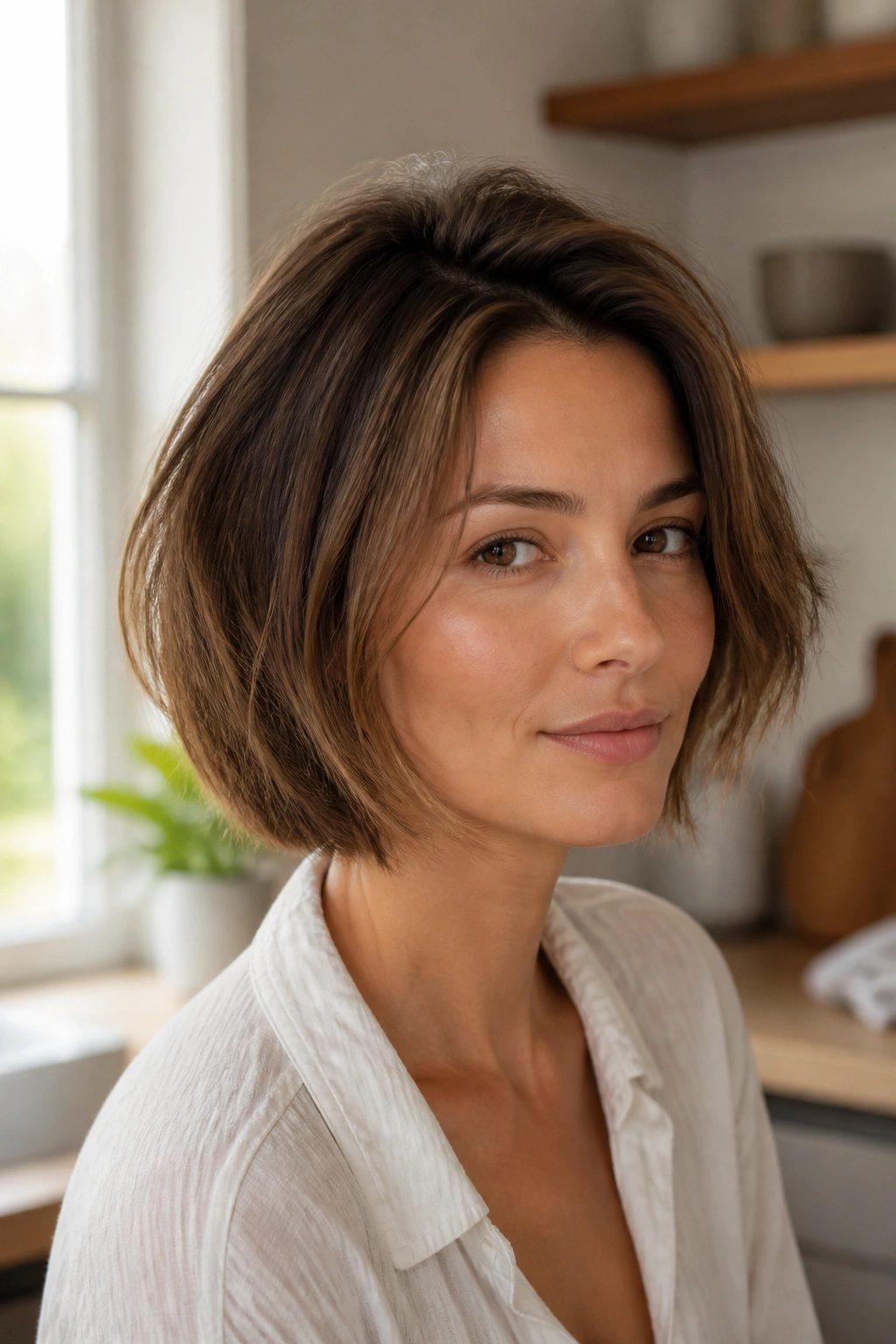
The smartest bob is often the one that still looks good after it has grown out by an inch. A soft-volume grow-out bob keeps the ends full, the layers gentle, and the shape flexible enough that you are not counting the days to the next trim.
This cut usually sits somewhere between the jaw and collarbone, which gives it room to shift as it grows. The front can stay a touch longer, while the back keeps enough fullness to hold the outline. That balance means the haircut does not lose its shape the minute it stops being fresh from the salon.
It is also the most forgiving option if you do not want to live at the styling mirror. A blow-dry with a paddle brush, a few bends at the front, and a little root lift at the crown are enough. Six weeks later, it still behaves. That might be the nicest thing a bob can do.
