



A bob haircut can do a lot of heavy lifting on a round face. It can sharpen the jaw, stretch the eye downward, or soften cheeks without making the whole cut feel severe. Bob haircuts for round faces work best when the shape changes the line of the face instead of sitting squarely across the widest point.
That is where people get tripped up. A blunt bob cut right at the cheek line can make the face look broader than it really is, while a slightly longer front, a side part, or a bit of crown lift can change everything. Small details matter here. A half-inch can be the difference between “cute” and “why does my face feel wider?”
The good news is that round faces are not locked into one type of bob. You can go sleek, choppy, curly, French, angled, or softly layered. What matters is where the weight sits, how the ends move, and whether the cut gives your eyes somewhere to travel besides straight across.
Some of these cuts create length. Some carve out angles. A few do both, which is why they keep showing up in real salons instead of only looking good in edited photos. If you want a bob that works with round cheeks rather than fighting them, the details below are the ones worth asking for.
1. Chin-Length Side-Parted Bob for Round Faces
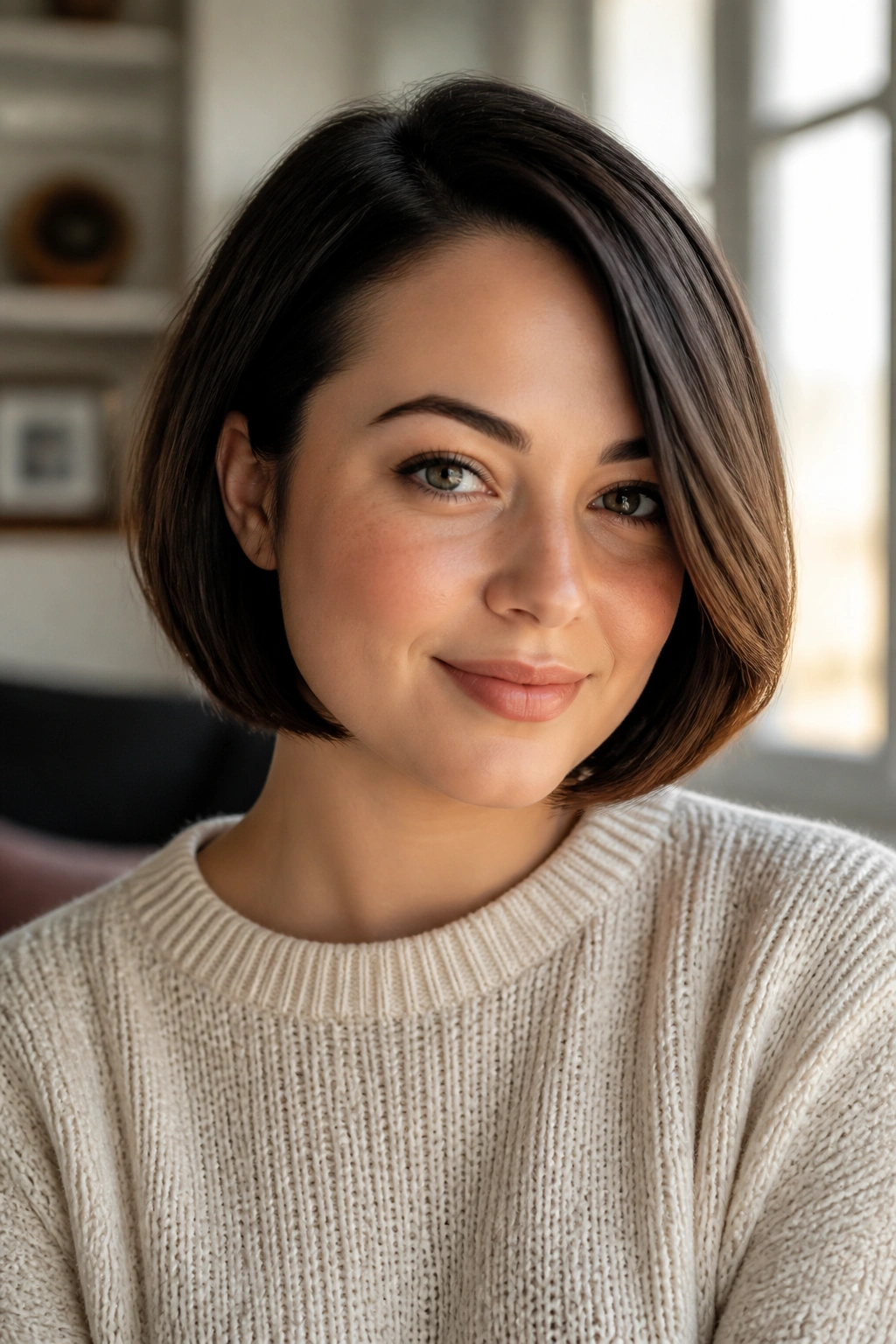
This is the clean, reliable version I always come back to. A chin-length bob with a side part gives the face a little vertical lift and breaks up the symmetry that can make round features feel extra full. It’s neat, but not stiff.
Why It Flatters Rounder Features
The side part pulls attention diagonally across the face, which is the whole trick. A straight center part can work too, but it often needs more length or more texture to keep the shape from feeling too circular. This cut also lands right at the chin, which helps define the jaw without sitting on the cheekbones.
- Keep the part about 1 to 2 inches off center for the softest effect.
- Ask for the ends to skim the jaw, not sit right on the cheek.
- A little inward bend at the front makes the cut feel polished, not boxy.
- Works well on straight, wavy, or lightly curly hair.
Pro tip: If your hair is thick, ask for subtle interior weight removal so the bob doesn’t puff out at the sides.
2. Angled A-Line Bob
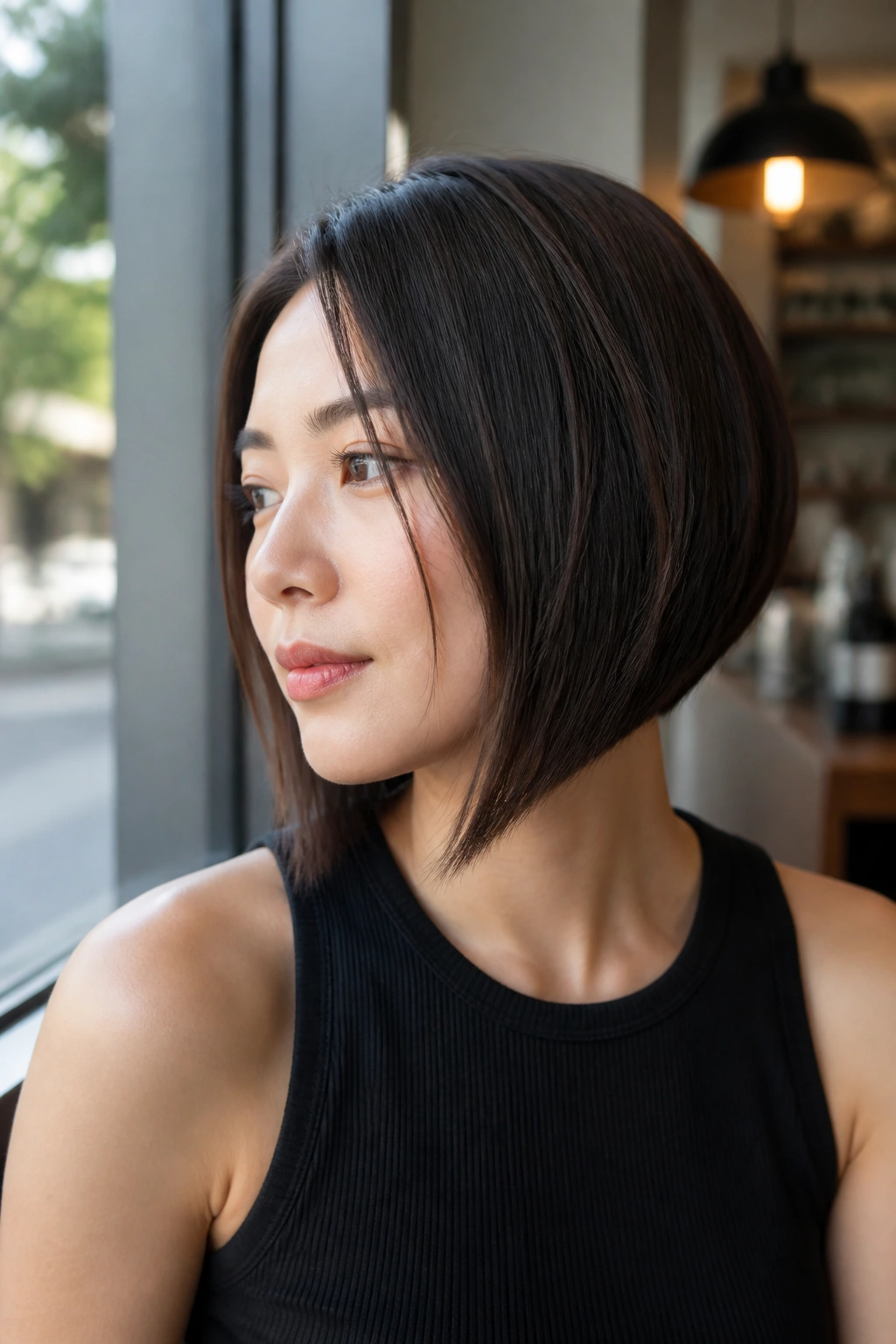
A sharp A-line bob makes a round face look longer almost immediately. The back sits shorter, the front runs longer, and that forward slope gives the face a narrow path to follow. It’s a strong shape. No softness needed if you like clean lines.
The reason it works is simple: the eye sees the longer front pieces first. That downward angle interrupts the roundness at the cheeks and jaw, which is exactly what you want if your face already feels full. Keep the front just below the chin if you want the most flattering result; if it gets too short, the angle loses its effect.
I like this cut on straight or slightly wavy hair because the line stays crisp. On very curly hair, the angle needs more length to show up. Ask your stylist to keep the nape neat and the front pieces 1 to 2 inches longer than the back. That small difference creates the whole shape.
3. Collarbone Lob with a Soft Bend
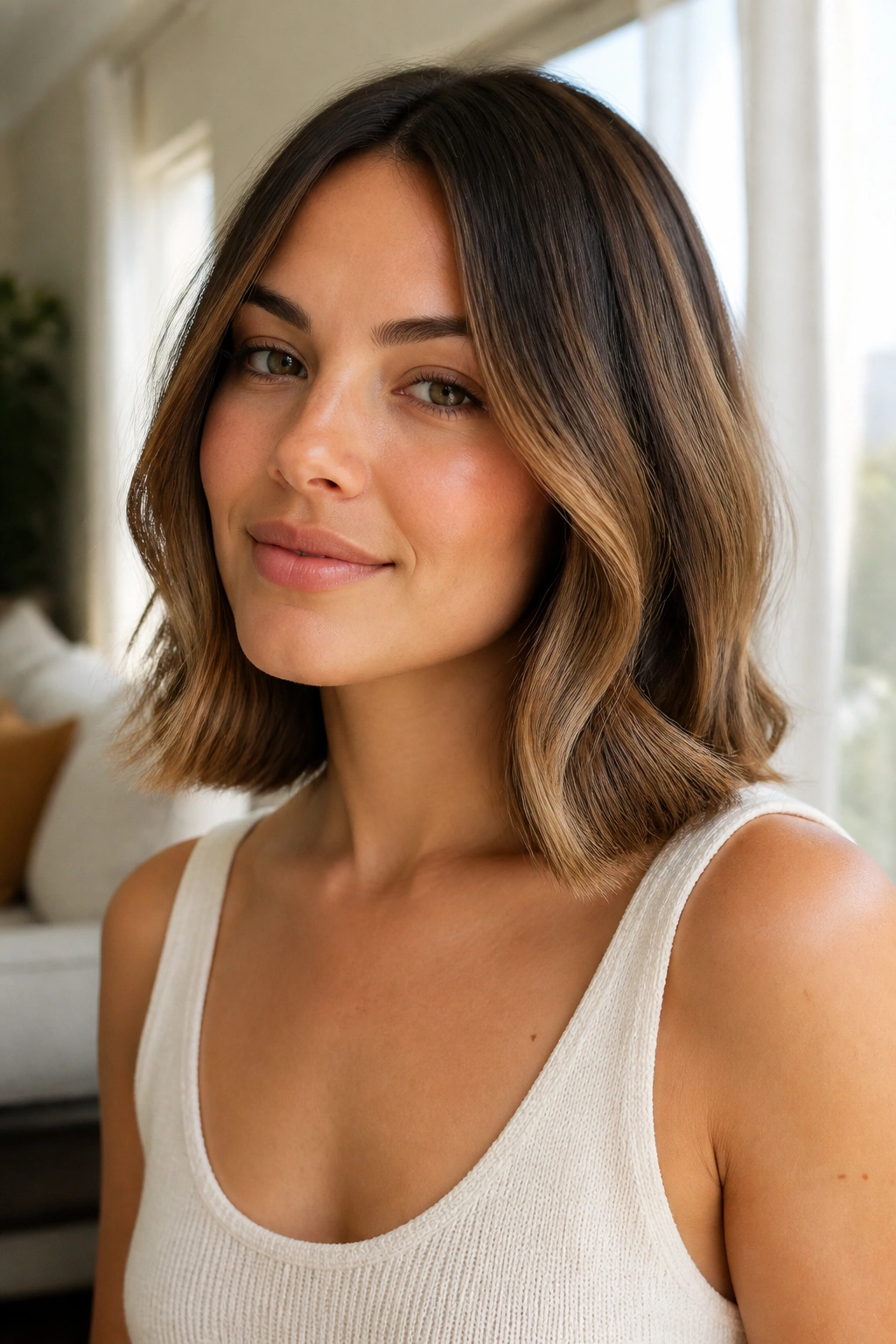
Why does the lob keep winning for round faces? Because it gives you room to breathe. A collarbone-length bob lands below the widest part of the face, and that alone makes the whole silhouette feel longer and lighter.
How to Ask for It
Ask for a length that hits at or just under the collarbone, with a very soft bend through the mid-lengths. You do not want heavy layers stacked near the cheeks. You want movement that starts lower, around the jaw to collarbone area, so the shape feels easy instead of round.
The best part is styling. A quick blow-dry with a round brush or a few loose waves from a flat iron can add enough movement to keep the cut from feeling flat. If your hair is fine, this length also gives you a little more body than a shorter bob usually does.
- Best for people who want length without full-on long hair.
- Good if you like to tie your hair back sometimes.
- Easier to grow out than a shorter bob.
4. Stacked Crown Bob
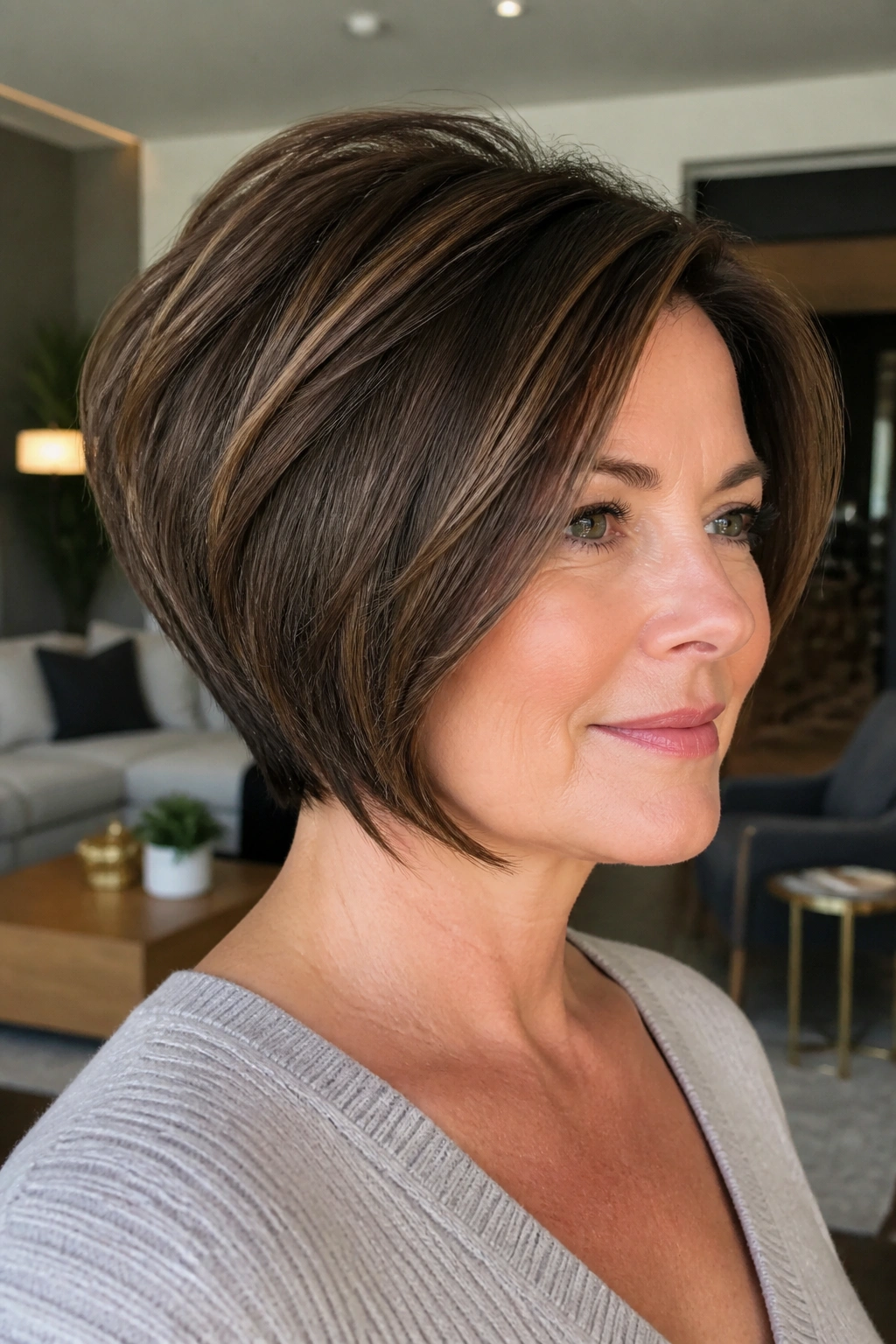
A stacked bob is the one I reach for when someone wants lift without teasing their hair to death. The back is cut with shorter layers that build up at the crown, and that bit of height helps a round face feel less wide. It is a good move if your hair falls flat on top.
Picture this: the hair at the back of the head has more body, while the sides stay controlled. That creates a shape that rises up before it moves out, which is a kinder line for rounder features. The mistake people make is asking for too much stacking. Then the back looks like a helmet. Don’t do that.
Ask for gentle graduation at the nape, not a dramatic wedge. You want the crown to sit lifted, not puffed. This cut is especially nice if your hair is medium to thick, because there is enough weight to show the structure without collapsing in an hour.
5. Blunt Bob with Soft Ends
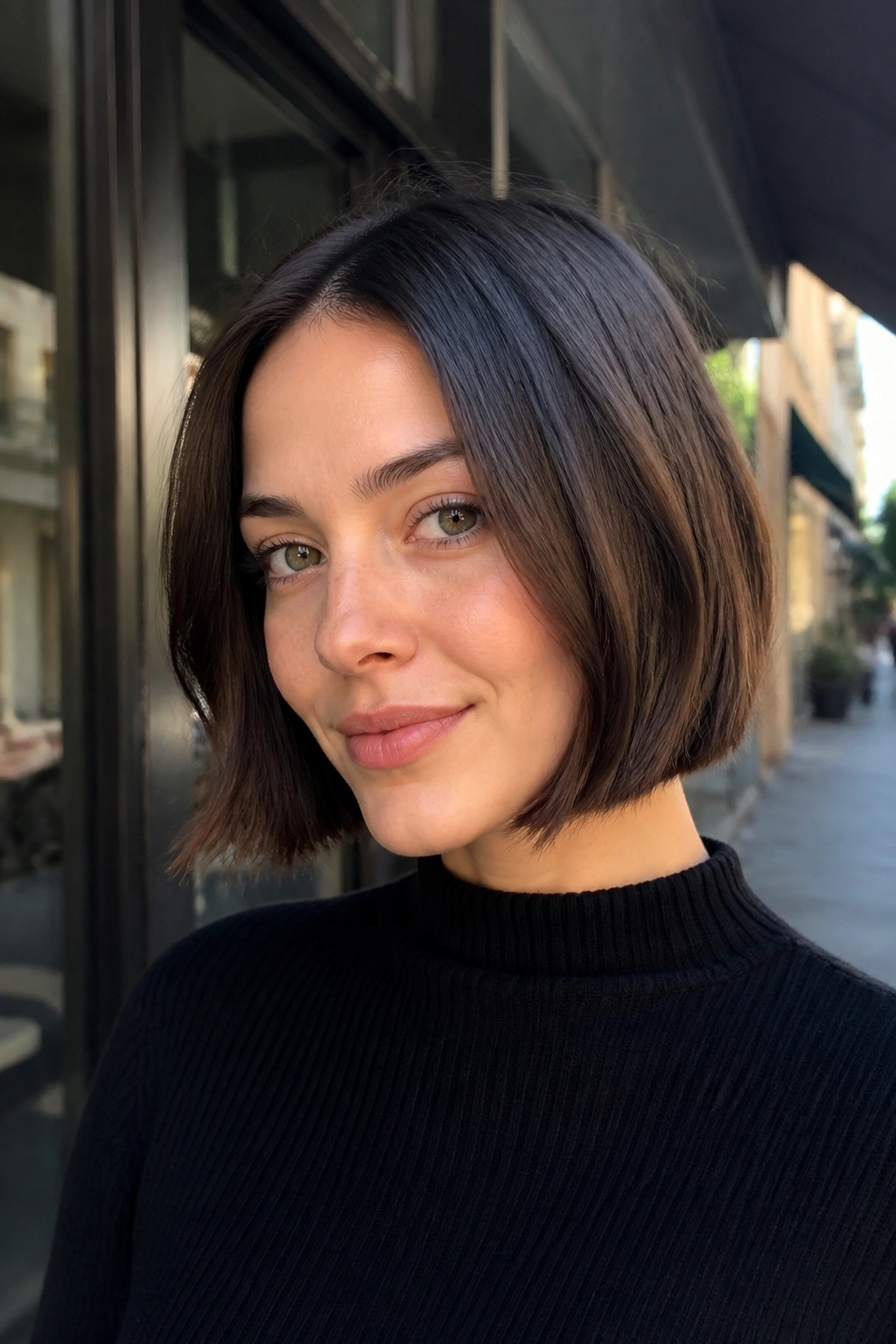
A blunt bob sounds harsh on paper, but the right version can be lovely on a round face. The key is in the ends. If the cut is cut bluntly and then softened just enough with point cutting or a tiny bit of texturizing at the tips, it keeps its shape without looking like a block.
The straight edge gives the cut a sharp frame. That frame can make the face seem more defined, especially when the bob sits around the jaw or a touch below it. What you do not want is a blunt line that lands exactly where your cheeks are fullest. That is the fast route to extra width.
I like this cut when the hair is naturally straight or when you’re happy to style it smooth. It looks crisp with a side part and a tucked-behind-one-ear finish. Simple. Clean. No fuss. If your hair is very thick, ask for some internal removal so the shape does not balloon at the sides.
6. French Bob with Brow-Grazing Bangs
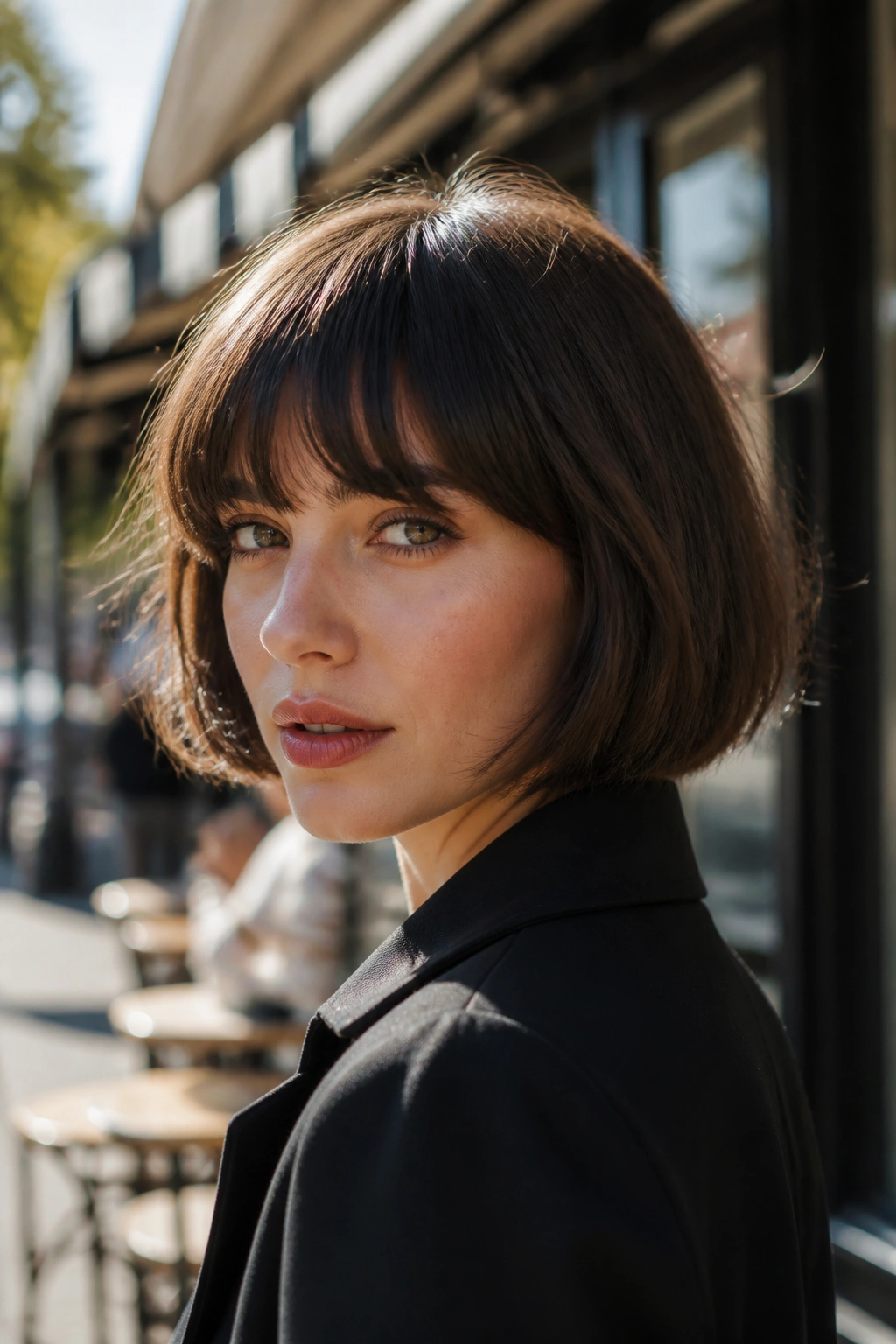
The French bob gets a lot of praise, and on a round face it can work beautifully if the fringe is handled with care. The cut is short, usually around lip to cheekbone level, and the bangs hover near the brows. That small amount of separation matters.
Unlike a heavy micro bob that stops abruptly, the French bob feels airy. The bangs interrupt the roundness at the top of the face, while the shorter length keeps the look modern and sharp. It is not the most forgiving cut if you hate styling, though. You need to like a little shape and a little effort.
This is best for someone who wants a haircut with personality. It suits straight to slightly wavy hair especially well. If your hair is curly, the bangs need extra length so they do not spring too high. I would ask for soft, slightly piecey bangs rather than a solid curtain of hair across the forehead.
7. Curly Bob for Round Faces

Curly hair and round faces can be a dream combo when the cut respects the curl pattern. A curly bob should not be chopped into a perfect circle. That’s the mistake. You want space for the curls to bounce while keeping the width under control.
What Makes the Shape Work
The best curly bob usually has a little more length in the front than in the back, plus enough layering to keep the curls from building a shelf at cheek level. If the bulk sits near the cheeks, the face can look wider. If the bulk sits slightly lower, the curl pattern can make the face look softer and longer.
- Ask for dry cutting or curl-by-curl shaping if your stylist does it well.
- Keep the shortest pieces away from the exact cheekbone line.
- Use a diffuser on low heat to keep the curl pattern from collapsing.
- Skip heavy creams that make the sides swell.
Pro tip: A side part on curly hair often gives more shape than a center part, because it opens one side of the face and adds diagonal movement.
8. Deep Side-Part Bob
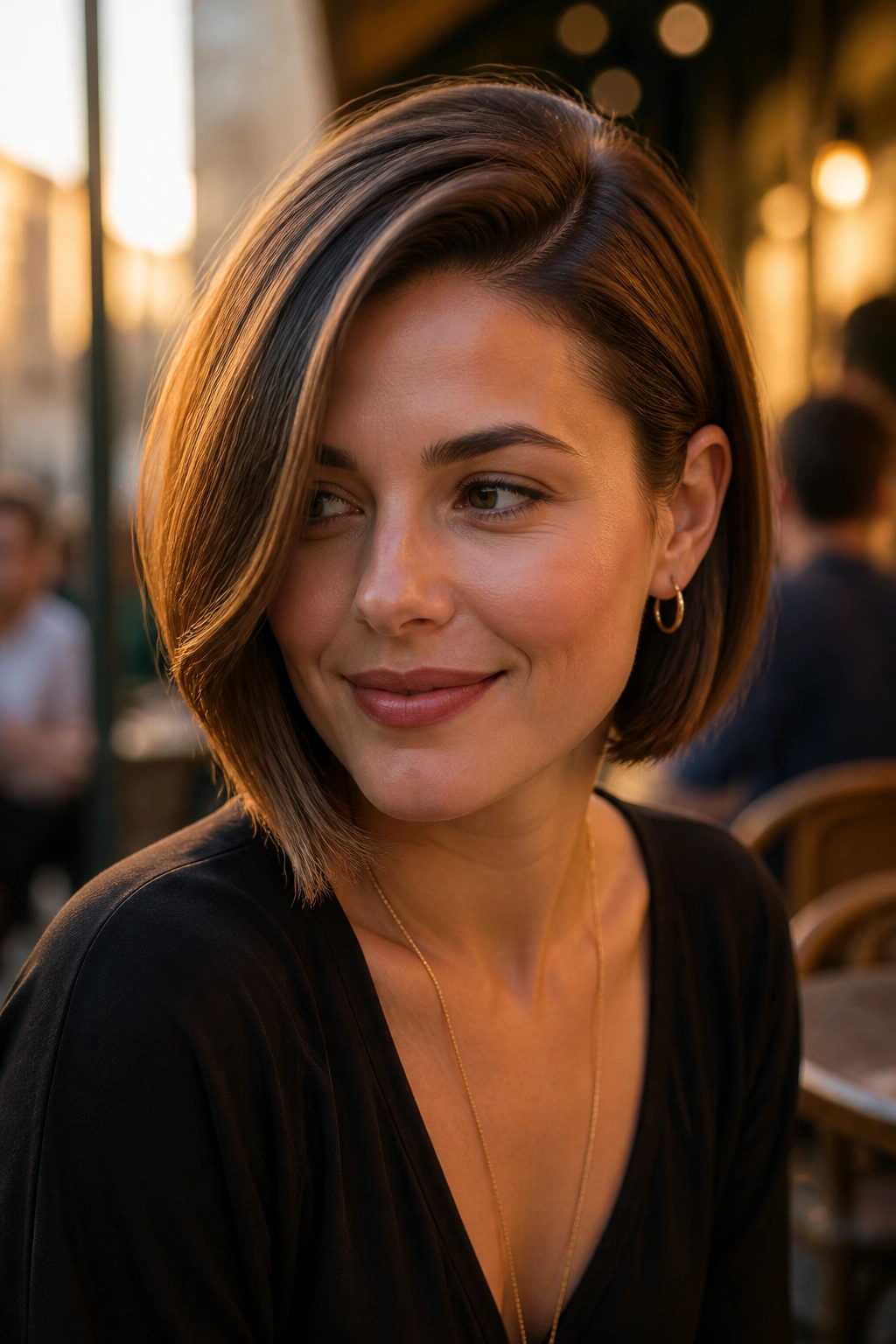
A deep side part is one of the simplest tricks in the book, and it still works. Better than people expect, honestly. Shift the part far enough over and the whole bob stops reading as round and starts reading as angled.
The reason is visual balance. One side gets a little more height, the other side hugs the face, and that unevenness makes the face feel longer. It’s especially useful if you already have a bob you like but it needs a tweak. You do not always need a whole new haircut.
This style pairs well with a chin-length or slightly longer bob, but it can also rescue a blunt cut that feels too boxy. Blow-dry the roots in the opposite direction first if you need lift. Then set the part where you want it. The little bit of root memory helps the hair stay there instead of falling back into its old habit.
9. Layered Lob with Face-Framing Pieces
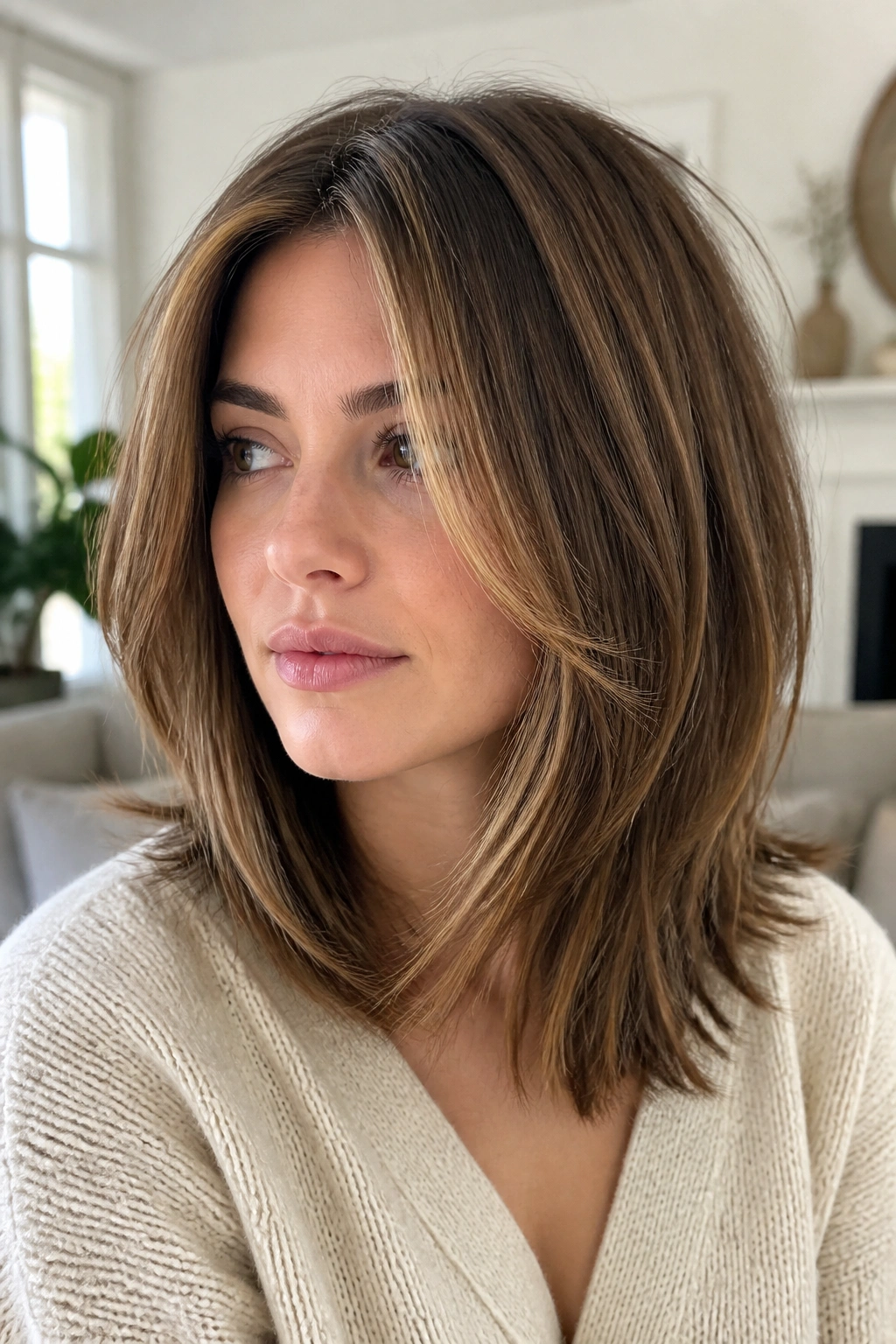
Can layers work on a round face? Yes, but only if they are placed with some sense. The point is not to shred the hair everywhere. The point is to create long, controlled movement that starts near the jaw and travels downward.
What to Ask For at the Salon
Ask for long layers through the body and two face-framing pieces that begin around the chin or just below it. Those front pieces should not stop at cheek level. That’s a common mistake, and it can make the face look fuller than it is.
This cut is useful if you want softness without losing length. It keeps the hair from hanging like a curtain, but it does not get choppy enough to look trendy in a way you’ll hate three weeks later. A few loose bends with a large curling iron can make the shape even better.
The layered lob is one of those cuts that feels easy on a busy morning and still looks intentional when it air-dries. That matters more than people admit.
10. Asymmetrical Bob
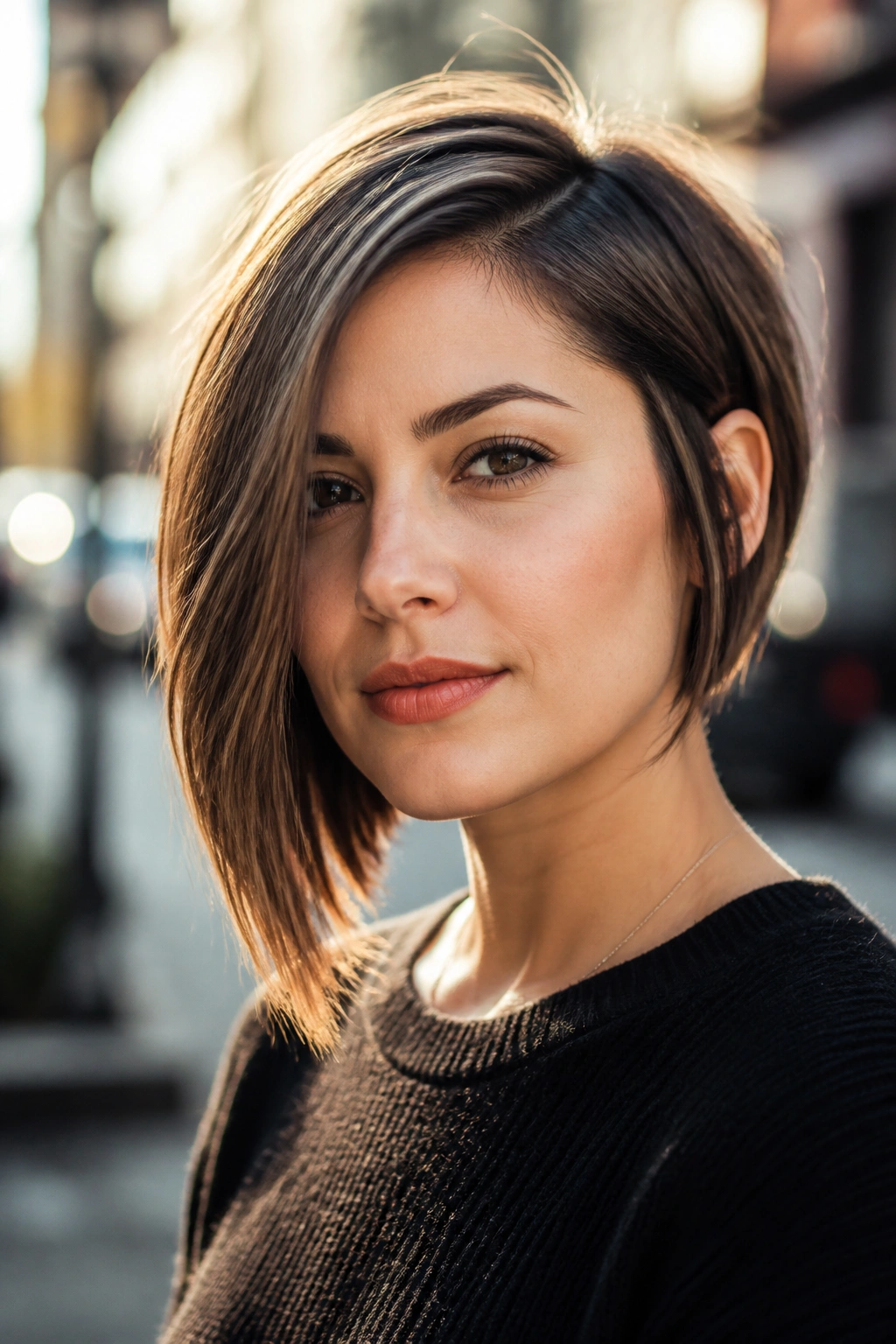
An asymmetrical bob does what a round face often needs: it breaks the circle. One side is longer than the other, and that uneven line gives the eye somewhere to go besides straight across the cheeks.
This is not a timid cut. It has edge. If you like your hair to look a little deliberate and a little sharp, it’s a strong pick. The longer side can hit the jaw or skim the collarbone, while the shorter side sits above the chin. That contrast is the whole point.
I think it works best when the angle is subtle enough to wear every day. You don’t need a dramatic difference of 4 inches unless you want the haircut to feel bold. A smaller shift still creates shape, and it is easier to grow out if your mood changes. Style it sleek for maximum effect, or leave a little texture if you want it softer.
11. Inverted Bob
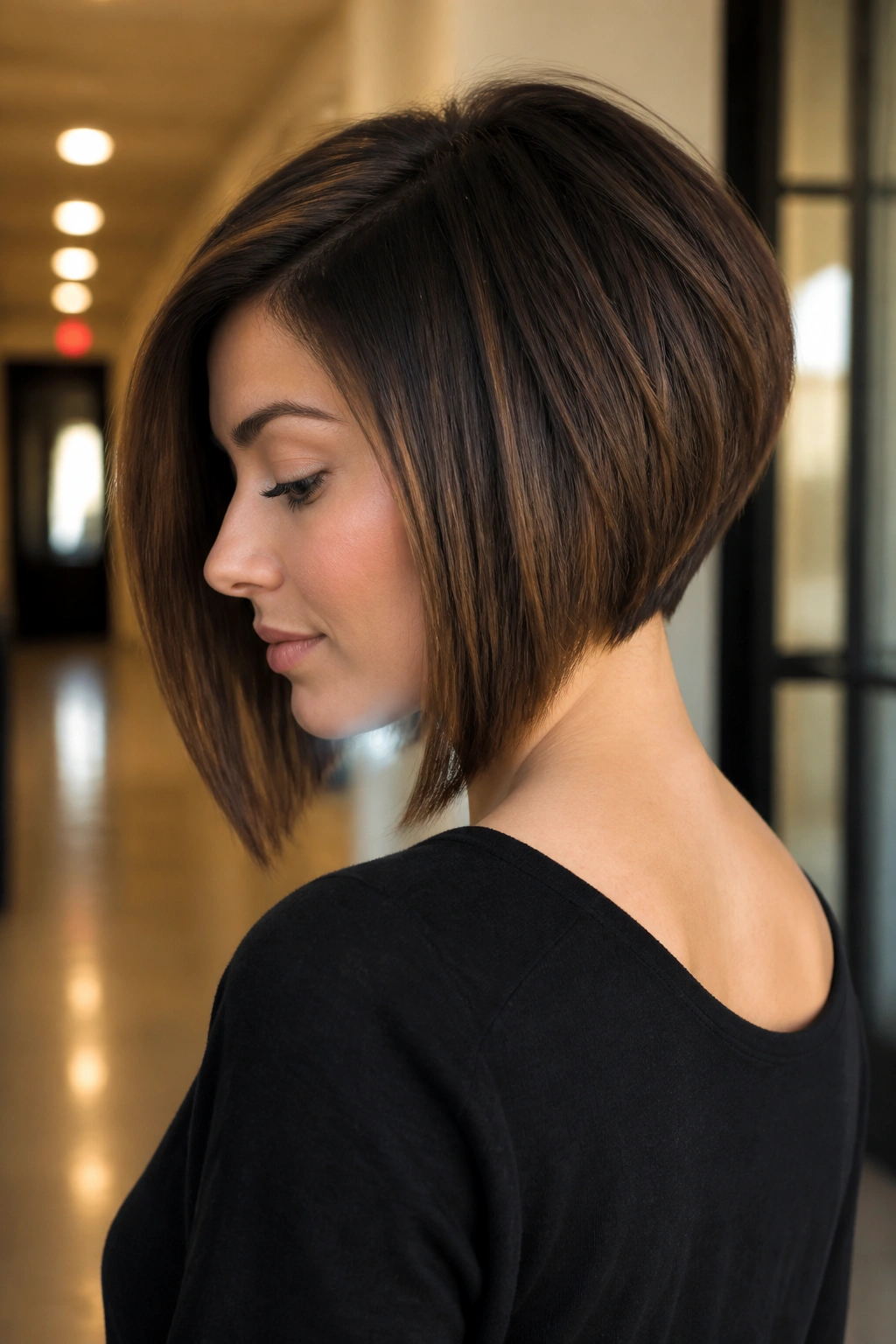
The inverted bob is close cousin to the A-line, but it usually carries a more obvious curve through the back. The nape is shorter, the front stays longer, and the silhouette tilts forward in a way that gives round faces a helpful vertical line.
What makes it different is the back shape. A well-cut inverted bob has a neat, tucked-in rear section that makes the front length feel even longer. That can be useful if you want the face to look more stretched without growing your hair out. It also shows off the neck, which is a nice bonus if you like open lines around the collar.
This cut can look a little old-school if it’s over-stacked, so I prefer a softer version with moderate graduation. Ask for the front pieces to land around the chin or lower. Too short, and the roundness returns. Too long, and the angle loses its purpose. There is a narrow sweet spot here, but it’s worth it.
12. Curtain Bang Bob for Round Faces
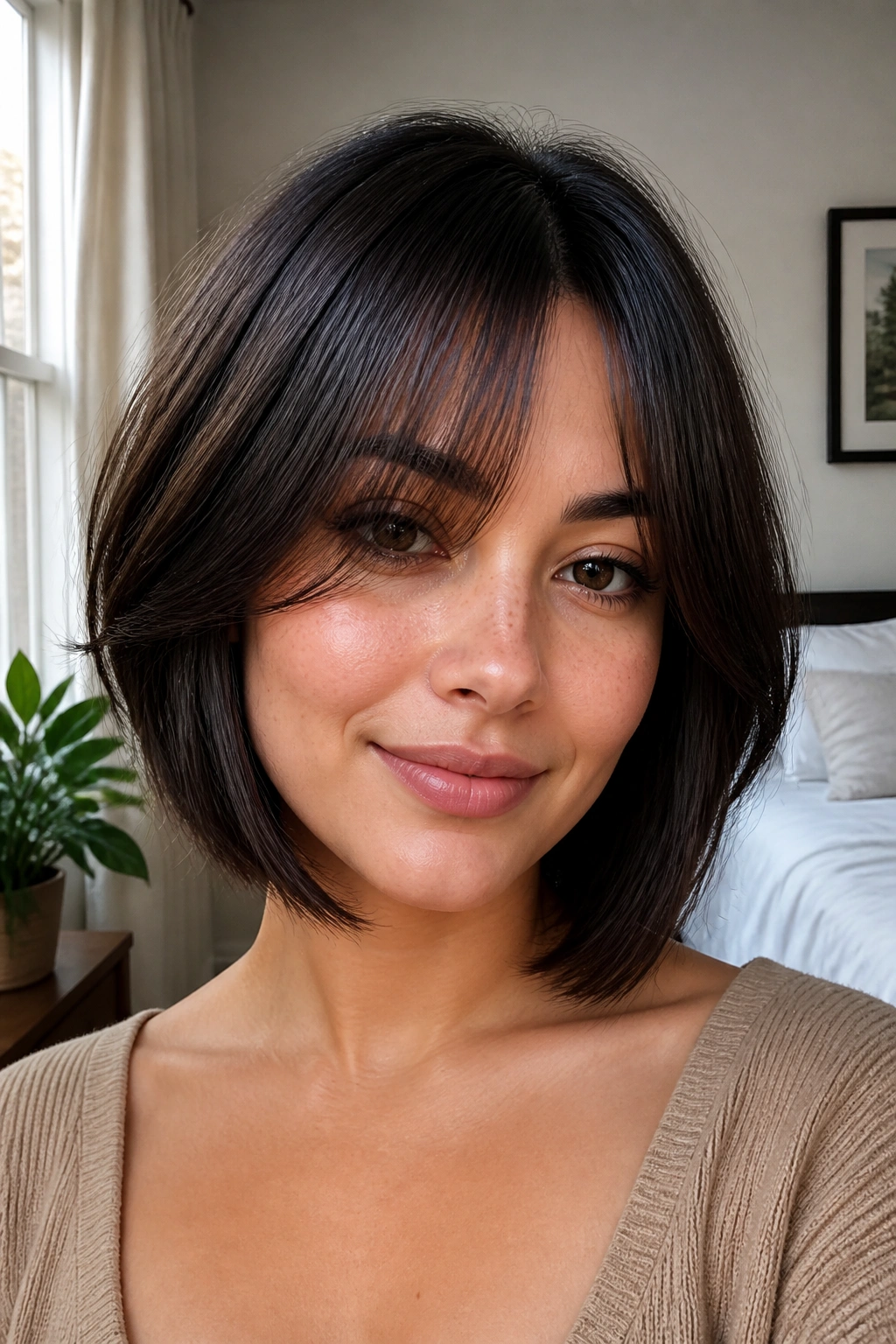
Curtain bangs can be a smart move because they open the face in the center and fall away toward the cheekbones. On a round face, that diagonal sweep can be more flattering than blunt bangs, which often chop the face in half.
Why This Combo Works
The bob gives structure. The curtain bangs add movement at the top. Together, they draw the eye up and down instead of across. That matters. It means the face feels longer without needing a haircut that’s aggressively short or heavily layered.
- Keep the shortest point of the bangs at or just below the brow.
- Let the outer corners fall near the cheekbone or jaw.
- Pair them with a bob that hits the chin or collarbone.
- Blow-dry the bangs away from the face with a medium round brush.
If your forehead is short, ask for a softer, longer curtain bang rather than a big split fringe. You want lift, not a heavy curtain sitting on the face.
13. Choppy Textured Bob

A choppy bob is the one I recommend when someone says, “I want it to look less perfect.” Good instinct. Texture breaks up the width that can happen in a round face and keeps the bob from reading as one solid shape.
The trick is to keep the texture in the ends, not all through the sides. If the cut gets too shredded near the cheeks, it can build volume where you don’t want it. The best version has little broken pieces around the perimeter and enough length to keep the silhouette narrow. It feels lived-in, not messy.
This cut likes a quick rough dry, a bit of texturizing spray, and maybe a soft bend with a flat iron if you care about definition. If your hair is thick, this can remove some heaviness. If your hair is fine, ask for a lighter hand so you don’t lose too much body. Texture is useful, but overdoing it gets ugly fast.
14. Sleek Glass Bob
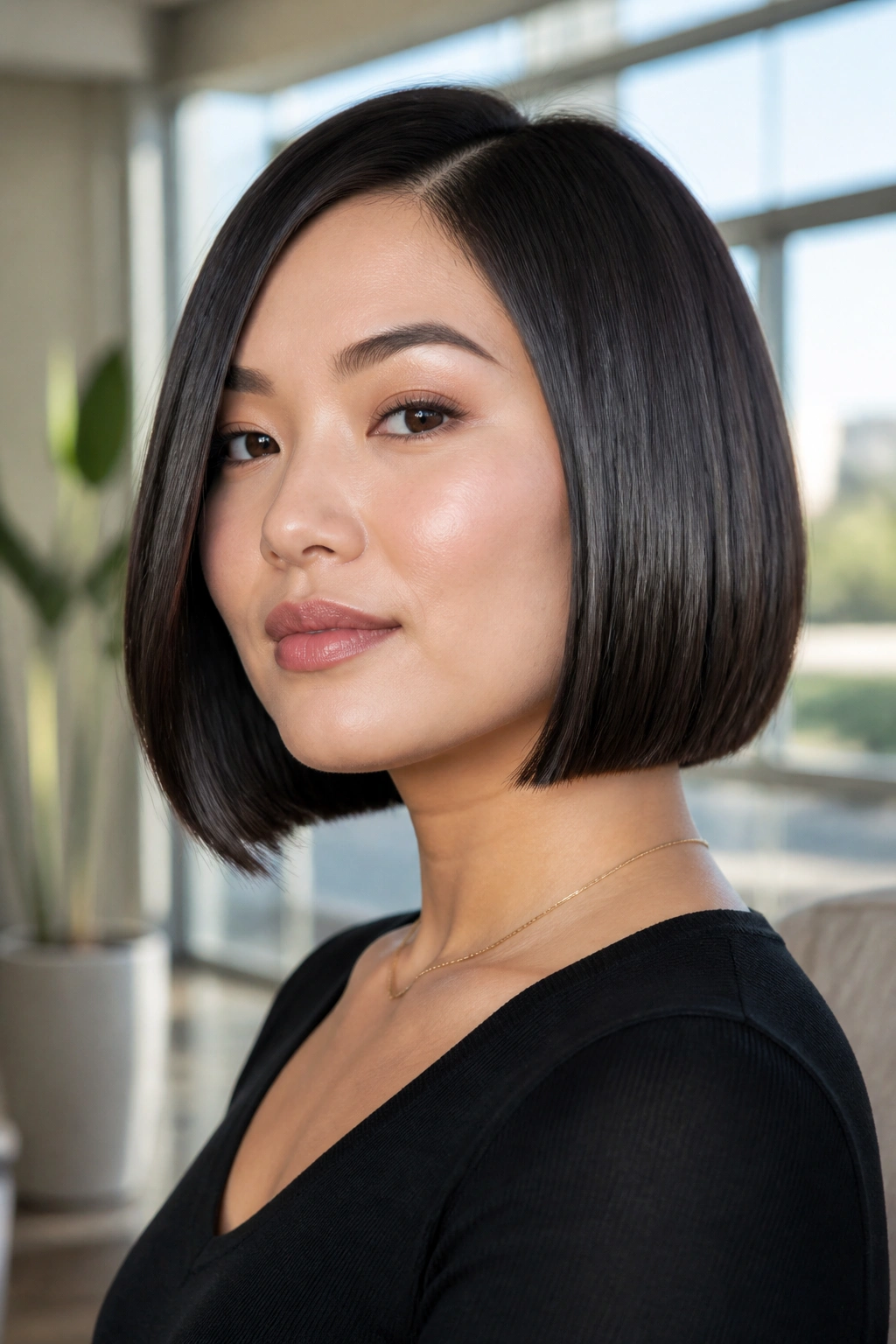
A sleek glass bob can be a surprise winner for round faces. People assume smoothing hair flat will make the face look wider, but when the cut has enough length and the ends are crisp, the opposite often happens. The face looks clean and stretched.
This works best when the bob lands a touch below the jaw. A side part or a soft off-center part helps even more. The shine matters, too. Hair that looks smooth and polished creates a single vertical line, especially when the ends tuck under just a little. That line can be very flattering on fuller cheeks.
You do need healthy-looking hair for this one. Split ends or rough layers show up fast. If you want this shape, plan on a smoothing cream, a flat brush, and a finish pass with a flat iron on low to medium heat. Keep the ends blunt but not stiff. That balance gives the cut its clean edge.
15. Feathered Bob
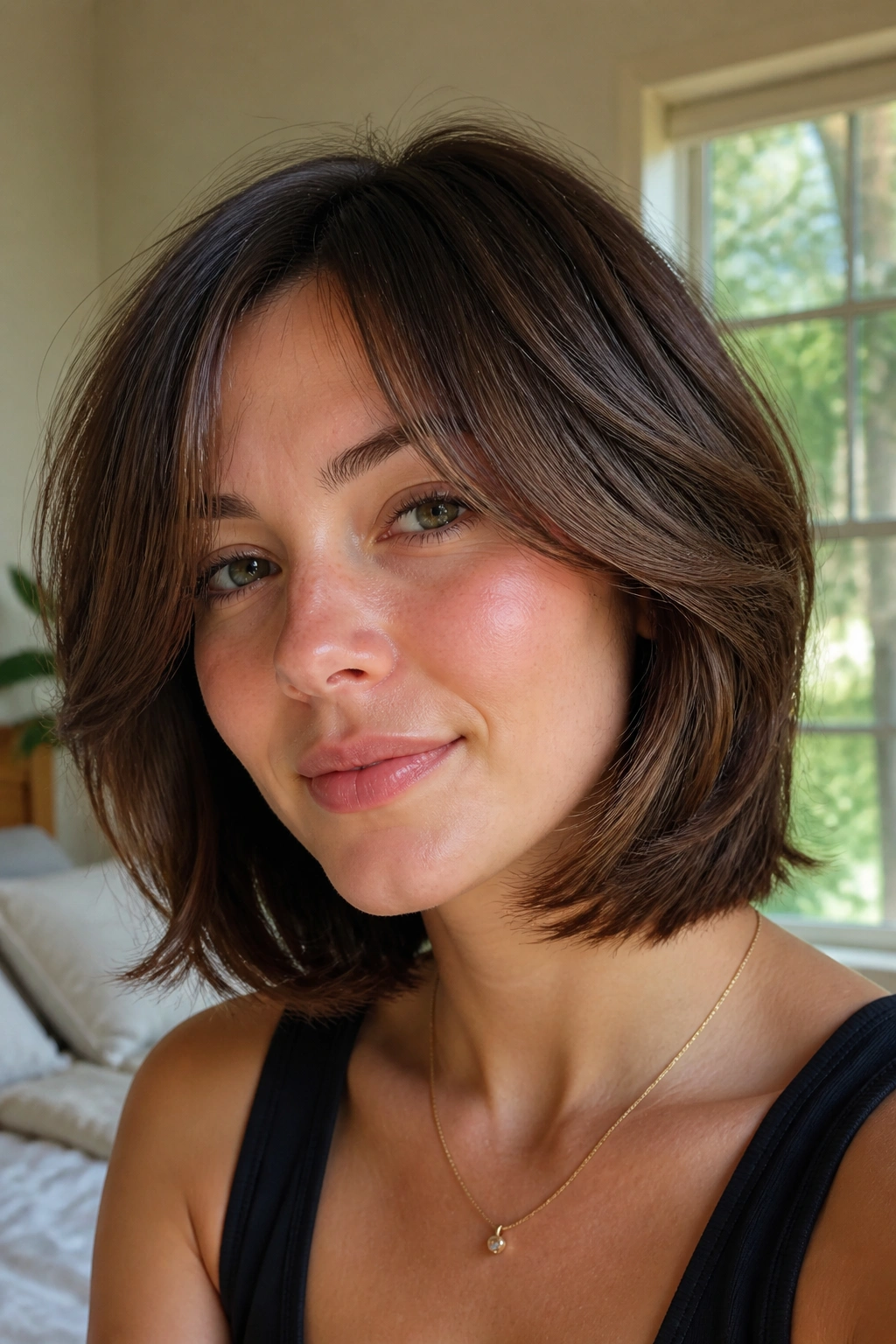
Does feathering still matter? Absolutely. A feathered bob can lighten the sides of the face and keep the cut from feeling heavy at the jaw. It works especially well when the hair has some density and tends to sit in a solid block.
The Shape to Ask For
Ask for soft, feathered movement around the mid-lengths and ends, with the lightest pieces starting below the cheekbone. That spacing matters. If the feathering starts too high, the face can look wider. If it starts lower, the bob keeps its shape and just feels easier.
Feathering is good if you want softness without obvious layers. It also behaves well on blow-dried hair because the ends move instead of flipping out in a hard line. I like this cut on people who want their bob to feel airy but not choppy.
If your hair is fine, don’t let the stylist remove too much weight. Feathering should help the cut breathe, not strip it bare.
16. Rounded Bob with Crown Lift
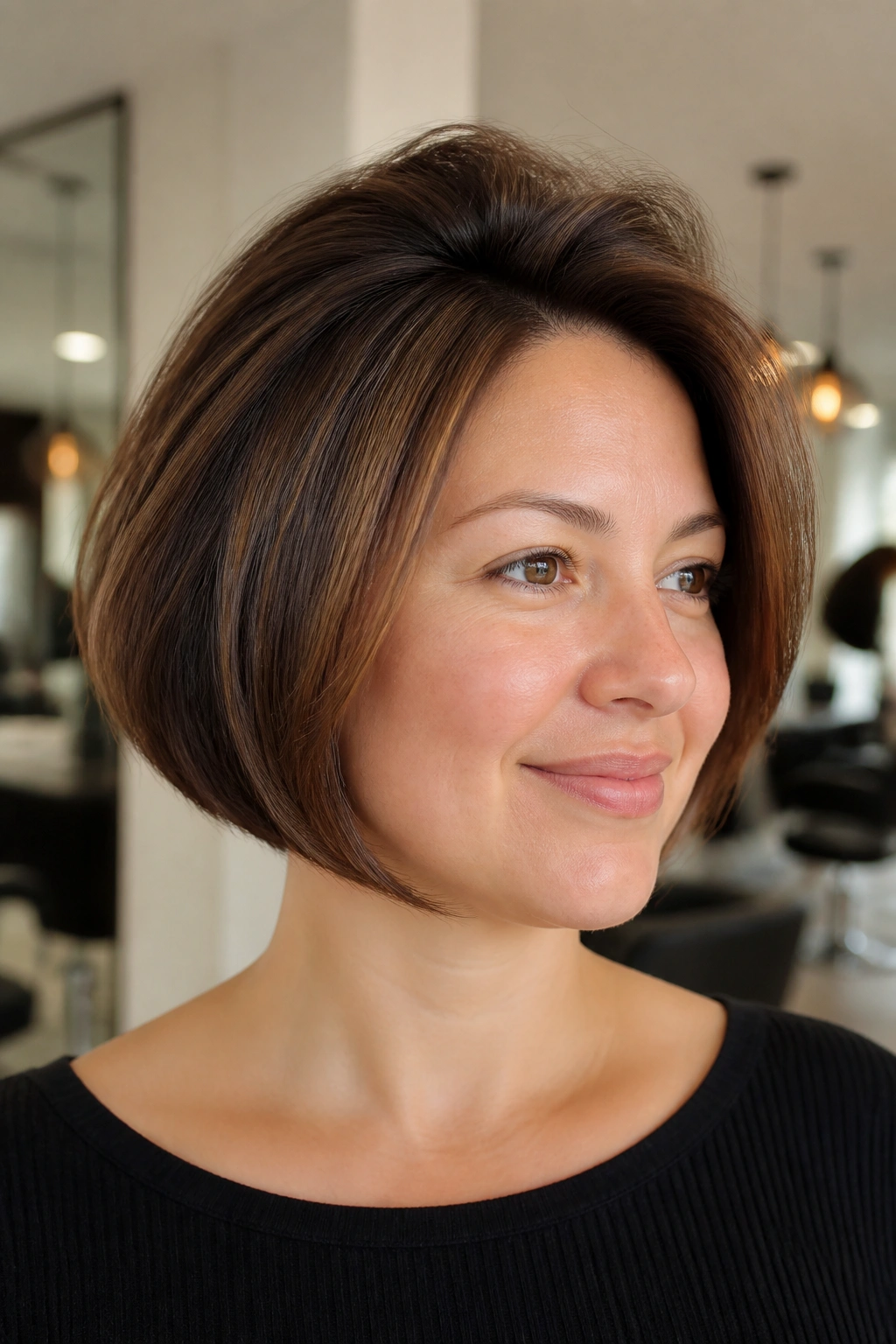
A rounded bob sounds risky on a round face, and yes, the name can set off alarms. The difference is all in where the fullness lives. If the lift is built into the crown and the sides stay close, the shape can actually make the face look taller.
Think of it as a dome with good proportions, not a circle. The top has volume, the sides are controlled, and the neckline stays neat. That little bit of height can make a huge difference, especially if your face is broad at the cheek area. You’re adding shape above the widest point, which changes the whole read of the haircut.
- Best on medium to thick hair.
- Needs a good round-brush blow-dry or root-lifting mousse.
- Works well if you like a polished, set look.
- Avoid if your hair is already puffy on top.
The crown lift is the reason this cut works. Not the roundness itself.
17. Razor-Cut Bob

A razor-cut bob has a softer edge than a scissor-cut blunt bob. The ends look a little airy, a little broken up, and that can be useful on a round face because it keeps the hair from creating one solid horizontal line.
This cut has attitude, but not in a loud way. It suits hair that has some natural movement and does not need every strand forced into place. The razor gives the ends a lighter finish, which helps the bob move when you walk. That movement matters because still hair can emphasize width, while broken-up ends can lengthen the shape visually.
I would not choose a razor cut if your hair is very fragile or if you hate frizz. On some textures, razor cutting can make the ends look fuzzy instead of soft. But on the right hair, it is sharp, modern, and easy to wear. Ask for the perimeter to stay controlled so the cut doesn’t spread outward.
18. Tucked Bob
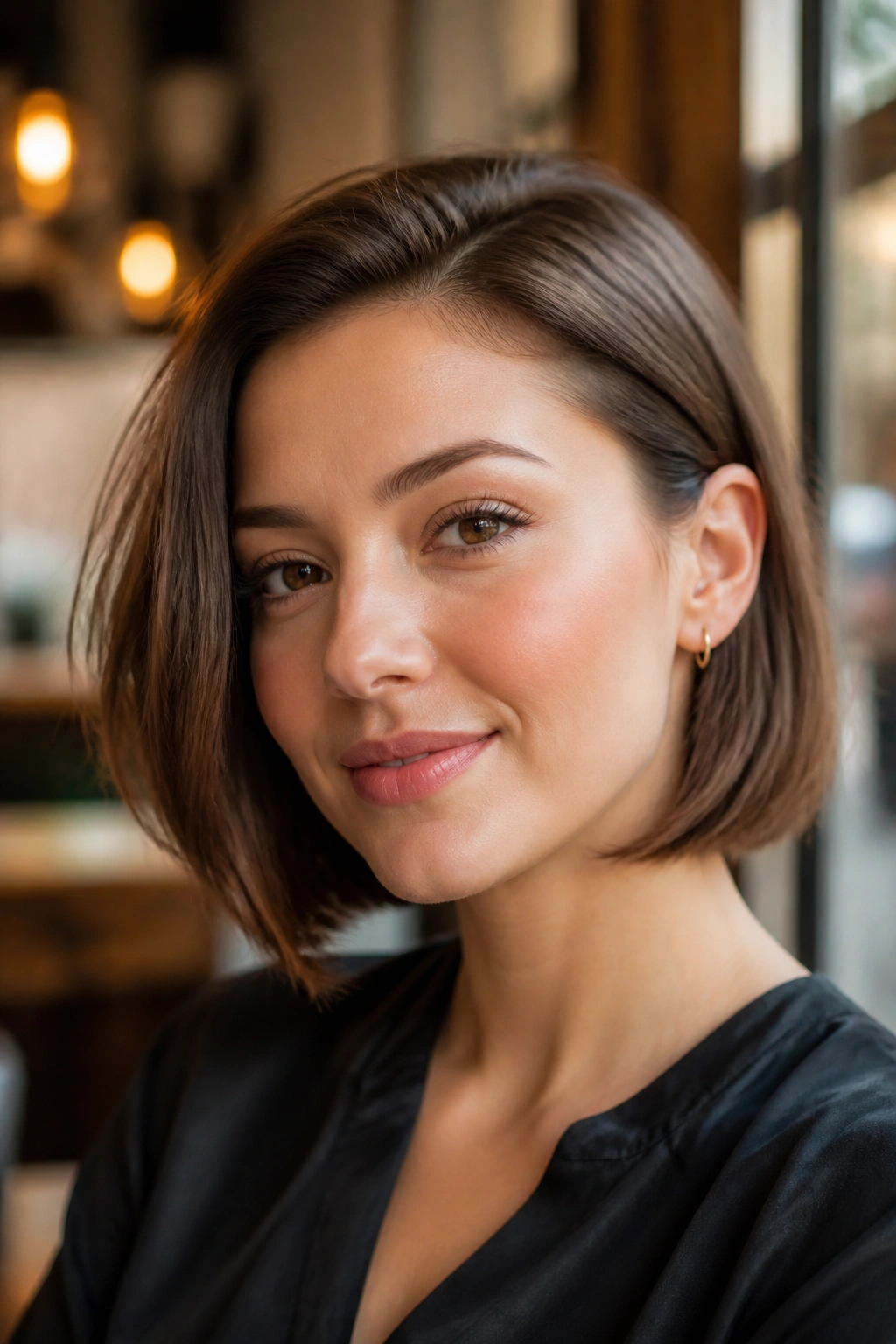
The tucked bob is one of those haircuts that sounds plain until you wear it. One side tucked behind the ear, or both sides tucked with a little face-framing release at the front, can create a cleaner outline for round faces. It opens the cheek area instead of trapping it.
Compared with a bob that hangs straight down on both sides, a tucked finish gives shape and a bit of asymmetry. It also makes earrings and jawline angles stand out more, which is handy if you want the haircut to feel intentional without extra styling. A side part helps here, but even a center part can work if the front pieces are long enough.
This is a good choice for people who want a bob that behaves during the day. It works with straight hair, soft waves, or even second-day texture. You are not fighting the cut. You’re just directing it a little.
19. Bubble Bob

The bubble bob is a little niche, and I like it for that reason. It curves under at the ends, creating a soft round shape, but it works on round faces only when the curve stays below the jaw and the top stays fairly smooth. If the shape balloons at the cheeks, it’s over.
That’s the catch. You need control. The best bubble bob has enough length to avoid sitting on the widest part of the face and enough polish to keep the silhouette looking intentional. It can feel playful, almost retro, which makes it fun if you’re bored with flatter bobs.
Key Details That Matter
- Keep the length near the chin or just below it.
- Make the curve under at the ends, not at the sides.
- Use a round brush to direct the ends inward.
- Works better on medium-density hair than on very thick hair.
This is not the cut I’d pick for someone who wants low-maintenance perfection. It needs a little styling. But when it lands right, it has real charm.
20. Wavy Bob with Long Layers
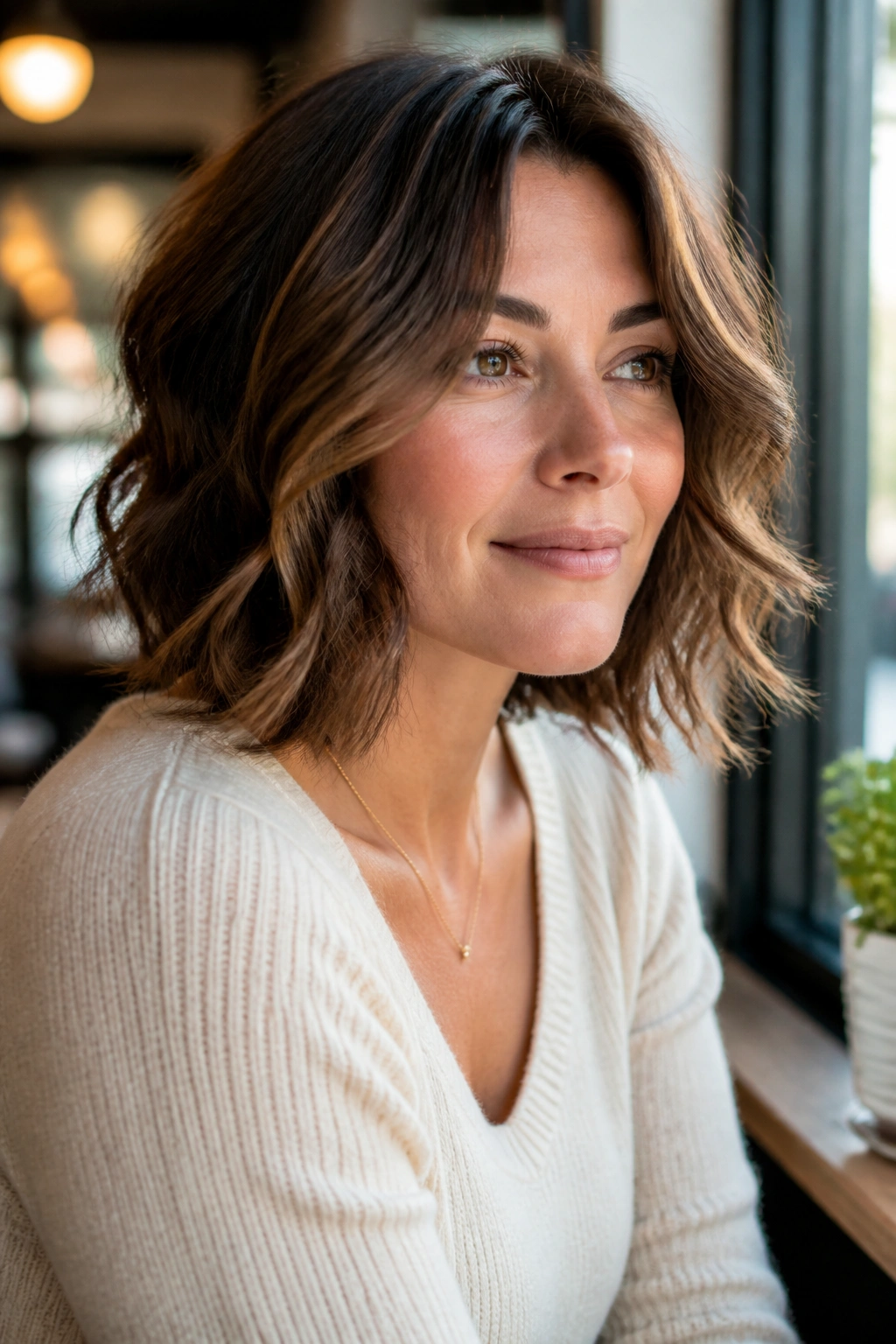
A wavy bob with long layers gives round faces something they often need more than harsh angles: movement. Loose waves break the surface of the haircut, and the long layers keep the shape from becoming too full at the sides.
The important part is length. If the bob sits too high and the waves are too dense, you can end up adding width where you meant to add softness. Keep the length around the chin to collarbone zone, and let the waves fall in loose S-shapes rather than tight bends. That keeps the eye moving vertically.
This style is especially good if you air-dry your hair a lot. A few scrunches with lightweight mousse can be enough. If you use a curling iron, leave the ends a little straighter so the look doesn’t become too round. The contrast between straight tips and soft waves does a lot of quiet work here.
21. Graduated Bob with Nape Taper
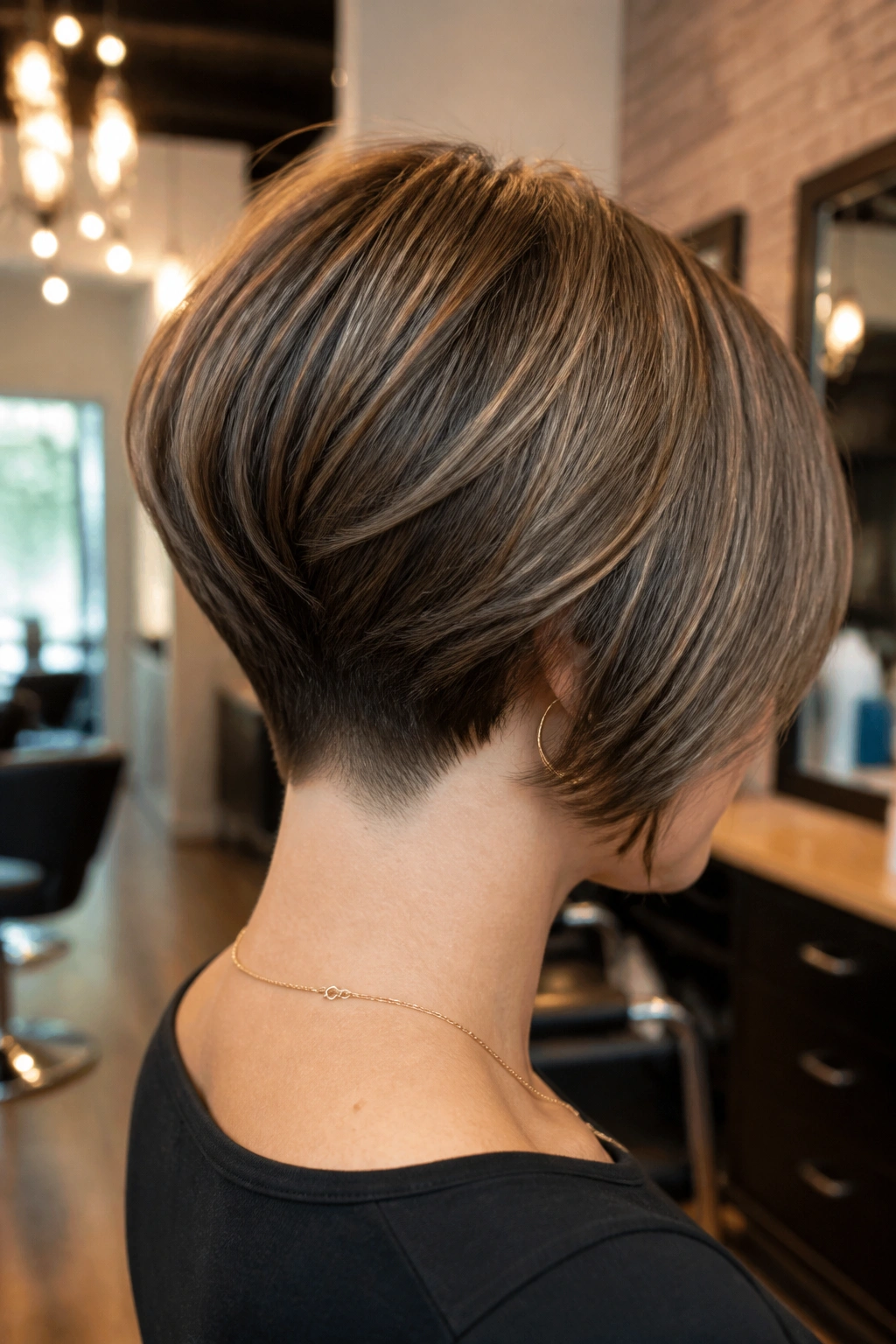
A graduated bob gets its shape from the back, where the hair is cut shorter and stacked toward the nape. On a round face, that can be useful because it creates lift at the back while keeping the front longer and more face-friendly.
Why does that help? Because it stops the haircut from feeling like one big block. The taper at the nape gives the neck a clean line, and the front can hang a little longer to narrow the face visually. It’s a tidy haircut, but it doesn’t have to feel severe.
What to Ask For
Ask for gentle graduation rather than a sharp wedge. Keep the longest front pieces near the chin or slightly below. If you want the cut to feel modern, leave a touch of softness around the edges so it doesn’t look too packed in at the back.
This is one of those cuts that looks better when it is maintained. A trim every 6 to 8 weeks keeps the shape honest. Let it grow too long, and the graduation gets lost.
22. Micro Bob with Soft Edges
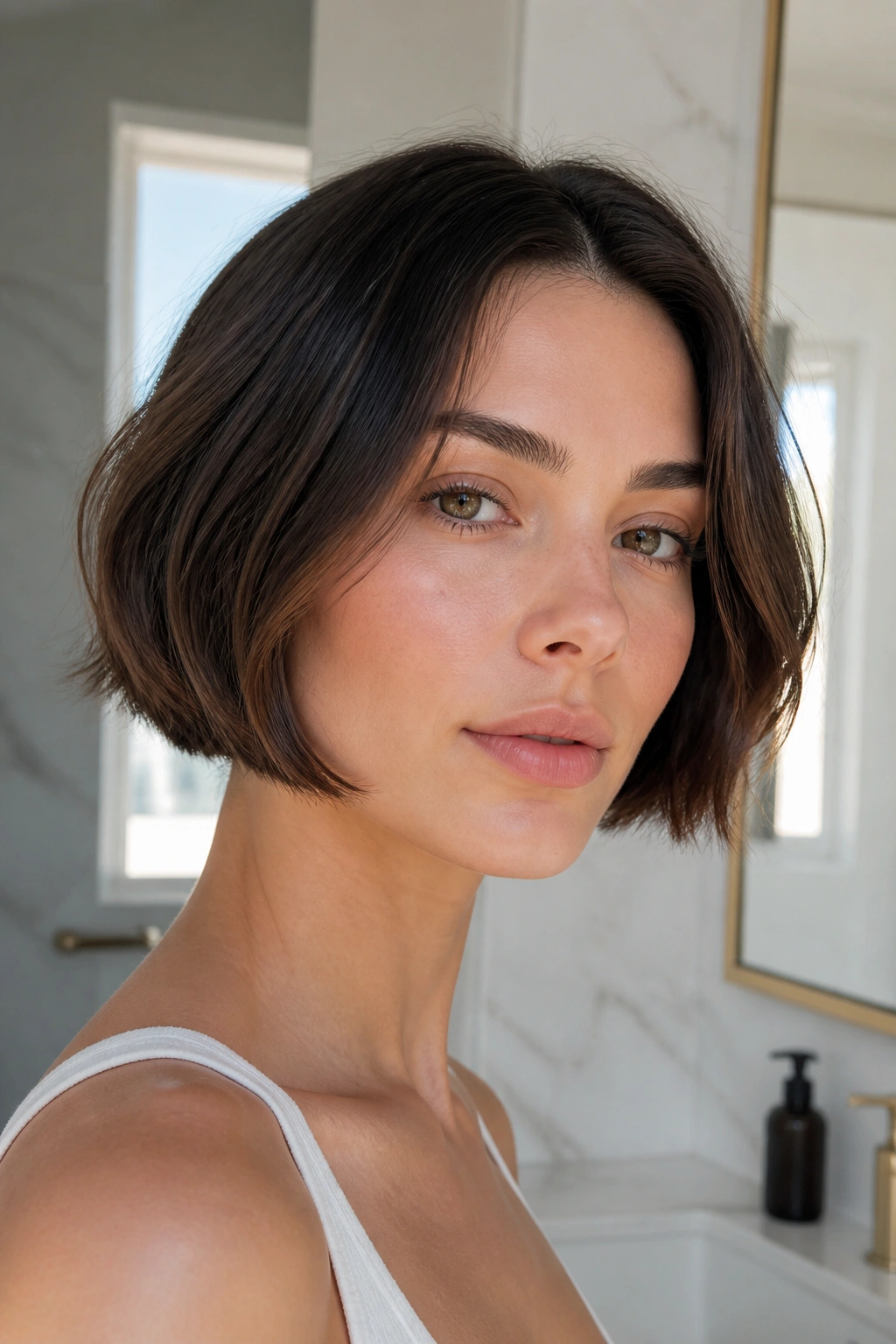
A micro bob sits short, often around the cheekbone to lip area, so it can be risky on a round face. But if the edges are softened and the body stays close to the head, it can feel fresh instead of severe. The cut needs precision.
I think the key is restraint. Keep the ends light, keep the part slightly off center, and avoid a hard horizontal line. A tiny bit of movement around the sides helps the cut breathe. If you love short hair and you want your face to look lifted, this can be a very good choice.
- Best for straight or lightly wavy hair.
- Works well with a strong brow or statement earrings.
- Needs regular trims to keep the shape neat.
- Soft edges matter more than heavy layering.
This is not a “wash and forget” cut. It has a point of view. That is part of the appeal.
23. Side-Swept Fringe Bob
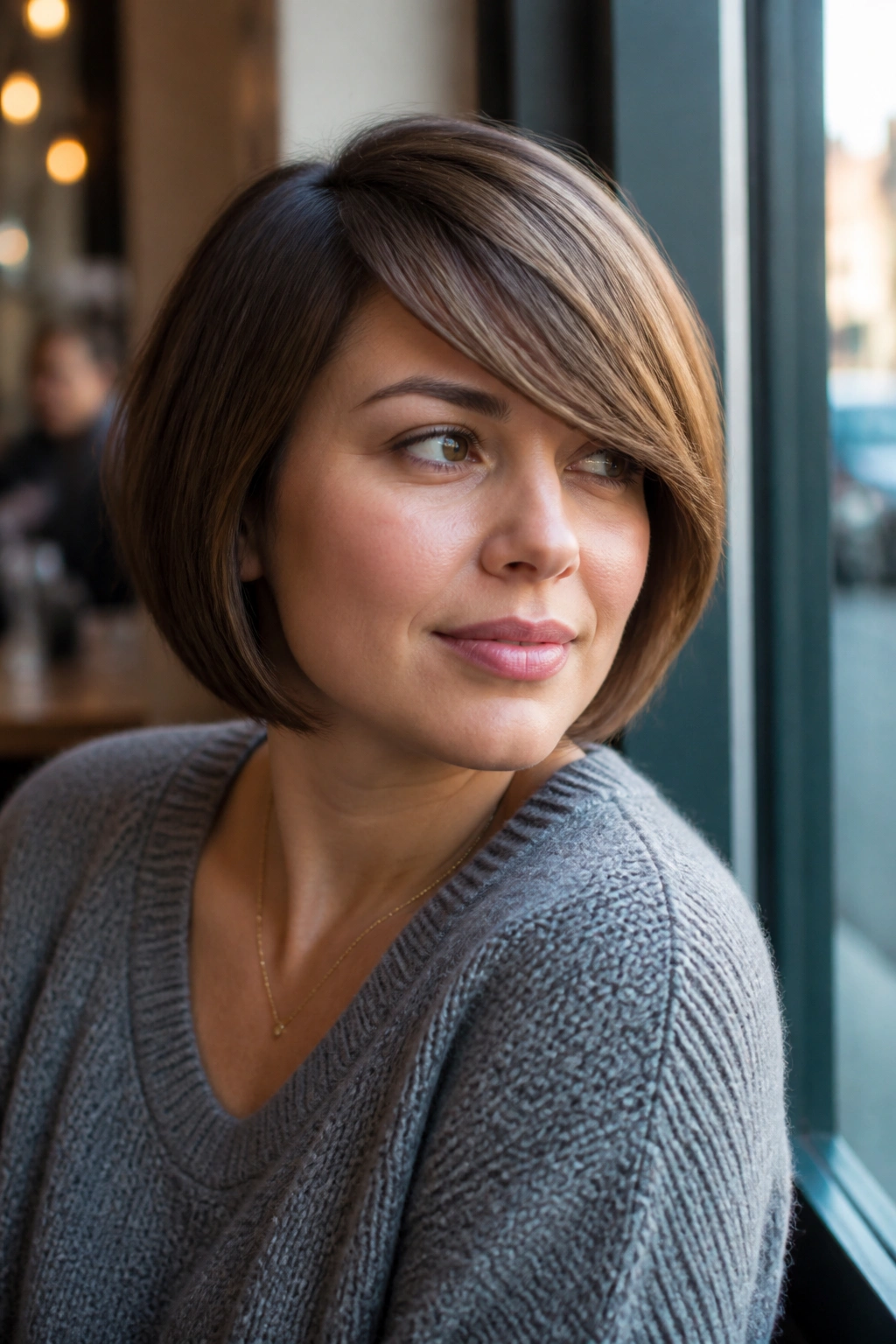
A side-swept fringe gives a round face the kind of break that blunt bangs often miss. Instead of cutting straight across the forehead, the fringe flows diagonally, which makes the upper half of the face feel less wide.
The bob underneath can be chin length or a little longer. I prefer a length that keeps the fringe from stealing all the attention. The haircut should feel balanced, not top-heavy. A soft sweep over one brow works especially well if you have fuller cheeks, because the diagonal line pulls the eye across and down.
This style also grows out well. That matters. Bangs often sound like a commitment with a short fuse, but side-swept fringe is more forgiving than a straight fringe or a heavy curtain bang. If you want some face coverage without closing everything in, this is the smart version.
24. Soft Shag Bob
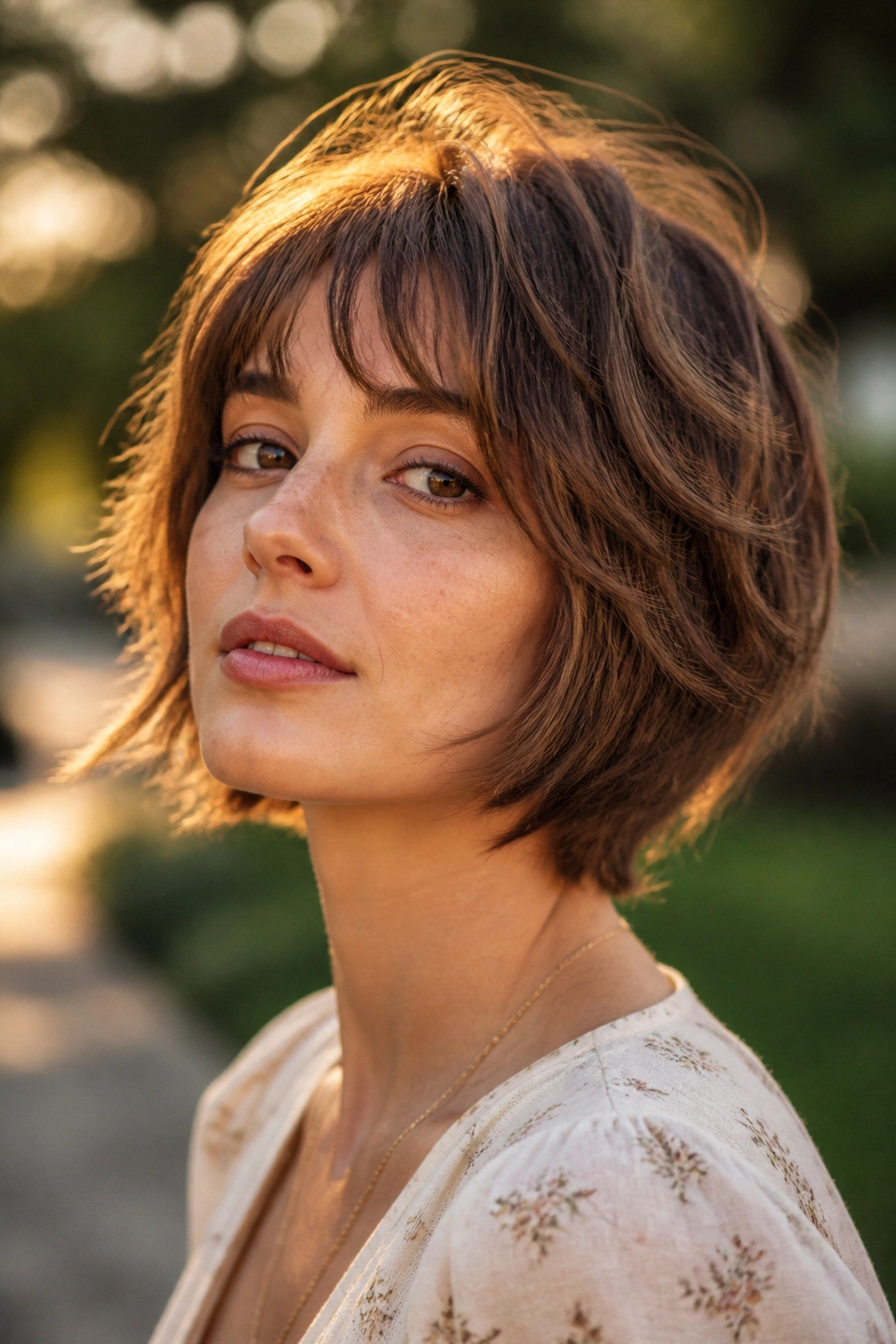
A soft shag bob is for people who want texture without a messy haircut. The layers are broken up, but not so much that the shape falls apart. On a round face, the shag gives movement around the cheeks and keeps the cut from sitting in one solid mass.
It works because the layers start where they can do some good, usually below the cheekbone and through the lower half of the bob. That stops the face from looking wider at the middle. The top stays a little airy, which helps with vertical balance. You get the lived-in feel without the puffiness that can happen when every layer is too short.
This cut likes a little texture spray and a rough dry. If you over-style it, you lose the point. It should look touched, not overbuilt. I think that’s why people keep coming back to it: it looks casual, but not lazy.
25. Soft Rounded Bob for Round Faces

A soft rounded bob is the one I reach for when someone wants ease more than drama. It has a gentle curve, a controlled outline, and enough softness around the ends to avoid looking hard. On a round face, that kind of moderation can be a relief.
The trick is that the roundness lives in the haircut, not in the widest part of the face. Keep the fullness slightly higher on the head, let the ends taper in a bit, and avoid a blunt line that lands right at the cheek. If you want the cut to feel especially flattering, add a side part or a tiny bit of root lift at the crown. That keeps the shape from collapsing into the face.
I like this bob for people who do not want to think about their hair all day. It can be blown out, air-dried, tucked back, or left a little undone. It still holds its shape. And that, to me, is the real win with bob haircuts for round faces: the cut should make your life easier, not give you another styling problem before coffee.
Final Thoughts
The best bob for a round face is rarely the most dramatic one. It is the one that uses length, angle, or crown lift in a way that makes your features look balanced without trying too hard. Small shifts matter more than people think.
If you are choosing between two cuts, look at where the hair ends land. Near the cheeks is the danger zone. Below the jaw or with a little diagonal movement is usually kinder, and that one detail can change the whole haircut.
A good bob should feel like it belongs to your face, not like it was copied from a photo and dropped on top of it. That is the sweet spot.
