



Fine hair can look sleek one minute and limp the next. That is exactly why asymmetrical bob haircuts for fine hair keep showing up in good salons: the uneven line gives the eye something to follow, so the cut reads fuller than a perfectly even hemline. A tiny shift in length can do more than a heavy stack of layers ever will.
The real trick is restraint. Too many thin ends, too much razor work, too much “texture” and the whole shape starts to look airy in a bad way. I’m much more interested in bobs that keep a strong perimeter somewhere — blunt at the bottom, slightly longer on one side, or tucked and angled in a way that makes the hair look denser without asking it to be something it isn’t.
That’s the sweet spot here. You can go polished, piecey, soft, sharp, short, or shoulder-skimming, and still keep the haircut working with fine strands instead of fighting them. And because fine hair tends to show every decision, the good versions of this cut are often the small ones: a deeper side part, a cleaner line, a front piece that drops just a little lower than the rest.
Below are 30 versions that cover the full range, from subtle and office-friendly to a little bolder and more styled. Some are best for straight hair. Some lean into a natural wave. A few need almost no styling at all.
1. Chin-Length Tilted Bob
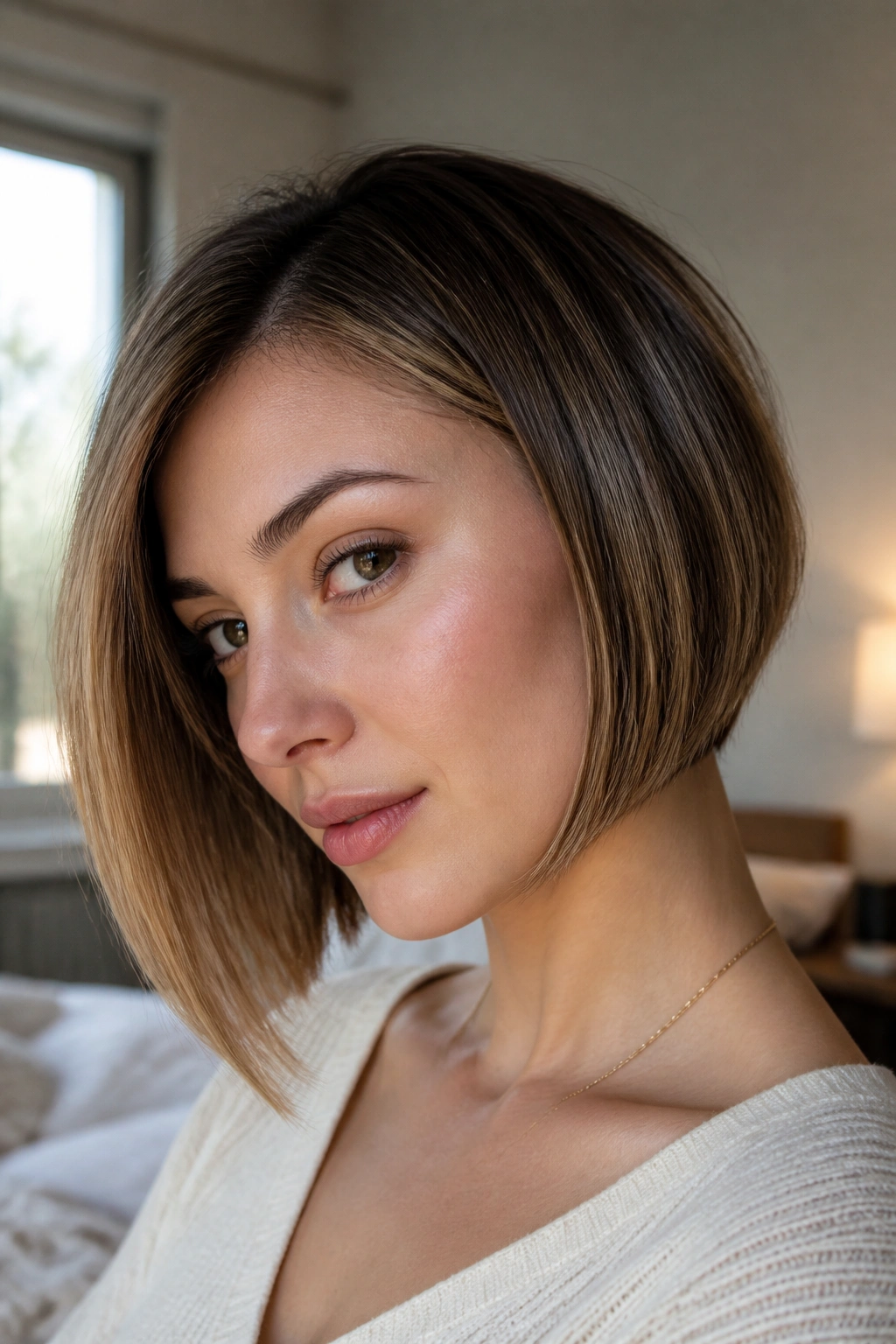
A chin-length tilt is one of the easiest ways to make fine hair look like it has more body. The back sits a little shorter, the front drops just enough to frame the jaw, and that small angle gives the cut a built-in sense of movement.
Why it works: the hair never hangs in one flat curtain. Instead, it falls forward in a shape that looks intentional, even when you’ve only spent five minutes on it.
Ask for a subtle difference — usually about 1 to 1½ inches longer in front — and keep the ends blunt. If the bottom gets too wispy, the whole thing starts to lose its shape. A quick blow-dry with a round brush at the crown is enough.
The best part
- It opens up the neck.
- It makes a narrow jawline look softer.
- It grows out without looking messy too fast.
Pro tip: skip heavy layering at the bottom. Fine hair needs a clean edge more than it needs extra “movement.”
2. Side-Swept Asymmetrical Bob
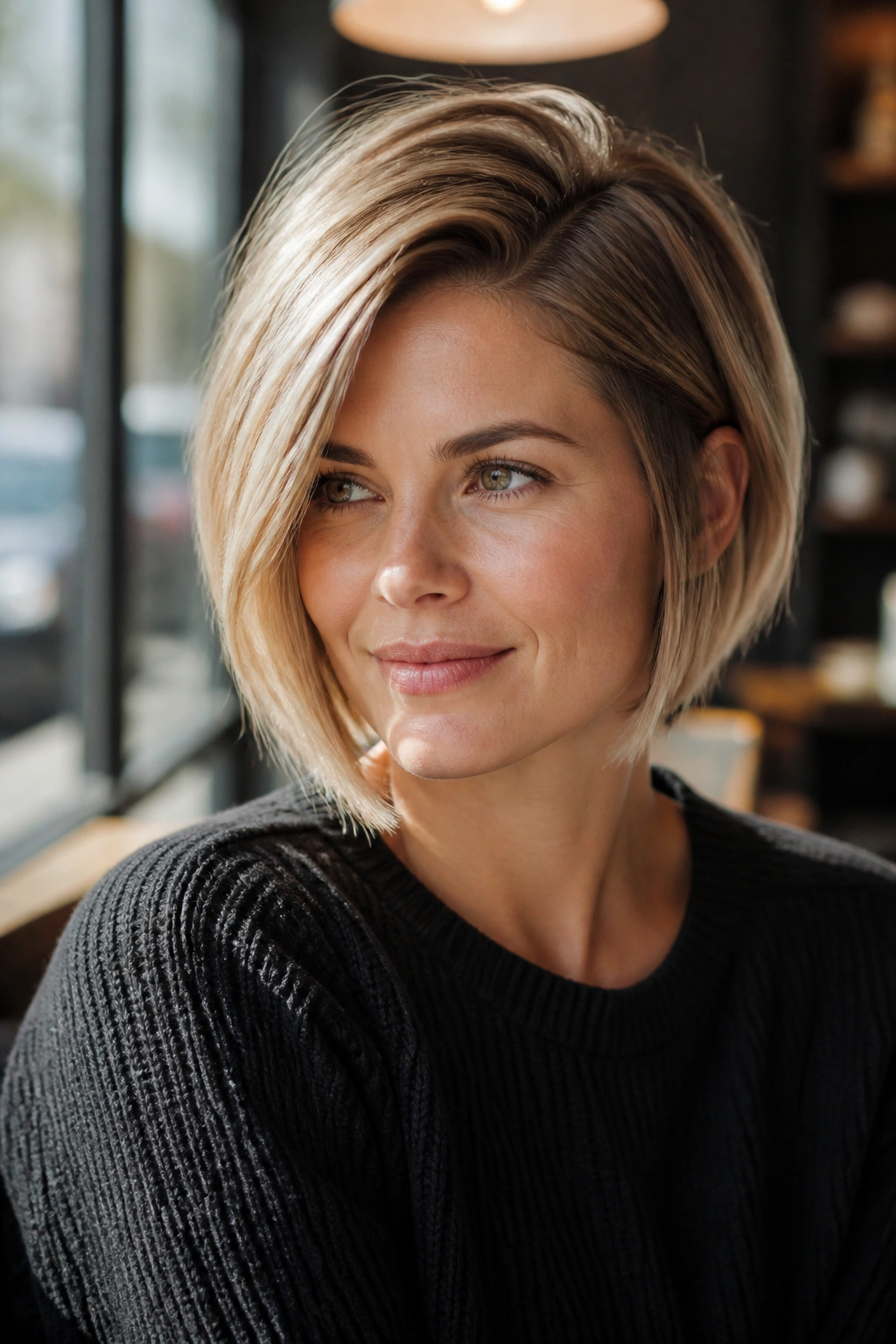
A deep side part changes everything. On fine hair, it lifts the root on one side, drops the weight on the other, and gives the bob a fuller-looking top line without changing the cut much at all.
The version I like best has one side grazing the cheekbone and the other side sitting closer to the jaw. It feels easy, not fussy. And because the shape already leans off-center, you don’t have to work hard with hot tools to make it interesting.
This is a smart option if your hair tends to collapse at the crown by lunchtime. Blow-dry the part in the opposite direction first, then switch it back. That little trick gives the roots a bend that lasts longer than you’d expect.
3. Jaw-Grazing A-Line Bob
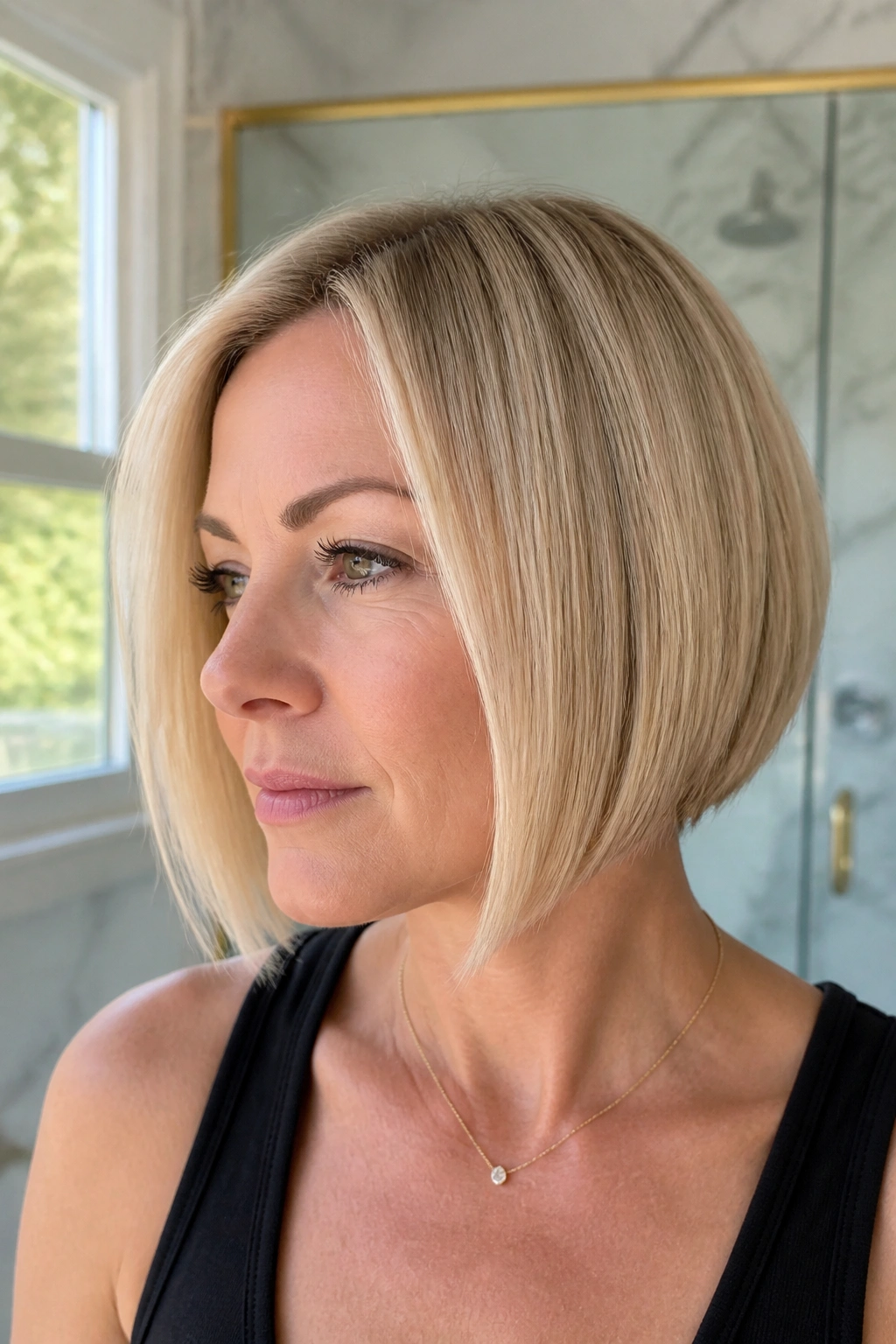
Does your hair look thicker when it stops at the jaw? Usually, yes. Fine hair often benefits from a clean, jaw-grazing line because the eye sees a fuller edge instead of long, trailing ends.
The A-line version keeps the back a touch shorter and the front slightly longer, so the cut feels sharp without being severe. It’s especially good on straight hair that loses shape when it gets too long.
Ask for a blunt perimeter and only a light amount of internal shaping near the crown. Too much thinning at the ends will make the front pieces look stringy. A flat iron pass on the front sections — one slow pass, not three — gives this bob that polished bend people often want from it.
Ask for this
- Back: just above or at the nape
- Front: touching the jaw
- Ends: blunt, not razor-thin
- Part: center or slightly off-center
4. Collarbone Asymmetrical Lob

The collarbone length is a nice place to land if you’re nervous about going short. It gives fine hair more presence than a super-long style, but it still has enough length to tuck, wave, or pin back when you’re bored with it.
This version works best when one side falls a little lower than the other, even if the difference is modest. You want a visible tilt, not a dramatic slash. That keeps the look soft and wearable.
I like this cut on people who air-dry their hair often. Fine hair at this length can start to look stringy if it’s over-styled, so a light leave-in cream and a loose bend at the ends are usually enough. It’s one of those cuts that looks better when it isn’t trying too hard.
5. Textured Razor Bob
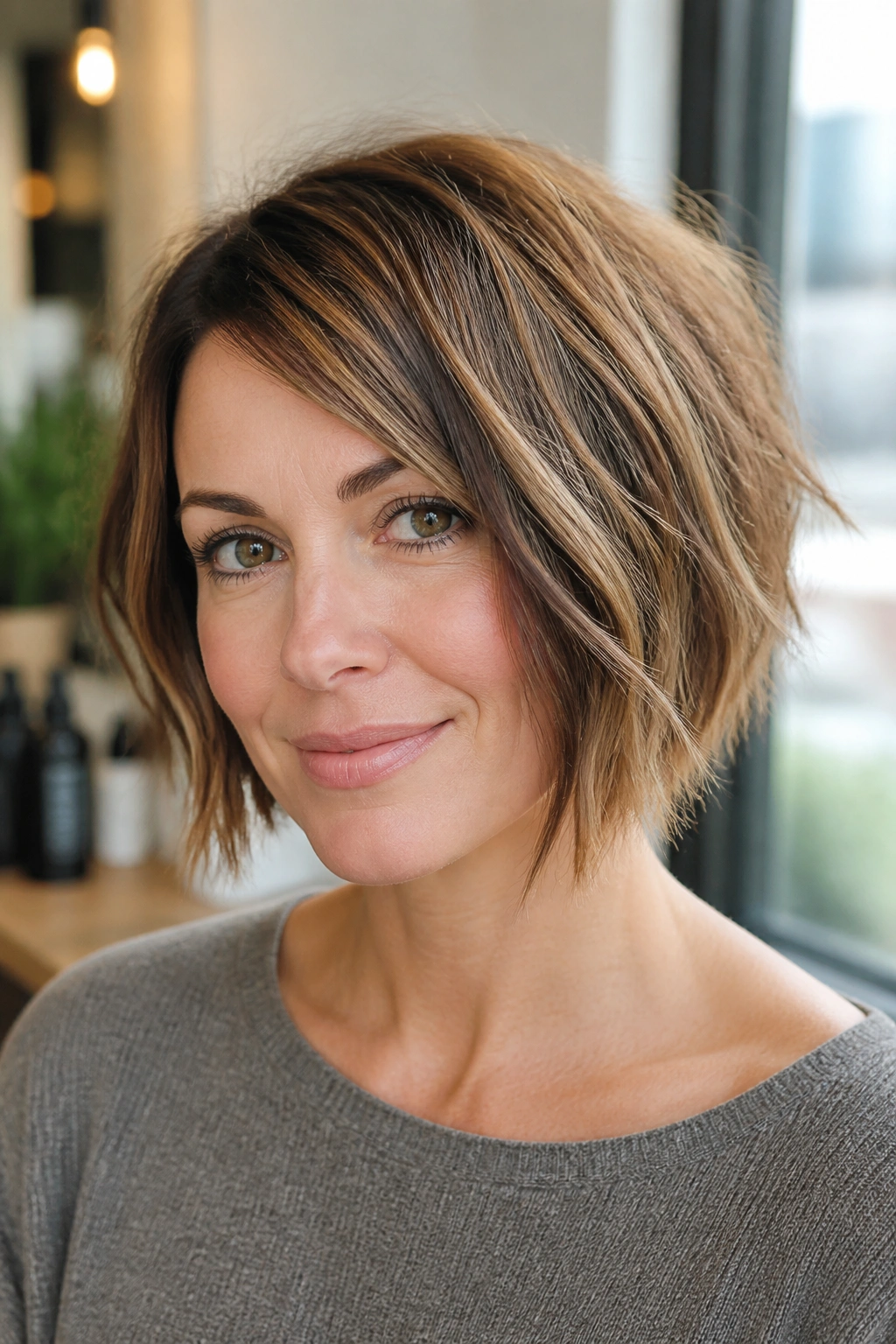
A razor bob can be lovely on fine hair — but only if the stylist knows where to stop. Used carefully, a razor softens the ends and keeps the cut from looking blocky. Used carelessly, it can chew up the perimeter and leave you with see-through ends.
The best version keeps the base line intact and adds texture only through the top layers or the front corners. That way the bob still looks full at the bottom, where fine hair often needs the most help.
This is a good choice if your hair has a little bend or if you like a lived-in finish. If your strands are extremely delicate, ask for scissors on the perimeter and razor work only in small sections. That one detail makes a big difference.
6. Micro-Stacked Bob
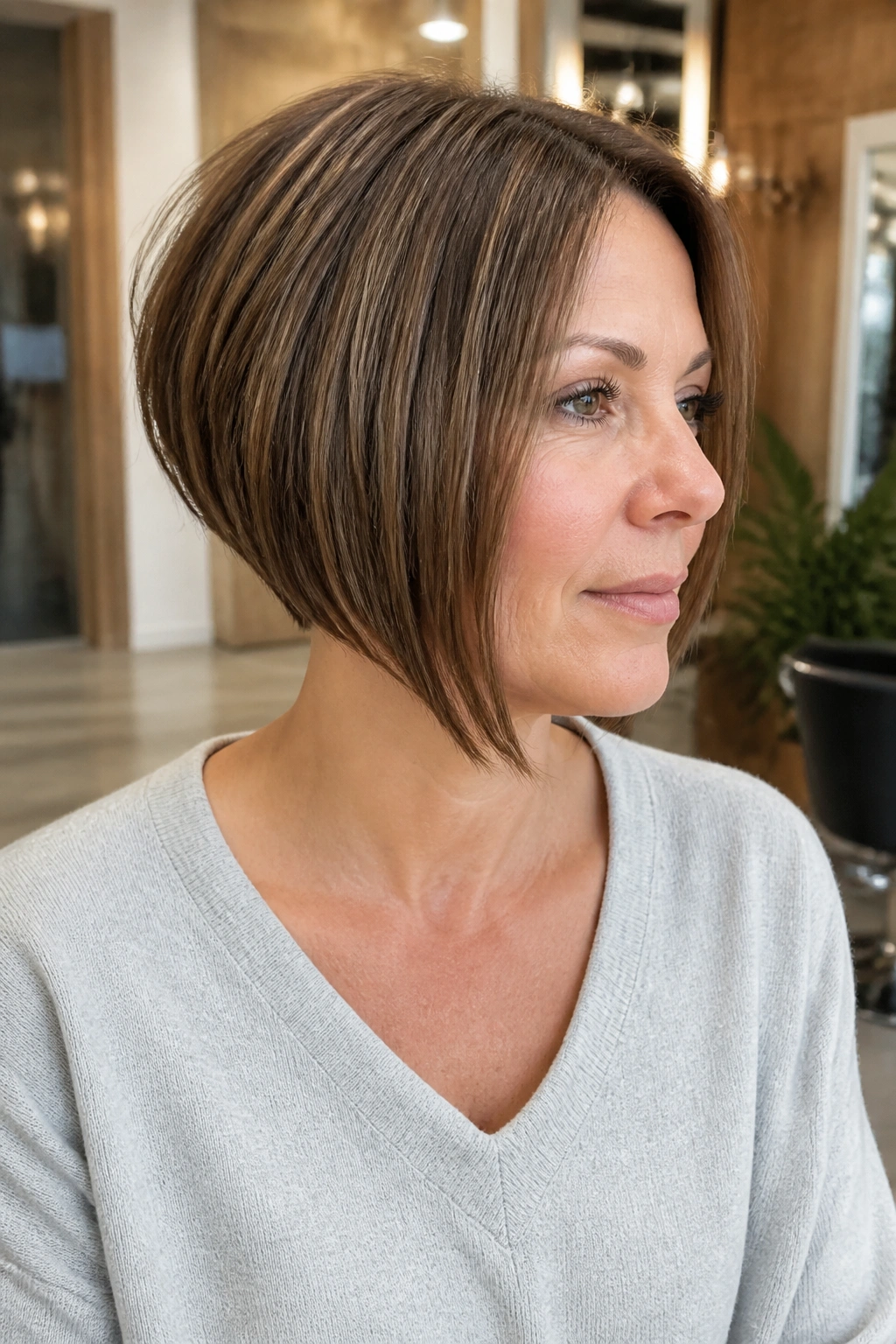
A micro-stacked bob gives fine hair a subtle lift at the back without turning the haircut into a big 1980s shape. The stack should be tiny, almost invisible, but it helps the nape sit closer to the head while the crown looks a bit fuller.
This cut is especially useful if your hair lies flat right behind the ears. A little graduation there changes the way the whole bob sits. It also makes blow-drying easier, because the shape wants to curve inward instead of hanging straight down.
What to ask for
- Shorter nape with only a slight stack
- Longer front corners for balance
- Clean, blunt ends at the bottom
- Minimal thinning through the crown
A round brush is useful here, but not mandatory. Even a rough dry and a quick tuck behind the ears can show the shape.
7. Sleek Glass Bob with an Off-Center Part
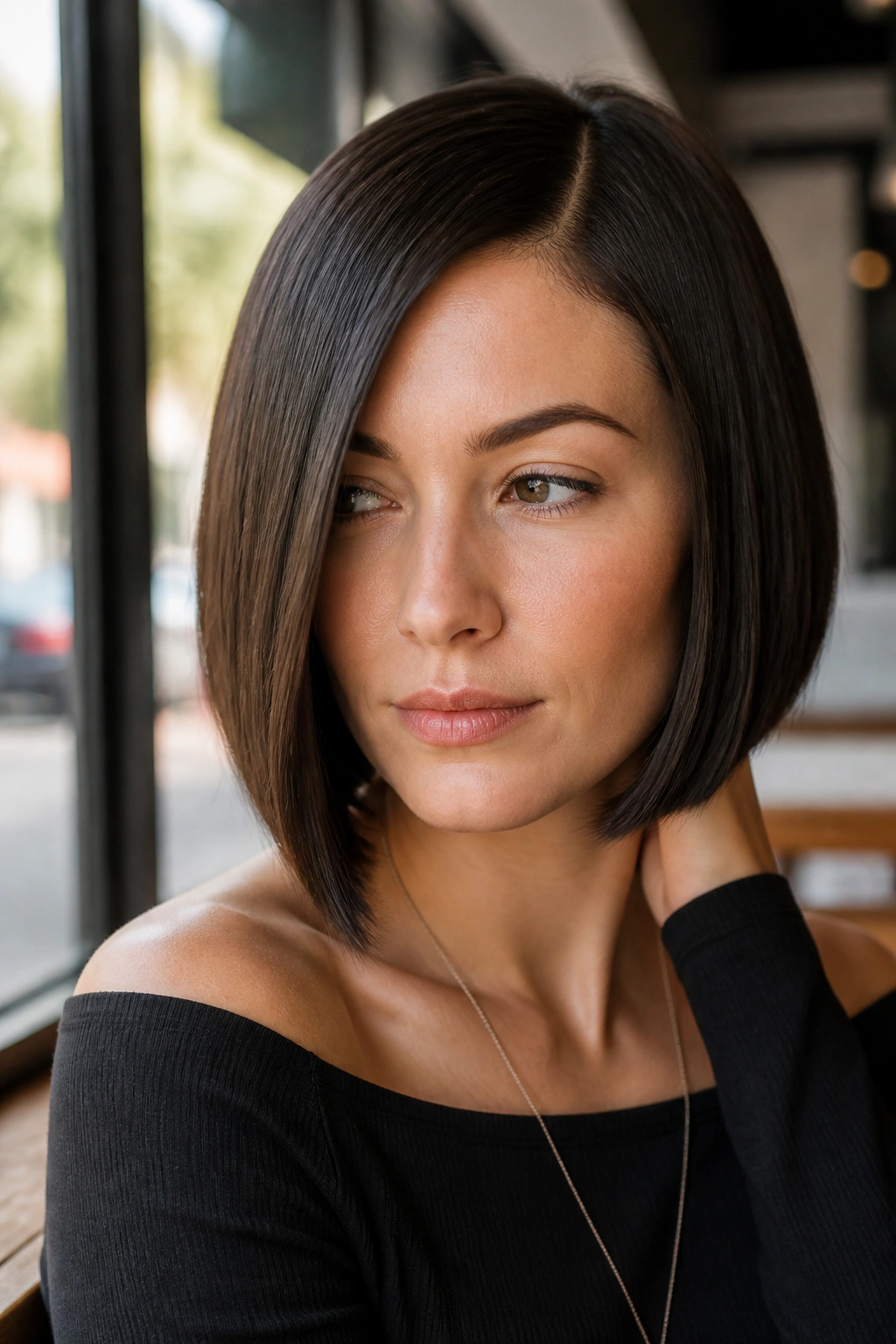
There’s something satisfying about a sleek bob on fine hair. When the surface is smooth, the cut line looks crisp, and fine strands can actually appear denser because nothing is breaking up the edge.
The off-center part keeps it from feeling too severe. One side gets a little more volume, the other side lies flatter, and the asymmetry shows up in a quiet, polished way. It’s a strong option if you like a tidy look and don’t want layers everywhere.
Use a heat protectant, then flat iron in small sections if needed. The trick is not to overdo the shine product. A pea-sized amount of serum through the mid-lengths is enough. More than that and the hair starts to collapse.
8. Piecey Layered Bob
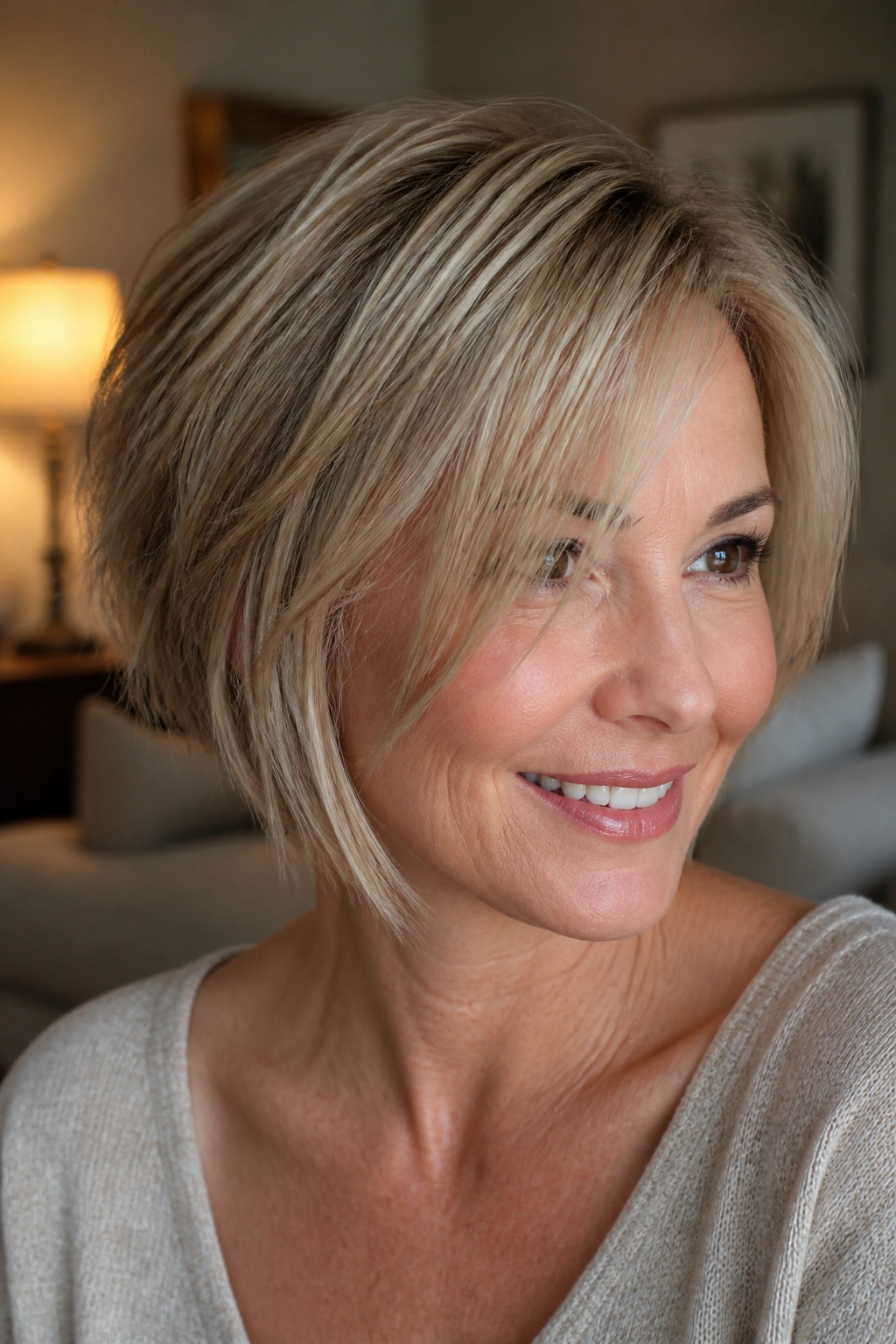
Fine hair and layers can be a bad match when the layers are too short or too many. But a piecey layered bob, done carefully, gives the cut a little air without stripping away the body at the ends.
Think of this as a bob with just enough separation to avoid a helmet shape. The asymmetry can live in the front pieces, while the back stays heavier and more solid. That balance matters.
This style likes a light styling paste or mousse worked through damp hair. Scrunching helps if you have a wave; if your hair is straight, bend a few front sections with a one-inch iron and leave the rest alone. The goal is not big texture. The goal is a little bit of movement that looks like the hair chose it.
9. French Bob with a Tilt
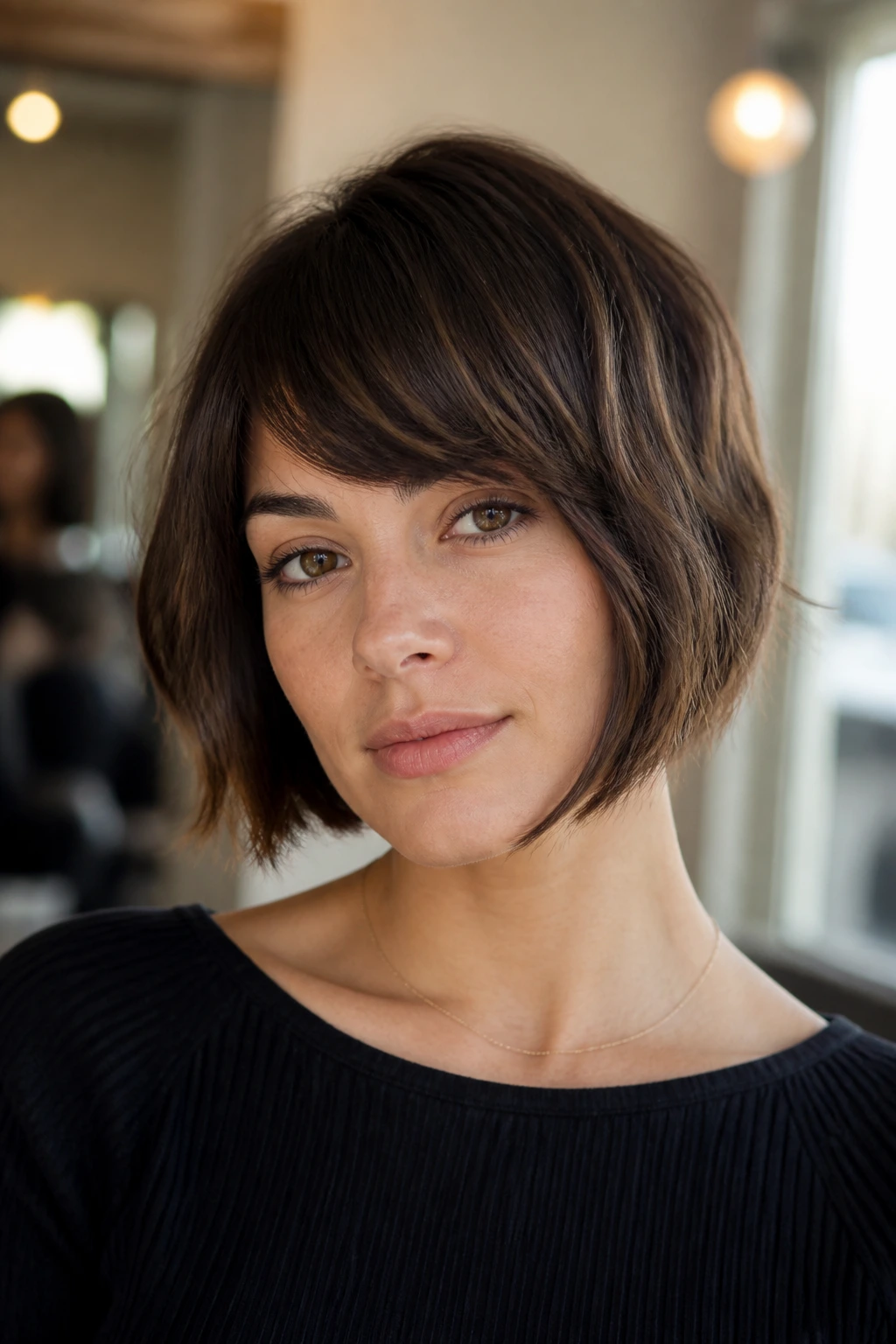
A French bob with a tilt is short, cheekbone-friendly, and a little flirtier than the average bob. On fine hair, the shorter length can be a blessing because the ends look fuller simply by being kept compact.
The asymmetry here is usually subtle: one side sits slightly lower, or the fringe falls a bit off to one side. That keeps the cut from feeling too neat. A tiny wave at the ends helps, but even straight styling works if the line is clean.
This cut loves a small round brush and a bit of root lift. It also likes a lip-length or eyebrow-grazing fringe. If the fringe gets too dense, it can weigh the whole haircut down. Keep it soft and movable.
10. Inverted Bob with Light Graduation
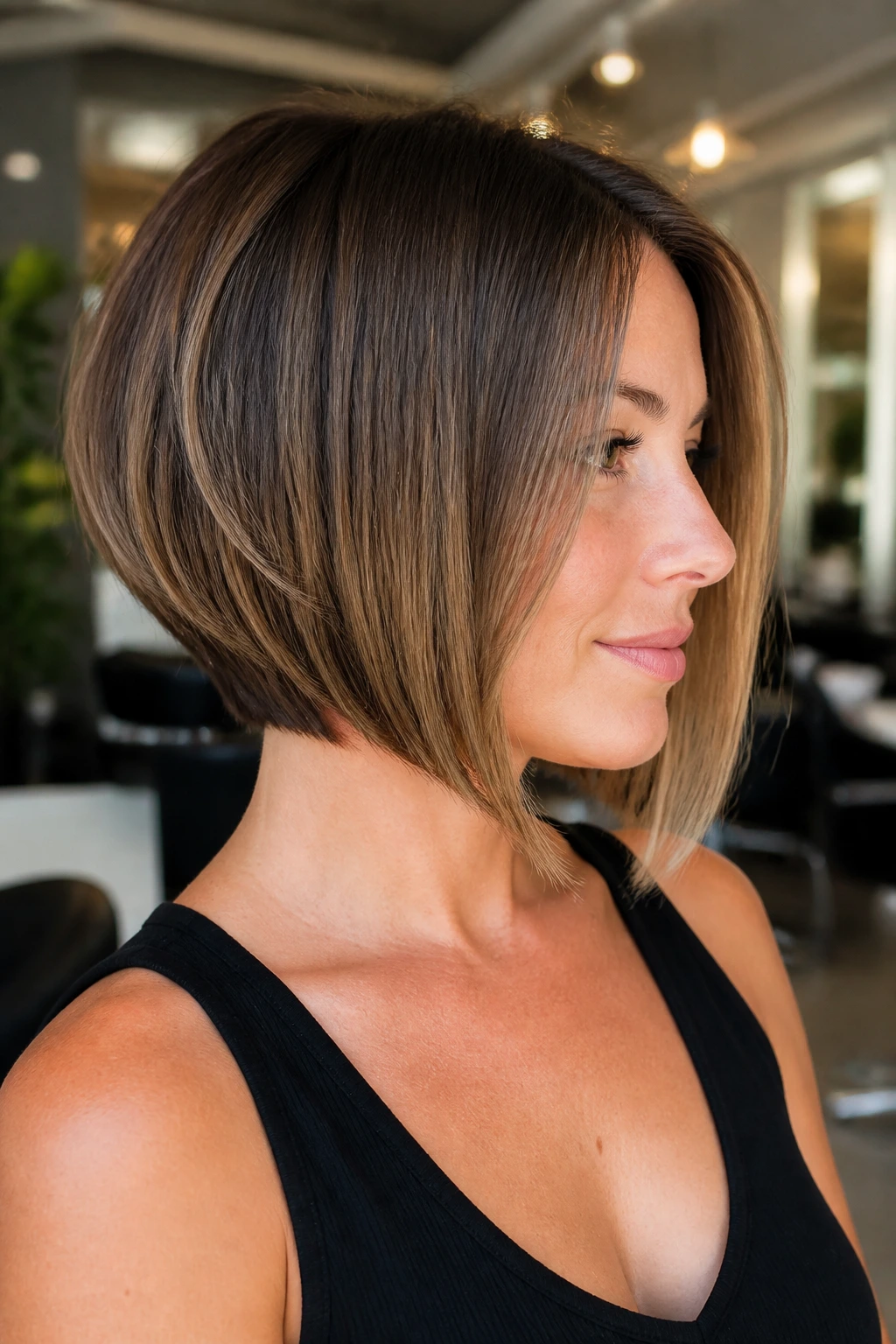
An inverted bob has a natural advantage for fine hair: it builds shape into the back while keeping the front longer. That means the eye sees a lift at the crown and a slimmer line toward the face, which is flattering on a lot of people.
Light graduation is the key phrase. You want enough stacking to support the cut, not so much that the back puffs up. Fine hair can lose its clean edge fast if the graduation gets too steep.
This one suits straight or slightly wavy hair. If your hair bends easily, a quick blow-dry with a paddle brush may be all you need. If it’s flatter, concentrate the heat at the roots and let the front fall forward on its own. The asymmetry will do the rest.
11. Curved Bob with Longer Front Pieces
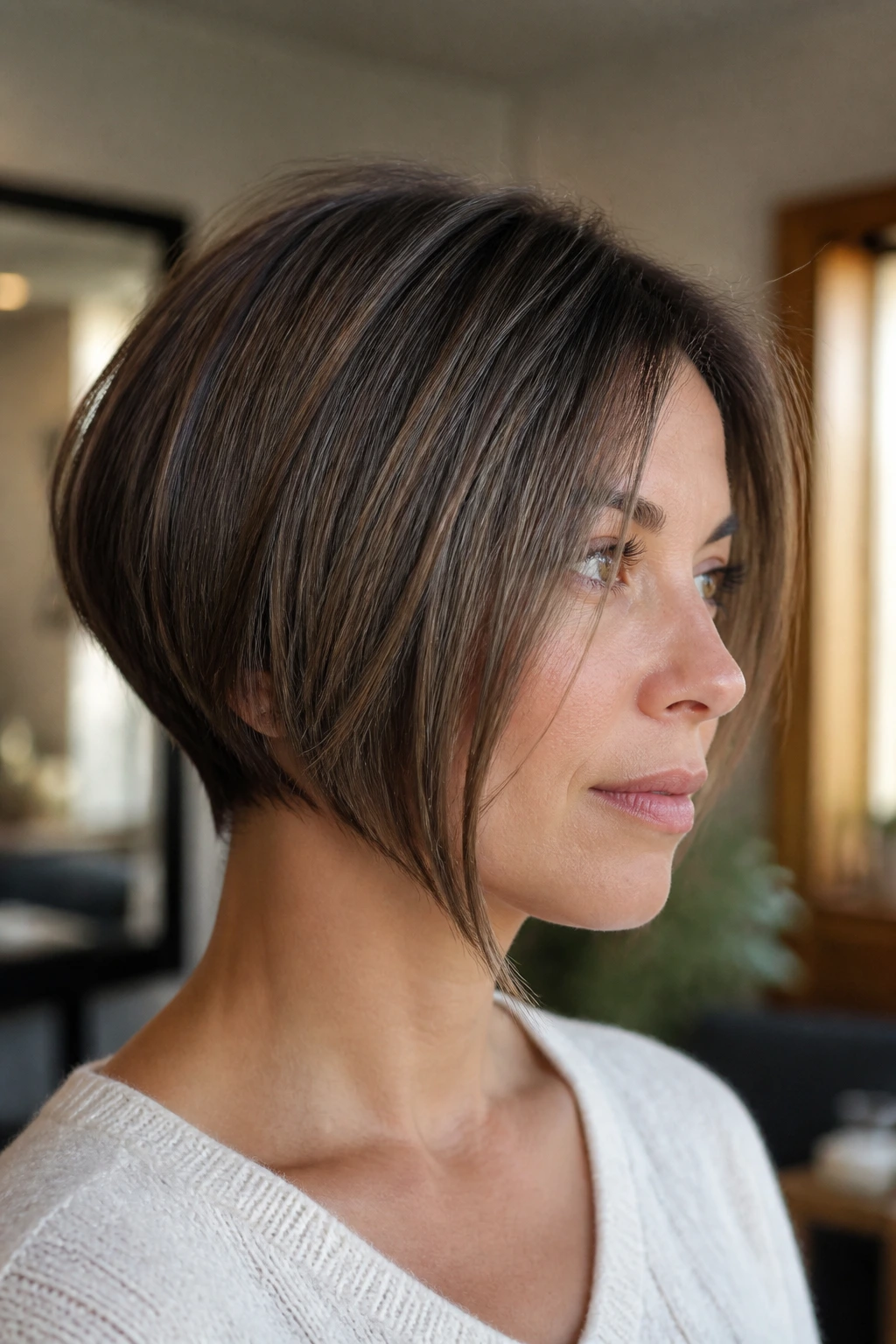
A curved bob hugs the head in a softer way than a straight boxy cut. For fine hair, that curve helps the style sit close and smooth without looking flat.
The longer front pieces bring the asymmetry into focus. They skim the cheek or jaw, depending on where you want the emphasis, while the back stays shorter and easier to manage. It’s a nice shape if you like the feeling of hair that frames the face instead of hanging around it.
I especially like this cut for people with softer features. The curve adds structure. If you want the front to read a little stronger, ask for the longer side to hit just below the chin.
12. Tucked-Behind-the-Ear Bob
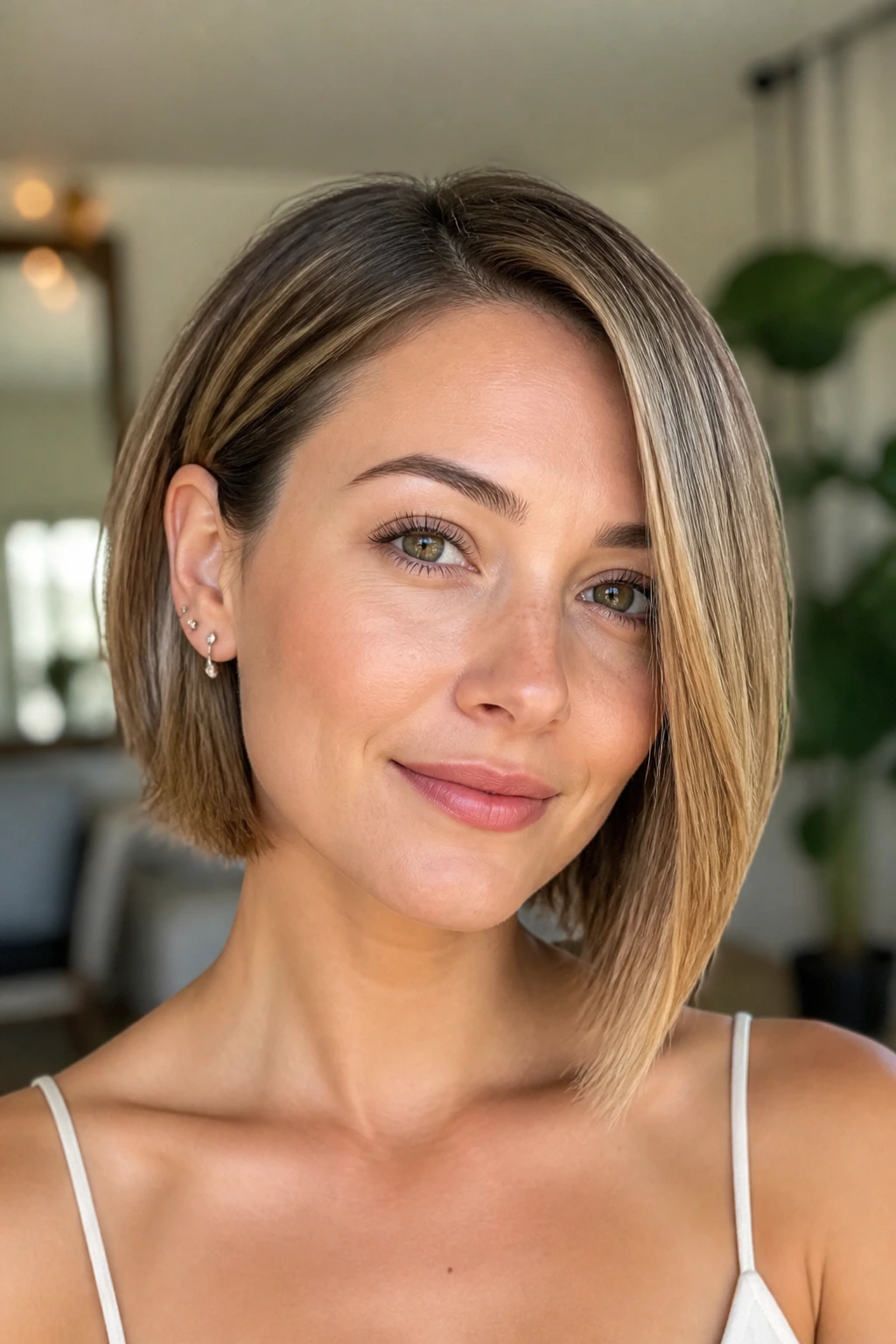
This is one of those cuts that looks simple until you actually wear it. A bob designed to be tucked behind one ear creates its own asymmetry, and on fine hair that tiny styling move can make the whole haircut seem more deliberate.
The trick is to leave one side a touch longer so the tuck creates a clean line near the cheek. The other side can stay looser and fuller. The contrast is subtle, but it works.
One flat clip or a neat tuck behind the ear is usually all you need. If your hair slips out easily, a light mist of texturizing spray helps. No heavy spray. Fine hair gets sticky fast, and then the shape is gone.
13. Asymmetrical Bob with Curtain Bangs
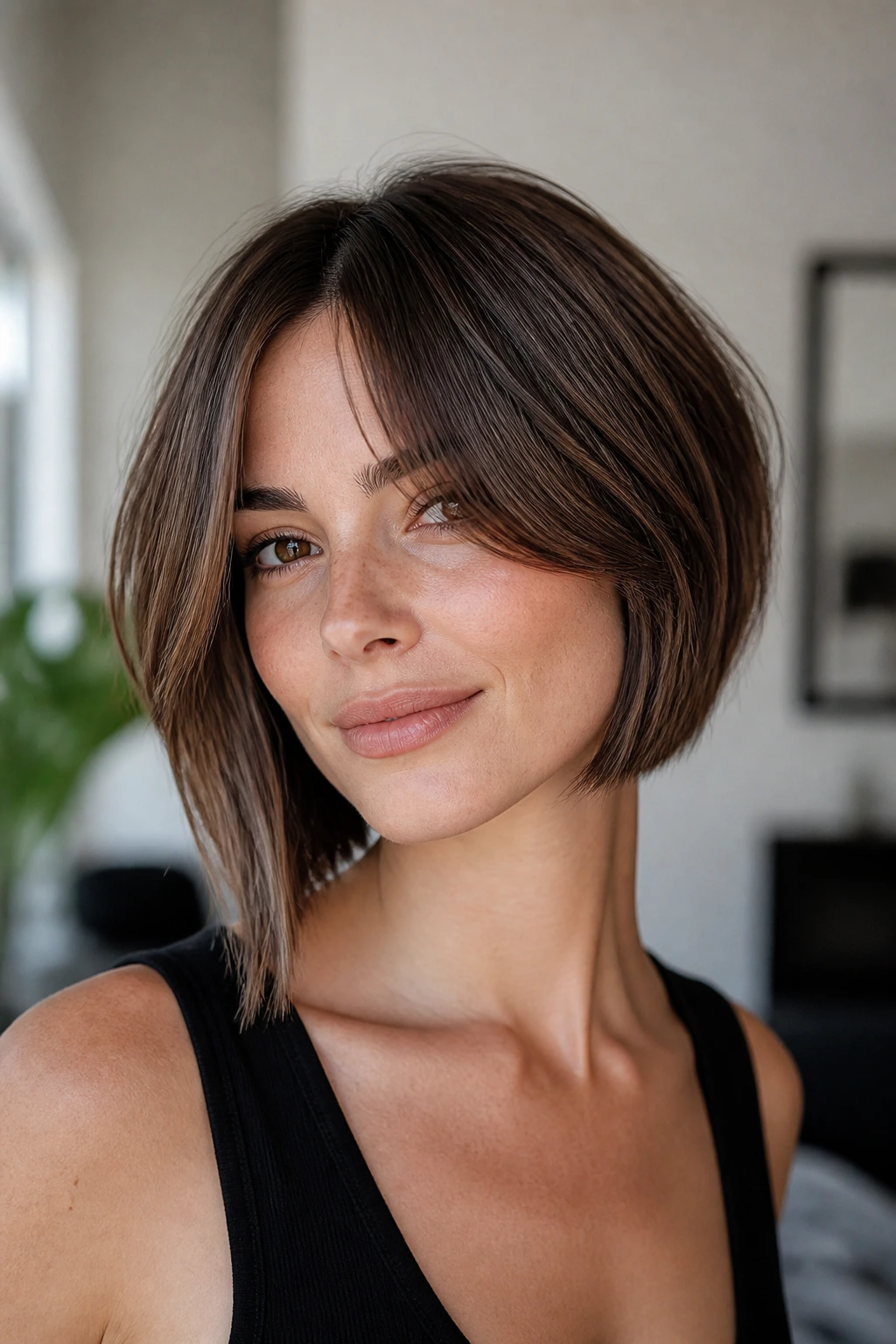
Curtain bangs can soften a strong bob without hiding the shape. On fine hair, they help the front feel a little fuller because the fringe blends into the longest pieces instead of ending in a hard line.
This cut is a good fit if you want some face framing but don’t want a heavy fringe on your forehead. The longer side of the bob can sweep into the curtain bang, which makes the asymmetry feel more natural.
A quick round-brush bend at the fringe is enough. Let the bangs open slightly in the center, then feather down into the longer side. If the bangs are cut too short or too dense, they can steal too much visual weight from the rest of the bob.
14. Feathered Bob with a Long Fringe
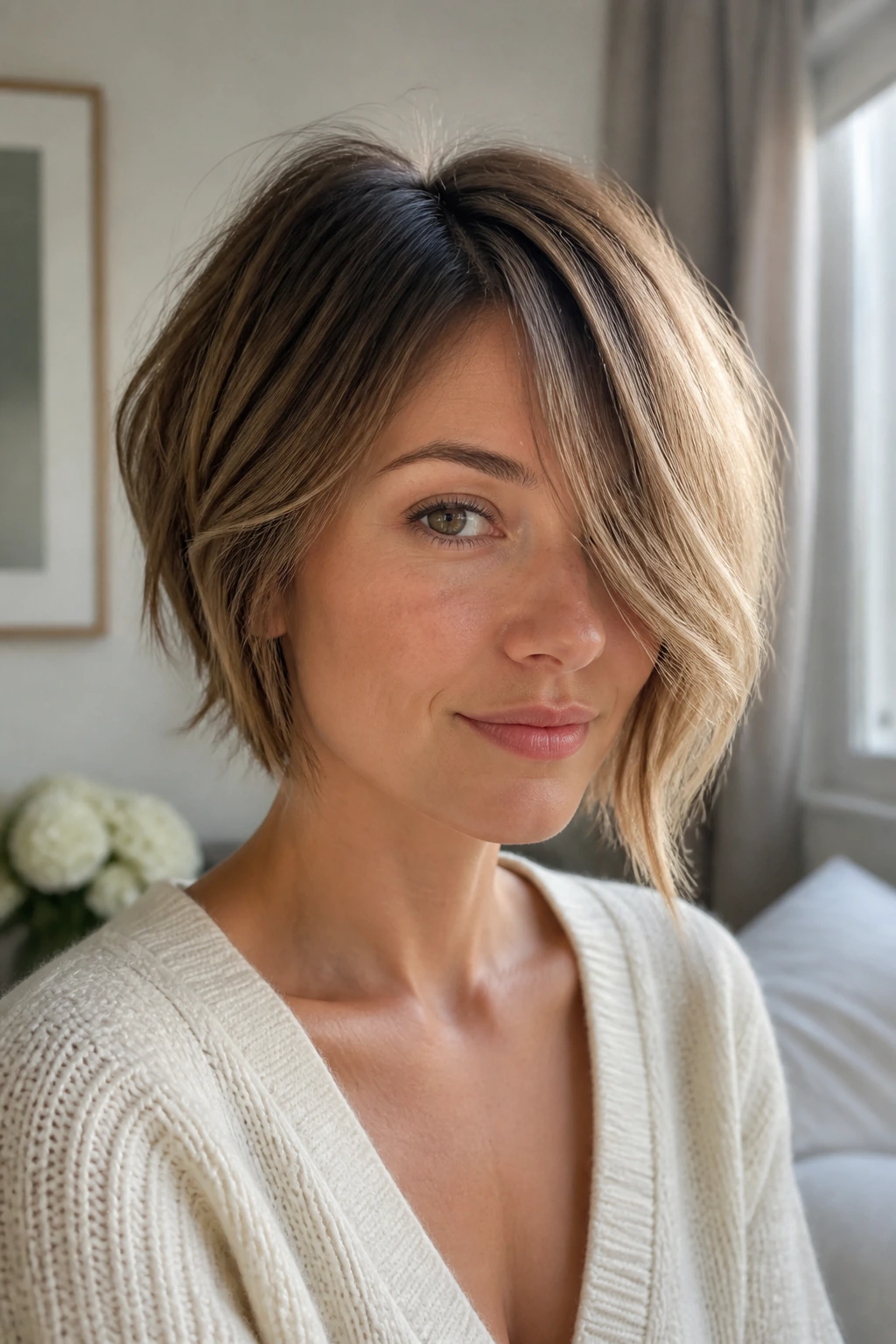
Feathering gets a bad reputation when it’s overdone. On fine hair, though, a little feathering can be useful if the cut still keeps a solid outline.
The long fringe is what saves this style. It gives the front a soft sweep, while the bob itself stays light and mobile. The asymmetry can appear in the fringe, in the front corner, or in the way one side is tucked more than the other.
Use a lightweight mousse and blow-dry the fringe forward first, then sweep it off to the side while it cools. That little bit of shaping helps the front hold its direction. If the hair is too sleek, the feathering disappears; if it’s too dry, it frays. The middle ground is where this cut lives.
15. Wavy Asymmetrical Lob
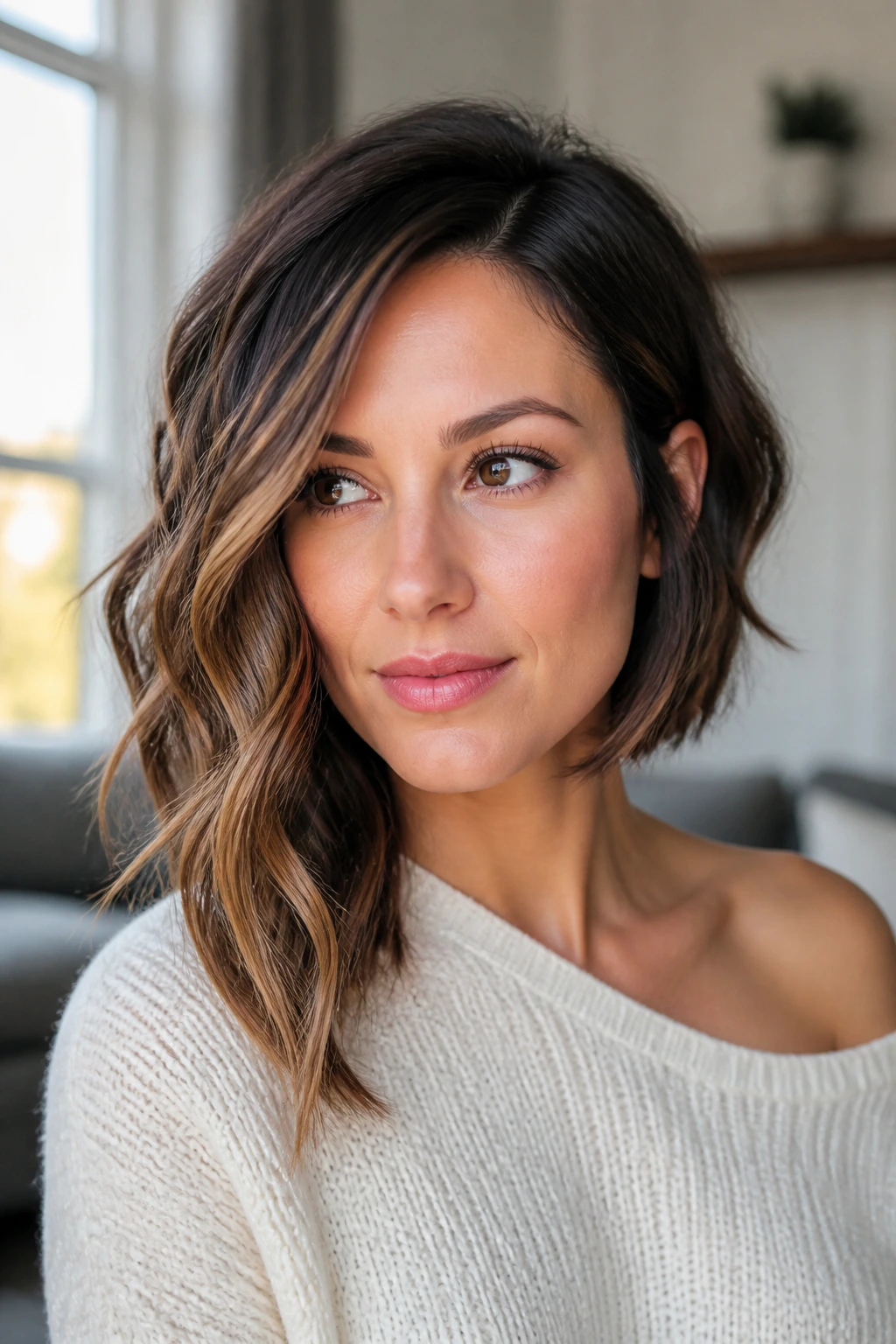
Fine hair with a natural wave usually looks best when the cut works with the bend instead of forcing it into a hard shape. A wavy asymmetrical lob does exactly that.
The longer side gives the wave room to fall. The shorter side keeps the haircut from drooping. Together they create movement that feels easy, not overworked.
Styling notes
- Use a 1-inch curling iron or a flat iron wave if your hair needs help.
- Leave the ends a little straighter for a softer finish.
- Pin the front pieces to cool if you want the bend to last.
This style is forgiving, which is rare and welcome. It’s also one of the better choices if you want something that still looks decent after a day of wear.
16. Soft Undercut Bob
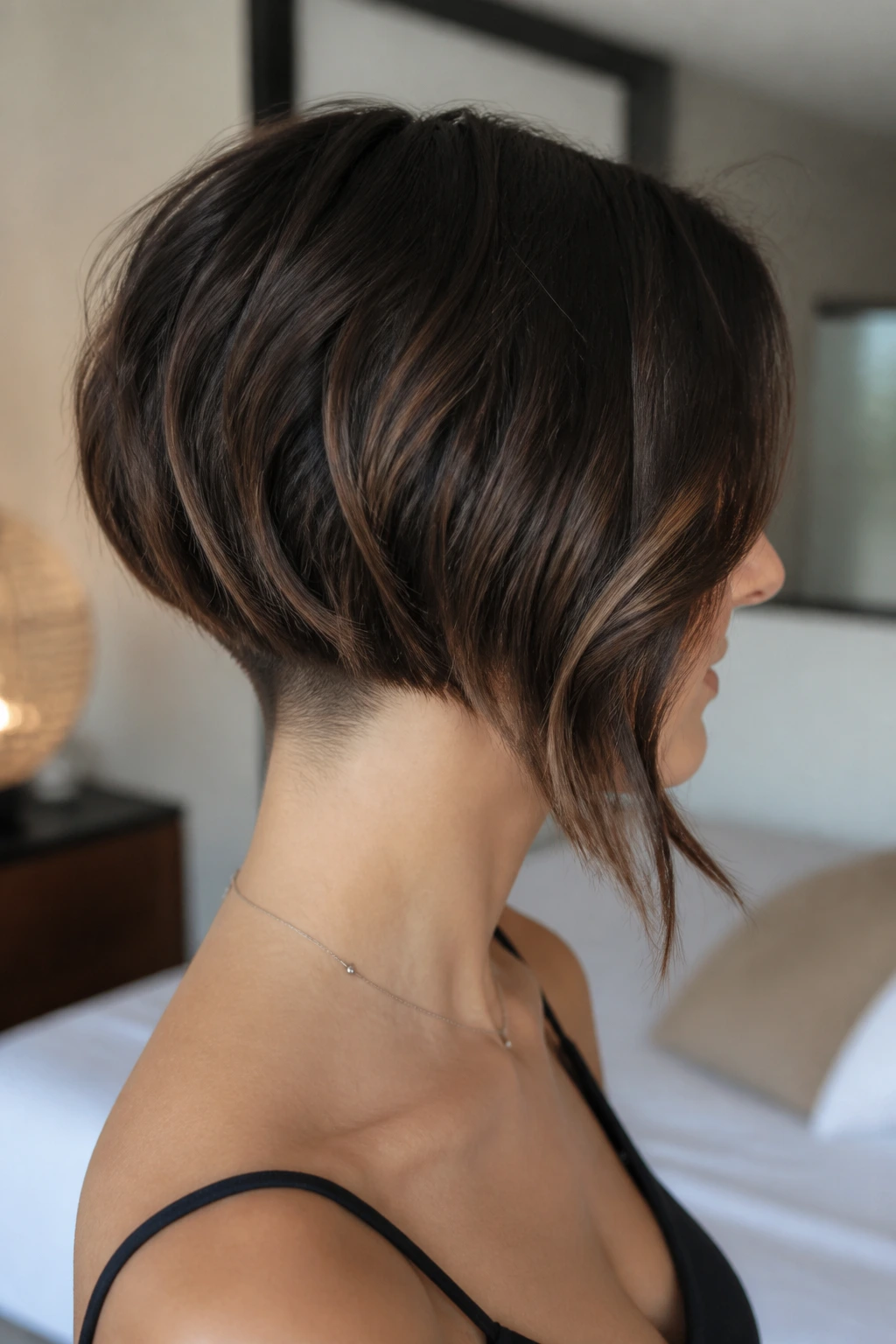
A soft undercut sounds more dramatic than it usually is. For fine hair, the goal is not to remove a huge chunk of hair. It’s to clear a little bulk at the nape so the top layer lies better and the silhouette looks cleaner.
That can be useful if your fine hair grows in a stubborn way at the back of the neck. A tiny undercut helps the bob sit close without sticking out at the bottom. The asymmetry comes from the longer front, which keeps the style from feeling too severe.
Be cautious here. Too much undercut on fine hair can expose the scalp faster than you want. Keep it discreet and ask the stylist to leave enough coverage so the neckline still looks soft.
17. Blunt Ends with One-Side Sweep
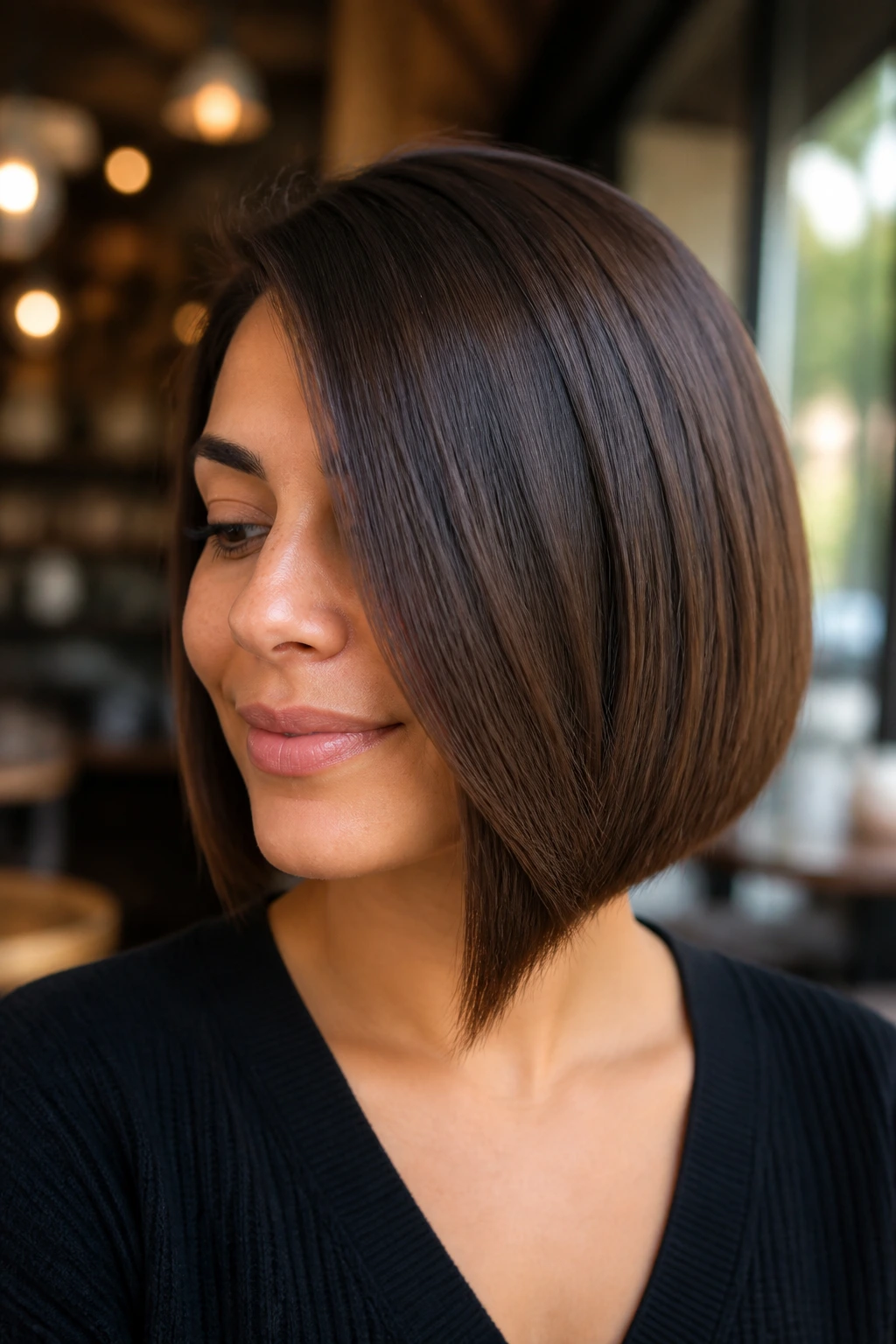
A blunt end is one of the best friends fine hair has. It makes the edge look thicker, denser, and more expensive-looking — even if the rest of the style is very simple.
Add a one-side sweep, and the haircut stops feeling static. One side can fall across the cheek or forehead while the other side stays tucked or shorter. That contrast gives you asymmetry without losing the strength of the line.
This cut is excellent if your hair is straight and you want the simplest possible morning routine. A blow-dry with a paddle brush, then a flat iron touch-up on the front sections, is enough. Don’t let the ends get over-thinned. A blunt bob is only as good as its edge.
18. Side-Heavy Bob with Face-Framing Ends

A side-heavy bob puts a little more visual weight on one side, which makes the cut feel intentional and not merely “grown out.” For fine hair, that extra weight is useful because it helps the hair look fuller where it matters most — around the face.
The face-framing ends should be soft, not stringy. You want them to land around the cheekbone, jaw, or just below, depending on how much coverage you want. The longer side can be the star, but the shorter side still needs enough length to balance it.
This style suits people who like a little drama without going too short. It can be worn smooth or wavy. I’d avoid aggressive texturizing here. The whole point is to keep the front pieces looking plush enough to hold their shape.
19. Grown-Out Pixie Bob
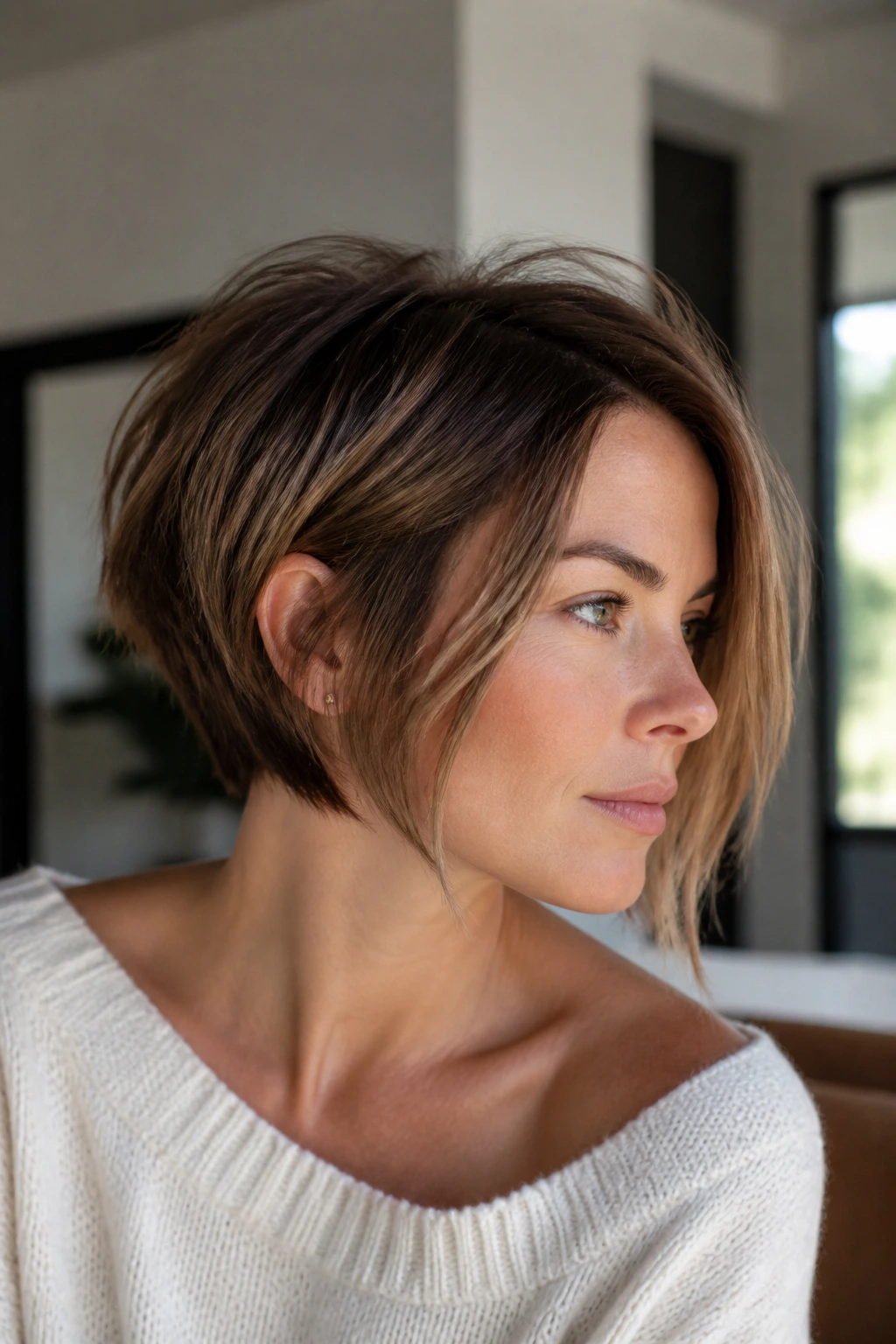
This is a good one for people who want short hair without a severe bob line. A grown-out pixie bob keeps the back tight and the front slightly longer, so the shape feels light around the ears and neck.
On fine hair, that short back can create a nice lift at the crown. The front pieces then give the style a bit of softness, which is what keeps it from reading too boyish or too sharp.
It’s a smart cut if you want something quick to style. A little root spray and a blow-dry in the direction of the part go a long way. If your hair is especially flat, the longer front pieces can be bent under with a small brush so they sit close and clean.
20. Rounded Bob with a Longer Side
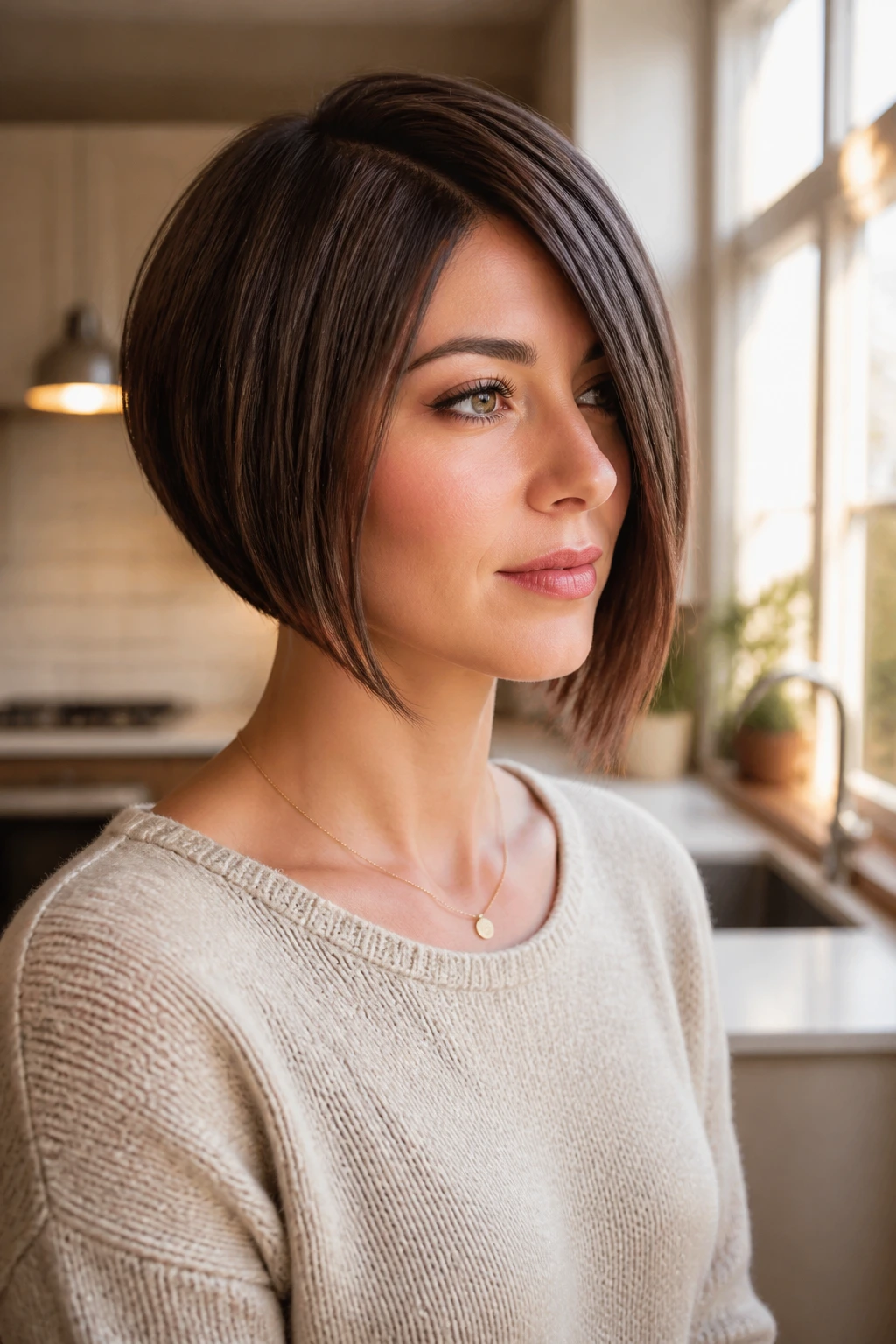
A rounded bob is all about curve. Instead of sitting boxy, it follows the shape of the head and bends inward at the ends. That can be a gift for fine hair, because the haircut looks smoother and fuller at once.
The longer side gives it a bit of edge. Without that asymmetry, the rounded shape can feel a little too uniform. With it, the style looks deliberate and current without needing a lot of work.
What to remember
- Keep the perimeter full.
- Ask for a gentle inward curve at the ends.
- Use a round brush only at the front if you want to save time.
This is one of the better office-friendly cuts on the list. It behaves.
21. Shattered Bob with Light Ends
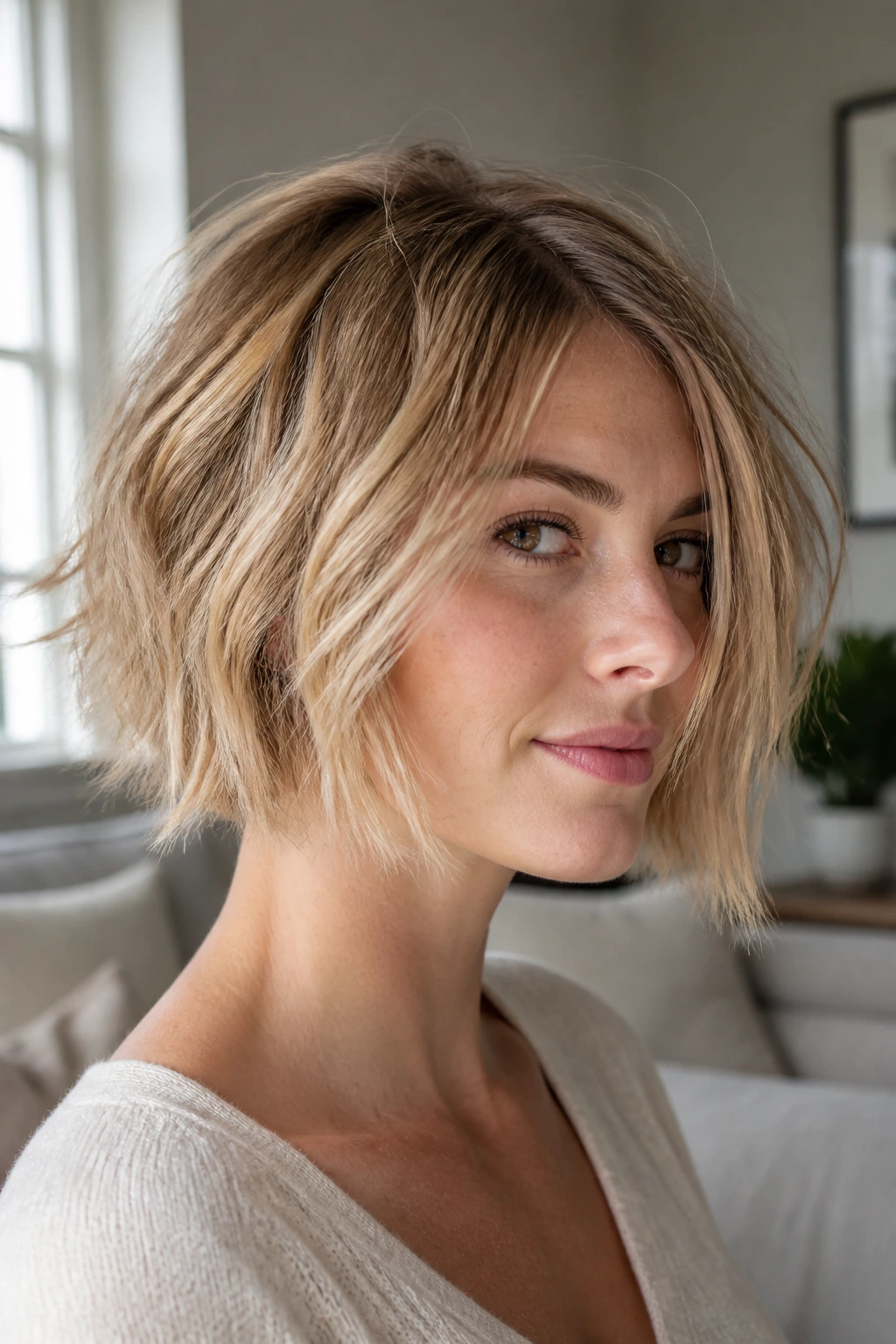
A shattered bob is not the same as a heavily layered bob. There’s a difference, and on fine hair that difference matters. Shattering should happen at the very ends and around the front, where a little separation helps the line feel less rigid.
If the stylist goes too far, the cut can look thin. So keep the perimeter clean and let the texture live in small, controlled pieces. Fine hair often looks best when it has a solid bottom and only a bit of movement on top.
This style is good for people who like a slightly undone finish. A tiny amount of matte paste on the ends can keep the pieces from sticking together. Don’t overdo it. Fine hair shows product fast, and too much can make it look like you skipped washing it.
22. Wedge-Inspired Bob
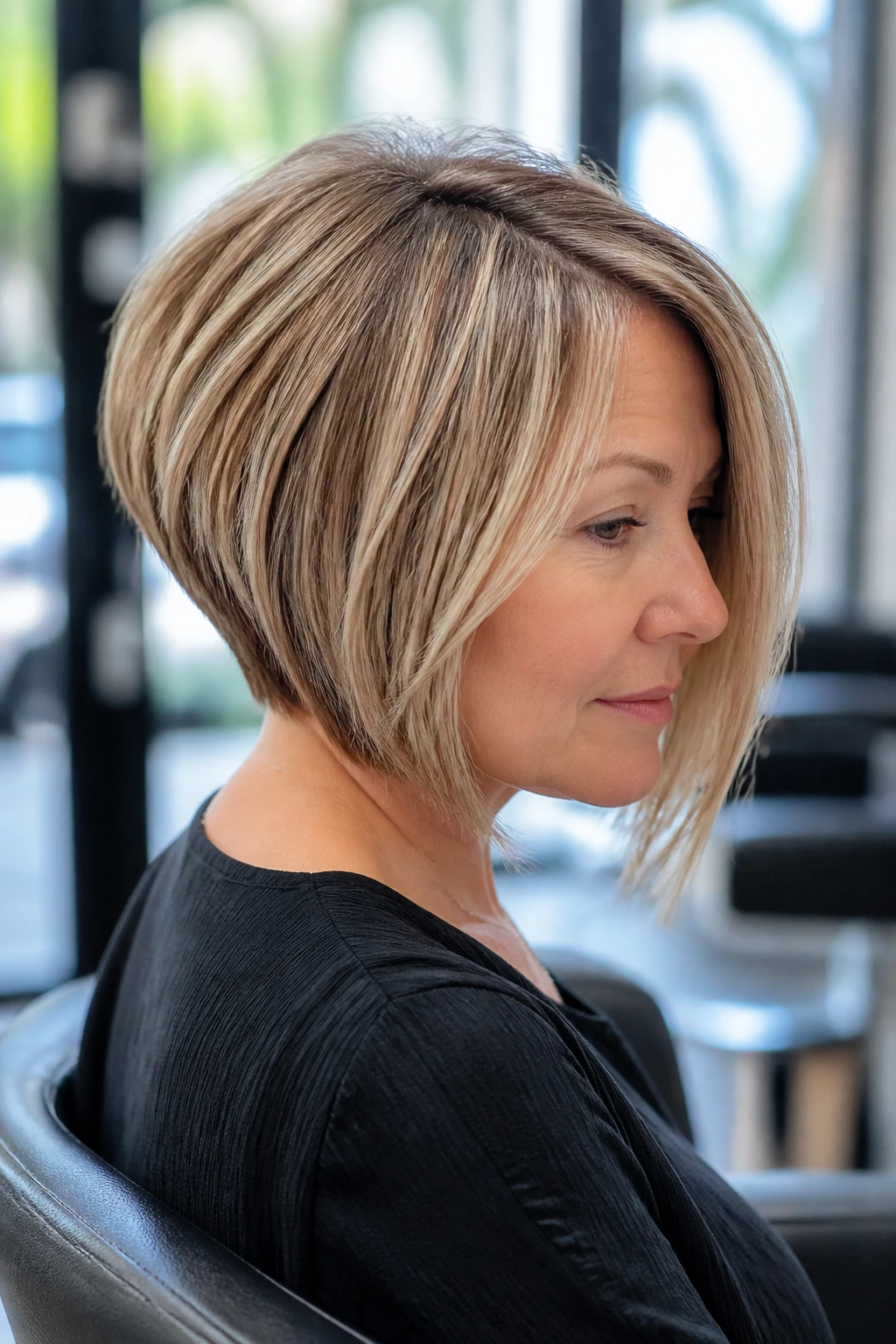
A wedge-inspired bob gives fine hair a nice lift at the back because the shape naturally angles inward and upward. It’s a little sharper than some of the softer bobs here, but it can be very flattering if your hair needs more backbone.
The asymmetry usually comes from one longer front corner or a deeper side part. That keeps the cut from feeling too retro. What you want is structure, not nostalgia.
This is a good cut if your crown tends to lie flat and your nape has a mind of its own. The shorter back helps keep everything neat. A quick root-boosting spray at the crown makes a noticeable difference, especially when the hair is freshly washed and still slippery.
23. Shoulder-Skimming Asymmetrical Cut
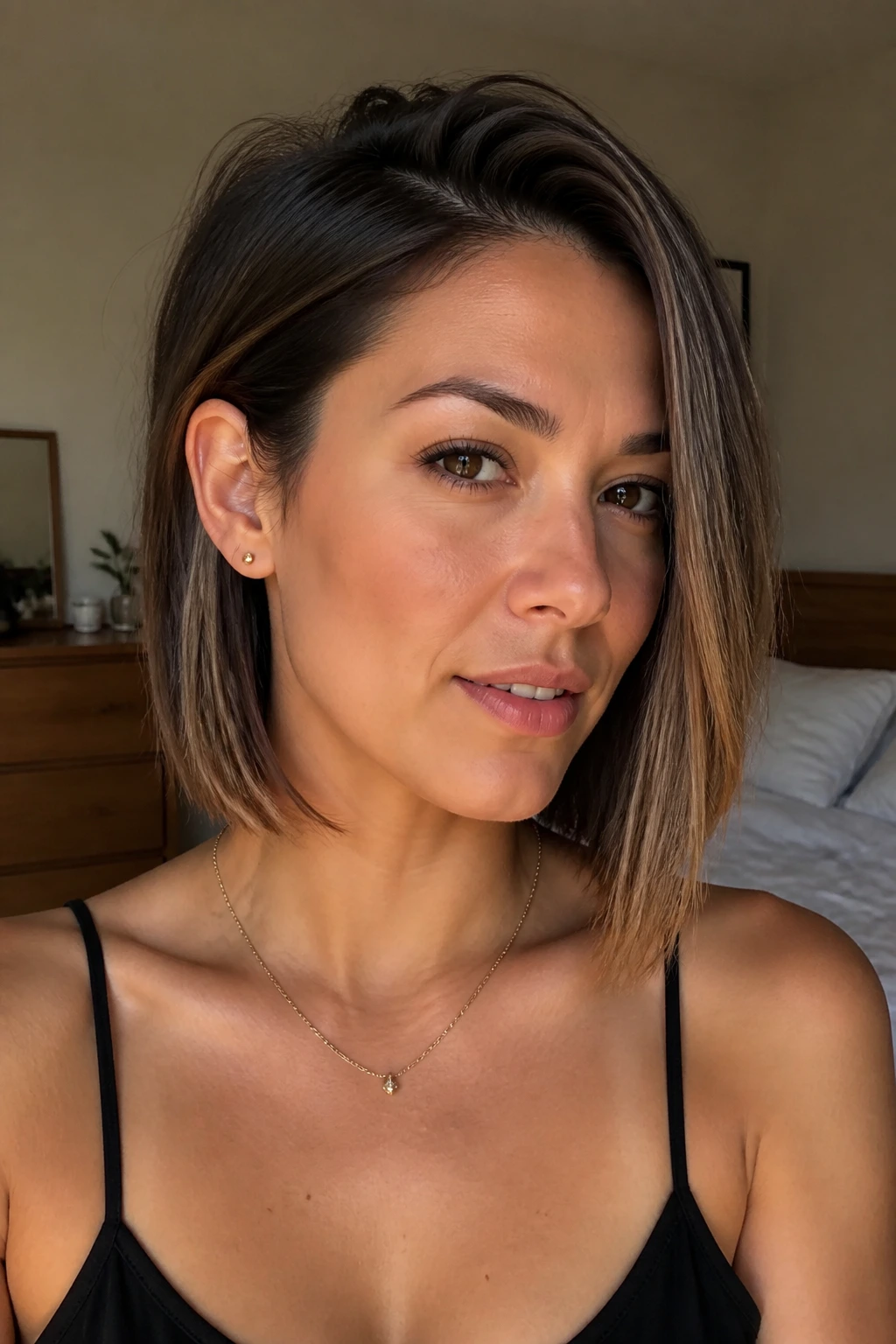
Sometimes the best haircut for fine hair is the one that doesn’t demand a big commitment. A shoulder-skimming asymmetrical bob keeps enough length to tuck behind the ear, clip up, or curl, but it still has the angled shape that gives fine hair some life.
This cut is especially useful if you’re unsure about going chin-length. The longer front pieces make the haircut feel less severe and more versatile. It also grows out gracefully, which matters more than people admit.
If your hair is straight, keep the ends blunt. If it bends naturally, let the front pieces fall a little softer. Either way, this is the kind of bob that can be dressed up with a wave or worn plain and still look finished.
24. Off-Center Part Bob
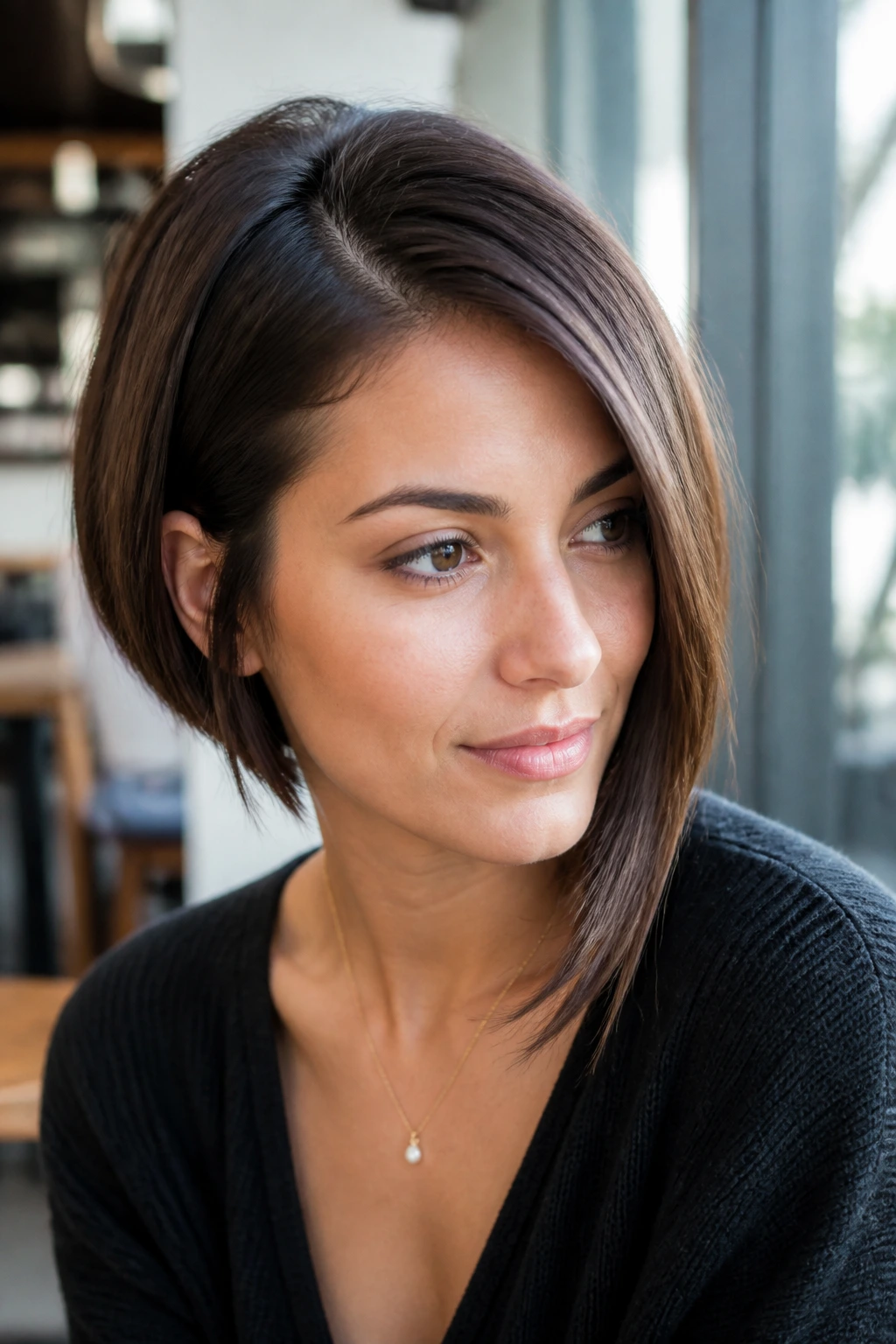
A good off-center part can do half the work for you. On fine hair, moving the part away from the middle gives the roots a little lift and keeps the haircut from looking too symmetrical or too flat across the top.
The cut itself should still support the part. That means one side can be slightly longer, or the front can sweep more heavily to one side. If the shape and the part agree with each other, the bob looks fuller and more polished.
This is one of the easiest styling changes on the list. You do not need a new haircut every time you want the effect, but a bob built around an off-center part will hold it better. A little dry shampoo at the roots can help keep the lift from collapsing.
25. Choppy Bob with a Long Fringe
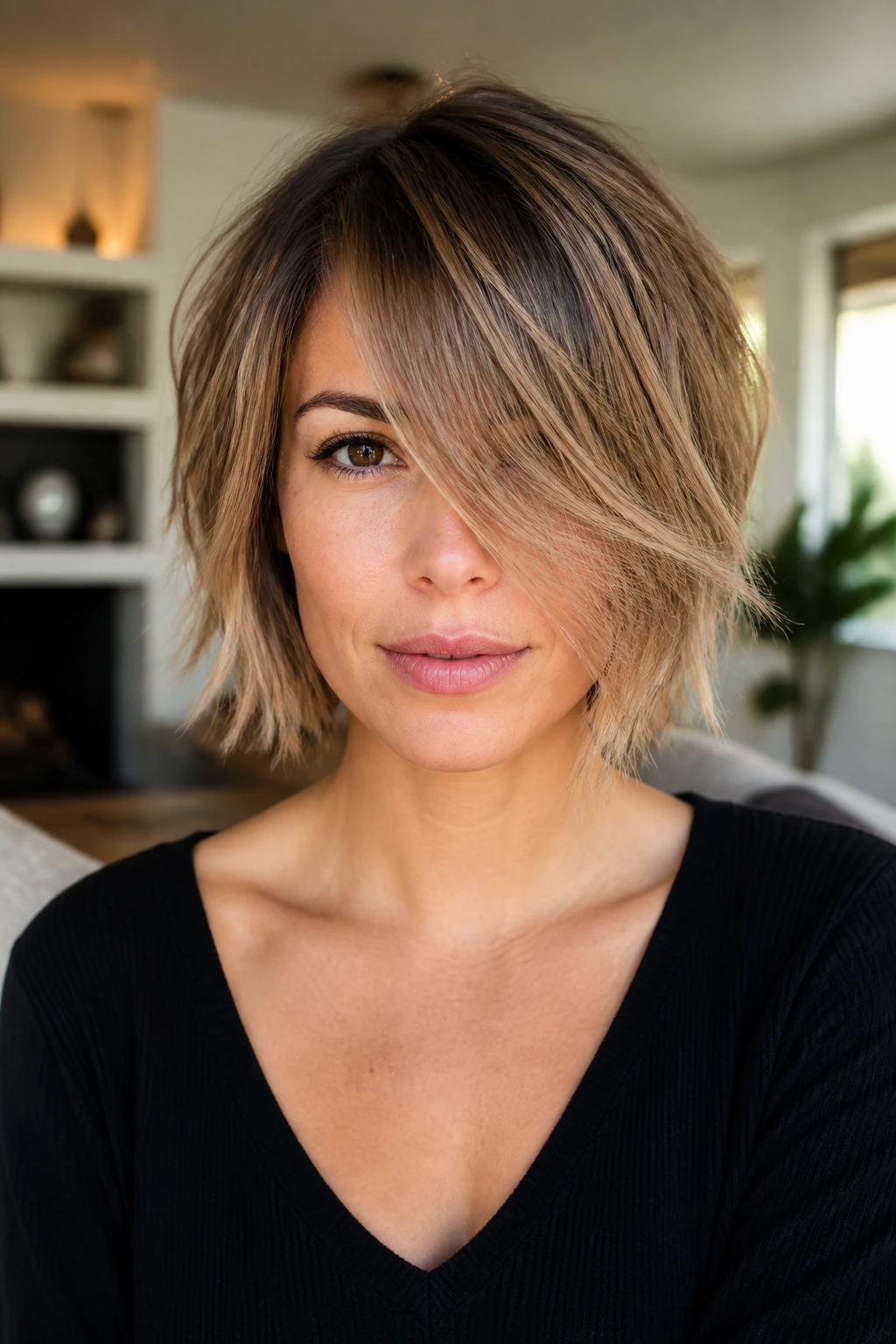
A long fringe gives fine hair a front section with real presence. It draws attention upward and keeps the cut from looking flat around the forehead, which is often where fine hair shows weakness first.
The choppy part should stay controlled. I’m talking about a few broken-up ends, not a head full of tiny pieces. One longer side can blend into the fringe while the other side stays cleaner, which creates a nice asymmetrical line without much effort.
This cut is a good match for people who like a little edge but still want softness near the face. Use a small round brush on the fringe and leave the rest alone if you can. The more you fuss with the whole head, the less the asymmetry stands out.
26. Low-Maintenance Asymmetrical Bob
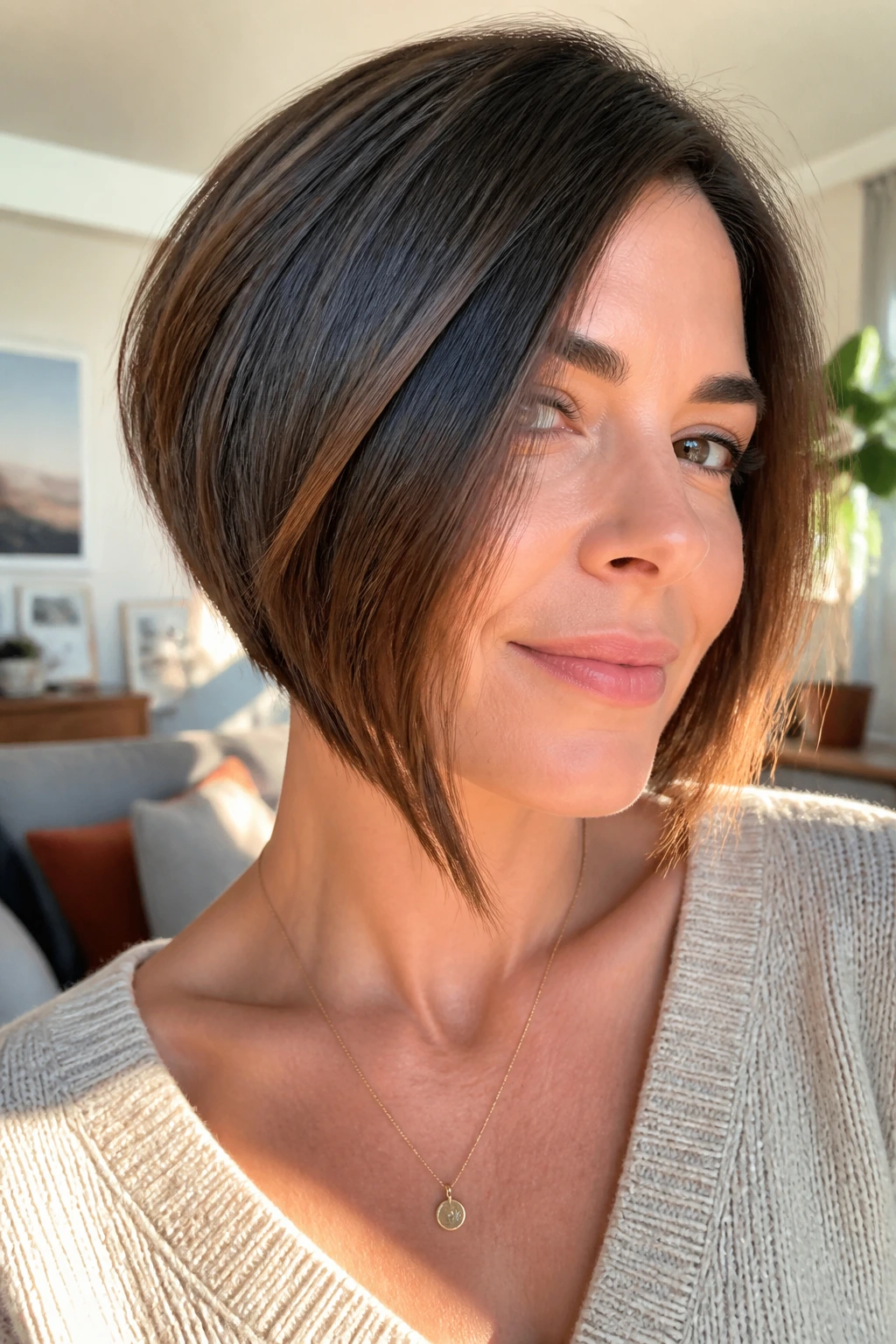
Some haircuts are meant to be styled. This one is meant to cooperate. A low-maintenance asymmetrical bob keeps the angle subtle, the layers minimal, and the outline strong enough that you can air-dry it and still look put together.
Fine hair usually prefers this kind of cut when life is busy. A small difference in length, maybe a half-inch to an inch, is enough to make the shape interesting. That way the haircut grows out slowly and doesn’t hit the “awkward” stage too fast.
If you want something practical, ask for a tidy nape, a blunt bottom edge, and just enough longer front to show the tilt. A little leave-in spray and a rough dry are often enough. Nothing fancy. That’s the appeal.
27. Curved Collarbone Bob with Internal Layers
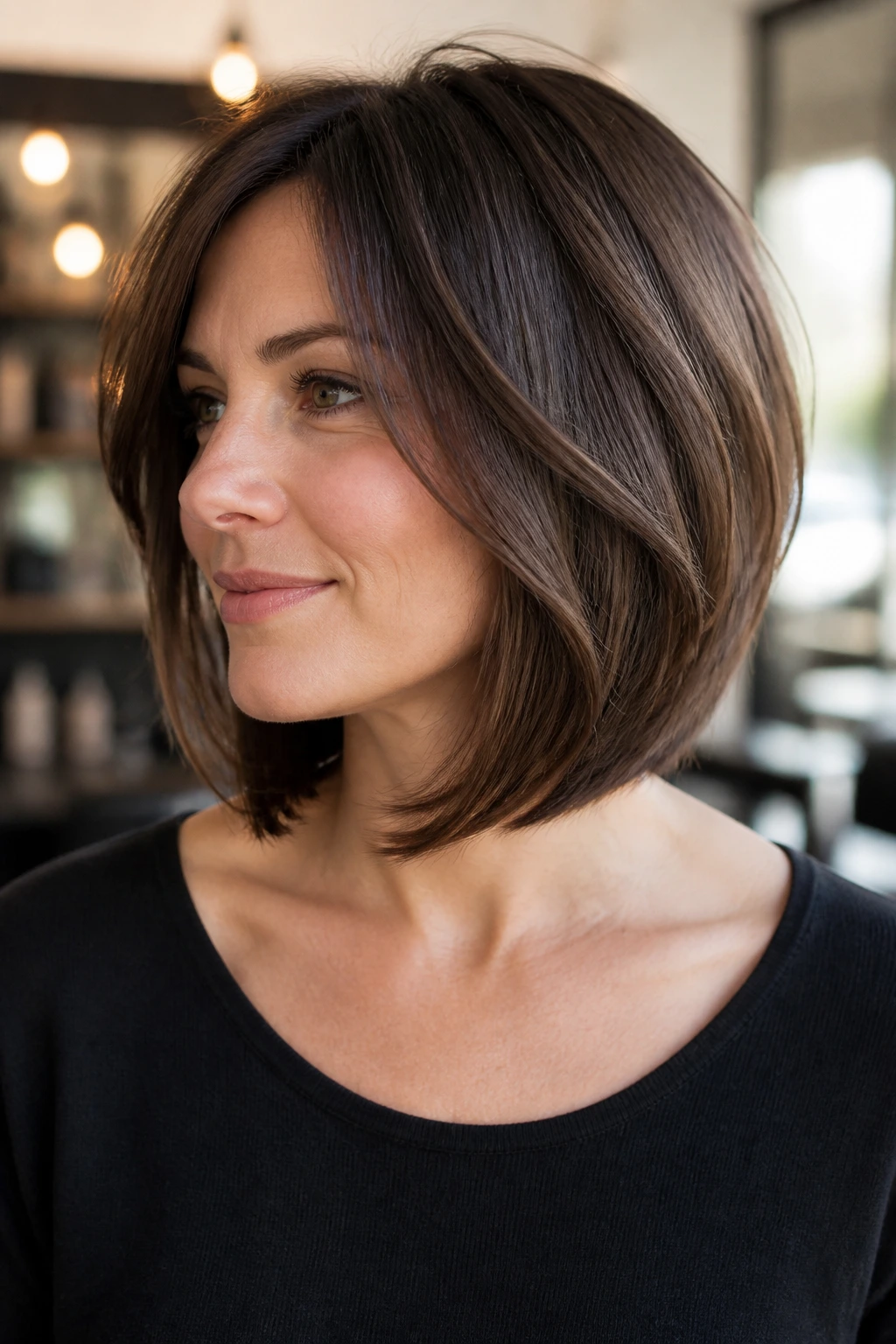
Internal layers can help fine hair move without exposing the ends. That’s the key here. Instead of cutting obvious layers that show through the perimeter, the stylist builds softness inside the shape and leaves the outside line cleaner.
The collarbone length gives the haircut room to curve inward. The asymmetry keeps it from feeling too safe or too boxy. When the hair moves, the difference between the sides becomes visible in a natural way.
This is a good option if you want body but hate choppy ends. It also works well with loose waves. A large-barrel iron — think 1¼ inches — can add bend without turning the hair into corkscrews.
28. Tapered Nape Bob
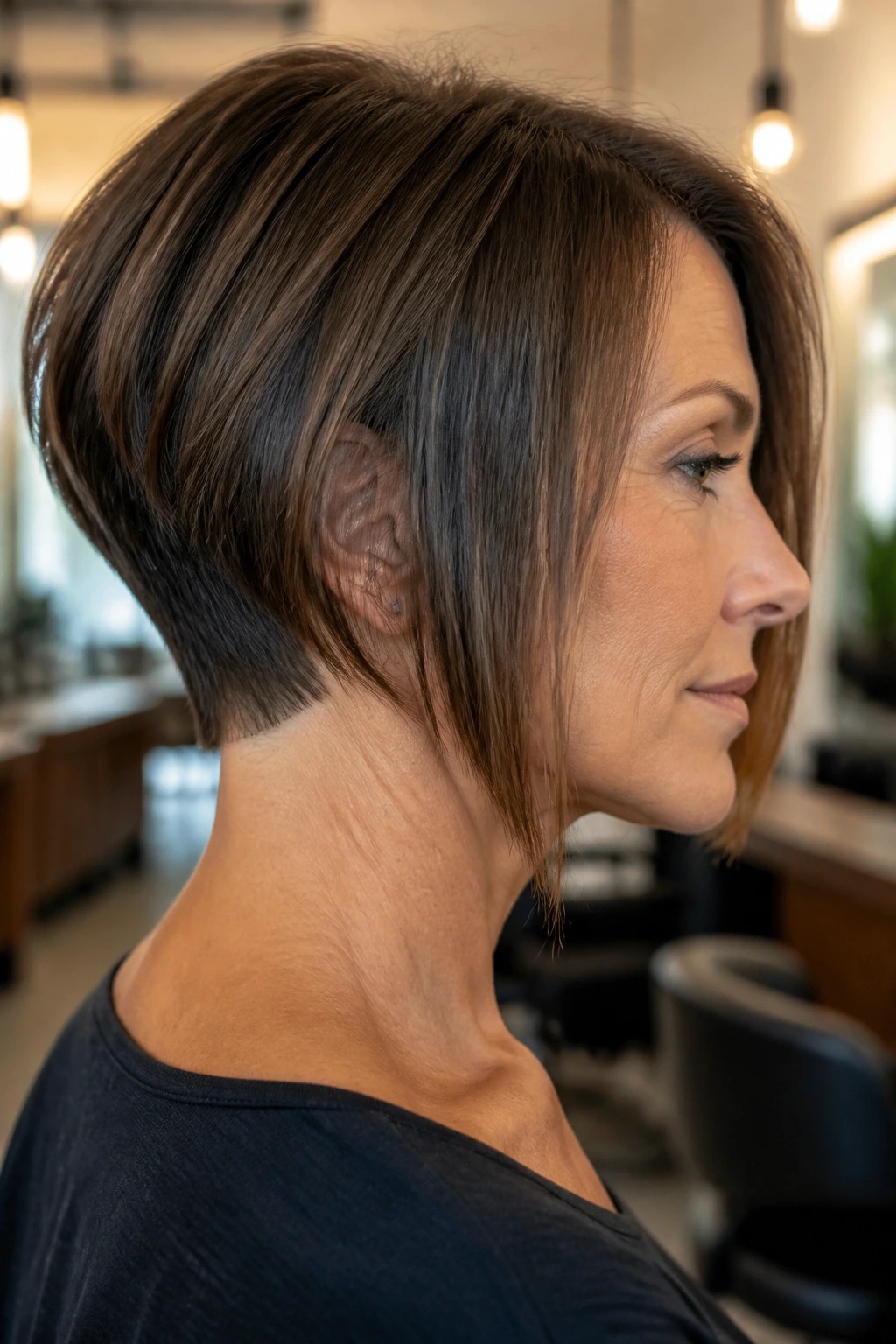
A tapered nape bob is neat in the back and fuller-looking on top. For fine hair, that can be a smart trade because it keeps the neckline light while preserving the shape where people actually notice it.
The taper should be gentle. You want the hair to sit close to the neck without looking shaved or overcut. The front can stay longer and more angled, which gives the style its asymmetrical character.
This cut is especially nice if your hair puffs out at the nape when it’s too long. The taper solves that problem fast. A small amount of smoothing cream on the back section keeps it neat, but don’t coat the whole head. Fine hair needs a light hand.
29. Softly Angled Bob for Fine Wavy Hair
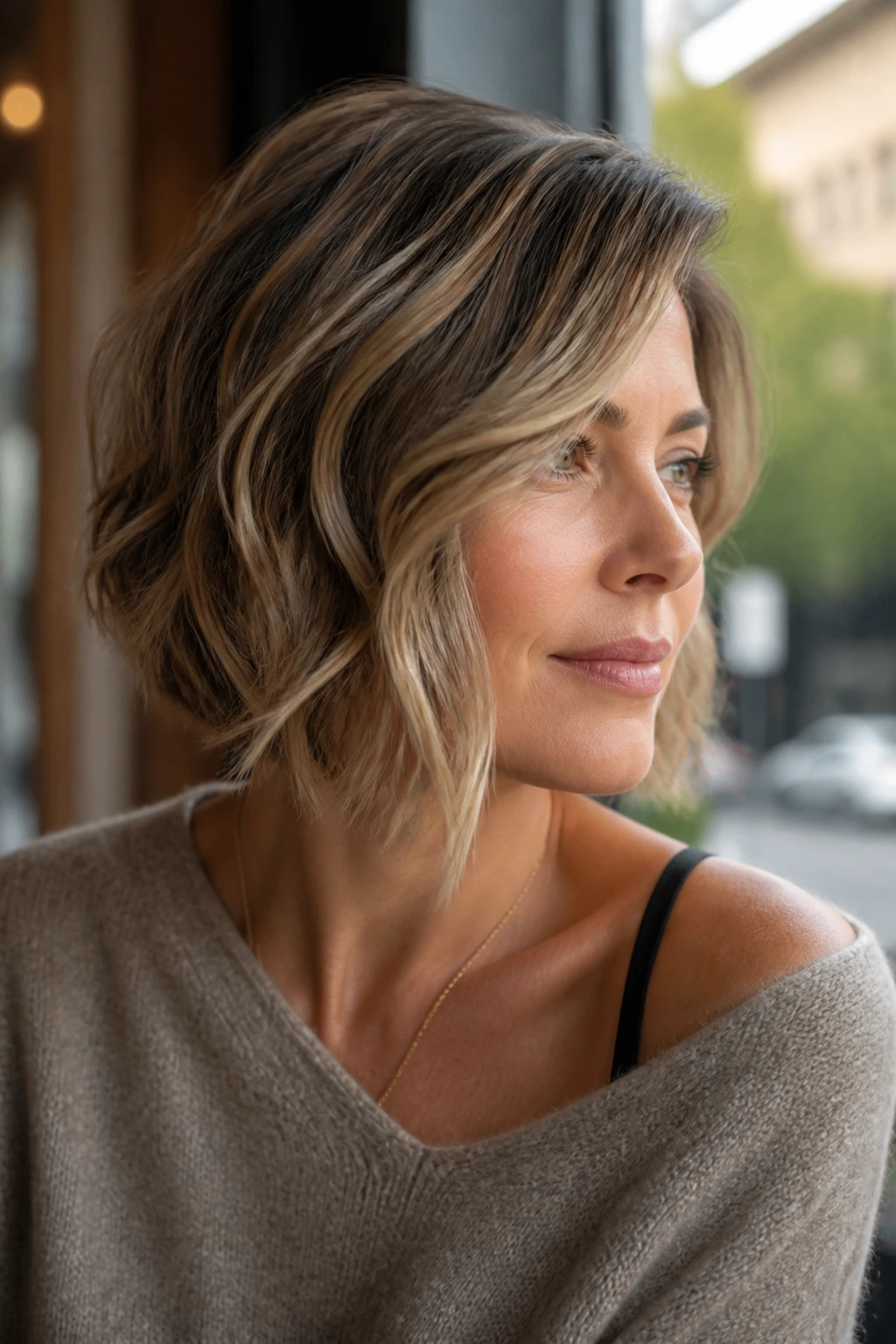
Fine wavy hair has its own rules. If you cut it too blunt and too short, it can spring up in odd ways. If you keep it too long, it can lose its shape. A softly angled bob sits in the middle, giving the wave somewhere to land.
The asymmetry doesn’t need to be loud. A slightly longer front piece on one side, plus a gentle angle from back to front, is enough to keep the wave looking intentional. This is one of the few cuts that can look better as the day goes on, especially if the wave loosens a little.
Use a curl cream or light mousse on damp hair and scrunch it once, not five times. Let the shape dry with some space. If the wave clumps too much, the asymmetry disappears. If it gets brushed to pieces, the whole bob loses its edge.
30. The Barely-There Asymmetrical Bob
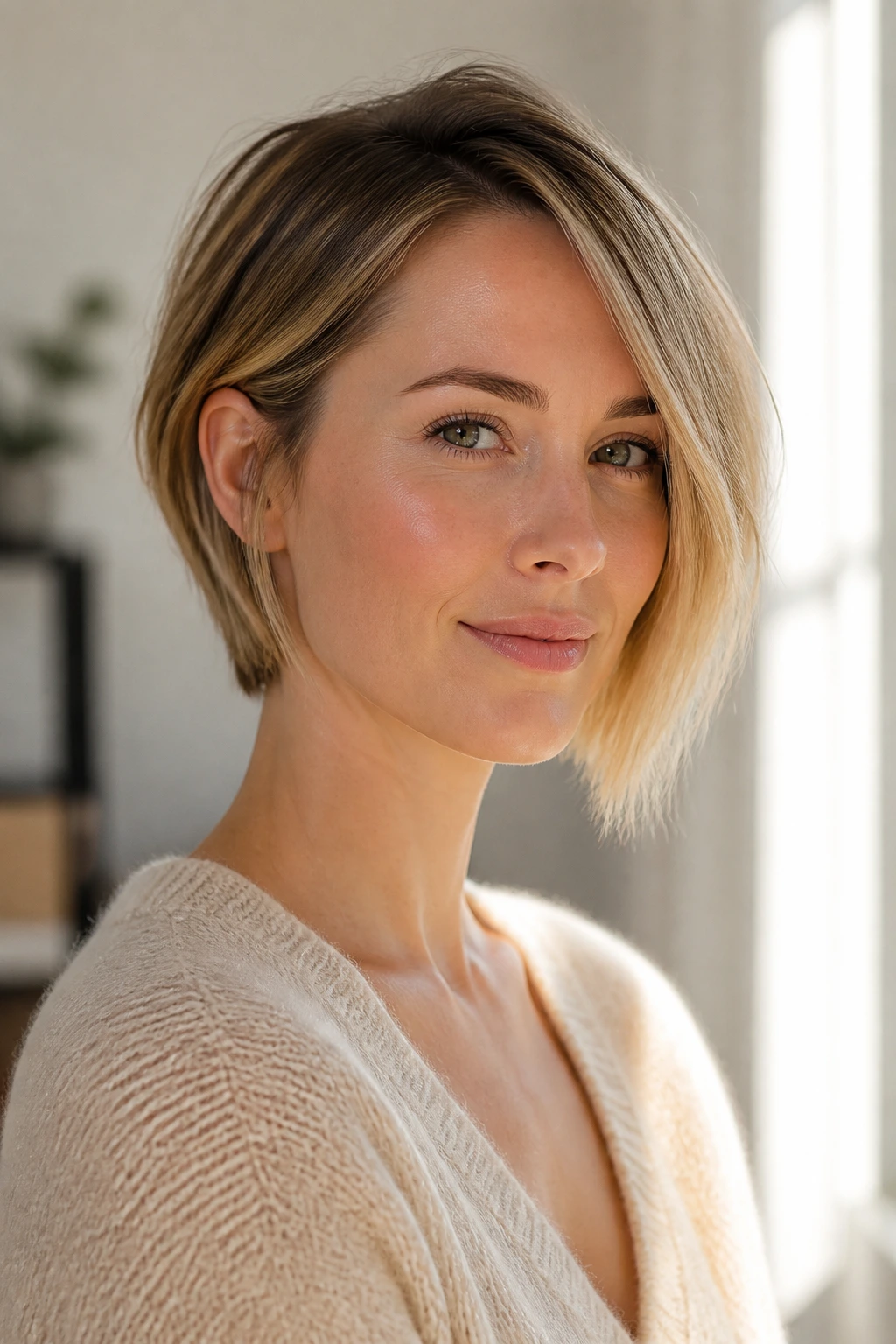
Not everyone wants a dramatic angle. Sometimes the smartest choice is the one only you notice at first, then everyone else catches on later. A barely-there asymmetrical bob keeps the cut safe for fine hair while still giving it that slight off-balance feel that makes it look fresh.
This version usually means one front corner sits a touch lower, maybe the part is a little deeper, and the back is just clean enough to keep the line strong. That’s it. No theatrical layers. No heavy texturizing. Just a haircut that respects the density you have.
I like this for people who want a subtle change and a low-risk grow-out. It’s also a good salon reference if you’ve been burned by over-layered bobs before. Ask for clean ends, a gentle front tilt, and almost no thinning through the bottom. That combination does a lot more for fine hair than people think.
Final Thoughts
Fine hair usually looks best when the cut gives it structure first and styling second. That’s why asymmetry helps so much: it changes how the eye reads the shape, and it does that without asking for a ton of product or time.
If you’re deciding between two versions, choose the one with the cleaner perimeter. Fine hair is almost always kinder to blunt edges, subtle angles, and small differences in length than it is to soft, heavily thinned ends. A little restraint goes a long way.
Bring photos to the salon, yes, but bring notes too. Say how much styling you’ll actually do, whether you wear a side part, and whether your hair gets flat at the crown or puffy at the neck. Those details matter more than the mood of the photo on your phone.
