



Fine hair and burgundy are a smarter match than most people think. The right shade adds depth along the perimeter, and the right bob keeps the ends from looking see-through by the time the day is done. Put them together and you get shape, shine, and a little more visual weight without asking your hair to become something it isn’t.
Short doesn’t mean sparse.
Burgundy bob haircuts for fine hair work best when the cut does the heavy lifting. A blunt line at the jaw, a soft A-line, or a little graduation in the back can make the whole style read fuller, while heavy texturizing usually does the opposite. I’ve seen plenty of fine strands collapse after a “choppy” cut that sounded flattering on paper and looked frayed in daylight. Not the move.
The color matters too. Burgundy lives in that red-violet family that catches light in a richer way than flat brown or muddy ash, so the bob reads denser even when the hair itself is delicate. A good gloss keeps it from going dull, and a clean cut keeps it from going wispy.
The 18 cuts below lean on those strengths in different ways. Some are sharp and crisp, some are softer around the face, and a few are for the person who wants movement without giving up the feeling of density. The common thread is simple: they all make fine hair look deliberate, not fragile.
1. Classic Burgundy Bob for Fine Hair
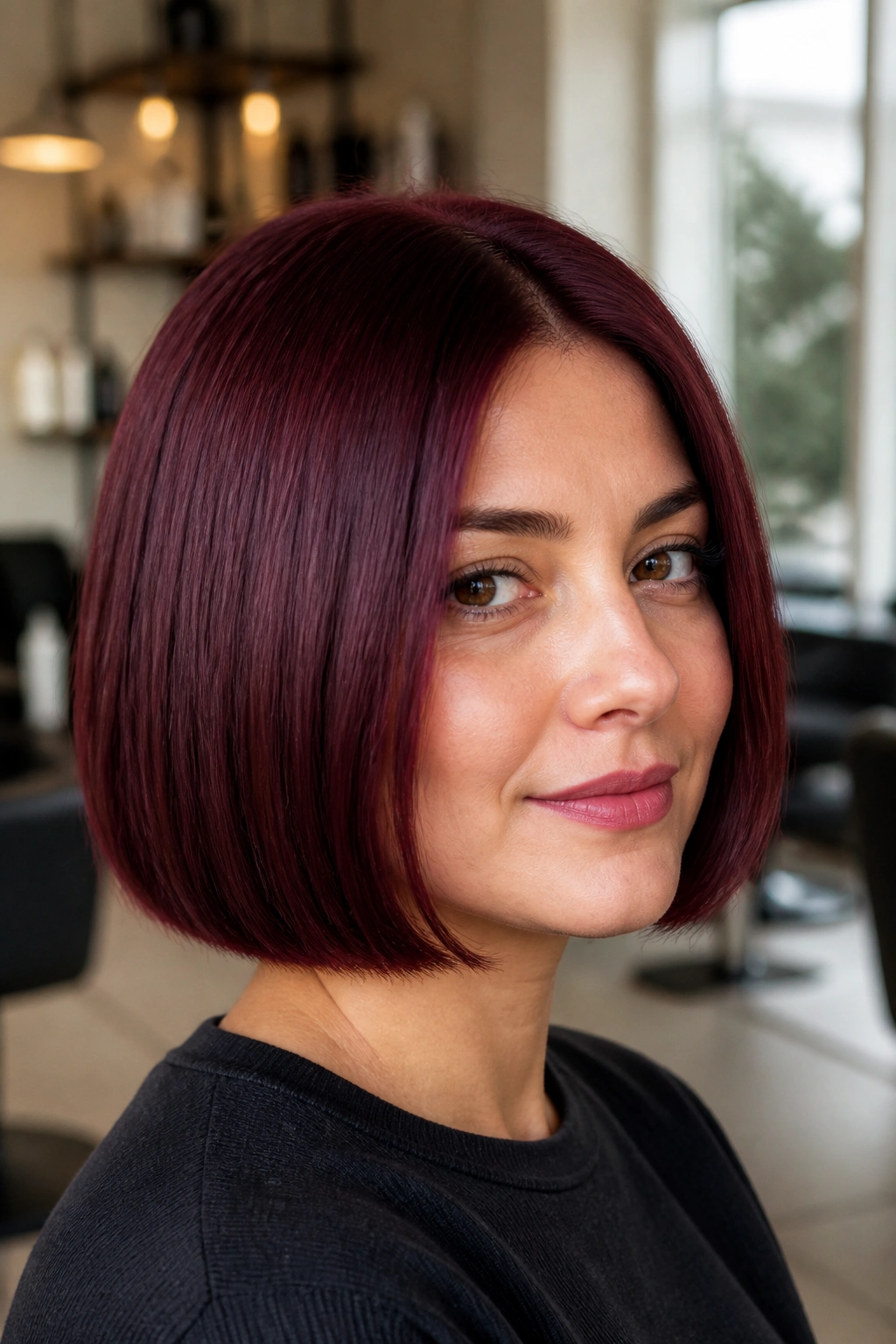
This is the one I’d start with if you want the safest win. A classic burgundy bob for fine hair usually hits somewhere between the jaw and just below it, with a blunt or nearly blunt edge that keeps every strand working for the shape.
What to ask for at the salon
- A one-length outline with the weight kept at the bottom.
- A soft bevel through the ends, not a choppy finish.
- Minimal texturizing near the perimeter so the line stays full.
- A length that clears the jaw by a half-inch or so if your hair tends to flip awkwardly.
That blunt edge is the whole point. Fine hair can look thin fast when the ends are sliced up too much, and a cleaner perimeter gives the eye something solid to land on. Burgundy helps here because the shade adds depth right where the bob needs it most.
Style it with a root-lift mousse, rough-dry until about 80 percent dry, then smooth the top with a round brush or a flat brush. Keep the finish soft, not frozen. If the ends look see-through, cut them shorter rather than adding more layers.
2. Jaw-Length French Bob with Soft Fringe
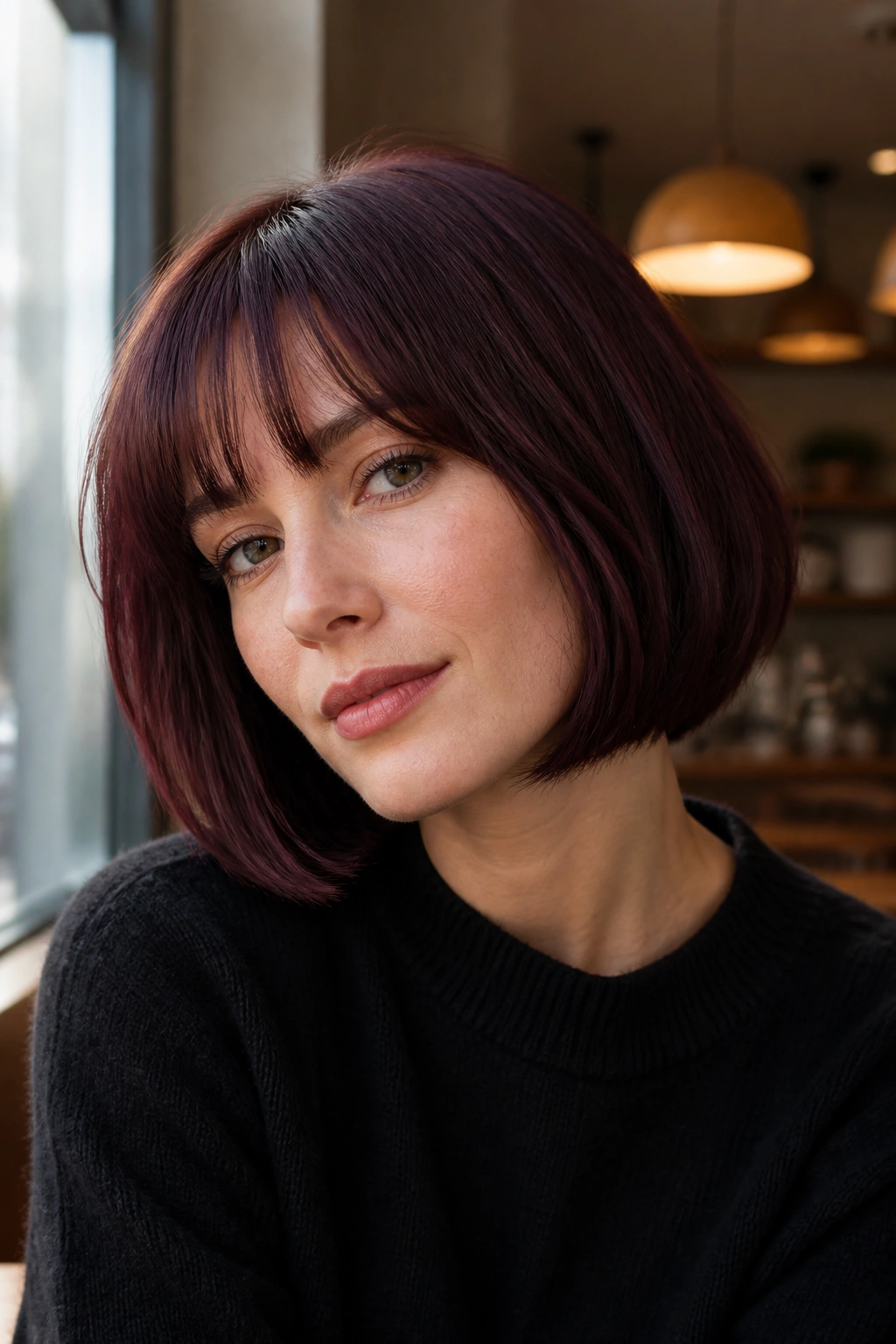
The French bob has a little attitude, which is exactly why it suits fine hair. Cut right at the jaw with a soft fringe grazing the brows, it creates a neat frame around the face and keeps the whole shape feeling compact instead of limp.
What I like about this version is the balance. The fringe adds a visual line up front, so your hair doesn’t have to rely on sheer bulk to look full. Burgundy makes the effect even better because the darker tone gives the top section more presence, especially when the light hits it at an angle.
Keep the fringe soft. Heavy bangs on fine hair can split and stick, which is a headache no one needs. Ask for a fringe that can be pushed to either side on lazy days, and keep the ends of the bob slightly beveled so they don’t sit like a hard shelf.
A little air-dry cream and a quick bend with a 1-inch brush are usually enough. This cut should look a touch imperfect, not styled to death. That little looseness is what gives it charm.
3. A-Line Burgundy Bob with a Longer Front
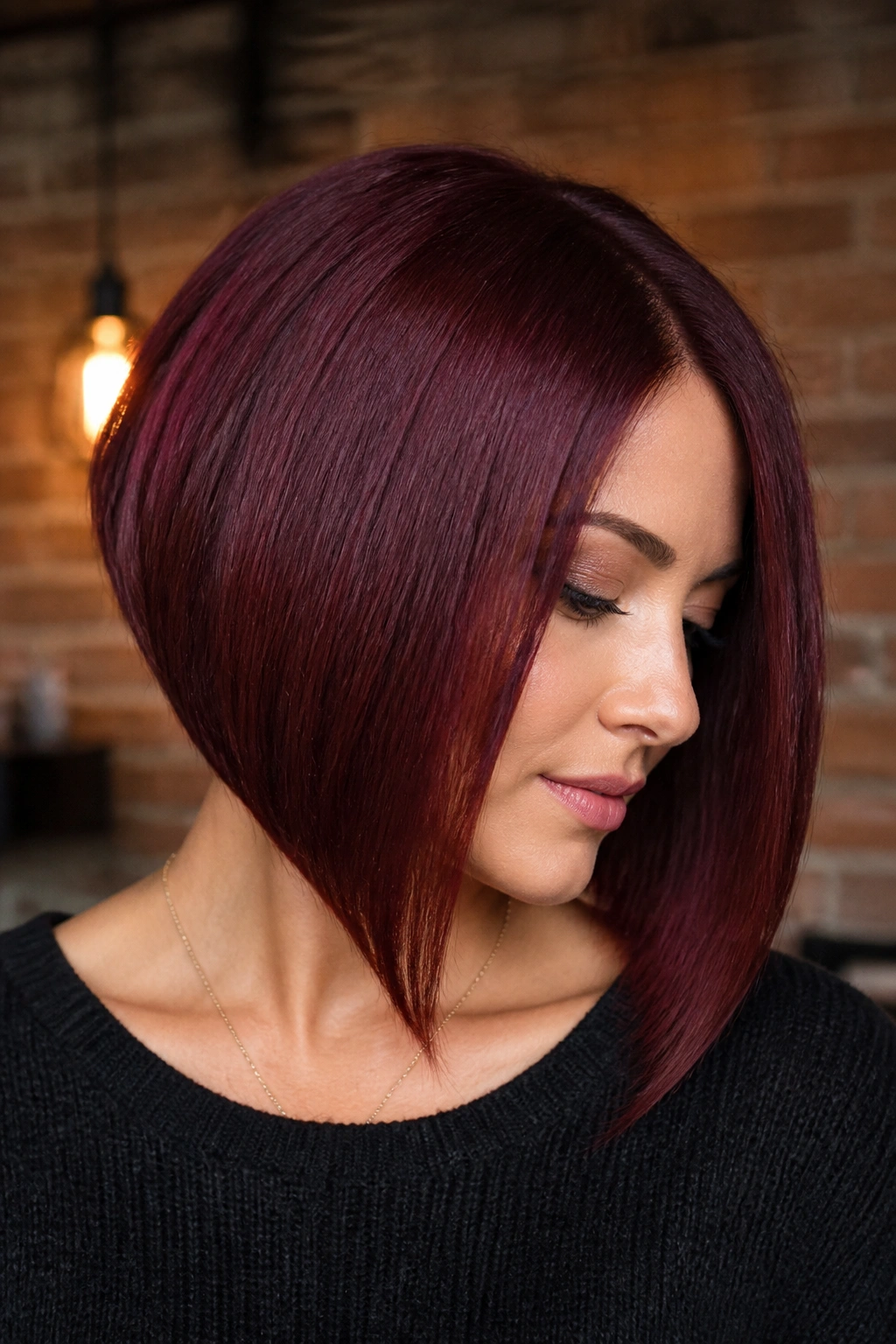
Compared with a straight blunt bob, the A-line shape gives fine hair more movement without sacrificing weight. The back sits a bit shorter, the front drifts longer, and that diagonal line makes the whole haircut look more intentional and more substantial.
That front length matters. When the front pieces skim the chin or drop just below it, they create two clean panels that make the hair look fuller than it is. Burgundy does its part by adding richness through the longer front sections, which keeps the shape from looking flat or one-note.
Who this flatters best
- People with a flatter nape who want a little lift in back.
- Anyone who likes tucking one side behind the ear.
- Oval, round, and heart-shaped faces.
- Fine hair that needs shape more than layers.
Ask your stylist to keep the graduation subtle. Too steep and it starts to look dated. Too soft and you lose the angle. The sweet spot is a gentle slope that still leaves enough weight through the front to look dense on purpose.
4. Layered Italian Bob with Soft End Movement
The trick is restraint.
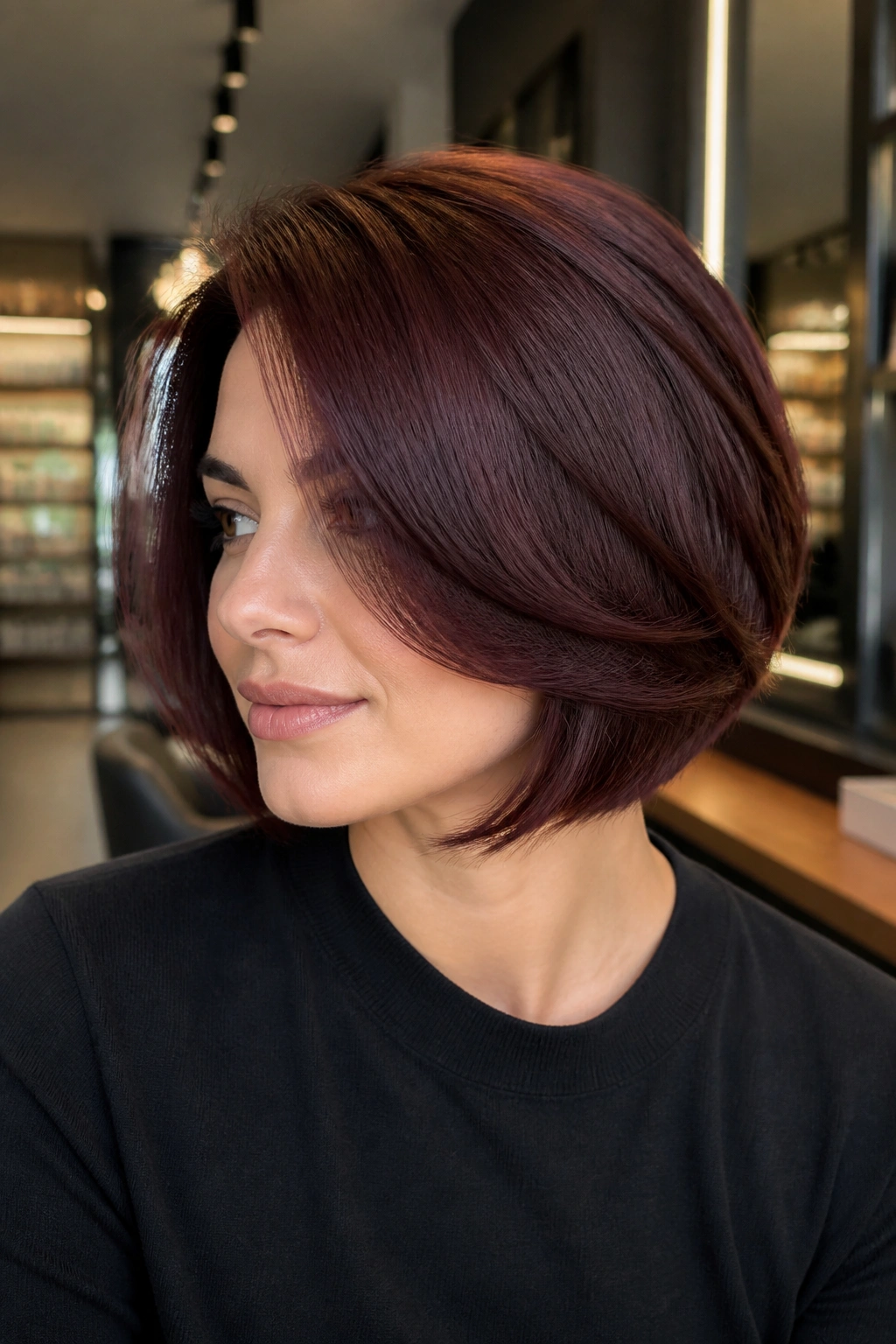
An Italian bob can work beautifully on fine hair, but only when the layers are kept long and quiet. Think soft internal movement, not feathering. Think polish, not shredding the ends into pieces that look airy in the mirror and thin by lunchtime.
Burgundy gives this cut a rich surface, and that matters because the Italian bob is about shape more than drama. A deep wine shade or a cherry-burgundy glaze makes the rounded outline look smoother, especially if you blow it out with a medium round brush. The cut should keep enough mass at the bottom so the hair doesn’t collapse into a wispy triangle.
I’d avoid asking for anything too piecy here. Fine hair doesn’t need a lot of visual noise. It needs a strong base, a little bend at the ends, and maybe a soft side part if your crown likes to go flat. That’s it. Simple usually wins.
5. Chin-Length Burgundy Bob with a Side Part
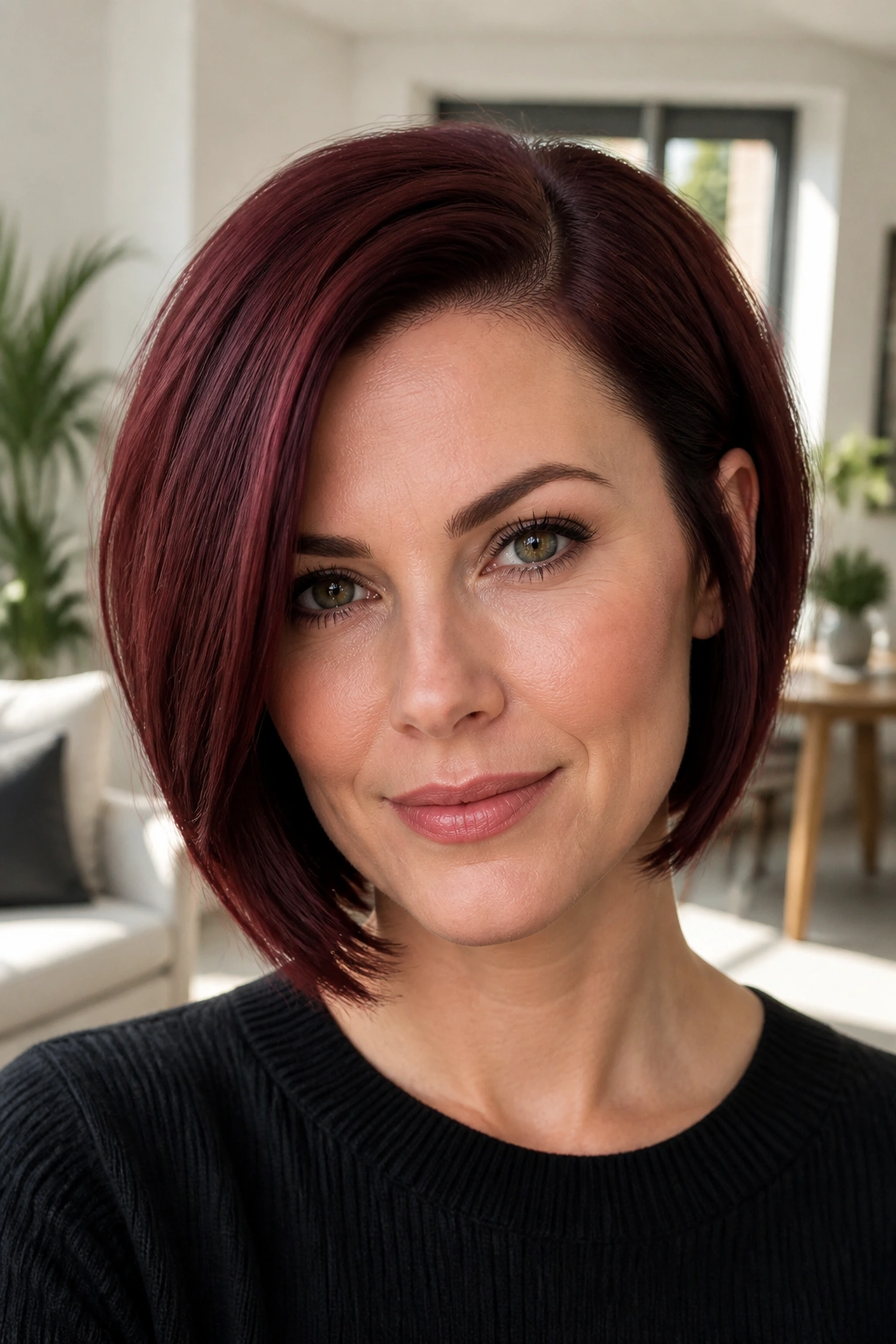
Can a side part make fine hair look fuller? Yes, if the cut is built for it.
A chin-length burgundy bob with a side part shifts the weight away from the center line, which means the hair doesn’t split down the middle and expose the scalp quite as much. The longer side gets a little more lift, the shorter side sits neatly near the cheekbone, and the whole thing feels more alive.
How to wear it
- Blow-dry the part in place while the roots are damp.
- Lift the heavier side with a small round brush for 20 to 30 seconds.
- Tuck the smaller side behind one ear if you want a cleaner line.
- Use a light mist of flexible spray, not a stiff helmet finish.
This cut is one of my favorites for people who don’t want bangs but still need some structure around the face. The burgundy shade helps because it gives the top section more visual depth, especially where the part opens up. If your hair naturally falls to one side anyway, this is the kind of cut that stops fighting it and starts using it.
6. Micro Bob in Deep Merlot
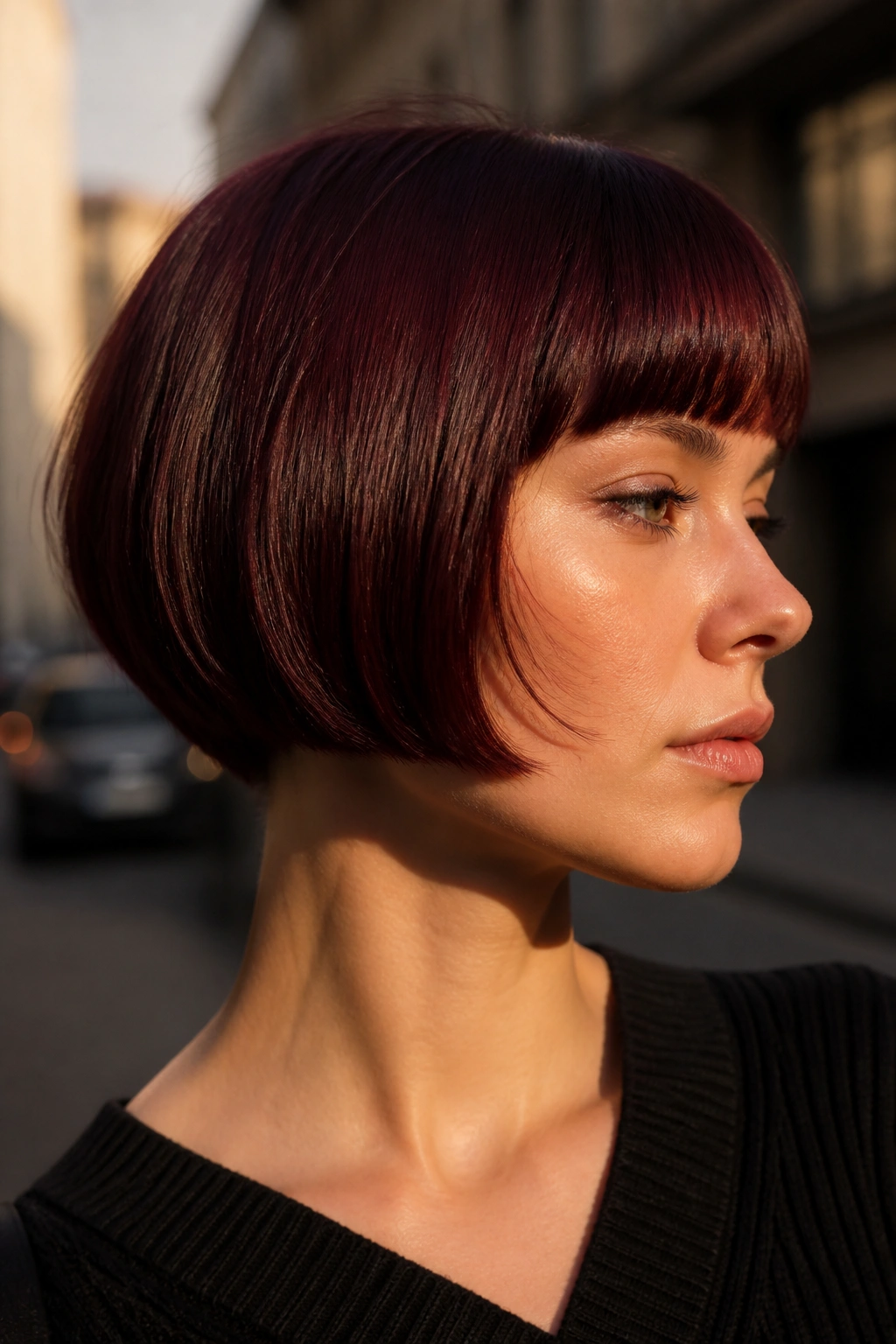
If your hair collapses the second it gets past the collar, go shorter. A micro bob in deep merlot can be one of the best moves for fine hair because it keeps the ends close to the head, where they can hold shape instead of hanging weakly.
This cut usually sits between the ear and jaw, with a crisp outline and almost no extra fluff. It looks modern when the edge is clean and the color is rich. Merlot tones work especially well because they have enough darkness to deepen the silhouette, but they still show shine when the light hits.
It isn’t the right call for everyone. A very short bob puts the face on full display, so if you like hair to soften your features, you may want a little more length. Still, if you want strong shape and easy styling, this one is hard to argue with.
Best for: strong jawlines, fine straight hair, and anyone tired of ends that look tired before breakfast.
7. Textured Bob with Invisible Layers
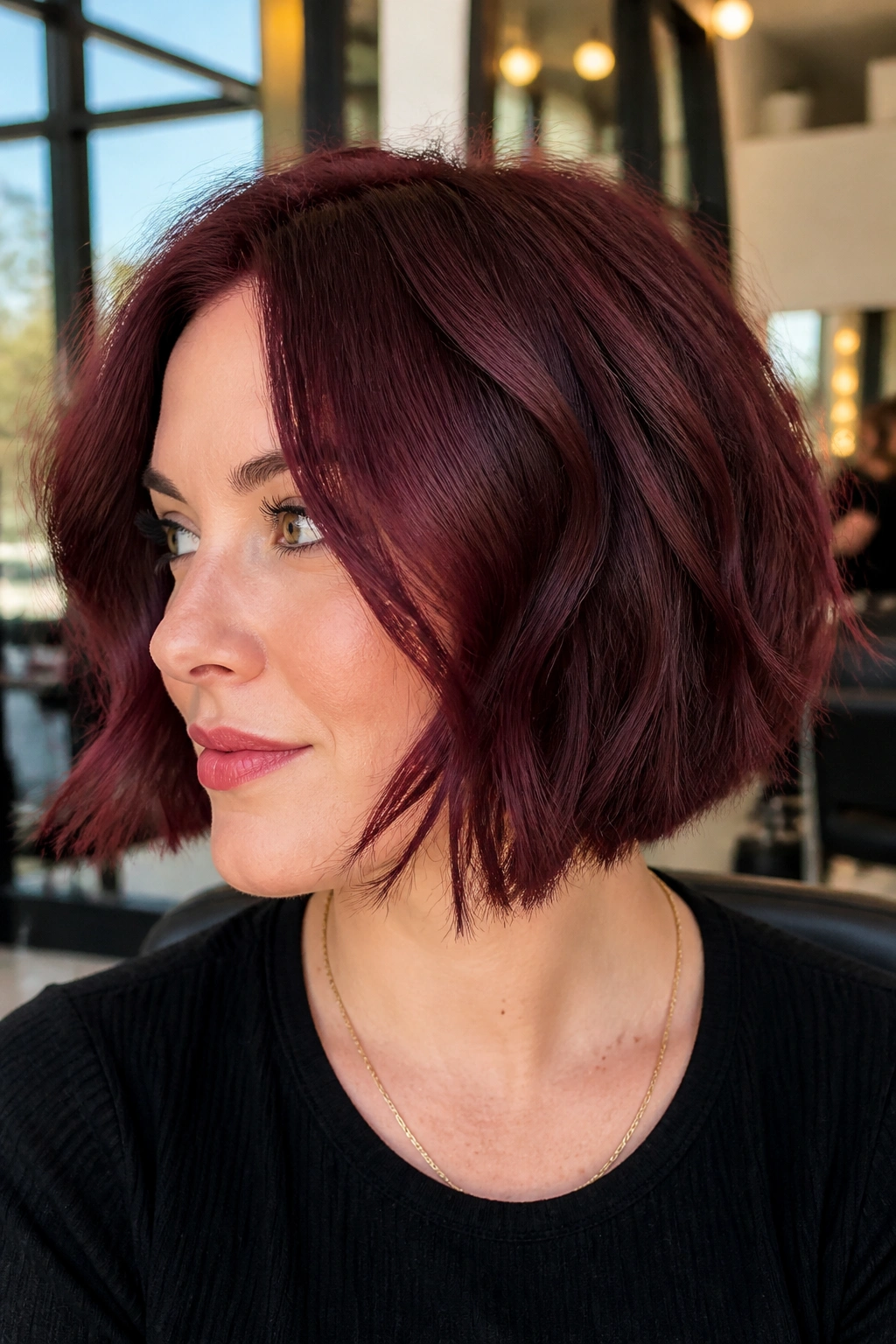
Invisible layers are the quiet hero of fine hair cuts. They remove a touch of weight from the inside without breaking the outer line, which means the bob can move without looking shredded.
The cut details
- Ask for internal layering only, kept low and soft.
- Keep the perimeter blunt or lightly beveled.
- Let the stylist point-cut just the very ends if needed.
- Avoid high layers that start near the crown.
That structure gives the burgundy color more to show off. Instead of seeing a bunch of broken pieces, the eye sees a single shape with a little bend inside it. On fine hair, that’s a much better trade.
Best styling move
Use a pea-size amount of cream on damp hair, then blow-dry with a nozzle attachment and a small round brush. Once the hair is dry, bend the ends under or out by a quarter inch. Enough to move. Not enough to fray. The whole look should feel light in the hand but still read full at the outline.
8. Burgundy Bob with Curtain Bangs
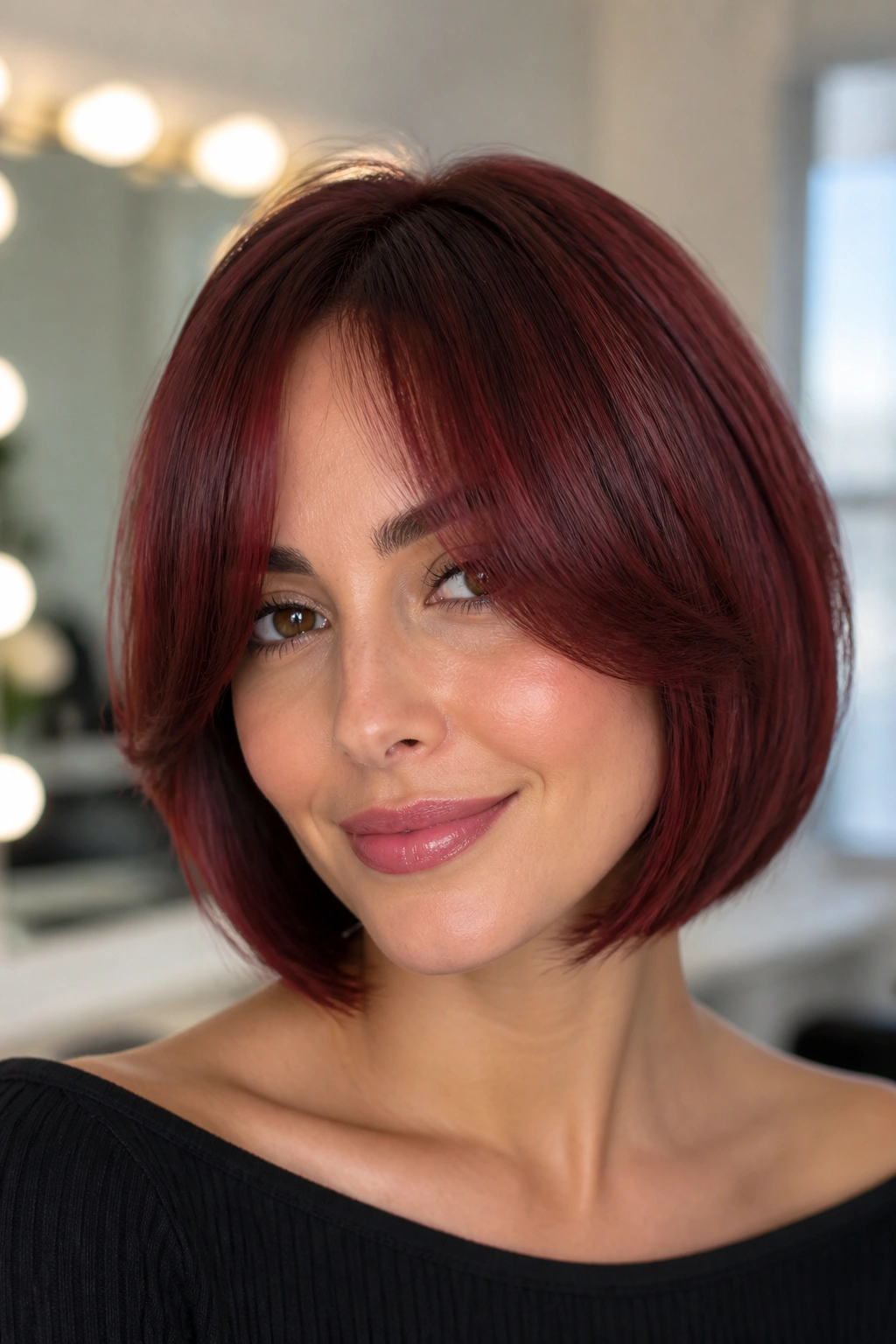
Curtain bangs can be a gift for fine hair, but only when they’re soft enough to move. A burgundy bob with curtain bangs frames the face without forcing all the volume to live at the sides, which is handy if your crown is flat or your forehead feels too exposed with a straight fringe.
The best version starts the bangs higher than people expect, usually around the cheekbone area, then lets them fall open around the eyes. That creates two soft panels that blend into the bob instead of sitting on top of it. The burgundy color helps because it gives those front pieces enough shadow and shine to stand out even when the hair is thin.
Heavy curtain bangs can go stringy fast on fine hair, so ask for a lighter hand and a little extra length. You want them to split naturally, not hang like damp curtains. A quick blow-dry with a round brush, aimed back and away from the face, usually gives them the right bend. Keep the rest of the bob clean and controlled so the bangs can do the work.
9. Stacked Bob with Lift at the Crown
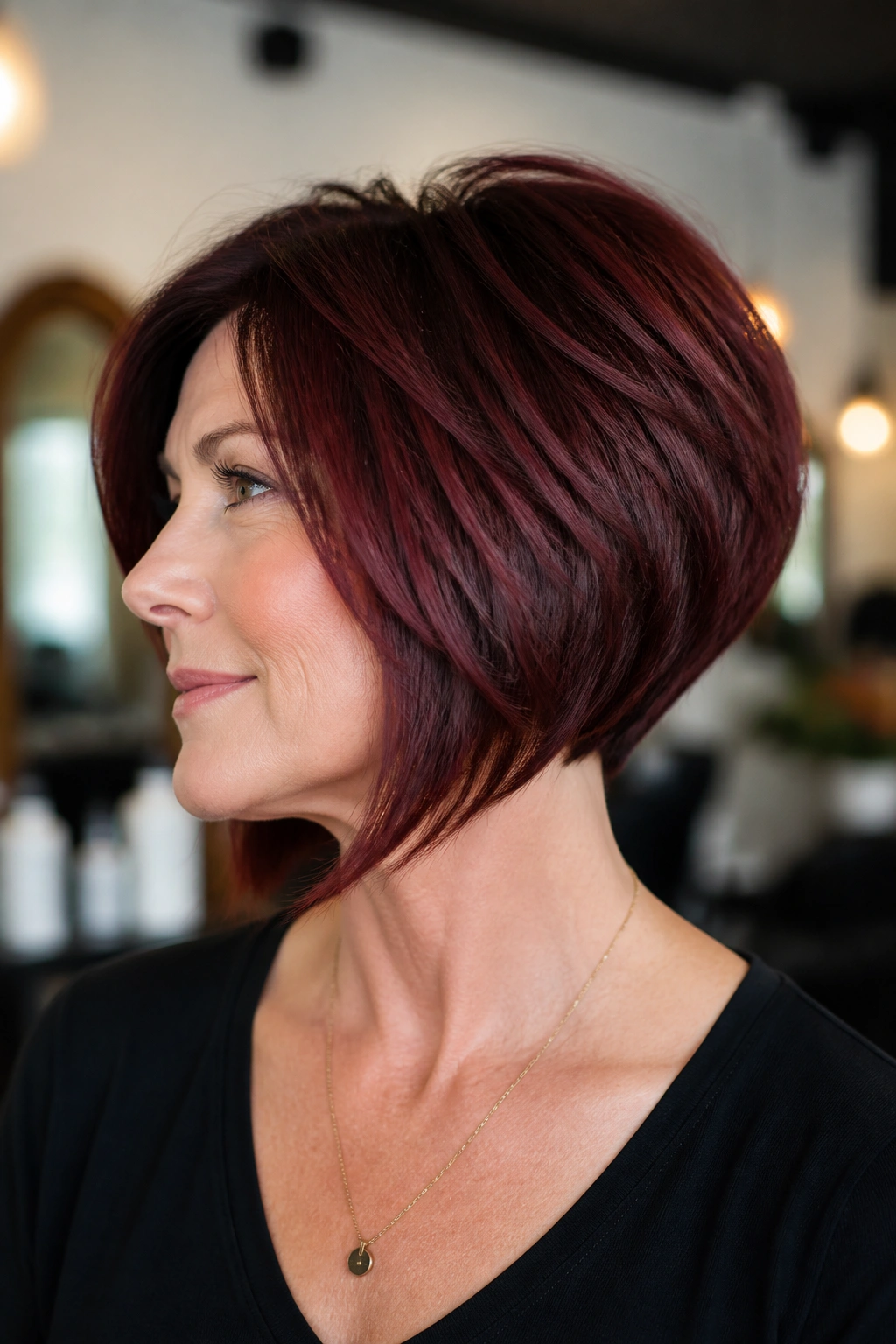
A stacked bob is not the same thing as a puffy bob. Done well, it gives fine hair lift right where most people need it most: the back of the crown and the top of the nape.
The stacked shape uses subtle graduation to build a fuller-looking rear view. Burgundy makes that shape even clearer because the darker depth in back creates a shadow effect under the crown. That tiny bit of shadow can make the top look higher and the outline look thicker. It’s a small trick, but it works.
What makes it different
- The back is shorter and softly layered.
- The crown gets controlled lift, not teased height.
- The front stays longer to keep the shape from feeling too stiff.
- The neckline looks neat, which matters more than people think.
Go easy on the stack. Too much graduation and the cut starts to look bulky or old-fashioned. The good version feels clean, lifted, and tidy around the neck. That’s the one that flatters fine hair instead of fighting it.
10. Wavy Lob in Berry Burgundy

A wavy lob can make fine hair look thicker than a shorter cut if the bend is soft and the length is right. The collarbone area gives the hair room to swing, and berry burgundy adds enough richness that the waves don’t disappear into the background.
This is the choice for someone who wants movement without going too short. A lob that lands at the collarbone or just above it gives fine hair a bit more margin for error than a chin-length bob. If the waves relax during the day, the cut still holds a visible line. That’s the part people forget.
Use a 1-inch curling iron or wand, wrap the hair away from the face, and leave the last inch out for a more modern finish. A light mousse on damp hair helps the wave hold without turning crunchy. Skip heavy oils near the roots; fine hair loses shape fast when it gets slick.
Berry burgundy looks especially good on wavy lob hair because the shade shifts in the bends. You get depth at the curve, shine on the high points, and a little visual texture without having to force it.
11. Sleek Center-Part Burgundy Bob
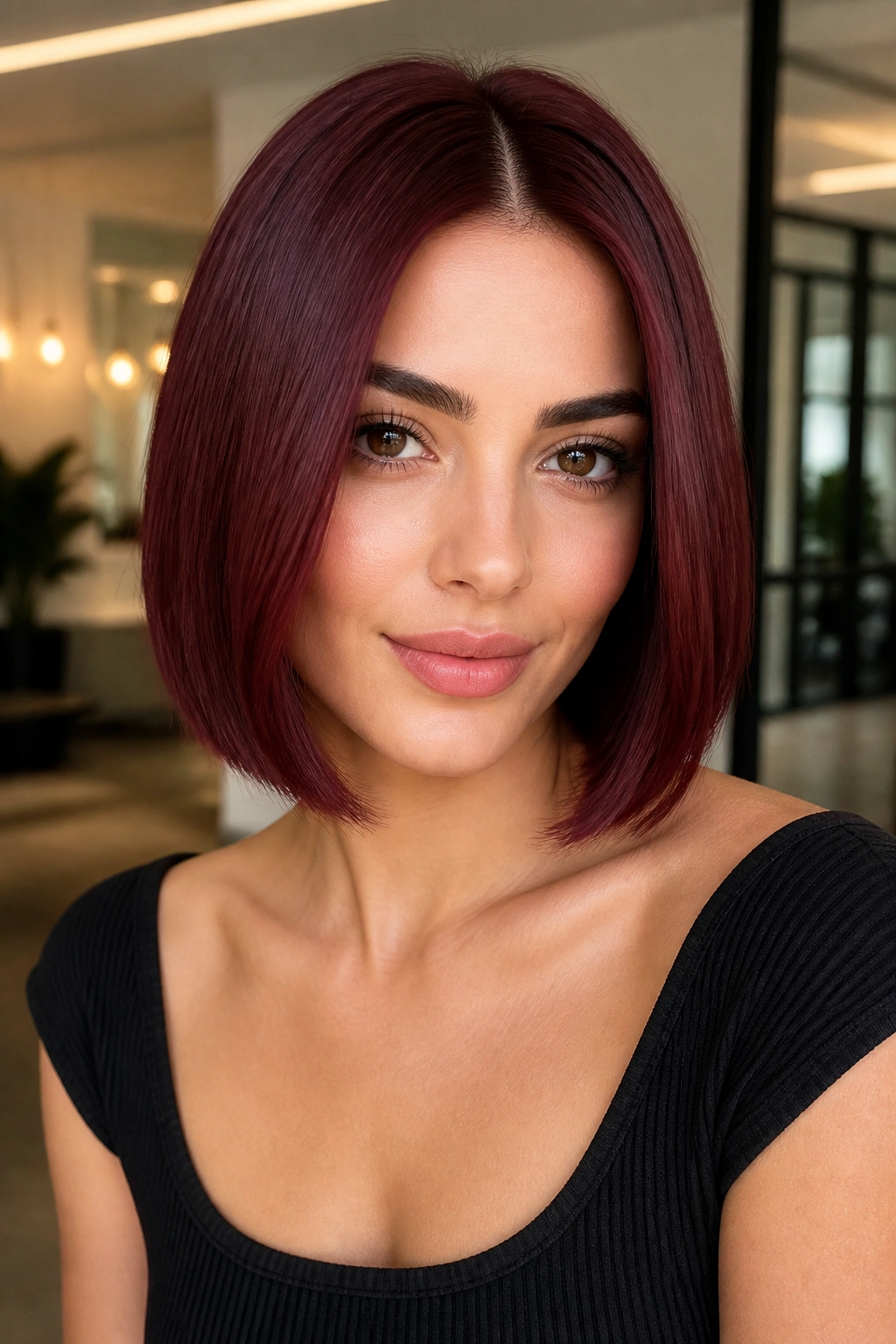
Does a center part flatten fine hair? Sometimes. The answer isn’t to ditch it. The answer is to build the cut around it.
A sleek center-part burgundy bob works when the ends are blunt and the top has just enough root lift to keep the line from going flat. The middle part gives a crisp, symmetrical look, which can be elegant on fine hair because the clean geometry helps the color read richer. Burgundy likes a sharp part. It gives the shade a neat frame.
How to keep it from going limp
- Blow-dry the roots in the opposite direction first.
- Switch the part back once the hair is about 80 percent dry.
- Clip the crown for 5 to 10 minutes while it cools.
- Finish with a light shine mist on the mid-lengths only.
If your hair tends to separate too low at the scalp, this cut can still work, but the perimeter needs to stay solid. The ends are the anchor. Lose the anchor and the middle part turns fussy fast.
12. Asymmetrical Burgundy Bob
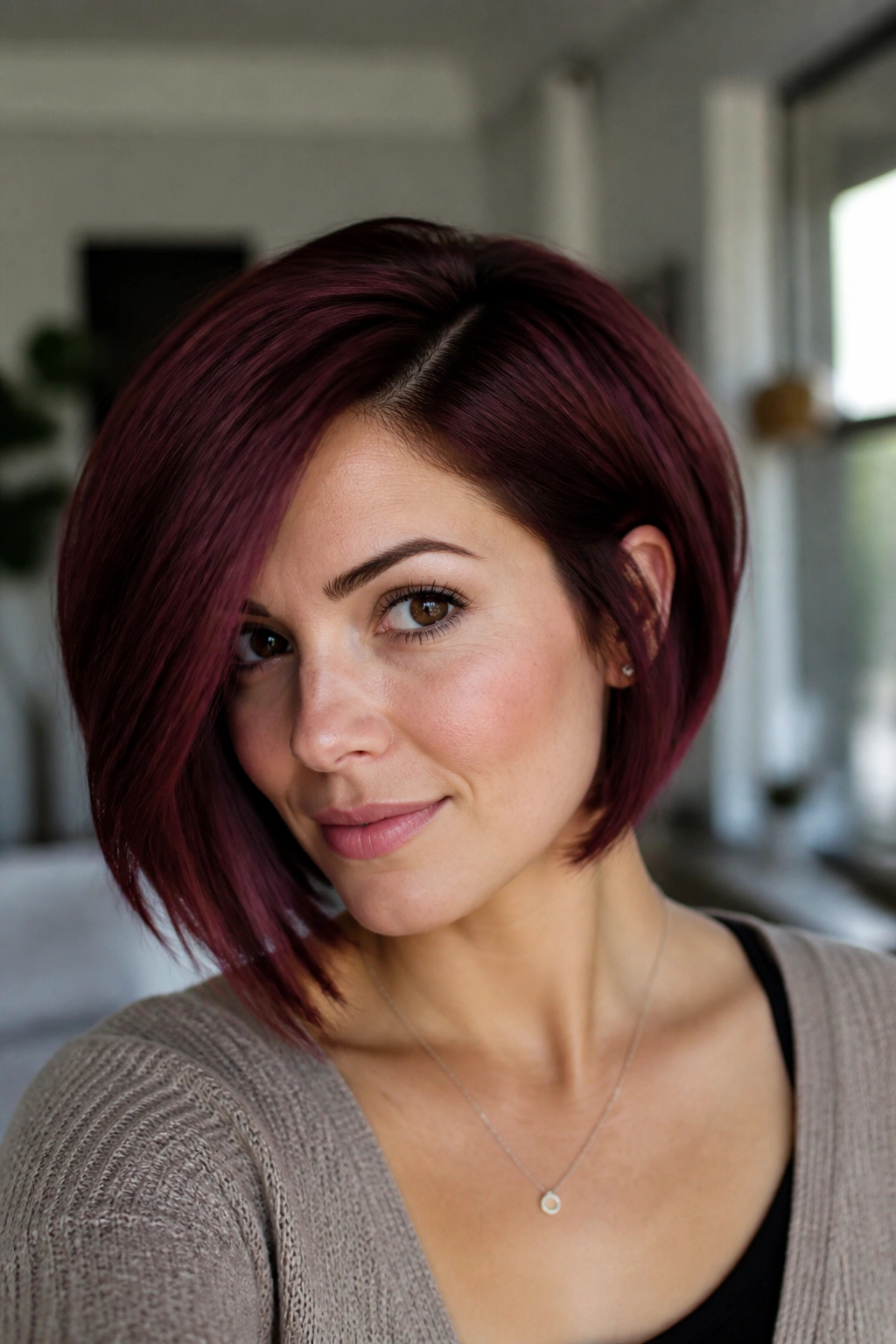
One side a little longer can solve more problems than you’d expect. An asymmetrical bob gives fine hair a stronger sense of shape because the uneven line keeps the eye moving, so the cut doesn’t feel flat even when the density is modest.
This is especially useful if one temple is finer than the other, or if your face has a little asymmetry you’d rather soften than spotlight. The longer side can skim the jaw or cheekbone, while the shorter side keeps the cut crisp and lifted. Burgundy deepens the contrast between the two sides, which makes the line look deliberate instead of accidental.
It does need a careful hand. If the length difference is too dramatic, the cut can look gimmicky. A subtle shift of an inch or so is usually enough. That small change gives you shape, interest, and a little extra movement when you tuck one side back.
Best when: you want something modern, but not loud. And you don’t want to babysit a lot of styling every morning.
13. Rounded Bob with Tucked Ends
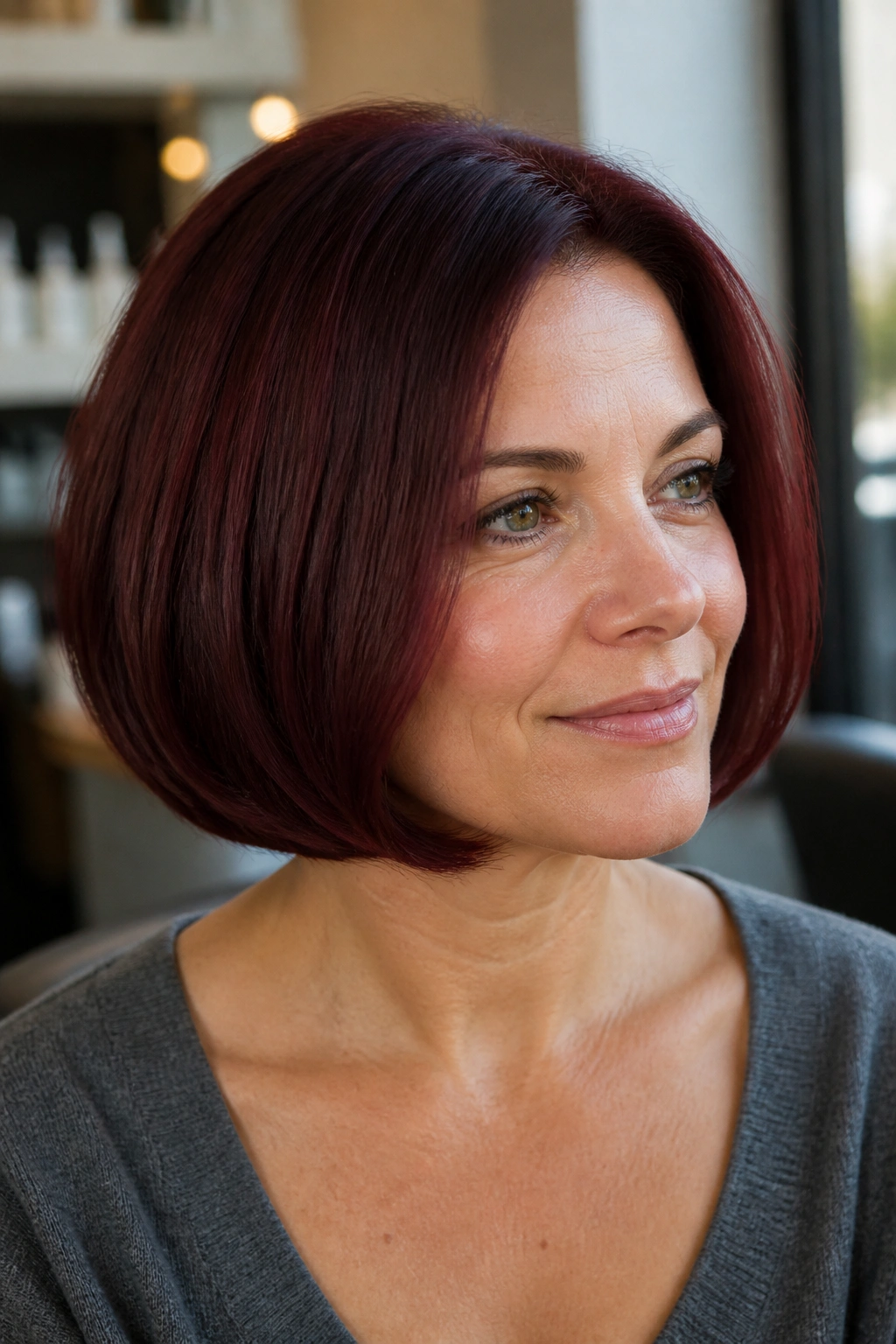
A rounded bob is a good answer when fine hair needs softness around the jaw but still has to look full. The curve hugs the face, and the tucked-under ends create the impression of density at the perimeter.
Shape notes
- Keep the length around the chin or a touch below.
- Ask for a rounded outline, not a puffed crown.
- Let the ends bevel inward by a half-inch.
- Keep the crown smooth so the focus stays on the shape, not the height.
This is the cut I’d pick for someone who likes polished hair that still feels easy. Burgundy gives the rounded edge a warm, rich frame, and the tucked finish keeps the style from looking thin at the bottom. The effect is neat without being stiff.
A round brush and a quick under-turn at the ends are enough. No need to overwork it. Fine hair looks best when the shape is crisp and the finish is light. The rounded bob gets that balance right more often than people expect.
14. Choppy Razored Burgundy Bob
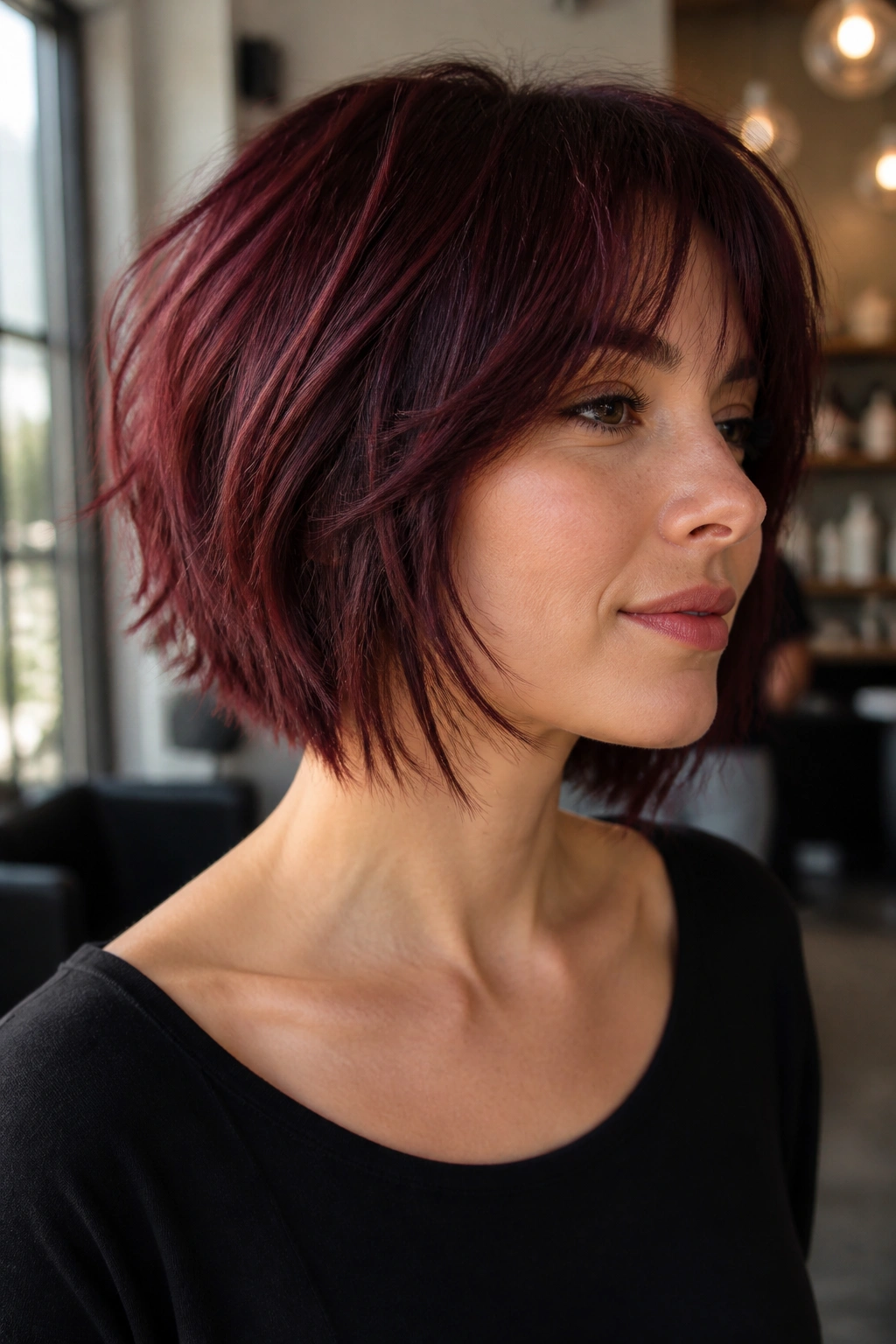
Blade work is a gamble.
A choppy razored bob can be fantastic on the right fine hair, but only if the razor stays low and the perimeter stays controlled. Too much slicing turns the ends into little see-through pieces, and burgundy will show every bit of that texture. There is nowhere to hide.
The good version has just enough edge to stop the hair from sitting too neatly. It can work if your hair is straight, a touch coarse, or naturally bends at the ends. The bad version looks like it lost density overnight. That’s why the stylist’s hand matters here more than the label does.
If you go this route, ask for razor work only at the tips or the very outermost edge. Keep the interior mostly intact. The haircut should feel airy when you run your fingers through it, but the outline should still look solid in daylight. That difference is the whole story.
15. Burgundy Bob with Face-Framing Pieces
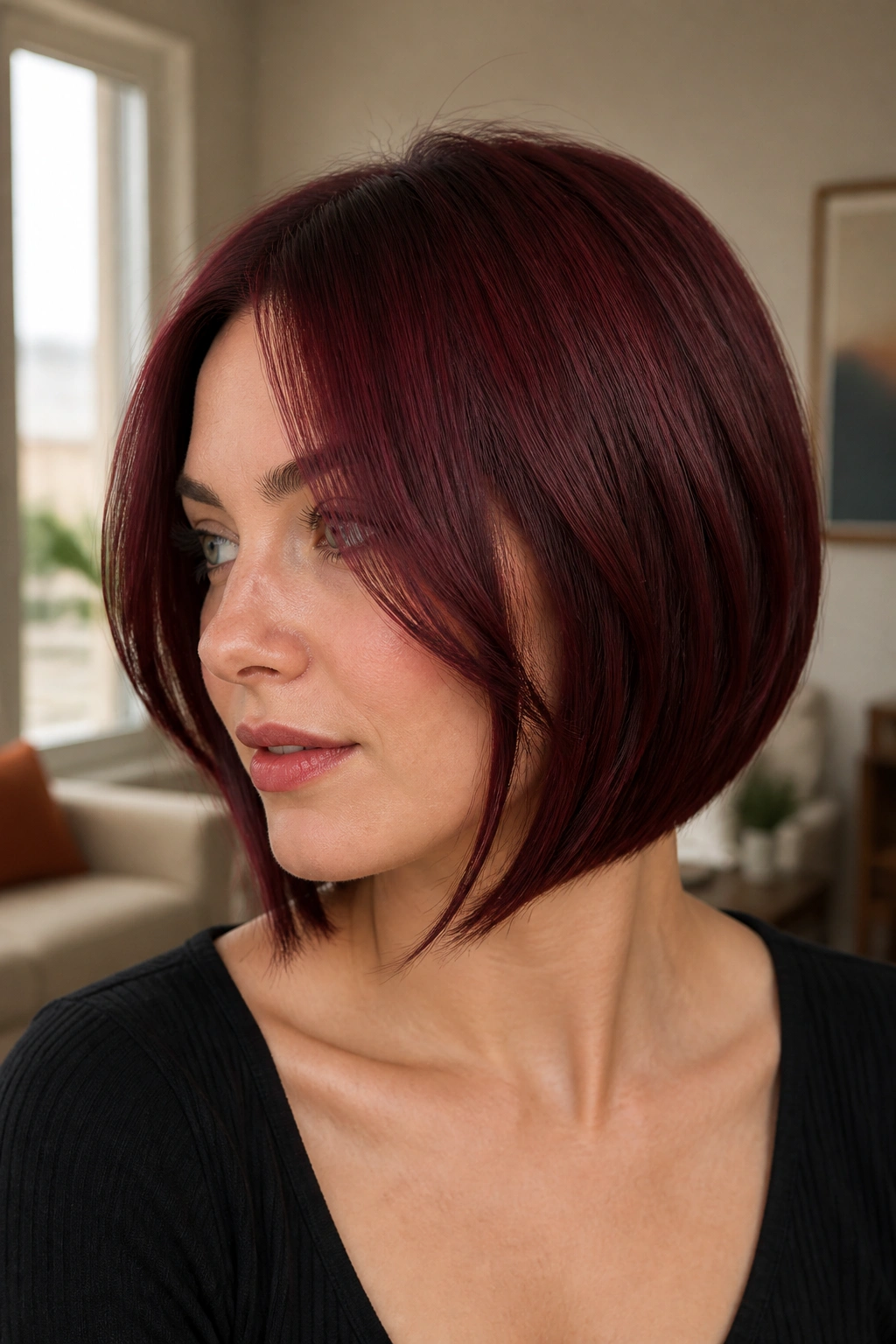
Face-framing pieces are not the same thing as layers. That distinction matters, especially on fine hair, because you can soften the front without tearing apart the bottom edge that gives the bob its fullness.
A burgundy bob with face-framing pieces usually keeps the main cut blunt or nearly blunt, then adds a few longer pieces starting around the cheekbone or jaw. Those pieces can slim the face, soften a strong jaw, or help a growing-out fringe blend into the rest of the cut. The rest of the bob stays intact, which means the hair still looks dense where it counts.
Why this version works
- The front gets movement without sacrificing the perimeter.
- The cheekbone area looks lighter and more open.
- The back keeps its weight, so the hair doesn’t go wispy.
- Burgundy color gives the framing pieces extra depth.
This is one of those cuts that feels easy to live with. You can curl the front away from the face for a softer look, or tuck it back when you want something cleaner. Either way, the structure stays there.
16. Curly Burgundy Bob for Fine Waves
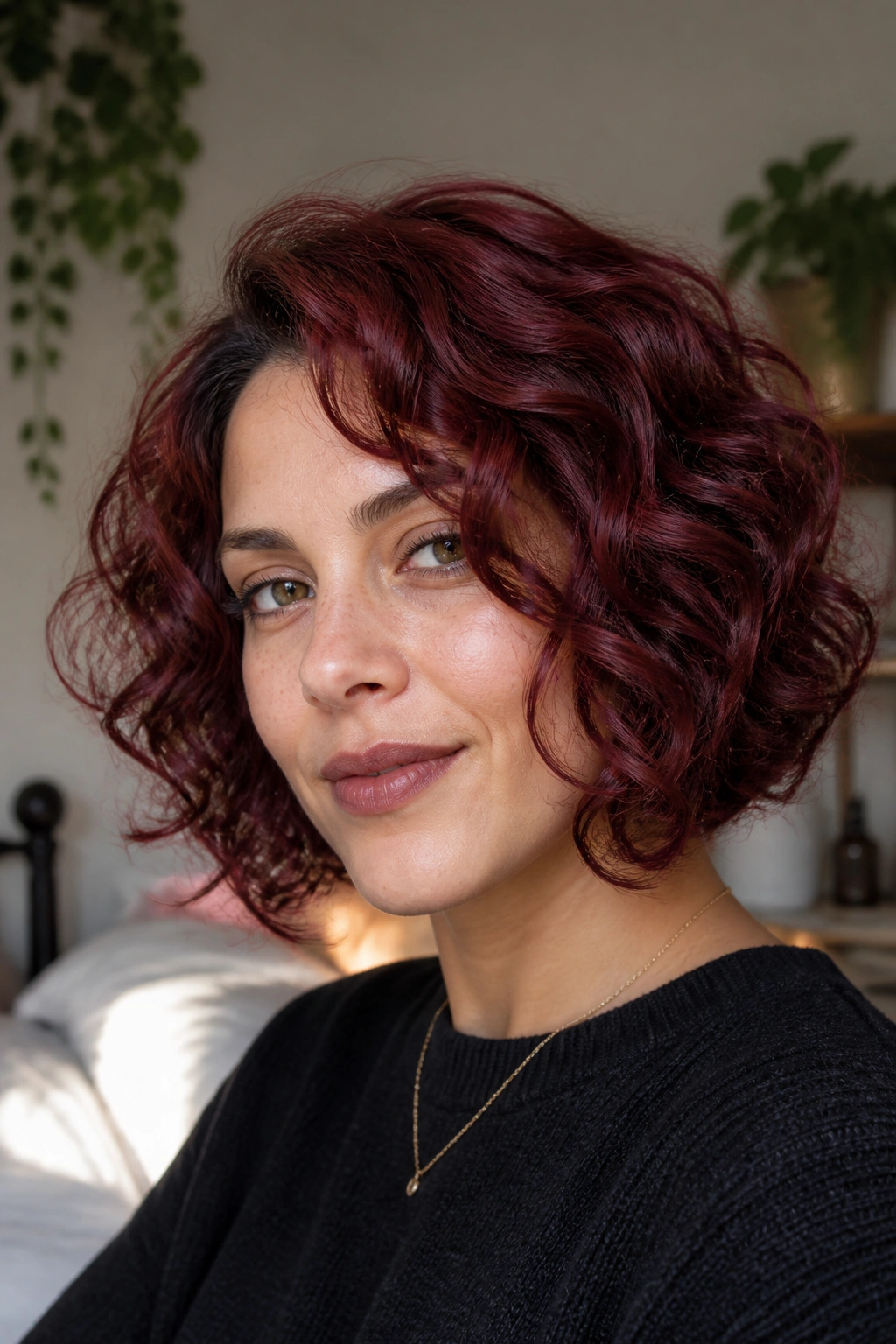
Fine waves can wear a burgundy bob beautifully, but the cut has to follow the bend instead of fighting it. If the hair has even a little curl pattern, a bob that respects the wave can look fuller than a straight cut ever will.
The key is shape. Fine curls and waves usually need enough length to settle, so a chin-length or slightly longer bob often works better than a super-short crop. Too short and the hair can spring up unevenly. Too long and the wave loses its lift. That middle ground is where the magic happens.
Use a light foam or curl cream on damp hair, then scrunch and diffuse on low heat until the curls are set and the roots are dry. A microfiber towel helps too; regular terry cloth can rough up fine strands and make them frizzy. Burgundy brings out the curl pattern by catching light along the bends, which gives the hair more dimension without adding bulk.
If your waves are loose, ask for a dry cut or a curl-by-curl approach. Wet cutting fine curls can look fine on the chair and collapse once the hair dries. Annoying, yes. Predictable, also yes.
17. Collarbone-Length Burgundy Lob with Blunt Ends
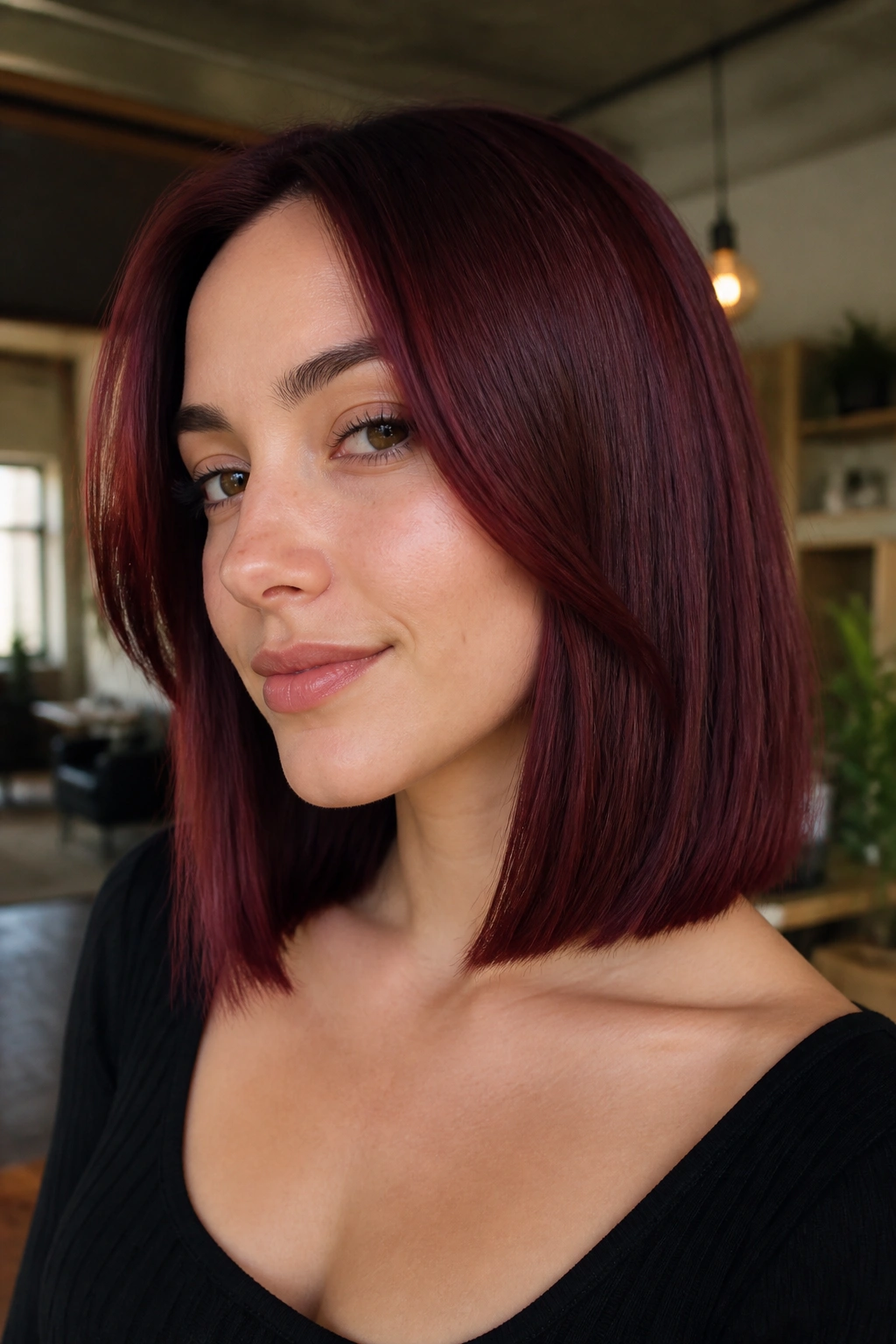
If you’re nervous about going too short, this is the safe bet. A collarbone-length burgundy lob with blunt ends gives fine hair enough length to tuck, twist, and wave, while the blunt line keeps the ends from looking stringy.
The collarbone is a smart landing spot because the hair still has movement, but it isn’t dragging the face down. A blunt finish makes the outline look fuller, and burgundy adds a richer surface so the cut doesn’t fade into the background. It’s one of the easiest cuts to style with a round brush or even a quick bend from a flat iron.
What to request
- Keep the ends blunt, not thinned out.
- Let the length graze the collarbone or sit just above it.
- Ask for only a touch of internal shaping if your hair is very thick at the root.
- Leave enough weight in front that the pieces can be tucked behind the ears.
This cut grows out well, which is useful because fine hair can lose shape fast when a haircut gets too long. The lob gives you a longer runway without giving up that clean, full edge.
18. Burgundy Bob with a Deep Side Part and Shadow Root
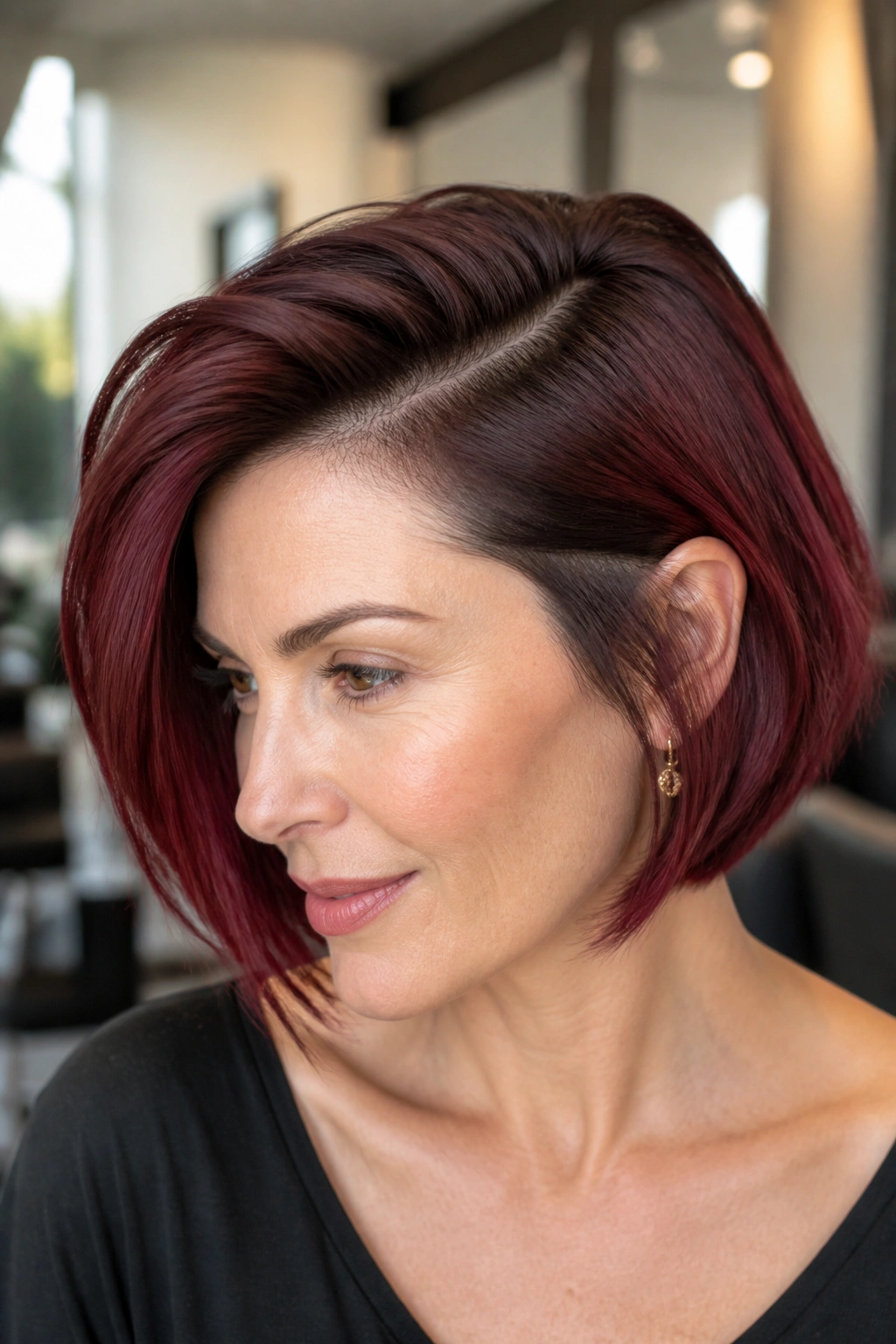
A deep side part can rescue a burgundy bob that feels too neat. It lifts one side, gives the crown more height, and lets the darker root area create a little depth where fine hair usually needs it most.
That shadow root matters more than people think. Burgundy can be rich, but if the regrowth line is harsh, the color can start to look busy. A soft root melt keeps the base looking natural and gives the bob a deeper center of gravity. On fine hair, that visual weight is gold. It keeps the cut from floating away.
When this works best
- Your crown falls flat in the middle.
- You want lift without teasing.
- Your hair color fades quickly and needs a softer grow-out line.
- You like burgundy shades that lean wine, plum, or black cherry.
Style it by flipping the part while the hair is damp, then setting the roots with a clip until they cool. A small round brush at the front and a quick sweep across the top are usually enough. Keep the finish soft and touchable, not stiff. That lets the color and the shape do the work together.
And that’s the real thread running through all 18 cuts: fine hair does better with architecture than with chaos. A clean line, a smart part, a little depth at the root, and a burgundy tone that gives the strands more presence—those are the details that make the haircut feel full in real life, not just in the mirror.
