



Straight bob haircuts for fine hair can look crisp, dense, and expensive-looking when the line is right. When the cut is too shaggy, too long, or too thinned out at the ends, fine strands lose their nerve fast. They hang there. Flat. A little sad, honestly.
Fine hair is not the same thing as thin hair. That distinction matters. You can have a lot of hair and still have fine strands, which means the real challenge is usually strand thickness, not just how much hair sits on your head.
The good news is that a straight bob is one of the few cuts that can make fine hair look fuller without relying on a mountain of styling products. The perimeter does the heavy lifting. The part matters. Even the way the ends are cut — blunt, beveled, slightly curved under, or left with a tiny bit of angle — changes the whole read of the hair.
And yes, there’s a wrong way to do this. If the ends are shredded or the layering is too aggressive, the bob stops looking like a clean shape and starts looking like it got talked out of its own thickness. The styles below keep the line strong, the finish sleek, and the silhouette honest.
1. Chin-Length Blunt Bob for Fine Hair
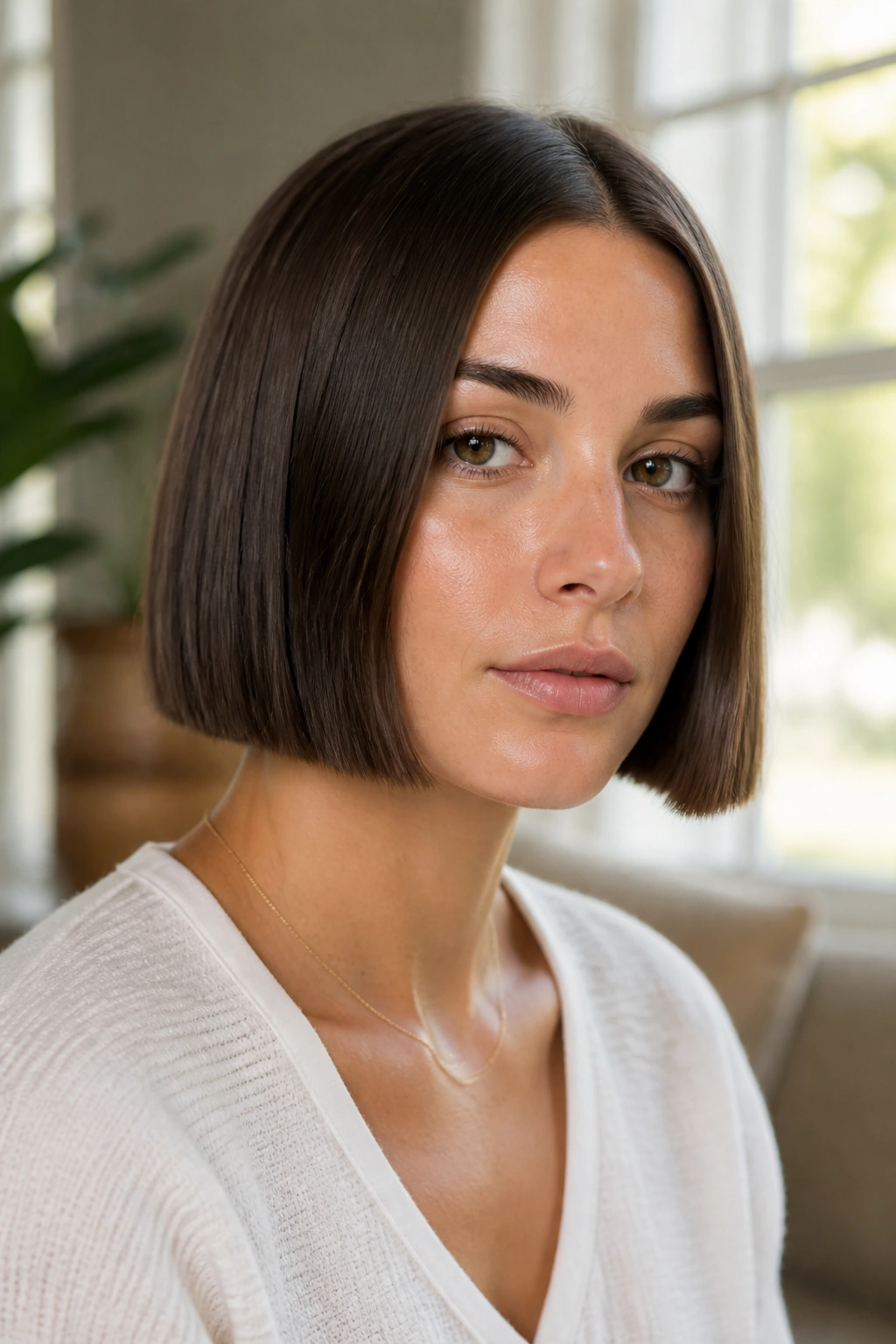
This is the cut I recommend when someone wants their hair to look thicker almost immediately. A chin-length blunt bob puts the densest part of the shape right where people notice it most: around the jaw and cheek line.
Why the blunt edge helps
A blunt perimeter keeps every strand at the same visual level, so the eye reads the ends as a solid line instead of a wispy curtain. On fine hair, that matters more than almost anything else. You are not trying to create fake bulk. You are building the illusion of it.
The chin length is a sweet spot because it avoids the limp middle zone that happens when fine hair grows too far past the face. Shorter than this can get spiky if the hair is very straight; longer than this can start to hang. Chin length sits right in the middle and stays neat.
- The cut usually lands right at the chin or just below it.
- The ends should be cut blunt, not thinned out with a razor.
- A center part makes it look modern; a side part makes it softer.
- A quick blow-dry with a paddle brush keeps the line clean.
Ask for a blunt perimeter and no texturizing at the bottom edge.
2. Jaw-Length Sleek Bob for Fine Hair

A jaw-length bob can make fine hair look denser than a cut that hangs two inches lower. That sounds backward until you see it in the mirror. The shorter length keeps the ends from stretching out and going see-through.
Jaw-length cuts work especially well when the hair falls straight on its own, because the shape stays sharp with almost no effort. The line around the jaw creates a frame, and the frame is doing a lot of the visual work. If the hair is fine but fairly abundant, this length can look rich without feeling bulky.
There’s also a nice side effect here: jaw-length hair tends to swing when you move, which keeps it from feeling stiff. A little motion at this length is enough. You do not need layers everywhere.
For styling, think smooth rather than fluffy. A light root lift at the crown and a pass with a flat brush are usually enough. If the ends flip out too much, a tiny bend inward with a flat iron fixes it fast.
3. Center-Part One-Length Bob
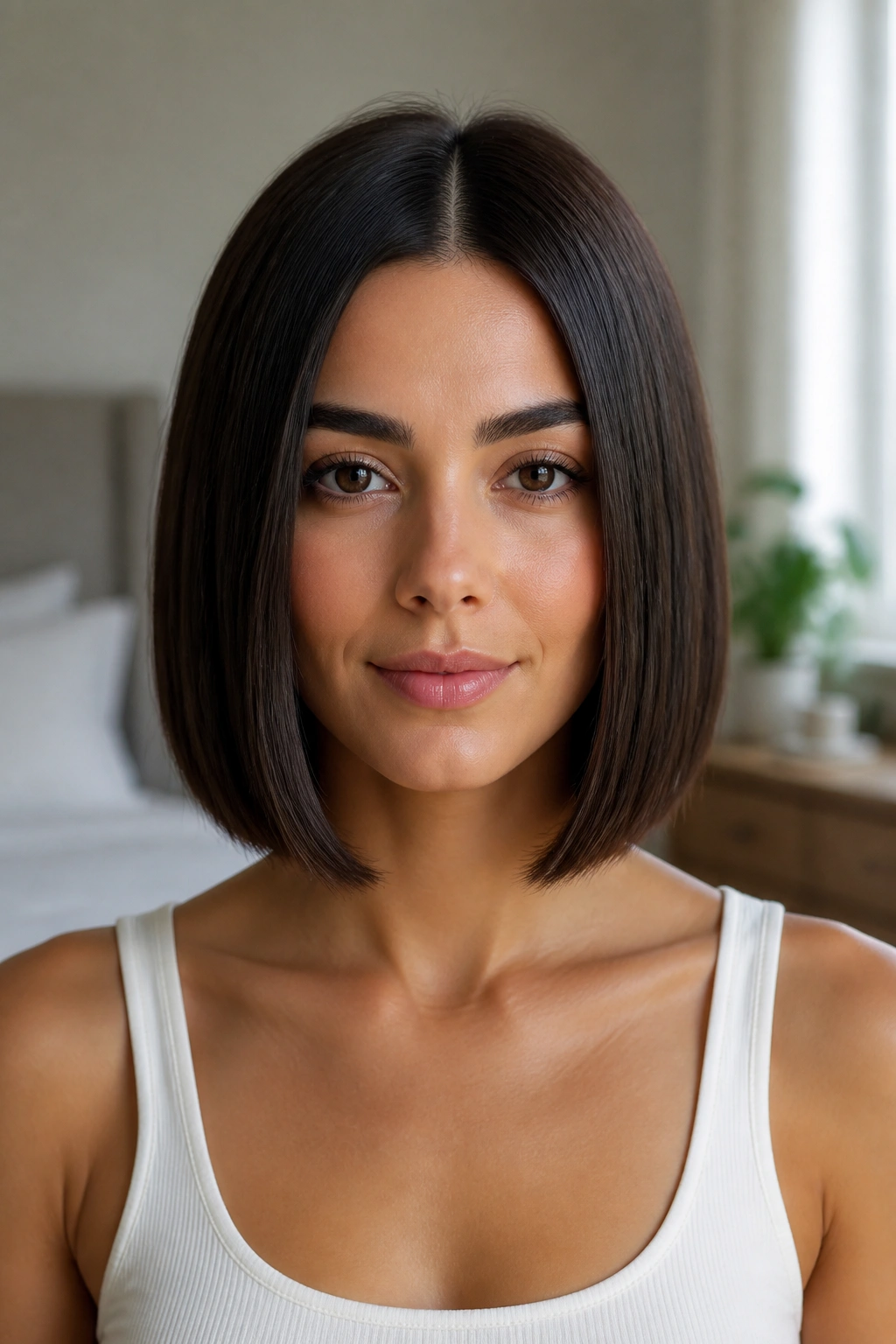
Why does a center part work so well on a one-length bob? Because it splits the weight evenly and makes the shape read clean from both sides. Fine hair often looks better when there is no visual tug-of-war happening at the part line.
A one-length bob is one of those cuts that looks plain on a hanger and quietly excellent on a person. The lack of internal layers gives the illusion of thickness, and the center part keeps the eye moving down both sides evenly. The result is tidy, calm, and surprisingly full.
This cut is also useful if your hair has a natural middle split already. Fighting the part just makes roots lie weirdly. If your scalp wants a center part, let it have one. No drama needed.
How to wear it
Blow-dry the roots forward first, then sweep them into place. That little move keeps the top from going flat against the scalp. If the face feels too open, tuck one side behind the ear for a minute or two after drying; the bend usually stays.
4. Slight A-Line Bob with a Longer Front
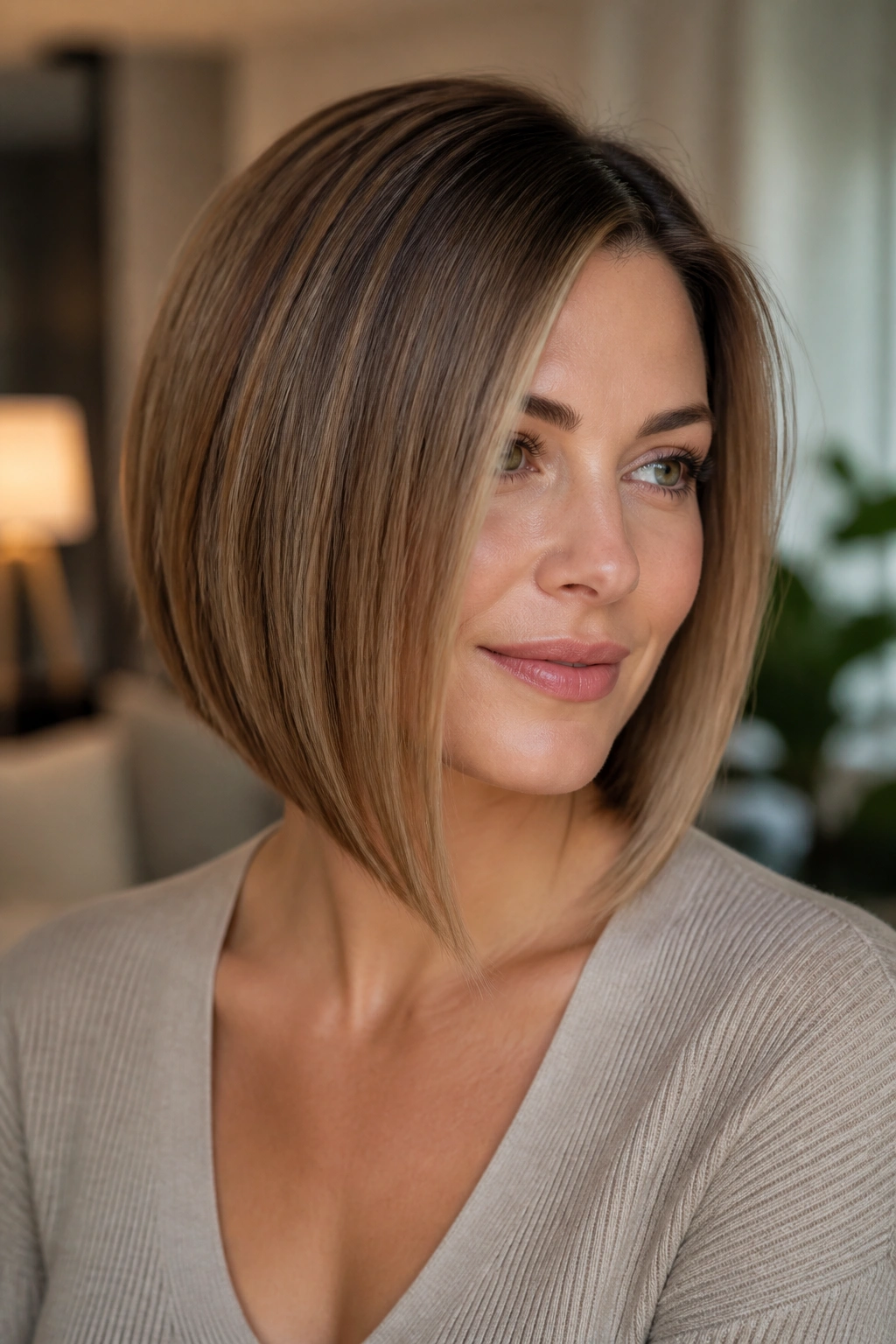
Picture a bob that feels heavier in the back but still has a bit of swing in front. That’s the slight A-line, and it’s a smart choice for fine hair when you want shape without losing density.
The angle is subtle. That’s the point. A dramatic A-line can start looking severe, and severe cuts are tricky on fine strands because they expose every gap. A soft version, where the front pieces graze the jaw or upper neck while the back sits a touch shorter, gives you lift and movement without looking chopped up.
This shape also behaves nicely when hair naturally bends under. Fine hair often wants to do that anyway, so a small angle works with the texture instead of fighting it.
- Keep the front only slightly longer than the back.
- Ask for a clean line through the perimeter.
- Avoid over-layering near the crown.
- Style it with a rounded brush for a soft sweep.
That tiny difference in length is doing more work than most people think.
5. Box Bob with a Clean Perimeter
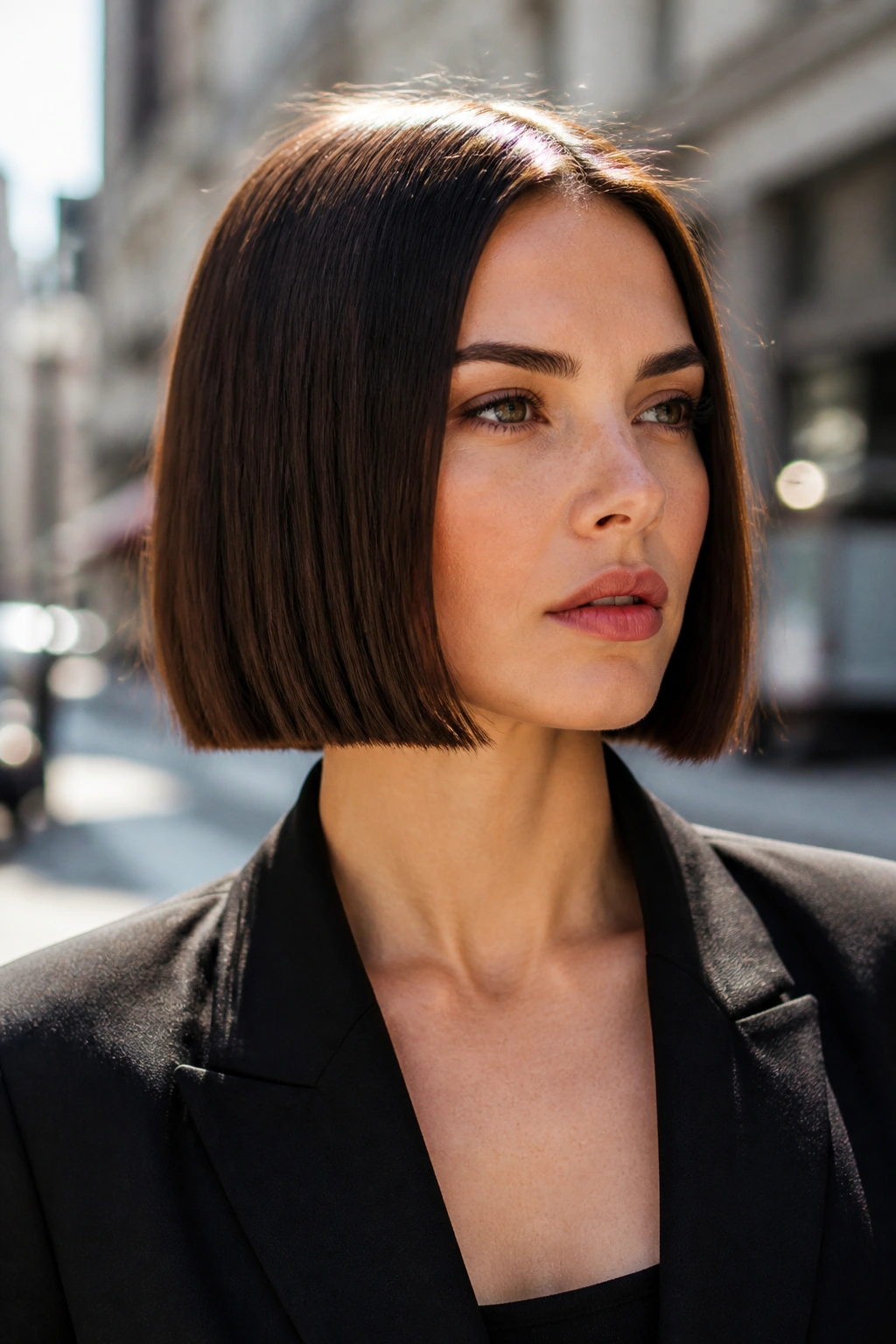
The box bob is blunt, square, and very good at pretending fine hair has more mass than it does. No fluff. No soft edges trying to be cute. Just a clean shape with substance at the hem.
That square outline is what makes this cut special. Because the sides drop in a straighter way, the eye sees a fuller wall of hair rather than a tapering finish. On straight hair, especially, the shape looks deliberate instead of accidental. There’s a kind of honesty to it that I like.
A box bob does ask for discipline. If you let the ends get too wispy or the back gets over-thinned, the whole point disappears. This is not the cut for aggressive texturizing. It wants clean scissors and a careful hand.
Wear it sleek, or wear it with a tiny bit of bend. Either way, the geometry does the work. It’s one of the better choices for someone who likes a crisp look and doesn’t want to fuss with layers every morning.
6. French Bob with a Soft Bend

Unlike the severe version people often picture, a French bob with a soft bend feels a little looser and more wearable. The length is usually shorter, often somewhere around the cheekbones or just below the ear, and the styling is never too polished.
That looseness helps fine hair because it keeps the shape from looking overworked. Fine strands can go flat fast when they are forced into a stiff style. A soft bend through the ends gives the cut a bit of life while still preserving the blunt-looking body at the bottom.
There’s also something very flattering about the face-skimming length. It brings attention up, which makes the hair behind it feel denser by comparison. A tiny fringe can help, but it is not required. If you add one, keep it light and airy, not chopped into a heavy block.
This is a good cut for someone who likes a little edge but does not want to spend ages fighting a round brush. It can air-dry into a decent shape, which is a nice change from bobs that only behave under heat.
7. Precision Bob for Fine Hair with a Side Part
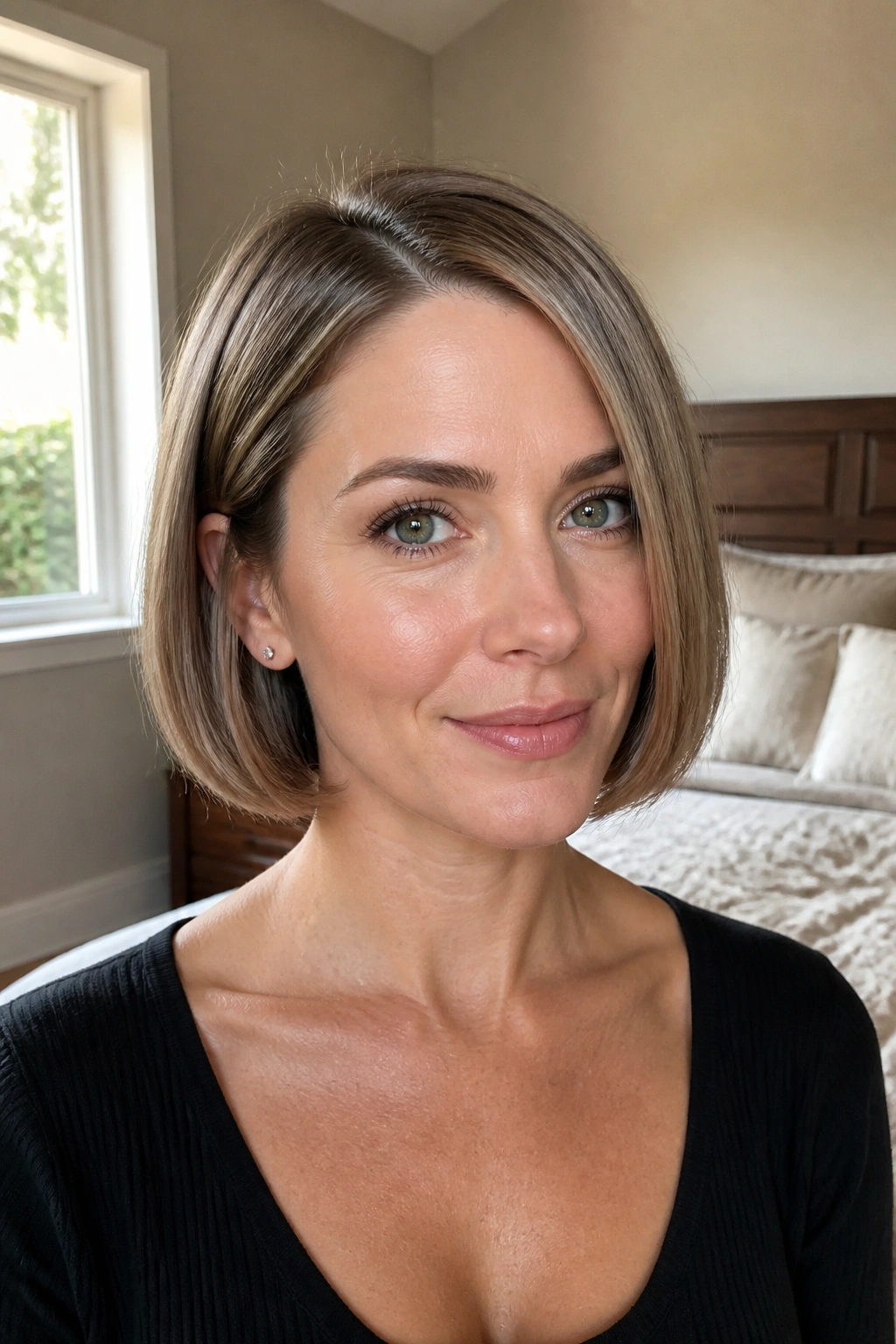
A side part can rescue a flat bob faster than most styling sprays. It shifts the weight, lifts the crown, and gives the cut a little asymmetry without making it messy.
Where the part does the work
On fine hair, the crown is usually the first place to collapse. A side part interrupts that collapse. Even a shift of one to two inches off center can change the whole silhouette because the hair is no longer falling in a straight curtain from the same point.
The precision part of this cut matters just as much as the part itself. Keep the ends clean and the perimeter sharp. If the line is fuzzy, the side part won’t save it. If the line is neat, the side part makes the whole style look more expensive and intentional.
- Ask for a part that sits slightly off center, not deep into the temple.
- Keep the length around the chin or just below.
- Blow-dry the root on the heavier side first.
- Use a lightweight mousse only at the roots if needed.
If your hair falls flat by lunch, this is one of the first bobs worth trying.
8. Collarbone Lob with Hidden Weight
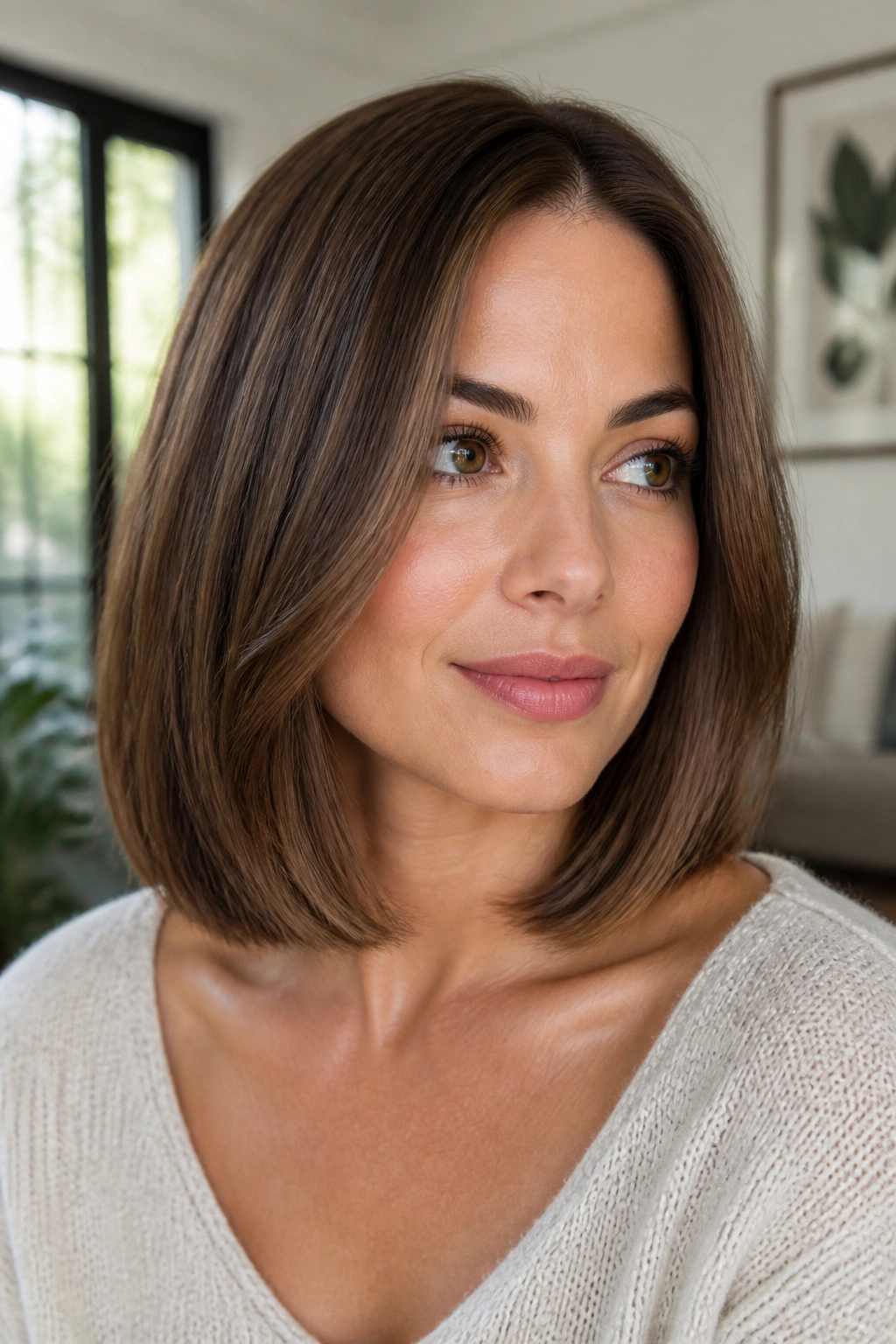
Not everyone is ready to go chin-short. Fair enough. A collarbone lob keeps some length, but when it is cut with hidden weight and a disciplined perimeter, it still gives fine hair a fuller reading than a long, straggly cut.
The trick is to avoid softening the whole thing into nothing. Fine hair loses presence when the ends get too feathery. So the lob should keep a grounded bottom line, with perhaps a whisper of internal shaping only where it helps the hair bend naturally. Nothing flashy.
This cut works well for people who tuck hair behind the ear, wear it half up, or like a bit of shoulder movement. The collarbone length gives you a little versatility without asking the hair to support too much weight. That’s where long hair often gets tricky on fine textures.
If you want the hair to look denser, keep the front pieces close to the same length as the rest. Too much face-framing can make the perimeter feel thin. The bluntness should still be the headline.
- Best when the ends are kept thick.
- Easy to tie back.
- Works with a smooth blowout or a subtle bend.
- Keeps enough length for casual updos.
9. Glass-Hair Bob with a Razor-Sharp Finish
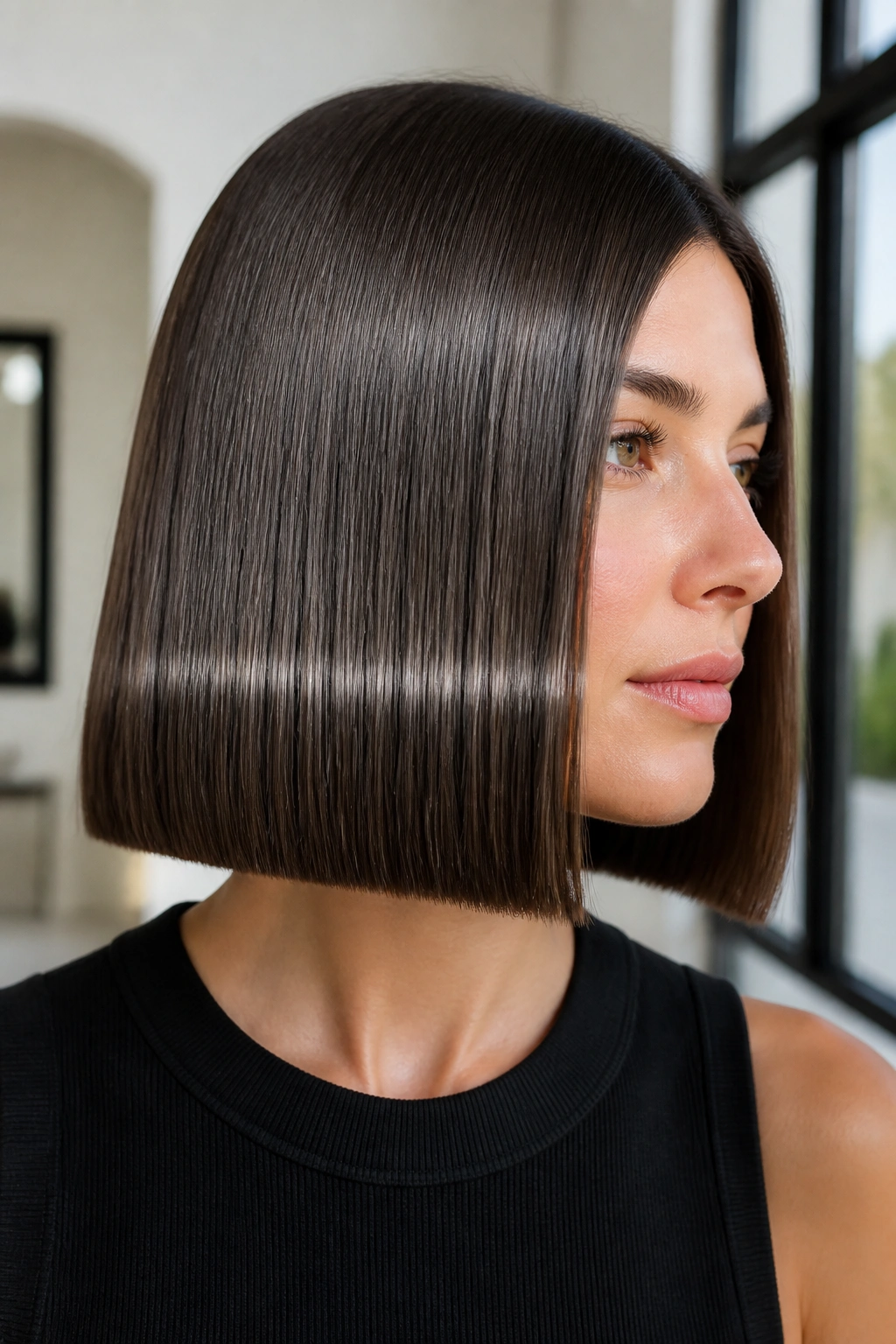
Shine changes the game for fine hair. A glass-hair bob uses sleekness, reflection, and a neat edge to make the hair look smoother and more packed together than it really is.
This is not the cut for someone who wants messy texture. It is the opposite. The whole point is a reflective surface and an even line, so the strands sit close and read as a single sheet. Fine hair often does well here because it already lies flat more easily than coarse hair. The style leans into that trait instead of trying to fight it.
The catch is maintenance. Flyaways, dull ends, and dry-looking lengths show up fast on a glassy cut. A heat protectant, a careful blow-dry, and a final pass with a flat iron make a big difference. So does a tiny bit of serum on the ends — not the roots. Never the roots.
If you like a clean, polished look and you do not mind spending a few minutes with a smoothing brush, this is one of the strongest shapes in the bunch. It makes fine hair look intentional, which is half the battle.
10. Rounded Bob that Hugs the Jaw

Why does a rounded bob work so well on fine hair? Because the curve adds body without demanding extra bulk from the strands themselves. The shape does the heavy lifting, and the hair gets to look fuller by association.
A rounded bob follows the jawline and then bends gently inward at the ends. It is softer than a box bob, but it still has enough structure to avoid collapsing. That inward curve can be done with a round brush or a small bend from a flat iron, depending on how your hair behaves.
This cut suits people who want the face to feel framed, not boxed in. It can soften stronger jawlines and make straight hair feel less severe. If the face is very round, though, keep the length just below the jaw so the cut does not widen the cheeks too much. That small detail matters.
How to wear it
Dry the hair with the ends slightly under, then cool them in place with the dryer for a few seconds. The curve lasts longer that way. A center part keeps it modern; a soft side part gives it a little more lift.
11. Micro Bob Above the Jaw

The micro bob is tiny, sharp, and unapologetic. It sits above the jaw, often closer to the mouth or cheekbone area, and it can make fine hair look much denser because there is simply less length pulling the strands downward.
This one is not subtle. That’s part of the appeal. Fine hair can go limp when it’s left too long, and a micro bob strips away the extra weight that makes the ends look stringy. The result is compact, crisp, and surprisingly chic when the line is clean.
It also exposes the haircut more than almost any other length here. If the shape is a little off, you will see it. If the ends are blunt and the nape is neat, the whole cut looks sharp. That means the haircut itself has to be good, not merely trendy.
Maintenance is a thing. A micro bob usually needs trimming every 6 to 8 weeks to keep the shape from drifting. Ignore it too long and it stops looking precise, which is the entire point.
12. C-Shape Bob with Curved Ends

Unlike a box bob, the C-shape bob keeps the edge strong but rounds it just enough to move. That small curve makes the cut feel lighter without stealing the thickness at the ends.
This is a useful middle ground for fine hair that looks too stiff in a blunt shape and too thin in a layered one. The line still has weight, but the ends sweep inward in a way that follows the head shape. You get a little softness around the jaw and neck, which helps if a fully straight edge feels harsh.
The C-shape works especially well when the hair has a slight natural bend. You are not forcing it into something unnatural. You are just guiding it. That usually means less styling time and fewer battles with the mirror.
It is a good pick for people who want polish but not severity. A tiny bevel at the ends, a clean part, and a neat finish are enough. If you love your hair to look smooth but not stiff, this is a smart direction to show your stylist.
13. Soft Undercut Bob for Extra Lift
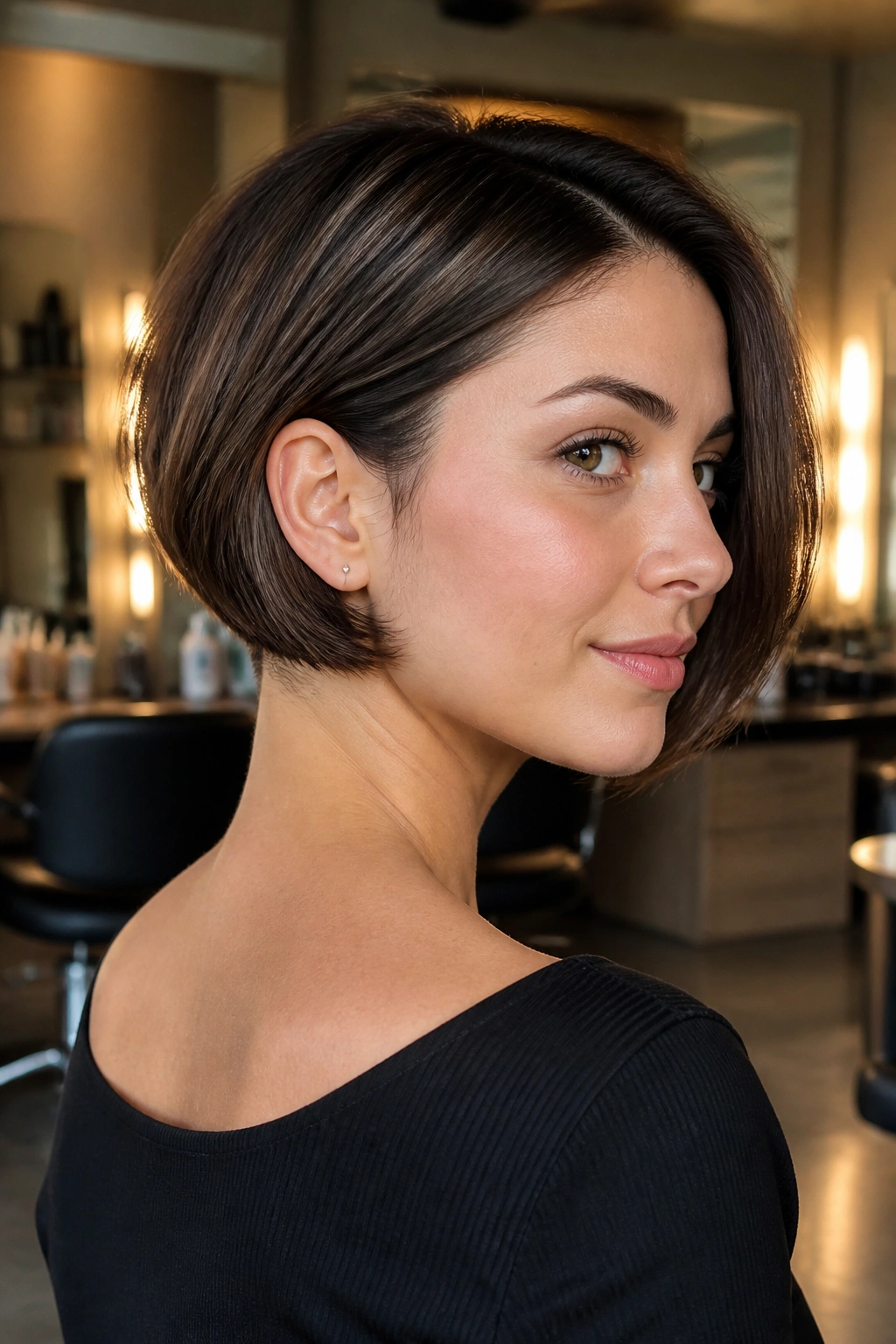
A tiny undercut can make a fine-hair bob behave better than a pile of mousse ever will. Tiny is the key word here. This is not about shaving off half the back of your head. It is about removing a little bulk underneath so the top layer sits cleaner and lifts more easily.
Why the hidden support matters
Fine hair sometimes collapses because the lower section is too long and heavy for the strand thickness. A soft undercut removes some of that drag. The top layer then falls with a bit more shape, and the bob gets a subtle cushion of lift at the back.
The best version of this cut is quiet. You should not see the undercut unless the hair is lifted. If it shows too much, the cut can start feeling dated or too aggressive for the rest of the head shape.
- Ask for a very small undercut at the nape, not a full removal.
- Keep the surface length blunt.
- Use it only if your hair tends to puff at the bottom and flatten at the top.
- Trim the undercut before it grows into the perimeter.
If your bob sags in the back, this is one of the few fixes that actually changes the structure.
14. Sleek Bob with Face-Framing Pieces
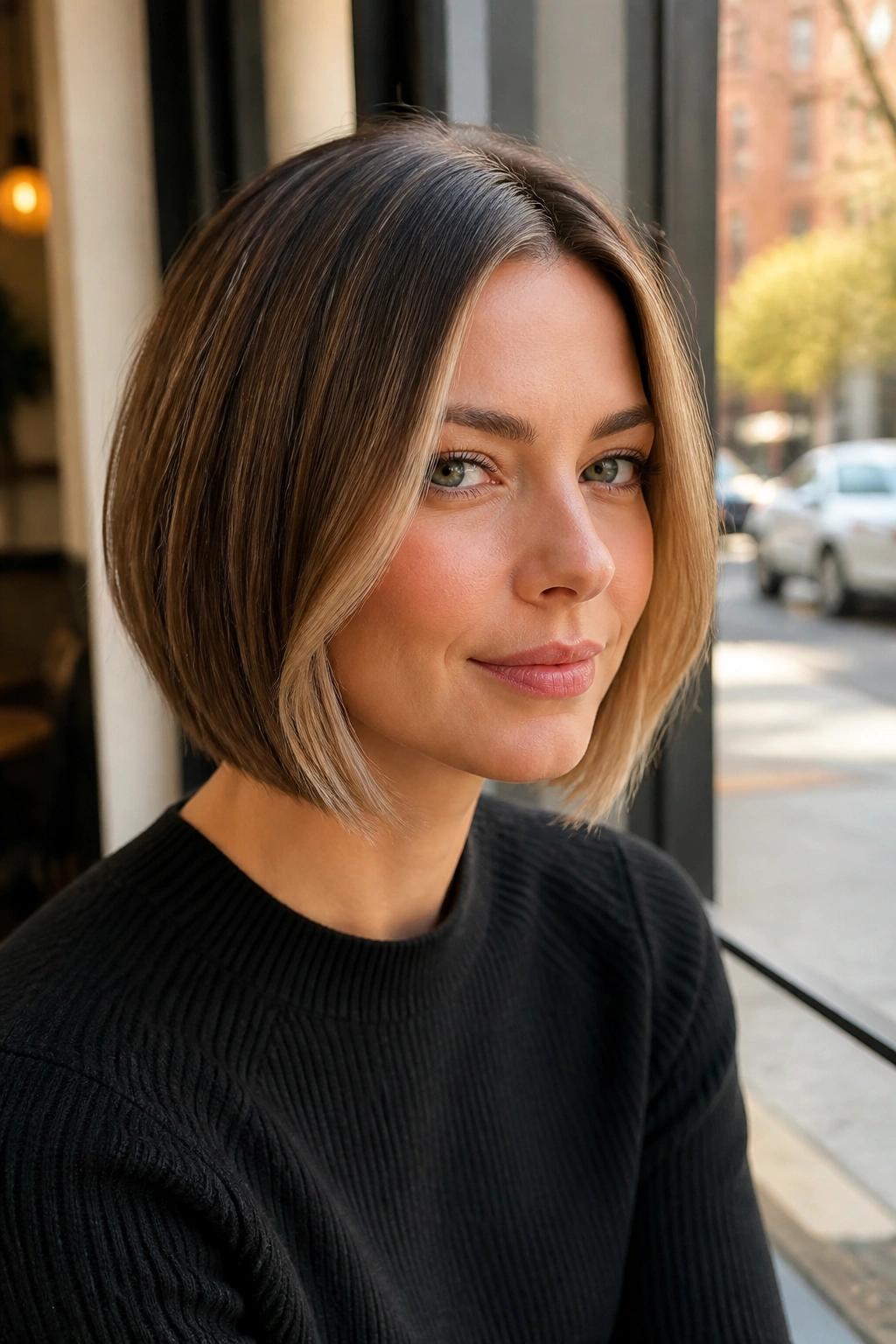
A few thin front pieces can make a fine-hair bob feel softer without draining the perimeter. That balance is the whole trick.
The mistake people make is taking too much hair from the front. Then the bob loses its body where it matters most, and the face-framing pieces start acting like holes. Keep them light and contained. Think cheekbone to jaw, not cheekbone to collarbone. The front should guide the eye, not steal the cut.
A sleek bob with face-framing pieces works nicely for people who want a little movement near the face but still want the back to look full. It is a good compromise when a straight one-length bob feels too hard or too plain. The pieces can soften a strong jaw or break up a very square outline.
For styling, smooth the main body first, then give the front pieces a tiny bend away from the face. That little curve keeps them from sticking flat against the cheeks. You do not need a big wave. A light turn is enough.
15. Minimal-Layer Bob with Blunt Ends
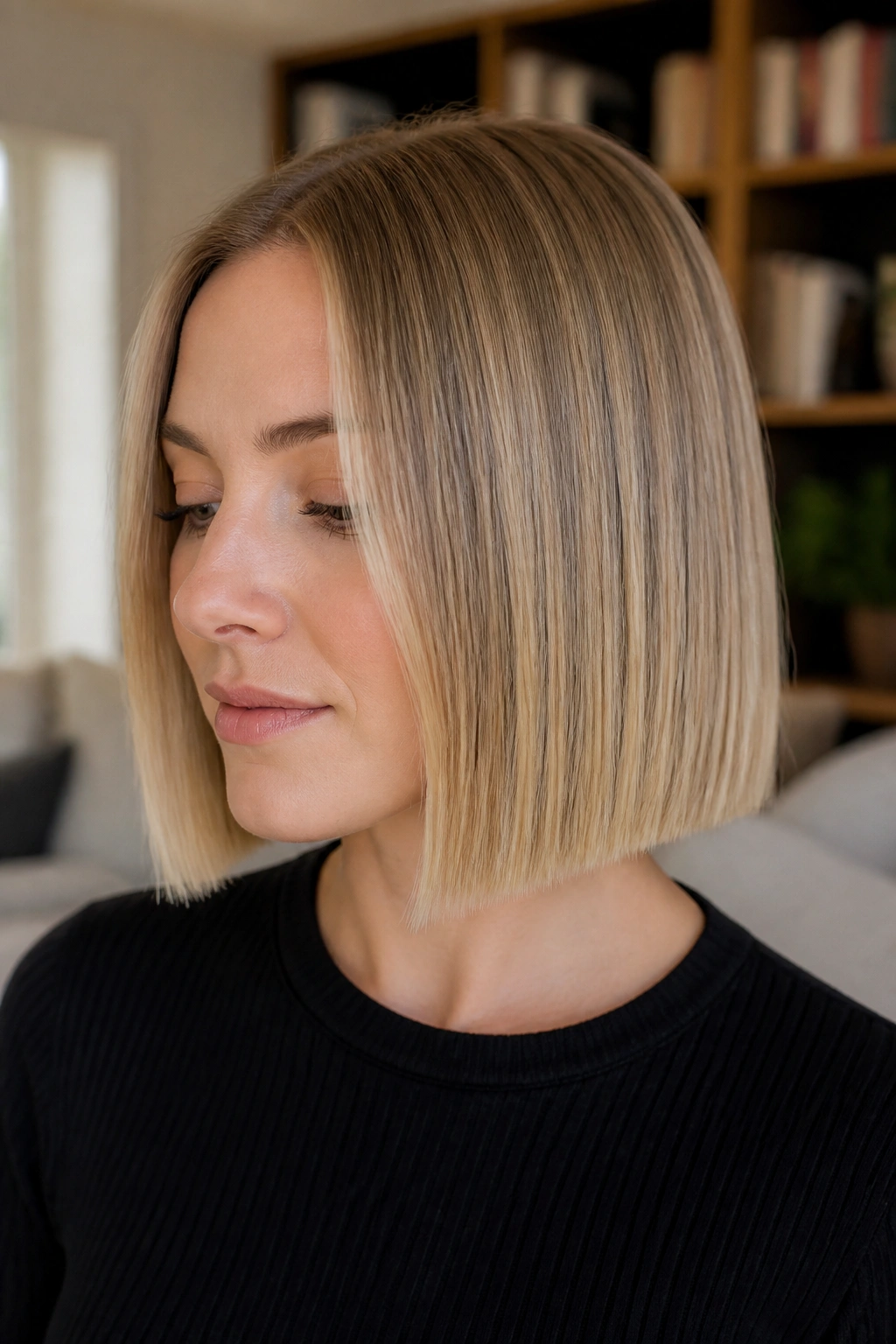
Picture the bob that gets all the right weight in the right places. That is what a minimal-layer version does. It keeps the ends blunt but removes only a whisper of bulk where the hair sits too heavy, usually near the nape or just under the crown.
This is a favorite of mine for fine hair because it respects the perimeter. The cut does not get greedy with layers. Instead, it keeps the outline solid and uses a few hidden adjustments to help the shape fall better. On straighter hair, that can be the difference between a bob that sits nicely and one that slumps.
The important part is restraint. You want the stylist to understand that “more movement” is not the same thing as “more layers.” Those are different requests. On fine hair, too much slicing can leave the ends looking see-through before you have even left the salon.
- Keep layers invisible from the outside.
- Preserve a blunt bottom line.
- Ask for small internal shaping only if the hair sticks out at the nape.
- Blow-dry downward to keep the surface smooth.
Sometimes the quiet cuts are the ones that age the best.
16. Tucked-Under Bob with a Polished Curve
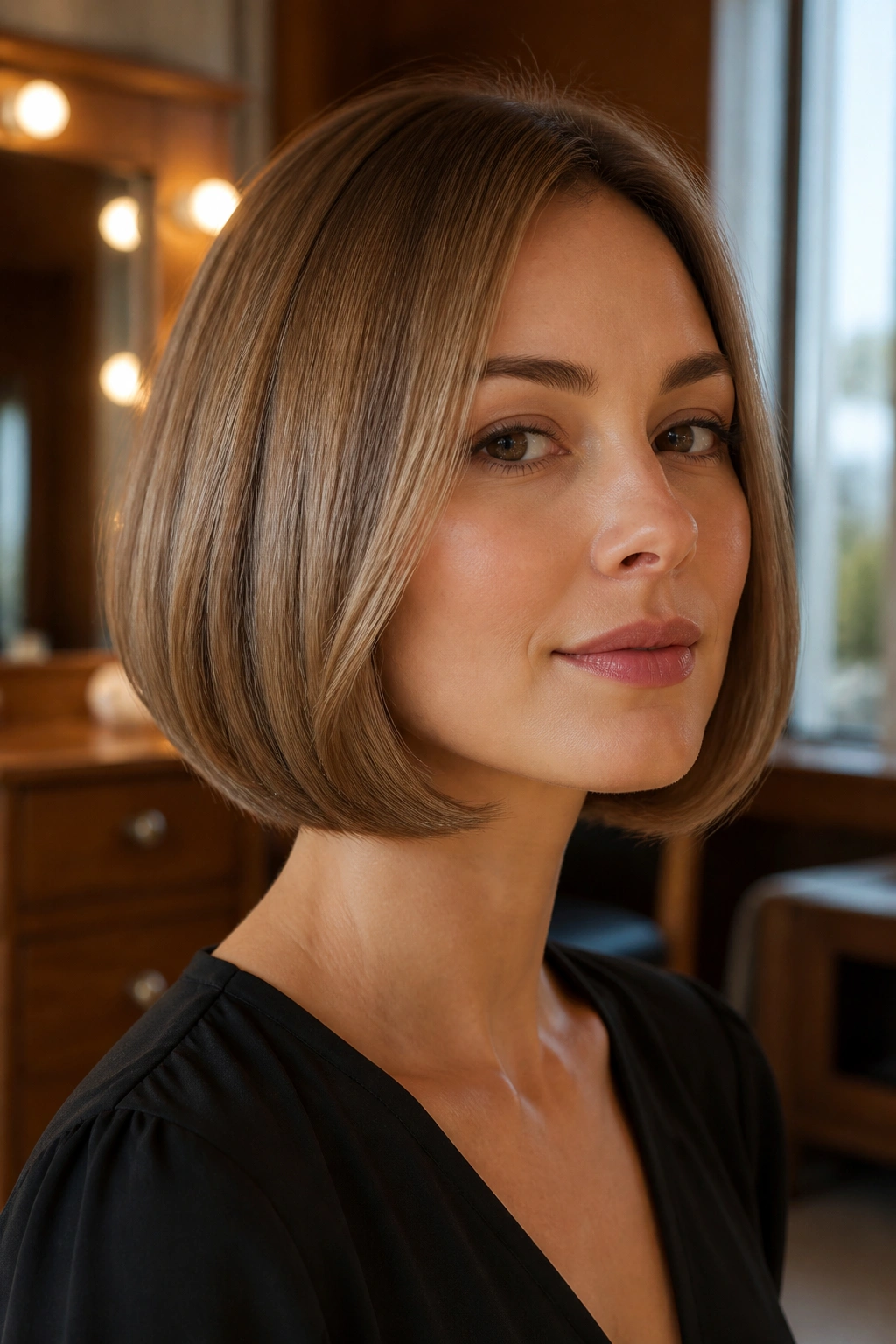
Can a bob look fuller just because the ends turn under? Yes. That tucked-under curve helps fine hair feel denser because the shape creates a visible boundary instead of a loose, open edge.
The style is simple: the hair sits around chin to jaw length, and the ends are trained inward. It gives the impression of body without piling on texture. Fine hair often responds well to this because the bend is controlled, not fuzzy. There’s no need to puff the whole head up. The line carries the look.
How to style the tuck
Use a medium round brush or a flat brush with a slight turn of the wrist at the ends. Dry the roots first so the top does not go limp, then work the mid-lengths and finish by rolling the ends under for a few seconds. A cool shot at the end helps the curve stay put.
If your hair tends to flick out, this cut can feel like a fix. Not a miracle. Just a clean, sensible fix.
17. Deep Side-Part Bob for Root Lift
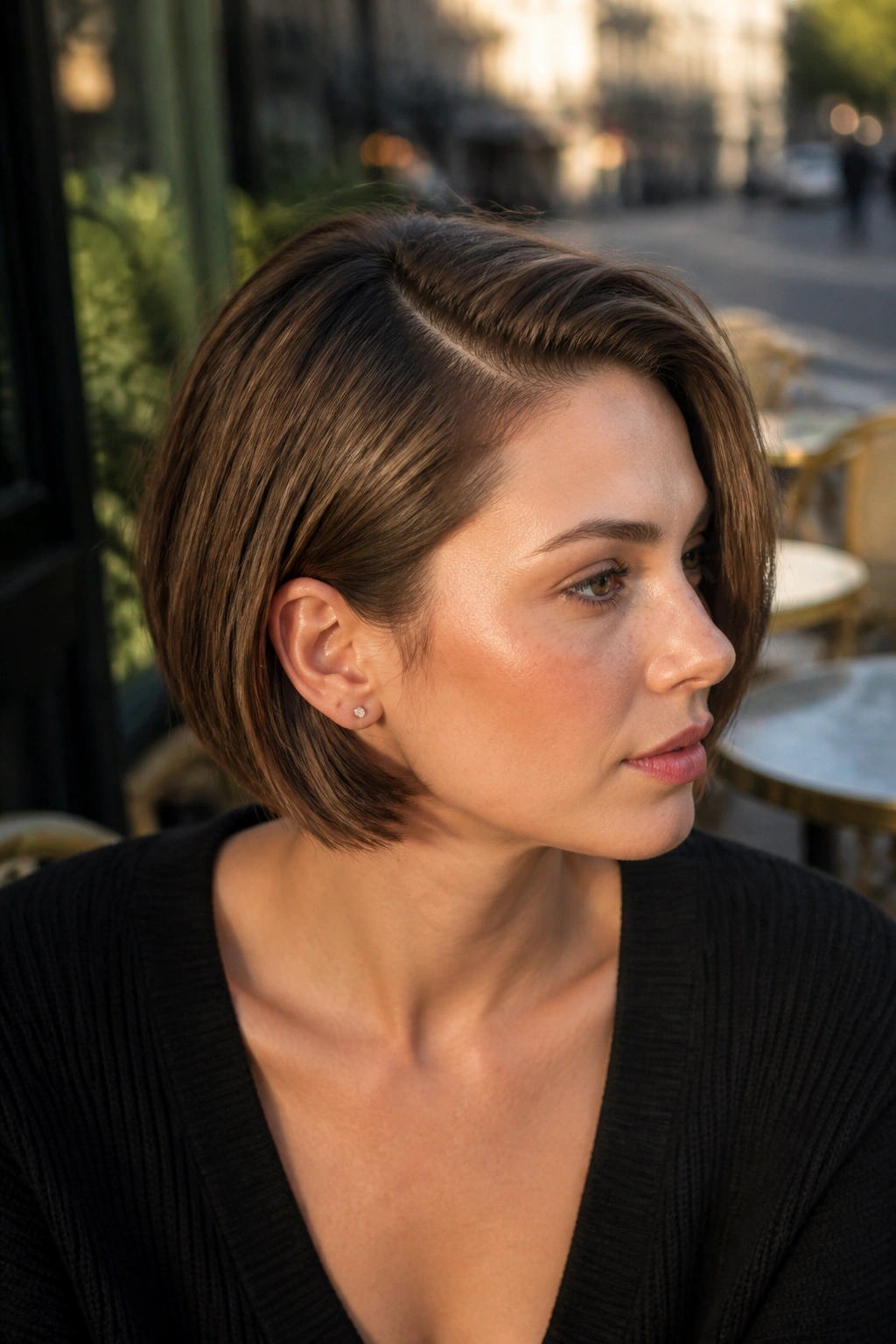
A deep side part can make a fine-hair bob feel taller at the crown without changing the cut at all. That is a nice trick, and it works because the hair has to travel farther before it falls.
The asymmetry gives the illusion of lift on the heavier side, while the lighter side frames the face. Fine hair likes that sort of structural help. When the roots sit too close to the scalp, the whole style goes sleepy. A deep side part wakes it up fast.
This cut is especially handy if your scalp has a stubborn crown swirl or a flat spot where hair insists on lying down. The deeper part can move the problem away from the center of attention. It can also soften a very straight silhouette if the bob itself is clean and blunt.
There is a small catch. If the part is pushed too far, the hair can look top-heavy on one side and thin on the other. The sweet spot is dramatic enough to lift, not so dramatic that it looks forced. A comb and a little root spray help keep the balance.
18. Textured Straight Bob with Barely-There Ends
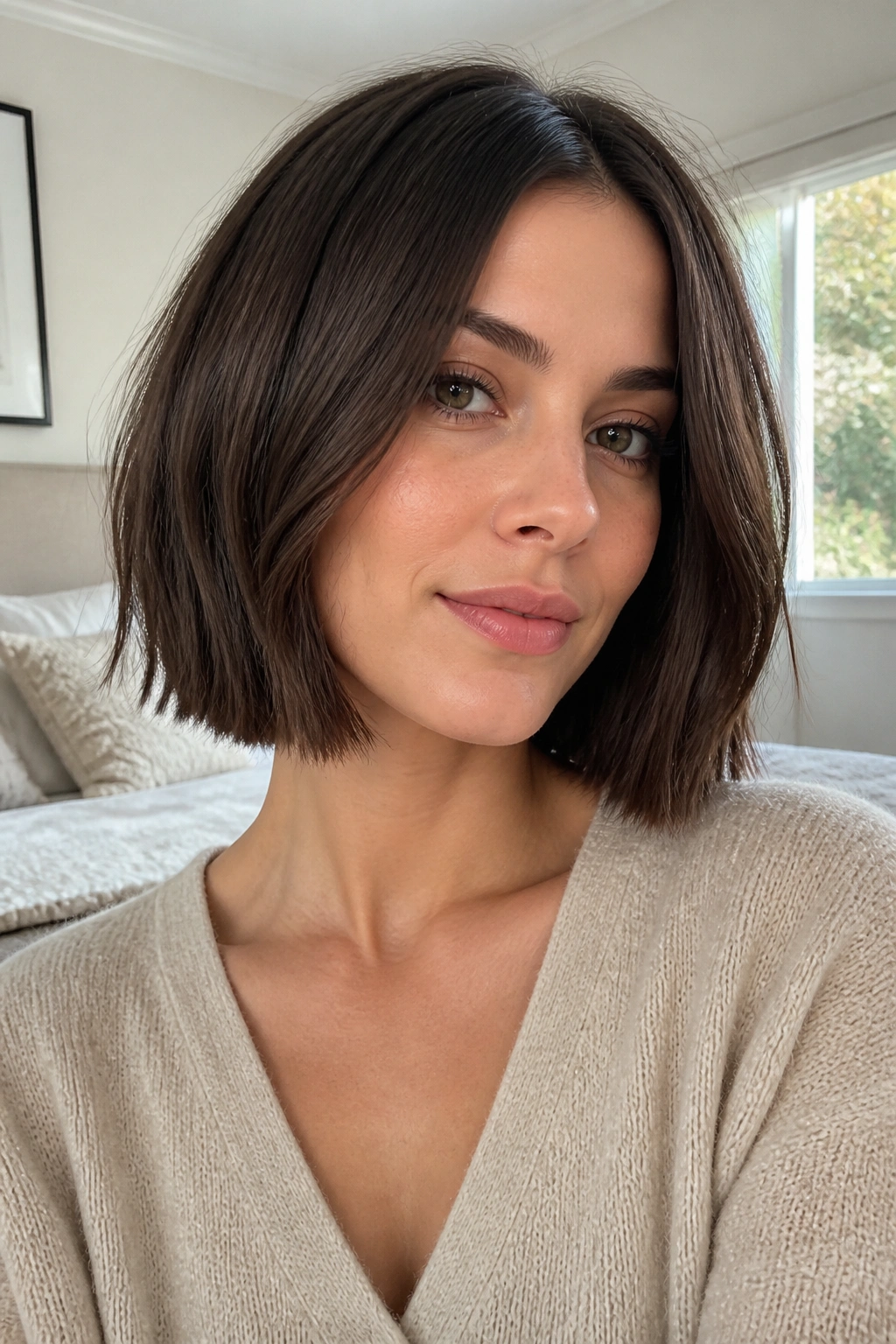
Unlike a choppy bob, this version keeps the texture so light that the ends still read as full. That is a crucial difference for fine hair.
A lot of people think texture automatically makes hair look fuller. Sometimes it does. Sometimes it just makes the ends fray out and vanish. This version keeps the straight base intact while adding the smallest amount of movement through the mid-lengths, almost like the hair was smoothed with fingers after drying.
It works well for naturally straight hair that lies too flat with a blunt finish alone. The barely-there texture gives the style some air, especially around the cheeks and neck, but it does not remove enough weight to hurt the shape. The result is softer than a box bob and less severe than a precision bob.
If you want this cut to work, keep the texture controlled. A small amount of dry paste or a light spray on the ends is enough. Heavy product defeats the point and makes fine hair look greasy fast. That is a shortcut to nowhere.
19. Uneven-Part Bob for a Fuller Crown
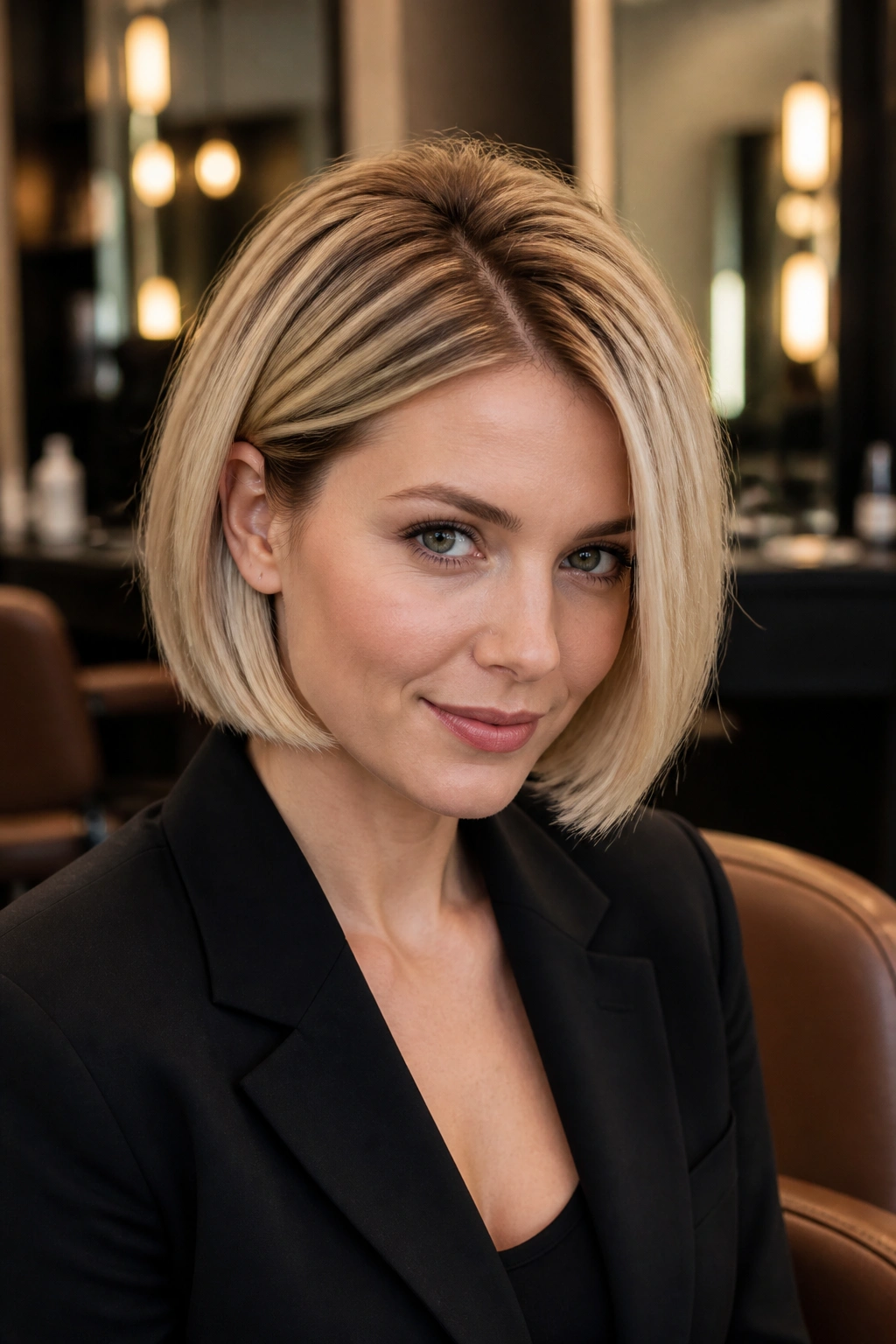
A slightly uneven part is one of those tiny changes that can make a bob look much richer. Not a dramatic zigzag. Just a part that sits a little off from the exact middle so the hair does not fall into the same pattern every day.
What makes it different
Fine hair gets used to habits fast. Same part, same collapse, same flat patch at the crown. Shifting the part a little breaks that pattern and gives the roots a chance to lift on their own. The bob looks looser, but not messy.
This approach pairs well with a clean perimeter because the contrast keeps the style looking intentional. The ends stay blunt while the top gets a little lift and movement. It is a simple fix, and sometimes that is all the cut needs.
- Move the part about half an inch to one inch from your usual spot.
- Dry the roots in the opposite direction first.
- Keep the perimeter thick and even.
- Use a lightweight root mist only where the hair lies flat.
If your bob goes limp on the same side every day, change the part before you blame the cut.
20. Long Bob That Still Works for Fine Hair
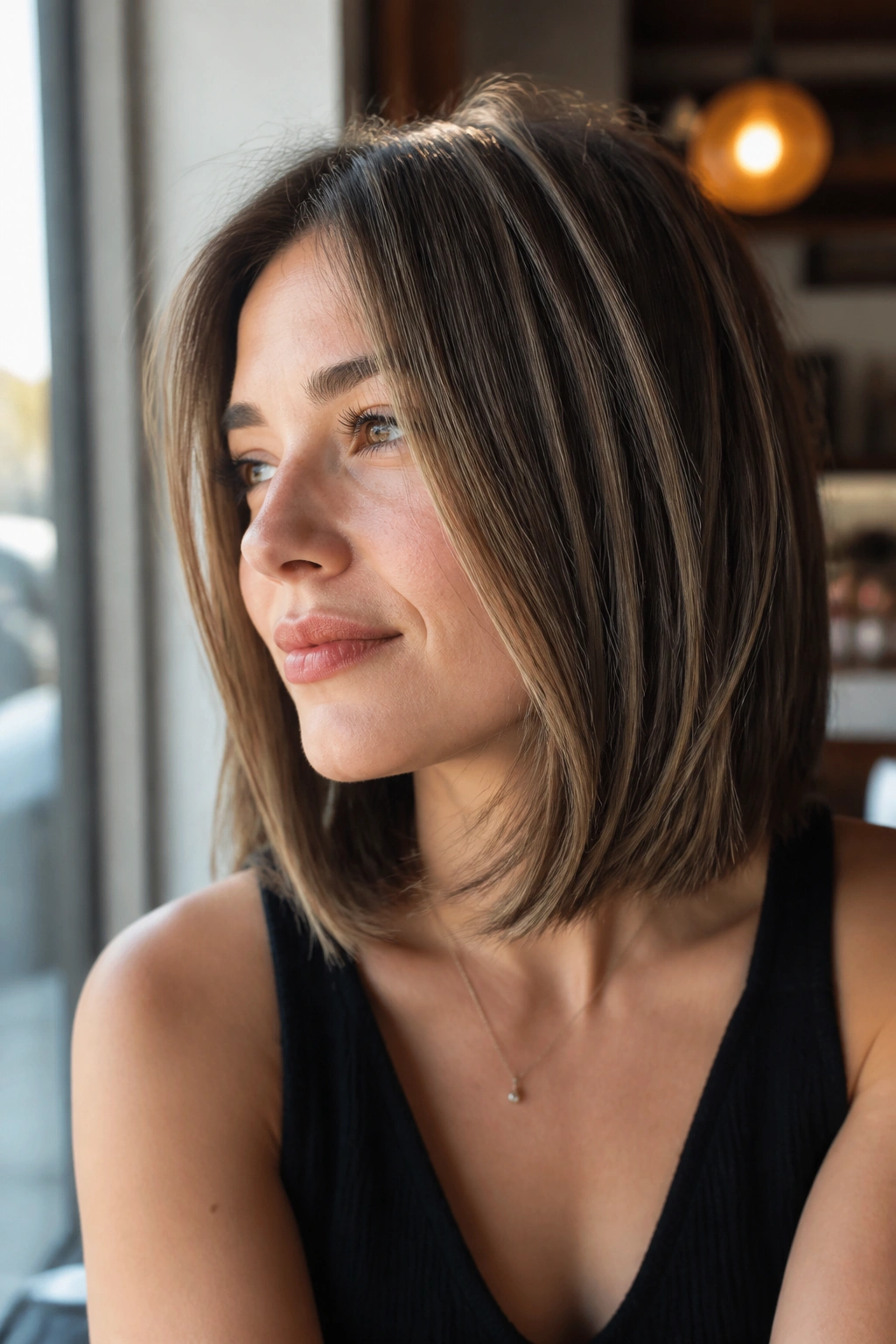
If you want movement without giving up the option to tie your hair back, the long bob is the safest place to land. The trick is keeping the length honest and the ends full.
A good long bob for fine hair usually sits around the collarbone or just above it. That length is long enough to feel flexible, but short enough that the ends do not stretch out into see-through territory. If the cut is one length or almost one length, it can look much richer than a long layered style that keeps whispering away at the bottom.
This is the choice for people who are nervous about going too short. Fair. Hair is personal. A lob lets you keep some familiarity while still getting the benefit of a stronger shape. It is also easier to grow out than a chin-length bob if you decide later that you want more length.
For styling, keep the surface smooth and the ends slightly tucked or straight. Big beach waves can be pretty, but they are not always kind to fine strands in this length. A soft bend is enough. No need to overcomplicate it.
Final Thoughts
The smartest straight bob haircuts for fine hair do one thing well: they protect the perimeter. That blunt edge, clean line, or subtle curve is what makes the hair read fuller. Layers can help in small doses, but they should never be the star of the show.
Length matters too. Chin, jaw, and collarbone each tell a different story. Shorter bobs create more density at the eye level; longer bobs keep flexibility without letting the ends disappear. Pick the one that fits your daily life, not just the one that looks dramatic in a photo.
Bring reference photos that show the same haircut from the front and the side. That matters more than people think. A bob can look very different when it turns with your cheekbone, and a good stylist will care about that detail before the scissors even come out.
