



Stacked bob haircuts for fine hair work because they put the shape where fine strands need it most: at the back, through the crown, and along the nape. The cut gives the illusion of density without asking the hair to be something it isn’t.
That sounds simple. It isn’t.
A stacked bob lives or dies on the graduation. Too much layering and the ends start to look see-through; too little and the whole thing falls flat the minute you step outside or turn your head. The sweet spot is a clean build-up of weight from short at the nape to longer toward the top, so the haircut reads full even when the hair itself is soft and delicate.
Fine hair is not the same thing as thin hair. You can have plenty of strands and still need a cut that makes those strands behave like they belong together. That’s why a good stacked bob can feel almost sneaky — the back looks denser, the sides move better, and the whole head shape feels more deliberate.
Some versions are crisp and polished. Others are softer, a little undone, even slightly longer so they sit between bob and lob. If your hair goes limp fast, pay close attention to the cuts with a controlled stack and a solid perimeter; they usually give the best return for the least amount of styling fuss.
1. Chin-Length Stacked Bob with a Tight Nape
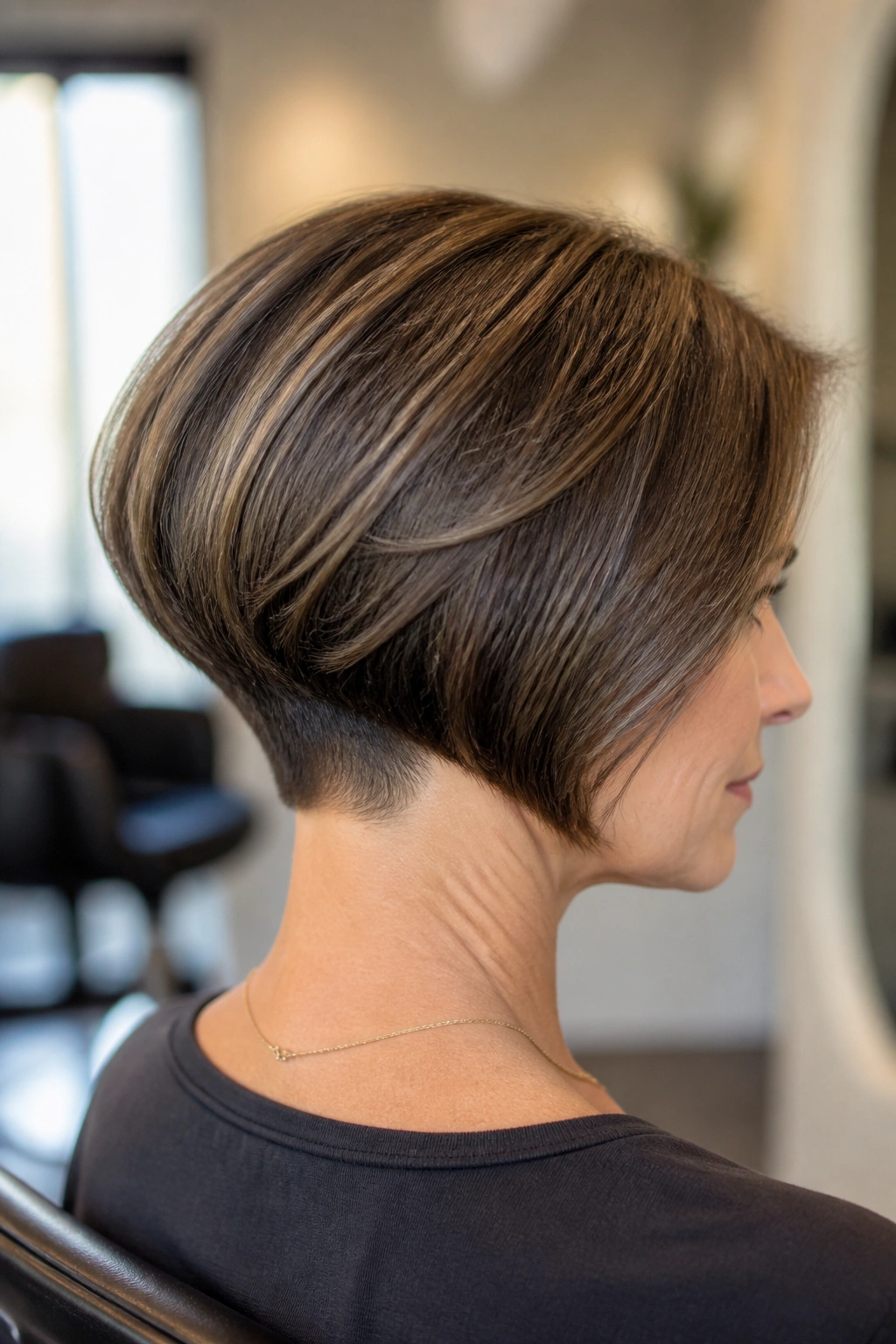
This is the cleanest place to start. A chin-length stacked bob gives fine hair a strong outline, and the short nape keeps the back from collapsing into a flat sheet. It looks sharp from the side, but the real magic is in the rear view — the stacked layers build a compact, fuller shape that does not need much coaxing.
Why it works on fine hair
The cut creates height where fine hair usually loses it first. Because the nape is shorter and the crown carries a little more length, the eye reads the whole shape as thicker than it really is.
Ask for the shortest point to sit just above the nape crease, with a gradual build toward the top. That small bit of graduation matters more than extra layers. Too many internal slices will make the ends feel wispy, and that is the fastest way to ruin a fine-hair bob.
- Best for hair that falls flat in the back by noon
- Easy to blow-dry with a small round brush
- Looks neat even with a simple tuck behind the ears
Pro tip: keep the perimeter blunt enough to hold weight. That one choice does more for fine hair than most people realize.
2. Soft Inverted Bob with a Longer Front
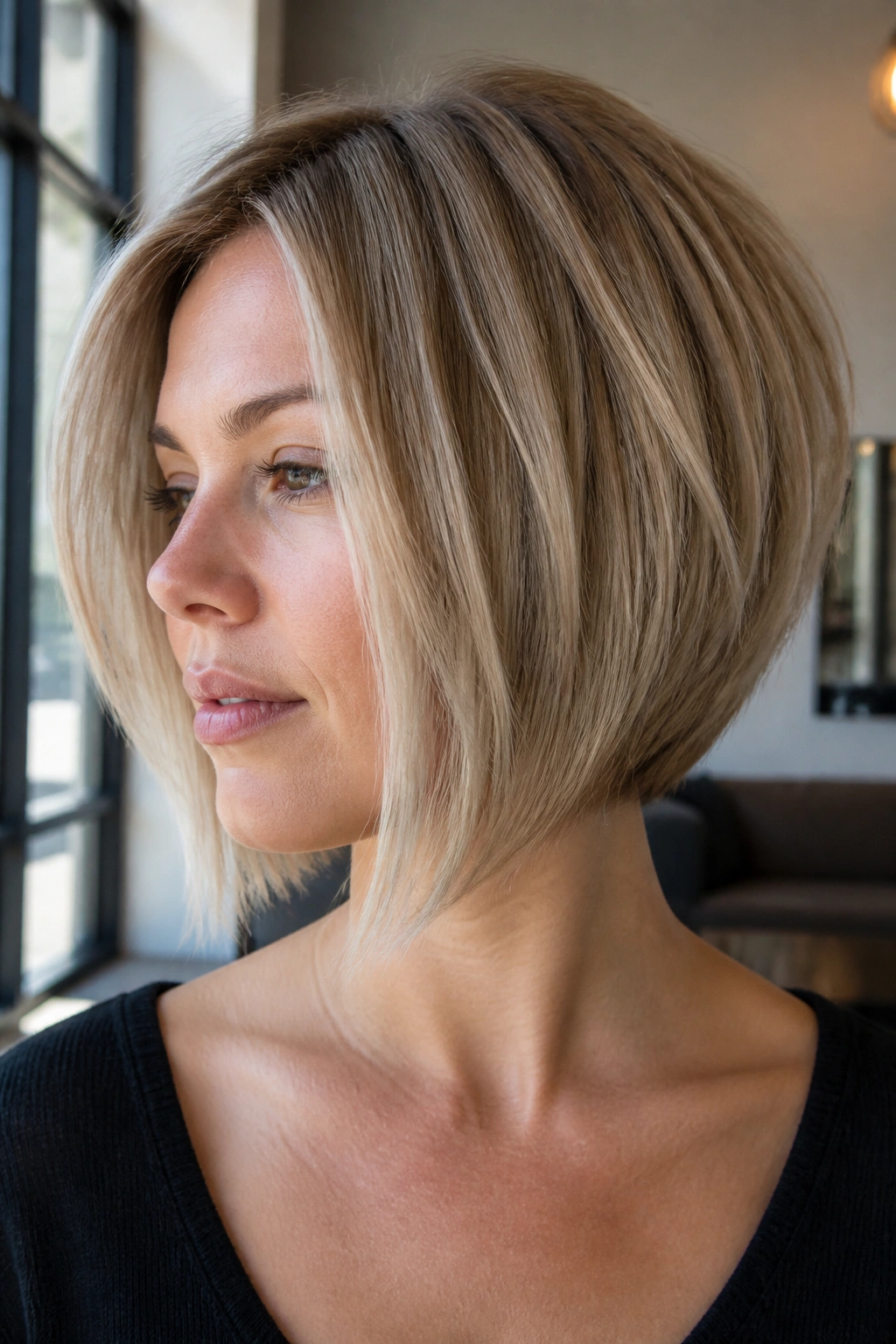
Why does this shape flatter fine hair so often? Because the longer front pieces pull the eye forward while the stacked back quietly does the volume work. The result feels lighter than a classic bob, but it still has enough structure to stop fine strands from drooping.
The front keeps it modern
A soft inversion usually means the front sits around jaw length or a touch lower while the back rises toward the nape. That slight angle helps the haircut look intentional, not helmet-shaped. It also gives you room to tuck one side or flip the front pieces under with a brush.
I like this version for anyone who wants movement without mess. The angle gives the hair a little swing, and fine strands tend to swing well when the shape underneath is clean.
What to ask for at the chair
Tell your stylist you want:
- a gentle angle, not a dramatic point
- a stacked back that stays compact
- front pieces that graze the jaw or skim just below it
Skip heavy razoring here. The whole point is to keep the ends looking full while the shape creates the drama.
3. Side-Part Lifted Stack
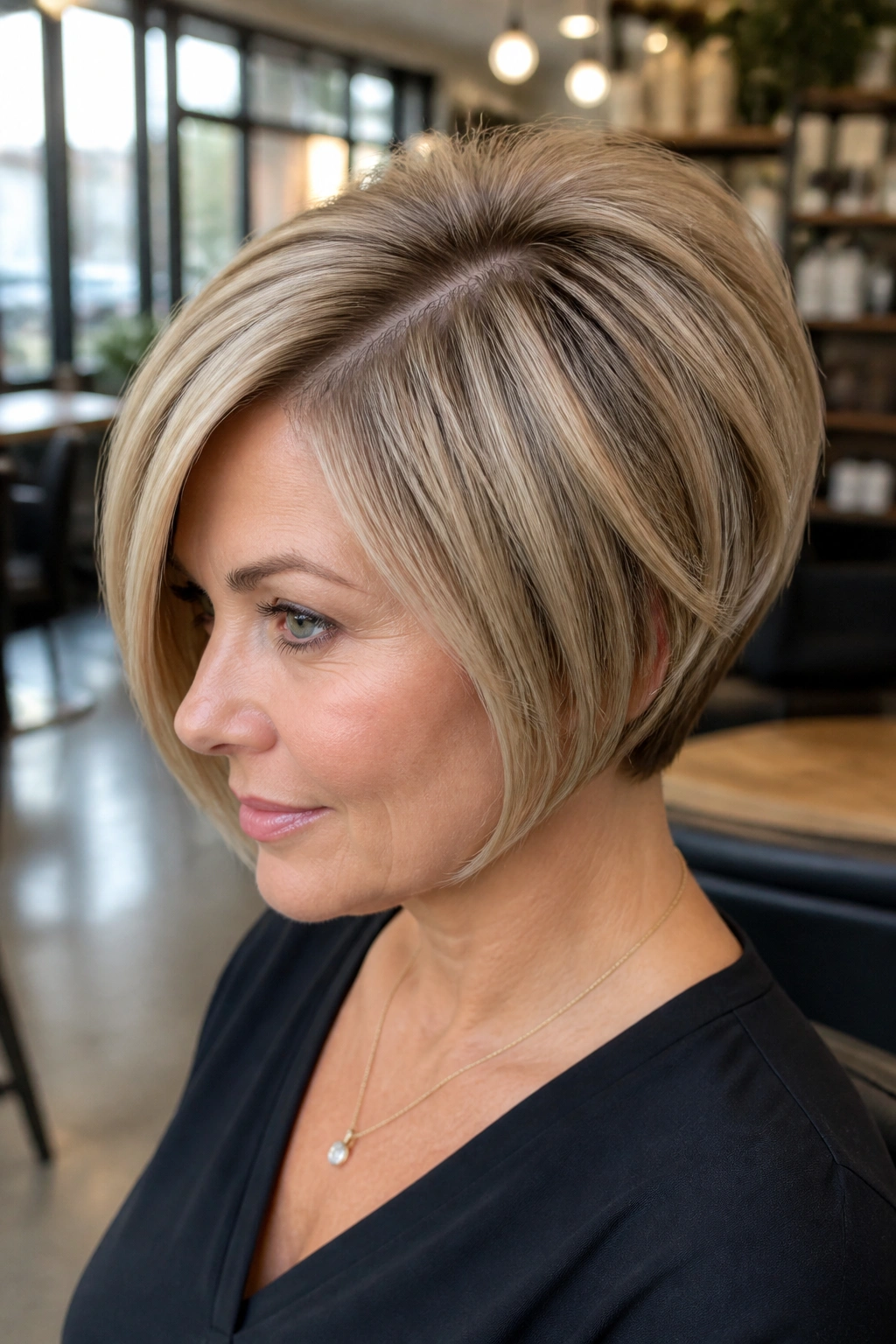
A side part changes everything. Fine hair often splits down the middle and just sags there, but a side-parted stacked bob creates an automatic lift at the root and a little more body where the hair wants to lie down. It is one of the simplest tricks in the book, and it works.
The cut itself does not need to be extreme. What matters is that the shorter side supports the crown while the longer side sweeps across the face in a soft curve. That curve hides sparseness near the hairline and makes the top look fuller without spraying half a can of product into it.
If your hair prefers one side anyway, use it. Fighting a natural part usually makes fine hair look more tired, not more polished. A good stylist will angle the stack to support the side you already live with.
4. Blunt-Perimeter Graduation
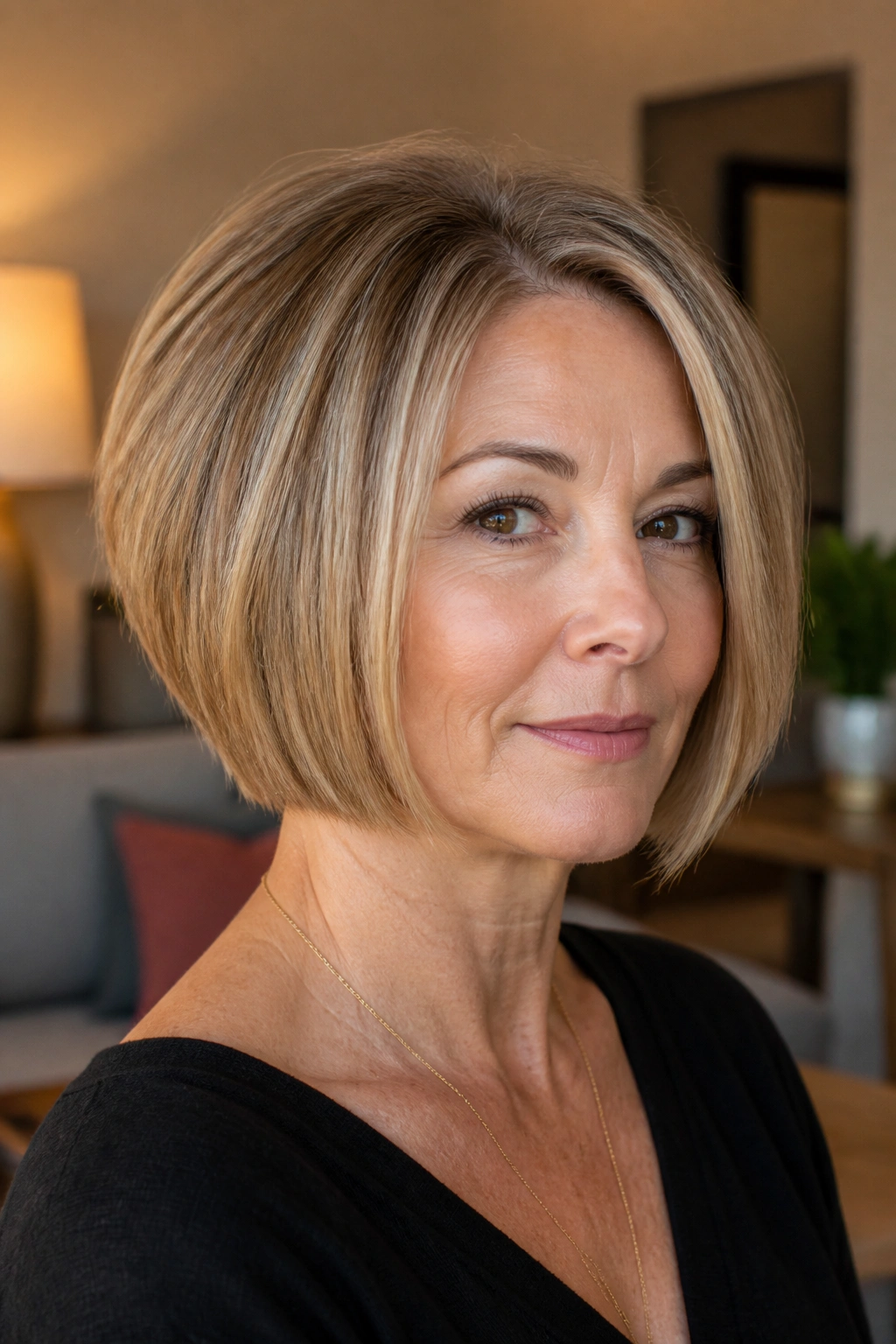
Not every stacked bob needs a feathered finish. Sometimes the smartest move is a blunt perimeter with a subtle stack underneath. Fine hair loves this because the eye sees a firm line, and firm lines read as density.
This cut is especially useful when your strands are very fine but you still have decent overall amount. The internal graduation builds shape, while the outer edge stays full and solid. That combination keeps the bob from looking stringy around the jaw.
A blunt perimeter also grows out better than heavily textured ends. The shape softens over time instead of turning ragged. If you hate salon-perfect hair the day you get it but want something that still looks good three weeks later, this is a solid bet.
5. Rounded Crown Stack for Fine Hair
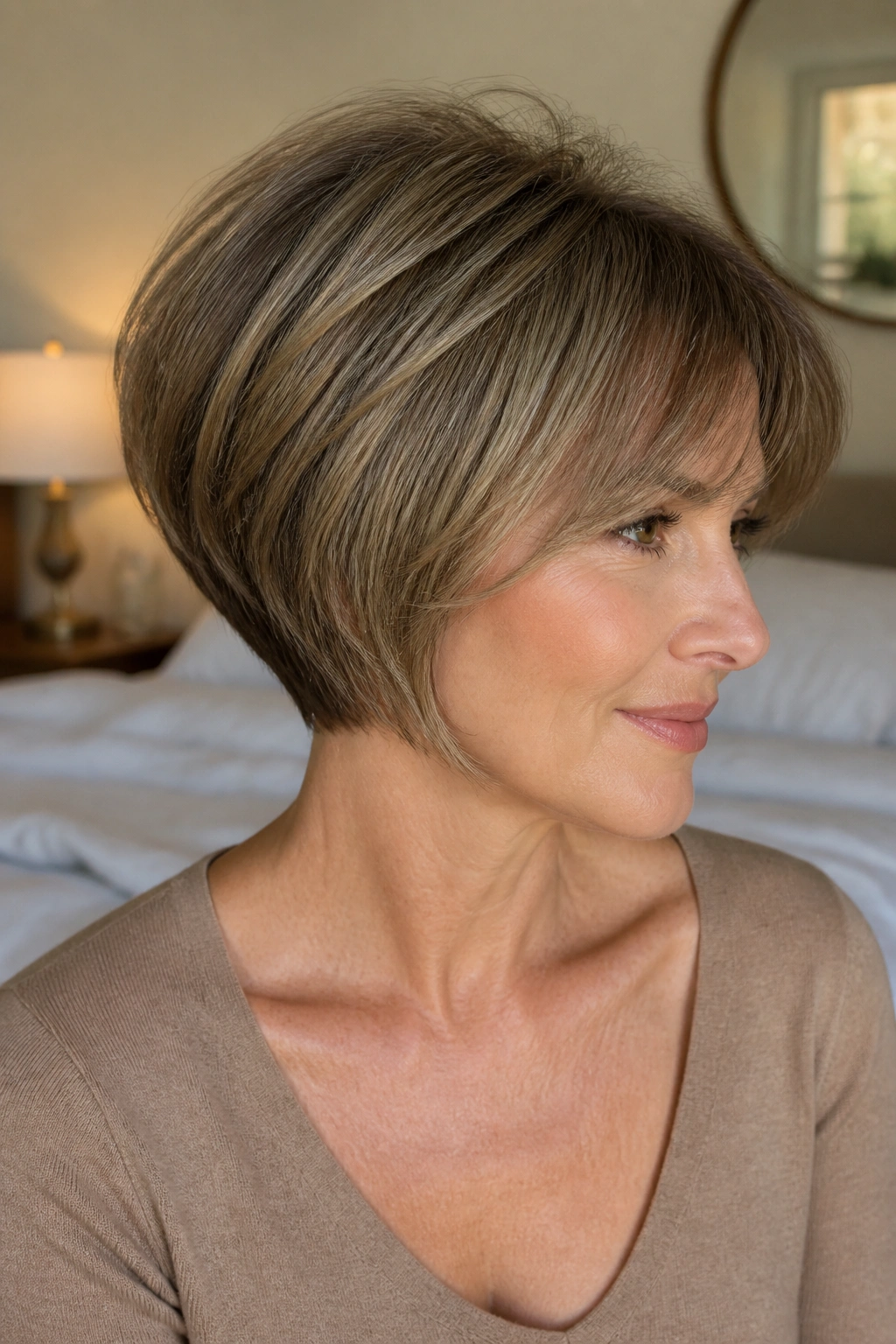
A rounded crown stack gives fine hair a little dome of lift at the top without making the cut feel old-fashioned. The shape curves softly from the crown into the stacked back, so the silhouette looks plush rather than stiff.
Where it shines
This version is kind to flat crowns and narrow heads. It gives a bit of width up top, which can make the whole haircut feel more balanced. The back still stays tidy, but the top carries enough roundness that the style doesn’t collapse into a straight line.
Styling is straightforward. A small round brush and a root-lift spray are usually enough. Dry the crown first, lifting at the root and directing airflow from underneath. Once the top has some bend, the rest of the bob falls into place with less effort.
- Good for fine hair that goes limp at the scalp
- Works well with a soft side part
- Needs less product than a heavily layered cut
A rounded stack should look cushioned, not puffed.
6. Tousled Piecey Stack
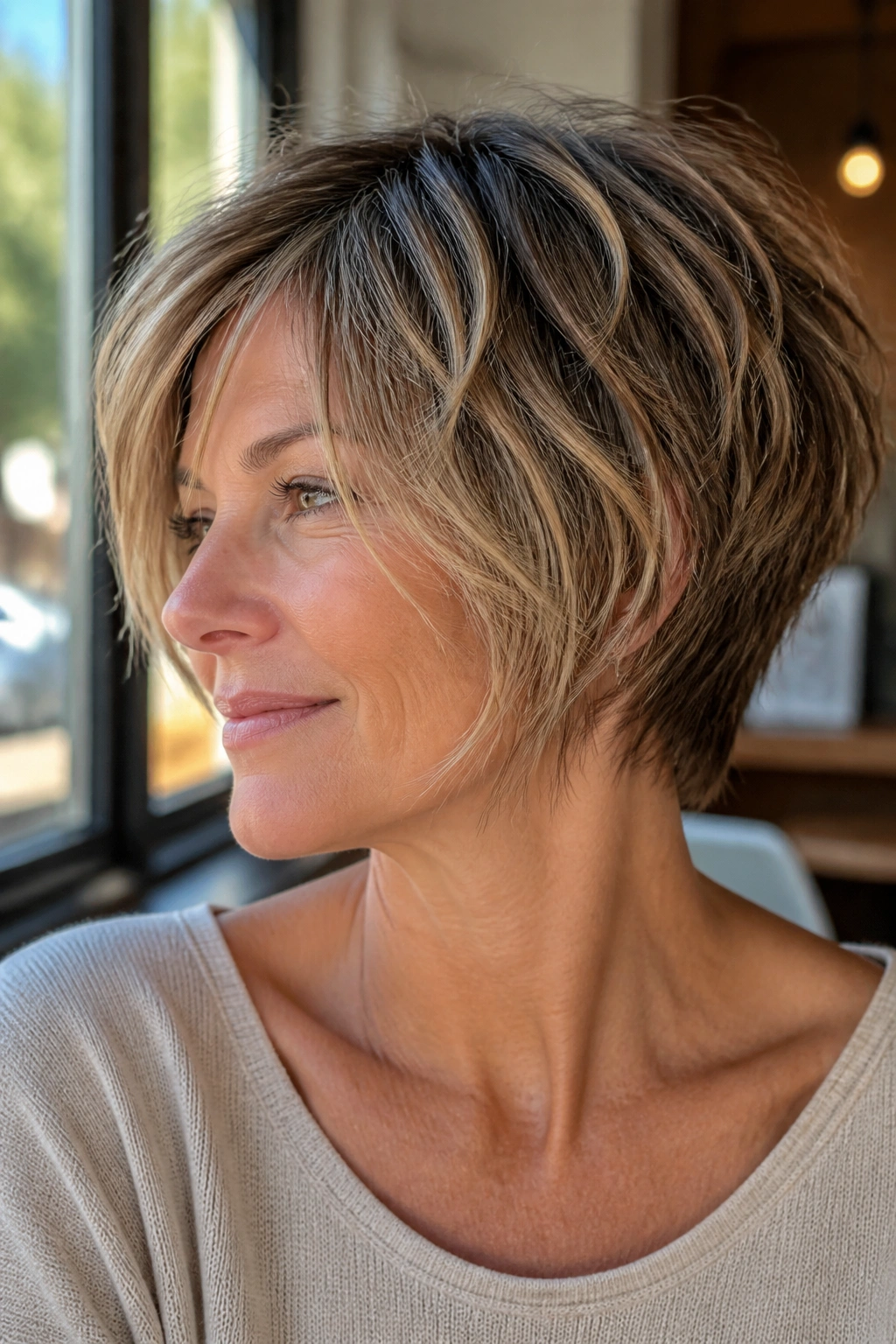
A little mess helps here. Fine hair can look too neat in the wrong way, almost like a paper cutout, and a tousled stacked bob adds separation without destroying the shape. The trick is keeping the nape clean while softening the top and sides.
Use a light mousse or a texture spray on damp hair, then twist a few sections with your fingers as you dry. You do not want crunchy ends. You want bent, separated pieces that still sit inside the bob’s outline. That distinction matters more than people think.
This version is best if you like hair that looks lived-in by lunch. It won’t suit someone who wants a sharp geometric line, but it’s excellent for fine hair that needs movement and a little attitude.
7. Sleek Glass Bob
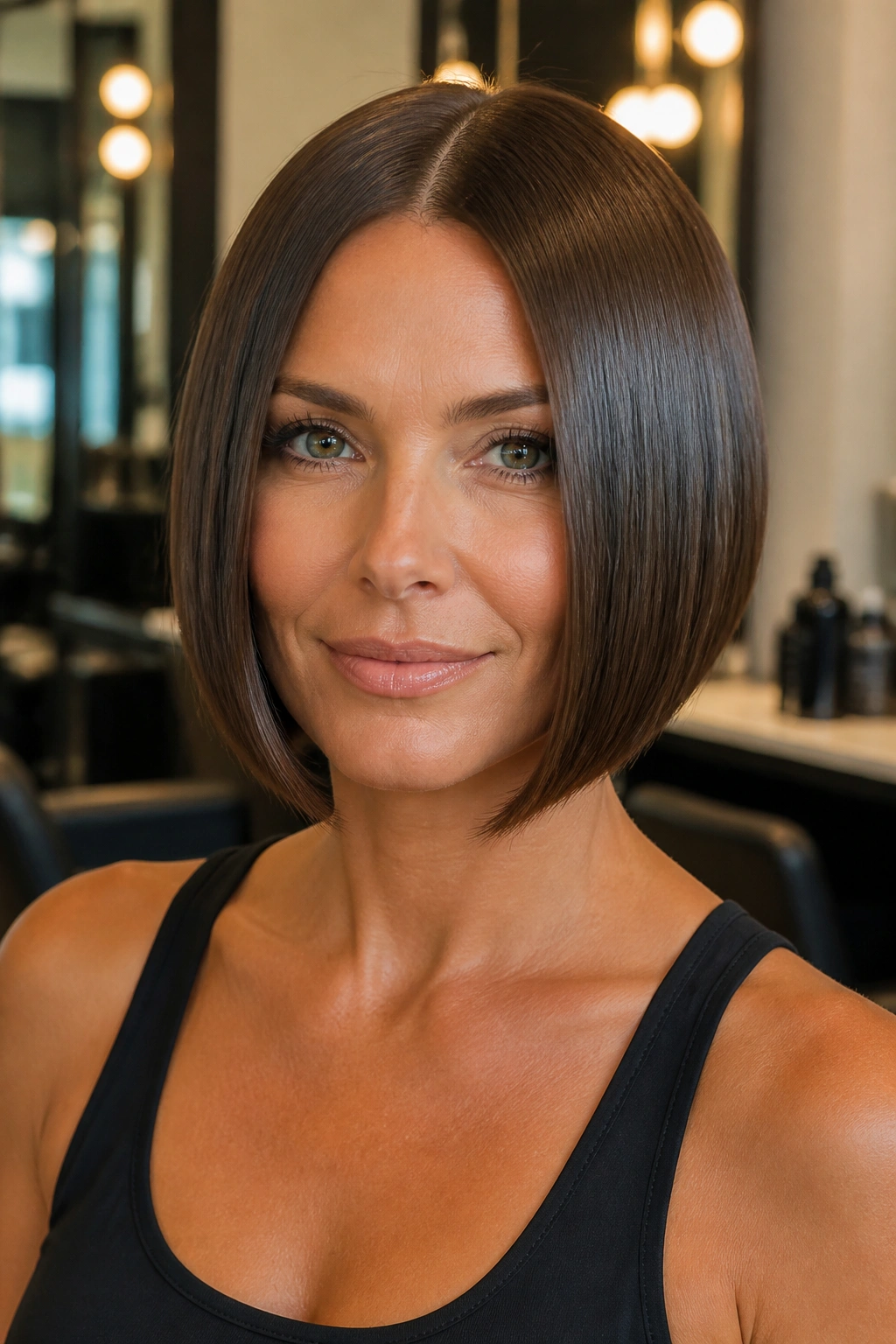
Sleek does not have to mean flat. A glassy stacked bob can make fine hair look dense because the strands lie together in a tight, reflective sheet. When the cut is precise, the shine does half the work for you.
The key is keeping the stack controlled and the ends polished. A round brush can do the shaping, but a flat iron finishing pass — one smooth pass, not six — gives the bob that clean edge. Use a light serum on the mid-lengths and ends only. Put it near the roots and the style collapses.
This look works best when your hair is fine but not overly sparse. If the density is extremely low, too much sleekness can expose too much scalp. Still, for the right head of hair, it’s a sharp, expensive-looking finish without needing a lot of volume.
8. Curtain Bang Stack
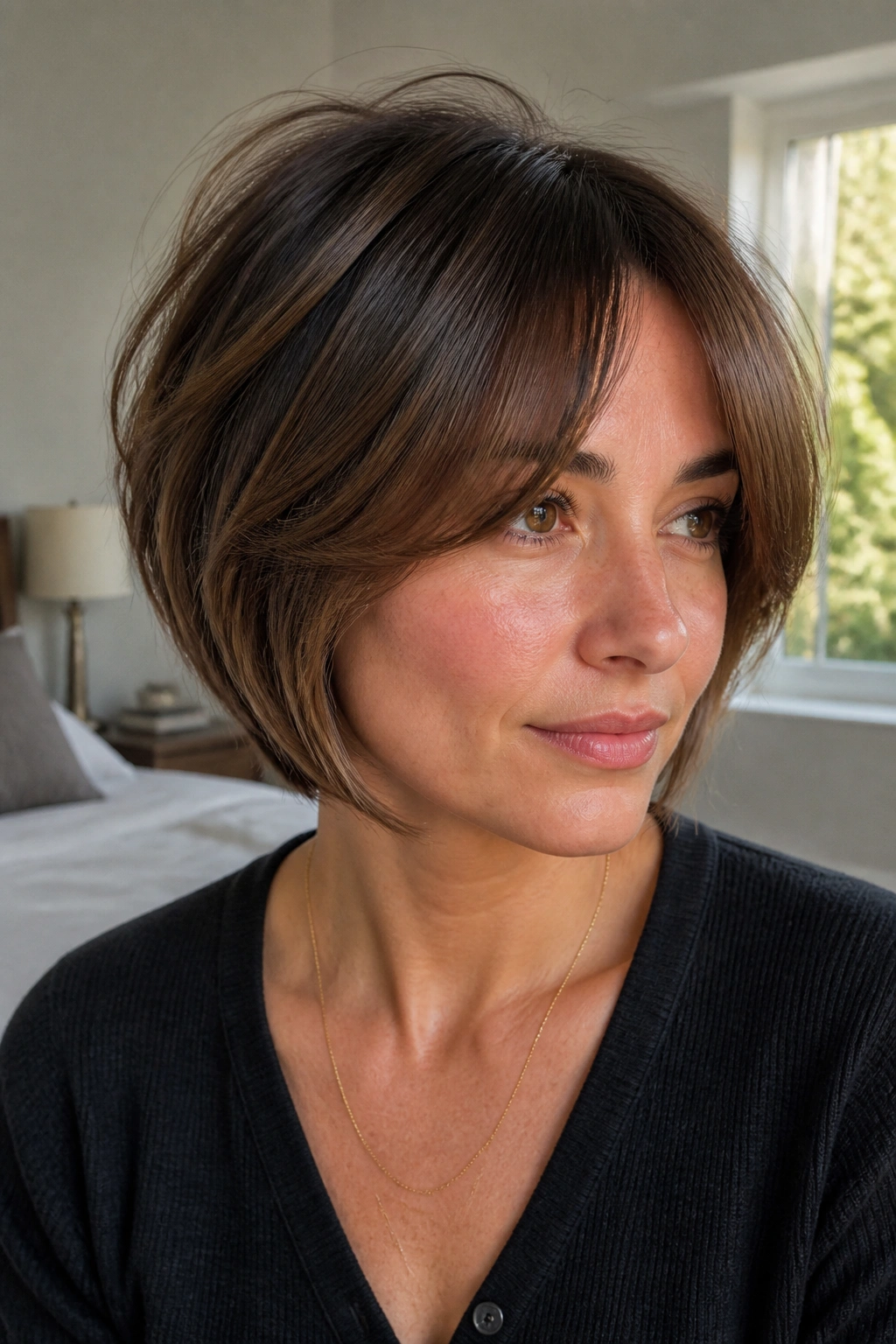
Curtain bangs do a lot of quiet work on a stacked bob. They open the face, disguise a high forehead, and keep the front from looking too severe. On fine hair, they can also make the whole cut feel fuller because the front pieces connect the stack to the face instead of leaving a hard break.
Styling note
Curtain bangs need a soft bend, not a stiff curl. Blow-dry them away from the face with a medium round brush, then let them fall back naturally. The center should stay a touch shorter than the outer corners so the fringe splits cleanly.
The rest of the bob can stay pretty simple. Let the back hold the structure while the bangs soften the front. That contrast is what makes the style feel balanced.
If your hairline has cowlicks, ask for slightly longer curtain pieces. Too-short fringe can kick out in awkward directions, and nobody needs that kind of fight in the morning.
9. Wispy Fringe Stack
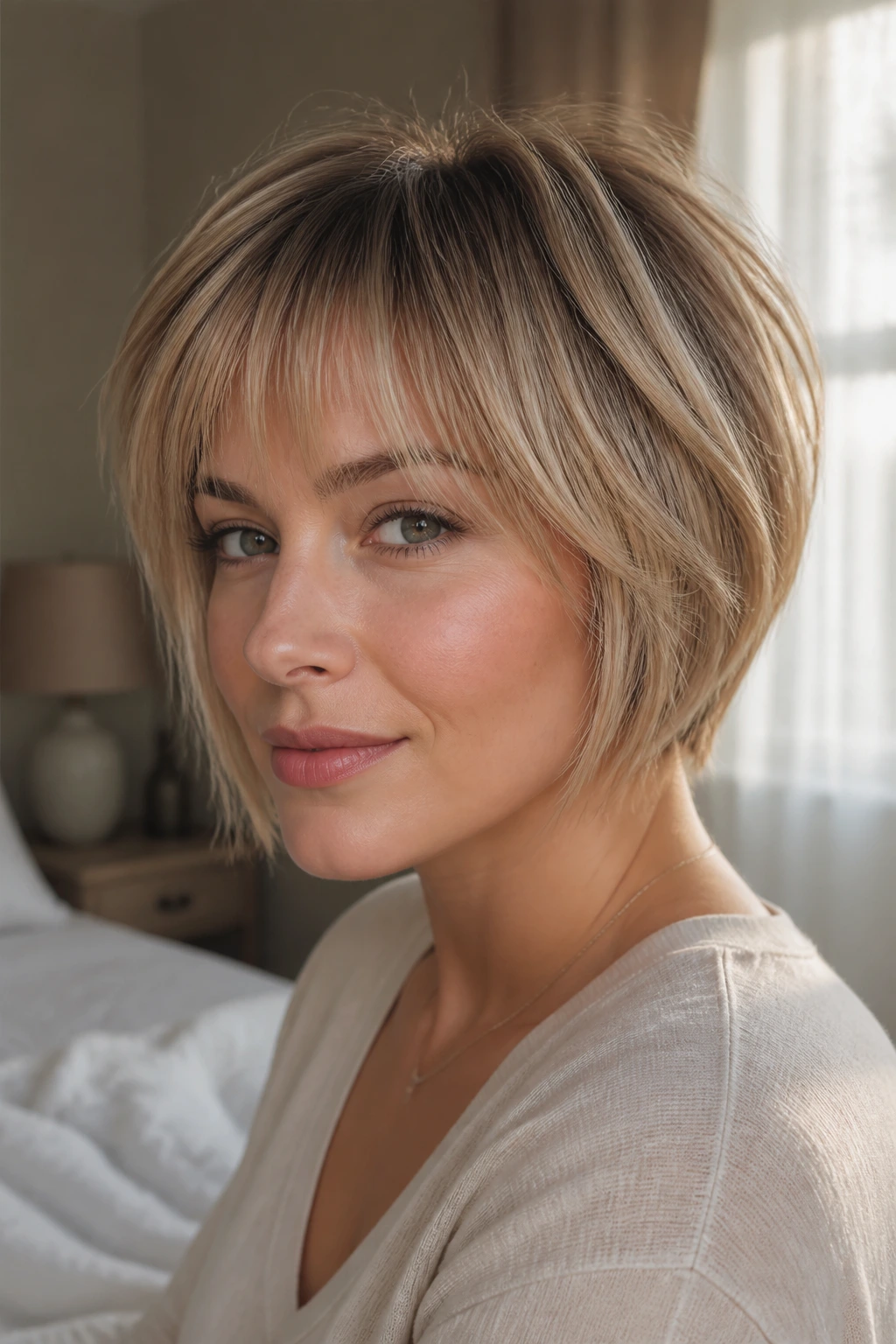
Wispy bangs are the polite cousin of a full fringe. They soften the forehead without taking up much visual space, which is handy when you want a stacked bob to feel airy rather than heavy. Fine hair often benefits from that lighter front section.
The important part is restraint. A fringe that is too sparse can look stringy, especially if the rest of the bob is also highly layered. Ask for a soft veil of bangs that sits just above or at the brows, blended enough that it doesn’t form a hard line.
This cut suits people who want some coverage but do not want the maintenance of a thick bang. It also plays nicely with glasses, since the fringe can skim the frames instead of swallowing them.
10. Asymmetrical Swing Bob
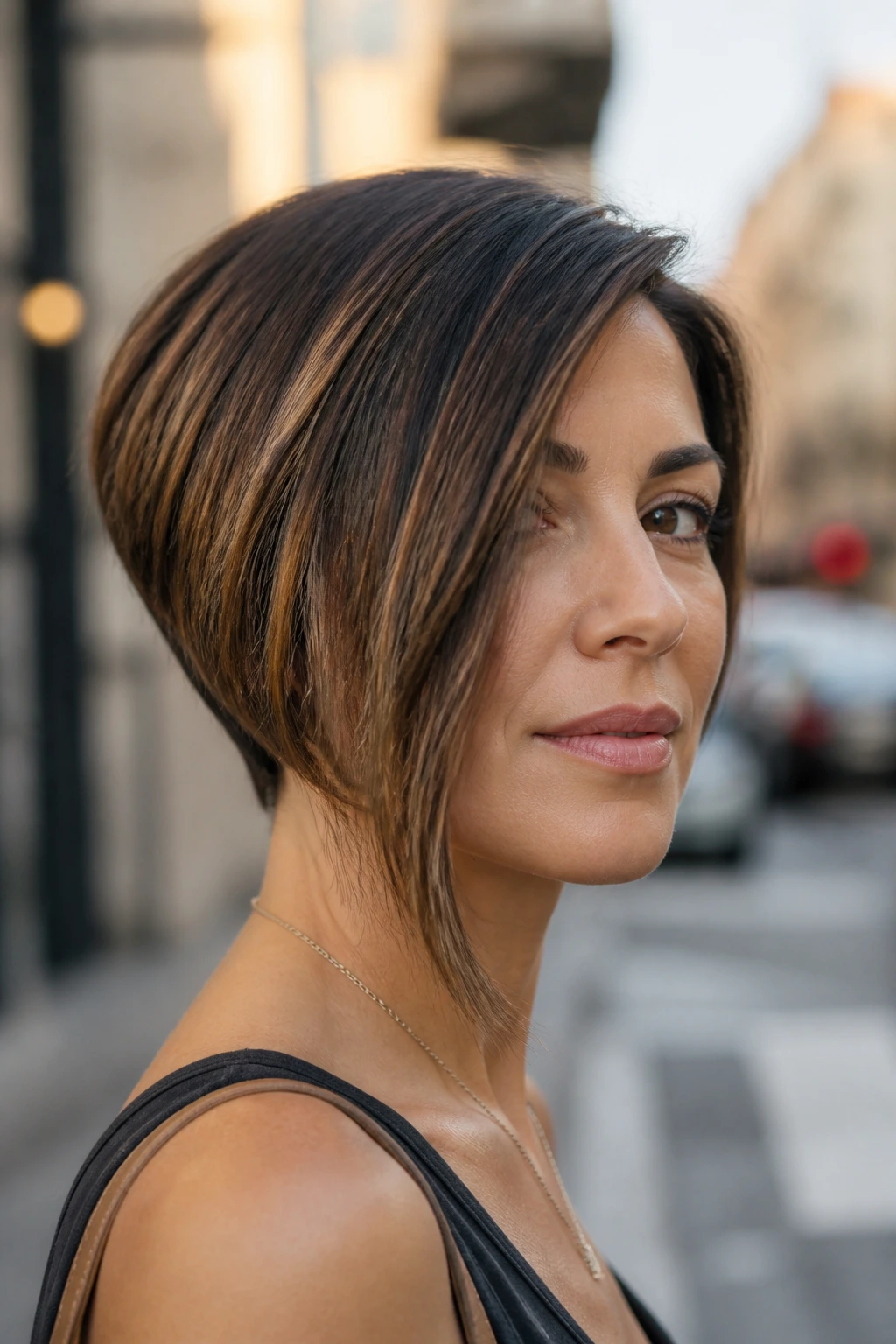
Some people want an angle you can see from across the room. An asymmetrical swing bob gives that, and fine hair often loves the movement because the longer side creates a clear line while the stacked back keeps the shape from drooping.
The longer side usually falls somewhere around the jaw or collarbone, while the shorter side hugs closer to the neck. That difference gives the haircut swing when you move, and it helps fine hair look styled even on a low-effort day. The shape works especially well if one side of your hair naturally lies flatter than the other.
The danger is making the angle too sharp. If the length difference gets extreme, fine hair can start to look stringy at the longer edge. Keep the contrast visible, not theatrical.
11. French-Girl Soft Stack
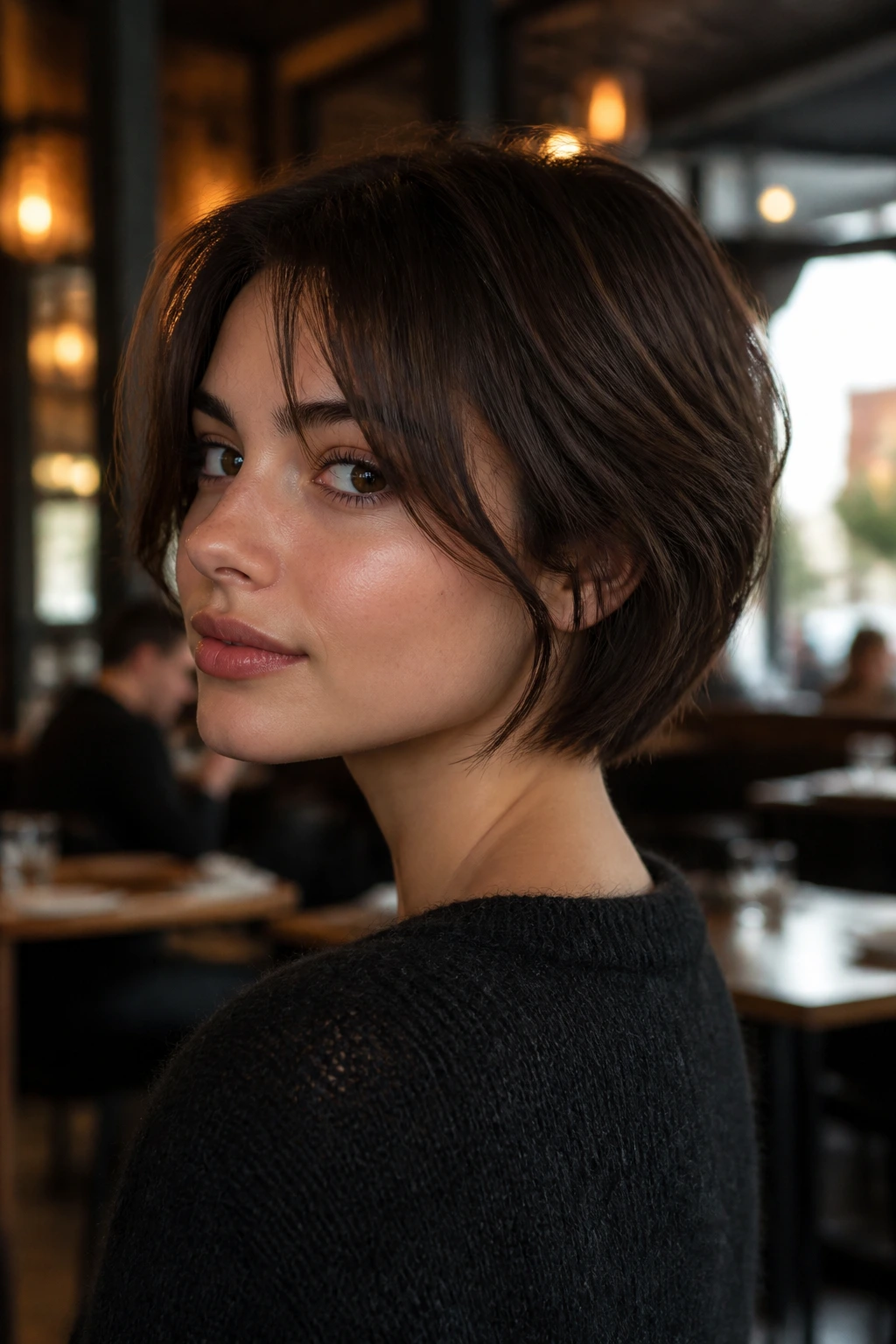
French-inspired haircuts usually rely on restraint, and that is exactly why they suit fine hair. A soft stacked bob with a relaxed outline feels a little undone in the best way, as if you ran your fingers through it and stopped before it got messy.
Ask for this at the chair
Tell your stylist you want a soft stack with minimal bulk removal through the sides. That keeps the bob from looking choppy. A few face-framing pieces around the cheekbones help, but the back should still do the heavy lifting.
This is a good choice if you hate overstyled hair. Let the ends bend naturally, keep the finish matte rather than glossy, and skip the urge to make every strand behave. The charm is in the looseness.
A cut like this is forgiving on days when styling time is short. It does not need perfection. It only needs shape.
12. Under-Bevel Bob
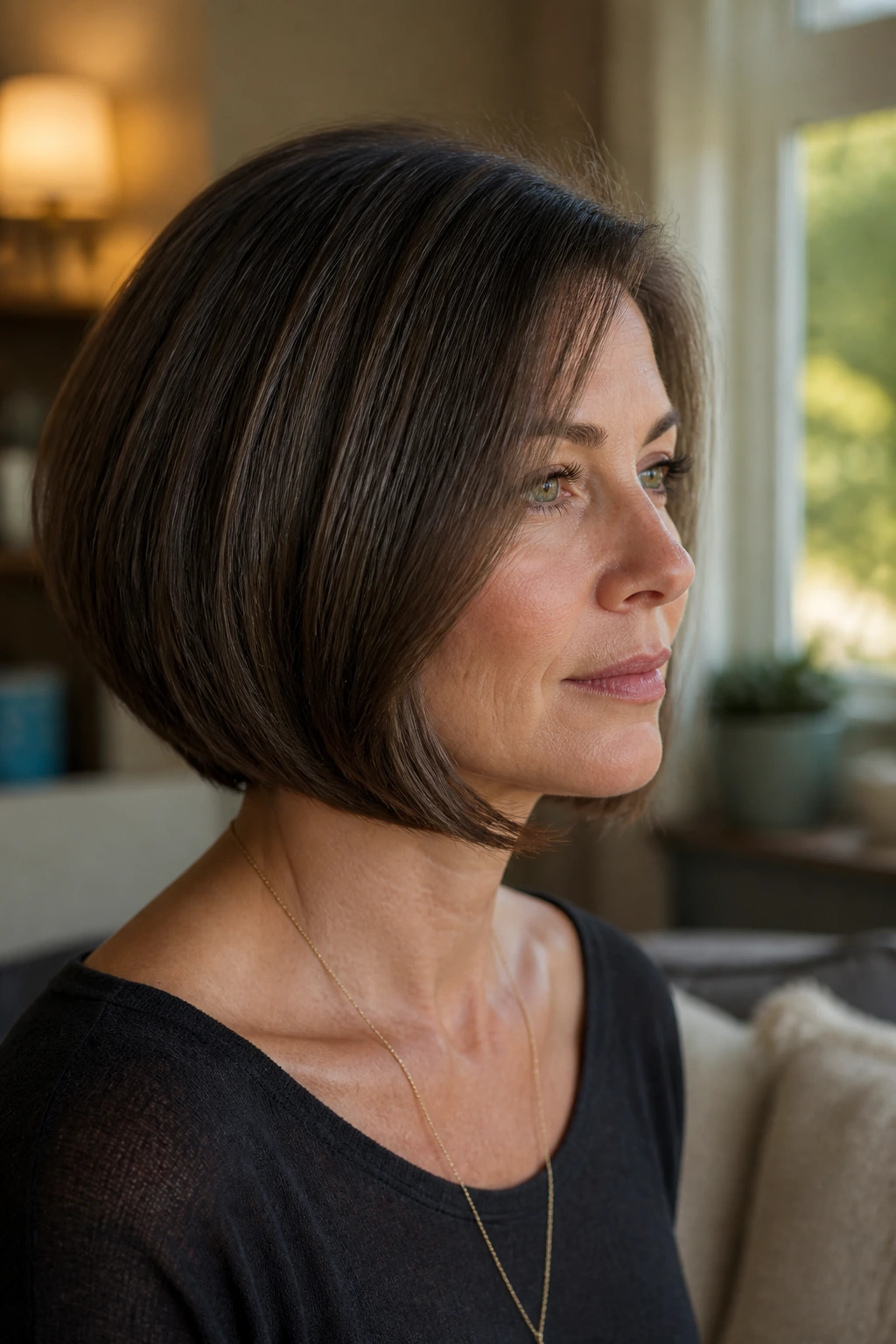
The under-bevel is one of those tiny details that changes the whole haircut. The ends curl inward just enough to create a fuller edge, and fine hair benefits from that visual weight because it makes the perimeter look thicker without adding extra length.
It is a clean, tidy look. The stack at the back keeps the bob raised, while the beveled finish at the bottom gives the cut a soft tuck under the jaw or neck. If your hair tends to fray at the ends, this shape is a lifesaver.
A 1.25-inch round brush usually works well for styling. Direct the ends under while drying, then let them cool in place before you touch them. That cooling step matters. It is what helps the bevel stay.
13. Razored Choppy Stack
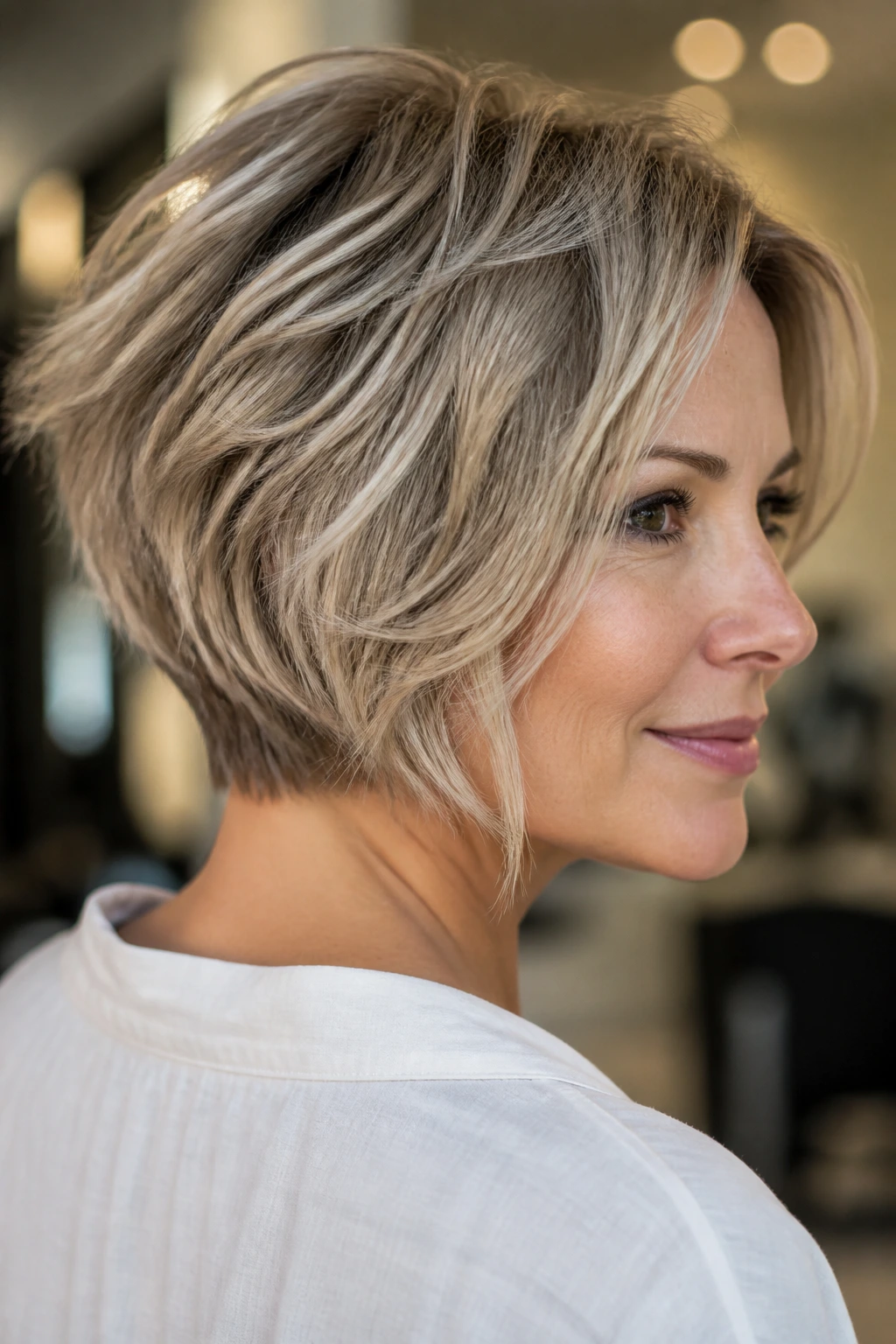
Razors can be tricky on fine hair. Used lightly, they add a bit of separation and movement; used too aggressively, they can leave the ends looking sparse. So this cut is all about moderation.
A choppy stack keeps the nape short and the top pieces slightly irregular, which gives the bob texture without sacrificing the outline. The surface looks lived-in, but the shape still holds. That is the sweet spot.
I would only ask for razor work on the outermost sections, not through the whole head. Fine hair does not have much room for error at the ends, and once they start looking thin, the haircut ages fast. Keep the interior more solid than you think you need.
14. Wavy Stack for Fine Hair
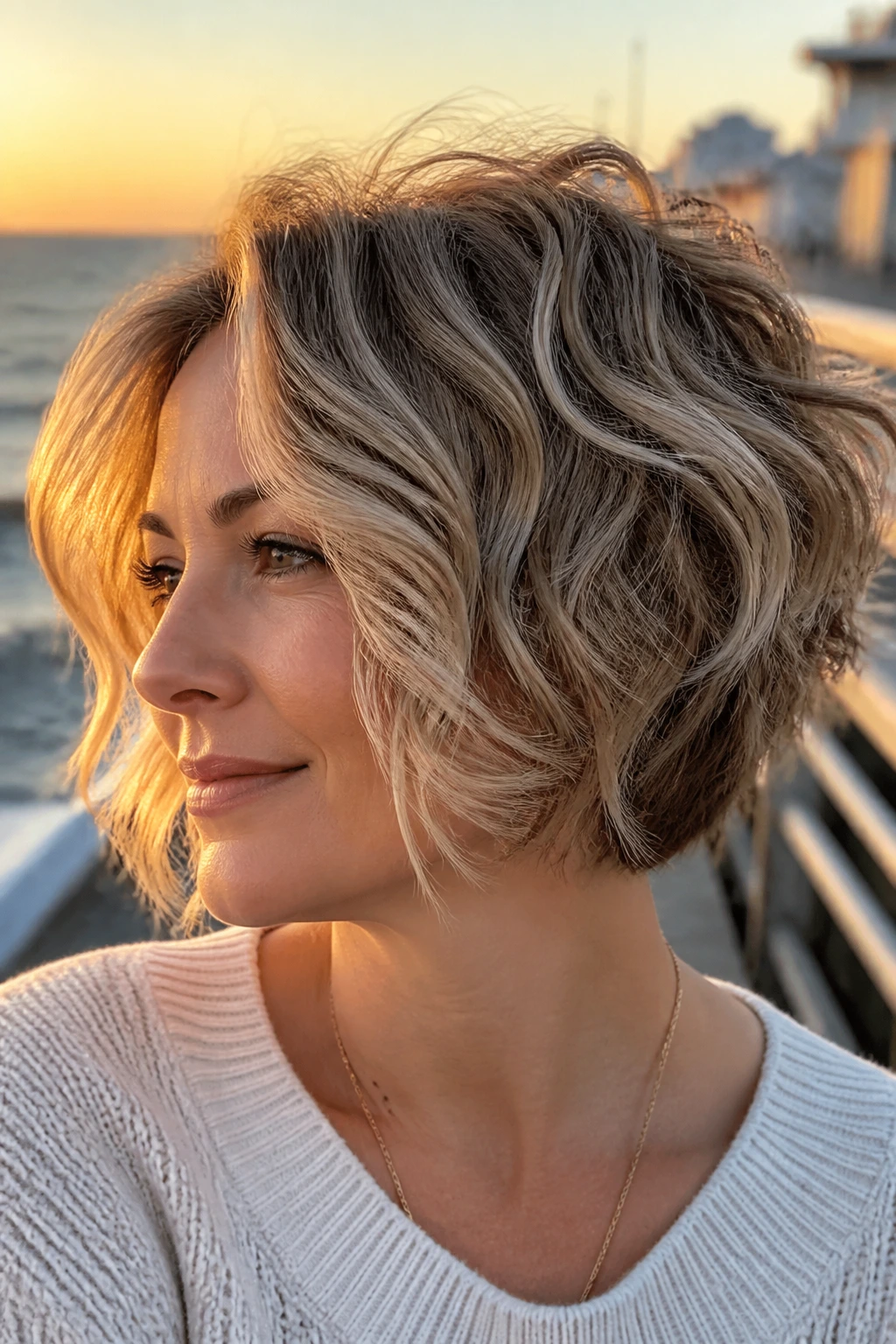
Waves and stacks can get along beautifully when the cut is calibrated right. Fine hair with a natural wave often wants to puff at the bottom and flatten at the top, so the stacked bob redistributes the shape and lets the wave do something useful.
Best texture
This version shines when the hair has a loose bend rather than a tight curl. A little mousse, a diffuser on low heat, or even a simple air-dry with a bit of scrunching can bring out enough movement to make the stack feel soft and full.
The catch is over-texturizing. If you pile on salt spray and rough-dry it, the ends can go fuzzy. Keep the wave defined and the stack clean underneath, and the haircut looks intentional instead of frizzy.
For very fine wavy hair, a collarbone-grazing version of this cut can be easier to live with than a super-short one. Length gives the wave more weight.
15. Pixie-Bob Stack
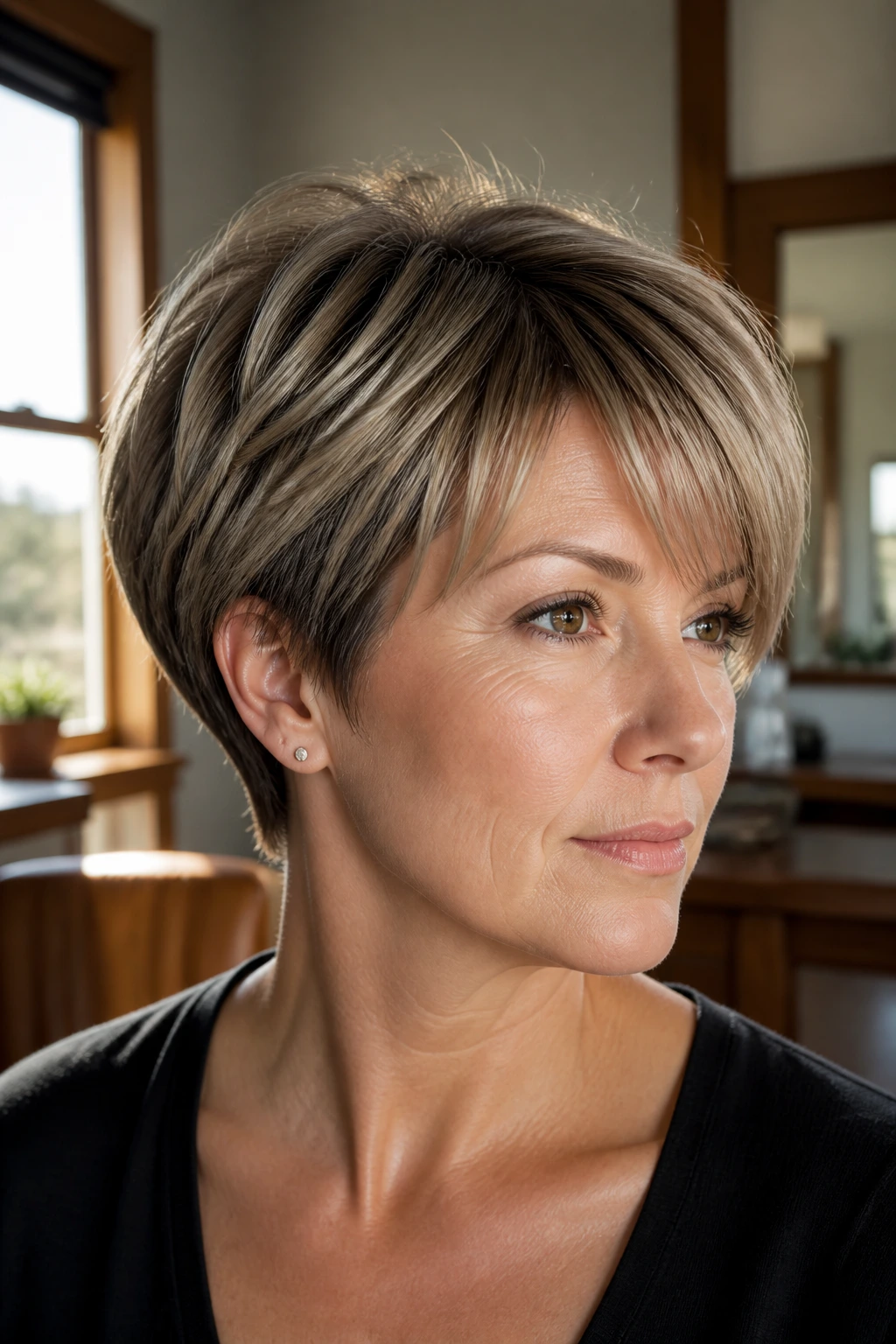
A pixie-bob sits right between short and short-short. The nape is cropped close, the top keeps enough length to move, and fine hair gets a serious lift from the tight shape around the back of the head.
Why people like it
- It takes weight off the neck
- It makes the crown look fuller
- It dries fast
- It works with a side sweep or a soft fringe
This cut is for someone who wants structure with almost no fuss. The shape needs a little trimming to stay clean, though, because short stacked bobs show growth faster than longer ones. If you can handle a regular cleanup, the payoff is big.
The best pixie-bob stacks keep the top soft enough to brush into place with your fingers. Too much choppiness and it starts reading like a grown-out crop instead of a deliberate bob.
16. Hidden Undercut Stack
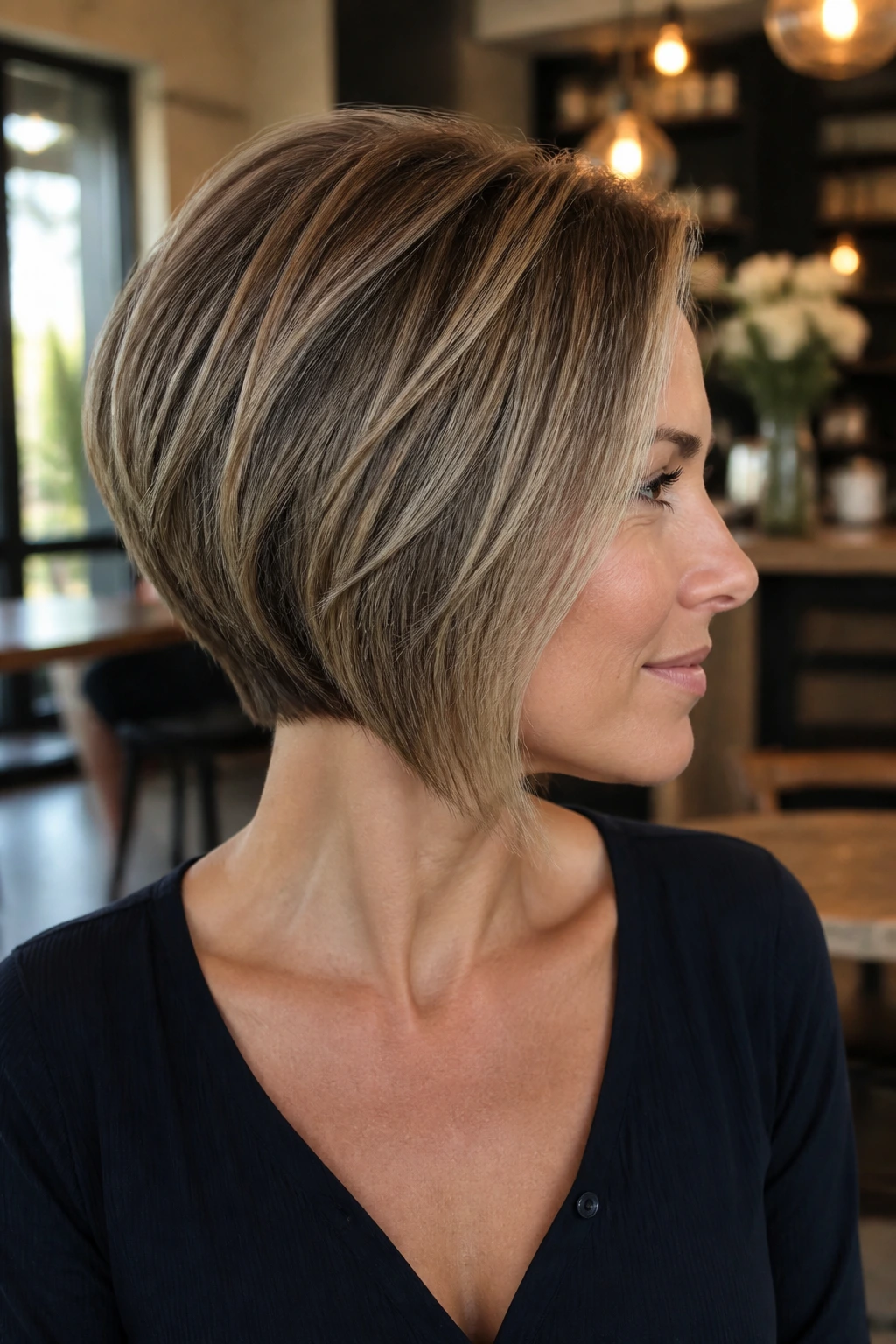
An undercut sounds dramatic, and sometimes it is. But on a stacked bob for fine hair, a small hidden undercut at the nape can make the whole shape sit better because it removes the awkward bulk that sometimes bunches up underneath.
This is not the move for very sparse hair. If your density is already low, shaving too much from the nape can expose more scalp than you want. When there is enough hair to support it, though, the undercut lets the top layers fall into a tighter, cleaner stack.
The best version stays invisible unless the hair is lifted. That way you get the benefit — a neat neckline and a fuller-looking surface — without shouting about the trick behind it.
17. Collarbone Stack
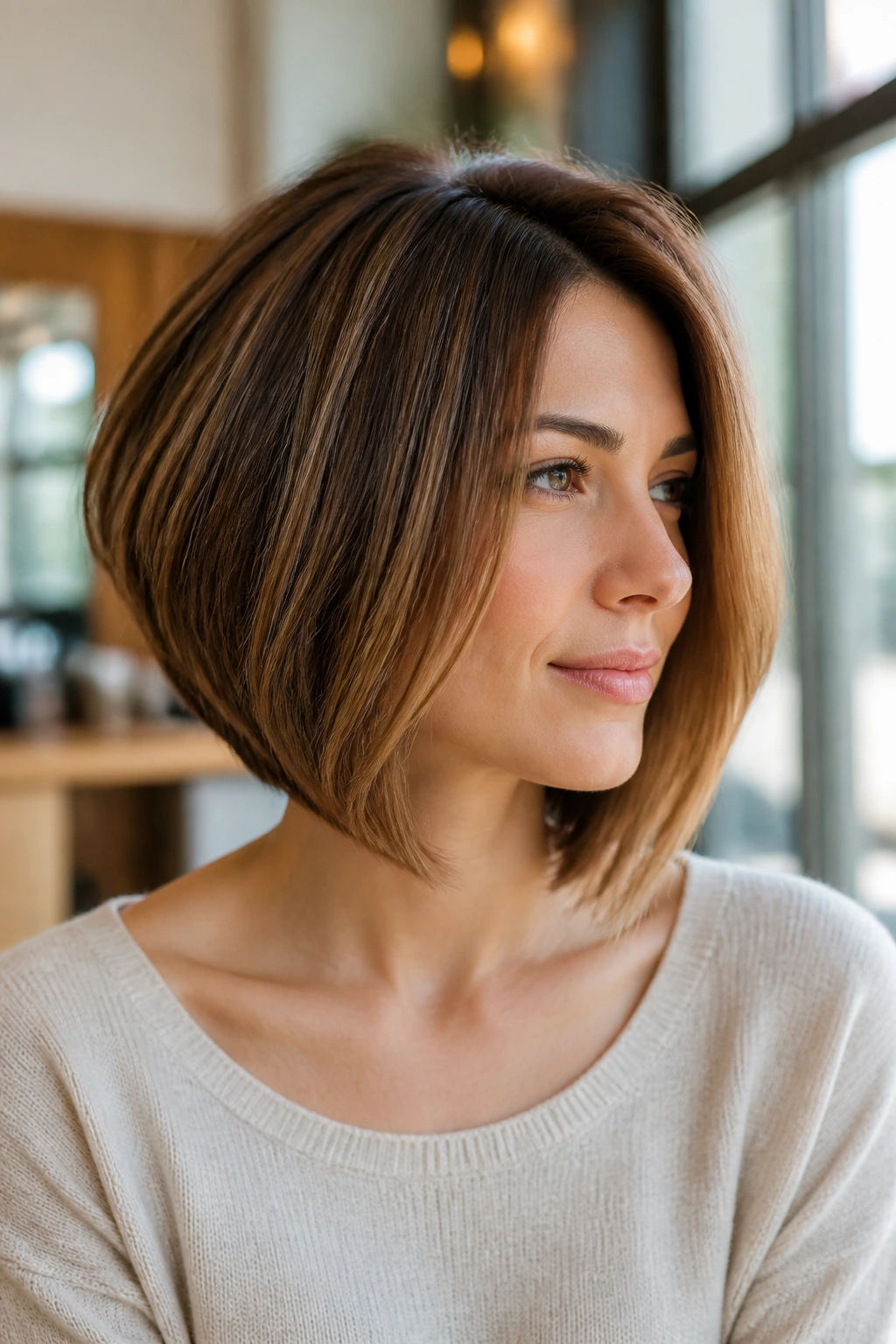
A collarbone-length stacked bob is a smart middle ground. You keep the structure of the stack, but you don’t go so short that every bad hair day feels loud. Fine hair often behaves better when it has a little extra length to anchor the ends.
How to wear it
This cut looks good blown under, bent with a flat iron, or tucked loosely behind one ear. Because the front is longer, it can flatter the jaw without clinging to it. The back still needs enough graduation to stop the whole thing from hanging straight.
It is a good pick if you are growing out a shorter bob and want to keep shape along the way. The style still reads as a bob, but it has more breathing room than a chin-length crop.
If you like to throw your hair into a loose clip now and then, this length makes that easy. Not every stacked bob does.
18. Deep Side-Sweep Stack
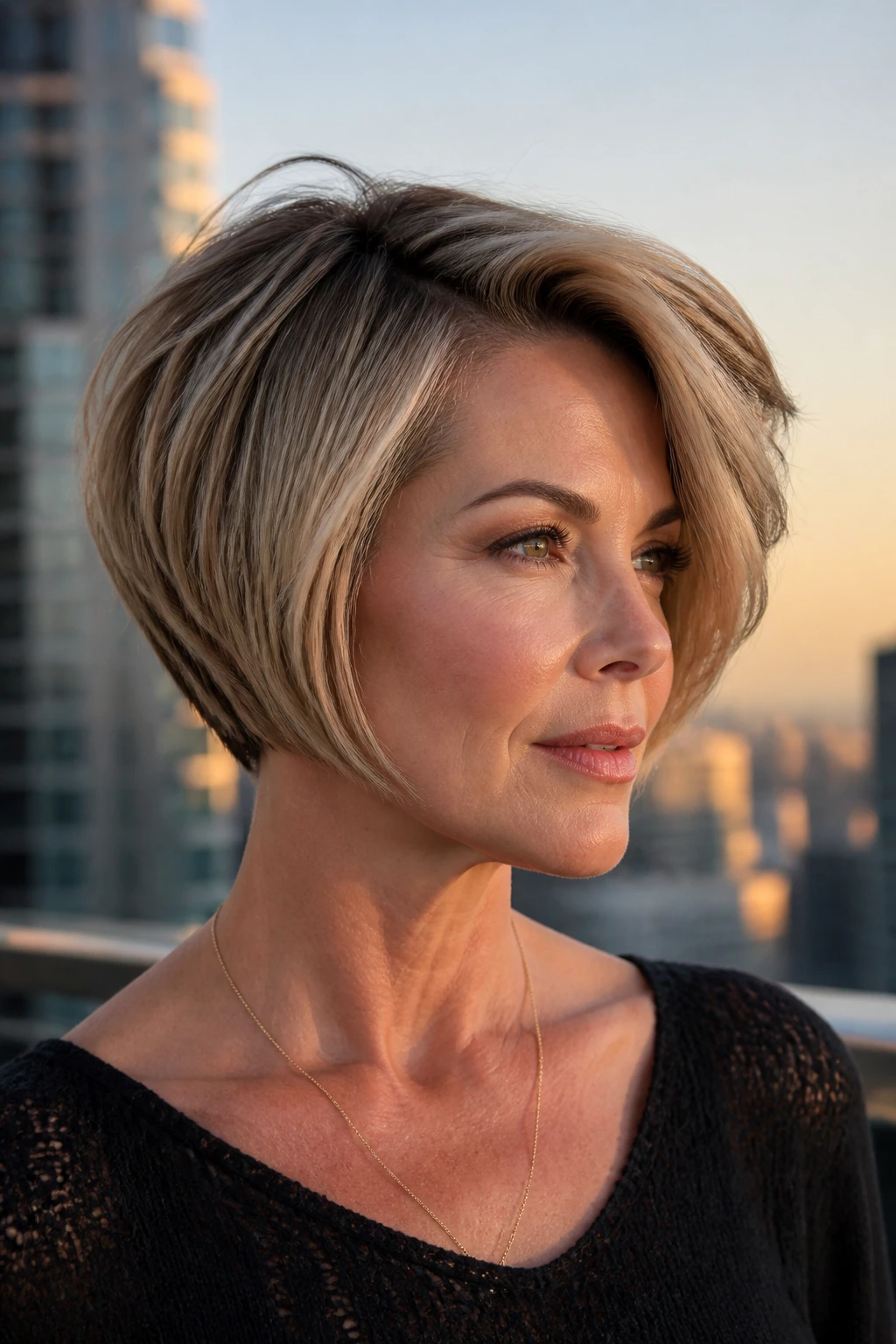
A deep side sweep does more than hide a forehead. It gives fine hair an instant lift at the root, because the hair has to travel across the head instead of dropping straight down. That tiny detour changes the silhouette.
The stacked back keeps the haircut from getting too soft. Without that structure, a deep side-swept style can look lopsided in a bad way. With it, the look feels purposeful, and the front sweep becomes a feature rather than a cover-up.
This one is especially flattering if one side of your hair naturally wants to lie flatter. Blow-dry the fringe area in the opposite direction first, then sweep it over at the end. The root memory helps the style stay up longer.
19. Center-Part Stack
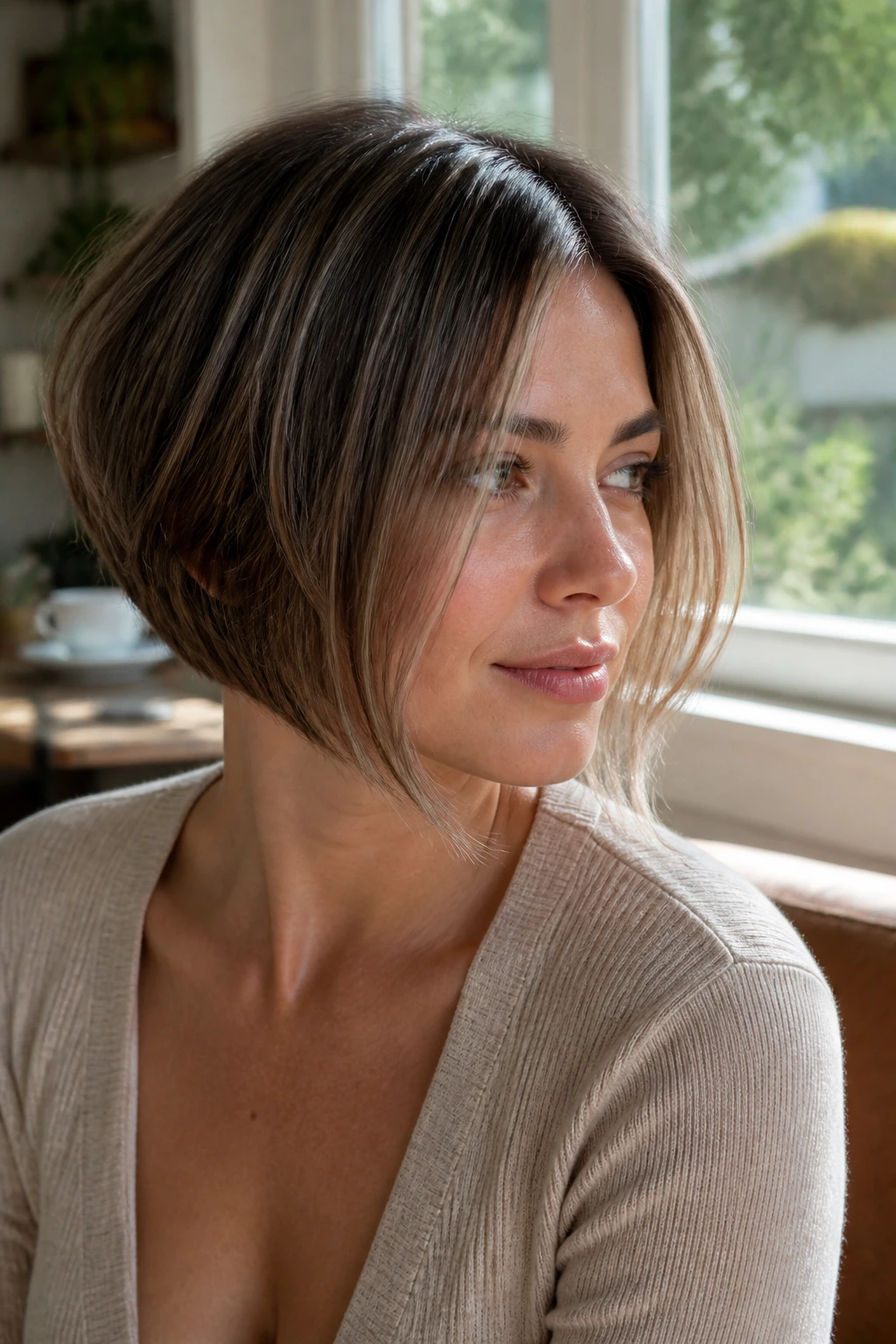
Center parts are not the enemy of fine hair. They can look clean and modern when the cut has enough shape to support them, and a stacked bob often does. The back gives the hair body, while the front pieces frame the face symmetrically.
The trick is keeping the front a little longer than you might expect. If the sides are cut too short, a center part can make the face look exposed and the ends look skinny. Leave enough length to hang softly around the jaw or cheekbones, and the whole thing settles down.
This is a good choice if you like a calm, balanced look. It feels less editorial than a deep side sweep, but it can be more wearable day to day.
20. Face-Frame Stack
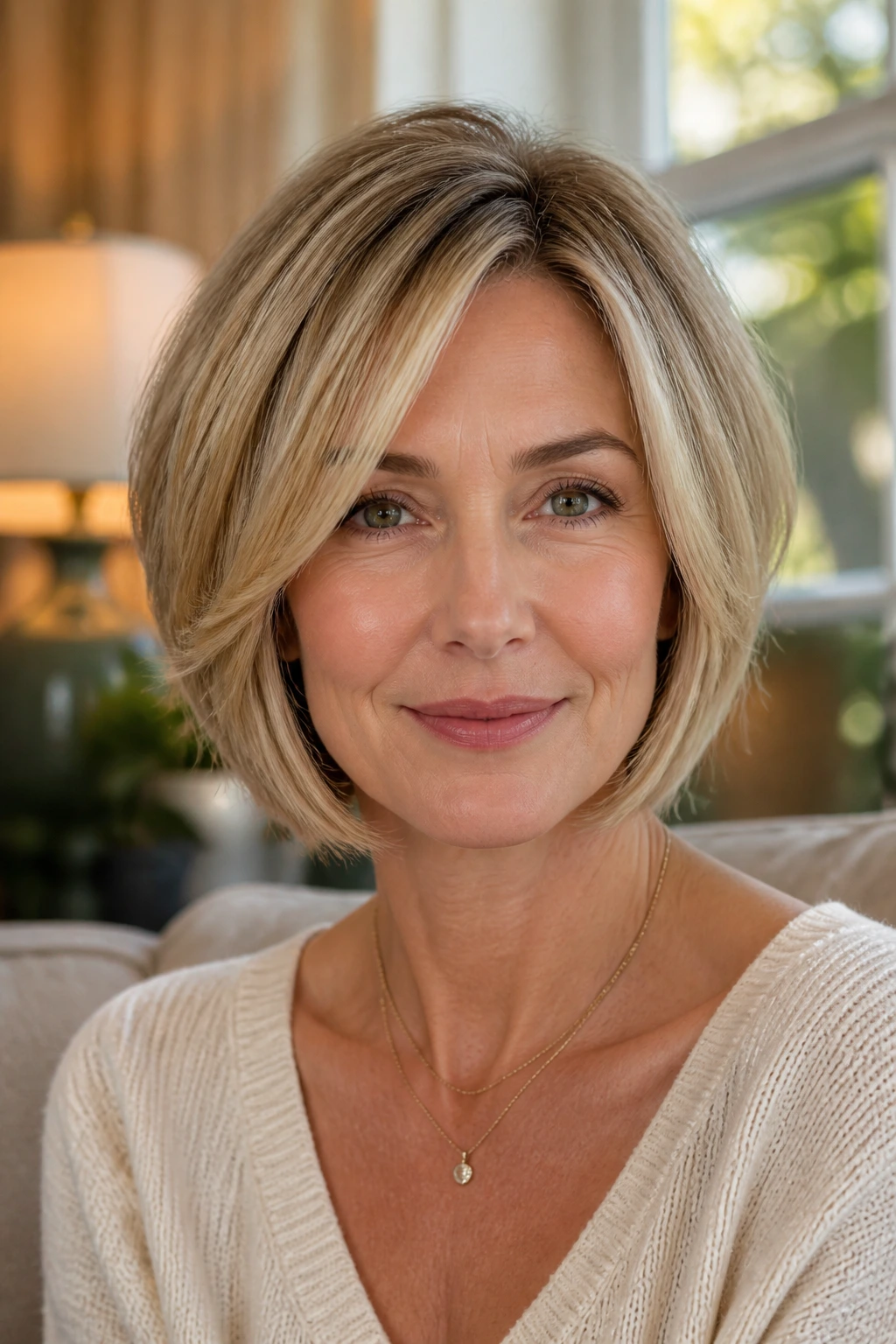
Face-framing layers can save a bob that feels boxy. On fine hair, though, they need to be handled carefully. You want shape around the face, not so many pieces that the perimeter loses its strength.
What keeps it from looking boxy
Start the shortest face-framing pieces around the cheekbones or just below, then let them melt into the longer front sections. Keep the back stacked enough to support the cut, and the result feels lighter without turning thin at the edges.
A few specifics help:
- Longer face-framing pieces keep the jaw line soft
- A strong nape keeps the back from collapsing
- A solid perimeter prevents see-through ends
This cut is a nice compromise if you want movement in the front but still need the back to look full. It is probably one of the most practical options on this list.
21. Crown-Layer Stack
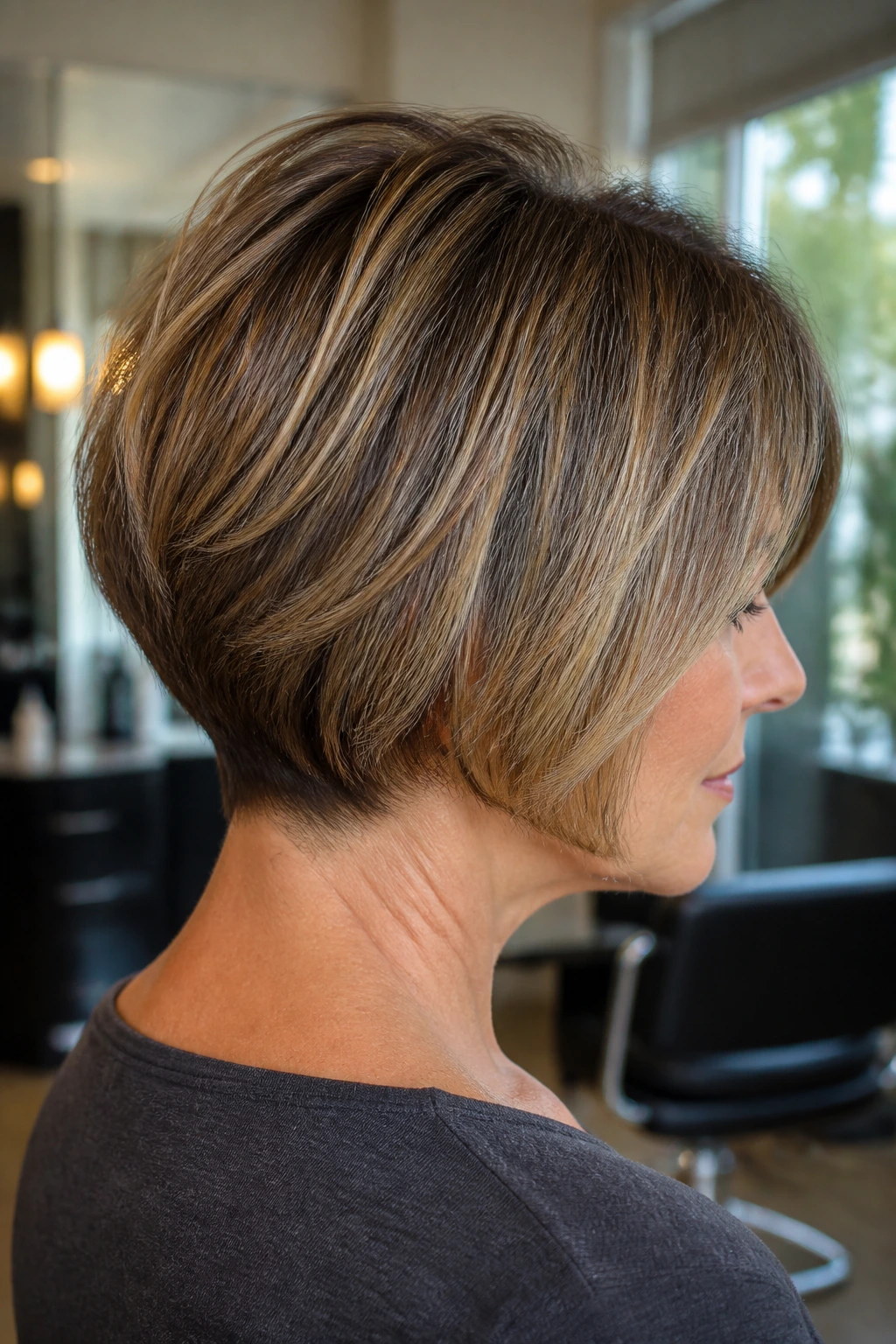
Crown layers are where the lift comes from. Fine hair that lays flat at the top often needs a little help right where the head starts to curve, and a careful stack with short crown support can create that shape without overdoing the rest of the cut.
This is not about stripping out bulk. It is about building a small shelf of lift so the hair sits up, not down. The best version keeps the crown layers light and the underneath sections cleaner and fuller. That contrast gives the haircut a rounded top and a strong back.
Use a root spray or light mousse at the crown, then lift with your fingers while drying. If you use a brush the whole time, you can flatten the area you just built.
22. Beveled Graduated Bob
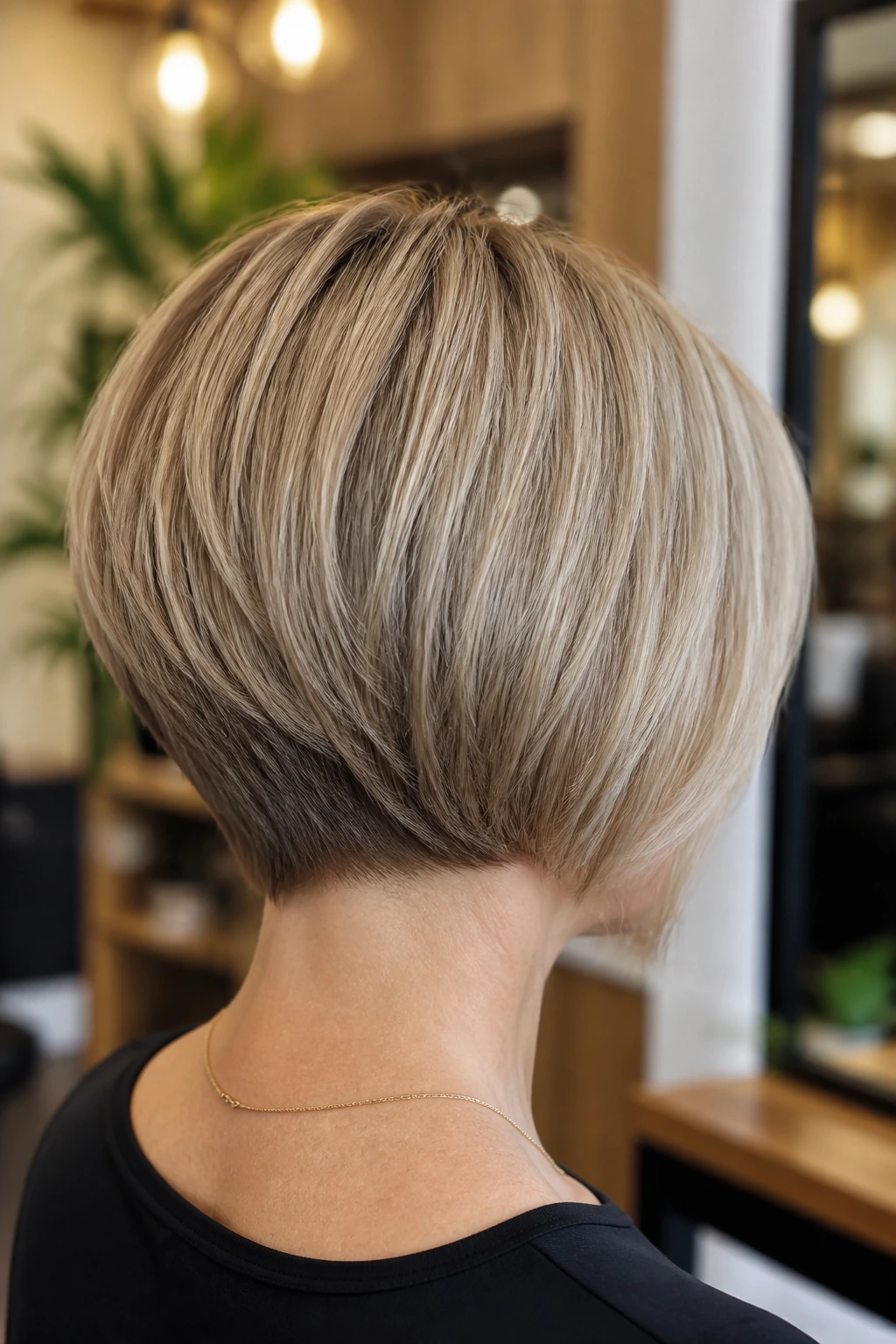
A beveled graduated bob is polished in a way that suits fine hair. The graduation stacks the back, and the bevel makes the ends tuck under so the outline looks crisp and dense instead of frayed.
It is one of the easiest ways to make fine hair look expensive without adding visible bulk. The edge is tidy, the back has shape, and the surface can be as smooth or as textured as you like. Straight hair shows it beautifully, but a slight wave can soften it nicely too.
This cut is good for work settings, formal events, or anyone who likes their hair to look finished even when they barely touched it. It does not scream for attention. It just sits well.
23. Undercut Nape Bob
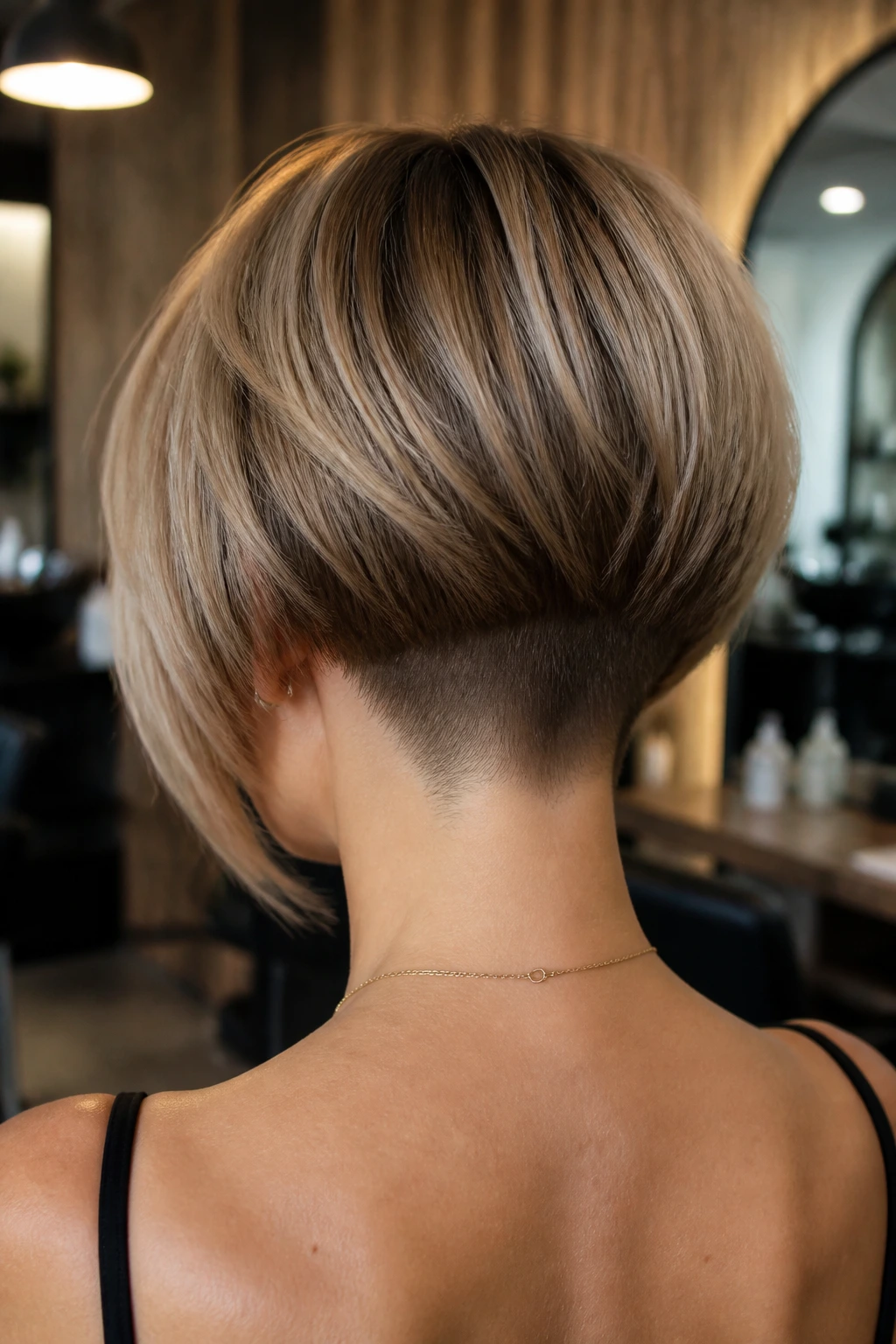
Some napes need help that scissors alone cannot give. If your hair grows in a way that makes the neckline puff out or kick up, a hidden undercut can clean that up and let the stacked shape sit closer to the head.
Why it stays neat
The shorter underlayer removes the extra fluff under the surface, so the top layers can fall in a cleaner curve. That can be a gift for fine hair that has a stubborn cowlick or a wide growth pattern at the back of the neck.
The caution is grow-out. An undercut needs maintenance, and if you leave it too long, the line can lose its neat shape. Keep the cuts in regular rotation, or the whole trick stops looking intentional.
This is a very practical version of the stacked bob. Not glamorous. Useful.
24. Round-Face Friendly Stack
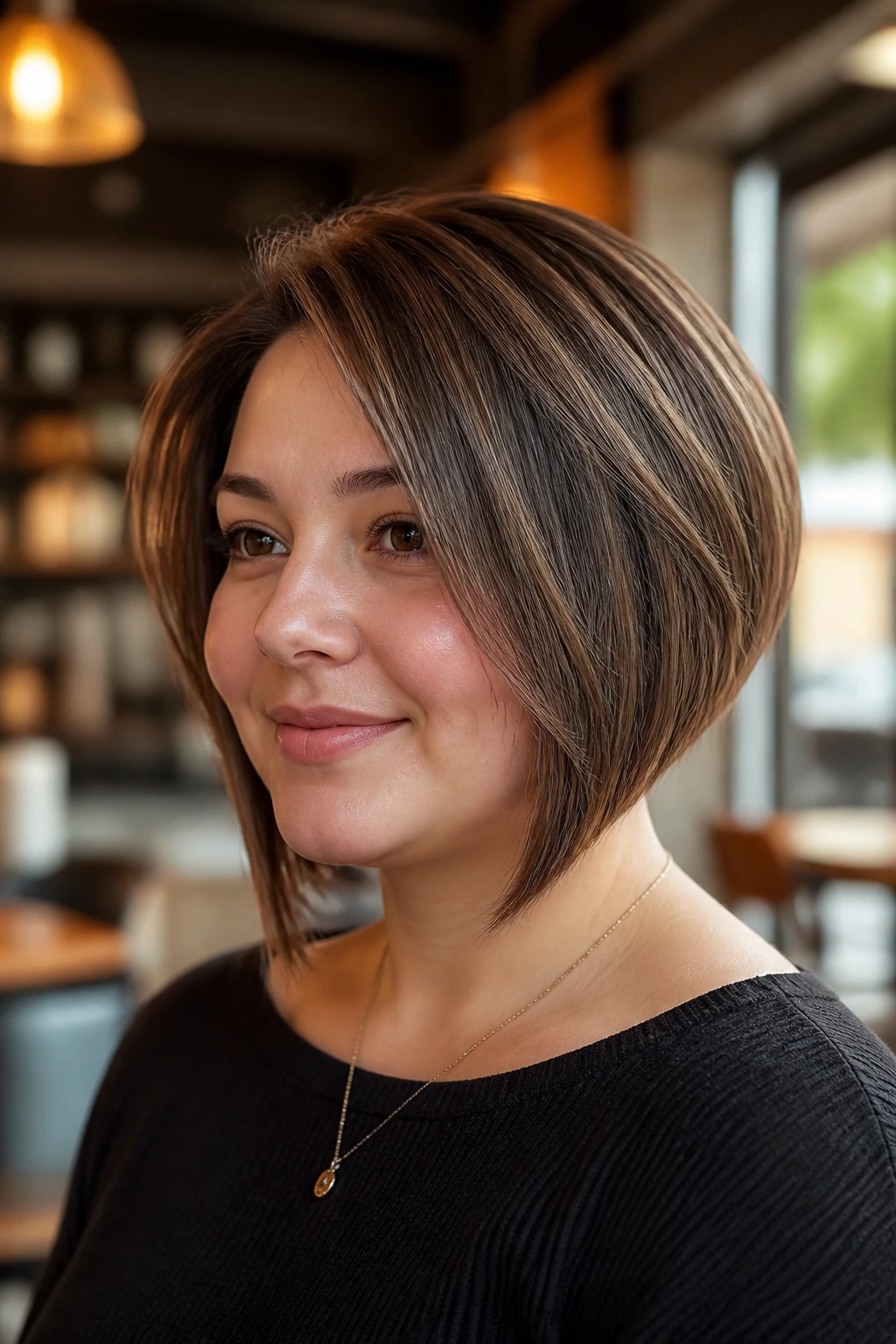
Round faces do well with vertical lines. A stacked bob can provide those lines if the front is left a little longer and the back stays compact, because the shape creates lift without adding width right at the cheek area.
The front should angle down past the chin or skim it gently. That keeps the eye moving downward, which helps balance fullness in the middle of the face. A stack that ends right at the cheekbones can make a round face feel wider than it is, so placement matters here.
I like a bit of softness around the sides for this one. You want structure, not a hard box. The bob should feel slimming in the old-fashioned sense of line and length, not in the fake, overdone sense people talk about online.
25. Heart-Face Friendly Stack
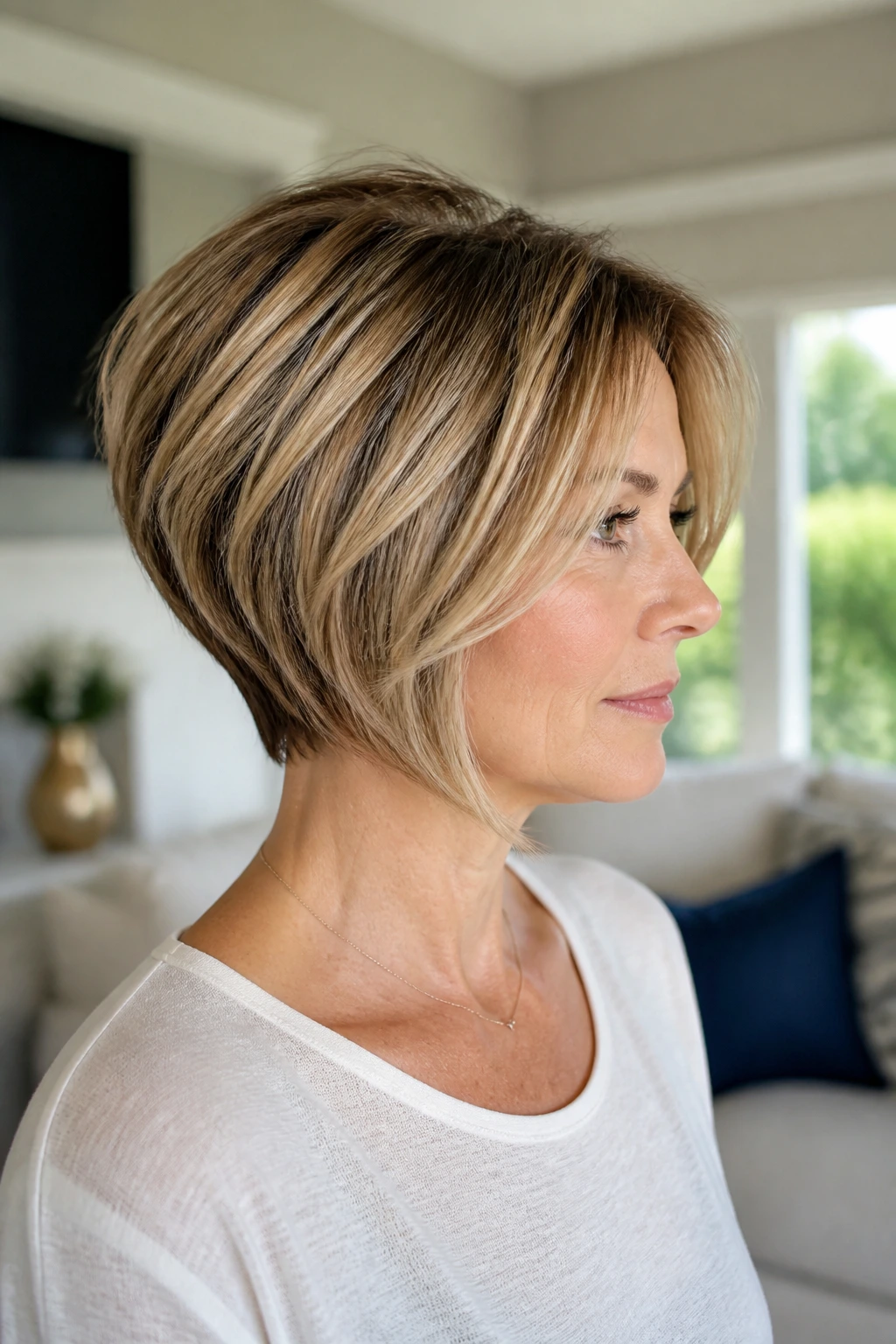
Heart-shaped faces often need balance near the jaw. A stacked bob can do that if the stack is kept controlled and the front pieces carry enough weight to soften a narrower chin.
The best versions avoid too much height at the temples. That can make the top of the face feel wider than the lower half. Instead, keep the volume centered through the crown and let the front skim the jaw with a soft curve. A side part can help, but it does not have to be dramatic.
- Add softness at the chin line
- Keep the top lift moderate
- Avoid over-thinning the ends
- Let fringe pieces stay long enough to blend
This is a clean, flattering choice if you want the haircut to feel balanced rather than sharp.
26. Tucked-Ear Stack
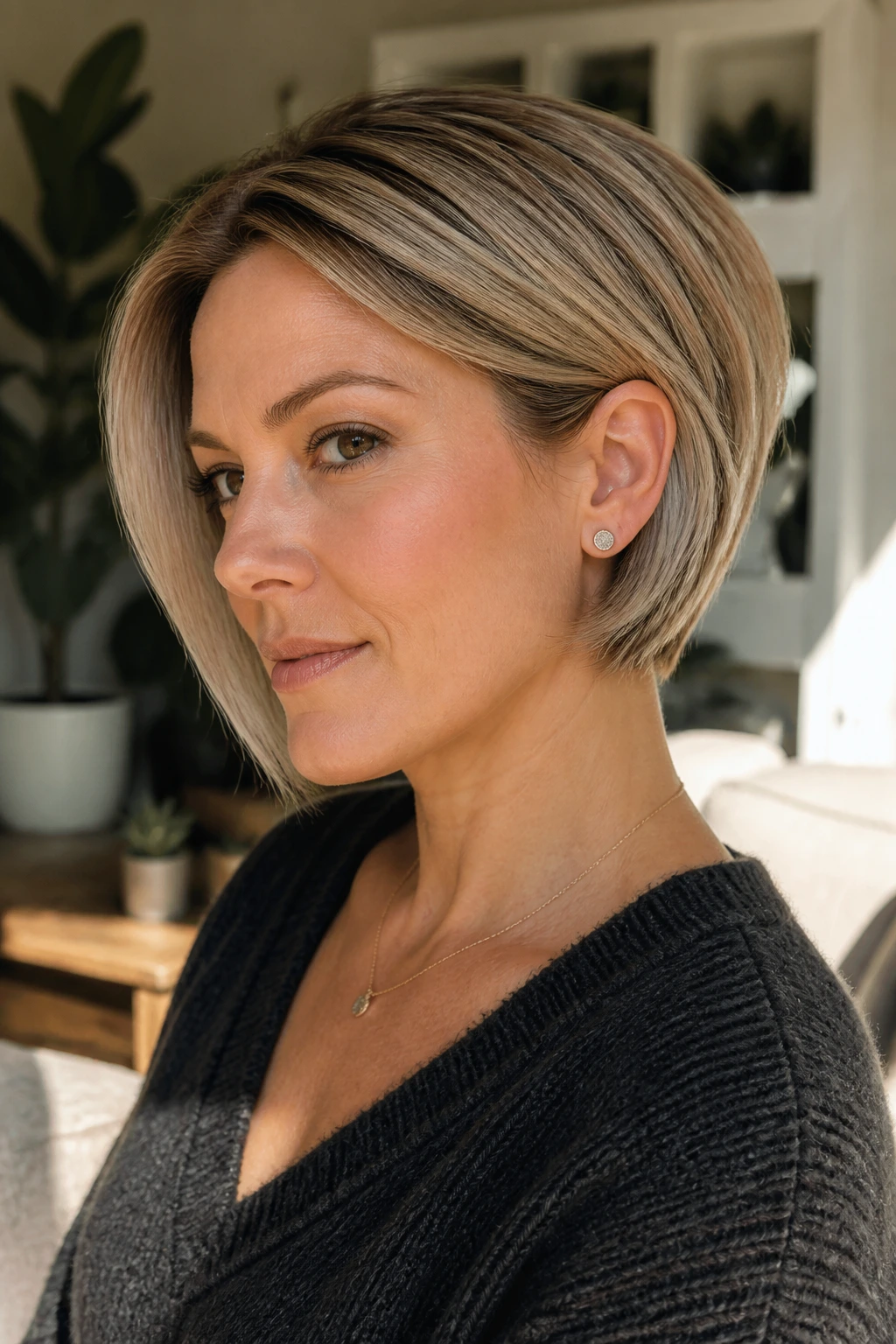
Tucking hair behind the ears changes the whole profile. A stacked bob with enough length at the front to tuck neatly gives fine hair a useful styling option, especially on days when you want the face open but still need the cut to look deliberate.
Who it flatters
People with glasses often like this one because the hair can sit behind the frame without fighting it. It also works well if you wear earrings and want them visible. The front pieces should be long enough to stay tucked without springing loose immediately.
The stack in back keeps the silhouette from going soft. Without that support, tucked hair can make the style look accidental. With it, the look feels clean and a little tailored.
This is one of those cuts that looks better after a few minutes of running your hands through it. It does not need perfection. It needs a good outline.
27. Polished Wet-Look Bob
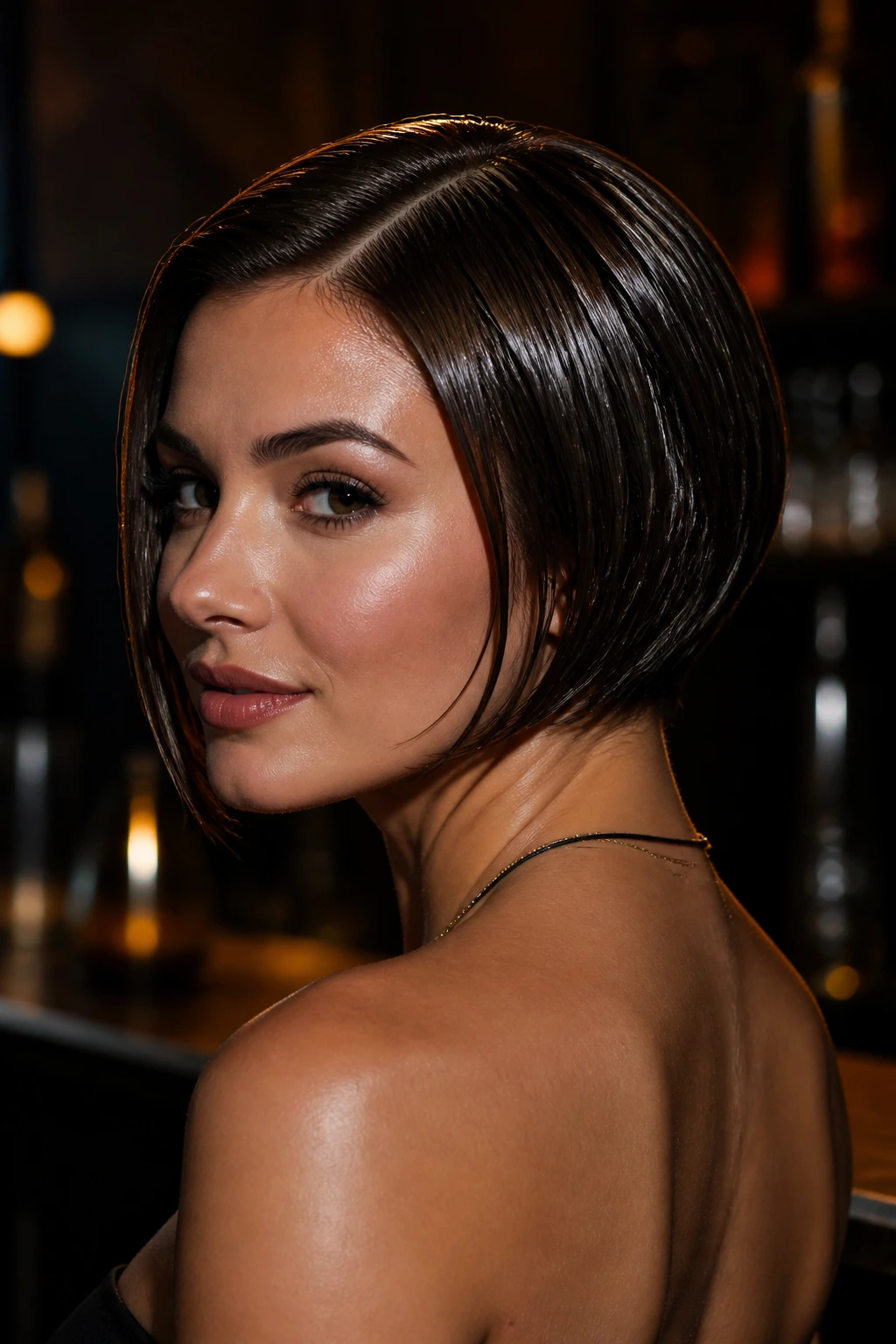
A wet-look finish sounds fashion-heavy, but on fine hair it can actually be a smart move. Product-clustered strands often look thicker than airy, separated ones, and a stacked bob gives the style a strong shape to cling to.
Use gel or cream on damp hair, then comb it into place with a side part or a slicked-back sweep. Do not drown it in product. That turns sleek into greasy fast. You want the hair to sit together in clean ribbons, with the stack still visible in the back.
This version suits a night out or any day when you want to skip blow-drying entirely. It is less about softness and more about control. Some people love that. Some do not. I happen to think it looks sharp when the haircut underneath is solid.
28. Air-Dried Texture Bob
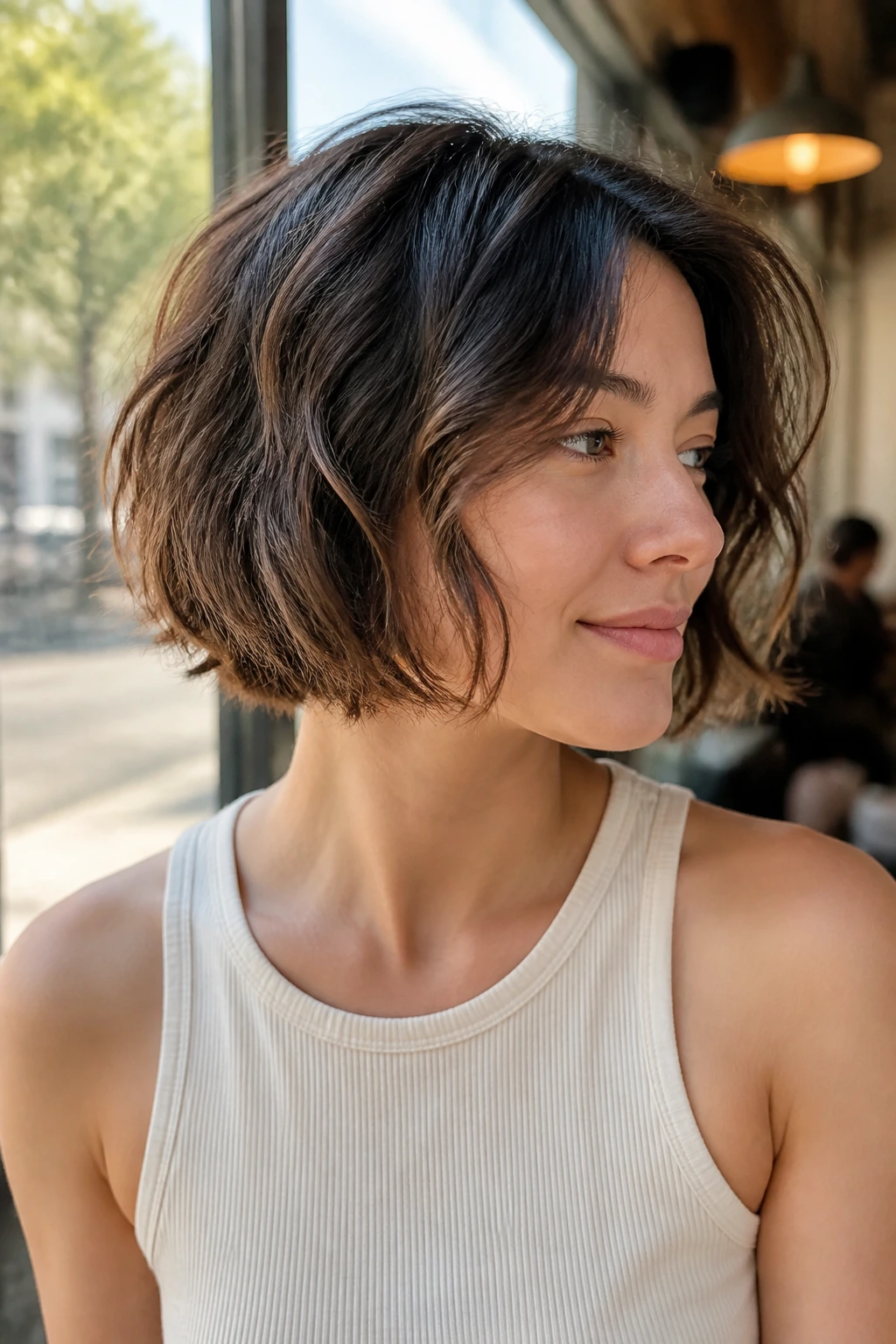
Air-drying fine hair is a gamble unless the cut helps it. A stacked bob with enough internal shape can make that gamble pay off, because the layers lift the back while the front settles into a natural bend.
Start with a light leave-in and a small amount of mousse. Scrunch the ends, then leave the crown alone as much as you can. Finger-combing too much can flatten the top and break the wave pattern before it sets. That is where most air-dry attempts go sideways.
This cut works best when your hair has at least a little natural movement. If your strands are poker-straight and stubborn, you may need some heat to get the best version. Still, the stack gives you a head start either way.
29. Strong-Angle Lob Stack
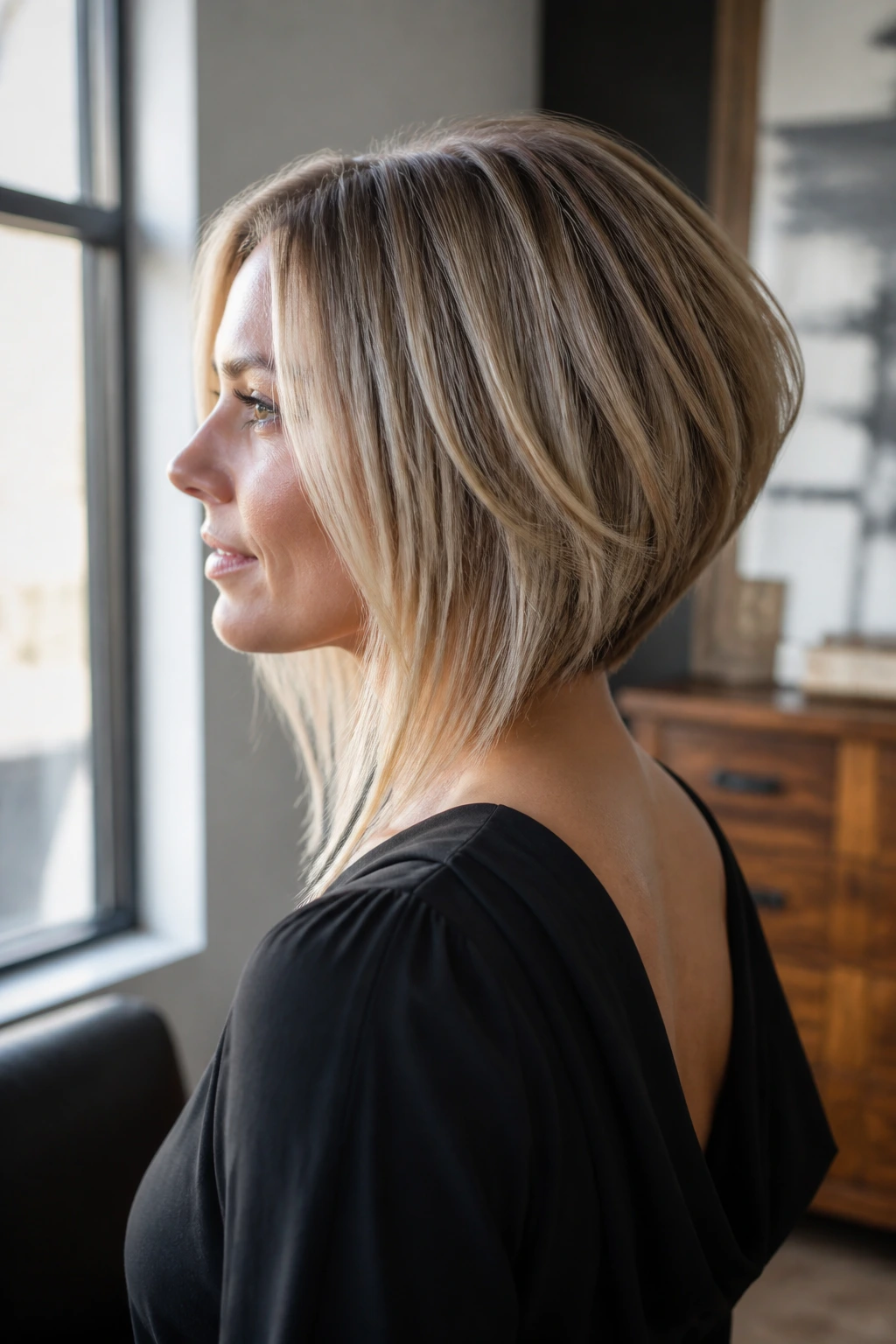
The long angle is for people who want a bob that can flirt with lob territory. It keeps enough length in front to feel soft, but the stacked back holds the shape so the cut does not just hang there like an overgrown blunt lob.
What to avoid
- Don’t over-layer the front pieces
- Don’t let the angle get so sharp that the ends look thin
- Don’t skip the nape graduation
- Don’t flatten the crown with too much cream
Fine hair often looks better in this in-between length when the cut is disciplined. The longer front gives you styling choices, and the short back keeps the head shape lively.
If you are growing out a shorter bob, this is one of the easiest transitions to live with. It still feels like a haircut, not a compromise.
30. Soft-Grown Stacked Bob
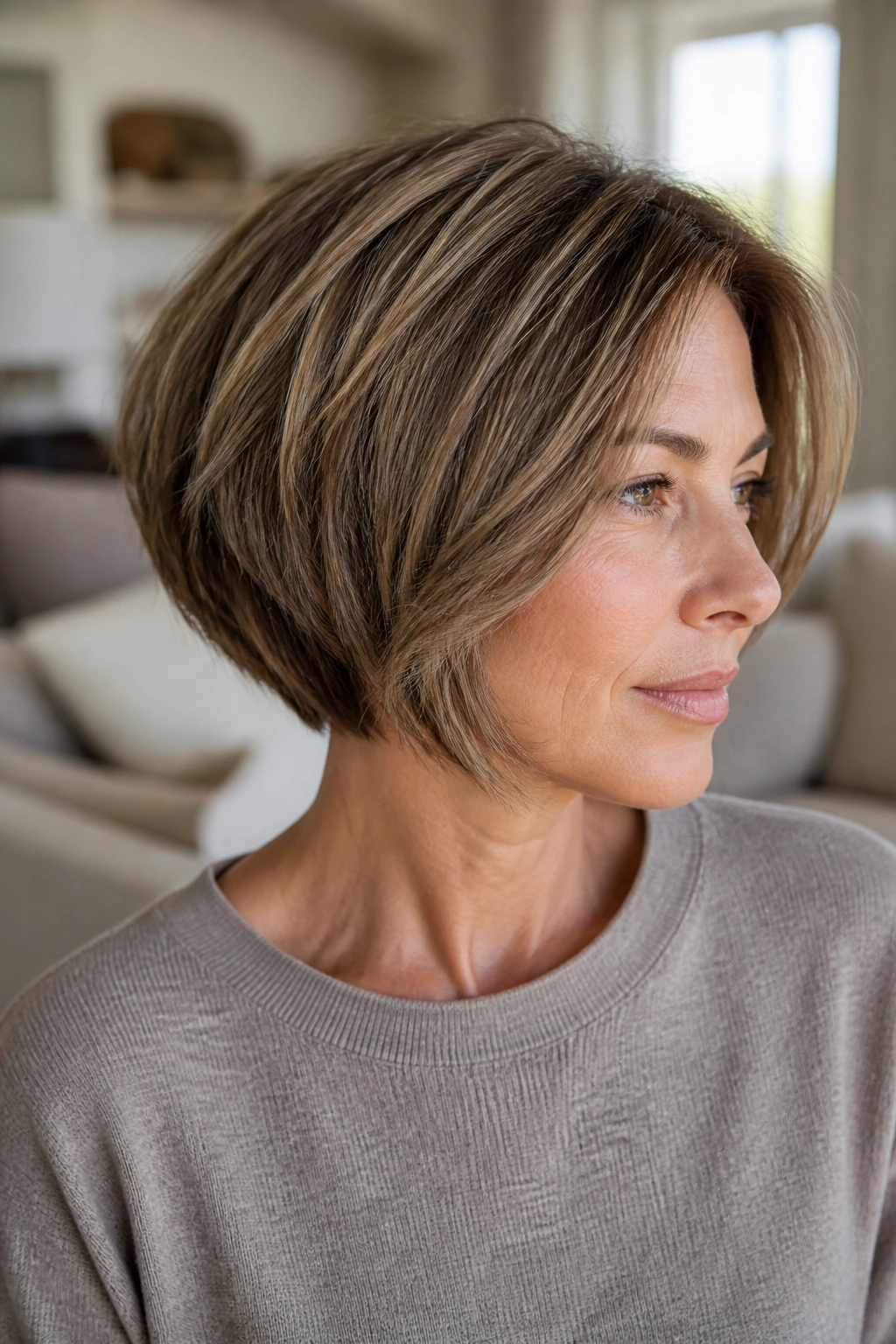
Soft growth is not a compromise; sometimes it is the smartest version of the cut. A grown-out stacked bob keeps the structure of the original shape but relaxes the edges, which is useful for fine hair that starts to look too severe when it is freshly cut.
The back still needs a hint of stack, and the front should still have enough length to frame the face. But the lines can be looser. That softness lets the hair move more naturally and makes the cut easier to wear on days when you do not want a polished blowout.
If you like a bob that can be tucked, waved, or worn straight, this is the friendliest version. It is also the one I would hand to anyone who wants shape without fuss, because it grows out in a way that still looks intentional.
