



Round faces don’t need to be “fixed.” They need a little direction.
That’s the thing people miss when they talk about asymmetrical hairstyles for round faces. The point isn’t to hide cheeks or chase a fake oval shape. It’s to break the visual circle. A side part, a longer front corner, or one side that sits lower than the other gives the eye somewhere to move besides straight across the widest part of the face.
And yes, the details matter. A cut that lands exactly at the cheek can make a round face feel wider, while a cut that drops below the jaw or angles forward tends to soften that width. Straight hair shows the shape cleanly. Wavy hair blurs it a little. Curly hair needs enough length to keep the asymmetry from puffing out into a halo. Small differences. Big payoff.
Some of these styles are subtle. Others lean all the way in. That range is the real advantage, because you can choose how much contrast you want without giving up the face shape you were born with.
1. Deep Side-Part Angled Bob
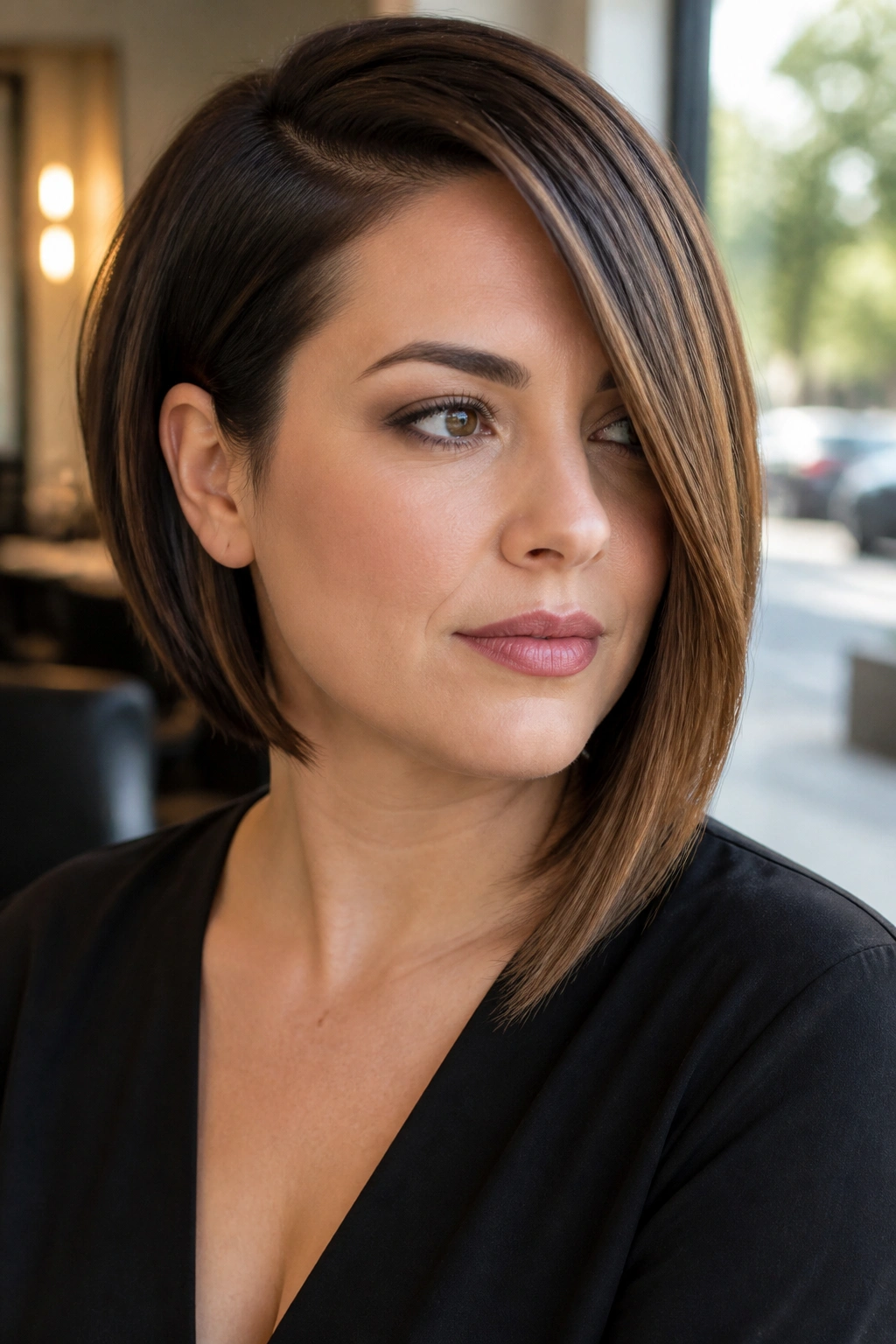
This is the cleanest place to start. A deep side-part angled bob gives you a strong diagonal line right away, and that diagonal is doing a lot of work on a round face. The shorter side stays near the jaw, while the longer side pulls the eye downward instead of letting it drift side to side.
Why It Works
A round face often looks best when the hair creates a bit of tension. Not harshness. Tension. The angled bob does that by keeping one side shorter and letting the front sweep longer, usually just past the chin. That one detail makes the whole face look a little longer.
The part matters almost as much as the cut. If you push it only slightly off center, the effect is softer. If you push it deep—closer to the arch of one brow—the haircut feels sharper and more dramatic.
Styling Notes
- Blow-dry the longer side forward first, then tuck the shorter side behind the ear.
- Use a 1-inch round brush if you want the ends to curve inward a little.
- Keep the crown smooth but not flat; a small lift at the roots helps.
- A pea-sized drop of serum is enough for shine. More than that starts to collapse the shape.
Tip: keep the shortest front piece no higher than lip level if you want the cut to stay flattering on a round face.
2. Long Pixie With Sweeping Fringe
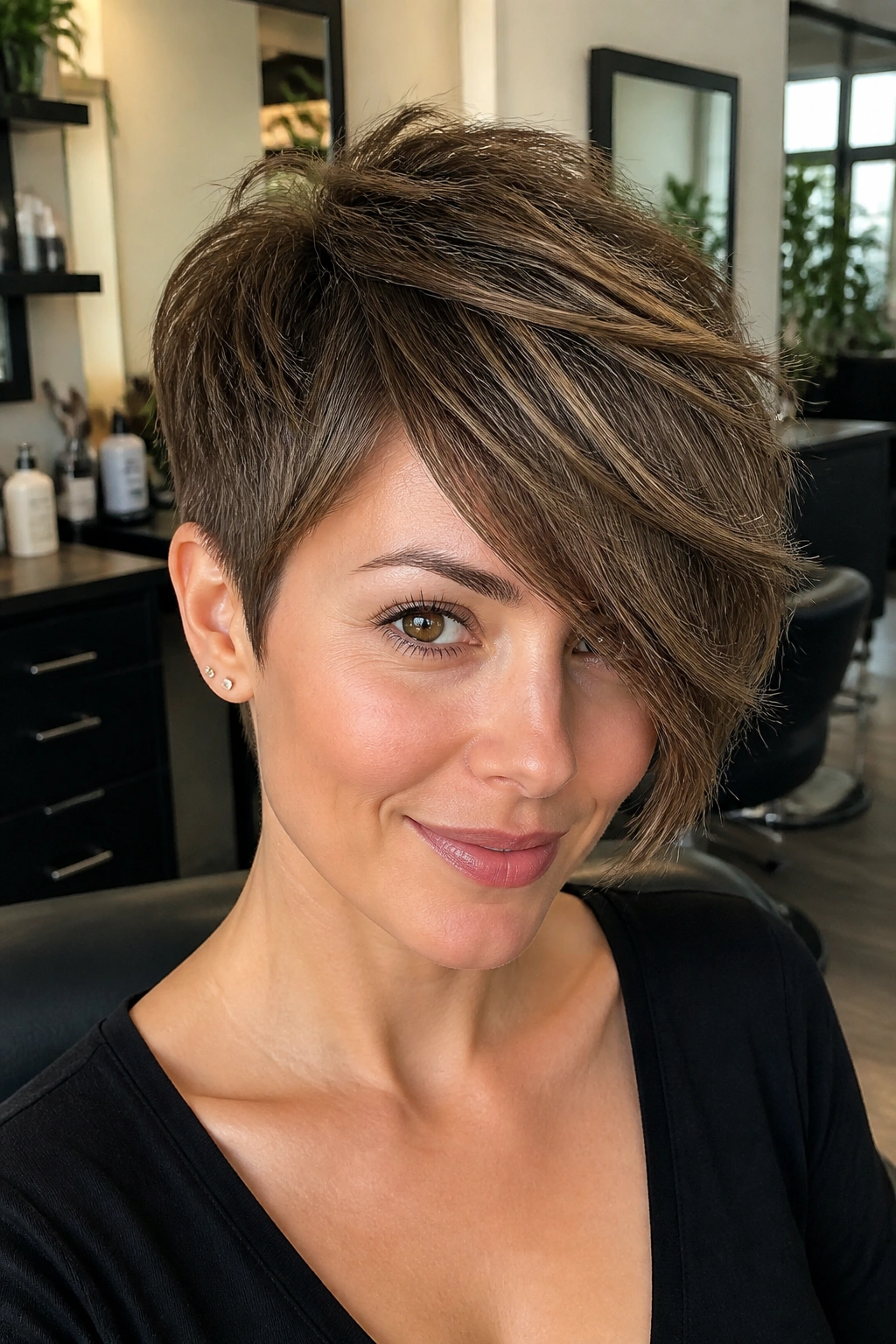
A long pixie sounds bold, and it is, but it’s also one of the smartest asymmetrical hairstyles for round faces when you want short hair without losing softness. Unlike a cropped pixie that exposes everything at once, this version leaves one side longer through the fringe so the face doesn’t read as wide and open.
The longer top section helps, too. It gives you height at the crown, which adds length where round faces usually need it most. The sides can stay neat and close, but they should not be so tight that the haircut turns severe. A little bit of bend through the fringe makes all the difference.
What to ask for: 2 to 3 inches of length in the front, a taper at the nape, and a side-swept fringe that can fall across one brow. If your hair is fine, ask for soft texture rather than choppy razoring. Fine hair can look wispy fast.
This one suits anyone who likes a sharp shape and does not mind using a dab of matte paste in the morning. It’s quick. It’s tidy. And it has enough asymmetry to keep a round face from feeling boxed in.
3. Collarbone Lob That Falls Longer on One Side

Can a lob still feel asymmetrical if the difference is subtle? Yes. That’s exactly why this version works so well. A collarbone-length lob with one side a touch longer gives you movement without the drama of a severe angled cut, and that matters if you want something easy to wear every day.
The length is doing some of the flattering work here. Hitting around the collarbone keeps the hair away from the widest part of the cheeks and jaw. The longer side can drop a little lower—often by an inch or two—which is enough to change the shape without making the haircut look edgy for the sake of it.
How to Wear It
A soft bend through the mid-lengths is usually enough. You can wrap sections around a 1.25-inch curling iron, leave the ends a little straighter, and then let the longer side sit naturally forward. That uneven fall is what gives the style its character.
If you like low-maintenance hair, this is one of the friendliest options on the list. It grows out well. It flatters straight, wavy, and slightly coarse hair. And it does not ask for much more than a good blow-dry and a side part that sits just off center.
4. Chin-Length A-Line Bob
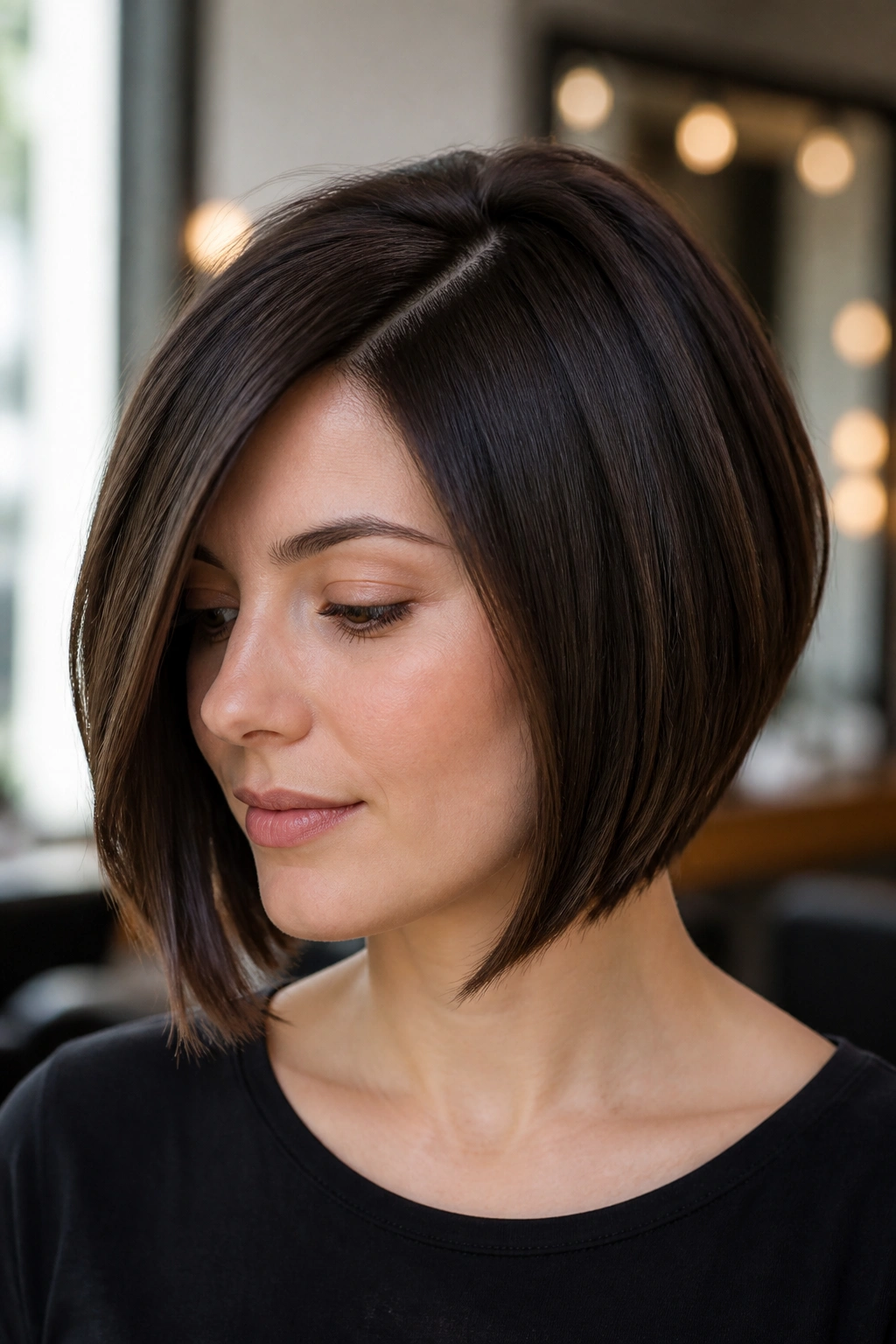
Imagine a bob that kisses the chin on one side and slips just below it on the other. That tiny shift changes the whole read of the haircut. On a round face, a chin-length A-line bob can sharpen the outline without making the face look harsh or overworked.
Key Details to Watch For
- Keep the front corners a little longer than the back.
- Don’t cut the shortest point directly at the cheek.
- Ask for a side part if you want the angle to feel softer.
- Let the ends swing inward or stay straight; both work.
The best thing about this cut is that it gives structure without needing a lot of styling tricks. Straight hair shows the line most clearly. Wavy hair makes it look a little more relaxed. Curly hair can wear it too, but the front pieces need enough length to keep the shape from puffing into a box.
I like this cut on someone who wants polish without fuss. It looks neat even when it’s not perfectly done. That’s a useful trait, honestly, because few people have time to wrestle with a bob every morning.
5. Feathered Shag With a Side-Swept Front

A shag can be a gift for a round face when it’s cut with asymmetry in mind. The feathered layers break up width, and the side-swept front pulls the eye diagonally instead of letting the hair sit in a perfect frame around the cheeks. That little shift changes the whole mood.
This style works especially well when hair has some natural bend. The layers sit better when they can fall in different directions without needing perfect styling. A rough-dry with your fingers, a light mousse, and a quick scrunch at the ends can be enough. If you use a diffuser, keep the airflow low and stop when the layers still feel a little damp. That keeps the shape airy instead of frizzy.
A shag also suits people who don’t want one solid block of hair around the face. There’s movement everywhere. The fringe can sweep from one temple, the cheek layers can land below the fullest part of the face, and the back can stay a touch longer. It’s casual, but not messy. And that’s a hard balance to get right.
6. Long Layers With a Diagonal Face Frame
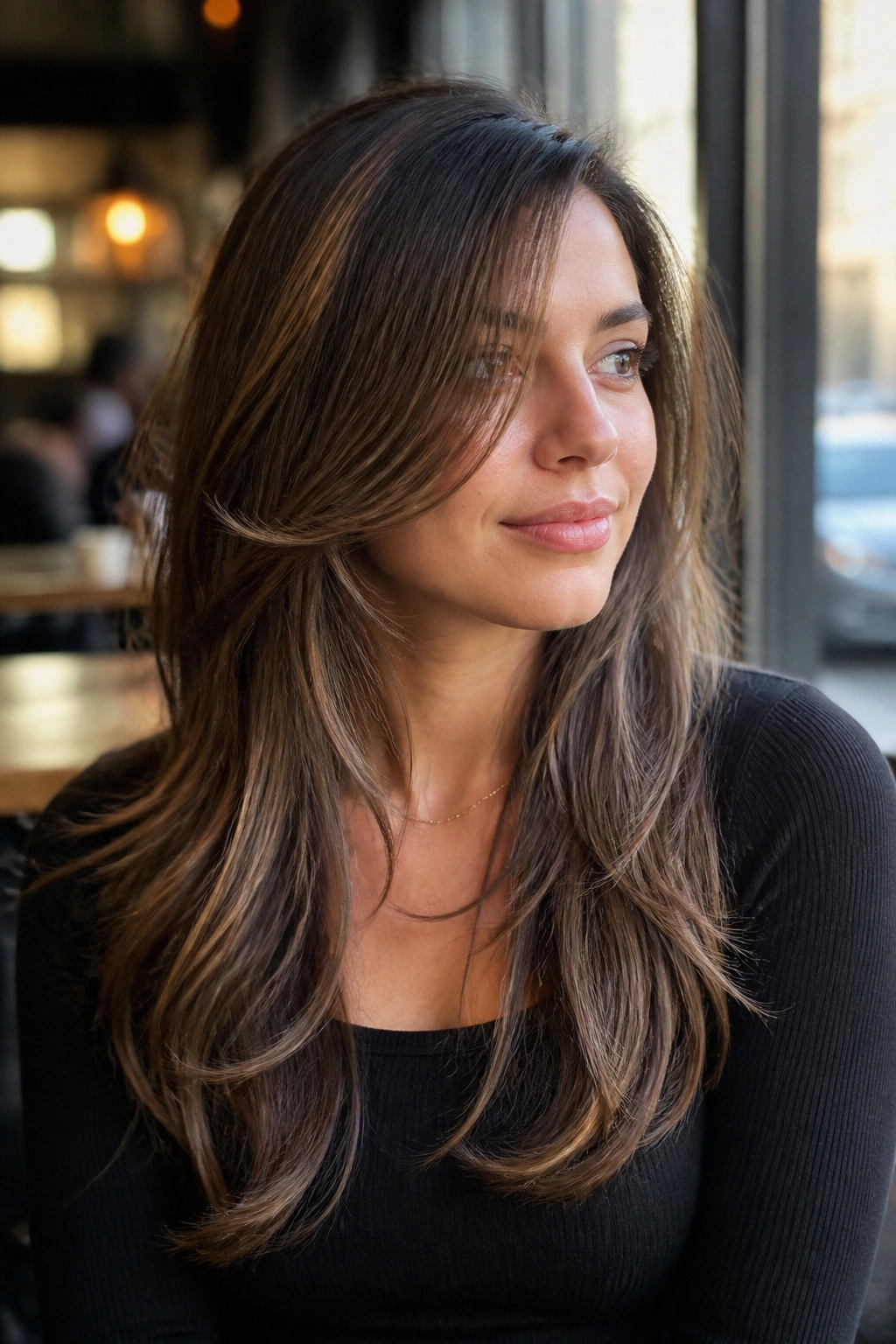
If you do not want to give up length, this is the one to pay attention to. Long layers with a diagonal face frame can make a round face look longer without forcing you into a shorter cut, and that’s useful if you like hair that swings past the shoulders.
The trick is where the front pieces begin. Too high, and the layers can hit right at the cheeks, which adds width. Too low, and the face frame disappears. The sweet spot is usually below the cheekbone and above the collarbone, where the line drifts down and out instead of stopping dead at the widest part of the face.
This style also gives you room to play. You can blow-dry it smooth, bend the front pieces with a large-barrel iron, or leave it loose and wavy. The asymmetry doesn’t have to scream. Sometimes it just needs one front section to sit a little farther forward than the other.
A small note that matters: keep the shortest layer away from the center of the face. That one move helps the whole cut feel longer and cleaner.
7. Undercut Pixie With Height
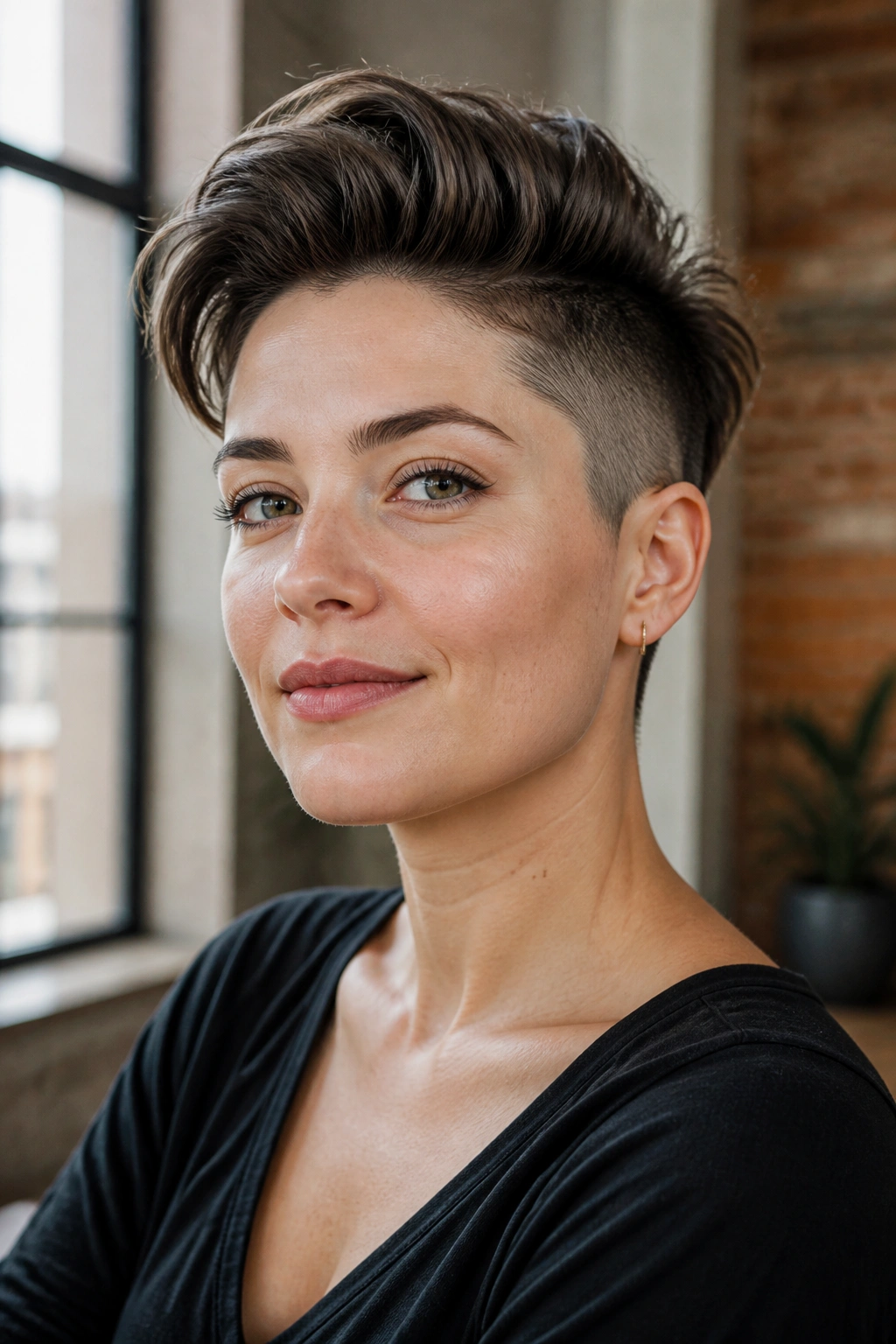
This is the bold one. A pixie with an undercut and extra height on top creates contrast fast, and that contrast is useful on round faces because it removes bulk from the sides while adding lift above the forehead.
What Makes It Different
Unlike a regular pixie, this version can be tailored to keep one side softer while the other stays close to the head. That means you get shape without the helmet effect. The undercut also helps thick hair behave. Less puff, more control.
Best Ways to Wear It
- Keep the top at 3 to 5 inches so you can sweep it to one side.
- Ask for the sides to stay tight, but not shaved to skin unless you like a very sharp finish.
- Use a little paste or styling cream to push the top diagonally.
- If you wear glasses, leave a bit of softness near the temples.
This cut is not shy. It shows the face. That’s the point. When the top lifts and one side stays fuller than the other, the eye goes up and across instead of staying locked on the widest part of the cheeks.
8. Wavy Lob With a Side Tuck
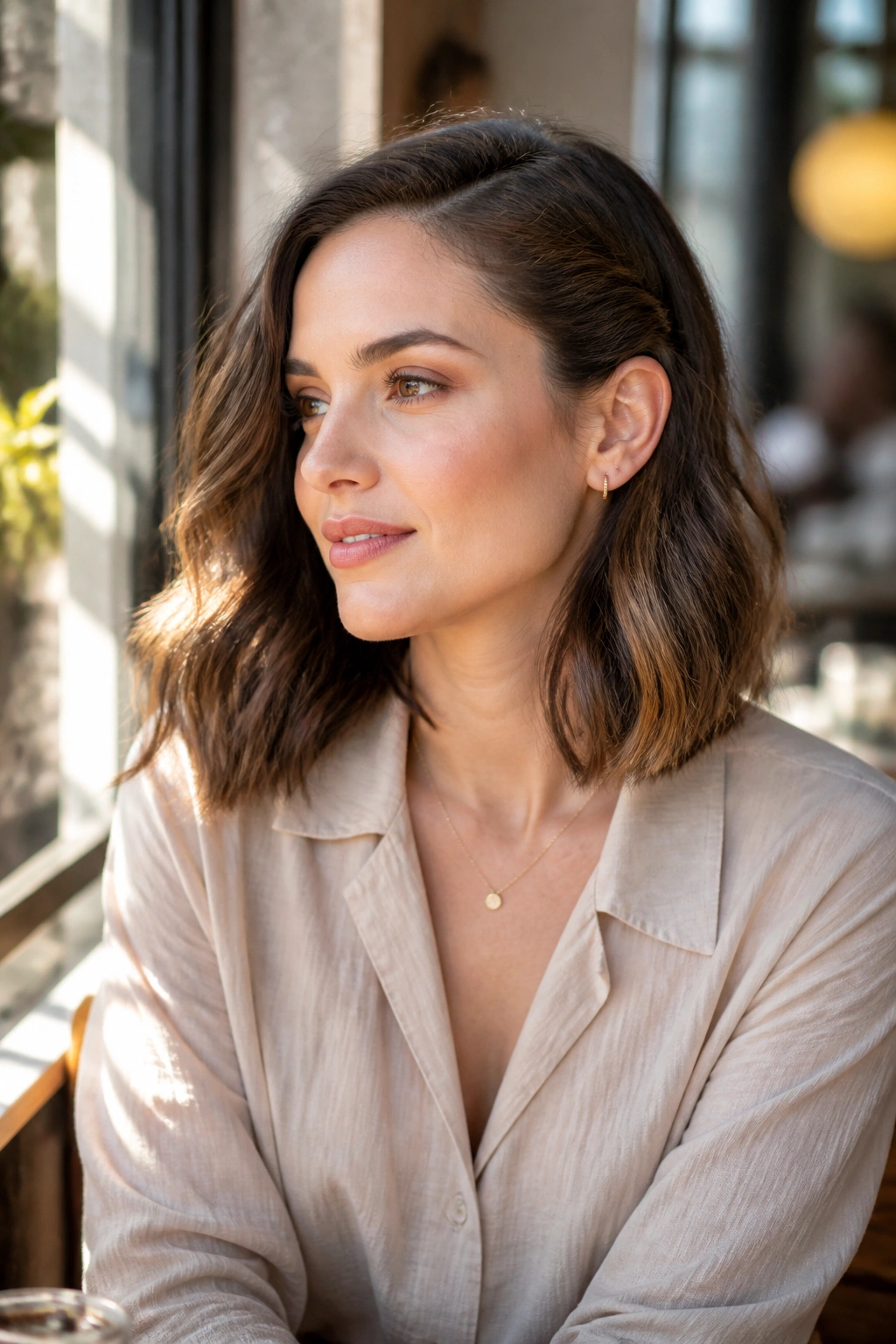
A side tuck changes more than most people expect. The moment you tuck one side behind the ear, the haircut stops reading as symmetrical, and a plain lob turns into something with shape and attitude.
That makes this a very low-drama option for round faces. The length usually sits at the shoulders or a touch below, which already helps elongate the line. Then the tucked side opens one side of the face while the opposite side hangs forward and gives you that diagonal effect. It’s subtle, but it works.
Quick Shape Notes
- Keep the part a little off center.
- Use loose waves from the ear down, not tight curls everywhere.
- Tuck only one side, not both.
- Leave one front piece to fall near the jaw.
This is the kind of style that can go from casual to polished with almost no extra work. A gold hoop or a small barrette on the tucked side can make the asymmetry feel intentional. Nice little detail. No heavy styling needed.
9. Curly Asymmetrical Bob
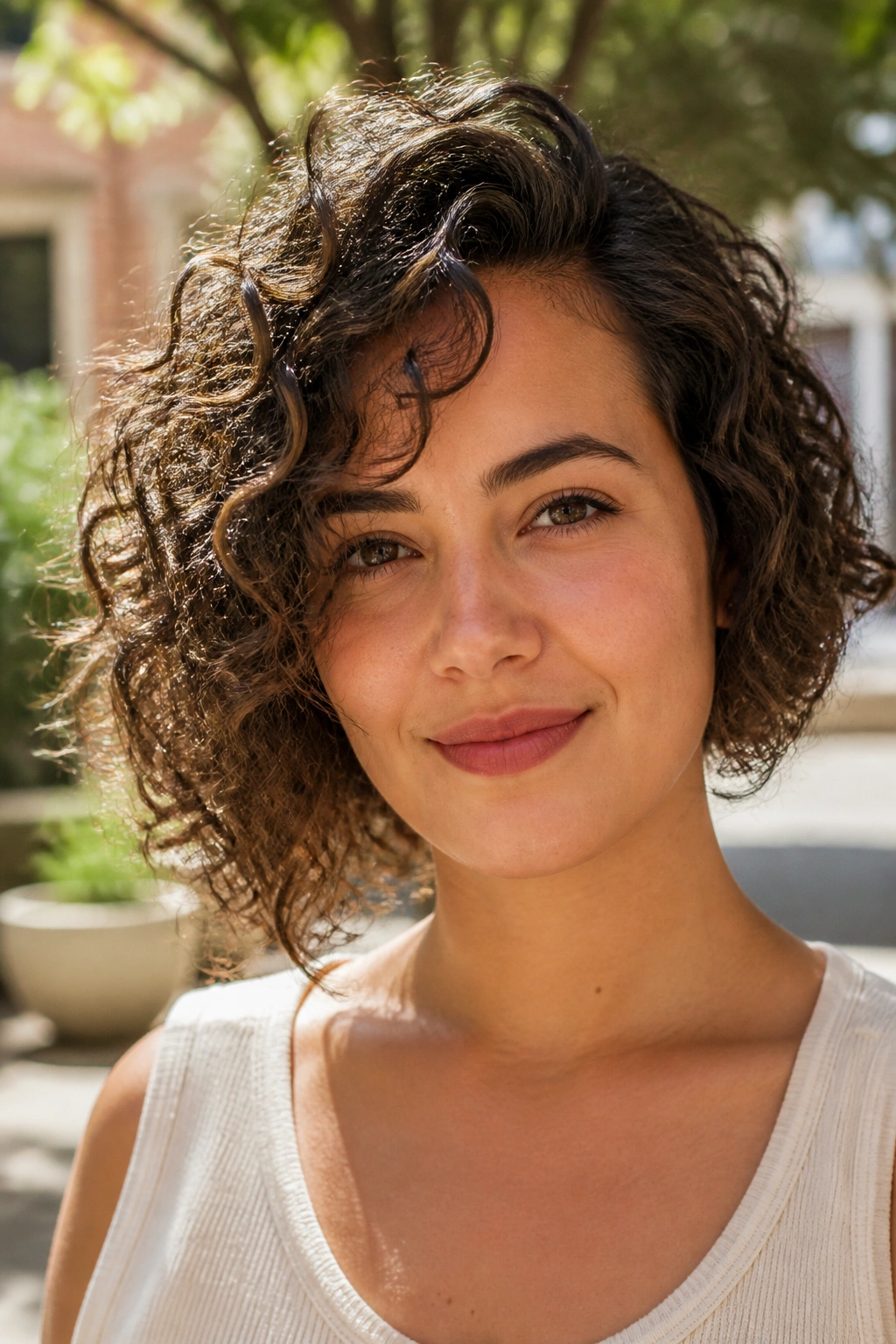
Curly hair and round faces can get along beautifully when the shape is cut with enough thought. A curly asymmetrical bob keeps one side a little longer, which helps the curls fall in a diagonal line instead of forming a big round cloud around the face.
The key is to cut it dry or at least mostly dry, because curls change shape as they spring up. A stylist who understands curl pattern will leave enough length for shrinkage and keep the shortest point below the cheekbone. That matters more than people think. If the cut is too short near the cheeks, the whole style can balloon outward.
This bob looks strong when the curls are defined but not crunchy. A light cream, a small amount of gel, and a diffuser on low heat are usually enough. Skip heavy oils at the roots. They weigh the shape down and make the side-to-side contrast less obvious.
It’s a good cut for people who want structure without losing curl life. The asymmetry gives direction. The curls keep it soft.
10. Razor-Cut Lob With Sharp Ends
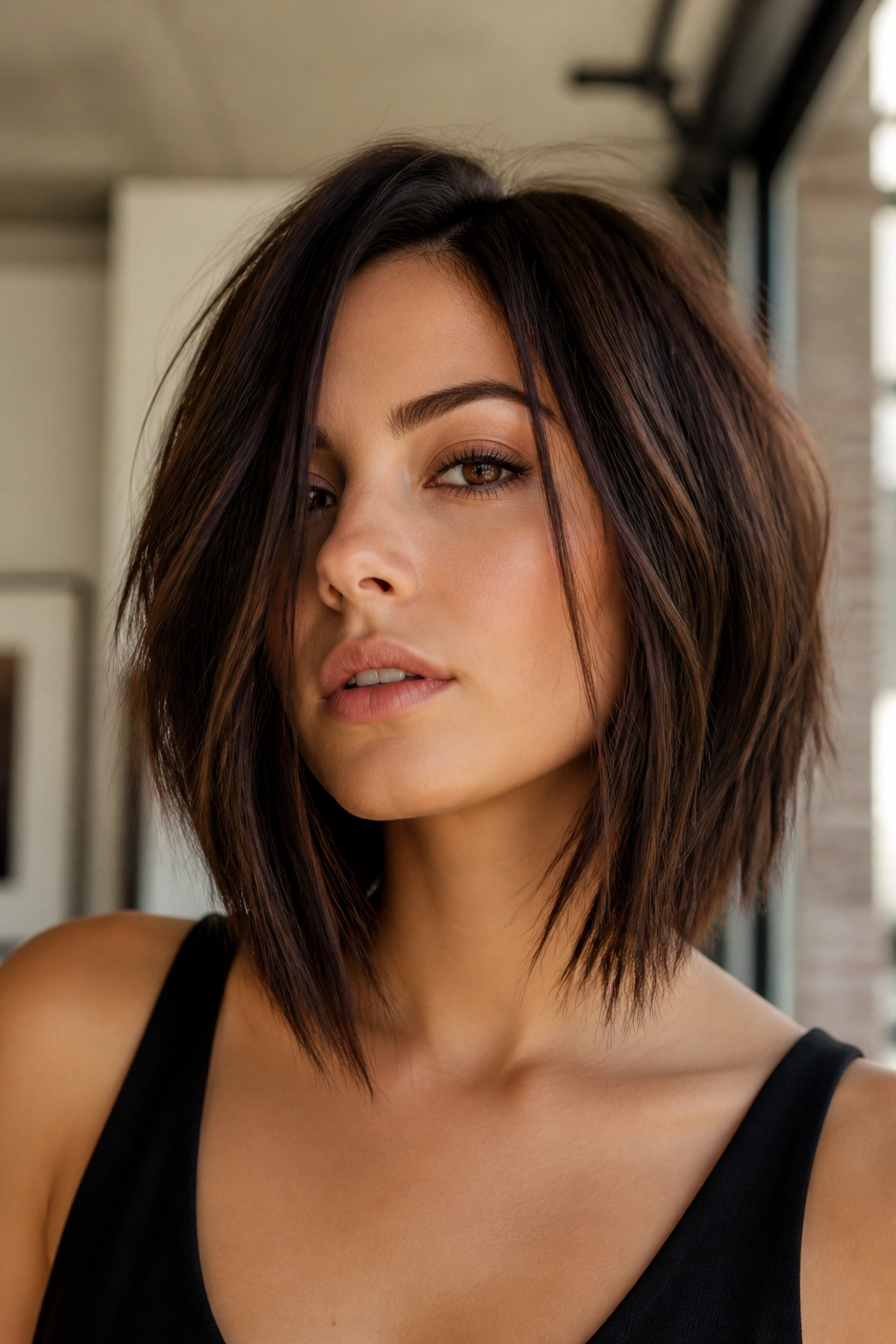
A razor cut can be gorgeous. It can also go very wrong. The difference usually comes down to texture and hand shape, because a razor-cut lob with sharp ends needs movement, not frayed damage.
On a round face, the appeal is that razor-cut edges feel light and directional. The front can be left a little longer, and the broken texture keeps the silhouette from looking too solid. That helps the face look less circular without making the hair heavy at the bottom.
This cut works best on medium-density straight or wavy hair. If your strands are already dry or very frizzy, a razor can make the ends look thin in a bad way. Ask for soft slicing rather than aggressive shredding. That keeps the perimeter clean enough to hold its line.
The styling is straightforward. A flat iron through the mid-lengths, a tiny bit of texture spray at the ends, and a side part will usually do it. The result feels modern without screaming for attention.
11. Soft Mullet With Diagonal Fringe
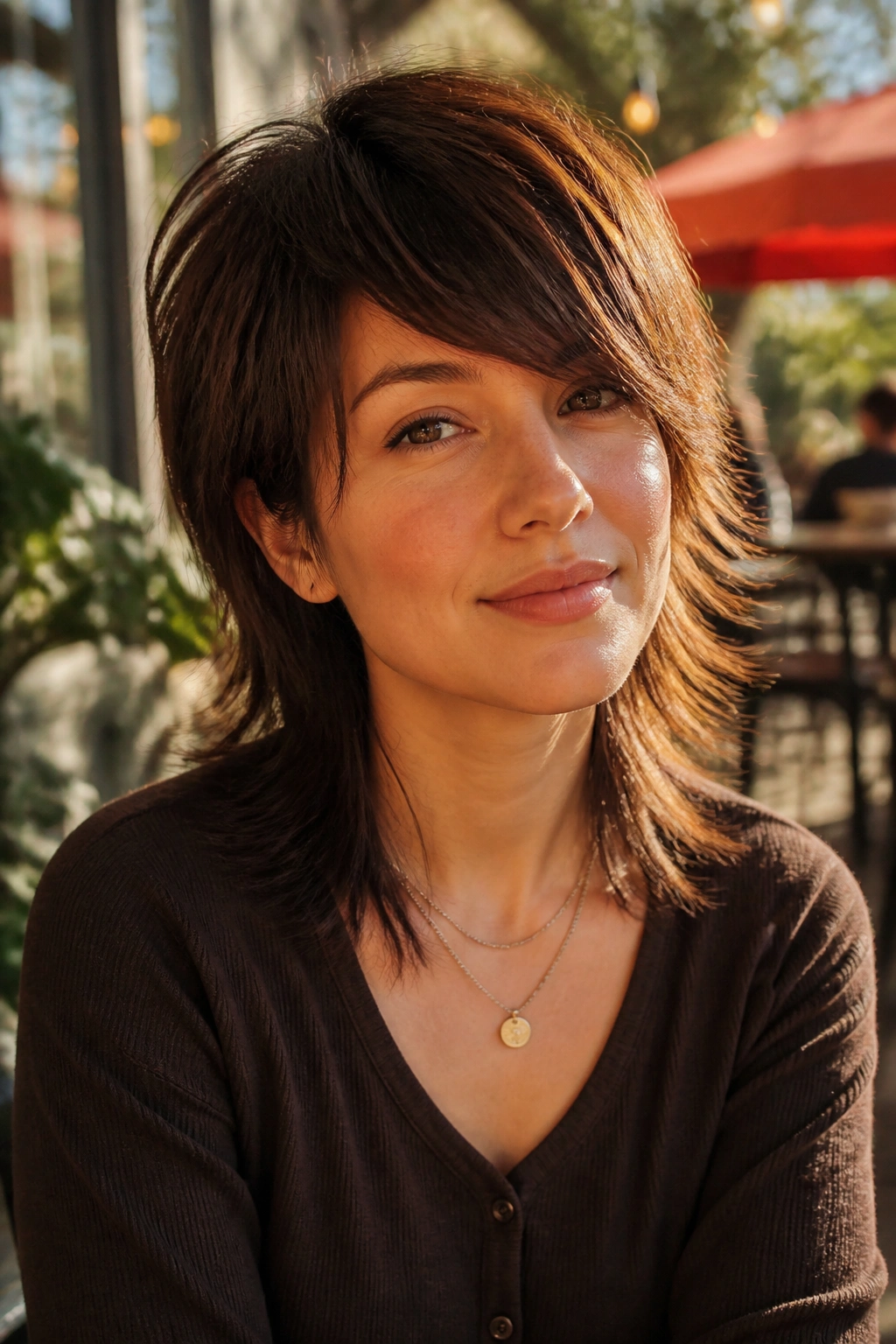
If you like hair with a little edge, this one has personality. A soft mullet with a diagonal fringe keeps the back longer, shortens the crown just enough to create lift, and lets the front fall across the face in an uneven line.
No, this is not the harsh version people picture when they hear “mullet.” It’s softer, more layered, and easier to wear. The diagonal fringe is the part that matters most for a round face. It pulls the line downward and off center, which gives the face more length than a straight-across bang would.
What to Ask For
- Shorter layers at the crown for lift.
- A longer back that brushes the neck or collarbone.
- Fringe that starts off center and angles to one side.
- Feathered pieces around the temples, not a blunt frame.
This style likes texture. Wavy hair wears it naturally. Straight hair may need a bit of mousse or a twist-dry to keep the layers from lying too flat. It’s a confident cut, but not a fussy one.
12. Bixie Cut With a Longer Crown
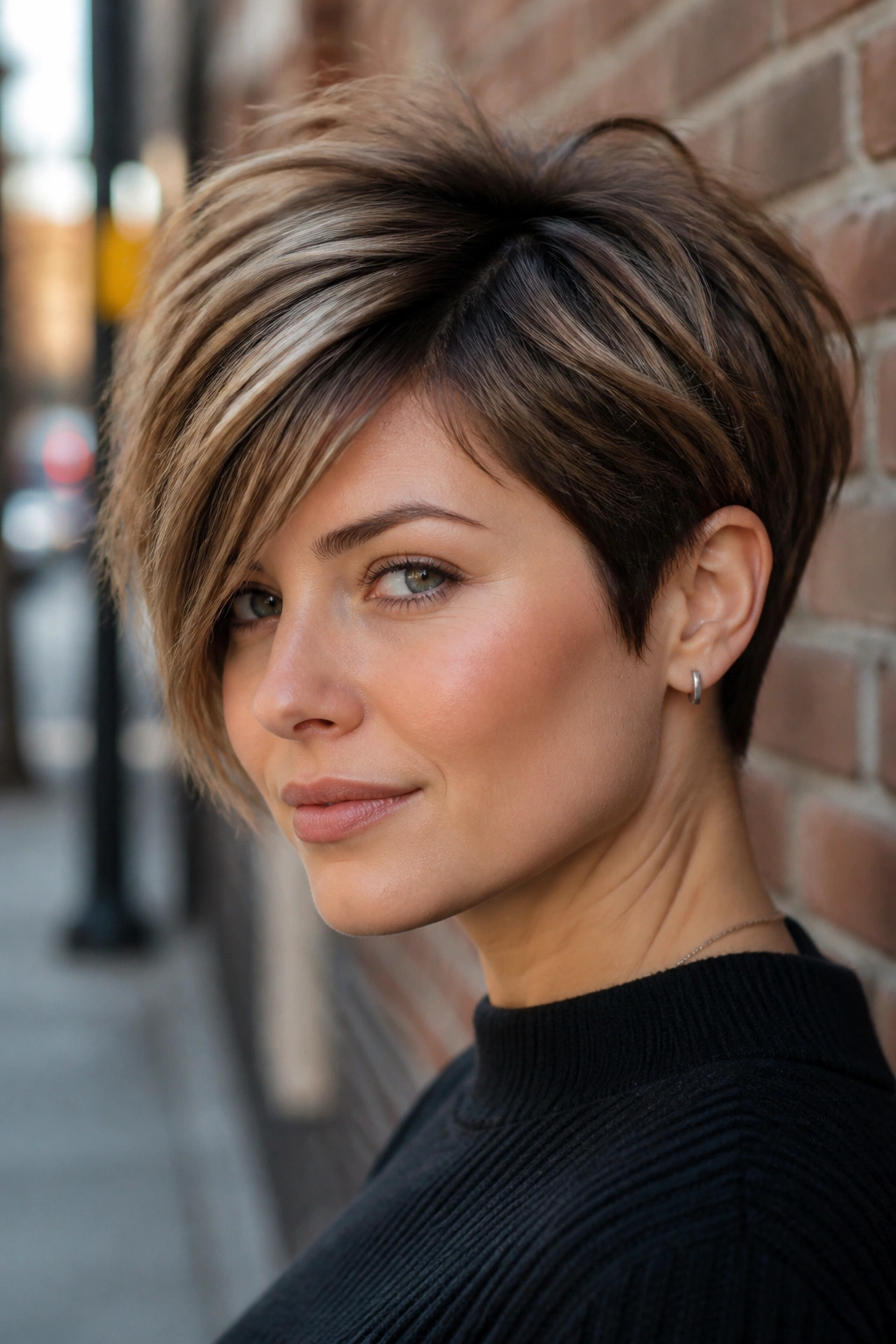
Too short for a bob, too long for a pixie? That’s exactly where the bixie lives. It blends the softness of a bob with the lift of a pixie, and the asymmetry usually shows up in the crown and fringe rather than in an obvious one-sided shape.
That makes it useful for round faces. The longer crown adds height, and the slightly uneven perimeter keeps the silhouette from reading as a neat circle. If your hair is fine, the bixie can build body without relying on heavy styling. If your hair is thick, it removes bulk before it turns into a mushroom shape. Neither is a bad problem to have, but both are easier to manage with this cut.
How to Style It
- Blow-dry the crown upward with a vent brush.
- Push the fringe to one side while it’s still warm.
- Use a small amount of paste to separate the top.
- Keep the sides close enough to show the shape.
This cut is playful, but not childish. It has enough edge to feel current and enough softness to stay wearable.
13. Side-Parted Tapered Crop
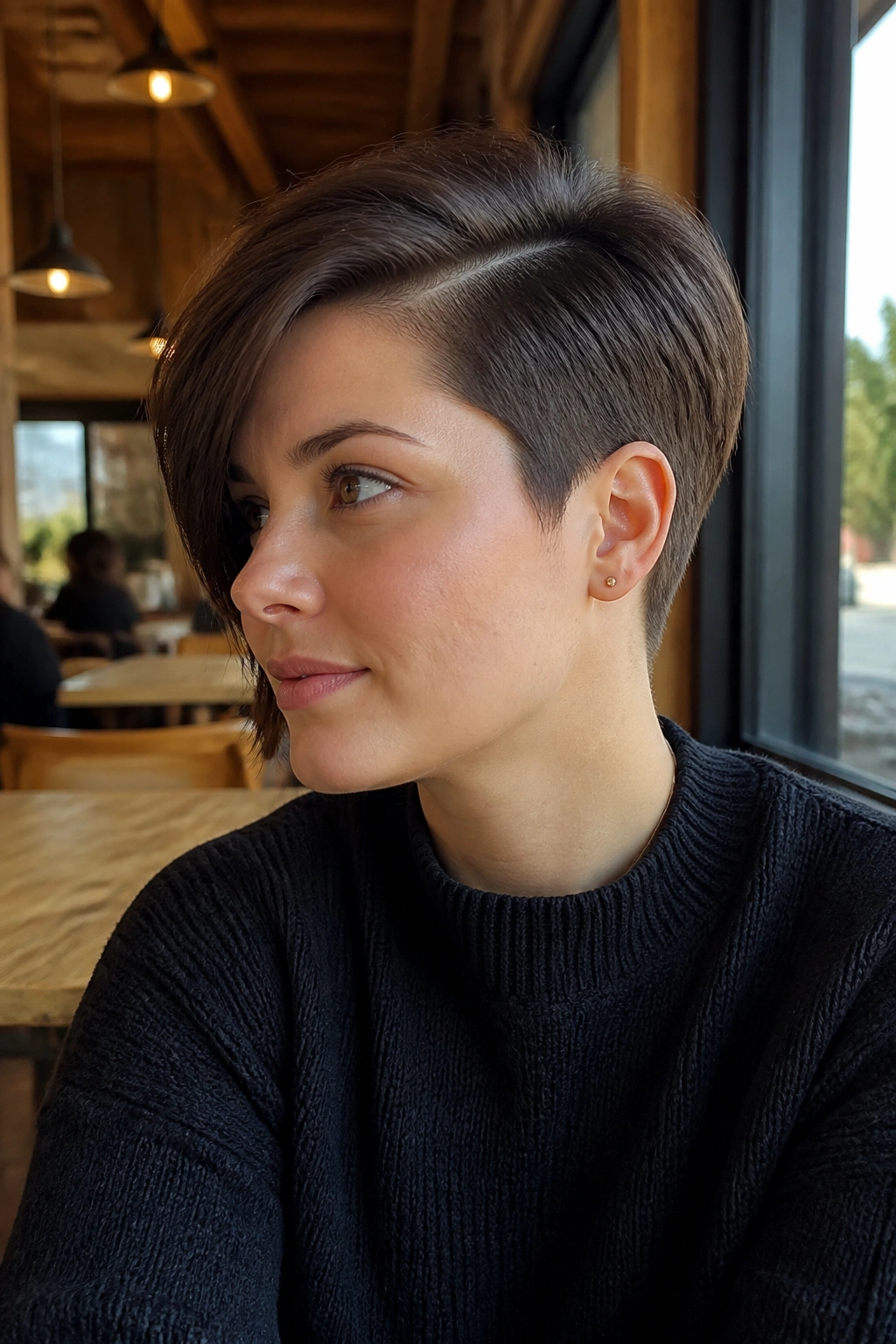
A tapered crop with a side part is one of those quietly clever cuts that doesn’t need much explaining once you see it. The sides stay neat, the top keeps a bit of movement, and the part gives the whole shape a diagonal line that flatters a round face fast.
Because the crop is short, the balance comes from direction instead of length. A deep part, a little height near the roots, and a tapered nape create a clean outline that keeps the face from looking wider. That works especially well if you like a sharp neckline or you want the haircut to stay tidy between salon visits.
This is also a practical choice for busy mornings. A little blow-dry cream and a comb are often enough. If your hair grows fast at the sides, the taper will need regular cleanups, but the top can usually go a few extra weeks without looking rough.
It’s not flashy. That’s part of the appeal. It looks deliberate from every angle.
14. Sleek Bob With One Ear Exposed
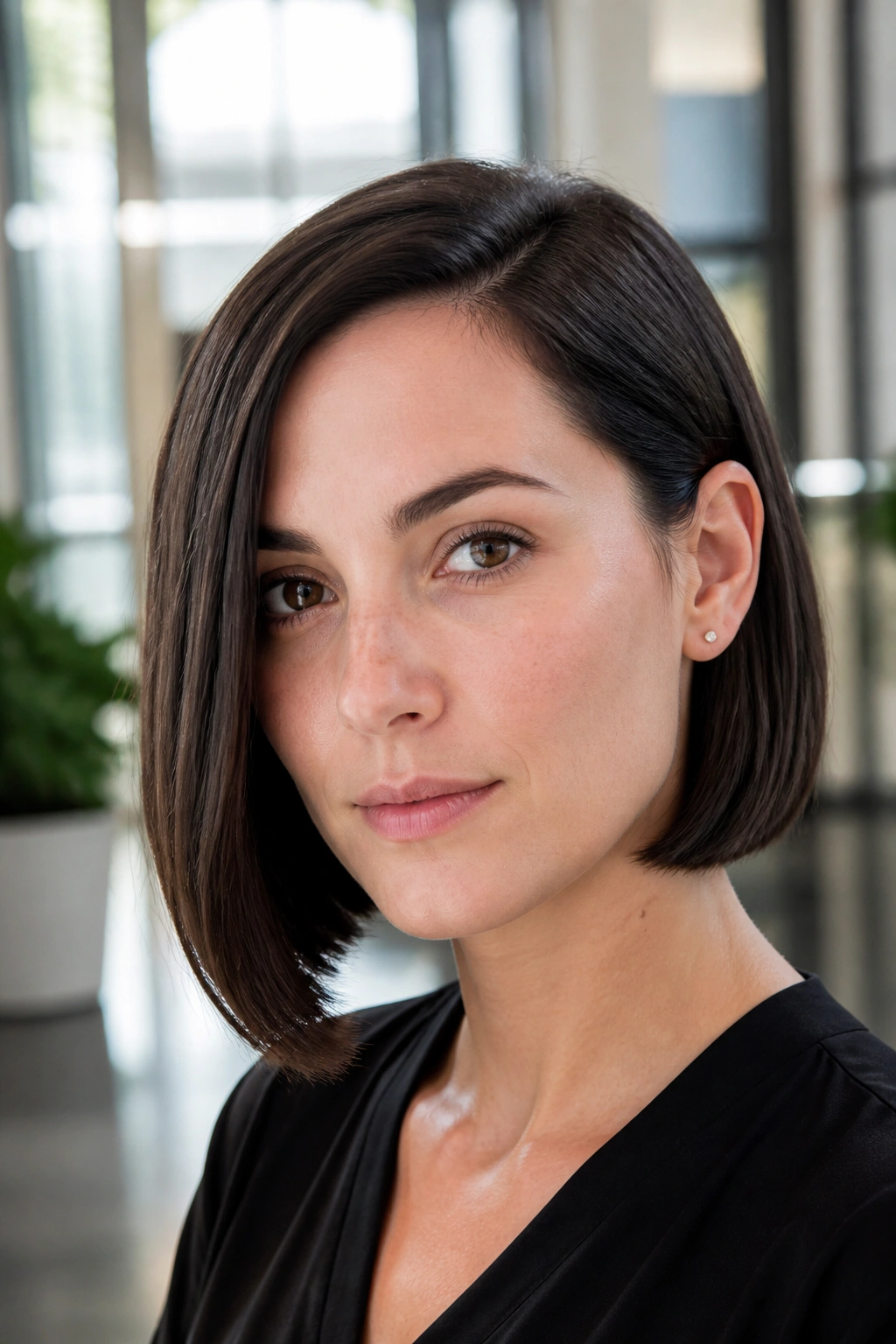
A sleek bob can flatter a round face if the part is deep enough and one side stays tucked back. That exposed ear opens up the face, while the longer opposite side keeps the eye moving downward.
The style works best when the bob sits just below the jaw or at the chin with a slight angle. Straight hair makes the line obvious, but wavy hair can wear it too if you smooth the top and leave the ends soft. What you do not want is a puffed-out cheek area with both sides sitting at the same length. That’s where the width problem comes back.
A flat iron, a little smoothing cream, and a side part usually do the job. Keep the top sleek, not plastered. There’s a difference, and it matters. Too much product can make the hair collapse around the face, which is the opposite of what you want.
If you like a clean, polished look, this one has a sharp finish without needing much drama.
15. Shoulder-Grazing Flip With Uneven Ends
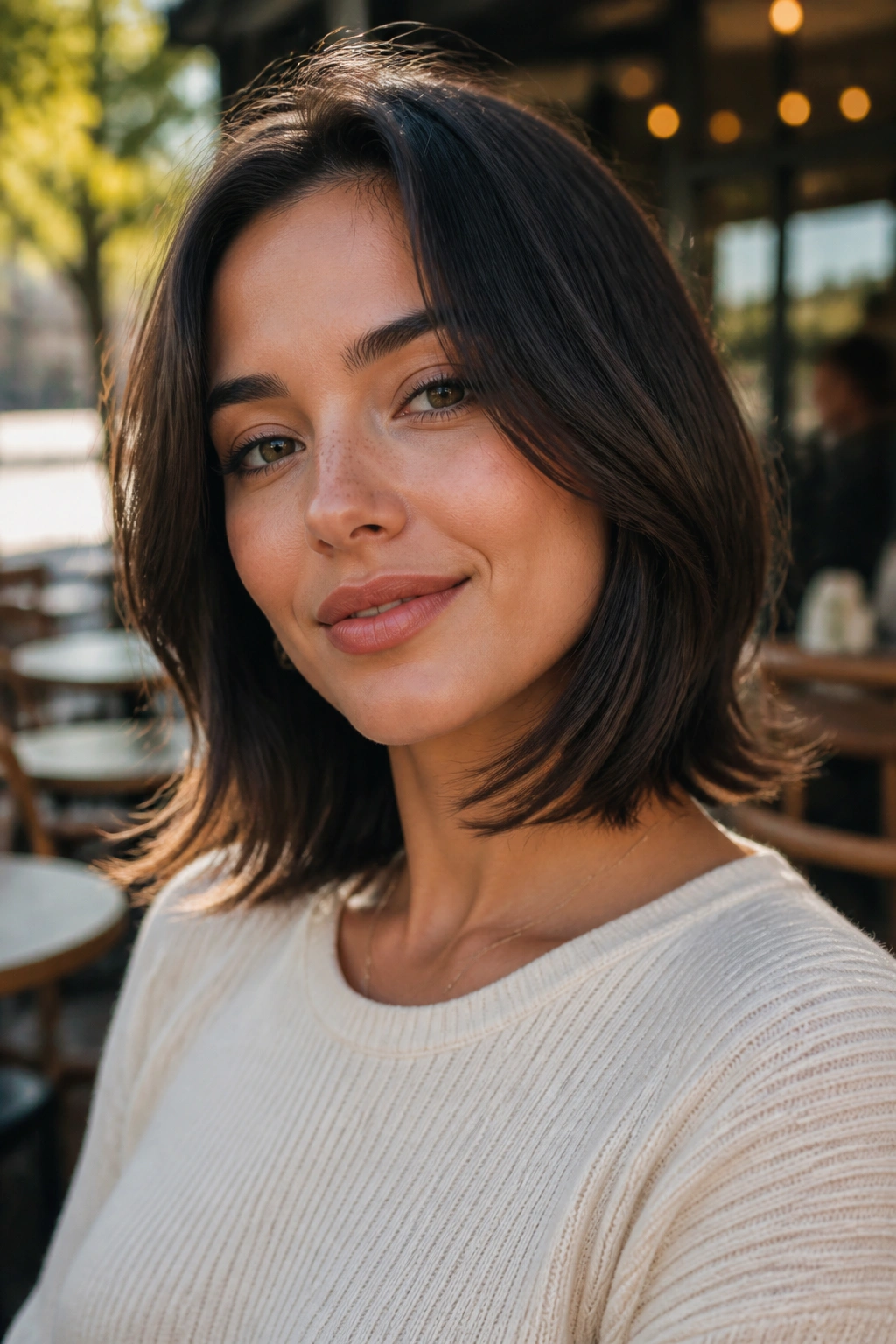
On a rushed morning, this is the cut that still looks like you meant it. A shoulder-grazing flip with uneven ends has enough shape to flatter a round face, but not so much structure that you have to baby it all day.
The asymmetry shows up in the way the ends sit. One side can flip out more. One front section can fall a little longer. The shoulder length keeps the face from feeling boxed in, and the flipped ends create a bit of motion around the jaw without ending right at the cheeks.
Small Details That Matter
- Keep the length at or just below the shoulders.
- Use a round brush or large curling iron to flip only the front and lower ends.
- Let one side sit a little heavier than the other.
- Avoid over-layering near the chin, which can widen the face.
This haircut has a friendly feel. It’s easy to wear with jeans, but it still looks finished with a blazer or a sharper outfit. That range makes it one of the most practical asymmetrical hairstyles for round faces.
16. Face-Framing Shag With Long Bangs
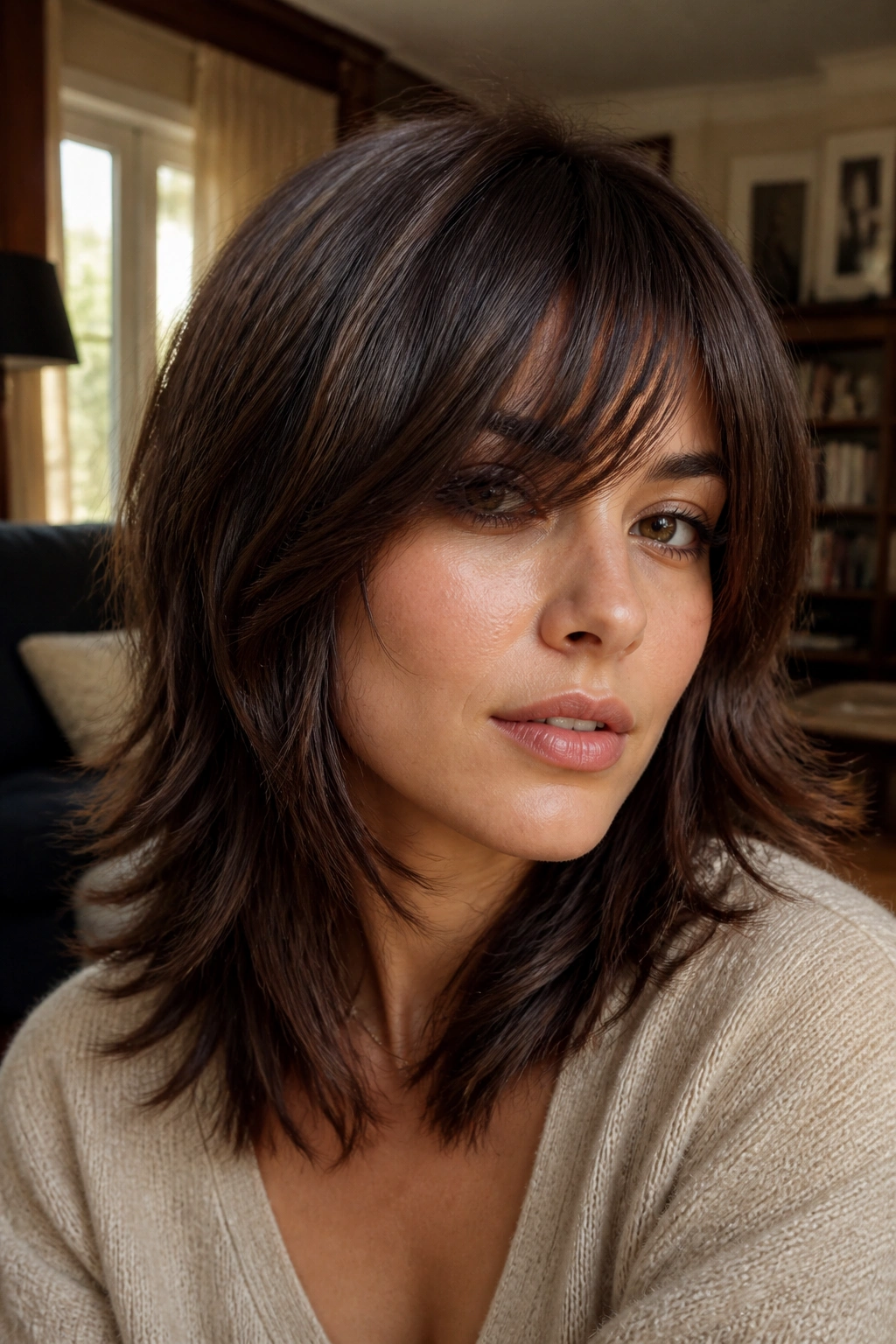
A shag with long bangs can do a lot for a round face when the framing is kept low and a little uneven. The idea is not to build a perfect curtain around the cheeks. The idea is to let the layers fall past the widest part of the face and move in different directions.
Long bangs help because they don’t chop the face in half. They can sweep across the forehead, drift toward one cheek, or split lightly off center without creating a hard line. The rest of the layers should stay soft and broken, especially around the temples and jaw. If they start too high, they can widen the face instead of slimming it.
This cut looks good air-dried with a bit of cream, but it also likes a quick rough blow-dry. Some people twist the front pieces while drying so they bend away from the cheeks. That’s a useful trick. It keeps the shape from puffing out at the exact spot you’re trying to soften.
The overall effect is easy, not fussy. A little undone. That works in its favor.
17. Asymmetrical Curtain Bang Lob

Can curtain bangs work on a round face? Yes—if they’re cut with enough length and a bit of offset. A lob with asymmetrical curtain bangs keeps the face open in the middle while letting the sides fall longer, which creates that nice diagonal movement without taking the style too far.
The bang length is the important part. You want the shortest pieces to start below the brows and skim past the cheekbone, not land right at the fullest part of the face. If they’re too short, the bangs can widen the middle. If they’re too long, they disappear. That narrow window is where the flattering shape lives.
What to Ask For
- A collarbone-length lob with one side slightly longer.
- Curtain bangs that part off center, not dead center.
- The shortest bang pieces below brow level.
- Soft blending into the front layers so the bangs don’t look separate.
This style is good for people who want softness around the forehead but still need structure at the sides. It’s feminine without being sugary. And it grows out better than most bang-heavy cuts, which is always worth caring about.
18. Sculpted Crop With Side Volume
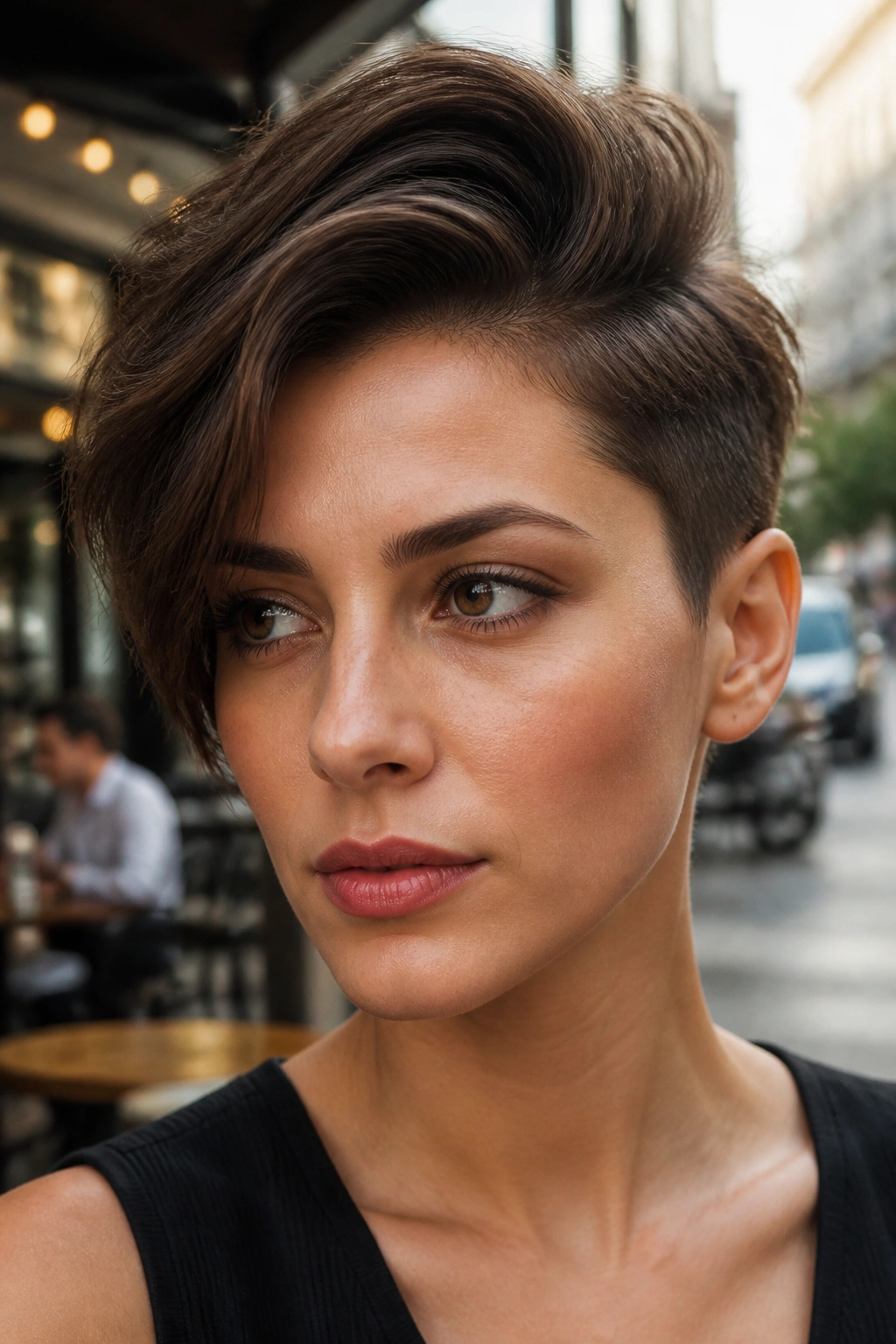
A sculpted crop with side volume is the polished cousin of the short cuts on this list. Instead of keeping the hair flat and even, this shape uses lift on one side and tighter lines on the other to create a clear asymmetrical read.
That bit of height is what helps a round face. The eye moves upward, then diagonally across the head, instead of staying trapped in a circular outline. If your hair is fine, root lift spray and a round brush can build the shape. If your hair is thick, the crop can be cut with enough internal removal to keep it from becoming bulky at the sides.
This style has a neat finish, but it is not stiff. A flexible spray keeps the volume in place without freezing the hair. That matters, because a hard shell can make the whole cut look helmet-like.
It’s a strong choice if you like short hair that feels tailored. Not trendy for the sake of being trendy. Just sharp, clean, and very aware of where the face needs more length.
Final Thoughts

The best asymmetrical hairstyles for round faces do one simple thing: they create a line the eye can follow. Sometimes that line is sharp, like a deep side-parted bob. Sometimes it is barely there, like a lob with one tucked side. Both can work, and both can look far better than a cut that sits evenly right at the cheeks.
Texture changes the answer more than most people expect. Straight hair shows the angle. Wavy hair softens it. Curly hair needs length and a little room to move. Once you know that, the whole decision gets easier.
Pick the shape that matches your life, not just your mirror. The right cut should give your face direction and let the hair do some of the work on its own.
