



The best long textured hairstyles for round faces do one thing well: they make the eye move down instead of out. That sounds almost too simple, but it’s the whole trick. Once hair falls in soft vertical lines, with movement starting below the cheekbones, the face reads longer and a little leaner without looking harsh.
Flat, one-length hair can work against that. If the ends stop right at the jaw and the sides puff out evenly, the widest part of the face gets extra attention. Texture fixes the problem when it’s placed in the right spot. A loose wave, a broken-up layer, or a side sweep gives the hair shape and keeps it from sitting like a solid block.
I’m a fan of styles that leave some softness near the face but keep the volume a little higher or lower, not dead center at the cheeks. Off-center parts help. So do layers that start near the cheekbone, not the chin. The 25 looks below all lean on that idea in different ways, from polished blowouts to lived-in braids and curls.
1. Cheekbone-Grazing Layers for Round Faces
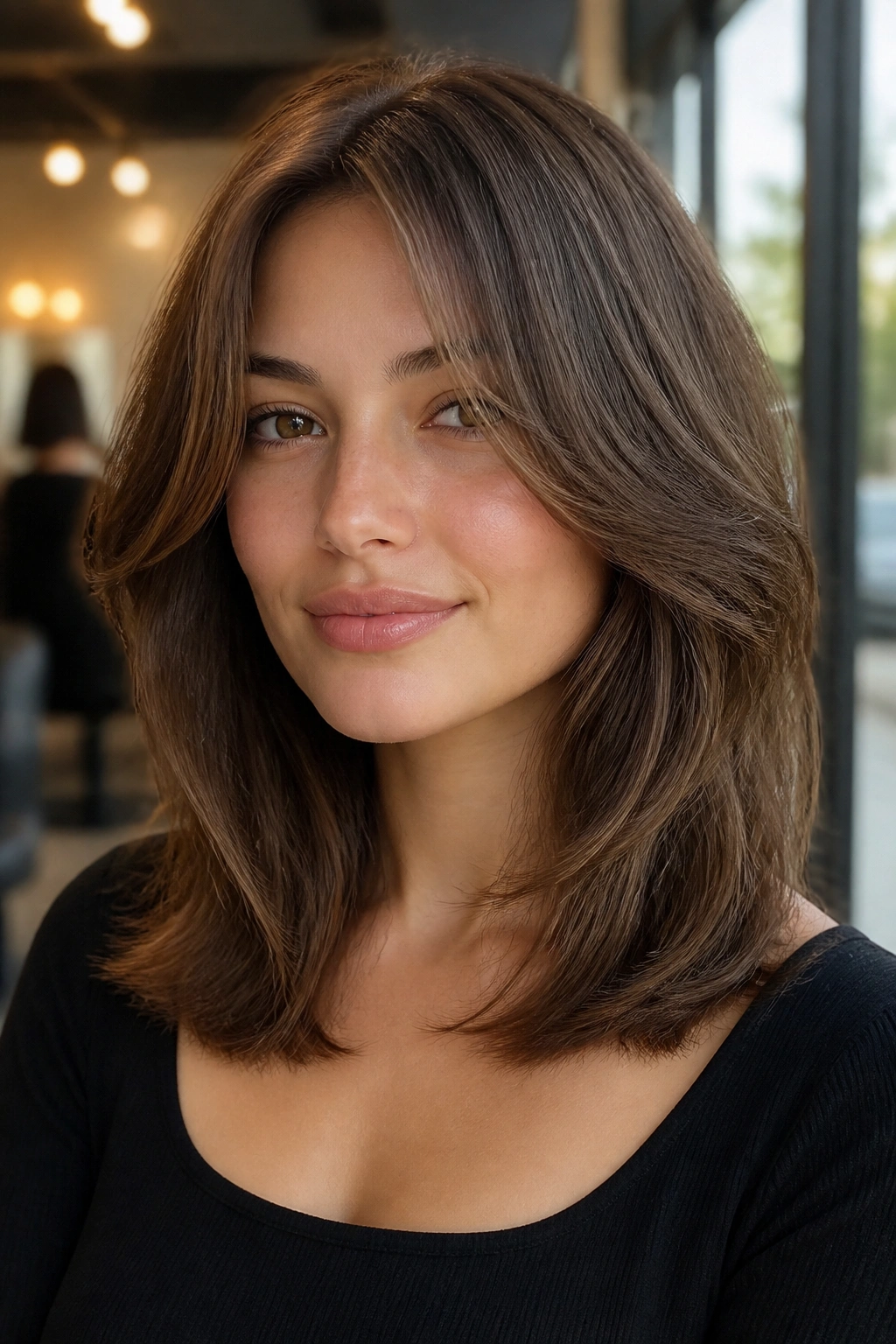
This is the first style I’d recommend almost every time. The shortest pieces begin just below the cheekbone, which gives the face room to open up without adding width right where it’s broadest.
Ask for long layers that taper softly through the mid-lengths, not choppy pieces that flare out at the sides. A shoulder-grazing layer can be flattering on some face shapes, but on a round face it often lands in the wrong spot. These layers should fall forward, then disappear into the length.
What to ask your stylist for
- Long face-framing pieces that start around the top of the cheekbone
- Soft, point-cut ends instead of a blunt edge
- A little extra weight in the bottom third so the style keeps length
- Light internal layering only if your hair is thick
Skip layers that begin at the jaw. That placement tends to widen the face instead of stretching it.
2. Curtain Bangs and Soft Waves
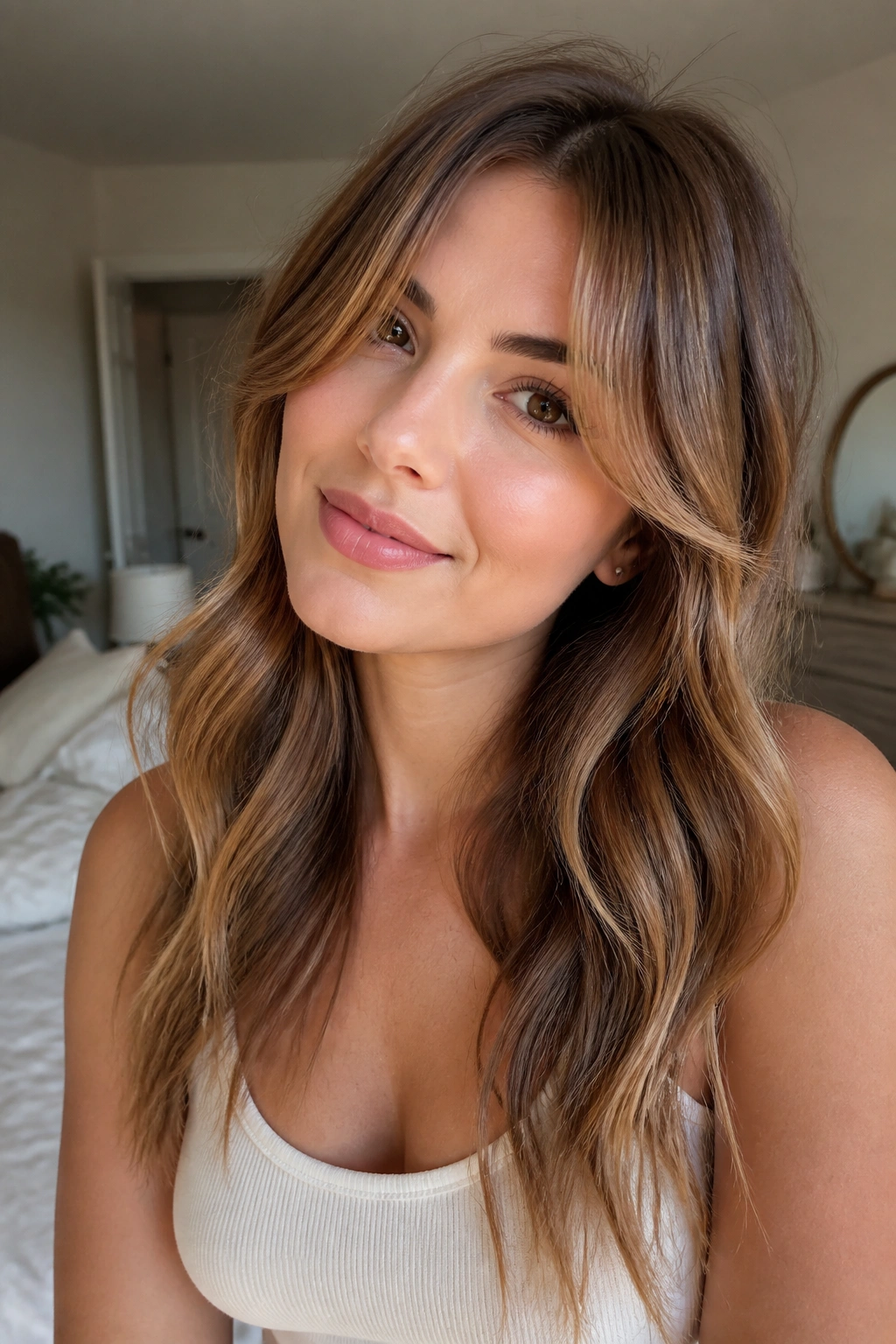
Curtain bangs are one of the easiest ways to change the whole mood of a long hairstyle. They split the face down the middle, then fall away toward the cheekbones, which creates a built-in vertical line.
The key is softness. You want the bangs long enough to blend into the sides, usually somewhere between the cheekbone and the top of the lip depending on hair density. Then the waves should start lower, not right under the eye. If the bend begins too high, the face can look shorter.
A lot of people overdo curtain bangs by making them too thick. Don’t. The better version is airy, slightly piecey, and easy to tuck behind one ear on a busy day. That little asymmetry matters more than people think.
3. Deep Side Part with Loose Glam Waves
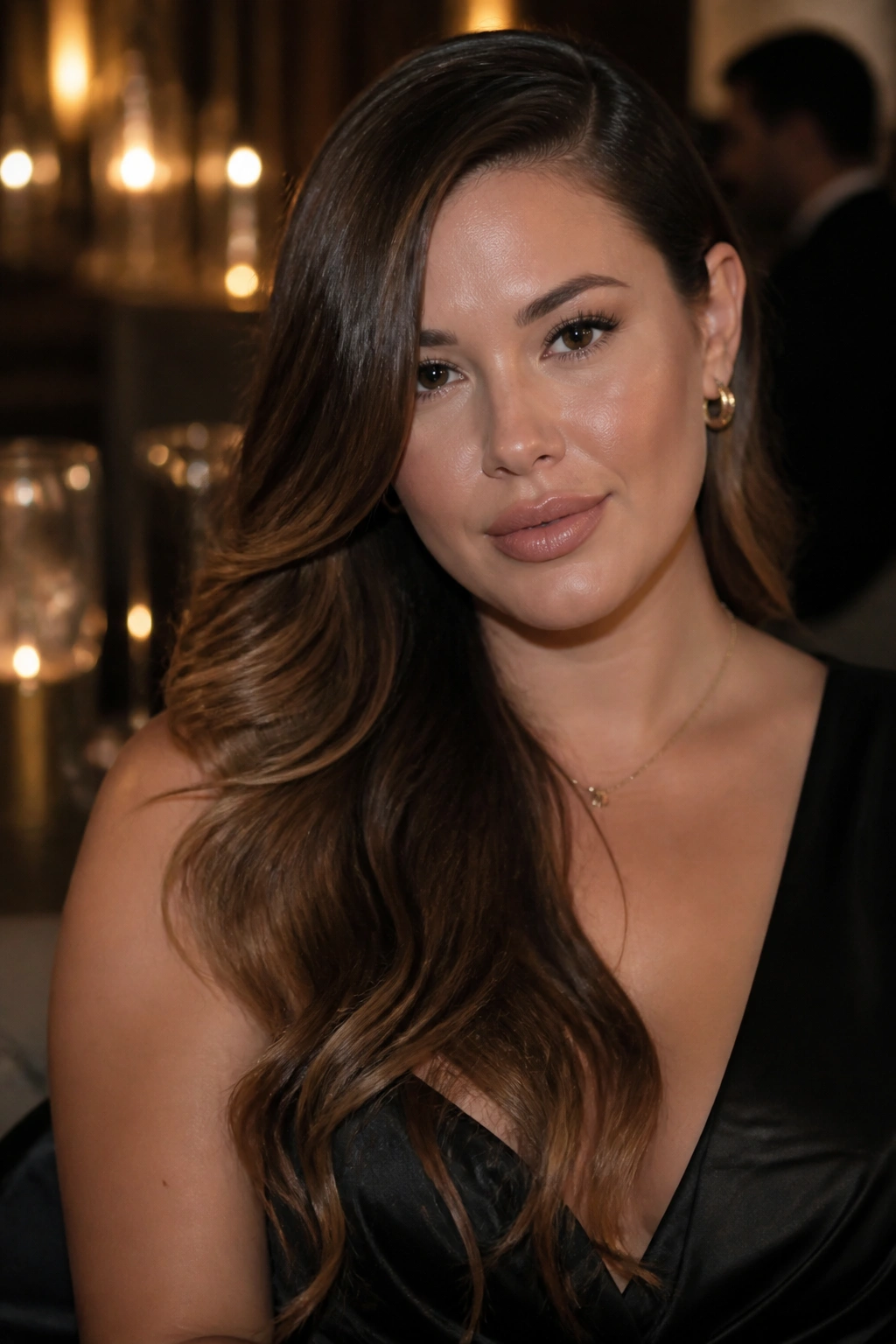
A deep side part can do a lot of quiet work on a round face. It shifts the visual weight to one side, which breaks up the symmetry that often makes round faces look even fuller.
Loose glam waves are the right companion here because they add movement without turning the sides into a puffed halo. Start the wave below the cheekbone, then brush it out just enough to soften the ringlets. You want bend, not tight curls. Tight curls at cheek level can push the width outward.
I like this style for dinners, weddings, or any day when you want the hair to look deliberate without feeling stiff. Tuck the smaller side behind the ear and leave the larger side to fall across the shoulder. It’s a small shift. It changes everything.
4. Butterfly Cut with Lifted Top Layers
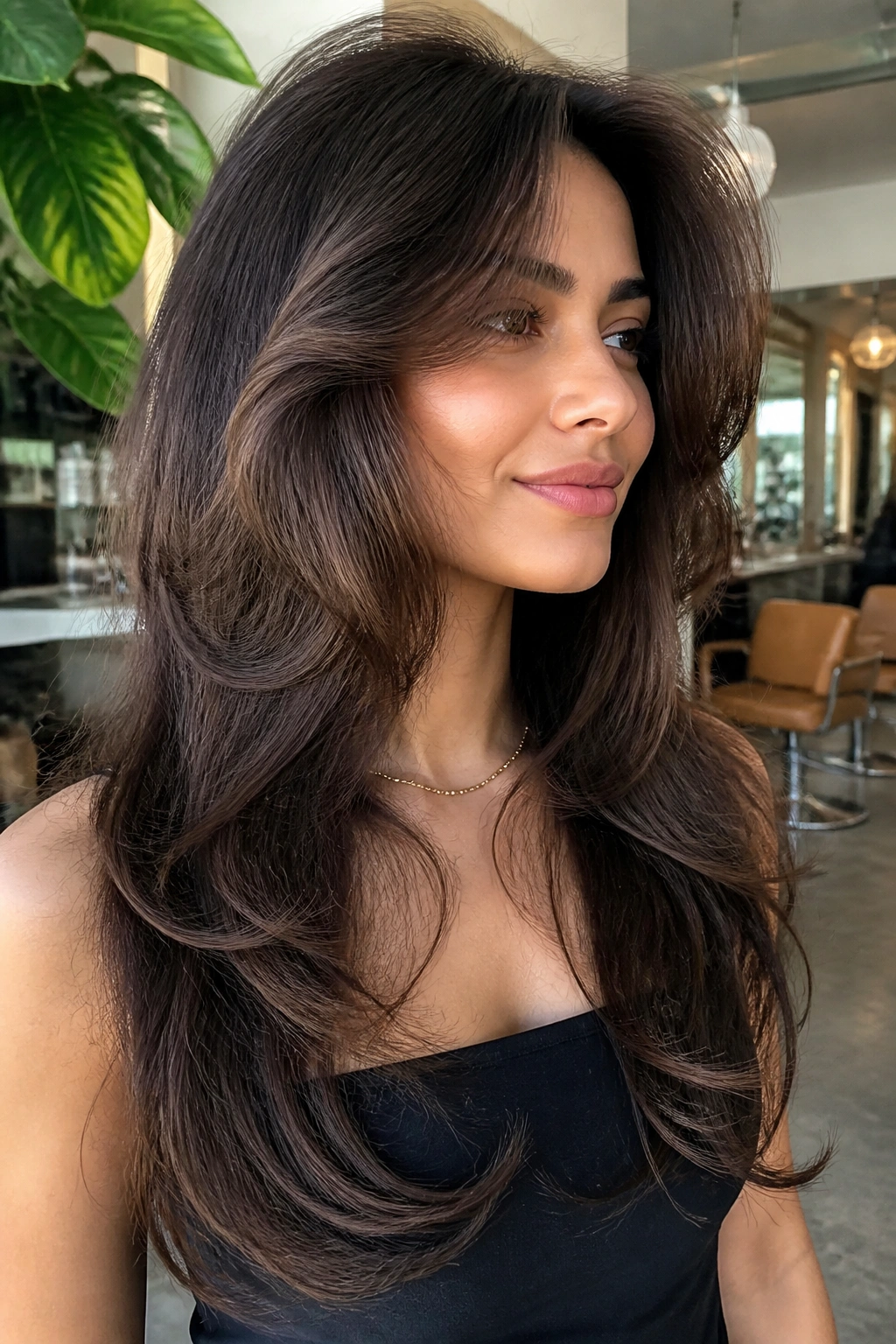
The butterfly cut is a smart choice when you want fullness without losing length. The upper layers are shorter and feathered, while the lower length stays long and flowing, so the hair gets movement around the crown instead of bulk at the cheeks.
Why it flatters round faces
The shorter top layers create lift near the head, which gives the face more vertical line. At the same time, the long bottom section keeps the hair from looking thin or stringy. That balance is the whole point.
This cut also plays nicely with round brushes and hot-air stylers. Flip the top layers away from the face and leave the ends loose. If you curl the lower half too tightly, the shape can turn puffy. Soft bends, not spirals, are the safer move here.
Best for: medium to thick hair that needs body.
Less ideal for: very fine hair if the layers get thinned out too much.
5. Long Shag with Razored Ends
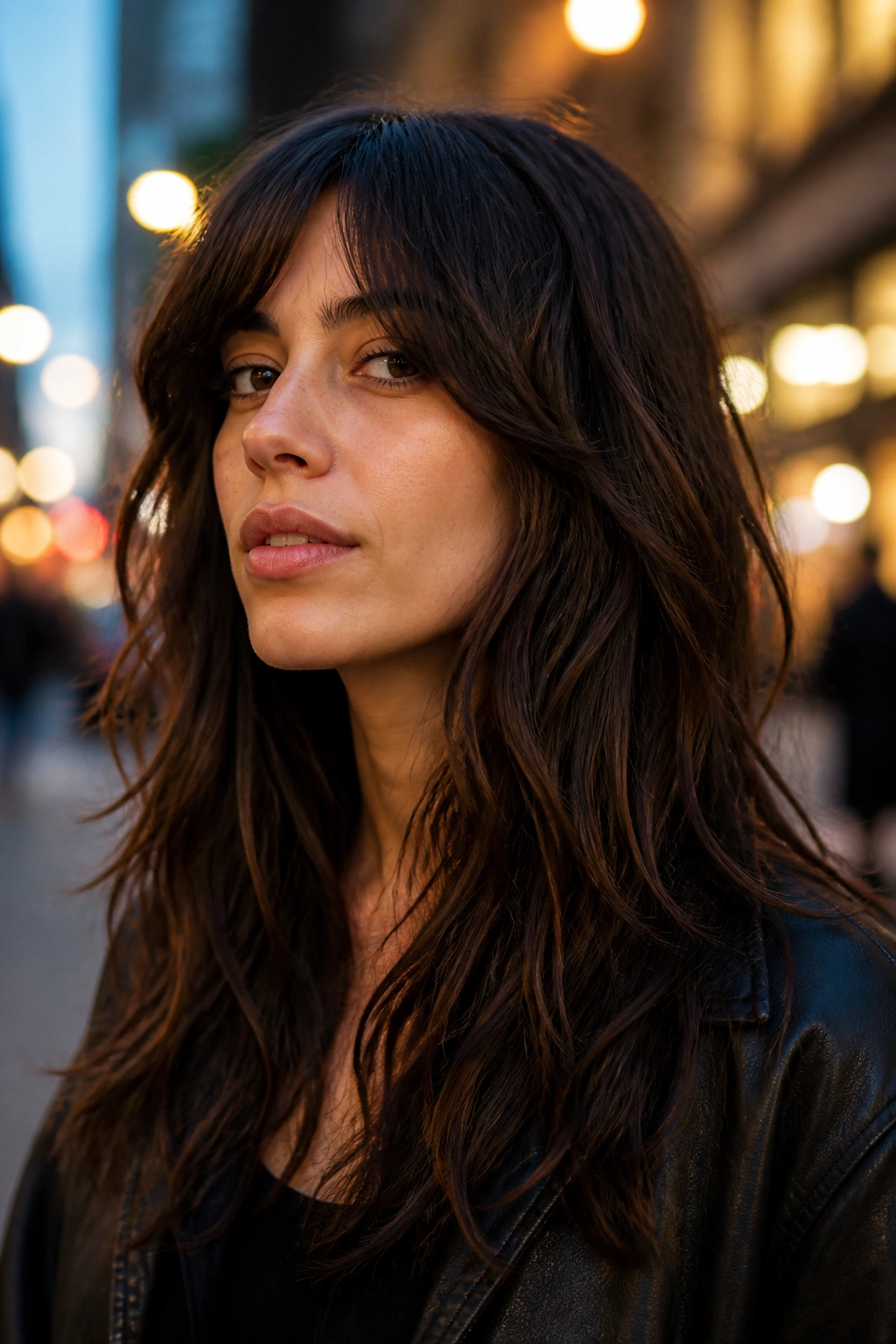
The long shag has a bit of attitude, and that suits a round face better than people expect. Its piecey ends and uneven layers break up the outline of the hair, so the shape feels lighter and less boxy.
This style works especially well when you like hair that looks a little lived-in. The razored ends add separation, which keeps the outer line from feeling heavy. I’d pair it with a soft wave or a rough blow-dry; both bring out the movement. Stick straight hair can make a shag feel flat, which defeats the purpose.
The one thing to watch is side volume. If the layers flare too much at the cheek, you lose the lengthening effect. Keep the fullest part of the style a little higher or lower, and let the face-framing pieces taper gently past the jaw.
6. U-Shaped Cut with Hidden Movement
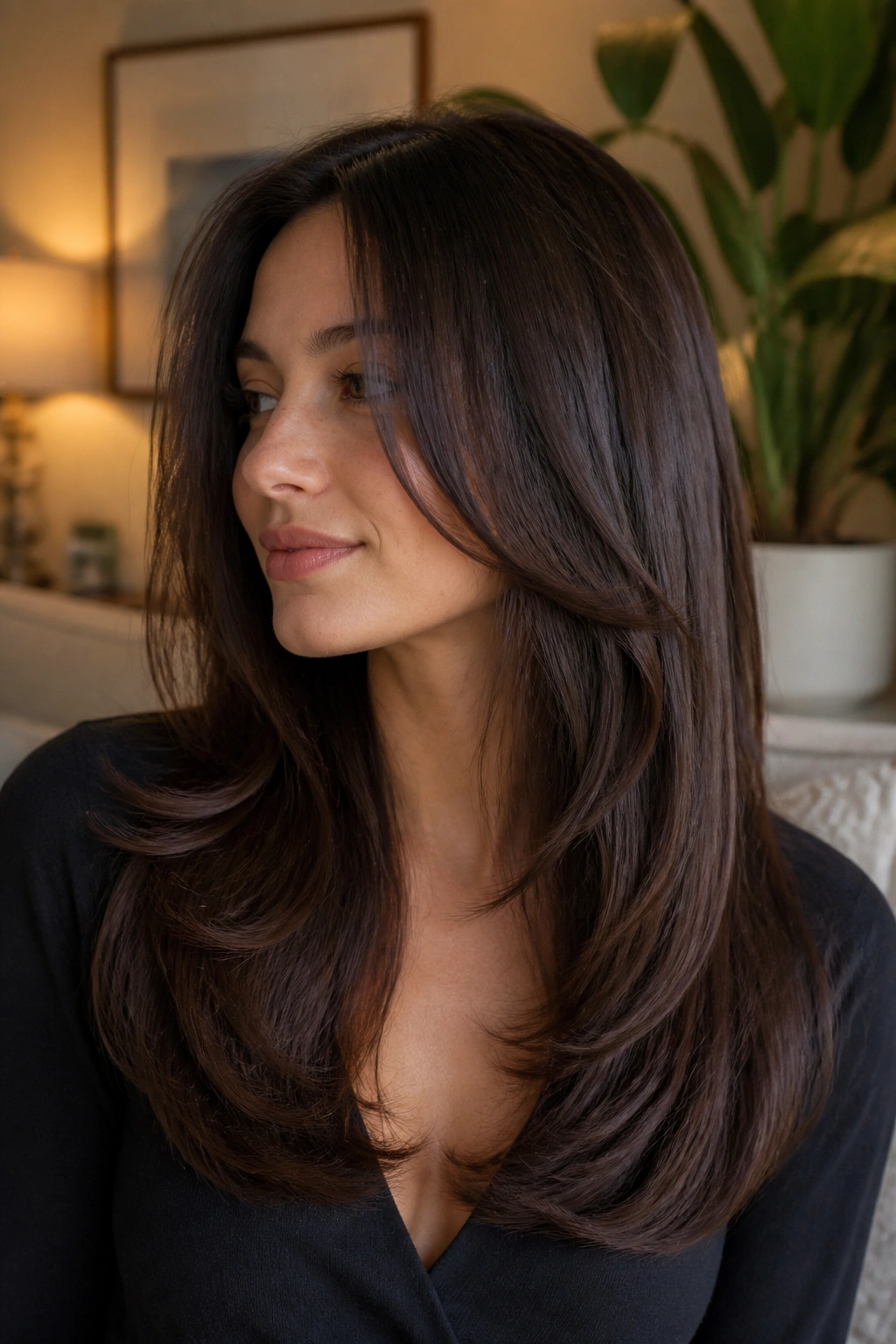
A blunt edge is not the enemy. A badly placed blunt edge is.
The U-shape gives the hair a rounded bottom that still feels long and polished, but it avoids the boxy look that sometimes shows up with a perfectly straight hemline. Hidden layers keep the weight from gathering at the sides, so the hair moves when you turn your head instead of sitting like one solid sheet.
This is a good option if you like clean hair more than messy hair. Blow-dry the top smooth, then bend just the last few inches with a large iron or round brush. The effect is subtle, and that’s the point. You get shape without calling too much attention to the width of the face.
7. V-Cut That Draws the Eye Down
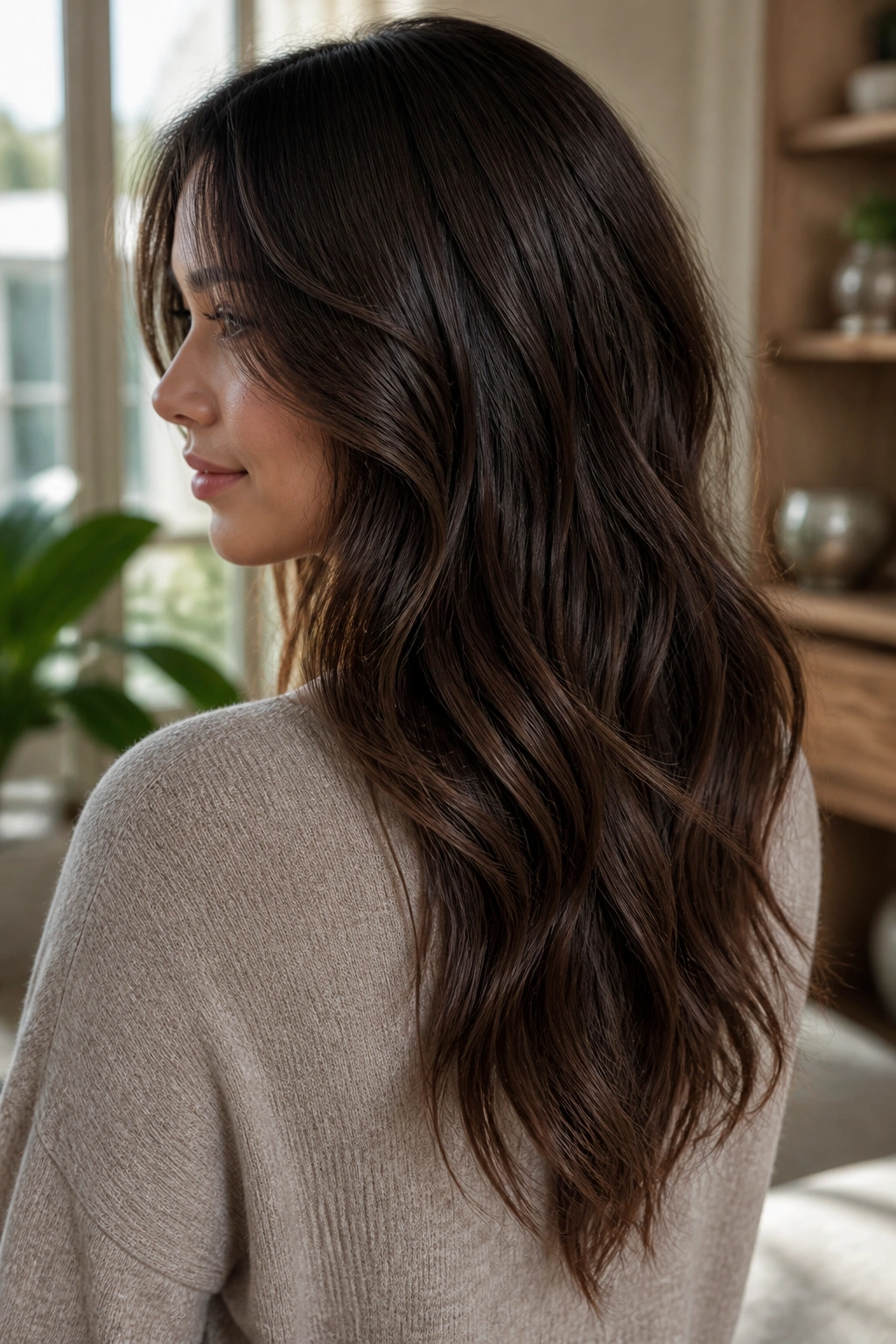
If you want the hair to look longer fast, the V-cut is hard to beat. The ends taper toward the center, which creates a natural point at the back and pulls the eye straight down.
That shape looks especially good on thick hair because the V keeps the ends from feeling bulky. It also gives long layers somewhere to land, which helps the style feel intentional instead of heavy. On finer hair, the V can get wispy if the stylist removes too much weight, so keep the taper soft.
I like this cut with loose waves or straight styling with just a bend at the ends. A crisp V is nice, but a severe one can feel dated. Ask for a gentle point rather than a sharp triangle. It’s a better fit for a round face and much easier to live with.
8. Mermaid Waves with a Center Part
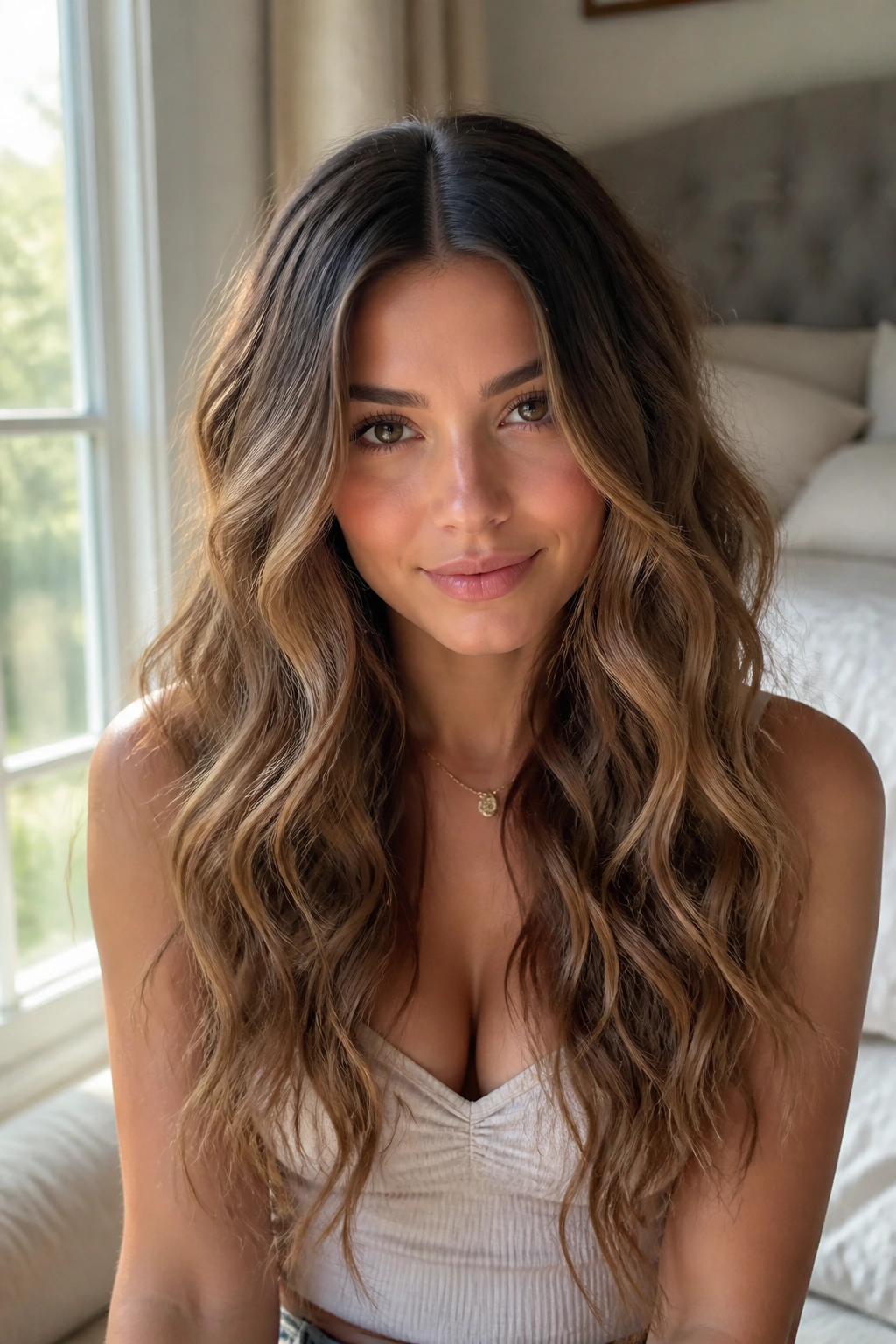
Mermaid waves can be flattering when they stay long and loose. The center part creates a vertical line, and the wave pattern keeps the hair from reading as flat or heavy.
What makes it work
The wave should start around the cheekbone or lower. Any higher and the fullness crowds the sides of the face. Use a 1.25-inch curling iron or a heatless wave pattern, then brush the curls apart once they cool. The finished wave should look soft, almost stretched.
A middle part is not mandatory for everyone, but it helps a round face feel longer when the hair is dense. If your hair naturally parts off-center, do not force it too hard. A slight shift in the middle is fine. The goal is length and movement, not perfect symmetry.
9. Defined Curls with Layered Shape
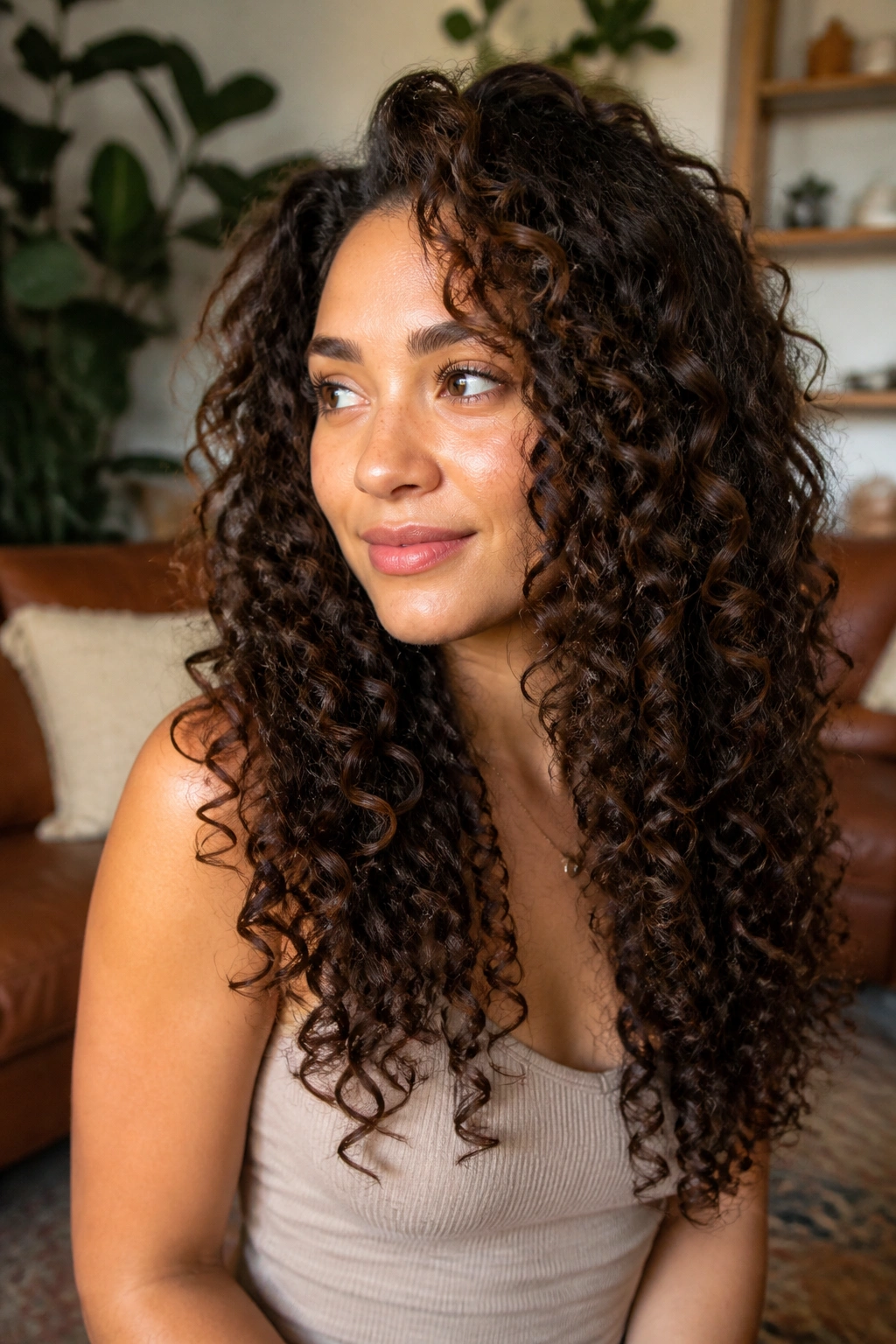
Can curls work on a round face? Absolutely, if the shape is cut with some care.
The mistake I see most often is a round, all-over curl shape that stops at the cheeks and balloons outward. A better version uses long layers so the curls stack vertically instead of spreading sideways. That keeps the outline narrow enough to flatter the face while still giving the hair body and bounce.
Use a diffuser and avoid roughing up the curls at the sides too much. Let the curl pattern do the work, then separate only a few pieces around the front. If your curls are very tight, stretch the crown a bit while drying so the top of the style does not sit too low.
10. Half-Up Top Knot with Loose Face Pieces
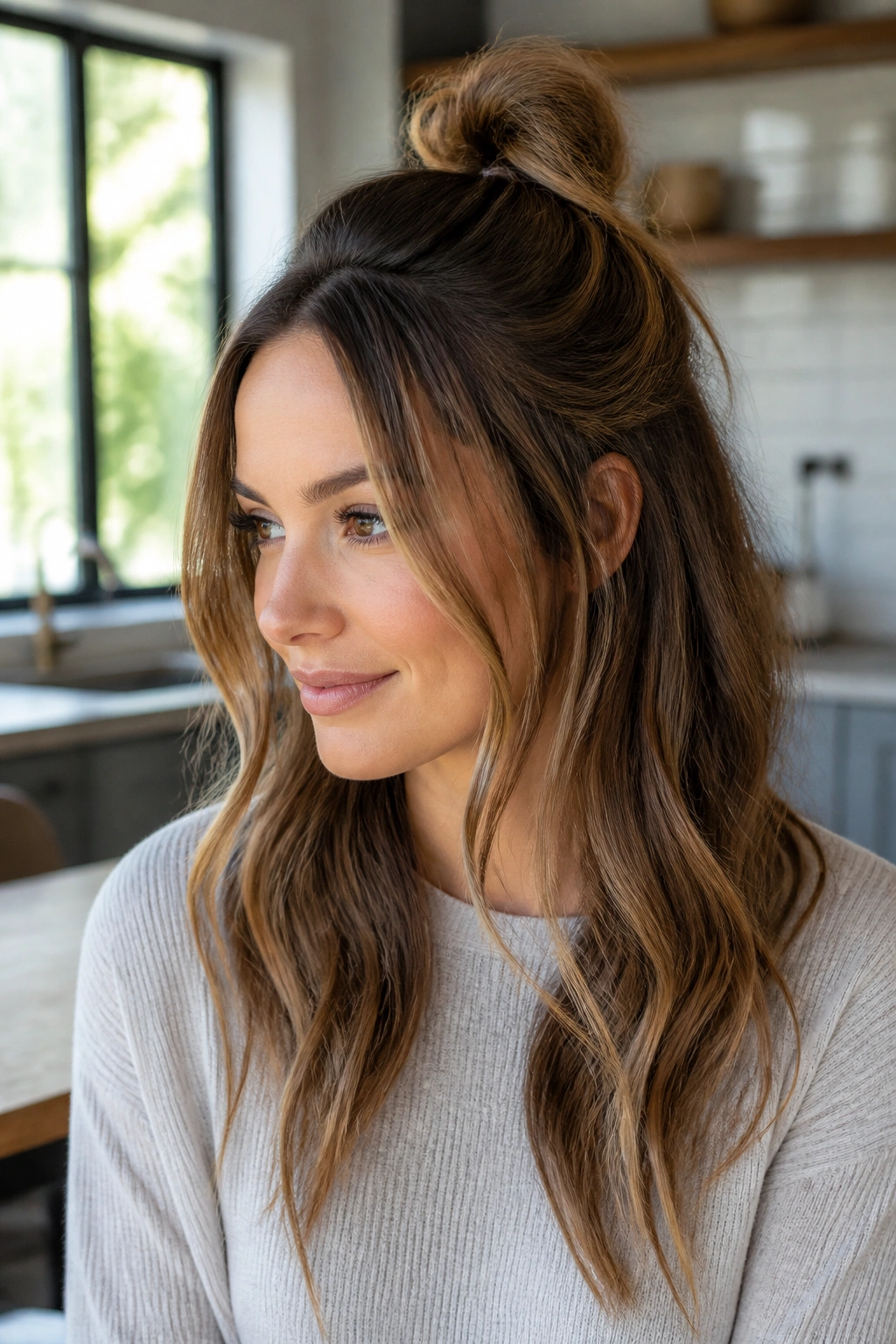
A half-up top knot gives you instant height at the crown, which is one of the simplest ways to balance a round face. The top section pulls the eye upward, and the loose lengths keep the style from looking severe.
Keep the bun small. That matters. A giant knot can add width where you do not want it. The better version sits high enough to create lift, but not so high that it looks like a costume piece. Leave two slim face-framing pieces out near the front, then bend them once with a curling iron so they don’t hang stiffly.
This style is especially good on second-day hair, when the roots have a little grip. A tiny bit of dry shampoo at the crown helps the knot stay put. Easy, quick, and far more flattering than a perfectly slick top section.
11. Side Braids into a Long Textured Tail
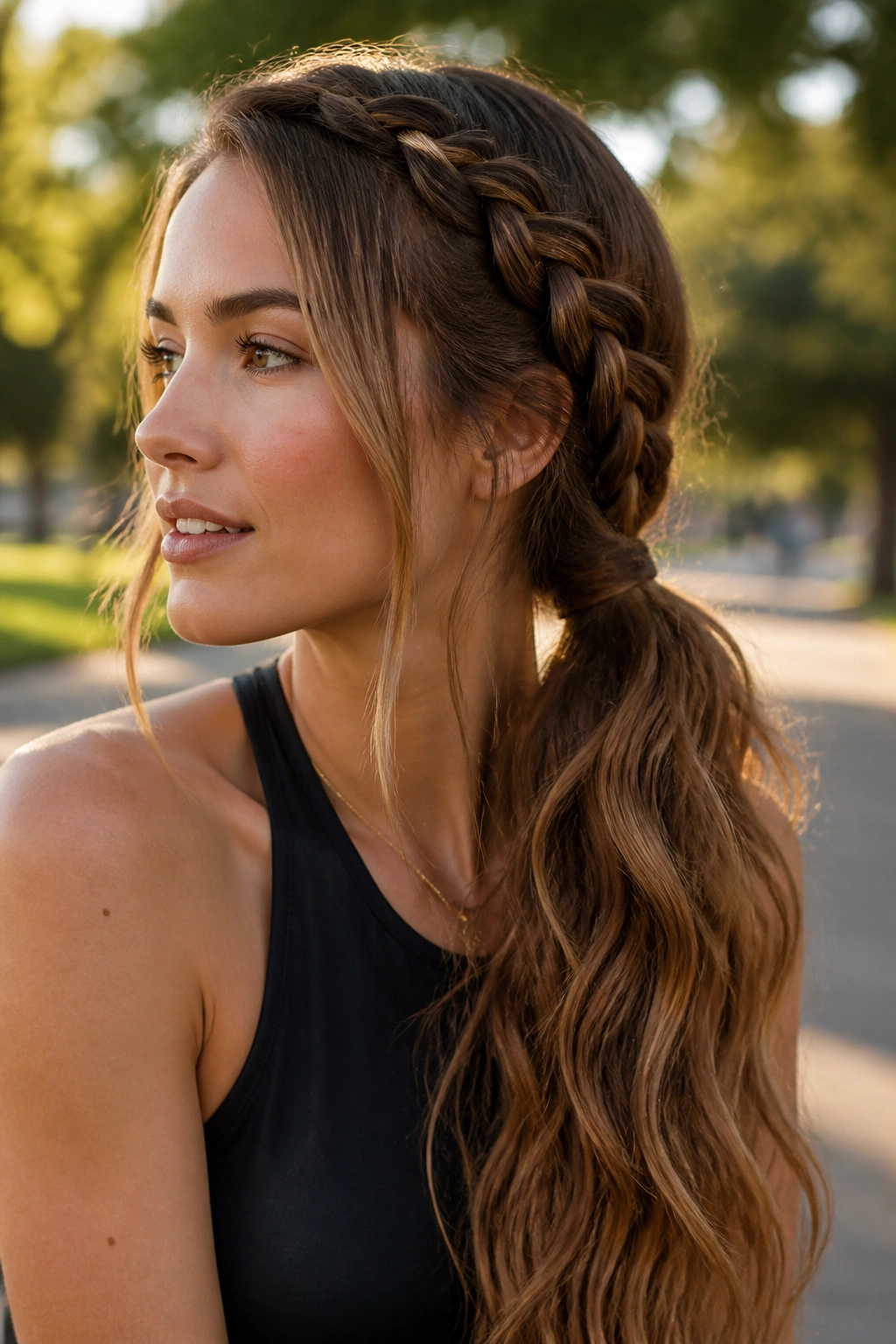
A braid adds diagonal movement, and diagonal lines are your friend here. They break the roundness of the face in a way that feels soft instead of harsh.
How to keep it flattering
Start the braid near the temple or just above the ear, then let it feed into a low tail or loose length. A tight braid that sits too close to the cheek can look busy. A looser braid with a little pull-apart texture looks better because it stays slim at the sides.
This is one of my favorite looks when you want hair off the face but still want it to feel feminine and a little undone. A small elastic, a few bobby pins, and a quick mist of texturizing spray are usually enough. If your hair is slippery, rough it up first with a little grit at the roots. That gives the braid something to hold onto.
12. Crown-Lift Blowout with Big Ends
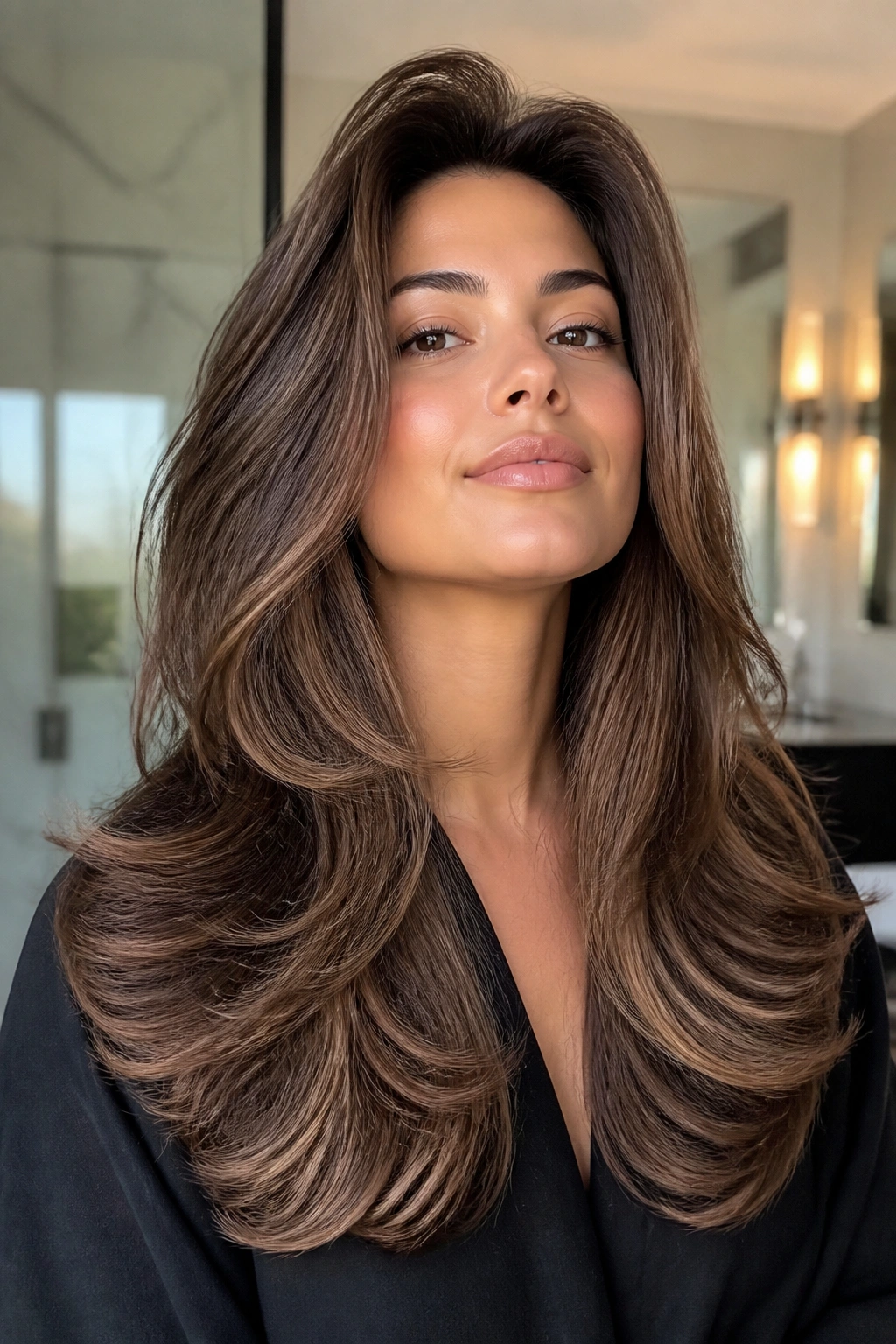
Fresh blowout hair has a very specific feel. It bounces when you move, the roots stand up a bit, and the ends swing instead of sitting flat. That crown lift matters a lot on a round face.
Aim the round brush upward at the roots, not sideways into the cheeks. That one detail changes the silhouette. Then turn the ends under or out just enough to keep the length lively. If you curl the sides too much, the face can look fuller than it is.
I’d use this style when you want polish without stiffness. A medium round brush, a heat protectant, and a blow-dryer nozzle are enough for most hair types. The result should feel airy at the top and clean through the ends. Not helmet hair. Never helmet hair.
13. Long Wolf Cut with Piecey Separation
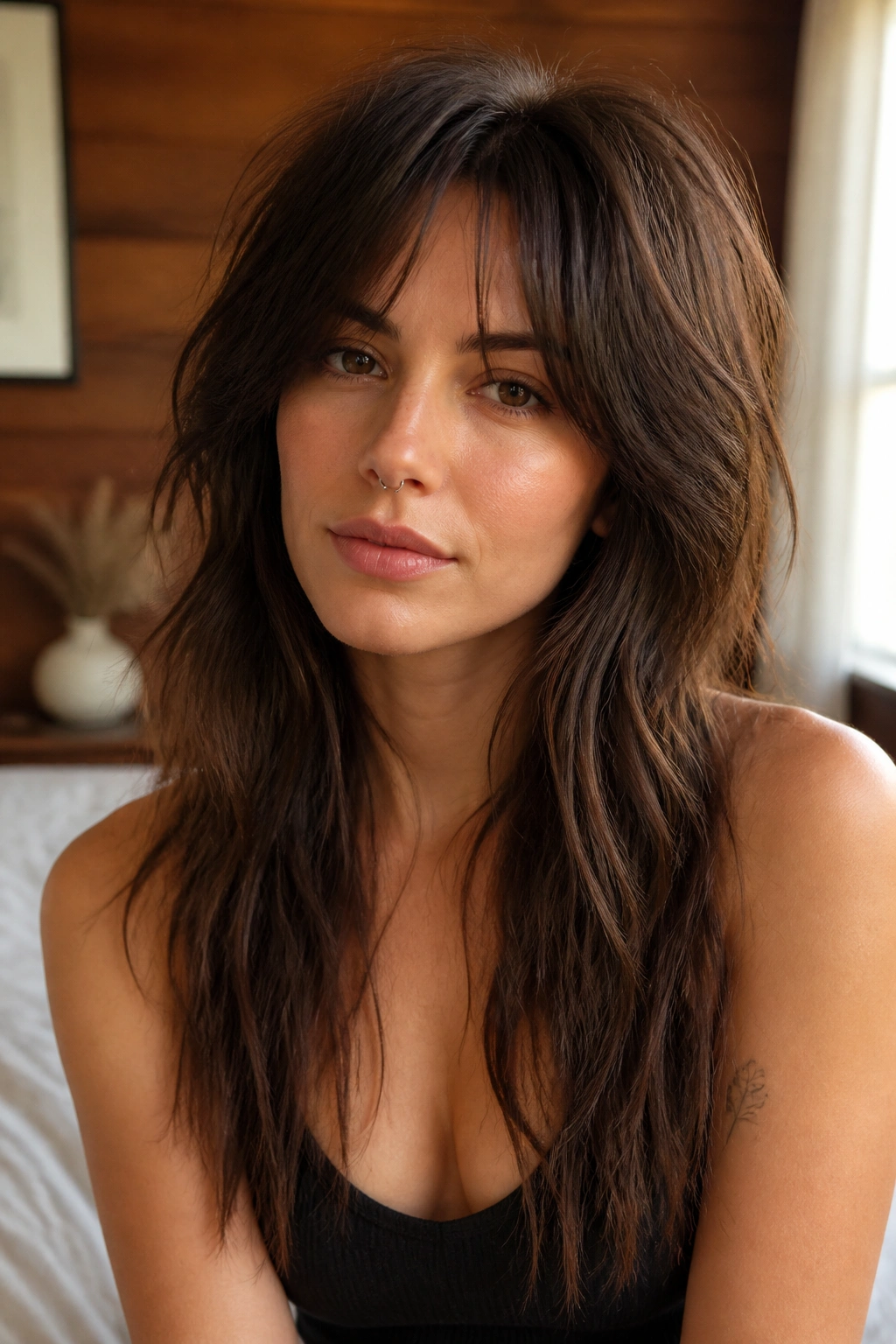
The long wolf cut has edge, but it also has a useful shape for round faces. The crown sits a little shorter and the lower lengths stay long, so the overall effect is taller and narrower.
What makes it different from a shag is the sharper separation. The layers look a little more lived-in, a little less feathered. That separation keeps the style from turning into one giant puff of texture. It also makes the cheek area look less crowded, which is the part people usually miss.
This cut wants a little product. A pea-sized amount of mousse at the roots and a touch of texture cream through the mid-lengths usually does the job. Air-dry it if your natural wave is decent. Blow-dry it only if you want the shape to feel cleaner and more controlled.
14. Sleek Roots and Wavy Mid-Lengths
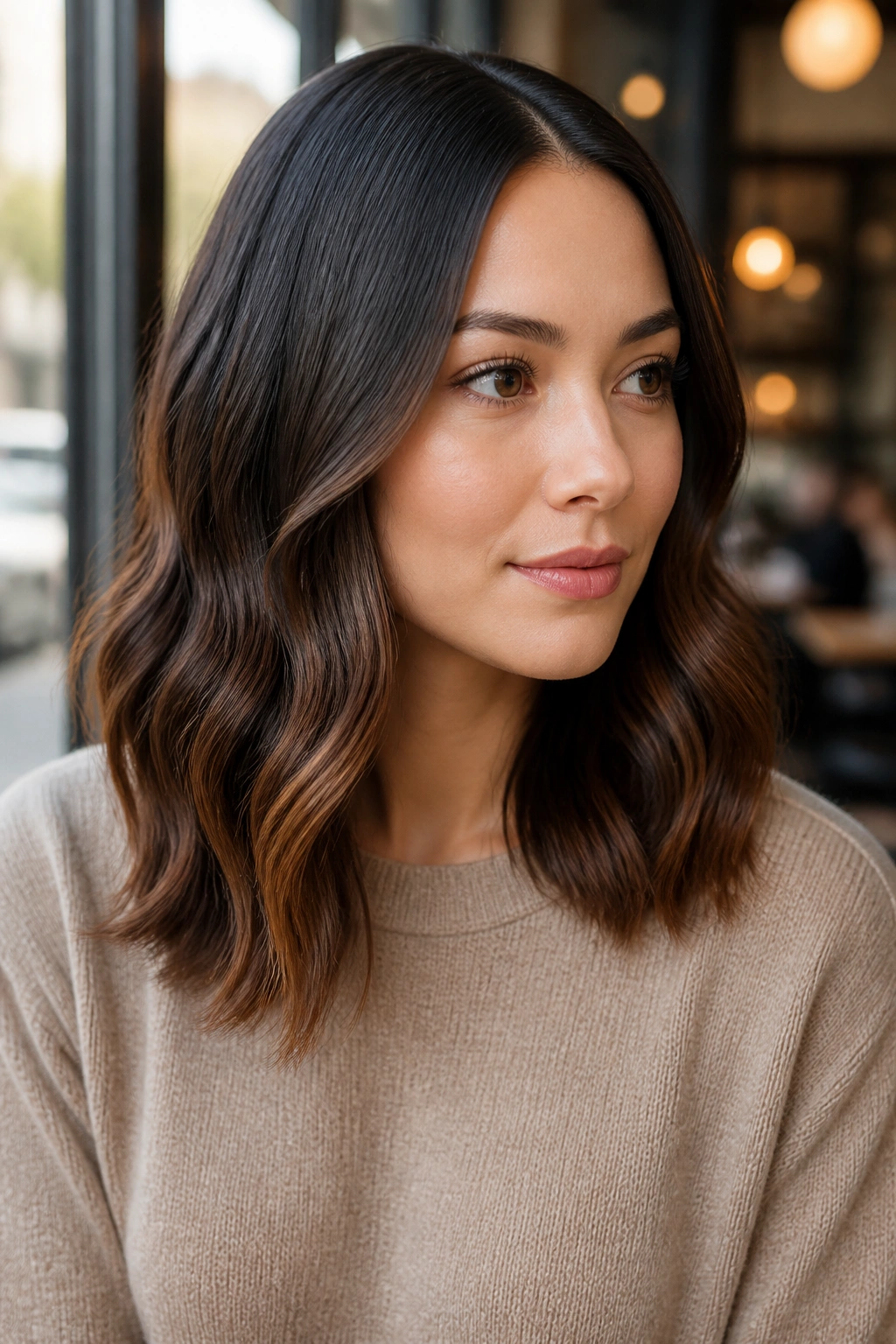
A long style does not have to be full of movement from top to bottom. In fact, a smoother root area can make a round face look longer because the eye doesn’t get distracted by too much puff near the cheeks.
Start the wave below the widest part of the face. That’s the important part. Keep the crown and upper sides smooth, then add bends from the mid-lengths down. The contrast between sleek and textured makes the face look more streamlined, and the hair feels more modern without trying too hard.
This is a good fix if your hair gets frizzy at the top but holds a wave well through the ends. A smoothing cream, a flat brush, and a loose wave pattern are enough. The style is quieter than some of the others here, but that’s part of its charm.
15. S-Waves with a Diagonal Part
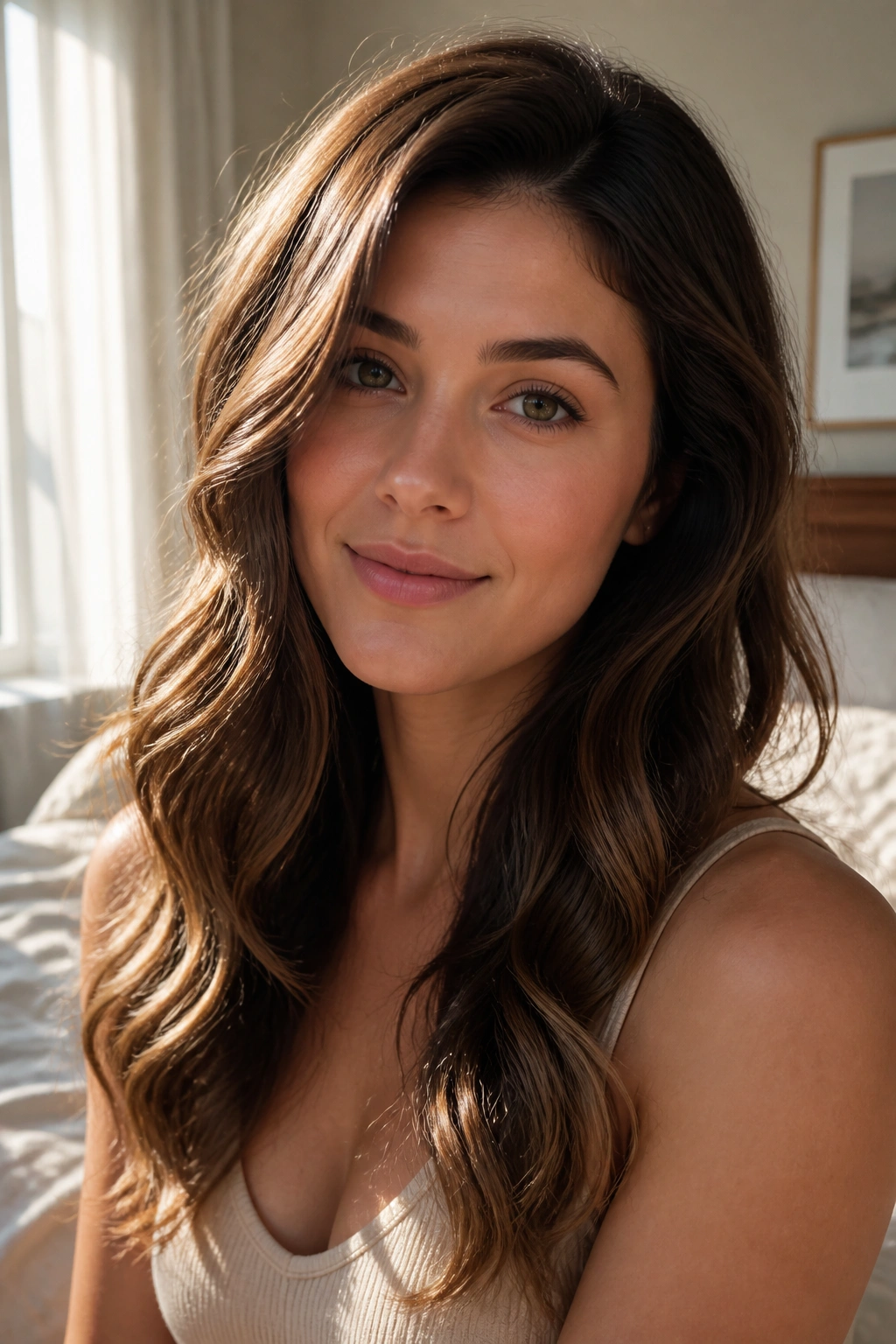
Why do S-waves look so good on round faces? Because they move in a softer, longer line than a tight curl.
A diagonal part helps even more. It breaks the face shape slightly and pulls the hair across the forehead in a way that feels intentional. Then the S-wave falls down the length of the hair without building too much width at the sides. The curve should be loose and brushed out, not springy.
How to wear it
- Part the hair just off center or in a deep diagonal line
- Create loose bends with a flat iron or large barrel iron
- Brush the waves apart after they cool
- Finish with a light spray, not a heavy lacquer
The cleaner the line at the roots, the better this works. Too much frizz at the top steals the elongating effect.
16. Low Ponytail with Face-Framing Ribbons
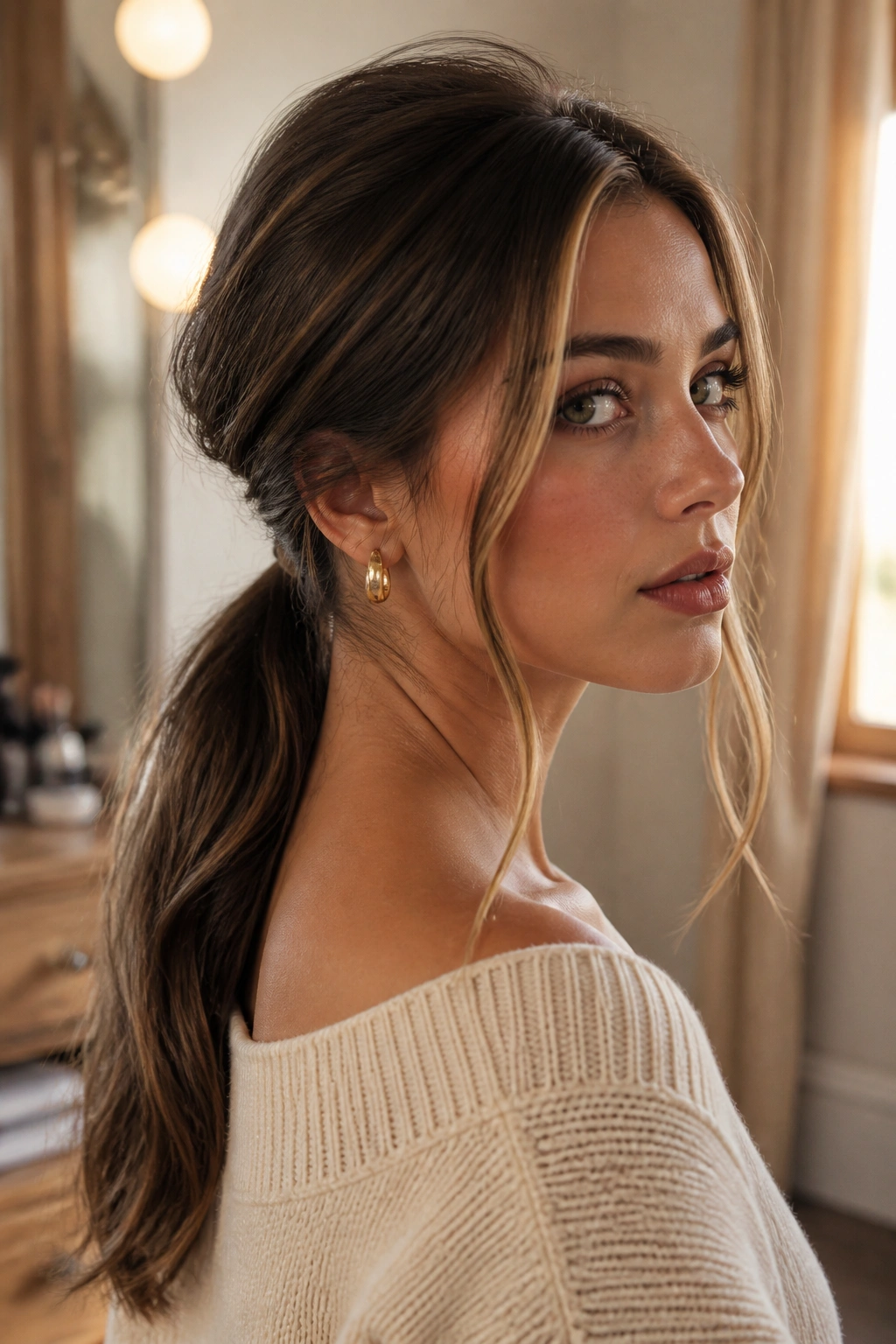
A low ponytail can be surprisingly flattering when it’s done with a little shape. Pulling the hair low at the nape gives the face a long line, and the loose front pieces stop the style from feeling severe.
Keep the crown slightly lifted before you secure it. That tiny bit of height matters. Then leave out two slim sections at the front and bend them away from the face. If the ponytail itself has a wave, even better. A perfectly straight tail can feel a bit stiff on a round face.
This is the kind of style that works for work, dinner, or travel days. It stays put, it feels neat, and it doesn’t fight your face shape. Wrap a small strand around the elastic if you want it to look finished in about ten seconds.
17. Waterfall Braid Over Loose Waves
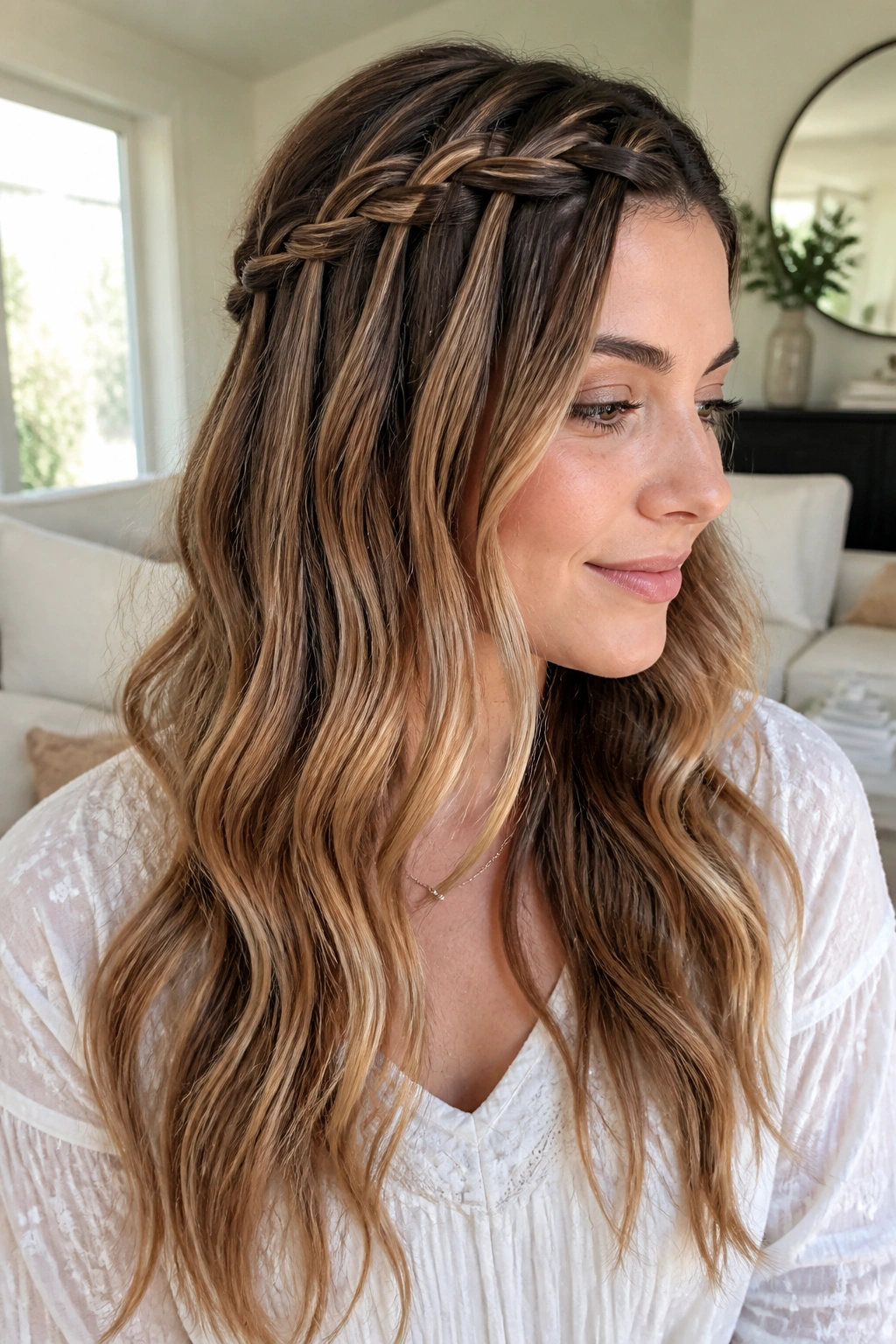
The waterfall braid gives you a pretty line across the top of the hair without enclosing the face the way a full braid might. That little opening matters. It keeps the style light.
Loose waves beneath the braid keep the length moving downward. If the waves are too tight, the style starts to puff out. If they’re too flat, the braid looks disconnected. The sweet spot is a soft bend with enough texture to hold the braid in place.
What to keep loose
- The braid should sit higher than the cheekbone
- Leave some space between the plaits and the scalp
- Let the lower lengths move freely
- Pull a few fine pieces at the front for softness
This style looks best when it’s a little imperfect. Clean enough to hold together, loose enough to breathe.
18. Twisted Half-Crown with Tousled Length
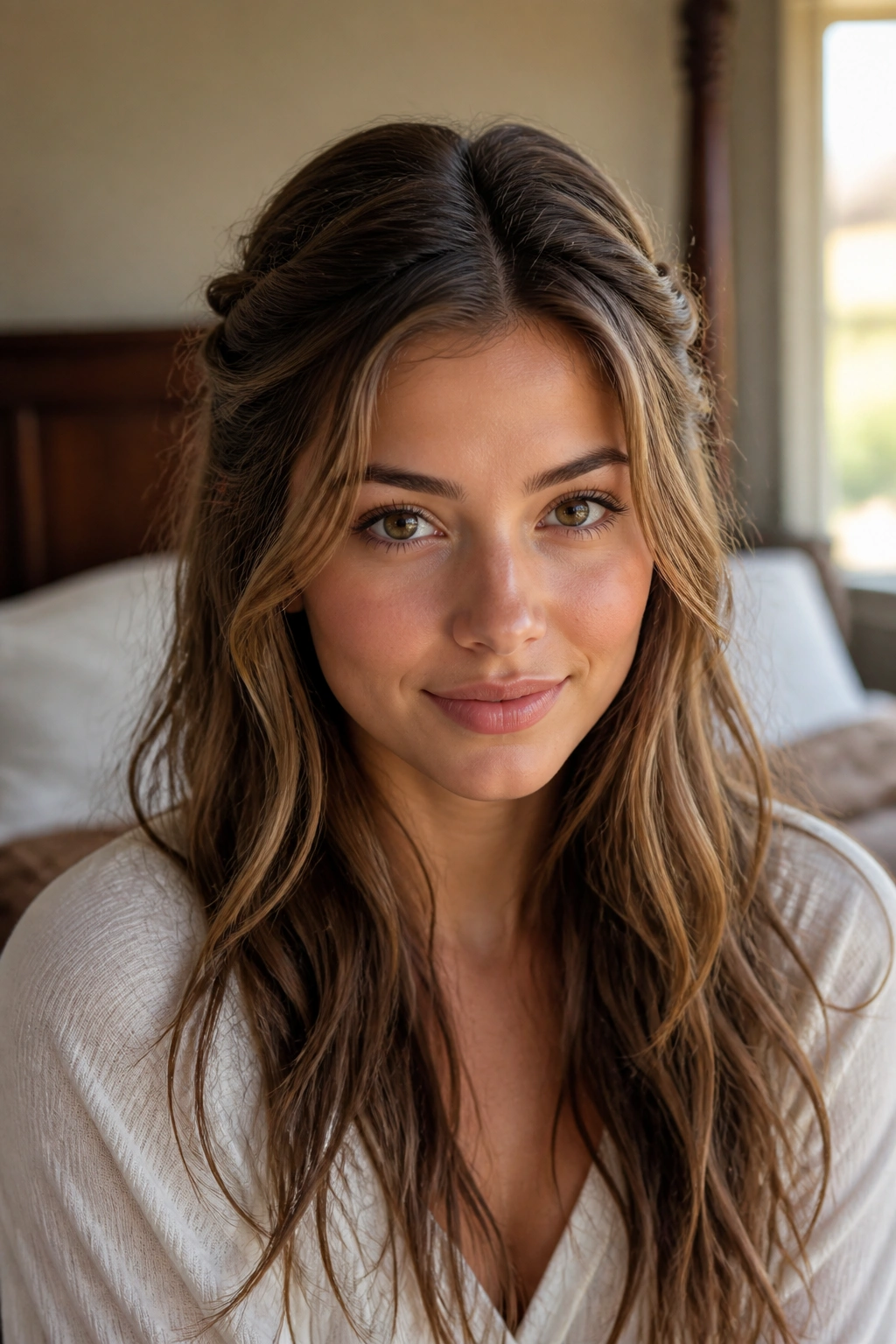
Twists are underrated. They create shape without the bulk that some braids bring, and on a round face that slimmer profile makes a difference.
A half-crown twist starts near the temples, then sweeps back and meets at the back of the head. Because the sides are pinned back, the face opens up. The rest of the hair can stay tousled and loose, which keeps the overall look from going too formal. You get lift, not stiffness.
Use small bobby pins and cross them in an X if your hair is slippery. That old trick holds better than one straight pin. I’d keep the twists flat to the head and leave the volume for the loose lengths, not the sides. That’s where the style wins.
19. Bottleneck Bangs and Long Layers
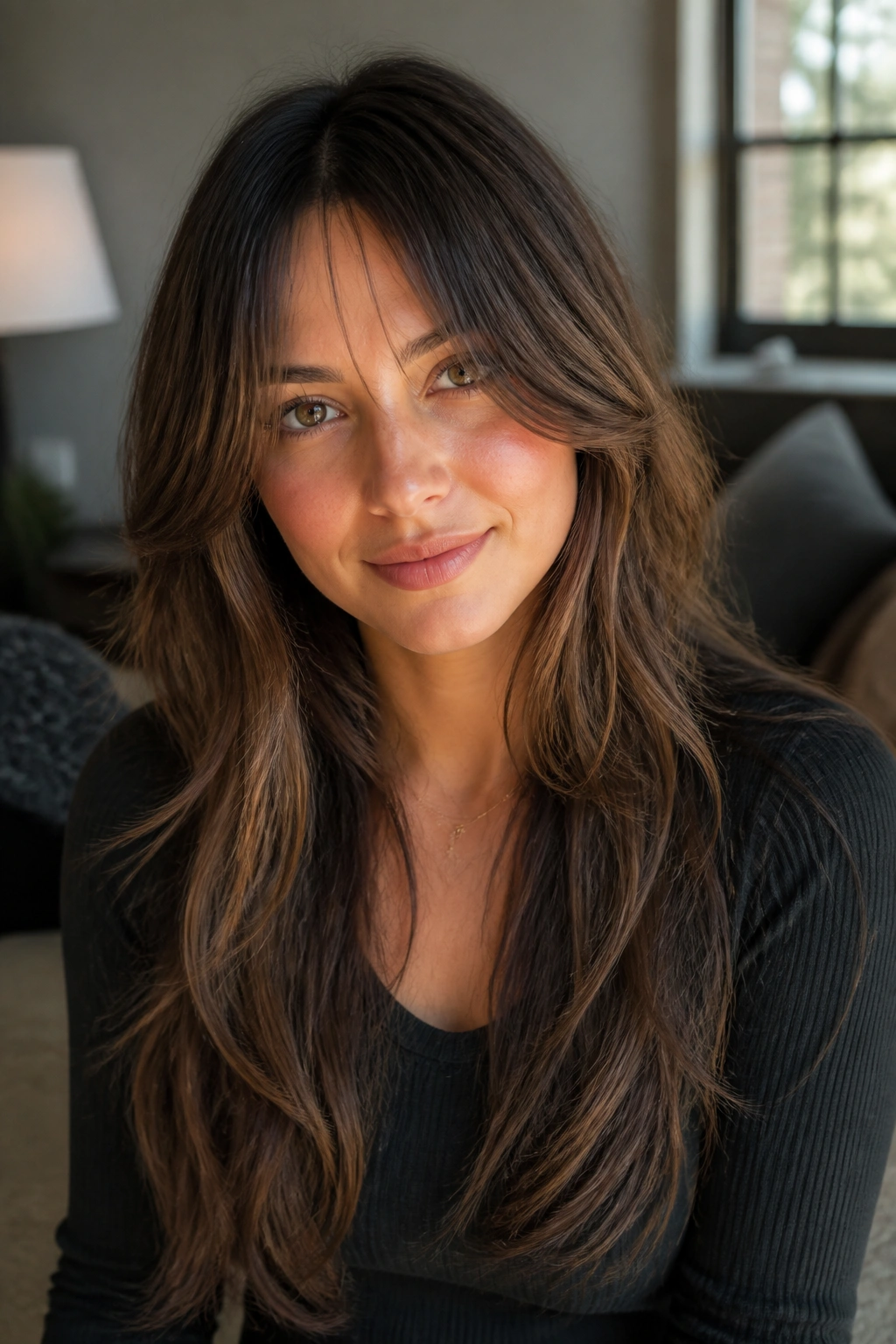
Bottleneck bangs are one of the smartest fringe choices for round faces. They start narrow at the center, then open wider near the cheekbones, which naturally echoes the face without boxing it in.
That shape matters. A straight, heavy bang can make the face look shorter. Bottleneck bangs soften the forehead while still leaving space around the temples and cheeks. When you blend them into long layers, the whole style feels connected instead of chopped into pieces.
If you wear bangs, blow them forward first and then sweep the outer edges away from the face with a round brush. That keeps the center light and the sides airy. The result is subtle, but subtle is usually what works best here.
20. Off-Center Curls with One-Side Volume
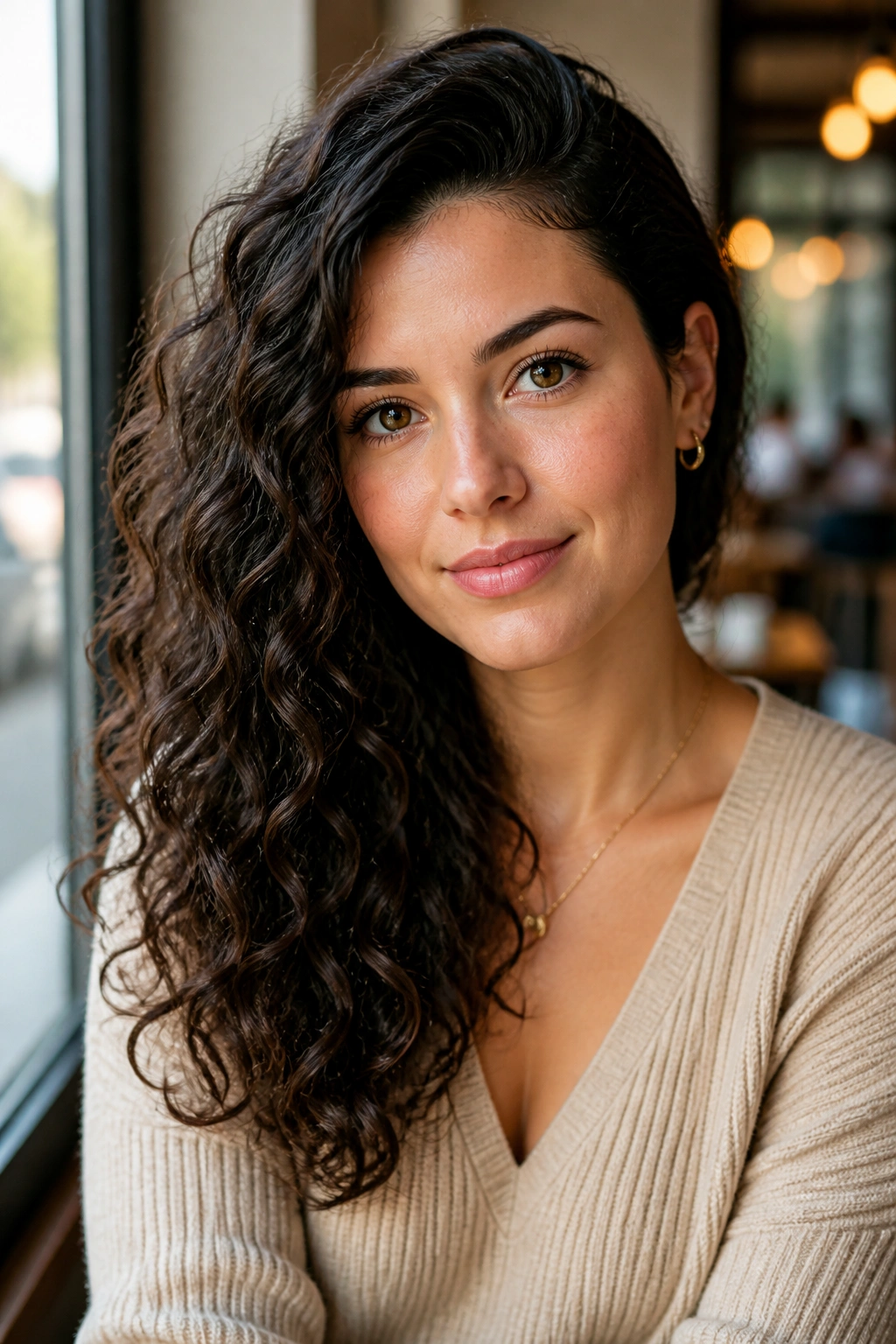
A little imbalance can be a good thing. Off-center curls let you keep volume, but place it where it flatters instead of where it widens.
Think of this as a softer version of a side sweep. One side sits slightly fuller and a little higher, while the other stays closer to the head and tucks behind the ear. The curls should cascade below the cheek, not balloon right at it. That keeps the face from looking rounder than it is.
This is a strong option for events or photos because it gives shape without looking too arranged. Curl away from the face, let everything cool, then finger-comb just enough to break the pattern. A heavy brush will flatten the shape, and nobody needs that.
21. Heatless Rope Waves
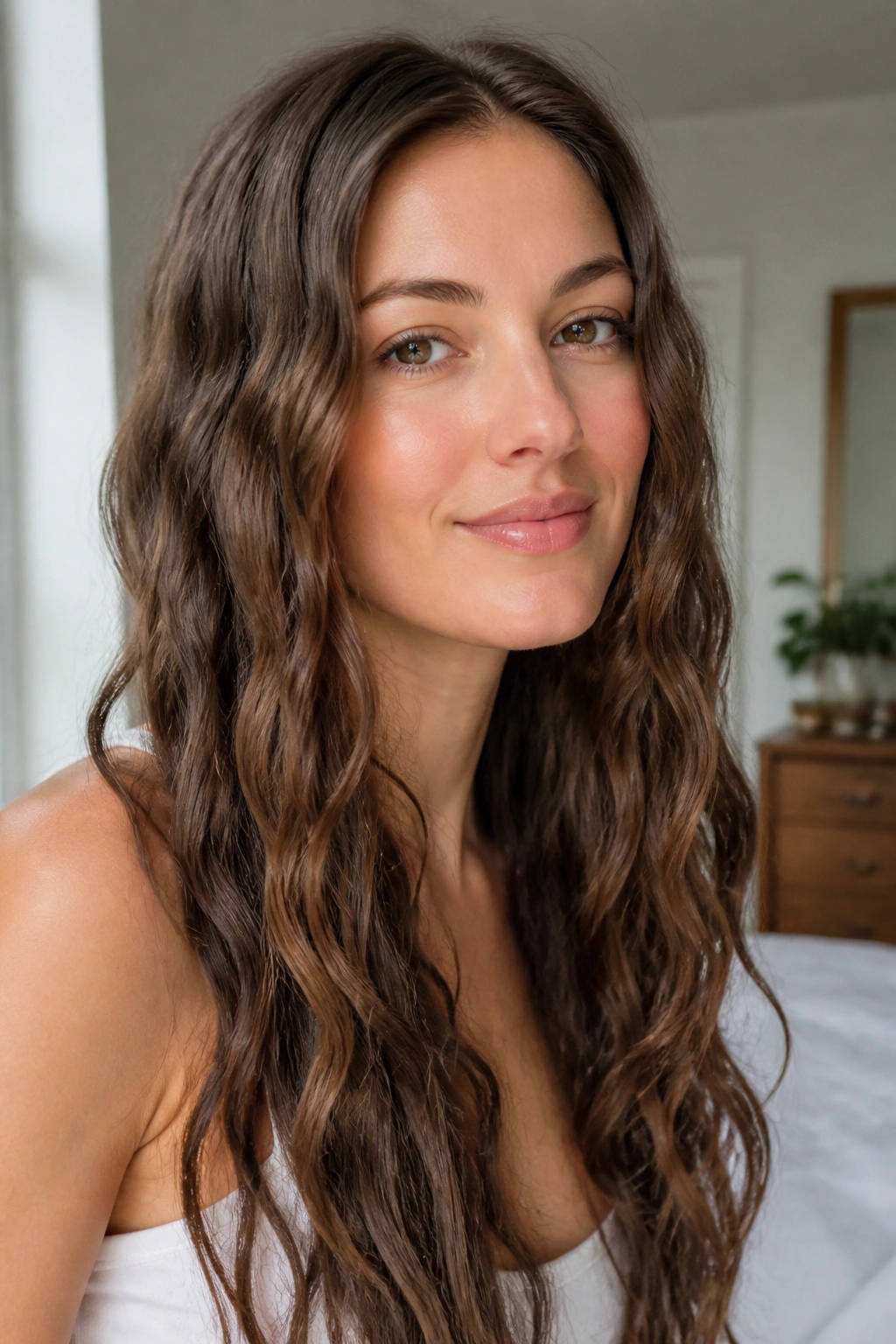
Heatless rope waves are good when you want soft texture and do not want to sit there with a curling iron for half an hour. They also create a gentle vertical fall that flatters round faces better than a full, round curl pattern.
Divide damp hair into two or four sections, twist each one tightly, then coil or tie them into place until dry. Once you release the twists, you get long, stretched waves that don’t add too much width at the sides. A little leave-in cream or foam helps the wave hold its shape.
The nice part here is the finish. Rope waves feel relaxed, not overworked. If your hair tends to frizz, sleep on a silk pillowcase or wrap the twists in a soft scarf. It cuts down on puff, which is half the battle.
22. Wispy Fringe with Airy Ends
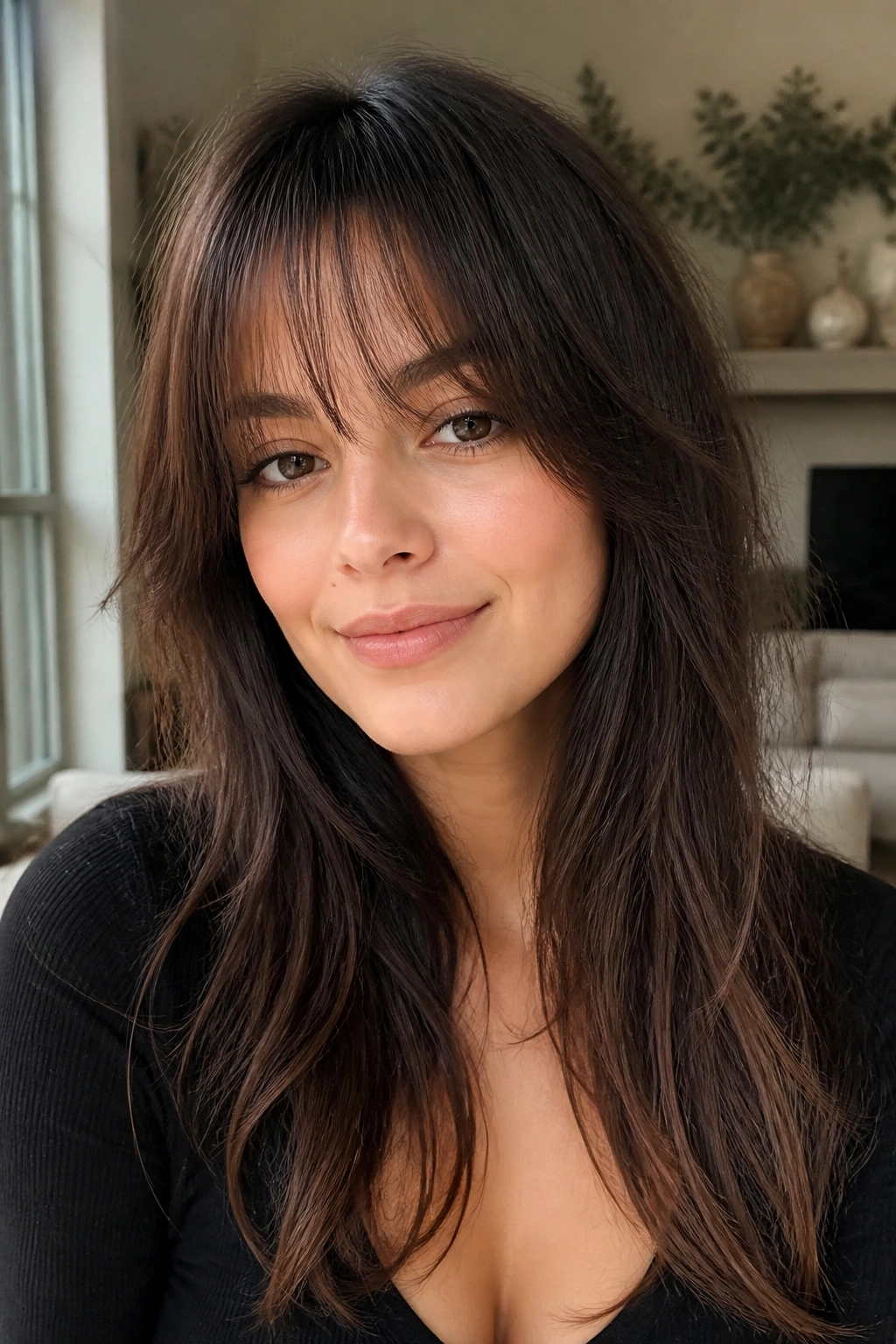
Wispy fringe is a gentler answer to bangs. It breaks up the forehead without building a heavy line across the top of the face, and that makes the whole hairstyle feel lighter.
The ends matter just as much. Airy, point-cut ends keep the bottom of the hair from turning into a block. When the hair tapers softly, the face looks longer and the style moves better. This is one of those small details people ignore, then wonder why the haircut feels bulky.
I’d choose this style if you like softness more than drama. The fringe should skim, not sit in one thick curtain. The long pieces around the face should blend into the length rather than stop abruptly. That little bit of blending keeps everything easy on the eye.
23. Big Barrel Curls with an Off-Center Part
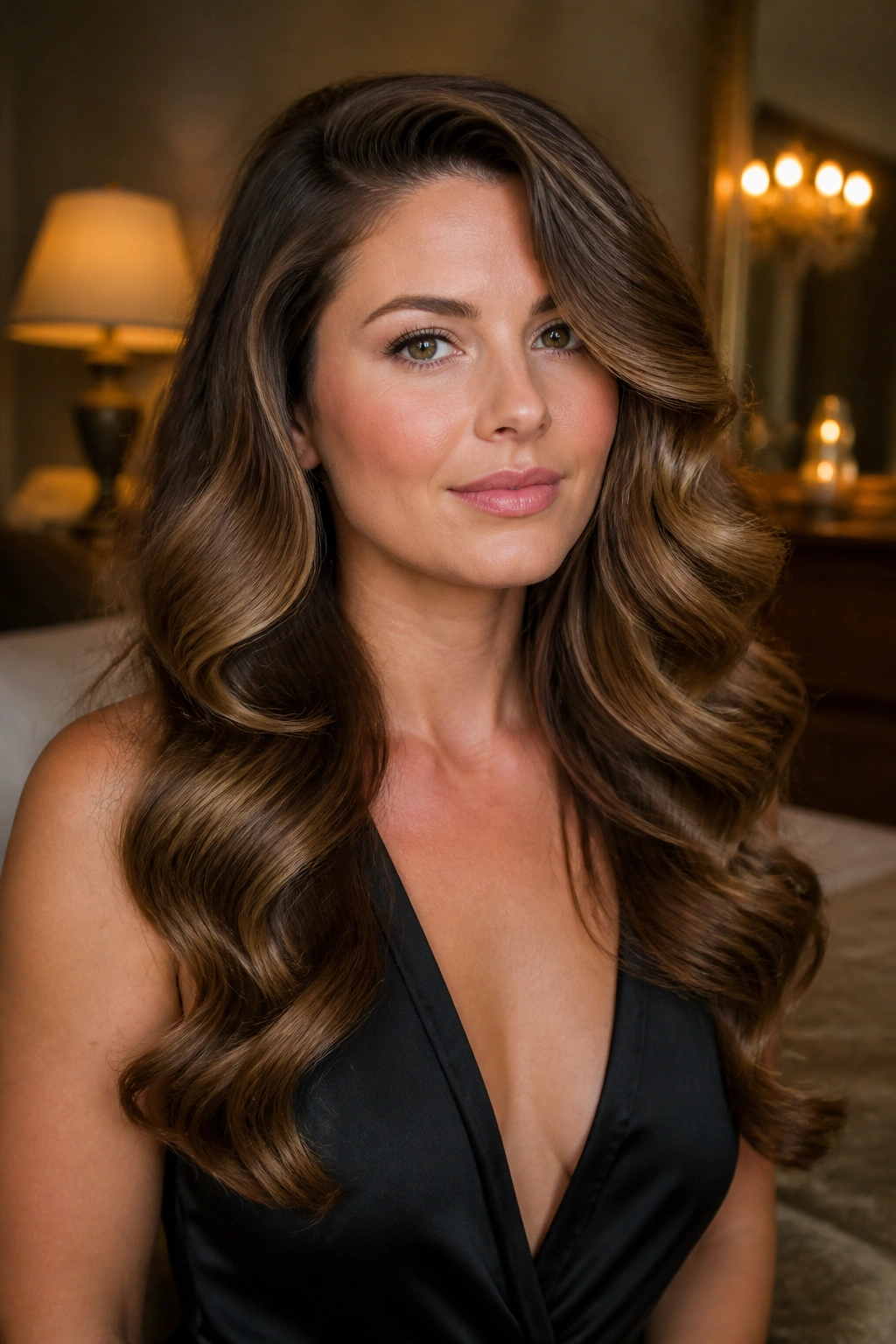
Big barrel curls can absolutely work on a round face, but the size of the curl matters. A 1.5-inch or 2-inch barrel gives a broad bend that stretches the hair vertically instead of making it springy.
An off-center part keeps the style from feeling too symmetrical. Symmetry can be fine, but with a round face it often makes the width more obvious. Once the curls cool, brush them gently and pin one side back if you want even more open space around the face.
This is the polished, dressed-up option in the group. It looks especially good with layered cuts because the layers help the curls fall in sections instead of all in one mass. Use a light shine spray at the ends if you want the movement to read clearly.
24. Rope Braid Ponytail with Soft Pulls
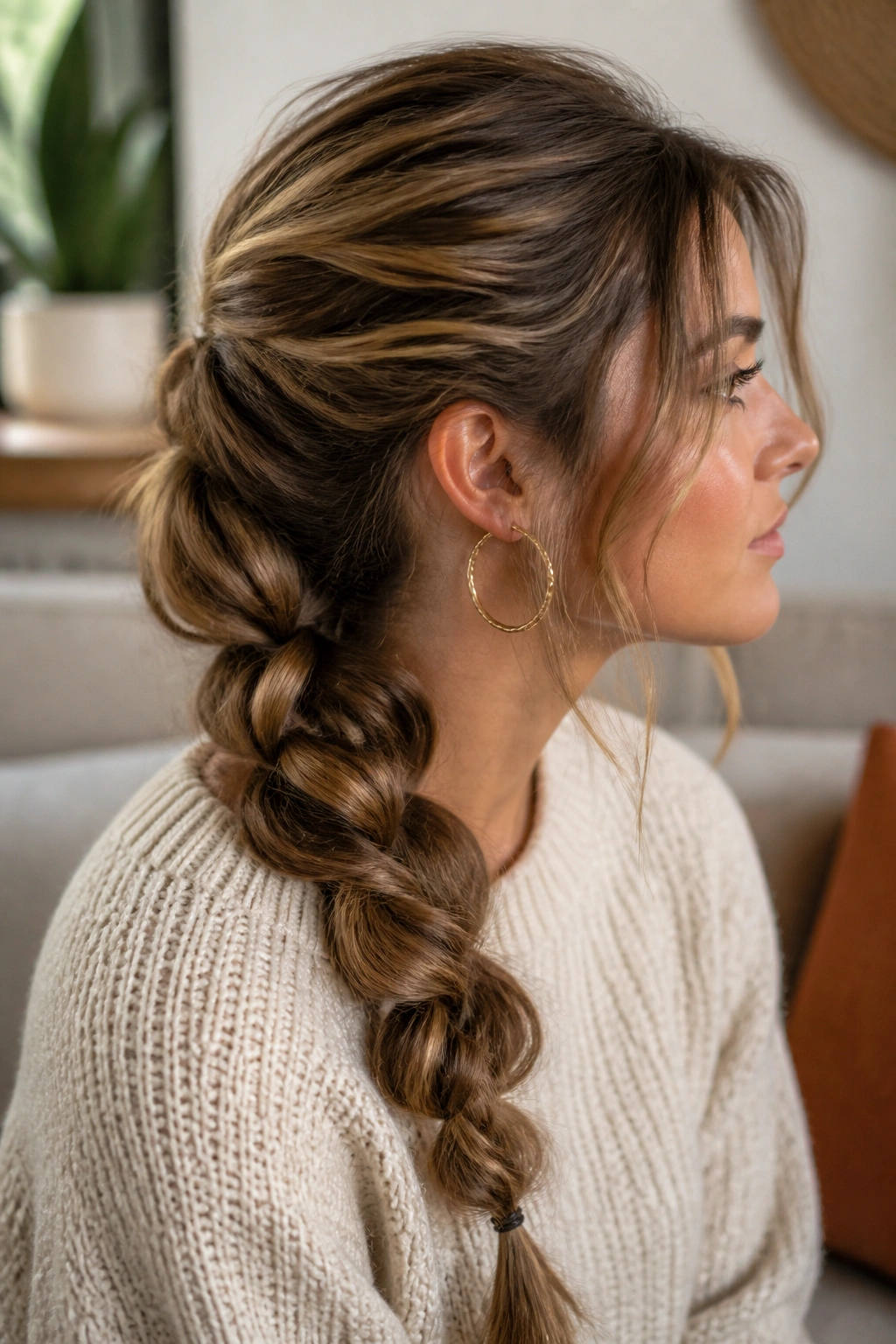
A rope braid ponytail has a clean shape with enough texture to keep it interesting. The ponytail sits low or mid-low, which keeps the face line long, and the braided length adds a nice vertical finish.
The trick is to soften the braid a bit after it’s secured. Pull the edges apart gently so it doesn’t look tight or skinny. That softness keeps the style from feeling severe around the face. If you want more length at the crown, tease the roots lightly before tying it back.
This is one of those styles that looks more complicated than it is. Two sections, a few twists, an elastic, done. If your hair is thick, use a clear elastic at the base and a stronger one at the end of the braid. That small detail stops the braid from slipping by lunchtime.
25. Natural Curls with a Rounded, Stretching Shape
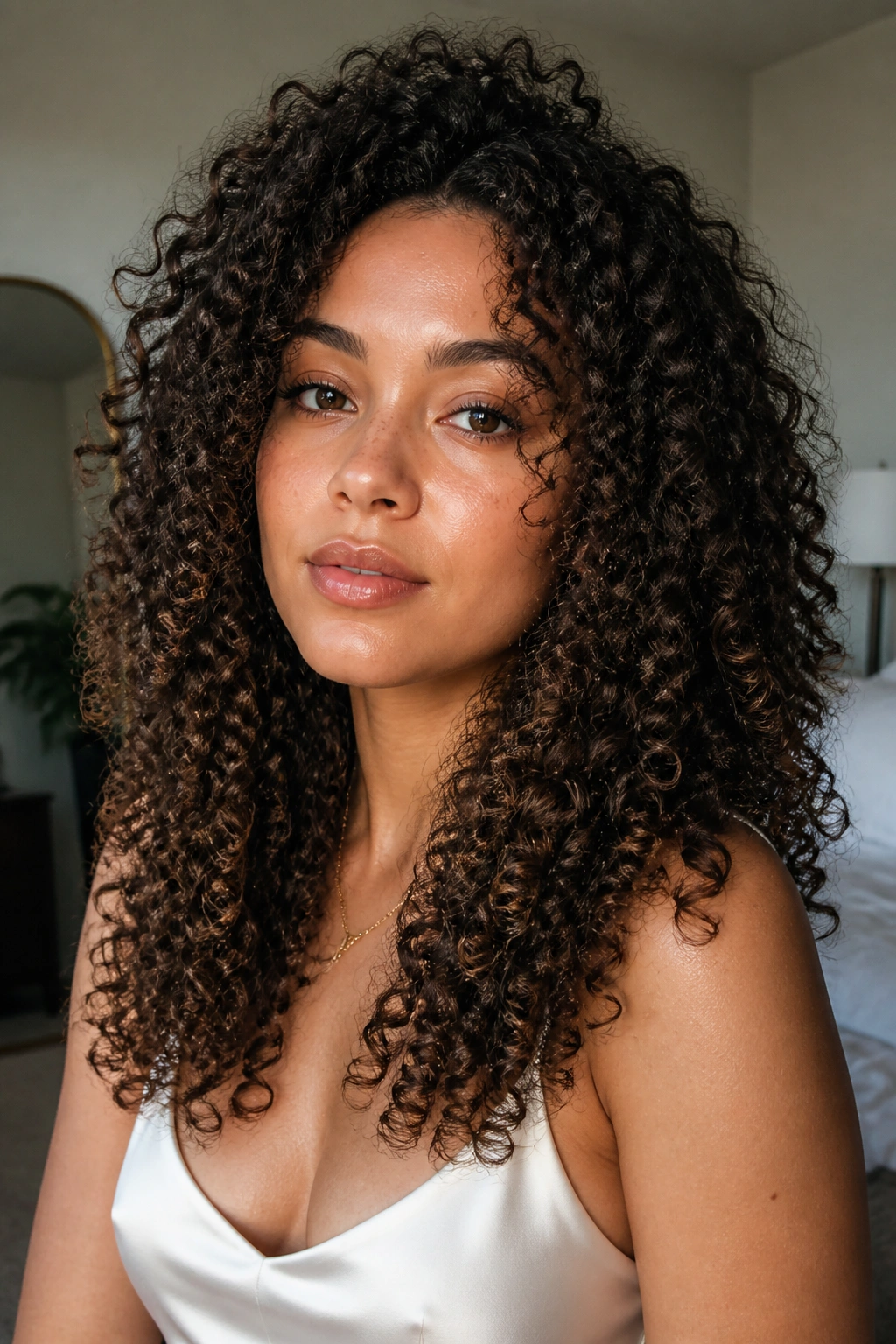
Natural curls can be some of the most flattering long textured hairstyles for round faces when the shape is handled well. The goal is not to flatten the curls into submission. It’s to give them enough length and structure so they stretch the face instead of widening it.
Long layers help, but placement matters even more. Keep the strongest volume a little above or below the cheekbones, and avoid cutting a wide shelf right at the jaw. A diffuser on low heat, a curl cream with some hold, and a little root lift at the crown can change the whole silhouette. The hair should feel full, but not bulky on the sides.
If your curls shrink a lot, ask for the cut to be shaped on dry hair or at least checked dry before the final line is set. That keeps the length from disappearing and helps the ends fall where they should. Curls have a mind of their own. Better to work with them than argue.
Final Thoughts
The styles that flatter a round face most consistently are the ones that create vertical movement, soft asymmetry, and a little space around the cheeks. That can come from layers, a part change, a braid, or even the way you place a ponytail. Shape matters more than hype.
If you’re deciding between two looks, pick the one that keeps the widest part of the hair away from the widest part of the face. That one rule saves a lot of bad hair days. And if you’re heading to a salon, bring a photo and point to the exact spot where you want the layers to start. That detail is usually worth more than three paragraphs of explanation.
Hair should work with your face, not fight it. When the cut or style gives you that little bit of lift, the whole look feels easier.
