



A round face doesn’t need hiding. It needs angles.
The best shaggy hairstyles for round faces use movement the way a tailor uses seams: to pull the eye up and down, not side to side. That usually means layers that start below the cheekbone, fringe that breaks up the forehead, and ends that move instead of sitting in one blunt line. When a cut lands right, the face looks longer, the jaw looks a little sharper, and the whole shape feels lighter.
Too much volume at the cheeks does the opposite. So does a hard line at chin length, which is why some bob cuts look lovely in a salon mirror and strange the moment they hit daylight. A shag avoids that trap by falling in pieces — messy in the good sense, with room around the face and a bit of lift at the crown.
My favorite versions are the ones that look like they were cut with purpose but styled with almost no fuss. A few need a brush. Some need only mousse and air-drying. All of them depend on where the shortest layers sit, and that one detail changes everything.
1. Long Curtain Shag That Skims the Cheeks
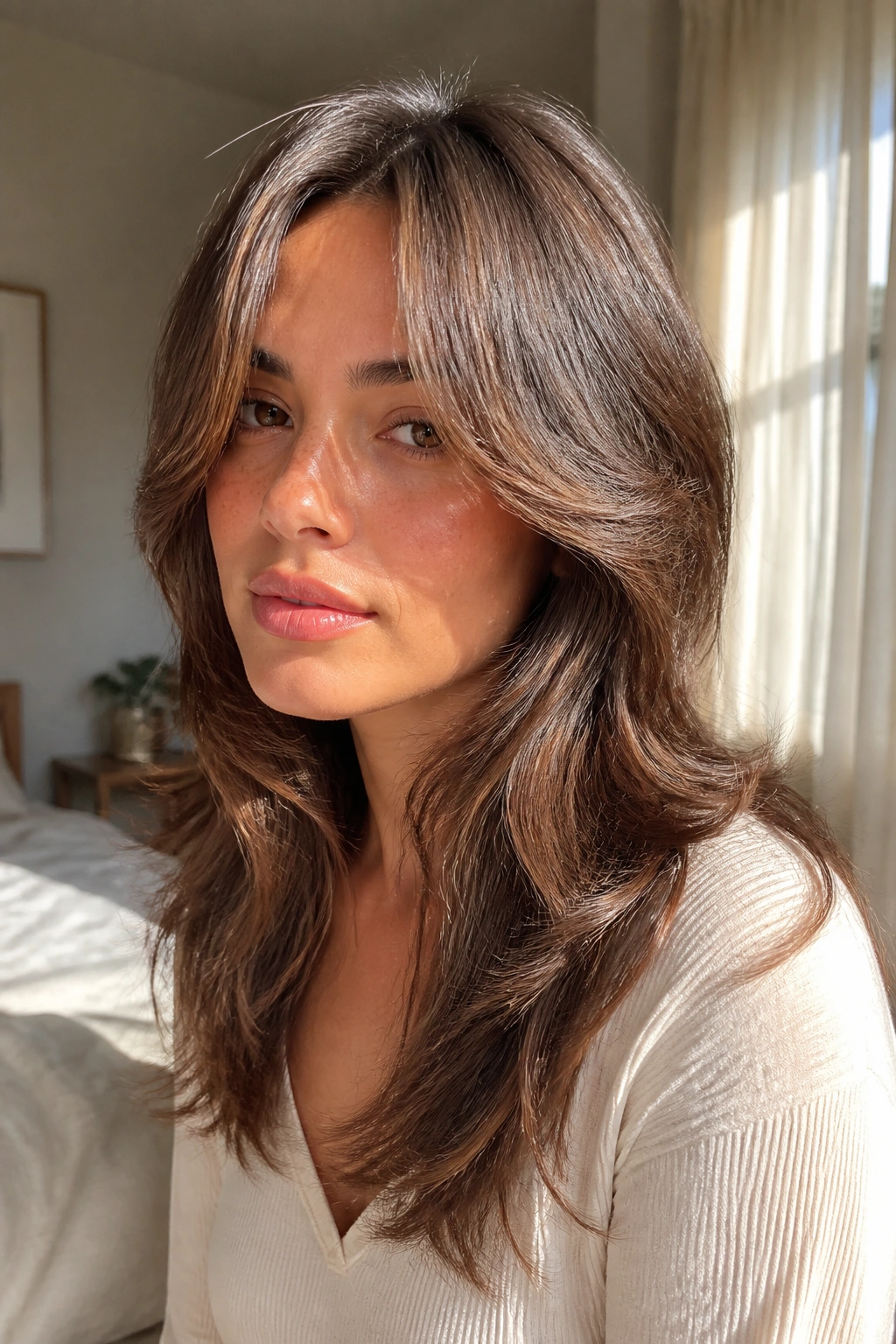
This is the shag I reach for first when someone wants movement but not a dramatic chop. The length stays well below the cheekbone, so the face keeps its vertical line, and the curtain fringe opens in the middle instead of drawing a hard line across the forehead.
Why It Works on a Round Face
The trick is placement. The shortest pieces should begin around the bridge of the nose or upper lip, then fall away from the widest part of the face. That keeps the eye moving downward, which is the whole game here.
- Ask for layers that start below the cheekbone.
- Keep the fringe soft, not thick.
- Blow-dry the front away from the face with a round brush.
- Finish with a pea-sized bit of texture cream on the ends.
Best for: medium to thick hair that can hold a bend. Fine hair can wear it too, but the layers need to stay subtle or the ends will look too thin.
One thing I like about this cut is that it grows out kindly. The front pieces still frame the face even when the shape gets a little lived-in, and that helps if you do not want a salon visit every few weeks.
2. Collarbone Shag With a Deep Side Part

A deep side part can do more than another inch of length. It creates a diagonal line across the face, and that line is flattering because it breaks up the symmetry that makes round faces look wider.
The collarbone length matters here. It sits in that sweet spot where the hair is long enough to pull the eye down, but short enough to feel airy. If the cut lands right on the chin, it can puff at the cheeks. Just below the collarbone is safer, and honestly, prettier.
Keep the root flat on the heavy side and add lift at the crown. That single move gives the style shape without turning it into a helmet. A little mousse at the roots and a quick bend through the front sections is enough. If you like a polished finish, wrap the longest face pieces around a medium barrel iron for five seconds each. No more. Too much curl makes the cut feel old-fashioned fast.
3. Wavy Wolf Cut With Tapered Ends

Want the shaggiest version without losing shape? The wolf cut is the answer, but the round-face version needs restraint.
The back stays longer than the crown, and the top layers stay soft enough to avoid a mushroom effect. That balance matters. If the crown gets too high and the sides get too full, the cut adds width where you do not want it. But when the taper is right, the style lifts the face and keeps the jaw area open.
How to Wear It
A little grit helps here. Sea-salt spray on damp hair, scrunched through the mid-lengths, gives the cut that rough texture people love. If your hair is thick, use a diffuser on low heat so the wave keeps its shape instead of frizzing out. Straight hair can still wear this cut, but you’ll want a bend iron or a flat iron set to a soft curve.
- Keep the face-framing pieces longer than the chin.
- Ask for soft stacking, not heavy layering at the top.
- Leave the ends piecey.
- Skip heavy oils near the crown.
It’s a bold look, yes, but not a hard one. That’s the appeal.
4. Curly Shag With Face-Framing Pieces

A round face and curls can be a gorgeous match when the shape is cut in the right places. The biggest mistake is cutting curly hair too short around the cheeks, where the spring of the curl creates extra width. Leave enough length for the curl to drop, and the whole face opens up.
The face-framing pieces should be cut dry if your stylist knows how curls behave. Wet curls lie. Dry curls tell the truth. That means the shortest layers can be placed with more control, especially around the temple and jaw. I like a shag that starts the shape around the lip or lower cheek, then lets the lower curls build a soft frame.
A curl cream and a light gel usually beat a heavy butter here. Work product through soaking-wet hair, rake it in with your fingers, then scrunch with a microfiber towel. Diffuse only until the cast forms and the hair stops dripping. After that, leave it alone. Touching curly shags too much is how you end up with frizz and a halo you did not ask for.
5. Shoulder-Length Razor Shag

Shoulder length is such a smart place for a shag. It gives you enough weight to keep the style from exploding outward, but enough movement to stop it from looking flat. On a round face, that middle ground is gold.
The razor part changes the whole feel. Instead of blunt ends, you get soft, feathered tips that move when you walk. That movement keeps the style light around the jaw, which is exactly where round faces often need breathing room. A razor cut also helps straight hair behave less like a block and more like fabric.
I like this cut on people who want a little edge without going full wolf cut. It looks good tucked behind one ear, and it looks just as good when it falls forward. If you air-dry it, use a leave-in spray and twist two front sections away from the face while they’re damp. That creates a bend right where you want it. If you blow-dry, use a nozzle and keep the airflow pointed downward. Fluffy ends are the enemy here.
6. Pixie Shag With Crown Lift
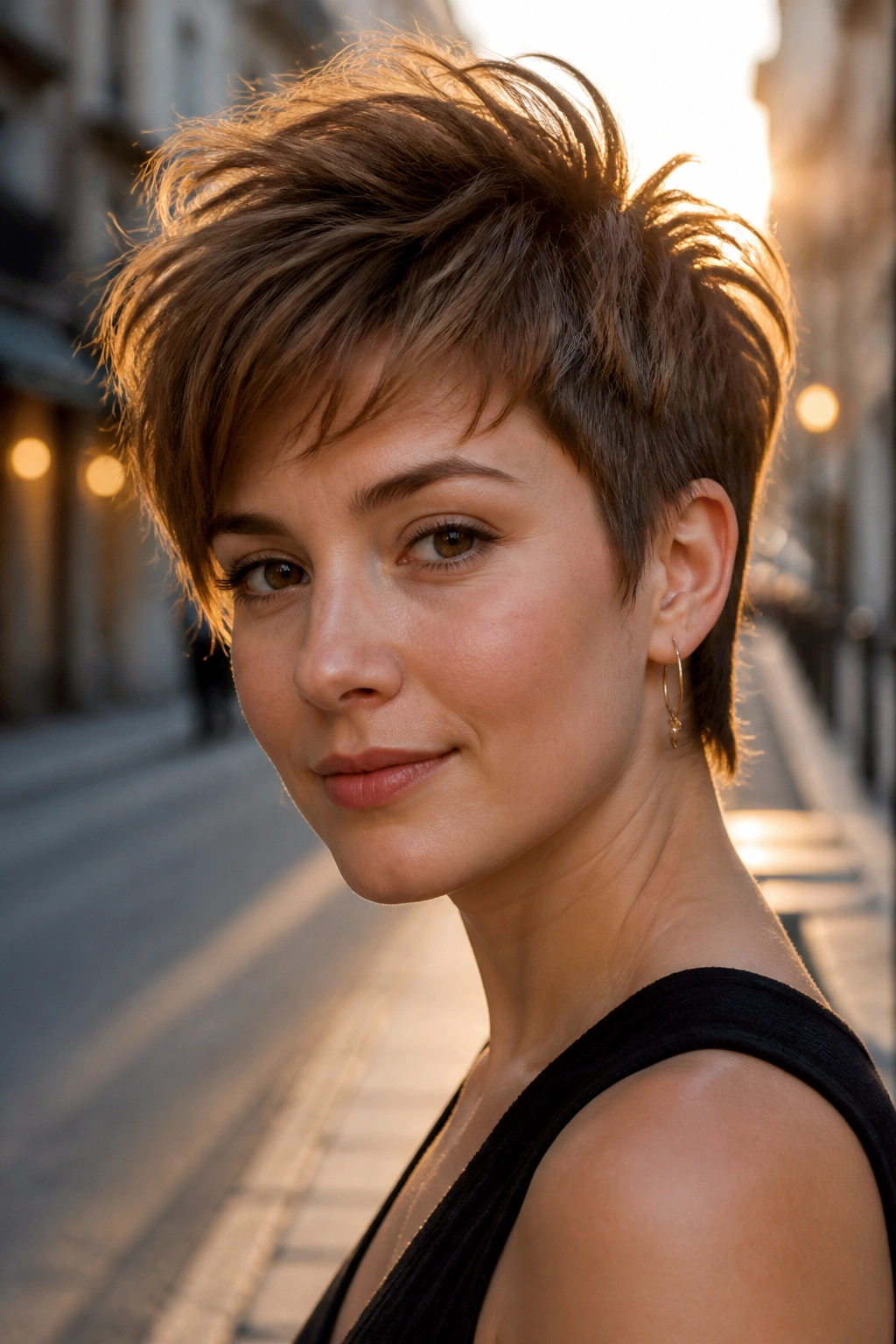
Short hair can flatter a round face. It just has to be built with height instead of width.
That’s why a pixie shag works better than a blunt, even pixie. The top is left longer — think 3 to 4 inches in the crown area — while the sides are tapered close enough to keep the silhouette neat. The lift on top pulls the eye upward, and the shaggy texture keeps the cut from looking stiff.
What Makes It Different
Unlike a bowl-shaped short cut, this version gives the forehead and cheekbones more room. The texture makes it feel airy, not heavy. A soft side sweep through the front can also break the roundness in the lower face.
Best for: straight or slightly wavy hair with some natural body. If your hair lies very flat, you’ll need a paste or root powder to keep the crown from collapsing by midday.
A tiny amount of styling product goes a long way. Work it through the top only, pinch the ends, and leave the sides cleaner. That contrast is what makes the shape work.
7. Midi Shag With Bottleneck Bangs

Bottleneck bangs are one of those smart little haircut tricks that make a round face look more balanced without shouting about it. They start narrow in the center and get a bit wider as they fall toward the temples, which softens the forehead while keeping the sides open.
The midi length is the reason this cut feels easy to wear. It sits between the chin and collarbone, so it doesn’t trap volume at the widest part of the face. If you want softness without a lot of upkeep, this is a strong choice.
How to Ask for It
- Keep the fringe light through the center.
- Let the longest face-framing layers fall below the cheek.
- Ask for movement through the ends, not bulk at the sides.
- Style the bangs with a small round brush and a quick forward sweep.
A cut like this looks especially good with a little bend, not a perfect curl. The messier it gets, the better it tends to read. That’s not laziness. It’s the shape doing the work.
8. Lob Shag With Cheekbone Layers
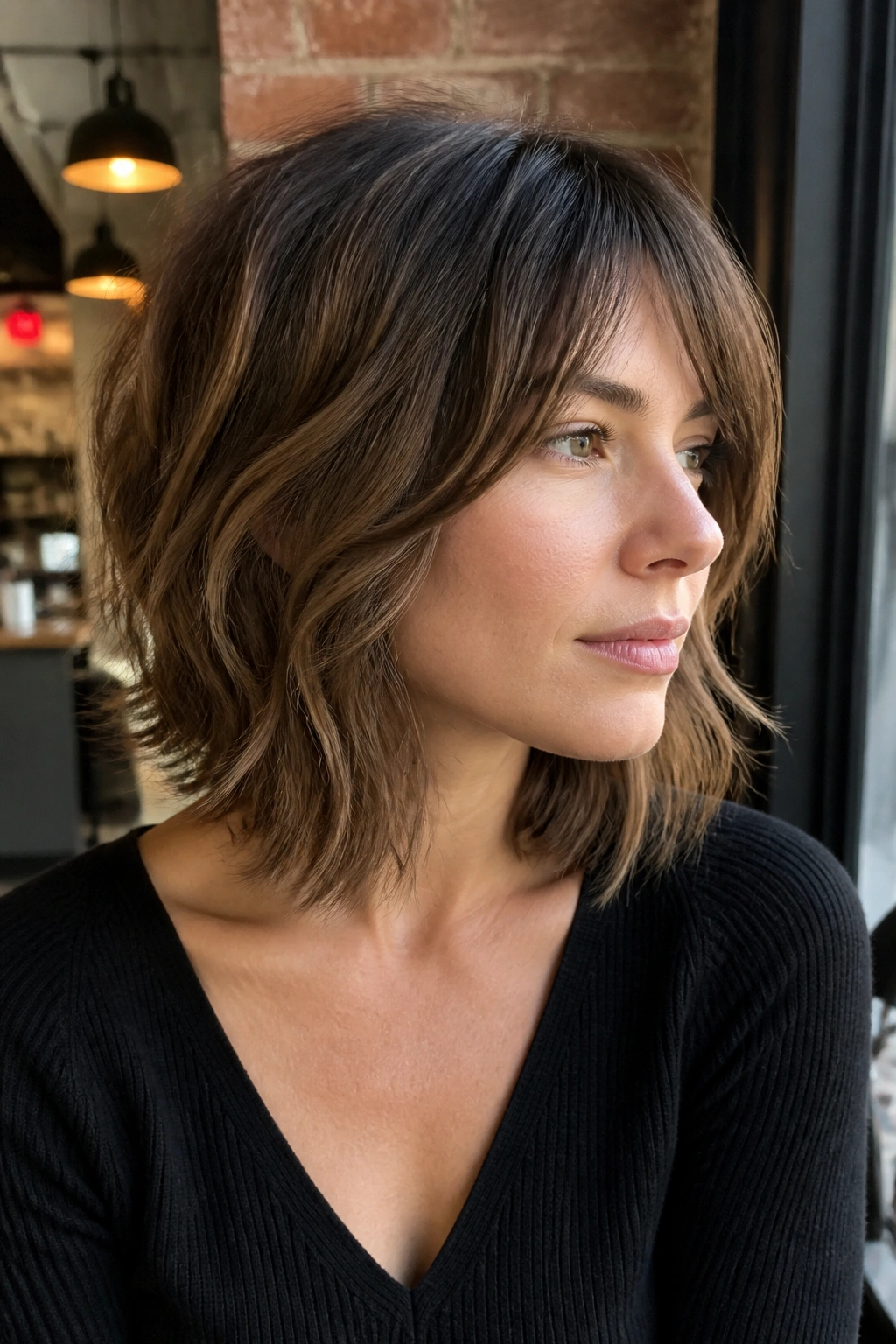
A long bob with shag layers gives you a clean outline and a bit of edge, which is a useful combination when your face is fuller through the cheeks. The length keeps the line low and steady, while the layers stop the cut from feeling boxy.
Here’s the useful bit: the shortest layers should sit at or just below the cheekbone, never right on top of it. That tiny difference changes the silhouette. A cheekbone-grazing layer can highlight the widest part of the face in a good way when it’s soft and broken up. A hard layer can do the opposite. Hair is fussy like that.
This cut works well with a center part or a soft off-center part. If your hair is straight, add a little bend through the last 2 to 3 inches. If it’s wavy, let the texture come through and keep the ends loose. The beauty of the lob shag is that it looks finished without looking fussy. That’s harder to do than people think.
9. Short Shag Bob With Tucked Ends
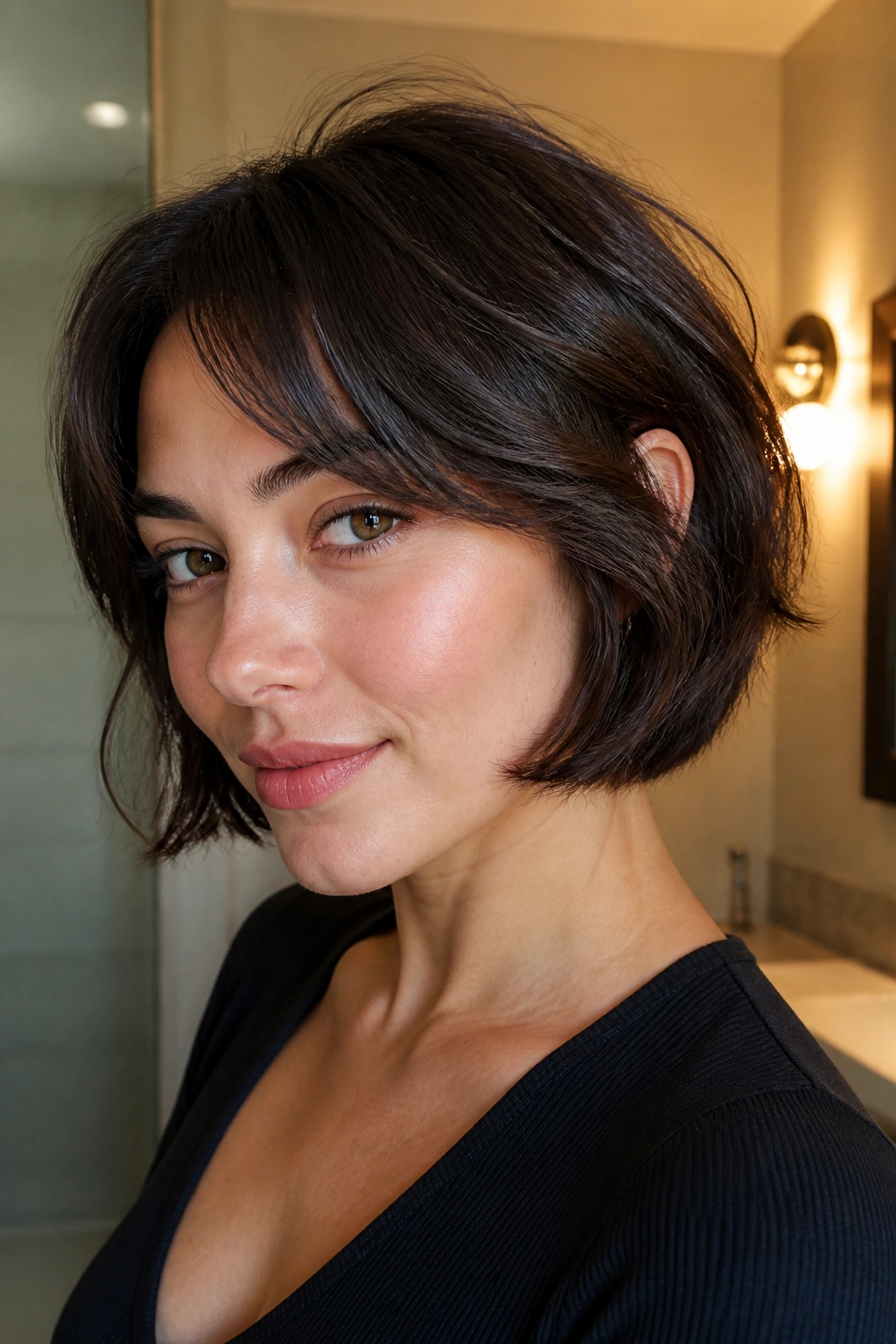
Can a bob flatter a round face? Absolutely — if the ends don’t flare out at the jaw.
The version that works best sits just under the chin, with layers cut so the hair can tuck in rather than puff out. A little interior texture stops the shape from becoming too heavy, and a side part helps keep the eye moving diagonally instead of straight across.
What to Watch For
If the blunt line hits exactly at the jaw, the face can look wider. Move the length an inch lower and the shape gets friendlier fast. Styling matters too. Dry the roots first, then bend the ends under with a brush or let them flip naturally if your hair wants to do that.
A short shag bob has a cool, modern feel when it is a little undone. Too much polish takes the life out of it. Too much texture can make it puff. The middle is where it lives.
10. Shaggy Mullet With a Soft Nape
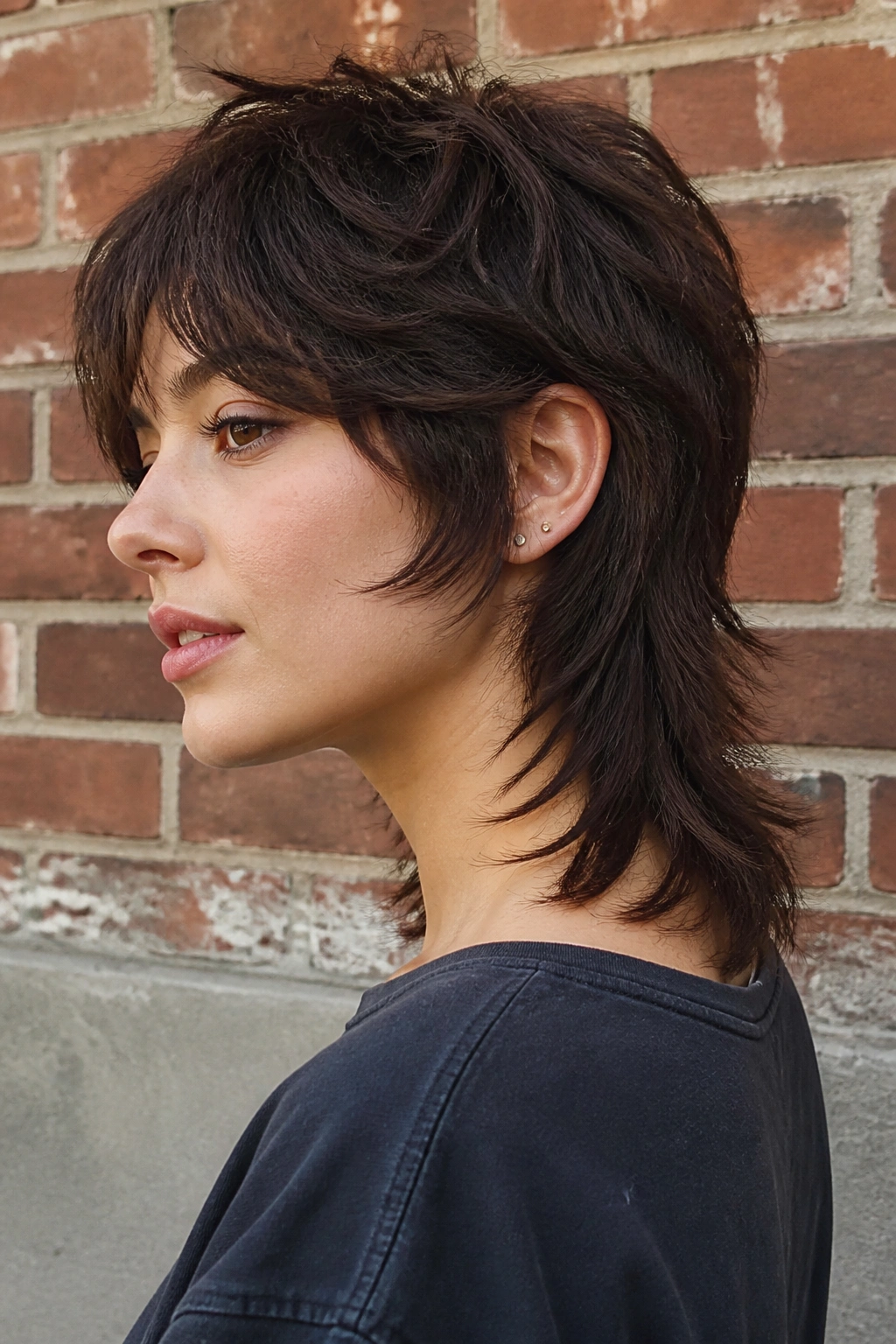
The mullet gets misunderstood a lot. The soft version is not about shock value; it’s about shape. Shorter layers on top and around the crown give lift, while longer pieces in the back drag the silhouette downward in a way that helps round faces.
I like this cut when someone wants personality in the haircut itself, not just in the styling. The nape should stay soft and tapered, not choppy and stiff. Around the face, the shortest pieces should sweep away from the cheeks so the style doesn’t get stuck in one wide shape.
- Keep the front longer than the temples.
- Build height at the crown, not the sides.
- Use matte paste for separation.
- Ask for a soft transition between the top and the back.
It is a little cooler than a standard shag. Also a little braver. But on the right person, it looks effortless in a way that a tidy cut never quite does.
11. Invisible Layer Shag for Fine Hair

Fine hair can wear a shag beautifully, but the layers have to be sneaky. Heavy chopping removes too much weight, and then the ends start to look wispy in a sad way. Invisible layers avoid that by building movement inside the haircut instead of slicing big chunks out of it.
The result is softer and fuller than it sounds. You still get shape around the face, but the perimeter holds together, which helps fine hair keep a clean line. That matters on a round face because a stringy cut can make the cheeks stand out more, not less.
Let the styling stay light. A root spray, a quick blow-dry, and a little dry shampoo at the crown are usually enough. Skip thick creams. They flatten the lift you paid for. If your hair is bone straight, a small bend in the front pieces helps a lot. If it already has a wave, even better. This is one of those cuts that looks expensive when it moves well.
12. Sliced Layer Shag for Thick Hair
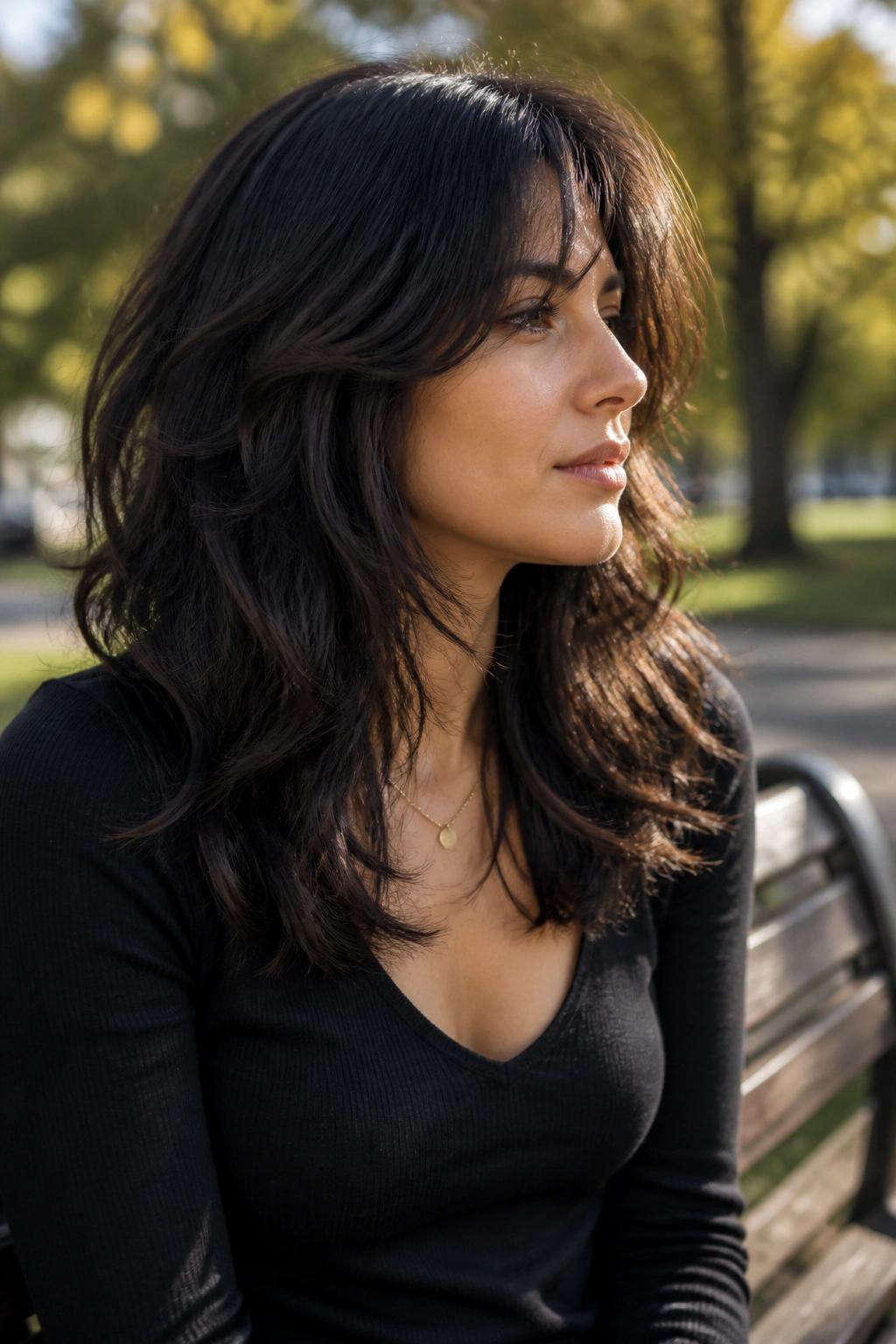
Thick hair needs a different kind of control. You do not want blunt bulk sitting at the sides of the face, because that adds width fast. Sliced layers remove weight without creating obvious steps, which keeps the shape airy.
That makes this shag a strong choice for round faces with dense hair. The layers move, but they do not fray. The whole cut feels softer at the outline, especially if the stylist avoids over-layering around the cheeks. A little length at the front — enough to graze the collarbone or the top of the chest — keeps the shape from ballooning.
Unlike a heavily textured cut, this one still looks polished when it’s brushed out. You can wear it wavy, smooth, or somewhere in between. That versatility is the point.
If your thick hair tends to sit heavy, ask for interior slicing through the mid-lengths and keep the ends a touch softer. The haircut should remove mass without stealing the body that makes thick hair so useful in the first place.
13. Air-Dried Natural Texture Shag

Some cuts need a blowout. This one doesn’t. A natural texture shag works with the bend, wave, or curl you already have, which is a relief if you’re tired of wrestling a round brush every morning.
The best version starts with a cut that respects the natural fall of the hair. That means the shortest layers are placed where your texture already wants to move, not where a textbook says they should go. Round faces benefit because the softness is spread out, not concentrated at the cheeks.
How to Get the Most From It
- Apply leave-in conditioner to damp hair.
- Add a palmful of mousse from mids to ends.
- Scrunch and leave the roots a little lifted.
- Don’t touch the hair until it’s dry.
A diffuser helps if the texture is curly or very wavy. If it’s only slightly bent, air-drying can be enough. The magic here is that the cut looks deliberate without screaming “styled.” That loose, natural finish is hard to fake, which is why it works.
14. Baby Bang Shag
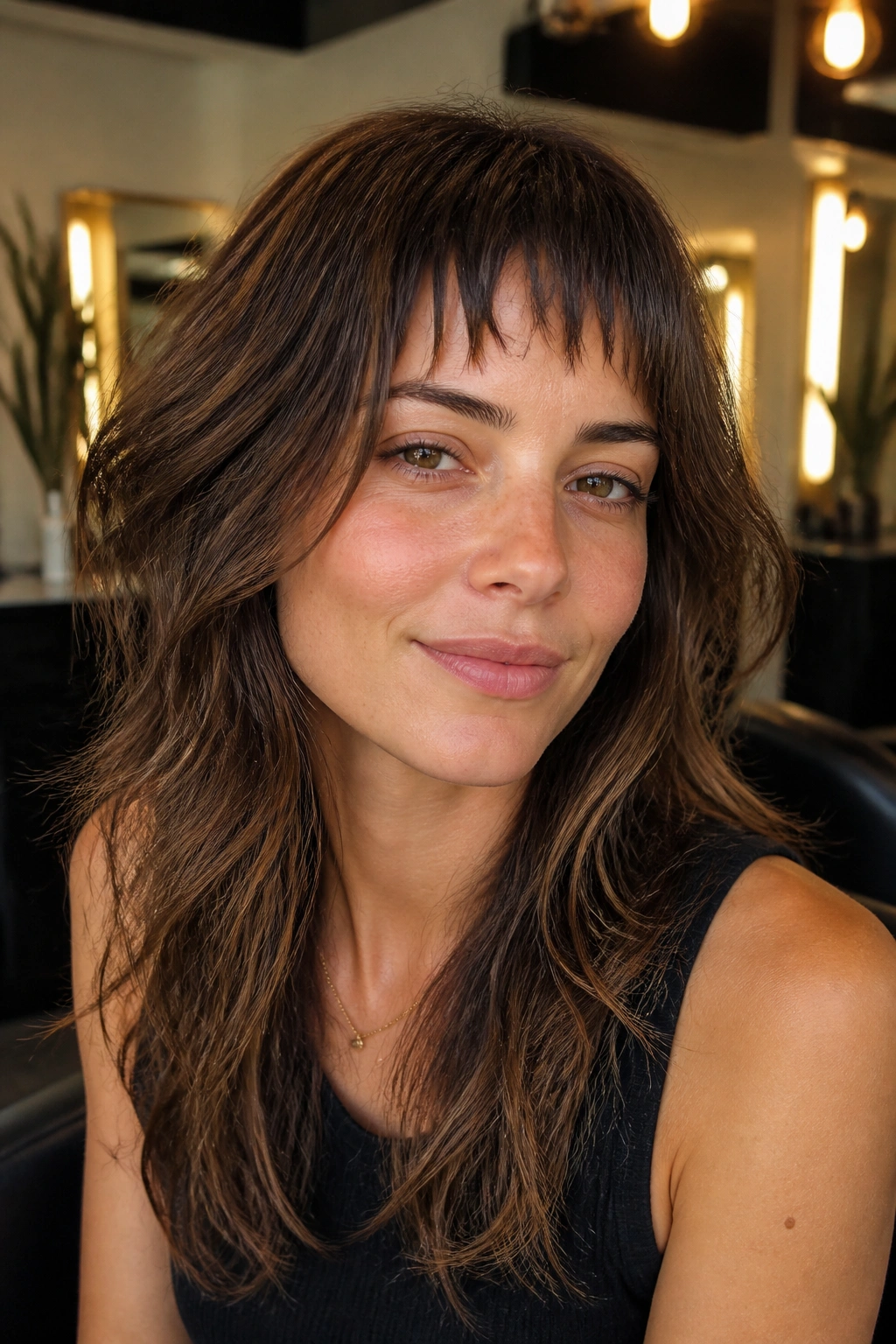
Baby bangs are not subtle. That’s the point.
On a round face, they work best when the rest of the haircut is long, shaggy, and feathered enough to balance the short fringe. The bangs put emphasis high on the face, while the layers below keep the silhouette from feeling boxy or heavy. Done wrong, this look can feel choppy in a bad way. Done well, it has a sharp, stylish edge.
You need confidence for this one, and a stylist who understands proportion. Keep the fringe soft, not helmet-like. The sides should move away from the face, and the lower layers should stay piecey. If the haircut is too blunt anywhere, the whole thing hardens up fast.
A baby bang shag is one of the few short-fringe looks that can still feel light on a round face. The contrast between the tiny bangs and the longer shape below gives it tension, and tension is what makes the haircut interesting.
15. Side-Swept Fringe Shag

Side-swept fringe is one of the simplest tools for a round face, and I still think people ignore it too often. The diagonal line breaks up width, softens the forehead, and gives the rest of the shag a place to fall.
The cut underneath can be long, medium, or short. That’s the nice part. The fringe is doing the heavy lifting, so the rest of the shape can stay relaxed. If your hair is thick, keep the fringe light so it doesn’t sit like a curtain. If your hair is fine, ask for a longer sweep that blends into the front layers.
How to Wear It
A small round brush and a quick side sweep are enough for most people. The goal is movement, not a perfect swoop. Let the ends stay a little irregular. A hard, shellacked fringe works against the rest of the shag and makes the style feel stiff.
This is the friendly option. Not the flashiest one. But it works in offices, on weekends, and on hair that refuses to behave for long.
16. Uneven Jawline Shag

A lot of round-face advice focuses on length, but the real issue is where the hair sits around the jaw. If the shape lands evenly at that exact point, the face can look wider. If the front pieces are slightly uneven and broken up, the eye stops reading the jaw as one solid line.
That’s why an uneven jawline shag is so useful. It uses staggered layers to create softness around the lower face without turning the cut into a mess. The ends flick in different directions, which gives the whole style a bit of air.
One thing to ask for: keep the perimeter longer than the jaw by at least an inch or two, then let the interior layers do the shaping. That’s enough to avoid the “cut off at the chin” problem. If you want a more modern edge, a razor or point-cut finish helps the ends move. If you want less edge, keep the layering softer and the texture cleaner.
17. Tousled Long Shag With a U-Shaped Perimeter
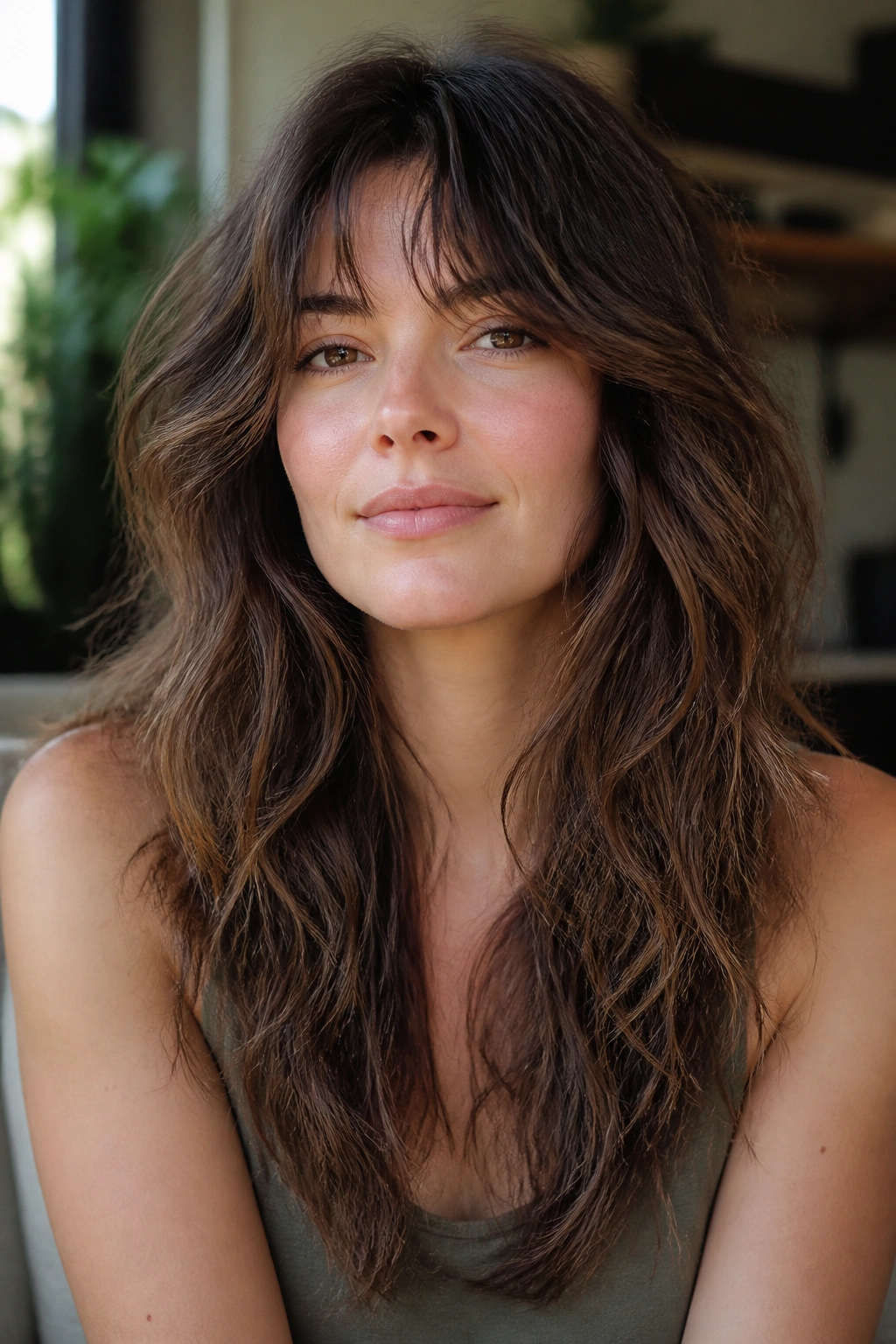
A long shag with a U-shaped bottom is quietly flattering. The center stays longest, which gives the face a vertical line, and the sides curve up slightly so the hair doesn’t sit like a curtain all the way around the jaw.
This is a good choice if you love long hair and do not want to give up length just to flatter a round face. You do not have to. The key is keeping the front pieces active and the lower edge soft. A few shorter face-framing layers around the cheek and lip add movement without stealing the length.
The styling can be very light. A wave spray, a rough blow-dry, or even sleeping in loose braids can be enough. The cut should look a little undone anyway. If it gets too polished, the whole thing loses that shaggy feel and starts to read as plain long hair with layers.
There’s a reason this version keeps showing up in salon chairs. It gives shape without drama.
18. Layered Shag for Straight Hair

Straight hair needs texture more than volume. Too much roundness at the sides can make it look broad, which is why the straight-hair shag works best when the layers are deliberate and a little choppy.
The cut should create movement from the middle of the hair outward, not puff around the cheeks. That means the shortest layers usually live around the mouth or below, and the ends get point-cut so they don’t sit as a hard line. A flat iron can actually help here, but only if you bend the ends slightly away from the face. Stick-straight pieces can look severe on a round face.
What Makes It Different
Compared with a wavy shag, this version depends less on texture and more on shape. You are building the illusion of movement. That makes it a good match for people whose hair resists curl but still wants to look styled.
Best for: naturally straight hair that tends to fall flat at the roots but holds a little bend in the ends. A light texture spray is usually enough. Heavy wax is too much.
19. Textured Mid-Length Shag With Soft Curtain Fringe
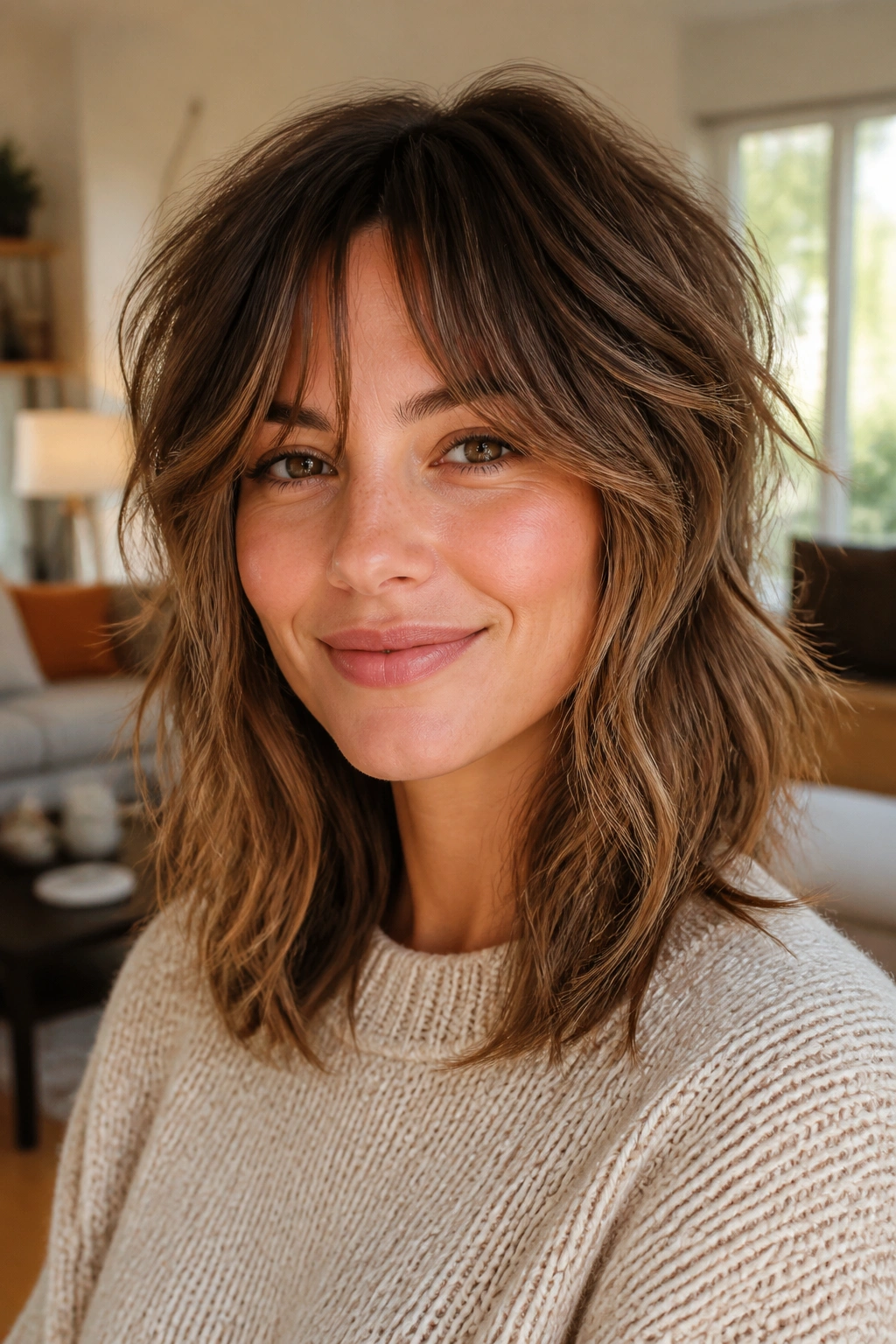
This is one of my favorite shaggy hairstyles for round faces because it sits in a very forgiving place. Mid-length keeps enough weight to avoid puffing, and the curtain fringe opens the forehead without feeling severe.
The fringe should part softly at the center and slide toward the temples. That creates a frame, not a wall. The rest of the cut should move away from the cheekbones in loose pieces. If the layers get too short at the sides, the face can look fuller. If they stay too long and heavy, the shag loses its shape. Right in the middle is where it lives.
Why It Works
- The length pulls the eye down.
- The fringe breaks up forehead width.
- The texture keeps the silhouette soft.
- The shape grows out in a graceful way.
I like this cut on people who want something wearable but not boring. It has enough softness for everyday wear and enough shape to feel intentional when you dress it up a little.
20. Soft Razor Shag With Face-Opening Pieces

If you only try one cut from this list, make it the one with the most careful face framing. A soft razor shag is flattering because it keeps the outline light, but the front pieces do the real work. They should skim the cheek, move past the jaw, and soften the whole front of the haircut without crowding the face.
The razor finish matters most at the ends. It makes the layers look feathered instead of chopped, which is kinder to rounder features. I also like a little extra length at the front so the haircut doesn’t stop exactly where the face is widest. That’s the mistake I see most often. A front piece that lands a touch lower can make the whole shape feel more open.
This is a smart pick if you want a shag that still reads polished. It works with air-drying, with a round brush, or with a quick bend iron pass if you want more separation. And that’s the real reason shaggy hairstyles for round faces work so well when they’re cut with restraint: they don’t fight the face shape. They give it room, motion, and a better outline.
