



Round faces and curls can be a tricky mix if the haircut is lazy. The wrong shape builds width right where you do not want it, especially around the cheeks, and then the whole look starts feeling heavier than it should.
Short asymmetrical curly hairstyles for round faces fix that by changing the line of the hair, not by flattening the texture. One side sits a little longer. The part shifts off center. The eye stops circling the face and starts moving diagonally, which is the whole point.
What I like about these cuts is how little change they sometimes need. A one-inch difference between sides can do the job on a soft wave. On denser curls, a shorter nape, a longer fringe, or a shaved temple may be the smarter move. Curl pattern matters, but shape matters more.
There’s a sweet spot here. Too much width at the jaw and the face reads wider; too much length everywhere and the cut loses that fresh, cropped energy. The best versions do both jobs at once: they keep the hair short enough to feel light, and asymmetrical enough to make the face look a little longer.
1. Asymmetrical Curly Pixie With a Long Side Fringe
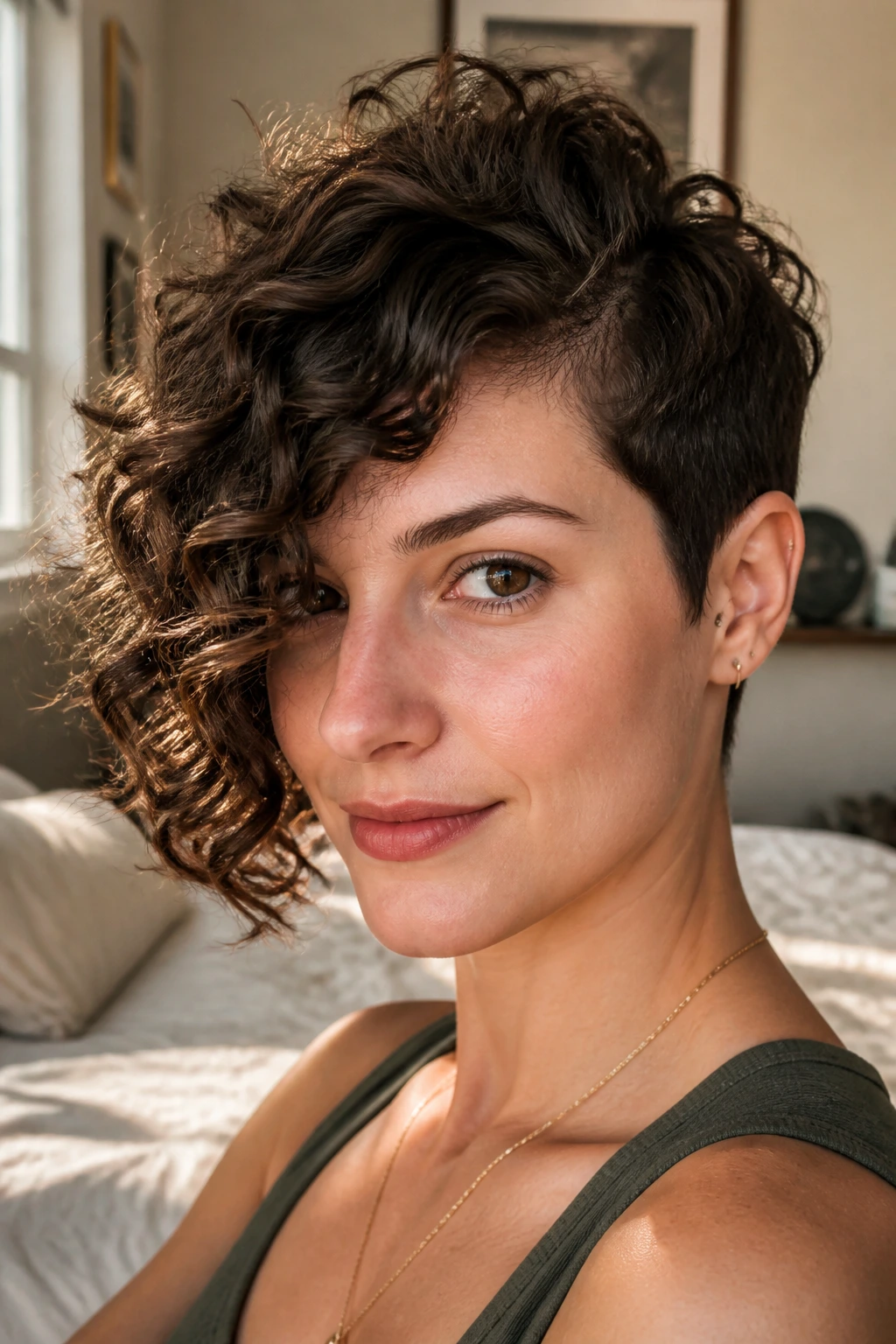
This is the cleanest place to start if you want short hair without losing curl personality. One side stays close to the head, usually around the temple and ear, while the longer fringe sweeps forward in a soft diagonal that cuts across the cheek line.
Why It Flatters a Round Face
That diagonal fringe is doing more work than people give it credit for. It pulls the eye upward and away from the widest part of the face, which keeps the whole shape from looking too circular. The short side also removes bulk near the cheek, and that alone can make a big difference.
- Keep the short side around ½ to 1 inch at the temple.
- Leave the long side at 3 to 4 inches so the curls can move.
- Ask for the fringe to land near the outer corner of the eye, not the middle of the cheek.
- Best for loose curls, ringlets, and soft waves.
Tip: If your hair grows out fast at the crown, ask for a little extra height there. Flat top, wide face. It’s a small trade, but it matters.
2. Deep Side-Part Curly Bob That Skims the Jaw

Why does a deep side part work so well on a round face? Because it interrupts the symmetry before the curls even start doing their thing. The line shifts one side of the bob over, the volume stops sitting evenly on both cheeks, and the face picks up a longer shape almost immediately.
A jaw-skimming length is the key. Shorter than that, and the cut can balloon out near the cheeks if the curls are springy. Longer than that, and you’re drifting into lob territory, which is fine, but it changes the feel. This version keeps the cut sharp and easy to wear.
How to Ask for It
Tell your stylist you want the part about 1½ to 2 inches off center. Ask for the front to land at the jawline on one side and slightly higher on the other, with soft internal layers so the curls don’t sit in one heavy block.
Use a lightweight mousse at the roots, then scrunch in a gel that holds without making the curls crunchy. The shape matters more than the product, but the product helps the shape stay put.
3. Stacked Asymmetrical Bob With Crown Lift
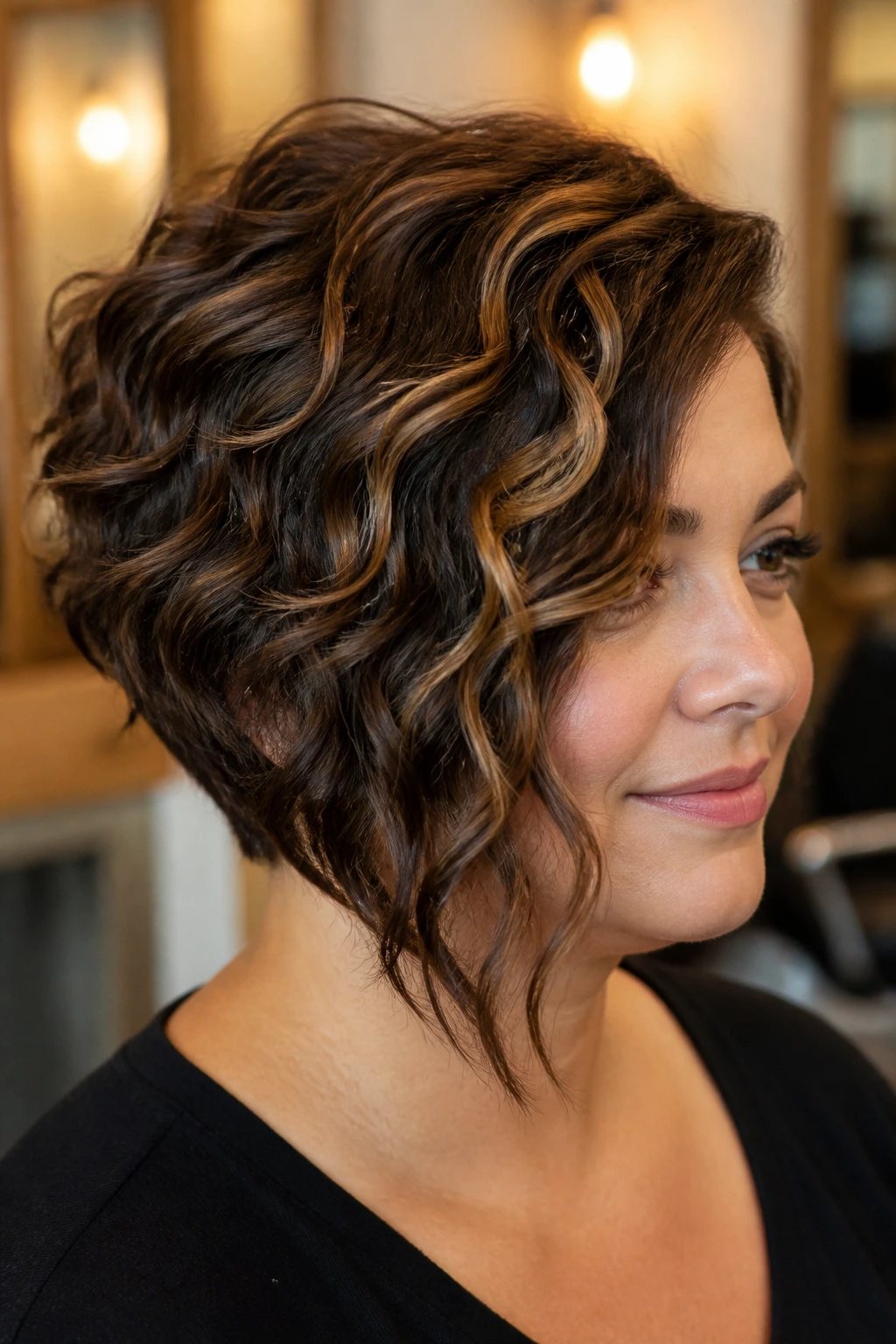
Picture a bob that is shorter in the back, fuller through the crown, and a little longer on one side in front. That extra lift at the crown is the part people forget, and on a round face it changes everything.
A stacked back keeps the nape neat. The longer front pieces make the face read narrower. The combination is tidy, but not stiff, and it gives thick curls somewhere to sit instead of puffing out sideways. If your hair has a lot of body, this cut can feel like a relief.
- Shortest point: just above the nape
- Longest front point: lip to jaw
- Best for: dense curls that want to spread out
- Skip if: you want a cut you can pull into a tiny bun on a bad hair day
The shape looks best when the crown is diffused upside down for a few minutes, then left alone. Too much touching ruins the stacked line. Too much product does the same thing.
4. Side-Shaved Curly Crop With Soft Volume
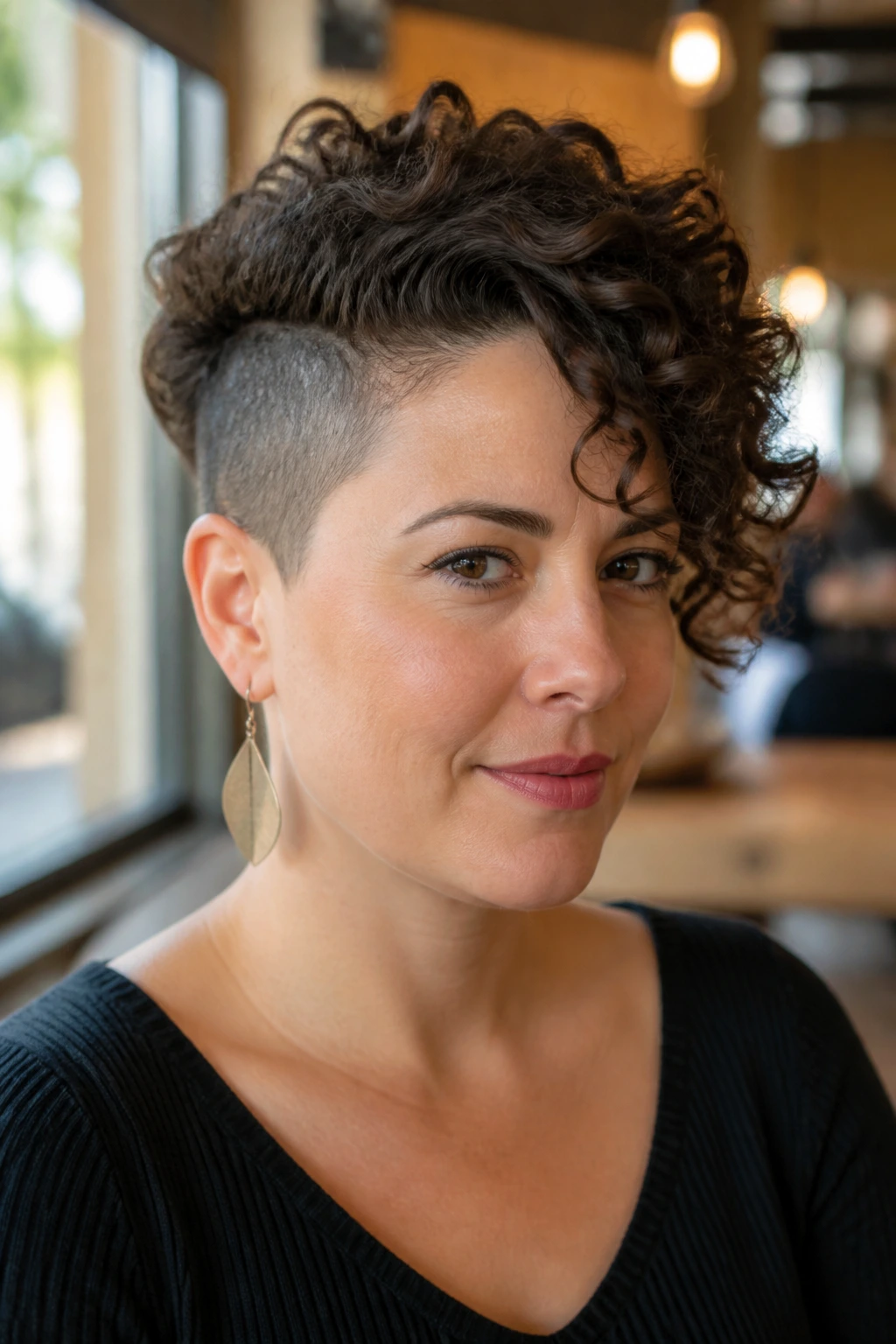
A side shave sounds bold until you see how much calmer the face looks when one side is stripped down and the top is left soft. The contrast works because the eye has somewhere else to go. It stops reading the cheeks as the widest point.
This cut is a good match for thick curls that feel bulky around the temples. Shaving one side removes weight right where round faces often need a little breathing room. The top stays curly and touchable, not helmet-like. That balance is the whole trick.
And no, it does not have to look punk if you don’t want it to. Keep the shaved section low, almost hidden under the top layer, and the effect stays polished. Let the curls on top sit a little messy. A neat top with a shaved side can look fussy. Softer is better here.
If you like a clean neckline and you do not mind regular upkeep with a trimmer every few weeks, this cut is one of the easiest ways to make curls feel lighter.
5. Curly French Bob With a Longer Front Side
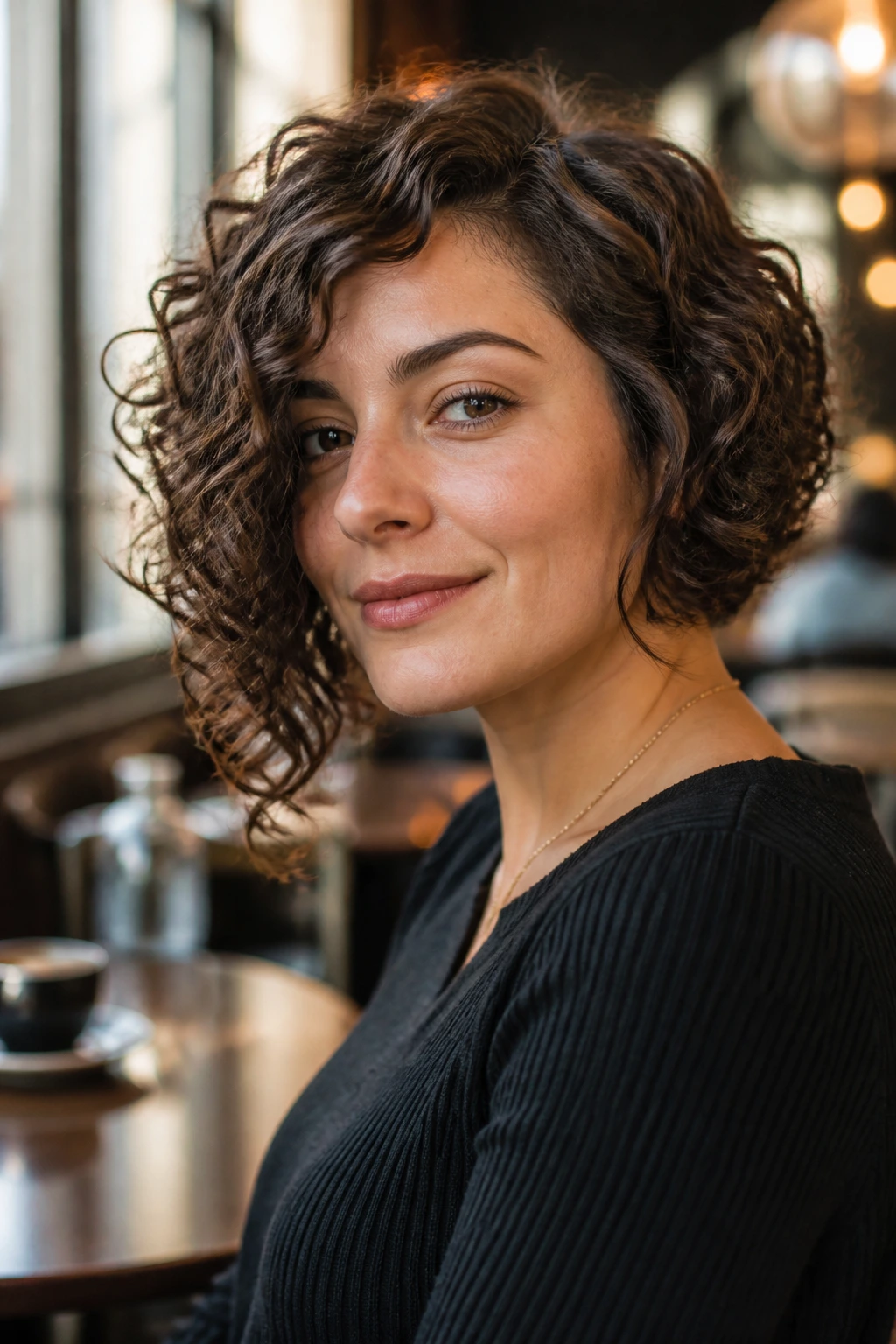
The classic French bob is usually even, blunt, and very cheeky about sitting right at the jaw. On a round face, that can be too much of a good thing. The asymmetrical version keeps the Paris energy but softens the width by making one front side a touch longer.
That longer panel changes the whole read of the cut. Instead of a neat little circle framing the face, you get a slanted edge that slips past the cheek and lands lower. The result feels sharper and less boxy.
It’s a nice option if you want curls that look styled without looking overworked. A quick finger dry, a side part, and a little curl cream are often enough. The style has a bit of attitude, but not the heavy drama some short cuts bring.
If your curls are loose or medium, this is especially good. Tight, springy curls can still wear it, but they need careful shaping so the front does not puff out at cheek level.
6. Ear-Grazing Curly Bixie With Piecey Ends

The bixie sits between a bob and a pixie, and that in-between length is exactly why it works. Shorter cuts around the ear keep the sides from widening, while the slightly longer top lets the curls fall in separate little pieces instead of one rounded mass.
That piecey finish matters. A soft, separated curl pattern breaks up the outline of the face. A smooth, round outline does the opposite. If your hair tends to clump, ask for light layering through the top and a bit more length near the fringe so the front can move instead of puff.
This is also one of the easiest styles to dress up or down. Air-dry it for a softer look. Diffuse it for a bit more lift. Add a dab of styling paste to the front pieces if you want the cut to show its asymmetry.
Short, practical, and not precious. That’s the appeal.
7. Inverted Curly Bob With Face-Framing Front Pieces
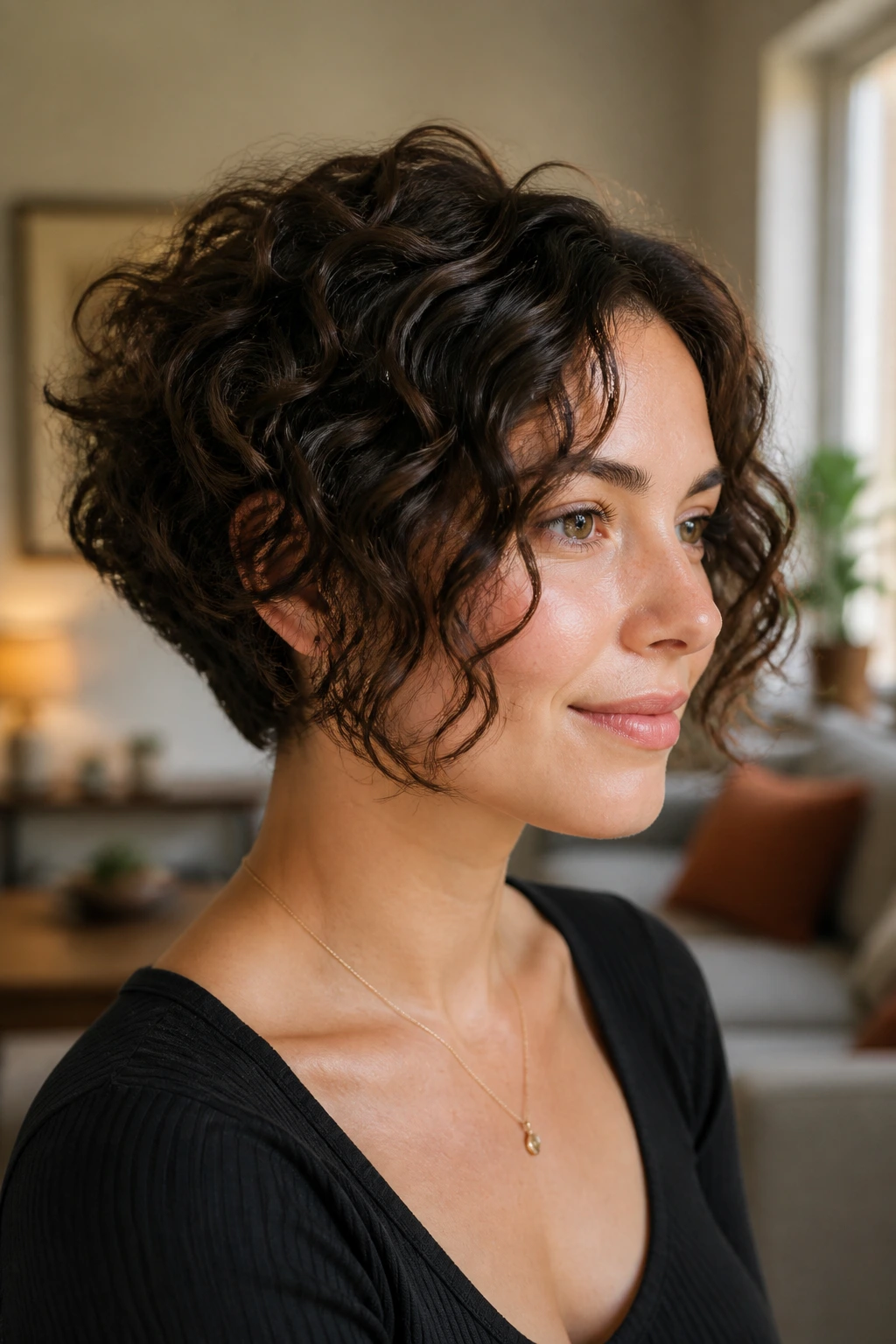
Can a bob look structured without looking severe? Yes, if the back is shorter and the front is left to drop around the face in soft, angled pieces. That inversion gives the haircut a clear shape, and the face-framing front does the work of lengthening a round face.
The biggest mistake here is letting the front pieces stop exactly at the fullest part of the cheek. Bad idea. Ask for the longest point to sit near the lip or just below the jaw, depending on curl shrinkage. Curls bounce up more than straight hair, and shrinkage can turn a good plan into a too-short one fast.
How to Style It
Dry the roots first, then smooth the front pieces with your fingers while they’re damp so they fall in the direction you want. A side part is usually smarter than a center part here. It gives the asymmetry a place to live.
This cut suits people who like clean lines but don’t want hard edges. It feels polished, but not rigid.
8. Short Curly Shag With a Diagonal Part

A shag is the move when you want movement more than perfection. The layers take weight out of the sides, and the diagonal part keeps the top from sitting in one wide, even dome. On a round face, that matters a lot.
I’ve always liked this cut on curls that swell at the cheekbones. The layers stop the hair from building into a single shape, and the part guides the curls downward instead of straight out. That slight shift changes the silhouette faster than most people expect.
- Ask for soft crown layers, not choppy ones that stick up.
- Keep the front pieces a little longer than the back.
- Use a diffuser on low heat to keep the curl pattern intact.
- Avoid heavy creams if your hair already feels thick.
The shag can look messy if it is cut poorly, but a good one has motion. Not fluff. Motion.
9. Jaw-Length Ringlet Bob With One Heavy Side
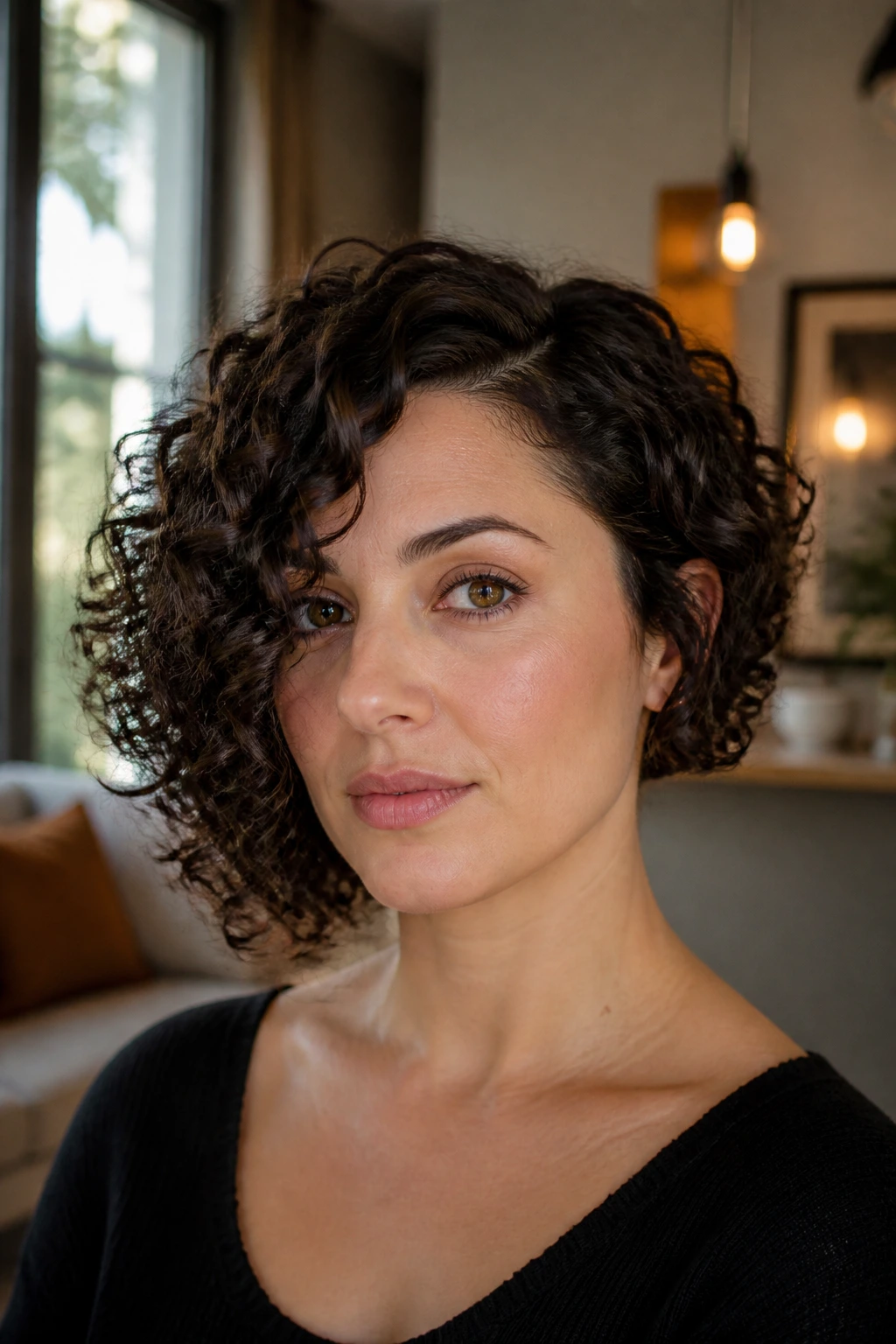
Some cuts work because they are dramatic. This one works because it is controlled. One side stays a little fuller, almost weighty, while the other side sits closer to the head. On a face with softer curves, that imbalance creates a visual line the eye follows right away.
Jaw-length is the sweet point for ringlets. It gives the curls enough room to show their shape without dropping so low that the cut loses its crispness. If the shortest side hugs the jaw and the fuller side moves past it, the roundness of the face feels less obvious.
This cut is especially good if your curls are springy and spring up more on one side than the other. Instead of fighting that, work with it. Let the fuller side exist. That little bit of unevenness feels intentional when the perimeter is clean.
One warning: if you hate rebalancing your part every morning, this may annoy you. The cut lives on the part line. Move it, and the whole thing changes.
10. Curly Wedge Cut With a Tapered Nape
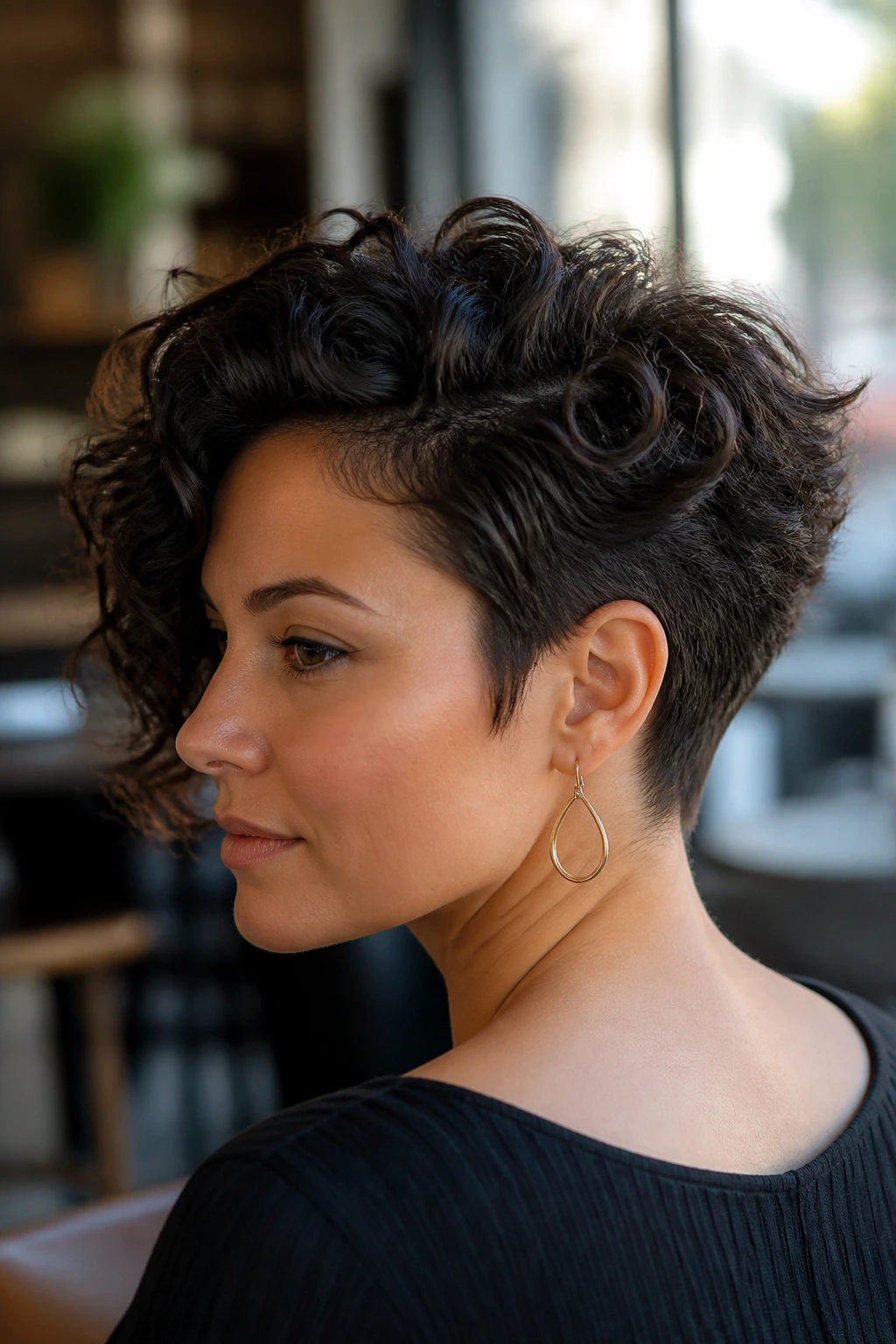
A wedge cut is a little old-school in the best way. The back builds softly upward, the nape stays tapered, and the front keeps a longer angle that stops the hair from spreading too wide around the cheeks. It’s tidy, but not flat.
Unlike a stacked bob, which can get rounder at the back, the wedge keeps the base tighter and the front more defined. That makes it a strong choice for round faces that want height in the back and length in the front. The asymmetry can be subtle here. It does not need to scream.
This cut is especially useful if you wear glasses. The clean nape and the angled front keep the hair from crowding the frames. It also grows out decently, which matters because some short curly cuts lose their shape fast.
If your hair is thick, ask for internal removal at the nape so the back does not puff out. If it’s fine, skip too much thinning. You want the shape, not see-through ends.
11. Asymmetrical Pixie-Bob With a Swept Fringe

This cut sits right between playful and practical. The back is short enough to feel like a pixie, but the front keeps enough length to behave like a bob, and that swept fringe gives the face a cleaner vertical line.
Why It Works
The fringe is the star here. A side-swept fringe draws the eye across the forehead and down one side of the face, which softens the circular outline round faces often have. The extra length in front also keeps the cut from looking too clipped or too exposed.
What to Ask For
- Short back at the nape and ear
- Longer front pieces that reach the lip or chin
- A fringe that sweeps across the brow, not straight down
- Soft texture at the ends so the cut does not look blocky
This is a nice choice if you want something that still feels feminine and soft without being fussy. It looks especially good when the fringe is allowed to bend a little instead of being blown perfectly smooth.
12. Undercut Curly Bob With High Crown Volume
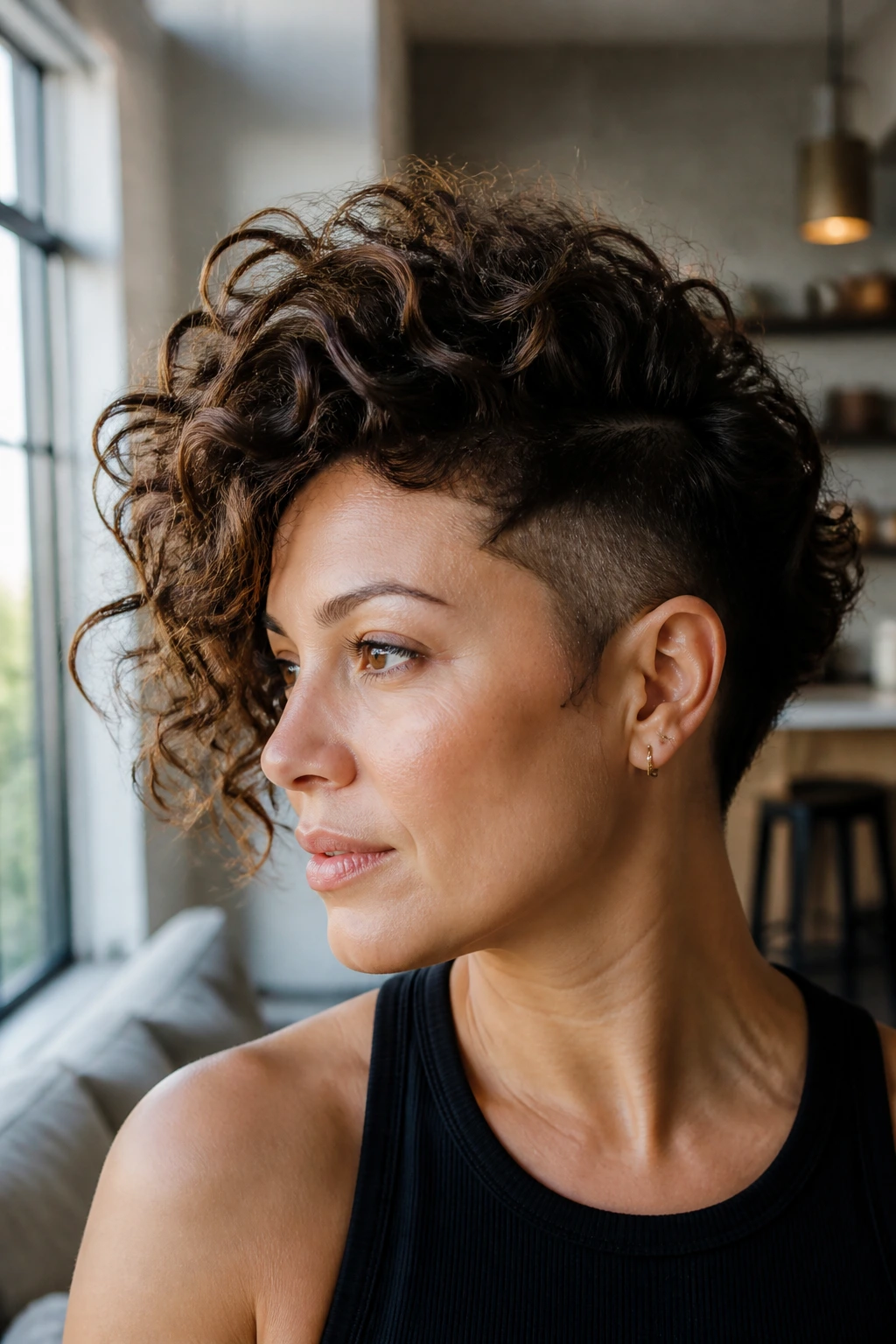
If your curls are dense, this cut may save you a lot of frustration. The undercut removes bulk underneath, which lets the top sit higher and lighter. On a round face, that lifted crown is a gift. It gives you height without width.
A lot of people worry an undercut will look too extreme. Usually it doesn’t, not once the curls fall over it. The shape reads as soft on the outside and tidy underneath. That’s the part people miss when they picture it in their heads.
This style is also useful if your hair gets triangular when it grows out. You know the look: flat at the crown, wide at the sides, no shape at all. The undercut helps the top stay lifted and stops the bottom from taking over.
One thing, though. It needs maintenance. Not a ton, but enough to keep the hidden short section from bulging out. If you like low upkeep, this is not the easiest cut on the list.
13. Soft Mohawk-Inspired Curly Crop
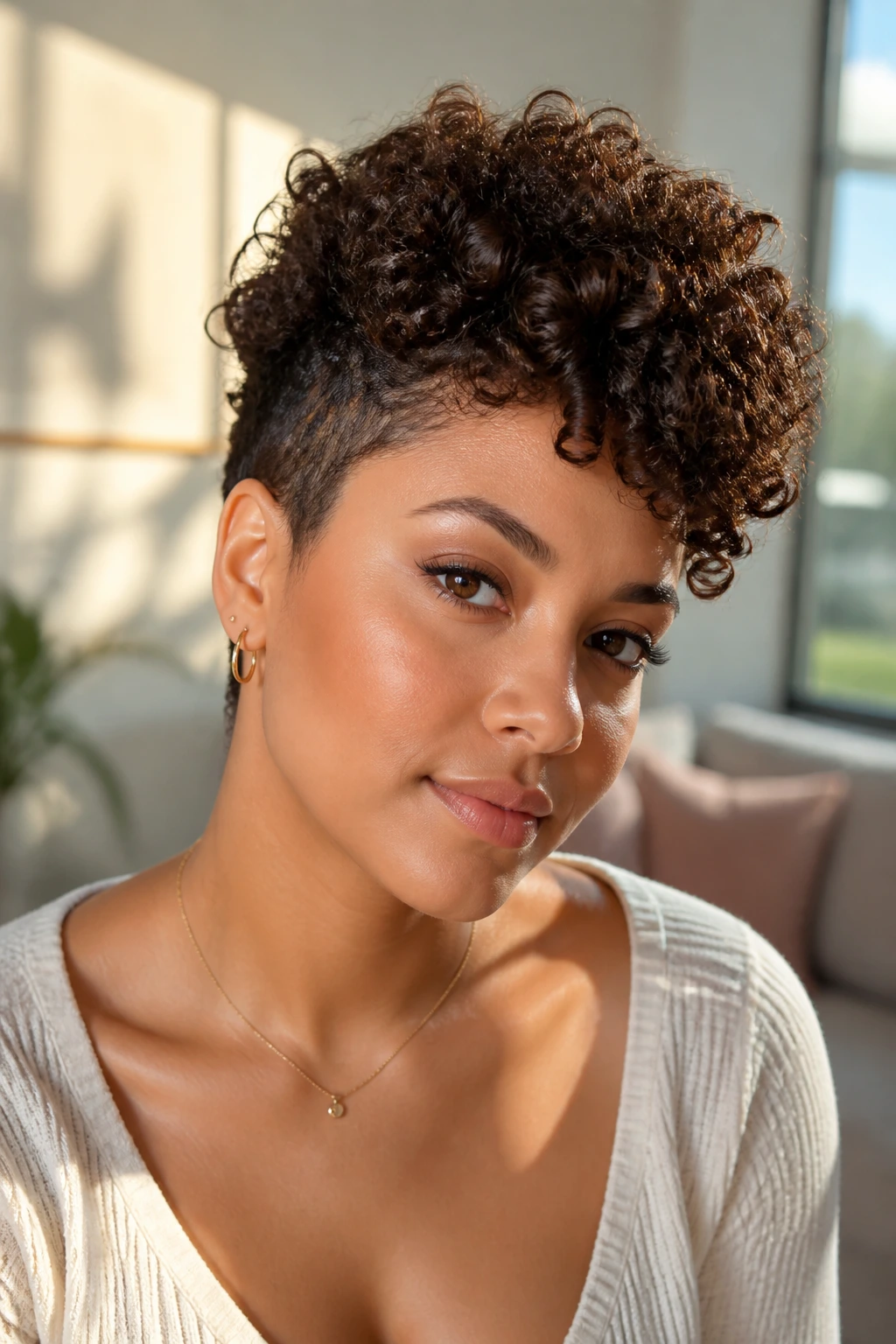
Could a mohawk-inspired cut be wearable on a round face? Absolutely, if the sides are softened instead of clipped to the bone. The point is not to create a punk stripe. The point is to keep the volume on top and the bulk away from the cheeks.
That central ridge of curls gives the face a longer line from forehead to crown. It also keeps the side width under control, which is where round faces can get overwhelmed. The trick is to leave enough softness at the temples so the style feels curly and not severe.
How to Wear It
Diffuse the top first so the curls rise at the crown. Then smooth the sides down with a touch of cream or gel. You want contrast, not stiffness. If the top is too flat, the cut loses its whole reason for being.
This one is not for everyone. If you like subtle haircuts, skip it. If you like shape with a little edge, it’s a strong option.
14. Collarbone-Grazing Curly Lob With a Shorter Side

This is the longest cut on the list, and that’s exactly why it belongs here. A collarbone-grazing length still feels short enough to be easy, but the extra drop gives round faces a little more vertical line than a chin-length bob would.
The asymmetry comes from one side sitting higher and the other sliding closer to the collarbone. That subtle shift keeps the hair from making one even curve around the face. You still get the softness of curls, but the silhouette leans longer and slimmer.
A cut like this is good if you are not ready for a dramatic crop. It also works well when you need hair that can still tuck behind one ear, half-up, or pin back for work. Not every short style has to be aggressive.
If your curls shrink a lot, ask for the longest side to be cut below the collarbone when wet. Otherwise you may end up with a very different haircut than you pictured. Shrinkage is rude like that.
15. Feathered Asymmetrical Crop With Micro Layers
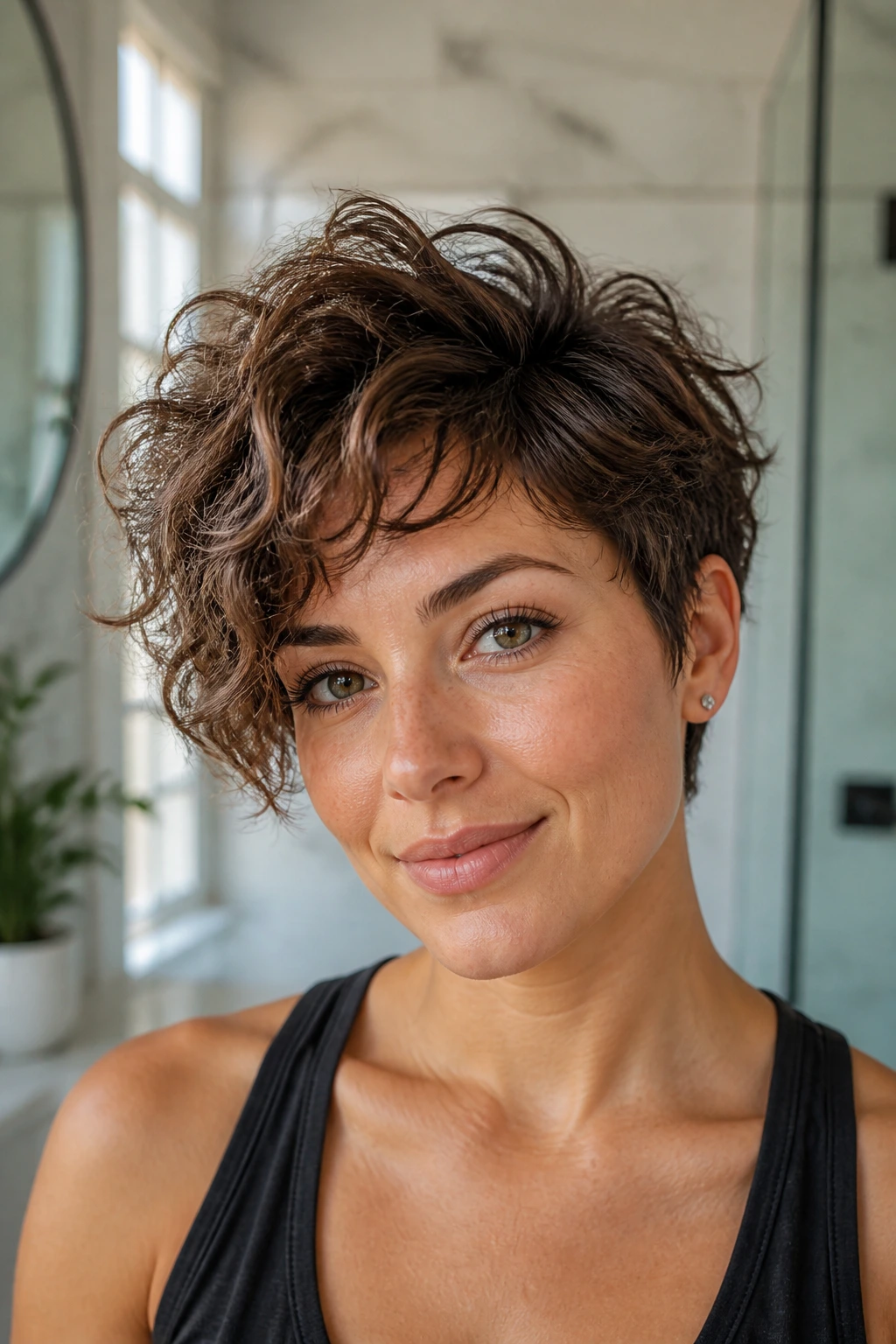
Feathering gets ignored a lot, which is a shame, because it can make a short curly cut feel light instead of puffy. Micro layers remove little bits of bulk all over the head, and the asymmetry comes from how the front and side pieces are shaped.
This is a smart cut for medium-density curls that want movement but not too much drama. A blunt edge would look heavy. A heavily layered shag could look chaotic. Feathering sits in between. It softens the outline and keeps the side lengths from feeling even.
The nicest thing about this cut is how it grows out. It does not fall apart as fast as more extreme shapes. The line stays soft, which is handy if you do not want to see your stylist every few weeks.
It’s quieter than the mohawk crop or the shaved side, but quieter does not mean boring. Sometimes that soft, feathered edge is the thing that makes the face look best.
16. A-Line Curly Bob With Long Front Panels
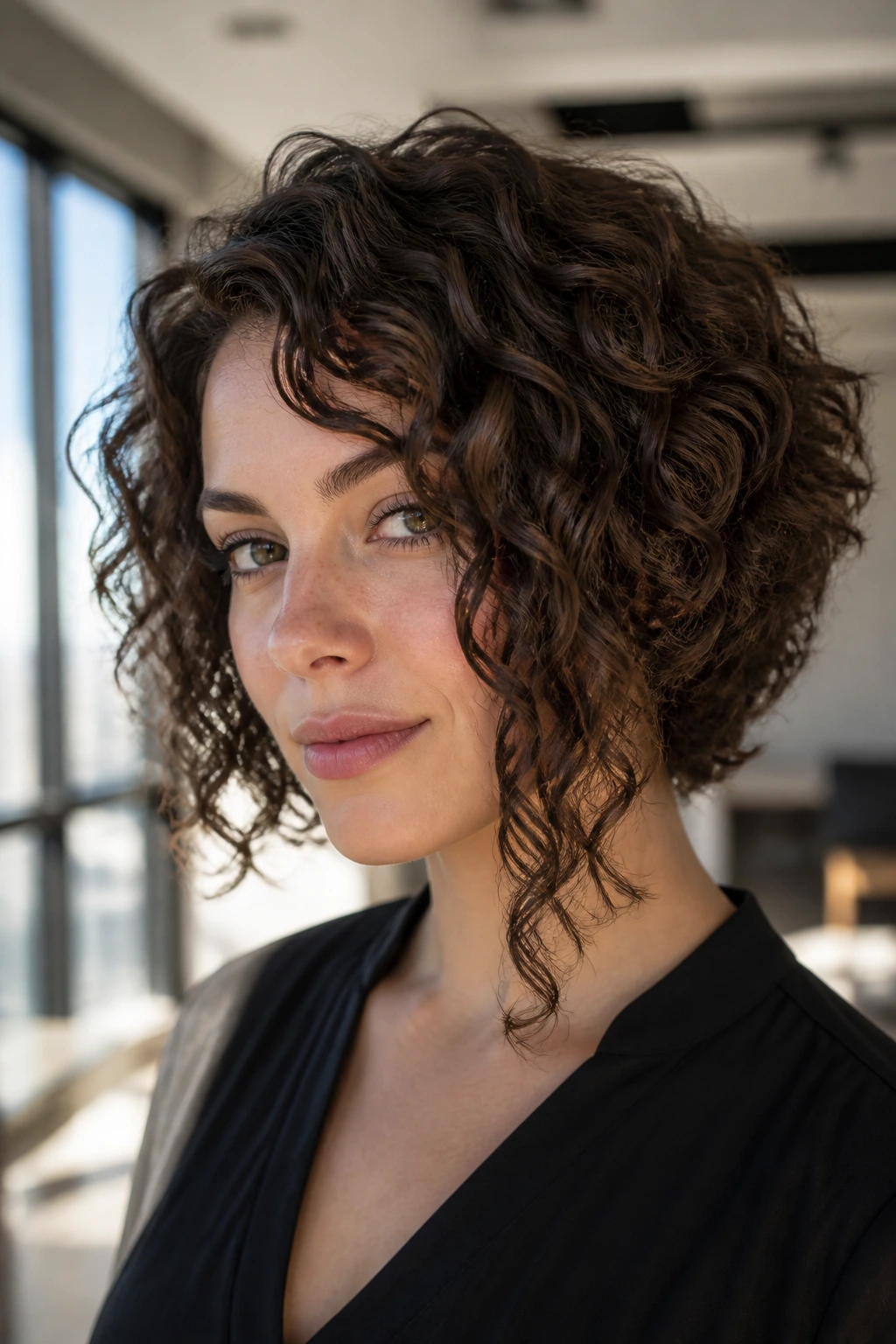
A true A-line bob gives you a shorter back and a longer front, and that slant can be very flattering on round faces. The front panels create a clean downward line, which pulls the eye away from the widest cheek area and toward the jaw.
The cut looks even better when the front pieces are left long enough to curve naturally instead of stopping at the cheekbone. That’s a common mistake. Curls spring up, and a too-short front can look more boxy than angled. Give them room.
Unlike a straight A-line bob, the curly version has texture doing half the work for you. That means you do not need harsh angles to get shape. A soft slant is enough. In fact, hard angles can look weird once curls expand.
This cut is a good middle ground if you want something polished and office-friendly, but not boring. It feels controlled without being stiff. That’s rare, honestly.
17. Tapered Curly Cut With a Long Temple Section
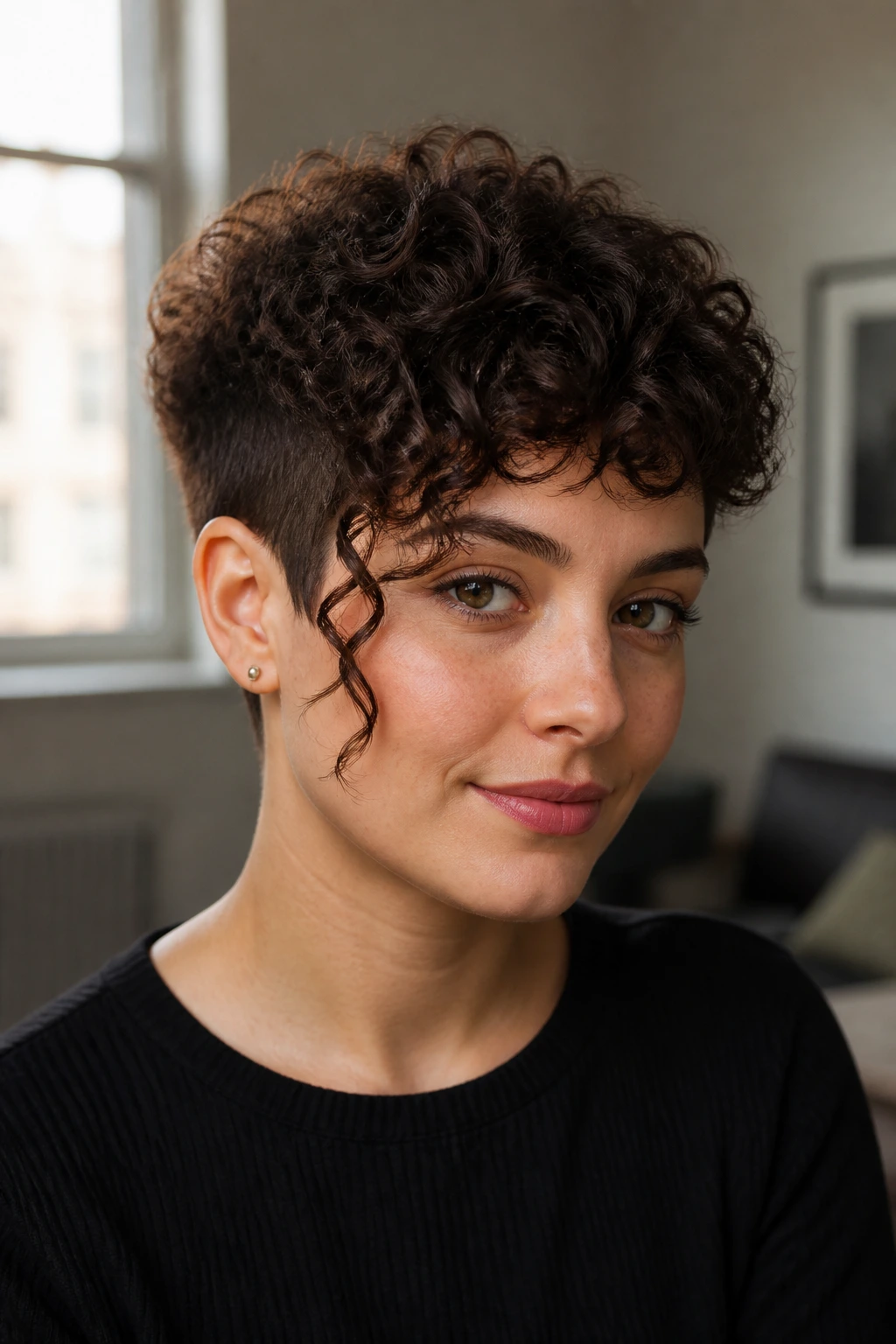
A tapered cut sounds simple, but the shape can be surprisingly smart on a round face. The sides and nape are kept close, the crown holds more height, and one temple section is left longer so the asymmetry has a clear point of focus.
Why It’s Useful
The taper trims away the side bulk that often makes curls spread wide. The longer temple section breaks the outline and gives the cut a soft diagonal path. Together, those two things stop the face from feeling boxed in.
- Best for tight curls and coils that need structure
- Ask for the nape to be tapered close but not shaved
- Keep the longer temple section around 2 to 4 inches, depending on shrinkage
- Use a small diffuser nozzle so the curls do not blow apart
This is one of those cuts that looks better when it’s slightly imperfect. If every curl is placed too neatly, the shape gets stiff. Let a few pieces move. It’s fine.
18. Short Curly Mullet With Rounded Layers
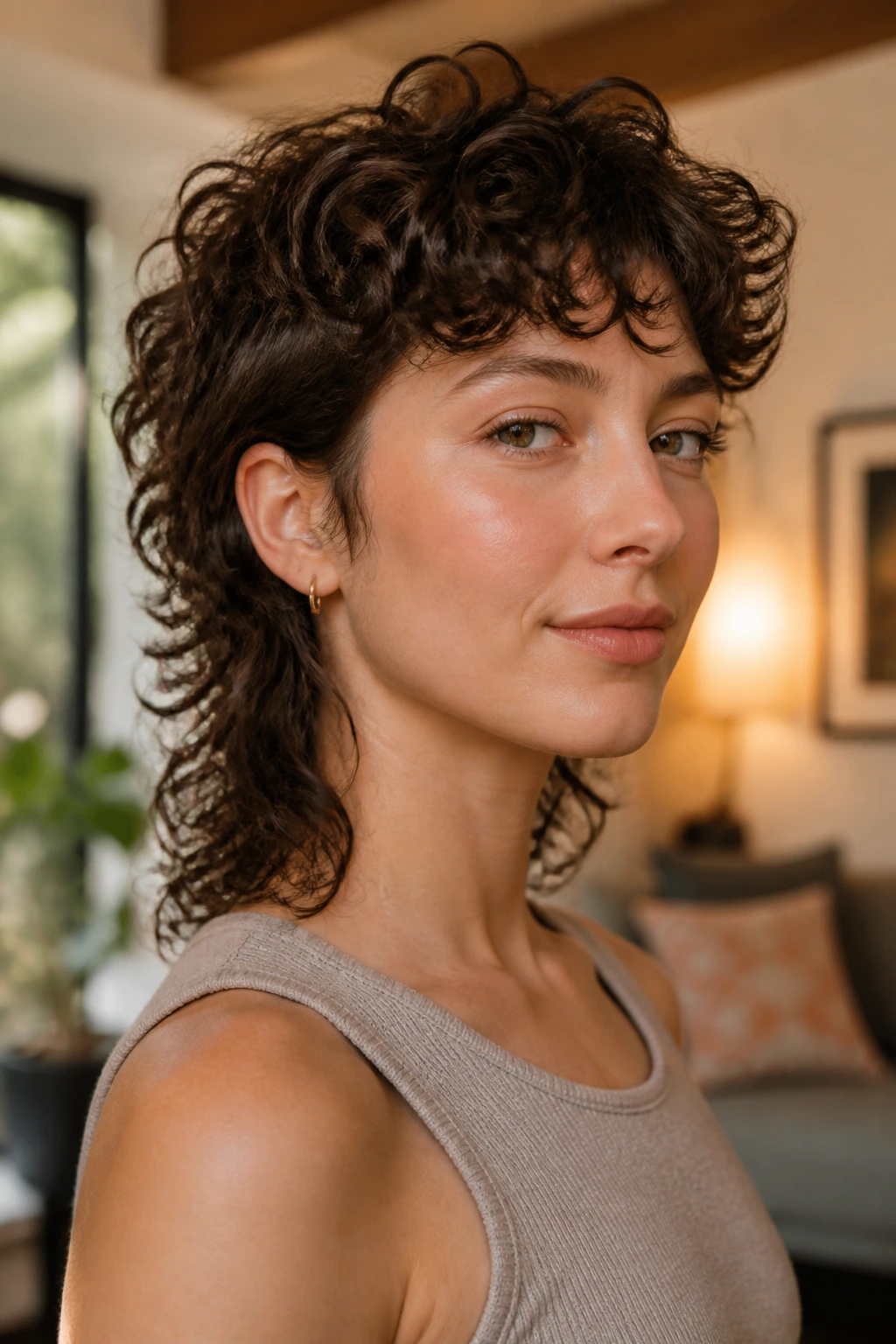
A curly mullet can sound like a joke until you see the right version on the right head. With rounded layers and an asymmetrical front, it stops looking retro and starts looking sharp in a very modern way. The shorter top keeps the face open, and the longer back stops the haircut from feeling too boxy.
That longer back is useful for round faces because it pulls the eye down the neck. The front can stay short and piecey, which keeps the cheeks from being framed too symmetrically. If you want something a little weird in a good way, this is the one.
I would not hand this to anyone who hates texture. The whole cut depends on curls doing their own thing. But if you like hair that looks a little undone, the mullet shape gives you movement without the puff that some short bobs create.
Nope, it is not for everyone. But on the right curls, it can be the most interesting cut in the room.
19. Rounded-Top Curly Crop With a Diagonal Front
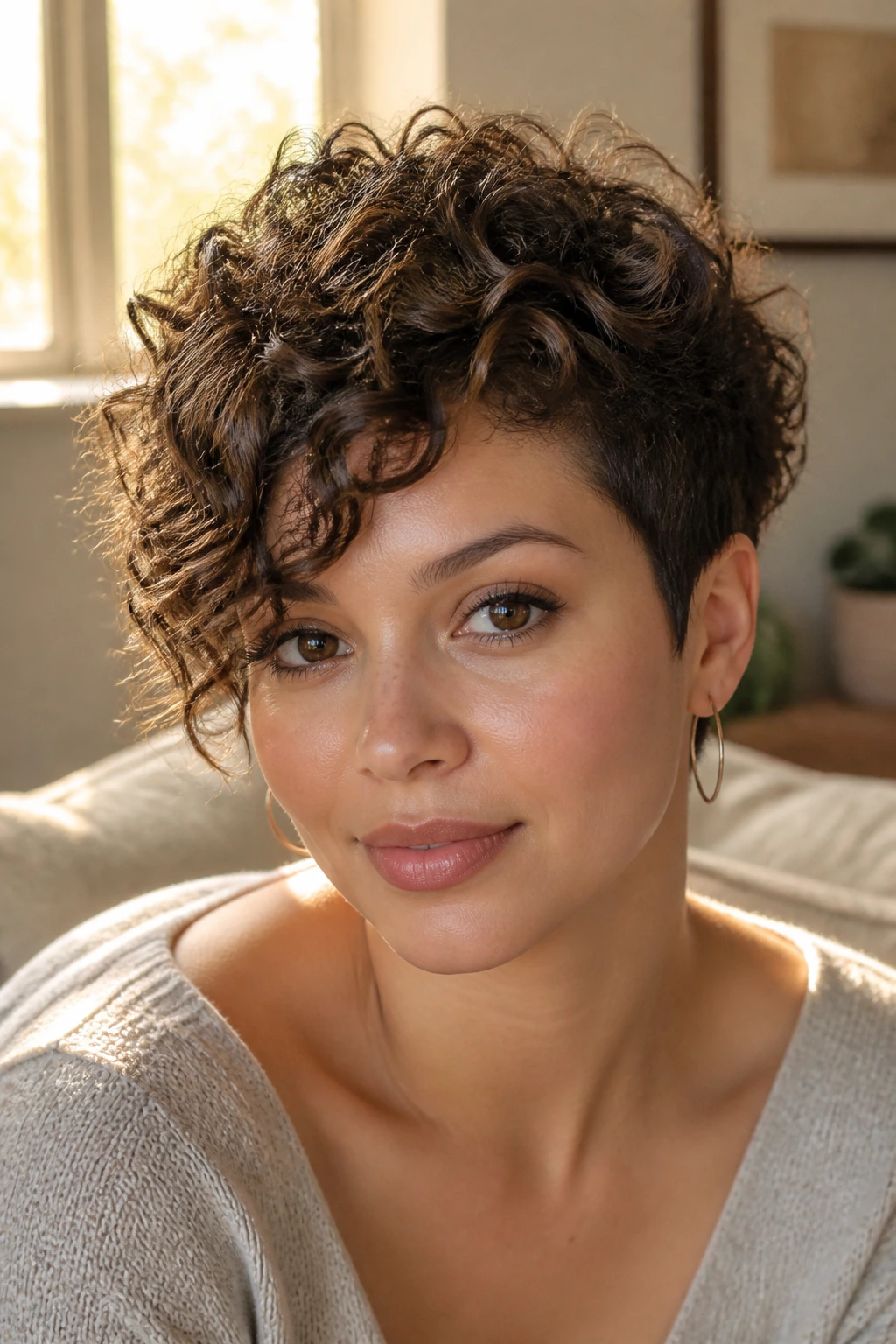
Can a rounded cut still flatter a round face? Yes, if the roundness lives on top and the front breaks away at an angle. That diagonal front is what saves the shape from becoming too circular.
The top stays soft and lifted, which keeps the curl texture obvious. The front, though, slides downward on one side and creates a cleaner line through the cheek area. That contrast makes the haircut feel balanced instead of too matchy-matchy.
How to Style It
Dry the crown first with your head slightly forward, then guide the front side with your fingers so it falls across the brow. A tiny bit of root clip work at the part can help if your hair tends to flatten. The goal is height without stiffness.
This is a good option if you like short hair but do not want anything too edgy. It has shape, but it still feels soft around the face.
20. Chin-Length Asymmetrical Curl Cut With a Long Ear Line
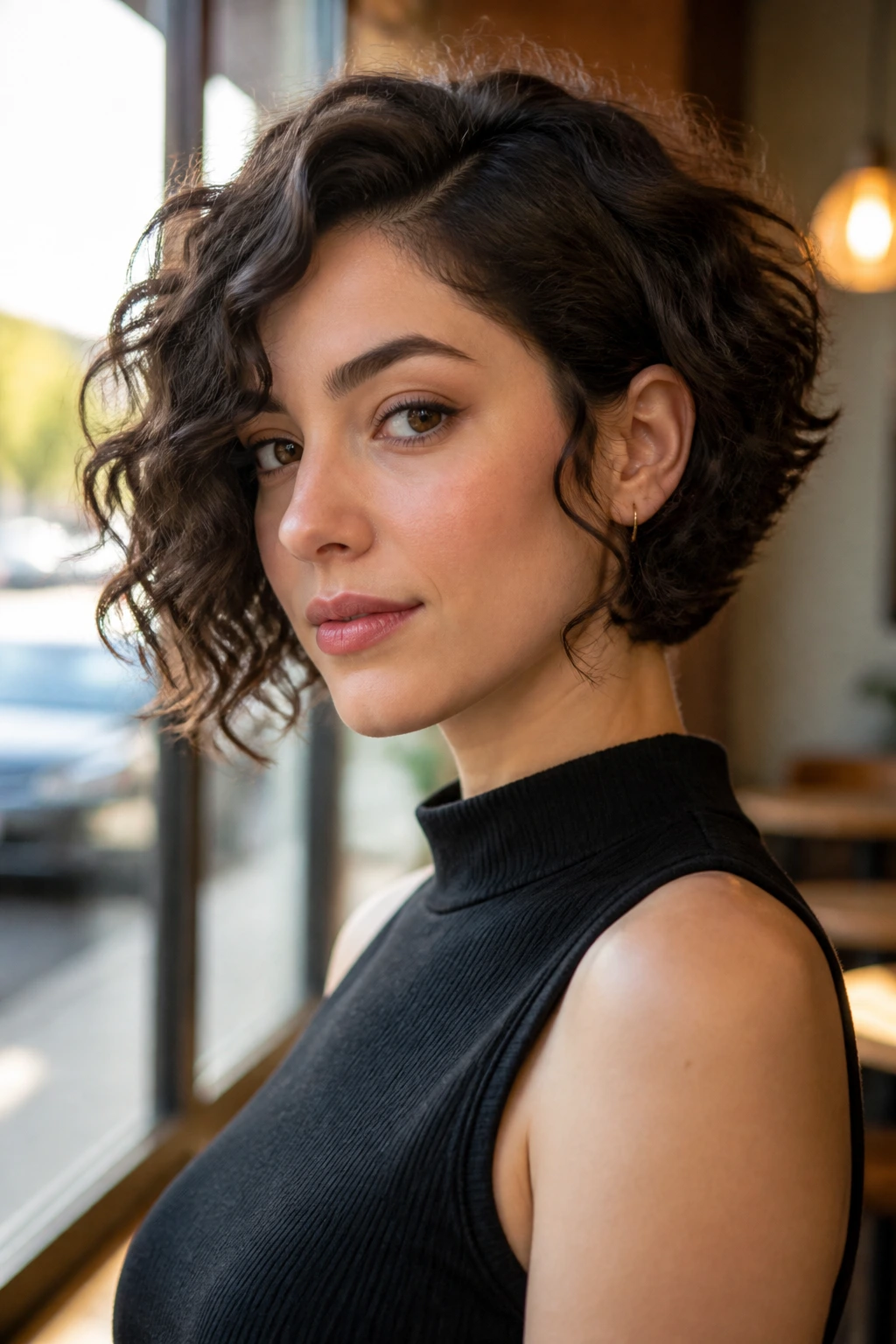
This is the version I’d point to if someone wanted a safe place to land. One side stays near the chin, the other side stays closer to the ear, and the whole cut leans on that single slanted line to stretch the face a little.
The ear line matters more than people think. If the shorter side stops cleanly at the ear while the longer side drops past the jaw, the haircut gets a clear direction. That direction is what makes it flattering on a round face. The shape stops sitting flatly around the cheeks and starts moving downward.
It’s also one of the easiest cuts to live with. You can tuck the shorter side behind the ear, pin the longer side back, or let the curls fall naturally and do most of the work. The cut has enough shape to stand on its own, which is useful on busy mornings.
If you’re unsure where to start, start here. It’s short, it’s asymmetrical, and it gives curls room to behave without swallowing your face whole.
