



Short stacked hairstyles for round faces can do more shape work than a lot of people expect. A good one builds height at the crown, keeps weight off the cheeks, and leaves enough length near the front to stop the cut from looking boxy.
That little bit of architecture matters. Stacking means the back is cut in shorter, layered steps so the hair sits close to the head at the nape and fills out as it moves upward. Done well, it gives round faces a cleaner outline. Done badly, it can puff out at the widest part of the face and make the whole cut feel wider than it should.
The fix is not one single silhouette. Sometimes you want a sharp angle. Sometimes you want soft waves. Sometimes you want a fringe that breaks up the forehead and pulls the eye upward. The right short stacked cut should work with your texture, not fight it.
Some of the styles below are sleek and polished. Some are messy and airy. A few are almost pixie-short, and a few keep just enough length to tuck behind the ear when you’re tired of dealing with it. All of them are chosen for one reason: they help a round face look a little longer, a little leaner, and a lot less circular.
1. Classic Stacked Bob for Round Faces
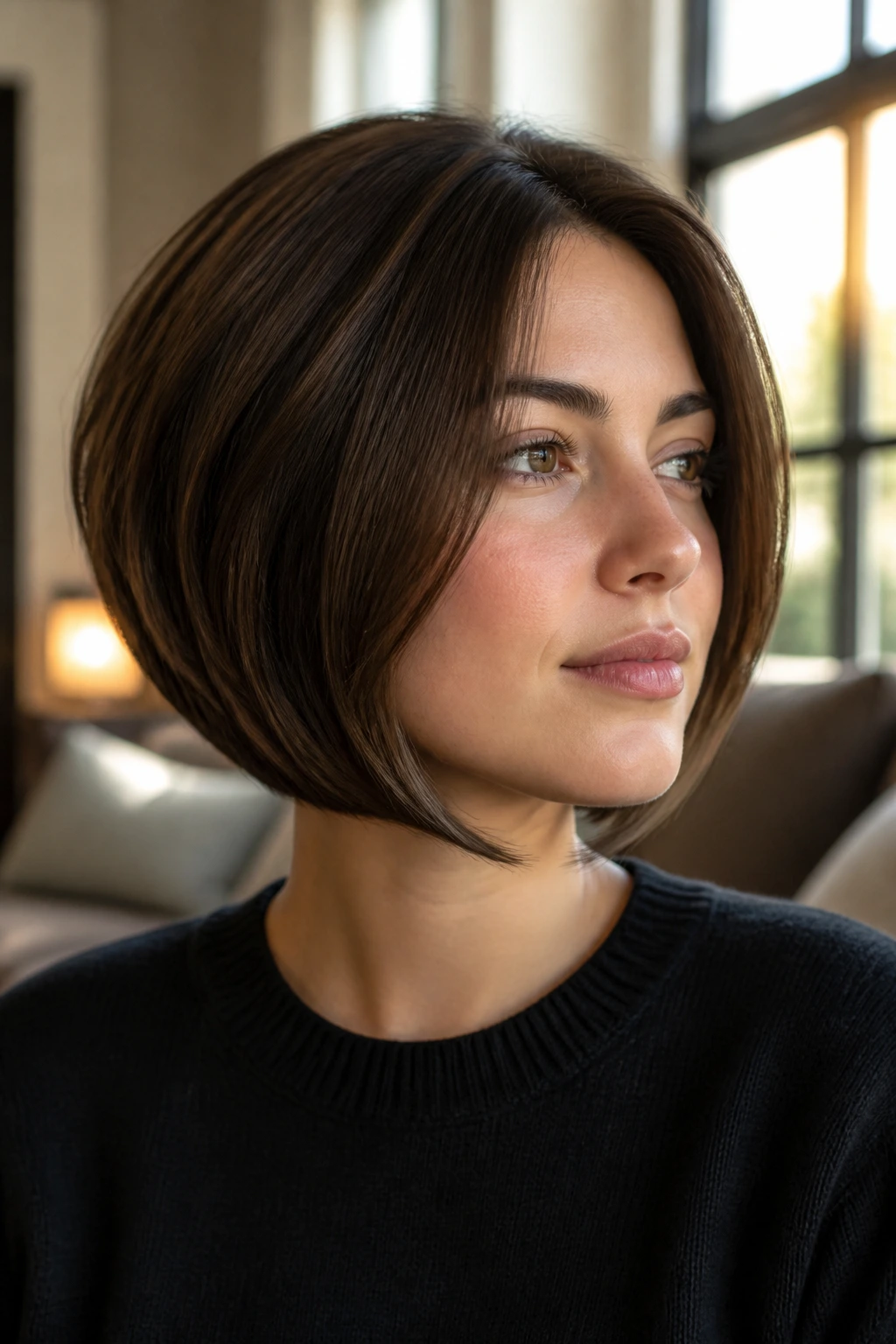
The classic stacked bob is where I’d start if you want the shape to do the talking. It has that tight, graduated back that hugs the nape and a front that lands around the jaw, which keeps the cut neat without making it severe.
Why it works
The back gives you lift. The front gives you length. That combination is gold for a round face because it stops the eye from resting on the cheeks for too long. You get a clean line through the profile, and the hair has enough structure to look styled even on a plain day.
What to ask your stylist for
- Keep the nape short and snug, with 1 to 2 inches of graduation through the back.
- Leave the front pieces at jaw level or just below so the cut doesn’t balloon at the cheeks.
- Ask for the crown to stay smooth, not over-layered.
- Finish with a slight bend under the ends rather than a hard curl.
Best tip: the front should skim, not flare. If the sides puff out, the cut loses the whole point.
2. Angled Stacked Bob with a Longer Front
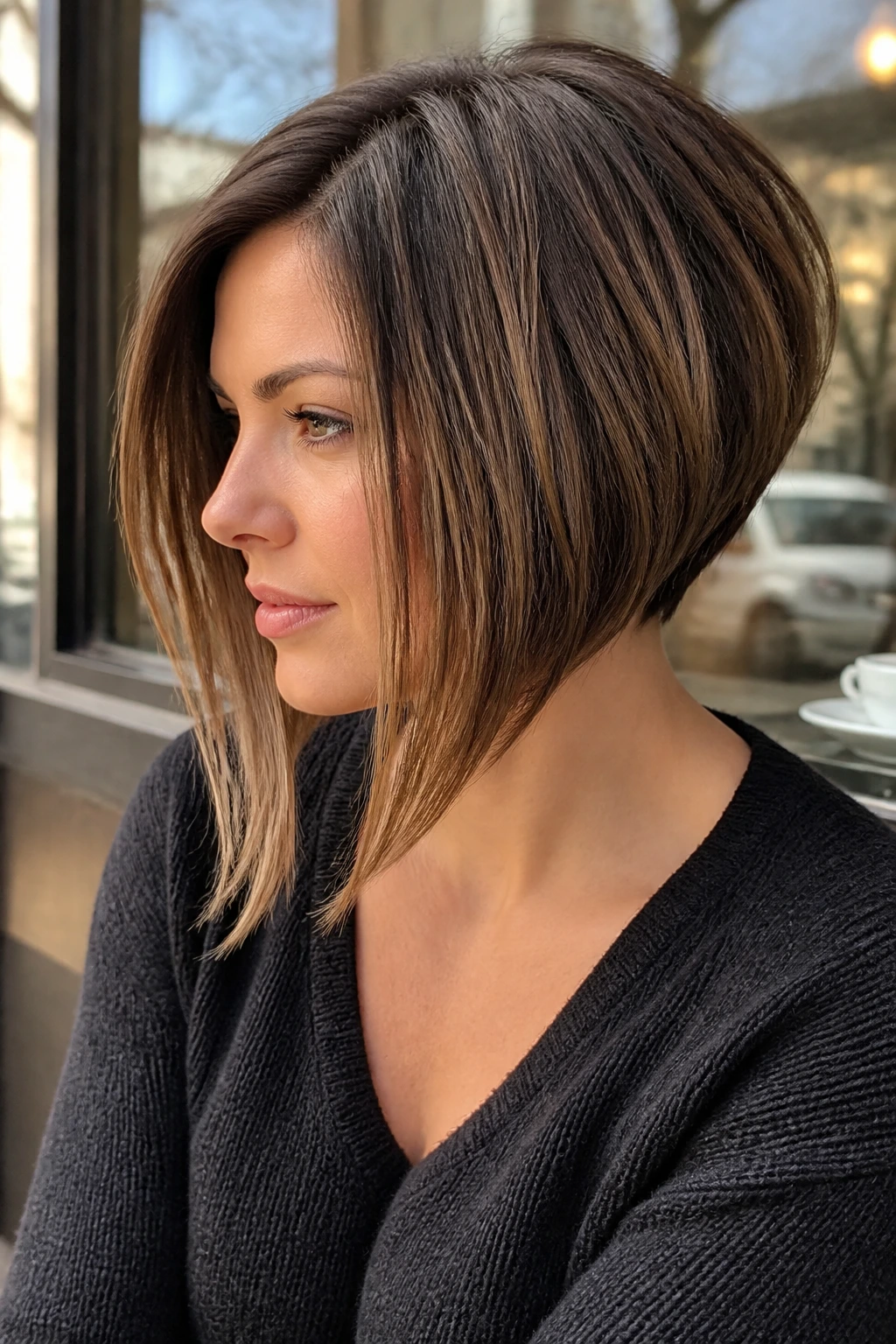
A sharper angle can do more for a round face than extra volume ever will. This cut keeps the back short and stacked, then lets the front fall noticeably longer, often toward the chin or a touch below it.
That diagonal line changes the whole mood. Instead of spreading width across the face, the cut draws the eye down and forward. It’s a smart choice if you like a stronger silhouette and don’t mind a style that looks deliberate from every angle.
I also like this one for thick hair, because the angle helps remove some of the visual heaviness that can build up around the jaw. If your hair is fine, the long front still gives the illusion of density without forcing the back to carry too much weight.
Wear it sleek for a sharper finish, or rough it up with a light texture spray if you want something less buttoned-up. Either way, the angle is doing the heavy lifting.
3. Side-Parted Pixie Bob
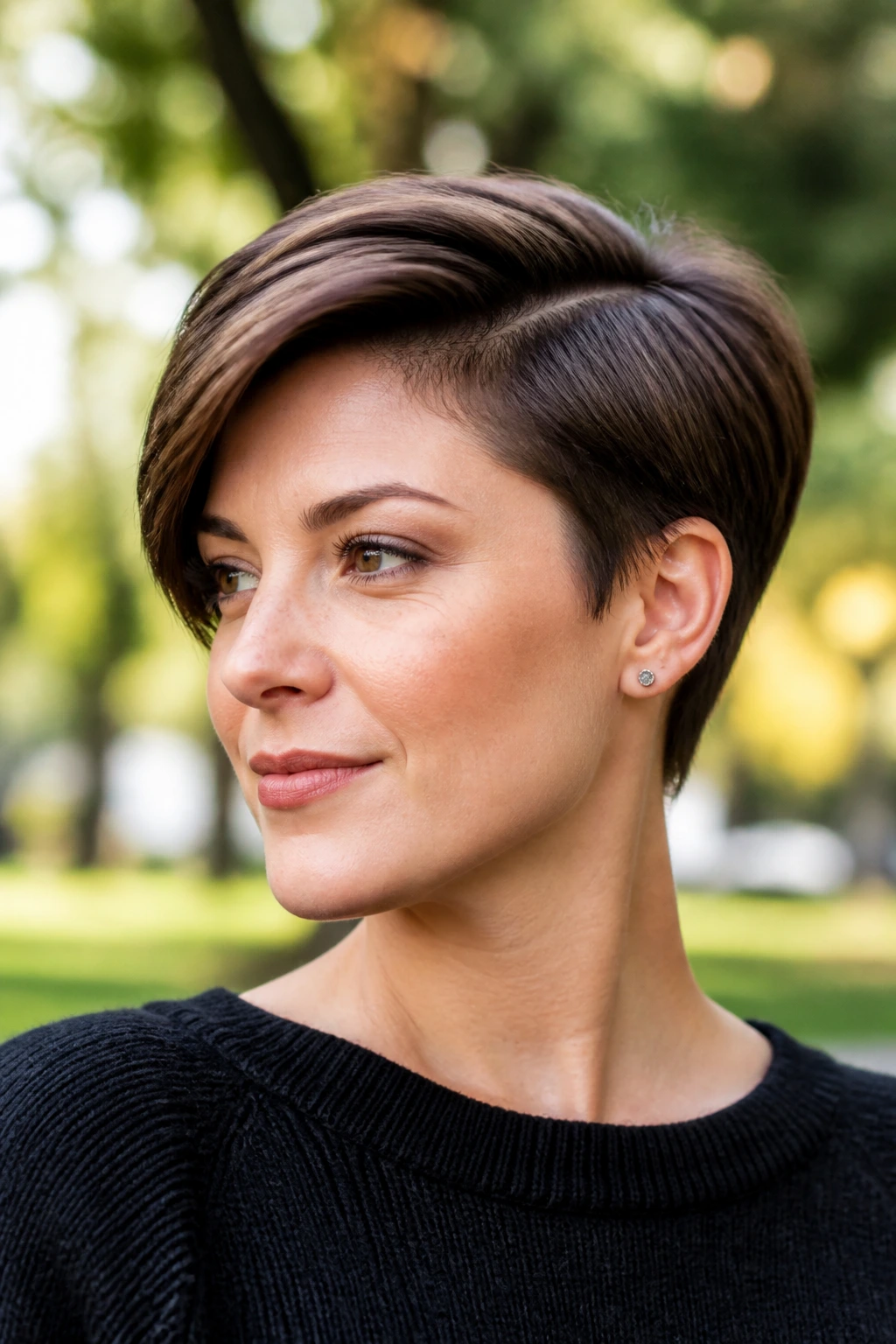
Why does a side part matter so much on a round face? Because symmetry can be a trap. A straight center part often splits the face evenly and emphasizes width, while a side part breaks that up and creates a longer line across the forehead and cheek.
A side-parted pixie bob sits between a pixie and a bob, which is exactly why it works. You get the cropped back and sides that keep the style light, but the top stays long enough to sweep across the face. That sweep matters. It softens the roundness without hiding the face under too much hair.
How to wear it
- Part the hair about 1 to 1½ inches off center.
- Keep one side tucked close to the head.
- Let the longer top layer fall across the forehead and touch the eyebrow area.
- Use a matte paste or cream so the top stays soft instead of helmet-like.
This cut is sharp, but not harsh. That’s the sweet spot.
4. Soft Wavy Stacked Bob
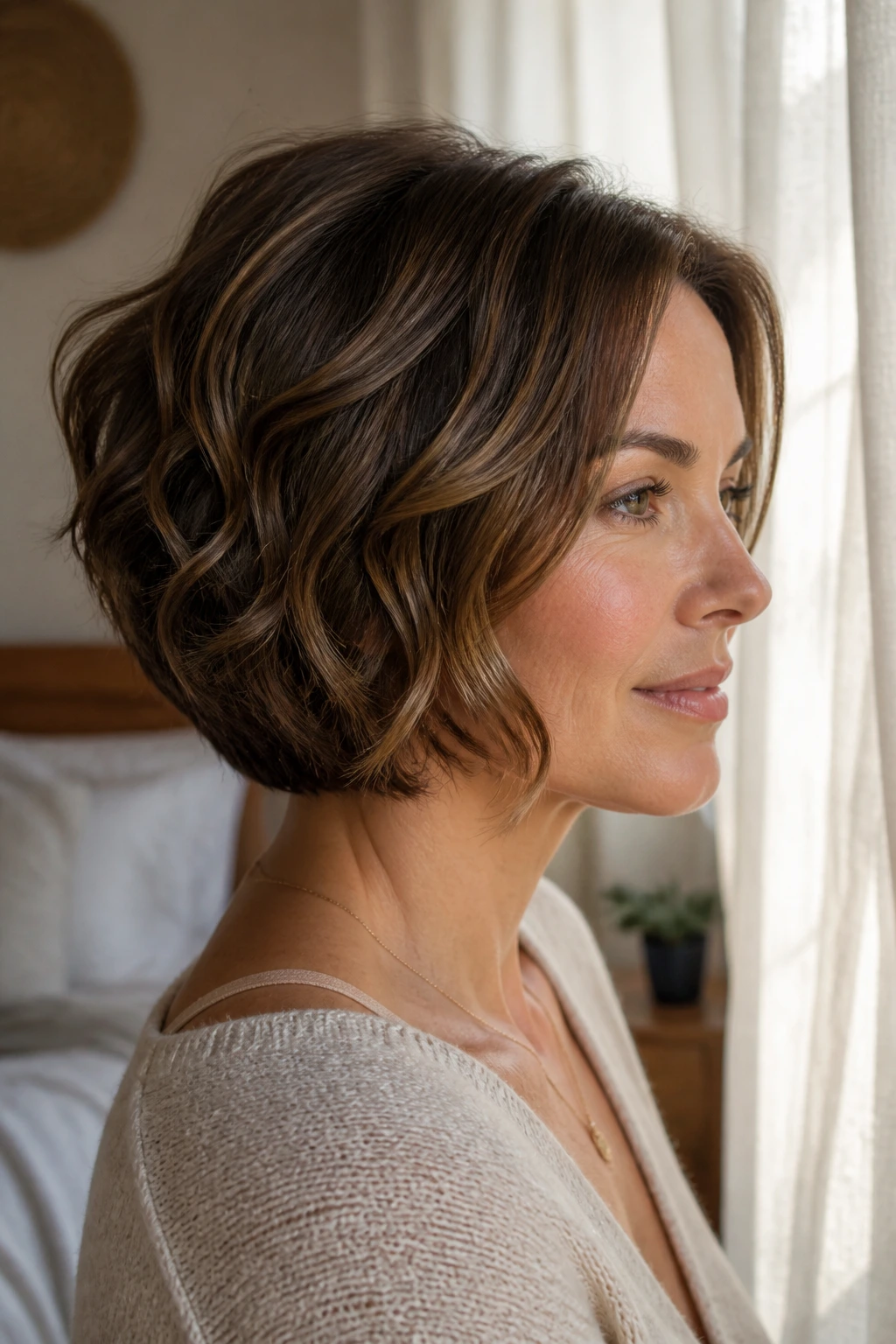
Picture a bob that moves when you turn your head. Not a stiff wave. Not a big curl. Just soft bends that keep the stacked back from looking too hard or too geometric.
That softness helps round faces because it shifts attention upward and outward in a controlled way. The waves give the cut air, but the stacked layers keep the shape from collapsing into a triangle. If your hair has a natural bend, this is one of the easiest styles to live with.
A 1-inch curling iron usually gives the right result. Wrap the hair away from the face for a few seconds, leave the ends a little straighter, and break the waves up with your fingers once they cool. Don’t chase a perfect curl pattern. That’s not the point.
A light mousse at the roots helps the crown stay lifted. If the roots go flat, the whole style loses its shape fast.
5. Curtain-Bang Stacked Bob
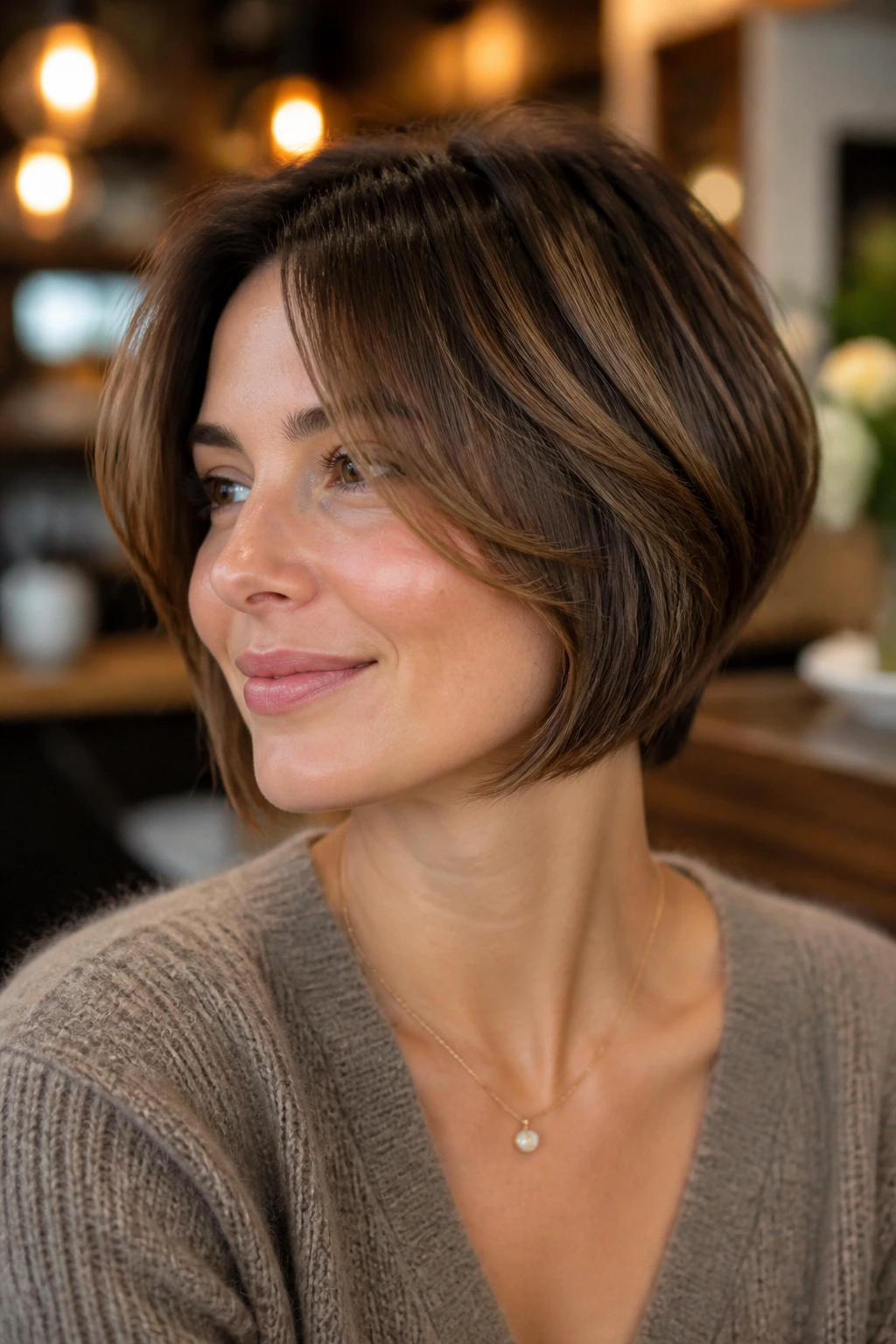
Curtain bangs can be a gift on a round face when they’re cut with enough thought. The trick is not making them too short or too full at the temples, because that can widen the upper face in a hurry.
A stacked bob with curtain bangs gives you two useful things at once: structure in the back and softness in the front. The bangs split away from the center and move toward the cheekbones, which makes the face look a little longer and the forehead a little less broad. I like this one for people who want movement without going all the way to a shag.
The sweet spot is usually a bang that starts around the brow and opens out toward the jaw. Too short, and it gets fussy. Too heavy, and it sits like a curtain rod.
One-sentence truth: the bang length matters more than the trend label.
If you blow-dry the bangs forward first, then round them away from the face with a brush, they’ll sit much better. And if your hair gets greasy fast, keep dry shampoo off the fringe unless you like a dusty texture.
6. Asymmetrical Stacked Bob for Round Faces
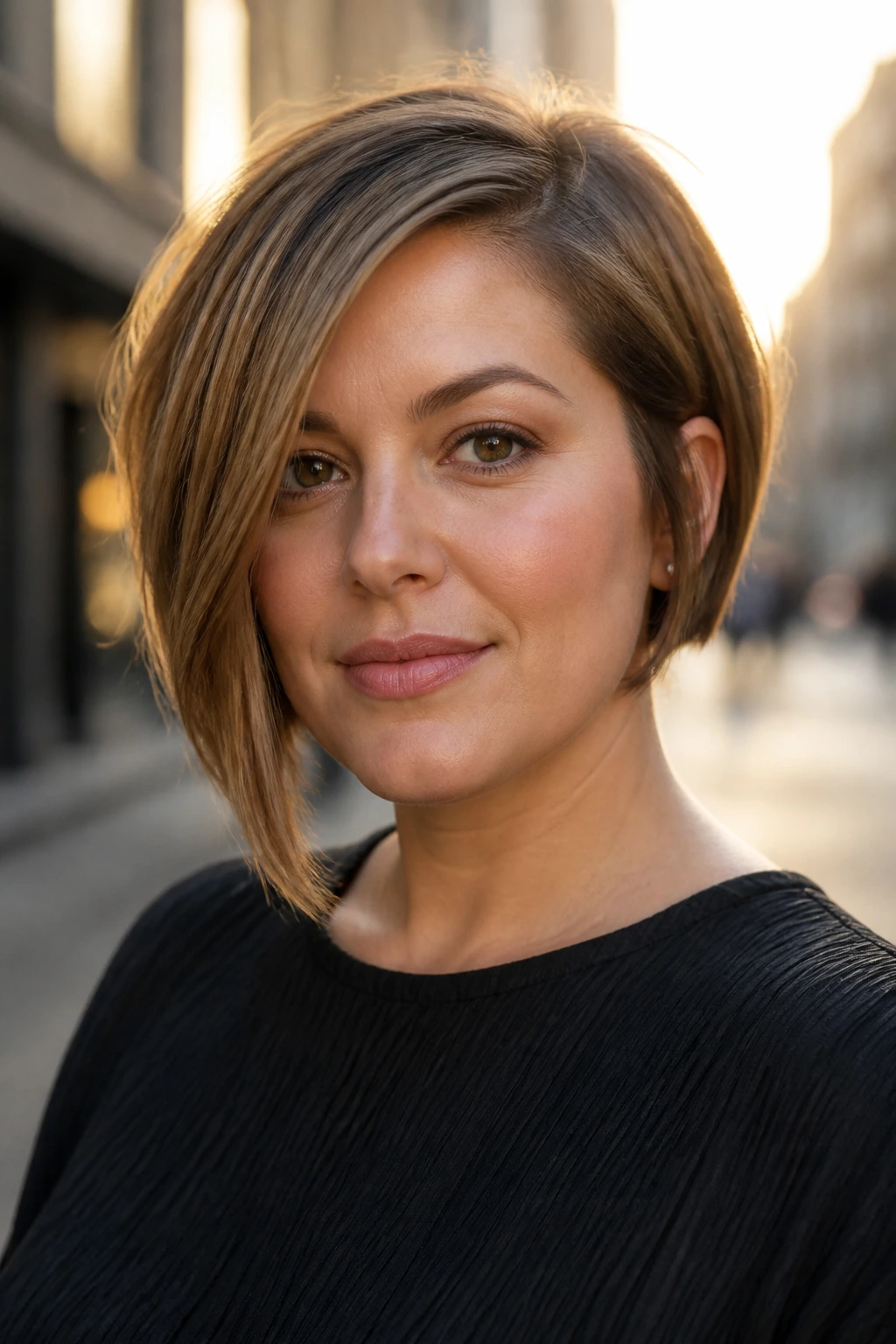
Unlike a symmetrical bob, this one refuses to sit politely on both sides of the face. One side is longer, the other side is tighter, and that difference gives the cut a built-in line that works hard for round cheeks.
The asymmetry pulls the eye sideways and down, which is useful when you want to break up fullness in the middle of the face. It also gives the cut a little edge without needing bright color or dramatic texture. If you like haircuts that look intentional even when they’re slightly undone, this is a strong pick.
It’s especially good on straight or slightly wavy hair, where the longer side can fall cleanly and show off the angle. Thick hair can wear it well too, but the shorter side needs careful debulking so it doesn’t stand out like a shelf.
I’d ask for the longer side to land at the chin and the shorter side to stay close to the jaw. That keeps the difference visible without making the cut feel lopsided.
7. Shaggy Stacked Bob
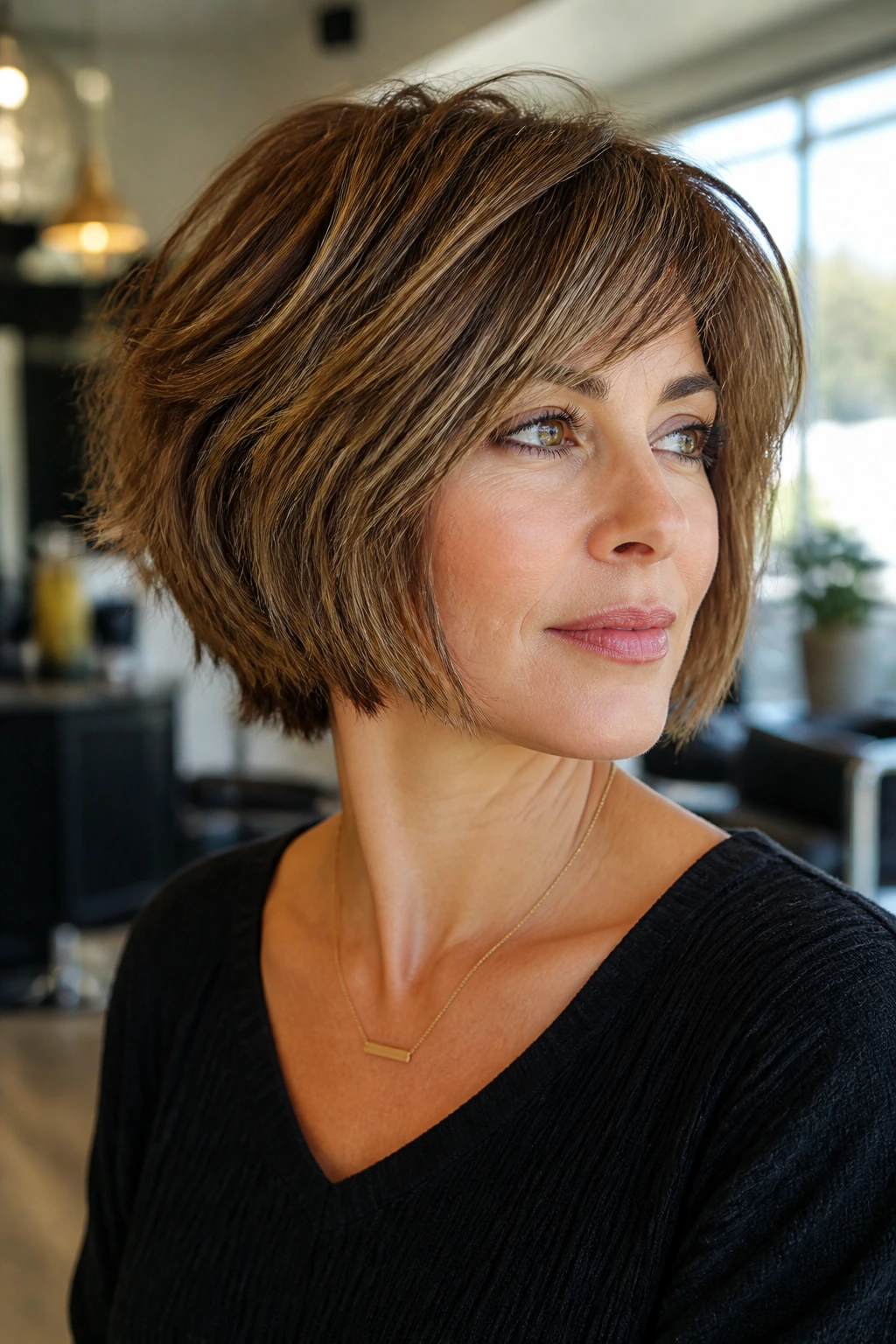
A shaggy stacked bob is for people who want movement first and polish second. The back is still stacked, but the layers are broken up more, so the whole cut feels lighter and a little less formal.
What makes it different
The shag element adds separation. Instead of one smooth shape, you get pieces that fall in slightly different directions. On a round face, that helps a lot because the hair doesn’t form one big circle around the cheeks. It creates edges and gaps, and those little gaps matter.
Best styling approach
- Use a light mousse on damp hair.
- Scrunch or rough-dry instead of brushing it smooth.
- Add a small amount of wax or paste to the ends.
- Skip heavy oils near the roots; they kill the lift.
This cut can look fantastic on thick hair, but it needs control. Too much layering, and it gets fluffy. Too little, and it turns into a regular bob with bad intentions.
8. Curly Stacked Bob
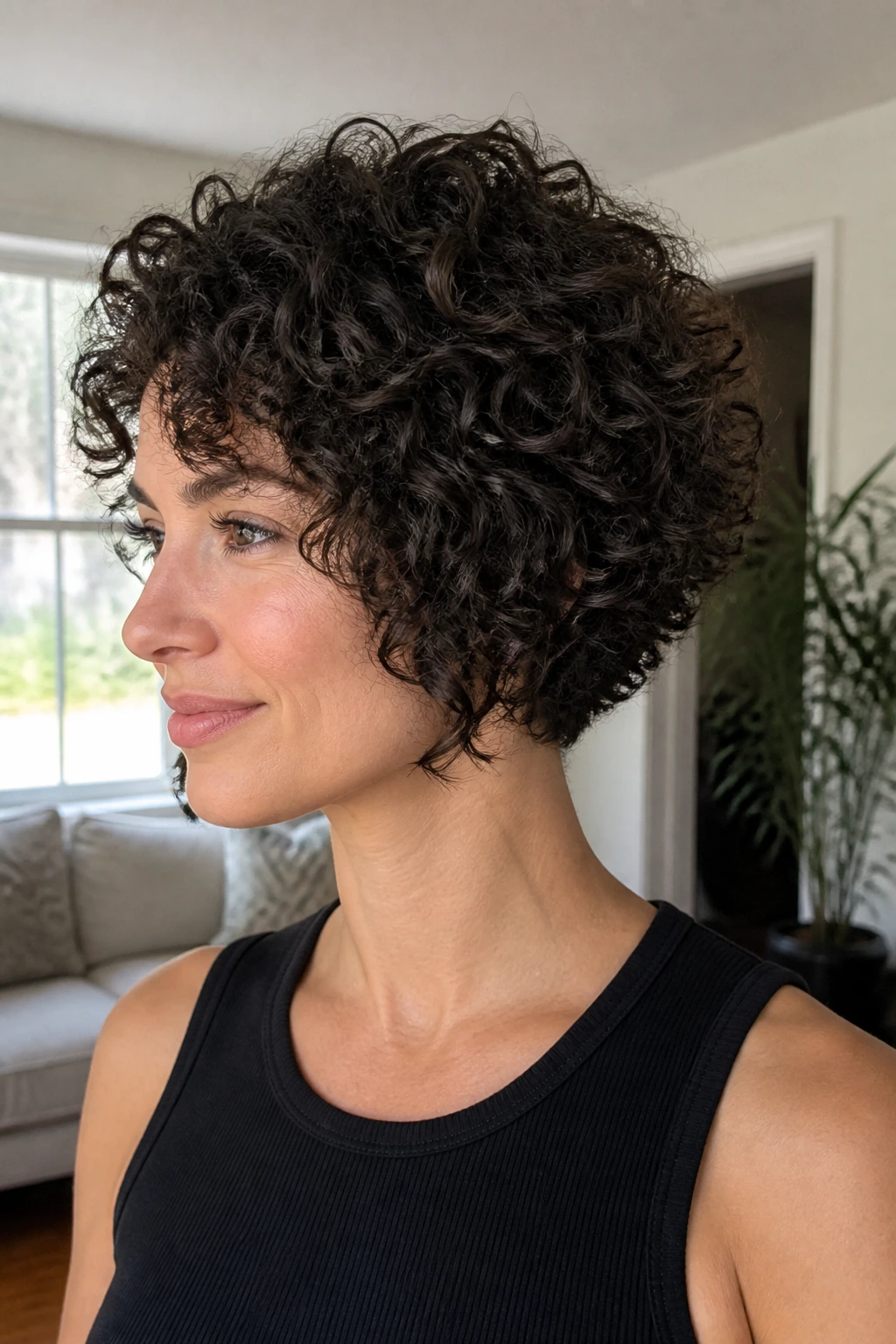
Curly hair changes the game, because the shape of the curl matters as much as the cut itself. A stacked bob for curls should be shaped with shrinkage in mind, not against it.
That’s why I’m a fan of a dry cut for this one when possible. Curly hair sits differently once it dries, and a wet cut can lie to you about where the shape will land. If the back is stacked too aggressively, the curls can pop up and make the crown too round. If it’s too long and heavy, the curls collapse and hide the neck.
The right balance is a short nape with enough room through the top and front for the curls to breathe. You want the curls to sit in a soft curve, not build a mushroom shape around the lower face.
A diffuser helps here, but don’t overhandle the curls while they’re drying. The more you touch them, the more they separate into frizz. Let them set. Then pick out just the pieces that need a little lift.
9. Sleek Graduated Bob
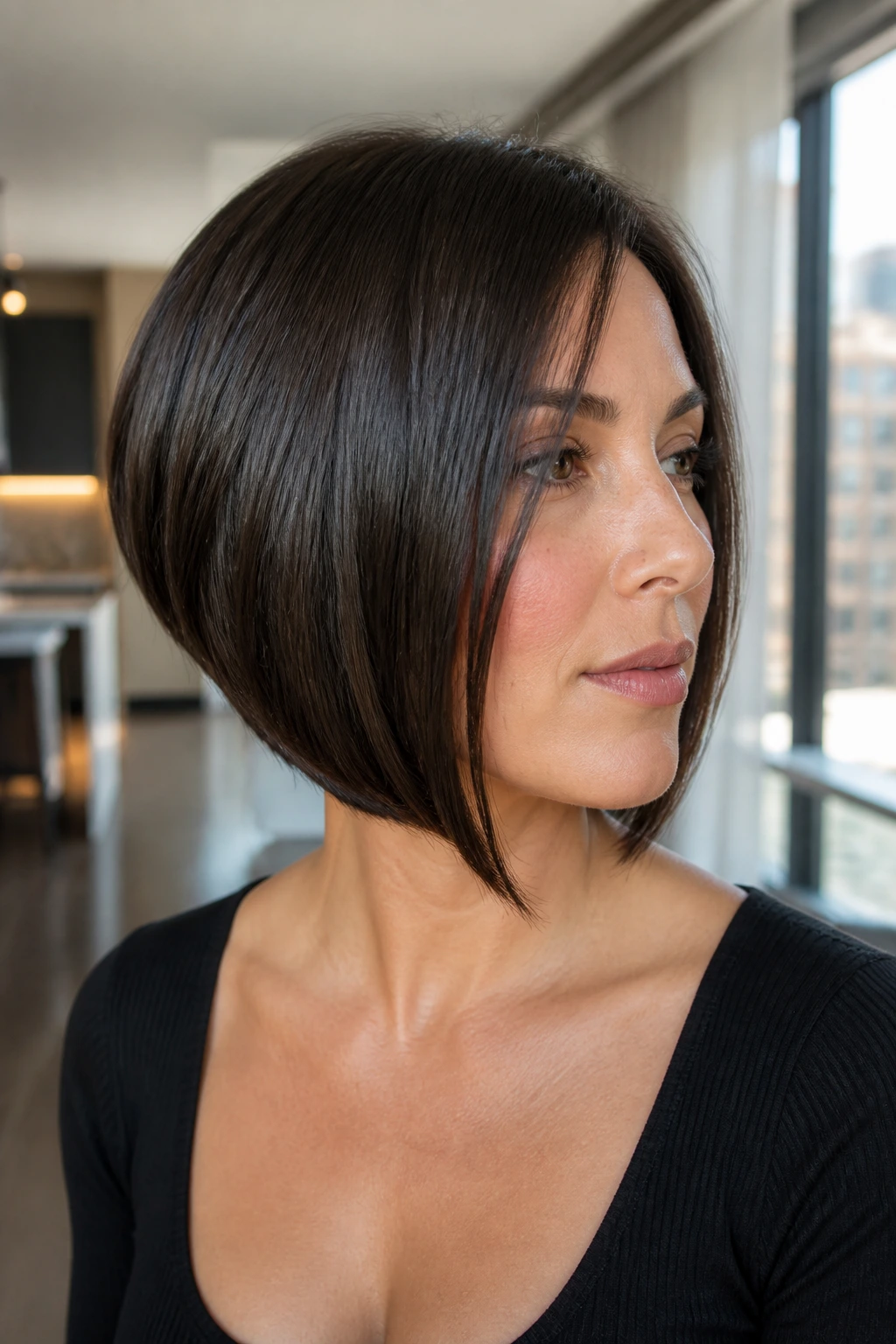
Can a smooth bob still flatter a round face? Absolutely, if the graduation is sharp enough and the front has enough length to keep the face from looking boxed in.
This cut is all about clean lines. The back is stacked and close, the sides are smooth, and the finish is glossy rather than fluffy. A sleek graduated bob is a strong choice if you don’t want texture to do all the work. Some people prefer a sharp outline, and there’s nothing wrong with that.
How to keep it polished
Use a heat protectant first. Then blow-dry with a paddle brush or a medium round brush, keeping the nozzle pointed down the shaft of the hair. A flat iron can smooth the last 10 percent, but don’t overdo it; a slightly beveled edge at the ends looks better than a pin-straight blade.
The key is balance. If the back is too short and the front too full, the head can look top-heavy. If the front is too blunt, the cheeks can feel boxed in. The cut works when every line is deliberate.
10. Feathered Stacked Bob
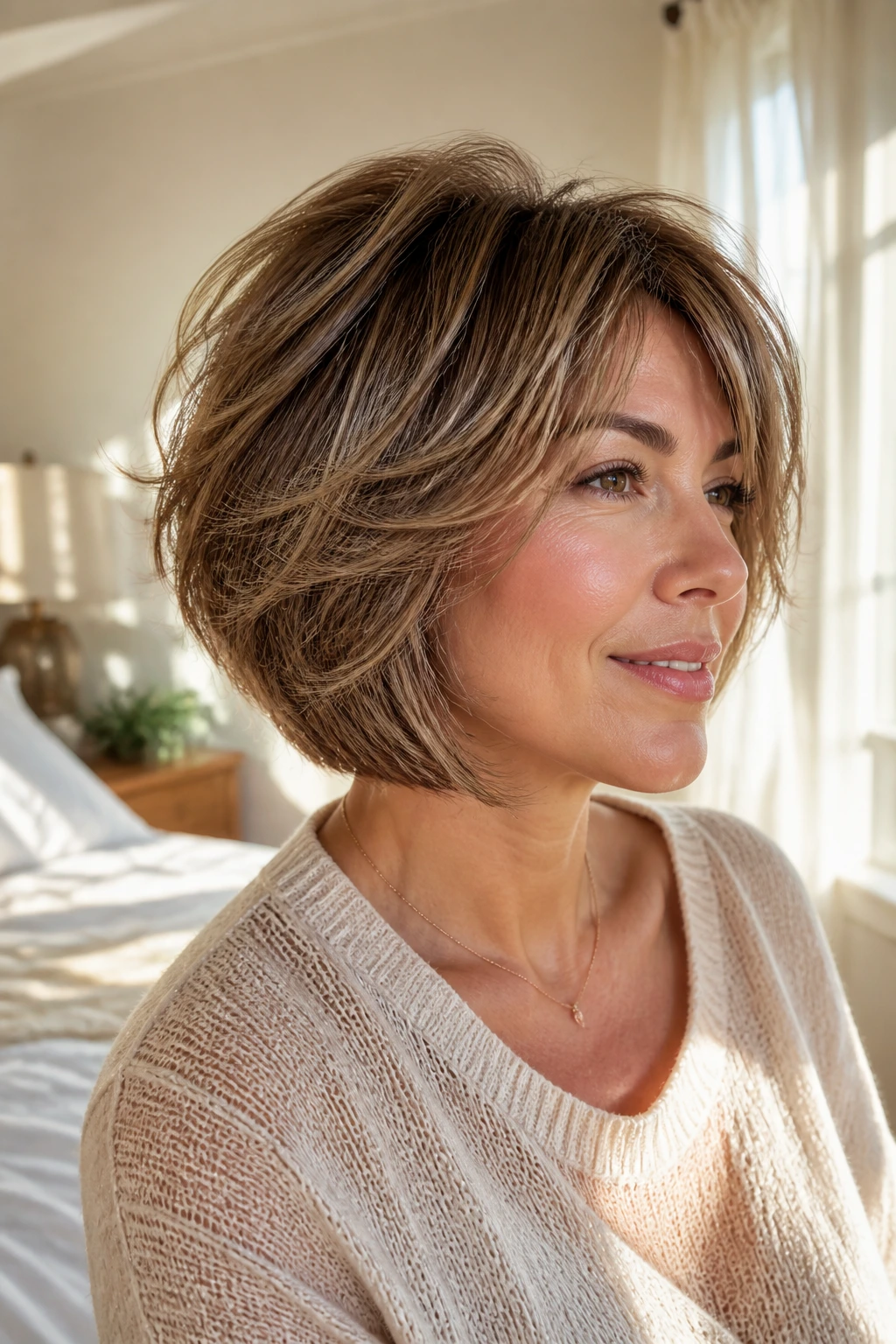
Feathered layers make a short stacked cut feel lighter, which is useful if your hair tends to hang heavy around the jaw. The ends are softened instead of chopped bluntly, so the whole shape moves a little more.
This style has a nice older-haircut energy in the best sense. Not dated. Just airy. It gives the face room without making the hair look thin, which is a tough balance to get right. On a round face, feathering helps the sides sit close enough to slim the shape while the top keeps enough lift to avoid flatness.
A stylist can feather the ends with careful point-cutting rather than taking a heavy thinning shear to the whole head. That matters. Over-thinning can leave a fuzzy halo, and nobody wants that.
- Ask for feathering mainly through the mid-lengths and ends.
- Keep the crown soft but not collapsed.
- Style with a light brush-out for movement.
- Use a small amount of cream on the ends, not the roots.
The result should feel light, not wispy.
11. Undercut Stacked Bob
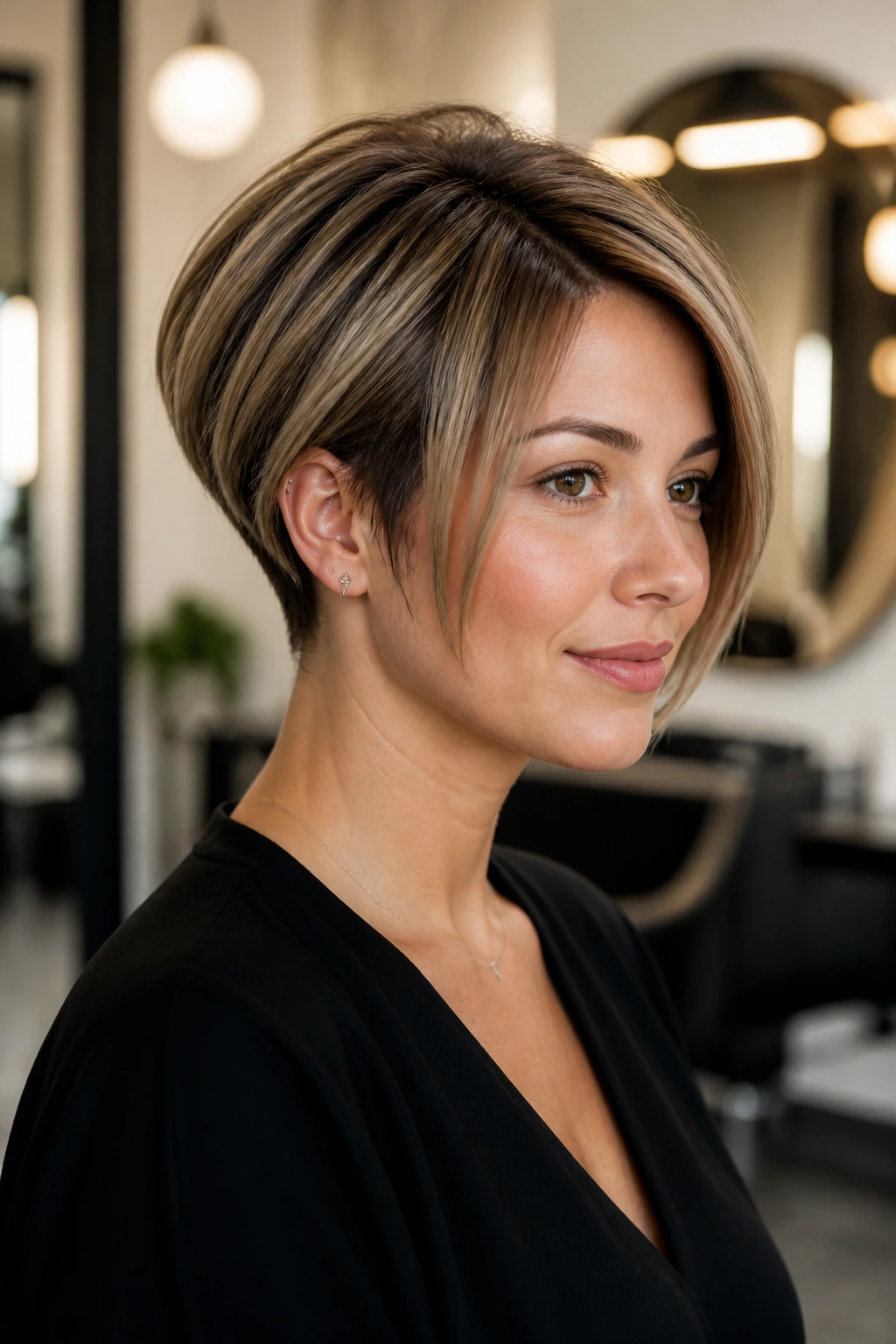
This one is not timid. A hidden undercut at the nape takes a lot of bulk out of the back, which can be a relief if your hair is thick, coarse, or just plain stubborn.
The nice part is that the undercut stays tucked away most of the time. From the front, you still see a normal stacked bob. From the back, the neckline sits cleaner and the style dries faster. That shorter base also helps the top layers fall closer to the head instead of flaring out.
For round faces, that matters because heavy hair at the back can make the whole silhouette feel wider. Remove some of that weight, and the cut starts to read as vertical instead of round.
A small warning. If the top layers are too short on top of the undercut, the style can feel severe. Keep enough length through the crown and front so there’s still some softness around the face. Maintenance is part of the deal too; undercuts grow out fast and need regular cleaning up.
12. French Bob with a Hidden Stack

The French bob is usually thought of as blunt, cheeky, and close to the jaw. Add a hidden stack in the back, and it becomes a lot more face-friendly for rounder features.
What changes? The front still has that chic, straight-across feel, but the back lifts a little so the cut doesn’t sit flat on the head. That tiny bit of graduation changes the profile. It gives the neck more room and keeps the bob from spreading outward at the cheeks.
This version is good if you like a strong fringe or a brow-grazing bang. The fringe helps anchor the face, while the hidden stack quietly shapes the head from behind. It’s a nice compromise for someone who likes a bold line but doesn’t want the cut to feel rigid.
If your hair is fine, keep the stack subtle. If it’s thick, the hidden layering matters more because it stops the back from forming a block. Either way, this is one of those cuts that looks simple until you notice how carefully the weight has been removed.
13. Inverted Bob
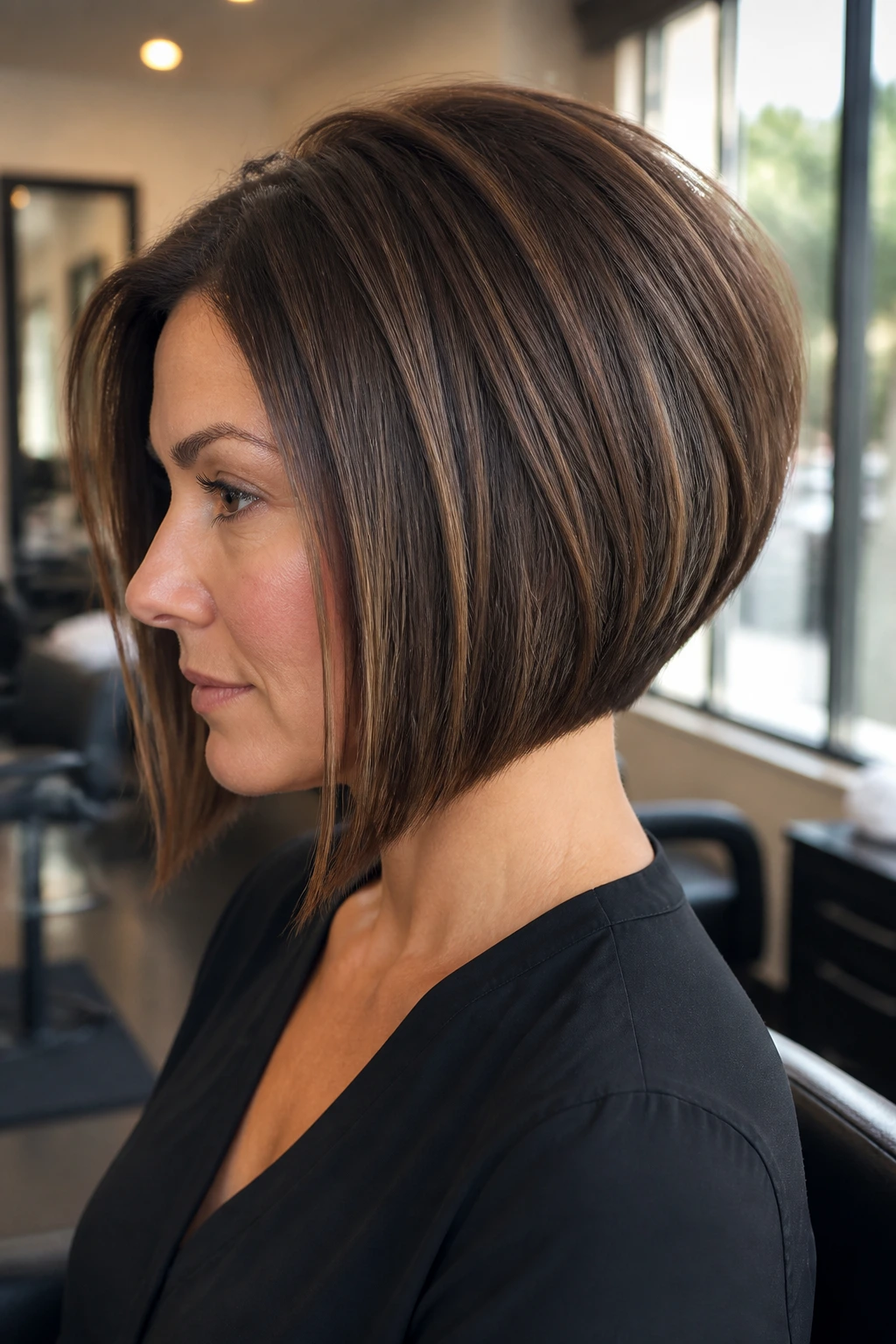
The inverted bob is a close cousin to the stacked bob, but the angle usually feels steeper. The back rises more sharply toward the crown, and the front lands longer, which gives the whole cut a clear forward line.
That line helps round faces because it lengthens the look of the jaw. The eye moves from the short nape to the longer front in one clean sweep. No fuzz. No confusion. Just shape.
Why it feels different from a classic stack
A classic stacked bob can be soft and rounded. An inverted bob usually looks a little more directional, almost like the hair is pointing forward on purpose. That makes it a good fit if you want structure but don’t want the back to puff out.
It’s also a nice choice for straight hair, where the angle can be seen clearly. Wavy hair can wear it too, but the front pieces need enough length to stay distinct when they bend.
Ask your stylist to keep the front at least at chin level and the back snug at the nape. If the gap between the two is too small, the cut loses its edge.
14. Deep Side-Part Stacked Bob for Round Faces
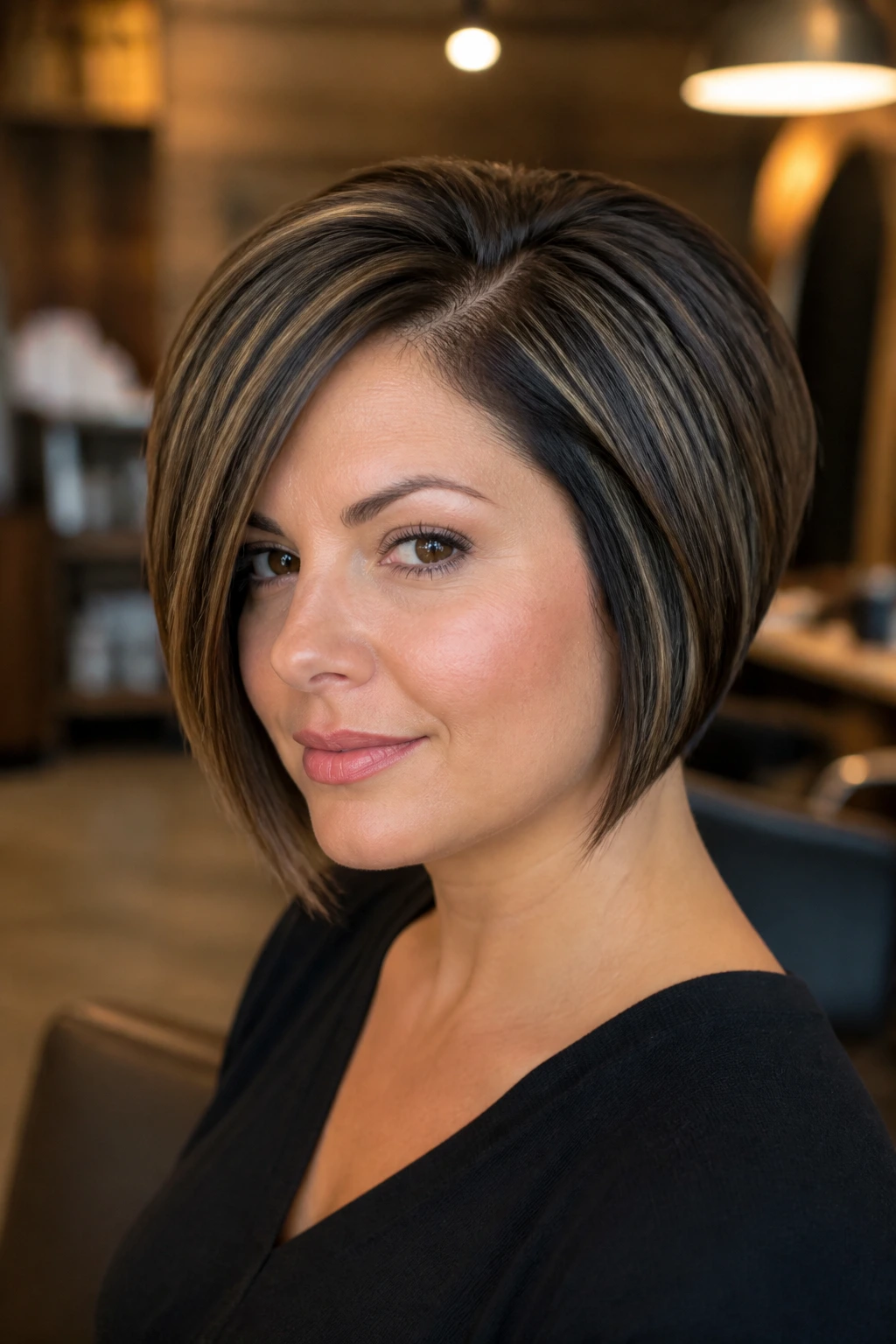
A deep side part does a sneaky amount of face shaping. It pushes hair across one side of the forehead, creates lift at the crown, and breaks up the equal-width look that can make round faces feel wider.
This version is different from the side-parted pixie bob because it keeps more of the bob shape intact. You still have a recognizable stacked back and a real perimeter around the jaw. The part is the feature, not the haircut itself. That’s why it works so well when you want a simple change rather than a dramatic one.
I like this on hair that naturally falls flat on top. The part gives you instant height without teasing or a lot of product. Tuck one side behind the ear and let the other side fall forward. That small asymmetry is enough to make the face look longer.
Use a root spray or a light blow-dry mousse if your hair collapses by noon. A side part needs a little support, or it slides back to center and loses the shape you were aiming for.
15. Tapered Stacked Crop
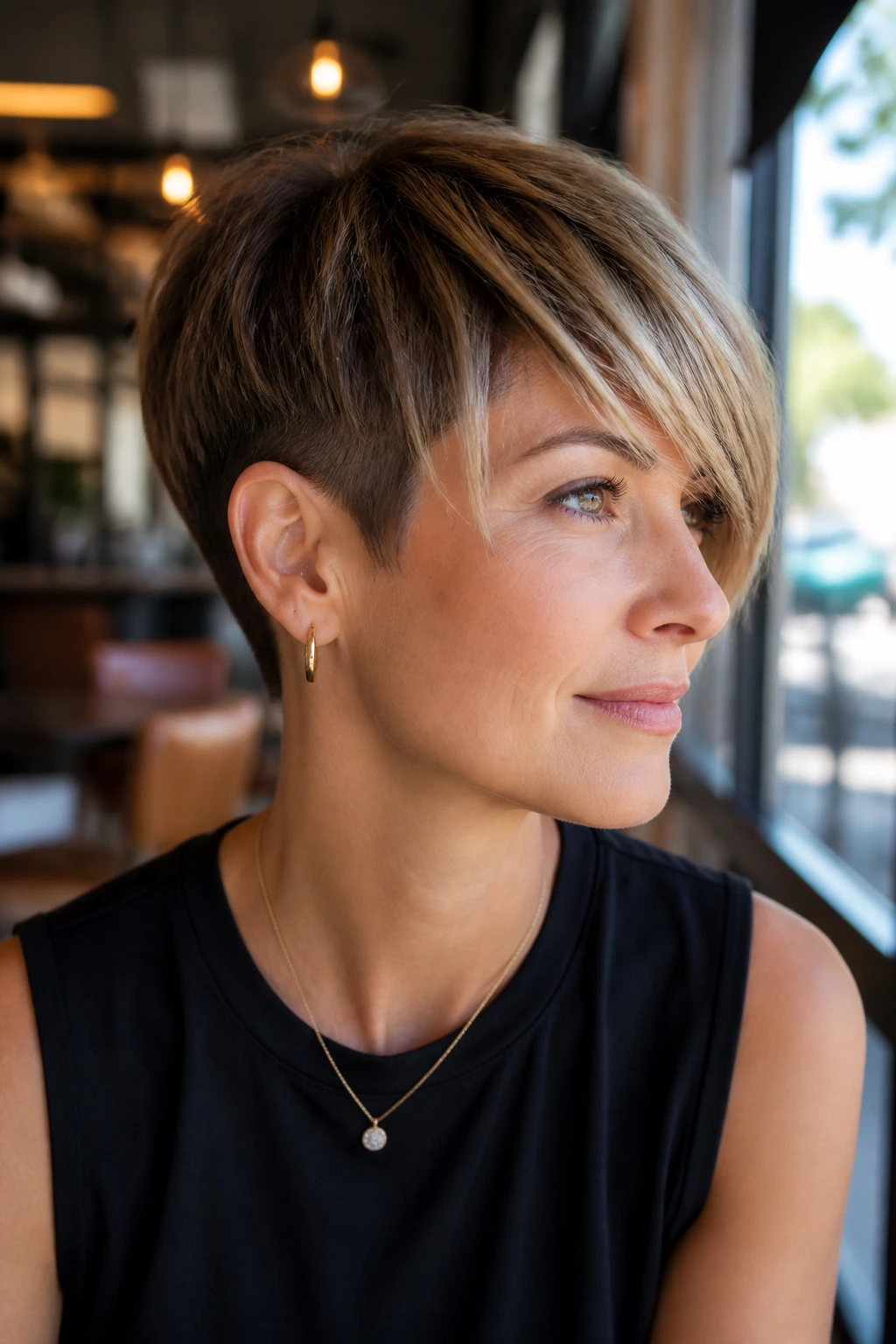
Can a cut this short still flatter a round face? Yes, if the top is left long enough to create a vertical line and the sides are tapered close instead of puffed out.
A tapered stacked crop sits closer to the head than a bob, but it still borrows the stacked idea at the back. The nape is short and neat, the sides are trimmed in tighter, and the top keeps enough length to sweep forward or to one side. That keeps the silhouette slim.
What to ask for
- Taper the neckline tightly.
- Keep the top at least 2 to 3 inches long so there’s shape left to style.
- Leave a little extra length through the fringe area.
- Avoid too much width at the temples.
This cut is good for someone who wants low-maintenance hair that still feels styled. It’s also excellent if your hair is dense and you hate fighting the bulk every morning.
16. Chin-Length Bob with Face-Framing Layers
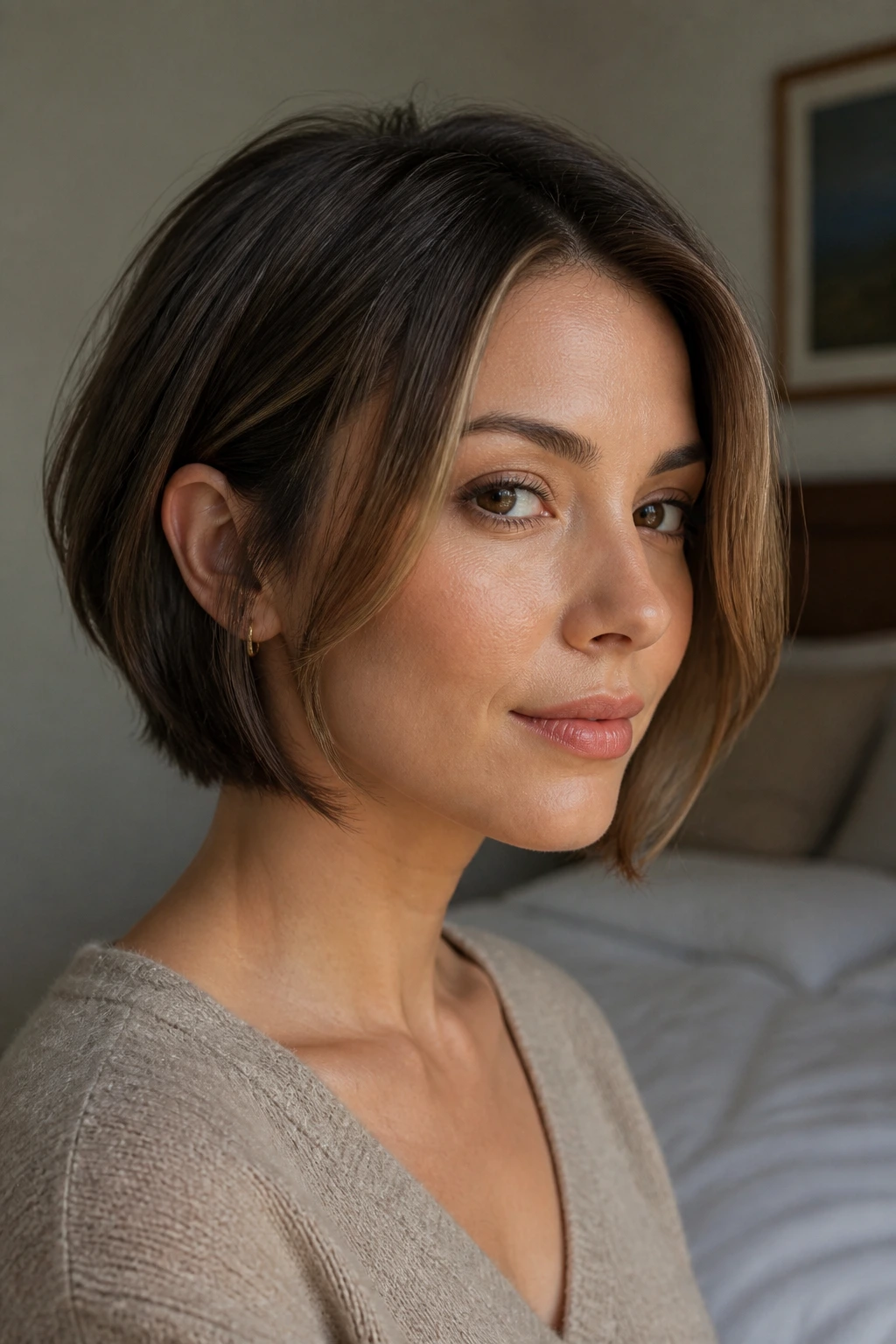
Sometimes the smartest move is not going shorter. A chin-length stacked cut with face-framing layers keeps enough length to soften the cheeks while still giving you the lifted back that makes the style work.
The face-framing pieces matter here. They should curve along the cheekbone and stop somewhere around the jaw, not cut straight across the widest part of the face. That small detail changes how the whole haircut sits visually. It breaks up the roundness instead of sitting on top of it.
This is a good option if you like being able to tuck hair behind your ears or pull it into a tiny clip on busy days. The cut still feels short, but it’s not fussy. And if your hair has a little wave, the layers will show up without needing much styling.
- Ask for the front to graze the jaw.
- Keep the layers soft around the cheekbone.
- Use a round brush only on the front pieces if you want a cleaner finish.
Simple. Useful. Not boring.
17. Textured Bob with Piecey Ends
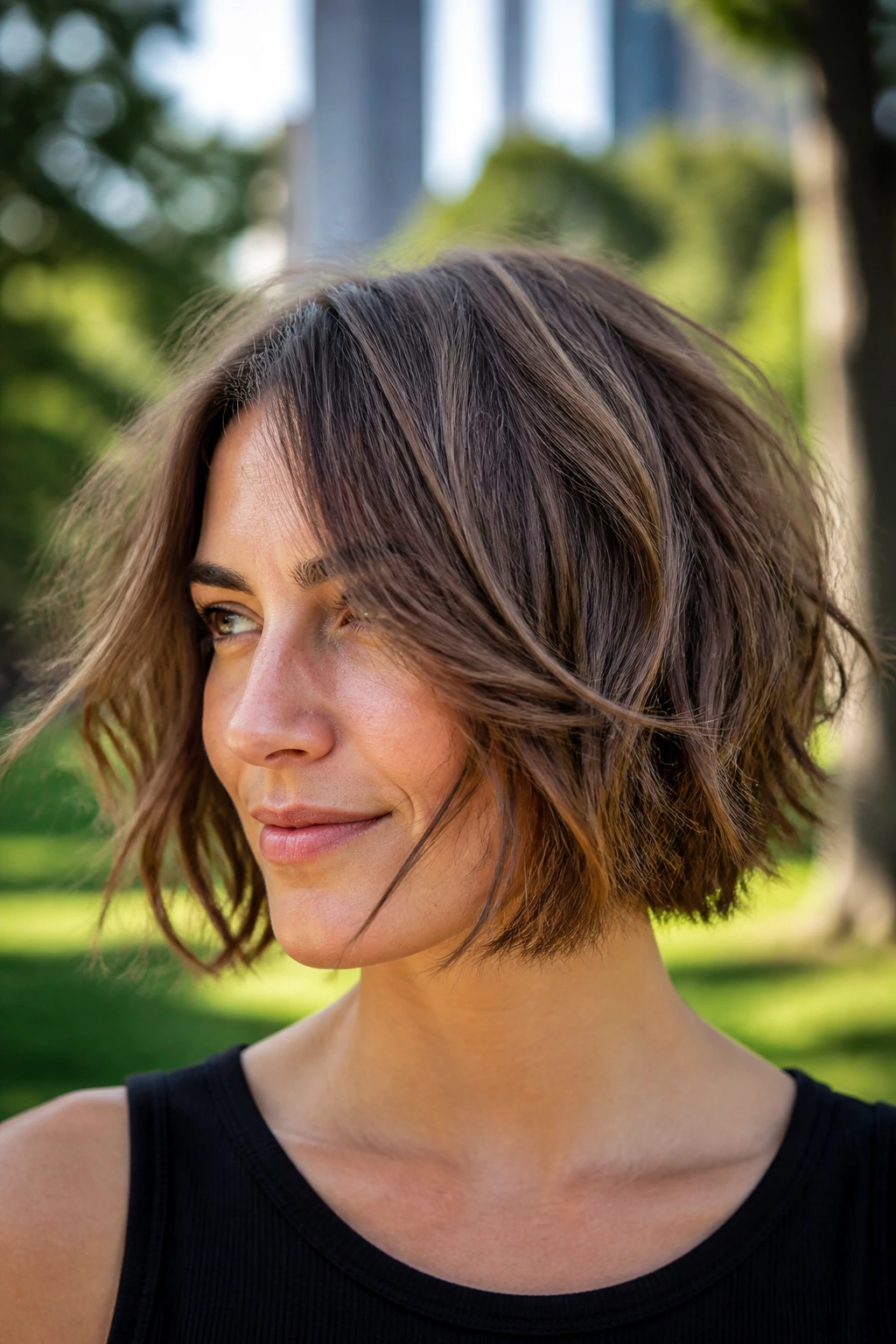
Piecey ends are the easiest way to keep a short stacked cut from looking too round. Instead of one solid edge, you get small bits of separation at the bottom, which keeps the outline from feeling heavy.
This style is especially good if you like hair that looks a little lived-in. The texture gives it attitude without making it messy. On round faces, that separation helps because the cut doesn’t form a neat circle around the jaw. It breaks the shape up, which is the whole point.
A small amount of texturizing spray can do a lot here. Work it through the mid-lengths and pinch the ends with your fingers. If the hair gets too dry, use a pea-size cream first and texture second. Order matters.
I would not push this style too far if your hair frizzes easily in humidity. A bit of texture is good. A puffy halo is not. The best version looks breezy, not frayed.
18. Short Stacked Lob
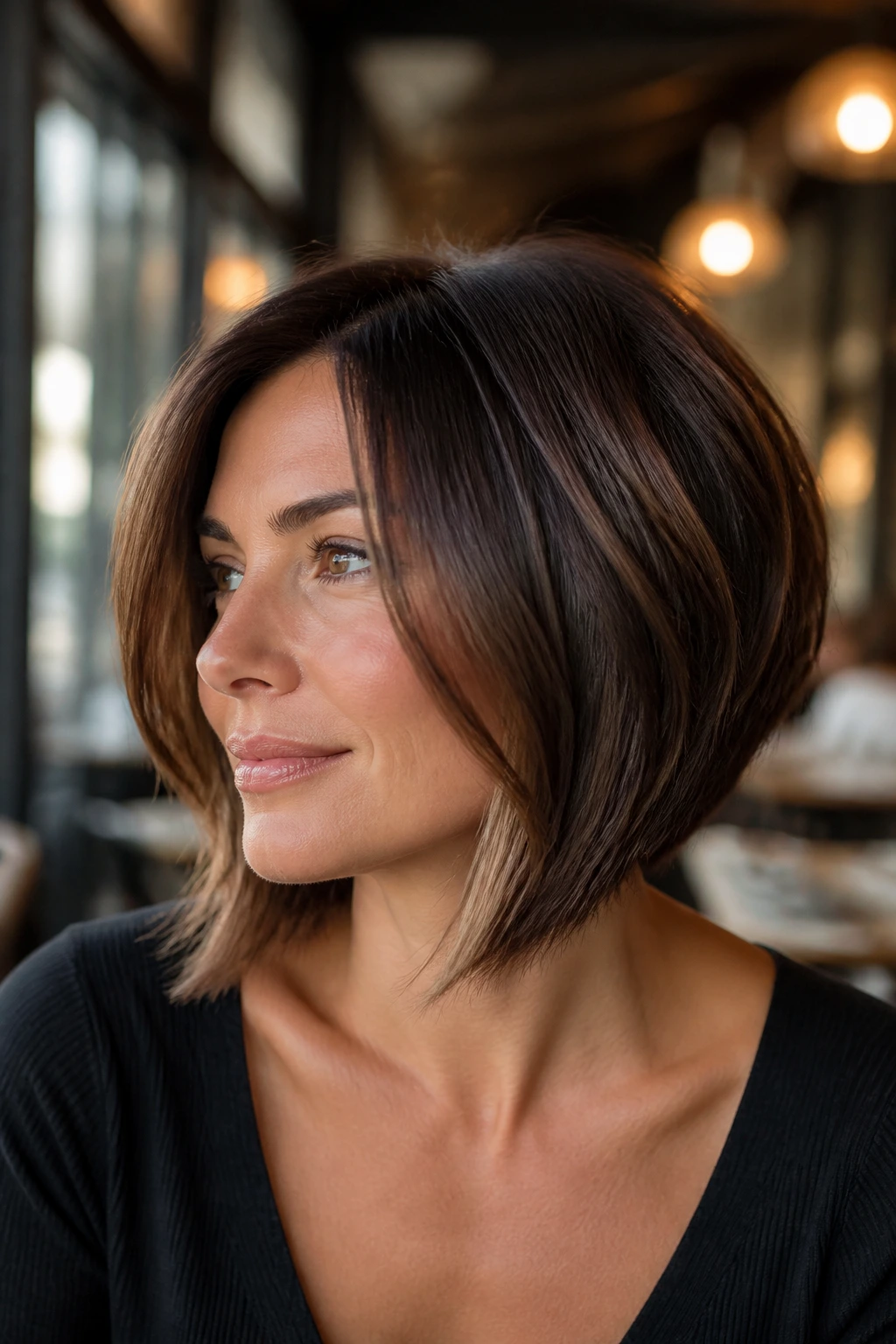
A short stacked lob gives you the structure of a bob with a little more breathing room through the front. The back is still lifted and stacked, but the front can sit closer to the collarbone or just above it, which softens the overall shape.
Unlike a chin-length bob, this version gives you more movement and slightly more styling options. You can tuck it, wave it, or wear it smooth without feeling locked into one look. For round faces, that added length in front helps narrow the visual width of the face without making the haircut feel heavy.
This is a good middle ground if you want short hair but aren’t ready to go fully cropped. It also works well for people with thicker hair, because the extra length in front keeps the cut from springing up too much.
A side part or diagonal part helps here. So does a subtle bend through the ends. The lob doesn’t need drama; it needs direction.
19. Blunt Bob with Beveled Ends
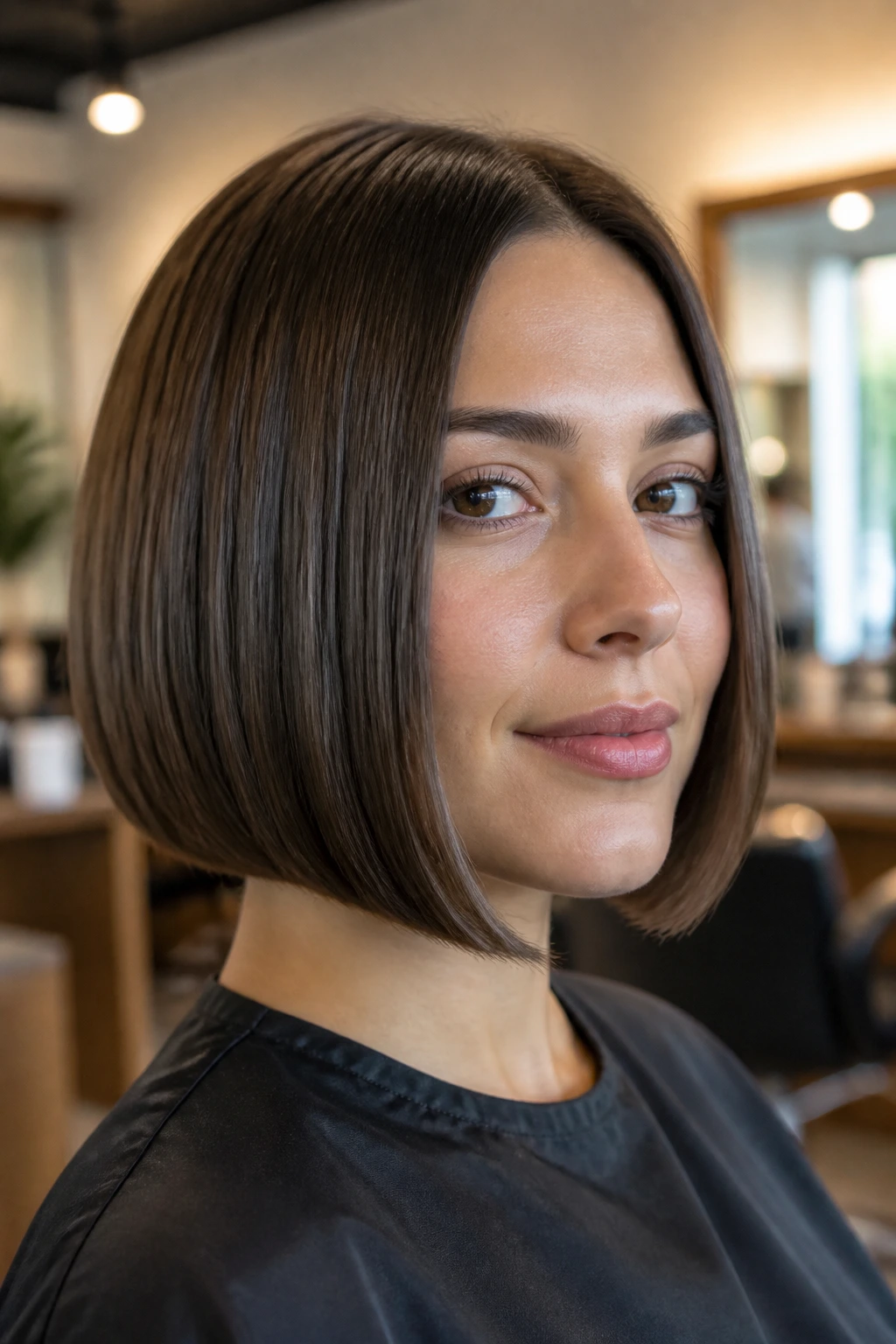
A blunt bob sounds risky for a round face, and honestly, it can be if it’s cut wrong. But when the ends are beveled slightly inward and the back is stacked just enough, the result is clean rather than wide.
The blunt perimeter gives the haircut strength. The bevel keeps it from looking like a block. That little inward curve at the ends is the part people miss. Without it, the line can sit heavy around the cheeks. With it, the style feels compact and polished.
Why it can work
The blunt edge creates a crisp frame around the lower face. That frame is useful when the rest of the cut stays controlled and the top has some lift. The haircut reads as sleek, not soft and fluffy.
Best way to wear it
- Keep the back short and controlled.
- Ask for a very slight inward bevel at the ends.
- Blow-dry with tension so the perimeter stays smooth.
- Avoid too many layers inside the shape.
It’s a strong look. Not everyone wants that. But when it works, it really works.
20. Side-Swept Fringe Bob
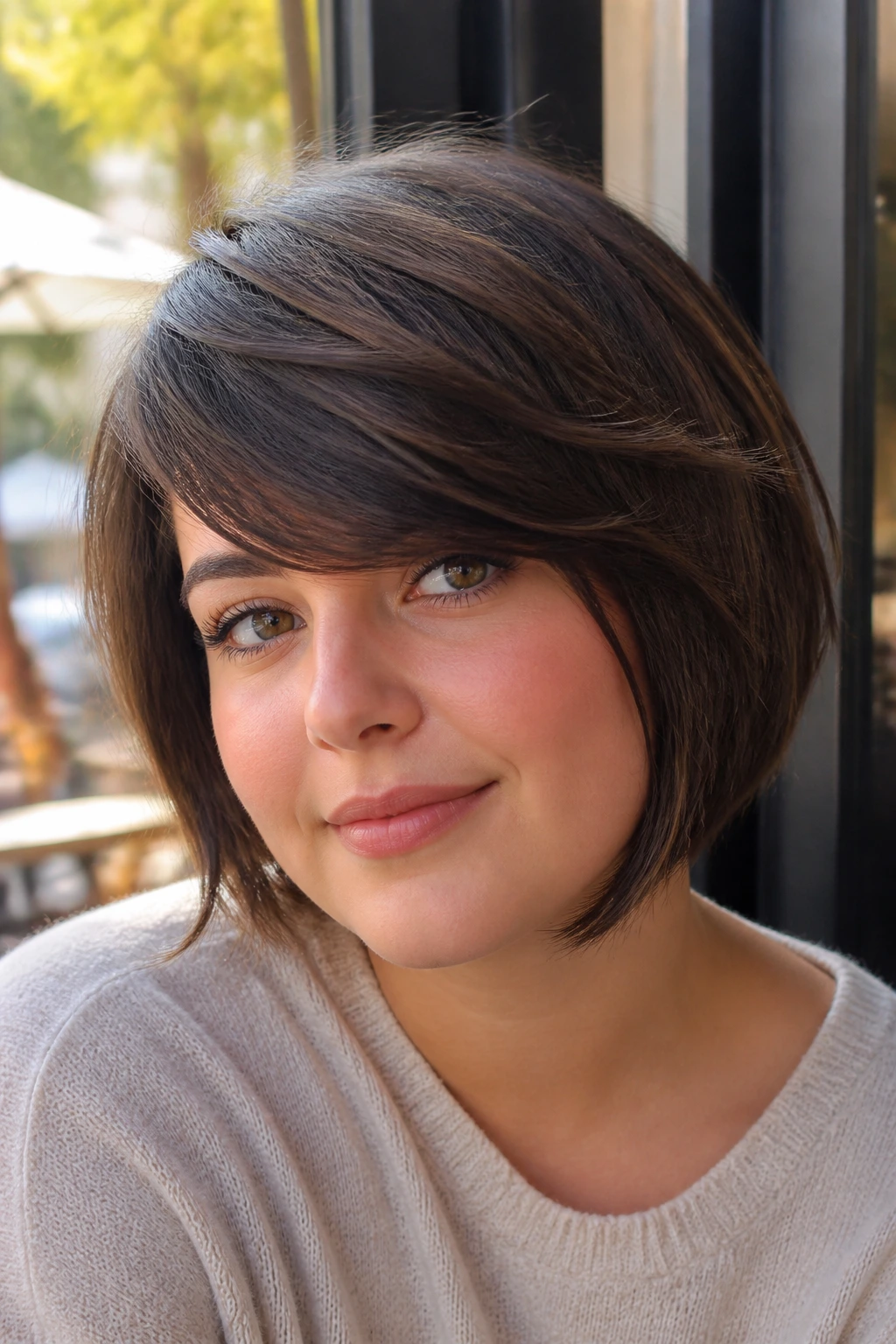
A side-swept fringe can change the balance of a haircut faster than nearly anything else. It cuts across the forehead, softens the widest part of the face, and gives the bob a little movement without needing big layers.
This style is especially useful if you want to keep the back stacked and neat but need something up front to stop the face from feeling too open. The fringe should start deep enough on one side to create a real sweep, not just a tiny bend of hair pretending to be a bang.
For a round face, I like a fringe that grazes the brow and falls toward the temple or cheekbone. If it stops too high, it can make the face feel shorter. If it’s too full, it can crowd the eyes. There’s a middle lane, and that’s the lane you want.
A flat brush and a quick blow-dry are usually enough. If the fringe splits or flies apart, a small amount of cream at the ends settles it down without killing the movement.
21. Ear-Length Pixie Bob
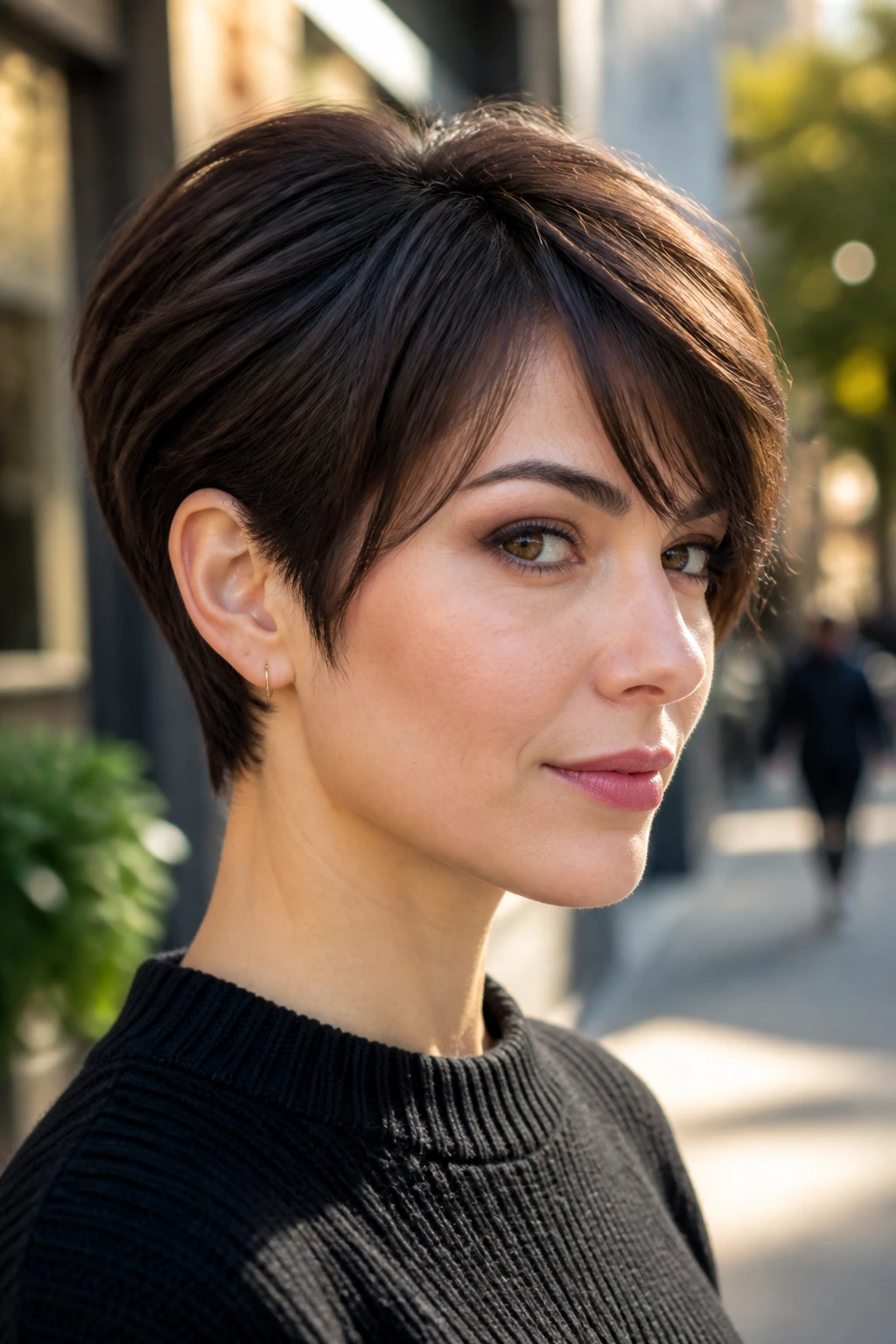
Can a cut this short still flatter a round face? It can, if the shape is kept tall enough at the crown and narrow enough at the sides. That’s the whole trick.
An ear-length pixie bob sits right on the edge between pixie and bob. The ears stay partially exposed, the nape stays tight, and the top keeps enough length to sweep up or over. This creates height where you want it and removes width where you don’t.
It’s a bold cut, though. There’s no pretending it’s something else. If you like hair tucked behind the ear, strong cheekbone emphasis, and a style that dries fast, it’s a solid choice. If you prefer to hide behind your hair, probably not your haircut.
Who it flatters most
- People with fine to medium hair that needs lift.
- Anyone who likes a clean neckline.
- Glasses wearers who want the frames to stand out.
- Faces that can handle a lot of attention at the eyes and jaw.
A tiny amount of paste at the top and a finger-tousle is usually enough. The cut should look intentional even when it’s a little messy.
22. Rounded Nape Bob with Jaw-Skimming Front
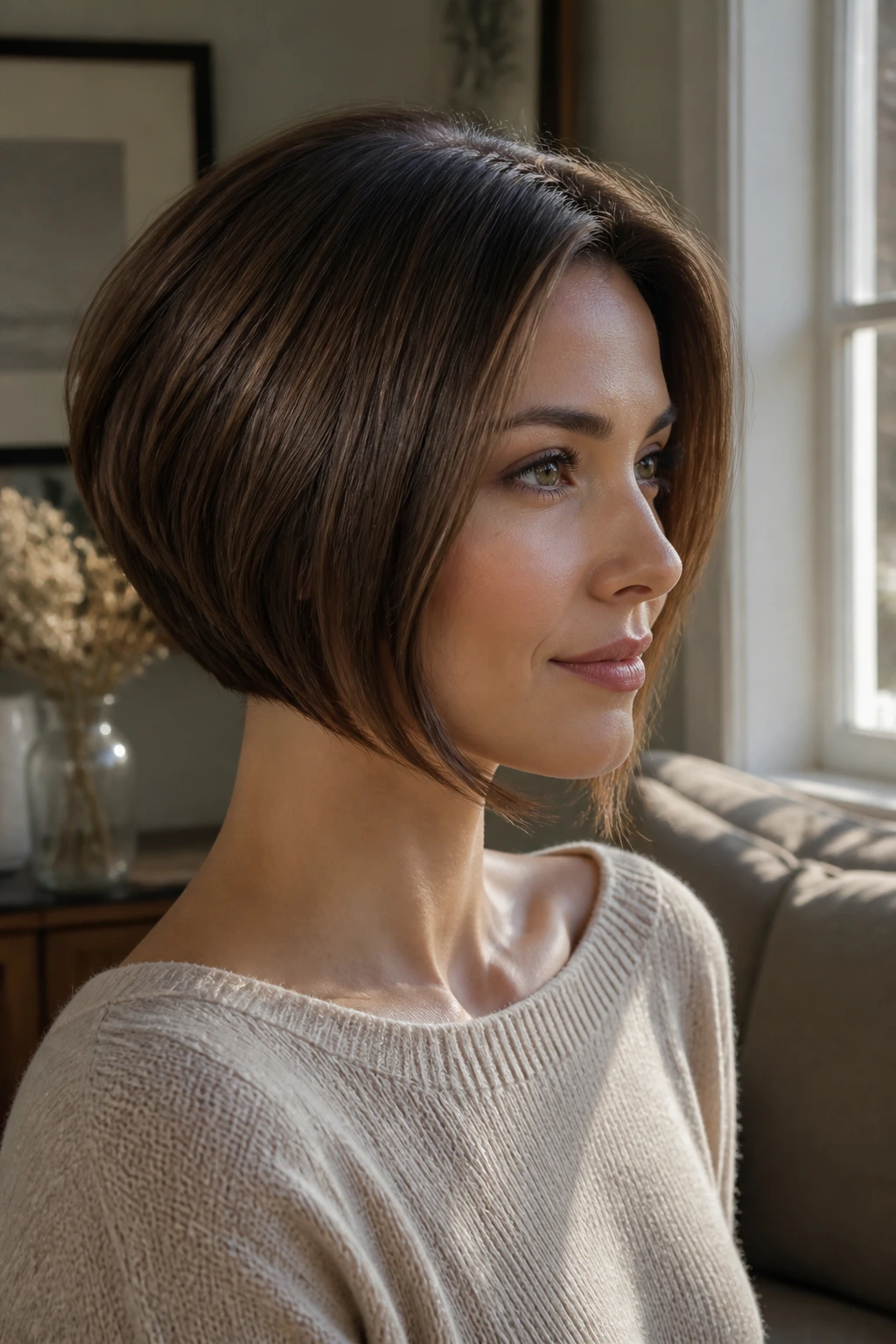
This is the cut I’d hand to someone who wants short hair but doesn’t want the face to feel boxed in. The nape is rounded and tight, the back is stacked, and the front pieces skim the jaw with enough softness to keep the overall shape easy.
What makes it useful for round faces is the way it balances softness and structure. The back gives you lift, but the front doesn’t stop at the cheek. It keeps moving, which stops the haircut from turning into a circle around the lower face. That small extra length at the front does more than people think.
It’s also a forgiving cut if you’re not in the mood to style it every morning. A quick blow-dry with your fingers, a bit of root lift, and a light bend at the ends is usually enough. If your hair grows out fast, this is still a nice one because the shape stays readable even after a few weeks.
If you want the shortest possible version of this category, go for this one. It’s tidy, flattering, and a little easier to live with than the more dramatic angled cuts. And when you catch it in profile, that stacked back and jaw-skimming front do exactly what they should: they make the face feel longer, cleaner, and less round without trying too hard.
