



A round face does not need to be hidden under flat hair. The best voluminous hairstyles for round faces put the height up top, the softness below the cheekbones, and the widest part of the hair lower than the jaw. Get that wrong, and you end up with a halo of puff that makes the face look wider than it is.
I see the same mistake over and over: people chase length when what they actually need is shape. A collarbone cut with root lift can flatter far more than waist-length hair that hangs straight and heavy from the crown. Even bangs are a placement game. Cut them too short or too blunt, and they can shorten the face in a way nobody asked for.
The good versions are rarely stiff. They move. They bend a little at the ends, lean off center, or leave a few face-framing pieces loose so the whole look feels lived in instead of helmet-like.
That’s the thread running through the styles below. Some are polished, some are messy, and a few are much better for curly or thick hair than for fine strands. The common goal is simple: balance the roundness without making the hair look teased to bits.
1. Long Layers with Root Lift
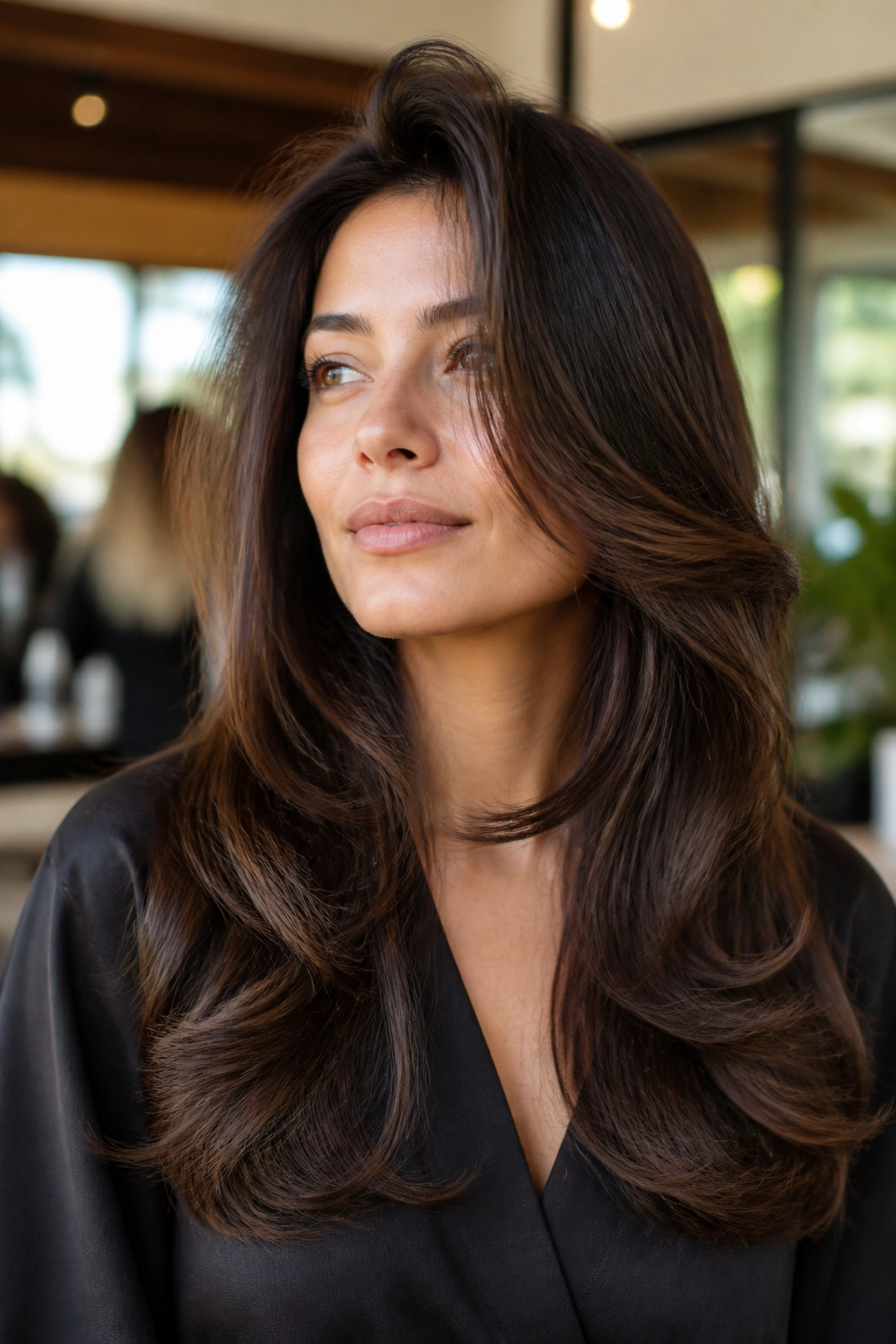
Long layers are a strong starting point because they add movement without taking away the length that helps elongate a round face. The trick is where those layers begin. If they start too high, the shape can puff out around the cheeks. If they start below the cheekbone, the eye keeps moving downward, which is exactly what you want.
Why It Works
Ask for the shortest face-framing pieces to begin around the mouth or collarbone, not at the jaw. That keeps the volume from bunching at the widest part of the face. A round brush, a light mousse at the roots, and a cool shot at the crown make a bigger difference than people expect.
- Best for: medium to thick hair
- Parting: middle or slightly off center
- Styling tool: 1.5-inch round brush
- Finish: soft bend at the ends, not a hard curl
Pro tip: Clip the crown up while it cools. That little pause holds the lift much longer.
2. Deep Side Part with Loose Waves
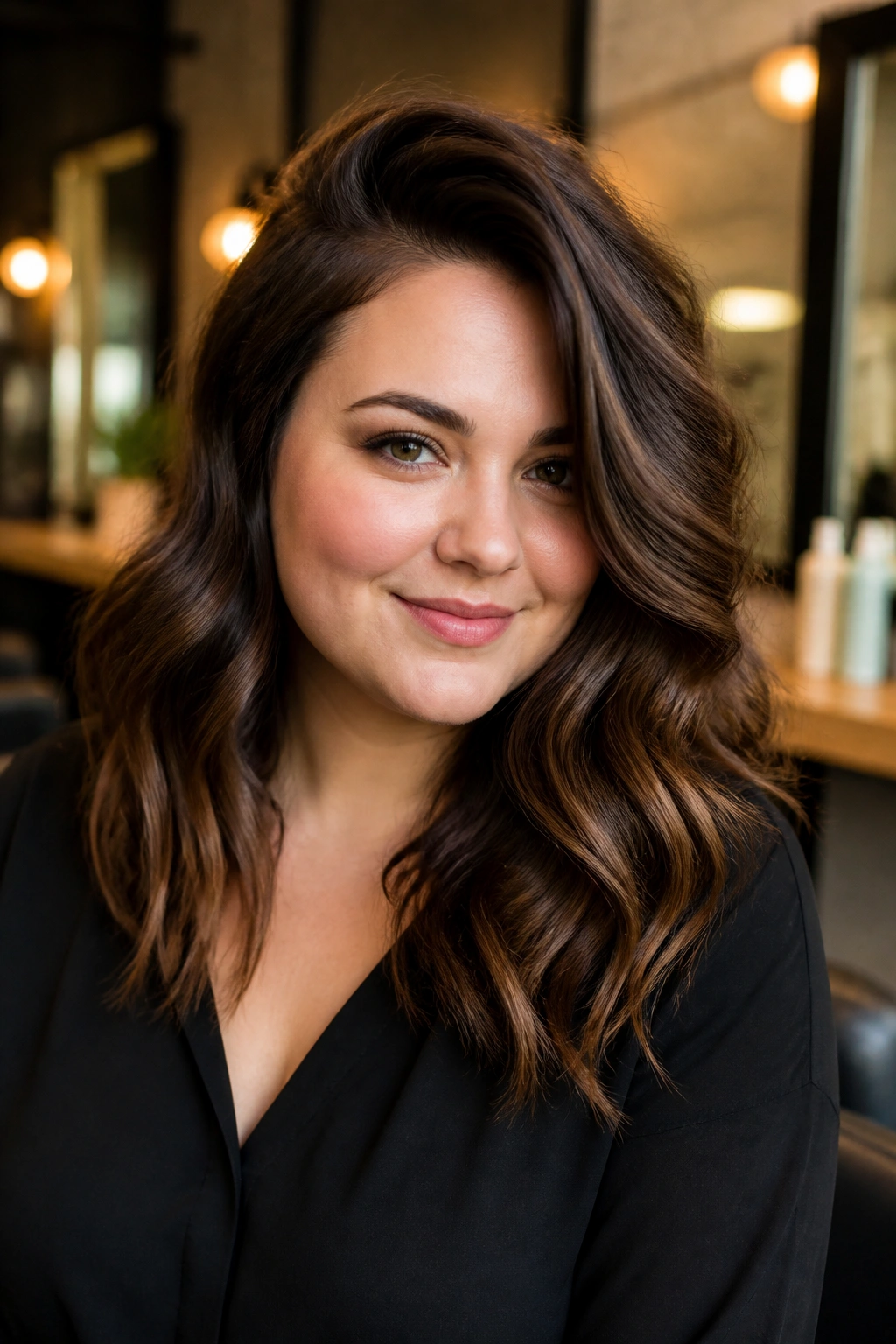
A deep side part can change the shape of a round face faster than a dramatic cut. It breaks the symmetry that makes the face read wider, and it gives the top section of the hair a natural rise. That rise matters. A flat center part can be pretty, but it often sits too politely on round cheeks.
Loose waves work best when they start below the temples, not at the chin. The goal is to keep the movement low and diagonal, so the width never lands right beside the face. I like a 1.25-inch curling iron for this because it creates a wave that still looks touchable rather than stiff.
If your hair is fine, spray a little dry texture spray at the roots before you part it. That one step keeps the front from collapsing in half an hour.
3. Curtain Bangs with Butterfly Layers
Why do curtain bangs keep showing up in flattering round-face cuts? Because they open the face without drawing a hard line across it. The split in the middle creates a vertical path, and the longer side pieces soften the cheeks instead of boxing them in.
How to Wear Them
The shortest point should sit around the eyebrow or just below it, then taper longer toward the cheekbone and mouth. That shape matters more than the word “bangs” itself. If the fringe is cut too short, it can shrink the face. If it’s too thick, it can make the forehead and cheeks compete for attention.
Butterfly layers work beautifully here because they build volume around the crown and then drop away through the lengths. Blow-dry the bangs with a small round brush, rolling them away from the face. They should skim, not sit heavy.
4. Collarbone Lob with Face-Framing Pieces
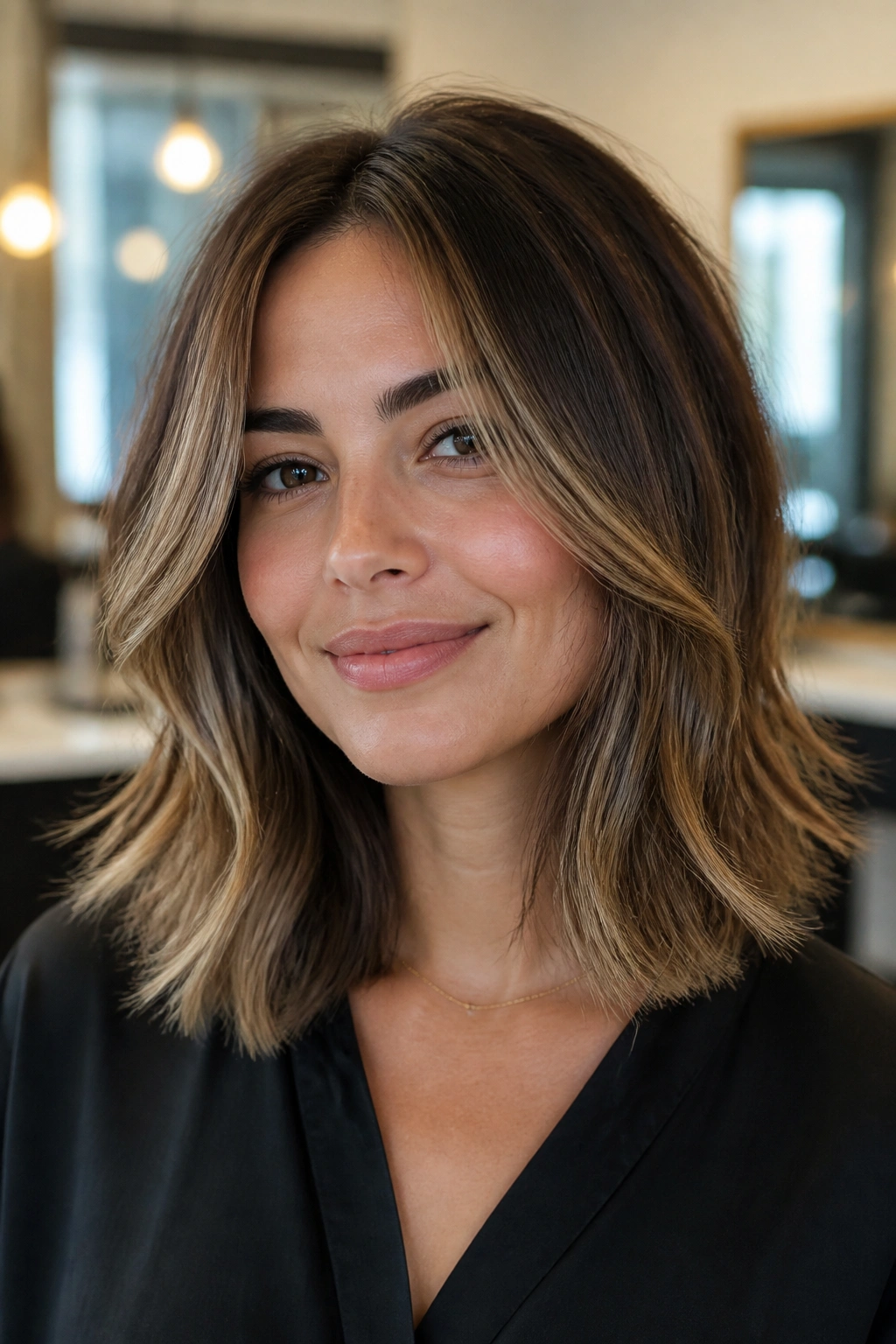
A collarbone lob is the haircut that makes people think your hair is thicker than it is. It sits in that sweet spot just below the jaw, where the ends do not widen the face but still give enough length to create a long line. On a round face, that line is doing a lot of quiet work.
What to Ask Your Stylist For
- Length that lands at or just below the collarbone
- Soft face-framing pieces that start below the cheekbone
- A slight bevel at the ends, not a blunt shelf
- Texture through the interior to keep the shape from feeling heavy
A one-inch curling iron can add a small bend through the front and the lower half of the cut. Keep the roots smooth and let the movement happen from mid-shaft down. That contrast keeps the style from puffing at the sides.
5. High Ponytail with Soft Crown Volume
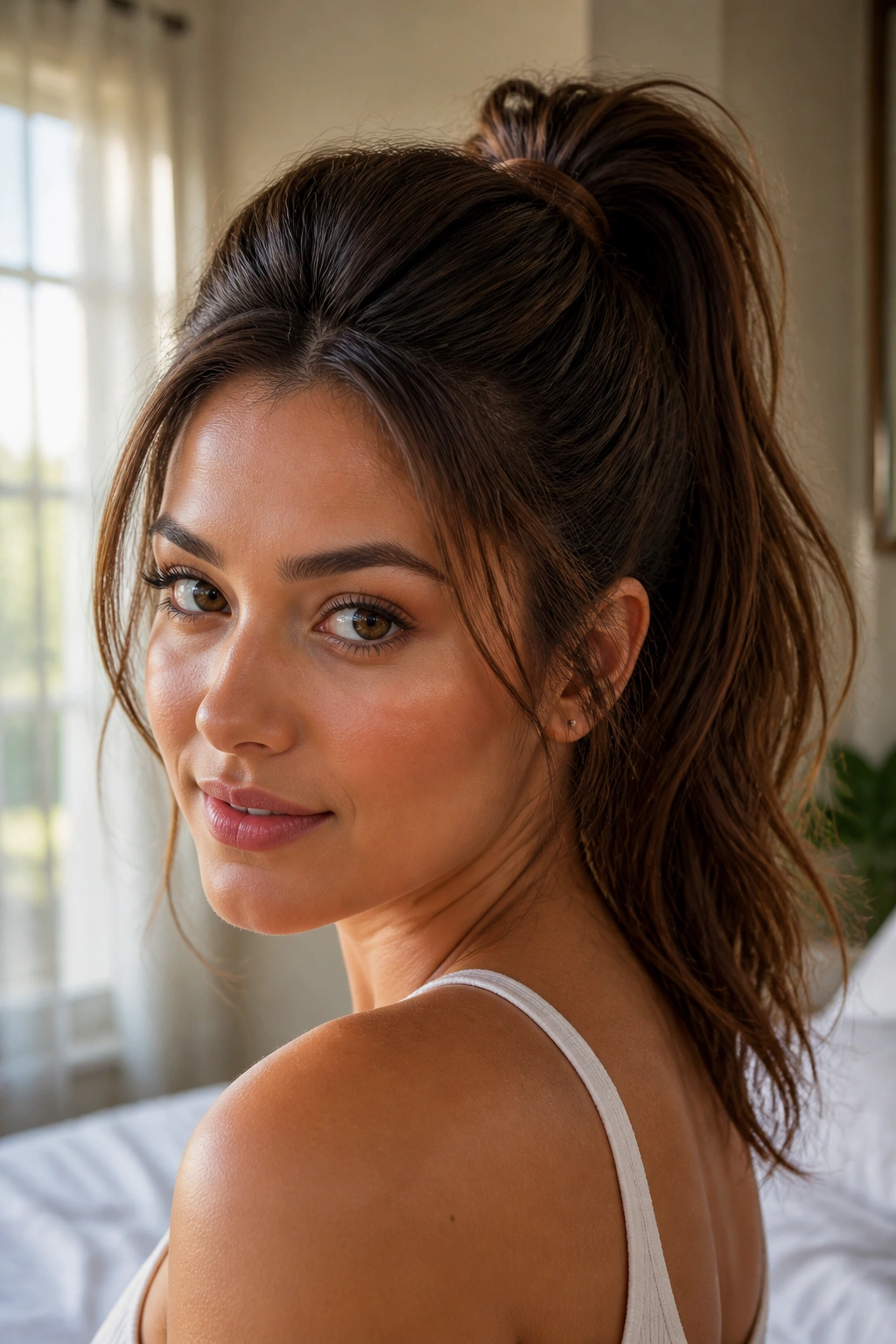
A high ponytail can be one of the best styles for a round face, but only if you give the crown some lift. A flat ponytail tied too low tends to sit right on the widest part of the face. Move it upward, and the whole look changes.
The pony should sit in the upper half of the head, not jammed against the hairline. Tease a small section at the crown, about an inch deep, then smooth the top layer over it. That gives height without a messy nest. Leave a few pieces around the temples loose, or curl them lightly so they fall in front of the cheeks.
I also like wrapping a small section of hair around the elastic. It sounds fussy, but it makes the style look finished instead of rushed.
6. Half-Up Bouffant with Soft Curls
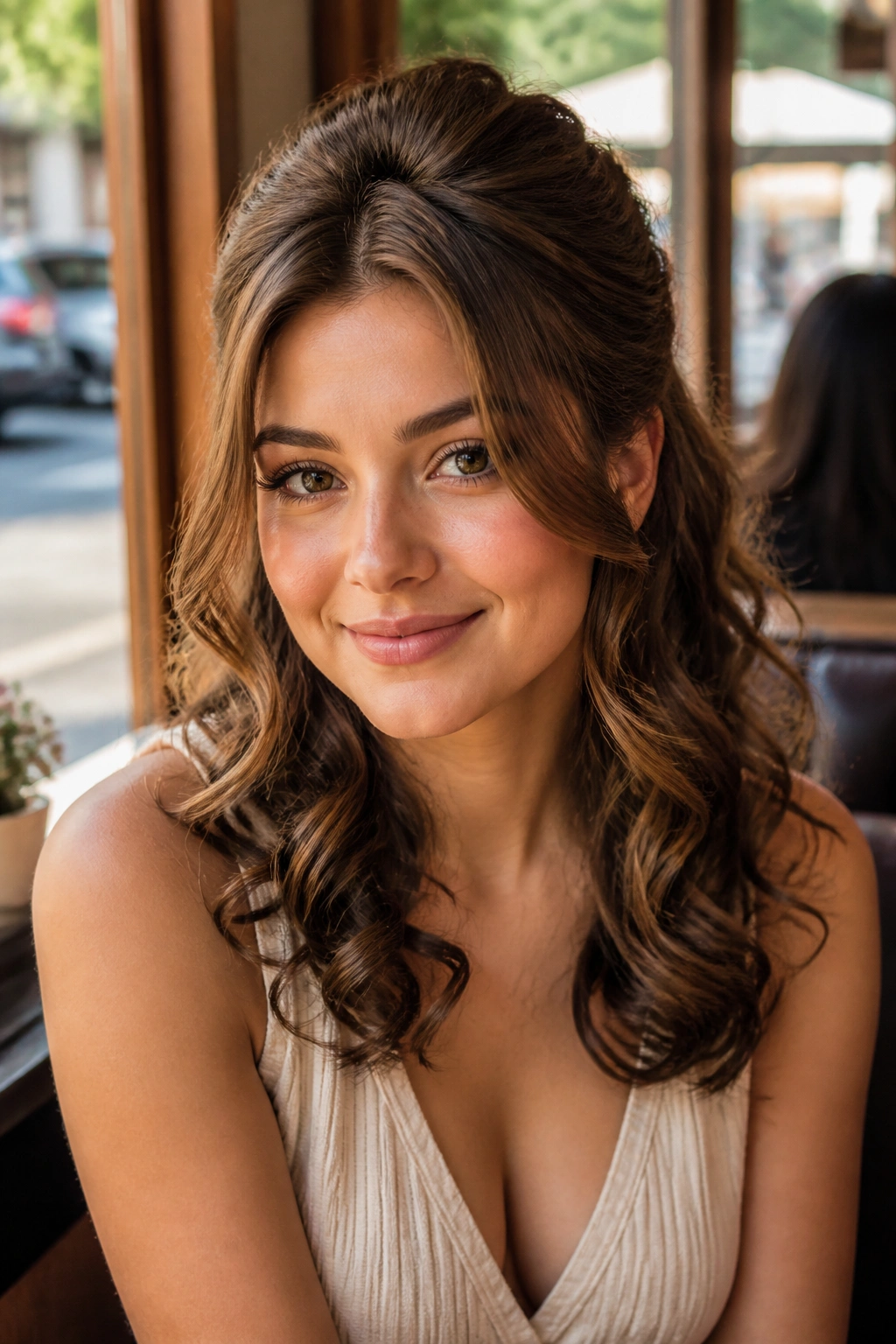
A half-up bouffant gives you the lift of an updo without exposing the whole face. That matters on a round face because the top section gets taller while the lower section stays soft and long. The shape is balanced instead of boxed in.
The half-up section should be gathered from the temples back, leaving enough hair down around the ears to soften the sides. Backcomb only the underside of the crown section. Too much teasing, and the style starts to look dated in a bad way. A little lift goes a long way.
This one loves soft curls in the lower half. Curl away from the face on the front pieces, then alternate direction through the rest so the waves do not fall into one heavy pattern.
7. Textured Shag with Longer Length
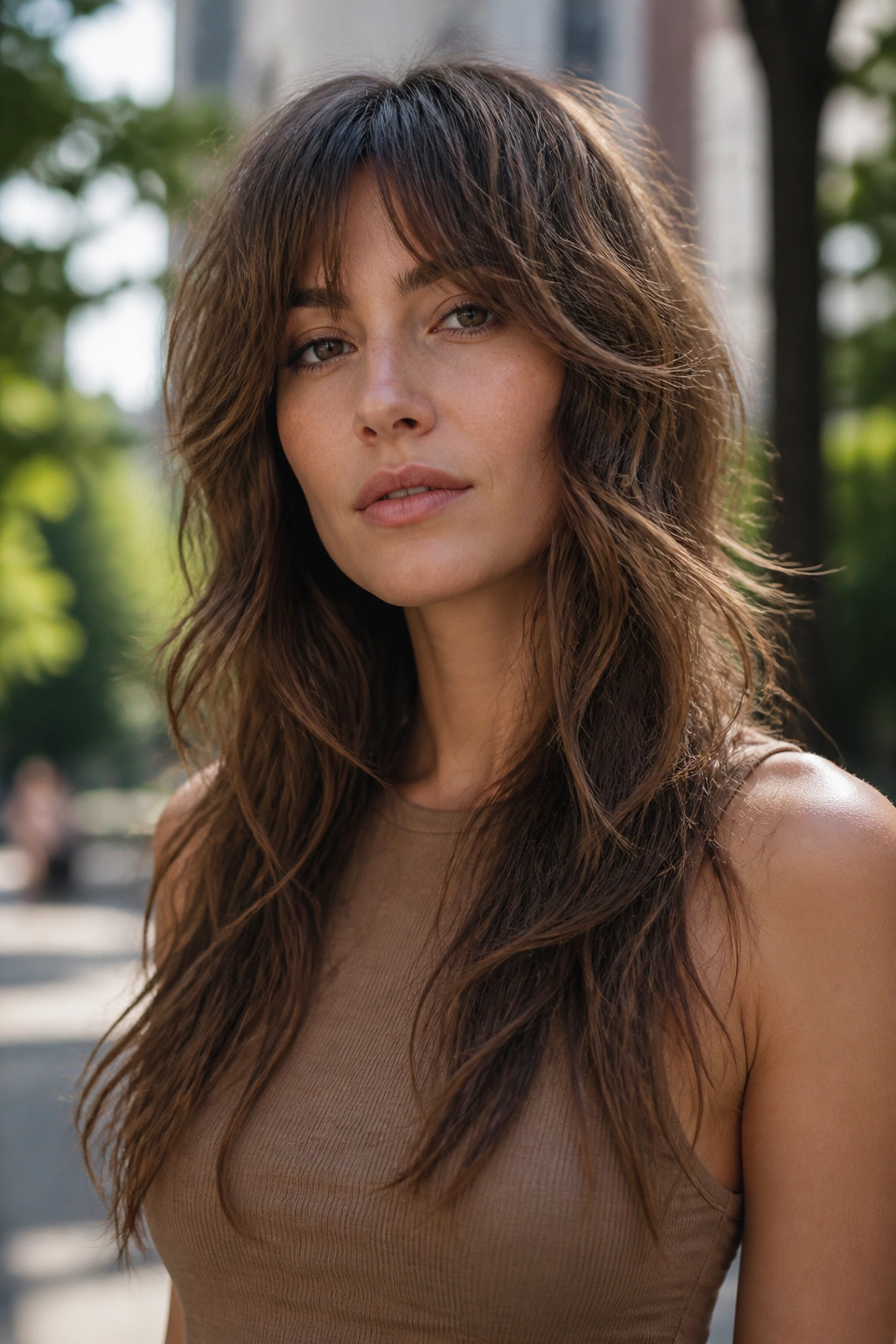
A shag can be brilliant on a round face, but only if it keeps some length. The chopped-up version that stops at the chin can widen the face fast. A longer shag, with airy layers that begin lower on the head, gives you movement without that mushroom shape.
Shape to Ask For
Ask for layers that start around the cheekbone and continue downward, plus a little extra softness around the perimeter. You want texture, not random holes in the cut. That means the ends still need weight. I’m not a fan of over-thinned shags on round faces; they can look fluffy in humid weather and flat when the air is dry.
A light wave cream and a diffuser can help if your hair is naturally wavy. If it’s straight, a quick bend with a flat iron at the ends keeps the shape from hanging limp.
8. Feathered Mid-Length Cut
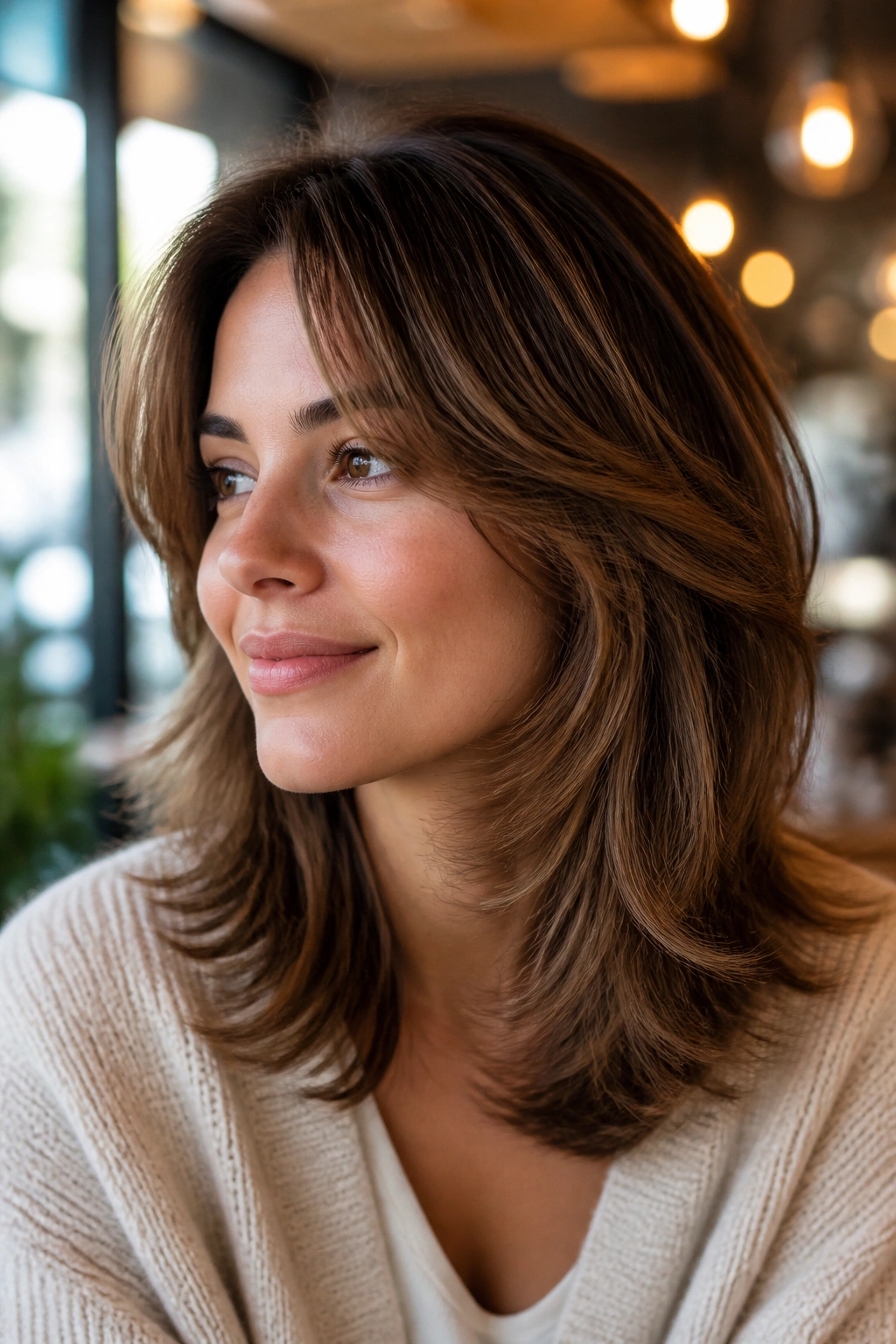
Feathering is underrated because it removes bulk without stealing shape. On thick hair, that matters. A blunt mid-length cut can sit like a shelf around the cheeks, while feathered layers let the hair move away from the face in softer pieces.
What I like here is the air around the outline. The cut still has body, but the edges don’t feel heavy. A stylist can use point cutting around the front and mid-lengths to soften the shape without making it wispy all over. That is the part people often miss.
If your hair tends to puff at the sides, keep the feathering focused below the cheekbone. You want lift, not a triangle.
9. Side-Swept Pixie with Height
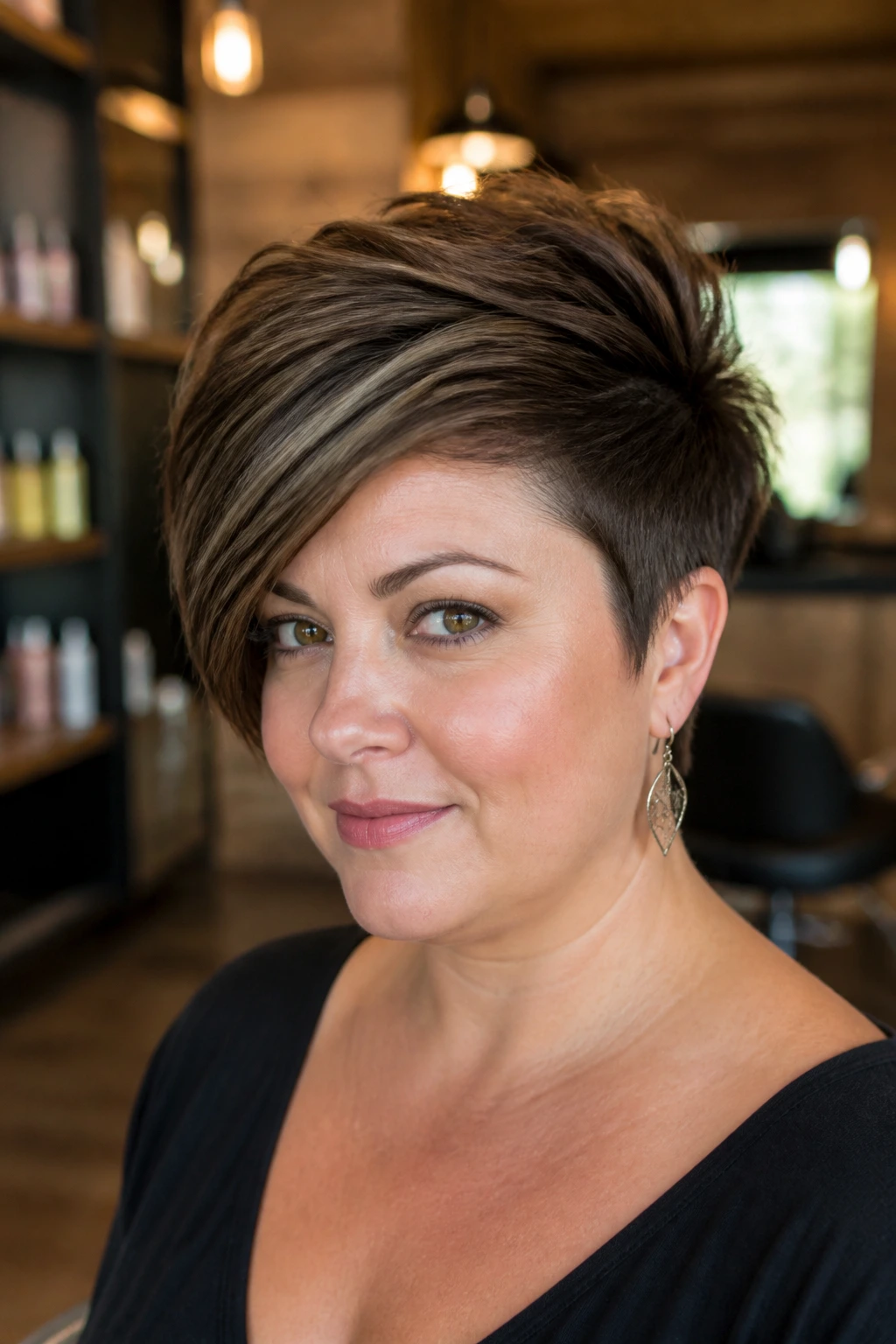
Can a short haircut flatter a round face? Absolutely, if the top does the work. A side-swept pixie uses height and diagonal movement to keep the face from reading too wide. The sides stay tapered, while the top carries the shape.
The Top Needs Height
Keep the top long enough to move—usually around 2 to 4 inches, depending on texture. That lets you sweep it across the forehead instead of straight down. The fringe should angle across the face, not stop bluntly at the brow line. That diagonal line is the whole point.
A little mousse at the roots and a quick blast of the blow dryer with your fingers is usually enough. Finish with a paste on the ends if you want separation. Skip heavy creams. They flatten the top, and that is the one place you cannot afford to lose lift.
10. Bixie with Crown Lift and Tucked Sides
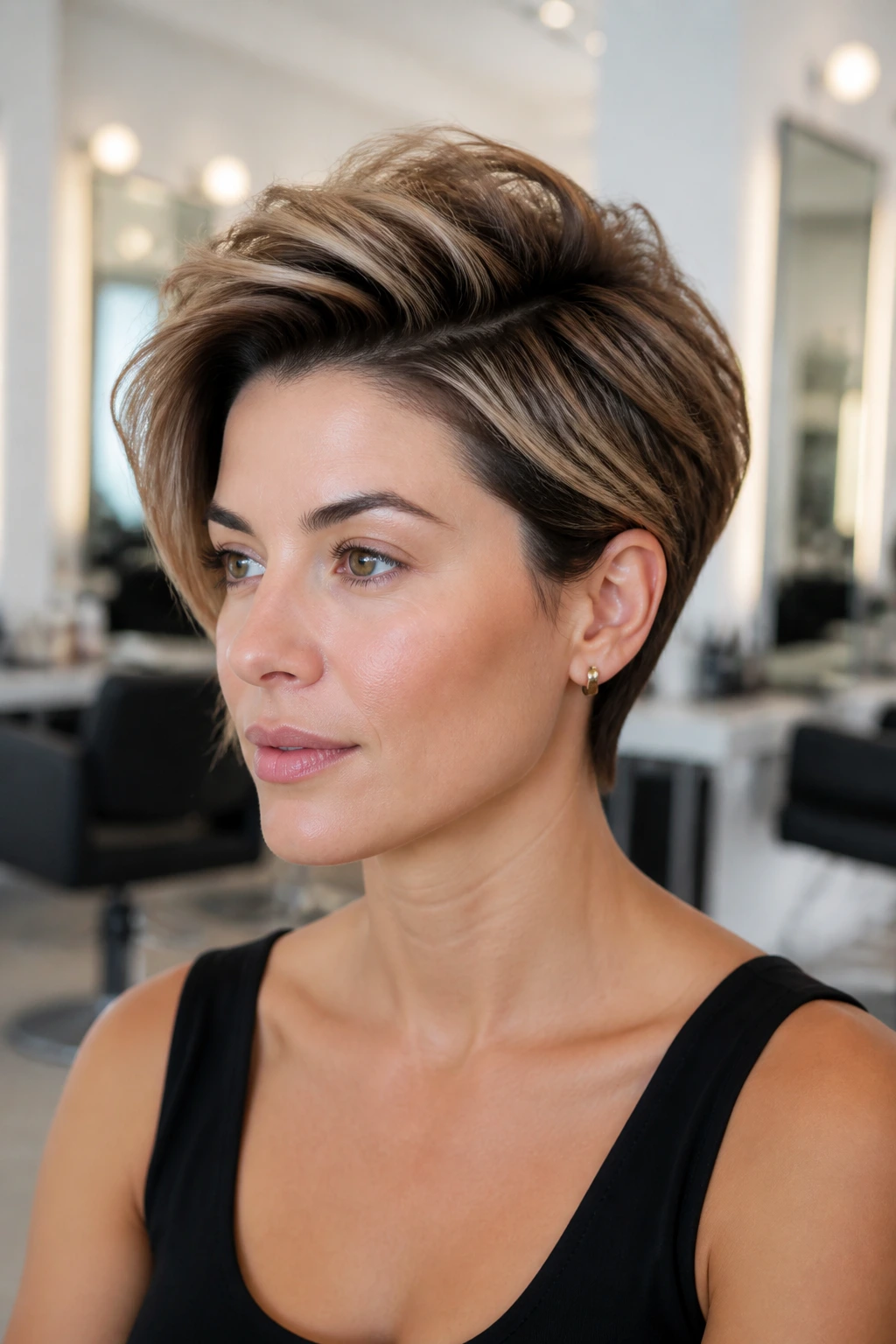
A bixie sits between a bob and a pixie, which makes it a smart option if you want short hair without going severe. On a round face, the best version keeps the crown a little taller and the sides tucked closer to the head. That gives the face room to breathe.
The length on top should be long enough to push forward or sweep diagonally. The nape can be shorter, even neat and close, because that contrast helps the shape feel cleaner. Add a dab of texturizing paste to the ends and use your fingers, not a brush, to keep the movement piecey.
This cut is especially nice for fine hair. Shorter hair can collapse fast, and the bixie gives you structure without demanding a long styling routine.
11. Romantic Side Braid with Lift at the Crown
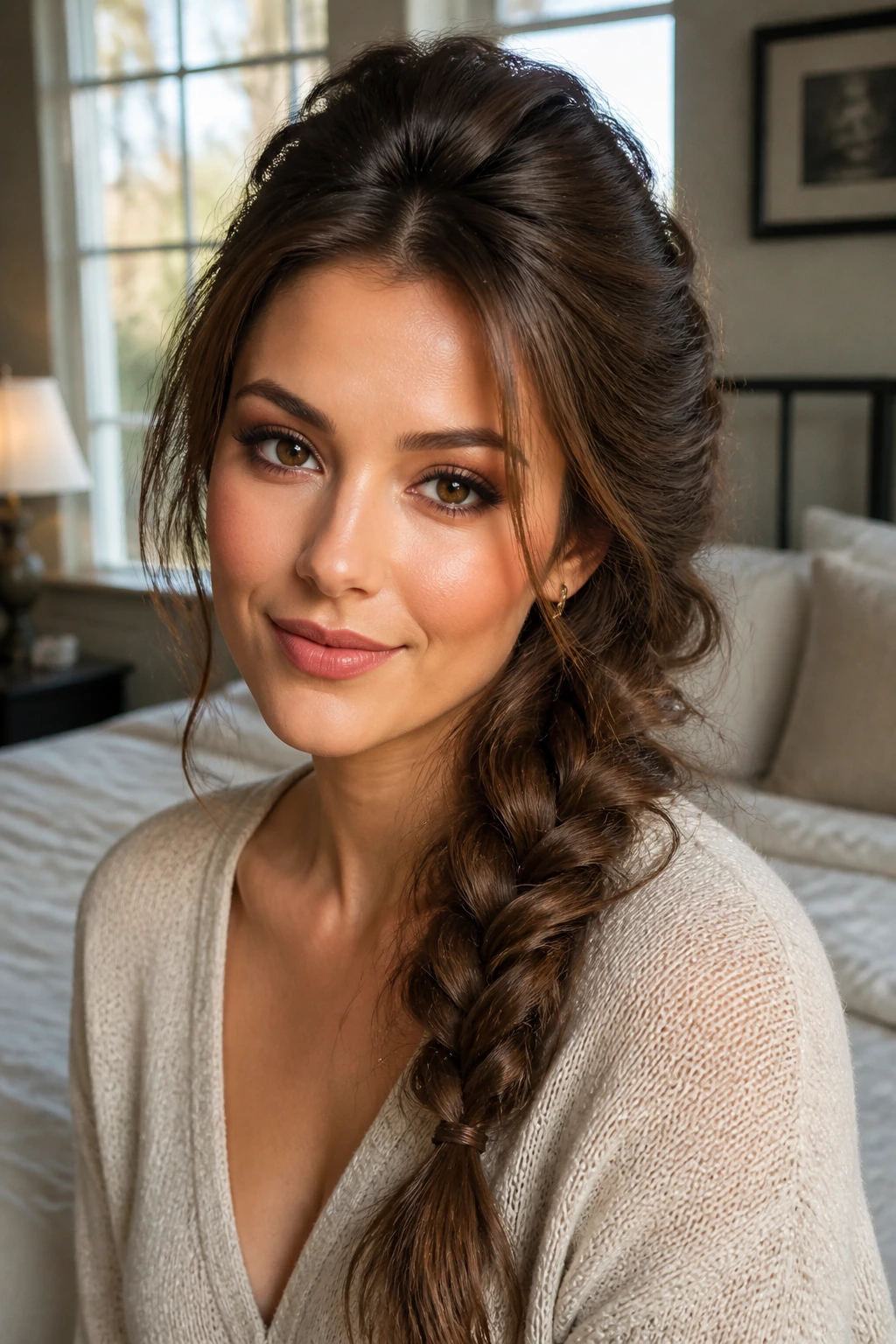
A side braid sounds simple, but on a round face the placement makes all the difference. Start the braid off to one side rather than straight down the back. That small shift creates a diagonal line, which is friendlier than a center-weighted style that sits heavy at the cheeks.
Before you braid, lift the crown a little with backcombing or a round brush. Without that lift, the braid can pull the face downward. Leave a few front pieces free, especially if your hairline is soft around the temples. Those loose strands stop the style from looking severe.
Once the braid is done, gently pull it wider with your fingers. Not too much. You want fullness, not a flattened pancake.
12. Blowout Bob Below the Chin
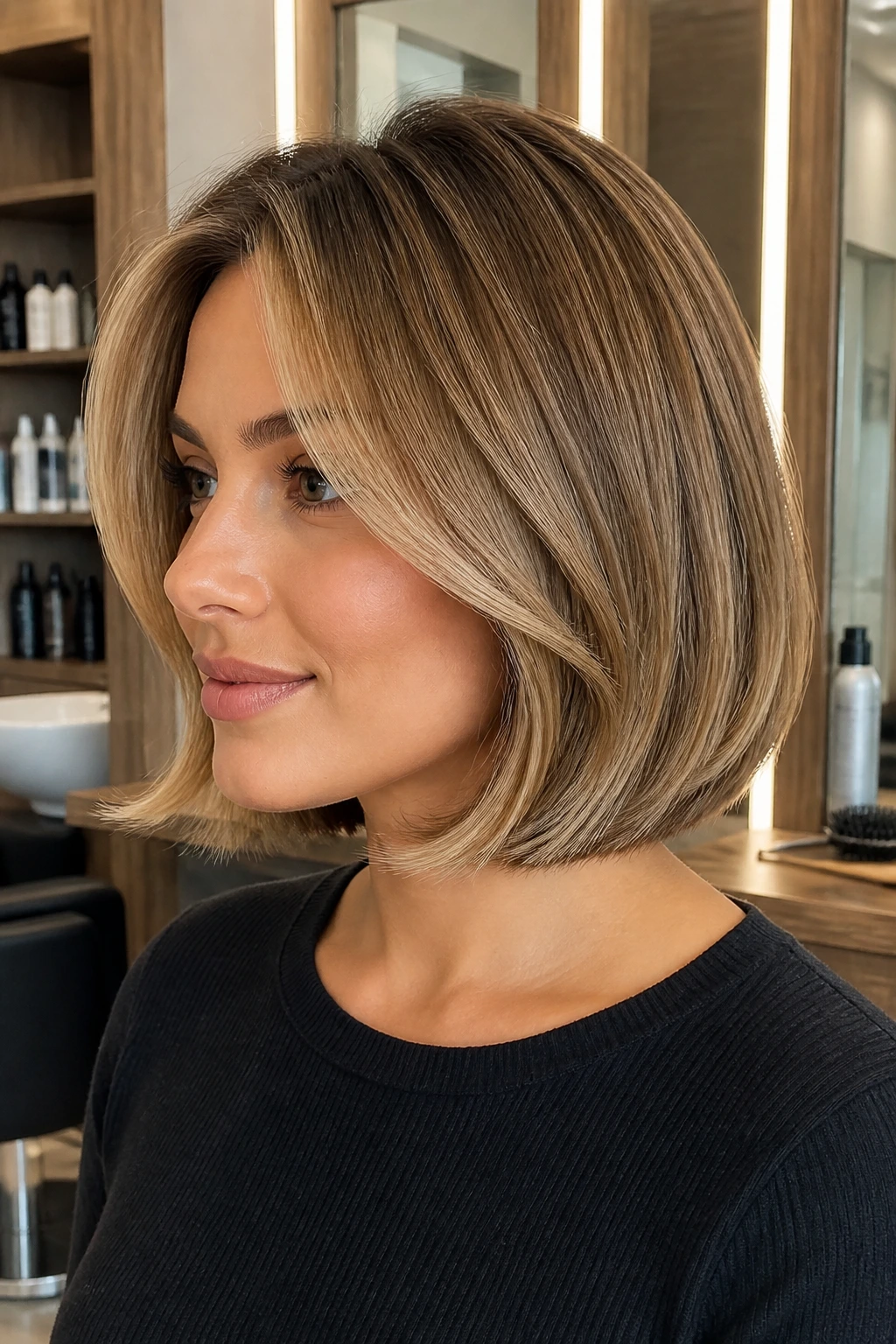
A blunt bob at the chin can be a problem on a round face because it cuts straight across the widest part of the jaw. A blowout bob that lands one to two inches below the chin fixes that issue. It still feels clean, but the extra length keeps the face from looking boxed in.
The ends should curve slightly under or turn out in a soft flick. I prefer a round brush for this rather than a flat blow-dry, because the bend gives the cut life. If your hair is straight, a light root spray before drying can stop it from sitting too close to the scalp.
This is a good choice if you want something polished for work and easy to wear loose. It does not try too hard. It just works.
13. Cascading Curls with an Off-Center Part
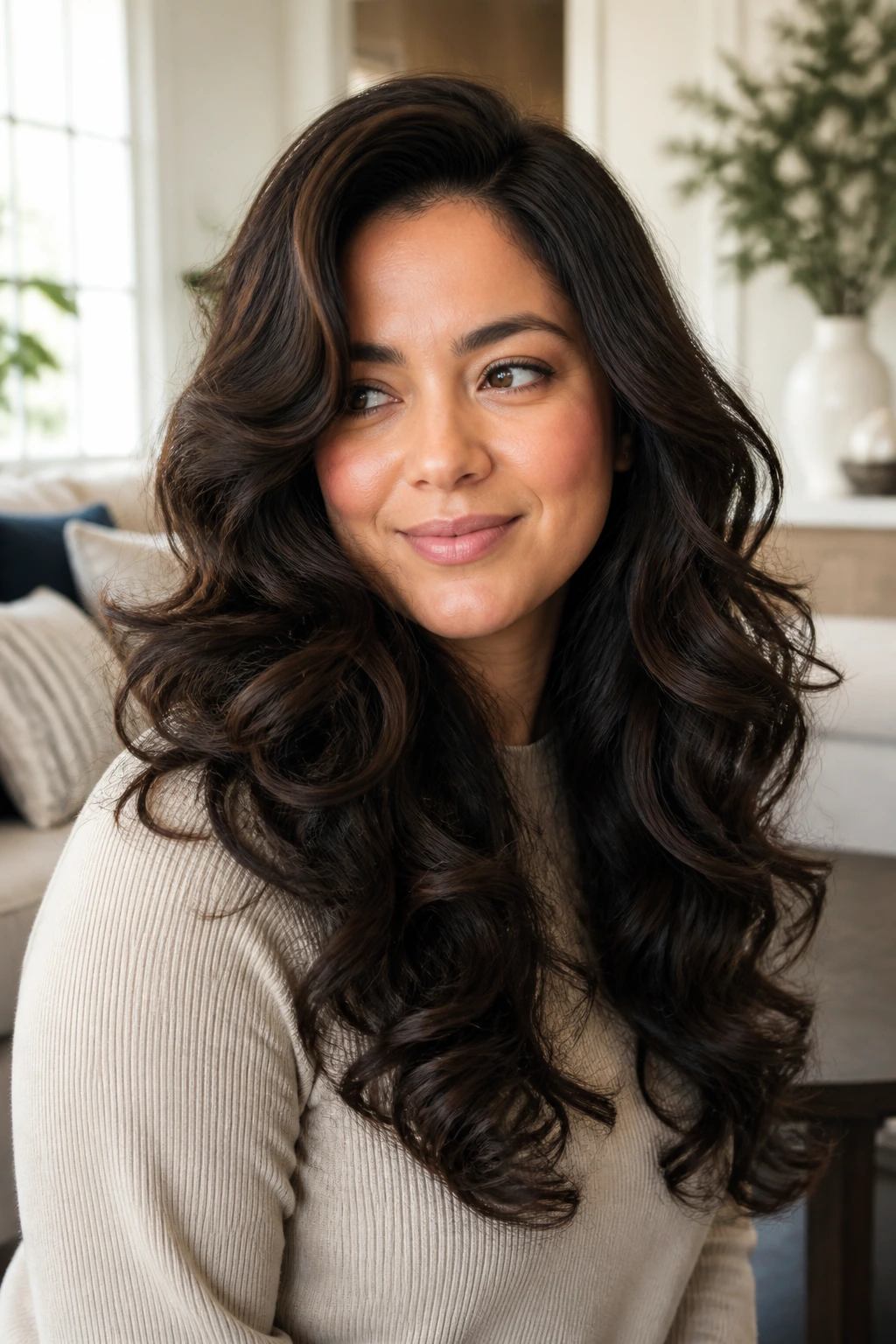
Big curls can be flattering on a round face when they fall in a long cascade instead of puffing out at the sides. The off-center part is the first move. Even shifting the part by an inch can change the balance enough to make the face feel longer.
How the Shape Works
Curl the front sections away from the face and let the lower lengths move in alternating directions. That keeps the curl pattern from building one wide wall around the cheeks. A 1.25-inch iron is usually the sweet spot for this look, though tighter textures can use whatever fits their natural curl size.
Pin the curls up to cool before you touch them. I know that sounds boring. It matters. Cooling locks the shape so the waves hold their body instead of dropping flat by lunchtime.
14. Sleek High Bun with Loose Face Pieces
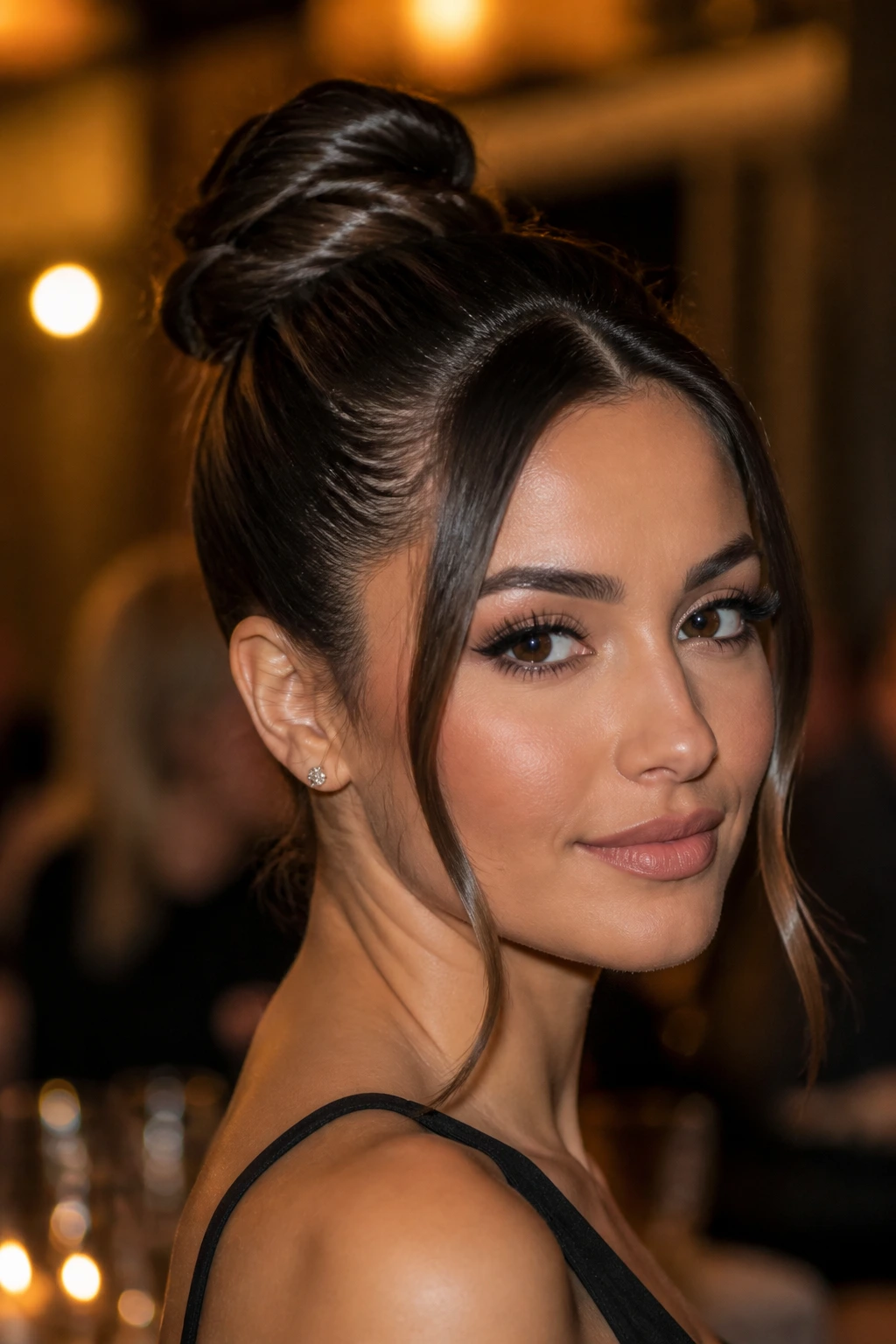
Sleek does not have to mean flat. A high bun can flatter a round face when the bun sits on the upper back of the head and the crown keeps a little lift. The height gives the eye a place to go, which is half the battle.
The biggest mistake is pulling every strand tight against the scalp. That can make the face look wider and shorter. Leave two thin face-framing pieces near the temples, and keep the bun just messy enough that it has shape. A small amount of gel at the hairline helps the style stay neat, but don’t drown it. Stiff edges kill the softness.
This works especially well for evening events because it feels clean without looking severe.
15. Layered V-Cut with Big Ends
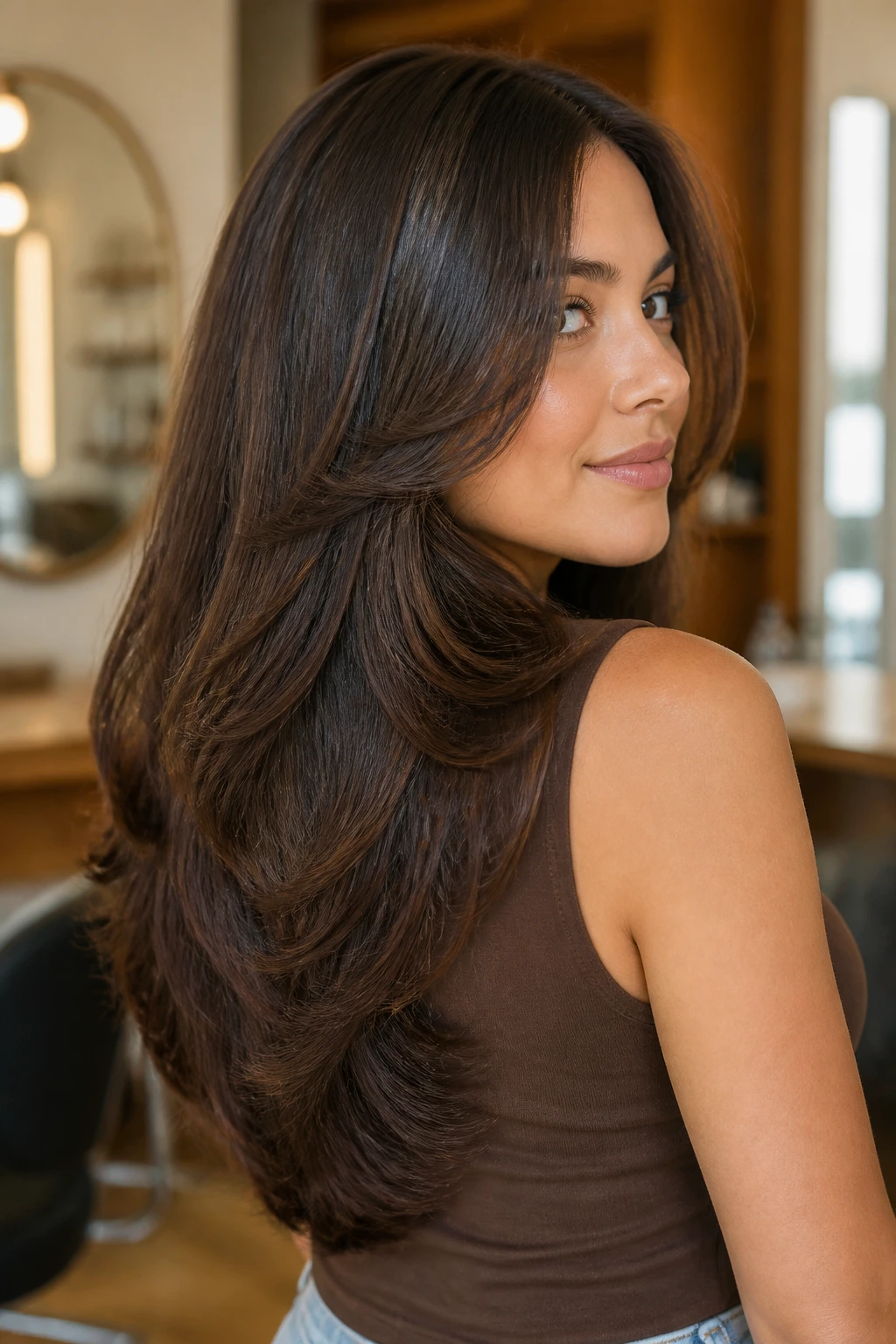
Why does a V-cut help a round face? Because it creates a long line down the back while keeping the sides from ballooning. The shape narrows toward the ends, which gives the illusion of length. That’s the bit people see in motion.
Best for Long, Thick Hair
If your hair is dense, a V-cut can remove some of that wide heaviness that piles up at the sides. Ask for the first layers to begin below the cheekbone and fall gradually into the point of the V. You still want fullness, but it should live lower down, not around the jaw.
A big barrel brush or a 1.5-inch iron can give the ends a soft bend. I like a tiny flip outward at the final inch or two. It keeps the shape from feeling too blunt.
16. Wavy Wolf Cut with Soft Edges
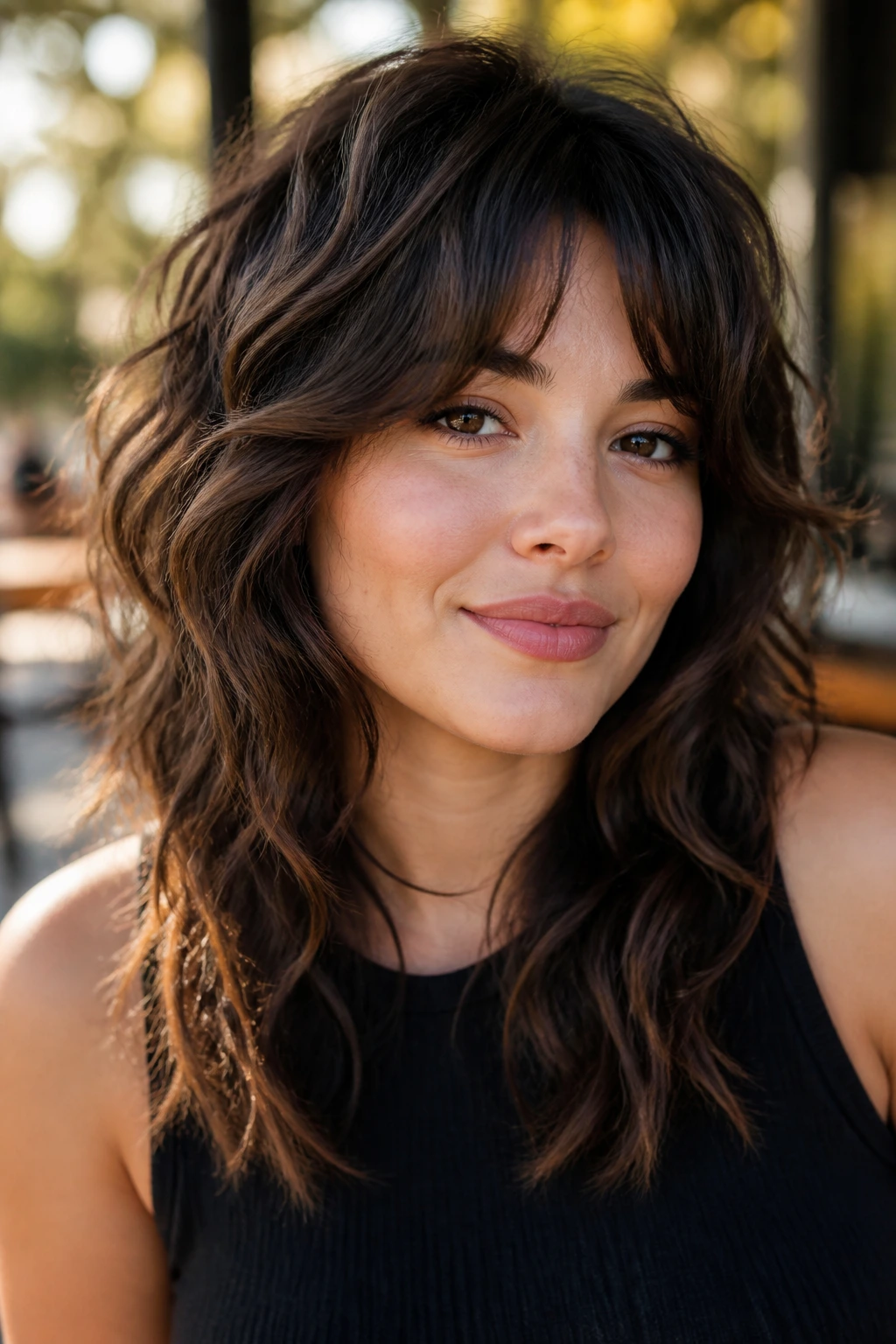
A wolf cut can go very wrong on a round face if the top gets too short and the sides get too fluffy. The softer version works better. Keep the crown airy, the edges blended, and the longest layers well below the cheekbone. That way the cut still has attitude without making the face feel wider.
The texture should look broken up, not hacked. That distinction matters. You want movement through the top and softness around the lower lengths so the whole shape feels casual instead of puffed out. If your hair is naturally wavy, a curl cream and diffuser can make the texture look intentional. If it’s straight, a few bends with a flat iron will do.
This one suits people who like a little edge and do not mind some styling work.
17. Long Straight Hair with Invisible Layers and Flipped Ends
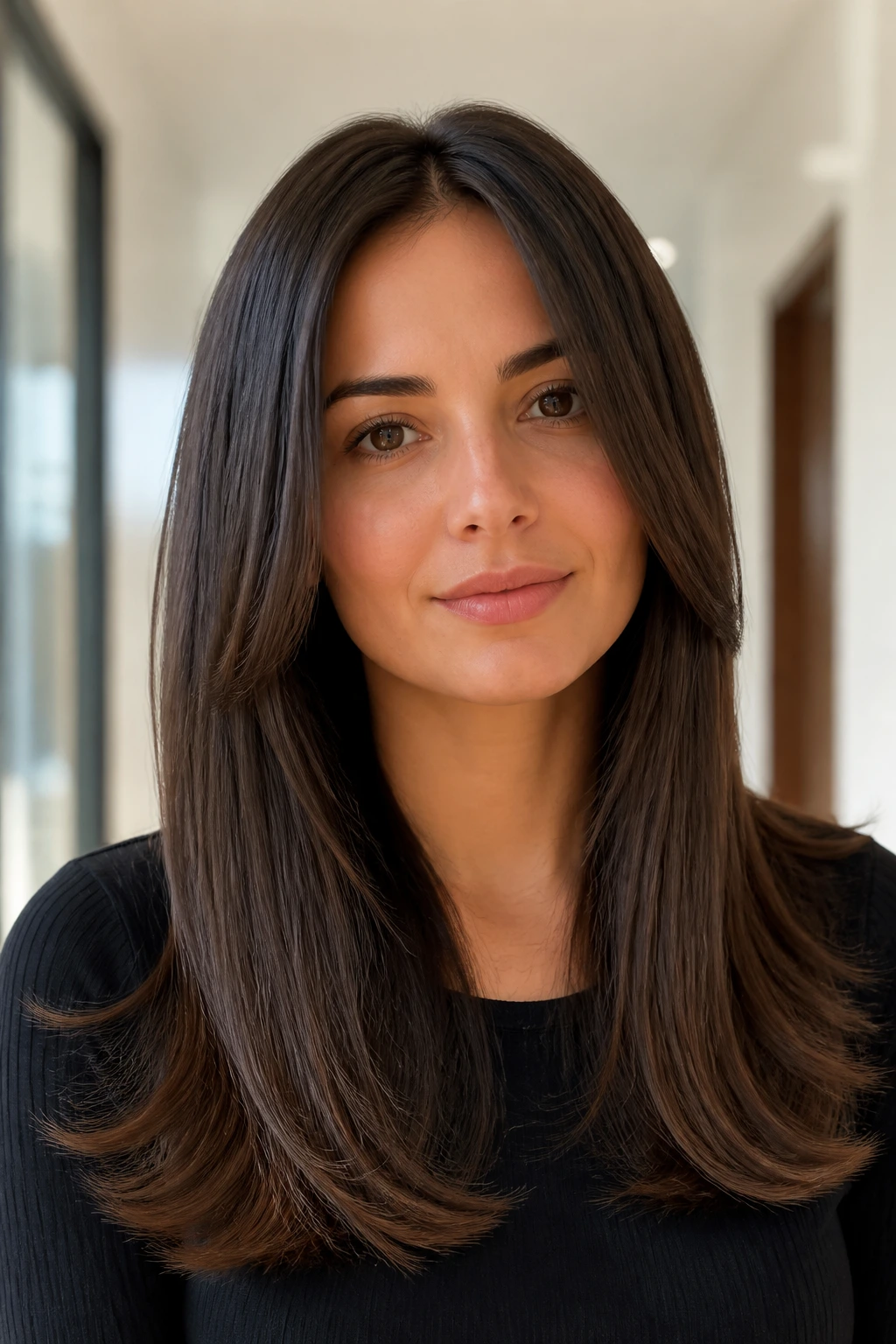
Long straight hair can work on a round face, even without curls, if the shape is built properly. Invisible layers keep the silhouette from falling into a heavy curtain, and a slight flip at the ends stops the hair from looking flat and severe. It’s a quieter look, but I like it.
The layers should live mostly in the back and lower interior, where they create movement without breaking up the front line too much. Around the face, keep things soft. A deep center part can work here if the roots have lift, though a tiny off-center shift is safer for most people.
Use a flat iron only at the last inch or two of the ends. That small bend keeps the style from feeling too stiff or too long in one straight shot.
18. Angled Asymmetrical Bob with Lifted Roots
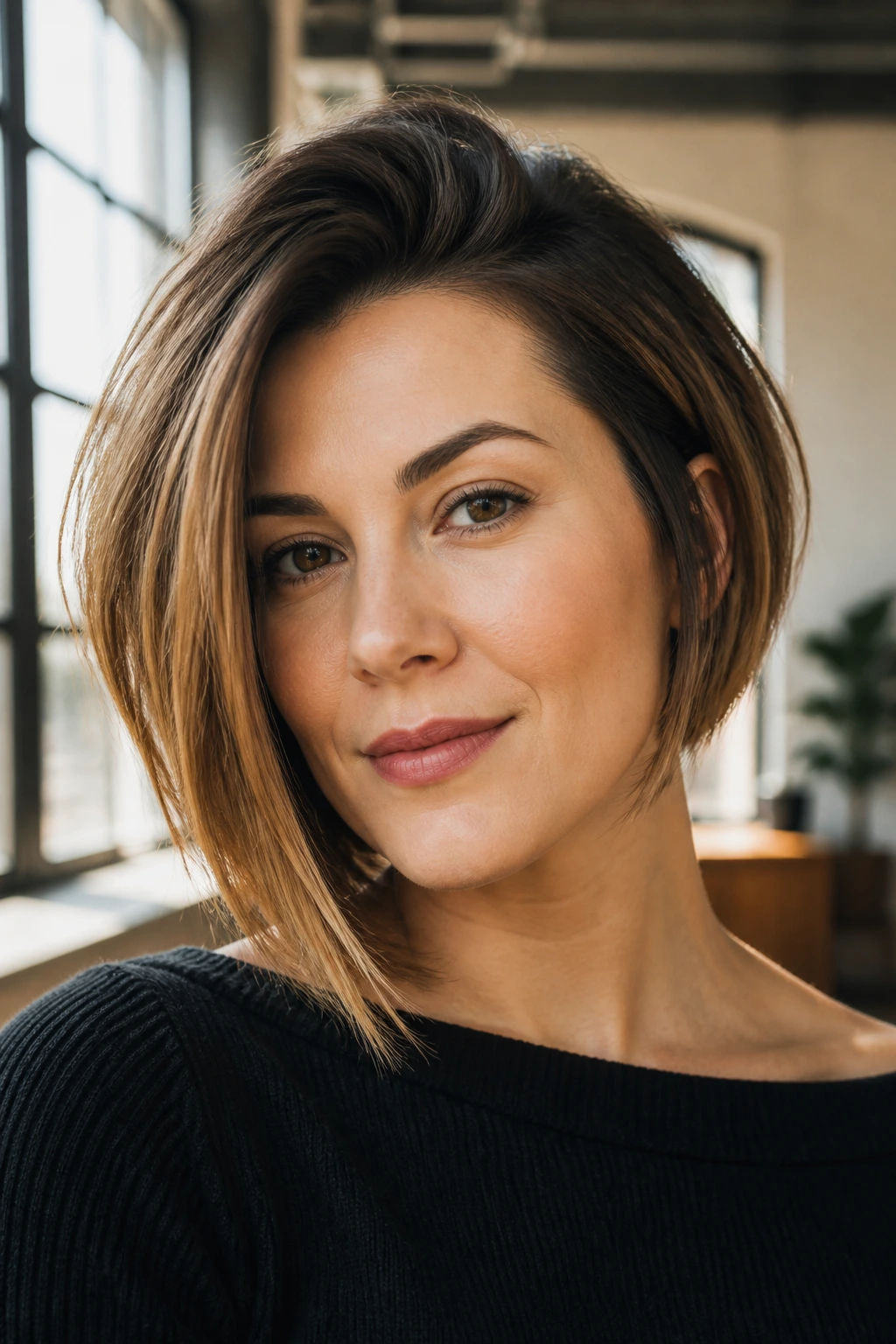
An angled bob does a lot of shape work for you. One side sits a little longer, the back stays shorter, and the diagonal line pulls the eye downward instead of out. That makes it a smart cut for round faces that want definition.
The angle should not be extreme unless you want a sharp editorial look. A gentle difference—say, the front grazing the collarbone on one side and sitting a bit shorter on the other—is enough. Add lift at the roots with a blow-dry cream or mousse so the top doesn’t collapse. Flat roots and an angled bob are a bad match.
This cut feels especially good if your hair is dense and tends to mushroom at one length. The angle breaks that up fast.
19. Voluminous Twist-Out on Natural Hair
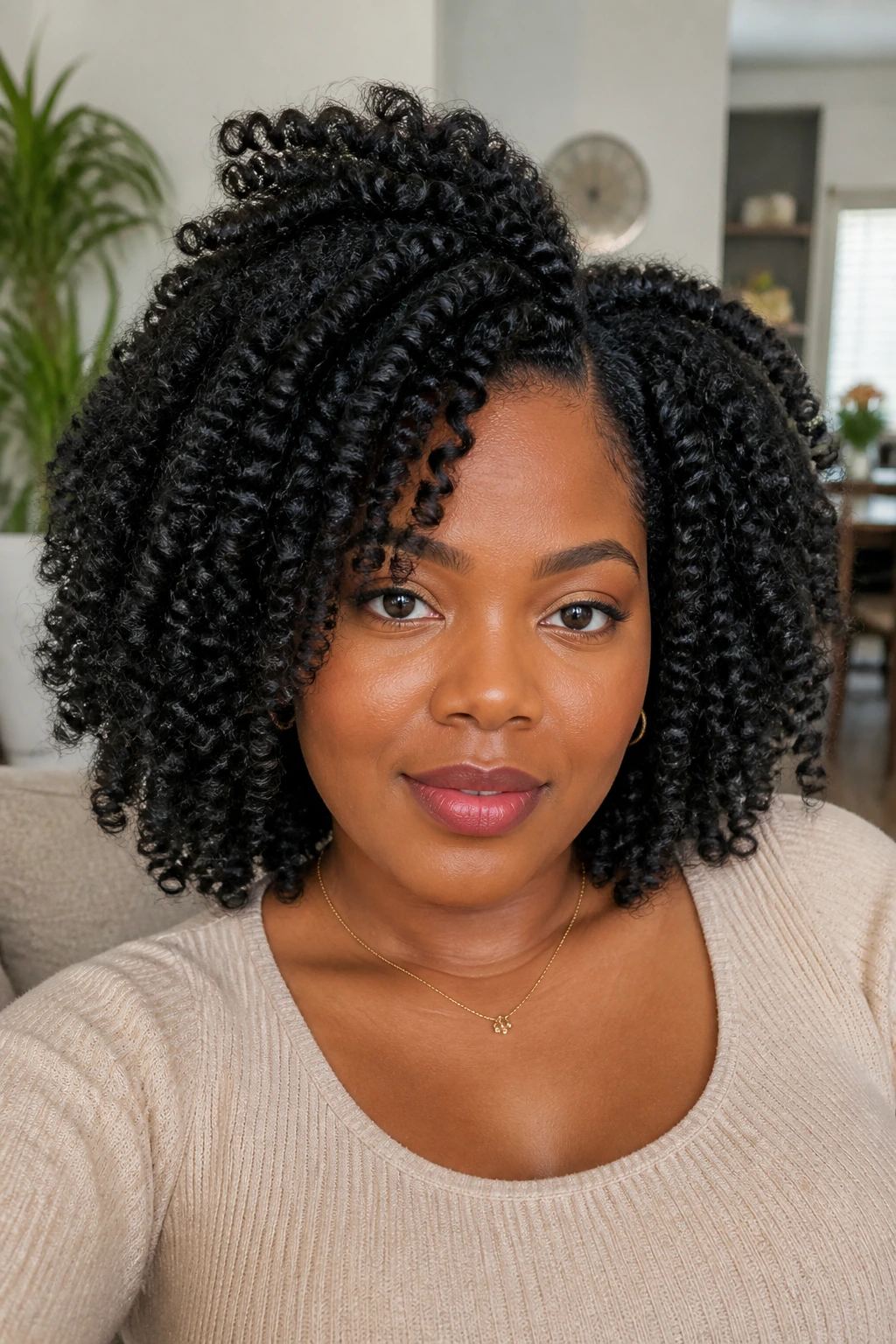
A twist-out can be gorgeous on a round face when the shape is set with a little height at the roots. The mistake is letting all the fullness sit at cheek level. That turns the style wide. A better twist-out stretches the crown upward and lets the curls bloom lower down.
Where to Build Shape
Use medium-sized two-strand twists if you want more definition, or slightly larger twists if you want softer body. Set the hair while it is fully dry or mostly dry, then separate gently once the twist-out is complete. Don’t separate right at the roots. That’s where the puff can get too big.
A little oil on the fingertips helps reduce frizz when you take the twists down. Keep the part slightly off center if you want extra lift on top. Clean geometry matters here more than people think.
20. Defined Curl Cut with Crown Height
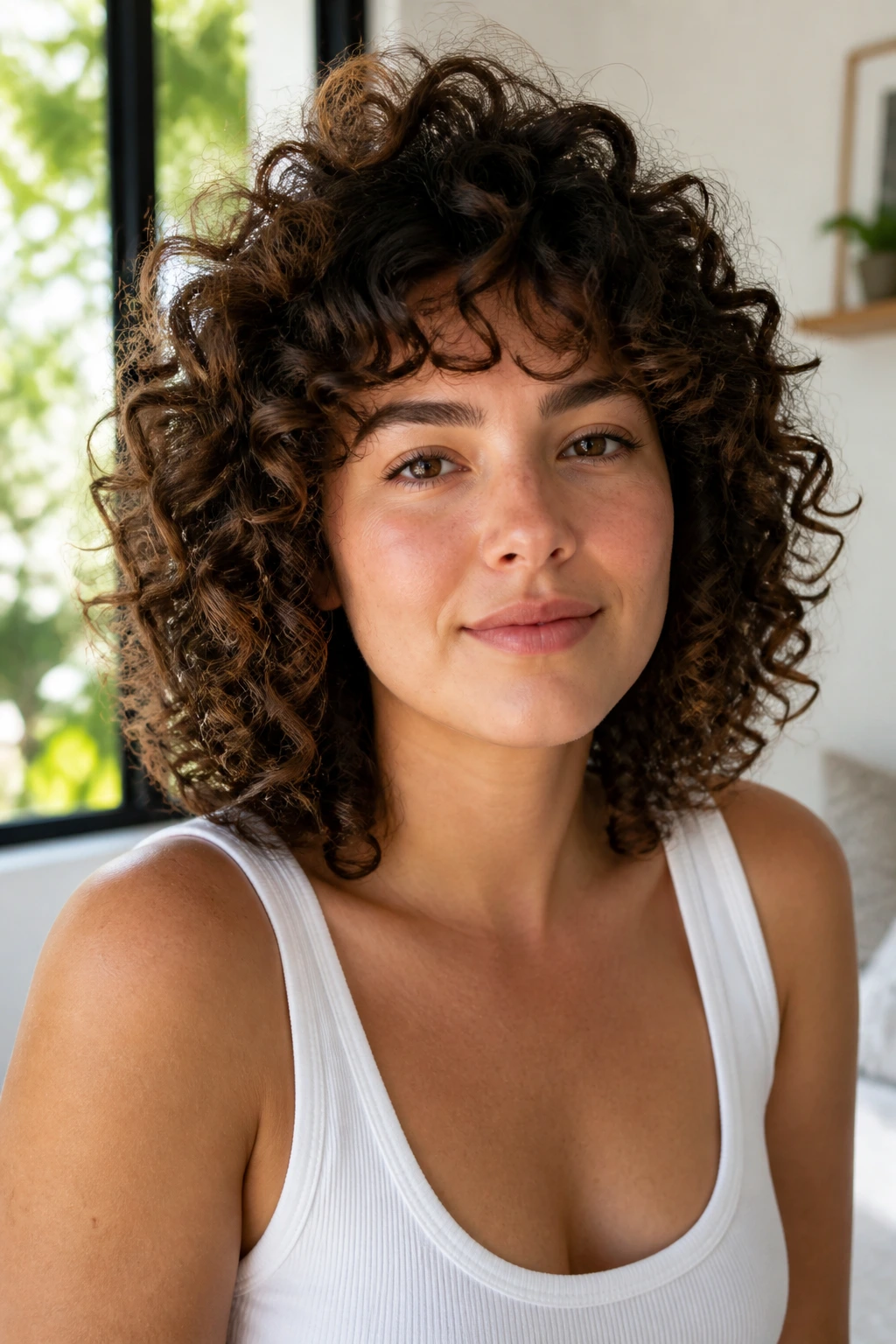
Curly hair on a round face needs shape, not just length. A well-cut curly shape takes advantage of the coil pattern instead of fighting it. The crown should have enough height to lift the eye, while the sides stay controlled so they don’t widen the face.
The best curly cuts are often done dry or with the curls stretched, because shrinkage changes everything. Ask for layers that begin below the cheekbone and follow the curl pattern instead of chopping through it. That keeps the silhouette rounded in a good way, not wide in a cartoonish way.
Diffusing upside down for a minute or two can help with root lift. Then finish upright so the curls settle where you want them. Small move. Big payoff.
21. Messy Top Knot with Curtain Strands
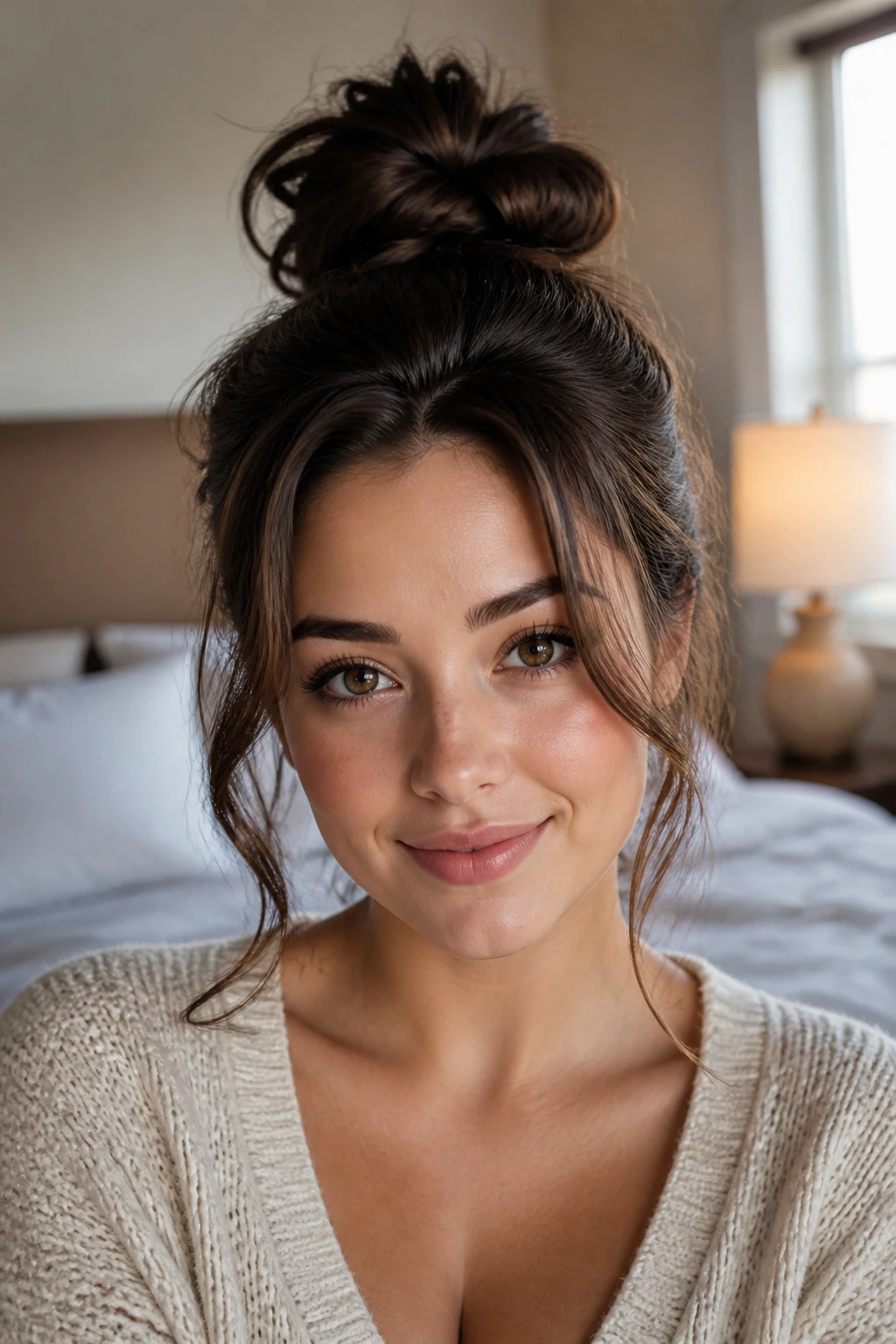
Why does a top knot sometimes look better on a round face than leaving hair down? Because it creates vertical space above the face. The knot lifts the eye upward, and the loose strands around the front soften the cheeks so the style doesn’t feel too bare.
The Trick Is Placement
Set the knot in the upper third of the head, not at the crown’s exact middle. That little shift gives a taller shape. Pull the hair up loosely first, then pinch a bit of volume near the crown before you twist it into the bun. If you skip that lift, the style can sit too low and flatten the face.
Curtain strands matter here. Leave two pieces free and curl them away from the face. They should skim the cheeks, not cling to them.
22. Shoulder-Length Razor Cut with Bend
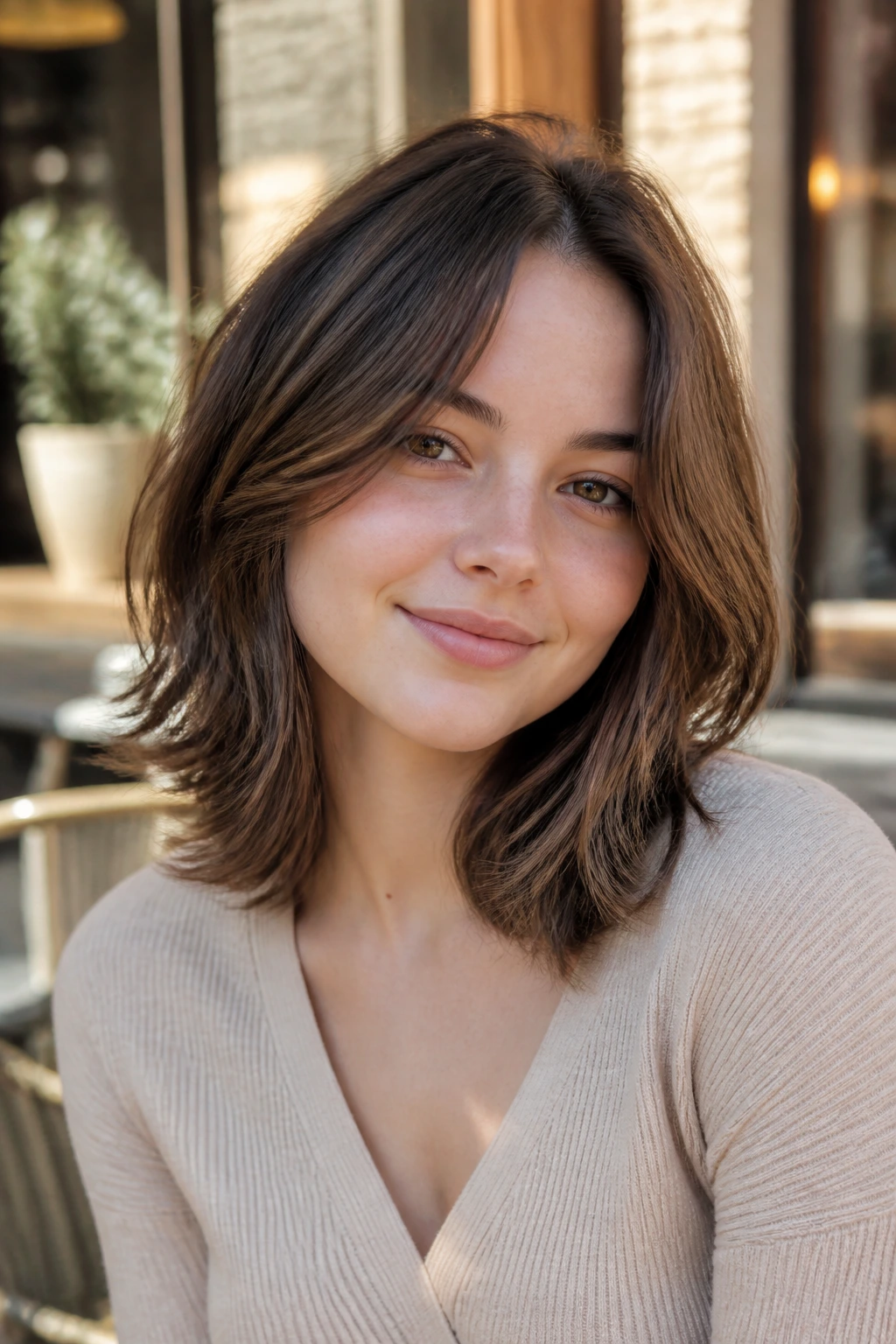
A shoulder-length razor cut can look light and lively, but only if the ends are handled carefully. Too much razor work can make the hair fray outward, which is not what a round face needs. The better version uses razor-softened ends with enough weight to keep the outline clean.
A shoulder graze gives the face more vertical space than a chin-length cut. That alone helps. Add a soft bend through the mid-lengths and the hair stops feeling boxy. I like this cut for people who want movement without a lot of layering around the cheeks.
Air-dry cream, a medium round brush, and a 1.5-inch iron at the ends are enough. Keep the finish easy. Overstyling this cut kills the point.
23. French-Inspired Fringe with Airy Layers
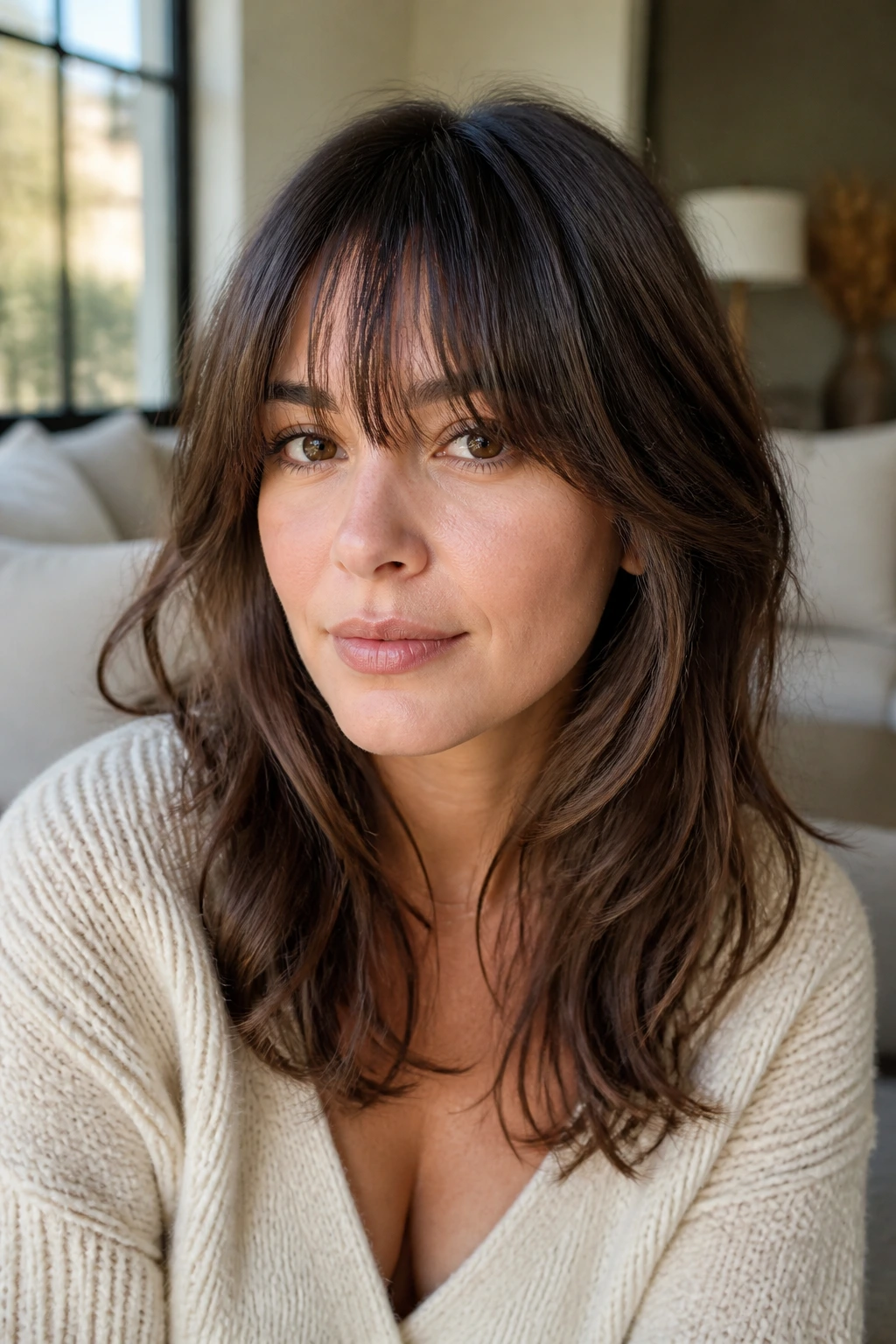
A fringe can flatter a round face, but only if it’s kept light. Heavy, blunt bangs shorten the face and can make the cheeks feel fuller. A French-inspired fringe does the opposite because it’s piecey, a little irregular, and soft at the edges.
The shortest pieces should sit just above the lashes or graze the brow line, while the side lengths taper into longer face-framing layers. That gives the forehead some openness without leaving it bare. The hair around the rest of the head should stay airy too, so the fringe doesn’t become the whole story.
I like this look best when it’s slightly undone. If every strand sits in place, it can feel too severe. A little movement keeps it flattering.
24. Retro Brush-Out Waves
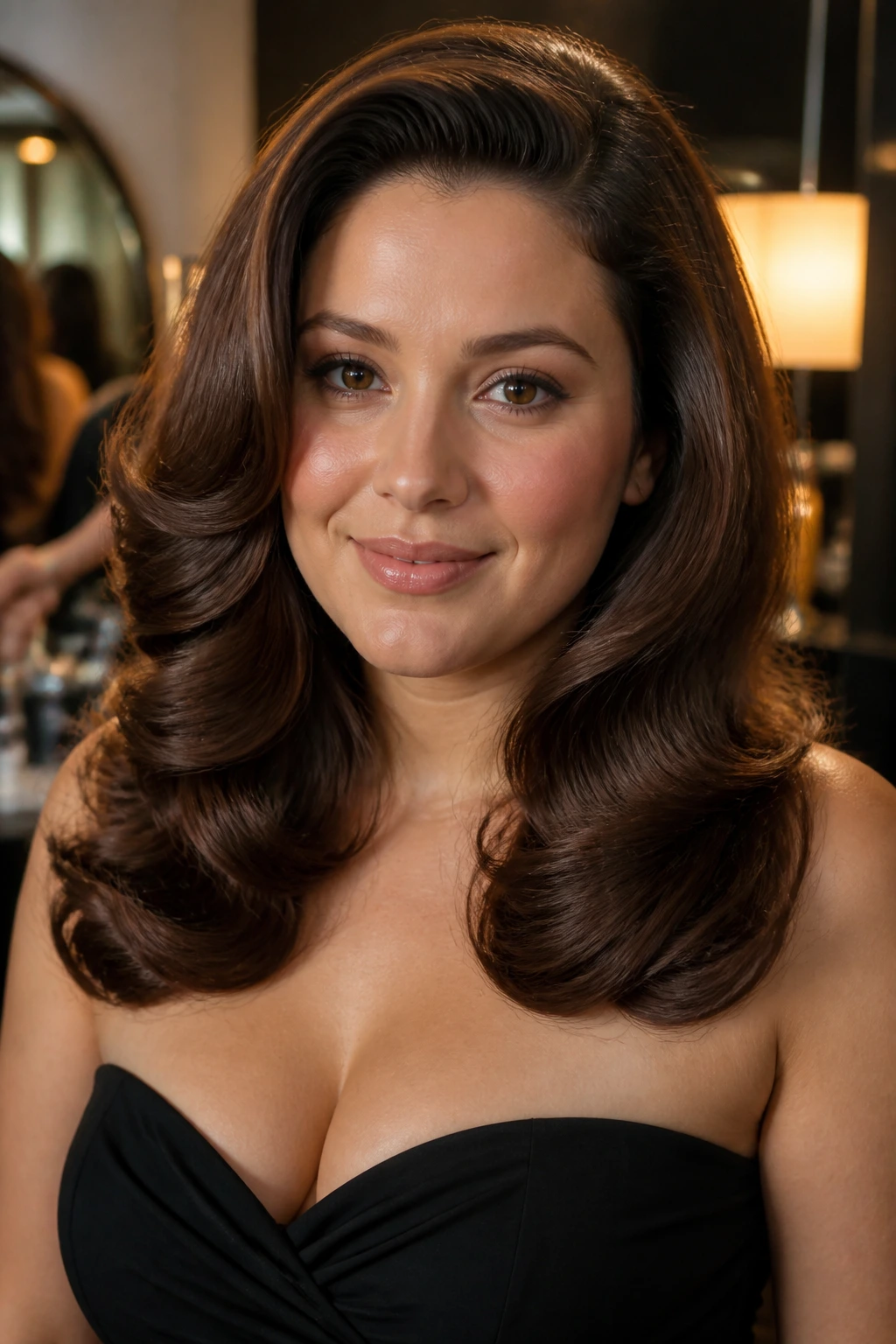
Brush-out waves have a very useful quality: they spread movement vertically instead of creating small tight curls around the cheeks. That vertical flow makes a round face look longer. It also feels a bit more dressed up than beach waves, which can sometimes sit too wide.
Set the hair with large rollers or a curling iron, then let the curls cool fully before brushing them out. Use a soft bristle brush, not a rough paddle. The wave should loosen into a broad, smooth bend. Finish with a light hairspray, then tame the ends with a drop of serum if needed.
This style is especially good for evening events, and it has a little old-school drama in the best way.
25. Angled Bob with Root Lift
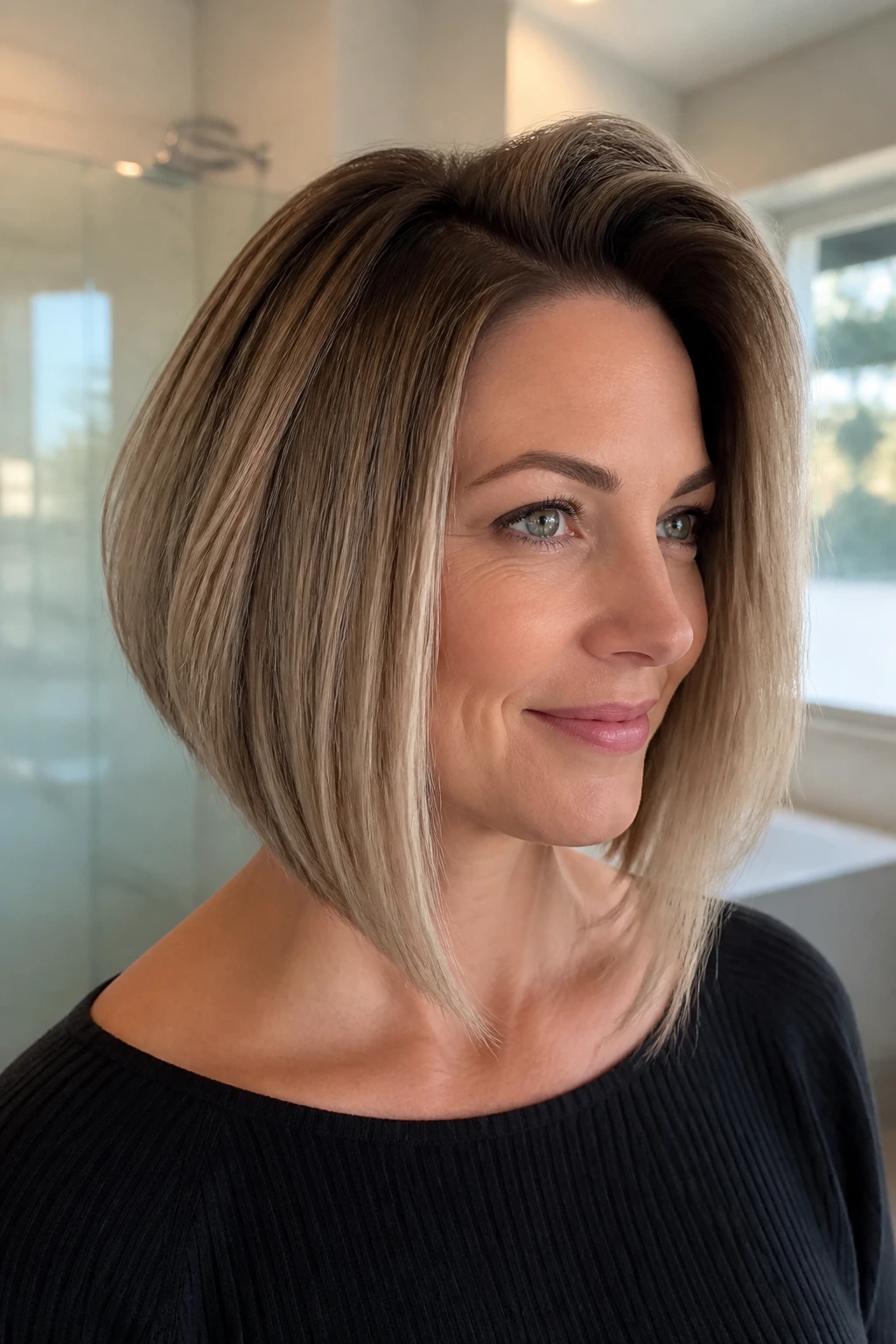
A precise angle can do the heavy lifting here. A bob that’s shorter in the back and gradually longer in the front pulls the eye downward and outward in a controlled way, which helps balance round cheeks. Keep the crown lifted so the silhouette doesn’t sit heavy on the head.
Ask For This Shape
- Shorter back that clears the neck
- Front pieces that fall closer to the collarbone
- Soft internal layering for movement
- Root lift at the blow-dry stage, not after
This cut works on straight or softly wavy hair. The key is that the front should never stop right at the jaw. That one detail changes the whole read of the haircut.
26. Braided Crown with Loop-Gentle Lengths
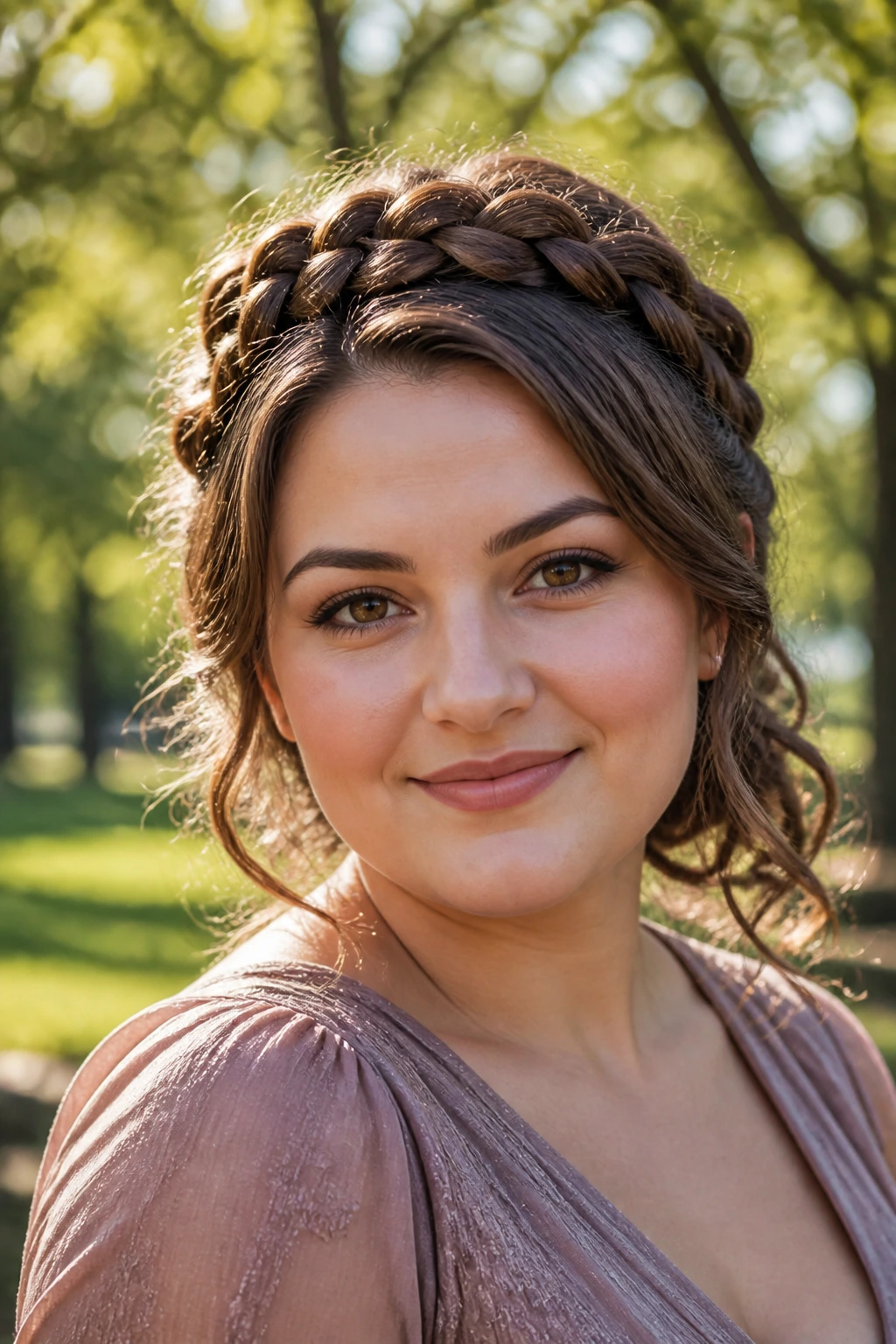
Not all braids flatten the face. A braided crown can actually add height if the braid sits a little higher on the head and the lengths underneath stay loose. The round face gets the lift from above, not from the braid wrapping too tightly around the sides.
Make the braid loose enough that you can pull it open slightly with your fingers. That gives it body without turning it into a thick rope. Keep the rest of the hair in soft loops or waves at the back, so the style has movement and does not feel pinned to the skull.
This is one of those styles that looks much better in motion than it does in a mirror.
27. Hollywood Waves with Side Sweep
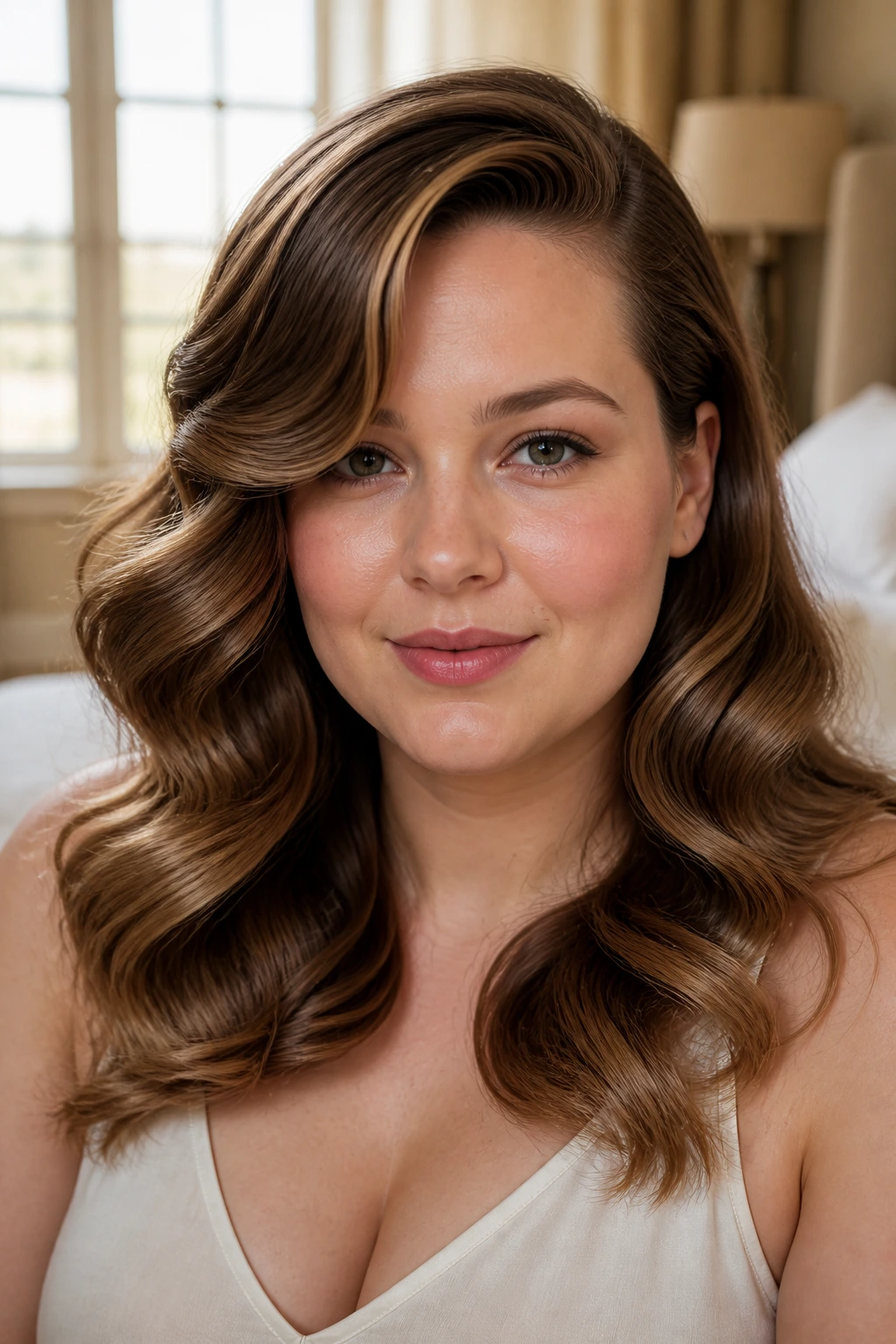
Classic side-swept waves work because they create a long, clean line through the face. The sweep breaks the symmetry of a round face, while the waves themselves fall in smooth curves that never sit too wide around the cheeks. It’s polished, yes, but also practical in a strange way.
The Set Matters
Curl the hair in the same direction on each side of the part, then pin the waves until they cool. That cooling step helps the wave hold its shape. Brush it out only after it is completely set, then mold the front into a side sweep that stays close to the head at the top and fuller through the lower half.
I like this most when the part sits a couple of inches off center. Too far over, and the style can feel lopsided. Too centered, and you lose the drama.
28. Velcro-Roller Blowout for Fine Hair
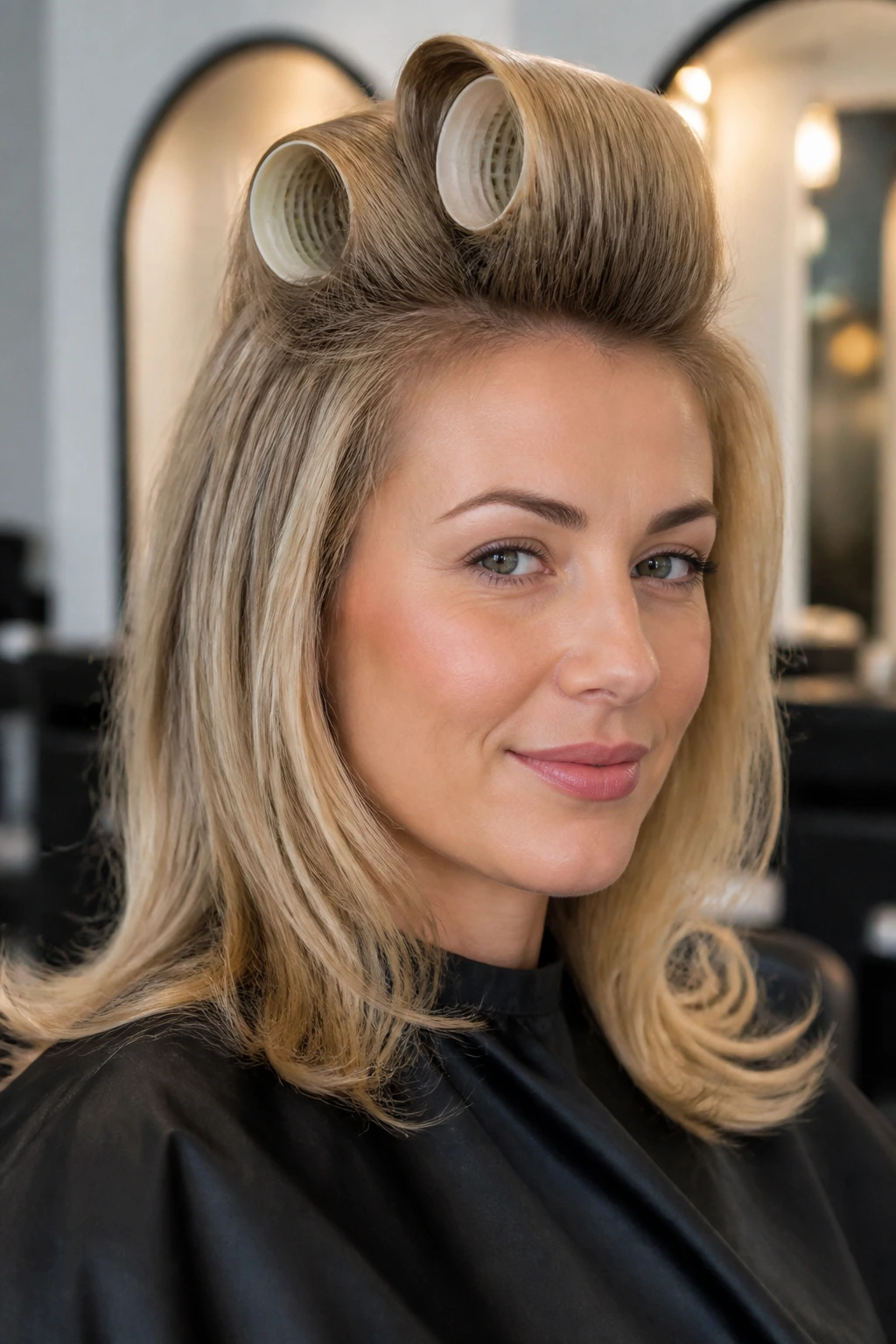
Fine hair often needs structure more than length. A velcro-roller blowout gives you that structure by building lift at the roots and keeping the body around the crown, where it helps a round face the most. It also gives the hair a little memory, which flat-ironed straightness never really does.
Set the top section in large rollers while it is still warm, not hot. Let the rollers cool fully before removing them. If you rush this part, the volume falls out fast. I like to clip the front sections up and away from the face so the lift starts higher than the temples.
The ends should stay smooth, not rolled into tight curls. That keeps the shape modern and stops it from puffing out in the wrong spots.
29. Twisted Half-Up with Loose Length
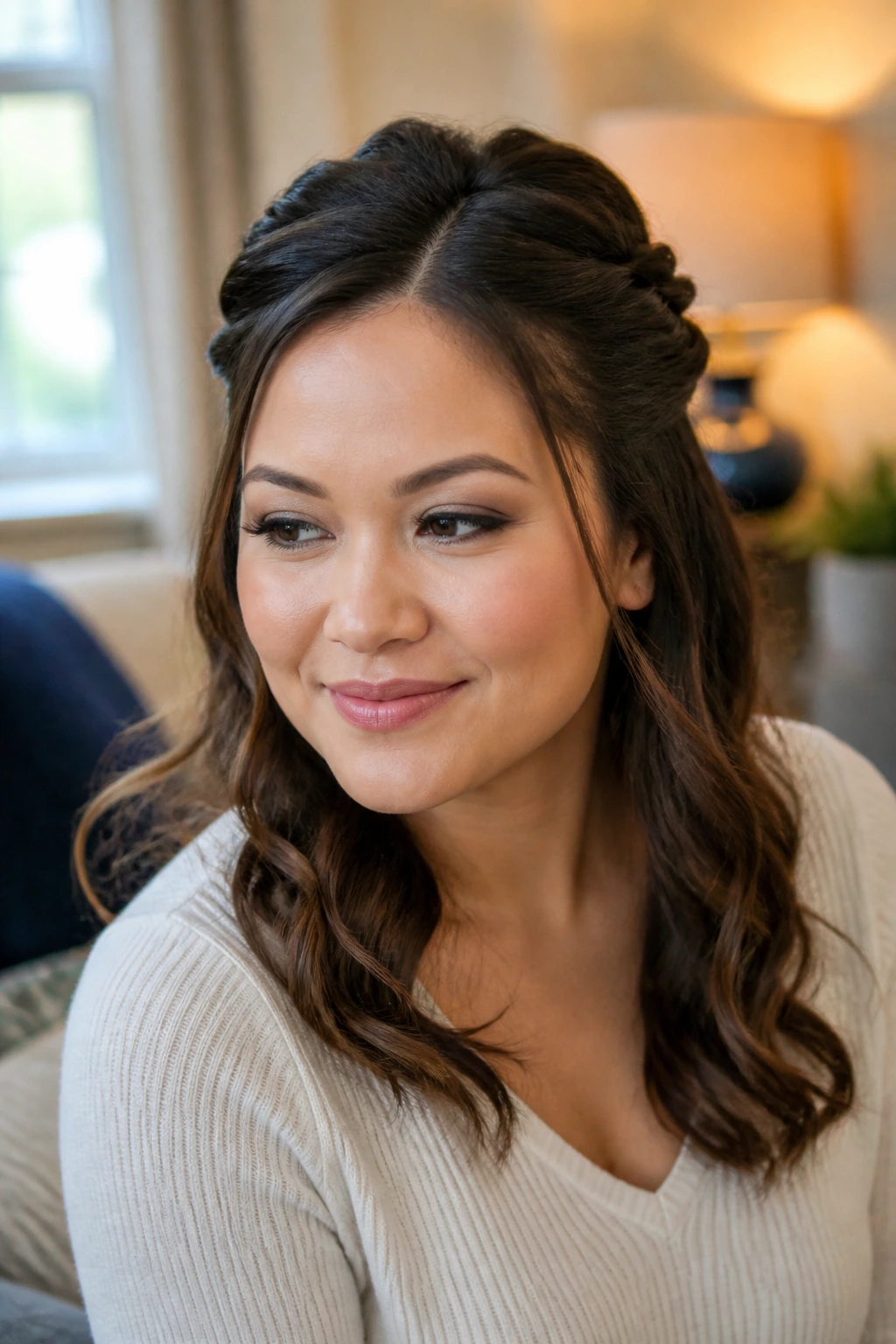
A twisted half-up style is one of those looks that seems simple until you notice how much shape it adds. The twists at the temples pull the eye upward, while the loose lengths below keep the face soft. On a round face, that balance matters a lot.
I like this version best with soft waves through the bottom half. Straight hair can work too, but it needs some bend so the lower section doesn’t hang like a curtain. Secure the twists low at the back of the crown and leave a little height on top before pinning them down. That tiny bit of lift keeps the front from feeling compressed.
A decorative clip can finish it off, but don’t choose one that sits too low on the head. Placement is the whole game.
30. Low Ponytail with Crown Height and Face-Framing Pieces
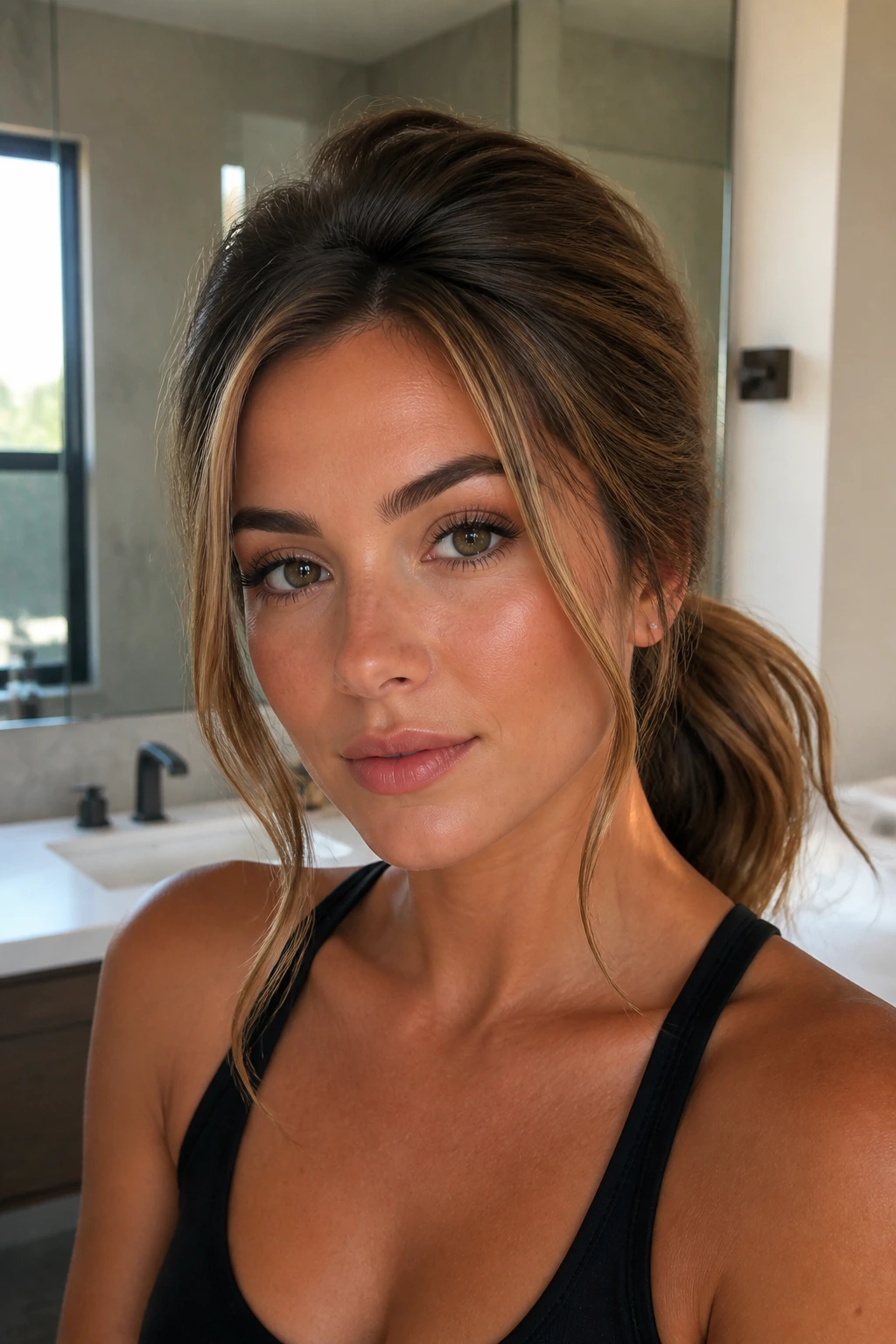
A low ponytail can still flatter a round face if the crown is lifted and the part is slightly off center. Without that lift, the style sits too flat and can make the face look wider. With it, the pony feels neat, polished, and surprisingly lengthening.
The pony should sit at the nape, not sag into the neck. Tease the crown lightly first, smooth the top layer over it, and leave two soft face-framing pieces in front. Curl the ends if you want a more finished look. Straight ends can work too, but they need to be glossy and controlled, or the style starts to feel plain.
This is the kind of everyday style that looks better than people expect when it’s done with care. Small details. Big difference.
Final Thoughts
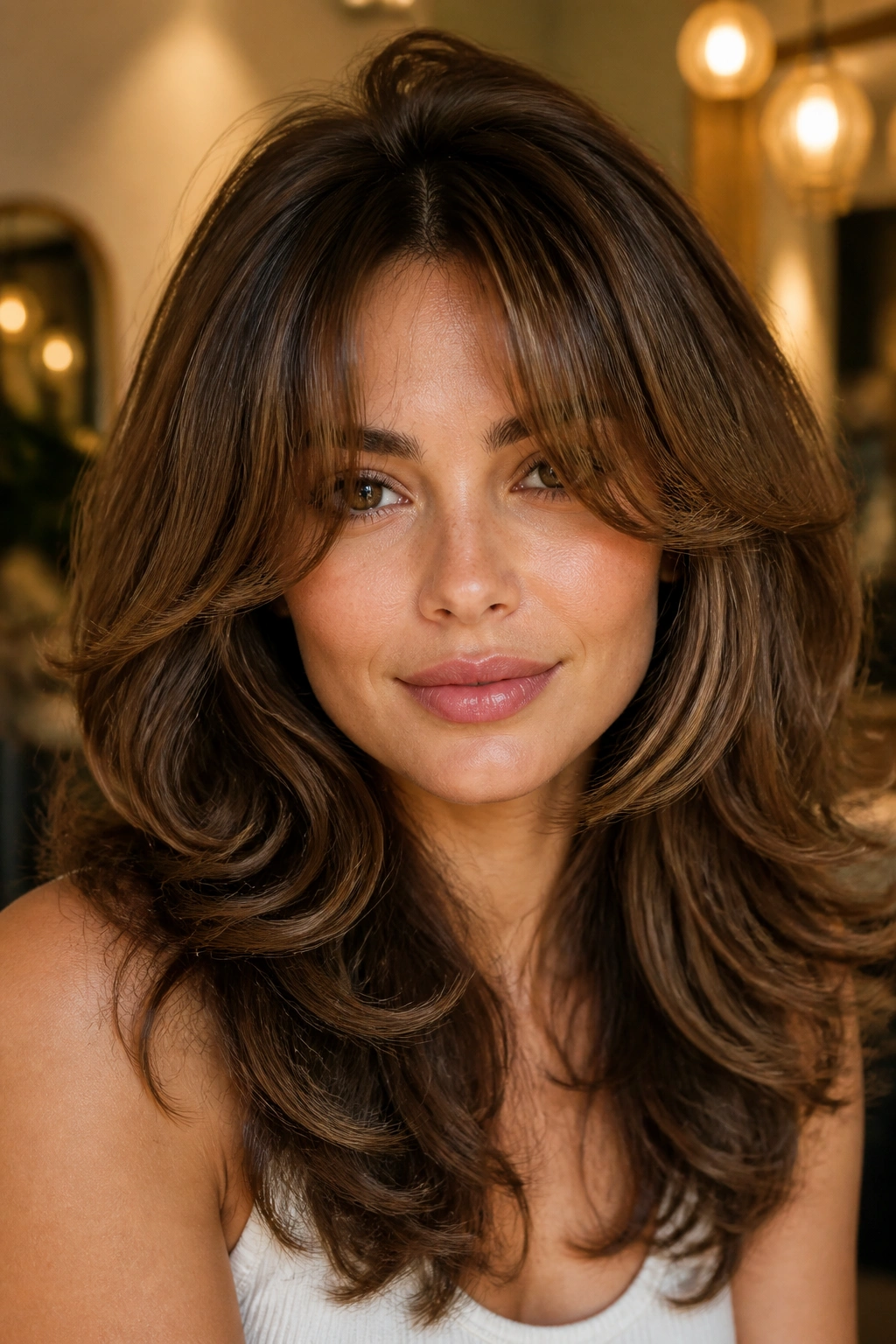
The best hairstyles for round faces are rarely the loudest ones. They’re the styles that place volume where it helps and keep the sides from ballooning at cheek level.
Height at the crown, softness around the face, and a line that falls below the widest part of the jaw—that’s the formula that keeps showing up, no matter the hair type or length. If you remember only one thing, make it this: volume should lift the face, not wrap around it.
