



Blue hair can be a knockout on a round face, but only when the cut does some of the work. The wrong shape can make the widest part of the face feel even wider. The right one gives you lift, movement, and a little edge that looks deliberate instead of costume-y.
That’s the real trick with blue hairstyles for round faces: the color is only half the story. Navy, cobalt, denim, icy blue, and blue-black all behave differently around the face, and the silhouette matters just as much as the shade. Side parts stretch the face. Crown volume adds height. Face-framing pieces that fall below the cheekbones do more than blunt ends ever will.
I’ve always liked blue hair because it can swing polished, punk, soft, or expensive-looking without changing the whole mood of the cut. Still, the best versions usually have some kind of angle built in—slanted bobs, longer front pieces, airy layers, or bangs that open in the middle instead of cutting straight across.
So let’s get practical and look at the blue styles that flatter a round face without sanding off the personality.
1. Side-Parted Cobalt Lob
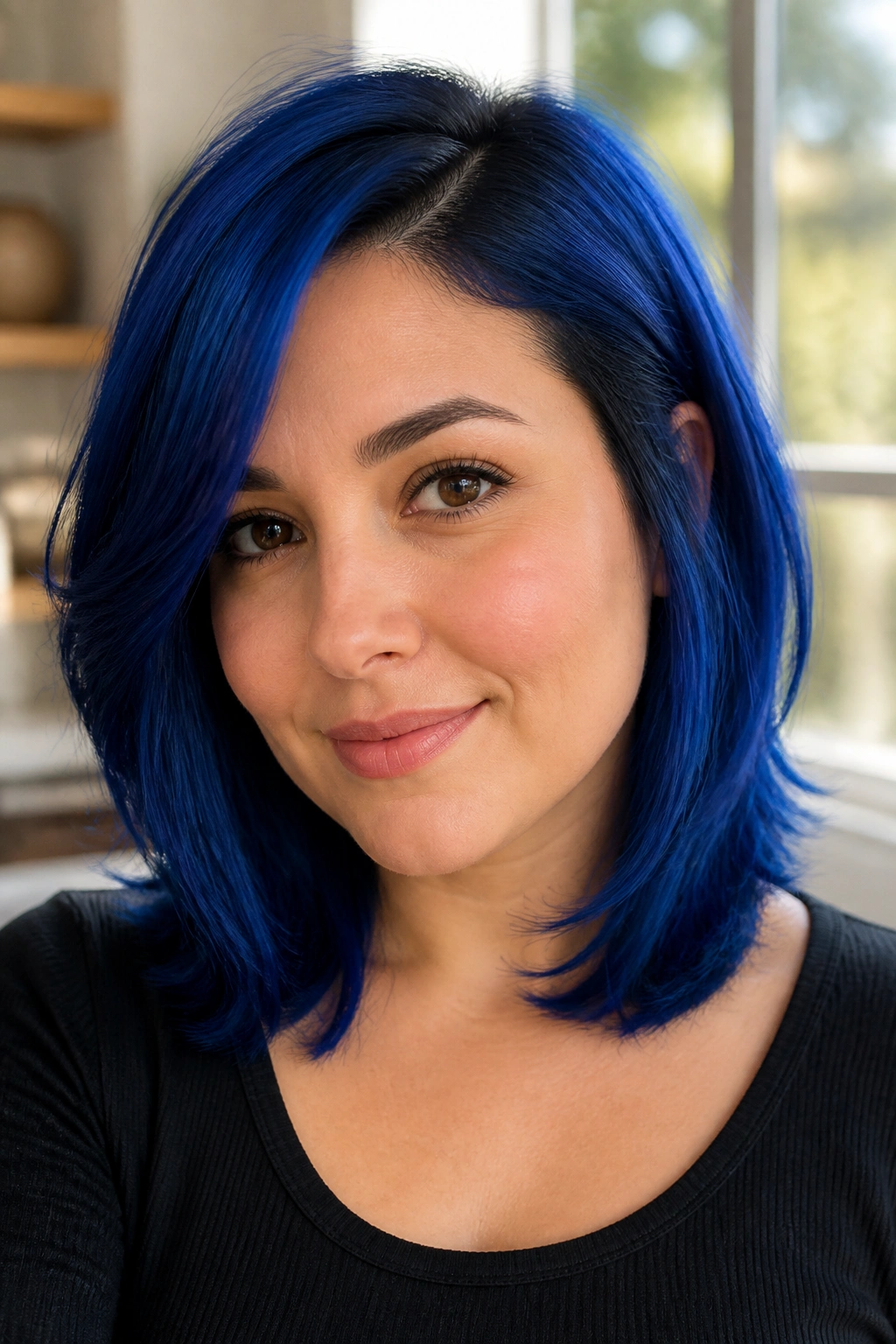
A lob that lands around the collarbone is one of the easiest blue cuts to wear when your face is round. The side part matters just as much as the length. It draws the eye diagonally instead of letting everything sit in one wide horizontal band across the cheeks.
Why the Shape Works
The best version isn’t stiff. It bends a little near the ends, with enough movement to keep the style from looking helmet-like. Ask for soft layers that start below the chin, not at the cheekbone, because that keeps the width lower and cleaner.
A cobalt tone gives this cut a sharper finish. It has that bright, saturated punch that looks striking against a neutral outfit, but it also keeps the hair from disappearing into the shape of the face. Longer front pieces are the quiet hero here.
- Part the hair about 2 inches off center.
- Keep the front a touch longer than the back.
- Curl the ends away from the face for a narrower effect.
- Use a light serum on the mid-lengths only.
Best for: people who want a blue look that still feels easy to wear at work, dinner, or anywhere that doesn’t tolerate a full-on neon moment.
2. Asymmetrical Sapphire Bob
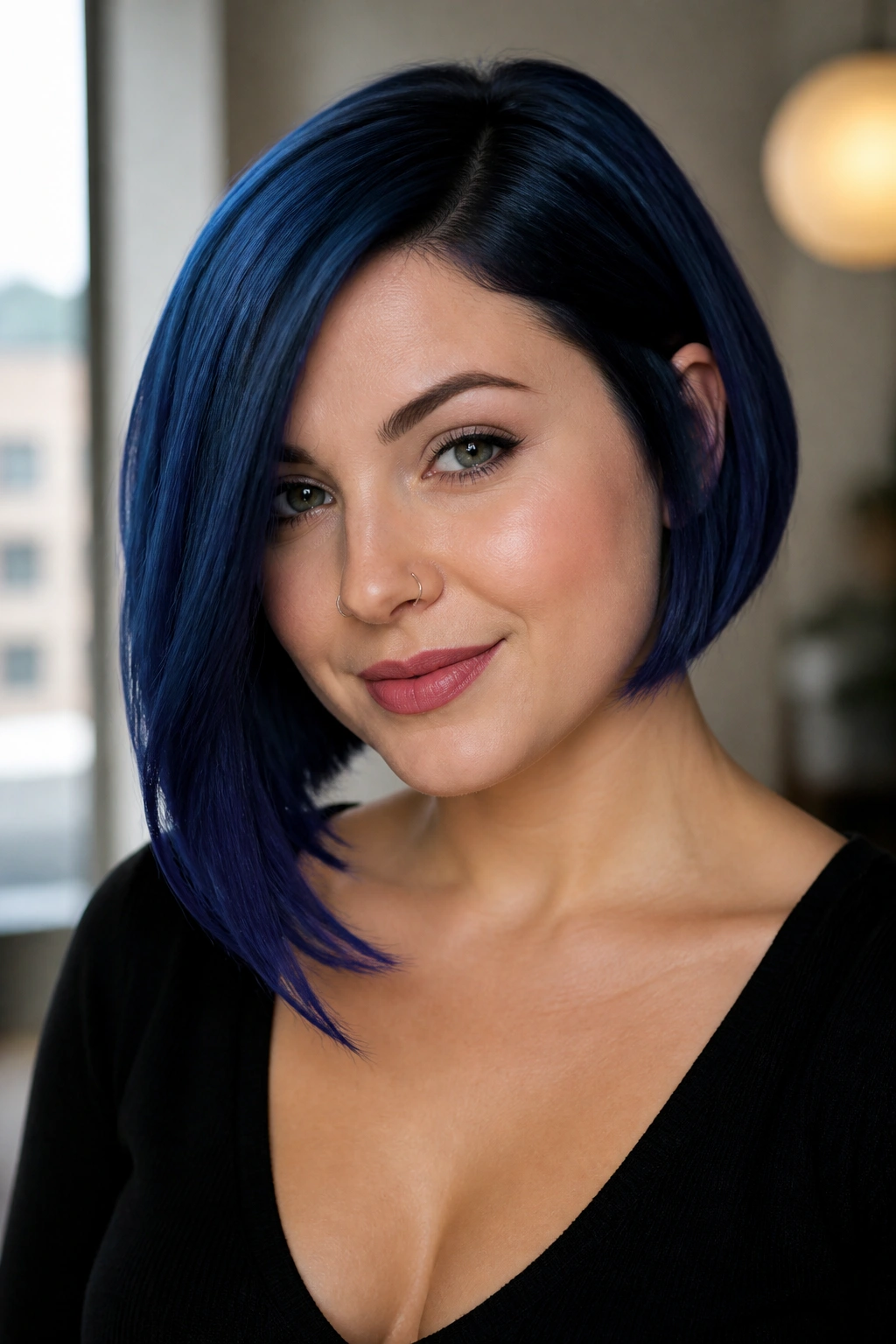
A bob that’s longer on one side does half the face-shaping for you. That’s why it works so well on a round face. The uneven line creates movement before you even style it.
The cut should skim the jaw on one side and sit a little shorter on the other, but not so short that it balloons out at the cheeks. Jawline length is the danger zone; if the bob ends right there, the face can look wider. Push it below or above that line.
Sapphire blue makes the geometry pop. The color is rich enough to look glossy, which helps the bob feel sleek instead of boxy. I like this shape with a deep side part and a slight bend through the front. Straight and flat can work too, but a little texture is usually kinder.
This is one of those cuts that looks expensive even when the styling is simple. That’s not an accident. The line does the heavy lifting.
3. Navy Shag with Curtain Bangs
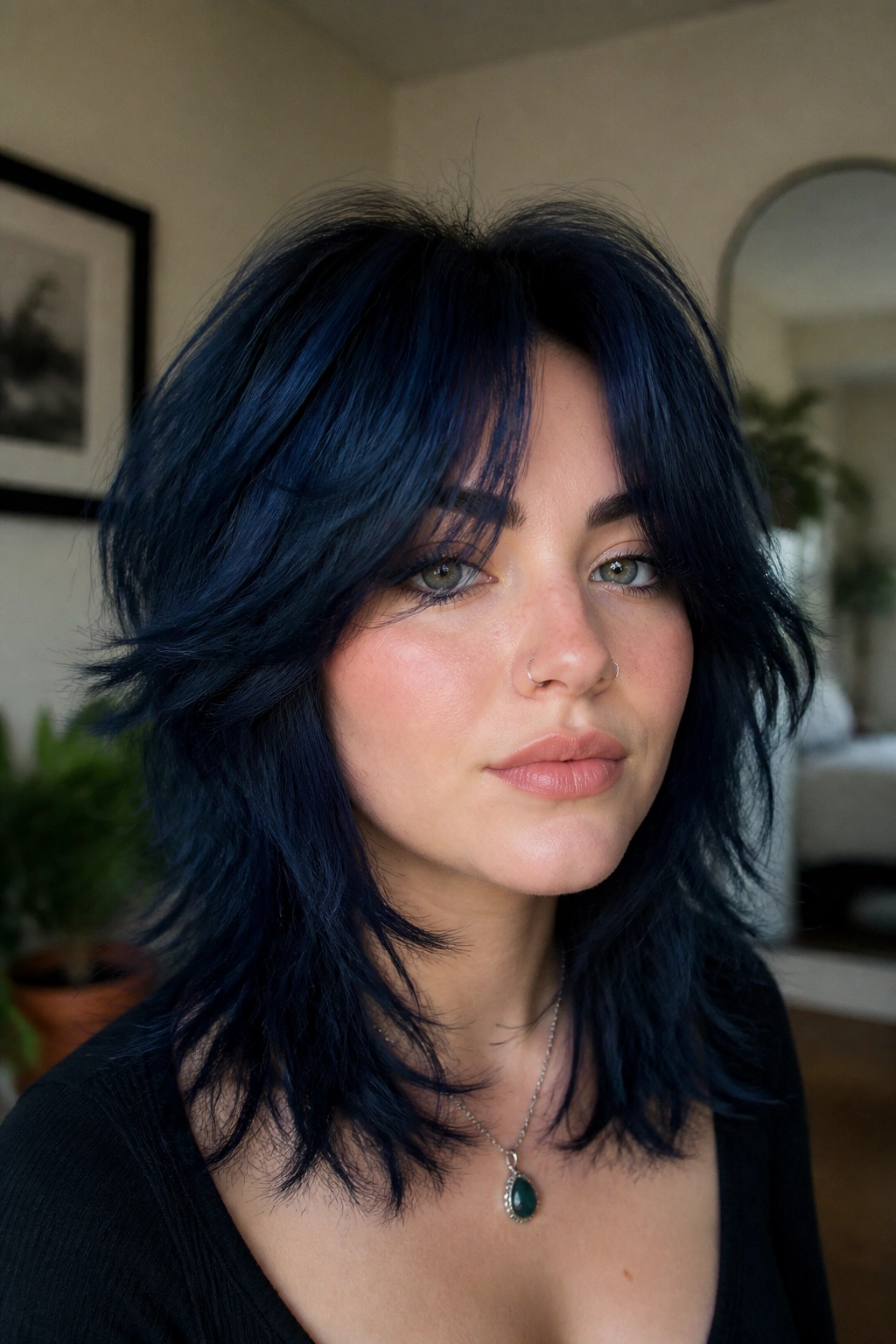
Why does a shag flatter a round face so well? Because it breaks up softness with layers, but it doesn’t add bulk in one heavy place. The crown gets lift, the sides get movement, and the bangs open the face instead of closing it in.
Navy blue makes the whole thing feel darker and more wearable than a brighter shade. It’s a smart pick if you want the cut to read first and the color to follow. The layers should be feathered, not thinned to the point of fuzziness. There’s a difference.
How to Wear It
Curtain bangs should start around the cheekbone and split gently down the middle. If they’re too short, they can make the face feel shorter. If they’re too heavy, they sit like a curtain in the wrong way.
- Blow-dry the bangs with a round brush.
- Scrunch a little mousse through the ends.
- Leave the top flatter than the sides.
- Use a matte texture spray for piecey separation.
The shag earns its keep because it gives shape without making the face feel boxed in. That’s a hard balance, and this cut gets it right more often than not.
4. Textured Blue Pixie with Crown Volume
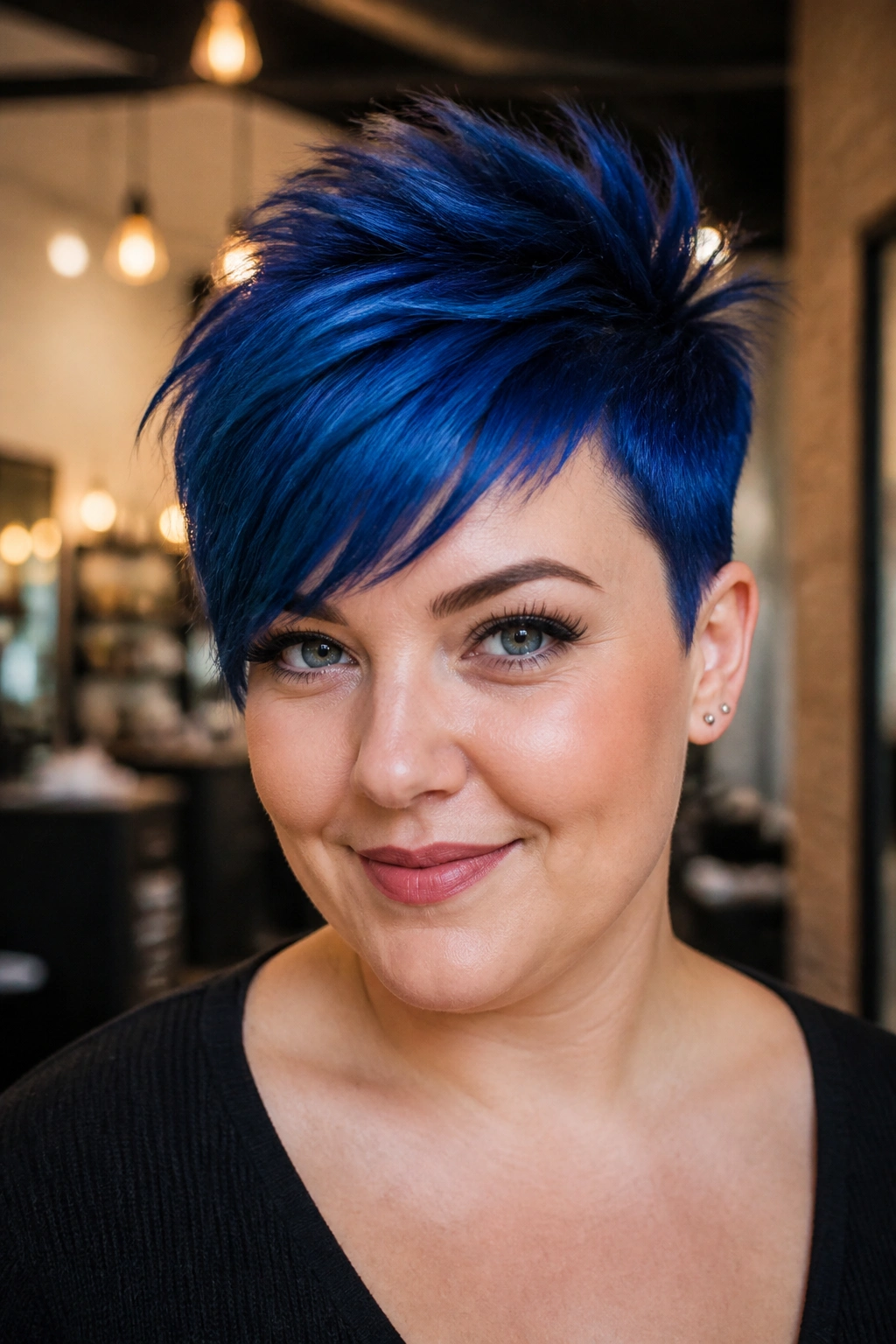
Short hair can work beautifully on a round face, but only if it has height somewhere. A flat pixie is a trap. A pixie with volume at the crown is a different story.
The trick is to keep the sides neat and the top a little longer, usually around 2 to 3 inches, so you can push the hair upward or slightly forward. That extra lift stretches the face visually. Short on the sides, taller on top is the whole game.
Bright blue looks sharp here, but so does icy blue if you want a softer finish. The color shows off the texture in the cut, especially when the top is piecey and the fringe is swept diagonally. You do not want a round little cap sitting over a round face. That shape is exactly what you’re trying to avoid.
Ask your stylist for a pixie that leaves enough length at the front to brush across the forehead. Tiny detail. Huge difference.
5. Long Blue Layers with Face-Framing Pieces
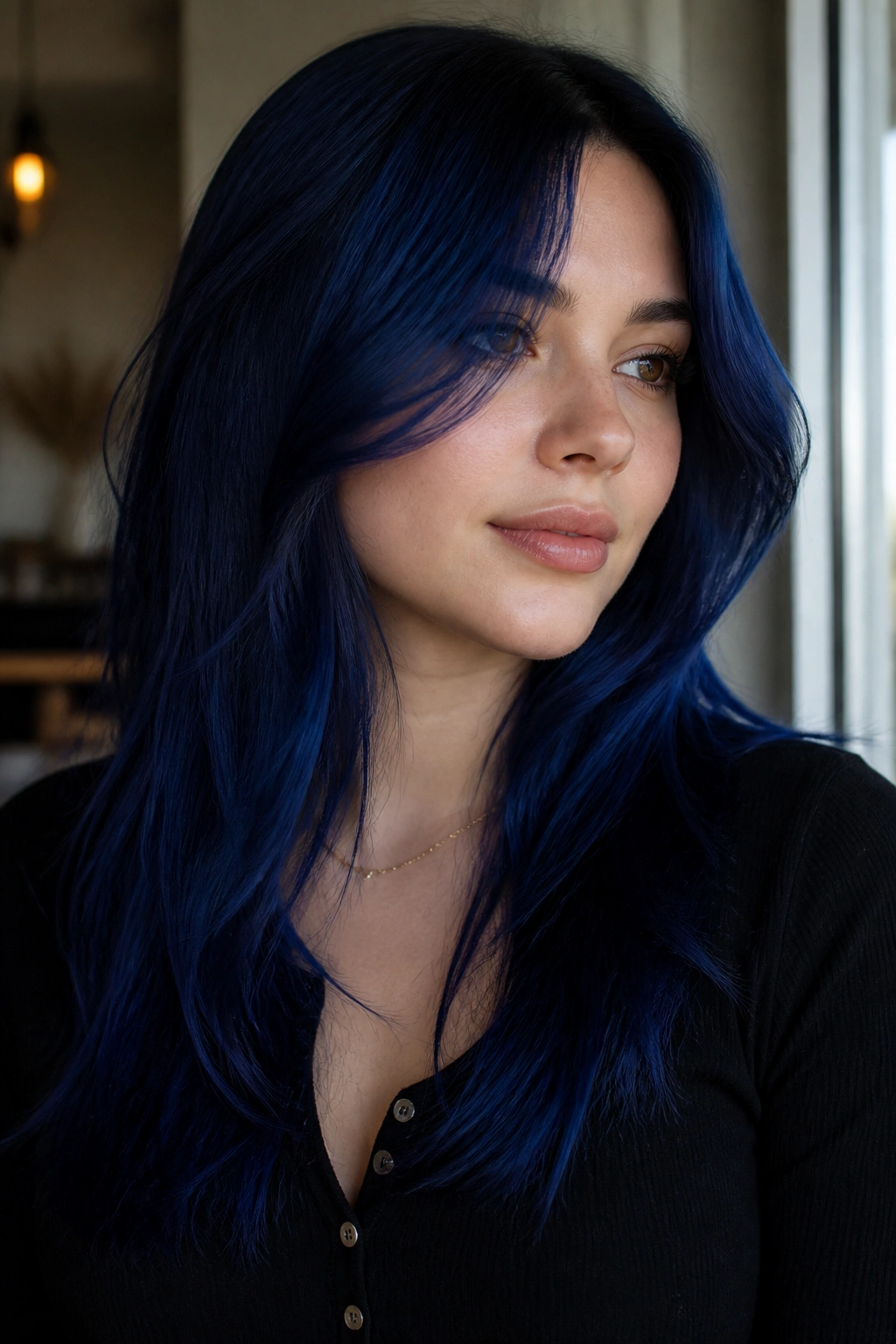
Long hair can be tricky on a round face because one blunt sheet of hair often creates more width than you want. Long layers fix that. They keep the length, but they stop the sides from hanging in one heavy curtain.
The best version has face-framing pieces that start below the cheekbone and taper toward the collarbone. That gives the face a longer path to follow. A deep midnight blue or blue-black shade works especially well here, because the darker tone makes the layers read as shape, not just movement.
I like this style because it doesn’t scream for attention. It has a calm, clean finish. Then you catch the light and notice the color shift from inky blue to softer blue at the ends, and that’s where the fun lives.
If your hair is naturally straight, a bend through the front sections helps a lot. If it’s wavy, even better. The point is to keep the middle from feeling like one solid block.
6. Indigo Wolf Cut with Choppy Ends
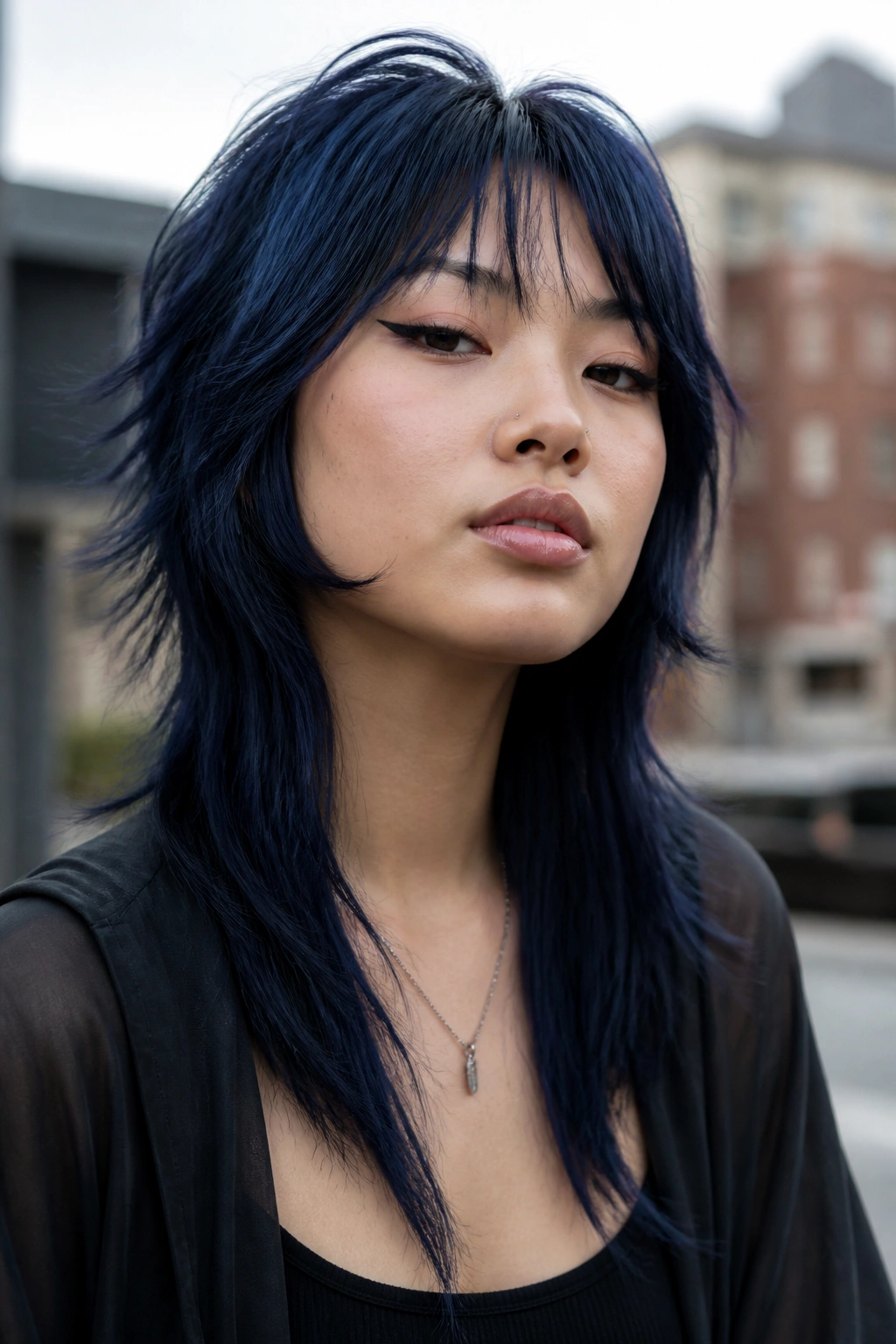
A wolf cut is the louder cousin of a shag. It has more contrast between the short crown layers and the longer bottom length, which gives a round face a stronger vertical line. That’s the appeal.
Unlike a soft shag, the wolf cut can feel a little wild. Good. That’s the point. The choppy ends stop the shape from getting too neat, and the volume lives high on the head instead of at cheek level. Indigo blue suits this cut well because the color already has attitude.
What you want to avoid is over-thinning. Some wolf cuts get razored too hard and start to look wispy in the wrong places. Ask for movement, not shredded ends. The difference shows up after the first wash, when the cut either keeps its shape or collapses into a frizzy triangle.
Best worn with a little grit in it. Air-dried texture. Dry shampoo. Maybe a touch of cream at the ends. Too polished and it loses the whole point.
7. Sleek Center-Parted Midnight Blue Length
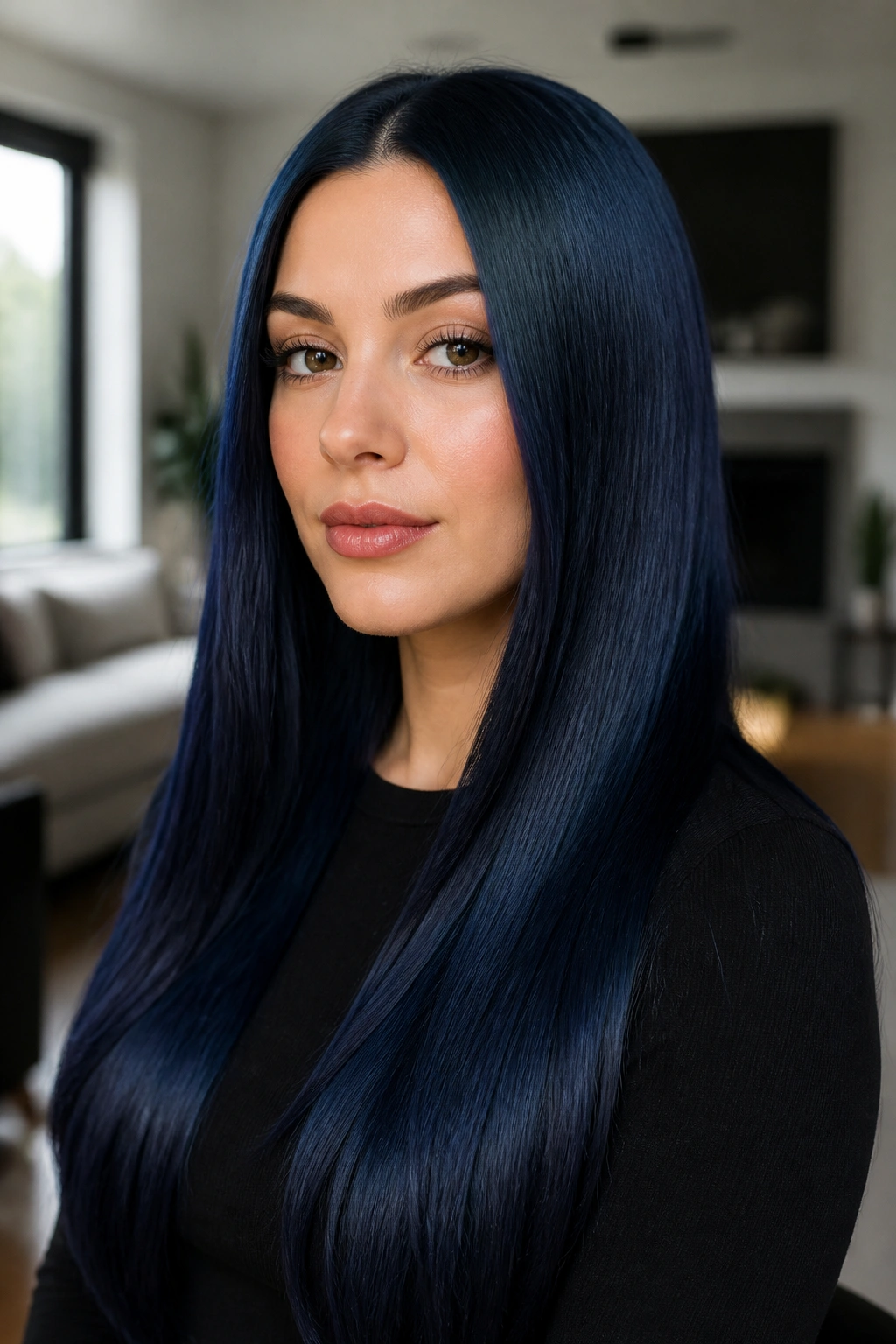
Center parts are not off-limits for round faces. They just need the right backdrop. Straight, glossy length in midnight blue can actually make the face look longer because the hair falls in clean vertical lines on both sides.
The key is to keep the length past the shoulders. Collarbone length can work, but longer is safer if the hair is pin-straight. A blunt cut at the chin is where things get dicey. Past the bust line? Much easier. The eyes go up and down instead of side to side.
This style depends on shine. Midnight blue looks flat when the hair is dry and rough, and then suddenly elegant when the strands reflect light. A smoothing cream or a light blowout serum helps, but don’t drown it. A greasy center part is not the goal.
One more thing: if your hair is dense, tuck a strand behind one ear. That tiny asymmetry keeps the look from feeling too symmetrical. Small move. Big payoff.
8. Denim Blue Waves at Shoulder Length
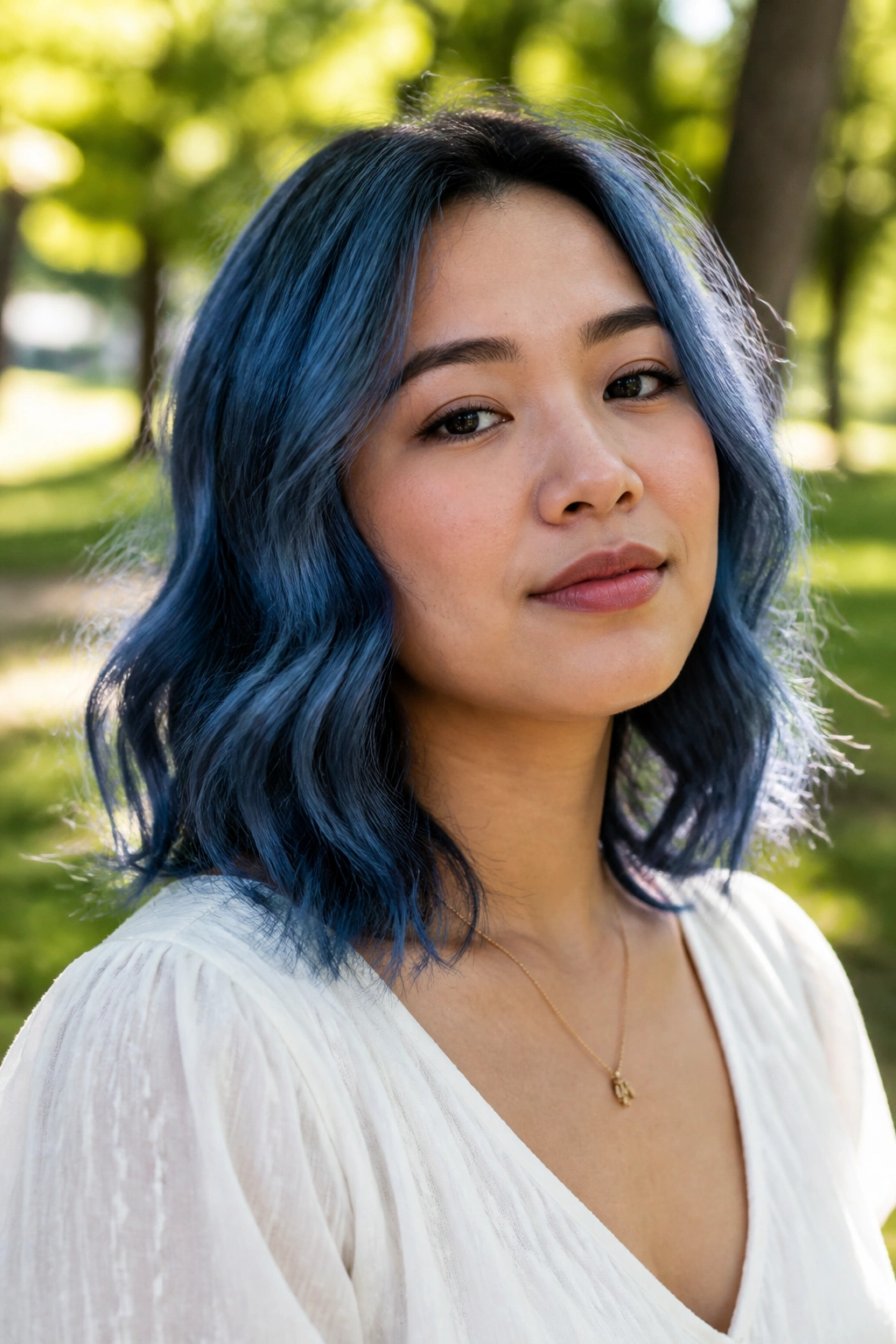
Shoulder-length waves are the sort of style that looks easy only when the cut underneath is doing its job. On a round face, those waves should sit just below the widest part of the cheeks, not right on top of them.
Denim blue is a nice middle ground. It’s muted enough to feel wearable, but it still reads as blue from across the room. That makes it useful if you want color without neon drama. The texture matters more here than the finish. You want loose, broken waves rather than barrel curls that all point the same way.
Styling Notes for Everyday Wear
A few details make this shape work better:
- Start the wave a few inches below the roots.
- Leave the ends slightly straighter for a modern finish.
- Flip the part from time to time so the hair does not settle into one wide shape.
- Use a 1-inch iron or a flat iron bend, not a huge curling barrel.
The effect is soft, but not limp. And that’s the sweet spot.
9. Blue Cut with Side Bangs
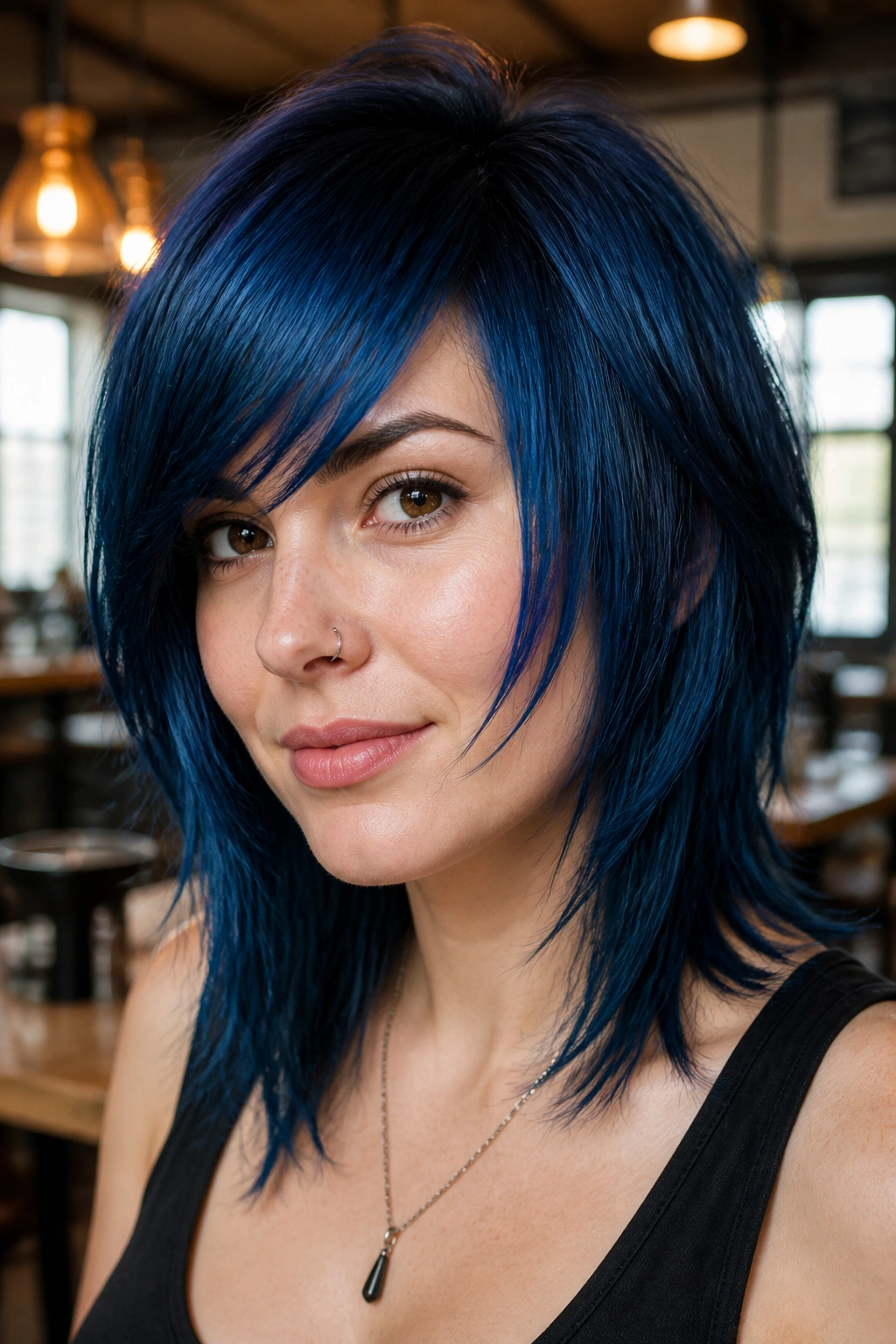
Can bangs work on a round face? Absolutely. Side bangs can be a gift, because they cut across the forehead and cheek area at a diagonal instead of stopping the eye dead in the middle.
The best side bangs are long enough to brush the cheekbone and soft enough to move when you turn your head. Short, choppy bangs can work too, but they need confidence and a little edge in the rest of the cut. If the hair is blue, that edge often comes for free.
A saturated royal blue or teal-blue color makes side bangs feel more intentional. The color keeps the cut from drifting into “cute” territory when you may want something sharper. Ask for the bangs to blend into the front layers, not sit like a separate panel. That blend is the thing.
Where the Bangs Should Land
They should graze the outer eye area or cheekbone, not end at the center of the face. That placement keeps the face looking open and stretched. If you wear glasses, even better. The diagonal line can play nicely with the frames.
10. Collarbone Blue Cut with Curtain Fringe
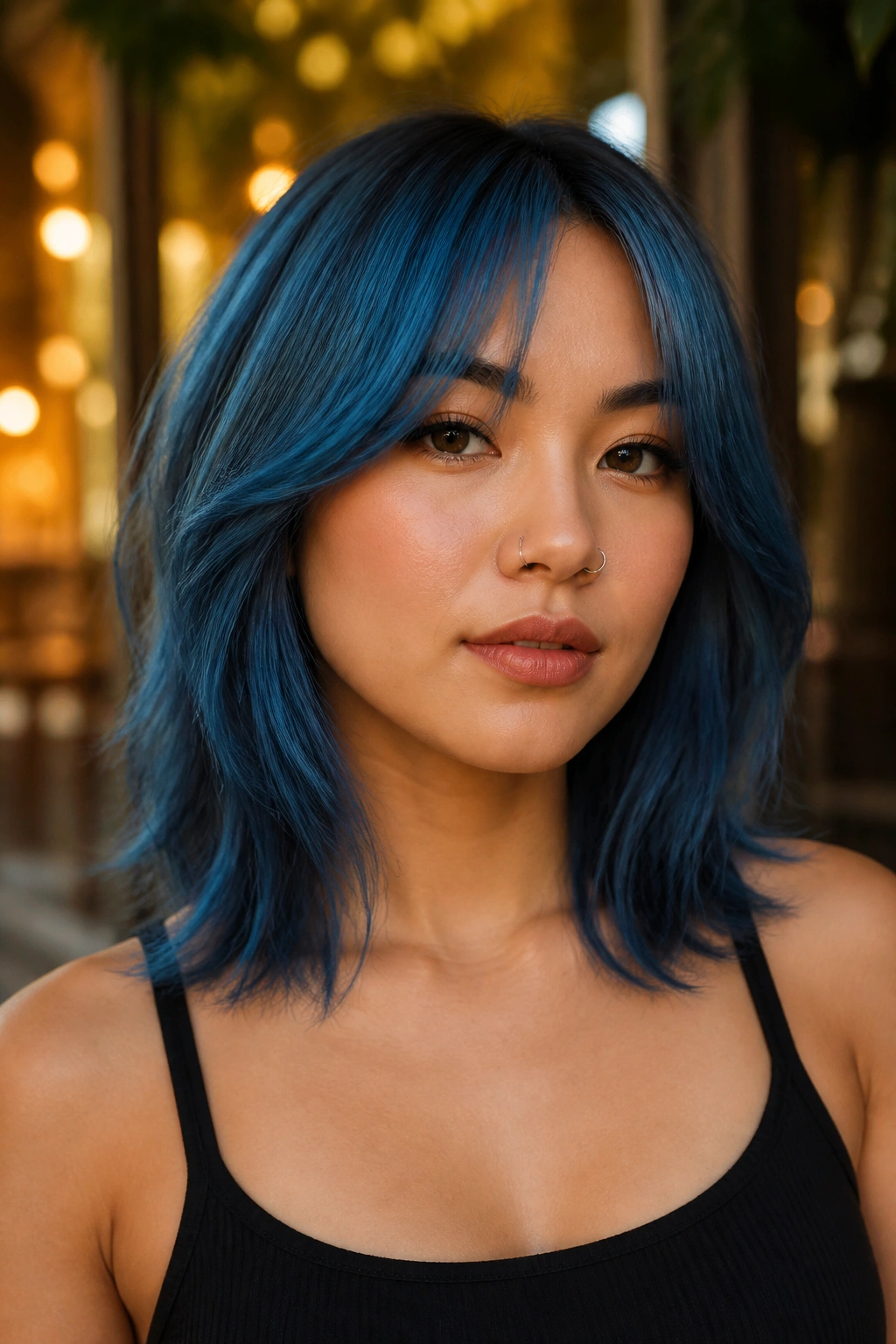
Curtain fringe is one of the safest bang choices for a round face, and I say that without hesitation. It opens in the middle, falls softly at the sides, and makes room for the face instead of covering it.
The collarbone length below it keeps the whole shape long. That combination works because the bangs add interest up top while the rest of the hair falls lower, creating a nice vertical balance. Blue at this length looks polished fast. You don’t need a perfect blowout to make it read well.
If you want the style to feel less sweet, choose a deeper shade like cobalt or smoky sapphire. If you want it softer, a denim or pastel blue gives the fringe a gentler edge. Both work.
I’d avoid making the fringe too short. A curtain bang that starts high on the forehead can make the face look shorter than it is. A slightly longer split feels much better in practice.
11. High Blue Ponytail with Crown Lift
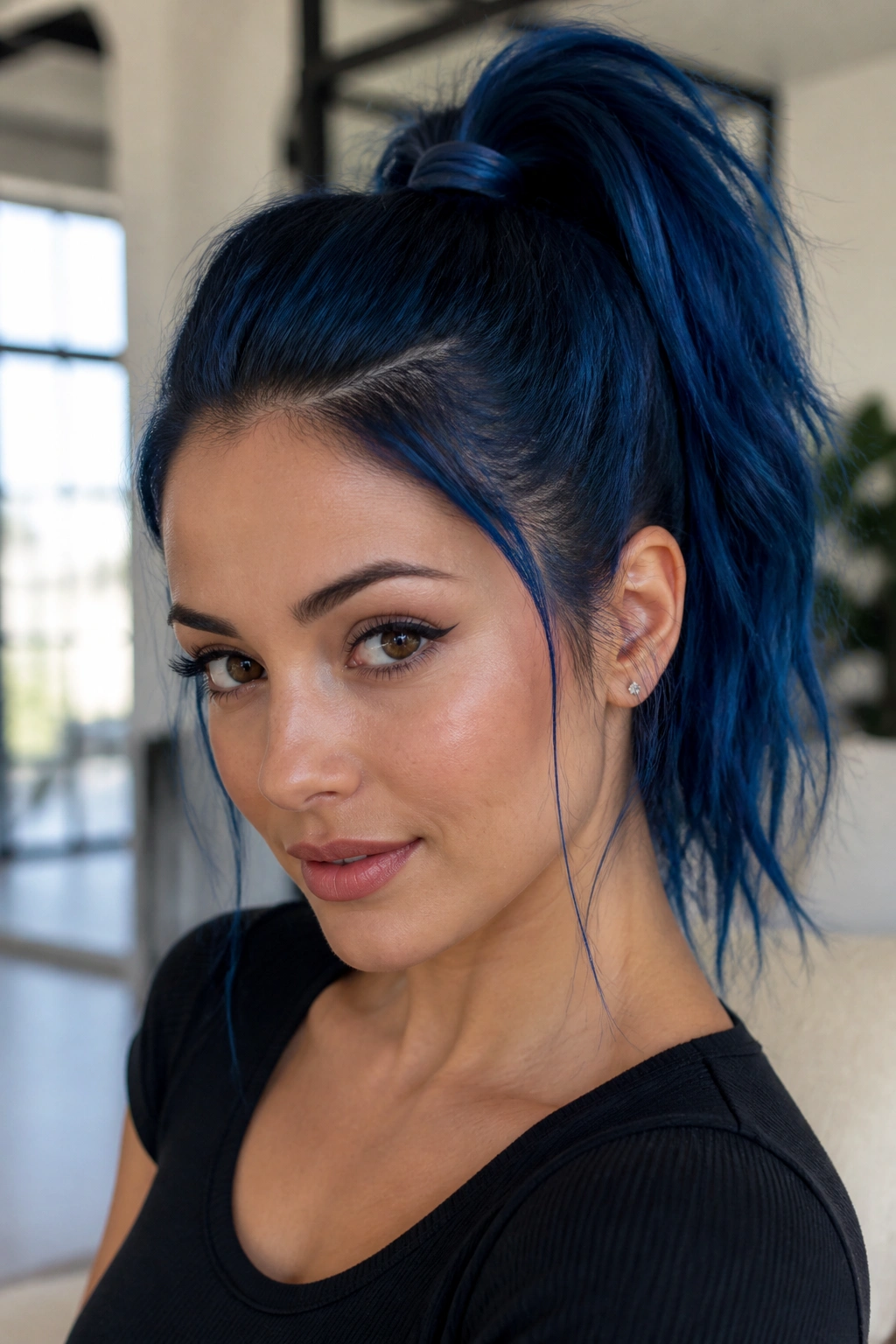
A high ponytail is one of those styles that can either sharpen a round face or flatten it, and the difference comes down to the crown. Flat crown? Not flattering. A little lift? Much better.
The pull of the ponytail draws the eye upward, which is exactly what a round face usually wants. Keep the sides smooth, but not pinned so tight that the style turns harsh. A bit of softness around the temples is fine. Actually, it helps.
The Small Tricks That Change the Shape
- Tease the crown lightly before tying it back.
- Use a ponytail holder 1 to 2 inches above the crown line.
- Wrap a small strand around the elastic.
- Let the tail fall over one shoulder if you want extra length.
Blue hair makes a ponytail feel less basic. Electric blue turns it into a statement. Navy keeps it sleek. Either way, the vertical line from scalp to tail lengthens the look of the face.
A low ponytail can be lovely, sure. But for a round face, the high version usually does more.
12. Half-Up Braided Blue Style
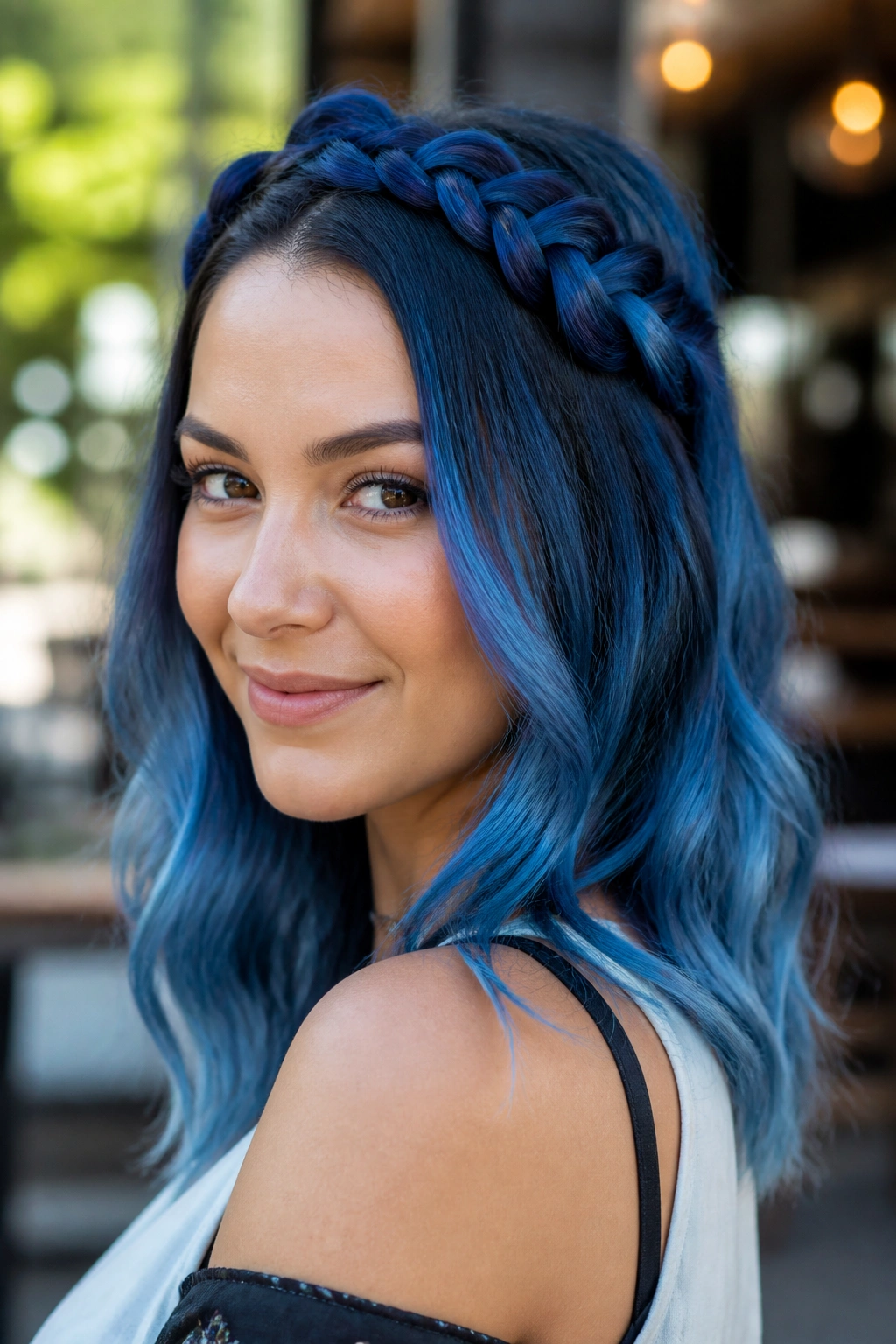
A half-up braid gives you structure without pulling all the hair away from the face. That’s why it works. The top gets lifted, the sides stay soft, and the braid itself adds a clean line that doesn’t feel bulky.
Unlike a full updo, this style leaves length around the cheeks and jaw, which helps balance a round face shape. The braid can start at the temples, run across the crown, or sit like a small woven band at the back. The exact placement matters less than the overall effect: height up top, softness around the edges.
This is a strong choice for blue balayage, because the braid shows off the color shift. Dark roots into bright ends? Nice. Even-toned blue? Also good. The woven texture makes both look richer.
Best when the braid is a little loose. If it’s too tight, it pulls the face open in a harsh way. A couple of wisps around the front can soften that without making it messy.
13. Messy Blue Bun with Soft Tendrils
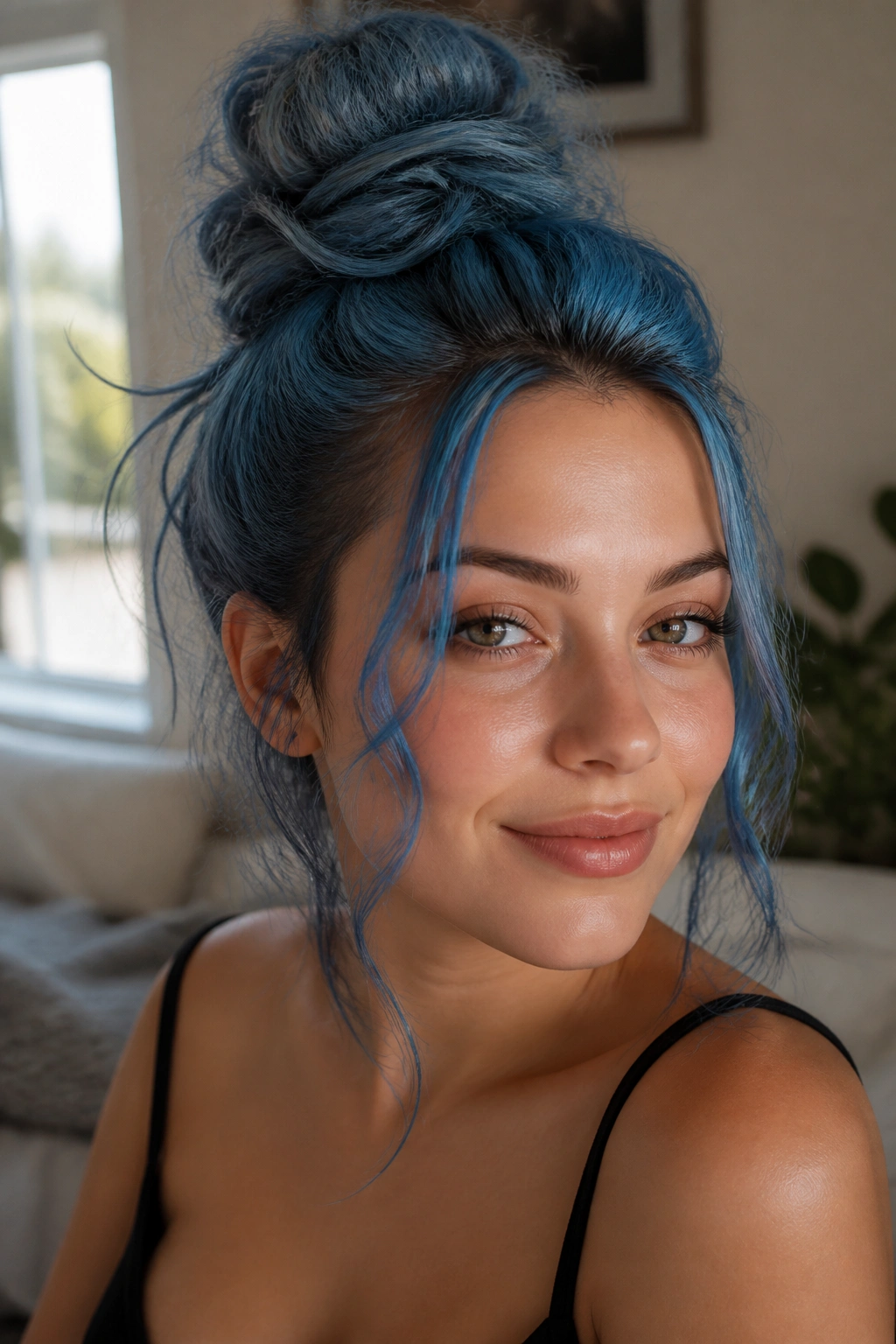
A bun can be flattering on a round face if it sits high enough. Low buns often widen the jaw area. High buns lift the eye line, which is the whole point. Add a few soft tendrils around the temples and cheekbones, and the shape gets even better.
I like this style in pale blue or smoky steel blue because the undone texture suits cooler shades. Bright blue can work too, but the bun needs enough looseness to keep it from looking severe. The best version is never scraped back like a ballerina’s knot unless the rest of the face-framing work is doing serious heavy lifting.
The tendrils should be thin, not chunky. Thick face pieces can add width instead of softness. A few wispy strands near the temples and one piece near the cheek is enough.
And yes, the bun can be messy. It should be. A perfectly slick bun on a round face sometimes looks too neat, too hard, too symmetrical. A little bend keeps it human.
14. Razor-Cut Blue-Black Crop
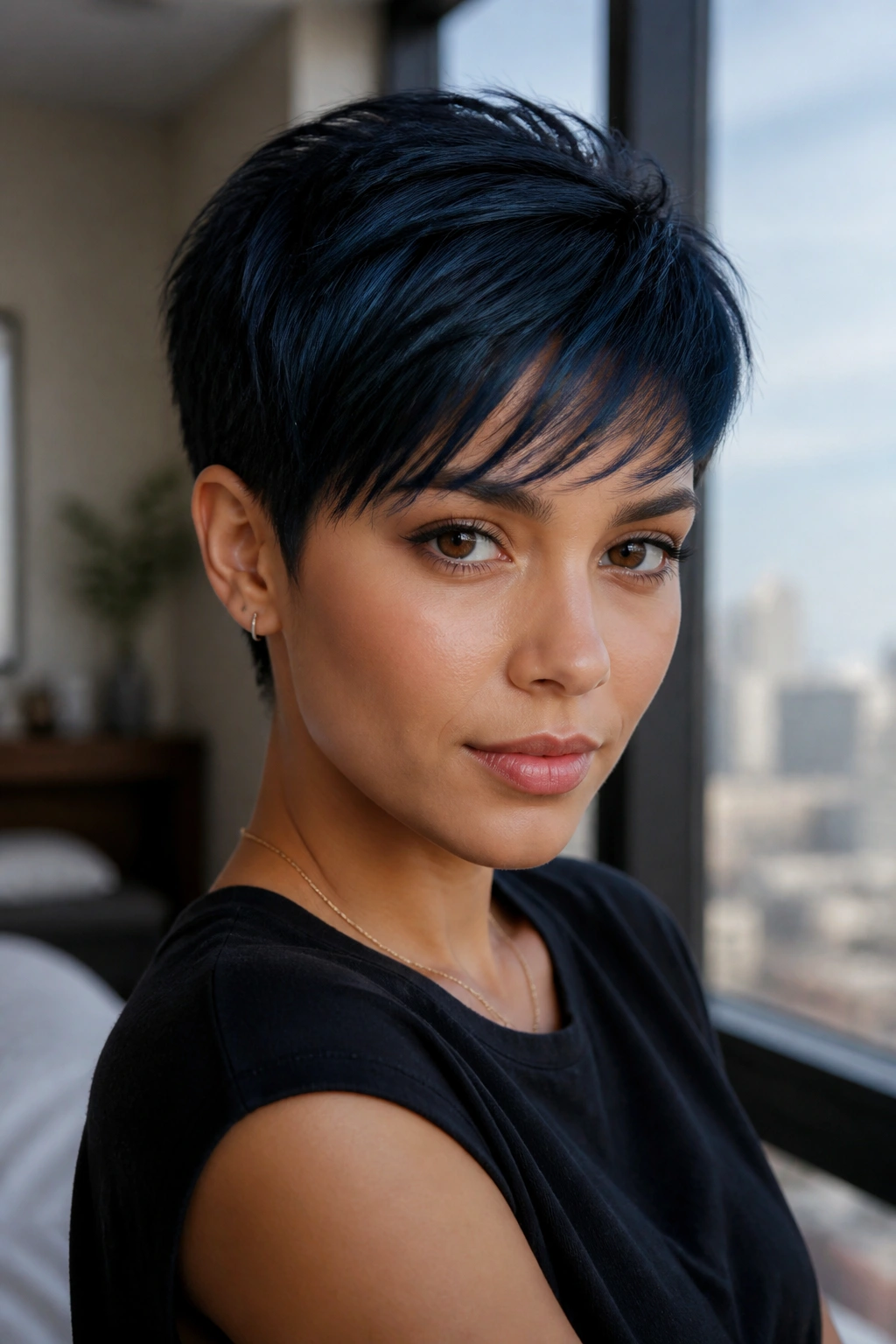
A razor cut is a good move when you want short blue hair without a blocky finish. The blade creates softer ends, so the crop moves instead of sitting like a helmet. That matters a lot on a round face.
Why the Razor Edge Helps
The blue-black color deepens the shape and gives it a sleek, shadowy look. Because the cut is short, every line is visible. That means the fringe, the sideburn area, and the top texture all need to be chosen with care. Nothing can be random.
Ask for a little length at the front so the hair can sweep across the forehead. If it ends too square, the face looks wider. If it’s too thin, the style loses weight and starts to frizz out at the ends.
This cut suits someone who wants edge without a lot of daily styling time. A touch of paste. A quick finger-through. Done. The maintenance is mostly about keeping the line crisp every few weeks.
15. Tapered Blue Crop with Long Fringe

A tapered crop is one of the smartest short cuts for a round face. The sides stay close, the shape narrows toward the neck, and the top keeps enough length to build height. That structure gives the face room to breathe.
The long fringe is what changes the whole feel. Swept diagonally, it creates a line that breaks up the roundness at the forehead. Straight across? Not as forgiving. Side-swept or softly split? Much better.
Electric blue makes this cut punchy. A softer cobalt or peacock blue makes it more wearable. Either way, the taper keeps the style from puffing out at the sides, which is the main thing short cuts need to manage on fuller faces.
I’d keep the top piecey rather than overly polished. A tiny amount of separation gives the cut movement. The fringe should look intentional, not shellacked.
16. Side-Swept Sapphire Waves
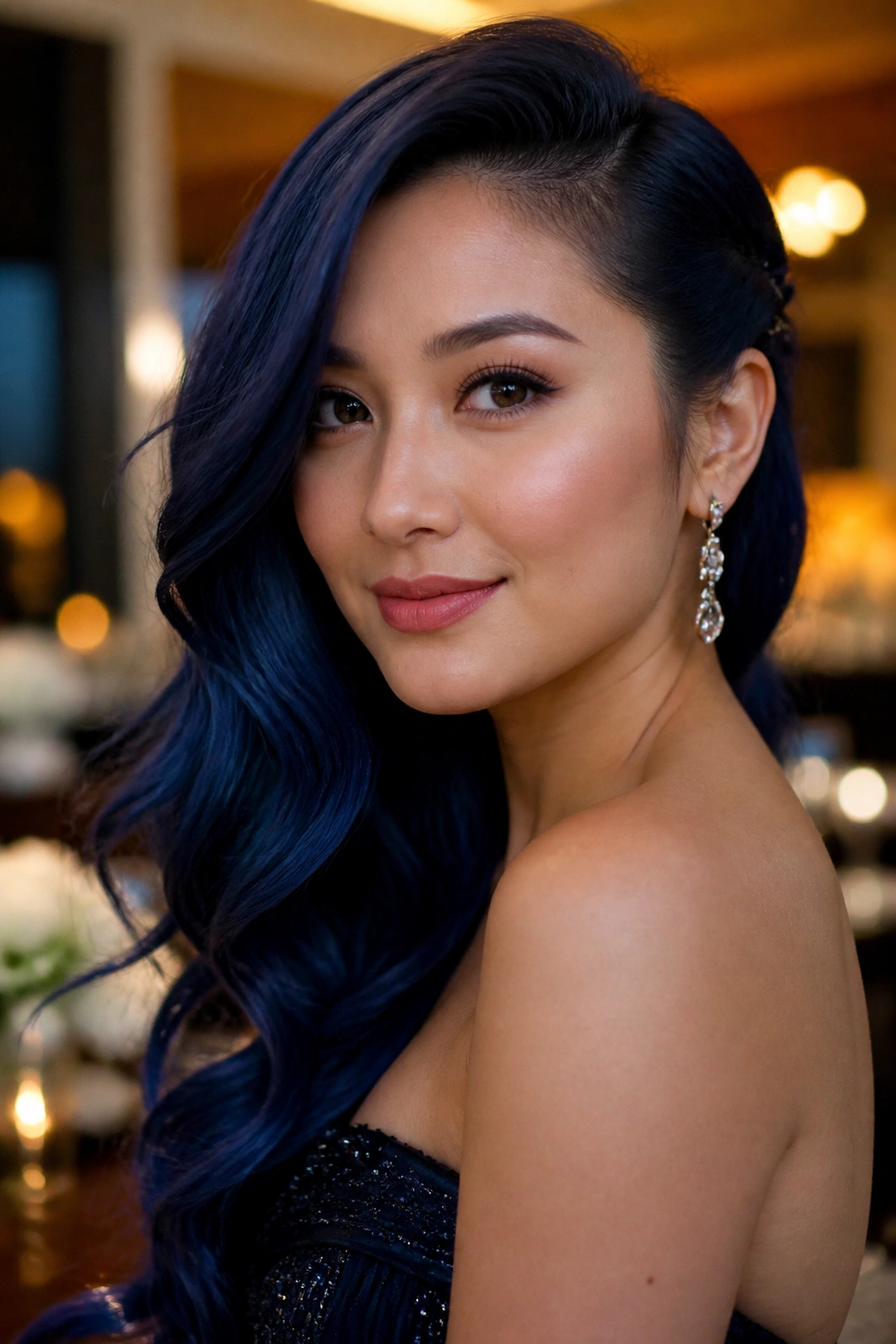
If you want something glamorous, side-swept waves are hard to beat. The whole shape runs diagonally across the face, and that diagonal line is a friend to round features. It adds length without making the hair feel stiff.
A sapphire shade works beautifully here because the waves catch different tones as they move. Deep blue at the roots, brighter blue through the bend, darker ends—there’s a lot going on, but it still feels smooth. The best part is that the style can look formal without being fussy.
When This Style Makes Sense
- Weddings.
- Events where you need the hair off one shoulder.
- Photos, because the side sweep creates a clear line.
- Nights when you want the color to look richer under indoor light.
The wave pattern should be loose, not crunchy. Brush it out a little. Let it move. Then pin one side back just enough to keep the sweep in place. That small asymmetry is doing the work.
17. Soft Blue Shullet
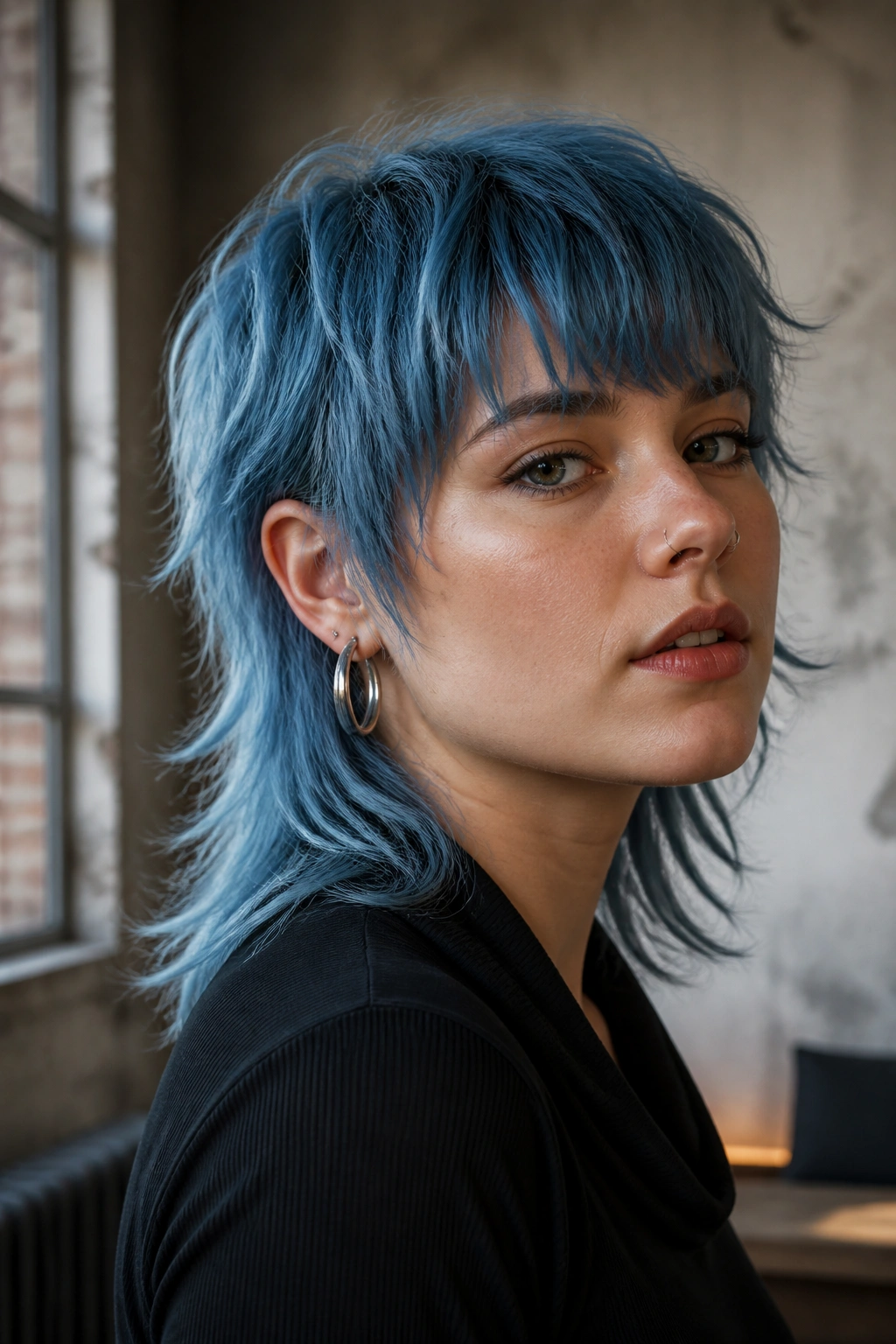
A shullet sits somewhere between a shag and a mullet, but the soft version is much easier to wear than the name sounds. The top has texture, the back keeps some length, and the sides are feathered enough to avoid a heavy boxy shape.
For a round face, that softness matters. A blunt shullet can feel too sharp. A softer one gives you a bit of edge while still opening the face. The cut keeps the crown light and the bottom pieces long, which creates a nice pull downward.
This is the style for someone who wants blue hair with personality. Not precious. Not too neat. A blue shullet can look especially good in smoky navy or slate blue because the texture reads clearly against deeper color.
One thing to watch: don’t let the sides swell too much. That turns the style into width where you least want it. The profile should taper, not flare.
18. Blue Balayage on Long Layers for Round Faces
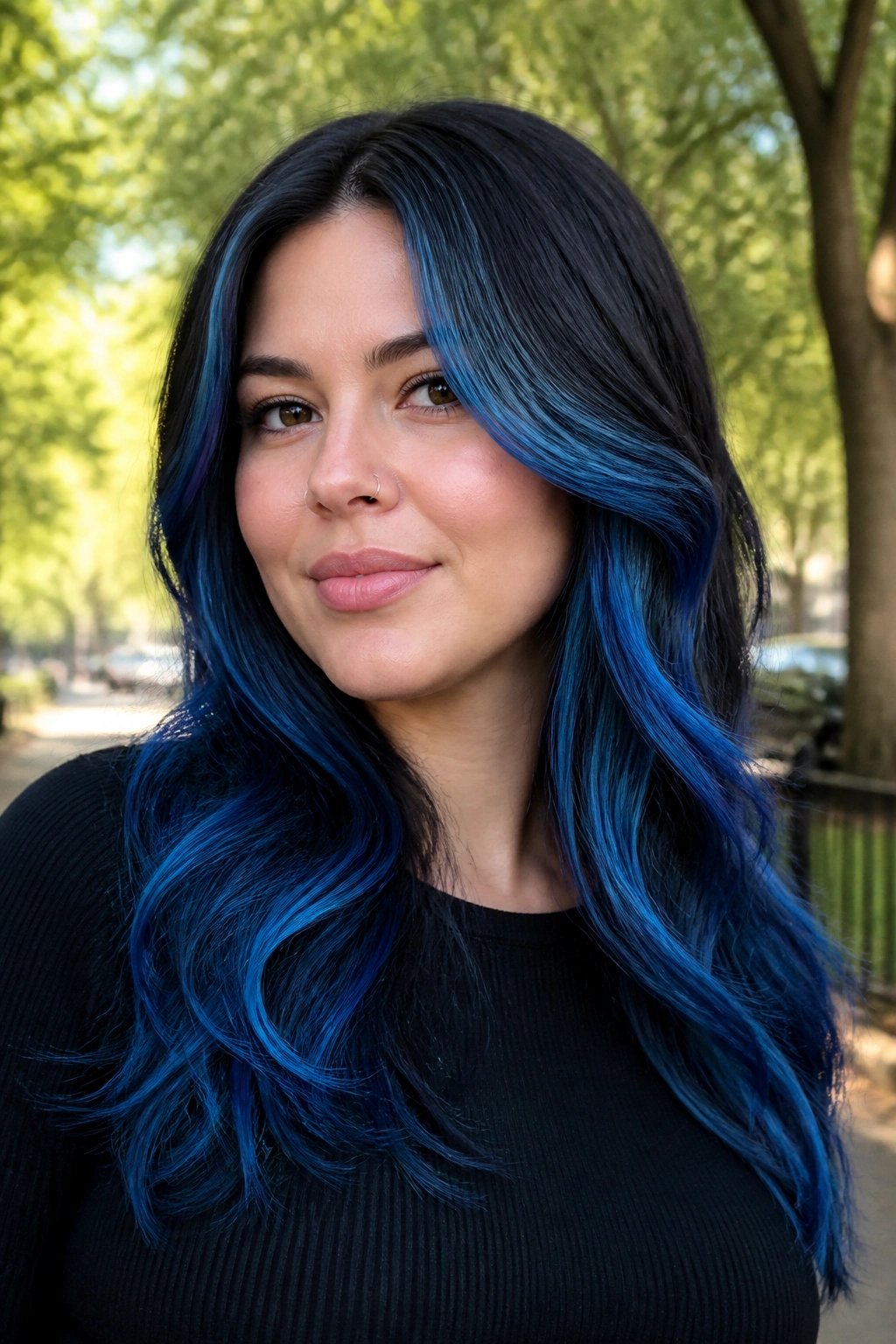
Among blue hairstyles for round faces, balayage is the easy-entry choice when you want color without changing your whole life. The layers keep the silhouette long, and the painted blue pieces can be placed exactly where you want the eye to go.
That placement matters. Blue around the crown and through the lower lengths can stretch the face. Blue concentrated at the cheeks, not so much. Face-framing ribbons can help, but they should fall below the widest part of the face, not sit right on it.
Placement Matters Most
- Keep the darkest shade near the roots for depth.
- Put brighter blue where the hair moves, not where it sits flat.
- Ask for the lightest pieces below the cheekbones.
- Leave some natural color near the front if you want a softer grow-out.
This style works because it feels lived-in. The layers do the shaping, and the blue accent pieces add interest without demanding a full-color commitment. If you like to change your part, wear your hair in a clip, or let it air-dry half the time, balayage is probably the least fussy option here.
Final Thoughts
Round faces don’t need hiding. They need shape, and blue hair gives you a lot of room to play with it. The smartest cuts in this group all do one of three things: add height, break symmetry, or push the eye downward past the cheeks.
If you want the safest place to start, pick a lob, layered cut, or blue balayage and build from there. If you want something bolder, go for asymmetry, a shag, or a cropped shape with lift at the crown. Blue has a way of making even a simple cut feel sharper.
The best version is the one that works with your hair texture, not against it. A glossy navy bob, a piecey cobalt shag, or a soft denim wave can all flatter a round face when the silhouette is right—and honestly, that part matters more than chasing the loudest shade in the room.
