



Round faces and burgundy hair get along better than most people expect, but the cut does the heavy lifting. A rich wine shade can look soft, expensive, and deep, yet if the shape sits wrong on the cheeks, the whole style can feel wider than you meant it to.
That is the part people miss. Burgundy hairstyles for round faces work best when they create vertical lines, diagonal movement, or lift at the crown. A blunt edge right at the cheek can make the face look fuller. A side part, a cheekbone-skimming layer, or a little height at the top changes the whole read of the style.
Burgundy helps because it gives hair depth. Depending on the tone, it can lean merlot, plum, cherry, mahogany, or a darker wine red, and those shifts make layers show up more clearly than they do in flat brown or black hair. The color is rich enough to feel dramatic, but not so loud that it fights with a soft face shape.
Some styles here are low-maintenance. Some need a curling iron, a teasing comb, or a few extra pins. All 18 can work on a round face when the placement is right, and the details matter more than the category name on its own.
1. Long Burgundy Waves for Round Faces
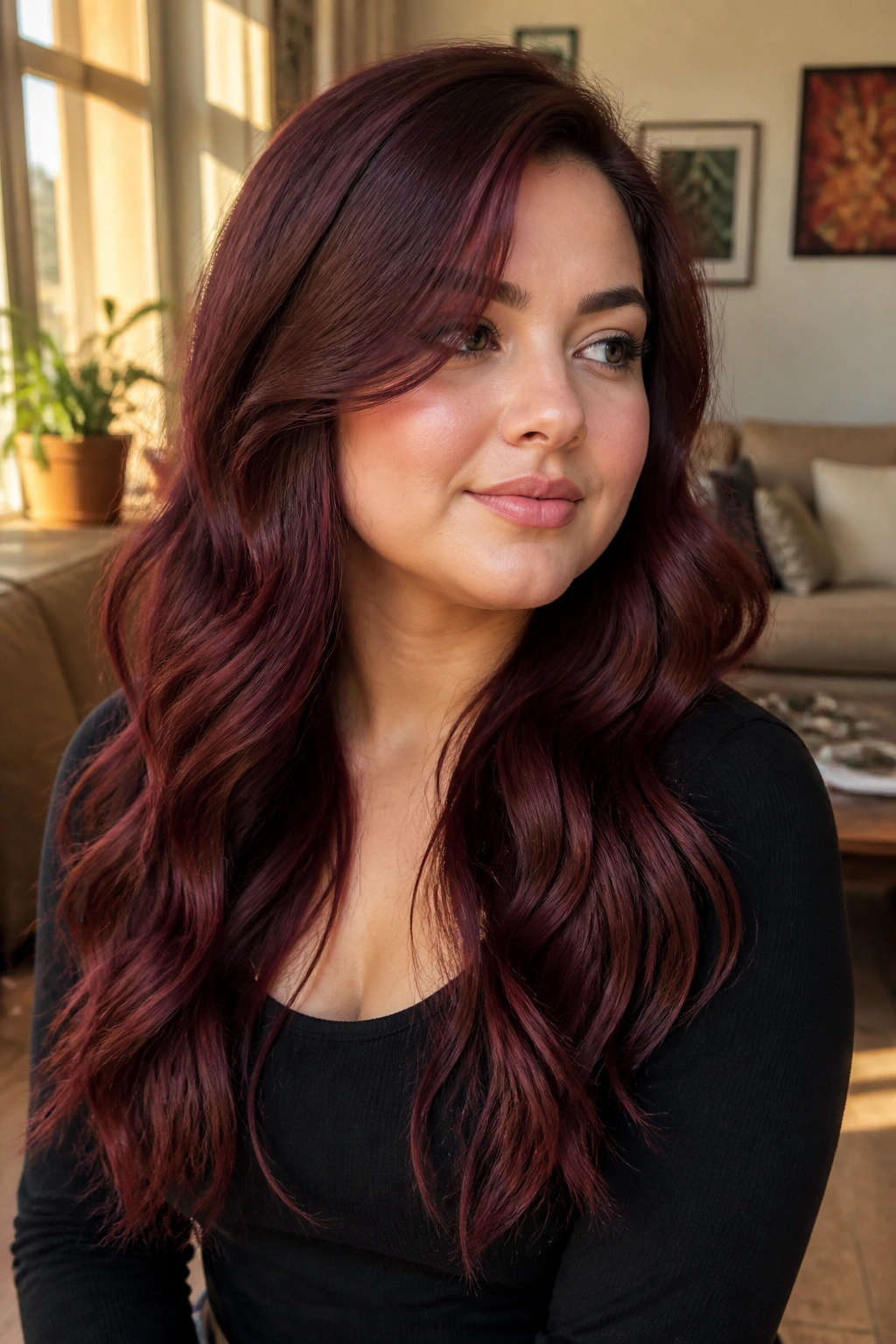
Long waves are the safest place to start, and I mean that in the best way. They stretch the face visually without asking your hair to do anything strange or stiff. On a round face, the trick is to keep the waves lower and looser, not big and puffy at the sides.
Why It Works
A deep side part gives the face a diagonal line, which breaks up the curve around the cheeks. If your hair falls past the collarbone, the eye follows the length instead of stopping at the widest point of the face.
A 1.25-inch curling iron or wand is usually enough. Wrap sections away from the face, leave the last inch out, and brush them through once they cool. That keeps the wave soft instead of barrel-shaped.
- Start the part 2 to 3 inches off center.
- Keep the shortest face-framing piece below the cheekbone.
- Add a light texture spray at the ends, not the roots.
- Let the top stay smooth so the crown doesn’t puff out.
My favorite version is a burgundy wave with a darker root and slightly brighter ends. It gives dimension without turning the whole head into one heavy block of color.
2. Burgundy Layered Lob for Round Faces With Curtain Bangs
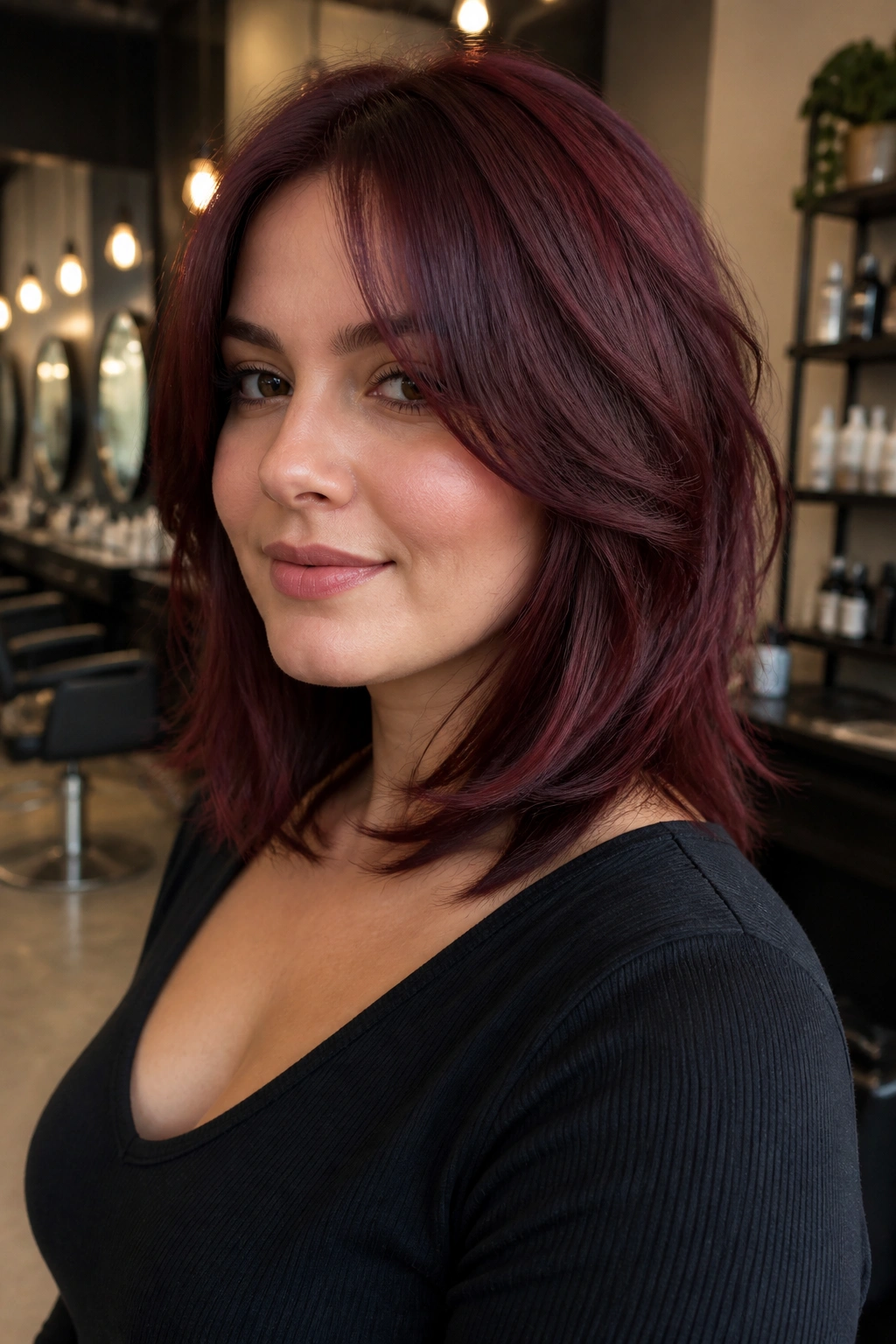
A collarbone lob is one of the easiest cuts to make a round face look longer. Add curtain bangs, and the shape gets even better, because the bangs open in the middle and sweep away from the cheeks instead of boxing them in.
The sweet spot is the chin-to-collarbone zone. Too short, and the bob can start to widen the face. Too long, and it loses the clean line that makes the cut feel fresh. Burgundy adds a nice extra layer here, especially when the ends are textured and the color shifts between plum and brown-red.
I like this cut on medium-thick hair because it keeps movement without looking thin. Fine hair can wear it too, but the layers need to stay soft and the ends should be blunt enough to keep the perimeter full.
A round face usually looks best when the curtain bangs start a little lower than the eyebrows and blend into the front layers. That small detail matters. A short, choppy fringe can pull attention right to the widest part of the face. A longer sweep does the opposite.
3. Sleek Burgundy High Ponytail
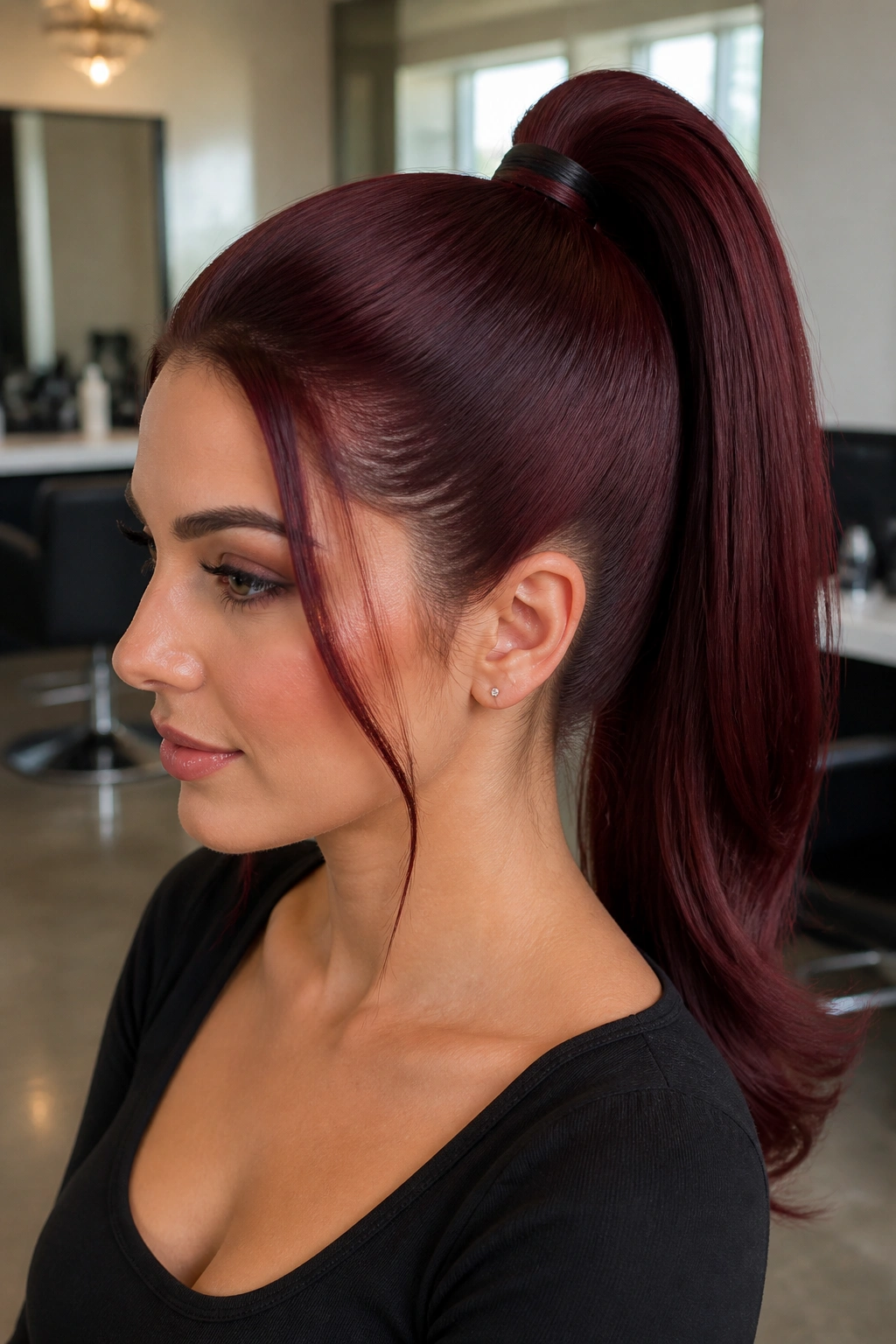
A high ponytail sounds simple, but placement is everything. Put it too low and it can flatten the face. Put it high enough to lift the eye, and the whole thing becomes surprisingly flattering for a round face.
The best version sits near the crown, not smack in the center of the back of the head. That added height gives you a vertical line before the ponytail even starts. Burgundy looks sharp here because the smooth surface shows color shifts cleanly, especially if the roots are a shade darker than the lengths.
How to Style It
Use a smoothing cream through the top half of your hair, then brush it back with a boar-bristle brush or a dense paddle brush. Secure it with a strong elastic, wrap a small strand around the base, and pin it underneath.
- Tease the crown lightly for 1 to 2 lifts, not a full-backcomb puff.
- Leave the sides sleek so the face doesn’t get wider.
- Curl the tail in loose bends, or keep it straight for a sharper look.
- Pull out one thin strand near the temples if you want a softer finish.
Skip the ultra-tight version. It can exaggerate cheek fullness and make the face feel pulled sideways instead of upward.
4. Burgundy Angled Bob With a Clean Jawline
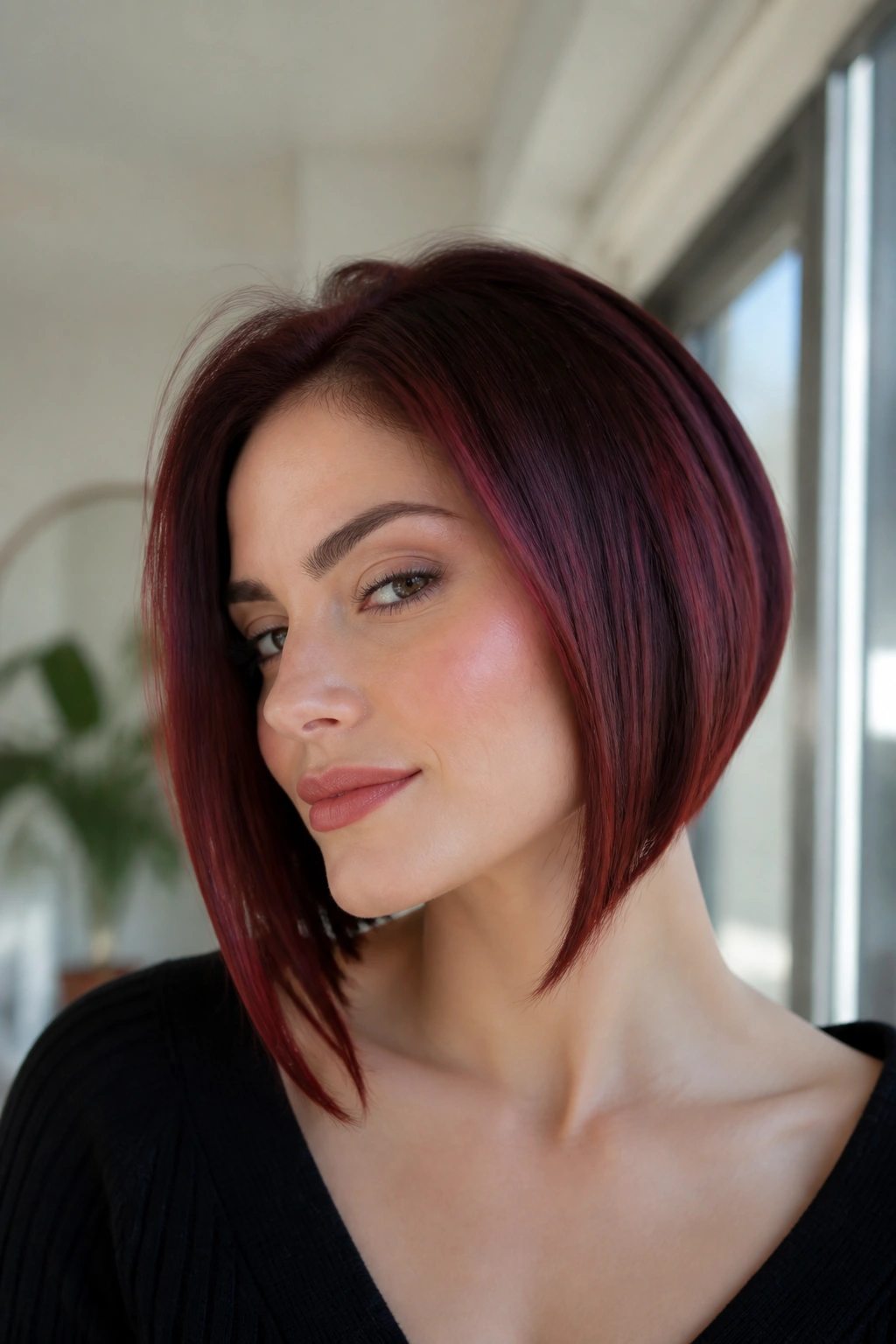
If you want short hair and still want your face to look a little longer, the angled bob is the one I’d point to first. The back is shorter, the front pieces are longer, and that forward angle cuts through the roundness in a way a one-length bob often can’t.
The front should graze just below the jawline, not stop right on it. That tiny difference is what keeps the cut from spreading across the face. Burgundy works especially well here because the darker depth in the back and the red-brown movement in the front make the angle easier to see.
This style likes smooth styling. A round brush and a blow-dryer are enough if your hair is straight to wavy. Keep the ends tucked under just a bit, not curled into a bulb. Too much flip at the bottom adds width.
I also like this cut with a side part rather than a center part. Center parts can work, but on a round face they often make the face feel symmetrical in a way that emphasizes the width. A side part breaks that up fast.
5. Soft Burgundy Pixie With a Longer Top
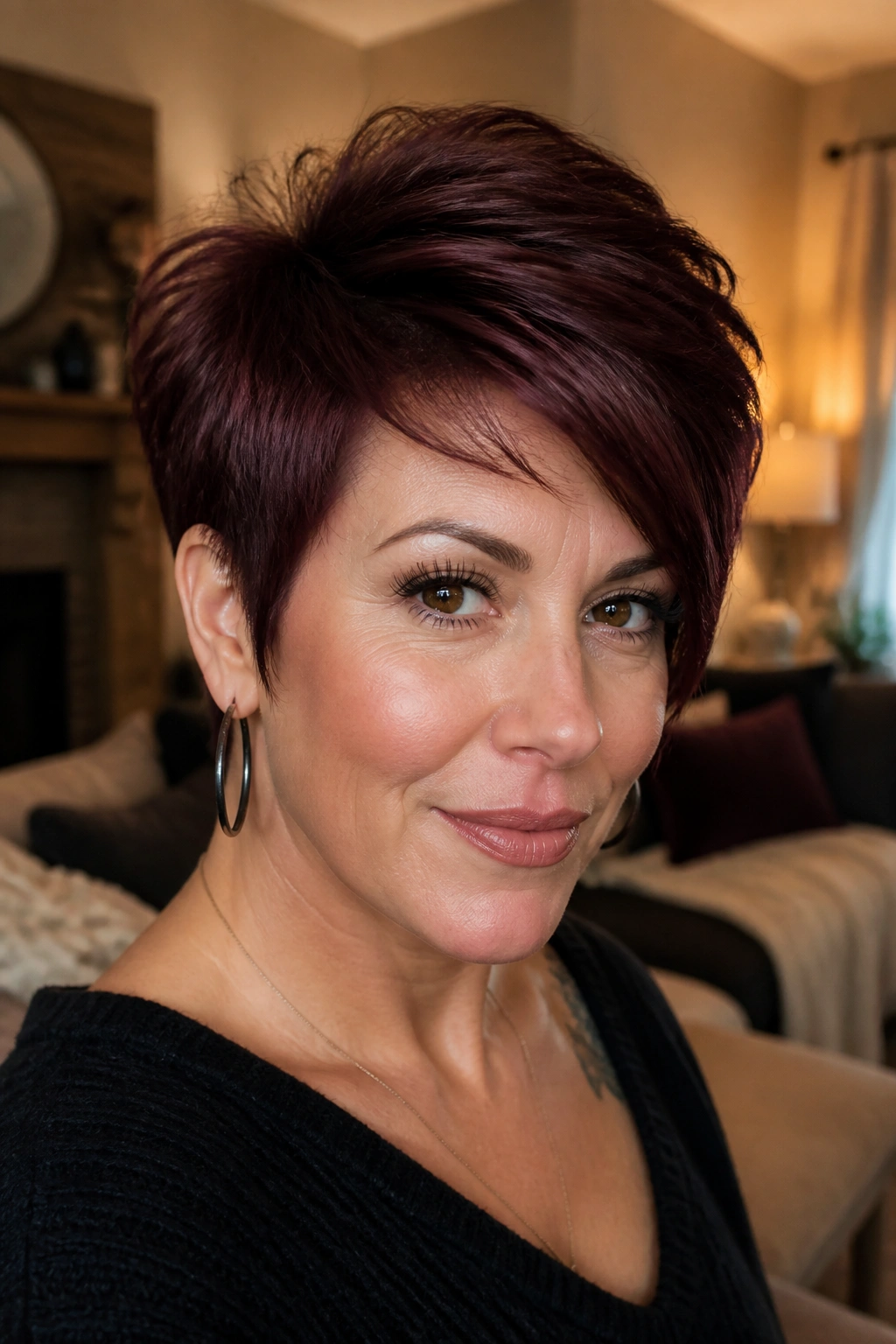
A pixie can work on a round face, but not every pixie will. The version that flatters most keeps the sides snug and the top longer, with the fringe swept to one side instead of chopped straight across.
That longer top matters. It creates height, and height is your friend when you want to make a face look less circular. The burgundy color helps too, because a deep red-brown pixie shows texture more clearly than a flat one-shade crop.
I’d avoid a fluffy, rounded pixie with volume at the temples. That shape can make the face look wider. Instead, ask for tapered sides, a piecey top, and a fringe that falls toward one eyebrow or the other. Around 2 to 4 inches on top is usually enough to play with.
This is one of those cuts that looks sharper on days when it’s slightly messy. A small amount of matte paste through the top gives the strands separation, which stops the style from turning into one soft helmet shape. Tiny detail. Big difference.
6. Half-Up Burgundy Twist With Loose Length
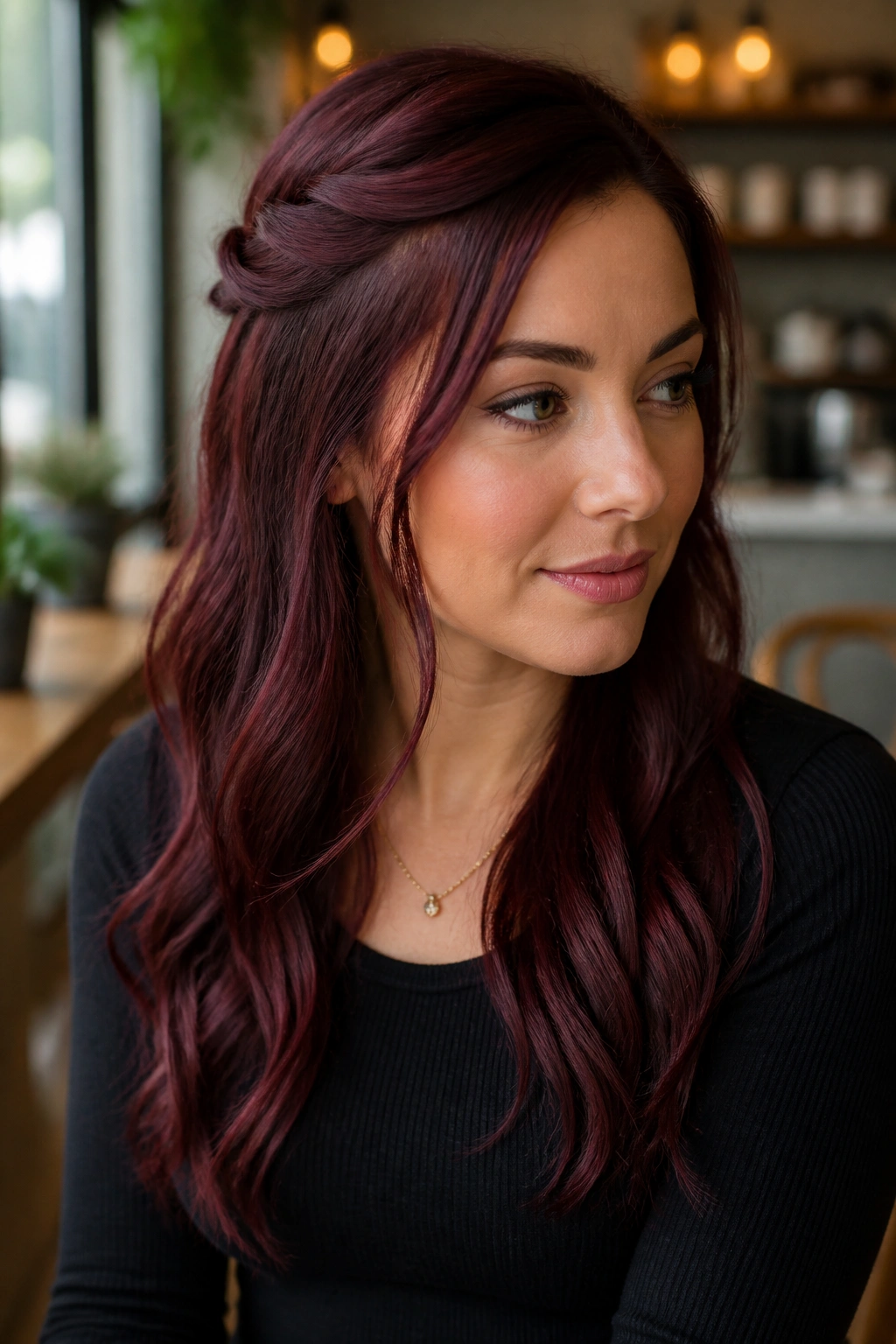
Half-up styles are sneaky good on round faces. They pull weight away from the cheeks, but they leave enough hair down to keep the look soft. A full updo can sometimes make the face feel exposed. A half-up twist keeps some shape around it.
The version I like best starts by taking two sections above the temples, twisting them back, and pinning them where the crown begins to curve. The rest of the hair stays down in waves or loose bends. That small lift at the top adds height without making the style fussy.
- Use 1-inch sections at the temples, not huge chunks.
- Pin the twist slightly higher than the center of the head.
- Let 2 front pieces fall loose near the jawline.
- Finish with a light spray so the twist holds without crunch.
Burgundy gives this style extra depth because the twist catches different red tones than the loose hair below it. That contrast makes the shape easier to see, and on a round face, shape is half the job.
7. Burgundy Butterfly Layers
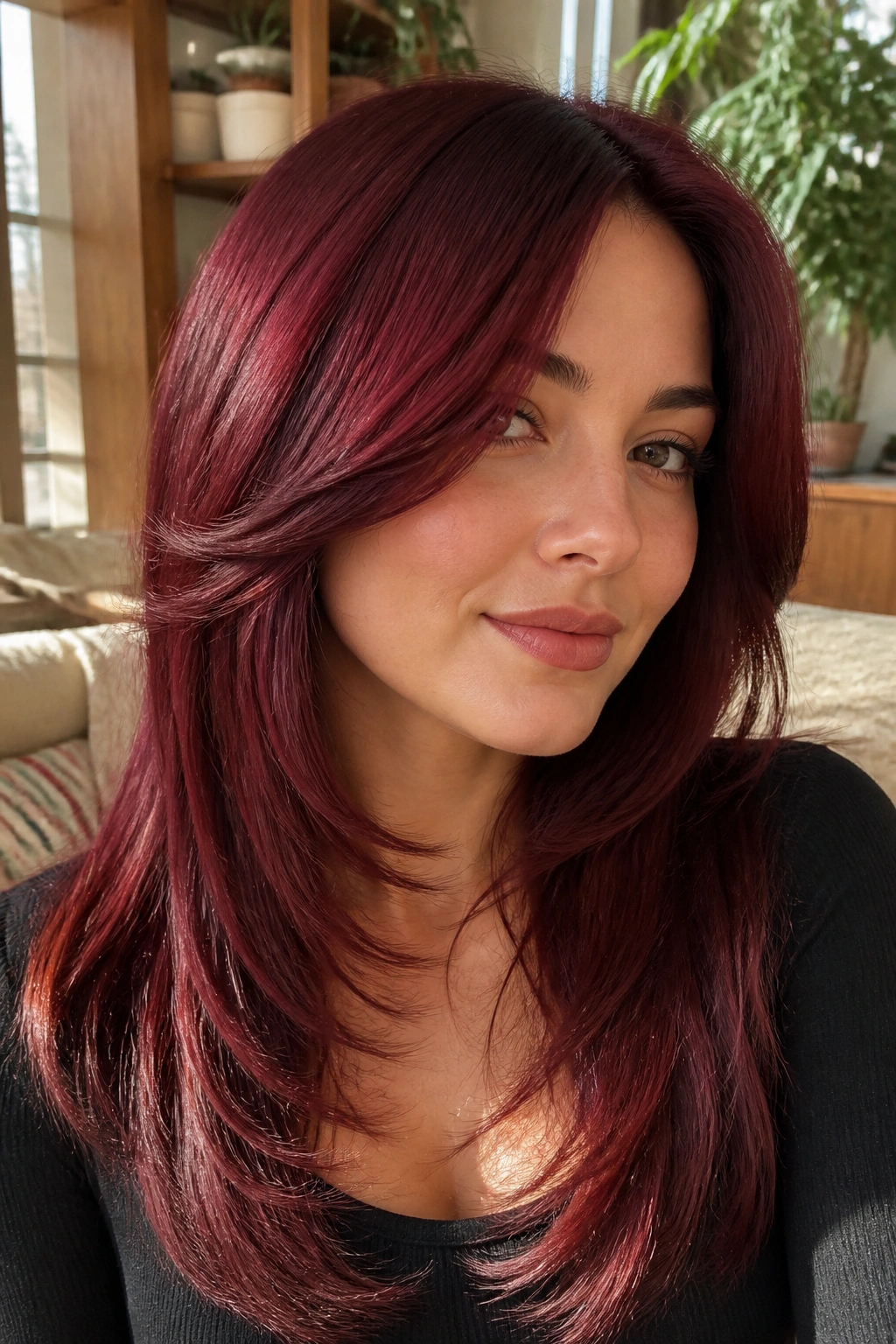
Butterfly layers are built for movement, and round faces usually benefit from that movement more than from blunt bulk. The shorter layers live around the cheekbone and jaw area, while the longer layers stay below the shoulders. That split creates lift at the top and length underneath.
The name sounds airy, but the cut is practical. It lets you keep your length while breaking up the solid wall of hair that can make a round face feel wider. Burgundy makes the layer change more obvious, especially if the top layer is slightly darker at the root and the ends fade into a brighter wine tone.
What to Ask Your Stylist For
Ask for the shortest face-framing pieces to begin around the cheekbone or just below it. That placement keeps the front of the cut from sitting right on the widest part of the face.
A round brush helps here, but you do not need a huge blowout. Even a quick bend through the front pieces can be enough. The goal is soft structure, not perfect symmetry.
This is one of the few styles where a little volume is a good thing. Just keep it at the crown and the mid-lengths, not out at the sides.
8. Romantic Burgundy Low Bun With Face-Framing Pieces
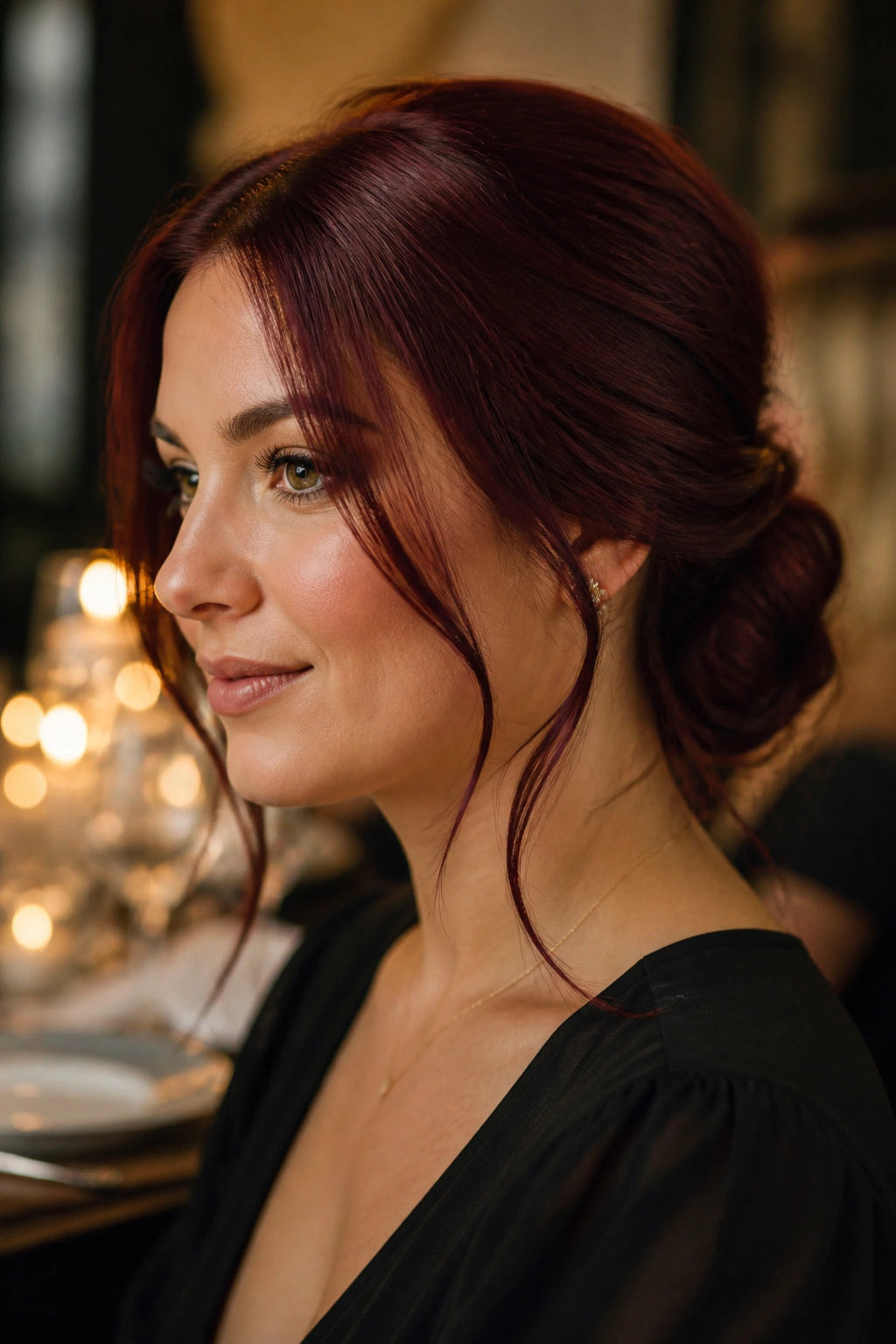
A low bun can be lovely on a round face if it sits low enough and leaves a little air around the face. The problem with many buns is not the bun itself. It is the placement. A tight knot right at the back of the head can make the face look wider by comparison.
The better version sits close to the nape, with two thin pieces left out in front. Those pieces should start around the cheekbone or lower, then fall in a soft curve toward the jaw. That shape breaks the circle without making the style feel severe.
Burgundy gives the bun more richness, especially when the hair is twisted instead of rolled too tightly. A smooth low bun feels polished. A slightly undone one feels easier and usually flatters more.
I like this style for dinners, weddings, and days when you want the neck and shoulders to stand out. It also works well with earrings, which is a nice bonus if you like a clean neckline and a little drama in the jewelry.
9. Burgundy Braids With Soft Tendrils
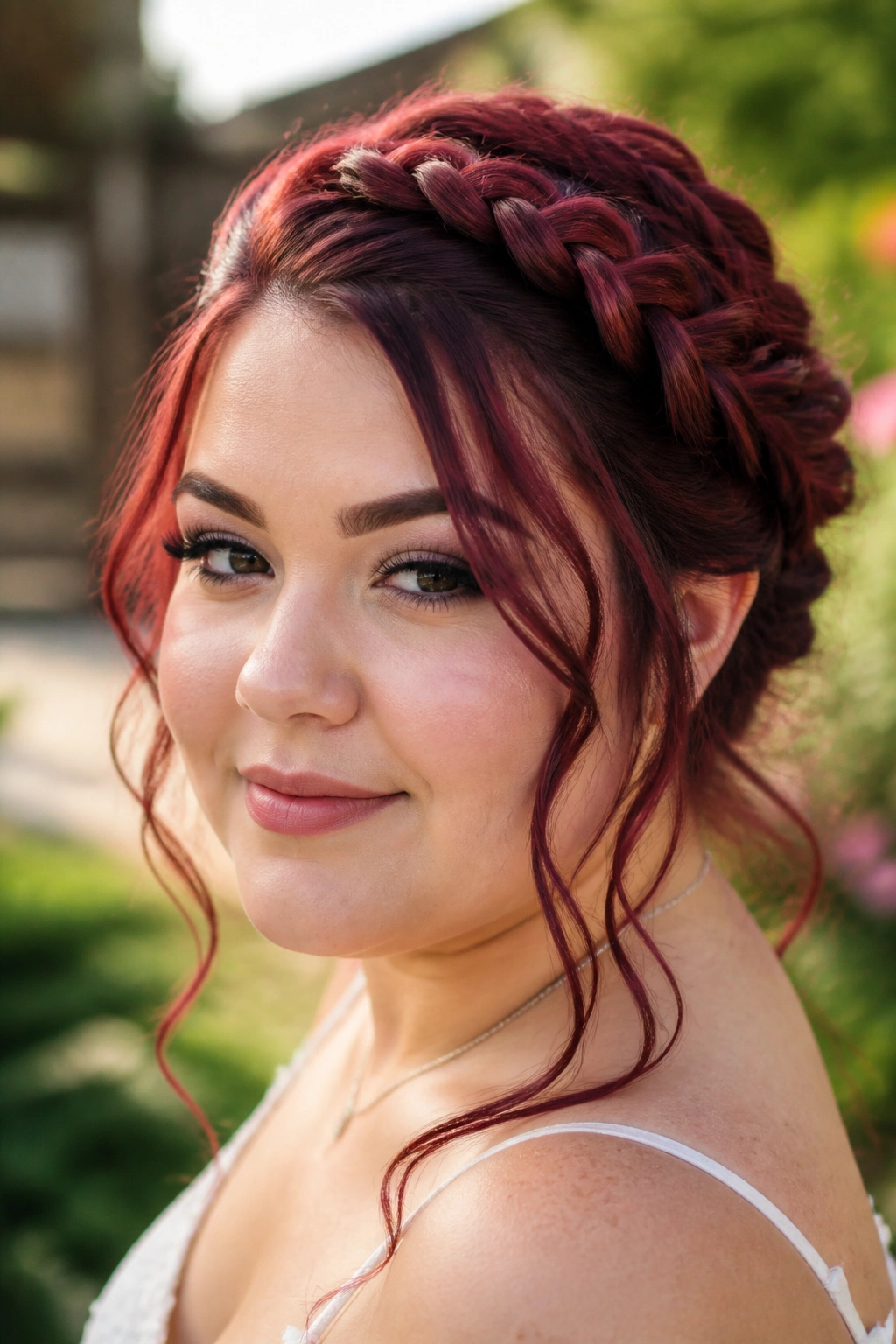
Braids do not have to look strict. That is the mistake people keep making. On a round face, a braid that sits too tight against the head can feel boxy, but a looser braid with soft tendrils changes the whole shape.
A loose Dutch braid, French braid, or even two small side braids can work if you keep a few strands out around the temples and cheekbones. Those wispy pieces soften the face and stop the braid from becoming one hard line. Burgundy adds interest here because the braid pattern shows off the darker and lighter red tones as it crosses over itself.
Try gently pulling the braid apart after you finish it. Not too much. Just enough to widen the sections by a quarter inch or so. That tiny bit of slack makes the braid look fuller without turning it into a pancake.
Best for: second-day hair, long layers, and anyone who wants the hair back without losing softness. Tight braids can feel a bit harsh on round faces. Soft ones usually don’t.
10. Shoulder-Length Burgundy Shag
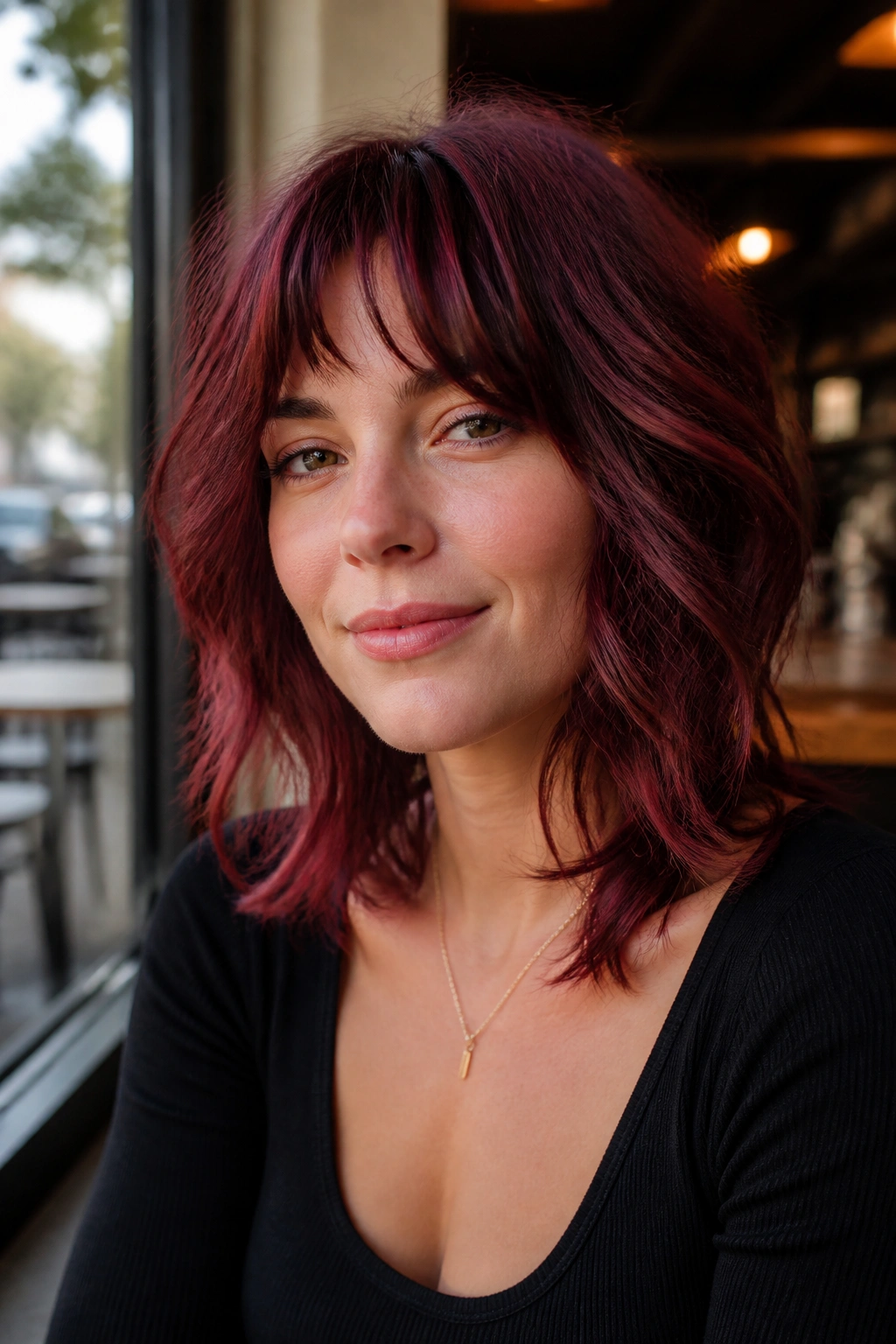
A shag can be a fantastic choice if your hair has some wave or bend in it. The broken layers prevent that solid circle effect that sometimes happens when shoulder-length hair sits in one heavy sheet around the face.
The best shag for a round face keeps the shortest pieces around the cheek and collarbone, not right at the cheek’s widest point. Fringe helps, but it should be airy and piecey, not blunt and thick. Burgundy makes the choppier shape easier to see because the color catches in the layers instead of flattening them out.
This cut is a little moodier than a lob and a little looser than a bob. That is why it works. It has enough edge to feel intentional, but it still moves. If your hair is thick, the shag can remove weight without making the ends look blunt. If your hair is fine, keep the layering softer so you do not end up with wisps everywhere.
A diffuser and a curl cream can make this shape behave nicely. Air-drying can work too, but the front pieces may need a quick hand-twist while they set.
11. Burgundy Straight Hair With an Off-Center Part
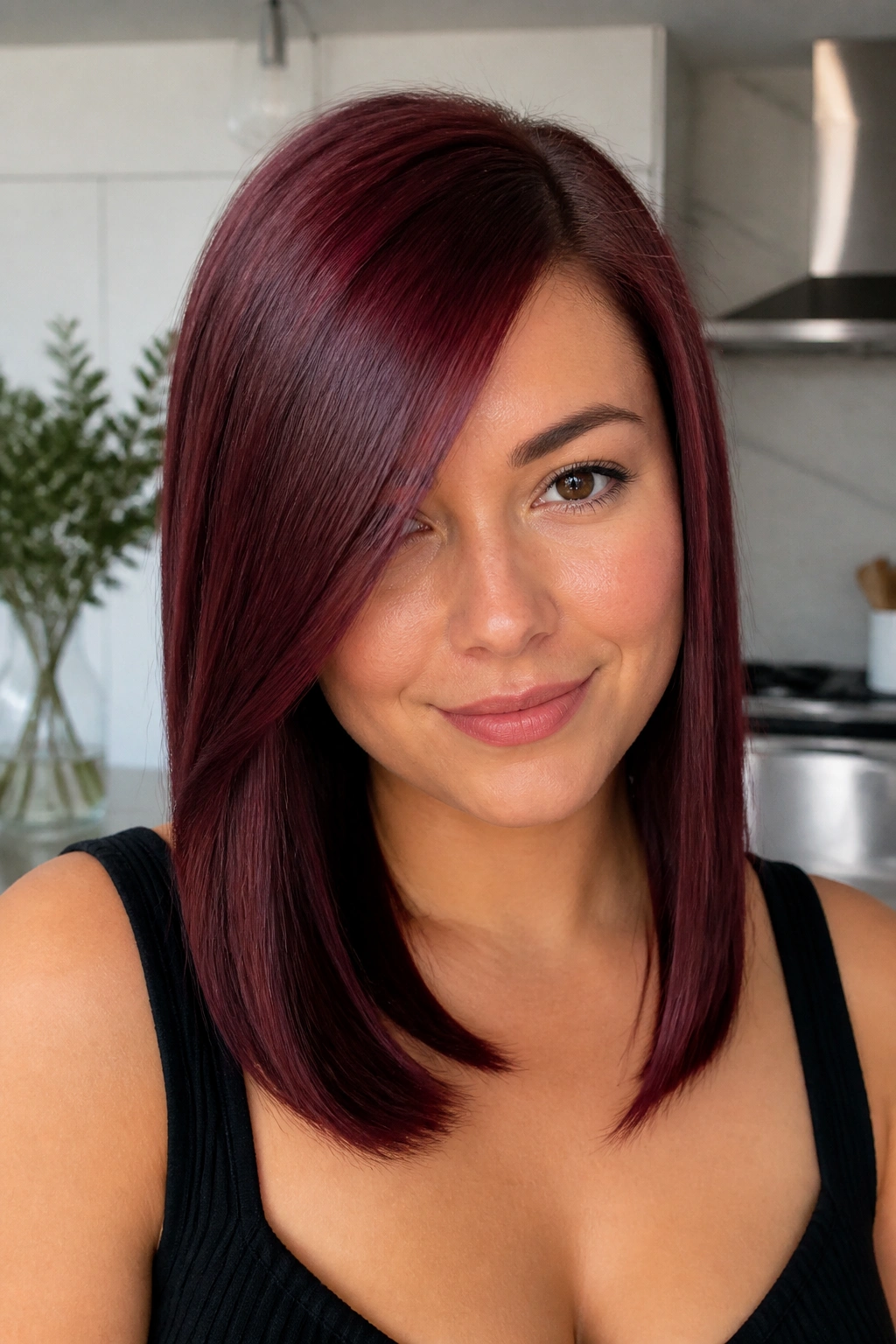
Straight hair gets blamed for flattering round faces less often than curls do, but the real issue is usually the part. A dead center part and blunt ends can make the face feel broader. Move the part off center, and the whole thing softens.
The side shift does two jobs at once. It gives you a diagonal line across the forehead, and it changes where the hair falls at the cheeks. That means the eye doesn’t land on the middle of the face first. It glances across it.
What to Ask For
A slight bevel at the ends helps too. You want the hair to lie straight, but not hard. A tiny inward bend at the bottom keeps the length from looking heavy. With burgundy, that sleek line looks especially rich because the shade reads as deep red-brown rather than a flat dark color.
This is a good style if you like clean, low-fuss hair and don’t want layers everywhere. It is also one of the easiest ways to wear burgundy when you want the color to look polished instead of playful.
12. Voluminous Burgundy Curls With a Side Sweep
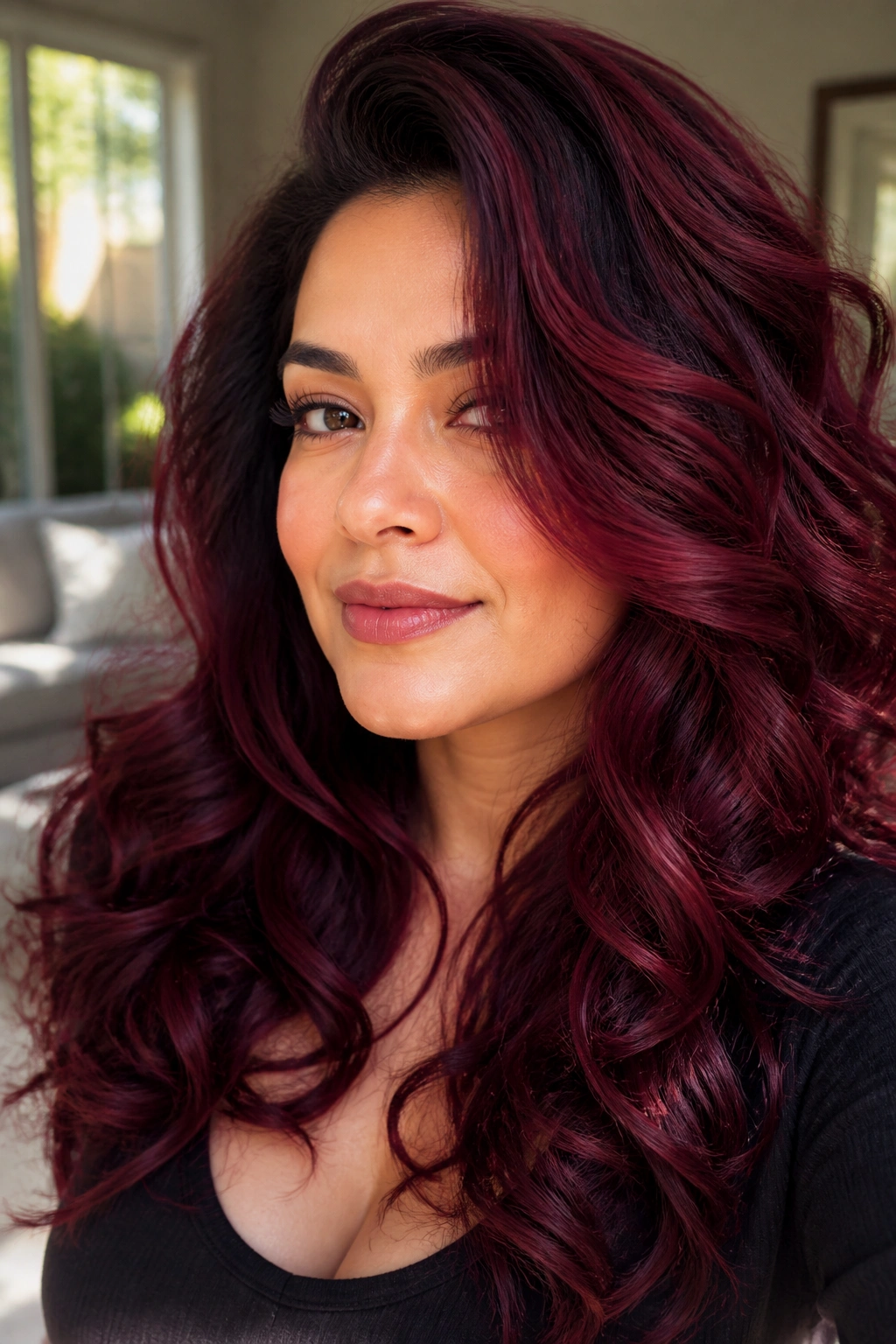
Curls on a round face are all about placement. The shape should rise a little at the crown and lean to one side, not spread evenly from temple to temple. That side sweep makes the face look longer and keeps the curls from building width right where you do not want it.
If your curls are natural, use a cream that defines without making the strands crunchy. Diffuse upside down for lift at the roots, then flip the part after it dries so one side falls a bit heavier than the other. If you are styling with a curling iron, use 1-inch sections and let each curl cool in your hand before you release it.
- Keep the top curl pattern looser than the lower layers.
- Avoid a perfect round halo of curls around the face.
- Pin one side back if you want extra lift.
- Use a light oil only on the ends.
Burgundy works beautifully here because curls show color variation so well. The shade can shift from plum to cranberry as the curls move, and that movement gives the style real depth.
13. Burgundy Top Knot With Loose Strands
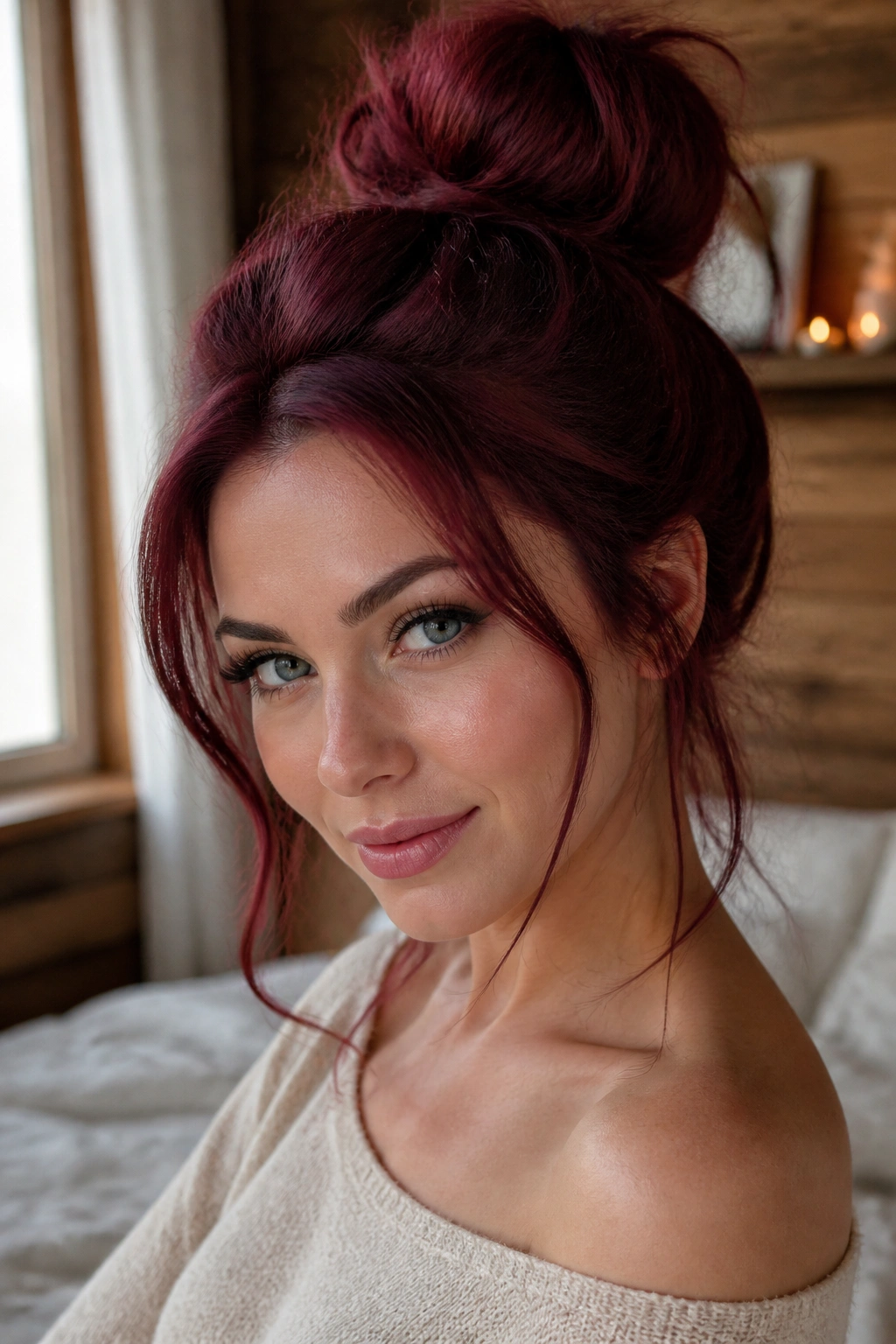
A top knot can be flattering on a round face, but only if it sits high and a little loose. A tight knot at the middle of the head can feel too round, almost like the face and bun are fighting for the same shape.
Put the knot up near the crown, leave a few strands loose in front, and let the bun stay a little imperfect. A clean ballerina knot is not the point here. You want height, not symmetry. The loose strands around the temples and jawline are what keep the style from looking severe.
This is a nice option when you need hair off the neck but still want some softness around the face. Burgundy gives the bun more visual weight, which helps if your hair is fine and tends to disappear into a small knot.
One small trick: pull the knot slightly upward after pinning it. Not a lot. Half an inch can be enough to make the shape read longer and less round. Tiny moves matter with this one.
14. Burgundy Waterfall Braid
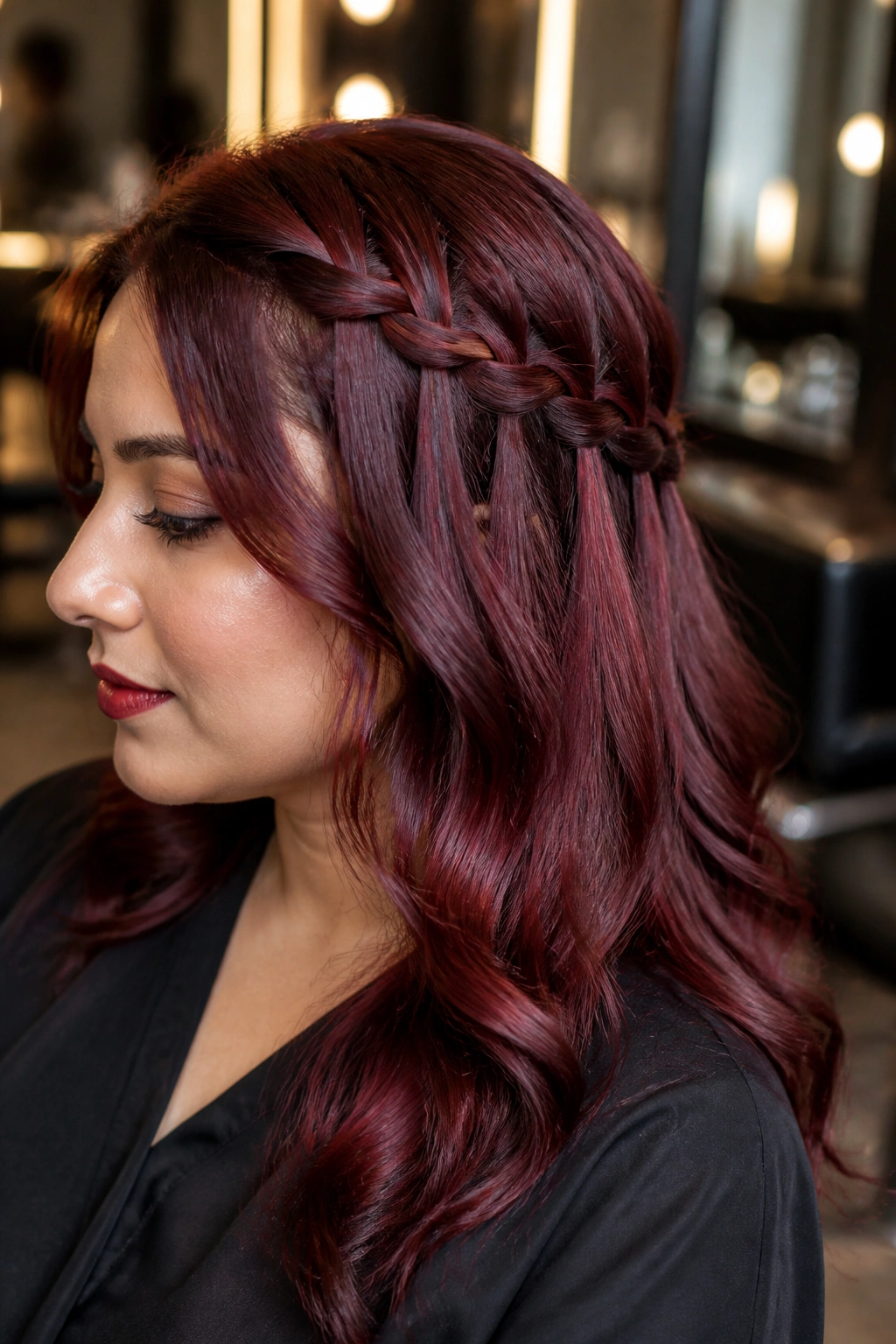
A waterfall braid gives you the prettiness of a braid without trapping all the hair against the sides of the face. That matters on a round face, because too much side-to-side structure can feel heavy. The waterfall pattern leaves pieces dropping through, which keeps the shape light.
This style works best on medium to long hair, and the braid should start a little above the temple, then travel back on a slight diagonal. That diagonal line is the whole point. It draws the eye upward and backward instead of straight across the cheeks.
Burgundy makes the braid pattern easier to see, especially if the color has subtle variation. A darker root against plum lengths can make each crossover stand out. The style looks fancy, but the technique is manageable once you get the hand motion down.
If you want it to last, secure the braid with a couple of hidden pins at the back, then curl or wave the loose hair below it. Straight ends can work, but a soft bend usually looks more balanced with the braid above.
15. Chin-Grazing Burgundy French Bob
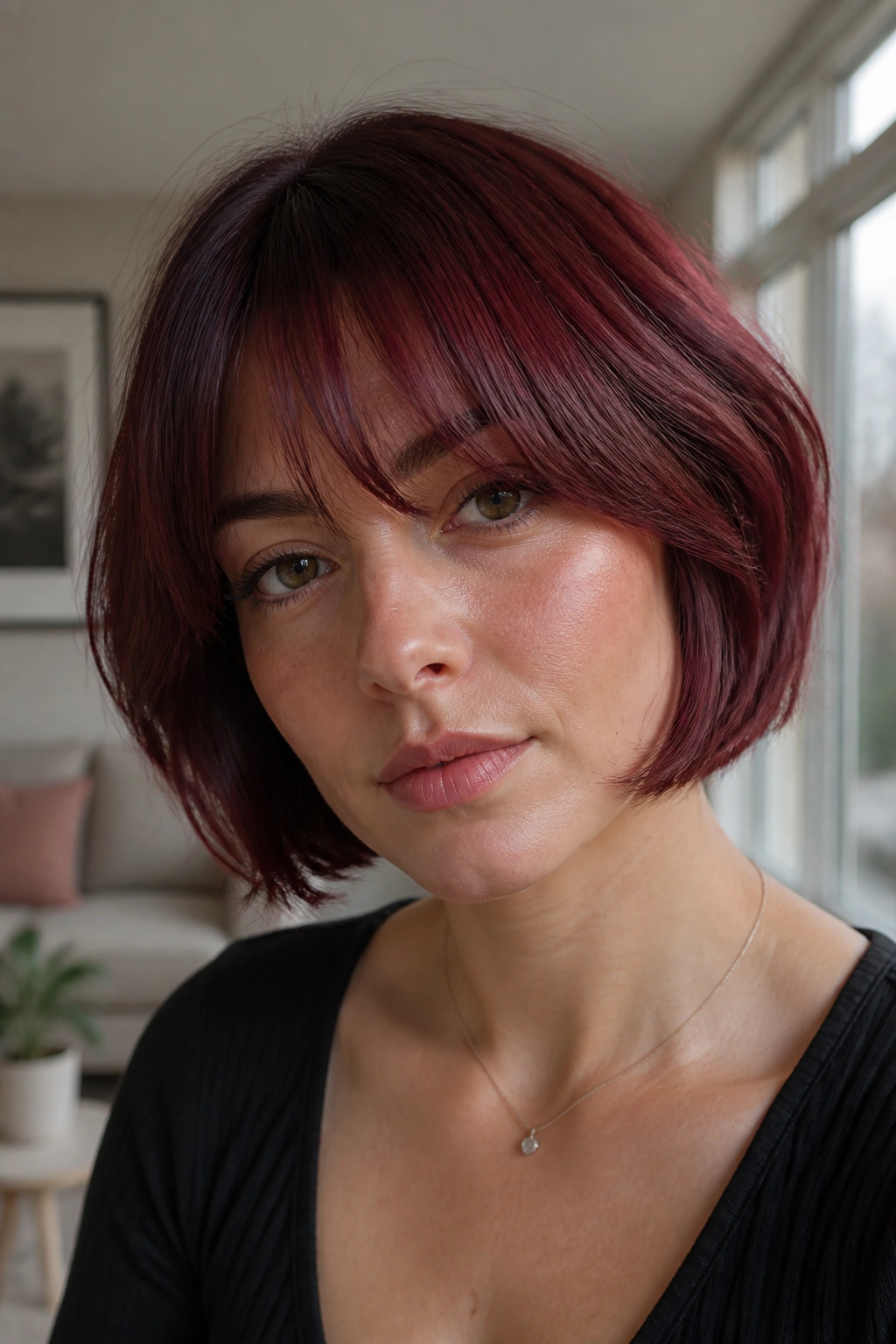
A French bob can be gorgeous on a round face, but I would not pretend it is the easiest short cut. The chin line is the risky part. If the bob lands exactly at the fullest part of the cheeks and sits too blunt, it can widen the face. If it is cut a touch below the chin and softened with movement, it can look crisp and chic.
That is the difference. Placement.
Ask for airy fringe or a side-swept bang rather than a heavy, straight-across line. The fringe should break up the forehead enough to balance the lower half of the face, but not swallow it. Burgundy adds a little depth that keeps the short cut from looking flat or helmet-like.
This cut looks best when it is not over-styled. A bend through the ends, a bit of texture at the crown, and a soft part are usually enough. If you want a blunt, shiny finish, keep the length slightly longer than the jawline so the edge does not sit right on the cheeks.
16. Burgundy Halo Braid
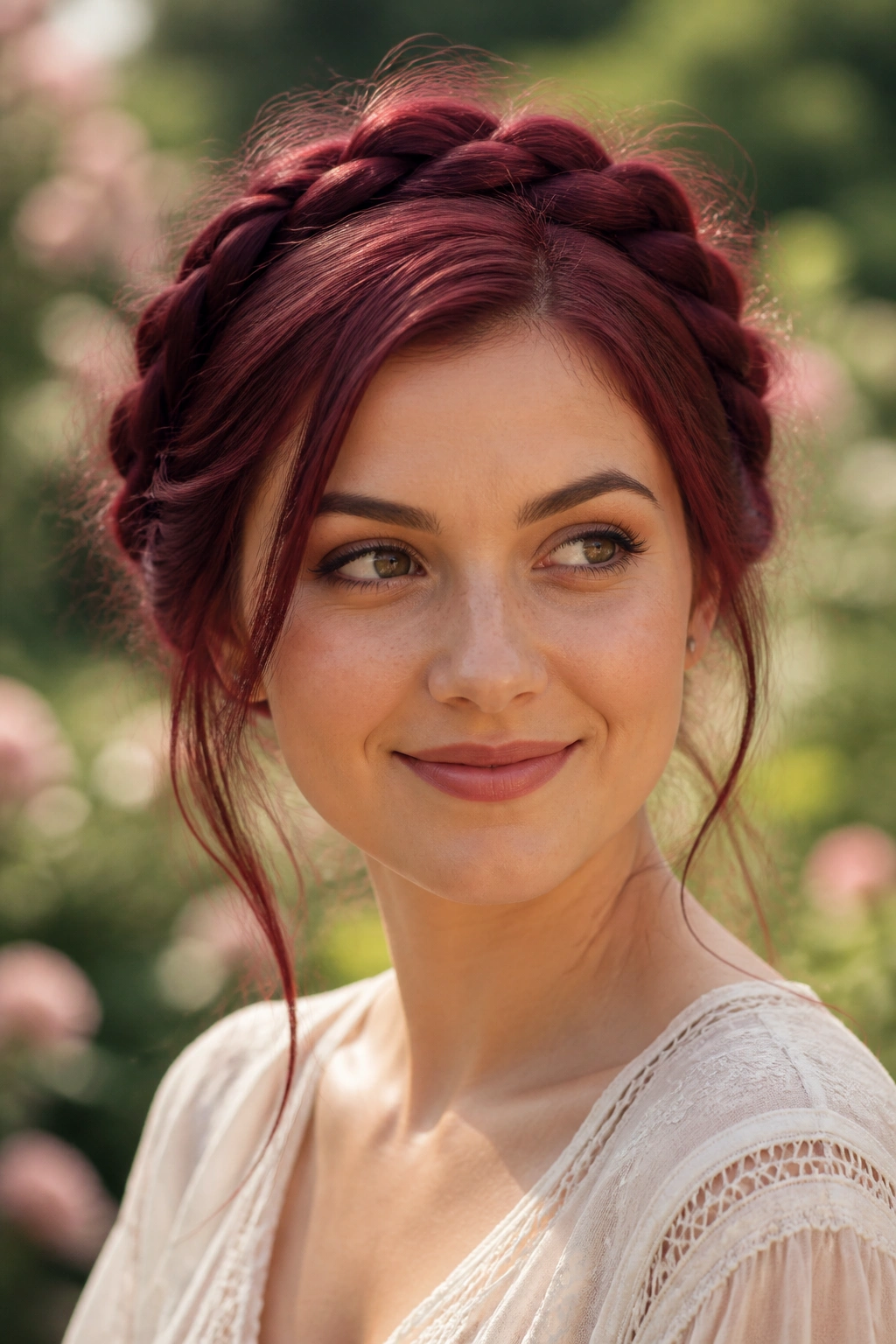
A halo braid can flatter a round face more than people expect. The braid creates a lifted frame around the head, and if you keep it loose, it reads as elongated rather than circular. Tight halo braids are a different story. Those can feel a bit too neat and close to the face.
The best version sits slightly away from the hairline. Leave a few tiny pieces at the temples and do not pull the braid down too low around the cheeks. The height at the crown matters here, because it keeps the head shape from looking compact.
Keep These Details in Mind
- Use medium sections so the braid does not turn tiny and busy.
- Gently pull the braid wider after it is pinned.
- Leave the nape soft instead of cinched tight.
- Tuck the ends discreetly so the braid looks continuous.
Burgundy gives the halo braid a rich, almost velvet feel. It is a strong look without needing extra accessories, which is nice when you want the hair to do the work.
17. Burgundy Soft Faux Hawk
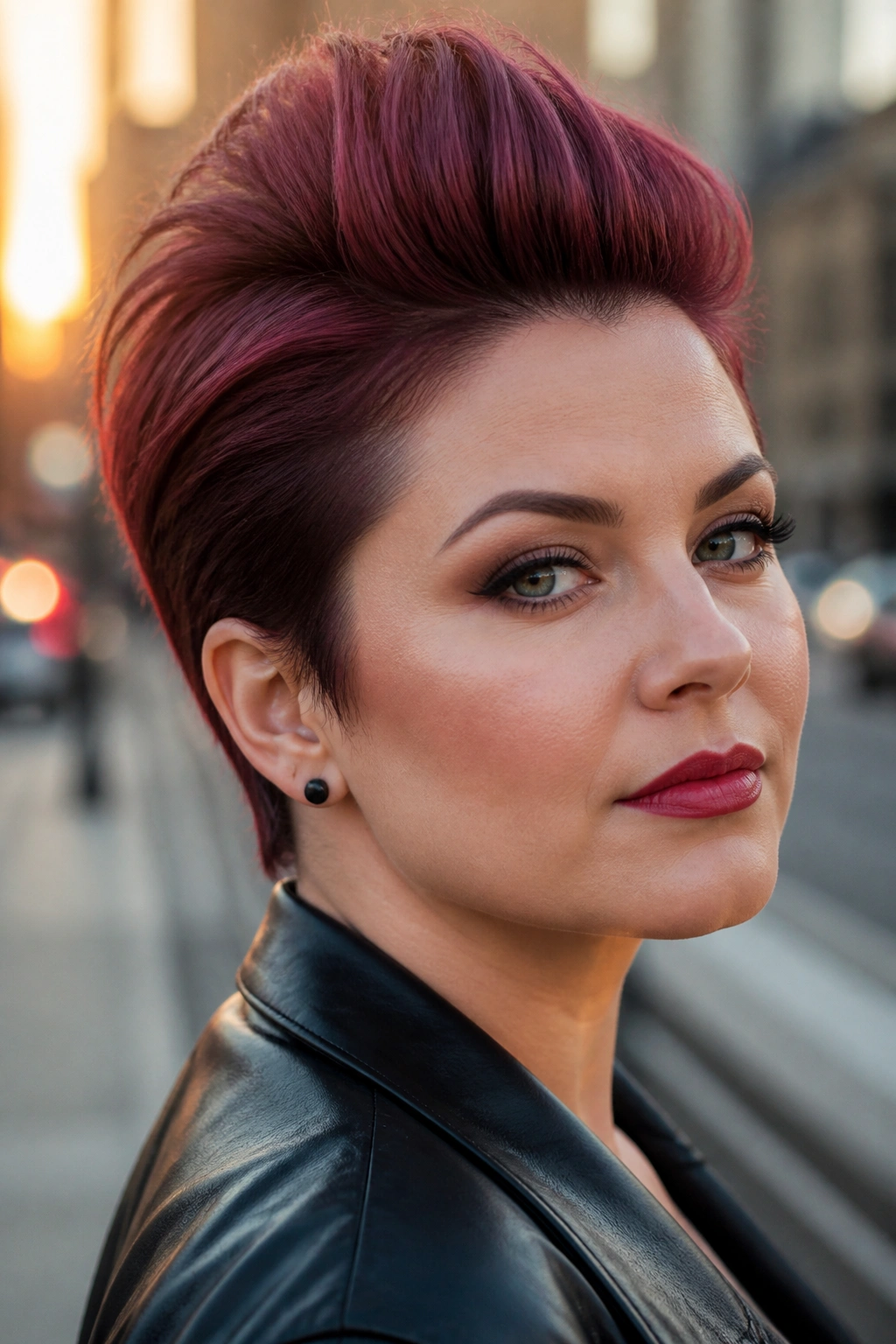
A soft faux hawk is for the days when you want something sharper than a braid or bun. The shape builds height through the center of the head and keeps the sides closer to the scalp, which is exactly why it can work on a round face.
The key is softness. You do not want a hard punk line unless that is the point of the look. You want the center section teased or pinned upward, with the side sections brushed back and secured low enough to keep the face open. Burgundy helps the shape feel richer and less harsh, especially in deeper merlot tones.
If your hair is fine, a texturizing spray at the roots gives the center section enough grip to stay up. If it is thick, you may need more pins than product. A lot of people stop too soon and leave the sides bulky, which takes away the lengthening effect.
This style looks best with a little imperfection. A few loose pieces around the hairline soften the structure. That keeps it from turning rigid, which is the quickest way to make a bold style feel awkward on a round face.
18. The Burgundy Lob That Flatters Round Faces Best
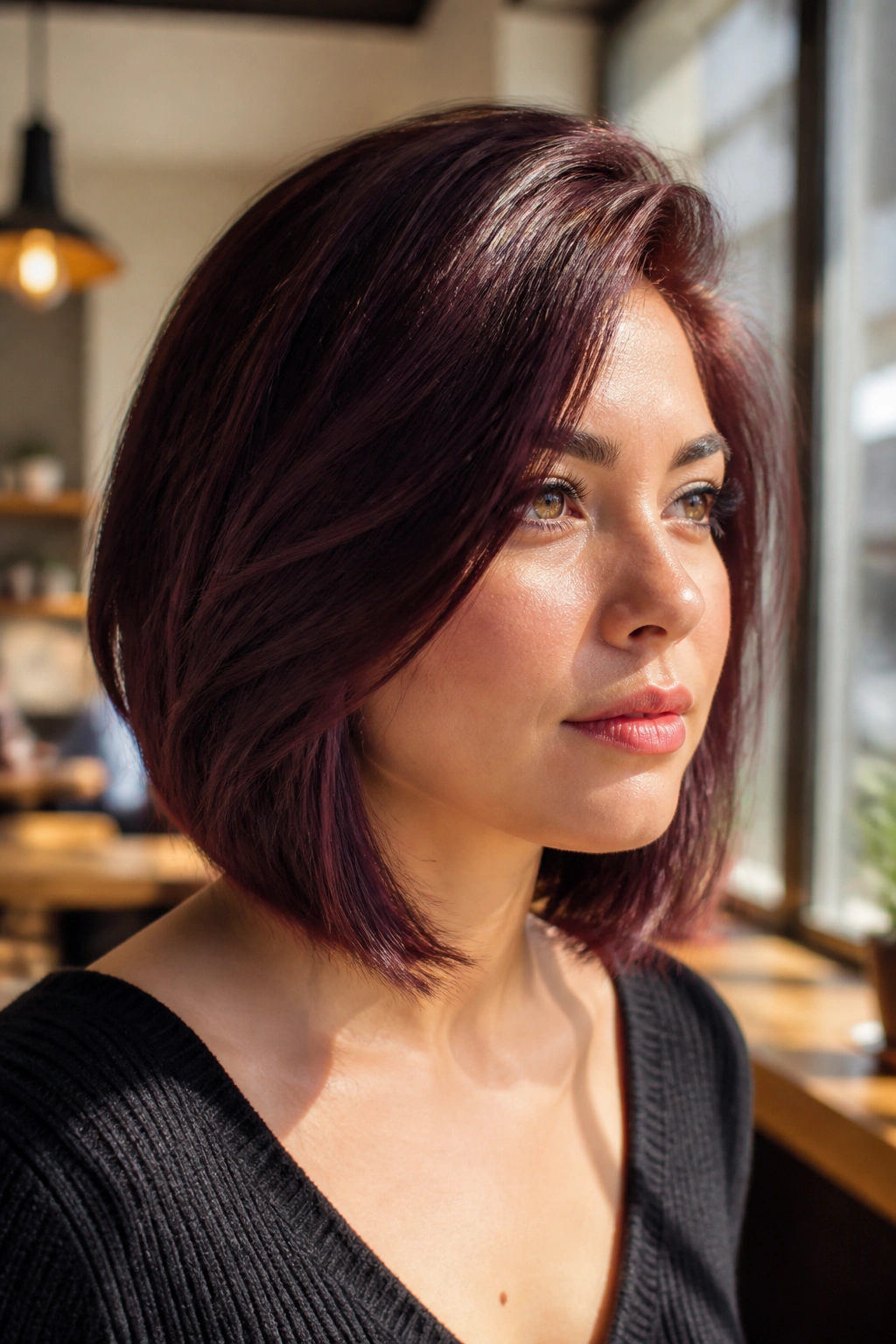
If you want one cut that keeps showing up in real life, not just in photos, this is the one I keep coming back to. A burgundy lob that lands between the chin and collarbone, with feathered ends and a side sweep, gives you length, softness, and enough movement to keep the face from feeling boxed in.
The reason it works is simple. The length drops below the widest part of the cheeks, the side part cuts the face diagonally, and the feathered ends stop the whole shape from becoming one blunt block. Burgundy makes the layers easier to read, especially when the tone moves between dark wine and red-brown in different light.
I like this cut because it does not demand perfect styling. A quick bend at the front pieces, a little smoothing at the roots, and a light texture spray at the ends are usually enough. You can wear it straight, wavy, tucked behind one ear, or pinned on one side. It bends to your routine instead of making you change your routine.
If you are stuck choosing between short and long, polished and casual, or soft and structured, start here. It gives a round face room to breathe without losing that rich burgundy payoff that makes the color worth wearing in the first place.
