



A haircut looks flat when every strand sits at the same length and the same shine. Dimensional hairstyles for men fix that by breaking the outline — short against long, matte against glossy, tight against loose. Once the eye gets that contrast, even a simple cut looks more alive.
That contrast can come from a low fade, layered top, a fringe that falls forward, or hair that bends a little instead of sitting stiff. No need for ten products. Usually, one good cut and the right drying direction do more than any jar on the shelf.
Fighting the grain is expensive.
Hair type matters more than people admit. Fine hair needs texture and a drier finish; thick hair needs weight removed in the right spots; curly and coily hair need shape at the sides so the top can do the talking. A barber photo helps, but a photo of someone with similar hair helps more.
The 25 looks below cover short, medium, and long hair, plus straight, wavy, curly, and coily textures. Pick the one that matches what your hair already wants to do, then sharpen it instead of fighting it. That usually gets you the cleanest result.
1. Textured Crop with Low Fade
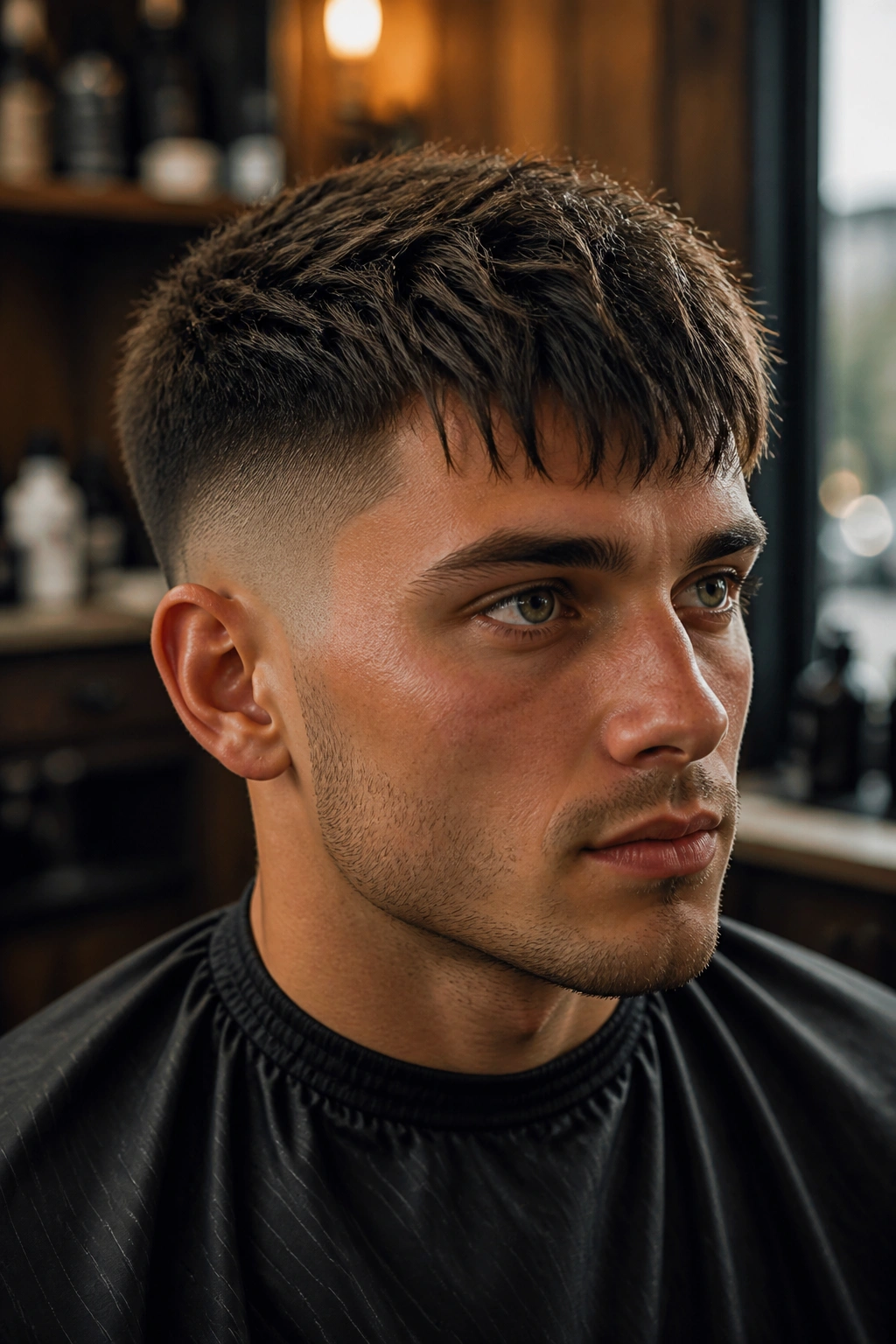
This is the cut I point people to when they want something sharp without looking overworked. The textured crop gets its depth from choppy top layers, while the low fade keeps the sides tight so the top has somewhere to breathe.
Why It Looks Dimensional
The top should sit around 1.5 to 3 inches, cut with a lot of point cutting or razor texture. That rough edge catches light in different places, which is the whole trick.
- Ask for a low fade that starts just above the ear.
- Keep the fringe slightly uneven, not blunt.
- Style with a matte clay or paste, not gel.
- Blow-dry forward and slightly upward for lift.
Best for: straight to wavy hair that goes limp fast.
2. Side Part with Taper Fade
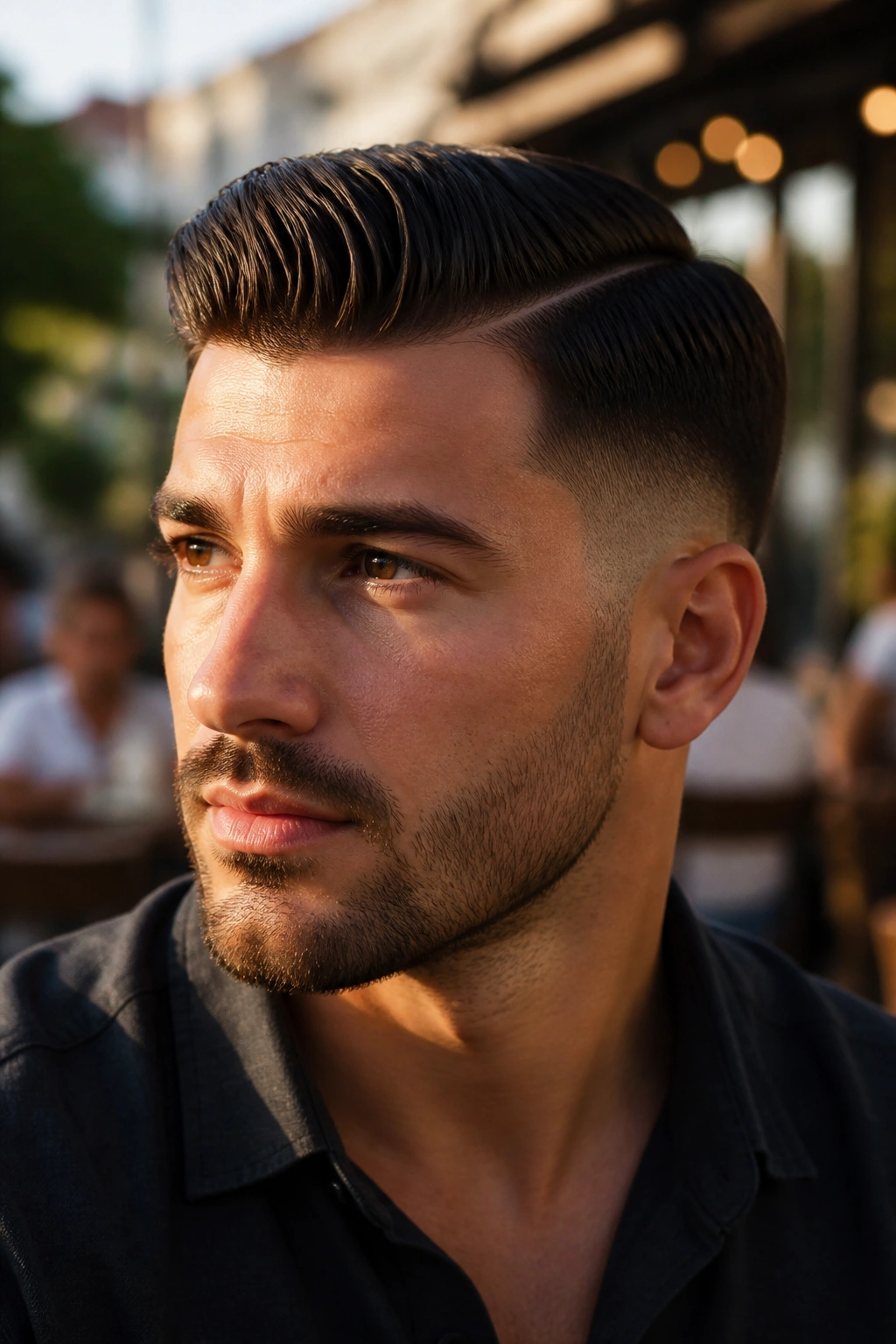
Want something neat that still has depth? The side part with a taper fade does that better than most people expect. The part gives you direction, and the taper softens the edges so the whole cut doesn’t look stamped out.
A hard part can help, but I usually like the softer version better. It feels less corporate, less shiny, and a lot more natural when the hair moves.
Keep the top long enough to sweep — usually 2.5 to 4 inches — and leave a little weight at the front. A light cream or low-shine pomade works best here.
3. Modern Quiff
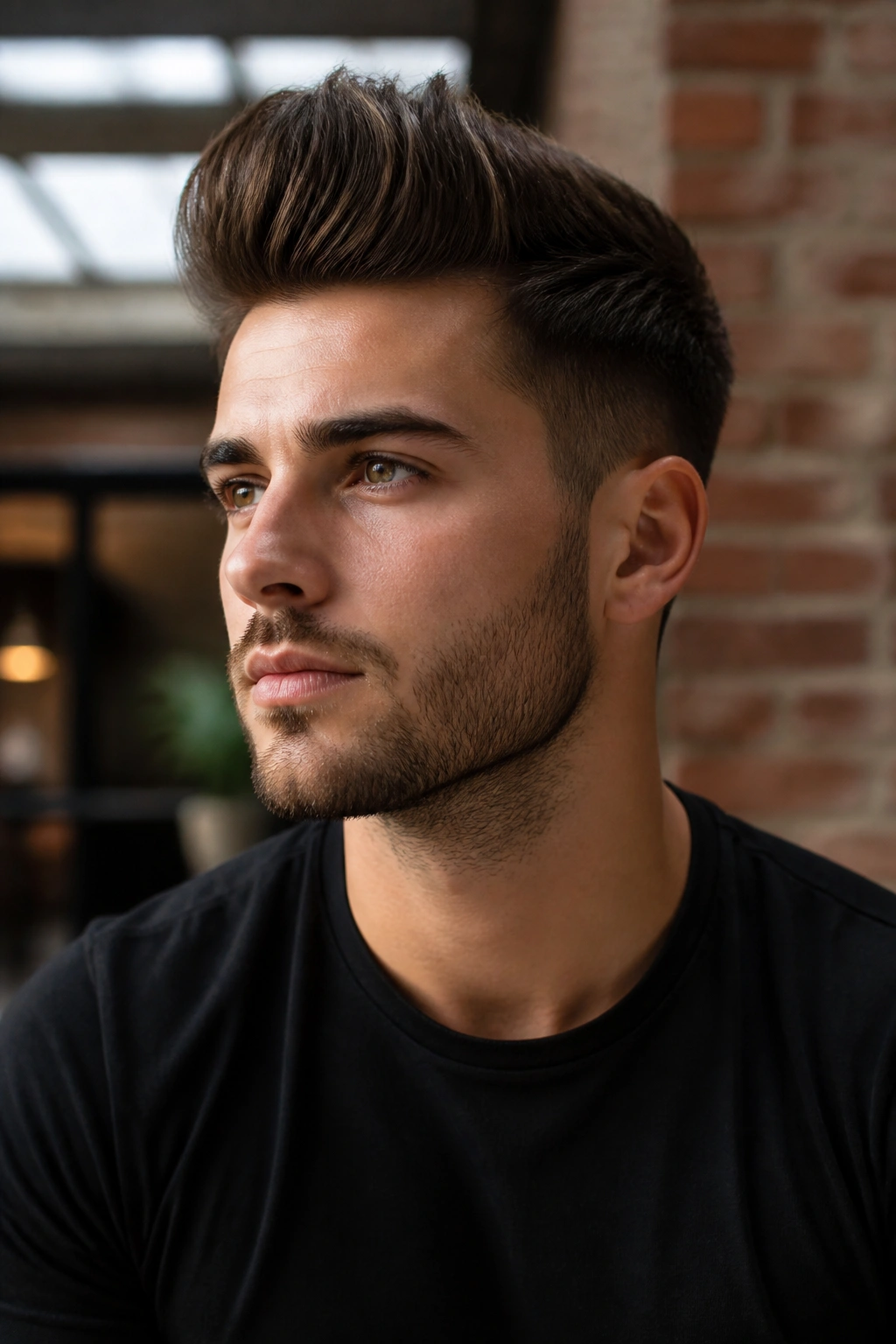
The quiff is still one of the easiest ways to build height without making the haircut feel frozen. Lift at the front, control at the crown — that’s what gives the style its shape.
It works especially well if your hair is thick enough to hold a bend but not so heavy that it collapses by noon. Blow-dry the front section up and back with a brush, then pinch the ends with a matte paste so it doesn’t look slick.
Less shine. More shape.
If you want a version that feels current rather than retro, keep the sides tapered and avoid pushing the top too far back. The profile should look lively, not helmet-like.
4. Classic Pompadour with Skin Fade
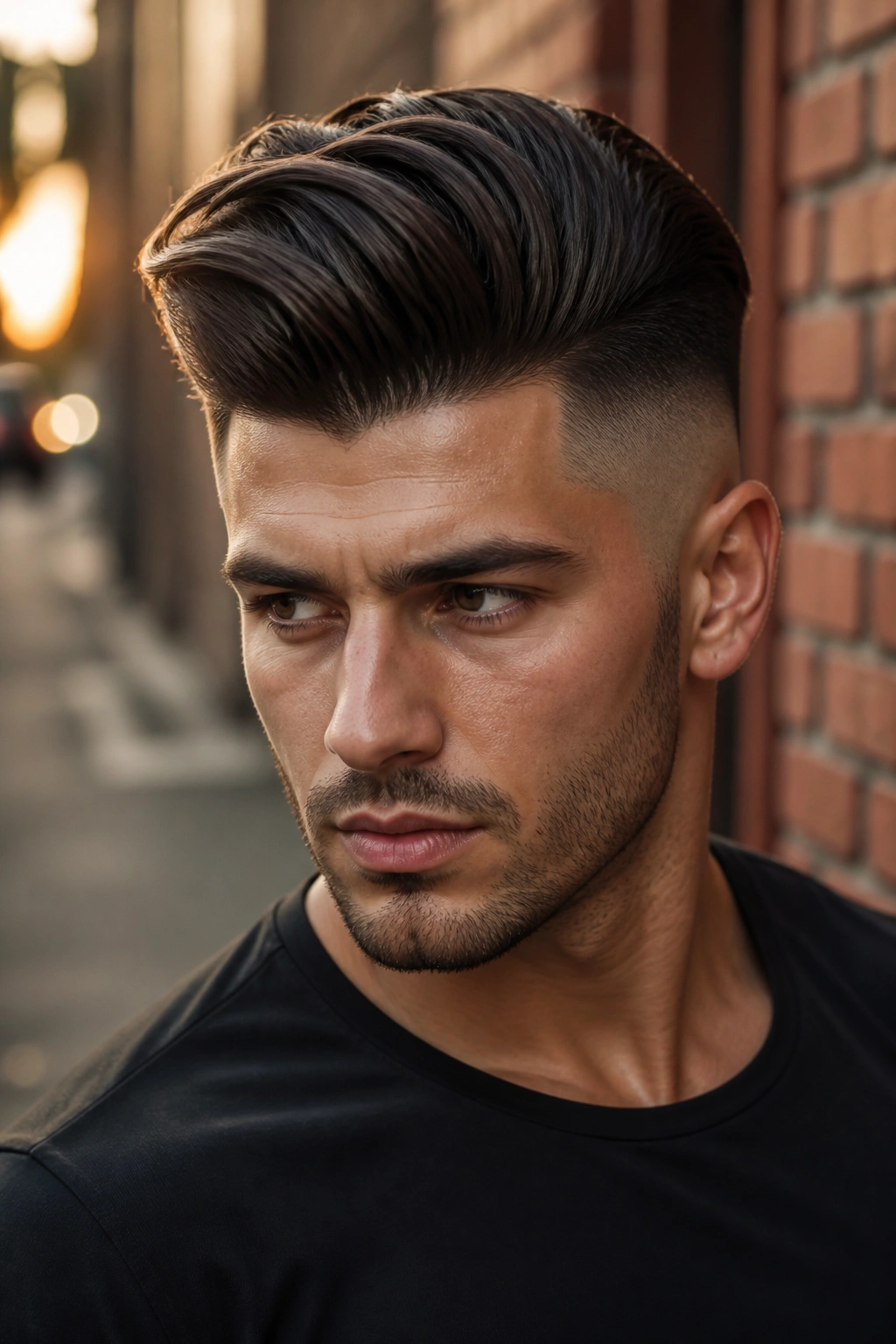
A pompadour with a skin fade is all about contrast. The sides go down to the skin or nearly skin, and the top keeps enough length — usually 4 to 6 inches — to roll back with some height.
Compared with the quiff, this one is more structured. It has more sweep, more polish, and a stronger side profile. That’s useful if you want the haircut to stand out from across the room.
Use a round brush and blow-dry the front up first, then back. Finish with a medium-hold pomade if you like a little shine, or a matte cream if you want a drier finish.
5. Slick Back with Subtle Layers
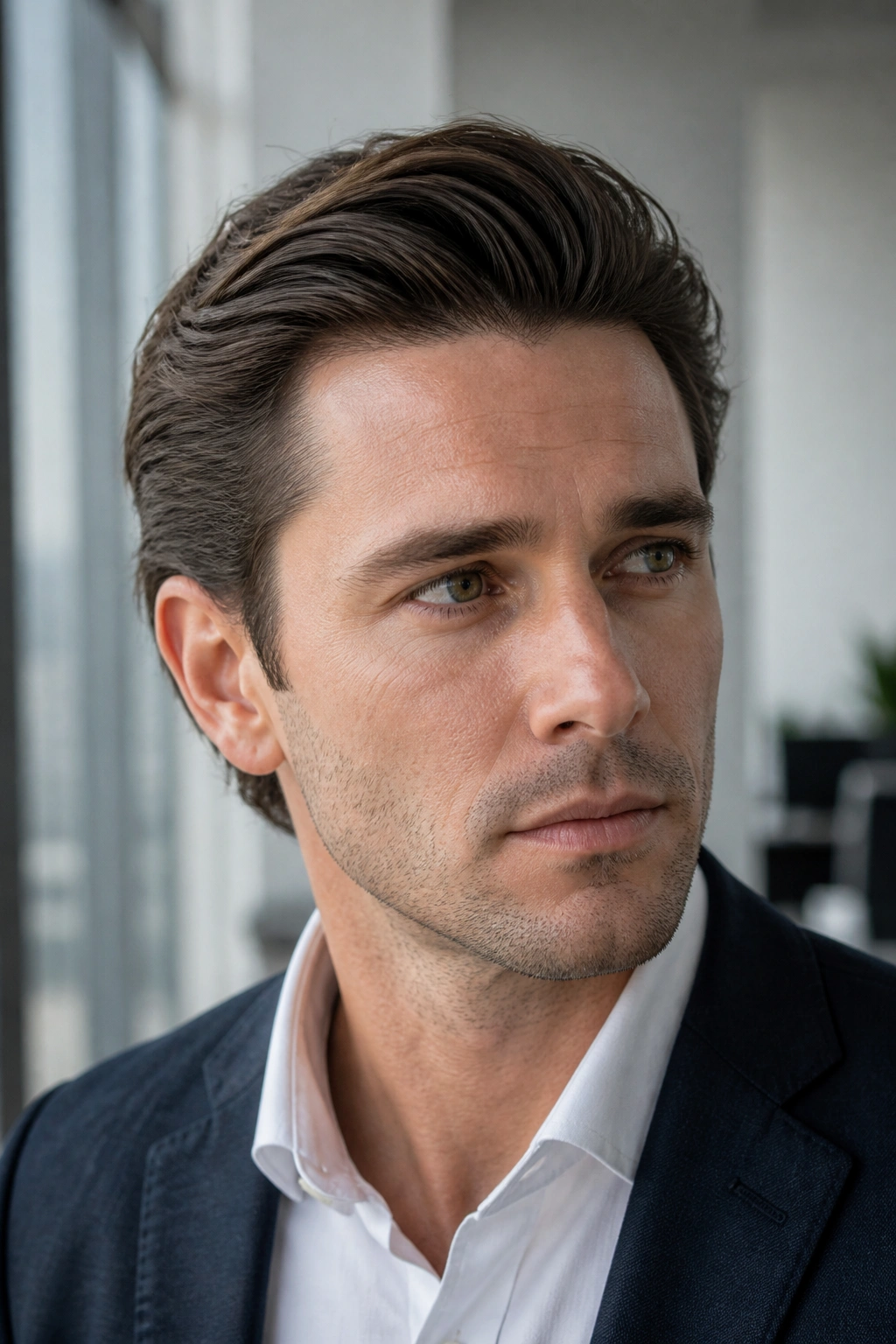
A slick back can look flat fast. Layers fix that.
The problem with the old stiff version is simple: every strand goes the same direction, with no break in the shape. Subtle layers on top let the hair move a little, so the style keeps its body instead of turning into a wet sheet.
I like this look on straight or slightly wavy hair that’s at least 4 inches long on top. Comb it back with your fingers first, then use a wide comb only where you need control. The finish should feel smooth, but not plastic.
If your hairline is strong, this cut looks especially good because it shows the face cleanly. If the hair is thinning up front, keep the shine low and the top textured.
6. French Crop with Choppy Fringe
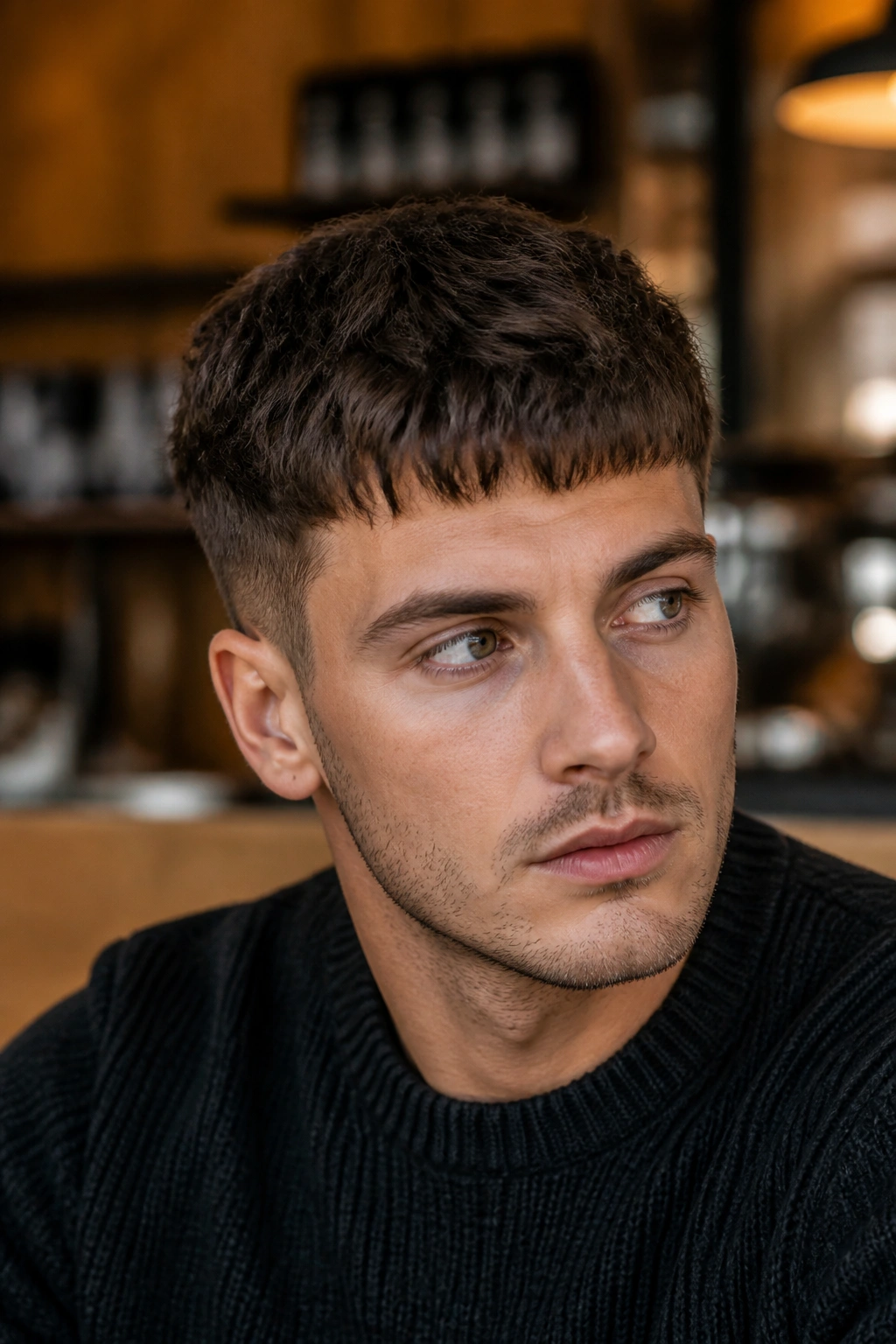
The French crop is short, blunt, and better-looking than people give it credit for. A choppy fringe keeps it from feeling severe.
How to Keep It Soft Instead of Harsh
Ask your barber for a fringe that lands just above the eyebrows, then break up the line so it doesn’t sit in one solid block. The top should be short enough to lie forward, but textured enough that the surface shows some grain.
- Top length: about 1.5 to 2.5 inches
- Sides: low or mid fade
- Finish: matte paste or dry wax
- Avoid: heavy gel and shiny combing
This cut is useful for thick hair, receding hairlines, and guys who want a short style that still has character. It’s blunt, yes. Boring? Not if it’s cut well.
7. Curtain Fringe with Medium Layers
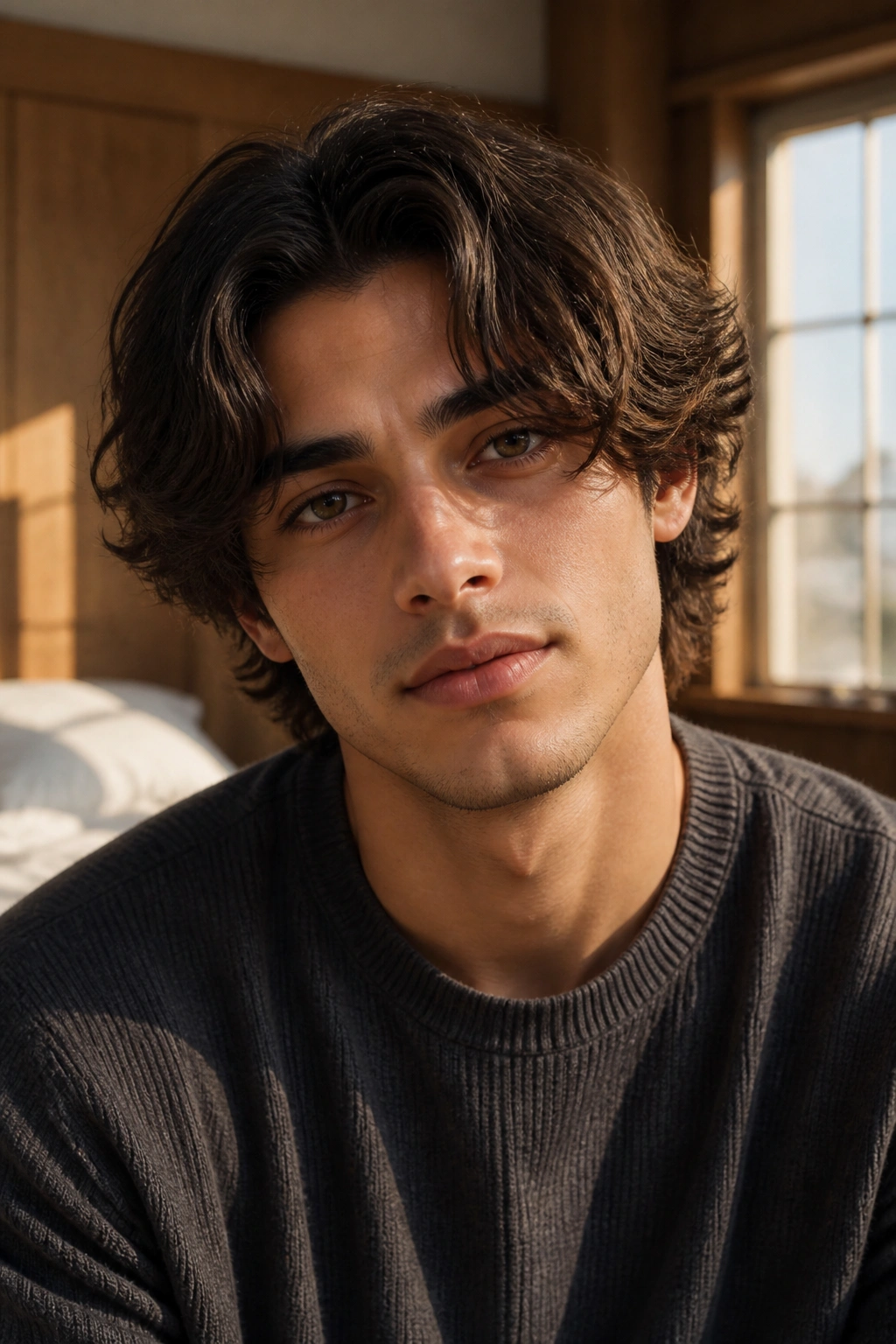
A curtain fringe has a softer kind of dimension. The hair falls away from the center, and those face-framing pieces create movement around the eyes and temples.
It works best when the top has medium layers instead of one flat length. If the hair is too heavy, the curtains droop. If the hair is too short, the part looks accidental.
Air-dry it if your texture is already wavy. If not, use a blow-dryer and push the fringe away from the center with your fingers, not a brush. A light texture spray helps keep the ends separated.
This is one of those cuts that looks easy when it’s actually doing a lot.
8. Messy Brush-Up
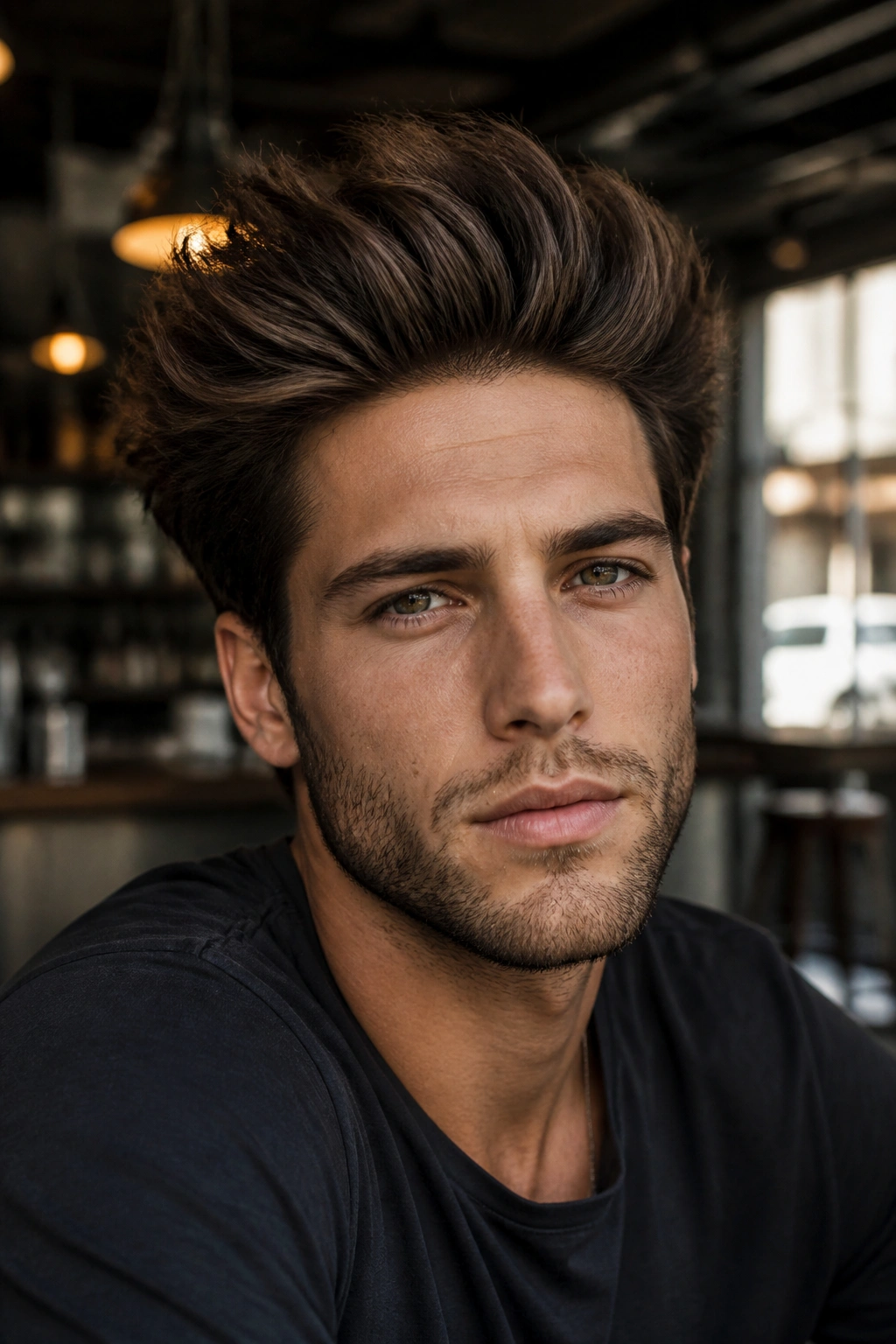
The messy brush-up sits between a quiff and a crop. It has height, but it doesn’t demand perfect symmetry, which is half the appeal.
Think of it as controlled chaos. The top is left long enough to push upward, then broken up with fingers so the strands don’t all point in the same direction. That irregularity makes the cut feel deeper.
Use a pre-styler on damp hair, then blow-dry from the roots. Finish with a small amount of paste, and stop before the hair starts to look stiff. If you can feel the product sitting on the surface, you used too much.
A little mess is the point. Too much, and it turns into a mop.
9. Ivy League with Hard Part
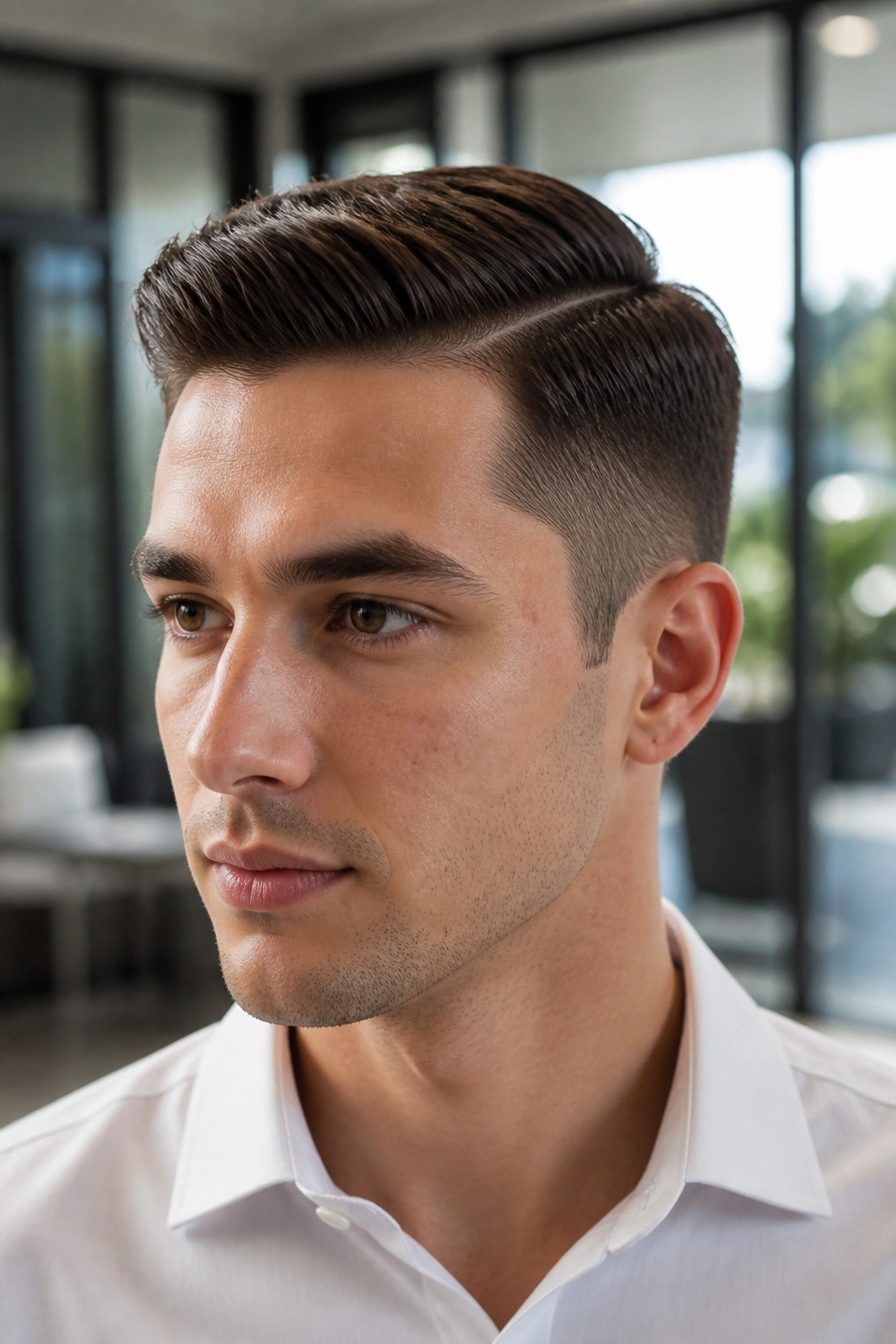
An Ivy League is tidy, but a hard part and a bit of texture keep it from looking flat. The shape is short enough for clean lines, long enough to show a proper sweep on top.
What I like here is the balance. The cut says polished, but the top still moves. That matters if you want a style that works with a shirt and tie without looking like it came from a mannequin head.
Keep the sides tapered and the top around 1.5 to 3 inches. Ask for the front to be left slightly longer so it can lift away from the scalp. A light cream or low-hold pomade is usually enough.
10. Bro Flow
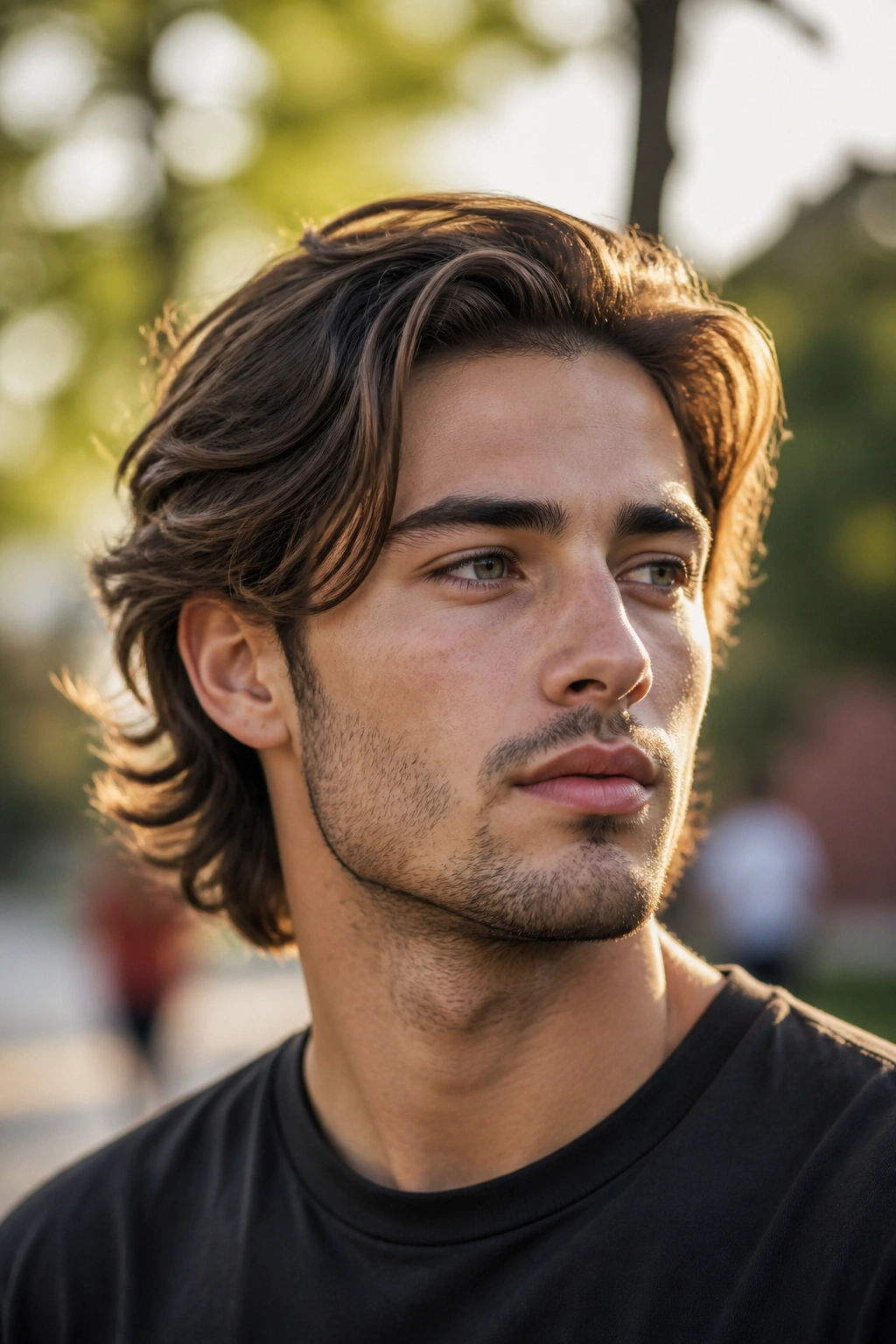
The bro flow is basically layered length that follows the head’s shape instead of fighting it. Hair brushes back and away from the face, then falls naturally around the ears and neck.
This cut depends on movement. If the ends are too blunt, it starts to look heavy. If the layers are too short, you lose the relaxed flow that makes it work in the first place.
I’ve always liked this style on men with a little wave in their hair. Straight hair can do it too, but it usually needs more blow-drying and a touch of texture spray.
Let it live a little. That’s the charm.
11. Curly Top with Tapered Sides
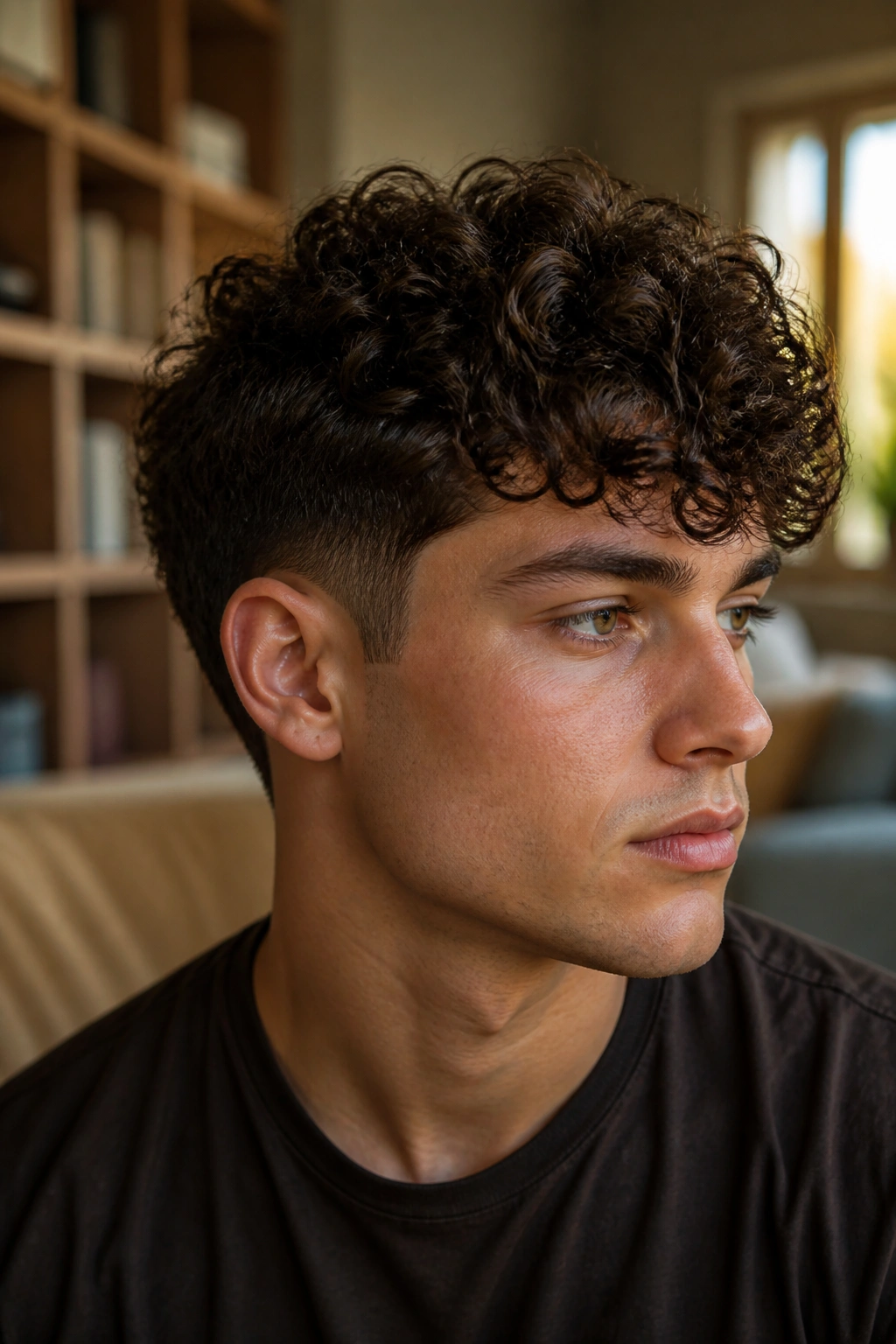
Curly hair already brings dimension, so the job is mostly about shape. A curly top with tapered sides keeps the curls high where people can see them and trims the sides close enough that the outline stays clean.
Product Matters Here
Curly hair looks better when it’s hydrated, not overloaded. Start with leave-in conditioner or curl cream, then add a small amount of mousse if you want more lift.
- Use a diffuser on low heat.
- Dry in sections if the curls clump too much.
- Keep the taper soft at the temples.
- Avoid brushing curls dry. That turns them into fuzz.
The better this cut looks, the less it feels like you tried to force it. That’s the point.
12. Wavy Mid-Length Shag
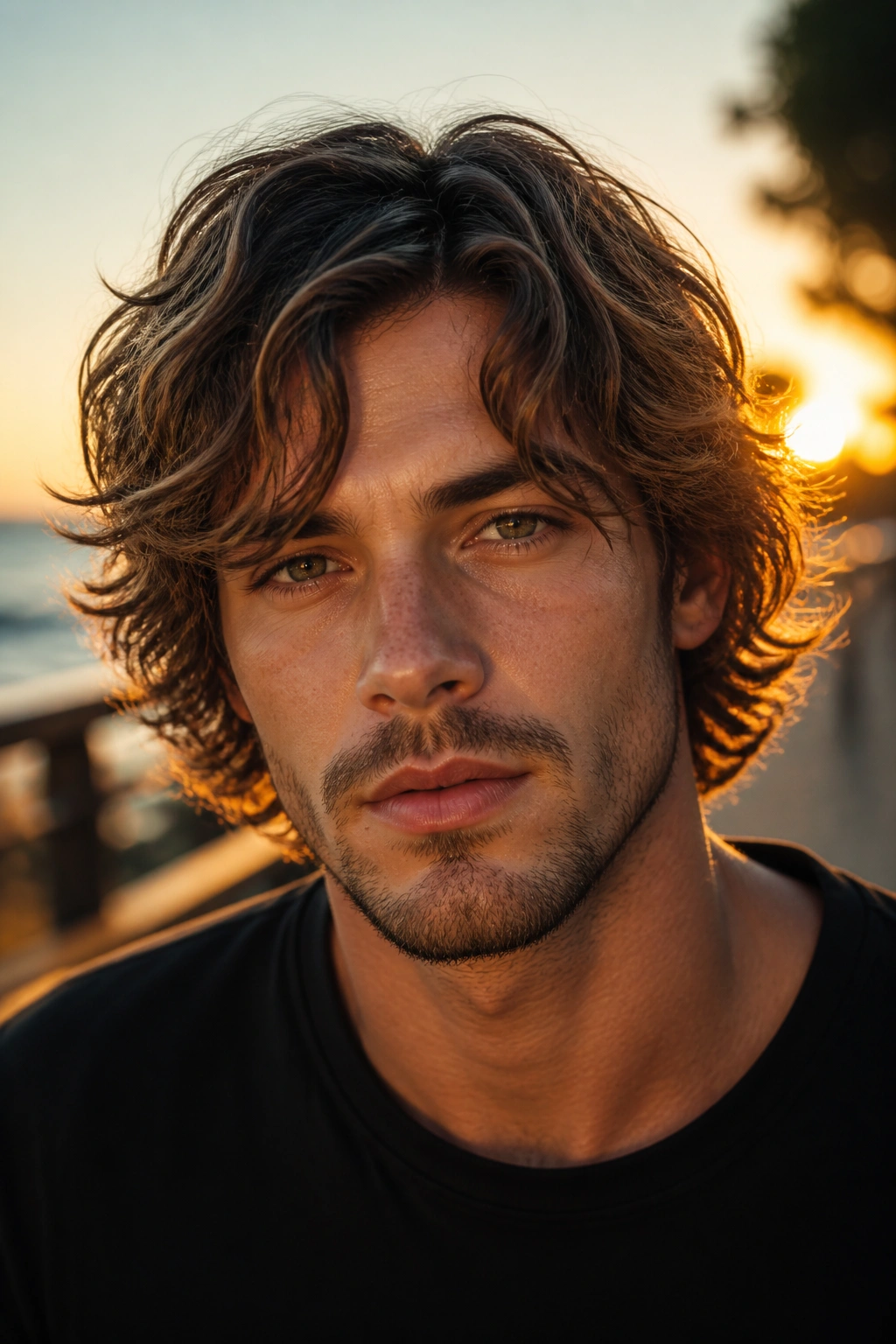
Why does a shag look so good on wavy hair? Because the layers create movement before you even touch a product.
A wavy mid-length shag works when the hair sits somewhere around the cheekbones, ears, and neckline, with enough layering to keep the shape loose. It’s not supposed to be neat. It’s supposed to move.
If you have straight hair, a little sea salt spray and a rough blow-dry can fake some of the bend. If your hair is already wavy, you may barely need anything beyond a light cream.
This cut gives off a casual feel, but the silhouette matters. Without the right layers, it turns into a triangle. No one wants that.
13. Textured Undercut
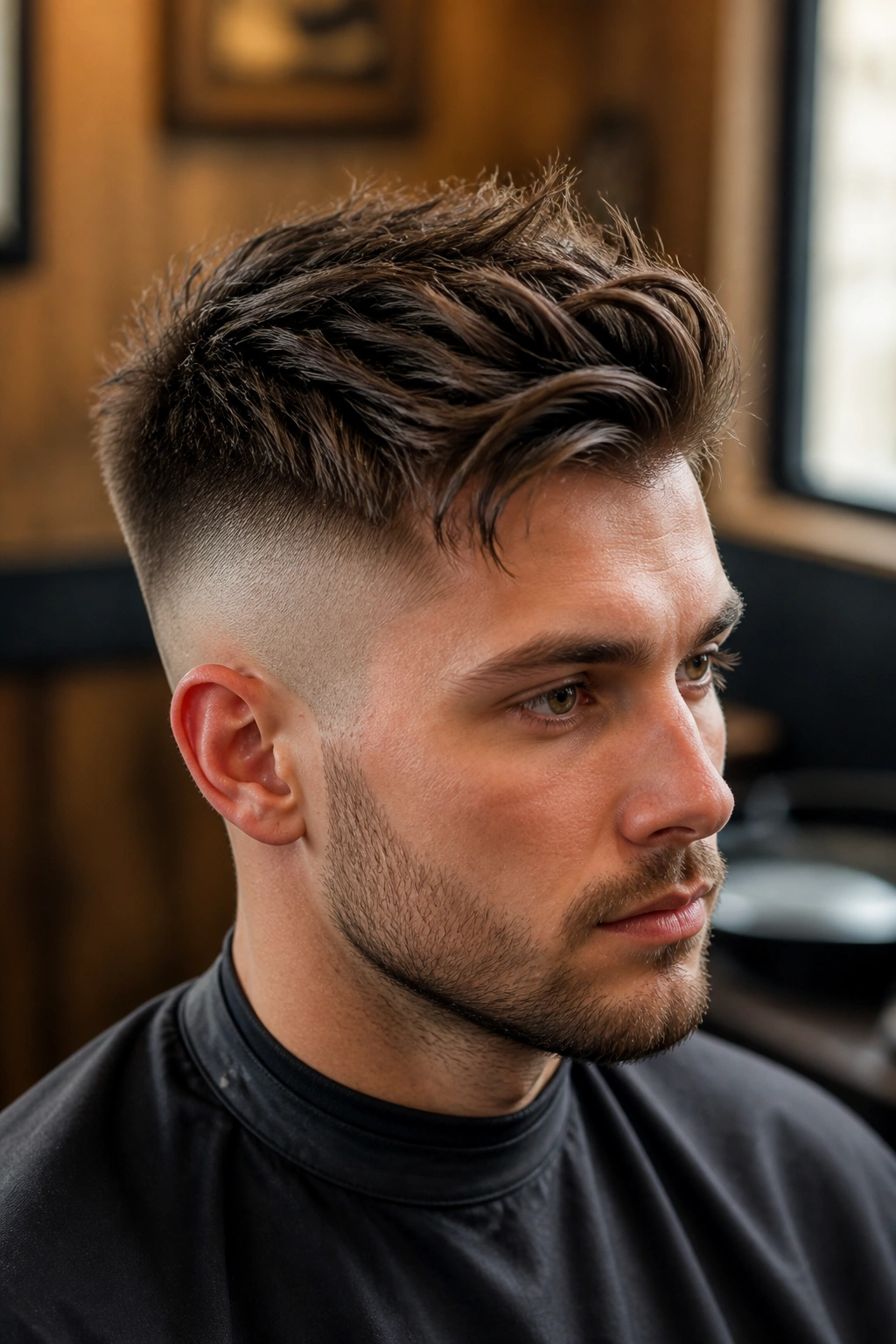
A textured undercut is pure contrast, and that’s why it reads so strongly from across a room. The sides drop away sharply, while the top stays long enough to show texture and movement.
What Makes It Different
Unlike a fade, the undercut usually keeps the side separation more obvious. That gap between short and long is what gives the style its edge.
- Top length: usually 3 to 5 inches
- Best styling product: matte paste or clay
- Best hair types: straight, thick, or slightly wavy
- Watch out for: a disconnected line that sits too high
If you want the cut to feel less severe, ask for a softer blend at the transition. That tiny change makes a big difference in how wearable it feels day to day.
14. Faux Hawk with Burst Fade
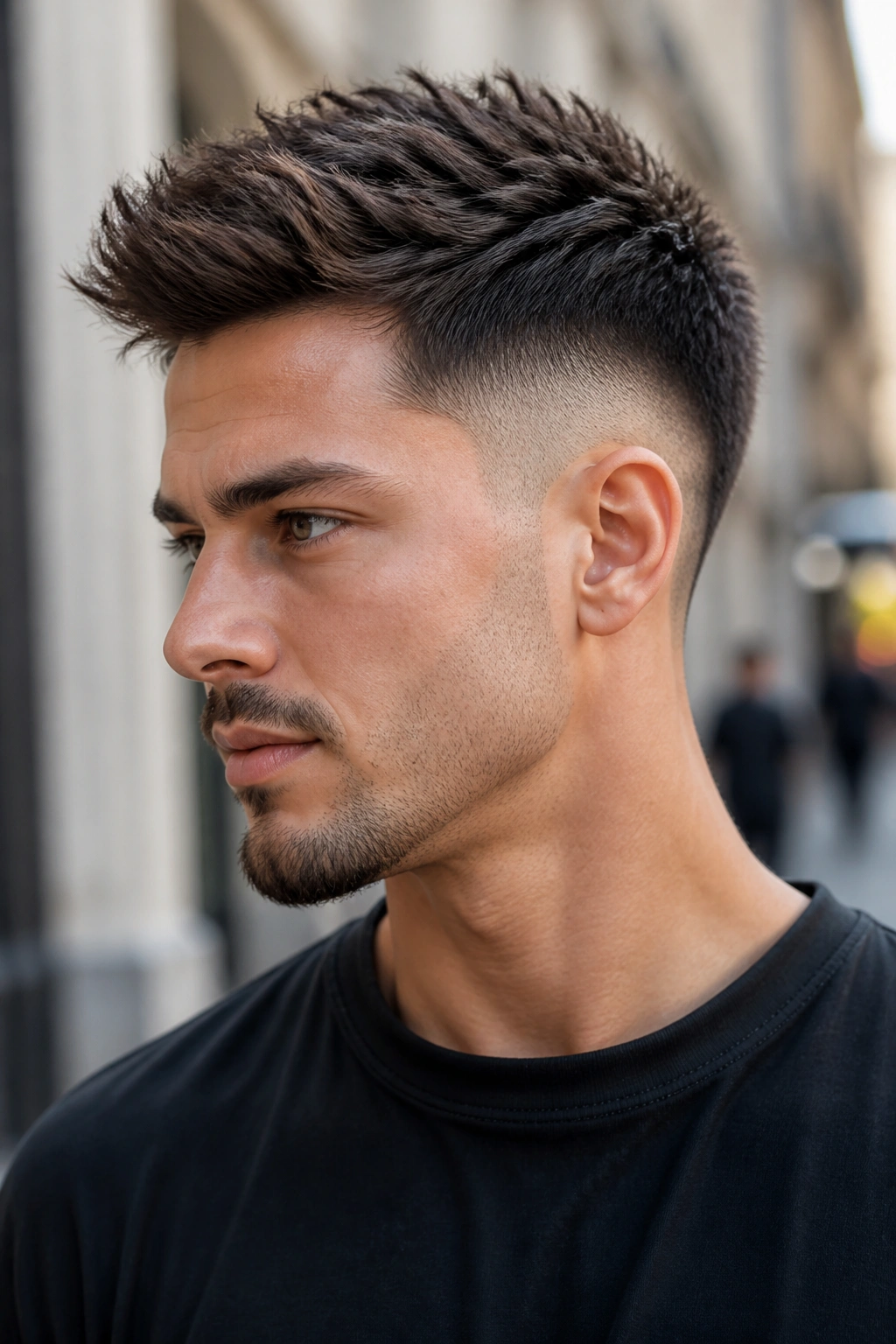
A faux hawk can look cartoonish if the ridge is too stiff. A burst fade fixes that by curving around the ears and keeping the sides tight without making the whole cut look aggressive.
The middle strip should stay the longest part, but not by a mile. You want a ridge, not a spike helmet. Some texture in the center helps a lot here, especially if the hair is thick or has natural wave.
This is a good cut when you want movement with a little edge. It works for gym hair, weekend hair, and the kind of hair that still looks decent after you put a hood on and take it off three times.
15. Caesar Cut with Texture
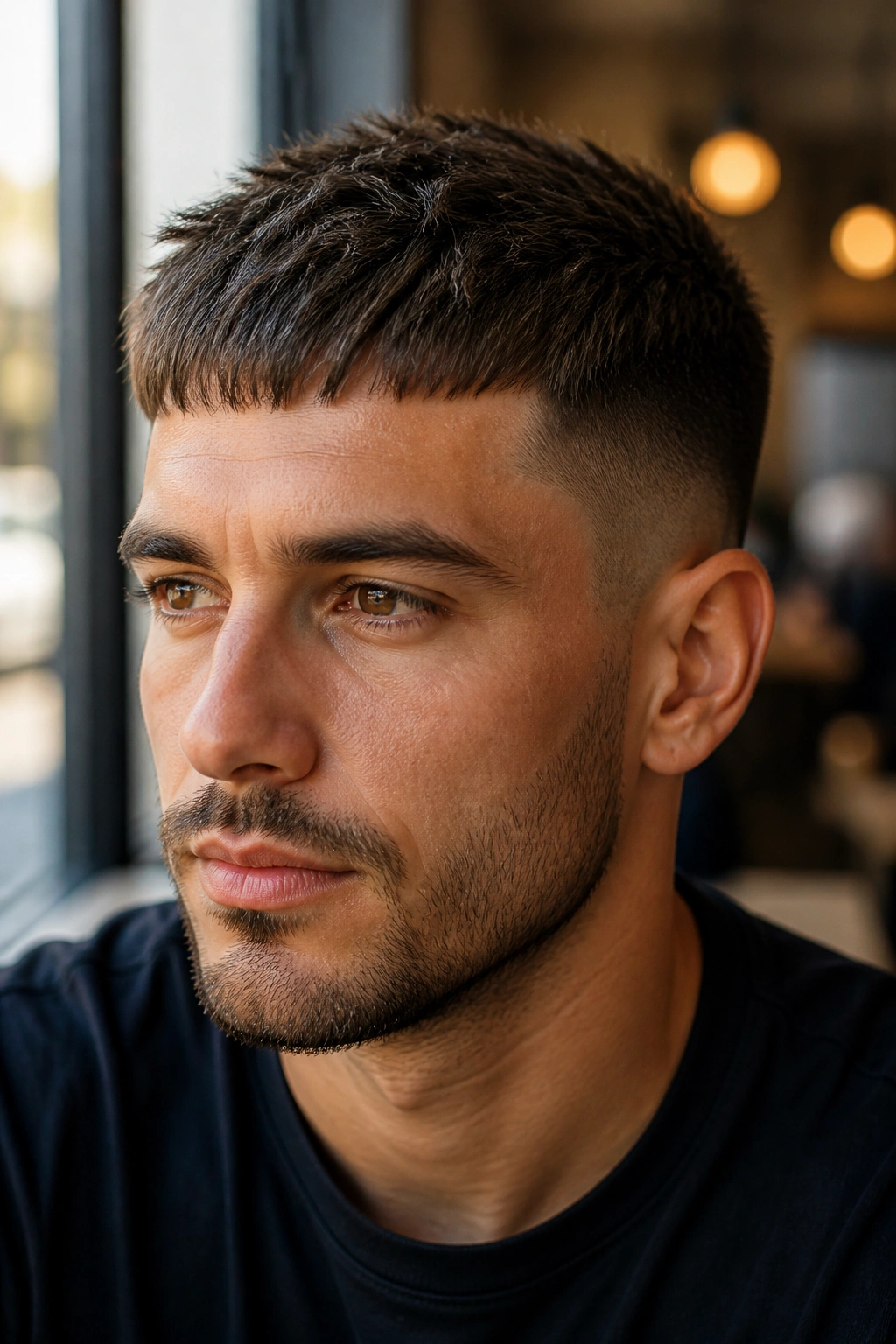
A Caesar cut gets dismissed as boring because people remember the blunt, bowl-like version. That’s the lazy version. A textured Caesar is much better.
Short fringe, short sides, and a top that’s cut with small irregular pieces — that’s where the depth comes from. The front line can sit a little uneven on purpose, which helps the cut feel modern instead of rigid.
It’s a smart choice for men with a receding hairline, since the forward fringe can soften the forehead shape. Keep the finish matte and the edges clean. The blunt version is the mistake.
16. Afro with Temple Fade
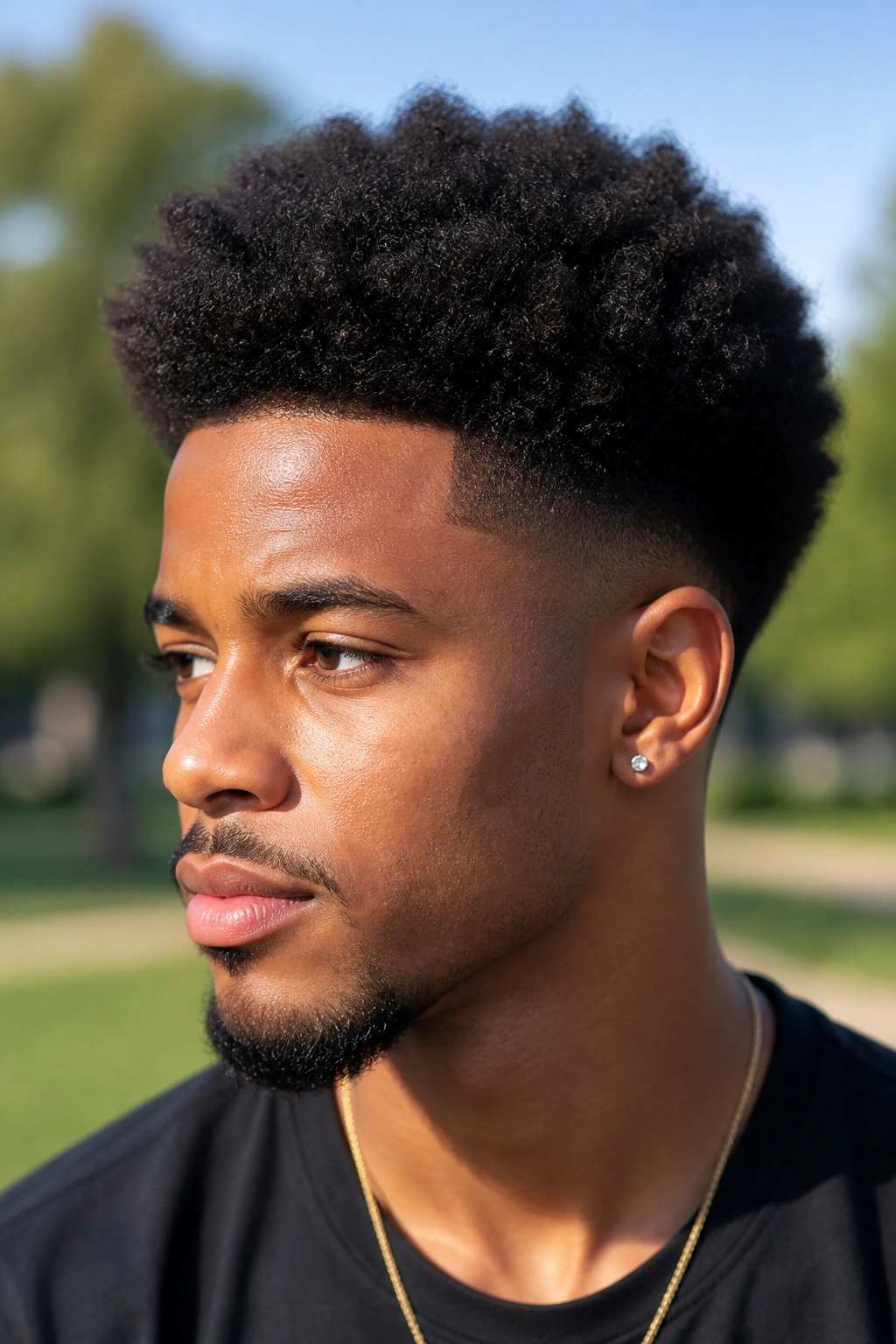
An afro has dimension built into the shape, but a temple fade makes the whole style read cleaner and more deliberate. The fade sharpens the outline without stealing the volume that makes the cut work.
Keeping the Crown Round
The goal is a balanced silhouette. You want height where the hair naturally lifts and softness where the outline would otherwise balloon.
- Moisturize the hair before picking or styling.
- Shape the sides regularly so the afro keeps its roundness.
- Keep the temples and neckline clean.
- Use a wide-tooth pick only at the roots if you need lift.
The best-looking version of this cut doesn’t chase perfect symmetry. It respects the natural shape of the hair and gives it room to sit well.
17. Buzz Cut with Shadow Fade
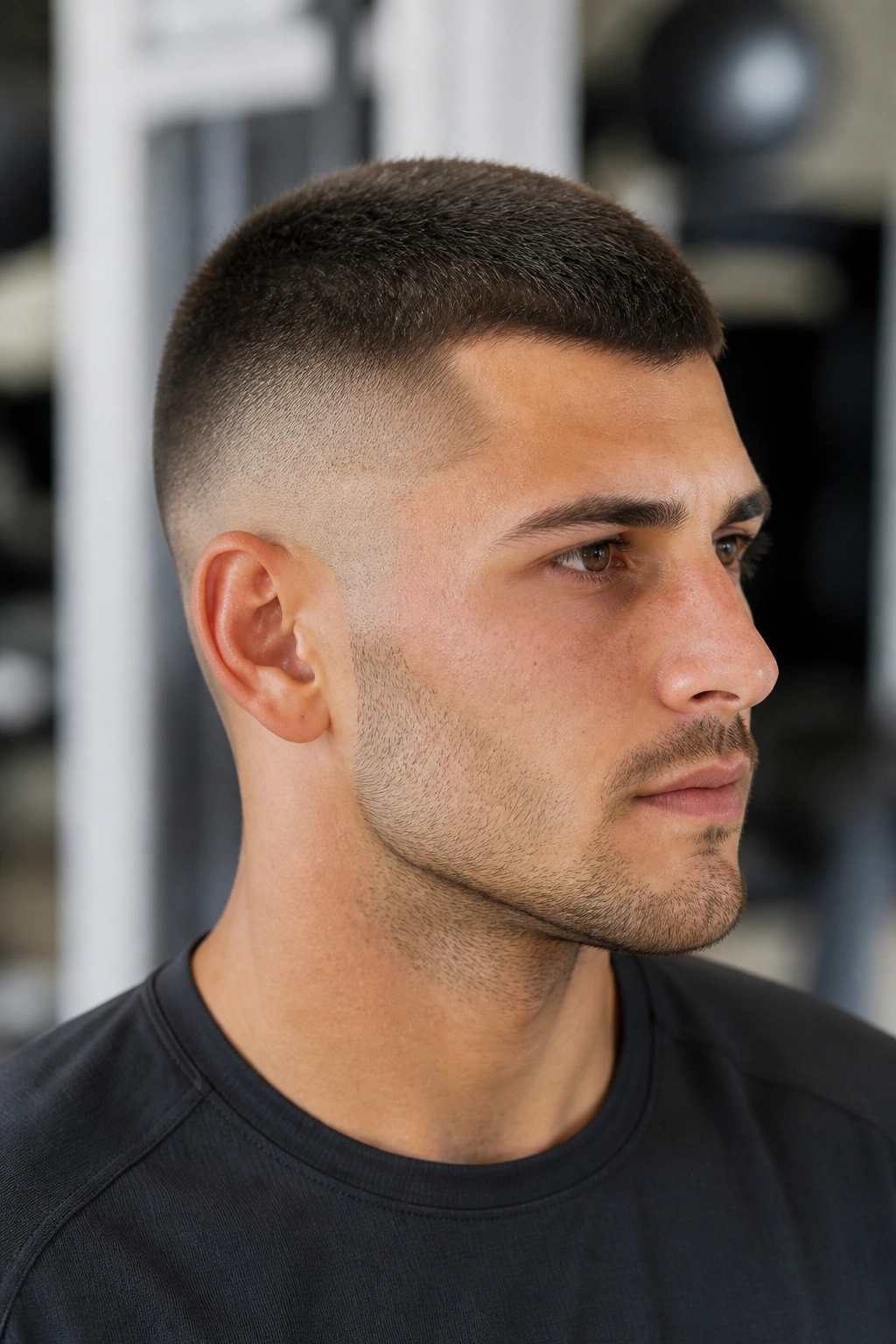
People assume a buzz cut has no dimension. That’s only true if every part of the head gets the same length.
A shadow fade gives the buzz some shape by leaving a small gradient at the sides and back. The top can be a touch longer — say a #2 or #3 guard — while the fade drops shorter underneath. That small change creates enough contrast to keep the cut from looking like a single block.
This is one of the easiest styles to live with. It’s clean, quick, and good for men who want almost no styling time. Add a crisp line-up if your hairline supports it, or keep the edges softer if you want a more natural look.
18. Comb Over Fade
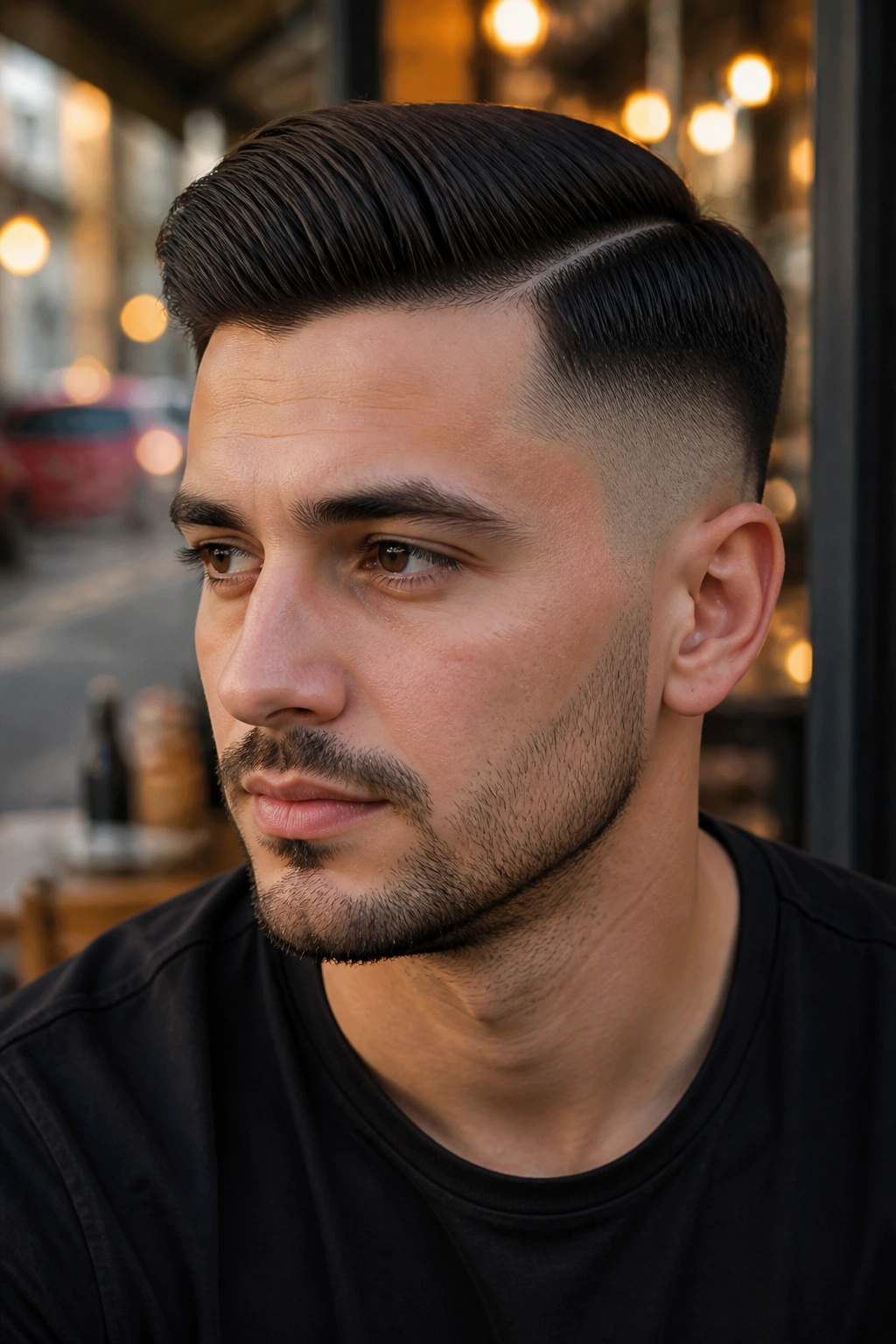
A modern comb over fade is not the stiff office haircut people joke about. Done right, it has direction, lift, and a little movement at the front.
The fade pulls the sides down, and the top sweeps across in a way that makes the hair look fuller than it is. That makes it useful for men with fine hair or thinning at the crown, because the direction helps hide the sparse spots without pretending they aren’t there.
Use a blow-dryer first, then work in a light paste. Don’t drag the comb flat across the head. That kills the whole look. A little separation is better than a glossy shell.
19. Long Center-Part Layers
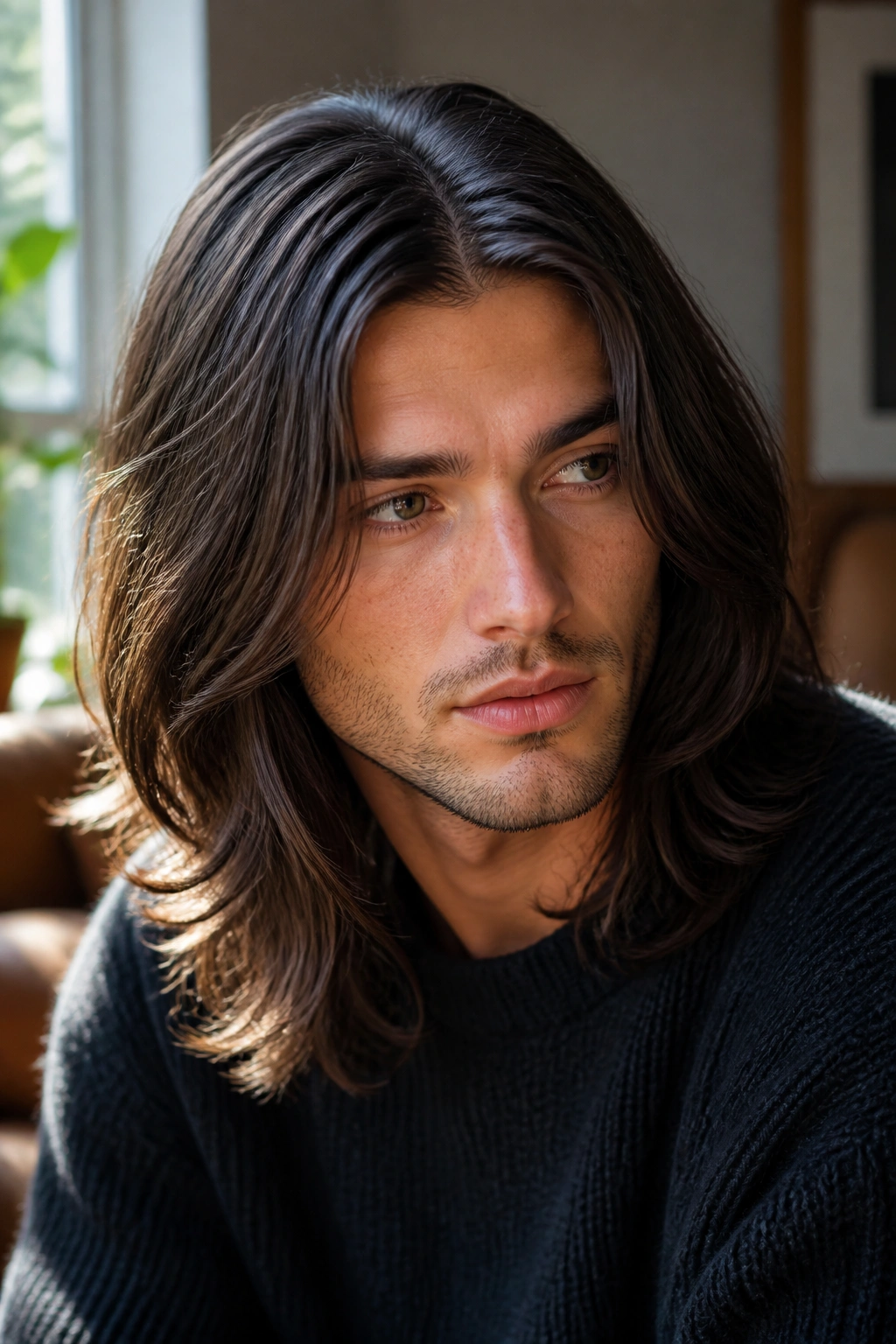
A center part with long layers can look sharp when the layers are doing their job. Without them, the hair just hangs. With them, it frames the face and moves when you walk.
This cut works best on straight or wavy hair that sits around the jaw or past it. The part adds symmetry, while the layers stop the length from looking heavy at the ends.
I’d avoid heavy product here. A leave-in conditioner or a small amount of cream is usually enough. Too much shine makes the style look greasy instead of deliberate, and that’s a fast way to lose the shape.
20. Modern Mullet
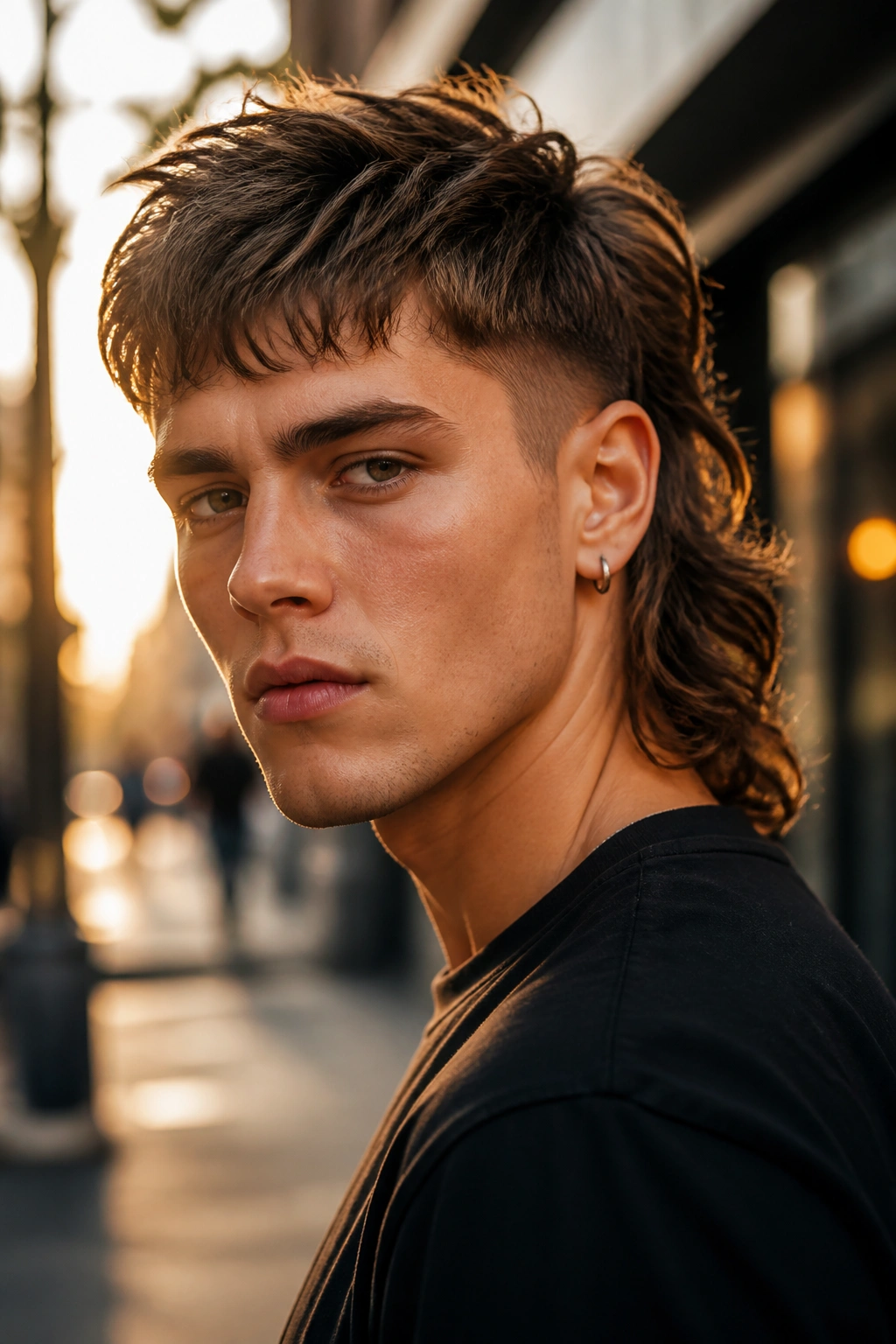
Yes, the mullet can look good. Not the cartoon version. The modern mullet works because the proportions are better — cleaner sides, a textured top, and length left in the back on purpose.
What makes it dimensional is the shift from short to long. The hair near the front and crown gets some lift, while the back keeps enough length to swing and separate. That contrast is the whole appeal.
If your hair has wave or curl, even better. Straight hair can wear it too, but it usually needs more product and a bit of rough drying. Keep the back controlled, not shaggy for the sake of being shaggy.
21. Crew Cut with Textured Top
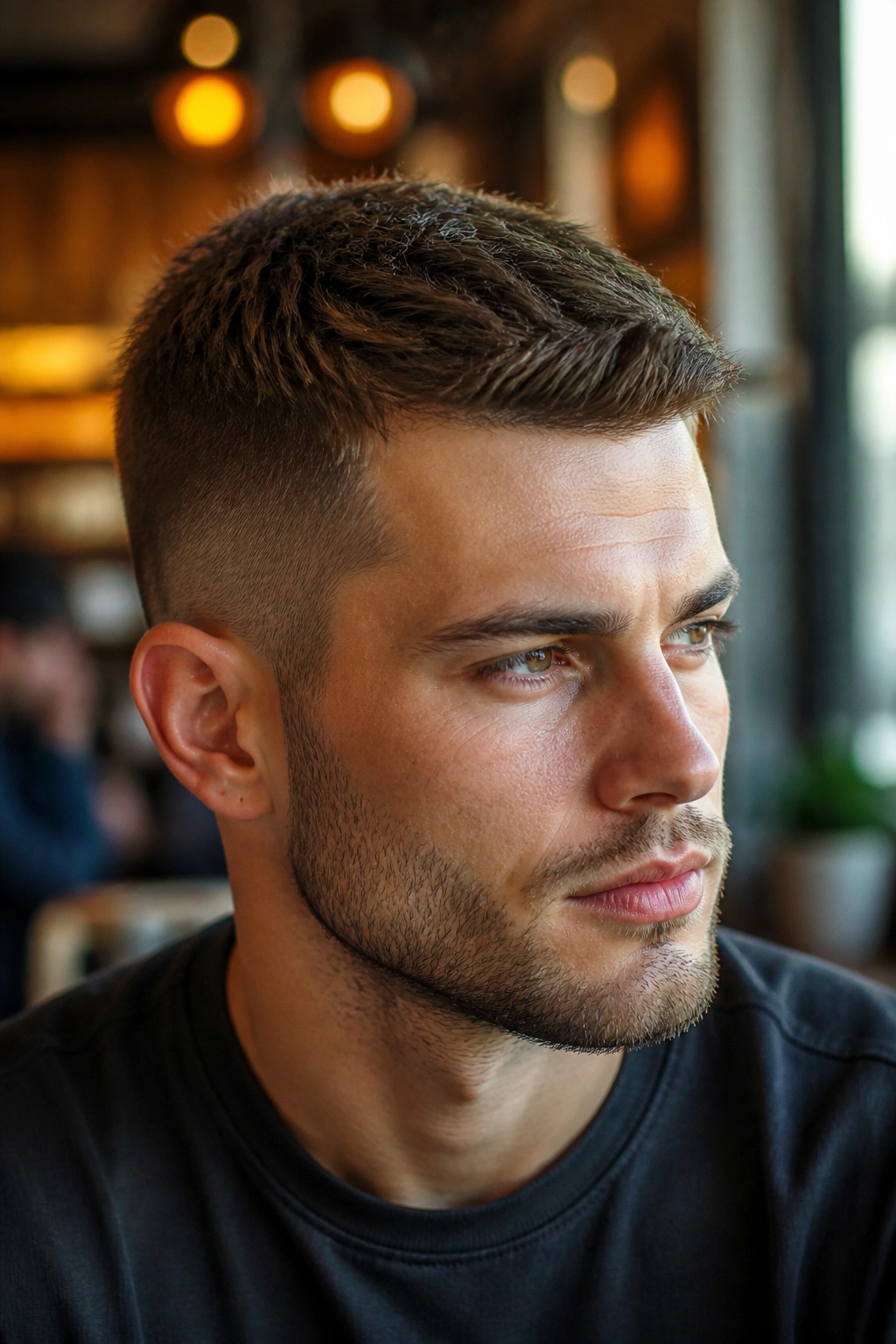
A crew cut sounds plain until you add texture. Then it stops looking like a standard short cut and starts feeling intentional.
The sides should stay tapered, while the top is left with enough length — usually around 1 to 2 inches — to show grain and a tiny bit of lift. That’s the difference between flat and dimensional.
- Ask for scissor texturing on top.
- Keep the front slightly longer than the crown.
- Use a tiny amount of matte product, or none at all.
- Best for thick hair, active routines, and low-maintenance mornings.
Short doesn’t have to mean boring.
22. Side-Swept Fringe
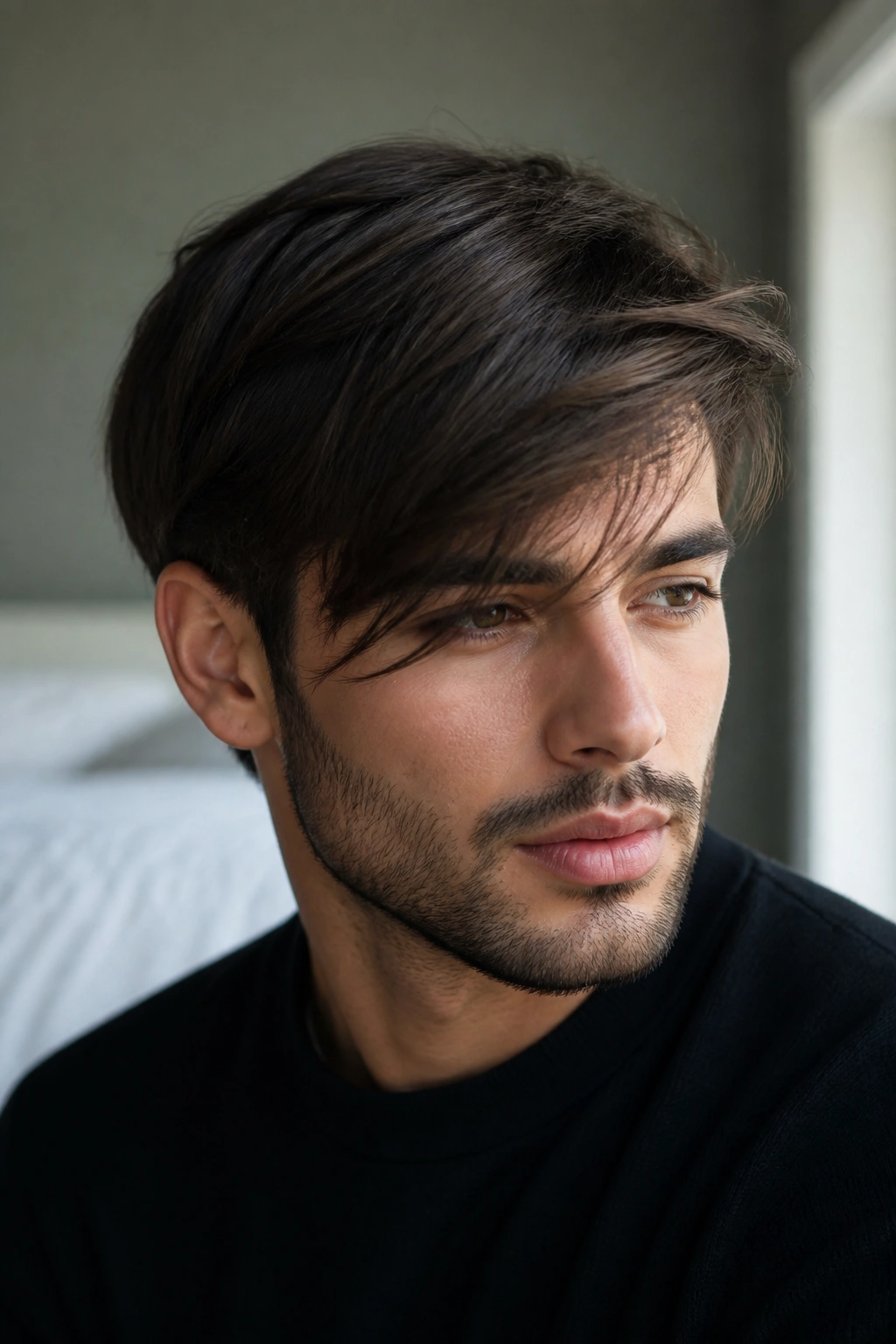
A side-swept fringe adds shape right where the eye lands first. It can hide an uneven hairline, soften a strong forehead, or just break up a face that looks too square with a straight-across cut.
The fringe should be light enough to move, not heavy enough to sit like a curtain. If the hair is straight, a side blow-dry helps it hold the sweep. If it’s wavy, a little cream may be all you need.
I like this style because it gives you a quiet kind of asymmetry. Nothing loud. Just enough angle to keep the cut from feeling static.
23. Messy Spikes with Taper
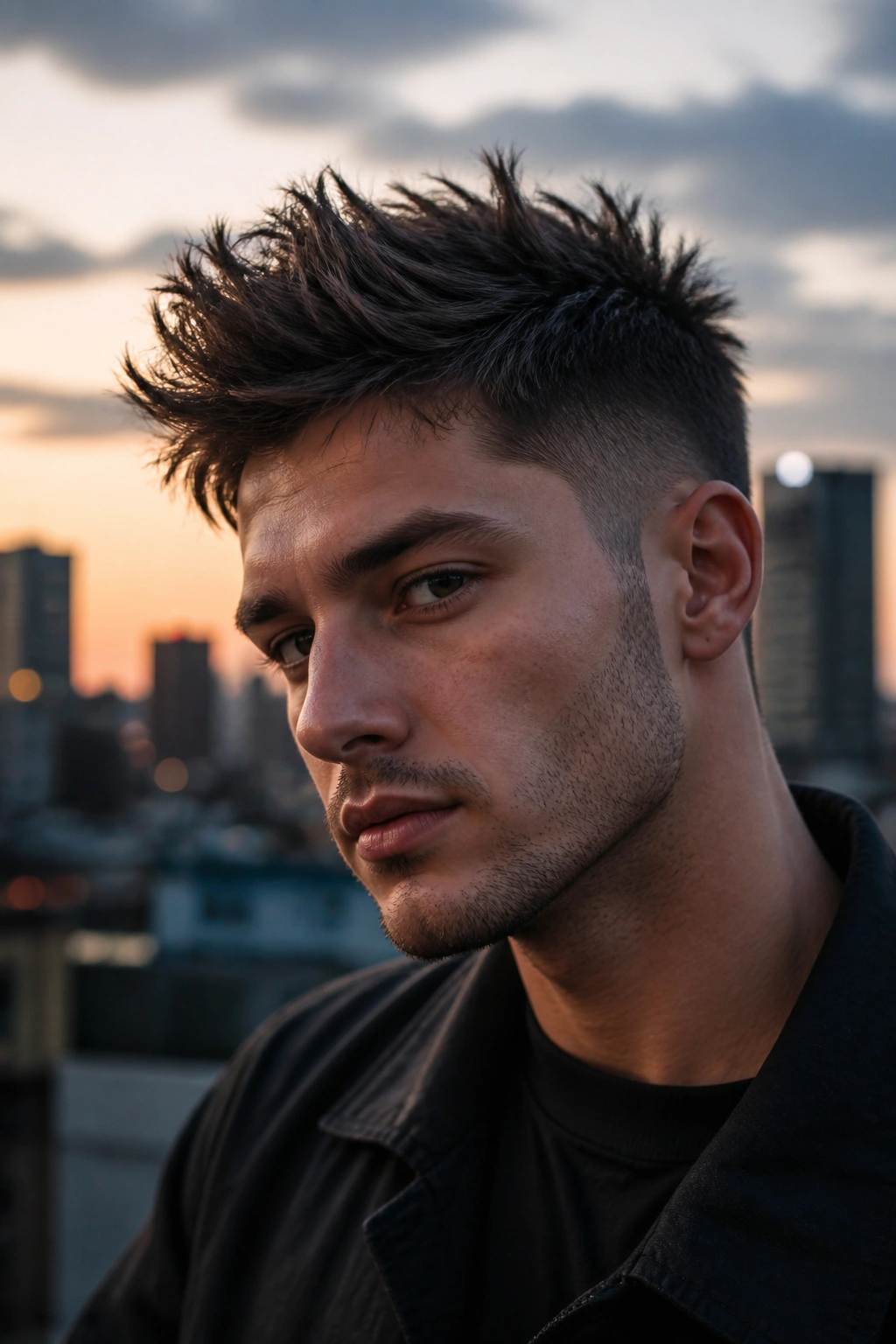
Messy spikes are better when they’re soft. Hard spikes can look dated fast; broken-up spikes with a taper still have edge, but they feel easier to wear.
The trick is to pinch small sections with your fingers instead of raking product through the whole top. You want separate points, not a single stiff ridge. Keep the top around 1 to 2.5 inches so the spikes have somewhere to stand.
A taper on the sides keeps the shape tidy and makes the top look fuller by comparison. Use a lightweight paste, and stop before the hair gets crunchy. If it looks crunchy, start over.
24. Short Locs with Tapered Fade
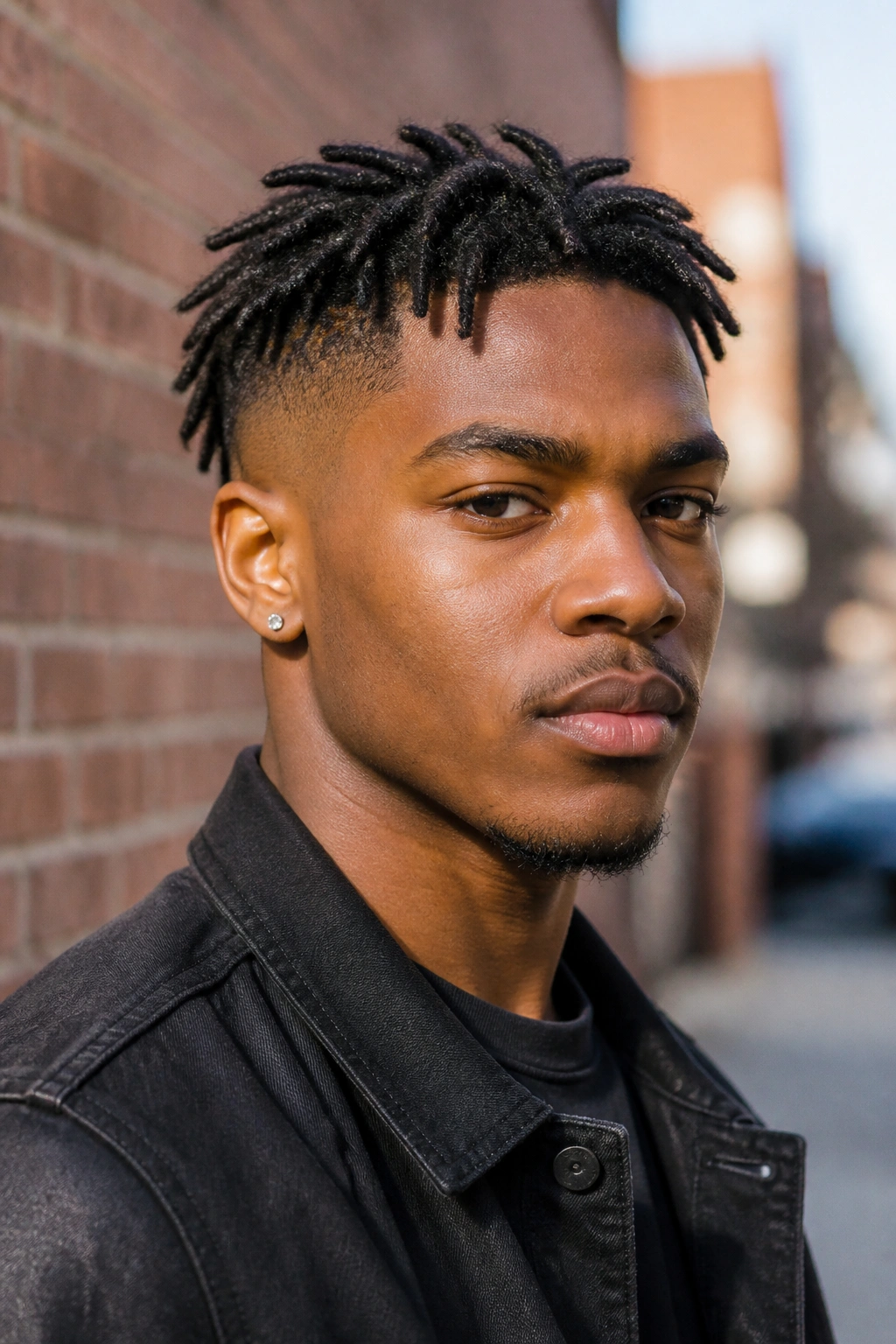
Short locs already bring texture, but a tapered fade at the sides keeps the shape clean and stops the style from spreading too wide. That contrast makes the top read as the focus, which is exactly where you want it.
The Barber Details That Matter
The neckline and temples should be shaped carefully, not cut so tight that the locs lose their natural frame. A clean taper lets the style breathe.
- Keep the fade soft around the ears.
- Let the locs keep enough length to show separation.
- Use a light moisturizing spray if the hair feels dry.
- Ask for the outline to follow your head shape, not a hard box.
This style works because it respects texture instead of flattening it. That alone puts it ahead of a lot of overly managed looks.
25. Short Two-Strand Twists with Tapered Sides
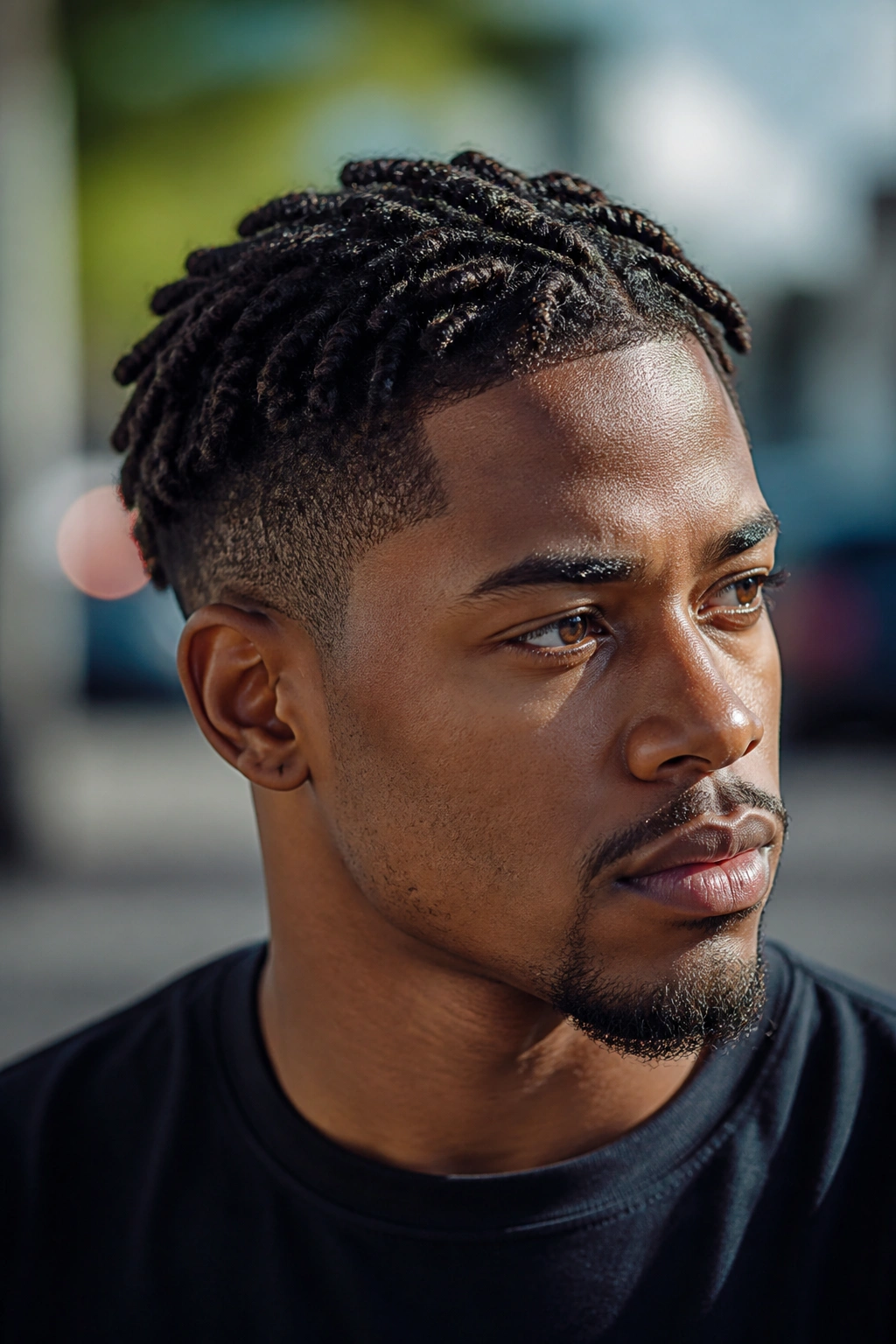
Short two-strand twists give you dimension from the twist pattern itself. The strands catch light at different angles, and the tapered sides keep the outline tight enough that the texture stays in focus.
I like this look because it has structure without looking stiff. Each twist keeps its own shape, which gives the style a built-in rhythm that you don’t get from a plain cut.
If you wear this style, keep the roots neat and the parts clean. A bit of oil on the scalp helps if your hair tends to dry out, but don’t drown it. Too much product weighs down the twists and muddies the definition.
Final Thoughts
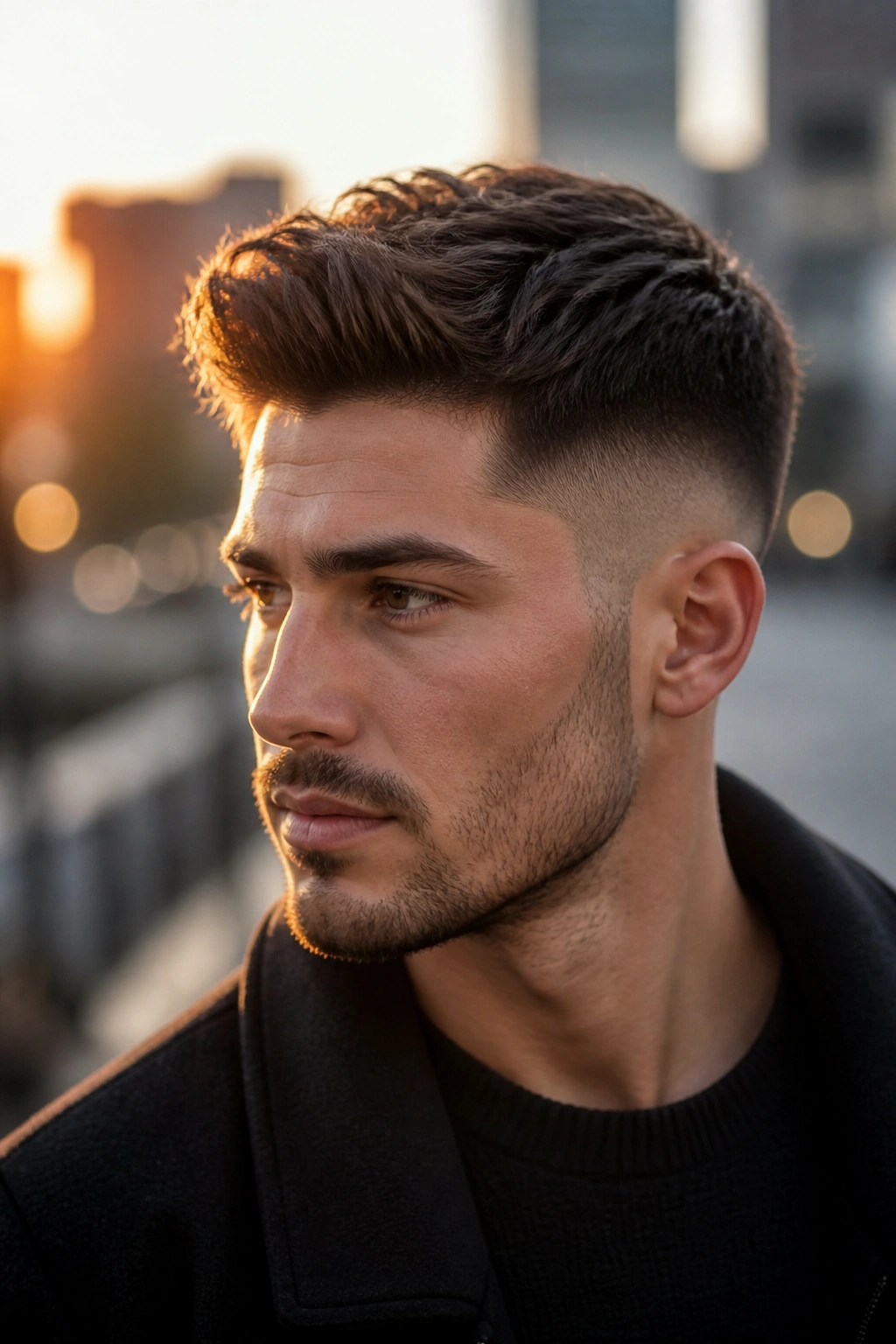
Dimension does not have to mean long hair or a huge blowout. Sometimes it is a 3-inch textured top with a clean fade. Sometimes it is curl shape, or a side part that leaves a little irregularity, or a fringe that refuses to lie perfectly flat.
Pick the cut that fits your hairline, texture, and the amount of work you’re willing to do in the mirror. A style that still looks good after a windy walk, a quick commute, or one bad night of sleep is worth far more than a haircut that only behaves under perfect lighting.
Ask your barber for one clear thing: where the volume should live. That single detail changes everything.
